

- Details
- Written by: Administrator
- Category: 2024
- Hits: 4895










According to information reported by several medias, the United States is “open” to sending long-range cruise missiles to Ukraine, a move that would give Kyiv’s F-16s greater combat punch as it seeks to gain further momentum in its fight against Russia. The introduction of the U.S. Joint Air-to-Surface Standoff Missile (JASSM) into the Ukrainian arsenal represents a significant shift in the military dynamics of the ongoing conflict with Russian forces. Designed for precision strikes against high-value targets from long distances, the JASSM offers Ukraine a new level of capability that could dramatically alter the strategic landscape.
Follow Army Recognition on Google News at this link
The U.S. Joint Air-to-Surface Standoff Missile (JASSM) can be launched by the F-16 fighter jets Ukraine has received from its allies. (Picture source: U.S. DoD)
One of the most significant advantages that the JASSM brings to the Ukrainian military is its extended strike range and precision. The extended-range variant of the JASSM (JASSM-ER) has a range of up to 1,000 kilometers, allowing Ukrainian forces to strike deep into Russian-controlled territory or against critical logistical and command infrastructure. This capability is a game-changer, as it permits Ukraine to target previously unreachable areas without risking aircraft or ground forces. The missile’s low-observable design reduces the chance of detection by Russian air defenses, further enhancing its effectiveness.
The missile's precision is another crucial aspect. Equipped with an advanced guidance system that includes GPS and an infrared seeker, the JASSM can strike targets with an accuracy measured in meters. This precision reduces collateral damage and allows Ukraine to engage high-value targets, such as command centers, air defense installations, and supply depots, with minimal risk to civilian infrastructure. This capability could enable Ukraine to disrupt Russian operations in a previously impossible way.
The psychological and strategic impact of introducing the JASSM into Ukraine's arsenal cannot be understated. The ability to strike deep into what was considered secure territory forces Russia to reconsider its defense posture and resource allocation. Russian military planners may be compelled to divert resources to protect critical infrastructure, thereby thinning their front-line capabilities. Strategically, the JASSM enables Ukraine to disrupt Russian supply lines, command and control centers, and logistical hubs. By targeting these assets, Ukraine can weaken Russian operational capabilities and slow down or halt their advances. This could provide Ukrainian forces with the breathing room needed to mount counteroffensives or consolidate defensive positions.
Adding to its significance, the JASSM can be deployed from the F-16 fighter jets that Ukraine has recently received from its Western allies. The integration of the JASSM with the F-16 platform enhances the missile's effectiveness, as the F-16 is a versatile and battle-proven aircraft capable of operating in contested airspace. The F-16’s speed, agility, and advanced avionics make it an ideal platform for launching the JASSM, further extending Ukraine’s strike capabilities. With the combination of the F-16 and JASSM, Ukraine gains a powerful long-range strike weapon and a flexible and survivable delivery system that can adapt to various combat scenarios.
However, the deployment of the JASSM is not without challenges. The Russian military possesses advanced air defense systems, such as the S-400, which are designed to intercept cruise missiles. While the low-observable nature of the JASSM, combined with potential saturation attacks involving multiple missiles, could overwhelm these defenses, Russia could employ electronic warfare (EW) tactics to disrupt the missile’s guidance systems. The JASSM's reliance on GPS makes it vulnerable to jamming, although its dual-mode guidance system, which includes an infrared seeker, provides a backup in case of GPS denial. Ukraine must consider these countermeasures and potentially develop tactics to mitigate their effects, such as launching missiles in waves or using decoys.
Integrating the JASSM into Ukraine’s existing military infrastructure will require training and logistical adjustments. Ukrainian pilots and ground crews must be trained to handle the missile, including its launch procedures, targeting protocols, and maintenance requirements. Additionally, Ukraine will need to establish secure storage and handling facilities for the JASSM, given its advanced technology and the importance of maintaining operational security. The U.S. has historically been cautious about providing advanced weaponry to avoid escalation, but the delivery of the JASSM indicates a shift in policy, likely in response to the protracted nature of the conflict and the increasing brutality of Russian tactics. This decision suggests a U.S. willingness to provide Ukraine with the means to conduct deeper and more impactful strikes against Russian forces.
The introduction of the JASSM into the Ukrainian military arsenal offers significant enhancements in terms of strike capability, range, and precision. This development, combined with the F-16’s capabilities, could lead to a new phase in the conflict, where Ukraine can target critical Russian assets far from the front lines, potentially altering the course of the war. However, the deployment of these missiles also raises the stakes, as Russia may respond with escalated measures, both in terms of military tactics and diplomatic actions. For Ukraine, the JASSM represents a powerful tool that, if used effectively, could shift the balance of power. Yet, its success will depend on how well Ukraine can integrate this capability into its broader military strategy and counter the inevitable Russian countermeasures. As the conflict continues, the role of the JASSM could prove pivotal in determining the eventual outcome.
Read more: What Combat Capabilities Will JASSM Cruise Missile Offer Ukraine if Provided by US?

- Details
- Written by: Triffaux
- Category: 2024
- Hits: 3416
On August 5, 2024, the U.S. Army announced the testing of a new robotic system, the Autonomous Equipment Decontamination System, designed to clean military vehicles exposed to hazardous substances. This initiative is a direct response to the persistent threats of nuclear, chemical, and biological (NBC) agents, known for their destructive potential even in small amounts.
Follow Army Recognition on Google News at this link
DEVCOM Army Research Laboratory's Autonomous Equipment Decontamination System (Picture source: US DoD)
The U.S. Army Combat Capabilities Development Command Chemical Biological Center is at the forefront of this technological advancement. Over four days, four soldiers tested this system, allowing them to provide essential feedback for its improvement. According to Spc. Yaleidi Escalera, this system eliminates the need to be near potential threats during decontamination. "The controls are intuitive and easy to use, which is crucial since we will be the ones using it in the field," she added in a press release.
The system operates with an unmanned ground vehicle equipped with a camera that scans the vehicles to detect contaminated areas. The contamination information is then wirelessly transmitted to operators stationed at a safe distance, who use a robotic manipulator arm to precisely apply a decontamination slurry where needed, thereby optimizing decontaminant use and saving time.
Soldiers highlighted several challenges related to the robot's navigation and its ability to handle the complex shapes and hard-to-reach surfaces of some military vehicles. They also suggested integrating right-click functionality into the computer interface to enhance user capability, as well as a manual control for the applicator arm in cases where the autonomous mode fails to reach all hot spots.
Decontamination is currently a cumbersome operation, requiring between 45 and 60 minutes per vehicle, involving a team of 20 to 30 soldiers in full protective gear. This task must be performed close to the exposure point, putting soldiers at risk of enemy attacks, and uses over 500 gallons of water and 50 gallons of decontaminant per vehicle.
The Autonomous Equipment Decontamination System is a multi-year cooperative project led by DEVCOM CBC, with support from the DEVCOM Army Research Laboratory in designing the robotic arm, DEVCOM Ground Vehicle Systems Center in supporting the computer interface and UGV operations, and industrial partner Teledyne FLIR for software development of the camera.
For Major Paul Austin, a CBRN experimental officer with the Maneuver Support Battle Lab who coordinates and runs MSPIX, warfighter feedback is critical to assessing the success of a technology initiative. "From my experience as a CBRN officer during my time in Special Operations Command, I know the value of fast, efficient decontamination in the field. Chemical and biological agents are a weapon that can severely disrupt an operation, so being able to quickly address it is essential to completing the mission," he concludes.
This technological advancement represents a significant step towards improving military preparedness against NBC weapon threats, which, although rarely used since World War I, remain a major concern in contemporary conflicts.
Read more: US Army Innovates with Robotic Decontaminator to Address Chemical and Biological Threats

Archimedes Defense unveils military-grade Tesla Cybertruck APC with ceramic armor and 800V generator
- Details
- Written by: Jérôme Brahy
- Category: 2024
- Hits: 13720
On August 16, 2024, the American company Archimedes Defense, in collaboration with Unplugged Performance, introduced the "Sting" package, an aftermarket upgrade for the Tesla Cybertruck designed to enhance its functionality in extreme conditions and high-threat environments. This package is available in three variants (Sting Baja, Sting Protector, and Sting APC), each tailored to specific operational needs for both government and civilian use.
Follow Army Recognition on Google News at this link
The Sting APC variant offers a better defense against IEDs and mines, as this package features upgraded bolt-on, bolt-off external offset steel and ceramic armor plating designed to protect against 14.5mm heavy machine gun rounds. (Picture source: Archimedes Defense)
The Sting Baja variant is intended for off-grid applications, equipping the Cybertruck with the Up Invincible off-road package to improve its performance on rugged terrain. A key feature of this variant is the AMP Drive G125, a compact, lightweight, frunk-mounted aviation-derived 800V genset generator. This genset is multi-fuel capable, operating on Jet A, JP-8, diesel, and biodiesel. It enables the Cybertruck to be supercharged at up to 125 kW and also allows it to charge other vehicles, both NACS and non-NACS, via an included charging cable with adapters. This variant is designed for operations in remote or disaster-affected areas, where maintaining vehicle operation is critical.
The Sting Protector variant builds on the Up Invincible off-road package by adding bolt-on, bolt-off external offset steel armor plating. This armor is engineered to withstand 7.62mm assault rifle rounds, offering protection from key angles in moderate-threat environments. This variant is intended for private individuals, corporate entities, and government agencies that require enhanced security in areas with potential but not extreme threats. The Protector variant is available with or without the genset, providing flexibility depending on specific operational needs.

A key feature of the Sting Baja variant is the AMP Drive G125, a compact, lightweight, frunk-mounted aviation-derived 800V genset generator. This genset is multi-fuel capable, operating on Jet A, JP-8, diesel, and biodiesel. (Picture source: Archimedes Defense)
For high-threat environments, the Sting APC variant offers advanced protection, including enhanced defense against IEDs and mines. It features upgraded bolt-on, bolt-off external offset steel and ceramic armor plating designed to protect against 14.5mm heavy machine gun rounds. This variant is suited for military and defense operations where severe threats are anticipated. The APC variant also offers the option to include the genset for extended missions, allowing the vehicle to operate without reliance on external power sources for longer periods.
The Sting package incorporates several modifications to the Cybertruck’s design, including thicker layers of steel and ceramic armor, larger off-road tires, additional fog lamps, and two large antennas mounted at the rear. The reinforced doors reduce the size of the side windows, and the upper rear half of the vehicle is redesigned to resemble an airport traffic control tower, reflecting its intended utility.
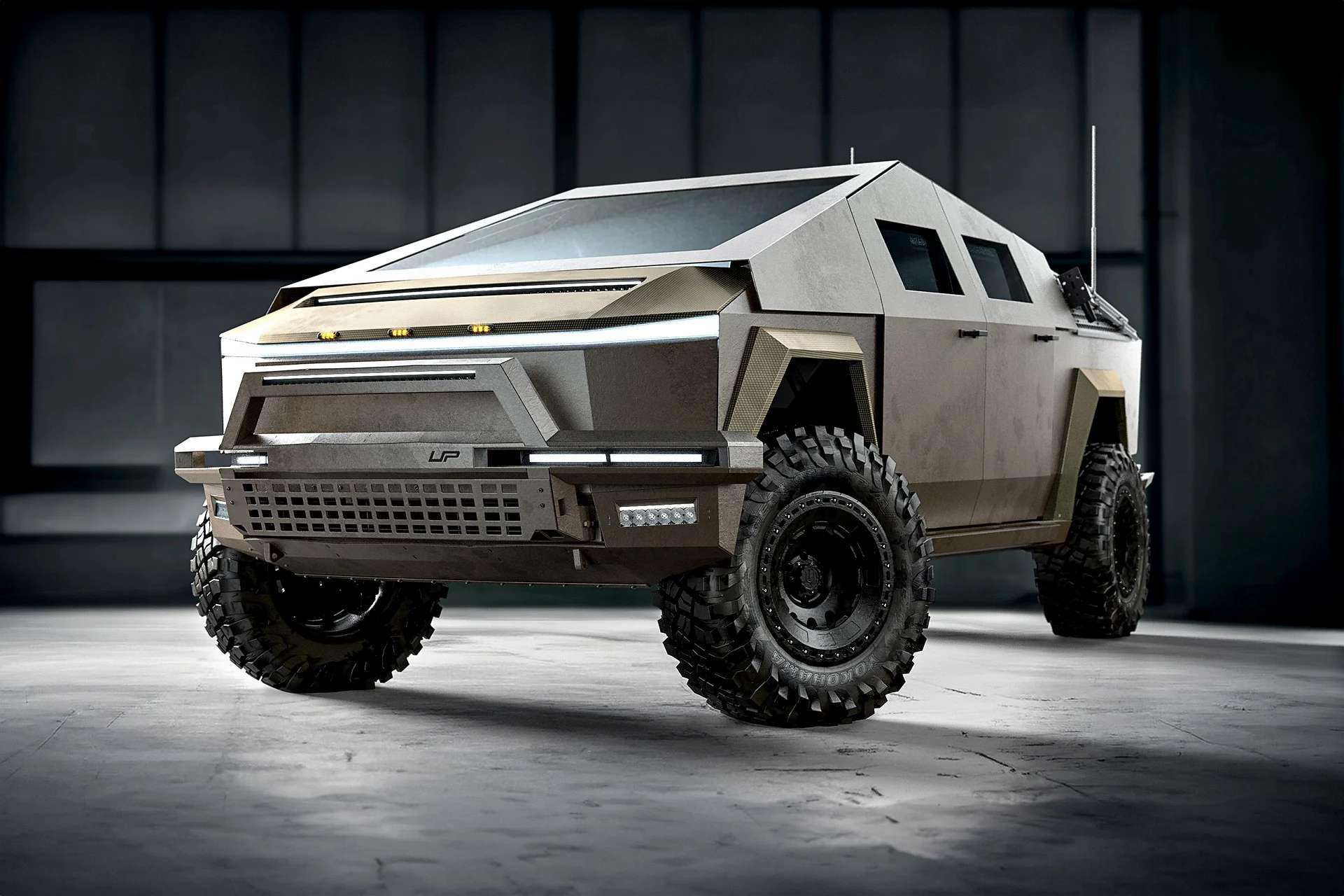
The Sting Protector variant builds on the Up Invincible off-road package by adding bolt-on, bolt-off external offset steel armor plating to withstand 7.62mm assault rifle rounds, offering protection from key angles in moderate-threat environments. (Picture source: Archimedes Defense)
The Sting package does not modify the Cybertruck's existing powertrain, but the inclusion of the AMP Drive G125 genset in the frunk significantly enhances its off-grid capabilities. This feature allows the Cybertruck to operate independently of traditional charging infrastructure and provides the ability to assist other electric vehicles in need of charging.
The introduction of the Sting package for the Tesla Cybertruck by Archimedes Defense and Unplugged Performance presents a new option for military applications, particularly relevant given recent developments such as Chechen leader Ramzan Kadyrov's deployment of a modified Cybertruck equipped with a 12.7mm heavy machine gun to Ukraine. Furthermore, the inclusion of the AMP Drive G125 genset in the Sting package is particularly pertinent in conflict zones where charging infrastructure may be unreliable or damaged. The Sting APC variant, which offers protection against IEDs, mines, and heavy machine gun fire, could align with the requirements of such operations.
The Tesla Cybertruck, introduced in 2019, is Tesla's entry into the pickup truck market. The design, influenced by futuristic and sci-fi elements, features a stainless steel exoskeleton and angular lines, which have been compared to the vehicles seen in "Blade Runner." Initially planned for production in 2021, the Cybertruck faced multiple delays, with the first units being delivered in late 2023. The truck's design and concept challenge conventional pickup manufacturing practices, integrating advanced technology within an electric vehicle framework.

The Tesla Cybertruck's windows, described as "armored glass," are said to be designed to withstand significant impacts. However, during its initial reveal, the windows shattered in a live demonstration, leading to skepticism about these claims. (Picture source: Motortrend)
Weighing 3,104 kg, the Cybertruck is offered in several variants. The top "Cyberbeast" model features a tri-motor all-wheel-drive system, providing 630 kW (845 horsepower) and accelerating from 0 to 100 km/h in 2.6 seconds. This version has a towing capacity of 4,990 kg and a range of approximately 515 km, extendable to over 700 km with an optional range extender. The vehicle measures 5.68 meters in length, 2.41 meters in width, and 1.74 meters in height. It also introduces a 48-volt electrical system, which differs from the industry-standard 12 volts, potentially influencing future vehicle designs.
The Cybertruck has been at the center of various controversies, especially regarding its safety and durability claims. The stainless steel exoskeleton is marketed as highly resistant to damage, and its windows, described as "armored glass," are designed to withstand significant impacts. However, during its initial reveal, the windows shattered in a live demonstration, leading to skepticism about these claims. Additionally, the truck's design has raised concerns about pedestrian safety due to its sharp angles and large size, which could pose higher risks in pedestrian collisions compared to conventional trucks. Despite these issues, Tesla states that the Cybertruck complies with all necessary safety standards and includes advanced features like a hospital-grade HEPA filter and a suite of driver assistance technologies.

The Tesla Cybertruck, in its "Cyberbeast" variant, features a tri-motor all-wheel-drive system, providing 630 kW (845 horsepower) and accelerating from 0 to 100 km/h in 2.6 seconds. Furthermore, this version has a towing capacity of 4,990 kg and a range of approximately 515 km, extendable to over 700 km with an optional range extender. (Picture source: Wikipedia)
- Details
- Written by: Vandenbosch
- Category: 2024
- Hits: 2404
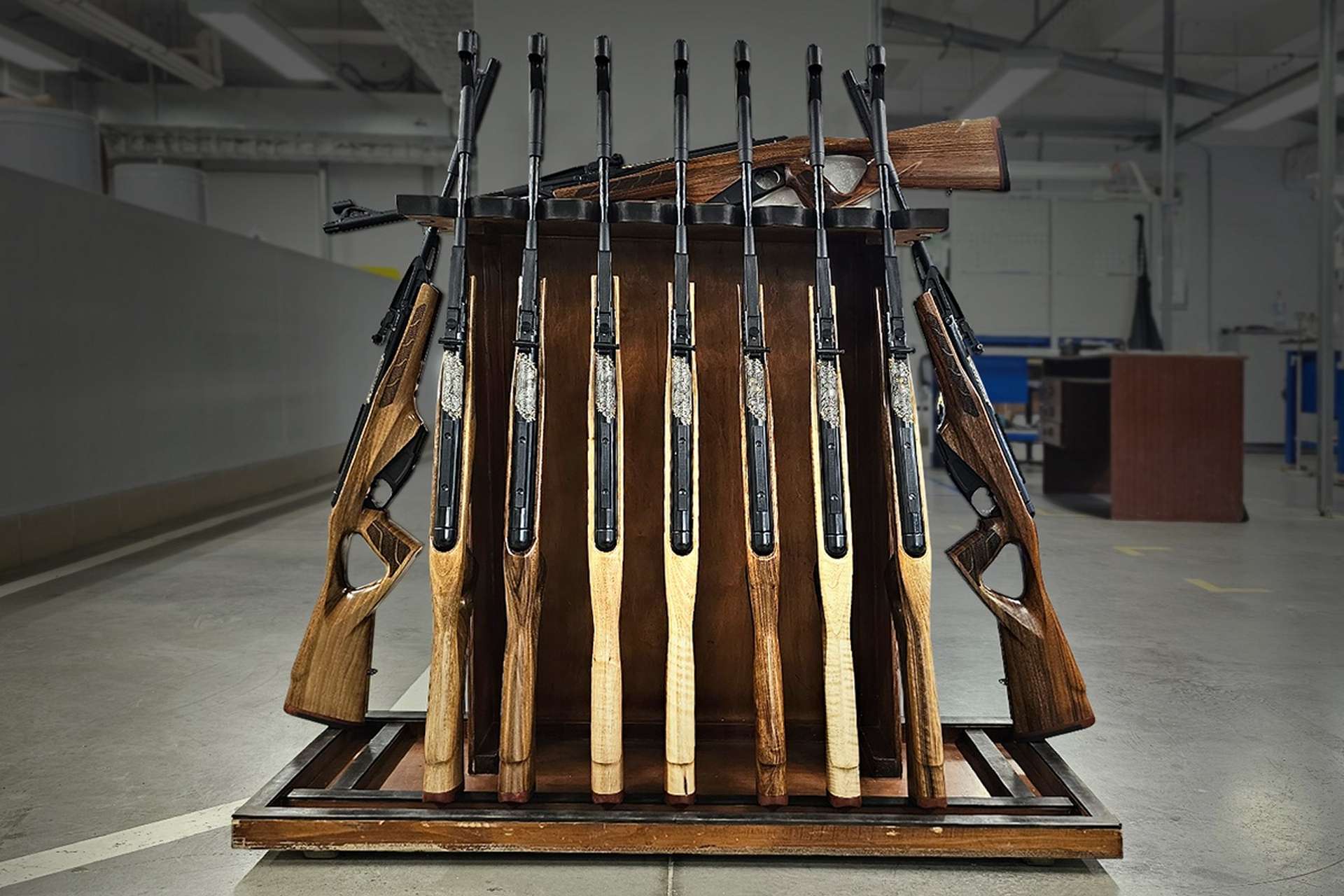
The Izhevsk Mechanical Plant (JSC IMZ) has recently introduced a limited edition of MP-512 air rifles, titled "Hunting Dogs," featuring highly refined artistic engravings. This exclusive series, consisting of only ten rifles, stands out with unique depictions of hunting dogs on each weapon, crafted using the armor engraving technique enriched with precious metals.
Follow Army Recognition on Google News at this link
The MP-512 "Hunting Dogs". (Picture source: IMZ)
Each rifle in the "Hunting Dogs" series is produced as a one-of-a-kind piece. In addition to their exceptional design, these rifles come with a certificate of authenticity, detailing the names of the designer, engraver, and wood carver involved in their creation. This certificate also includes the individual number of the firearm and an image of the customized engraving, further emphasizing the exclusivity of this collection.
The shooting accuracy of each rifle has been enhanced and verified through rigorous testing. Additionally, the smoothness of the trigger is another feature that will appeal to shooting enthusiasts, offering a more fluid and enjoyable shooting experience.
For this special series, IMZ utilized the stock from the MP-161 "Manul" model, with a few subtle modifications. The stock is made from high-quality walnut, a wood known for its strength and noble grain. This wood is then coated with drying oil or varnish, which highlights the natural beauty of the wood grain. This choice of materials gives each rifle a look that is both elegant and robust, perfect for hunting enthusiasts and admirers of fine firearms.
The rifles are also equipped with a dovetail rail, which allows for the secure attachment of optical devices such as collimator sights. Additionally, the stock is adorned with an original reticle pattern, laser-engraved, adding a touch of modernity to the classic aesthetic of the rifle.
The "Hunting Dogs" series is not only a technical and artistic achievement but also a celebration of IMZ's history. This special edition of the MP-512 rifle has been named "version 75" in honor of the 75th anniversary of the production of hunting weapons at the Izhevsk Mechanical Plant, which will be celebrated in 2024.
According to Oleg Sapozhnikov, Commercial Director of JSC Izhevsk Mechanical Plant, this exclusive series is a testament to Izhmash's ongoing commitment to excellence in artistic engraving. "Izhmash continues to maintain and develop its expertise in the field of artistic engraving. This second series of exclusive rifles is the best proof of that. In the near future, we plan to launch another limited edition, titled 'Seasons,' which will undoubtedly appeal to the most discerning users," he stated.
In addition to the "Hunting Dogs" series, IMZ has other projects in the works. The upcoming release of the limited edition "Seasons" is expected to attract the attention of fine firearm enthusiasts, with thematic engravings representing the four seasons. Each rifle in this series will also be a unique piece, designed to reflect art and nature in their purest form.

These rifles come with a certificate of authenticity, detailing the names of the designer, engraver, and wood carver involved in their creation. (Picture source: IMZ)
Read more: Russia Unveils Limited Edition Hunting Dogs Rifles with Artistic Engravings

- Details
- Written by: Triffaux
- Category: 2024
- Hits: 1942
According to an article published by the Spanish newspaper InfoDefensa on August 19, 2024, the Chilean army is enhancing its operational capabilities in the challenging regions of the country's northern areas, particularly in the border zone of Colchane. As part of this effort, units from the Land Forces have been trained to operate the Outlander 650 ATVs, all-terrain vehicles known for their versatility and speed on rugged, desert-like, and high-altitude terrains.
Follow Army Recognition on Google News at this link
Can-Am Outlander 650 All-Terrain Vehicle (Picture source: Chili MoD)
The 2nd Armored Hunter Brigade, part of the VI Army Division, shared images and details of this training on their social media platforms. The specialized course aimed to equip soldiers with the necessary skills to operate these ATVs both in lowlands and on high plateaus. The soldiers underwent theoretical training before applying their knowledge in practical scenarios, including crossing watercourses and navigating steep terrain, challenging the drivers in realistic conditions.
In addition to their role in technical reconnaissance missions and supporting commanders' planning, these ATVs are intended for future use in surveillance and protection tasks in the Colchane region. This area, located at the northern border of the country, holds strategic importance for Chile, and the use of the Outlander 650 ATVs is expected to enhance the army's operational capabilities in the area.
Through this training, the Chilean army continues to adapt to the demands of its missions in complex environments, maximizing the efficiency and mobility of its units on the ground.
The Can-Am Outlander 650 is a versatile and robust ATV designed for challenging terrains. It is powered by a 649.6cc Rotax V-Twin engine that delivers 62 horsepower, providing significant power for off-road applications. The vehicle features a selectable 4x2/4x4 drivetrain, allowing for flexibility in various driving conditions. With a ground clearance of 11 inches (279 mm) and a towing capacity of up to 1,650 lbs (750 kg), the Outlander 650 is well-suited for both rugged landscapes and utility tasks.
The suspension system includes a front arched double A-arm with 9.2 inches (233 mm) of travel and a rear Trailing Torsional Independent (TTI) suspension, which ensures stability and comfort over uneven terrain. Additionally, the ATV is equipped with dynamic power steering (DPS) for better handling, especially in rough conditions.
The vehicle's dimensions include a length of 91 inches (231 cm) and a width of 48 inches (122 cm), making it a compact yet capable option for both recreational and operational use. Other features include digital instrumentation, halogen headlights, and a fuel capacity of 5.4 gallons (20.5 liters), making it a practical choice for long rides in remote areas.
Read more: Chilean Army Enhances Border Operations with Outlander 650 All-Terrain Vehicle Training

- Details
- Written by: V.Saint
- Category: 2024
- Hits: 2663
The U.S. State Department has decided to approve a possible foreign military sale to the Danish government of Excalibur projectiles and related logistic and program support elements for an estimated cost of $121 million. The Defense Security Cooperation Agency issued the required certification today, informing Congress of this potential sale.
Follow Army Recognition on Google News at this link
Excalibur 155mm shell (Picture source: US DoD)
The 155 mm Excalibur shell is a precision-guided artillery munition, developed jointly by Raytheon and BAE Systems Bofors. This advanced projectile is designed to be used with standard 155 mm artillery guns, offering guided accuracy through GPS technology. This feature allows it to strike targets with extreme precision, thus minimizing collateral damage and maximizing impact effectiveness. Capable of reaching targets up to 40 to 50 kilometers away, the Excalibur is available in several versions that are tailored for various missions, including targeting moving targets and penetrating reinforced air defenses. The shell is used by several armed forces around the world, including the United States, Canada, and many NATO countries, and it has also been supplied to Ukraine during the first year of the war.
The Danish government has requested the purchase of three hundred and thirty-nine (339) M982A1 Excalibur tactical projectiles. Also included are Portable Electronic Fire Control Systems (PEFCS); Enhanced Platform Integration Kits (iPIK); Simple Key Loaders (SKL); Pullers; Surface Danger Zones (SDZ); training for new equipment; spare parts; U.S. government technical assistance; technical data; repair and return services; and other related elements of logistic and program support. The estimated cost is $121 million.
This proposed sale will enhance the foreign policy and national security objectives of the United States by contributing to the security of a NATO ally that is a force for political stability and economic progress in Europe. The proposed sale will improve Denmark's capability to deal with current and future threats by providing precision equipment and increasing the accuracy of its brigades' initial strikes. Denmark will have no difficulty integrating these articles and services into its armed forces.
Read more: Denmark will buy 300 Excalibur shells for high precision strike
- Details
- Written by: Halna du Fretay
- Category: 2024
- Hits: 4565
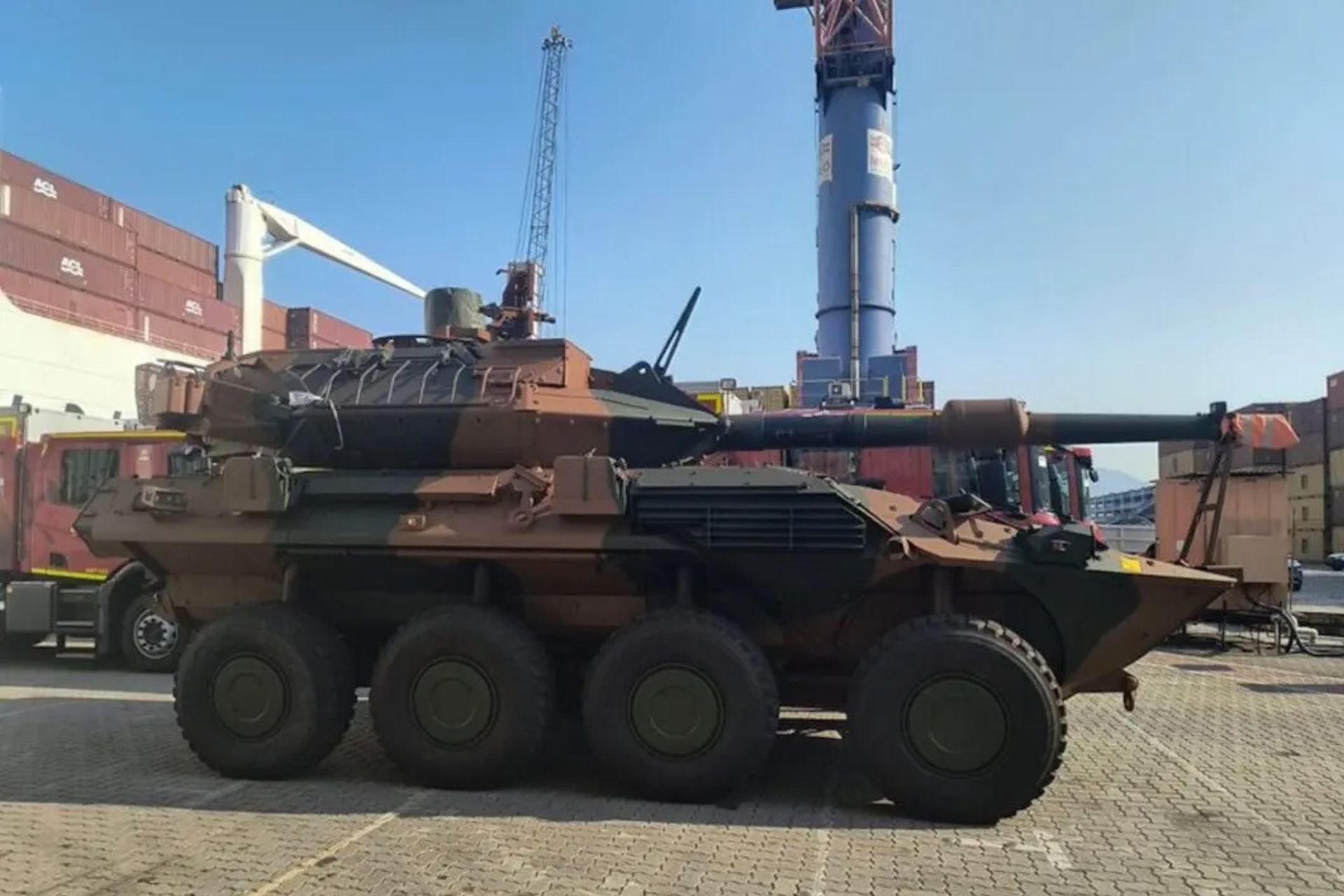
On August 17, 2024, Brazil received the first of the Centauro II 8×8 armored combat vehicles, acquired through direct contracting under RFP COLOG No. 01/2022, as reported by Zona-Militar. This vehicle is part of the Cavalry Armored Combat Vehicle – Medium on Wheels 8×8 (VBC Cav MSR 8×8) project, which is aligned with the Army’s Strategic Program for Armored Forces (Prg EE F Bld). This delivery represents a key milestone for the Brazilian Army, which aims to test and evaluate this new acquisition before proceeding with the purchase of a complete fleet.
Follow Army Recognition on Google News at this link
The Centauro II also features a redesigned hull and turret that incorporate additional armor and technical upgrades, achieving AEP 55-level protection (Picture source: Brazilian Army)
In June 2024, the vehicle was held by German authorities at the port of Hamburg due to an alleged lack of a transport guide, raising concerns within Brazilian military circles. Some speculations even pointed to potential diplomatic elements behind these bureaucratic issues. Despite this setback, the second vehicle is expected to arrive in the coming weeks, and the entire initial batch will undergo testing before the signing of the main contract for the acquisition of 96 armored vehicles, with an estimated cost of 900 million euros. Originally, the Brazilian Army intended to purchase a total of 221 armored vehicles.
The VBC Cav MSR 8×8 project took shape on October 7, 2022, when the Brazilian Army, through the Logistics Command (COLOG) and the Directorate of Material (DMat), published a shortlist of three pre-selected proposals for its new cavalry armored combat vehicle. The competitors included the Centauro II, proposed by the Iveco–OTO Melara Consortium (CIO), the LAV 700 AG from General Dynamics Land Systems – Canada (GDLS-C), and the T1-BR 105 mm from North Industries Group Corp (Norinco). The Italian consortium Iveco–OTO Melara won the tender by being the only one to offer a 120 mm cannon (Leonardo HITFACT MkII turret), while the other competitors proposed 105 mm cannons. The selection criteria included technical aspects, price, industrial offsets, and integrated logistics support.
One important criterion, which led to the elimination of some proposals and the withdrawal of some companies during the Request for Information (RFI) phase, was the requirement that the complete system, including the vehicle and turret, already be in series production. The Italian CIO consortium, composed of Leonardo, IDV, and Oto Melara, oversees the full development of the Centauro II. This vehicle is characterized by its powerful armament, advanced sensor systems, and adaptability to various environments, enhancing its appeal in the international defense market.
The Centauro II was prominently featured during the Italian Republic Day parade on June 2 in Rome, highlighting its growing role in European defense strategies and its initial operational deployment in Bulgaria to strengthen NATO's southern flank. Brazil's decision to proceed with the purchase of 96 Centauro II vehicles, following an initial evaluation phase, reflects confidence in this technology. Furthermore, the vehicle will undergo electromagnetic compatibility testing in Italy before being shipped to Brazil, ensuring smooth integration into the Brazilian armed forces.
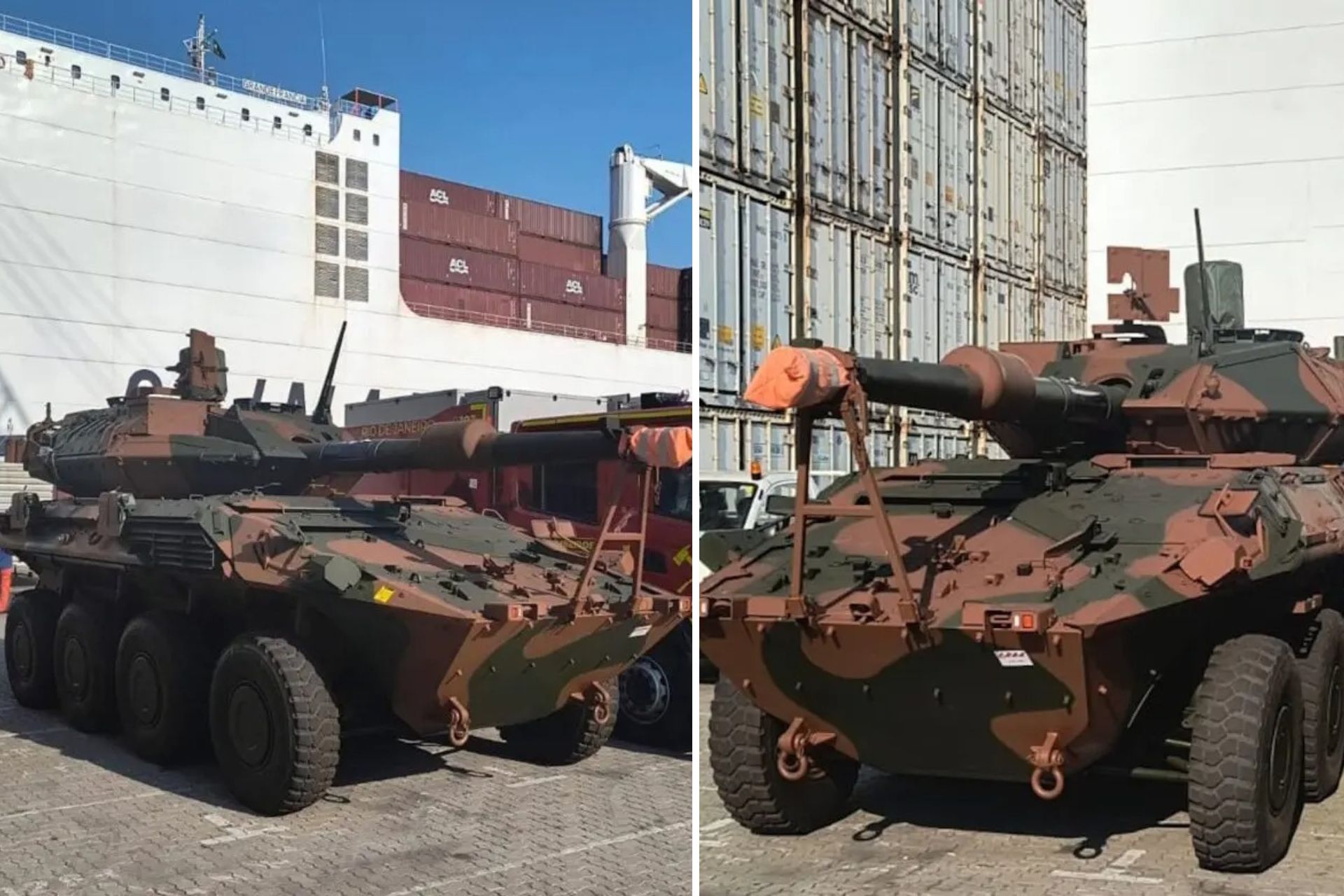
The Centauro II represents a significant advancement over its predecessors, the well-known Centauro 105 and 120 mm vehicles, which were the world’s first 8x8 wheeled anti-tank vehicles equipped with high-pressure guns (Picture source: Brazilian Army)
This potential partnership between Brazil and Italy could not only bolster Brazil's military capabilities but also strengthen diplomatic and commercial ties between the two nations. Simultaneously, the CIO consortium continues discussions to expand its markets in Europe, Africa, and Asia, further affirming the global reach and prestige of the Italian defense industry.
The Centauro II represents a significant advancement over its predecessors, the well-known Centauro 105 and 120 mm vehicles, which were the world’s first 8x8 wheeled anti-tank vehicles equipped with high-pressure guns. Equipped with a third-generation 120 mm / 45 caliber gun, the Centauro II includes an integrated muzzle brake and a semi-automatic loading system. It is capable of firing the latest 120 mm NATO-standard armor-piercing fin-stabilized discarding-sabot (APFSDS) rounds, as well as multi-purpose ammunition.
The vehicle offers substantial ammunition storage, with 12 ready-to-fire rounds for the main gun, 1,000 rounds for the 7.62 mm gun, 400 rounds for the 12.7 mm gun, and 96 grenades for the grenade launchers. To enhance its defensive capabilities, the turret supports the installation of a Hitrole Light remote-controlled weapon station (RCWS), which can be equipped with 7.62 mm or 12.7 mm machine guns and 40 mm automatic grenade launchers, suitable for various operational scenarios beyond conventional warfare.
The Centauro II also features a redesigned hull and turret that incorporate additional armor and technical upgrades, achieving AEP 55-level protection. This design protects the crew against direct fire, anti-tank mines, improvised explosive devices (IEDs), and the latest kinetic munitions. For added safety, the vehicle includes a dedicated anti-blast compartment for reserve ammunition and additional storage spaces. Its advanced onboard systems include nuclear, biological, and chemical (NBC) protection, firefighting equipment, and anti-explosion mechanisms. Additionally, the vehicle is equipped with a laser warning system to alert the crew to potential threats.
Read more: Brazil Receives First Centauro II 8×8 Armored Vehicle for Testing and Evaluation

- Details
- Written by: Jérôme Brahy
- Category: 2024
- Hits: 4441
At the recent Army 2024 exhibition, the Russian company Remdiesel presented a remote-controlled variant of the MGTT-LB, a multi-purpose tracked vehicle based on the MT-LB platform. The MT-LB, originally introduced in 1964 during the Soviet era, has been widely utilized in various military roles, particularly for logistical tasks such as towing artillery systems and transporting or towing trailers with a gross weight of up to 6,500 kilograms.
Follow Army Recognition on Google News at this link
Designed to transport a crew of two people and a landing force of eight, the MGTT-LB has a payload capacity of 2,000 kilograms and a towing capacity of up to 7,000 kg. (Picture source: Telegram/infantmilitario)
The MGTT-LB is manufactured by Remdiesel, located in Nizhnekamsk, Republic of Tatarstan. This variant is part of an ongoing effort by Remdiesel to update and enhance the MT-LB platform. The MGTT-LB, alongside another modification known as the MGSh-LBU, was first introduced at the Army 2020 forum. These vehicles are part of a broader initiative aimed at modernizing the vehicle fleet of the Russian Ground Forces. The development of the MGTT-LB has focused on improving protection, command control, load capacity, firepower, and ergonomics. The vehicle is lighter by 800 to 900 kilograms compared to the original MT-LB, which contributes to its mobility.
Designed to transport a crew of two people and a landing force of eight, the MGTT-LB has a payload capacity of 2,000 kilograms and a towing capacity of up to 7,000 kg. It is powered by a diesel eight-cylinder engine, the 740.51-320 from KamAZ, which produces 320 horsepower. This engine allows the vehicle to achieve a maximum speed of 65 kilometers per hour on paved roads, while its speed is limited to 40 kilometers per hour when operated remotely.
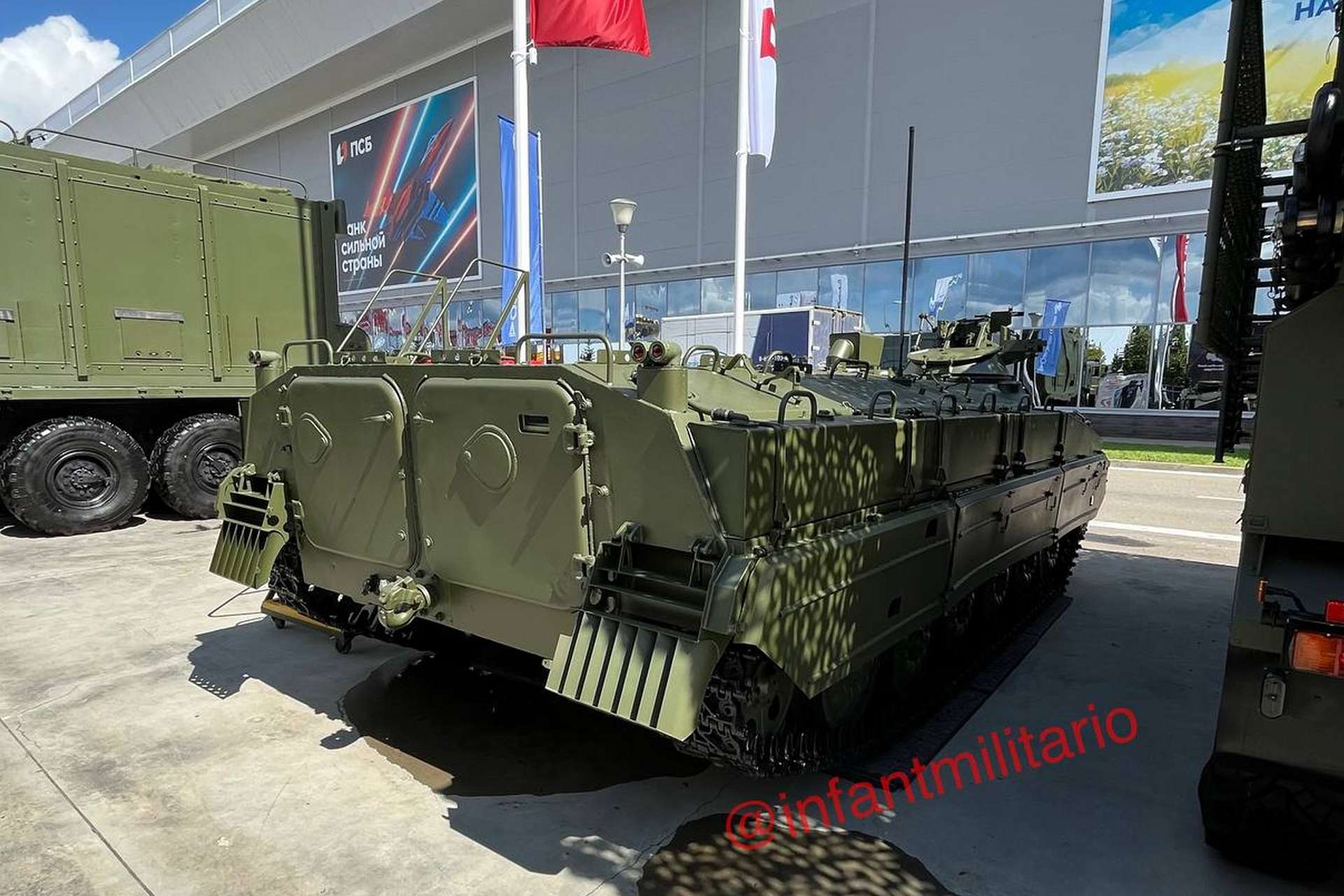
The KamAZ 740.51-320 engine allows the MGTT-LB to achieve a maximum speed of 65 kilometers per hour on paved roads, while its speed is limited to 40 kilometers per hour when operated remotely. (Picture source: Telegram/infantmilitario)
The MGTT-LB is capable of covering distances up to 850 kilometers on highways and has a range of 650 to 700 kilometers on dry soil. It can handle slopes with an incline of up to 35 degrees, side slopes of up to 25 degrees, traverse water obstacles up to 1.5 meters deep, and overcome vertical obstacles up to 0.55 meters high. The vehicle has a curb weight of 10,500 kilograms and a full mass of 12,500 kilograms. Its tracks exert a ground pressure of 0.415 kilograms per square centimeter, enabling it to traverse soft ground.
The MGTT-LB may also serve as a platform for new weapons systems across various branches of the Russian Ground Forces. The introduction of this vehicle contributes to the ongoing development of military transport and logistical support systems, with potential applications in a range of operational environments.
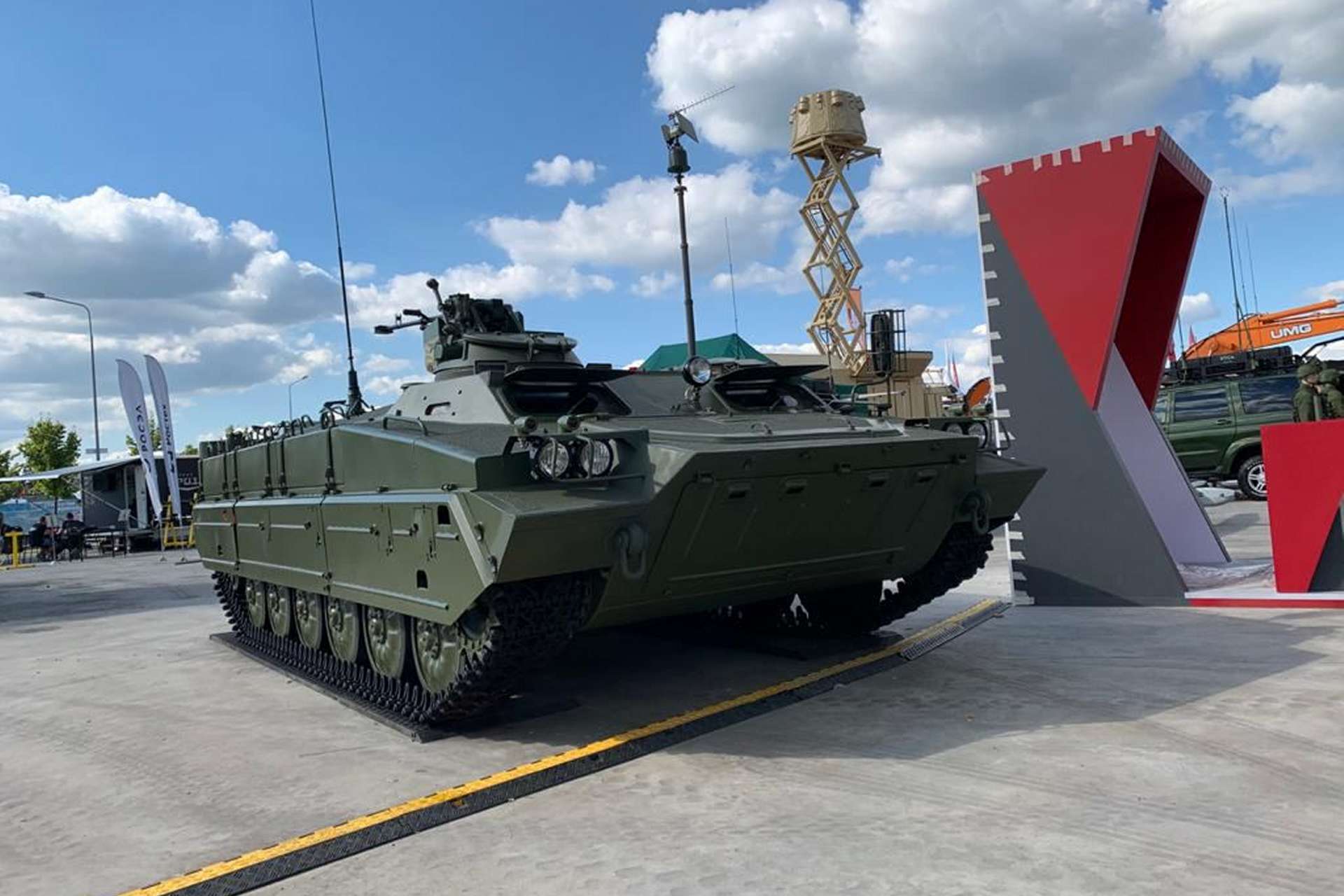
The MGTT-LB, alongside another modification of the MT-LB known as the MGSh-LBU, was first introduced at the Army 2020 forum. (Picture source: Russian social media)

- Details
- Written by: Vandenbosch
- Category: 2024
- Hits: 3425
Oshkosh Defense LLC, a major player in the defense industry, has secured a significant contract valued at $1.54 billion from the U.S. Army, dated August 20, 2023. This contract, awarded by the Army Contracting Command based at Detroit Arsenal, Michigan, extends Oshkosh's longstanding partnership with the U.S. military. The contract involves the production, modernization, and maintenance of the Family of Heavy Tactical Vehicles (FHTV), which plays a crucial role in the U.S. Army's logistics and mobility capabilities.
Follow Army Recognition on Google News at this link
HEMTT A4 Heavy Expanded Mobility Tactical Truck A4. (Picture source: Oshkosh)
The Family of Heavy Tactical Vehicles includes several essential assets, such as the Heavy Expanded Mobility Tactical Truck (HEMTT), Palletized Load System (PLS) trucks and trailers, and the Heavy Equipment Transporter (HET). These vehicles are vital for transporting supplies, equipment, and personnel across difficult terrains, making them indispensable for military operations both domestically and internationally.
The contract is structured as a fixed-price agreement with an economic-price-adjustment clause, allowing Oshkosh Defense to adapt to economic fluctuations over the contract's duration. This flexibility is crucial given the long-term nature of the contract, which is expected to extend until August 19, 2029.
Oshkosh Defense has a solid track record with the U.S. Army, having produced more than 35,800 HEMTTs, 8,500 PLS vehicles, and 4,600 HETs. Additionally, the company has successfully recapitalized thousands of these vehicles, extending their service life and ensuring they remain effective in modern combat scenarios. The recapitalization process involves upgrading older vehicles with the latest technology, enhancing their performance, reliability, and safety features.
One of the standout aspects of the FHTV program is its focus on modernization. The vehicles are designed with a flexible architecture that allows for the integration of advanced technologies, such as Condition-Based Maintenance (CBM), Advanced Driver Assistance Systems (ADAS), and even autonomous capabilities. These innovations aim to reduce maintenance costs, improve operational efficiency, and enhance soldier safety in the field.
Although Oshkosh was the sole bidder for this contract, the company's deep experience and established partnership with the Army likely made it the preferred choice. This agreement not only strengthens Oshkosh's position in the defense market but also ensures that the U.S. military continues to receive high-quality, mission-critical vehicles to maintain operational readiness.
As the U.S. Army continues to modernize its fleet, contracts like this one with Oshkosh Defense are essential for maintaining military competitive edge. The vehicles provided under this contract will be instrumental in supporting a wide range of missions, from routine logistics operations to complex combat scenarios. Furthermore, the focus on modernization ensures that these vehicles will remain relevant in an era of rapid technological advancements.

- Details
- Written by: Administrator
- Category: 2024
- Hits: 13579
Russia's defense industry unveiled its new BTR-22 8x8 Armored Personnel Carrier (APC) at the Army-2024 defense exhibition held in Moscow. This vehicle is set to replace the older BTR-82A model. It has been designed to meet the evolving demands of modern warfare, offering enhanced protection, mobility, and advanced electronic warfare capabilities.
Follow Army Recognition on Google News at this link
The new Russian-made BTR-22 8x8 armored personnel carrier vehicle was unveiled at Army-2024, a defense exhibition in Russia. (Picture source: Defense Market News Magazine)
The BTR-22 is specifically engineered to transport motorized rifle troops to the battlefield, providing them with fire support and the ability to transport military cargo and tow trailers. It offers comprehensive protection for both the combat crew and the equipment housed within the vehicle, shielding them from small arms fire, fragments from mines and shells, and the harsh conditions encountered in rough terrain operations.
Built on an 8x8 wheeled platform, the BTR-22 is amphibious, boasting a combat weight of 20 tons and accommodating a crew of 11 personnel. The vehicle features a high level of ballistic protection, rated to withstand B-32 bullets of 12.7 x 108 mm caliber, in accordance with Class 5 standards of the OTT 9.1.12.1-2022. The BTR-22 is armed with a 30 mm 2A72 automatic cannon, capable of firing up to 330 rounds per minute, with an effective range of up to 1,000 meters. Additionally, it is equipped with a 7.62 mm PKTM coaxial machine gun, further enhancing its firepower. The vehicle’s ammunition loadout includes 300 rounds for the main gun, ensuring it remains effective in sustained combat scenarios. The gunner benefits from a PNK combined two-channel day-night optical sight, which includes a thermal imager channel and a laser range finder, allowing for accurate targeting in various combat conditions.
One of the standout features of the BTR-22 is the integration of the LGSh-689 electronic warfare system, which was unveiled by Russia in mid-2024. This system is designed to counter the increasing threat posed by First-Person View (FPV) drones on the battlefield by jamming the frequencies these drones typically use. The inclusion of this jamming system highlights Russia’s strategic shift towards prioritizing electronic warfare in response to modern battlefield threats.
Additionally, to respond to the new threats of the modern battlefield, especially drones, the BTR-22 is fitted with wire cage armor all around the hull. This additional armor provides enhanced protection against the explosive impact of drones and other airborne threats, ensuring the vehicle's survivability in increasingly complex combat scenarios.
The BTR-22 is powered by a diesel engine rated at 360 horsepower, paired with a 5-speed mechanical gearbox and a 2-speed transfer case with a locking differential. This configuration ensures the vehicle’s robust mobility across diverse terrains. With a ground clearance of 475 mm, the BTR-22 can easily navigate rough landscapes and achieve a maximum road speed of 85 km/h, making it highly maneuverable in urban and rural environments. Its torsion-bar-based independent suspension system further enhances its ability to traverse difficult terrain while maintaining stability and comfort for the crew.
The vehicle also incorporates significant mine protection, designed to withstand the detonation of up to 6 kg of TNT under its wheels or bottom, offering crucial defense against improvised explosive devices (IEDs) and landmines, which are common in many conflict zones. In addition to its role as an armored personnel carrier, the BTR-22 is expected to serve as the foundation for a family of combat, technical, and logistical support vehicles within the Russian Armed Forces. This versatility underscores the BTR-22’s potential to be adapted for a variety of mission requirements.
The BTR-22 represents a significant upgrade in Russia’s military capabilities. By combining traditional armored protection with cutting-edge electronic warfare systems, the BTR-22 is well-equipped to meet the challenges of modern warfare, particularly in response to the growing use of drones and other advanced threats on the battlefield. This makes the BTR-22 a formidable addition to the Russian military’s inventory, ensuring it remains a crucial asset in future conflicts.
Read more: Russia Unveils BTR-22 8x8 APC to Replace Aging BTR-82 Series Armored Personnel Carriers

- Details
- Written by: V.Saint
- Category: 2024
- Hits: 3402
As part of the ongoing conflict in Ukraine, a Ukrainian artillery brigade commander in the east of the country recently revealed to the Financial Times that the reallocation of Ukrainian military resources to the north, particularly toward Russia's Kursk region, has contributed to the Russian forces' advances in the Donetsk region. This strategic decision, though necessary for certain offensive operations, has impacted the defense of Ukraine's front lines.
Follow Army Recognition on Google News at this link
A Ukrainian serviceman prepares artillery shells for US-supplied M777 (Picture source: Kateryna Klochko)
According to the commander, his troops are now forced to ration ammunition for their guns, a situation that hasn't occurred since U.S. military aid to Ukraine was suspended by Congress. The shortage of ammunition is partly due to its reallocation to the Kursk operation, leaving Ukrainian forces in the east of the country under-equipped to resist Russian offensives.
it's reported that even before the Kursk operation began, defenses in the Donetsk region were already showing signs of weakness. Since then, Russian forces have continued to break through Ukrainian lines, capturing villages and towns, bringing Moscow closer to its goal of full control over the Donetsk region.
The Kursk operation, which involved the mobilization of over 10,000 Ukrainian soldiers, including elite troops and mechanized brigades, required the redeployment of forces from eastern Ukraine. This redeployment included units originally intended to reinforce defenses and provide relief to troops on the Donetsk and Kharkiv fronts. However, it left the remaining troops in these regions without adequate reinforcements and regular rotations, increasing their fatigue and reducing their effectiveness on the battlefield.
The losses in military equipment during the Kursk operation were also significant for Ukraine, with 51 pieces of equipment destroyed, including vehicles provided by Germany and the United States. In comparison, Russia reportedly lost 27 pieces of military equipment.
Between August 19 and 20, 2024, three European countries announced new aid packages to Ukraine.
On August 19, the Danish government announced a new military aid program worth $115 million for Ukraine. This program aims to address Ukraine's short- and long-term defense needs. The funds will be used to purchase new military equipment from Ukraine's defense industry and international partners. Danish Foreign Minister Lars Lokke Rasmussen stated that Denmark is taking a new step with its 20th military aid package, which will provide Ukraine with much-needed military equipment to make a difference against Russia's aggressive war.
On August 19, German government spokesperson Wolfgang Buchner stated that Germany will provide Ukraine with four additional IRIS-T air defense systems of various ranges by the end of the year. In addition to the IRIS-T systems, Germany will also deliver 10 Gepard self-propelled anti-aircraft guns, 16 self-propelled howitzers, 10 Leopard main battle tanks, drones, and thousands of artillery shells and tank munitions. Buchner also mentioned that in 2025, Germany will deliver 20 self-propelled howitzers, 20 Marder infantry fighting vehicles, 37 Leopard main battle tanks, five Gepard self-propelled anti-aircraft guns, six additional IRIS-T systems, and thousands of additional artillery shells and munitions.
On August 20, Czech Defense Minister Jana Černochová announced that the Czech Republic will use part of the revenue from frozen Russian assets in the EU to purchase large-caliber ammunition for Kyiv. European countries hold about two-thirds of the $300 billion in Russian sovereign assets frozen after the outbreak of the full-scale war. While hesitant to outright confiscate the assets, the EU has developed a plan to use the exceptional profits to finance Ukraine's reconstruction and defense needs.

- Details
- Written by: Halna du Fretay
- Category: 2024
- Hits: 3401
On August 15, 2024, FN UK, a subsidiary of the FN Browning Group, announced a strategic partnership with the U.S.-based defense technology company True Velocity for the production of the .338 Norma Lightweight Medium Machine Gun (LWMMG) in the United Kingdom. This alliance represents a significant step in strengthening the UK defense industry, positioning FN UK as a key player in the manufacturing of military assault rifles and machine guns.
Follow Army Recognition on Google News at this link
This collaboration aligns with the UK’s Defence Industrial Strategy, with FN UK emphasizing that the weapon system was developed with input from UK military customers, highlighting the importance of local production (Picture source: FN UK)
Under this agreement, FN UK will produce and assemble components of True Velocity’s LWMMG at its manufacturing facility in Slade Green, Kent. This decision follows a similar partnership between True Velocity and FN America, LLC, indicating a broader international collaboration within the FN Browning Group. The .338 Norma LWMMG is an advanced weapon system featuring a recoil-mitigation design, offering extended range and improved controllability while reducing weight. These characteristics make it an attractive option for military forces seeking a balance between the range of a .50-caliber machine gun and the portability of a 7.62mm system.
This collaboration aligns with the UK’s Defence Industrial Strategy, with FN UK emphasizing that the weapon system was developed with input from UK military customers, highlighting the importance of local production. The .338 Norma LWMMG has garnered interest from military units in the UK, the U.S., and other Allied countries due to its superior terminal performance and lightweight profile.
In March 2024, the U.S. Department of Defense selected True Velocity’s .338 Norma LWMMG for continued evaluation in a military program aimed at bridging the performance gap between the .50-caliber M2 machine gun and the 7.62x51mm NATO-chambered M240 machine gun. FN America, LLC, will be the primary manufacturer of this weapon in the United States, while FN UK will lead production in the UK.
Craig Etchegoyen, Chief Intellectual Property Officer at True Velocity, emphasized the transformational impact of this weapon system on the battlefield. Collaboration with FN, known for its manufacturing expertise, ensures that U.S. and Allied military units will soon have access to this advanced combat capability.
FN America's production facility in Columbia, South Carolina, has been a cornerstone of U.S. military armament production, manufacturing over one million small arms for the U.S. Department of Defense. This includes the M4A1, M16A4, M249, and M240 machine guns, along with other critical firearms. The partnership with True Velocity builds on FN America's legacy by combining new technological designs with decades of manufacturing experience.
Jim Williams, Vice President of Military Programs at FN America, highlighted the synergy between True Velocity’s innovative designs and FN America’s manufacturing capabilities. He also noted the global expansion of this alliance through FN UK, reinforcing the growing relationship between the two companies.
This partnership represents FN UK’s ongoing growth and commitment to the UK defense sector, establishing the company as a key player in the production of military-grade weaponry. The .338 Norma LWMMG, recognized for its innovative recoil mitigation system, is expected to enhance the capabilities of forces requiring high-powered machine guns with superior accuracy and controllability.
In a statement, Chris Tedford, Chief Operating Officer at True Velocity, underscored that the LWMMG offers transformational capabilities on the battlefield by incorporating advanced technology to achieve greater range and lethality. With FN UK’s involvement, the weapon system will be manufactured and made available to warfighters in the UK and beyond, contributing to the broader goals of enhancing military readiness and strategic capabilities.
This global alliance between FN and True Velocity strengthens international collaboration, ensuring that military forces in the U.S., UK, and other allied nations will have access to next-generation weapons systems designed to meet the evolving demands of modern warfare.