

- Details
- Written by: V.Saint
- Category: 2024
- Hits: 4252










S-125 Neva "SA-3 Goa" surface-to-air missile system from Serbian Army 250th Air Defense Brigade on display after military exercise "Ušće 2011 (Picture source: wikimedia)
The S-125 Neva/Pechora, known as SA-3 Goa in NATO codification, is a ground-to-air defense system developed by the Soviet Union in the 1960s. Designed to defend against medium-altitude aerial targets, this system uses radar-guided missiles to intercept aircraft and cruise missiles. The Pechora-2D version of the S-125 Neva air defense system is a significant upgrade of the original model designed to extend its operational life and enhance its defensive capabilities. This upgrade, carried out by Russian companies, was first introduced in the 2000s and focuses on improving range, accuracy, and resilience to electronic countermeasures.
The Pechora-2D is distinguished by the integration of new radar and control equipment that allows better target detection and more accurate tracking, even in environments saturated with electronic jamming. It also features an improved guidance system that increases the likelihood of target destruction. Additionally, the system has been adapted for quicker deployment and autonomous operation, with mobile components that can be easily relocated in the face of imminent threats.

S-125 Neva "SA-3 Goa" surface-to-air missile system from Ukrainian Armed forces in Sumy oblast, detection by Russian UAV before strike (Picture source: Russian aerospace forces)
The S-125 Neva/Pechora air defense system was commissioned in the Soviet army in the early 1960s. Despite its shorter effective range and engagement altitude compared to earlier models, its two-stage design has shown greater efficiency against maneuverable and low-flying targets. The 5V24 (V-600) missiles achieve flight speeds of Mach 3 to Mach 3.5.
Despite their considerable age, the S-125 air defense systems have demonstrated relatively high effectiveness during the armed conflict in Syria. For instance, in 2015, a Syrian S-125 air defense missile downed an American MQ-1 Predator drone conducting a reconnaissance flight near the city of Latakia.
It is also reported that on August 15, 2024, Russian aviation conducted a series of particularly precise strikes on targets in the Sumy region. Specifically, in the cities of Shostka and Hlukhiv, Russian aviation destroyed several Ukrainian military installations and infrastructure, including temporary lodging points and accumulations of manpower and military equipment for the militants of the Kyiv regime. The density of aerial strikes on targets in the Sumy region significantly complicates the situation for units of the Ukrainian armed forces that have invaded the border area of the Kursk region.

Russian Strike of S-125 Neva "SA-3 Goa" surface-to-air missile system from Ukrainian Armed forces in Sumy oblast. (Picture source: Russian aerospace forces)
Read more: Russian aerospaces forces destroyed for first time rare 70 years old SAM system
- Details
- Written by: Vandenbosch
- Category: 2024
- Hits: 14809
At the International Military-Technical Forum Army-2024, Kalashnikov Concern, through its subsidiary Triada-TKO LLC, unveiled two innovative sets of military equipment developed from practical experiences gathered in Ukraine. These cutting-edge systems are designed to enhance the survival, protection, and operational efficiency of military personnel and armored vehicle crews.
Follow Army Recognition on Google News at this link
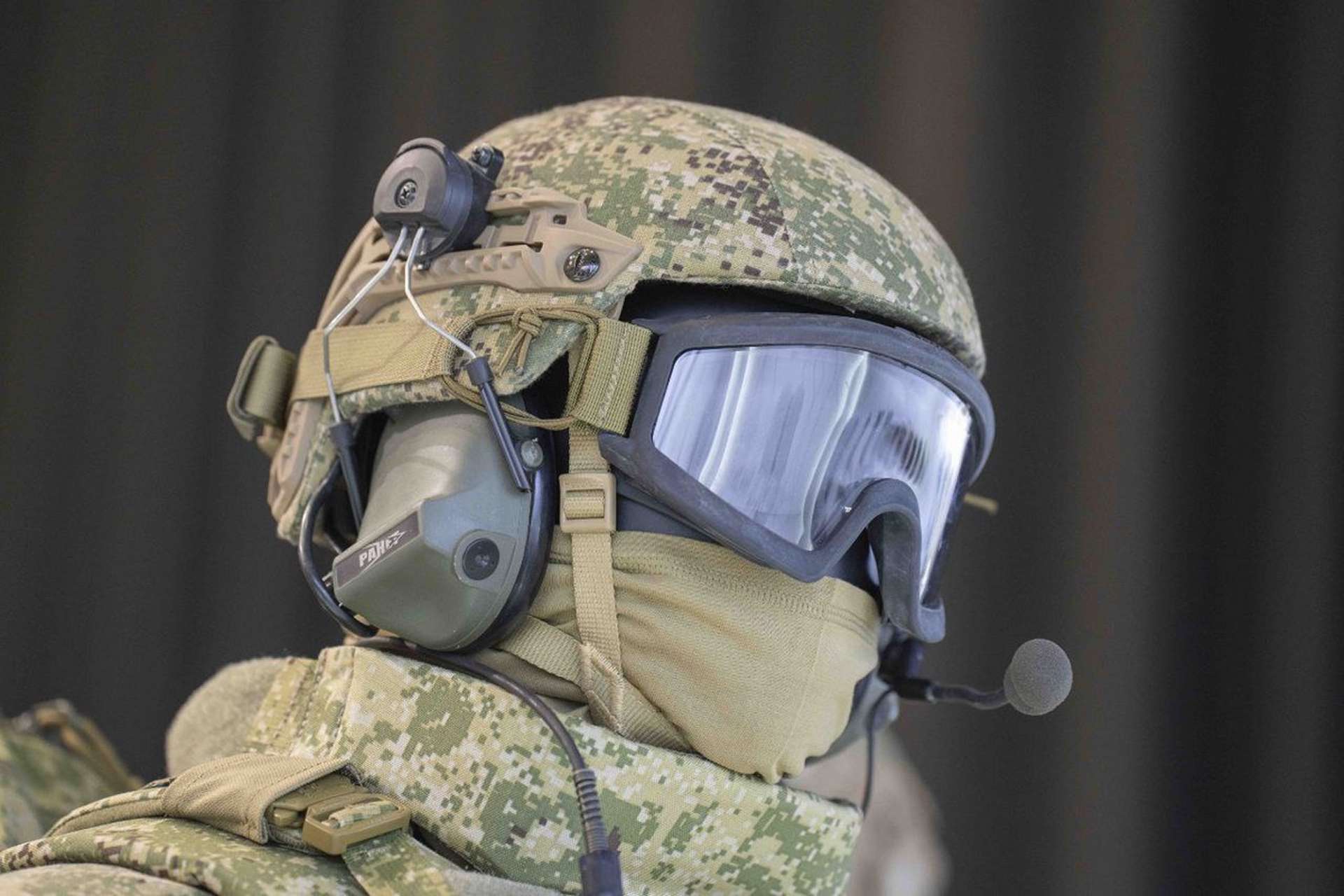
This helmet offers a higher protection class and improved compatibility with communication headsets while maintaining a weight comparable to the standard helmets in the Russian army.(Picture source: Kalashnikov)
Advanced Equipment for Military Personnel
One of the most notable presentations was a new set of equipment for military personnel. This comprehensive kit includes a bulletproof vest, an armored helmet, and a versatile backpack designed to work together harmoniously.
Bulletproof Vest:
The bulletproof vest features a weight distribution system with telescopic supports that effectively redistribute the load from the soldier’s shoulders to their waist and hips. This reduces fatigue and improves mobility, a crucial factor in prolonged combat scenarios. The vest also offers enhanced anti-fragmentation protection, ensuring better survival on the battlefield. Additionally, the vest is designed to be compatible with the included backpack, allowing for an integrated and efficient load-bearing system.
A major innovation is the vest's ability to combine three distinct products into one: a load-bearing vest, a general-purpose bulletproof vest, and a combat chest plate. For assault units, additional protective modules can be added upon request, increasing the body’s protection area by up to 70%.

The bulletproof vest features a weight distribution system with telescopic supports that effectively redistribute the load from the soldier’s shoulders to their waist and hips. (Picture source: Kalashnikov)
Helmet:
The head protection solution is represented by a new armored helmet. This helmet offers a higher protection class and improved compatibility with communication headsets while maintaining a weight comparable to the standard helmets currently in service. This ensures that soldiers do not have to compromise on comfort or protection during operations.
Backpack:
The new backpack, also included in the kit, is designed to meet the demands of modern combat. It combines three different products into one compact design and has already been accepted for supply. The backpack allows for autonomy for up to five days, even in harsh winter conditions. Its versatile design allows it to serve as an assault or patrol backpack, and it can comfortably transport specialized equipment, including ATGM platforms, grenade launchers, and drone containers. The backpack’s compatibility with the bulletproof vest further enhances the functionality and ease of use of the entire system.

The new backpack of the Russian army is designed to meet the demands of modern combat. (Picture source: Kalashnikov)
Equipment for Armored Vehicle Crews
In addition to infantry-focused equipment, Kalashnikov also introduced, for the first time, a specialized set of equipment for the crew members of military vehicles and combat armored vehicles.
Fire-Resistant Suits:
The kit includes fire-resistant suits for both summer and winter, designed to protect against open flames and secondary damaging elements. The summer suit has been improved to offer better comfort and enhanced ergonomic features, ensuring better performance in hot environments. The winter suit, in turn, offers protection from precipitation, and when paired with fire-resistant underwear, provides superior protection in cold conditions.

The Fire-Resistant Suits at Army 2024. (Picture source: Kalashnikov)
Additional Protective Gear:
The kit also includes a bulletproof vest, a helmet, and fire-resistant gloves, all designed to work together to provide comprehensive protection for vehicle crew members. This ensures that crews are protected from both the immediate dangers of combat and the environmental challenges they may face.
Conclusion
The new equipment sets presented by Kalashnikov at Army-2024 reflect the company’s commitment to leveraging real-world combat experiences to improve the protection and efficiency of Russian military personnel. By integrating innovative design with practical functionality, these kits represent a significant advancement in military gear, offering enhanced protection, comfort, and versatility for soldiers and armored vehicle crews. However, questions remain about whether these equipment sets will be available in sufficient quantities for Russian forces before the conflict in Ukraine concludes.
Read more: Russia Presents New Equipment Inspired by Conflict in Ukraine at Army 2024

- Details
- Written by: Halna du Fretay
- Category: 2024
- Hits: 3210
The Norwegian Armed Forces have conducted their first firings using the Piorun man-portable air-defense systems, which were ordered in November 2022 from Mesko, a company that is part of the Polish Armaments Group (PGZ). This significant event took place on Friday, August 16, 2024, when the Jegerbataljonen rifle battalion of the Norwegian Army carried out the firings from the Høybuktmoen garrison in Sør-Varanger, Finnmark. Representatives from Mesko were also present during the event.
Follow Army Recognition on Google News at this link
The Norwegian Army's first live-fire test with the new MANPADS enhances our defence against drones and helicopters (Picture source: Forsvaret)
The new air defense unit, called BLV (Med bærbart luftvern), was responsible for conducting the firings. This unit is part of a broader plan to establish similar units within other tactical formations of the Norwegian Army, which will also be equipped with Piorun MANPADS.
According to Colonel Jørn Qviller, head of the Finnmark Land Defense, these systems are intended to enhance the operational capabilities of the Jegerbataljonen, allowing them to operate more effectively and pose a greater threat to any potential adversaries targeting Norway. He also noted that the deployment of the Piorun systems would gradually extend to other units within the Finnmark Land Defense and the Finnmark Brigade, with the possibility of further expansion within the Army.
The Piorun systems are designed to form the first layer of a comprehensive air defense system being constructed in the Finnmark region. This system will eventually include a range of air defense capabilities, from very short-range to long-range systems.
Qviller explained that this layered approach would create a robust defense that adversaries would need to consider, potentially forcing them to alter their tactics, such as flying at higher altitudes or avoiding certain areas altogether.

The Piorun systems are designed to form the first layer of a comprehensive air defense system being constructed in the Finnmark region (Picture source: Forsvaret)
During the week, the new BLV unit conducted live missile tests of the Piorun system at the Porsangmoen and Halkavarre shooting and training ranges in central Finnmark. According to Qviller, the presence of these portable air defense systems means that enemy forces will no longer have the freedom to fly helicopters and drones into Norwegian territory without facing a significant threat.
The contract for the Piorun systems was signed on November 29, 2022, in Oslo, with Mesko agreeing to deliver several hundred missiles and launch sets to the Norwegian Armed Forces. The first deliveries began in December 2023. In addition to Norway, Mesko has also exported the Piorun systems to other countries, including Estonia, Slovakia, Latvia, Georgia, and one of the Balkan states. The United States has also purchased these systems, which have been provided to Ukraine as military aid during its conflict with Russia.
Furthermore, on July 25, 2024, the Lithuanian Ministry of Defense announced a joint purchase of Piorun systems with Poland, Latvia, and Norway. This purchase has been submitted for partial funding under the European Defense Industry Reinforcement through Common Procurement Act (EDIRPA), with Poland having submitted three PGZ products, including the Piorun system, for consideration.
Read more: Norwegian Armed Forces Conduct First Firings of Piorun MANPADS
- Details
- Written by: Halna du Fretay
- Category: 2024
- Hits: 4602
A new era in defense is emerging, marked by the rise of AI-powered military drones capable of operating without human intervention. This technological development is attracting increasing interest from the U.S. government, which is dedicating significant funds to it. Unmanned systems, including platforms operating autonomously or remotely in the air, on land, at sea, and in space, have become a priority for the U.S. Department of Defense (DoD). This shift is driven by the increase in global conflicts, the rise of AI technologies, and ongoing security efforts in the Indo-Pacific region, according to Andre Madrid, vice president and analyst at BTIG.
Follow Army Recognition on Google News at this link
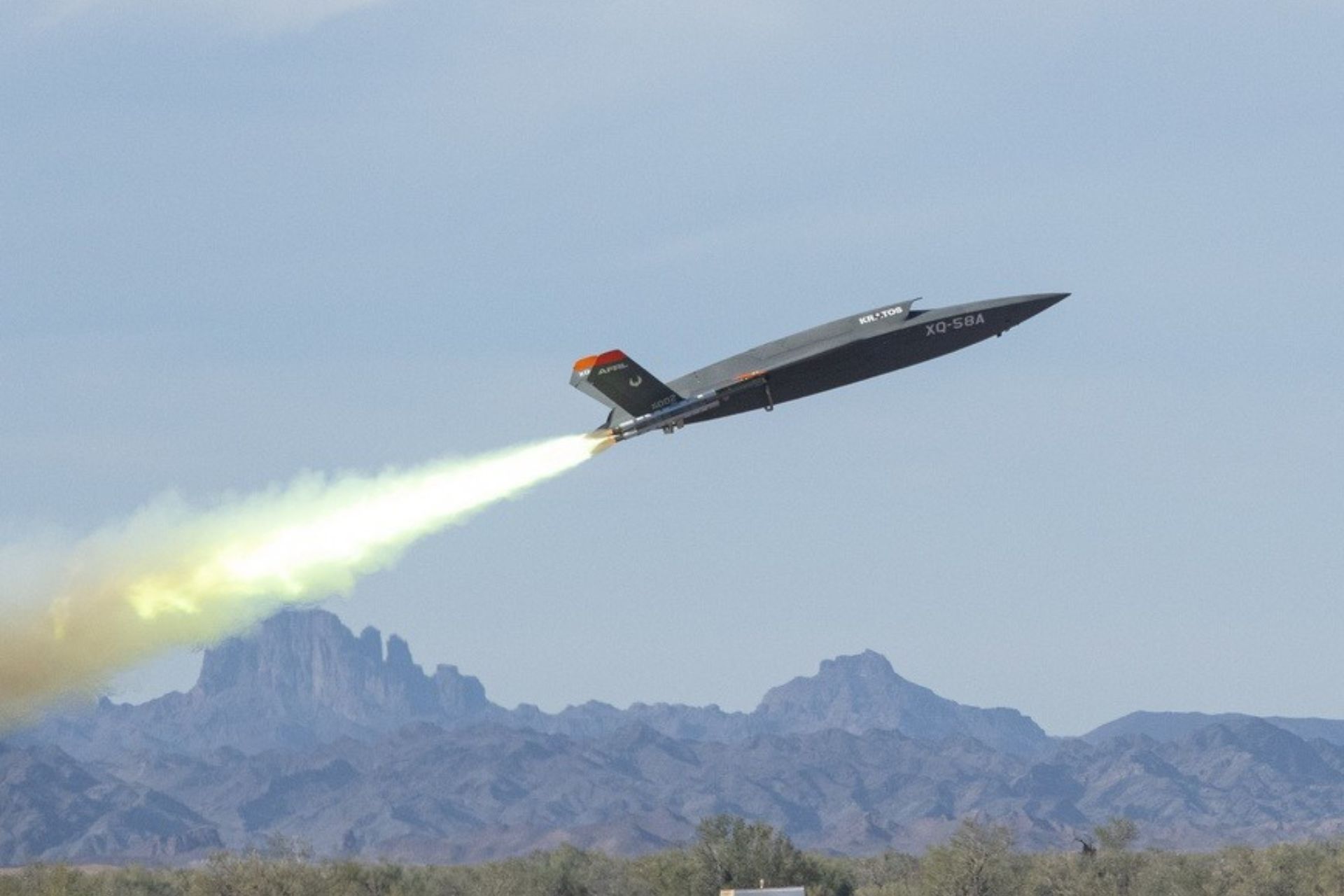
An XQ-58A Valkyrie low-cost unmanned aerial vehicle launches at the U.S. Army Yuma Proving Ground, Ariz., Dec. 9, 2020 (Picture source: US DoD)
The DoD is currently undergoing a generational transformation of its unmanned fleets. Recent conflicts in Nagorno-Karabakh, Ukraine, and the Middle East have demonstrated the significant impact of these systems, which are not limited to aerial drones. Despite attention on both high-tech and low-tech systems, much of the funding is directed toward production programs. According to BTIG, the DoD requested $5.3 billion for unmanned systems in fiscal year 2025, with projected annual funding growth of 9.5% through 2029. Most of these requests come from the Collaborative Combat Aircraft (CCA) program, part of the U.S. Air Force's Next Generation Air Dominance initiative aimed at maintaining U.S. air superiority in future conflicts.
The CCA program aims to develop a new generation of lower-cost, AI-enabled unmanned combat aerial vehicles (UCAVs) that would collaborate with manned fighter jets to enhance their capabilities. Currently, the U.S. Navy is the largest recipient of DoD funding for unmanned systems, particularly for aerial drones and unmanned surface vessels. However, the U.S. Air Force is expected to see the highest growth in funding over the next five years. The Pentagon projects that Air Force funding for unmanned systems will grow at an annual rate of 34% between fiscal years 2024 and 2029, driven entirely by the CCA program.
The DoD is actively exploring how to leverage unmanned technology and autonomy to accomplish more missions in the near future. Traditionally, the DoD has not procured software on such a large scale, but this approach is evolving with the rise of autonomous systems. This shift in technology acquisition could significantly transform the defense landscape.
Several companies stand to benefit from the increased spending on unmanned systems, according to BTIG. These include AeroVironment, General Dynamics, Kratos Defense & Security Solutions, Northrop Grumman, and Lockheed Martin. Other analysts, such as Kristine Liwag from Morgan Stanley, have also become more optimistic about the broader defense sector, despite its underperformance last year due to supply chain and inflation concerns, as well as fears of a slowdown in U.S. defense spending.
Northrop Grumman, one of the leading American weapons manufacturers, is positioned to benefit from the DoD's renewed focus. With its expertise in unmanned aerial systems, Northrop could gain from the CCA program if the U.S. Air Force integrates these new UCAVs with Northrop's B-21 Raider stealth bomber. Northrop is also a contender for future production contracts under the program. Additionally, the company has a strong presence in the unmanned systems domain with products such as the MQ-4C Triton, a high-altitude, long-endurance unmanned aerial vehicle used by the U.S. Navy, and the RQ-4 Global Hawk, operated by the U.S. Air Force.
While Northrop is a more diversified option, AeroVironment is considered a pure player in the military drone market. The company dominates this sector, particularly among publicly traded firms, due to its growing international orders for Switchblade drones, widely used by countries such as Ukraine and France, as well as other U.S. allies.
Kratos, on the other hand, derives about 20% of its business from unmanned systems, primarily target drones, with the rest focused on microwave electronics, rocket testing, space training, and other markets. However, recent developments, such as the contracting of its Apollo drone and the anticipated contract for its Athena drone, could strengthen Kratos' position in the unmanned domain. The company has also been operating the Valkyrie XQ-58A, an AI-enabled combat drone, since 2019 and has expressed interest in competing for future CCA contracts.
General Dynamics could also benefit from increased spending on unmanned systems, with a product portfolio that includes small and medium unmanned undersea vehicles, unmanned S-MET ground vehicles for the U.S. Army, and littoral combat ships for the U.S. Navy. Last year, the DoD awarded multi-million dollar contracts to General Dynamics, Lockheed Martin, and Northrop Grumman to support aspects of the Navy's littoral combat ship fleet. Morgan Stanley shares this optimism about General Dynamics, citing growing demand for its defense products, including ammunition and ground vehicles, as an indicator of potential earnings growth.
In conclusion, the rise of AI and autonomous systems in the military sector is creating new opportunities for several defense companies amid ongoing geopolitical tensions.
Read more: U.S. military prioritizes AI-powered drones in defense modernization

- Details
- Written by: Vandenbosch
- Category: 2024
- Hits: 2658
The Kalashnikov Concern has presented an updated version of its "Rekord" hunting rifle, version 06, chambered for the 7.62x54R caliber. This 2024 model was designed at the Concern's Design and Technology Center, taking into account the requirements of modern precision shooting weapons. The prototype was unveiled by Kalashnikov's chief designer, Sergei Urzhumtsev, who also highlighted its advantages.
Follow Army Recognition on Google News at this link
The Rekord hunting rifle, version 06, chambered for the 7.62x54R caliber. (Picture source: Rostec)
The first series of Rekord rifles was manufactured at the Izhevsk plant in 1998. For the 2024 model, engineers opted for a stockless design while retaining the main components of the rifle, proven through years of use, such as the barrel, bolt, and trigger mechanism.
In this configuration, the handguard, stock, control handle, and magazine are directly attached to the receiver. The barrel is locked by rotating the longitudinally sliding bolt onto three symmetrical lugs. The bolt is equipped with a cocking indicator for the striker when set to the combat position.
The receiver and tubular handguard form a single upper guide rail based on the Picatinny standard, allowing the installation of modern sighting systems. The front part of the barrel has an M18x1 thread to accommodate various muzzle devices, such as flash suppressors or muzzle brakes. The plastic control handle is combined with a safety guard, at the front of which a magazine catch is installed. The rifle features a detachable 10-round magazine, borrowed from the Tiger carbine.
The flag-type safety mechanism, when engaged, blocks the sear, trigger, and bolt from opening. The ergonomics of the safety flag and the ease of visual and tactile control of the safety status ("fire" or "safe") have been improved. This rifle is known for its reliability, even in the most challenging operating conditions.
Regarding its characteristics, the Rekord hunting rifle, version 06, is chambered for 7.62x54R cartridges. It comes with a detachable 10-round magazine and an adjustable trigger pull force ranging from 10 to 15 N. The rifle weighs 5.5 kg with an empty magazine. Its length is 1000 mm with the stock folded and 1200 mm in the firing position.

- Details
- Written by: V.Saint
- Category: 2024
- Hits: 2351
The German government will cease all new military aid to Ukraine as part of the ruling coalition's spending reduction plan, reported on Saturday by the Frankfurter Allgemeine Zeitung (FAZ). The moratorium on new aid is already in effect and will impact new funding requests, not previously approved aid, according to the FAZ report, which cites non-public documents and emails as well as discussions with people close to the matter.
Follow Army Recognition on Google News at this link
A Ukrainian tank crew stand by the Leopard 1A5 main battle tank they are being trained to operate and maintain by German and Danish military personnel at a military training ground of the Bundeswehr on May 5, 2023(Picture source: Sean Gallup)
In a letter sent to the German Ministry of Defense on August 5th, Finance Minister Christian Lindner stated that future funding would no longer come from the German federal budget but from the proceeds of frozen Russian assets, according to the German newspaper.
In June, Germany and other G7 countries reached a preliminary agreement to use the value of some $300 billion in sovereign Russian assets locked in Western financial institutions to secure a $50 billion loan for Ukraine. However, governments must still agree on the details of the scheme and technical discussions may take months.
Berlin, the main European provider of military aid to Kiev, had already signaled a shift in Ukraine last month when the ruling coalition comprised of Social Democrats, Greens, and Liberals adopted a preliminary budget plan for 2025. The reviewed compromise outlines plans to halve future aid to Ukraine, to 4 billion euros, to meet other spending priorities.
Behind the United States, Germany is the second-largest contributor as Berlin's aid amounts to 8 billion euros in 2024. In total, since the beginning of the conflict between Ukraine and Russia, more than 33.9 billion euros have been spent as part of bilateral support measures for Kyiv. This includes the winter aid program, support for people who have fled Ukraine, investigations into war crimes, humanitarian aid, and mine clearance.
Speaking after the Cabinet approved the budget plan in mid-July, Lindner said Ukraine should rely more on funds "from European sources" as well as frozen Russian assets. However, it remains unclear if, and when, this money will be released. Additionally, the Twitter account @ProjetFOX reports comments from Sebastian Fischer, Spokesperson of the German Federal Foreign Office, stating that the claims by the German newspaper Frankfurter Allgemeine Zeitung that Germany would stop supporting Ukraine are false.
In conclusion, Germany will not immediately stop aid to Ukraine, as the 2025 budget includes 4 billion euros from German funds. However, future aid from Europe's largest supplier of military equipment will be financed differently, not from German funds but from those confiscated from Russian oligarchs in Europe. Berlin "assumes that these funds will be usable from 2025," indicated a parliamentary source contacted by AFP.
Read more: Situation brief | Will Germany really stopping support for Ukraine ?

- Details
- Written by: Administrator
- Category: 2024
- Hits: 2993
On August 15, 2024, the U.S. State Department announced its approval of a potential Foreign Military Sale to Germany, involving the sale of PATRIOT Advanced Capability-3 Missile Segment Enhancement (PAC-3 MSE) missiles and related support equipment. The sale, valued at an estimated $5 billion, marks a significant enhancement to Germany’s defense capabilities and its ability to address evolving security challenges.
Follow Army Recognition on Google News at this link
Exercise Artemis Strike is a German-led tactical live fire exercise with live Patriot and Stinger missiles at the NATO Missile Firing Installation in Chania, Greece. (Picture source: U.S. DoD)
Germany has requested the purchase of up to 600 PAC-3 MSE missiles, including 10 missiles designated for testing purposes before full-scale production and deployment. The deal also includes an array of essential support elements such as tools, test equipment, training apparatus, technical documentation, spare parts, and logistics support, all crucial for the integration and operation of the missile system.
The PAC-3 MSE, the most advanced iteration of the Patriot system, is designed to intercept and neutralize a wide range of threats with greater precision and over longer distances than its predecessors. With enhanced range and altitude capabilities, as well as improved guidance systems, the PAC-3 MSE offers a higher probability of successfully intercepting and destroying incoming threats, including ballistic missiles.
The sale will not only enhance Germany's defense posture but also improve its interoperability with U.S. and NATO forces, thereby contributing to the overall security framework in Europe. The prime contractor for the sale will be Lockheed Martin, and any offsets related to the agreement will be determined through negotiations between Germany and the contractor. Importantly, the implementation of this sale will not require additional U.S. government or contractor personnel to be stationed in Germany.
This strategic acquisition aligns with Germany's goal of strengthening its national and territorial defense, ensuring it remains a formidable force within the NATO alliance, and capable of addressing the security challenges of the future.
As of the current information available, the German armed forces, the Bundeswehr, operate 12 Patriot batteries, which serve as a crucial component of Germany's air defense system. These batteries are deployed to protect against a wide variety of aerial threats, including ballistic missiles, cruise missiles, aircraft, and unmanned aerial vehicles (UAVs).
Over the years, the Patriot system in Germany has been continuously upgraded, with the Patriot PAC-3 being the most advanced version currently in use. The Patriot PAC-3 Missile Segment Enhancement (MSE) represents a significant improvement over previous versions like the PAC-2 and the earlier PAC-3. This latest iteration is specifically designed to counter a broader range of modern threats, such as short- and medium-range ballistic missiles, which it can intercept during their terminal phase of flight. Additionally, the PAC-3 MSE is highly effective against cruise missiles, which are typically low-flying and challenging to detect and intercept due to their speed and maneuverability. The system also retains the capability to target and destroy both fixed-wing and rotary-wing aircraft, as well as neutralize unmanned aerial vehicles (UAVs), which are increasingly used in modern conflicts.
The Patriot PAC-3 MSE offers enhanced combat capabilities, including the ability to intercept targets at altitudes of up to approximately 35 kilometers (about 114,800 feet). This high-altitude interception capability is particularly crucial for defending against ballistic missile threats. Moreover, the PAC-3 MSE is equipped with a dual-pulse solid rocket motor, which significantly extends its range, allowing it to engage threats at much greater distances compared to earlier versions of the system.
These advancements make the PAC-3 MSE far more effective in dealing with modern, highly maneuverable threats, ensuring that Germany’s air defense remains robust and capable in the face of evolving security challenges.
Read more: US Approves Sale to Germany for 600 PAC-3 MSE Surface-to-Air Defense Missiles
- Details
- Written by: Jérôme Brahy
- Category: 2024
- Hits: 7303
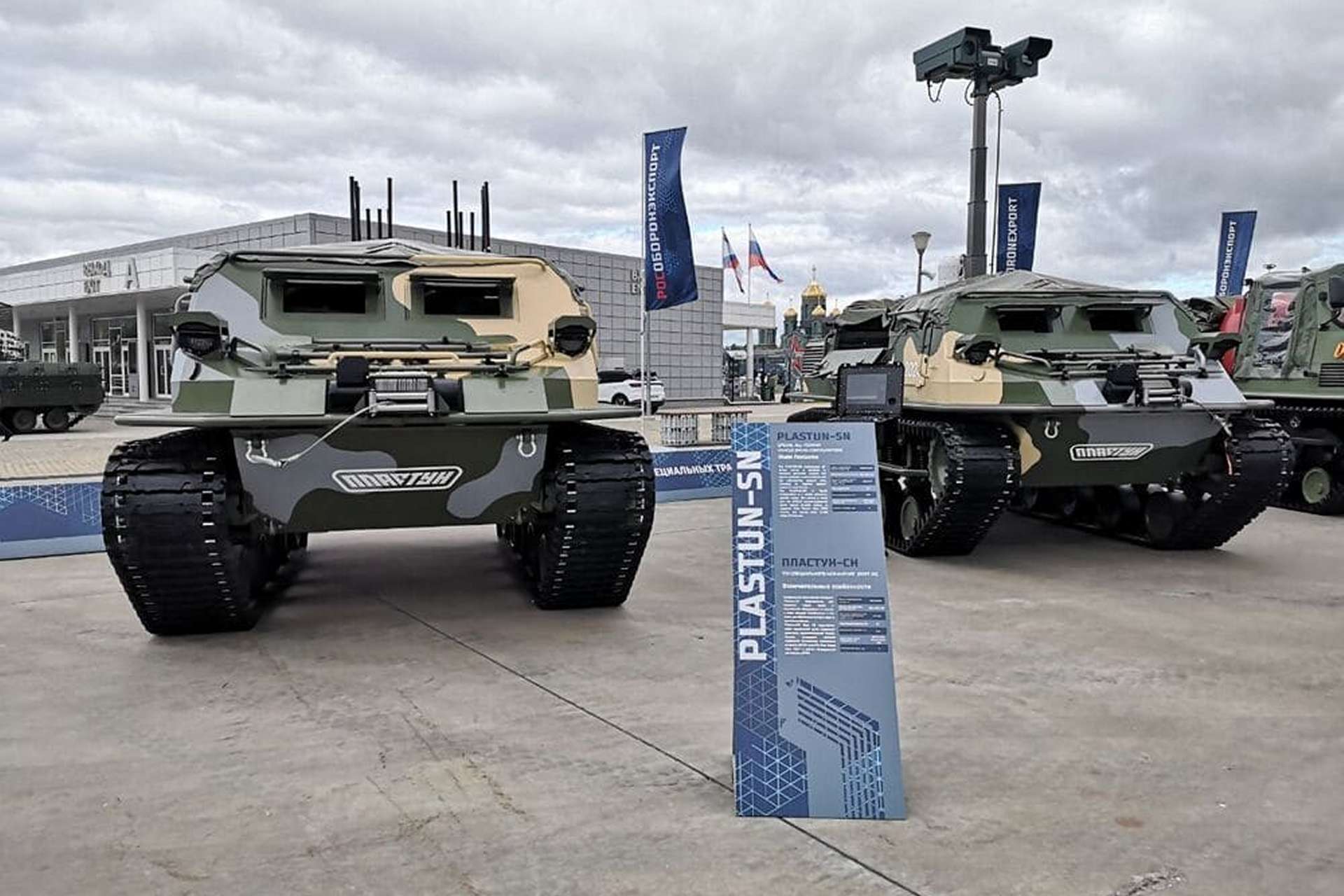
At the Army-2024 exhibition, Russia's Rosoboronexport introduced a new mobile electronic warfare (EW) system, based on the Plastun-SN tracked armored vehicle. This vehicle is equipped with the Shield electronic warfare system, designed to suppress electronic signals from first-person view (FPV) drones and other unmanned aerial vehicles (UAVs). In addition to its EW capabilities, the Plastun-SN can transport either eight fully equipped personnel or four operators for the EW systems.
Follow Army Recognition on Google News at this link
The Plastun-SN is a military variant of the civilian Plastun all-terrain vehicle, with the "SN" designation indicating its "Special Purpose" capabilities. (Picture source: Russian social media)
As reported in October 2023, the Russian Ministry of Defense has taken delivery of 14 Plastun-SN vehicles, indicating the vehicle's operational readiness and potential importance within the Russian Armed Forces. These vehicles, which were first revealed at the Army-2023 exhibition in Moscow, are produced in Novosibirsk and have been tailored to meet military requirements. A total of at least 50 of these vehicles have been ordered under a contract signed by the Ministry of Defense.
The Plastun-SN is a military variant of the civilian Plastun all-terrain vehicle, with the "SN" designation indicating its "Special Purpose" capabilities. This variant is designed for various military roles, including medical evacuation, reconnaissance, and as a self-propelled mortar platform. At the Army-2023 forum, two specific configurations of the Plastun-SN were displayed: one equipped with an 82 mm mortar for artillery support and another with a telescopic mast and observation devices for reconnaissance. The vehicle's performance was tested at the Alabino training ground, showcasing its adaptability.
In terms of protection, the Plastun-SN is equipped with combined armor capable of withstanding bullets ranging from 9x19 mm to 7.62x39 mm. However, its open design, protected only by a waterproof canopy and a removable frame, makes it vulnerable to certain threats, such as drone strikes or shrapnel from enemy fire. The vehicle features a patented all-season track that measures 500 mm in width, enhancing its mobility across various terrains.
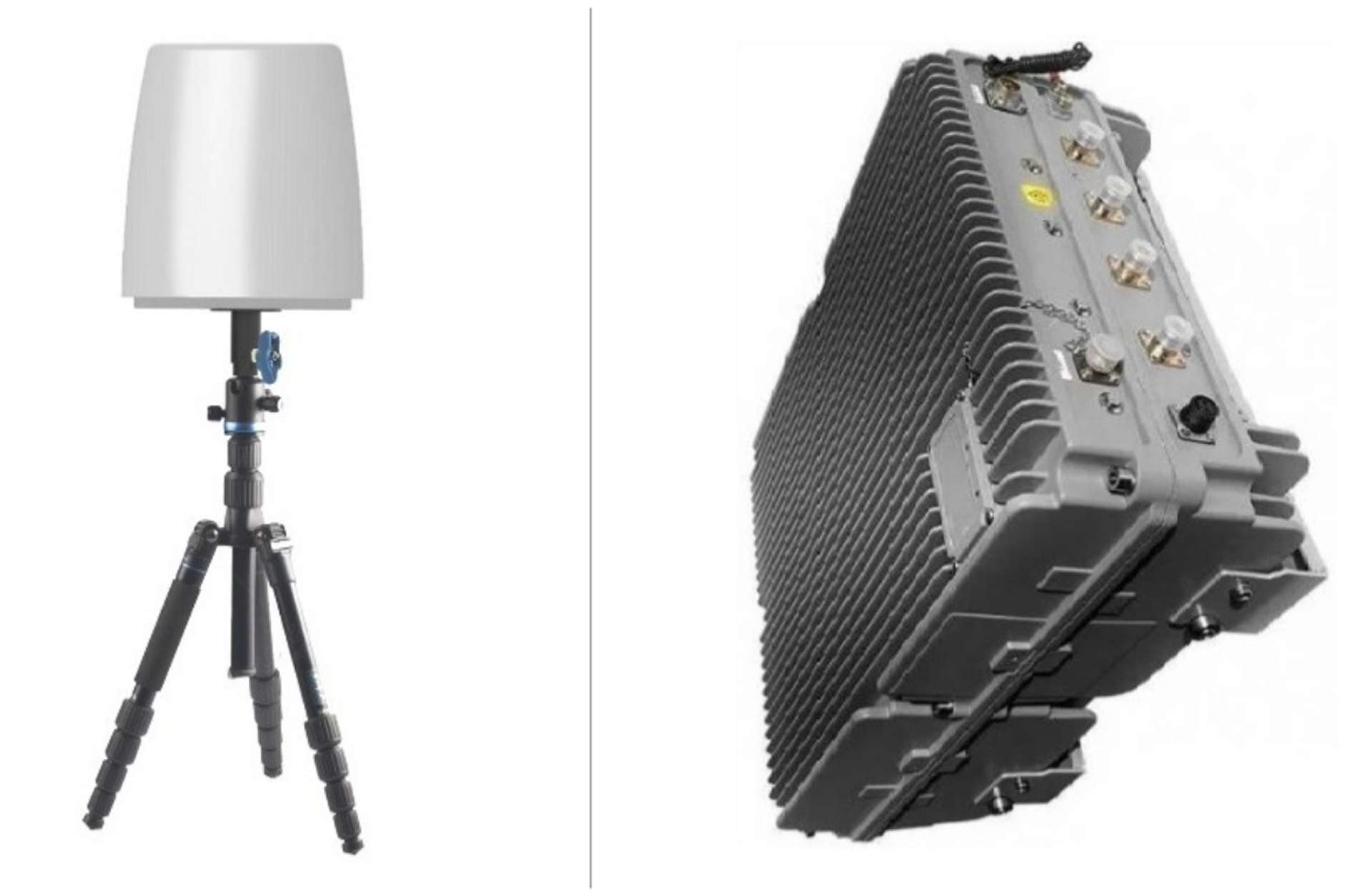
The OPD-712 "Shield" system combines the OD-712 "Lovets" detector and the PD-704 "Perimeter" suppressor, working together to automatically combat UAVs. (Picture source: Protection System)
The vehicle’s 1.6-liter Lada petrol engine generates 106 horsepower, enabling it to reach a top speed of 50 km/h, with an optimal operating speed of 30 km/h. The Plastun-SN is also amphibious, capable of crossing water obstacles, and features a winch that allows it to climb steep slopes, demonstrating its capability in various operational environments. Weighing 3,800 kg, the vehicle can overcome obstacles such as ditches, trenches, and inclines.
The vehicle's electronic warfare capabilities are centered around what is possibly the OPD-712 "Shield" system from the Russian company Protection System. This system is designed to detect and suppress drones by interfering with the communication between the drone and its controller. The OPD-712 "Shield" system combines the OD-712 "Lovets" detector and the PD-704 "Perimeter" suppressor, working together to automatically combat UAVs. The system has a detection range of up to 5 kilometers and a suppression range of up to 3 kilometers, capable of handling up to 30 UAVs simultaneously. It can operate both manually and autonomously and is built to function under challenging environmental conditions, in compliance with Russian industrial and military standards.
The OPD-712 "Shield" system provides broad-spectrum suppression across various frequency ranges, ensuring that UAVs lose control and their satellite navigation is disrupted, preventing them from returning to their starting points. The system is designed to integrate additional suppressors if necessary, and it can function as part of a broader network of detection and suppression systems.

- Details
- Written by: Jérôme Brahy
- Category: 2024
- Hits: 5304
On August 15, 2024, the U.S. State Department approved a potential Foreign Military Sale (FMS) to Denmark involving Precision Guidance Kits (PGKs) and associated logistics and program support, with an estimated value of $85 million. Northrop Grumman is expected to serve as the principal contractor for this sale, which includes up to 5,832 M1156 PGKs. Denmark's request for these PGKs follows earlier international sales to countries such as Australia, Canada, and the Netherlands, which have incorporated PGKs into their military inventories.
Follow Army Recognition on Google News at this link
By converting conventional artillery rounds into precision-guided munitions, the PGK reduces the number of rounds needed to complete a mission. (Picture source: US DoD)
The M1156 PGK is a GPS-guided fuze kit designed to improve the accuracy of existing 155mm artillery shells by reducing delivery errors. By converting conventional artillery rounds into precision-guided munitions, the PGK reduces the number of rounds needed to complete a mission. This technology is intended to enhance accuracy in military operations and minimize unintended impacts.
The M1156 PGK is compatible with the M795 and M549A1 high-explosive 155mm projectiles and can be used with artillery systems such as the M109A7 Paladin Integrated Management (PIM), M109A6 Paladin, and M777A2 Lightweight Towed Howitzer. The fuze operates in modes including point detonation and height-of-burst, allowing for flexibility in various operational scenarios.
This guidance kit was initially fielded during Operation Enduring Freedom (OEF) in April 2013 and has since undergone upgrades, including the M1156A1 variant in Fiscal Year 2023, which adds compatibility with newer artillery rounds like the XM1113 and XM1128. The PGK has achieved Full Materiel Release, indicating its readiness for full deployment within military forces.

The M1156 PGK is compatible with the M795 and M549A1 high-explosive 155mm projectiles and can be used with artillery systems such as the M109A7 Paladin Integrated Management (PIM), M109A6 Paladin, and M777A2 Lightweight Towed Howitzer. (Picture source: US DoD)
Northrop Grumman, following its acquisition of Orbital ATK, is the manufacturer of the M1156 PGK. Initially developed by Alliant Techsystems starting in 2007, the PGK is designed to transform conventional artillery rounds into guided munitions by adding a GPS guidance package and control surfaces to adjust the flight path of the shell. This technology is similar in concept to the Joint Direct Attack Munition (JDAM), which converts unguided bombs into precision-guided weapons.
The M1156 PGK includes a safety mechanism that prevents the shell from detonating if it is projected to miss the target by more than 150 meters. This feature is intended to reduce the risk of unintended impacts. The PGK's design incorporates small aerodynamic fins to steer the shell toward the target, and it has a self-contained power system that generates electricity in flight, eliminating the need for batteries.
The PGK has demonstrated compatibility with various 155mm artillery stockpiles in international settings. For example, in September 2014, German DM111 shells equipped with PGKs were fired from a PzH2000 self-propelled howitzer, achieving a high degree of accuracy, with 90 percent of the rounds landing within five meters of the target from a distance of 27 kilometers.
The M1156 PGK program has seen continuous development, including multiple versions and upgrades. The upcoming M1156E2/A1 variant is expected to further improve accuracy and is compatible with extended-range artillery rounds. Future developments include the Long Range PGK, which aims to extend the effective range to 70 kilometers while maintaining precision in challenging environments.

In September 2014, German DM111 shells equipped with PGKs were fired from a PzH2000 self-propelled howitzer, achieving a high degree of accuracy, with 90 percent of the rounds landing within five meters of the target from a distance of 27 kilometers. (Picture source: US DoD)
Read more: US to supply Denmark with 5,832 M1156 PGK artillery kits in $85 Million sale
- Details
- Written by: Vandenbosch
- Category: 2024
- Hits: 2617
The Rostec State Corporation's Ruselectronics division recently demonstrated the capabilities of the Zavet-D airborne artillery control complex. This advanced system, which utilizes automated workstations, was first unveiled at the Army-2024 forum. It is designed to manage the preparation and execution of artillery operations, including both landing and combat scenarios. Additionally, the system plays a crucial role in directing artillery fire during engagements.
Rostec's Ruselectronics division showcased the Zavet-D airborne artillery control complex at the Army-2024 forum. (Picture source: Rostec)
Rostec's Ruselectronics division showcased the Zavet-D airborne artillery control complex, a cutting-edge system that leverages automated workstations. First introduced at the Army-2024 forum, the Zavet-D is engineered to handle the full spectrum of artillery operations, from preparation and landing to active combat. It also plays a vital role in coordinating and directing artillery fire during engagements.
The demonstration highlighted how the automated workstations, which are used by commanders of both command and observation vehicles, streamline operations through a unified set of control tools. By automating these processes, the Zavet-D system significantly enhances the speed and efficiency of command and control within an artillery unit.
With the Zavet-D command and observation vehicle, planning combat actions within an artillery division now takes just 7 to 12 minutes. Striking stationary targets can be accomplished in 6 to 10 seconds, while occupying an unprepared position on the move takes no more than 3 minutes. The system is also capable of defending against simultaneous attacks from up to 20 targets.
Developed by NPP Rubin, a subsidiary of Ruselectronics, the Zavet-D system represents a major leap in military automation. "Automated military equipment requires equally sophisticated command and observation systems for optimal operation," said Alexey Danilov, General Director of NPP Rubin. "In the artillery domain, the Zavet-D airborne complex fulfills this need by automating the command and observation post and overseeing the operations of artillery divisions, mortar batteries of the Airborne Forces, and optical-electronic reconnaissance. The system includes a comprehensive suite of automation, communication, data transmission, reconnaissance, and navigation tools. We are continually investing in research and development to further enhance this product."
The Zavet-D system is composed of several key components: a command and observation vehicle, a command and staff vehicle, a remote command and observation post, two portable software and hardware systems, a technological system, and a unified software and hardware control platform.
Read more: Rostec Showcases Advanced Artillery Control System

- Details
- Written by: V.Saint
- Category: 2024
- Hits: 2570
The command of the Ukrainian Air Assault Forces showed a video of the first hours of the defense forces' offensive in the Kursk region of the Russian Federation on August 6, 2024. The video displays segments of mine clearing, border breakthroughs, destruction of Russian defenses, aerial operations, artillery actions, and the capture of prisoners.
Follow Army Recognition on Google News at this link
Soldiers of 225th rifle regiment ( Russia) taken as POW by Ukrainian Soldier during first day of Kursk's offensive (Picture source: Deepstate.ua)
The initial hours of the Ukrainian offensive in the Kursk region of the Russian Federation on August 6, 2024 will remain in the history of the Russo-Ukrainian war. Meticulous preparation, planning, the element of surprise, morale, and information silence were decisive in the initial stage of the operation. A lesson was learned from the failed counter-offensive in June 2023.
This is the largest foreign attack on Russian sovereign territory since World War II, and despite claims by Moscow officials that the incursion has been stabilized, images shared on social media over the past several days suggest otherwise.
The command of the air assault forces emphasized: 'From now on, everything depends on the resilience of the Ukrainian soldiers from all branches of the armed forces involved in the operation.' The Ukrainian armed forces have taken control of over a thousand square kilometers of the Kursk region, with 78 localities under Ukrainian control as of August 15, 2024.
On August 15, President Volodymyr Zelensky chaired a meeting of the supreme commander-in-chief's general staff, during which it was announced that a military commander's office would be established in the controlled territories of the Kursk region. Major General Eduard Moskalev was appointed to head it.
According to the British newspaper The Independent, the Ukrainian armed forces captured about 2,000 Russian soldiers during the operation in the Kursk region.
Currently, the Russians are faced with a serious problem with these foreign forces conducting deep operations and are struggling to stem the advance of the Ukrainian forces. However, given the estimated losses, it is possible that this operation may be the only one that Ukrainians can conduct in the short term. It is unlikely that in the long term of this incursion into the Kursk Oblast, the captured territories will not be retaken by the Russians. Russia cannot allow a part, albeit minor compared to the vastness of the territory, to be at the behest of a nation officially an enemy of Russia.
Therefore, it is expected that this movement will make Russian actions more violent and deeper, in order to maintain an advantageous negotiation position. Negotiations for peace are a hypothesis that is gaining importance over time.
Ukrainian video on kursk offensive ( Picture source : Ukrainian chief of staff )
- Details
- Written by: Vandenbosch
- Category: 2024
- Hits: 3306
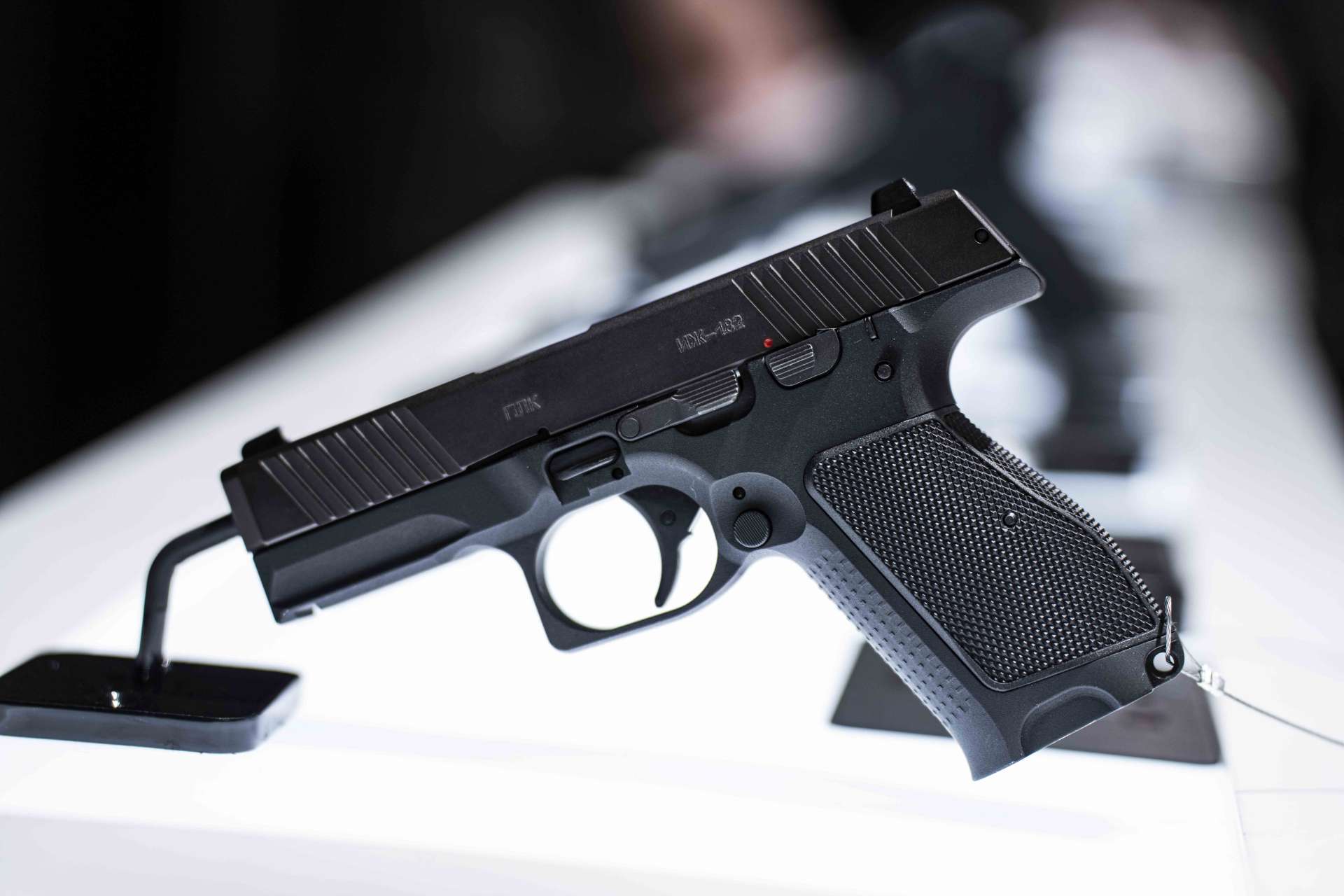
At the International Military-Technical Forum "Army-2024," the Kalashnikov Concern's Izhevsk Mechanical Plant (IMZ) introduced a modernized version of the IZH-182 sports pistol. This updated firearm is based on the compact Lebedev pistol and has undergone significant enhancements after being tested by sports clubs, which provided valuable feedback.
Follow Army Recognition on Google News at this link
Updated IZH-182 Sports Pistol at Army-2024. (Picture source: Rostec)
One of the key improvements in the IZH-182 is the introduction of a clamp-type lock for the ejector, which simplifies and speeds up the assembly and disassembly of the pistol. This design update makes the pistol more user-friendly, particularly during maintenance.
The inertial safety unit has been relocated to the trigger to enhance safety and reliability further. Additionally, the striker interceptor unit has been redesigned to improve both manufacturability and maintenance.
Accuracy has also been a focus in this upgrade. The width of the rear sight slot has been adjusted to enhance precision, and a new modification now allows for the installation of collimator sights through adapter platforms, catering to the needs of competitive shooters.
Other refinements include changes to the magazine catch button, reducing the force required for operation, and a streamlined return mechanism, which now uses a single variable-profile spring instead of the previous three-spring system. Additionally, modifications to the feeder and magazine body neck facilitate easier magazine loading, a crucial aspect in the fast-paced environment of sports shooting.
These improvements not only enhance the pistol's performance but also increase the efficiency of its production. The IMZ designers are expected to complete the modernization process and conduct standard tests by the end of 2024, with the IZH-182 already being manufactured in limited quantities.
The upgraded IZH-182 reflects Kalashnikov's commitment to innovation and responsiveness to user feedback, ensuring that the pistol meets the demands of both sports shooters and the broader firearms market.
Read more: Kalashnikov Unveils Updated IZH-182 Sports Pistol at Army-2024
- Exclusive: Secret Russian Volnorez Anti-Drone Electronic Warfare System Discovered By Ukrainian Troops
- Russia Promotes New Lancet-E Kamikaze Drone for Export Market Following Success in Ukraine
- Poland Signs Agreement for 28 LOTR Kleszcz Armored Reconnaissance Vehicles
- First Homar-K Multiple Launch Rocket System Delivered to Polish Artillery Brigade