

- Details
- Written by: Jérôme Brahy
- Category: 2024
- Hits: 5568










At the Army-2024 exhibition, Rostec presented a modernized version of the 2S25M 125mm amphibious light tank, designated as the Sprut-SDM1. A key feature of this latest model is its enhanced armor, which now includes additional protective elements such as screens and grilles. These modifications are intended to improve the vehicle's resistance to small-caliber gunfire. While the armor cannot withstand large-caliber projectiles, it provides protection against smaller threats commonly encountered during airborne operations.
Follow Army Recognition on Google News at this link
According to Vladimir Artyakov, Deputy Head of Rostec, the Sprut-SDM1 is in the final stages of preparation for adoption by the Russian army. (Picture source: Michael Jerdev)
The modernized Sprut-SDM1 has undergone state testing, with subsequent adjustments made to its design based on the test results. These adjustments aim to ensure the vehicle meets the specific requirements of the Russian military, particularly the Airborne Forces. The enhanced armor protection is designed to increase the vehicle's survivability in environments where small arms fire and shrapnel are prevalent.
According to Vladimir Artyakov, Deputy Head of Rostec, the Sprut-SDM1 is in the final stages of preparation for adoption by the Russian army. The weapon system has successfully passed state tests, and the necessary adjustments to the design documentation have been completed. The vehicle is now being readied for serial production, which will commence once it is officially accepted into service.
The Sprut-SDM1 represents a modernization of its predecessor, the 2S25 Sprut-SD, and includes several updated features. It is built on the BMD-4M chassis, a platform chosen for its suitability for airborne operations. The upgraded vehicle includes a new fire control system, a more powerful engine, an improved chassis information and control system, a new sighting system, and updated software and hardware components. These changes are intended to enhance the vehicle's reliability and operational performance.

A key feature of this latest model is its enhanced armor, which now includes additional protective elements such as screens and grilles. (Picture source: Michael Jerdev)
In terms of firepower, the Sprut-SDM1 is equipped with a 125 mm 2A75M smoothbore tank gun, designed to offer firepower comparable to that of the T-90MS main battle tank. This gun is capable of firing a variety of ammunition types used by the T-72 and T-90 tanks, including the Invar-M guided missile, which has a range significantly greater than standard tank-fired projectiles. The vehicle's turret is fully stabilized, allowing for accurate firing during movement or amphibious operations. The secondary armament includes two 7.62 mm PKTM machine guns: one mounted coaxially with the main gun and the other in a remotely controlled weapon station on the turret.
The Sprut-SDM1 is designed with amphibious capabilities, enabling it to operate in various combat environments. It can cross water obstacles, be transported by military cargo aircraft, and be air-dropped with its crew inside. Its mobility is further supported by a UTD-29 multi-fuel diesel engine, allowing the vehicle to reach speeds of up to 70 km/h on roads and 7 km/h in water. The vehicle's suspension system, which can be adjusted by the driver, enhances its adaptability to different terrains.
Standard equipment on the Sprut-SDM1 includes night vision devices for all crew members, an NBC (Nuclear, Biological, Chemical) protection system, and a digital fire control system. The fire control system incorporates sensors that account for factors such as wind speed and vehicle movement, ensuring accurate targeting under various conditions. Both the gunner and commander have access to day/night vision sights with integrated rangefinders and ballistic computers.

In terms of firepower, the Sprut-SDM1 is equipped with a 125 mm 2A75M smoothbore tank gun, designed to offer firepower comparable to that of the T-90MS main battle tank. (Picture source: Michael Jerdev)
Read more: Rostec showcases new Sprut-SDM1 light tank with upgraded armor kit at Army-2024

- Details
- Written by: Administrator
- Category: 2024
- Hits: 6625
The Bulgarian defense company Samel-90 has begun full-rate production of its latest loitering munition or kamikaze drone, the SAMJET, which bears a strong resemblance to the Iranian-made Shahed-136. This development comes amid increasing global demand for loitering munitions, also known as kamikaze or suicide drones, which have proven highly effective in recent conflicts, particularly the ongoing war in Ukraine.
Follow Army Recognition on Google News at this link
The SAMJET is a new loitering munition or kamikaze drone fully designed and developed by the Bulgarian defense company Samel-90. (Picture source: Samel-90)
Samel-90, a long-established player in the Bulgarian defense industry, has expanded its portfolio to include unmanned aerial vehicles (UAVs) with the introduction of the SAMJET. The company, which has a history dating back to the 1960s, is known for producing electronic warfare systems, communication technologies, and other military equipment. The SAMJET marks a significant step for Samel-90 as it adapts to the growing importance of drones in modern warfare.
The SAMJET drone, developed by Samel-90, features a design that is strikingly similar to the Shahed-136, a well-known loitering munition. Both drones share a distinctive delta-wing configuration, giving them a compact and aerodynamic profile that is efficient for high-speed flight and provides stability in the air. This design also contributes to their low radar visibility, making them more challenging to detect and intercept.
The fuselage of the SAMJET, like the Shahed-136, is streamlined and compact, housing essential components such as guidance systems, explosives, and fuel. Both drones are constructed from lightweight materials, optimizing their speed and range while maintaining a low profile in the air.
At the rear of the SAMJET, a pusher-type propeller is powered by a small engine, similar to the setup on the Shahed-136. This rear-mounted propulsion system allows the drone to reach significant speeds and enhances its maneuverability during flight. The overall design of the SAMJET, mirroring the Shahed-136, is intended for effective, high-speed, and precise attacks, making it a formidable asset in modern warfare.
The SAMJET is designed for ease of use and rapid deployment. One of its key features is its fully autonomous takeoff capability, assisted by rocket engines, which eliminates the need for assembly or complex preparations before launch. This makes the SAMJET particularly well-suited for fast-paced combat situations.
The drone is capable of carrying up to 5 kg of payload, with options for cumulative and thermobaric warheads, enabling it to deliver powerful and precise strikes. It can reach speeds between 120 km/h and 250 km/h, making it one of the fastest drones of its kind, and it can stay airborne for 60 to 120 minutes, depending on mission requirements.
During the flight, the SAMJET's position is tracked and displayed on a map, and a forward-facing camera provides a live video feed. This camera is stabilized on three axes and can be controlled for movement and zoom, allowing the operator to identify and confirm targets before initiating the final attack. This capability ensures high precision and effectiveness, reducing the likelihood of collateral damage.
The introduction of the SAMJET by Samel-90 reflects broader trends in the global defense industry, where loitering munitions are becoming increasingly central to military strategy. The SAMJET, with its speed, endurance, and precision targeting, is expected to be a valuable asset for armed forces looking to enhance their capabilities with advanced drone technology. Samel-90's move into this area underscores its commitment to innovation and its responsiveness to the evolving needs of modern warfare.
Read more: Bulgarian Defense Company Samel-90 Launches Full Production of its SAMJET Kamikaze Drone

- Details
- Written by: Halna du Fretay
- Category: 2024
- Hits: 6647
The Russian Army 2024 arms expo takes place in an international context defined by the ongoing war in Ukraine, where fighting has intensified, particularly with the recent Ukrainian offensive in Kursk. This event, a showcase of technological advancements in Russia's defense industry, provides Moscow an opportunity to demonstrate its capabilities despite the challenges posed by the ongoing conflict. Among the innovations presented, a weaponized version of the NRTK "Courier" UGV (Unmanned Ground Vehicle), equipped with an AGS-17 automatic grenade launcher and mine carrier, stands out.
Follow Army Recognition on Google News at this link
The Courier UGV, which can reportedly be equipped with AGS-17 / AGS-30, NSVT, PKT, RPO, RPGs, TM-62 and TM-83, and EW systems (Picture source: Vk Channel @Осведомитель)
The NRTK "Courier" is particularly noteworthy for its modular design, which allows it to be configured for various roles, including combat, logistics, supply, and electronic warfare. This flexibility makes it a versatile solution for the diverse operational needs of Russian armed forces.
At the Army 2024 expo, a version of this UGV armed with the AGS-17 and mine carrier was highlighted. The AGS-17, a well-known infantry support weapon globally, is capable of providing continuous fire support against unarmored or fortified targets when mounted on a platform like the "Courier." Among the presented variants, one features a flash suppressor, while another integrates a combat module with automatic target acquisition and tracking, reflecting the growing incorporation of artificial intelligence in Russian weapon systems. The UGV also serves as a mine transporter, with the option to install mine barriers on the road, which appear to use TM-62 mines. Additionally, if desired, it can be used as a kamikaze vehicle, similar to mined MTLB units.
The TM-62 is a Soviet-era anti-tank blast mine, recognized for its versatility and effectiveness, with numerous variants developed over time. Typically, the TM-62 is equipped with a central fuze and contains a 7.5-kilogram explosive charge, though the specifics can vary significantly depending on the variant. The mine can be deployed either manually or automatically using various mine-laying systems, including the PMR-1 and PMR-2 wheeled mine layers, the GMZ-3 tracked vehicle, and the VMR-2 helicopter system. The TM-62 is compatible with several fuzes, such as the MVN-72 and MVN-80, which are sensitive to vibration and magnetism. This mine has seen extensive use, including during the 2022 Russian invasion of Ukraine. Among its variants, the TM-62M, with its circular metal casing, is the most widely used. Other versions include the TM-62B, with a paper or cardboard casing, the wooden-cased TM-62D, and plastic-cased variants like the TM-62P, TM-62P2, and TM-62P3. The TM-62 can be equipped with different fuzes, such as the MVZ-62 and MVCh-62, with options for magnetic influence fuzes that offer full-width attack capability, making it highly effective against armored vehicles. The operational life of these mines can be influenced by the type of fuze used, with mechanical fuzes typically offering longer-lasting functionality compared to electronic ones. The TM-62M variant, for instance, weighs 9.5 kilograms, has a diameter of 320 millimeters, and operates with a pressure range between 150 to 550 kilograms.
The significance of the NRTK "Courier" extends beyond its presentation at the expo. This vehicle has already been deployed in Ukraine, where it was involved in a historic encounter on March 29, 2024. In this battle, two Russian UGVs, one armed with an AGS-17, were engaged by a Ukrainian First Person View (FPV) drone. This remotely piloted drone successfully destroyed both vehicles, marking the first documented combat between ground and aerial drones. This confrontation highlights the rapid evolution of technological warfare in Ukraine, where drones and other autonomous systems are increasingly central to combat operations.
The destruction of these UGVs by a Ukrainian drone not only demonstrates the effectiveness of unmanned systems in combat scenarios but also underscores the vulnerability of new technologies to innovative countermeasures. The Ukraine conflict, serving as a testing ground for modern warfare, reveals the growing prominence of robotic systems on the battlefield, reshaping military engagement strategies.
In conclusion, the NRTK "Courier," with its various configurations and operational deployment in Ukraine, illustrates Russia's strategy of integrating autonomous systems into its armed forces. As the Army 2024 expo continues to unveil new technologies, the war in Ukraine remains the ultimate proving ground for these innovations, determining their effectiveness and future role in conflicts.

A Ukrainian FPV First Person View aerial drone strikes a Russian UGV Unmanned Ground Vehicle. (Picture source Screen shot video footage)
- Details
- Written by: V.Saint
- Category: 2024
- Hits: 2681
In progress since August 6, the Ukrainian army's attack on the Kursk region is not just a simple incursion into Russian territory as there have been in the past, especially since at least four brigades—two mechanized infantry and two airborne—have been engaged by Kyiv, whose intentions remain unclear. In response to the seriousness of the situation, Moscow has declared a "federal-level" emergency in the Kursk Oblast, where an "anti-terrorist" regime has been established, as in the bordering regions of Belgorod and Bryansk.
Follow Army Recognition on Google News at this link
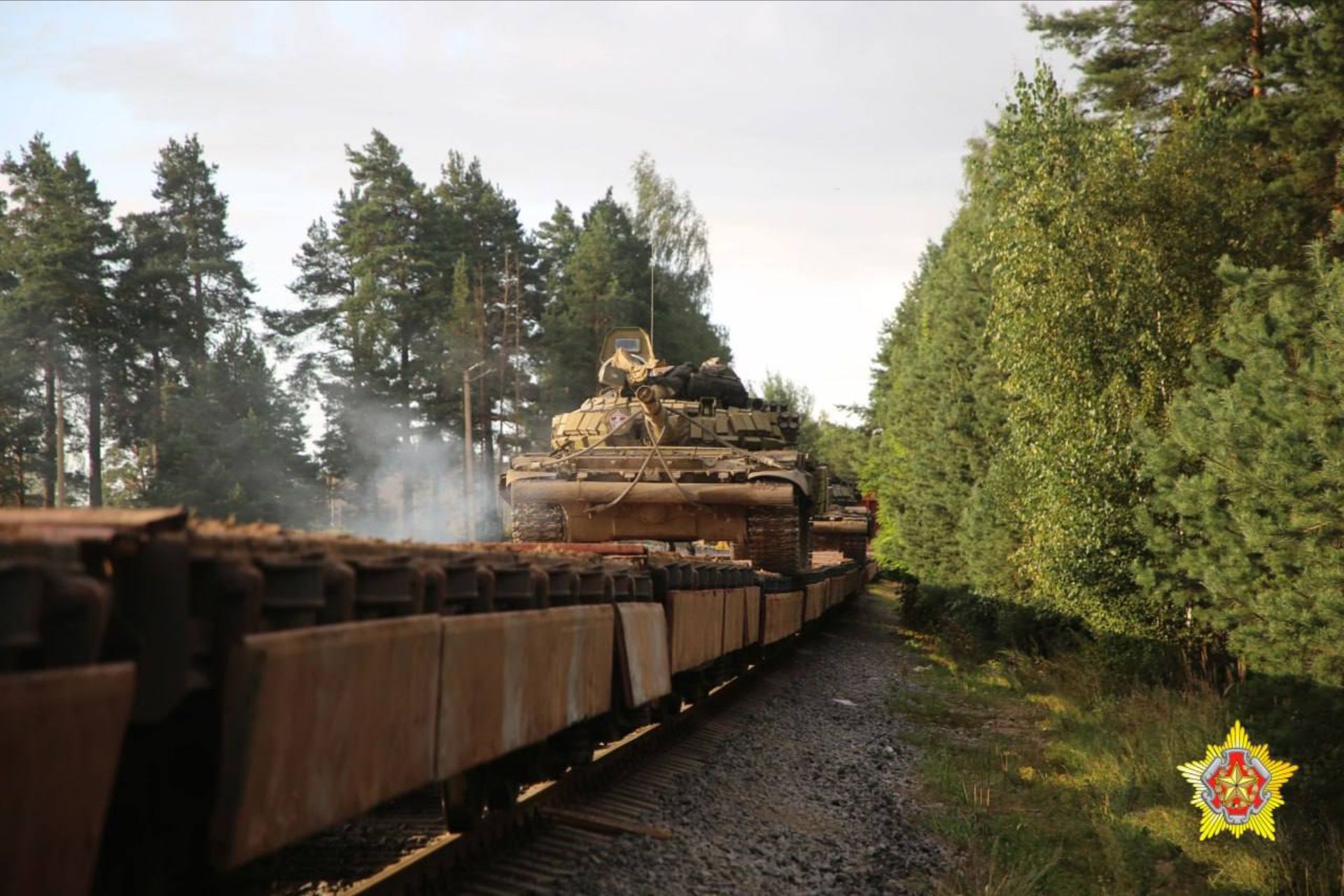
Belarussian T-72 on a train arriving near Belgorod border (Picture source: Belarus MoD)
On August 10, Ukrainian President Volodymyr Zelensky commented for the first time on the ongoing operation in Kursk. "Today, I received several reports from the Commander-in-Chief Syrsky concerning the front lines and our actions to push the war onto the territory of the aggressor," he stated during his daily address. "Ukraine proves that it can effectively restore justice and exert the necessary pressure on the aggressor," he added.
At the same time, already involved in the war given that its territory has been used by Russia to attack Ukraine, Belarus condemned the violation of its airspace by Ukrainian drones.
Belarusian President Alexander Lukashenko then stated that these devices had been shot down in the KRAI of Kastsyukovichy, located 200 km east of Minsk and bordering Russia. Apparently, these drones were meant to target the Smolensk region. "Air defense forces were put on maximum alert to intercept the targets. There were about a dozen. Aircraft [Su-30SM] and helicopters [Mil Mi-24] were dispatched to the site," he said.
The Belta news agency broadcast images of the presumed drone debris. However, their examination does not allow for determining their origin.
Belarusian diplomacy then indicated that it had summoned the Ukrainian chargée d'affaires in Belarus to hand over a "note of protest." It added that Minsk "demanded comprehensive measures to prevent similar future incidents that could lead to further escalation in the region."
"The Ukrainian chargée d'affaires was warned that in case of repetition of such provocations, the Belarusian side reserves the right to take retaliatory measures to protect its territory," concluded the Belarusian Ministry of Foreign Affairs.
This is not the first time Minsk has mentioned a violation of its territory by Ukrainian forces. In July 2022, Mr. Lukashenko had thus accused Kyiv of attempting to "strike military targets in Belarus" with missiles. "Our Pantsir anti-aircraft systems intercepted them," he assured.
"We have no intention of fighting in Ukraine. We will only fight in one case, if you enter our land, if you kill our people, then we will respond," the Belarusian president had further warned.
This time, Minsk's intentions remain to be clarified, given the military capabilities that will be deployed near Ukraine.
Thus, the Belarusian Ministry of Defense announced that, "considering the situation in Ukraine and in the Kursk region, the commander-in-chief of the armed forces has ordered the deployment of additional troops in the Gomel and Mozyr sectors in response to possible provocations." It specified that "units of special operations forces, ground forces, missile forces, including Polonez and Iskander missile systems, have been tasked with moving to the designated areas."
The Polonez system is a multiple rocket launcher with a range between 50 and 200 km. As for the Iskander [NATO code: SS-26 Stone], it is a tactical ballistic missile, potentially capable of carrying a nuclear warhead, and able to reach a target about 500 km away.
The region where these systems are to be deployed is located, as the crow flies, 230 km from Kyiv and 370 km from Kursk. They are also expected to be joined by a "mechanized" unit, equipped with T-72 tanks.
In Kyiv, for the moment, only the director of the Center for Combating Disinformation, Andriy Kovalenko, has reacted to Minsk's announcements. He considers it a "diversionary tactic aimed at helping Russia by diverting the attention of the Ukrainian command to this sector," he estimated, via Telegram. according to humint sources we have, Ukraine has moved multiple formations to the Rivne region, similar movement have been spotted towards the Chernobyl exclusion zone.
Today we spotted The Ministers of Defense of Belarus and Russia, Viktor Khrenin and Andrey Belousov, discussed the current military-political situation on the sidelines of the "Army-2024" forum. This was reported by the press service of the Ministry of Defense of the Republic.

- Details
- Written by: Jérôme Brahy
- Category: 2024
- Hits: 8520
At the International Military-Technical Forum "Army-2024," the "Rapira-3" system was introduced, mounted on the AMN-590951 Spartak MRAP (Mine-Resistant Ambush Protected) vehicle, as a new asset for countering unmanned aerial vehicles (UAVs). The "Rapira-3" is equipped with ten S-8 rockets, originally air-launched, now repurposed for a ground-to-air role. This development is part of a broader effort by Russian engineers to improve capabilities in countering drones, including kamikaze drones, reflecting the growing significance of UAVs in Ukraine.
Follow Army Recognition on Google News at this link
The "Rapira-3" system was presented alongside the "Rapira-2," both multifunctional systems designed for detecting and engaging small airborne targets. (Picture source: RG)
The "Rapira-3" system was presented alongside the "Rapira-2," both multifunctional systems designed for detecting and engaging small airborne targets. These systems are mounted on two-axle Spartak armored vehicles, enhancing their mobility and operational flexibility. The "Rapira-2" is equipped with PKT 7.62 mm machine guns, while the "Rapira-3" is armed with ten 80 mm S-8 air-launched rockets, aimed at engaging various UAVs.
The S-8 rocket, developed by the Soviet Air Force in the 1970s, has a history of use in ground-attack roles from helicopters and aircraft such as the Mi-8, Mi-24, Mi-28N, Ka-52, Su-24, Su-25, and Su-34. The S-8 comes in various subtypes with different warheads, including high-explosive fragmentation, smoke, and fuel-air explosive variants. These rockets are typically carried in pods holding either seven or twenty rockets.

Ten S-8 rockets, with a range of 2 to 4 kilometers depending on the warhead and operational context, have been integrated into the "Rapira-3" system to intercept UAVs at various ranges. (Picture source: RG)
The "Rapira-3" system represents a modification of the S-8 rocket for ground-to-air use, diverging from its traditional air-to-ground applications. This adaptation responds to emerging threats posed by UAVs in Ukraine, where existing weapons are being repurposed for new roles.
An earlier version of this system, mounted on an armored "Tiger" vehicle, was showcased at a previous "Army" forum. This version included an onboard radar station with an active phased array, capable of detecting aerial targets at distances of up to 20,000 meters. It was armed with four 7.62 mm machine guns with an ammunition capacity of 4,000 rounds.
The S-8 rocket, with a range of 2 to 4 kilometers depending on the warhead and operational context, has been integrated into the "Rapira-3" system to intercept UAVs at various ranges. The S-8OFP variant, which entered service in 2023, offers enhancements in range, warhead weight, and digital fuse capabilities, potentially increasing its effectiveness against UAVs.

The "Rapira-3" system represents a modification of the S-8 rocket for ground-to-air use, diverging from its traditional air-to-ground applications. (Picture source: RG)

The "Rapira-2" is equipped with PKT 7.62 mm machine guns, while the "Rapira-3" is armed with ten 80 mm S-8 air-launched rockets, aimed at engaging various UAVs. (Picture source: RG)

- Details
- Written by: Jérôme Brahy
- Category: 2024
- Hits: 12681
At the Army-2024 International Military-Technical Forum, Rosoboronexport, a key entity within the Rostec State Corporation, unveiled the Lancet-E system for the first time. The Lancet-E is an export version of the ZALA Lancet loitering munition, which has been extensively used in Ukraine. Developed and manufactured by JSC Aeroscan, the Lancet-E system comprises the Z-16-E reconnaissance unmanned aerial vehicle (UAV) and two guided munitions carriers, known as Izdeliye 51-E and Izdeliye 52-E, each with distinct range capabilities and maximum takeoff weights.
Follow Army Recognition on Google News at this link
The introduction of the Lancet-E reflects Rosoboronexport's intent to expand its footprint in the international defense market, as the company projects that the Lancet-E could be exported in quantities exceeding 1,000 units. (Picture source: Rosoboronexport)
The introduction of the Lancet-E reflects Rosoboronexport's intent to expand its footprint in the international defense market. The system has been deployed against various targets, including armored vehicles, fortified positions, and maritime threats, indicating its potential effectiveness. Rosoboronexport projects that the Lancet-E could be exported in quantities exceeding 1,000 units.
Alexander Mikheev, the Director General of Rosoboronexport, mentioned that production capacities are expected to meet domestic demand before international orders are fulfilled. Additionally, Rosoboronexport is offering technological partnerships, including licensed and joint production, to international clients.
In addition to the Lancet-E, Rosoboronexport is promoting other unmanned systems, such as the Kub-E guided munition, developed by the Kalashnikov Concern, also a part of Rostec. The Orlan-10E, Orlan-30, and Orion-E UAV systems are also reportedly attracting interest from international buyers.
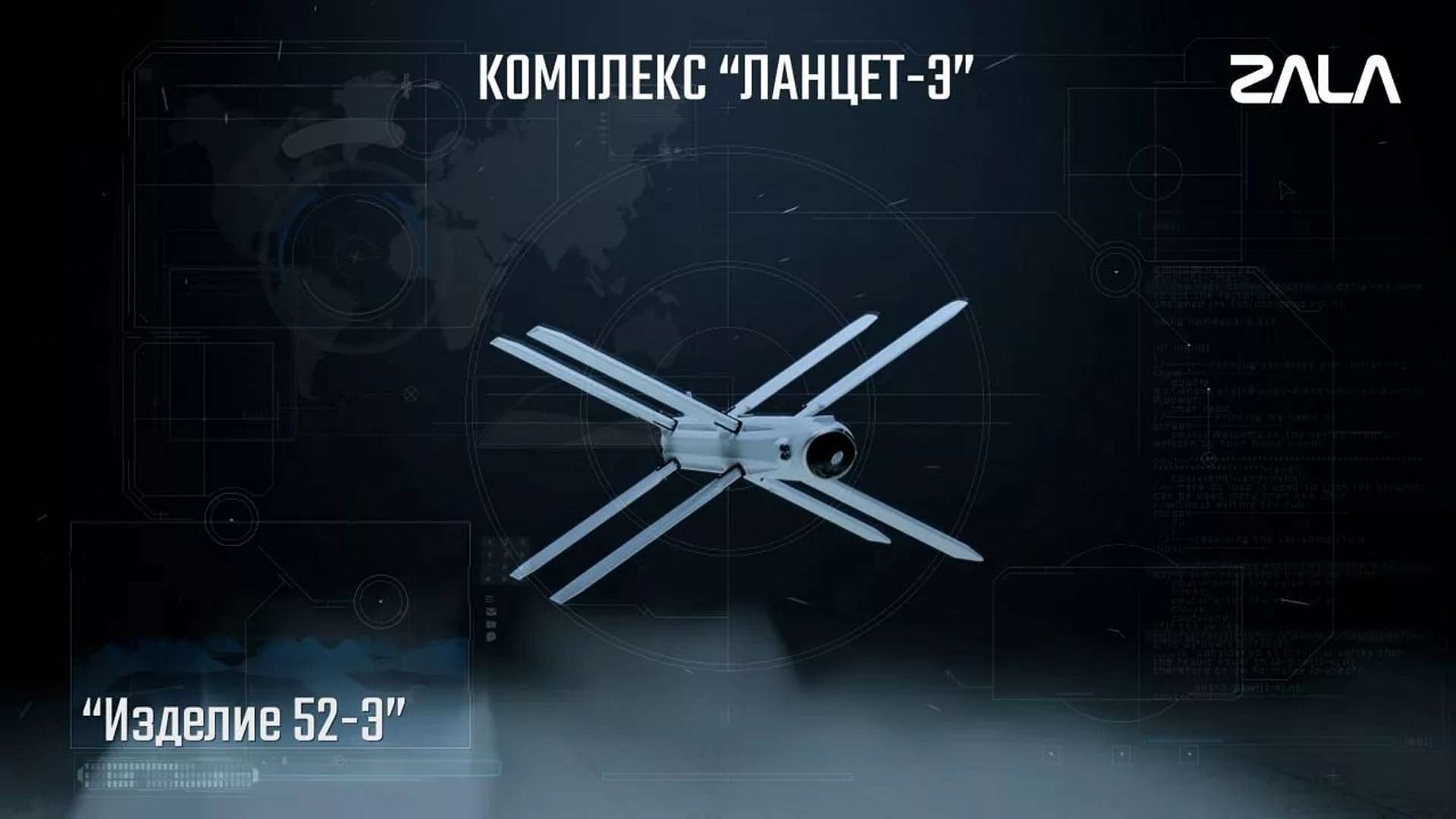
The Lancet-E system comprises the Z-16-E reconnaissance unmanned aerial vehicle (UAV) and two guided munitions carriers, known as Izdeliye 51-E and Izdeliye 52-E. (Picture source: ZALA)
The Lancet-E is a variant of the ZALA Lancet, a loitering munition developed by ZALA Aero Group, a subsidiary of Kalashnikov Concern, introduced in 2019. The Lancet has been deployed in conflict zones, including Syria and Ukraine, for reconnaissance and precision strikes. The drone features an X-wing design and a small pusher propeller, reportedly making it difficult to detect via radar. In Ukraine, the Lancet has been used to target military assets such as IRIS-T air defense radars and Leopard 2 tanks. Russian sources have reported an effectiveness rate of around 80% during the 2023 Ukrainian counteroffensive. This reported effectiveness has spurred increased production of the Lancet to compensate for the loss of other military assets.
The Lancet series includes various models, such as the Lancet-1 and Lancet-3, which differ primarily in payload capacity and flight endurance. The Lancet-3, for instance, can carry a 5-kilogram warhead and has a flight endurance of approximately 40 minutes with a range exceeding 40 kilometers. Recent updates to the Lancet include a tube launcher capable of deploying multiple drones and enhanced communication systems that enable coordinated operations. Despite challenges such as sanctions and parts shortages, the production of the Lancet continues, supported by adaptable manufacturing processes.
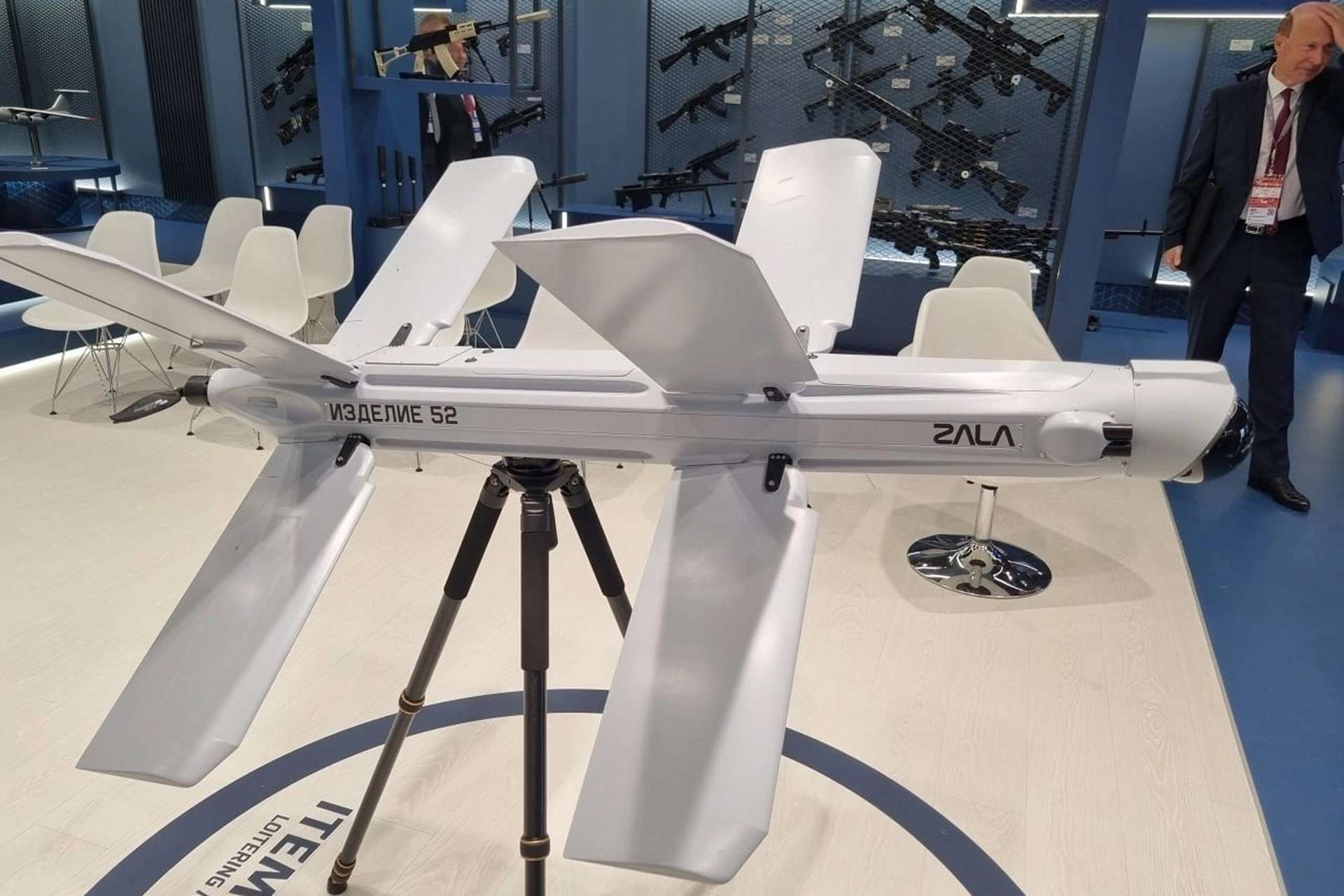
The Lancet-E is a variant of the ZALA Lancet, a loitering munition developed by ZALA Aero Group, a subsidiary of Kalashnikov Concern, introduced in 2019. (Picture source: Rosoboronexport)

- Details
- Written by: V.Saint
- Category: 2024
- Hits: 6245
On August 12, Huta Stalowa Wola S.A. signed a contract with Raytheon Polska for the production of 48 M903 launchers, which are part of the Patriot® air and missile defense systems under the Wisła program. The deliveries are scheduled for 2027-2029.
Signing délégation from huta stalowa and raytheon polska on august 12th (Picture source: Raytheon polska)
The contract for the production of 48 M903 launchers (Letter Subcontract) marks the beginning of the implementation of the second phase of the Wisła program and the signing of contracts for the supply of other components with the Polish industry. One of the key subcontractors for HSW S.A. in this contract is Zakłady Mechaniczne Tarnów S.A., which provides the actuators for the launchers, and Wojskowe Zakłady Elektroniczne S.A., responsible for supplying the data link terminal module. Numerous other elements of the Patriot systems have been manufactured by companies that are part of the PGZ-Wisła consortium, including: technical support containers, transport and loading vehicles, launcher components, missile components, and radar systems.
As part of the preparations to meet the obligations of the first phase of the program, Wisła Huta Stalowa Wola S.A. has completed the investment by constructing a production and assembly center, which could eventually also take over as a service, maintenance, and repair center for the M903 Patriot launchers used by current and future users. Its creation also confirms that HSW S.A. has met all the quality standards required by its American partner, Raytheon, a company belonging to the RTX group. The system components developed by HSW S.A., as well as by other companies part of the PGZ-Wisła consortium, are manufactured to the highest standards, in accordance with design assumptions.
The Patriot air and missile defense system is one of the main components that make up the country's air defense system. Its primary task is to counter short-range tactical ballistic missiles (including cruise missiles), cruise missiles, and piloted aerial attack assets across the full range of speeds and flight altitudes used by tactical aviation, as well as to combat unmanned aerial vehicles.
The PGZ-Wisła consortium composed of: PGZ S.A. (consortium leader), Huta Stalowa Wola S.A., Mesko S.A., PIT-RADWAR S.A., Wojskowe Zakłady Elektroniczne S.A., Jelcz sp. z o.o., Huta Stalowa Wola S.A. Autosan Branch in Sanok, Maritime Technology Research and Development Center S.A., Military Armament Works S.A., Zakłady Mechaniczne Tarnów S.A., Wojskowe Zakłady Lotnicze No. 1 S.A., Wojskowe Zakłady Lotnicze No. 2 S.A., PCO S.A., and Wojskowe Zakłady Łączności No. 1 S.A. Additionally, some of the PGZ companies not mentioned participate in the program as subcontractors.
In the first phase of the program, Poland acquired 2 Patriot batteries in a configuration including, among others, PAC-3 MSE missiles and the IBCS system. The 16 launchers included in the two batteries were delivered by Huta Stalowa Wola S.A. on behalf of Raytheon, the manufacturer and supplier of the Patriot system. The implementation of this task is the result of an intergovernmental order concluded in 2018 under the Foreign Military Sales procedure between the Polish Ministry of National Defense and the United States government.

- Details
- Written by: Vandenbosch
- Category: 2024
- Hits: 17157
On August 9, 2024, the United States Department of Defense announced a new security assistance package aimed at strengthening Ukraine's defense capabilities, as the conflict with Russia enters a critical new phase. The Ukrainians have achieved a breakthrough on Russian territory, a first for Ukrainian forces since the conflict began.
Follow Army Recognition on Google News at this link
In addition to weapons, the aid includes HMMWV ambulances, small arms ammunition, and demolition equipment. (Picture source: US DoD)
This package, estimated at a value of $125 million, is part of the sixty-third tranche of equipment provided to Ukraine since August 2021, under the Presidential Drawdown Authority (PDA). This support adds to the multiple initiatives already undertaken by the Biden administration to meet Kyiv's urgent security needs.
The contents of this aid focus primarily on critical capabilities such as air defense, multi-mission radars capable of detecting and countering enemy artillery, and anti-tank weapons. Among the delivered equipment are Stinger missiles, ammunition for the High Mobility Artillery Rocket Systems (HIMARS), 155 mm and 105 mm artillery ammunition, as well as anti-tank weapon systems like TOW missiles and Javelin and AT-4 systems. In addition to weapons, the aid includes HMMWV ambulances, small arms ammunition, demolition equipment, as well as spare parts, auxiliary equipment, services, training, and transportation.
This new aid comes at a time when Ukraine has launched its largest ground offensive on Russian soil since the conflict began in 2022, particularly in the Kursk region, prompting Moscow to declare a state of emergency and send reinforcements. This military support is essential for Ukraine to maintain pressure on Russian forces while strengthening its defenses against ongoing strikes, such as the recent one targeting a shopping mall in Kostiantynivka, killing 14 civilians and injuring 44 others.
The U.S. strategy also relies on close collaboration with around 50 allies and partners to ensure that Ukraine continues to receive the necessary capabilities to defend its territory against Russian aggression. Support for Ukraine is not limited to weapons but also includes initiatives to protect the country’s critical infrastructure and improve resilience against Russia's ongoing attacks.
In summary, this additional aid strengthens Ukraine's position on the battlefield and demonstrates the United States' continued commitment to supporting its allies against Russian aggression while striving to minimize civilian casualties and protect the country’s essential infrastructure.
Read more: New Tranche of US Military Aid for Ukraine as It Continues Its Breakthrough in Russia

- Details
- Written by: Halna du Fretay
- Category: 2024
- Hits: 4011
From August 5 to August 16, 2024, American and Moroccan troops are participating in a crucial exercise near Agadir, Morocco, testing new electronic warfare technologies and tactics. This joint effort, part of the "Arcane Thunder 24" maneuvers, is part of a broader initiative to restore and enhance military capabilities that were largely dismantled after the Cold War. The exercise involves high-tech tools, including high-altitude balloons and various types of drones, used to locate and neutralize enemy radars and radio transmitters.
Follow Army Recognition on Google News at this link
US Army cyber operations specialist discusses device utility to Moroccan warfighter in May 2024 (Picture source: US DoD)
The US Army’s 2nd Multi-Domain Task Force (MDTF), particularly its 2nd Multi-Domain Effects Battalion, is at the center of this exercise. The battalion practices detecting and fixing the positions of potential enemy targets, which can then be jammed or destroyed, either temporarily using drone-borne jammers or permanently with lethal drones. Alternatively, the coordinates can be relayed to the MDTF’s long-range missile launchers for targeted strikes. This capability is the primary function of the Multi-Domain Effects Battalion, which combines advanced aerial drones, cybersecurity software, and satellite feeds to conduct multi-domain reconnaissance missions.
This ongoing binational exercise marks the first time the "Arcane Thunder" maneuvers are being conducted in Africa, following a previous session in Romania last year. Approximately 300 soldiers from the military forces of the United Kingdom, Germany, Morocco, and the United States are participating in these exercises, along with military observers from Italy and the Czech Republic. The integration of Moroccan forces in this exercise underscores the growing military collaboration between Morocco and its allies.
The exercises involve the use of a mix of tethered aerostats, various drones, and even unmanned surface vessels from the Navy’s Task Force 66 to conduct wide-area scans and pinpoint enemy signals. These technologies allow the forces to practice detecting and neutralizing enemy radars and wireless transmitters, a critical skill in modern warfare. Military experts emphasize the importance of electronic warfare in gaining a strategic advantage, as it provides precise information on enemy positions and capabilities.
The drones deployed in the exercise include the Kraus Hamadi Aerospace K-1000, a solar-powered mini-plane capable of staying aloft for several days, and the Shield AI V-BAT, which can take off and land vertically, offering deployment flexibility. Additionally, the exercise implements products from the Army’s Launched Effects initiative, including the ALTIUS 700, a medium-range drone equipped with sensors, jammers, or an explosive warhead.
Despite these advancements, the Army is still awaiting the deployment of long-range, high-power jammers, expected to enter service in 2026. Much of the equipment used in the exercise comes from prototypes and experimental offerings from industry partners, rather than formal large-scale procurements. The exercise provides a crucial opportunity for the battalion to test this equipment, provide feedback, and influence future Army procurement and development programs.
This exercise is one of the most significant military activities organized by Morocco, alongside the annual African Lion exercises, which have been held in the Kingdom for two decades. The African Lion maneuvers are the largest military exercises conducted on the African continent, with participation from the armies of many countries. Observers note that Morocco has increasingly involved its forces in numerous military exercises abroad and continues to host significant international military maneuvers within its borders, aligning with a comprehensive strategy to modernize its military arsenal.
Read more: US and Moroccan Forces Test Advanced Electronic Warfare in Joint Exercise
- Details
- Written by: Jérôme Brahy
- Category: 2024
- Hits: 6736
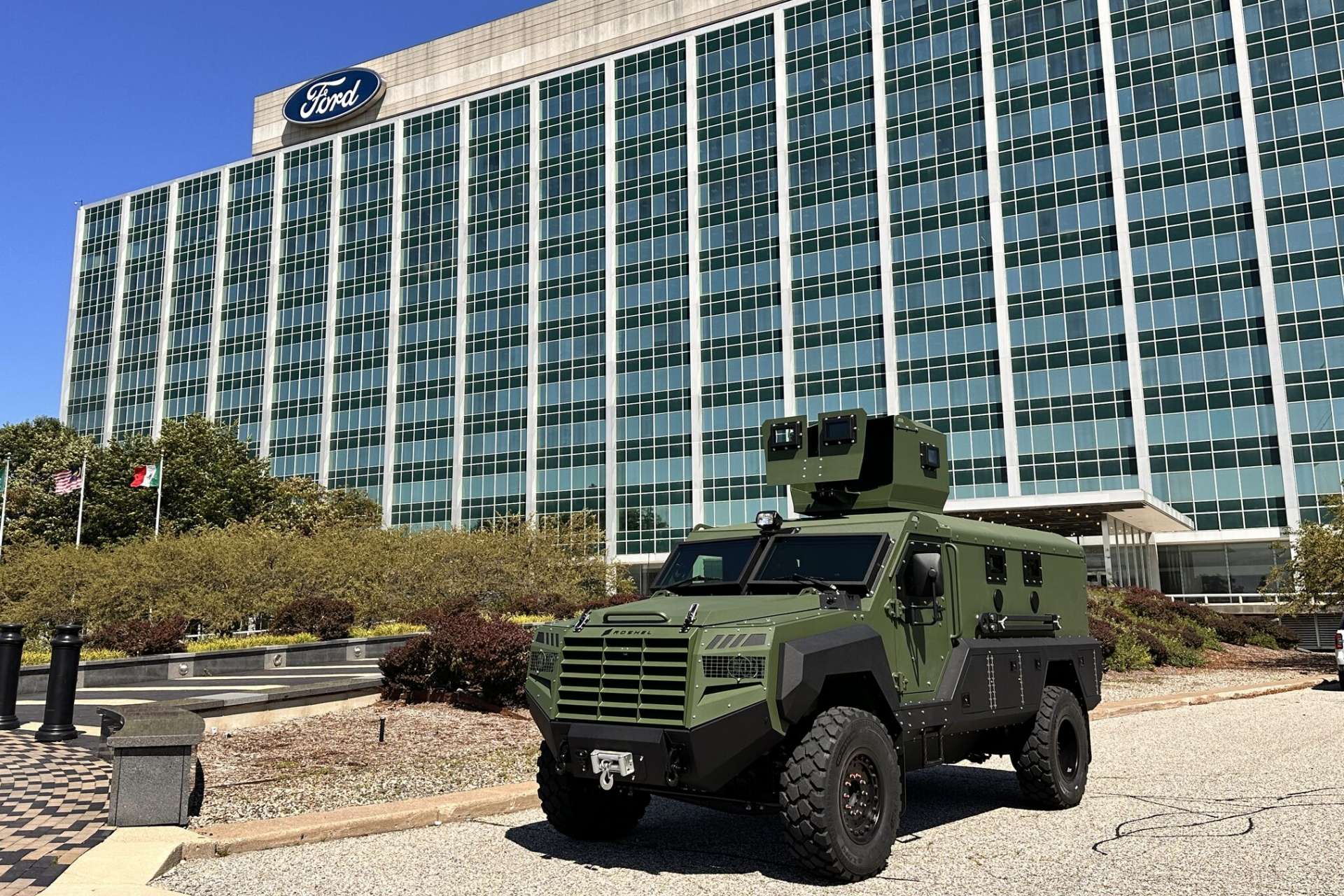
On August 8, 2024, Roman Shimonov, CEO and founder of Roshel, a Canadian manufacturer of armored vehicles, spoke about a recent meeting held at Ford Motor Company's headquarters in Dearborn. During this meeting, the latest model of the Senator MRAP (Mine-Resistant Ambush Protected) armored vehicle was presented, and discussions were held regarding ongoing and future projects aimed at enhancing production capabilities in support of U.S. government and NATO programs. Shimonov acknowledged the Ford team's engagement during these discussions.
Follow Army Recognition on Google News at this link
Ford is integral to Roshel's operations, as the Canadian company uses Ford's F-550 chassis as the foundation for its Senator series of armored personnel carriers (APCs). (Picture source: Roman Shimonov)
Ford is integral to Roshel's operations, as the Canadian company uses Ford's F-550 chassis as the foundation for its Senator series of armored personnel carriers (APCs). This collaboration allows Roshel to utilize Ford's established vehicle platform, which is then modified and armored according to the specific requirements of Roshel's clients. The partnership ensures that the vehicles produced meet the demands of various defense and security operations.
The Ford F-550, part of the Ford Super Duty lineup, is a heavy-duty truck that has been used in commercial and industrial tasks since its introduction in the late 1990s. The F-550 was developed to bridge the gap between Ford's consumer trucks and its more industrial vehicles, offering higher payload and towing capacities than the F-150, F-350 or F-450. The F-550 is known for its robust chassis, which can be equipped with a range of body types and accessories. The truck is available with both gasoline and diesel engines, and its design emphasizes durability and utility for professional use.
The Roshel Senator series has been in production since 2018 and has been deployed in various roles, including protecting astronauts during the Crew Dragon Demo-2 test flight in 2020 and extensive use in Ukraine as part of military aid packages during the ongoing conflict with Russia. By July 2023, 550 Senators had been delivered to the Ukrainian Armed Forces, with subsequent deliveries bringing the total to 750 by October 2023 and 1,000 by December 2023.

The F-550 was developed to bridge the gap between Ford's consumer trucks and its more industrial vehicles, offering higher payload and towing capacities than the F-350 or F-450. (Picture source: Ford)
As of 2024, Roshel has scaled up its production, manufacturing approximately 140 Senator armored vehicles per month. This increased production is supported by expanded facilities in Canada, with additional plans to further increase output by opening a new plant in Ukraine. The vehicles are produced in various configurations, including APCs, MRAPs, and emergency response vehicles, to meet a wide range of military and security needs. For instance, the Senator APC is primarily intended for law enforcement and border patrol operations, while the Senator ERV (Emergency Response Vehicle) is designed for emergency response and rescue services, incorporating features like a hydraulic ram bar system for specialized scenarios.
Founded in 2016, Roshel has been active in armored vehicle development, introducing the APC variant of the Senator in 2017 and the MRAP version in early 2023. The MRAP variant has attracted international interest, including procurement by countries such as Costa Rica and South Korea, as revealed during the Association of the United States Army (AUSA) 2023 annual conference in Washington, DC.
The Senator MRAP is characterized by its use of lightweight composite materials, advanced thermal and acoustic insulation, and a V-shaped hull designed to provide 360° ballistic protection in compliance with STANAG 4569 level 2a/2b standards. The vehicle is equipped with a thermal camera with night vision capabilities and an infrared spotlight. Its design enhances protection against mines, as confirmed by ballistic and blast testing conducted by the Oregon Ballistic Laboratories. The vehicle is capable of withstanding explosions from anti-tank mines containing up to 6 kg of explosives, providing a high level of occupant protection.

The Senator MRAP is characterized by its use of lightweight composite materials, advanced thermal and acoustic insulation, and a V-shaped hull designed to provide 360° ballistic protection in compliance with STANAG 4569 level 2a/2b standards. (Picture source: Roshel)
The Senator MRAP is also designed to accommodate various third-party systems, including unmanned aerial vehicles (UAVs), remote-controlled weapon systems, or smoke screen systems. Its standard armament includes a remote-controlled weapon system (RCWS) and a turret that can be equipped with machine guns, grenade launchers, or anti-tank guided missiles (ATGMs).
The vehicle features a four-wheel-drive (4WD) configuration and run-flat tires. It is powered by a 6.7L turbo diesel engine paired with a 10-speed automatic transmission, delivering 330 horsepower and 750 Nm of torque. The vehicle has a capacity for up to 10 occupants, a payload capacity of 1,200 to 2,000 kg, and an operational range of up to 800 km, supported by a fuel capacity of 257 liters. Its dimensions are 6 meters in length, 2.4 meters in width, and 2.5 meters in height.
Read more: Roshel partners with Ford to expand Senator MRAP production

- Details
- Written by: Halna du Fretay
- Category: 2024
- Hits: 2745
Lithuania has unveiled plans to deliver a new military aid package to Ukraine in August 2024, further supporting Ukraine's defense capabilities during an ongoing conflict. This package, which includes a range of essential military equipment, reflects Lithuania's commitment to strengthening Ukraine's ability to protect its sovereignty and maintain stability in the region.
Follow Army Recognition on Google News at this link
Armored vehicles that Lithuania transferred to Ukraine in June 2024. (Picture source: Lithuania MoD)
The Lithuanian Ministry of Defense announced that this upcoming aid will include short-range air defense systems, armored vehicles, and anti-drone weapons, which Ukraine urgently needs. According to Lithuanian Defense Minister Laurinas Kasčiūnas, this aid is not only a demonstration of solidarity with Ukraine but also an investment in Lithuania's own security. He emphasized the importance of contributing to the "air defense coalition" led by Germany, the United States, and France, which has played a crucial role in supporting Ukraine's air defense efforts.
The aid package will include 14 M113 armored personnel carriers, short-range air defense systems with corresponding missiles, electronic warfare equipment, off-road vehicles with spare parts, tractor trucks, forklift systems, small arms, ammunition, and various spare parts. These resources are intended to meet the daily operational needs of Ukrainian forces on the battlefield.
This latest package follows Lithuania's ongoing support for Ukraine throughout 2024. Earlier this year, Lithuania delivered artillery ammunition, additional armored vehicles, anti-drone systems, Swedish Carl Gustaf anti-tank grenade launchers, RISE-1 remote detonation systems, components for L-39ZA Albatros training and combat aircraft, as well as generators. Since the start of the full-scale war, Lithuania has provided Ukraine with military aid valued at $641 million.
In addition to military aid, Lithuania has also participated in testing drones from five Lithuanian manufacturers in Ukraine, with potential contracts to follow. The Lithuanian government has also taken steps to establish permanent fortifications at two locations near its border with Russia’s Kaliningrad region, thus strengthening its own national defense in response to regional tensions.
- Details
- Written by: Vandenbosch
- Category: 2024
- Hits: 12046
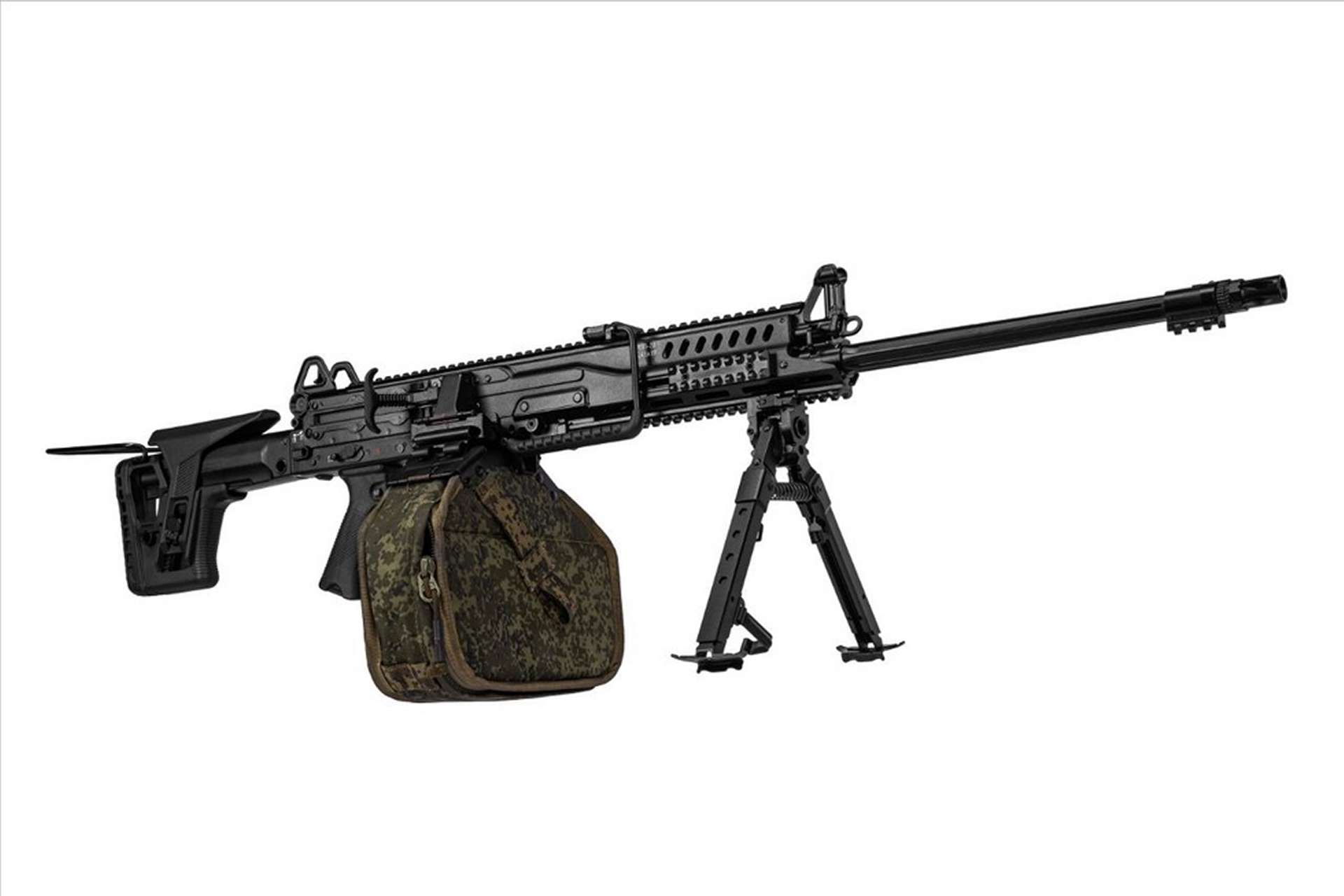
Kalashnikov Concern unveiled the RPL-20 on August 10, 2024, during the Army 2024 exhibition. This new belt-fed light machine gun is designed for Russian military forces, including elite units such as the Spetsnaz. The weapon represents a significant advancement over previous models like the RPK-16.
Follow Army Recognition on Google News at this link
The RPL-20 is chambered for the 5.45x39 mm cartridge, the same caliber used in the AK-12 assault rifle. (Picture source: Kalashnikov)
The RPL-20 is chambered for the 5.45x39 mm cartridge, the same caliber used in the AK-12 assault rifle, and features a belt-fed mechanism that allows for a high sustained rate of fire. One of the notable characteristics of the RPL-20 is its versatility in ammunition capacity; it can be fed by belts holding 100, 200, or even more rounds, a substantial improvement over earlier designs. This capability makes it particularly effective for providing continuous suppressive fire, a crucial aspect in combat situations.
The design of the RPL-20 incorporates a range of modern enhancements aimed at improving both performance and usability. It includes a quick-change barrel system available in two lengths (590 mm and 415 mm), allowing adaptation to various combat scenarios. The weapon also features an adjustable telescopic stock, an ambidextrous safety selector, and a non-reciprocating charging handle, all of which contribute to its ease of use. The inclusion of Picatinny rails and M-LOK slots provides ample space for mounting various accessories, such as optics and grips, further enhancing its operational flexibility.
Weighing between 5.2 and 5.5 kilograms depending on the barrel length, the RPL-20 is relatively lightweight for a machine gun, making it easier to carry and operate over extended periods. The weapon's development was driven by field feedback, highlighting the need for a more reliable and efficient light machine gun capable of higher rates of fire and easier maintenance during operations.
Kalashnikov has also announced plans to develop modifications of the RPL-20 for other calibers, such as 7.62x39 mm and 5.56x45 mm, potentially broadening its appeal in foreign military markets. Although the RPL-20 is not yet in full production, it is expected to undergo further testing and refinements before being officially adopted by the Russian military.

Kalashnikov Concern unveiled the RPL-20 during Army 2024. (Picture source: Kalashnikov)
Read more: Russia Unveils New RPL-20 Belt-fed Light Machine Gun During Army2024
- How Russian 'Vityaz' Vehicle revolutionize electronic warfare against FPV
- Taiwan Advances in Developing New D3 Infantry Fighting Vehicle
- Russia presents new Pantsir-SMD-E air defense missile system without 30 mm guns at Army-2024
- Russia and Kalashnikov Innovate with New Under-Barrel Grenade Launcher 40x46 mm GP-46