

- Details
- Written by: Administrator
- Category: 2024
- Hits: 4618










On December 4, 2024, the Main Intelligence Directorate of the Ministry of Defense of Ukraine provided an important update regarding Russia's missile production capabilities, particularly focusing on the RS-26 Rubezh, the country’s intermediate-range ballistic missile (IRBM). According to Ukrainian intelligence, Russia can now produce up to 25 units of RS-26 Rubezh each year, including its new Oreshnik variant. This new development highlights the growing production capacity of Russia's missile forces and their focus on strengthening their medium-range missile arsenals.
Follow Army Recognition on Google News at this link
Test fire at Kapustin Yar: Russia's RS-26 Rubezh and Oreshnik variants undergo critical testing at the Astrakhan region missile launch site, enhancing Russia's strategic missile capabilities. (Picture source: Russian MoD)
The RS-26 Rubezh, at the heart of Russia's modern missile capabilities, represents a strategic shift in Moscow's approach to missile warfare. Its production plays a significant role in Russia’s efforts to counter NATO's missile defense systems. The Oreshnik, a variant of the RS-26 Rubezh, has been shrouded in controversy, particularly following its use in an attack on Ukraine's Dnipro River on November 21, 2024.
The RS-26 Rubezh is a crucial missile for Russia’s defense strategy. Classified as an intermediate-range ballistic missile (IRBM), the RS-26 is designed to carry both nuclear and conventional warheads and has a range of approximately 3,500 to 4,000 km (2,175 to 2,485 miles). This puts it within the category of medium to long-range missile systems capable of striking targets across Europe, the Middle East, and parts of Asia.
Russia has invested heavily in producing the RS-26 Rubezh and its variants. The missile is manufactured at high output and can produce up to 25 units per year, a significant increase from earlier periods. This production surge follows the technical experience gained from Russia's previous RS-24 Yars ICBM (InterContinental Ballistic Missile) program, which has informed the development of the RS-26’s advanced features, including hypersonic speed and maneuverability designed to defeat modern missile defense systems.
The controversy surrounding Russia’s missile capabilities deepened after an attack on the Ukrainian city of Dnipro on November 21, 2024. During the attack, Russian forces used what they claimed to be a “new medium-range system” that President Vladimir Putin referred to as the Oreshnik. At the time, Ukrainian officials initially identified the missile used in the strike as an intercontinental ballistic missile (ICBM), but Putin contradicted this, announcing that the missile was a new addition to Russia’s missile arsenal, designed specifically for medium-range strikes.
In contrast, American officials labeled the missile as “experimental,” suggesting that while it may have been deployed operationally, the Oreshnik was still in an advanced testing phase. According to U.S. officials, the missile appears to be a non-nuclear, hypersonic ballistic missile, a designation that aligns with previous reports of its high-speed and maneuvering capabilities. These features make the missile extremely difficult to intercept, as it travels at speeds greater than Mach 5 (over six times the speed of sound) and can follow unpredictable flight paths to bypass missile defense systems. Despite these claims of a new missile type, the Oreshnik is widely regarded as a variant of the RS-26 Rubezh—with enhancements aimed at improving its hypersonic capabilities and range. The missile's inclusion in Russia’s operational arsenal is seen as part of a broader strategy to bolster its missile forces, specifically in response to NATO’s missile defense systems in Europe.
Both the RS-26 Rubezh and its Oreshnik variant undergo testing at Russia’s key missile testing sites. These include Kapustin Yar, located in the Astrakhan region, which has long been a central hub for developing and testing Russia’s missile systems, including the RS-26 and its variants. Additionally, the Plesetsk Cosmodrome in the Arkhangelsk region plays a critical role in missile testing. Though better known for space launches, Plesetsk is integral to Russia’s missile development and operational readiness.
The international community has responded with heightened concern over the deployment of the Oreshnik missile. The United States, in particular, has expressed its reservations, labeling the missile "experimental" and underscoring the potential escalation of tensions. The missile’s hypersonic nature and non-nuclear profile make it a versatile tool for Russia’s military, capable of striking with precision while circumventing most conventional missile defense systems, including THAAD and Aegis. The attack on Dnipro has further fueled worries that Russia may be advancing its missile technology with a focus on bypassing traditional defense mechanisms. With its ability to target high-value military and infrastructure assets over a long distance, the RS-26 Oreshnik represents a serious threat in a region already facing significant instability.
For NATO and the West, the growing production of intermediate-range ballistic missiles like the RS-26 Rubezh, and the operational readiness of the Oreshnik, highlight the urgent need to adapt and modernize missile defense capabilities to respond to Russia's evolving missile threats.
Russia’s ability to ramp up production of the RS-26 Rubezh, including its Oreshnik variant, signals a major shift in the strategic landscape. With up to 25 units of the RS-26 Rubezh and Oreshnik expected to roll out annually, Russia is significantly enhancing its missile arsenal, increasing its ability to project power over long distances. As the Oreshnik variant enters the operational phase, the growing concern about its hypersonic and maneuverability features will continue to shape global security dynamics. The missile’s potential to bypass missile defense systems, along with its strategic and tactical flexibility, makes it a formidable asset in Russia’s military planning.
For the West, this development calls for reevaluating defense strategies and missile deterrence capabilities as Russia’s missile forces continue to evolve rapidly. The geopolitical implications of this missile advancement will likely influence future arms control talks and shape the future trajectory of global missile defense systems.

- Details
- Written by: Jérôme Brahy
- Category: 2024
- Hits: 5616
On December 3, 2024, the United States approved a $107.7 million potential Foreign Military Sale to Tunisia for Javelin FGM-148F anti-tank missiles and related support systems. The deal includes 184 missiles, four of which are designated as fly-to-buy for testing, and 30 Lightweight Command Launch Units (LWCLUs). This acquisition is set to complement Tunisia’s existing anti-tank capabilities, which currently rely on systems such as the Milan and TOW missile platforms and vehicle-mounted launchers like the M901 ITV TOW. The introduction of the Javelin system is expected to significantly enhance Tunisia's ability to counter armored threats and bolster its overall infantry effectiveness.
Follow Army Recognition on Google News at this link
The Javelin anti-tank missile system is a modern addition to Tunisia’s arsenal, offering capabilities that significantly surpass its current inventory. (Picture source: US DoD)
Tunisia’s current anti-tank arsenal includes man-portable missile systems and older platforms, such as the Milan, that have been in service for decades. These systems are supplemented by vehicle-mounted TOW launchers, which provide additional firepower against both armored vehicles and fortifications. While effective, these systems are aging and have limited operational flexibility compared to newer technologies like the Javelin. The Javelin's fire-and-forget capabilities and extended range provide a modernized edge, aligning with Tunisia’s broader efforts to modernize its defense forces.
Tunisia is navigating a multifaceted geopolitical landscape, with internal political challenges and regional instability shaping its defense priorities. The consolidation of power by President Kais Saied in 2021 led to strained relations with Western allies due to perceived democratic backsliding. Nevertheless, Tunisia has maintained critical partnerships, including those with the United States, which designated it as a major non-NATO ally in 2015. Additionally, Tunisia's defense modernization is shaped by its strategic need to counter threats from neighboring Libya, where ongoing instability continues to pose risks to national security.
In terms of its foreign policy, Tunisia is striking a balance between traditional alliances and new partnerships. While maintaining ties with the European Union, particularly on migration and economic issues, Tunisia has expanded cooperation with countries like China, seeking to diversify its security and economic alliances. This dual-track strategy aims to enhance sovereignty and reduce reliance on any single bloc, reflecting Tunisia’s adaptation to evolving global dynamics.
The Javelin missile system is a modern addition to Tunisia’s arsenal, offering capabilities that significantly surpass its current inventory. Designed as a man-portable fire-and-forget anti-tank system, the Javelin uses advanced infrared homing to engage targets effectively from distances of up to 4,000 meters. Its tandem-charge warhead is capable of defeating modern armor, including vehicles equipped with explosive reactive armor (ERA), by employing a precursor charge to neutralize the ERA before the primary warhead penetrates the base armor.
The Javelin’s lightweight design and advanced LWCLU enhance operational flexibility, allowing for deployment in various environments with minimal setup time. Its fire-and-forget capability ensures greater safety for operators, as they can relocate immediately after launch. These features make the Javelin particularly suited to Tunisia’s evolving defense needs, providing its forces with a modern and versatile tool to address a wide range of armored and fortified threats. This acquisition underscores Tunisia’s commitment to advancing its military capabilities in alignment with regional security challenges.

- Details
- Written by: Triffaux
- Category: 2024
- Hits: 5528
On December 2, 2024, a Japanese government source revealed that Japan would supply specific defense equipment to the Philippines, Indonesia, Mongolia, and Djibouti under its Official Security Assistance (OSA) program. This program, launched in April 2023, aims to strengthen the defense capacities of nations that share Tokyo's strategic values. For the 2024 fiscal year ending in March, the government allocated a budget of 5 billion yen ($33 million) to support these four priority countries.
Mitsubishi J/FPS-3 Coastal Surveillance Radar (Picture source: Mitsubishi)
In 2024, Japan decided to allocate a significant portion of this aid to the Philippines, which faces escalating Chinese territorial claims in the South China Sea. Tokyo plans to provide advanced maritime surveillance radar systems to Manila to enhance detection and control capabilities in this strategic area. These systems will complement the J/FPS-3 coastal surveillance radar developed by Mitsubishi Electric Corporation, delivered in 2023, which significantly improved the security of the Philippines' territorial waters. Amid recurring confrontations between Philippine and Chinese vessels, these new radars aim to ensure better preparedness and a swift response to incursions.
Mongolia, due to its strategic location between China and Russia, is expected to receive systems including Primary Surveillance Radars (PSR) produced by NEC Corporation, capable of detecting aircraft without transponders, and Secondary Surveillance Radars (SSR), which identify equipped aircraft and provide precise data on their altitude and trajectory. These systems will enable Mongolia to enhance its airspace monitoring capabilities and guard against potential intrusions. Meanwhile, Indonesia and Djibouti could receive Shikishima-class patrol vessels, built by Japan Marine United Corporation (JMU), or equivalent models designed to ensure maritime security and protect strategic trade routes. These vessels aim to counter illegal maritime activities in Indonesian waters and strengthen security in Djibouti's vital maritime corridor.
Since its launch in April 2023, the OSA program reflects a strategic shift in Japan's international security policy. This proactive initiative aims to bolster the defense capacities of its partners in the face of growing threats, particularly China's military expansion. Through this targeted assistance, Tokyo reaffirms its commitment to promoting a free and stable Indo-Pacific while consolidating regional alliances in an increasingly tense geopolitical context.
Japan's arms policy, long defined by a strict pacifist stance, is rooted in Article 9 of its 1947 Constitution adopted after World War II. This article prohibits Japan from using war as a means of resolving international conflicts and restricts its military capabilities to strictly territorial defense. For decades, this approach translated into stringent restrictions on arms exports and an exclusively defensive role for the Self-Defense Forces (SDF).
However, the evolving regional security environment has gradually pushed Tokyo to reassess this policy. Faced with China's growing military power, North Korea's nuclear threats, and the rising strategic importance of the Asia-Pacific region, several key changes have marked this transition. In 1967, the "Three Principles on Arms Exports" established a strict ban on selling arms to communist countries, nations under UN embargo, or those involved in armed conflicts. These restrictions began to ease in 2014 when Prime Minister Shinzo Abe adopted the "Three Principles on Transfer of Defense Equipment," allowing limited exports to countries sharing Japan's democratic values.
A major turning point occurred in 2015 with the adoption of the collective security law, allowing the SDF to intervene to defend allies even if Japan itself is not directly attacked. This change broadened the strictly defensive framework of Japan's military action. In 2023, Tokyo launched the OSA program, designed to provide non-lethal defense equipment to allied countries such as the Philippines, Indonesia, or Mongolia. This program aims to strengthen the defense capacities of partner nations while stabilizing the region amid China's military expansion.
In parallel, Japan significantly increased its military budget, reaching 2% of its GDP in 2024, in line with commitments outlined in its 2022 updated national defense strategy. This record budget marks a paradigm shift for a country that traditionally capped its military spending at around 1% of its GDP. These transformations reflect Japan's intention to play a more active role in regional and international security while asserting its commitment to ensuring a free and stable Indo-Pacific. This strategic shift marks a break from its historical pacifist stance while remaining aligned with contemporary geopolitical challenges.
Outside the OSA framework, Japan has also supplied defense equipment to several countries through bilateral cooperation or specific loans. In 2016, the Philippines received TC-90 training aircraft, initially leased and later transferred permanently in 2018, to bolster maritime surveillance in the contested waters of the South China Sea. In 2020, Japan delivered patrol vessels to Vietnam via a low-interest loan, followed by a 2021 agreement to expand the export of maritime surveillance systems. In 2022, Japan concluded an agreement with Thailand for technology transfers in the defense sector, though specific systems have not been disclosed. Regarding Ukraine, while Japan has not supplied lethal military equipment, it delivered civilian drones, bulletproof vests, and other non-lethal support equipment in 2022 and 2023, underscoring its commitment to supporting Kyiv within the constraints of Japan's constitutional restrictions. These initiatives demonstrate Tokyo's intent to contribute to international security while adapting to the specific needs of its strategic partners.

- Details
- Written by: Jérôme Brahy
- Category: 2024
- Hits: 4340
As reported by Clash Report on December 4, 2024, Syrian rebels have achieved the first recorded capture of an intact Russian 48Ya6-K1 Podlet-K1 low-altitude surveillance radar system, taken during an offensive near Hama at the headquarters of the Assad regime's 25th Special Forces Division. The system, valued at approximately $5 million and integral to the S-300PMU-2 and S-400 air defense networks, could pose a significant threat to Russian air defense effectiveness if its technology is analyzed by adversaries.
Follow Army Recognition on Google News at this link
Examining its hardware and software might provide insights into Russian radar technology, including detection capabilities, signal processing methods, and electronic counter-countermeasure strategies. (Picture source: Clash Report)
Similar systems lost in Ukraine, such as those destroyed in Kherson and Crimea, were not seized intact. While operational use by the rebels is unlikely due to technical complexity, the most effective way to exploit its capabilities would be through detailed analysis, which could reveal vulnerabilities in Russian air defense systems, an eventuality which raises concerns among Russian analysts about its potential transfer to entities like NATO or Ukraine.
Examining its hardware and software might provide insights into Russian radar technology, including detection capabilities, signal processing methods, and electronic counter-countermeasure strategies. This information could advance the development of countermeasures, refine electronic warfare tactics, and highlight weaknesses in Russian air defense systems. The Podlet-K1's ability to detect low-altitude cruise missiles, such as the Storm Shadow and R-360 Neptune, underscores its strategic importance.
The capture occurred during a broader offensive by opposition forces in Hama province, following their takeover of Aleppo, Syria’s second-largest city. This offensive, led by Hayat Tahrir al-Sham (HTS), marked the first opposition control of Aleppo since 2016. After capturing several military installations, including the 87th Brigade base and a tank school, HTS forces advanced toward Hama. Although they temporarily breached the city's defenses, counterattacks by pro-Assad forces, supported by Russian airstrikes and Iranian militias, forced the rebels to retreat.
The offensive resulted in significant equipment losses for both sides. Rebels reportedly seized 31 Russian-made tanks, including T-72 and T-90 models, 20 BMP armored personnel carriers, and 12 122mm artillery pieces. Additionally, they captured a Pantsir-S1, a Strela-10, and an S-125 air defense system. These acquisitions have enabled expanded drone and missile attacks on regime targets. However, intense fighting led to the destruction of other equipment, including tanks, armored vehicles, and artillery, though specific figures remain unverified. Among the abandoned systems was a ZSU-23-4M "Mahmia" equipped with Sarab-2 countermeasures, left by the regime’s 4th Armored Division on the Khanasir-Ithrya road. This system, one of two upgraded in the Adra workshop, was filmed after its abandonment.
At Neyrab Air Base near Aleppo, rebels captured eight L-39 Albatros light training and attack jets and three MiG-23 fighter aircraft. The MiG-23, powered by a Tumansky R-29B turbojet engine, can reach speeds of up to 2,500 km/h and is designed for interception and air-to-ground missions. While these aircraft represent strategic assets, their operational potential is constrained by maintenance needs, a lack of skilled pilots, and vulnerability to airstrikes. Ground tests were attempted, but technical issues and attacks on captured bases hindered further use.
The Podlet-K1 system can detect aerial targets at ranges of 10 to 300 kilometers and altitudes up to 10 kilometers, tracking up to 200 targets simultaneously. Its modular design comprises three components mounted on a KamAZ-6350 8x8 chassis: an antenna post, a mobile command post, and a power generator. It employs a phased-array S-band radar and Identification Friend or Foe (IFF) technology, enabling operations against low-flying and high-speed targets. The system's deployment and pack-up can be completed within approximately 20 minutes.
The capture of the Podlet-K1 radar system has drawn comparisons to a 2020 operation in Libya, where U.S. forces, in cooperation with Türkiye, extracted a Russian Pantsir-S1 system. Speculation suggests the radar could be transferred to Türkiye, given its use of Russian S-400 systems. Alternatively, Russian airstrikes might target the radar to prevent its analysis, similar to actions taken in Ukraine following the loss of a Sukhoi S-70 Okhotnik-B UAV. Despite logistical challenges, the radar’s intact condition could facilitate technical study and aid in developing countermeasures against similar systems.

- Details
- Written by: Jérôme Brahy
- Category: 2024
- Hits: 4061
On December 6, 2024, Kurganmashzavod, part of Rostec's High Precision Systems holding, announced that it has fulfilled its 2024 state defense order with the delivery of the final batch of upgraded BTR-MDM Rakushka amphibious armored personnel carriers to the Russian Airborne Forces. The final shipment follows an earlier delivery in late October, though the total number of vehicles delivered has not been disclosed.
Follow Army Recognition on Google News at this link
The BTR-MDM entered service in 2016, replacing the older BTR-D as part of a modernization program for the Russian Airborne Forces. (Picture source: Russian social media)
The 2024 deliveries feature modifications informed by operational experiences in Ukraine. Upgrades include additional armor to enhance protection against aerial threats, the "Nakidka" system for reducing thermal and radar signatures, and an upper hemisphere protection kit referred to as "mangal." Driver stations have been fitted with night vision devices, and electronic warfare systems targeting unmanned aerial vehicles have been installed.
The BTR-MDM Rakushka is an upgraded version of the BTR-MD. It shares components with the BMD-4M and BMP-3M, including a 500-horsepower UTD-29 diesel engine, an improved transmission, and a reinforced suspension. It is capable of traversing rough terrain at speeds up to 70 km/h. The vehicle is equipped with a remotely operated weapon station, typically armed with either a 7.62 mm or a 12.7 mm machine gun.
The BTR-MDM entered service in 2016, replacing the older BTR-D as part of a modernization program for the Russian Airborne Forces. By early 2024, approximately 90 units were reported in service. However, some units have been lost during operations in Ukraine. Open-source intelligence reports indicate that, as of December 2024, at least 45 BTR-MDMs have been destroyed, damaged, abandoned, or captured. These include 32 destroyed, three damaged, two damaged and abandoned, and eight captured.
The BTR-MDM is designed for airborne operations and is based on the BMD-4 airborne infantry fighting vehicle. It weighs 13.2 tons and is powered by a UTD-29 engine, providing a range of 500 kilometers and a maximum road speed of 70 km/h. It is amphibious, with a water speed of 10 km/h achieved via two water jets. A hydropneumatic suspension with variable ground clearance allows the vehicle to be airdropped from military transport aircraft.
The vehicle has a two-person crew and can transport up to 13 troops or various cargo, including up to six stretchers. Access is provided through a rear hatch and roof hatches. Armament includes two 7.62 mm machine guns, one remotely operated and the other manually operated. The vehicle's armor is designed to withstand small arms fire and shell fragments and incorporates nuclear protection and fire suppression systems.
Specialized variants of the BTR-MDM have been developed for specific roles. The MRU-D radar vehicle, based on the same chassis, is designed to detect low- and medium-altitude targets at ranges of up to 40 kilometers, tracking up to 100 targets simultaneously and transmitting data to MANPADS operators. Another variant, the MP-D automated air defense control system, can detect targets up to 150 kilometers away and track 100 targets simultaneously. It supports four remotely operated workstations and incorporates the Barnaul-T system.
Production of the BTR-MDM continues at Kurganmashzavod, with deliveries occurring monthly under current defense contracts. New contracts are expected to commence in 2025, ensuring continued production and supply for the Russian Airborne Forces. These developments indicate sustained efforts to provide equipment tailored to the operational requirements of airborne units.

- Details
- Written by: Halna du Fretay
- Category: 2024
- Hits: 2193
On December 6, 2024, the Australian government, led by Prime Minister Anthony Albanese, announced the development of a new coastal defense and long-range strike system for the Australian Army. This initiative aligns with the priorities outlined in the 2024 National Defense Strategy, which emphasizes securing Australia’s northern approaches amid evolving geopolitical complexities. This marks a significant step for the Australian Defense Force (ADF), introducing coastal strike capabilities.
The Naval Strike Missile (NSM), developed by Kongsberg, is a stealth cruise missile for anti-ship and land-attack missions, designed to be mounted on the mobile and adaptable StrikeMaster vehicle for coastal operations (Picture source: Kongsberg)
The program considers two advanced technological options. The first is the Precision Strike Missile (PrSM), launched from the High Mobility Artillery Rocket System (HIMARS). Known for its mobility and capability, HIMARS can deliver strikes over 500 kilometers with the latest PrSM. The second option is the Naval Strike Missile (NSM), developed by Kongsberg, a stealth cruise missile designed for anti-ship and land-attack missions. The NSM, mounted on the StrikeMaster vehicle, offers a mobile and adaptable solution for coastal operations.
A competitive evaluation is scheduled for 2025 to determine the most suitable technology for Australia’s strategic needs. This structured approach builds on an earlier decision, approved in August 2023, to expedite the acquisition of 42 HIMARS launchers and associated precision munitions. These systems will be deployed within two new specialized regiments based at the Edinburgh Defence Precinct in South Australia, a key defense hub.
The government has allocated AUD 28–35 billion over the next decade to support this program. This funding will cover the acquisition and integration of coastal strike systems and the development of infrastructure to support their deployment. Additional investments will focus on modernizing targeting systems to enhance operational accuracy. The initiative also aims to strengthen Australia’s defense industry through technological advancements and local collaboration.
Deputy Prime Minister and Defense Minister Richard Marles stated that this initiative represents a pivotal addition to Australia’s defense strategy, enhancing its capacity to adopt a denial-based posture. Defense Industry Minister Pat Conroy emphasized the program’s potential to bolster the army’s operational readiness while fostering growth and innovation in the national defense sector.
This coastal defense program forms part of a broader strategy to modernize Australia’s military, ensuring its readiness to address emerging threats. The integration of HIMARS or StrikeMaster systems equipped with advanced missiles is expected to reinforce Australia’s regional defense posture while supporting industrial development. The initiative reflects Australia’s commitment to securing its national interests and strengthening its position in the Asia-Pacific region.
Read more: Australia Establishes a Coastal Defense System to Enhance Strategic Capabilities

- Details
- Written by: Halna du Fretay
- Category: 2024
- Hits: 2327
Northrop Grumman, a global leader in defense technology, continues to support the development of sovereign industrial capabilities in Australia. The company recently awarded a non-recurring engineering contract to Australian firm A.W. Bell, marking a significant step in enhancing local defense manufacturing. This partnership focuses on advancing titanium component production, a critical material for precision-guided weapon systems and explosive ordnance known as Guided Weapons and Explosive Ordnance (GWEO). The initiative aligns with broader efforts to strengthen Australia's defense industrial autonomy.
By enhancing local production capabilities, it improves supply chain resilience and reduces vulnerabilities associated with international logistics (Picture source: Australian MoD)
A.W. Bell, a key player in Northrop Grumman's global supply chain, brings expertise in titanium casting, a vital technology for advanced military applications. Among these is the Advanced Anti-Radiation Guided Missile – Extended Range (AARGM-ER), designed to neutralize enemy radar systems with high precision. Such weapons, essential in modern conflicts, integrate detection, guidance, and striking capabilities to enhance operational effectiveness while minimizing collateral damage. Strengthening the manufacturing of these weapons in Australia will reduce reliance on imports and bolster national defense sovereignty.
This partnership provides significant benefits to Australia's defense industry. By enhancing local production capabilities, it improves supply chain resilience and reduces vulnerabilities associated with international logistics. The initiative also creates export opportunities for small and medium-sized Australian enterprises by integrating them into Northrop Grumman's global networks. Additionally, these developments accelerate the modernization of Australia’s military arsenal, a critical requirement to address growing challenges in the Indo-Pacific region.
Globally, the importance of domestic armament production has been underscored by the ongoing war in Ukraine. Modern conflicts demand advanced technologies and the ability to replenish stockpiles quickly to sustain prolonged operations. By reinforcing its local infrastructure, Australia positions itself not only to meet domestic requirements but also to support its allies during potential international crises. This industrial development strengthens strategic autonomy and enhances adaptability to an increasingly complex security environment.
Through its collaboration with Northrop Grumman, Australia solidifies its position as a capable producer of advanced guided weapons. This initiative represents a long-term strategy to integrate sovereign industrial capacity with international partnerships, ensuring the country’s readiness for current and future defense challenges. By leveraging cutting-edge technologies and building a robust industrial base, Australia adapts effectively to evolving strategic demands.

- Details
- Written by: Triffaux
- Category: 2024
- Hits: 6380
On December 2, 2024, during a press conference held at the headquarters of the Ministry of National Defense, Secretary of State Paweł Bejda and the head of the Armament Agency, Brigadier General Artur Kuptel, announced significant progress in the implementation of two important executive contracts concerning the K9 howitzers and the HOMAR-K multiple launch rocket systems. Supported by a €4 billion loan from the Bank Gospodarstwa Krajowego, these projects aim to modernize the artillery and missile capabilities of the Polish Armed Forces while promoting the national defense industry.
The HOMAR-K is the new MLRS Multiple Launch Rocket System for the Polish army which is based on the South Korean K239 Chunmoo but mounted on a Polish Jelcz truck chassis. (Picture source: Polish MoD)
The contracts in question aim to strengthen Poland's military capabilities through the acquisition of K9 Thunder self-propelled howitzers and K239 Chunmoo multiple rocket launchers, both produced by the South Korean company Hanwha Aerospace. In October 2022, Poland concluded a contract to purchase 288 K239 Chunmoo rocket launchers, with the first deliveries beginning in 2023. These initiatives are part of a comprehensive strategy to modernize the Polish Armed Forces, supported by a €4 billion loan from the Bank Gospodarstwa Krajowego.
The Homar-K is a Polish adaptation of the K239 Chunmoo multiple launch rocket system, originally designed by South Korea. This Polish version is distinguished by its integration on a Jelcz 8x8 chassis, replacing the original South Korean Doosan chassis, reflecting Poland's intent to localize the production of its military equipment. The Homar-K modules are integrated at the Huta Stalowa Wola (HSW) factory, with production becoming increasingly localized. In fact, under a second contract signed in April 2024, 72 new modules are to be delivered, 60 of which will be fully constructed in Poland.
This local adaptation extends beyond just the chassis. The Homar-K launchers are capable of firing a wide range of rockets and ballistic missiles. Among these weapons are the guided CGR-080 rockets with a 239 mm caliber and a range of 80 km, and the short-range ballistic missiles (SRBM) CTM-290, capable of hitting targets up to 290 km away. These rocket systems benefit from a GPS-assisted navigation system, ensuring an accuracy of around 15 meters for the CGR-080 and only 2 meters for the CTM-290. The versatility of the Homar-K is further enhanced by its ability to integrate unguided 122 mm rockets, commonly used with systems like the WR-40 Langusta or the BM-21 Grad.
One of the major strengths of the Homar-K is its firepower. Each launcher can fire six 239 mm rockets in 30 seconds, providing formidable area saturation capabilities. Additionally, developments are underway to integrate new rockets with ranges of up to 200 km, or even more for 400 mm rockets, which are currently in development.
The technical specifications of the Homar-K make it particularly effective on the battlefield. Weighing 31 tons, this system is 9 meters long, 2.9 meters wide, and 3.3 meters tall. It is powered by a 450-horsepower HD Hyundai Infracore DV11K diesel engine, allowing it to reach a maximum speed of 80 km/h with a range of 450 km. With a transmission system provided by Allison Transmission, the Homar-K is capable of maneuvering across difficult terrains, enhancing its operational flexibility. The crew, consisting of three personnel, is protected by armor compliant with STANAG 4569 Level 2 standards, using a combination of steel, ceramics, and polymer composites to resist ballistic threats and shrapnel.
The modernization of Polish artillery through the acquisition of systems like the Homar-K is part of a broader strategy to replace aging equipment inherited from the Soviet era. In October 2022, the Polish Armaments Agency signed an agreement with Hanwha Aerospace for the purchase of 288 K239 Chunmoo launchers, with the first modules being integrated in Poland. This ambitious program continues with the signing of a new agreement in April 2024, which includes the delivery of 72 additional launchers by 2029, bringing the total number of launchers to 290 units.
At the same time, cooperation between Poland and South Korea also extends to the production of munitions. In 2024, during the KADEX International Defense Exhibition, WB Group, a Polish company, and Hanwha Aerospace signed an agreement to establish a joint venture for the local production of CGR-080 rockets, intended for the Homar-K. This initiative highlights the importance for Poland to achieve strategic autonomy in its munitions production while strengthening its ties with its South Korean partners.

Poland K9A1 Self-Propelled Howitzers from South Korea(Picture source: Polish MoD)
Parallelly, Executive Contract No. 2 for the K9 self-propelled howitzers, signed with Hanwha Aerospace, includes a comprehensive suite of services, notably a maintenance center and the capability to produce modular charges locally. This program, with deliveries extending until 2029, will enhance the capabilities of the Polish artillery while ensuring increased autonomy in logistics and maintenance.
In December 2023, a $2.6 billion agreement was signed for the supply of 212 K9A1 howitzers. Subsequently, in December 2023, an additional agreement was concluded for 152 more units. These contracts aim to strengthen Poland's military capabilities through the acquisition of K9 Thunder self-propelled howitzers and K239 Chunmoo multiple rocket launchers, both produced by the South Korean company Hanwha Aerospace, bringing the total to 364 K9 howitzers with deliveries scheduled until 2027.
Brigadier General Artur Kuptel emphasized that the regularity and quality of supplies are essential to equip Polish soldiers with modern and reliable equipment. With these advancements, Poland confirms its ambition to become a strategic player in European defense, while consolidating the security of its citizens and strengthening its posture in the face of current challenges.
While the K9A1 already features advances in inertial navigation and fire control, the K9PL goes further by incorporating Polish subsystems, such as the FONET communication system and TOPAZ fire control system from WB Group, ensuring complete interoperability with Polish forces. This customized version also benefits from reinforced armor and locally manufactured components, in line with Poland’s policy of technological sovereignty.
One of the unique features of the K9PL is the integration of the Polish-made FONET communication system and the TOPAZ fire control and management system, developed by WB Group, which ensures seamless interoperability within Poland's command structure and enhances coordination with other military assets. Additionally, the K9PL is equipped with reinforced armor for increased protection against ballistic threats and shrapnel, as well as active defense systems to counter anti-tank missiles, enhancing crew survivability in hostile conditions. It also includes an updated inertial navigation and fire control system, which improves targeting accuracy, along with a semi-automatic loading system that boosts efficiency in rapid-firing scenarios, enabling the K9PL to perform effectively in high-tempo operations.
Poland’s decision to acquire a significant number of K9 self-propelled howitzers is rooted in its strategic need to strengthen its artillery capabilities amid heightened regional tensions and evolving security threats, particularly from Russia. As a frontline NATO country with a large eastern border, Poland perceives a robust artillery capability as crucial for deterrence and rapid response. Self-propelled artillery like the K9 provides Poland with flexible and mobile firepower, allowing it to deploy and relocate quickly, an advantage essential in modern warfare where mobility and rapid response can determine battlefield outcomes.
Poland’s investment in self-propelled artillery stands out as a cornerstone of its broader military modernization efforts, setting it apart on the global stage. By enhancing its K9 self-propelled artillery and Homar-K MLRS capabilities, Poland addresses the critical need for autonomous, ground-based firepower capable of supporting high-intensity operations and effectively safeguarding its territory. These systems enable Poland to maintain highly mobile and flexible forces, complementing its airpower and ensuring rapid response capabilities across wide operational areas. This focus on artillery aligns Poland with countries like South Korea, which prioritize robust ground-based firepower to counter regional threats and ensure self-reliant defense capabilities in times of conflict.
Read more: Poland Powers Artillery Capabilities with New K9 Howitzers and Homar-K Rocket Launchers

- Details
- Written by: Jérôme Brahy
- Category: 2024
- Hits: 4725
On October 30, 2024, the Combat Logistics Battalion 8 (CLB-8), part of the 2nd US Marine Logistics Group, demonstrated the capabilities of the British-made Tactical Resupply Vehicle 150 (TRV-150) cargo drone during Bold Quest 24. This joint-staff-sponsored multinational exercise, held at Camp Lejeune, North Carolina, aimed to enhance interoperability across air, land, sea, space, and cyber domains. During the exercise, the TRV-150 was employed to deliver 38.5 kilograms of medical supplies, including real blood, under operational conditions.
Follow Army Recognition on Google News at this link
During the Bold Quest 24 exercise, the British-made TRV-150 cargo drone managed to deliver 38.5 kilograms of medical supplies, including real blood, under operational conditions. (Picture source: US DoD)
In April 2023, the U.S. Navy awarded a contract worth $8.4 million to the British company Malloy Aeronautics and its American reseller, Survice Engineering, for 21 units. This decision followed the TRV-150's first-place ranking at the PMA-263 Tactical Resupply UAS Challenge in 2019. On October 27, 2023, the Marine Corps declared Initial Operational Capability (IOC) for the TRV-150C at Marine Corps Base Hawaii, equipping and training the Third Littoral Logistics Battalion (LLB-3) to operate the system. The U.S. Marine Corps plans to deploy the Tactical Resupply Unmanned Aircraft System (TRUAS) across all logistics battalions by 2028, with each unit expected to receive three to six drones.
The development of the TRV-150 traces back to Malloy Aeronautics' earlier work on hoverbike concepts in 2012, which evolved into more practical unmanned cargo delivery systems. The TRV-150C, an electric vertical takeoff and landing (eVTOL) cargo drone, can transport up to 68 kilograms of supplies over a range of 70 kilometers at a cruising speed of 108 kilometers per hour. It has a flight time of 36 minutes and uses waypoint navigation for autonomous mission planning.
The TRV-150 features eight electric motors driving propellers, removable batteries for quick replacement, and modular components, including foldable propeller booms and fixed skid landing gear, for compact storage and ease of transport. It is designed to be deployable by a single individual and operational in diverse weather conditions, including rain, wind, desert, and Arctic environments. The drone can deliver cargo either by landing or via aerial drops.
The demonstration of the TRV-150C during Bold Quest 24 highlights a broader trend in military logistics, with armed forces increasingly relying on autonomous drones to address challenges in battlefield supply operations. These unmanned systems can transport critical items, such as ammunition, food, and medical materials, reducing reliance on human-operated convoys in high-risk areas. The U.S. Army is pursuing similar initiatives, developing autonomous aerial resupply systems for infantry brigade combat teams. Advancements in battery technology are expected to enhance the payload, range, and speed of these systems, with potential plans for wireless in-flight recharging.
Drones like the TRV-150C are particularly valuable in medical resupply missions, where sensitive materials such as blood must be transported under challenging conditions. The U.S. Army's Project Crimson employs the FVR-90 drone, which features vertical takeoff and landing capabilities, to deliver whole blood to combat medics. During Project Convergence 22, drones transported simulated blood packages in the Mojave Desert, demonstrating their effectiveness in mass-casualty scenarios. These initiatives aim to improve medical supply logistics in contested airspace and rough terrain, potentially enhancing survival rates for wounded personnel.
- Details
- Written by: Halna du Fretay
- Category: 2024
- Hits: 20139
The change in government in Bangladesh, marked by the appointment of an interim cabinet led by Muhammad Yunus, has reignited discussions about revisiting the “Forces Goal 2030.” This ambitious plan, introduced in 2009 under Sheikh Hasina’s leadership and revised in 2017, was designed to transform the Bangladeshi Armed Forces into a modern and versatile military force. The program aimed to upgrade the equipment of the army, navy, and air force while increasing personnel and establishing a defense industrial base to meet strategic needs. While the plan has yielded significant results, it now requires adaptation to address growing geopolitical tensions and internal security threats.
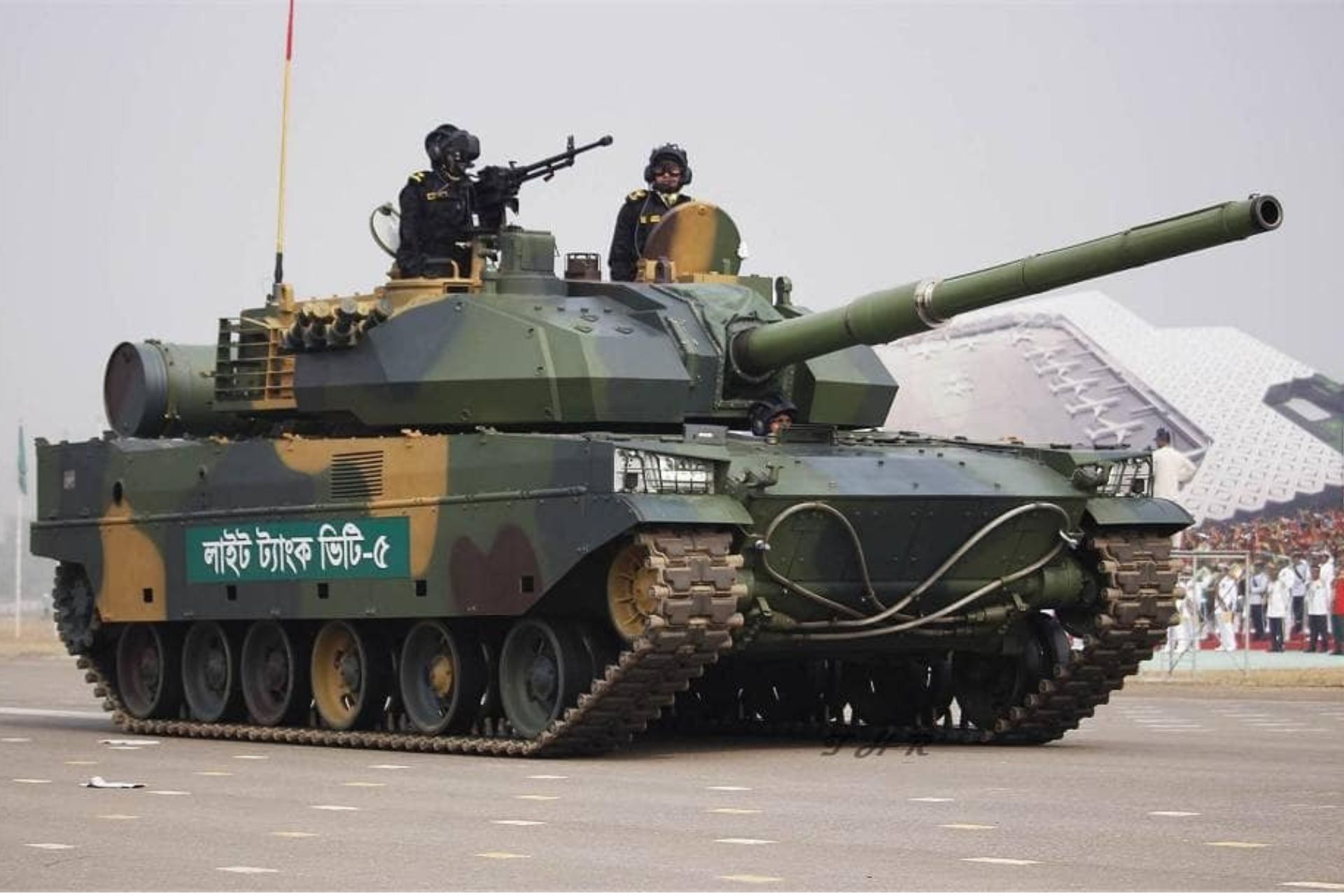
Chinese-made VT5 light tank of Bangladesh army at Victory Day military parade on December 16, 2022 (Picture source: Defense Technology of Bangladesh-DTB )
The current context strongly supports this revision. Tensions with Myanmar, intensified by armed incursions by the Arakan Army and frequent border violations, highlight the need for enhanced deterrence and defense capabilities. Simultaneously, relations with India have deteriorated, characterized by hostile rhetoric and provocative actions. Adding to these external challenges is the rise of internal threats, particularly from insurgent groups like the Kuki-Chin National Army operating in the Chittagong Hill Tracts. In light of these challenges, modernizing military equipment and expanding personnel have become critical priorities.
The Bangladeshi Army has already undergone significant transformations through the integration of modern equipment, though current needs demand further advancements. Notable acquisitions include the BTR-80, a Russian armored personnel carrier that provides all-terrain and amphibious mobility. Capable of carrying up to 10 soldiers, it is armed with a 14.5 mm cannon and a 7.62 mm coaxial machine gun, making it essential for mechanized operations and border security. The army has also adopted the Otokar Cobra, a light Turkish armored vehicle designed for reconnaissance and patrols. Its modular design allows it to be equipped with machine guns, grenade launchers, or anti-tank missiles, enhancing its versatility on the battlefield. The fleet of main battle tanks (MBT-2000) from China and the lightweight VT-5 tanks complement these capabilities. The MBT-2000 features a 125 mm gun and advanced composite armor, suitable for conventional warfare, while the VT-5 offers exceptional mobility in challenging terrains. The army’s artillery capabilities have also been strengthened with the addition of TRG-230 and TRG-300 Kasirga multiple-launch rocket systems from Turkey, along with Serbian Nora B-52 self-propelled howitzers, enhancing long-range firepower.
The navy has achieved significant advancements under the “Forces Goal 2030” initiative. The acquisition of Ming-class submarines from China has added strategic deterrence and undersea surveillance capabilities critical to securing maritime routes. These submarines are equipped with advanced detection systems and torpedoes, ensuring tactical superiority in the Bay of Bengal. The navy’s surface fleet has been enhanced with Type 053H3 frigates and Type 056 stealth corvettes, armed with guided missiles, which expand its operational capacity for defense and surveillance missions. Additionally, the navy’s air capabilities have been upgraded with Dornier 228 maritime patrol aircraft and Augusta Westland helicopters, crucial for detecting threats and protecting resources in Bangladesh’s maritime economic zone.
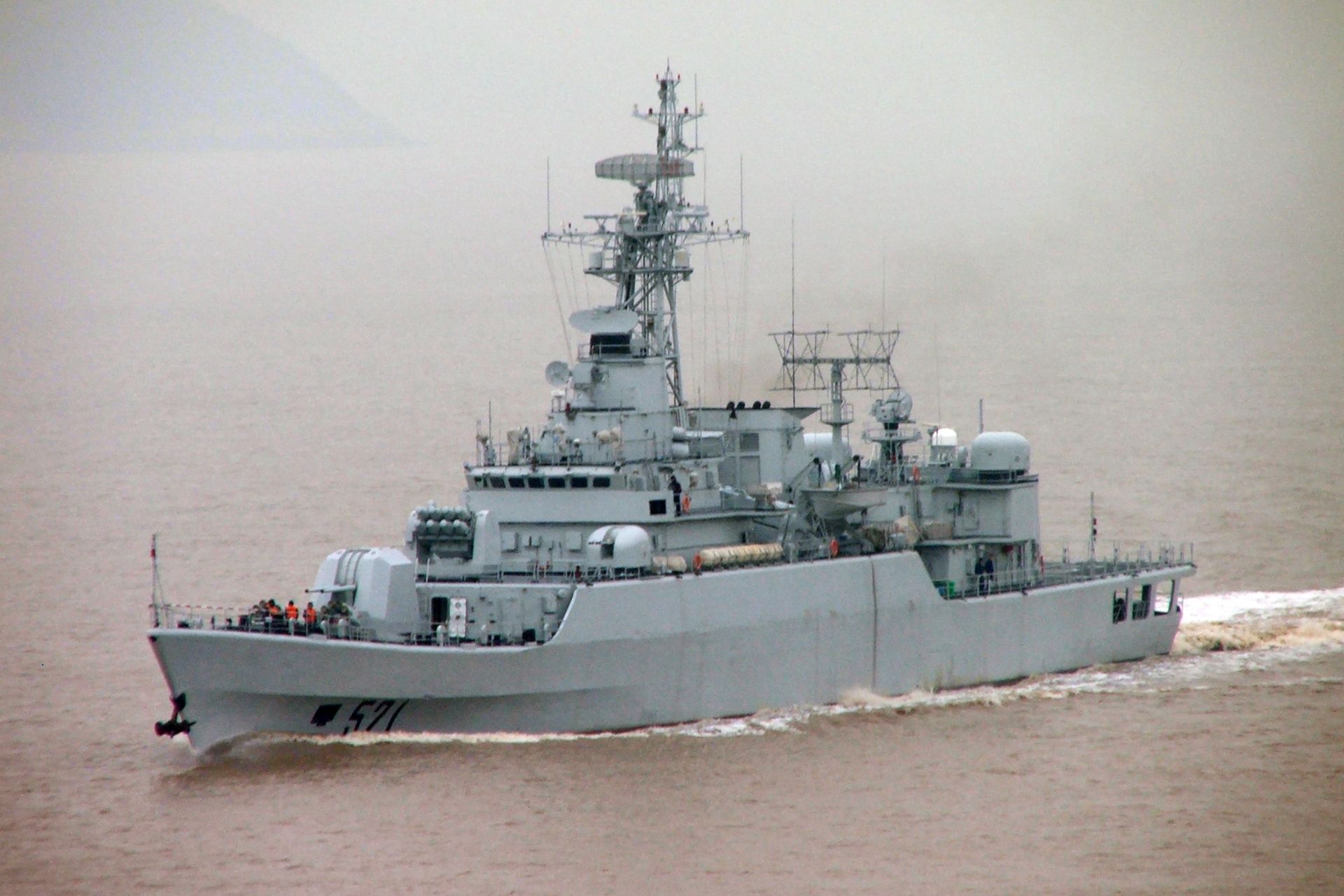
The navy’s surface fleet has been enhanced with Type 053H3 frigates and Type 056 stealth corvettes, armed with guided missiles, which expand its operational capacity for defense and surveillance missions (Picture source: Wikimedia)
The Air Force has reinforced its fleet with advanced training aircraft such as the Yak-130 and K-8, which also serve as light fighters, enabling both high-quality training and operational readiness. License-built F-7BGI interceptors ensure effective airspace protection, while the acquisition of FM-90 short-range air defense systems strengthens strategic area defense against aerial threats. Complementing these systems is the Selex RAT-31DL radar from Italy, which offers advanced surveillance capabilities to detect potential intrusions.
In addition to equipment upgrades, the “Forces Goal 2030” plan has bolstered personnel numbers and reorganized units. The army has established new divisions, including the 7th, 10th, and 17th Infantry Divisions, expanded the land-based air defense corps, and transformed the para-commando battalion into a full brigade. These efforts are supported by the development of a national defense industry, including the Bangladesh Machine Tools Factory and the Bangladesh Ordnance Factory, which produce light weapons, utility vehicles, and other equipment through technology transfer agreements.
Revisiting "Forces Goal 2030” presents a strategic opportunity for the interim government. Modernization will enable Bangladesh to better address current security challenges, strengthen national sovereignty, and maintain regional stability. By equipping its armed forces with advanced systems, enhancing deterrence capabilities, and fostering technological self-reliance, Bangladesh can position itself as a significant regional military power while ensuring robust defense against both conventional and unconventional threats.

- Details
- Written by: Administrator
- Category: 2024
- Hits: 10564
On December 5, 2024, the U.S. Department of Defense (DoD) announced the successful execution of a key flight test for the Multi-Service Advanced Capability Hypersonics Test Bed (MACH-TB), which took place in November 2024. The test, conducted by the Department of Defense’s Test Resource Management Center (TRMC) in partnership with the Naval Surface Warfare Center, marks a significant milestone in the U.S. pursuit of hypersonic technologies. The MACH-TB is designed to advance the testing and development of hypersonic systems, providing crucial insights into the performance of cutting-edge weapons that could dramatically enhance U.S. military capabilities.
Follow Army Recognition on Google News at this link
Testing the future of warfare: The MACH-TB hypersonic flight test accelerates the development of advanced weapons capabilities for the U.S. military. (Picture source: U.S. DoD)
The MACH-TB is a next-generation hypersonic flight test vehicle developed to accelerate the testing process for hypersonic systems across multiple branches of the U.S. military and other federal agencies. Its primary purpose is to provide a reliable, commercially launched platform capable of simulating and testing hypersonic conditions in real-world flight scenarios. By employing commercial launch services, the DoD aims to reduce the costs and time associated with testing hypersonic components while simultaneously increasing the testing frequency.
Mr. George Rumford, Director of the TRMC, emphasized the value of this approach: "Leveraging commercial launch services allows our Nation to test components early and frequently, accelerating hypersonic development affordably." This approach not only helps expedite testing but also enables rapid feedback on the performance of hypersonic technologies, making it a critical enabler for developing advanced capabilities for U.S. forces.
Hypersonic weapons are defined as those that travel at speeds greater than Mach 5, or five times the speed of sound. These weapons are particularly notable because of their ability to maneuver while traveling at extreme speeds, making them highly difficult to track or intercept with current missile defense systems. This combination of speed and maneuverability creates significant strategic advantages for any military force capable of deploying them.
The importance of hypersonic weapons in modern warfare is undeniable, as they offer a range of benefits. First, their speed and precision enable hypersonic weapons to strike targets at extreme distances in a fraction of the time compared to conventional missiles, potentially rendering existing defense systems obsolete. Second, unlike ballistic missiles, which follow a predictable trajectory, hypersonic weapons are capable of maneuvering in flight, further complicating interception efforts. Finally, their ability to penetrate heavily defended airspace provides a significant deterrent and strategic advantage during combat situations.
The development of hypersonic technologies is, therefore, seen as a crucial part of the evolving global arms race, as nations seek to gain a technological edge on the battlefield. While the United States has made significant strides in hypersonic weapons development, it is far from alone in pursuing this advanced technology. China and Russia have emerged as key competitors, each heavily investing in hypersonic systems to bolster their own military capabilities.
China has made rapid progress in developing hypersonic glide vehicles, such as the DF-17, which is capable of carrying both nuclear and conventional payloads. The Chinese military has also been investing in advanced launch platforms and testing mechanisms, with a focus on increasing the speed and range of their hypersonic systems. Russia, under President Vladimir Putin, has aggressively pursued hypersonic weapons as part of its military modernization program. The country has already deployed hypersonic missiles like the Avangard, which is reportedly capable of reaching speeds up to Mach 27.
Additionally, Russia has developed the Zircon missile, a sea-launched hypersonic weapon intended to target both naval and land-based targets at extreme speeds. Both China and Russia have demonstrated their capabilities through successful test flights, creating a sense of urgency in the U.S. military to advance its own hypersonic development programs. In addition to China and Russia, countries such as India, France, and Australia are also pursuing hypersonic technologies, each working to integrate these systems into their defense strategies.
For the U.S. military and its allies, hypersonic weapons represent a paradigm shift in the way warfare could be conducted. The strategic advantages they offer are clear. Hypersonic weapons allow for near-instantaneous strikes, significantly shortening the response time to emerging threats and providing a new tool for rapid deployment of military force. They also can penetrate traditional missile defense systems. Systems like the U.S.-developed Aegis or Terminal High Altitude Area Defense (THAAD) are optimized for intercepting slower ballistic missiles, but hypersonic weapons, due to their high speed and unpredictable flight paths, present a much more difficult challenge for these systems to defend against. Additionally, hypersonic systems can be adapted to various platforms, from ground-based launchers to submarines and aircraft, allowing military forces to deploy these weapons in a variety of operational scenarios. Given their speed and range, hypersonic weapons could be used in a variety of theaters, from deterring regional conflicts to countering more sophisticated threats posed by adversaries with advanced air-defense systems.
Therefore, the U.S. military's focus on hypersonics is not just about keeping pace with China and Russia but also about ensuring that it retains a technological edge that will be decisive in future conflicts. The MACH-TB test represents one critical step in this ongoing race to develop and deploy hypersonic weapons, which will be a core element of the U.S. military’s arsenal in the years to come.
The success of the MACH-TB flight test is a major achievement in the U.S. Department of Defense's quest to accelerate the development of hypersonic technologies. By leveraging commercial launch services, the DoD is setting the stage for more frequent and cost-effective testing, ultimately leading to faster deployment of these advanced weapons. With global competitors like China and Russia intensifying their own hypersonic development programs, the need for the U.S. to lead in this domain has never been more pressing. Hypersonic weapons are poised to revolutionize military strategies worldwide, and initiatives like MACH-TB are essential for ensuring the United States remains at the forefront of this technological revolution.

- Details
- Written by: Jérôme Brahy
- Category: 2024
- Hits: 8868
According to OnAlert on December 5, 2024, Greece is in the final stages of approving the acquisition of 38 PULS (Precise & Universal Launching System) multiple rocket launcher systems, manufactured by Israel's Elbit Systems. Valued at approximately €500 million, the program is currently under review by the Greek Parliament and the Government Council for Foreign Affairs and Defence (KYSEA). The package includes the launchers, command batteries, a range of precision-guided missiles, as well as training and maintenance services.
Follow Army Recognition on Google News at this link
The Greek Ministry of National Defense initially considered modernizing its existing stock of 36 U.S.-made M270 MLRS systems, a plan ultimately abandoned in favor of acquiring new PULS systems, which offer extended combat capabilities. (Picture source: Elbit Systems)
The PULS multiple rocket launcher systems are planned for deployment in the Evros region and on major islands in the Eastern Aegean due to their strategic significance. The Evros region, which shares a border with Türkiye, has been a focal point for security and migration concerns, leading to reinforced border security measures such as the extension of border fences and increased patrols. The Eastern Aegean islands, situated near the Turkish coastline, are crucial for maritime monitoring and maintaining regional stability. These systems will enhance artillery units in these areas by providing rapid response capabilities and contributing to overall defense operations and territorial security.
The Greek Ministry of National Defense initially considered modernizing its existing stock of 36 U.S.-made M270 MLRS systems. Plans were approved in 2023 to upgrade 24 of these launchers for €1.81 billion. However, a reevaluation under Greece's 2024–2030 defense agenda led to a scaled-down modernization proposal for 12 units at a cost of €500 million. This plan was ultimately abandoned in favor of acquiring new PULS systems, which offer extended range capabilities and the option to integrate with Greece’s domestic defense industry. Proposals include the possibility of local production lines, supporting national manufacturing capabilities.
Greece and Israel have expanded their defense cooperation through multiple agreements and acquisitions. In April 2021, they signed a $1.65 billion agreement for the establishment and operation of a flight training center for the Hellenic Air Force by Israel's Elbit Systems over 22 years. This center will include 10 M-346 training aircraft, simulators, and logistical support. In May 2023, Israel Aerospace Industries acquired the Greek defense technology company Intracom Defense, strengthening industrial ties. Greece also procured Spike anti-tank missiles from Israel in a deal worth up to $400 million. As of November 2024, the two nations are negotiating a €2 billion deal for the development of an anti-aircraft and missile defense system similar to Israel’s Iron Dome, aligned with both Greece and Cyprus' ongoing military modernization efforts.
The PULS (Precise & Universal Launching System) offers several operational differences compared to the M270 MLRS, which have likely influenced Greece's decision to pursue its acquisition. The PULS supports a wider range of munitions, including 122mm, 160mm, 306mm, and 370mm rockets, each with varying ranges and warhead types, enabling use in diverse operational scenarios, whereas the M270 MLRS primarily employs 227mm rockets. The PULS is designed for rapid deployment and firing, with an execution time of approximately one minute, and is mounted on wheeled platforms such as IVECO trucks, enhancing mobility across various terrains. In contrast, the M270 MLRS utilizes a tracked chassis, offering different off-road capabilities but with potential trade-offs in speed and logistical requirements. Additionally, the PULS’s modular design allows integration with various command and control systems, simplifying maintenance and interoperability. These characteristics address Greece’s operational and budgetary needs, supporting its decision to pursue the PULS system.
Other countries have similarly adopted the PULS system. Denmark acquired eight units for $133 million, with all systems delivered by early 2024. The Netherlands signed a $305 million contract for 20 systems, with initial deliveries beginning in 2023. Spain’s SILAM program involves 16 PULS systems mounted on Iveco trucks, with a €576.5 million contract that includes missiles and training rockets. Thailand is also collaborating with Elbit Systems to develop a localized version of the system, and other countries such as the Philippines and Norway are considering procurement.
The PULS system is designed for rapid deployment and firing, with an execution time of approximately one minute. Mounted on mobile platforms, such as the IVECO trucks selected for Greece, the system is adaptable to various terrains. The PULS, an upgraded version of the Lynx, supports a range of missiles capable of striking targets at distances from 35 to 300 kilometers. Each launcher is equipped with two pods, which can carry up to 36 missiles in total.
The missile configurations include 18 Accular 122mm missiles with a range of up to 35 kilometers, 10 Accular 160mm missiles reaching 40 kilometers, 4 EXTRA missiles with a range of 150 kilometers, and 2 Predator Hawk missiles capable of 300 kilometers. The system also has the capability to launch the SkyStriker loitering munition, which has a range exceeding 100 kilometers, can be recovered if unused, and is deployable for reconnaissance and strike operations.
- Singapore's ST Engineering to develop new 8x8 amphibious armored vehicle for Kazakhstan
- Greek company Scytalys to deliver advanced Tactical Data Link systems to Canadian Armed Forces
- Exclusive: New US JASSM XR Cruise Missile Enhances Long-Range Strikes Against China and Russia’s Air Defenses
- US Army Marksmanship Unit Trains Soldiers with New 6.8mm NGSW Firearms for Modern Combat