

- Details
- Written by: Triffaux
- Category: 2024
- Hits: 3062










MERCAT, a sophisticated drone detection system developed by MC2 Technologies, is currently on display at Eurosatory 2024. It is capable of detecting, identifying, and tracking unmanned aerial vehicles (UAVs) at distances of up to 20 km, even in electromagnetically saturated environments. Covering a wide frequency band from 400 MHz to 7200 MHz, MERCAT utilizes artificial intelligence to minimize false alarms and distinguish between friend and foe drones through an identification system.
Follow Army Recognition on Google News at this link
MC2 Technologies Mercat Drone Detection System (Picture source: Army Recognition)
This passive technology ensures no interference or harm to the environment, making it suitable for outdoor use and certified as waterproof (IP65). The primary mission of MERCAT is real-time 360° monitoring, allowing for the activation of countermeasures such as jamming tailored to detected threats. It operates by intercepting RF communications between a drone and its remote control, analyzing flight commands and telemetry data.
Thanks to its AI algorithms, MERCAT can precisely identify drone types and determine the directions of both the drone and its controller. It recognizes communication protocols and retrieves telemetry data through the Direct Remote Identification (DRI) system.
Designed for flexibility, MERCAT protects sensitive infrastructures like airports, prisons, military bases, and venues hosting large public gatherings. With its long-range detection and real-time surveillance capabilities, it enhances security effectively.
Technical specifications include frequency bands ranging from 400 MHz to 7200 MHz, a detection range of up to 20 km, angular accuracy of 5 degrees, and rapid deployment in less than 5 minutes. The system weighs 30 Kg (66 lbs) without accessories and operates in temperatures ranging from -10°C to 50°C (14°F to 122°F), with an IP65 ingress protection rating.
Connectivity options include Ethernet or wireless, with integration capabilities via proprietary C2 or PLC systems.

- Details
- Written by: Triffaux
- Category: 2024
- Hits: 2358
At the Eurosatory 2024 expo, currently underway in Paris, GSCI Advanced Photonics is showcasing the LUX-14™, a premium night vision monocular specifically designed for military and law enforcement operations. This advanced device meets the most stringent MIL-SPEC standards, ensuring exceptional performance in the toughest conditions.
Follow Army Recognition on Google News at this link
GSCI LUX-14 Night Vision Monocular System (Picture source: Army Recognition)
The LUX-14™ is equipped with high-tech digital push-button controls, allowing for easy operation even with tactical gloves. Its compact and lightweight design makes it the smallest and lightest monocular in its class, weighing just 250 grams with 18 mm gold standard tubes. Despite its small size, the LUX-14™'s fully aluminum housing, nitrogen-purged, provides outstanding durability and reliability, withstanding the most extreme weather conditions.
The LUX-14™ delivers optimal image quality, providing operators with clear and bright vision in low-light conditions. It incorporates GSCI-VIVID high-performance front and rear optics, the lightest available today, ensuring an unparalleled viewing experience. This enhanced version of the traditional night vision monocular system incorporates the latest technological advances and benefits from feedback from expert users as well as GSCI’s engineering achievements over three decades.
As one of the few leading global manufacturers, GSCI Advanced Photonics maintains a substantial inventory of Image Intensifier Tubes (IITs) from various suppliers, ensuring the rapid delivery of LUX-14™ systems equipped with any desired IITs, including Gen. 2+, Gen. 3, ECHO*, ECHO* Elite, 4G*, 4G* Elite, and 4G* Elite Plus, available in both green and white phosphor configurations with FOMs up to 2400+.

- Details
- Written by: Triffaux
- Category: 2024
- Hits: 3771
The Research and Production Enterprise «Ukrainian Unmanned Technologies» (UUT) is currently showcasing its latest advancements in unmanned ground vehicles at the Eurosatory 2024 defense and security exhibition. Among the highlights is the Universal Mobile Platform (UMP) «Ravlyk», a modular and robust solution designed for a variety of military applications.
Follow Army Recognition on Google News at this link
Ukrainian Unmanned Technologies (UUT) Universal Mobile Plateform UGV (Picture source: Army Recognition)
UUT's journey began in 2016 when a dedicated team of engineers and programmers developed a remote-controlled combat module for the 12.7 mm NSVT machine gun, specifically for operations in the ATO zone. By 2019, they had refined their design, creating a new version of the mobile platform with enhanced drive systems and updated software, directly responding to feedback from military operators. In 2023, the company took significant steps by establishing the research and production enterprise, focusing on further advancements and improvements to its existing platforms. One of the key innovations includes the development of new impact modules for various weapons, including the Browning M2 machine gun and the MK 19 grenade launcher.
The UMP «Ravlyk» stands out for its modular design, allowing it to adapt to various mission requirements without the need for structural changes. This flexibility extends to the installation of different armament modules, ranging from machine guns up to 12.7 mm to grenade launchers up to 40 mm. This adaptability ensures that the platform can be quickly reconfigured to meet evolving battlefield needs.
The UMP «Ravlyk» offers several key advantages: resistance to electronic warfare, ensuring reliability in hostile environments; a digital control channel, providing secure and precise remote operation; and extended observation capabilities, allowing it to remain at observation posts for up to 96 hours with minimal heat signature, reducing the risk of detection. Additionally, it has been tested and certified by the National Research Institute for Testing and Certification of Weapons and Military Equipment in 2023, confirming its performance and reliability.
In the summer of 2023, the UMP-1 «Ravlyk» underwent rigorous field testing with the 5th Separate Assault Brigade in Kostiantynivka, Donetsk region. The feedback from these tests was overwhelmingly positive, highlighting the platform's effectiveness and operational reliability in real combat conditions.
Read more: Ukrainian Company UUT exhibits its Ravlyk Universal Mobile Platform at Eurosatory 2024

- Details
- Written by: Administrator
- Category: 2024
- Hits: 5926
Greek defense technology company EODH and German defense giant KNDS Deutschland, formerly known as KMW, have signed a groundbreaking agreement. The collaboration, announced on the third day of the event held in Paris, focuses on integrating the Advanced Integrated Platform Protection System (ASPIS Modular NG-MBT) with the Leopard 2A8 tank.
Follow Army Recognition on Google News at this link
German Leopard 2A8 main battle tank at Eurosatory 2024, a defense exhibition that was held in Paris, France. (Picture source: Army Recognition Group)
The ASPIS system is a cutting-edge modular protective solution designed to enhance the survivability and operational effectiveness of armored vehicles in various combat scenarios. Its integration with the Leopard 2A8, one of the world's most advanced and formidable main battle tanks, will significantly boost the tank's defensive capabilities. This partnership is expected to set new benchmarks in armored vehicle protection, combining EODH's technological prowess with KNDS Deutschland's engineering excellence.
The developer of the ASPIS Modular system is EODH, a Greek defense technology company. EODH specializes in designing and manufacturing advanced protection solutions for military vehicles, offering a range of systems that enhance the survivability and operational effectiveness of armored platforms in various combat scenarios. The company's expertise in composite materials, modular armor systems, and integrated protection technologies has established it as a key player in the defense industry, providing innovative solutions to meet the evolving security needs of modern armed forces.
The ASPIS Modular system from EODH is an Advanced Integrated Platform Protection System designed to enhance the survivability and operational effectiveness of armored vehicles in various combat scenarios. Characterized by its modular design, the ASPIS system allows for tailoring and scaling according to the specific protection needs of different armored platforms, ensuring it can be adapted to various vehicle types and mission requirements.
The system employs advanced composite armor materials that provide robust protection against a range of threats, including ballistic projectiles, explosive devices, and anti-tank weapons. Additionally, the ASPIS Modular system can integrate active protection systems (APS), which detect and neutralize incoming threats before they impact the vehicle. These systems use sensors, countermeasures, and hard-kill interceptors to enhance vehicle survivability.
Reactive armor modules, which explode outward upon impact to mitigate the effect of incoming projectiles, and electromagnetic armor, which uses strong electromagnetic fields to disrupt and deflect incoming projectiles, are also part of the ASPIS system's protective suite. The system integrates various sensors to provide real-time situational awareness and threat detection, which can be connected to the vehicle’s control systems for automated threat response.
Designed to offer enhanced protection against mines and improvised explosive devices (IEDs), the ASPIS system incorporates blast mitigation technologies to protect the vehicle’s occupants from the effects of explosions. It offers scalable solutions that can be customized based on the threat level and operational environment, ensuring optimal protection without compromising the vehicle's mobility and performance.
The use of lightweight materials in the ASPIS Modular system ensures that the additional protection does not significantly burden the vehicle, preserving its mobility and operational range. By integrating these advanced protective features, the ASPIS Modular system from EODH provides comprehensive and adaptable defense capabilities for modern armored vehicles, significantly enhancing their survivability in diverse and hostile combat environments.
The Leopard 2A8 represents the latest and most advanced variant of the Leopard 2 family of main battle tanks, developed by German companies Krauss-Maffei Wegmann (KMW) and Rheinmetall. This model incorporates a cutting-edge armor protection system with multi-layered armor, offering superior defense against contemporary threats. The tank's primary armament is a 120mm L55 smoothbore gun, an upgrade from the L44 gun used in earlier models, providing enhanced accuracy, range, and penetration. Additionally, the Leopard 2A8 integrates advanced onboard systems that improve its reconnaissance capabilities and crew comfort, ensuring it remains a formidable force on the battlefield.
The Leopard 2A8 also features the Trophy Active Protection System (APS), which enhances its defensive capabilities by detecting and neutralizing incoming threats such as anti-tank guided weapons (ATGWs) and rocket-propelled grenades (RPGs) before they can impact the tank. Powered by a robust 1,600 horsepower engine, the Leopard 2A8 boasts impressive mobility and speed over various terrains. This tank is designed to meet the dynamic challenges of modern warfare, combining powerful offensive capabilities with robust defensive measures to maintain its operational superiority.
Read more: Greek and German Defense Companies Forge Alliance to Enhance Leopard 2A8 Tank Armor
- Details
- Written by: Triffaux
- Category: 2024
- Hits: 4363
France, Belgium, Cyprus, Estonia, and Hungary have formalized their joint purchase plan for Mistral missiles to enhance their air defense capabilities. On Wednesday, June 19, 2024, these countries signed a framework cooperation agreement, solidifying an intent letter signed by their ministers at the air and missile defense conference on June 19, 2023.
Follow Army Recognition on Google News at this link
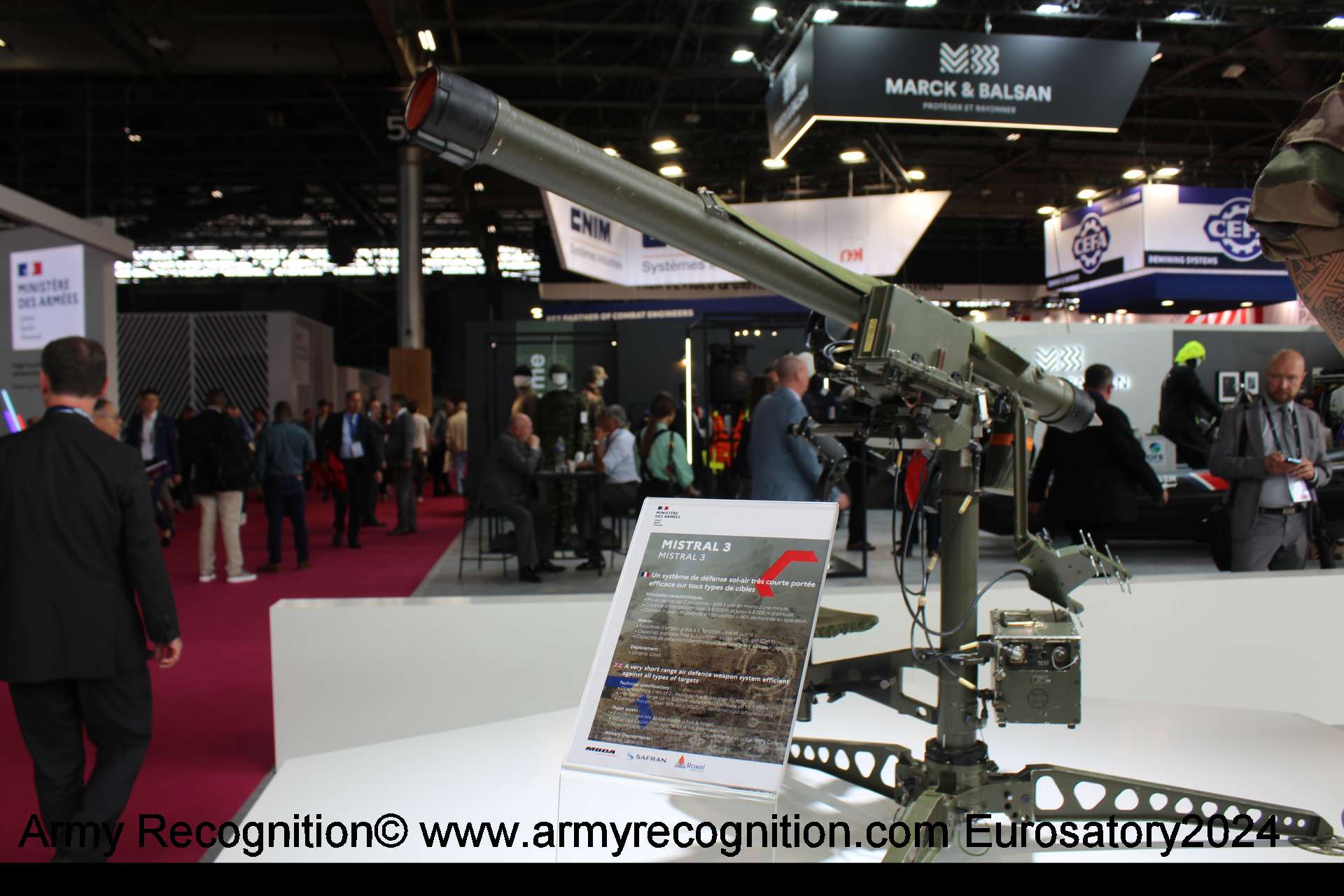
MBDA Mistral 3 MANPADS (Picture source: Army Recognition)
This agreement reflects the commitment of the European partner nations to collaborate in the face of increasing security challenges in airspace. It also represents the consolidation of demand from the participating countries as part of the joint acquisition of defense capabilities, eligible for European Union funding under the European Defense Industry Reinforcement Program (EDIRP), with an emphasis on strengthening air and missile defense systems.
The acquisition will be carried out by the General Directorate for Armament (DGA) through the industrial company MBDA to meet the needs of France, Belgium, Cyprus, Estonia, and Hungary. Other countries have shown significant interest and are expected to join this cooperation soon, which could increase the total volume to over 1,500 missiles.
The Mistral MANPADS is a user-friendly, highly mobile VSHORAD (very short-range air defense) system, equipped with a Mistral missile launcher that can be positioned on a tripod, and deployed from ground locations, vehicles, or ships. This easy-to-operate launcher holds a single Mistral missile ready for launch.
Equipped with a comprehensive imaging seeker, the launcher exhibits strong resistance to IR (infrared) countermeasures and can target objects with low IR signatures. The system is characterized by a potent 3kg warhead and a laser proximity fuse, ensuring a high likelihood of target elimination.
Currently deployed with the French military, the Mistral 3 missile is equipped with an infrared imaging seeker and advanced image processing technologies, enabling it to engage low heat signature targets such as UAVs (Unmanned Aerial Vehicles), turbojet missiles, and high-speed vessels at extended ranges. It is particularly resistant to countermeasures and has a maximum range of 7 km, traveling at a speed of 930 m/s.
Designed by MBDA, the Mistral 3 missile embodies the latest in VSHORAD technology with its "fire-and-forget" capability, allowing it to autonomously track targets after launch without further guidance.
A distinctive feature of the Mistral 3 is its advanced infrared (IR) matrix imager, which is immune to all existing IR countermeasures, enhancing its target detection and tracking capabilities, thus increasing its single-shot kill probability (SSKP) to above 96%.
The missile operates passively, independent of the launching mechanism, avoiding reliance on detectable or interruptible active guidance systems. Its agility allows it to pursue highly maneuverable targets, enduring up to 30g, targeting those capable of executing up to 9g maneuvers.
Capable of engaging targets at distances up to 8,000 meters and altitudes of 6,000 meters, the Mistral 3 achieves supersonic speeds of 930 m/s, facilitating rapid target interception. Its minimum effective range is 500 meters.
Equipped with a 3 kg warhead, the missile uses a laser proximity and impact fuse for assured destruction. Propulsion is provided by a two-stage solid propellant motor.
The Mistral 3, designed for a 20-year service life without maintenance requirements, offers a cost-effective and reliable solution for long-term deployment. It is certified for use under extreme conditions, ranging from -40°C to +71°C, confirming its durability and adaptability in diverse operational scenarios.
The Mistral 3's compact, lightweight design, measuring 1.88 meters in length (including the launch motor) and weighing under 20 kg with a diameter of about 92 mm, makes it suitable for various ground-based air defense launch systems.
Read more: European Coalition Formalizes Joint Mistral Missile Purchase
- Details
- Written by: Jérôme Brahy
- Category: 2024
- Hits: 12374
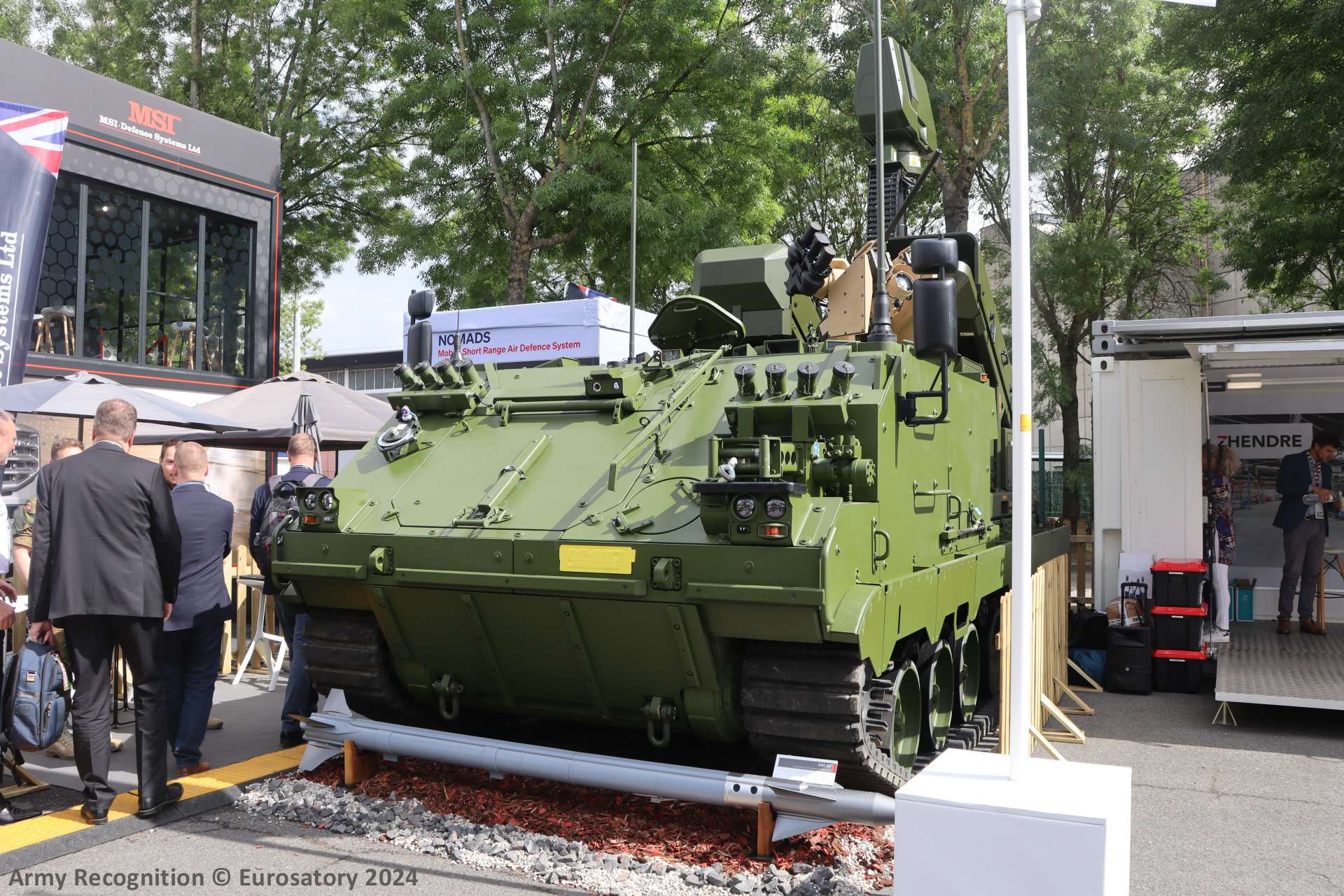
On June 18, 2024, during the Eurosatory 2024 exhibition, the Norwegian company Kongsberg Defence & Aerospace announced the launch of the National Manoeuvre Air Defence System (NOMADS), a mobile, ground-based air defense system developed specifically for the Norwegian Army. This system includes a Short Range Air Defence (SHORAD) module that combines a radar, an operations room, and a missile launcher, all mounted on an ACSV G5 armored support vehicle from the German company FFG.
Follow Army Recognition on Google News at this link
This system includes a Short Range Air Defence (SHORAD) module that combines a radar, an operations room, and a missile launcher, all mounted on an ACSV G5 armored support vehicle from the German company FFG. (Picture source: Army Recognition)
The National Manoeuvre Air Defence System (NOMADS) was developed in collaboration with the Norwegian Armed Forces and the Norwegian Defence Materiel Agency. The SHORAD module integrates essential command and control functions from the medium-range NASAMS missile system, including a passive seeker missile and an AESA radar. This integration allows NOMADS to detect and intercept various threats, such as drones, UAVs, cruise missiles, helicopters, and aircraft. Additionally, the system features a Remote Weapon Station (RWS) for self-protection and can be integrated with different existing platforms.
Initially equipped with the IRIS-T missile, the system is now planned to be re-armed with the AIM-9X missile due to significant donations of IRIS-T missiles to Ukraine. Kongsberg Defence & Aerospace will oversee this rearmament process, with logistical and technical support from Raytheon, the American manufacturer of the AIM-9X missile.
Introduced in 2005, the IRIS-T missile can reach speeds of up to Mach 3 and has a range of 25 kilometers. It is equipped with an infrared imaging seeker, providing resistance to electronic countermeasures and flare suppression. The missile's thrust vector control allows it to perform 60g turns at rates of 60 degrees per second. The IRIS-T's lock-on after launch (LOAL) capability enables it to engage targets from all directions, including those behind the launching aircraft. Its warhead is designed to engage various airborne threats, including aircraft, helicopters, and incoming missiles.
The IRIS-T SL (Surface-Launched) and IRIS-T SLM (Surface-Launched Mobile) variants extend the missile's application to ground-based air defense, capable of intercepting cruise missiles and UAVs with a range of up to 40 kilometers. These variants are integrated into several air defense systems used by multiple NATO countries.

Initially equipped with the IRIS-T missile, the system is now planned to be re-armed with the AIM-9X missile due to significant donations of IRIS-T missiles to Ukraine. (Picture source: Army Recognition)
The AIM-9X Sidewinder missile, an infrared-tracking, short-range air-to-air missile introduced in 2003, is designed to engage high-performance aerial threats. It can achieve speeds of Mach 2.5 and a range of approximately 20 kilometers. The missile features a high off-boresight focal-plane array seeker and thrust vector control, enabling it to perform tight maneuvers and engage targets outside the pilot's line of sight using a helmet-mounted display. The AIM-9X Block II variant includes improvements such as lock-on after launch (LOAL) capability and a redesigned fuse, allowing it to engage targets at longer ranges. This missile can be launched from various platforms, including the F-15, F-16, F/A-18, and F-35 aircraft, as well as ground-based systems like NASAMS.
The NOMADS system can defend troops against small, short-range threats like drones and cruise missiles. Its configuration is designed for high-speed movement, effective engagement with enemy targets, and quick repositioning. The ACSV G5, the base vehicle for the NOMADS, is an Armoured Combat Support Vehicle developed by Flensburger Fahrzeugbau Gesellschaft (FFG) for the Norwegian Army. It is powered by a 460 kW MTU engine, paired with a fully automatic ZF transmission with six forward and two reverse gears, enabling speeds up to 74 km/h. The vehicle has a combat weight of 29 tons and a payload capacity of 9 tons, with a composite rubber track system that reduces vibrations and noise.
The ACSV G5 measures approximately 2.99 meters in width and 3.05 meters in height, with a climbing capacity of 60%, the ability to cross 2.3-meter ditches, and ford water up to 1.2 meters deep. It has an operational range of 600 kilometers, with an additional 12-hour operational capacity. The vehicle's interior provides 14.5 cubic meters of space, designed to accommodate a crew of two and up to 12 soldiers. The interior can be configured for different missions, featuring ergonomic, blast-resistant seating and modern communication systems. This modular approach allows for upgrades and maintenance over time.

In Norway, the introduction of the NOMADS is expected to strengthen the Norwegian Army's air defense capabilities, particularly for front-line units. (Picture source: Norwegian MoD)
The NOMADS combines air defense capabilities with command and control (C2), radar with Identification Friend or Foe (IFF), and missiles on a single platform, allowing for autonomous air defense operations both day and night. Typically networked and integrated into NATO's Integrated Air & Missile Defence (IAMD), the NOMADS ensures interoperability with allied forces and can adapt to any NATO-compatible ground-based air defense (GBAD) mission. Its advanced command and control system can prioritize threats and launch multiple missiles at different targets simultaneously.
In Norway, the introduction of the NOMADS is expected to strengthen the Norwegian Army's air defense capabilities, particularly for front-line units. This mobile air defense system is designed to protect maneuvering army forces, transportation routes, command centers, and logistical areas in dynamic land combat environments. Its high mobility, maneuverability, firepower, and protection meet the standards required for mechanized units, specifically targeting the growing threat of drones and short-range missiles.
Recent testing in Andøya, Norway, demonstrated the system's capabilities and received positive feedback. The testing covered the entire operational chain, from target detection by sensors to missile launch. Project manager Geir Sandberg from Forsvarsmateriel expressed satisfaction with the successful tests, emphasizing the importance of modern air defense in combat scenarios against high-tech opponents. The initial delivery will see six NOMADS systems provided to the Norwegian Armed Forces, with full operational capability expected between 2026 and 2028.
The Dutch armed forces have also expressed interest in acquiring the NOMADS, potentially joining the contract with Norway and expanding the system's footprint within NATO allies. The Dutch requirement is for 18 vehicles, with considerations for accommodating more missiles than the Norwegian configuration. According to Hardpunkt, the German government is also contemplating making the system available to the Ukrainian armed forces, potentially involving primarily German components if Germany finances the project alone. Alternatively, the integration of radars from other countries like Sweden and Denmark is also being considered.

The ACSV G5, the base vehicle for the NOMADS, is an Armoured Combat Support Vehicle developed by Flensburger Fahrzeugbau Gesellschaft (FFG) for the Norwegian Army. (Picture source: Army Recognition)
Read more: Norway to receive six units of Kongsberg's new NOMADS air defense system
- Details
- Written by: Halna du Fretay
- Category: 2024
- Hits: 5108
At Eurosatory 2024, Belgian small arms manufacturer FN Herstal presents the FN EVOLYS, an ultra-light machine gun designed to meet modern defense and security needs. The Belgian Directorate General Material Resources (DGMR) announced a forthcoming contract for over 3,500 FN EVOLYS units, split between approximately one-third in 5.56 mm and two-thirds in 7.62 mm calibers. Already tested by the Belgian Army, the FN EVOLYS is noted for being lighter than its predecessors.
Follow Army Recognition on Google News at this link
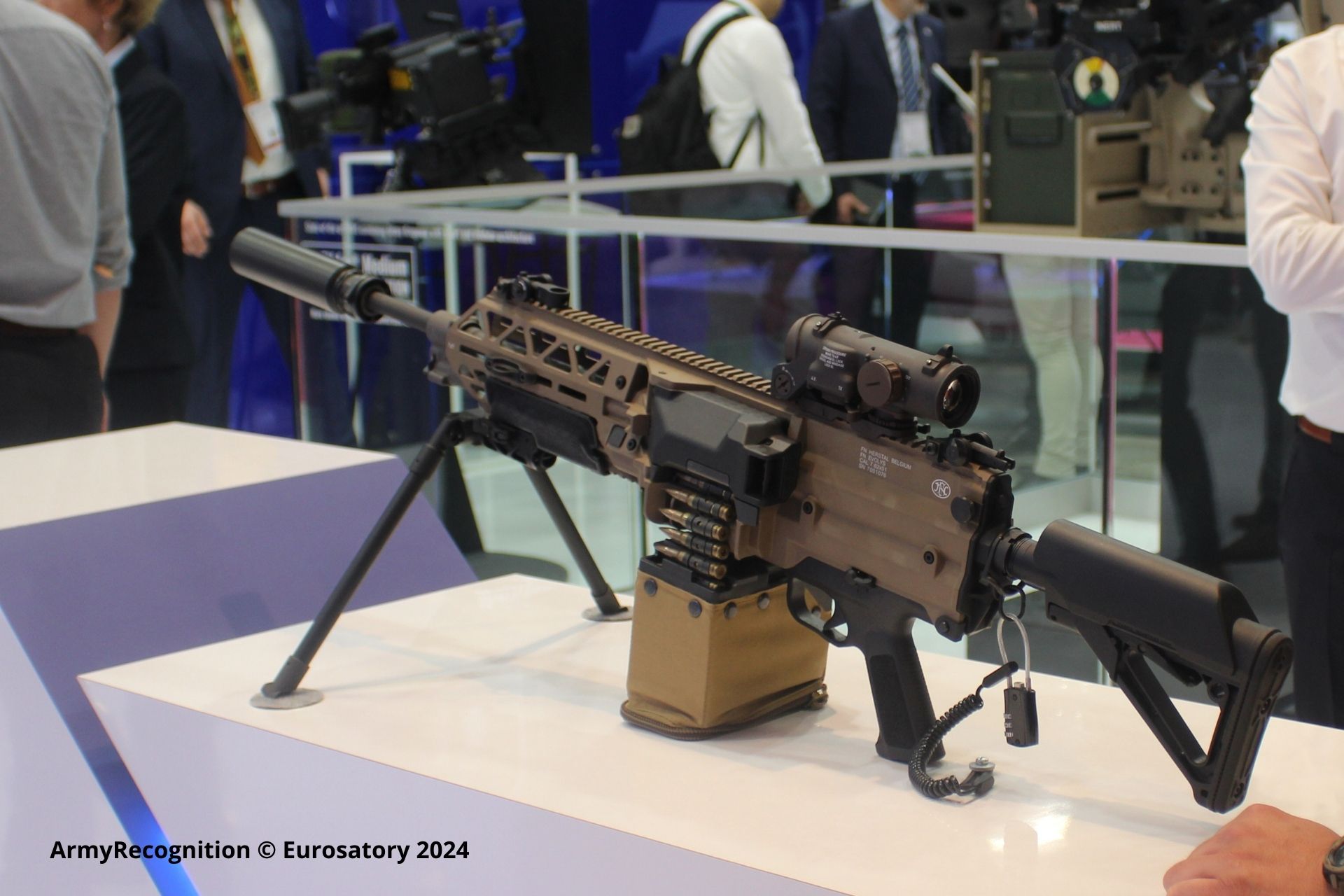
The FN EVOLYS offers the firepower of a machine gun and the handling of an assault rifle (Picture source: ArmyRecognition)
The new machine gun is based on an open and innovative architecture that combines the firepower of a machine gun with the ergonomics and balance of an assault rifle, precisely meeting user expectations for modern operations. The FN EVOLYS is available in two calibers: 5.56 x 45 mm NATO and 7.62 x 51 mm NATO.
Weighing between 5.5 and 6.3 kilograms depending on the caliber, the FN EVOLYS is significantly lighter than current market references. This reduced weight allows users to move quickly over difficult terrain and respond with substantial firepower when necessary. The weapon's balance and weight facilitate its use in various positions, with easy transitions between them aided by a sling attachment.
The FN EVOLYS offers the firepower of a machine gun and the handling of an assault rifle. It features an ambidextrous fire selector that allows users to choose between semi-automatic fire for precise targeting and automatic fire for sustained engagements. The adjustable stock ensures a comfortable and tailored fit for any user, regardless of their size or equipment.
Reliability, comfort, and stability are key aspects of the FN EVOLYS. The use of advanced materials and technologies has allowed FN Herstal to reduce the weapon's weight without compromising its reliability, user safety, or component longevity. A hydraulic buffer regulates the rate of fire and reduces recoil, enhancing shooting stability.
From its inception, the FN EVOLYS was designed for intensive use with a suppressor, maintaining performance without increased fouling or gas emissions towards the user, even for left-handed operators. The innovative feed mechanism is another significant advancement, providing several major user-desired improvements. The long monolithic top rail enables the attachment of multiple optics in line, such as day sights, night sights, and magnifiers, without removing mechanical sights. All operations are straightforward, intuitive, and rapid for both right- and left-handed users, and can be performed single-handedly, including loading the ammunition belt. If the belt is not correctly positioned, cartridges are automatically repositioned when the feed cover is closed, eliminating the risk of feed failure on the first shot. Additionally, the last link is automatically ejected after the final cartridge is fired, making reloading faster and more reliable.
The FN EVOLYS in 5.56 x 45 mm NATO caliber operates on a gas system with an open bolt and short-stroke piston. The weapon features an adjustable stock, with a length ranging from approximately 875 mm to 939 mm, and a barrel length of 356 mm. It weighs around 5.5 kg, with a width of 125 mm. It offers full automatic and semi-automatic firing modes, with a rate of fire of approximately 770 rounds per minute. Feeding options include either a free belt or an FN MINIMI pouch, available in 100 or 200 rounds, with a maximum effective range of 800 meters.
The FN EVOLYS in 7.62 x 51 mm NATO caliber also operates on a gas system with an open bolt and short-stroke piston. The weapon features an adjustable stock, with a length ranging from approximately 958 mm to 1,022 mm, and a barrel length of 406 mm. It weighs around 6.3 kg, with a width of 132 mm. It offers full automatic and semi-automatic firing modes, with a rate of fire of approximately 700 rounds per minute. Feeding options include either a free belt or an FN MINIMI pouch, available in 100 or 200 rounds, with a maximum effective range of 1,000 meters.
Read more: FN HERSTAL Displays FN EVOLYS 5.56 machine gun for a potential Belgian Army purchase
- Details
- Written by: Vandenbosch
- Category: 2024
- Hits: 4099
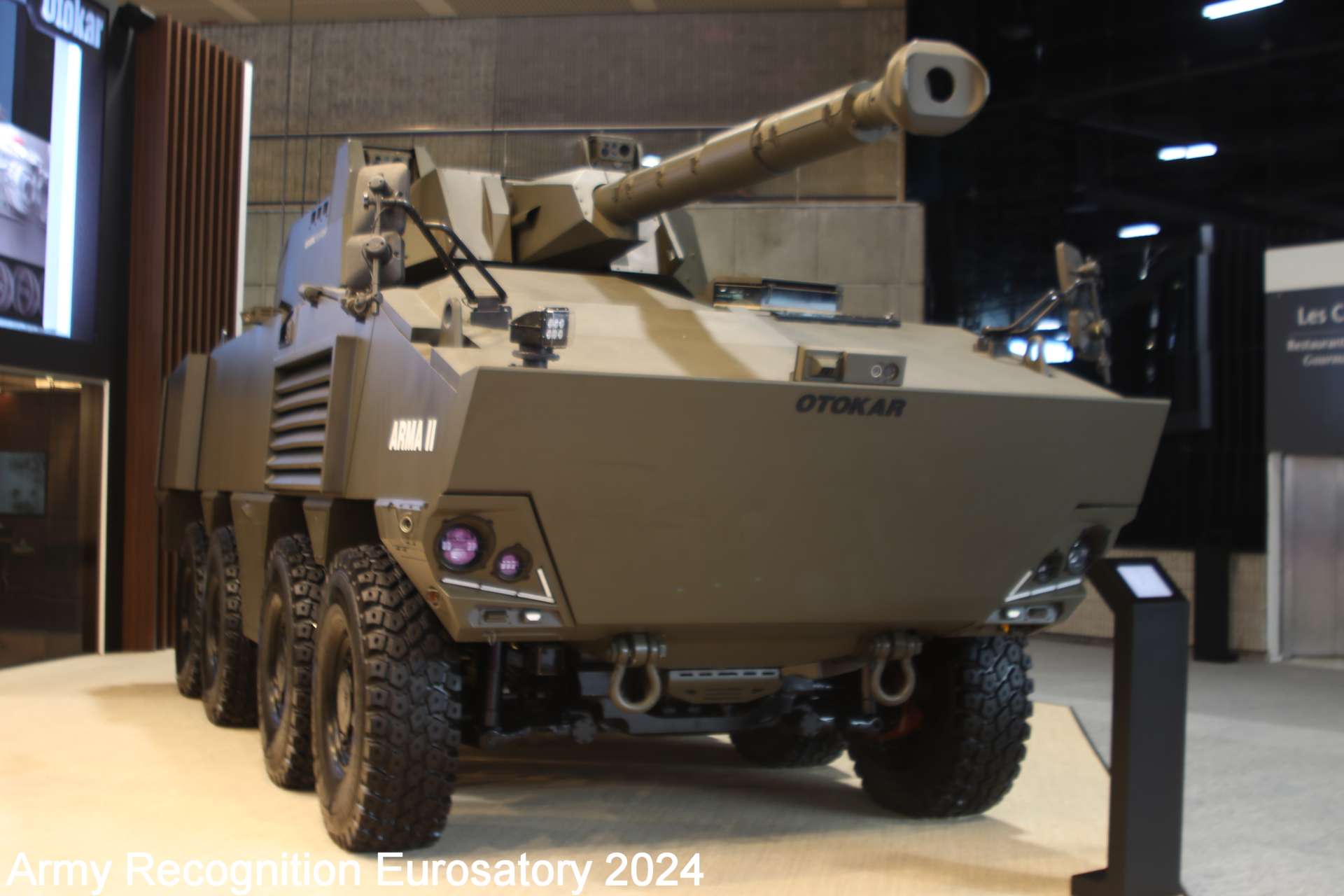
At the Eurosatory exhibition, Otokar presented its latest armored vehicle, the Arma 2, which represents the new generation of the Arma multi-wheel vehicle family. This innovative model stands out for its off-road capabilities and modular structure, offering unparalleled protection and firepower in its category.
Follow Army Recognition on Google News at this link
Otokar presented its latest armored vehicle, the Arma 2. (Picture source: Army Recognition)
The Arma 2 is powered by a turbocharged diesel engine, providing high power and torque, even in the most challenging terrains. Its design ensures reliability and reduced fuel consumption, resulting in lower operational costs. Additionally, it maintains optimal performance in various climatic conditions without power loss, thanks to its high power-to-weight ratio.
The vehicle offers a spacious interior and high load capacity while being ready to evolve to meet future requirements. It remains mobile in demanding terrains, thanks to a monocoque armored hull that protects the crew against a wide range of threats. The ergonomic seating arrangement ensures the protection and comfort of the occupants.
In terms of modularity, the Arma 2 8x8 is available in various mission configurations, such as armored troop transport, fire support vehicle with 105 and 120 mm turret, 120 mm mortar carrier, low and medium altitude air defense vehicle, combat support vehicle, reconnaissance vehicle, ambulance, command and control, among others.
The Arma 2 excels in off-road performance thanks to its improved independent suspension system with Run Flat tires, a centralized tire inflation system (CTIS), and an anti-lock braking system (ABS). Its mobility is further enhanced by longitudinal and transverse differential locks, high power-to-weight ratio, as well as high ground clearance and approach/departure angles.
The survivability of the Arma 2 is ensured by modular ballistic protection, capable of being upgraded according to future threats. It offers superior protection against kinetic projectiles, shrapnel, mines, and improvised explosive devices (IEDs). Additionally, it is equipped with protection solutions against nuclear, biological, and chemical (NBC) threats and features specially designed seats to prevent bodily injuries.
The Arma 2 is designed to integrate various weapon systems, ranging from 7.62 mm to 120 mm, including 120 mm mortars. During its presentation, the Arma 2 was equipped with a Cockerill turret, illustrating its ability to accommodate advanced weapon systems for diverse missions.
With a gross weight of up to 40,000 kg and a maximum capacity of 12 crew members, the Arma 2 measures 8,500 mm in length, 3,400 mm in width, and 2,500 mm in height, with a ground clearance of 450 mm. It is equipped with an automatic transmission system with six forward and one reverse gear, and pneumatic disc brakes with a dual circuit and anti-lock braking system (ABS).
We are very curious to see the future and the reception that this new vehicle will receive in Otokar's already rich lineup.
Read more: Eurosatory 2024: Otokar Unveils Arma 2 Armored Vehicle Equipped with a Cockerill Turret
- Details
- Written by: Halna du Fretay
- Category: 2024
- Hits: 6690
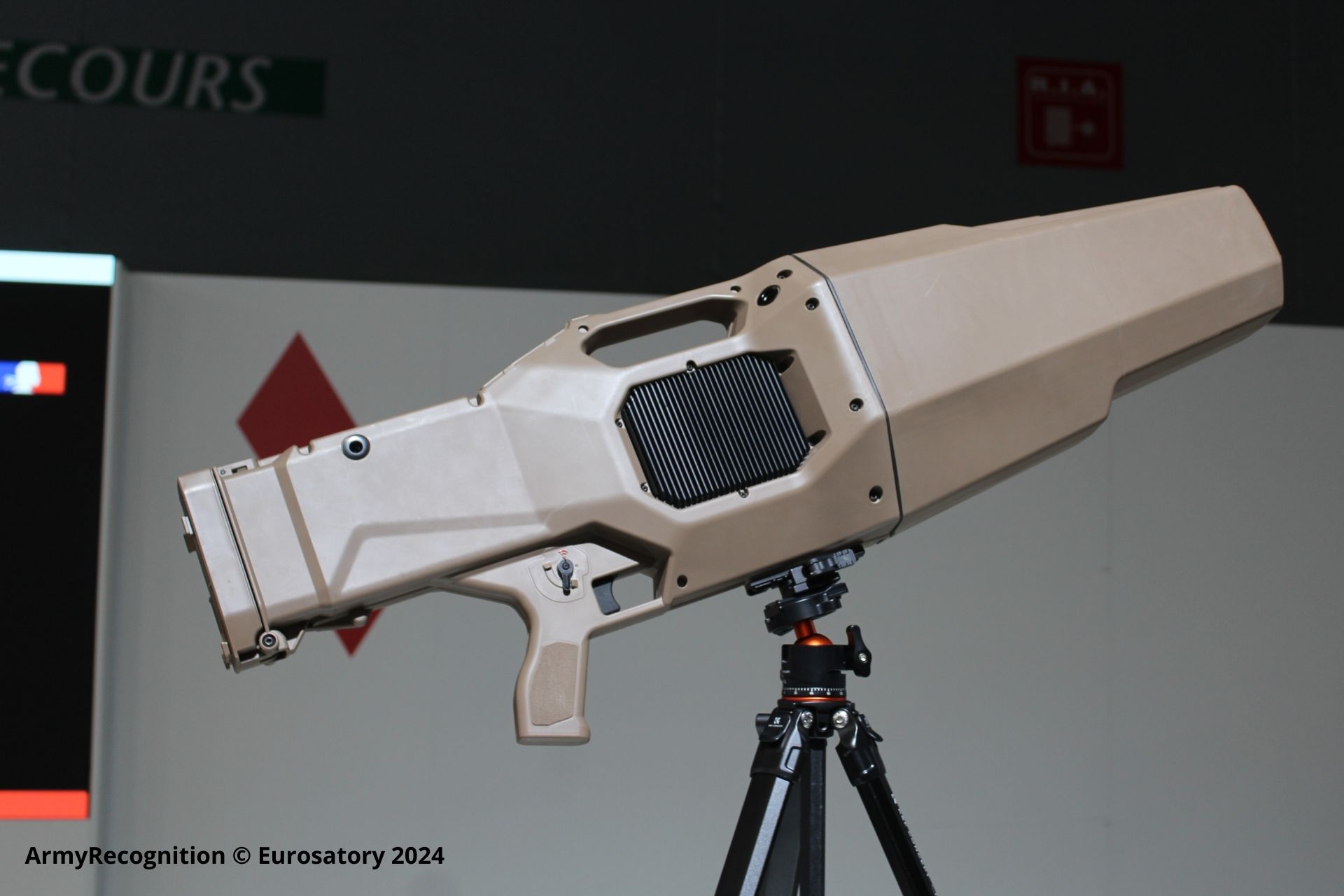
At the Eurosatory 2024 exhibition, the Ministry of the French Armed Forces unveils the NEROD RF, a portable, combat-proven anti-drone jammer manufactured by the French company Mc2 Technologies. This innovative solution addresses the growing threat posed by UAVs, which frequently infiltrate private, state, and military infrastructures. Although UAVs offer benefits in various fields such as agriculture and rescue, they increasingly pose threats in terms of espionage, smuggling, and potential explosive attacks. Follow Army Recognition on Google News at this link
The NEROD RF employs non-destructive jamming technology with directive antennas and is effective in neutralizing UAV swarms within its emission cone. (Picture source: ArmyRecognition)
The NEROD RF system is the result of close collaboration between end users and engineers. This ambidextrous monobloc device integrates jamming modules, antennas, and a battery into a single, lightweight unit. It features an electromagnetic shield to protect its operators and uses a rechargeable lithium-ion battery designed for military use, offering significant autonomy and easy replacement within seconds.
Designed to counter the threat of commercial UAVs, the NEROD RF can be easily deployed in operational environments or for event security. It is capable of transmitting on seven frequency bands, either independently or simultaneously, generating powerful jamming signals against all sophisticated communication protocols used for UAV piloting, including those controlled by individuals or via satellite when autopilot is activated. The NEROD RF’s emission cone allows it to be used without precise targeting of the threat, ensuring broad-spectrum neutralization.
The NEROD RF employs non-destructive jamming technology with directive antennas and is effective in neutralizing UAV swarms within its emission cone. The system handles frequency hopping and spread spectrum protocols, making it versatile against various drone threats. It has been developed based on feedback from the French Armed Forces and the General Directorate for Armament (DGA), ensuring it meets the practical needs of military operations.
This lightweight device (less than 6 kg) offers continuous jamming autonomy of one hour and can operate on one or multiple frequency bands. The NEROD RF has been successfully deployed across all three branches of the French Armed Forces, demonstrating its effectiveness in real combat scenarios.
The development of the NEROD RF underscores France’s commitment to enhancing its defense capabilities against modern aerial threats. As UAV incidents become more frequent and sophisticated, the introduction of advanced countermeasures like the NEROD RF is crucial for maintaining security and operational integrity.
Read more: French Army Presents Combat-Proven Anti-Drone Solution at Eurosatory 2024

- Details
- Written by: Vandenbosch
- Category: 2024
- Hits: 3418
At the international exhibition Eurosatory, Otokar unveiled its latest technological marvel: the autonomous vehicle ALPAR. This vehicle represents an advancement in the field of autonomous and remotely controlled combat platforms, addressing the modern needs of armed forces for reconnaissance, surveillance, and combat support.
Follow Army Recognition on Google News at this link
Alpar Unmanned Ground Vehicle. (Picture source: Army Recognition)
The ALPAR vehicle is distinguished by its series hybrid-electric propulsion and modular electronic infrastructure, enabling silent operations crucial for the success of reconnaissance and surveillance missions. This feature, combined with a low thermal and acoustic signature, makes the ALPAR ideal for stealth operations. Additionally, its ability to be remotely controlled and its autonomous "follow-me" mode enhance its agility and off-road mobility, comparable to that of armored combat vehicles and light tanks.
Designed as a versatile platform, the ALPAR can be deployed in various mission scenarios. It can operate as a lead vehicle or in support with manned vehicles and infantry units. Equipped for surveillance and reconnaissance missions, the ALPAR can transport and deploy drones (UAVs) and unmanned ground vehicles (UGVs), allowing for real-time intelligence gathering. In terms of firepower, it can neutralize enemy positions, installations such as shelters and buildings, as well as adversary vehicles, thanks to its main cannon or guided missiles, serving as a direct fire and support element.
The ALPAR also excels in a variety of autonomous missions, such as patrolling, border surveillance, transporting mini-UGVs under the "marsupial" concept, and drone transport. It plays a crucial role in target detection and logistical support, notably as a loitering munitions carrier, autonomous supply vehicle, in counter-drone (C-UAS) missions, and electronic warfare (EW) missions.
It offers 360° situational awareness, can be controlled up to 5 km via a MIMO radio (in line of sight and beyond line of sight) with AES128/256 encryption, and has advanced satellite connectivity for beyond line of sight (BLOS) operations. In the absence of a GNSS signal, the ALPAR can determine its route, navigate by waypoints, and perform patrol missions. Its platooning and "follow-me" functions are ideal for convoy missions. It is also capable of communicating with other unmanned assets, such as UAVs and USVs, and features a return-to-base function, 2D and 3D LIDAR mapping, obstacle detection, and rerouting, as well as advanced driver assistance systems (ADAS).
The ALPAR embodies Otokar's vision for the future of autonomous combat vehicles, offering a robust and flexible solution to the contemporary challenges of the battlefield. Its presentation at Eurosatory marked a turning point in the integration of autonomous and remotely controlled technologies into modern military operations.
Read more: Otokar Presents Autonomous Vehicle ALPAR at Eurosatory 2024
- Details
- Written by: Halna du Fretay
- Category: 2024
- Hits: 2781
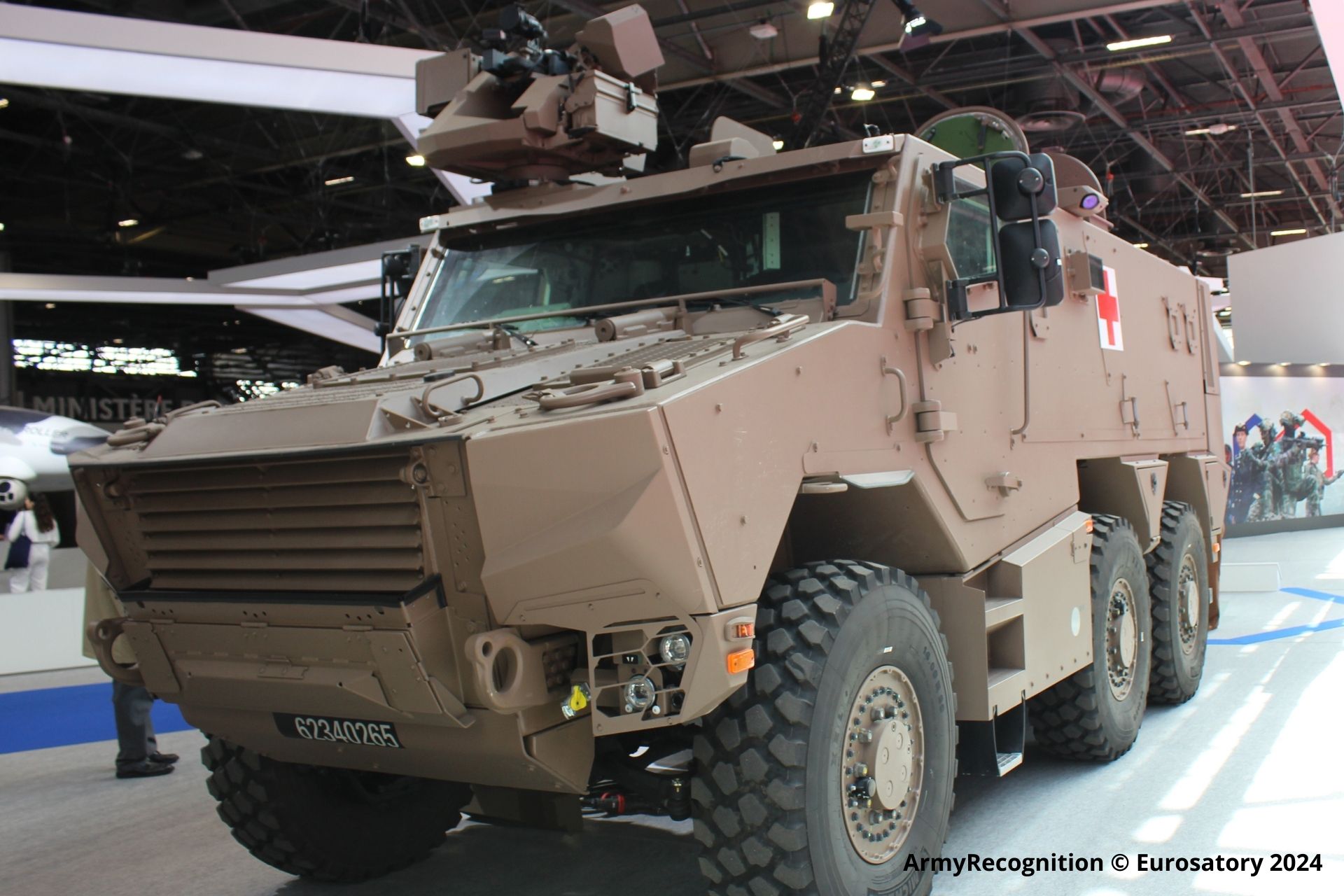
At the Eurosatory 2024 exhibition, the French Armed Forces presented the Griffon Ambulance, a 6x6 armored vehicle designed for medical evacuation directly from the battlefield. This vehicle, part of the SCORPION program, exemplifies modern military medical transport with its capacity to evacuate up to five wounded personnel while providing comprehensive protection against ballistic threats, mines, and improvised explosive devices (IEDs).
Follow Army Recognition on Google News at this link
The vehicle's design includes a medical module with specialized equipment for treating and evacuating the wounded (Picture source: ArmyRecognition)
Weighing up to 24.5 tons, the Griffon Ambulance is equipped with a remote-controlled weapon station and can be airlifted by an A400M aircraft. Its all-terrain mobility and integration into the SCORPION collaborative combat system make it an essential asset for military operations in challenging environments, including deployments in the Sahel and Estonia.
The vehicle's design includes a medical module with specialized equipment for treating and evacuating the wounded. The interior configuration accommodates both seated and stretcher-bound casualties, with a capacity for four stretchers. A mobile table and a lifting winch system facilitate the loading of injured personnel. The Griffon Ambulance retains the mobility, armament, protection, and connectivity common to all Griffon variants.
Developed under the SCORPION program, the Griffon Ambulance is one of the four main versions of the Griffon vehicle, alongside the troop transport version (VTT), command post version (EPC), and artillery observation version (VOA). The program, outlined in the 2019-2025 Military Programming Law, aims to produce over 3,000 medium armored vehicles, including Griffons, MEPAC Jaguars, and Servals. By 2030, the French Army will have 1,818 Griffons in service, with 196 in the ambulance configuration, with the first deliveries starting in 2023.
The Griffon Ambulance replaces the aging VAB (Véhicule de l'Avant Blindé) and supports combat units equipped with the Félin weapon system, operating close to the front lines. Qualification tests for the sanitary version were conducted by the DGA in collaboration with the French Military Health Service, focusing on the overall ergonomics of the medical module, the casualty loading assistance system, personnel protection against mines and IEDs, and the electromagnetic compatibility of equipment and electrical networks.
The SCORPION program is implemented incrementally, ensuring that each capability is delivered to the forces as soon as it reaches maturity. The qualifications of the various Griffon versions are managed sequentially by the DGA, with the artillery observation vehicle version set to be qualified in the coming months.
The SCORPION program aims to renew and modernize the French Army's combat capabilities with interconnected modern armored vehicles capable of collaborative combat through near real-time data exchange. The program includes four new armored vehicles, the SICS tactical coordination system, and the operational preparation system for these combat capabilities.
Read more: Griffon Ambulance for Combat Medical Evacuation Presents at Eurosatory 2024

- Details
- Written by: Jérôme Brahy
- Category: 2024
- Hits: 6180
On June 19, 2024, during a discussion at Eurosatory 2024, a representative from the French Ministry of the Armed Forces informed the Army Recognition editorial team about the delivery of two Mica VL air defense systems to the French Air and Space Force (Armée de l'air et de l'espace). This development follows the January 2024 announcement that the Crotale NG systems currently in service would be replaced by 12 VL-MICA systems by 2035.
Follow Army Recognition on Google News at this link
Introduced in 2010, the VL MICA (Vertical Launch MICA) is a ground and naval-based variant of the French MICA missile, providing short-range air defense. (Picture source: Army Recognition)
The first two Mica VL systems will replace the Crotale NG units transferred to Ukraine, with delivery scheduled before summer 2024, aimed at enhancing security for the upcoming Paris Olympic and Paralympic Games. The procurement of these air defense systems is detailed in the French National Assembly's report n° 1745, submitted on October 14, 2023. The 2024 finance bill proposes increasing the budget for Program 146, Equipment of the Forces, to €24.4 billion in commitments (a 3.7% increase) and €16.6 billion in payments (a 7.9% increase). This budget augmentation aligns with the progression of armament programs initiated by the 2019-2025 Military Programming Law (LPM) and continues with the 2024-2030 LPM.
Under this framework, the 2024-2030 LPM allocates €5 billion to surface-to-air defense, funding various anti-aircraft weaponry programs. This funding aims to modernize and develop existing capacities and consolidate the stockpile of anti-aircraft missiles, adhering to a war economy logic. The emphasis is on medium-range and low-layer ground-to-air defense.
The DSABC program, standing for "Défense Surface-Air Basse Couche" (Low-Layer Surface-to-Air Defense), was launched in 2023 to renew and modernize short-range surface-to-air defense capabilities for the Army, the Air and Space Force, and the Navy. Priorities set with the armed forces include renewing the short-range Crotale component for the Air and Space Force (with two systems delivered to Ukraine from the existing 12), creating a mobile and protected terrestrial maneuver support component for the Army, and ensuring the self-protection of second-tier ships for the Navy.
The initial phase of the DSABC program involves rapidly increasing the stock of Mistral missiles and acquiring two Mica surface-to-air missile systems (vertical launch Mica). In 2024, an initial batch of Mistral missiles and the two VL Mica systems will be received. The budget for this increment is €702 million in commitments and €107 million in payments, with an additional €523 million in commitments expected in the following year. This investment aims to bolster France's surface-to-air defense capabilities.
The MICA missile, standing for Missile d'Interception, de Combat et d'Auto-défense (Interception, Combat and Self-protection Missile), developed by MBDA, is an air-to-air missile system designed for interception, combat, and self-defense. Initially developed in 1996 for the French Rafale and Mirage 2000 fighters, the MICA features dual seeker technology with infrared (IR) and radio frequency (RF) guidance options. This allows the MICA to engage various targets under different weather conditions and combat scenarios. The fire-and-forget capability enables the missile to engage multiple targets simultaneously. The MICA system is utilized by several air forces, including those of France, UAE, Greece, and Taiwan.
The VL MICA (Vertical Launch MICA) is a ground and naval-based variant of the MICA missile, providing short-range air defense. Introduced in 2010, it retains the dual seeker technology with IR and RF guidance to defend against aircraft, helicopters, drones, and missiles. The VL MICA system is modular, deployable on trucks and naval vessels, and offers 360-degree coverage. It has a high rate of fire, with a two-second launch interval, and a range exceeding 10 kilometers, reaching altitudes over 9 kilometers. Recent developments include the VL MICA NG (New Generation), which features improved propulsion and advanced seekers, extending the range to 40 kilometers.