

- Details
- Written by: Halna du Fretay
- Category: 2024
- Hits: 11688




Breaking news






On May 10, 2024, the UK Ministry of Defence confirmed the decommissioning of the FV107 Scimitar and Warrior armored vehicles, signaling the end of their operational lifecycle within the British Army, as reported by the UK Defence Journal. The FV107 Scimitars are being progressively replaced by the new Ajax vehicles, while the Warrior vehicles are to be replaced by the Boxer armored vehicles. Additionally, the decommissioned vehicles are slated to be sold, transitioning from frontline service to new roles through sales.
Follow Army Recognition on Google News at this link
Pictured are soldiers from C Sqn Household Cavalry Regiment and their Scimitar Vehicle driving into standing water during Exercise IRON SCOUT 3 (Picture source: UK MoD)
Labour MP for Norwich South, Clive Lewis, inquired this week about the status of the FV107 Scimitar armored vehicles. In response, on May 10, James Cartlidge, Minister of State for Defence, detailed that the 97 FV107 Scimitar platforms, part of a total of 114 Combat Vehicle Reconnaissance (Tracked) units, were all withdrawn from active service and are in the process of being decommissioned. The Scimitars, retired in 2023, are gradually being replaced by the new Ajax vehicles.
The FV107 Scimitar is a reconnaissance armored vehicle from the Combat Vehicle Reconnaissance (Tracked) series designed by the UK. Introduced in the 1970s, the Scimitar is equipped with a high-velocity 30 mm cannon, making it effective for armed reconnaissance. Its light armor and high mobility due to its tracks have led to widespread use by the British Army in various global conflicts.
The Ajax vehicle, meanwhile, is a more modern and advanced reconnaissance vehicle project, intended to replace the CVR(T) series such as the Scimitar. Production of the Ajax began in 2017, with service entry initially planned for 2019 but delayed. The Ajax is designed to offer better protection and increased firepower, equipped with a 40 mm cannon, advanced electronic architecture, and superior battlefield survivability through enhanced armor and sophisticated threat detection systems. The goal of the Ajax is to significantly improve reconnaissance capabilities while better protecting crews during modern operations.
Additionally, MP Lewis also inquired about the status of the Warrior infantry fighting vehicles. Minister Cartlidge revealed that the British Army currently has 632 Warrior vehicles, with 80 awaiting decommissioning. A total of nine more vehicles will also be subject to this measure during the fiscal year 2024-25. This decision is part of the fleet reductions planned in the Integrated Review of 2021.
It is important to note that the British Army had previously attempted to modernize the Warrior vehicles through the Warrior Capability Sustainment Programme (WCSP). This program aimed to equip 245 vehicles with a new turret and weapons system, thus extending their service life until 2040. However, despite an investment of over £430 million, the project faced budget constraints and delays and had not reach the service phase by March 2020. In March 2021, the Ministry of Defence definitively canceled the WCSP, opting instead to replace the Warrior vehicles with the new Boxer armored vehicles by the middle of the decade.
The Warrior infantry fighting vehicles are a family of armored vehicles developed by the UK, with production starting in 1984 and entering service in 1987. Primarily designed to transport troops while providing direct fire support through its 30 mm automatic cannon and coaxial machine gun, the Warrior combines mobility, protection, and firepower. This vehicle was designed to operate at the frontline of battlefields, capable of transporting up to seven soldiers in addition to the crew, and can operate in a variety of combat environments.
The Boxer is a modular armored vehicle developed jointly by Germany and the Netherlands, with production starting in the early 2000s. The Boxer entered active service in 2005, distinguished by its modular design that allows rapid module changes for different missions, such as troop transport, field ambulance, command post, or logistical support. This versatility makes the Boxer a platform adaptable to a wide range of military operations.
The vehicle is heavily armored, providing advanced protection against mines, improvised explosive devices, and ballistic attacks, making it particularly suitable for modern operational theaters and hostile environments. It is also equipped with an innovative propulsion system that allows the driving section and mission module to operate semi-independently, thereby enhancing its mobility and flexibility on the field.

- Details
- Written by: Vandenbosch
- Category: 2024
- Hits: 10109
Breaking news
Equipment Protective Applications International Limited (Epail), a Nigerian defense contractor, has delivered 20 new light armored vehicles to the Nigerian Army. These vehicles were showcased during the 24th Combat Service Support Training Week at Abalti Barracks in Lagos. The handover ceremony, attended by officials including the representative of the Minister of Defense and the Permanent Secretary of the Ministry, featured the transfer of 20 Infantry Fighting Vehicles (IFVs).
Follow Army Recognition on Google News at this link
Nigerian Army has receives 20 new light armored vehicles from EPAIL. (Picture source: Nigerian MoD)
These IFVs are upgraded versions of the Mengshi CSK-131 Dong Feng light armored vehicle, originally developed by the Chinese company Dongfeng. The Nigerian authorities leased these vehicles for their capability to effectively detect and engage adversaries. Brigadier General Tukur Gusau highlighted the advanced capabilities of these vehicles at the event on May 8, 2024.
Epail's commitment extends beyond production to include training operators and providing post-sale services such as maintenance and repairs. The company, which had previously collaborated with the Nigerian government and the Defense Industries Corporation of Nigeria (DICON) for military equipment production, has started mass production of these locally manufactured vehicles. This initiative is part of a broader Nigerian strategy to reduce reliance on foreign military supplies and strengthen national security by enhancing the army's operational readiness with locally produced technology. It should be noted that the design of these vehicles originates from China.
The Dongfeng CSK-131 is a light protected vehicle developed by Dongfeng. This model is an evolution of its predecessor, the EQ2060, featuring a complete chassis overhaul, a new engine, and significant electronic improvements. It includes onboard computer systems with digital map software and Beidou satellite communication and positioning systems. To enhance night visibility, the vehicle is equipped with two night-vision cameras, one for the driver and one at the rear door.
In terms of dimensions and capacity, the CSK-131 is 5,100 mm long, 2,400 mm wide, and 2,000 mm high. Its total weight is 6,300 kg, with an empty weight of 3,700 kg. It has a payload capacity of 1,400 kg and a towing capacity of 2,000 kg.
The CSK-131 is available in several variants tailored to specific needs. For instance, the Command Post version, known as CSK-131 Command Post, features an advanced communication suite. The Armored Reconnaissance variant includes armaments such as a 12.7 mm machine gun and a 35 mm automatic grenade launcher, mounted on a remote weapons station. This version also comes equipped with electro-optical sensors and radar on a retractable mast, enabling it to conduct combat reconnaissance missions and provide fire support guidance for artillery. Another variant is equipped with four TL-4 fire-and-forget anti-tank missiles, making the CSK-131 capable of responding to various battlefield threats.
Vehicle production in Nigeria is part of the country's efforts to address various security challenges, including conflicts with Boko Haram and tensions between farmers and herders. By producing these vehicles on its own soil, Nigeria aims to achieve faster acquisition times, better maintenance capabilities, and a more adaptable military force, thereby enhancing its autonomy in national defense and reducing reliance on external sources during geopolitical uncertainty.

- Details
- Written by: Administrator
- Category: 2024
- Hits: 4325
Breaking news
On May 10, 2024, the U.S. State Department has approved an emergency foreign military sale of High Mobility Artillery Rocket Systems (HIMARS) to Ukraine, valued at approximately $30 million. This decision underscores the ongoing international efforts to support Ukraine amidst escalating regional tensions.
Follow Army Recognition on Google News at this link
U.S. Army Soldiers from A Battery, 5th Battalion, 3rd Field Artillery Regiment, 1st Multi Domain Task Force, conduct training with HIMARS M142 rocket launcher. (Picture source U.S. DoD)
The U.S. Defense Security Cooperation Agency (DSCA) has officially notified Congress of the potential sale, including three HIMARS units, logistics, and program support. Notably, the government of Germany will provide the funding for this procurement, reflecting a collaborative approach to Ukraine's defense enhancement.
Secretary of State highlighted that an urgent "emergency" situation necessitates this sale in the interest of U.S. national security, thus bypassing the usual congressional review period mandated by the Arms Export Control Act. This expedited process underscores the critical nature of the situation and the U.S.'s commitment to Ukraine’s defense capabilities.
As of the latest updates, the United States has delivered 20 High-Mobility Artillery Rocket Systems (HIMARS) to Ukraine. These systems have proven their worth on the battlefield, enabling Ukrainian forces to strike targets deep behind enemy lines and significantly disrupting the logistics and resupply efforts of the opposing forces
However, the conflict has also lost some of these valuable assets. Reports indicate that since the beginning of 2024, Ukraine has lost six HIMARS units. These losses reflect the intense and ongoing engagements on the eastern fronts, where HIMARS has been particularly active.
The High Mobility Artillery Rocket System (HIMARS) is a highly mobile, light multiple rocket launcher developed by the United States. It is designed to rapidly deploy and fire rockets and is mounted on a standard Army M1140 truck chassis. The system can launch guided rockets and a single Army Tactical Missile System (ATACMS) missile, allowing for precision strikes at a range of up to 300 kilometers, depending on the munitions used.
HIMARS is notable for its accuracy and ability to quickly relocate after firing, which reduces its vulnerability to counter-attacks. This "shoot-and-scoot" capability is particularly valued in modern warfare, where mobility and precision are crucial for survival and effectiveness on the battlefield. The system's design allows it to be transported by C-130 cargo aircraft, enhancing its operational flexibility and ability to rapidly deploy in various combat scenarios.
Read more: US Approves Sale of Three HIMARS Rocket Launchers to Ukraine Funded by Germany

- Details
- Written by: Administrator
- Category: 2024
- Hits: 15508
Breaking news
North Korea has unveiled a new locally-made 240mm Multiple Launch Rocket System (MLRS), following pictures published on the Internet on May 11, 2024. This advanced system is built on a 6x6 truck chassis, with a crew cab at the front and a launcher rocket station at the rear. The rocket launcher vehicle is equipped with two groups of 11 launcher tubes arranged in three rows.
Follow Army Recognition on Google News at this link
North Korea has conducted firing tests with a new locally-made 240mm Multiple Launch Rocket System. (Picture source KCNA)
This new MLRS is a step forward in the North Korean artillery system, which is also focused on the development of 300-mm MLRS (Multiple Launch Rocket System). The 240-mm version has now been introduced, which is fitted with an automatic fire control system, and is able to fire standard rockets as well as guided missiles.
The military asserts that the newly upgraded MLRS is highly maneuverable and capable of executing massive strikes. During tests, eight launched projectiles successfully hit a point target, demonstrating the precision and destructive capabilities of the new system. These results underline the potential of the 240-mm MLRS and its guided missiles to significantly enhance the strike capabilities of the Korean People's Army (KPA).
The new artillery system will enter into service between 2024 and 2026, replacing the existing armaments of the North Korean armed forces. This upgrade reflects North Korea's ongoing efforts to modernize its military technology and increase its operational readiness in a rapidly evolving regional security environment.
The newly unveiled 240mm MLRS is mounted on a 6x6 truck chassis, featuring a crew cab at the front and a rocket launcher station at the back. This launcher station is equipped with two groups of 11 tube launchers, divided in three rows, with three tubes in the first row and four tubes in each of the second and third rows. During its testing, eight projectiles were successfully fired and precisely hit a designated target, effectively demonstrating the enhanced capabilities and destructive power of the upgraded 240-mm MLRS and its guided missiles.
For many years, North Korea has increased the development of its military capabilities, with a particular emphasis on enhancing its artillery systems through technologies like the Multiple Launch Rocket System (MLRS). These systems are critical for delivering explosive payloads rapidly across wide areas, which is essential for saturation and suppression roles in modern warfare.
The evolution of North Korea's MLRS includes significant improvements in range and payload. These enhancements enable the systems to strike deeper and with more force, broadening the scope of their strategic utility. Additionally, the incorporation of guided missile technology into the MLRS platforms, as seen with the 300-mm and the newer 240-mm systems, marks a substantial advancement in their precision. Guided missiles help minimize collateral damage and improve the accuracy of strikes, making them more effective against specific, strategic targets.
Overall, North Korea's focus on developing these systems locally underscores its broader commitment to self-reliance in defense capabilities. This not only boosts its military strength but also reduces dependency on external sources for critical military equipment.
Read more: North Korea Unveils Powerful New 240mm MLRS Capable of Firing Guided Missiles

- Details
- Written by: Administrator
- Category: 2024
- Hits: 10679
Breaking news
Kuala Lumpur, Malaysia, May 11, 2024 - Hanwha Aerospace, South Korea's premier aerospace and defense organization, has entered into a memorandum of understanding with Widad Business Group, a prominent Malaysian investment company. The partnership aims to supply the K239 Chunmoo rocket launcher for the Malaysian Army's upcoming acquisition of multiple rocket launch systems.
Follow Army Recognition on Google News at this link
The K239 Chunmoo is a multi-caliber rocket launcher system fully designed and manufactured by the South Korean Company Hanwha Aerospace. (Picture source ROK army)
This preliminary agreement was formalized on May 6 by Tan Sri Dato Muhammad Ikmal Opat Abdullah, Chairman of Widad Business Group, and Go Sang-hwe, Executive Vice President of Hanwha Aerospace and General Manager of its Daejeon Plant. The signing ceremony was a highlight of the Defence Service Asia (DSA) Exhibition and Conference 2024, running from May 6-9 in Kuala Lumpur. Distinguished attendees included Malaysia's Defense Minister Dato’ Seri Mohamed Khaled Nordin, South Korea’s Minister of Defense Acquisition Program Administration Seok Jong-gun, Malaysian Chief of Armed Forces General Tan Sri Muhammad Ab Rahman, and General Tan Sri Dato’ Muhammad Hafizuddeain Jantan, Chief of the Malaysian Army.
Expressing his confidence in the partnership, Tan Sri Dato Muhammad Ikmal Opat Abdullah praised Hanwha's global defense achievements. "With their ambition, innovation, and drive to excel internationally, Hanwha Aerospace is the ideal partner to propel our growth in the defense sector," he remarked, anticipating beneficial outcomes from this collaboration.
From Hanwha's side, Go Sang-hwe reaffirmed their commitment to enhancing Malaysia’s military capabilities. "Through this MOU, we are set to explore effective strategies to bolster the defense landscape in Malaysia, ensuring collaborative success and prosperity," he stated.
As part of its defense modernization strategy, Malaysia plans to replace its outdated fleet of 36 Astros II systems, procured from Brazil, with advanced rocket launchers and support vehicles by 2026. The call for final proposals is scheduled for the second quarter of 2025.
The K239 Chunmoo, a state-of-the-art self-propelled multiple rocket launcher, is already in service with South Korea, Poland, and other Middle Eastern nations. Notable for its versatility, the K239 MRLS can accommodate two types of rocket pods simultaneously, and each launcher vehicle is supported by an ammunition vehicle carrying four reload pods. It supports a variety of munitions, including 130mm and 239mm rockets, and a 290mm ballistic missile, capable of striking targets up to 290 km away. This missile was recently successfully tested in South Korea under the Polish Homar-K project at a national test site.

- Details
- Written by: Halna du Fretay
- Category: 2024
- Hits: 3956
Breaking news
On the morning of May 10, 2024, Russian forces launched a significant armored ground assault in Ukraine's northeastern Kharkiv region, signaling a new phase in the ongoing conflict. This recent offensive, anticipated by Kyiv for several months, aims to push Ukrainian forces away from their northern border, aligning with Russian President Vladimir Putin's stated goal of establishing a buffer zone.
Follow Army Recognition on Google News at this link
The 53rd Mechanized Brigade in Ukraine engaged in combat operations on May 6, 2024 (Picture source: Ukrainian MoD)
In the last 24 hours, the situation in Kharkiv has significantly intensified. Russian forces employed guided aerial bombs for airstrikes, particularly targeting Vovchansk, increasing pressure as night approached. Social media also reported the use of MLRS Grad from the Belgorod region.
The Ukrainian Ministry of Defense reported that it had dispatched reserve units to the border area following the Russian attempt to breach its defenses, supported by armored vehicles and artillery. Despite these challenges, the ministry confirmed that the initial attacks had been repelled, although intense fighting continues throughout the region.
President Volodymyr Zelenskyy, speaking at a press conference in Kyiv shortly after the attacks began, described the situation as a new wave of counter-offensive actions by Russia. He emphasized Ukraine's preparedness to face these challenges, noting that the armed forces were ready to meet the enemy with robust resistance.
The strategic focus of the conflict appears to be shifting, as Russian military efforts in recent months have primarily concentrated in the southern and eastern Donbas regions. The decision to escalate operations in Kharkiv might be an attempt to divert Ukrainian forces from other fronts or could signify a more substantial effort to capture territory around Ukraine’s second-largest city.
Regional Governor Oleh Syniehubov reported that Russian forces had intensified their artillery shelling, particularly around the border town of Vovchansk, located just 35 miles northeast of Kharkiv. He noted ongoing nighttime bombardments with guided aerial bombs and artillery, as well as unsuccessful attempts by Russian reconnaissance groups to cross the border.
In response to the escalating violence, Syniehubov urged residents in the northern part of the region, especially those near Vovchansk, to heed evacuation orders. He reassured that Ukrainian forces confidently held their positions and that the enemy's capabilities were limited mainly to provocations in the northern direction.
The resurgence of conflict in Kharkiv is part of a broader pattern observed over the last two years since the beginning of Russia's full-scale invasion. Initially, in 2022, Ukrainian forces had successfully driven Russian troops out of much of the Kharkiv region. However, after withstanding a counter-offensive from Kyiv last year, Russian forces have returned, advancing slowly, particularly in the Donetsk region to the south.
The regional capital, Kharkiv, has also suffered severe shelling in recent weeks, which some military observers believe could be preparation for a large-scale attack. This situation aligns with Putin’s vow to create a "sanitary zone" around Kharkiv to prevent Ukrainian attacks from reaching Russia’s own border regions.
In the border town of Vovchansk, which had a pre-war population of 17,000 now reduced to just a few thousand, the situation remains dire with ongoing massive shelling. Authorities are currently assisting civilians in their evacuation efforts amid the continuous threat.
While it is difficult to draw premature conclusions about the outcomes of these initial confrontations, as the conflict continues, the balance of power remains precarious. More than two years into the invasion, Moscow holds battlefield momentum, while Ukraine struggles with shortages of manpower and essential supplies such as artillery shells and air defenses. The ongoing struggle underscores the significant challenges Ukraine faces as it seeks to defend its territory and maintain its sovereignty.
Read more: Zelensky: Russian military launches a new offensive in Kharkiv Oblast of Ukraine

- Details
- Written by: Halna du Fretay
- Category: 2024
- Hits: 4182
Breaking news
Romania is set to boost its air defense capabilities by incorporating the most advanced version of the AIM-9X Sidewinder Block II missiles into its F-16 Fighting Falcon aircraft, following the United States' approval of a missile sale worth approximately 70 million US dollars. This significant defense procurement, announced by the Romanian Minister of National Defense Angel Tîlvăr and the US Embassy in Bucharest on May 10, 2024, underscores the ongoing modernization efforts of the Romanian Air Force.
Follow Army Recognition on Google News at this link
On April 9, 2024, a pilot successfully launched the latest variant of the AIM-9 Sidewinder from an F-16 Fighting Falcon (Picture source: US Air Force)
The United States has expressed its firm commitment to enhancing security and deterring aggression in the Black Sea region by agreeing to supply Romania with the Block II version of the AIM-9X Sidewinder, the most technologically advanced in its series. These missiles are part of the AIM-9 Sidewinder family, short-range air-to-air missiles developed by Raytheon primarily for the US Air Force and Navy and currently in service in more than 24 countries worldwide.
The AIM-9X Sidewinder represents the latest advancement in the Sidewinder family of short-range air-to-air missiles, renowned for its integration of a high off-boresight focal-plane array seeker with a highly maneuverable airframe. This missile boasts significant enhancements in infrared counter-countermeasures, offering superior performance over its predecessors. Incorporating many components from the AIM-9M, such as the rocket motor, warhead, and active optical target detector, the AIM-9X distinguishes itself with capabilities that significantly exceed those of earlier Sidewinder models. Unlike previous iterations, the AIM-9X can engage not only aerial but also ground targets.
The AIM-9X Block II is the most sophisticated version, holding the title as the most advanced short-range air-to-air missile in the U.S. inventory. It features thrust vectoring maneuverability, an advanced imaging infrared seeker, and a datalink that enables it to strike targets located behind the launching fighter. This missile is designed to provide fighter aircrew with crucial first shot, first kill capabilities that are vital for survival in visually oriented air combat maneuvering. The AIM-9X Block II enhances both the offensive and defensive aerial capabilities of the fighter aircraft, supporting air superiority in both visual and beyond visual range air combat scenarios. It plays a critical role in enhancing the lethality and survivability of fighter aircraft, aligning with the strategic priorities outlined in the Chief of Naval Operations Guidance and the National Defense Strategy.
Specifications for the AIM-9X include a primary function as an air-to-air missile, manufactured by Raytheon, and powered by an ATK MK-139 solid-propellant rocket motor. The missile measures 9.9 feet (3.02 meters) in length, weighs 186 pounds (84.37 kg) at launch, and features a diameter of 5 inches (0.13 meters) with a wingspan of 17.6 inches (0.45 meters). The specifics of its range and speed remain classified, and it employs a solid-state, infrared homing guidance system equipped with an annular blast fragmentation warhead.
Minister Tîlvăr highlighted that acquiring these advanced missiles would significantly improve the operational capabilities of the Romanian Air Force, ensuring a high level of interoperability with similar US military structures. This initiative is expected to enhance the security of both national and allied airspace. The contract also includes a comprehensive logistics support package that encompasses spare guidance heads, training missiles, personnel training, technical assistance, technical documentation, and transportation services, ensuring full operational capability for the Romanian Air Forces.
Echoing the strategic importance of this acquisition, Chargé d’Affaires Michael Dickerson praised the agreement as a testament to the strong security and defense ties between Romania and the United States.
Romania's acquisition of F-16 Fighting Falcon aircraft marks a significant step in its efforts to modernize its air forces. The acquisition process began in 2013 when Romania decided to purchase 12 used F-16A/B Block 15 MLU aircraft from the Netherlands for approximately 628 million euros, with the first fleet delivered between 2016 and 2017. In 2020, Romania expanded its fleet by purchasing an additional five F-16s from Portugal, bringing the total to 17 aircraft. These F-16s have undergone upgrades to meet modern NATO standards, thereby enhancing the country's air defense capabilities and operational compatibility with its allies. The selection of F-16s not only reflects a significant enhancement of Romania's air power but also deepens its defense ties with the United States and other NATO members.
Beyond the F-16s, Romania has also acquired other American military equipment, demonstrating their robust defense partnership. For example, Romania has signed agreements for the purchase of Patriot missile defense systems, a multi-billion dollar contract aimed at improving the country's air defense against modern threats. Additionally, Romania has acquired High Mobility Artillery Rocket Systems (HIMARS), further strengthening its arsenal with cutting-edge American technology.
These acquisitions, combined with the recent integration of AIM-9X Sidewinder missiles to modernize the capabilities of the F-16s, clearly demonstrate Romania's commitment to strengthening its armed forces and deepening its strategic collaboration with the United States.
Read more: US approves sale of AIM-9X Sidewinder Block II missiles to Romania

- Details
- Written by: Halna du Fretay
- Category: 2024
- Hits: 11161
Breaking news
Argentina has announced its selection of Elbit Systems' ATMOS over the CAESAR from KNDS (Nexter) following a comprehensive evaluation process and for the incorporation of 36-wheeled VCA, as reported by Zona-Militar on May 9, 2024.
Follow Army Recognition on Google News at this link
The CAESAR (left) from KNDS and the ATMOS (right) from Elbit Systems were the two vehicles offered to Argentina for the modernization of its artillery (Picture source: KNDS-Nexter/ Elbit Systems)
The Argentine Army plans to incorporate 72 new self-propelled artillery vehicles to equip its Armored Artillery Groups, with ATMOS and the M109 KAWEST as the preferred options. This upgrade is deemed crucial for replacing older and decommissioned artillery systems and aligning the Army's capabilities with contemporary military requirements. The selection process was detailed in a Technical Qualification Report published on March 11, 2024, which covered various aspects of the competing systems.
During evaluations held on April 27 and 28, 2024, the Army tested the GRIFO system, which integrates the ATMOS platform, against a target drone simulating an enemy aircraft. The tests aimed to assess the system’s ability to quickly engage and destroy targets, highlighting the urgent need to enhance rapid deployment forces with modern and effective artillery solutions.
The ATMOS 2000, developed by Elbit Systems of Israel, entered production in the early 2000s and was first introduced into service in the mid-2000s. This self-propelled artillery system is mounted on a variety of truck chassis, giving it high mobility and flexibility. The ATMOS is designed to fire all standard NATO 155mm ammunition, including ERFB (Extended Range Full Bore) and cluster munitions, reaching ranges of up to 41 kilometers with base bleed rounds. The system is known for its rapid deployment capabilities and can fire within 30 seconds of coming to a halt. It also boasts a high rate of fire, being able to shoot 4 rounds per minute in intense firing mode. The modular nature of ATMOS allows for integration on different 6x6 or 8x8 wheeled platforms, enhancing its operational adaptability to different geographical terrains and strategic needs.
Developed by Nexter Systems (formerly GIAT Industries) of France, the CAESAR 155mm self-propelled howitzer began production in 1994 and entered service with the French Army in 2008. Mounted on a 6x6 truck chassis, CAESAR combines the firepower of a traditional artillery with the mobility of a wheeled vehicle. It is capable of firing all NATO standard 155mm ammunition, achieving maximum ranges of approximately 42 kilometers using extended-range full-bore shells and up to 55 kilometers using rocket-assisted projectiles. Notable for its strategic and tactical mobility, CAESAR can be airlifted by C-130 or A400M type aircraft and can be ready to fire just minutes after deployment. Its design focuses on a balance between firepower, protection, and mobility, making it a key asset in modern artillery operations, especially in rapid deployment and high-mobility scenarios.
ATMOS was particularly noted for its advantageous operational range and suitability for air transport due to its design specifications. It was also favored because of the potential for local production, as the system could be mounted on a 6x6 platform produced by Iveco, which has a substantial presence in Argentina.
From an industrial and strategic military perspective, ATMOS offered more benefits. The possibility of establishing an assembly and maintenance center in Argentina was a significant factor, leveraging the existing collaboration between the Argentine Army and Elbit in the TAM 2C-A2 project. Additionally, the open technology used in ATMOS's ammunition system was preferred over the closed system of CAESAR, providing strategic flexibility in terms of future upgrades and interoperability.
Logistical considerations also played a crucial role in the decision, with the ATMOS system demonstrating greater ease in obtaining spare parts and supplies, such as tires, which are readily available on the local market.
Financial aspects were equally important, with Elbit offering more favorable financing options. This could potentially include a government-to-government agreement, simplifying the procurement process, and reducing risks associated with international public tenders.
The choice of ATMOS aligns with regional defense trends, as the system was also recently selected by the Brazilian Army, indicating a move towards greater integration and standardization within South American defense forces.
Read more: Argentina Chooses Elbit's ATMOS Over CAESAR for Artillery Modernization

- Details
- Written by: Triffaux
- Category: 2024
- Hits: 6063
Breaking news
On May 8, 2024, the Israeli company Elbit Systems Ltd. announced that it had secured a contract worth approximately $53 million to supply Crossbow Unmanned Turreted 120mm Soft Recoil Mortar Systems to General Dynamics European Land Systems (GDELS). The systems will be installed on Pandur 6x6 APC wheeled armored vehicles for an undisclosed European customer. The agreement, which will span six years, represents the first sale of the Crossbow system since its debut at the DSEI exhibition in London in September 2023.
Follow Army Recognition on Google News at this link
Elbit Systems Crossbow Unmanned Turreted 120mm Soft Recoil Mortar Systems (Picture source: Elbit Systems)
The Crossbow system, known for its high protection and survivability for mortar crews, is capable of delivering the first round in less than 30 seconds with a maximum firing rate of ten rounds per minute and a sustained rate of six rounds per minute. It can engage targets up to 10 kilometers away using a variety of NATO 120mm ammunition, including Elbit's Iron Sting guided mortar munition.
The turret’s auto-loader mechanism aligns ammunition with the current position of the barrel, eliminating the need to reposition before loading. This feature enhances the system's operational efficiency, allowing for quick responses during combat.
Udi Vered, General Manager of Elbit Systems Land, expressed pride in securing the first order for the Crossbow from a leading international customer, highlighting the system's role in addressing the evolving demands of the modern battlefield. "The precision of the guided rounds and our innovative turret design underscores our commitment to advancing military capabilities through technological innovation," said Vered.
Industry experts speculate that the likely customer for this system is Austria, considering its recent procurement of Pandur 6x6 Evolution vehicles and the exclusive operation of the 6x6 variant in the region. This assumption aligns with Austria's ongoing efforts to modernize its military assets.
The Crossbow system's capabilities extend to firing on the move and executing multiple-round simultaneous impact (MRSI) missions, direct-fire tasks, and the use of precision munitions such as the Iron Sting.
Developed under a contract with the Israel Defence Forces (IDF), the Crossbow system is also expected to become operational with the IDF in early 2025.
- Details
- Written by: Halna du Fretay
- Category: 2024
- Hits: 6598
Breaking news
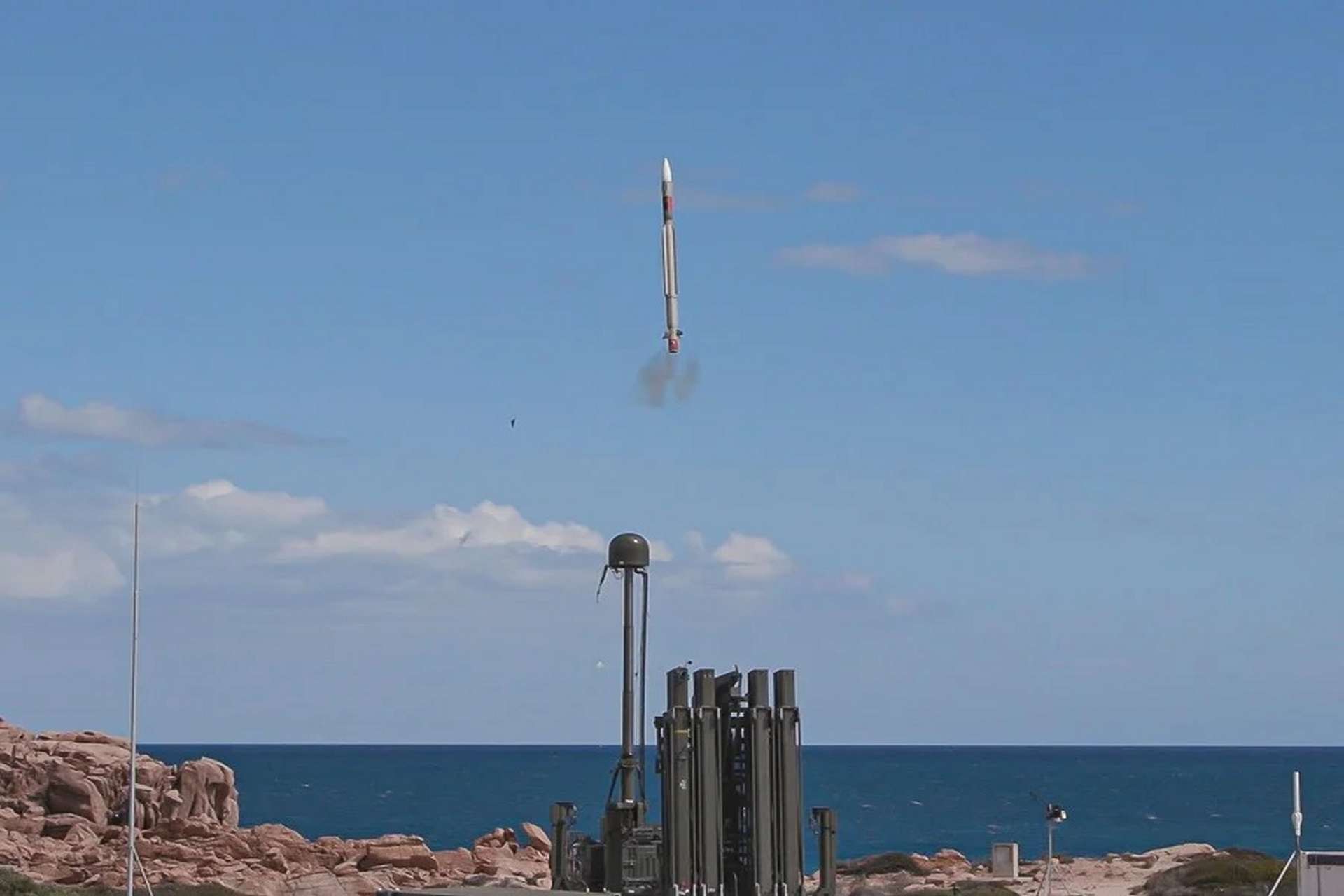
On May 8, 2024, MBDA, the European defense industry company, announced the successful completion of a qualification firing involving the GRIFO system with the CAMM-ER missile. This test is part of a series aimed at advancing the new air defense technology for the Italian Army, marking a significant development in the Enhanced Modular Air Defence Solutions (EMADS) family, which includes GRIFO.
This pivotal trial, held on April 27 and 28, 2024, marked the first test of the GRIFO system's Command Post and Engagement Module (PCMI) integrated with the missile launcher and CAMM-ER missile. (Picture source: MBDA)
The GRIFO system is designed to enhance the Italian Army's short-range air defense (SHORAD) capabilities by extending its range. It utilizes the CAMM-ER missile, part of the broader Common Anti-Air Modular Missile (CAMM) family known for their 360° air defense coverage through vertical launches.
This specific trial, conducted on April 27 and 28, 2024, was pivotal as it was the first time the Command Post and Engagement Module (PCMI – Posto Comando Modulo di Ingaggio) of the GRIFO system was tested in an integrated format with the missile launcher and CAMM-ER missile. The test scenario involved a target drone simulating an enemy aircraft attack, serving to validate the defense capabilities and overall performance of both the missile and the system under operational conditions.
MBDA, as the design authority for the GRIFO system, oversees the integration of key subsystems including the PCMI. This module integrates an MBDA command and control system, a Rheinmetall Italia X-TAR3D radar, and a Leonardo identification friend or foe (IFF) system, along with the missile launcher and the CAMM-ER missile itself.
During the test, the PCMI successfully detected and classified the imminent threat from the target drone, evaluated the appropriate defensive action, and executed a successful launch of the CAMM-ER missile to neutralize the threat. Additionally, the trial confirmed the effective operation of the two-way data link between the CAMM-ER missile and the GRIFO ground system, ensuring seamless communication during the engagement.
This successful qualification reflects the collaborative efforts of the Italian and British teams of MBDA, working together with the Italian military customer. The CAMM-ER missile, representing the extended-range variant of the new generation CAMM family, was co-developed by the United Kingdom and Italy for both land and naval air defense roles. It is designed for easy integration with various customer-selected radars and command and control systems to form a comprehensive air defense solution.
The CAMM-ER missile is also set to replace the Aspide missile in the Italian Air Force’s Medium Advanced Air Defence System (MAADS), a transition that was successfully qualified last year. Furthermore, CAMM-ER has been integrated into Albatros NG, a new generation naval-based air defense system that has already been sold internationally and is designed to optimize the naval surface-to-air capabilities of fleets.
Equipped with a state-of-the-art active seeker and a newly designed motor by AVIO, the CAMM-ER missile significantly extends the effective range compared to its predecessor, the CAMM missile, enhancing the operational flexibility and capability of the GRIFO system.
Read more: MBDA Successfully Completes Qualification Firing of GRIFO System Using CAMM-ER Missile

- Details
- Written by: Vandenbosch
- Category: 2024
- Hits: 4734
Breaking news
Kadet Defence Systems, in collaboration with the Defence Research and Development Organisation (DRDO), has reached a milestone with the successful development of Loitering Aerial Munitions (LAM), the first of their kind in India. Additionally, over 50 of these systems have been ordered by India and are to be delivered by the end of 2024. This initiative is part of a unique Development and Production Partnership (DCPP). This announcement was relayed by the Indian company on May 8, 2024.
Follow Army Recognition on Google News at this link
The LAM systems encompass a diverse range of advanced technologies, among them are the CALM and VTOL UAVs.(Picture source: Kadet)
Since the beginning of the conflict between Ukraine to Russia, drones have become a dominant force, and many countries are developing their own UAV systems. This is also the case for India, which, with Kadet, has launched an entirely new range of drones known as LAM.
The LAM systems encompass a diverse range of advanced technologies. Among them are the Canister Aerial Loitering Munition (CALM), combat UAVs offering standoff munition deployment capabilities, and tactical VTOL UAVs. UAVs represent a significant shift in modern warfare, so it is not surprising to see India develop its drones. Moreover, a contract is already in place for the delivery of over 50 systems by the end of 2024, to precisely and efficiently meet the evolving operational requirements of the Indian armed forces.
These suicide drones stand out not only for their technology but also for their adaptability to various terrains and environments, from deserts to plains, and even in high-altitude regions exceeding 5,000 meters, thus ensuring comprehensive defensive coverage across varied landscapes that India possesses. Furthermore, with over 90% of the components manufactured locally, Kadet aims to highlight its commitment to indigenous innovation and autonomy in Indian defense production.
Avdhesh Khaitan, co-founder and CEO of Kadet Defence Systems, emphasized the strategic importance of these indigenous LAMs, stating, "True self-reliance lies in the ability to design and develop cutting-edge defense solutions domestically. The growing demand for LAMs underscores their crucial role not only in strengthening our armed forces but also in strengthening ties with friendly nations."
With plans to increase production and deliver approximately five thousand systems within the next 2 to 3 years, Kadet reaffirms its commitment to meeting the evolving needs of the defense sector. These LAMs offer multifaceted capabilities, acting both as combat UAVs capable of precision strikes and as Kamikaze drones for targeted engagements, reminiscent of cruise missiles.
Founded in 2011 and based in Bengaluru, India, Kadet Defence Systems has emerged as a pioneer in the Indian aerospace industry, specializing in unmanned systems. The company offers a wide range of UAVs for both defense and industrial sectors. As India progresses towards autonomy in defense production, Kadet's efforts will undoubtedly be supported by the country's authorities.
Read more: India Develops and Produces Indigenous Suicide Drones

- Details
- Written by: Vandenbosch
- Category: 2024
- Hits: 3443
Breaking news
Lockheed Martin has secured a $451 million contract from the U.S. Army for the upgrade of additional M270 missile launchers. Announced on May 8, 2024, from Dallas, this agreement is designed to enhance the operational capabilities of United State's allies.
Follow Army Recognition on Google News at this link
The M270 is a Multiple Launch Rocket System (MLRS), manufactured by Lockheed Martin. (Picture source: US DoD)
This award is part of an ongoing effort that began with an initial agreement in 2019, with contracts focused on ensuring the operational availability of these systems through 2050. The upgrades are part of a broader strategy to maintain the launcher's effectiveness and interoperability with NATO forces for many years.
Jay Price, Lockheed Martin's Vice President of Precision Fires, highlighted the importance of these enhancements. "The modernization will not only enhance the launcher's capabilities but will also ensure that the M270 series remains a highly effective and reliable platform in coalition operations," he said.
The recapitalization process involves a complete overhaul of the systems. This includes installing new engines, enhanced armored cabs, and integrating the new Common Fire Control System (CFCS). The CFCS is designed to ensure compatibility with current and future munitions of the MLRS Family of Munitions (MFOM). Notably, the modernized M270A2 launchers, as well as HIMARS systems, will be the only platforms capable of deploying Lockheed Martin's Extended-Range GMLRS and the Precision Strike Missile (PrSM).
The M270 Multiple Launch Rocket System (MLRS), developed by Ling-Temco-Vought and manufactured by several companies including Lockheed Martin, is a multiple rocket launcher originating from the United States. This system has been in service since 1983 and has been used in various conflicts such as the Gulf War, the War in Afghanistan, the Iraq War, the 2022 Russian invasion of Ukraine, and the 2023 Israel-Hamas conflict.
The M270 is distinguished by its ability to launch 12 MLRS rockets or two Army Tactical Missile System (ATACMS) missiles or four PrSM precision missiles. It features a robust chassis with an aluminum hull and reinforced aluminum cab, providing light impact protection. The vehicle is powered by a Cummins VTA-903 diesel engine, delivering up to 600 horsepower depending on the variant, which allows it to reach a maximum speed of 64.4 km/h and an operational range of 483 km.
The system variants include the M270A1 and M270A2, which offer improvements in engine power and munitions capabilities. The M270 can engage targets up to 300 km away with ATACMS munitions, and up to 92 km with M30/31 GMLRS rockets, making this artillery system one of the most versatile and powerful in modern military arsenals.
The United States aims, through several programs, to increase interoperability with its allies and also to extend the lifespan of its equipment. This new contract awarded to Lockheed Martin also aligns with this goal, as the M270, being a widely used LRS, its update is a positive development for all owners of such equipment.
Read more: Lockheed Martin Secures Contract from US Army to Modernize M270 Launchers
- US company Teledyne FLIR unveils Rogue 1 next-gen suicide drone
- Czech Republic to Deliver First 180 000 Artillery Shells to Ukraine Next Month
- Ukrainian forces use Polish Warmate drones to destroy Russian radars Repeynik and Podlet-K1
- US and Philippines Conduct Joint Artillery Exercise with Israeli ATMOS Self-Propelled Howitzer