

- Details
- Written by: Administrator
- Category: 2024
- Hits: 20006




Breaking news






American Company Lockheed Martin has secured an $861.3 million firm-fixed-price contract for the production of M142 High Mobility Artillery Rocket Systems (HIMARS) and associated support services. This contract reflects the growing global demand for light multiple rocket launchers, especially in the context of current military engagements and the system's proven effectiveness.
Follow Army Recognition on Google News at this link
The M142 HIMARS is an MLRS Multiple Launch Rocket System able to fire guided and unguided rockets as well as ATACMS missiles. (Picture source U.S. DoD)
Developed in the late 1990s, the HIMARS is mounted on a standard U.S. Army Family of Medium Tactical Vehicles (FMTV) M1140 truck frame, offering significant mobility and versatility in combat scenarios. Currently, the HIMARS serves not only in the United States but also in several countries worldwide including Jordan, Poland, Romania, Singapore, and the United Arab Emirates, with additional interest from nations such as Australia, Estonia, Italy, Latvia, Lithuania, Morocco, and Taiwan.
HIMARS can fire both guided and unguided rockets, including the Guided Multiple Launch Rocket System (GMLRS) rockets and the larger Army Tactical Missile System (ATACMS) missiles, providing versatility in targeting everything from enemy troops and vehicles to long-range strategic targets. Its capability for precision strikes and quick repositioning makes it effective in a variety of combat scenarios.
The M142 High Mobility Artillery Rocket System (HIMARS) has the capability to launch both guided and unguided rockets, which provides it with flexibility to engage a range of target types on the battlefield. The primary type of guided rocket it uses is the Guided Multiple Launch Rocket System (GMLRS) rocket, which is known for its accuracy and has a reach of up to 70 kilometers. This makes the GMLRS suitable for striking high-value targets like enemy artillery, air defenses, and armored vehicles with precision.
In addition to guided rockets, HIMARS can also fire unguided rockets such as the M26, which are useful for covering a larger area to suppress or destroy enemy troop formations and soft-skinned vehicles, offering a broader impact in combat scenarios. This combination of guided and unguided rockets allows HIMARS to support a wide range of military operations, from precise strikes to broader area saturation attacks.
The HIMARS can also launch the ATACMS missile, a larger and longer-range missile capable of striking targets up to 300 kilometers away. This capability allows for deep strikes into enemy territory, targeting high-value assets such as command centers and clustered enemy formations.
This increased interest is likely spurred by the HIMARS' role in ongoing conflicts, such as its use by Ukrainian forces in the current conflict with Russia, where its strategic value in mobile warfare has been prominently demonstrated. The contract, managed by the Army Contracting Command in Redstone Arsenal, Alabama, stipulates that work locations and funding will be determined with each order, with completion projected by May 31, 2026.
The M142 High Mobility Artillery Rocket System (HIMARS) has proven to be a significant asset in Ukraine's military operations against Russian forces. According to multiple reports, HIMARS has been effective in disrupting Russian logistics and command centers, substantially impacting the dynamics of the conflict.
HIMARS units, supplied by the U.S., have allowed Ukrainian forces to execute precise strikes on Russian ammunition depots, command posts, and other strategic targets. The precision of these strikes has been noted for both their tactical effectiveness and psychological impact on Russian forces, disrupting supply lines and command structures. The system's mobility and accuracy enable Ukrainian forces to perform hit-and-run tactics, minimizing the launcher's exposure to counterattacks (Defense.gov) (Al Jazeera) (Business Insider Nederland).
This expansion in production underscores the strategic importance of HIMARS in modern military operations and Lockheed Martin's pivotal role in meeting both U.S. and allied nations' defense needs.

- Details
- Written by: V.Saint
- Category: 2024
- Hits: 3952
Breaking news
At the DSA 2024 exhibition held in Malaysia from May 6 to May 9, 2024, the Thai company Chimeira presented its vehicles, an occurrence that was particularly rare. The latest creation from Chaiseri's design offices attracted attention; it is a small buggy designed for use by special forces or light units called Wildcat.
Follow Army Recognition on Google News at this link
Chaiseri presents Wildcat for the First time at DSA 2024 (Picture source: Army recognition)
Chaiseri is a Thai company specializing in defense and security, known for manufacturing military vehicles and for its expertise in upgrading armored vehicles. Founded in 1986, Chaiseri has developed significant expertise in the production of ground defense systems, including light armored vehicles, armor kits, and mobility solutions for combat environments.
One of Chaiseri's most well-known products is the "First Win," a 4x4 armored vehicle used by several countries for reconnaissance, patrol, and as a battlefield ambulance. This vehicle is valued for its high mobility, robust ballistic protection, and its adaptability to various battlefield roles. Chaiseri has also expanded its influence by forming strategic alliances with other defense companies worldwide, thereby cooperating in the development of advanced technologies and expanding its reach in the international defense market. Besides being a supplier to the Royal Thai Army, the company exports to 37 countries including several Arab states, Argentina, Bangladesh, Chile, Denmark, Malaysia, Norway, Pakistan, Philippines, Sweden, Russia, Singapore, Ukraine
The Chaiseri Wildcat is a light armored all-terrain vehicle developed by the Thai company Chaiseri Metal & Rubber Co., Ltd. It is a more recent development compared to their renowned First Win vehicle series and is designed to provide exceptional off-road capability while offering good protection for troops. The Wildcat is designed to operate in various environments, including rough and rugged terrains, to accomplish a wide range of missions from patrolling to medical evacuations. It has a powerful engine and an automatic transmission system that allows it to reach high speeds while maintaining good maneuverability. With a maximum weight of 3750 kg, it can travel approximately 500 km at a maximum speed of 110 km/h on roads.
Its crossing capabilities are impressive; it can climb a 60% slope and handle a 30% side slope, although it can cross trenches of 50 cm and clear obstacles of 40 cm in height. Moreover, the Chaiseri Wildcat is designed to carry 4 crew members and 1000 kg of payload. Although its tubular structure indicates the possibility of adding collective armaments, it seems that this option was not discussed by the manufacturer during the presentation
Read more: DSA 2024 : Chaiseri presents first prototype of new wildcat special force oriented buggy
- Details
- Written by: V.Saint
- Category: 2024
- Hits: 5219
Breaking news
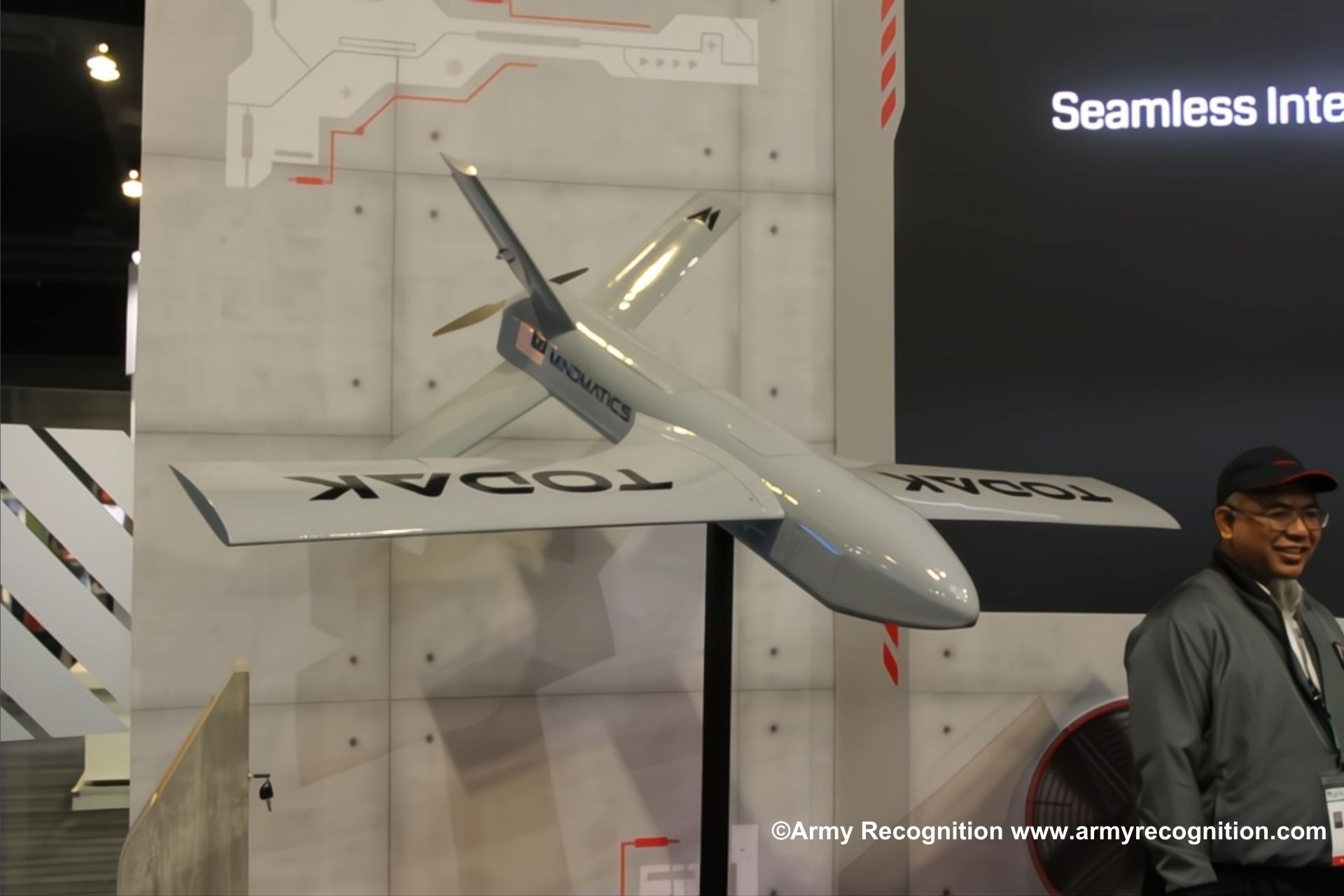
At the DSA 2024 exhibition held in Malaysia from May 6 to May 9, 2024, the Malaysian company Mindmatics introduced for the first time the loitering munition named TODAK. This small payload munition, which is easily accessible to armies, aims to equip units with the capabilities to strike at more significant targets.
Follow Army Recognition on Google News at this link
Todak loitering munition presented for the first time at DSA 2024 exhibition (Picture source: Army Recognition)
Mindmatics Sdn. Bhd. is a Malaysia-based company specializing in personal care services. Founded on November 2, 2001, and headquartered in Kajang, Selangor, the company has also ventured into defense technology alongside its medical technology development activities, facing financial challenges. This was demonstrated by its presentation of the Helang VTOL drone at the Defence Services Asia (DSA) 2022 exhibition. This drone is designed for surveillance missions and has been deployed by the Eastern Sabah Security Command for border surveillance missions, and now for the introduction of the TODAK loitering munition.
Read more: DSA 2024 : Malaysia Firms Mindmatics unveils first loitering munition called TODAK

- Details
- Written by: Halna du Fretay
- Category: 2024
- Hits: 10822
Breaking news
The United States Marine Special Forces (MARSOC) are currently testing "robot dogs" equipped with remote weapon stations that automatically detect targets before receiving authorization to fire, as reported by War Zone. These robotic systems, armed with rifles, represent a first for an organization within the U.S. military, although similar concepts have been explored both in the U.S. and abroad.
Screenshot of the Video published by Onyx Industries showing one of the MARSOC robot dogs (Picture source: Onyx Industries)
Eric Shell, Director of Business Development at Onyx Industries, confirmed during SOF Week that these robotic dogs are in service with MARSOC. The robots are equipped with Onyx's SENTRY remote weapon system and are available in 7.62x39mm and 6.5mm Creedmoor calibers. Although the total number of robotic dogs in MARSOC's possession is uncertain, it is clear that those equipped with the SENTRY system are undergoing testing by the command. Shell indicated that these robotic dogs are performing tasks such as tunnel work and perimeter security, though the exact locations of their use were not specified.
The model of the robotic dog used by MARSOC is the Vision 60 from Ghost Robotics, described as a mid-sized all-weather ground drone, agile and durable, designed for a wide range of applications in unstructured urban and natural environments.
The Vision 60 is suited for remote inspection, reconnaissance and surveillance missions, mapping, distributed communication, and persistent security. Ghost Robotics has collaborated with various entities to explore different defense and security applications for the Q-UGV.
The integration of the SENTRY system on the Q-UGVs includes an X360 Pan/Tilt Gimbal stack (providing full electro-optical/infrared capability), an AI-assisted Digital Imaging System (DIS), and what Onyx calls a Remote Actuated Weapon (RAW). This autonomous weapon system can scan and detect targets, including drones, people, and vehicles, with a fire control system that keeps a human operator in the loop to decide on engagement.
The SENTRY system can be operated over "any communication network," allowing remote operations and reducing risks to operators. Onyx also offers a non-lethal configuration that is solely sensor-based, using the same gimbal system.
The use of robotic dogs by MARSOC aligns with their historical use of real dogs in highly dangerous operations, offering similar benefits in terms of capabilities to access confined spaces and gather intelligence. These robotic systems also provide persistent perimeter security, a domain already explored by other branches of the U.S. military, such as the U.S. Air Force, which uses unarmed Q-UGVs for reconnaissance missions at bases like Tyndall and Nellis.
With the global emergence of small unmanned ground and aerial platforms, the use of armed robotic dogs is becoming a reality on modern battlefields, as evidenced by developments in China and Russia. The symmetry between technological advancements and operational capabilities suggests that the integration of armed drone autonomy into military operations will continue to grow, with potential implications for the role of humans in future combat decisions.
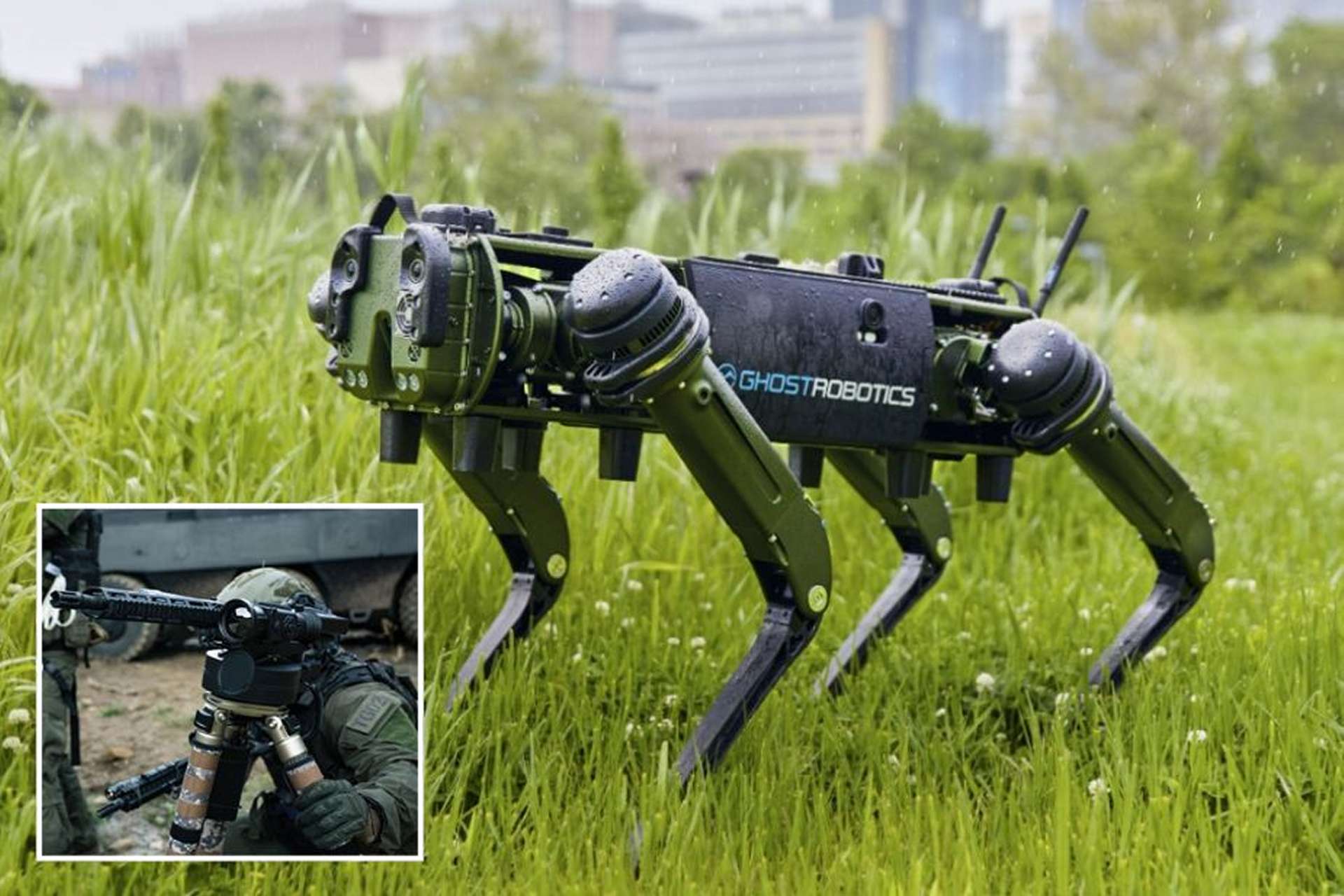
The model of the robotic dog used by Marso is The Vision 60 from Ghost Robotics with the SENTRY system from Onyx (left bottom) (Picture source: Onyx Industries/Ghost Robotics)
Read more: US Marine Special Forces Tests New Robot Dogs with Weapon Systems

- Details
- Written by: Halna du Fretay
- Category: 2024
- Hits: 6479
Breaking news
The U.S. Army is currently conducting a series of tests at Yuma Proving Ground (YPG) in Arizona to assess the capabilities of the new Modular Turreted Mortar System (MTMS), also known as 'NeMo', as reported by the U.S. Army on May 7, 2024. Mounted on an Armored Multi-Purpose Vehicle (AMPV), this semi-automated 120mm breech-loaded mortar system is undergoing rigorous evaluations to ensure it meets the Army's high standards for safety and performance.
The Modular Turreted Mortar System (MTMS), a semi-automated, single-barrel 120mm breech-loaded mortar system, is mounted on an Armored Multi-Purpose Vehicle(Picture source: US Army)
Kevin Irr, a test officer from the Munitions and Weapons Division at YPG, stated that the evaluations began in January 2024 and are expected to conclude in July. These tests are crucial as they aim to validate the operational safety and effectiveness of the NeMo system in preparation for its presentation at the upcoming Maneuver Warfighter Conference at Fort Moore in September.
The MTMS requires a vehicle commander for operation and two crew members for loading, emphasizing its semi-automated nature that incorporates advanced technology with manual support. The current testing phase focuses not only on confirming the system’s performance but also on ensuring it is safe for soldiers to operate.
According to Irr, the primary focus of the safety tests includes assessing the impact of vehicle operation on auditory health to protect soldiers from potential hearing damage caused by the high-intensity noise during firing. Additionally, the tests are examining the buildup of toxic fumes inside the vehicle, which can result from weapon firing and engine exhaust. Effective management of these fumes is crucial to safeguard the health of the crew.
The project, which dates back several years, began as part of a multi-phase foreign comparative test where the system's capability was initially evaluated on a foreign vehicle using U.S. ammunition. This initial testing sparked curiosity and led to further evaluations to integrate the system onto the AMPV, marking a significant step in its development.
Captain Mike Hapner from the Program Executive Office Ground Combat Systems emphasized the strategic importance of the MTMS, noting its capability to shoot on the move, perform direct fire missions, and execute Multiple Rounds of Simultaneous Impact missions. These features address a crucial gap in the current mortar capabilities of the U.S. Army.
If successfully fielded, the MTMS would be a significant innovation in the U.S. military arsenal, addressing a crucial need for enhanced soldier protection during operations. This system allows mortar teams to deploy and use their weapons directly inside an armored vehicle, thereby providing an additional layer of security against enemy fire and projectile impacts. Furthermore, the MTMS increases the mobility of mortar units, enabling them to quickly reposition in response to tactical battlefield requirements without compromising crew safety. The integration of such systems directly meets the current needs of the U.S. Army for safer and more effective operations, particularly in hostile environments where troop protection is paramount.
Read more: US Army conducts trials of new modular turreted mortar system in Arizona

- Details
- Written by: Administrator
- Category: 2024
- Hits: 6394
Breaking news
Recently, the Russian defense company Kurganmashzavod, the renowned manufacturer of armored vehicles, announced the delivery of a new batch of BMP-3 and BMD-4M infantry fighting vehicles to the Russian army for immediate deployment in Ukraine. This marks the second delivery of these types of armored vehicles this year, signaling intensification in military preparations in Ukraine.
Follow Army Recognition on Google News at this link
Russian company Kurganmashzavod delivers more BMP-3 Infantry Fighting Vehicles to the Russian army. (Picture soirce Kurganmashzavod,)
Kurganmashzavod, a key player in the Russian defense industry primarily known for its BMP series, reported that the volume of equipment delivered to the Russian forces this year has increased by 1.5 times compared to the same period last year. The company’s ability to boost production comes despite the ongoing international sanctions imposed on Russia following its February 2022 invasion of Ukraine.
The increase in manufacturing and delivery of these advanced fighting vehicles underscores the Russian defense industry's resilience and its strategic focus on addressing the urgent needs of its armed forces engaged in the conflict in Ukraine. The BMP-3 and BMD-4M vehicles are among the most advanced in their class, equipped to provide enhanced firepower, mobility, and protection for ground troops in diverse combat scenarios.
The continuation of these deliveries highlights the escalating nature of the conflict and the significant role of domestic military production in Russia's operational strategy. The international community continues to watch closely as the situation develops, with further economic and diplomatic repercussions likely to follow in response to the intensification of military activities in the region.
The BMP-3 and BMD-4M infantry fighting vehicles are designed to transport troops while offering substantial firepower and armor protection, making them crucial assets in the conflict zones like Ukraine. In such environments, these vehicles serve dual roles: providing infantry with mobility across challenging terrains and supporting them with significant direct fire support against enemy forces. The BMP-3 is particularly effective in open and mixed terrains, while the BMD-4M, being lighter and more mobile, is suited for airborne operations, allowing Russian airborne troops to be rapidly deployed and supported with heavy armament in contested areas.
The BMP-3 is a Russian infantry fighting vehicle (IFV), widely recognized for its comprehensive firepower and versatility on the battlefield. Introduced in the late 1980s by the Soviet Union, it was designed to replace older models of the BMP family, offering significant enhancements in terms of armament, mobility, and protection.
The armament of the BMP-3 is notably robust and diverse, making it one of the most heavily armed IFVs in the world. Its primary weapon is a 100mm 2A70 rifled gun, which can fire both conventional shells and laser-guided anti-tank missiles, providing a unique dual capability to engage both soft targets and armored vehicles effectively. This gun is supplemented by a 30mm 2A72 autocannon, which offers a high rate of fire, suitable for engaging light armored vehicles, aerial targets like helicopters and low-flying aircraft, and infantry.
The BMP-3 is also armed with one coaxial 7.62mm PKT machine gun positioned next to the main and secondary cannons. For further self-defense and close-quarter combat capabilities, it has two bow-mounted 7.62mm machine guns, which provide frontal protection and suppressive fire capabilities. The vehicle is also equipped with smoke grenade launchers to cover its movement or retreat during combat operations.

The BMD-4M is an airborne infantry fighting vehicle armed with one 100 and one 30mm automatic cannons.
The BMD-4M is a modern Russian airborne infantry fighting vehicle, an upgrade of earlier BMD series models, specifically designed for airborne assault operations. Introduced into service with Russian airborne troops in 2008, it is lighter and more compact than its counterparts like the BMP series, allowing it to be air-dropped and thus providing rapid deployment capabilities to airborne units. The BMD-4M enhances the mobility, firepower, and survivability of paratroopers behind enemy lines.
The main armament of the BMD-4M includes one 100mm 2A70 gun, which also doubles as a launcher for the Arkan guided anti-tank missiles. This capability allows the BMD-4M to engage both armored vehicles and tanks at a distance of up to 6,000 m. Complementing the main gun is a 30mm 2A72 autocannon, which provides a high rate of fire essential for engaging lighter armored vehicles, enemy personnel, and low-flying aerial targets such as helicopters and drones.
Second armament of the BMD-4M includes a coaxial 7.62mm PKT machine gun to deliver suppressive fire against troop concentrations and to defend against infantry attacks. The vehicle is also equipped with modern digital fire control systems and night vision equipment, greatly enhancing its accuracy and lethality in night and adverse weather operations. For self-protection, the BMD-4M features smoke grenade launchers that can create a smoke screen to obscure the vehicle from enemy view, thereby enhancing its survivability on the battlefield. This combination of mobility, airborne deployment capability, and heavy armament makes the BMD-4M a critical asset in modern combat operations, especially in rapid deployment and high-mobility scenarios.

- Details
- Written by: Vandenbosch
- Category: 2024
- Hits: 4820
Breaking news
During the DSA 2024 exhibition held in Malaysia, a flagship event for the defense and security industry in Asia, ADS presented the Advanced Weapon Station (AWS). This cutting-edge turret is a remotely controlled armament station, designed and produced locally in Malaysia, which can be adapted to the specific needs of users. The product unveiled on this occasion is mounted on the back of a Toyota Hilux, demonstrating its ability to be easily integrated into light vehicles, thanks to its lightweight and rigid construction.
Follow Army Recognition on Google News at this link
The AWS can be installed on a variety of vehicles, here it is a Toyota Hilux. (Picture source: Army Recognition)
DSA (Defence Services Asia) 2024 is an international platform where leaders in the military industry showcase their latest innovations and technologies. This biennial event attracts official delegations, military decision-makers, and defense sector companies from around the world, providing a prime exchange venue for technological advancements in the areas of defense and security.
The AWS is specifically designed to meet the challenging conditions of Malaysia. It includes a high-resolution 10-inch display and a joystick that allows the gunner to maintain a visual perspective on the target, with capabilities for both day and night combat, thanks to features that provide fusion and thermal vision. The turret also meets various strict military standards for electromagnetic compatibility (EMI/EMC) and human engineering (MIL-STD-1472F), ensuring compliance with stringent environmental and electronic requirements.
This modular turret can be installed on a variety of vehicles, whether lightly armored or heavily armed, thanks to its rigid and lightweight construction that facilitates integration. Its robust design makes it particularly suited to the tough environments of Malaysia, where durability is essential for reliability in rugged terrain.
The AWS is equipped with target tracking technologies, incorporating a high-resolution 10-inch display and a joystick that enable the gunner to maintain a continuous and clear view of the target. It also boasts day and night combat capabilities, with observation features that include options for day, fusion, and thermal vision, allowing for operability in various lighting conditions.
In terms of physical specifications, the AWS can accommodate weaponry such as heavy machine guns of 12.7 mm caliber and general-purpose machine guns of 7.62 mm, with heights not exceeding 550 mm above the vehicle's roof. Weights range between 310 kg and 335 kg, making it a relatively light solution given its durability and capacity. It can load up to 250 or 600 rounds, depending on the armament used, and presents a significant range of motion in elevation and depression for maximum flexibility in combat.
With its extended detection and recognition capabilities, this armament station can be an asset for certain clients desiring a weapon system capable of operating in challenging environments such as those found in Malaysia.
Read more: DSA 2024: ADS Exhibits Advanced Weapon Station AWS Mounted on Toyota Hilux in Malaysia
- Details
- Written by: Halna du Fretay
- Category: 2024
- Hits: 15209
Breaking news
The British Army has initiated trials of a new mobile-directed-energy system as part of Project Ealing, as reported by Gabriele Molinelli on X (Twitter). This project employs advanced radio frequency technology to interfere with electronic circuits, aiming to provide a strategic countermeasure against drone threats. Additionally, the British Army plans to deploy laser weapons by 2027 as part of its ongoing efforts to enhance its capabilities.
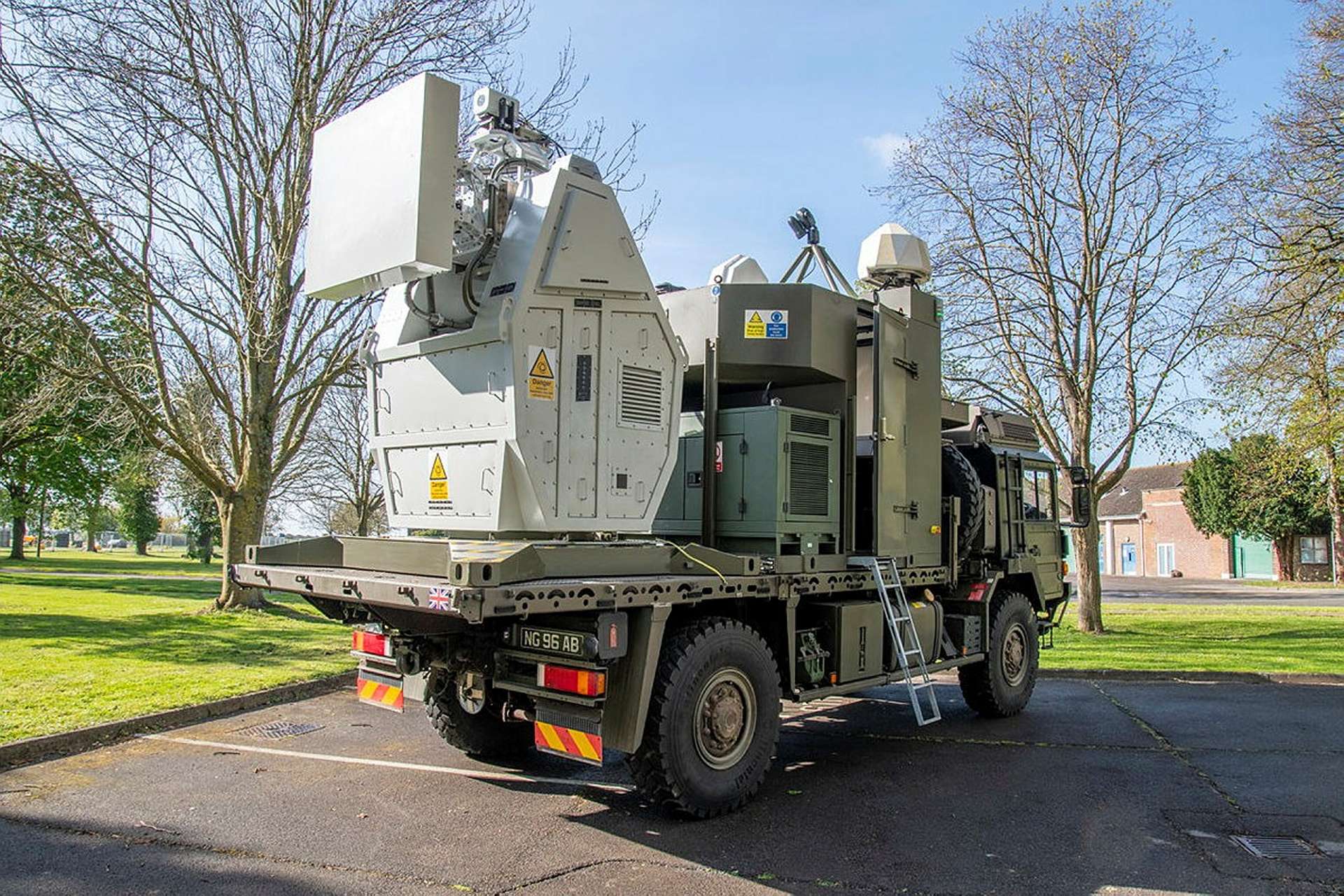
Project EALING has unveiled a new radiofrequency "cannon" for the British Armed Forces, now mounted on a smaller, detachable HX60 truck instead of the originally planned HX77. (Picture source: British MoD)
The core component of Project Ealing, the radio frequency cannon, has been designed to detect, track, and engage a variety of targets across air, land, and sea domains. The technology, which was showcased with the 7th Air Defence Group at Thorney Island, demonstrates a significant departure from initial concepts, featuring a more compact design mounted on an HX60 truck, offering improved deployability and maneuverability.
The system's capability extends to disrupting multiple drones simultaneously through powerful radio frequency transmissions. Similar in concept to the Epirus LEONIDAS system used by the U.S. Army, Ealing’s technology also includes its own detection sensors, enhancing its operational independence.
Matt Cork, the program manager at the Defence Science and Technology Laboratory (DSTL) at Porton Down, described how the system operates by generating an electromagnetic pulse (EMP) that couples with electronic circuits, overloads them, and switches them off. This non-lethal approach is designed to temporarily disable electronic systems without causing permanent damage.
The trials under Project Ealing mark the Ministry of Defence's first user experimentation with electromagnetic pulse technology. Cork noted that they are exploring its potential to protect areas or moving convoys from explosive-laden drones, which pose a significant threat in modern conflicts.
While the specific range and wavelengths of the weapon remain classified, the technology uses commercially available components that were initially developed to disable boat motors. The system’s versatility allows for precise targeting or adjustment to broader frequencies to address multiple threats simultaneously.
This summer, the 7th Air Defence Group will begin field testing the EMP technology, which will be assessed alongside the DragonFire laser system scheduled for deployment in September. These evaluations will help determine the practical applications and possible enhancements for both technologies.
Defence Secretary Grant Shapps reflected on the broader implications of radio frequency weapons, noting the pivotal role such technologies could play in future conflicts, especially considering the extensive use of electronic warfare observed in Ukraine. He mentioned that the ability to conduct operations in radio wave-dominated environments will be crucial.
Read more: British Army tests directed-energy weapon system from Project Ealing

- Details
- Written by: Triffaux
- Category: 2024
- Hits: 7571
Breaking news
At the Defense Services Asia (DSA) 2024 exhibition, Mildef International Technologies, a Malaysian defense manufacturer, is showcasing its High Mobility Light Tactical Vehicle (HMLTV). This model is customized to meet the Malaysian Army's specifications for United Nations missions, featuring a white paint job with distinctive UN markings on the sides.
Follow Army Recognition on Google News at this link
Malysian company Mildef 4X4 High Mobility Tactical Vehicle (Picture source: Army Recognition)
The new HMLTV boasts a 250 horsepower engine at 2,500 rpm, paired with a 6-speed automatic transmission, ensuring robust performance across diverse terrains. With a power-to-weight ratio of 37 hp/ton and maximum torque of 800 Nm at 1,500 rpm, the vehicle is engineered for agility and speed, featuring a top speed of 110 km/h.
Dimensionally, the HMLTV measures 5,200 mm in length, 2,200 mm in width, and 2,200 mm in height, with a maximum gross vehicle weight (GVW) of 6,700 kg. It offers a considerable range of 600 km on road, making it suitable for extended operations without the need for frequent refueling.
Key tactical features of the vehicle include a wheelbase of 3,400 mm, a ground clearance of 350 mm, and the capability to ford water obstacles up to 1,000 mm deep. The HMLTV can handle a maximum climbing grade of 60% and navigate a maximum side slope of 30%, characteristics that highlight its adaptability in challenging conditions.
Protection-wise, the vehicle meets STANAG 4569 level 1 standards, ensuring safety against ballistic and blast threats. Additionally, it is equipped with 335/80 R20 tires featuring run-flat and Central Tire Inflation System (CTIS) capabilities, enhancing its resilience on the battlefield.
The vehicle’s design includes a 50-degree approach and 50-degree departure angle, allowing for superior maneuverability in complex terrains. The HMLTV is poised to set new benchmarks in light tactical mobility, addressing the evolving needs of armed forces worldwide.
Founded in 2005, Mildef has played a pivotal role in supporting the Malaysian Armed Forces by specializing in the maintenance, repair, and overhaul of military vehicles. The company also engages in upgrading services for aging military equipment as a cost-effective solution. In 2016, Mildef introduced an upgraded prototype of the Scorpion light tank, marking its commitment to enhancing the nation's military capabilities.
Expanding its portfolio, Mildef launched its first locally made Special Operation Vehicle (SOV) at Defense Services Asia (DSA) 2018. Two years later, in 2020, Mildef signed a Memorandum of Understanding with the Science Technology Research Institute for Defence (STRIDE) to develop a 6x6 armored vehicle. This collaboration underscores its strategic push into advanced military manufacturing. By 2021, the company launched the Mildef Tarantula HMAV, aimed at both local and international markets. At DSA 2022, Mildef unveiled two new products: the Mildef Rentaka 4×4 armored vehicle and the Mildef Tedung LSV, a light strike vehicle, with the former being launched by the Sultan Abdullah, underscoring its growing influence and expertise in defense technology.
Read more: DSA 2024: Malaysian company Mildef exposes its 4X4 High Mobility Tactical Vehicle

- Details
- Written by: V.Saint
- Category: 2024
- Hits: 5741
Breaking news
Chinese missiles provider CPMIEC displayed materials during the DSA 2024 exhibition in Malaysia, one of the most interesting systems is the SY-400 loaded with the BP-12B short-range ballistic missile developed by China. This missile is specifically designed to hit strategic targets with high precision over short to medium distances. It represents a part of the modern arsenal that China offers for both its military use and for export.
Follow Army Recognition on Google News at this link
SY-400 tractor erector launcher system presented at DSA 2024 (Picture source: French MoD)
The BP-12B is capable of carrying a conventional or special payload over several hundred kilometers. The missile uses an advanced guidance system that may include combinations of inertial guidance, satellite (GPS or Beidou, the Chinese GPS system), and telemetry methods to enhance strike accuracy.
The missile is designed for rapid deployment and precise striking, making it ideal for missions requiring an immediate response against pre-identified or high-value targets. Its ability to be launched from mobile platforms, such as trucks, gives it significant operational flexibility, allowing armed forces to quickly reposition their strike capability as the battlefield evolves.
The BP-12B is suited for missions requiring effective penetration of enemy air defenses, thanks to its speed and optimized trajectory. This makes it particularly useful for countries looking to deter enemy intervention or carry out preemptive strikes against strategic sites.
In contrast, the SY-400 is a short-range ballistic missile launch system developed and produced in China. It is designed primarily for export, although it is also in service with the Chinese military. This system is capable of launching ballistic missiles and rockets, enabling it to fulfill multiple roles on the battlefield, including artillery support and precision strikes against fixed or semi-mobile targets.
In joint use, the SY-400 and the BP-12B are used against naval targets at short and medium range. The maximum range of the BP-12B is considered to be 400 km.
Read more: DSA 2024 : Chinese missiles provider CPMIEC release SY-400 anti-ship ICBM launcher

- Details
- Written by: Vandenbosch
- Category: 2024
- Hits: 3996
Breaking news
The Warble Fly loitering munition, developed by MSP, was highlighted at DSA 2024, held at the Malaysia International Trade and Exhibition Centre in Kuala Lumpur. MSP showcased the capabilities of Warble Fly, emphasizing its flexibility, compact size, and various warhead options. The exhibition served as a platform for MSP to interact with international defense stakeholders and demonstrate the latest advancements in their technology.
Follow Army Recognition on Google News at this link
The Warble Fly is a loitering munition, this system can be launched from various platforms. (Picture source: Army Recognition)
Previously, the Warble Fly was also presented at WDS 2024, where it was integrated into the Milanion Group's Agema Unmanned Ground Vehicle (UGV). This integration underscores the versatility of the Warble Fly, capable of being launched from both terrestrial and maritime platforms and designed to support a variety of mission profiles, including precision strike missions. The design of the Warble Fly allows it to operate effectively at altitudes ranging from 120 to 250 meters above ground level, with a service ceiling up to 2000 meters above mean sea level. The Agema UGV itself is a robust platform that enhances the operational capabilities of the Warble Fly by providing a mobile launch platform that can navigate various terrains and environments.
The system can also be launched from a self-contained tube, facilitating rapid deployment in the field. With its compact dimensions and moderate weight, it allows for increased maneuverability and discretion. The munition has an effective range that can exceed 25 km with an extended range antenna and can maintain a flight endurance of over 25 minutes.
The Warble Fly can reach a cruise speed of 90 km/h, with the capability to accelerate up to 150 km/h during attacks, operating efficiently at an operational altitude of less than 500 meters. Its fire control system is based on an intuitive tablet, equipped with a mission planner and a touch-to-target feature.
One key feature of this munition is its payload flexibility. It can be equipped with various types of military heads to meet specific needs: highly explosive fragmentation, anti-tank, thermobaric, and inert versions for training. This allows the Warble Fly to adapt to various operational scenarios.
The Warble Fly also integrates advanced vision-guided technology, enabling precision strikes guided by interchangeable EO/IR optics. Operators can cancel an attack at any time, thus having complete control over the operation and reducing the risk of collateral damage. Recovery is ensured by a parachute, allowing for the safe recovery of the munition if necessary.
Read more: DSA 2024: Presentation in Malaysia of Warble Fly Loitering Munition by Milanion
- Details
- Written by: V.Saint
- Category: 2024
- Hits: 6300
Breaking news
The LG1 is a lightweight cannon developed by the French company Nexter, which is part of the KNDS group, a joint venture between Krauss-Maffei Wegmann (KMW) of Germany and Nexter Systems of France. This artillery system is designed to meet modern armed forces' mobility and efficiency needs, especially in contexts where rapid deployment is crucial. The MK III version was presented at the DSA 2024 exhibition, while Thailand has recently acquired it.
Follow Army Recognition on Google News at this link
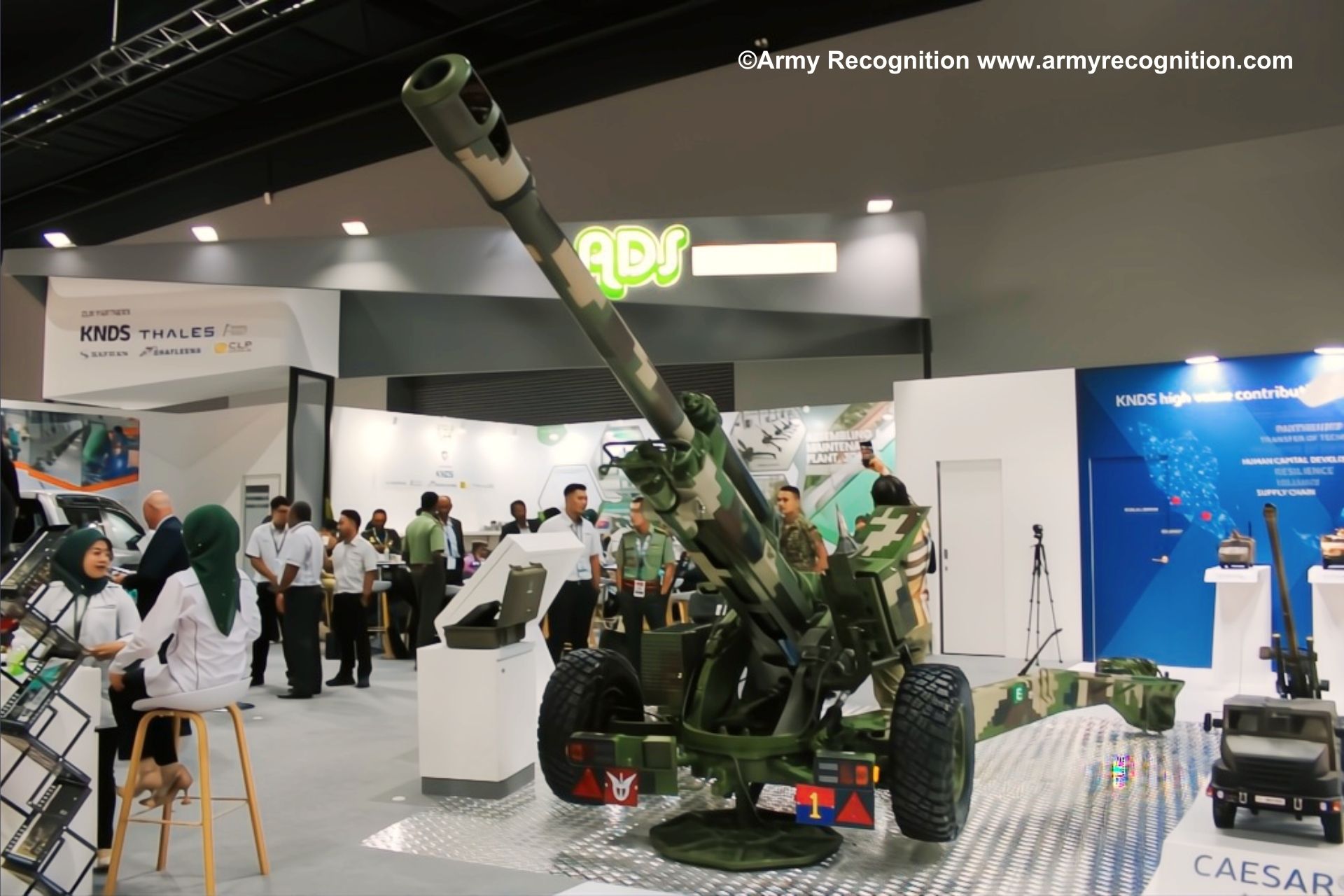
LG1 MK III towed gun by KNDS at DSA 2024 (Picture source: Army recognition)
The LG1 is a 105 mm cannon that stands out for its lightness and ease of deployment. It weighs about 1650 kg, making it easily transportable by light vehicles, helicopters, or even by air drop. Its design allows for quick implementation, capable of firing its first shots in less than 30 seconds after the transporting vehicle stops.
The LG1 cannon can fire standard NATO 105 mm ammunition, with a maximum range that can reach up to 17 kilometers with propellant charge shells called Extended Range Munitions-ERG 3- and more than 11 kilometers with high explosive ammunition. The system offers high precision thanks to its modern aiming system, which can be coupled with GPS guidance systems for advanced munitions. The LG1 is in service in several armies around the world. Countries such as Belgium, Thailand, and Indonesia have integrated this cannon into their armed forces, benefiting from its ability to provide effective fire support in various operational environments, from mountains and jungles to urban terrains. The LG1 from KNDS represents a light artillery solution suited to modern conflicts where mobility and responsiveness are paramount.
The MK III version has a range of 17 kilometers but also features a remote fire system, which allows the artillery crew to remain protected. Additionally, another improvement is the ability to use shells connected with this RFS system, and therefore guided by GPS, INS, or ballistic computer. Transportable by helicopter and particularly light, the cannon represents a particularly useful support weapon for rapid reaction units.
Since 2020, the KNDS consortium has been focusing on expanding its market presence in Asia by establishing administrative offices in the region, particularly in Singapore and Jakarta. This move aims to strengthen relationships and facilitate operations within the Asian defense markets. Jakarta, having previously purchased 18 CAESAR cannons from Nexter in 2017, represents a significant strategic foothold for KNDS in Southeast Asia. However, the Franco-German consortium faces substantial competition from Chinese defense exports, which are also on the rise both in the region and globally. This growing Chinese presence in the international arms market poses a challenge for KNDS as it seeks to expand and solidify its position in Asia.
Read more: DSA 2024 : KNDS shows LG1 MK III new variant of light artillery towed gun
- DSA 2024: Milanion Demonstrates Capabilities of Alakran Mobile Mortar System in Malaysia
- Malaysian company Mildef presents its new Tarantula 4X4 armored vehicle at DSA 2024
- DSA 2024 : Aselsan exposes F-16 compatible cruise missile named TOLUN
- Turkish company MKEK showcases 105mm Boran light howitzer at DSA 2024