

- Details
- Written by: Vandenbosch
- Category: 2024
- Hits: 3390




Breaking news






At the Defence Services Asia (DSA) 2024 exhibition in Kuala Lumpur, the Alakran mobile mortar system was showcased, highlighting its advanced capabilities and combat readiness. This presentation underlined its growing presence in global defense markets, and its increasing visibility at defense shows, similar to its appearance at WDS 2024.
Follow Army Recognition on Google News at this link
The Alakran is a mobile mortar system. (Picture source: Army Recognition)
Developed by New Technologies Global Systems (NTGS), the Alakran is recognized for its adaptability to various combat scenarios, as evidenced by its deployment in multiple countries including Saudi Arabia and Ukraine. The Alakran can be mounted on a variety of light utility vehicles without the need for structural reinforcement, supporting payloads up to 1,500 kg. This feature enables rapid movement across different terrains.
The system’s ability to accommodate 120mm and 81mm mortars enhances its versatility in battlefield engagements, offering high firepower with a firing rate of 16 rounds per minute thanks to its patented cooling system. This cooling system is capable of dissipating 1,000 Kcal per minute, allowing up to 50 rounds to be fired at this rate while keeping the barrel temperature below 180°C.
The Alakran’s Fully Digital Fire Control System (FCS) ensures precision within 2 miles (equivalent to less than 2 meters at a 1 km distance) and automatically readjusts aiming after each shot. It can use smoothbore shells of various calibers, including 120mm, 81mm, and 82mm. Its firing capability covers a wide azimuth sector up to 3,200 mils (about +/- 60 degrees) and an elevation range from 800 to 1,600 mils (45 to 85 degrees).
The system also prioritizes operator safety by transmitting all recoil forces to the ground, which protects the vehicle and reduces risks to soldiers. Its robust and durable design allows it to withstand the rigors of battle, and it has been proven in combat in various hostile environments, including forest and desert terrains. Furthermore, thanks to advanced electronic and software systems incorporating GIS technology, the Alakran is fully automated and requires minimal maintenance.
The presentation of the Alakran at DSA 2024 suggests good prospects for this equipment, as its previous showcase at WDS 2024 was successful, evidenced by its adoption by forces in Saudi Arabia and Ukraine, among others. There are just a few days left for the Alakran to replicate this success.
Read more: DSA 2024: Milanion Demonstrates Capabilities of Alakran Mobile Mortar System in Malaysia

- Details
- Written by: Triffaux
- Category: 2024
- Hits: 6285
Breaking news
At DSA 2024, the defense exhibition in Malaysia, the Malaysian company Mildef showcased its new 4x4 armored vehicle in an APC (Armored Personnel Carrier) configuration named Tarantula.
Follow Army Recognition on Google News at this link
Mildef Tarantula 4X4 armored vehicle (Picture source: Army Recognition)
The Mildef Tarantula HMAV is a mine-resistant infantry mobility vehicle with a V-hull design, engineered to provide high-level protection for its 10 crew members and passengers against various battlefield threats such as mines and improvised explosive devices. The vehicle was designed and manufactured by Mildef International Technologies in collaboration with the Science Technology Research Institute for Defense (STRIDE) and the Malaysian Armed Forces. It was launched on February 11, 2021.
The Tarantula 4x4 weighs 14 tonnes and is powered by a 7.2-liter turbocharged Caterpillar engine producing 330 horsepower, with a torque of 1,116 Nm. It can reach speeds up to 110 km/h. The vehicle meets NATO STANAG 4569 standards, with ballistic protection compatible with STANAG 4569 Level 2 for ballistic and artillery threats. The vehicle is also compatible with STANAG 4569 level 2B for chassis protection, and level 2A for hull protection. Its primary armament is a 12.7mm heavy machine gun. It is equipped with smoke grenade launchers for self-defense.
After the Tarantula was announced in February 2021, the vehicle underwent testing for nine days over 700 km on-road and 300 km off-road, followed by highway endurance tests, fuel efficiency tests, load testing, winching, slope handling, and braking tests, including a one-meter fording test.
The armored protection is rated at STANAG Level 2, while the bottom protection is rated at STANAG Level 2B, and the hull at STANAG Level 2A. The vehicle is also fitted with mine blast attenuating seats to protect its passengers.
The design of the Tarantula is standard for this category of 4x4 armored vehicles, with the engine at the front, crew in the middle, and troop compartment at the rear. The body of the vehicle provides ballistic protection STANAG 4569 Level against the firing of small arms 7.62×39mm API caliber and mine protection Level 2a/b against the blast of 6 kg of TNT under the wheels and under the body. The vehicle was produced using 70% local components including the chassis, body, and engine while 30% uses foreign components including the axle, transmission, and parts of the engine.
In APC configuration, the vehicle has a crew of two and can accommodate up to 8 military personnel. Each side of the vehicle includes two doors, and the seating arrangement consists of four seats facing the front and three seats along each side of the hull. The rear part of the vehicle is fitted with a hydraulic ramp. The roof of the vehicle can be fitted with a remotely operated weapon station armed with one machine gun up to 12.7mm caliber.
In August 2023, Mildef delivered 178 units of their domestically-produced Tarantula 4x4 high mobility armored vehicles to the Malaysian Army, replacing the aging fleet of Condor 4x4 armored personnel carriers.
Read more: Malaysian company Mildef presents its new Tarantula 4X4 armored vehicle at DSA 2024
- Details
- Written by: V.Saint
- Category: 2024
- Hits: 4383
Breaking news
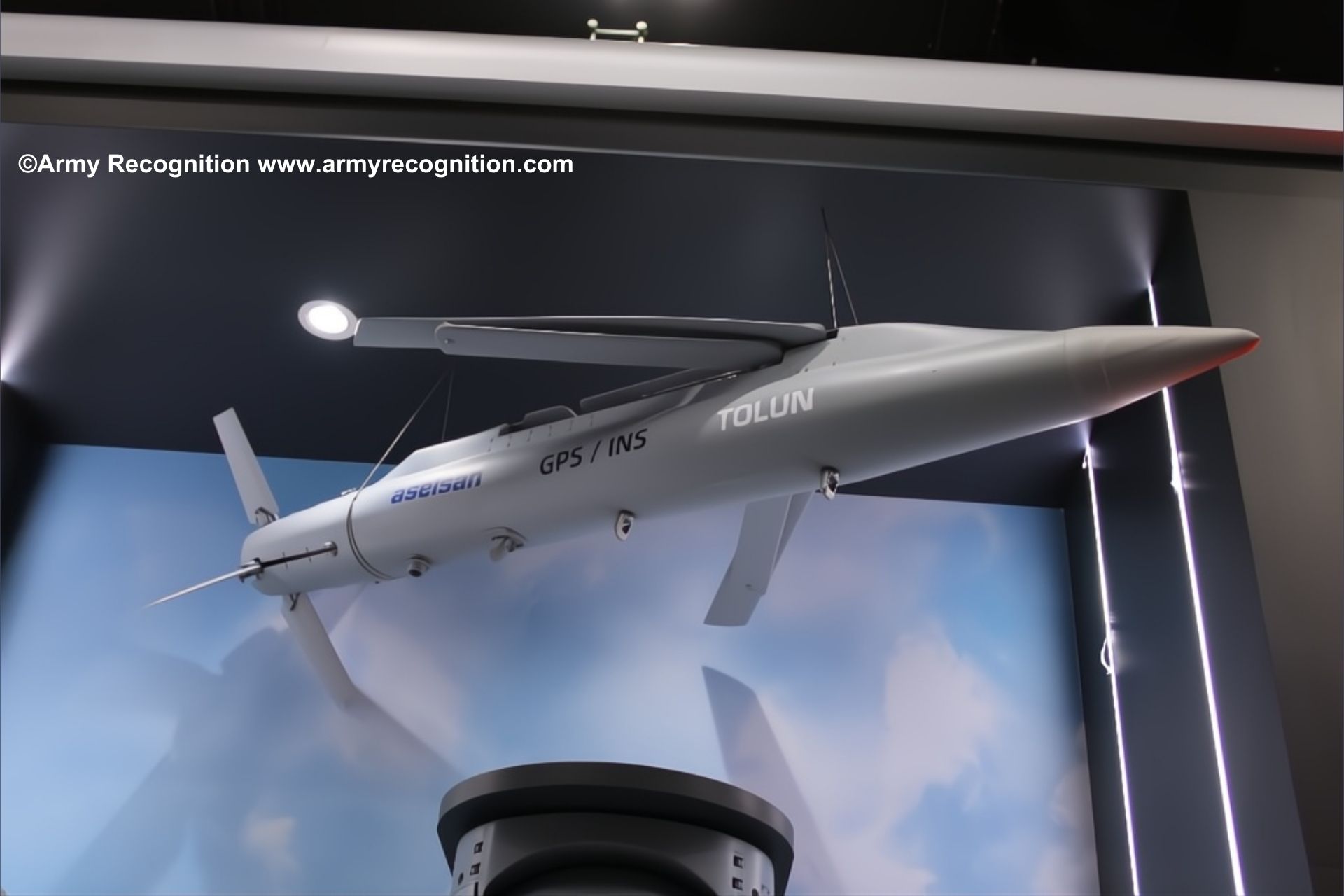
The TOLUN, developed by the Turkish defense firm ASELSAN, is a precision-guided munition designed for high-precision strikes. Tolun missile can be mounted on drones, jets and all NATO armement delivery aircraft capable of carring SPQR rack system. The missile is presented at DSA 2024, exhibition in Malaysia during 6-9 May 2024.
Follow Army Recognition on Google News at this link
Tolun cruise missile presented at DSA 2024 (Picture source: Army Recognition)
Tolun missile is the result of cooperation between Tübitak SAGE industry for warhead and Aselsan for the guidance and propulsion sytem. TOLUN has the capability of attacking 8 different targets in on sortie within the range of 55 NM using its retarding diamond shaped wings. TOLUN is capable of penetrating reinforced concrete targets with its high precision hit capability and its hardened special shaped nose structure. It can be used against strategic targets in every combat areas.
Weighing 140 kg and measuring 180 cm in length, the missile uses INS technology and guidance systems to achieve precision with less than 10 meters of error, and can fly at an altitude of 40,000 feet, which is more than 12 kilometers. It integrates advanced GPS, INS (Inertial Navigation System), and IIR (Imaging Infrared) guidance technologies.
This munition is particularly noted for its ability to hit both static and moving targets up to approximately 80 kilometers away, with an impressive accuracy of less than 3 meters Circular Error Probable (CEP). It can be launched from various platforms including F-16 jets and the Bayraktar Akıncı UAVs, and is compatible with the Smart Pneumatic Quad Rack (SADAK-4T) for efficient multi-target engagement. F-16 can carry and employ8 TOLUN by using SADAK-4T so the number of aircraft sorties needed to complete the mission decreases.
TOLUN has folded wings that are employed after release to provide extended range. according to Aselsan Tolun can penetrate 1 meter of reinforced concrete targets in range of 30 nautical miles ( 40km). Additionally, ASELSAN has achieved a significant milestone with TOLUN by securing a $35 million export contract for these munitions, marking its entry into the international market. This deal includes the integration of TOLUN munitions with the Bayraktar AKINCI platforms.
Read more: DSA 2024 : Aselsan exposes F-16 compatible cruise missile named TOLUN

- Details
- Written by: Triffaux
- Category: 2024
- Hits: 4996
Breaking news
At DSA 2024 in Malaysia, Makina ve Kimya Endustrisi Kurumu (MKEK) of Türkiye showcased the 105mm Boran air portable light towed howitzer. This light gun is designed to be used by rapid reaction forces, enabling quick deployment and high mobility in response to various tactical situations.
Follow Army Recognition on Google News at this link
Makina ve Kimya Endustrisi Kurumu (MKEK) 105mm Boran air portable light towed howitzer displayed at WDS 2024 (Picture source: Army Recognition)
The Boran howitzer, a 105mm light artillery piece, represents a milestone in Turkish defense production, being fully designed and developed by MKEK to meet the operational demands of the Turkish Army. Founded in 1950, MKEK has a broad portfolio including the production of ammunition for small and heavy arms, artillery systems, aerial bombs, mines, explosives, and rockets.
First introduced at the IDEF defense exhibition in Istanbul, Türkiye, in 2019, the Boran illustrates the prowess of Turkish defense technology. Its design, reminiscent of the French LG1 light towed howitzer by Nexter Systems (now part of KNDS), highlights its modern features and compliance with international artillery standards.
The howitzer's design features a bow-type carriage and two front wheels, making it easily transportable. In its travel configuration, the gun's saddle and the 105mm/30 caliber barrel pivot rearward and lock securely, enhancing its mobility and rapid deployment capabilities.
The Boran is equipped with a variable recoil system, adjustable from 800mm (short) to 120mm (long), and a muzzle brake to reduce recoil. It offers a traverse of 8° left and right and an elevation range of -3° to +70°, allowing versatile firing options across various terrains and scenarios.
Moreover, the howitzer includes a high-tech, computerized fire control system designed by Aselsan, a prominent Turkish defense contractor. This system features a ballistic computer, an inertial navigation system, and a barrel-mounted radar for measuring muzzle velocity, ensuring precise and efficient target engagement.
With a maximum range of 17 km and a firing rate of 6 rounds per minute, the Boran howitzer, weighing 1,780 kg and operated by a crew of five, highlights MKEK's focus on rapid response and operational versatility.
Read more: Turkish company MKEK showcases 105mm Boran light howitzer at DSA 2024

- Details
- Written by: V.Saint
- Category: 2024
- Hits: 9269
Breaking news
The M113, with its rich history and numerous enhancements over time, has evolved significantly since its initial development as a troop transporter. It has been adapted for use in every major conflict since the 1960s. Recently, Malaysia unveiled a new version of the M113 at the DSA exhibition, reconfigured as an infantry fighting vehicle.
Follow Army Recognition on Google News at this link
M113 IFV presented at Mildef area during DSA 2024 (Picture source: Army Recognition)
Developed by the United States, the M113 was originally designed to transport troops into battle, offering protection against small arms fire and shrapnel. It features lightweight aluminum armor, making it air transportable and amphibious, thus enhancing its operational flexibility. Over the years, it has been extensively modified and upgraded to fulfill a variety of roles beyond troop transport, including serving as an ambulance, command vehicle, and supporting artillery and engineering units. Its widespread use in numerous conflicts, such as the Vietnam War, the Gulf War, and operations in Afghanistan, demonstrates its reliability and effectiveness in diverse combat scenarios. The M113 has also been adopted and adapted by over 50 countries.
The version presented by Mildef represents a significant modernization of this 1960s-era armored vehicle. Indeed, its speed has been increased to 100 km/h thanks to a new Caterpillar C7 engine, and its operational range has been extended to 590 km on roads and 300 km off-road. Mildef has chosen to enhance its ballistic protection to STANAG Level 2 standards. This level of protection guards against 7.62x39 caliber bullets and 155mm artillery shells exploding at 80m. The armament of the armored vehicle has also been significantly improved, featuring a classic 12.7mm machine gun, a remote weapon station, and a 76mm grenade launcher equipped with 16 grenades. In terms of communications, the modified M113 is fully integrated into the battlefield management system, which includes a digital battlefield visualization system and numerous communication channels.
While we have observed the passive protection of the vehicle, the M113 presented by Mildef is equipped with four laser warning systems. These systems are designed to detect laser rangefinders and alert the crew to deploy electro-optical countermeasures, such as smoke grenades. Since laser rangefinding is the first step in an anti-tank missile attack, this system is crucial for the vehicle's survivability.
Read more: DSA 2024 : Mildef presents Malaysian made IFV variant of M113
- Details
- Written by: Halna du Fretay
- Category: 2024
- Hits: 6543
Breaking news
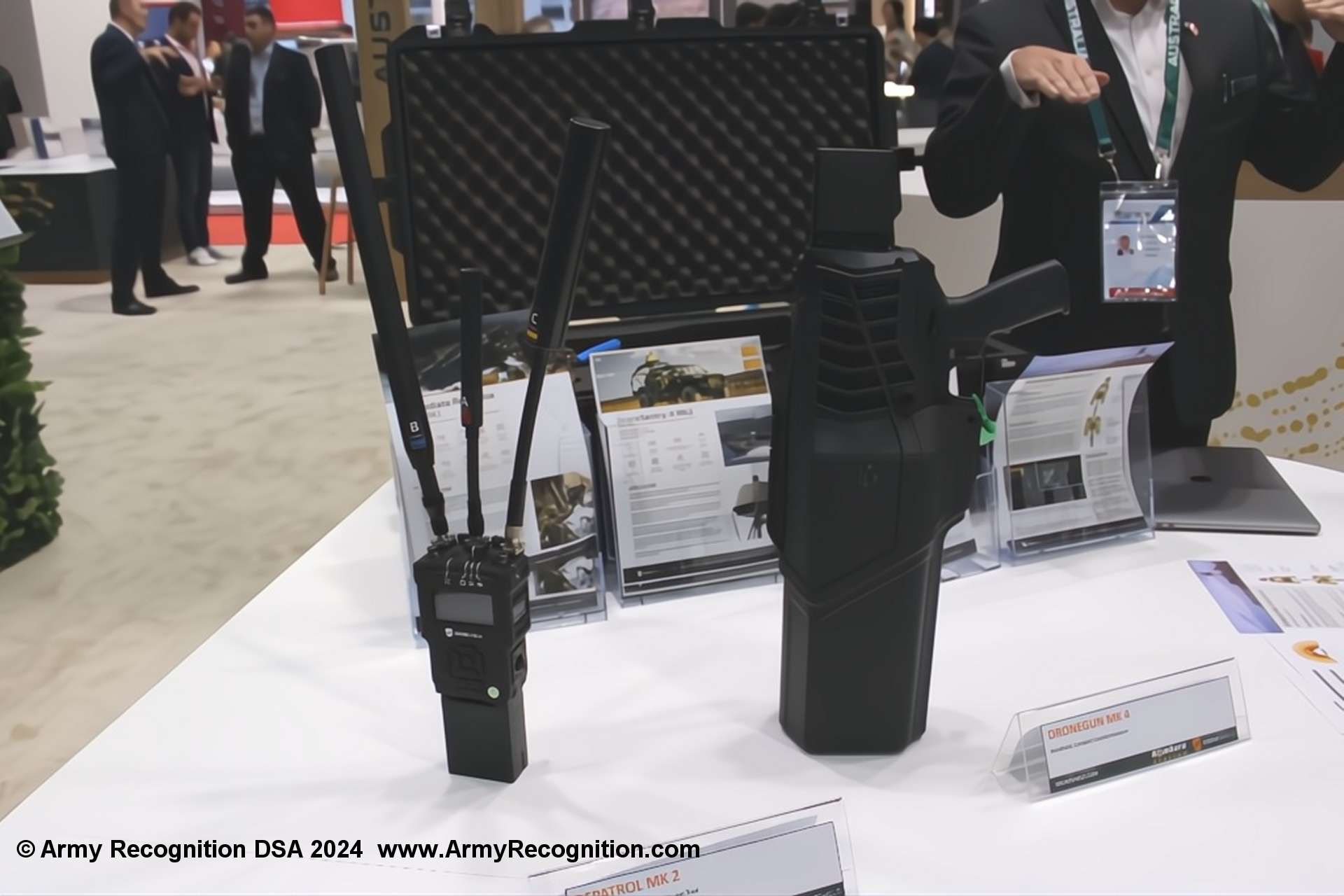
At the Defence Service Asia (DSA) 2024 exhibition in Malaysia, Australian company DroneShield introduces its latest anti-drone development, the DroneGun Mk4. This portable and robust device offers a compact and rapid countermeasure solution designed to effectively address a wide range of unmanned aerial systems (UAS).
The Drone gun Mk4, Handled, Compact countermeasure (Right) and the RfPATROL MK 2 Wearable Ai-Enabled Multi-Mission Toll See without Being seen (Left) at DSA 2024 (Picture source: Army Recognition)
The DroneGun Mk4 enhances the capabilities of its predecessors by providing improved protection against infiltration and increased ease of service. This system can disrupt the control, navigation, and video transmission of multiple drones simultaneously. When activated, the affected UAS typically perform a controlled landing or return to their starting point. This technology does not rely on protocol manipulation or cyber tactics due to the inherent limitations of these methods. Instead, it utilizes non-kinetic jamming for controlled threat management.
The Immediate Response Kit (IRK), which combines the RfPatrol Mk2 and the DroneGun Mk4, demonstrates DroneShield's commitment to integrated, ready-to-use solutions. The RfPatrol Mk2, an AI-based detection device, offers real-time situational awareness through an intuitive web user interface and DroneLocator technology. It can detect drones and their controllers, as well as their altitude and speed in real-time, making it suitable for a variety of missions, whether terrestrial, maritime, or aerial.
Weighing 3.2 kg (including the battery), the DroneGun Mk4 features upper and lower Picatinny rails and multiple quick-disconnect sling attachment points, facilitating its integration into existing operations. It is effective in a wide range of environmental conditions and is designed to deliver enhanced disruption performance while maintaining a compact design.
DroneShield guarantees its products for 12 months from the date of shipment and complies with several military standards, including MIL-STD-810G and MIL-STD-810H, which attest to their durability and reliability.
The development of countermeasures against UAV drones has become crucial due to the increased use of drones, especially in contemporary conflicts such as in Ukraine. The rising use of drones for reconnaissance, surveillance, and direct attacks has necessitated a quick and effective response in the form of anti-drone technologies. Countermeasure solutions must be not only effective but also quick to deploy and easy to handle.
Compact countermeasure systems, such as portable models that disrupt drone control and navigation signals, offer new defense opportunities. Their small size and light weight allow for easy integration with standard military equipment, enabling each unit to autonomously counter aerial threats. This shift towards smaller and more manageable devices transforms the dynamics of military engagements by allowing immediate and localized responses to drone threats, thus enhancing the overall security of operational forces.
Read more: DSA 2024: DroneShield's DroneGun Mk4 Offers Compact and Portable Drone Countermeasures

- Details
- Written by: Administrator
- Category: 2024
- Hits: 3417
Breaking news
According to information reported by Defense Romania website on May 7, 2024, Romanian President Klaus Iohannis, during his official visit to the United States, confirmed ongoing negotiations regarding the potential transfer of a Romanian Patriot air defense missile system to Ukraine. This move comes amidst Ukraine's urgent need for advanced defense air defense systems to counter Russian air attacks.
Follow Army Recognition on Google News at this link
PAC-2 Patriot interceptor missiles engaging a Kratos Defense Firejet cruise missile surrogate target. (Picture source U.S. DoD)
Romanian President Iohannis emphasized the critical nature of these discussions during his engagements with U.S. officials, including President Biden. "There is a pressing demand for advanced systems in Ukraine, and we have been approached to provide support with our Patriot systems. We are open to assisting, but Romania's own defense capabilities must remain uncompromised," Iohannis stated.
The discussions focus not on operational systems but on one of the three systems Romania currently has in the process of operationalization. Romania, a member of both NATO and the EU, originally procured seven Patriot PAC-2 GEM-T systems in a landmark $4 billion deal in 2017, marking the largest military procurement in the nation's history. Of these, four have been delivered, with one fully operational.
The Patriot PAC-2 GEM-T is an advanced version of the original Patriot air defense missile system, specifically designed to destroy aircraft, cruise missiles, and tactical ballistic missiles. The "GEM-T" in its name stands for "Guidance Enhanced Missile – Tactical," which highlights its improved guidance capabilities. This enhancement allows the missile to track and engage multiple targets more effectively under challenging conditions. Its primary function is to intercept short to medium-range ballistic missiles, providing robust defensive capabilities against a variety of aerial threats.
The Patriot PAC-2 GEM-T missile is designed to intercept aerial targets at a maximum range of approximately 160 kilometers (about 100 miles). It can engage aerial threats at an altitude of up to around 24 kilometers (about 15 miles). This capability allows it to effectively defend against a wide range of aerial threats, including high-flying aircraft and incoming ballistic missiles, enhancing its versatility and effectiveness in various defensive scenarios.
The potential transfer would not affect the operational unit but one of the units is still being prepared for full deployment. This strategic decision underscores Romania's commitment to supporting Ukraine while ensuring its own defenses remain robust.
Ukraine, which has received three Patriot systems through donations from the U.S., Germany, and the Netherlands, continues to face significant threats from ballistic and hypersonic missiles. The Patriot systems in Ukraine have been instrumental in defending both civilian and military targets from these threats.
This potential contribution by Romania highlights the broader international effort to support Ukraine amidst ongoing conflicts and reflects the complex negotiations involving military aid and defense capabilities within NATO allies.
- Details
- Written by: Halna du Fretay
- Category: 2024
- Hits: 12093
Breaking news
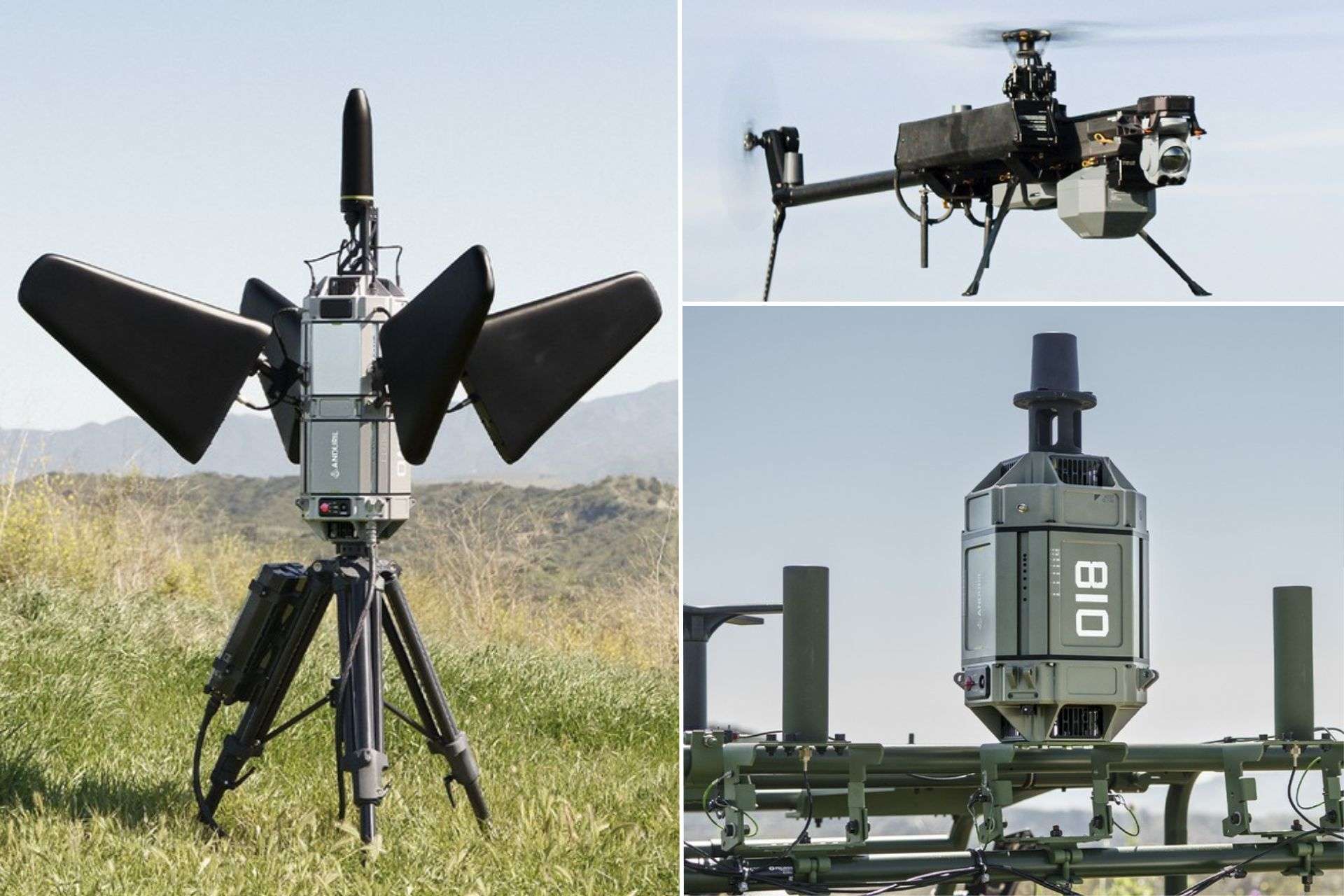
During the Special Operations Forces (SOF) Week 2024, Anduril Industries, an American defense industry company, unveiled "Pulsar," its new electronic warfare system, marking a significant advancement in electronic warfare capabilities. Pulsar, powered by artificial intelligence and machine learning, is designed to rapidly identify and counter current and future threats across the electromagnetic spectrum, including small and medium-sized drones.
Highly modular, Pulsar (left) can be integrated into ground vehicles Pulsar-V (bottom right) or aircraft Pulsar-A (top right), supporting various electronic warfare mission sets (Picture source: Anduril Industries)
Pulsar is a family of software-defined Electromagnetic Warfare (EW) systems that utilizes AI to quickly adapt to emerging threats. Equipped with onboard computing, machine learning algorithms, and software-defined radios, Pulsar can swiftly deploy new detection and neutralization capabilities in the field.
Highly modular, Pulsar can be integrated into ground vehicles (Pulsar-V) or aircraft (Pulsar-A), supporting various electronic warfare mission sets. It excels in rapid threat identification and response, and its network architecture allows multiple EW systems to coordinate across distributed operations to optimize environmental coverage and geolocate signals of interest.
Pulsar supports a broad range of mission capabilities, including Electronic Countermeasures (ECM), Counter Unmanned Systems (CUxS), Direction Finding, Geolocation, and other advanced EW capabilities. Fixed configurations of Pulsar provide 360-degree or directional detection and denial, offering customized coverage suitable for specific mission requirements and environmental conditions.
The ground vehicle variant, Pulsar-V, can be mounted on various vehicles using a standard NATO mount, while the Pulsar-A is an airborne payload variant adaptable for various manned and unmanned aircraft, enhancing operational flexibility in diverse combat environments.
The system has been operationally deployed across several continents since its initial development in 2020, though specific customer and deployment details remain undisclosed for operational security reasons. Pulsar is also designed to integrate into common and joint electronic warfare and command and control systems.
With its open architecture, Pulsar enables continuous development and integration with third-party providers, maintaining agility and adaptability in the face of new threats and missions. Dominating the electromagnetic spectrum is essential in modern warfare, where drone, counter-drone, and jamming technologies rapidly evolve, as evidenced by the war in Ukraine. The next generation of EW systems, like Pulsar, must enable real-time spectrum understanding and deliver effective countermeasures swiftly across various domains and modalities.
Anduril Industries' introduction of the Pulsar system exemplifies its dedication to advancing defense technology and enhancing capabilities. The system's adaptability for use in various vehicle platforms and stationary settings reflects its broad applicability and innovative design in the field of modern military technology.
Read more: Anduril Industries unveils its new AI-driven Pulsar EW System at SOF Week 2024

- Details
- Written by: Vandenbosch
- Category: 2024
- Hits: 11467
Breaking news
On April 15, 2024, at Fort Campbell, Kentucky, the U.S. Army showcased a live demonstration of its New Generation Squad Weapons (NGSW) with the participation of the 101st Airborne Division. The event highlighted the advanced capabilities of the new XM7 assault rifle and the XM250 light machine gun, which are set to replace the current M4 rifles and M249 light machine guns used by U.S. troops.
Follow Army Recognition on Google News at this link
A Soldier from the 101st Airborne Division fires the XM7 rifle as part of a demonstration of the Next Generation Squad Weapons (NGSW). (Picture source: US DoD)
During the demonstration, cement blocks and steel sheets were set up in front of targets to simulate realistic combat scenarios. Both the previous generation weapons and the NGSW program weapons were tested to compare their effectiveness. The demonstration aimed to display the superior penetration and overall performance of the new rifles.
The Army emphasized that the NGSW program is progressing on schedule and is committed to equipping soldiers in close combat roles with the highest quality, most capable small caliber weapons and ammunition. This initiative is part of a broader effort by the U.S. Army to ensure that its forces maintain an advantage over potential adversaries.
The XM250, designed and manufactured by SIG Sauer, has been in service in the U.S. Army since 2022. Designed in 2019, the XM250 is specifically chambered for the 6.8×51mm caliber, a round that combines power and precision to meet the demands of contemporary conflicts.
The machine gun is relatively lightweight for its class, weighing 13 pounds with a bipod and up to 14.5 pounds with both a suppressor and bipod attached. It operates on a gas system and is capable of firing about 800 rounds per minute, making it an extremely effective weapon for fire support in combat. The machine gun is designed to offer sustained fire capability while remaining manageable for soldiers in the field.
The XM7, also designed and manufactured by SIG Sauer in the United States, was introduced into service in 2022 as part of the same program as the XM250. It too is chambered for the 6.8×51mm cartridge. The rifle weighs 8.38 pounds with its basic components and up to 9.84 pounds with a suppressor. It measures 36 inches in length with the suppressor and has a 13-inch barrel.
This rifle uses a short-stroke gas-operated piston system with a rotating bolt, enhancing its reliability and accuracy in combat situations. It achieves a muzzle velocity of 915 meters per second, making it highly effective at various distances. The XM7 is equipped with a detachable magazine following the SR-25 pattern, with options for 20 or 25 rounds.
The Next Generation Squad Weapon (NGSW) program is a U.S. Army initiative launched to modernize and enhance the armaments of infantry soldiers. This program aims to replace current infantry weapons, including M4 rifles and M249 light machine guns, with advanced technologies that offer improved performance in terms of range, precision, and lethality. The weapons developed under this program, such as the XM7 rifles and XM250 light machine guns, use the new 6.8mm caliber, designed to surpass the capabilities of current standard NATO munitions. The program also includes the development of new optics and ammunition systems to complement the capabilities of these advanced weapons, thereby ensuring an advantage on modern battlefields.
The NGSW program raises many questions as a change in caliber by the United States could potentially lead NATO as a whole to shift to this new ammunition. Some analysts remain skeptical about the real added value compared to NATO calibers and the logistical challenges and future interoperability issues among allies in the North Atlantic Treaty Organization. It remains to be seen if the NGSW program will convince beyond the U.S. borders; this demonstration may help in that regard.
XM250 light machine gun video explanation
XM7 assault rifle video explanation
Read more: US Army Promotes New Generation Squad Weapons NGSW XM7 & XM250

- Details
- Written by: Halna du Fretay
- Category: 2024
- Hits: 3751
Breaking news
During the Exercise Balikatan 2024 in Ilocos Norte, the Philippine military engaged in live-fire drills using 155mm and 105mm howitzers to counter a simulated amphibious assault, as reported on the Facebook Page of Philippine Army. These joint military maneuvers with the United States, conducted from April 22 to May 10, involved nearly 17,000 troops, including observers from 14 nations, amidst rising tensions in the South China Sea and near Taiwan's southern coasts.
On May 6, 2024, Bravo Battery from the 5th and 10th Field Artillery Battalions conducted a live-fire drill targeting offshore at La Paz's Sand Dunes, Laoag City, Ilocos Norte (Picture source: Philippine Army)
This year's exercises were significant due to their scale and the introduction of advanced weapons systems. Notable among the deployed assets were the Typhon ground-based missile system, capable of reaching up to 1,600 kilometers, and the High Mobility Artillery Rocket System (HIMARS), known for its effectiveness in the conflict in Ukraine. Additionally, the Philippines deployed for the first time the C-star naval missile system, which can target up to 140 kilometers away.
Significantly, the Philippine Army trained in real-fire scenarios against an enemy amphibious assault. Notably present was the ATMOS 2000 self-propelled howitzer. Purchased from Israeli company Elbit Systems, specifically its subsidiary Soltam Systems, the ATMOS 155mm/52cal is a truck-mounted artillery system known for its high mobility and powerful strike capability, capable of firing projectiles up to 41 kilometers. This system was acquired as part of the Horizon 2 modernization program of the Armed Forces of the Philippines, with a contract for 12 units costing approximately 47 million USD, completed in December 2021.
The exercises also had strategic implications, taking place beyond the Philippine territorial waters, directly challenging China's expansive claims in the region. The drills occurred near the Spratly Islands and the western coast of Palawan, emphasizing the importance of these areas in the Philippines' defense strategy.
The military and defense collaboration between the United States and the Philippines has significantly intensified, especially in response to the rising hegemony of China in the South China Sea. This partnership is fundamentally aimed at strengthening the Philippines' defense capabilities through joint military exercises, strategic deployments, and modernization of defense assets.
Futhermore, The enhanced cooperation between Manila and Washington forms part of a broader effort to ensure regional security and stability in response to increasingly assertive Chinese actions in the South China Sea. In response to aggressive Chinese tactics, such as disruptions of Philippine resupply missions to Second Thomas Shoal, the Philippines under President Ferdinand Marcos Jr. is considering "countermeasures" with allies.
Moreover, the presence of international participants and observers, including France conducting nearby patrols, highlights the growing European interest in Indo-Pacific security.
- Details
- Written by: Vandenbosch
- Category: 2024
- Hits: 3995
Breaking news
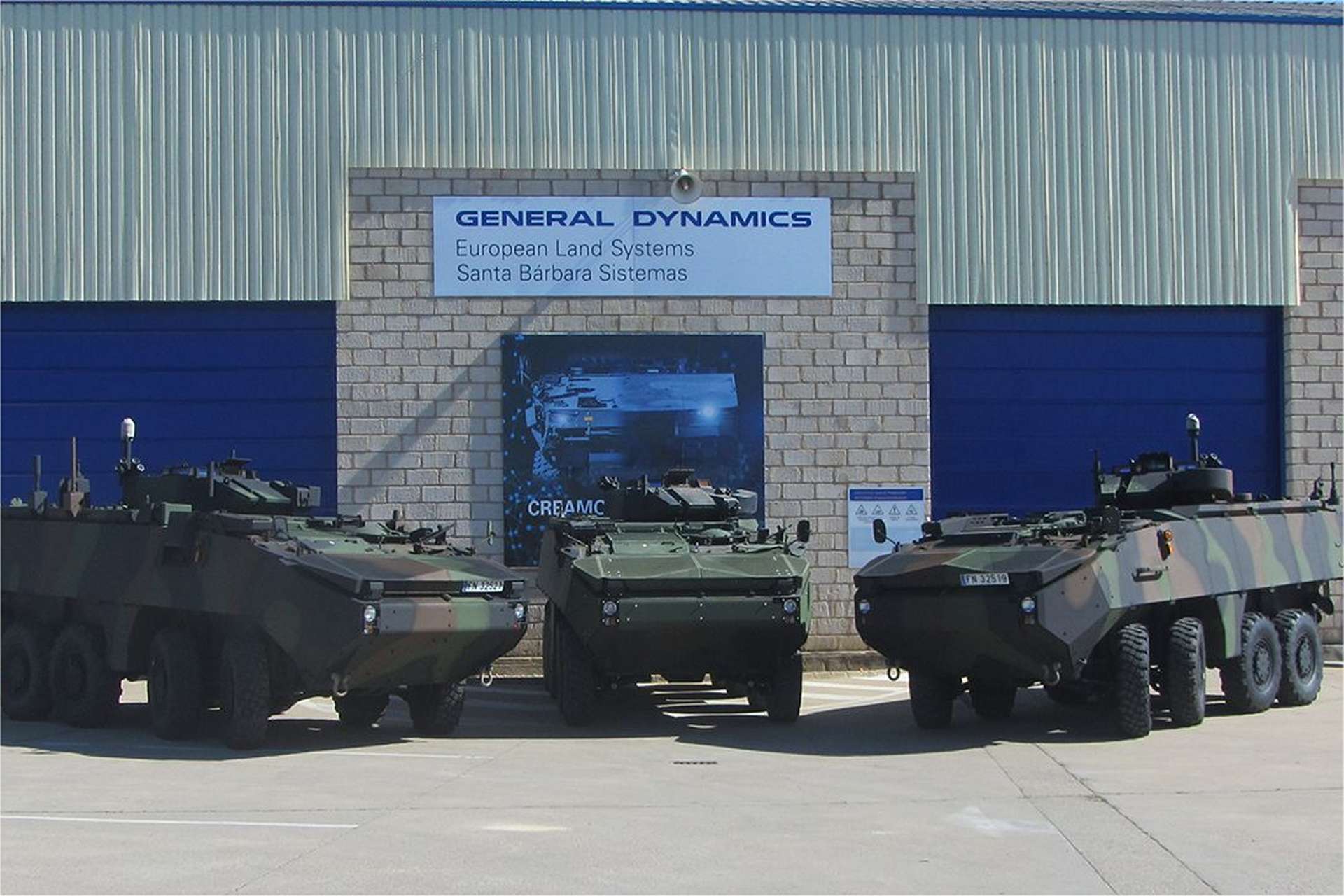
On May 6, 2024, GDELS Santa Bárbara Sistemas delivered three upgraded Piranha IIIC armored vehicles to the Spanish Marine Corps. This delivery is part of the F10 mid-life maintenance program, which aims to extend the operational life of the Piranha IIIC fleet.
Follow Army Recognition on Google News at this link
GDELS delivered three upgraded Piranha IIIC armored vehicles to the Spanish Marine Corps. (Picture source: GDELS)
Under the signed framework agreement, a total of 21 Piranha IIIC vehicles are to be refurbished and upgraded. The latest delivery adds to the five vehicles previously handed over to the Marine Corps, demonstrating the ongoing progress of the program.
The F10 mid-life maintenance program for the Piranha IIIC armored vehicles is a comprehensive refurbishment initiative aimed at extending the operational lifespan and enhancing the capabilities of the fleet. This program involves updating various systems within the vehicles to meet current and future military requirements. Key aspects of the maintenance include upgrading the driveline and protection systems, and ensuring that the vehicles remain effective against modern threats. Additionally, the program incorporates modifications to improve the vehicles' overall performance, mobility, and crew comfort, ensuring they can operate efficiently in diverse combat environments.
The maintenance process of these armored vehicles is comprehensive, involving the disassembly of each vehicle, followed by the repair and optimization of all subsystems. After reassembly, the vehicles are repainted and undergo final tests to ensure they meet the strict standards required for military operations. The process concludes with official acceptance by the military inspection team.
The Piranha IIIC is an armored vehicle designed in Switzerland, used by several countries such as Belgium, Brazil, Ireland, Denmark, Sweden, and of course, Spain. The vehicle is equipped with a remote weapon station capable of supporting armaments up to 12.7 mm in caliber.
With an operational weight of 14,000 kg, the Piranha IIIC combines mobility and protection. It can reach a maximum speed of 100 km/h on roads and 10 km/h in water. Its operational range is 750 km on roads, allowing it to cover long distances without frequent refueling. The Piranha IIIC is 7.30 meters long, 2.20 meters wide, and 2.66 meters high, capable of carrying and transporting up to 13 people.
In terms of protection, the vehicle offers modular and scalable solutions against bullets, mines, improvised explosive devices (IEDs), and rocket-propelled grenades (RPGs), following international standards. Additionally, it is equipped with NBC (nuclear, biological, and chemical) protection systems and fire suppression systems, as well as an autonomous recovery winch, enhancing its resilience and survival capability on the battlefield.
GDELS Santa Bárbara Sistemas expressed its gratitude towards its staff for their dedication and professionalism. The company also thanked the Spanish Navy for its ongoing trust in its capabilities and services. Demonstrating the reliability and readiness of the upgraded Piranha IIICs, these vehicles were driven from the GDELS factory in Alcalá de Guadaíra, Seville, to the TEAR military base in San Fernando, Cadiz, showcasing their operational capability.
Read more: GDELS Delivers 3 Upgraded Piranha IIIC Armored Vehicles to Spain

- Details
- Written by: V.Saint
- Category: 2024
- Hits: 5785
Breaking news
At the DSA 2024 exhibition held in Malaysia, the South Korean manufacturer Armor Kovico showcased the variants of its APC, the KMPV, which was initially introduced in 2020. Armor Kovico, originally an automotive parts and armored vehicles supplier, has leveraged its decades of experience in assembling truck hulls and APCs to develop its own modular troop transport platform.
Follow Army Recognition on Google News at this link
KPMV launcher model, presentend on Armor Kovico area, on back end a model of KPMV MPV is visible. (Picture source: Army Recognition)
The KMPV was first revealed in 2020 as a 4x4 transport vehicle designed to protect its passengers from explosions. Since then, it has gained some media attention in its home country, although it remains relatively lesser-known outside South Korea.
Like other vehicles in its class, the KMPV features a monocoque hull on a 4x4 chassis with independent suspension. It is important to highlight that the KMPV is explosion-resistant. Weighing 12 tons when fully loaded, it is lighter than the typical 13 to 15 tons of contemporary mine-resistant trucks.
Armor Kovico ensures that the entire vehicle is protected against gunfire up to 7.62x51 AP /30-06 AP and up to STANAG II+ for mine protection, which equates to survives the force and shockwaves of up to 6 kilograms of high explosives.
In terms of mobility, the KMPV is powered by a 270 horsepower turbo diesel engine and has a top speed of 120 kilometers per hour. It can effectively climb a 60% grade, cross a 30% side slope, and ford water obstacles up to four feet deep.
In its original variant, the KMPV can accommodate 10 people, with six entering through a rear swinging door. A circular hatch on the roof provides a space for observation or fitting armaments. Machine guns remain a favorite among trucks, and the KMPV can support all known calibers. It has been tested with a remote weapon station equipped with a heavy M2 .50 machine gun. An automatic grenade launcher or even a heavy 14.5 mm machine gun are options for mounting on the roof of the KPMV cabin. At DSA 2024, two variants with the same technical characteristics but more specialized were presented.
One is the KMPV MPV for multi-purpose vehicle, designed to transport wounded, cargo, or personnel and is particularly modular for easy conversion.
The second variant is the KMPV launcher presented by Armor Kovico, which replaces the rear compartment of the vehicle with a 120mm mortar tube. Although the front compartment is apparently reinforced and still capable of transporting 4 crew members and their equipment, the rear is entirely dedicated to the launcher.
Currently, no information is available on the firing rate, type of launcher, range, and reload times on this variant.
Read more: DSA 2024: Armor Kovico introduce two variants of KPMV heavy armored vehicle
- Israel Contracts Imco Industries to Modernise Armored Vehicles Including Merkava Tank
- DSA 2024: Otokar Designed Akrep II Showcases Advanced Capabilities in Armored Reconnaissance
- DSA 2024: Deftech Unveils AHRV Armoured Heavy Recovery Vehicle in Malaysia
- DSA 2024: Turkish Otokar Debuts Cobra II Tactical Armored Vehicles with Advanced Armor and Mobility