
- Details
- Written by: Halna du Fretay
- Category: 2024
- Hits: 8848










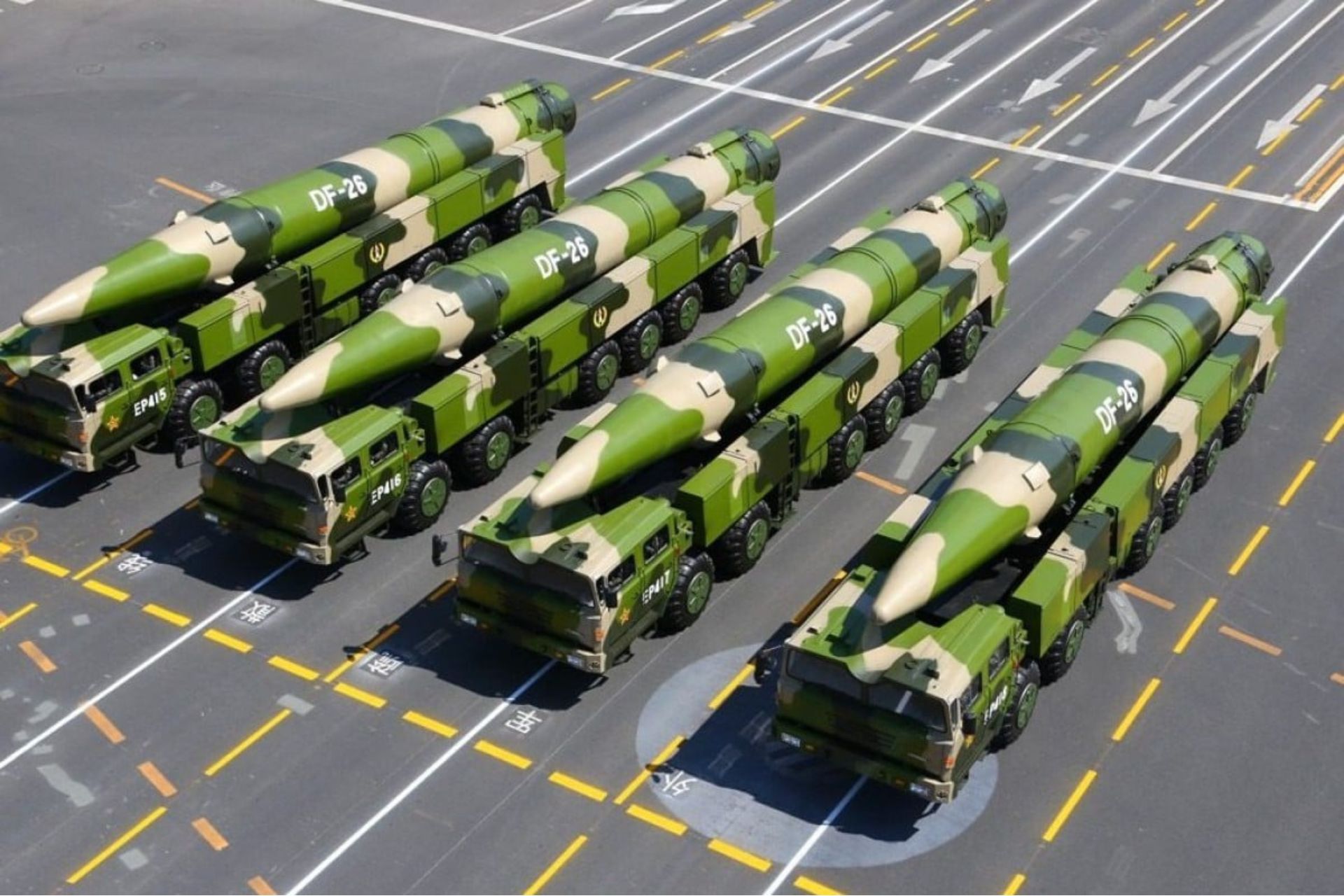
In October 2024, new satellite images revealed a significant increase in Chinese production of launchers for DF-26 ballistic missiles, indicating a considerable strengthening of China’s strategic arsenal. An image taken on September 9, 2024, by Umbra's synthetic aperture radar (SAR) showed 59 mobile launchers at the Xinghang Electromechanical Equipment production site in Beijing. This observation highlights the growing capabilities of China, raising important strategic concerns, particularly in the United States.
The recent increase in DF-26 production is viewed as a response to perceived shifts in U.S. military presence and alliances in the Indo-Pacific region, particularly around Taiwan and the South China Sea (Picture source: Chinese MoD)
The DF-26 is an intermediate-range ballistic missile from the Dong Feng family, developed by the China Aerospace Science and Technology Corporation (CASC). With a range of 4,000 km, it is the first Chinese missile capable of striking conventional targets, such as U.S. bases in Guam. This solid-fuel, two-stage missile is 14 meters long and weighs 20 tons, capable of carrying a payload between 1,200 and 1,800 kg, including nuclear warheads and various conventional warheads. It is deployed on a mobile Taian HTF5680 launcher, allowing for rapid and discreet deployment. The DF-26’s modular design enables the warheads to be swapped based on mission requirements, with options for both land strikes and moving naval targets, supported by a terminal guidance system.
Since its unveiling in 2015, production of the DF-26 has accelerated, with over 250 units produced by 2024. The brigades of the People’s Liberation Army equipped with these missiles benefit from their mobility and precision strike capabilities, targeting a range of assets including military installations and medium-sized ships. Its operational flexibility and extended range make it a key component of China’s anti-access and area denial strategy, particularly in the Asia-Pacific region.
Between 2023 and 2024, satellite images and industry reports indicate that the Beijing-Xinghang facility produced at least 72 new launchers, enough to equip two additional missile brigades. These units would join the seven existing brigades of the People’s Liberation Army, bringing the total number of DF-26 launchers to around 250. However, some experts, notably from the Federation of American Scientists, suggest that China may be inflating the actual number of launchers, potentially creating confusion about the true extent of its capabilities.
The DF-26, part of the Dong Feng missile family ("East Wind"), offers enhanced strategic capabilities compared to earlier versions such as the DF-21. Its extended range, combined with improved accuracy through satellite-assisted inertial guidance, makes it a serious threat to high-value targets like military bases, airports, and naval facilities. The potential integration of terminal guidance could also enable the DF-26 to fulfill anti-ship roles, posing a threat to U.S. carrier strike groups operating in the Pacific.
The recent increase in DF-26 production is viewed as a response to perceived shifts in U.S. military presence and alliances in the Indo-Pacific region, particularly around Taiwan and the South China Sea. The expansion of China’s missile arsenal could also signal an intention to challenge U.S. access to its strategic bases, which play a crucial role in supporting regional alliances with Japan, South Korea, and other partners. Growing tensions in the region, combined with the DF-26's dual-use (nuclear and conventional) nature, raise concerns about the risk of unintended escalation in a crisis, particularly if a conventional strike is misinterpreted as a nuclear attack.
As China strengthens its strategic forces, it continues to expand its nuclear capabilities. U.S. estimates suggest that by 2030, China's nuclear arsenal could exceed 1,000 warheads, primarily in the form of intercontinental missiles. In parallel, efforts are underway to increase the number of long-range missile launchers, including the DF-31 and DF-41, which are capable of reaching the U.S. mainland.
Read more: Satellite Images Reveal Rise of Chinese Forces with 59 New DF-26 Missile Launchers
- Details
- Written by: Vandenbosch
- Category: 2024
- Hits: 7817
The Portuguese Army has reportedly selected Thales' RapidRanger as its new air defense system, replacing the now-retired M48A2E1/A3 Chaparral, according to a Defense Archives article dated October 27, 2024. The announcement was made during Army Day celebrations at an exposition in Guarda, Portugal, where Captain Filipe Gonçalves introduced the new system in a promotional video posted on the Portuguese Army's Instagram account.
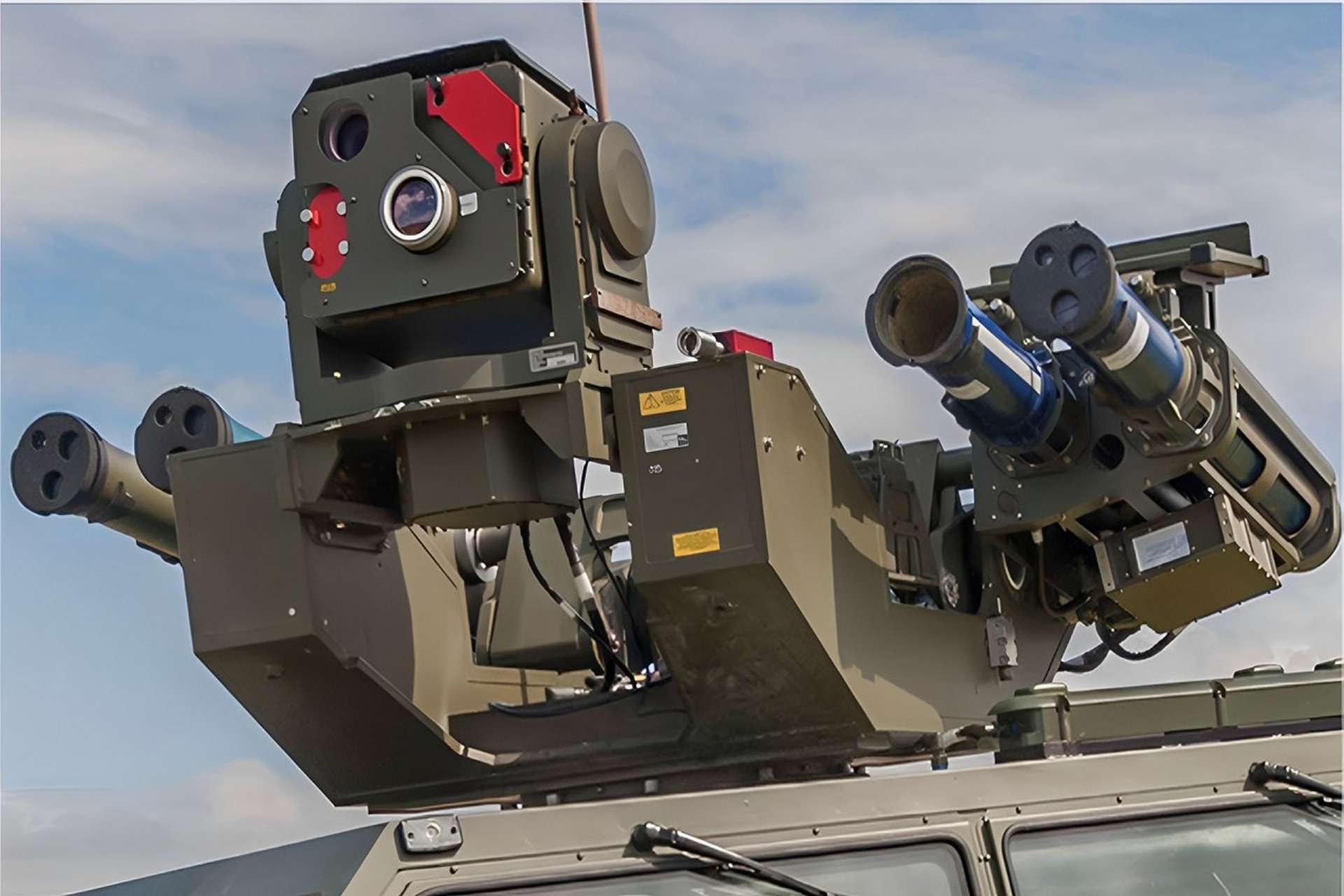
The RapidRanger is a vehicle-mounted, automated air defense system designed to respond quickly and effectively to a wide range of threats, whether airborne or ground-based. (Picture source: Thales)
Since 2017, Portugal has been seeking a replacement for its aging Chaparral air defense systems. Initially, the acquisition program aimed to procure two mobile 3D radars, eight launchers, eight portable weapon terminals, and eight tactical trucks (4x4 or 6x6) through the NATO Support and Procurement Agency (NSPA), with a budget estimated at 32 million euros. However, due to budgetary constraints and delays, the program's scope was gradually reduced.
The latest tender, launched in December 2023, called for the acquisition of a single mobile 3D radar, with an option for another, three launchers with the possibility of a fourth, and two portable weapon terminals, with an option for two more. The tender also specified an initial delivery of seven missiles, with contract options for three additional batches of eight missiles each.
In response to the December 2023 tender, six companies submitted bids: Diehl Defense, Aselsan, Roketsan, PIT-Radwar SA, MBDA France, and Thales Group. After a competitive evaluation, Thales' RapidRanger emerged as the preferred solution. Although a final contract has not yet been publicly signed, details indicate that the system will be mounted on Vamtac ST5 vehicles and will include three launchers. The RapidRanger platform supports various missiles, such as the Lightweight Multirole Missile (LMM) and the Starstreak.
The RapidRanger is a vehicle-mounted, automated air defense system designed to respond quickly and effectively to a wide range of threats, whether airborne or ground-based. Its development addresses the evolving security challenges faced by military and civilian sectors, where threats have become more diverse and require versatile defense solutions. As a fast and agile system, the RapidRanger can be rapidly deployed and seamlessly integrated into a networked force structure, making it adaptable to various combat scenarios. It is capable of coordinating with early warning Command and Control (C2) systems, enhancing situational awareness and response times.
One of the key features of the RapidRanger is its ability to integrate and launch multiple types of missiles, including Thales' STARStreak and the Lightweight Multirole Missile (LMM). This multi-missile capability offers operational flexibility, allowing the system to adapt to different target types according to mission requirements. Its modular design enables it to be mounted on a wide range of vehicles, both wheeled and tracked, providing deployment flexibility across various terrains. The system is equipped with day, low-light, and thermal imaging cameras, as well as an automatic target tracker (ATT), allowing it to operate autonomously. Additionally, it includes a 360-degree surveillance sensor, which can be either a passive infrared search and track (IRST) system or an integrated surveillance and tracking radar, ensuring comprehensive coverage and detection of potential threats.
With a weight of less than 500 kg, the RapidRanger's lightweight construction enhances its mobility and ease of integration onto different platforms, thereby improving operational deployment capabilities. It is capable of detecting targets at ranges exceeding 15 km and neutralizing them at distances of more than 7 km. This combination of agility, autonomy, and multi-role capability makes the RapidRanger a valuable asset in modern air defense operations, enabling rapid responses to emerging threats while providing a scalable defense solution adaptable to different mission profiles.
With an initial delivery of only seven missiles, one of which is intended for a live-fire exercise, the available inventory may initially equip just one launcher completely, while the second launcher would carry a reduced payload. The third launcher might be left without immediate ammunition, depending on future procurement decisions.
The selection of the RapidRanger marks a step in modernizing Portugal's air defense capabilities, with further details anticipated as the final contract is signed and deliveries commence. The deployment of the system is expected to enhance the mobility and responsiveness of the Portuguese Army's air defense units.
- Details
- Written by: Tkuhn
- Category: 2024
- Hits: 3632
According to information published by Telegraf on October 27, 2024, Canada has delivered a batch of Light Armored Vehicles (LAV) to Ukraine. These vehicles will play a crucial role in assisting the Ukrainian Armed Forces (ZSU) in evacuating wounded personnel from combat zones.
Follow Army Recognition on Google News at this link
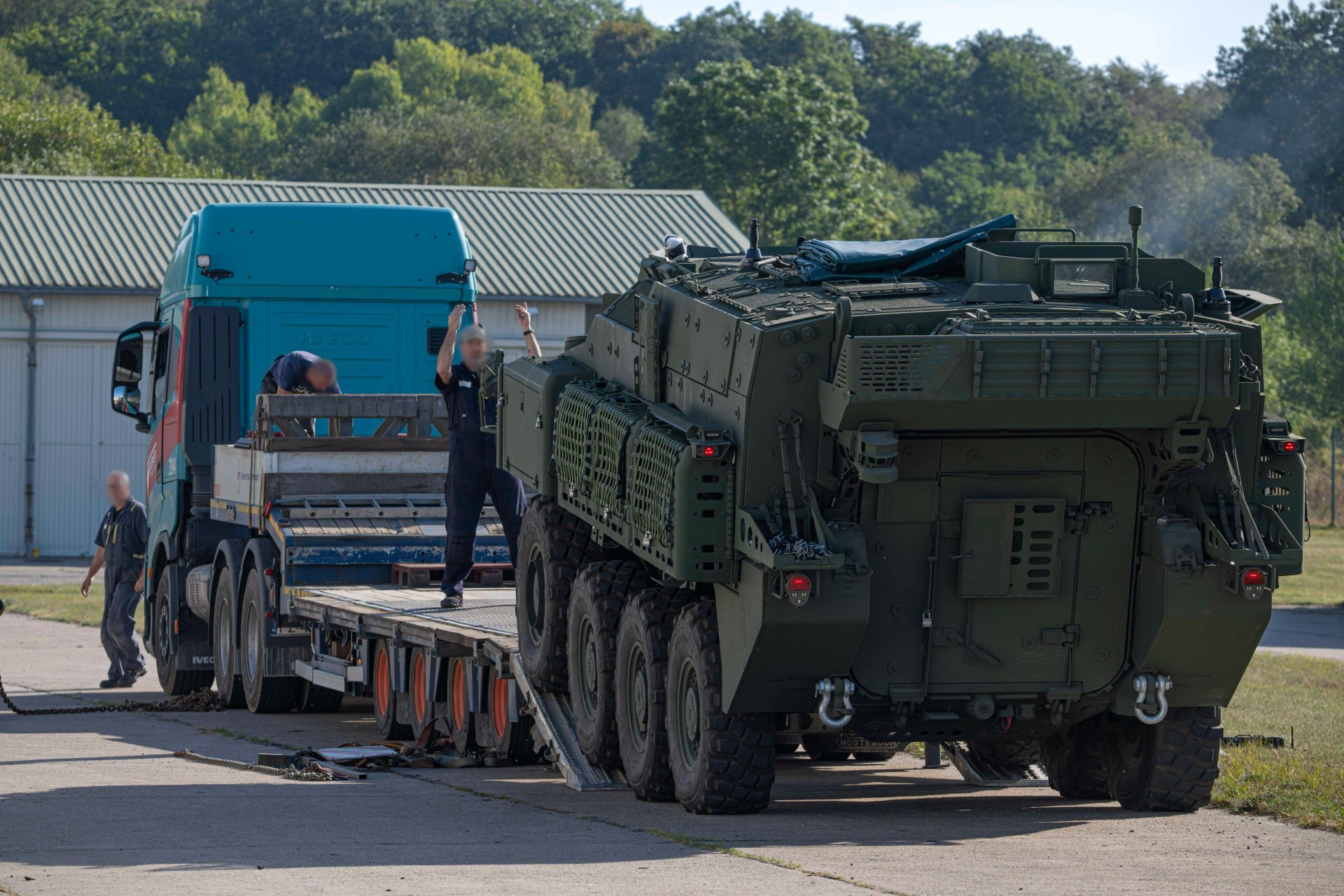
Canada delivers LAV 6.0 ACSV vehicles to Ukraine, enhancing battlefield medical evacuation. (Picture source: Twitter account of CAF with Ukraine)
According to the Canadian military, after comprehensive training sessions in Germany on the operation and maintenance of these combat support vehicles, specifically the "ambulance" variant, the LAVs were loaded and transported to Ukraine. The vehicles are now prepared to support Ukraine's defense against the Russian aggression.
In 2022, Canada committed $4.5 billion to military aid for Ukraine, underscoring its dedication to enhancing Ukraine's defense infrastructure.
The LAV (Light Armored Vehicle) is a Canadian reconnaissance and armored vehicle utilized by both the Canadian Army and the United States Marine Corps. Developed on the platform of the Swiss MOWAG Piranha I 8×8, the LAV is optimized for reconnaissance and support missions. Its crew comprises four members: a commander, gunner, loader, and driver, and the vehicle is equipped to operate effectively in both day and night conditions, irrespective of weather. The LAV also features a 7.62mm machine gun with a 1,000-round ammunition capacity, providing it with self-defense capabilities.
The LAV 6 enhances the original LAV with a Double-V Hull (DVH) for superior protection against IEDs and mines, significantly improving crew survivability. It features an upgraded suspension system and a more powerful engine to support its added armor and improve off-road performance. The LAV 6 also replaces manned turrets with a remotely-operated 25mm or 30mm autocannon, allowing for more precise targeting and greater situational awareness. Advanced electronics, including a Battle Management System, enable real-time battlefield data sharing.
This latest batch of LAVs is part of a broader Canadian support package. On October 18, Canada announced an additional military aid commitment to Ukraine valued at CAD 64.8 million (USD 47 million), which includes firearms, ammunition, and protective equipment.
The Canadian Light Armored Vehicles (LAVs) provided to Ukraine are profoundly useful in enhancing medical evacuation capabilities directly from the battlefield, a need that has grown increasingly urgent given the intensity of the conflict. These vehicles bring a combination of protection, adaptability, and reliability that traditional ambulances simply cannot offer in active combat zones. Their reinforced armor provides crucial shielding for both medical teams and wounded personnel from small arms fire and shrapnel, enabling safer extractions in high-risk environments where typical evacuation vehicles are too exposed to threats like artillery or drone attacks.
The design of these LAVs allows them to maneuver effectively over Ukraine’s diverse terrain, which includes rugged, muddy, or snowy landscapes often inaccessible to standard military vehicles. This terrain adaptability is vital for reaching troops stationed in remote or challenging locations, ensuring that injured soldiers can be evacuated swiftly to medical care. Moreover, the LAV’s all-weather and night-operating capabilities mean they can provide around-the-clock medical support, ensuring continuous evacuation operations that aren't constrained by time of day or weather conditions.
Read more: Canada delivers LAV Armored Vehicles to Ukraine to aid battlefield casualty evacuations

- Details
- Written by: Halna du Fretay
- Category: 2024
- Hits: 7046
The Philippine Marine Corps (PMC) is preparing to enhance its squad's combat capabilities by acquiring new Squad Automatic Weapons (SAWs). This initiative aims to address a shortage of light machine guns within the force and to improve the firepower of its infantry units. The project, managed by the Philippine Navy’s Bids and Awards Committee, resulted in a public tender for the supply of 73 new SAWs, to be delivered by a joint venture between Turkey's System Defence and the Philippine company Topshot Guns International.
The partnership will supply the MFR56 light machine gun, a 5.56mm weapon marketed as one of the lightest in its category, weighing just 4.25 kilograms (Picture source: System Defence)
Following an open bidding process that began at the end of 2023, System Defence emerged as the only compliant bidder and was awarded the project on April 18, 2024. The partnership will supply the MFR56 light machine gun, a 5.56mm weapon marketed as one of the lightest in its category, weighing just 4.25 kilograms. The total contract value is PHP 45.38 million, resulting in savings of PHP 500,500 below the project’s original budget. The Notice to Proceed was issued in June 2024, with deliveries expected to be completed by April 2025.
This recent contract award follows previous efforts by the PMC to modernize squad-level weaponry, including the acquisition of 160 units of the MFR56 in 2021. The initial batch, delivered in mid-2023, replaced aging FN Minimi models, many of which had been damaged or lost over years of operational use. The MFR56's performance on the field led the PMC to favor this model for the latest procurement, thus simplifying logistics and training requirements by standardizing the SAW inventory.
The Philippine Marine Corps historically operated a mixed inventory of SAWs, including the Belgian-made FN Minimi, which entered service in limited quantities through a joint acquisition with the Philippine Army in 2003. Due to losses and wear, fewer than 80 units of the FN Minimi remained operational by 2024. Additionally, heavier machine guns like the M60E3 and M60E4 7.62mm models have been used in this role, although their weight of over 10.5 kilograms proved cumbersome for automatic riflemen during mobile operations. In contrast, the MFR56 provides a significantly lighter alternative, allowing for greater mobility and ease of handling in various combat situations.
The modernization initiative aligns with the planned restructuring of the Marine squads’ organization, which will integrate new equipment and weaponry to enhance operational effectiveness. The MFR56 is set to play a central role in this development, offering versatility through its dual-feeding mechanism, which supports both magazine and belt-fed operation. This configuration, combined with a firing rate of 700 to 850 rounds per minute, ensures that the MFR56 can deliver sustained fire during both defensive and offensive actions.
The weapon’s specifications meet the stringent requirements of the Philippine Marine Corps, featuring a 20.5-inch quick-change barrel, a foldable bipod, and high-carbon alloy steel construction for enhanced durability. Each SAW will be delivered with essential accessories, including two 30-round magazines, two 200-round ammunition boxes, a reflex optic sight, a spare barrel, and a tactical sling, ensuring full readiness for deployment.
While other international manufacturers participated in the initial stages of the public bidding, only the joint venture between System Defence and Topshot Guns ultimately submitted the required documentation, technical, and financial proposals. The PMC’s preference for the MFR56, influenced by the weapon's prior success and established service record, may have discouraged competing bids for a different SAW model.
The additional procurement of MFR56 units reflects a practical approach to maintaining combat readiness while managing costs and operational risks. By continuing to standardize squad-level weaponry, the PMC can ensure a more efficient supply chain, reduce the training burden on personnel, and minimize maintenance complexities. The new batch of MFR56 light machine guns is expected to significantly enhance the firepower of Marine squads, enabling the force to better respond to the dynamic demands of modern military engagements.
As the Philippine Marine Corps prepares for the full delivery of the new SAWs by April 2025, the successful deployment of these weapons will mark an important step in the ongoing modernization of the service. The acquisition project highlights the PMC’s commitment to equipping its Marines with advanced and reliable tools for national defense.
Read more: Philippine Marine Corps Plans Arrival of New Turkish MFR56 Machine Guns by April 2025

- Details
- Written by: Triffaux
- Category: 2024
- Hits: 4617
Edge Group presented its HUNTER 10 loitering munition at SAHA 2024, held from October 25 to 28, 2024, in Türkiye. This autonomous aerial strike platform, capable of covering long distances while detecting targets before striking them with precision, is one of the company's key innovations showcased during the event.
Follow Army Recognition on Google News at this link
Edge Group HUNTER 10 Loitering Munition (Picture source: Army Recognition)
The HUNTER 10 loitering munition, developed by Edge Group, stands out as an autonomous solution offering long-range aerial strike capabilities. Launched from a container or a tube, this fixed-wing munition can hit targets up to 100 km away from its launch point. Its extended autonomy, combined with human-in-the-loop control, ensures high precision during strikes, making the HUNTER 10 particularly effective in missions requiring high levels of responsiveness and flexibility.
The HUNTER 10 has a maximum wingspan of 3.6 meters and a length of 2.85 meters. These dimensions optimize flight stability while ensuring good maneuverability, particularly in complex combat conditions. Its total flight time of 150 minutes allows it to cover long distances while maintaining a prolonged presence in the air, a major asset for operations requiring extended observation before a strike. Additionally, its communication range of 100 km guarantees real-time data transmission, essential for precise and effective coordination between the operator and the munition.
In practice, after being launched from a standard container, the HUNTER 10 autonomously flies to the target area, where it can monitor the environment in real time. A typical use case might involve an operation aimed at neutralizing an enemy convoy in motion. Thanks to its human-in-the-loop control, the operator monitors the drone’s flight and can order the engagement as soon as the target is exposed, minimizing collateral damage while striking with high precision.
The flexibility of the HUNTER 10 is also evident in its deployment system. It is designed to be launched from a standard ISO 20-foot container, ensuring logistical compatibility with military equipment already in service. The launcher, which can reach an elevation of 45°, easily adapts to different mission configurations, whether for land or maritime operations. Though robust, with a maximum weight of 5 tons, the launcher remains easily deployable, providing high mobility in various operational environments.
Its ability to carry a 10 kg payload, combined with an extended range and flight time, makes it an effective and versatile solution for aerial strikes. It meets the growing needs of armed forces, particularly in situations where precision, flexibility, and discretion are critical to the success of complex missions.
Edge Group is a conglomerate based in the United Arab Emirates, specializing in defense, cybersecurity, advanced technologies, and armament. Founded in 2019, the company is part of the UAE’s strategy to modernize its military and industrial capabilities, with a strong focus on innovation and the development of cutting-edge solutions in defense and security. Edge encompasses over 25 companies across various sectors, including munitions, autonomous systems, electronic warfare, cybersecurity, and advanced manufacturing technologies.
Regarding loitering munition systems, Edge has quickly established itself as a key player. Loitering munitions, also known as kamikaze drones, combine aerial surveillance capabilities with precision strike systems. These munitions loiter over the target area, and once the target is identified, they dive to destroy it. This type of munition is particularly useful in modern conflicts, where the ability to detect and strike targets at a distance, with minimal collateral damage, is crucial.
The war in Ukraine has highlighted the growing importance of loitering munitions on the modern battlefield. These systems offer a unique combination of prolonged surveillance and precision strike capabilities, making them particularly suited for operations in complex and high-threat environments. The extensive use of loitering munitions by Ukrainian forces and their adversaries has demonstrated their effectiveness in disrupting supply lines, targeting artillery systems, and striking fortified positions while minimizing risks to operators.
In this context, EDGE has developed the Hunter 10, a loitering munition designed to meet emerging operational needs. The Hunter 10 stands out for its ability to operate over long distances and remain airborne for extended periods, enabling effective reconnaissance and targeted strike missions. The development of systems like the Hunter 10 reflects the defense industry's adaptation to evolving threats, with a focus on precision, versatility, and the ability to operate in highly contested environments, as demonstrated by the Ukrainian conflict.
Read more: Edge Group from UAE Offers HUNTER 10 Loitering Munition to Armed Forces

- Details
- Written by: Vandenbosch
- Category: 2024
- Hits: 3054
At the SAHA 2024 exhibition in Turkey, Ramsa Defence unveiled its latest unmanned ground vehicle (UGV), the TURAL-I. This next-generation autonomous system is designed to support ground troops in a wide range of military missions, from reconnaissance and logistical support to medical evacuation on the battlefield. The TURAL-I stands out for its autonomous navigation capabilities and integrated features, making it suitable for operating in hostile environments with great agility.
The TURAL-I was shown to the public for the first time at SAHA 2024 in Turkey. (Picture source: Army Recognition)
SAHA 2024 is one of Turkey's largest defense and aerospace industry events, showcasing the latest technological innovations and advancements in military, security, and aviation fields. Held in Istanbul, the exhibition brings together key industry players, including local and international companies, government representatives, and sector experts, to present new equipment, discuss market trends, and establish strategic partnerships. SAHA 2024 provides a unique platform for product demonstrations, conferences, and discussions on current defense challenges, highlighting Turkey's growing role in the global defense industry.
The TURAL-I features dimensions of 265x258x180 cm and an empty weight of 2,000 kg, providing increased stability on the field. It can carry a maximum payload of 700 kg, making it capable of deploying essential equipment or serving in support roles. With a top speed of 30 km/h and an operating range of 16 hours thanks to its electric motor, the TURAL-I offers flexible use over long distances without frequent refueling. It is designed to withstand extreme weather conditions and can operate in temperatures ranging from -25°C to +55°C.
This vehicle incorporates several innovative systems to enhance its effectiveness on the field. Among the onboard systems are a kamikaze drone launch platform for precision strikes on strategic targets, and a stretcher transport system for rapid casualty evacuation. The TURAL-I is also equipped with advanced autonomy features, such as autonomous patrol, automatic return to base in case of signal loss, and navigation on predefined or dynamic routes, facilitated by obstacle detection sensors and an integrated GPS.
In terms of communication, the TURAL-I is equipped to maintain constant contact with operators, offering options such as WiFi, Bluetooth, 4G, as well as satellite or GSM connections for long-range operations. Its control system's flexibility allows for remote management via a handheld remote or from a mobile command center, and the vehicle can also be integrated into convoys with other UGVs for coordinated missions.
The presentation of the TURAL-I at SAHA 2024 reflects Turkey's significant progress in developing autonomous military technologies. By emphasizing innovation and adaptability, Ramsa Defence demonstrates the vehicle's capability to perform critical missions in various environments, thus enhancing the operational capabilities of modern armed forces.
Read more: TURAL-I Is A Versatile and Autonomous UGV Unveiled at SAHA 2024 in Türkiye

- Details
- Written by: Administrator
- Category: 2024
- Hits: 5199
On October 25, 2024, the U.S. State Department approved a potential Foreign Military Sale to Taiwan’s Taipei Economic and Cultural Representative Office (TECRO) for the acquisition of the National Advanced Surface-to-Air Missile System (NASAMS) and associated equipment, with an estimated value of $1.16 billion. The Defense Security Cooperation Agency (DSCA) formally notified Congress, highlighting the ongoing efforts to enhance Taiwan’s air defense capabilities amidst rising tensions with China.
Follow Army Recognition on Google News at this link
A NASAMS launcher unit, equipped with canister launchers for AMRAAM missiles, positioned and ready for action. This mobile system provides medium-range air defense, capable of intercepting aircraft, UAVs, and cruise missiles with precision, and can engage multiple targets simultaneously, offering a robust defense solution for modern airspace threats. (Picture source: Norway MoD)
The sale includes three NASAMS batteries, a critical medium-range air defense solution designed to intercept a variety of aerial threats. These systems will be complemented by advanced radar systems, including three AN/MPQ-64F1 Sentinel radars, and a substantial number of missiles, such as 123 Advanced Medium-Range Air-to-Air Missiles-Extended Range (AMRAAM-ER) and two AMRAAM-C8 guidance sections. The deal includes fire distribution centers, Canister Launcher Systems, electro-optical/infrared (EO/IR) targeting systems, and Tactical Control Centers, among other essential support equipment. These components will allow Taiwan’s military to operate NASAMS efficiently, providing comprehensive air defense coverage.
NASAMS, developed by Raytheon and Kongsberg Defense & Aerospace, is one of the most versatile air defense systems currently in service. It is used to protect against threats such as aircraft, unmanned aerial vehicles (UAVs), and cruise missiles. NASAMS has an operational range of up to 50 kilometers (31 miles) and can engage targets at altitudes of up to 21 kilometers (13 miles). The system can simultaneously track and engage up to 72 targets, providing comprehensive defense against multiple incoming threats. The inclusion of AMRAAM-ER missiles in this deal significantly extends the system's range, giving Taiwan enhanced capability to intercept targets from even greater distances, up to 50% further than the standard AMRAAM missile. Furthermore, NASAMS is built to integrate seamlessly within broader air defense networks, which will enable Taiwan to operate alongside U.S. forces, enhancing its defensive interoperability. The system’s Multifunctional Information Distribution Systems (MIDS) and Link 16 capabilities will further strengthen secure communications, allowing Taiwan to coordinate effectively with allied units in case of an emergency.
Taiwan’s need for a strong and layered air defense system has grown increasingly urgent due to escalating tensions with China. The Chinese People’s Liberation Army Air Force (PLAAF) has been conducting frequent operations near Taiwan’s airspace, using a combination of fighter jets, drones, and ballistic missile tests to assert its influence. These actions highlight Taiwan’s vulnerability and the importance of a robust air defense infrastructure to protect its vital military and civilian installations. NASAMS will complement Taiwan’s current defenses, which include Patriot missile batteries and domestically developed Tien Kung (Sky Bow) systems. While the Patriot system is primarily focused on intercepting long-range ballistic missiles, NASAMS offers a mid-range solution, providing Taiwan with the ability to defend against multiple types of aerial threats across different altitudes and ranges.
This proposed sale is part of a broader effort by the United States to support Taiwan’s defense as it faces the increasing risk of conflict with China. NASAMS has a proven record in several countries, including NATO operations and homeland defense in the U.S., and its deployment in Taiwan will significantly enhance the island’s ability to deter and counter air threats. With these systems, Taiwan can strengthen its overall military posture and make any potential aggression by China more difficult and costly.
To implement the sale, U.S. Government and contractor personnel will assist Taiwan in deploying and maintaining the NASAMS systems. This will involve around 26 U.S. government and 34 contractor representatives traveling to Taiwan for equipment installation, system testing, and technical support. Their presence will ensure a smooth integration of the NASAMS systems into Taiwan’s existing defense infrastructure and provide necessary training for the Taiwanese military.
This deal underscores the U.S. commitment to aiding Taiwan in maintaining a strong self-defense capability, as stipulated under the Taiwan Relations Act. With rising regional instability and an increasingly assertive China, Taiwan’s acquisition of NASAMS is a critical step in ensuring its airspace security, as well as contributing to broader regional stability in the Indo-Pacific region.
- Details
- Written by: Administrator
- Category: 2024
- Hits: 5128
On October 26, 2024, a significant milestone in Portugal's military modernization efforts was marked with the signing of a Framework Agreement for the acquisition of the French-made CAESAR 155mm wheeled self-propelled howitzer. The ceremony took place at the Rio Diz Urban Park, as part of EXPO EXÉRCITO, an exhibition held during the Portuguese Army Day Celebrations. The event was presided over by the Portuguese Minister of National Defense, Dr. Nuno Melo, and attended by several high-ranking officials, including the French Ambassador to Portugal, Dr. Hélène Farnaud-Defromont, the Director of International Development of the General Directorate of Armaments of the French Republic, General Diaz da Tuesta, and Portugal's General Director of National Defense Resources, Dr. Vasco Hilário.
Follow Army Recognition on Google News at this link
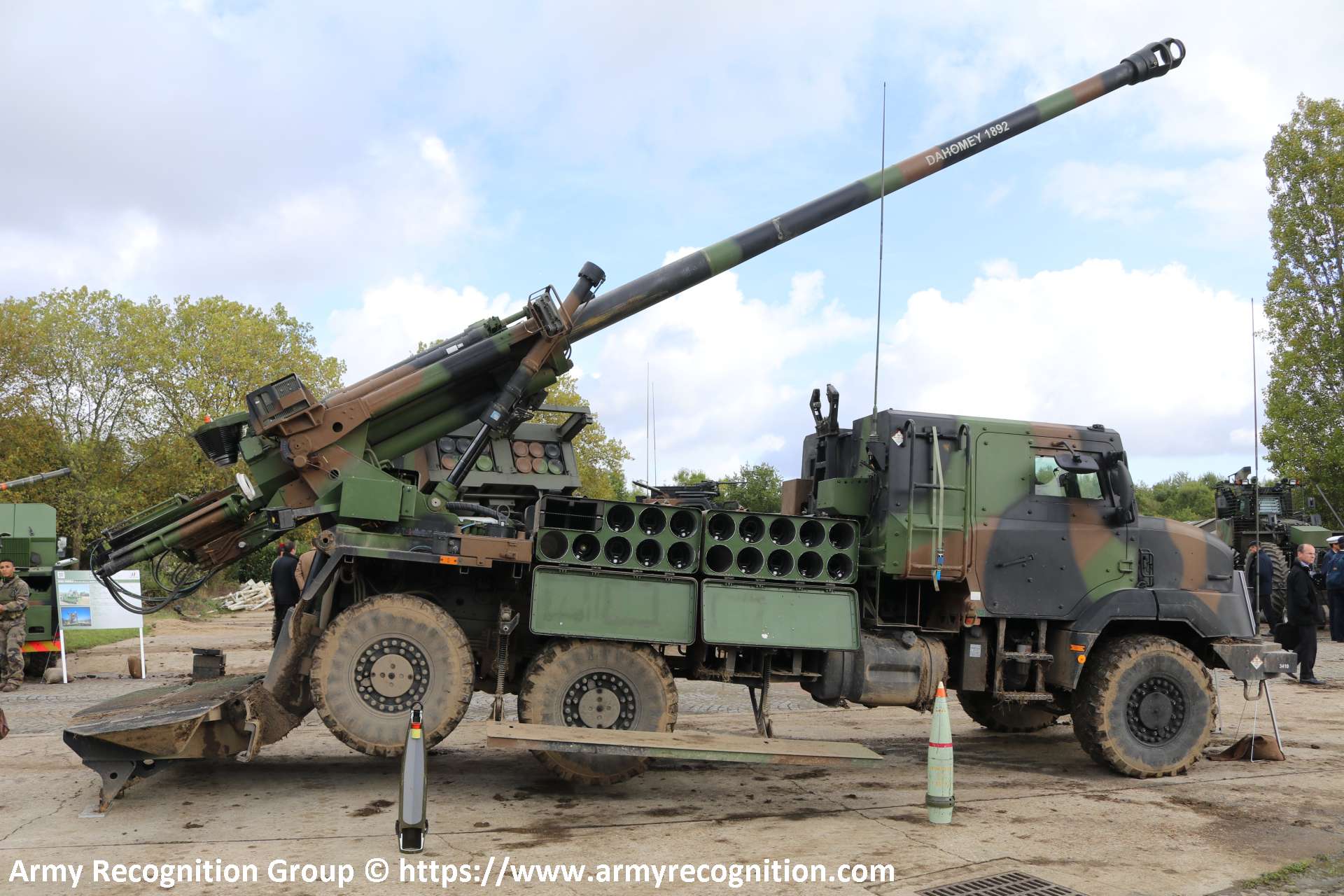
The CAESAR 155mm wheeled self-propelled howitzer, renowned for its mobility and precision, offers a firing range exceeding 40 km and advanced fire control systems. Its success in modern conflicts, including in Ukraine, highlights its effectiveness in rapid deployment and long-range artillery support. (Picture source: Army Recognition Group)
The acquisition of the CAESAR 155mm wheeled self-propelled howitzer, produced by French defense manufacturer KNDS (previously) Nexter Systems, is a key step in the ongoing modernization of the Portuguese Army's field artillery capabilities. This cutting-edge howitzer will provide a significant boost to the Army's fire support, enhancing both range and precision in artillery operations. The CAESAR artillerysystem is renowned for its mobility, versatility, and accuracy, making it a highly effective asset in both conventional and asymmetric warfare scenarios.
The Portuguese Army currently operates the M114A1 towed howitzer, a 155mm artillery system that has been in service for several decades. While reliable, the M114A1 lacks the advanced mobility and modern targeting systems offered by newer artillery platforms. The acquisition of the Caesar Howitzer will mark a significant upgrade from this older system, providing Portugal with enhanced operational flexibility, faster deployment capabilities, and improved accuracy in fire support missions.
The CAESAR howitzer is a highly regarded system that has gained international recognition for its performance in modern conflicts. Mounted on a wheeled chassis, the Caesar offers exceptional mobility compared to tracked or towed howitzers, enabling rapid deployment across various terrains. Its 155mm gun can fire both standard and precision-guided munitions, with a range exceeding 40 kilometers. The system is also equipped with an advanced fire control system that allows for quick and accurate targeting, making it a formidable weapon on the battlefield.
One of the most notable recent successes of the CAESAR howitzer has been its deployment in Ukraine. Since the start of the conflict, Ukraine has relied on Western-supplied artillery systems, and the CAESAR has been a standout performer. Its ability to deliver precision strikes at long range, combined with its mobility, has allowed Ukrainian forces to conduct highly effective counter-battery fire and disrupt Russian artillery operations. The CAESAR’s quick deployment and ability to "shoot and scoot" – firing and moving to a new position before enemy forces can respond – have proven invaluable in the dynamic and fast-moving battles of the Ukrainian conflict. This success has further elevated the Caesar's reputation as one of the premier artillery systems in the world today.
The signing of this agreement also underscores the deepening defense cooperation between Portugal and France. As the CAESAR howitzer is a flagship artillery system of the French military, its adoption by the Portuguese Army represents not only a step towards modernizing Portugal's military capabilities but also a reinforcement of the long-standing defense ties between the two countries. The presence of key French officials, including the French Ambassador and General Diaz da Tuesta, further highlighted the importance of this collaboration.
Portuguese Minister Nuno Melo emphasized the strategic significance of the acquisition during his remarks, noting that this artillery system will substantially improve the Portuguese Army’s operational readiness and ability to engage in joint NATO and European defense operations. He also highlighted how this acquisition fits into the broader context of Portugal’s defense modernization strategy, which aims to ensure that the armed forces are equipped with state-of-the-art technology.
The CAESAR howitzer will enhance the Portuguese Army’s field artillery capabilities. Equipped with advanced fire control systems, the CAESAR can deliver precise, long-range fire support while maintaining a high degree of mobility due to its wheeled chassis. This mobility is particularly important for rapid deployment and the ability to operate in challenging terrains, aligning with Portugal's current operational needs, which include contributions to NATO and other international peacekeeping efforts.
Incorporating the CAESAR howitzer into the Portuguese Army’s arsenal is part of a broader effort to modernize the country’s defense forces. This initiative reflects Portugal's commitment to meeting modern security challenges, ensuring its armed forces are capable of addressing both conventional threats and emerging, asymmetric challenges. The CAESAR’s integration into the Portuguese Army is expected to significantly enhance the military's capability in providing fire support, especially in joint and multinational operations.
The acquisition of the CAESAR Howitzer is a landmark event for the Portuguese artillery forces, marking a new chapter in the modernization of its firepower capabilities. The CAESAR’s advanced features, including its range of over 40 kilometers and its ability to fire six rounds per minute, will greatly increase the effectiveness of Portugal’s artillery units on the battlefield.
The Portuguese Army's continued investment in upgrading its military systems ensures that it remains a capable and reliable partner within NATO, the European Union, and international defense coalitions. With the signing of this framework arrangement, Portugal is signaling its intent to not only maintain but enhance its military readiness and operational effectiveness.
This ceremony at EXPO EXÉRCITO was not only a celebration of Portugal’s Army Day but also a public demonstration of the country’s commitment to investing in defense modernization. By acquiring the CAESAR howitzer, Portugal is ensuring that its military remains at the forefront of modern warfare technology, ready to face the challenges of the 21st century.

- Details
- Written by: Administrator
- Category: 2024
- Hits: 10114
German Defense Company Rheinmetall has confirmed the first batch of KF41 Lynx tracked armored Infantry Fighting Vehicles (IFVs) will be delivered to Ukraine by the end of 2024, with 10 vehicles set to arrive in this initial delivery. Rheinmetall CEO Armin Papperger reiterated this in an interview with Welt am Sonntag on October 26, 2024. The delivery marks a key milestone in the cooperation between Rheinmetall and Ukraine, following a Memorandum of Understanding (MoU) signed earlier this year to strengthen Ukraine’s defense capabilities.
Follow Army Recognition on Google News at this link
The Australian Army rigorously tested the KF41 Lynx Infantry Fighting Vehicle as part of the LAND 400 Phase 3 program, aiming to replace the aging M113AS4 Armored Personnel Carriers (APCs). (Picture source: Australia MoD)
In June 2024, it was announced that German Defense Company Rheinmetall and the Ukrainian government had agreed to start producing Lynx armored vehicles in Ukraine. This decision was confirmed on the sidelines of the Ukraine Recovery Conference held in Berlin, marking a significant development in the defense collaboration between the two nations.
At the same time, Ukrainian Strategic Industries Minister Oleksandr Kamyshin announced that the first Lynx vehicle manufactured in Ukraine will be completed by the end of the year. This announcement came shortly after Rheinmetall inaugurated its first facility in Ukraine. The facility initially focuses on repairing military vehicles but will eventually transition to full-scale production of armored systems. The facility will operate in partnership with the state-owned defense company Ukroboronprom, advancing Kyiv's efforts to localize arms manufacturing.
The Lynx KF41 is a state-of-the-art infantry fighting vehicle (IFV) based on tracked armored chassis developed by German Defense Company Rheinmetall, designed to meet the challenges of modern warfare with a focus on modularity, flexibility, and advanced protection. First unveiled in 2018 at the Eurosatory Defense exhibition in Paris, the KF41 is a larger, more heavily armed version of its predecessor, the KF31, and it represents Rheinmetall’s vision for the future of armored vehicles.
The KF41 stands out due to its modular design, which allows it to be adapted for various combat roles. This means that it can be configured not only as an infantry fighting vehicle but also for roles such as command and control, reconnaissance, and even medical evacuation. This versatility makes the KF41 a highly flexible platform suitable for a range of missions. Its firepower is a key asset, with the vehicle typically equipped with a 30mm or 35mm automatic cannon, housed in the advanced Lance 2.0 turret. This armament can be paired with anti-tank guided missiles (ATGMs), providing significant firepower against armored threats.
One of the Lynx KF41's main strengths is its advanced protection capabilities. The vehicle incorporates modular armor, allowing for a tailored defense against a range of threats, including rocket-propelled grenades (RPGs) and anti-tank missiles. Additionally, the KF41 can be outfitted with active protection systems (APS) and NBC (nuclear, biological, and chemical) protection, ensuring the safety of its crew in various combat environments.
Mobility is another crucial feature of the KF41. Powered by a 1,140-horsepower Liebherr diesel engine, the vehicle can reach speeds of up to 70 km/h (43 mph) and has an operational range of 500 kilometers (311 miles). This enables it to perform in diverse terrains and sustain long missions without refueling.
The vehicle is designed to carry a crew of three (commander, gunner, and driver) and can transport up to eight fully equipped soldiers in its rear compartment, ensuring that it can deploy infantry efficiently and safely into the battlefield.
Since its launch, the KF41 has attracted significant interest from several nations. Hungary became the first customer in 2020, ordering 218 Lynx vehicles to modernize its armed forces. Other countries, like Australia, have also shown interest, with the Lynx being a contender in Australia’s LAND 400 Phase 3 program.
The Lynx KF41's combination of high firepower, protection, and versatility positions it as one of the leading infantry fighting vehicles on the market today. It is designed to operate effectively in both high-intensity conflicts and peacekeeping missions.
Following the war in Ukraine, the Ukrainian army urgently needs modern, versatile combat vehicles to enhance its defense capabilities and counter a range of battlefield threats. The war exposed vulnerabilities in Ukraine’s existing fleet, many of which comprised outdated Soviet-era vehicles. This has driven demand for heavily armored, mobile, and adaptable vehicles capable of withstanding anti-tank missiles, rocket-propelled grenades, and artillery strikes. Ukrainian forces require infantry fighting vehicles (IFVs) to deliver firepower and troop transport while ensuring maximum protection in a high-intensity conflict environment. Additionally, there is a growing need for vehicles capable of modularity, offering flexibility for various roles such as reconnaissance, medical evacuation, and command operations.
Given the protracted nature of the conflict, Ukraine is also prioritizing the localization of arms production to sustain its defense efforts. The opening of repair and production facilities for vehicles like the KF41 Lynx reflects Kyiv’s strategy to create a more self-reliant defense industry. This approach not only secures a continuous supply of modern vehicles but also strengthens the country's ability to maintain and repair its fleet domestically. Overall, Ukraine's focus is on acquiring technologically advanced, adaptable combat vehicles that can endure the demands of a modern battlefield while reducing its reliance on foreign supplies.

- Details
- Written by: Jérôme Brahy
- Category: 2024
- Hits: 6651
The US company AeroVironment developed the Switchblade 300 Block 20 as an upgraded version of the original Switchblade 300 loitering munition, with improved endurance, precision, resistance to electronic jamming and targeting capabilities. It remains portable, can be launched from a tube, and is designed for precision strikes on soft targets. The Block 20 includes advancements in targeting and situational awareness for use in modern combat operations.
Follow Army Recognition on Google News at this link
AeroVironment has developed the Block 20 version of the Switchblade 300 loitering munition to improve resistance to electronic jamming and enhance operator training. (Picture source: Army Recognition)
The AeroVironment Switchblade 300 was introduced in 2011 as a portable loitering munition designed to provide U.S. troops with responsive close air support, particularly during operations in Afghanistan. Its small, tube-launched design allows it to be guided toward targets with reduced risk of collateral damage, and it can be remotely aborted if necessary. The Switchblade 300 was widely deployed in Afghanistan and was supplied to Ukraine in 2022 for use against soft targets such as personnel carriers and trenches. However, on the Ukrainian battlefield, its effectiveness has been reduced due to electronic warfare challenges.
To address these challenges, AeroVironment developed the Switchblade 300 Block 20, a version with enhanced resistance to electronic jamming and improved operator training. Despite these upgrades, the U.S. Army decided in 2023 not to purchase additional units of the Switchblade 300, citing cost inefficiencies compared to commercially available drones. At the same time, the larger Switchblade 600, capable of targeting armored vehicles, has been ordered as part of the Low Altitude Stalking and Strike Ordnance (LASSO) program, reflecting a shift in focus toward more advanced loitering munitions for company-level operations.
The Switchblade 300 Block 20 extends the operational capabilities of its predecessor. It offers increased flight time, up to 20 minutes, and incorporates a panning electro-optical/infrared (EO/IR) camera suite for continuous target identification. The Block 20 can be launched from land, sea, and mobile platforms and can be deployed in under two minutes. The Block 20 version also includes an upgraded Digital Data Link (DDL), enabling secure, encrypted communications that reduce the risk of signal interception, allow for simultaneous operation of multiple Switchblade systems, and support extended-range operations through integration with other UAVs.
Additionally, the Switchblade 300 Block 20 introduces a Multi-Pack Launcher (MPL), which can remotely launch multiple units in configurations from 2 to 20 rounds, with reloading times of under 30 seconds per round. This capability supports base defense and sensor-to-shooter operations by enabling the transmission of mission plans from other AeroVironment UAVs. The Block 20's Fire Control System (FCS), which uses a touch screen interface, simplifies mission planning and execution. These upgrades allow the Block 20 to provide real-time video and GPS coordinates, delivering intelligence and strike capabilities across multiple domains.
Despite the improvements, the system retains a lightweight, portable design. The munition weighs 1.68 kg, while the full All-Up-Round (AUR) system weighs 3.27 kg, making it easily transportable. The system remains focused on engaging anti-personnel targets while minimizing the risk of collateral damage, as it supports user-selectable attack angles, a recommit capability, and continuous positive identification (PID) to allow operators to adapt their targeting decisions to the battlefield's evolving conditions.
With a range of up to 30 kilometers when equipped with an extended range antenna, the Switchblade 300 Block 20 operates at loitering speeds of 101 km/h and can reach speeds of 161 km/h in sprint mode. This loitering munition operates at altitudes of up to 152.4 meters (500 feet) above ground level (AGL) and in environments at elevations up to 4,572 meters (15,000 feet) above sea level (ASL). These capabilities make it suitable for deployment in various terrains and operational conditions, as the Block 20 continues to offer expanded capabilities for precision strikes and real-time intelligence, aligning with evolving operational requirements.

- Details
- Written by: Jérôme Brahy
- Category: 2024
- Hits: 6507
On October 23, 2024, the British Army announced that its Boxer wheeled mechanized infantry armored vehicle successfully completed a seawater fording trial at Instow Beach in North Devon. The 38.5-tonne vehicle demonstrated stability and control while moving through water, confirming its capability to ford unprepared. This trial was overseen by the Amphibious Trials and Development Wing (ATDW), as the Boxer is intended to become the British Army's primary mechanised infantry vehicle (MIV).
Follow Army Recognition on Google News at this link
The Boxer armored vehicle successfully completes its sea water fording trial at Instow Beach, North Devon, showcasing its robust amphibious capabilities and adaptability to challenging coastal environments. (Picture source: British MoD)
The British Army secured a £2.8 billion contract in 2019 to acquire 523 Boxer 8x8 armored vehicles, with production shared between Germany and the UK. This contract forms part of the Mechanised Infantry Vehicle (MIV) program, designed to enhance the capabilities of the Army’s Strike Brigades, which are meant to deploy rapidly across varied terrains. The Boxer vehicles will be delivered in multiple variants, including troop carriers, command vehicles, ambulances, and specialist vehicles, highlighting their modular and adaptable design. The UK government exercised an option in 2022 to order an additional 100 vehicles, bringing the total to 623 units.
The British Army’s Boxer program includes several sub-configurations within the broader Mechanised Infantry Vehicle (MIV) role. Current orders include 85 infantry carrier vehicles, 60 engineer section vehicles, 62 reconnaissance and fire support vehicles, 28 mortar-carrying variants, 50 equipment support/repair vehicles, 123 command-and-control variants, 19 observation post vehicles, 24 beyond-line-of-sight observation platforms, 11 electronic warfare and signals intelligence platforms, and 61 ambulances. Additionally, the Boxer RCH 155 variant is expected to be part of the Army’s mobile fire platform programme, with 96 units planned.
The Boxer, expected to operate within Brigade Combat Teams, alongside other platforms such as the Ajax infantry fighting vehicle (IFV) and the Challenger 3 main battle tank (MBT), is not a direct replacement for the Warrior infantry fighting vehicle but is anticipated to assume a significant role as new systems are introduced over time. Minister for the Armed Forces Luke Pollard confirmed that the Warrior will remain in service until new capabilities are introduced throughout the decade.
The British Army has conducted extensive Boxer 8x8 armored vehicle trials since mid-2023. The trials include a variety of tests to assess the vehicle's performance in real-world operational conditions. The first phase involved industry trials in the summer of 2023, followed by formal customer trials conducted by Defence Equipment and Support (DE&S) in the autumn. These trials aimed to evaluate the vehicle’s mobility, logistics, and adaptability to different terrains, as it will be used as part of the Army’s Armoured Brigade Combat Teams.
Key tests have included mobility assessments across rough terrain and long-distance maneuvers to ensure the vehicle can deploy rapidly. The Boxer’s variants—such as the infantry carrier, command vehicle, and field ambulance—are also being tested for role-specific tasks. Another crucial test was the live-fire trial, which assessed the Boxer’s capability to integrate various weapon systems, such as heavy machine guns and anti-tank missiles.
Fording tests for the Boxer 8x8 armored vehicle are crucial for several reasons. First, they validate the vehicle’s capability to operate in diverse combat environments, including water obstacles such as rivers, marshes, or flooded terrains, which are common in military operations. Being able to ford water without external preparation enhances the vehicle’s mobility and flexibility, allowing it to maintain momentum and avoid becoming bottlenecked by terrain that might impede its progress.
Additionally, fording tests ensure that the Boxer can protect its crew and onboard systems from water ingress, maintaining the functionality of critical systems like the engine, electrical components, and weapon systems. This is particularly important in amphibious operations or missions in wet, marshy environments where such capabilities could differentiate between success and failure. It also ensures that the vehicle remains combat-ready, even in adverse conditions.
Finally, fording capabilities improve the logistical reach of the vehicle, enabling armies to cross water obstacles without requiring the construction of bridges or external support, which reduces vulnerability and speeds up operations in contested areas.
The Boxer 8x8 armored vehicle is designed with exceptional mobility, including impressive water-fording capabilities. It can ford water obstacles up to 1.5 meters deep without special preparation, allowing it to traverse rivers and flooded areas effectively during combat or reconnaissance missions. The vehicle's modular design, high ground clearance, and robust drive system contribute to its ability to maintain traction and stability even in challenging, waterlogged environments.
The fording tests conducted by the British Army with the Boxer 8x8 armored vehicle are critical for validating its operational versatility and resilience in diverse environments. These tests ensure that the Boxer can cross water obstacles effectively, maintaining mobility and combat readiness in wet or flooded conditions. The ability to ford without extensive preparation enhances the tactical flexibility of the British Army, allowing rapid deployment in challenging terrains and reducing dependence on external logistical support. Overall, these tests confirm the Boxer’s robustness and capability to perform under a wide range of environmental conditions.
Read more: British Army successfully tests water-fording capabilities of Boxer 8x8 armoured vehicle

- Details
- Written by: Tkuhn
- Category: 2024
- Hits: 3306
According to information published by the Times of India on October 24, 2024, the U.S. military base stationed in the Koniko gas field, located in Syria's Deir ez-Zor province, came under missile attack.
Follow Army Recognition on Google News at this link
Artist rendering of a US military base in Syria's Koniko gas field. (Picture source: Generated by AI)
In response to the missile attack, American forces deployed artillery strikes targeting villages along the eastern bank of the Euphrates River. These villages—Hatlah Tahtani, Marrat, Khsham, and Hawijah—fall under the jurisdiction of the Syrian government. The retaliatory strikes reportedly aimed to secure the area and dissuade further assaults on the U.S.-controlled facility.
The Koniko gas field is a strategically significant site for U.S. forces operating in Syria. It has been a focal point of tension, given its proximity to areas held by the Syrian government and the region’s value in terms of energy resources. Control of such sites has been a point of contention in Syria, where U.S. and Syrian government forces, as well as other factions, maintain a presence amid the country’s ongoing conflict.
The current military presence in Iraq and Syria reflects a complex, evolving strategy involving the United States, Iraq, Iran-backed militias, and other regional forces, primarily focused on countering the remnants of ISIS and addressing broader regional security concerns.
In Iraq and Syria, the U.S. military and coalition allies rely on an array of armored and tactical vehicles, artillery systems, and defensive structures to support counter-terrorism and regional security efforts. Vehicles like MRAPs and M-ATVs form the backbone of protected ground transport, with their reinforced hulls designed to withstand roadside bombs and attacks from militant groups, a frequent risk in the operational landscape. M-ATVs, in particular, offer enhanced off-road capabilities, allowing forces to traverse Syria's rugged terrain where ISIS remnants sometimes establish hideouts.
Supporting logistics and tactical coordination, larger bases like Al Asad and Erbil house surveillance and defense infrastructure critical for both operations and base security. These include Patriot missile batteries and C-RAM systems, which intercept missile or rocket attacks often launched by Iran-backed militias. These defensive assets are essential, especially following recent escalations in militia activities in the region.
Artillery such as the M777 howitzer provides long-range fire support, crucial in both pre-emptive and reactive operations against ISIS positions. The M777’s range enables strikes from secure locations, effectively disrupting hostile forces without exposing ground personnel to direct combat. Additionally, the U.S. utilizes drones, including MQ-9 Reapers, for surveillance and strike operations, which are integral to both intelligence gathering and precision targeting, especially in Syria where ISIS cells may remain embedded.
Helicopters, like Black Hawks, offer rapid mobility for personnel and critical medical evacuation capabilities across Iraq and Syria. They also provide air cover during ground operations and facilitate quick logistical support for remote outposts, thus maintaining operational continuity and safeguarding personnel. This coordinated use of vehicles, heavy weaponry, and defensive measures forms a robust infrastructure aimed at countering ISIS and maintaining regional stability amidst complex security dynamics.
Read more: US Military Base in Syria’s Koniko Gas Field reportedly Hit by Missile Attack
- Raytheon Secures Contract to Continue Production of TOW Anti-Tank Missiles for US Army
- Exclusive: French Artillery Units Adopt New Drone-Based Tactics Inspired by Russia-Ukraine War
- Three NATO Countries Commit to Lithuania in Air Defense Rotation Agreement
- Rheinmetall from Germany Delivers 20 Additional Marder 1A3 IFVs Infantry Fighting Vehicles to Ukraine