

- Details
- Written by: Jérôme Brahy
- Category: 2024
- Hits: 14478










On December 18, 2024, the U.S. Department of Defense (DoD) released its annual report on China's military and security developments, as mandated by Congress. The report provides a detailed overview of China's military advancements, with a particular focus on the People's Liberation Army Rocket Force (PLARF), which was established in 2015 to manage the country's land-based missile arsenal. According to the report, China currently possesses a total of 3,100 ballistic missiles under the PLARF's control.
Follow Army Recognition on Google News at this link
The People's Liberation Army Rocket Force (PLARF)'s inventory also includes 400 intercontinental ballistic missiles (ICBMs), such as the DF-5, DF-31, and DF-41. (Picture source: Chinese social media)
The Chinese People's Liberation Army Rocket Force (PLARF) operates with separate command structures for nuclear and conventional missile operations. Nuclear missions are directly managed by the Central Military Commission (CMC), while conventional operations are likely overseen by Theater Commanders. The force is organized into seven combat missile bases, each overseeing six to eight brigades, and three support bases responsible for warhead handling, infrastructure development, training, and missile testing. In total, the PLARF comprises at least 40 brigades.
The modernization of China's missile arsenal is a significant aspect highlighted in the report. The PLARF's inventory includes 900 short-range ballistic missiles (SRBMs) designed for tactical strikes over relatively short distances. This category includes the DF-15, which has a range of up to 900 kilometers, and its variants such as the DF-15C, intended for targeting hardened facilities, and the DF-11, with a range of approximately 600 kilometers. These SRBMs are typically road-mobile, allowing for rapid deployment and flexibility in targeting regional threats like airfields, bunkers, and command centers.
In addition to SRBMs, the PLARF operates 1,300 medium-range ballistic missiles (MRBMs), which extend China's strike capabilities. Notable among these are the DF-21D, capable of targeting moving ships at long range, and the DF-17, used to launch the DF-ZF hypersonic glide vehicle. The DF-ZF is equipped with a conventional warhead, although U.S. intelligence assessments suggest it may also be nuclear-capable. These MRBMs are intended to enhance precision strike capabilities and maintain deterrence by targeting distant military and strategic sites. The DF-ZF offers increased maneuverability and is designed to evade missile defense systems.
The PLARF also maintains an inventory of 500 intermediate-range ballistic missiles (IRBMs) with ranges extending up to 4,000 kilometers. This allows China to strike distant targets, including U.S. military assets in the Indo-Pacific region, and provides more strategic targeting options compared to MRBMs. Prominent systems in this category include the DF-26, which can carry either nuclear or conventional warheads and is replacing older DF-21 models as the primary dual-role missile for land-attack and anti-ship missions. The DF-27 missile, with a range of 5,000 to 8,000 kilometers and equipped with a hypersonic glide vehicle payload, is designed to strike high-value targets such as Guam. Additionally, the PLARF is exploring the development of conventionally armed intercontinental-range missiles capable of targeting U.S. territories like Hawaii and Alaska.
Furthermore, the PLARF possesses 400 ground-launched cruise missiles (GLCMs), including the CJ-10 and CJ-100, which have operational ranges between 1,500 and 2,000 kilometers. On November 17, 2024, updated data was provided on China's Dongfeng-100 (DF-100) supersonic cruise missile, also known as the Changjian-100 (CJ-100). This land-based system reportedly has a range between 3,000 and 4,000 kilometers and a sustained flight speed of Mach 4. Designed for precision strikes, the CJ-100 is capable of targeting various types of installations and structures while flying at low altitudes to evade traditional missile defense systems. These missiles provide China with precision strike capabilities for targeting critical infrastructure and military locations at long ranges.

According to the report, China currently possesses a total of 3,100 ballistic missiles under the PLARF's control. (Picture source: US DoD)
The People's Liberation Army Rocket Force (PLARF)'s inventory also includes 400 intercontinental ballistic missiles (ICBMs), such as the DF-5 (CSS-4), DF-31 (CSS-10), and DF-41 (CSS-20). These missiles are capable of delivering nuclear warheads over distances exceeding 11,000 kilometers. The DF-41, a road-mobile ICBM with a range surpassing 11,000 kilometers, can target most locations within the continental United States and is equipped with multiple independently targetable reentry vehicles (MIRVs). The DF-41 is China's newest addition to its nuclear arsenal, with an estimated range between 12,000 and 15,000 kilometers, potentially making it the world's longest-range missile. With approximately 550 launchers, these Chinese ICBMs are critical for maintaining strategic deterrence and feature various configurations, including silo-based, road-mobile, and potentially rail-mobile launchers.
In comparison, as of early 2024, the United States operates 400 deployed LGM-30G Minuteman III ICBMs in ground silos and 192 Trident II D5 submarine-launched ballistic missiles (SLBMs) aboard Ohio-class submarines. Russia maintains a total of 521 ICBMs, encompassing both land-based and sea-based systems. The United Kingdom possesses four Vanguard-class submarines, each equipped with 16 Trident II SLBMs, totaling 64 missiles. France deploys four Triomphant-class submarines, each armed with 16 M51 SLBMs, also totaling 64 missiles. India has operational Agni-V ICBMs and is developing K-4 submarine-launched ballistic missiles.
The report notes that the PLARF has completed the construction of three solid-propellant ICBM silo fields containing at least 300 silos, with some already loaded with missiles. The force is developing new ICBMs equipped with MIRVs, which will require additional nuclear warheads. Satellite imagery analysis indicates the assembly of at least 72 DF-26 transporter-erector-launchers (TELs) between 2023 and 2024, reflecting growth in regional strike capabilities.
Operational activities of the PLARF demonstrate improved readiness, with the force conducting live-fire drills and joint exercises. Notably, the "Joint Sword" operation in 2023 simulated coordinated strikes involving land-based aircraft, the PLAN’s CV-17 Shandong carrier group, and the PLARF in a scenario simulating Taiwan encirclement. Other exercises tested anti-submarine warfare and vessel-aircraft integration, supporting counter-intervention objectives. The PLARF's missile forces have also engaged in mock strikes targeting airfields, bunkers, aircraft, and ships.
In September 2024, the PLARF conducted an intercontinental ballistic missile test, launching a missile from Hainan Island into the South Pacific. This marked China’s first ICBM test in the Pacific Ocean since 1980, with the missile covering approximately 12,000 kilometers. The test underscored China’s capability to conduct long-range strikes. Following this event, President Xi Jinping inspected a PLARF brigade, highlighting the need to enhance the force’s deterrence and combat readiness.
The report concludes that the PLARF’s modernization aligns with China’s stated objectives of improving nuclear deterrence, strengthening intermediate and long-range strike forces, and building a modernized missile force. These efforts facilitate long-range precision strike capabilities and expand the scope of China’s strategic and conventional deterrence within and beyond the Indo-Pacific region.

The report concludes that the PLARF’s modernization aligns with China’s stated objectives of improving nuclear deterrence, strengthening intermediate and long-range strike forces, and building a modernized missile force. (Picture source: US DoD)
- Details
- Written by: Vandenbosch
- Category: 2024
- Hits: 6810
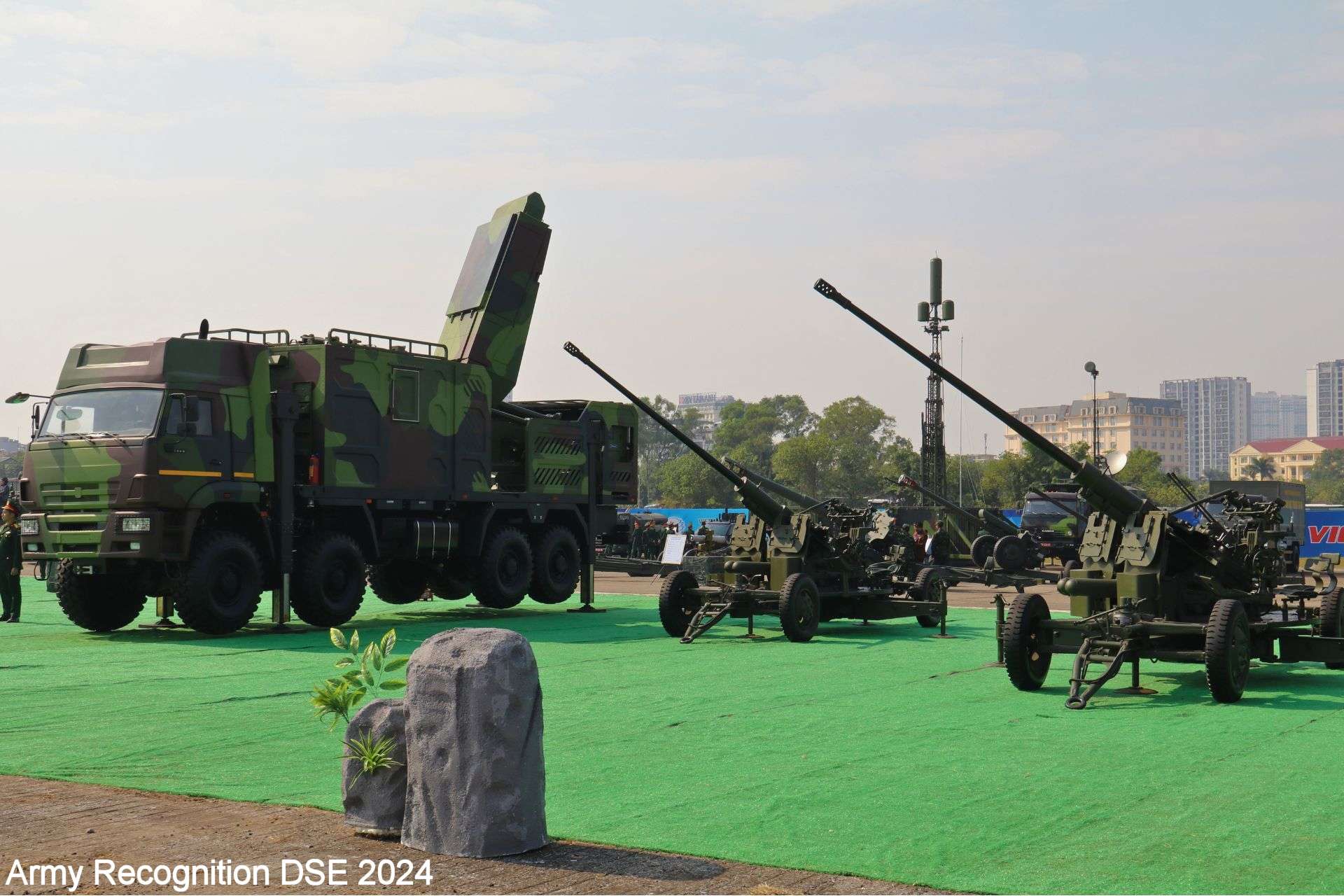
During the DSE 2024 defense exhibition in Vietnam, the AZP anti-aircraft defense system was introduced as a new protection system for strategic infrastructures. Developed by a Vietnamese company, the AZP aims to enhance the defense of airports, docks, factories, and military bases against a wide range of aerial threats, including fighter jets, helicopters, bombers, paratroopers, and drones. The system integrates advanced technologies, specially designed to meet the current needs for defense against aerial attacks.
The AZP anti-aircraft defense system is being presented for the first time at the DSE 2024 defense exhibition in Vietnam. (Picture source: Army Recognition)
DSE 2024, taking place from December 19 to 22 at Gia Lâm Airport in Hanoi, is the second international defense exhibition in Vietnam. This event gathers nearly 200 exhibitors from 27 countries, including renowned defense companies worldwide. The main objective of the event is to showcase advancements in the production and deployment of defense equipment, while fostering international cooperation in the defense sector. Participants include companies from countries such as the United States, Russia, China, Iran, and Israel, highlighting the diverse strategic partnerships of Vietnam.
The AZP anti-aircraft defense system is being presented for the first time at the DSE 2024 defense exhibition in Vietnam. This marks its debut on the international stage, showcasing its advanced capabilities and design. Developed by a Vietnamese company, the AZP is introduced as a new solution for enhancing the protection of critical infrastructure against a variety of aerial threats, including fighter jets, helicopters, and drones. Its unveiling at DSE 2024 is a significant milestone for both the system and the country's defense sector, as it demonstrates Vietnam's growing technological capabilities in modern air defense.
The AZP system stands out due to its combination of radar, electro-optical systems, and its battle management system (BMS), which ensures optimal coordination between different defense units. This technological integration enables the system to quickly detect and identify aerial threats, providing an immediate and precise response. The AZP system is designed to function effectively in situations where rapid intervention is critical for national security.
In terms of technical specifications, the AZP primarily operates within a short-range reconnaissance zone, making it ideal for countering immediate threats. It has an impressive target tracking accuracy of 0.1°, ensuring precise tracking even in complex environments. Additionally, with a response time of just 4 seconds to prepare for target interception, the AZP guarantees optimal reactivity against imminent threats.
The AZP System also offers several firing modes, providing increased flexibility for defense operations. It can combine the use of radar and electro-optical sensors to adjust the attack mode depending on the situation. This ability to adjust firing parameters enhances the accuracy of the strike, making the system even more effective in quickly neutralizing a threat. The AZP can also operate in either parallel or converged mode, depending on the type of threat and the tactical situation.
The AZP S-60 is a Soviet-designed 57mm autocannon that has been in service since 1950 and continues to be used in various conflicts worldwide and this new system. Originally designed by Vasiliy Grabin and produced by TsAKB, this autocannon has seen widespread use in numerous military engagements, including the Vietnam War and more recently in the Russo-Ukrainian War. Its design features a recoil-operated mechanism with a four-wheeled carriage equipped with outriggers for stability. The weapon can fire at a rate of 105 to 120 rounds per minute in cyclic mode, and it has an effective firing range of up to 6,000 meters when radar-guided or 4,000 meters with optical guidance.
The S-60 was designed to offer both high mobility and strong firepower, and it has been widely used as part of anti-aircraft artillery systems. Its versatility is reflected in its operational history, where it has been employed in diverse combat scenarios, ranging from conventional wars to civil conflicts. The weapon’s muzzle velocity of 1,000 meters per second allows it to effectively engage aerial targets at considerable distances, making it a valuable asset in anti-aircraft defense systems. The weapon's continued use, including in modern conflicts, highlights its enduring reliability and effectiveness in combat situations. In the context of the new Vietnamese anti-aircraft defense system, the AZP S-60 serves as a key component, enhancing the overall firepower and operational range of the system.
This anti-aircraft defense system strengthens the protection of sensitive infrastructures against a variety of threats. The AZP highlights the country's progress in defense and underscores its commitment to enhancing its capabilities in the face of contemporary air security challenges.
Read more: Vietnam Combines Old Soviet S-60 Guns With Modern Radar to Create New Air Defence System

- Details
- Written by: Halna du Fretay
- Category: 2024
- Hits: 8842
During the Vietnam Defence Expo 2024 in Hanoi, the SPYDER air defense system, designed and manufactured by Israel, was showcased as a vital solution for protecting airspace in a region marked by growing tensions. Developed by Rafael Advanced Defense Systems, the SPYDER stands out as a strategic tool for air defense, combining mobility, rapid response capabilities, and precision in countering aerial threats. Already deployed by several Southeast Asian countries, including Vietnam, the SPYDER is noted for its advanced technical features and its critical role in modern defense strategies.
The SPYDER is armed with Python-5 and Derby missiles, which enhance its operational flexibility (Picture source: Army Recognition)
The SPYDER air defense system is equipped with advanced capabilities, making it effective against a wide range of aerial threats. It offers a maximum detection range of 330 kilometers, ensuring extensive coverage for identifying targets at altitudes between 0 and 30 kilometers. With a 360-degree field of observation and a viewing angle of up to 50 degrees, the SPYDER provides constant and comprehensive monitoring of its surrounding airspace. In scan mode, it can track up to 1,200 targets simultaneously, while in dedicated mode, it can engage 200 targets at once, demonstrating its ability to manage high-intensity scenarios. The system’s rapid reaction capability, with a firing interval of only two seconds between launches, ensures active defense against sudden attacks.
The SPYDER is armed with Python-5 and Derby missiles, which enhance its operational flexibility. For short-range engagements, the missiles can reach targets up to 20 kilometers away at altitudes ranging from 20 meters to 9 kilometers. For medium-range engagements, the range extends to 50 kilometers, with a maximum altitude of 16 kilometers. The missiles are designed to intercept targets moving at speeds of up to 800 meters per second. Additionally, the system employs advanced guidance and targeting technologies, allowing it to neutralize multiple threats in real-time. Mounted on RMMV HX all-terrain vehicles, the SPYDER offers significant flexibility for deployment, whether in stationary or mobile defense roles.

Vietnam began acquiring the SPYDER system in 2015, procuring five units comprising 30 launchers mounted on RMMV HX trucks (Picture source: Army Recognition)
Vietnam began acquiring the SPYDER system in 2015, procuring five units comprising 30 launchers mounted on RMMV HX trucks. These acquisitions align with the country’s strategy to modernize its military, safeguard critical infrastructure, and protect its sovereignty. In 2019, the Philippines followed suit, ordering three batteries under the Horizon 2 modernization program for its armed forces. Both nations, facing similar security challenges in the South China Sea, have adopted the SPYDER as a shared solution to address current threats.
The SPYDER’s presence at the Vietnam Defence Expo 2024 highlights its regional significance and the trust placed in Israeli defense technologies. The system, also operated by Singapore, reflects a growing presence in strategic regions where airspace security is a priority. Rafael Advanced Defense Systems, the company behind the SPYDER, has established itself as a key player in the global air defense market, offering systems tailored to national security needs and regional stability.
The SPYDER’s introduction at the Vietnam Defence Expo 2024 emphasizes its central role in modern defense strategies in Southeast Asia. Vietnam and the Philippines demonstrate a regional trend toward bolstering air defense capabilities to counter diverse threats. The growing presence of this system in the region underlines Rafael Advanced Defense Systems’ position as a leading provider of advanced defense solutions worldwide.
Read more: Israeli Technology at Core of Vietnam's Air Defense with SPYDER Air Defense System
- Details
- Written by: Halna du Fretay
- Category: 2024
- Hits: 7945
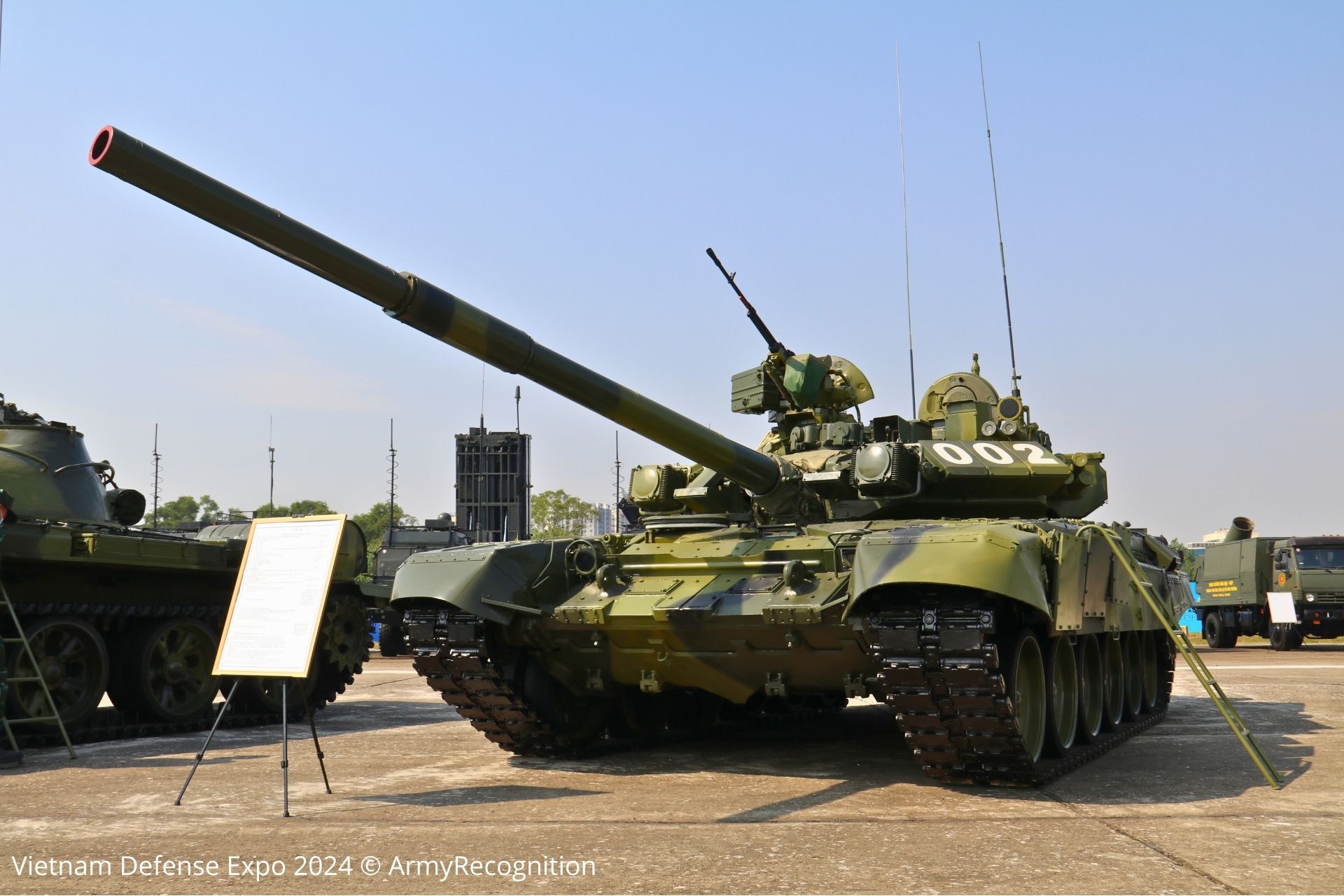
At the Vietnam Defence Expo 2024, a display of the systems and equipment used by the Vietnamese military was presented outdoors, showcasing the country’s growing defense capabilities. Among the featured equipment were two examples of the T-90S and T-90SK tanks. These vehicles, manufactured by the Russian company Uralvagonzavod, not only highlighted Vietnam’s commitment to modernizing its armored forces but also underscored the depth of the defense partnership between Vietnam and Russia.
The T-90SK, featuring a 125 mm smoothbore gun firing both shells and guided missiles, was showcased at the Vietnam Defence Exhibition 2024 (Picture source: Army Recognition)
The T-90SK is designed to operate in challenging environments while providing optimal firepower, mobility, and protection. Powered by a B-92C2 turbocharged diesel engine generating 1,000 horsepower, it can reach a maximum speed of 60 km/h and cover a range of 550 km without refueling. It can tackle slopes of 30 to 40 degrees, cross trenches of 2.8 meters, and overcome vertical obstacles of up to 0.85 meters, making it suitable for complex off-road operations.
The tank is equipped with a 125 mm smoothbore gun capable of firing both shells and anti-tank guided missiles through the barrel. This system, combined with an automatic loader, ensures a firing rate of 7 to 8 rounds per minute. Additionally, the T-90SK is armed with a coaxial 7.62 mm PKT machine gun and a 12.7 mm anti-aircraft machine gun, providing firepower suited for various ranges and combat scenarios. It can use a wide array of ammunition, including high-velocity armor-piercing rounds, high-explosive fragmentation projectiles, and guided missiles capable of engaging targets at up to 5 km. Missiles such as the 9M119 Refleks are designed to neutralize armored vehicles equipped with reactive armor or low-flying aerial targets like helicopters.
The T-90SK's protection relies on a composite multilayer armor system combined with Kontakt-5 explosive reactive armor, offering high resistance against kinetic projectiles and anti-tank missiles. Additionally, the Shtora-1 electronic suppression system incorporates optical and infrared devices to disrupt enemy guidance systems. These features enable the T-90SK to withstand sophisticated threats on the battlefield.
The tank also emphasizes crew performance, featuring advanced navigation systems and air conditioning to ensure optimal operation in harsh climates. Thermal-optic sensors and ballistic computers enable accurate observation and tracking of targets even under adverse weather conditions. The multi-axis stabilization system for the main gun allows the tank to maintain accuracy, even while in motion.
The T-90S, of which the T-90SK is a variant, represents the latest evolution in the Russian T-series tanks. It is widely used by countries such as India, which operates a specific version called the Bhishma. In February 2001, India signed a contract for 310 T-90S tanks. This export variant is also in service in countries like Algeria, Iraq, and Vietnam, which placed an order for T-90S tanks in July 2017. Recent operations in Ukraine have also demonstrated the active deployment of this tank by Russian forces.
The presence of these tanks at the exhibition highlights the strategic importance of the T-90S and T-90SK within Vietnam's armed forces. Beyond their military significance, this presentation underscores the broader strategic relationship between Vietnam and Russia, a partnership strengthened over decades. In addition to T-90 tanks, Russia has supplied Vietnam with various military equipment, including Sukhoi Su-30MK2 fighter jets, Kilo-class submarines, and S-300 air defense systems. These deliveries modernize Vietnam’s armed forces and enhance its regional position. Equipped with advanced Russian technologies, Vietnam has bolstered its ability to safeguard its territorial integrity and maintain stability in the Asia-Pacific region, where strategic competition intensifies. As a key supplier of military equipment to Vietnam, Russia plays a crucial role in shaping the country’s defense posture and ensuring its readiness to face evolving geopolitical challenges.
Read more: T-90SK Main Battle Tank as a Symbol of Russian-Vietnamese Cooperation in Defense
- Details
- Written by: Triffaux
- Category: 2024
- Hits: 5590
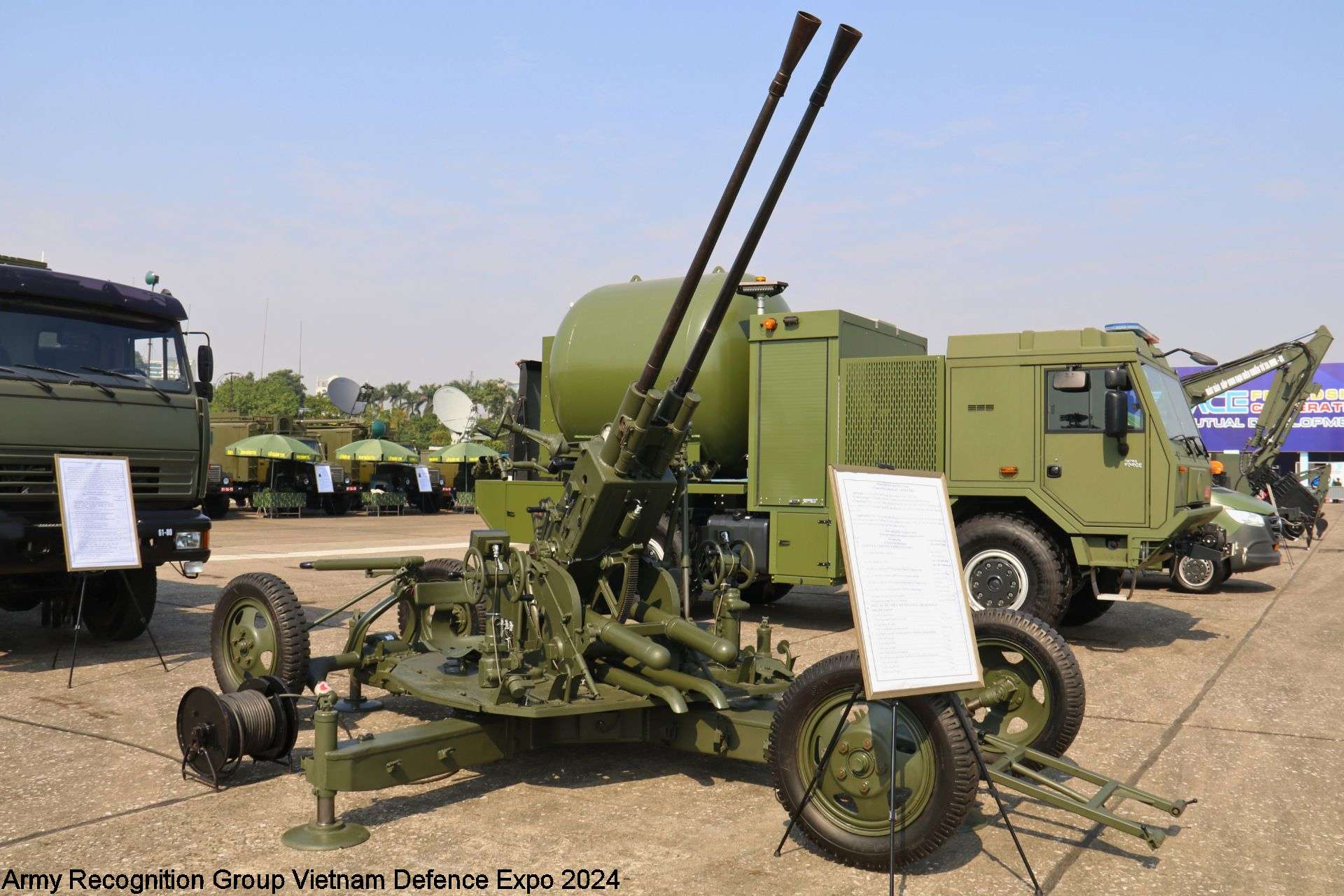
The Chinese 61K (M1939) 37/Type 55 mm anti-aircraft gun, currently showcased at the Vietnam Defence Expo 2024, is a versatile weapon system designed to neutralize both aerial and ground targets. It stands out as one of the anti-aircraft systems presented at the Vietnam Defence Expo 2024. This event, held from December 19 to 22 at Gia Lâm Airport in Hanoi, brings together delegations from 50 countries and nearly 200 defense companies, highlighting the latest technological advancements in the military domain.
Chinese 61K (M1939) 37 mm anti-aircraft gun (Picture source: Army Recognition Group)
Developed and manufactured in China, this gun is specifically designed to destroy aerial targets at altitudes of up to 3,000 meters, while also being capable of engaging ground and maritime targets. With a firing rate of 160 to 180 rounds per minute and an initial projectile velocity of 880 to 900 meters per second, it offers a maximum range of 8,500 meters at a 45-degree angle. Its rapid deployment capability is a notable feature, with the system being operational within just 25 seconds.
Organized by the Vietnamese Ministry of Defense, the Vietnam Defence Expo 2024 aims to strengthen international cooperation in the defense sector and showcase technological innovations in this field. Spanning over 100,000 square meters, the exhibition features product displays, live demonstrations, and technological presentations, attracting thousands of visitors.
The presence of the Chinese 37 mm anti-aircraft gun at the exhibition underscores the strategic cooperation between China and Vietnam. This weapon system has garnered interest from experts and international delegations, offering a unique opportunity to evaluate its potential in various operational contexts.
The 37 mm anti-aircraft gun, known under different variants worldwide, is based on an initial concept developed by the Soviets in the late 1930s. This system, designated as the 61-K (M1939), was designed to meet the need for effective armament against low-flying aircraft. Mass-produced during World War II, it was extensively used by the Red Army to defend strategic targets against Axis air attacks.
The 61-K (M1939) was partially inspired by the Swedish Bofors 40 mm anti-aircraft gun but reduced to a 37 mm caliber to better align with the USSR's industrial capabilities and operational needs. The system employed a semi-automatic configuration, firing high-velocity ammunition and capable of engaging aerial targets at altitudes of up to 3,000 meters.
Equipped with a high firing rate (up to 160 rounds per minute) and mechanical simplicity, this gun proved to be a valuable tool not only against aircraft but also against ground targets, such as light armored vehicles.
The Chinese-manufactured 37 mm anti-aircraft gun has been widely exported to various countries in Africa, Asia, and the Middle East, often used in paramilitary contexts or for the defense of military bases and strategic infrastructure.
In Africa, countries like Cameroon have received units of this system, enhancing their air defense capabilities. Similarly, Tanzania has integrated these guns into its military arsenal, reflecting Sino-Tanzanian military cooperation.
In Asia, Bangladesh acquired these anti-aircraft guns to modernize its armed forces. Sri Lanka has also benefited from this system, particularly to strengthen coastal defense and protect strategic infrastructure.
In the Middle East, countries such as Iran and Iraq have obtained these weapon systems, demonstrating the reach of Chinese military exports in the region.
These exports, spanning several decades, reflect China's strategy to strengthen its diplomatic and military ties with these nations while extending its geopolitical influence through the provision of military equipment tailored to the specific needs of each country.

- Details
- Written by: Administrator
- Category: 2024
- Hits: 3899
The U.S. Army has officially deployed the new M270A2 Multiple Launch Rocket System (MLRS) to its 41st Field Artillery Brigade based in Germany, which is crucial in enhancing its European artillery capabilities. This move comes as tensions with Russia continue to escalate, driven by the ongoing war in Ukraine, where the effectiveness of earlier MLRS versions has been prominently demonstrated.
Follow Army Recognition on Google News at this link
US Army's advanced M270A2 MLRS deployed in Europe, showcasing enhanced mobility, precision, and firepower amid regional tensions. (Picture source: U.S. DoD)
The 41st Field Artillery Brigade, part of V Corps, is the first U.S. Army unit to fully transition to the advanced M270A2 MLRS (Multiple Launch Rocket System), replacing the legacy M270A1 platforms. This modernization underscores the U.S. Army's focus on maintaining technological superiority and operational readiness in Europe, where the regional security landscape remains volatile. The M270A2 introduces significant advancements over its predecessors, reflecting lessons learned from deploying and using earlier M270 systems in the Ukrainian conflict.
Compared to the M270A1, the M270A2 boasts a more powerful 600-horsepower engine, providing greater mobility and allowing for faster repositioning on the battlefield. Its new armored cab offers enhanced protection for crew members against indirect fire and other threats, a critical upgrade given modern artillery engagements' increasingly sophisticated and high-intensity nature. The advanced fire control system enables faster targeting and more efficient mission execution, allowing for a quicker response to emerging threats.
One of the most notable upgrades is the M270A2's compatibility with next-generation munitions, such as the Precision Strike Missile (PrSM). These munitions extend the system's strike range significantly, enabling it to hit targets up to 500 kilometers away with unparalleled accuracy. This capability offers a decisive advantage in long-range engagements, making the M270A2 a key component of the U.S. Army's long-range precision fires strategy.
The M270A2 also addresses operational challenges observed during the use of earlier versions of the MLRS in Ukraine. In that conflict, M270 systems supplied by Western allies demonstrated their effectiveness in precision strikes against high-value targets, disrupting Russian supply lines and command centers. However, their older systems were constrained by slower targeting processes and less robust crew protection. The upgrades incorporated into the M270A2 directly tackle these limitations, ensuring it can operate effectively in contested environments where rapid maneuverability and survivability are essential.
The U.S. Army 41st Field Artillery Brigade utilized the new M270A2 during Exercise Dynamic Front 25 in November 2024, a multinational exercise designed to enhance interoperability with NATO allies. The system’s enhanced capabilities were showcased during live-fire missions, where it demonstrated seamless integration with allied artillery systems. This deployment not only bolsters the U.S. Army's firepower but also reinforces NATO's collective ability to deter and respond to potential adversaries.
The M270A2 is also expected to be adopted by NATO allies, including Germany and the United Kingdom, further enhancing the alliance's artillery interoperability. By introducing this advanced system, the U.S. Army is setting a new standard for artillery modernization, ensuring that its forces—and those of its allies—are equipped to counter emerging threats.
The deployment of the M270A2 MLRS reflects the U.S. Army’s commitment to maintaining a robust forward presence in Europe. With the lessons learned from Ukraine underscoring the importance of precision, mobility, and survivability, the M270A2 provides a decisive edge in the European theater. Its arrival marks a pivotal moment in the ongoing effort to strengthen regional security and deter aggression during a period of heightened tensions.
- Details
- Written by: Vandenbosch
- Category: 2024
- Hits: 9169
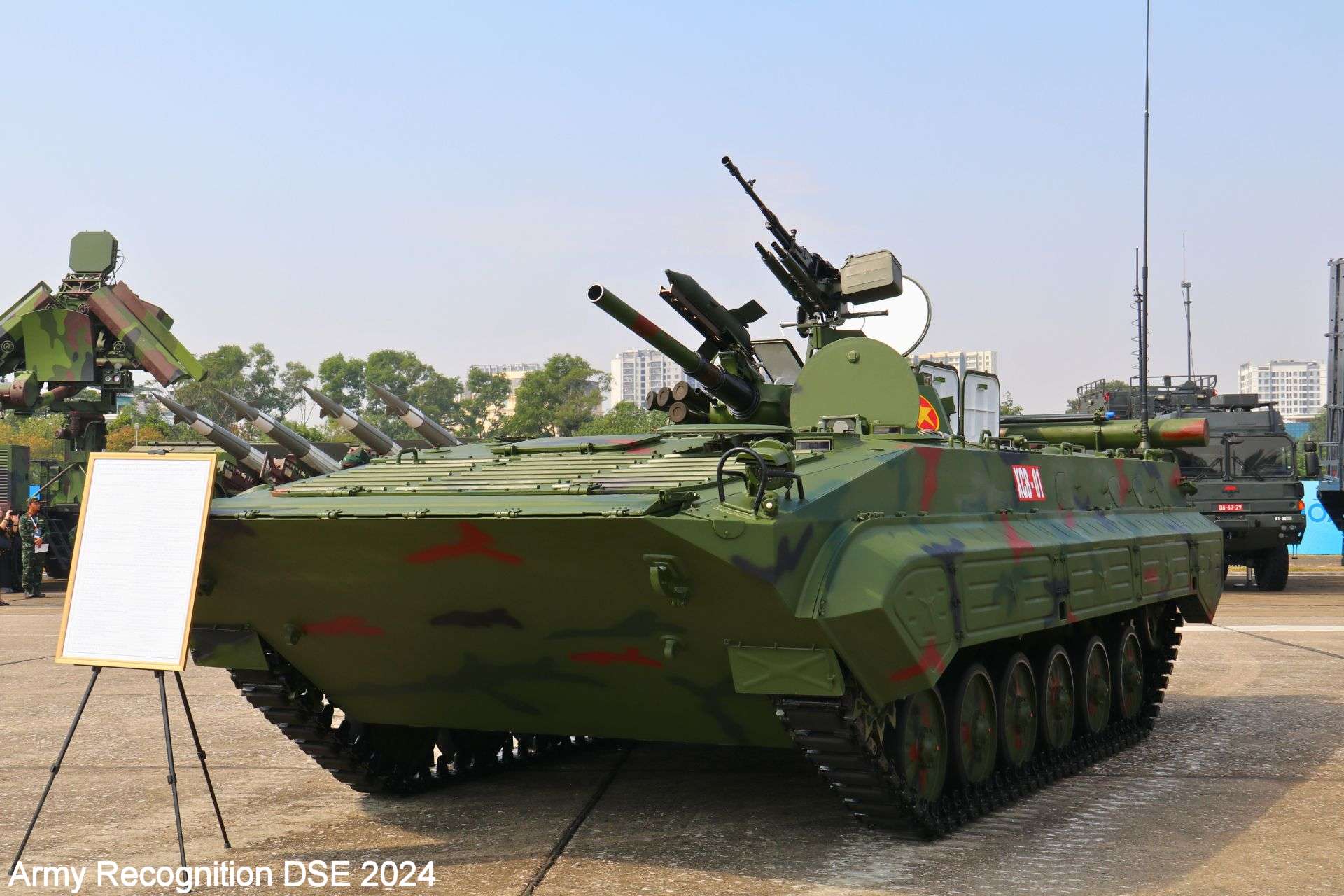
The XCB-01 infantry fighting vehicle, a product developed and manufactured in Vietnam, was showcased at the Vietnam Defense Exhibition 2024, a major event in the defense industry, taking place from 19 to 22 december. The XCB-01 represents an advancement in Vietnam’s defense capabilities, combining cutting-edge technical features with a design tailored to meet modern strategic needs. This is the first time that the XCB-01 has been unveiled at the show.
The Vietnamese XCB-01 Infantry Fighting Vehicle at DSE 2024. (Picture source: Army Recognition)
The Vietnamese XCB-01, developed with more recent technologies, surpasses the BMP-1 in several areas. The XCB-01 is equipped with a more powerful engine, offering better mobility thanks to its 300 horsepower, compared to the BMP-1’s engine, which, while robust, performs less well on certain types of terrain. The XCB-01 also benefits from an aquatic propulsion system, which was not a feature of the BMP-1, allowing it to move at a speed of 7 km/h in water, offering greater versatility in amphibious environments. In terms of protection, the XCB-01 is better armed and better protected, with modern defense systems such as chemical, biological, and radiological protection, making it more suited to contemporary threats, where the BMP-1 remains relatively vulnerable.
The XCB-01 also integrates improvements in weaponry and fire control systems. Its 73mm 2A28 cannon is similar to that of the BMP-1, but it is paired with a missile launcher and a range of more advanced defense systems, such as laser detection systems and protection against chemical and biological attacks. The BMP-1, while functional, lacks such protection equipment, and its detection and defense capabilities are therefore more limited. The XCB-01’s communication system is also more modern, with a VRU12/S radio and a satellite phone, ensuring better connectivity, which is essential in a modern combat environment where rapid and reliable communication is crucial.
The XCB-01 is designed to transport a team of three members: the commander, the gunner, and the driver. It can carry up to eight soldiers, with a total combat weight of 14.85 tons. Its dimensions are 6.95 meters in length, 3.25 meters in width, and 2.50 meters in height. The ground clearance is 0.37 meters, allowing it to operate across various terrains. In terms of engine, the XCB-01 is equipped with a UTD-20 diesel engine, delivering 300 horsepower.
One of the notable features of this vehicle is its transmission system, which includes a main clutch, a planetary transmission mechanism, and a differential with a worm gear. The vehicle is also equipped with a water propulsion system for aquatic movement, with a maximum speed of 7 km/h in water and 65 km/h on land.
The XCB-01 has sophisticated weapon and fire control systems, including a 73mm smoothbore 2A28 cannon with a 40-shell ammunition capacity. It is also equipped with a B72 missile launcher, an anti-tank complex, and a series of chemical, biological, and radiological protection devices to safeguard its occupants in hostile environments.
In terms of protection, the vehicle is equipped with an automatic fire extinguishing system, as well as a smoke-generating system for camouflage on the battlefield. A laser detection system and protection against chemical and biological attacks further enhance its security in combat situations.
Finally, the XCB-01 features a robust communication system, including a VRU12/S radio with 50W and a VIS satellite phone, ensuring connectivity even in the most remote environments.
This presentation at DSE 2024 demonstrates Vietnam’s commitment to strengthening its military capabilities while highlighting the progress made in the design of armored vehicles and defense systems. The XCB-01 aligns with the growing trend of modern infantry fighting vehicles, offering increased protection for troops while ensuring flexible deployment capabilities and resilience in the face of contemporary battlefield challenges. Vietnam seems to have recognized that locally produced military vehicles remain a key factor in ensuring autonomy.
- Details
- Written by: Triffaux
- Category: 2024
- Hits: 4971
On December 15, 2024, the Gladius program, one of Poland's most significant reconnaissance and strike systems, underwent substantial technological and structural improvements. Among these were the Mobile Analysis Station and new functionalities for the FT-5 drone. These developments aim to enhance the efficiency of artillery and reconnaissance units.
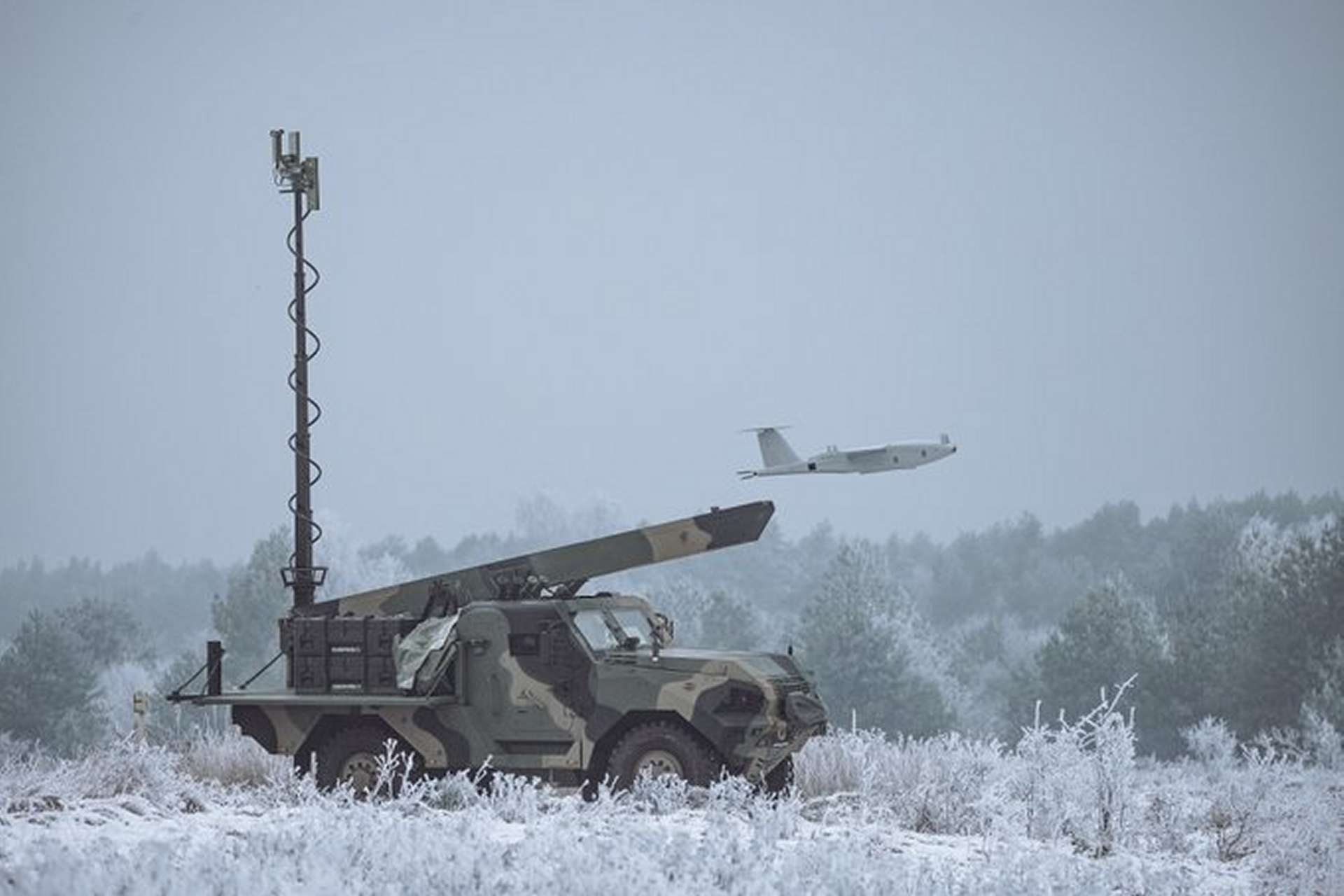
FT-5 Drone From Gladius Program (Picture source: WB Group)
The Mobile Analysis Station, a central component of the Gladius system, has been certified for processing classified information up to the “secret” level. Built on a modified Jelcz 6x6 chassis, it incorporates a container developed in collaboration with a foreign partner. The station stands out for its ergonomics and competitive cost while offering advanced data analysis capabilities. It processes information from reconnaissance and command systems to generate critical data for commanders, facilitating swift decisions on fire strikes. Following comprehensive testing, these stations have been delivered to the Polish Armed Forces.
The improved structure of the BSP-U battery within the Gladius program includes a total of 16 Waran vehicles in various configurations. This comprises six Waran vehicles in the BSP platoon and two BSP-U platoons with five additional Waran vehicles used as command vehicles and launchers. Additionally, the system uses vehicles based on Jelcz chassis, such as the Mobile Analysis Station, Technical Maintenance Vehicles, command vehicles, and ammunition transport vehicles. The latter, designed based on models used in the Homar-A and Homar-K systems, are equipped with cranes and loading systems for drones. A vehicle with a multi-loader system for handling multiple drones simultaneously, along with energy storage and a power generator, is also under consideration.
As part of the Gladius program, the reconnaissance capabilities of the FT-5 drones have also been developed. A new Synthetic Aperture Radar (SAR), designed in collaboration with Polish universities, is notable for its reduced weight and size—50% smaller than competing solutions. The FT-5 SAR can simultaneously use two types of sensors—optoelectronic and radar—significantly enhancing its imaging capabilities. The FT-5 ELINT version, equipped with electric propulsion, offers the ability to quickly detect enemy radio transmissions and transmit their location, enabling immediate strikes. Both types of FT-5 drones have been fully tested and delivered to the Polish military.
The FT-5 drone, developed by WB Group, offers advanced technical capabilities tailored to tactical reconnaissance missions. The FT-5 SAR version integrates a Synthetic Aperture Radar (SAR) weighing less than 15 kg, a 50% reduction in mass and size compared to similar systems on the market. This enables an operational altitude of up to 5,000 meters and a range of 150 km. It can simultaneously combine optoelectronic and radar sensors to provide high-precision imaging data. The FT-5 ELINT version, equipped with electric propulsion ensuring a 6-hour autonomy, specializes in intercepting and analyzing enemy radio signals. It can locate transmitters within a 100 km radius and instantly relay this data for targeted strikes. These technical performances position the FT-5 as a crucial asset for the armed forces, meeting the standards of short-range reconnaissance systems.
The Gladius program, launched by Poland in the 2010s, aligns with a strategy to modernize its armed forces amidst a geopolitical context marked by rising tensions in Eastern Europe, particularly following Russia's annexation of Crimea in 2014. Designed as an integrated reconnaissance and strike system, Gladius aims to strengthen the tactical and operational capabilities of Polish artillery units. After several development phases, the program achieved key milestones in the 2020s, including the integration of FT-5 drones and specialized vehicles such as Waran and Jelcz. In 2024, the certification of the Mobile Analysis Station marked a new advancement, solidifying Gladius's role as a cornerstone of Poland’s modern defense capabilities.

- Details
- Written by: Vandenbosch
- Category: 2024
- Hits: 3829
In September 2024, Rheinmetall Canada showcased its advanced drone defense system during the Red Sands III exercise, held at the Shamal 2 firing range in northeastern Saudi Arabia. This multinational event, which brought together participants from US Army Central Command and the Saudi Arabian Armed Forces, focused on countering uncrewed aerial systems (C-UAS). It provided an opportunity to evaluate various C-UAS solutions in a realistic and challenging environment.
Developed by Rheinmetall Canada, the SHORAD system is mounted on the Mission Master XT unmanned ground system. (Picture source: Rheinmetall)
The exercise allowed for the testing of Rheinmetall's ultra Short-Range Air Defense (SHORAD) system, a solution designed to defend against small, low-flying, and fast-moving drones. With an engagement range of 50 to 800 meters, the system proved highly effective in intercepting and neutralizing aerial threats. This performance was enhanced by the system’s resilience in the extreme desert conditions, where temperatures reached as high as 45°C. Despite these challenging circumstances, the system remained operational and continued to function with precision, demonstrating its readiness for deployment in similar real-world environments.
Developed by Rheinmetall Canada, the SHORAD system is mounted on the Mission Master XT unmanned ground system (UGS), offering a stable and mobile platform for defense operations. The system includes the Rheinmetall Fieldranger Multi remote-controlled weapon station, equipped with two Dillon Aero M134D miniguns, radar, electronic optics, and an AI-based targeting and tracking system. This layered defense technology enables the system to detect, track, and engage both aerial and ground threats effectively, offering multi-domain capabilities for comprehensive protection.
During the final phase of the exercise, Rheinmetall's SHORAD system excelled in five challenging scenarios simulating real-world threats. The system successfully engaged Group 2 and 3 multi-rotor drones as well as Group 3 fixed-wing aircraft, scoring direct hits on all targets and neutralizing every multi-rotor drone on the first attempt. The system's performance was on par with or even superior to that of advanced missile systems, highlighting the SHORAD system's efficiency and cost-effectiveness.
One of the main advantages of Rheinmetall’s system is its low cost per engagement, making it a sustainable and economical solution for modern defense operations. The advanced AI-based tracker allows for early detection and classification of drones, even in challenging conditions such as dusty environments and poor visibility. Its resilience against weapon interference, overheating, and power supply interruptions further adds to its reliability, as demonstrated in previous exercises at Fort Drum, New York, where the system withstood high humidity and heavy rainfall.
Alain Tremblay, Vice President of Business Development and Innovation at Rheinmetall Canada, emphasized the company’s role in enhancing operational readiness and fostering innovation in modern defense capabilities. This exercise contributed to the ongoing development of C-UAS technologies that meet the evolving demands of global defense operations.
As drone technology continues to pose challenges to military forces worldwide, Rheinmetall’s participation in the Red Sands III provides next-generation solutions capable of effectively addressing the growing threat of uncrewed aerial systems.

- Details
- Written by: Vandenbosch
- Category: 2024
- Hits: 4748
On December 19, 2024, the Polish Ministry of Defence (MON) announced an important contract with Fabryka Broni Radom for the delivery of MSBS GROT carbines, underbarrel grenade launchers, and VIS 100 pistols. The agreement was formalized during a ceremony held at the Ministry of Defence headquarters in Warsaw, attended by Deputy Prime Minister Władysław Kosiniak-Kamysz.
Poland announced an important contract for the delivery of MSBS GROT carbines and underbarrel grenade launchers. (Picture source: PGZ)
The MSBS GROT carbines are a key component of the Polish Army's modern weaponry, developed by Fabryka Broni Radom as part of Poland's ongoing efforts to modernize its military capabilities. The MSBS GROT, a modular and lightweight assault carbines, is designed to meet the demands of modern warfare. Its versatile configuration allows it to be adapted for different operational needs, ranging from infantry use to more specialized military roles. The inclusion of underbarrel grenade launchers will further enhance the effectiveness of these rifles, providing Polish soldiers with a crucial capability for close-quarters combat.
In addition to the MSBS GROT carbines, the VIS 100 pistol will also be delivered as part of the contract. This modern handgun, also developed by Fabryka Broni Radom, is part of Poland's effort to equip its troops with reliable, high-performance sidearms. The VIS 100 pistol is recognized for its durability, accuracy, and ergonomics, making it an ideal weapon for Polish soldiers in various combat scenarios.
This agreement reflects Poland's commitment to modernizing its armed forces, ensuring that the military is equipped with advanced, domestically produced weaponry that meets contemporary standards. The addition of these new systems to the Polish Army will improve combat readiness and the overall effectiveness of the country's armed forces.
The contract also aligns with broader strategic objectives, including strengthening national defense capabilities and reducing reliance on foreign suppliers. It highlights Poland's growing investment in its defense sector, as well as the increasing capabilities of Fabryka Broni Radom, a key player in the Polish defense industry.
The MSBS Grot carbine is a shortened version of the MSBS Grot assault rifle, which is available in both standard and bullpup configurations. Unlike the full-length assault rifle, the carbine version features a barrel length of 254 mm (10 inches), significantly reducing the weapon's overall length. With a total length of just 980 mm (39 inches) when the stock is extended, the MSBS Grot carbine retains much of the performance and modularity of its larger counterpart, while being more suitable for close-quarters combat and operations in confined spaces. This makes it particularly well-suited for units requiring mobility, such as special forces or urban warfare teams.
The carbine version uses the same short-stroke gas piston system and rotating bolt as the full-size assault rifle, delivering a reliable and consistent rate of fire between 700 and 900 rounds per minute. The MSBS Grot is chambered for the 5.56×45mm NATO cartridge, which is standard in many modern armies. This ensures that it offers a balanced combination of stopping power, accuracy, and range, with an effective firing range between 500 and 800 meters. The integrated Picatinny rail allows for easy attachment of optical sights and accessories, further enhancing its adaptability to various mission requirements.
In addition to its base configuration, the MSBS Grot carbine can be equipped with an underbarrel grenade launcher, a modification that adds a 40×46mm grenade launcher to the weapon. This configuration enhances the carbine’s firepower, providing soldiers with a versatile tool for both infantry combat and suppression of enemy positions. Whether used in the standard carbine configuration or with the grenade launcher, the MSBS Grot C16 remains a powerful, flexible weapon that can be adapted to a wide range of operational scenarios.

- Details
- Written by: Jérôme Brahy
- Category: 2024
- Hits: 4089
On November 19, 2024, the Cypriot company Theon Sensors announced that the German Parliament approved the exercise of the third option in the OCCAR Night Vision Capability Programme contract, authorizing the procurement of several thousand additional Mikron binocular night vision goggles (BNVG). This decision further expands the agreement managed by OCCAR since May 2020, aimed at equipping the Belgian and German Armed Forces with advanced night vision equipment to meet NATO Capability Target L1201 for individual combat capability.
Follow Army Recognition on Google News at this link
The Mikron binocular night vision goggles (BNVG), adaptable for handheld, helmet-mounted, or head-mounted use, are powered by a single AA battery with an operating time exceeding 24 hours, (Picture source: Theon Sensors)
The amendment to the contract is scheduled for signing on December 20, 2024, in Bonn, Germany, by the consortium Hensoldt Optronics GmbH and Theon Sensors SA. An additional option of similar size remains available for future procurement. The initial contract for the Production and In-Service Support of Mikron BNVG was signed in July 2021, with deliveries planned for Germany and Belgium. Following previous amendments in 2022 and 2024, the total contract now includes 49,550 Mikron goggles. Germany and Belgium have each secured options for an additional 25,000 units, along with accessories, follow-on in-service support, and spare parts. Belgium is set to receive its final batch of goggles by the third quarter of 2025, while Germany will complete deliveries by the fourth quarter of 2024.
The Mikron BNVG is a lightweight, dual-tube binocular system equipped with 16mm image intensifier tubes supplied by Exosens. It features independent operational channels, manual gain control, and an integrated infrared illuminator. The device is adaptable for handheld, helmet-mounted, or head-mounted use and is powered by a single AA battery with an operating time exceeding 24 hours, expandable with an external battery pack. These capabilities make the goggles suitable for dismounted soldiers, drivers of military vehicles, and air assault troops.
Theon Sensors, the manufacturer of the Mikron, has placed additional orders for image intensifier tubes from Exosens as part of a long-term frame agreement for 2025-2027. This procurement aligns with the company’s strategy to meet growing global demand and ensure uninterrupted production. The total value of new orders for 2024, including this third option, exceeds €510 million, with deliveries surpassing €340 million for the year. The company projects a year-end backlog of over €650 million, indicating sustained production levels through 2025 and 2026. Guidance for fiscal year 2025 will be released before the end of December 2024.
The NVC Programme’s shared procurement approach has facilitated interoperability and reduced logistical burdens for Belgium and Germany. The programme, which was integrated into OCCAR’s Small Programmes Division in March 2023, aims to establish a common basic night vision capability for both nations. The Mikron BNVG was selected through a Europe-wide competitive process as the most economically advantageous tender. The original contract covered 8,050 units for Belgium and 25,000 for Germany, along with associated accessories, training, and initial in-service support for five years.
In response to geopolitical shifts, the 2022 amendment added 20,000 goggles for Germany and accelerated delivery schedules. The 2024 amendment supplied 3,500 additional units for Belgium and extended initial support for Germany. These expansions reflect the programme's adaptability to evolving defense requirements while maintaining a cost-effective procurement structure.
Theon Sensors, established in 1997 and headquartered in Greece, operates production facilities in Athens, Wetzlar (Germany), and Plymouth (USA). The company has delivered over 180,000 night vision systems to 71 countries, including 26 NATO members. Through partnerships such as the joint venture Hensoldt Theon NightVision GmbH in Wetzlar, Theon supports large-scale production and rapid delivery schedules. The company’s international footprint and agreements with suppliers such as Exosens further enhance its capacity to meet increasing demand.
This development highlights the emphasis placed on night vision technology by the Belgian and German Armed Forces in achieving operational readiness during limited visibility. The cooperative framework under OCCAR ensures consistent capability upgrades and alignment with NATO objectives.
Read more: Germany approves procurement of additional Mikron night vision goggles from Theon Sensors

- Details
- Written by: Triffaux
- Category: 2024
- Hits: 5013
On December 18, 2024, Japan and Mongolia formalized a historic agreement enabling the transfer of defense equipment and technology between the two nations. The accord was signed by Japan's Ambassador to Ulaanbaatar, Masaru Ogasawara, and Mongolia's Minister of Defense, Sandagiin Byambatsogt, highlighting both countries' commitment to strengthening defense cooperation. Japan's Ministry of Foreign Affairs clarified that the agreement would facilitate joint defense projects aimed at promoting international peace and stability while ensuring strict controls to prevent misuse or unauthorized transfer to third parties.
Mitsubishi Electric FPS-3 radar (Picture source: Wikimedia)
The agreement, signed on December 18, 2024, is expected to include the transfer of several advanced defense systems tailored to Mongolia’s strategic needs. Among these could be three-dimensional surveillance radars, akin to the modernized FPS-3 radar, which provides precise detection of ground and aerial targets. Similar systems have been provided by Japan to partners like the Philippines (under a 2016 agreement) and Vietnam (2021) and would be particularly effective for monitoring Mongolia’s extensive borders with Russia and China.
Reconnaissance drones equipped with optical and infrared sensors may also be part of the deal. Platforms like the Yamaha RMAX drone, used for tactical missions, would be well-suited for surveillance of remote or hard-to-access border areas. In 2019, Japan supplied similar systems to Indonesia under its maritime defense capacity-building program, showcasing its expertise in this domain.
The agreement might further include secure communication systems and command and control (C2) solutions similar to those provided to India after their 2015 accord. These technologies, critical for efficient military coordination, would enhance Mongolia's ability to address local threats while fostering interoperability with regional partners. Additionally, cybersecurity tools, like those shared with Singapore in 2018, could be included to safeguard Mongolia’s critical military infrastructure from potential cyberattacks.
Specialized military vehicles, such as the Toyota Mega Cruiser, renowned for their mobility and durability in challenging environments, could also be part of the package. Japan shared such equipment with the Philippines in 2020 to improve rapid response capabilities. Through this agreement with Mongolia, Japan continues to leverage its regional defense strategy, strengthening bilateral alliances since it relaxed its restrictions on military equipment exports in 2014. The agreement is set to take effect in 2025, accompanied by training and maintenance programs to ensure the operational readiness of Mongolia’s armed forces.
Military relations between Japan and Mongolia have intensified in recent years, reflecting a shared desire to enhance cooperation in defense and security. This trend aligns with Mongolia’s "third neighbor" strategy, aimed at diversifying partnerships beyond its two major neighbors, Russia and China.
Furthermore, Mongolia has been actively participating in NATO partnership programs since 2012, particularly through the Defense Education Enhancement Program (DEEP), which aims to modernize Mongolia’s military training system and improve interoperability with allied forces.
Mongolia’s armed forces consist of approximately 10,000 active-duty personnel and 137,000 reservists, primarily organized into land forces with a limited air force component. The country allocates about 1.4% of its GDP to defense. Since the 2000s, Mongolia has actively contributed to international peacekeeping missions, including operations in Afghanistan, Kosovo, and Africa, bolstering its international presence and commitment to global security.
Read more: Japan and Mongolia Forge Historic Defense Pact Under Third Neighbor Strategy
- Lithuania Discusses Acquisition of CV-90 Armored Vehicles with Swedish Manufacturer BAE Systems Hägglunds
- British Army tests new GDAMS 120mm mortar on Jackal tactical vehicle for indirect fire support
- Breaking News: Yemen targets Israel with Palestine 2 hypersonic missile posing new threats for US and allies
- Taiwan Seeks to Strengthen Its Artillery Capabilities with Acquisition of US M109A7 Howitzers