
- Details
- Written by: Administrator
- Category: 2024
- Hits: 5838










The Ministry of Defence (MoD) of the United Arab Emirates (UAE) officially released a video on 18 October 2024, showcasing the deployment of locally manufactured Nimr Ajban Mk2 4×4 armored vehicles in active service with the UAE Armed Forces for the first time. This marks a significant milestone for the UAE's defense industry and its commitment to developing and utilizing homegrown military technology.
Follow Army Recognition on Google News at this link
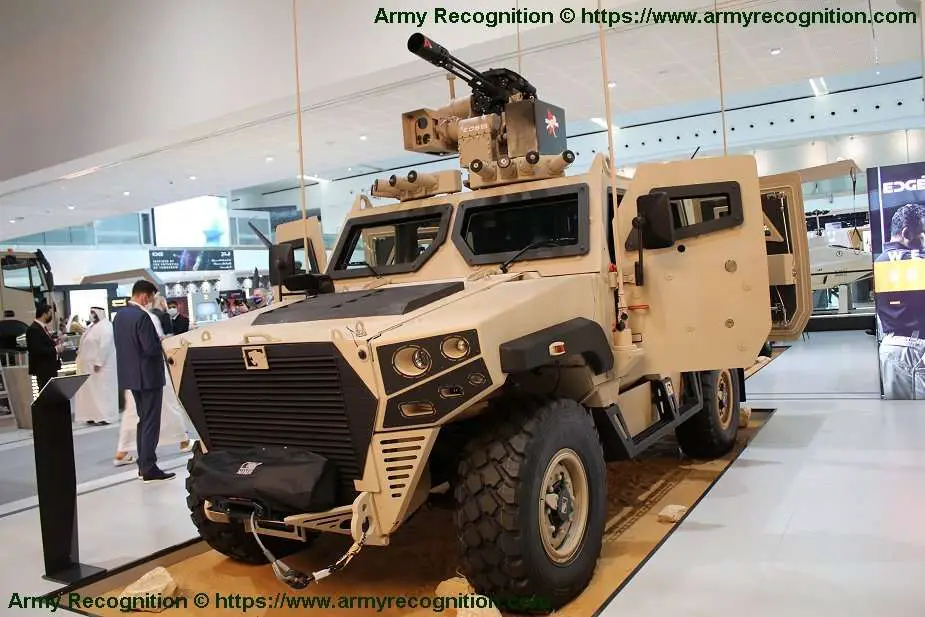
The Nimr Ajban Mk2 was initially revealed at the International Defence Exhibition and Conference (IDEX) in Abu Dhabi in February 2021. (Picture source Army Recognition Group)
The Nimr Ajban Mk2, first unveiled at the International Defence Exhibition and Conference (IDEX) in Abu Dhabi in February 2021, represents an advanced version of the original Ajban series. It was developed by Nimr, a UAE-based defense manufacturer and a subsidiary of Edge Group, to meet modern combat and tactical requirements. The vehicle’s design focuses on enhanced mobility, superior protection, and increased operational flexibility. Specifically, the Ajban Mk2 is built to meet STANAG 4569 standards, providing scalable ballistic, mine, and improvised explosive device (IED) protection. This makes the vehicle highly resistant to explosive threats and firing against small arms, ensuring the crew's safety in hazardous environments.
The Ajban Mk2 is powered by a high-performance diesel engine capable of producing up to 300 horsepower, coupled with an automatic transmission and four-wheel drive system that provides exceptional off-road capabilities. The vehicle has a payload capacity of over 1.5 tonnes and is capable of reaching speeds of up to 110 km/h. Its operational range exceeds 700 kilometers, allowing it to perform extended missions without frequent refueling.
The vehicle's suspension system is designed for rough terrains, offering superior stability and comfort for its crew, even in the most challenging environments. Additionally, the modular design allows for various configurations, including troop transport, command and control roles, or as a weapons carrier. The Ajban Mk2 can be equipped with an array of integrated weapon systems, such as a remote-controlled weapon station, heavy machine guns, and anti-tank guided missile systems, making it highly versatile on the battlefield.
Another key feature of the Ajban Mk2 is its integrated electronic suite, which includes advanced communication systems, battlefield management tools, and optional electronic countermeasure systems. This allows the vehicle to operate in network-centric warfare scenarios, where real-time communication and data sharing are critical to mission success.
The introduction of the Nimr Ajban Mk2 into active service underscores the UAE's broader efforts to develop self-reliant defense capabilities. Over the past decade, the UAE has increasingly invested in domestic military production, seeking to reduce its reliance on foreign suppliers and establish itself as a regional leader in defense technology. Nimr, a subsidiary of Edge Group, has been at the forefront of this initiative, producing a range of military vehicles tailored to meet the specific needs of the UAE Armed Forces and other regional customers. The Ajban Mk2 is part of Nimr's wider portfolio, which includes multi-purpose military vehicles designed for operational efficiency and resilience in the harsh conditions of the Middle East.
The deployment of the Ajban Mk2 also reflects the UAE’s strategic priorities in bolstering its defense capabilities amid a changing regional security landscape. The country faces ongoing security challenges, including tensions in the Arabian Gulf, the war in Yemen, and the broader instability in the Middle East. The integration of indigenous military technology such as the Nimr Ajban Mk2 signals the UAE's commitment to maintaining a modern and responsive military force.
As the UAE continues to enhance its defense manufacturing sector, the Nimr Ajban Mk2 could also serve as an export product, contributing to the country’s economic diversification strategy. Several countries in the region have already expressed interest in UAE-made defense systems, positioning the Ajban Mk2 as a potential contender in the international defense market.
The unveiling of the Nimr Ajban Mk2 4×4 armored vehicles in active service is a significant achievement for the UAE’s defense industry and military. It highlights the country’s growing self-sufficiency in defense production and its dedication to maintaining a technologically advanced and capable military force.
Read more: UAE MoD Unveils First Deployment of Locally Made Nimr Ajban Mk2 Armoured Vehicles
- Details
- Written by: Halna du Fretay
- Category: 2024
- Hits: 4789
L3Harris Technologies and Overland AI have introduced their latest advancement in autonomous military vehicles with the unveiling of the Diamondback, an Autonomous Reconnaissance Vehicle (ARV). Presented for the first time at the annual meeting of the Association of the United States Army (AUSA) in October 2024, the Diamondback is specifically designed to support intelligence, surveillance, and reconnaissance (ISR) missions, particularly in challenging off-road environments. The prototype is expected to begin testing in the first quarter of 2025, marking a key phase in the development of autonomous systems for complex military applications.
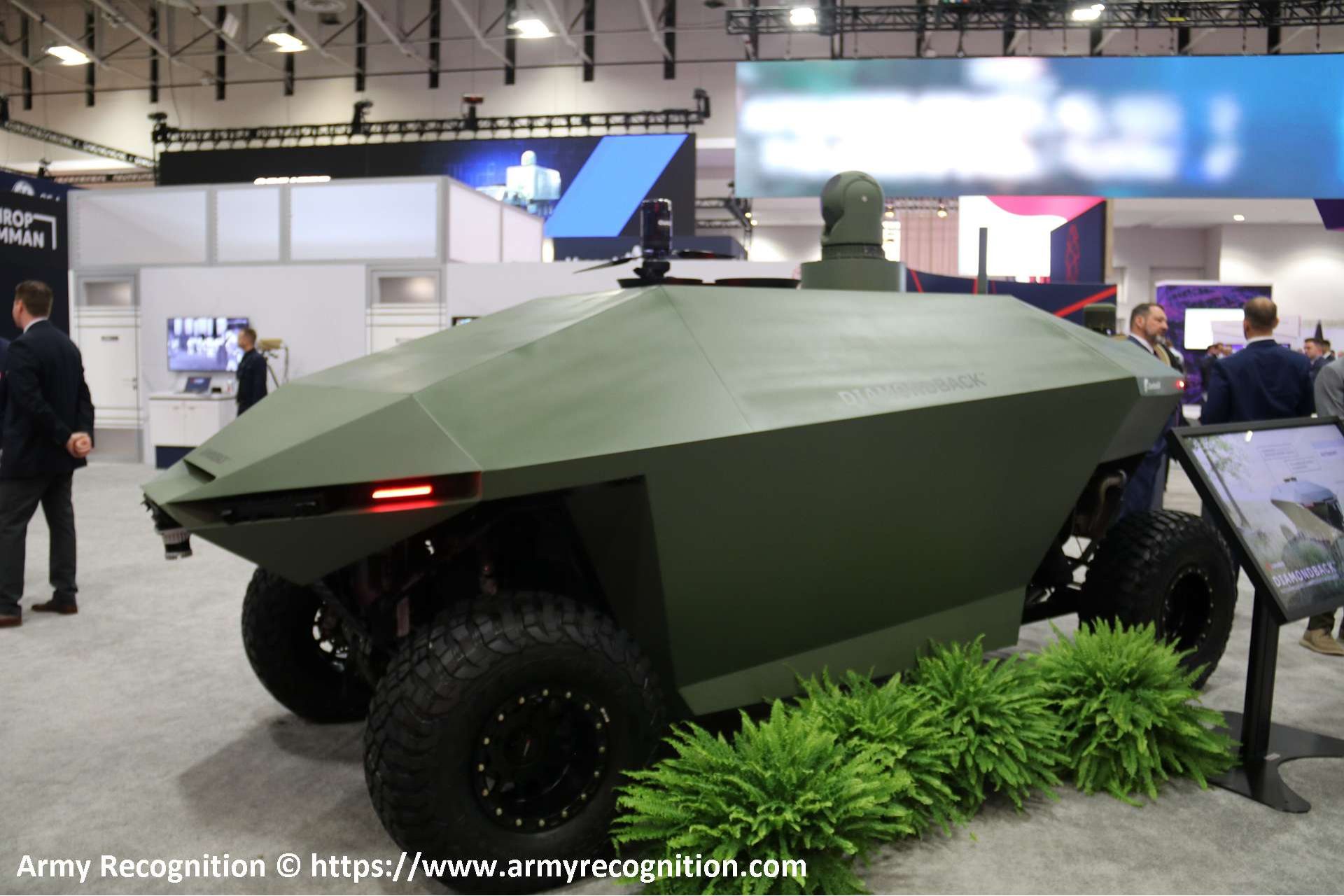
Overland AI’s off-road navigation system allows the Diamondback to maneuver independently over difficult terrains while performing reconnaissance and security tasks (Picture source: Army Recognition)
The Diamondback addresses the growing need for a highly mobile and flexible ISR platform capable of adapting to difficult terrains while providing real-time operational support to ground forces. Designed with a modular architecture, it is easily reconfigurable for different missions, enhancing its versatility.
This adaptability is supported by the use of commercial components and an open-systems architecture, facilitating the rapid integration of new technologies while reducing production costs. L3Harris envisions the Diamondback as a critical complement to existing robotic systems and a viable alternative to manned vehicles for certain crucial missions.
In collaboration with Overland AI, L3Harris equipped the Diamondback with advanced autonomous mobility technologies. Overland AI’s off-road navigation system allows the Diamondback to maneuver independently over difficult terrains while performing reconnaissance and security tasks. This partnership enables the vehicle to benefit from enhanced mobility and navigation capabilities, making it a valuable asset for missions where first contact with potential threats is a key factor.
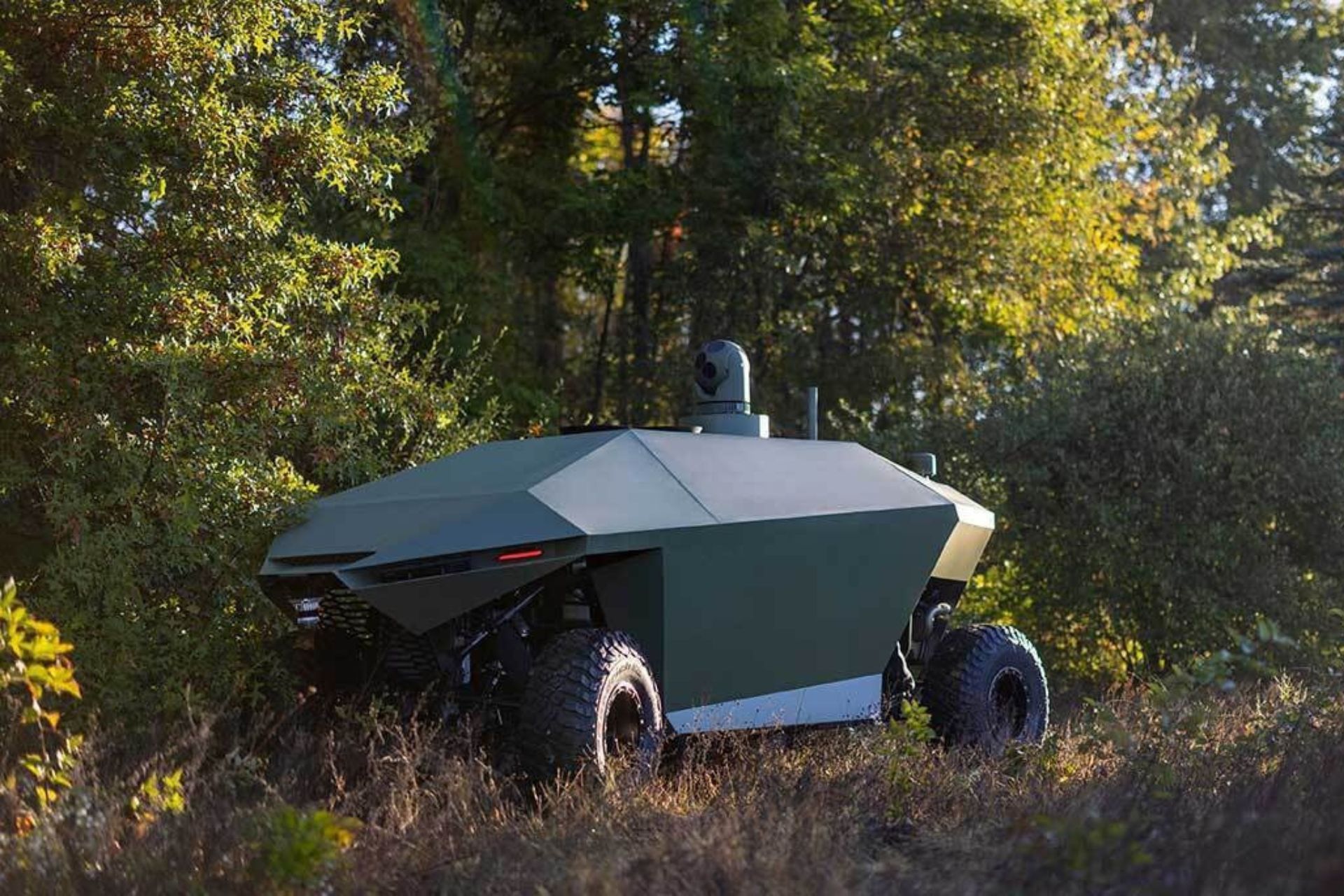
The Diamondback addresses the growing need for a highly mobile and flexible ISR platform capable of adapting to difficult terrains while providing real-time operational support to ground forces (Picture source: L3 Harris)
During a roundtable at AUSA, L3Harris officials emphasized the strategic role that the Diamondback could play in future military operations. Ed Zoiss, President of Space and Airborne Systems at L3Harris, explained that the Diamondback expands the company’s autonomy capabilities, now extending from air and sea to land.
He highlighted the vehicle's highly adaptable and scalable nature, thanks to its modular design. This open-development approach not only aims to reduce production costs but also simplifies maintenance and allows for quick adaptations to evolving mission requirements.
As the Diamondback prepares for testing in 2025, L3Harris positions it as a key asset for future reconnaissance and security missions. Its ability to autonomously navigate difficult terrains while executing ISR missions with precision makes it a strategic platform in the development of unmanned ground vehicles.
The prototype's unveiling at AUSA demonstrates L3Harris' commitment to advancing autonomous technology for military applications, particularly in areas where manned vehicles face operational challenges.
Read more: L3Harris and Overland AI Unveil Diamondback UGV at AUSA With Testing Slated for 2025

- Details
- Written by: Jérôme Brahy
- Category: 2024
- Hits: 7461
On October 15, 2024, the Swedish government introduced its defense strategy for 2025–2030. The plan allocates 170 billion SEK (€14.9 billion) for military defense and 35.7 billion SEK (€3.1 billion) for civil defense, aiming to raise defense spending to 2.6% of GDP by 2028. It also includes a gradual increase in conscription, targeting 10,000 conscripts annually by 2030 and up to 12,000 by 2035.
Follow Army Recognition on Google News at this link
By 2035, the wartime organization of the Swedish Armed Forces is projected to require approximately 130,000 personnel. (Picture source: Sweden MoD)
Sweden’s transition from military neutrality to full NATO membership has evolved over recent years, particularly in response to Russia's 2022 invasion of Ukraine. This shift in policy represents a significant change from Sweden’s traditional stance, which had prioritized neutrality during the Cold War. Sweden began enhancing its defense posture in 2015 and further increased support to Ukraine after the invasion.
As part of its integration into NATO, Sweden has aligned its national defense strategy with collective defense obligations. This transition has involved increasing military readiness, modernizing key systems, and preparing to support NATO operations. The new plan reflects Sweden’s commitment to NATO’s collective security framework.
This article examines the details of Sweden's 2025–2030 defense budget, which includes significant investment in military upgrades, expansion of personnel, and improvements across various defense sectors. The strategy aims to strengthen Sweden’s military capabilities and civil defense infrastructure.

Since Russia’s invasion, Sweden has provided approximately €4.2 billion of military aid to Ukraine across 17 packages, including systems like Stridsvagn 122 tanks, CV90 IFVs, and Archer self-propelled howitzers. (Picture source: 45oabr)
Lessons from Ukraine
Since Russia’s invasion, Sweden has provided substantial military aid to Ukraine, totaling 48 billion SEK (approximately €4.206.600.000) across 17 packages, including systems like Stridsvagn 122 tanks, CV90 IFVs, and Archer self-propelled howitzers. This experience underscores the importance of maintaining stockpiles and rapidly replenishing donated equipment, which explains why the new defense strategy highlights the need for logistical support in prolonged conflicts.
The Swedish government has committed 75 billion SEK (€6.572.812.500) over three years (2024–2026) for military assistance to Ukraine, covering financial donations, soldier training, and procurement through the Defense Materiel Administration. Sweden’s participation in capability coalitions (focusing on drones, maritime security, and demining) further demonstrates its dedication to supporting Ukraine's defense.
For Swedish authorities, the conflict also highlights the critical role of civilian defense, emphasizing societal resilience and cyber defense. To protect critical infrastructure, the new defense strategy includes the creation of a national cybersecurity center to counter Russian cyberattacks.
Another lesson from Ukraine is the importance of technological adaptability in warfare. Rapid integration of new technologies and modifications to existing systems are seen as crucial. The Ukraine conflict also revealed the high resource consumption associated with intense warfare, particularly in terms of ammunition and other vital supplies. Consequently, Sweden plans to collaborate with the defense industry and government to enhance readiness for innovation, ensuring stockpiles of key materials and systems with long delivery times. Additionally, the strategy recognizes the significance of layered air defense and long-range strike capabilities.
The strategy emphasizes improving intelligence, particularly in reconnaissance and surveillance, with the Swedish Air Force set to receive new reconnaissance aircraft. The value of unmanned aerial systems in Ukraine has prompted Sweden to plan for their expanded use in operations to enhance situational awareness and mobility. For instance, this has led BAE Systems Hägglunds and UAV manufacturer Airolit to join forces in integrating autonomous drone surveillance capabilities into the CV90 combat vehicle.

The Swedish government also plans to increase the number of conscripts trained for junior leadership roles to strengthen the chain of command and address potential leadership shortages as Sweden expands its defense capacity. (Picture source: Swedish MoD)
Personnel and Conscription Expansion
One of the most critical aspects of Sweden’s defense strategy is the significant expansion of conscription and personnel within the Swedish Armed Forces. By 2035, the wartime organization is projected to require approximately 130,000 personnel. To achieve this, the annual intake of conscripts will gradually increase, with targets of 10,000 conscripts by 2030 and 12,000 between 2032 and 2035. This expansion highlights the government's view that conscription is essential to maintaining the Swedish Armed Forces at a level sufficient for national defense and meeting NATO commitments under Article 3.
The government also plans to increase the number of conscripts trained for junior leadership roles to strengthen the chain of command and address potential leadership shortages as Sweden expands its defense capacity. Additionally, a fourth testing center will be established to manage the increased recruitment and testing of conscripts.
In line with Sweden's integration into NATO, conscripts may participate in the alliance's collective defense efforts. In an Article 5 scenario, Swedish conscripts could be deployed internationally to support NATO operations. This represents a shift in Sweden’s defense approach, with conscripts expected to contribute to collective defense beyond national borders.
The Swedish defense strategy further emphasizes improving the unit turnover system, ensuring operational units remain ready through refresher training exercises. The Total Defense Conscription and Testing Agency will play a key role in reaching the increased conscription targets and preparing the forces for both peacetime and wartime scenarios.
Efforts to retain personnel and address current shortages are also part of the strategy. These include increasing the number of professional officers and group leaders, expanding officer training programs, and boosting civilian staffing to free military personnel for tasks requiring specific expertise. By addressing these challenges, Sweden aims to build a defense force capable of fulfilling both national and NATO obligations in the future.

Priorities for the Swedish Army include modernizing the CV90 infantry fighting vehicle, acquiring additional combat vehicles and tanks such as the STRV 122 and STRV 123A, and upgrading artillery and air defense systems by 2030. (Picture source: Swedish MoD)
Armed Forces Modernization
By 2030, Sweden plans to have four fully operational brigades, with conscription increasing to 10,000 by 2030 and 12,000 by 2035. The strategy focuses on enhancing the Army's capacity to operate in larger formations, such as divisions and corps, in alignment with NATO’s requirements. New territorial units will be established to support national defense and NATO operations, working alongside the Home Guard.
These territorial units, including rifle battalions, communications teams, and support units, will operate independently using equipment from upgraded field units, providing flexibility. Their development will occur between 2025 and 2035. This reorganization aims to align Sweden’s military structure with its new NATO commitments.
Modernization efforts will also extend to field units, which will receive additional combat and support resources. This includes two artillery battalions, a rocket artillery unit, and battalions specializing in intelligence, engineering, air defense, and logistics. The procurement of rocket artillery and cruise missiles is a key element of the strategy, enhancing Sweden’s deterrence capabilities for national defense and NATO operations, particularly during crises.
The government recognizes the need to improve the Army's readiness, noting that some equipment is nearing the end of its lifecycle. Priorities include modernizing the CV90 infantry fighting vehicle, acquiring additional combat vehicles and tanks such as the STRV 122 and STRV 123A, and upgrading artillery and air defense systems by 2030. To improve the Army's capabilities in areas such as reconnaissance, surveillance, command and control, and fire control, various types of unmanned remotely operated aerial vehicles will also be acquired.

By 2030, the Swedish Air Force will retain six fighter squadrons equipped with JAS 39 aircraft, split equally between the JAS 39E variant and the older JAS 39C/D models. (Picture source: Swedish MoD)
Air Force Development
The Swedish Air Force is set to implement significant upgrades aimed at improving its integration into NATO’s Integrated Air and Missile Defense (IAMD) system. A key focus will be on enhancing control over Sweden’s airspace in coordination with allied forces, with the capacity for rapid responses to potential threats. By 2030, the Air Force will retain six fighter squadrons equipped with JAS 39 aircraft, split evenly between the JAS 39E variant and the older JAS 39C/D models.
The Swedish government has recognized the need to make a strategic decision by 2030 regarding the replacement of the JAS 39 fighter jet, requiring broad political consensus and thorough evaluation. Although the JAS 39 is expected to remain in service beyond 2050, the lengthy development timeline of up to 25 years for a new fighter system necessitates early planning. Consequently, the government has tasked the Armed Forces with conducting a concept study. In response, Saab has announced the development of both manned and unmanned fighter concepts, aiming to establish a sixth-generation combat air platform for Sweden's defense needs.
This study will assess three potential options: developing a domestic system, collaborating internationally, or procuring a foreign system. The decision, which must be made by 2030, will consider the time needed to specify requirements, develop, and introduce a new system, with long-term financial commitments expected beyond 2035. A parliamentary reference group will be included in the study to ensure the necessary political support.
Another aspect of the Air Force's development will involve upgrading airbase infrastructure. Sweden plans to disperse and mobilize air assets across five main airbases, allowing for swift responses to threats and ensuring continuous operations. These efforts include developing a network of national sensor, control, and response systems, modernizing command centers to meet NATO standards, and enhancing the ability to host allied forces.
Sweden is also planning to acquire long-range strike capabilities, focusing on procuring munitions and systems to enable extended-range operations in line with NATO’s expectations for mobility and precision strikes. The supply of various ammunition types for air, maritime, and land targets is planned for the 2025–2030 period and beyond. The capability for long-range land attack will be introduced during 2025–2030 within the fighter divisions, in line with the 2020 defense decision.

The integration of the S 106 Global Eye airborne early warning and control system will enhance Sweden's detection and tracking capabilities, replacing the older ASC 890, which will be transferred to Ukraine. (Picture source: Saab)
Additionally, the integration of the S 106 Global Eye airborne early warning and control system will enhance threat detection and tracking, replacing the older ASC 890, which will be transferred to Ukraine.
To address personnel shortages, Sweden will expand its fighter pilot training programs, including some international training opportunities. The Air Force will also replace outdated equipment, such as the Saab 105/SK 60 training aircraft with the Grob G 120 TP (SK 40), and invest in new counter-drone capabilities. The procurement of unmanned aerial systems for reconnaissance and security will be a priority in the coming years.
Sweden’s transport aviation capabilities will be bolstered by replacing its six C-130H Hercules (TP 84) aircraft to ensure continued tactical airlift capacity. Additional upgrades will involve reviewing the replacement of the Saab 340B (TP 100) and Gulfstream IV (TP 102) aircraft used for personnel transport and addressing operational challenges with the NH90 Tactical Transport Helicopter (TTP), designated by Sweden as HKP 14.
As noted in the document, the HKP 14 has low availability and high operational costs, and its maritime version (HKP 14F) is not yet fully operational. Therefore, the Swedish Armed Forces propose phasing out the land version (HKP 14E) as more Sikorsky UH-60M (HKP 16) units are delivered. The Armed Forces also propose acquiring a new ship-based maritime helicopter for the new Luleå-class surface combat vessels, with the new system to be delivered by 2035 as an integrated part of the vessel’s capabilities.
Finally, space operations are an integral part of Sweden’s defense strategy, with plans to enhance capabilities in communication, reconnaissance, and early warning through the acquisition of surveillance satellites, secure satellite communications, and satellite launch capacity from Esrange. These developments support Sweden’s strategic autonomy and its contribution to NATO operations, particularly in the Arctic.

The Navy’s surface combat capabilities will be strengthened through the mid-life upgrades of the Visby-class corvettes and the acquisition of new surface combat ships of the Luleå-class between 2025 and 2030. (Picture source: Swedish MoD)
Navy Expansion
The Swedish Navy's role in securing control over maritime areas, particularly in the Baltic Sea region, is a central component of the new defense strategy. Its primary mission is to protect critical sea routes essential for trade and the transport of military units and supplies. This responsibility aligns with Sweden's duties as a NATO member, ensuring open sea routes and supporting the Alliance's deterrence and defense operations. The Navy will maintain high availability, readiness, and operational mobility, enhancing its capabilities both independently and in cooperation with NATO forces.
The Navy’s surface combat capabilities will be strengthened through the mid-life upgrades of the Visby-class corvettes. These upgrades include arming the ships with air defense missile systems, improving sensors for air, surface, and underwater surveillance, and enhancing electronic warfare capabilities. The Navy is also gradually introducing command support systems to increase interoperability with NATO.
Additionally, the acquisition of new surface combat ships of the Luleå-class is set to begin between 2025 and 2030. These ships will provide extended endurance, enhanced air defense capabilities, and leadership functions at sea. The enhanced air defense system, integrated with the Air Force's command and surveillance systems, will improve Sweden's air defense capability and contribute to NATO's integrated air and missile defense.
Mine clearance remains crucial for ensuring mobility for both national and allied forces. Between 2025 and 2030, existing mine clearance vessels will be supplemented with unmanned, autonomous, and remotely controlled systems. The current naval mine clearance systems are outdated, prompting the Armed Forces to initiate studies and concepts to assess future capability needs and replacements. Seagoing platforms, combined with unmanned mine clearance systems, will form the core of this effort. Additionally, the development and procurement of unmanned aerial vehicles will begin.

Amphibious units will further specialize in both land and sea operations and will receive new indirect fire capabilities, as well as new vessels to replace the Combat Boat 90H. (Picture source: Swedish MoD)
Submarines continue to be critical to Sweden's defense strategy. A life-extension program for Gotland-class submarines is planned for 2025–2030 to maintain their capabilities and increase availability. The production of Blekinge-class submarines will also continue, with preparatory work beginning to eventually replace the Gotland-class submarines during 2025–2030.
Amphibious units will further specialize in both land and sea operations and will receive new indirect fire capabilities. Procurement of air defense systems for amphibious units and weapons systems for engaging both land and sea targets will commence. Command systems will be upgraded to achieve greater interoperability. The replacement of older transport boats, including the Combat Boat 90H, will also occur. The ability to support special forces and NATO's special operations using parts of the amphibious units will be further developed. Coastal missile capabilities will be expanded and organized into two units to increase both availability and endurance.
Naval logistics capabilities will be strengthened by establishing military naval bases in the three garrison towns of Haninge, Gothenburg, and Karlskrona. These naval bases will enhance the ability to provide logistical support to allied forces within the maritime domain and meet the mobilization and supply needs of the garrisons during heightened readiness. The two newly established naval base battalions in Haninge and Karlskrona will continue to develop.
Lastly, the Swedish government has assessed that naval endurance should be strengthened, including increasing ammunition stockpiles, both specific to the Navy and other qualified munitions, to better meet NATO's requirements. The renewal of the Robotsystem 15 (RBS 15) anti-ship missile will also take place, enhancing the Navy's long-range strike capability.

Sweden’s defense strategy acknowledges the critical role that Special Forces (SOF) will have in both national defense and NATO operations, particularly in response to the 2022 Russian invasion of Ukraine. (Picture source: Swedish MoD)
Special Forces Expansion
Sweden’s defense strategy acknowledges the critical role that Special Forces (SOF) will have in both national defense and NATO operations, particularly in response to the evolving geopolitical situation following the 2022 Russian invasion of Ukraine. The Swedish Special Forces are tasked with carrying out specialized operations, both independently and in coordination with other military branches and government agencies.
There is a strategic focus on enhancing SOF's ability to operate autonomously, with improvements in logistics, command, and mobility capabilities. This will allow them to execute operations across various conflict scenarios, including hybrid threats and situations below the threshold of armed conflict.
In line with NATO’s capability requirements, Sweden’s Special Forces will undergo specialization and restructuring. Elements of the Ranger and Northern Ranger battalions will be developed to support SOF, strengthening Sweden’s contribution to NATO special operations. These units will be adapted to meet the increased demands for endurance and autonomy, allowing them to sustain operations in high-intensity conflicts.
The Maritime Special Forces will also be enhanced, with parts of the amphibious units upgraded to support both national and NATO missions. This transformation is planned for the 2025–2030 period, ensuring that Sweden’s SOF remains a flexible and capable force.
A key focus for the Special Forces will be improving their strategic, operational, and tactical mobility. This includes ensuring their capability to operate in air, sea, and land environments and enhancing their capacity to counter high-level adversaries during armed conflict. The integration of autonomous and unmanned systems will further expand the intelligence, direct action, and logistical capabilities of Sweden’s SOF, enabling them to respond quickly and effectively to diverse threats.

To sustain these military enhancements, the Swedish government emphasizes the importance of a robust logistics function to support long-term military operations, both independently and within NATO frameworks. (Picture source: Swedish MoD)
Logistics Enhancement
To sustain these military enhancements, the Swedish government emphasizes the importance of a robust logistics function to support long-term military operations, both independently and within NATO frameworks. The plan aims to strengthen command structures and enhance accountability, focusing on the ability to receive and support allied forces on Swedish territory.
A key aspect of the logistics strategy is the development of resilient supply chains, with stockpiles of essential resources such as fuel, ammunition, spare parts, and military-specific medicines. These efforts are informed by lessons learned from the conflict in Ukraine, where resource consumption has posed significant challenges in high-intensity conflicts.
Sweden intends to build up its stockpiles and ensure sustained logistical support over extended periods, enabling the Armed Forces to remain operational during prolonged engagements. This includes expanding repair capacity, increasing the number of workshops, and acquiring more spare parts to keep critical equipment functional during large-scale mobilization.
Military healthcare is another focus of the logistics framework. The strategy includes plans to increase the number of medical support units, with two hospital companies and three field hospitals, ensuring adequate care for injured personnel during conflict. These measures reflect the government's commitment to developing a cohesive logistics system capable of supporting combat units and meeting NATO’s capability goals.

Cybersecurity is a central part of the new Swedish defense strategy, with plans to establish a national cybersecurity center to protect critical infrastructure from cyber threats. (Picture source: Swedish MoD)
Civilian Defense and Resilience
Sweden's new defense strategy emphasizes both military and civilian defense, with a focus on the coordination between these sectors. The government prioritizes essential services like communications, energy, food supply, and water systems as vital to national security. To support this, 35.7 billion SEK is allocated to civilian defense initiatives aimed at strengthening the resilience of these services. Significant resources are also directed towards health, welfare, transportation, and emergency services, with the Swedish Civil Contingencies Agency (MSB) coordinating national efforts.
Cybersecurity is a central part of the strategy, with plans to establish a national cybersecurity center to protect critical infrastructure from cyber threats. Recognizing the growing impact of cyber operations in modern conflicts, Sweden aims to safeguard its infrastructure and ensure the continuity of essential services during crises, learning from recent global events where cyberattacks disrupted civilian and governmental operations.
Economic resilience is another key aspect of the plan. The government seeks to secure the availability of critical goods by collaborating with the private sector, focusing on stockpiling essential resources such as food, energy, and medical supplies. The strategy also highlights psychological defense, stressing the importance of public trust and preparedness during crises. These measures aim to strengthen Sweden’s readiness for both peacetime emergencies and potential wartime scenarios.
Additionally, transportation infrastructure will be developed to support both civilian and military needs, ensuring the efficient mobilization of resources and personnel during conflicts. Emergency services and health systems will receive increased support to enhance their ability to function during crises, with a focus on maintaining these services for both civilian and military operations under Sweden’s new total defense strategy.

- Details
- Written by: Triffaux
- Category: 2024
- Hits: 4447
On October 11, 2023, AeroVironment, one of the global leaders in the design of unmanned autonomous systems, unveiled its latest model, the P550. This advanced drone, classified as an eVTOL (electric vertical takeoff and landing) vehicle, belongs to Group 2 of unmanned aerial systems (UAS) and is designed to offer unparalleled versatility and operational readiness on the battlefield. Presented at the Annual Meeting of the Association of the United States Army (AUSA), the P550 aims to meet the current and future demands of armed forces worldwide.
Follow Army Recognition on Google News at this link
AeroVironment Next-Gen Modular P550 eVTOL Drone (Picture source: AeroVironment)
The P550 stands out with its modular open systems architecture (MOSA) and the use of artificial intelligence (AI) for autonomy. Designed to adapt to varied and evolving missions, it allows maneuvering forces to respond swiftly to changing battlefield conditions. The open architecture ensures that the drone can be easily reconfigured in the field based on immediate needs, without requiring heavy logistical support or complex maintenance.
The MOSA architecture also enables seamless integration with third-party payloads, data links, ground control systems, and mission software. This interoperability ensures not only compatibility with various platforms but also reduces costs and risks associated with technological obsolescence. By incorporating standard interfaces, the P550 ensures it can adapt to future technological advancements while providing maximum flexibility to operators in the field.
The P550 is powered by an all-electric propulsion system, providing it with more than five hours of flight endurance. This remarkable endurance makes it particularly suitable for long-duration missions, whether for surveillance, intelligence gathering, or force protection. Additionally, the drone can carry a multi-sensor payload weighing up to 6.8 kg, offering extended capabilities for intelligence gathering, precision targeting, and engagement of enemy forces.
This payload capacity also allows the P550 to carry lightweight guided bombs weighing 900 grams, enhancing its lethality on the battlefield. Beyond its offensive capabilities, the P550 is equipped with advanced features such as laser designation and sensor-to-shooter systems for precision strikes. These capabilities allow armed forces to engage critical targets with minimal collateral damage, even in contested and dynamic environments.
One of the key advantages of the P550 is its ability to be rapidly deployed in any environment. Its modular design allows for tool-free assembly, significantly reducing setup time. Additionally, the drone's batteries are hot-swappable, meaning they can be replaced quickly without shutting down the device, ensuring maximum operational availability.
This modularity also extends to the multi-sensor payloads, which can be easily adapted to meet the specific requirements of the ongoing mission. Whether for reconnaissance, intelligence gathering, or attack missions, the P550 can be quickly reconfigured to deliver optimal performance. This flexibility makes it particularly useful for military operations requiring rapid adjustments based on battlefield conditions.
In modern conflicts, reliable communications and system resilience are critical factors in ensuring mission success. The P550 is designed to operate in complex and contested environments. It features a modular communication architecture that provides flexible data link options, allowing the drone to maintain stable connectivity even in environments where electromagnetic interference and jamming attempts are common.
Thanks to these capabilities, the P550 can operate effectively even in areas where enemy forces are actively attempting to disrupt communications. This makes it ideal for surveillance and reconnaissance missions in areas where airspace control is contested.
One of the P550’s key technological assets is its integration with AeroVironment’s SPOTR-Edge automatic target recognition system and the AVACORE™ software suite. These tools use AI to enable the drone to automatically detect and classify relevant operational objects, whether personnel, vehicles, aircraft, or maritime vessels. This functionality operates day or night, providing armed forces with enhanced situational awareness at all times.
The ability to rapidly identify targets, combined with its offensive capabilities, allows the P550 to play a central role in tactical decision-making on the battlefield. With these capabilities, operators can not only obtain critical real-time information but also act swiftly to neutralize threats.
AeroVironment is renowned for its ability to deliver reliable, battle-proven drone systems. With over three decades of experience in the field, the company has built a solid reputation for the quality and innovation of its products. The P550 continues this legacy by offering a cutting-edge solution tailored to the needs of today’s battlefields.
Read more: AeroVironment Designs Next-Gen Modular P550 eVTOL Drone with AI Capabilities
- Details
- Written by: Vandenbosch
- Category: 2024
- Hits: 4054
The Uttar Pradesh Anti-Terrorism Squad (UP ATS) has awarded a contract for 1,228 CZ Scorpion Evo 3 A1 submachine guns to Vinveli Automated Systems Private Limited. Valued at ₹87.9 million, the contract highlights the preference for the Czech weapon over India's locally developed ASMI. Although both passed trials, the CZ Scorpion’s competitive price and global reputation tipped the scale. This acquisition underlines the challenge faced by indigenous weapons in competing with international arms, even amid "Make in India" initiatives.
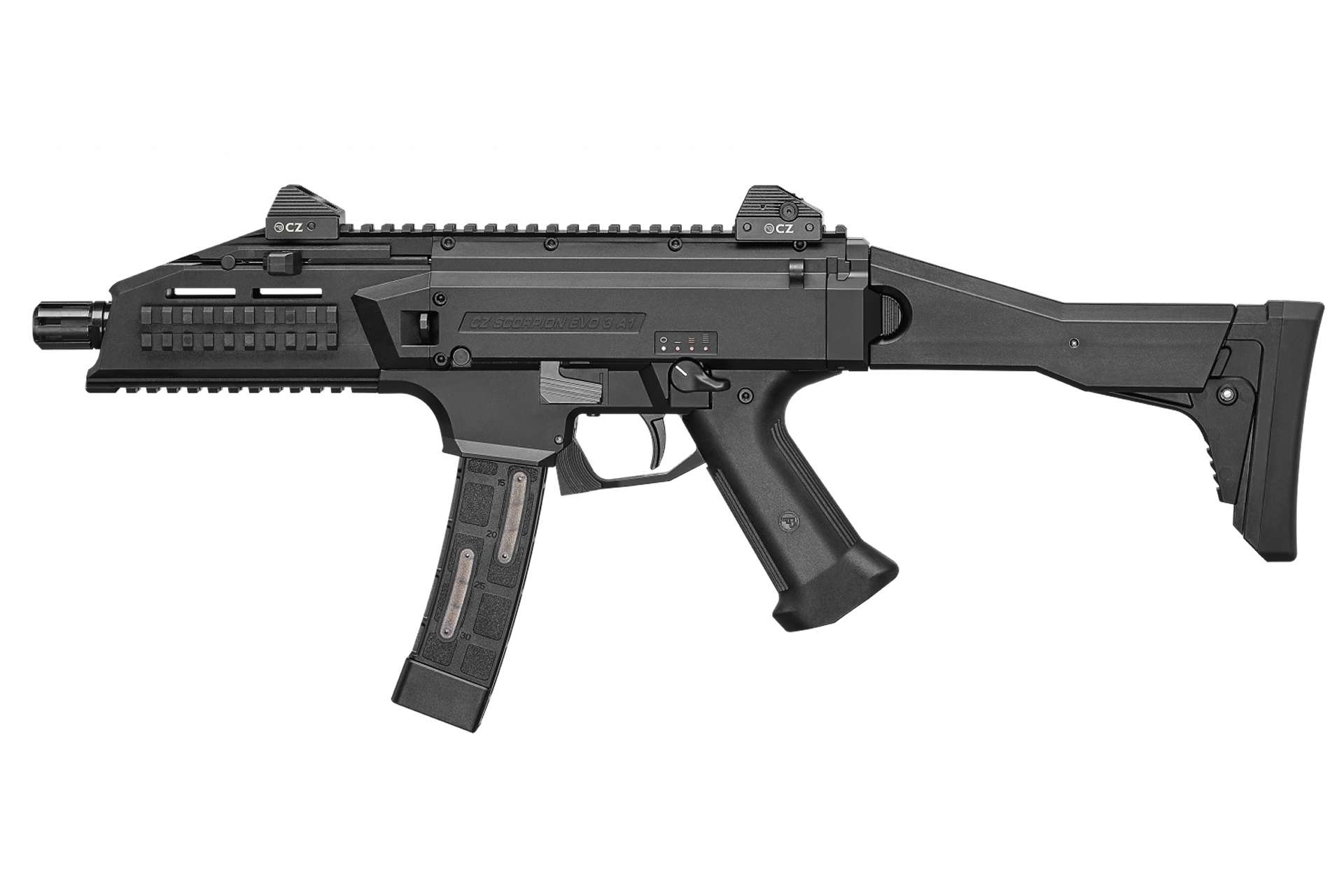
The CZ Scorpion Evo 3 A1 is a lightweight submachine gun. (Picture source: CZ)
The CZ Scorpion Evo 3 A1 is a widely respected submachine gun known for its reliability, compactness, and versatility in various operations, including law enforcement and counter-terrorism. Its ergonomic design, combined with accuracy and burst-fire capabilities, makes it a preferred choice for security forces globally. Despite the availability of the ASMI, this procurement emphasizes the difficulties indigenous products face against renowned foreign weapons.
Vinveli, primarily known for drone systems, enters the light arms supply sector with this deal. The acquisition demonstrates the company's diversification, while simultaneously highlighting the challenges local manufacturers face in competing with foreign counterparts, even in a nationalistic economic environment.
The CZ Scorpion Evo 3 A1 is a lightweight submachine gun designed for both maneuverability and durability. With a 196 mm barrel, it offers solid precision at short to medium ranges. The firearm holds a 30-round magazine and features adjustable iron sights for precise targeting. Its fiberglass-reinforced polymer frame keeps the weight at 2.6 kg without a magazine, making it both lightweight and durable.
The gun's ergonomic design includes a foldable and extendable stock, allowing the total length to vary between 625 and 675 mm, depending on the configuration. Its compact width of 82 mm when folded makes it suitable for transport and close-quarters engagements. The firearm’s rapid-fire capability is enhanced by a trigger pull weight of approximately 48 N, ensuring quick responsiveness in close combat situations. With an M18 × 1 threaded barrel, the weapon can be fitted with suppressors or muzzle brakes to adapt to different operational needs.
This contract fits into a broader trend of modernization within Indian police forces, seeking cutting-edge equipment to address increasing internal security threats, including terrorism. The CZ Scorpion Evo 3 A1 will significantly enhance UP ATS’s operational capabilities, offering greater efficiency and responsiveness in high-risk interventions.
- Details
- Written by: Vandenbosch
- Category: 2024
- Hits: 2845
The Kalashnikov Group, one of Russia's leading arms manufacturers, has signed its first international contract for the delivery of KUB-E (UB) guided munitions to a foreign customer. This deal, brokered by Rosoboronexport, marks a significant milestone for the company as it extends its offerings beyond the domestic market.
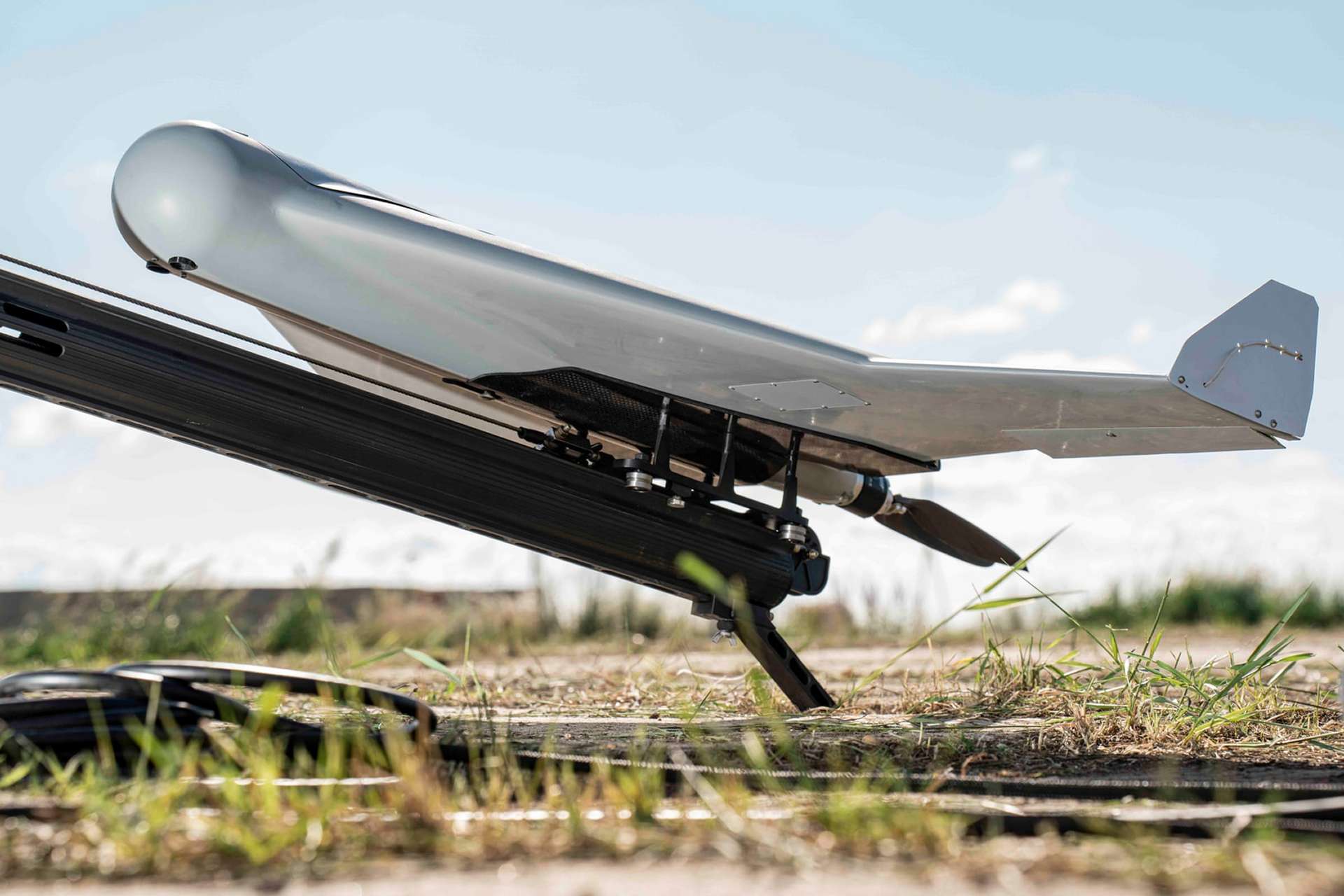
The KUB-E is a loitering munition developed by Zala Aero, a subsidiary of Kalashnikov. (Picture source: Kalashnikov)
The KUB-E, already recognized for its operational effectiveness, has demonstrated its combat capabilities in real conditions, particularly in areas covered by air defense systems. This loitering munition is designed to neutralize both individual and group armored vehicles, enabling precise strikes deep within enemy lines. Its versatility allows it to operate both day and night, even under adverse weather conditions, such as wind gusts of up to 10 meters per second.
The system's control architecture allows for real-time command transmission, enhancing its tactical utility on the battlefield. After passing state tests in November 2021, the KUB-E was cleared for wider distribution in 2022, making it a key asset for both Russian forces and international clients.
Kalashnikov’s production capacity ensures that the company can meet both domestic and international demand without compromising its obligations within Russia. This international expansion is seen as a crucial step in strengthening the export potential of Kalashnikov’s defense products, while simultaneously meeting the needs of Russia's armed forces.
The KUB-E is a loitering munition developed by Zala Aero, a subsidiary of Kalashnikov. It is a kamikaze drone designed for high-precision strikes against land and maritime targets. With a wingspan of 1.21 meters, a length of 0.95 meters, and a payload capacity of 3 kg, the KUB-E can destroy infrastructure, lightly armored vehicles, and human targets. Its attack mode involves a silent flight and a vertical descent onto the target, allowing it to strike vulnerable areas, such as the top of tanks where the armor is thinner.
The KUB-E can reach speeds of up to 130 km/h and remain airborne for up to 30 minutes, allowing it to loiter over the target before striking. The system relies on real-time image recognition and is capable of operating both day and night, even in challenging weather conditions. It is often used in areas with active air defense, due to its ability to evade conventional radar systems.
First introduced at the IDEX 2019 exhibition in Abu Dhabi, the KUB-E has since been tested in real combat scenarios, proving its operational effectiveness. Its naval version also allows for launches from fast boats, expanding its potential in various combat environments.
Read more: Kalashnikov to Deliver KUB-E Loitering Munitions to an International Client
- Details
- Written by: Administrator
- Category: 2024
- Hits: 27525
Barrett Firearms, a renowned American manufacturer of sniper rifles, has unveiled its latest innovation: a 30mm semi-automatic grenade launcher for the U.S. Army's Precision Grenadier System (PGS) Program. The new Squad Support Rifle System (SSRS), designed in collaboration with the tech start-up MARS Inc., is set to revolutionize the battlefield with its advanced capabilities and cutting-edge design. This marks a significant step forward in the evolution of soldier lethality systems.
Follow Army Recognition on Google News at this link
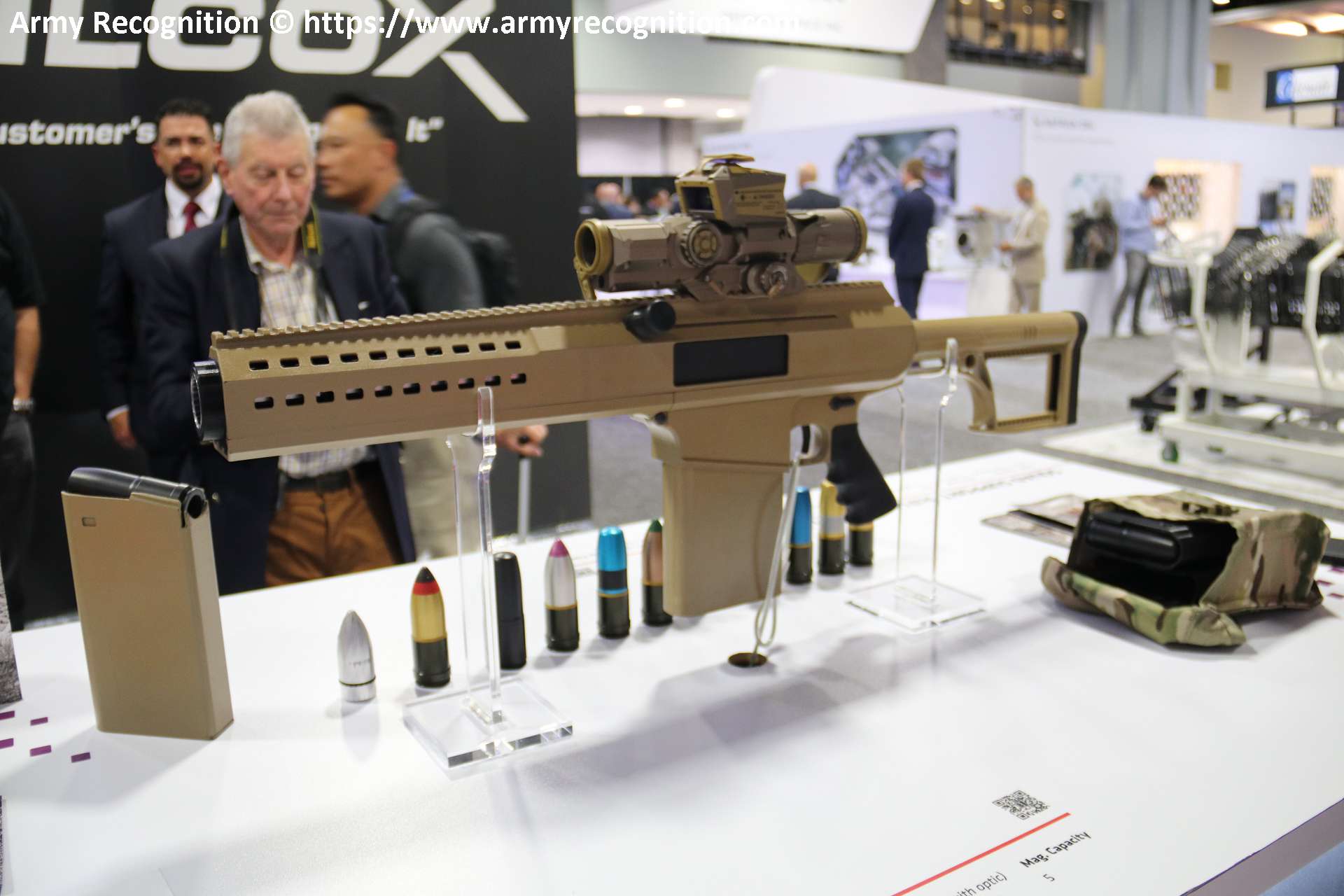
Barrett unveils its cutting-edge 30mm automatic grenade launcher at AUSA 2024, showcasing advanced firepower and counter-defilade capabilities for the U.S. Army’s Precision Grenadier System (PGS) Program. (Picture source: Army Recognition Group)
MARS Inc., a finalist in the U.S. Army's xTech Soldier Lethality competition, brings its technological expertise to the table, complementing Barrett’s established experience in weaponry. The strategic partnership aims to produce a next-generation 30mm support rifle that enhances soldiers' effectiveness in diverse combat scenarios.
The U.S. Army's Precision Grenadier System (PGS) is designed to enhance infantry effectiveness by replacing older, single-shot grenade launchers like the M320 with a more advanced system. The PGS is a semi-automatic, magazine-fed weapon that provides soldiers with greater precision and firepower. It is intended to engage targets from as close as 35 meters to beyond 500 meters, including enemies hiding behind cover, which the current systems struggle with. The PGS aims to offer a flat trajectory for faster and more accurate engagements, reducing the flight time for rounds at longer distances.
Additionally, the PGS will include a sophisticated fire-control system capable of programming rounds and a family of ammunition for different tactical situations. This could include rounds for counter-defilade, close-quarters combat, and even armor-piercing or anti-drone munitions (Counter-UAS). The program has reached its later stages, with several companies, such as FN America and Plumb Precision Products, submitting designs for evaluation. The Army is expected to select a final candidate by 2025, after successful technology demonstrations.
Key to the Barrett SSRS’s design is its user-friendly, assault-rifle-based structure. The weapon features a butt stock at the rear, an five rounds ammunition magazine in the center, and a barrel length of 305mm. The grenade launcher is compact and versatile with an overall length of 861mm and weighing just 6.3kg. It can fire various ammunition, including airburst rounds, giving soldiers a crucial advantage on the battlefield.
The weapon is also equipped with the Vortex Optics XM-157 sight, similar to the sight mounted on the U.S. Army's XM7 6.8mm assault rifle. This optical enhancement further strengthens the SSRS’s ability to provide precision in combat, aligning with the U.S. Army's modernization goals.
As Barrett leads a team of industry-leading partners, this next-generation grenade launcher is set to be a key component of the U.S. Army’s future soldier lethality systems, combining firepower, precision, and safety for the modern battlefield.
Read more: Barrett Unveils New SSRS 30mm Automatic Grenade Launcher for US Army’s PGS Program
- Details
- Written by: Administrator
- Category: 2024
- Hits: 7851
During the AUSA 2024 defense exhibition and conference held in Washington D.C., United States, Elbit America, the American division of the Israeli Company Elbit Systems, displayed a scale model of its new SIGMA, a wheeled self-propelled howitzer designed to respond to the needs of the U.S. Army's new mobile howitzer in the framework of the Next Generation Howitzer (NGH).
Follow Army Recognition on Google News at this link
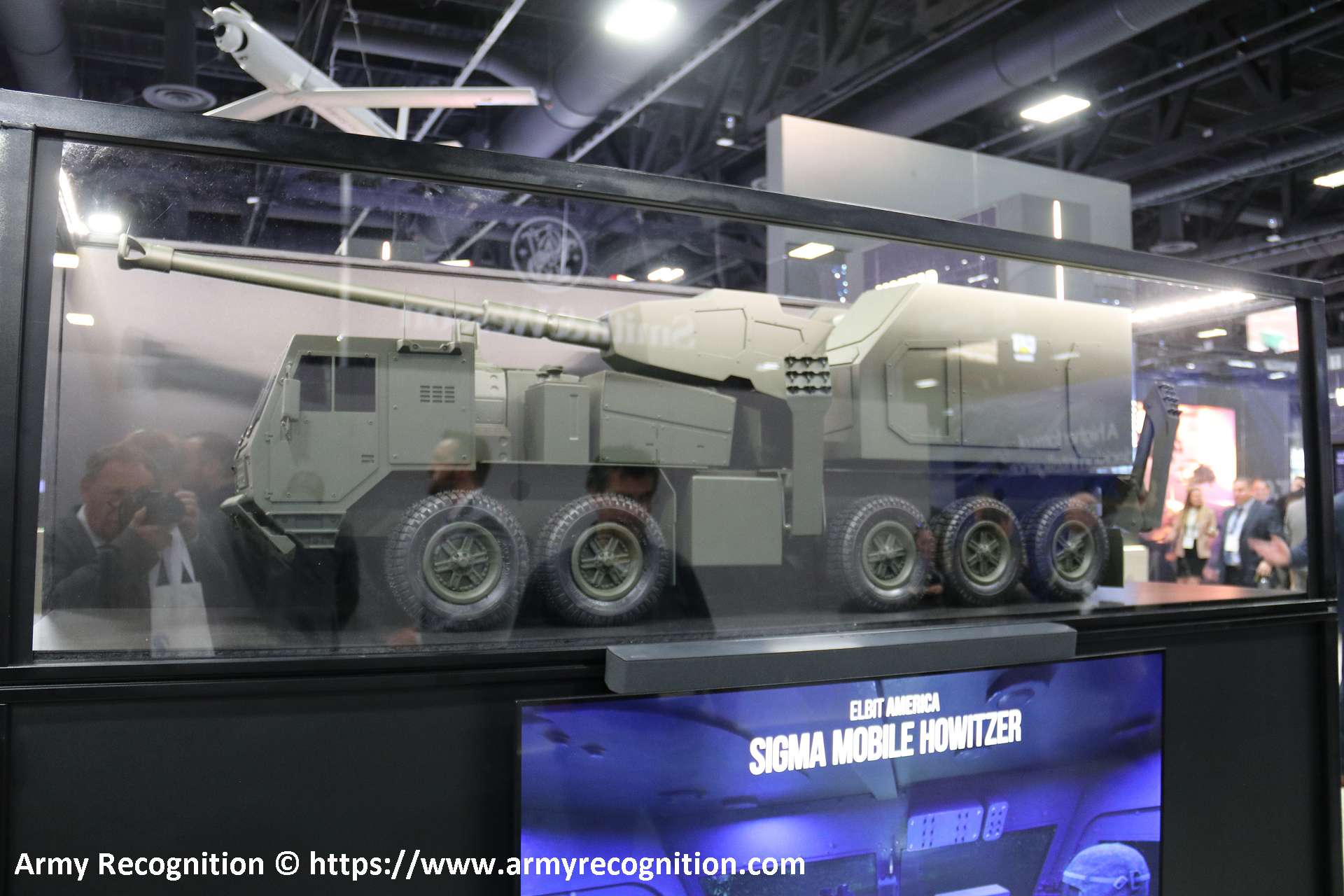
Elbit America showcases a scale model of the SIGMA 155mm automated self-propelled howitzer at AUSA 2024, a defense exhibition and conference in Washington D.C., United States. (Picture source: Army Recognition Group)
The U.S. Army's Next Generation Howitzer (NGH) project is part of an ongoing effort to modernize its artillery systems, specifically focusing on a new, more mobile, and lethal 155mm howitzer. This initiative comes after the termination of the Extended Range Cannon Artillery (ERCA) program in early 2024, which had faced technical difficulties. The NGH program aims to develop a system capable of greater range, mobility, and survivability, particularly suited for future near-peer conflicts expected around 2040 and beyond.
One of the key features of this project is the emphasis on a truck-mounted platform, which would allow for better mobility and integration with fast-moving units like Stryker formations. The U.S. Army's fiscal year 2025 budget request has allocated $8 million for early-stage studies and hardware development, with evaluations scheduled to take place in the coming years. Industry players such as BAE Systems, Elbit America, and Rheinmetall are among those expected to participate in competitive evaluations to propose solutions.
The goal is to develop a self-propelled howitzer system that can be produced domestically by 2030. This system would replace aging towed howitzers like the M777, which, while effective, lack the mobility needed for modern, rapidly evolving battlefields.
The SIGMA howitzer, developed by Israeli defense company Elbit Systems, is a state-of-the-art, fully automated, self-propelled artillery system. Designed around the 155mm NATO-standard caliber, the SIGMA system has been optimized for both range and precision, playing a critical role in modern military operations that require fast, mobile, and highly accurate artillery support.
SIGMA's key strength lies in its automation and mobility. Unlike traditional towed artillery or less mobile tracked systems, SIGMA is mounted on a wheeled platform, allowing for quicker repositioning on the battlefield. This increased mobility is essential in environments where artillery units must quickly adapt to changing tactical situations and avoid enemy counter-fire. The system's automation minimizes the need for large crews and allows it to rapidly load, aim, and fire without significant human intervention. This not only reduces manpower requirements but also increases operational efficiency.
The SIGMA system is equipped with advanced targeting and ballistic systems, enabling it to strike targets at ranges of up to 40 km, depending on the ammunition used. This range can be extended with specialized munitions like rocket-assisted projectiles. Furthermore, the system's network-centric design integrates seamlessly with broader military command-and-control infrastructures, allowing it to receive targeting data from sources like drones and ground-based radar, enabling precise and coordinated strikes.
Elbit Systems began production of the SIGMA in the early 2020s, with the system aimed at replacing older artillery platforms in Israel and other nations' arsenals. The Israeli Defense Forces (IDF) have reportedly been among the first to deploy SIGMA, with deliveries beginning around 2023, after an extensive development and testing phase. While the system is relatively new, it is designed for versatile use, from direct fire support to counter-battery operations and precision strikes against high-value targets.
- Details
- Written by: Halna du Fretay
- Category: 2024
- Hits: 4493
The Flyer 72-HD tactical mobility vehicle was unveiled at AUSA 2024, a significant defense exhibition in Washington D.C., marking an important development in the design of light vehicles for special forces and modern military operations. Developed by the American company Flyer Defense, this vehicle is engineered to meet the demanding requirements of operational environments while offering unmatched logistical flexibility. Selected by the United States Special Operations Command (USSOCOM) for the Ground Mobility 1.1 (GMV 1.1) program, the Flyer 72-HD exemplifies Flyer Defense’s expertise in tactical ground mobility.
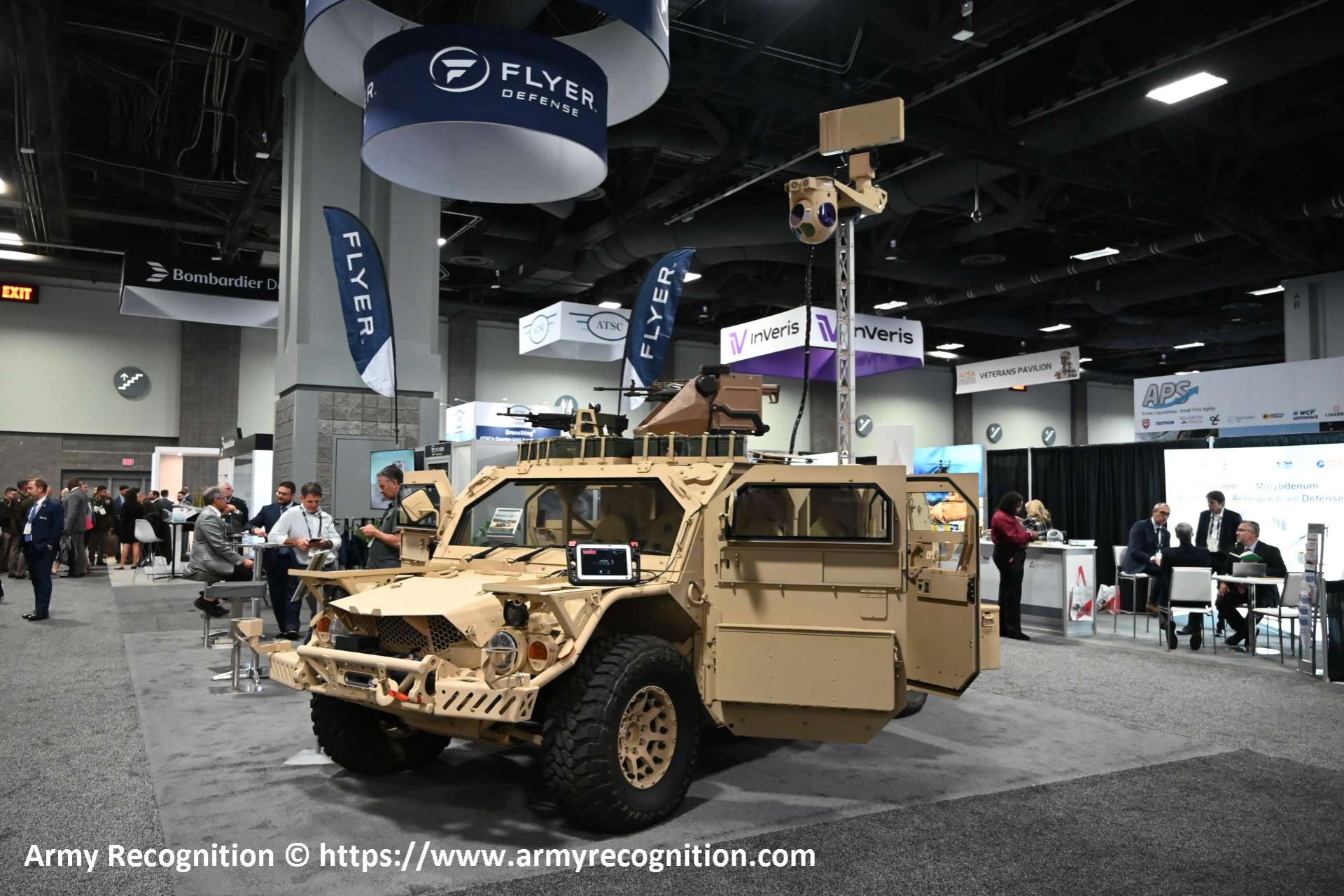
In terms of protection and weaponry, the Flyer 72-HD can be equipped with various systems, including a 12.7 mm machine gun or an automatic cannon of up to 30 mm (Picture source: Army Recognition)
With a width of 72 inches (183 cm), the Flyer 72-HD is specifically designed to be transported internally in aircraft such as the CH-47, CH-53, and C-130, allowing for quick and efficient deployment in remote or hostile areas. It can carry up to nine personnel, and its payload capacity reaches 2,585 kg, providing greater flexibility for mission-specific equipment and weaponry. The vehicle is also designed to be operational in less than a minute after leaving the aircraft, with the ability to be quickly armed for immediate operations.
The Flyer 72-HD is powered by a 2.0-liter bi-turbo diesel engine with direct injection, generating 220 horsepower and 450 Nm of torque. Paired with a six-speed automatic transmission, this engine ensures optimal responsiveness across difficult terrains. The vehicle can reach a top speed of 153 km/h and offers a range of up to 805 km in optimal conditions, making it a valuable asset for missions requiring speed and endurance.
In terms of protection and weaponry, the Flyer 72-HD can be equipped with various systems, including a 12.7 mm machine gun or an automatic cannon of up to 30 mm. It can also integrate the Kongsberg CROWS II system, armed with a .50 caliber machine gun and Javelin anti-tank missile launchers. This adaptability enables the Flyer 72-HD to fulfill a variety of mission roles, whether in reconnaissance, combat support, or logistics.
Another key feature of the Flyer 72-HD is its ability to operate in diverse terrains. It is built to tackle inclines of up to 60% and can handle side slopes of 40%, with the capacity to ford water up to 76 cm deep without preparation. This flexibility makes it a preferred choice for military operations in extreme environments, offering superior off-road mobility.
The vehicle's appeal extends beyond the United States, thanks to a strategic partnership between Flyer Defense and Tekne, an Italian company specializing in defense solutions. This collaboration aims to locally produce the Flyer 72-HD for the Italian armed forces and other NATO allies. The partnership is designed to strengthen Italy’s defense capabilities while ensuring fast delivery and long-term support through local production. It reflects a growing trend of collaboration within the defense sector, as NATO countries seek to enhance their interoperability and operational readiness.
The Flyer 72-HD’s expanding presence in the international market demonstrates its effectiveness and versatility as a tactical mobility vehicle. By combining American design with local production in Italy, this vehicle plays a key role in the modernization strategies of various armed forces. In both the United States and Europe, the Flyer 72-HD continues to prove its potential in a wide range of military operations, further establishing Flyer Defense as a leader in tactical mobility solutions.
Read more: Flyer 72 HD Tactical Mobility Vehicle for US and European Special Forces at AUSA 2024
- Details
- Written by: Halna du Fretay
- Category: 2024
- Hits: 5352
North Korea is intensifying its efforts in military drone development by equipping its unmanned systems with reverse-engineered copies of American Hellfire missiles. This information, shared by Brigadier General Patrick Costello during the 2024 United States Army Association conference, has raised significant concerns in the U.S., particularly regarding the growing threats in the Indo-Pacific region.
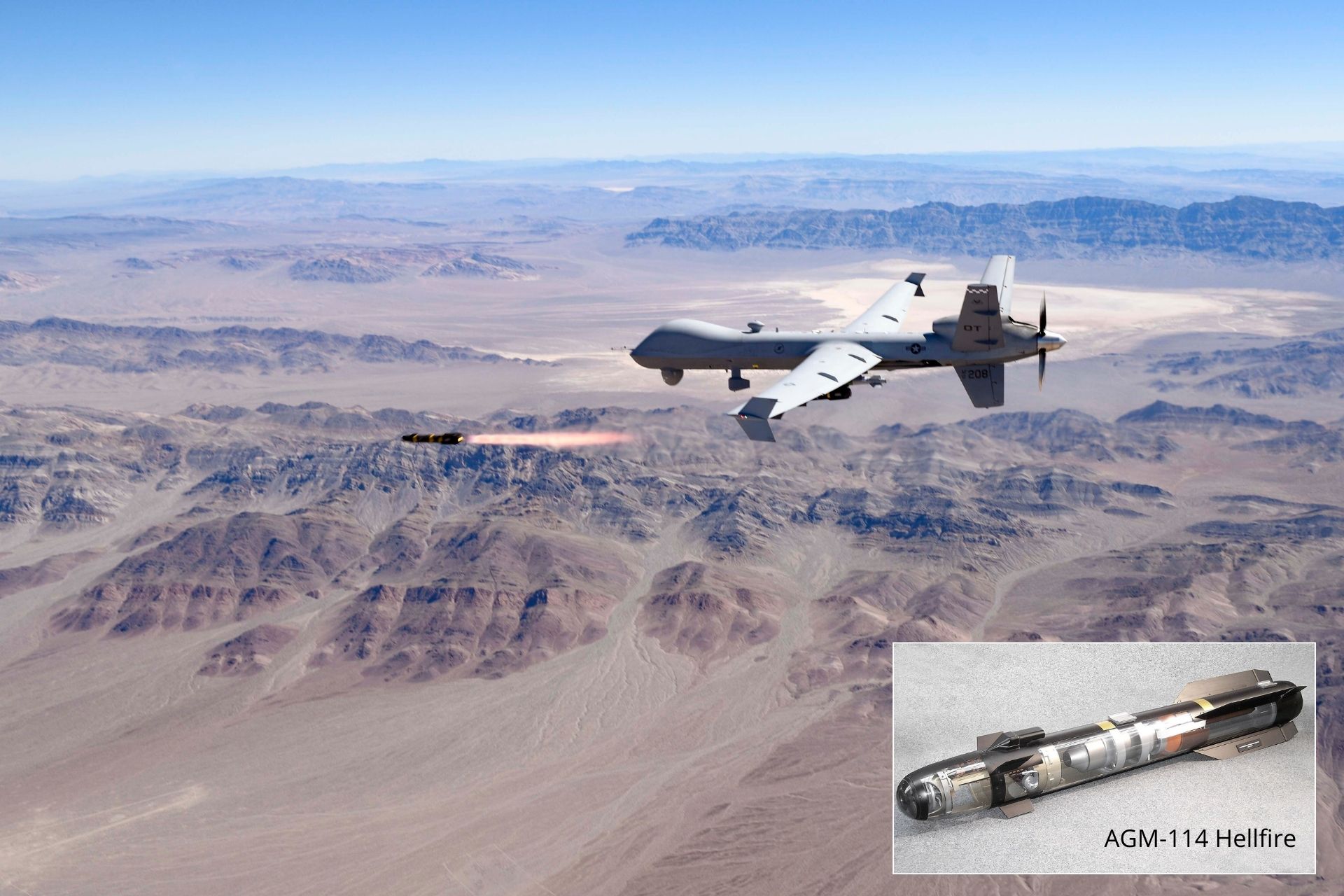
An MQ-9 Reaper remotely piloted aircraft over the Nevada Test and Training Range and fires an Air-to-Ground Missile-114 Hellfire missile on August 30, 2023 (Picture source: US DoD)
According to General Costello, North Korea's newly revealed drones not only resemble U.S. models like the MQ-9 Reaper and the RQ-4 Global Hawk, but they are also equipped with missiles modeled after the AGM-114 Hellfire, a guided air-to-surface missile used on U.S. drones. Costello noted that Pyongyang has focused on developing drones that weigh approximately 600 kilograms or less, fitting into the categories of small to medium-sized drones with multirole capabilities.
These statements follow North Korea's display of two drones in July 2023, which garnered attention due to their striking resemblance to U.S. models. While the exact capabilities of these drones and their missiles remain unclear, the U.S. military now believes they were developed with some knowledge of American technologies. Videos released by North Korean state media showed one of the drones firing missiles closely resembling the Hellfire, further drawing comparisons in the West.
This development comes as the U.S. military braces for the growing threat posed by drones, a phenomenon that has intensified in recent conflicts, particularly in Ukraine. General Costello emphasized that the technological transfers and relationships observed in ongoing conflicts, particularly between North Korea and Russia, warrant close monitoring. Russia, which is engaged in the war in Ukraine, could benefit from North Korea’s new capabilities to bolster its military arsenal.
General David Stewart, Director of the Joint Counter-UAS Office, also noted that drone threats have now become an integral part of modern military environments, regardless of the conflict zone. In response, the U.S. Department of Defense has requested a budget of $2.4 billion for unmanned aerial systems in the 2025 fiscal year. Various branches of the U.S. military are also seeking additional funding to develop counter-drone technologies, with an unfunded request for $741 million in this fiscal year alone.
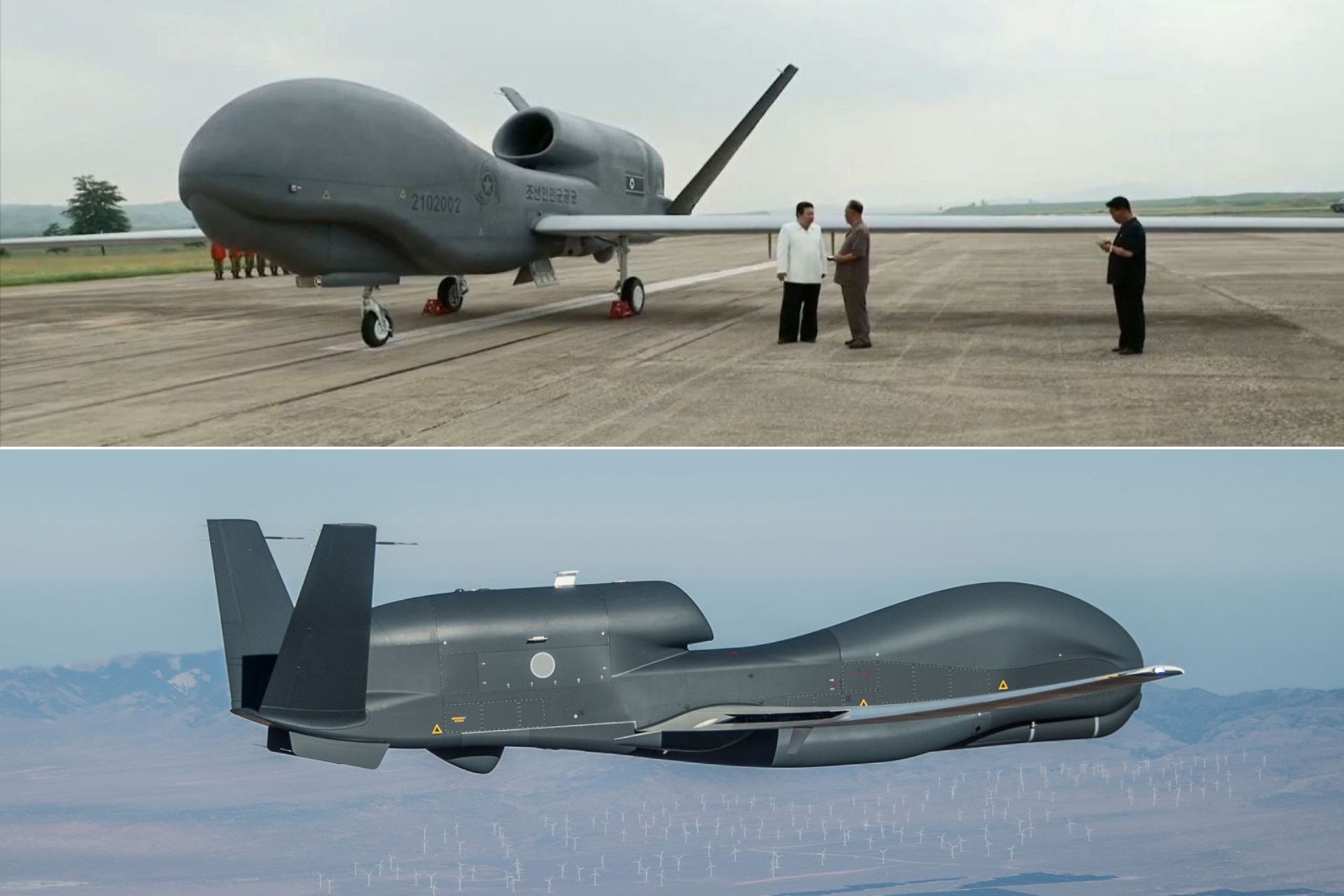
North Korean clones of American MQ-9 Reaper and RQ-4B Global Hawk UAVs, inspected by North Korea's Kim Jong-un (Top) and the RQ-4 Global Hawk (Bottom) (Picture source: KNCA/ Northrop Grumman)
In this context, the defense industry is seeing the emergence of new players. Companies like Anduril, led by Palmer Luckey, have signed multibillion-dollar contracts with U.S. Special Operations Command to provide counter-drone technologies. Recently, the Pentagon awarded the company another $250 million contract for 500 reusable drones and associated jamming technologies.
North Korea’s advances in military drones, combined with its progress in missile reverse-engineering, present significant challenges for the U.S. and its allies. Although these North Korean drones are less sophisticated than their American counterparts, they still pose a serious threat in conflict scenarios, particularly in the Indo-Pacific region. As the U.S. continues to strengthen its drone defense capabilities, it is becoming evident that mastery of this technology by nations like North Korea could redefine the nature of modern conflicts.
U.S. intelligence services recently confirmed the extent of North Korean reverse-engineering during the October 2024 U.S. Army Association conference. At the event, **Business Insider** revealed that North Korea had modeled its Saetbyol-4 and Saetbyol-9 drones after the U.S. MQ-9 Reaper and RQ-4 Global Hawk. These North Korean drones were first observed during a July 2023 military parade, where one was filmed launching missiles similar to the Hellfire. While it remains unclear how Pyongyang acquired these technologies, U.S. officials suspect espionage or the recovery of parts from conflict zones.
This situation is especially concerning as North Korea could potentially share these weapons with Russia, aiding Moscow’s war efforts in Ukraine. Recent reports also suggest that North Korean arms were used in the October 7, 2024, attacks by Hamas, further amplifying concerns that these American drone copies could fall into hostile hands.
In addition to drone development, North Korea successfully tested a solid-fuel intermediate-range ballistic missile (IRBM) on January 14, 2024, equipped with a hypersonic warhead. This advancement in ballistic missiles represents a major strategic threat to the U.S., as these missiles are capable of reaching targets such as Guam and are more difficult to intercept due to their rapid launch capability and hypersonic speed.
These military advancements are occurring amidst increasing tensions on the Korean Peninsula. North Korea has recently taken political steps, such as calling for a constitutional amendment to challenge the status of South Korea as a separate state. Although North Korea asserts it is not seeking war, it also indicates it will not avoid one if necessary. These developments suggest that Pyongyang’s growing military capabilities could further destabilize an already fragile regional situation.
Read more: North Korea Develops Drones Equipped with Reverse-Engineered American Hellfire Missiles

- Details
- Written by: Administrator
- Category: 2024
- Hits: 20657
In a recently released video by the People's Liberation Army (PLA), the Chinese military has showcased the impressive capabilities of its PCL-191, internationally known as the PHL-16 Multiple Launch Rocket System (MLRS). The footage highlights its firepower, demonstrating its ability to launch both 370mm air-burst guided rockets and 750mm tactical missiles with remarkable precision. With a maximum missile range of up to 500 kilometers, the PHL-16 significantly outdistances the American HIMARS, which has a maximum range of around 300 kilometers with its long-range missile systems.
Follow Army Recognition on Google News at this link
In a video, China's PHL-16 Multiple Launch Rocket System (MLRS) showcased its powerful firepower, capable of launching both 370mm guided rockets and 750mm tactical missiles with a range of up to 500 km, surpassing the range of the US HIMARS. (Picture source: China Army Video channel)
One of the most striking aspects of the PHL-16 is its modular launcher system, which allows it to adapt to different mission requirements. Depending on the situation, the system can be configured to carry either 8 x 370mm guided rockets or 2 x 750mm Fire Dragon 480 tactical ballistic missiles. This versatility enables commanders to adjust their loadout based on operational demands, whether the task requires long-range precision strikes or the deployment of powerful tactical missiles.
The 370mm guided rockets fired by the PHL-16 are particularly noteworthy for their precision-guided technology. These rockets are capable of delivering air-burst munitions, which detonate above a target, maximizing their impact over a wide area. This feature is highly effective against enemy infantry, lightly armored vehicles, and air defense systems. With a range of up to 280 kilometers, the 370mm rockets provide the PHL-16 with long-range strike capabilities, allowing it to target deep into enemy territory while remaining outside the reach of most counterattacks.
In its tactical missile configuration, the PHL-16 can carry two 750mm Fire Dragon 480 tactical ballistic missiles. These missiles, with a range of up to 500 kilometers, are designed for high-value strategic targets, such as enemy command centers, infrastructure, and heavily defended military installations. With advanced guidance systems, these missiles offer both accuracy and considerable destructive power, making them ideal for neutralizing key objectives at long ranges. This gives the PHL-16 a strategic edge similar to short-range ballistic missile systems, with greater flexibility in payload options and deployment.
The PHL-16 is designed for rapid deployment and features a highly efficient reconfiguration process. Its automated systems allow for quick switches between rocket and missile configurations, enabling crews to rapidly adjust to changing battlefield conditions. Additionally, the system’s mobility on a wheeled chassis ensures that it can reposition swiftly after firing, reducing the risk of enemy counter-strikes. This operational efficiency makes the PHL-16 a powerful tool in high-intensity combat situations, where speed and adaptability are crucial.
The PHL-16’s combination of long-range precision and heavy firepower makes it a valuable asset for both offensive and defensive operations. Its advanced targeting capabilities allow for accurate strikes, while its impressive range provides a significant standoff distance, reducing the risk to the launcher itself. Capable of firing missiles with a range of up to 500 kilometers, the PHL-16 can threaten enemy air defenses and strategic infrastructure from a safe distance, making it a critical component of China's anti-access/area denial (A2/AD) strategy, particularly in contested regions like the South China Sea and Taiwan Strait.
In the broader context of modern warfare, the PHL-16’s precision and adaptability offer China a considerable tactical advantage. Its ability to deliver ballistic missiles with the reach and accuracy of short-range ballistic missiles means it could outperform many of the existing rocket systems in service with other nations. The 750mm Fire Dragon tactical missiles provide the ability to penetrate heavily fortified targets, adding a potent first-strike option to China’s military capabilities.
The recent unveiling of the PCL-191 (PHL-16) in action underscores China’s continuing advancements in rocket artillery and missile technology. Its range, precision, and modular flexibility make it a key component of China’s future military strategies, giving the country a powerful tool for both deterrence and offensive operations. As tensions rise in various regions, the PHL-16's capabilities offer China a significant advantage in maintaining a strategic edge on the battlefield.
- Details
- Written by: Halna du Fretay
- Category: 2024
- Hits: 8983
At the AUSA 2024 event in Washington D.C., KORD introduced its new high-energy laser weapon system, FIREFLY. Designed to address the growing asymmetric threats posed by unmanned aerial systems (UAS), FIREFLY represents a significant technological advancement in aerial defense. Mobile and palletized, the system is specifically engineered to protect forward positions and critical infrastructure, thanks to its modular architecture and scalable power ranging from 5kW to 40kW.
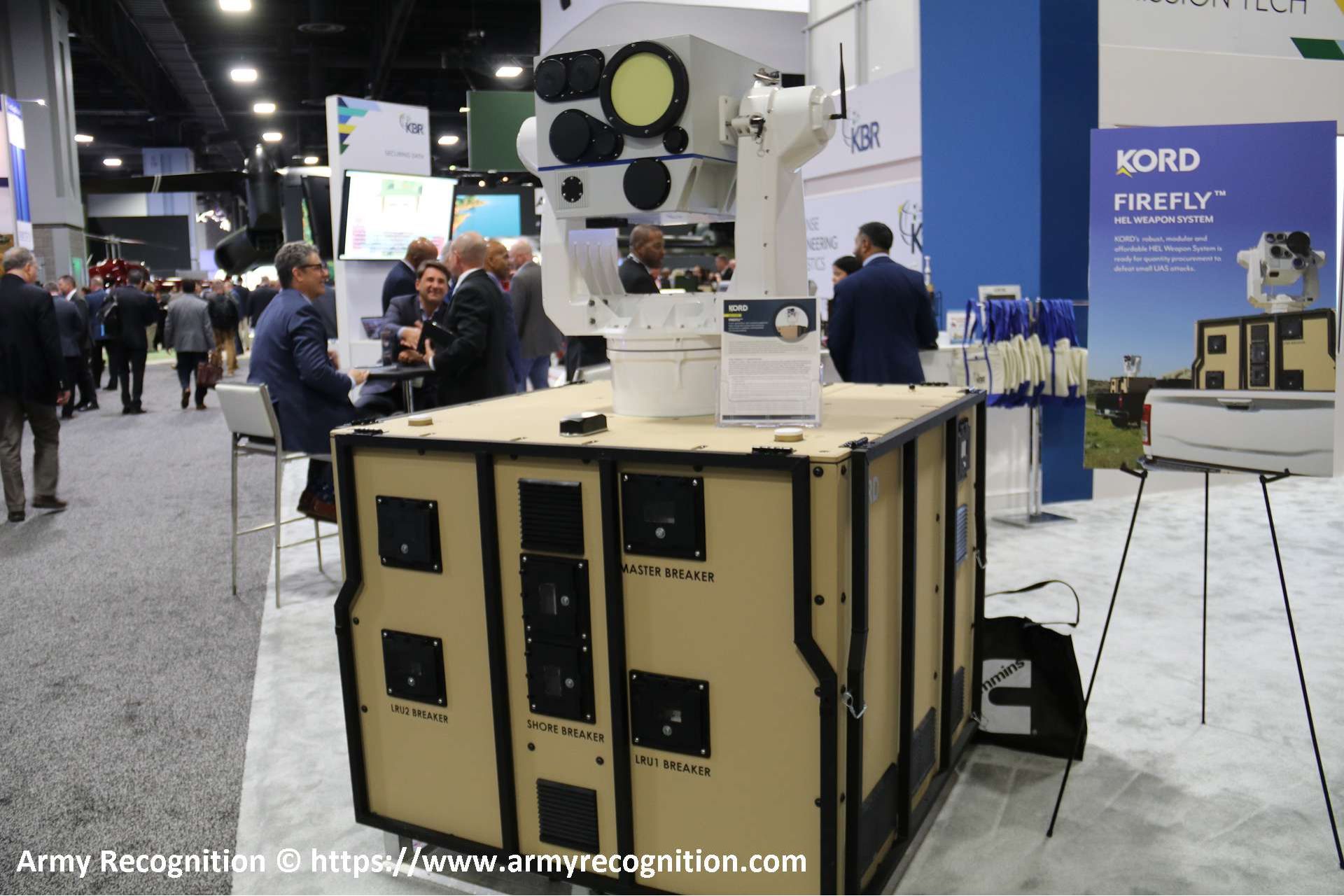
The FIREFLY high-energy laser system features an adaptable optical architecture, enabling power adjustments from 5kW to 40kW (Picture source: Army Recognition)
FIREFLY is built on a common open architecture optimized to balance performance, reliability, maintainability, and transportability. With its modular Line Replaceable Units (LRU), the system adapts to a wide range of operational applications and provides the flexibility to configure, customize, and update its capabilities as required.
This design allows FIREFLY to interface with C3S systems such as FAAD and MEDUSA, as well as other autonomous detection systems like radars and optical sensors. Its modularity also simplifies maintenance at both the intermediate and field levels, reducing support costs through the use of non-developmental, commercially available components.
The FIREFLY high-energy laser system features an adaptable optical architecture, enabling power adjustments from 5kW to 40kW. It also offers increased resistance to laser damage and thermal effects, an extended magazine depth, and long continuous operation times, allowing it to neutralize multiple UAS threats simultaneously. To ensure target tracking, FIREFLY is equipped with an ISR payload that includes independent visible and infrared camera systems, enhanced by advanced artificial intelligence and machine learning capabilities for long-range threat detection and classification.
FIREFLY's capabilities have been rigorously tested over 34 months of continuous operation in challenging environments, demonstrating its resilience in extreme conditions, including temperatures ranging from -15°C to 35°C, and weather conditions such as rainstorms, snow, and sandstorms. It has been deployed on both fixed and unprepared sites, proving its adaptability and ease of transport and deployment.
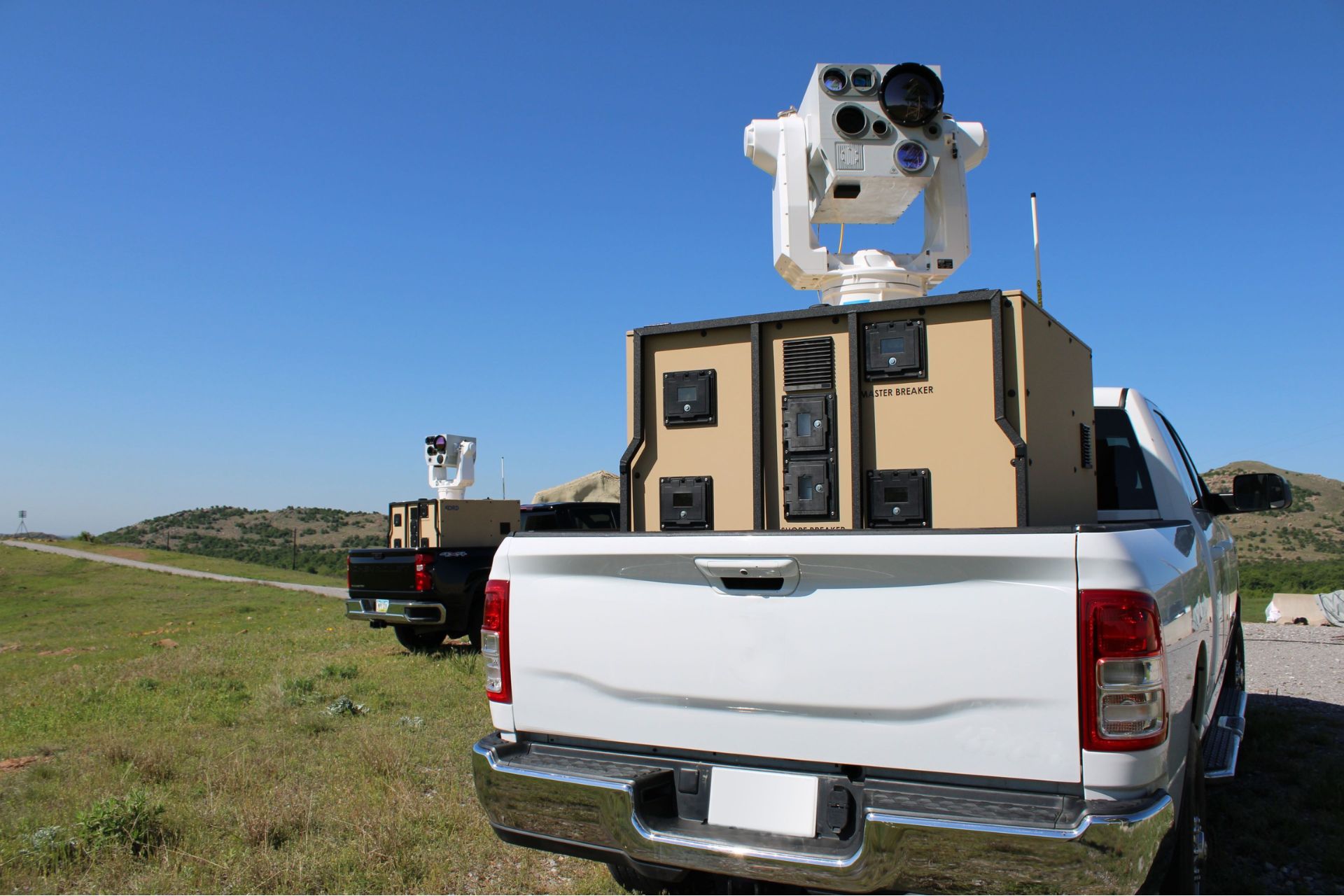
To ensure target tracking, FIREFLY is equipped with an ISR payload that includes independent visible and infrared camera systems (Picture source: KORD)
This high-energy laser system is designed to be cost-effective, with minimal logistical support, due to its simplified maintenance processes. KORD has focused on reducing production costs and delivery times by utilizing commercially available components, ensuring enhanced reliability and rapid availability of fully deployable units. FIREFLY is offered at competitive commercial terms, making it an ideal solution for armed forces seeking a modern, ready-to-deploy defense technology.
The increasing use of drones in modern warfare is radically transforming the battlefield, introducing new threats that demand innovative countermeasures. Among these, directed energy (DE) weapons, particularly lasers, stand out for their precision and efficiency. These technologies are becoming essential tools for countering UAS, which are playing an increasingly critical role in contemporary conflicts.
UAS pose a significant threat to military personnel and equipment. Their low production cost, ability to carry diverse payloads, and reduced risk to operators make them particularly attractive to both state and non-state actors. Recent conflicts, such as those in Ukraine, Yemen, and Gaza, have highlighted the growing importance of drones in military operations.
In response to this growing threat, militaries are heavily investing in counter-UAS (CUAS) systems, where laser technologies, with their rapid neutralization capabilities and long-term cost-effectiveness, play a central role in defense strategies.
- US Army Awards Red Cat Major Contract for Edge 130 Blue UAS to Enhance ISR and Combat Drone Operations
- SAHA EXPO 2024: International Defense and Aerospace Exhibition Set to Begin in Istanbul
- US Says THAAD Anti-Missile System is Now in Place in Israel
- Chinese DF-31AG Intercontinental Ballistic Missile Launched from Hainan Island