

- Details
- Written by: Halna du Fretay
- Category: 2024
- Hits: 6688










Kawasaki Heavy Industries is set to conduct a test launch of its new anti-ship missile, referred to as the "New SSM" (Surface-to-Surface Missile), during the 2027 fiscal year. This announcement was confirmed by a company representative on October 17, 2024, at the International Aerospace Exhibition in Tokyo, highlighting ongoing advancements in Japan’s defense capabilities.
JSDF Type 12 anti-ship missile (Picture source: JGSDF)
The new missile is a long-range cruise system designed to strike from a safe distance, outside the range of enemy defense systems. Powered by a compact, fuel-efficient turbofan engine, it features wings for horizontal flight, resembling an aircraft. Due to its similarities in range, shape, and capabilities to the U.S. "Tomahawk" cruise missile, it has been colloquially referred to as the "Japanese Tomahawk." Like its American counterpart, this missile is subsonic, flying at speeds close to the sound barrier.
Alongside Mitsubishi Heavy Industries' missile series, including the 12SSM cruise missile introduced in 2012, Kawasaki Heavy Industries has focused on developing this "New SSM" (also known as the "new surface missile"). According to a representative from the Ministry of Defense’s Acquisition, Technology, and Logistics Agency, this new missile is seen as an improvement over existing models, with an extended range that could reach up to 2,500 kilometers. This capability would enable it to strike strategic targets deep within China from Japan's western regions.
In June 2023, Japan’s Ministry of Defense signed a five-year research contract with Kawasaki Heavy Industries, valued at 339 billion yen ($2.3 billion). The project is officially titled "Study of Prototype Technologies for the New Anti-Ship Missile," with the final test launch planned for fiscal year 2027, marking the conclusion of this research phase.
The missile will be equipped with a turbofan engine specifically developed by Kawasaki, designated as the "KJ300." This engine, measuring 950 millimeters in length and weighing 90 kilograms, provides 365 kgf of thrust through a twin-shaft configuration. The KJ300 has been designed for optimal performance in stand-off missiles while maintaining low fuel consumption, one of the key features presented by Kawasaki at the 2024 aerospace exhibition.
In addition to its long range, Kawasaki emphasizes the missile’s low radar cross-section (RCS), enhanced maneuverability, and battlefield survivability. The missile can also be launched from various platforms, including land vehicles, ships, and aircraft, offering flexible deployment across different branches of the military.
In parallel, the Ministry of Defense has allocated a budget for another cruise missile development program, focusing on a "new precision anti-ship and surface-to-surface missile." This project builds on technological improvements made to the 12SSM and aims to enhance the missile’s long-range and precision strike capabilities. The Acquisition, Technology, and Logistics Agency has confirmed that this missile, expected to become operational from 2027, will enter production and deployment phases concurrently with Kawasaki’s New SSM.
The simultaneous development of these two systems demonstrates Japan’s intent to strengthen its defense capabilities with long-range strike systems, adapted to protect its islands and deter regional threats. By acquiring such weapons, Japan significantly enhances its ability to project long-range firepower, while diversifying its response options against potential aggression in the Indo-Pacific region.
Read more: Kawasaki Heavy Industries Plans to Test Its Japanese Tomahawk SSM in 2027

- Details
- Written by: Vandenbosch
- Category: 2024
- Hits: 2719
RTX, through its subsidiaries Collins Aerospace and Raytheon, showcased advanced autonomous capabilities for launched effects during the U.S. Army’s Experimental Demonstration Gateway Event (EDGE), held at Yuma Proving Ground, Arizona. This demonstration marks an advancement in the development of collaborative autonomy between manned and unmanned systems, strengthening the Army’s ability to detect, engage, and neutralize threats in contested environments.
RTX presented two key collaborative autonomy solutions during the Experimental Demonstration Gateway Event. (Picture source: RTX)
At the heart of this demonstration were small uncrewed aerial vehicles (UAVs), referred to as "launched effects," which can be deployed from a variety of platforms, including ground and air vehicles. These UAVs were tested in operational conditions, demonstrating their ability to coordinate and execute complex missions under human supervision. This "human-on-the-loop" approach combines the decision-making capabilities of human operators with the autonomy of the UAVs, enabling rapid and coordinated responses to evolving threats.
RTX presented two key collaborative autonomy solutions during the event. Collins Aerospace unveiled its RapidEdge mission system, a software toolset that acted as the "brains" behind the coordination of the UAV team. The system allowed for seamless communication between multiple UAVs with different payloads, enabling them to act as substitutes for launched effects. Raytheon, on the other hand, showcased its autonomous capabilities developed under the Collaborative Operations in Denied Environment (CODE) government program. These capabilities were integrated into the Coyote UAV family, which has proven its effectiveness in combat operations.
Both systems worked together, using modular open system architectures and mesh networks to share data and execute complex missions. This interoperability was crucial in demonstrating the potential of open system designs, which offer greater flexibility and adaptability in mission planning and execution.
"RTX's demonstration at the EDGE exercise showed how autonomous sensing and launched effects can extend the Army’s operational reach, especially in anti-access or area denial environments," said Ryan Bunge, vice president and general manager of Collins' C4I&A portfolio. "By leveraging RTX’s combined capabilities, we were able to demonstrate the power of collaborative autonomy and the long-term benefits of open system architectures for the Army."
During the exercise, the mission system translated the human operator’s goals into actionable tasks for the UAVs. These tasks included intelligence gathering, surveillance, and reconnaissance, all autonomously executed by the UAVs, even when communication with ground operators was lost. This autonomous decision-making validated the potential for launched effects to carry out critical missions without continuous human intervention, a capability essential for the Army’s future operational needs.
The EDGE demonstration was sponsored by the U.S. Army Futures Command’s Future Vertical Lift Cross-Functional Team, to expand the Army’s targeting, reconnaissance, and lethality capabilities through manned-unmanned teaming. EDGE is part of the broader effort by the Army Futures Command to drive innovation and modernization across the Army’s key priorities.
RTX’s participation in this event underscores its commitment to advancing autonomous technologies that enhance battlefield awareness and lethality. By demonstrating the practical application of launched effects and collaborative autonomy, RTX is helping bring the U.S. Army closer to its vision of a highly networked, adaptable, and resilient force capable of operating in the most challenging environments.
Read more: RTX Demonstrates Launched Effects Autonomy at US Army’s EDGE Exercise
- Details
- Written by: Halna du Fretay
- Category: 2024
- Hits: 8610
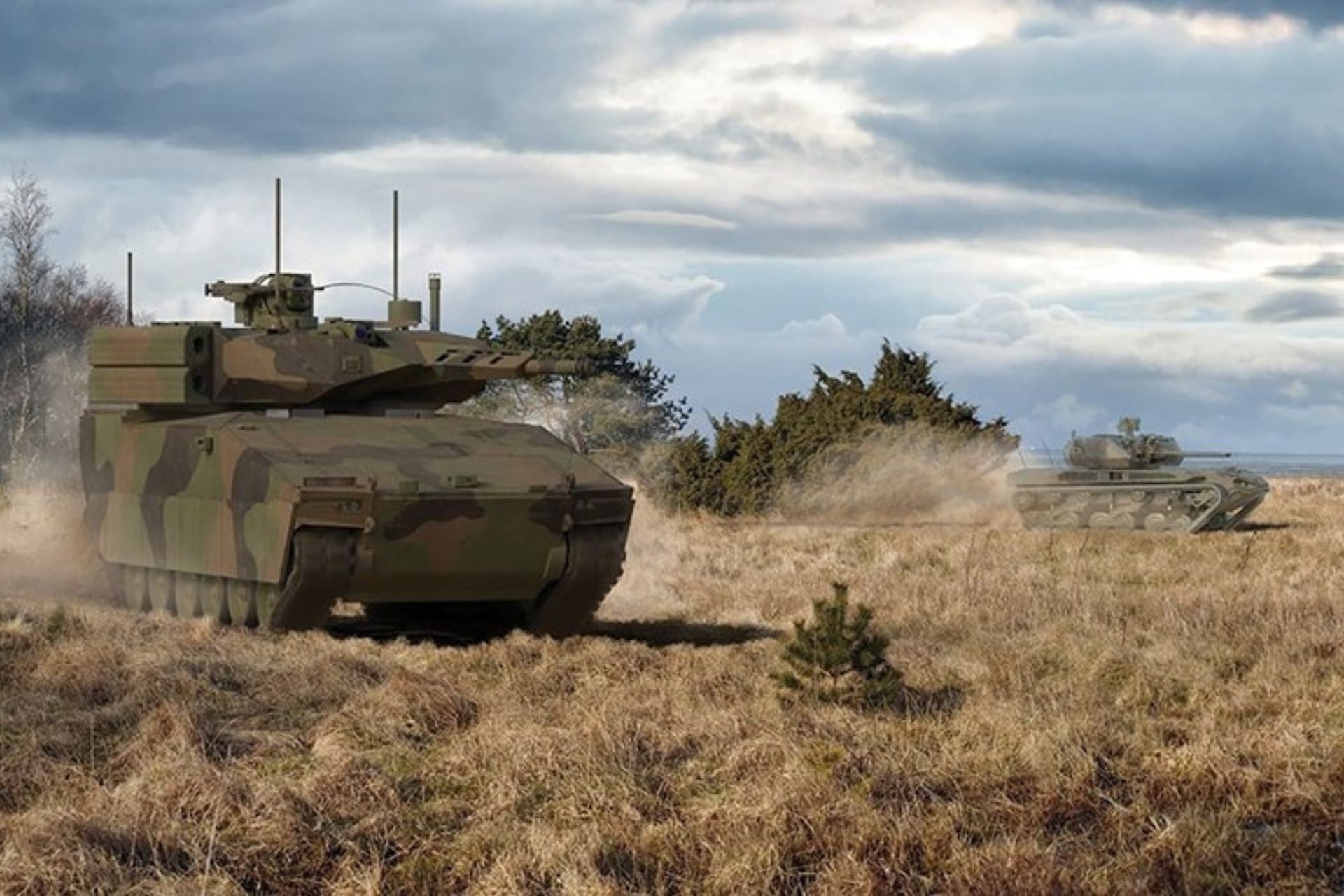
In the race to develop the U.S. Army’s next Infantry Fighting Vehicle (IFV), set to replace the renowned Bradley, American Rheinmetall and General Dynamics Land Systems (GDLS) have recently achieved a key milestone. Both companies have completed preliminary design reviews of their respective candidates, marking a significant advancement in the XM30 program. This development was confirmed by Major General Glenn Dean, the Army’s Program Executive Officer for Ground Combat Systems, during the annual U.S. Army Association conference.
The vehicle will include a remote-controlled turret with a 50 mm cannon, and the possibility of a 30 mm version upgrade, along with advanced self-protection capabilities and digital architecture (Picture source: RTX)
In June 2023, GDLS and American Rheinmetall were selected from five competitors to continue into the detailed design phase, while Point Blank Enterprises, Oshkosh Defense, and BAE Systems were eliminated. Both companies are now working on an armored vehicle featuring a remotely operated 50 mm cannon, anti-tank missiles, active protection systems, and a wide array of sensors.
The U.S. Army aims to replace approximately 3,800 Bradley vehicles, in service since the 1980s, through the Optionally Manned Fighting Vehicle (OMFV) program. The new vehicles, which will be hybrid, will offer enhanced lethality and advanced sensor systems, while reducing crew size and improving protection and versatility.
The XM30 will be part of the Army’s next-generation vehicle portfolio. It is designed to meet modern battlefield requirements, integrating hybrid-electric drive systems and a two-person crew with space for six infantrymen. The vehicle will include a remote-controlled turret with a 50 mm cannon, and the possibility of a 30 mm version upgrade, along with advanced self-protection capabilities and digital architecture.
Contracts for the development phase of this program are valued at approximately $1.6 billion, with the overall program expected to require $45 billion by its conclusion. Major General Dean noted that the Army may receive prototypes earlier than anticipated, with the first prototypes expected within 18 to 20 months following final design approvals.
The final selection for the XM30 design is projected for fiscal year 2027, with full-service entry planned for two years later. The use of digital tools has accelerated the design process, allowing rapid feedback from soldiers at every stage.
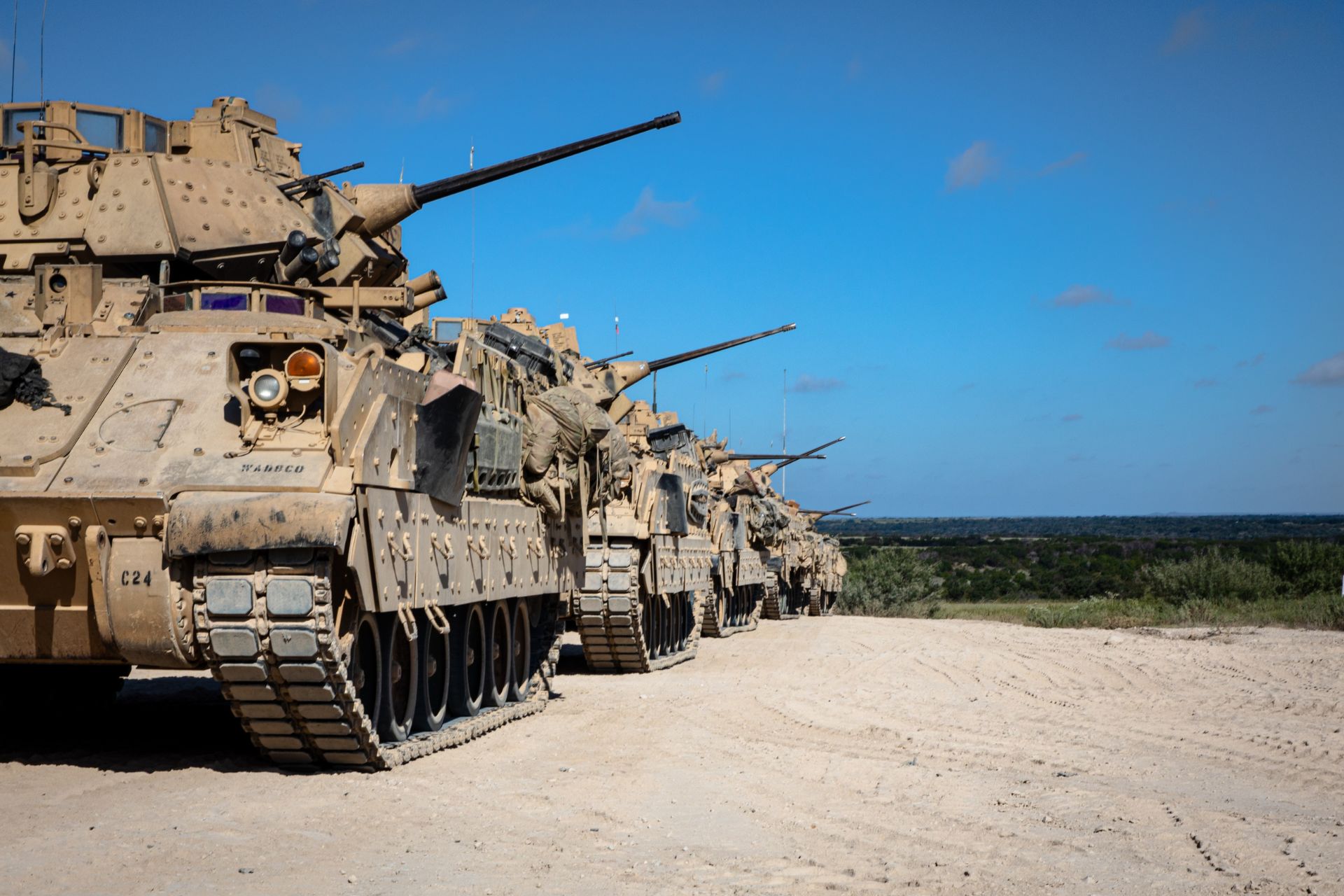
The U.S. Army aims to replace approximately 3,800 Bradley vehicles, in service since the 1980s, through the Optionally Manned Fighting Vehicle (OMFV) program (Picture source: US DoD)
Colonel Kevin Bradley, head of combat vehicle modernization, highlighted the benefits of soldier feedback during virtual and physical tests, which have resulted in design adjustments to meet operational requirements better. Both companies have made various modifications, from interface tweaks to significant structural changes.
American Rheinmetall’s team includes Textron Systems, RTX, L3Harris Technologies, and Anduril Technologies, while GDLS is collaborating with GM Defense, Applied Intuition, and AeroVironment, which is integrating its Switchblade loitering munitions into the vehicle. GDLS is also working with General Dynamics Mission Systems to incorporate advanced network, radio, and cyber capabilities.
With American Rheinmetall and GDLS competing to replace the Bradley, the XM30 program represents a major technological challenge for the U.S. Army, while providing an opportunity to innovate and adapt combat vehicles to evolving battlefield needs.

- Details
- Written by: Administrator
- Category: 2024
- Hits: 6114
During the Association of the United States Army (AUSA) 2024 Annual Meeting, American Company Oshkosh Defense displayed its cutting-edge 30mm Medium Caliber Weapon System (MCWS) integrated on the Stryker Double V Hull Infantry Carrier Vehicle (ICV). This next-generation lethality upgrade significantly enhances the combat effectiveness of U.S. Army Stryker Brigade Combat Teams (SBCTs), offering greater firepower, increased accuracy, and extended engagement ranges, crucial for modern warfare environments.
Follow Army Recognition on Google News at this link
An Oshkosh Defense Stryker vehicle equipped with the 30mm Medium Caliber Weapon System (MCWS), featuring an additional Javelin missile launcher for enhanced anti-armor capability, on display at AUSA 2024. (Picture source: Army Recognition Group)
The 30mm MCWS, developed by Oshkosh Defense, represents a significant leap in combat capabilities for the U.S. Army's Stryker platform. The primary armament of the system is the XM813 30mm chain gun, a powerful, automatic cannon capable of engaging a wide range of threats. The XM813 provides both single-shot and automatic firing modes, with a rate of fire of up to 200 rounds per minute. The cannon is highly versatile, designed to fire a variety of 30mm munitions, including armor-piercing rounds, high-explosive incendiary (HEI) shells, and programmable airburst munitions. This gives SBCTs the ability to effectively engage enemy infantry, light armor, fortifications, and even aerial threats such as drones and helicopters.
In addition to the XM813, the MCWS also integrates a co-axial 7.62mm machine gun, providing supplemental firepower for engaging soft targets and infantry at close to medium ranges. The 7.62mm machine gun can be used independently of the 30mm cannon, allowing the crew to switch between weapons based on the nature of the target, which conserves ammunition for the primary weapon.
The Stryker Double V Hull (DVH) is an upgraded version of the Stryker M1126 Infantry Carrier Vehicle (ICV), designed to enhance crew survivability and vehicle resilience against improvised explosive devices (IEDs) and mines. The primary improvement in the DVH design is the double V-shaped hull, which helps to deflect blasts from underneath the vehicle, reducing the impact of explosions on the crew compartment. This hull design, along with enhanced armor and suspension upgrades, significantly increases the vehicle's protection against explosive threats, while maintaining the Stryker's mobility and versatility in combat. The DVH variant is part of ongoing efforts to improve the survivability and effectiveness of armored vehicles in modern conflict zones.
At AUSA 2024, Oshkosh presented other armament integration on the MCWS turret such as Javelin Anti-Tank Guided Missile (ATGM) launcher. The Javelin missile system provides a highly effective solution for engaging and neutralizing heavily armored vehicles, including main battle tanks, from longer ranges. The combination of the 30mm cannon and the Javelin missile launcher transforms the Stryker vehicle into a multi-role platform capable of engaging diverse battlefield threats.
In terms of targeting and fire control, the Oshkosh MCWS is equipped with an advanced fire control system that includes integrated day/night optics, thermal imaging, and a laser rangefinder. This ensures precise targeting and tracking in various environmental conditions and enhances the system’s accuracy over extended engagement ranges. The fire control system is linked to a stabilization system that allows the Stryker vehicle to engage targets while on the move, further improving combat effectiveness in dynamic battlefield situations.
A crucial milestone in the development and fielding of the Oshkosh MCWS occurred in May 2024, when the system completed Follow-on Operational Test and Evaluation (FOT&E). The rigorous testing phase allowed soldiers to evaluate the weapon system in real-world, operational conditions, ensuring its reliability and effectiveness on the battlefield. FOT&E is a vital step in the acquisition process, providing direct feedback from soldiers and verifying that the system meets the Army’s stringent operational requirements.
Soldiers’ assessments during FOT&E highlighted the MCWS’s increased lethality, accuracy, and ease of use, reinforcing the system’s readiness for deployment. This comprehensive testing has paved the way for the system’s integration into active SBCT units.
To date, Oshkosh Defense has delivered over 100 units of the MCWS, with further deliveries expected to support the system's full fielding in early 2025. This milestone represents the U.S. Army's continued efforts to modernize its armored vehicle fleet, ensuring that soldiers are equipped with the best technology available to maintain a tactical advantage on the battlefield.
As the U.S. Army gears up to field the upgraded Stryker Double V Hull vehicles equipped with the 30mm MCWS, the AUSA 2024 demonstration showcased the future of SBCT capabilities, underlining the Army’s commitment to delivering increased lethality and adaptability to its armored forces.

- Details
- Written by: Administrator
- Category: 2024
- Hits: 7885
A recent image released by Hanwha Aerospace, a leading South Korean defense company, has garnered significant attention by revealing the possibility of Poland's Homar-K MLRS (Multiple Launch Rocket System) being equipped with the CTM-290 tactical strike missile pods. The Homar-K is a Polish version of the K239 Chunmoo, a South Korean mobile rocket artillery system. It is the equivalent to the U.S. M142 HIMARS, which is also in service with the Polish army able to fire the American-made ATACMS ballistic missiles. If the integration of the South Korean CTM-290 missiles is realized, it could potentially replace the ATACMS, offering Poland a new alternative in its long-range strike capabilities.
Follow Army Recognition on Google News at this link
Polish Homar-K MLRS Multiple Launch Rocket System fitted with CTM-290 tactical strike missile pods. (Picture source: Hanwha)
The CTM-290, developed by Hanwha Aerospace, is a state-of-the-art missile system designed for long-range precision attacks. The missile has a range believed to be comparable to or greater than that of the American ATACMS, which can engage targets up to 300 kilometers away. The CTM-290 is equipped with advanced targeting systems, making it highly accurate in striking both static and mobile targets. It features an inertial guidance system, complemented by satellite navigation, ensuring precision even in adverse conditions. Moreover, the missile has a versatile warhead configuration, allowing it to carry different payloads depending on mission requirements, such as fragmentation warheads for anti-personnel missions or bunker-busting warheads for hardened targets. This adaptability would give Poland an expanded range of military options, bolstering its strike capabilities across multiple scenarios.
The Homar-K MLRS (Multiple Launch Rocket System) acquisition is part of Poland's broader military modernization efforts. The contract for this acquisition was signed between the Polish Ministry of National Defense and Hanwha Aerospace on October 19, 2022. The deal involves the purchase of 218 K239 Chunmoo rocket artillery systems, which are being adapted into the Homar-K to meet Polish specifications. These systems will enhance Poland’s ability to launch a variety of munitions, ranging from precision-guided rockets to tactical ballistic missiles like the CTM-290. The agreement also includes technology transfers and potential co-production, which aligns with Poland's strategy to strengthen its domestic defense industry while reducing reliance on foreign suppliers.
This development marks a strategic shift for Poland, a key NATO member traditionally relying on U.S.-supplied military equipment, including the ATACMS ballistic missile. The Homar-K, as a Polish adaptation of the South Korea K239 Chunmoo, allows for greater customization, and the potential integration of the CTM-290 reflects Poland’s interest in diversifying its missile inventory. This shift would reduce Poland's dependence on American systems and deepen its defense ties with South Korea, a move that carries important implications for Poland’s broader defense strategy.
The partnership between Poland and South Korea has grown in recent years, with increasing collaboration on military production and technology transfers. Equipping the Homar-K system with the CTM-290 missile pods would mark a significant step forward in this partnership, showcasing South Korean military technology and enhancing Poland's defense capabilities.
This potential upgrade could also influence other European nations as they evaluate their defense needs, particularly in an increasingly unstable geopolitical environment. By acquiring missile systems like the CTM-290, European nations could explore alternatives to traditional suppliers like the United States, increasing operational flexibility and security.
For Poland, adding the CTM-290 missile to its Homar-K system would reinforce its role as a key player in European defense, providing a modern, versatile platform for launching long-range precision strikes. The missile’s advanced guidance systems and multiple warhead configurations enhance its operational flexibility, making it a formidable asset for Poland’s military. If the integration is successful, Poland’s Homar-K system could become one of the most advanced rocket artillery systems in Europe, equipped to fire both South Korean and American strike missiles, thus enhancing Poland’s strategic military options and solidifying its defense capabilities.
Read more: South Korea Proposes CTM-290 Tactical Missile to Poland as Replacement for US ATACMS
- Details
- Written by: Halna du Fretay
- Category: 2024
- Hits: 3188
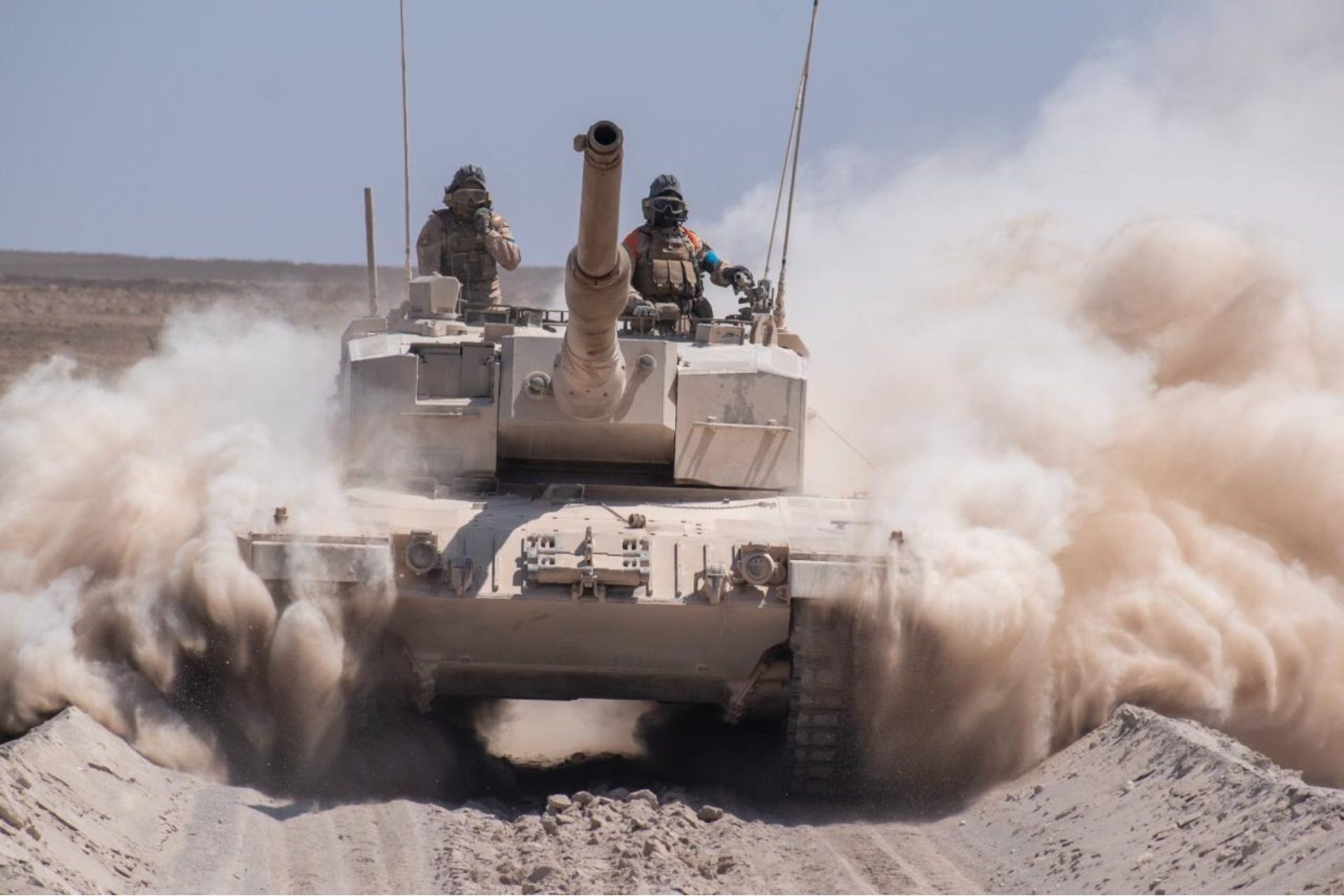
On October 8, 2024, in the vastness of the Antofagasta desert, the Chilean Army conducted a technical and tactical evaluation exercise to assess the performance of its Leopard 2A4 tank crews. This intensive activity, organized by the First Army Division and executed by the 3rd Armored Brigade "La Concepción," gathered crews from the entire Land Force, spanning from Arica to Punta Arenas. A key highlight of this exercise was a tank duel, where two crews confronted each other using the Saab BT 46 laser simulation system.
The Chilean Army has operated around 40 of these tanks since the early 2000s, deploying them in the demanding environments of northern Chile (Picture source: Ejercito de Chile )
The main objective of the exercise was to measure the level of training and instruction achieved in 2024 through a series of challenging trials, where the real firepower of the Leopard 2A4 is demonstrated by the skill of its operators.
The Leopard 2A4, a main battle tank developed by Germany’s Krauss-Maffei Wegmann as the successor to the Leopard 1, has established itself as a versatile model thanks to its unique combination of firepower, mobility, and protection since its introduction in 1979. It is equipped with a 120 mm smoothbore gun developed by Rheinmetall, capable of hitting mobile targets up to 5,000 meters away with APFSDS-T and HEAT-MP-T munitions. The tank also features a digital fire control system, a coaxial 7.62 mm machine gun, and smoke grenade launchers to obscure its movements. With its MTU MB 873 diesel engine, the Leopard 2A4 can reach a maximum speed of 72 km/h, navigate complex terrain, and cross significant obstacles.
In terms of protection, the Leopard 2A4 is equipped with multilayer armor and internal lining to reduce fragmentation in the event of a penetration. Its hull is divided into three compartments, ensuring increased crew safety with NBC overpressure protection. The Chilean Army has operated around 40 of these tanks since the early 2000s, deploying them in the demanding environments of northern Chile, as recently demonstrated in exercises in the Antofagasta region.
Recognized as one of the most advanced weapons systems in the Chilean Army, the Leopard 2A4's effectiveness relies heavily on crew expertise. According to Lieutenant Colonel Felipe Azócar, the exercise coordinator, this tactical evaluation primarily aimed to verify the application and mastery of procedures acquired by soldiers within the Land Force. The crews’ skills were tested through various scenarios, including nighttime simulations, tank robustness tests, deployment and track disassembly exercises, precision driving, advanced logistics, tank and light weapon firing, onboard navigation, first aid, and challenging night marches.
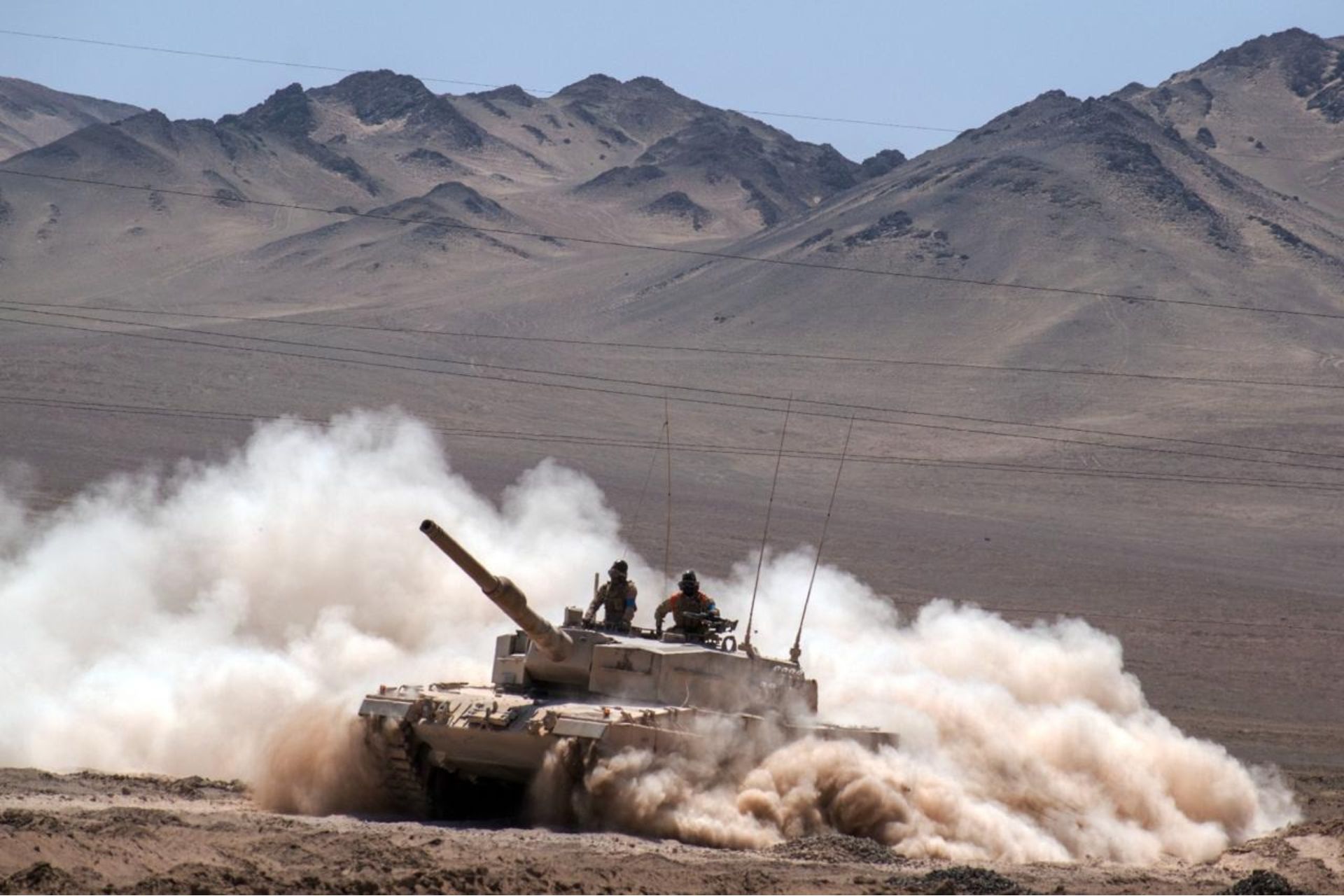
As part of the exercise, two tank crews engaged in a duel using the Saab BT 46 laser simulation system, allowing for simulated tank-to-tank combat. (Picture source: Ejercito de Chile)
This exercise required complete commitment and tested the crews physically and mentally. Professional soldier Pablo Rivera described the evaluation as both demanding and fulfilling, highlighting the camaraderie that binds each crew. "This evaluation has been very challenging physically, mentally, and emotionally, but as a crew, we are doing well because, more than a team, we are like a family. We’ve spent many days together in this great piece of equipment," he said.
As part of the exercise, two tank crews engaged in a duel using the Saab BT 46 laser simulation system, allowing for simulated tank-to-tank combat. This technology provides a unique training approach, enabling crews to test their ability to "neutralize" an adversary in a simulated combat setting, according to First Sergeant Johanns Gil, instructor at the Armored Combat Training Center (Cecombac).
The exercise highlighted top-performing crews, including Armored Group No. 9 Vencedores from the 1st Armored Brigade of Cuirassiers, recognized for its excellence and level of preparedness. Sub-Lieutenant Francisco Fernández, commander of the winning crew, noted that this evaluation enhanced his unit's operational expertise.
Beyond its immediate tactical purpose, this training emphasizes the critical importance of rigorous, versatile preparation, combining physical readiness, technical skill, and mental resilience. Through exercises of this scale, the Chilean Army ensures that its Leopard 2A4 crews are equipped to face future military challenges with efficiency and professionalism, consolidating their position among elite defense units.
Read more: Chilean Leopard 2A4 Duel in Simulated Combat with Saab BT46 Laser System
- Details
- Written by: Triffaux
- Category: 2024
- Hits: 7315
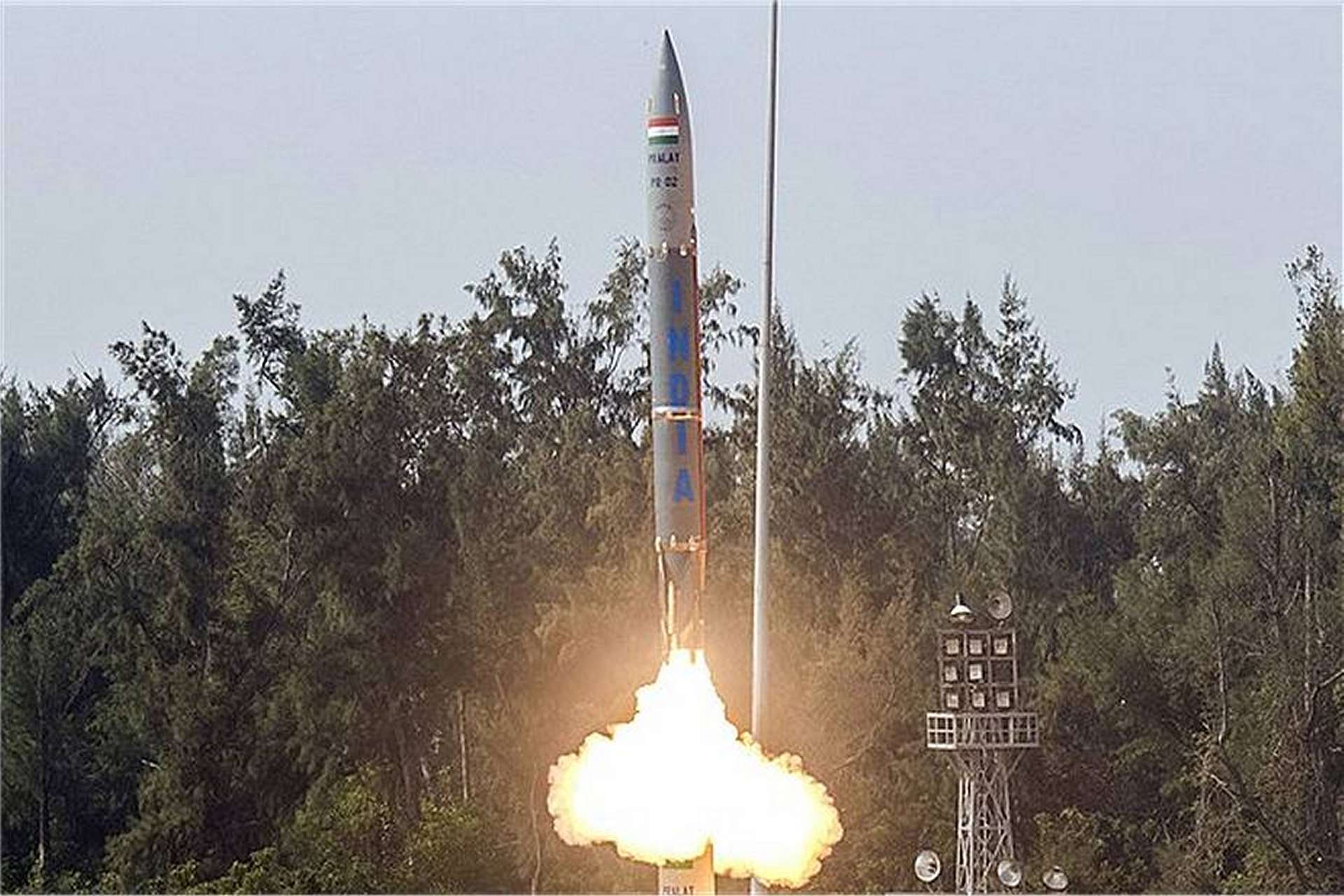
On October 16, 2024, News.Az reported that the Indian Ministry of Defense authorized the export of Pralay quasi-ballistic missiles to Armenia, marking an important step in strengthening the defense partnership between India and Armenia. This decision, which has yet to receive official confirmation from the Armenian Ministry of Defense, reflects India's intent to conclude an agreement aimed at bolstering Armenia’s defensive capabilities in a context of regional tensions. According to Alpha Defense, this potential agreement is at an advanced stage, with sources indicating that India is actively negotiating to finalize it in the near future.
Follow Army Recognition on Google News at this link
India Home-made Pralay Quasi-Ballistic Missile (Picture source: Wikimedia)
The Pralay missile, developed by India's Defence Research and Development Organisation (DRDO), is an advanced short-range surface-to-surface ballistic missile, primarily designed for tactical use in combat conditions. Launched in 2015, the Pralay program represents a strategic advancement for India’s missile arsenal, incorporating sophisticated quasi-ballistic trajectory adjustments that allow the missile to evade interceptors and anti-ballistic missile (ABM) defenses. The missile has already successfully completed several tests, with the first two conducted in December 2021 and a third in November 2023, each demonstrating the missile’s accuracy, payload capacity, and terminal maneuverability.
The Pralay's unique quasi-ballistic trajectory enables it to shift from a traditional ballistic path to a flatter trajectory after launch, making interception more difficult by reducing its radar profile. This feature, combined with high speed and terminal maneuverability, brings the Pralay closer to the Russian Iskander-M missile, which has proven effective in recent conflicts, notably in Ukraine. The Pralay shares characteristics with the Iskander-M, such as a CEP (Circular Error Probable) of around 10 meters, highlighting its high accuracy and ability to evade air defenses.
To comply with international arms control regulations, India has committed to limiting export versions of the Pralay to a maximum range of 300 kilometers and a payload capacity not exceeding 500 kilograms. This adherence to missile technology control guidelines requires technical modifications to the Pralay system, an adaptation that India is actively pursuing.
Powered by a solid-fuel motor and integrating maneuverable re-entry vehicle (MaRV) technology, the missile can carry payloads ranging from high-explosive fragmentation warheads to runway denial submunitions. These capabilities enable it to effectively target and neutralize critical military infrastructure such as radar installations, command centers, and forward airstrips, with enhanced precision and lethality.
Armenia’s interest in acquiring the Pralay missile stems from its need to counterbalance the capabilities acquired by Azerbaijan through its purchase of LORA (Long-Range Artillery) missiles developed by Israel Aerospace Industries. With a range of 400 kilometers and a CEP of 10 meters, the LORA missile represents a significant threat to Armenia’s strategic assets. The Pralay’s compatibility with various warhead types and its advanced guidance system, using both inertial navigation and a DSMAC (Digital Scene-Matching Area Correlation) seeker for increased accuracy, provide Armenia with an adequate response to Azerbaijan’s missile capabilities.
A distinctive feature of the Pralay is its fused silica radar dome (RADOME), which enhances its evasion capabilities and survivability in hostile airspace. The jet vane thrust vector control system allows the Pralay to perform evasive maneuvers in the terminal phase, effectively countering enemy defense systems. Additionally, the Pralay includes two sets of small fins that help reduce its radar signature, further complicating interception efforts.
The Indian Pralay missile and the Israeli LORA (Long-Range Artillery) missile are two quasi-ballistic systems with short to medium range, but their performances and capabilities differ in several aspects. The Pralay has a theoretical range between 150 and 500 km, with a payload capacity ranging from 350 kg to 700 kg, allowing it to target strategic installations such as radars, command centers, and airstrips. However, to comply with international arms control regulations, India has limited export versions of the Pralay to a maximum range of 300 km and a payload not exceeding 500 kg. This technical adaptation, necessary to adhere to missile technology control guidelines, ensures that exported versions meet international standards.
The LORA, on the other hand, has a maximum range of 400 km and a payload capacity of approximately 570 kg. This missile was operationally used by Azerbaijani forces during the Nagorno-Karabakh conflict in 2020, demonstrating high accuracy with a CEP of 10 meters, particularly on targets such as bridges and critical infrastructure. Its guidance system, using GPS and TV imaging in the terminal phase, ensures high precision, although it remains potentially vulnerable to electronic countermeasures. Thus, the Pralay prioritizes better terminal maneuverability to evade interceptions, while the LORA stands out for its extreme precision in targeted strikes, with each featuring specific adaptations according to their usage contexts and regulatory requirements.
The Indian armed forces have shown strategic interest in the Pralay missile, with substantial orders from both the Indian Army and the Indian Air Force. In 2022, the Indian Ministry of Defense approved the purchase of 120 missiles for the Air Force, followed in 2023 by the acquisition of a regiment of 250 missiles for the Army, intended to strengthen tactical capabilities along sensitive borders with China and Pakistan. If the agreement with Armenia is finalized, this country would become the first international buyer of the Pralay missile, marking a historic milestone in Indian defense exports.
Defense relations between India and Armenia have considerably strengthened in recent years, illustrated by the transfer of sophisticated weaponry to meet Armenia's growing security needs in a tense regional context. In 2020, India sold Armenia four Swathi radars, capable of detecting and locating enemy artillery fire, as well as M982 Excalibur precision artillery shells, enhancing Armenia’s defensive and retaliatory capabilities. Armenia is also interested in ATAGS (Advanced Towed Artillery Gun System) howitzers developed by DRDO, which offer extended range and increased accuracy, with the capability to fire projectiles up to 48 km. The addition of ATAGS would strengthen Armenia's offensive capabilities, complementing its current arsenal. Additionally, the Pinaka multiple launch rocket system, also developed by DRDO, has attracted significant interest from Armenia. Capable of launching a salvo of twelve rockets in less than 45 seconds and reaching a range of 40 to 75 km depending on the variant, the Pinaka would provide mobile and versatile firepower, ideal for saturation strikes and ground support missions. Integrating the Pinaka would further strengthen Armenia's tactical options, while consolidating India as a key partner in defense.

- Details
- Written by: Jérôme Brahy
- Category: 2024
- Hits: 4499
On October 8, 2024, Australian company AIM Defence announced the delivery of two additional Fractl counter-drone laser systems. This delivery follows a $4.8 million contract signed at the end of August to supply the Australian Defence Force (ADF), bringing AIM Defence’s total engagements with the Australian Department of Defence to over $10 million in the past year. This announcement comes after the company’s initial agreement with the ADF, under which it provided its first directed energy weapon for field testing.
Follow Army Recognition on Google News at this link
According to the Australian Defence, the Fractl system can burn through steel and track small, fast-moving objects, such as a 10-cent piece moving at 100 km/h from one kilometer away. (Picture source: AIM Defence)
The Fractl Portable High Energy Laser system, included in this contract, is designed to counter drones using directed energy and AI-based tracking. According to the Australian Defence, the Fractl system can burn through steel and track small, fast-moving objects, such as a 10-cent piece moving at 100 km/h from one kilometer away.
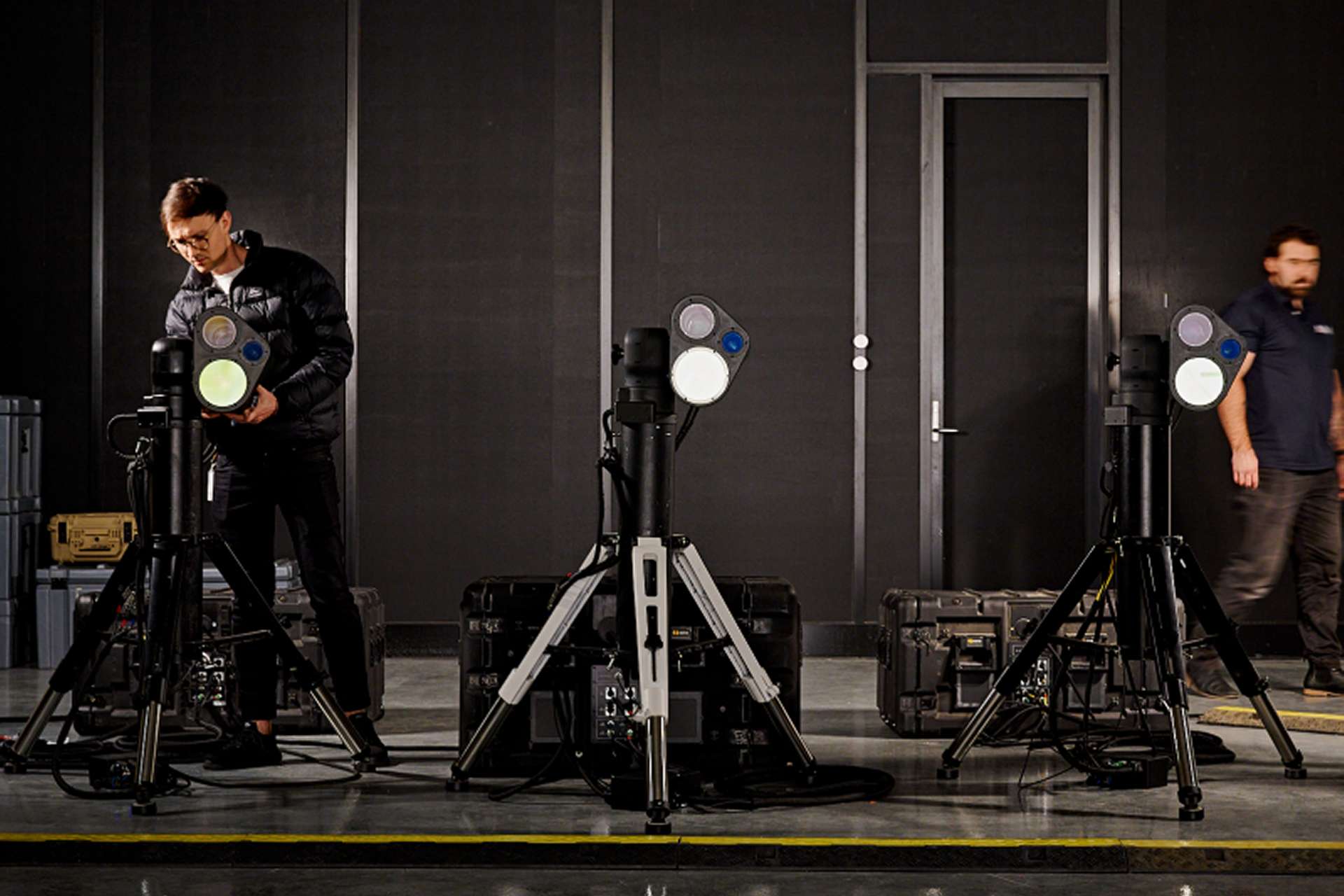
This acquisition builds on AIM Defence’s initial delivery of the Fractl unit, which was tested at the Puckapunyal Military Area. These additional units will enhance the ADF’s ability to counter drones in tactical scenarios. The three Fractl systems can operate in a networked configuration, enabling coordinated tracking of a single target or engaging multiple aerial threats. As part of the contract, AIM Defence will also provide maintenance support and deliver future software and hardware upgrades for all Fractl units taken into service.
The Fractl system is remotely operated from a ruggedized case and controlled via a handheld console. AIM Defence will train Army personnel in its safe operation, and feedback from field tests will be used to further refine the system. The device offers various engagement levels: it can dazzle sensors from three kilometers, disable sensors from two kilometers, and achieve a direct “hard kill” at up to one kilometer. Weighing under 99 kilograms, the system can deliver 50 shots per charge at less than 90 cents per shot.
The three Fractl systems can operate in a networked configuration, enabling coordinated tracking of a single target or engaging multiple aerial threats. (Picture source: AIM Defence)
This contract is part of AIM Defence’s ongoing development of directed energy systems, initiated in collaboration with the Defence Science and Technology Group in 2019. AIM Defence has gained recognition in international defense circles, winning a $1 million prize at the Canadian International Counter Drone Sandbox competition. Conducted by the Canadian Armed Forces as part of its Innovation for Defence Excellence and Security (IDEaS) program, this event evaluates counter-drone systems from NATO and Five Eyes countries. AIM Defence’s participation in the competition has attracted interest in the Fractl system from allied nations.
To meet anticipated demand, AIM Defence recently opened a 4,000-square-meter facility in Melbourne to support Fractl system production, staffed by researchers, engineers, and technicians. AIM Defence aims to produce up to 10 Fractl units annually, with plans to expand capacity to over 100 units per year.
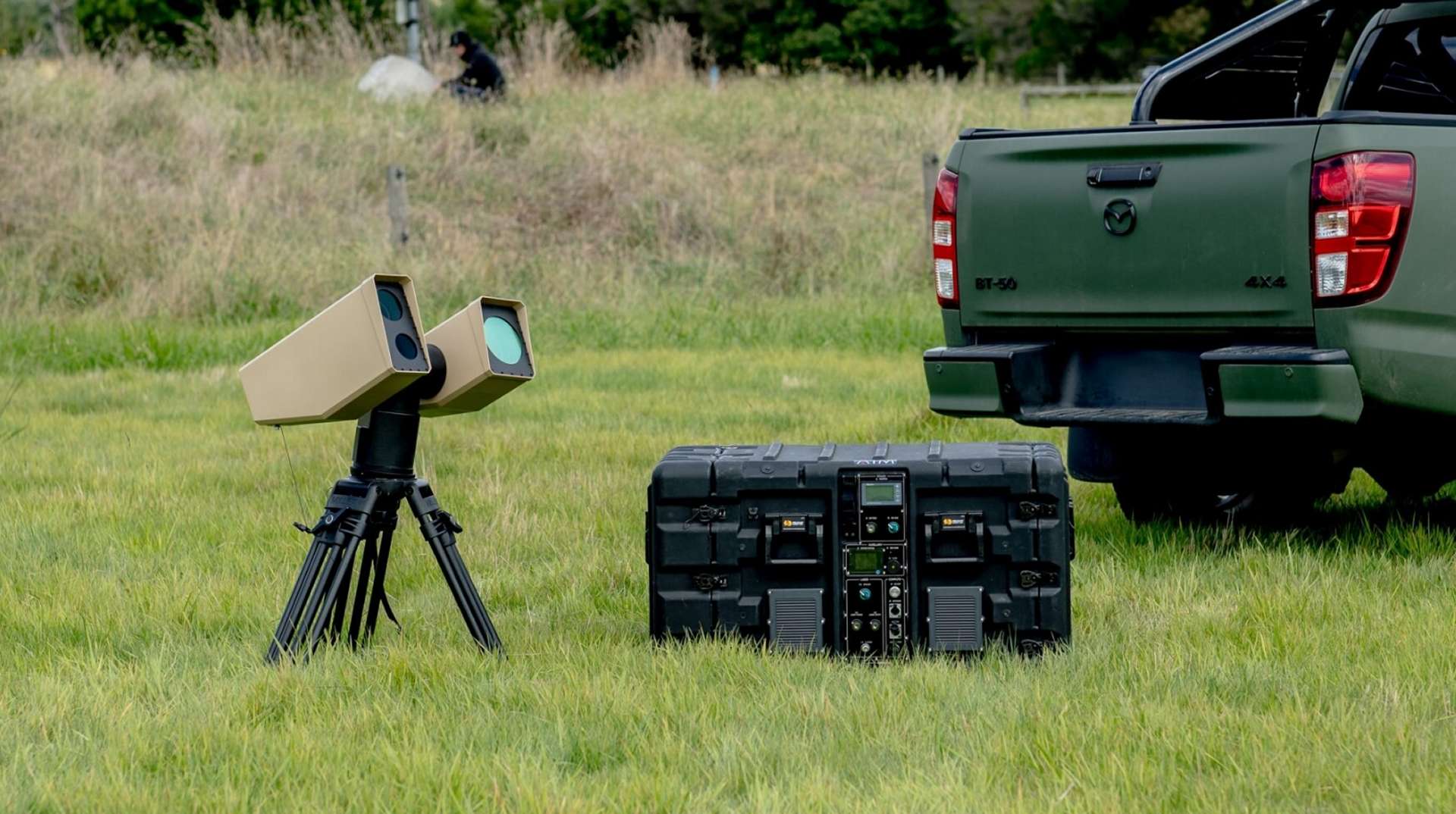
Earlier in the year, the initial prototype of the Fractl system was delivered to the ADF for trial evaluations. These trials allowed AIM Defence to demonstrate the system’s capabilities, including millimeter-level tracking accuracy and the ability to neutralize drones at distances of up to 1.5 kilometers. The system has undergone over 200 demonstrations, both indoors and outdoors, in the past two years, which have helped enhance its operational functionality.
The Fractl system was specifically designed to counter the growing drone threat on the battlefield. According to AIM Defence, the system’s targeting precision—enabled by artificial intelligence and advanced laser optics—can track drones traveling at speeds of up to 100 km/h with positional accuracy of +/- 1 millimeter. The Fractl system is housed in a footlocker-sized case and provides a “hard kill” capability for neutralizing drones.
The initial prototype of the Fractl system was delivered to the ADF for trial evaluations, demonstrating a millimeter-level tracking accuracy and the ability to neutralize drones at distances of up to 1.5 kilometers. (Picture source: AIM Defence)

- Details
- Written by: Jérôme Brahy
- Category: 2024
- Hits: 8247
As reported by the UK Defence Journal on October 11, 2024, the British Ministry of Defence has confirmed the continued progress of the Challenger 3 main battle tank program, in response to questions from Danny Kruger, MP for East Wiltshire, regarding the review's potential impacts on the program and recent discussions with the Army Board. Parliamentary Under-Secretary for Defence Luke Pollard clarified that the Challenger 3 is set to achieve Initial Operating Capability by 2027, with Full Operating Capability expected by 2030.
Follow Army Recognition on Google News at this link
The Challenger tank series has a long history, starting with the first Challenger during World War II, followed by the Challenger 1 in the 1980s and then the Challenger 2, which saw action in the 2003 Iraq War. (Picture source: Army Recognition)
Pollard noted that the Strategic Defence Review aims to align future capability development with the UK’s security needs. As part of this process, the Ministry will provide regular updates to the Prime Minister, the Chancellor of the Exchequer, and the Secretary of State for Defence, with a comprehensive final report anticipated by mid-2025. This review is intended to ensure that the UK’s defense infrastructure supports both current and future requirements.
The Challenger 3, developed by the joint venture Rheinmetall BAE Systems Land (RBSL), represents an upgrade of the existing Challenger 2 tanks rather than the deployment of entirely new vehicles. The program evolved from the Challenger 2 Life Extension Programme (LEP), designed to improve mobility, lethality, and survivability for continued use through the 2030s. The primary modification in the Challenger 3 is the integration of a new turret with a 120mm L55A1 smoothbore gun, replacing the previous L30A1 rifled gun. This modification aligns with NATO standards, improving interoperability, although it requires a new kinetic energy round to be developed in collaboration with Germany, as the smoothbore system is incompatible with current Challenger 2 ammunition.
Initial deliveries of pre-production Challenger 3 tanks began in early 2024, with live-firing trials starting in Germany in April. The British Army is scheduled to receive a total of 148 tanks, with the first units entering service in 2025. The project’s estimated cost is approximately $1.17 billion, and it is expected to support around 300 jobs at RBSL’s Telford facility, with an additional 450 positions across the UK defense supply chain.

The British Army is scheduled to receive a total of 148 Challenger 3 tanks, with the first units entering service in 2025. (Picture source: Army Recognition)
Upgrades in the Challenger 3 include a digital electronic architecture, improved third-generation hydrogas suspension for mobility, and an enhanced fire control system. The tank also features upgraded targeting systems for the commander and gunner, including advanced thermal imaging. While the adoption of the smoothbore gun introduces an ammunition compatibility issue, the Ministry of Defence has partnered with German defense companies to develop a new Enhanced Kinetic Energy (EKE) round, suitable for both the Challenger 3 and the Leopard 2 tanks.
The Challenger tank series has a long history, starting with the first Challenger during World War II, followed by the Challenger 1 in the 1980s and then the Challenger 2, which saw action in the 2003 Iraq War. The Challenger 3 continues this progression with modular armor upgrades and enhanced survivability features, including Active Protection Systems (APS). Previous trials on the Challenger 2 tested APS such as the Rheinmetall ROSY Rapid Obscurant System and the MUSS system, providing a basis for their integration into the Challenger 3. Additionally, the Challenger 3 is powered by a Perkins CV12-9A 26.1-liter V12 diesel engine, delivering 1,500 bhp, and utilizes a David Brown Santasalo TN54E transmission system with updated components.
The development of the Challenger 3 reflects the UK's approach to modernizing its existing tank fleet rather than procuring new models from other countries. In a 2021 report, the Defence Select Committee noted challenges in the LEP, including budget overruns and delays. Later that year, Defence Secretary Ben Wallace confirmed that the UK would upgrade 148 Challenger 2 tanks into Challenger 3 models through a contract with RBSL valued at £800 million. This contract solidified the selection of Rheinmetall’s upgrade proposal, which includes the 120mm smoothbore gun.

Upgrades in the Challenger 3 include a digital electronic architecture, improved third-generation hydrogas suspension for mobility, and an enhanced fire control system. (Picture source: Army Recognition)
Read more: UK maintains Challenger 3 Tank schedule toward 2030 full capability
- Details
- Written by: Vandenbosch
- Category: 2024
- Hits: 4287
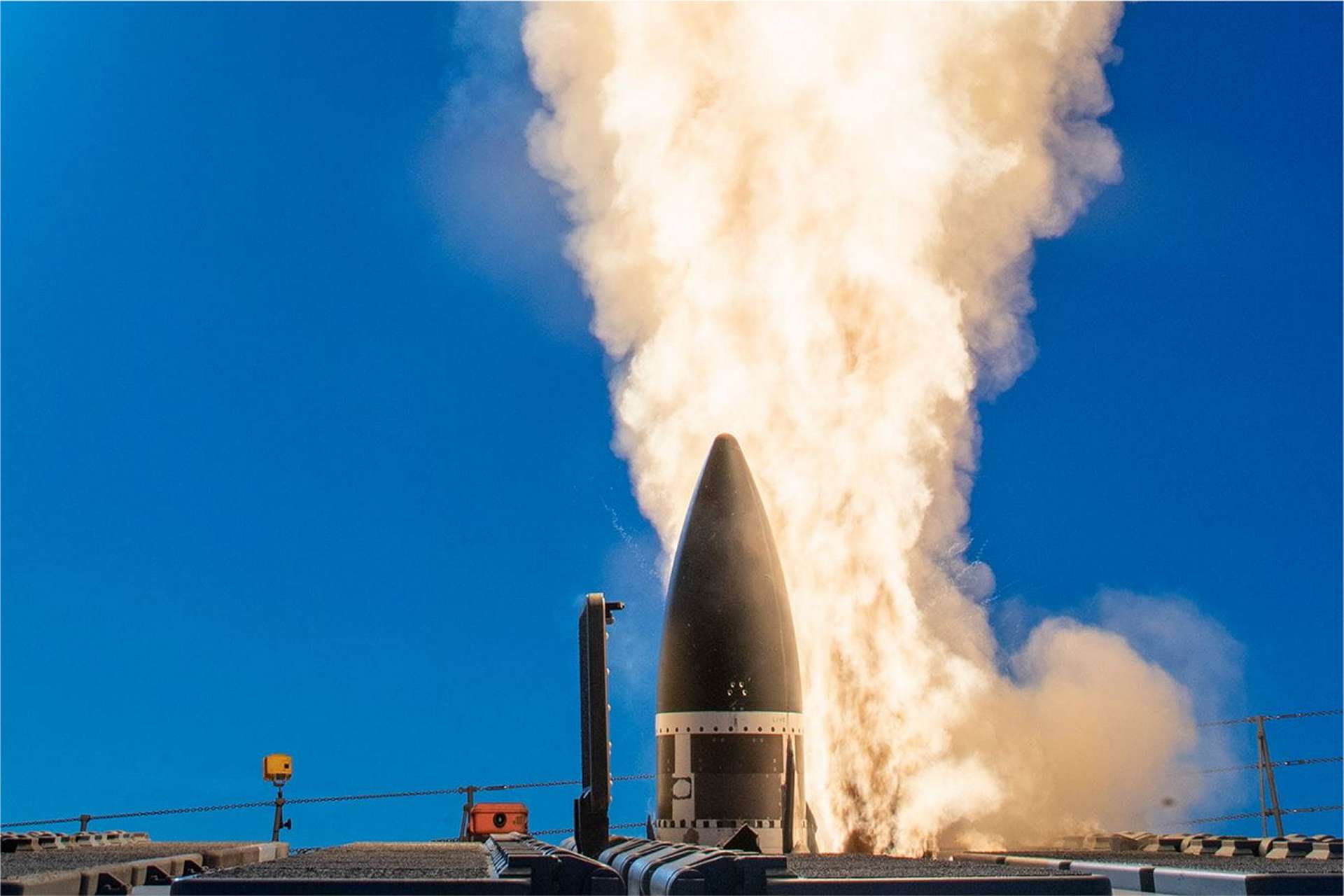
Raytheon, a defense subsidiary of RTX, has reached a critical milestone with its Standard Missile-3 (SM-3) Block IIA, now entering full-rate production. This advancement, announced by the company on October 15, 2024, marks a key phase in the U.S. Missile Defense Agency's (MDA) cooperative development program with Japan, making the SM-3 Block IIA the first joint missile defense program to reach this stage.
The SM-3 Block IIA missile is the result of collaboration between Japan and the United States. (Picture source: RTX)
Raytheon, a division of RTX, is a major player in the defense sector, providing advanced solutions in missile defense, interceptors, hypersonic technology, and radar systems. With over a century of expertise, Raytheon supports national and allied security initiatives worldwide. RTX, headquartered in Arlington, Virginia, employs over 185,000 people across its businesses, Collins Aerospace, Pratt & Whitney, and Raytheon, developing cutting-edge technologies that drive aviation, integrated defense, and next-generation solutions to address critical global challenges. RTX recorded $69 billion in sales in 2023, underscoring its impact and commitment to innovation in global defense.
Full-rate production confirms that the SM-3 Block IIA’s design has reached a level of maturity where manufacturing and operational risks are minimized, ensuring the missile's reliability and performance in demanding defense scenarios. This stage enhanced production efficiency and paved the way for a $1.9 billion contract awarded by the MDA in July 2024 for Raytheon to produce missiles for both U.S. and Japanese defense sectors.
"Achieving full-rate production for the SM-3 Block IIA highlights the strength of our partnership with Japanese industry and our shared commitment to advancing ballistic missile defense to protect our nations and allies worldwide," stated Barbara Borgonovi, President of Naval Power at Raytheon. She further noted that this advancement in design maturity will strengthen efficiency throughout the production cycle, thus improving program outcomes.
The SM-3 Block IIA missile represents an advancement over previous models, featuring more powerful rocket motors and an improved kinetic warhead. These enhancements allow the missile to intercept threats more quickly and to protect larger areas against short- to medium-range ballistic missiles. This cooperative development, led by the MDA, Japan's Ministry of Defense, and Raytheon, is a strategic defense initiative aimed at bolstering regional and global security.
Under this production contract, Raytheon will carry out manufacturing at its facilities in Tucson, Arizona, and Huntsville, Alabama, with deliveries scheduled through February 2031.
This full-rate production approval signifies strengthened U.S.-Japan collaboration in defense, solidifying both nations' missile defense capabilities and establishing a new model for international partnerships in missile technology.
- Details
- Written by: Triffaux
- Category: 2024
- Hits: 7022
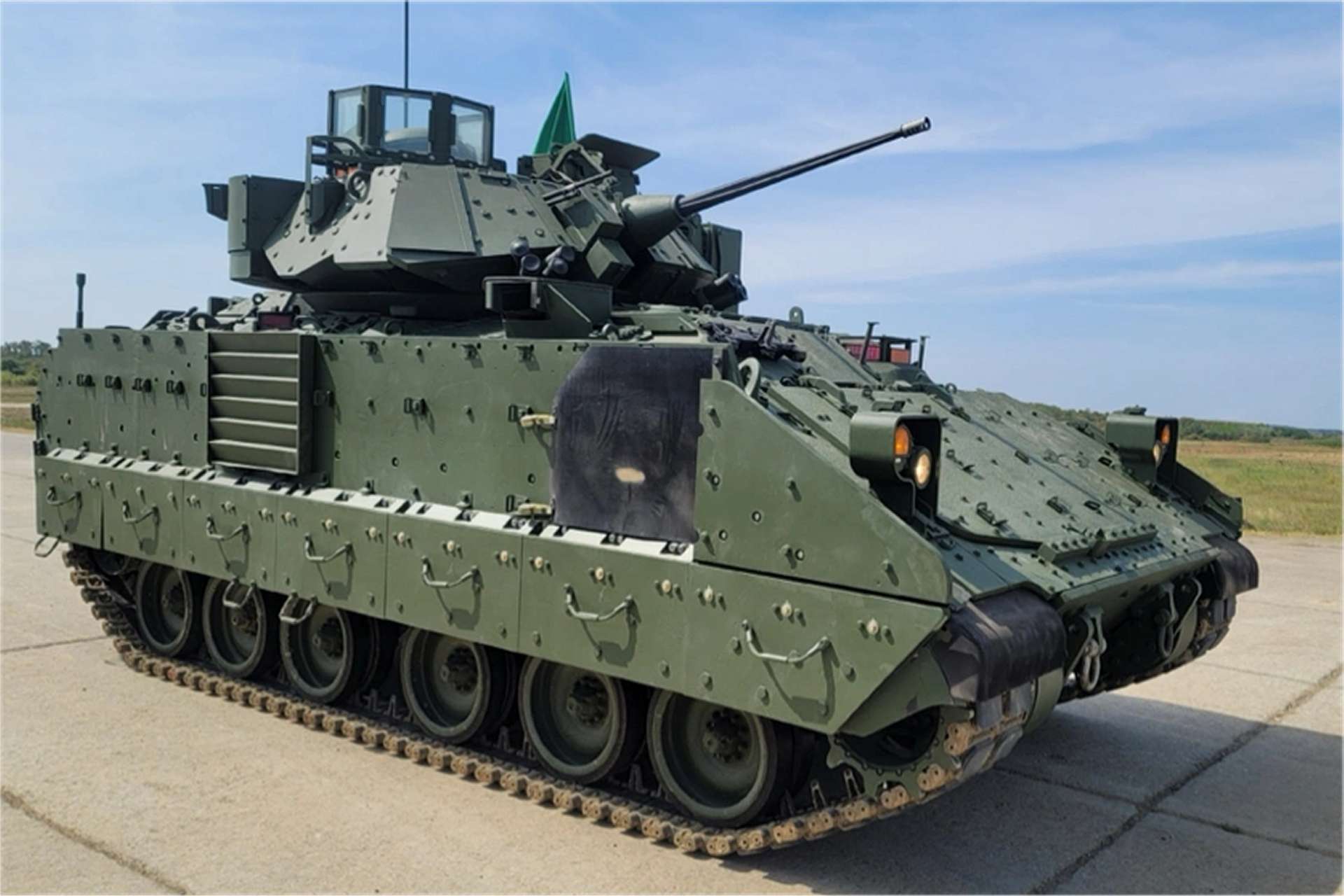
On October 10, 2024, the U.S. Department of Defense confirmed that twenty-two Bradley M2A2 Infantry Fighting Vehicles delivered to Croatia in December 2023 are being refurbished at the Djuro Djaković Special Vehicles (DDSV) facility. To date, three Bradleys have completed the refurbishment process, marking a key advancement in Croatia’s efforts to modernize its infantry capabilities.
Follow Army Recognition on Google News at this link
Craotia Upgraded US Bradley M2A2 ODS Infantry Fighting Vehicle (Picture source: US DoD)
On December 6, 2023, the US Embassy in Croatia announced that the country received its first batch of Bradley M2A2 ODS Infantry Fighting Vehicles (IFVs) through the port city of Rijeka. This initial delivery of 22 vehicles is part of a $196 million procurement initiative dating back to January 2022, covering 76 IFVs.
The Croatian upgrade of the Bradley M2A2 vehicles includes extensive modernization aimed at aligning these vehicles with current NATO operational standards. The U.S. government-approved Foreign Military Sale (FMS) includes refurbishing 76 Bradley M2A2 Operation Desert Storm (ODS) models to ensure they meet contemporary battlefield requirements and enhance interoperability with NATO allies. This upgrade, costing approximately $757 million, involves significant enhancements such as the overhaul of engines and transmissions, new TOW missile systems, and improved communications and electronic systems for better situational awareness.
To support increased firepower, the Bradley vehicles will be equipped with M240 machine guns, TOW 2A and TOW 2B anti-tank missiles, and bunker-buster missiles. Additionally, these Bradleys will receive smoke grenade launchers and specialized armor upgrades, providing enhanced protection for crews in high-risk environments. Training support, spare parts, and maintenance tools are also included, ensuring that Croatia can sustain these vehicles effectively over time.
The program is overseen by the U.S. Army Security Assistance Command (USASAC) in collaboration with BAE Systems and Raytheon, with support from U.S. personnel who will assist with training and maintenance in Croatia. This modernization not only advances Croatia's military capabilities but also strengthens its role in collective NATO defense initiatives, enhancing its ability to conduct joint operations with allied forces.
Bradley M2A2 Infantry Fighting Vehicles (IFVs) require upgrades to remain effective against new threats and meet the demands of modern battlefields. Originally designed in the 1980s, the M2A2 Bradleys are aging platforms that, despite their durability, face limitations in mobility, protection, and connectivity when compared to current standards. To adapt the Bradley to these evolving realities, the U.S. Army initiated a modernization program, notably developing the M2A4 version, which enhances the vehicle's power, resilience, and connectivity.
To ensure that the Bradley vehicles are fully operational, each unit undergoes a complete overhaul, including engine, transmission, and electrical system revisions, along with a fresh coating. The refurbishment work is conducted by Djuro Djaković Special Vehicles (DDSV) in collaboration with BAE Systems, and involves multiple suppliers for additional communication and armament systems.
This project requires close coordination between companies and agencies from both countries. The U.S. Embassy in Zagreb, through the Office of Defense Cooperation (ODC), works alongside USASAC to ensure the program runs smoothly. USASAC continuously monitors developments, funding needs, and key project milestones, providing long-term support for Croatia’s operational capabilities.
To enhance this approach, USASAC provides comprehensive assistance by supplying spare parts and training. Croatian forces will also receive extensive training from the Minnesota National Guard to optimize the integration and mastery of these vehicles in NATO cooperation scenarios.
The Bradley M2A2 ODS (Operation Desert Storm) is an upgraded version of the Bradley M2A1 Infantry Fighting Vehicle (IFV), which entered service with the US Army in 1988. Introduced with various improvements, the M2A2 focuses on enhancing survivability and combat effectiveness. These enhancements include increased armor protection for critical components, spall liners, provisions for improved smoke screening, additional armor for both hull and turret, and an improved drive train and suspension.
Post the First Gulf War in 1991, further upgrades were implemented, integrating technologies like a carbon dioxide laser rangefinder, a global positioning system, a combat identification system, and a thermal viewer for the driver. The armament on the M2A2 Bradley remains consistent with its predecessor, featuring a 25mm M242 Bushmaster Chain Gun, a coaxial 7.62 mm M240C machine gun, and two anti-tank missile launchers for TOW 2 missiles, with the option to carry Javelin anti-tank missiles.
The design modifications prioritize protection, incorporating additional armor plates for the hull and turret, internal spall liners, and strategic relocation of ammunition for minimized exposure to enemy fire. These changes, aimed at protecting against 30 mm APDS rounds and RPGs, result in an increased weight, now reaching 27,000 kg. The M2A2 is powered by a Cummins VTA-903 engine generating 600 hp, with corresponding upgrades to the transmission and suspension to handle the added weight. Retaining standard equipment from its predecessor, the M2A2 is qualified for transport by the C-17 Globemaster III, with added features such as wire cutters and a maintenance stand for engine work.
The latest defense relationship between Croatia and the United States highlights a deepening partnership centered on modernization and security cooperation. Croatia is actively working to strengthen its military capabilities through U.S. support, such as recent agreements for the procurement of Bradley IFVs and plans to acquire HIMARS rocket systems, reflecting its strategic alignment with NATO standards. These acquisitions are part of Croatia’s broader defense strategy to replace outdated equipment and enhance its interoperability with NATO allies. Additionally, Croatia’s support for Ukraine in response to Russian aggression underscores its role as a committed regional security partner.
U.S. Secretary of Defense Lloyd J. Austin commended Croatia for its contributions to regional stability and emphasized ongoing U.S. support for Croatian Armed Forces capability development. The Minnesota National Guard plays a vital role in this alliance through the State Partnership Program, aiding Croatia in the integration and operational use of U.S.-provided equipment. This collaboration reflects shared priorities in advancing regional stability and joint preparedness for emerging security challenges.
Since joining NATO in 2009, Croatia has transformed its armed forces into a smaller, professional force capable of responding to national defense needs and participating in international peacekeeping missions. The Ministry of Defense is currently developing a new long-term development plan and defense strategy to enhance national sovereignty, territorial integrity, and counter-terrorism capabilities. In 2023, Croatia deepened its defense cooperation with the United Kingdom, established a cooperative framework with India, and signed a 2023–2028 defense cooperation agreement with the United States covering cybersecurity, disinformation countermeasures, and personnel training. As part of its NATO commitment, Croatia hosts the Multinational Special Aviation Programme training center and supports NATO and EU missions, including the Enhanced Forward Presence in Hungary, Lithuania, and Poland. To align with NATO requirements, Croatia is updating its mostly Soviet-era inventory with new equipment, such as the recent acquisition of Rafale F3-R fighters from France, and is working toward establishing a mechanized infantry brigade.
According to The Military Balance 2024, Croatia currently has approximately 100 BVP M-80 Infantry Fighting Vehicles (IFVs) in its inventory. Initially developed in the former Yugoslavia during the Cold War, these vehicles are aging and offer limited capabilities compared to more modern IFVs. The M-80s lack advanced protection, updated firepower, and modern communication systems, which constrains their effectiveness in high-threat environments and joint NATO operations.
The planned acquisition of Bradley M2A2 IFVs will significantly enhance Croatia’s mechanized capabilities. The Bradley offers superior armor, better survivability, and a powerful 25mm chain gun, alongside anti-tank missile capabilities that the M-80s do not possess. Additionally, the Bradleys come equipped with modern electronic and communication systems, providing improved situational awareness and interoperability within NATO frameworks. This upgrade will allow Croatia to better meet NATO standards, supporting its role in alliance missions and enhancing its overall defense posture.
Read more: Croatia Ready to Deploy First Upgraded US Bradley M2A2 ODS Infantry Fighting Vehicles

- Details
- Written by: Tkuhn
- Category: 2024
- Hits: 2765
According to information published by VTM Nieuws on October 12, 2024, Several military barracks in Belgium have raised their security measures following credible threats of sabotage and espionage. This information has been confirmed by the Ministry of Defense. As a result, the threat level in certain military quarters has been elevated from level 1 (Alpha) to level 2 (Bravo), after an assessment by the General Intelligence and Security Service (ADIV).
Follow Army Recognition on Google News at this link
During a high-intensity training exercise at Chièvres Air Base, Belgium, a Belgian Para-Commando and a U.S. Soldier exchange gunfire with simulated enemy forces, honing their combat skills in a realistic battlefield scenario. (Picture source: Dvids)
The heightened security specifically targets Defense personnel, particularly those responsible for guarding the affected barracks. While no specific details about the new security measures have been disclosed, the adjustments reflect the increased threat environment. The enhanced protocols currently apply to a limited number of military installations, which had reportedly received concrete threats. These measures were implemented as of yesterday and will remain in place indefinitely.
Similar Incidents in Germany
This development follows similar actions taken in Germany earlier this year, where heightened security was introduced at various military bases due to concerns over sabotage. In August, the NATO Air Base in Geilenkirchen, near the borders of the Netherlands and Belgium, saw an increase in security measures due to a "potential threat."
Additionally, a week earlier, a major German airbase near Cologne was temporarily locked down after concerns arose over possible water supply tampering. A soldier discovered a breach in the fence surrounding the base's drinking water facility, and abnormal readings were detected in the water. Similar security precautions were also implemented at another German NATO base for related reasons.
The broader European security landscape has been deeply influenced by Russia's continued covert operations, which have included cyberattacks, sabotage, and espionage targeting NATO members and their critical infrastructure. The Belgian government’s response is part of a collective effort by European nations to safeguard military operations amidst these growing challenges. Pro-Russian hacker groups have previously targeted Belgian infrastructure, and while no official connection has been made, this escalation follows a pattern of cyber and physical sabotage that has been observed since the Russian invasion of Ukraine.
Security analysts have noted that these incidents are likely part of a larger strategy to disrupt Western military and defense logistics. Recent events such as the attempted sabotage of water supplies at German airbases and fire incidents at defense facilities have put NATO countries on high alert. The possibility of espionage and sabotage being used to weaken European military capacities, especially those involved in supporting Ukraine, continues to be a significant concern for NATO and EU member states alike.
Read more: Belgian Military barracks tighten security amid sabotage and espionage threats
- Northrop Grumman Unveils New Jackal Precision Loitering Munition for Modern Conflicts
- Saab Unveils New Sirius Compact L20C Sensor for Enhanced Tactical Communication Surveillance
- AM General Confirms HUMVEE 2-CT Hawkeye 105mm Howitzer as Combat Proven in Ukraine
- Breaking News: Australia to Send 49 M1A1 Abrams Tanks to Ukraine