
- Details
- Written by: Administrator
- Category: 2024
- Hits: 5103










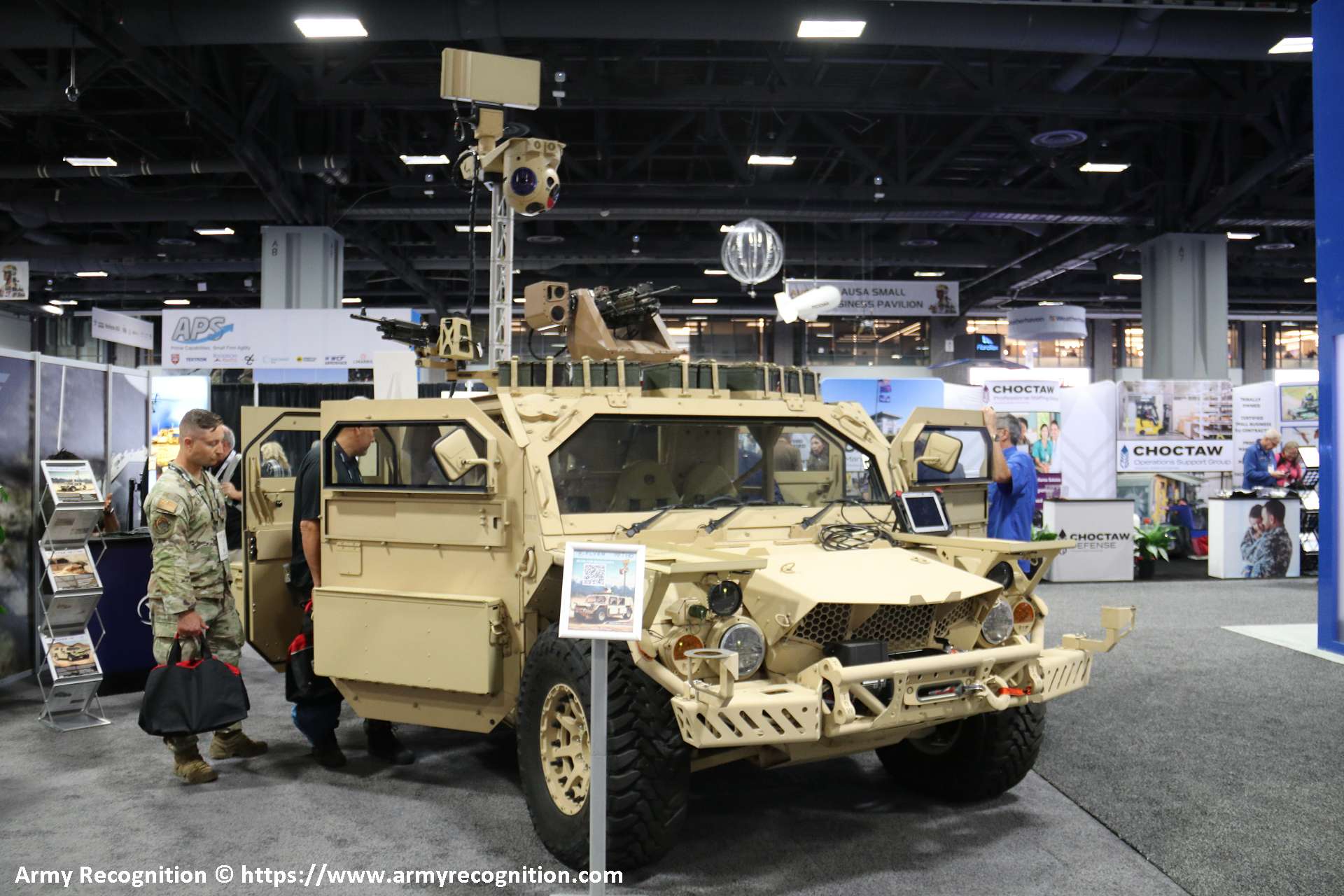
American Company Flyer Defense, a leading provider of tactical ground mobility solutions, announced on October 14, 2024, a strategic partnership with Tekne, a prominent Italian defense solutions company, to jointly produce the Flyer 72-Heavy Duty (Flyer 72-HD) vehicle. This agreement marks a significant collaboration aimed at enhancing defense capabilities for the Italian Armed Forces and other NATO allies.
Follow Army Recognition on Google News at this link
Flyer Defense 72-HD tactical vehicle at AUSA 2024 defense exhibition and conference in Washington D.C., United Staes. (Picture source: Army Recognition Group)
Under this new partnership, Flyer Defense and Tekne will leverage their combined expertise to manufacture and supply the Flyer 72-HD, a high-mobility vehicle designed for demanding operational environments.
The Flyer 72 is a highly versatile, lightweight tactical ground mobility vehicle designed for rapid deployment in various military operations. Known for its agility, the vehicle is engineered to excel in off-road conditions, providing exceptional performance across rugged terrains. It can be transported via air, both internally in aircraft cargo bays and externally via sling load, making it suitable for quick deployment in remote or hostile environments. The Flyer 72 is used by special operations forces and conventional military units, offering high mobility, flexibility, and adaptability for different missions, including reconnaissance, combat support, and logistics.
Designed with compact yet robust dimensions, the Flyer 72 has a length of 4.62 meters (4.90 meters with pushbar and winch) and a width of 1.83 meters (2.16 meters with side cargo boxes). Its adjustable height is 1.83 meters, making it easy to transport and store. Weighing 3,311 kg, the vehicle can carry a payload of up to 2,585 kg, offering ample personnel and mission-specific gear capacity.
The Flyer 72 can reach a top speed of 153 km/h and has a cruising range of 800 km on flat ground at 64 km/h, or 483 km under a typical mission profile. It is built to handle extreme terrain, with a maximum grade capability of 60% and a dynamic side slope of 40%, and can ford water up to 76 cm deep without preparation. Seating up to seven occupants, the vehicle can be configured for different roles, accommodating various weapon systems, communication gear, and specialized equipment, making it an adaptable and reliable choice for modern military operations.
The collaboration will also see the establishment of local manufacturing and support facilities within Italy. This move is intended to streamline production, ensure efficient delivery, and provide long-term sustainment of the Flyer 72-HD within the Italian defense sector. Additionally, local production will facilitate the seamless integration of the vehicle into Italy's defense infrastructure while supporting broader NATO requirements.
"We are excited to collaborate with Tekne and bring the Flyer 72-HD to Italy as well as other NATO-allied countries," said Oded Nechushtan, Founder and CEO of Flyer Defense. "This partnership represents a significant step forward in expanding our international presence while reinforcing our commitment to growing our U.S. manufacturing capabilities. We will continue to manufacture in the United States, as well as establish a local production base in Italy."
By combining Flyer Defense's expertise in tactical vehicle design and Tekne's deep understanding of the local defense market, the partnership aims to deliver a product that meets the unique operational needs of Italy’s military. The Flyer 72-HD is engineered to offer exceptional agility, durability, and mission-tailored flexibility, ensuring it can handle various demanding scenarios.
The announcement of this strategic partnership underscores a broader trend of collaboration within the defense sector, particularly among NATO allies seeking to strengthen interoperability and operational readiness. For Flyer Defense, this deal marks a key milestone in its strategy to expand its footprint in the international defense market.
Both companies are optimistic about the benefits this partnership will bring, not only to the Italian Armed Forces but also to other NATO allies seeking advanced, adaptable, and efficient tactical mobility solutions. With local production facilities set to be established in Italy, the companies expect to see increased efficiency in vehicle delivery and support, boosting Italy's defense capabilities and ensuring robust supply chain continuity.

- Details
- Written by: Administrator
- Category: 2024
- Hits: 4700
At AUSA 2024, Oshkosh Defense announced that its new ROGUE-Fires vehicle, part of U.S. Marine Corps NMESIS (Navy Marine Expeditionary Ship Interdiction System), will be delivered by 2025 -2026. This cutting-edge unmanned ground vehicle (UGV) is designed to enhance Ground-Based Anti-Ship Missile (GBASM) operations, integrating extreme off-road mobility from the Oshkosh JLTV (Joint Light Tactical Vehicle) platform with advanced autonomous capabilities.
Follow Army Recognition on Google News at this link
Oshkosh Defense showcases its cutting-edge ROGUE-Fires vehicle at AUSA 2024, highlighting its autonomous capabilities and role in ground-based anti-ship missile operations as part of the U.S. Marine Corps' future force structure. (Picture source: Army Recognition Group)
The Oshkosh Defense ROGUE-Fires vehicle provides both teleoperated and fully autonomous modes, supporting various weapon payloads, including the Naval Strike Missile (NSM), and can perform distributed logistics operations. Low-rate production began in October 2023 following a contract with the Marine Corps Systems Command.
The development of the ROGUE-Fires vehicle by Oshkosh Defense began as part of the U.S. Marine Corps' efforts to modernize its capabilities in line with the Force Design 2030 initiative. The concept for ROGUE-Fires, an unmanned ground vehicle designed to launch Naval Strike Missiles (NSM), emerged to meet the growing need for mobile, land-based anti-ship missile platforms. Leveraging the proven Joint Light Tactical Vehicle (JLTV) platform, the development began in the late 2010s, aiming to enhance the Marine Corps’ ability to engage enemy vessels from remote locations with a high degree of mobility and autonomy.
The Joint Light Tactical Vehicle (JLTV), developed by Oshkosh Defense, is a highly mobile, multi-purpose vehicle designed to replace the aging Humvee in U.S. military fleets. Introduced in the 2010s, the JLTV provides enhanced protection against mines and improvised explosive devices (IEDs) while maintaining superior off-road capabilities in challenging environments. It combines speed, payload capacity, and survivability, serving various missions, including troop transport, command, and weapons platforms. The JLTV’s modular design allows it to accommodate various configurations and emerging technologies, making it a critical asset for the modern expeditionary force
In August 2021, during Large Scale Exercise 21 (LSE 21), NMESIS was tested and validated in operational environments. The exercise demonstrated its ability to provide the Marine Littoral Regiment with ground-based anti-ship capabilities, allowing for sea denial and control within an enemy’s weapons engagement zone. LSE 21 validated several key concepts, showcasing how NMESIS could persist and perform in these highly contested environments.
NMESIS combines proven technologies, including the Naval Strike Missile (NSM) and ROGUE-Fires remote control capabilities. It enables "scoot-and-shoot" tactics, where the system can rapidly relocate after firing, making it difficult for adversaries to target.
ROGUE-Fires is an unmanned ground vehicle (UGV) designed to support Ground-Based Anti-Ship Missile (GBASM) operations. Leveraging Oshkosh's JLTV (Joint Light Tactical Vehicle) chassis, it provides unparalleled off-road mobility and payload capacity. The system can operate in both teleoperated and fully autonomous modes, making it highly versatile. In addition to its primary mission of launching Naval Strike Missiles (NSM), ROGUE-Fires can also be adapted for distributed logistics operations, making it a multi-functional platform in modern warfare.
The Naval Strike Missile (NSM), developed by Kongsberg Defence, forms the core of NMESIS' firepower. It boasts a range of 185 km 100 nautical miles) and uses sea-skimming, low-radar signature flight paths to evade detection. Its advanced guidance systems ensure high accuracy, even against moving targets.
The NMESIS will be crucial in ensuring the U.S. military can effectively deny adversaries access to strategic maritime regions, particularly in the Pacific, as the Marine Corps prepares for its 2025 deployment. NMESIS is expected to be a vital tool in modern naval warfare, allowing the U.S. to maintain a competitive edge in sea denial and control operations.

- Details
- Written by: Administrator
- Category: 2024
- Hits: 5378
At the 2024 Association of the United States Army (AUSA) conference, BAE Systems presented the Archer 155mm wheeled self-propelled howitzer as a key contender for the U.S. Army’s future artillery needs. This effort is part of the U.S. Army’s broader modernization plan aimed at improving the mobility, firepower, and operational flexibility of its artillery units.
Follow Army Recognition on Google News at this link
The Archer is a fully automated, truck-mounted 155mm self-propelled artillery system designed to provide rapid, high-mobility fire support. (Picture source: Army Recognition)
The Archer artillery system is a highly automated, wheeled 155mm howitzer that can respond rapidly in combat scenarios. It is capable of firing within 30 seconds of receiving a fire mission and can launch up to 21 rounds in less than three minutes. This rapid rate of fire, combined with its mobility, makes Archer an ideal candidate for modern combat situations where speed and firepower are critical.
One of the key features of Archer is its exceptional mobility. Mounted on a wheeled platform, it can relocate swiftly after firing, reducing its vulnerability to enemy counter-battery fire. The system can move 500 meters in under two minutes, ensuring the crew remains protected within an armored cabin. The entire gun system is operated from inside this cabin, prioritizing the safety of soldiers while allowing for continuous operations in high-threat environments.
Archer’s versatility extends beyond conventional artillery. It can fire both standard artillery munitions and more advanced rounds, such as the BONUS anti-armor and Excalibur precision-guided munitions. With Excalibur rounds, Archer can hit targets with precision at ranges up to 40 kilometers, offering long-range fire support that is highly accurate, making it particularly effective in targeting enemy positions and reducing collateral damage.
Internationally, Archer has already seen significant success. It is currently in service with the Swedish Army and was recently selected by the British Army to replace its aging AS90 systems, following the UK's decision to donate these older systems to Ukraine. The British Army's adoption of Archer is part of their larger effort to modernize their 155mm artillery capabilities, highlighting the system's proven effectiveness and reliability.
Crucially, Archer has also played an important role in Ukraine’s defense against Russian forces. As part of its efforts to counter Russia’s military advances, Ukraine has utilized the Archer for precision long-range artillery strikes. This combat experience has proven the system’s value on the battlefield, offering rapid, mobile firepower that has helped Ukrainian forces target Russian positions effectively. The combination of its rapid response time, firepower, and survivability has made Archer a key asset in Ukraine's defense strategy.
Additionally, Archer is being considered by other countries, including Switzerland, which has shortlisted the system as part of its artillery modernization program. Its availability on both 6x6 and 8x8 platforms further enhances its appeal to a wide range of international customers, making Archer a low-risk, combat-tested option for modernizing artillery systems worldwide.

- Details
- Written by: Jérôme Brahy
- Category: 2024
- Hits: 5134
At the Association of the United States Army (AUSA) 2024 event, American Rheinmetall Vehicles and Textron Systems presented their jointly developed prototype for the U.S. Army’s Small Multi-Purpose Equipment Transport (S-MET) Increment II program. American Rheinmetall Vehicles, headquartered in Sterling Heights, Michigan, recently won one of two contracts awarded as part of this program, which is focused on providing the Army with up to 2,195 autonomous ground vehicles capable of effectively transporting supplies and equipment over challenging terrain in support of combat operations.
Follow Army Recognition on Google News at this link
For the S-MET program, Textron Systems’ control architecture from early RCV platforms has been adapted to create a common interface with the S-MET vehicle. (Picture source: Army Recognition)
Under the terms of the contract, American Rheinmetall Vehicles will deliver eight prototypes in 2025 for extensive testing and evaluation. These prototypes will compete with those from a second awardee, with the US Army ultimately selecting a single platform for full-scale production. American Rheinmetall Vehicles’ S-MET solution incorporates technology from its Mission Master family, which includes a series of modular autonomous ground vehicles designed for various tasks such as reconnaissance, surveillance, counter-unmanned aerial systems (cUAS), and logistical support.
The S-MET vehicle (showcased at the AUSA 2024 exhibition featuring Moog's FMP equipped with Javelin and Coyote launchers) utilizes components already available in the Army’s inventory, along with commercially developed all-terrain vehicle technologies. This approach is intended to enhance the platform’s reliability and affordability, while addressing electromagnetic compatibility through its unique composite structure.
The collaboration between American Rheinmetall Vehicles and Textron Systems brings together substantial experience in the field of unmanned ground vehicles. Textron Systems, with over three decades of experience in autonomous platform development across air, land, and maritime domains, contributes its expertise in robotic ground vehicles. Textron Systems has previously developed the Ripsaw M5 and M3 platforms for the Army’s Robotic Combat Vehicle (RCV) programs. For the S-MET program, Textron Systems’ control architecture from these RCV platforms has been adapted to create a common interface with the S-MET vehicle, reducing operator training requirements and enabling easier integration across the Army’s autonomous vehicle programs.

If developmental testing for S-MET Increment II proceeds as anticipated, a production contract is scheduled for late Fiscal Year 2027, with the US Army’s Acquisition Objective targeting up to 2,195 units. (Picture source: American Rheinmetall Vehicles)
American Rheinmetall Vehicles operates as part of the American Rheinmetall Defense network, which includes divisions such as American Rheinmetall Munitions, American Rheinmetall Systems, and American Rheinmetall Defense. These companies are focused on supporting U.S. defense priorities through collaboration within Rheinmetall’s global network and an emphasis on strengthening the U.S. industrial base.
The S-MET Increment II builds upon the first iteration of the program, which was originally developed to explore existing platforms that could improve logistics capabilities within the Army. The original S-MET platform was a radio-controlled, eight-wheeled vehicle capable of transporting up to 1,000 pounds of equipment, providing power to on-board systems, and traversing varied terrain. The second increment aims to enhance these capabilities, doubling the payload capacity and providing increased power output to support mission payloads such as unmanned aerial systems and advanced communications equipment. Other improvements include a quieter audio signature, a wireless mesh communication network for dismounted operations, and modular architecture for easier future upgrades.
Kyle Bruner, project manager for Force Projection at the Army’s Program Executive Office Combat Support & Combat Service Support, noted that S-MET Increment II addresses specific challenges associated with reducing physical burden on soldiers, sustaining battery power for continuous operations, and improving reliability for semi-independent operations. By transferring the load to the robotic platform, the S-MET is designed to decrease physical strain on soldiers, contributing to more effective small unit operations. If developmental testing for S-MET Increment II proceeds as anticipated, a production contract is scheduled for late Fiscal Year 2027, with the Army’s Acquisition Objective targeting up to 2,195 units.
Read more: American Rheinmetall and Textron could produce up to 2,195 S-MET UGVs for US Army by 2027

- Details
- Written by: Halna du Fretay
- Category: 2024
- Hits: 3517
In an effort to enhance the power management of its Leopard 2A8 main battle tanks, On 15 October 2024, KNDS has awarded Thales a contract to supply advanced High-Power Solid-State Power Distribution Boards (SSPDB). This collaboration marks a significant step forward in integrating cutting-edge power technology into one of the world’s most renowned tank platforms. With a primary focus on robust, smart power distribution, Thales will provide a scalable solution that supports overcurrent and short-circuit protection, which is essential for the operational integrity and performance of protected vehicles in demanding environments.
Several countries have committed to procuring the Leopard 2A8 as part of their efforts to modernize armored capabilities, reflecting significant interest in this upgraded MBT. (Picture source: Army Recognition)
The SSPDB developed by Thales brings compact and programable power management tailored to meet the stringent requirements of military vehicles. Rated at up to 160 amps per channel, these multi-channel boards incorporate current, temperature, and voltage sensing capabilities. This design ensures not only enhanced safety but also provides flexible power management through pre-programmed profiles or real-time selections, adapting to diverse mission requirements. Such flexibility enables the Leopard 2 A8 to maintain peak performance across varying operational conditions, offering intelligent power distribution in high-stakes scenarios.
The first units are scheduled for delivery as early as the third quarter of 2024, a testament to the agile collaboration between KNDS and Thales. This rapid adaptation demonstrates the combined technical expertise of both teams, enabling a swift response to the Leopard 2 A8's complex power management needs. By 2027, Thales plans to deliver hundreds of SSPDBs under the KNDS contract, leveraging its established customization, manufacturing, and testing protocols for power systems.
With more than 20 years of experience in power system development for protected vehicles, Thales has a strong global reputation. Martin Bernhardsgrütter, Country Director of Thales Switzerland, highlighted the strategic importance of this partnership with KNDS, affirming the company’s commitment to delivering reliable and advanced solutions for military applications. Thales has developed a robust product line in power systems for armored vehicles, integrating the latest advancements in technology to ensure that each solution meets the evolving needs of modern defense operations.
The Leopard 2A8 SSPDB project represents an important collaboration between KNDS and Thales, focusing on the critical aspects of size, weight, and power (SWaP) to optimize system performance while meeting the Leopard 2 A8’s demanding mission requirements. As power management becomes increasingly crucial in modern armored vehicles, the KNDS and Thales partnership is poised to make a substantial impact on the operational capabilities of this main battle tank.

This flexibility allows the Leopard 2 A8 to sustain optimal performance under diverse operational conditions, providing smart power distribution in critical scenarios (Picture source: Army Recognition)
The Leopard 2A8, showcased in its production model at Eurosatory 2024, is the latest iteration in the Leopard 2 main battle tank (MBT) series developed by Krauss-Maffei Wegmann (KMW) and Rheinmetall. Building on the Leopard 2A7+ platform, this advanced MBT integrates improvements in armor, firepower, and systems integration. Key enhancements include an omnidirectional observation system, strengthened suspension, additional engine cooling capacity, an optional laser radiation warning system, and a remote-controlled weapon station equipped with a machine gun.
The Leopard 2A8’s primary weapon is an upgraded 120 mm/L55 A1 smoothbore gun, delivering higher muzzle velocities and enhanced accuracy. This cannon supports various types of ammunition, including the DM11 programmable round, which is effective across a range of target types. The secondary armament comprises a coaxially mounted 7.62 mm MG and a 76 mm grenade launcher. Powered by a 1,500 hp engine, the Leopard 2A8 reaches speeds of up to 65 km/h and has an operational range of around 400 kilometers.
In terms of protection, the Leopard 2A8 features multi-layered armor with steel, tungsten, composite fillers, and ceramic elements, reinforced by the EuroTrophy Active Protection System (APS) for 360-degree defense against incoming projectiles. The turret and hull benefit from enhanced armor, mine protection, and APS capabilities to counter threats from anti-tank guided missiles and rocket-propelled grenades. Accommodating a four-man crew, the tank is outfitted with advanced optics, a fire control system, third-generation thermal imaging, a laser rangefinder, and a ballistic computer for high-precision targeting.
Several countries have committed to procuring the Leopard 2A8 as part of their efforts to modernize armored capabilities, reflecting significant interest in this upgraded MBT. Germany’s Federal Acquisition Office, along with Norway, Italy, and the Czech Republic, has placed orders, with deliveries slated between 2026 and 2031. This procurement surge underscores the Leopard 2A8’s strategic importance in strengthening Europe’s armored warfare capabilities.
Read more: Thales Power Solutions Selected by KNDS for Leopard 2A8 MBT Enhancement

- Details
- Written by: Jérôme Brahy
- Category: 2024
- Hits: 9511
At the AUSA 2024 event, Polaris Government & Defense introduced the MRZR Alpha 6x6 Concept, a six-wheeled vehicle equipped with a launcher for Northrop Grumman’s Jackal loitering munition. The MRZR Alpha 6x6, which retains over 90% parts commonality with the MRZR Alpha 4x4, is designed to carry a variety of systems, such as ISR equipment and mortar launchers. The Jackal, Northrop Grumman’s loitering munition, can operate over a 100-kilometer range and travel at speeds exceeding 644 km/h, powered by a turbojet engine.
Follow Army Recognition on Google News at this link
With a cargo bed that is 65% larger than those of previous models, the MRZR Alpha 6x6 extends Polaris’s lineup of tactical vehicles, carrying heavier payloads such as this Jackal launcher. (Picture source: Army Recognition)
The MRZR Alpha 6x6 extends Polaris’s lineup of tactical vehicles, aiming to increase payload capacity and flexibility. It is compatible with existing Polaris platforms, such as the MRZR Alpha 2 and MRZR Alpha 4, to facilitate maintenance and interchangeability. The vehicle includes a cargo bed that is 65% larger than those of previous models, accommodating equipment like forward arming and refueling points. With a target payload of 1,632 kilograms (3,600 pounds), the MRZR Alpha 6x6 uses an additional axle to distribute weight, reduce ground pressure, and support transport across various surfaces. This capacity allows for transporting heavier systems, including mortar systems, drones, and command and control equipment.
The MRZR Alpha 6x6 operates on a turbocharged diesel engine that is compatible with multiple fuel types, such as JP-8, and features an eight-speed automatic transmission. The vehicle’s drivetrain is switchable between two-wheel and six-wheel drive modes, and includes a differential lock to enhance off-road maneuverability. It has a towing capacity of 680 kilograms (1,500 pounds) using a standard two-inch hitch, which supports additional equipment transport. The MRZR Alpha 6x6 is capable of traveling up to 362 kilometers on a single refuel. Polaris has already delivered demonstrator units of the MRZR Alpha 6x6 to U.S. Special Forces and the Marine Corps for testing.
The vehicle is designed with an independent dual A-arm suspension system, enabling a ground clearance of 30.5 centimeters and utilizing 81-centimeter tires for operation over difficult terrain. It is also air-transportable and suitable for low-velocity airdrops, Joint Precision Airdrop Systems (JPADS), and transport by aircraft such as the V-22, CH-47, and CH-53. Polaris continues performance assessments on the MRZR Alpha 6x6, with further concept demonstrators expected by late 2024.

Polaris has already delivered demonstrator units of the MRZR Alpha 6x6 to U.S. Special Forces and the Marine Corps for testing, with further concept demonstrators expected by late 2024. (Picture source: Polaris)
The Jackal loitering munition, initially introduced at the 2022 Special Operations Forces Industry Conference (SOFIC) and now integrated with the MRZR Alpha 6x6, is a high-speed, turbojet-powered munition developed by Northrop Grumman in collaboration with AeroVironment. The Jackal has a 100-kilometer range and approximately 15 minutes of loiter time, with a payload capacity of 4.5 kilograms. Its open architecture allows it to support ISR systems, electronic warfare modules, or precision warheads. The Jackal, powered by a turbojet engine using JP-10 fuel, can reach speeds of over 400 miles per hour (644 kilometers per hour). It is also deployable from air, surface, and maritime platforms.
Northrop Grumman has completed at least three flight tests of the Jackal, with further development aligned with the U.S. Army’s emerging requirements, particularly for ISR roles. The Jackal is equipped with dual electro-optic/infrared (EO/IR) sensors and a two-way datalink, enabling ISR and electronic warfare operations over longer distances. Dave Dorman, Northrop Grumman’s Vice President of Defense and Government Relations, has indicated that the Jackal is designed to carry both lethal and non-lethal payloads to suit a range of mission profiles.
The Jackal can penetrate defenses, reach targets quickly, and provide surveillance in contested areas. It also supports waypoint navigation and collaborative engagement features, which can be used to locate and neutralize air defense systems and command posts. Designed to function in both day and night operations and adverse weather conditions, the Jackal adds capability for varied operational environments.

Thanks to its turbojet engine, the Jackal has a 100-kilometer range and approximately 15 minutes of loiter time, with a payload capacity of 4.5 kilograms. (Picture source: Northrop Grumman)

- Details
- Written by: Triffaux
- Category: 2024
- Hits: 5935
The SCORPION LIGHT mobile mortar system, manufactured by Milanion NTGS, is currently being showcased by Global Ordnance at the AUSA 2024 event, taking place from October 9 to 11 in Washington, D.C. Designed to meet the demands for high mobility and rapid firing capabilities, this system, also known as "Alakran" in other markets, adapts to various military platforms, from light vehicles to armored carriers. With a fully digital fire control system and automated features, the SCORPION LIGHT can quickly fire and reposition, ensuring optimal efficiency in demanding combat environments.
Follow Army Recognition on Google News at this link
Milanion NTGS Highly Mobile 81mm Scorpion Light Mortar System (Picture source: Army Recognition)
The SCORPION LIGHT system, an innovative artillery solution mounted on the Infantry Squad Vehicle (ISV), is tailored for rapid mobility and precise fire support. Designed to carry a crew of four, the ISV measures 2071 x 81.75 x 73.9 inches, with a base vehicle weight of 5,000 lbs (2,268 kg). At the core of the SCORPION LIGHT is its compact mortar system, weighing 900 lbs (408 kg), which provides unmatched "shoot and scoot" capabilities, delivering up to eight rounds within a span of two minutes from a stationary position. This swift firing sequence minimizes exposure time, enhancing its survivability on the battlefield.
Equipped with a fully digital Fire Control System (FCS), the SCORPION LIGHT can seamlessly calculate ballistic solutions for various munitions by identifying its location and targeting coordinates. This automation allows operators to "wait for the green light" before each shot, simplifying the aiming process and reducing human error. The system can shoot off diverse surfaces, including concrete, tundra, and sand, thanks to its non-seating base plate, enabling deployment in various operational environments.
The SCORPION LIGHT’s FCS is designed to handle dynamic combat scenarios, allowing for pre-programmed targeting of up to 1,000 positions before deployment from headquarters. Additionally, it offers a substantial 72-round ammunition capacity (81mm), ensuring sustained firepower on the field. The FCS also supports automatic re-aiming within 3-5 seconds, enhancing its rapid response capability. This advanced fire control not only facilitates zonal firing but also enables multi-round and simultaneous impact strategies, which increase the system's lethality in suppressing enemy positions.
With a combined total weight of 5,900 lbs (2,676 kg) — excluding the barrel and ammunition — the SCORPION LIGHT exemplifies the evolution of mobile fire support solutions, providing militaries with a flexible, precise, and efficient indirect fire option.
Lightweight and automated mortar systems like the SCORPION LIGHT are attracting global interest, with each country developing versions tailored to their specific military needs. For example, Israel’s “Iron Sting” mortar system provides precision strikes with minimal collateral damage, using 120mm guided munitions and advanced targeting technology. In the United States, the Army has been developing the Armored Multi-Purpose Vehicle (AMPV) mortar system to deliver rapid mobile fire support in modern combat settings. In Europe, France utilizes the 2R2M mortar system, mounted on armored vehicles and capable of deploying 120mm rounds with assisted fire control. Meanwhile, Germany’s Rheinmetall RMM system allows for quick deployment and enhanced effectiveness in urban or remote combat areas through similar automation and precise targeting.
The appeal of these mobile and automated artillery systems lies in their ability to provide rapid and effective fire support while minimizing troop exposure to enemy fire. The mobility and versatility of these systems meet the modern military’s demands for dynamic, asymmetrical interventions, particularly in urban environments and conflicts where maneuverability is crucial to avoid counterfire. These capabilities are especially valued by armed forces worldwide, as they bolster operational resilience and adaptability to evolving combat situations, making units more effective and better protected in the field.
Read more: Global Ordnance Exhibits Highly Mobile 81mm Scorpion Light Mortar System at AUSA 2024

Leonardo DRS and BlueHalo reveal new laser-armed Stryker C-UAS DE to intercept drones up to 463 km/h
- Details
- Written by: Jérôme Brahy
- Category: 2024
- Hits: 13733
On October 14, 2024, Leonardo DRS and BlueHalo revealed a new variant of the Stryker 8x8 Infantry Combat Vehicle (ICV), known as the Counter-Unmanned Aircraft System (C-UAS) Directed Energy (DE) Stryker. This version, presented at AUSA 2024, is equipped with a laser-directed energy weapon, laser-guided 70mm rockets, a 30mm automatic cannon, and various radars and sensors. The companies recently conducted a live-fire demonstration of the C-UAS DE Stryker, successfully neutralizing Group 1-3 UAS targets.
Follow Army Recognition on Google News at this link
Presented at AUSA 2024, the C-UAS DE Stryker is equipped with a laser-directed energy weapon, laser-guided 70mm rockets, a 30mm automatic cannon, and various radars and sensors (Picture source: Army Recognition)
This demonstration took place last month in Socorro, New Mexico, in front of U.S. Army officials. During the demonstration, the mobile C-UAS system employed BlueHalo’s 26kW Locust Laser Weapon System to destroy multiple drones over two days. The demonstration highlighted the C-UAS DE Stryker’s capabilities through near-simultaneous C-UAS and ground engagements, utilizing both the laser weapon and a 30mm remote weapon station (RWS) to engage targets with consistent success.
According to Leonardo DRS, this directed energy weapon, mounted on a retractable platform at the rear of the Stryker, can engage Group 1, 2, and 3 uncrewed aerial systems (UASs), countering drones up to 600 kilograms in weight, reaching altitudes of 5,486 meters, and speeds up to 463 kilometers per hour. The Locust Laser Weapon System is a 26kW laser developed by ATA, which emphasizes mobility and rapid deployment. The Locust system integrates beam control, alignment, power, and thermal regulation elements within a compact, skid-mounted design, allowing it to be moved by standard vehicles like forklifts and pickup trucks.
Operational within 15 minutes of deployment, the Locust LWS is controlled by a single operator through a network-based interface. Its modular design allows for rapid replacement of individual subassemblies, supporting minimal downtime. With a scalable output power range of 2 to 20 kW, the system defends against multiple aerial threats, assisted by a pulse-Doppler, electronically scanned radar for 360-degree coverage, supporting counter-UAV operations, air defense, and hostile fire detection.

With a scalable output power range of 2 to 20 kW, the Locust laser system is operational within 15 minutes, and is coupled with a pulse-Doppler, electronically scanned radar for 360-degree coverage. (Picture source: BlueHalo)
The system’s SWIR camera provides frame rates between 500 and 2,500 Hz with a 3x zoom, and it includes an eye-safe laser rangefinder for precise tracking. An illuminator with adjustable spot size improves imaging in various conditions. Acquisition sensors operate at 120 Hz with a resolution of 1280 x 720, covering both visible and MWIR spectrums, enabling broad field tracking of small targets.
The adaptable power system can utilize battery, generator, or shore power configurations, and includes an integrated cooling system that enables over 100 seconds of continuous lasing with a 25% duty cycle. The gimbal provides 360-degree azimuth rotation and an elevation range from -30 to +90 degrees, allowing wide tracking capabilities.
Aaron Hankins, Senior Vice President and General Manager of Leonardo DRS Land Systems, emphasized the system’s rapid development timeline, as Leonardo DRS collaborated with seven other industry partners (BlueHalo, EOS Defense Systems USA, Northrop Grumman, BAE Systems, Arnold Defense, AMPEX, and Digital Systems Engineering) to develop the prototype in approximately eight months. Now, it is presented at the AUSA 2024 exhibition as a potential option for the U.S. Army, which is particularly interested in new laser-armed solutions to strengthen its short-range air defense (SHORAD) capabilities.

The Stryker C-UAS DE is also equipped with two primary kinetic effectors (the R400S remote weapon station (RWS) armed with a 30mm chain gun, and a 70mm laser-guided rocket launcher), as well as a Next-Gen Multi-Mission Hemispheric Radars (nMHR) and a 360° camera. (Picture source: Leonardo)
The Stryker C-UAS DE also includes two primary kinetic effectors: the R400S remote weapon station (RWS) from EOS Defense Systems USA, which is armed with Northrop Grumman’s XM914 30mm cannon, and BAE Systems’ 70mm laser-guided Advanced Precision Kill Weapon System II (APKWS II) rockets, mounted on the rear left side of the hull. These rockets are launched from a four-round launcher by Arnold Defense, featuring proximity-fuzed warheads optimized for counter-drone missions. Additionally, the C-UAS DE Stryker integrates the RPS-92 Next-Gen Multi-Mission Hemispheric Radars (nMHR) and a 360° camera, providing long-range detection and continuous tracking to enhance targeting effectiveness for air and ground threats.
The R400S RWS employs a 30 x 113mm cannon with a range of up to 2 km and is designed for lighter weight compared to similar systems. The XM914 Bushmaster Chain Gun, used in this setup, is a 30mm automatic cannon based on the M230 gun. It can fire percussion-primed 30x113mm rounds as well as electric-primed rounds like the M788 and M789. The XM914 reaches a firing rate of 200 rounds per minute, with additional proximity and guided medium-caliber rounds under development to broaden its threat engagement capabilities.
The R400S system includes day and thermal imaging sensors, with detection ranges exceeding 13,700 meters and identification ranges up to 4,700 meters. Its 4-axis stabilized gimbal provides accuracy during target engagement, even while in motion, and is equipped to engage a range of targets, including small and medium UAS. It is configurable for single or dual weapons, such as machine guns, automatic grenade launchers, or missile systems like the Javelin missile launcher, allowing configuration changes within an hour.

The R400S is configurable for single or dual weapons, such as machine guns, automatic grenade launchers, or missile systems like the Javelin missile launcher, allowing configuration changes within an hour. (Picture source: EOS)
Complementing the Locust system, BlueHalo’s Titan C-UAS and Titan-SV non-kinetic technologies enhance 360-degree threat detection and mitigation for Group 1 and 2 drones. BlueHalo’s Portfolio President, Mary Clum, highlighted the modular and integrative capabilities of the Locust LWS within the Stryker platform. This project showcases collaboration across multiple companies, including Leonardo DRS, BlueHalo, EOS Defense Systems USA, Northrop Grumman, BAE Systems, Digital Systems Engineering, Arnold Defense, and AMPEX.
Designed for interoperability, the C-UAS DE Stryker integrates with the U.S. Army’s Forward Area Air Defense Command and Control (FAAD C2) network, ensuring compatibility with other air defense systems. This platform brings together a range of technological capabilities from industry partners, aimed at providing soldiers with the necessary mobility, firepower, and protection to operate effectively in contested environments.
Ed House, Senior Director of Business Development at Leonardo DRS, emphasized that directed energy weapons reduce dependence on conventional ammunition and offer an effectively unlimited magazine depth due to lower costs per engagement compared to traditional surface-to-air interceptors. House noted that these systems have fewer logistical constraints, though cooling and recharging times are required between engagements. According to Leonardo DRS, this capability aligns with U.S. Army objectives of minimizing reliance on expendable ammunition.

During the demonstration, the C-UAS DE Stryker employed both the laser weapon and a 30mm remote weapon station (RWS) to engage and destroy multiple Group 1, 2, and 3 drones over two days. (Picture source: BlueHalo)
Despite recent advancements, directed energy programs within the U.S. military have encountered operational challenges, especially with mobile high-powered systems. For instance, in March, the U.S. Army deployed a Stryker variant equipped with a 50-kilowatt Raytheon laser, called the Directed Energy Maneuver-Short Range Air Defense (DE M-SHORAD), to the Middle East. During a Congressional briefing, Assistant Secretary of the Army for Acquisition, Logistics, and Technology Doug Bush noted issues such as heat dissipation and wear in mobile tactical environments, highlighting that fixed-site laser installations have demonstrated greater reliability.
The C-UAS DE Stryker represents a continued effort to refine mobile directed energy systems for counter-drone roles, addressing challenges identified in previous tests. Alongside the DE M-SHORAD, the Army fields a baseline M-SHORAD variant, now called the Sgt. Stout, equipped with Stinger heat-seeking missiles, radar-guided AGM-114L Hellfire missiles, an XM914 cannon, and AESA radars. Named in honor of Medal of Honor recipient Sgt. Mitchell William Stout, the original M-SHORAD system marks the first increment of the program, with the DE M-SHORAD as Increment 2.
Increment 3 of the M-SHORAD program plans to incorporate new counter-drone capabilities such as APKWS II rockets and Raytheon’s Coyote counter-drone interceptor. The fourth increment, now in planning, envisions a lighter platform that could be air-dropped or transported by helicopter, expanding the Army’s airborne and airmobile options. This increment may involve a 4×4 Joint Light Tactical Vehicle (JLTV), which Rafael also uses for its Lite Beam laser, or a robotic ground vehicle, depending on specific configuration requirements.

The US Army fields a baseline M-SHORAD variant, now called the Sgt. Stout, equipped with Stinger heat-seeking missiles, radar-guided AGM-114L Hellfire missiles, an XM914 cannon, and AESA radars. (Picture source: Army Recognition)

- Details
- Written by: Triffaux
- Category: 2024
- Hits: 5732
Israel Aerospace Industries (IAI) has introduced the ROC-X, a high-tech, hand-launched vertical takeoff and landing (VTOL) precision strike missile, designed to enhance military operational capabilities. This innovative missile, currently showcased at the AUSA 2024 exhibition in Washington, D.C., from October 9 to 11, 2024, aims to significantly improve the lethality of troops in the field, allowing for swift and precise engagements against a wide range of targets. With the ROC-X, IAI reinforces its commitment to integrating advanced technology into defense solutions, solidifying its reputation as a aerospace and defense sector leader.
Follow Army Recognition on Google News at this link
IAI ROC-X Hand-Launched VTOL Loitering Munition (Picture source: Army Recognition)
Israel Aerospace Industries (IAI) has unveiled the Point Blank, also known as the ROC-X, the world’s first hand-launched electro-optical VTOL (Vertical Takeoff & Landing) missile designed to engage both stationary and moving targets. As the first hand-held loitering munition, the Point Blank represents a major advancement in battlefield technology, providing a unique capability that allows a single soldier to launch, operate, and recover the missile independently. Featuring a fuselage length of 1 meter and an X-shaped wing configuration with a wingspan of 0.8 meters, the missile incorporates a ducted propeller propulsion system with no moving parts, enabling stealthy, quiet, and highly maneuverable operation.
The ROC-X boasts an impressive accuracy of one meter circular error probable (CEP), enabling effective strikes at a tactical range of up to 10 kilometers. This precision is achieved through advanced electro-optical and GPS guidance systems, ensuring that operators can engage targets without the need for a dedicated launcher. The hand-launch capability of the ROC-X allows for rapid deployment, providing troops with a versatile tool for modern combat scenarios. This feature is especially beneficial in dynamic environments where speed and adaptability are paramount.
Operational advantages of the ROC-X include fast engagement times and high maneuverability, making it well-suited for a variety of missions. The missile’s design incorporates stealth features that reduce both noise and thermal signatures, facilitating covert operations in hostile territories. Furthermore, the automatic end-game function activates once the operator locks onto a target, ensuring that the missile remains on course for a lethal impact, thus minimizing the risk of collateral damage.
For armed forces, the ROC-X brings a concrete advantage in terms of agility, precision, and independence on the battlefield. Its hand-launched VTOL design means that individual soldiers can deploy it without additional equipment or launchers, making it suitable for rapid-response situations and varied terrains. With a range of 10 kilometers, soldiers can safely engage targets from a distance, both stationary and moving, without exposing themselves to direct enemy fire. Its quiet, stealthy operation reduces the risk of detection, making it ideal for covert missions. Furthermore, the missile’s high accuracy—less than a meter CEP—ensures precise strikes, minimizing collateral damage in populated or sensitive areas. The electro-optical and GPS guidance systems allow real-time control, while the option to abort or redirect the missile mid-flight adds a level of control rarely seen in similar systems, providing tactical flexibility to adapt to changing battlefield conditions.
Weighing 6.8 kilograms and measuring one meter in length, the ROC-X is designed for ease of handling and deployment by troops. It features a 2-kilogram warhead with impact and proximity fuses, enhancing its effectiveness against both static and mobile targets. The missile's operational endurance allows for flight times of up to 20 minutes, with versatile flight modes that include both manual and fully automatic operations. This flexibility ensures that operators can adapt to evolving battlefield conditions, making the ROC-X an invaluable asset in modern warfare.
The development of similar systems to the ROC-X in other armed forces aims to create precise and versatile loitering munitions that can be operated by individual soldiers. However, the ROC-X stands out for its true portability, being entirely hand-launched, unlike other systems such as the U.S. Switchblade 300 or China’s CH-901, which require specific launchers for deployment. This feature makes the ROC-X particularly suited to dynamic environments, enabling quick reaction and flexible engagement in the field, giving soldiers greater autonomy compared to similar systems.
Read more: Israel Aerospace Designs ROC-X World First Hand-Launched VTOL Loitering Munition

- Details
- Written by: Vandenbosch
- Category: 2024
- Hits: 5297
On October 15, 2024, Leonardo and Rheinmetall announced the formation of a joint venture dedicated to producing next-generation combat vehicles. Named Leonardo Rheinmetall Military Vehicles (LRMV), this alliance marks a significant collaboration between the Italian and German defense giants, targeting both domestic and international markets. With its headquarters in Rome and an operational base in La Spezia, LRMV is set to officially launch in early 2025, pending regulatory approval.
The KF51 Panther, designed in Germany, represents a new generation of main battle tanks. (Picture source: Rheinmetall)
LRMV is structured as an equal partnership, with each company holding a 50% stake. The initial and ambitious goal of this alliance is to develop and produce Italy’s future main battle tank (MBT), based on Rheinmetall’s KF51 Panther model, along with an advanced Armoured Infantry Combat System (AICS) based on the Lynx infantry fighting vehicle. This collaboration aligns with the Italian Army’s land systems modernization program, with a particular emphasis on armored mobility, lethality, and modularity.
The KF51 Panther is intended to eventually replace the Ariete tank in the Italian fleet, meeting the evolving needs of the Italian Army. Additionally, the Italian AICS program is expected to facilitate the acquisition of over 1,000 armored vehicles in 16 different configurations, including anti-aircraft (Skyranger), reconnaissance, and anti-tank variants. These vehicles are designed with a modular structure, enabling easy customization and upgrades to adapt to various mission profiles.
Under the agreement, around 60% of production activities will take place in Italy, with a focus on final assembly, homologation testing, logistics, and support. Leonardo will be responsible for providing mission systems, electronic suites, and weapons integration in line with the Italian client’s specifications. Rheinmetall's strong presence in Italy, with approximately 1,500 employees across five sites, will further strengthen this project by incorporating its technological expertise and substantial local operations.
Roberto Cingolani, CEO of Leonardo, emphasized the broader strategic implications of the joint venture: “This is an important step toward creating a European defense system based on shared specialized platforms. Rheinmetall and Leonardo aim to develop cutting-edge technologies capable of competing internationally.”
Armin Papperger, CEO of Rheinmetall, echoed this sentiment, highlighting the partnership’s commitment to addressing not only Italy’s needs but also those of other European and allied nations in combat vehicle modernization: “We are creating a new heavyweight in European tank production. Leonardo and Rheinmetall, two leading European defense technology suppliers, are joining forces for ambitious projects.”
The KF51 Panther, designed in Germany, represents a new generation of main battle tanks, integrating advanced firepower, optimized protection, and sophisticated battlefield management capabilities. Its primary armament is a 130 mm cannon, providing increased firepower compared to traditional 120 mm tanks. This cannon is complemented by a 12.7 mm coaxial machine gun and a remotely operated weapon station with a 7.62 mm machine gun, ensuring coverage against infantry and light threats. Additionally, the KF51 features a launcher capable of deploying four loitering munitions, thereby extending its long-range strike capabilities and enabling surveillance or target neutralization missions at a distance.
Protection is a key element in the KF51 Panther’s design. With an optimized weight of 59 tons, it incorporates a comprehensive protection system that combines active, reactive, and passive technologies to ensure crew safety in the most demanding combat environments. This sophisticated protection suite provides integrated defense against ballistic threats, explosives, and guided missile attacks.
In terms of mobility, the KF51 can reach a maximum speed of 70 km/h, and its operational range of 500 km allows for efficient maneuvering on the battlefield and long-distance coverage without frequent refueling. Its imposing structure measures 7.8 meters in length, 3.7 meters in width, and 2.5 meters in height, providing ample space for a crew of four, divided between two primary and two secondary positions.
To enhance survivability and mission effectiveness, the KF51 is equipped with various advanced systems, such as panoramic sight cameras for the commander and gunner, an NBC (nuclear, biological, chemical) protection system that ensures crew safety in extreme conditions, night vision capabilities, and a full suite of 360° cameras. A laser rangefinder and a combat management system enable accurate target detection, identification, and engagement while coordinating actions within the unit. Although the KF51 Panther is not yet in service, it represents a promising technological advancement for armies seeking to modernize their armored forces with cutting-edge equipment.
By creating this joint venture, Leonardo and Rheinmetall mark a new phase in European defense collaboration, paving the way for increased capabilities within the Italian armed forces while strengthening export potential to allied markets. As the European defense landscape faces growing demand for advanced and adaptable land systems, LRMV is poised to play a central role in this evolving industry.

- Details
- Written by: Halna du Fretay
- Category: 2024
- Hits: 5433
On October 11, 2024, the Organisation for Joint Armament Cooperation (OCCAR) announced the signing of a contract with the ARTEC GmbH consortium for the delivery of 27 additional Boxer infantry fighting vehicles (IFV) for the Lithuanian army. This new agreement, designated as "Amendment 16," marks a significant step in the Vilkas program, enabling Lithuania to expand its fleet of Boxer vehicles, a widely valued armored combat model known for its modularity and durability. This initiative is supported by close collaboration between OCCAR, the Lithuanian Defence Materiel Agency, and ARTEC, a consortium of Rheinmetall Land Systems and KNDS, two major German defense companies.
This new order represents a strategic investment to increase the fleet to over 110 vehicles and ensure greater flexibility in Lithuania’s military operations (Picture source: Lithuanian MoD)
The Boxer 8x8 is a multirole wheeled armored vehicle designed by German and Dutch companies under the ARTEC GmbH industrial group to meet the diverse needs of modern armed forces. Its modular design allows for the integration of different mission modules, providing flexibility for roles such as troop transport, command, logistics, medical evacuation, repair, and 120mm mortar support. Equipped with an advanced protection system, it provides optimal protection against mines, improvised explosive devices (IEDs), and ballistic threats. The Boxer features a remote weapon station that can be equipped with either a 12.7 mm machine gun or a 40 mm automatic grenade launcher, adaptable to national requirements. Powered by an MTU 8V199 TE20 diesel engine, the Boxer can reach speeds of 105 km/h with a range of 1,000 km, offering exceptional mobility across varied terrains and environmental conditions. Its strategic deployment capacity via road, rail, sea, or air (A400M) enhances its international operational potential.
The contract includes a new engineering variant of the Boxer, specifically designed for military engineering operations. This model will integrate demining and engineering equipment directly into the infantry fighting vehicle, significantly enhancing the tactical mobility of Lithuanian forces. Since joining the BOXER program in 2016, Lithuania has acquired 91 of these vehicles through an initial €358.6 million contract. Deployed within the “Iron Wolf” Infantry Brigade, these vehicles are used in various exercises, contributing to the rapid modernization of Lithuania's land capabilities, as noted by National Defence Minister Laurynas Kasčiūnas.
This new order represents a strategic investment to increase the fleet to over 110 vehicles and ensure greater flexibility in Lithuania’s military operations. Along with the vehicles, the contract includes initial logistical support with spare parts, maintenance equipment, and training. OCCAR, in partnership with ARTEC, oversees the agreement’s implementation to ensure compliance with Lithuania’s specific requirements.

This new order represents a strategic investment to increase the fleet to over 110 vehicles and ensure greater flexibility in Lithuania’s military operations (Picture source: OCCAR)
The Boxer "Vilkas" vehicles are equipped with Samson Mk II turrets produced by the Israeli company Rafael, armed with a 30mm MK-44S cannon and Spike LR anti-tank missiles. This versatile model meets the specific needs of Lithuanian forces, incorporating advanced technologies in protection and firepower and adaptable to various combat environments. The €370 million allocated to this new purchase includes both the combat vehicles and essential logistics to maintain operational efficiency through the delivery period, scheduled between 2027 and 2029.
Internationally, the OCCAR BOXER program is steadily expanding, with over 1,350 vehicles on order for Germany, the Netherlands, the United Kingdom, and Lithuania. Other Boxer variants, including the Boxer CRV for Australia and the Skyranger 30, are also being produced by Rheinmetall Defence, with specialized models for reconnaissance and fire support missions in preparation for Germany and Ukraine. These developments underscore Boxer’s evolution as a modular platform adaptable to the diverse requirements of participating nations.
For Lithuania, this new order marks significant progress in its national defense program, aiming to improve training, command capabilities, and operational control for combat and demining units. The integration of military engineering vehicles enhances tactical capabilities to effectively meet modern security challenges. Beyond bolstering Lithuanian forces, this order reinforces European defense collaboration and demonstrates OCCAR's capacity to manage complex armament programs for multiple nations.
Read more: Lithuania Strengthens its Military Power with 27 New Boxer Vilkas IFV

- Details
- Written by: Tkuhn
- Category: 2024
- Hits: 2979
According to information published by Clash Report on October 13, 2024, Hezbollah reportedly launched Mirsad-1 unmanned aerial vehicles (UAVs) against an Israeli Defense Forces (IDF) base near Haifa.
Follow Army Recognition on Google News at this link
Hezbollah Mirsad-1 Unmanned Aerial Vehicle. (Picture source: Wikipedia)
The Mirsad-1 UAV, used by Hezbollah since the early 2000s, is primarily a reconnaissance drone based on Iranian technology, specifically the Ababil-T or Mohajer-2 platforms. It serves multiple roles, including intelligence gathering and, in some cases, as a suicide drone. This UAV was first deployed by Hezbollah in 2004, when it successfully penetrated Israeli airspace during two high-profile incursions, one in November 2004 and another in April 2005.
The Mirsad-1 is relatively small and lightweight, with a range of approximately 120 kilometers and capable of carrying a payload of up to 40 kilograms of explosives. It has a top speed of 370 km/h and can operate at altitudes of up to 3,000 meters. Despite being initially used for surveillance, it is also equipped to serve in offensive roles, including carrying out kamikaze-style attacks on targets.
Hezbollah attack on IDF base
The Hezbollah drone attack on an Israeli Defense Forces (IDF) base near Haifa in October 2024 marks a critical escalation in the Israel-Hezbollah conflict, which has intensified since the start of Israel's operations in Gaza. On October 13, Hezbollah launched explosive drones targeting a military base in Binyamina, killing four soldiers and wounding several others. This attack was one of the deepest incursions by Hezbollah into Israeli territory during the current conflict.
Hezbollah claimed the strike as retaliation for Israeli airstrikes in Beirut and southern Lebanon. These ongoing hostilities have seen the militant group use advanced drone technology to strike high-value targets in Israel, part of a broader strategy to challenge Israeli dominance. This strike highlighted gaps in Israel's air defense systems, raising questions about the preparedness of military installations far from the immediate conflict zone.
The incident is emblematic of the broader regional tensions, with Hezbollah positioning itself as a key actor supporting Palestinian efforts against Israel. While Israel has responded with airstrikes on Hezbollah positions in southern Lebanon, the frequency and scale of these drone attacks underscore Hezbollah’s capability to target critical infrastructure deep within Israeli territory. The attack also signals Hezbollah's intention to escalate the conflict in response to Israeli actions, making the northern border a potential flashpoint for broader regional warfare.
This development aligns with Hezbollah's broader strategy of using asymmetric warfare to exert pressure on Israel while avoiding full-scale war, although the risk of further escalation remains high. Both sides are engaging in a tit-for-tat cycle, raising concerns over the potential for a more prolonged and destructive conflict.
Read more: Hezbollah Deploys Mirsad-1 UAVs in Attack on IDF Base Near Haifa
- UVision USA Unveils New Autonomous Multi-Launch Loitering Munition System Adaptable to Various Platforms
- Elbit Systems Iron Fist System Wins Over US and Europe at AUSA 2024
- US Company Leidos Launches AirShield Most Advanced Counter-Unmanned Aerial System
- Israel’s new Ariel ELA-6992 Robotic Combat Task Force closes sensor-to-shooter loop for coordinated combat operations