
- Details
- Written by: Vandenbosch
- Category: 2024
- Hits: 7195










On October 1, 2024, a large-scale attack orchestrated by Iran hit Israeli soil, marking a significant turning point in the ongoing conflict between the two nations. As part of "Operation True Promise 2," Iranian forces deployed a vast arsenal, including 120 ballistic missiles (including Emads), 170 drones, and 30 hypersonic missiles, among them the Fatah-2.
Follow Army Recognition on Google News at this link
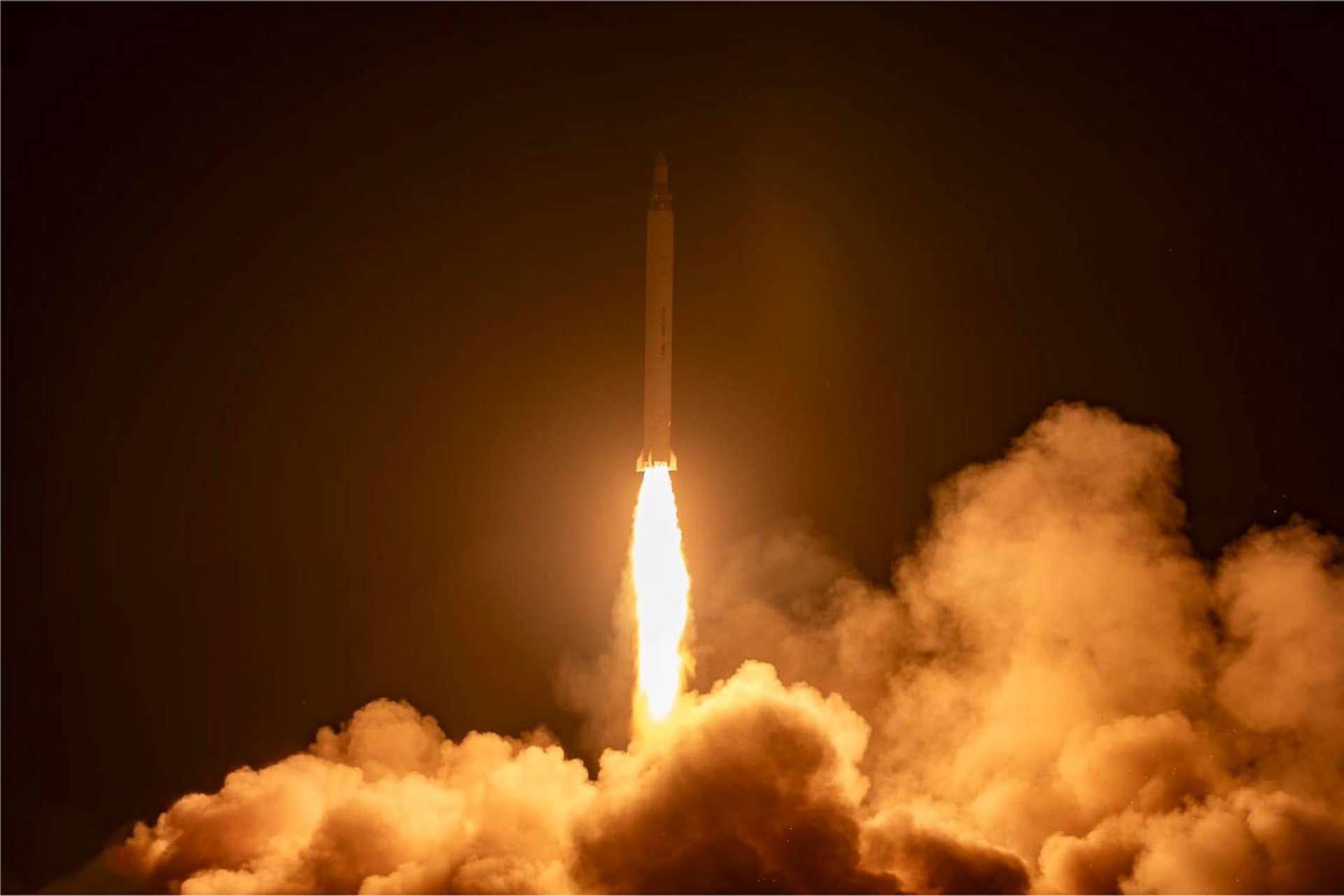
Images of Emad MRBMs launched at Israel during Operation True Promise 2. (Picture source: Iranian Media)
The 120 ballistic missiles used in this attack notably included the Emad, a medium-range missile capable of striking targets nearly 1,700 kilometers away with improved accuracy. Thanks to its terminal guidance system, these missiles can adjust their trajectory in the final phase of flight, thus increasing their effectiveness. This coordinated attack also saw the use of 170 drones, another crucial component of Iran’s military strategy. Drones have become indispensable weapons in modern warfare, and Iran’s attack on Israel featured a significant number of them.
However, the most concerning aspect of this offensive lies in the deployment of 30 hypersonic missiles, a first in this conflict. Among them, the Fatah-2 was used for the first time in a conflict. This hypersonic missile, capable of flying at a speed of Mach 13, stands out due to its ability to evade conventional defense systems thanks to its high-speed maneuverability. With an estimated range of 1,400 kilometers, the Fatah-2 can not only reach its targets in record time but it is also designed to change course during flight, making interception extremely difficult. Its payload, tailored for precision strikes, makes it a formidable weapon for attacks on critical infrastructure.
This coordinated offensive severely tested Israeli defense systems, notably the Iron Dome and Arrow anti-missile batteries. While these systems successfully intercepted part of the ballistic missiles and drones, the threat posed by hypersonic missiles like the Fatah-2 remains a significant concern. Current anti-missile defense systems struggle to keep up with these ultra-fast weapons, giving Iran a clear strategic advantage in its pursuit of deterrence against Israel. So far, no precise figures have demonstrated how effectively the Fatah-2 was intercepted, but Iranian officials have claimed that 90% of the means employed in the attack reached their targets.
The October 1 attack thus marks an escalation in hostilities between Iran and Israel, not only due to the impressive quantity of weaponry deployed but also because of the advanced quality of these attack systems. Iran has demonstrated its ability to carry out a complex offensive, integrating drones, precision ballistic missiles, and hypersonic missiles, thereby pushing the limits of Israeli defenses. The drones disrupted detection systems and weakened rapid response capabilities, while Emad ballistic missiles and Fatah-2 hypersonic missiles targeted infrastructure.
The Emad-1, in particular, is a medium-range ballistic missile (MRBM) developed by Iran and used since 2015 by the Aerospace Forces of the Islamic Revolutionary Guard Corps (IRGCASF). It represents an important milestone in Iran’s ballistic capabilities, being one of the first weapons of its kind to incorporate an advanced guidance system, thus improving its accuracy compared to previous models. The Emad-1 missile is powered by liquid fuel, a technology that, while older than solid propellants, allows for greater flexibility in adjusting parameters before launch.
With a diameter of 1.25 meters, the Emad is designed to carry a single warhead, enabling it to strike targets up to 1,700 kilometers away. This range allows it to hit targets across much of the Middle East, including Israel, with notable precision. Indeed, the missile boasts a circular error probable (CEP) of 50 meters, meaning its margin of error at impact is relatively small, a significant improvement over older ballistic systems. This makes the Emad a formidable weapon for targeted strikes on strategic infrastructure.
The October 1, 2024, attack symbolizes a rise in tensions between Iran and Israel, with the use of a sophisticated and varied arsenal, including ballistic missiles, drones, and Fatah-2 hypersonic missiles. This offensive, carried out as part of "Operation True Promise 2," highlights the evolution of Iranian military capabilities and raises new questions about Israel’s defense systems' ability to cope with these threats. While the international community calls for calm, this escalation serves as a reminder of the fragility of the situation in the Middle East and the inherent risks of increasingly technological warfare.
Read more: What Missiles Were Used in Iran's Strike on Israel?

US Army Accelerates Deployment of Next Generation Squad Weapons for Pacific Units and Special Forces
- Details
- Written by: Halna du Fretay
- Category: 2024
- Hits: 6684
The U.S. Army is undergoing a significant overhaul of its infantry arsenal with the deployment of the Next Generation Squad Weapon (NGSW) program. This initiative aims to replace the rifles and light machine guns used by close combat units for decades. At the core of this transformation are the XM7 rifle and XM250 machine gun, both chambered in 6.8 mm, designed to replace the current 5.56 mm weapons, such as the M4 and the Squad Automatic Weapon (SAW). This change represents a significant shift for the U.S. infantry, which has not seen such a development since the introduction of the M16 in 1967.
Follow Army Recognition on Google News at this link
U.S. Army National Guard Soldier fires an XM7 during the National Guard's Best Warrior Competition August 06, 2024, near Jericho, Vermont (Picture source: US DoD)
The XM7 rifle is built to replace the M4 with a more powerful 6.8 mm caliber, providing increased range and accuracy compared to the traditional 5.56 mm. It is better suited for modern combat, where engagements at longer distances are becoming more frequent. With improvements in both internal and external ballistics, the XM7 enhances soldiers' ability to engage targets with greater precision while maintaining an ergonomics familiar to M4 users.
The XM250 machine gun, which replaces the Squad Automatic Weapon (SAW), also introduces a 6.8 mm caliber for increased firepower and better effective range. Designed to be lightweight and easy to handle, it provides soldiers with a more versatile automatic weapon, offering a high rate of fire while maintaining considerable accuracy at long distances. The XM250 thus enhances the lethality of close combat squads.
The XM157 fire control system represents a major technological advancement for soldiers, combining aiming systems and ballistic aids into a single device. It integrates features such as automatic point-of-impact correction, a laser rangefinder, and long-range shooting assistance. These technologies allow soldiers to reduce the time required to adjust their aim while increasing accuracy, particularly in dynamic environments or long-range engagements.
The NGSW program is not limited to new weapons; it also incorporates advanced fire control technology, such as the XM157, which includes aiming systems and sophisticated ballistic calculations, features not found in currently fielded rifle optics. This device aims to enhance the precision and lethality of soldiers in combat.
One of the most notable aspects of this initiative is the accelerated deployment of these weapons. Units based in the Pacific, as well as special operations forces, will be among the first to receive this new equipment in the coming months and throughout the next year. This decision reflects the growing tensions in the Pacific region, an increasingly strategic theater of operations for the U.S. Army.
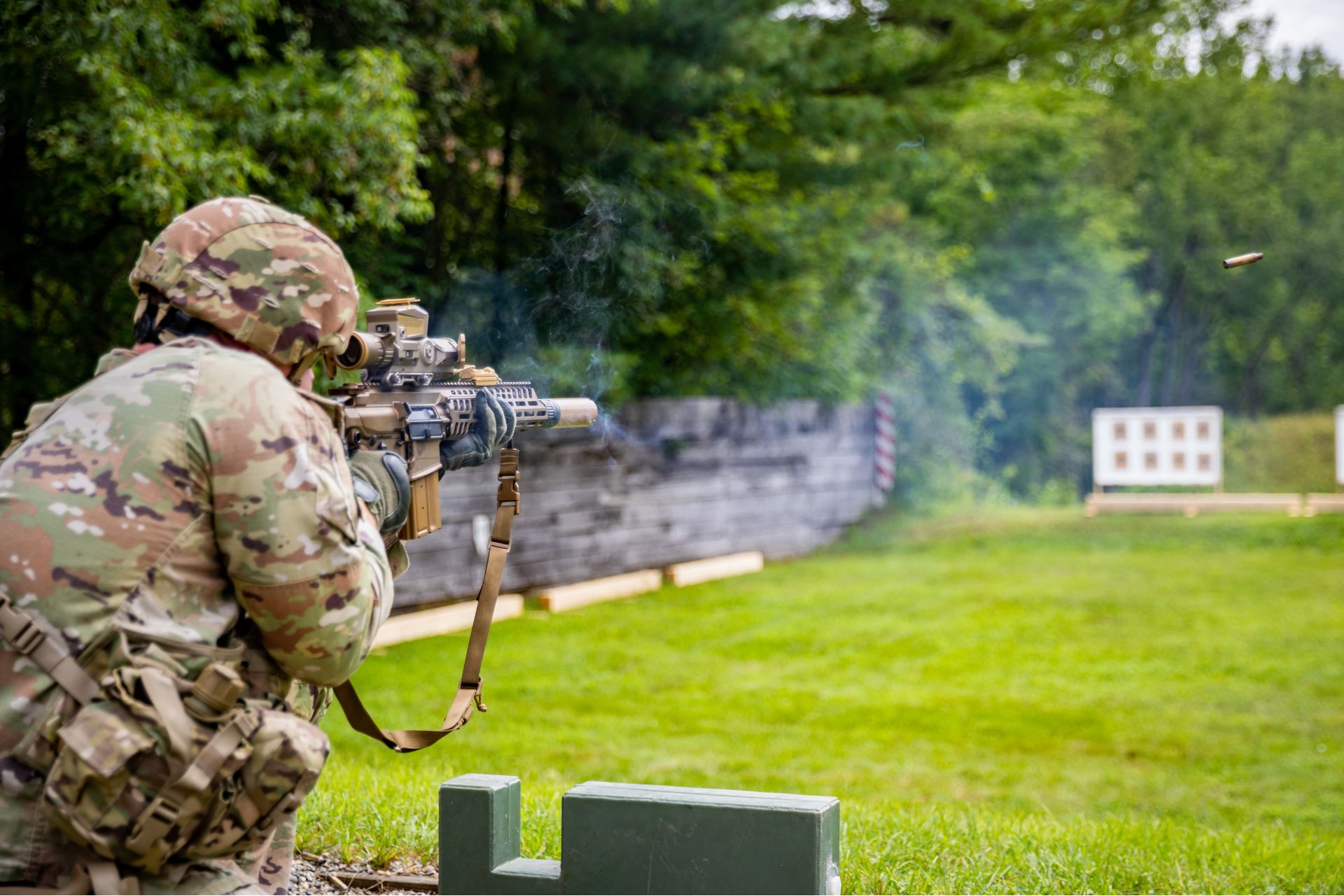
A U.S. Army Soldier fires an XM7 rifle during the 2024 Army National Guard Best Warrior Competition at the Army Mountain Warfare School, Jericho, Vermont, Aug. 6, 2024 (Picture source: US DoD)
In March, a battalion of the 1st Brigade, 506th Infantry Regiment, 101st Airborne Division, was one of the first units to receive the full NGSW system. This package included the XM7 rifles, XM250 machine guns, and XM157 fire control systems. Since then, the program has accelerated, reaching National Guard units as well. This summer, the 30th Armored Brigade Combat Team of the North Carolina National Guard was also equipped with the new weapons.
For the soldiers testing these new systems, the adaptation process is ongoing, but initial feedback suggests significant improvements in accuracy and tactical capabilities. Colonel Jason Bohannon, who oversees the soldier lethality portfolio within the Program Executive Office-Soldier, emphasized the historical importance of this change, noting that this is the first time in more than fifty years that a weapon of this magnitude has been deployed to close combat forces.
The deployment of the NGSW marks a shift in how the U.S. Army addresses the needs of modern combat. As technological advancements redefine engagements on the battlefield, these next-generation weapons, with their improved caliber and aiming systems, are designed to give soldiers a decisive advantage in future conflicts. The speed of deployment to sensitive areas, such as the Pacific, highlights the geopolitical and strategic importance the Army places on this upgrade.

- Details
- Written by: Jérôme Brahy
- Category: 2024
- Hits: 3767
On October 1, 2024, the Franco-German defense group KNDS launched a subsidiary in Ukraine, expanding its collaboration with the country amid the ongoing conflict. The new entity, KNDS Ukraine LLC, aims to establish maintenance, repair, and production capabilities for equipment such as Leopard tanks and Caesar self-propelled howitzers currently deployed in Ukraine. This move includes plans to produce 155mm artillery shells and spare parts using technologies like 3D printing within the next year, with potential expansion to manufacturing entire systems in Ukraine in the future.
Follow Army Recognition on Google News at this link
Ukraine currently operates 386 pieces of KNDS equipment such as the Leopard 1 and 2 main battle tanks, the Caesar and PzH 2000 self-propelled howitzers, the AMX10 RC tank destroyer, and the Gepard self-propelled anti-aircraft gun, with orders for an additional 250 units. (Picture source: Ukrainian 47th Mechanized Brigade)
As of June 7, 2024, according to KNDS Chairman Philippe Petitcolin, Ukraine operates 386 pieces of KNDS equipment such as the Leopard 1 and 2 main battle tanks, the Caesar and PzH 2000 self-propelled howitzers, the AMX10 RC tank destroyer, and the Gepard self-propelled anti-aircraft gun, with orders for an additional 250 units. To support this fleet, KNDS is partnering with Ukrainian firms, signing letters of intent with ENMEK for a Caesar cannon maintenance center and KZVV for 155mm shell production. Ukrainian personnel will handle Caesar's maintenance using parts shipped from France, eliminating the need for French technicians.
This initiative aligns with broader international efforts to strengthen Ukraine's defense capabilities, as over 40 nations have participated in the Ukraine Defense Contact Group to accelerate defense resource delivery. These countries have mapped global production capacities to expand ammunition and equipment supplies. France and Sweden plan to double their ammunition and explosives production capacity by 2025 and increase powder production by 2026. Meanwhile, Germany, Spain, Hungary, South Africa, and Australia plan to produce 700,000 artillery shells and 10,000 tons of gunpowder annually by 2025.
KNDS's involvement is part of wider international defense investments in Ukraine. Germany's Rheinmetall signed a letter of intent to establish a KF41 Lynx armored vehicle production facility in Ukraine, and Norway's Nammo announced plans to license the production of 155mm rounds. These collaborations aim to localize defense production and ensure Ukraine’s capability to maintain and produce essential military equipment.

The German company Rheinmetall plans to provide several hundred Lynx vehicles to Ukraine, which will include training, maintenance, and repair services. (Picture source: Army Recognition)
Complementing these investments, France plans to train a brigade of 2,100 Ukrainian soldiers, supporting Ukraine's goal of preparing 15 to 20 brigades. Earlier in 2023, Sweden donated 50 CV90 infantry fighting vehicles to Ukraine and later, Sweden, Netherlands and Denmark signed a letter of intent to finance and deliver more CV90s. Denmark committed $264 million to this effort, while Sweden will manage the acquisition and delivery of vehicles produced by BAE Systems Hägglunds. These agreements also include future cooperation for CV90 production and servicing in Ukraine, potentially leading to joint manufacturing.
In September 2023, the French company Arquus partnered with Ukraine to establish a repair workshop focusing on maintaining French-made Véhicules de l'Avant Blindés (VAB) armored vehicles, part of France's military aid, which also includes Caesar 6x6 self-propelled howitzers and SCALP missiles.
Several defense companies have launched subsidiaries or initiated licensed production in Ukraine to support its defense industry. Rheinmetall opened a joint production facility with Ukrainian state-owned defense enterprise Ukroboronprom, including a workshop for armored vehicle repair and manufacturing. Rheinmetall plans to produce various equipment, including air defense systems, armored vehicles, and ammunition, aiming to supply the Ukrainian army and estimating potential annual revenue of $2-3 billion from its Ukrainian operations.
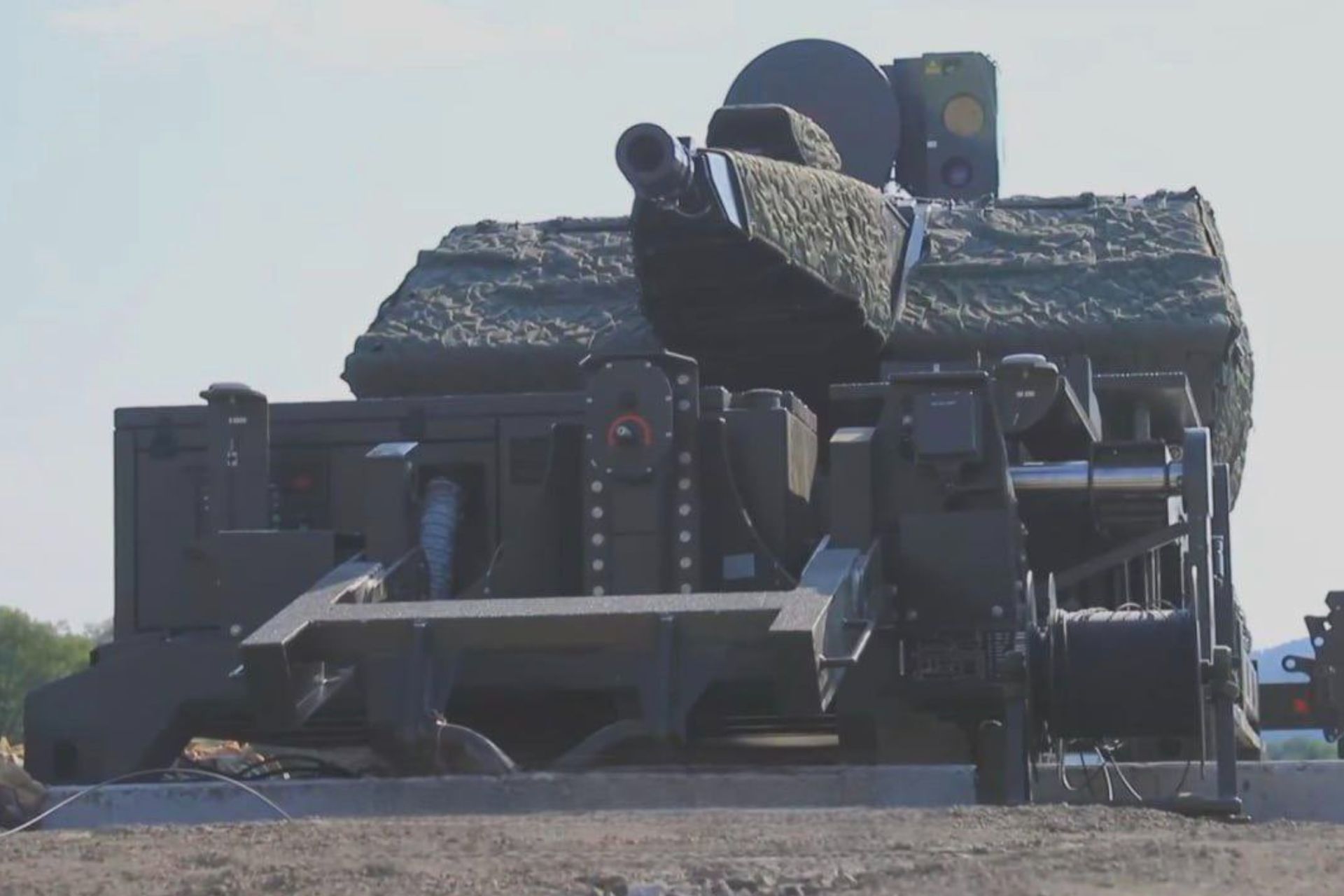
Rheinmetall plans to produce various equipment, including air defense systems, armored vehicles, and ammunition, aiming to supply the Ukrainian army and estimating potential annual revenue of $2-3 billion from its Ukrainian operations. (Picture source: Ukrainian MoD)
The European Union opened a defense innovation office in Kyiv in 2024 to enhance cooperation between Ukrainian and European defense industries, connecting European startups and innovators with Ukraine's defense industry. Latvia's Atlas Aerospace established an R&D office, and Germany's Quantum Systems opened a factory and development hub in Kyiv in April 2024.
Northrop Grumman became the first U.S. defense company to finalize a co-production agreement with Ukraine, focusing on medium-caliber ammunition. The company will provide equipment and remote training to a local workforce, aiming to expand production to include tank ammunition and 155mm shells.
Denmark plans to establish a defense-industry hub in Kyiv, aiming to facilitate collaboration between Danish and Ukrainian defense firms, expected to be operational before the end of the year.
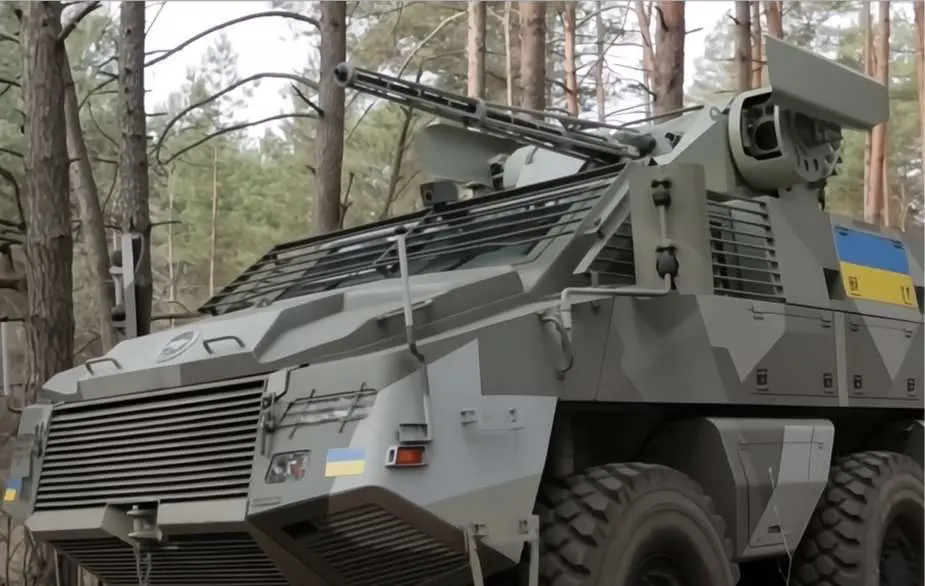
The Mbombe 6 infantry combat vehicle, produced under a licensing agreement between South Africa's Paramount Group and a Ukrainian company, has been observed in service with Ukraine's 10th Separate Mountain Assault Brigade. (Picture source: Ukrainian MoD)
Ukraine is also working on the production and licensing of military vehicles and equipment with international companies. The Mbombe 6 infantry combat vehicle is produced under a licensing agreement between South Africa's Paramount Group and a Ukrainian company and has been observed in service with Ukraine's 10th Separate Mountain Assault Brigade. As of May 2024, there is no confirmed contract for full-scale production, but interest remains high due to the vehicle's capabilities.
Collaborations extend to small arms and ammunition production. Ukraine partnered with the Czech Republic to localize CZ BREN 2 rifle production and set up an ammunition factory with Sellier & Bellot. These rifles, branded as Sich, are already in use by Ukrainian soldiers as part of efforts to bolster Ukraine's arms manufacturing capabilities.
Furthermore, Ukraine has developed the capacity to produce local versions of U.S.-origin vehicles. Indigenous versions of the Humvee, M113 armored personnel carrier, and MaxxPro MRAP vehicles have been created, branded as Sikach, Kharakternyk, and Lys, respectively, enabling Ukraine to maintain a steady supply of critical military equipment and reduce reliance on external sources.
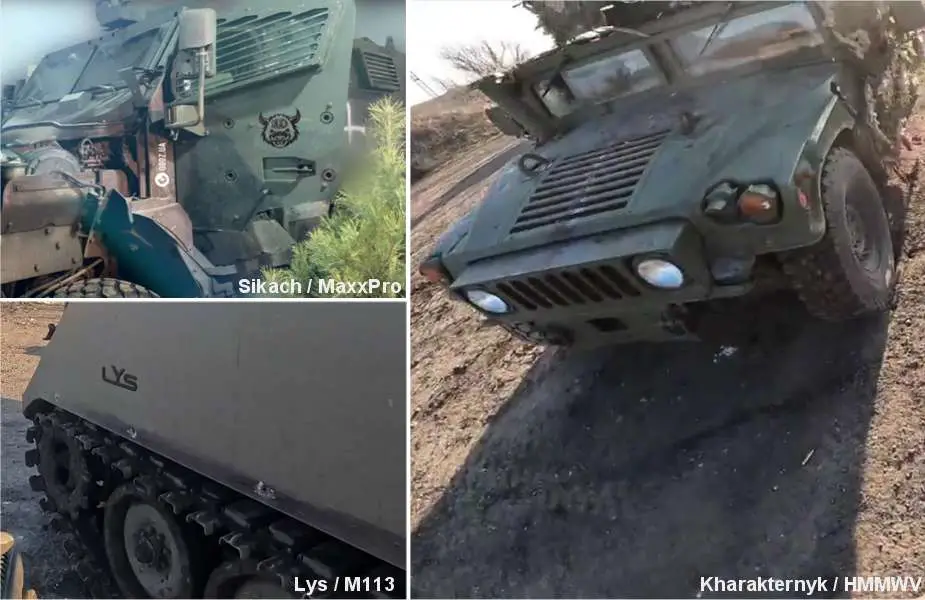
Ukrainian versions of the Humvee, M113 armored personnel carrier, and MaxxPro MRAP vehicles have also been created, branded as Sikach, Kharakternyk, and Lys, respectively. (Picture source: Ukrainian Front and Oboz.UA)

- Details
- Written by: Halna du Fretay
- Category: 2024
- Hits: 11421
This week, the U.S. Army Contracting Command in Newark, New Jersey, awarded a $14.96 million contract to U.S. Ordnance, a company based in Sparks, Nevada, for an unspecified number of M60E4 and M60E6 machine guns. The contract also includes spare parts, accessories, conversion kits, and training services, raising many questions within the defense community. The U.S. Army largely phased out the M60 machine gun decades ago, prompting speculation about the recipient and the operational needs for these weapons.
Follow Army Recognition on Google News at this link
A United States Navy SEAL pictured holding a M60E4 machine gun. (Picture source: US DoD)
The M60 machine gun, chambered in 7.62x51 mm, was developed in the late 1940s and entered service in the 1950s. Inspired by the German MG-42 and FG-42 automatic rifles from World War II, the M60 was widely used during the Cold War and became iconic during the Vietnam War.
Over the years, several variants were introduced, adapted for infantry, vehicles, aircraft, and naval platforms. However, the M60 was gradually replaced by the M240B in U.S. Army service.
The M60E4 and M60E6, also known as the MK43, are modernized versions of the original machine gun. These newer variants are lighter, shorter, and feature improvements such as accessory rails and an upgraded gas system for better reliability.
Despite these enhancements, they have not been widely adopted by the U.S. Army and are primarily used by foreign forces, such as the Danish Army, which became the first user of the M60E6 in 2014. Some U.S. special forces and training units still utilize these models.
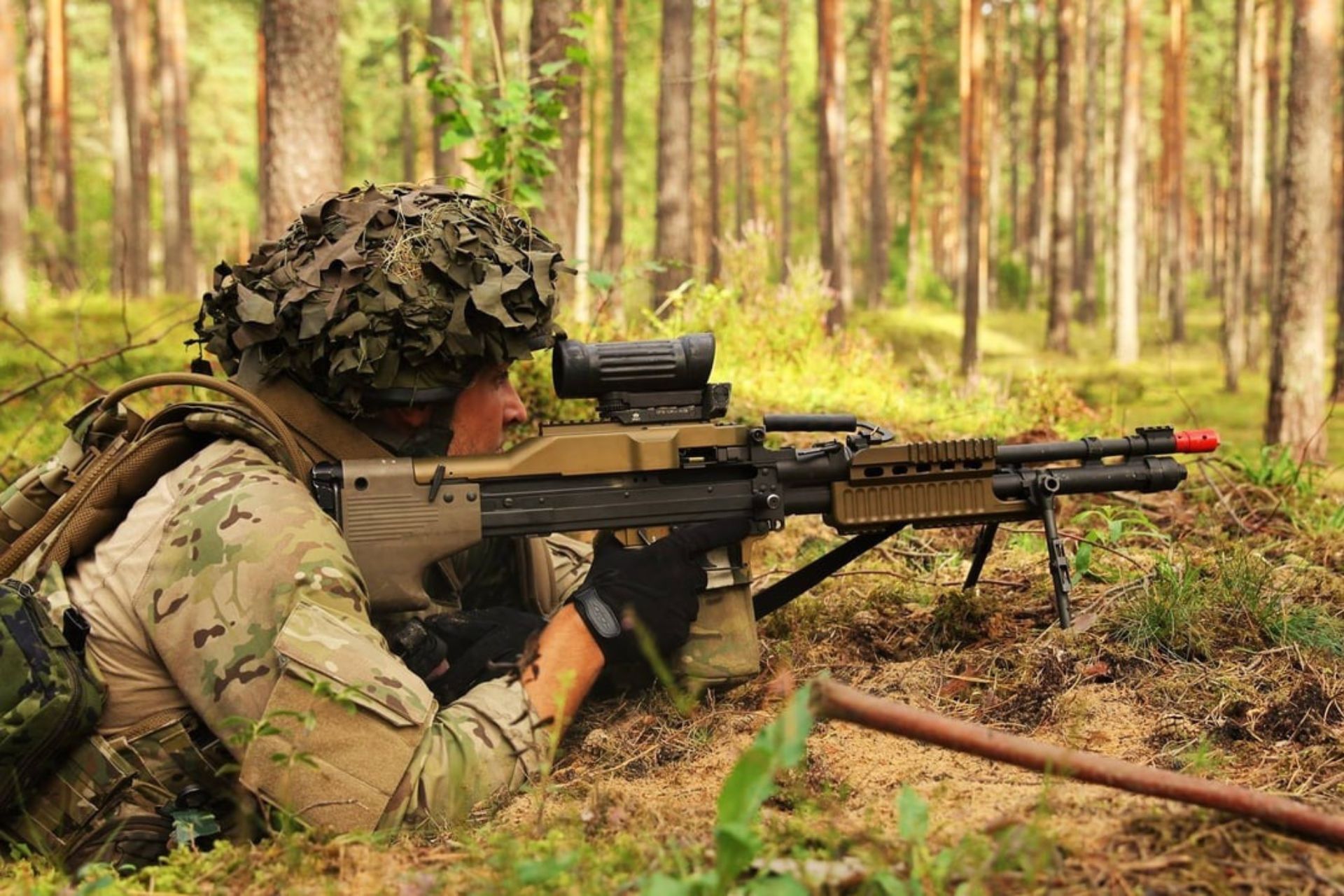
Danish Army soldier armed with M60E6 general-purpose machine gun (Picture source: Danish MoD)
The contract awarded to U.S. Ordnance does not specify the exact number of machine guns or conversion kits to be delivered, and the Pentagon has remained tight-lipped about the details. This secrecy has led to speculation that these weapons could be intended for a foreign ally, such as Ukraine, as part of military aid.
The U.S. has already mentioned the possibility of using the Excess Defense Articles (EDA) program to transfer surplus military equipment to partner countries, especially given the depletion of funds for new aid packages. It is also possible that the M60s are destined for other U.S. government entities or foreign allies.
The origins of this contract remain unclear, but it reflects a renewed interest in a weapon that had largely been retired from active service in the United States.
As the defense community speculates about the final destination of these machine guns, more details may emerge in the coming months, shedding light on the motivations behind this unexpected acquisition.
Read more: US Army Orders Retired M60 Machine Guns: Mystery Surrounds Recipient
- Details
- Written by: Jérôme Brahy
- Category: 2024
- Hits: 15127
On October 1, 2024, South Korea unveiled its latest strategic missile, the Hyunmoo-V, during the Armed Forces Day parade commemorating the 76th anniversary of the military's founding. The event featured approximately 5,000 troops and nearly 100 pieces of heavy military equipment, marching through downtown Seoul. Streets were closed to accommodate tens of thousands of spectators, and a U.S. B-1B Lancer bomber made a rare flight over the capital, highlighting the close military ties between South Korea and the United States.
Follow Army Recognition on Google News at this link
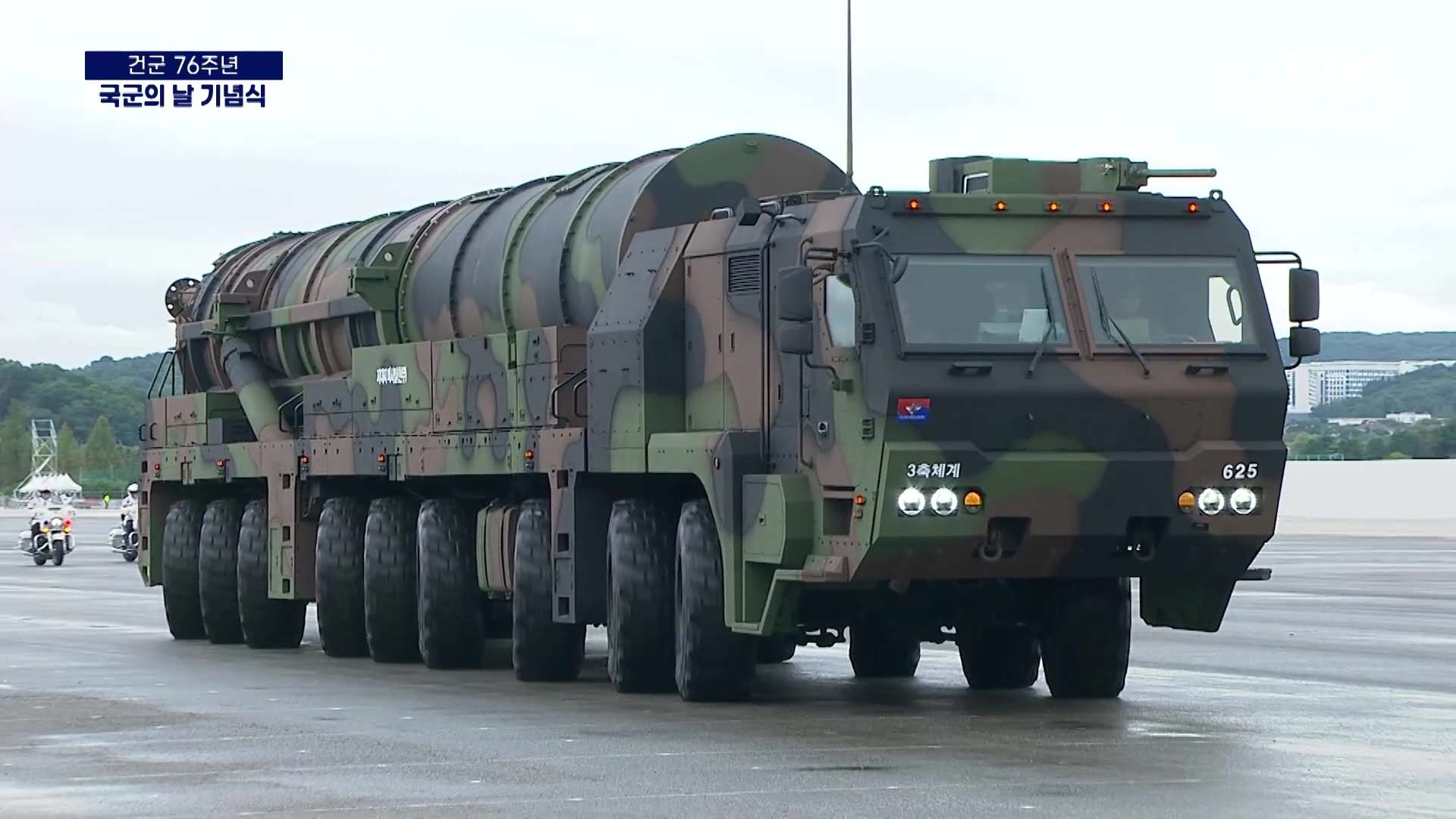
The Hyunmoo-V missile's transporter erector launcher can move all 18 wheels at roughly a 45-degree angle, allowing it to drive diagonally for enhanced mobility. (Picture source: Korean Forces Network)
Described by Seoul as a retaliatory weapon aimed at countering threats from North Korea, the Hyunmoo-V (nicknamed the "monster missile" due to its capabilities) is capable of carrying one of the world's largest conventional warheads, weighing up to nine tons. This substantial warhead is designed to penetrate deeply buried tunnels and bunkers, potentially causing effects comparable to nuclear weapons without crossing the nuclear threshold.
With a total weight of 36 tons and a thrust of 75 tons, the Hyunmoo-V follows a "lofted trajectory," flying through the exosphere to enhance its penetration capability before descending upon its target at speeds ten times faster than the speed of sound. Yang Uk, a research fellow at the Asan Institute for Policy Studies in Seoul, noted that the missile's transporter erector launcher can move all 18 wheels at roughly a 45-degree angle, allowing it to drive diagonally for enhanced mobility. The missile employs a unique cold-launch system, using compressed gas to propel it before ignition. This technique minimizes damage to the launcher and increases operational stability due to the missile's powerful solid propellant.
Referred to as "High Power Missiles" (HPM) by Seoul, both the Hyunmoo-IV-1 and Hyunmoo-V are designed to penetrate deeply buried command centers by detonating above underground facilities, effectively burying them. The exact maximum range of the Hyunmoo-V remains undisclosed, but experts speculate it could potentially reach distances of up to 3,000 kilometers or more, placing it in the category of intermediate-range missiles. Comparisons have been drawn to the U.S. Minuteman III intercontinental ballistic missile in terms of warhead weight and thrust, although the Hyunmoo-V is believed to be a two-stage missile.
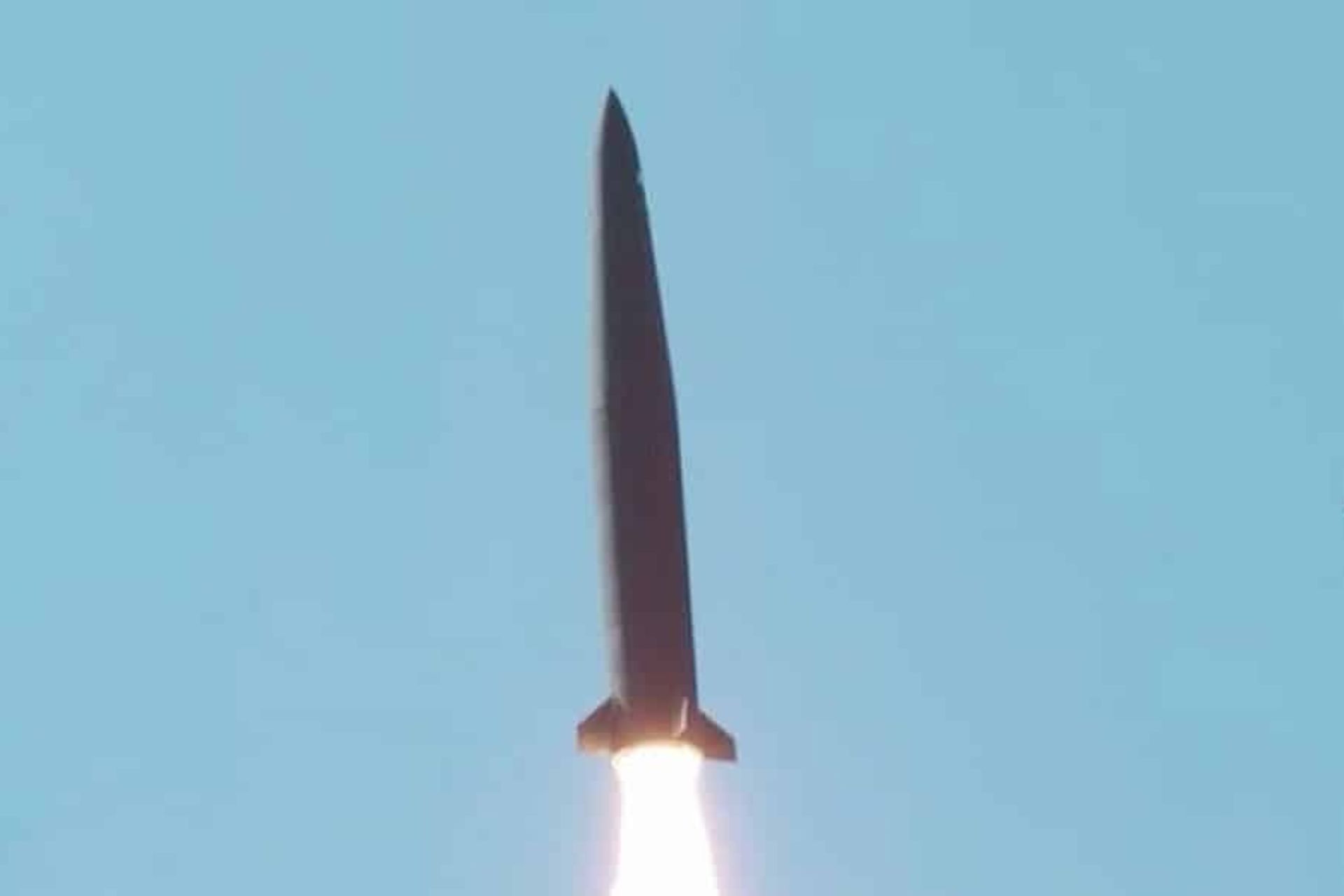
Carrying one of the world's largest conventional warheads, weighing up to nine tons, the Hyunmoo-V is designed to penetrate deeply buried tunnels and bunkers, potentially causing effects comparable to nuclear weapons without crossing the nuclear threshold. (Picture source: South Korean MoD)
Hanwha Aerospace is the manufacturer of the Hyunmoo missiles, which are all equipped with evasion systems to counteract enemy air defense systems. The South Korean Strategic Command plans to have more than 200 Hyunmoo-V missiles alone. In addition to the V-series, new variants of the Hyunmoo-II, III, and IV missiles are being developed and mass-produced. South Korea refers to these missiles as "Extreme Precision, High Power Missiles" or "Ultra-powerful ballistic missiles," rather than using conventional designations like Intermediate-Range Ballistic Missile or intercontinental ballistic missile. There are also plans to mount the Hyunmoo-V missiles on the Joint Support Ship, which is described as the world's first arsenal ship.
In early 2024, South Korea announced that it had successfully tested the Hyunmoo-V missile. Information about missile tests is often disclosed through Notices to Airmen (NOTAMs), which are notifications issued to ensure airspace safety during missile-related activities. Analyses of NOTAMs suggest that the Hyunmoo-V tests likely took place on December 26 or 27, 2023, near Jeongjuk-Ri village on the west coast. The tests targeted a group of islands approximately 185 kilometers south of the launch point, a distance comparable to that between Seoul and Pyongyang.
The public unveiling of these missiles aligns with South Korea's strategic investment in the "3K Defense System," a multi-layered defense strategy designed to preempt and respond to North Korean missile threats. This system comprises three components: the "Kill Chain," the Korean Air and Missile Defense system (KAMD), and the Korea Massive Punishment and Retaliation Plan (KMPR).
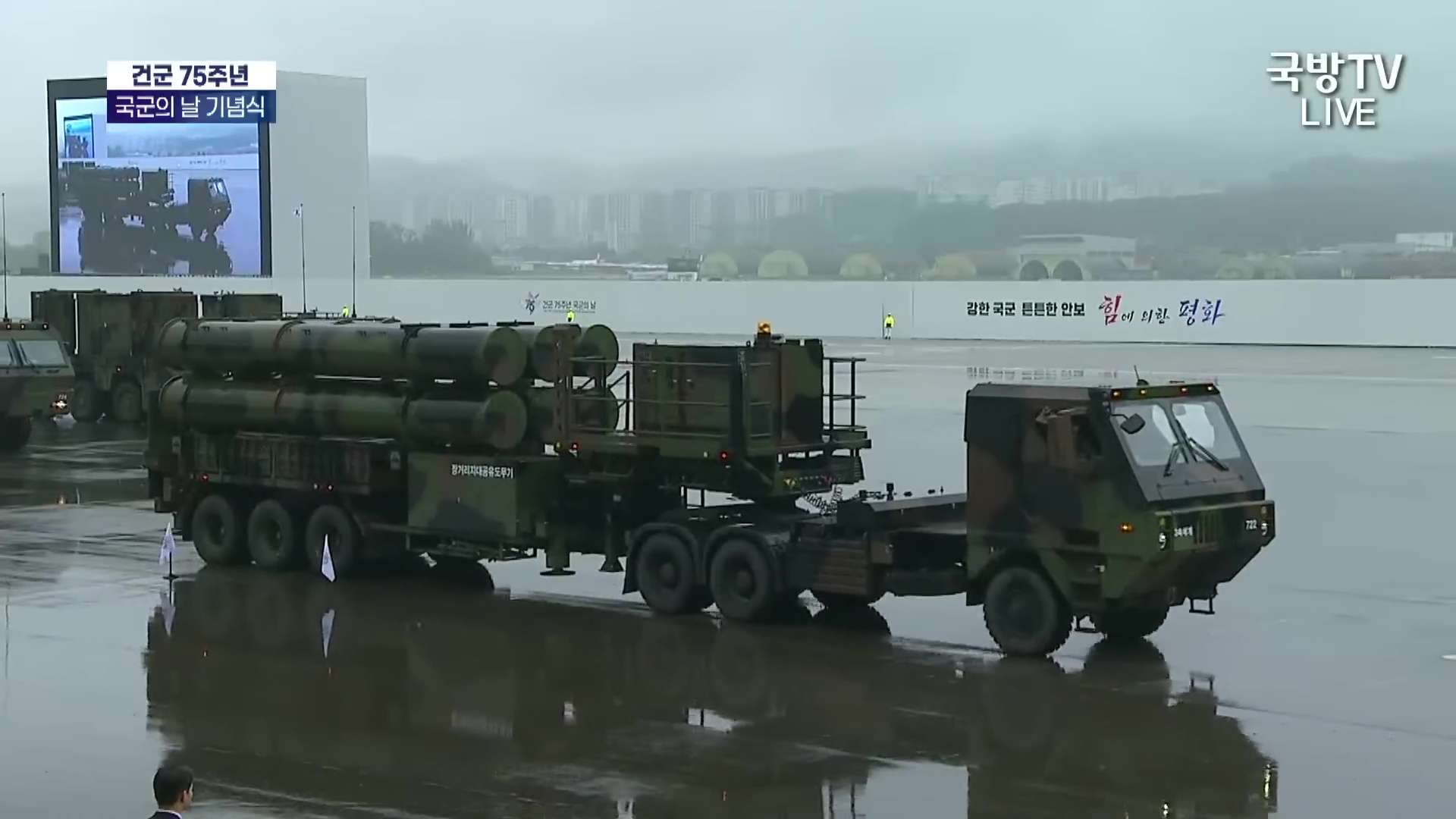
The public unveiling of both the Hyunmoo and L-SAM missile launchers aligns with South Korea's strategic investment in the "3K Defense System," a multi-layered defense strategy designed to preempt and respond to North Korean missile threats. (Picture source: Korean Forces Network)
The "Kill Chain" component focuses on swift detection and engagement of North Korean missile threats, aiming to target nuclear and missile facilities before they can launch. It is said to have the capability to target mobile missile launchers within 30 minutes. The KAMD system is responsible for intercepting incoming missiles, providing a multi-layered defense for critical facilities and population centers. It employs the domestically produced Long-Range Surface-to-Air Missile (L-SAM) as an upper-tier interceptor capable of intercepting projectiles at altitudes up to 60 kilometers.
The Korea Massive Punishment and Retaliation Plan serves as a deterrent strategy, assuming that a North Korean attack has already been initiated. In such an event, South Korea would retaliate with a combination of precision missiles, advanced aircraft, and potentially special operations forces. The objectives would include countervalue and counterforce targets, as well as leadership decapitation strikes.
These defense systems integrate capabilities across different branches of the South Korean military. The Army's Strategic Missile Command operates the Hyunmoo family of missiles in both the "Kill Chain" and retaliation roles. The Air Force employs PAC-3 systems, F-35A jets, and Global Hawk surveillance aircraft. The Navy utilizes 3,000-ton submarines equipped with submarine-launched ballistic missiles and KDX-III Aegis destroyers with SM-2 missiles. Future plans include integrating military surveillance satellites, cyber warfare units, space-focused forces, and special forces units into the defense network.

South Africa unveils new Springbuck SD 120mm self-propelled mortar armed with Aselsan’s Alkar system
- Details
- Written by: Jérôme Brahy
- Category: 2024
- Hits: 4746
At the Africa Aerospace and Defence (AAD) 2024 exhibition, South African company DCD Protected Mobility introduced a new variant of its Springbuck Standard Duty (SD) Multipurpose Armored Vehicle (MPAV), called the Double Cab. This vehicle, designed to integrate with various weapon systems, was armed with the Alkar 120mm mortar system from Turkish company Aselsan. Compatible with all types of mortar ammunition, this new self-propelled mortar offers an effective range of up to 8,000 meters, rapid firing capabilities, and advanced targeting systems for precise engagement.
Follow Army Recognition on Google News at this link
The Springbuck SD MPAV Double Cab is a mine-protected armored vehicle capable of withstanding blasts equivalent to 8 kg of TNT, thanks to a V-shaped hull design. (Picture source: Army Recognition)
The Springbuck SD MPAV Double Cab is a mine-protected armored vehicle focused on achieving a balance of protection, mobility, and versatility across diverse operational settings. It features comprehensive ballistic and blast protection for occupant safety during missions. Its standard ballistic protection is rated at EN 1522 Level B6, providing resistance to small arms fire.
The vehicle also offers blast protection certified to STANAG 4569 Level 3a and 3b standards, capable of withstanding blasts equivalent to 8 kg of TNT. A V-shaped hull design enhances crew and driveline safety by deflecting explosive forces. Optional features include a weapon station available in both remote and manual configurations and an Automatic Fire Extinguishing System (AFES) for the cabin and engine bay, which can be activated either automatically or manually.
In terms of mobility, the vehicle includes front and rear tow points and comes with a steel tow bar for recovery operations. An optional 22,000-pound electric winch and an A-frame can replace the tow bar for enhanced recovery capabilities in challenging situations. The suspension system consists of semi-elliptical robust leaf springs with telescopic double-acting shock absorbers to ensure stability over various terrains. The vehicle is designed for easy transport, featuring lifting and tie-down points, while power-assisted steering improves maneuverability.
The Springbuck SD offers versatility in its design, seating up to five occupants in a standard 2+2 configuration with an additional standing gunner position. It provides a lockable tool bin for essential equipment and a large storage space under the load bin for mission-specific gear. Cabin access is facilitated by three side doors and a roof hatch, ensuring easy entry and exit. Platform-type fenders and bumpers allow convenient access to the engine bay for maintenance.
The vehicle is capable of handling rugged terrain, crossing trenches up to 850 mm wide, climbing 400 mm steps, managing a 40% side slope, and navigating inclines and declines of up to 60% and 70%, respectively. It also has a fording depth capability of 900 mm, making it suitable for various conditions. These capabilities position the Springbuck SD as a flexible option for defense operations that require mobility, protection, and adaptability.

A notable feature of the Springbuck SD Double Cab is its compatibility with multiple weapon systems, including light anti-air defense systems, heavy machine gun platforms, and the Alkar 120mm mortar system. (Picture source: Army Recognition)
A notable feature of the Springbuck SD is its compatibility with multiple weapon systems, including light anti-air defense systems, heavy machine gun platforms, and the Alkar 120mm mortar system from the Turkish company Aselsan. The Alkar system, featuring a 120 mm rifled barrel, offers an effective range between 1,500 and 8,000 meters and is compatible with all types of mortar ammunition. This flexibility enables the vehicle to fulfill roles such as surveillance and direct engagement, and it can also be configured as a cargo bay, mobile workshop, or other specialized platforms.
The Alkar is a modern 120mm mortar system designed and developed by Aselsan, featuring subsystems like an automatic barrel orientation system, an automatic ammunition loading system, a recoil mechanism, and several fire control systems, all integrated into a turret. It supports various 120 mm rifled and smoothbore mortar barrels, making it suitable for different platforms, including tracked vehicles, tactical wheeled vehicles, and fixed installations. Its recoil mechanism significantly reduces the force transmitted to the platform during firing, allowing integration into a wide array of vehicles.
The automatic ammunition loading system offers precise, rapid, and safe loading, compatible with ammunition types such as MOD209, MOD226, MOD236, and MOD227. The system can automatically orient the barrel based on calculated firing commands, ensuring accuracy. An inertial positioning system provides accurate positional data, including barrel orientation, with the route displayed on a map. The user interface is mission-oriented, colored, and graphical.
The Alkar system includes the NATO Armaments Ballistic Kernel (NABK) for fast and accurate ballistic calculations, an initial velocity measurement capability, and the ability to receive meteorological data via digital communication. This data ensures accurate ballistic calculations for mortar firing tasks. The system can display battlefield elements on a digital map and operate in conjunction with the ADOP-2000 system, integrating with Forward Observers, Target Detection Radars, and TOMES Meteorological Systems. Firing can be conducted manually or automatically, with an emergency stop feature available.
The technical specifications of the Alkar 120 mm Mortar Weapon System include a 120 mm rifled barrel with an effective range of 1,500 to 8,000 meters. The barrel length is 1,900 mm, and the recoil force is less than 25 tons. The system can be made ready for firing in under one minute and prepared for redeployment in under 10 seconds. Firing restrictions include a lateral range of ± 3200 mils and an elevation range between 800 and 1200 mils, depending on the barrel type. The system measures 1,450 mm in width, 2,450 mm in length, and 1,100 mm in height.

The Alkar 120 mm Mortar Weapon System includes a 120 mm rifled barrel with an effective range of 1,500 to 8,000 meters. (Picture source: Army Recognition)

- Details
- Written by: Triffaux
- Category: 2024
- Hits: 6691
On September 26, 2024, in Ottawa, the Honourable Bill Blair, Minister of National Defence, and General Jennie Carignan, Chief of the Defence Staff, officially announced the creation of the Canadian Armed Forces Cyber Command (CAFCYBERCOM). This new unified command will consolidate the Canadian Armed Forces (CAF) cyber capabilities, thus enhancing the military's ability to counter threats in cyberspace.
Follow Army Recognition on Google News at this link
Canadian Armed Forces Cyber Command (Picture source: Canada MoD)
The creation of CAFCYBERCOM marks a key milestone for the Department of National Defence (DND) and the CAF. This command reflects Canada’s commitment, outlined in Strong, Secure, Engaged, to establish a structure dedicated to cyber operations, highlighting the growing importance of cyber capabilities in modern military operations.
The new command will be led by Major-General Dave Yarker, who will be responsible for the management, sustainment, and development of the armed forces' cyber capabilities. Drawing on his experience as Commander of the Joint Cyber Component and advisor at the Communications Security Establishment (CSE), Yarker will leverage his expertise to guide this organization toward new strategic advances in the cyber domain.
Stefanie Beck, Deputy Minister of National Defence, expressed her support for the appointment, stating, "I congratulate Major-General Yarker on his new role as head of the Canadian Armed Forces Cyber Command. He brings significant expertise and leadership to the command, benefiting the Defence team and all Canadians."
CAFCYBERCOM will work closely with the Communications Security Establishment, strengthening a long-standing relationship in developing specialized and technical capabilities to support military operations. Over the years, the partnership between the CAF and CSE has deepened, covering both cybersecurity and offensive and defensive cyber operations. This collaboration aims to develop specialized solutions to respond to emerging threats in an ever-evolving digital environment.
Caroline Xavier, Chief of the CSE, emphasized the importance of this partnership, stating, "The CSE has been a key partner of the CAF since our inception. Working together comes naturally to us, and the Canadian Armed Forces Cyber Command will be no exception. This partnership will benefit both Canadians and Canada’s allies, giving us better visibility of the constantly evolving threat landscape."
In addition to its national missions, CAFCYBERCOM will play a central role in fulfilling Canada’s international commitments, particularly within NATO, NORAD, and the Five Eyes Alliance. The new command will support initiatives such as the Virtual Cyber Incident Support Capability and the Sovereign Cyber Effects Provided Voluntarily by Allies within NATO.
Minister Bill Blair underscored the importance of this initiative for international security, stating, "The creation of the Canadian Armed Forces Cyber Command demonstrates Canada’s continued commitment to operating in a complex cyber domain. By enhancing our work in this area and continuing to collaborate with our allies, we will be better equipped to detect, deter, and defend against cyber threats targeting Canada and its interests."
CAFCYBERCOM will play a key role in the CAF’s transition to a pan-domain battlespace, capable of responding with agility to malicious activities in cyberspace. By consolidating signals intelligence and joint electronic warfare capabilities, the command will be able to support a range of offensive and defensive cyber operations, while contributing to the achievement of Canada’s strategic objectives in the Indo-Pacific region.
Read more: Canadian Armed Forces Establishes New Cyber Command to Counter Evolving Threats

- Details
- Written by: Halna du Fretay
- Category: 2024
- Hits: 7205
A recent social media post has revealed a hypersonic weapon system in Japan, generating significant interest within the defense community. A user named 1ZZ-FETaz shared a photograph showing a missile launcher vehicle equipped with missile tubes, parked at a roadside rest area. This missile system, officially known as the "Hyper-Velocity Gliding Projectile" (HVGP), is expected to enter service with Japan's Ground Self-Defense Forces (JGSDF) by 2026, three years earlier than originally planned.
Follow Army Recognition on Google News at this link
The HVGP is expected to provide Japan with an unprecedented level of strategic deterrence due to its ability to glide at hypersonic speeds, evade missile defense systems, and strike targets with precision (Picture source: X Channel @1zz_fetaz)
This accelerated timeline reflects Japan’s response to a shifting regional security environment, driven by increasing concerns over China's military posture and North Korea's missile capabilities. The HVGP is part of a broader missile development effort in Japan, which includes seven domestic programs and additional acquisitions of missile systems from the United States. This marks a notable shift for Japan, a country that has not maintained significant precision-strike capabilities since World War II.
In addition to the HVGP, Japan's Acquisition, Technology, and Logistics Agency (ATLA) revealed in July 2024 that it had successfully conducted two tests of a hypersonic glide vehicle earlier in the year in California. These tests, conducted in March and April, are the first known trials of the system since its development began in 2015. A short video showing the missile's propulsion phase was also released, further boosting interest in the HVGP.
Japan is actively advancing hypersonic technologies and other missile systems as part of its revised defense strategy. The HVGP is expected to provide Japan with an unprecedented level of strategic deterrence due to its ability to glide at hypersonic speeds, evade missile defense systems, and strike targets with precision. The missile, capable of changing trajectory mid-flight, is designed to overcome modern defense systems while achieving an estimated range of approximately 900 kilometers.
The HVGP will be deployed in two distinct variants, Block 1 and Block 2. Block 1, known as the Early Deployment Model, features a booster-assisted launch system with basic glide capabilities. This version is approximately 8-9 meters long and incorporates technology from other Japanese missile systems, such as the Type 12 Surface-to-Ship Missile (SSM). Block 2, the Enhanced Performance Model, is an upgraded missile over 10 meters long, featuring a more sophisticated glide mechanism and a more powerful booster. This version is designed for extended range and possibly greater payload capacity, providing enhanced performance over Block 1. Both variants are focused on near-term readiness and long-term capability enhancement, reflecting Japan’s strategic goals for the HVGP.
The operational use of the HVGP is primarily aimed at island defense. The missile system can be launched from a mobile ground-based platform, traveling over the sea toward enemy targets on contested islands. Integration with fire control systems (FCCS) and the Global Navigation Satellite System (GNSS) ensures precision targeting, making the HVGP a key element in Japan's efforts to secure remote islands and defend against potential invasions, particularly in contested areas like the East China Sea.
The acceleration of Japan's hypersonic missile development program, initiated in 2015, is partly due to increasing military threats from China and North Korea. Initially planned for deployment in 2029, the HVGP will now be introduced in 2026, thanks to early mass production that began in 2023. These missile systems, manufactured by Mitsubishi Heavy Industries, will be progressively integrated, with enhanced versions expected to reach ranges of up to 3,000 kilometers by 2030.
The tests conducted in California validated the missile’s measurement systems and inertial navigation technology. Computer-generated images released by ATLA show the HVGP adjusting its altitude throughout its flight path, although lateral maneuvers were not observed. The missile is being developed for both maritime and land-attack roles, with two types of warheads currently under development for these missions.
The integration of the HVGP into Japan’s defense forces represents a key step in addressing current geopolitical challenges. This missile, intended for the defense of Japan’s islands, is expected to be deployed primarily in the Kyushu and Hokkaido regions, although the exact locations have not been officially confirmed.
Japan’s investments in hypersonic technologies and advancements in missile systems represent a significant shift in its defense approach. The development of strike capabilities, particularly through high-speed precision-guided munitions, highlights Japan’s intent to bolster its offensive measures in response to evolving geopolitical dynamics. These efforts include close cooperation with the United States, sharing essential technologies and resources for the development and deployment of the HVGP.
The acceleration of this defense program, coupled with the growing military capabilities of neighboring countries, underscores the need for Japan to modernize its defense systems. However, this military expansion has raised concerns in the region about stability, although Japan insists that these developments are strictly for national defense and security.
Read more: First Image of Japan's Hypersonic Ballistic Missile Launcher Spotted on Highway

- Details
- Written by: Triffaux
- Category: 2024
- Hits: 2446
Breaking news
On September 27, 2024, Germany's first industrial drone, the X4, officially entered series production, marking a significant milestone in the unmanned aerial systems (UAS) sector. This breakthrough is the result of close collaboration between Continental Engineering Services (CES) and HHLA Sky, two leading companies combining their expertise to revolutionize the industrial drone market. CES brings its recognized automotive engineering experience, while HHLA Sky contributes with its innovative and award-winning drone technologies, setting new standards for the production and quality of industrial drones in Germany.
Follow Army Recognition on Google News at this link
HHLA Sky X4 Quadcopter Drone (Picture source: HHLA Sky)
The X4, a quadcopter specifically designed for complex missions such as surveillance and monitoring, stands out for its efficiency, reliability, and ease of use. It is primarily aimed at professionals working in critical sectors like security and emergency management. The drone strikes a balance between performance and robustness, made possible by modern manufacturing processes that reduce its weight without compromising strength. As a result, the X4 can withstand tough environments while delivering high-level performance.
One of the standout features of the X4 is its ability to operate with low noise levels while maintaining high operational efficiency. This design allows the drone to transmit real-time data, providing users with a constant flow of precise information during missions. This makes it an essential tool for professionals who require immediate responses in contexts where quick action is crucial.
In addition to its physical and technical attributes, the X4 is equipped with an Integrated Control Center (ICC) that enables optimized fleet management. This sophisticated system allows for the simultaneous management of over 100 devices, including other mobile robots, while enabling Beyond Visual Line of Sight (BVLOS) operations. This significantly expands the capabilities for remote resource management and surveillance. For CES, this solution helps keep the number of highly skilled drone operators at a reasonable level while ensuring maximum efficiency in the field.
The X4 also incorporates the latest technological innovations to meet the needs of users in various environments. These technologies include a fully integrated ROS 2 architecture that enhances real-time performance and security. The drone is also equipped with an encrypted 4G/5G data link, ensuring secure communications and high-definition video streaming to multiple clients simultaneously. Moreover, the versatile payload options allow the drone to be configured with RGB or RGB/IR sensors to suit mission-specific requirements. The RTK-GNSS system, paired with a safety parachute, ensures maximum precision and safe operation under all conditions, while an infrared position light increases safety during low-light operations.
The production of the X4 in Germany demonstrates CES’s commitment to supporting the European drone industry. By focusing on innovation and quality, CES helps strengthen the position of both Germany and Europe as technological leaders on the global stage. This collaboration with HHLA Sky marks an important step forward in the evolution of unmanned aerial systems, paving the way for new advances in security, infrastructure management, and emergency response.
With its entry into series production, the X4 is set to become a key player in the industrial drone sector, offering effective and flexible solutions to businesses facing increasing demands for surveillance and remote management. Thanks to its advanced capabilities and broad range of potential applications, the X4 is poised to play a central role in a world where connectivity and automation are becoming increasingly vital.

- Details
- Written by: Jérôme Brahy
- Category: 2024
- Hits: 5546
On September 30, 2024, the US Department of Defense awarded Boeing a contract valued at $6.9 billion for the production and delivery of the Small Diameter Bombs Increment One (SDB I). Since entering service in 2006, the SDB has allowed aircraft to carry more munitions, replacing a single 907-kilogram bomb with a rack of four SDBs using a specialized rack system. Multiple countries, including Japan, Bulgaria, and Ukraine, are set to receive these munitions under the Foreign Military Sales program, with the project expected to be completed by December 31, 2035.
Follow Army Recognition on Google News at this link
Since entering service in 2006, the SDB has allowed aircraft to carry more munitions, replacing a single 907-kilogram bomb with a rack of four SDBs using the BRU-61/A rack system. (Picture source: US DoD)
Funding for the contract is sourced from multiple fiscal years: Fiscal Year 2022 missile procurement funds amounting to $147,207; Fiscal Year 2023 funds totaling $2,457,134; Fiscal Year 2024 funds reaching $34,324,863; and Foreign Military Sales funds totaling $396,427,227, all of which have been obligated at the time of the award.
The SDB has been produced since 2005, with over 17,000 units manufactured. This weapon could arm several aircraft, including the F-15E Strike Eagle, Panavia Tornado, JAS-39 Gripen, F-16 Fighting Falcon, F-22 Raptor, and AC-130W. Future integration is planned for the F-35 Lightning II, A-10 Thunderbolt II, B-1 Lancer, B-2 Spirit, B-52 Stratofortress, AC-130J, and potentially other aircraft and unmanned systems like the General Atomics MQ-20 Avenger.
The GBU-39/B Small Diameter Bomb (SDB) is a 113-kilogram precision-guided glide bomb developed by Boeing Integrated Defense Systems. This configuration increases the number of targets that can be engaged in a single mission, enhancing operational flexibility. The SDB is guided by a GPS-aided inertial navigation system and is designed to attack fixed or stationary targets, including fuel depots and bunkers.
It contains approximately 16 kilograms of AFX-757 high explosive and has deployable wings that extend after release, allowing it to glide over 111 kilometers when air-dropped. The bomb achieves a circular error probable (CEP) of about 1 meter, offering high accuracy while reducing collateral damage. Its warhead is capable of penetrating more than 1 meter of steel-reinforced concrete under 1 meter of earth, and its fuze offers cockpit-selectable functions, including air burst and delayed detonation options.

The Small Diameter Bombs Increment One (SDB I), also known as GBU-39/B, features a penetrating blast fragmentation warhead with a steel nosecone, containing 16 kilograms of AFX 757 explosive. (Picture source: US Air Force)
Several Small Diameter Bombs (SDB) variants exist, tailored for different operational requirements. The GBU-39A/B, known as the Focused Lethality Munition (FLM), features a lightweight composite casing and a focused-blast explosive, aiming to reduce collateral damage in urban areas. Boeing delivered the first 50 FLM weapons in 2008 and completed the delivery of 500 units in 2013. The Laser SDB (GBU-39B/B) variant includes semi-active laser guidance and underwent testing in 2011, with claims of successful targeting of moving objects at speeds of 48.3 kilometers per hour and 80.5 kilometers per hour. This version was fielded by U.S. Special Operations Command in 2014.
The SDB I’s mass is 129 kilograms, with a length of 1.80 meters. When its wings are extended, the width reaches 1.61 meters, while it is 190 millimeters in a packed state. The warhead weight across all SDB I variants totals 93 kilograms. The SDB I (GBU-39/B) features a penetrating blast fragmentation warhead with a steel nosecone, containing 16 kilograms of AFX 757 explosive, which is insensitive munition certified. It can penetrate over 0.91 meters of steel-reinforced concrete.
The SDB FLM (GBU-39A/B) variant contains 62 kilograms of AFX 1209 MBX ("multiphase blast explosive") with a composite casing, while the Laser SDB (GBU-39B/B) has a similar explosive fill but lacks the steel nosecone. All variants have an operational range exceeding 111 kilometers when air-dropped, and up to 150 kilometers when ground-launched as part of the Ground Launched Small Diameter Bomb (GLSDB) system.
The Ground Launched Small Diameter Bomb (GLSDB) is a weapon developed by Boeing and the Saab Group, designed to enable ground-based launches of the SDB from systems like the M270 Multiple Launch Rocket System and M142 HIMARS. Combining the SDB with the M26 rocket, the GLSDB began mass production in 2023 and was first used in combat by Ukraine in 2024. However, its performance reportedly faced challenges due to Russia's electromagnetic warfare capabilities, as well as deficiencies in tactics, techniques, and procedures.
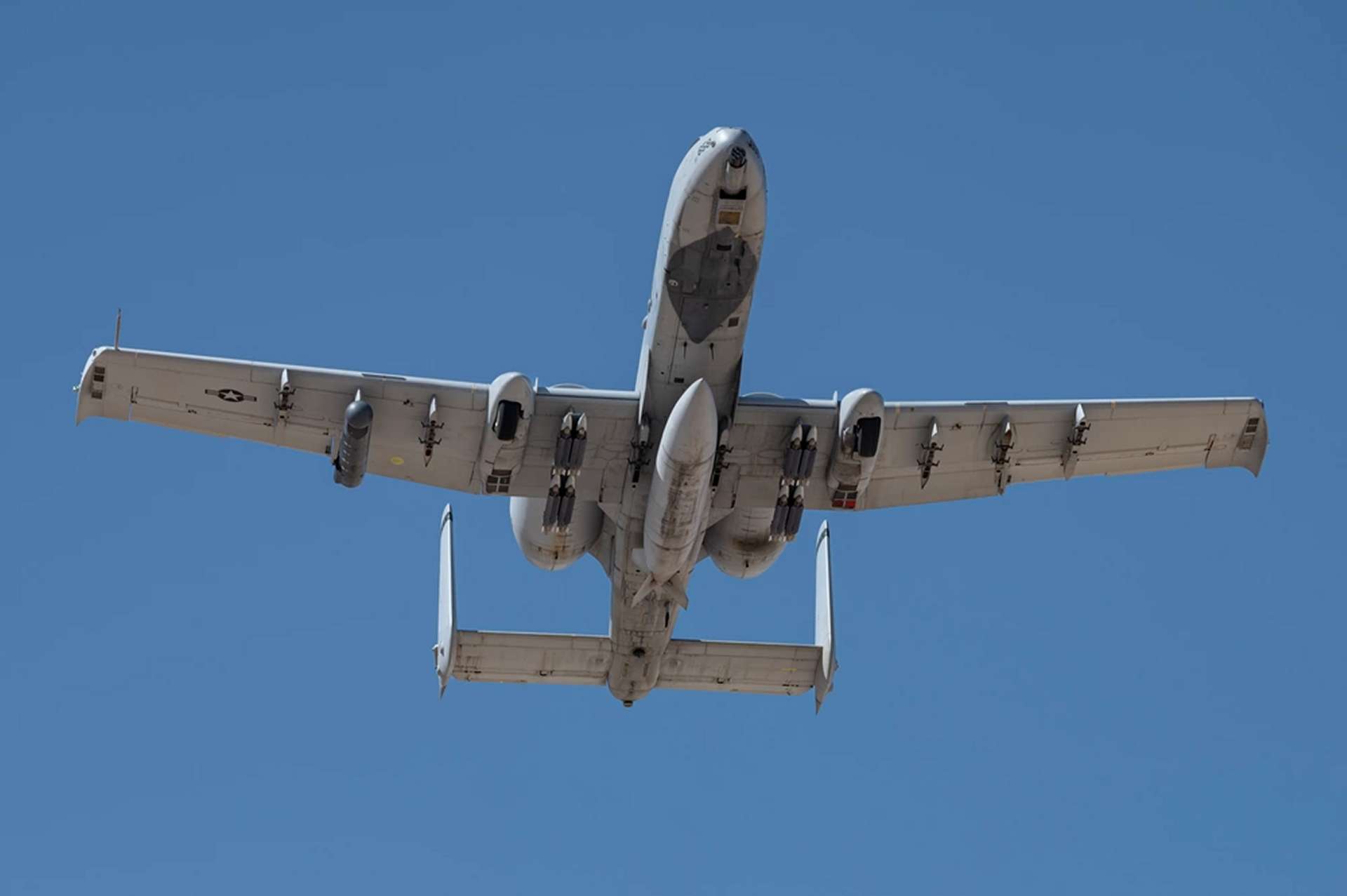
The SDB has deployable wings that extend after release, allowing it to glide over 111 kilometers when air-dropped, and achieves a circular error probable (CEP) of about 1 meter, offering high accuracy while reducing collateral damage. (Picture source: US DoD)
The Ukrainian Air Force has also used air-dropped Small Diameter Bombs since November 2023, which have reportedly maintained high accuracy with a "nearly 90 percent" success rate. Evidence suggests that Ukraine has modified MiG-29AS fighters to carry eight GBU-39/B bombs. While the air-launched version has proved resilient to jamming, the GLSDB's parabolic flight path was more vulnerable to interception due to its detectability on radar.
Current operators of the SDB include Australia, which procured up to 2,950 GBU-39 bombs and 50 Guided Test Vehicles in 2016, with deliveries beginning in 2019. Israel acquired 3,450 GBU-39/B bombs in 2012 and an additional 4,100 in 2015. Italy signed a $34 million contract in 2010 to manufacture the SBD-1, while the Netherlands purchased 603 bombs in 2010. Saudi Arabia has acquired 1,000 GBU-39s in 2013 and an additional 3,000 in 2020. South Korea purchased a total of 1,084 bombs across two contracts in 2013, and Sweden ordered the GBU-39/B for deployment on the JAS 39 Gripen in 2019. Ukraine also operates the SDB, with the United States being the largest operator.
Future operators include Bahrain, which purchased 100 GBU-39/B bombs in 2019 as part of a sale for its F-16 aircraft. Bulgaria agreed to purchase 28 GBU-39 bombs with the delivery expected by 2026. Morocco, NATO, Portugal, Turkey, and the United Arab Emirates have also made purchases or received approvals to acquire the SDB, with deliveries expected in the coming years.
Read more: Which countries benefit from new $6.9 Billion US Small Diameter Bomb deal?
- Details
- Written by: Halna du Fretay
- Category: 2024
- Hits: 2579
According to South Korea's National Intelligence Service (NIS), North Korea has accumulated enough plutonium and highly enriched uranium to build a "double-digit" number of nuclear bombs, as reported by Reuters. This information, revealed during a closed-door parliamentary briefing, has heightened concerns over Pyongyang's nuclear capabilities. The briefing followed recent public statements by North Korean leader Kim Jong-un regarding the expansion of his nuclear arsenal, as well as the rare disclosure earlier this month of a secret uranium enrichment facility.
Follow Army Recognition on Google News at this link
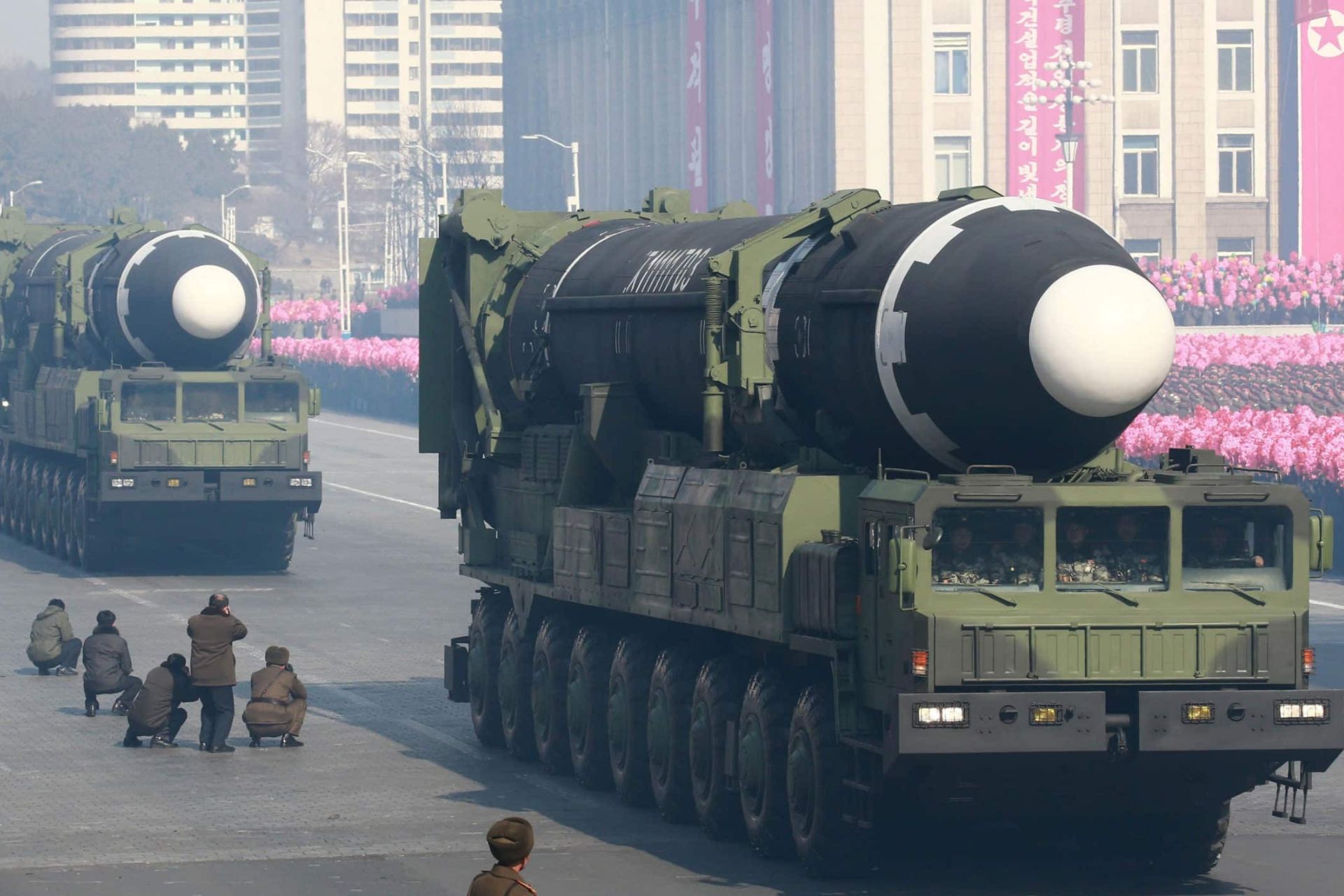
The country’s intercontinental missile program, including the Hwasong-14 and Hwasong-15, poses a major strategic threat, capable of targeting distant territories, including the United States (Picture source: KCNA)
The intelligence report estimates that North Korea possesses around 70 kilograms of plutonium, a key ingredient for nuclear weapons, along with a significant, though unspecified, amount of weapons-grade uranium. Combined, these materials would be sufficient to produce at least ten nuclear bombs. These developments align with North Korea’s broader goal of "exponentially" increasing its stockpile of nuclear weapons, as recently stated by Kim Jong-un.
North Korea’s nuclear and ballistic programs continue to advance, with significant improvements in terms of accuracy and power. The South Korean intelligence agency also highlighted North Korea’s progress in missile technology, particularly in developing more precise and powerful systems capable of targeting South Korea. The NIS has not ruled out the possibility of a seventh nuclear test, speculating that such an event could take place after the U.S. presidential election in November.
Kim Jong-un’s visit to the Nuclear Weapons Institute in September underscored North Korea’s ambitions to further expand its nuclear arsenal. This visit, which included an inspection of facilities producing military-grade nuclear materials, reinforced the regime’s commitment to strengthening its strategic deterrence capabilities. These actions come despite long-standing international sanctions and diplomatic efforts aimed at denuclearizing the Korean Peninsula.
South Korea and its allies are closely monitoring these developments, concerned about the growing threat posed by North Korea’s expanding nuclear capabilities. This concern is heightened by Pyongyang’s continued missile testing and development, including those designed to carry nuclear warheads.
In response to the increasing obsolescence of its conventional military capabilities, North Korea has focused for decades on developing asymmetric capabilities and weapons of mass destruction, including long-range ballistic missiles and nuclear weapons. The country has a range of short- and medium-range missiles, such as the Scud and No-Dong missiles, along with more modern systems like the KN-23 and KN-25. Significant advancements include the development of intercontinental ballistic missiles (ICBMs) like the Hwasong-14, with a range of 10,400 km, and the Hwasong-15, still in development, with an estimated range between 8,500 and 13,000 km.
North Korea has also made progress in miniaturizing its nuclear weapons, allowing them to be integrated into its ballistic missiles. The country’s intercontinental missile program, including the Hwasong-14 and Hwasong-15, poses a major strategic threat, capable of targeting distant territories, including the United States. Continued development of ballistic missile and nuclear technologies remains central to Pyongyang’s strategy to deter external intervention and ensure the regime’s survival.
The latest intelligence assessments suggest that North Korea now has the capacity to produce a significant number of nuclear weapons, with further advancements expected in the near future. As the regime continues to progress in both nuclear and missile domains, regional security dynamics are likely to face increasing pressure. The possibility of further nuclear tests and the expansion of North Korea’s arsenal remain key concerns for South Korea and the international community.

- Details
- Written by: Halna du Fretay
- Category: 2024
- Hits: 3486
U.S. President Joe Biden has approved $567 million in new support to strengthen Taiwan's defense, the White House announced. This decision aligns with Washington's commitment to support the self-governed island in response to growing tensions with China. Although the United States does not officially recognize Taiwan as a sovereign state, it remains its most important international ally and arms supplier, a point of frequent contention with Beijing. China claims Taiwan as part of its territory and has repeatedly demanded that Washington stop selling arms to Taipei, accusing the U.S. of interfering in its internal affairs.
Follow Army Recognition on Google News at this link
The Taiwanese Army's Third, Fourth, and Fifth Operational Zones conducted heavy artillery firing exercises in August 2024 (Picture source: Taiwanese MoD)
In a brief statement, the White House indicated that Biden had delegated authority to the Secretary of State "to direct the provision of defense articles and services from the Department of Defense, as well as military education and training, for assistance of up to $567 million for Taiwan." No further details were provided about the specific nature of this latest aid package.
This initiative follows a previous military assistance package approved in April 2024, during a period when China intensified its political and military pressures on the island. That multi-billion-dollar aid aimed to bolster Taiwan’s defense capabilities amid increasingly strained relations between Washington and Beijing. Although U.S. support for Taiwan is informal diplomatically, it represents a major source of friction in U.S.-China relations.
Taiwan has repeatedly expressed concerns over delays in the delivery of certain military equipment from the United States, including modernized F-16 fighter jets. Nevertheless, Washington continues to provide significant military aid to the island to enhance its ability to face a potential Chinese invasion. The approval of this new $567 million assistance reaffirms the U.S.’s commitment to supporting Taiwan's defense amid growing challenges posed by China.
Before the approval of the $567 million aid package in September 2024, the United States had already sent several significant military deliveries to Taiwan. One of the most notable was a $345 million package approved in 2023, which included air defense systems such as Patriot PAC-3 missiles aimed at strengthening the island’s missile defense capabilities. In addition to these systems, Washington also provided munitions, including AGM-88 HARM missiles designed to target enemy radar, as well as long-range artillery munitions. The U.S. also delivered M109A6 Paladin self-propelled howitzers, which offer enhanced mobility on the battlefield, allowing Taiwan to improve its response to ground attacks. These deliveries are part of the ongoing efforts to bolster Taiwan's defense capabilities amid increasing military threats from China.
Read more: New stage in US military support for Taiwan $567 million to counter Beijing
- Turkish Company STM Successfully Tests KARGU Rotary Wing Loitering Munition with New Armor-Piercing Warhead
- South Korea to Unveil Hyunmoo-5 Ballistic Missile at Armed Forces Day: A Strategic Shift in National Defense
- Roshel targets global law enforcement with the new Captain APC built on Toyota Land Cruiser 70 Series
- Analysis | Which bunker-buster bomb did Israel use to eliminate Hezbollah leader Nasrallah in Beirut?