
- Details
- Written by: Triffaux
- Category: 2024
- Hits: 5177










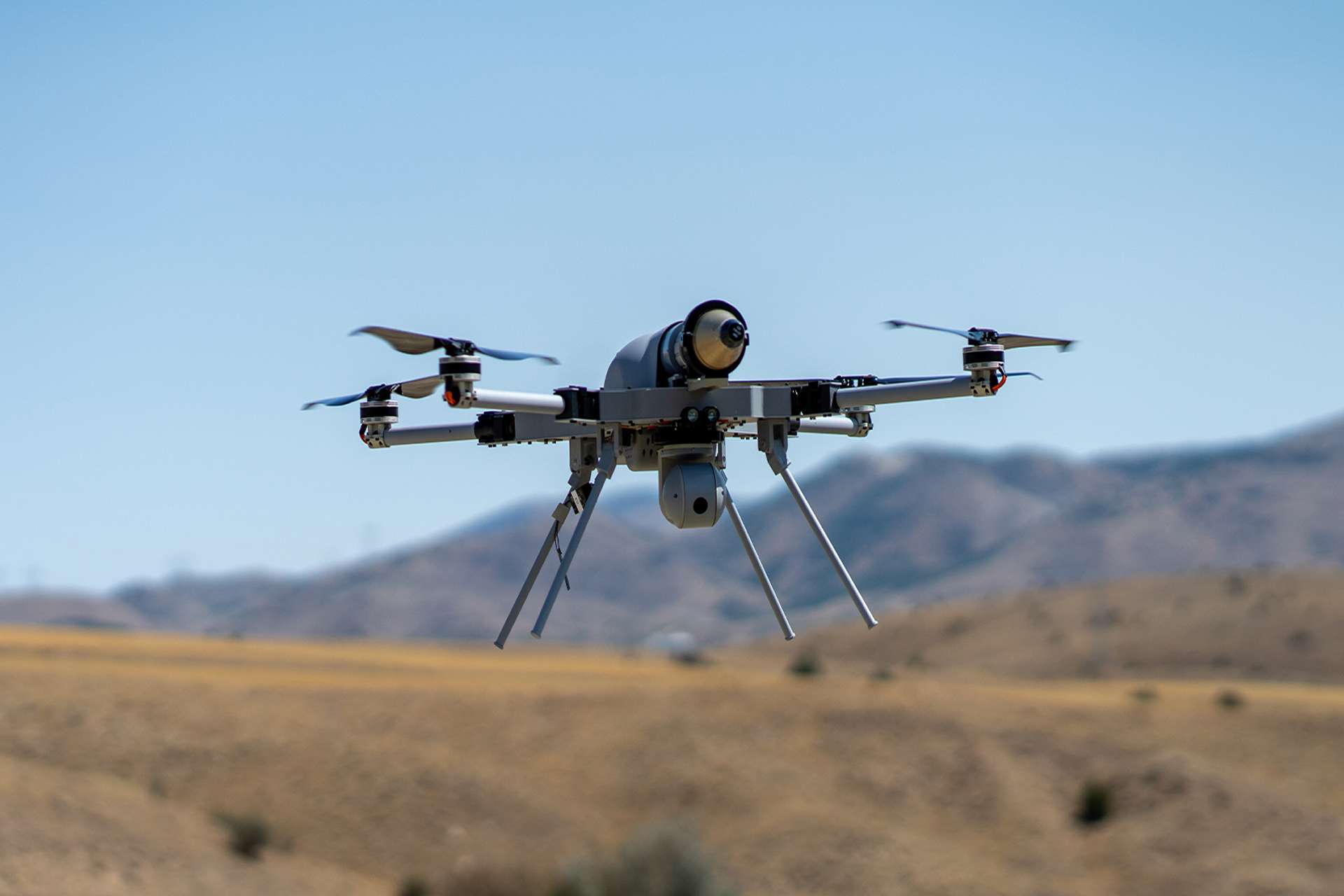
On September 30, 2024, STM Savunma Teknolojileri Mühendislik ve Ticaret A.Ş. announced the successful test of a new model of the KARGU kamikaze drone equipped with an armor-piercing warhead. This innovation enhances the capabilities of the KARGU loitering munition, which is already widely used in counter-terrorism operations and special missions by Turkish and foreign forces.
Follow Army Recognition on Google News at this link
STM KARGU Rotary Wing Loitering Munition with New Armor-Piercing Warhead (Picture source: STM)
The first test, carried out against an armored vehicle, demonstrated the system's impressive effectiveness. With a single strike, the KARGU destroyed the target with pinpoint accuracy. This development represents a significant advancement in the design of rotary-wing loitering munitions, meeting the growing needs of armies facing armored and mobile targets.
Developed entirely with national resources, KARGU is among the most advanced attack drone systems in Türkiye. Integrated into the Turkish Armed Forces' inventory since 2018, this kamikaze drone has been widely deployed in counter-terrorism operations and cross-border missions. Its effectiveness in the field quickly garnered international attention. In 2021, STM marked its first export success, and to date, KARGU has been sold to more than ten countries across three continents.
With over 5,000 units produced, STM has proven that its drones not only meet the needs of Turkish forces but have also established a foothold on the international stage. The versatility of KARGU loitering munition, which can quickly switch from anti-personnel to armor-piercing warheads, makes it a major asset for armed forces, particularly when facing armored vehicles.
The new version of KARGU with an armor-piercing warhead was developed to meet the growing need for engaging armored targets while retaining the ability to attack human targets. Özgür Güleryüz, General Manager of STM, emphasized the importance of this innovation: "We have designed a solution that strengthens the position of the Turkish Armed Forces in the field, while also offering considerable appeal in the international market."
Once equipped with the armor-piercing warhead, the drone becomes a formidable tool against both mobile and stationary targets, including armored vehicles and robust infrastructures. Thanks to its ability to operate day and night and its low radar signature, KARGU is difficult to detect and can surprise the enemy.
In addition to the armor-piercing warhead, STM announced that it is in the final phase of developing an RF (Radio-Frequency) seeker. This new feature will allow KARGU to detect and destroy enemy radar and electronic warfare systems, further enhancing its operational capabilities on the battlefield.
This type of technology, designed by STM engineers, offers a cost-effective solution for electronic warfare operations, adding a new dimension to targeted strikes.
Thanks to its artificial intelligence and image processing capabilities, KARGU can hit targets with extreme precision. Capable of being transported by a single soldier, the drone can be deployed in less than a minute. It can fly for up to 30 minutes with a range of 10 kilometers and is equipped with functions such as mission cancellation, return to base, and self-destruction, ensuring full control by the operator.
Its modular architecture allows it to be used in swarm configurations or independently of GPS, thanks to the KERKES project, offering great flexibility in deployment.
KARGU operates under the "Man-in-the-Loop" principle, where the operator retains full control over the device. In mission, the drone can identify stationary or mobile targets and transmit reconnaissance and surveillance information to the operator. Once the target is confirmed, KARGU can deploy its explosive warhead for a precision strike.

STM KARGU Rotary Wing Loitering Munition with New Armor-Piercing Warhead (Picture source: STM)
Read more: Turkish Company STM Successfully Tests KARGU Rotary Wing Loitering Munition with New...
- Details
- Written by: Halna du Fretay
- Category: 2024
- Hits: 4807
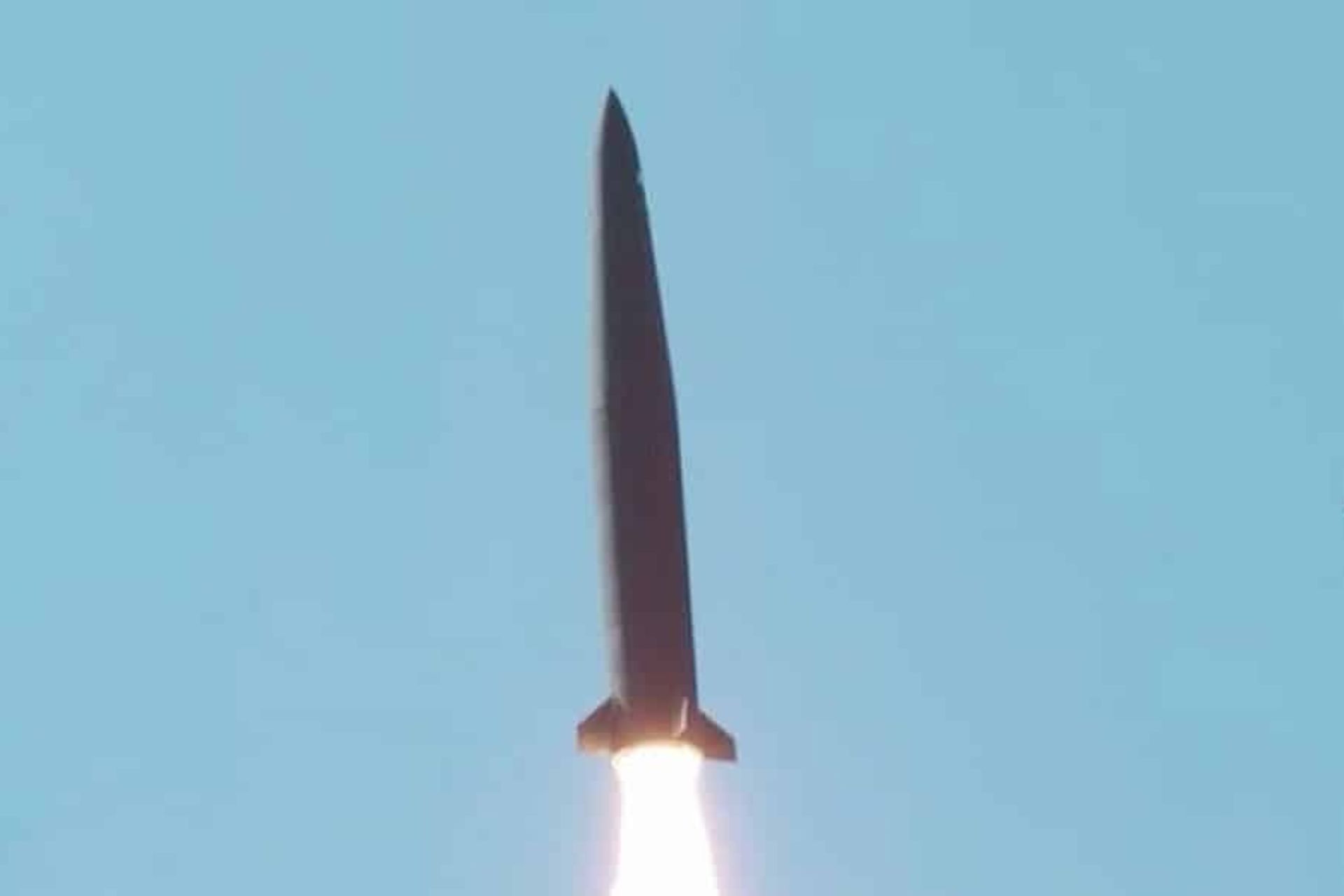
On September 30, 2024, just ahead of the 76th anniversary of the South Korean Armed Forces, the country publicly showcased its latest ballistic missile, the Hyunmoo-5. This new long-range missile, part of a broader display of high-capacity ballistic systems at Seoul Airport, represents a significant development in South Korea's military arsenal, particularly in response to the increasing security threats from North Korea.
Follow Army Recognition on Google News at this link
In early 2024, South Korea successfully tested another strategic missile, the Hyunmoo-V, which carries warheads weighing up to 9 tons and is intended to neutralize underground facilities (Picture source: South Korean MoD)
The Hyunmoo-5 incorporates an advanced cold-launch system, a notable technical evolution in South Korea’s missile technology. This cold-launch technique uses compressed gas to propel the missile from its launcher before ignition, minimizing damage to the launcher and increasing operational stability.
On display alongside other systems such as the Hyunmoo-4A, Hyunmoo-4B, Hyunmoo-3, and the long-range surface-to-air missile (L-SAM), the Hyunmoo-5 stood out for its vertical cylindrical launch tube. Analysts have drawn parallels between the Hyunmoo-5 and China's Dongfeng-31 intercontinental ballistic missile (ICBM), with the former estimated to have a range of 5,000 km, capable of targeting critical infrastructure in North Korea and beyond. Equipped with an 8-ton warhead, the Hyunmoo-5 is specifically designed to penetrate reinforced underground bunkers, an essential capability for striking deeply buried command centers.
The missile is central to South Korea's Kill Chain, Missile Defense, and Massive Punishment and Retaliation (KMPR) strategy, developed to swiftly neutralize North Korean threats, particularly in the event of a nuclear attack. Its development began after North Korea's fourth nuclear test in 2016, and it aims to strike critical North Korean infrastructure in case of an emergency, enhancing South Korea’s deterrence in the region.
In early 2024, South Korea successfully tested another strategic missile, the Hyunmoo-V, which carries warheads weighing up to 9 tons and is intended to neutralize underground facilities. The Hyunmoo-V is equipped with advanced re-entry capabilities, such as Maneuverable Re-entry Vehicle (MaRV) and Multiple Independently Targetable Re-entry Vehicle (MIRV) systems, allowing it to strike multiple or fortified targets. Its nickname, the "monster missile," reflects its destructive capacity, comparable to that of nuclear weapons.
The Hyunmoo-V, along with the other missiles in South Korea's arsenal, forms the backbone of its KMPR strategy, designed to destroy enemy command centers. The missile follows a lofted trajectory, enhancing its ability to evade defense systems, and can reach speeds up to 10 times the speed of sound. Tests of the Hyunmoo-V took place in December 2023, further demonstrating South Korea's commitment to reinforcing its defense capabilities amid rising regional tensions.

- Details
- Written by: Jérôme Brahy
- Category: 2024
- Hits: 5148
As reported by the Canadian Defence Review on September 26, 2024, the Canadian company Roshel has introduced the new Captain Armored Personnel Carrier (APC), expanding its lineup of armored vehicles based on the Toyota Land Cruiser 70 series platform. This 4x4 vehicle, featuring Roshel's V-hull design, offers enhanced ballistic and blast protection, operational flexibility, and payload capabilities suitable for law enforcement and security operations.
Follow Army Recognition on Google News at this link
Leveraging its experience from deploying over 1,400 vehicles in combat operations in Ukraine, Roshel designed the Captain APC to meet the requirements of areas where the Toyota Land Cruiser 70 series is prevalent. (Picture source: Roshel)
The Captain APC provides ballistic protection up to STANAG 4569 Level 1 and blast protection up to STANAG 4569 Level 2. Available in both manual and automatic transmissions, it comes in right-hand drive (RHD) and left-hand drive (LHD) configurations. Its V-shaped monocoque capsule, forming the vehicle's complete structure, sets it apart from traditional frame-based designs, boosting payload capacity and durability. This design mirrors the one used in Roshel's Senator Mine-Resistant Ambush Protected (MRAP) vehicle.
The Captain APC includes combat locks and advanced electronics, is transportable in standard sea containers, and can be airlifted by the CH-47 Chinook and C-130 Hercules, facilitating rapid deployment. It can operate with high-sulfur diesel, ensuring effectiveness in regions with poor fuel quality.
Leveraging its experience from deploying over 1,400 vehicles in combat operations in Ukraine, Roshel designed the Captain APC to meet the requirements of areas where the Toyota Land Cruiser 70 series is prevalent, providing a familiar platform with enhanced capabilities. The vehicle caters to demanding law enforcement and security operations while offering cost-effectiveness without compromising quality or performance.
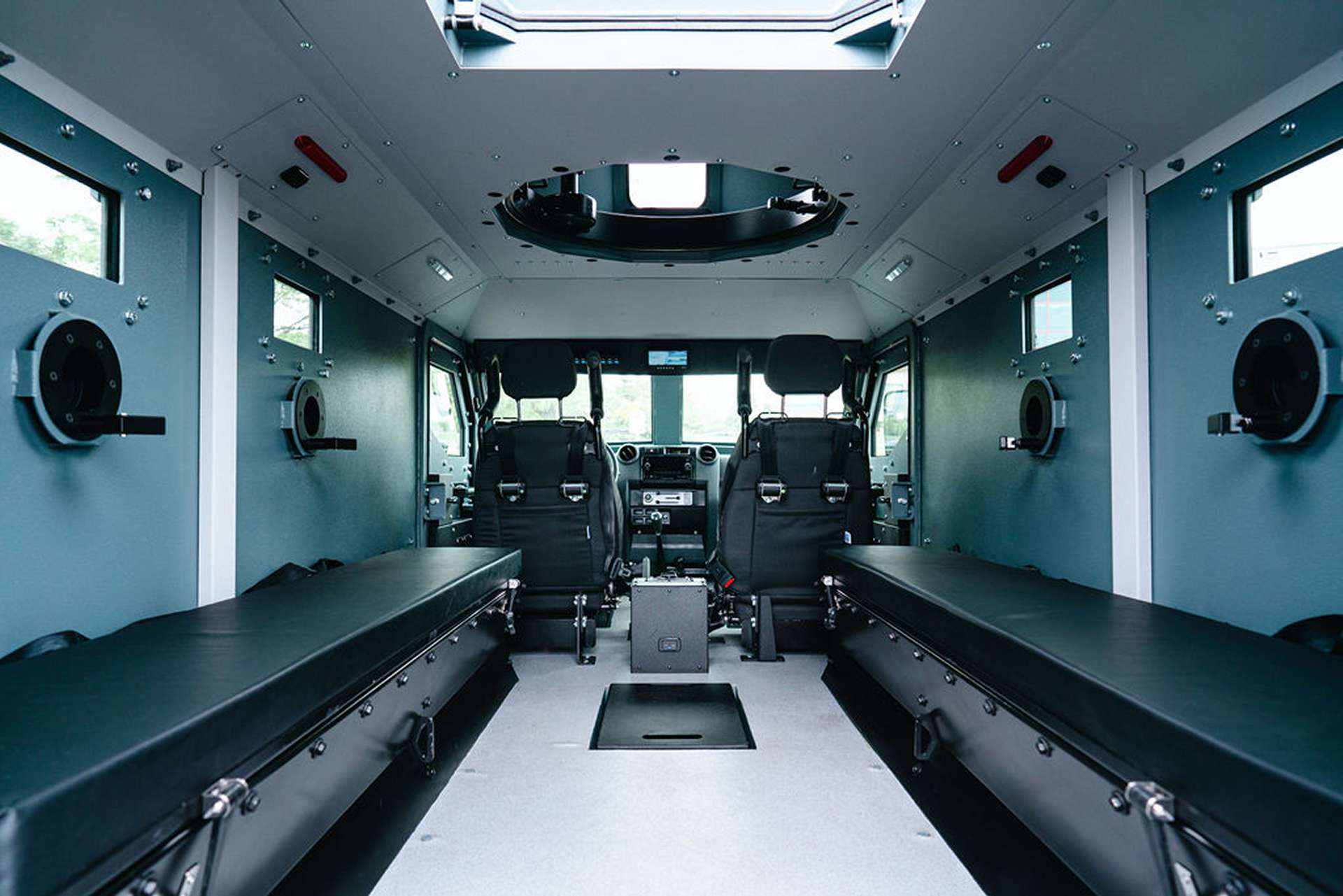
Seating up to 8 passengers, the Roshel Captain APC meets ballistic protection standards against threats such as 7.62×39mm API BZ rounds at 30 meters with a velocity of 695 m/s and withstands artillery threats from 155 mm high-explosive shells at 80 meters. (Picture source: Roshel)
Technical specifications include a 2.8L 4-cylinder diesel engine delivering 201 horsepower at 3400 rpm and 370 Nm of torque at 1600 rpm, paired with a 6-speed automatic transmission and 4x4 drivetrain. Its fuel capacity reaches 180 liters, and it measures 5,354 mm in length, 2,261 mm in width, and 2,490 mm in height, with a 3,180 mm wheelbase. It seats up to 8 passengers. The Captain APC has been tested by internationally recognized North American and European laboratories, meeting ballistic protection standards against threats such as 7.62×39mm API BZ rounds at 30 meters with a velocity of 695 m/s and withstands artillery threats from 155 mm high-explosive shells at 80 meters.
The vehicle's adaptability is evident in its availability with both gasoline and diesel engine options, as well as RHD and LHD configurations, tailored for various mission requirements. It offers advanced security features and is highly customizable for different operators. Roshel provides comprehensive global supply support, including after-sales service, ensuring vehicles remain operational throughout their lifecycle.
Roshel can deliver the Captain APC within two weeks, with a production capacity of up to 120 units per month to meet urgent operational demands. The vehicle is part of Roshel's broader range of armored vehicles, which includes the Senator APC, Senator Emergency Response Vehicle (ERV), Senator MRAP, Senator Pickup, and Senator Explosive Ordnance Disposal (EOD) vehicles.
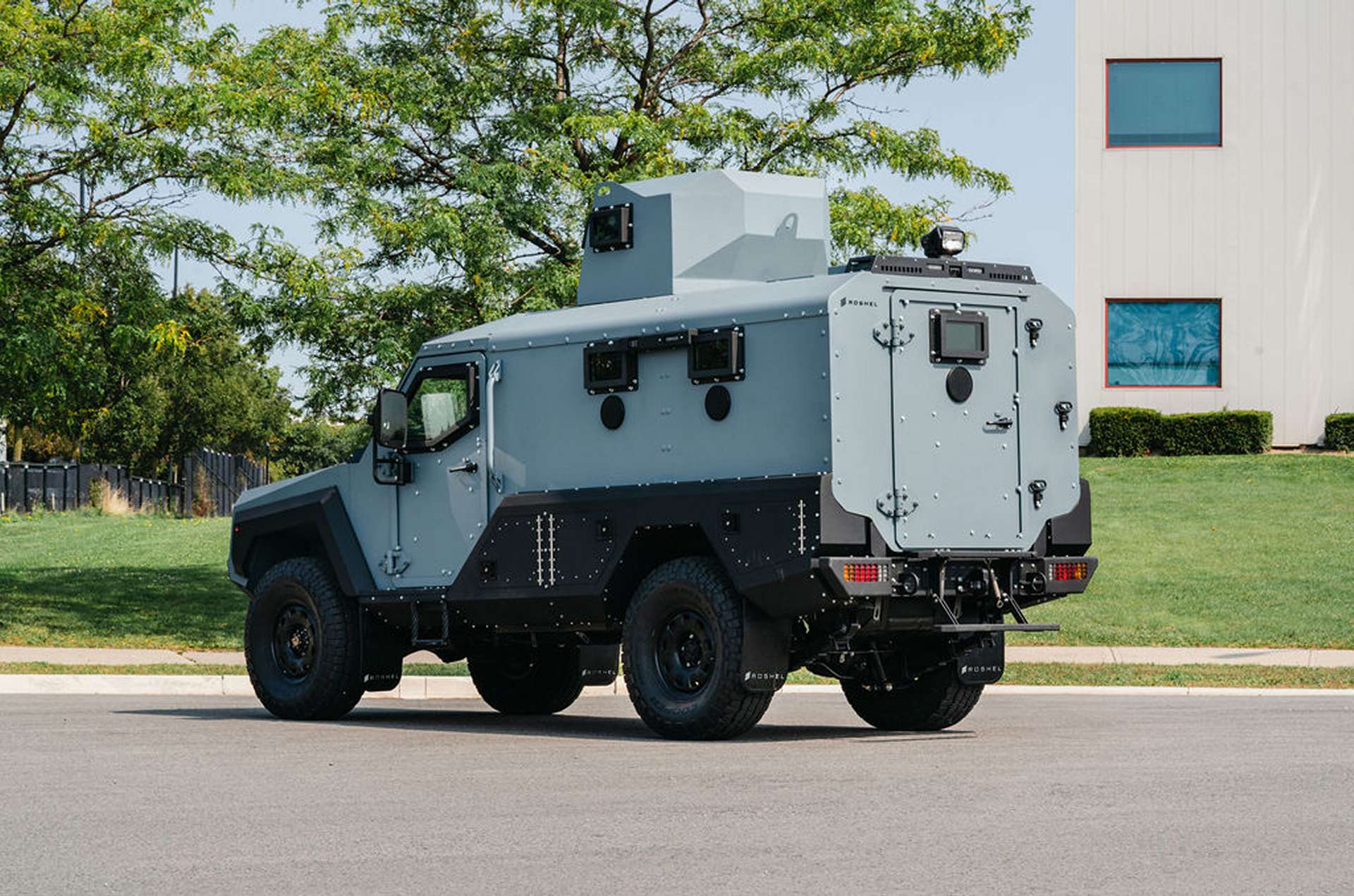
Mirroring the design of Roshel's Senator Mine-Resistant Ambush Protected (MRAP) vehicle, the Captain APC features a V-shaped monocoque capsule that forms the vehicle's entire structure. (Picture source: Roshel)

- Details
- Written by: Jérôme Brahy
- Category: 2024
- Hits: 9509
On September 27, 2024, the Israeli Air Force's (IAF) 69th Squadron conducted an airstrike on an underground bunker in southern Beirut, resulting in the death of Hezbollah leader Hassan Nasrallah and multiple senior officials. The operation employed F-15I Ra'am fighter jets that took off from Hatzerim Airbase, each carrying six GBU-31(V)3/B bunker-buster bombs. Approximately 80 tons of explosives were used, including 85 of these bombs designed to penetrate reinforced structures. The targeted bunker, located about 18 meters underground, was heavily fortified, and the operation followed months of planning based on intelligence confirming Nasrallah's location.
Follow Army Recognition on Google News at this link
The Israeli Air Force's (IAF) 69th Squadron employed F-15I Ra'am fighter jets that took off from Hatzerim Airbase, each carrying six GBU-31(V)3/B bunker-buster bombs, to carry the strike against Nasrallah's bunker. (Picture source: Israeli MoD)
The GBU-31(V)3/B is a variant of the Joint Direct Attack Munition (JDAM), designed for precision strikes against hardened and deeply buried targets. It features the BLU-109 penetrator warhead, which is crucial for engaging reinforced structures effectively.
The BLU-109 warhead weighs about 874 kg, with approximately 240 kg of high-explosive fill. Its weight distribution is optimized to enhance penetration capability. Made from high-strength steel, the casing allows the warhead to maintain integrity upon impact, capable of penetrating 1.8 to 2.4 meters of reinforced concrete, depending on impact velocity and angle. The explosive fill is Tritonal, a mix of 80% TNT and 20% aluminum powder, chosen for its high-energy output and effectiveness in target destruction.
The GBU-31(V)3/B's guidance system relies on the KMU-557B/B Guidance Set, which includes guidance electronics, three movable control fins, one fixed control fin, a GPS antenna for satellite signals, and a 1760 connector that interfaces with the aircraft's systems, ensuring precise trajectory adjustments during flight.
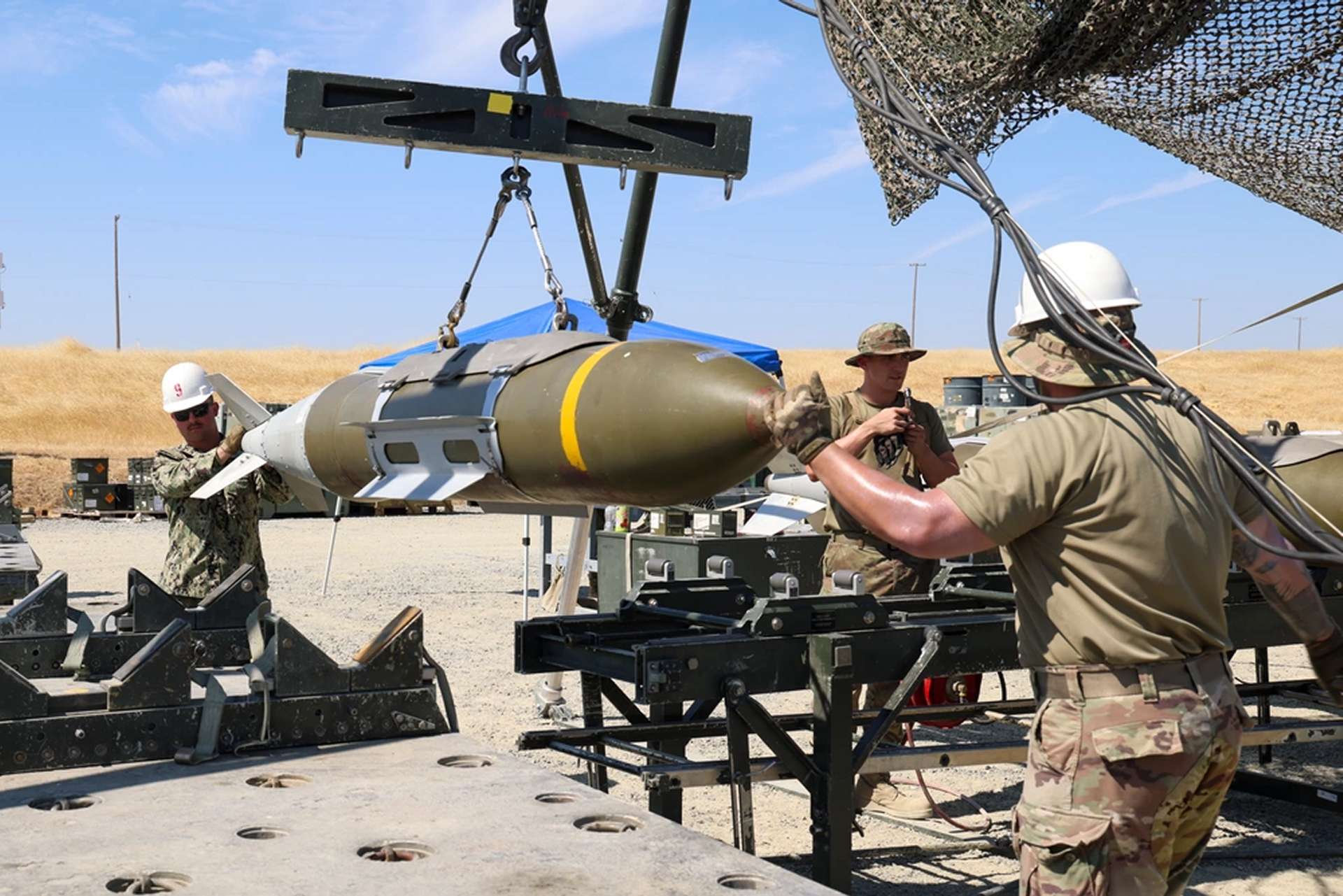
The GBU-31(V)3/B is a variant of the Joint Direct Attack Munition (JDAM) that can be released from altitudes up to 15,240 meters at speeds ranging from Mach 0.6 to Mach 1.2. (Picture source: US DoD)
For stability and aerodynamic control, the GBU-31(V)3/B utilizes strakes made of a cast aluminum hardback and two formed steel panels, with attachment straps ensuring secure integration with the guidance kit, supporting guidance and stability.
The GBU-31(V)3/B is compatible with FMU-143 and FMU-152 series fuzes, activated by FZU-32 or FZU-55/63 initiators. The FMU-143 provides delayed-action capability for deeper penetration before detonation, while the FMU-152 offers programmable delay settings, adapting to various target types.
The guidance system incorporates both an Inertial Navigation System (INS) and a GPS-aided guidance system. The INS provides trajectory control if the GPS signal is lost, while the GPS-aided system enhances accuracy by processing up to 12 satellite signals, achieving a Circular Error Probable (CEP) of about 5 meters.
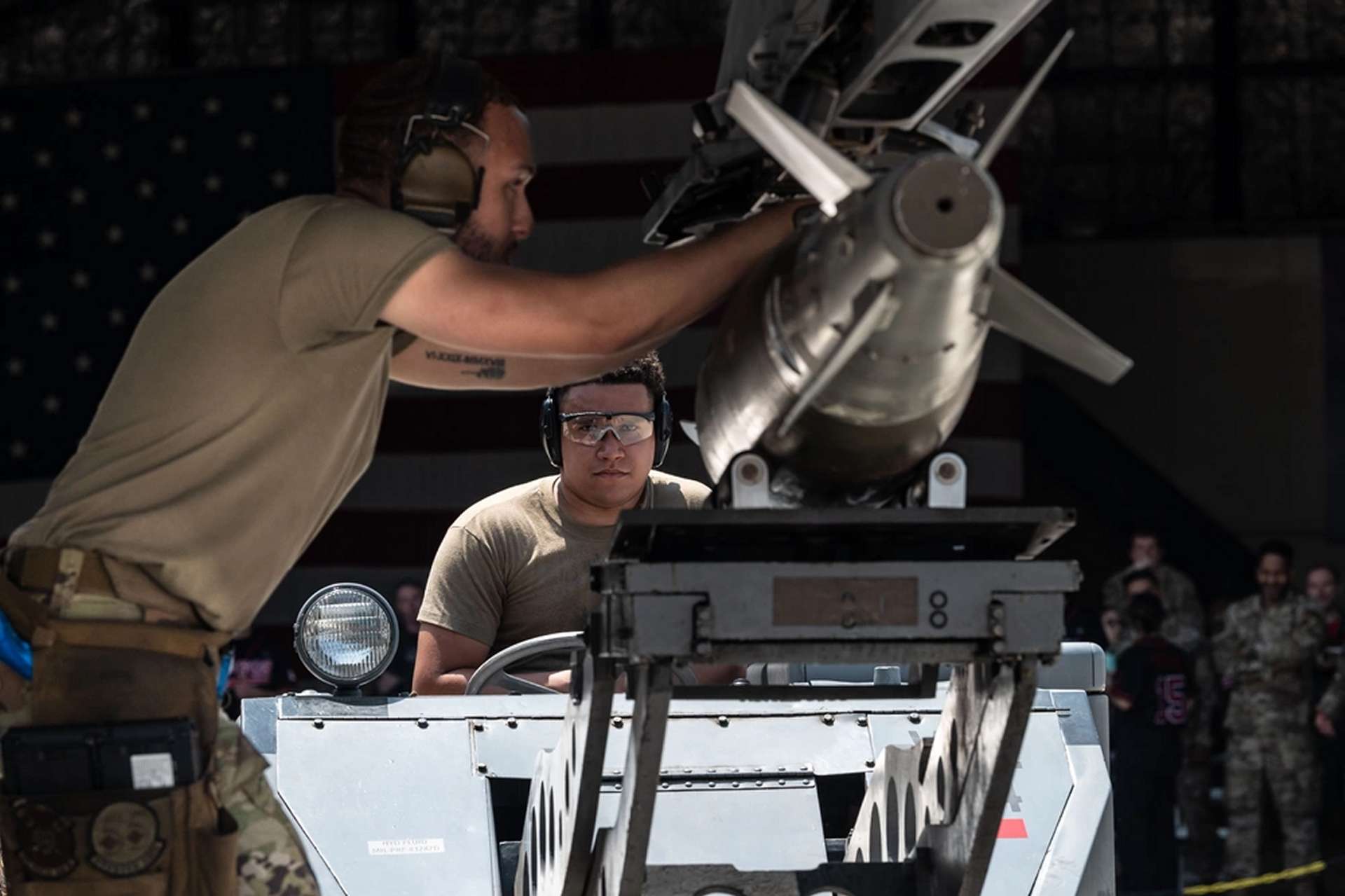
The tail assembly includes the Tail Actuator Subsystem (TAS), rotated 180 degrees compared to other JDAM variants, resulting in a unique fixed fin position. (Picture source: US DoD)
The tail assembly includes the Tail Actuator Subsystem (TAS), a lithium thermal battery, the GPS antenna, the Guidance Control Unit (GCU), and fin control mechanisms. The TAS is rotated 180 degrees compared to other JDAM variants, resulting in a unique fixed fin position.
The GBU-31(V)3/B can be released from altitudes up to 15,240 meters at speeds ranging from Mach 0.6 to Mach 1.2. It undergoes several flight phases: separation with fins locked, optimal guidance using GPS and INS data, and impact, where it adjusts its angle for optimal penetration before detonation.
The BLU-109 warhead, combined with the KMU-557B/B JDAM guidance kit, makes the GBU-31(V)3/B highly effective against fortified targets. It can penetrate 1.8–2.4 meters of reinforced concrete before detonation, with its effectiveness influenced by delivery speed and angle.

The BLU-109 penetrator warhead, combined with the KMU-557B/B JDAM guidance kit, can penetrate 1.8–2.4 meters of reinforced concrete before detonation, with its effectiveness influenced by delivery speed and angle. (Picture source: US DoD)
The F-15I "Ra'am" (Thunder) is an Israeli variant of the American McDonnell Douglas (now Boeing) F-15E Strike Eagle, developed to meet the Israeli Air Force's (IAF) requirements for a long-range precision strike aircraft capable of operating in complex and heavily defended airspaces. Israel acquired the F-15I as part of its broader effort to modernize and maintain air superiority in the Middle East, following the challenges experienced during the 1991 Gulf War. The decision to acquire the F-15I was made in 1994, with the first aircraft delivered in 1997, and the variant was officially introduced into service in 1998.
The F-15I features Israeli-specific avionics and systems that differentiate it from the base F-15E model. Notable additions include the Elisra SPS-2110 integrated electronic warfare suite, the Dash IV helmet-mounted display system, and other locally produced systems designed to enhance situational awareness and target acquisition. Retaining the two-seat configuration with a pilot and weapons systems officer, the aircraft is capable of performing both air-to-air and air-to-ground missions, providing a range of operational options for the IAF.
Regarding technical specifications, the F-15I has a maximum speed of Mach 2.5 (approximately 3,000 km/h) and a combat range of around 1,400 km when equipped with external fuel tanks. It is powered by two Pratt & Whitney F100-PW-229 engines, each generating 29,000 pounds of thrust, allowing for high acceleration and maneuverability. The aircraft has a service ceiling of 20,000 meters and a maximum takeoff weight of 36,700 kg, with an external payload capacity of up to 8,165 kg (18,000 pounds). It is equipped with the APG-70 radar system, supporting long-range target detection and engagement capabilities.
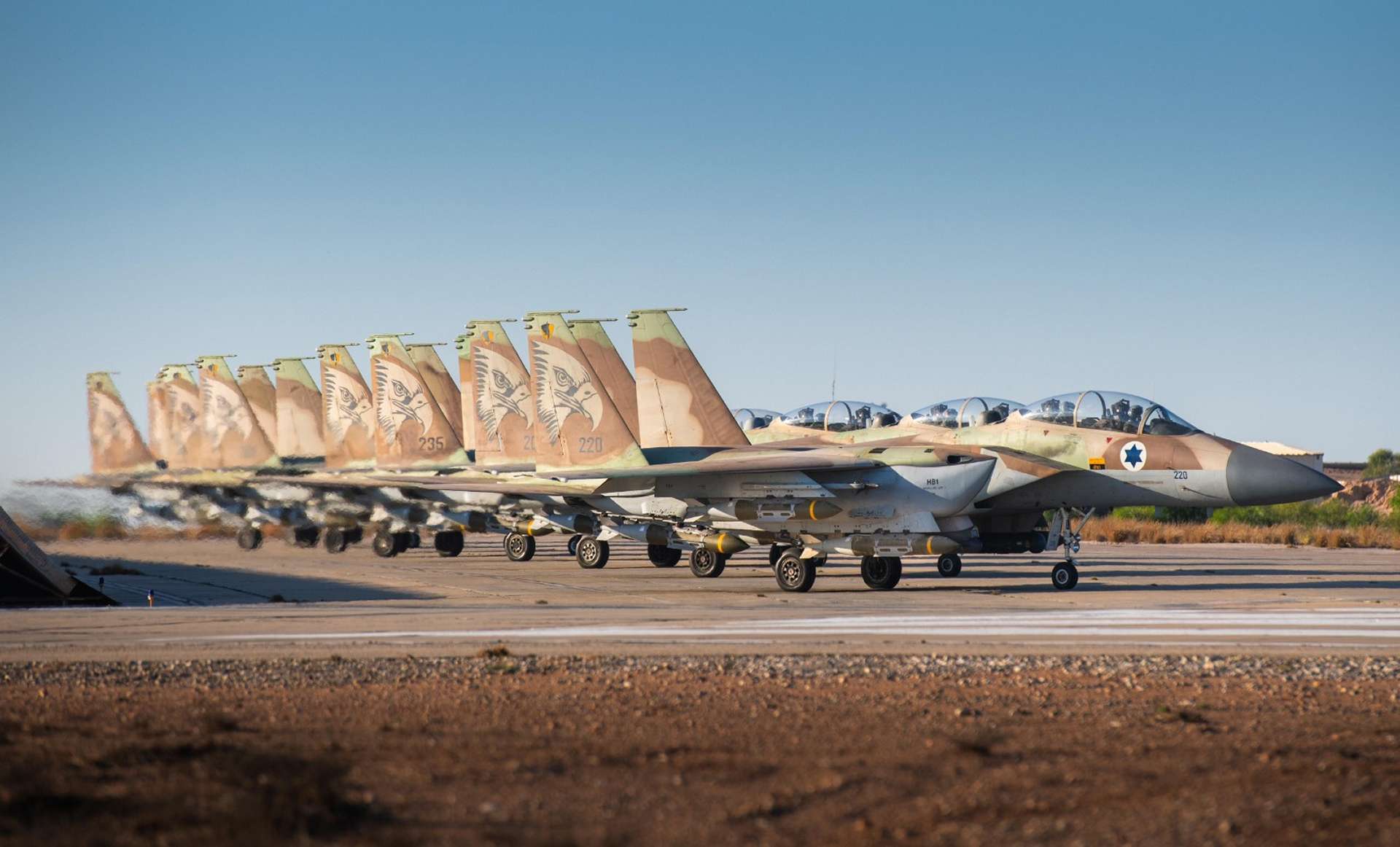
The Israeli decision to acquire the F-15I Ra'am was made in 1994, with the first aircraft delivered in 1997, and the variant was officially introduced into service in 1998. (Picture source: Israeli MoD)
Recently, the U.S. government approved an upgrade and expansion of the Israeli F-15I fleet, which includes the acquisition of up to 50 new F-15IA (Israel Advanced) aircraft and Mid-Life Update (MLU) kits for the existing 25 F-15I aircraft. This upgrade package, valued at approximately $18.82 billion, is intended to enhance the IAF’s ability to address evolving security challenges. The upgrade aims to align the F-15I with the advanced capabilities of the F-15IA and is expected to ensure the aircraft remains relevant in the face of modern threats.
The F-15I upgrade package includes 120 F110-GE-129 engines, 90 Advanced Display Core Processors II, and 75 APG-82(V)1 Active Electronically Scanned Array (AESA) radars, which are expected to improve target detection and engagement. Additional upgrades include 50 AN/AAQ-13 LANTIRN navigation pods, 320 LAU-128 Advanced Medium Range Air-to-Air Missile (AMRAAM) launchers, and 180 Embedded Global Positioning System/Inertial Navigation System (EGI) devices with M-Code. These upgrades are intended to enhance the aircraft's overall operational capability.
In terms of armament, the F-15I can carry a wide array of weaponry, including air-to-air missiles such as the Python series and AIM-120 AMRAAM, as well as air-to-ground munitions like Paveway laser-guided bombs, Joint Direct Attack Munitions (JDAMs), BLU-109 "bunker-buster" bombs, SPICE bombs, and AGM-88 High-speed Anti-Radiation Missiles (HARM). The combination of advanced avionics, radar systems, and versatile weapons load enables the F-15I to fulfill various mission requirements within the IAF's operational framework.
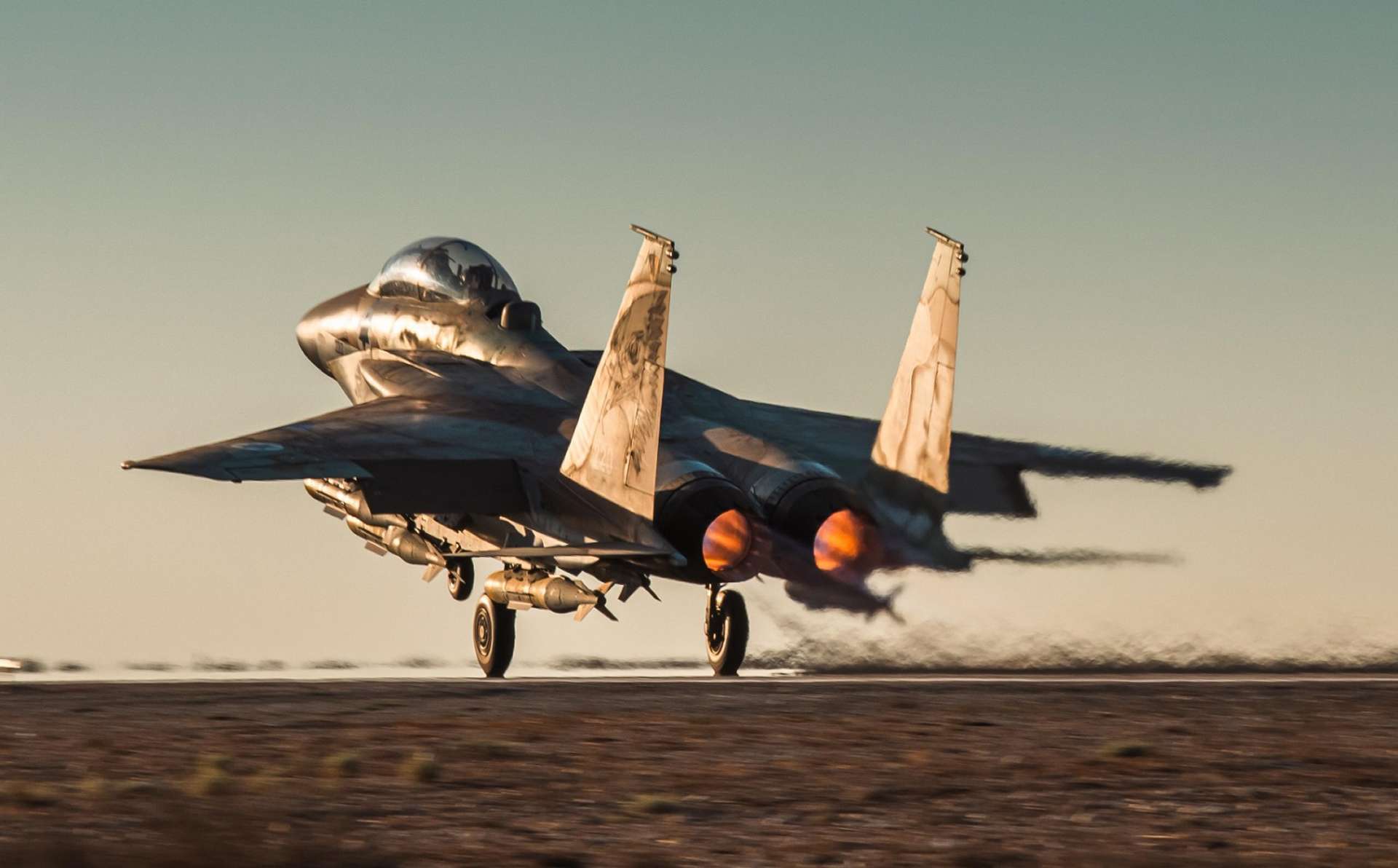
Powered by two Pratt & Whitney F100-PW-229 engines, the F-15I has a maximum speed of Mach 2.5 (approximately 3,000 km/h) and a combat range of around 1,400 km when equipped with external fuel tanks. (Picture source: Israeli MoD)
- Details
- Written by: Vandenbosch
- Category: 2024
- Hits: 3998
Denmark has placed an order with Rheinmetall for the supply of 16 Skyranger 30 turrets, which will be integrated into 8x8 tactical vehicles for the Danish armed forces. This contract, valued in the lower hundreds of millions of euros, also includes a separate order for ammunition, estimated in the tens of millions of euros. Deliveries of these systems are scheduled between 2027 and 2028, with a prototype expected by the end of 2026. This announcement was made by the German company Rheinmetall on September 30, 2024.
Follow Army Recognition on Google News at this link
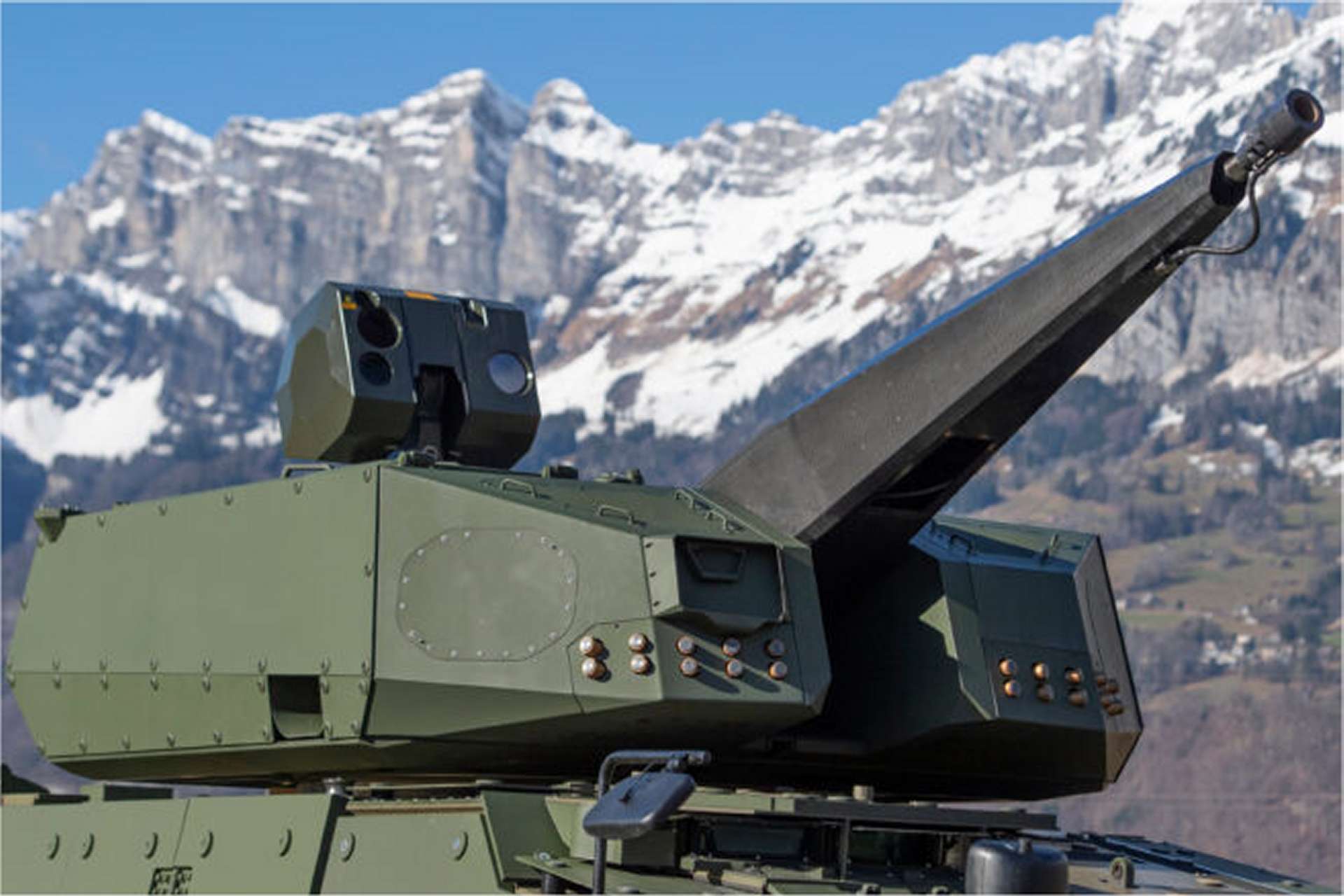
The Skyranger 30 is a very short-range air defense system designed to counter modern aerial threats, such as drones, helicopters, and other low-flying aircraft. (Picture source: Rheinmetall)
According to Lieutenant General Per Pugholm Olsen, head of the Danish procurement agency, this contract marks a crucial step in establishing the brigade’s air defense, thus strengthening its operational capabilities. The selection of the Skyranger 30 was made in close cooperation with the Danish Defence Command to ensure the system meets the country’s strategic needs.
Oliver Duerr, CEO of Rheinmetall Electronic Solutions, expressed his gratitude to Denmark for its trust in the Skyranger 30, highlighting the system’s versatility and its successful integration into various vehicle platforms. This order confirms Rheinmetall’s position as a leader in cannon-based air defense systems.
The Skyranger 30 is a very short-range air defense system designed to counter modern aerial threats, such as drones, helicopters, and other low-flying aircraft. Developed by Rheinmetall Air Defence AG, the core of the system lies in its lightweight turret, which weighs between 2.5 and 3.4 tons depending on the configuration. The turret’s compact dimensions ensure greater flexibility on the battlefield. Measuring 5.17 meters in length, 2.56 meters in width, and 1.44 meters in height, the turret can be installed on various types of armored vehicles. It is operated by a crew of three, who control both the main weaponry and the detection systems.
The Skyranger 30 is equipped with a 30mm Oerlikon KCE revolver cannon, using airburst munitions that detonate near the target to maximize effectiveness against fast-moving and small aerial threats. The cannon is capable of firing up to 1,200 rounds per minute, with a nominal rate of 200 rounds per minute in single-shot mode, offering great operational flexibility. Its effective range is 3 kilometers for the cannon, while the onboard missiles provide a range of 5 to 8 kilometers, expanding the coverage against more distant targets.
In terms of protection, the turret benefits from ballistic protection compliant with STANAG 4569 Level 2, which shields it from shell fragments and small-caliber fire. This protection can be upgraded to Level 4, providing enhanced resistance in hostile environments.
The Skyranger 30 combines firepower, mobility, and protection, making it a modern and adaptable solution to very short-range aerial threats. It meets the needs of armies for rapid and efficient air defense, while also being capable of integrating into larger defense systems thanks to its modularity and networked communication capabilities.
This Danish order adds to a growing list of countries opting for the Skyranger 30. Austria was the first country to acquire 36 units, and other NATO and EU member states are considering or have already initiated the purchase of this system. Furthermore, in December 2023, Hungary commissioned Rheinmetall to develop the Skyranger 30 for the tracked Lynx KF41 vehicle, while the German Bundeswehr has also placed an order for this system, with a prototype delivery expected by the end of 2024 and 18 series vehicles to follow.
The continued success of the Skyranger 30 underscores Rheinmetall’s leading role in the global market for ground-based cannon air defense systems, positioning the company as a key player in the defense industry.
Read more: Denmark Orders 16 Skyranger 30 Turrets from Rheinmetall for Its 8x8 Vehicles
- Details
- Written by: Halna du Fretay
- Category: 2024
- Hits: 4089
In an effort to modernize the operational capacities of the Royal Armed Forces (FAR), Morocco has partnered with Tata Advanced Systems Limited (TASL), a subsidiary of the Tata Group, to produce the WhAP 8×8 armored combat vehicle locally. This project, which is part of a broader strategy to develop Morocco's defense industry, marks an important step in strengthening the historical ties between Morocco and India, two emerging economies that are increasingly collaborating in the defense sector.
Follow Army Recognition on Google News at this link
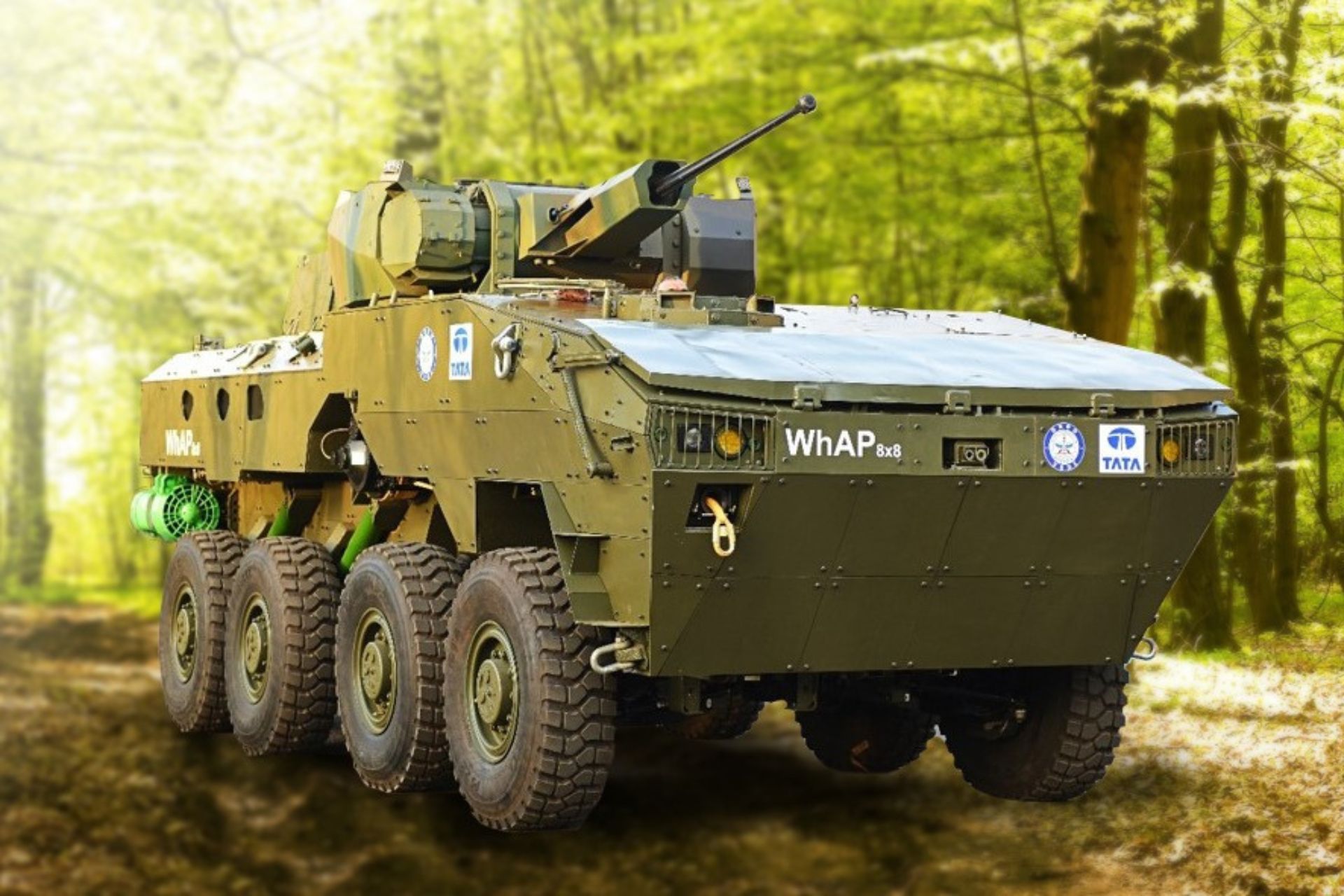
Initially, the WhAP was equipped with a roof-mounted remote-controlled weapon system featuring a 30×113 mm autocannon and a 7.62×51 mm coaxial machine gun (Picture source: TATA)
The Moroccan Ministry of National Defense announced that this partnership would enhance the country’s strategic autonomy while positioning Morocco as a growing regional player in the defense industry. The project, which is set to be completed within thirty-six months, will start with a local integration rate of 35%, expected to increase to 50% as the program progresses. The partnership is projected to generate about 90 direct jobs and 250 indirect jobs, boosting the local economy and strengthening Morocco’s industrial ecosystem.
The investment agreement includes financial, fiscal, and customs incentives, with the participation of various ministries, including Defense, Interior, Finance, Industry, and Investment. This agreement not only meets local defense needs but also aims to increase exports to international markets, in line with the goals of Morocco and TASL to bolster South-South cooperation and create a regional hub for defense mobility production.
The WhAP, or "Wheeled Armoured Platform," is India’s first amphibious infantry combat vehicle. Designed for optimized survivability, all-terrain performance, and increased firepower, the WhAP was developed in collaboration with the Defense Research and Development Organisation (DRDO). It features an integrated power pack with automatic transmission, flotation, and propulsion capabilities, making it particularly suited for amphibious missions and challenging terrains.
Immensely proud that, side-by-side with DRDO, Mahindra Defence has helped developed & build a world class product.
— anand mahindra (@anandmahindra) August 14, 2024
A Chemical, Biological, Radiological and Nuclear (CBRN) variant of the Wheeled Armoured Platform (WhAP) Amphibious ops capabilities with compact design, optimized… pic.twitter.com/NOjKNPJY5s
The WhAP has been presented in several weapon configurations. Initially, it was equipped with a roof-mounted remote-controlled weapon system featuring a 30×113 mm autocannon and a 7.62×51 mm coaxial machine gun. Another version integrated a BMP-2 turret, armed with a 30 mm cannon and similar weaponry. This versatile vehicle is designed to adapt to various combat and support missions, including versions equipped with anti-tank guided missile launchers.
This partnership between Morocco and TASL marks a new phase in Morocco’s efforts to diversify its strategic partnerships and develop its defense sector. As the Moroccan army acquires new armored vehicles to enhance its operational capacities, the project also presents opportunities to attract investors in both the defense and high-tech sectors.
WhAP trials have taken place in Morocco over the past few months, and the vehicles are expected to be delivered to Moroccan forces over a period of three years. This contract represents one of the largest orders for Indian-made armored vehicles, both domestically and internationally. The collaboration with DRDO and TASL will also allow for vehicle upgrades based on operational feedback, ensuring their long-term effectiveness.
The development of Morocco’s defense industry through this partnership highlights the growing importance of self-sufficiency in the production of military equipment and positions the kingdom as a key player in the defense industry in Africa.
Read more: Morocco Partners with India's TATA for Local Production of WhAP 8×8 Armored Vehicles

Azerbaijan brings upgraded Israeli-made Plasan SandCat Stormer with Spike NLOS missiles to ADEX 2024
- Details
- Written by: Jérôme Brahy
- Category: 2024
- Hits: 5104
During the 5th Azerbaijan International Defence Exhibition (ADEX) 2024, Azerbaijan presented an upgraded variant of its Israeli SandCat Stormer vehicle, possibly equipped with the Spike NLOS missile system. This event follows Azerbaijan's recent military operation in Nagorno-Karabakh and aligns with the country's defense spending, projected to reach around USD 3.8 billion in 2024. This Plasan Stormer, part of the Sandcat family, was equipped with four Spike NLOS (Non-Line-of-Sight) missiles, which have a maximum range of 32 km when launched from ground or sea platforms.
Follow Army Recognition on Google News at this link
This Plasan Stormer, part of the Sandcat family, was equipped with four Spike NLOS (Non-Line-of-Sight) missiles, which have a maximum range of 32 km when launched from ground or sea platforms. (Picture source: Army Recognition)
Azerbaijan conducted a military operation on September 19, 2023, to gain control over the remaining parts of the Nagorno-Karabakh region, a territory mainly inhabited by Armenians but located within Azerbaijan’s borders. The operation raised concerns about potential broader violence and led to a significant displacement of Armenians fearing reprisals. Russian peacekeepers were killed during the fighting, but Russia did not intervene. Azerbaijan's economic position, partly influenced by the Ukraine war's effects on natural gas exports to the European Union, has allowed it to expand its military capabilities. The country has acquired military equipment from Turkiye, such as upgrading Su-25 combat aircraft, and from Israel, acquiring a remote-sensing satellite and additional Barak air defense systems. Azerbaijan plans to increase military spending by around 6% in 2024, reaching approximately USD 3.8 billion.
Armenia has also increased its defense spending, with a budget of USD 1.28 billion in 2023, a 46% rise compared to the previous year, and plans to expand it to about USD 1.4 billion in 2024. Due to delays in Russian arms deliveries, affected by Russia’s involvement in Ukraine, Armenia has sought alternative suppliers, including India, signing contracts for 155mm ATAGS towed howitzers, Pinaka multiple-launch rocket systems, and Akash air defense systems. Additionally, Armenia is transitioning toward NATO-standard artillery, incorporating Western military education systems and command approaches. Armenia has distanced itself from Russia's security role, as Moscow did not intervene during the 2022 border conflict with Azerbaijan. This led Armenia to invite an EU monitoring mission, comprising 103 civilian members, while Armenia has effectively halted its participation in CSTO activities.
Azerbaijan's armed forces, consisting of 64,050 active personnel (57,800 in the Army, 1,750 in the Navy, and 8,650 in the Air Force) and 300,000 reservists, focus mainly on territorial defense. Azerbaijan maintains a conscript-based system, with service terms of 18 months (12 for graduates). The country has shifted from reliance on Russian military support to establishing defense ties with Israel, Turkiye, and Pakistan, signing agreements such as the 2021 "Shusha Declaration" with Turkiye and engaging in joint exercises like the Mustafa Kemal Ataturk-2023 in October 2023. Additionally, Azerbaijan signed bilateral defense cooperation agreements with Uzbekistan and Kazakhstan in 2023 and has developed limited but expanding domestic defense-industrial capabilities through its Ministry of Defence Industry.
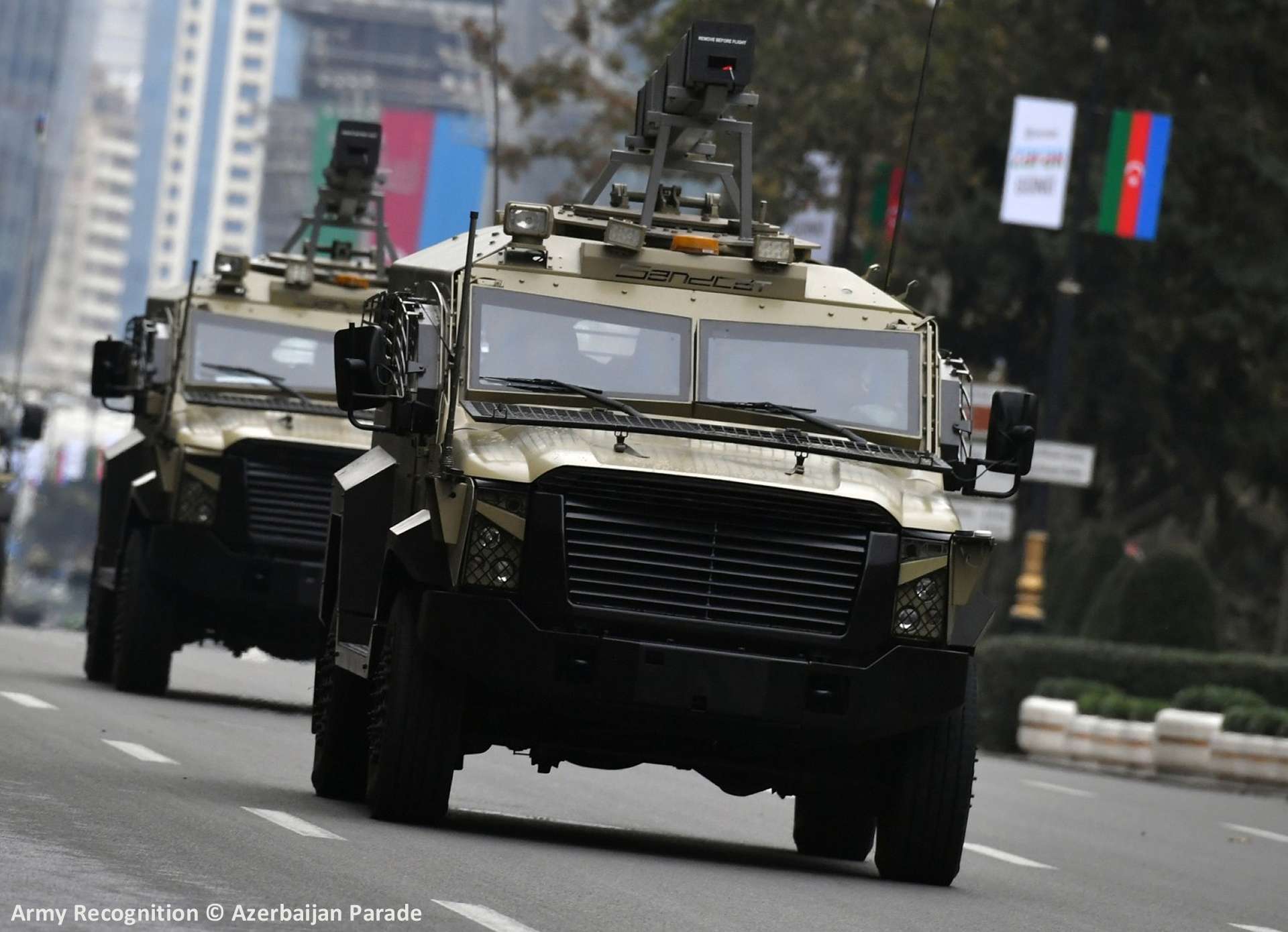
Azerbaijan has acquired various military equipment from Israel, including dozens of Plasan Sandcat armored vehicles, a remote-sensing satellite, and Barak air defense systems. (Picture source: Army Recognition)
The Plasan Stormer is an armored vehicle developed by the Israeli defense company Plasan, intended for use in military and security operations. The vehicle features composite armor designed to protect against small arms fire, improvised explosive devices (IEDs), and other common battlefield threats. Its modular design allows for reconfiguration to suit different mission requirements, such as personnel transport, reconnaissance, and combat support. Additionally, the Stormer includes active protection systems (APS) capable of detecting and intercepting incoming projectiles.
As part of the Sandcat family, the Plasan Stormer is typically powered by a diesel engine producing around 500 horsepower, coupled with a transmission system that manages power distribution and fuel efficiency. The vehicle is built for all-terrain performance, featuring high ground clearance, reinforced suspension, and run-flat tires to navigate various landscapes, including rugged and urban environments. It is equipped with an electronic stability control system and four-wheel steering, improving maneuverability. The Stormer includes sensors and navigation systems to support situational awareness and coordination for the crew.
The Plasan Stormer is designed to possess a payload capacity of approximately 2,500 kilograms. This capacity allows for the transportation of equipment, ammunition, and additional personnel as needed for different missions. The vehicle has an operational range of up to 800 kilometers on a single fuel tank, supported by fuel management systems that help extend its operational time. The interior includes seating designed for crew comfort, climate control, and communication systems to facilitate effective operations during extended missions. The platform is adaptable for integrating various weapon systems, surveillance equipment, and electronic countermeasures, providing flexibility for different military and security applications.

The Spike NLOS offers both direct (LOBL) and indirect (LOAL) attack modes and can be launched in day or night conditions from ground, air, or naval platforms. (Picture source: Rafael Advanced Defense Systems)
The Spike NLOS (Non-Line-of-Sight) is part of the Spike missile family developed by Rafael Advanced Defense Systems, following lessons from the Yom Kippur War that demonstrated the need for a high-precision, guided tactical ground-to-ground missile. It was first introduced into service by the Israel Defense Forces (IDF) in 1981 alongside the Pereh missile carrier, but public acknowledgment of the system did not occur until 2011. Since then, the missile has undergone several upgrades, with the latest 6th-generation model introduced in 2022, featuring a longer range of up to 50 km for aerial platforms and enhanced targeting capabilities.
The Spike NLOS has a maximum range of 32 km when launched from ground or sea platforms and up to 50 km from aerial platforms. The missile weighs approximately 70 kg and utilizes electro-optical (EO) guidance, with a fiber optic link used up to 8 km and a radio data link employed beyond this distance for command guidance. It offers both direct (LOBL) and indirect (LOAL) attack modes and can be launched in day or night conditions from ground, air, or naval platforms. The system incorporates a multi-spectral high-resolution seeker, a real-time data link, and capabilities such as target retargeting, mission abort, and multiple warhead options, including anti-armor, blast-penetration, and high-explosive fragmentation warheads.
The Spike NLOS is in use by 43 countries, including Israel, the United Kingdom, South Korea, and the United States. The UK adopted different versions for counter-insurgent operations in Iraq and Afghanistan, using the designation "EXACTOR." South Korea purchased the Mk. 5 version in 2011. The US Army has also incorporated the Spike NLOS, conducting tests with the missile on AH-64E Apache helicopters, achieving hits at ranges up to 32 km. The Israeli Navy operates a maritime variant with a stated range of 32 km, equipped with a dual passive electro-optical guidance system and infrared imaging capabilities.
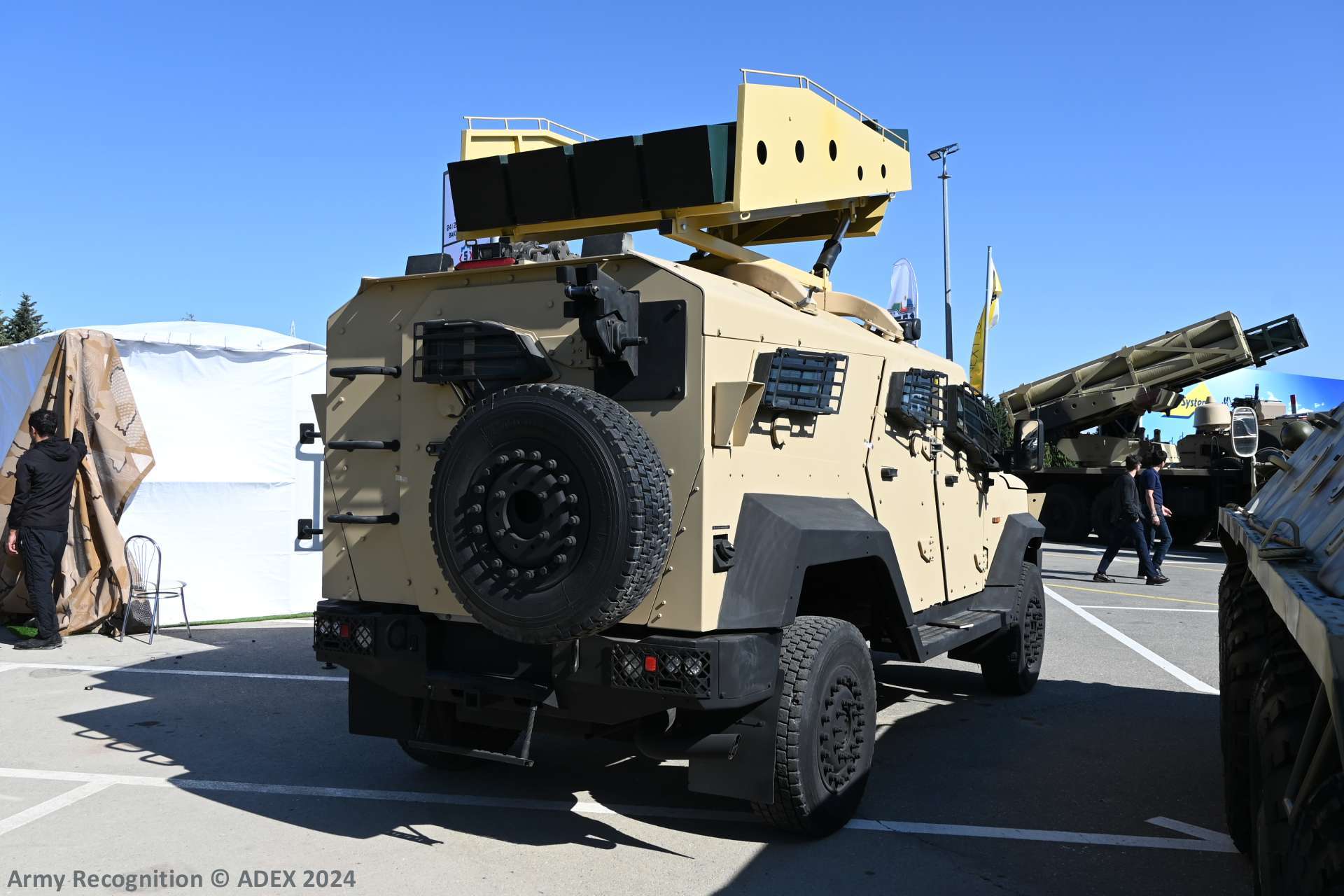
The Plasan Sandcat's modular design allows for reconfiguration to suit different mission requirements, such as personnel transport, reconnaissance, and combat support. (Picture source: Army Recognition)

- Details
- Written by: Vandenbosch
- Category: 2024
- Hits: 3013
The 261st repair plant, part of JSC Remvooruzhenie, managed by RT-Capital under the Rostec State Corporation, plans to double its repair volume. This plant specializes in restoring special equipment such as fuel tankers and transport vehicles from the KAMAZ, Ural, and MAZ brands, intended for the Ministry of Defense. Currently, the plant is carrying out an amount of work within the framework of state defense orders.
Follow Army Recognition on Google News at this link
The 261st repair plant specializes in restoring special equipment such as fuel tankers and transport vehicles. (Picture source: Rostec)
The Governor of the Novgorod region, Andrey Nikitin, along with the regional Minister of Industry and Trade, Ivan Chekmarev, recently visited the plant. They inspected the production facilities and discussed the company's development prospects and its role in the regional economy.
“Today, Remvooruzhenie is working to improve the plant's efficiency. The workload plan for 2025 has been approved, to double the repair volumes for our main client, while also introducing new models of equipment for restoration. Of course, our priority remains fulfilling the state's defense orders. In this regard, the plant must benefit from the technical re-equipment cost subsidy program,” said Denis Lepeshko, General Director of Remvooruzhenie.
Over the past year, the number of employees increased from 89 to 125 people, and wages have been raised to match the regional average.
“Participation in regional industrial cooperation is also important for us. The plant can offer its services to the Novgorod region for the repair of freight and commercial vehicles, public service vehicles, fire trucks, and other types of vehicles. It can also repair fuel stations,” noted Denis Lepeshko.
An important step was taken this year with the plant's inclusion in the productivity improvement program. A cooperation agreement was signed between the company and the Novgorod Innovation Development Center, aimed at improving the efficiency and quality of production processes. Personnel training is currently underway, and the plant plans to recruit an additional 40 employees.
The 261st repair plant became part of Rostec in 2018. RT-Capital and Remvooruzhenie implemented several measures to revive production at the plant and restore its financial stability. These crisis management measures, specifically designed for a highly specialized plant, required a tailored approach. This not only allowed the company to resume operations but also to begin developing its industrial potential and acquiring new competencies.
Read more: Russia Increases Its Capacity to Repair Military Equipment

- Details
- Written by: Administrator
- Category: 2024
- Hits: 7372
Recent social media pictures have unveiled that China's People's Liberation Army (PLA) is proactively upgrading its artillery units with anti-drone protections. During a live-fire exercise conducted by the 76th Artillery Brigade of the 76th Group Army, Western Theater Command, in the expansive Northwest Gobi Desert, several PLZ-05 self-propelled howitzers were observed equipped with various anti-drone and First-Person View (FPV) Unmanned Aerial Vehicle (UAV) countermeasures.
Follow Army Recognition on Google News at this link
Chinese PLZ-05 self-propelled howitzer equipped with wire cage armor, designed to enhance protection against drone attacks, inspired by modern battlefield tactics.(Picture source: Chinese army TV)
The photographs reveal that these artillery pieces have been fitted with additional protective structures and technologies designed to mitigate threats from small drones and FPV UAVs. These enhancements appear to be a direct response to evolving combat tactics witnessed in recent global conflicts, particularly the extensive use of drones in the ongoing conflict in Ukraine.
The PLA's (People's Liberation Army - Chinese army) modifications underscore a growing recognition of the need for enhanced defensive measures against aerial threats posed by agile and often commercially available drones capable of conducting surveillance or delivering precision strikes. The conflict in Ukraine has prominently highlighted how such unmanned systems can significantly influence ground operations, prompting militaries worldwide to reassess and bolster their defensive capabilities.
Military analysts note that the integration of anti-drone protections on the PLZ-05 howitzers signifies China's commitment to adapting its military assets to counter emerging threats effectively. "The utilization of drones in modern warfare has transformed the battlefield dynamics," said Li Wei, a Beijing-based defense analyst. "China is keen on learning from these conflicts to ensure its forces are well-prepared against similar challenges."
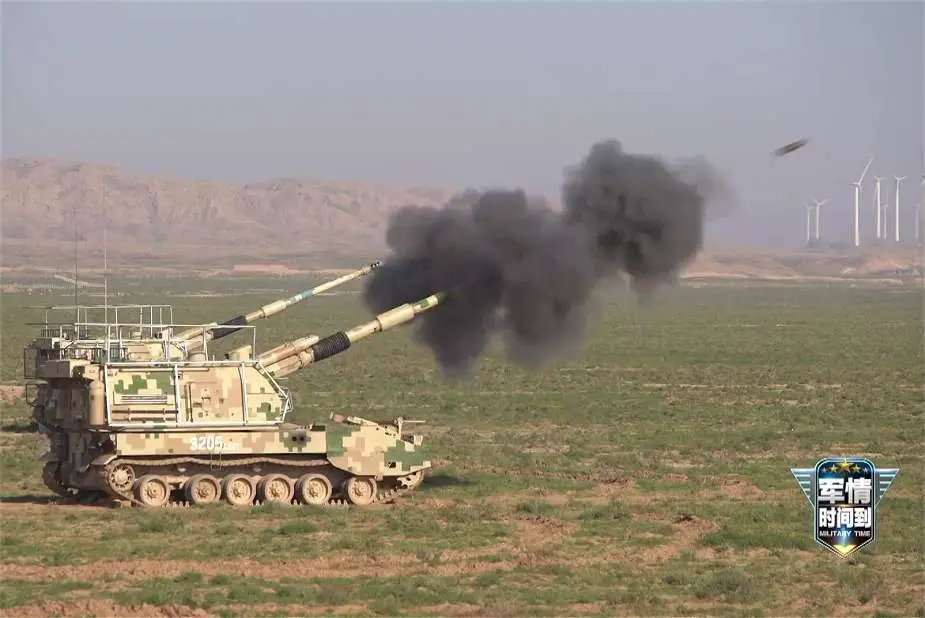
Chinese Army PLZ-05 155mm self-propelled howitzers equipped with anti-drone wire cage armor for enhanced battlefield protection. (Picture source: Chinese army TV)
The PLZ-05 is a 155mm self-propelled howitzer, a crucial component of the PLA's artillery units known for its firepower and mobility. The newly added anti-drone features may include physical barriers like mesh screens to protect against loitering munitions, electronic jamming systems to disrupt drone controls, and radar systems capable of detecting and tracking low-altitude aerial threats.
These enhancements aim to provide a layered defense mechanism, ensuring that artillery units can operate with reduced risk from aerial surveillance and attacks by enemy drones. The live-fire exercises in the Gobi Desert offered an ideal environment to test these systems under realistic combat conditions, enabling the PLA to evaluate the effectiveness of their upgrades and make necessary adjustments.
China's focus on augmenting its military hardware with anti-drone technologies aligns with a broader global military trend emphasizing the importance of counter-UAV systems. As drones become increasingly accessible and technologically advanced, the necessity for robust defense against them has escalated.
"The PLA's advancements in anti-drone defenses reflect a strategic shift towards preparing for a future where unmanned systems are prevalent on the battlefield," commented Zhang Tao, a military technology expert. "By enhancing their artillery units with such protections, they are not only safeguarding their assets but also maintaining a tactical advantage."
While there has been no official statement from the PLA regarding these specific modifications, the visual evidence from the exercises indicates a clear intent to modernize and adapt to contemporary warfare demands. This proactive approach is consistent with China's ongoing military modernization efforts, aiming to transform the PLA into a world-class fighting force capable of countering various threats.
The developments observed in the PLA's artillery units are a testament to the global impact of military modernization initiatives undertaken by numerous nations in response to the changing nature of warfare. The integration of advanced technologies, including artificial intelligence, cyber warfare capabilities, and unmanned systems, is reshaping defense strategies globally.
As nations observe and learn from conflicts like the one in Ukraine, adaptations such as enhanced anti-drone protections become imperative. These measures not only improve defensive capabilities but also contribute to deterrence by complicating potential adversaries' operational planning.
China's advancements remind us of the accelerating pace of military innovation and the continuous evolution of combat strategies. The PLA's efforts to protect its forces from emerging threats underscore the importance of agility and adaptability in modern military doctrine.
The sighting of anti-drone enhancements on the PLA's PLZ-05 howitzers during the live-fire exercises in the Gobi Desert marks a significant step in China's military preparedness. As drones and other unmanned systems continue to influence the dynamics of warfare, incorporating countermeasures becomes crucial for maintaining operational effectiveness and force protection.

- Details
- Written by: Administrator
- Category: 2024
- Hits: 20892
The ZTZ-99 is the latest generation of Chinese main battle tanks, representing the most advanced armor technology produced domestically by China. It stands as a symbol of China's military modernization, equipped with cutting-edge systems for firepower, mobility, and protection. A recent development, as shared by "David Wang" on X (formerly Twitter) on September 19, 2024, reveals that China is currently developing a variant of the ZTZ-99 outfitted with an advanced Active Protection System (APS). This APS includes two projectile launchers and four fire control radars, similar to the GL-6 system, first revealed in 2022.
Follow Army Recognition on Google News at this link
New Chinese-made ZTZ-99 MBT Main Battle Tank fitted with APS Active Protection System. (Picture source: X account David Wang)
The ZTZ-99 main battle tank, also named Type 99, was developed in the 1990s by China as part of its broader effort to modernize its armored forces. Its design was influenced by earlier Soviet tank models, particularly the T-72, but it incorporates advanced technologies, making it one of the most sophisticated tanks in China’s arsenal. Development of the ZTZ-99 began in the late 1980s, and the first prototype was completed by 1993. After rigorous testing and refinements, the ZTZ-99 officially entered service with the People's Liberation Army (PLA) in 1999. It made its public debut during the National Day parade in 1999, signaling China’s commitment to fielding a modern, competitive armored force.
Regarding combat capabilities, the ZTZ-99 is equipped with a 125mm smoothbore cannon, capable of firing APFSDS rounds, HEAT shells, and ATGMs, enabling it to engage heavily armored vehicles at various ranges. The tank is protected by advanced composite armor and explosive reactive armor (ERA), designed to defend against high-explosive and kinetic threats. Recent variants of the ZTZ-99 have integrated an Active Protection System (APS), like the GL-6, which offers hard-kill protection by intercepting incoming missiles or projectiles. The tank is powered by a 1,500-horsepower diesel engine, allowing it to reach speeds of up to 80 km/h, ensuring excellent mobility on diverse terrain. This combination of firepower, protection, and speed solidifies the ZTZ-99's role as a highly capable and modern main battle tank.
The GL-6 Active Protection System (APS) is a hard-kill defense system developed by China, primarily designed to protect armored vehicles from incoming anti-tank missiles and projectiles. It is similar in function to other APS like Israel's "Iron Fist." The GL-6 system is integrated into vehicles such as the VT-4A1 main battle tank and offers advanced interception capabilities. It uses radar to detect and neutralize threats by launching countermeasures that destroy or deflect incoming missiles before they can strike the vehicle.
The GL-6 is a significant upgrade over earlier models like the GL-5, offering better performance and modular features that allow it to be adapted to various platforms. The system effectively counters anti-tank guided missiles (ATGMs) and high-explosive projectiles, making it a valuable asset in modern armored warfare.
In terms of performance, the GL-6 can intercept multiple types of threats from various angles, adding a layer of survivability for vehicles like the VT-4A1 and potentially the VN-22 infantry fighting vehicle (IFV), although its functionality on the latter is still debated and may be limited to experimental or demonstration purposes
Adding the APS to the ZTZ-99 tank is a game-changer for its defensive capabilities. An APS is designed to provide "hard-kill" protection, which means it actively intercepts and destroys incoming anti-tank guided missiles (ATGMs), rocket-propelled grenades (RPGs), and other high-velocity projectiles before they can hit the tank. The two APS projectile launchers and radar system work in tandem to detect and neutralize threats, providing 360-degree coverage. This level of protection enhances the tank's survivability in both offensive and defensive operations, especially in environments where advanced anti-tank weaponry is deployed.
By adding this advanced APS, the ZTZ-99 becomes far more resistant to modern anti-armor threats, ensuring it can remain operational on the battlefield even when facing the latest missile and projectile systems. The GL-6 system, in particular, is known for its efficiency in intercepting multiple threats simultaneously, further increasing the tank's durability in combat.
These improvements make the ZTZ-99 not only a powerful offensive machine, with its 125mm smoothbore gun capable of firing various munitions, but also a highly resilient vehicle, able to withstand a wide range of battlefield threats. This development aligns with China's strategic focus on enhancing the survivability and effectiveness of its armored forces, allowing the ZTZ-99 to maintain its cutting-edge position among global main battle tanks.
Read more: China Unveils Cutting-Edge ZTZ-99 Tank Upgrade with Advanced Active Protection System
- Details
- Written by: Halna du Fretay
- Category: 2024
- Hits: 9615
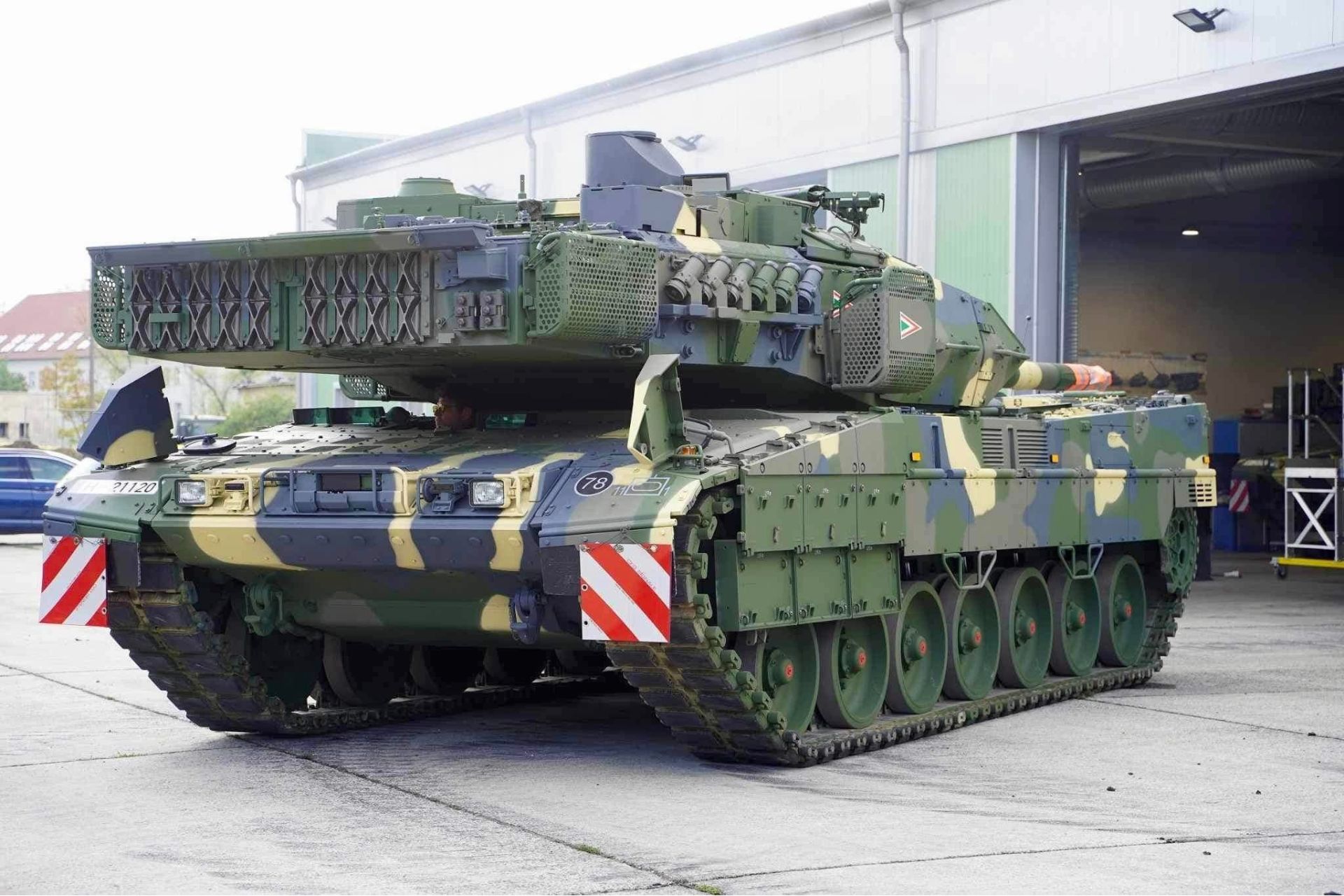
Hungarian Defense Minister Kristóf Szalay-Bobrovniczky announced the reception of new Leopard 2A7HU tanks by the Hungarian army, bringing the total number of these modern combat vehicles to 24 units. This acquisition is part of the broader modernization program of the Hungarian armed forces, initiated several years ago. The latest deliveries, made on September 25 and August 28, have added five more tanks, moving Hungary closer to its goal of 48 Leopard 2A7HU tanks ordered in 2018.
Follow Army Recognition on Google News at this link
The Leopard 2A7HU, a modified version of the German Leopard 2A7 for the Hungarian army, features a 120 mm Rh120 L/55 smoothbore gun, a 7.62 mm FN MAG machine gun, and a roof-mounted 12.7 mm M2 heavy machine gun in a remote-controlled FN Herstal station (Picture source: Hungarian MoD)
These new vehicles, destined for the 11th Tank Battalion of the 1st Armored Brigade, will gradually replace the older T-72M1 tanks currently in service. This transition process is facilitated by the use of 12 Leopard 2A4 tanks, also acquired by Hungary, which serve as training vehicles for crews. The Leopard 2A7HU tanks are transported across the country via civilian convoys and are joined by other support vehicles, such as the WiSENT 2 recovery vehicle, the Leguan bridge-layer, and the Leopard 2NJ training tank.
The Leopard 2A7HU, a modified variant of the German Leopard 2A7, is distinguished by specific improvements tailored to the Hungarian army. Its primary armament consists of a 120 mm Rh120 L/55 smoothbore gun, paired with a 7.62 mm FN MAG machine gun, while a 12.7 mm M2 heavy machine gun is mounted on the roof in a remote-controlled weapon station by FN Herstal. Powered by a 1500-horsepower MTU MB 873 Ka-501 engine, this 66-ton tank can reach a top speed of 70 km/h. One of the key enhancements to the Hungarian model is the reinforcement of the turret roof armor and the integration of a new fire control system with an autotracker, capable of automatically tracking a target using a thermal imaging camera.
The Hungarian army’s modernization program extends beyond these battle tanks. In addition to the Leopard 2A7HU tanks, the government also ordered five WiSENT 2 recovery vehicles, three Leguan 2HU bridge-layers, 12 Leopard 2A4 tanks for training, and 24 PzH 2000 self-propelled artillery systems in 2018. The total value of these acquisitions is estimated between 1.6 and 1.8 billion euros, with deliveries expected to be completed by the end of 2028.
Kristóf Szalay-Bobrovniczky, in his recent statements, emphasized the importance of these acquisitions for national defense. He noted that the Leopard 2A7HU version ordered by Hungary is technologically more advanced than the models currently in service with the German army. The development of this model also contributed to the implementation of a new version, the Leopard 2A8, which is currently under development.
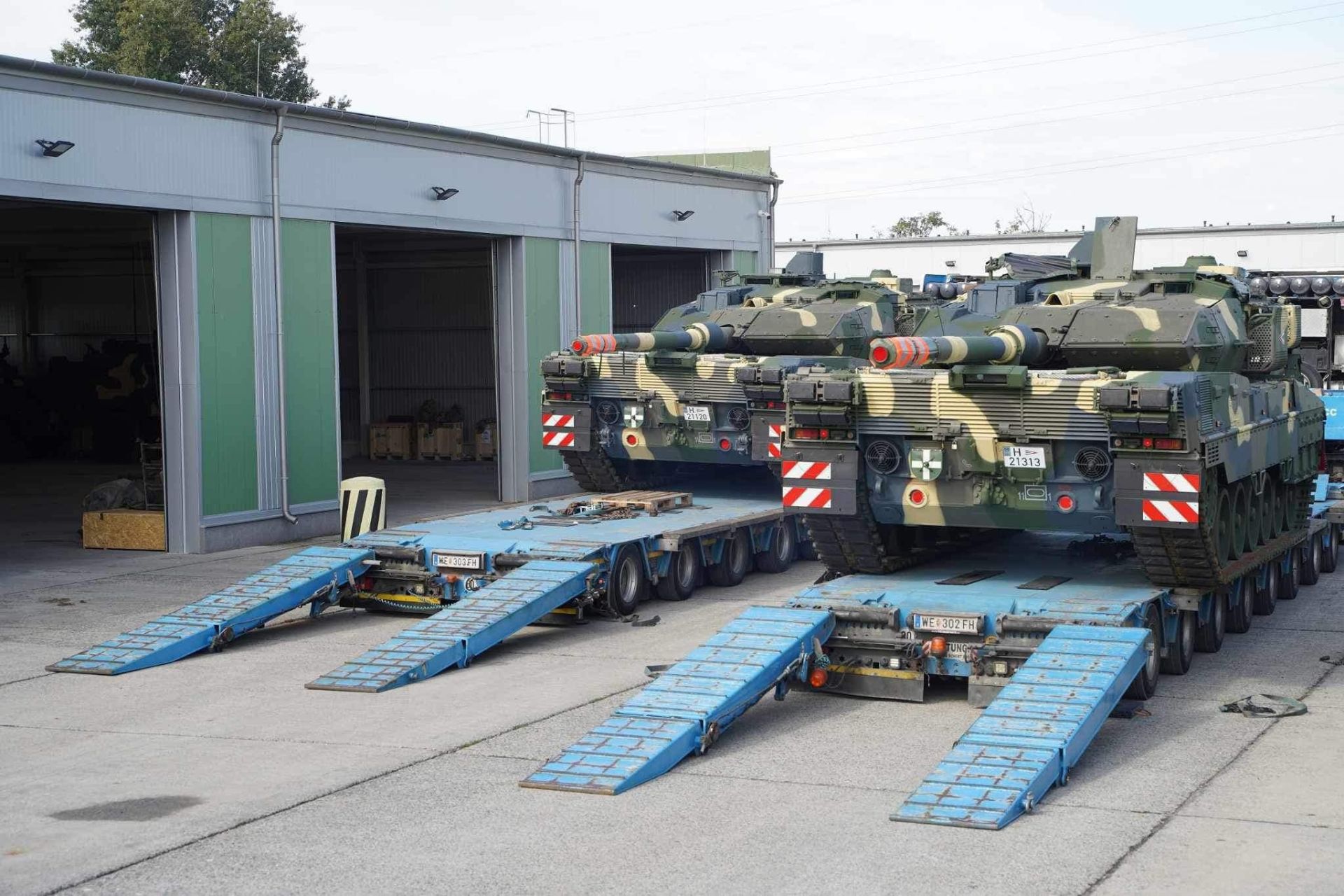
The introduction of these tanks is also part of a broader strategy to strengthen international alliances, particularly with Germany, the primary supplier of the Leopard 2A7HU (Picture source: Hungarian MoD)
Hungary’s decision to invest heavily in these next-generation battle tanks reflects the country’s intent to strengthen its defense capabilities in a complex geopolitical environment. Although the complete modernization of the fleet is not expected until 2028, the gradual receipt of tanks and the intensive training program for crews suggest a swift enhancement of the Hungarian armored brigade's capabilities. Ultimately, the 44 Leopard 2A7HU tanks will replace the 30 to 40 T-72M1 tanks still in service, marking a significant improvement in the operational capabilities of Hungary's armored forces.
The introduction of these tanks is also part of a broader strategy to strengthen international alliances, particularly with Germany, the primary supplier of the Leopard 2A7HU. In the future, Hungary may consider additional acquisitions, including the KF51 tank developed by Rheinmetall, as part of its long-term defense strategy.
As the transition to these new vehicles progresses, the Hungarian army continues to test and refine the use of the Leopard 2A7HU in firing exercises and maneuvers, ensuring full mastery of this advanced technology. These efforts highlight Hungary's commitment to maintaining a modern army capable of addressing contemporary security challenges.
The new deliveries of Leopard 2A7HU tanks underscore Hungary's focus on its military modernization program. These tanks, among the most advanced in the world, will play a key role in transforming the Hungarian army while enhancing its operational capabilities in the coming years.
Read more: Hungary Strengthens its Fleet of Leopard 2A7HU Tanks with New Deliveries from Germany

- Details
- Written by: Triffaux
- Category: 2024
- Hits: 4445
On September 24, 2024, the U.S. Army announced its decision to award American Rheinmetall Vehicles and HDT Expeditionary Systems the contract to build prototypes of equipment-carrying robots as part of the second phase of the Small Multipurpose Equipment Transport (S-MET) program. This announcement highlighted the growing importance of robotic technologies in military operations.
Follow Army Recognition on Google News at this link
US Army Small Multipurpose Equipment Transport (S-MET) Program (Picture source: US MoD)
Several companies, including General Dynamics Land Systems, a team formed by Anduril and Hanwha, and Teledyne FLIR, competed for this contract. GDLS had previously been awarded the initial contracts in 2019 and 2020 related to the first increment of the S-MET.
For this new phase, American Rheinmetall and HDT will each build eight prototypes at a total cost of $22 million. According to Kyle Bruner, project manager for force projection within the Army, S-MET Increment II aims to address critical gaps related to the excessive physical burdens faced by soldiers while enhancing operational autonomy through improved recharging capabilities.
The use of these robots will help reduce the load on soldiers, thereby increasing the effectiveness of small units by limiting fatigue and injuries associated with heavy loads. The first increment of the S-MET, already in service, is a radio-controlled, eight-wheeled platform capable of carrying various payloads and providing power for electronic systems. Currently, this model can transport up to 1,000 pounds, but the goal for the second increment is to double that capacity.
Moreover, S-MET Increment II will be designed to provide higher exportable power, essential for operating unmanned aircraft systems, while also being quieter. The integration of a wireless mesh communication network for soldiers is also among the new features expected.
The system will be constructed using a modular and open architecture, facilitating cost-effective future upgrades. The Army plans to award a production contract for S-MET Increment II following the prototyping phase and developmental testing, with a procurement goal of up to 2,195 systems by the end of 2027.
Meanwhile, the Army is also working on a different type of robotic combat vehicle for heavy maneuver forces. However, the S-MET is expected to become the preferred robot for lighter formations, according to Maj. Gen. Glenn Dean, head of Ground Combat Systems. He stated that the S-MET "is a very capable platform, offering significant value through ongoing experimentation."
This initiative illustrates the U.S. Army's commitment to integrating advanced technologies into its operations while addressing contemporary challenges on the battlefield.