

- Details
- Written by: Vandenbosch
- Category: 2024
- Hits: 2336










The German Bundeswehr has placed an additional order with Rheinmetall for 30,000 sets of "intercom systems with hearing protection function" (SMG), a key communication system designed for soldiers. This second batch follows an initial order placed in April 2024 and will consist of 8,000 units for commanders and 22,000 units for soldiers.
Follow Army Recognition on Google News at this link
The SMG intercom systems with hearing protection function. (Picture source: Rheinmetall)
The delivery of this order is expected to begin in July 2025 and be completed by the end of the year, with a total value of approximately €55 million.
The SMG is part of a broader framework contract awarded to Rheinmetall in April 2024, allowing for the delivery of up to 191,000 sets over a seven-year period. This contract, valued at up to €400 million, reflects the Bundeswehr’s commitment to modernizing its tactical communication systems. The SMG is a key element in this modernization effort, with cross-sectional importance for various units of the force.
The SMG includes cutting-edge features such as active capsule hearing protection, designed to suppress harmful impulse noise while amplifying quieter sounds. It is also equipped with a microphone and can be connected to various radio devices, enabling smooth radio communication for soldiers in the field. In addition to the headset, the system includes push-to-talk (PTT) buttons and cable sets that allow connectivity with different radio and on-board communication systems.
Rheinmetall has partnered with two leading manufacturers to develop the SMG system. 3M Deutschland GmbH has supplied the ComTac VIII headset, while CeoTronics AG developed the CT-Multi PTT 1C and 3C systems. This equipment is compatible with Rheinmetall’s new combat helmets, as well as other helmet types currently used by the Bundeswehr.
This order highlights Rheinmetall’s leading position in the development and supply of military equipment. The company is the prime contractor for the Bundeswehr's "Infantry Soldier of the Future - Expanded System," internationally known as the Gladius soldier system, which is marketed in various configurations.
By enhancing tactical communication capabilities, the SMG system plays a vital role in improving the situational awareness and operational efficiency of the Bundeswehr, reflecting the increasing importance of modern communication technologies in military operations.
Read more: Germany Places New Order for Advanced Communication Systems with Rheinmetall

- Details
- Written by: Vandenbosch
- Category: 2024
- Hits: 3315
The PMPV 6x6, presented by Protolab at MSPO 2024, stands out as a modern and versatile solution in the field of armored vehicles. Designed to meet the requirements of contemporary armed forces, this vehicle offers unmatched mobility and protection in various operational conditions, including urban environments, difficult terrains, and hostile areas.
Follow Army Recognition on Google News at this link
The PMPV 6x6 armored personnel carrier. (Picture source: Army Recognition)
This 6x6 armored personnel carrier (APC) can accommodate 12 people, consisting of two crew members and ten passengers. Weighing a total of 24 tons (GVW), it has a payload capacity of 8 tons, enabling it to transport both personnel and mission equipment. The PMPV 6x6 is powered by a 6.7-liter Cummins multi-fuel engine, delivering between 285 and 450 horsepower depending on the configuration. This provides a maximum speed of 110 km/h, an impressive performance for a vehicle of this size and capability.
The protection offered by the PMPV 6x6 is another key feature. In compliance with STANAG 4569 standards, it provides ballistic protection from Level 1 to 4 and mine protection up to Level 4a/4b under the AEP 55 standard. With these specifications, it can withstand improvised explosive device (IED) attacks, as well as small arms fire and shell fragments. Additionally, the vehicle is capable of climbing slopes up to 60% and driving on lateral slopes up to 30%, making it highly adaptable to rugged terrains and demanding missions.
One of the distinguishing aspects of the PMPV is its optional amphibious capability. This feature, rare in the multi-role armored vehicle category, allows it to operate both on land and in water, making it particularly useful for operations requiring enhanced mobility in coastal areas or regions crossed by rivers.
The PMPV 6x6 is also designed for high modularity. It is available in several variants, ranging from troop transport to reconnaissance vehicles, including medical evacuation (CASEVAC) and command and control missions. This flexibility is a major asset for militaries seeking to streamline their fleets while having a platform capable of adapting to different scenarios.
The vehicle also stands out for its use of components from standard commercial trucks, reducing maintenance costs and optimizing operational availability. In fact, the designers prioritized a simple and robust architecture with few custom-made parts to ensure easier maintenance, even in isolated and challenging environments.
At MSPO 2024, this platform demonstrated its ability to meet the needs of armed forces in modern warfare contexts, where rapid deployment, troop protection, and vehicle versatility are decisive factors. The presentation of the PMPV 6x6 highlights technological advancements in the armored vehicle sector, particularly in the areas of protection, mobility, and adaptability.
The PMPV 6x6 establishes itself as a strategic choice for armies looking to modernize their armored transport capabilities with a versatile, robust, and cost-effective solution. Its versatility, coupled with proven performance in extreme conditions, makes it a top choice for modern defense forces.
Read more: Optimized Mobility and Protection with Protolab's PMPV 6x6 at MSPO 2024
- Details
- Written by: Halna du Fretay
- Category: 2024
- Hits: 2444
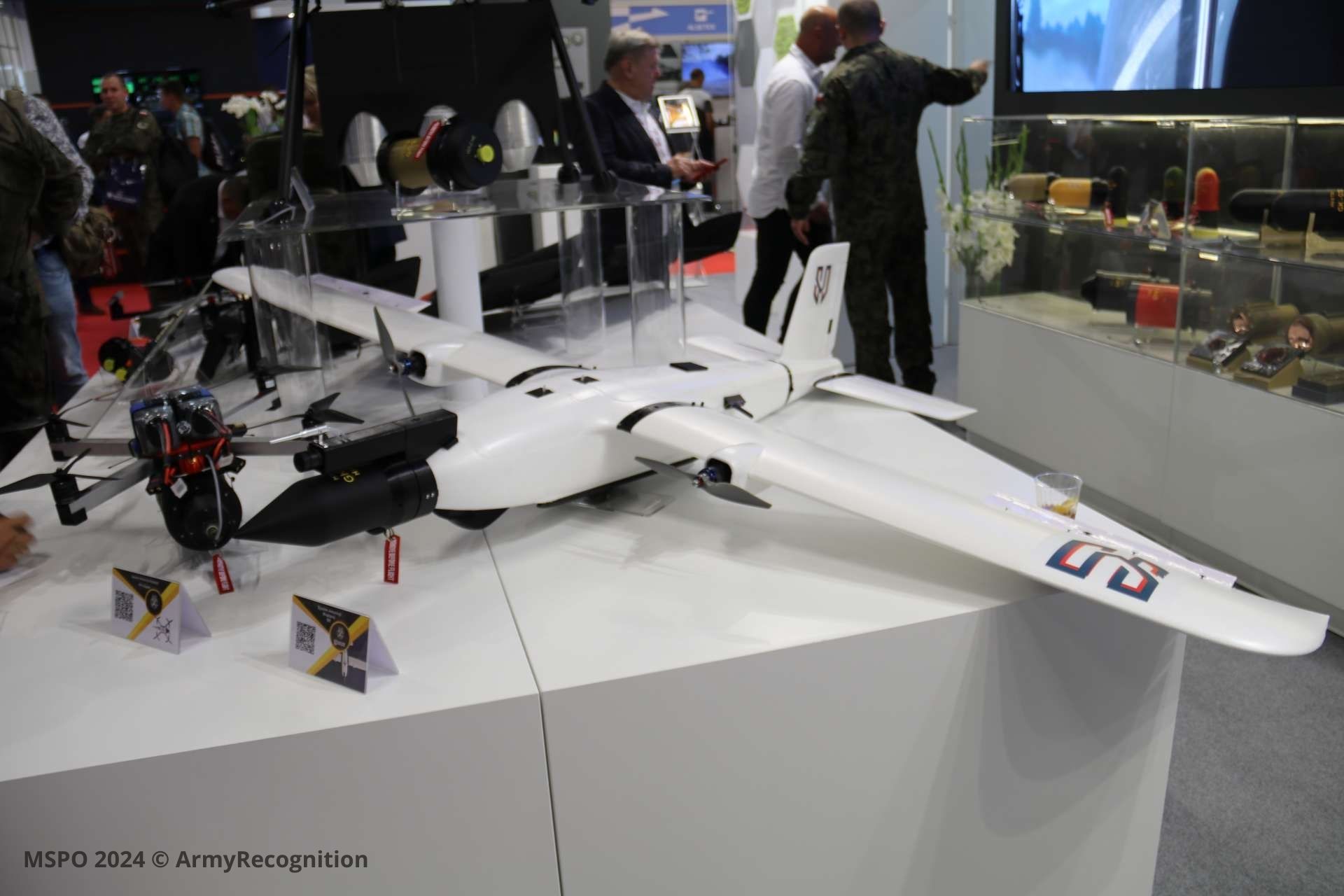
At MSPO 2024, the Polish Military Institute of Armament Technology (WITU) showcased a range of unmanned systems and advanced munitions, among which the innovative B0 loitering munition system stood out. This system, part of WITU’s impressive display, is designed to carry out precision strikes on both static and moving targets, utilizing modern technologies to operate effectively in complex combat environments. The B0 represents a significant advancement in unmanned aerial systems (UAS), illustrating Poland’s growing expertise in autonomous weaponry.
Follow Army Recognition on Google News at this link
The B0 can be equipped with various warheads, including the GX-1 and GX-4 families, which feature anti-tank, thermobaric, and high-explosive (HE) warheads (Picture source: Armyrecognition)
The B0 system features a fixed-wing configuration and is equipped with sophisticated video tracking technology, allowing it to locate and engage targets without relying on satellite navigation during the attack phase. This characteristic offers greater operational flexibility, particularly in situations where electronic interference could render traditional navigation systems ineffective.
Measuring 2430 mm in length and 1450 mm in wingspan, the B0 is compact yet efficient for tactical deployments. Its flight time reaches 30 minutes, providing ample time for reconnaissance missions and target engagement. With a take-off weight of 8 kg, the system is lightweight and portable, making it ideal for rapid field deployments. The operational range of 30 km allows the B0 to engage targets well beyond the immediate launch area.
In terms of speed, the B0 can reach a maximum velocity of 100 km/h and operates optimally at around 72 km/h, enabling both fast approaches and more controlled maneuvers as needed. The system can fly at altitudes between 130 and 500 meters, offering a tactical advantage for low-altitude reconnaissance and targeted strikes.
The B0 can be equipped with various warheads, including the GX-1 and GX-4 families, which feature anti-tank, thermobaric, and high-explosive (HE) warheads. These options provide flexibility depending on mission objectives. Equipped with a 1920x1080 camera operating at 30 frames per second, the B0 uses video tracking technology to detect, follow, and engage targets. The absence of satellite navigation dependency during the attack phase ensures reliability, even in environments with high electronic interference.
The communication system of the B0 operates in the L Band (1200-1700 MHz), with frequency hopping capabilities and AES 256 encryption, ensuring secure and jam-resistant communications. As for human resources, the B0 is designed for operation by a small team, requiring only two soldiers to manage and deploy the system.
The B0 is part of a broader trend of increasing reliance on unmanned systems in modern conflicts. Recent examples, particularly the conflict in Ukraine, have demonstrated that loitering munitions are highly effective against armored targets and fortified positions. With its speed, range, and flexibility, the B0 is well-positioned to play a key role in future operations. It also underscores the growing importance of drone technology in the evolution of military strategies, where autonomous systems are becoming essential assets, especially in electronic warfare scenarios where GPS systems may be compromised.
This advanced technology, presented by WITU at MSPO 2024, reflects Poland’s progress in the field of autonomous defense systems. As global demand for loitering munitions continues to rise, platforms like the B0 are expected to become critical tools in future conflicts.
Read more: WITU Showcases B0 at MSPO 2024, a Loitering Munition System for Precise Strikes
- Details
- Written by: Vandenbosch
- Category: 2024
- Hits: 5774
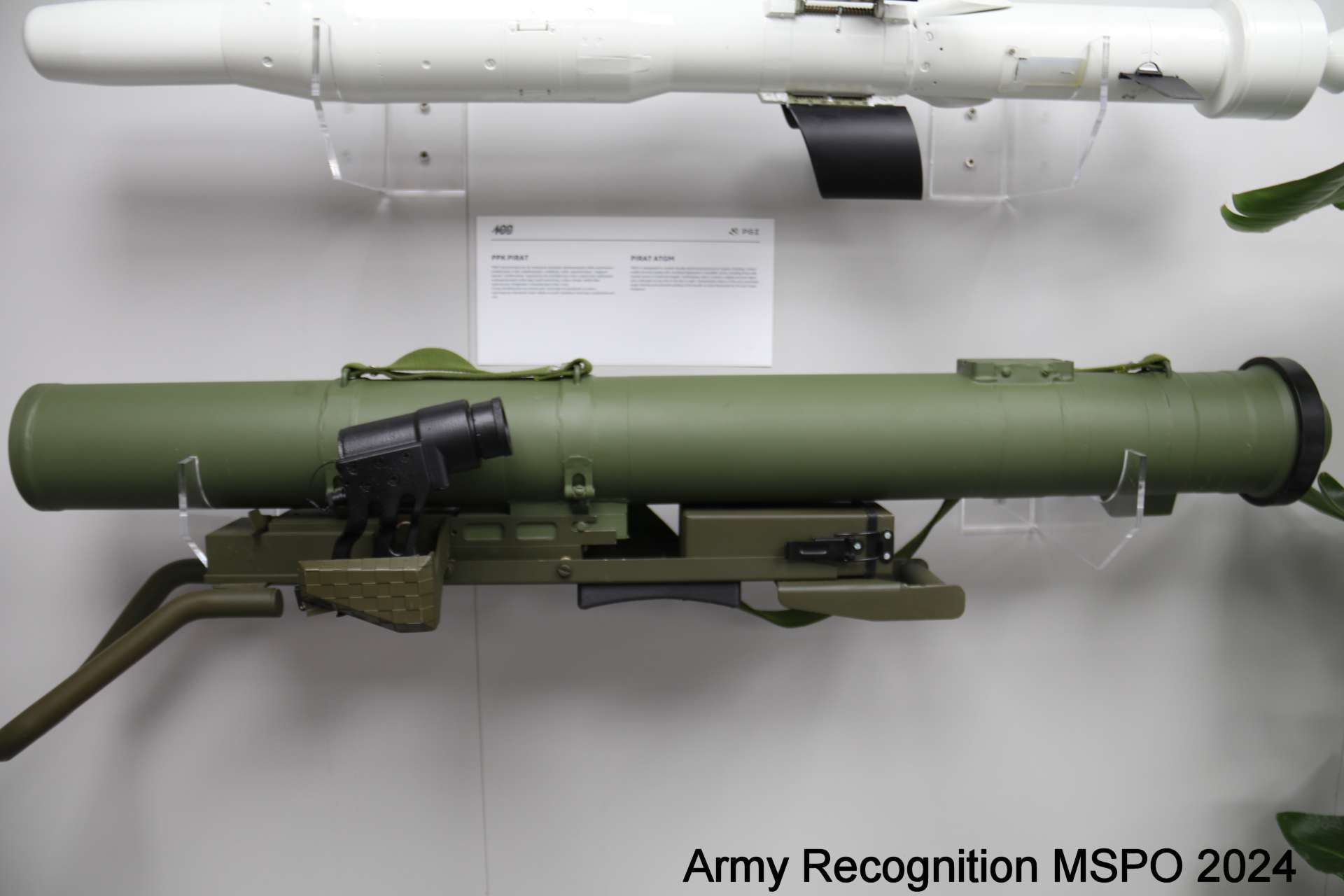
At the MSPO 2024 exhibition in Kielce, Poland, the Pirat Anti-Tank Guided Missile (ATGM) system was showcased, representing a joint technological advancement between Poland and Ukraine. Designed to neutralize ground and aerial targets, this lightweight, next-generation missile is particularly effective against modern armored vehicles, even those equipped with reactive armor.
Follow Army Recognition on Google News at this link
The Pirat is a Polish Anti-Tank Guided Missile system. (Picture source: Army Recognition)
The Pirat ATGM was developed to meet the military's need for flexibility, precision, and the ability to operate in various conditions, both day and night.
One of the missile's key features is its semi-active laser guidance system, enabling precise strikes on laser-illuminated targets. This guidance method ensures a top-down attack trajectory, highly effective for piercing enemy vehicle armor, especially when targets are fortified or concealed in trenches.
The Pirat comes in several versions, including the infantry-focused Pirat 1, which boasts a maximum range of 2,500 meters. It can be equipped with different 2.5 kg warheads, such as armor-piercing, thermobaric, and explosive fragmentation types. Another version, Pirat 2, offers a reduced flight time, hitting its target in just 5.5 seconds at maximum range, increasing its effectiveness in close combat.
Weighing 10 kg with a diameter of 107 mm, the Pirat has already demonstrated its ability to penetrate 550 mm of Explosive Reactive Armor (ERA). Its use with unmanned platforms like the Perun UGV underscores Poland’s defense industry's innovative approach, combining advanced weaponry and robotics for autonomous reconnaissance and combat operations. The integration of the Pirat missile on autonomous vehicles enhances tactical flexibility and operator safety by reducing direct exposure to combat zones.
This collaboration between Poland and Ukraine reflects a strategic partnership in the face of shared threats, particularly in the context of the ongoing conflict in Ukraine, where anti-tank capabilities play a crucial role.
The successful presentation of the Pirat at MSPO 2024 reaffirms the growing importance of lightweight yet technologically advanced weapons systems in modern warfare, where mobility and precision are becoming top priorities for military forces.
Read more: Pirat ATGM Aims to Redefine Anti-Tank Warfare in Age of Autonomous Vehicles

- Details
- Written by: Jérôme Brahy
- Category: 2024
- Hits: 12518
At the MSPO 2024 event, the Polish Armed Forces showcased the Leopard 2PL M1, a modernized version of the Leopard 2PL main battle tank (MBT), alongside two other tanks currently in service with the Polish Army: the K2GF (Gap Filler), a variant of the K2 Black Panther MBT specifically adapted by Hyundai Rotem for Poland, and the M1A1 Abrams with the Firepower Enhancement Package (FEP). These presentations are part of Poland's ongoing efforts to strengthen its military capabilities due to rising tensions with Russia and the conflict in Ukraine.
Follow Army Recognition on Google News at this link
The implementation of the PIX function into the Leopard 2PL M1 allows for specific operational enhancements, such as selecting the last or first echo of the laser range, which supports targeting accuracy. (Picture source: Army Recognition)
The Leopard 2PL M1 upgrade from the Leopard 2A4 includes several enhancements. Notable changes involve the implementation of new commander's and gunner's sights equipped with third-generation cameras, which are aimed at improving target acquisition capabilities. Additional ballistic modules have been added to the turret to enhance the tank's protection. The hydraulic stabilization system has been replaced with a digital system, and modernized fire extinguishing and new fire suppression systems have been installed to increase safety measures within the tank.
Further modifications include an upgraded commander's control and monitoring system and changes to the diagnostic system to support better operational management. An Auxiliary Power Unit (APU) with a capacity of 17 kW has been integrated to provide electrical power for essential systems when the main engine is inactive. The turret now includes a new stowage compartment to accommodate crew equipment and customized towing and evacuation tools, considering the increased weight of the tank. The main gun has been modernized to adapt to newer types of ammunition, and a day-night rear camera has been installed to assist the driver.
The Leopard 2PL M1 variant includes additional improvements beyond these upgrades. The implementation of the PIX function allows for specific operational enhancements, such as selecting the last or first echo of the laser range, which supports targeting accuracy. The variant introduces an automatic fire extinguishing system in the APU compartment, alongside a cold start system that allows the engine to start without restarting the electronic devices. There is also a micro charging battery system designed to maintain the battery charge during storage.
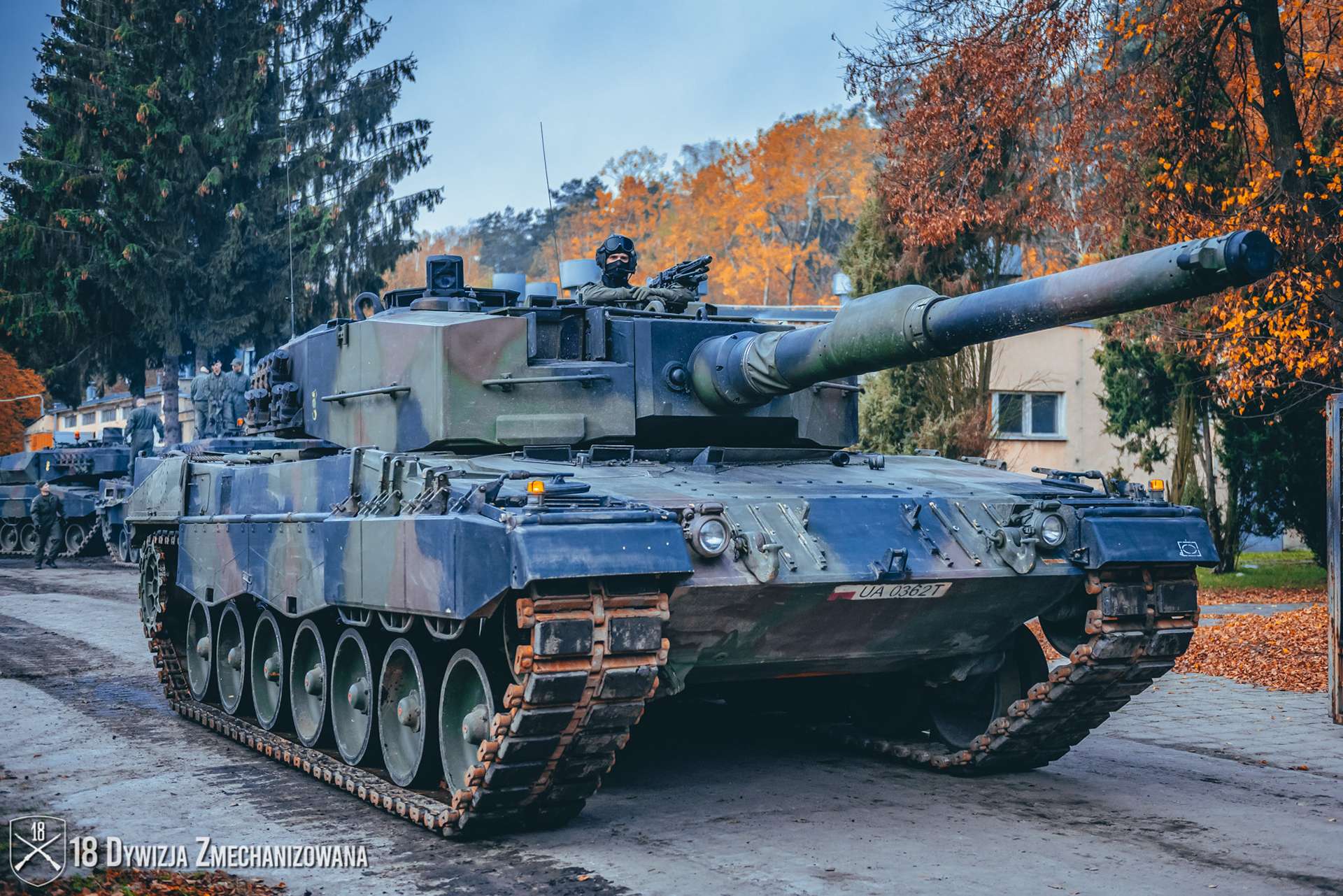
The Leopard 2PL modernization program was initiated after the Polish Land Forces acquired the Leopard 2A4 tanks from the Bundeswehr in 2002. (Picture source: 18 Dywizja Zmechanizowana)
Other modifications involve the installation of an active cooling system for the electronics compartment and the preparation of the electrical installation to support the Identification Friend or Foe (IFF) system, which assists in distinguishing between allied and enemy forces in combat situations. These changes in the Leopard 2PL M1 are intended to provide the Polish Army with a more updated version of the Leopard 2PL, aimed at improving its operational capabilities in various combat scenarios.
The Leopard 2PL modernization program was initiated after the Polish Land Forces acquired the Leopard 2A4 tanks from the Bundeswehr in 2002. The need for modernization was identified soon after, but concrete planning began in mid-2012. The program, named Leopard 2PL, defined two variants of modernization. The basic variant included an electric turret drive and gun stabilization to replace the hydraulic systems, the installation of an auxiliary power unit, upgrades to the optoelectronic system, new thermal imaging cameras, modernization of the driver's seat, and an enhanced package for explosion, fire, and mine protection. The extended variant added a Battle Management System (BMS), a remote-controlled weapon station on the turret, new types of ammunition, air conditioning for the driver and combat compartments, and a modernization of the electronics cooling system.
In December 2012, the Leopard 2PL program was incorporated into the "Technical Modernization Plan of the Polish Armed Forces for 2013-2022." A technical dialogue was initiated in March 2013, leading to a tender in October of the same year. Three consortia participated: one comprising Wojskowe Zakłady Motoryzacyjne, Wojskowe Zakłady Łączności Nr. 2, and Rheinmetall Landsysteme GmbH; another involving PCO and ASELSAN Elektronik; and the third consisting of Bumar-Łabędy, OBRUM, and Polski Holding Obronny (PHO). The third consortium submitted the final offer, after which negotiations began with the Inspectorate of Armaments.
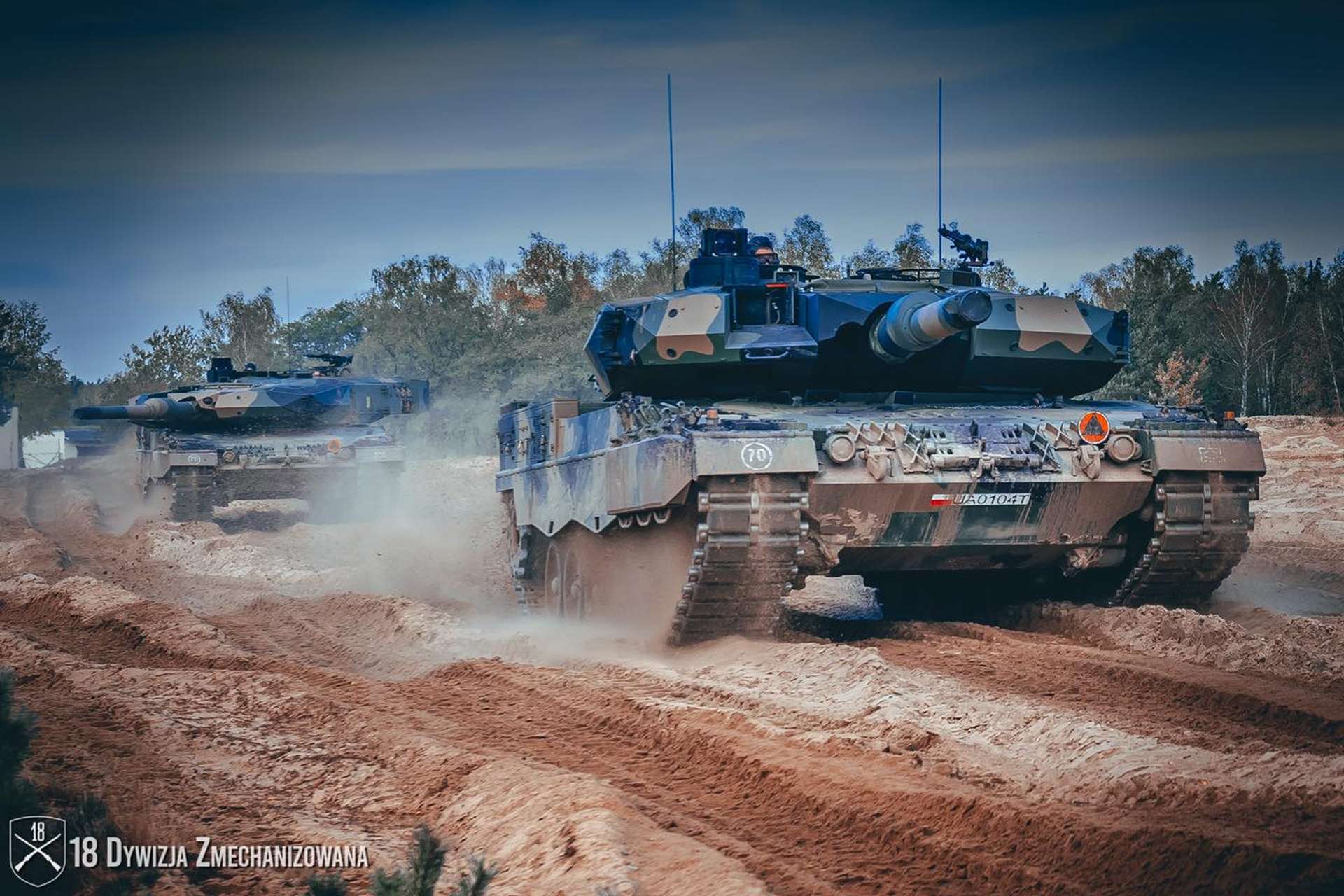
In 2018, technology transfer and staff training were conducted on a trial batch of Leopard 2PL tanks. (Picture source: 18 Dywizja Zmechanizowana)
By December 2014, the consortium submitted a final proposal in cooperation with Krauss-Maffei Wegmann. However, the selection procedure was terminated in 2015 due to formal deficiencies and insufficient participation of the Polish industry. Subsequently, the modernization was contracted to the Polish Armaments Group (PGZ). Negotiations started following the submission of a final offer in November 2015.
On December 28, 2015, a contract was signed between the Inspectorate of Armaments and a consortium of PGZ and Bumar-Łabędy for the modernization of 128 Leopard 2 tanks, with an option for an additional 14 units. The German partner, Rheinmetall Landsysteme, had previously co-produced Leopard 2 tanks. The contract was initially valued at 2.415 billion PLN (approximately €555.45 million) and later increased to 2.721 billion PLN (€625.83 million) following an annex in June 2018 that covered the additional 14 tanks. The original timeline planned for all 128 tanks to be modernized by 2020, with the additional 14 tanks completed by 2021.
The modernization work was divided into five stages. The first stage in 2016 involved preparing the necessary infrastructure and resources. Between November 2016 and the end of 2017, the tanks were dismantled and prepared for modernization. In 2018, technology transfer and staff training were conducted on a trial batch of tanks. Production began in mid-2018, with delivery of pre-series machines scheduled from June 2018 to March 2019. The final stage, from January 2019 to November 2020, involved serial modernization and deliveries. However, delays in prototype testing and issues with the tank's chassis extended the timeline, raising the total cost to 3.29 billion PLN (€756.7 million).

The Leopard 2PL is powered by an MTU-MB 873 engine, producing 1,100 kW (1,500 hp), allowing for a maximum speed of 68 kilometers per hour. (Picture source: 18 Dywizja Zmechanizowana)
A detailed agreement was signed with Rheinmetall on February 18, 2016, outlining the terms of cooperation between ZM Bumar-Łabędy and the German partner. Rheinmetall was responsible for developing the modernization project, preparing technical documentation, producing a prototype and trial batch, providing technical support for serial production, and transferring necessary technology.
By August 2018, the prototype was delivered to the Military Armored and Automotive Institute in Sulejówek for further testing, and the first pre-series tanks were handed over to ZM Bumar-Łabędy to enable local production. Despite delays, including problems with the chassis, the prototype was completed on May 8, 2020, and the first tanks were delivered to the Polish Army on May 28, 2020. The contract was extended to July 2023, and the final cost increased due to additional restoration requirements and the different wear levels of the tanks.
The Leopard 2PL is designed as a third-generation main battle tank intended to control terrain and support mechanized and motorized units with its onboard weapons in various weather conditions, both day and night. Two versions have been developed: the Leopard 2PL and the Leopard 2PL M1. The latter, delivered in January 2021, features an active cooling system for the electronics compartment, improved turret electronics protection, modified laser rangefinder operating modes, and an automatic rotation function for the optoelectronic head.

The Leopard 2PL's primary armament remains the Rheinmetall Rh-120 L/44 smoothbore gun, modified for new ammunition types. (Picture source: 1 Warszawska Brygada Pancerna)
The Leopard 2PL's armor has been enhanced with additional modules around the turret, improving ballistic resistance beyond the Leopard 2A5. The hull and chassis were not additionally armored due to weight and cost considerations. The tank's primary armament remains the Rheinmetall Rh-120 L/44 smoothbore gun, modified for new ammunition types. The gun stabilizer and turret drive systems were converted from hydraulic to electric. The optics system was upgraded with Polish third-generation thermal imaging cameras, and a digital communication bus was introduced.
The Leopard 2PL weighs 59,203 kg, measures 9.67 m in length, 3.75 m in width, and 3.05 m in height, and has a crew of four. It is equipped with composite armor and armed with a Rheinmetall Rh-120 L/44 120mm smoothbore cannon and two MG3 machine guns. The Leopard 2PL is powered by an MTU-MB 873 engine, producing 1,100 kW (1,500 hp), allowing for a maximum speed of 68 kilometers per hour and an operational range of 500 kilometers on the road and 300 kilometers off-road.

The Leopard 2PL's armor has been enhanced with additional modules around the turret, improving ballistic resistance beyond the Leopard 2A5. (Picture source: 1 Warszawska Brygada Pancerna)
Read more: Poland reinforces tank arsenal with new Leopard 2PL M1 upgrades
- Details
- Written by: Vandenbosch
- Category: 2024
- Hits: 7946
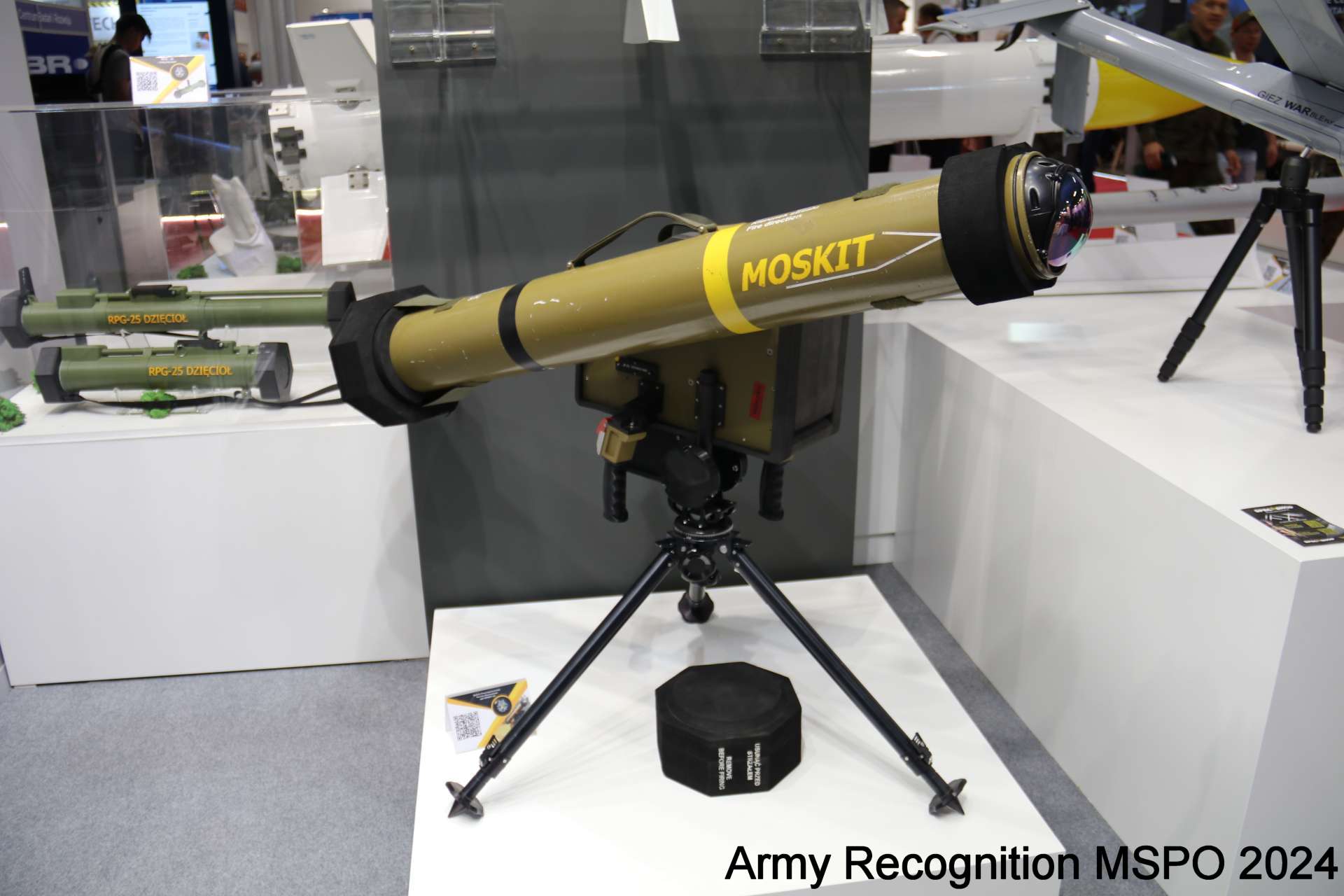
At the MSPO 2024 (International Defense Industry Exhibition) in Kielce, Poland, one of the highlights was the presentation of the MOSKIT LR (Long Range), a state-of-the-art anti-tank guided missile system (ATGM). This system, developed by the Military Institute of Armament Technology (WITU), showcases the latest advancements in precision and versatility on the modern battlefield.
Follow Army Recognition on Google News at this link
The MOSKIT LR (Long Range) is an anti-tank guided missile system (ATGM). (Picture source: Army Recognition)
The MOSKIT LR is an extremely adaptable system, designed to neutralize heavily armored vehicles such as main battle tanks and troop carriers, as well as hovering helicopters. Its flexibility is one of its main assets, as it can be mounted on various types of platforms, including vehicles and helicopters, making it a versatile solution for military forces. Additionally, the system is also available in a portable version, carried by two soldiers, which enhances its operational flexibility and mobility on the field.
From a technical standpoint, the MOSKIT LR stands out with an impressive operating range of 100 to 5,000 meters, providing commanders with significant tactical options for both close-range and long-range engagements. It is equipped with a tandem hollow-charge warhead, allowing it to effectively penetrate armor equipped with reactive protection systems (ERA), with an estimated penetration capacity of 700 to 800 mm behind the ERA. This feature is crucial in modern combat scenarios where enemy forces may employ advanced countermeasures.
The system offers several operational modes, including "fire-and-forget" and "fire-and-correct" guidance modes, providing the operator with great flexibility depending on the combat situation. The "fire-and-forget" mode is particularly advantageous, as it allows operators to launch the missile and then reposition or prepare for other actions without needing to maintain lock-on to the target. The "fire-and-correct" mode, on the other hand, enables real-time trajectory adjustments of the missile, thereby increasing accuracy in complex combat environments.
Each missile, housed in its transport and launch container (PTS), weighs 12 kg, and the entire system, including a tripod, weighs 26 kg. Its observation and targeting device (POC), integrated into the system, allows for precise target acquisition and missile guidance, ensuring that even at maximum range, the missile can strike its target with great accuracy. The missile’s 120 mm caliber and total length of 1,250 mm contribute to its powerful impact and long-distance effectiveness.
Poland’s focus on developing national defense technologies has been reinforced by systems like the MOSKIT LR, which provide the country with greater autonomy and flexibility in adapting these systems for various military applications. This trend was evident throughout MSPO 2024, where Polish defense manufacturers, such as Mesko and PGZ, showcased numerous innovations aimed at strengthening both national and international defense capabilities.
The exhibition, which featured 769 exhibitors from 34 countries, underscored the growing importance of defense collaboration in Europe and beyond. Systems like the MOSKIT LR are not only crucial to Poland’s defense strategy but also represent a significant offering for export markets, particularly in regions where armored warfare and mobile defense solutions remain critical.
This presentation at MSPO 2024 highlights Poland’s growing role as a leader in the development of advanced missile systems and its strategic importance on the European defense stage.

The MOSKIT LR stands out with an impressive operating range of 100 to 5,000 meters, providing commanders with significant tactical options for both close-range and long-range engagements. (Picture source: Army Recognition)
Read more: MOSKIT LR is A Next-Generation Anti-Tank Missile System at MSPO 2024
- Details
- Written by: Halna du Fretay
- Category: 2024
- Hits: 3631
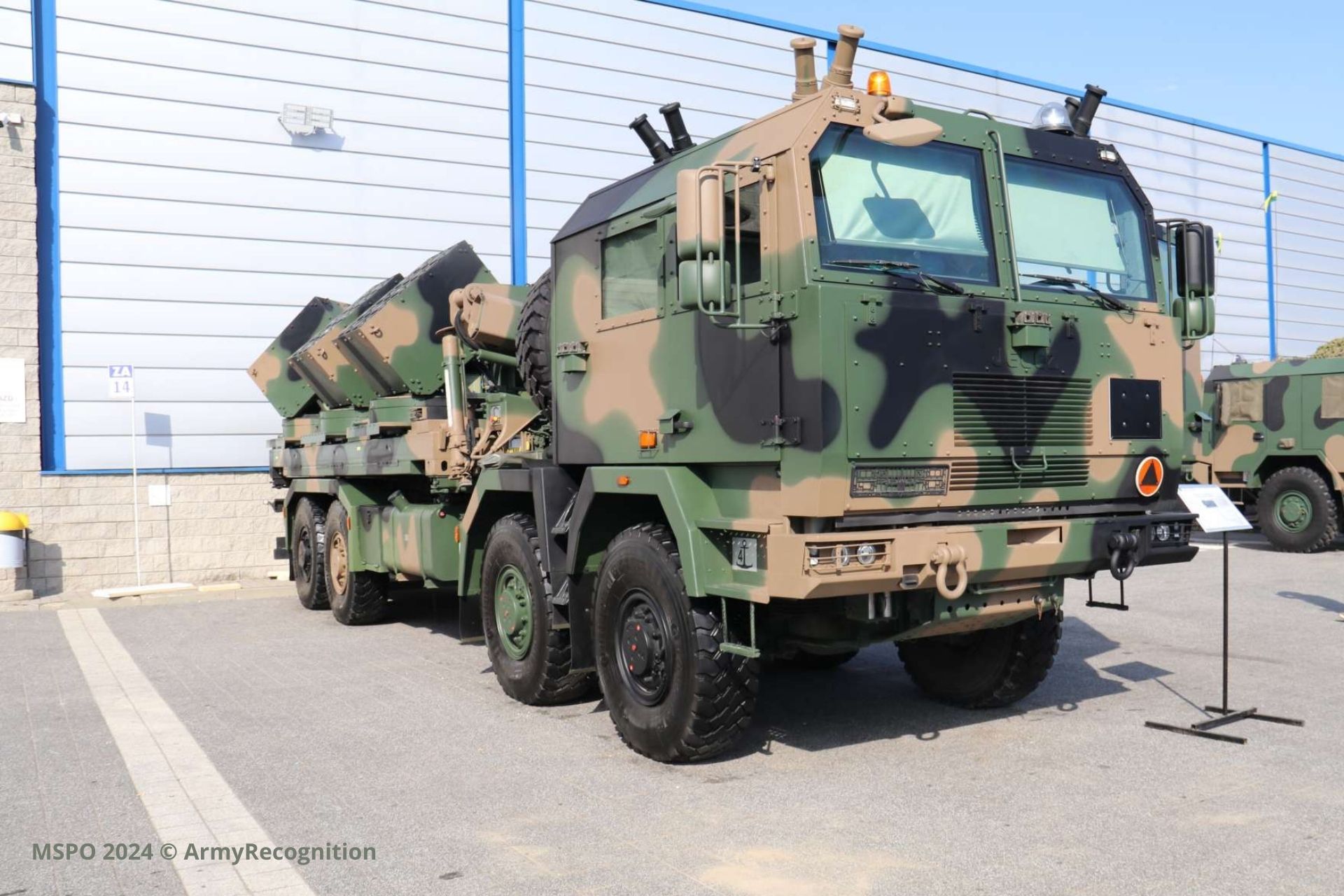
At MSPO 2024, the Polish company Huta Stalowa Wola (HSW) introduced the Baobab-K, an automated mine-laying vehicle designed to deploy anti-tank minefields. The system is built on a Jelcz 8×8 all-terrain truck chassis, known for its robustness and maneuverability, making it well-suited for challenging terrains.
Follow Army Recognition on Google News at this link
Poland is expected to receive 24 Baobab-K vehicles by 2028, strengthening its defensive capabilities in this sensitive area. (Picture source: ArmyRecognition)
One of the key advantages of the Baobab-K is its ability to deploy up to 600 anti-tank mines using MN123.1 (immediate effect) and MN123.2 (delayed effect) cassettes. This feature enables the creation of dense and extensive minefields, which can be adapted to specific tactical needs. For example, the mine-laying process can be adjusted in real-time thanks to the advanced automation of the system. Depending on the programmed parameters, the vehicle can lay mines at various speeds (up to 25 km/h), across a length of up to 1,800 meters, offering unparalleled flexibility during dynamic combat operations.
The unveiling of this system comes at a time of heightened geopolitical tensions, particularly at the Polish-Belarusian border. The Suwalki corridor, a key area for NATO, connects Poland with the Baltic states and is located near the Belarusian border. With the increase in tensions between Poland and Belarus, exacerbated by the presence of Wagner Group mercenaries in the region, Warsaw has taken concrete steps to secure this strategic area. The deployment of a sapper battalion, equipped with Baobab-K vehicles, aims to enhance Poland's ability to respond to potential incursions and strengthen its deterrence capabilities.
The Polish government plans to acquire 24 Baobab-K vehicles by 2028, a decision that aligns with its broader military modernization strategy. This purchase complements other initiatives aimed at securing Poland’s eastern borders, which face increasing threats from Belarus and Russia. These tensions have been further amplified by Belarus' military activities and its support from Russia in the region.
The use of mines in modern conflicts remains widespread. Ukraine, for instance, has become one of the most heavily mined countries since the Russian invasion, with nearly a third of its territory contaminated by mines and unexploded ordnances. This has severely hampered economic recovery, particularly in agricultural regions. According to recent estimates, it will take decades to clear these areas, underscoring how extensively mines continue to be deployed in contemporary warfare.
The Baobab-K, with its advanced technology and adaptability, proves to be a crucial strategic asset for Poland. Furthermore, this system could be valuable for other countries facing similar threats, especially those with unstable borders or vulnerability to military incursions. In an era where defense strategies are evolving rapidly, systems like the Baobab-K play a pivotal role in securing territories and ensuring national security.

- Details
- Written by: Jérôme Brahy
- Category: 2024
- Hits: 5786
At the MSPO 2024 exhibition, the National Association of Ukrainian Defense Industries (NAUDI) introduced the Kvertus AD Counter FPV Backpack F2 M50, a new addition to its range of counter-drone technologies. This range also includes systems such as the AD G-6+ anti-drone gun and the portable AD Counter-FPV Backpack. Developed by the Ukrainian company Kvertus, this portable UAV jamming system is designed to disrupt drones controlled using First Person View (FPV) technology by covering a broad frequency range.
Follow Army Recognition on Google News at this link
The backpack is equipped with omnidirectional collinear aerials that provide coverage in all directions, and is designed to be operational within 30 seconds of being powered on, allowing for rapid deployment. (Picture source: Army Recognition)
The Kvertus AD Counter FPV Backpack F2 M50 is a high-power system that creates dome-shaped protection by jamming frequencies between 700 and 1050 MHz. It is intended to neutralize drones, particularly those operated with signal amplification by drone operators. The system's UAV blocking range extends up to 150 meters, depending on the operational environment, and it uses electromagnetic interference across several channels. Each channel emits an electromagnetic noise spectrum with a power output of 50 watts, targeting different frequency bands between 700 MHz and 1050 MHz.
This equipment is powered by a 24V, 60Ah removable rechargeable battery, enabling it to operate for a minimum of 120 minutes on a single charge. The system, including its aerials, weighs up to 15 kilograms. The backpack is equipped with omnidirectional collinear aerials that provide coverage in all directions. It is designed to be operational within 30 seconds of being powered on, allowing for rapid deployment.
The system allows operators to choose from a range of jamming frequencies, including 130-180 MHz, 220-300 MHz, 300-400 MHz, 400-500 MHz, 500-600 MHz, 600-700 MHz, 700-900 MHz, 900-1050 MHz, and 2400-2500 MHz. The backpack can house two modules of any selected frequency range, providing a total of four modules to enhance its ability to block multiple drone frequencies simultaneously.
The Kvertus AD Counter FPV Backpack F2 M50 package includes the main jamming unit, four aerials, a charging device, a removable rechargeable battery, a user manual, and the IP-1 field indicator. The IP-1 field indicator is an independent device that allows for quick detection of drone activity in various conditions.
According to its specifications, the Kvertus AD Counter FPV Backpack F2 M50 is designed to provide a portable and efficient solution for countering drones across a wide range of frequencies. Its modular structure allows for customization based on specific operational requirements, making it a flexible option for defense against aerial threats in diverse environments.

- Details
- Written by: Triffaux
- Category: 2024
- Hits: 3267
The T.U.R.T.L.E quadcopter drone, developed by Polska Grupa Zbrojeniowa (PGZ), is an advanced unmanned aerial system designed for precise mine-laying operations across various environments. Introduced at the MSPO 2024 international defense industry exposition, it represents a significant evolution in the military's capability to employ autonomous technologies for minefield management.
Follow Army Recognition on Google News at this link
PGZ T.U.R.T.L.E quadcopter drone (Picture source: Army Recognition)
Drones like T.U.R.T.L.E represent a strategic pivot in military operations, offering safer, quicker, and more accurate mine deployment. They minimize personnel risk and enhance the military's ability to quickly fortify areas or set up ambushes without direct human presence, which is crucial in scenarios where access is challenging or the risk of enemy exposure is high.
The Polish Baobab-K system, developed by Huta Stalowa Wola (HSW), exemplifies the diversity of mines that can be integrated into such devices. This system uses programmable MN-123 anti-tank mines, designed to be scattered over a broad area. These mines can instantly create anti-tank minefields that effectively block or slow down enemy armored advances. The programmability of these mines for autonomous destruction times or specific triggers increases their tactical effectiveness.
The MN-123 anti-tank mines are designed for creating minefields using the scatterable mining technique. The MN-123 mine is equipped with a double-acting shaped charge and a non-contact fuse, activating when a vehicle passes over it. This mine is available in three versions: the operational MN-123, the training MN-123C, and the inert MN-123/O model.
In addition to anti-tank mines, anti-personnel mines can also be deployed, strategically placed to protect borders or secure areas against on-foot incursions. The versatility of the T.U.R.T.L.E drone in carrying and deploying various types of munitions adds considerable flexibility in military operation planning.
Incorporating drones like T.U.R.T.L.E into military arsenals transforms ground warfare doctrines. They enable the implementation of more complex and less predictable defensive and offensive strategies, thereby enhancing defensive capabilities while maintaining operational initiative. These systems also improve the armed forces' responsiveness, enabling quick and precise responses to evolving threats.

Belma MN 123 Anti-Tank Mine (Picture source: Belma)
Read more: Ukraine War's Tactical Teachings Lead to PGZ's Creation of T.U.R.T.L.E Mine-Laying Drone

- Details
- Written by: Vandenbosch
- Category: 2024
- Hits: 4321
At MSPO 2024, Hyundai WIA made a significant impression with the unveiling of its 105mm Light Self-Propelled Howitzer. This modern artillery system is designed to enhance the fire support capabilities of light infantry brigades and airborne units. The system is part of a broader South Korean initiative aimed at modernizing its artillery and offering mobile, agile firepower for various combat scenarios.
Follow Army Recognition on Google News at this link
The 105mm howitzer is mounted on a Korea Light Tactical Vehicle. (Picture source: Army Recognition)
The 105mm howitzer is mounted on a Korea Light Tactical Vehicle (KLTV), which provides exceptional mobility even in challenging terrains or confined spaces. This feature is crucial for operations that require rapid and flexible responses, such as airborne deployments or missions in remote areas. The system's light weight allows it to be transported by helicopter, making it ideal for quick insertion and extraction during operations.
One of the key features of this self-propelled howitzer is its "shoot and scoot" capability, which enables it to fire at targets and then quickly reposition to avoid enemy counter-fire. The system includes advanced technology such as automatic fire control using GPS and an Inertial Navigation System (INS) for accurate targeting. These systems, combined with battlefield communication tools (B2CS and TMMR), allow for seamless integration into command and control networks, ensuring effective communication and coordination during missions.
In terms of firepower, the 105mm gun can fire up to 10 rounds per minute, with a maximum effective range of 14.7 kilometers using standard ammunition, and up to 18 kilometers with rocket-assisted projectiles (RAP). This combination of rapid fire and extended range gives commanders the ability to provide sustained, impactful fire support, making the howitzer highly versatile in both offensive and defensive operations.
Operationally, the system is managed by a reduced crew, improving efficiency. The battery command vehicle, which calculates firing solutions and issues orders, operates with just four personnel, while the artillery vehicle itself is manned by only two people. This streamlined crew size minimizes logistical burdens, allowing for faster deployments and easier integration into smaller, specialized units.
Hyundai WIA's participation in MSPO 2024 reflects South Korea's strategic effort to expand its presence in the European defense market. The introduction of the 105mm self-propelled howitzer is part of a broader showcase of advanced military technologies, including the K9 howitzer and other cutting-edge weapon systems.
Read more: Hyundai WIA Reinvents Light Artillery for Modern Battlefield in Poland

- Details
- Written by: Jérôme Brahy
- Category: 2024
- Hits: 4300
At the MSPO 2024 defense exhibition, the Polish Armed Forces introduced the Rosomak Kroton, a new command vehicle designed to support communication, decision-making, and command functions in military operations. The vehicle is based on the Rosomak armored personnel carrier (APC) and features a teleinformation and internal communication system designed to enhance information flow and decision-making in military command environments.
Follow Army Recognition on Google News at this link
The Rosomak Kroton features a communication, command, and control system, as well as field antennas, and a 15-meter semi-automatic folding mast to extend the communication range of VHF radio stations. (Picture source: Army Recognition)
Designed to accommodate an operational crew of four and equipped with various communication systems, the Rosomak Kroton is configured to function as a mobile command post, capable of maintaining communication with commanders, subordinate units, and allied forces both while on the move and when stationary. The communication suite of the Rosomak Kroton includes an AN/PRC-150C Falcon II Manpack HF radio and three 117G Multiband Networking Manpack Radios, which operate on UHF and VHF frequencies. Additionally, the vehicle is equipped with an RRC 9311AP F@stnet PR4G on-board tactical UHF radio, providing multiple options for maintaining connectivity in different operational scenarios.
The Rosomak Kroton has a crew capacity of three, with four operational workstations. It measures 8,425 mm in length, 2,855 mm in width, and 3,310 mm in height, and can reach a maximum speed of 100 km/h on various terrain types. It is equipped with several systems to enhance its operational capabilities, including the SSP1 G "OBRA-3" vehicle self-protection system, which incorporates 81 mm smoke grenade launchers. The vehicle also features a communication, command, and control system, as well as navigation and positioning systems utilizing the DAGR GPS device, field antennas, and a 15-meter semi-automatic folding mast to extend the communication range of VHF radio stations. Additionally, the Rosomak Kroton includes a fire and explosion protection system and an ABC filtering system, providing protection against nuclear, biological, and chemical threats.
Poland's acquisition of the KTO Rosomak began with a contract for 690 vehicles, which was later expanded to 997 units by 2019. The vehicles were manufactured domestically by Rosomak S.A., a subsidiary of the Polish Armaments Group, located in Siemianowice Śląskie. The procurement process included different variants, such as combat APCs with Hitfist-30P turrets, command vehicles, medical evacuation vehicles, and reconnaissance vehicles, along with provisions for technology transfer and local production to strengthen Poland's defense capabilities.

The primary version of the Rosomak is equipped with a Hitfist-30P turret that includes a 30mm cannon and a coaxial 7.62 mm machine gun, but the Rosomak-M2 and M3 are patrol variants armed with lighter weapons such as a 12.7 mm machine gun. (Picture source: Rosomak SA)
The KTO Rosomak, also known as "Wolverine" in Polish, is an 8×8 wheeled armored personnel carrier (APC) developed under license from the Finnish Patria AMV. In 2002, the Polish Ministry of National Defense selected the Patria AMV following a competitive evaluation that included other options such as the MOWAG Piranha and Steyr Pandur. The initial contract was for 690 vehicles to be produced in Poland, intended to replace the aging OT-64 SKOT and BMP-1 APCs in the Polish Land Forces. This order was later expanded, and in July 2023, Poland began supplying 200 Rosomak Infantry Fighting Vehicles (IFVs) to Ukraine, a delivery funded by the European Union and the United States.
The KTO Rosomak has a monocoque hull made from welded armored steel, which provides baseline protection against small arms and artillery fragments, with the capability to add ceramic or composite armor to increase resistance to ballistic threats. The standard protection meets NATO STANAG 4569 standards, offering defense against 14.5 mm rounds at the front and 7.62 mm rounds from other directions. For operations in conflict zones like Afghanistan, some Rosomaks were equipped with additional armor and anti-RPG mesh screens to enhance their defense against shaped-charge weapons and improvised explosive devices (IEDs). The vehicle also has an anti-splinter lining to reduce the effects of internal explosions.
The primary combat version of the Rosomak is equipped with a Hitfist-30P turret that includes a 30mm cannon, a 7.62 mm machine gun, and can be fitted with anti-tank guided missiles. The Rosomak-M2 and M3 are patrol variants with turntables for lighter weapons such as machine guns or grenade launchers, configured for specific operational environments like Afghanistan and Chad. Other variants are designed for specialized roles, such as the Rosomak-WEM for medical evacuation, which features an extended interior for stretchers and medical equipment, and the Rosomak-S, configured to transport Spike anti-tank guided missiles. Additional versions include command vehicles, reconnaissance vehicles equipped with advanced surveillance technology, and the M120K Rak, a self-propelled mortar mounted on the Rosomak chassis.
Read more: Polish Army to redefine command capabilities with new Rosomak Kroton

- Details
- Written by: Halna du Fretay
- Category: 2024
- Hits: 4308
At the MSPO 2024 defense exhibition, Polish defense conglomerate Polska Grupa Zbrojeniowa (PGZ) introduced the ARES (Anti-tank Remote Explosive System), an advanced robotic system designed for anti-tank operations. Developed by Belma, a subsidiary of PGZ, the ARES robot is equipped with a guided anti-tank mine, offering an innovative solution for neutralizing enemy armored vehicles across various combat scenarios.
Follow Army Recognition on Google News at this link
The ARES system is based on the LRR (Light Reconnaissance Robot) platform and integrates the SAPPW Tulipan directional anti-tank mine (Picture source: ArmyRecognition)
The ARES system is based on the LRR (Light Reconnaissance Robot) platform and integrates the SAPPW Tulipan directional anti-tank mine. This configuration allows for remote operation over several hundred meters, enabling operators to deploy and activate the mine safely. Tests have demonstrated the system's capability to target armored vehicles using EFP (Explosively Formed Projectile) technology, which can penetrate up to 60mm of armor, effectively addressing heavily armored threats.
The SAPPW Tulipan is a light, off-route anti-tank mine developed by Belma, a key component of the PGZ defense group. It is intended for use in environments where traditional mines may be less effective, such as urban areas or along routes used for enemy regrouping.
The Tulipan mine features advanced EFP technology, allowing it to penetrate up to 60mm of armor from distances of up to 50 meters. It can be mounted on various structures, such as trees and posts, to target vulnerable areas of vehicles. Equipped with acoustic and thermal sensors and a programmable self-neutralization system, the Tulipan remains operational for up to 30 days in the field. It meets international standards for safety and effectiveness in modern warfare.
This unveiling comes as Poland accelerates the use of unmanned systems within its armed forces. Polish defense leaders, drawing lessons from the conflict in Ukraine, are pushing for the integration of drone technologies, both aerial and ground-based, at all levels of military command. This strategy aims to enhance reconnaissance and combat capabilities, providing small units with access to advanced technologies such as the ARES robot.
While Poland has made significant progress in acquiring aerial drones like the Bayraktar TB2 and MQ-9B SkyGuardian, the development and deployment of ground-based systems like the ARES are part of a broader strategy to complement these aerial platforms. PGZ continues to play a key role in advancing these technologies, ensuring that the Polish armed forces are equipped to address the challenges of modern warfare.
- How General Dynamics is developing future talent in Saudi Arabia: insights from WDS 2024
- Netherlands Officially Confirms Spectacular Strengthening of Its Armed Forces
- Poland to receive full order of 180 K2GF tanks from Hyundai Rotem by 2025
- Poland Uses Three-Stage 300 mm Suborbital Rocket Engine Program to Develop Ballistic Missile Technology