

- Details
- Written by: Tkuhn
- Category: 2024
- Hits: 3879










At the World Defense Show 2024, Jason Monahan, Vice President and General Manager of General Dynamics Land Systems (GDLS) Canada, addressed a distinguished audience of defense industry experts on the critical importance of attracting, retaining, and developing the next generation of leaders. He shared effective strategies for cultivating this talent.
Follow Army Recognition on Google News at this link
Jason Monahan, Vice President and General Manager at General Dynamics Land Systems. (Picture source: WDS 2024)
Attracting and retaining top talent is one of the defense industry's most pressing challenges. During the World Defense Show 2024's Future Talent Day, Jason Monahan, Vice President and General Manager of GDLS Canada, shared his insights on building robust talent pipelines in North America and Saudi Arabia. His keynote emphasized the need to develop the next generation of leaders in the defense sector, highlighting GDLS's successful strategies and aligning them with the broader objectives of Saudi Vision 2030.
Building a Robust Talent Pipeline
Monagan underscored the importance of GDLS's efforts in Saudi Arabia, where the company has expanded to 200 employees, with over 90% being Saudi nationals and a notable portion of local leadership being female. "Saudi Arabia is by far our most important international market," Monahan stated, citing the operation of over 2,000 Abrams tanks and light armored vehicles (LAVs) with Saudi customers, and the recent partnership with Saudi Arabian Military Industries (SAMI) to upgrade the Ministry of National Guard’s LAV fleet. This project is set to create over 350 new jobs in Saudi Arabia. "Our main requirements extend beyond welders, mechanics, and engineers; we also need finance, human resources, and supply chain professionals," Monahan added.
To address these needs, GDLS leveraged the opportunity presented by WDS Future Talent Day, conducting rapid interviews with hundreds of Saudi students attending the event. Monahan outlined GDLS's strategy to develop a pipeline of critical talent aligned with the evolving skills required in the defense industry and the goals of Vision 2030. "Our industry is evolving rapidly; the skills needed today are different from those required 15 or even five years ago," he explained.
“We are witnessing a shift from hardware manufacturing to software-driven solutions. Our latest LAVs at GDLS are so advanced in software, sensors, and cybersecurity that our customers refer to them as fighter aircraft on wheels. This technological evolution necessitates hiring specialized talent in areas like artificial intelligence and software. We are now competing with commercial tech companies to secure this critical talent,” Monahan stated.
Innovative Talent Development Strategies
While acknowledging traditional methods like internships and scholarships, Monahan highlighted several innovative approaches GDLS employs to attract and develop talent.
One significant initiative is the continuous development of partnerships with local colleges and universities. “At GDLS, we annually invest tens of millions in internal research and development (IRAD), aiming to anticipate customer needs by developing new technologies and solutions. A growing percentage of our IRAD budget goes to local colleges and universities, where our engineers collaborate with young students to create new defense technologies or explore commercial technologies for defense applications. This collaboration enriches GDLS with diverse experiences and ideas while fostering relationships with some of the brightest young minds,” Monahan explained.
In Saudi Arabia, GDLS closely collaborates with entities such as GAMI, SAMI, and the General Authority for Defense Development, engaging with local universities like King Abdulaziz University, Princess Nora University, and King Abdullah University for Science and Technology. These partnerships aim to generate new intellectual property and support Vision 2030.
Additionally, GDLS has introduced a successful micro-credentialing program, particularly in ballistic steel welding. "For every 10 welders that apply at GDLS, only one passes our test. While this focus on quality is key to our products' uniqueness, it makes hiring welders challenging, especially during rapid scale-ups," Monahan explained. To tackle this, GDLS partnered with a local university to create a specialized training program, allowing top students to earn a micro-credential in ballistic steel welding.
“We select the top 10% of students from each class and invite them to our factory for training at no cost. They receive hands-on instruction in ballistic steel welding. Graduating with a certificate ensures they meet our high standards, allowing us to hire them immediately. Even if they don't join us, we benefit when these trained welders work for our suppliers,” Monahan elaborated, calling it a "win-win-win" for GDLS, the students, and the broader defense community.
Attracting and Retaining Critical Talent
While the defense and aerospace industries can inspire passion, Monahan stressed the need to broaden the talent pool. "We can't assume every job candidate shares our passion for defense and aerospace. To attract critical talent, we must widen our search criteria," he advised.
This includes candidates without prior experience in defense and aerospace. Monahan emphasized skills-based hiring, valuing character and a willingness to learn over industry experience. "Seek candidates from other sectors who can bring diverse perspectives and experiences," he suggested.
This approach is especially relevant in Saudi Arabia, where a large portion of the population is under 35, and Generation Z represents a significant workforce segment. Understanding Generation Z, those born from the mid-1990s to early 2010s, is vital for retention. Monahan cited studies showing Gen Z employees are likely to change jobs frequently, averaging ten job changes before age 35. In Saudi Arabia, 18% of the population, or 13 million people, fall within this demographic.
To retain Gen Z employees, Monahan highlighted the importance of addressing their non-financial needs. "While a good salary and benefits matter, younger generations prioritize non-financial factors like company culture, recognition, community involvement, and, most importantly, a sense of mission and purpose," he noted.
“At GDLS, we continually reinforce the importance of each employee's role,” Monahan shared, recounting a poignant story of a GDLS vehicle protecting Ukrainian soldiers from a mine explosion, underscoring the life-saving impact of their work. “The pride our employees felt in keeping those soldiers safe was unparalleled.”
He concluded with advice crucial for attracting and retaining young talent: “For those in the defense industry, our goal is to ensure our young employees, especially in Saudi Arabia, understand our mission. We want them to feel proud of keeping their homeland safe, supporting Vision 2030, and securing a prosperous future for themselves and their families.”
For those in attendance, the World Defense Show once again affirmed its status as a leading forum for collaboration, discussion, and innovation, providing valuable insights and practical opportunities for industry leaders to connect with the young talent needed to sustain growth and development.
Read more: How General Dynamics is developing future talent in Saudi Arabia: insights from WDS 2024
- Details
- Written by: Vandenbosch
- Category: 2024
- Hits: 7274
On September 5, 2024, the Netherlands presented a new defense plan, featuring significant investments to bolster the security of the country and its NATO allies. The 2024 Defense Note includes a range of measures aimed at modernizing the Dutch armed forces and adapting them to current geopolitical threats.
Follow Army Recognition on Google News at this link
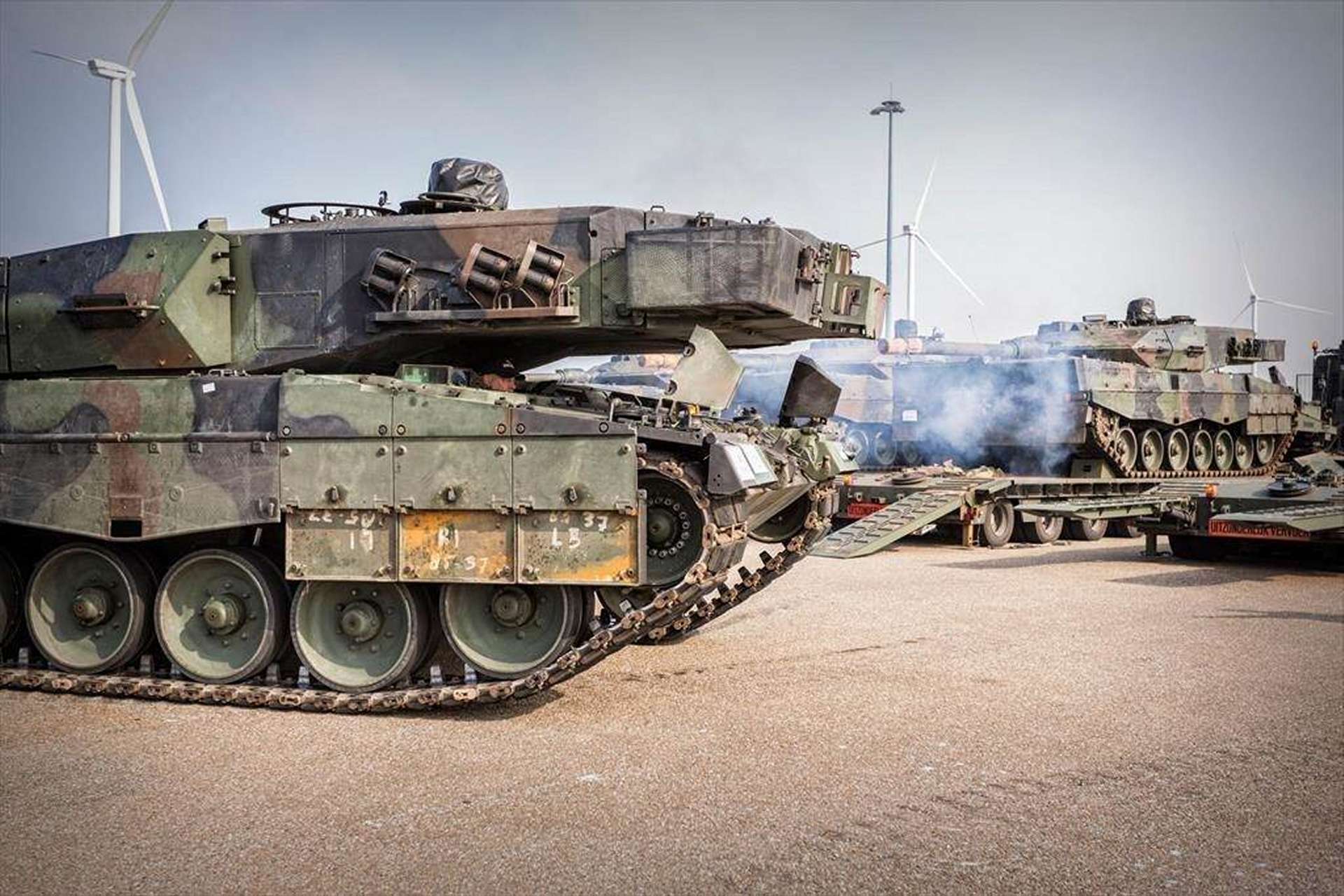
Former Dutch Army Tank Leopard, donated to Finland. (Picture source: Dutch MoD)
Among the key announcements is the reintroduction of tanks to the army, the expansion of the air force's fleet of F-35 fighter jets, and the addition of frigates to the navy to support anti-submarine warfare operations. Furthermore, the Royal Netherlands Marechaussee will be reinforced, and the Ministry of Defense plans a structural investment of an additional 260 million euros to promote the retention and recruitment of military personnel.
This long-awaited plan marks the return of the Dutch army to the acquisition and operation of battle tanks, a capability that had been abandoned in 2011 due to budget constraints. The new battalion will include around 350 soldiers and will help meet NATO's defense spending and operational capability requirements.
In addition to strengthening existing capabilities, the Netherlands is focusing on innovation within the defense industry. This aims to stimulate the production of military equipment tailored to current and future needs, an essential step to ensure the long-term defense capabilities of the Netherlands and its allies.
These measures come at a critical time. After a long period of peace in Europe, the security situation has changed considerably, and the Netherlands is playing an active role in deterring potential adversaries. Defense Minister Ruben Brekelmans emphasized the importance of these investments: "The best way to prevent war is to keep potential adversaries at a distance. This requires credible, strong, and innovative armed forces."
The 2024 Defense Note responds to NATO's increased demands, which call for investments in heavier combat capabilities for land operations. Brekelmans also pointed to Russia's continued aggression in Ukraine as an example of the growing threats at Europe's borders: "An attack on NATO is no longer unthinkable. This would have profound consequences for the security and prosperity of the Netherlands."
Although the tanks that will make up this new battalion have not been specified, there are many rumours that the German Leopard 2A8 tank will be the favorite.
With this Defense Note, the Netherlands is taking a major step in strengthening its military position and in joint efforts to ensure stability in Europe. Together with its allies, the Netherlands remains committed to fending off potential threats and protecting the security of the country and its citizens.

The F-35 is a US multirole Aircraft. (Picture source: Dutch MoD)
Read more: Netherlands Officially Confirms Spectacular Strengthening of Its Armed Forces

- Details
- Written by: Jérôme Brahy
- Category: 2024
- Hits: 12209
At the MSPO 2024 event, the Polish Armed Forces presented the K2GF (Gap Filler), a variant of the K2 Black Panther main battle tank (MBT) specifically adapted by Hyundai Rotem for Poland's use. Alongside the K2GF, one of its 116 M1A1 Abrams tanks equipped with the Firepower Enhancement Package (FEP) was also displayed. This presentation is part of Poland's ongoing efforts to enhance its military capabilities in response to increasing tensions with Russia and the conflict in Ukraine.
Follow Army Recognition on Google News at this link
Hyundai Rotem, the manufacturer, delivered 46 K2GF tanks by April 2024, with the remaining units scheduled for delivery in stages, aiming to complete the full order of 180 tanks by the end of 2025. (Picture source: Army Recognition)
The K2GF is a South Korean main battle tank of the 3+ generation, acquired by Poland to address an operational requirement following the transfer of T-72 tanks to Ukraine. The tank's primary armament consists of a 120 mm smoothbore cannon with an automatic loading system, designed to be compatible with various types of NATO-standard ammunition. It is also equipped with a 7.62 mm machine gun and a 12.7 mm large-caliber machine gun as auxiliary armaments. The fire control system is designed to maintain accuracy at long ranges.
During Poland's Dragon-24 military exercises, the K2GF demonstrated its capabilities, including its hydropneumatic suspension system, which allows it to operate on different terrains, including those found in Poland. This exercise marked the first time the K2GF was used alongside other NATO tanks. The tank is powered by a 1,500 horsepower diesel engine coupled with an automatic transmission, providing mobility and speed. Its protective measures include layered composite armor that can be enhanced with soft-kill systems such as the Vehicle Integrated Defensive Aids Suite (VIRSS), hard-kill systems like the Korean Active Protection System (KAPS), and explosive reactive armor (ERA) designed to counter modern threats. Its design incorporates advanced electronic systems and follows NATO Generic Vehicle Architecture guidelines, which allow for potential future upgrades and modifications.
The K2GF was developed following a framework contract signed between South Korea and Poland's Armament Agency in July 2022. Hyundai Rotem, the manufacturer, delivered 46 of these tanks by April 2024, with the remaining units scheduled for delivery in stages, aiming to complete the full order of 180 tanks by the end of 2025. According to the agreement, Poland may also acquire up to 820 K2PL tanks, a variant that will include Polish-made components and share many features with the K2EX, known as the "Export" model of the K2 Black Panther. Modifications to the K2PL variant are also underway to accommodate NATO-standard ammunition from Germany and the United States, as well as South Korean ammunition, to increase its operational flexibility in multinational operations.
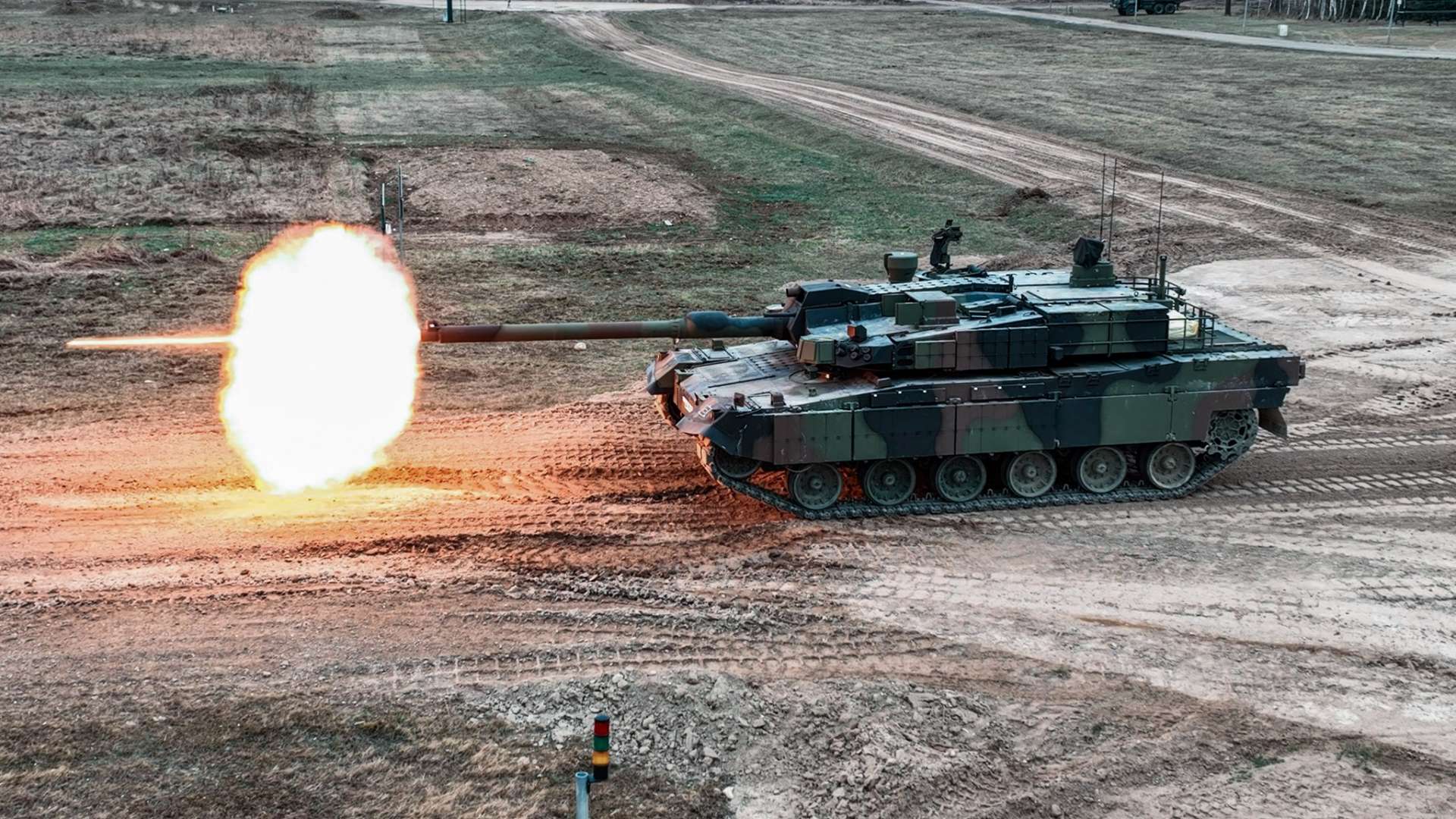
The K2GF's protective measures include layered composite armor that can be enhanced with soft-kill systems such as the Vehicle Integrated Defensive Aids Suite (VIRSS), the Korean Active Protection System (KAPS), and explosive reactive armor. (Picture source: 20 Bartoszycka Brygada Zmechanizowana)
Hyundai Rotem has made efforts to ensure the K2GF's compatibility with other tanks in the Polish military, such as the Leopard 2PL and the M1A1 FEP Abrams. The K2GF integrates a Battle Management System (BMS) developed in Poland to meet the specific requirements of the Polish Army. It is also equipped with communication systems approved by the Polish military to avoid interoperability issues.
In addition to the initial order of 180 tanks, Poland has plans to produce up to 500 units of the K2PL variant domestically. This variant is expected to include further modifications, such as enhanced armor and active protection systems, while maintaining compatibility with NATO forces and meeting Poland's operational needs.
Over the past five years, Poland has pursued a strategy of military expansion and modernization. The number of active military personnel has increased from approximately 110,000 to around 150,000, including a territorial defense force of 30,000 that was established in 2017. The defense budget has risen to over 3% of the country's GDP, allowing for investments in new equipment and technology, including American M1A2 Abrams tanks, F-35 fighter jets, Korean K2 Black Panther tanks, and K9 howitzers. These efforts are influenced by security concerns, particularly in relation to Russia and the ongoing conflict in Ukraine. Plans are also underway for the modernization of the Polish Navy and Air Force, with acquisitions of new submarines, frigates, and air defense systems.
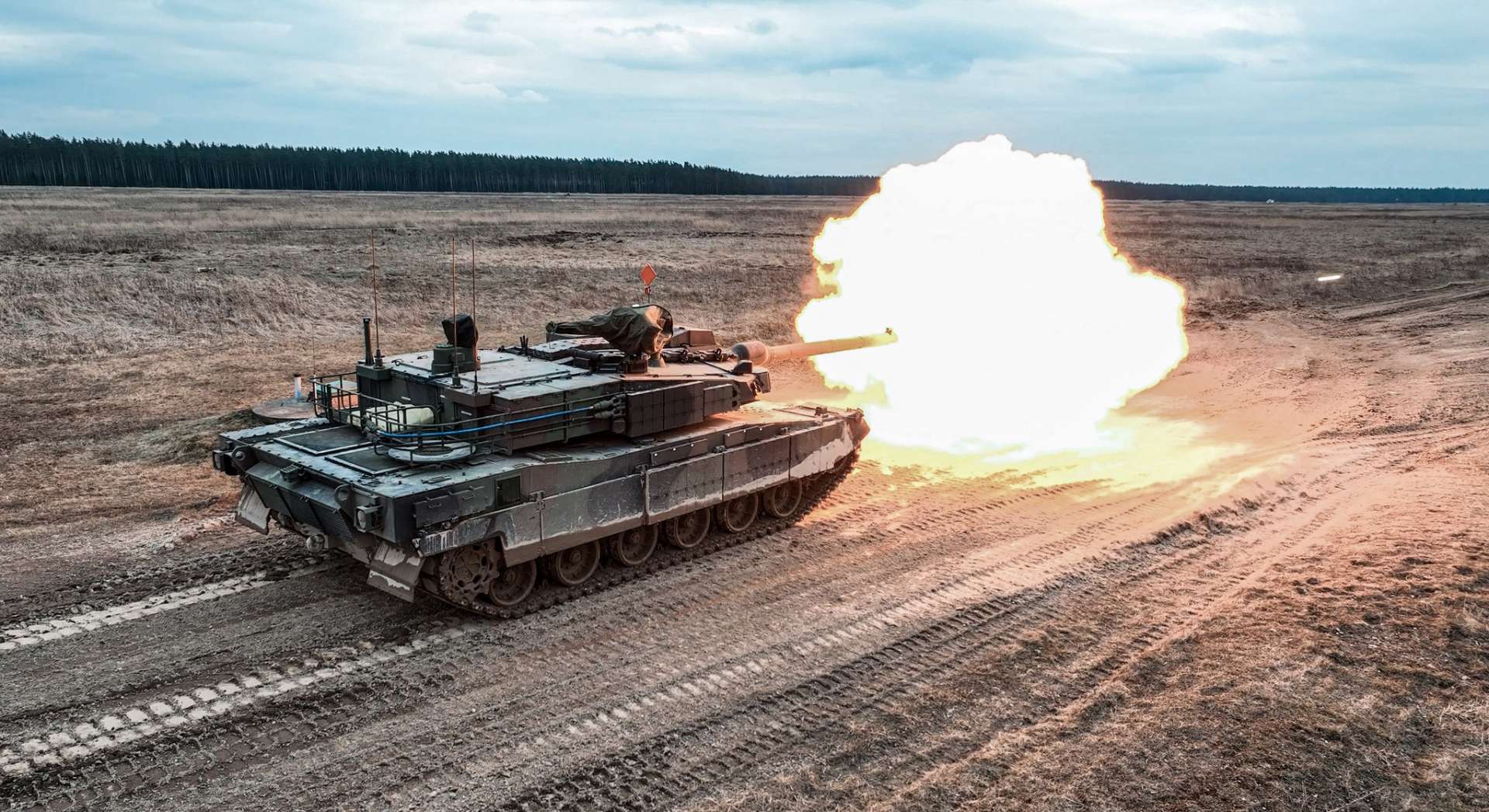
The K2GF's primary armament consists of a 120 mm smoothbore cannon with an automatic loading system, designed to be compatible with various types of NATO-standard ammunition. (Picture source: 20 Bartoszycka Brygada Zmechanizowana)
Read more: Poland to receive full order of 180 K2GF tanks from Hyundai Rotem by 2025
- Details
- Written by: Triffaux
- Category: 2024
- Hits: 7463
At the International Defence Industry Exhibition (MSPO) 2024, the Military Institute of Armament Technology (WITU) is presenting an ambitious project to develop a three-stage suborbital rocket system equipped with a 300 mm diameter rocket engine. This project, titled "Development of a Three-Stage Suborbital Rocket System for Research Payload Launches," aims to create a reusable suborbital launch system capable of carrying a 40 kg payload beyond the Karman Line, to an altitude of 100 km. The development seeks not only to reduce launch costs for space missions but also to provide new opportunities for microgravity research and exploration of the upper atmosphere.
Follow Army Recognition on Google News at this link
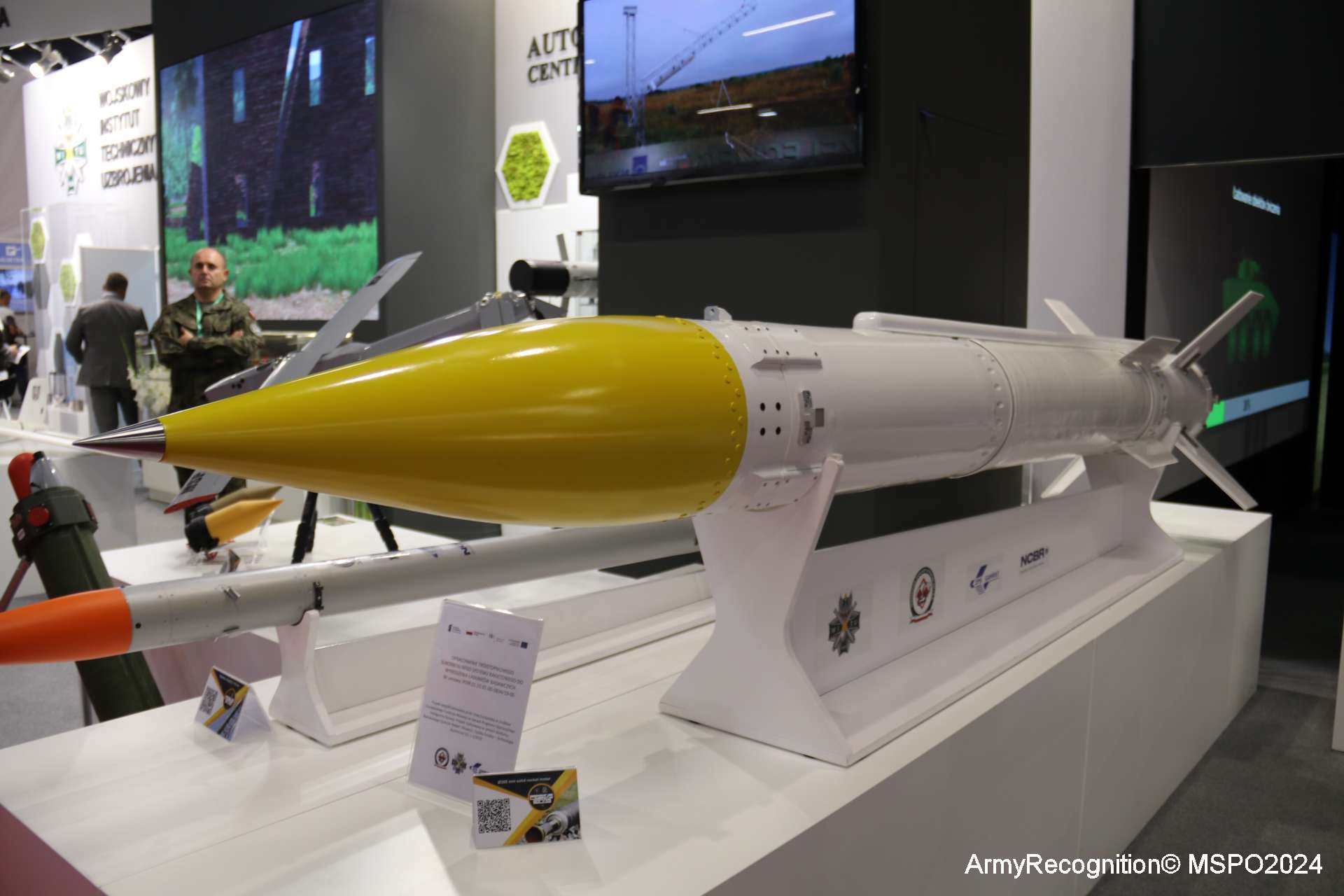
Three-Stage Suborbital Rocket System equipped with a 300 mm diameter rocket engine(Picture source: Army Recognition)
At the exhibition, the Institute showcased a 300 mm diameter rocket engine that has already been tested on a test stand. During the tests, the rocket's guidance system was also verified. The three-stage suborbital rocket is a noteworthy proposal that could also have potential as an air defense weapon. With its dimensional characteristics, it is particularly suited for medium-range air defense. Utilizing its three stages, this rocket could reach a range of up to 150 km.
This same three-stage propulsion system is also employed in the development of a 105 mm missile, integrated into the Sona program for short-range air defense. Designed to protect troops against various aerial threats such as drones and missiles, this system can carry up to 30 thermally guided munitions with an estimated range of 20 km. Its capability to provide effective coverage for ground forces enhances short-range air defense and ensures increased protection in conflict situations.
The suborbital rocket under development consists of three stages: a main stage with a two-segment engine and two additional stages, each with a single-segment engine. The solid rocket motor 300 mm, a key component of the project, uses advanced materials such as composite fibers and lightweight alloy connectors. Its characteristics include a length of 1.79 m for the single segment with nozzle, a total impulse of 251,000 Ns, a total mass of 148 kg with nozzle, a maximum thrust of 39,500 N, a propellant-to-motor weight ratio of 0.7, and a diameter of Ø308 mm. The motor is designed to be modular, allowing adjustments to its length and power based on mission requirements. The propellant used is a molded ammonium perchlorate star mix, ensuring high performance. Preliminary tests, including hydrostatic pressure tests and static nozzle tests, have validated the motor's robustness and effectiveness.
The development of this suborbital rocket system represents a significant advancement for the Polish and European space sectors. It opens new avenues for scientific research and military applications, with expected benefits in terms of reduced launch costs and expanded possibilities for space exploration. This project promises to enhance Poland's position in the space domain while contributing to the advancement of space technologies.
The development of advanced space propulsion technologies has several significant military implications. First, progress in space propulsion can be adapted for more sophisticated missile systems. Technologies developed for suborbital rockets can improve the accuracy, range, and effectiveness of ballistic or cruise missiles, offering substantial benefits for weapon systems.
In terms of testing and validation capabilities, the ability to conduct tests in microgravity and at high altitudes is crucial. These tests allow for the validation of propulsion and guidance technologies, which is essential for assessing and optimizing critical components of missile systems. The results of these tests can be applied to military projects to improve missile performance and reliability.
Regarding deterrence and security, although the projects are primarily focused on scientific research, the developed skills and infrastructure can enhance a country's defense capabilities. Improved understanding of space and launch technologies can bolster deterrence by providing increased capabilities for military applications, contributing to a stronger security environment.
To illustrate Poland's efforts in this field, we can mention the upcoming launch of the ILR-33 Amber 2K rocket from Norway for a space mission. This 4.6-meter rocket, equipped with a hybrid engine and two solid-fuel boosters, is designed to carry a ten-kilogram payload to an altitude of 100 kilometers. It is an upgraded version of the ILR-33 Amber model. The space flight will follow an initial low-altitude test conducted in Poland. Tests are carried out abroad due to the large impact zone of the rocket stages. The launch of the ILR-33 Amber 2K by the Łukasiewicz Institute of Aviation is scheduled for September 7, 2024.
Following this mission, the ILR-33 Amber 2K will be used for suborbital research by the Polish company Thorium Space. This project aims to strengthen Polish capabilities in space rocket technologies and to pave the way for future developments in this field

Military Institute of Armament Technology 300 mm diameter rocket engine (Picture source : Poland MoD)
- Details
- Written by: Halna du Fretay
- Category: 2024
- Hits: 4480
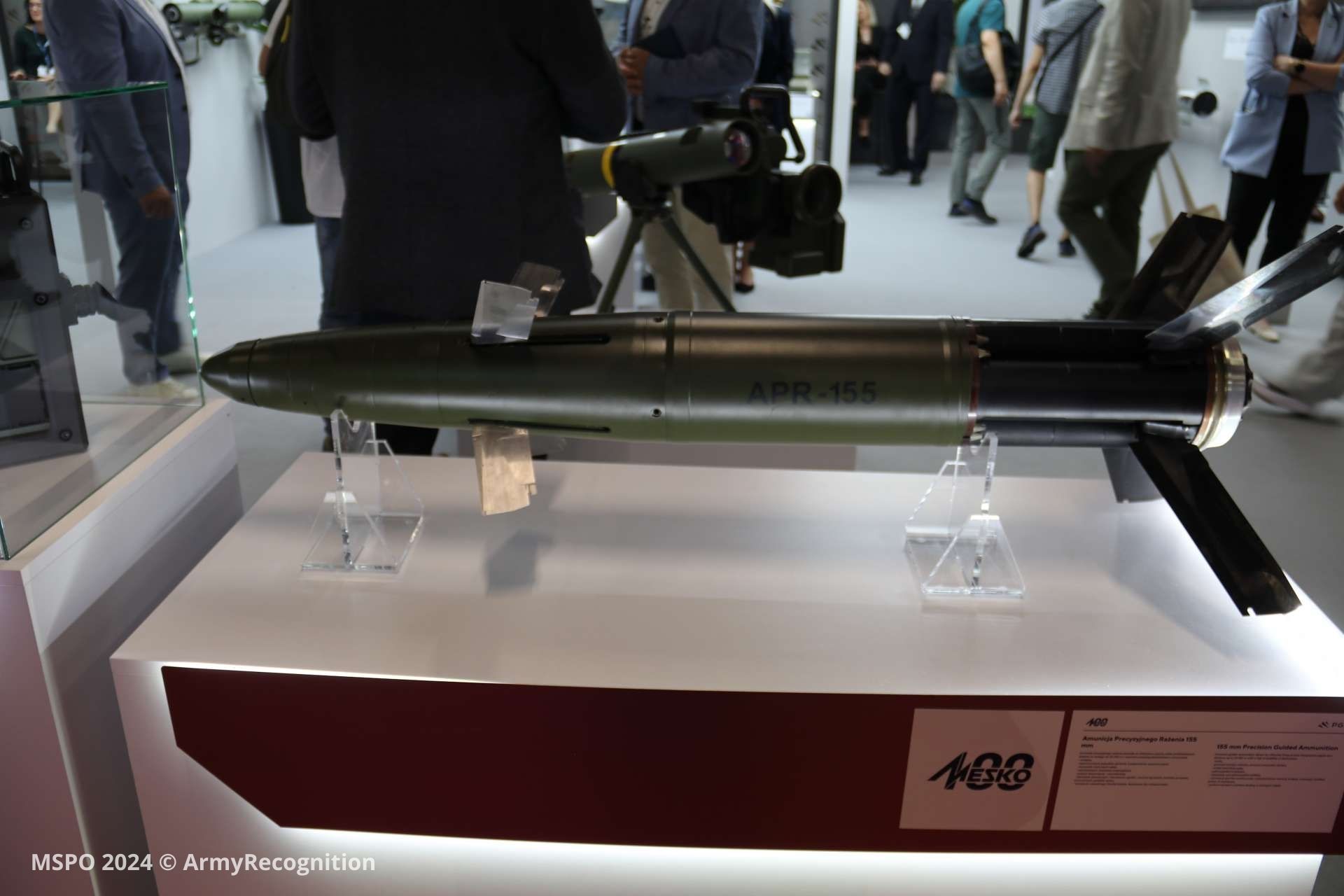
At the MSPO 2024 defense exhibition, Polska Grupa Zbrojeniowa (PGZ), Poland’s leading state-owned defense conglomerate, unveiled its latest innovation in artillery munitions: the 155mm Precision Guided Ammunition. This cutting-edge munition, designed for long-range precision strikes, reflects Poland's ongoing efforts to enhance its national production of military equipment, driven in part by the lessons learned from the ongoing conflict in Ukraine. The introduction of this system aims to demonstrate Poland's growing capacity to produce advanced munitions for its own defense forces and for allied nations.
Follow Army Recognition on Google News at this link
The 155mm Precision Guided Ammunition is equipped with laser-guided systems, allowing it to effectively strike targets at distances up to 20 kilometers with high precision (Picture source: ArmyRecognition)
The 155mm Precision Guided Ammunition is equipped with laser-guided systems, allowing it to effectively strike targets at distances up to 20 kilometers with high precision. This capability is particularly relevant for destroying tanks, armored vehicles, artillery systems, and command posts. The ammunition is specifically designed for use with the Krab and Kryl self-propelled howitzers, two of the most advanced artillery systems in the Polish Armed Forces. Field tests have confirmed its reliability and precision at distances beyond 8 kilometers, making it a crucial asset in modern warfare.
PGZ, along with its subsidiaries Mesko, Dezamet, Nitro-Chem, Gamrat, and Belma, recently secured a contract with the Polish Ministry of Defense to deliver nearly 300,000 rounds of 155mm artillery ammunition by 2029. Valued at more than 10 billion PLN (approximately 2.3 billion euros), this contract aims to strengthen Poland's munitions stockpiles while also contributing to European efforts to supply Ukraine. The ammunition coalition within the EU, established to support Ukraine, is expected to place significant orders with Poland, positioning PGZ as a key supplier of military munitions in the region.
While specific information regarding direct deliveries of these 155mm precision-guided rounds to Ukraine remains unconfirmed, Poland has actively supplied military equipment to Ukraine throughout the conflict. Among these contributions are Krab self-propelled howitzers, which use NATO-standardized 155mm ammunition. This effort underscores Poland's commitment to supporting Ukraine while simultaneously reinforcing its own defense capabilities through domestic production.
In NATO, 155mm artillery ammunition is the standard caliber for heavy artillery systems, used in self-propelled and towed howitzers such as the M777 and PzH 2000. The widespread use of this caliber across NATO allows for easier coordination and logistical support among member nations during joint operations, ensuring that ammunition can be shared or supplied as needed.
As the principal manufacturer, PGZ is rapidly emerging as a leader in munitions production within the European defense sector. The consortium’s commitment to bolstering its production capacity and maintaining the quality of its ammunition places it in a strong position to meet the demands of both the Polish Armed Forces and international partners. The proliferation of PGZ’s 155mm precision-guided ammunition, coupled with its integration into broader defense networks, is a significant development in Poland's defense strategy and a reflection of the growing importance of national munitions production in modern warfare.

- Details
- Written by: Jérôme Brahy
- Category: 2024
- Hits: 4493
At MSPO 2024, the Polish company Mesko presented its new anti-tank guided missile (ATGM) system, the Jack-S. This system, developed from the earlier PIRAT system, is designed to meet the specific needs of foreign customers. The Jack-S, already in production, is capable of engaging both moving and stationary ground targets, as well as low-flying or hovering air targets. It features automatic target tracking and guidance via a laser target designator.
Follow Army Recognition on Google News at this link
After completing the development of the PIRAT anti-tank guided missile (ATGM) system, Mesko continued refining its design in response to interest from potential foreign clients, resulting in the creation of the Jack-S. (Picture source: Army Recognition)
The Jack-S is based on the PIRAT anti-tank guided missile system, which Mesko completed developing in 2020 under an agreement with the Industrial Development Agency (ARP). After the completion of the PIRAT's development, Mesko continued to refine its design due to interest from potential foreign clients. This led to the decision in 2023 to create an export-oriented version of the PIRAT, named the Jack-S, incorporating additional modifications to both the missile and launcher components.
The Jack-S was developed in response to requirements discussed with foreign partners, whose needs differ from those of the Polish market. According to Elżbieta Śreniawska, CEO of Mesko S.A., the increase in exports over the past two years reflects the company's alignment with new markets. This understanding enabled Mesko to develop the Jack-S to meet the specific requirements of international clients. The Jack-S made its international debut at the Eurosatory 2024 trade fair in Paris, where it drew attention from various government delegations.
The Jack-S is capable of engaging moving targets at speeds of up to 50 km/h, regardless of direction. It can also be integrated into various vehicles, such as armored personnel carriers, infantry fighting vehicles, light reconnaissance vehicles, boats, and unmanned ground vehicles like the Perun.

The design changes introduced in the Jack-S are expected to streamline production, enabling Mesko to increase output if orders are received. Some of these new solutions may also be applied to the PIRAT in the future. (Picture source: Army Recognition)
While the Jack-S retains several core specifications of the PIRAT, it also introduces notable changes. The system weighs 15.5 kg, slightly more than the PIRAT's 15.2 kg, and has an operational range of 200 to 2,600 meters, with an armor penetration capability of 500 mm of rolled homogeneous armor (RHA) using a high-explosive anti-tank (HEAT) warhead. The container for the 107 mm caliber missile is slightly longer, measuring 1,215 mm compared to the PIRAT's 1,180 mm.
One of the most significant changes in the Jack-S is a new concept for initiating the missile's fuze. This modification requires extensive field testing to confirm its effectiveness and safety. Upon verification, additional tests will evaluate the new design's advantages.
Marcin Ożóg, a board member responsible for production at Mesko S.A., indicated that the Jack-S design builds on the company's experience in missile development and production, including lessons from the PIRAT project. He also noted a focus on optimizing production costs by utilizing existing facilities and technologies and incorporating approaches from American and European partners.
The design changes introduced in the Jack-S are expected to streamline production, allowing Mesko to increase output if orders are received. Some of these new solutions may also be applied to the PIRAT in the future. Given the ongoing conflict in Ukraine, production capabilities are considered as crucial as technical specifications, with current ammunition shortages highlighting the need for production levels beyond those typically maintained during peacetime.

- Details
- Written by: Vandenbosch
- Category: 2024
- Hits: 3105
At MSPO 2024, the spotlight was not solely on the Baobab-K mine-laying vehicle but also on a crucial component of this system: the mine launcher box. This device plays an essential role in the Baobab-K's mine dispersion system, designed to quickly and effectively deploy MN-123 anti-tank mines.
Follow Army Recognition on Google News at this link
A reduced 1:3 scale of the launcher box. (Picture source: Army Recognition)
The launcher box stands out for its ability to hold several mine cassettes, each equipped with five anti-tank mines. The system includes 20 tubes capable of scattering mines across a wide area. These cassettes are propelled by specific charges that allow for precise mine deployment, creating dense and extended minefields suitable for the needs of defensive military operations.
One of the launcher box's key strengths is its integration of advanced control technologies. Connected to a command interface, it regulates minefield density and ensures optimal coverage of the terrain. The system is designed to operate safely, even while the vehicle is moving, making it a significant asset for military engineering units deploying minefields in combat conditions.
The launcher is also compatible with various chassis types, providing great flexibility in its use. It can be mounted on transport vehicles such as the Baobab-K or other platforms, depending on mission requirements. Furthermore, the launcher allows for lateral mine dispersion, on both sides and behind the vehicle, ensuring complete terrain coverage.
Presented at the exhibition at a reduced 1:3 scale, this launcher box drew considerable attention for its crucial role in the Baobab-K's operation, demonstrating the Polish defense industry's capability to innovate in the field of automated defense systems.
The Baobab-K itself is an automated mine-laying system developed in Poland, mounted on a Jelcz 8x8 truck chassis. This system enables the rapid and effective deployment of anti-tank mines in strategic areas to slow down or stop enemy armored vehicles.
The Baobab-K's development began in 2017 as part of a research and development program led by Huta Stalowa Wola (HSW). After several years of testing and refinement, the project reached a significant milestone in June 2023 when Polish Deputy Prime Minister Mariusz Błaszczak approved the system's delivery contracts. This contract includes the delivery of 24 Baobab-K vehicles to the Polish army, with a total value of 510 million PLN (approximately 114 million euros), with deliveries scheduled between 2026 and 2028. Additionally, a separate contract for the purchase of mines and related cassettes, valued at 566 million PLN, was also signed.
The Baobab-K is operated by a two-person crew and has a maximum capacity of 600 mines. It can lay mines at speeds between 5 and 25 km/h, covering an area approximately 1,800 meters long and 180 meters wide. These features allow the system to provide rapid and flexible protection for ground troops while minimizing the operators' exposure to battlefield dangers.
The Baobab-K represents a major step forward in modernizing Poland's defense capabilities, equipping the armed forces with an efficient tool for creating anti-tank minefields—a critical asset in countering armored offensives in modern warfare.
Read more: Mine Launcher Box of Baobab-K Is a Key Element of Poland's Anti-Tank Defense

- Details
- Written by: V.Saint
- Category: 2024
- Hits: 4406
Developed by Maddos and AP Flyer in collaboration with a Ukrainian partner, Poland is showcasing the ORION FCS system at MSPO. This system, equipped with either two 23mm cannons or two 12.7mm machine guns, is designed to detect and neutralize drones flying at several hundred meters.
Follow Army Recognition on Google News at this link
Newly presented FCS Orion , a hard kill solution to UAS threat (Picture source: Army Recognition)
Hard kill solutions based on anti-aircraft cannons, developed by AP-FLYER in cooperation with Ukrainian and Polish partners, are featured in this system. It integrates the MADDOS long-range 4D radar, which detects the target and transmits its 3D positional information to the fire control system. The turret is automatically directed towards the sector where the target is located, and the electro-optical module begins tracking. The distance to the target is determined, and a 3D flight trajectory of the target is calculated to accurately destroy the threat. The MADDOS RCWS can effectively destroy any type of drone at significant distances while maintaining high mobility and ease of transport.
The described defense system is particularly effective against NATO-class 1 and 2 drones, as well as against loitering munition. It is suitable for both day and night operations, with fully automatic functionality. Equipped with a main cannon of 23mm or 12.7mm, it offers an effective range of up to 2.5 km. The system uses electric drives for azimuth and elevation rotation and integrates a processing unit with a ballistic calculator, thereby optimizing engagement precision.
MADDOS is a brand owned by AP-FLYER, a high-tech security company based in Poland, specializing in anti-drone and UAV technologies. Since 2015, AP-FLYER has been active in the C-UAS market and began manufacturing VTOL observation drones in 2020. Over the years, our extensive experience has led to the creation of unique and operationally proven solutions. The trust of numerous government and military clients across Europe, Asia, Africa, and the Middle East attests to the effectiveness of the many MADDOS systems deployed to protect their critical assets.
Our anti-drone technology is designed to seamlessly integrate into existing security frameworks, providing a robust layer of protection. It includes advanced detection methods, rapid response capabilities, and versatile countermeasures to ensure comprehensive airspace security. While AP-FLYER and MADDOS previously offered various autonomous or C-UAS solutions, there was a gap in hard-kill options. Today, the ORION system fills this gap by offering a viable and promising solution for effective drone neutralization.
Read more: Polish C-UAS Specialist Debuts Advanced Hard-Kill System at MSPO 2024

- Details
- Written by: Halna du Fretay
- Category: 2024
- Hits: 1811
On September 3, 2024, Defence Secretary John Healey met with Ukrainian Defence Minister Rustem Umerov in London to discuss the acceleration of UK military support for Ukraine. This meeting coincided with a significant milestone for the International Fund for Ukraine (IFU), which has now surpassed £1 billion in contributions from eight participating countries. This achievement follows the announcement by the UK Prime Minister at the NATO Summit in July of the largest-ever support package for Ukraine, including a £300 million contract for 152mm artillery shells intended for Ukraine’s Soviet-era artillery. The UK has also committed to providing £3 billion in aid annually for Ukraine.
Follow Army Recognition on Google News at this link
The UK has also supplied armored vehicles, such as the Mastiff and Jackal, vital for troop mobility and protection. (Picture source: Ukrainian Forces)
The £300 million artillery contract has been finalized and is expected to deliver thousands of shells within the year, significantly boosting Ukraine’s ammunition reserves and supporting the acceleration of military aid. Additional contributions to the IFU from Denmark, Lithuania, the Netherlands, and Norway will fund the acquisition of more drones and air defense systems to enhance Ukraine's defenses against ongoing Russian attacks.
Defence Secretary Healey emphasized the critical role of British military equipment in Ukraine’s defense efforts, highlighting the importance of continued international support. The IFU, launched by Denmark and the UK in 2022, has already provided substantial support, including drones, mine-clearing capabilities, and combat vehicle spares. To date, the UK has contributed £500 million to the fund, with further support anticipated from Australia, Iceland, New Zealand, and Sweden.
Since the onset of the conflict in Ukraine in 2022, the UK has played a significant role in military support by supplying a range of essential equipment to bolster Ukraine's defense capabilities. Notable contributions include anti-aircraft systems such as the Starstreak missiles, which offer close-range defense against enemy aircraft and drones. These missiles are known for their precision and speed, providing crucial protection against aerial attacks.
The UK has also supplied armored vehicles, such as the Mastiff and Jackal, which are vital for troop mobility and protection. The Mastiff, armored against mines and attacks, is particularly suited for safe troop transport, while the lighter and more maneuverable Jackal is used for reconnaissance and rapid operations. These vehicles enhance the operational effectiveness of Ukrainian forces while minimizing personnel risks.
Additionally, the UK has provided artillery shells for 155mm guns, enhancing Ukraine’s artillery capabilities for precision strikes and ground support operations. Shipments have also included reconnaissance drones, which are essential for monitoring enemy movements and intelligence gathering, as well as electronic warfare systems to disrupt enemy communications. This equipment is part of a broader military support effort critical to helping Ukraine strengthen its defensive capabilities and resist ongoing aggression.
British teams have also trained Ukrainian soldiers in various aspects of modern combat, including the use of provided weapon systems. Training covers anti-aircraft systems, urban warfare tactics, and the management and maintenance of armored vehicles. Sessions are held in the UK, utilizing military bases to simulate realistic combat conditions, and include practical exercises and combat scenarios to prepare Ukrainian soldiers for diverse tactical situations.
Moreover, the UK has facilitated training programs for drone pilots and electronic warfare operators, enhancing Ukraine's ability to conduct reconnaissance and interfere with enemy communications.
This integrated approach, combining modern equipment with specialized training, aims to improve the effectiveness of Ukrainian forces on the battlefield and support their efforts to counter the ongoing Russian aggression. These training initiatives, alongside continuous material support, play a crucial role in bolstering Ukraine's defense capabilities.
Read more: UK Reaches Over $1 Billion in Ukraine Support Fund and Announces New Artillery Contract

- Details
- Written by: Jérôme Brahy
- Category: 2024
- Hits: 14852
At the MSPO 2024 defense expo, the Polish company Zakłady Mechaniczne "Tarnów," part of the Polish Armaments Group (PGZ), presented its latest anti-UAV (Unmanned Aerial Vehicle) system, known as the System Zwalczania Dronów. This system, developed in cooperation with the Military University of Technology (WAT), is armed with a WLKM 12.7 mm Gatling-style machine gun designed to target UAVs at a maximum effective range of two kilometers. Classified as a "last chance" defensive solution, it is intended for situations where drones are relatively close to the defended position.
Follow Army Recognition on Google News at this link
This anti-UAV system, also known as the System Zwalczania Dronów, is armed with a WLKM 12.7 mm Gatling-style machine gun designed to target drones at a maximum effective range of two kilometers. (Picture source: Army Recognition)
The development of the System Zwalczania Dronów began in 2018 to address challenges posed by smaller drones that are more difficult to detect and neutralize. The system underwent a series of tests, starting with experimental firing exercises at the Central Air Force Training Ground in Ustka in late 2021, followed by additional evaluations in early 2022. These tests were conducted to assess the system's effectiveness in detecting, recognizing, tracking, and neutralizing UAVs, ensuring its capability to meet operational requirements.
The Polish anti-UAV system is a product of collaboration between Zakłady Mechaniczne Tarnów and the Military University of Technology, aiming to provide a balance between cost and functionality. The design utilizes affordable ammunition and incorporates modern detection and tracking technologies. According to Dr. Kamil Wacławik, project manager at the Military University of Technology, the system includes remote control capabilities and offers both manual and automatic modes. This flexibility allows the system to be installed on a variety of platforms, including stationary setups, mobile vehicles, or naval vessels.
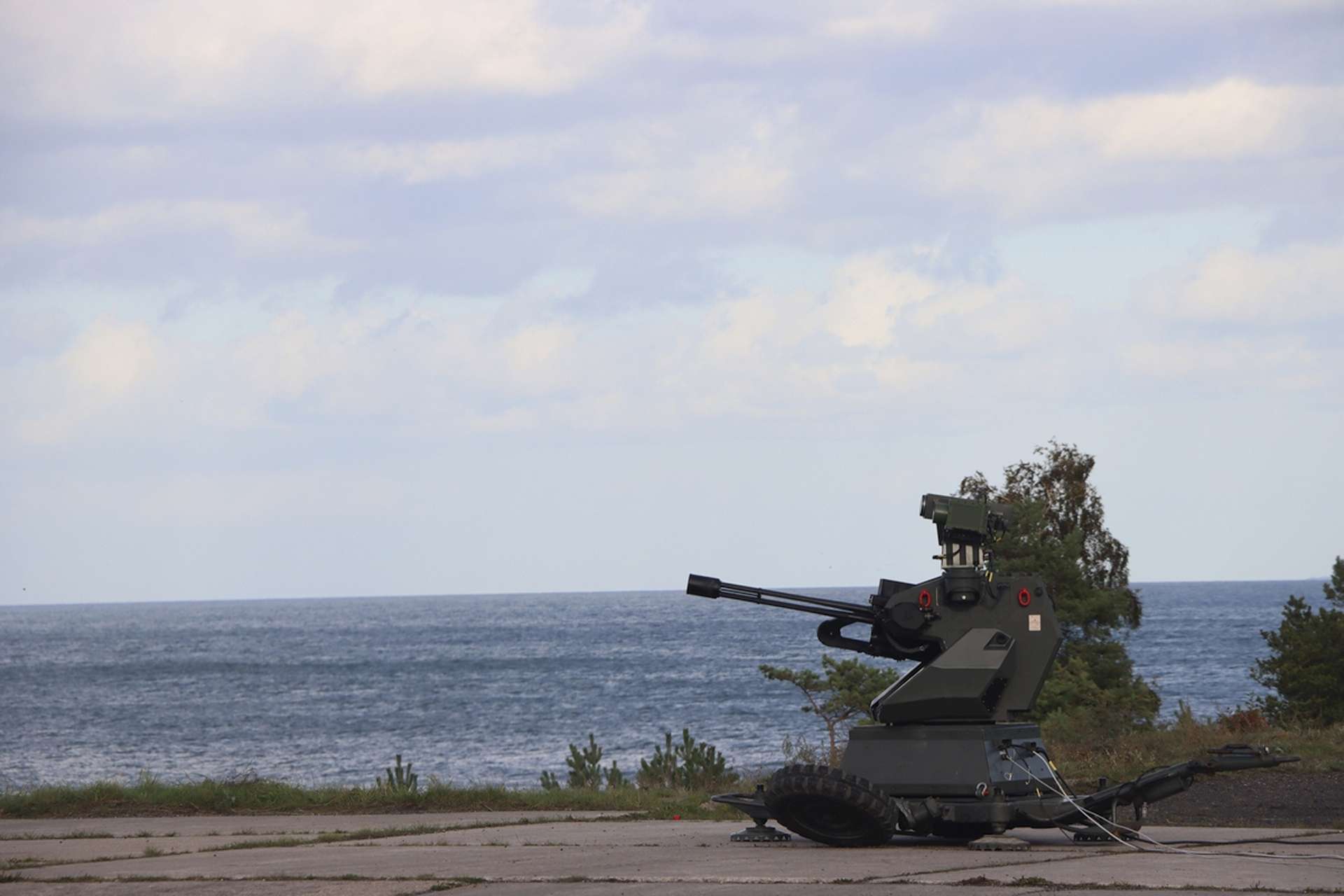
The system underwent a series of tests, starting with experimental firing exercises at the Central Air Force Training Ground in Ustka in late 2021, followed by additional evaluations in early 2022. (Picture source: Zakłady Mechaniczne Tarnów)
In 2023, this system was demonstrated on a new carrier, the Waran armored personnel carrier, developed by Huta Stalowa Wola. The Waran is a wheeled, armored vehicle that provides Level 2 protection under the STANAG 4569 standard. It measures 6.20 meters in length, 2.55 meters in width, and approximately 2.60 meters in height, with a wheelbase of 3.65 meters and a ground clearance of 0.43 meters. The vehicle has a crew capacity of two, an estimated weight of around 15 tons, and an operational range of approximately 600 kilometers, enabling it to serve as a mobile platform for the anti-UAV system.
The primary component of the System Zwalczania Dronów system is the WLKM 12.7 mm multi-barrel machine gun, which uses a Gatling-style configuration developed by Zakłady Mechaniczne Tarnów. The gun fires 12.7 mm x 99 NATO (.50 BMG) ammunition and can reach a firing rate of up to 3,600 rounds per minute, with a maximum range of up to 2,000 meters. The rate of fire is adjustable between 250 and 3,600 rounds per minute, and the burst length can be set from 50 to 200 rounds. The weapon system features four rotating barrels powered by a 27 V DC electric motor and is integrated with an optoelectronic head that includes day and thermal cameras, as well as a laser rangefinder. An external radar system is included to detect UAVs, including smaller drones, at distances of up to 15 kilometers.
The Polish anti-UAV system is designed to operate in three modes: manual, semi-automatic, and fully automatic. In manual mode, the operator directly controls the system, while in semi-automatic mode, the system assists by tracking the target within the video feed. In fully automatic mode, the system autonomously identifies and tracks targets, with the operator making the final decision to fire. The system can be controlled remotely, allowing the operator to remain at a safe location while using a control panel and a large screen that displays camera feeds, providing flexible operation and enhanced safety.
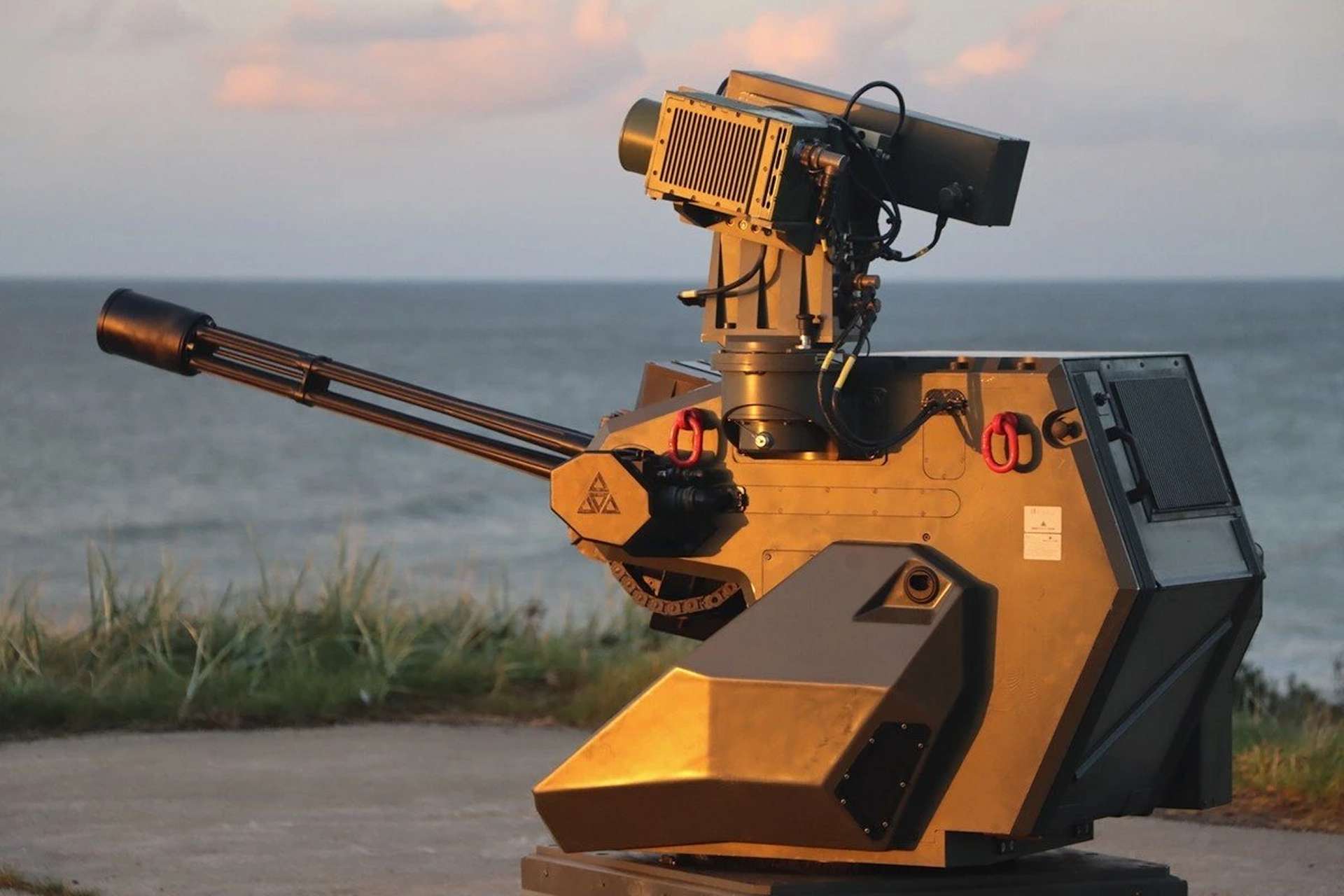
The System Zwalczania Dronów anti-UAV system, which features four rotating barrels, is integrated with an optoelectronic head that includes day and thermal cameras, as well as a laser rangefinder. (Picture source: Zakłady Mechaniczne Tarnów)
Read more: Poland's new anti-drone system features 12.7mm Gatling gun for immediate action

- Details
- Written by: Halna du Fretay
- Category: 2024
- Hits: 4252
At the 2024 edition of MSPO, Poland's major defense exhibition, the latest technological advancements in artillery were showcased, including the APR-120 precision-guided munition. Developed specifically for the Polish Armed Forces, this 120mm round is designed to operate with the RAK self-propelled mortar system. What sets the RAK apart from other systems, such as the NEMO, is its fully automated ammunition loading process, enhancing its battlefield operational efficiency.
Follow Army Recognition on Google News at this link
The 800mm long, 16.8kg projectile uses laser guidance to accurately strike armored targets, such as tanks, from their most vulnerable angles—above the turret or chassis (Picture source: ArmyRecognition)
The APR-120 represents a significant technological leap in strike accuracy, designed to target armored vehicles more precisely. This guided munition is the result of a close collaboration between Polish and Ukrainian engineers.
The 800mm long, 16.8kg projectile uses laser guidance to accurately strike armored targets, such as tanks, from their most vulnerable angles—above the turret or chassis. Capable of reaching targets up to 8 kilometers away, the APR-120 employs a semi-active laser guidance system, ensuring reliable performance even in complex operational environments.
The round is equipped with a shaped charge warhead, optimized for penetrating armored targets. One of the key challenges in its development was ensuring its compatibility with the RAK mortar's automatic loading system while maintaining optimal performance.
Polish industry leaders such as Mesko and Telesystem-Mesko played a key role in developing the laser-guided seeker heads for this munition. The APR-120 uses advanced infrared detection systems to adjust its trajectory based on the laser-designated target, ensuring precise strikes. This system is part of a broader initiative to modernize Poland's artillery capabilities and enhance its operational flexibility.
Full-scale production of the APR-120 was initially set to begin in 2021, positioning the Polish army among the leaders in precision-guided munitions in Europe.
Future variants, including high-explosive rounds, are also under consideration, underscoring the modular nature of this munition. With large-scale production underway, this development strengthens Poland's indirect fire capabilities and its position within NATO's defense frameworks. The precision-guidance technology of the APR-120 is expected to become a key asset in modern warfare, offering a reliable solution to the Polish armed forces and potentially to international partners.
One of the key challenges in its development was ensuring its compatibility with the RAK mortar's automatic loading system while maintaining optimal performance (Picture source: ArmyRecognition)

- Details
- Written by: V.Saint
- Category: 2024
- Hits: 2933
At the MSPO international defense industry exhibition held in Poland, Polish military authorities unveiled the new Cougar MRAP (Mine Resistant Ambush Protected) armored vehicles. These vehicles, designed to protect soldiers from explosive threats, are part of the strategic acquisitions of the Polish army. An order was placed in 2021 to enhance the security and mobility of its forces in high-risk areas.
Follow Army Recognition on Google News at this link
Displayed Cougar Mrap from Polish Army (Picture source: Army Recognition)
The Cougar H4 × 4, the basic version of the Cougar vehicle family, is distinguished by its ability to transport soldiers in combat zones, especially in conditions where the risk of mines and improvised explosive devices is high. In addition to troop transport, these vehicles fulfill other essential roles on the battlefield, such as explosive ordnance disposal (EOD), artillery transport, command and logistical support, and medical evacuation missions (CASEVAC), thus ensuring crucial operational versatility for the army.
The Cougar MRAPs are designed to tackle a wide variety of terrains and harsh weather conditions. Their Independent Suspension System (ISS) provides increased mobility over rough terrains, even when heavily loaded. They can overcome complex obstacles such as ditches or slopes with an inclination of up to 60%. They are also capable of crossing water obstacles up to one meter deep without requiring special preparation.
The technical specifications of the Cougar MRAPs highlight their power and robustness. They are equipped with a 330-horsepower engine, weigh 19.5 tons, and reach a maximum speed of 89 km/h. The vehicle can carry a payload of 2.3 tons and has a range of 675 kilometers. With a ground clearance of 0.38 meters, a length of 6.35 meters, a width of 2.72 meters, and a height of 3.02 meters, these vehicles offer an ideal combination of protection and performance.
The order placed by Poland in 2021 demonstrates the country's commitment to modernizing its armed forces, with a focus on enhancing both security and mobility. This commitment to modernization is also reflected in the creation of new units, the modernization efforts, and orders for combat vehicles and artillery systems.
Read more: Polish Army’s Cougar MRAPs Make First Public Appearance at MSPO 2024
- Thales and PGZ Sign Memorandum of Understanding at MSPO 2024 to Develop High-Tech Radar Systems
- India Approves $17 billion Worth of Army Modernisation Projects
- Spain Awards First Major Ammunition Contract for 8x8 Dragon VCR to Nammo Palencia
- Finnish company NDR-Industries creates Havoc S-300 Gen3 medical UGV with 900 horsepower and armored capsule