
- Details
- Written by: Triffaux
- Category: 2024
- Hits: 5090










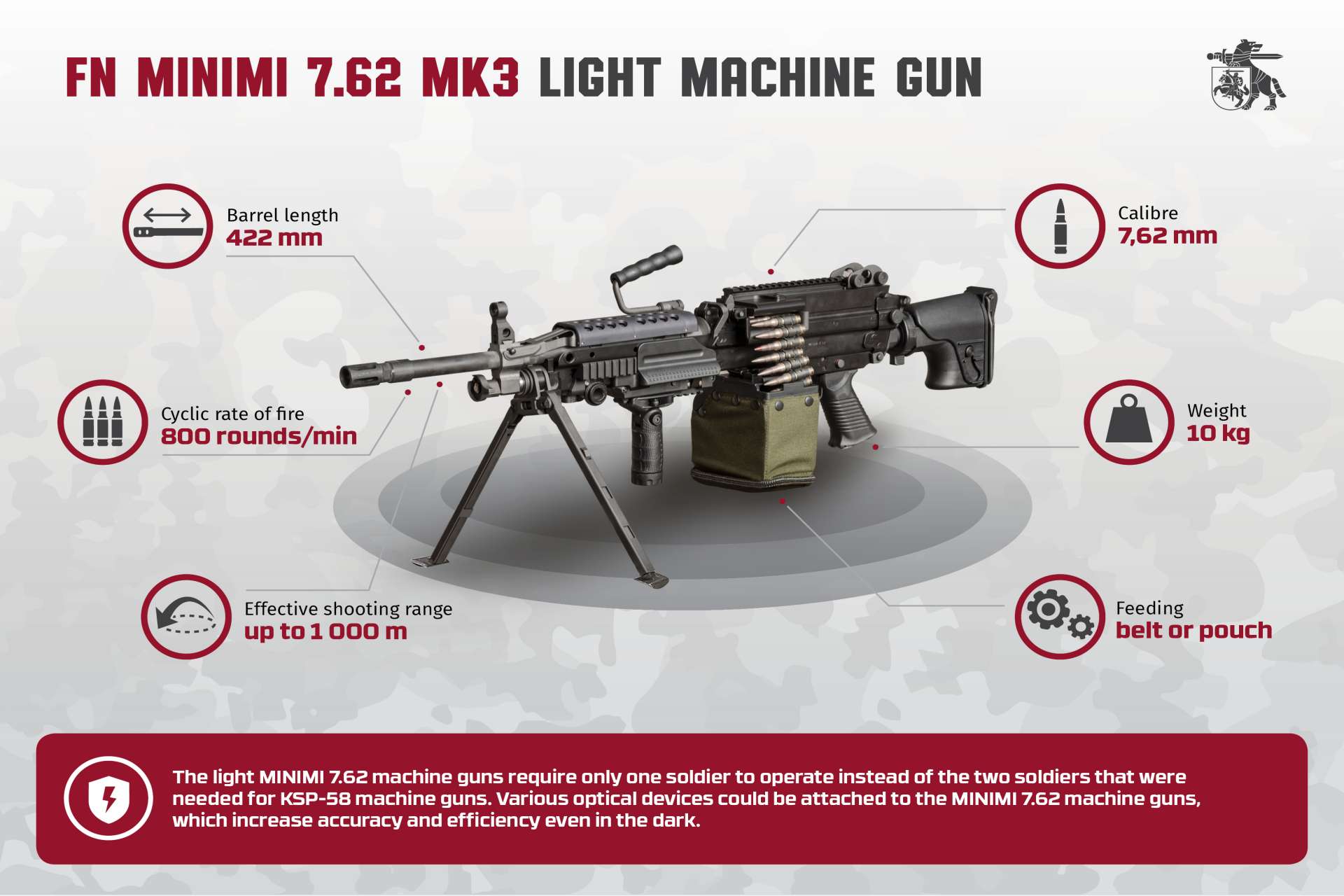
On September 4, 2024, the Lithuanian Ministry of Defense announced an early acquisition of FN MINIMI machine guns, made possible by a recent increase in the defense budget. The purchase, involving a €5 million contract with FN Herstal S.A. of Belgium signed in February 2023, is part of a strategic initiative to enhance the capabilities of the National Defence Volunteer Forces and the State Border Guard Service of Lithuania.
FN Herstal MINIMI 7.62 MK3 Light Machine Guns (Picture source: Lithuania MoD)
This purchase was made possible thanks to a significant increase in the defense budget approved by the Lithuanian government, which allocated an additional €130 million to this sector in August. "This strategic decision not only accelerates our acquisitions but also strengthens inter-institutional cooperation," explained Defense Minister Laurynas Kasčiūnas. "The new machine guns will be distributed between the National Defence Volunteer Forces of the Lithuanian Army and the State Border Guard Service, thus enhancing our overall response to security."
The FN Minimi 7.62 Mk3, a third-generation light machine gun, combines power and lightness while offering significant improvements in ergonomics and mobility. This weapon is renowned for its proven reliability in numerous combat situations.
This machine gun features an adjustable stock offering five length adjustment positions and six cheek rest height adjustment positions, incorporating a hydraulic buffer to reduce recoil. The bipod integrated into the handguard remains usable even with an accessory mounted on the lower rail. The cocking handle allows for cocking with either the strong or weak hand, while the feed tray with belt retaining pawls makes one-handed loading easier.
The FN Minimi 7.62 Mk3 comes standard with a 422 mm barrel. It is available in several variants, including the tactical version with an adjustable stock, the para version with a telescopic stock, and the standard version with a fixed stock. A customized upgrade program is available for users with earlier models of the FN Minimi 7.62. Additionally, a conversion kit is available to fire 5.56x45mm NATO cartridges.
The weapon operates on a gas-operated, rotating bolt principle and measures 1,026 mm in length when extended and 950 mm when collapsed. It weighs approximately 8.8 kg and has a cyclic rate of fire of about 800 rounds per minute. The feeding system can use either a belt or a pouch. A full range of accessories, tested and certified by FN Herstal, as well as various cartridges, are available for this machine gun.
The FN MINIMI, known for their lightness and modernity, will replace older and heavier systems such as the KSP-58, FN MAG, and MG3. These new weapons will improve the mobility and efficiency of Lithuanian soldiers, allowing for simplified maintenance that can be performed by a single soldier—a significant advancement over previous models requiring two people.
Furthermore, these machine guns are equipped to support various optical devices, enhancing accuracy and nighttime efficiency. Although this is the first time Lithuania has equipped itself with this type of armament, the FN MINIMI are widely used by several NATO member countries, making them a strategic choice for integration into alliance standards.
According to Military Balance 2023 and the CIA Factbook, the increase in the defense budget, which will reach 3.2% of GDP this year, will also allow for the acquisition of new mobile air defense systems, unmanned aerial vehicles, and anti-drone systems, ensuring a significant update to the country's defensive arsenal.
This substantial investment in defense reflects Lithuania's political will to secure its borders and strengthen its position within Europe and NATO in the face of current and future security challenges.
Lithuania, located in a strategically sensitive region of Europe, continues to strengthen its armed forces in response to a deteriorating regional security environment. The recent invasion of Ukraine by Russia in 2022 has exacerbated Lithuania's security concerns, making Russia the primary perceived threat to its national security. In response, Lithuania not only reinstated conscription in 2015 but also increased its defense spending and modernized its army to better meet these challenges.
The Lithuanian armed forces, although relatively small with about 18,000 active-duty personnel, are well-equipped and supported by the NATO defense structure. Lithuania largely depends on NATO for its combat aircraft capability, benefiting from Alliance air policing deployments. Moreover, Lithuania actively participates in NATO and EU operations and seeks to strengthen its integration into European defense initiatives, such as the European Sky Shield initiative to improve its air defense capabilities.
The National Defence Volunteer Forces of Lithuania, also known by the acronym KASP (Krašto Apsaugos Savanorių Pajėgos), are an essential component of the Lithuanian armed forces. KASP is formed by civilian volunteers who commit to supporting and enhancing the country's defense capabilities. This unit was established to integrate civilian resources into national defense, allowing for rapid mobilization in times of crisis or conflict.
KASP members are trained in basic military tactics, including weapon handling, combat tactics, survival in hostile environments, and first aid. In addition to their military training, they participate in regular exercises to maintain their operational readiness. KASP plays a crucial role in territorial defense operations, working closely with the regular army to secure borders and strategic points in the country.
The State Border Guard Service of Lithuania, or VSAT (Valstybės Sienos Apsaugos Tarnyba), is responsible for monitoring and protecting Lithuania's borders. This service plays a vital role in managing immigration, preventing illegal cross-border trafficking, and securing borders against potential threats.
Border guards are equipped to conduct land and maritime patrols and have access to advanced technologies for border surveillance and control. They are also trained to respond to emergencies, including search and rescue operations. VSAT cooperates closely with other national and international security agencies to exchange information and coordinate border security efforts.

- Details
- Written by: Jérôme Brahy
- Category: 2024
- Hits: 8540
According to Hankyung on September 3, 2024, the South Korean Ministry of National Defense requested a contract from the Defense Acquisition Program Administration (DAPA) for the purchase of approximately 200 Polish-made Warmate loitering munitions, with the total cost estimated at about 14.6 billion Korean won ($10,883,745.20). The contract is expected to proceed with some units to be delivered before the end of this year, and the remainder by the following year, for integration into operational service.
Follow Army Recognition on Google News at this link
The Polish Warmate loitering munition is capable of carrying various types of warheads, including high-explosive (HE), fragmentation (FRAG), and high-explosive anti-tank (HEAT) types. (Picture source: WB Group)
The drones under consideration are from the Warmate series, produced by the Polish defense firm WB Group. South Korea's decision follows the use of these drones in the Ukraine conflict, where their performance has been evaluated in combat conditions to target assets such as the Pantsir-S1 air defense system and the Podlet radar. The Warmate series includes several models, each designed for specific operational roles, including reconnaissance and strike missions. The original Warmate model, introduced in 2016, has an operational range of 30 kilometers and a flight endurance of about 70 minutes.
It is capable of carrying various types of warheads, including high-explosive (HE), fragmentation (FRAG), and high-explosive anti-tank (HEAT) types. The Warmate 2, a more advanced variant, has an extended range of up to 240 kilometers and is equipped to carry heavier warheads for targeting armored vehicles and command posts. It also features enhanced flight control, weather resilience, and night combat capabilities.
South Korea began exploring the possibility of acquiring Warmate loitering munitions in June 2024, amidst concerns over North Korea's accelerated development of similar kamikaze drones. A South Korean delegation, including officials from the Drone Operations Command, was dispatched to Warsaw to inspect the Polish-made UAVs and assess their potential for operations on the Korean Peninsula. This initiative followed a visit by South Korean Defense Minister Shin Won Sik to Poland the previous month, during which the Polish government formally requested Seoul to consider purchasing its unmanned aerial vehicles (UAVs).
The South Korean Army has expressed interest in the Warmate drones, noting their use in active combat scenarios in Ukraine. A Ministry of Defense spokesperson stated, "Since Polish drones are currently being used in real combat operations, we will review whether there are areas that can be used by our military." Additionally, the production capacity in Poland is seen as a factor that could enable rapid procurement to meet South Korea's operational needs.

The Warmate drones are notable for their ability to function as a self-contained system, which can be transported or carried by land or special forces units. (Picture source: WB Group)
This visit aligns with ongoing defense trade activities between the two nations, as Poland has already entered into several agreements to buy various South Korean-made weapons systems, such as K9 self-propelled howitzers and K2 tanks, with additional contracts anticipated. Analysts have suggested that this drone acquisition may represent a "countertrade" arrangement, where military purchases are part of reciprocal agreements aimed at deepening defense cooperation between the two countries.
The Warmate drones are notable for their ability to function as a self-contained system, which can be transported or carried by land or special forces units. The design also permits installation on vehicles, such as cars and armored personnel carriers (APCs), and allows for the integration of the Ground Control Station and Ground Data Terminal with onboard vehicle systems. The Warmate provides an alternative to traditional anti-tank guided missiles, as it can operate over a larger radius, enabling the detection and observation of potential targets over a longer period, with a flight time of approximately 70 minutes. The system can also be equipped with a laser-seeking warhead if required. In its combat configuration, the Warmate is designed to be expendable, while in an observation role, it can be recovered and reused.
The Warmate is designed as a fully autonomous solution that supports real-time airborne operations using a video feed from its surveillance subsystem. The UAV is equipped with control modules that ensure the automation of most flight phases, while also allowing the operator to maintain full control and responsibility for activating the armed state to execute combat tasks. This balance of automation and operator oversight is intended to enhance its effectiveness in various operational scenarios.
The technical specifications of the Warmate loitering munitions include a line-of-sight operational range (RLOS) of 30 kilometers and an operational speed of 80 km/h, powered by an electric motor. The drone's wingspan is 1.6 meters, with a fuselage length of 1.1 meters, and a maximum take-off weight of 5.7 kilograms. It can operate at altitudes between 150 and 300 meters above ground level (AGL) and can carry different types of warheads, such as high-explosive and thermobaric types. The maximum speed during an attack is 150 km/h.
Read more: South Korea to purchase 200 Polish-made Warmate loitering munitions for over $10 Million

- Details
- Written by: Vandenbosch
- Category: 2024
- Hits: 3145
During the MSPO 2024 exhibition, the National Association of Ukrainian Defense Industries (NAUDI) unveiled two major innovations in unmanned aerial systems: the SR-1200 multicopter and the ST-35 "Silent Thunder" loitering munition system. Both devices, developed by the Ukrainian company Athlon Avia, have been designed to meet various military needs, particularly for precision strikes and surveillance operations.
Follow Army Recognition on Google News at this link
The SR-1200 multicopter is a versatile drone that can be used with the ST-35 for reconnaissance, signal relaying, or munitions delivery missions. (Picture source: Army Recognition)
The ST-35 "Silent Thunder" is a loitering munition for high-precision strikes against camouflaged or hard-to-reach targets. It is specifically developed for use in urban environments or areas where minimizing collateral damage is crucial. This capability is essential in modern conflicts, where operations in densely populated areas are common.
One of the key strengths of the ST-35 is its ability to carry different types of explosive warheads, including fragmentation-explosive, thermobaric, incendiary, and cumulative warheads. These options allow the drone to adapt to a variety of targets, such as radars, ammunition depots, or communication points. The drone also boasts impressive precision, with a circular error probable (CEP) of just three meters, ensuring a 95% success rate on selected targets.
The ST-35 has an electric motor that powers six propellers arranged for vertical takeoff (VTOL). After takeoff, the munition is released and transitions to horizontal flight to reach its target. Thanks to its X-shaped aerodynamic design, it achieves a cruising speed of 120 and 140 km/h, with an operational range of 30 km. This long-range capability is supported by an operational altitude of 800 to 1,200 meters, allowing the drone to evade most radar defense systems.
One of the ST-35’s major advantages is its low radar, visual, and acoustic visibility. These characteristics are crucial for penetrating deep into enemy defenses while remaining undetected until the moment of impact. Additionally, it can be launched via a multicopter, which plays a key role in extending its flight endurance and ensuring precise guidance.
The SR-1200 multicopter, on the other hand, is a versatile drone that can be used independently or in conjunction with the ST-35 for reconnaissance, signal relaying, or munitions delivery missions. Compact and mobile, it stands out for its ability to operate in conditions where other transport drones might be impractical. It can be quickly assembled in the field, and its manual and automatic flight modes make it adaptable for various operations.
The SR-1200 has a flight endurance of 60 minutes and a range of 10 to 15 km, enabling it to remain in position to relay signals or monitor an area for an extended period. It is also equipped with day and night cameras as well as thermal sensors, making it useful for reconnaissance and nighttime surveillance missions. It can carry loads ranging from 2 to 4 kg, such as munitions, medical supplies, or provisions to inaccessible areas.
In combination with the ST-35, the multicopter plays a crucial role in launching loitering munitions. It can lift the drone to an altitude of over 500 meters before releasing it on its flight path. After the munition is deployed, the SR-1200 continues to relay signals, ensuring communication between the operator and the drone.
The ST-35 "Silent Thunder" and the SR-1200 multicopter represent a technological advancement in the field of unmanned aerial systems, an area where Ukraine excels. As complementary elements, they allow for highly effective strike and surveillance operations while minimizing risks to civilian infrastructure. Their presentation at the MSPO 2024 exhibition highlights Ukraine’s commitment to developing innovative defense technologies that meet the needs of modern conflicts.
Read more: Aerial Dominance Redefined by ST-35 Silent Thunder and SR-1200 at MSPO 2024 in Poland

- Details
- Written by: Triffaux
- Category: 2024
- Hits: 5934
Ukrainian Armor presented its new armored combat vehicle, the "Varta 2," at the MSPO 2024 military exhibition in Kielce, Poland. This vehicle, designed as an armored personnel carrier (APC), is based on the company’s experience in producing previous models such as the Varta, Novator, and Kamrat. The "Varta 2" was developed to meet the operational needs identified by Ukrainian forces during recent conflicts, incorporating advanced protection and mobility features tailored to modern combat environments.
Follow Army Recognition on Google News at this link
Ukrainian Armored Technology Varta 2 4x4 Armored Personnel Carrier (Picture source: Army Recognition)
Weighing 14 tons, the "Varta 2" is 3.5 tons lighter than its predecessor while offering increased protection. The vehicle’s ballistic protection complies with NATO STANAG 3a/3b standards, safeguarding against kinetic threats and landmines. It is equipped with a 360-horsepower Cummins ISB 6.7 engine and an automatic Allison 3200SP transmission, enabling a top speed of 110 km/h. A ground clearance of 400 mm, combined with its independent suspension and Central Tire Inflation System (CTIS), allows the vehicle to navigate challenging terrains and obstacles with ease.
The "Varta 2" is designed to accommodate up to 10 crew members, ensuring maximum protection for personnel with shock-absorbing anti-mine seats and a suspended floor system to mitigate blast impacts. Armament includes the "Sich" remote-controlled weapon station, featuring a 30 mm automatic cannon and a secondary 7.62 mm machine gun. The turret offers 360° rotation and vertical elevation from -10° to +60°, controlled via an integrated optical and thermal sighting system with a laser rangefinder. The remote-controlles weapon station also includes "Tucha" smoke grenade launchers.
In addition to its impressive armament, the "Varta 2" comes equipped with a suite of advanced systems. The ICOMWare system provides commanders with enhanced situational awareness through a secure Mesh network, allowing real-time communication and information sharing. The vehicle also features an air filtration system to protect against chemical and biological threats, as well as light-camouflage systems that reduce its infrared and optical visibility.
Developed with a focus on adapting to modern combat conditions, the "Varta 2" replaces the earlier chassis supplied from Belarus with a BASE 4x4 wheeled chassis manufactured in Turkiye. This shift was driven by the geopolitical realities of the ongoing conflict, with Belarus supporting the Russian invasion of Ukraine. Ukrainian Armor CEO Vladyslav Belbas emphasized that the "Varta 2" reflects the company's commitment to self-reliance and innovation in defense manufacturing.
As said above, the development of the "Varta 2" vehicle by Ukrainian Armored Technology was carried out in collaboration with Türkiye, marking an important strategic shift. Previously, the company used chassis supplied by Belarus for its armored vehicles. However, due to Belarus's support for Russia's invasion of Ukraine, including providing military bases and logistical support to Russia, Ukrainian Armored Technology decided to end its collaboration with Belarus. This shift led to a partnership with Türkiye, allowing Ukraine to secure a more reliable supply chain while enhancing its technological independence in the context of the conflict. The chassis for the "Varta 2" is now manufactured in Türkiye, ensuring higher quality and meeting the operational needs of Ukrainian forces.
To further enhance its battlefield capabilities, the "Varta 2" integrates reconnaissance drones with a range of up to 30 km, linked to the ICOMWare system. It is also protected against enemy drones and electronic interference by the KVERTUS AD KRAKEN electronic warfare system. The inclusion of passive radar systems allows the vehicle to detect and track targets without active emissions, improving crew safety and overall operational efficiency.
The "Varta 2" is distinguished by its optimal cost-to-quality ratio, offering powerful firepower and robust protection at a competitive price. Its high off-road mobility, coupled with advanced safety features such as anti-mine protection and enhanced crew protection systems, makes it an indispensable asset for armed forces and security agencies facing the most challenging combat missions.
As part of Ukraine’s broader efforts to modernize its military capabilities, Ukrainian Armor has also introduced an upgraded version of the Novator vehicle, delivered to the National Guard of Ukraine in 2024. The "Varta 2," however, stands out as a testament to the country’s ability to innovate under pressure and meet the evolving demands of contemporary warfare.

- Details
- Written by: Jérôme Brahy
- Category: 2024
- Hits: 16064
According to NRC on September 3, 2024, in a new Defense Memorandum scheduled for presentation this Thursday, the Dutch government outlines plans to establish a new Dutch tank battalion consisting of nearly fifty Leopard 2A8 tanks, with estimated annual costs ranging between 260 million and 315 million euros. This plan represents a shift in the defense strategy of the Netherlands, as the Dutch Army is set to acquire its own battle tanks once again.
Follow Army Recognition on Google News at this link
The Leopard 2A8 is the latest variant in the Leopard 2 series of main battle tanks, developed by Krauss-Maffei Wegmann (KMW) and Rheinmetall, and unveiled in its production form at Eurosatory 2024. (Picture source: Army Recognition)
The Defense Memorandum will be presented by Defense Minister Ruben Brekelmans and State Secretary Gijs Tuinman. Under the coalition agreement, the government has committed to meeting the NATO standard for defense spending, set at 2 percent of the Gross Domestic Product (GDP). To achieve this, the Defense Budget, currently at 21.4 billion euros or 1.95 percent of GDP, will be structurally increased by 2.4 billion euros.
This additional funding will provide for several critical allocations, including the establishment of a new tank battalion, which had previously been discontinued due to budget constraints, but also additional F-35A fighter jets, anti-submarine frigates (ASW), and NH-90 NATO Frigate Helicopters (NFH) for naval missions.
The decision to phase out tanks in 2011 has been a long-standing issue for the Royal Netherlands Army. Re-establishing a tank battalion, a proposal previously calculated by former Defense Minister Kajsa Ollongren, is projected to cost between 260 million and 315 million euros annually. These costs include the purchase of new tanks, operational and personnel expenses for about 350 military personnel, and related expenditures, such as the maintenance of storage facilities and other infrastructure over fifteen years. The financial means for this initiative were not available within the existing Defense Budget.
With this decision, the government addresses the preferences of a majority in the House of Representatives and meets the requirements set by NATO. The NATO Defense Capability Review in June noted that the Dutch land forces did not possess sufficient firepower to achieve the objective of providing both a "heavy" and a "medium" infantry brigade during wartime. The new tank battalion is intended to help meet these objectives. The return of tanks comes thirteen years after the last Leopard 2 tanks were phased out.
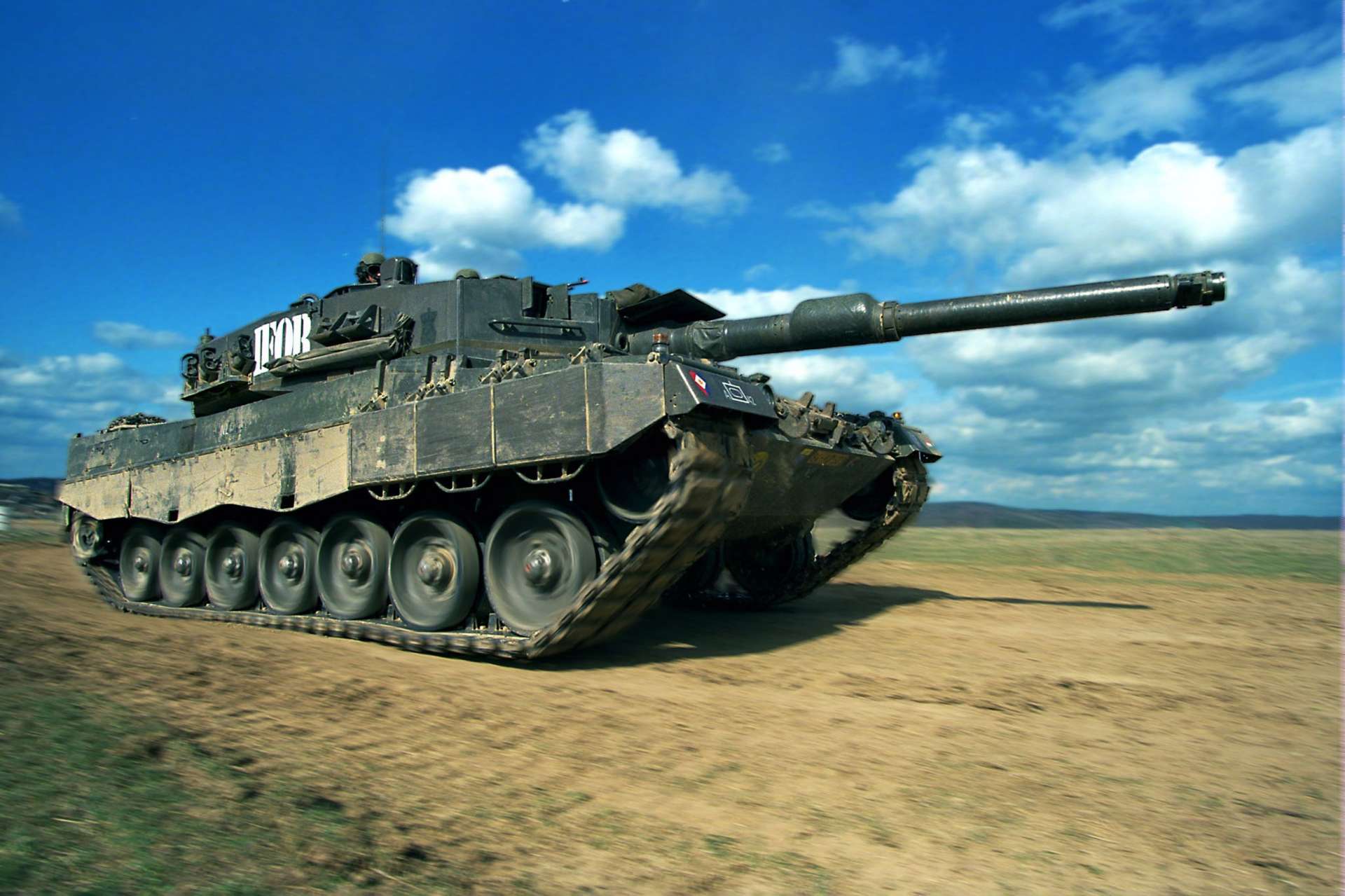
The Netherlands became the first foreign buyer of the Leopard 2 tank on March 2, 1979, purchasing 445 units from the second and third production series. (Picture source: Dutch MoD)
The reintroduction of tanks is considered a significant step forward by Defense Ministry sources, as the Netherlands became the first foreign buyer of the Leopard 2 tank on March 2, 1979, purchasing 445 units from the second and third production series, with modifications such as a Dutch-made radio system, unique smoke grenade launchers, FN MAG machine guns, and a locally manufactured driving device. This decision was made in close cooperation with Germany, allowing for technology exchanges that influenced both countries' tank production. The procurement was completed by July 1986.
Due to military restructuring, the Netherlands reduced its inventory over time. Initially, the Netherlands purchased 445 Leopard 2s, but in 1993 decided to reduce this number and later sold surplus tanks to Austria and Norway. Of the remaining tanks, 330 were upgraded to the A5 standard, and later 180 of these were further upgraded to the A6 level. Subsequently, 37 A6NLs were sold to Portugal, 20 A6NLs and 80 A4NLs to Canada, and 52 A4NLs to Norway. Additionally, 10 Leopard 2A4NLs were converted into the Kodiak armored engineer vehicle, and the Büffel armored recovery vehicle was adopted in the Dutch-specific configuration known as the Bergingstank 600kN.
Due to defense budget cuts, the Netherlands decided to phase out all Leopard 2A6 tanks in April 2011, which has been a point of contention for the Royal Netherlands Army. In 2015, a small tank unit was formed, consisting of eighteen Leopard 2 A6M A2 tanks leased from Germany. However, these tanks remain part of a German formation (the 414 Tank Battalion) and are stationed at a German NATO training area, with reciprocal arrangements allowing a German unit to join a Dutch brigade. Therefore, according to internal sources in the Dutch Defense Ministry, the acquisition of domestically owned tanks is seen as an important development for the Dutch Army.
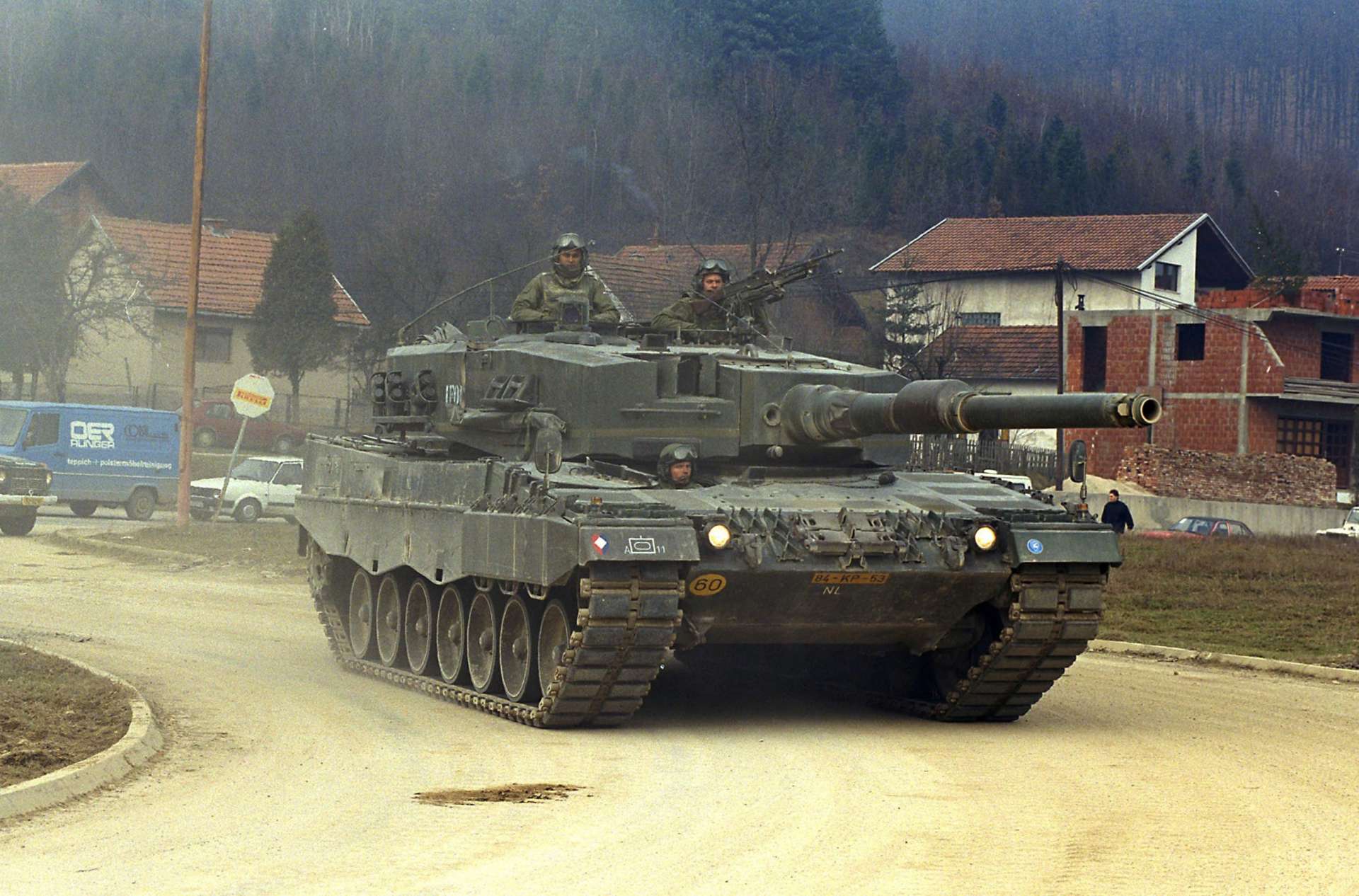
Over the years, the Dutch Leopard 2 tanks participated in various missions, including the NATO-led Implementation Force (IFOR), a multinational peace enforcement force in Bosnia and Herzegovina. IFOR operated under a one-year mandate from December 20, 1995, to December 20, 1996, as part of Operation Joint Endeavour. (Picture source: Dutch MoD)
According to NRC, there is a consensus on the type of tank to be acquired. The Dutch Army has over forty years of experience with the Leopard 2 and has closely collaborated with the German Army. Last year, Germany invited the Netherlands to participate in the Leopard 2A8 Procurement Initiative, which aims to consolidate demand from various NATO countries to reduce costs.
The Leopard 2A8, the latest version of the tank, will be standardized across all participating countries, unlike in the past when customers often had specific requirements. Several countries, including Norway and the Czech Republic, have already joined the initiative. According to sources within the Ministry of Defense, the first contracts could be signed in the coming months.
In response, the Ministry of Defense stated that it does not wish to comment further on the contents of the 2024 Defense Memorandum, which will be officially presented this Thursday.

According to sources within the Dutch Ministry of Defense, the first contracts for the purchase of the Leopard 2A8 could be signed in the coming months. (Picture source: KNDS)
The Leopard 2A8 is the latest variant in the Leopard 2 series of main battle tanks, developed by Krauss-Maffei Wegmann (KMW) and Rheinmetall, and unveiled in its production form at Eurosatory 2024. Based on the Leopard 2A7+, it features several upgrades in armor, firepower, and situational awareness. The tank is equipped with a multi-layered armor protection system that uses steel, tungsten, composite materials, and ceramic components, along with the EuroTrophy Active Protection System (APS), which offers 360-degree radar coverage and intercepts incoming projectiles. It also includes an omnidirectional observation system, advanced optics with third-generation thermal imaging, and a fire control system designed to improve targeting accuracy.
The Leopard 2A8's main armament is an improved 120 mm/L55 A1 smoothbore gun, capable of firing a variety of munitions, including programmable ammunition for different target types. Secondary armaments consist of a coaxial 7.62 mm machine gun and a 76 mm grenade launcher. The tank's design incorporates reinforced protection on the turret and hull, with additional features such as a laser warning system and the option for a remote-controlled weapon station.
Powered by a 1,500 hp engine, the Leopard 2A8 has a maximum speed of 65 km/h and an operational range of about 400 kilometers. The tank includes a reinforced suspension system, upgraded cooling units, and various ergonomic improvements, which are intended to support its performance across different terrains and combat scenarios. These updates aim to enhance the vehicle's overall capabilities while maintaining the design framework of the Leopard 2 series.
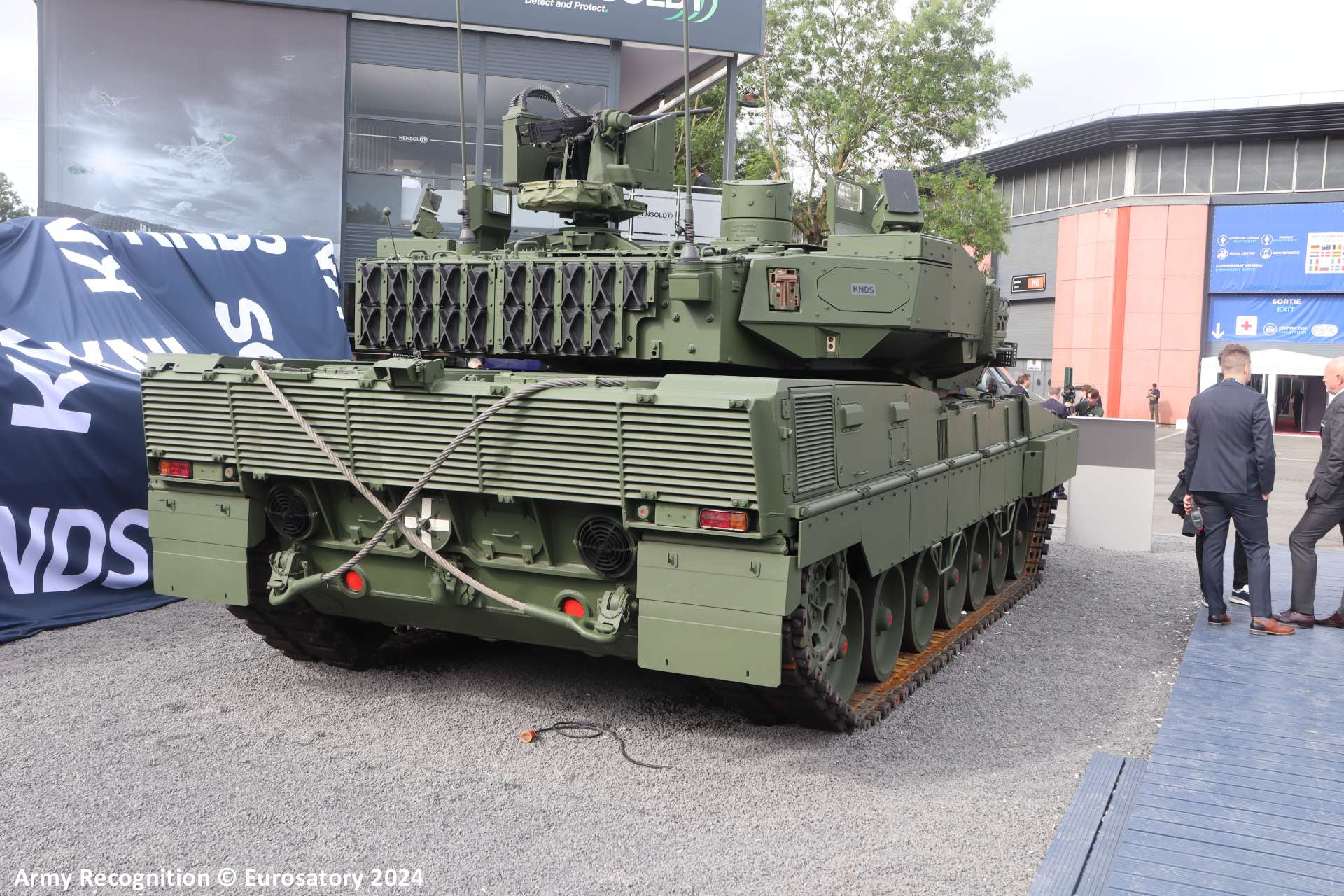
Powered by a 1,500 hp engine, the Leopard 2A8 has a maximum speed of 65 km/h and an operational range of about 400 kilometers. (Picture source: Army Recognition)
- Details
- Written by: Halna du Fretay
- Category: 2024
- Hits: 5097
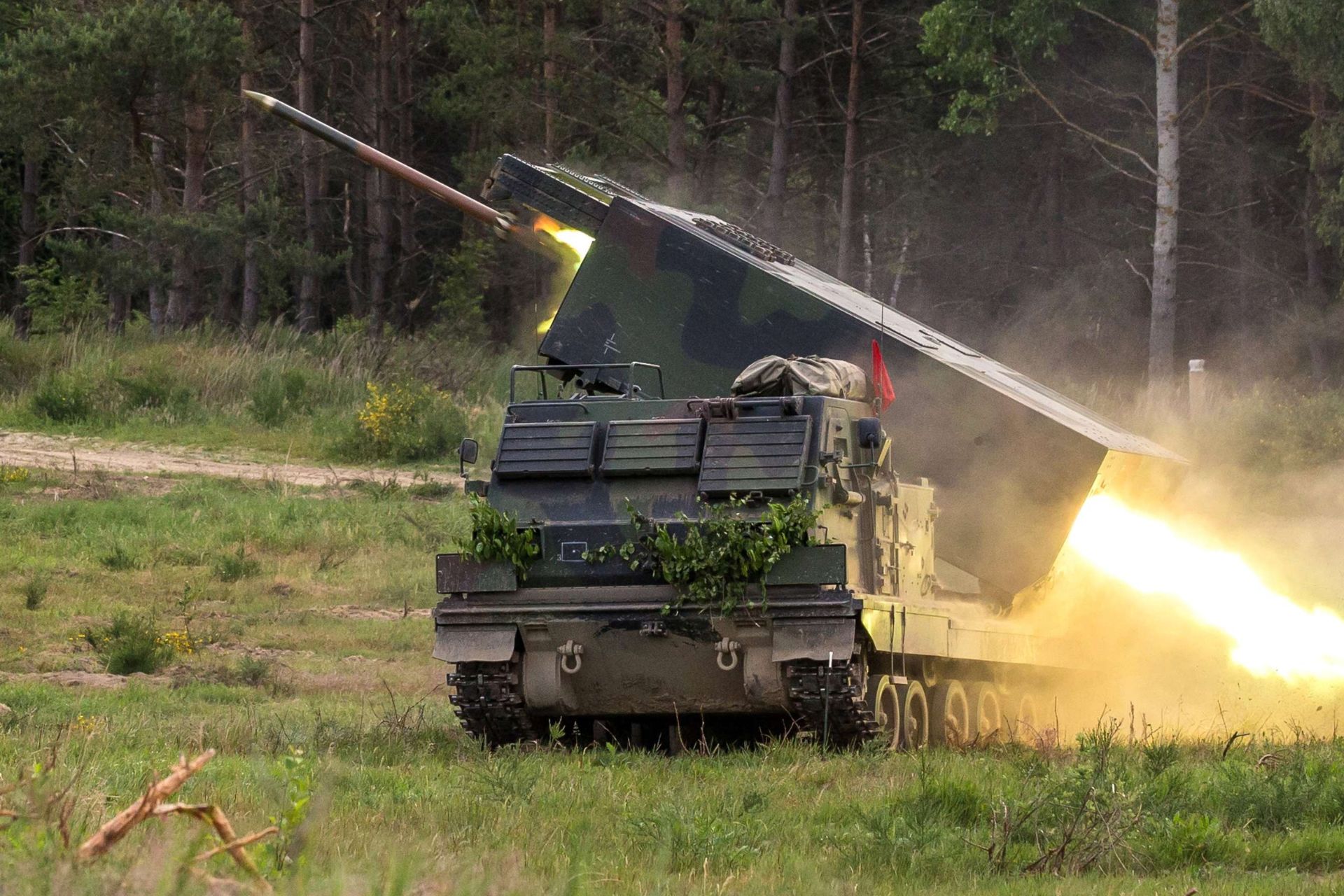
The U.S. Army has significantly increased the ceiling of its contract for Guided Multiple Launch Rocket Systems (GMLRS), adding $3.4 billion to the existing agreement. This contract, structured as an Indefinite Delivery, Indefinite Quantity (IDIQ) arrangement, is designed to strengthen the inventory of these rockets and associated equipment, according to a statement from Lockheed Martin, the manufacturer of the GMLRS.
Follow Army Recognition on Google News at this link
Since 2022, the United States, United Kingdom, and Germany have committed to providing Ukraine with Multiple Launch Rocket Systems (MLRS) equipped with Guided MLRS (GMLRS) rockets (Picture source: Bundeswehr)
An announcement from the Pentagon, dated August 30, 2024, states that work locations and funding allocations will be determined with each order. The contract is set to be executed by October 20, 2027, allowing the Army to place orders based on future needs. Lockheed Martin noted that this contract modification will increase GMLRS production in response to growing demand for these munitions.
In April 2024, the U.S. Army had previously announced plans for a four-year procurement contract to acquire 18,000 GMLRS missiles by the end of the fourth quarter of the fiscal year 2024. At the time, the Department of Defense's comptroller estimated that the multi-year contract would save approximately $68 million, or 2.5%, compared to annual separate purchases. This decision comes as the U.S. seeks to increase munitions production to meet the needs of its allies, particularly Ukraine and Taiwan.
This contract extension follows a decision made in May 2023 when the Biden administration submitted a request to Congress for multi-year procurement authority for GMLRS as part of the fiscal year 2024 budget. The program was part of a series of initiatives aimed at ensuring the continuous production of essential munitions deemed critical to support U.S. allies in international conflicts.
The GMLRS is a precision-strike rocket system, GPS-guided, and capable of operating in all weather conditions. It can be launched from the High Mobility Artillery Rocket System (HIMARS) and the MLRS family of launchers. The system comes in three variants: the GMLRS Unitary and GMLRS Alternative Warhead, both with a range of 70 kilometers, and the GMLRS Extended-Range, capable of striking targets up to 150 kilometers away.
The recent $3.4 billion contract modification aims not only to increase the production of these rockets but also to address the urgent need to replenish stockpiles. These stockpiles have been significantly depleted due to large-scale deliveries to Ukraine, where the U.S. has provided substantial quantities of GMLRS along with HIMARS launch systems. To accelerate the restoration of its inventory, the U.S. Army plans to increase annual GMLRS production from 6,000 to 14,000 units by 2025. Additionally, it is considering producing these systems outside the United States, as evidenced by an agreement with Australia for local production worth $37.4 million.
This contract extension and the efforts to boost production highlight the strategic importance of GMLRS in modern military operations, particularly in hybrid warfare scenarios and support for key allies in conflict zones.
- Details
- Written by: Vandenbosch
- Category: 2024
- Hits: 4402
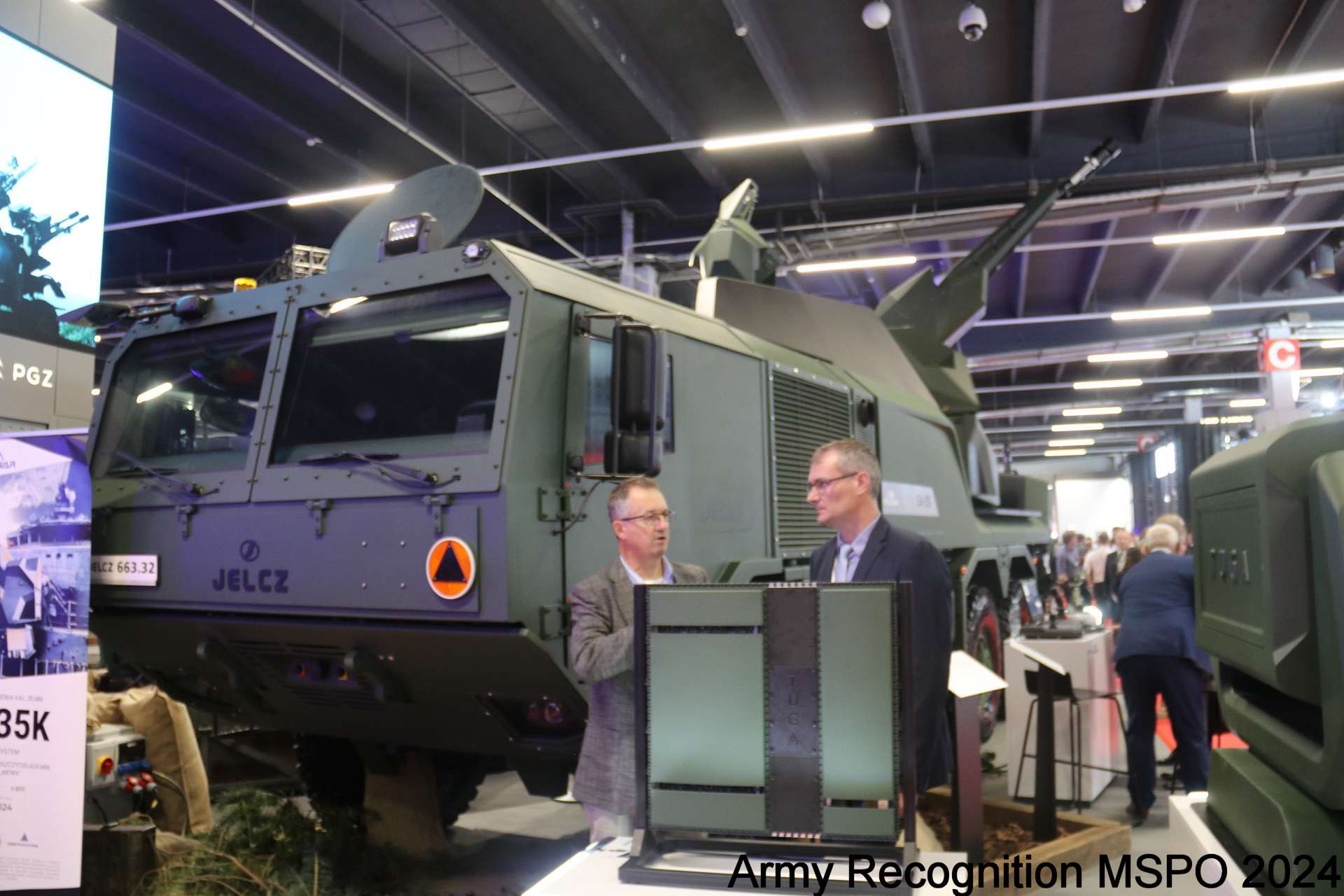
The MSPO 2024 exhibition, taking place in Kielce, Poland, is one of the most significant showcases for the defense industry, highlighting cutting-edge technologies and strategic innovations. This year, among the many presentations, the SA-35 system, a 35 mm self-propelled gun, is drawing particular attention due to its advanced air defense capabilities.
Follow Army Recognition on Google News at this link
The SA-35 is mounted on a highly mobile JELCZ 6x6 chassis. (Picture source: Army Recognition)
The SA-35, developed by PIT-RADWAR, a subsidiary of the Polish group PGZ, embodies the technological evolution in the field of short-range air defense systems. This 35 mm gun is mounted on a highly mobile JELCZ 6x6 chassis, designed to meet the specific needs of the Polish Armed Forces. The JELCZ platform, known for its robustness and ability to operate in difficult conditions, provides the SA-35 with essential tactical and strategic mobility for modern defense.
This system is designed to engage a variety of aerial targets, including fixed-wing aircraft, helicopters, cruise missiles, and drones. Its ability to use programmable ammunition allows it to effectively counter smaller threats, such as kamikaze drones, which represent a growing danger on contemporary battlefields. The SA-35 can fire several types of ammunition, including armor-piercing rounds and airburst munitions (ABM), making it highly versatile.
One of the key strengths of the SA-35 is its ZGS-35 optoelectronic fire control system, integrated with the Tuga radio frequency command system. This system allows for autonomous detection, tracking, and interception of targets, reducing reliance on human operators and enhancing the system's responsiveness. The SA-35 can operate in automatic, semi-automatic, or autonomous modes, offering great operational flexibility.
The SA-35 is also compatible with existing air defense systems in Poland, making it easier to integrate into current defense batteries. This compatibility, combined with a high level of automation, reduces personnel requirements and simplifies maintenance, making it a cost-effective solution for the armed forces.
Beyond its firing capabilities, the SA-35 stands out for its rapid deployment speed. Thanks to its modular design, it can be quickly deployed in the field and ready to fire in just a few minutes. This feature is crucial for short-term protection of strategic infrastructure or troop formations on the move.
The SA-35 was designed not only for static defense but also for dynamic operations requiring rapid changes in combat position. The JELCZ chassis provides the ability to move quickly while maintaining high-precision firing capability, even while on the move.
The presentation of the SA-35 at MSPO 2024 highlights Poland's commitment to modernizing its air defense capabilities, as well as the renewed importance of air defense systems equipped with guns, following the rise of drone use in Ukraine. The SA-35, with its combination of firepower, mobility, and advanced technology, represents a significant advancement in protection against a wide range of aerial threats, making the system particularly relevant in the context of today's security challenges.
Read more: Self-Propelled Gun SA-35 from PGZ Aims to Redefine Modern Air Defense

- Details
- Written by: Jérôme Brahy
- Category: 2024
- Hits: 6676
At the 32nd International Defence Industry Exhibition (MSPO 2024) in Poland, held from September 3 to 6, Polska Grupa Zbrojeniowa (PGZ SA), a state-owned entity overseeing numerous Polish defense firms, presented the ZSSW-30, a remotely controlled turret system designed for the Polish Land Forces. Developed by a consortium led by Huta Stalowa Wola (HSW) and WB Electronics, this turret is intended to be integrated into various armored fighting vehicles, including the Rosomak armored personnel carrier (APC) and the Borsuk infantry fighting vehicle (IFV).
Follow Army Recognition on Google News at this link
The ZSSW-30 turret features a range of equipment, including bi-axial stabilization for its primary weapons: a 30mm Mk44S Bushmaster II autocannon and a 7.62mm UKM-2000C coaxial machine gun. (Picture source: Army Recognition)
The ZSSW-30, or "Zdalnie Sterowany System Wieżowy 30 mm" (30mm Remote Control Turret System), has been designed to engage and neutralize enemy armored targets and support combat operations under a wide range of conditions, including varied climates and times of day. The turret is set to replace the Hitfist-30P turret on the Rosomak APC and is expected to provide the Polish military with enhanced operational capabilities.
The turret features a range of equipment, including bi-axial stabilization for its primary weapons: a 30mm Mk44S Bushmaster II autocannon and a 7.62mm UKM-2000C coaxial machine gun. The ZSSW-30 is also equipped with a double anti-tank guided missile (ATGM) launcher for Spike-LR missiles, eight smoke grenade launchers, and a fire control system capable of supporting programmable ammunition. It operates in both "Hunter-Killer" and "Killer-Killer" modes, and includes the OBRA-3 SSP-1 laser radiation detection system, which is linked to eight smoke grenade launchers.
In terms of observation, the ZSSW-30 integrates independently stabilized devices for both the commander and the armaments operator, along with an additional wide-angle periscope for emergency use. Communication within the turret is facilitated by the FONET internal system. The turret is capable of firing in both automatic and emergency modes, with a rate of fire of 200 rounds per minute for high-explosive ammunition and 120 rounds per minute for air-burst munitions (ABM).
The turret’s development history began in response to challenges with the maintenance and modernization of the Hitfist-30P turrets used on the Rosomak APC. Plans to license an unmanned turret system from Leonardo were dismissed due to concerns over operational difficulties. Instead, a competition was launched in March 2011 between two consortia. The winning bid, led by HSW and WB Electronics, secured a contract in March 2013 to produce five prototype turrets, aiming for serial production by 2016. However, production faced delays due to the ambitious schedule and the decision by the Ministry of Defense (MOD) to minimize foreign components in the design.
The first prototype of the ZSSW-30 was unveiled at the MSPO 2014, with further development and testing continuing over the next several years. The turret completed trials in October 2021, leading to negotiations for serial production. In November 2022, WB Group contracted PCO to manufacture 70 "Iris" and "Nike" sights for the first production batch. The ZSSW-30 was officially introduced into service in December 2023 with the 21st Podhale Rifle Brigade, featuring on five Rosomak IFVs.
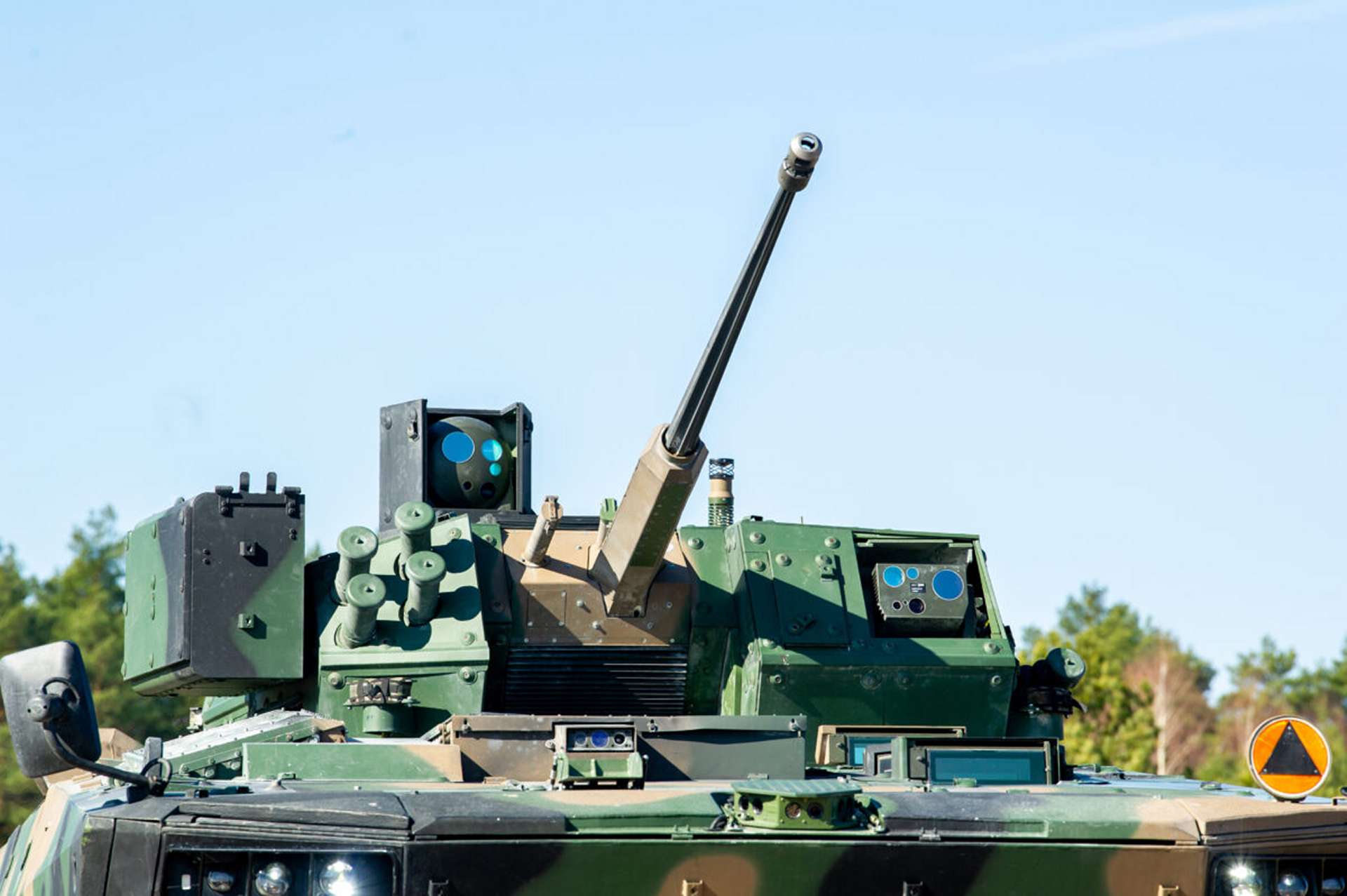
The ZSSW-30 turret is intended to be integrated into various armored fighting vehicles, including the Rosomak armored personnel carrier and the Borsuk infantry fighting vehicle. (Picture source: Huta Stalowa Wola)
Future enhancements for the ZSSW-30 turret include the potential integration of EyeQ AI algorithms to improve target tracking and identification, and plans to incorporate additional types of anti-tank guided missiles, such as the FGM-148 Javelin. These improvements aim to extend the turret's operational capabilities.
The turret's armament includes the Mk44S Bushmaster II autocannon, which is compatible with various ammunition types and has a dual-feed system that allows for quick switching between them. The UKM-2000C coaxial machine gun provides additional support against lighter targets. To engage heavily armored vehicles, the turret carries two Spike-LR anti-tank guided missiles, which offer multiple operating modes and a range of up to 4.5 kilometers. The Spike-LR missiles are housed in a separate launch container, which enhances safety and allows for rapid replacement in the field.
The ZSSW-30 is fitted with eight 81mm smoke grenade launchers, designed to provide a multispectral smoke screen that obscures the vehicle in both visible and infrared spectrums. These smoke grenades are produced by ZSP Niewiadów and provide temporary cover to protect the vehicle from enemy detection systems.
While the level of armor protection for the ZSSW-30 turret has not been officially disclosed, it reportedly includes materials such as polyethylene fabric, steel plates, and ceramic composites, providing level III protection for the turret’s main structure and missile container. Additional protective measures are provided by the OBRA-3 soft kill active protection system, which detects and counteracts incoming threats using automatic smoke deployment.
For situational awareness, the ZSSW-30 uses the "Iris" and "Nike" sights, which offer advanced optical capabilities for both the commander and gunner. These sights are equipped with daytime and thermal channels, laser rangefinders, and emergency optical sights, all integrated into the turret’s fire control system. The fire control system supports various modes of engagement, allowing for effective targeting even when the vehicle is in motion.

- Details
- Written by: Administrator
- Category: 2024
- Hits: 6536
The German government has confirmed the delivery of 12 IRIS-T SLM air defense missile systems to Ukraine, as reported by the International Press Agency Reuters on September 3, 2024. The advanced air defense systems are part of Germany's broader commitment to bolster Ukraine's defense capabilities in the face of Russian troops' ongoing invasion.
Follow Army Recognition on Google News at this link
Launcher unit of German-made IRIS-T SLM air defense missile system at ILA 2024 Air Show in Berlin, Germany.(Picture source: Army Recognition Group)
According to the latest reports, Germany has already supplied four units of the IRIS-T SLM systems to Ukraine. Two additional units are expected to be delivered by the end of the year, with the remaining six units slated for delivery at a later, unspecified date. This phased delivery underscores Germany's strategic approach to supporting Ukraine, ensuring that the systems are integrated effectively into Ukraine's existing defense infrastructure.
This announcement follows a series of discussions between German and Ukrainian officials, highlighting the ongoing international efforts to support Ukraine in its defense against Russian invasion. The delivery of these systems also aligns with Germany's broader commitment to NATO and EU initiatives aimed at strengthening the defense capabilities of allied nations facing external threats.
The IRIS-T SLM (Surface Launched Medium-range) system is an advanced air defense platform designed to counter a wide range of aerial threats, including aircraft, drones, helicopters, and various missile types. Developed by Diehl Defence, this system is part of the IRIS-T missile family, originally conceived as an air-to-air missile but adapted for surface-launched applications.
Key features of the IRIS-T SLM include its extended range of up to 40 kilometers and the ability to engage targets at altitudes reaching 20 kilometers. This range allows it to protect vast areas, including critical infrastructure and military assets. The missile is equipped with a sophisticated infrared seeker, ensuring high precision even in adverse conditions such as low visibility or the presence of electronic countermeasures, thereby minimizing collateral damage.
The system offers 360-degree coverage, capable of detecting, tracking, and engaging multiple targets simultaneously. This all-around defense capability is particularly valuable in complex combat environments where threats may come from various directions. Additionally, the IRIS-T SLM can be integrated into broader air defense networks, enhancing its effectiveness through network-centric warfare capabilities, allowing it to work in coordination with other systems for a layered defense approach.
The IRIS-T SLM is highly mobile, making it suitable for rapid deployment in diverse combat scenarios. This mobility and flexibility allow it to be used effectively in both static and mobile defense roles, giving commanders the ability to adapt quickly to changing battlefield conditions.
In Ukraine, the IRIS-T SLM has demonstrated significant combat effectiveness. It has been instrumental in intercepting a variety of missile types, including short-range ballistic and cruise missiles, thereby protecting Ukrainian cities and military installations. The system has also proven valuable in countering drone threats, which adversaries have used extensively for reconnaissance and direct attacks. The IRIS-T SLM's ability to detect and neutralize drones has been a critical component of Ukraine's air defense strategy.
Moreover, the system's integration with other Ukrainian air defense platforms, such as the S-300 and Buk-M1, has created a robust, multi-layered defense network. This integration enhances overall airspace protection, allowing for a more coordinated and effective response to aerial threats. The IRIS-T SLM's mobility has also been a strategic advantage, enabling Ukrainian forces to reposition it rapidly in response to evolving threats, thereby maintaining continuous protection of critical areas.
The combat experience in Ukraine has underscored the IRIS-T SLM's role as a vital component of the nation's air defense, demonstrating its significant contribution to the broader international efforts to support Ukraine amid ongoing conflict.
Read more: Germany Confirms Plan to Deliver 12 IRIS-T SLM Air Defense Missile Systems to Ukraine

- Details
- Written by: Jérôme Brahy
- Category: 2024
- Hits: 8065
At the 32nd International Defence Industry Exhibition (MSPO 2024) held in Poland from September 3 to 6, 2024, Huta Stalowa Wola (HSW), a member of Polska Grupa Zbrojeniowa (PGZ SA), presented the Borsuk, a new amphibious infantry fighting vehicle (IFV). The Borsuk, also known as the "Badger," is intended to replace the BWP-1 IFVs that have been in service with the Polish Armed Forces since 1973. The project was financed by the National Center for Research and Development and involved collaboration with multiple Polish defense firms and research institutions.
Follow Army Recognition on Google News at this link
A framework agreement for the delivery of 1,000 Borsuk vehicles was signed on February 28, 2023, with serial deliveries planned to start in 2024. (Picture source: Army Recognition)
The Borsuk infantry fighting vehicle (IFV) is designed for the transport and protection of infantry soldiers and their crew against various battlefield threats, such as small arms fire, RPGs, and improvised explosive devices (IEDs). It is capable of independently crossing wide water obstacles, differentiating it from other European IFVs that typically require external assistance to traverse bodies of water.
The vehicle’s chassis features a powerpack driving system, a high level of modular ballistic and mine protection, an auxiliary power unit, a chemical, biological, radiological, and nuclear (CBRN) filtration system, a firefighting and suppression system, an omnidirectional observation system referred to as "SOD," and a breakwater for water operations.
The Borsuk is armed with the ZSSW-30 remote-controlled turret system, which is designed to engage various types of targets, including light and heavy armored targets, as well as enemy infrastructure. The turret, also mounted on KTO Rosomak vehicles, includes a 30 mm automatic cannon with a dual-feed system, a 7.62 mm coaxial machine gun, eight smoke grenade launchers, and a dual launcher for SPIKE anti-tank guided missiles (ATGMs).
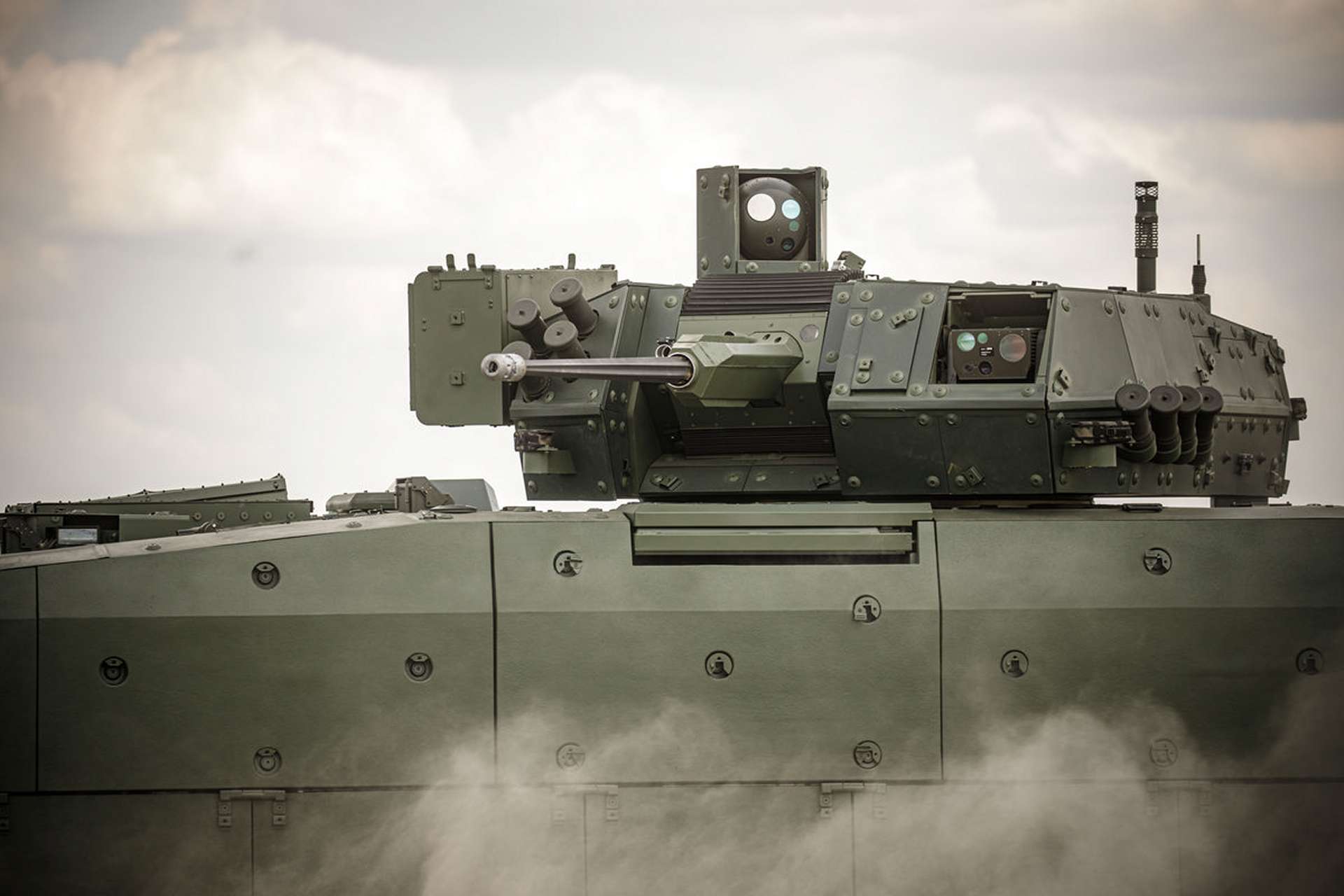
The turret of the Borsuk IFV, also mounted on KTO Rosomak vehicles, includes a 30 mm automatic cannon with a dual-feed system, a 7.62 mm coaxial machine gun, eight smoke grenade launchers, and a dual launcher for SPIKE anti-tank guided missiles. (Picture source: Huta Stalowa Wola)
The ZSSW-30 also provides bi-axial stabilization for the main armament, independently stabilized observation devices for both the commander and the armament operator, and an additional observation device with a wide-angle periscope for emergency situations. The turret incorporates "Hunter-Killer" and "Killer-Killer" modes, an OBRA-3 SSP-1 Laser Radiation Detection system integrated with smoke grenade launchers, and the ability to fire in both automatic and emergency modes. This system is designed to be autonomous in both tactical and constructional terms, allowing adaptation to various carriers, including tracked vehicles.
The Borsuk’s dimensions are approximately 7.6 meters in length and 3.4 meters in width, and it weighs around 25 tons. The vehicle is powered by an MTU 8V199 TE20 engine with 720 horsepower, which enables it to reach speeds of up to 65 km/h on paved roads and 8 km/h in water. It can be equipped with either steel or elastomer tracks and is built to meet NATO Stanag 4569 protection standards: Level 3 on the sides and Level 4 at the front. The vehicle accommodates a crew of three—a commander, driver, and gunner—and can carry up to six additional infantry soldiers.
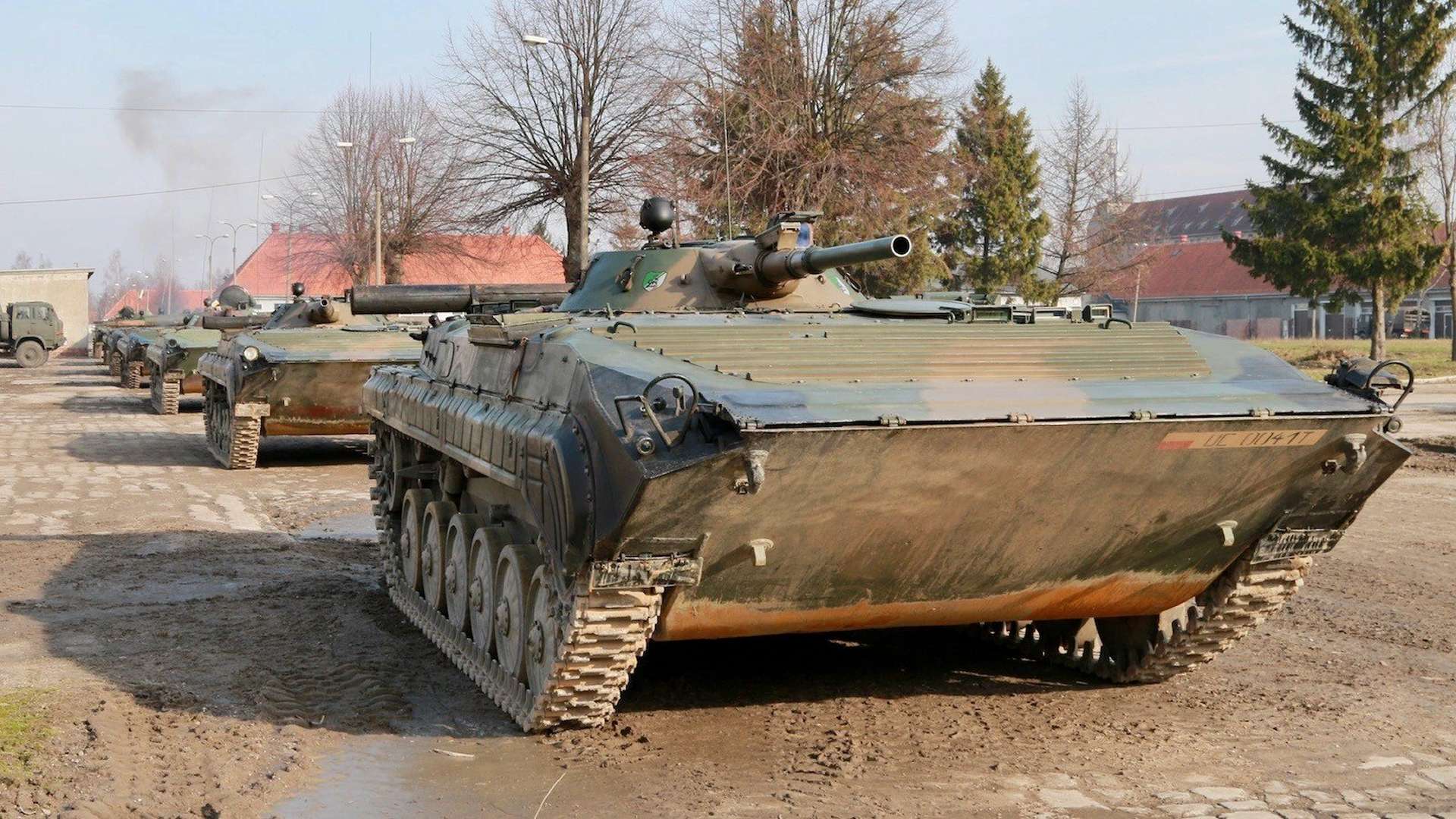
The development of the Borsuk began in 2012, following the Polish Ministry of National Defense's decision to replace the aging BWP-1 infantry fighting vehicle, the Polish designation for the Soviet-era BMP-1. (Picture source: 16 Pomorska Dywizja Zmechanizowana)
The Borsuk’s development began in 2012 with the Polish Ministry of National Defense’s decision to replace the aging BWP-1 vehicles. The Technical Modernization Plan for 2012-2022 called for the procurement of around 800 new IFVs. In 2013, the National Center for Research and Development launched a competition for the development of a new floating infantry fighting vehicle. The winning consortium, led by Huta Stalowa Wola, included other defense entities such as Rosomak SA, Wojskowe Zakłady Motoryzacyjne SA, Wojskowe Zakłady Elektroniczne SA, Wojskowe Zakłady Inżynieryjne SA, and several Polish research institutions.
The Borsuk prototype was first publicly shown in 2017 at the International Defense Industry Exhibition in Kielce. By 2018, a technology demonstrator had begun factory trials, and in 2020, the vehicle successfully completed military trials at the Drawsko Training Ground. These trials included a series of firing tests. A framework agreement for the delivery of 1,000 Borsuk vehicles was signed on February 28, 2023, with serial deliveries planned to start in 2024. The agreement also includes the delivery of 400 specialist vehicles, such as Żuk reconnaissance transporters, Oset command vehicles, Gotem medical evacuation vehicles, Gekon technical support vehicles, and Ares contamination reconnaissance transporters.
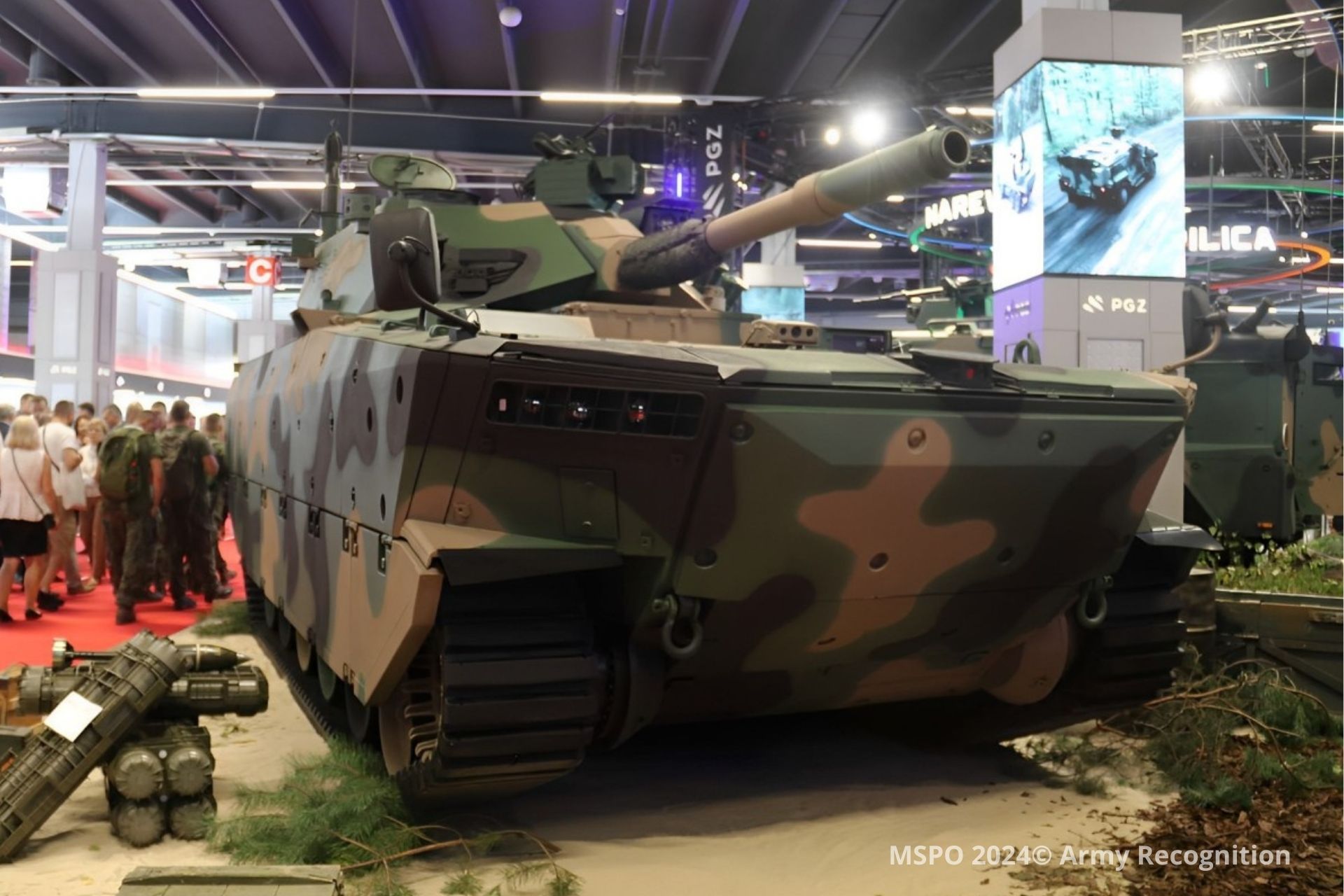
The RAK M120G can target enemy forces, including infantry and tanks, with a high rate of fire of up to 10-12 rounds per minute. (Picture source: Army Recognition)
The Borsuk, with the ZSSW-30 turret system, is currently the only existing variant of the vehicle. However, the Borsuk’s chassis is intended to serve as a base for additional specialized variants, such as command, reconnaissance, armored recovery, and NBC reconnaissance. At the MSPO 2024 event, a variant of the Borsuk equipped with a 120 mm self-propelled mortar turret system named RAK M120G was also presented.
This mortar system is intended to provide indirect, semi-indirect, and direct fire support for battalion and company-level operations. The RAK M120G can target enemy forces, including infantry and tanks, and engage high-value targets such as command posts, reconnaissance units, electronic warfare assets, and fortified positions. It has a longer barrel that allows an increased rate of fire, reaching up to 10-12 rounds per minute. This variant retains the amphibious capabilities of the Borsuk platform, ensuring its operational flexibility in diverse terrains.
The Borsuk is currently in use by the Polish Armed Forces, with plans to deploy several hundred units across various infantry brigades. There are ongoing discussions with other countries, particularly in Eastern Europe and the Balkans, regarding potential acquisitions of the Borsuk. In March 2024, South Korea also reportedly expressed interest in purchasing the vehicle, though no official announcement has been made.
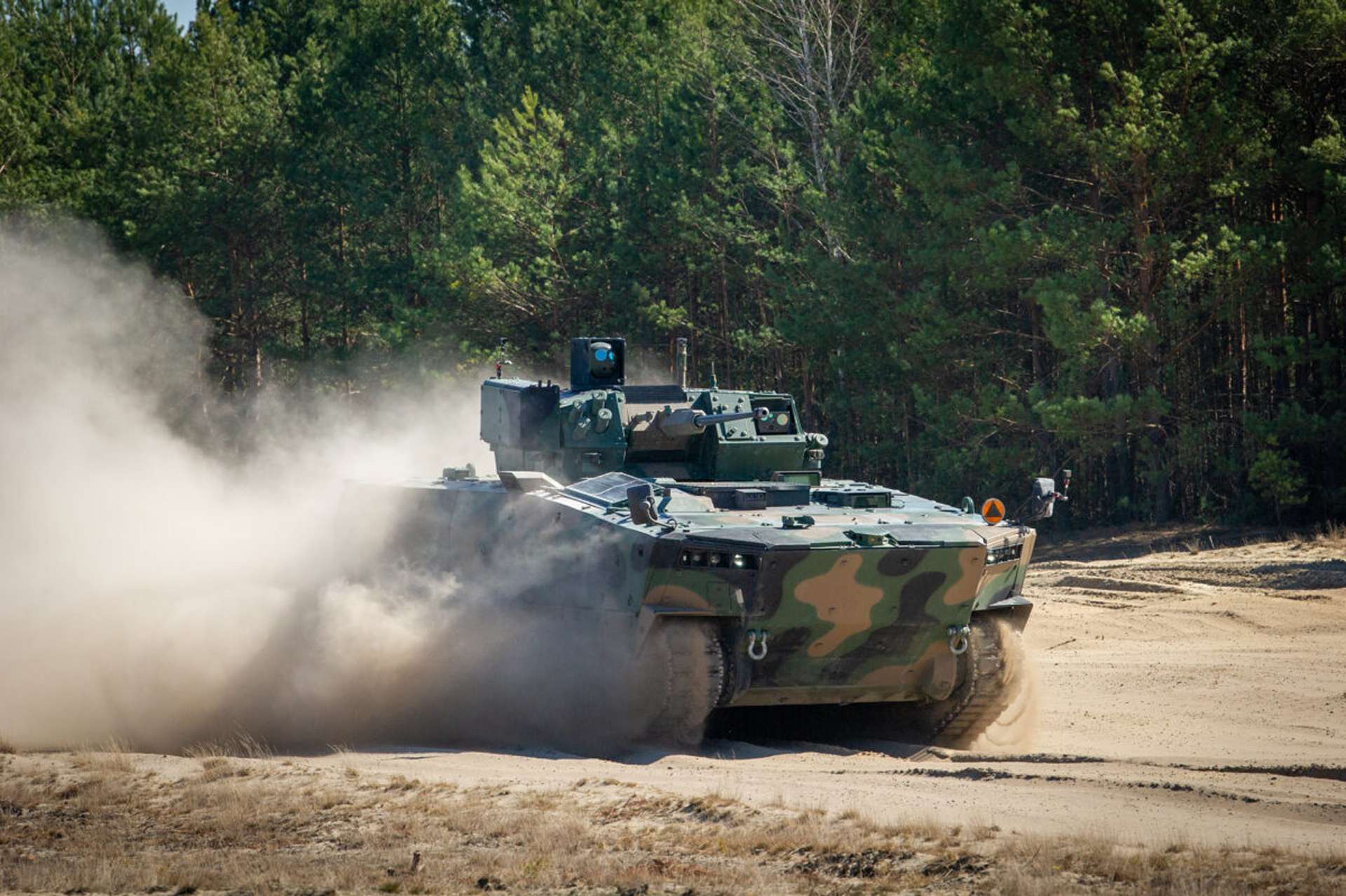
The vehicle is powered by an MTU 8V199 TE20 engine with 720 horsepower, which enables it to reach speeds of up to 65 km/h on paved roads and 8 km/h in water. (Picture source: Huta Stalowa Wola)
- Details
- Written by: Halna du Fretay
- Category: 2024
- Hits: 6104
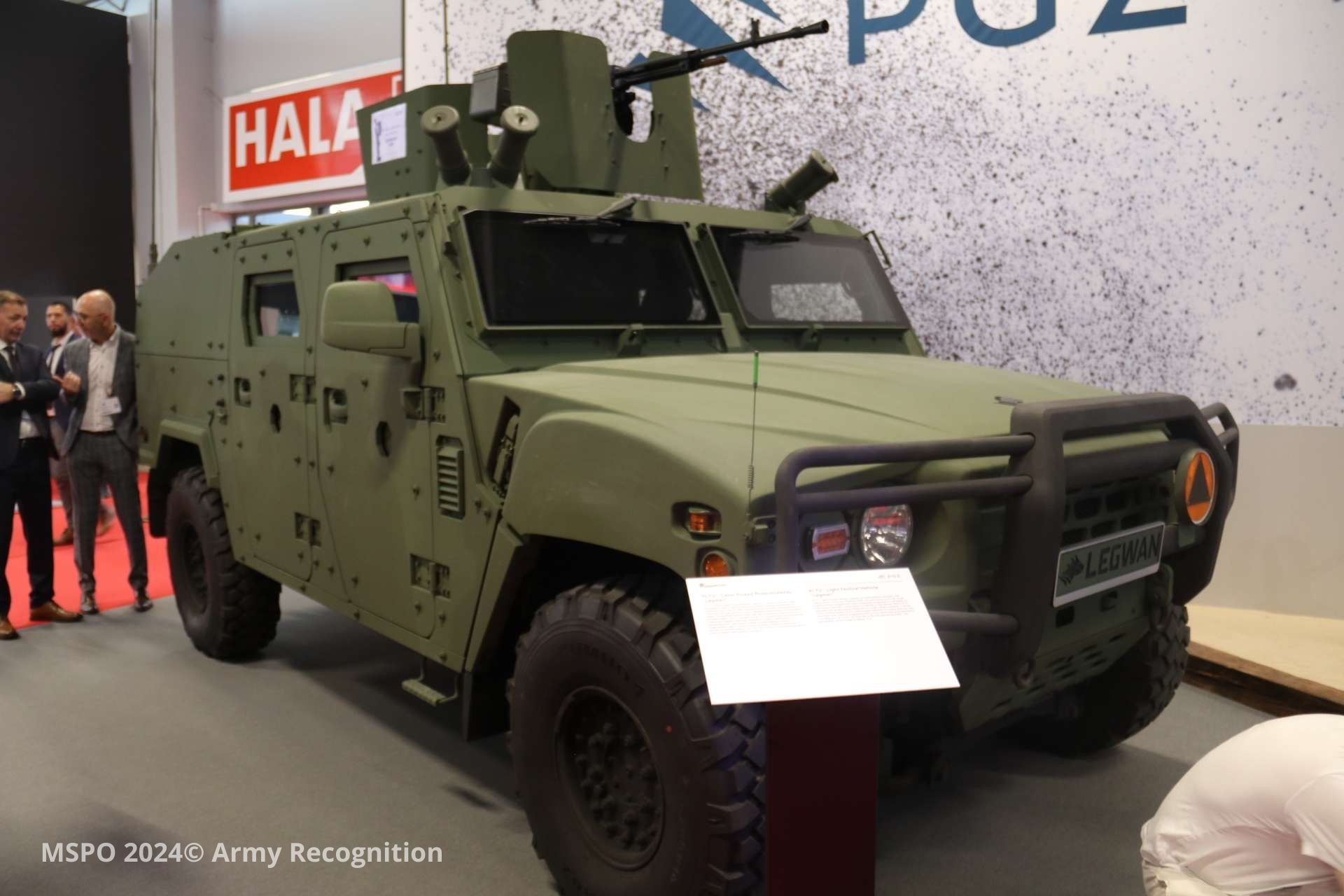
The MSPO 2024 exhibition features the unveiling of the KLTV Legwan, a light tactical vehicle developed through cooperation between Poland and South Korea. This vehicle, set to become a key asset of the Polish armed forces, represents a new phase in the modernization of the country's military equipment. Developed from KIA's KLTV platform, the Legwan stands out for its technical features and versatility, designed to meet the specific needs of the Polish armed forces.
Follow Army Recognition on Google News at this link
The KLTV Legwan's armor meets the STANAG 4569 Level I standard, with ballistic tests by South Korea's DTaQ confirming its effectiveness (Picture source: Army Recognition)
The KLTV Legwan is built on a 4x4 chassis and powered by a 225-horsepower diesel engine, providing robust and reliable performance in challenging terrains. It is equipped with fully independent suspension on all axles, enhancing mobility and adaptability across various terrains. Its eight-speed automatic transmission facilitates driving even in the most demanding situations.
One of the notable features of the KLTV Legwan is its armor, which meets the ballistic protection level I standard according to STANAG 4569. This armor effectively shields the crew from small-caliber projectiles, such as 7.62 mm x 51 NATO and 5.56 mm x 45 NATO, ensuring safety in hostile environments. For armored versions, more advanced protection is available, with levels reaching up to level 3, capable of withstanding armor-piercing rounds of 7.62 mm caliber.
Ballistic tests conducted by the South Korean Agency for Defense Development and Quality (DTaQ) have confirmed the effectiveness of the Legwan's protection, although some sensitive design aspects were not initially verified during the early development phases. These tests, conducted in December 2023, demonstrate the vehicle's robustness against 5.56 mm assault rifle fire, ensuring that the "Legwan" meets stringent international standards.
The vehicle is also equipped with additional features that enhance its resilience in the field, such as a central tire inflation system and run-flat tires, allowing continued operation even after being punctured by enemy fire. Additionally, a roof-mounted turret enables the installation of various armaments, ranging from a 12.7 mm machine gun to a 40 mm grenade launcher, making the "Legwan" adaptable to a variety of missions.
The KLTV project, initiated by KIA in 2012 under contract with the DAPA agency, aims to replace aging tactical vehicles in the South Korean army. Entering serial production in 2016, it has been adopted by several countries, including Mali, Nigeria, the Philippines, and now Poland, where it is configured to serve as the Light Reconnaissance Vehicle (LRV) for the Polish army.
Poland, seeking to modernize and standardize its fleet of armored vehicles, signed a contract with the PGZ-Rosomak consortium for the delivery of nearly 400 units of this vehicle by 2030. This contract, valued at approximately 1.2 billion zlotys, not only includes the supply of vehicles but also the local production in Poland, with a gradual transfer of technology from South Korea to the Rosomak SA plant in Siemianowice-Slaskie.
The first units of the KLTV Legwan have already been delivered to Poland, marking the beginning of a productive partnership between the two countries. These vehicles will serve as training tools for Polish specialists before the start of serial production. Over time, the production of these vehicles will become increasingly localized, strengthening Poland's industrial independence in this domain.
The proliferation of the KLTV Legwan reflects the effectiveness of the international cooperation model adopted by KIA Motors and Poland. This collaboration is expected to not only enhance Poland's defense capabilities but also position KIA Motors as a significant player in the global tactical vehicle market. The additional orders anticipated in the coming years confirm the growing interest in this vehicle, which combines robustness, modularity, and advanced protection, meeting the modern demands of military operations.
The collaboration between Poland and South Korea in defense has intensified in recent years, reflecting a mutual desire to strengthen their military capabilities through strategic partnerships. One of the most emblematic projects of this cooperation is Poland's acquisition of the K9 Thunder artillery system, a self-propelled howitzer developed by South Korea. This system, selected to meet the artillery needs of the Polish army, embodies South Korean technological expertise while being integrated into the Polish forces to enhance their indirect fire capabilities. In addition to the K9 Thunder, the collaboration between the two countries extends to other areas, such as the acquisition of advanced weapon systems and the transfer of technologies, aimed at modernizing Poland's defense capabilities while consolidating industrial relations between the two nations.
- Details
- Written by: Triffaux
- Category: 2024
- Hits: 6102
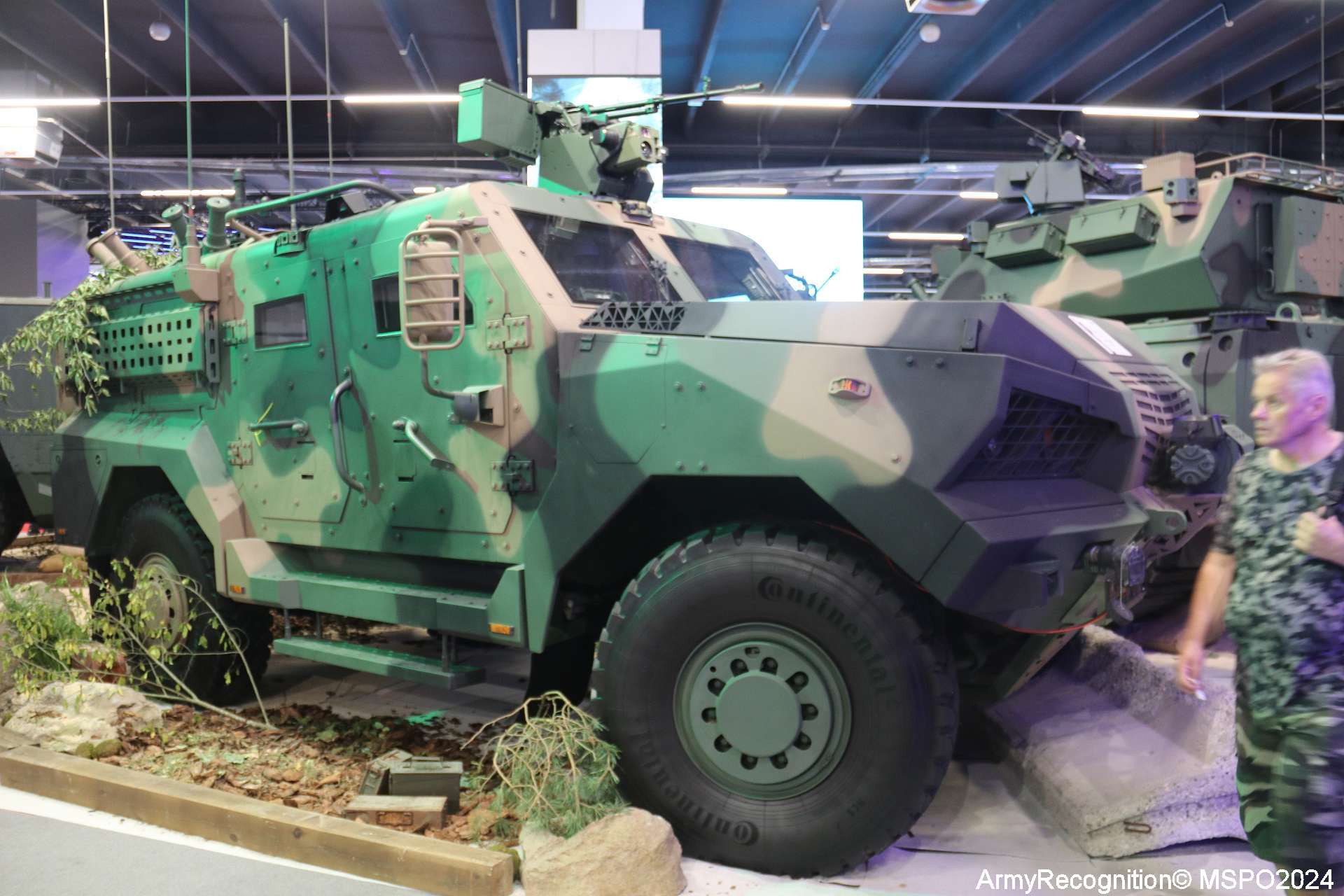
The WARAN 4x4 Tactical Multipurpose Vehicle, developed by PGZ (Polska Grupa Zbrojeniowa), is an advanced military platform currently showcased at the MSPO 2024 International Defence Industry Exhibition. This vehicle is designed for high mobility in challenging terrains, featuring a permanent 4x4 drive system and a sophisticated central tubular chassis. As a reminder, the design of the vehicle uses the Tatra 815-7 chassis.
Follow Army Recognition on Google News at this link
PGZ WARAN 4x4 Tactical Multipurpose Vehicle (Picture source: Army Recognition)
The vehicle was developed in collaboration with a Czech partner, Tatra Export (part of Tatra Trucks, owned by Czechoslovak Group and Promet Group), under an agreement signed on September 8, 2020, during the 18th International Defence Industry Exhibition (MSPO). This agreement provided for the design and delivery of an armored vehicle in a 4×4 configuration, along with the technical documentation of the cabin to allow for production in Poland. The starting point for the future Waran was the Czech Patriot II, based on the T815-7M3B21.372 chassis from the Force line, which had already been presented at the 17th MSPO in 2019.
However, as emphasized by Huta Stalowa Wola, the Waran was extensively redesigned and modified in Poland to meet the requirements of the Missile and Artillery Forces. The command vehicles as well as the weapon carriers were designed and built in Poland, taking into account the required communication and battlefield management systems.
The Waran is equipped with a six-cylinder air-cooled diesel engine, the Tatra T3C-928-90 with a power output of 300 kW (or alternatively, a Cummins ISL air-cooled engine with 270 kW), paired with a six-speed automatic Allison 4500SP transmission, offering a maximum speed of 110 km/h on paved roads and a range of up to 700 km. It provides ballistic protection ranging from level 2 to 4 and anti-mine protection from level 2a/2b to 3a/2b according to the STANAG 4569 standard.
The WARAN can accommodate a crew of eight (2+6), making it highly versatile for various military roles, including command and reconnaissance. Its modular structure allows for the integration of multiple specialized configurations and the addition of equipment such as observation systems or weapon stations, including the ZSMU.
The WARAN is equipped with advanced technology, including an air conditioning system with filtration, an automatic fire suppression system for the cabin and engine compartment, and parking heating. It also features an omnidirectional observation system, internal and external communication systems tailored to specific missions, and tires with RunFlat inserts.
As a reminder, in May 2022, the Ministry of National Defense of Poland ordered the Gladius reconnaissance and strike system mounted on the Waran. This system integrates FT-5 reconnaissance drones and the new Gladius 2 strike UAVs, capable of reaching distances of at least 100 kilometers, specifically designed for missile and artillery forces.
The first specialized variant of the Waran to enter service is an anti-tank guided missile launcher equipped with Brimstone missiles, scheduled to be deployed with the 14th Anti-Tank Artillery Regiment in Suwałki later this year.
Additionally, the Waran serves as a base platform for developing specialized vehicles for various military branches, including proposals for Special Forces under the PEGAZ program. It is also suitable as a close-range artillery reconnaissance vehicle and will be used for lower-tier units of the Narew air defense system.
As of February 10, 2024, the specific designations of the Waran variants are not fully known, but the exhibited versions include armored troop carriers, command vehicles, UAV carriers, and anti-tank rocket launchers. An anti-drone system equipped with a 12.7 mm WLKM has also been presented. The Waran can also be armed with a ZSMU A5 remote-controlled weapon module with a UKM 2000 7.62 mm machine gun, integrated into the ZZKO Topaz system with appropriate communication means, as well as into the Obra-3 passive defense system coupled with smoke grenade launchers.
- Netherlands will order Spike LR 2 anti-tank missiles from Rafael
- KUSZA Mobile Anti-Aircraft System: Versatile Response to Proliferation of Drones on Battlefield at MSPO 2024
- MSPO 2024: PGZ's PSR-A Pilica Very Short Range Air Defense System emerges as key asset in Poland's air defense strategy
- MSPO 2024: ZMT's ZSMU-1276 A3 Remote-Controlled Weapon Demonstrates Powerful Firing Capability