

- Details
- Written by: Administrator
- Category: 2024
- Hits: 7335










The British Ministry of Defense (MoD) has announced the procurement of up to three Foxhound LPPV (Light Protected Patrol Vehicle) technical demonstrator platforms. The order, which aims to showcase a new standard for potential future production, was confirmed via Gabriele Molinelli’s X account on July 12, 2024.
Follow Army Recognition on Google News at this link
The Foxhound Light Protected Patrol Vehicle (LPPV) is a British armored vehicle designed for high mobility and advanced protection against IEDs, small arms fire, and shell fragments. (Picture source: X Account Gabriele Molinelli)
The acquisition is part of the British MoD's Land Mobility Program, which seeks to enhance the mobility and protection of British armed forces. The Foxhound LPPV has been recognized for its advanced protective capabilities and agility, making it a vital asset for patrol and reconnaissance missions in challenging environments.
Details about the British Army's Land Mobility Programme (LMP) were disclosed at Defence iQ's International Armoured Vehicles (IAV) 2024 conference, held in London from January 22 to 25. The program aims to streamline the British Army's armored vehicle fleet by reducing the number of protected patrol and light utility vehicle types in service from over ten to just three.
The LMP will focus on procuring three new vehicle families: a Medium Protected Mobility vehicle, a Light Protected Mobility vehicle, and a Light Utility Platform. These vehicles will be required to meet Generic Vehicle Architecture (GVA) standards, ensuring continuous development throughout their service life.
In line with the Land Industrial Strategy, the program mandates that at least 60% of the workshare for these procurements will be allocated to the UK industry, bolstering local manufacturing and technological capabilities.
The Foxhound Light Protected Patrol Vehicle (LPPV) is a British armored vehicle designed to provide high levels of protection and mobility for patrol and reconnaissance missions. It features a V-shaped hull to protect against improvised explosive devices (IEDs) and mines, and its modular design allows for quick replacement of damaged parts and configuration adjustments to meet different mission requirements. Originally developed by Force Protection Europe and now produced by General Dynamics Land Systems, the Foxhound offers enhanced protection against small arms fire, shell fragments, and roadside bombs while maintaining high maneuverability and off-road capabilities.
As of the latest available information, the British Army has around 400 Foxhound vehicles in service. These vehicles entered service in 2012, initially procured to replace the Snatch Land Rover, which had been criticized for its vulnerability to IEDs (Improvised Explosive Devices) in Iraq and Afghanistan.
The Foxhound can be armed with various armaments, including 7.62mm general-purpose machine guns, 12.7mm heavy machine guns, or 40mm automatic grenade launchers. This flexibility allows it to be adapted to different mission requirements.
The vehicle can accommodate a total of six military personnel, including the driver, commander, and four infantrymen. The crew compartment is designed for quick entry and exit, facilitating rapid deployment in various operational scenarios.
One of the standout features of the Foxhound is its advanced protection system. The vehicle has a V-shaped hull designed to deflect blasts from IEDs and mines away from the crew compartment. It also incorporates composite armor, providing enhanced protection against small arms fire and shell fragments. The modular design allows damaged armor sections to be quickly replaced in the field.
The Foxhound is highly maneuverable, capable of operating in diverse and challenging terrains. It has a top speed of approximately 113 km/h and a range of about 675 km. The vehicle's independent suspension system and robust off-road capabilities ensure it can navigate difficult landscapes while maintaining stability and speed.

- Details
- Written by: Administrator
- Category: 2024
- Hits: 16263
Citing Israeli military sources and confirmed by "The Jerusalem Post" on July 12, 2024, the new generation of 155mm wheeled self-propelled howitzer called "ROEM" has conducted its first operational firing in June 2024 and will be deployed with an Israel Defense Forces (IDF) unit in the coming year.
Follow Army Recognition on Google News at this link
The new ROEM 155mm wheeled self-propelled howitzer offers more mobility and firepower than the M109 tracked howitzer currently in service with the Israeli Army. (Picture source: IDF)
For years, Israel has been working on rolling out a new type of futuristic artillery that is supposed to help transform the Israel Defense Forces into a superior artillery force. The new weapon, named Roem, is a large gun that sits on the back of a wheeled vehicle, in contrast to the current Israeli artillery that consists of the M109 155mm tracked self-propelled howitzer.
The immediate difference may not be obvious. It still fires the same caliber shells, but it is part of a larger investment in new technology in the IDF. Think of this like moving to F-35 warplanes from older jet fighters.
In June, the IDF gave a preview of what the new system means for the military. A video it produced and an article on its website said that IDF gunners fired the new cannon for the first time in operational use. It is “the first cannon in the world capable of automatic firing,” the army said at the time.
Maj. Franz says the ROEM project dates back decades to when the IDF first had the idea to build a new artillery piece. He’s been in service since 2004 and is intimately familiar with the M109s, which he has used for almost two decades.
The new Roem was developed by the Israeli company Elbit Systems. “Led by the Defense Ministry and defense manufacturer Elbit, the new Israeli cannon is already considered to be one of Israel’s premier security projects,” Ynet noted last year. “Most of its internal components remain classified. Only a handful of prototypes exist, and one has been modified for potential foreign customers.” In that report, Ynet said a “European variant” of the cannon could fire up to 80 km. The Israeli version will apparently have a shorter range.
The new weapon will be more maneuverable and have a higher firing rate than the M109, so the overall size of artillery units can change slightly. A standard battery of M109s, which usually has around eight guns, can be downsized slightly to 60% of the number of vehicles previously used. That would also free up crews to do other things.
In May 2023, the Israeli Company Elbit Systems published a video showing the new ROEM howitzer performing live mobility demonstrations and live firing tests.
The ROEM is based on a modified 10x10 US Oshkosh truck chassis. It has a crew of three, and it has a crew cabin at the front and an automatic artillery weapon system mounted at the rear.
The ROEM is armed with a 155mm/52 caliber cannon fitted with an automatic loading and laying gun system, rapid in-and-out action times, and a high rate of fire. It offers a protected cabin for a crew of three. Depending on the mission, SIGMA is capable of automatically selecting and loading the required projectile, propellant, and fuze and laying the gun to optimally engage targets.
The wheeled system is more mobile than the tracked M109, with a greater firing range of up to 40 kilometers (25 miles).
According to The Judean, the gun’s European variant will have an even greater firing range of up to 80 kilometers (50 miles).
Read more: New Israeli Army ROEM 155mm Wheeled Howitzer Boasts 80 km Firing Range
- Details
- Written by: Administrator
- Category: 2024
- Hits: 9720
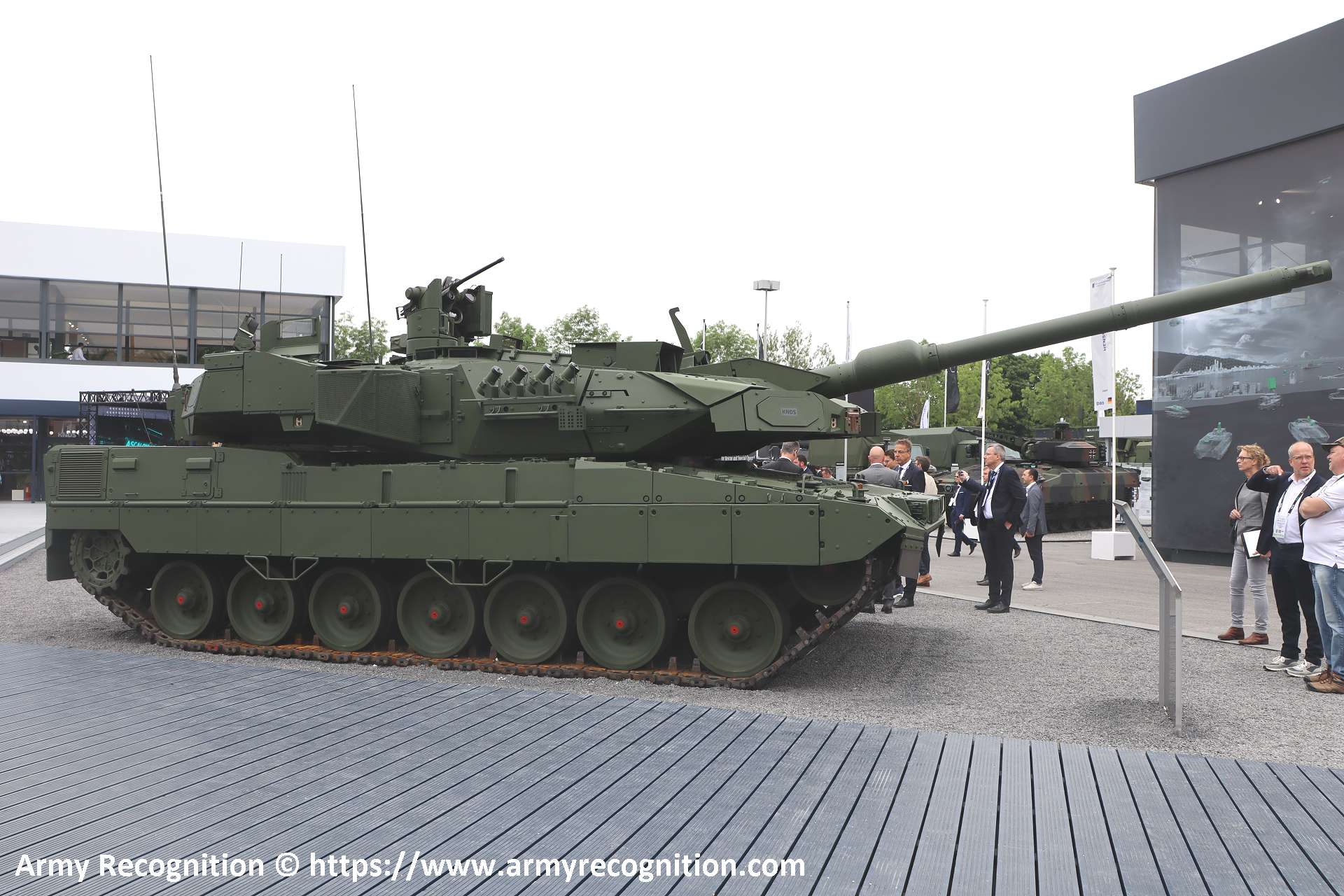
On July 12, 2024, German Defense Minister Boris Pistorius confirmed the order of an additional 105 Leopard 2A8 Main Battle Tanks (MBTs) for the German army, which was approved by the Finance Committee of the Bundestag, the parliamentary assembly of the Federal Republic of Germany.
Follow Army Recognition on Google News at this link
The new Leopard 2A8 was presented for the first time to the public during Eurosatory 2024, a defense exhibition that was held in Paris, France, in June 2024. (Picture source: Army Recognition Group)
To recall, this purchase project had opportunely "leaked" in the press on June 20, 2024, just as Mr. Pistorius was negotiating an increase in the Bundeswehr's (German Army) budget.
It is worth noting that, according to the German ministry's statement, the deputies granted this authorization on July 3, 2024, two days before German Chancellor Olaf Scholz announced the budget decisions.
The contract amount for these 105 Leopard 2A8 MBTs is 2.9 billion euros. It will be funded by both the Bundeswehr's special fund and the ordinary budget of the German Ministry of Defense. Mainly assigned to the German armored brigade deployed in Lithuania, they will enter service between 2027 and 2030. According to budget documents mentioned by Press Agency Reuters, the cost of ownership of these tanks has been estimated at 750.53 million euros for the period 2032-40.
"With the Leopard 2 A8, the tank battalion of the brigade stationed in Lithuania will have the best possible equipment to protect NATO's northeastern flank," assured the ministry.
In total, the Bundeswehr will have 123 Leopard 2A8s, 18 of which were ordered in 2023 to replace the Leopard 2A6s supplied to the Ukrainian army.
The Leopard 2A8 represents a significant evolution over its predecessors, incorporating a range of enhancements to armament, mobility, and protection. The previous versions, such as the Leopard 2A4, 2A6, and 2A7, laid the groundwork with features like the 120mm smoothbore gun and advanced fire control systems. The Leopard 2A8 builds on this foundation with substantial upgrades.
The production model of the Leopard 2A8 MBT was unveiled during the Eurosatory Defense Exhibition that was held in Paris, France in June 2024.
In terms of armament, the Leopard 2A8 maintains the powerful 120mm L/55 smoothbore gun used in the Leopard 2A6 and 2A7, but it integrates more advanced fire control systems and the capability to fire a wider variety of ammunition, including programmable airburst munitions. There are considerations for future upgrades to a more powerful 130mm gun, enhancing its firepower and versatility.
Mobility improvements in the Leopard 2A8 are evident through its upgraded engine and transmission systems, which provide greater horsepower and more efficient fuel consumption. This results in enhanced acceleration, maneuverability, and operational range, making the tank more effective in diverse combat scenarios.
Protection is significantly enhanced in the Leopard 2A8. It features advanced composite armor and improved modular armor packages, offering superior protection against kinetic and chemical energy threats. The tank is also equipped with active protection systems (APS) that can detect and neutralize incoming projectiles, increasing survivability on the battlefield. Additionally, the Leopard 2A8 incorporates better electronic warfare and countermeasure systems to protect against modern threats, including drones and guided missiles.
Overall, the Leopard 2A8 represents a comprehensive upgrade over its predecessors, ensuring it remains a formidable main battle tank capable of meeting the challenges of modern warfare.
Read more: German Defense Minister Confirms Order of 105 Additional Leopard 2A8 MBTs for German Army

- Details
- Written by: Administrator
- Category: 2024
- Hits: 2994
The U.S. Coast Guard Research and Development Center (RDC) successfully conducted tests on the Strategic Quad for Reconnaissance & Logistics (SQRL), an advanced uncrewed ground vehicle, at the Army Research Laboratory's Robotics Research Collaboration Campus (R2C2) in Middle River, Maryland. This cutting-edge vehicle is being evaluated for its potential to support polar operations in the near future.
Follow Army Recognition on Google News at this link
Members from the U.S. Coast Guard Research and Development Center (RDC) deploy a Strategic Quad for Reconnaissance & Logistics (SQRL) uncrewed ground vehicle in the Army Research Laboratory's Robotics Research Collaboration Campus (R2C2) in Middle River, Maryland, June 2, 2024. (Picture source: U.S. DoD)
During the comprehensive tests, the SQRL was put through its paces in various urban terrains and around the perimeter of the R2C2 installation. The goal was to assess its performance in environments that mimic the challenging conditions it will encounter in polar regions. These tests are crucial in ensuring the vehicle's reliability and effectiveness in supporting reconnaissance and logistics missions in some of the world's most demanding environments.
The RDC's focus on innovative technology like the SQRL highlights the U.S. Coast Guard's commitment to enhancing its capabilities through advanced robotics. The insights gained from these tests will be instrumental in refining the vehicle's design and functionality, paving the way for its deployment in future operations. As the Coast Guard looks to the future, the successful integration of uncrewed ground vehicles like the SQRL promises to bolster its mission readiness and operational efficiency in polar regions.
The U.S. Coast Guard is actively exploring the use of uncrewed ground vehicles (UGVs) to enhance its operational capabilities. A recent focus has been on testing various types of unmanned systems, including surface and aerial vehicles, to support a wide range of missions.
The U.S.Coast Guard's Research and Development Center (RDC) has been instrumental in these efforts, conducting extensive tests to evaluate the effectiveness of these technologies. For instance, the RDC recently completed a 30-day test of unmanned surface vehicles (USVs) off Oahu, demonstrating their potential to enhance maritime domain awareness and support law enforcement missions.
Furthermore, the U.S. Coast Guard released an "Unmanned Systems Strategic Plan" in May 2023, which outlines the benefits of incorporating uncrewed systems into its operations. This plan emphasizes the utility of these technologies in improving search and rescue operations, environmental response, port security, and countering illegal maritime activities.
The integration of autonomous technology, combined with artificial intelligence, is seen as a game-changer for the U.S. Coast Guard, enabling more efficient and effective mission execution while reducing risks to personnel. These advancements are part of a broader effort to modernize the Coast Guard's capabilities and ensure it meets future maritime operations' challenges.
Read more: US Coast Guard Tests Innovative Uncrewed Ground Vehicle for Future Polar Operations

- Details
- Written by: Administrator
- Category: 2024
- Hits: 4585
The Russian defense industry has announced an upgrade to its TOS-1A destructive weapon system, enhancing its capabilities with a state-of-the-art electronic warfare system. This upgrade is designed to offer robust protection against drone and loitering munition attacks, which are increasingly prevalent on modern battlefields.
Follow Army Recognition on Google News at this link
The Russian army has already increased the protection of TOS-1A with wire cage armor to counter drone attacks. (Picture source: Russian MoD)
According to information published by the Russian Press Agency Sputnik, the new electronic warfare system incorporated into the TOS-1A features advanced anti-drone guns and other systems that effectively jam and suppress communications. This technology is pivotal in neutralizing threats from various drones, including FPV (first-person view) drones, which rely heavily on uninterrupted communication signals to operate.
A Russian soldier, speaking to Sputnik, highlighted the significance of this advancement: "The electronic warfare system helps us. It includes anti-drone guns and other systems that jam and suppress communications." This statement underscores the critical role electronic warfare plays in enhancing the survivability of both the vehicle and its crew.
The primary function of this upgraded electronic warfare system is to block signals across multiple frequencies that drones use for navigation and targeting. By disrupting these signals, the TOS-1A becomes less vulnerable to air attacks, providing a strategic advantage in combat scenarios. This enhancement not only improves the defensive capabilities of the TOS-1A but also ensures that its destructive firepower can be deployed more effectively without the constant threat of drone interference.
The TOS-1A, known for its formidable flamethrower capabilities, has already been a significant asset in Russia's arsenal. The addition of this advanced electronic warfare system further cements its status as a critical component of modern warfare. By integrating these technologies, the Russian defense industry continues to push the boundaries of military innovation, addressing emerging threats with sophisticated and adaptive solutions.
The threat of drones and loitering munitions has been particularly pronounced in the ongoing conflict in Ukraine, where Russian forces have encountered increasingly sophisticated aerial threats. Combat vehicles deployed in this theater have faced persistent attacks from drones capable of precise targeting and loitering munitions designed to hover and strike at opportune moments. These threats necessitate the development of advanced countermeasures like the upgraded TOS-1A, which can provide effective protection against these evolving dangers and enhance the overall effectiveness of Russian military operations in the region.

The Russian TOS-1A flamethrower thermobaric rocket launcher is considered one of the most destructive weapon systems deployed in Ukraine. (Picture source Wikimedia)
The TOS-1A, also known as the "Buratino," is a formidable heavy flamethrower system developed by Russia. This system is mounted on a T-72 tank chassis, providing it with substantial mobility and armor protection. The TOS-1A is designed to fire rockets equipped with thermobaric warheads, which generate massive explosions characterized by intense heat and overpressure. These thermobaric warheads are exceptionally effective in destroying fortified positions, buildings, bunkers, and concentrations of troops, making the TOS-1A a powerful tool for area denial and suppression.
In terms of range, the TOS-1A can engage targets up to 6 kilometers (approximately 3.7 miles) away. Compared to other artillery systems, this relatively short range is offset by its devastating impact within this radius. The TOS-1A's rocket launchers can fire 24 rockets in rapid succession, blanketing a large area with destructive force.
The TOS-1A's primary weapon system consists of two types of rockets: the MO.1.01.04M thermobaric rocket and the MO.1.01.04 incendiary rocket. The thermobaric rocket is the more commonly used variant, leveraging the explosive power of fuel-air mixtures to create high-temperature blasts capable of inflicting severe damage on both personnel and structures. While less common, the incendiary rocket is designed to spread fire over a wide area, further enhancing the system's capability to disrupt enemy formations and defenses.
Overall, the TOS-1A is a specialized weapon system with a niche role in modern warfare, primarily designed for overwhelming and neutralizing heavily fortified enemy positions and entrenched troops through its sheer destructive capacity.

- Details
- Written by: Halna du Fretay
- Category: 2024
- Hits: 3622
On July 12, 2024, the French defense procurement agency (DGA) awarded Thales the Neptune contract to provide thirty dual-band X/Ka satellite communication stations. These stations will serve as on-the-pause (OTP) tactical communication nodes for the high-throughput satellite communications services required by the French Army's information and communication systems. They will be equipped on the Serval light multi-role armored vehicles developed as part of the Scorpion program. Follow Army Recognition on Google News at this link
The Syracuse IV Satellite Stations will be equipped on the Serval light multi-role armored vehicles developed as part of the Scorpion program (Picture source: Thales)
The Neptune contract is the latest development in the Syracuse IV ground segment program, for which Thales is the prime contractor. This follows an earlier order for the deployment of satellite communication stations on French Navy surface vessels and submarines, as well as for the development and production of fixed and mobile stations for land and air forces.
This includes Mercure on-the-move (OTM) stations for the French Army's Griffon and Serval vehicles and airborne stations for the French Air Force's wide-body aircraft.
The Griffon, officially known as the "Véhicule Blindé Multi-Rôles" (VBMR), began production in 2018 and entered service in 2019. It is a heavier and more robust vehicle compared to the Serval, designed primarily for troop transport and support roles. France plans to acquire over 1,872 Griffon vehicles, with many already in service. The Griffon is equipped with advanced communication systems, modular armor for protection against various threats, and a remote weapon station. Its modularity allows for multiple configurations, including command post, ambulance, and artillery observer roles, making it a versatile asset on the battlefield.
The Serval, or "Véhicule Blindé Multi-Rôles Léger" (VBMR-L), began production in 2021 and entered service in 2022. It is designed to complement the Griffon with its lighter, more agile build, suited for rapid reaction and reconnaissance missions. The French Army plans to acquire around 978 Serval vehicles. The Serval features advanced communication systems, and modular armor, and can be equipped with remote weapon stations. Its smaller size and agility make it ideal for urban and confined environments, enhancing the operational flexibility of French forces.
Developed for the French Defense Procurement Agency (DGA), the first version of the Syracuse IV ground segment went into service at the end of 2023. It provides the French forces with a joint communications capability relying on secure, high-data-rate satellite communications services with robust protection against jamming, interference, cyberattacks, and other threats to ensure end-to-end connectivity and tri-service interoperability.
The two satellites in the Syracuse IV defense communications system, Syracuse 4A and Syracuse 4B, were built for the General Directorate for Armament (DGA) by the consortium of Thales Alenia Space (a joint company between Thales at 67% and Leonardo at 33%) and Airbus Defence and Space.
As the lead contractor, Thales Alenia Space was responsible for the Syracuse 4A satellite, launched in 2021, and the payloads for both Syracuse 4A and 4B satellites. Airbus Defence and Space is in charge of the Syracuse 4B satellite, launched in 2023, based on the all-electric Eurostar platform, and supplies key components for the two payloads.
Read more: Thales Secures Contract to Equip French Army with Syracuse IV Satellite Stations

- Details
- Written by: Halna du Fretay
- Category: 2024
- Hits: 4074
On Thursday, July 11, 2024, Taiwan's Ministry of National Defense (MND) released images depicting an encounter between Taiwanese and Chinese military aircraft amid increased activity in the Western Pacific. The photographs, taken by a Taiwanese F-16 using an AN/AAQ-33 Sniper Advanced Targeting Pod, showed a People's Liberation Army (PLA) Shenyang J-16 fighter jet. Additionally, Taiwanese defense authorities released a photograph of a Chinese Xian H-6 bomber. Follow Army Recognition on Google News at this link
The PLA deployment included Shenyang J-16 fighter jets, Xian H-6 bombers, Shaanxi KJ-500 early warning and control aircraft, as well as several drones (Picture source: Taiwan Ministry of National Defense)
These developments followed reports from Japan's Joint Chiefs of Staff, who on Tuesday, July 9, noted the sighting of the Shandong aircraft carrier strike group. The group, observed approximately 520 kilometers southeast of Miyakojima in Okinawa Prefecture, included the Shandong aircraft carrier, escorted by the Yanan Type 055 destroyer, the Guilin Type 052D destroyer, and the Yuncheng Type 054A frigate.
Heightening the situation, Taiwan's Ministry of National Defense (MND) confirmed on July 10 2024 that it had tracked a significant increase in PLA air activity. A total of 36 aircraft were reported to have entered the Western Pacific to participate in exercises with the Shandong carrier strike group. The PLA deployment included Shenyang J-16 fighter jets, Xian H-6 bombers, Shaanxi KJ-500 early warning and control aircraft, as well as several drones.
Over the past few years, the escalation of Chinese military activity in the Western Pacific has captured international attention, highlighting the stakes of regional stability and security challenges for Taiwan. The People's Republic of China (PRC) views Taiwan as a renegade province destined to be reunified with the mainland, forcibly if necessary, while Taiwan maintains an independent defense posture supported by its own democratically elected government. The involvement of the United States, driven by the Taiwan Relations Act, which commits to helping Taiwan defend itself, also plays a crucial role in the regional dynamics.
China has intensified its activities by regularly deploying fighter jets, bombers, and warships near Taiwan's territorial waters and airspace, viewing these maneuvers as deterrence and attempts at coercion. These exercises, perceived by some analysts as rehearsals for a potential invasion, have provoked a robust response from Taiwan, which has increased its military spending and invested in advanced defense technologies while strengthening its strategic alliances.
The growth of Chinese military presence is a concern for other Asian nations and global powers such as the United States, Japan, and Australia, who view China's actions as a threat to freedom of navigation and the balance of power in a region critical to international trade. This tense situation raises questions about the long-term reactions of international actors and the potential consequences of an escalation, which could have significant economic and security repercussions for the region and the world.
Read more: Taiwanese and Chinese Fighter Jets Meet Amid Rising Military Tensions in Western Pacific

- Details
- Written by: Triffaux
- Category: 2024
- Hits: 4689
On July 11, 2024, Czech Defense Minister Jana Černochová announced plans for the Ministry of Defense of the Czech Republic to sign a framework agreement with Tatra Defence Systems s.r.o. This agreement is targeted at acquiring up to 872 Tatra T-815 trucks as part of an initiative to renew the aging fleet of the military, some of which have been in service for nearly forty years.
Third-Generation Tatra T815-7 Logistical Truck (Picture source: Czech Republic)
Scheduled to be presented to the government for approval in mid-July, the agreement would enable the Czech army to procure various models of the T-815 trucks, including flatbed and container loader versions, based on current needs and budgetary constraints. The total cost of the purchase is expected to reach 13.35 billion crowns (approximately 580 million euros) by the end of September 2031.
Inspired by similar agreements in Germany, this project also opens the possibility for other allied nations to join under the same terms. This could lead to significant cost savings through bulk orders. Slovakia has already shown serious interest in participating in this agreement, which could enhance regional defense collaboration.
"Strengthening our transport capabilities is crucial for enhancing the operational efficiency of our armed forces, both domestically and in overseas humanitarian missions," stated Černochová. The first vehicles are expected to be delivered as early as next year, marking a significant milestone in the modernization of the Czech army's logistical capabilities.
The Supreme Audit Office recently highlighted the need for this modernization following an inspection that revealed the obsolescence and advanced age of the current military fleet.
The T-815 6x6-7 (flatbed) and T-815 8x8-7 (container loader) models are already in use by the Czech army, with the newly introduced type being the T-815 8x8-7 (flatbed). The use of a unified transport platform greatly simplifies logistical support. These vehicles will be utilized for transporting equipment both on roads and in the field, and can also be deployed when the Czech armed forces are engaged in rescue and humanitarian operations. Ensuring transport capability is necessary for the functioning of the ACR (Army of the Czech Republic).
The T815-7, the third-generation model from Tatra, maintains the brand's distinctive tubular backbone-type chassis and swinging half-axles with independent suspension. The vehicle’s suspension system is adaptable, using airbags, coil springs, or leaf springs in various combinations to meet specific user requirements. Available in standard configurations such as 4x4, 6x6, and 8x8, its modular chassis also permits the creation of multi-axle versions featuring different combinations of steering and driven axles.
A notable feature of the T815-7 is the flexibility in engine placement. Positioned longitudinally between the frame rails, the engine can also be shifted rearward behind the front axle, lowering the overall cab height by 110 mm. Engine options are diverse, including Tatra's own electronically controlled V8 and V12 air-cooled engines or water-cooled engines from Cummins or Caterpillar, like the six-cylinder C9.3B. Transmission choices are extensive, featuring ten- or fourteen-speed Tatra automated transmissions with electronic shifting, ZF TraXon automated transmissions, ZF EcoLife 2 automatics, or Allison's six- or seven-speed full automatics. Tatra’s proprietary single- or two-speed transfer cases are also available.
Serial production of the third-generation Force models has begun, initially serving the Fire and Rescue Service of the Czech Republic, with military versions slated to start in 2025. This production will occur concurrently with the second-generation models to accommodate ongoing customer orders.
Tatra also introduced the T158 Phoenix 10x10 bridge carrier at a recent exhibition, showcasing the flexibility of its tubular backbone-type chassis. This model is equipped with a Tatra armored cab and a KNDS Leguan mobile bridge system. Launched in 2011, the Phoenix range represents a significant evolution in Tatra’s lineup, primarily targeting severe duty roles while remaining adaptable for various military applications. This range is notable for integrating cabs and certain automotive components from OEMs for the first time in a vehicle based on the backbone tube chassis design.
Read more: Czech Defense Ministry Plans Purchase Nex-Gen Tatra Trucks to Boost Logistic Capabilities
- Details
- Written by: Jérôme Brahy
- Category: 2024
- Hits: 11012
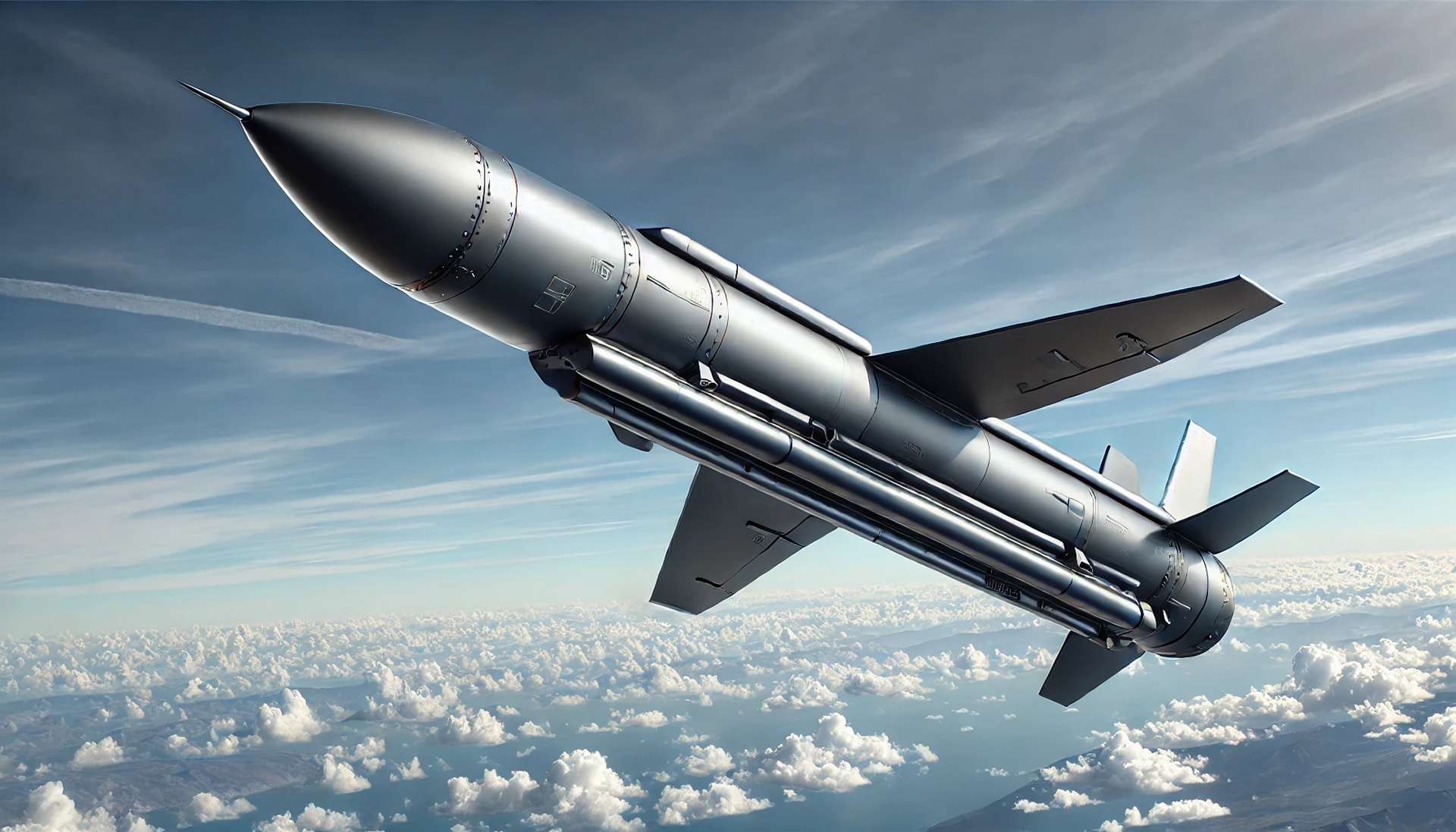
On July 10, 2024, the US Air Force issued a Request for Proposal (RFP) to develop a new aircraft-launched weapon called the Extended Range Attack Munition (ERAM). This project namely aims to help Ukraine meet its defense needs more efficiently and affordably. The goal is to create a prototype of an autonomous vehicle that can deliver long-range attacks. This prototype must be easy to mass-produce and meet specific capabilities outlined by the government.
Follow Army Recognition on Google News at this link
This new Extended Range Attack Munition (ERAM) will likely be a 500-pound class weapon with blast, fragmentation, and limited penetration effects; variable fuze options; a range of at least 250 nautical miles (463 km); and a speed of at least 0.6 Mach (Picture source: Army Recognition/AI-generated picture)
The RFP is sent to 16 companies that were selected from an earlier Request for Information (RFI) posted in January 2024. Only these pre-selected companies can submit proposals, which are due by July 24, 2024. The proposals must include two main parts: a Technical Volume and a Price Volume. The Technical Volume, limited to 25 pages, should cover the project's background, objectives, approach, deliverables, and needed resources. The Price Volume has no page limit for the main document but should provide a payment schedule and include all necessary data to determine a fair price. This includes commercial price catalogs, labor rates, other direct costs, and proposed travel expenses.
Proposals must be clear and detailed, providing a solid plan for meeting the government's requirements. They should not just restate the requirements but explain how they will be met. Proposals will be judged on several factors: innovative techniques, technical merit, commercialization path, execution risk, and price fairness. Technical factors will be rated as Outstanding, Good, Acceptable, or Unacceptable, while the price will be rated as Reasonable or Unreasonable.
The government may negotiate one or more project awards as standalone prototypes under Other Transaction Agreements (OTAs), but it is not required to make an award. Companies will not be reimbursed for proposal development costs if an OTA is not awarded. Government experts will review proposals, and proprietary information will be kept confidential.

While the warhead of the Mark 82 unguided bomb could be considered a baseline for the ERAM 500-pound class weapon, it will be a vendor decision and not a U.S. Government requirement. (Picture source: US DoD)
The government has asked companies to identify any production barriers and long lead materials needed for the Extended Range Attack Munition (ERAM) project. This information will help in future planning but will not affect the proposal evaluation. If the prototype OTA is successful, it may lead to follow-on production contracts without competitive bidding. Success criteria include meeting key technical goals, achieving success metrics, or delivering favorable results.
The initial RFI in January 2024 aimed to gather information from interested and capable companies that could meet the requirements for the ERAM. Companies were encouraged to submit a Statement of Capabilities (SOC) showing their relevant knowledge and experience. The SOC should demonstrate the ability to produce a 500-pound class weapon with blast, fragmentation, and limited penetration effects; variable fuze options; a range of at least 250 nautical miles (463 km); a speed of at least 0.6 Mach; a navigation system that works in GPS-degraded environments; terminal accuracy within 10 meters in both normal and high-electromagnetic interference (EMI) environments; and a production capacity of over 1,000 All-Up-Rounds (AURs) within 24 months of contract award.
The government clarified the following points in the earlier RFI about the ERAM: there is interest in weapons datalink capability and a design whitepaper for an affordable mass datalink design would be welcomed. Standard munitions storage practices apply, and multiple Bomb Rack Units (BRUs) are of interest, though specific BRUs have yet to be determined. There is no current interest in collaborative autonomy for this platform. While the Mk 82 warhead could be considered a baseline for the 500-pound class weapon, it is a vendor decision and not a U.S. Government requirement. No price target has been set for the system, and there is no corresponding Research, Development, Test, and Evaluation (RDT&E) budget line for this RFI.
Read more: US Air Force to develop a new ERAM missile for Ukraine with over 450 km attack range
- Details
- Written by: Vandenbosch
- Category: 2024
- Hits: 2973
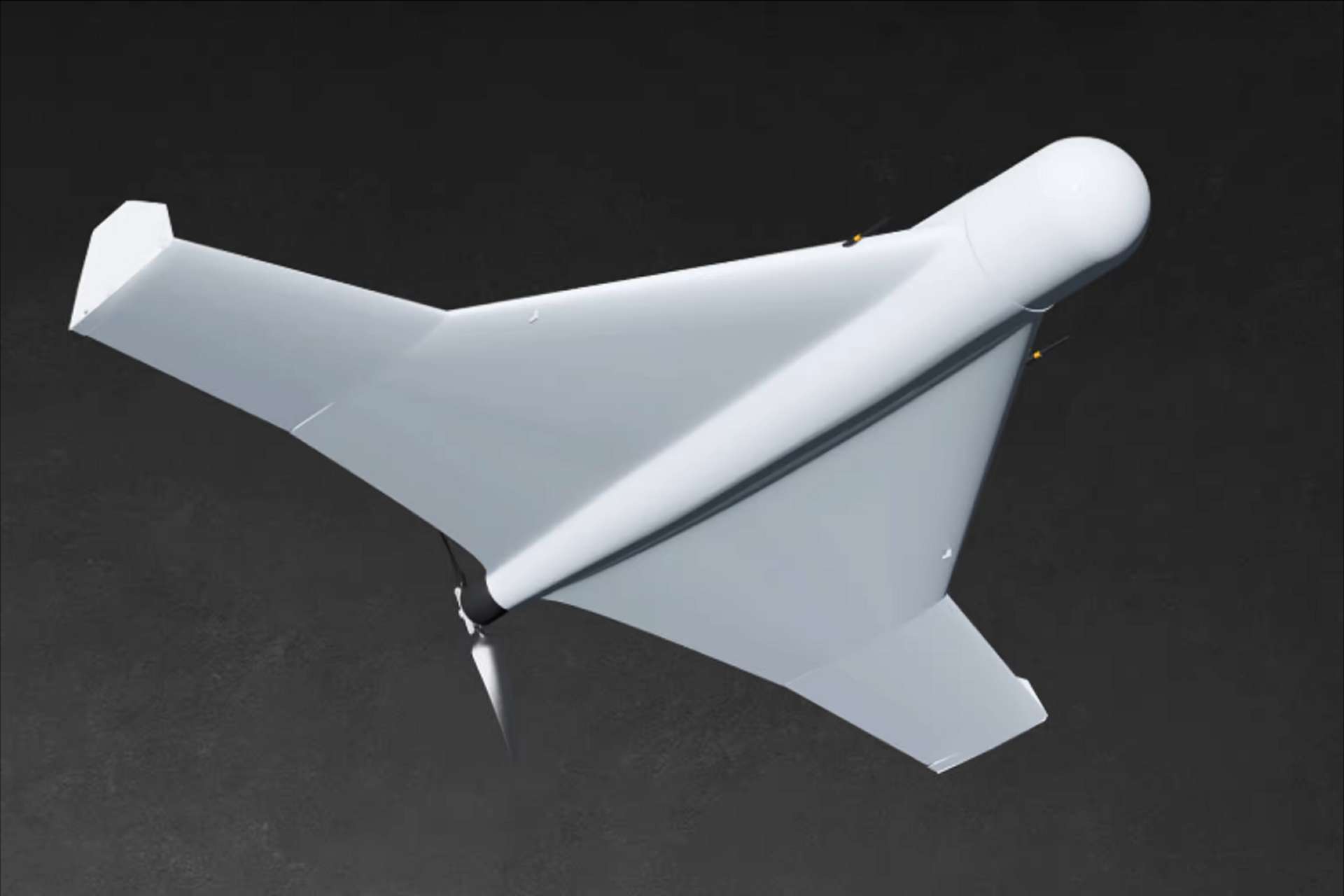
LLC Scientific and Production Association Izhevsk Unmanned Systems (LLC NPO IzhBS), a subsidiary of the Kalashnikov Group, is undergoing a transformation as it modernizes its production capacities to meet the growing demand for state defense orders. The company is preparing to increase its drone (UAV) production tenfold in 2024, with even more ambitious plans for 2025.
Follow Army Recognition on Google News at this link
A UAV produced by the Russian firm Kalashnikov (Picture source: Kalashnikov)
The increase in production capacity is facilitated by the commissioning of a new workshop and an engineering and technology building, spanning several thousand square meters. These new facilities are equipped with state-of-the-art assembly and installation sites, as well as a cutting-edge design bureau. This infrastructure overhaul is essential to Kalashnikov's strategy to increase its UAV production, ensuring that the company can meet the growing demand for advanced military technologies.
A notable aspect of this expansion is the focus on innovation. More than half of the increased production will be dedicated to new and promising UAV developments. This forward-looking approach ensures that Kalashnikov not only meets current defense needs but also anticipates future technological trends. The IzhBS team continuously refines its existing drone models based on real-world combat experience gathered during special military operations. This iterative improvement process aims to enhance the combat potential of their UAVs, making them more effective and resilient in the field.
To support this rapid expansion, LLC NPO IzhBS is actively recruiting and training new specialists. The company has established its own training base, where new employees are trained to meet the sophisticated demands of drone production. By investing in its workforce, Kalashnikov not only boosts its production capabilities but also fosters a culture of innovation and excellence.
The modernization and expansion efforts of IzhBS are driven by a substantial increase in state defense orders. The company's ability to scale up production is crucial for fulfilling these orders promptly and effectively. With the new facilities and an expanded team of specialists, LLC NPO IzhBS is well-positioned to meet its commitments, thereby reinforcing its reputation as a key player in the defense sector.
By increasing its production facilities, investing in workforce development, and committing to continuous innovation, the company is poised to meet the growing demands of state defense orders. As it advances in UAV technology, Kalashnikov is set to play a crucial role in shaping the future of military operations, thereby strengthening its legacy as a pioneer in defense technologies.
The ambitious expansion and modernization plans of LLC NPO IzhBS underscore the company's commitment to excellence and innovation in the defense sector. With a strategic focus on increasing production capacity and developing new technologies, Kalashnikov is well-equipped to meet the evolving needs of modern warfare, ensuring that its UAVs remain at the forefront of military capabilities.
Read more: Russia and Kalashnikov Step Up Production of Unmanned Aerial Vehicles

- Details
- Written by: Jérôme Brahy
- Category: 2024
- Hits: 7979
On July 4, 2024, Paul Walf, CEO of Rheinmetall Hungary Zrt., announced that the first Lynx KF41 infantry fighting vehicle produced in Hungary had received its license plates. This development is part of the Hungarian Army's modernization plans, with the technical handover to the Hungarian Defense Forces starting a few days before the official handover of the vehicle, scheduled for the end of July 2024.
Follow Army Recognition on Google News at this link
The contract between Hungary and Rheinmetall includes the production of 218 Lynx infantry fighting vehicles for the Hungarian Defense Forces, with 172 to be manufactured in Zalaegerszeg. (Picture source: Army Recognition)
In 2020, the Hungarian government signed a contract with Rheinmetall for the domestic production of Lynx infantry fighting vehicles. The contract, valued at two billion euros, includes the production of 218 Lynx infantry fighting vehicles for the Hungarian Defense Forces, with 172 to be manufactured in Zalaegerszeg. Hungary is also set to receive 46 Lynx KF41 IFVs made in Germany, the first of which was transferred to the Hungarian military in October 2022. From the end of 2023, the remaining vehicles will be produced in Hungary by Rheinmetall Hungary Zrt., a joint venture co-owned by Rheinmetall (51%) and the Hungarian state (49%).
In the initial production phase, Hungary will be supplied with 46 Lynx systems configured for roles such as infantry fighting vehicles or command and control, as well as nine Büffel/Buffalo 3 ARVs, all made in Germany. Delivery of these vehicles has already begun. In the second phase, the joint venture will produce and ship an additional 172 Lynx systems and various combat support vehicles within Hungary. According to Hungary Today, the Defense Forces had planned to start using the first vehicles by mid-2024, indicating progress in the project timeline.
On July 3, 2024, Rheinmetall announced the signing of a new Memorandum of Understanding to establish a 50:50 joint venture focused on developing a European industrial and technological approach to land defense systems. This agreement aims to industrialize and commercialize a new Main Battle Tank (MBT) and the Lynx Platform for the Armored Infantry Combat System (AICS) as part of the Italian Army’s ground systems programs. The facilities in Zalaegerszeg are expected to benefit from this agreement, which is anticipated to become one of the largest European defense cooperation programs in the coming years.

Rheinmetall is involved in Hungary’s “Zrínyi 2026” initiative, which aims to equip the country’s armed forces with modern, locally produced equipment such as tracked and wheeled armored fighting vehicles. (Picture source: Hungarian MoD)
Rheinmetall is involved in Hungary’s “Zrínyi 2026” initiative, which aims to equip the country’s armed forces with modern, locally produced equipment. The Hungarian Defence Ministry has contracted Rheinmetall to supply advanced tracked and wheeled armored fighting vehicles and associated services, as the German company considers Hungary a key market for Hungarian-made products. In support of this, a development, production, and test center is being built on a 33-hectare site in Zala County in southwest Hungary. This facility includes an EMV/CLIMA chamber and a firing tunnel. The plant design emphasizes industrialization principles, flexibility, growth potential, efficiency, advanced transport and logistics concepts, and production techniques. The quality control domain features a 3D measurement cell for automated component quality assurance. Over the next few years, an additional 350 jobs are planned at the Zalaegerszeg plant.
Further expansion in Hungary includes a new "hybrid" factory in southern Hungary, announced in March. This facility will complement Rheinmetall’s existing operations in Zalaegerszeg, Várpalota (where one of Europe’s largest ammunition and explosives production plants is under construction), and Budapest, where a digitization and software development center is being built.
Designed to meet modern military operation needs, the Lynx concept includes a family of vehicles built around a common drive module with flexible mission modules in various configurations, allowing each vehicle to be customized for roles such as infantry fighting vehicle, air defense system, command vehicle, or medical vehicle. This modular approach aims to reduce lifecycle costs and enable adaptation to changing battlefield conditions.

The Lynx KF41 Infantry Fighting Vehicle is equipped with a LANCE 2.0 turret with a 35mm Wotan cannon, as well as Spike LR2 anti-tank guided missiles. (Picture source: Army Recognition)
Equipped with Spike LR2 anti-tank guided missiles, advanced fire control, optical guidance systems, and night vision capabilities, the Lynx's armor is notable in its class. The Hungarian army will receive seven variants of the Lynx KF41, including command post vehicles, reconnaissance vehicles, forward artillery observer vehicles, mortar tracks, field ambulances, and driver education vehicles. Its interior can accommodate three crew members and up to eight soldiers, supporting combat operations. The modular architecture allows for additional mission equipment or new variants within the vehicle family.
Powered by an 850 kW Liebherr engine and Renk transmission, the Lynx KF41 offers mobility, capable of navigating difficult terrains at speeds up to 70 km/h and covering distances over 500 km on 900 liters of diesel. Its Supashock-developed suspension system supports various mission kits and survivability packages. The vehicle is equipped with a LANCE 2.0 turret with a 35mm Wotan cannon for targeting. Additionally, it provides protection against ballistic and mine threats with modular survivability systems that can be upgraded or replaced in the field. Active defense systems such as the ROSY smoke protection and Rheinmetall's Acoustic Shooter Localization System (ASLS) enhance protection.
The Lynx KF41's digital backbone and open architecture support the integration of new mission systems, maintaining adaptability to emerging technologies and battlefield challenges. Its sensor suite, including the stabilized Electro Optical Sight System (SEOSS) and laser warning sensors, aims to provide battlefield awareness and automatic target recognition for quick threat responses. Capable of autonomous operation in degraded environments, the vehicle can synchronize with other units across various domains, making it a valuable asset in modern multi-domain battle scenarios. By combining protection, mobility, and firepower with a modular platform, the Lynx KF41 is designed to meet the demands of current and future combat environments.

- Details
- Written by: Vandenbosch
- Category: 2024
- Hits: 2061
At the NATO summit in Washington, President Joe Biden unveiled a new military aid package worth $225 million for Ukraine. The announcement was made during a meeting with Ukrainian President Volodymyr Zelenskyy on Thursday, July 11, 2024. This new aid package includes a crucial element, a Patriot air defense system.
Follow Army Recognition on Google News at this link
The package comprises a Patriot missile battery, NASAMS, Stinger anti-aircraft missiles, ammunition for HIMARS, and 155 mm and 105 mm artillery rounds. (Picture source: US DoD)
This aid package, under the Presidential Drawdown Authority, includes various capabilities aimed at strengthening Ukraine's defense against Russian aggression. The package comprises a Patriot missile battery, munitions for National Advanced Surface-to-Air Missile Systems (NASAMS), Stinger anti-aircraft missiles, ammunition for High Mobility Artillery Rocket Systems (HIMARS), and 155-millimeter and 105-millimeter artillery rounds.
President Zelenskyy expressed his gratitude to President Biden, emphasizing the need for "quick steps ... to lift limitations for our Ukrainian soldiers," referring to the restrictions imposed by the United States on the use of their weapons.
The Patriot is a long-range, all-altitude, all-weather air defense system. This system is armed with four missiles, each weighing 900 kg and measuring 5.8 meters in length. The Patriot missiles are designed to reach targets up to 70 kilometers away.
The Patriot is used by many countries, including Germany, Greece, Israel, Japan, Jordan, Kuwait, Morocco, the Netherlands, Poland, Qatar, Romania, Saudi Arabia, Spain, South Korea, Switzerland, Taiwan, Ukraine, the United Arab Emirates, and the United States.
Each missile is equipped with a warhead weighing 90 kg and uses a passive electronically scanned array radar guidance system, which integrates friend-or-foe (IFF) recognition subsystems, electronic counter-countermeasures (ECCM), and track-via-missile (TVM) guidance. The explosive warhead consists of M248, a blast/fragmentation explosive with two layers of pre-formed fragments, and Octol 75/25 for additional fragmentation.
The radar used in the Patriot system is the AN/MPQ-53 or -65, supported by the AN/MSQ-104 Engagement Control Station (ECS), the OE-349 Antenna Mast Group (AMG), and the EPP-III Electric Power Plant. This radar is crucial for target detection and tracking, allowing for effective air defense against various aerial threats.
Earlier, Zelenskyy had shown optimism about the possibility of his forces being able to use Western-supplied arms more freely to target Russian positions, a crucial request from Ukrainian officials to enhance their defensive operations against the Russian invasion.
During his visit to Capitol Hill, Zelenskyy held discussions with congressional leaders, including House Speaker Mike Johnson and House Minority Leader Hakeem Jeffries. When asked by VOA's Ukrainian Service if he believed all restrictions on the Ukrainian military would be lifted, Zelenskyy replied, "We count on it."
Speaker Johnson, after meeting with Zelenskyy, told VOA's Ukrainian Service, "I explained that the will of Congress was to allow them the flexibility to use the weapons and assistance sent to prosecute the war as they see fit. I believe that's what Congress intended."
House Minority Leader Jeffries described the discussions with Zelenskyy as "very positive," reaffirming the United States' commitment to supporting Ukraine in its struggle against Russian aggression.
Read more: United States Announces New Aid Package for Ukraine Including Patriot System
- French Special Forces Select Spanish-Made Alakran 81 mm Mortar mounted on Polaris MRZR D4 Light Tactical Vehicle
- NATO Announces Deployment of New US Aegis Ashore Air Defense Missile Base in Poland
- Northrop Grumman to Co-Produce Medium-Caliber Ammunition in Ukraine
- Agreement Between France, Germany, Italy, and Poland for Development of Long-Range Cruise Missiles