

- Details
- Written by: Triffaux
- Category: 2024
- Hits: 8117










According to an article from the Spanish newspaper Infodefensa dated July 5, 2024, the French special forces have chosen the Alakran mortar from the Spanish company NTGS. This company showcased its portable mortar system integrated into the Polaris ATV at Eurosatory 2024.
Follow Army Recognition on Google News at this link
NTGS Alakran 81 mm Mortar mounted on Polaris MRZR D4 Light Tactical Vehicle (Picture source: Army Recognition)
The Alakran mortar by the Spanish company NTGS has achieved a new success on the international market. The French special forces have opted for the MRZR D4 light vehicle from the American firm Polaris equipped with this mortar system. The ATV-type vehicle was presented with the Alakran at the latest edition of the Eurosatory, which was held in mid-June in Paris. The special operations forces specifically chose the 81 mm version. The Spanish company is responsible for the mortar deployment systems—the tube is from the French company Thales—, aiming, and command and control systems. The vehicle equipped with the Alakran mortar system is not yet officially in service, however, several units are currently undergoing homologation.
The Alakran is in service with the Ukrainian Armed Forces. The Spanish company has so far supplied about thirty units on two platforms: the locally manufactured BARS armored vehicle and the Toyota Land Cruiser pick-up. In both cases, the chosen version is the 120 mm. NTGS even has facilities on Ukrainian soil for maintenance and personnel training in handling its mortar system. The company also has a factory in India, a country that has also recently acquired the Alakran.
The Polaris MRZR 4 is a modular and agile off-road vehicle designed for military and tactical applications. It features a tubular frame and a conventional layout with the engine located in the front, crew seats in the middle, and a cargo compartment at the rear. The roll cage can be collapsed without tools to reduce the vehicle's height, enhancing its transportability.
Capable of seating four troops, the MRZR 4 can accommodate up to six infantrymen with optional rearward-facing seats on the cargo bed. The modular cargo section at the rear supports the installation of seats/litters, providing flexibility for various mission requirements. The vehicle is equipped with four-point harnesses with quick-release latches for occupant safety, and the roof can be optionally fitted with a soft cover.

NTGS Alakran 81 mm Mortar mounted on Polaris MRZR D4 Light Tactical Vehicle (Picture source: Army Recognition)
The MRZR 4 LTATV is equipped with forward and rear bumpers, a full poly under-body skid plate, and aircraft tie-downs for secure transport. It can be attached with an off-road trailer to increase payload capacity. Tactical equipment includes infrared lights, a cargo plate, a tactical seat, a jerry can holder, and a spare tire holder, enhancing its operational versatility and effectiveness in challenging environments.
The MRZR series comprises lightweight, highly maneuverable all-terrain vehicles (ATVs) produced by Polaris Defense, a division of Polaris Industries. Tailored for military and special operations applications, these vehicles are renowned for their ruggedness, versatility, and off-road prowess, rendering them suitable for diverse missions in various environments.
The Alakran mortar can shoot 8 rounds and leave the location in less than 2 minutes. The Alakran ‘S’ is equipped with its own Fire Control System (FCS), using GIS Technology and new functions such as Zonal Shooting and Multiple Rounds. Additionally, electro-mechanical engines provide automatic, fast and accurate aiming.
With automatic aiming and re-aiming functions, Alakran provides 81 and 120 mm mortars capabilities while transmitting the recoil force to the ground. The system is user-friendly and can easily be integrated into almost any 4×4 vehicle with the ability to adapt to all types of terrain including deserts, mud, snow, and forests, and is heliborne-capable due to its lightweight design.

Polaris MRZR D4 Light Tactical Vehicle (Picture source: Army Recognition)

- Details
- Written by: Administrator
- Category: 2024
- Hits: 5184
During the NATO Washington Summit held on July 11, 2024, NATO Secretary General Jens Stoltenberg announced the deployment of a new U.S. air defense base in northern Poland. This base is designed to detect and intercept ballistic missile attacks as part of a broader NATO missile shield.
Follow Army Recognition on Google News at this link
The deckhouse for the Aegis Ashore system bound for Romania at the Lockheed Martin Aegis facility. (Missile Defense Agency Photo)
The system, dubbed Aegis Ashore, is located in the northern Polish town of Redzikowo and is capable of intercepting short- to intermediate-range ballistic missiles, according to NATO. The allied missile defense shield is meant to protect European citizens, territory, and forces against ballistic missile attacks.
Other key elements of the shield include a second Aegis Ashore site in Romania, along with U.S. Navy destroyers based in the Spanish port of Rota and an early-warning radar situated in the Turkish town of Kurecik. NATO emphasizes that Aegis Ashore is purely defensive. About 200 military personnel are stationed at the two interceptor sites in Poland and Romania, with the base in the Romanian town of Deveselu operational since 2016.
Aegis Ashore is the land-based variant of the U.S. Navy’s Aegis Weapons System and the centerpiece of Phases II and III of the European Phased Adaptive Approach (EPAA). The system incorporates land-based versions of the various components used on Aegis ships, including the deckhouse, AN/SPY-1 radar, the Mark 41 Vertical Launching System (VLS), and Standard Missile-3 (SM-3) interceptors. The Mark 41 VLS is a versatile launching system capable of firing a variety of missiles, providing robust defense capabilities. The SM-3 missiles are designed to intercept ballistic missiles in the midcourse phase of their flight, enhancing the overall defense mechanism against medium and intermediate-range missile threats.
The Standard Missile-3 (SM-3) is a ship-based missile system utilized for ballistic missile defense, primarily designed to intercept short- to intermediate-range ballistic missiles during their midcourse phase of flight. One of its primary combat capabilities is targeting missiles outside the Earth's atmosphere, providing a crucial layer of defense against missile attacks. The SM-3 employs an Exo-atmospheric Kill Vehicle (EKV), which is a kinetic warhead designed to destroy incoming threats through direct impact rather than an explosive charge. This "hit-to-kill" approach ensures the complete neutralization of the threat.
Technically, the SM-3 is launched from the Mark 41 Vertical Launching System (VLS), a versatile launching system that can deploy various types of missiles. The missile itself is propelled by a multi-stage rocket motor, which includes a booster, a second stage, and a third stage rocket motor. The missile's guidance system uses advanced infrared sensors to detect and track targets, ensuring high accuracy. Additionally, the SM-3 is equipped with a solid-fuel rocket booster and a divert and attitude control system (DACS), allowing it to maneuver precisely in space to intercept its target. The missile's capability to operate in the exo-atmosphere makes it a vital component of the Aegis Ballistic Missile Defense system, enhancing the overall defense mechanism against medium and intermediate-range missile threats.
The Standard Missile-3 (SM-3) is a ship-based missile system utilized for ballistic missile defense, primarily designed to intercept short- to intermediate-range ballistic missiles during their midcourse phase of flight. One of its primary combat capabilities is targeting missiles outside the Earth's atmosphere, providing a crucial layer of defense against missile attacks. The SM-3 employs an Exo-atmospheric Kill Vehicle (EKV), which is a kinetic warhead designed to destroy incoming threats through direct impact rather than an explosive charge. This "hit-to-kill" approach ensures the complete neutralization of the threat.
Technically, the SM-3 is launched from the Mark 41 Vertical Launching System (VLS), a versatile launching system that can deploy various types of missiles. The missile itself is propelled by a multi-stage rocket motor, which includes a booster, a second stage, and a third stage rocket motor. The missile's guidance system uses advanced infrared sensors to detect and track targets, ensuring high accuracy. Additionally, the SM-3 is equipped with a solid-fuel rocket booster and a divert and attitude control system (DACS), allowing it to maneuver precisely in space to intercept its target. The missile's capability to operate in the exo-atmosphere makes it a vital component of the Aegis Ballistic Missile Defense system, enhancing the overall defense mechanism against medium and intermediate-range missile threats.
The operational range of the SM-3 varies by block variant. The Block IA and IB variants have a range of 900 to 1200 km (560 to 745 miles), while the Block IIA variant extends the range to 1200 km with a flight ceiling of 900 to 1,050 km, depending on the type of target. The maximum speed of the missile is 3 km/s (Mach 8.8) for the Block IA/IB variants and 4.5 km/s (Mach 13.2) for the Block IIA variant. The guidance system includes GPS/INS, semi-active radar homing, and a passive LWIR infrared homing seeker for the kill vehicle (KW), ensuring precise target acquisition and interception.
Read more: NATO Announces Deployment of New US Aegis Ashore Air Defense Missile Base in Poland
- Details
- Written by: Triffaux
- Category: 2024
- Hits: 4748
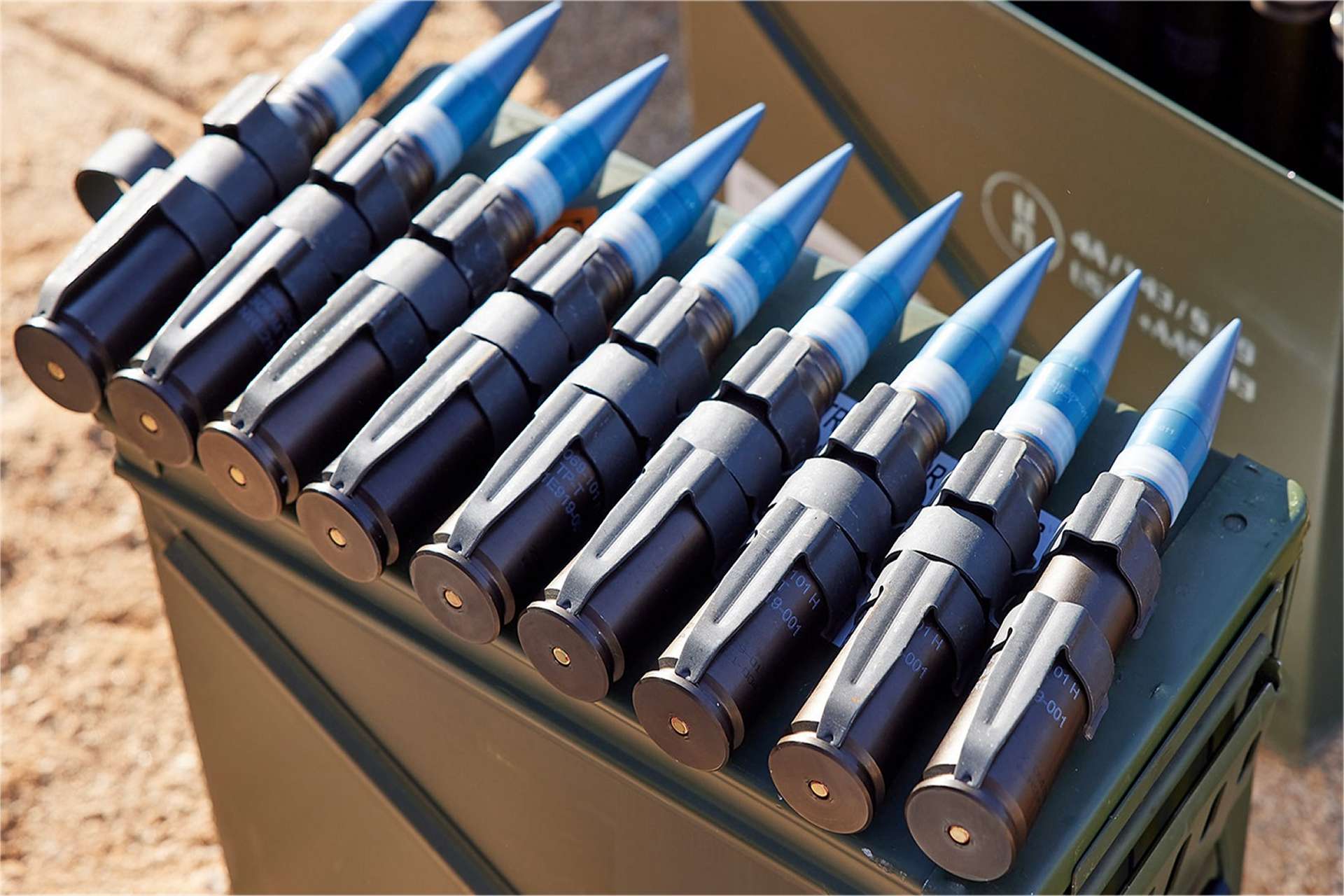
At the international defense and security exhibition Eurosatory 2024, Dave Bartell, Director of International Business at Northrop Grumman Defense Systems, announced a major initiative for the co-production of medium-caliber ammunition in Ukraine, fully financed by Ukrainian funds.
Northrop Grumman Medium-Caliber Ammunition (Picture source: Northrop Grumman)
According to Bartell, this cooperation marks the first agreement of its kind between an American defense company and Ukraine. Northrop Grumman (NG) defines medium-caliber ammunition as those of 30 mm, 40 mm, and 50 mm. This collaboration may soon extend to the production of tank ammunition and 155 mm artillery shells, thus underscoring NG's commitment to strengthening Ukrainian military capabilities.
Additionally, Bartell revealed NG's interest in obtaining contracts from the U.S. Department of Defense for the production of 155 mm ammunition, considering the production of a unique design rather than following the current designs of the U.S. Army such as the M795 or M1128 shells. He hinted at a new model of 155 mm ammunition equipped with an M1156 Precision Guidance Kit, which NG already produces to enhance the effectiveness of traditional unguided shells.
This initiative represents not only a significant advancement for the security of Ukraine but also strengthens Northrop Grumman's position in the European defense market, while supporting the strategic objectives of the United States in the region. With this co-production project, NG and Ukraine lay the groundwork for a long and fruitful collaboration, potentially leading to new opportunities in the defense sector and beyond.
The recent announcement of the co-production agreement between Northrop Grumman and Ukraine is part of a broader U.S. effort to bolster the Ukrainian defense industry in the face of the Russian invasion. This initiative falls under the new Ukraine Defense Enterprise program launched by the U.S. State Department, which plans to invest $2 billion in Ukraine’s defense industrial base. The program aims to encourage cooperation between American and Ukrainian companies for the production of defense equipment, relying on funding from foreign military aid included in the $60.8 billion Ukraine supplemental funding bill approved in April.
During the Eurosatory event in Paris, a significant dialogue took place between Dave Bartell from Northrop Grumman and Stanley Brown, acting Principal Deputy Assistant Secretary of the Bureau of Political-Military Affairs at the State Department. Brown challenged the industry attendees by asking what would incentivize their companies to partner with Ukraine on defense co-production. This interaction highlights the U.S. commitment to adopting innovative and entrepreneurial approaches to meet Ukraine's needs, despite often encountering bureaucratic obstacles.
At the same time, other European companies like Rheinmetall and KNDS have also made progress in co-production projects in Ukraine, showing a growing trend in supporting the Ukrainian defense industry through international collaborations. These strategic moves are crucial as Ukraine continues to face security threats from Russia, and they mark a transition towards greater integration of Ukraine into the global and European defense ecosystems. These initiatives, in addition to strengthening Ukraine's defense, aim to create a more autonomous and resilient industrial base in the country.
Read more: Northrop Grumman to Co-Produce Medium-Caliber Ammunition in Ukraine
- Details
- Written by: Halna du Fretay
- Category: 2024
- Hits: 6353
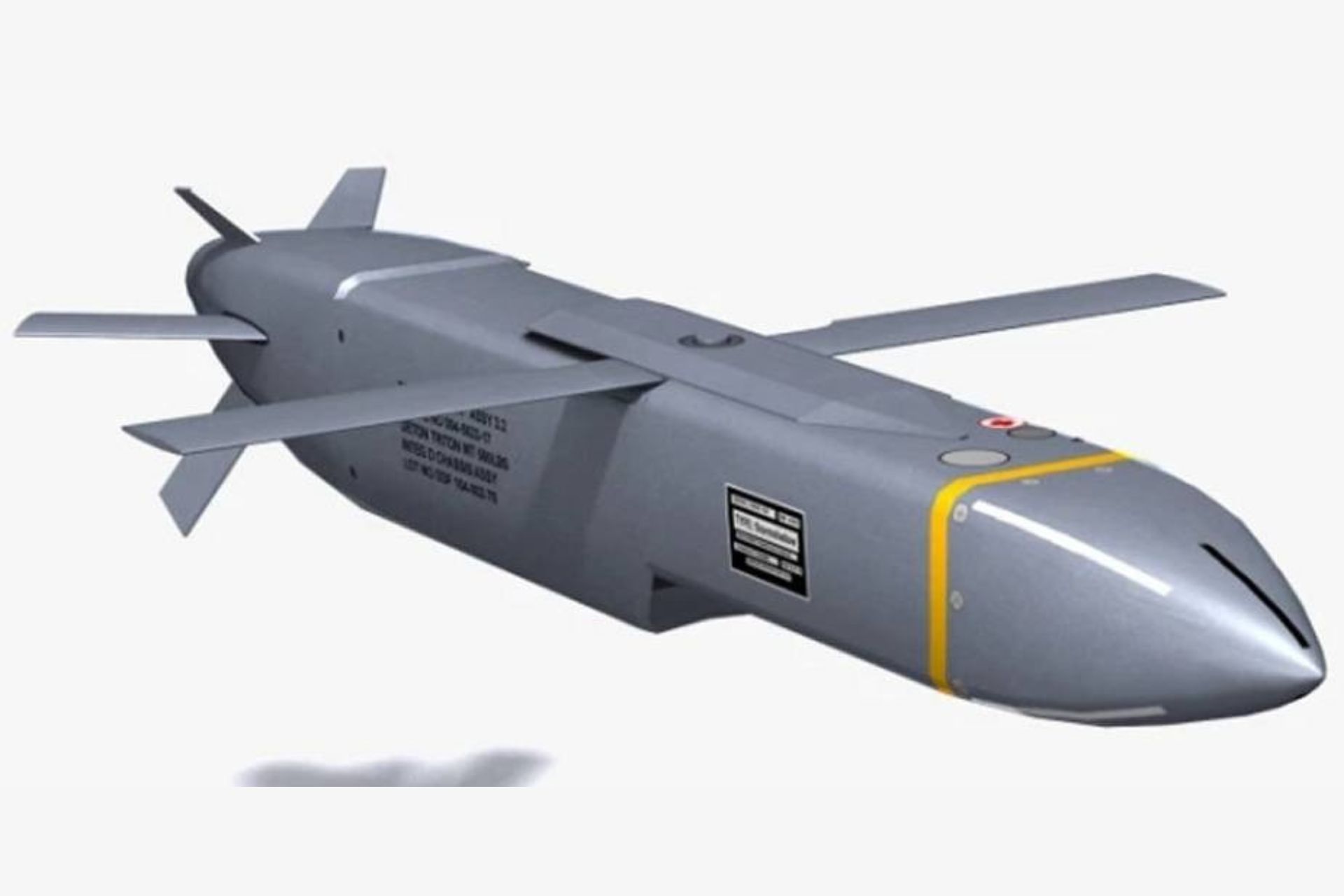
On July 11 2024 in Washington, during NATO's 75th anniversary summit, France, Germany, Italy, and Poland signed a letter of intent to jointly develop ground-launched cruise missiles with a range exceeding 500 km. This initiative aims to address what these nations perceive as a gap in European arsenals, a concern highlighted by the conflict in Ukraine.
Follow Army Recognition on Google News at this link
Cruise missiles, unlike ballistic missiles, fly at low altitudes, making them more difficult to detect by radar (Picture source: MBDA)
French Defense Minister Sebastien Lecornu stated that the new missile would serve as a deterrent. He expressed hope for broader participation in the project, suggesting that the new British Labour government might also join. Lecornu highlighted the economic benefit of this collaboration, which would allow for the amortization of costs among participating nations.
During this announcement, Lecornu also mentioned that initial drafts of the missile could be ready by the end of the year, with detailed specifications such as the exact range to be finalized later. This statement came a day after Washington and Berlin announced they would begin deploying U.S. long-range missiles on German soil in 2026, including SM-6s, Tomahawks, and developmental hypersonic weapons.
This development occurs as Russia has been accused of violating the Intermediate-Range Nuclear Forces Treaty (INF), prompting the United States to withdraw from the agreement in 2019. The INF Treaty, signed in 1987, banned nuclear and conventional ground-launched missiles with a range of 500 to 5,500 km. The reintroduction of this category of weapons by NATO allies is seen as a direct response to emerging threats and Russian military developments.
Cruise missiles, unlike ballistic missiles, fly at low altitudes, making them more difficult to detect by radar. Paris has proposed basing the new missile on a modification of its existing naval cruise missile, the MdCN, developed by MBDA. MBDA, a European defense company, is owned by Franco-German Airbus, British BAE Systems, and Italian Leonardo.
Polish Defense Minister Wladyslaw Kosiniak-Kamysz emphasized that this cooperation would not only allow for the sharing of expertise but also for joint purchases of missiles currently under development. He also expressed hope that more countries would join the initiative, highlighting the importance of international collaboration for the development of deep-strike capabilities and the reduction of costs and production timelines.

- Details
- Written by: Jérôme Brahy
- Category: 2024
- Hits: 6775
On July 11, 2024, the Norwegian Ministry of Defense announced that Norway will donate a complete IRIS-T air defense battery to Ukraine this autumn, in cooperation with Germany. This donation is part of a broader initiative funded through the Nansen Support Programme for Ukraine, which allocates a total of one billion NOK (approximately €85,875,979.52) for air defense systems in Ukraine.
Follow Army Recognition on Google News at this link
The IRIS-T SLM (Surface Launched Medium range), a surface-to-air missile system developed by the German company Diehl Defence for medium-range air defense, proved its effectiveness in Ukraine. (Picture source: Army Recognition)
The funding from the Nansen Support Programme also supports international efforts to repair and maintain air defense equipment in Ukraine, channeled through third countries. Prime Minister Jonas Gahr Støre stated that the need for more air defense systems is critical for protecting the Ukrainian population from Russian bombs and missiles. Støre highlighted that recent bombings of various Ukrainian cities by Russia, which struck hospitals and resulted in civilian deaths, demonstrate the necessity for increased air defense protection.
Foreign Minister Espen Barth Eide emphasized that air defense support is a high priority for Ukraine. He mentioned that Norway is in close contact with Ukraine to determine the best ways to target their support, relying on Ukraine's insights into their specific needs. Norway's cooperation with Germany will see the provision of a complete IRIS-T air defense battery to Ukraine this autumn.
In addition to the IRIS-T battery, Norway's funding includes increased support for Germany’s Immediate Action for Air Defence (IAAD) initiative and international efforts to maintain and repair air defense equipment in Ukraine. This initiative is part of a revised national budget, designating up to NOK 4 billion (€343,329,960) from the Nansen Support Programme for Ukraine for air defense measures through 2024. A significant portion of this funding will go towards Germany’s IAAD initiative.
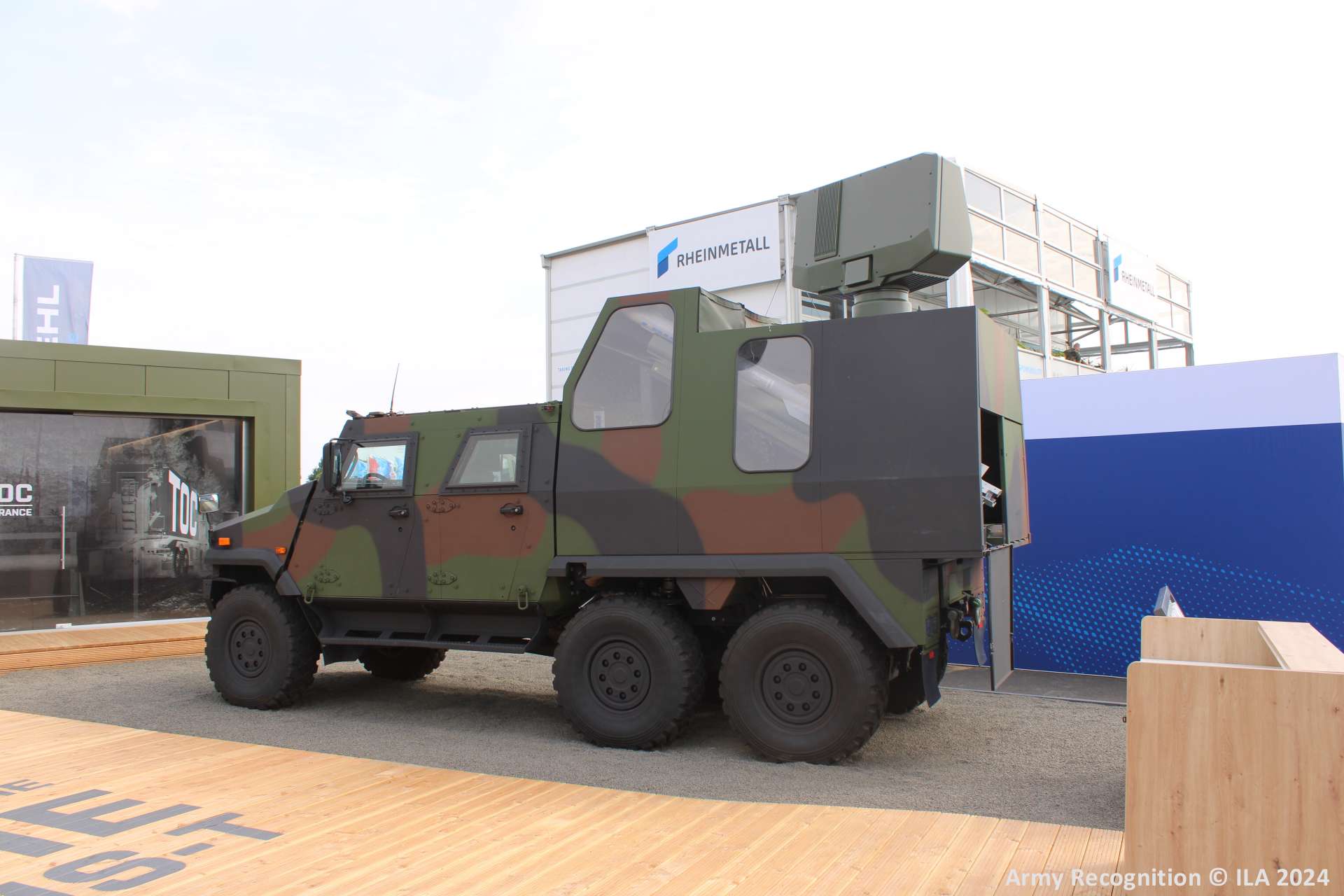
The IRIS-T SLX, the latest variant within the IRIS-T family, is a long-range surface-to-air missile system featuring an operational range of up to 80 km and a ceiling of 30 km. (Picture source: Army Recognition)
The German Immediate Action on Air Defence (IAAD) initiative was started in April 2024 by Foreign Minister Annalena Baerbock and Defense Minister Boris Pistorius. It aims to enhance Ukraine's air defense capabilities in response to ongoing Russian attacks and calls for international partners to contribute financial support and air defense systems such as Patriot missiles, SAMP/T, NASAMS, HAWK, IRIS-T, and S-300 systems. This initiative addresses significant gaps in Ukraine's defenses, especially in protecting critical infrastructure in cities like Odesa and Kharkiv.
Several countries have pledged support for the IAAD initiative. Canada announced a $76 million contribution, underscoring the role of NATO allies in supporting Ukraine. Lithuania has committed to providing six AMBER-1800 air surveillance radars, essential for detecting and tracking aerial threats. Additionally, Denmark and the Netherlands are discussing further financial and material aid contributions. Germany has also ordered additional Patriot systems to maintain consistent support. This collaborative effort aims to improve Ukraine's air defense capabilities in response to the ongoing conflict.
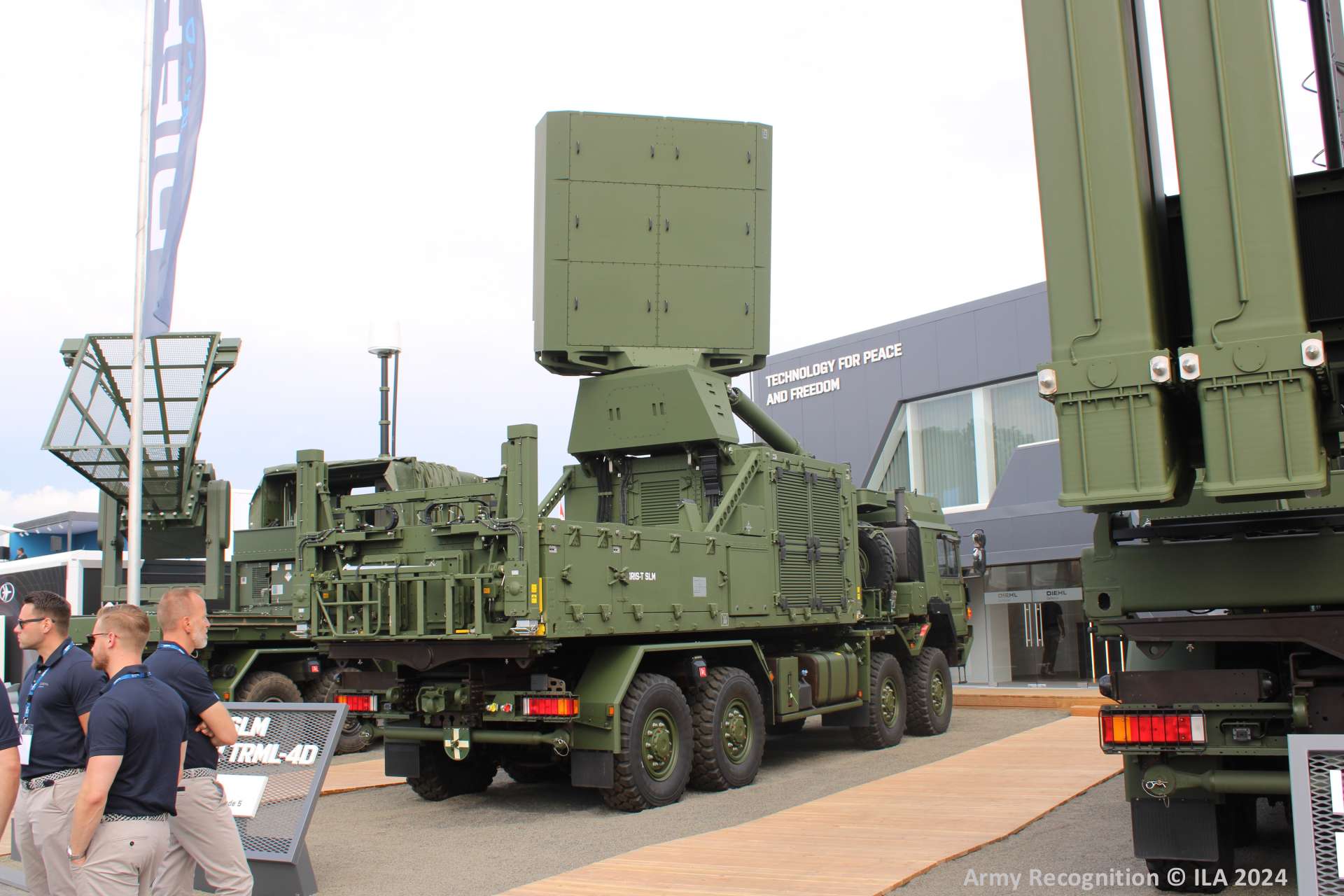
The radar unit, compatible with various electro-optical/infrared guidance systems and AESA radars like the Hensoldt TRML-4D, provides a detection range of up to 120 km and typically requires 3-4 personnel. (Picture source: Army Recognition)
The IRIS-T SLM (Surface Launched Medium range) is a surface-to-air missile system developed by the German company Diehl Defence for medium-range air defense. The system integrates a missile derived from the IRIS-T air-to-air missile with radar and command systems to ensure accurate targeting and engagement. It can engage a variety of airborne threats, including aircraft, drones, and missiles, with 360-degree coverage and the capability to track and destroy targets at both low and high altitudes. The IRIS-T SLM offers flexible deployment options and can be integrated into existing air defense networks, enhancing its role in modern integrated air defense environments.
An IRIS-T SLM battery generally operates with a crew of about 20-25 personnel and consists of a radar unit, three launcher units, and a command post. The radar unit, compatible with various electro-optical/infrared guidance systems and AESA radars like the Hensoldt TRML-4D, provides a detection range of up to 120 km and typically requires 3-4 personnel. Each launcher unit is mounted on an RMMV SX45 8x8 chassis and can carry eight missiles, with a crew of 2-3 operators per launcher. The Tactical Operations Center, staffed by around 5-6 personnel, coordinates the battery's operations. Support vehicles, including workshop, spare parts, and reloading vehicles, ensure maintenance and logistics support, requiring additional personnel.
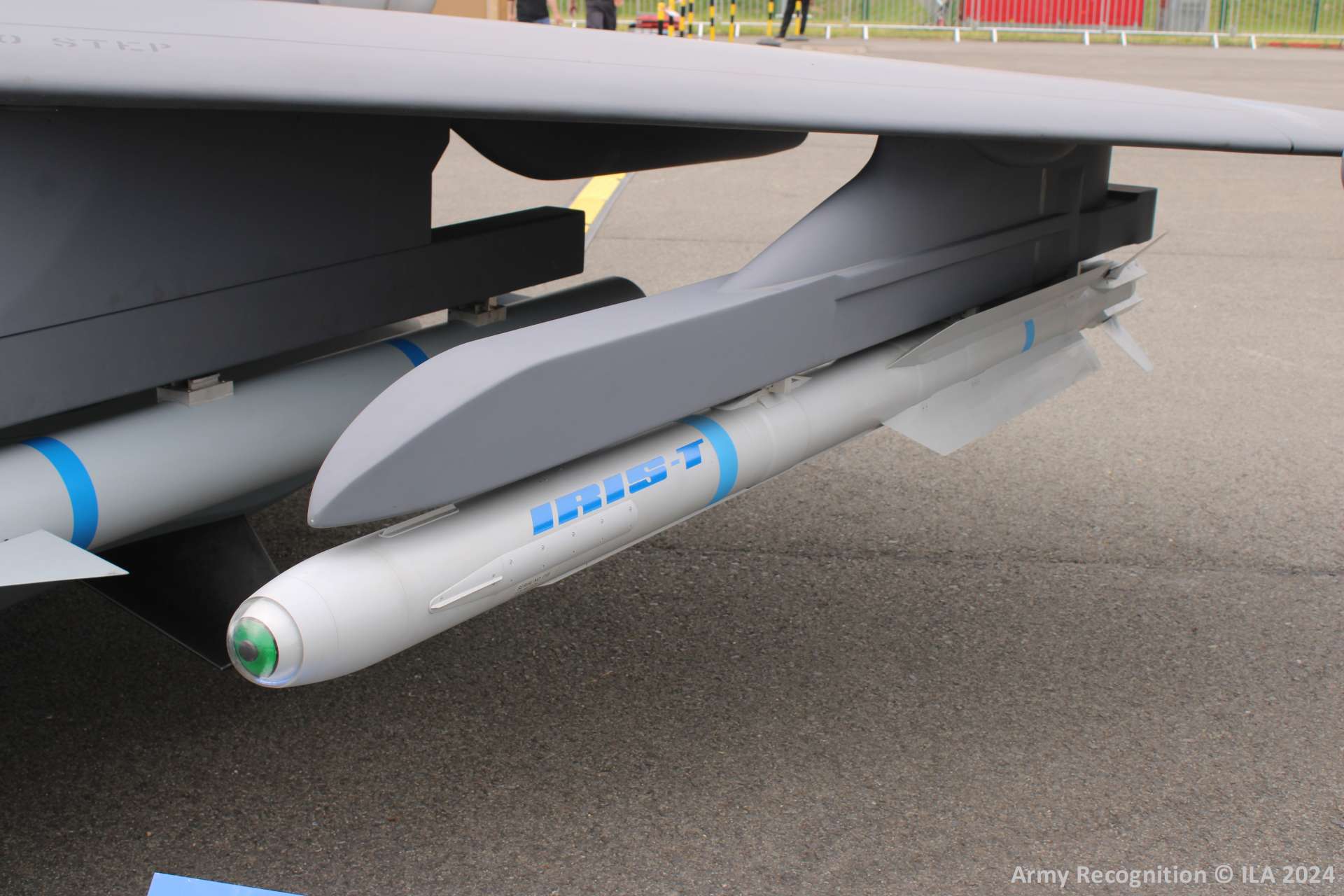
The system integrates a missile derived from the IRIS-T air-to-air missile with radar and command systems to ensure accurate targeting and engagement against a variety of airborne threats, including aircraft, drones, and missiles. (Picture source: Army Recognition)
The IRIS-T SLM missile features high agility with the ability to turn at 60 g and a rate of 60° per second. It has a diameter of 127 mm, a length of 3 meters, and weighs 87 kg. The missile can reach speeds over Mach 3 (approximately 3,672 km/h) with a maximum range of up to 40 km and a maximum altitude of up to 20 km. Its high-explosive fragmentation warhead weighs 11.4 kg and uses an infrared homing guidance system with thrust vector control and advanced target discrimination. The missile is equipped with radar proximity and impact fuzes and is propelled by a solid rocket motor with thrust vector control.
The RMMV SX45 8x8 chassis, used for both the launcher and command post vehicles, is designed for rugged performance with a fording depth of 1.5 meters, a maximum road speed of 88 km/h, and a range of 483 km. It features an armored cabin capable of withstanding 7.62x51 mm armor-piercing rounds, artillery shell splinters, and an 8 kg anti-tank mine blast, ensuring protection for the crew in hostile environments.
Read more: Norway to provide Ukraine with a complete IRIS-T air defense battery
- Details
- Written by: Halna du Fretay
- Category: 2024
- Hits: 4748
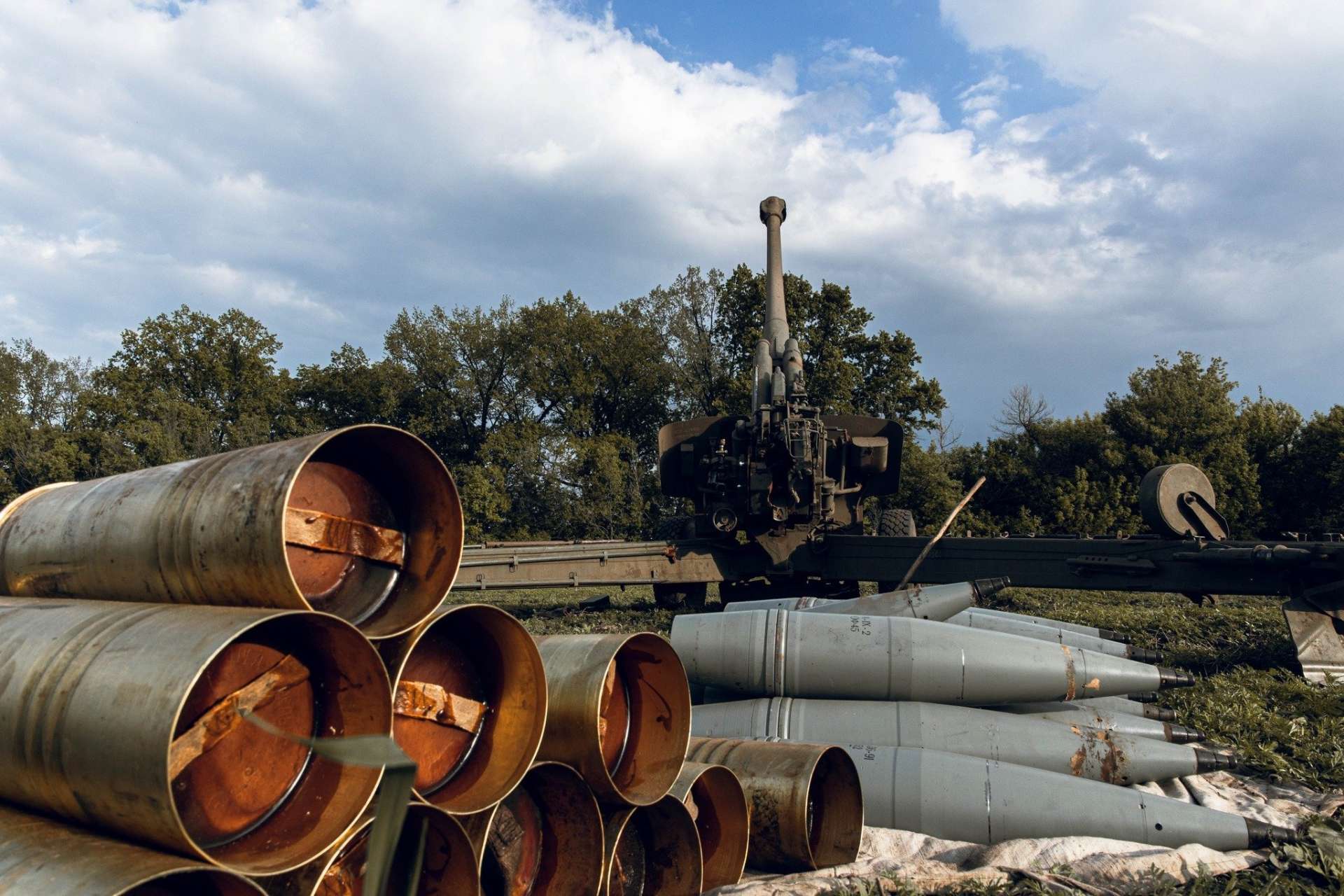
The International Fund for Ukraine (IFU), led by the United Kingdom and including several of Kyiv's allies, signed an agreement on July 11, 2024, for the purchase of artillery ammunition worth £300 million (over $387 million). This substantial acquisition will include up to 120,000 152 mm artillery shells, essential for Ukraine's urgent military needs.
Follow Army Recognition on Google News at this link
152-mm projectiles for the Msta-B howitzer of the military of Ukraine (Picture source: Ukrainian MoD)
Norwegian Defense Minister Bjørn Arild Gram highlighted the urgency of the situation by stating that Ukraine desperately needs more ammunition and weapons. "Together with the United Kingdom and other IFU member states, we will provide a large quantity of artillery ammunition as quickly as possible. This is one of many significant contributions to the defense of Ukraine," he added.
Norway has contributed a total of 1.8 billion Norwegian kroner (approximately $168 million) to the IFU since 2022. The IFU, an additional funding mechanism to support Ukraine, is led by the UK Ministry of Defense and also includes Australia, Denmark, Iceland, Lithuania, New Zealand, Norway, Sweden, and Lithuania. These nine countries have contributed more than 1 billion euros to the IFU.
In June, the first delivery of ammunition was made to Ukraine as part of a Czech-led initiative to purchase 800,000 shells for Ukraine. This continuous support is part of international efforts to increase Ukraine's defense capabilities in the face of current military challenges.
In addition to the commitment with the IFU, Norway has also taken steps to increase national ammunition production through a recent government announcement. Earlier this week, a new deal was concluded, allowing the company Nammo to increase its production of modern artillery munitions tenfold and to double the production of other types of artillery ammunition and rocket engines.
These initiatives illustrate an increased effort by Norway and its international partners to meet the urgent defense needs of Ukraine, emphasizing the importance of solidarity and international support in these times of conflict.
Read more: Ukraine to Receive 120,000 152 mm Artillery Shells From UK-led International Fund
- Details
- Written by: Administrator
- Category: 2024
- Hits: 3990
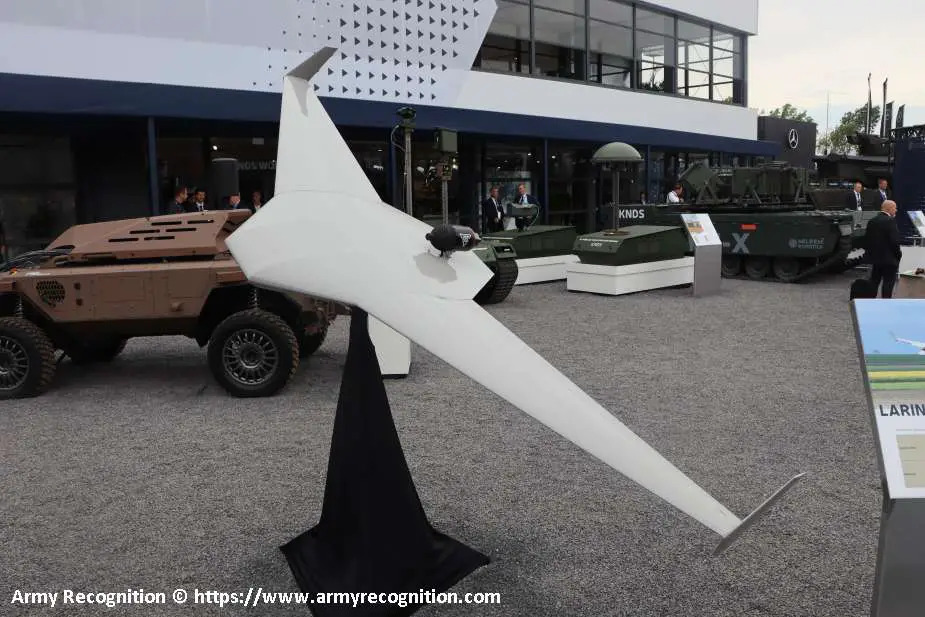
KNDS France, the French division of the European defense consortium KNDS, has announced a significant milestone in the development of its next-generation loitering munition, LARINAE. This advanced weapon, engineered for precision strikes against armored vehicles and main battle tanks, represents a major leap in land defense technology.
Follow Army Recognition on Google News at this link
During Eurosatory 2024, a defense exhibition in Paris, KNDS France displayed its new LARINAE anti-tank loitering munition. (Picture source: Army Recognition Group)
The LARINAE loitering munition boasts an impressive autonomy of three hours and an operational range between 80 to 120 kilometers. Developed in collaboration with EOS Technologie and TRAAK, LARINAE is equipped with a core-generating warhead (CGN), designed to penetrate and neutralize even the most formidable armored threats, including those equipped with advanced active protection systems.
In a recent breakthrough, KNDS France successfully conducted long-range secure communication trials, essential for the operational effectiveness of LARINAE. These trials demonstrated the capability of maintaining a secure radio link between an operator and a ground platform over a distance of up to 7 kilometers in open terrain. Additionally, a reliable connection was achieved up to 80 meters inside a naval ship during tests with the French Navy. These trials are crucial as they confirm the robustness of the communication systems used for LARINAE, ensuring reliable control over the munition throughout its mission range.
The tested secure radio link system is designed to function over distances up to 80 kilometers, a critical feature for the LARINAE loitering ammunition program. The success of these trials marks a significant step forward, ensuring that operators can maintain command and control of the munition in various operational environments.
The first live demonstrations of the LARINAE munition, equipped with an inert charge, are scheduled for early 2025. These demonstrations will further validate the munition's capabilities and operational readiness, paving the way for its deployment in modern military arsenals.
KNDS France, through its partnership with Krauss-Maffei Wegmann (Germany) and Nexter (France), continues to lead in the innovation and development of cutting-edge defense solutions. The LARINAE loitering munition is set to become a pivotal asset in future combat scenarios, providing unmatched precision and effectiveness against armored threats.
Read more: KNDS France Develops New Generation LARINAE Anti-Tank Loitering Munition

- Details
- Written by: Administrator
- Category: 2024
- Hits: 8476
In a grand display of military prowess and national pride, Argentina unveiled its latest generation of combat tank, the TAM 2CA2, during the Independence Day parade on July 9, 2024. This highly anticipated event marked the first public reveal of the advanced tank, showcasing Argentina's commitment to enhancing its defense capabilities.
Follow Army Recognition on Google News at this link
Christian Nationalist Vice President Victoria Villarruel, joined the July 9th Independence Day Parade together aboard a newly-upgraded Argentina-made TAM 2CA2 Main Battle Tank. (Picture source: X Social Media)
Thousands of citizens and dignitaries attended the military parade, a significant annual celebration of Argentina's independence. This year's event was particularly notable for the presence of President Javier Milei and Vice-President Vicky Villarruel, who joined the procession aboard a newly upgraded TAM 2CA2 tank. Their participation underscored the importance of this military advancement and highlighted the government's dedication to modernizing the nation's armed forces.
The TAM (Tanque Argentino Mediano) main battle tank was developed by the German company Rheinmetall Landsysteme, then known as Henschel Wehrtechnik, to meet the operational requirements of the Argentine Army. The development of the TAM began in the mid-1970s, with the first prototype completed in Germany in 1976 and the second following in 1977. The initial phase of the project involved constructing the chassis and final assembly in Buenos Aires, while the turret construction and integration of the 105 mm rifled gun and fire-control system occurred in Rio Tercero.
Following the delivery of the initial TAM prototypes to Argentina, local development continued under the direction of TAMSE (Tanque Argentino Mediano Sociedad del Estado). Over time, more than 1,450 engineering modifications were incorporated into the production vehicles to address operational feedback and improve performance. The original Argentine requirement was for 512 TAM tanks and VCTP infantry combat vehicles. However, due to financial constraints, production concluded after approximately 350 vehicles had been built.
In 2002, recognizing the urgent need to modernize its aging fleet, Argentina launched a project to recover and upgrade the TAM tanks, which had fallen into poor condition. The Argentine company Champion SA was contracted for this modernization effort, resulting in the TAM S21 variant. This version introduced new features such as night vision, GPS, and an upgraded steering system. Initially projected to upgrade 20 tanks, the project was reduced to 18 units before being canceled after only six vehicles were modified.
The first significant modernization was undertaken by Elbit Systems, resulting in the TAM 2C. The prototype was manufactured in March 2013 and featured several key upgrades, including a modernized turret, thermal cameras for night operations, a laser rangefinder and detector, an advanced radio communications system with frequency signals, a battle management information system, and an electrically accessed turret. Aesthetic improvements such as side skirts were also added.
In May 2016, the TAM 2IP was introduced as the second modernization iteration. It retained the upgrades of the TAM 2C and included a modular tank protection system covering the turret and sides, enhancing its defensive capabilities. The latest version, the TAM 2C-A2, saw its first prototype presented in 2023. This variant introduced further enhancements, particularly in sensor technology. The traditional sight was replaced with a GIMBAL periscope-type viewfinder, and the COAPS sensor for the tank commander was upgraded, enabling automatic target acquisition. Additionally, the TAM 2C-A2 featured an improved laser detection system, enhanced tank screen, and modernized laser detection system, along with additional 6mm steel armor for increased protection.
The evolution of the TAM main battle tank reflects Argentina's commitment to maintaining a capable and modern armored force through continuous upgrades and local development. From its initial design in the 1970s to the latest TAM 2C-A2 variant, the TAM has undergone significant transformations, adapting to new technologies and operational requirements to remain a relevant and effective component of Argentina's military strategy.
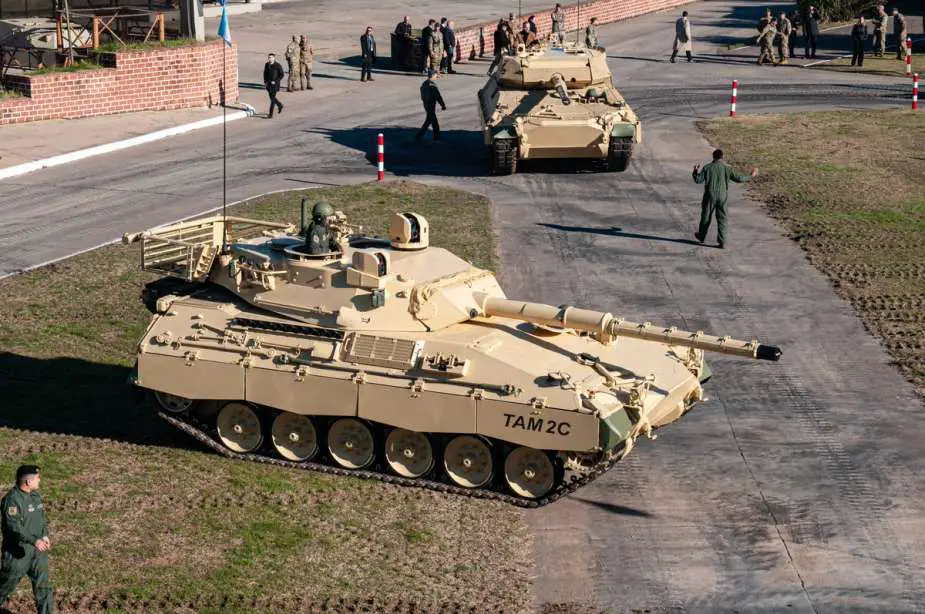
The TAM 2CA2 is a local development of a new type of main battle tank that will enter into service with the army of Argentina.
Read more: Argentina Unveils New State-of-the-Art TAM 2CA2 Tank in Independence Day Military Parade

- Details
- Written by: Halna du Fretay
- Category: 2024
- Hits: 3649
As the conflict in Ukraine intensifies, Poland is considering donating its remaining MiG-29 fighter jets to enhance the Ukrainian Air Force. This potential support follows recent discussions between Ukrainian President Volodymyr Zelensky and Polish Prime Minister Donald Tusk in Warsaw, where a security agreement was signed, highlighting ongoing military cooperation between the two nations.
Follow Army Recognition on Google News at this link
The Polish Air Force acquired its fleet of MiG-29 fighters during the Cold War era, with the first aircraft entering service in 1989 (Picture source: HooLengSiong on Flickr)
The Polish government, led by Prime Minister Tusk, has expressed a willingness to provide about 15 MiG-29 aircraft to Ukraine. However, this transfer is contingent on NATO allies assisting in patrolling Polish airspace with their fighters until Poland can secure replacements for the donated MiGs. Tusk emphasized the necessity of this interim solution, noting that the MiGs are currently essential for Poland's air policing duties.
The urgency of this support is underscored by the heavy losses suffered by Ukraine in its air capabilities. Over a recent three-day period, Russian drone reconnaissance over Ukrainian airbases facilitated devastating Iskander ballistic missile strikes, resulting in the destruction of several Ukrainian jets, including MiG-29s. Analysts have noted that during 28 months of intense conflict, the Ukrainian Air Force has lost nearly half of its MiG-29 fleet, which initially numbered around 50 aircraft.
The donation of additional MiGs from Poland could significantly strengthen the Ukrainian Air Force, at least temporarily, as it awaits the arrival of more advanced fighters such as Lockheed Martin F-16s. The first batch of F-16s could reach Ukraine imminently, providing much-needed reinforcement to its air defense capabilities.
The Polish Air Force acquired its fleet of MiG-29 fighters during the Cold War era, with the first aircraft entering service in 1989. These Soviet-era jets were part of Poland's strategy to modernize its military capabilities amid the geopolitical tensions of the time. The acquisition included MiG-29A (single-seat) and MiG-29UB (two-seat) variants, enhancing the combat and training capabilities of the Polish forces. Over the years, Poland has gradually increased its fleet, which included acquiring additional MiG-29s from the Czech Republic and Germany, bringing the total to about 31 fighters according to the latest counts.
The MiG-29, known for its superior maneuverability and speed, has served as a cornerstone of Poland's air defense strategy. Equipped with advanced avionics for its time, the aircraft could effectively engage both aerial and ground targets, making it a versatile asset in Poland's military arsenal. It is armed with a mix of air-to-air missiles, air-to-ground munitions, and an internal cannon, providing substantial firepower. The aircraft's design focuses on enhancing its agility and combat effectiveness, characterized by its high thrust-to-weight ratio and aerodynamic structure.
However, the effectiveness of these reinforcements depends on Ukraine's ability to protect these assets on the ground. The increasing frequency of Russian drone activity and subsequent missile strikes on Ukrainian airbases highlight a critical vulnerability in Ukraine's current air defense structure. This issue has propelled the need for robust air defense systems to the forefront of discussions among NATO leaders, who are currently meeting in Washington, D.C., to address these strategic military needs.
The situation underscores a broader strategic dilemma faced by Ukraine and its allies: balancing the immediate benefits of enhancing aerial firepower with the imperative to establish durable air defenses to support these capabilities in the face of persistent threats.
Read more: Ukrainian Air Force Could Receive Polish MiG-29s as Conflict Intensifies
- Details
- Written by: Vandenbosch
- Category: 2024
- Hits: 5540
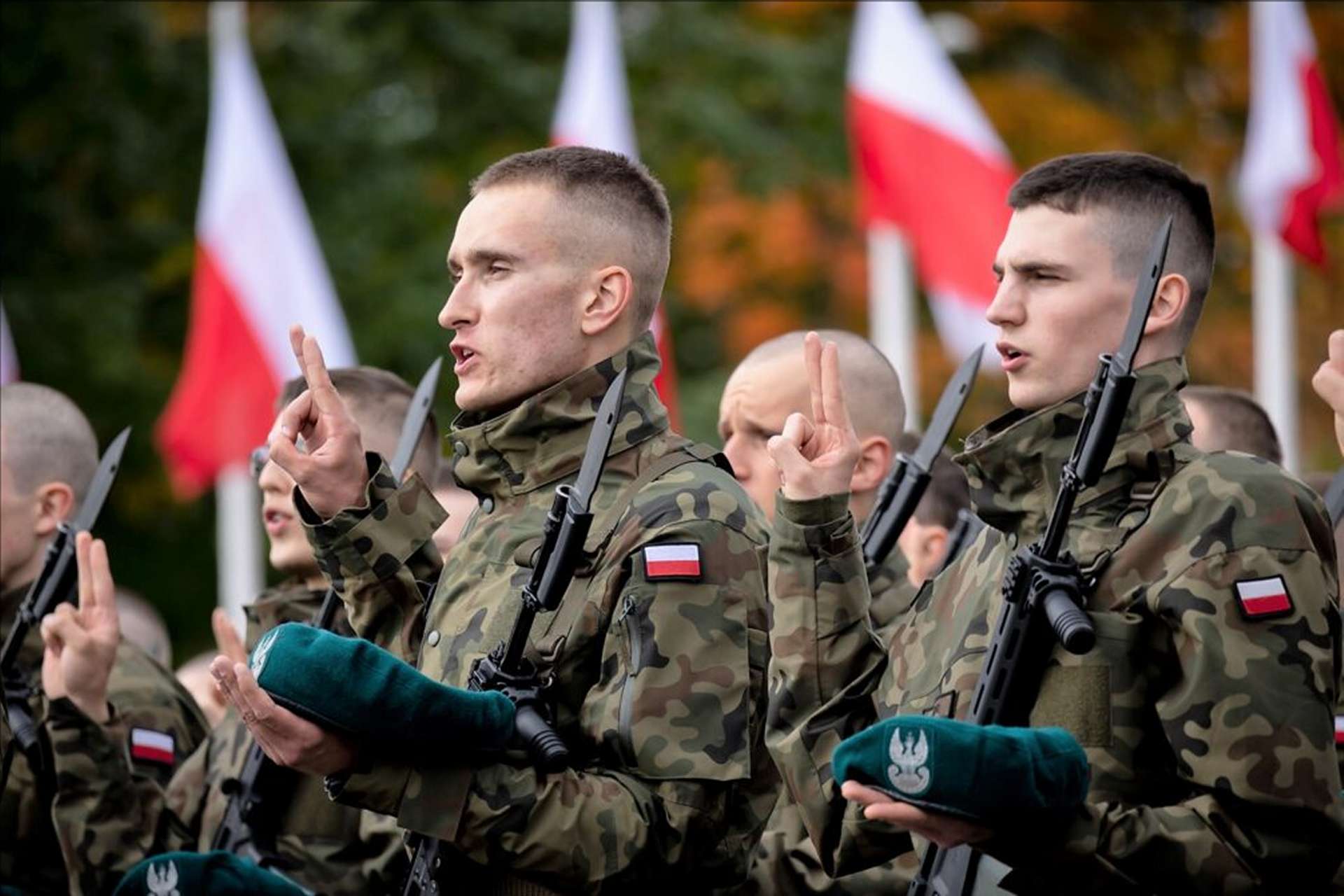
The Polish Armed Forces have already met their recruitment targets for the entire year of 2024 by early July, with additional volunteers still awaiting their turn. This surge in enlistment creates both opportunities and challenges, as indicated by General Wiesław Kukuła during a press conference at the General Staff.
Follow Army Recognition on Google News at this link
The Polish Armed Forces have met their recruitment targets for 2024. (Picture source: Polish MoD)
This information was revealed during a conference addressing the situation on the eastern border and the associated future preparations. A question was raised concerning a document recently disclosed by TV Republika, which allegedly indicated a reduction in planned expenditures for technical modernization.
General Kukuła responded unexpectedly, stating that the Armed Forces have increasing financial resources but are facing additional expenses to maintain the newly acquired modern military equipment. He cited FA-50 fighter jets and M1A1 Abrams tanks as examples. The unexpected number of volunteers has also generated unforeseen costs.
In many countries, recruiting volunteers for the armed forces represents a considerable challenge. The reasons are multiple and often complex. First, demographic trends play a crucial role. In aging societies, the pool of young people eligible to enlist is shrinking, which limits the number of potential recruits. Second, sociocultural perceptions of a military career also influence recruitment. In some nations, military service may be perceived as less prestigious or less attractive compared to other professional careers.
Additionally, the rigorous physical and psychological requirements of the military can deter many young people. Competition with the private sector, which can offer higher salaries and perceived better working conditions, also complicates recruitment efforts.
Unlike many nations, Poland currently seems to benefit from a particular enthusiasm for military service. Several factors can explain this phenomenon.
First, Poland’s geopolitical situation plays a significant role. Located on NATO's eastern border and near tension zones, the national awareness of the need for defense is particularly acute. Perceived threats, especially due to instability in some neighboring regions, encourage citizens to engage more actively in national defense.
Second, the Polish government has implemented policies and incentive programs to attract volunteers. These measures include financial benefits, educational and training programs, as well as a campaign to promote the military career. These initiatives make military service more attractive to young Poles.
Poland has a strong historical and cultural tradition of military service. Patriotism and a sense of national duty are deeply ingrained values in Polish society, which strengthens young people's willingness to join the armed forces.
While many countries struggle to attract volunteers to their armed forces, Poland finds itself in a unique position where the influx of recruits exceeds expectations. This enthusiasm can be explained by geopolitical factors, attractive government policies, and a cultural tradition of military service. However, this influx poses logistical and financial challenges, requiring adjustments in budget planning and military resource management to effectively integrate these new volunteers.

- Details
- Written by: Jérôme Brahy
- Category: 2024
- Hits: 4114
On July 10, 2024, NATO and Jordan announced the establishment of a liaison office in Amman, the first NATO liaison office in the Middle East and North Africa region. This decision was made during a NATO summit in Washington, reflecting an action plan to implement a more strategic and results-oriented approach towards NATO's southern neighborhood.
Follow Army Recognition on Google News at this link
NATO and Jordan have maintained strong bilateral relations for nearly three decades, particularly through the Mediterranean Dialogue (MD), a NATO initiative established in 1994 to promote security and stability in the Mediterranean region. (Picture source: Army Recognition/AI-generated picture)
This initiative follows the intent expressed in the Vilnius summit communiqué of July 2023, marking a significant step in the partnership between Jordan and NATO. It emphasizes Jordan's role in addressing transnational threats such as terrorism and violent extremism. The liaison office will function as a representative office, facilitating regular interactions between NATO and Jordanian authorities. This arrangement aims to enhance political dialogue and practical cooperation on mutual interests, including strategic analysis, civil emergency planning, crisis management, public diplomacy, cybersecurity, and climate change.
NATO and Jordan have maintained strong bilateral relations for nearly three decades, particularly through the Mediterranean Dialogue (MD), a NATO initiative established in 1994 to promote security and stability in the Mediterranean region. The MD, which operates on two main pillars (political dialogue and practical cooperation), involves seven non-NATO countries: Algeria, Egypt, Israel, Jordan, Mauritania, Morocco, and Tunisia.
The framework of the Mediterranean Dialogue is based on six key principles to ensure that the specific needs and contexts of each partner country are taken into account: non-discrimination, self-differentiation, two-way engagement, non-imposition, diversity, and complementarity with other international initiatives.
Since its inception, the MD has evolved, expanding its scope and deepening cooperation. Individual Partnership Cooperation Programmes (IPCPs) are negotiated every two years with each partner country, providing a structured framework for collaboration. Therefore, the establishment of a NATO liaison office in Amman is a continuation of this partnership, likely to strengthen it further, as MD partners participate in NATO operations, military exercises, and various cooperative initiatives.

Since joining the Mediterranean Dialogue in 1995, Jordan has been a close NATO ally. For instance, discussions in Brussels in 2021 focused on the partnership between Jordan and NATO, as well as cooperation in military training, security, and counterterrorism. (Picture source: Jordan News Agency)
The opening of this office, the first NATO liaison office in the Middle East and North Africa region, deepens the strategic partnership between NATO and Jordan, focusing on enhancing regional security and addressing common threats such as terrorism, cybersecurity, and regional instability. Jordan’s role as a security partner for NATO is emphasized by this initiative. Since joining the Mediterranean Dialogue in 1995, Jordan has been a close NATO ally, and the new office will support its status as a key player in regional security. It will serve as an operational hub, enabling coordination and cooperation on various security initiatives, including border security, counter-terrorism, and intelligence sharing.
This move also reflects NATO’s strategic pivot towards more proactive engagement in the Middle East and North Africa. By having a permanent presence in Amman, NATO can address regional challenges and respond swiftly to crises, particularly relevant given the ongoing conflicts in neighboring countries like Syria, Israel, and Iraq. Additionally, the liaison office will enhance Jordan's defense capabilities through increased access to NATO’s training, education, and technological resources, enabling the country to address threats such as drug trafficking, border security issues, and extremist activities.
To date, Jordan faces a range of security threats, including increased drug and weapon smuggling activities across its borders, primarily from Syria. Smugglers are using more advanced arms and drones, posing a significant challenge to national security. The regional instability, particularly the conflict between Israel and Hamas, has heightened domestic tensions, leading to protests and calls for action against Israel within Jordan. Additionally, the activities of pro-Iran militias and the ongoing conflicts in neighboring countries such as Syria and Iraq contribute to the complex security landscape, necessitating ongoing vigilance and cooperation with international allies.
From NATO’s perspective, the liaison office in Amman offers several advantages. It enhances the Alliance's ability to address regional security threats more efficiently by streamlining coordination and response efforts in areas such as counter-terrorism, cybersecurity, and border security. This proximity allows for direct and timely interactions with Jordanian authorities and other regional partners, improving the effectiveness of joint security initiatives. Furthermore, the office facilitates deeper and continuous political dialogue between NATO and Jordan, essential for developing and implementing strategic policies tailored to the unique security landscape of the Middle East and North Africa.
Read more: Jordan opens the first NATO liaison office in the Middle East

- Details
- Written by: Administrator
- Category: 2024
- Hits: 1942
The Army Recognition group is gearing up for a bustling second half of the year, with plans to provide extensive coverage of numerous international defense exhibitions around the globe. Kicking off this period, our editorial team will be in Poland to cover the MSPO 2024 show, delivering detailed reports and insights from the event as the Official Online Show Daily News and Web TV MSPO 2024.
Follow Army Recognition on Google News at this link
Army Recognition is the Official Online Show, Daily News, and Web TV for MSPO 2024 International Defense Exhibition, which will take place in Kielce, Poland, from September 3 to 6, 2024.
As the official online news online and official web television of the 2024 edition of the MSPO show, Army Recognition is set to bring comprehensive on site coverage of the event, which will be held from September 3 to 6, 2024. The MSPO show, a pivotal event in the defense industry calendar, promises to showcase cutting-edge defense products and technologies from exhibitors worldwide.
During the MSPO 2024 event, Army Recognition will offer a range of communication services and advertising solutions designed to highlight the innovations and offerings of defense companies and exhibitors. This opportunity allows businesses to increase their visibility on a global scale, leveraging Army Recognition’s extensive reach.
Boasting a readership of up to 2 million per month from around the world, Army Recognition has established itself as the premier online defense media outlet. This significant global presence offers a unique platform for companies to elevate their profiles and enhance their market reach in parallel with the exhibition.
As the defense industry continues to evolve rapidly, the role of media coverage in shaping perceptions and disseminating information has never been more critical. Army Recognition’s commitment to delivering timely and insightful coverage ensures that stakeholders remain informed and engaged with the latest developments in the sector.
Stay tuned to Army Recognition’s platforms for live updates, in-depth reports, and exclusive interviews from the MSPO 2024 show, as they bring the forefront of defense technology and innovation directly to their extensive audience.
For companies aiming to maximize their presence at the MSPO 2024 show, Army Recognition offers tailored advertising campaigns and communication services. These services are specifically designed to enhance visibility and effectively engage with a global audience. This is an unparalleled opportunity to showcase your products and innovations to a worldwide audience during one of the most significant defense exhibitions of the year. Contact our marketing team to learn how Army Recognition can support your marketing efforts and explore the various advertising solutions available.
Contact us using this link Communication Services or call us +32 (0)85 30 00 75 or +32 (0)455-10.40.56