

- Details
- Written by: Administrator
- Category: 2024
- Hits: 6085










The Turkish company Otokar has unveiled the ALPAR, a new generation of Unmanned Ground Vehicle (UGV) that promises to redefine the capabilities of modern military forces. Designed to perform a wide range of combat missions typically undertaken by manned Infantry Fighting Vehicles (IFVs), the ALPAR enhances survivability and operational efficiency on the battlefield, offering the same firepower as standard IFV.
Follow Army Recognition on Google News at this link
The Turkish Company OTOKAR displayed its new unmanned combat vehicle at Eurosatory 2024, a defense exhibition that was in Paris, June 2024. (Picture source: Army Recognition Group)
As a medium unmanned ground vehicle, ALPAR marks a significant milestone for the Turkish defense industry. With a maximum combat weight of 15 tonnes, this robust platform is capable of operating alongside both manned and unmanned assets, fulfilling the diverse needs of armed forces. Equipped with advanced autonomous systems and artificial intelligence (AI), ALPAR is engineered to minimize personnel risk during high-threat missions, improve operational success, and enhance overall battlefield efficiency.
One of ALPAR’s standout features is its ability to communicate seamlessly with unmanned aerial vehicles and other battlefield assets, leveraging AI and data analytics to reduce the number of personnel needed in the field. This not only decreases the risk to human life but also increases mission effectiveness. The vehicle boasts a low thermal footprint, compact dimensions, and a fast-change battery infrastructure, making it easily airlifted and quickly adaptable to various combat scenarios. Additionally, ALPAR’s mission capabilities are further enhanced by its ability to carry a mini-unmanned ground vehicle.
The ALPAR’s modular design allows it to be configured for various roles, including fire support, logistics support, air defense, and anti-tank missions. This versatility makes it suitable for advanced reconnaissance and surveillance operations. The vehicle features a serial hybrid electric drive system, enabling it to operate in complete silence, a crucial advantage for stealth operations. It can be controlled remotely or operate autonomously, thanks to the Adaptive Drive Support Systems developed by Otokar.
At the Eurosatory 2024 defense exhibition, ALPAR was showcased as an IFV equipped with an autonomous turret, armed with a 30mm automatic cannon and two anti-tank guided missile launchers. This configuration provides the same firepower as a manned IFV while offering the flexibility of remote operation or full autonomy.
With the introduction of ALPAR, Otokar has set a new standard for unmanned ground vehicles, showcasing the potential for increased safety, efficiency, and versatility in modern military operations. The ALPAR represents a significant advancement in the Turkish defense sector, highlighting the country's growing capabilities in developing cutting-edge military technology.

The OTOKAR ALPAR is armed like a manned Infantry Fighting Vehicle, including a 30mm automatic cannon and two launchers for anti-tank guided missiles. (Picture source: Army Recognition Group)"
With the introduction of ALPAR, Otokar has set a new standard for unmanned ground vehicles, showcasing the potential for increased safety, efficiency, and versatility in modern military operations. The ALPAR represents a significant advancement in the Turkish defense sector, highlighting the country's growing capabilities in developing cutting-edge military technology.
The ALPAR Unmanned Ground Vehicle (UGV), developed by Otokar, is set to transform modern military operations with its advanced technology and versatile applications. One of the primary advantages of ALPAR is its ability to reduce risk to personnel. By performing dangerous and routine tasks autonomously or through remote control, ALPAR minimizes the need for human soldiers to be in high-risk areas, significantly enhancing troop safety.
ALPAR's design allows it to fulfill multiple roles on the battlefield. Its modular structure means it can be configured for various purposes, including fire support, logistics support, air defense, and anti-tank missions. This versatility ensures that ALPAR can adapt to different combat scenarios, providing military commanders with a flexible tool for diverse tactical needs.
Stealth is another critical feature of ALPAR. Its hybrid electric drive system enables it to operate silently, which is crucial for missions requiring stealth and low detectability. Additionally, its low thermal signature helps in maintaining a low profile during operations, reducing the likelihood of detection by enemy forces.
The UGV also boasts significant operational endurance and mobility. With a maximum speed of 70 km/h and a range of up to 500 km using its hybrid drive, ALPAR can sustain long-duration missions without frequent refueling or battery changes. This extended reach enhances its ability to maintain an operational presence over vast areas.
ALPAR's ability to coordinate with other unmanned systems, such as UAVs, further enhances its operational effectiveness. This capability allows for integrated multi-domain operations, where real-time data sharing and collaborative task execution between different unmanned systems improve situational awareness and mission success.
Additionally, ALPAR can carry various payloads up to 15 tonnes, including additional mini-UGVs, which expands its functionality on the battlefield. This adaptability makes ALPAR a valuable asset capable of performing a wide range of missions, from reconnaissance and surveillance to direct combat support.
Overall, ALPAR's combination of advanced autonomous technology, modular versatility, and operational efficiency positions it as a critical component of modern military strategy, enhancing combat capabilities while prioritizing the safety of human personnel.
Read more: OTOKAR from Türkiye offers new UGV able to conduct combat missions like manned IFV

- Details
- Written by: Halna du Fretay
- Category: 2024
- Hits: 2575
In a move to strengthen regional security and operational readiness amid threats from Russia, the Netherlands has deployed its long-range Patriot air defense system to Lithuania. This deployment is part of the Baltic Connection 24 (BALTCON24) military exercise, marking a significant enhancement of air defense capabilities in the region.
Follow Army Recognition on Google News at this link
The deployment of the Patriot system not only serves as a practical testbed for NATO’s rotational air defense strategy but also acts as a deterrent against potential aerial threats in a region close to the Russian exclave of Kaliningrad (Picture source: Dutch MoD)
Initially introduced in the late 1980s, the Dutch Patriot system has been a cornerstone of the Netherlands' air defense strategy, aligned with NATO's collective security framework and continuously upgraded over the years.
Technically, the Patriot system is known for its advanced radar and missile technology. The radar component is capable of long-range target detection and tracking, providing essential data for threat evaluation and engagement. The primary missiles used in the system are the PAC-2 and the more advanced PAC-3 MSE (Missile Segment Enhancement). The PAC-2 can intercept targets up to 160 kilometers away and at altitudes of about 24 kilometers, effective against various aerial threats, including aircraft and tactical ballistic missiles. The PAC-3 MSE enhances these capabilities with greater maneuverability and a hit-to-kill approach for high-precision interception at a range of approximately 35 kilometers.
The system also features a robust command and control system that integrates with NATO's air defense network, facilitating real-time data sharing and operational coordination with allied forces. This integration is crucial for conducting combined defense operations, especially during multinational missions or in areas with heightened aerial threats.
The system arrived at Klaipėda port on Saturday morning and was subsequently moved to the Šiauliai Air Base. From this strategic location, Dutch forces will conduct a series of air defense tasks over the next two weeks, from July 7 to 19. This initiative not only strengthens the air defense framework in the Baltic region but also facilitates the training and integration of NATO forces under a unified command structure.
Lieutenant Colonel Ovidijus Pilitauskas, commander of the Lithuanian Armed Forces’ Air Defence Battalion, highlighted the importance of this deployment. According to Pilitauskas, the presence of Dutch troops offers an opportunity to test and refine the rotational air defense model agreed upon at last year's NATO summit in Vilnius. This model aims to improve the interoperability and flexibility of NATO's air defense systems across member states.
The exercise also involves several NATO allies, including Spanish and Portuguese fighter jets part of NATO’s Baltic air policing mission, and integrates the Lithuanian Air Force's NASAMS medium-range air defense systems. This collaborative defense exercise is designed to enhance the readiness of forces, integration, and command and control across various layers of air defense.
This deployment follows a pattern of increasing air defense collaborations within NATO, highlighted by the recent announcement from the White House regarding a €2.1 billion military aid package for Ukraine, which includes missiles for the Patriot and other air defense systems. These systems play a crucial role in defending against aerial threats, including those from advanced missile technologies supplied to conflict zones.
The deployment of the Patriot system not only serves as a practical testbed for NATO’s rotational air defense strategy but also acts as a deterrent against potential aerial threats in a region close to the Russian exclave of Kaliningrad, enhancing the collective security of NATO members in Eastern Europe.
Read more: Lithuania Hosts Dutch Patriot System as Deterrent Near Russian Kaliningrad
- Details
- Written by: Vandenbosch
- Category: 2024
- Hits: 14360
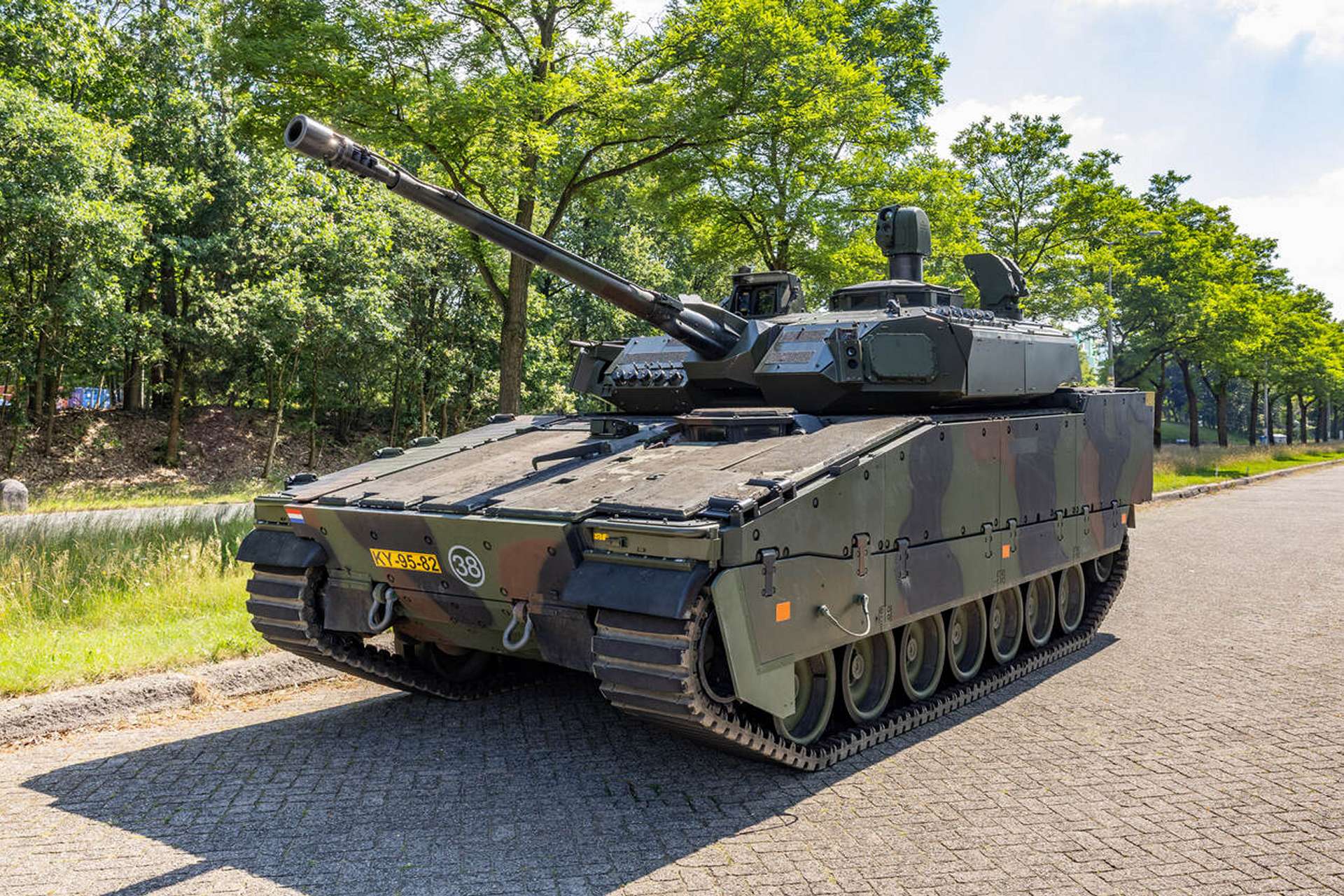
The first modernized CV9035NL Infantry Fighting Vehicle (IFV) has been unveiled by the Royal Netherlands Army. This prototype, known as the First of Type 4 (FoT4), marks a significant milestone in enhancing the capabilities of the Dutch ground forces. This information was made public by the Dutch Ministry of Defence on 2 July 2024.
Follow Army Recognition on Google News at this link
The CV9035NL Infantry Fighting Vehicle (IFV) (Picture source: Dutch MoD)
The modernized vehicle is equipped with the new D35 turret, a key component of the Mk.IV variant, although the vehicle itself retains a Mk.III hull. This hybrid configuration incorporates several cutting-edge improvements, distinguishing it from its predecessors.
The D35 turret is a highlight of the modernized CV90, equipped with a 35mm cannon and the mast-mounted COAPS-L (Compact Optoelectronic Advanced Stabilized System). This system significantly enhances the vehicle’s surveillance and targeting capabilities. Additionally, the turret includes the Iron Fist Active Protection System (APS) and the Spike-LR2 Anti-Tank Guided Missile (ATGM) pod.
The electronic architecture of the CV9035NL MLU has also undergone substantial improvements, integrating modern technologies to enhance overall functionality and interoperability with other military systems.
While the D35 turret represents a major advancement, the vehicle retains the Mk.III hull with several enhancements. This approach combines the best of both worlds, leveraging the proven reliability of the Mk.III platform while integrating advanced features from the Mk.IV variant. Officially designated as the Mk.IIIC by BAE Systems, this version represents the third iteration of the third generation of CV90 vehicles.
This configuration has also been chosen for the Ukrainian and Swedish Armed Forces. However, it is noteworthy that the Ukrainian versions are unlikely to utilize the ATGM or APS systems, focusing instead on other capabilities.

On the left, 1 of the 2 heads of the Active Protection System. On the right, the new system that gives the commander a stabilised view of his surroundings over long distances, called Electronic Optical Panoramic Sight. (Picture source: Dutch MoD)
The first serially produced Mk.IV CV90s will be delivered to Slovakia and the Czech Republic, with a total of 398 vehicles on order. This collaborative effort highlights the ongoing commitment of European nations to modernize their military capabilities and ensure interoperability among NATO allies.
The unveiling of the modernized CV9035NL MLU IFV underscores the Netherlands’ dedication to maintaining a robust and technologically advanced military force. As these vehicles enter service, they will play a crucial role in enhancing the operational effectiveness of the Dutch Army, ensuring it remains well-equipped to face future challenges.
The Dutch Army has implemented an exemplary development and innovation process for this upgrade. In close collaboration with technical experts and end users, primarily from the younger generation, the army worked closely with the Swedish manufacturer BAE Systems Hägglunds to enhance the vehicle.

More and better cameras for better situational awareness. (Picture source: Dutch MoD)
Adjutant Helmich Lambrechts, representing the end users from the Kenniscentrum Grondgebonden Manoeuvre, emphasizes the importance of this collaboration: “With a team of 40 to 50 people from the CV90 community, we worked together on this project. We traveled several times to Sweden to test and improve the vehicle, which was a unique experience for the supplier.”
The development and testing process was preceded by many years of technical research. Felix Slot, technical expert from the Commando Materieel & IT (COMMIT), explains: “We constantly strive to anticipate future battlefield needs and develop the necessary technologies to meet them.” This work has led to the development of advanced systems such as the Active Protection System (APS), which intercepts incoming threats and calculates their point of origin.
The APS, which will be used for the first time within NATO by the Dutch, is considered revolutionary. This system, along with other improvements like rubber tracks to reduce vibrations and enhance crew comfort, makes the CV90 a highly sought-after vehicle within the alliance. “We are now a preferred customer for the manufacturer due to our extensive expertise,” says Lambrechts.
Although the first new model will not be operational until 2026, COMMIT’s technical experts are already planning the next generation of CV90s for 2040. In the meantime, the production and maintenance of the new model will be primarily carried out by Dutch companies, with increased collaboration with Sweden and Denmark for the production of vehicles destined for Ukraine.
The first CV9035NL MLU model will be introduced as early as September this year, marking the beginning of a new era for the Dutch Army.

The first modernized CV9035NL Infantry Fighting Vehicle (IFV) has been unveiled by the Royal Netherlands Army. (Picture source: Dutch MoD)
Read more: Dutch Army Unveils First Modernized CV90 Infantry Fighting Vehicle

- Details
- Written by: Halna du Fretay
- Category: 2024
- Hits: 4258
The Russian Ministry of Defense has announced the deployment of the S-350 Vityaz air defense system in the Donetsk region of Eastern Ukraine. This strategic deployment is particularly crucial for Russia as it seeks to safeguard against Western-supplied missile attacks. These Western systems pose significant threats with their precision and long-range capabilities, compelling Russia to enhance its defensive measures in the region.
The S-350 is capable of engaging both aerodynamic and ballistic targets using its advanced 9M96 missile family, originally designed for the S-400 system (Picture source: Army Recognition)
The S-350E Vityaz 50R6, a modern mobile air defense system, was developed by the Russian defense company Almaz-Antey and publicly unveiled in 1998. Initially designed in the early 1990s, it was developed to complement the older S-300 and S-400 systems, enhancing Russia's layered air defense capabilities. The system was aimed at the export market and likened to European systems such as the SAMPT. It entered service in the Russian military in December 2019, representing a significant upgrade in their air defense capabilities.
The S-350 is capable of engaging both aerodynamic and ballistic targets using its advanced 9M96 missile family, originally designed for the S-400 system. These missiles can target objects at a range of 1.5 to 120 km and altitudes of 10 to 30,000 meters. The system is versatile, with the ability to deploy two types of missiles: the 9M96 for medium to long-range engagements and the 9M100 for shorter-range engagements. Each launcher vehicle can carry up to 12 surface-to-air missiles, providing substantial firepower. The missiles are equipped with active radar homing heads from the "Slate" series and gas-dynamic control belts, enabling kinetic interception of targets maneuvering up to 25 Gs.
The mobility of the Vityaz system, mounted on an 8x8 truck chassis (BAZ-6909), allows for rapid deployment and repositioning on the battlefield. It also includes a multifunctional radar and command and control vehicles that coordinate missile launches and guidance, offering an integrated and highly effective air defense solution. The system has been a crucial part of Russia's modernized air defense strategy.
Despite successful interceptions, including a reported instance where 12 HIMARS rockets were intercepted during a single salvo by a commander known by the call sign "Lev" from the Southern military group, there is skepticism about the overall effectiveness of the S-350. Some Russian media consumers have questioned the authenticity of these claims, suggesting that they may be exaggerated to enhance the system's appeal to potential foreign buyers. Additionally, there have been reports from Ukrainian forces claiming they have successfully overcome S-350 defenses to strike targets accurately, indicating potential vulnerabilities in the system's capabilities.
The Donetsk region holds significant strategic importance for Russia, primarily due to its geographical location and resource richness. For Russia, maintaining influence in Donetsk is crucial not only for economic reasons but also as a security measure against the expansion of Ukrainian forces.
Read more: Russian Officials Announce Deployment of S-350 Air Defense Systems in Donetsk
- Details
- Written by: Halna du Fretay
- Category: 2024
- Hits: 4391
The Australian government is set to enhance its military capabilities by acquiring Switchblade 300 drones from the American company AeroVironment, a type of precision loitering munition effectively used by Ukrainian forces. The announcement, scheduled by the Albanese government for Monday, marks a significant step in modernizing the Australian Defence Force (ADF) with advanced unmanned systems.
Follow Army Recognition on Google News at this link
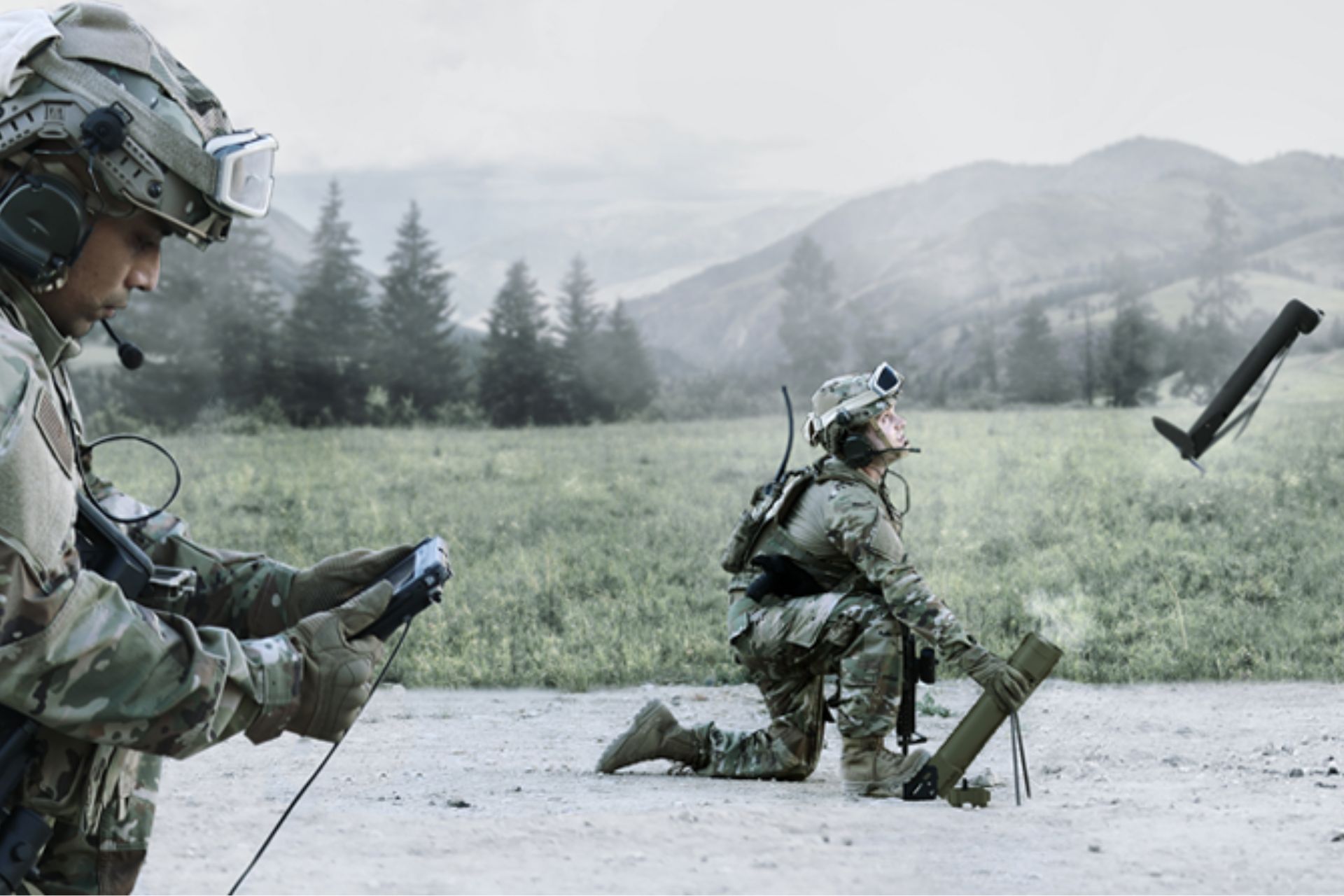
Weighing just 4 pounds, this lightweight, miniature, precision-guided lethal missile can be deployed in less than 2 minutes via tube-launch from land, sea, or mobile platforms providing greater mission flexibility. (Picture source: AEROVIRONMENT)
The Switchblade 300 is noted for its lightweight design and ability to carry an explosive payload, making it highly portable for military operations. The drone has a range of approximately 10 kilometers and has gained attention for its use on the Ukrainian battlefield against Russian forces. Manufactured by AeroVironment, the Switchblade 300 employs a strike missile capable of engaging targets beyond the line of sight, enhancing the tactical flexibility of the forces using it.
The acquisition comes amid growing concerns about the ADF's current capabilities with unmanned aerial systems, which are primarily made up of about 760 systems used mostly for surveillance. The ongoing conflict in Ukraine, where the effectiveness of unmanned systems in combat has been clearly demonstrated, has amplified these concerns. In response, the Australian government, led by Defence Industry Minister Pat Conroy, has committed to expanding its drone arsenal, including a significant investment exceeding $10 billion in drone technology, with at least $4.3 billion allocated to unmanned aerial systems.
While details on the quantity and total cost of the Switchblade 300 drones remain undisclosed, prices are estimated to be between about $90,000 and $120,000 each. This purchase aligns with recent international defense trends, as Washington recently approved a substantial sale of the same model to Taiwan and has supplied them to other allies, including Ukraine, France, and the UK following the onset of the conflict in Ukraine in 2022.
In addition to the Switchblade 300, the Australian Army is also preparing to introduce a locally made, electrically powered loitering munition capable of traveling up to 200 kilometers or loitering for 30 minutes with a lethal payload. However, defense sources suggest that this domestic drone will likely enter service after the Switchblade 300.
Read more: Australia to Acquire US-Made Switchblade 300 Drones Combat-Proven in Ukraine Conflict

- Details
- Written by: Tkuhn
- Category: 2024
- Hits: 2639
According to a PR published by IDV on July 8, 2024, the Brazilian Army, through the Army Manufacturing Directorate, has formalized an agreement with IDV to supply 420 LMV-BR 2 (Light Multirole Vehicle) units over the next decade. The initial deliveries are scheduled for 2026.
Follow Army Recognition on Google News at this link
4X4 Light Multirole Vehicles Guaicuru. (Picture source: IDV)
This procurement, involving the locally named "Guaicurus" vehicles, includes two variants: one with a Manual Weapon System and the other with a Remote-Controlled Weapon System (RCWS). All units will be equipped with a Command and Control (C2) system. Production will take place at IDV’s facility in Sete Lagoas, Minas Gerais.
The contract represents a significant advancement in the collaboration between the Brazilian Army and IDV, contributing to the national defense industry and the strategic enhancement of the Brazilian Ground Forces. This partnership has a substantial history, with previous deliveries including 700 Guarani 6x6 amphibious armored vehicles and 32 LMV-BRs.
Since its inception, the LMV has evolved, integrating extensive user experience to meet rigorous operational demands. Over the past 20 years, IDV has developed expertise in creating military vehicles tailored for challenging missions, including special operations and peacekeeping in urban environments.
Read more: Brazilian Army and IDV sign contract for 420 LMV-BR 2 vehicles

- Details
- Written by: Administrator
- Category: 2024
- Hits: 4251
On July 2, 2024, John Cockerill announced the successful conclusion of its acquisition of ARQUUS, the leading French supplier of wheeled military vehicles. The acquisition process, which began in January 2024 with the Volvo Group, has now officially closed, marking a significant milestone in the defense sector. With this acquisition, Belgian company John Cockerill Defense becomes a key leader in manufacturing combat vehicle solutions, including chassis and weapon stations
Follow Army Recognition on Google News at this link
ARQUUS VAB 6x6 armored vehicle fitted with a CPWS turret from John Cockerill Defense. (Picture source: Army Recognition Group)
The completion of this transaction coincides with a recently signed Memorandum of Understanding between France and Belgium. This agreement is designed to support and oversee the alliance, with both countries taking a 10% stake in the capital of John Cockerill Defense. This partnership is expected to enhance bilateral defense cooperation and strategic alignment.
John Cockerill Defense plans to leverage the strengths of both companies, combining Arquus' vehicles with Cockerill's weapon systems. This integration will enable the company to offer innovative solutions, including vehicles equipped with light tank turrets, to better serve ground forces worldwide.
The acquisition sets an ambitious target for John Cockerill Defense, aiming for an annual turnover of €1 billion and a workforce of 2,000 professionals by 2026. The company plans to establish a global presence with major operational bases in Belgium, France, Italy, India, and Saudi Arabia.
Financially, the transaction was orchestrated with the expertise of Crédit Agricole CIB, acting as the sole financial advisor. The acquisition was financed through a consortium comprising Crédit Agricole CIB (Coordinator and Agent), BNP Paribas Fortis, and Société Générale Corporate and Investment Banking.
John Cockerill Defense's acquisition of French Company ARQUUS, a renowned manufacturer of wheeled armored vehicles, marks a significant expansion in the company's capabilities. ARQUUS is well-known for producing versatile and robust platforms such as the VAB (Véhicule de l'Avant Blindé) and other combat vehicle chassis, which have been widely adopted in various military operations worldwide.
With John Cockerill Defense's expertise in designing and manufacturing advanced weapon stations and turrets, the acquisition enables the company to offer comprehensive combat vehicle solutions. This integration will combine the robust chassis of Arquus vehicles with state-of-the-art weapon systems from John Cockerill Defense, creating highly adaptable and powerful combat vehicles.
This strategic synergy allows John Cockerill Defense to provide a complete package to the current military market, addressing the growing demand for integrated and versatile combat solutions. The enhanced offerings will not only include traditional wheeled armored vehicles but also new configurations equipped with advanced weapon stations, ensuring superior performance and operational effectiveness in various combat scenarios.
The combined capabilities will position John Cockerill Defense as a leading supplier in the defense industry, capable of meeting the diverse needs of modern ground forces. This move is expected to strengthen the company's market presence and competitiveness, offering military clients around the world a one-stop solution for advanced combat vehicles.
Furthermore, the collaboration is set to foster innovation and development within the industry, promoting the creation of next-generation combat vehicles that can adapt to evolving military requirements. John Cockerill Defense's expanded product line will enhance its ability to support defense operations globally, ensuring that armed forces are equipped with the best possible tools to achieve their missions.

- Details
- Written by: Triffaux
- Category: 2024
- Hits: 5121
On July 7, 2024, the Israeli defense contractor Rafael officially confirmed the operational use of its Spike Firefly miniature loitering munitions, also known as "Moaz," in the Gaza Strip.
Follow Army Recognition on Google News at this link
Rafael SPIKE Firefly Miniature Loitering Munition (Picture source: Rafael)
The use of miniature loitering munitions such as the Israeli-made Spike Firefly in urban areas like the Gaza Strip has generated significant interest. These small, drone-like weapons are designed for precise targeting in complex environments, offering a high degree of control and limited collateral damage.
The Firefly, developed by Rafael Advanced Defense Systems, is part of a broader category of munitions known as loitering munitions or "suicide drones." These systems bridge the gap between drones and guided missiles. They are capable of "loitering" in an area, identifying targets, and then striking with precision. This capability makes them particularly useful in urban warfare, where distinguishing between combatants and non-combatants can be challenging.
In places like the Gaza Strip, the use of this technology raises important questions. On one hand, the precision of the Spike Firefly could potentially reduce unintended casualties and damage, as it allows for more controlled engagements compared to traditional airstrikes. On the other hand, the introduction of such advanced weaponry in densely populated areas raises ethical and legal concerns, particularly regarding implications for civilian safety and the principles of proportionality and distinction in armed conflict.
Moreover, the deployment of this technology could potentially change the dynamics of urban warfare. It might lead to an arms race in drone technology and asymmetric warfare tactics, as non-state actors may seek to develop or acquire similar capabilities. The psychological impact on civilian populations, knowing that such devices could be present, is also a concern.
The Spike Firefly, developed by the Israeli company Rafael Advanced Defense Systems, is a miniature loitering munition that has gained attention for its use in complex urban warfare environments. This Israeli-made system represents a significant shift in the dynamics of urban combat, providing light maneuvering ground forces such as infantry, marines, or special forces with a new level of tactical capability.
The Spike Firefly addresses the challenges of limited situational awareness and the difficulty of engaging enemies who are behind cover. Its innovative electro-optical system and precision targeting make it a revolutionary addition to infantry tactics, fundamentally changing how small infantry units approach urban combat.
The Firefly system includes three Loitering Munitions (LMs) and a Control Unit (CU), the latter being a ruggedized tablet with a military standard bidirectional data link. This setup not only ensures effective control over the munitions but also enhances communication reliability in challenging environments.
In terms of technical specifications, the Firefly stands out with its compact dimensions, each munition measuring 80mm x 80mm x 400mm (LxDxH). The Firefly LM weighs 3 kg, the CU 1 kg, and the full kit approximately 15 kg. It demonstrates impressive versatility with a range of 500m in urban settings and up to 1000m in open areas. The Firefly can maneuver at speeds up to 60 km/h and has a dive speed of 70 km/h.
The Spike Firefly guidance system is electro-optical with man-in-the-loop control, ensuring precision in targeting. The munition's lethality is enhanced by a 350-gram omnidirectional fragmentation warhead. In terms of endurance, it can operate on a single battery with the warhead for 15 minutes, a double battery without the warhead for 30 minutes, and can be deployed in standby mode for up to 2 hours.
Typical missions for the Firefly include engaging enemies behind cover, providing immediate situational awareness, scouting ahead for maneuvering forces, and conducting tactical reconnaissance in urban battlefields. This technology significantly impacts infantry operations, offering a new level of precision and control in environments where traditional warfare tactics are less effective.
Overall, while the Firefly and similar systems represent a technological advancement in warfare, their use in urban areas like the Gaza Strip highlights the complexity of modern conflicts, where technological capabilities must be balanced with ethical considerations and adherence to international law.
- Details
- Written by: Vandenbosch
- Category: 2024
- Hits: 7861
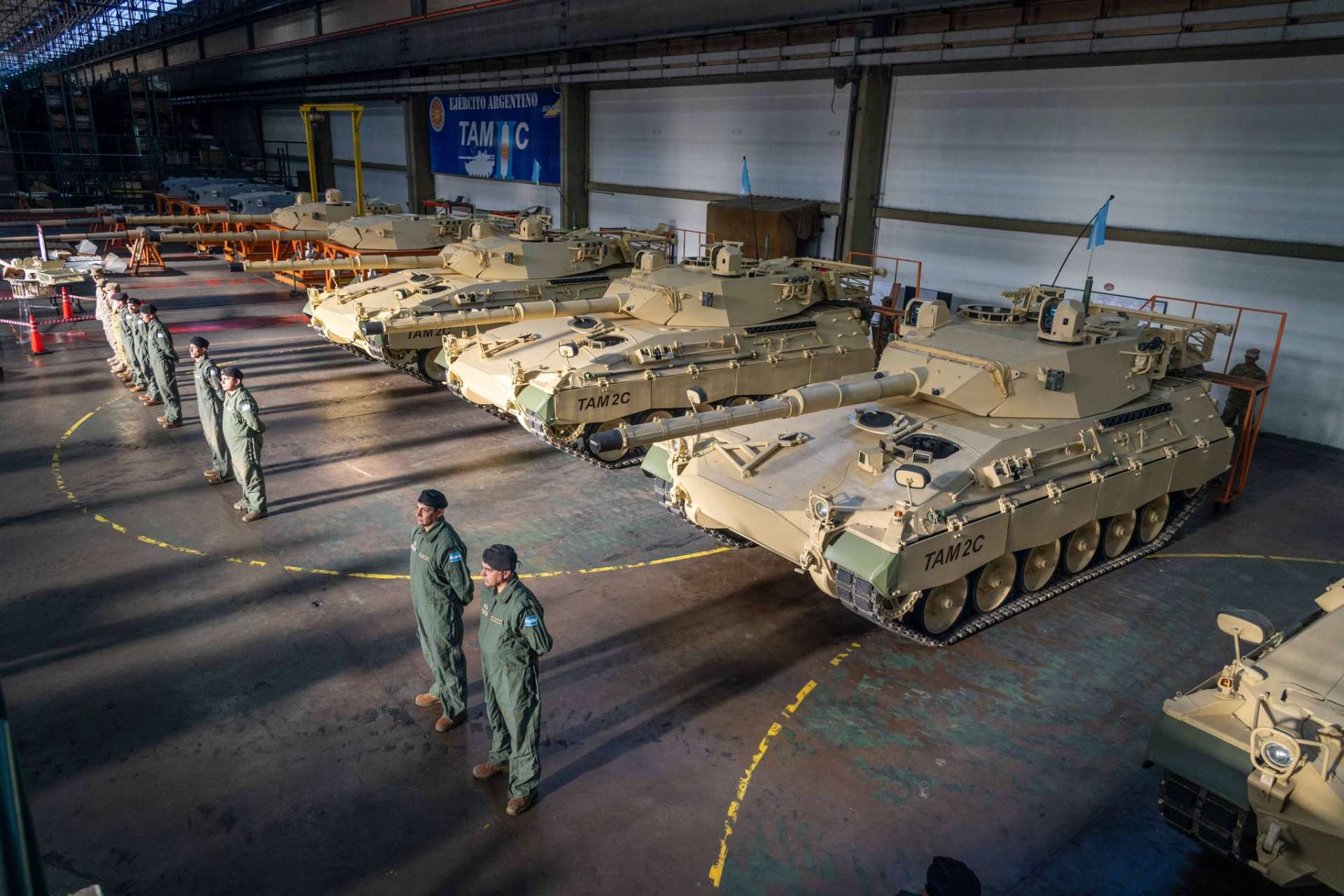
On July 5, 2024, the Argentine Army took delivery of five newly modernized TAM 2CA2 medium tanks during an official ceremony held at the 602nd Arsenal Battalion in Boulogne-sur-Mer, Argentina. This delivery marks a crucial step in the ongoing modernization efforts of the Argentine Army.
Follow Army Recognition on Google News at this link
The TAM 2CA2 is a modernized version of the Argentine medium tank TAM. (Picture source: Argentine MoD)
The TAM 2CA2 tanks, part of a broader planned upgrade of 74 units, have been equipped with advanced features to meet the evolving needs and requirements of the Argentine Army. These upgrades include increased firepower, improved protection systems, and advanced targeting technology, ensuring the tanks remain formidable assets on the modern battlefield.
The ceremony, attended by high-ranking military officials and defense industry representatives, underscored the importance of this modernization program. The improvements are expected to significantly enhance the operational capabilities of Argentina's armored forces, providing them with a technological edge in both defensive and offensive operations.
Colonel Juan Martinez, commander of the 602nd Arsenal Battalion, expressed his satisfaction with the progress of the modernization program. "The delivery of these modernized TAM 2CA2 tanks testifies to our commitment to maintaining a robust and capable armored force. These tanks will play a crucial role in improving our operational readiness and ensuring the security of our nation."
The TAM 2CA2 modernization program is part of a broader effort by the Argentine Army to upgrade its military equipment and improve its combat effectiveness. The modernized tanks are expected to be deployed in various strategic locations across the country, contributing to national defense and stability.
The TAM 2CA2 is a modernized version of the Argentine medium tank TAM. Designed in collaboration with the Israeli company Elbit Systems, this modernization project aims to upgrade 74 tanks over five years, with an additional stage to upgrade 30 more units, bringing the total to over 100 modernized tanks. This modernization initiative includes updating the tank's turret with new technological components, while the Argentine Army is responsible for refurbishing the vehicle hulls, involving the replacement of many mechanical components and spare parts.
The TAM 2CA2 is equipped with a main 105 mm gun, a coaxial 7.62 mm machine gun, and a 7.62 mm machine gun mounted on the roof. To optimize its combat performance, it features a sophisticated fire control system, an optical sight and rangefinder, and a ballistic computer. It also includes an air filtering device, a fire suppression system, and a battle management system coupled with smoke grenades. For communications, the tank is equipped with an intercom system and an advanced communication system.
Designed for a crew of four, the TAM 2CA2 has armor capable of withstanding small arms fire, shell splinters, and armor-piercing ammunition up to 20 mm. Weighing 30,000 kg, it can reach a speed of 75 km/h and has a range of 940 km, making it both fast and enduring on the battlefield. Its dimensions, 8.23 meters in length, 3.29 meters in width, and 2.71 meters in height, contribute to its maneuverability and operational efficiency in various terrain conditions.
Despite initial delays, the development of the TAM 2CA2 continues inexorably. If all goes as planned, Argentina should possess around one hundred modernized tanks. The first prototypes have already been successfully evaluated, and series production testing is underway, confirming the technical and operational performance of this new generation of tanks.

On July 5, 2024, the Argentine Army took delivery of five newly modernized TAM 2CA2 medium tanks (Picture source: Argentine MoD)
Read more: Argentina Receives Several Modernized TAM 2CA2 Medium Tanks

- Details
- Written by: Triffaux
- Category: 2024
- Hits: 6376
DefSecIntel Solutions, an Estonian company, unveiled its new AI-assisted ultra-short range air defense system, EIRSHIELD, at the Eurosatory 2024 exhibition. Designed to offer comprehensive protection against various aerial threats, EIRSHIELD is particularly effective against multirotor and fixed-wing drones.
Follow Army Recognition on Google News at this link
AI-Assisted EIRSHIELD Air Defense System mounted on Bandvagn 206 All-Terrain Vehicle (Picture source: DefSecIntel)
The recent Eurosatory exhibition showcased the EIRSHIELD anti-drone system from DefSecIntel Solutions (DSI), an Estonian innovation that promises to revolutionize short-range air defense. With the intensification of drone warfare, countermeasures against these increasingly prevalent threats have become a focal point for defense and military companies worldwide.
The EIRSHIELD system stands out for its fully autonomous capability to provide air defense without external support. Mounted on the Bandvagn 206 (Bv 206) from BAE Systems, an articulated all-terrain tracked vehicle, EIRSHIELD uses advanced radar technology to detect targets up to 8 km away. RF sensors and the EO/IR camera system work in tandem with the radar to verify and classify detected threats.
Once a target is identified, the EIRSHIELD system employs AI-assisted technology to track it and jam its radio and GNSS signals, thus compromising its navigation and control. Depending on the threat level, EIRSHIELD can deploy various effectors, including AI-assisted interceptor drones, .50 caliber machine guns, or commercially available missiles.
This comprehensive suite of countermeasures makes EIRSHIELD unique in offering such diverse capabilities. The modular design of the system allows for rapid deployment, with a setup time of less than 15 minutes, making it a versatile solution for a wide range of operations and environments.
The introduction of systems like EIRSHIELD addresses the growing need for defense against drones, which have become effective and economical weapons, especially in terms of media and propaganda. EIRSHIELD's ability to operate autonomously and adapt to various types of aerial threats marks a significant advancement in anti-drone technology.
As drones become more sophisticated and widely used in military operations, innovative solutions to defend against these threats are vital. The EIRSHIELD system represents a major breakthrough in anti-drone technology, offering a versatile and comprehensive defense mechanism against the evolving drone threat. DefSecIntel Solutions has demonstrated through EIRSHIELD how innovation and adaptability can meet contemporary drone warfare challenges.
Read more: Estonian Company DefSecIntel Solutions Develops AI-Assisted EIRSHIELD Air Defense System

- Details
- Written by: Halna du Fretay
- Category: 2024
- Hits: 6191
Ukraine has started retrofitting its BTR-7 infantry combat vehicles with the new BM-7 Parus turret, as reported on X by @praisethesteph. This modification significantly enhances the firepower compared to the original turret configurations equipped with the 14.5 mm KPVT machine gun. The BM-7 Parus turret, featuring a 30 mm ZTM-1 autocannon and modern optoelectronic systems, provides a more powerful and technologically advanced alternative.
Follow Army Recognition on Google News at this link
The BTR-7 typically mounts a 30 mm automatic cannon, a coaxial machine gun, and grenade launchers (Picture source: X channel @praisethesteph)
The updated turret system also allows the installation of two anti-tank guided missiles (ATGMs), thereby boosting their combat effectiveness. This enhancement could be a game-changer for the Ukrainian military by significantly improving the combat value of their aging BTR fleet. The integration of these advanced turrets is part of ongoing efforts to modernize and strengthen the Ukrainian armored forces amid persistent regional tensions.
The deployment of these upgraded vehicles, currently in service with the Russian Volunteer Corps (RDK), demonstrates the potential of modernization to extend the operational life and effectiveness of existing military assets. This strategy not only optimizes defense spending but also ensures that the armed forces remain equipped with competitive and capable weaponry.
The BTR-7 is a Ukrainian upgrade of the older BTR-70 armored personnel carrier, originally developed by the Kharkiv Morozov Machine Building Design Bureau in the late 1990s. Known as "Bucephalus," the BTR-7 was put into service in the early 2000s with the primary role of enhancing the operational capabilities of the Ukrainian armed forces by providing more robust and flexible infantry transport.
The vehicle features significant improvements over its predecessors, including enhanced armored protection, increased firepower, and modernized equipment. The BTR-7 is equipped with a powerful diesel engine, which provides better mobility and speed than the BTR-70. It typically mounts a 30 mm automatic cannon, a coaxial machine gun, and grenade launchers. The vehicle can also be fitted with anti-tank guided missiles (ATGMs), significantly increasing its combat effectiveness.
As of the latest updates, the exact number of BTR-7 vehicles in service is not publicly disclosed, but they are an integral part of Ukraine's mechanized and armored units. The BTR-7 continues to receive upgrades and modifications aimed at improving its survivability and combat capabilities in response to changing battlefield conditions and operational requirements.
Read more: New BM-7 Parus Turret Enhances Ukrainian BTR-7 Combat Vehicles

- Details
- Written by: Vandenbosch
- Category: 2024
- Hits: 4834
Santa Bárbara Sistemas has completed the repair of ten Leopard 2A4 tanks that Spain will deliver to Ukraine as part of the aid committed to counter the Russian invasion. Nine more tanks to complete the second batch of 19 Leopard 2A4 tanks promised to Ukraine will be ready by September.
Follow Army Recognition on Google News at this link
The Leopard 2A4 is a main battle tank renowned for its firepower, advanced protection, and overall performance. (Picture source: Spanish MoD)
The company prepared these tanks, part of the second batch donated by Spain, at its facilities in Alcalá de Guadaíra, Seville. Santa Bárbara Sistemas had previously repaired the first batch of ten units at the same center last year, which were sent to Ukraine in two phases, in April and September.
This newly prepared group of ten tanks is part of the 19 Leopard 2A4 tanks promised by the Spanish government in March this year. The company completed the work in a record time of three months, and since the end of June, the ten Leopard tanks have been ready for transfer.
Defense Minister Margarita Robles informed the Ukraine Contact Group that the first tanks would be ready by the end of June, thus meeting the deadlines. Although the Ministry of Defense has not yet specified the exact date of shipment to Ukraine, it is expected to be in the coming days.
Like the first batch of ten delivered last year, these tanks have also undergone a series of field tests to certify the proper functioning of their equipment and systems.
The Leopard tanks donated in 2024 and this second batch came from the Army barracks in Casetas (Zaragoza), where they had been stored out of service since 2012. Unlike the first batch, these tanks were in worse condition, necessitating a more extensive maintenance plan.
The other nine Leopard 2A4 tanks from the second batch are already at the Alcalá de Guadaíra factory. The restoration work is expected to be completed by September, according to El Heraldo.
The Leopard 2A4 is a main battle tank renowned for its firepower, advanced protection, and overall performance. It is armed with a 120 mm L55 smoothbore gun, a coaxial 7.62 mm machine gun, and an anti-aircraft 7.62 mm machine gun mounted on the loader's hatch. In terms of protection, the Leopard 2A4 features standard-spaced multilayer armor, enhanced with improved protection at the front of the turret. The interior of the turret is fitted with spall liners, which increases crew safety in the event of armor penetration.
Used by many countries, including Austria, Canada, Chile, the Czech Republic, Denmark, Finland, Germany, Greece, Indonesia, Norway, Poland, Portugal, Singapore, Switzerland, Sweden, Slovakia, Spain, Turkey, and Ukraine, this tank is appreciated for its robustness and versatility on the battlefield. Weighing 62,000 kg in combat conditions, it remains remarkably mobile with a maximum road speed of 72 km/h and a range of 500 km, allowing for extended operations without frequent refueling.
Designed in Germany, the Leopard 2A4 incorporates advanced technologies such as infrared night vision and an NBC (nuclear, biological, and chemical) protection system, enhancing its operational capabilities in various combat conditions. The tank is operated by a crew of four, and its imposing dimensions, with a length of 7.70 m, a width of 3.70 m, and a height of 3.00 m, give it a formidable presence on the field while offering optimal protection and firepower.
Additionally, Santa Bárbara Sistemas has proposed to the Spanish government to produce up to fifty Ascod-tracked armored vehicles for Ukraine at its Trubia factory in Asturias within a year. This proposal was presented after a meeting at La Moncloa between President Pedro Sánchez and representatives of the Spanish defense industry in mid-March.
Read more: Spain Completes Repair of Ten Leopard 2A4 Tanks for Ukraine