

- Details
- Written by: Vandenbosch
- Category: 2024
- Hits: 2838










Latvia is evaluating the possibility of sending another batch of Stinger MANPADS (man-portable air-defense systems) to Ukraine, according to Prime Minister Krishjanis Karinsh. He emphasized that ongoing assessments aim to support Ukraine's resistance against the Russian invasion.
Follow Army Recognition on Google News at this link
The FIM-92 Stinger is a portable surface-to-air missile designed for use by a single operator. (Picture source: US DoD)
"Yesterday, we decided to send equipment from the State Police to Ukraine. In the coming days, a convoy of buses carrying various forms of aid will leave Riga," the Prime Minister stated. He also noted that discussions are ongoing regarding further military assistance to Ukraine, including the potential shipment of additional Stinger anti-aircraft missile systems and other military supplies.
In January 2024, Latvia pledged a new military aid package to Ukraine, including howitzers, 155 mm ammunition, anti-tank weapons, missiles, grenades, helicopters, drones, communication devices, generators, and equipment.
In January 2023, Latvia had already provided 285 cars worth nearly one million euros as part of a batch of over 1200 cars donated by UkReinis Pozņaks. In August 2022, Latvia delivered six M109 self-propelled howitzers, along with two Mil Mi-8MTV-1 transport helicopters and two Mil Mi-2 transport helicopters. In August 2023, one Mi-17 helicopter was sent, with another one promised.
Since March 2022, more than 90 drones have been donated by Latvian companies and delivered to the Ukrainian Armed Forces by the Ministry of Defense of Latvia. In May 2022, over 45 AtlasPro drones were donated by the Latvian public and companies, and after January 2023, dozens more drones were sent.
Since February 2022, Latvia has also provided dozens of Stinger anti-aircraft missile systems and anti-aircraft guns. In the spring of 2023, dozens of machine guns with ammunition were sent to Ukraine.
The FIM-92 Stinger is a portable surface-to-air missile designed for use by a single operator. Originating from the United States, it has been in service since 1981 and has been used in numerous conflicts, including the Falklands War, the Soviet-Afghan War, the Gulf War, and most recently, the Russo-Ukrainian War.
Designed by General Dynamics in 1967 and manufactured by Raytheon Missiles & Defense, the Stinger has evolved through several variants: FIM-92A, FIM-92B, FIM-92C, FIM-92D, and FIM-92G. The unit cost of the FIM-92A was $38,000 in 1980, rising to $119,320 in 2020.
The complete Stinger system weighs 15.7 kg, while the missile alone weighs 10.1 kg. At launch, the missile is 1.53 m long, reducing to 1.37 m in flight. It has a diameter of 70 mm and a wingspan of 160 mm. Designed for operation by a single crew member, the Stinger has an effective firing range of 0.16 to 4.83 km.
The missile is equipped with a 3 kg high-explosive fragmentation warhead with an impact detonation mechanism. Its solid-fuel rocket motor allows it to reach a maximum speed of Mach 2.2, or 745 m/s. The guidance system uses infrared homing, enabling the missile to automatically target heat sources such as aircraft engines.
The Stinger can be launched from several platforms, including MANPADS, the M6 Linebacker, the Multi-Mission Launcher, the Eurocopter Tiger, the AN/TWQ-1 Avenger, the MQ-1 Predator, the AH-64 Apache, and the T129 ATAK.
In summary, the FIM-92 Stinger is a versatile and effective weapon system, widely used for short-range air defense due to its mobility and precision in targeting enemy aircraft.
"We will persist in this direction. We must stand with the Ukrainians as they fight for our shared values against the Russian aggressor," Karinsh emphasized.
Read more: Latvia Considering Additional Stinger MANPADS for Ukraine

- Details
- Written by: Jérôme Brahy
- Category: 2024
- Hits: 5401
On June 26, 2024, at the Army Center for Technical Services in Štěpánov near Olomouc, the final units of the ordered TITUS armored vehicles were handed over to the Army of the Czech Republic. The supplier, Eldis Pardubice, along with the manufacturer and integrator, Tatra Defence Vehicle (TDV), completed their contractual obligation to deliver a total of 62 TITUS vehicles in three versions on schedule.
Follow Army Recognition on Google News at this link
These TITUS vehicles were ordered in three versions: Command-Staff Vehicles (KOVVŠ), Communication Vehicles (KOVS), and Fire Support Coordination Vehicles (MKPP). (Picture source: Tatra Defence Vehicle)
The TITUS (Tactical Infantry Transport and Utility System) is an armored 6x6 multi-purpose vehicle built by Nexter KNDS and Tatra Defence Vehicle (TDV) to address the demands of modern hybrid warfare, including counter-insurgency missions and high-intensity conflicts. The vehicle's architecture provides high mobility and maneuverability across various terrains, such as deserts and urban environments. Its primary mission is to transport infantry squads while offering protection and fire support capabilities.
The TITUS can be configured for several missions, including serving as a command post, a self-propelled mortar carrier (120mm), an armored ambulance, or a CBRN reconnaissance vehicle. The vehicle has a maximum speed of 110 km/h, an operational weight of 23 tons, and a range of 700 km. It is powered by a 500hp engine and features semi-independent stub axles and advanced steering systems. For protection, it offers ballistic levels from 2 to 4, mine resistance from levels 3A/3B to 4A/4B, and IED blast protection from 50 to 150 kg. Additionally, the TITUS is equipped with a remote weapon station for 7.62mm to 25mm weapons and a 40mm grenade launcher, supporting troops in combat situations.

Additionally, this 6x6 can be equipped with a remote weapon station for 7.62mm to 25mm weapons and a 40mm grenade launcher. (Picture source: Army Recognition)
In June 2019, the Czech Ministry of Defense commissioned an order for 62 TITUS (Tactical Infantry Transport & Utility System) armored vehicles on a Tatra 6x6 chassis for the Czech Army. These vehicles were ordered in three versions: Command-Staff Vehicles (KOVVŠ), Communication Vehicles (KOVS), and Fire Support Coordination Vehicles (MKPP). The contract, valued at approximately 6 billion Czech koruna including VAT, specified that the Army would receive 20 MKPP vehicles in the first phase, 36 KOVS vehicles in the second phase, and finally, 6 KOVVŠ vehicles along with six staff workstations (PŠ). The delivery of the MKPP vehicles was completed by Eldis Pardubice and TDV in August 2023, followed by the KOVS vehicles, with the project concluding with the handover of the KOVVŠ vehicles in May and June of this year.
The delivery of the KOVS vehicles experienced a four-month delay compared to the partial schedule due to issues with the sub-supply of certain communication and information system components from abroad. These challenges were attributed to the global COVID-19 pandemic and the outbreak of the conflict in Ukraine, which prioritized the delivery of these systems and components to warring countries over non-combat projects.
All three specialized versions intended for the Czech Army resulted from collaboration between several Czech companies and a foreign partner. The main system integrator for the TITUS project was the Kopřivnice-based TDV, which handled the production of the bodies and the complete assembly of the vehicles in collaboration with the French company Nexter Systems. Tatra Trucks supplied the chassis platforms, and the Pardubice company Retia provided the electronic components and special superstructures. Eldis Pardubice was the final supplier for the Army.

The TITUS vehicles fulfill support roles within Czech Army units, replacing several outdated systems installed on various platforms, primarily Praga V3S trucks. (Picture source: Czech MoD)
Following the contract signing, the TITUS project for the Czech Army began with the production of six prototypes: one KOVS, one KOVVŠ, and four MKPP. These prototypes underwent the prescribed company tests at the manufacturer, control tests at accredited testing laboratories, military tests at Army units and facilities, and approval tests again at accredited laboratories in 2021 and 2022. Following the successful testing, serial production commenced. Initially, Nexter supplied the finished armored bodies to the Kopřivnice company, but later the know-how for their production was fully transferred to TDV, where the main parts of the TITUS vehicles were manufactured and assembled. The deliveries included operational and accompanying documentation for all vehicle versions, as well as parts catalogs and workshop tools.
The TITUS vehicles fulfill support roles within Czech Army units, replacing several outdated systems installed on various platforms, primarily Praga V3S trucks. The KOVVŠ variant is used in the decision-making processes of commanders at the battalion and brigade levels during combat management, enhancing the command and control processes of subordinate elements. The KOVS variant is intended to support and ensure the interoperability of command and control systems at the brigade and battalion levels. They share similar roles with the KOVVŠ and KOVS Pandur II 8x8 vehicles also supplied to the Army by TDV in recent years.
The TITUS MKPP vehicles primarily serve the 13th Artillery Regiment in Jince, where they ensure command processes and secure communication and data links between individual elements of the artillery combat group and the superior all-arms commander. The MKPP vehicles act as command-staff workstations for both coordination and fire support management at the brigade (Fire Coordination Center), battalion (Fire Coordination Center), regiment (Fire Management Center), and battery (Fire Management Site) levels. After delivery from the manufacturer, Army specialists implemented and installed the modern Adler III CZ fire control system into the TITUS MKPP vehicles, ensuring full automation of the fire management and coordination processes for the Army's artillery. This year, the new TITUS vehicles also saw deployment abroad within the Czech Army task force operating in the Baltics.

For protection, the TITUS offers ballistic levels from 2 to 4, mine resistance from levels 3A/3B to 4A/4B, and IED blast protection from 50 to 150 kg. (Picture source: Army Recognition)
Read more: Czech Army receives final units of 62 TITUS 6x6 armored vehicles

- Details
- Written by: Vandenbosch
- Category: 2024
- Hits: 4618
Estonian President Alar Karis visited Nurol Makina, a major Turkish defense manufacturer, on June 28, 2024. Accompanied by Estonian Ambassador to Ankara Väino Reinart and Turkish Ambassador to Tallinn Başak Türkoğlu, Karis was welcomed by key figures including Vice President of Defense Industry Mustafa Murat Şeker, Nurol Holding Vice President Oğuz Çarmıklı, Nurol Holding Board Member Gürol Çarmıklı, and Nurol Makina CEO Engin Aykol.
Follow Army Recognition on Google News at this link
Turkish YÖRÜK 4X4 Armored Vehicles also known as NMS 4x4. (Picture source: X account of Alar Karis)
During the visit, President Karis inspected various military vehicles, with particular attention to the YÖRÜK 4X4 (known internationally as the NMS 4X4), which is produced specifically for Estonia. Emphasizing the importance of quick delivery in the face of rising geopolitical tensions, Karis stated, "We chose Nurol Makina for their high-quality products, durability, and rapid delivery schedules."
Karis highlighted the heightened security environment, noting, "The geopolitical situation and security environment in our region have become more tense than they have been for decades." He underscored the urgency of strengthening Estonia's defense capabilities in response to these challenges.
Addressing future security concerns, Karis pointed out, "Your products have been tested in combat, and Turkey's extensive experience in modern warfare is evident in the development of your armored vehicles and military equipment. The war in Ukraine has demonstrated the need to increase allied defense industry capacity. Turkey is a pioneer and a model in this field, thanks to its innovative and capable defense industry."
Karis also praised Turkey's role as a NATO ally, stating, "Turkey is an important NATO ally. Both Estonia and Turkey are at the forefront of NATO, understanding the direct threats to the alliance. I am confident that your vehicles will serve our defense forces well in protecting both our country and the alliance as a whole."
Nurol Makina CEO Engin Aykol expressed pride in the visit, noting that the company is a leading manufacturer of 4X4 armored vehicles globally. He emphasized that Nurol Makina dedicates all its efforts to perfecting these vehicles, designed to meet the diverse needs of different regions, particularly NATO countries.
The vehicle can be configured in various variants, including an armored fighting vehicle, a 2.75-inch missile vehicle, an air defense vehicle, an anti-tank missile vehicle, a reconnaissance and observation vehicle, an armored SWAT vehicle, and as single or double cabin pickup trucks. The armored fighting vehicle configuration can carry nine people, including the crew, while the other configurations can accommodate a variable number of passengers depending on their specific use.
The NMS EWB (Extended Wheelbase) version offers increased space and versatility to meet various operational requirements. This version, with an extended wheelbase, features a larger interior compartment and increased payload capacity, allowing for additional equipment, personnel, or special modules tailored to specific missions. The extended wheelbase also improves the vehicle’s off-road capabilities, maneuverability, stability, and weight distribution.
The NMS 4X4 stands out for its mobility and protection capabilities among light armored vehicles. It offers high-level ballistic and mine/IED protection, adaptable to user requests. The vehicle is equipped to traverse water up to 90 cm deep, climb steep slopes up to 70%, cross trenches of 0.9 m, climb vertical obstacles of 0.5 m, and withstand side slopes of 40%.
With a carrying capacity of up to 11 people, the NMS 4X4 also boasts high payload capacity and hydraulic power steering systems. Its maintenance is quick, easy, and low-cost, and it can integrate different manual and remote-controlled weapon systems as needed. Additionally, it features modular armor that ensures high protection against ballistic threats, mines, and lateral explosions.
Aykol noted that Nurol Makina serves over 20 countries with a fleet of more than 1,700 vehicles, offering great mobility, protection, superior performance, and cost-effectiveness.
Read more: Turkish YÖRÜK 4X4 Armored Vehicles in Estonia's Sights

- Details
- Written by: V.Saint
- Category: 2024
- Hits: 5405
Russian experts have recently developed a disposable kamikaze drone specifically designed to intercept enemy drones. This new system, currently in the testing phase, promises to revolutionize aerial defense strategies. A representative of Red Line, the company behind this innovation, shared exclusive details about this technology, which is expected to reduce the threat of enemy drones.
Follow Army Recognition on Google News at this link
Vogan-9SP presented by redLine (Picture source: Red line Russian company)
The drone, called "Vogan-9SP," is designed to intercept enemy drones and eliminate them by detonating its warhead. To catch and intercept an enemy drone, the Vogan-9SP is equipped with everything it needs: radar targeting, its own guidance system, and a high speed of up to 200 km/h. The drone operates in conjunction with a radar and laser system that "illuminates" the target. It is launched from a special ramp at a 45-degree angle.
Unlike more conventional drones of similar small size, which take off and land vertically, the Vogan uses a reusable catapult system. The drone is autonomous in terms of flight and targeting; however, at the critical moment, only a human operator can decide whether to strike. Indeed, the drone uses FPV technology, meaning an operator follows its progress until the target is destroyed.
As noted by the company, while the Vogan-9SP is currently being tested, it is possible it might also be tested in the Northwest zone. There is no official information on this, but some sources familiar with the conflict coverage indicate the presence of interceptor drones in the northwest of the frontline. Meanwhile, the company is developing an improved version of the drone with a speed increased to 250 km/h.
The general, Chief of Staff of the French Army, spoke about the improving drone shield. Today, this idea is becoming a reality with these interceptor drones, paving the way for a new form of aerial combat.
Read more: Russia develops drone interceptor againt UAV world premiere motivated by war doctrine

- Details
- Written by: Triffaux
- Category: 2024
- Hits: 4888
On July 1, 2024, Boeing announced that it would maintain the defense production contracts of Spirit AeroSystems following its acquisition of the company for $4.7 billion. The announcement highlights not only Spirit's commercial programs but also its essential role in the American defense supply chain.
Follow Army Recognition on Google News at this link
Spirit AeroSystems plays a central role in several major aviation modernization initiatives for the Pentagon, including next-generation Bell V-280 tiltrotor (Picture source: Wikimedia)
As a reminder, Spirit AeroSystems is an American manufacturer of aerostructures, known as one of the world’s largest suppliers of aircraft components. Based in Wichita, Kansas, Spirit specializes in the design and manufacturing of aircraft structures, including fuselages, engine nacelles, wings, and spare parts. It plays a crucial role in both the commercial aerospace industry and in defense.
Spirit AeroSystems was created from the spin-off of Boeing's "Commercial Airplanes" division in 2005. This initiative aimed to transform a part of the enterprise into an independent supplier of aircraft structures. Since then, Spirit has expanded its portfolio and has become a key player not only for Boeing but also for other major names in the aerospace industry like Airbus.
In the commercial sector, Spirit AeroSystems manufactures significant parts of various aircraft types. For instance, it is responsible for producing most of the fuselage of the Boeing 737, as well as components for the Boeing 787 Dreamliner and 777 families. For Airbus, Spirit produces elements of the A320 and A350 families.
In addition to its commercial aerospace involvement, Spirit AeroSystems also plays a significant role in the defense industry. The company provides components for major military programs, including aircraft such as the P-8 Poseidon, a maritime patrol and anti-submarine warfare aircraft, and the KC-46 Pegasus, an aerial refueling aircraft. It is also involved in producing parts for the Northrop Grumman B-21 Raider, a next-generation stealth bomber, and other defense projects.
Joe Buccino, a spokesperson for Spirit, specified that the company's operations in Wichita and Tulsa, which include the management of current defense programs, would be integrated into Boeing according to the terms of the definitive merger agreement. This transition, expected to be completed by mid-2025, represents a crucial strategic phase for the two aviation giants.
Spirit AeroSystems plays a central role in several major aviation modernization initiatives for the Pentagon, including the development of the Northrop Grumman B-21 stealth bomber and the next-generation Bell V-280 tiltrotor. The impact of this acquisition on the timelines and costs of defense projects is therefore closely monitored, as any disruptions could have significant consequences.
The importance of this merger was emphasized by Buccino, who sees this integration as an opportunity for closer collaboration and increased efficiency between Boeing and Spirit. However, he noted that Spirit was not in a position to comment on Boeing's specific plans after the transaction.
This acquisition occurs in a context of ongoing industry consolidation, raising questions about competition and supplier diversity in the defense sector. Regulators might pose challenges, as demonstrated by the Federal Trade Commission's blocking of Lockheed Martin's acquisition of Aerojet Rocketdyne in 2022 for anticompetitive concerns.
Simultaneously, Boeing and Airbus have worked on an agreement to split the Spirit operations that serve Airbus, aiming to address antitrust concerns. Airbus has secured an agreement to take over the production of the A350 fuselage from Spirit, ensuring the continuity of its supply chains.
With this acquisition, the aerospace and defense industry remains alert, watching how Boeing's integration of Spirit AeroSystems will reshape the sector in terms of innovation, efficiency, and the resilience of the global supply chain.

- Details
- Written by: V.Saint
- Category: 2024
- Hits: 5218
Recently, the Chief of Staff of the French Army, General Pierre Schill, stated that the widespread use of commercial FPV drones equipped with military charges, as seen in Ukraine, would not last. "It's a snapshot in time. [...] Today, the sword - that is, these aerial drones - is powerful, more powerful than the shield. But the shield will improve," these words spoken by the Chief of Staff indicate the strategic intent for the evolution of the French armed forces.
Follow Army Recognition on Google News at this link
French Air force netrualise Drones with C-UAS rifle and 12 gauge rifle (Picture source: French MoD)
In the meantime, these FPV drones are reportedly responsible for 80% of armored vehicle destructions on the front line. With a range that can be three times greater than that of a "classic" anti-tank missile, these devices can easily follow their targets before striking them at their most vulnerable points.
Currently, countermeasures against FPV drones are mainly technological, relying on electronic warfare capabilities. The idea is to jam the drone's navigation system and/or cut off the link with its operator.
However, a more "rustic" method can be implemented: the shotgun, as the pellets cartridge can be sufficient to destabilize an FPV drone and render it ineffective. In fact, last April, it was reported that the Ukrainian army had just ordered such weapons - specifically Escort BTS12 shotguns - from the Turkish arms manufacturer Hatsan.
The Escort BTS12 is a semi-automatic shotgun that fires 12-gauge cartridges containing lead pellets. In a "bullpup" configuration, this weapon is relatively short, which means it can potentially be used by armored vehicle crews.
In France, the shotgun is also part of the anti-drone arsenal. Thus, and the information went somewhat unnoticed when it was published in June 2023 during the first edition of the LADA Day exercise, the French Navy fusiliers have "pump-action shotguns loaded with ALDA ammunition" to shoot down aerial drones. This is in addition to their autonomous anti-drone jammer rifles.
This 12-gauge shotgun technique is already used on the front line; you may remember the video of the Russian soldier shooting down a drone with a single shot. Here is the video capture of that moment.
Today, the 12-gauge shotgun is used in the French armed forces, as seen in the photo of the article. Indeed, the air force uses an anti-drone rifle to immobilize the drone and a 12-gauge to destroy it. But the 12-gauge shotgun is issued in many units because it is particularly suited to jungle combat, as well as forced entry operations, making it more of a tool than a weapon in the strictest sense.
Read more: Should infantry be equipped with 12 gauge to shoot down FPV drones?
- Details
- Written by: Vandenbosch
- Category: 2024
- Hits: 4875
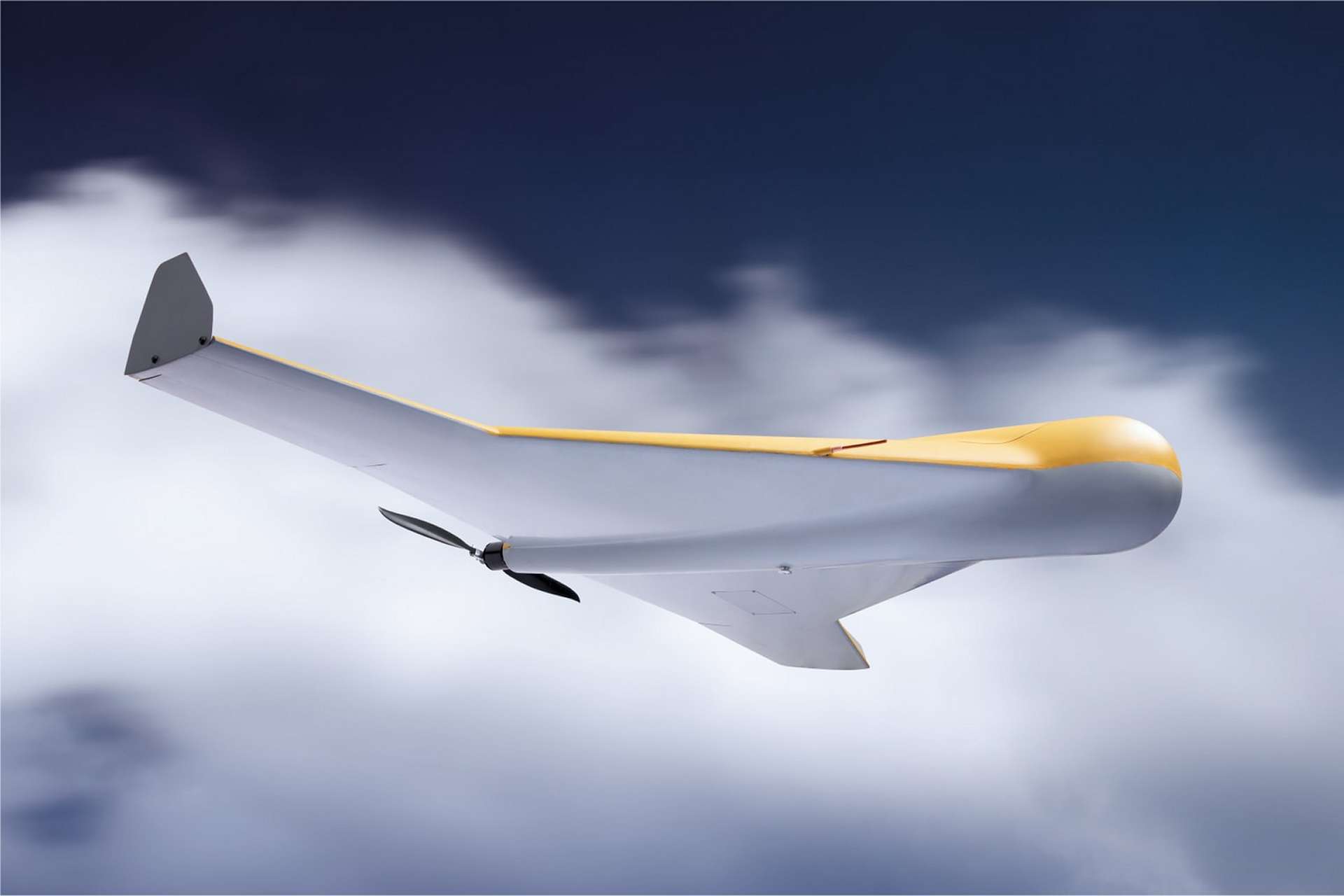
The production of the KYB system is a collaboration between Concern Kalashnikov and the Research and Production Association Izhevsk Unmanned Systems LLC. In 2024, the concern announced that this joint venture increased its production capacity tenfold, enabling mass production for various applications. Additionally, Kalashnikov announced the success of an advanced shipment of KYB guided loitering munitions to a client under a state contract.
Follow Army Recognition on Google News at this link
The KYB loitering munitions, also known as KUB-BLA, were developed by Zala Aero, a subsidiary of the Kalashnikov Group. (Picture source: Kalashnikov)
The KYB targets and destroys individual and group armored vehicles within the enemy’s tactical depth. Ongoing improvements to the guided loitering munitions are made in close collaboration with the client, with upgraded versions of the KUB UBB now being supplied with increased power, according to Kalashnikov.
In 2022, Kalashnikov announced that the KUB-E system received export permits, facilitating its promotion abroad. The KYB drone has already demonstrated successful combat use in real conditions, and there are few comparable drones on the world market in terms of weight and size. The KYB measures 1210 x 950 x 165 mm and can carry a payload of up to 3 kg.
The KYB was first publicly demonstrated at the IDEX-2019 international exhibition in Abu Dhabi. In April 2024, the RIA Novosti news agency reported the use of KYB loitering munitions in Ukraine.
The KYB loitering munitions, also known as KUB-BLA, were developed by Zala Aero, a subsidiary of the Kalashnikov Group. Based on the combat experience of Russian armed forces in Syria between 2015 and 2018, these munitions are designed for high-precision strikes and discrete, silent operation. They can be launched from a pneumatic catapult or a naval platform, and are capable of identifying targets in real-time thanks to artificial intelligence-assisted visual identification technology.
In addition to their effectiveness against armored vehicles and infrastructure, the KYB can also be used for intelligence, surveillance, and reconnaissance (ISR) missions. Their triangular wing design and electric propulsion allow them to remain discreet while operating at speeds of 80 to 130 km/h.
Russia has intensified the production of these drones in response to growing battlefield demands, particularly in the context of the conflict in Ukraine. In March 2022, KYB drones were reported in action in this region, demonstrating their ability to operate in real combat.
With these developments, Kalashnikov continues to improve its loitering munitions to meet the current and future needs of the armed forces, while also seeking to strengthen its international market presence through increased exports.
Read more: Russia Increases KYB Loitering Munitions Production Capacity Tenfold

- Details
- Written by: Vandenbosch
- Category: 2024
- Hits: 6052
A BTR-70 armored personnel carrier equipped with the BM-7 "Parus" combat module has been observed in service with the "Russian Volunteer Corps" (RDK), according to a video shared by the Telegram channel "Vodogray." To recall, the "Russian Volunteer Corps" consists of fighters of Russian origin who have chosen to fight, not with Russia, but with Ukraine.
Follow Army Recognition on Google News at this link
The BTR-70 features the BM-7 "Parus" module without the anti-tank missile system launchers. (Picture source: Social Media)
The footage reveals that the BTR-70 is fitted with a hatch similar to that of the BTR-80. The Ukrainian defense industry had actively modernized the BTR-70 before the onset of the Russian-Ukrainian war. Many upgraded versions, such as the BTR-70M or BTR-70T, featured similar hatches to those of the BTR-80, suggesting that the vehicle in the video might be one of these variants.
This particular upgrade, as seen in the video, appears to be an unprecedented public appearance, indicating it could be a unique modification. The concept of installing a 30mm cannon on the BTR-70 is not new. Previous experiments included the BTR-7 (BTR-7DI), which was equipped with the "Ingul" combat module. Variants like the BTR-70M, indexed BTR-70-KBA-2 and BTR-70 "Grom", were also armed with 30mm cannons KBA-2 and ZTM respectively.
Interestingly, the observed BTR-70 features the BM-7 "Parus" module without the anti-tank missile system launchers. Notably, after the full-scale Russian-Ukrainian war began, the "Parus" module was installed on an ersatz IFV based on the MT-LBU chassis.
The BM-7 "Parus" is a remotely controlled module with an externally mounted weapon system, allowing the operator and commander to remain inside the vehicle's hull. This module does not occupy internal space, making it adaptable for installation on various combat vehicles. The commander has a dedicated panoramic device for observation, target acquisition, and indication, known as the "Panorama-2P," along with a control panel for weapon management via the gunner's sighting instruments.
The "Parus" targeting and fire control system is managed by the "Trek-M" system. Its primary armament includes a 30mm automatic cannon ZTM, a 7.62mm machine gun, and a 30mm grenade launcher KBA-117. Additionally, the combat module can be equipped with the "Barrier" anti-tank missile system.
The modernization of the BTR-70 with the BM-7 "Parus" combat module demonstrates the Ukrainian defense industry's efforts to enhance the capabilities of its armored vehicles. Thus, the Russian volunteers have access to updated armored vehicles equipped with interesting technical capabilities, as they have already been seen during breakthroughs in Russia a few months ago.
Read more: Russian Volunteers on Ukrainian Side Equipped with BTR-70 Featuring Parus Combat Module

- Details
- Written by: Vandenbosch
- Category: 2024
- Hits: 6097
The Powidz Army Prepositioned Stocks-2 (APS-2) site, considered the most modern prepositioned stocks facility in the world, has started receiving its first batch of equipment. On June 27, 2024, the initial delivery, comprising 14 M1A2 Abrams main battle tanks and one M88 armored recovery vehicle, arrived by rail.
Follow Army Recognition on Google News at this link
A US M1A2 Abrams Main Battle Tank in Poland. (Picture source: US DoD)
This marks a milestone in the site's development towards full operational capacity by 2025. Once fully operational, the APS-2 site will house over 5,000 major items, including hundreds of M1A2 tanks, M2 Bradley fighting vehicles, and M109 Paladin self-propelled howitzers. This will enable it to support a fully modernized armored brigade combat team. The site is one of six active APS-2 facilities in Europe under the direction of the 405th Army Field Support Brigade.
The strategic importance of the Powidz APS-2 site lies in its ability to quickly equip U.S.-based armored brigade combat teams deployed to Europe for training or contingency operations. This rapid deployment capability significantly shortens the time needed to project combat power to NATO's eastern flank, which previously could take up to 60 days.
Colonel Ernest Lane II, commander of the 405th AFSB, emphasized the strategic importance of the facility, highlighting its role in maintaining operational readiness in collaboration with NATO and Polish partners. “This facility illustrates the synergy between the United States, NATO, and our Polish allies, ensuring that we can maintain readiness and quickly deploy our forces,” Lane said.
The U.S. Army Corps of Engineers designed the state-of-the-art APS-2 site, which covers 650,000 square feet of climate-controlled warehouse space, a vehicle maintenance facility, and 58,000 square feet of munitions storage. The facility meets Polish construction standards and will house APS-2 tactical vehicles and equipment sets maintained by the 405th AFSB's Army Field Support Battalion-Poland.
The establishment of the Powidz APS-2 site underscores the United States and NATO's commitment to rapid deployment capabilities, strengthening deterrence efforts through strategic investments and partnerships. APS-2 sites like Powidz are essential for reducing deployment timelines for an armored brigade combat team to just one to two weeks.
These facilities also play a crucial role during major exercises. For instance, U.S.-based combat units participating in exercises such as DEFENDER can use equipment from APS-2 sites upon arrival in Poland or nearby countries.
Lieutenant Colonel Omar McKen, commander of AFSBn-Poland, emphasized the operational benefits of the new facility. “This strategic location allows for multiple approaches and rapid deployment within 48 hours, enhancing our operational readiness and deterrence capabilities,” McKen said.
The Powidz APS-2 site represents a significant advancement in NATO's operational readiness and strategic capabilities on its eastern flank. It enhances defense readiness, demonstrating the United States' ongoing commitment to its European allies and partners. Ultimately, the facility strengthens the partnership between the United States, NATO, and Poland, contributing to the collective defense and security of Europe.
The 405th AFSB's APS-2 program is crucial for improving operational readiness and the U.S. Army's combat support capability in Europe and Africa. By providing ready-to-deploy APS-2 packages, the program ensures rapid power projection and stability in the region.
The 405th AFSB, headquartered in Kaiserslautern, Germany, is part of the U.S. Army Sustainment Command. The brigade provides comprehensive material support to U.S. forces in Europe and Africa, ensuring logistical readiness and leveraging the U.S. Army Materiel Command's enterprise.
Read more: First Batch of US M1A2 Main Battle Tanks Arrive at Powidz APS-2 Site in Poland

- Details
- Written by: Jérôme Brahy
- Category: 2024
- Hits: 6775
The Tankfest 2024 event, held at The Tank Museum in Bovington, Dorset, featured a wide array of historic and modern armored vehicles, including the public debut of the new AJAX and ARES armored fighting vehicles. This event, organized in collaboration between the British Bovington Tank Museum and the British Army, provided the first public appearance of these vehicles based on the ASCOD platform and intended to replace the aging Combat Vehicle Reconnaissance (Tracked) (CVR(T)) family of vehicles, in service since the early 1970s.
Follow Army Recognition on Google News at this link
The AJAX program, developed by General Dynamics UK, consists of six variants: the AJAX infantry fighting vehicle, the ARES armored personnel carrier, the ATHENA command and control vehicle, the APOLLO support vehicle, the ATLAS recovery vehicle, and the ARGUS engineering vehicle. (Picture source: Bovington Tank Museum)
Tankfest is an annual event that attracts over 20,000 visitors, serving as a major fundraiser for The Tank Museum. The festival includes live demonstrations, expert lectures, and living history encampments. Highlights from past events have included rare vehicles such as the Japanese Type 95 Ha-Gō and the British Matilda II, along with reenactments and flypasts by the RAF Red Arrows. Over the years, Tankfest has incorporated new elements like "Tank TV" for enhanced viewing and dedicated photography areas.
This year's event, held from June 28 to 30, showcased the world debut of the FV4005, restored with its 183mm gun, and the only running Matilda I. The event included live arena displays, lectures from tank experts, and living history encampments. Special guest vehicles such as the Panzer III, Sherman M4A2, and T-72 also drew attention. Additionally, World of Tanks sponsored various activities, including Twitch streams with exclusive drops and a player party at the O2 Academy Bournemouth.
The Bovington Tank Museum, located in Dorset, houses a collection of nearly 300 tanks and armored vehicles from 26 countries. The museum features exhibits from World War I to modern conflicts, including the only running Tiger I tank, interactive exhibits, and live tank displays. Events like Tankfest and Tiger Day allow visitors to witness historic tanks in action. The museum offers annual passes for repeat visits and activities for all ages.
The AJAX program, initiated by the British Army, aims to modernize its fleet with a new family of armored fighting vehicles. Originating from the Ministry of Defence's Future Rapid Effect System (FRES) program, the project was awarded to General Dynamics UK in 2014 with a £5.5 billion contract to produce 589 vehicles across six variants. The AJAX family includes reconnaissance, command, and support vehicles, intended to be the Army's first fully digitized platform. Despite facing setbacks, such as issues with noise and vibration leading to injuries among test crews and delays in delivery, efforts continue to resolve these challenges. Originally slated for deployment by 2020, the project experienced delays, pushing the initial operating capability to 2025 and full operational capability to 2029.
Like the CVR(T) family, the AJAX program comprises several variants built on a common base platform, ensuring commonality in mobility, electronic architecture, maintenance, and survivability. The core AJAX variant serves as a reconnaissance and strike vehicle, featuring a CT40 40mm cannon and advanced ISTAR capabilities. The ARES variant is a troop-carrying reconnaissance vehicle designed to transport specialist troops, providing overwatch and support for dismounted operations. The ATHENA variant functions as a command and control vehicle, equipped with communication and information processing systems for battlefield management. APOLLO is an equipment support variant for battlefield repairs, while ATLAS is dedicated to recovering damaged or disabled vehicles. The ARGUS variant focuses on engineering reconnaissance, assessing battlefield environments to aid in planning and executing engineering tasks.

- Details
- Written by: Halna du Fretay
- Category: 2024
- Hits: 4500
The Royal Navy must expand and modernize its submarine fleet to maintain its strategic edge, according to a new report titled "A More Lethal Royal Navy: Sharpening Britain’s Naval Power" by William Freer and Dr. Emma Salisbury. Sponsored by Lockheed Martin and released by the Council on Geostrategy’s Strategic Advantage Cell, the report examines the current state of the Royal Navy’s submarine capabilities and proposes crucial recommendations for enhancement.
Follow Army Recognition on Google News at this link
Currently, the Royal Navy’s SSN fleet includes five Astute class submarines, with two more expected, and one Trafalgar class submarine upgraded to extend its service life through to 2025 (Picture source: Royal Navy)
Nuclear attack submarines (SSNs) play a pivotal role in anti-submarine warfare (ASW), anti-surface warfare, and launching cruise missiles against land targets. Modern SSNs are valued for their stealth capabilities, operating quietly and remaining submerged for extended periods without surfacing.
The report highlights the strategic importance of regular submarine patrols, citing the Falklands War as an example where the presence of the HMS Conqueror, an SSN, forced the Argentine fleet to retreat following the sinking of the light cruiser General Belgrano.
Currently, the Royal Navy’s SSN fleet includes five Astute class submarines, with two more expected, and one Trafalgar class submarine upgraded to extend its service life through to 2025. The report emphasizes that to achieve strategic objectives, the Royal Navy needs to increase its lethality, which requires greater mass, survivability, and integration, alongside improving the proficiency and variety of available capabilities.
To address these needs, the report recommends significant investments to maximize the potential of Britain’s aircraft carriers, including procuring additional F35B Lightning II combat aircraft, integrating drones to augment the air wing, and enhancing the carriers’ defenses. It also calls for improvements in the armament of destroyers and frigates and the acceleration of the Type 45 destroyer replacement program.
Furthermore, it suggests de-risking the submarine service by accelerating the build time for the Dreadnought class and procuring an additional Dreadnought as a missile submarine (SSGN) to provide extra deep strike capability and mitigate potential delays in the SSN-AUKUS program.
Read more: British Royal Navy Strategic Edge Hinges on Submarine Fleet Expansion

- Details
- Written by: Vandenbosch
- Category: 2024
- Hits: 2845
The Colombian National Police (PNC) has acquired the DJI Enterprise Matrice 350K drone system. These drones integrated approximately 45 days ago, are operated by highly trained technicians from the Police Aviation Unit. They are used for tactical missions, including intelligence, surveillance, and reconnaissance in Bogotá.
Follow Army Recognition on Google News at this link
The Matrice 350 RTK is an enhanced flagship drone platform aiming to set a new industry standard. (Picture source: Dji Enterprise)
The Matrice 350 RTK is an enhanced flagship drone platform aiming to set a new industry standard. This next-generation drone features a completely new video transmission system and optimized control experience, a more efficient battery system, comprehensive safety features, and robust payload and expansion capabilities. It is designed to innovatively strengthen any aerial operation.
The Matrice 350 RTK stands out for its powerful and robust flight performance, capable of overcoming a wide variety of challenges with its strong propulsion, improved protection rating, and excellent flight capabilities. It can fly for up to 55 minutes, reach flight altitudes up to 7000 meters, and withstand wind speeds up to 12 m/s, all while operating in extreme temperatures ranging from -20° to 50° Celsius.
To ensure maximum stability during flights, it is equipped with the DJI O3 Enterprise transmission system, which supports triple-channel 1080p HD live feeds and can transmit signals up to 20 kilometers. This system uses a four-antenna configuration for optimal reception and transmission, significantly enhancing anti-interference capabilities and transmission stability.
The control experience is also optimized with the DJI RC Plus remote, featuring a 7-inch high-brightness screen and supporting dual operator mode. The remote is dustproof and waterproof (IP54) and operates reliably in harsh weather conditions. Several buttons and dials allow for quick customization of functions for an intuitive and flexible user experience.
The Matrice 350 RTK's battery system is also improved with a new TB65 dual-battery system, allowing hot-swapping and multiple flights without interruption. The BS65 intelligent battery station offers a comprehensive solution for battery charging, storage, and transport, with multiple charging modes for efficiency and extended battery life.
In terms of safety, the Matrice 350 RTK includes several features such as an arm lock indicator, a night vision FPV camera, a six-direction sensing and positioning system, and a CSM radar. It can also support multiple payloads, such as specialized cameras and sensors, making it a versatile tool for missions like public safety, inspections, and mapping.
The acquisition of the Matrice 350 RTK4 drones by the Colombian National Police signifies a step forward in enhancing tactical operations. With its advanced features and robust performance, this drone system provides a powerful tool for improving intelligence, surveillance, and reconnaissance capabilities, ultimately contributing to greater operational efficiency and security in Bogotá.
- Russia Considers Resuming Production of Medium and Short-Range Nuclear Ballistic Missiles
- German Army Acquires Up to 6,500 Unprotected Trucks from Rheinmetall
- Germany and Norway Collaborate on New Supersonic Missile
- ANALYSIS : Despite the risks, the war in southern Lebanon remains an opportunity for Israel