

- Details
- Written by: Vandenbosch
- Category: 2024
- Hits: 8356




Breaking news






On Sunday, May 19, 2024, the National Police of Haiti (PNH) received a boost in their fight against armed gangs with the delivery of 10 new armored vehicles from the United States. This delivery is part of a $60 million military aid program approved by the Biden administration, aimed at supporting the Multinational Security Support Mission in Haiti.
Follow Army Recognition on Google News at this link
These 10 armored vehicles aim to enhance the operational capabilities of the PNH. (Picture source: PNH)
Frantz Elbé, the Acting Commander-in-Chief of the PNH, along with members of the High Command, was present at Toussaint Louverture International Airport to receive the vehicles. The United States Ambassador to Haiti, Dennis Bruce Hankins, was also in attendance. The vehicles were provided by the American government through the Bureau of International Narcotics and Law Enforcement Affairs (INL).
These armored vehicles are reportedly Terrier LT-79 models, produced by TAG in Canada. The Terrier LT-79 is a robust armored vehicle designed for security and defense missions. Its overall length is 5226 mm (without the spare wheel), its width is 1874 mm, and its height reaches 2180 mm. It sits on a wheelbase of 3180 mm and has a track width of 1589 mm, with a ground clearance of 290 mm under the differentials. Its approach and departure angles are 41° and 33° respectively, making it capable of navigating difficult terrains.
The Terrier LT-79 is designed to accommodate up to 8 people with a 2+6 seating configuration, which can be increased to 2+8 with optional bench seating. It has three doors and can be equipped with an optional roof turret with a hatch.
The vehicle's curb weight is 4600 kg with standard protection, and it can carry a payload of 1000 kg, reaching a combat weight of 5600 kg. It is powered by a Toyota 1VD-FTV engine, a turbocharged, liquid-cooled V8 diesel engine with direct injection. This engine has a displacement of 4461 cm³ and can produce up to 195 horsepower at 3300 rpm, with a maximum torque of 430 Nm between 1200 and 3200 rpm. It features a 5-speed manual transmission and is equipped with two 90-liter fuel tanks, offering a range of 800 km.
The Terrier LT-79 has a selectable 4x4 driveline, hydraulically assisted recirculating ball steering, and robust suspension: coil springs with hydraulic shock absorbers at the front and leaf springs with hydraulic shock absorbers at the rear. It rides on 9.00 x 17-inch steel wheels, each rated to support 1550 kg, equipped with Hankook Dynapro 37 x 12.5 R17 tires capable of handling up to 1650 kg. Standard features include run-flat inserts.
In terms of mobility, the Terrier LT-79 can reach a top speed of 100 km/h and has a turning circle of 14.4 m curb to curb. It can climb grades of up to 60%, support a static side slope of 30%, cross-vertical steps of 350 mm, trenches of 750 mm, and ford unprepared water up to 700 mm deep.
These 10 armored vehicles aim to enhance the operational capabilities of the PNH, allowing them to more effectively combat gangs that terrorize the country. During the reception, Frantz Elbé reiterated the PNH's commitment to restoring order and peace across Haiti.
The $60 million military aid program approved by the Biden administration for Haiti is designed to help the country combat armed gangs. This program follows an initial $10 million aid granted at the end of March. According to documents obtained by POLITICO, this military aid program includes, among other things, at least 80 Humvees, 35 MaxxPro armored infantry carriers, firearms, precision rifles, anti-riot equipment, munitions, and surveillance drones.
This decision will provide weapons and equipment to the personnel of the countries making up the Multinational Security Support Mission, including Kenya, Benin, Chad, the Bahamas, Jamaica, Barbados, and Bangladesh, among others, in addition to the National Police of Haiti.
Read more: Haiti Receives 10 New Armored Vehicles from United States Amid Internal Tensions

- Details
- Written by: Jérôme Brahy
- Category: 2024
- Hits: 4714
Breaking news
According to Opex360 on May 19, 2024, the Grizzly vehicle of the French 11th Parachute Brigade is approaching qualification for assault landing operations. Unlike many defense equipment programs publicized by the French Ministry of the Armed Forces, the Grizzly's existence was revealed to the public during the Bastille Day parade on July 14, 2023, in Paris.
Follow Army Recognition on Google News at this link
The Grizzly vehicle is designed for deep reconnaissance and anti-tank combat missions alongside the Light Armored Vehicle, also known as VBL. (Picture source: Army Recognition)
The term "assault landing" refers to a specific military operation involving the rapid deployment of combat-ready troops from a tactical transport aircraft onto a designated landing zone. This type of operation is designed to place a combat-ready detachment on the ground as quickly as possible, often within around three minutes. It typically involves using tactical transport aircraft such as the C-130 Hercules or A400M Atlas to deliver troops and vehicles like the Grizzly directly into the battlefield, enabling swift and effective action in securing key positions or engaging enemy forces.
According to the latest issue of the official magazine of the French Army, TerreMag, the Grizzly, although sizable, is air-transportable and on the verge of being qualified for "assault landing," making it suitable for such airborne operations. Developed by Arquus and derived from the Sherpa vehicle, the Grizzly originates from the PLFS (Special Forces Heavy Vehicle) program, which was initially intended to replace the Light Reconnaissance and Support Vehicles (VLRA) used by units under the French Special Operations Command (COS).
Launched in January 2016 by the Directorate General of Armaments (DGA), the PLFS program's first 25 units did not meet COS's operational needs due to various malfunctions. These units were subsequently modified but still failed to satisfy COS, leading to their reassignment to the 27th Mountain Infantry Brigade and the 11th Parachute Brigade for motorized patrols.
As reported by Opex360, the first delivered units of the Grizzly did not fully satisfy their intended users, leading to their reassignment as reconnaissance and airborne vanguard vehicles for the 11th Parachute Brigade, particularly for the 1st Parachute Hussar Regiment (RHP). The French Ministry of the Armed Forces specified that the 11th Parachute Brigade would receive around forty of these vehicles by 2030, with 50% of the promised units already delivered to the 1st RHP, and the 2nd Marine Infantry Parachute Regiment in La Réunion also set to receive ten units.
Arquus provided additional details on July 13, 2023, stating that the Grizzly was developed to provide crucial intelligence, infiltration, and exfiltration capabilities autonomously for several days in degraded and hostile environments. This new vehicle was designed in collaboration with the French Army's Technical Section and its mobility-space arrangement group (MOB-AGESTER) for autonomous deep reconnaissance and anti-tank combat missions alongside the Light Armored Vehicle (VBL).
With its 260-horsepower engine paired with an automatic transmission, high ground clearance, and angles of attack designed for rough terrains, the Grizzly is capable of reaching speeds up to 110 km/h and has a range of around 600 km. Despite its 11-ton weight and 6.4-meter length (with a height of 2.5 meters), the Grizzly is built for discretion, deep reconnaissance missions, and air transport via C-130 Hercules and A400M Atlas aircraft. The modular design of the Grizzly allows it to be equipped with a Browning M2 HB 12.7 mm heavy machine gun (or a 40 mm automatic grenade launcher) and three 7.62 mm machine guns, providing significant firepower suitable for assault missions or forceful reconnaissance, along with carrying substantial payloads, such as a motorcycle or additional fuel.

- Details
- Written by: Vandenbosch
- Category: 2024
- Hits: 3366
Breaking news
On May 20, 2024, Leonardo secured new contracts with the Ministries of Defence of the UK and Italy to enhance the precision capabilities of their artillery systems through the deployment of the LINAPS artillery pointing system.
Follow Army Recognition on Google News at this link
LINAPS systems enhance the precision of artillery. (Picture source: Leonardo)
As part of one contract, the Italian Ministry of Defence ordered 39 LINAPS systems to equip its Army's FH70 towed howitzers, thus enhancing their precision fire capabilities. This initiative marks a significant upgrade for the Italian artillery units, ensuring improved accuracy and operational efficiency.
Simultaneously, the UK's Ministry of Defence, through its Defence Equipment and Support (DE&S) organization, signed a support contract with Leonardo. This contract aims to maintain the operational readiness of LINAPS on the UK's L118 light guns, extending their operational capability through to their planned out-of-service date in 2030.
Designed and manufactured at Leonardo's Edinburgh site, LINAPS is reputed as the standard in artillery pointing systems. It is currently in service with the armed forces of numerous countries, including the UK, Italy, Poland, Canada, New Zealand, the United Arab Emirates, Oman, Saudi Arabia, South Africa, Malaysia, Thailand, and India.
The LINAPS system, installed on the British Army's L118 light gun, has proven its effectiveness in various operations, including Operation Iraqi Freedom and missions in Afghanistan with the Canadian M777 howitzer. The core of LINAPS is the FIN3110 module (or FIN3210, depending on the variant), which provides critical orientation and position data for gun laying and navigation, ensuring pinpoint firing accuracy.
In the future, data-generating sensors like the FIN3120 will play a key role in Leonardo's strategy for a more connected battlespace. This approach involves multi-domain integration, leveraging the company's expertise in secure cloud technologies, data, and analytics to enhance decision-making processes.
By integrating sensors and products across different domains and optimizing data usage, Leonardo aims to augment human decision-making capabilities, enabling faster and more accurate operational decisions. It remains to be seen how this new system will be received by the Italian and British forces.
Read more: Leonardo contracts with United Kingdom and Italy to Enhance Precision of Artillery

- Details
- Written by: Vandenbosch
- Category: 2024
- Hits: 2950
Breaking news
Spain is preparing to send a new batch of Patriot missiles to Ukraine by the end of June, in response to Kyiv's ongoing request for additional air defense systems amid Russian attacks. These Patriot missiles, supplied by Spain and other allies, are crucial for bolstering Ukraine's air defense capabilities and protecting its infrastructure and citizens against Russian air strikes. Since March 2024, Russia has intensified its air attacks, targeting power plants and other critical infrastructure in Ukraine.
Follow Army Recognition on Google News at this link
The Patriot system is a long-range, all-altitude, all-weather air defense system designed to counter various aerial threats. (Picture source: Spanish MoD)
Spanish Defense Minister Margarita Robles announced that these missiles are already en route to Ukraine, with arrival expected in the coming days. This announcement is part of a broader Spanish military support effort to Ukraine, which also includes the delivery of Leopard battle tanks, anti-drone systems, optronic surveillance systems, and 155mm shells.
Ukraine currently has one Patriot battery supplied by the United States, another by Germany, and two additional launchers sent by the Netherlands.
The Patriot system is a long-range, all-altitude, all-weather air defense system designed to counter various aerial threats. Each Patriot missile weighs 900 kg and measures 5.8 meters in length. A single Patriot battery can be armed with four missiles.
This system is widely used by several countries, including Germany, Greece, Israel, Japan, Jordan, Kuwait, Morocco, the Netherlands, Poland, Qatar, Romania, Saudi Arabia, Spain, South Korea, Switzerland, Taiwan, Ukraine, the United Arab Emirates, and the United States. Its global adoption attests to its effectiveness and reliability. Additionally, the system has proven its battlefield effectiveness in Ukraine. However, the Ukrainian forces do not have enough Patriot systems due to their high cost.
The Patriot missile has a range of 70 km and is guided by a passive electronically scanned array (PESA) radar, which includes an identification friend or foe (IFF) system, electronic counter-countermeasures (ECCM), and track-via-missile (TVM) guidance. This sophisticated radar, coupled with the AN/MSQ-104 engagement control system, the OE-349 antenna mast group, and the EPP-III electric power plant, allows for precise threat detection and interception.
The missile is equipped with a 90 kg warhead containing M248 Composition B explosive with fragmentation, enhanced by two layers of pre-formed fragments and Octol 75/25 for maximum effectiveness against aerial targets. The associated radar, such as the AN/MPQ-53 or -65, plays a crucial role in detecting and tracking targets, ensuring optimal coverage and protection.
Robles emphasized the importance of this aid to enable Ukraine to defend itself effectively against ongoing attacks. During a meeting of the Ukraine Defense Contact Group, she reiterated Spain's commitment to support Ukraine for as long as necessary. Spanish support is part of a collective effort by EU and NATO countries to provide Ukraine with the means to protect its sovereignty and respond to Russian aggression.
Read more: Spain to Deliver Patriot Missiles to Ukraine by End of June
- Details
- Written by: Vandenbosch
- Category: 2024
- Hits: 4999
Breaking news
Spain is preparing to deliver a significant military aid package to Ukraine. Defense Minister Margarita Robles announced that in just over a month, by late June, the second batch of Leopard 2A4 tanks will be shipped, accompanied by a new delivery of Patriot anti-aircraft missiles and various types of ammunition, including 155mm artillery shells.
Follow Army Recognition on Google News at this link
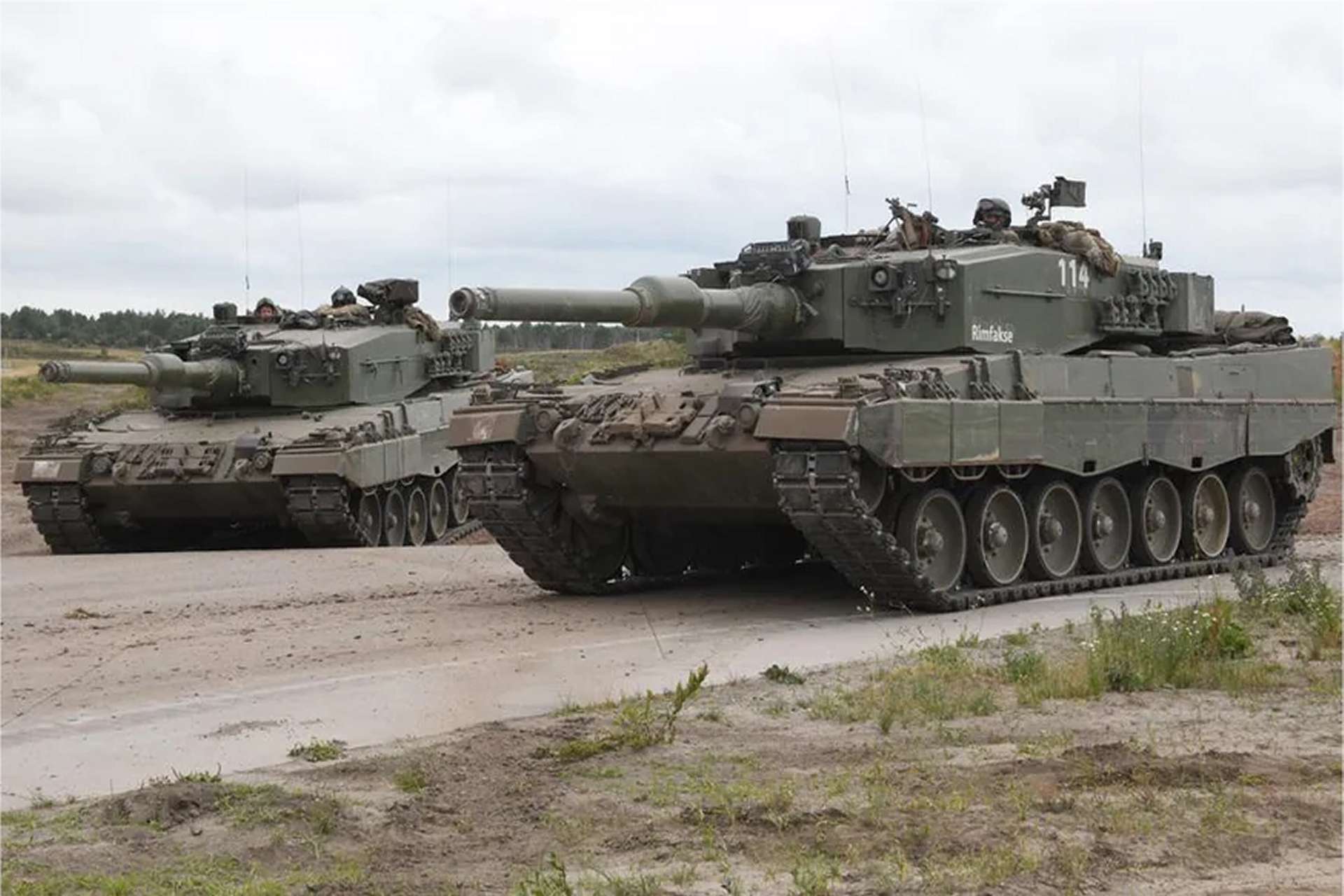
The Leopard 2A4 is a main battle tank designed by Germany. (Picture source: KMW)
At the ministerial meeting of the Ukraine Defense Contact Group, Robles revealed that Spain will also provide anti-drone systems, optronic surveillance and tracking systems, and remote weapon turrets, among other equipment.
The upcoming signing of a bilateral security agreement with the country will bolster Spain's long-term support for Ukraine. Accompanied by Admiral Juan Francisco Martínez Núñez, Secretary General of Defense Policy, Robles reaffirmed Spain's commitment to support Ukraine as long as necessary and praised the effectiveness and unity of the Contact Group. A meeting was convened by U.S. Secretary of Defense Lloyd Austin and attended by Ukrainian Defense Minister Rustem Umerov.
As usual, the first part of the meeting included updates on the critical situation on the ground, particularly the Russian offensive around Kharkiv and attacks on Ukrainian civilian infrastructure. This was followed by presentations on the most urgent needs of the Ukrainian Armed Forces and their long-term requirements.
During the ministers' speeches, Robles emphasized the collective obligation to "urgently provide the support that Ukraine deserves and needs" given the critical situation on the ground. She highlighted Spain's considerable efforts, particularly in training, and provided updates on the preparation of the substantial aid package to be delivered to Ukraine with contributions from the Spanish defense industry.
Spain has already sent tanks to the Ukrainian Armed Forces. In 2023, it had sent nearly 10 Leopard 2A4 tanks and began preparing the delivery of 19 more Leopard 2A4s.
The Leopard 2A4 is a main battle tank designed by Germany, characterized by its firepower, enhanced protection, and mobility. Its primary armament includes a 120mm L55 smoothbore gun, accompanied by a coaxial 7.62mm machine gun and an anti-aircraft 7.62mm machine gun mounted on the loader's hatch. This tank features standard-spaced multilayer armor, with improved protection over the front of the turret and spall liners inside the turret to enhance crew safety. Used by numerous countries, the Leopard 2A4 is recognized for its combat effectiveness. It weighs 62,000 kg in combat conditions, allowing it to reach a maximum road speed of 72 km/h.
The Leopard 2A4 has accessories such as infrared night vision and an NBC (nuclear, biological, and chemical) protection system, increasing its operational capabilities in various environments. It has a range of 500 km, enabling prolonged deployments without frequent refueling. With a crew of four, this tank measures 7.70 meters in length, 3.70 meters in width, and 3.00 meters in height, offering an optimal balance of firepower, protection, and mobility on the battlefield.
The precise date of the delivery of the second batch of Leopard 2A4 tanks has not been disclosed, likely for security reasons. While the support of battle tanks is paramount for the forces, a small number of such tanks will not alter the balance of power on the Ukrainian front.
Read more: Spain to Send Second Batch of Leopard 2A4 Tanks to Ukraine by Late June

- Details
- Written by: Triffaux
- Category: 2024
- Hits: 3240
Breaking news
From April 9th to 11th 2024 at Fort Liberty, North Carolina, the U.S. Army's Program Executive Office for Simulation, Training, and Instrumentation (PEO STRI) showcased significant advancements in military training technology to senior Army leaders. The event featured the latest developments in the Trackless Moving Target (TMT) systems and Live Training Systems (LTS), attended by officials from the Combat Arms Center (CAC), Training and Doctrine Command (TRADOC), Forces Command (FORSCOM), and the G3/Directorate of Plans, Training, Mobilization, and Security.
Follow Army Recognition on Google News at this link
Pratt Miller Defense TMT – Infantry (TMT-I) and TMT – Vehicle (TMT-V), both engineered to withstand impacts from live .50 caliber ball ammunition (Picture source: Pratt Miller Defense)
Developed by Pratt Miller Defense, the TMT system is unique to the U.S. Army and features programmable robotic targets capable of navigating complex terrains and mimicking both human and vehicle movements. This cutting-edge technology is designed to provide more realistic training scenarios, thereby enhancing troop preparedness for actual combat situations. The system includes two variants: the TMT – Infantry (TMT-I) and TMT – Vehicle (TMT-V), both engineered to withstand impacts from live .50 caliber ball ammunition as well as 7.62mm and 5.56mm enhanced penetrator rounds.
The TMT-I is tailored for various training configurations, from individual to group settings. It operates silently with a fully electric driveline and four-wheel steering for agility akin to human movements. Capable of reaching speeds up to 12 mph, it supports interchangeable 2D and 3D targets, simulating diverse combat situations. Additionally, the TMT-I can carry up to 600 lbs, enabling the use of multiple targets to create complex urban training environments.
The TMT-V, capable of speeds up to 35 mph, offers enhanced maneuverability with its four-wheel steering. It features an electric driveline with an optional range extender and can support a range of target types, from light to heavy, in 2D or 3D. Customizable armor kits are available to meet specific training requirements, and they boast a significant load capacity of 4,000 lbs, covering various engagement distances during training sessions.
During the demonstration, Army leaders had the opportunity to see firsthand how these systems support live fire training exercises. The event not only demonstrated the capabilities of the TMT and STE LTS but also allowed leaders to interact directly with the technology, ask questions, and gain deeper insights into their operational benefits.
This initiative is part of the Army's broader effort to integrate more advanced technological solutions into training programs, ensuring that soldiers are well-prepared to meet current and future battlefield challenges. The introduction of such high-tech training aids is crucial for maintaining the tactical superiority and readiness of the U.S. Army

- Details
- Written by: Administrator
- Category: 2024
- Hits: 37642
Breaking news
According to recent images released on the social network X, on May 20, 2024, the U.S. armed forces deployed the C-RAM (Counter-Rocket, Artillery, and Mortar) system to safeguard the newly established Gaza floating pier. This floating dock facility, created by the U.S. military, serves as a critical point for delivering maritime cargo intended for humanitarian assistance to Gaza.
Follow Army Recognition on Google News at this link
A U.S. Centurion C-RAM anti-aircraft artillery system is deployed near a US-built floating pier in the Gaza Strip. (Picture source X Account SprinterFactory)
The Gaza floating pier was meticulously constructed by U.S. military forces on ships positioned offshore the Gaza Strip. Subsequently, it was connected to the shore by a causeway, facilitating efficient and secure delivery of essential goods. The pier's unloading point links to the Netzarim Corridor, an area designated for humanitarian operations.
The deployment of the C-RAM system is a significant step in ensuring the safety and security of the vital humanitarian operation at the Gaza floating pier. This system, designed to detect and destroy incoming artillery, rockets, and mortar rounds in the air before they can cause damage, provides a protective shield against potential threats. Its presence enhances the overall security of the floating pier and the humanitarian mission it supports, underscoring the U.S. military's commitment to safeguarding humanitarian operations.
The ground-based version of the C-RAM Phalanx system is a testament to advanced military technology. Equipped with advanced radar and sensor systems, it can detect incoming threats from artillery, rockets, and mortar rounds. Once a threat is detected, its rapid-response Gatling gun, armed with a 20mm cannon, engages and neutralizes it in mid-air. This high rate of fire, combined with precise targeting, ensures the system can effectively intercept and destroy multiple incoming projectiles simultaneously, safeguarding the Gaza floating pier.
One of the key features of the C-RAM Phalanx is its autonomous operation. The system can operate with minimal human intervention, using its advanced tracking algorithms to detect, track, and engage threats automatically. This capability is crucial in high-stress combat environments where reaction time is critical. The C-RAM system's ability to swiftly respond to evolving threats, combined with its mobility and rapid deployment capabilities, ensures the safety of the Gaza floating pier in volatile situations.
The C-RAM system's effective range is approximately 1.2 km, allowing it to engage incoming threats at a considerable distance before they reach their target. The system can also intercept projectiles at altitudes up to 1,000 m, providing a broad protective umbrella over its defending area.
The U.S. military's decision to deploy the C-RAM system underscores the importance of the Gaza floating pier in the ongoing efforts to provide aid to Gaza residents. The region has seen heightened tensions and conflicts, making protecting humanitarian infrastructure crucial. The C-RAM system's advanced technology will help safeguard the pier from potential attacks, ensuring that the delivery of humanitarian assistance, a mission of utmost importance, can proceed without interruption.
This deployment reflects the U.S. military's commitment to supporting humanitarian efforts while ensuring the safety of their operations in volatile regions. The C-RAM system's presence will help mitigate risks and protect the infrastructure and personnel involved in the vital mission of delivering aid to those in need.

- Details
- Written by: Jérôme Brahy
- Category: 2024
- Hits: 4706
Breaking news
As reported by Singapore's Ministry of Defense on May 18, 2024, the US Army and the Singapore Armed Forces (SAF) have completed the 43rd annual Exercise Tiger Balm at the Yakima Training Center in Washington. This bilateral exercise, which started on May 6, 2024, is designed to enhance interoperability and military cooperation between the two nations through rigorous training and shared operational experiences.
Follow Army Recognition on Google News at this link
Personnel from the U.S. 53rd Ordnance Company share charge preparation techniques with members of the 36th Battalion, Singapore Combat Engineers, ahead of the Counter-Improvised Explosive Device live-firing exercise. (Picture source: Singapore MoD)
The Tiger Balm 2024 exercise concluded on May 17, 2024, with a closing ceremony at Joint Base Lewis-McChord (JBLM), co-officiated by Colonel Anand Sathi Kumar, Commander of the 6th Singapore Division (6 Div) / Headquarters Sense and Strike (HQ SS), and Brigadier General Phillip L. Mallory, Commander of the 154th Wing, Hawaii Air National Guard.
This year's Exercise Tiger Balm, which featured a Brigade-level command post exercise, included approximately 670 personnel from various units such as the Singapore Army's Headquarters 6 Div / HQ SS, Headquarters 76th Singapore Infantry Brigade, and the Republic of Singapore Air Force (RSAF)'s Peace Carvin V Detachment. The U.S. Army's Hawaii Army National Guard (HIARNG), the 29th Infantry Brigade Combat Team, and the 16th Combat Aviation Brigade also participated. Notably, the RSAF's F-15SG fighters and Singapore Army's VELOCE 15 mini-Unmanned Aerial Vehicles made their inaugural appearance, enhancing air-land integration across both services.
This year's Exercise Tiger Balm included a comprehensive Field Training Exercise (FTX) focusing on deliberate targeting in artillery and aviation, as well as air-ground integration. For instance, soldiers from the US Army's 94th Field Artillery Regiment, 17th Field Artillery Brigade, 7th Infantry Division, executed a High Mobility Artillery Rocket System (HIMARS) M142 launch sequence, preparing to provide artillery support during the exercise. The Combined Arms Live Firing component saw participation from the Singapore Army's Strike Observer Mission (STORM) team, 11th Command, Control, Communications, Computers, and Intelligence Battalion (11 C4I Bn), the RSAF's Peace Carvin V detachment, and the U.S. Army's Fire Support Team (FiST) and Field Artillery unit, practicing Multi-Domain Smart Warfighting and sense-strike processes.
The exercise also leveraged a Live-Virtual-Constructive (LVC) simulation system to link Brigade Command Posts at the Joint Multinational Simulations Centre of Indo-Pacific (JMSC-IP) from JBLM with the SAF Wargame Centre at Pasir Laba Camp, coordinating planning and execution between both brigades. Subject matter exchanges on Counter-Improvised Explosive Device (C-IED) and Chemical, Biological and Radiological Defence (CBRD) operations were conducted, culminating in a C-IED live-firing exercise and a CBRD field exercise.
Leaders from both armies noted the importance of these exercises in building mutual trust and enhancing military readiness. US Army Maj. Gen. Matthew McFarlane, Deputy Commanding General of United States Army Pacific Command (USARPAC), noted that the exercise builds readiness and strengthens interoperability between the two armies. Similarly, SAF Brig. Gen. Andrew Lim highlighted the collaboration's role in fostering close friendships and deepening cooperation. Colonel Anand Sathi Kumar, Commander of the 6th Singapore Division, remarked that Exercise Tiger Balm reflects the strong, valuable, and long-standing partnership between the Singapore Army and the U.S. Army, demonstrating the competence and commitment of both forces.

During Exercise Tiger Balm 2024, the Republic of Singapore Air Force (RSAF)'s F-15SG fighters and Singapore Army's VELOCE 15 mini-Unmanned Aerial Vehicles made their inaugural appearance, enhancing air-land integration across both services. (Picture source: Singapore MoD)
Exercise Tiger Balm, which began in 1981, is the longest-running bilateral military exercise between the SAF and the US Army. This annual exercise aims to enhance regional security, interoperability, and strengthen military ties between the two nations. Over the decades, the exercise has evolved to address contemporary security challenges and incorporate advanced training elements and technologies.
The exercise typically includes activities such as live-fire drills, command post exercises, and subject matter expert exchanges. Recent iterations have featured Live-Virtual-Constructive (LVC) simulation systems to link brigade command posts for coordinated planning and execution. These components enable participants to develop and refine their tactical skills, techniques, and procedures in a realistic environment.
Beyond its primary military objectives, Exercise Tiger Balm fosters professional exchanges and mutual understanding between personnel of both armies. Regular interaction through this exercise has led to strong friendships and mutual trust, which are vital for regional stability and cooperation. The exercise also serves as a platform for the armies to share best practices and lessons learned, thereby enhancing their collective readiness and capability to address multifaceted security threats.
Overall, Exercise Tiger Balm exemplifies the defense relationship between Singapore and the United States, which aims to contribute to a free and open Indo-Pacific region. To date, the military relations between the United States and Singapore are underpinned by key agreements, including the 1990 Memorandum of Understanding Regarding United States Use of Facilities in Singapore, the 2005 Strategic Framework Agreement, and the 2015 Enhanced Defense Cooperation Agreement (DCA). These agreements facilitate US access to military facilities in Singapore and enable cooperation in areas such as biosecurity, cyber defense, humanitarian assistance, and disaster relief.
Additionally, Singapore hosts US military personnel for training and operational purposes, while the SAF maintains three permanent training detachments in the US, specifically in Idaho, Arizona, and Texas. These facilities underscore the interoperability between the two militaries, allowing for regular joint exercises and training programs. A notable recent development is the signing of the Security of Supply Arrangement (SOSA) in December 2023, aimed at addressing supply chain disruptions that could affect defense needs.

This year's Exercise Tiger Balm included a High Mobility Artillery Rocket System (HIMARS) M142 launch sequence conducted by soldiers from the US Army's 94th Field Artillery Regiment, 17th Field Artillery Brigade, 7th Infantry Division. (Picture source: US DoD)
Read more: US and Singapore armies complete 43rd Exercise Tiger Balm bilateral exercise

- Details
- Written by: Jérôme Brahy
- Category: 2024
- Hits: 18181
Breaking news
According to a report from Defense24 on May 20, 2024, the US Army is potentially interested in procuring the Polish M120 Rak, a 120mm self-propelled mortar system developed by Poland's Huta Stalowa Wola (HSW). The specifics of this potential procurement are not officially known, but it is believed to be connected to a program aimed at acquiring a new mortar system for US Army armored brigades.
Follow Army Recognition on Google News at this link
According to PGZ, "[...] the US expressed interest in the Polish 120mm automatic mortar system. At this stage, we would not like to disclose the details of the ongoing discussions.” (Picture source: Polish MoD)
In response to inquiries from Defence24.com, Beata Perkowska of PGZ’s Communications Department stated, “The PGZ Group is active in promoting products from the Group’s portfolio, including Rak self-propelled mortars. The US expressed interest in the Polish 120mm automatic mortar system. At this stage, we would not like to disclose the details of the ongoing discussions.” This indicates an interest from the US in the Polish self-propelled mortar system, though specific details are not available at this time. It is speculated that the interest is related to the search for new support assets for mechanized and possibly motorized battalions.
The current mortar systems used by the US Army include a range of legacy and modernized systems. The M224 and M252 systems, along with their lightweight variants, M224A1 and M252A1, provide 60mm and 81mm firepower respectively. The M120A1, a 120mm towed mortar system, is widely utilized, supported by the M326 stowage kit. Additionally, the US Army's armored and mechanized units currently use the M1064 muzzle-loading mortars installed on the M113 platform, derived from the Israeli K6 system, while Stryker brigades use either the Soltam K6 120mm or the M252 81mm mortar, with the M1129 Mortar Carrier (MCV-B) or the M1252 MCVV as their base platform.
Looking ahead, the US Army is commissioning the new-generation Armored Multi-Purpose Vehicle (AMPV) platform in armored brigades. This platform, based on the Bradley IFV design, replaces the M113 and offers enhanced combat capabilities. Along with this new carrier, a new mortar system with greater capability is also planned, the XM1287 Mortar Carrier Vehicle (MCV). To date, two systems have been tested for the XM1287: the Finnish Patria Nemo system, which is a semi-automated 120mm breech-loaded mortar, and the M121 120mm mortar, featuring the M95 Mortar Fire Control System.
The PGZ Group's release suggests that the US may be considering alternative solutions to the Nemo mortar. The Polish M120 Rak is still equipped with a 120mm mortar system, which features an automatic loader with a rate of fire between six to eight rounds per minute and a maximum firing range of up to 10 kilometers. Interestingly, Huta Stalowa Wola has developed an upgraded variant of the Rak system, increasing the rate of fire from 6-8 to 12-16 rounds per minute and enhancing the system's automation, thereby reducing the crew requirement from four to three soldiers. There is also potential for operation by a crew of two, with remote fire control commands provided by a command vehicle.
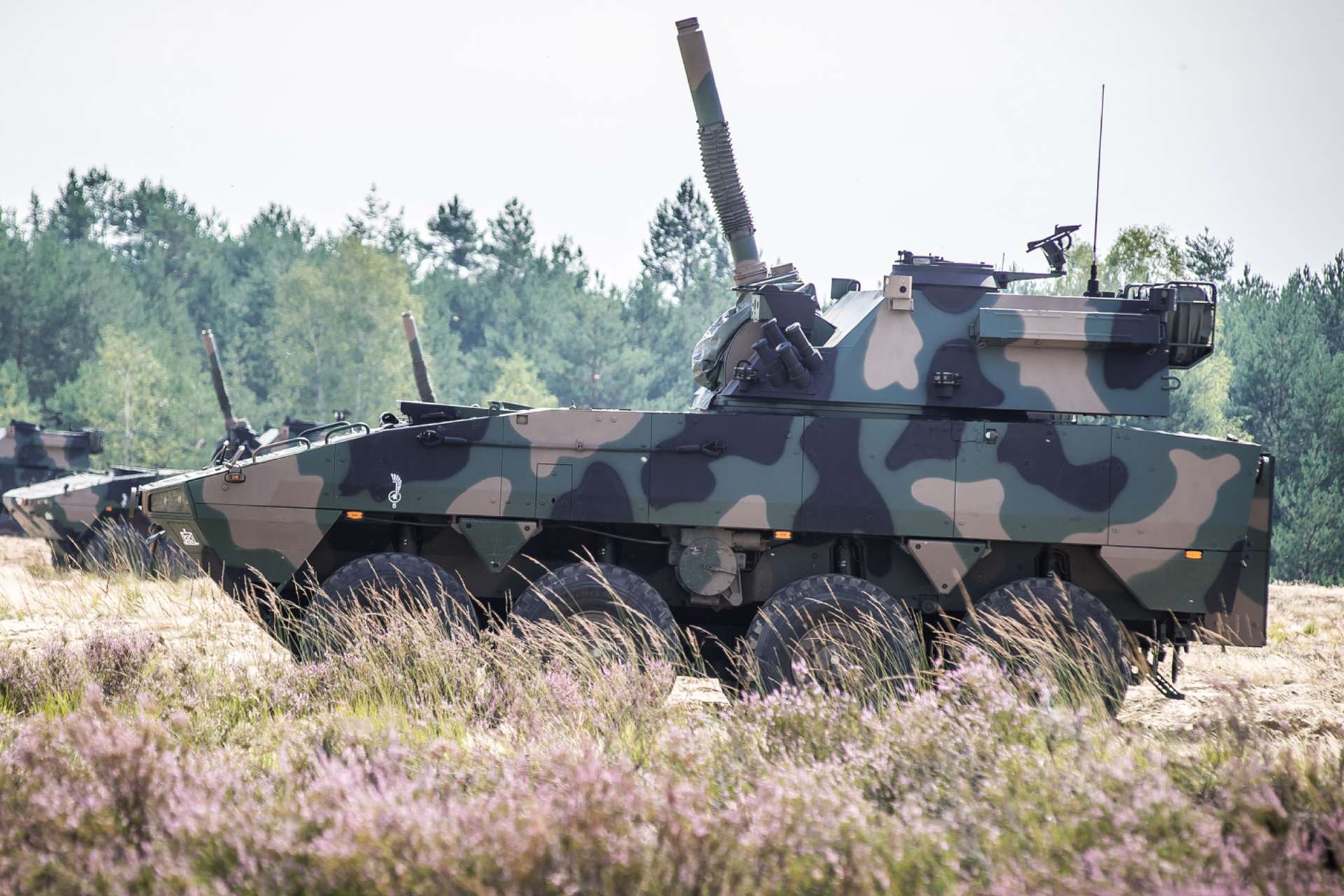
The Polish M120 Rak is equipped with a 120mm mortar system, which features an automatic loader with a rate of fire between six to eight rounds per minute and a maximum firing range of up to 10 kilometers. (Picture source: HSW)
The Rak's 120mm breech-loaded mortar is mounted in a turret that allows 360-degree traversal and elevation from -3° to 80°. Its secondary armament includes a 7.62mm UKM 2000 D machine gun. The system can transition from the march to the firing position within 30 seconds and leave the firing position in 15 seconds. Integrated with the Topaz fire control system, the Rak mortar can engage targets using direct fire and laser-guided precision munitions. This system, currently mounted on the wheeled Rosomak APC, has also been tested on other platforms such as the Polish LPG tracked platform and its developmental variants, as well as the German Marder, demonstrating its potential integration with the future US Army's Armored Multi-Purpose Vehicle (AMPV) platform, likely through manufacturing under license.
Furthermore, the Rak mortar is part of an integrated system within the Polish Army that includes command vehicles using the same platform, reconnaissance vehicles integrated with battlefield surveillance radars and Warmate loitering munitions, and various Jelcz-platform-based support vehicles.
To date, using the Rosomak 8×8 armored vehicle, the M120 Rak operates with a crew of three and includes a digital fire control system with a thermal camera, laser rangefinder, and GPS. This equipment supports accurate target engagement both day and night. The vehicle uses a Scania turbocharged diesel engine, allowing a top speed of 80 km/h and a range of 500 km. It is designed with hydro-pneumatic suspension to handle various terrains and obstacles. The system is currently used by the Polish Land Forces and has been supplied to Ukrainian forces to combat Russian soldiers.
Read more: Could Poland's M120 Rak become the US Army's new 120mm self-propelled mortar?

- Details
- Written by: Jérôme Brahy
- Category: 2024
- Hits: 6488
Breaking news
On May 6, 2024, the Danish government announced a new donation package for Ukraine valued at 5.6 billion kroner (€728 million), with a significant focus on air defense and artillery. Of the total amount, 2.4 billion kroner (€312 million) is allocated for strengthening Ukraine's air defense systems. Additionally, the package includes financial support for future contributions to Ukraine's F-16 fleet. This funding will also cover the acquisition of new equipment and ensure the maintenance of artillery pieces, the supply of artillery shells, and the provision of anti-tank mines.
Follow Army Recognition on Google News at this link
Denmark's military aid to Ukraine since the start of the Russian invasion in 2022 has notably included the supply of 19 CAESAR 8x8 self-propelled howitzers, along with maintenance and training for Ukrainian soldiers. (Picture source: Denmark MoD)
Defense Minister Troels Lund Poulsen stated that the donation is the 18th of its kind, highlighting Denmark's consistent support. Poulsen noted the urgent need for air defense and artillery in Ukraine, with additional funds reserved for direct investments in the Ukrainian defense industry. This approach aims to enhance local production of military equipment, ensuring sustainability and self-reliance for Ukraine's defense forces.
Foreign Minister Lars Løkke Rasmussen emphasized the importance of local weapon production. He noted that Ukraine has the necessary skills but faces financial constraints. Rasmussen expressed hope that this model of direct investment in Ukraine's defense industry would encourage other nations to follow suit, enhancing collective support for Ukraine.
The Danish government also announced the allocation of funds for NATO Capability and Cooperation Projects (CAP), reinforcing their commitment to NATO and regional security. By investing in Ukraine's defense industry, Denmark aims to future-proof the nation's military capabilities, ensuring long-term resilience against external threats.
Poulsen reiterated the seriousness of the situation in Ukraine, stressing the necessity of continuous and substantial support from allies. He affirmed that this donation package sends a clear signal of Denmark's commitment to Ukraine's fight for sovereignty.
This new package is part of the broader Ukraine Fund, which allocates a total of 64.8 billion kroner (€8.42 billion) for military support to Ukraine from 2023 to 2028. The fund recently received an additional boost of 4.4 billion kroner (€572 million) in 2024, following an agreement between the Danish government and the parties behind the Ukraine Fund in April 2024. To date, decisions have been made to provide 42.9 billion kroner (€5.58 billion) in military support to Ukraine through this fund.
The training of Ukrainian F-16 personnel at Flyvestation Skrydstrup, evidenced by recent photographs, highlights practical steps being taken to ensure the effective use of donated equipment. This training is a crucial component of the support package, ensuring that Ukrainian forces are prepared to operate and maintain the advanced systems being provided.
Read more: Denmark supports Ukraine with new air defense and artillery funds worth €728 million

- Details
- Written by: Administrator
- Category: 2024
- Hits: 4235
Breaking news
On May 17, 2024, the U.S. Army announced that it had awarded American Company Lockheed Martin a $756 million contract to enhance its ground-based hypersonic weapon system, the Long Range Hypersonic Weapon (LRHW).
Follow Army Recognition on Google News at this link
Artist notional rendering of the Long Range Hypersonic Weapon. (Photo credit: Lockheed Martin)
The contract includes additional LRHW battery equipment, advanced systems and software engineering support, and comprehensive logistics solutions. This initiative aims to bolster the U.S. Army’s capabilities with a new class of ultrafast and highly maneuverable long-range hypersonic missiles that can be launched from mobile ground platforms.
The LRHW (Long Range Hypersonic Weapon) system, a testament to Lockheed Martin's cutting-edge technology, is designed to deploy the common hypersonic All Up Round (AUR), a key component of the U.S. Navy-managed Conventional Prompt Strike (CPS) program. The system, comprising the Army canister, a battery operations center, and transporter erector launchers, forms a sophisticated and robust offensive weapon capability.
The Long Range Hypersonic Weapon (LRHW) is an advanced missile system developed for the U.S. Army, representing a significant leap in hypersonic technology. It is designed to travel at speeds greater than Mach 5, which is over five times the speed of sound, making it extremely difficult for current defense systems to intercept. Unlike traditional ballistic missiles, the LRHW can maneuver unpredictably during flight, further complicating interception efforts.
The LRHW is intended to engage targets at long distances, allowing the U.S. Army to strike high-value or time-sensitive targets far from the front lines. This weapon system can be launched from mobile ground platforms, enhancing its flexibility and deployment options. The LRHW aims to improve the strategic and tactical capabilities of the U.S. military, offering a formidable deterrent and a potent offensive tool in modern warfare.
Steve Layne, vice president of Hypersonic Strike Weapon Systems at Lockheed Martin, expressed the company’s commitment to supporting the U.S. Army's hypersonic strike capabilities. “Lockheed Martin is proud to continue our strong partnership with the U.S. government for hypersonic strike capability,” said Layne. “With this contract, we will support the U.S. Army to sustain the Long Range Hypersonic Weapon System currently in the hands of U.S. soldiers, produce additional batteries for future fielding, and support flight testing.”
Building on its successful collaboration with the U.S. Army, Lockheed Martin delivered the first LRHW battery, known as Dark Eagle, to U.S. soldiers in 2021. This new contract further solidifies Lockheed Martin's ongoing role in addressing critical national security needs, advancing hypersonic weapon technologies, and ensuring the U.S. Army remains at the forefront of modern warfare capabilities.
The LRHW's deployment represents a strategic enhancement of the U.S. military's operational reach and response time, offering a formidable deterrent and combat asset in the evolving global security landscape.
Read more: Lockheed Martin Secures Contract from US Army for Enhanced Hypersonic Weapon System

- Details
- Written by: Administrator
- Category: 2024
- Hits: 13665
Breaking news
The British Army's reconnaissance units are set to receive new advanced reconnaissance tracked armored vehicles with the introduction of the ARES, developed by General Dynamics UK. This new Armored Personnel Carrier (APC) is the latest addition to the Ajax family of tracked armored vehicles, designed to replace the aging Spartan CVRT. The Ares offers advanced capabilities and state-of-the-art technology tailored for modern battlefield requirements. This article explains what the Ares APC is, explores its features, and highlights its importance within the Ajax family and the broader context of military operations, providing a thorough understanding of its role and benefits for the British Army.
Follow Army Recognition on Google News at this link
At the front of the image is the ARES, new Armored Personnel Carrier APC for British Army reconnaissance units. (Picture source: British MoD)
ARES is an Armored Personnel Carrier (APC) designed to transport infantry troops safely across various terrains. Ares emphasizes advanced mobility, protection, and situational awareness as part of the Ajax family, which includes multiple variants tailored for different roles such as reconnaissance, command and control, and repair and recovery. The Ares APC will provide safe transportation of fully-equipped soldiers in a well-protected environment. Upon dismount, troops can conduct various tasks, such as dismounted surveillance (including patrols), observation posts, and close target reconnaissance.
ARES boasts superior armor compared to its predecessor, the Spartan CVRT. It is equipped with advanced ballistic and mine protection, ensuring the safety of its occupants against a wide range of threats, including improvised explosive devices (IEDs) and small arms fire. Ares is designed to operate in diverse and challenging environments and has a powerful engine and advanced suspension system. This enables it to navigate rough terrains, providing strategic mobility for troop deployments and extractions.
One of the most notable aspects of ARES is its state-of-the-art surveillance and reconnaissance systems. These include acoustic detectors, a laser warning system, a local situational awareness system, an electronic countermeasure system, a route marking system, an advanced electronic architecture, and a high-performance power pack. The vehicle is also equipped with a Kongsberg Protector Remote Weapon Station armed with a 12.7mm machine gun. The turret features a Detached Line of Sight (DLOS) that allows the gunner to maintain focus on the target, regardless of the ballistic solution for the weapon/ammunition in use. The turret also houses a thermal imager with a dual field of view and a color daylight camera that provides a wide field of view up to 45 degrees during observation, and more than 30 times optical magnified close-up view of the target area during identification and engagement of a long-distance target. Ares also comes with a mobile camouflage system, fire detection system, electronic countermeasure system, and NBC (nuclear, biological, chemical) protection system as standard equipment.
The ARES will be used to deliver and support specialist troops across the battlefield to enable organic combined arms maneuver at the lowest tactical level alongside SCOUT-equipped troops. It provides safe transportation of modern, fully equipped soldiers in a well-protected environment. On dismount, the fully briefed troops can more effectively conduct various tasks such as dismounted surveillance (including patrols), observation posts, and close target reconnaissance. Ares also incorporates a sophisticated digital architecture that supports secure communications, data sharing, and battlefield management systems. This allows for real-time information exchange and coordination with other military assets, enhancing operational effectiveness.
The introduction of ARES into the British Army's fleet marks a significant advancement in capability and technology. As a replacement for the aging Spartan CVRT, Ares enhances operational efficiency with its advanced mobility and protection, facilitating faster and safer troop transportation. The sophisticated surveillance systems on ARES provide real-time intelligence to troops, enabling more informed decision-making and quicker responses to threats. The enhanced armor and mine protection features of Ares substantially increase the survivability of the troops it transports, thereby reducing casualties and ensuring mission success. As a member of the Ajax family, Ares can be deployed in tandem with other variants, offering a versatile and adaptable solution for a wide range of military scenarios.
The ARES is an upgrade and a transformative addition to the British Army's armored vehicle fleet. It combines cutting-edge technology, advanced protection, and superior mobility to meet the demands of modern warfare. As a crucial part of the Ajax family, Ares significantly enhances the British Army's overall operational capability, ensuring its readiness and effectiveness in the face of evolving battlefield challenges.
- Europe announces new defense investment focusing on advanced Main Battle Tank development projects
- German Army to acquire 148 Boxer RCT30 IFVs equipped with the turret of the SPz Puma
- Ukraine Modifies Soviet-Made SA-8 Air Defense Systems to Fire R-73 Missiles Following Delays in Military Aid
- Captured US Abrams M1A1 Tank of Ukrainian Army Displayed by Russia at Victory Day Park Near Moscow