
- Details
- Written by: Halna du Fretay
- Category: 2024
- Hits: 3876




Breaking news






The prospect of NATO troops being deployed to Ukraine is becoming increasingly tangible, according to recent statements by General Charles Q. Brown Jr., the Chairman of the US Joint Chiefs of Staff. In a statement to The New York Times, General Brown indicated that the dispatch of Western military trainers to Ukraine is inevitable at some point, marking a significant shift from NATO's previous hesitation to commit troops on the ground.
Follow Army Recognition on Google News at this link
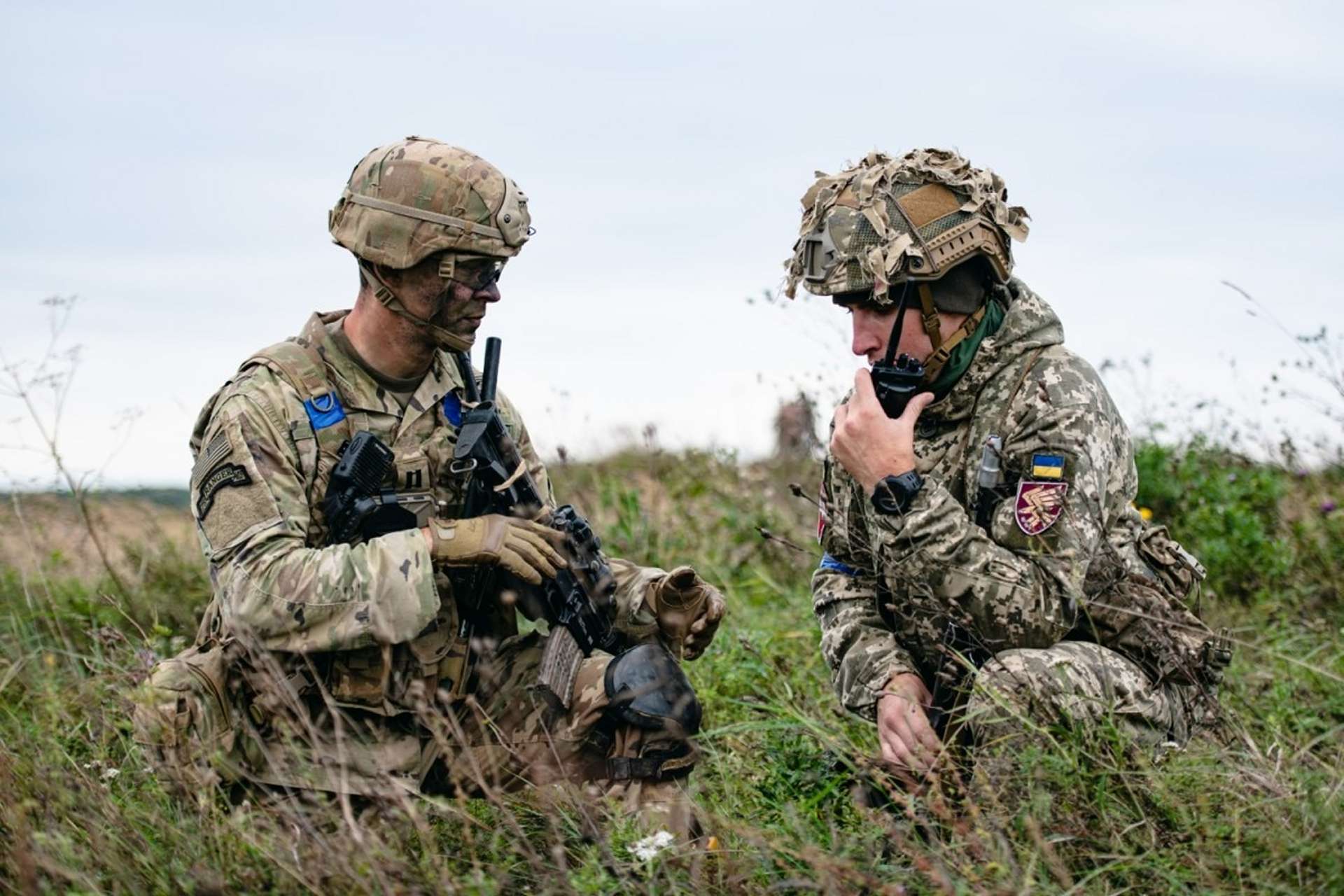
A U.S. Army paratrooper with a member of the Lithuanian-Polish-Ukrainian Brigade to establish a joint security posture on a drop zone during Exercise Rapid Trident 21 (Picture source: US Army)
This disclosure comes a day after US Secretary of State Antony Blinken mentioned a notable softening in the American stance regarding the use of US-manufactured weapons to strike targets within Russian territory, raising concerns about potential Russian retaliatory actions. In response to Blinken's remarks and developments on the ground, Russian President Vladimir Putin ordered military maneuvers involving Russian nuclear missiles, signaling the risks of NATO's direct involvement in the conflict.
The Ukrainian front is experiencing mounting pressure, particularly with renewed Russian assaults on the city of Kharkiv, marking significant advances for the first time in months. This situation is compounded by an ammunition crisis and a manpower shortage, with undisclosed losses reaching catastrophic levels, according to Ukraine’s former top general, Valerii Zaluzhnyi.
In response to these challenges, Ukraine has requested its American and NATO allies to help train 150,000 new recruits. A Ukrainian delegation is currently in Washington lobbying for more US aid, although so far, the US has rejected these calls for direct involvement. Nevertheless, General Brown stated that the arrival of NATO trainers appears inevitable.
Historically, American training of Ukrainian troops took place in locations such as Poland, Germany, and the United States. However, logistical challenges in transporting troops to training sites and back to the front lines have proven time-consuming. The US previously facilitated a NATO training program in Yavoriv, Ukraine, but withdrew at the start of the war. NATO has now tasked General Christopher G. Cavoli, the Supreme Allied Commander Europe, with devising a strategy to bolster support for Ukraine while minimizing risks.
Options considered include training Ukrainian forces in Lviv, near the Polish border, despite recent Russian bombings in the area. Alternatively, large-scale training could continue in camps in Germany and Poland, though this would involve significant logistical efforts to return troops to the front lines.
This development follows statements by French President Emmanuel Macron, who had previously suggested that NATO should not discount the possibility of deploying troops, in an effort to maintain "strategic ambiguity" against Russia. Several European countries, including Estonia and Lithuania, have expressed their willingness to send military personnel to Ukraine, although countries like Germany have excluded any direct participation in the conflict.
The current situation indicates a major escalation in NATO's involvement in Ukraine, a movement that could radically transform the dynamics of the ongoing conflict. While the Biden administration had previously stated that such actions could lead to World War III, each previous statement against direct involvement appears to be gradually revised or reversed.
In this context of escalating tensions and deteriorating battlefronts, the decision to deploy NATO troops, initially presented as training assistance, could quickly evolve into active combat engagement, highlighting the inherent risks of direct confrontation with Russia.
Read more: US Says Sending Military Trainers to Ukraine is Inevitable

- Details
- Written by: Administrator
- Category: 2024
- Hits: 6800
Breaking news
Washington, D.C., United States, May 17, 2024—The United States Department of Defense (DoD) and the Japan Ministry of Defense (MOD) have finalized a significant formal agreement to co-develop the Glide Phase Interceptor (GPI), a crucial component in hypersonic missile defense. This agreement falls under the U.S.-Japan bilateral Memorandum of Understanding (MOU) for Research, Development, Test, and Evaluation Projects (RDT&E).
Follow Army Recognition on Google News at this link
Glide Phase Interceptor (GPI) is a hypersonic weapon system capable of defeating a new generation of hypersonic weapons. (Picture source Youtube)
A Glide Phase Interceptor (GPI) is an advanced missile defense system specifically designed to intercept and neutralize hypersonic missiles during the glide phase of their flight. Hypersonic missiles are a new class of weaponry that travel at speeds greater than Mach 5 (five times the speed of sound) and follow unpredictable flight paths, making them particularly challenging to defend against.
The GPI targets hypersonic missiles during their glide phase, which occurs after the initial boost phase and before the terminal phase when the missile descends toward its target. To achieve this, the GPI is equipped with advanced rocket motors and propulsion systems that provide the necessary speed and maneuverability to match the hypersonic missile's velocity and trajectory. Additionally, it features sophisticated sensors and guidance systems that are crucial for detecting, tracking, and accurately intercepting hypersonic threats.
The GPI is intended to be part of a broader, layered missile defense architecture, working with other missile defense systems to provide comprehensive protection against a range of missile threats. This integration ensures a robust and multi-faceted defense capability, enhancing both regional and strategic security.
The joint effort marks a substantial step in strengthening regional deterrence and enhancing the longstanding missile defense cooperation between the U.S. and Japan. The U.S. Missile Defense Agency will spearhead the GPI development for the DoD, focusing on intercepting hypersonic missiles during their glide phase—an essential part of their flight trajectory.
As per the newly signed GPI Cooperative Development (GCD) Project Arrangement, Japan will take the lead in developing the rocket motors and propulsion components of the GPI. This collaboration is expected to provide a robust regional defensive capability over time, contributing to a comprehensive layered defensive architecture.
“The GPI co-development will build upon our long-standing missile defense cooperation and significantly bolster the Alliance's deterrence posture,” stated a DoD spokesperson. This initiative reflects both nations' commitment to advancing defense technologies and ensuring the security and stability of the region.
The GPI project is set to enhance the missile defense capabilities of both countries, ensuring they remain ahead of emerging threats and reinforcing the strategic partnership between the U.S. and Japan.

- Details
- Written by: Jérôme Brahy
- Category: 2024
- Hits: 2611
Breaking news
On May 15, 2024, US Secretary of State Antony Blinken announced in Kyiv an additional $2 billion fast-tracked provision of military aid to support Ukrainian forces amidst their efforts to counter a Russian offensive in the northeastern Kharkiv region. This announcement, made during a press conference in Kyiv alongside Ukrainian Foreign Minister Dmytro Kuleba, is part of a larger $61 billion package that Washington approved several weeks ago, following months of delays in Congress.
Follow Army Recognition on Google News at this link
This aid is coming at a critical time, as Ukraine faces a renewed and significant Russian offensive in the Kharkiv region, leading to Ukrainian troop withdrawals and civilian evacuations. (Picture source: Russian social media)
Blinken noted that the purpose of this aid is multifaceted: to provide immediate weaponry to Ukrainian forces, invest in Ukrainian infrastructure, and assist Ukraine in purchasing military equipment from other countries. He emphasized that the aid is coming at a critical time, as Ukraine faces a renewed and significant Russian offensive in the Kharkiv region, leading to Ukrainian troop withdrawals and civilian evacuations after several strikes on civilians and residential buildings. During his visit, Blinken also stated that Ukraine has the autonomy to decide whether to use US-supplied weapons against Russian forces, although the United States does not endorse such actions.
During the press conference, Kuleba underscored the urgency of Ukraine’s need for additional military support. He specified that Ukraine urgently requires seven more air defense systems, with a particular emphasis on the northeastern region of Kharkiv, which has recently come under renewed Russian attack and needs two such systems. He also called for faster delivery of weapons that have been promised by allied countries, highlighting the immediate need for enhanced defensive capabilities.
Reports indicate several Russian advances into the Kharkiv region, prompting concerns about Russia's growing advantage in the conflict, with evacuees describing the current attacks as more severe than the initial Russian invasion in 2022. Despite ongoing shelling, authorities in Kharkiv maintain no immediate plans for city evacuation, reflecting the resilience of Ukrainian forces and civilians. Ukrainian President Volodymyr Zelensky has reacted to the situation by canceling all scheduled international trips.
Noting the urgent need to equip Ukrainian troops against a well-equipped adversary, Blinken stated that the funds are designated "to provide weapons today" for the under-resourced Ukrainian military. According to several media reports, the aid will primarily support weapons procurement and investments in Ukraine's industrial infrastructure. Blinken pointed out the rapid delivery of ammunition, armored vehicles, missiles, and air defenses to reinforce Ukraine's front lines and increase its resilience against increased pressures.
This announcement follows President Volodymyr Zelenskiy's plea in April 2024 to accelerate the delivery of essential Patriot air defense systems, particularly for Kharkiv and its surrounding areas. In recent discussions with NATO defense ministers, Zelensky stressed Ukraine's need for seven additional Patriot systems to counter heightened Russian air attacks. He underlined the importance of these systems for protecting Ukrainian lives and infrastructure, which face continuous threats from Russian missile and drone strikes.
The recent increase in aid supplements previous assistance provided by the United States to Ukraine. President Joe Biden signed a $61 billion foreign aid package for Ukraine, including $400 million in previously unallocated foreign military funds, on April 24, following years of military support totaling $44.3 billion since Russia's invasion in 2022, according to the State Department. Additionally, Defense Secretary Lloyd Austin announced a $6 billion long-term funding package for Ukraine on April 26, 2024. However, concerns persist regarding the accountability of previous aid shipments, with a Department of Defense report in January highlighting inadequate tracking of over $1 billion in military assistance, prompting fears of theft or misuse.
During Blinken’s visit to Kyiv, his fourth since Russia's full-scale invasion began in February 2022, the US Secretary of State hinted at the possibility of a bilateral security agreement between the United States and Ukraine in the coming weeks, indicating a potential strengthening of ties between the two nations. The potential meeting between President Joe Biden and President Zelenskiy also highlights the continued US support for Ukraine. Finally, Blinken endorsed an upcoming peace conference in Switzerland, underscoring Washington's commitment to diplomatic efforts to resolve the conflict.
Read more: US Secretary announces $2 Billion military aid for Ukraine amid renewed Russian offensive

- Details
- Written by: Triffaux
- Category: 2024
- Hits: 6832
Breaking news
The Indian Army is on the verge of enhancing its air defense capabilities with the imminent arrival of the latest batch of the very short-range air defense system Igla-S, now assembled locally. Scheduled for delivery by the end of May 2024 to early June 2024, these systems aim to fill a crucial gap in the country’s defense arsenal, following several delays. The Igla-S will henceforth be assembled in India by Adani Defence Systems and Technologies Limited (ADSTL) under a technology transfer from Rosoboronexport, as part of the army's emergency procurement initiatives.
Follow Army Recognition on Google News at this link
Rosoboronexport Igla-S MANPADS (Picture source: Wikimedia)
As a reminder, the contract was signed in December 2020 and the first delivery was made in April 2024. This included 24 launchers, 216 missiles, and testing equipment. The final batch will increase the total number of Igla-S systems to 48 launchers, 100 missiles, 48 night-vision devices, and a missile test station. These acquisitions were made for a total of 260 crore rupees (approximately 32 million dollars). This reinforcement comes at a critical time as India continues to consolidate its position along the Actual Control Line (LAC) with China, an area marked by sporadic clashes and persistent tensions.
The Igla-S system, with an interception range of up to 6 kilometers, is a significant upgrade over the currently used Igla-1M systems. The first systems were introduced in 2021 via an emergency procurement procedure, but this recent order is part of a broader and planned initiative, where future units will be produced in India. Igla-S will henceforth be assembled in India by Adani Defence Systems and Technologies Limited (ADSTL) following a technology transfer from Rosoboronexport.
India’s choice of the Igla-S system followed a lengthy selection process that began in 2010 under the government of the United Progressive Alliance (UPA). In 2018, Rosoboronexport was selected over French and Swedish competitors, although this decision was contested by the competitors, claiming that the Russian system did not meet the technical requirements of the tender.
The Igla-S MANPADS is crucial for neutralizing low-altitude air threats such as aircraft, drones, and missiles in high mountainous regions. The necessity for modernized systems was underscored by a letter in 2012 from the former Army Chief of Staff, General V.K. Singh, who reported that nearly 97% of the air defense equipment was obsolete.
In addition to updating its air defense inventory, India has also seen significant advances with successful tests of indigenous VSHORADS missiles by the Defence Research and Development Organisation (DRDO) in February of this year.
The Igla-S, also used by several other countries, includes a 9M342 missile that can be mounted on various platforms, effectively increasing its range and capability against smaller targets like cruise missiles. This ready-to-use system weighs 17 kg and has a reaction time of 5 to 10 seconds, using a passive infrared aiming device and night vision capabilities.
This enhancement of India’s air defense capabilities with the Igla-S systems illustrates the country’s ongoing commitment to maintaining a robust defense posture in the face of regional and global strategic challenges.
Read more: India receives last batch of Igla-S MANPADS from Russia

- Details
- Written by: Administrator
- Category: 2024
- Hits: 5924
Breaking news
The U.S. Marine Corps recently conducted a crucial test of their latest Amphibious Combat Vehicle (ACV) during a simulated retrieval exercise at Courthouse Bay, located within Marine Corps Base (MCB) Camp Lejeune. This exercise marked a significant step in evaluating the functionality and effectiveness of the ACV, which is set to replace the aging assault amphibious vehicle.
Follow Army Recognition on Google News at this link
U.S. Marines with Marine Corps Systems Command (MARCORSYSCOM) and 2nd Amphibious Assault Battalion, 2nd Marine Division, drive an Amphibious Combat Vehicle (ACV) into a body of water during an amphibious operations exercise in Hubert, North Carolina. (Picture source U.S. DoD)
The ACV is the Marine Corps’ latest advancement in amphibious operations. It is designed to enhance Marines' capabilities and survivability in diverse and challenging environments. The test at Camp Lejeune aimed to assess the vehicle's performance in real-combat conditions, ensuring it meets the rigorous demands of modern amphibious warfare.
During the exercise, the ACV demonstrated its ability to maneuver through water and onto land, showcasing its versatility and robust engineering. The Marine Corps is focused on ensuring that the ACV can seamlessly transition between maritime and terrestrial operations, providing a critical asset for future missions.
Officials at Camp Lejeune emphasized the importance of such tests in validating the ACV's design and operational readiness. "This exercise is pivotal in our efforts to equip our Marines with the most advanced and reliable vehicles," said a Marine Corps spokesperson. "The ACV's performance today is a testament to our development teams' hard work and dedication."
The successful testing of the ACV marks a promising step forward in the Marine Corps ongoing efforts to modernize its fleet and maintain a state of readiness for amphibious operations worldwide. As the Marine Corps continues to evaluate and refine the ACV, the focus remains on ensuring that the vehicle meets the highest standards of performance and reliability and is ready to support the needs of the Marines in any theater of operation.
The U.S. Marine Corps' latest Amphibious Combat Vehicle (ACV) represents a significant upgrade from the older assault amphibious vehicle, incorporating advanced technologies and design improvements to enhance amphibious operations. The ACV is manufactured by BAE Systems in collaboration with Iveco Defence Vehicles. This partnership leverages BAE Systems' extensive military vehicle production experience and Iveco’s high-performance automotive engineering expertise.
The contract for the ACV program was awarded to BAE Systems in June 2018, following a competitive selection process. The initial contract covered the production of 30 vehicles, with options for additional vehicles in subsequent phases. As of 2024, the Marine Corps has placed orders for several hundred ACVs, with a total planned procurement of up to 700 vehicles over the next decade, valued at approximately $1.2 billion.
The ACV is equipped with an advanced suspension system and robust powertrain, providing superior off-road mobility and agility in various terrains. It can run at a speed of up to 105 km (65 miles) per hour on land and 11 km/h (6 knots) in water, ensuring rapid deployment and versatility in diverse operational environments. The vehicle features enhanced armor and a V-shaped hull designed to provide improved protection against improvised explosive devices (IEDs), mines, and ballistic threats. Integrated blast protection and energy-absorbing seats further safeguard crew members and passengers.
The ACV is armed with a remote weapon station that can be equipped with a 30mm cannon, machine guns, and missile systems, providing significant firepower. State-of-the-art command and control systems, including advanced communication and navigation technologies, enable seamless coordination with other military units and assets. Designed for seamless transition between land and water operations, the ACV features waterjet propulsion for enhanced maneuverability in aquatic environments. It can be deployed from Navy ships and operating in open water, making it ideal for amphibious assault missions.
The ACV can carry up to 13 Marines plus a crew of three, providing ample space for personnel and equipment. Improved ergonomic design and climate control systems ensure greater comfort and endurance for occupants during extended missions. The new ACV embodies the U.S. Marine Corps’ commitment to maintaining technological superiority and operational readiness in amphibious warfare, ensuring that Marines are equipped with the best possible tools to accomplish their missions.
Read more: US Marine Corps Successfully Tests New ACV Amphibious Combat Vehicle at Camp Lejeune
- Details
- Written by: Jérôme Brahy
- Category: 2024
- Hits: 28287
Breaking news
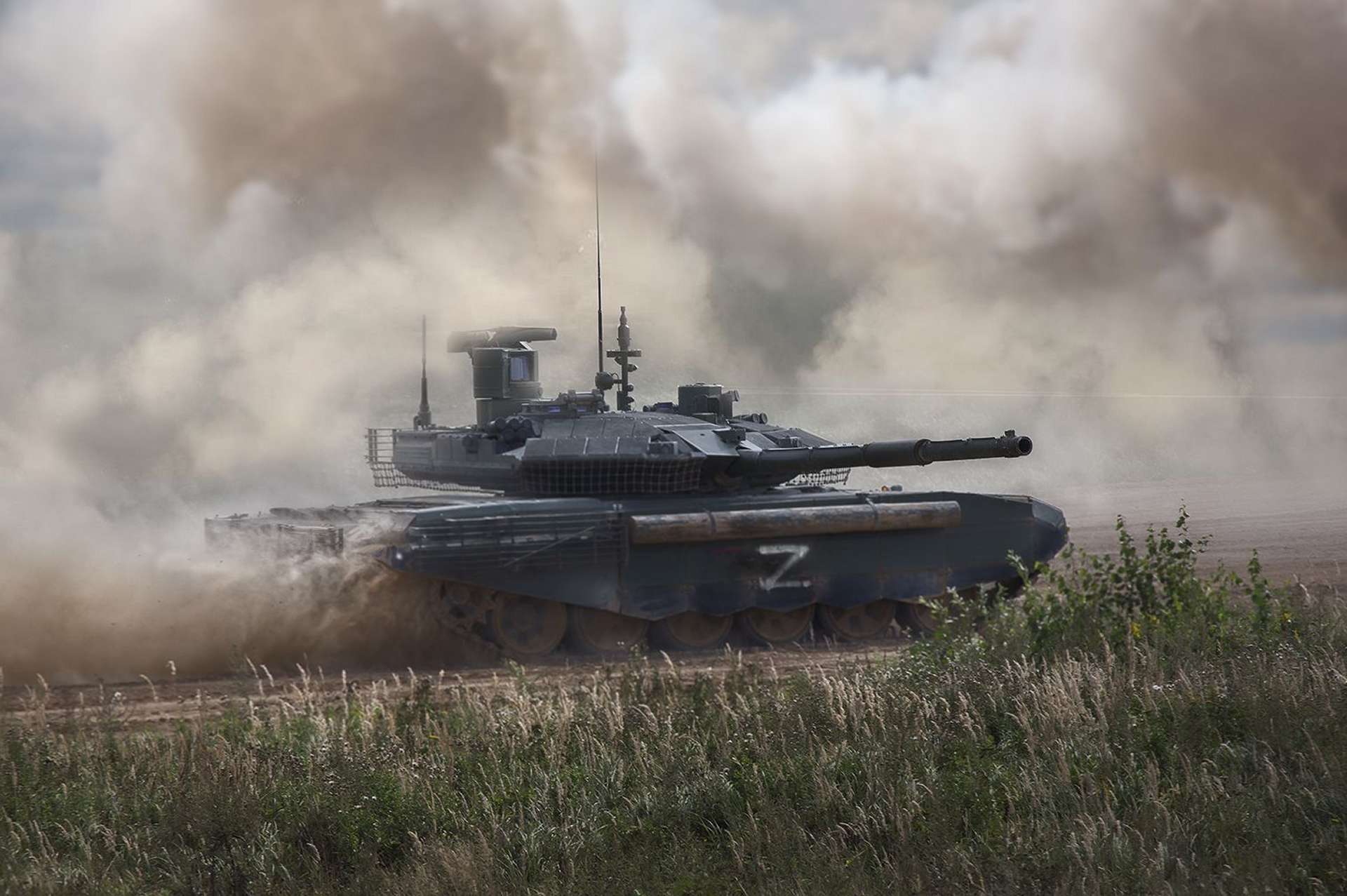
On May 15, 2024, the Russian Ministry of Defense announced the induction of 23 T-90M Proryv main battle tanks into service with the motorized rifle formation of the combined arms army of the Central Military District (CMD). The CMD, formed in 2010, is Russia's largest and most populous military district, regrouping two Russian combined arms armies, an Air Force and Air Defense command, and various other units.
Follow Army Recognition on Google News at this link
While the T-90M is one of the most advanced tanks in Russia's arsenal, its deployment in the Ukraine conflict has shown mixed results. (Picture source: Russian social media)
The Central Military District was officially formed on October 21, 2010, as part of a significant restructuring aimed at updating the Armed Forces of the Russian Federation. This restructuring was formalized by Presidential Decree No. 1144, signed on September 20, 2010, and involved the amalgamation of the Volga-Ural Military District and the western portion of the Siberian Military District. Since its inception, the CMD has been an important component of Russia's military framework, encompassing two combined arms armies, an Air Force and Air Defense Command, and various other units stationed within the district. Additionally, the 201st military base in Tajikistan falls under the jurisdiction of the USC Center, which is subordinate to the CMD.
Covering a vast area, the Central Military District is the largest military district in Russia by geographic size, spanning 7,060,000 square kilometers (approximately 2,730,000 square miles), which constitutes about 40% of the country's territory. It is also the most populous military district, home to 54.9 million people, or 39% of Russia's population. The CMD's jurisdiction includes 29 of Russia's 85 federal subjects, such as Altai Krai, Bashkortostan, Chelyabinsk Oblast, and Tatarstan, among others. Headquartered in Yekaterinburg, the district has been under the command of Lieutenant-General Andrey Mordvichev since February 17, 2023.
The Central Military District possesses a substantial array of military equipment, reflecting its role within the Russian Armed Forces. The district includes significant ground forces, with key units such as the 2nd Guards Combined Arms Army and the 41st Combined Arms Army. Within these formations, notable equipment includes hundreds of tanks, particularly T-72 models. For example, the 41st Combined Arms Army recently mobilized equipment including T-72BM and T-72B1 main battle tanks for deployment near the Ukrainian border. Additionally, the CMD's 90th Guards Tank Division has been equipped with the latest T-90M Proryv tanks and is also set to receive BMPT "Terminator" tank support combat vehicles, enhancing its firepower and operational capabilities. Furthermore, the district's 201st Military Base in Tajikistan has been upgraded with T-72B3M tanks, man-portable air-defense systems, and other modern equipment.

These 23 T-90M Proryv main battle tanks will join Russia's Central Military District (CMD), its largest and most populous military district, regrouping two Russian combined arms armies, an Air Force and Air Defense command, and various other units. (Picture source: Russian MoD)
The Russian T-90M Proryv-3 is the most advanced iteration of the T-90 main battle tank series, incorporating several improvements over its predecessors. It features a 125mm 2A46M-4 smoothbore main gun, capable of firing both conventional munitions and the 9M119 Refleks anti-tank guided missiles, which can engage targets up to 5 kilometers away. Additionally, the T-90M is equipped with a modern automated digital fire control system that significantly improves its target acquisition, tracking, and engagement capabilities.
Protection is a key focus of the T-90M, which employs the Relikt explosive reactive armor (ERA), offering defense against modern anti-tank weapons, including those with tandem warheads, compared to the older Kontakt-5 ERA used in previous T-90 variants. The tank also includes an active protection system that can automatically deploy smoke grenades triggered by laser targeting, helping to obscure the tank from enemy fire and increase its battlefield survivability. This combination of reactive and active protection systems aims to make the T-90M resilient against a wide range of threats, including armor-piercing fin-stabilized discarding sabot (APFSDS) rounds.
However, the T-90M's performance in combat has shown mixed results. While it is one of the most advanced tanks in Russia's arsenal, its deployment in the Ukraine conflict has highlighted some vulnerabilities. Numerous T-90M tanks have been destroyed or captured, often by Western-supplied systems used by Ukrainian forces such as the FGM-148 Javelin anti-tank guided missile (ATGM) and M142 HIMARS rocket launcher. These setbacks include a notable neutralization by a Bradley M2A2 infantry fighting vehicle (IFV) in Ukraine. Despite these issues, the T-90M remains a significant component of Russia's armored capabilities, representing a notable upgrade compared to earlier Russian main battle tanks.

- Details
- Written by: Vandenbosch
- Category: 2024
- Hits: 4187
Breaking news
On May 15, 2024, the defense departments of the United States and Japan signed a formal agreement for the cooperative development of the Glide Phase Interceptor (GPI). This agreement is part of the U.S.-Japan bilateral Memorandum of Understanding (MOU) for Research, Development, Test, and Evaluation (RDT&E) projects.
Follow Army Recognition on Google News at this link
THAAD interceptor is an anti-ballistic missile defense system originated and designed by the United States (Illustrative image). (Picture source: US DoD)
The GPI initiative aims to reinforce regional deterrence and deepen missile defense cooperation between the two nations. The U.S. Missile Defense Agency (MDA) will lead the development of the GPI, which will provide defense capability against hypersonic missiles during their glide phase, the longest phase of their trajectory. Japan will be responsible for developing the rocket motors and propulsion components of the GPI.
The GPI is designed to intercept and destroy hypersonic missiles during their glide phase, between launch and reentry into the atmosphere, when they are most vulnerable. This project addresses the urgent need for both countries to counter emerging hypersonic capabilities that pose significant regional security challenges, particularly due to North Korea's repeated ballistic missile tests and China's increasing military activities in the Indo-Pacific.
The GPI program is the second joint development of a missile interceptor by Japan and the United States, following the Standard Missile (SM)-3 Block IIA program. This collaboration builds on the success of the previous project and strengthens the alliance's deterrence posture. American defense companies Raytheon and Northrop Grumman are competing to design the interceptor, with contracts awarded to continue development.
According to the U.S. Department of Defense, "the development of a counter-hypersonic capability is a pressing need for both countries to address challenges in the Indo-Pacific region, including the emergence of sophisticated missile capabilities for potential acts of coercion. The GPI co-development will build upon long-standing U.S.-Japan missile defense cooperation and strengthen the alliance's deterrence posture."
This agreement marks a significant step in enhancing regional security and improving the missile defense capabilities of both allied nations.
Read more: United States and Japan Sign Agreement to Enhance Missile Defense Capabilities

- Details
- Written by: Halna du Fretay
- Category: 2024
- Hits: 3025
Breaking news
On May 15, 2024, the Israel Defense Forces (IDF) reported that Israel Air Force fighter jets intercepted and shot down two unmanned aerial vehicles (UAVs) that had entered Israeli airspace from the east. These actions are part of a broader series of defensive measures taken against hostile threats over the past week.
Follow Army Recognition on Google News at this link
The difficulty in distinguishing between friendly and hostile drones underscored by recent operations in the Gaza Strip, is a significant concern as UAS and loitering munitions become more prevalent in military operations. (Picture source: Israel Defense Forces)
These recent interceptions underscore the continuous vigilance of Israel's air defense forces, which have actively confronted multiple threats. In addition to the UAVs intercepted by fighter jets, other threats this week have been neutralized using Israel's advanced "Patriot" and "Iron Dome" air defense systems. The IDF emphasizes that their fighter jets continuously patrol Israeli airspace, ensuring that air defense systems are always on alert and can be deployed immediately to provide comprehensive, 360-degree protection.
Earlier in the week, two UAVs launched by the Iraqi-based Islamic resistance targeted Eilat, while two more UAVs launched by the Houthis were intercepted by U.S. forces over the Red Sea. These incidents highlight the persistent and diverse threats faced by Israel, necessitating a robust and responsive air defense strategy.
The Israeli Air Force (IAF) is among the most advanced and well-equipped in the world. Their fleet includes various modern and versatile aircraft. The main fighter jets include the F-35I "Adir," a customized version of the Lockheed Martin F-35 Lightning II with advanced stealth capabilities. The F-16I "Sufa," an improved version of the F-16 Fighting Falcon, and the F-15I "Ra'am," derived from the McDonnell Douglas F-15E Strike Eagle, are also mainstays of the fleet.
At the Modern Day Marine exposition, Lt. Col. Michael Pruden of the U.S. Marine Corps highlighted a critical issue faced by both the Israel Defense Forces (IDF) and U.S. forces: the difficulty in distinguishing between friendly and hostile drones. According to Pruden, 40% of the unmanned aerial systems (UAS) shot down by the IDF are friendly fire incidents. This problem, underscored by recent operations in the Gaza Strip, is a significant concern as UAS and loitering munitions become more prevalent in military operations.
The IDF's sophisticated integrated air defense system, considered one of the most advanced globally, still struggles with this issue. The challenge lies in the rapid identification of UAS before they can pose a threat. Given the limited time—often just seconds—between detecting a drone and its potential to attack, the default action is to shoot it down if its identity is uncertain.
This problem is not unique to Israel. The U.S. military faces similar challenges, as demonstrated by a recent incident where a German Navy frigate almost shot down a U.S. MQ-9 Reaper drone over the Red Sea due to mistaken identity. The complexity of differentiating between friendly and hostile drones is exacerbated in operations involving numerous drones and loitering munitions.
Lt. Col. Pruden emphasized the need to improve communication and identification systems to prevent friendly fire incidents. This includes integrating new sensors, communication networks, and potentially leveraging artificial intelligence and machine learning. The goal is to develop a system that allows operators to easily identify friendly drones on a screen, minimizing the risk of shooting down their own assets.
Read more: Israel Air Force Successfully Intercepts Hostile UAVs on Eastern Border

- Details
- Written by: Vandenbosch
- Category: 2024
- Hits: 2758
Breaking news
The Canadian Armed Forces have showcased their instructors training Ukrainian defenders. A video highlighting this training was posted on the X page of Canadian Operation UNIFIER, dated May 15, 2024.
Follow Army Recognition on Google News at this link
Canadian military instructors have trained nearly 40,000 Ukrainian recruits. (Picture source: Canadian MoD)
"The determination and desire of our Ukrainian partners to learn from us strengthen our resolve. We are proud to support their fight against Russian aggression," reads the caption accompanying the video.
Since 2015, as part of Operation UNIFIER, Canadian military instructors have trained nearly 40,000 Ukrainian recruits. Following the large-scale Russian invasion of Ukraine, Canadian instructors temporarily left the country but resumed their training sessions in the United Kingdom, Poland, and Latvia a few months later.
Operation UNIFIER is a training and capacity-building mission led by the Canadian Armed Forces in support of Ukraine. Launched in 2015, this operation aims to improve the skills of the Ukrainian armed forces so they can better respond to the threats posed by Russian aggression. The training includes modern combat tactics, combat medicine, military engineering, and other essential skills.
Since the beginning of this operation, Canadian instructors have trained nearly 40,000 Ukrainian soldiers. However, with the intensification of the conflict in February 2022, the instructors temporarily left Ukraine for security reasons, later resuming training in neighboring countries such as the United Kingdom, Poland, and Latvia.
In recent months, Canada has intensified its support for Ukraine in the face of the Russian invasion. In addition to Operation UNIFIER, Canada has provided substantial financial and military assistance to Ukraine. For example, in May 2024, Canada allocated 55 million USD to strengthen Ukraine's air defense.
Canada's support for Ukraine is not limited to military training. The country has also provided military equipment, including armored vehicles, air defense systems, and ammunition.
Military relations between Canada and Ukraine have intensified in response to the Russian invasion, with a combination of military training, financial and equipment support, as well as international cooperation and a firm political commitment in favor of Ukraine.
Read more: Canadian Military Trains Ukrainian Recruits in Modern Combat Skills

- Details
- Written by: Jérôme Brahy
- Category: 2024
- Hits: 3803
Breaking news
On May 10, 2024, the 3rd Manabí Mechanized Cavalry Brigade of the Ecuadorian Army received its first Mbombe 6 6x6 armored vehicles, manufactured by the South African company Paramount Group. The Ecuadorian Army purchased these 6x6 armored vehicles for military operations aimed at combating terrorist groups such as the FARC and drug trafficking organizations operating along the northern border.
Follow Army Recognition on Google News at this link
The decision to adopt the Mbombe 6 6x6 was largely influenced by its advanced protection capabilities against prevalent threats such as improvised explosive devices (IEDs), antipersonnel mines, and unexploded ordnance, which are significant along the Ecuadorian northern border (Picture source: Ecuadorian Army)
The acquisition of the Mbombe 6 6x6 armored vehicles was made through the Israeli company Elbit Systems and Paramount Group. According to the information available, these armored vehicles will be equipped with a mobile software-defined radio network solution, E-LynX, a suite of battle management applications, and the Magni mini vertical takeoff and landing UAS.
The first batch of Mbombe 6 armored vehicles was received by the Ecuadorian Army as part of a larger acquisition by the Latin American National Defense Forces and the Southern African Development Community (SADC), announced last year by Paramount at the Defence and Security Equipment International (DSEI) event in London. Although the Latin American client was not initially disclosed, it became evident that Ecuador is likely the recipient of these 20 military vehicles.
The decision to adopt Paramount's Mbombe 6 was largely influenced by its advanced protection capabilities against prevalent threats such as improvised explosive devices (IEDs), antipersonnel mines, and unexploded ordnance. These threats are significant along the Ecuadorian northern border and pose substantial risks to personnel across various operational environments, including border, rural, and urban settings. The Mbombe 6 complies with the STANAG 4569 standard, providing class 3 protection, including resilience against 7.62×51 caliber armor-piercing rounds.
Its mine-resistant design, featuring a V-shaped hull capable of withstanding detonations up to 10 kg in TNT equivalent, further enhances its suitability for the specified operational context. Notably, several countries, including Ukraine and Kazakhstan, have chosen the Mbombe 6 armored vehicles due to their effectiveness. Moreover, these nations are anticipated to locally produce the 6x6 vehicle under license, indicating a broader recognition of its capabilities and potential for adaptation to diverse operational requirements.
Designed to fulfill multiple military roles such as medical evacuation, personnel transport, infantry fire support, and engaging enemy armored vehicles, the Mbombe 6 is a 6x6 armored fighting vehicle powered by a turbo diesel engine generating 336 kW (450 HP) and 1,627 Nm of torque. This allows for a top speed of approximately 100 km/h and a range of about 700 kilometers on a single tank. The vehicle has a payload capacity of up to 2,300 kg, which can include various weapon systems. It can accommodate up to 11 personnel, including the driver, commander, and nine dismounts, making it suitable for troop transport and direct engagement roles.

- Details
- Written by: Triffaux
- Category: 2024
- Hits: 4681
Breaking news
The Armed Forces of Russia and Tajikistan recently concluded a joint bilateral exercise at the mountainous and desert training ground of Kharb-Maidon in Tajikistan. This exercise, which took place from April 15 to 18, 2024, involved key units from the Russian 201st Military Base of the Central Military District. According to the Ministry of Defense, the exercise simulated operations to neutralize terrorist infiltrations across mountainous borders.
Follow Army Recognition on Google News at this link
Russian T-72B3 Main Battle Tank Operating Along the Afghan Border (Picture source: Russian MoD)
Read more: Russia and Tajikistan Conduct Joint Military Exercise Near Afghan Border

- Details
- Written by: Halna du Fretay
- Category: 2024
- Hits: 5693
Breaking news
Australia has announced a record defense budget of AU$55.7 billion, US$36.8 billion, for 2025, representing a 6.3% increase from the previous year and accounting for 2.02% of the country's GDP. This significant budgetary increase underscores Australia's commitment to enhancing its military capabilities amid rising geopolitical tensions in the Indo-Pacific region.
Follow Army Recognition on Google News at this link
Australian Army CH-47 Chinook lands onboard HMAS Choules at sea, on flight operations (Picture source: Australian MoD)
The defense budget includes an allocation of AU$16.7 billion for equipment acquisitions and AU$17.2 billion for maintaining existing assets. A notable portion, AU$10.7 billion, is designated for the Navy, including substantial investments in nuclear-powered submarines under the AUKUS agreement with the United States and the United Kingdom. Spending on these submarines is expected to rise sharply, from AU$475 million last year to AU$2.8 billion next year, reaching AU$4.97 billion by 2027-2028.
Other significant allocations include AU$813 million for six Hunter-class frigates and AU$587 million for six Arafura-class offshore patrol vessels. The Army will receive AU$11.8 billion for acquiring advanced assets such as Boxer armored vehicles, Redback infantry fighting vehicles, Huntsman self-propelled howitzers, High Mobility Artillery Rocket Systems, M1A2 Abrams tanks, advanced surface-to-air missile systems, and new helicopters.
The Air Force is allocated AU$9.5 billion, with a substantial portion dedicated to the acquisition of F-35A fighter jets, of which nine out of 72 remain undelivered. The arrival of four MC-55A Peregrine electronic warfare aircraft has been delayed by two years, impacting the planned capabilities of the Air Force.
The Australian Signals Directorate, responsible for foreign signals intelligence and cybersecurity, will receive AU$2.7 billion, while AU$1 billion is set aside for defense intelligence. The budget also includes AU$1.3 billion for the Capability Acquisition and Sustainment Group and the Guided Weapons and Explosive Ordnance enterprise, aimed at promoting the sovereign production of missiles and munitions.
Australia's strategic alliances play a crucial role in its defense posture. The country collaborates closely with the United States through the ANZUS treaty and the AUKUS pact, focusing on nuclear submarine development and other advanced defense technologies. Additionally, Australia participates in the Quad alliance with the US, Japan, and India, enhancing regional security cooperation.
The geopolitical environment in the Indo-Pacific is increasingly complex, with China's assertive actions and military expansion prompting Australia to bolster its defense capabilities. The 2024 National Defence Strategy emphasizes the need for a robust and self-reliant defense force to address strategic competition and potential threats in the region. This strategy includes significant investments in long-range strike capabilities, autonomous systems, and the hardening of military bases in northern Australia.
Australia's defense strategy is also shaped by its commitment to a free and open Indo-Pacific, countering coercive tactics and ensuring regional stability. The country's proactive defense approach, supported by record budget allocations, aims to ensure national security and maintain a strategic balance in response to evolving regional dynamics.
Read more: Australia Unveils Record $37 Billion Defense Budget
- Australia Conducts Live-Fire Exercise with M1A1 Abrams Main Battle Tank and Armored Vehicles
- Recently tested Improved anti-FPV systems are arriving for Russian troops in Ukraine
- North Korea Increases Production of Ballistic Missile Following Possible Request of Russia
- MBDA Receives European Contract to Develop HYDIS² Project Concept Phase