

- Details
- Written by: Vandenbosch
- Category: 2024
- Hits: 21060




Breaking news






On April 12, 2024, Patria announced its readiness to resume the production of field artillery, leveraging its extensive expertise to enhance the mobility of these crucial weapons. The ongoing conflict in Ukraine highlights the significance of traditional artillery in modern warfare, with Finland distinguished in Europe for its robust artillery capabilities.
Follow Army Recognition on Google News at this link
Patria announced its readiness to resume the production of field artillery. (Picture source: Patria)
Vesa Toivonen, the director of armament systems testing at Patria, emphasized the company's continuous excellence in weapon production and development throughout his career. The Finnish defense forces currently utilize the 155 millimeter field gun, 155K98, a result of decades of innovation initially led by Patria's predecessors, Tampella and Vammas. This development journey began in the early 1950s when Tampella was tasked with designing a versatile gun, culminating in the model 122K60.
Subsequent advancements included increasing the gun's diameter from 122 mm to 155 mm and extending the barrel to enhance the projectile's range. Over the years, several models have been designed, with the 155K98 being actively deployed from 1998 to 2005. This gun, featuring an 8-meter-long barrel with a range of 40 km, is transported by an all-terrain truck to near the firing site, where it operates on its power thanks to an integrated engine.
Since delivering nearly 200 field guns to the Finnish defense forces by 2005, Patria has focused on maintenance, improvements, and the production of critical weapon components in collaboration with Millog. Notable enhancements include a redesigned tow bar and the use of ultrasonic technology to inspect the guns and assess their longevity.
Manufacturing guns requires a broad range of skills, particularly in mechanical engineering and materials technology, as Toivonen notes. Modern measurement and simulation technologies are crucial for understanding the stresses endured by weapon components and managing the impacts of firing.
Patria's longstanding expertise also extends to designing and producing mortars, such as the Patria NEMO breech-loading mortar system, sharing structural elements with cannons. The company is well-equipped to quickly restart cannon production if needed and has significant experience integrating weapon systems on various vehicle platforms, such as the Sisu 8×8 all-terrain truck used by Finnish forces.
Pekka Ruutu, the executive vice president of Patria, points out that mobility is crucial on today's transparent, technological battlefields, where artillery units must move quickly to survive. Patria is actively developing a field gun that can be mounted on wheeled vehicles to meet this need.
Domestic production is vital for maintaining supply security, ensuring the availability of spare parts and services even in emergencies, and supporting the national economy and employment levels. Despite the global trend toward increasingly technologically advanced weapons, the reliable and straightforward 155K98 remains relevant and essential in ground warfare.
Patria seems to be leaning towards tradition rather than modernity, and who can blame them when considering the evolution of the conflict between Russia and Ukraine and the renewed prestige of artillery there. Field artillery has a much lower production cost than self-propelled howitzer, and in high-intensity conflicts, production costs matter. It's not surprising to see Patria taking this path, which is far from obsolete.
Read more: Patria Announces Readiness to Restart Field Artillery Production

- Details
- Written by: Halna du Fretay
- Category: 2024
- Hits: 2555
Breaking news
An agreement was signed in Rome on May 7 between the Italian State Police and the Engineering Group to enhance the protection of networks and information systems essential to the institutional functions of companies. This collaboration aims to develop and implement effective strategies for preventing and combating cybercrime. The agreement was formalized by the Chief of Police, Director General of Public Security, Prefect Vittorio Pisani, and Maximo Ibarra, CEO of Engineering Group.
Follow Army Recognition on Google News at this link
The signing ceremony was attended by Prefect Renato Cortese, representing the Department of Public Security, along with Ivano Gabrielli, Director of the Postal Police Service (Picture source: ENGINEERING GROUP)
Engineering Group, composed of over 70 companies across 14 countries in Europe, the United States, and South America, has been supporting the digitalization processes of public administrations and companies in various market segments for more than 40 years. With approximately 15,000 employees, Engineering provides IT services and systems through its proprietary solutions and in partnership with leading international tech players.
The company uses cutting-edge digital technologies such as artificial intelligence, blockchain, virtual reality, and digital twin. Leveraging its extensive expertise in cybersecurity, Engineering ensures high levels of security for itself and its partners. The group believes that continuous information sharing and cooperation with institutions are essential tools for effectively combating cybercrime.
The Postal Police, a specialized branch of the Italian State Police, is tasked with protecting the critical computerized infrastructures of institutions and companies providing essential services. This division, responsible for communications security under the Ministry of the Interior, operates through the National Centre for the Fight against Cybercrime for the Protection of Critical Infrastructures (CNAIPIC). CNAIPIC's 24/7 operations room serves as the national and international contact point for managing critical events affecting infrastructures of national importance in sensitive and strategic sectors.
The signing ceremony was attended by Prefect Renato Cortese, representing the Department of Public Security, along with Ivano Gabrielli, Director of the Postal Police Service. Representing the Engineering Group were CEO Maximo Ibarra, Chief Public Affairs, Corporate Communication & Sustainability Officer Roberto Scrivo, and Group Chief Information Security Officer Pierluigi Carbone.
Engineering is a leading digital transformation company in Italy, continuously expanding internationally. With approximately 15,000 employees and over 70 offices, Engineering supports the continuous evolution of companies and organizations across all market segments through its deep knowledge of business processes.
The group leverages advanced digital technologies and proprietary solutions, integrating market solutions and managed services. Engineering invests heavily in innovation and human capital, positioning itself as a key player in creating digital ecosystems and developing modular solutions for continuous business transformation.
- Details
- Written by: Vandenbosch
- Category: 2024
- Hits: 5043
Breaking news
Hanwha Aerospace, a South Korean company, is set to strengthen its presence in the European defense market through a new export agreement to integrate the Korean K9 Thunder gun onto the Polish Krab tracked armored chassis. This development was confirmed during a meeting between leaders of the Polish and South Korean defense industries in Warsaw on May 10, 2024.
Follow Army Recognition on Google News at this link
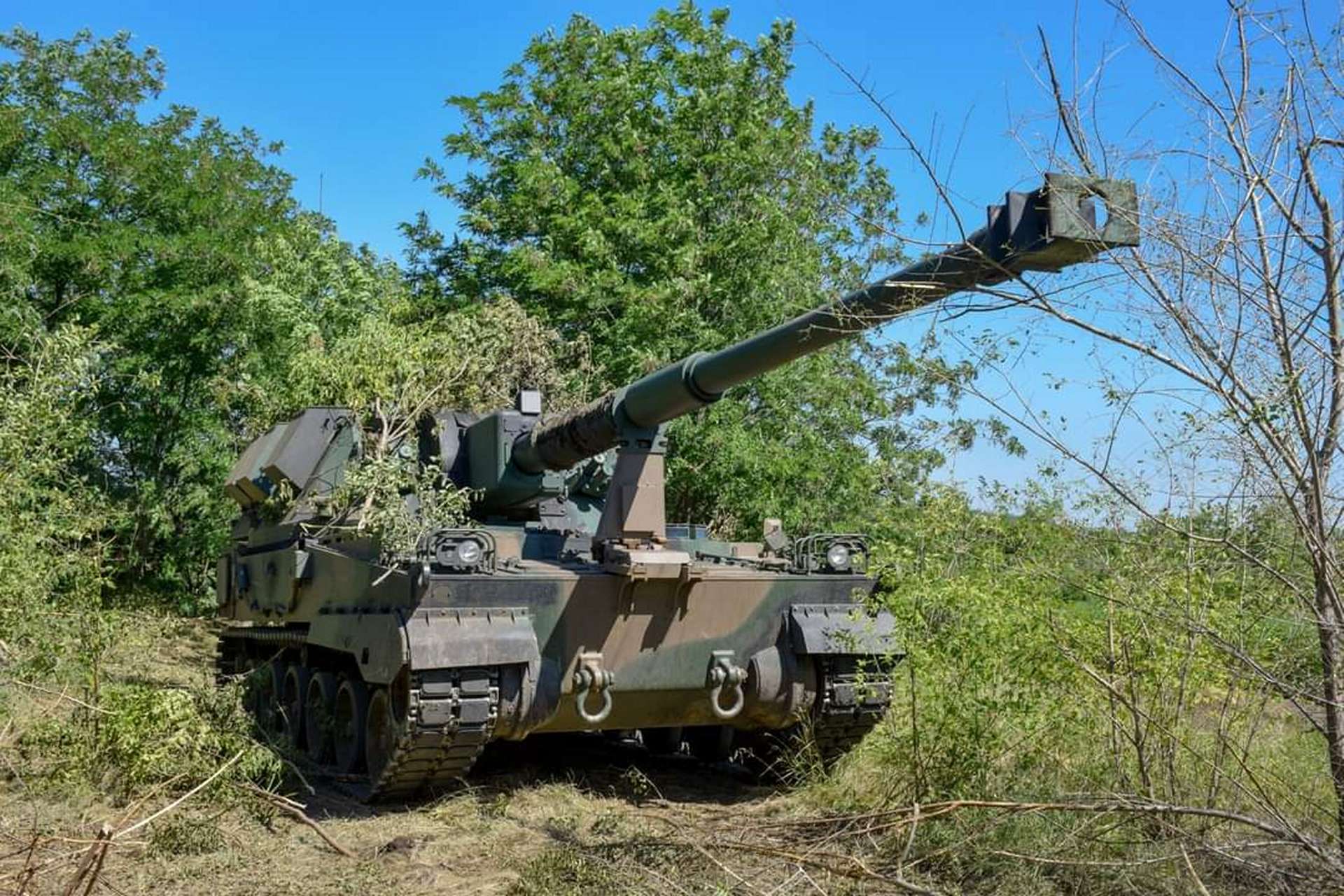
The AHS Krab is a self-propelled tracked howitzer manufactured in Poland. (Picture source: Ukrainian MoD)
The partnership was formalized through a Letter of Intent signed by Hanwha Aerospace and Huta Stalowa Wola, part of the Polish state-owned defense group PGZ. This agreement outlines future cooperation and the export of components for the K9 Thunder and Krab howitzers.
PGZ indicated that the collaboration would explore adapting the Krab chassis to accommodate the Korean K9A2 and K9A3 variants. There has been previous success in merging the Korean chassis with the Polish Krab turret system.
The AHS Krab is a self-propelled tracked howitzer manufactured in Poland, with design contributions from BAE Systems and Samsung Techwin from 1997 to 2006. This artillery system, which went into production in 2008, is used by the Polish and Ukrainian land forces and has been deployed in the Russo-Ukrainian War.
The Krab weighs 48 tons and is 12.1 meters long, featuring a 155 mm caliber cannon that can fire shells up to a maximum range of 40 kilometers using Excalibur-type ammunition. It is designed for high mobility, reaching speeds of up to 60 km/h on roads thanks to its STX Engine/MTU Friedrichshafen MT881Ka-500 diesel engine, which delivers 1,000 horsepower. It carries a stock of 40 rounds, distributed between the turret and the hull, and is equipped with an advanced sighting system from WB Electronics Topaz FCS.
Additionally, the Krab is armed with a .50 caliber WKM-B machine gun as secondary armament. Its robust design includes up to 16 mm thick steel armor, and it features a hydropneumatic suspension that enhances its ability to navigate varied terrains. Its crew of five can operate the howitzer with a sustained firing capacity of two rounds per minute, or eighteen rounds in three minutes during rapid firing sessions.
Future enhancements for the K9 series include the K9A2, which will feature a fully automated turret, and the more advanced K9A3 model, which will include a 58-caliber cannon, further automation, artificial intelligence improvements, and is expected to enter the market in the early 2030s.
The cooperation between Poland and Korea has been long-standing and continues to grow stronger, with Poland increasingly purchasing Korean military equipment, as evidenced by this new contract between the two nations.

- Details
- Written by: Vandenbosch
- Category: 2024
- Hits: 4040
Breaking news
Germany plans to deliver another IRIS-T air defense missile system to Ukraine this May, announced Martin Jager, the German Ambassador to Ukraine, on May 13, 2024. The announcement comes as Ukraine seeks to strengthen its air defense capabilities following an increase in Russian attacks on its energy infrastructure.
Follow Army Recognition on Google News at this link
The IRIS-T SLM is a medium-range air defense system designed in Germany. (Picture source: Bundeswehr)
During a recent address, German Ambassador Jager noted that Ukraine is already equipped with several IRIS-T systems. He confirmed that further deliveries are scheduled not only for later this year but also for 2025 and 2026. Additionally, Germany plans to send a Patriot air defense system to Ukraine, expected to arrive no earlier than the end of June.
This development signifies an increase in Germany's military support to Ukraine. Germany had previously delivered two IRIS-T SLM systems to the Ukrainian forces. Initially criticized for the slow pace of its aid following the onset of the conflict, Germany has now become Ukraine's second-largest supplier of military equipment, after the United States.
Previously, Germany provided Ukraine with three IRIS-T SLM systems with a range of up to 40 kilometers and one IRIS-T SLS system.
The IRIS-T SLM is a medium-range air defense system designed in Germany. It uses missiles weighing 87.4 kg and measuring 2.94 meters in length. These missiles can reach speeds of Mach 3, allowing them to cover distances up to 40 kilometers. They are equipped with a highly explosive fragmentation warhead, optimized for effectively destroying aerial targets.
The guidance system of the IRIS-T SLM is based on infrared homing, enabling the missile to track its targets by detecting the heat it emits. It is integrated into a sophisticated network of radars and command systems to enhance its accuracy and responsiveness. Among the equipment used are the Saab Giraffe radar, CEA Technologies CEAFAR multifunction radar, Terma A/S Oerlikon Skymaster combat control system, TRML-4D multifunctional radar, and the Airbus Tactical Operation Centre. This combination of advanced technologies enables the IRIS-T SLM system to detect, track, and effectively engage aerial targets, playing a crucial role in defending Ukraine’s airspace against aerial threats.
The IRIS-T SLS, meanwhile, has similar technical capabilities but with a reduced range of 12 kilometers. There is also a third variant, the IRIS-T SLX, which has a range of 80 kilometers and a maximum altitude of 30 kilometers.
In April, Germany also took the initiative to enhance Ukraine's air defenses, with Canada and Belgium joining as partners. Ukrainian President Volodymyr Zelensky emphasized on April 6 the need for 25 Patriot systems to effectively defend the country's airspace against ongoing Russian attacks.
Read more: Germany to Supply Another IRIS-T SLM Air Defense System to Ukraine

- Details
- Written by: Jérôme Brahy
- Category: 2024
- Hits: 2811
Breaking news
On May 10, 2024, Canadian Defence Minister Bill Blair announced that Canada would allocate CAN $76 million ($55.7 million) to the Immediate Action on Air Defence (IAAD) initiative during a visit to Ottawa by Blair’s German counterpart, Boris Pistorius. This initiative, launched last month by Germany, focuses on procuring and supplying air defense systems to Ukraine.
Follow Army Recognition on Google News at this link
Launched in mid-April 2024, the German government’s IAAD initiative focuses on acquiring modern Patriot air defense systems, among other needs. (Picture source: US DoD)
Launched in mid-April 2024, the German government’s IAAD (Immediate Action on Air Defence) initiative aims to promptly enhance Ukraine's air defense capabilities by supplying systems, ammunition, and spare parts. It focuses on acquiring modern Patriot air defense systems, among other needs. The initiative has quickly garnered support, with the Netherlands committing €150 million and Germany pledging an additional Patriot battery. Other nations like Belgium, which has committed €200 million, and Canada are also significant contributors. The initiative is currently discussing potential contributions with Denmark and Lithuania, with details still to be finalized. The urgency of the initiative is underscored by the increasing frequency of Russian attacks on Ukrainian civilians and infrastructure.
The acquisition of additional Patriot air defense systems is a priority for the IAAD due to their high demand and scarcity. Despite some NATO countries, like Spain, showing hesitance to relinquish their own systems, the initiative has been exploring possible contributions from third countries such as Jordan and Qatar. Efforts are focused on identifying potential resources from industry stocks or third countries to efficiently procure the necessary air defense equipment for Ukraine amid escalating aerial threats.
In their bilateral discussions, the ministers also addressed the broader military cooperation between Canada and Germany. This includes the activities of the Canadian Armed Forces in Germany as part of the Security Assistance Group – Ukraine, which assists in managing the transfer and alignment of military aid according to Ukraine's needs.
Since February 2022, Canada has committed over $14 billion in total support to Ukraine, including $4 billion in military assistance. This military aid includes the delivery of 8 Leopard 2A4 main battle tanks, 4 155mm M777 towed howitzers, along with an undisclosed quantity of M982 Excalibur GPS-guided shells, one Bergepanzer 3 armored recovery vehicle, two GCS-200 demining vehicles, 39 Armoured Combat Support Vehicles (ACSVs), and 208 Roshel Senators armored vehicles.
Canada’s aid package to Ukraine also includes significant quantities of weapons, such as 100 Carl Gustaf M2 recoilless rifles, 4,200 M72 LAW anti-tank weapons, 7,000 anti-tank rockets, 700 C8 carbines, over 200 C6 light and C9 medium machine guns, 78 medium and heavy caliber sniper rifles, and 600 Glock 17 pistols. In terms of ammunition support, Canada's assistance has been extensive, providing over 40,000 155mm rounds for M777 howitzers, more than 3,000 84mm rounds for Carl Gustaf M2, 7,500 C13 hand grenades, and more than 12.9 million rounds of various ammunition types since February 2022.
Regarding funding and training initiatives, Canada has made significant investments to support Ukraine's defense sector. This includes financial aid totaling CAN $2.45 billion for loans to Ukraine, CAN $620 million to the Government of Ukraine, and CAN $35 million allocated for mine-clearing efforts. Moreover, Canada has contributed CAN $15 million to pilot training and maintenance support for F-16s, trained over 33,000 Ukrainian troops through Operation Unifier, and allocated CAN $30 million to the Leopard 2 Tank Maintenance Centre in Poland, demonstrating Canada's commitment to enhancing Ukraine's defense capabilities through financial and training support.
Read more: Canada joins Germany in supporting Ukraine's air defense with $76 Million contribution

- Details
- Written by: V.Saint
- Category: 2024
- Hits: 3666
Breaking news
An unusual vehicle made its appearance during the May 9 parade in Russia, this vehicle called 502TB has been converted into an ambulance and seems to meet the growing need for armored vehicles dedicated to evacuating the wounded. Seen for the first time in operational conditions, this vehicle is part of the developments that were halted and resumed after the Cold War.
Follow Army Recognition on Google News at this link
Russian 502TB ambulance converted presented during victory parade in may 9 (Picture source: Vitaly Kuzmin)
The 502TB "Altai" appeared in the Russian army in the early 1990s. After the collapse of the Soviet Union, it was intended to replace the MT-LB. The versatile armored vehicle 502TB - built on the basis of the KShM Potok-4 chassis, using BMP-3 components. Four vehicle prototypes underwent state testing as part of the "Altai" system and ended up in a storage warehouse. A number of vehicles are rusting on the lands of forgotten research institutes and various specialized factories. The vehicle is developed based on a prototype of the Object 502 (Command Vehicle 'Potok-4(1)').
Four of these vehicles were presented and are now in the field, so it seems that these vehicles are being deployed in the Kharkiv region, a region recently targeted by a major offensive but already there are criticisms particularly about the lack of comfort for the wounded and a jolting transfer. The complaint raised is that new injuries appear on the transported soldiers.
Read more: Russia deploys near Kharkiv old 502TB ambulance from forgotten reserve

- Details
- Written by: Halna du Fretay
- Category: 2024
- Hits: 13879
Breaking news
As part of its military capabilities modernization, France is actively seeking a successor to the LRU M270 Multiple Launch Rocket System (MLRS) currently in service, as reported by La Lettre on May 13, 2024. In response to this call for tenders issued by the Directorate General of Armaments (DGA), Thales has announced its alliance with ArianeGroup to propose a long-range artillery solution. This new partnership faces competition from the tandem formed by Safran and MBDA.
Follow Army Recognition on Google News at this link
The LRU M270, or Lance-Roquettes Unitaire, is the French modernized version of the Multiple Launch Rocket System (MLRS) M270, initially developed in the United States (Picture source: French MoD)
General Pierre Schill, Chief of Staff of the Army, presented the requirements for the new system in November, which is set to replace the nine remaining LRU units after six were given to Ukraine, during a session of the National Assembly's Defense Committee. Currently capable of hitting targets at a distance of 70 km, these systems will now need to reach distances of 120 to 150 km, or even up to 500 km.
The LRU M270, or Lance-Roquettes Unitaire, is the French modernized version of the Multiple Launch Rocket System (MLRS) M270, initially developed in the United States. Production began in the 1980s and it was introduced into the French Army in the early 1990s. The system was upgraded to become the LRU, incorporating technological improvements to meet contemporary needs.
The LRU can launch guided rockets to a maximum distance of 70 km, providing precise and rapid firepower. It is mounted on a tracked chassis, giving it mobility over various terrains. The system is designed to deliver long-range artillery strikes, allowing for the neutralization of strategic targets while maintaining a safe distance. However, the French Army is now seeking a more advanced system capable of reaching targets up to 500 km, in response to evolving military needs.
Defense Minister Sébastien Lecornu has expressed a preference for developing a sovereign system but has not ruled out acquiring the American HIMARS (High Mobility Artillery Rocket System). The timeline for development and the added value of this French solution compared to the many market alternatives remain open questions.
The Military Programming Law (LPM) 2024-2030, adopted in July, allocates 600 million euros for the acquisition of 13 long-range artillery systems by 2030, with a total of 26 systems by 2035. For the 2024 fiscal year, the finance bill plans to commit 124 million euros to the FLP-T program and to start the implementation phase in 2025.
In October 2023, the DGA announced the launch of an innovation partnership for this future strike capability. This process includes three phases: notification of research and development contracts to interested manufacturers, elimination of less promising solutions, and a final competition among the selected options, leading to an order for the most effective solution.
The ambition of this program goes beyond simply replacing the LRU, aiming to equip the Army with very long-range strike capabilities. In May 2023, Emmanuel Chiva, Director General of Armaments, mentioned MBDA, Safran, and ArianeGroup as potential manufacturers for this project.
Since then, Safran and MBDA have presented a concept based on a ground-to-ground version of the Modular Air-to-Ground Armament (A2SM), also known as Hammer. Thales and ArianeGroup, on the other hand, will focus on command and control elements as well as the guidance and navigation system, while ArianeGroup will develop the munition. This munition could take the form of a tactical semi-ballistic missile, similar to the MGM-140 ATACMS used by HIMARS.
The LPM 2024-2030 plans to equip the Army with at least 13 long-range strike systems by 2030, with 13 more to follow. A budget of 600 million euros has been allocated for this purpose, including 124 million euros for the 2024 fiscal year, highlighting the strategic importance of this project for French defense.
Read more: Safran and MBDA challenge Thales and ArianeGroup for Development of New French MLRS

- Details
- Written by: Triffaux
- Category: 2024
- Hits: 8781
Breaking news
On April 30, 2024, the new Amphibious Combat Vehicle (ACV-30), currently being tested by the U.S. Marine Corps, incorporates a major innovation: the PROTECTOR RT-20 remote turret developed by Kongsberg Defence & Aerospace. This integration marks a key milestone for the ACV program, with BAE Systems serving as the primary contractor since 2018.
Follow Army Recognition on Google News at this link
US Marines ACV-30 Armored Fighting Vehicle with Kongsberg's Protector RT-20 Turret (Picture source: Kongsberg)
The first production representative test vehicle (PRTV) of the ACV-30, equipped with a 30mm cannon, was delivered by BAE Systems earlier this year. The ACV-30 is the third variant in the ACV vehicle family, designed to meet the specific needs of both marine and land operations through its amphibious capabilities and enhanced mobility.
Jørgen Bull, Vice President of Land Systems at Kongsberg Defence & Aerospace, emphasized the significance of the RT-20 turret in enhancing the firepower of the Marine Corps. "The PROTECTOR RT-20 is a modern, remotely operated turret with high precision firepower, suitable for wheeled, tracked, and robotic combat vehicles. Its modularity and digitalization offer the potential to incorporate new technologies to deter and defeat future threats," Bull stated.
The RT-20 turret not only enhances lethality but also improves protection, allowing for the transportation of more troops or essential equipment while reducing vehicle weight for better mobility. This system eliminates the need for an internal basket, typical of traditional turret systems, thus freeing up vital space inside the vehicle.
Garrett Lacaillade, Vice President of the amphibious vehicles product line at BAE Systems, underscored the importance of this advancement. "Providing capabilities like the ACV-30 to the Marine Corps is crucial in an ever-evolving battlefield," said Lacaillade. "Our collaboration with Kongsberg on this PRTV allows our client to test a modern and lethal firepower technology on the battlefield."
The ACV-30, part of BAE Systems’ broader strategy to offer amphibious vehicles capable of high-sea operations and land mobility, is essential for meeting the evolving operational needs of Marines worldwide.
Operated remotely from within the safety of the vehicle, the RT20 enhances crew protection by minimizing exposure to external threats. It features an innovative linkless ammunition handling system, more reliable than traditional link-fed systems, and allows for reloading under armor, thus preserving the integrity of the crew’s protective environment. By eliminating the internal basket usually required for turret operations, the RT20 frees up precious space inside the vehicle for additional troops or mission-essential equipment and reduces the overall weight of the vehicle to improve mobility.
The RT20 benefits from a high-tech fire control system that automatically adjusts for various ballistic factors such as firing angle, inclination, swivel, and vehicle movement, facilitating precise targeting in complex combat scenarios. Its network-based fire control architecture enables wireless operation, which is particularly beneficial for unmanned or robotic vehicle applications.
As part of Kongsberg's Integrated Combat Solution (ICS), the RT20 turret supports advanced features such as automated precision Hunter-Killer operations and enables target sharing among vehicles, enhancing the operational effectiveness of the equipped marine units.
Read more: US Marines Tests New ACV-30 Armored Fighting Vehicle with Kongsberg's RT-20 Turret

- Details
- Written by: Administrator
- Category: 2024
- Hits: 4542
Breaking news
According to information published by the British Army Intelligence Services on May 13, 2024, there has been a significant escalation in the use of light vehicles by Russian forces in the ongoing Ukraine conflict. The report outlines an increased deployment of all-terrain vehicles and off-road motorbikes for personnel transport and night raids on Ukrainian positions since the beginning of the year.
Follow Army Recognition on Google News at this link
The Chinese-made Desertcross 1000-3 is one of the most popular all-terrain vehicles used by Russian forces deployed in Ukraine. (Picture source Russian MoD)
The British army intelligence services suggest that these vehicles, including the Chinese-made Desertcross 1000-3 all-terrain vehicles from Odes Industries—personally inspected by Russian President Vladimir Putin in November 2023—are now a critical part of Russia's tactical approach. Over 2,100 of these vehicles have reportedly been purchased by Russia, indicating a strategic shift towards using mobile and flexible units.
According to a report by TASS on November 10, 2023, during his visit to the Russian Armed Forces in Rostov-on-Don, Russian President Vladimir Putin reviewed the newly acquired Desertcross 1000-3 all-terrain vehicles from China. During his inspection, it was disclosed that the Russian military currently has 537 of these vehicles in the basic configuration, with plans to receive an additional 1,590 units.
On July 3, 2023, the editorial team at Army Recognition reported that the Russian Ministry of Defense has formed specialized light units tasked with engaging enemy armored vehicles and tanks. These units utilize versatile all-terrain vehicles equipped with the AT-4 Spigot anti-tank guided missile system.
The all-terrain vehicles employed by these units boast significant tactical advantages, primarily due to their mobility. This allows for swift repositioning, strategic retreats, and effective pursuits, essential in modern warfare. The compact size and reduced footprint of these ATVs provide a stealth advantage, making them especially suitable for ambush tactics.
These specialized units are armed with the Soviet-designed AT-4 Spigot anti-tank guided missile system, which features the capability to adjust its trajectory mid-flight to target moving tanks effectively. The high penetration capability of the missile ensures it remains a formidable weapon against most main battle tanks.
Russian tactics appear to have adapted to utilize these light vehicles extensively for reconnaissance missions against Ukrainian defenses, potentially setting the stage for artillery strikes and drone attacks. The use of first-person view (FPV) and one-way attack (OWA) drones in conjunction with these reconnaissance missions suggests a concerted effort to degrade Ukrainian forces through continuous engagement.
However, the British intelligence report also highlights a significant trade-off in this strategy. By relying on lighter, more mobile vehicles, Russian forces have increased their vulnerability to counter-attacks. Ukrainian forces have successfully exploited this weakness, employing their FPV drones to target these lightly armored vehicles effectively.
The shift towards lighter vehicles marks a notable change in Russian military strategy, reflecting an adaptation to the evolving dynamics of the conflict but also exposing new vulnerabilities in their operational tactics.

- Details
- Written by: Administrator
- Category: 2024
- Hits: 33949
Breaking news
As reported by German Newspaper Handelsblatt, Germany is set to increase Ukraine's artillery capabilities by delivering a prototype artillery shell capable of reaching a firing range of up to 100 kilometers (62 miles). This could potentially revolutionize Ukraine's current artillery systems, which rely on 155 mm rounds with a reach of about 32 kilometers (20 miles) when fired from a howitzer.
Follow Army Recognition on Google News at this link
German Company Rheinmetall develops and manufactures a full range of artillery ammunition. (Picture source Rheinmetall)
Details about the prototype shell remain sexret, and Rheinmetall, the German arms manufacturer responsible for its development, has withheld further information, citing Ukraine's security interests. Rheinmetall, recognized as Germany's largest arms producer, is intensifying its focus on artillery production. The company plans to dispatch hundreds of thousands of artillery rounds to Ukraine, including shipments of this new, longer-range prototype within the current year.
Before this, the longest-range munition supplied by Germany to Ukraine was the Vulcano extended-range artillery ammunition, which can hit targets up to 80 kilometers away. Since the conflict began, an unspecified quantity of this munition has been sent to Ukraine. According to the manufacturer, the Vulcano ammunition is highly compatible with existing artillery systems, and its guided version boasts a range of up to 73 kilometers (43 miles).
This strategic advancement in munitions marks a significant boost in Ukraine's defensive and offensive artillery capabilities, potentially reshaping the dynamics on the ground and altering the course of the conflict.
Artillery ammunition has emerged as a cornerstone of Ukraine's military strategy in its ongoing conflict with Russian forces. Artillery systems can strike at considerable distances, far surpassing the range of small arms and many direct-fire weapons. This long-range firepower enables the Ukrainian military to engage targets without exposing themselves to direct counterattacks, essential for defensive and offensive operations.
Another significant advantage is the ability to disrupt enemy movements and logistics from afar. Artillery can be used to target troop formations, command centers, supply lines, and critical infrastructure, thereby slowing or halting enemy advances and reducing their operational effectiveness. This is particularly crucial in a conflict characterized by fluid front lines and the need for rapid, responsive fire.
Several countries also have formed an "Artillery Coalition" to bolster Ukraine's artillery capabilities against Russian forces. This coalition, led by France and the United States, involves 23 countries and aims to enhance Ukraine's artillery capacity in the short term. France has pledged significant resources, including financing the purchase of 72 Caesar howitzers for Ukraine in 2024.
The coalition's goals are to meet immediate needs by supplying ammunition and systems and help Ukraine transition from Soviet-era to Western-standard artillery. This involves a long-term commitment to modernizing and training Ukrainian forces to operate and maintain new artillery systems.
Furthermore, the coalition aligns with broader European Union plans to supply Ukraine with a million artillery rounds by spring 2024, demonstrating a significant commitment to strengthening Ukraine's military posture amid ongoing conflicts. This collaborative effort indicates a robust international approach to supporting Ukraine in maintaining its territorial integrity and sovereignty.
Read more: Germany to Supply Ukraine with Prototype Artillery Shell with Range of Up to 100 km

- Details
- Written by: Jérôme Brahy
- Category: 2024
- Hits: 11163
Breaking news
On April 30, 2024, the Swiss Federal Office for Defense Procurement, Armasuisse, officially issued a request for proposals to three manufacturers for the procurement of new medium-range ground-based air defense systems for the Bodluv MR project. This move is part of a broader effort by the Swiss Army to update its aging air defense capabilities, with the deadline for proposal submissions set for mid-July 2024.
Follow Army Recognition on Google News at this link
Existing systems in service with the Swiss Army, like the Stinger and M Flab Kan 63/90, are limited by their short range, increasingly inadequate against modern combat aircraft that operate from greater heights and distances. (Picture source: Swiss MoD)
The Bodluv MR project (bodengestützten Luftverteidigung mittlerer Reichweite, translated as medium-range ground-based air defense) aims to address the shortcomings of current Swiss air defense systems, which are nearing the end of their operational lifespan. Existing systems like the Stinger and Medium Anti-Aircraft (M Flab) are limited by their short range, increasingly inadequate against modern combat aircraft that operate from greater heights and distances. The replacement systems are expected to significantly enhance the Swiss Army's ability to defend its airspace.
Armasuisse has shortlisted three potential suppliers for these systems: Diehl Defence from Germany, a joint effort from Kongsberg of Norway and Raytheon of the USA, and MBDA from France. These companies were selected based on a thorough market analysis and their ability to meet extensive military, technical, and logistical requirements. The manufacturers are required to propose systems that have already proven effective in deployment. Proposals must detail the logistics, armament specifics, and any ongoing or planned offset projects, crucial for building domestic capabilities.
Among the contenders being considered for the Bodluv MR system, the German Diehl Defence's IRIS-T SLM, a ground-based air defense system based on the air-launched IRIS-T missile, is recognized for its operational effectiveness. It provides medium to long-range defense capabilities against aircraft, missiles, and UAVs with precision. Combining a high-performance radar and missile system with an advanced fire control system, the IRIS-T SLM can effectively target threats at various altitudes and distances. Successful tests conducted under realistic conditions have demonstrated its capability to engage multiple targets simultaneously with a high rate of success.
Alternatively, the NASAMS (National Advanced Surface-to-Air Missile System) offered by the Norwegian Kongsberg in collaboration with the American Raytheon, is a highly adaptable medium-range air defense system. The NASAMS features a net-centric architecture, capable of multiple simultaneous engagements and integration into a country’s broader air and missile defense infrastructure. This system has been continuously updated to include newer missile variants like the AMRAAM-Extended Range, enhancing its capability to engage threats at greater distances and higher altitudes.
Finally, MBDA, a European multinational missile manufacturer, could propose two air defense systems suitable for the Swiss Bodluv MR project. The Aster 30 SAMP/T system, which provides medium to long-range defense, is effective against various aerial threats including aircraft and UAVs, and was designed specifically for protecting strategic assets. On the other hand, the Enhanced Modular Air Defence Solutions (EMADS) system offers rapid deployment for high-value asset protection, can handle multiple threats concurrently, and is adaptable to different sensors and operational requirements, using the CAMM-ER, an extended range variant of the Common Anti-air Modular Missile (CAMM).
The selection process also emphasizes the importance of potential cooperation in training, maintenance, and support, which could benefit the Swiss defense industry. This aspect underscores a commitment to enhancing national defense capabilities through strategic partnerships and technological advancements.
Decisions regarding the type of system to be procured are scheduled for the third quarter of 2024, following a detailed evaluation of the received proposals. This timing aligns with the Swiss government's plans for rapid project execution, as influenced by recommendations from a 2020 Deloitte report advocating for expedited defense procurement processes. Currently, there is ongoing discussion in the Swiss Parliament about possibly accelerating the procurement timeline to coincide with the Army Message 2024, following suggestions from the Security Policy Commission of the Council of States.
Furthermore, Switzerland's participation in the European Sky Shield Initiative (ESSI) is expected to enhance international cooperation opportunities, improving coordination in procurement, training, and logistical support in ground-based air defense. However, this participation will not preemptively determine the choice of air defense system type, ensuring that decisions remain grounded in comprehensive evaluation and national procurement policies.
Read more: Switzerland to purchase new medium-range air defense systems by late 2024

- Details
- Written by: Halna du Fretay
- Category: 2024
- Hits: 4169
Breaking news
On May 6, 2024, Chile's national police force, the Carabineros, integrated the first Arquus-Defense Bastion 4x4 armored personnel carriers (APCs) into their fleet. Announced by Chile’s Undersecretariat of the Interior, this procurement aims to enhance the operational capabilities and response times of police patrols, especially in the southern Macrozona Sur region of Chile. The Undersecretary of the Interior collaborated with the Carabineros to facilitate the acquisition of these armored vehicles.
Follow Army Recognition on Google News at this link
Designed to offer enhanced protection against ballistic threats and mines, the Bastion's versatility and ease of maintenance enable it to perform a wide range of missions (Picture source: Arquus)
The announcement, made public in July 2022, highlights the government's ongoing investment in improving security infrastructure. According to an official post on the social media platform X, a spokesperson for the undersecretary stated, "We are investing in greater and better security. Bastions, this new modern transport, are fully armored and adapted for all types of terrain, allowing carabineros to move with all their equipment in better safety conditions."
Manufactured by Acmat, a subsidiary of Arquus-Defense formerly known as Renault Trucks Defense, the Bastion vehicles are based on the chassis of the multi-functional all-terrain tactical vehicle, VLRA TDN/TDE. Designed to offer enhanced protection against ballistic threats and mines, the Bastion's versatility and ease of maintenance enable it to perform a wide range of missions. Weighing 12 tons and capable of reaching speeds up to 110 km/h, the Bastion can accommodate a crew of two (a driver and a commander) and transport up to eight troops. It is equipped for various armaments, including remote weapon stations and turrets that can incorporate 7.62 mm and 12.7 mm machine guns or a 40 mm grenade launcher.
In terms of mobility, the Bastion can handle a 30% side slope and a maximum slope of 65%, wade through up to 1 meter of water, overcome a vertical obstacle of 0.5 meters, and cross a trench of 0.8 meters. The vehicle's design includes a front-mounted engine, a central crew compartment, and a rear troop area, all encased in a steel armored hull that meets NATO Stanag 4569 standards for protection against rifle and machine gun fire. It also features a V-hull design to deflect blasts from mines or improvised explosive devices.
Access to the APC is through a double door at the rear of the vehicle, which opens outward and is designed without a central pillar. The crew compartment is equipped with three bulletproof windows on each side, each with firing ports at the bottom, enhancing the crew's ability to engage threats while protected.
John Cockerill, a major Belgian engineering firm, is poised to acquire Arquus, significantly enhancing its presence in the global defense market by adding a variety of wheeled armored vehicles and military trucks to its portfolio. This acquisition is aimed at merging John Cockerill’s expertise in light tank turrets and firing systems with Arquus’s robust line of military vehicles, promising to create synergies that will yield more innovative and competitive offerings for global land forces. This consolidation is expected to double John Cockerill's defense sector revenue to around €1 billion by 2026, while expanding its operational workforce to 2,000 employees across multiple countries including Belgium, France, Italy, India, and Saudi Arabia.
Read more: Chile Receives First French-made ARQUUS Bastion 4x4 Armored Personnel Carrier Vehicles
- Malaysia to Receive First Batch of Karaok Anti-Tank Missile Systems from Turkish Company Roketsan in 2026
- Ukraine Deploys New Loitering Munition Armed with RPG-7 Anti-tank Ammunition
- German company Hensoldt proposes Argos 8 intelligence and reconnaissance system in Malaysia
- U.S. Announces $400 Million Security Aid Package for Ukraine Including HIMARS and NASAMS Ammunition