

- Details
- Written by: V.Saint
- Category: 2024
- Hits: 4751




Breaking news






The Italian government is preparing a new military aid program for Ukraine that will include a medium-range air defense system, SAMP/T, as reported by La Repubblica on May 2nd,2024.
Follow Army Recognition on Google News at this link
Launcher unit of French army SAM SAMP/T MAMBA air defense missile system. (Photo credits: French Ministry of Defense)
The Italian newspaper indicated that the air defense system Italy plans to deliver has been deployed in Slovakia. In March, Slovak Prime Minister Robert Fico stated that Rome had decided to withdraw the system from his country, without clarifying the reasons.
The military aid program would also include portable American-made Stinger air defense systems, wrote La Repubblica.
The newspaper reported that the package is expected to be presented at the upcoming G7 summit in Italy, which begins on June 13.
Italy has only five SAMP/T batteries. Last year, it provided a system to Ukraine in cooperation with France. The system was destroyed, according to the Russian Ministry of Defense.
The air defense system, developed by the French company Eurosam, is equipped with radar-guided Aster-30 interceptors originally developed for military ships with a range of up to 120 kilometers. The system uses the multifunction ARABEL fire control radar from THALES, with a range of 100 kilometers.
The system can counter a variety of aerial threats, including manned and unmanned aircraft, and would be particularly effective against cruise missiles.
Kiev has been requesting more air defense for months to bolster Ukrainian air defenses in response to the increase in Russian drone and missile attacks. Last month, Germany announced that it would provide Ukraine with another long-range American-made MIM-104 Patriot system.
This delivery meets a serious need for Ukraine in terms of air defense, as closing airspace removes the air component of Russian combat actions and makes large-scale combat very complex and leaves armored and vehicles vulnerable as they are not only visible but fragile by design to aerial attacks.
Read more: Italy prepares new aid package for Ukraine including SAMP/T air defense missile system

- Details
- Written by: Administrator
- Category: 2024
- Hits: 7831
Breaking news
May 3, 2024 , Andenne, Belgium - In an exciting development within the defense news landscape, Army Recognition is proud to announce its transformation into Global Defense News. This strategic evolution comes as a result of the merger of Army Recognition with its sister platforms, Navy Recognition and Air Recognition. The new unified platform will continue to serve as the premier source of military and defense industry news, now encompassing a broader spectrum covering land, sea, and air domains.
Follow Army Recognition on Google News at this link
Visit the new Global Defense News website of Army Recognition.
Global Defense News is set to offer comprehensive coverage on global defense mechanisms, up-to-date technology innovations, and detailed insights into military assets across all branches. By integrating the strengths of the three previously distinct platforms, Global Defense News will provide its audience with enhanced content including:
- Latest Global Defense in the fields of Land, Air and Sea
- In-depth analyses and expert opinions
- Expanded reporting on global defense events
- Interviews with industry leaders
- Detailed features on defense technology advancements
Current readers of Army, Navy, and Air Recognition will automatically gain access to Global Defense News, where they will continue to receive high-quality, reliable information without interruption. The transition will be seamless, with existing subscriber accounts and preferences migrated to the new platform.
"Our goal has always been to deliver the most thorough and timely defense news to our dedicated readers," said Alain Servaes, CEO of Global Defense News. "This merger is a strategic move to enhance our reach and depth of coverage. With Global Defense News, we are set to provide unparalleled insights into military developments and defense industry trends across all environments - land, sea, and air."
We invite everyone to visit our new website at www.armyrecognition.com, where the legacy of detailed defense reporting will continue with added breadth and depth. For updates, follow us on our social media platforms.

- Details
- Written by: Halna du Fretay
- Category: 2024
- Hits: 14484
Breaking news
The Defense Technology Institute (DTI) of Thailand has delivered two prototypes of the 105mm light howitzer CS/AH2 to the Artillery Battalion at the Artillery Center of the Royal Thai Army. The delivery, which took place at Bhumibol Camp in Lopburi Province, was officially announced by DTI on its Facebook page on April 24, 2024. These prototypes represent the culmination of a joint research and development initiative between DTI and the Artillery Center, marking a crucial step in enhancing artillery training and operational readiness of the Royal Thai Army.
The design and features of the CS/AH2 prototypes incorporate elements similar to those found in established light cannons such as the BAE Systems M119 (L119) and the Nexter LG1 Mk III towed light cannon (Picture source: DTI Thailand)
The development of the CS/AH2 105mm light artillery began as part of a broader collaborative effort, initiated in September 2021 when DTI Thailand secured a contract worth 48 million baht ($1,439,712) with POLY TECHNOLOGIES, INC. from the People's Republic of China. This collaboration aims to produce a light cannon specifically tailored for export markets. Following a memorandum of understanding signed on March 15, 2023, between Thai DTI and the Artillery Center, comprehensive testing including firing tests were conducted throughout 2023 at Khao Phu Lon Artillery Shooting Range, leading to the successful delivery of these advanced units.
The design and features of the CS/AH2 prototypes incorporate elements similar to those found in established light cannons such as the BAE Systems M119 (L119) and the Nexter LG1 Mk III towed light cannon. Notably, the CS/AH2 is equipped with a sophisticated digital fire control system and satellite coordinate capabilities, as confirmed by its similarity to the display systems used in the recently serviced Nexter LG1 Mk III by the Thai military.
The M119 (known as the L119 in British service) is a lightweight, towed, 105mm howitzer used by the United States Army and Marine Corps. It is designed for rapid deployment and high mobility in various battlefield environments, making it suitable for airborne and airmobile forces. The M119 offers a maximum range of approximately 11,500 meters and supports various types of ammunition designed for multiple combat scenarios. This howitzer features a hydro-pneumatic recoil system and can be fired from a range of elevations, enhancing its versatility. Its lightweight construction allows it to be transported by helicopter or even parachuted into operational areas. The gun is capable of direct and indirect firing and is particularly valued for its accuracy and quick deployment in the field.
The Nexter LG1 Mk III towed light cannon is a modern 105mm howitzer operated by several countries, including Belgium, Canada, and Thailand. Like the M119, it is designed for rapid deployment and high mobility, but with a focus on compactness and an even lighter frame, weighing less than 1,650 kg. This makes the LG1 Mk III one of the lightest artillery pieces in its class. It boasts a maximum range exceeding 17,000 meters when firing extended-range ammunition, significantly greater than the M119. The LG1 Mk III is equipped with a sophisticated digital fire control system, allowing for greater accuracy and the ability to integrate with modern military communication networks for coordinated operations. Its operational flexibility is enhanced by its compatibility with various towing vehicles and aircraft, facilitating easy integration into existing forces.
As Thailand seeks to replace aging artillery systems, such as the 12 M425 rubber-wheeled self-propelled light cannons and 32 locally built towed light artillery M618A2 units, the introduction of the CS/AH2 comes at a critical time. The ongoing efforts of the Royal Thai Army to modernize its artillery units are supported by this development, positioning the CS/AH2 as a potential replacement for these outdated systems.
Read more: DTI Thailand Delivers CS/AH2 105mm Light Artillery Prototypes to Royal Thai Army

- Details
- Written by: Halna du Fretay
- Category: 2024
- Hits: 2638
Breaking news
The UK Ministry of Defence (MoD) has initiated a bold plan to develop and deploy the country's first domestically-produced hypersonic cruise missile by 2030. The Telegraph reports that this move aims to bolster the capabilities of the British Armed Forces and position the UK alongside global powers like China, Russia, and the United States, all of whom have developed advanced similar weaponry.
Potential deployment options include mounting the missile on fighter jets such as the Typhoon or F-35, which would provide a shorter range and smaller payload, or from one of the UK's warships. (Picture source: UK MoD)
Military leaders have emphasized the necessity for the new weapon to achieve speeds greater than Mach 5 as part of a broader strategy to enhance national defense. This strategy is supported by a substantial increase of £75 billion in the defense budget over the next six years, as announced by Prime Minister Rishi Sunak.
The missile development project is still in its initial stages, and it has not yet been decided whether the missile will be launched from land, sea, or air. Potential deployment options include mounting the missile on fighter jets such as the Typhoon or F-35, which would provide a shorter range and smaller payload, or from one of the UK's warships.
The UK's development plans began last year, fueled by a $1.3 billion investment aimed at launching the domestic hypersonic technology sector. This funding is intended to support what the MoD describes as a "collaborative enterprise approach" to accelerate the acquisition of an advanced hypersonic strike capability.
Managed directly by the MoD headquarters in Whitehall, the hypersonic missile project breaks from the usual practice of international collaborations typically seen in British missile initiatives. It is regarded as part of a national mission, with a consortium of around 80 companies formed last year to explore potential designs.
Engineering challenges are substantial, with the development of new materials needed to withstand the extreme temperatures associated with hypersonic speeds. Additionally, efforts are underway to develop a British version of the "scramjet" engine, which would use compressed air moving at supersonic speeds to enhance fuel combustion.
Despite national security sensitivities, which limit the amount of detail the MoD can release, there is an understanding that this development is crucial for keeping pace with potential adversaries. This echoes recent successful tests and deployments of hypersonic missiles by the US, deemed essential to counter similar advancements by Russia and China.
The race to develop hypersonic technologies is not only a matter of national security but also of international prestige and technological leadership. This has sparked debates about the cost-effectiveness of such high-priced weaponry, with some experts arguing that investment might be better allocated to more conventional, proven technologies.
As the project progresses, the UK plans to work closely with the United States and Australia under the AUKUS partnership, which will not only focus on hypersonics but also extend into other advanced technology areas such as AI, quantum technology, and undersea drones.
Read more: UK Plans to Deploy Nation's First Domestically Produced Hypersonic Missile by 2030
- Details
- Written by: Vandenbosch
- Category: 2024
- Hits: 7956
Breaking news
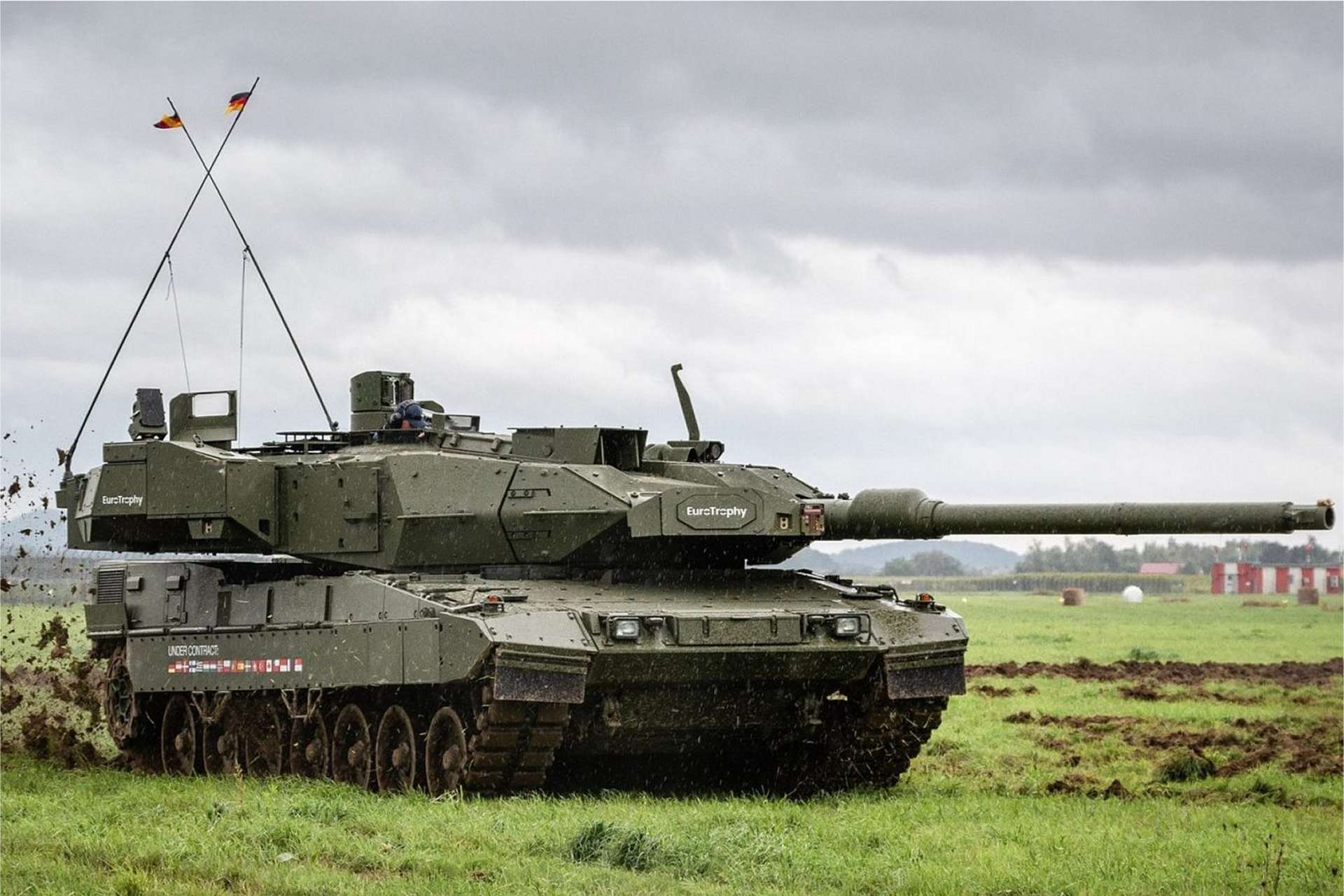
According to an article from the German newspaper Hartpunkt dated April 30, 2024, approximately 35 additional Leopard 2A8 battle tanks are expected to be acquired initially as part of the existing contract with KNDS Deutschland. This acquisition is intended to serve as a "support pillar" in the short term for the transitional solution, which can only be fully implemented in the medium term. The cost of acquiring these approximately 35 battle tanks is expected to be around one billion euros. If the acquisition contract is signed in 2024, the tanks could be operational as early as 2026 according to statements from Defense Minister Boris Pistorius and KNDS CEO Ralf Ketzel. It takes about two years to produce a new Leopard 2 battle tank.
Follow Army Recognition on Google News at this link
The Bundeswehr plans to acquire additional Leopard 2A8 Main Battle Tank ( Picture Source: Open Source Information)
While the introduction of the future Main Ground Combat System (MGCS) into the German tank force will take another 20 to 25 years, the Franco-German development project is still in its conceptual infancy after several years of delay. To meet the needs of the armed forces for high-performance battle tanks in the interim, the Bundeswehr plans to acquire additional Leopard 2A8 tanks as well as a yet-to-be-defined battle tank as a temporary solution until the combat vehicles from the MGCS project become operational.
The Bundeswehr plans to fully equip the tank battalion stationed in Lithuania with the most modern type of tanks. With the 18 Leopard 2A8s already ordered to replace the Bundeswehr's battle tanks given to Ukraine, the task force would have a total of approximately 53 of these systems. It takes 44 battle tanks to fully equip a tank battalion.
However, it remains to be seen if this marks the end of the acquisition of Leopard 2A8s for the Bundeswehr. The Dutch Ministry of Defense confirmed in February 2024 considerations for the establishment of an autonomous tank unit. If implemented, this plan could also increase Bundeswehr's needs, as the Netherlands plans to train their tank unit with a German tank company equipped with Leopard 2A8s. This could result in an additional need for 14 battle tanks of this type.
From the 2030s onward, a more modern system will need to be introduced, adapted to current threats, and offering additional capabilities compared to the A8. This battle tank is expected to serve as a transitional solution until the introduction of the MGCS and is expected to have a service life of about 25 years.
Details of this new battle tank apparently will not be defined until 2026, when the results of various studies on mobility, protection, and effectiveness are available. These studies are currently being prepared. It is expected that they will include a 130mm cannon, a high-performance new powertrain, improved instrumentation, and enhanced protection systems.
As for the Leopard 2A8, it is a main battle tank designed and manufactured in Germany, widely used by Germany and the Czech Republic. It is equipped with a smoothbore 120mm cannon with a length of 55 calibers, providing impressive firepower. In addition to its main cannon, it is armed with a coaxial 7.62mm machine gun for close defense and a Trophy APS countermeasure launcher for protection against threats such as guided anti-tank missiles and rocket-propelled grenades.
Its design incorporates a new generation of active and passive armor protecting against modern threats such as guided anti-tank missiles (ATGMs) and rocket-propelled grenades (RPGs). This enhanced armor ensures overall protection of the vehicle and its crew.
In terms of performance, the Leopard 2A8 is a rugged and fast tank. With a weight ranging from 65,000 to 67,000 kg, it can reach an impressive speed of 70 km/h on roads, providing great battlefield mobility. It also has an operational range of 450 km, allowing it to conduct operations over long distances without frequent refueling.
Its combat equipment includes a collective NBC (Nuclear, Radiological, Biological, Chemical) system for protection against CBRN threats, as well as various comfort and safety systems for the crew. This includes preheating of the powertrain, crew compartment heating system, fire suppression system, electric bilge pumps, thermal imaging system, auxiliary power unit, crew compartment cooling system, and panoramic sight for the commander.
With a crew of four, the Leopard 2A8 has imposing dimensions with a length of 7.7 meters, a width of 4.0 meters, and a height of 3.0 meters. These generous dimensions allow for comfortable accommodation of the crew and housing of its sophisticated equipment and combat systems.
However, it is not yet clear how many of these "transitional tanks" need to be acquired. This will depend on the models of Leopard 2s that need to be replaced by the new battle tank. It may be necessary to acquire between 90 and 300, depending on whether it is only older models below the A7 standard or also more modern systems.
Read more: Germany Could Acquire 35 Additional Leopard 2A8 Tanks While Waiting for MGCS

- Details
- Written by: V.Saint
- Category: 2024
- Hits: 3413
Breaking news
The Common Armored Vehicle System (CAVS) program began in 2019 and involves Finland, Estonia, Latvia, and Sweden. Germany has now joined the research and development (R&D) phase.
Follow Army Recognition on Google News at this link
Patria 6x6 Presentation by Patria (Picture source: Patria)
Support and commitments continue for Ukraine Support and commitments continue for Ukraine Oshkosh unveils the improved MTVR as a 4x4 variant Oshkosh unveils the improved MTVR as a 4x4 variant The Franco-German project for a new generation tank progresses The Franco-German project for a new generation tank progresses
Germany has joined the R&D phase of the multinational CAVS Patria 6x6 AFV alongside existing participant countries, Finland, Latvia, Estonia, and Sweden.
Under the terms of the agreement, Germany will have access to the results of product development packages created under the program and will be able to co-define the requirements for future mission variants.
As part of the CAVS program, the development of the 6x6 armored vehicle system was led by Patria with the intention that a large majority of vehicle supply would be made using the local industrial capacities of the member countries.
Germany will bring substantial industrial capacity to the program via Rheinmetall and Krauss-Maffei Wegmann.
Shephard Defence Insight estimated that Germany would seek to procure about 350 units based on required force levels and the German stock of APCs that will soon be decommissioned.
Based on the proposed configuration, it is likely that the CAVS program will target the German fleet of wheeled armored vehicles, particularly the TPz1 Fuchs variants.
Germany has about 940 units of these vehicles which are expected to be retired from service by 2025, but the German government has already acquired 400 Boxer APCs to modernize its wheeled APC inventory.
Earlier this week, Patria unveiled plans to upgrade vehicles as part of a move towards standard production vehicles, while Finnish Defence Minister Antti Häkkänen also authorized the start of vehicle procurement from Patria.
Read more: Germany joins CAVS program alongside northern european countries

- Details
- Written by: Jérôme Brahy
- Category: 2024
- Hits: 28594
Breaking news
As reported by ES&T on May 2, 2024, the Bundeswehr received its first Boxer sWaTrgInf Heavy Weapons Carrier 8x8 vehicle from Rheinmetall Landsysteme, just three weeks after the contract was signed. This marks the beginning of a thorough integrated verification test phase scheduled over the coming months to evaluate the vehicle's performance against the Bundeswehr's Customer Product Management (CPM) standards.
Follow Army Recognition on Google News at this link
This new vehicle, armed with a 30mm automatic cannon and MELLS anti-tank guided missiles, is intended to replace the older Wiesel 1, an airborne tracked armored vehicle equipped with either a 20mm automatic cannon or anti-tank guided missile system. (Picture source: Gerhard Heiming)
The testing phase involves a comprehensive assessment of the vehicle's performance, operational parameters, and functional limits, leading to an operational test. This process is a collaborative effort involving the Federal Office for Equipment, Information Technology and Use of the Bundeswehr (BAAINBw), future troop users, and industry representatives to swiftly identify and address any potential deficiencies. The results from this verification phase are crucial for obtaining authorization for operational deployment among the troops.
Lieutenant General Alfons Mais, the Army Inspector, highlighted the sWaTrgInf as a significant development for the German army's intermediate forces, as this new vehicle, armed with a 30mm automatic cannon and MELLS anti-tank guided missile system is intended to replace the older Wiesel 1, an airborne tracked armored vehicle equipped with either a 20mm automatic cannon or anti-tank guided missile system. The Wiesel 1, developed by Rheinmetall for the German Army, has served as a light armored fighting vehicle since the late 1980s, initially designed for air-transportable support in airborne operations. Over time, it underwent various adaptations to fulfill different battlefield roles, including configurations armed with a 20 mm automatic cannon and TOW anti-tank missile system.
As reported on April 10, 2024, the procurement of these vehicles is supported by a contract signed between Germany and Australia, with the Australian Department of Defense as the main contractor and Rheinmetall Defense Australia (RDA) as a subcontractor. This contract, valued at €2.7 billion, encompasses the procurement of 123 Boxer Heavy Weapon Carrier vehicles, making Australia the largest military export to Germany to date. In Australia, Rheinmetall has become a leading supplier of military vehicles, with a history of successful deliveries to the Australian Defence Force, including the Boxer vehicles and support for the HX fleet.
The introduction of intermediate forces in the Bundeswehr's strategy aims to bridge the gap between light paratrooper troops and heavy armored units, offering a combination of speed and substantial firepower to swiftly respond to threats while maintaining battlefield resilience. Therefore, the new sWaTrgInf heavy weapon carrier vehicle embodies this new doctrine by providing a platform that balances mobility with high-impact weaponry. The first batch of 19 vehicles is expected to be delivered by the end of 2025, with production ramping up to 25 vehicles per year starting in 2026 at Rheinmetall Defense Australia (RDA)’s facilities, culminating in the delivery of the last vehicle in January 2030.
The sWaTrgInf, or Schwerer Waffenträger Infanterie, is a unique addition to the Bundeswehr's Boxer vehicle family, procured outside the European OCCAR and the Boxer joint venture ARTEC due to its association with the Australian Boxer CRV program. Based on the Boxer Combat Reconnaissance Vehicle (CRV), co-developed by Rheinmetall and the Australian armed forces, the sWaTrgInf heavy weapon carrier is armed with the Rheinmetall MK30-2 ABM automatic cannon, also used by the German Puma infantry fighting vehicle. Renowned for its high rate of fire and advanced ammunition technology, this cannon offers reliability and versatility against various threats at distances of up to 3,000 meters.
Complementing the cannon and the 7.62 mm turret machine gun, the MELLS anti-tank guided missile system is supplied by Rheinmetall in collaboration with Eurospike, a joint venture comprising Diehl Defence and Rafael. The MELLS can engage armored targets at distances of up to 4,000 meters. The Boxer's driving module has been specially adapted to enhance its carrying capacity to 38.5 tons by reinforcing axles and wheels capable of higher load capacities, while the engine remains the same, an MTU 8V199 TE20 diesel engine generating 720 hp and 2,699 Nm of torque.
Read more: German Army receives first Boxer Heavy Weapon Carrier 8x8 vehicle from Rheinmetall

- Details
- Written by: Vandenbosch
- Category: 2024
- Hits: 3989
Breaking news
Sig Sauer, a Swiss company, announced the addition of a new upper assembly for the SIG MCX platform to its catalog on May 1, 2024. This new iteration retains the characteristics of its predecessor but introduces enhancements that redefine its utility and performance in the field.
Follow Army Recognition on Google News at this link
The MCX-RATTLER LT is a new upper assembly for the SIG MCX platform. (Picture source: Sig Sauer)
Constructed with a 6.75-inch cold-forged barrel, the MCX-RATTLER LT is designed to integrate with any M4 or AR15 spec lower assembly seamlessly. This compatibility highlights its versatile design, allowing various stocks and braces to be used thanks to a receiver extension delete stock adapter that employs a 1913 vertical rail system. Moreover, its dual rod recoil assembly replaces the traditional buffer system found in standard rifles, enhancing its structural integrity and operational smoothness.
The upper assembly is distinguished by an adjustable gas system optimized for suppressors, offering flexibility and improved performance when the MCX-RATTLER LT is used with different suppressor models. The quick-change barrel design facilitates easy swapping of calibers and barrel lengths and enhances the rifle's adaptability in various operational scenarios.
A notable feature of this assembly is the integration of the QD Clutchlok Muzzle Device, compatible with the next-generation suppressor systems, SLX and SLH. This feature ensures rapid attachment and detachment, optimizing the firearm for tactical efficiency and stealth. The gas piston design of the MCX-RATTLER LT minimizes carbon fouling on critical parts, thus significantly extending the life of the assembly—up to 20,000 rounds before any parts need replacement.
Ergonomics and ease of use have not been overlooked. The MCX-RATTLER LT includes an ambidextrous charging handle with a gas deflector, enhancing its utility for right- and left-handed shooters. The tapered bolt design is engineered for reliability, surpassing traditional square lug M4 bolt designs in longevity and functionality.
Available for purchase at $1,799.99, the MCX-RATTLER LT upper assembly comes with a complete set of features, including a removable three-prong flash hider ready for suppressor attachment, further demonstrating its readiness to meet the demanding standards of modern tactical environments. It is available with free shipping in the contiguous 48 states for orders over $100, making it an accessible option for enthusiasts and professionals alike looking to upgrade or build their customized firearm setup.
With its enhanced features and compatibility with a range of MCX-SPEAR LT parts, the MCX-RATTLER LT represents an exciting addition to Sig Sauer's catalog.
Read more: Sig Sauer Swiss Company Unveils New Kit for the SIG MCX Platform
- Details
- Written by: Halna du Fretay
- Category: 2024
- Hits: 7117
Breaking news
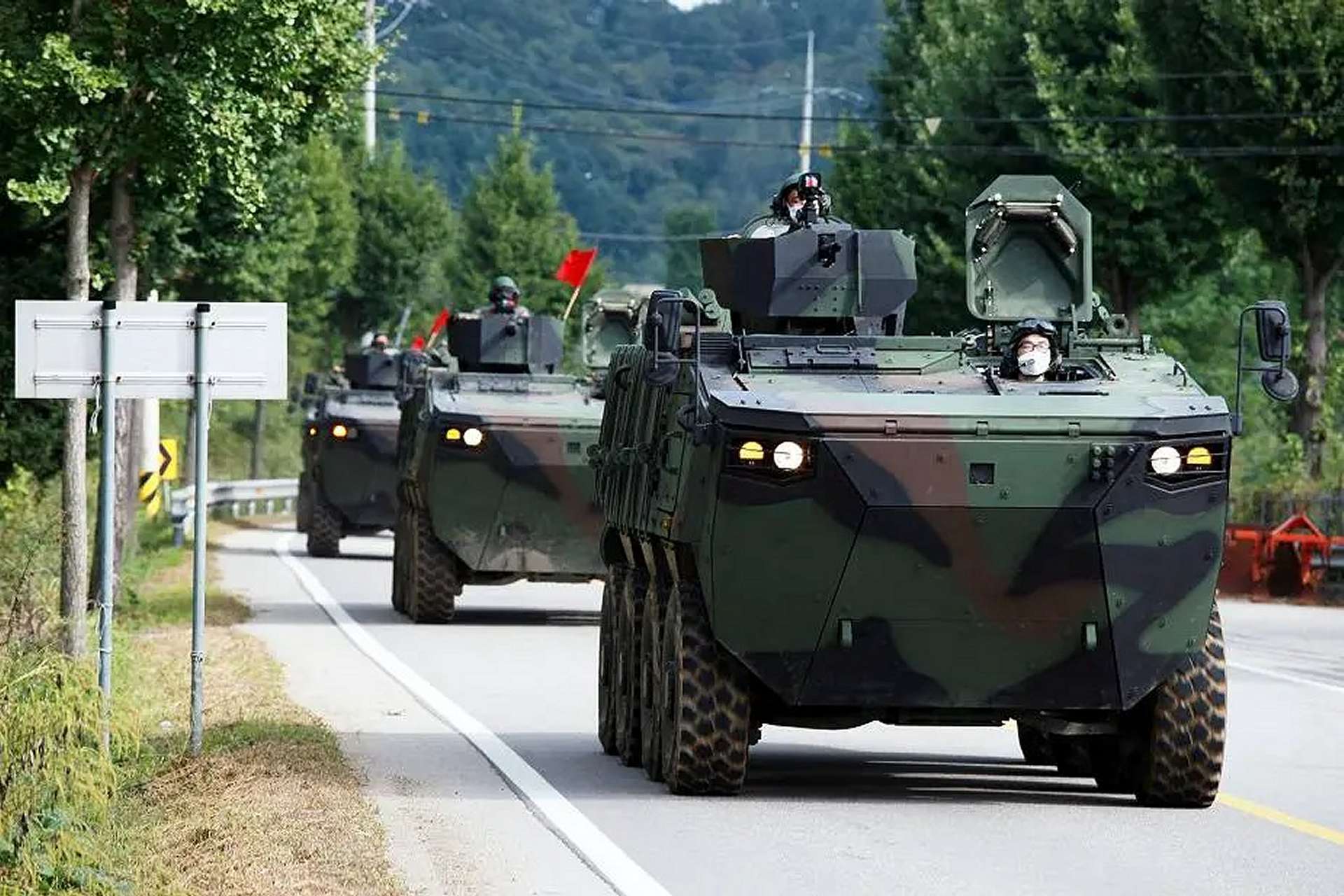
According to the Korean Economic Daily, Hyundai Rotem Co., a South Korean manufacturer of defense equipment and locomotives, has reached a significant milestone in exporting its K808 8X8 APC vehicles, the primary maneuver system of the Korean Army, for the first time. On May 2, 2025, Fábrica de Armas y Municiones del Ejército (FAME SAC), a Peruvian state-owned company manufacturing weapons and ammunition under the country's Ministry of Defense, selected the STX Corp.-Hyundai Rotem consortium as the preferred bidder for a contract to supply wheeled armored vehicles to the Peruvian Army.
K808 8x8 armored personnel carrier of South Korean army during field exercise "Seven Stars" (Picture source: Republic of Korea Armed Forces)
Once Hyundai Rotem signs a binding contract with FAME later this month, the Korean company will export an initial batch of 30 units of its K808 wheeled armored vehicles, worth about $60 million, to Peru and then up to 120 units later. This would mark Hyundai Rotem’s first overseas exports of its wheeled armored vehicles, as well as Korea’s first armored vehicle sales to Latin America.
The Korean weapon system maker expects the contract would pave the way for more similar deals from the region where demand for armored vehicles is on a rise in line with the growing terrorist attack risk and threat to public safety.
The K808 is an eight-wheeled infantry transport vehicle that replaces the K511A1, also known as the Army Truck, used by the Korean Army. Hyundai Rotem said its armored vehicles are fit for the rugged terrain and challenging paths of Peru, known as the Roof of South America. As the K808 is a wheeled armored vehicle, its eight wheels are independently driven and are suitable for climbing hills and traversing rough terrain. The K808 can traverse obstacles up to 40 centimeters high and navigate trenches up to 1.5 meters deep, with a water jet that enables it to cross easily shallow rivers, according to the company. Its tactical tires are equipped with an automatic air pressure adjustment device called CTIS.
The Korean Army announced a plan to acquire 600 armored vehicles 6×6 and 8×8. On May 9, 2016, the new armored vehicles, officially designated as the K808 and K806, successfully passed their final qualification tests, marking the beginning of serial production. A total of 600 vehicles are expected to be produced by 2023.
The design of the K808 consists of three main parts, with the driver located at the front left of the hull with the engine to its right. The commander's position is located behind that of the driver. The troop compartment is located at the rear and can accommodate up to 10 fully equipped soldiers. Troops enter and exit the vehicle via a rear automatic ramp. The roof of the hull is also equipped with four hatches. The APC version is equipped with an open-top turret armed with a 12.7mm heavy machine gun.
The hull of the K808 provides protection against small arms fire and artillery shell splinters. According to military sources, the front arc can withstand hits from 12.7mm armor-piercing projectiles. Optionally, the vehicle can be equipped with additional protection to increase the level of protection.
The K808 is powered by a Hyundai turbocharged diesel engine developing 420 horsepower, coupled with an automatic transmission offering 7 forward speeds and 1 reverse speed. It can reach a maximum road speed of 100 km/h with a maximum range of 800 km. The vehicle is fully amphibious thanks to the use of two waterjets mounted on the vehicle. In the water, the vehicle can reach a maximum speed of 8 km/h.
Each soldier of the K808 is seated on anti-mine blast seats, not fixed to the vehicle floor. The vehicle is equipped with a central tire inflation system and run-flat tires as well as a CBRN (Chemical, Biological, Radiological, and Nuclear) protection system.
In April of last year, the Peruvian Minister of Defense approved a related budget for the purchase of armored vehicles. Under the latest agreement, Hyundai Rotem also has the right to provide the Peruvian Army with other types of maneuver systems, ranging from four and six-wheeled armored vehicles to light and heavy tactical vehicles.
STX will be responsible for delivering the armored vehicles manufactured by Hyundai Rotem to Peru. With the latest agreement, Hyundai Rotem also hopes to accelerate its breakthrough in the overseas defense systems market.
In December 2022, it delivered 10 units of its K2 Black Panther, a next-generation combat tank, to Poland, as part of its $3.4 billion contract to export 180 K2 tanks to the country, Korea's first export of such combat tanks. Three months earlier, it also agreed on a strategic partnership with Kongsberg Defense & Aerospace AS, Norway's largest defense supplier, to jointly develop next-generation combat tanks.
In Peru, another Korean company won the largest defense contract for a Korean company in Latin America last month. HD Hyundai Heavy Industries secured a contract worth 600 billion won ($436 million) to build four warships for the Peruvian Navy in collaboration with the Peruvian state-owned shipyard SIMA Peru S.A.
Read more: South Korean Hyundai Rotem is ready to supply of K808 APC to Peru

- Details
- Written by: Halna du Fretay
- Category: 2024
- Hits: 2592
Breaking news
On May 1, 2024, Stars and Stripes reported that South Korean Defense Minister Shin Won-sik announced at a press conference that South Korea has initiated discussions to participate in the joint development of advanced military technologies under "Pillar 2" of the AUKUS defense pact, an agreement between the United States, the United Kingdom, and Australia. The foreign and defense ministers of South Korea and Australia met in Melbourne, Australia, for the sixth "two plus two" meeting of the defense and foreign ministers of the two countries.
South Korea KF-21 twin-seat fighter jet (Picture source: Army Recognition)
During the meeting, South Korean Defense Minister Shin Won-sik and Foreign Minister Cho Tae-yul discussed with Australian Foreign Minister Penny Wong and Deputy Prime Minister and Defense Minister Richard Marles. A joint statement adopted by the ministers indicated that the Republic of Korea "welcomed that the AUKUS countries are considering cooperation with additional partners on the advanced capability projects of Pillar II."
Richard Marles expressed optimism about the future of this technological collaboration. "We already work closely together in technology. Thus, as Pillar Two of AUKUS develops, I believe there will be opportunities in the future," he stated at a press conference immediately after the meeting.
AUKUS is divided into two main pillars: Pillar I, which involves providing nuclear submarine technology to Australia, and Pillar II, in which partner countries will work together on eight areas of development, including quantum technologies, undersea capabilities, hypersonic capabilities, artificial intelligence, and cyber capabilities.
Although AUKUS has indicated that it does not plan to share nuclear submarine technology with other countries, the group is considering adding Japan, Korea, Canada, and New Zealand as partners for Pillar II.
Korea's participation in AUKUS, even if it does not represent a direct channel of military exchange, would be significant as it would symbolize active participation in the security network that the United States is building. Previously, the United States adopted a hub-and-spoke strategy by forging bilateral alliances centered on the United States. More recently, they have built a security network of various "minilateral" partnerships, including the Quadrilateral Security Dialogue (between the United States, Japan, Australia, and India), AUKUS, trilateral cooperation with South Korea and Japan, and trilateral cooperation with Japan and the Philippines.
Nevertheless, for Korea, joining this US-led security structure ultimately means participating in the containment of China. Indeed, cross-strait relations were mentioned in the joint statement of Korea and Australia, which emphasized the importance of "preserving peace and stability across the Taiwan Strait as an indispensable element of security and prosperity in the region."
Experts say that even if Korea joins the US-led security arrangement, it will still need to manage relations with China. "AUKUS is at the heart of the network that the United States envisions, so I think that Korea joining that arrangement is a good plan in terms of national security. That said, we need to come up with logical arguments that the Chinese will find persuasive and hold strategic dialogue with them," said Lee Baek-soon, who formerly served as Korea’s ambassador to Australia.
While Australian Prime Minister Anthony Albanese clarified that adding new collaborators to Pillar 2 would not mean an expansion of the formal membership of AUKUS, the Chinese Ministry of Defense expressed its opposition to these extensions, considering them factors of regional destabilization.
China has criticized the formation of exclusive groups targeting the country, considering AUKUS as the beginning of an "Asian NATO" and a potential source of geopolitical confrontation. The Chinese Ministry of Defense has called for an Indo-Pacific region oriented towards peace and development, rather than geopolitical competition.
The United States is considering easing licensing requirements for the transfer of military equipment and sensitive technologies to AUKUS partners, although these regulations may pose additional challenges for South Korea and Japan in protecting their national and economic secrets. Formal consultations on the participation of South Korea, Japan, and other countries in Pillar II projects are expected to begin later this year, with a focus on technological innovation and its impact on regional peace and stability.
Read more: South Korea Eyes Role in AUKUS Advanced Military Tech Development

- Details
- Written by: Vandenbosch
- Category: 2024
- Hits: 8844
Breaking news
An encounter near the village of Solovyove in the Donetsk region witnessed a Ukrainian Infantry Fighting Vehicle (IFV) M2A2 Bradley facing off against a Russian MT-LB armored personnel carrier with decisive results. Armed with a 25mm cannon, the Bradley demonstrated its firepower by effectively targeting the Russian vehicle. Within a matter of seconds, the Russian vehicle sustained a barrage of hits from the US-origin vehicle and was rendered combat ineffective.
Follow Army Recognition on Google News at this link
Russian MT-LB Armored Personnel Carrier under the fire of a US Bradley M2A2 Infantry Fighting Vehicle. (Picture source: Open Source Information)
This isn't the first time the US M2A2 Bradley has distinguished itself in combat in Ukraine, but it's always impressive to see its effectiveness on the battlefield. Although the MT-LB vehicle is an APC and the Bradley an IFV, two types of vehicles with different roles within the armed forces, it's nonetheless impressive to see how easily the US vehicle neutralized the Russian MT-LB.
Since April 2023, the United States has delivered a total of 186 M2A2 ODS Bradley Infantry Fighting Vehicles to Ukraine. These deliveries are part of US military aid to Ukraine. The Bradley M2A2 is an Infantry Fighting Vehicle (IFV) used by several countries including the United States, Croatia, Greece, Lebanon, and of course, Ukraine. This vehicle is well-armed and armored, designed to provide effective protection while supporting troops with considerable firepower.
In terms of armament, the Bradley M2A2 is equipped with a 25mm M242 automatic cannon, capable of firing at a high rate, as demonstrated in this engagement, and a coaxial 7.62mm M240C machine gun for close engagements. It also features TOW launchers, which are anti-tank missile systems, as well as smoke grenade launchers to provide covering and distraction options in combat.
The Bradley's armor consists of spaced laminate armor, designed to withstand anti-armor projectiles such as RPGs and 30mm armor-piercing ammunition. This armor is also effective against 155mm artillery shell fragments, thus providing solid protection around the vehicle.
The Bradley M2A2 can carry a crew of three, in addition to accommodating up to six equipped soldiers, making it ideal for missions requiring both troop transport and direct engagement. The vehicle dimensions are 6.55 meters long, 3.28 meters wide, and 2.97 meters high, with a total weight of 27,000 kg.
In terms of operational capabilities, the Bradley can reach a maximum speed of 56 km/h and has a range of up to 400 km, allowing it to operate effectively over long distances. It is also equipped with NBC (nuclear, biological, and chemical) protection systems, thermal night vision, and automatic fire extinguishing systems.
The MT-LB, on the other hand, is a lightly armored personnel carrier originally designed by the Soviet Union, which continues to be used by a variety of countries worldwide, including Russia, Ukraine, and several nations in Europe and Asia. This vehicle is particularly valued for its versatility and ability to operate in various environments, from muddy terrain to paved roads.
Typically armed with a 7.62mm PKT machine gun or a heavier 12.7mm machine gun, the MT-LB is not primarily designed for direct combat but rather for safely transporting troops through combat zones. Its armor is relatively light, protecting small arms fire and shell fragments, with thickness ranging from 3 to 10 mm. This characteristic makes it more suitable for transport and support missions than for frontal offensives.
The MT-LB weighs approximately 11,900 kg and can transport a crew of two plus eleven soldiers, making it ideal for operations requiring the rapid movement of soldier groups. Its dimensions of 6.45 meters long, 2.86 meters wide, and 1.86 meters high allow it to maneuver easily, even in tight spaces or urban environments.
In terms of performance, the MT-LB can reach a maximum speed of 62 km/h thanks to its powerful engine, and it has an impressive range of up to 500 km, making it effective for extended missions without frequent refueling. The vehicle is also equipped with NBC protection systems to defend its occupants against nuclear, biological, or chemical threats, as well as night vision equipment and a white projector for night operations.
In a direct combat scenario, the American Bradley M2A2 outmatches the Russian MT-LB in terms of firepower, protection, technological capabilities, and tactical versatility, making it much more capable of engaging and destroying armored targets on the battlefield. What is striking here is not only the victory of the Bradley but also how easily it disposed of the Russian MT-LB.
The role of the Bradley on the battlefield, supported by its sophisticated targeting systems and durable design, has proven to be a crucial asset for Ukrainian forces as they navigate the complexities of the conflict in Eastern Ukraine.
Read more: Effectiveness of US Bradley IFV Confirmed in Ukraine Against Russian MT-LB APC

- Details
- Written by: Halna du Fretay
- Category: 2024
- Hits: 4092
Breaking news
The Main Intelligence Directorate of Ukraine's Ministry of Defense (GUR) on mai, 1st 2024, has provided detailed information regarding Russia's missile stocks, including the Zircon, Onyx, Caliber, and Kh-69 types. According to the data collected, by the end of April 2024, Russia would have numerous missiles ready for use, with significant production capacities for each type, allowing for continued future strikes.
In footage released by the Russian Defense Ministry in 2022, a Zircon hypersonic cruise missile is seen being launched by a Russian navy frigate from the Barents Sea.(Picture source: Russian MoD)
The Main Intelligence Directorate of Ukraine's Ministry of Defense GUR reported that the Russian arsenal includes approximately 40 3M22 Zircon hypersonic anti-ship missiles, with a production capacity reaching 10 units per month. Regarding the 3M55/3M55M "Onyx" and "Onyx-M" cruise missiles, Russia would possess 400 units, with a monthly production also estimated at 10 missiles. For the 3M-14 "Caliber" cruise missiles, Russian forces would have 270 units, with a monthly production rate of 30 to 40 missiles. Finally, for the Kh-69 guided air missiles, the stock would be 45 units, with production varying between 1 and 3 missiles per month.
Zircon missile, also known as the 3M22 Zircon, is a hypersonic anti-ship missile developed by Russia. Capable of traveling at speeds of Mach 8 to Mach 9, Zircon can cover distances up to 1000 kilometers. It is designed to evade radar detection and defense systems due to its high speed and maneuverability. The missile can be launched from naval vessels and submarines, making it a formidable tool for targeting enemy warships and land targets with precision, enhancing the strategic strike capabilities of the Russian military.
Onyx, also known under the export version name Yakhont, is a supersonic anti-ship cruise missile that has a maximum range of approximately 300 kilometers and can reach speeds up to Mach 2.5. The missile is designed to be launched from ship, submarine, air, and land platforms, offering flexibility in various military scenarios. The Onyx uses a combination of inertial guidance and active radar homing to approach its target, making it effective in penetrating defenses at high speeds and delivering powerful conventional warheads.
The Caliber missile, specifically the 3M-14 variant, is a long-range cruise missile that can travel up to 2,500 kilometers depending on the version. Designed for precision strike capabilities, it can be launched from surface ships, submarines, and possibly from land-based platforms. The Caliber is known for its versatility, being capable of targeting both land and maritime targets, which makes it a key component of Russia's strategic and tactical missile forces. It employs advanced guidance technology to maintain accuracy over long distances, even in electronically contested environments.
The Kh-69 missile is a newer type of guided air missile developed by Russia, primarily intended for precision strikes against ground targets. While specific details on its capabilities and range remain less publicized compared to other Russian missiles, it is designed to be launched from aircraft, adding to the flexibility of the Russian air forces in engaging diverse target sets with precision. The Kh-69 is part of a modern generation.
This information comes in a context of heightened tensions, marked by the intensive use of these arsenals in the ongoing conflict against Ukraine. The GUR specifically indicated that in a single night, on April 27, 2024, Russia launched a combined attack using various types of missiles, specifically targeting Ukraine from different regions. In total, 34 missiles were used during this attack, including Kh-101/Kh-555 launched from Tu-95 MS strategic bombers, Kh-59/Kh-69, S-300 guided anti-aircraft missiles, Iskander-K, Kinzhal Kh-47M2, and Kalibr cruise missiles.
The Ukrainian defense forces, mobilizing fighter aircraft, anti-aircraft missile units, and electronic warfare equipment, successfully repelled this massive air offensive. Lieutenant General Mykola Oleschuk, commander of the Ukrainian Armed Forces' Air Force, confirmed that 21 aerial targets were destroyed during these engagements, including 6 Kh-101/Kh-555 cruise missiles, 8 Kh-59/Kh-69 guided air missiles, one Iskander-K cruise missile, and 6 Kalibr cruise missiles.
Furthermore, Lieutenant General Kyrylo Budanov, head of the GUR, emphasized that despite the recent reduced use of "Caliber" missiles compared to the Kh-101, these are still stockpiled in large quantities and ready to be used. This indicates a strategy of conserving "Caliber" missiles, considered less effective than the Kh-101, for potential future uses.
Read more: Ukraine's Intelligence Details Russian Missile Arsenal Amid Escalating Conflict