

- Details
- Written by: Jérôme Brahy
- Category: 2024
- Hits: 6843










According to a report by TacticalReport on August 19, 2024, the United Arab Emirates (UAE) is currently evaluating the possibility of submitting a Foreign Military Sales (FMS) request to the United States for the procurement of the Lockheed Martin Mako multi-mission hypersonic missile. The discussions regarding this potential acquisition highlight the UAE's ongoing efforts to enhance its defense capabilities in a region characterized by geopolitical tensions, particularly in relation to Iran.
Follow Army Recognition on Google News at this link
The missile's design allows it to reach speeds exceeding Mach 5, with a tactical application where stealth fighters can operate as forward observers and relay target data to fourth-generation aircraft for engagement, potentially enhancing the operational roles of both newer and older aircraft. (Picture source: Lockheed Martin)
The status of these talks suggests that the UAE is in the preliminary stages of considering an FMS request, with certain prerequisites needing to be addressed before any formal submission. A key factor in this process is the stance of the Pentagon, whose approval is essential given the advanced nature of the hypersonic missile technology involved. The decision by the Pentagon will likely involve careful consideration of the strategic implications of transferring such technology to the UAE, even though the UAE is a longstanding partner of the United States.
The UAE’s interest in the Mako hypersonic missile is consistent with its broader strategy of maintaining technological capabilities that are considered essential for the protection of its critical infrastructure against emerging threats. Additionally, this interest aligns with the UAE's objectives of developing a more self-sufficient defense industry. The potential acquisition could play a role in furthering advancements in domestic military production, building on existing collaborations with international defense firms like MBDA, which have already contributed to the development of advanced weapons systems within the UAE.
Moreover, the pursuit of the Mako missile by the UAE reflects its approach to diversifying its defense partnerships. While the UAE continues to maintain strong ties with the United States, it is also exploring relationships with other global powers as part of a broader strategy to ensure access to advanced military technologies. This diversification of partnerships could enhance the UAE’s ability to navigate the complex regional environment and protect its national interests.
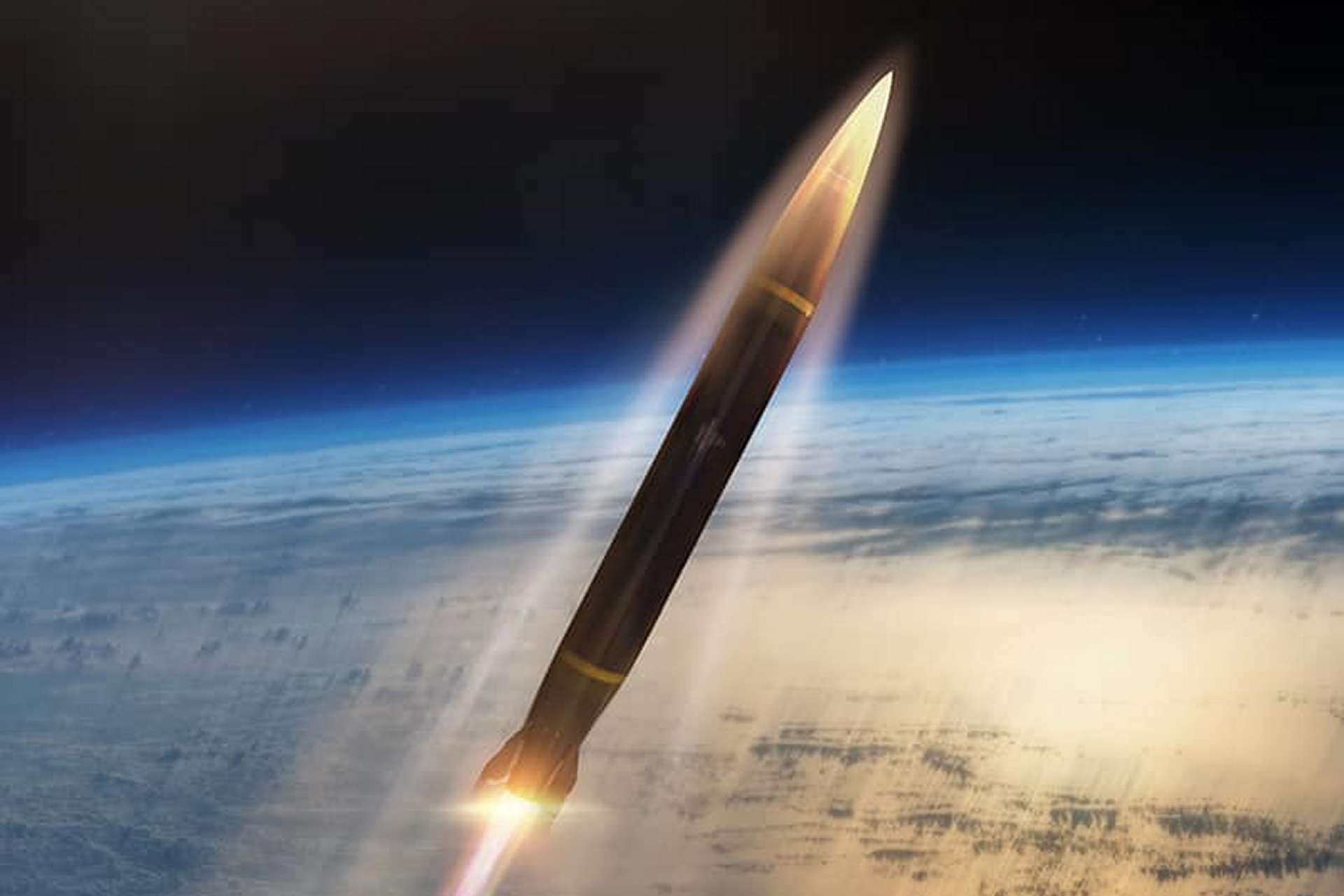
Developed under the U.S. Air Force's Stand-In Attack Weapon (SiAW) program, the Malo missile aims to address strategic challenges such as China's anti-access/area denial (A2/AD) capabilities in the Pacific. (Picture source: Lockheed Martin)
Historically, the UAE has engaged in numerous FMS agreements with the United States, with total sales exceeding $29 billion over the past decade. These acquisitions have included major defense systems such as the THAAD missile defense system, Patriot missile systems, F-16 Desert Falcon fighters, Apache helicopters, and various precision-guided munitions including JDAMs, AIM-9X-2 Sidewinder Block II missiles, and the Advanced Precision Kill Weapon System (APKWS). These purchases reflect the UAE's focus on improving its air defense and strike capabilities in response to regional security concerns.
In recent years, the UAE has been navigating a complex geopolitical landscape, characterized by shifting alliances and regional tensions. The country has placed increasing emphasis on diplomatic and economic engagements, notably through deepening ties with Israel via the Abraham Accords. This move is part of a strategic effort to counter Iranian influence in the region and reflects a broader trend among Gulf states to diversify their alliances and reduce reliance on any single global power.
Despite these diplomatic efforts, the UAE continues to face significant security challenges, particularly in relation to its involvement in Yemen and the associated threat from Iranian-backed Houthi forces. The country has been targeted by attacks, raising concerns about the potential impact on its stability and its role as a regional economic hub. Nonetheless, the UAE maintains diplomatic channels with Iran, suggesting a preference for managing conflicts through dialogue rather than through military means.

Named after the fastest shark in the sea, the Mako hypersonic missile weighs 590 kilograms, measures 4 meters in length, and has a diameter of 33 centimeters. (Picture source: Lockheed Martin)
On the international stage, the UAE is balancing its relationships with major powers, including the United States and China. While it remains a key ally of the U.S., particularly in defense matters, the UAE is also expanding its economic ties with China. This approach reflects the UAE’s strategy to navigate the evolving global geopolitical landscape, ensuring that its security and economic interests are preserved in a context of increasing multipolarity.
Lockheed Martin's Mako hypersonic missile is a new air-launched weapon designed for compatibility with various U.S. military aircraft, including the F-35 and F-22 stealth fighters. Developed under the U.S. Air Force's Stand-In Attack Weapon (SiAW) program, the missile aims to address strategic challenges such as China's anti-access/area denial (A2/AD) capabilities in the Pacific. The Mako has been tested for both internal and external carriage on a wide range of platforms, making it adaptable across multiple aircraft types.

The Mako missile's modular design supports the rapid integration of mission-specific elements like warheads and seekers, embracing the concept of open system architecture, but applied to hypersonic missiles. (Picture source: Lockheed Martin)
The missile's design allows it to reach speeds exceeding Mach 5, with a tactical application where stealth fighters can operate as forward observers and relay target data to fourth-generation aircraft for engagement. This approach could enhance the operational roles of both newer and older aircraft within the U.S. military. Although the Department of Defense has not committed to full-scale production, the Mako missile has been included in the U.S. Navy's Other Transaction Authority (OTA), indicating potential future funding.
The Mako missile features a modular design, supporting the integration of mission-specific components, and aligns with the broader trend towards open system architecture in military technology. This design approach allows for easier and potentially cost-effective upgrades over the missile's lifecycle. Additionally, Lockheed Martin has expressed interest in international collaboration, particularly under the AUKUS agreement, which could involve the UK and Australia in future development and production efforts.

The Mako hypersonic missile has been tested for external carriage on various aircraft including the F-15E, F-16C, F-35 Lightning II in A and C variants, F-A/18 Super Hornet, and F-22 Raptor. (Picture source: Lockheed Martin)
Read more: Is UAE preparing to buy Lockheed Martin's new Mako hypersonic missile?

- Details
- Written by: V.Saint
- Category: 2024
- Hits: 3408
On 20 August 2024 Pakistan achievedtest the successful training launch of the Shaheen-II surface-to-surface ballistic missile. This event marks a critical step in enhancing the country’s nuclear capacities during momeent of tension with india and west border with Taliban forces, clashes are ongoing since several weeks.
Follow Army Recognition on Google News at this link
Image of Shaheen 2 live test on Tuesday, August 20 TH (Picture source: Government news agency)
The training launch aimed to provide the troops with hands-on experience while validating various technical parameters of the missile. The exercise also served as a performance evaluation of different sub-systems that have been integrated into the missile for improved accuracy and survivability.
Senior officers from the Strategic Plans Division, Army Strategic Forces Command, along with scientists and engineers from strategic organizations, witnessed the launch. Their presence underscored the importance of this achievement in bolstering Pakistan’s defense capabilities.
The Director General of the Strategic Plans Division commended the technical expertise, dedication, and commitment of the scientists and engineers who played a pivotal role in making this launch a success. He emphasized that such achievements are crucial for maintaining a credible minimum deterrence posture.
Following the successful launch, the President and Prime Minister of Pakistan, along with the Chairman Joint Chiefs of Staff Committee and the Services Chiefs, extended their heartfelt congratulations to the entire team of scientists and engineers involved in the project. They acknowledged the team's relentless efforts in advancing Pakistan's defense capabilities and reaffirmed their commitment to ensuring the nation’s security.
The Shaheen-II missile, known for its high accuracy and robust design, is a key component of Pakistan’s strategic arsenal. With a range capable of covering significant portions of the region, its successful testing underscores Pakistan's continued focus on strengthening its defensive deterrence.
The Shaheen missile family is a series of ballistic missiles developed by Pakistan to enhance its strategic deterrence capability. This family includes several versions, each with distinct capabilities in terms of range and precision. The Shaheen-I, also known as Hatf-IV, is a short-range ballistic missile (SRBM) capable of striking targets up to 750 km away. Powered by a solid-fuel engine, it can carry conventional or nuclear warheads with high precision. The Shaheen-II is an improved version with a medium range (approximately 1,500 to 2,000 km), allowing it to cover a larger part of the region. Designed for better accuracy and enhanced survivability against enemy threats, it is a key element of Pakistan's deterrence posture. The latest in the series, the Shaheen-III, is a long-range ballistic missile capable of reaching targets over 2,750 km away. It was designed to ensure complete regional coverage, including remote areas.
Video
Read more: Video : Pakistan Successfully Conducts Training Launch of Shaheen-II Ballistic Missile
- Details
- Written by: Vandenbosch
- Category: 2024
- Hits: 6455
The Swedish Defence Materiel Administration (FMV) has received the first batch of GTP-type vehicles from Finnish manufacturer Sisu Oy. These vehicles, which will be designated as TGB24 in Sweden, are part of a broader procurement effort aimed at enhancing the mobility and protection of the Swedish Armed Forces.
Follow Army Recognition on Google News at this link
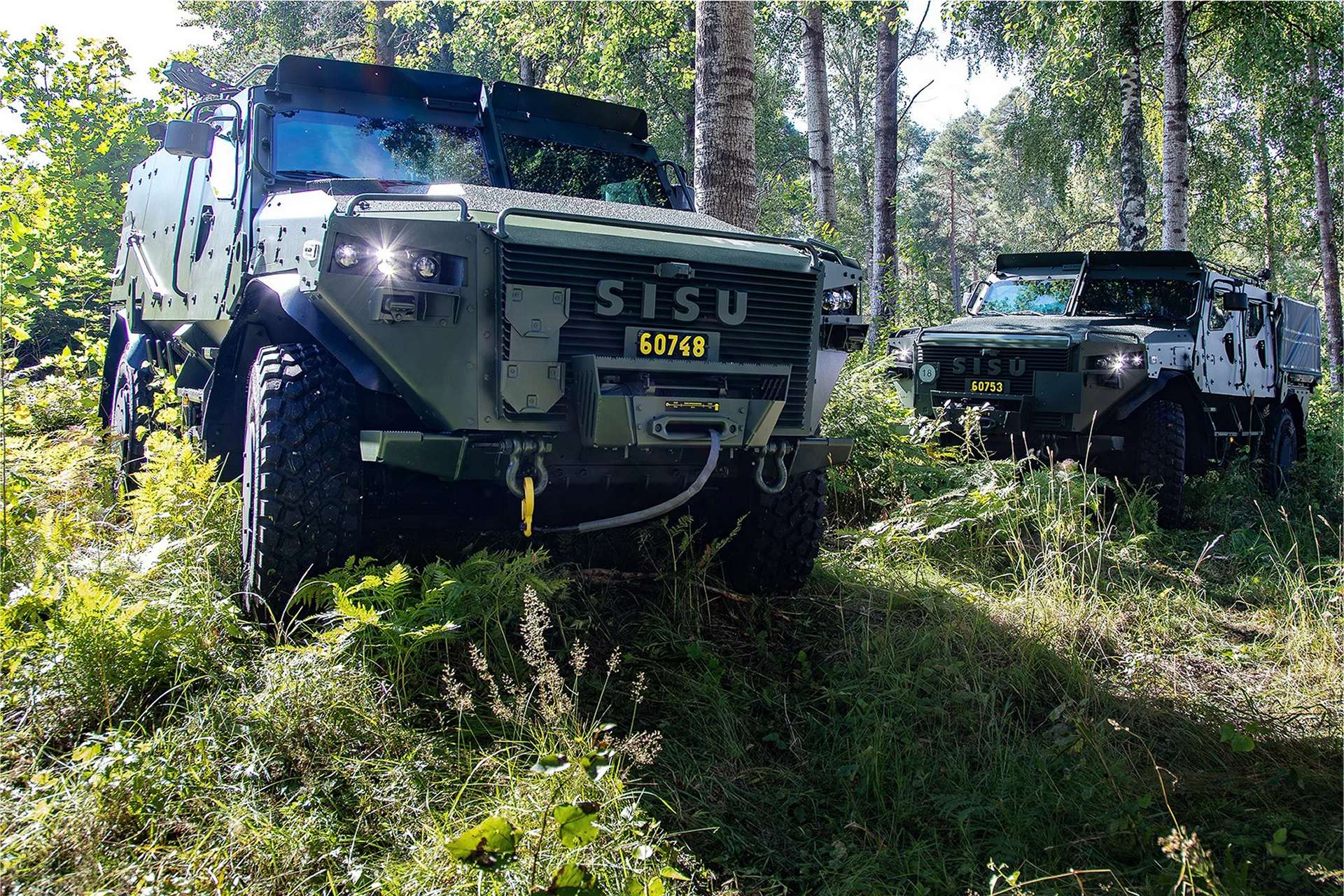
The Sisu GTP is a Finnish armored vehicle. (Picture source: Sisu Auto)
The GTP vehicles come in two main variants: a troop transport version, also known as an Armored Personnel Carrier (APC), which can accommodate up to ten soldiers, and a double-cab version with a flatbed and canopy, offering space for five people. These versatile vehicles are designed with a modular approach, allowing different configurations to meet various operational needs.
According to Henrik Sundberg, FMV's project manager, the GTP vehicles are ballistically protected, four-wheel-drive machines weighing 16.5 tons. Their modular design is reminiscent of the SEP (Splinter-Protected Unit Platform) vehicle concept, allowing for quick adaptation by changing modules.
Starting this fall, FMV will begin delivering the TGB24 vehicles to the Swedish Armed Forces. Before that, verification processes are underway, and in November, FMV plans to conduct user and technician training, focusing on ground-based command support systems for Armed Forces personnel.
The acquisition of these vehicles is part of a joint framework agreement between Sweden and Finland. This collaboration is based on the principle of joint security of supply and the possibility of sharing manufacturing and operational capabilities. Micael Ågren Berner, head of the wheeled vehicles department at FMV, emphasized that this agreement has allowed both nations to reduce development costs and unit prices through combined orders.
Berner praised the swift and efficient cooperation between FMV, the Swedish Armed Forces, and Sisu Oy, highlighting it as a successful example of Swedish-Finnish defense cooperation, known as FISE. This close collaboration enabled the rapid processing and delivery of the vehicles.

The Swedish Defence Materiel Administration (FMV) has received the first batch of GTP-type vehicles from Finnish manufacturer Sisu Oy. (Picture source: Sisu Auto)
The Sisu GTP is an armored vehicle designed to withstand threats in hostile environments, including improvised explosive devices (IEDs) and ambushes, classifying it as an MRAP (Mine-Resistant Ambush Protected) vehicle. Manufactured in Finland by Sisu Auto in 2018, this vehicle combines robustness, mobility, and protection.
Weighing 16.5 tons, the Sisu GTP is imposing, measuring 6 meters in length, 2.5 meters in width, and 2.55 meters in height. Its design allows for the transport of a two-person crew in its utility version, but it can also accommodate up to 10 people in its troop transport version. This vehicle is equipped with armor that meets STANAG 4569 Level 1 standards, protecting against light ballistic threats and shell fragments.
The GTP is powered by a Mercedes-Benz OM926 six-cylinder diesel engine, delivering 308 horsepower. This gives it a power-to-weight ratio of 22 horsepower per ton, allowing it to reach a top speed of 110 km/h on roads. Thanks to its independent suspension and lockable differentials, the vehicle is capable of traversing difficult terrains while maintaining stability. Its range exceeds 700 kilometers, making it a reliable vehicle for extended missions.
In addition to its land capabilities, the Sisu GTP can also operate in water at a maximum speed of 12 km/h, further enhancing its operational versatility. This vehicle represents a modern and adaptable solution for armed forces, offering a combination of protection, mobility, and power for operations in complex and dangerous environments.
In total, Sweden and Finland have ordered more than 260 GTP vehicles. The fleet will include various specialized variants, such as single-cab vehicles, anti-aircraft platforms, control vehicles, medical care units, and reconnaissance vehicles, all designed to meet the diverse needs of their respective Armed Forces.

The acquisition of these vehicles is part of a joint framework agreement between Sweden and Finland. (Picture source: Sisu Auto)
Read more: Sweden Receives New GTP Troop Transport Vehicles from Finland
- Details
- Written by: Administrator
- Category: 2024
- Hits: 4349
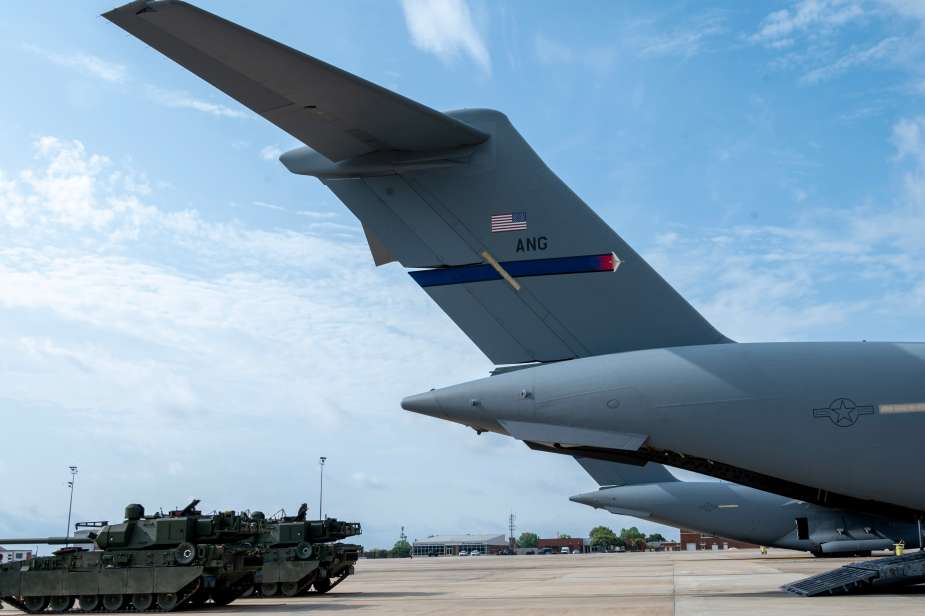
According to pictures released by the U.S. Department of Defense on August 3, 2024, the U.S. Army has conducted tests on the lift capabilities of the M10 Booker light tank, confirming that two of these tanks can be simultaneously transported by a C-17 Globemaster III military transport aircraft. This test highlights the M10 Booker’s design, optimized for rapid deployment, allowing it to be efficiently moved in pairs via air transport, enhancing the U.S. Army's ability to project armored power across the globe quickly.
Follow Army Recognition on Google News at this link
U.S. soldiers of the North Carolina Air National Guard assess an Army M10 Booker Combat Vehicle before it is loaded onto a C-17 Globemaster III aircraft, at the North Carolina Air National Guard base, Charlotte-International Airport, August 3, 2024. (Picture source: U.S. DoD)
The C-17 Globemaster III, a critical component of the U.S. Air Force's strategic and tactical airlift capabilities, was demonstrated to transport the M10 Booker, a newly developed light tank designed for rapid deployment and versatility on the modern battlefield. The test underscored the C-17's role in enhancing the mobility and rapid deployment of armored units, a key aspect of the U.S. military's operational strategy.
The C-17 Globemaster III is an exceptionally versatile military transport aircraft capable of carrying up to approximately 78,000 kg (170,900 pounds) of cargo. This lets it transport heavy equipment, including two M10 Booker light tanks, in a single flight. The aircraft's robust lift capacity and ability to load and unload large vehicles rapidly enhance the U.S. military's strategic mobility. This capability is crucial for swiftly and efficiently deploying armored forces to various global locations, ensuring the military can respond quickly to emerging threats or operational needs.
The M10 Booker offers advanced armor and firepower, it as recently delivered to the U.S. Army's. The M10 Booker is designed as a mobile fire support vehicle to provide direct fire capabilities to infantry units rather than functioning as a traditional light tank. Its role focuses on delivering precise, high-impact firepower to support ground troops during offensive and defensive operations.
Equipped with advanced targeting systems and powerful armament, the M10 Booker can engage enemy positions, fortified structures, and other battlefield threats with accuracy and speed. This capability allows it to enhance the effectiveness of infantry units by providing them with the necessary firepower to overcome obstacles and maintain momentum in various combat scenarios. The ability to airlift two of these tanks in a single C-17 aircraft significantly boosts the U.S. Army's capacity to project power quickly and efficiently across the globe.
This capability is crucial for responding to various global threats, allowing for rapid deployment of armored forces to conflict zones or areas requiring military support. The test reflects ongoing efforts by the U.S. military to ensure that its forces remain highly mobile and capable of responding swiftly to any emerging threats.
As global tensions continue to shift, the ability to transport armored units like the M10 Booker rapidly and in significant numbers will likely play a pivotal role in maintaining U.S. military superiority and ensuring preparedness in a rapidly changing global security environment.
The M10 Booker light tank weighs approximately 42 tons, significantly lighter than the M1 Abrams, which weighs around 70 tons. This substantial difference in weight—28 tons—gives the M10 Booker a considerable advantage in terms of rapid deployment. The lighter weight allows for more efficient air transport, enabling two M10 Bookers to be carried simultaneously in a C-17 Globemaster III. In contrast, the M1 Abrams' heavier weight limits the number of tanks that can be transported at once and requires more specialized logistics.
This weight difference facilitates quicker and more flexible deployments and makes the M10 Booker more adaptable to various operational environments, including areas with limited infrastructure where moving the heavier M1 Abrams would be more challenging. Thus, the M10 Booker’s reduced weight compared to the M1 Abrams enhances the U.S. Army's ability to respond swiftly to a range of global military needs.
Read more: US Army tests dual air transport of M10 Booker light tanks using C-17 aircraft

- Details
- Written by: Triffaux
- Category: 2024
- Hits: 3059
On August 19, 2024, the State Department approved a possible Foreign Military Sale to the Government of Australia for FGM-148F Javelin Missiles and related equipment at an estimated cost of $100 million. The Defense Security Cooperation Agency has issued the required certification notifying Congress of this potential sale.
Australian FGM-148F Javelin Anti-Tank Missile (Picture source: Australia MoD)
The Australian Government has requested to purchase three hundred fifty (350) Javelin FGM-148F missiles (including four (4) fly-to-buy missiles). Also included are U.S. Government technical assistance, technical data, repair and return services, and other related elements of logistics and program support. The estimated cost is $100 million.
The prime U.S. contractor will be the Javelin Joint Venture between Lockheed Martin in Orlando, FL, and Raytheon Missiles and Defense in Tucson, AZ. Implementation of this proposed sale will not require the assignment of any U.S. Government or contractor representatives to Australia.
The FGM-148 Javelin, or Advanced Anti-Tank Weapon System-Medium (AAWS-M), is a portable man-portable anti-tank systems system in service since 1996, and continuously upgraded. It replaced the M47 Dragon anti-tank missile in US service. Its fire-and-forget design uses automatic infrared guidance that allows the user to seek cover immediately after launch, in contrast to wire-guided systems, like the system used by the Dragon, which requires a user to guide the weapon throughout the engagement. The Javelin's high-explosive anti-tank (HEAT) warhead can defeat modern tanks by a top attack, hitting them from above, where their armor is the thinnest, and is also useful against fortifications in a direct attack flight.
Read more: US approves sale of 350 FGM-148F Javelin anti-tank missiles to Australia

- Details
- Written by: Halna du Fretay
- Category: 2024
- Hits: 7394
On August 20, 2024, the Taiwanese military demonstrated its advanced missile capabilities in a rare public display of its precision weaponry. The demonstration included the firing of the indigenous Tien-Kung III (Sky Bow III) surface-to-air missile and U.S.-made Patriot PAC-II surface-to-air missiles. These exercises, conducted at the Jiupeng Base in Manzhou Township, southern Pingtung County, marked a significant event as the military allowed media access to the drills.
Follow Army Recognition on Google News at this link
The Tien-Kung III (Sky Bow III) is an Indigenous Taiwanese surface-to-air missile system developed by the National Chung-Shan Institute of Science and Technology (Picture source: CNA)
During the morning exercises, two PAC-II missiles and one Sky Bow III missile were successfully launched, hitting their respective target drones. The precision of these missiles highlighted Taiwan's defense capabilities amid growing regional tensions. The decision to make these exercises public is noteworthy, as the Taiwanese military generally keeps such activities confidential, with the last similar event occurring in 2012.
The Taiwanese military employs the Patriot PAC-II system, a U.S.-manufactured surface-to-air missile system, as part of its air and missile defense capabilities. Taiwan first acquired the Patriot system in the 1990s, with the PAC-II variant entering service to bolster defense against potential aerial threats, particularly from mainland China. The Patriot PAC-II is designed to engage various targets, including aircraft, tactical ballistic missiles, and cruise missiles, using a Track-Via-Missile (TVM) guidance system and an enhanced fragmentation warhead.
Taiwan currently deploys several Patriot PAC-II batteries, although the exact numbers are not publicly disclosed. This system is a critical component of Taiwan's air defense strategy, providing a layered defense network alongside other indigenous missile systems. The PAC-II's capability to engage ballistic and cruise missiles strengthens Taiwan's defensive posture, particularly in response to the growing missile capabilities of neighboring countries. The system has been upgraded over time to maintain its effectiveness in modern conflict scenarios.
The Tien-Kung III (Sky Bow III) is an Indigenous Taiwanese surface-to-air missile system developed by the National Chung-Shan Institute of Science and Technology (NCSIST). It was designed as an advanced air defense system capable of intercepting high-altitude aircraft, ballistic missiles, and cruise missiles. Development began in the early 2000s, with production starting in 2011. The Sky Bow III entered service with the Taiwanese military around 2015 and has since become a key component of Taiwan’s layered air defense network.
The Sky Bow III system features enhanced radar tracking, a solid-fuel rocket motor, and can engage multiple targets simultaneously at a range of up to 200 kilometers. Although the exact number of units in service is classified, the system is deployed at multiple strategic locations across Taiwan. The Sky Bow III offers significant improvements over its predecessors, providing higher accuracy and faster reaction times, making it a crucial element in Taiwan's defense strategy against potential aerial threats.
The Tien-Kung III (Sky Bow III) system is notable for its versatility and its ability to engage a wide range of threats, including aircraft, cruise missiles, anti-radiation missiles, and short-range tactical missiles. Additionally, the system can launch older missile variants within the TK family, such as the TK I and II missiles, enhancing Taiwan's defensive flexibility.

The complementarity between the Tien-Kung III (Sky Bow III) and the Patriot PAC-II lies in their ability to cover a wide range of aerial and ballistic threats, providing a multi-layered defense for Taiwan (Picture source: CNA)
The TK III system operates alongside the U.S.-acquired Patriot system and serves as a vital component of Taiwan's low-altitude air defense network, as highlighted by the National Chung-Shan Institute of Science and Technology's website. This collaborative approach between indigenous and U.S.-acquired systems underscores Taiwan's commitment to strengthening its national security and defense in the face of regional challenges.
The complementarity between the Tien-Kung III (Sky Bow III) and the Patriot PAC-II lies in their ability to cover a wide range of aerial and ballistic threats, providing a multi-layered defense for Taiwan. While the U.S.-acquired Patriot PAC-II excels in intercepting medium-range ballistic missiles, the locally developed Tien-Kung III is versatile enough to engage not only ballistic missiles but also aircraft, cruise missiles, and anti-radiation missiles. Together, these two systems create a synergy that enhances the resilience of Taiwan's air defense by allowing coverage at different altitudes and ranges.
This technological collaboration between an indigenous system and foreign technology ensures Taiwan has a robust and flexible defense capability in response to growing regional threats.
In addition to the publicized exercises, local media speculated that the military may have also conducted a test of the extended version of the Hsiung Feng II-E, or "Brave Wind II-E" missile. This surface-to-surface cruise missile reportedly has an extended range of 1,200 kilometers, potentially reaching inland provinces of China. However, this part of the exercise was not confirmed or shown to the media.
Military spokesman Sun Li-fang neither confirmed nor denied the test of the Hsiung Feng II-E but emphasized that all live-fire drills were conducted according to the military’s annual plan. Sun stated that due to the sensitive nature of some of the missiles tested, the military would refrain from commenting on the specific types used during the exercises.
The Jiupeng Base, a key site for Taiwan's military and the National Chung-Shan Institute of Science and Technology (NCSIST), has been used for decades for missile tests and other advanced military exercises. The decision to allow media access to this recent missile drill is a rare event, reflecting the importance of the exercise in Taiwan's overall defense strategy.
Read more: Rare Public Display of Taiwanese Missile Power with Sky Bow III and US Patriot PAC-II

- Details
- Written by: Jérôme Brahy
- Category: 2024
- Hits: 7863
On August 7, 2024, the Ethiopian National Defense Force (ENDF), also referred to as the FDRE Defense Force, converted several Chinese-made WZ551 6x6 armored personnel carriers (APCs), originally designed for troop transport, into self-propelled howitzers by integrating Soviet-era D-30 122mm towed howitzers. This announcement follows ongoing efforts by the Ethiopian military to improve its combat readiness, a focus that has been prominent since August 1, 2016, under the leadership of the head of defense logistics.
Follow Army Recognition on Google News at this link
Ethiopia recently converted several Chinese-made WZ551 6x6 armored personnel carriers (APCs), originally designed for troop transport, into self-propelled howitzers by integrating Soviet-era D-30 122mm towed howitzers. (Picture source: ENDF)
These D-30 howitzers, typically used as towed artillery pieces, have been installed in a manner that allows for operation from within the troop compartment of the WZ551 APC. A new armor shield has been added to provide limited frontal protection for the operators. A photograph released on August 7 depicted at least four such modified vehicles, believed to be located at the Defence Engineering Industry Corporation near Bishoftu, a key facility in Ethiopia's defense sector.
This effort to repurpose the WZ551 into a mobile artillery platform is consistent with previous Ethiopian military practices, where available resources have been adapted to meet specific needs. Historically, the Ethiopian armed forces have employed similar methods, such as mounting D-30 howitzers on T-55 tank chassis to create Soviet-style self-propelled guns. The current modification of the WZ551 appears to be a continuation of these earlier efforts, albeit executed in a more organized fashion.
The decision to modify these vehicles comes despite Ethiopia's recent acquisition of modern artillery systems, such as the Russian 2S19 Msta-S. As reported in November 2023, Ethiopia also recently received 32 SH-15 155mm self-propelled howitzers from China North Industries Corporation (Norinco), a more advanced system compatible with precision-guided munitions such as the GP155 or GP1. This raises questions about the continued use of older Soviet-era howitzers, given the availability of more modern options. It may suggest a strategy focused on maximizing the use of existing military assets while exploring cost-effective ways to enhance artillery mobility.
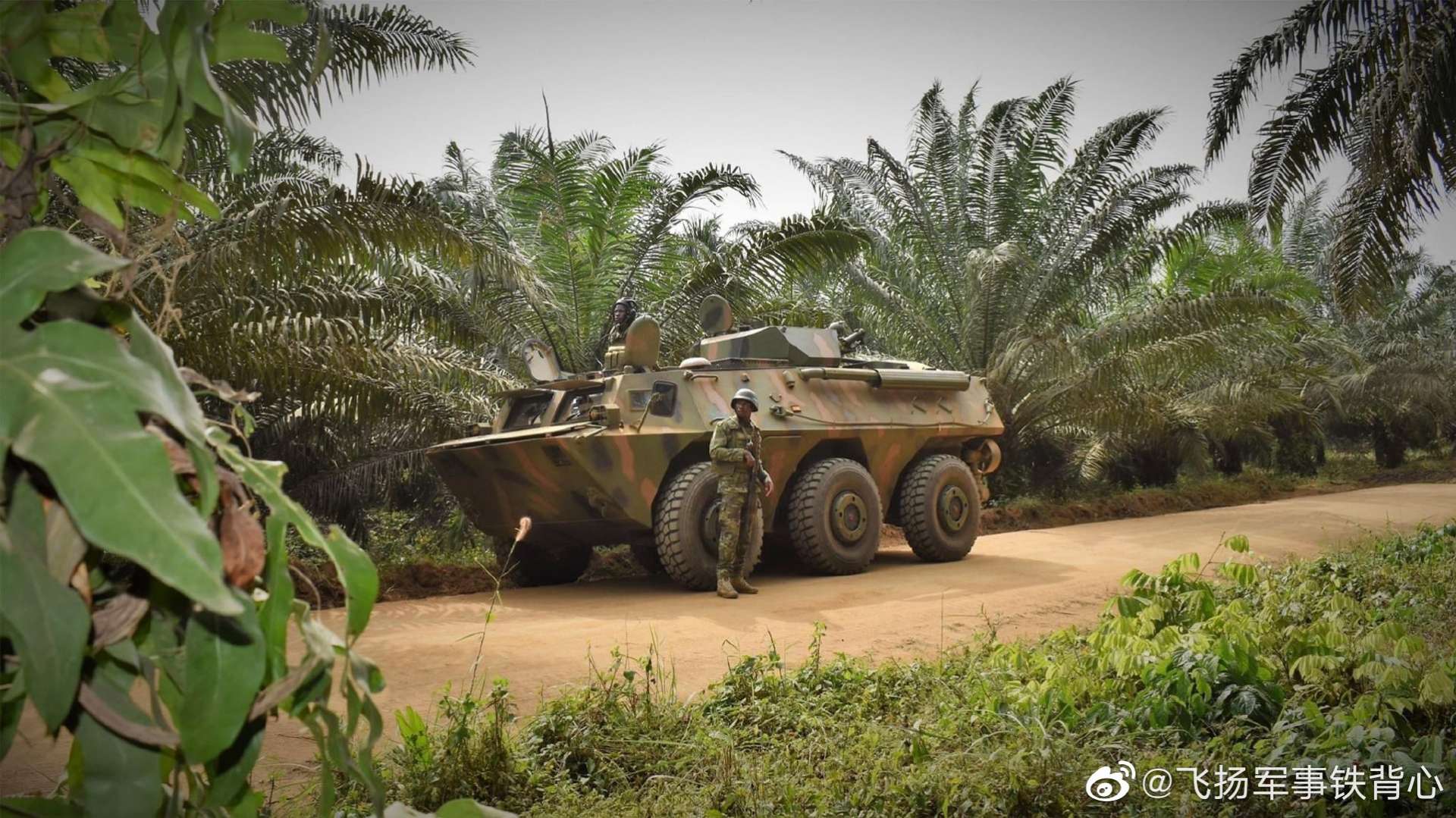
The WZ551 has been exported to various countries, including Algeria, Ivory Coast, Sudan, Nepal, and Pakistan, where it serves in different capacities depending on the variant. (Picture source: Chinese social media)
The WZ551 Armored Personnel Carrier (APC) was developed by China during the 1980s as part of an effort to enhance its military capabilities with a flexible wheeled vehicle platform. The initial prototype, known as the Type 90 (WZ551), was based on the chassis of the Tiema XC2030 6x6 truck and was first revealed in 1984. However, due to performance shortcomings, particularly in engine reliability, it was not widely adopted. Subsequent development led to the Type 92 (WZ551A), which incorporated significant improvements, including a more reliable air-cooled engine and enhanced cross-country performance. This variant entered service with the Chinese People's Liberation Army Ground Force (PLAGF) in the 1990s.
The WZ551 family includes several variants designed for different roles. The standard 6x6 APC version is equipped with a 12.7 mm machine gun, while the infantry fighting vehicle (IFV) variant carries a 25 mm autocannon. Additional versions include the Yitian air defense system, anti-tank guided missile carriers, and specialized vehicles like self-propelled artillery, command vehicles, and ambulances. The WZ551 has been exported to various countries, including Algeria, Sudan, Nepal, and Pakistan, where it serves in different capacities depending on the variant.
In terms of technical specifications, the WZ551 has a combat weight of approximately 15.3 tons and is powered by a Deutz BF8L 413FC diesel engine, which produces 320 horsepower. This enables the vehicle to reach a top speed of 85 km/h on paved roads. The vehicle features an all-welded steel hull that provides protection against small arms fire and shrapnel. It is equipped with a nuclear, biological, and chemical (NBC) protection system, as well as an automatic fire suppression system. The WZ551 can accommodate a crew of two or three, depending on the variant, along with up to nine infantry personnel in the troop compartment.
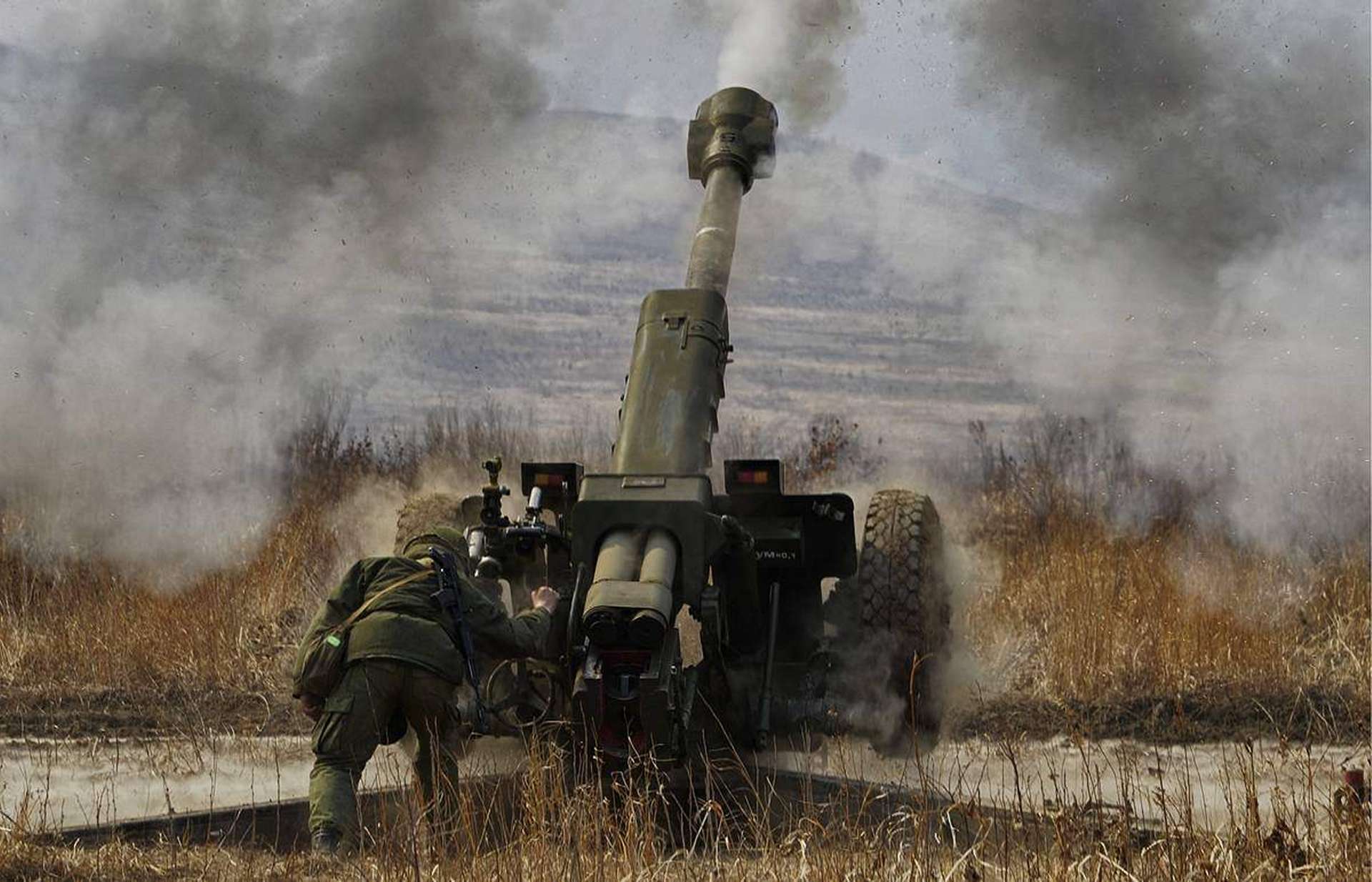
The D-30 has seen extensive use in various conflicts, including the Iran-Iraq War, the Afghan-Soviet War, and the Syrian Civil War, due to its operational reliability and suitability for diverse combat environments. (Picture source: Russian social media)
The D-30 howitzer, a Soviet-designed 122mm artillery piece, was developed in the late 1950s to replace the older M-30 howitzer, which had been in service since World War II. It was introduced into service in the early 1960s and featured an innovative three-leg mounting system that allowed a 360-degree traverse. This design aimed to provide greater stability and flexibility compared to its predecessors. The D-30 was widely exported and used by Warsaw Pact nations and other Soviet allies, becoming a common artillery system in numerous military forces worldwide.
The D-30 has seen extensive use in various conflicts, including the Iran-Iraq War, the Afghan-Soviet War, and the Syrian Civil War. Its widespread use is due to its operational reliability and suitability for diverse combat environments. Several countries have adopted the D-30, with some developing local variants. For example, Algeria has created a self-propelled version mounted on a Mercedes-Benz truck, and China has produced its own versions, such as the Type 86 and Type 96. The D-30 continues to be used by many nations, particularly in developing regions, indicating its continued relevance in modern military operations.
The D-30 was created as a 122mm towed howitzer, weighing approximately 3.2 tons, with a barrel length of 4.875 meters. It has a maximum range of 15.4 kilometers with standard high-explosive fragmentation (HE-Frag) shells, extendable to 21.9 kilometers using rocket-assisted projectiles. The howitzer can sustain a rate of fire of 7-8 rounds per minute. Its three-leg carriage design allows for rapid deployment and stabilization, crucial for maintaining accuracy in long-range firing. Additionally, the D-30 includes a multi-slotted muzzle brake that helps manage recoil.
- Details
- Written by: Vandenbosch
- Category: 2024
- Hits: 7745
The Armed Forces of Transnistria have begun equipping their T-64 tanks with anti-drone protection, drawing inspiration from the ongoing conflict between Russia and Ukraine.
Follow Army Recognition on Google News at this link
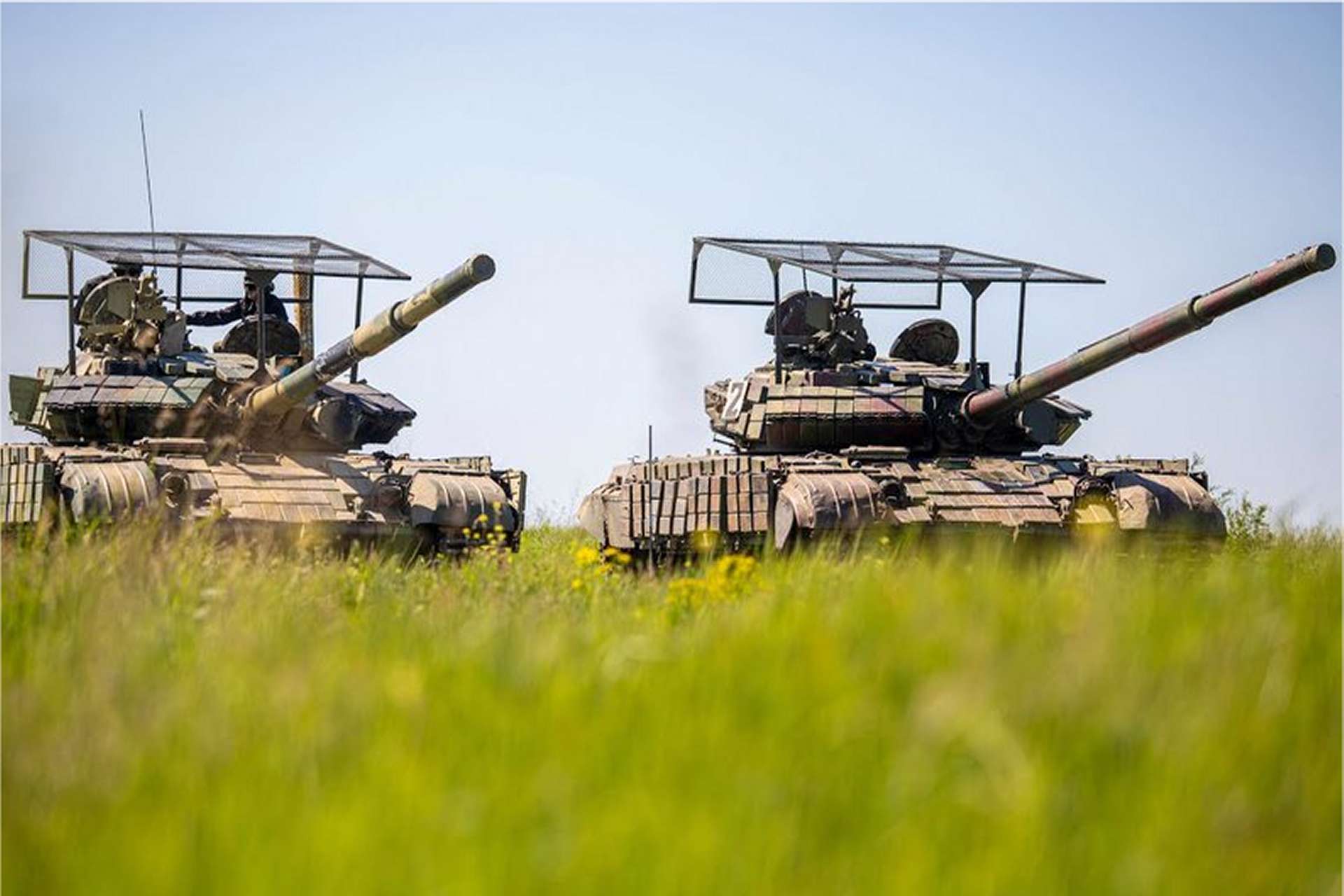
The T-64 is a main battle tank introduced into service in 1976. (Picture source: Transnistrian MoD)
The Ministry of Defense of the Transnistrian Moldovan Republic reported that, after analyzing the experience of Russian forces in Ukraine, it was decided to outfit their tank fleet with systems designed to protect against drones. This decision reflects the growing threat of unmanned aerial vehicles in modern warfare.
Transnistria's army currently possesses 17 Soviet-era T-64 tanks, 12 of which are operational, while the other five are in reserve. The tank battalion of the First Independent Guards Motorized Rifle Brigade is stationed in the village of Vladimirovka, just four kilometers from the Ukrainian border.
During recent military exercises in the republic, the Ministry of Defense showcased two tanks equipped with protective structures commonly known as "grills." These structures are designed to shield the upper part of the tank turret from drone attacks. Given the limited number of tanks in Transnistria's arsenal, it is likely that this protection has been installed on all of them.
In the Russian military, this type of protection has become standard on tanks due to the high prevalence of drones on the battlefield. Tanks now come equipped with these defenses directly from the factory, although many units also make additional modifications based on their combat experience.
The T-64 is a main battle tank introduced into service in 1976. Designed in the Soviet Union, it has been widely used by several countries, including Russia and Ukraine. This tank is operated by a crew of three, which distinguishes it with an advanced automation system for its time, allowing for a reduced crew size compared to other contemporary tanks.
With a length of 6.54 meters, a width of 3.41 meters, and a height of 2.17 meters, the T-64 is relatively compact for its class, while weighing in at 38 tons. These dimensions and weight reflect a balance between armored protection, mobility, and firepower—key characteristics for a main battle tank.
The T-64 has a turret that can rotate 360 degrees, providing maximum flexibility in combat. Its main gun can elevate by +14 degrees and depress by -6 degrees, allowing it to engage targets at various elevations, whether below or above its position.
The T-64 may be an older tank, but it can still prove valuable in conflict. Its upgrade with anti-drone grills is not surprising given the ongoing conflict in Ukraine, which, as a reminder, could rapidly extend into Transnistria.

A T-64 without anti-drone protection. (Picture source: Vitaly V.Kuzmin)
- Details
- Written by: Triffaux
- Category: 2024
- Hits: 5300
The Defence Research and Development Organization (DRDO) successfully completed the test firing of its indigenously developed Man-Portable Anti-Tank Guided Missile (MP-ATGM) on August 16, 2024. This test, the third for the missile system, was conducted at the Pokhran Firing Range, approximately 112 kilometers from Jaisalmer, Rajasthan.
Follow Army Recognition on Google News at this link
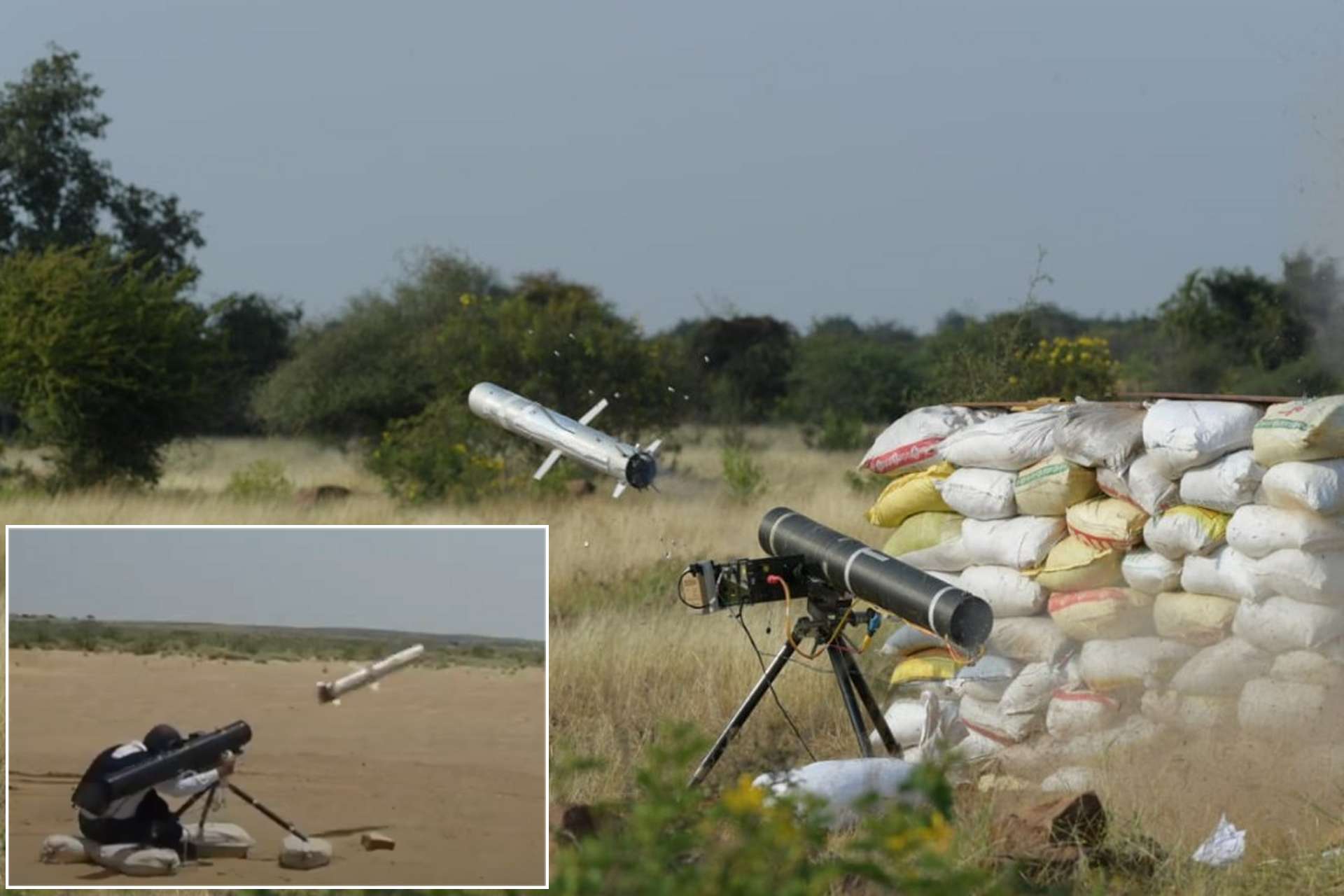
Indian Man-Portable Anti-Tank Guided Missile, MP-ATGM (Picture source: Wikimedia and Indian MoD)
The MP-ATGM is a lightweight and portable missile system designed to neutralize enemy tanks and armored vehicles. This comprehensive system includes the missile, a launcher, a target acquisition system, and a fire control unit. It is designed to be deployed quickly and effectively in various combat scenarios, providing a crucial strategic advantage to Indian forces in modern warfare.
This advanced weapon system is also equipped with a state-of-the-art Imaging Infrared (IIR) seeker, enabling it to engage targets with high precision, both day and night. The missile has a range of up to 2.5 kilometers and weighs less than 15 kilograms, making it highly portable and suitable for use by infantry and special forces.
During the test, the missile demonstrated its "fire and forget" capability, successfully hitting its target with remarkable accuracy. Thanks to its dual-mode seeker functionality, the system can perform "top attack" and "direct attack" missions, further enhancing its versatility on the battlefield.
This indigenous development is expected to significantly strengthen the combat capabilities of the Indian Army, providing a robust solution to counter armored threats without relying on foreign manufacturers.
Defense Minister Rajnath Singh congratulated the DRDO scientists and engineers on their achievement, calling it a "major step towards self-reliance" in defense technology.
According to the Ministry of Defense, the complete MPATGM system, including launchers, a target acquisition device, and a fire control unit, has been tested in various flight configurations on the field, demonstrating its technological superiority.
A sufficient number of firing trials have been successfully conducted to meet the full operational envelope as required by the General Staff Qualitative Requirements. "The penetration trials of the MPATGM's tandem warhead system have been completed, proving it capable of defeating modern main battle tanks," said the Indian Defense Minister.
The MPATGM, a third-generation fire-and-forget anti-tank guided missile, is derived from India's Nag missile. Developed in partnership with the Indian defense contractor VEM Technologies Private Limited, the missile features a cylindrical shape with a length of 130 cm and a diameter of 12 cm, equipped with two sets of four radial fins, with the larger ones in the middle and the smaller ones at the tail. The missile is fitted with a High-Explosive Anti-Tank (HEAT) warhead and is launched from a tube made of aluminum and carbon fiber to minimize weight. The launch unit, weighing 14.25 kg, incorporates a laser designator with an all-weather digital sight and has an effective range of 200 to 4,000 meters.
On December 20, 2017, India canceled a major deal to acquire Israeli Spike anti-tank guided missiles in favor of the DRDO's MPATGM, deeming technology transfer unnecessary. However, the deal was reauthorized during Israeli Prime Minister Benjamin Netanyahu's visit in January 2018 but was canceled again in June 2019 after DRDO committed to delivering the MPATGM by 2021. Meanwhile, the Indian Army purchased a limited number of Spike missiles to meet immediate needs until the MPATGM was ready. The user trials of the MPATGM, initially planned for completion by 2020, were delayed due to the COVID-19 pandemic.
Once inducted, the MPATGM will replace the second-generation MILAN and 9M113 Konkurs anti-tank guided missiles used by the infantry, parachute, and special forces. As a reminder, in June 2024, the Indian press announced that India and the United States were considering the co-production of Javelin anti-tank missiles on Indian soil.
The project envisions the integration of advanced technologies and the establishment of local production that could not only meet the immediate needs of the Indian Army but also promote the country's technological independence in the defense sector. Discussions between the two countries are not new, but they are taking a more concrete turn with implementation plans that will soon be unveiled. "The Indian partner for the joint venture will be selected later," sources indicated, noting that discussions are at a preliminary but promising stage.
Read more: Indian Army Completes Third Trials of New MPATGM Anti-Tank Missile System
- Details
- Written by: Halna du Fretay
- Category: 2024
- Hits: 7909
South Korea has decided to extend the range of its export missiles from 300 kilometers to 500 kilometers in response to requests from Middle Eastern countries, as reported by The Korean Economic Daily. This decision follows a recent National Security Council (NSC) meeting chaired by the Office of the President of South Korea. Military industry sources indicate that this extension is aimed at addressing concerns raised by several Middle Eastern countries regarding the limited range of South Korean multiple rocket launchers, including the K239 Chunmoo.
Follow Army Recognition on Google News at this link
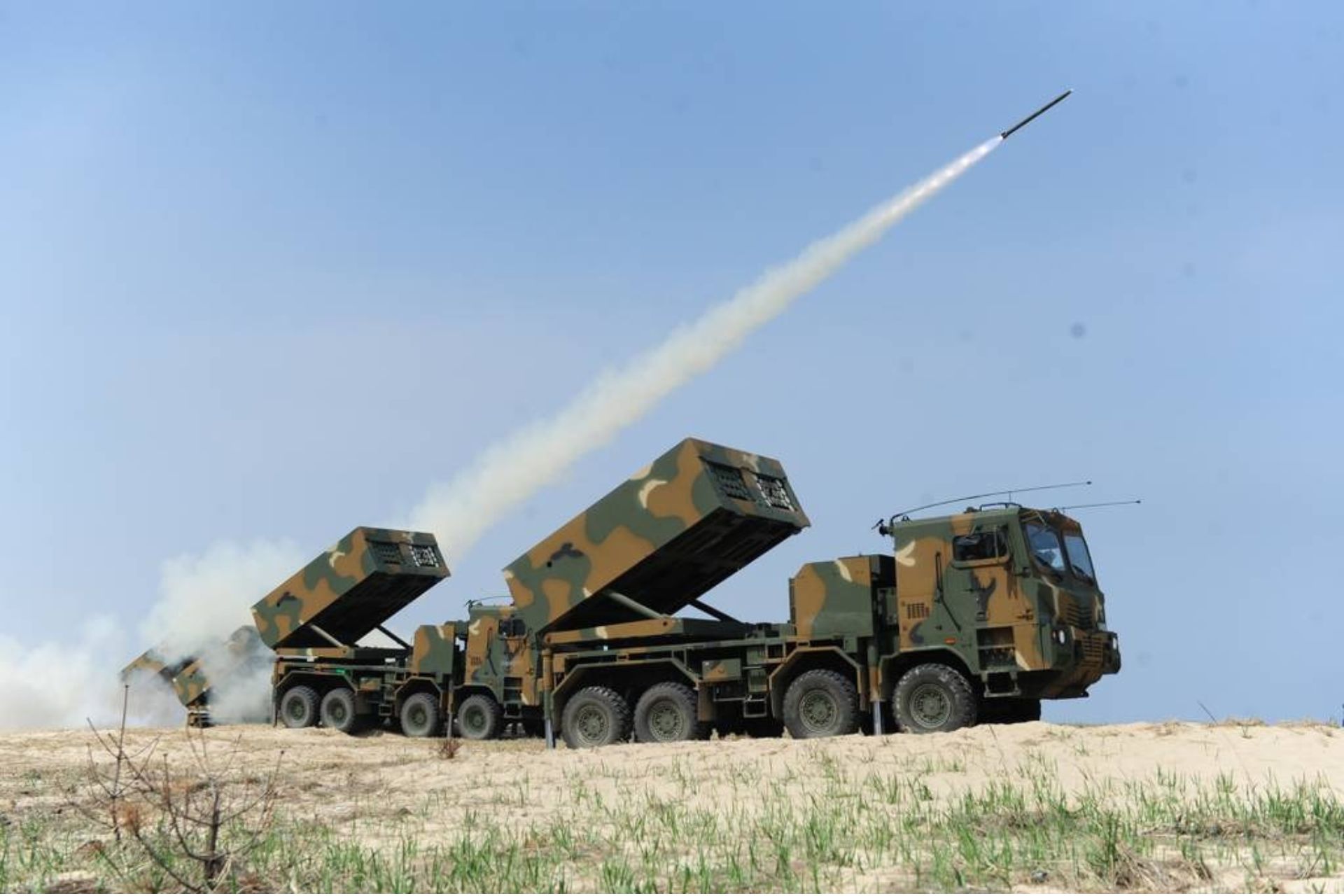
South Korea’s decision to extend missile range follows the lifting of a 42-year-old restriction on its missile development program by the United States in 2021 (Picture source: Hanwha Defense)
The K239 Chunmoo, a South Korean multiple-launch rocket system (MLRS) developed by Hanwha Defense, began production in 2015 and was quickly deployed by the South Korean military. Designed to replace the older K136 Kooryong system, the Chunmoo is highly adaptable and capable of firing various rocket types, including 130mm, 227mm, and 239mm munitions, with ranges from 36 kilometers to 160 kilometers depending on the rocket type. The system is mounted on an 8x8 truck chassis, providing mobility and protection for the crew. It is currently in service in South Korea and has been exported to countries such as Poland and the United Arab Emirates.
Key features of the Chunmoo include its 360° rotating launch system, precision-guided munitions, and the ability to mix different types of rockets in a single mission. The system can also deploy the Korea Tactical Surface-to-Surface Missile (KTSSM), with a range of up to 200 kilometers and an accuracy of less than 2 meters. With a maximum speed of 90 km/h and an operational range of 800 kilometers, the Chunmoo is a powerful artillery system designed for long-range precision strikes and rapid deployment in various combat scenarios.
This decision is particularly significant for countries like the United Arab Emirates and Saudi Arabia, which have already invested in South Korea’s Chunmoo system. The UAE acquired the system in 2017, and Saudi Arabia has recently purchased and deployed it. Additionally, Hanwha Aerospace Co., a major South Korean defense company, signed a $1.64 billion contract in April to supply 72 units of the CTM-290 Chunmoo to Poland. This deal is part of a larger $22 billion agreement between South Korea and Poland, aimed at strengthening Poland’s military capabilities in response to the ongoing conflict between Russia and Ukraine.
South Korea’s decision to extend missile range follows the lifting of a 42-year-old restriction on its missile development program by the United States in 2021. Although this allows South Korea to develop ballistic missiles capable of reaching far beyond the Korean Peninsula, exports remain subject to the restrictions imposed by the Missile Technology Control Regime (MTCR). The MTCR, an informal political agreement among 35 member states, aims to prevent the proliferation of missile technology. South Korea became a member in 2001.
The Chunmoo system, as configured for Poland, has a maximum range of 290 kilometers due to MTCR restrictions. However, following the NSC decision, South Korea’s Defense Acquisition Program Administration (DAPA) is expected to approve modifications that would allow for increased missile range in exports. Experts believe South Korean defense companies will achieve this by reducing warhead weight, thereby extending range without violating international agreements.
This decision has raised concerns about potential conflicts with MTCR regulations, particularly regarding the export of weapons of mass destruction. However, officials argue that multiple rocket launchers, such as the Chunmoo system, fall under Category 2 of the MTCR, where the intent of the importing country is a key control criterion. As tensions rise in the Middle East, particularly with the ongoing Israel-Hamas conflict and the threat of broader regional conflict, extending the range of the Chunmoo system could allow it to strike deeper targets in Iran across the Persian Gulf.
This extension could also provoke a response from Russia, especially as South Korean weapons play an increasing role in Europe. Some analysts suggest that the United States may have supported the range extension, anticipating a greater role for South Korean arms in the European theater.
Read more: South Korea Expands Missile Export Range to 500km for Middle Eastern Clients

- Details
- Written by: V.Saint
- Category: 2024
- Hits: 8860
It has been known for some time that Spain will equip its Tercio de Armada (TEAR) of the Marine Infantry Brigade (Brigada de Infantería de Marina, BRIMAR) with new light weapons. In April of this year, photos first appeared in the Spanish media showing marines during intensive training with Heckler & Koch HK416 A5 rifles, caliber 5.56 x 45 mm. The photos show the A5 variant with a 14.5-inch barrel length. In these photos, the weapon had only front and rear sights, but more recent photos show a Micro M-2 2MOA red dot sight, including an Aimpoint magnifier, as the optic.
Follow Army Recognition on Google News at this link
Naval infantry soldier tests HK 416A5 with 14,5 inches barrel in April 2024 ( Picture source : Tercio de Armada)
The additional equipment includes a Steiner Defense AN/PEQ-15A DBAL-A2 Advanced 2 dual-beam laser designator (with a 5 mW visible red laser of class 3R, an <50 mW IR laser of class 3B, and an <50 mW IR illuminator) and an INFORCE WML White Gen2 tactical weapon light. This light offers 400 lumens of bright white light, is ultra-compact, and has three operating modes: constant, momentary, and strobe. The high-performance spotlight provides a runtime of up to 1.5 hours and weighs 91 grams. The weapon light’s high-intensity focused beam fills the field of view for target identification at short and medium ranges. The user-friendly system ensures the light only activates when the shooter is ready.
According to the unit, the acquisition of the new assault rifle is part of the training intended for use in NATO's Enhanced Vigilance Activities (eVA) in Romania. The soldiers will be deployed there as part of the multinational eVA battlegroup starting in November. All of this is within the framework of NATO's "Forward Land Forces" mission. Spain is active there mainly with forces from France (lead nation), Belgium, Poland, Portugal, and the United States. According to Spanish media, the marines of the 10th BRIMAR/TEAR company, stationed in San Fernando near Cádiz, will begin their service in Romania. The unit is and will be replaced by comrades from the 9th Company in May 2025.
Since 2022, Spain has launched several tenders and awards for HK416, HK417 assault rifles, and GLM A1 grenade launchers for its marines. Until now, only the Spanish Special Naval Warfare Force (FGNE) had used the HK416. Now, specialized forces are also being equipped with it. This means that the HK416 is gradually becoming a standard weapon. The weapon replaces the G36. There is a parallel with the Bundeswehr. Here, the G95A1 and A1K replace the G36. The G95 is based on the HK416A8. Furthermore, the Spanish marines in Romania will work alongside French Army soldiers, who also use the HK416 A5.

Naval infantry soldier tests HK 416A5 with 14,5 inches barrel in April 2024 ( Picture source : Tercio de Armada)
In addition to the new assault rifle, a new pistol, the Glock G45 in 9 x 19 mm caliber, will also be used by soldiers in preparation for their deployment in Romania. Until now, the unit had mainly used the Llama M-82 (currently being phased out) and the SIG P230. The new Glock 45 is a compact pistol from the crossover model series. Due to its dimensions and light weight (694 grams), this semi-automatic pistol is versatile. With this model, Glock presents a further development of the G19X.
The new G45 features a durable nDLC coating and an ambidextrous slide release lever. The full-size grip, like that of the Glock 17, combined with the slide dimensions of a Glock 19 (barrel length of 102 mm), creates a new generation of pistols. The weapon is also used by Polish combat swimmers (according to S&T). The weapon is primarily intended to provide advantages in urban areas or Close Quarters Battle (CQB).
It uses the Glock Marksman Barrel (GMB) to improve accuracy. The GMB grooves were created as part of a tender for the U.S. Army. Thanks to the new modified polygonal barrel profile, they reportedly offer higher accuracy potential than previous Glock barrels. The magazine has an internal funnel intended to reduce reload time.
Read more: Spain modernizes naval infantry equipment with European-made rifle and handgun

- Details
- Written by: Vandenbosch
- Category: 2024
- Hits: 2583
On August 14, 2024, Rheinmetall's latest innovation, the Keiler Next Generation (NG) armored tactical demining vehicle, showcased its capabilities during a live demonstration at the Bergen military training area. The event brought together around 100 international guests from the armed forces, procurement authorities, and the defense industry, who had the opportunity to observe the system's performance up close.
Follow Army Recognition on Google News at this link
The Keiler NG is designed for rapid and tactical clearance of minefields and other obstacles. (Picture source: Rheinmetall)
The Keiler NG is designed for rapid and tactical clearance of minefields and other obstacles. In the first part of the demonstration, the vehicle demonstrated its ability to quickly create corridors through minefields using the Pearson plough. This tool, over four meters wide, can clear mines at a speed of up to 250 meters per minute. The versatility of the Keiler NG was further highlighted by its ability to quickly replace the plough with a bulldozer blade, enabling the vehicle to overcome anti-tank obstacles, fill trenches, and create defensive positions when necessary.
The second part of the demonstration highlighted the rocket-assisted ‘Plofadder’ detonation cord system, a cutting-edge solution developed by Rheinmetall Denel Munition. This system can open a 160-meter-long and nine-meter-wide passage through minefields and other obstacles in a matter of minutes. The Keiler NG's two Plofadder systems enable efficient clearance of deep enemy barriers, firing in overlapping bursts to ensure complete demining.
In addition to its demining capabilities, the Keiler NG is equipped with several advanced features, including a magnetic signature duplicator that triggers second-generation mines before the plough reaches them. An integrated lane marking system ensures that cleared paths are marked for following forces, even in low visibility or nighttime conditions.
First presented to the public at the Eurosatory 2024 trade fair in Paris, the Keiler NG is also equipped with an integrated crane to ensure operational readiness, facilitating the loading and unloading of Plofadder ammunition boxes. For protection, the vehicle is armed with the ROSY rapid obscurant system and the remotely controlled Natter 12.7 weapon station.
The Keiler NG's two-person crew will also benefit from future upgrades, including remote-controlled deployment options and an active protection system designed for integration into digitized battlefields. The vehicle is built on the chassis of the Kodiak armored engineer vehicle, part of the Leopard 2 family, enhancing its agility and interoperability with existing systems. With a maximum speed of 65 km/h and the ability to cross trenches over 2.5 meters wide, the 63-ton Keiler NG is a valuable asset for any armored engineering unit.
The event underscored Rheinmetall's commitment to providing cutting-edge solutions to meet modern military challenges. The Keiler NG, with its combination of mobility, protection, and firepower, is poised to become a critical asset for armed forces worldwide.

The Keiler Next Generation (NG) armored tactical demining vehicle at Eurosatory 2024. (Picture source: Army Recognition)
Read more: Rheinmetall's Keiler NG Demonstrates Demining Capabilities During Live Demonstration