

- Details
- Written by: V.Saint
- Category: 2024
- Hits: 7570










This is the second episode study of main battle tanks at Eurosatory 2024: the French-German defense conglomerate KNDS has taken center stage with the unveiling of their groundbreaking sixth-generation main battle tank (MBT), the Leclerc Evolution. This marks the debut of the first tank equipped with the new ASCALON 120 mm cannon, a cutting-edge weapon system designed to deliver unparalleled firepower and precision. This announcement follows the introduction of Germany's Rheinmetall KF-51 Panther CUT with its formidable 130 mm cannon, marking another milestone in the evolving landscape of MBTs.
Follow Army Recognition on Google News at this link
Front view of Leclerc Evolution MBT (Picture source: Army Recognition)
The Leclerc Evolution, developed by the French-German defense company KNDS, represents a significant advancement in the realm of main battle tanks (MBTs). This sixth-generation MBT unveiled at Eurosatory 2024, is designed to address the evolving challenges of modern warfare through innovative technology and enhanced operational capabilities. At the heart of the Leclerc Evolution’s offensive capabilities is the ASCALON 120 mm cannon, a next-generation weapon system engineered for superior firepower and precision. This cannon can be retrofitted to accommodate higher calibers, up to a 140 mm gun, providing a flexible platform capable of adapting to future advancements in ammunition technology. The ASCALON cannon ensures that the Leclerc Evolution can engage a wide range of targets with unprecedented lethality, from heavily armored vehicles to fortified positions.
The Leclerc Evolution features a four-crew configuration, with a unique design with two soldiers in the chassis and two in the turret. The turret is equipped with an extensive suite of sensors and effectors, enhancing situational awareness and battlefield management. Including the ARX 30 Remote-Controlled Weapon Station (RCWS) further augments the tank's versatility, enabling it to counter emerging threats such as unmanned aerial vehicles (UAVs) with precision.
A standout feature of the Leclerc Evolution is its ARX 30 secondary weapon, specifically designed for counter-UAV (Unmanned Aerial Vehicle) warfare. In an era where UAVs are becoming increasingly prevalent on the battlefield, this capability ensures that the Leclerc Evolution can effectively neutralize aerial threats, thereby safeguarding its operational integrity. Additionally, the turret is equipped with a loitering ammunition launcher module, which significantly extends the tank’s engagement range and allows for precision strikes on distant targets.

Escamotable loitering munition launch platform (Picture source: Army Recognition)
The loitering ammunition launcher integrated into the Leclerc Evolution’s turret is a game-changer in modern armored combat. This system allows the tank to deploy munitions that can loiter in the airspace, providing real-time reconnaissance and precision strike capabilities. This extended range not only enhances the tank's offensive reach but also provides tactical flexibility, enabling it to support a broader range of missions from reconnaissance to direct engagement.
Currently, the Leclerc Evolution is under development, with KNDS focused on refining its systems and integrating the latest technological advancements. The collaborative efforts between French and German defense sectors underline a commitment to creating a robust and adaptable platform that can meet the future demands of armored warfare.
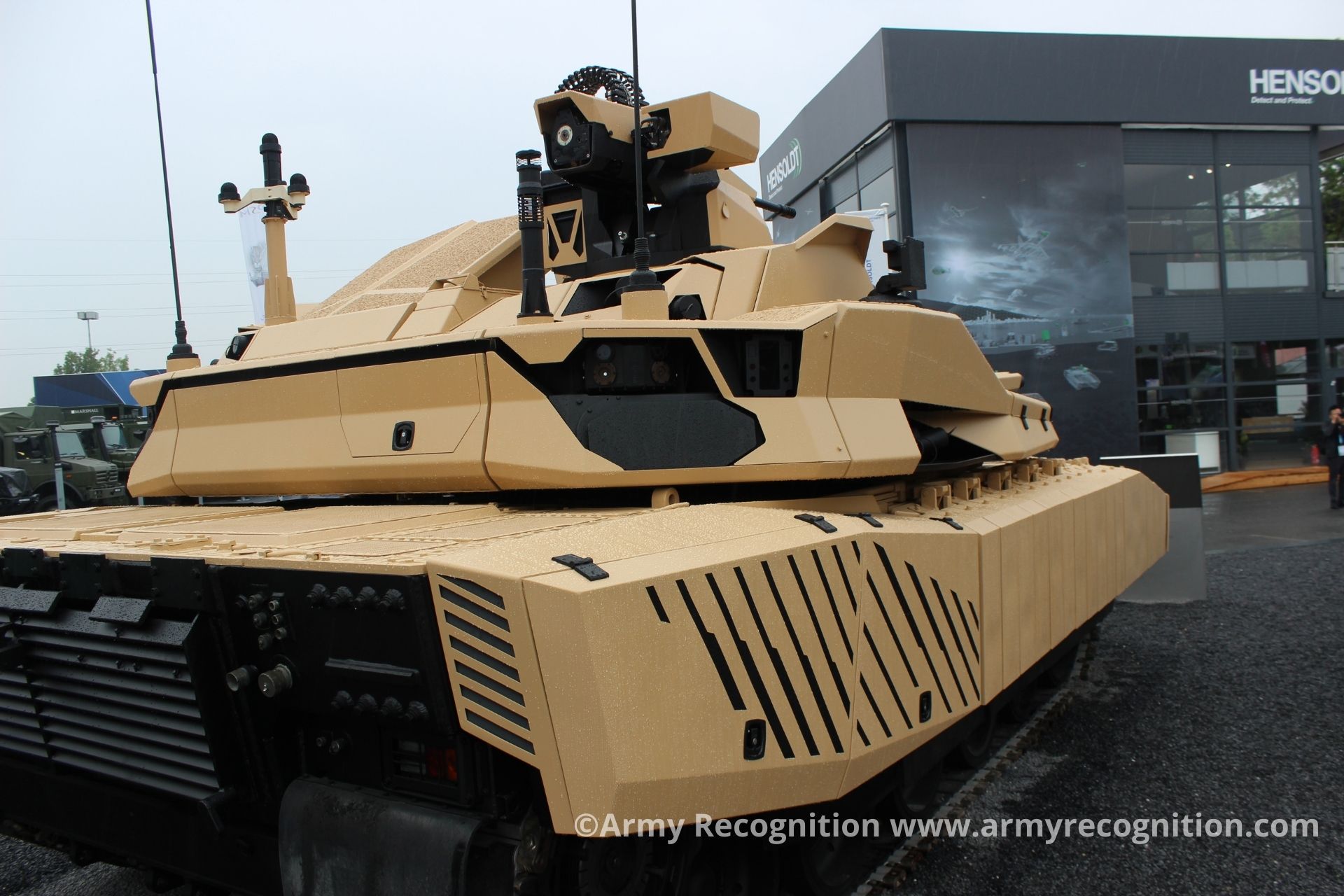
Rear view of Leclerc evolution turret equipped with UAV jamming system (Picture source: Army Recognition)
The Leclerc Evolution is equipped with a versatile firepower system that includes an ASCALON 120 mm smoothbore gun, which can be upgraded to a 140 mm caliber if needed. The 120 mm gun is of 58 calibers and comes with a 22-round autoloader. Additionally, it has a coaxial 12.7 mm machine gun with 680 rounds ready to fire, and an ARX30 30 mm anti-UAV capability with 150 rounds ready to fire. The tank also includes a loitering ammunition launcher that provides extended range action capability with three intermediate range munitions.
For observation, the Leclerc Evolution is equipped with a commander panoramic sight and a gunner sight, both of which are stabilized for day and night operations, providing a Hunter/Killer capacity. The tank's survivability is enhanced through complete armored protection, regenerative and modular chassis protection systems, a close protection system (Galix smoke and AP), an Active Protection System, and CBRN filtration and air systems.
In terms of mobility, the Leclerc Evolution can reach a road speed of 68 km/h, powered by a 1100 kW (1500 hp) powerpack. It has a range of 470 km on roads and a ground clearance of 475 mm. These features ensure that the Leclerc Evolution is not only a powerful and versatile combat vehicle but also one that offers enhanced protection and operational efficiency on the modern battlefield.
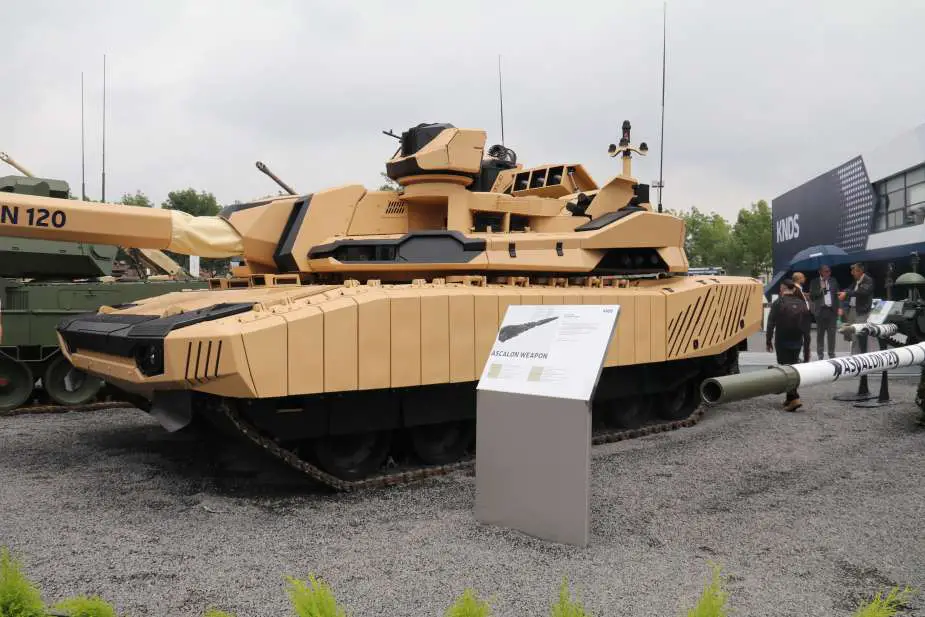
Side view of Leclerc evolution turret equipped with UAV jamming system Loitering munition launch platform (Picture source: Army Recognition)
The introduction of the Leclerc Evolution signifies a strategic shift in how MBTs are conceptualized and deployed. Its advanced firepower, comprehensive command and control systems, and multifaceted defensive capabilities make it a versatile asset in both offensive and defensive operations. The flexibility to retrofit its main cannon to a higher caliber ensures that it remains relevant as new threats and technologies emerge.
Moreover, the integration of counter-UAV systems and extended range loitering munitions reflects a forward-thinking approach to battlefield dynamics, where aerial threats and long-range engagements are increasingly common. The Leclerc Evolution is not just a product of technological advancement but also a response to the changing nature of warfare, where adaptability and multi-role functionality are paramount.
The Leclerc Evolution, with its groundbreaking ASCALON cannon, advanced sensor suites, and innovative defensive measures, represents the pinnacle of modern MBT design. As it progresses through its development phases, it promises to redefine armored warfare by providing a versatile, powerful, and adaptive platform capable of meeting the diverse challenges of future battlefields. KNDS's commitment to innovation and strategic collaboration ensures that the Leclerc Evolution will be a cornerstone of armored forces for years to come.
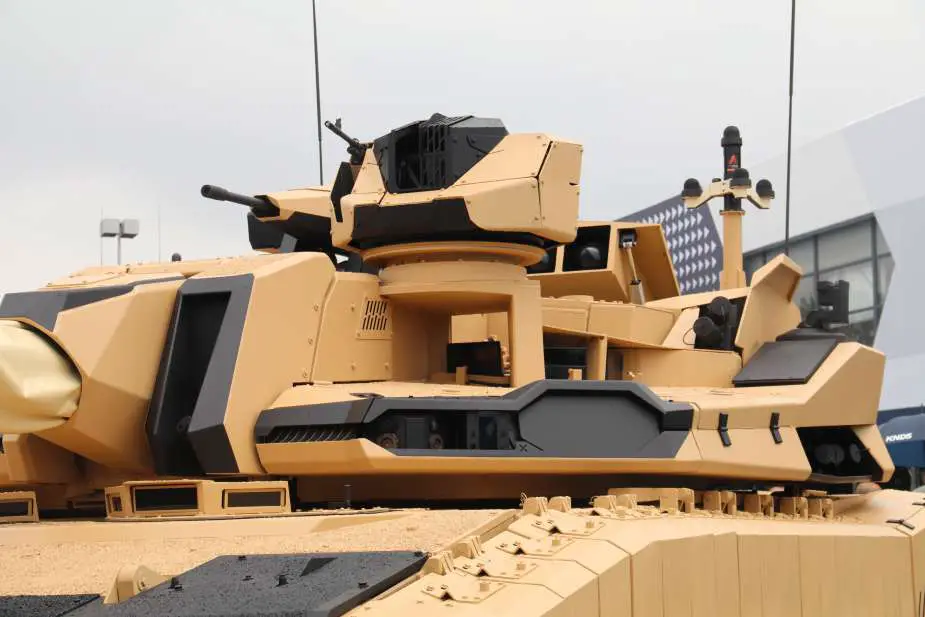
front view of Leclerc evolution turret equipped with Uav jamming system 7,62 machinegun and 30mm anti UAV system (Picture source: Army Recognition)
The Leclerc Evolution will likely be shunned by the French army.
Tanks are not a priority for the Army today, and for good reason. According to the French army itself, tanks are not currently a priority for them. Indeed, as part of the 2024-2030 Military Programming Law (LPM), it must carry out numerous programs, which will be difficult to fully finance. These include the deployment of the Griffon, Serval, and Jaguar vehicles from the SCORPION program, the design and ordering of the VBAE to replace the VBL, the acquisition of 109 Caesar MkII that must form the backbone of French artillery, as well as the modernization of the Tiger attack helicopters and the introduction of the H-160M Guépard for the Light Aviation of the Army (ALAT).
This forced modernization, a consequence of 25 years of underinvestment in equipment replacement and intensive use of resources in Afghanistan, the Levant, and the Sahel region, leaves virtually no room for the Army's high command to seize opportunities that have arisen during this LPM. Beyond these perfectly clear constraints for the next six years, the Army also suffers from a high command in which light forces, the Legion, marine troops, and paratroopers are overrepresented compared to line units, especially combat tanks.
Thus, over the past 10 years, the army has been commanded by a parachutist (General Bosser), a legionnaire (General Burkhard), and a Marine Infantry officer (General Schill), while the position of Chief of Staff has been held by two parachutists (General de La Chesnais and Gomart), an engineer (General Quevilly), and two cavalrymen (General Barrera and Béchon), who primarily trained in light cavalry.
Given this focus on light and maneuver forces, the imperatives of modernization affecting all equipment, including the pervasive range of medium armored vehicles, recent operational history, and budget constraints, it is hardly surprising that the capabilities of the French line, including combat tanks, heavy artillery, and mechanized infantry, have not been at the center of the Army high command's concerns.

- Details
- Written by: Triffaux
- Category: 2024
- Hits: 10286
On June 24, 2024, Romania signed a contract for 18.4 million euros ($19.7 million) to purchase Vector unmanned aerial systems (UAS), manufactured by the German company Quantum Systems. This development continues the Romanian Armed Forces' 2040 transformation program, aimed at strengthening the country's defense capabilities. The acquisition of these advanced UAS is pivotal in enhancing ground troops' operational awareness and combat tactics, particularly in complex environments where real-time surveillance and reconnaissance are critical for effective engagement and threat management.
Follow Army Recognition on Google News at this link
Quantum Systems Vector Unmanned Aerial Vehicle (Picture source: Quantum Systems)
The Romanian government, which had already enhanced its air fleet with second-hand F-16s from Denmark, Bayraktar TB2 drones from Türkiye, and Watchkeeper X drones from Israel, sees the acquisition of these new drones as an opportunity to increase its reconnaissance and surveillance operations. The importance of these new capabilities is especially critical in the context of the ongoing security instability in the Black Sea region.
The contract signed on May 14, 2024, stipulates a three-year delivery period for the UAS. Each Vector drone, with a unit cost of 180,000 euros, is equipped with impressive capabilities: electric propulsion, vertical takeoff, and the ability to fly for 180 minutes in challenging weather conditions. The Vector can also transmit real-time video to multiple ground control stations over a maximum distance of 35 kilometers through encrypted Mesh IP data links.
Sven Kruck, Chief Sales Officer of Quantum-Systems, expresses his pride: "Our collaboration with Romania marks an important milestone in our mission to support global defense initiatives with reliable and efficient unmanned aerial solutions."
The Vector drone is a cutting-edge dual-use ISR (Intelligence, Surveillance, Reconnaissance) system developed by Quantum-Systems GmbH, designed to excel in both civilian and military applications due to its versatility and advanced technological features. This electric vertical take-off and landing (eVTOL) system was officially released on February 15th, 2024, and serves as a state-of-the-art solution for mobile, disconnected military and security operations as well as for commercial use in geospatial data collection.
Vector is uniquely engineered to operate in confined areas with its compact design, supporting a wingspan of 2.8 meters and weighing under 8.5 kg, which allows for vertical takeoff and landing capabilities. This drone is equipped with AES-256 encrypted mesh network radio for secure communication and includes a tactical hand controller and an optional laptop for operations. It boasts high endurance and resilience, capable of operating in winds up to 27 knots and at altitudes up to 4500 meters MSL. Its operational flexibility is enhanced by the onboard AI processing with NVIDIA Jetson Orin, making it ideal for complex mission environments where real-time data processing is critical. Vector’s integration with various command and control systems and its compatibility with existing operational protocols underscore its role in modern ISR tasks, providing a robust platform for both tactical military engagements and advanced commercial applications.
The Vector drones stand out for their low noise emissions, making them ideal for covert surveillance operations. They can be deployed and operational in just three minutes by a few soldiers, thus providing a quick and effective response in various reconnaissance and security scenarios.
As a reminder, the Romanian armed forces are structured around territorial defense, support for NATO and EU missions, and contributing to regional and global stability and security. According to the National Defense Strategy 2020-2024, principal security threats include Russia’s increased presence in the Black Sea, hybrid warfare, cyber-attacks, terrorism, and the economic impact of the coronavirus pandemic. Under the Armata 2040 project, authorities are looking to modernize and upgrade the armed forces to NATO standards. A defense budget increase was announced in March 2022. Bucharest has signed defense cooperation agreements with regional allies and, following Russia’s 2022 invasion of Ukraine, has enhanced cooperation with the US, France, and regional allies in the Bucharest Nine organization. There is a strategic partnership with the US.
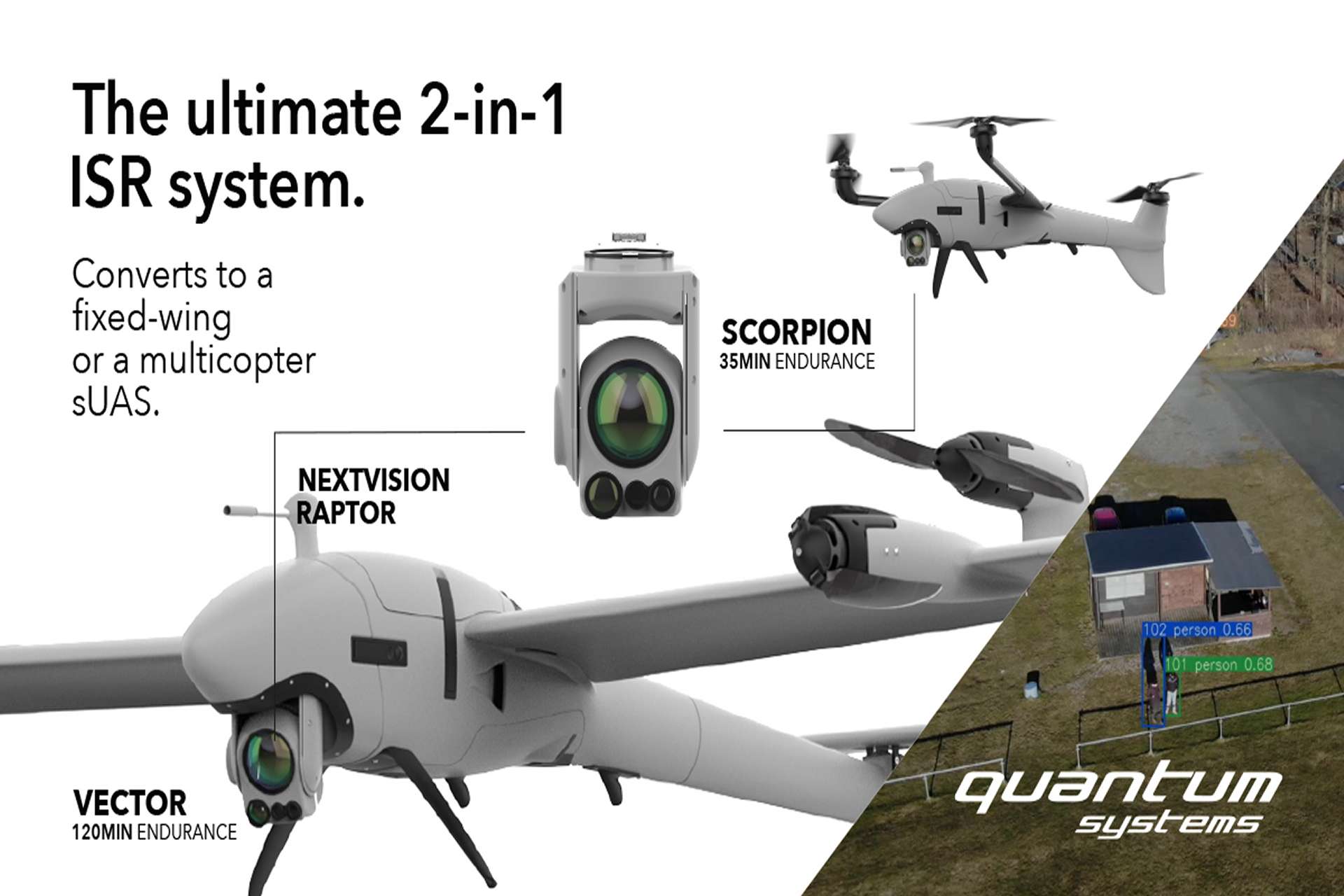
Quantum Systems Vector Unmanned Aerial Vehicle (Picture source: Quantum Systems)

- Details
- Written by: V.Saint
- Category: 2024
- Hits: 2560
During Eurosatory, the French company SOFEMA showcased its new equipment, particularly an AR-15 platform shotgun in 12-gauge. Formidable at short range, it offers numerous options that make it a weapon of choice for using 12-gauge ammunition.
Follow Army Recognition on Google News at this link
Genesis 12 Rifle based on AR-15 platform presented by Sofema at Eurosatory 2024 (Picture source: Army Recognition)
Sofema, officially known as Société Française d'Exportation de Matériel Aéronautique et Militaire, is a French company specializing in the renovation, marketing, and maintenance of first-generation land, maritime, and air equipment, mainly from the French Armed Forces. Founded in 1997 following the merger of two service companies, Ofema and Sofma, Sofema has significantly evolved over the years. Initially an intermediary for major French export contracts, it now specializes in the sale of renovated equipment for land, air, and maritime sectors. The company's headquarters are located in Levallois, near Paris, with technical facilities in La Teste (Gironde) and Châteauroux (Indre).
Sofema's operations include acquiring and renovating first-generation equipment to like-new condition, offering spare parts, and providing consultancy services to help industrial groups worldwide in their international development. The company has implemented a structured quality control program to ensure high levels of efficiency in its operations.
If you thought the arms trade was modeled on the image of Victor Bout and the film "Lord of War," Sofema offers a change from that idea. Sofema finds solutions and proposes fully revised or adapted equipment in the land, maritime, and air sectors, whether military or civilian, along with complete platforms restored to "like-new" condition by teams of highly qualified engineers and technicians.
Today, Sofema introduces a new weapon, the Genesis Arms 12-gauge, available with 5, 10, and 15-round magazines, and variable barrel lengths. Various models are available for every use, from personal defense weapons and multi-functional tools with dual provisioning to extended range options with an 18'' barrel. A notable feature of this weapon, presented here, is the Genesis Arms Gen-12 LL for less lethal Shotgun, which is intended for use with reduced lethality ammunition such as plastic bullets.
Read more: A new way of Arms dealing Sofema vision of weapons exportation

- Details
- Written by: V.Saint
- Category: 2024
- Hits: 6070
The German Ministry of Defense plans to purchase 105 Leopard 2A8 main battle tanks for $2.9 billion to deploy them in Lithuania.
Follow Army Recognition on Google News at this link
Leopard 2A8 presented at Eurosatory 2024 (Picture source: Army Recognition)
The purchase of the Leopard 2A8 tanks is expected to be carried out under a contract with the defense equipment manufacturer KNDS, and delivery is scheduled for between 2027 and 2030. However, 70 units are to be delivered during the last two years of the contract.
The value of the deal is estimated at about 2.9 billion euros, with the operating cost of the new tanks reaching 750 million euros between 2032 and 2040. Despite this, the project still needs to be approved by the federal budget and other authorities, as funds for the purchase have not yet been allocated in the 2024 budget or the financial plan before 2027. The new tanks are particularly necessary to equip the German brigade based in Lithuania.
Last May, the budget committee of the German parliament approved an allocation of 525 million euros for the purchase of 18 Leopard 2A8 tanks, which will replace the same number of main battle tanks provided to Ukraine as part of military aid.
The Leopard 2A8 is a modern German main battle tank developed by Krauss-Maffei Wegmann (KMW). It succeeds the Leopard 2A7 and is the most technologically advanced version of this series. The tank is equipped with a new active protection system, enhanced armor, and modern fire control systems. It features a powerful 120 mm smoothbore cannon and is capable of engaging targets at long distances. The Leopard 2A8 is also equipped with modern communication and navigation systems, ensuring high combat efficiency.
Read more: Germany will buy hundred of Leopard 2A8 to equip foreign based brigade

- Details
- Written by: Vandenbosch
- Category: 2024
- Hits: 6673
At Eurosatory, KNDS showcased the Serval equipped with the ARX-30 turret. The Serval, a multi-purpose light armored vehicle, is designed to meet the specifications of the French army, forming an integral part of the national emergency response echelon. With its high tactical and strategic mobility, this vehicle offers optimal protection, allowing troops to carry out their missions and redeploy quickly.
Follow Army Recognition on Google News at this link
The Serval was showcased with an ARX-30 Turret at Eurosatory 2024. (Picture source: Army Recognition)
The versatile chassis structure of the Serval, developed by the French company TEXELS, allows for the creation of 29 different variants, thus covering a wide range of missions and operational functionalities. Integrated into the SCORPION program, the Serval benefits from common vetronics systems, developed in partnership with THALES, facilitating collaborative combat within an integrated battle group.
The Serval LAD model is specifically equipped to counter UAVs (drones), thanks to the ARX-30 turret, armed with a 30x113 mm cannon. This cannon, the land version of the model used on the Tiger helicopter, advantageously replaces the 12.7 mm remote weapon stations and 40 mm grenade launchers, offering a superior practical range and better terminal effectiveness due to the variety of available ammunition.
The ARX-30 turret is adaptable to a wide range of platforms, from 4x4 vehicles to secondary armaments for tanks and robots, without major intrusion. This flexibility allows for effectively targeting light or lightly protected targets. The ARX-30 system can be offered in three versions to adapt its missions: the basic model for ground targets, the NEROD model coupled with a C-UAV weapon for jamming non-military drones, and the C-UAV version with integrated radar for detecting and identifying mini and micro UAVs.
The Serval, with its 375-horsepower engine, can reach a maximum speed of 100 km/h and has a range of over 600 km. It can tackle 60% gradients, 700 mm steps, and 1.2-meter fords without prior preparation. Its operational weight varies between 15 and 17 tons, and it measures 6.50 meters long, 2.53 meters wide, and 2.46 meters high up to the roof.
The Serval is equipped with standard ballistic protection, mine and IED protection, with optional overprotection kits and CBRN (chemical, biological, radiological, and nuclear) protection. It is also equipped with a BARAGE jammer and an SLA strike detection system, thus enhancing its survivability on the battlefield.
Read more: Eurosatory 2024: KNDS Exposes Serval with ARX-30 Turret

- Details
- Written by: Administrator
- Category: 2024
- Hits: 11882
In the dynamic and ever-evolving landscape of military technology, the Eurosatory exhibition serves as a pivotal platform for showcasing the latest advancements in defense systems. This year, the spotlight is firmly fixed on the new generation of main battle tanks, with the KF-51U Panther emerging as a standout. Unveiled at Eurosatory 2024, the KF-51U Panther CUT (Concept Uncrewed Turret) represents a significant leap forward in armored warfare, boasting cutting-edge technology, enhanced firepower, and superior mobility. In this episode, we delve into the features and innovations that position the KF-51U Panther at the forefront of modern military hardware, setting new benchmarks for future armored vehicles.
Follow Army Recognition on Google News at this link
The KF-51U Panther CUT Concept Uncrewed Turret was displayed at the booth of the German Company Rheinmetall during Eurosatory 2024, a defense exhibition that was held in Paris, France. (Picture source: Army Recognition Group)
The Rheinmetall KF51 Panther CUT (Concept Uncrewed Turret) tank marks a significant advancement in modern main battle tank (MBT) design, focusing on superior firepower, enhanced protection, and the integration of cutting-edge technology. Unveiled at Eurosatory 2022, the KF51 Panther is positioned as a potential successor to the Leopard 2, incorporating insights from recent conflicts and technological progress. Among its key features are advanced armor, active protection systems, and a new 130mm Future Gun System (FGS), which surpasses the traditional 120mm guns in range and firepower.
Expanding on the KF51 Panther's foundation, Rheinmetall has introduced the KF-51U, featuring the Concept Uncrewed Turret (CUT). This innovative uncrewed turret design represents a significant step forward in MBT evolution. Rheinmetall's objective is to develop superior and future-proof solutions, driven by numerous operational experiences and emerging technologies. At Eurosatory 2024, Rheinmetall will present the CUT, a concept demonstrator for a next-generation MBT turret, with its premiere scheduled for 17 June 2024 at the Rheinmetall stand E115/F115.
The main armament of the KF-51U CUT is Rheinmetall's 130mm Future Gun System with a barrel length of 51 calibers. The ammunition is fed via a bustle-mounted autoloader from two magazines located at the rear of the turret, with a total ammunition capacity of 25 cartridges. Additionally, the turret is equipped with a coaxial .50 heavy machine gun. The commander's Main Sensor Slaved Armament (MSSA) remote-controlled weapon station features a Rheinmetall RMG762 machine gun. This machine gun has three rotating barrels, allowing continuous operation even if one barrel overheats, making it suitable for engaging small UAV drones. The MSSA also includes an integrated smoke grenade launcher.
Rheinmetall has developed a 130mm main gun technology demonstrator to meet the growing need for significant performance improvements against modern armored vehicles. This 130mm live-fire demonstrator has completed its development phase, demonstrating superior energy and output performance compared to the standard 120mm L55/L55A1 cannon in direct live-fire tests against modern targets. The 130mm/L51 smoothbore gun, without mounting components, weighs 3,000 kilograms and has a barrel length of 6.63 meters.
The Rheinmetall 130mm main gun technology marks a significant advancement in tank armament, developed to counter the rising threats from modern armored vehicles. This smoothbore gun, designated as the 130mm/L51, offers superior firepower and lethality compared to the existing 120mm L55/L55A1 cannons. The increased caliber allows for higher muzzle energy and greater destructive capability, which translates into a 50% longer effective kill range. This makes the 130mm gun particularly effective against advanced protective systems employed by contemporary armored threats.
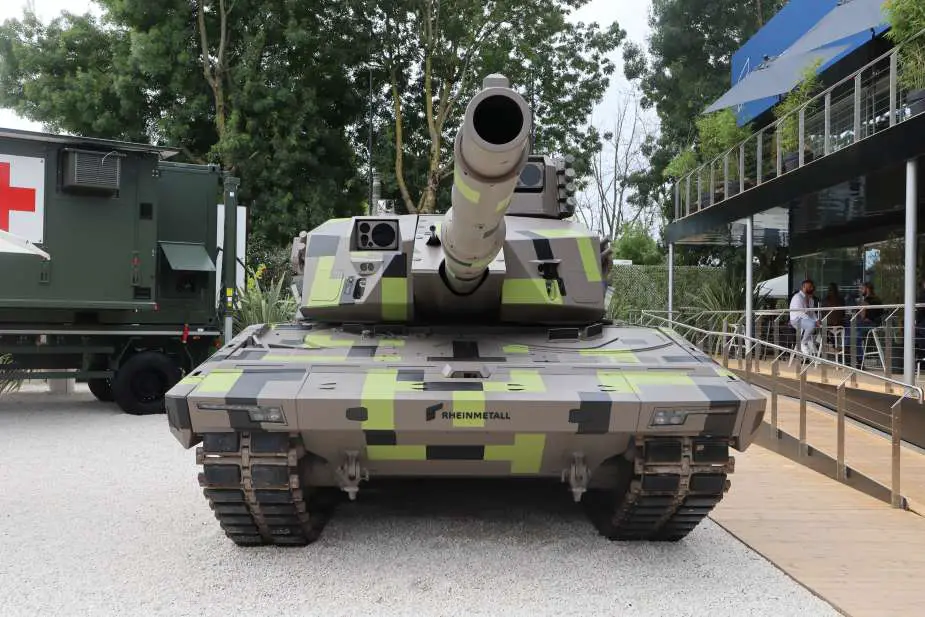
The main armament of the KF-51U CUT is Rheinmetall's 130mm Future Gun System with a barrel length of 51 calibers. (Picture source Army Recognition Group)
One of the primary innovations in the 130mm gun system is the integration of an autoloader, which enhances the rate of fire and reduces the crew size required to operate the tank. The autoloader is connected to revolver-type magazines capable of holding multiple types of ammunition, including kinetic energy rounds and programmable airburst munitions. This versatility allows the tank to engage a wide range of targets effectively, from heavily armored vehicles to infantry positions and aerial threats.
Additionally, the 130mm gun is part of Rheinmetall's broader Future Gun System, which incorporates digital architecture compliant with NATO’s Generic Vehicle Architecture standards. This digital backbone facilitates seamless integration of advanced targeting systems, artificial intelligence for decision support, and connectivity with other battlefield systems. The gun is designed to be part of a network-centric warfare system, enhancing situational awareness and operational effectiveness.
The 130mm gun is featured prominently in Rheinmetall’s new KF51 Panther main battle tank, which was unveiled as a "radically new" concept for modern armored warfare. The Panther is designed with a focus on mobility, protection, and lethality, incorporating the 130mm gun along with advanced survivability measures. These include an integrated protection system combining active, reactive, and passive defenses, and a dedicated top attack protection system to counter aerial threats.
Overall, the Rheinmetall 130mm main gun technology exemplifies the cutting-edge advancements in tank armament, aiming to provide superior firepower and adaptability in the face of evolving battlefield challenges.

The electrically powered turret houses the fire control system, parts of the C4I equipment, and other sensor system components, including a metrological sensor. (Picture source Army Recognition Group)
The crew of the KF-51U, including the commander and gunner, is housed within the chassis of the platform. Both crew members can access independent day and night vision optics with integrated laser rangefinders. The gunner utilizes the modern SEOSS 400 optics, which is also installed in the commander's MSSA. This setup allows the commander and gunner to observe and engage targets independently, providing both hunter-killer and killer-killer capabilities. Small on-board reconnaissance drones can further enhance the turret's reconnaissance capabilities.
The electrically powered turret houses the fire control system, parts of the C4I equipment, and other sensor system components, including a metrological sensor. The Situational Awareness System (SAS) ensures superior situational awareness for the crew. The CUT also incorporates active hard-kill protection systems like Rheinmetall’s Active Protection System (APS) or Iron Fist, as demonstrated at Eurosatory, and soft-kill protection systems like MUSS and the ROSY rapid obscurant system. These systems collectively protect the crew and the platform from various enemy threats. Maintenance access to the uncrewed turret is provided via a hatch on the top.
With the KF-51U CUT concept demonstrator, Rheinmetall is reinforcing its leading role in developing future-proof systems for the networked battlefields of the future. This innovative approach reflects Rheinmetall's commitment to addressing evolving combat requirements and leveraging advanced technologies to enhance the effectiveness and survivability of ground combat systems.

- Details
- Written by: Administrator
- Category: 2024
- Hits: 10439
During the Fires Symposium held earlier this May 2024, Mike Evans, Program Director at AM General, announced a significant deployment of military technology to Ukraine. According to Evans, AM General recently shipped a Hawkeye Mobile 105 Howitzer System to Ukraine in April. Following the shipment, the system underwent two weeks of training.
Follow Army Recognition on Google News at this link
Hawkeye 105mm Mobile Weapon System while crew rest from conducting drills 23 July, 2019 assigned to a test Platoon of 2nd Battalion, 122 Field Artillery, Illinois Army National Guard. (Picture source: U.S. DoD)
"We recently put a Hawkeye Mobile 105 Howitzer System into Ukraine," Evans stated in the recorded video. "We shipped it in April and trained it for two weeks. That system will be one of the first soft recoil systems in combat. It's going into combat to test on live targets."
The Hawkeye Mobile 105 Howitzer System is an innovative artillery platform designed to enhance the mobility and effectiveness of field artillery units. Developed by AM General in collaboration with Mandus Group, this system integrates a 105mm howitzer onto a light tactical vehicle, providing a highly mobile and versatile artillery solution.
AM General, a well-known manufacturer of military vehicles, developed the Hawkeye system to address the need for a more agile and rapidly deployable artillery system. The Hawkeye system leverages the proven M1152A1w/B2 HMMWV chassis, ensuring compatibility with existing logistics and maintenance infrastructure within armed forces. Using the HMMWV platform allows the Hawkeye to be easily transported by various means, including airlift, enhancing its strategic and tactical deployment capabilities.
The development of the Hawkeye Mobile 105 Howitzer System focuses on providing artillery units with a lightweight, highly mobile, and quickly deployable howitzer. Its design incorporates advanced recoil management technology, allowing the powerful 105mm howitzer to be mounted on a relatively light vehicle without compromising stability or accuracy. This enables rapid repositioning and shoot-and-scoot tactics, reducing the system's vulnerability to counter-battery fire.
When it comes to combat capabilities, the Hawkeye system is a force to be reckoned with. Designed for both direct and indirect fire support roles, it offers a high rate of fire and can deliver accurate fire over considerable distances, making it a reliable choice for a wide range of combat scenarios. Its exceptional mobility allows it to support fast-moving units and respond quickly to changing battlefield conditions, instilling a sense of confidence in its versatility. Additionally, the Hawkeye can operate in diverse terrains, including rough and undeveloped areas, thanks to the off-road capabilities of the HMMWV chassis.
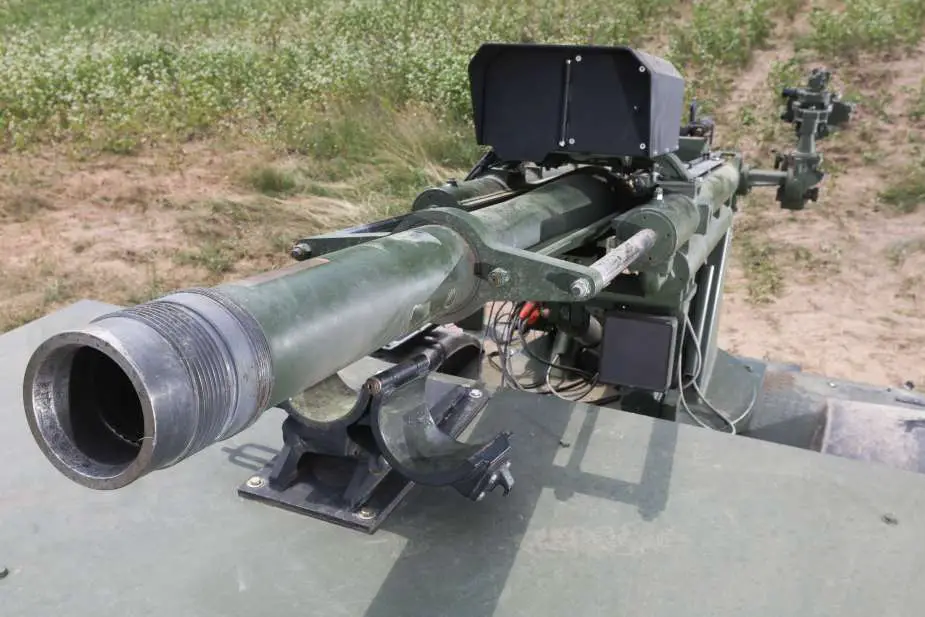
The Hawkeye's 105mm gun offers advanced recoil management and fires rounds up to 11,500 meters, ensuring powerful and accurate artillery support. (Picture source U.S. DoD)
The main features of the Hawkeye Mobile 105 Howitzer System include its mobility, advanced recoil management, rapid deployment capability, firepower, versatility, and ease of integration. The system's mobility is derived from its mounting on a highly mobile HMMWV platform, providing excellent off-road capability and rapid deployment. Advanced recoil management technology enables the 105mm howitzer to be fired from a light vehicle without compromising accuracy or stability. The lightweight and compact design of the system allows for air transportability, facilitating quick strategic and tactical deployments.
The 105mm howitzer provides effective direct and indirect fire support with a high rate of fire and accurate targeting. The system can be employed in various combat roles, from traditional artillery support to rapid reaction force applications. Utilization of the HMMWV chassis ensures compatibility with existing military logistics and maintenance frameworks.
The main gun of the Hawkeye system is a 105mm howitzer, known for its balance of firepower and portability. This gun can fire a variety of ammunition types, including high-explosive, smoke, illumination, and anti-personnel rounds, providing versatility in addressing different battlefield threats. The firing range of the 105mm howitzer typically extends up to 11,500 meters (7.1 miles) with standard ammunition, and can reach even greater distances with rocket-assisted projectiles. This capability allows the Hawkeye system to effectively engage targets at significant ranges, providing vital fire support to frontline units.
Overall, the Hawkeye Mobile 105 Howitzer System represents a significant advancement in artillery technology. It combines firepower, mobility, and rapid deployability to meet the dynamic needs of modern military operations.
This strategic move highlights the commitment of the United States to support Ukraine with advanced military technology. The real-world testing in Ukraine will provide essential data on the system's performance, influencing future military development and procurement. The deployment of the Hawkeye system could shift the dynamics of the conflict, offering a tactical advantage to Ukrainian forces.
Read more: AM General from US Delivers Hawkeye Mobile 105mm Howitzer to Ukraine for Combat Testing

- Details
- Written by: Administrator
- Category: 2024
- Hits: 13845
At Eurosatory 2024, the premier defense exhibition held in Paris, France, Rheinmetall, the renowned German defense company, unveiled a groundbreaking mobile air defense system. Utilizing the chassis of the Leopard 2 tank, this new system integrates the advanced Skynex air defense technology, marking a significant enhancement in counter-drone capabilities. This development is poised to replace the older Gepard self-propelled anti-aircraft gun systems currently deployed in Ukraine, offering a more modern and effective solution to contemporary aerial threats.
Follow Army Recognition on Google News at this link
Rheinmetall from Germany unveils its new mobile air defense system based on a Leopard 2 tank chassis fitted with a turret armed with a 35mm automatic cannon. (Picture source: Army Recognition Group)
This advanced air defense vehicle is based on the tracked chassis of the Leopard 2 tank and is armed with a KDG 35/1000 revolver cannon, capable of firing 35 mm x 228 caliber rounds at an impressive rate of 1,000 rounds per minute. The Skyranger 35 system boasts an effective range of up to 4,000 meters and shares high commonality with the Oerlikon Revolver Gun Mk 3. Notably, the Skyranger 35 is capable of airburst functionality due to AHEAD (Advanced Hit Efficiency And Destruction) technology, enhancing its effectiveness against aerial threats.
The Sky Skyranger 35 is a state-of-the-art air defense system that offers significant advantages, particularly when equipped with the KDG 35/1000 revolver cannon. This cannon is notable for its high rate of fire, capable of discharging up to 1000 rounds per minute, which provides a formidable response to fast-moving aerial threats including drones, missiles, and aircraft. The precision and rapid firing capability of the KDG 35/1000 make it a powerful tool in neutralizing a variety of aerial threats efficiently.
Additionally, the Sky Skyranger 35 is equipped with advanced targeting systems that enhance its effectiveness. These systems allow for accurate tracking and engagement of targets, even in complex combat scenarios. This technological sophistication ensures that the Skyranger 35 can operate effectively in diverse and challenging environments, providing reliable protection.
Compared to the Gepard air defense vehicle, the Sky Skyranger 35 represents a more modern and technologically advanced solution. The Gepard, though effective in its time, is an older system based on a modified tank chassis and armed with twin 35mm Oerlikon GDF autocannons. While the Gepard has proven its worth in past engagements, the Skyranger 35 benefits from the latest advancements in fire control and automation, allowing for quicker and more accurate responses to threats.
Moreover, the Skyranger 35 is designed with mobility in mind. It can be integrated into various platforms, including wheeled and tracked vehicles, enhancing its deployment flexibility. This contrasts with the Gepard, which, being based on a tank chassis, is heavier and less versatile in terms of mobility and integration onto different platforms.
In summary, the Sky Skyranger 35 with the KDG 35/1000 revolver cannon offers advanced firepower, superior targeting technology, and greater flexibility compared to the older Gepard air defense vehicle. These features make it a more effective and adaptable solution for modern air defense needs.
The Skyranger 35 is not just a current solution, but a future-proof one. It is designed to accommodate modern guided missiles, a testament to its adaptability and potential for future upgrades. This ensures that the system remains relevant and effective against evolving threats. The Skyranger 35 system is particularly suited for mobile, accompanying air defense for heavy armored formations, providing robust protection in dynamic combat environments.
Rheinmetall's strategic move of integrating these advanced air defense systems into the Leopard 2 chassis, showcased at Eurosatory 2024, underscores the company's commitment to innovation and addressing modern defense challenges. This integration enhances mobility and survivability on the battlefield, making the Skyranger 35 a valuable asset for military forces looking to modernize their air defense capabilities.
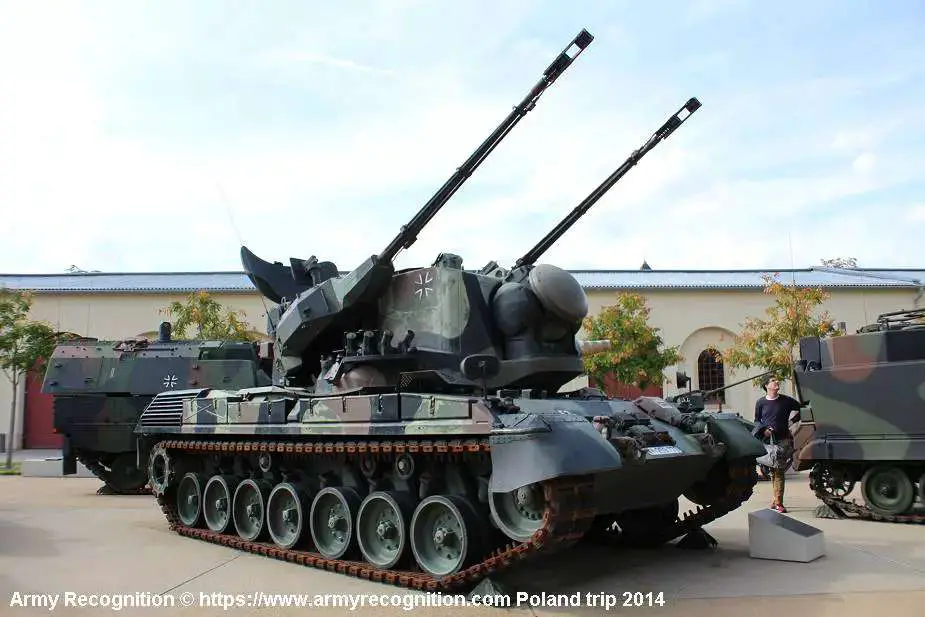
The Gepard Air Defense System: Entered service in 1976, this robust anti-aircraft vehicle is equipped with twin 35mm Oerlikon KDA autocannons, designed to protect against aerial threats. (Picture source Army Recognition Group)
The Ukrainian army recently received the Skynex air defense system from Germany. This advanced system utilizes the Oerlikon Revolver Gun® Mk3, a 35mm automatic turret similar to the one fitted on the Leopard tanks. Integrating this turret into the Leopard tanks with the Sky Skyranger 35 could significantly enhance Ukraine's air defense capabilities.
The new Leopard tanks equipped with the Sky Skyranger 35 would complement the Skynex air defense system by leveraging the same cutting-edge technology. This system synergy would streamline maintenance, training, and operational efficiency. Utilizing a consistent technology base across different platforms ensures that the Ukrainian military can effectively counter various aerial threats with a cohesive and robust air defense strategy.
Incorporating the Sky Skyranger 35 on Leopard tanks means that these vehicles would serve their traditional armored warfare roles and act as highly mobile air defense units. This dual capability enhances the overall flexibility and responsiveness of the Ukrainian armed forces, allowing for rapid adaptation to evolving battlefield scenarios.
With the adoption of the Sky Skyranger 35 and its integration with the Leopard tanks, the Ukrainian army is making a strategic move to fortify its defense infrastructure. This decision is set to establish a more secure and resilient posture against aerial threats, underscoring the value of technological uniformity in enhancing operational effectiveness and strategic readiness.
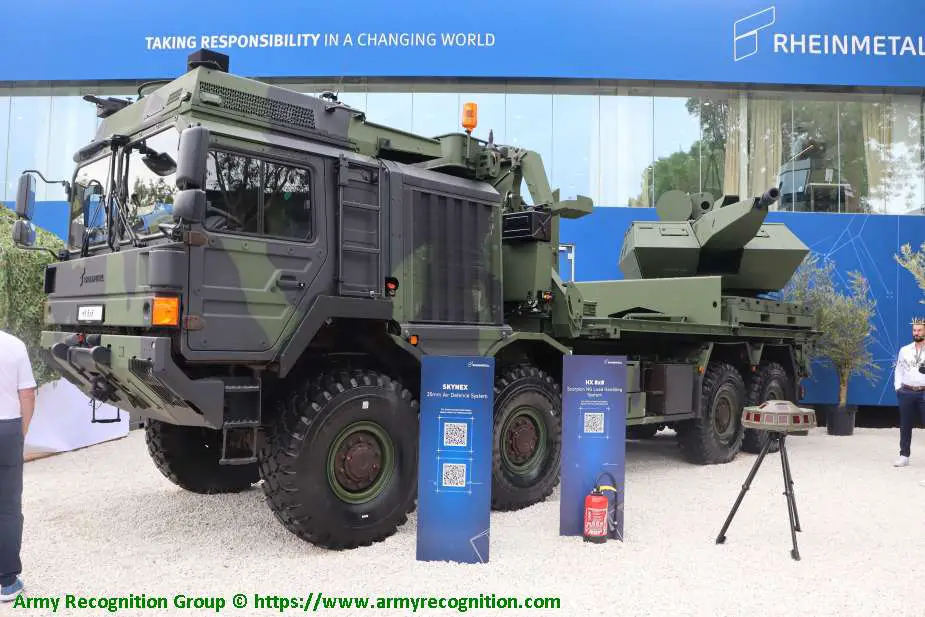
Germany has already delivered to Ukraine two Skynex air defense systems. (Picture source Army Recognition Group)

- Details
- Written by: Administrator
- Category: 2024
- Hits: 2882
For the first time, Ukrainian soldiers are receiving basic military training in Germany, marking a significant expansion in the support provided by European allies amidst the ongoing conflict in Ukraine. This historic initiative, reported by Tagesspiegel, comes after Germany has previously focused solely on specialized training, such as for sappers, medics, and specific weapon systems like the Marder 1A3 and the IRIS-T SLM air defense system.
Follow Army Recognition on Google News at this link
Ukrainian soldiers undergo basic training in Germany for the first time, enhancing their combat skills and tactical readiness. (Picture source: X Account German Aid to Ukraine)
The comprehensive training program covers essential combat skills and practical knowledge crucial for battlefield survival and effectiveness. Ukrainian soldiers are being trained in command signs, proper crawling techniques in undergrowth, and the operation of machine guns. Beyond these basics, they are also receiving instruction on digging proper trenches and camouflaging positions from drone surveillance. Notably, a Ukrainian drone pilot, a unique contributor to the training, is lending expertise to enhance the soldiers' understanding of counter-drone tactics.
This development positions Germany as the third European country to provide basic military training to Ukrainian forces, following the United Kingdom and Poland. The training aims to bolster the combat readiness of Ukrainian troops as they continue to defend their country against ongoing aggression.
German military officials have highlighted the importance of this training in strengthening the capabilities of Ukrainian forces. "The skills learned here are vital for the Ukrainian soldiers as they face a complex and evolving battlefield," a senior German officer stated.
The collaboration, a significant step, underscores the deepening military ties between Ukraine and its European allies. It reflects a broader commitment to supporting Ukraine not just with advanced weaponry and specialized skills but also with foundational military training. This move, part of a larger strategy, is a clear demonstration of the commitment to ensure that Ukrainian forces are well-prepared for the diverse challenges they encounter on the front lines.
The training in Germany is expected to significantly impact the tactical proficiency of Ukrainian soldiers and contribute to their overall mission success. As the program progresses, it is likely to foster even closer cooperation between the militaries of Germany and Ukraine.
As this first group of trainees undergoes their rigorous training regimen, Germany's support represents a vital component in the international effort to assist Ukraine in its defense efforts. The initiative not only strengthens Ukraine's immediate combat capabilities but also reinforces the solidarity and resolve of European nations in supporting their eastern neighbor.
This latest development reaffirms Germany's and other European countries' ongoing commitment to supporting Ukraine and providing crucial training and resources to help safeguard its sovereignty and territorial integrity.
Read more: Ukrainian Soldiers Receive Basic Training in Germany for the First Time
- Details
- Written by: Administrator
- Category: 2024
- Hits: 9396
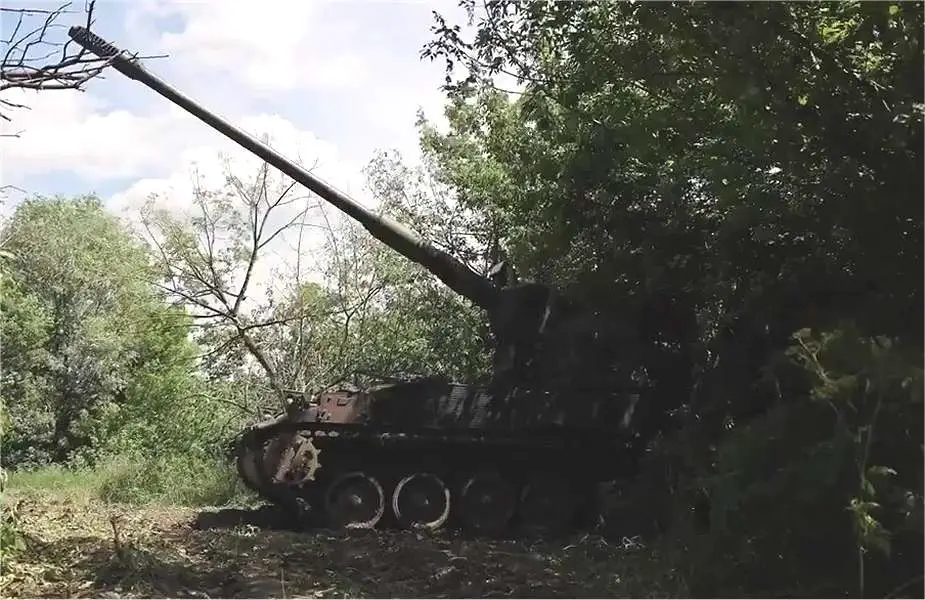
According to a recent video report published by the German newspaper Bild, the PzH 2000 (Panzerhaubitze 2000), a 155mm tracked self-propelled howitzer donated by Germany to Ukraine, has become the most powerful artillery system in the Ukrainian army's inventory. This advanced artillery system has significantly boosted Ukraine's capability to target Russian forces, even on Russian territory.
Follow Army Recognition on Google News at this link
German government gives the green light to Ukraine to strike Russian territory with a German-donated PzH 2000 155mm tracked self-propelled howitzer. (Picture source: Video footage Bild)
The German government has recently granted permission for Ukrainian soldiers to engage military targets on Russian soil. This strategic decision aims to neutralize Russian artillery units capable of striking Ukrainian cities and military positions from across the border. According to Bild's report, the PzH 2000 (Panzerhaubitze 2000) has already been deployed occasionally against targets within Russia, resulting in the destruction of several key Russian positions that once posed a threat to Ukrainian soldiers from the Russian side of the border.
Ukrainian artillery units equipped with the PzH 2000 are employing "shoot-and-scoot" tactics, a strategy designed to fire at enemy targets and swiftly relocate to avoid counterattacks. This approach is particularly effective when combined with real-time information provided by reconnaissance drones. Ukrainian forces are also taking measures to evade detection by Russian drones, ensuring the continued effectiveness and survivability of their artillery units.
The PzH 2000 is a 155mm self-propelled howitzer representing a significant advancement in artillery technology. It boasts several key features, including a high rate of fire, with the ability to fire three rounds in nine seconds or sustain a continuous fire rate of 10 rounds per minute for two minutes. Its impressive range allows it to hit targets up to 30-40 kilometers away with conventional rounds and up to 56 kilometers with extended-range projectiles. The PzH 2000's mobility is enhanced by its tracked chassis, which enables it to maneuver across various terrains and reposition quickly, making it ideal for shoot-and-scoot tactics.
"Shoot-and-scoot" is a military tactic used by artillery units to enhance their survivability and effectiveness on the battlefield. The concept involves firing at enemy targets and then quickly relocating to a new position before the enemy can accurately return fire. This tactic minimizes the time the artillery unit is exposed to counter-battery fire, which is artillery fire directed at the source of incoming rounds. By rapidly changing locations after each firing sequence, the artillery units become more difficult for the enemy to target and destroy, thereby increasing their operational longevity and effectiveness in sustained combat situations.
The tactical advantages of shoot-and-scoot are significant. Firstly, it reduces the likelihood of artillery units being hit by enemy counterattacks, as the enemy cannot precisely target a position that has already been vacated. This protects valuable equipment and safeguards the lives of personnel operating the artillery. Secondly, this tactic leverages the element of surprise and mobility, allowing forces to adapt quickly to changing battlefield conditions and maintain pressure on the enemy from unpredictable locations. By employing shoot-and-scoot, Ukrainian military forces can enhance their offensive capabilities while mitigating the risks associated with static artillery positions. This tactic is particularly effective when combined with real-time intelligence from reconnaissance assets like drones, further increasing the accuracy and effectiveness of artillery strikes.
In a joint project with the Netherlands, Germany has contributed 14 self-propelled howitzers PzH 2000 and spare parts to bolster the artillery capabilities of allied forces. This collaboration underscores the importance of international partnerships in strengthening military assets and operational effectiveness. Integrating the PzH 2000 into military inventories significantly enhances their long-range artillery capabilities, offering superior firepower and advanced tactical flexibility.
The introduction of the PzH 2000 into Ukraine's arsenal represents a significant enhancement of its artillery capabilities, offering both superior firepower and advanced tactical flexibility. As the conflict continues, the use of this German-supplied artillery system underscores the evolving dynamics on the battlefield and the critical role of international military support in shaping the course of the war.

- Details
- Written by: Halna du Fretay
- Category: 2024
- Hits: 4386
VR Cars, a Latvia-based company, has unveiled the Fox, a new 4x4 vehicle, at Eurosatory 2024. Designed to withstand the tough conditions of the Baltic region, the Fox is one of two test vehicles currently being evaluated. Lessons learned from the conflict in Ukraine have significantly influenced its design, resulting in a rugged all-terrain vehicle capable of traversing swamps and soft soils typically found in deep forests.
Follow Army Recognition on Google News at this link
The Fox is a 3-ton class vehicle with a curb weight of 2 tons and a payload capacity of 1 ton (Picture source: ArmyRecognition)
The Fox features a driveline and suspension solution developed in Latvia, complemented by a 2-litre, 220hp diesel engine supplied by Ford.
Notably, parts of the rear and front axles are fully interchangeable, which simplifies maintenance and spare parts management. VR Cars' approach emphasizes survivability through exceptional mobility and stealth.
The company asserts that in the complex conditions of the Arctic and Eastern Europe, traditional armor is no longer relevant due to the threat posed by anti-tank guided missiles (ATGMs) and drones.
Consequently, the Fox has been designed without doors to facilitate easy ingress and egress. Its interior is constructed from strong composite plastic, allowing for easy cleaning with a high-pressure water jet.
The Fox is a 3-ton class vehicle with a curb weight of 2 tons and a payload capacity of 1 ton. It can carry a crew of up to four soldiers along with weapons, ATGMs, mines, and drones. The vehicle is also capable of integrating a full radio system. The Fox platform can support a range of configurations, including ambulance, command post, weapons carrier, and drone control center.
A 6x6 version is anticipated, which will share significant mechanical parts with the 4x4 version. VR Cars plans to have the Fox ready for production next year and is currently in discussions with potential customers in the region.
Read more: Eurosatory 2024 Sees Introduction of VR Cars Fox 4x4 Vehicle
- Details
- Written by: Halna du Fretay
- Category: 2024
- Hits: 8847
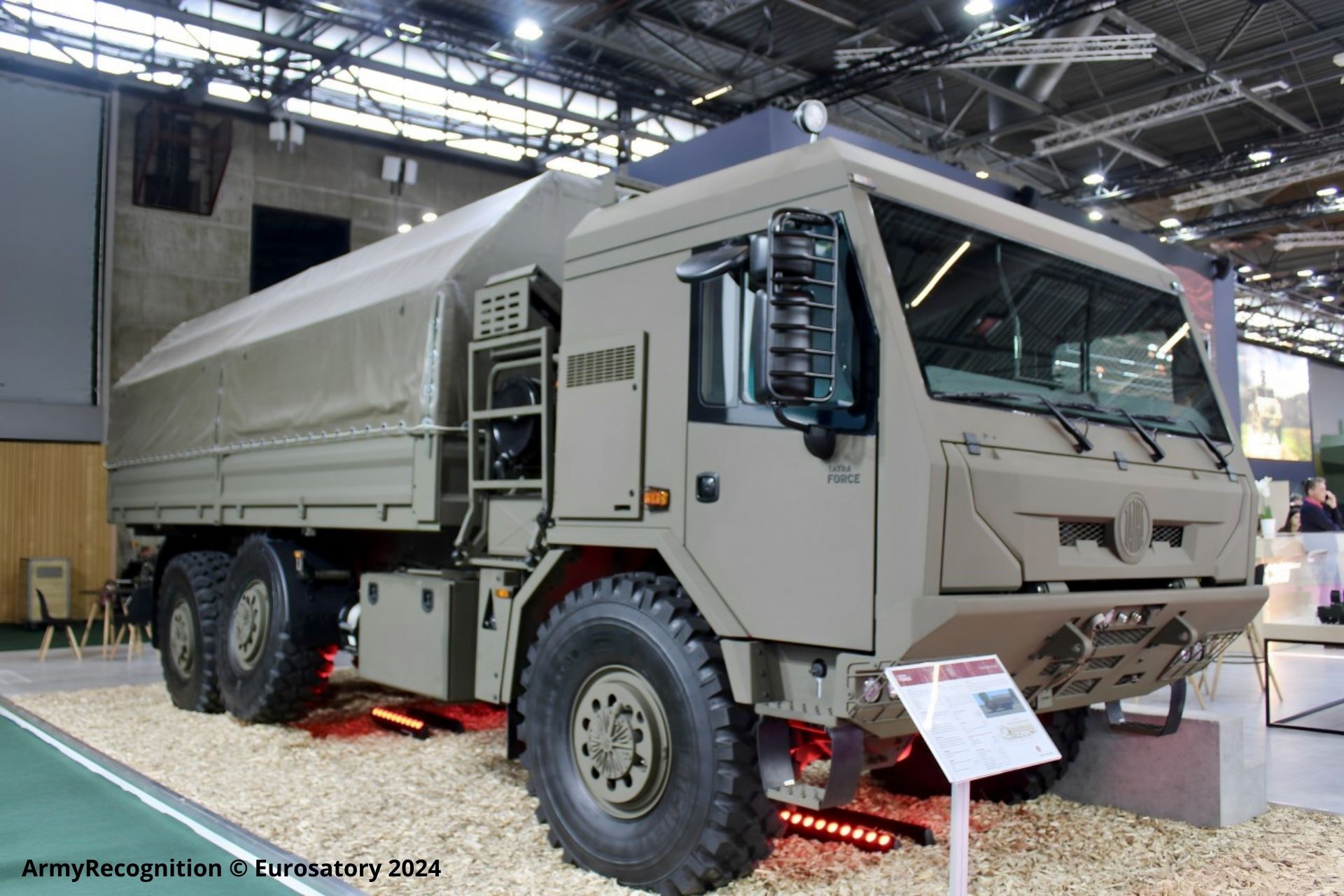
Tatra Export, representing Tatra Trucks at Eurosatory 2024, used the show for the world premiere of the third-generation Tatra T815-7 Force range. The ceremonial unveiling of the range, represented by a flatbed 6x6 truck, occurred on 17 June 2024, the first day of the show. Follow Army Recognition on Google News at this link
The third-generation T815-7 retains Tatra's unique and proven tubular backbone-type tube chassis, with swinging independently suspended half-axles (Picture source: ArmyRecognition)
The truck displayed features a standard unarmoured cab, though Tatra will offer armoured cabs developed and manufactured in-house. The new standard unarmoured cabin is available in two- and four-door versions and includes an improved interior and a digitised dashboard. This standard cab can be quickly and easily swapped for an armoured cab, even under field conditions.
The third-generation T815-7 retains Tatra's unique and proven tubular backbone-type tube chassis, with swinging independently suspended half-axles. The suspension is provided by airbags, coil springs, or leaf springs in varying combinations to suit user requirements. Standard configurations include 4x4, 6x6, and 8×8, though the modular backbone tube concept allows for multi-axle versions with various steering and driven axles.
An interesting feature of the T815-7 is the optional engine location. The engine remains longitudinally situated between the frame rails, but it can be located further back and behind the front axle, an option that allows for a 110 mm reduction in overall cab height. Engine options include electronically controlled Tatra V8 and V12 air-cooled engines or Cummins or Caterpillar water-cooled units, specifically the six-cylinder C9.3B. Engines can be coupled to ten- or fourteen-speed Tatra automated transmissions with electronic shifting, the ZF TraXon automated transmission, or the ZF EcoLife 2 automatic version. Allison six- or seven-speed fully automatic transmissions are also an option. Transfer cases are Tatra's own and are available in single- or two-speed versions.
Serial production of third-generation Force models is underway, with the first examples ordered by the Fire and Rescue Service of the Czech Republic. Military versions are expected to enter series production in 2025, with production running parallel to second-generation models in line with customer orders.
Another new product displayed by Tatra is the T158 Phoenix 10×10 bridge carrier, demonstrating the modular concept of Tatra's tubular backbone-type chassis. The truck displayed is fitted with a Tatra armoured cab and the KNDS Leguan mobile bridge superstructure. The Phoenix range, introduced in 2011, is a heavy commercial range of trucks targeted primarily at severe and arduous duty roles, but it is also suitable for many military roles. The Phoenix family is based on Tatra's backbone tube chassis design, though it marked a step-change for the company by sourcing cab and certain automotive components from OEMs for the first time on a truck of backbone tube construction.
Read more: Tatra Trucks Unveils Third-Generation T815-7 at Eurosatory 2024
- German Army to receive 105 new Leopard 2A8 tanks for combat brigade in Lithuania
- Eurosatory 2024: BAE Systems highlights BvS10 BEOWULF tracked articulated all-terrain vehicle
- Nigerian Air Force Announces Acquisition of 50 New Aircraft to Combat Terrorism
- Eurosatory 2024: KNDS Unveils M2CP Modular Mobile Command Post