
- Details
- Written by: Halna du Fretay
- Category: 2024
- Hits: 9087




Breaking news






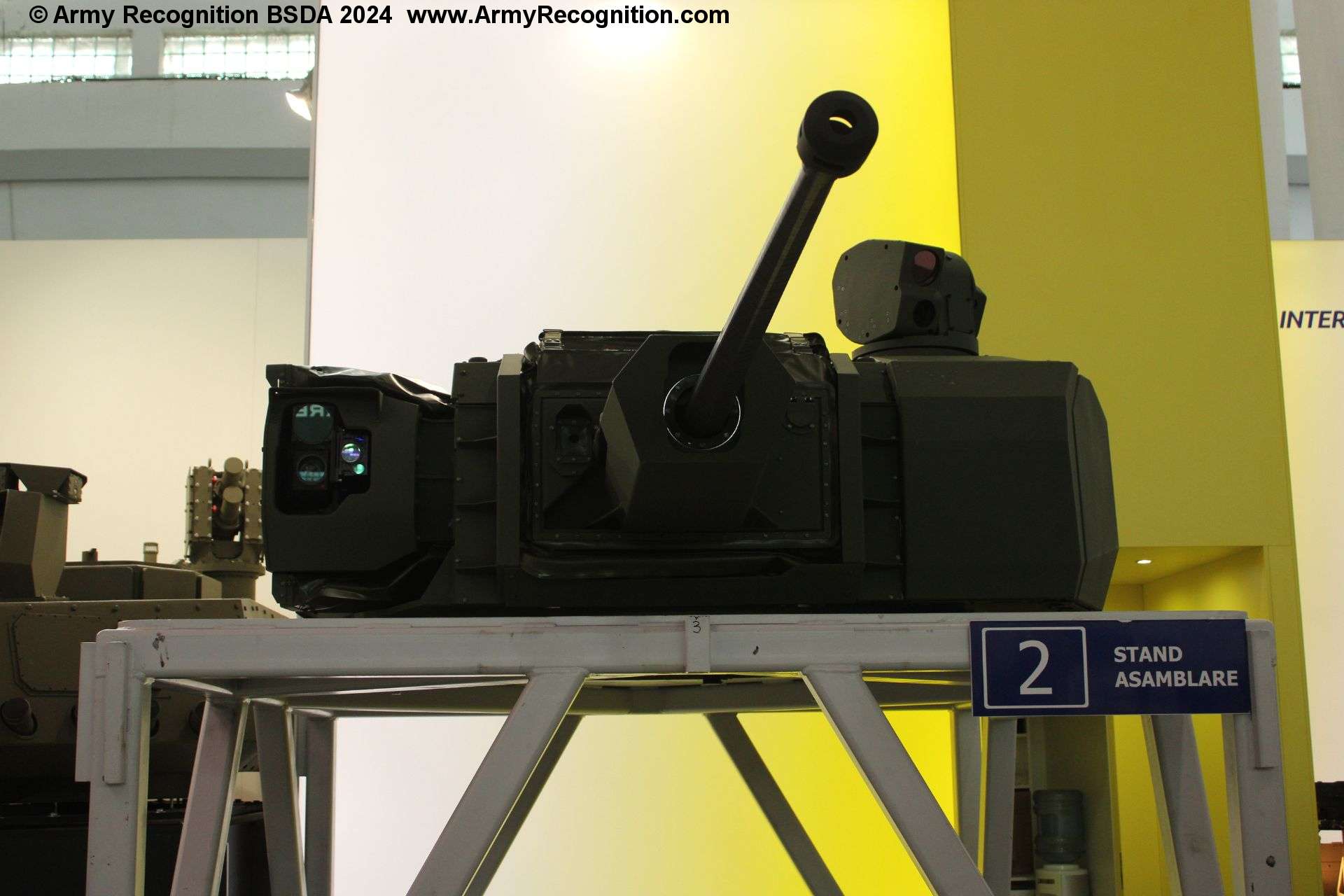
At the Black Sea Defense & Aerospace 2024 exhibition, Elmet International, a subsidiary of Elbit Systems, presented the UT30MK2, the latest armament system for armored personnel carriers (APC) and infantry fighting vehicles. This advanced unmanned turret offers high-performance firepower to engage both stationary and moving targets, boasting the highest first-round and burst-hit probability on the market. The company also showcased a Remote-Controlled Weapon Station (RCWS) and a dual C-UAS Remote-Controlled Weapon Station.
Follow Army Recognition on Google News at this link
The configurable nature of the UT30MK2 makes it suitable for various platforms, offering versatility and adaptability to meet different operational requirements (Picture source: ArmyRecognition)
The UT30MK2 is designed for optimal integration on various platforms and allows the addition of various subsystems, enhancing protection and lethality. As a fully overhead turret with no deck penetration, it preserves the vehicle’s armor protection and maintains existing internal space, ensuring crew safety. Its design includes a very low profile, incorporating a wide range of in-house developed subsystems, such as fire control, electrical drive stabilization, gunner and commander sights, battle management, and protection systems. These features provide reliable and high-performance firepower on the battlefield. The UT30MK2 turret from Elbit Systems is a lightweight 30mm unmanned turret that integrates combat systems, fire control systems, sensors, and display systems for enhanced combat effectiveness and target identification capabilities.
The configurable nature of the UT30MK2 makes it suitable for various platforms, offering versatility and adaptability to meet different operational requirements. This turret is designed to maximize efficiency while ensuring the safety and operational effectiveness of the vehicle crew. Its sophisticated design and integration capabilities reflect Elbit Systems' commitment to advancing combat technology.
The RCWS is a highly accurate, multi-purpose weapon system designed for small and mid-caliber weapons, adaptable for dynamic or static operations on ground stationary, ground mobile, or naval platforms. It can be mounted on a wide range of wheeled or tracked vehicles globally and is compatible with weapon types including 7.62mm or 12.7mm caliber guns and 30mm or 40mm automatic grenade launchers. The dual weapon RCWS configuration allows for various combinations, such as a 12.7mm machine gun with a 7.62mm machine gun or a 40mm automatic grenade launcher. Key benefits include high-precision firepower, integrated electro-optics, MIL standard compatibility, and minimal risk to the operator. Features include bi-axial weapon and sight stabilization, automatic target tracking, remote control, backup manual control, and day/night operation. Lightweight and low-profile, the RCWS can be mounted without roof penetration, offering high hit probability and superior performance across diverse battlefield scenarios.
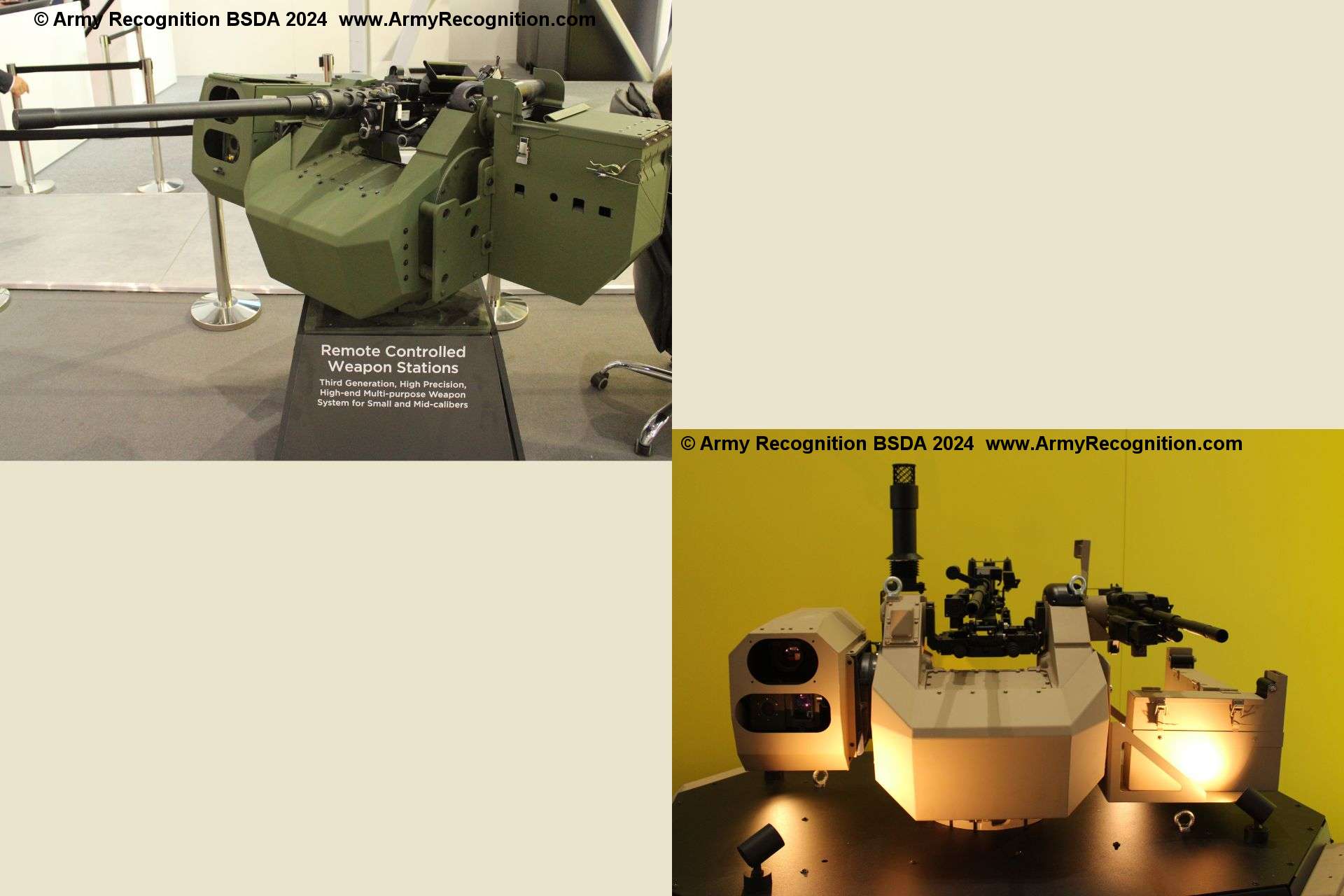
The Remote Controlled Weapon Station RCWS (left)and the Dual C-UAS Remote Controlled Weapon Station ( right) presented by Elmet International at BSDA 2024 (Picture source: ArmyRecognition)
In March 2023, Elbit Systems announced that its Romanian subsidiary, Elmet International SRL, was awarded an additional $120 million contract from General Dynamics European Land Systems (GDELS) for the supply of remote-controlled turrets, remote-controlled machine guns (RCWS), and mortar systems for the Romanian Armed Forces' armored personnel carriers. The work will be carried out in Romania over a three-year period. Under this contract, Elbit Systems will supply UT30 MK2 turrets, RCWS, and SPEAR mortar systems, all fully integrated aboard the GDELS "Piranha V" APCs.
Elbit Systems, as the sole shareholder, has established four Romanian production units: Simultec (Măgurele), which produces simulators for air, land, and naval forces, develops software programs, and integrates hardware; A/E Electronics (Bacău), which produces and tests electronic sub-assemblies for military and civilian purposes; Elmet (Bacău), which produces electromechanical systems and subsystems, including manned and remote-controlled turrets (12.7mm/25mm/30mm); and Elmet Măgurele, a production unit for land systems that serves as a production and integration center for turrets and battle stations contracted by Elbit Systems within local programs, as well as a regional hub designed to meet the demand for such systems in other countries.
Through these three companies in Romania, Elbit Systems is one of the most significant players in the Romanian defense industry. At Elmet International, with two factories in Bacău and Bucharest, systems and subsystems for hardware equipment are produced, and at the Măgurele factory, there is a production and integration center for turrets and remote-controlled weapons for locally produced Piranha 5 military vehicles.

- Details
- Written by: Halna du Fretay
- Category: 2024
- Hits: 5072
Breaking news
At the Black Sea Defense & Aerospace 2024 exhibition, the Israeli company RAFAEL presented for the first time a segment of its air defense systems, including the IRON SHIELD and the IRON LANCE interceptor. These new systems expand RAFAEL's distinguished portfolio of air defense solutions, which also includes the SPYDER All in One (AIO) and the DAVID'S SLING interceptor. The advanced DRONE DOME, with its counter-unmanned aerial systems (C-UAS) and counter-unmanned aerial vehicles (C-UAV) capabilities, also joins this lineup, providing critical defense against drone threats.
Follow Army Recognition on Google News at this link
The Iron Lance Interceptor unveils for the first time by RAFAEL at BSDA 2024 (Picture source: ArmyRecognition)
At the Black Sea Defense & Aerospace 2024 exhibition, the company also showcased several systems such as the SPYDER AIO. The latest addition to the combat-proven SPYDER family, this system integrates the main functions of several systems into a single 8×8 vehicle. It deploys within minutes on difficult terrains, ensuring short reaction times and a minimized logistics footprint. This system effectively addresses contemporary challenges by offering a revolutionary solution for air defense.
DRONE DOME, equipped with a comprehensive C-UAS and C-UAV solution, is designed to detect, track, and neutralize hostile UAS and UAV in various operational scenarios. It provides a vital layer of protection against emerging threats using different methods to neutralize targets.
Additionally, RAFAEL presented the SKY SPOTTER, a passive electro-optical (EO) early warning system that detects, tracks, and manages multiple targets simultaneously. This system allows for detailed and persistent 24/7 investigation of selected targets, enhancing situational awareness and target management.
The SPIKE Precision Guided Tactical Missile Family, in service with the Romanian Armed Forces for 25 years, was also showcased at the exhibition. This family is represented by the 6th Generation NLOS exponent, highlighting RAFAEL's long-standing partnership with Romanian defense operators.
RAFAEL's presence at BSDA 2024 underscores its commitment to providing cutting-edge air defense technologies. The IRON LANCE interceptor is unveiled for the first time in Romania, marking another significant milestone in RAFAEL's extensive portfolio. The company, known for the IRON DOME and DAVID'S SLING systems, also showcases other advanced solutions for aerial threats, including drones.
The Iron Dome defense system is used by Israel to protect its territories against threats from rockets, artillery shells, and short-range missiles. Deployed since 2011, Iron Dome is designed to intercept and destroy projectiles in flight before they reach their targets, primarily populated areas. It uses an advanced radar to detect projectile launches and quickly assesses their trajectory. If a threat is identified, the system launches an interceptor to neutralize the projectile.
Iron Dome consists of three main components: a detection and tracking radar, a battle management and control (BMC) center, and launch units with Tamir interceptors. The radars are capable of tracking multiple targets simultaneously and determining which pose a threat to populated areas. The Tamir interceptors, equipped with electro-optical sensors and advanced guidance systems, are designed to operate in all weather conditions, day and night. They can intercept projectiles at distances ranging from 4 to 70 kilometers. The system is mobile and can be repositioned quickly to protect different areas according to operational needs.
Read more: RAFAEL Unveils the Iron Lance Interceptor et BSDA 2024

- Details
- Written by: Halna du Fretay
- Category: 2024
- Hits: 8936
Breaking news
At the Black Sea Defense & Aerospace 2024 exhibition, ASELSAN, a company under the Turkish Armed Forces Foundation, introduced the KORKUT, its self-propelled anti-aircraft artillery system. This system is designed to provide effective air defense for mechanized troops and mobile units. It is equipped with a stabilized, unmanned 35mm turret capable of firing at a rate of 2 x 550 rounds per minute. This capability allows for firing while in motion, crucial for engaging modern aerial targets such as aircraft, cruise missiles, air-to-ground missiles, and drones.
Follow Army Recognition on Google News at this link
The KORKUT is equipped with an automatic target-tracking system that integrates a fire control radar and electro-optical sensors, facilitating effective coordination with command and control units (Picture source: ArmyRecognition)
The KORKUT also features an Automatic Linkless Ammunition Feeding Mechanism (ALAFM), which facilitates the simultaneous loading of two types of ammunition and allows for a change in ammunition type in less than 15 seconds. Compatible with both 35mm Airburst munitions developed by ASELSAN and conventional ammunition, the KORKUT significantly enhances effectiveness against aerial threats.
Additionally, the KORKUT is equipped with an automatic target-tracking system that integrates a fire control radar and electro-optical sensors, facilitating effective coordination with command and control units. The command vehicle associated with the system has a radar range of 70 km and is built on the amphibious FNSS ACV-30 chassis, allowing it to navigate deep waters and rivers.
The system uses 35mm ATOM munitions, which, through a base fuse, project tungsten pellets and are programmed to explode near the target, increasing damage and thus enhancing the likelihood of neutralizing enemy aircraft.
Entered into service in 2016 and used in various contexts, including the Libyan Civil War and Turkish military interventions, the KORKUT has been produced by ASELSAN and FNSS. To date, 13 systems have been constructed, with 40 units ordered by the Turkish Armed Forces, with delivery expected to be completed by 2022. The presence of KORKUT at the Black Sea Defense & Aerospace 2024 highlights ASELSAN's commitment to innovation in defense and its growing adoption by armed forces worldwide, affirming ASELSAN's role as a leader in ground defense technologies.
Moreover, ASELSAN has strengthened its presence in Romania and more broadly in Eastern Europe by establishing strategic partnerships and opening regional offices to better meet the specific needs of these markets. In Romania, ASELSAN collaborates with local companies to co-develop and produce defense systems tailored to the requirements of the Romanian armed forces. These initiatives are part of a broader strategy aimed at enhancing defense relations with Eastern European countries, offering advanced technological solutions, and supporting regional defense capabilities.

- Details
- Written by: Jérôme Brahy
- Category: 2024
- Hits: 10218
Breaking news
According to Military Africa on May 20, 2024, the Democratic Republic of Congo (DRC) received three additional CH-4 Rainbow drones from China. These medium-altitude, long-endurance (MALE) drones will be deployed to the eastern region of the country to support military operations against the M23 rebels and the Rwanda Defence Force. This delivery follows an initial batch, with three more drones expected to arrive in the coming months, totaling nine.
Follow Army Recognition on Google News at this link
Noted for its affordability and less stringent acquisition conditions, the CH-4 drone was unveiled in 2011 and is designed for various missions including reconnaissance, surveillance, target acquisition, and strike operations. (Picture source: Chinese social media)
The CH-4, also known as the Cai Hong-4, is an unmanned combat aerial vehicle (UCAV) developed by the China Aerospace Science and Technology Corporation (CASC). Noted for its affordability and less stringent acquisition conditions, this drone was unveiled in 2011 and is designed for various missions including reconnaissance, surveillance, target acquisition, and strike operations. The CH-4 is available in two main variants: the CH-4A, primarily for reconnaissance, and the CH-4B, which is armed for combat missions.
The drone features a piston engine driving a three-bladed propeller, providing a top speed of 235 km/h and a maximum endurance of up to 40 hours. It can carry a payload of up to 345 kilograms, including munitions such as the AR-1 air-to-ground missile and FT-9 guided bombs. The CH-4 has been used by several countries for military operations, especially against non-state actors in conflict zones.
Last year, the Congolese government revealed its plan to procure nine CH-4 attack drones, marking a significant step in its campaign against the M23 rebels. The first batch of three drones was delivered earlier, with the remaining six expected later this year. The drones will be stationed at the South Kavumu military airport, strategically located near conflict zones. In June of the previous year, a video surfaced showing three CH-4 drones and a ground control station at N'Dolo airport in Kinshasa. The footage featured one drone taxiing on the runway in front of a hangar where two other drones were parked, demonstrating their operational readiness.
The CH-4 drones, noted for their affordability and less stringent acquisition conditions, have become a viable option for nations seeking to enhance their defense capabilities, aligning with a broader trend in Africa. Countries such as Nigeria, Morocco, Egypt, Algeria, and Ethiopia have also acquired Chinese military drones, reflecting China's goal of becoming a prominent player in the global UAV market. These acquisitions include the Cai Hong (Rainbow) family of drones, developed by CASC, which comprises various models like the CH-1, CH-2, CH-3, and the larger CH-5, each tailored for different mission profiles from basic reconnaissance to advanced combat roles.

The CH-4 can carry a payload of up to 345 kilograms, including munitions such as the AR-2 air-to-ground missile and FT-9 guided bombs. (Picture source: Army Recognition)
The Cai Hong series of Chinese drones has gained international attention for its practicality and ease of procurement, attracting countries in the Middle East, Africa, and Asia. These drones are equipped with advanced avionics, synthetic aperture radars, and electro-optical targeting systems, making them suitable for a broad range of military applications. Continuous upgrades have been made to enhance their performance and capabilities, corresponding to the broader strategy announced last year by the DRC to strengthen the Congolese army's efforts against the ongoing insurgency in the east.
The eastern region of the DRC, where the drones will be deployed, is troubled by violence from numerous ethnic militias and armed groups competing for control near the borders with Uganda and Rwanda. According to the United Nations, at least 120 armed groups operate in this area, complicating efforts to achieve peace and stability.
Since February 2024, intensified clashes between the Congolese military and the M23 rebels have led to significant territorial gains by the rebels, and over 7.1 million people are now displaced across the country, with makeshift camps around Goma overwhelmed by the influx.
The campaign against the M23 rebels in the DRC has seen intensified military efforts in recent months, involving both the Congolese armed forces and UN peacekeepers. This escalation aims to counter the M23's territorial advances in the eastern regions, notably around Goma and South Kivu. The conflict has resulted in significant displacement, with over 200,000 people forced to flee their homes, exacerbating an already severe humanitarian crisis. Accusations have been exchanged between the DRC and Rwanda, with Kinshasa alleging Rwandan support for the M23 and various armed groups, a claim that Kigali denies.
The withdrawal of the UN peacekeeping mission, MONUSCO, and the deployment of regional forces have not stabilized the situation, with continued violence symbolized by the M23, or March 23 Movement, a rebel group that initially formed in 2012 from defectors of the Congolese army, primarily consisting of ethnic Tutsis. The group's name references a peace agreement signed on March 23, 2009, which they argue the DRC government has failed to uphold. The M23 briefly captured Goma in 2012 before being driven out by Congolese and UN forces. After a period of inactivity, the group re-emerged in late 2021, citing similar grievances. The resurgence has led to renewed violence and instability in the eastern DRC, involving regional actors and complicating efforts to achieve lasting peace.

- Details
- Written by: Administrator
- Category: 2024
- Hits: 4328
Breaking news
According to information released by the U.S. Department of Defense (DOD) on May 24, 2024, a Moroccan Royal Armed Forces Abrams M1A1SA tank platoon has conducted a successful bilateral training exercise at Tantan Training Camp. The exercise is a component of African Lion 2024, which marks the 20th anniversary of U.S. Africa Command's premier joint military exercise.
Follow Army Recognition on Google News at this link
An M1A1SA Abrams main battle tank from the Moroccan Royal Armed Forces returns from a bilateral training exercise at Tantan Training Camp, May 24, Tantan, Morocco, part of African Lion 2024. (Picture source: U.S. DoD)
African Lion 2024, led by the U.S. Army Southern European Task Force, Africa (SETAF-AF), spans from April 19 to May 31 and includes multiple training locations across Ghana, Morocco, Senegal, and Tunisia. This year's exercise sees the participation of over 8,100 military personnel from 27 nations, including NATO contingents, making it one of the most extensive and diverse exercises in the program's history.
The Moroccan Royal Armed Forces' involvement underscores the solid military cooperation between Morocco and the United States. The exercise aims to enhance interoperability among the participating forces, improve readiness, and foster professional relationships between the U.S. and its African partners.
The Moroccan Army currently operates 222 M1A1SA Abrams tanks. The M1A1SA is a specialized variant of the M1 Abrams tailored for export and includes several upgrades for enhanced performance in various combat situations. The M1A1SA Abrams is an advanced main battle tank featuring a range of technical enhancements. It is protected with reinforced composite armor and additional reactive armor packages for improved survivability against anti-tank missiles and RPGs.
The Moroccan M1A1SA tank is armed with a 120mm smoothbore cannon capable of firing various ammunition types, including armor-piercing and high-explosive rounds. The fire control system includes advanced targeting and night vision capabilities, allowing for precise engagement of targets in various conditions. Additionally, the M1A1SA is powered by a gas turbine engine, providing significant mobility and speed across diverse terrains.
Training activities at Tantan Training Camp included live-fire exercises, tactical maneuvers, and joint operations planning. These drills prepared the tank platoon for various combat scenarios and enhanced its operational capabilities.
African Lion 2024 continues to be a cornerstone of military collaboration in the region, promoting stability and security through joint efforts. The exercise strengthens military ties and demonstrates a shared commitment to peace and security in Africa.
As the exercise progresses, participating nations continue to engage in a series of rigorous training sessions, aiming to build a cohesive and resilient force capable of addressing diverse security challenges in the region.
- Details
- Written by: Vandenbosch
- Category: 2024
- Hits: 25999
Breaking news
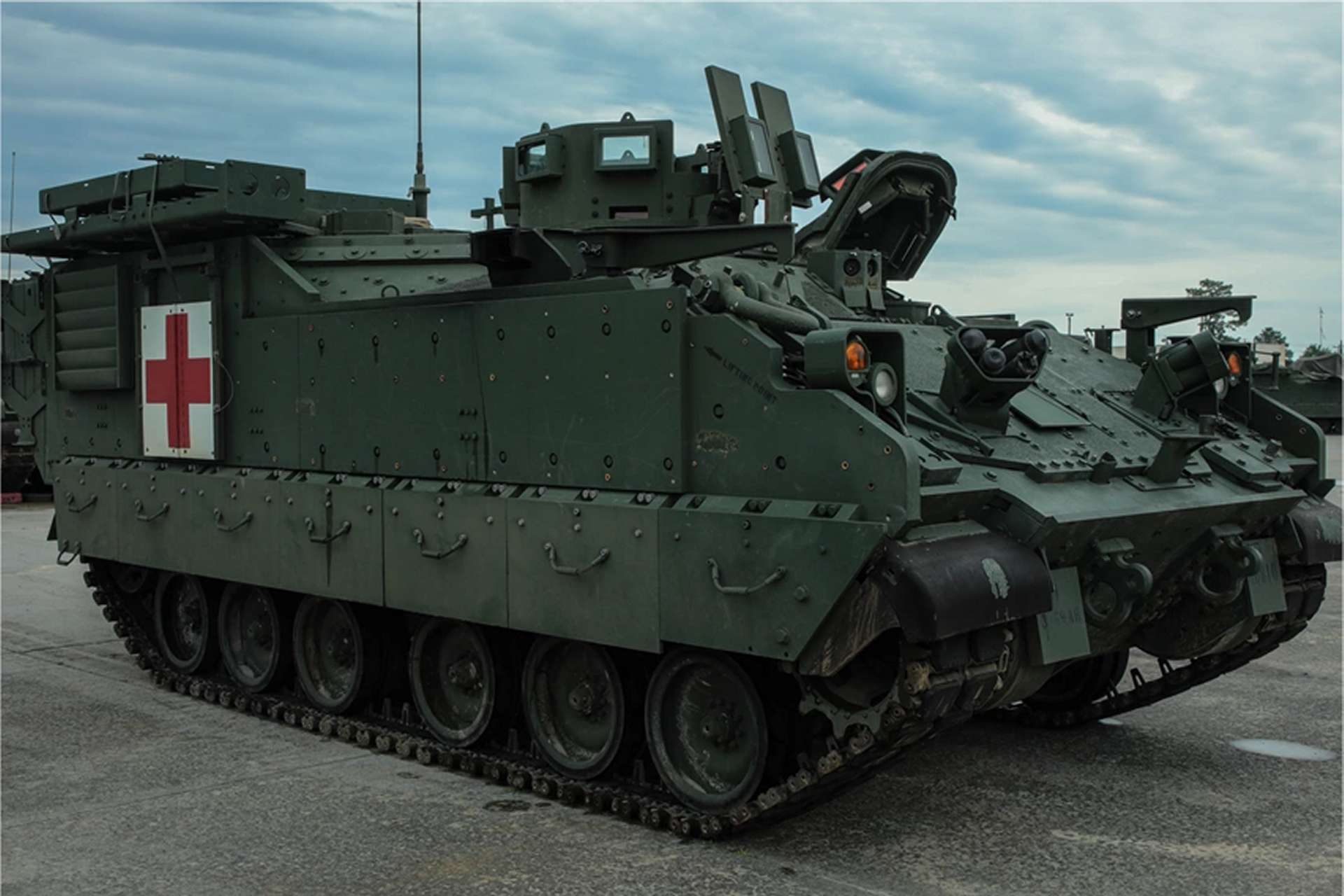
The U.S. Army is continually updating its equipment to ensure mission success. On May 5, 2024, the medics of the 1st Armored Brigade Combat Team, 3rd Infantry Division received the Army’s new combat vehicle, the Armored Multi-Purpose Vehicle (AMPV), which is set to replace the M113 Armored Personnel Carrier as part of the Army's modernization initiative.
Follow Army Recognition on Google News at this link
An M1285 Medical Treatment Armored Multi-Purpose Vehicle awaits inspection at a motor pool. (Picture source: US DoD)
Sergeant First Class Benjamin Proctor, a medical platoon sergeant with the 1st Armored Brigade Combat Team, highlighted the advantages of the new vehicle, particularly its spacious interior. "The biggest advantage of the AMPV is the space it offers medics to move around patients," noted Proctor. The vehicle can accommodate four litter patients or six ambulatory patients, an improvement over its predecessor, the M113.
The brigade's medical units now operate the M1284 Medical Evacuation Vehicle (MEV) and the M1285 Medical Treatment Vehicle (MTV) variants of the AMPV. The AMPV offers a 78% increase in interior volume compared to the M113, as well as improved armor and speed capabilities. Its advanced radio system also enhances communication with troops in the field.
The Armored Multi-Purpose Vehicle (AMPV) is a modern combat vehicle designed to meet the diverse needs of the battlefield. Equipped with various armaments, the AMPV can be fitted with M249 5.56mm machine guns, M240 7.62mm machine guns, M2 12.7mm machine guns, as well as MK-19 40mm automatic grenade launchers and 120mm mortars, offering considerable flexibility in firepower. Its all-welded aluminum structure and explosive reactive armor at the front and on each side of the hull provide robust protection against ballistic threats and explosions.
Primarily used by the U.S. armed forces, the AMPV was designed and manufactured in the United States. Weighing between 34,000 and 36,000 kg, it balances protection and mobility, reaching a maximum speed of 54 to 61 km/h. Its range of 362 km allows it to cover long distances without frequent refueling.
The vehicle is equipped with essential accessories for modern operations, including an NBC (nuclear, biological, chemical) protection system, air conditioning, night vision, and a fire suppression system. These features ensure that the crew can operate effectively in hostile environments.
The AMPV is designed to transport a crew of two and six soldiers in its APC (Armored Personnel Carrier) version. Its dimensions, with a length of 6.4 meters, a width of 3.2 meters, and a height of 2.2 meters, enable it to carry both troops and equipment while ensuring optimal protection and rapid response capability on the field.

An old M113 APC was used as a base for old American ambulances ( Illustrative photo). ( Picture Source: Army Recognition)
Proctor pointed out the limitations of the M113, which, although effective for patient transport, was too cramped for medical treatment in transit. "In these vehicles, my medics can move around the patient, take vital signs, stop bleeding, perform all their medical interventions en route to the next level of care," he explained.
The AMPV improves the ability to shoot, move, and communicate. Medical platoons are now equipped with short-barrel M249 machine guns that can be used through the vehicle’s gunner hatch, providing defensive capabilities during patient transport.
The Army's doctrine for role-one aid stations, the primary healthcare providers on the battlefield, includes triage, resuscitation, and stabilization. The M1285 MTV is designed to facilitate these functions effectively. "When they [M1285 MTV] travel together, they can form a role-one aid station," Proctor said. The vehicle is equipped with a deployable tent and tarps to quickly set up a field aid station.
The medical variants of the AMPV, including the M1284 MEV and M1285 MTV, are equipped with air conditioning units to cool patients, and the MTV even includes a refrigerator for blood storage. "We can handle any type of trauma, even the most severe," added Proctor, detailing the vehicle's capabilities in managing serious injuries and medical conditions.
As the 1st Armored Brigade Combat Team prepares for an upcoming deployment, the new AMPVs will be crucial in enhancing their medical response and treatment capabilities. "They are leaps and bounds better than the M113, and I am glad we have them," concluded Proctor. "We will learn how to implement them and we will learn a lot about them when we deploy on our upcoming rotation."

A combat medic secures a litter in an Armored Multi-Purpose Vehicles (AMPV). ( Picture Source: US DoD)
Read more: United States Replaces Old M113 Ambulance with New AMPV Armored Vehicles

- Details
- Written by: Jérôme Brahy
- Category: 2024
- Hits: 5579
Breaking news
On May 16, 2024, the Lebanese militant group Hezbollah carried out its first airstrike, targeting the Israeli settlement of Metula with a newly developed kamikaze drone equipped with two S5 air-to-surface missiles. This marked a symbolic escalation in the conflict between Hezbollah and Israel. According to various sources, the drone successfully hit an Israeli military vehicle, resulting in the deaths of two Israeli soldiers and injuries to others.
Follow Army Recognition on Google News at this link
The drone, armed with two S5 missiles, flew over Metula and first struck an Israeli military vehicle before targeting an IDF garrison. After deploying its missiles, the kamikaze drone continued on its path and exploded upon impact with another target. (Picture source: Twitter/Middle East Observer)
Metula, situated near the Lebanese border, holds strategic military significance due to its location and the presence of both civilian and military infrastructure. The settlement's proximity to the border makes it a key area for monitoring and potential defense operations against ground incursions, making it a significant target for Hezbollah's operations aimed at disrupting Israeli defense and surveillance capabilities.
Hezbollah's military media released video footage of the operation, showing the drone launching its missiles. The drone, armed with two S5 missiles, flew over Metula and first struck an Israeli military vehicle before targeting an IDF garrison. After deploying its missiles, the kamikaze drone continued on its path and exploded upon impact with another target. This method allows Hezbollah to bypass Israel's aerial defenses and carry out airstrikes without the need for conventional airstrips, which are vulnerable to Israeli airstrikes.
The S5 missile used in the attack is a Soviet-era 57 mm unguided air-to-surface rocket. It is 1.4 meters in length, weighs 5 kilograms, and has a range of approximately 4 kilometers. The missile is equipped with a high-explosive warhead and a solid-propellant motor, originally designed for use by fighter-bombers and helicopters. The S5 features folding tail fins for improved stability during flight. Hezbollah has adapted these missiles for use with their drones, indicating a tactical evolution in their ability to conduct aerial strikes without relying on traditional, more detectable launch platforms.
In retaliation for the drone attack, the Israeli Air Force conducted strikes on Hezbollah positions in Lebanon, specifically targeting a weapons manufacturing plant in Baalbek. This plant was believed to be involved in producing guided munitions and drones. The Israeli strikes are part of a broader effort to counter Hezbollah's increasing military capabilities.
Historically, Hezbollah has transitioned from a guerrilla group to a well-equipped militia with a significant arsenal, including rockets, missiles, and now various armed drones. Their arsenal is estimated to include around 150,000 to 200,000 rockets and missiles, with substantial support from Iran. The deployment of kamikaze drones armed with S5 missiles demonstrates Hezbollah's strategy to increase pressure on Israeli military positions. Since October 2023, Hezbollah has conducted numerous attacks on Israeli communities and military posts along the border, resulting in significant casualties on both sides.
Since its declaration of independence in 1948, Israel has experienced various military attacks, including airstrikes. One of the earliest incidents occurred immediately after its independence declaration on May 14, 1948, when Egyptian aircraft bombed Tel Aviv. This marked the beginning of the 1948 Arab-Israeli War, involving multiple air attacks by the Arab states of Egypt, Jordan, Syria, Iraq, and Lebanon as part of their broader military campaigns against Israel.
In later decades, Israel faced additional airstrikes during significant conflicts. During the Six-Day War in 1967, the air forces of Egypt, Jordan, and Syria attacked Israel. Similarly, during the Yom Kippur War in 1973, Israel was subjected to substantial air assaults by Egypt and Syria. The Second Lebanon War in 2006 featured extensive rocket and missile attacks from Hezbollah into northern Israel, which were part of a broader strategy that also included airstrikes and ground operations by Israeli forces in response to Hezbollah's actions.
More recently, Israel has been targeted by rocket fire and drone attacks from non-state actors such as Hamas and Hezbollah. Since 2005, Gaza-based groups have frequently launched rockets into Israeli territory, prompting military operations like Operation Cast Lead (2008-2009), Operation Pillar of Defense (2012), and Operation Protective Edge (2014). These operations were responses to ongoing rocket fire targeting Israeli civilian areas. Additionally, the conflict has seen an increase in locally-made drone and missile attacks by Hezbollah, including the use of the Tharallah twin anti-tank guided missile system, specifically designed to counter the Trophy Active Protection System (APS) mounted on Israeli Merkava tanks.

- Details
- Written by: Administrator
- Category: 2024
- Hits: 5093
Breaking news
Lithuania is considering acquiring the IRIS-T medium-range air defense system from Germany, according to an announcement made by Lithuanian Defence Minister Laurynas Kasčiūnas. The news was revealed on May 21, 2024, by the Lithuanian National Television website, "LRT."
Follow Army Recognition on Google News at this link
IRIS-T SLM is a German-made air defense missile system designed to counter a variety of aerial threats with a range of up to 40 kilometers and an altitude reach of 20 kilometers. (Picture source: Dhiel Defence)
This development follows a meeting held last week in Palanga between Lithuanian Defence Minister Laurynas Kasčiūnas and German Defence Minister Boris Pistorius. Kasčiūnas expressed the strategic importance of this potential purchase for Lithuania's national defense.
"I can say today a very important thing, from my point of view, that we are considering the acquisition of the IRIS-T medium-range air defense system from Germany," Kasčiūnas stated, highlighting the critical nature of enhancing Lithuania's defense capabilities.
However, Germany currently faces production constraints for the IRIS-T air defense systems, primarily due to ongoing deliveries to Ukraine. The German government is actively negotiating with its defense industry to ramp up production capacity to meet both domestic and international demand.
The IRIS-T air defense system, developed by German manufacturer Diehl, has garnered significant interest from various nations. In September of last year, Estonia and Latvia collectively signed an agreement to purchase IRIS-T systems valued at approximately 1 billion euros.
The IRIS-T SLM (Surface-Launched Medium-Range) is an advanced air defense system designed to provide comprehensive protection against a wide range of aerial threats. Developed by the German company Diehl Defence, the IRIS-T SLM is a ground-based variant of the highly successful IRIS-T air-to-air missile. The system is equipped with state-of-the-art radar and missile technology, enabling it to detect, track, and intercept targets such as aircraft, helicopters, unmanned aerial vehicles (UAVs), and cruise missiles. Its robust combat capabilities make it a formidable asset in modern air defense, offering a high probability of kill against incoming threats.
The IRIS-T SLM missile boasts an impressive operational range and altitude, capable of engaging targets at distances up to 40 kilometers and altitudes reaching 20 kilometers. This extensive range and high-altitude interception capability allow it to effectively neutralize threats before they can pose a danger to critical assets and population centers. The missile's advanced seeker head, coupled with its agile maneuverability, ensures precise targeting and interception, making the IRIS-T SLM a vital component in integrated air and missile defense systems.
As Lithuania navigates its defense procurement options, the potential acquisition of the IRIS-T system underscores the country's commitment to bolstering its air defense amid evolving regional security dynamics.
Read more: Lithuania Eyes Acquisition of IRIS-T Air Defence Missile System from Germany

- Details
- Written by: Vandenbosch
- Category: 2024
- Hits: 13762
Breaking news
Germany has provided an extensive military aid package, including 10 Leopard 1A5 main battle tanks. This delivery, announced on May 22, 2024, includes ammunition for Leopard 2 tanks, 8,500 rounds of 155 mm ammunition, 20 Vector reconnaissance drones with spare parts, 34 RQ-35 Heidrun reconnaissance drones, and various other military equipment.
Follow Army Recognition on Google News at this link
German Leopard 1A5 Main Battle Tank. (Picture source: Wikimedia)
Among the additional equipment delivered are four Wisent 1 demining tanks, 1.8 million rounds of small arms ammunition, a Dachs armored engineer vehicle, a Beaver bridge-laying tank with spare parts, and a Bergepanzer 2 armored recovery vehicle with spare parts. Ukraine also received 16 Zetros tankers, 111 CR 308 rifles, 80 HLR 338 precision rifles, 540 MK 556 assault knives, 400 LED lamps, and two mine plows. The Leopard 1A5 tanks were delivered as part of a joint project with Denmark.
Despite initial reluctance, Germany has become Ukraine's second-largest military donor, following the United States. However, German Chancellor Olaf Scholz remains hesitant to provide certain key capabilities, particularly Taurus long-range missiles.
Previously, Germany had delivered 30 Leopard 1A5 tanks. The additional ten sent as of May 22 brings the total to 40 Leopard 1A5s. While the German tank, though technologically outdated, may not represent a significant addition to Ukraine's arsenal in terms of technical capabilities, its value lies in the potential quantity that Western countries could provide. The Leopard 1A5 is widely used globally, and a substantial number could be made available to Ukraine.

A Ukrainian Leopard 1A5 Main Battle Tank. (Picture source: Social Media)
The Leopard 1A5 is a main battle tank equipped with a Royal Ordnance L7A3 105 mm rifled gun. This primary gun can fire all standard 105 mm rounds manufactured by various countries, including Canada, France, Germany, the United Kingdom, and the United States. The tank uses a semi-automatic loading system and can carry up to 60 rounds, with 42 in the hull and 18 in the turret.
In terms of secondary armament, the Leopard 1A5 is equipped with a 7.62 mm coaxial machine gun mounted to the right of the main armament, and another 7.62 mm machine gun mounted at the commander's or loader's station for anti-aircraft defense. It carries a total of 5,500 rounds of 7.62 mm ammunition for these machine guns. Additionally, it is fitted with four 76 mm smoke grenade launchers mounted on each side of the turret.
The Leopard 1A5 is designed for optimal protection, with a welded hull and a cast turret. The standard armor varies, with a maximum thickness of 7 cm and a minimum of 0.8 cm on the top of the hull, which could be a vulnerability in drone attacks. Adding a cage armor could be a good idea. The turret armor ranges from 5 cm at the front to 6 cm on the sides and rear. It can also be equipped with additional polycarbonate (Lexan) armor panels for enhanced protection. The tank features NBC (nuclear, biological, and chemical) protection, creating an overpressure in the crew compartment.
The Leopard 1A5 is powered by an MTU MB 838 Ca M-500 10-cylinder multifuel engine, developing 830 horsepower at 2,200 rpm. It is equipped with a ZF 4 HP 250 transmission with a hydraulic torque converter, offering four forward and two reverse gears. Its suspension includes seven road wheels with light metal and rubber tires, hydraulic shock absorbers on several wheel stations, and track return rollers. The tank can reach a maximum speed of 65 km/h on the road and has a range of 600 km on the road, reduced to 450 km cross-country.
The Leopard 1A5 features computerized fire control systems, including the Krupp-Atlas EMES-18 system and a TEM 2A optical laser rangefinder. It also has night and day vision systems, including a Zeiss thermal imaging system for improved performance in low visibility conditions. For communication, the tank uses SEM 80/90 digital radios. Additional equipment includes an automatic fire detection and extinguishing system, a heater, a hull escape hatch, and infrared-reflecting decontamination paint.
In terms of off-road capabilities, the Leopard 1A5 can handle gradients of 60%, side slopes of 30%, vertical obstacles of 1.15 meters, and trenches of 3 meters. It has a fording capacity of 1.2 meters without preparation, up to 2.25 meters with preparation, and 4 meters with a snorkel.
In service since 1987, the Leopard 1A5, produced in Germany, is used by several countries, including Brazil, Greece, and Ukraine. The tank's armament can rotate 360 degrees and elevate from +20° to -9°. With a length of 7.09 meters, a width of 3.37 meters, and a height of 2.76 meters, the Leopard 1A5 has a combat weight of 40 tons.
Germany's commitment to supporting Ukraine is set to continue, with plans to increase military aid by an additional 3.8 billion euros ($4.13 billion) in 2024, according to a Reuters report from May 21, citing an anonymous source. While ten Leopard 1A5s may not be a game-changer in the Ukrainian conflict, the massive deployment of such tanks could help balance the forces, given that Ukraine has significantly fewer tanks at its disposal compared to Russia.

Previously, Germany had delivered 30 Leopard 1A5 tanks. The additional ten sent as of May 22 brings the total to 40 Leopard 1A5s. ( Picture Source: Ukrainian MoD)
Read more: Germany Delivers Additional Leopard 1A5 Main Battle Tanks to Ukraine
- Details
- Written by: Vandenbosch
- Category: 2024
- Hits: 4857
Breaking news
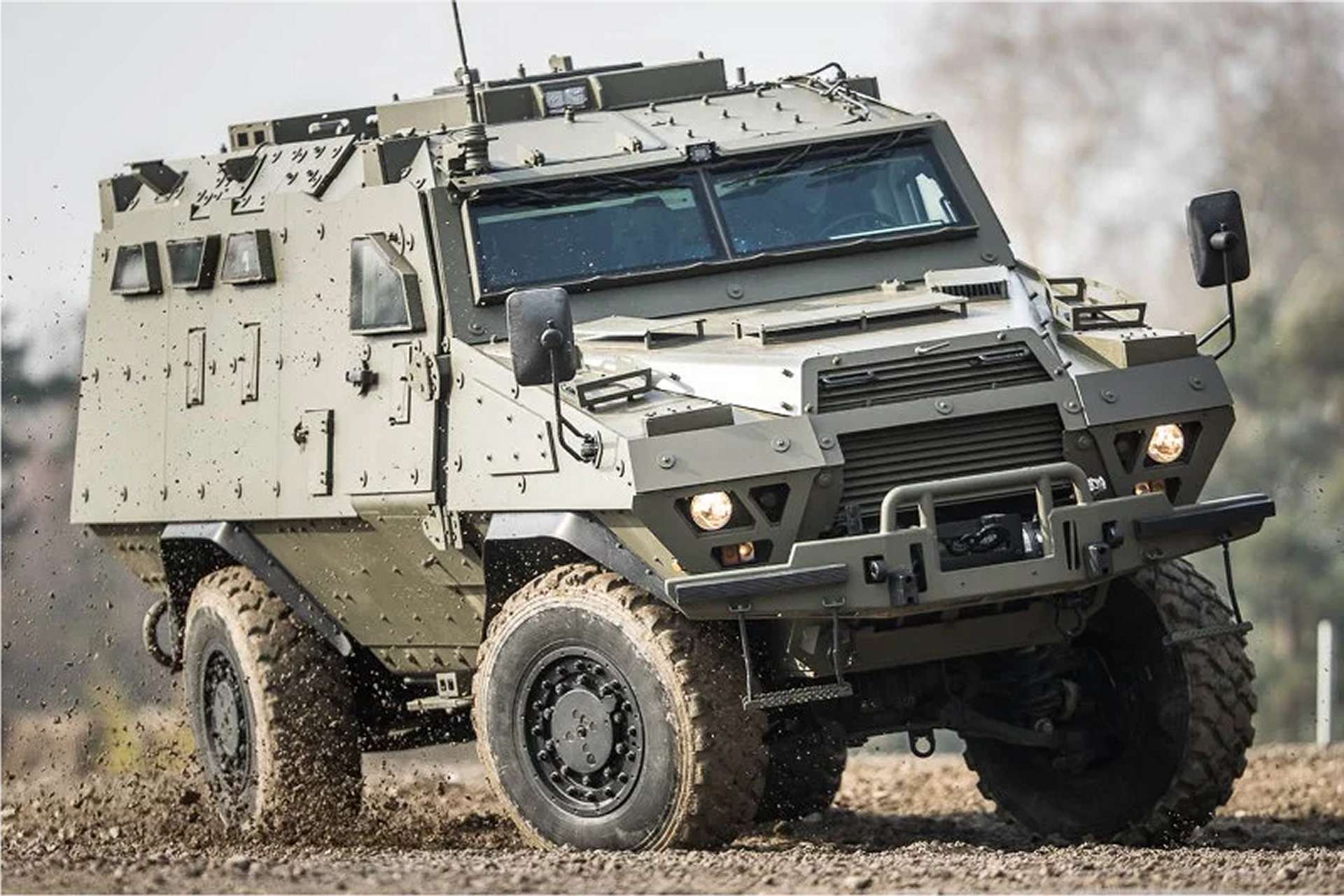
The Chilean government has announced the acquisition of two new Arquus Bastion 4x4 armored vehicles, which will be added to the four units already purchased with funds from the regional government of Biobío. This initiative aims to strengthen the operational capabilities of the Carabineros of Chile in the Biobío region.
Follow Army Recognition on Google News at this link
The Chilean government has announced the acquisition of two new Arquus Bastion 4x4 armored vehicles. (Picture source: Arquus)
Manuel Monsalve, Undersecretary of the Interior, confirmed the acquisition of these additional Bastion 4x4 armored vehicles and four Hunter TR-12 personnel transport vehicles from Armor International, Colombia. These acquisitions, including a drone with a flight autonomy of 10 hours, are estimated at approximately $8.3 million.
Monsalve highlighted that these new vehicles will provide greater security to the police personnel operating in the region, which has been under a state of emergency since May 2022. The Bastion vehicles will be purchased using both regional and central government funds, totaling 2,300 million pesos ($3 million) for four units from the regional budget and two from the central budget.

Manuel Monsalve, Undersecretary of the Interior, confirmed the acquisition of these additional Bastion 4x4 armored vehicles. ( Picture Source: Arquus)
The Bastion 4x4 is an armored personnel carrier designed in France and used by several countries, including some in Africa like Senegal. Weighing 12,000 kg, this vehicle is designed to offer ballistic protection levels 1 to 3 according to NATO STANAG 4569 standards and anti-mine protection level 2a / 2b. It can be armed with various configurations, including a 12.7 mm machine gun mounted on a circular station, a swivel station for a 7.62 mm machine gun, or a 40 mm grenade launcher.
The Bastion 4x4 can reach a maximum speed of 110 km/h and has a range of 1,000 km, making it effective for long-duration missions and rapid deployment on the field. Its dimensions are 6.0 meters in length, 2.20 meters in width, and 2.40 meters in height, providing ample space for a crew of two plus eight passengers.
This vehicle is also equipped with several advanced accessories, such as a central tire inflation system, a fire support system, a self-protection system, and a front electric winch. These features enhance its versatility and capability to operate in challenging environments, thus ensuring the safety and protection of its crew and passengers.
The Undersecretary also detailed the acquisition of four Hunter TR-12 armored personnel carriers, each with a capacity of 12 people. These vehicles will complement the existing fleet and improve the operational capabilities of the Carabineros in the Southern Macrozone.
Regarding the drone, Monsalve announced that the acquisition process is underway. This unmanned aerial vehicle, costing 7,500 million pesos, has a flight autonomy of over 10 hours and a control range of 150 kilometers. It represents the most advanced drone technology used by police forces in Latin America.
The Hunter TR-12, produced by Armor International, is a high-specification tactical vehicle mounted on the International CV chassis by Navistar Defense. It can transport 12 people and weighs 10,205 kg. It is equipped with a 6,600 cc V8 turbo diesel engine, producing 350 horsepower, and offers Stanag Level II protection, with a V-shaped hull for blast protection. This vehicle features advanced off-road capabilities, providing excellent protection against weapons and improvised explosive devices.
Integrating these new armored vehicles and drone technology will significantly enhance the operational efficiency and safety of the Carabineros of Chile, providing them with reinforced capabilities to manage and respond to security challenges in the Biobío region and beyond.

The Bastion 4x4 is an armored personnel carrier designed in France and used by several countries. ( Picture Source: Arquus)
Read more: Chile Acquires French-Made Arquus Bastion 4x4 Armored Vehicles

- Details
- Written by: V.Saint
- Category: 2024
- Hits: 6714
Breaking news
The United States Army Space and Missile Defense Command (SMDC) has awarded BlueHalo a $95.4 million contract for the development of advanced directed energy prototypes as part of the Laser Technology Research and Advancement Program (LARDO) through the Aviation & Missile Technology Consortium.
Follow Army Recognition on Google News at this link
LOCUST Laser presented by Blue Halo (Picture source: BlueHalo)
The LARDO program (Laser Technology Research and Advancement Program) is a research and development initiative supported by the United States Army Space and Missile Defense Command (SMDC). Its primary goal is to promote innovation and development in directed energy technologies, including laser weapon systems. The program aims to create advanced prototypes that enhance defense capabilities by integrating cutting-edge technologies for automation, efficiency, and robustness, while optimizing the size, weight, and power of the systems. LARDO plays a crucial role in improving national security by developing more effective and reliable systems for combat and missile defense, taking into account ongoing feedback and technological advancements.
This contract enables BlueHalo to continue its work in designing and constructing state-of-the-art laser weapon systems for combatants, providing multiple prototypes with enhanced automation, efficiency, performance, and robustness, as well as improved size, weight, and power (SWAP).
Dr. Vikram Manikonda, Chief Technology Officer of BlueHalo, stated that BlueHalo is developing innovations in air defense, not only with Directed Energy technologies but also with diagnostics and surveillance and control systems that enable their maintenance, operation, and continuous improvement in the field. The proposed solutions are interoperable and meticulously designed for the combatant, providing the military with a comprehensive system of systems to develop the use of laser weapons to meet our national security requirements.
Leveraging BlueHalo's advancements in Counter-Unmanned Aerial Systems (C-UAS) technologies and lessons learned from the active deployment of its LOCUST laser systems, BlueHalo will lead continuous system performance improvements, research, and prototyping to enhance performance and durability, and increase the lethality of engagements against small unmanned aerial systems (sUAS) and similar threats.
BlueHalo's LOCUST laser systems are deployed overseas, enabling the success of multi-domain missions in eliminating UAS threats and protecting forces. The LOCUST system combines precision optical and laser hardware with advanced software, artificial intelligence (AI), and processing to activate and enhance the "kill chain" of directed energy, which includes tracking, identifying, and engaging a wide variety of targets.
BlueHalo not only produces anti-drone weapon systems but also develops space communication technologies and electronic warfare solutions. In recent years, BlueHalo has opened an artificial intelligence division and is striving to establish itself in the cybersecurity field by offering AI-based solutions to quickly and automatically analyze and respond to cyber-attacks. Additionally, BlueHalo integrates AI into the development and improvement process of its products to ensure the necessary resilience in 21st-century conflicts.
Read more: US Army Increases Development of Laser Weapons with New Contract with Company BlueHalo.

- Details
- Written by: Administrator
- Category: 2024
- Hits: 6383
Breaking news
The Finnish Company Patria, a leading provider of defence products and combat vehicles, officially opened a new production facility in Valmiera, Latvia. This facility marks a significant milestone as it becomes the first and only full-cycle production site for armoured vehicles in the Baltics, specifically dedicated to producing the advanced Patria 6x6 armoured vehicles.
Follow Army Recognition on Google News at this link
The Patria 6x6 vehicle, built on the legacy of Patria’s iconic armoured vehicles, has been a reliable choice in peacekeeping and crisis management missions worldwide for decades. (Picture source: Patria)
Esa Rautalinko, President and CEO of Patria, highlighted the company's extensive experience and the strategic importance of this new facility. "Patria has more than four decades of experience in developing and delivering state-of-the-art protected vehicles for troop transportation and system integration. Our market-leading armoured vehicles and related programmes, particularly the unique, joint Common Armoured Vehicle System (CAVS) programme, have driven the opening of this facility in Latvia. We are proud of our close collaboration with Latvia and the Latvian National Armed Forces. Utilising local industry capabilities from CAVS member nations enhances the security of supply for the entire collaboration system," Rautalinko stated.
Defence Partnership Latvia manages the production operations in Latvia. This joint venture between Patria and the local Latvian company Unitruck aims to bolster the Latvian defence sector's capabilities, evidenced by the Latvian Ministry of Defence's 2021 order for over 200 Patria 6x6 armoured vehicles slated for delivery by 2029.
Uģis Romanovs, Chairman of the Board of Defence Partnership Latvia, emphasized the project's impact on the local defence industry. "The local Patria 6x6 project paves the way for a breakthrough in the Latvian defence industry. Our new facility will initially focus on delivering armoured personnel carriers to the Latvian National Armed Forces. However, we are also working to implement other capability development projects and produce military equipment for defence forces of other countries," Romanovs explained.
The Patria 6x6 vehicle has been selected as the platform for the CAVS programme, which includes Finland, Latvia, Sweden, and Germany. Deliveries of the Patria 6x6 vehicles are ongoing, not only to Latvia but also to Finland and Sweden, where the vehicles are already in operational use. To date, Patria has received orders for nearly 700 Patria 6x6 vehicles. The CAVS programme remains open to other European countries with similar equipment requirements, pending approval from participating nations.
The Patria 6x6 armoured vehicle, inheriting the legacy of Patria's renowned wheeled vehicles used in peacekeeping and crisis management missions, is designed for modern tactical troop transportation. This vehicle is noted for its modular, high-performance design that balances simplicity, robustness, and affordability, allowing for larger fleet deployments. It offers modern protection and high mobility, making it ideal for various mission-specific configurations. The Patria 6x6 is a versatile choice for troop transportation and combat support roles, providing ultimate security of supply through technology transfer, local manufacturing, and comprehensive through-life support.
The Patria 6x6 excels in survivability and mobility, featuring STANAG level 2 ballistic and mine protection, with optional enhancements to STANAG level 4. Its high payload capacity supports various vehicle variants while maintaining high protection and unique mobility. The vehicle's robust, fully independent suspension and high-performance driveline ensure exceptional mobility and crew comfort. It can carry up to 10 soldiers plus a crew of two, with all equipment safely housed inside. The 6x6 also offers optional amphibious capabilities. Versatile and user-friendly, the Patria 6x6 can be configured for multiple roles, including APC, Company Command, Medical Evacuation, Heavy APC, and the 120 mm Patria Nemo mortar system.
This new facility in Valmiera represents a significant step forward for Patria and Latvia, promising to enhance regional defence capabilities and foster technological and industrial development within the Latvian defence sector.
- Hanwha Aerospace From South Korea Announces Strategic Partnership with Romania to Develop Weapons
- Norway will help ukraine new batch of weapons and ammunition promised
- Ecuador Conducts Field Maneuvers with MDT David VBL 4x4 Light Armored Vehicles
- Czech Republic Learns from War in Ukraine and Equips its Army with FPV Drones