

- Details
- Written by: Tkuhn
- Category: 2024
- Hits: 3273










The SAHA EXPO 2024, hosted by SAHA Istanbul at the Istanbul Expo Center, is currently underway, with Turkey's defense industry leaders presenting their latest technological advancements. Among the standout exhibitors is SARSILMAZ, a company with nearly 150 years of engineering and manufacturing experience, renowned for its wide range of defense products.
Follow Army Recognition on Google News at this link
25 mm DUAL UKSS at SAHA EXPO 2024. (Picture source: Army Recognition)
At this year's expo, SARSILMAZ has unveiled several innovative defense systems, including its Dual UKSS (Remote-Controlled Weapon System), which features both 25mm and 7.62mm calibers. The system showcases remarkable versatility with a firing elevation range from -10° to +55° and full 360° horizontal rotation. The Dual UKSS can be loaded with 100 rounds of 25mm ammunition or 500 rounds of 7.62mm, making it a formidable option for various combat scenarios.
Technical analysis
The battlefield in 2024 is increasingly shaped by the integration of artificial intelligence (AI), unmanned systems, and multi-domain operations. The Dual UKSS, with its fully remote operation and advanced targeting systems (thermal imaging, laser rangefinders), fits seamlessly into this trend. By allowing operators to control the system from a distance, it minimizes risk to personnel while maximizing effectiveness in environments characterized by asymmetric threats, including urban warfare and insurgencies.
Furthermore, the ability to mount the system on various platforms, including land vehicles and naval vessels, enhances its adaptability across different operational theaters. This modularity is critical in 2024's rapidly evolving combat environments, where military units must be capable of responding to threats across multiple domains—land, sea, air, and cyber—simultaneously.
As unmanned platforms and autonomous systems like UGVs (Unmanned Ground Vehicles) become more prevalent on the battlefield, the Dual UKSS offers a significant tactical advantage by providing high firepower and precision remotely, contributing to the growing role of automated defense systems in modern military strategies.
Read more: SAHA EXPO 2024: Dual UKSS 25mm Weapon System by SARSILMAZ

- Details
- Written by: Vandenbosch
- Category: 2024
- Hits: 6759
At the SAHA 2024 exhibition in Türkiye, Aselsan unveiled its latest multi-effector air and missile defense system, the GÜRZ-150. Designed to provide defense for both stationary and mobile-friendly forces, this system stands out due to its ability to operate efficiently at low and very low altitudes. Its modular architecture allows for the addition of new features according to future needs, making it adaptable to emerging threats.
Aselsan unveiled its latest multi-effector air and missile defense system, the GÜRZ-150. (Picture source: Army Recognition)
The GÜRZ-150 is capable of intercepting a variety of targets, including drones (Class I, II, and III UAVs, kamikaze drones, and swarm UAV attacks), helicopters, aircraft, cruise missiles, air-to-surface missiles, and mini-guided bombs. This wide range of target capabilities demonstrates Aselsan's commitment to addressing the challenges of modern warfare, which is increasingly characterized by the rapid proliferation of unmanned aerial systems and precision missiles.
The system is based on an advanced suite of detection subsystems, including four 3D AESA search radars, a fire control radar, and an integrated tracking platform. Thanks to these sensors, the GÜRZ-150 can detect, track, and assign weapons to targets, while also distinguishing between friendly and enemy forces using an integrated Identification Friend or Foe (IFF) subsystem. Additionally, it incorporates communication subsystems to coordinate with other allied units.
Key features of the GÜRZ-150 include its 360-degree firing capability, allowing it to defend wide areas, precise threat evaluation, and a weapon assignment algorithm that ensures effective target-weapon matching. The system is equipped with a 35mm defense gun with air-burst capable ammunition, as well as VSHORAD and SHORAD missiles for engagements at various ranges.
Other notable features include its ability to operate day and night in all weather conditions, real-time navigation and positioning capabilities, and rapid mobility thanks to its 8x8 wheeled platform. This mobility is crucial for "shoot-and-scoot" operations, allowing the GÜRZ-150 to fire and then quickly reposition, minimizing its exposure to counterattacks.
Aselsan's presentation of the GÜRZ-150 at SAHA 2024 reflects the Turkish defense industry's commitment to developing sophisticated defense systems that meet the contemporary needs of armed forces in the face of increasingly diverse and complex threats. Most importantly, these indigenous systems highlight Turkey’s growing defense industry, which uses exhibitions like this to showcase its innovations and emerging technologies to the world.
Read more: GÜRZ-150 by Aselsan Revolutionizes Air Defense at SAHA 2024 in Türkiye
- Details
- Written by: Vandenbosch
- Category: 2024
- Hits: 4037
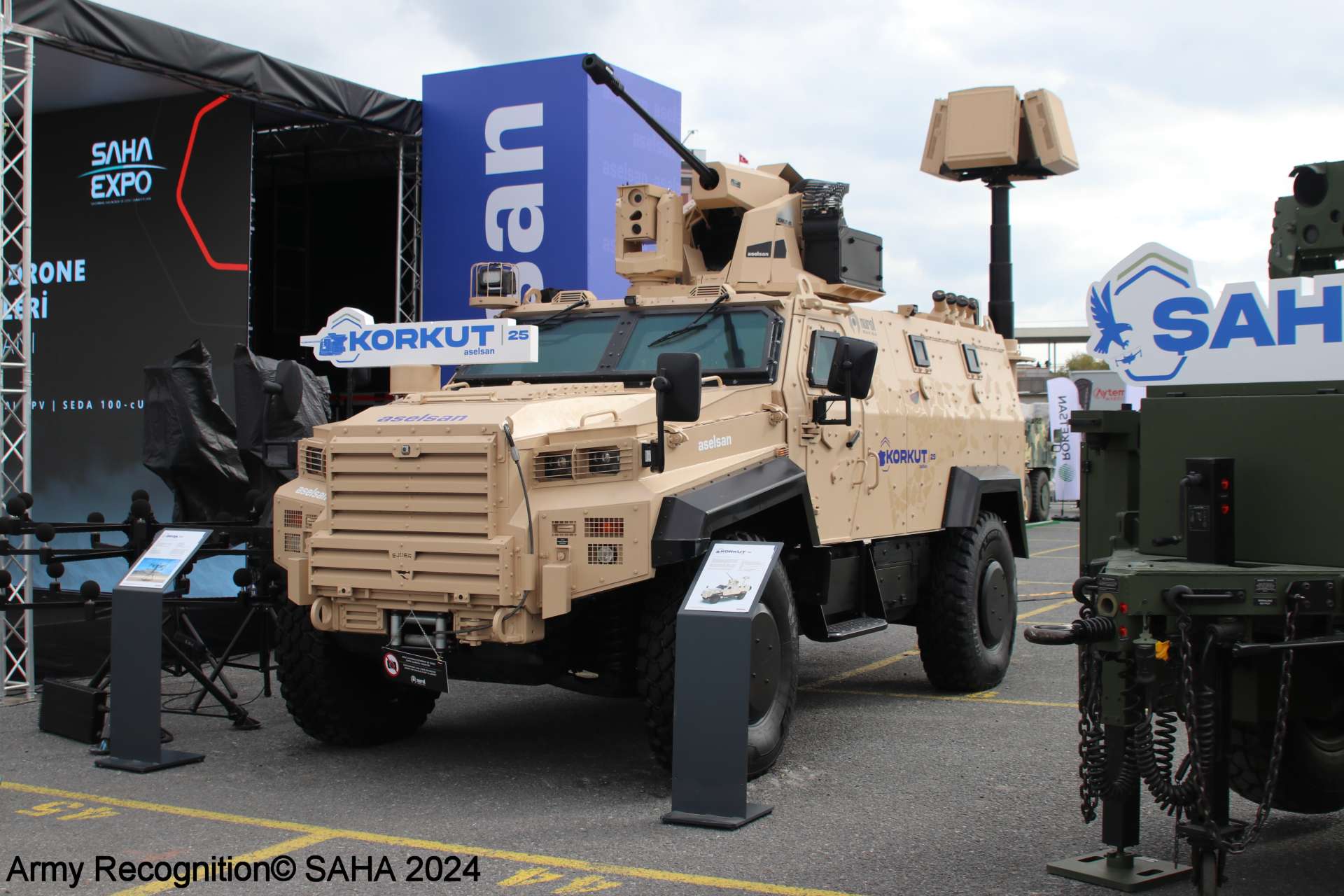
The KORKUT 25 vehicle was presented by Aselsan during the SAHA 2024 exhibition in Turkey, showcasing its capabilities as a close air defense system. This vehicle stands out with its 25 mm automatic cannon, differing from its predecessor, which was equipped with two 35 mm cannons. This new vehicle is designed to counter emerging threats such as miniature and micro UAVs. High-speed airburst (ATOM) ammunition offers an effective range of over 1000 meters against these types of threats.
In addition to its primary 25 mm cannon, the KORKUT 25 is equipped with a 7.62 mm coaxial machine gun, adding an extra layer of defense against smaller threats. (Picture source: Army Recognition)
One of the key features of the KORKUT 25 is its gyroscope-stabilized structure, allowing for remote operation and high firing precision. The system is also equipped with high-resolution cameras that function both day and night, along with a laser rangefinder. Its target acquisition and tracking system is automated, as are its ballistic calculations, providing increased firing accuracy. These elements enable the KORKUT 25 to be deployed in various combat scenarios.
The vehicle is further distinguished by its integration with external sensors and remote-control capabilities, providing enhanced protection against drone threats while improving the situational awareness of the operator. Thanks to its two-axis electro-stabilized optics and advanced fire control algorithms, the KORKUT 25 is capable of handling both air and ground targets, whether day or night, in all weather conditions.
In addition to its primary 25 mm cannon, the KORKUT 25 is equipped with a 7.62 mm coaxial machine gun, adding an extra layer of defense against smaller threats. Its automated targeting system relies on data obtained from external radars, allowing it to effectively locate and engage targets with high efficiency.
During SAHA 2024, Aselsan highlighted this vehicle as a solution tailored to modern conflicts, where the proliferation of drones represents an increasing challenge for ground forces. The conflict in Ukraine is a striking example of the evolution of military technologies and the responses sought by various defense industries, with Aselsan offering a solution that is likely to appeal to many. The KORKUT 25, with its advanced capabilities in detecting, tracking, and neutralizing moving drones, presents itself as a crucial asset for the protection of mobile units and critical infrastructure.
This new system reflects Aselsan's commitment to meeting contemporary needs in close air defense, and its demonstration at SAHA 2024 confirmed the strategic importance of this solution for various countries seeking to strengthen their defenses against emerging aerial threats.
Read more: Korkut 25 Aselsan's New Weapon Against Miniature Drones Unveiled at SAHA 2024
- Details
- Written by: Triffaux
- Category: 2024
- Hits: 6133
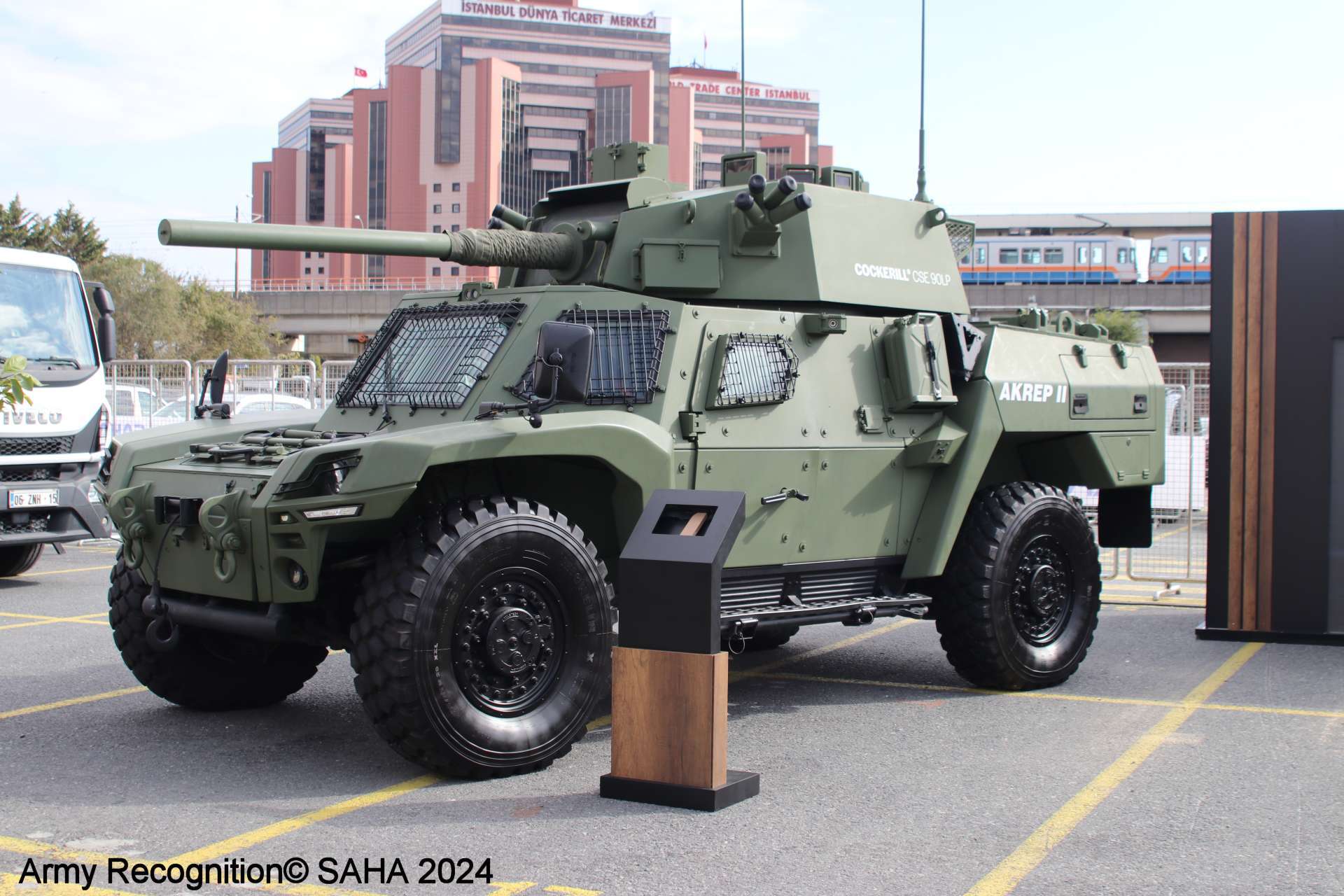
At the SAHA 2024 Defense Exhibition, Turkish company Otokar introduced its armored reconnaissance vehicle, the Akrep II, equipped with an advanced turret from John Cockerill, further enhancing its combat and reconnaissance capabilities. This versatile vehicle stands out for its cutting-edge armament systems and superior mobility, making it essential for various military missions.
Follow Army Recognition on Google News at this link
Otokar Akrep II 4X4 Light Armored Vehicle (Picture source: Army Recognition)
One of the key features of the Akrep II is its exceptional maneuverability, enabled by its all-wheel-drive system and an optional rear-steering axle. These features allow the vehicle to easily navigate difficult terrains, including deep mud, snow, or water, and overcome natural obstacles on the battlefield. This ability to adapt to demanding environments makes the Akrep II an ideal choice for armed forces seeking a reconnaissance vehicle capable of operating in extreme conditions.
Equipped with a John Cockerill turret, the Akrep II is positioned as a formidable combat platform. The turret is known for its flexibility and performance, designed to integrate a variety of weapon systems. This configuration can accommodate a medium-caliber automatic cannon, up to 90 mm, offering significant firepower while maintaining high precision. The John Cockerill turret is also equipped with a stabilization system, allowing for accurate firing, even while on the move, and direct and indirect firing capabilities, enabling the vehicle to engage targets at short and long ranges.
The Akrep II, presented by Otokar at SAHA 2024, is equipped with the Cockerill LCTS 90MP turret, a lightweight two-person system armed with a 90mm Cockerill gun. This turret is designed to deliver substantial firepower while being suitable for light armored vehicles. With its advanced autoloader and fully stabilized weapon control system, the turret allows for precise direct and indirect engagements, even while moving. It can also fire indirectly at targets up to 8 km away.
The Cockerill LCTS 90MP turret stands out for its ability to maintain high stability and safety due to its low recoil, making it ideal for light firing platforms. It uses high-explosive (HE) ammunition and has effective anti-armor capabilities, making it well-suited for various combat scenarios, including armed reconnaissance missions. This turret system is widely deployed around the world, with more than 300 units in service.
Technically, the Akrep II retains its impressive specifications. It can accommodate a crew of three (driver, commander, and gunner) and has a total weight of 15,500 kg. With a length of 5.9 meters, a width of 2.5 meters, and a hull height of 1.975 meters, combined with a ground clearance of 400 mm, the vehicle maintains a low profile while delivering excellent performance on the ground.
The Akrep II 4X4 light armored vehicle is available in several powertrain configurations, including diesel, hybrid, and electric versions. These options not only meet specific operational needs but also reduce the vehicle’s thermal and acoustic signature, especially important for stealth and reconnaissance missions. The diesel version is powered by a 360-horsepower engine and a 6-speed automatic transmission, ensuring robust performance in demanding environments.
The vehicle also includes a range of standard features, such as a central tire inflation system, radial tires with run-flat inserts, an anti-lock braking system (ABS), air conditioning and heating systems, five-point seat belts, and an enhanced vision system for the driver. Optional features include drive-by-wire technology, an NBC (nuclear, biological, chemical) filtration system, a self-recovery winch, and a 360° situational awareness system, offering complete visibility on the battlefield.
Based in Istanbul, Otokar is recognized in the defense sector for its continuous innovation in the design of armored vehicles. The Akrep II, with its John Cockerill turret, exemplifies Otokar’s expertise in developing advanced technological solutions tailored to the needs of modern battlefields. The vehicle’s flexibility and enhanced capabilities, thanks to the John Cockerill turret, make it a strategic asset for many armed forces worldwide.
In conclusion, the Akrep II, unveiled at SAHA 2024, is a striking example of Otokar’s commitment to providing defense solutions that meet contemporary challenges. With its John Cockerill turret and numerous possible configurations, this vehicle is ready to take on the challenges of modern military missions, ensuring maximum efficiency and adaptability in operational theaters.
Read more: Otokar Exhibits Akrep II Fitted with Cockerill 90mm Turret for Increased Firepower

- Details
- Written by: Vandenbosch
- Category: 2024
- Hits: 3081
The Turkish company Sarsilmaz presented its new automated turret equipped with a 20 mm cannon, named "ATAK Burun Topu", during the SAHA Expo 2024. This system is designed to offer precise and effective firepower while being integrated into aerial platforms. The turret is presented as a crucial component to improve close-quarters attack capabilities and rapid engagement.
The 20 mm ATAK Burun Topu automated turret was designed to equip Turkish T129 ATAK attack helicopters. (Picture source: Army Recognition)
The turret’s cannon is of 20x102 mm NATO caliber, with a firing rate of 750 rounds per minute, enabling rapid saturation of targets in a short period. This system is equipped with a rotary barrel mechanism, optimized for servo-controlled operation and electric ignition, ensuring greater stability and precise firing. The muzzle velocity of the cannon is impressive, reaching 1,049 meters per second, giving the projectile enhanced range and accuracy.
The development of this turret aims to provide a robust solution for attack helicopters and other aerial platforms where a lightweight yet formidable offensive capability is essential. The turret's design allows for adaptation on various aerial vehicles, particularly for operations requiring rapid maneuvers and extreme precision, such as those conducted by the Turkish armed forces.
The SAHA 2024 event, held in Turkey, has become a privileged showcase for Turkish military innovations, and the ATAK Burun Topu turret perfectly embodies this spirit of innovation. This product reflects Turkey's ongoing efforts to strengthen its national defense capabilities while offering exportable solutions to its allies.
The 20 mm ATAK Burun Topu automated turret was designed to equip Turkish T129 ATAK attack helicopters. This system is the result of a collaboration between Sarsılmaz and Turkish Aerospace Industries (TUSAŞ), through their joint venture, TR Mekatronik. This 20 mm cannon is mounted on the nose of the helicopter, offering short- and medium-range offensive capabilities with improved precision thanks to its firing rate of 750 rounds per minute and high muzzle velocity (1,049 m/s).
The main role of this turret is to provide close air support against ground targets, enhancing the attack helicopters' capabilities in missions supporting ground forces. Its precision and rapid-fire capacity make it an effective weapon for neutralizing moving or fortified targets. In addition to integration on ATAK helicopters, this cannon could potentially be adapted to other aerial or ground vehicles, although its development has initially focused on aerial platforms like helicopters.
The 20 mm ATAK Burun Topu is a key weapon for modernizing Turkish attack helicopters, allowing Turkey to reduce its dependency on foreign suppliers while increasing its capacity to export weapon systems.
Read more: Sarsilmaz Showcases its 20 mm Automated Turret ATAK During SAHA 2024 in Türkiye

- Details
- Written by: Jérôme Brahy
- Category: 2024
- Hits: 5520
On October 22, 2024, FNSS and PT Pindad signed an agreement for the development and production of the new Kaplan Armored Personnel Carrier (APC), as part of a contract between PT Pindad and the Indonesian Ministry of Defense. The agreement aims to meet the Indonesian Army’s requirement for a 30-ton class tracked personnel carrier. This agreement follows the previous collaboration between FNSS and PT Pindad on the Kaplan MT (Harimau) medium tank program, which played a key role in the Indonesian Ministry of Defense’s decision to select these partners again.
Follow Army Recognition on Google News at this link
FNSS presented the conceptual design model of the Kaplan APC for the first time at the SAHA 2024 exhibition in Istanbul, where FNSS CEO Nail Kurt announced the project. (Picture source: Army Recognition)
FNSS presented the conceptual design model of the Kaplan APC for the first time at the SAHA 2024 exhibition in Istanbul, where FNSS CEO Nail Kurt announced the project. Production of the Kaplan APCs will begin in 2025, with the first vehicle being manufactured at FNSS’s facilities in Türkiye and the second at PT Pindad’s facilities in Indonesia. Nail Kurt confirmed that 2025 will focus on design and prototyping, while testing will take place in 2026. The vehicles are expected to be delivered by the end of 2026. Qualification tests will be conducted in both Türkiye and Indonesia to ensure the vehicles meet user specifications.
The Kaplan APC will join FNSS’s Kaplan family of tracked armored vehicles. With a power-to-weight ratio exceeding 22 horsepower per ton, this new Turkish armored personnel carrier accommodates a crew of 13, including the gunner, driver, and commander. Its design supports a variety of mission configurations, offering customizable options for specific operational requirements. For instance, the modular design of the Kaplan APC allows for the integration of both manned and unmanned turret systems.
It can be fitted with light and medium caliber weapons, such as 30 mm or 35 mm cannons, 120 mm mortars, or anti-tank guided missile systems. This versatility enables the vehicle to be configured for a range of missions, including mechanized infantry, reconnaissance, command and control, force protection, medical evacuation, combat engineering, and both direct and indirect fire support.

With a power-to-weight ratio exceeding 22 horsepower per ton, this new Turkish armored personnel carrier accommodates a crew of 13, including the gunner, driver, and commander. (Picture source: FNSS)
An open-architecture electronics infrastructure allows for easy integration of mission systems, such as a 360-degree situational awareness system, a driver vision system, a battlefield management system, and a navigation system. The electrical system operates at 24 volts, and an auxiliary power unit (APU) is available as an optional feature to provide additional operational capabilities when the main engine is not in use.
Protection features meet STANAG 4569 standards, though specific protection levels are classified. This includes ballistic, mine, and improvised explosive device (IED) protection. Optional systems, such as an active protection system to counter anti-tank missiles and rocket-propelled grenades, a laser warning system, and a gunshot detection system, can be integrated depending on operational needs.
Standard protective equipment includes eight smoke grenade dischargers, an automatic fire suppression system, a chemical, biological, radiological, and nuclear (CBRN) protection system, along with air conditioning and heating systems, ensuring the crew can survive and operate effectively in hazardous conditions.

The Kaplan APC can be fitted with light and medium caliber weapons, such as 30 mm or 35 mm cannons, 120 mm mortars, or anti-tank guided missile systems. (Picture source: FNSS)
In terms of mobility, the vehicle is powered by a diesel engine coupled with an automatic transmission, allowing it to reach a top speed of 70 kilometers per hour. It has an operational range of 450 kilometers. The vehicle is capable of handling challenging terrain, with the ability to traverse gradients of up to 60%, side slopes of 30%, vertical obstacles of 0.9 meters, and trench crossings up to 2.2 meters. The track system includes steel tracks with an adjuster and replaceable pads or composite rubber tracks, while the modernized torsion bar suspension system aids in terrain management, reduces internal vibrations, and improves traction.
The Kaplan APC program builds on FNSS’s existing expertise in developing tracked armored vehicles, as this new APC will share many parts and subsystems with the Kaplan MT and other vehicles in FNSS's tracked vehicle family, providing advantages in logistics and maintenance. Additionally, it will share common subsystems with the Marine Assault Vehicle (MAV), which FNSS has supplied to the Turkish Naval Forces Marine Infantry Brigade. These shared components will help improve reliability and reduce the logistical burden for operators, while also enhancing mission readiness by minimizing downtime due to maintenance.

The Kaplan APC will share many parts and subsystems with the Kaplan MT and other vehicles in FNSS's tracked vehicle family, providing advantages in logistics and maintenance. (Picture source: FNSS)
Read more: Türkiye's new tank-based FNSS Kaplan APC to enter production by 2025 for Indonesia
- Details
- Written by: Administrator
- Category: 2024
- Hits: 5905
On October 22, 2024, Lithuania officially decided to purchase German-made Leopard 2 main battle tanks and initiated procedures for acquiring Swedish CV-90 infantry fighting vehicles. According to a statement from the Ministry of Defense, the decision also includes establishing requirements for cooperation with Lithuania's domestic defense industry. The announcement follows a meeting of the State Defense Council (VGT) on October 22, 2024, marking a key milestone in Lithuania’s ongoing efforts to modernize its military forces.
Follow Army Recognition on Google News at this link
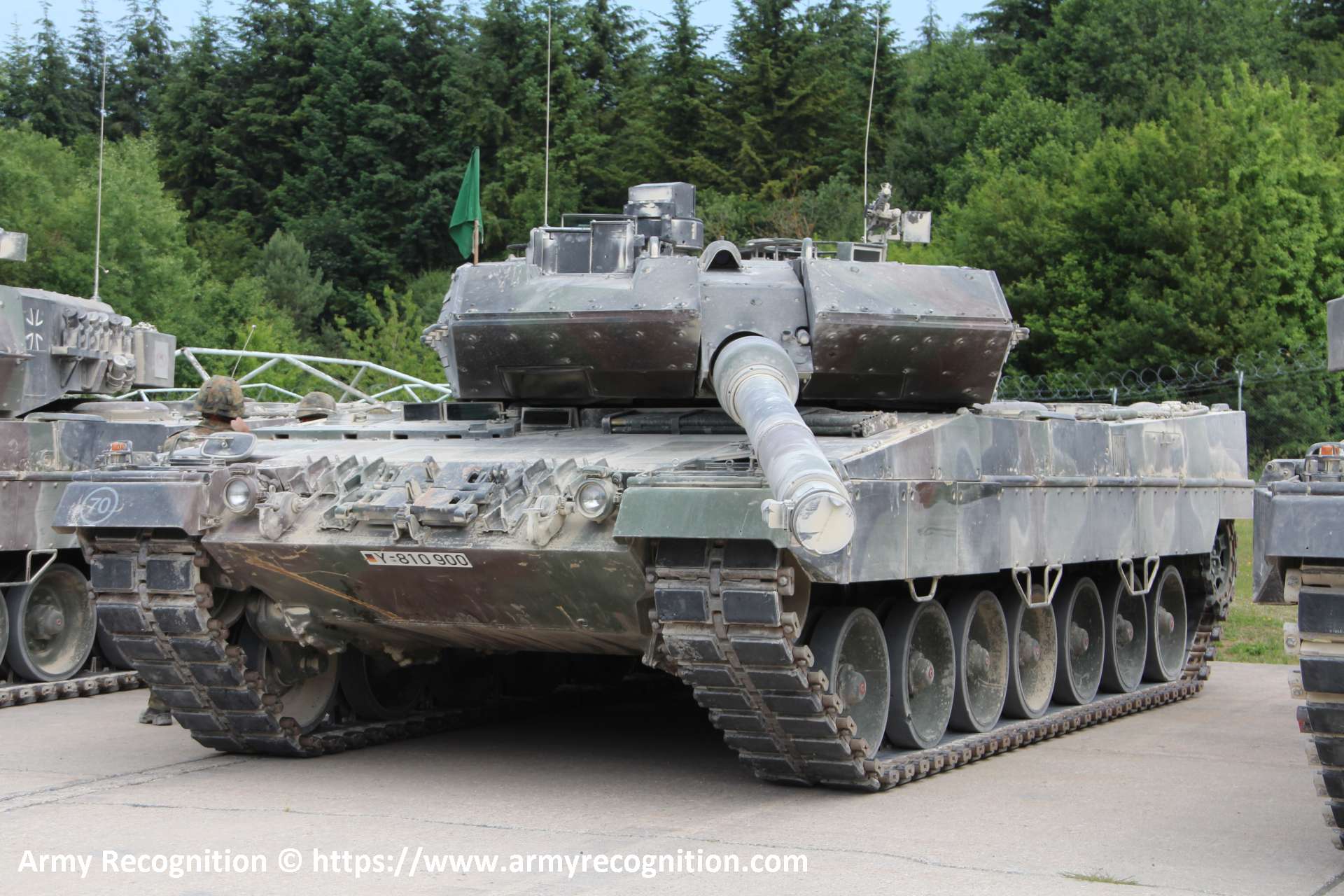
German Army Leopard 2A6 main battle tank. (Picture source: Army Recognition Group)
The meeting, attended by the Minister of National Defense Laurynas Kasčiūnas and Commander of the Lithuanian Armed Forces General Raimundas Vaikšnoras, focused on the progress of the national division's development and the acquisition of heavy weaponry. The decision to acquire the Leopard 2 tanks follows earlier discussions at previous VGT meetings, where the German tanks were selected as the preferred option.
The Leopard 2 is one of the world's most advanced main battle tanks, renowned for its firepower, protection, and mobility. Developed by Germany’s Krauss-Maffei Wegmann, it features a 120mm smoothbore cannon, advanced armor systems, and high-tech targeting and communications equipment. Numerous NATO allies use it and it has a proven track record in both defensive and offensive operations, making it a key component of modern armored warfare.
In addition to tank procurement, Lithuania also focuses on securing tracked infantry fighting vehicles to support its tank battalions. At today’s VGT meeting, General Vaikšnoras presented military advice on potential alternatives, while Minister Kasčiūnas outlined the political, economic, and financial evaluations conducted by the Ministry of Defense.
The Swedish CV-90 infantry fighting vehicle, developed by BAE Systems Hägglunds, is a highly versatile platform designed for modern combat operations. It combines excellent firepower, mobility, and protection, with variants equipped with a 30mm or 40mm autocannon and advanced command and control systems. The CV-90 has been widely adopted by several European nations and is known for its adaptability to different combat roles, from reconnaissance to supporting heavy armor in battle
Based on these evaluations, the Swedish-made CV-90 tracked infantry fighting vehicles were proposed as the ideal option for Lithuania’s needs. The VGT has instructed the Ministry of Defense to initiate the procurement process for these vehicles, which will serve two battalions in the Lithuanian army. The decision also calls for close cooperation with Lithuania’s domestic defense industry.
Both the tank and infantry fighting vehicle acquisitions are expected to be financed through Lithuania’s Defense Fund, reflecting the country’s commitment to strengthening its military capabilities in a rapidly changing security environment.
The Lithuanian Ministry of Defense has emphasized that these acquisitions are critical for modernizing the country's military and enhancing its readiness to meet current and future defense challenges.
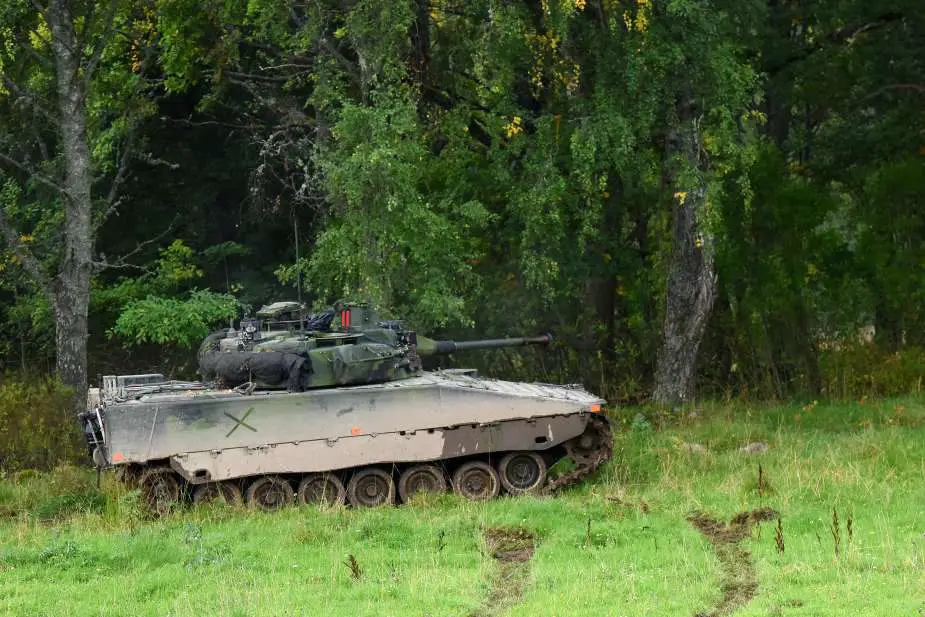
A Swedish CV90 IFV engages elements of the opposing force during a cooperative training exercise on Sept. 13, 2017, near Skovde, Sweden. (Picture source U.S. DoD)
- Details
- Written by: Halna du Fretay
- Category: 2024
- Hits: 3454
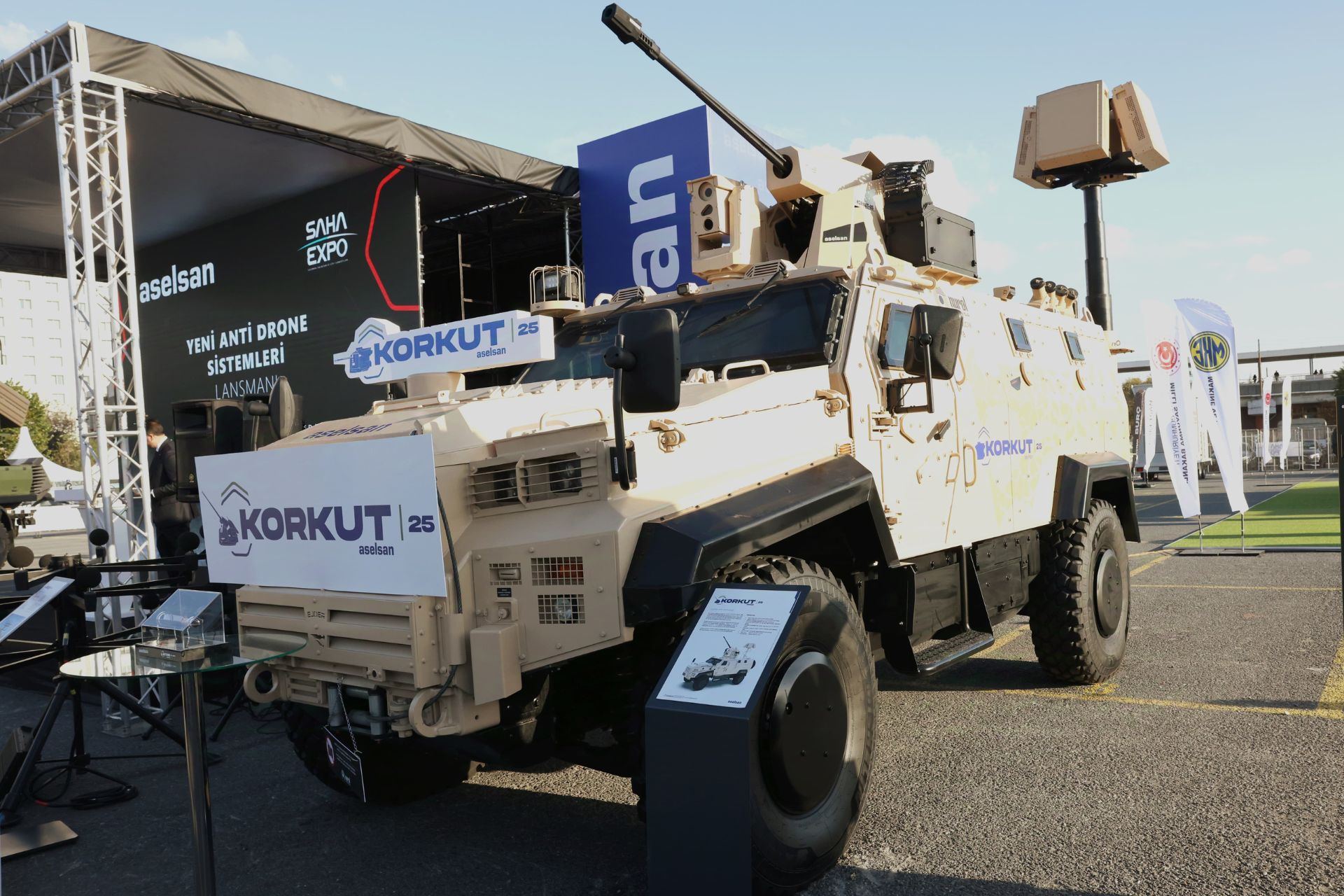
On October 22, 2024, ASELSAN took advantage of the first day of the SAHA EXPO in Istanbul to present its new anti-drone systems, including the KORKUT 25 mm, BUKALEMUN, KANGAL-FPV, and SEDA 100-cUAV. These new systems reflect ASELSAN's intent to expand its capabilities in the field of anti-drone technology, in response to the emerging threats on the modern battlefield.
The KORKUT 25 mm is also designed to be effective against mini and micro-drones, particularly in rural environments (Picture source: Aselsan)
ASELSAN, a leader in the Turkish defense industry, showcased its nearly 50 years of engineering expertise at SAHA EXPO. During the event, the company launched its latest next-generation anti-drone system, the KORKUT 25 mm, an unmanned, remotely operated turret designed primarily to counter armored ground targets. This system stands out for its ability to be integrated into various tactical vehicles, whether wheeled or tracked, suitable for platforms ranging from 4x4 to 8x8.
The KORKUT 25 mm is also designed to be effective against mini and micro-drones, particularly in rural environments. Equipped with airburst ammunition, it offers both soft and hard kill capabilities against drones, using external sensors such as radar and surveillance cameras. Additionally, the KORKUT 25 mm features a gyrostabilized structure, remote operability, high-resolution cameras for day and night use, and a laser rangefinder, providing automatic target detection and tracking with advanced ballistic precision.
Other systems presented include the BUKALEMUN, a GNSS spoofing system capable of deceiving drones by distorting the signals received by their GNSS receivers. This is the first system of its kind developed by ASELSAN, providing both static and dynamic deception capabilities over long distances, depending on predefined scenarios. The KANGAL-FPV is a jamming system developed to neutralize FPV drones within the electronic warfare spectrum. Lastly, the SEDA 100-cUAV is an acoustic detection system integrated into the İHTAR anti-drone system. It is equipped with precisely positioned microphones that enable it to detect drones at greater distances compared to foreign counterparts.
Ahmet Akyol, ASELSAN’s President and CEO, commented on the new launches, stating: "At ASELSAN, we are closely monitoring the changing conditions and growing threats on today's battlefield, and we are developing advanced systems with high adaptability. The increasing use of drones in military operations leads us to believe that our anti-drone systems, with new added capabilities, will offer users superiority in eliminating these threats. In line with our strategic goals, we will continue to design and develop game-changing technologies in the years to come."
As a leading Turkish defense company, ASELSAN plays a crucial role in the proliferation of modern anti-drone systems, contributing to the security of military operations worldwide. The range of systems presented at SAHA EXPO 2024 underscores its continued commitment to addressing emerging threats and providing technologically advanced solutions to international armed forces.
Read more: Aselsan Expands Its Anti-Drone Solutions with KORKUT 25 mm and BUKALEMUN at SAHA EXPO

- Details
- Written by: Jérôme Brahy
- Category: 2024
- Hits: 7480
At the SAHA 2024 exhibition, Makine ve Kimya Endüstrisi (MKE), a Turkish manufacturer known for producing the T-155 Firtina, showcased another 155mm self-propelled howitzer named Yavuz. Mounted on a 6x6 truck chassis, the Yavuz system was first unveiled at IDEF 2017 by MKE’s General Manager, Ahmet Taşkın, alongside military and defense officials. The initial test firing of the Yavuz took place on April 18, 2017, in Konya, where it demonstrated the capability to hit targets at distances of up to 40 kilometers.
Follow Army Recognition on Google News at this link
The Yavuz can fire a variety of ammunition types, including the M107 high-explosive round, which has a range of 18 kilometers, the M549A1 high-explosive round with a range of 30 kilometers, and the MOD 274 round, which extends the range to 40 kilometers. (Picture source: Army Recognition)
Like the French CAESAR, the Turkish Yavuz uses a 6x6 truck chassis to reduce the risk of counter-fire, as it can operate at a longer distance from the enemy while firing long-range ammunition. Powered by a Euro 5 diesel engine, this Turkish self-propelled howitzer is capable of reaching a maximum on-road speed of 90 km/h. It has a combat weight of 32 tons and dimensions of 10.8 meters in length, 2.6 meters in width, and 4.1 meters in height. Additionally, it can ford water up to 1 meter deep, cross trenches of 0.45 meters, and climb gradients of 0.45 meters.
Its 155mm/52 caliber gun provides flexibility in engaging targets at varying distances, thanks to a semi-automatic, electrically driven loading system that is controlled electronically. The system can fire a variety of ammunition types, including the M107 high-explosive round, which has a range of 18 kilometers, the M549A1 high-explosive round with a range of 30 kilometers, and the MOD 274 round, which extends the range to 40 kilometers.
The Yavuz can fire all standard 155mm ammunition in NATO inventories and is capable of burst-firing 3 rounds in 15 seconds, firing 4 to 6 rounds per minute under normal conditions, and 2 rounds per minute in continuous operations. With a total ammunition capacity of 18 rounds, the Yavuz features the ability to hit the same target with different rounds by utilizing various elevation angles and propellant charge modules.
The Yavuz can be made ready to fire in one minute and can move after firing within two minutes. The vehicle has dual cabins with space for a crew of five. It also features a 12.7mm machine gun as secondary armament, along with Nuclear, Biological, and Chemical (NBC) protection systems and anti-personnel mine protection capabilities.
In January 2022, it was reported that Brazil had initiated a program to acquire 36 wheeled self-propelled howitzers for use in its Artillery Division and Mechanized Brigade companies. By August 2023, reports indicated that Türkiye's Yavuz howitzer entered the competition for this acquisition. Brazil is seeking a mobile artillery system capable of striking targets up to 40 kilometers away. At that time, the Yavuz was competing with systems such as France’s CAESAR 155mm howitzer and Israel’s ATMOS 2000.
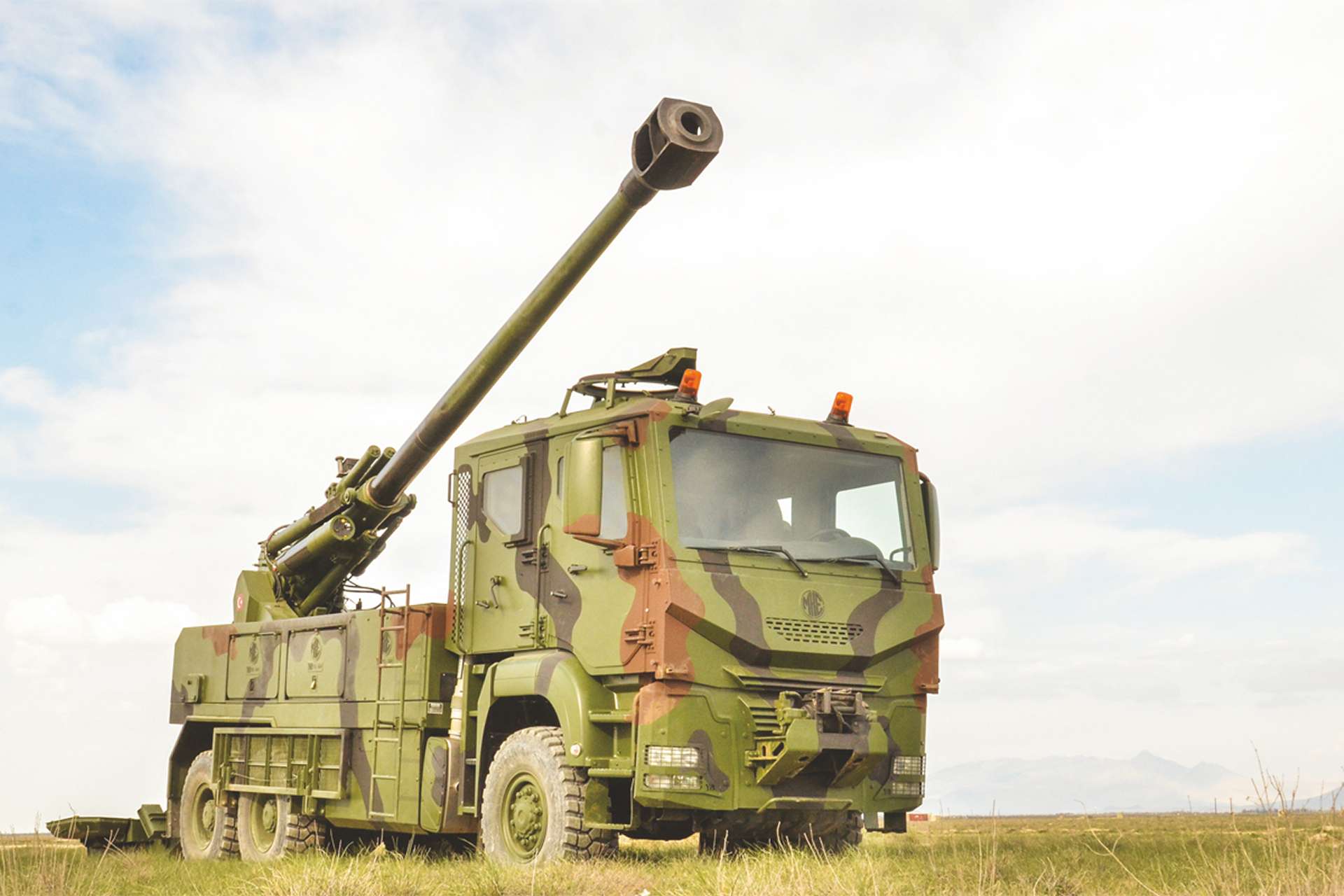
The Yavuz has a combat weight of 32 tons and dimensions of 10.8 meters in length, 2.6 meters in width, and 4.1 meters in height. (Picture source: MKE)
- Details
- Written by: Halna du Fretay
- Category: 2024
- Hits: 4923
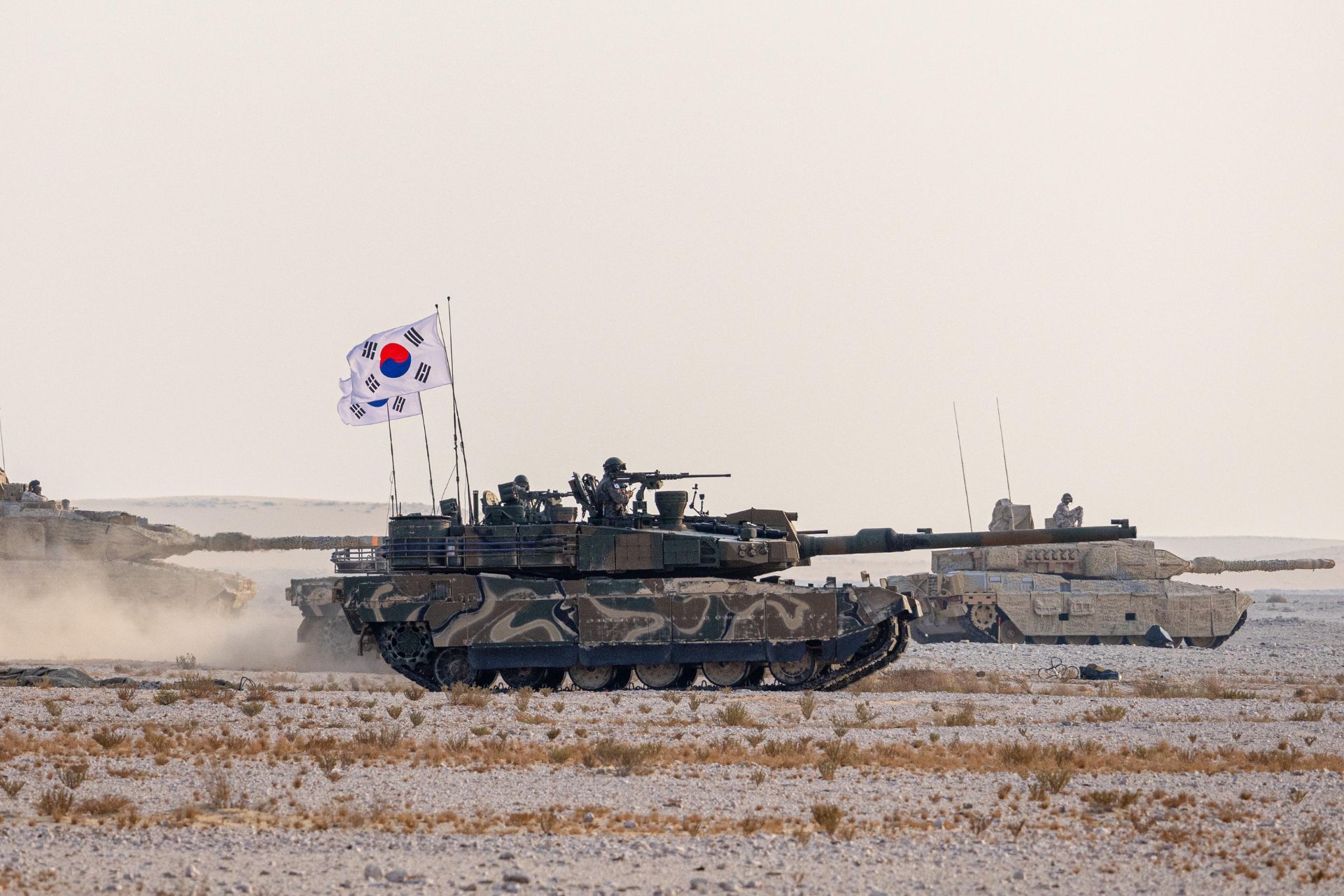
On October 21, 2024, the South Korean army announced that it had, for the first time in its history, deployed its K2 tanks and K9 self-propelled howitzers for joint overseas exercises. These maneuvers, taking place at the Al Kalael training center in Qatar, reflect South Korea’s growing commitment to strengthening its international military cooperation, particularly in the Middle East.
South Korean and Qatari soldiers conducted live-fire drills and tactical exercises, with Qatar’s Leopard 2A7 tanks and PzH 2000 self-propelled howitzers (Picture source: South Korean MoD)
A contingent of around 100 South Korean soldiers, along with four K2 tanks and four K9 self-propelled howitzers, traveled to Qatar aboard a South Korean Navy landing ship. After covering more than 12,000 kilometers, the ship docked at the port of Doha on October 13, marking the start of an intensive joint training program with the Qatari armed forces.
The K2 Black Panther and K9 Thunder are key assets of South Korea’s defense industry, combining advanced technology and operational capabilities. The K2, developed by Hyundai Rotem, is a next-generation main battle tank designed to replace the aging M48 Patton tanks in service with the South Korean army.
Equipped with a 120 mm cannon and an automatic loading system, it can fire while moving across challenging terrain. It also features an advanced suspension system, an active protection system with reactive armor blocks, and an anti-missile defense system, enhancing its overall protection. Powered by a 1,500-horsepower diesel engine, the K2 reaches a top speed of 70 km/h and can overcome steep obstacles in a variety of environments.
The K9 Thunder, developed by Hanwha Land Systems, is a 155 mm self-propelled howitzer designed to offer both mobility and firepower. Its 155 mm/52-caliber gun has a maximum range of 40 km and a firing rate of six rounds per minute.
The K9’s welded steel armor protects against small arms fire and artillery fragments. Powered by a 1,000-horsepower diesel engine, the K9 reaches speeds of up to 67 km/h and is used by several countries, including Finland, India, and Poland. These two vehicles highlight South Korea’s capability to provide modern, reliable defense systems to the international market.
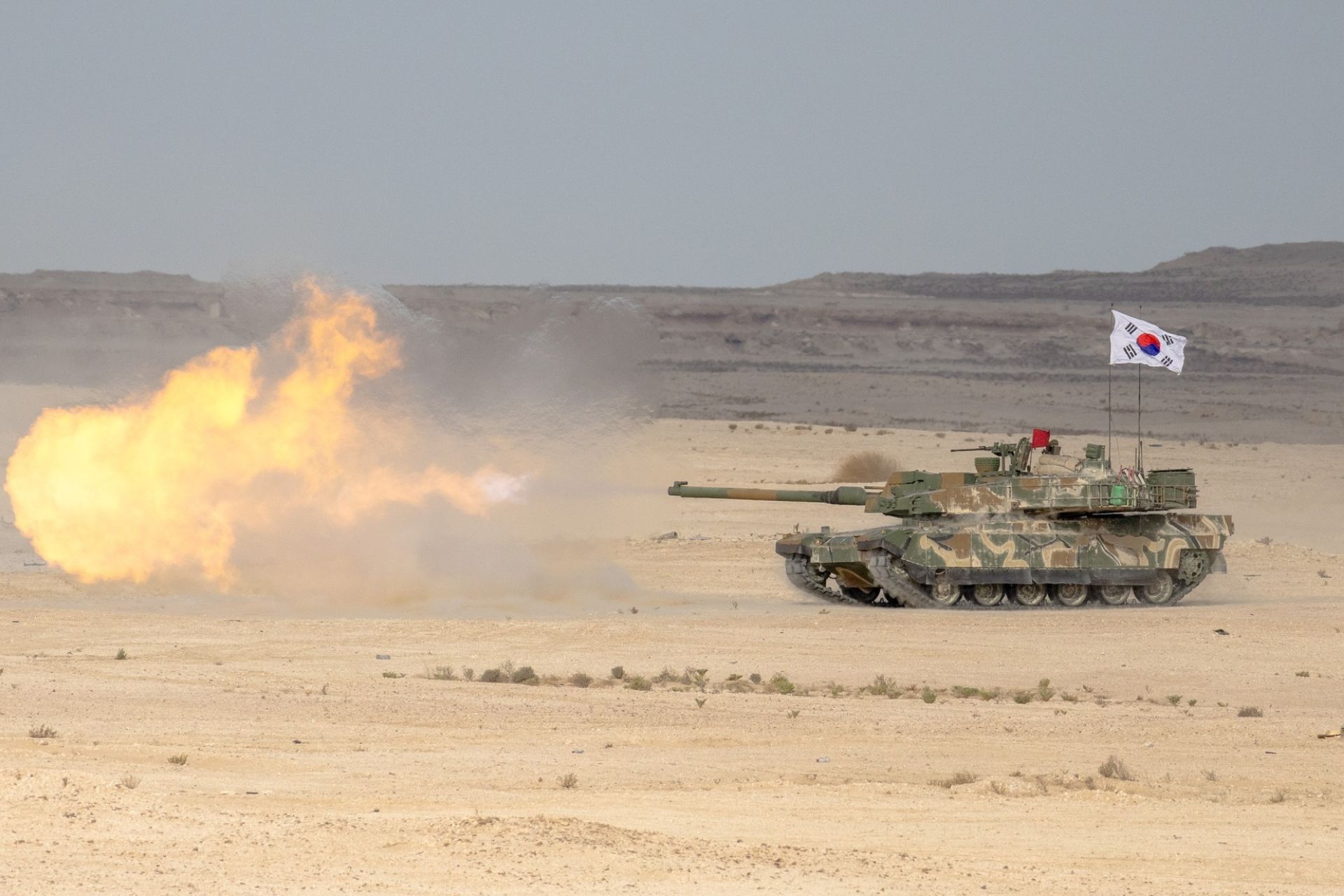
The K2 Black Panther and K9 Thunder are flagship products of South Korea’s defense industry, widely adopted globally (Picture source: South Korean MoD )
In terms of production, the K2 Black Panther and K9 Thunder are flagship products of South Korea’s defense industry, widely adopted globally. The K2 is in service with the South Korean army, with variants exported to Poland to bolster its tank fleet. The K9 Thunder has seen broader exports, with customized versions provided to countries such as Turkey, Norway, and Australia. Both systems exemplify South Korea’s advanced military technology, offering flexibility and adaptability across various battlefields.
The Al Kalael training center, a vast desert training ground spanning over 33 kilometers from north to south, provides an ideal environment for long-range shooting and military maneuvers. South Korean and Qatari soldiers conducted live-fire drills and tactical exercises, with Qatar’s Leopard 2A7 tanks and PzH 2000 self-propelled howitzers, both of German origin, also participating. These joint exercises highlighted the capabilities of South Korean systems while comparing them to well-established defense equipment on the international market.
This series of exercises, which will continue until October 27, follows the signing of a memorandum of understanding between South Korea and Qatar in February aimed at strengthening bilateral defense ties and facilitating military expertise exchanges and technology cooperation.
Besides the ground maneuvers, this exercise also marks the first deployment of a South Korean Navy landing ship in the Middle East. This cooperation showcases not only the South Korean armed forces' projection capabilities but also their desire to strengthen strategic relations with Gulf partners. South Korea’s ambassador to Qatar, Hyunsoo Yun, emphasized the significance of this event, noting the importance of both military capability enhancement and diplomatic relations. He underscored the symbolism of these exercises, which coincide with the 50th anniversary of diplomatic relations between South Korea and Qatar.
The ongoing exercises also demonstrate the performance of South Korean military equipment in demanding desert conditions. The K2 tank and K9 howitzer have proven their reliability and effectiveness in extreme environments, reinforcing their standing in the global defense market. Ambassador Yun also highlighted that these exercises provide a valuable opportunity to showcase South Korean systems, capable of meeting the growing demands of modern armed forces worldwide.
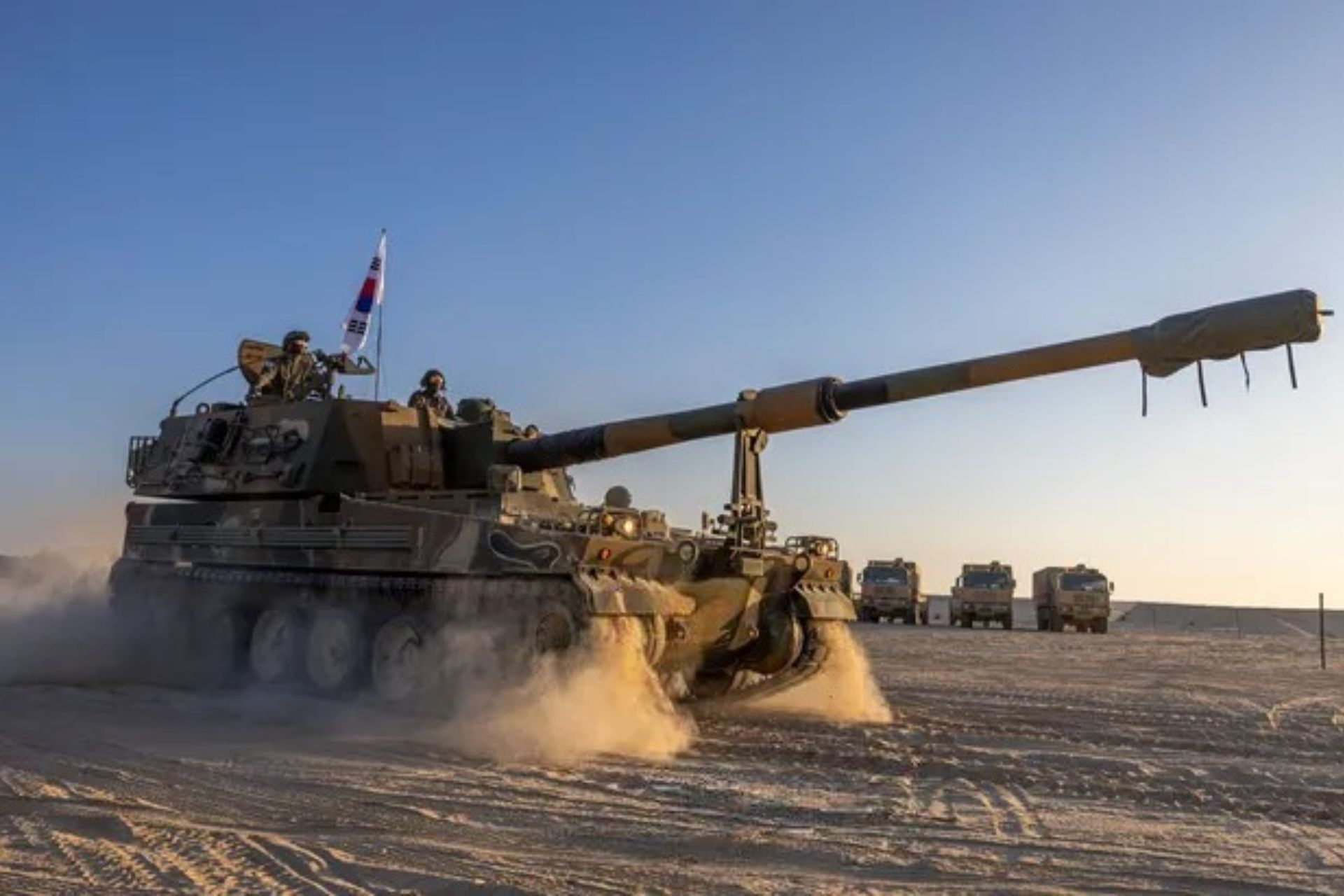
The K9 Thunder, developed by Hanwha Land Systems, is a 155 mm self-propelled howitzer designed to offer both mobility and firepower (Picture source: South Korean MoD )

- Details
- Written by: Jérôme Brahy
- Category: 2024
- Hits: 6519
At the SAHA 2024 exhibition, Türkiye’s Saver Advanced Defense Technologies, a subsidiary of Ermaksan, presented the SM-81 Keskin, a new 81mm breech-loading mortar system that has completed its seven-year development process in 2023 and is now ready for production. The system was developed using internal research and development funding and is designed for various operational environments.
Follow Army Recognition on Google News at this link
The SM-81 Keskin, with a local content rate of over 90%, was developed as a cost-efficient solution for applications such as police stations, base areas, temporary base areas, vehicle-mounted operations, and watchtower defense. (Picture source: Army Recognition)
The SM-81 Keskin features an 81mm barrel, a length of 1.453 meters, with a hand-operated vertical sliding breech mechanism, with a screw breech also considered as a possible option. The mortar offers full 360-degree traverse and an elevation range from -5 to +82 degrees, both of which are manually controlled with an elevation and traverse indicator. A hydro-pneumatic recoil system is mounted above the barrel. The system's maximum range is listed as 6,100 meters, with a minimum range of 100 meters, depending on the projectile and charge combination used. Firing is controlled through a trigger mechanism.
This mortar system is designed for both indirect and direct fire. Its direct-fire capability is supported by a six-times magnification day sight, a thermal imaging camera, and a laser rangefinder with a maximum range of 6,000 meters. For indirect fire, the system is muzzle-loaded, with two firing options: conventional firing when the bomb hits a fixed trigger pin, or trigger firing, where the firing pin is controlled via a trigger mechanism. When used for direct fire with the barrel below 30 degrees, the system is loaded from the breech.
The SM-81 Keskin can use standard 81mm mortar ammunition, including high-explosive, smoke, and illuminating types. A 10.1-inch display screen is mounted on the left side of the system, providing a digital map and ballistic calculations for elevation and traverse. The system also includes GPS/INS technologies for more efficient and accurate target engagement.
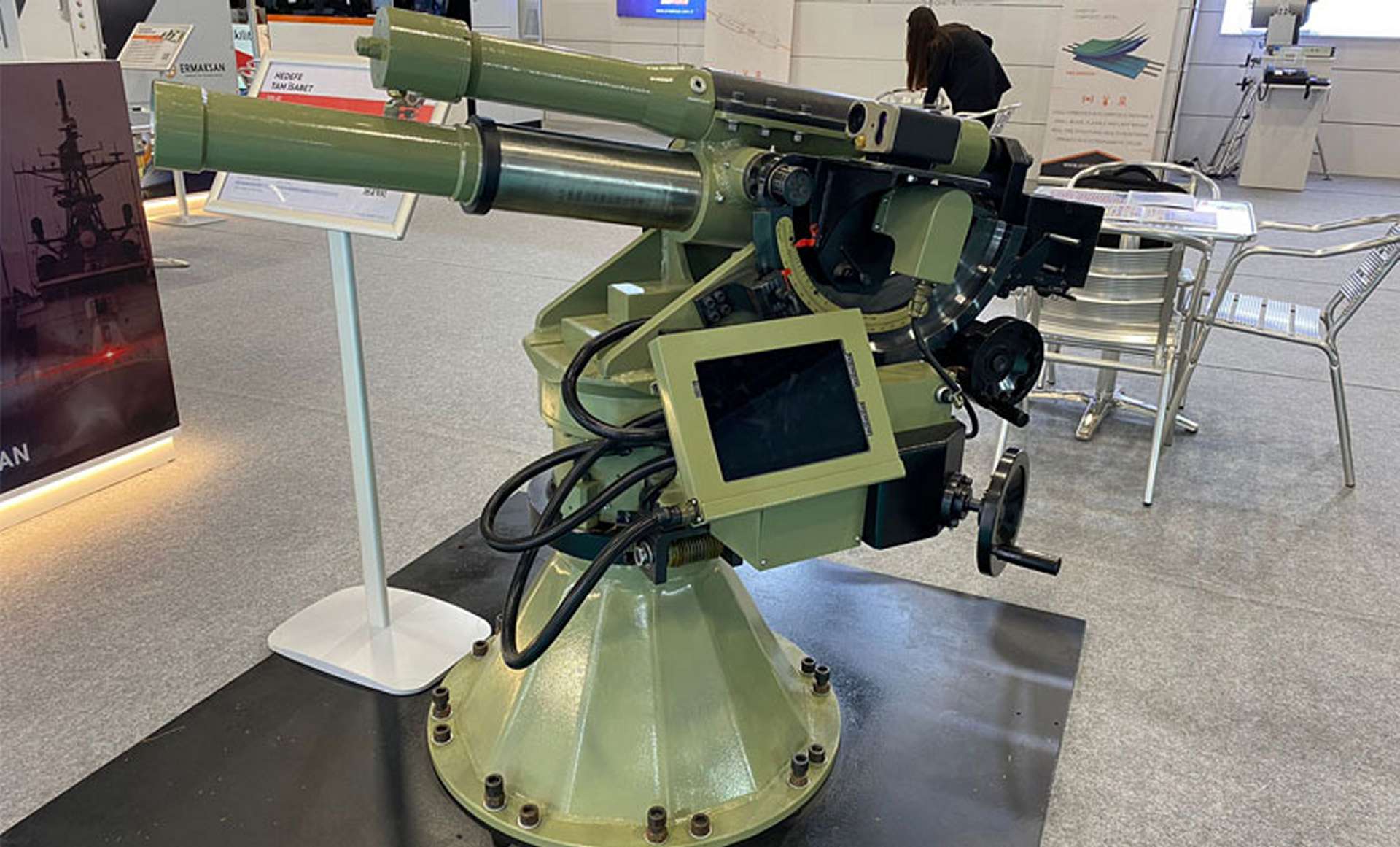
The SM-81 Keskin can use standard 81mm mortar ammunition, including high-explosive, smoke, and illuminating types, for a maximum firing range of 6,100 meters. (Picture source: Saver)
Weighing 450kg in total, including the pedestal, the system can be mounted on the rear platform of a light truck for mobility. Its pedestal has a diameter of 770mm, and the complete system measures 1,980mm in height when fully extended and 1,005mm at its minimum height. In addition to vehicle mounting, the system can be used for base defense when installed in a fixed position. Saver is also working on developing turret-mounted and towed variants to increase its versatility.
The design of the SM-81 Keskin offers 360-degree firing capability without the need for reorientation between shots, which reduces the time spent adjusting the weapon, potentially limiting exposure to counter-battery fire. The system's design also allows for ease of use in challenging terrains, and its parts require minimal maintenance.
Saver Advanced Defense Technologies specializes in academic, engineering, and scientific research in both civil and military fields. The SM-81 Keskin, with a local content rate of over 90%, was developed as a cost-efficient solution for applications such as police stations, base areas, temporary base areas, vehicle-mounted operations, and watchtower defense.

- Details
- Written by: Jérôme Brahy
- Category: 2024
- Hits: 4874
At the SAHA 2024 exhibition, Turkish defense company FNSS presents its new Pars Alpha 8x8 armored vehicle, which was unveiled in February 2024 at the World Defense Show in Riyadh. The Pars Alpha 8x8 is the latest iteration in FNSS' Pars family, following the Pars IV 8x8, launched in 2021 at IDEX. Designed to meet the needs of mechanized infantry, the Pars Alpha 8x8 is engineered for superior mobility, survivability, and operational performance, integrating modern technologies to enhance situational awareness and crew protection.
Follow Army Recognition on Google News at this link
One key feature of the Pars Alpha is the integration of the TEBER-II 30/40 Remote Controlled Turret (RCTC), developed by FNSS. The turret features a 30mm dual-feed automatic cannon, upgradeable to a 40mm barrel by changing specific components. (Picture source: Army Recognition)
Equipped with a hydropneumatic suspension system that allows for height adjustments, the Pars Alpha 8x8 can cross trenches up to 2.4 meters wide, overcome obstacles of up to 0.8 meters, and wade through water at depths of 1.2 meters. Its all-axle steering system provides a turning radius of less than 7.8 meters, particularly useful in confined spaces, such as urban operations. The vehicle's durability has been demonstrated through rigorous testing, covering over 5,000 kilometers of off-road and road driving. Its low failure rate and reduced logistical burden make it a reliable asset on the battlefield.
The Pars Alpha 8x8 meets STANAG 4569 standards for ballistic protection, mine resistance, and IED defense, though the exact protection levels remain classified. Similar to an increasing number of military vehicles, the placement of the power pack at the front enhances resistance to threats and maximizes crew safety. Additional protection is provided by systems such as an automatic fire suppression system, a CBRN protection system with positive pressure, and 12 smoke grenade launchers. Acoustic detection and optional active protection systems are also available.
One key feature of the Pars Alpha is the integration of the TEBER-II 30/40 Remote Controlled Turret (RCTC), developed by FNSS. The turret features a 30mm dual-feed automatic cannon, upgradeable to a 40mm barrel by changing specific components. In addition to the main weapon, the turret includes a 7.62mm coaxial machine gun and the capability to house two ready-to-fire anti-tank missiles, with a range exceeding 4 kilometers. The turret's electric-driven, two-axis stabilization system enables engagement of multiple targets simultaneously, even while on the move.
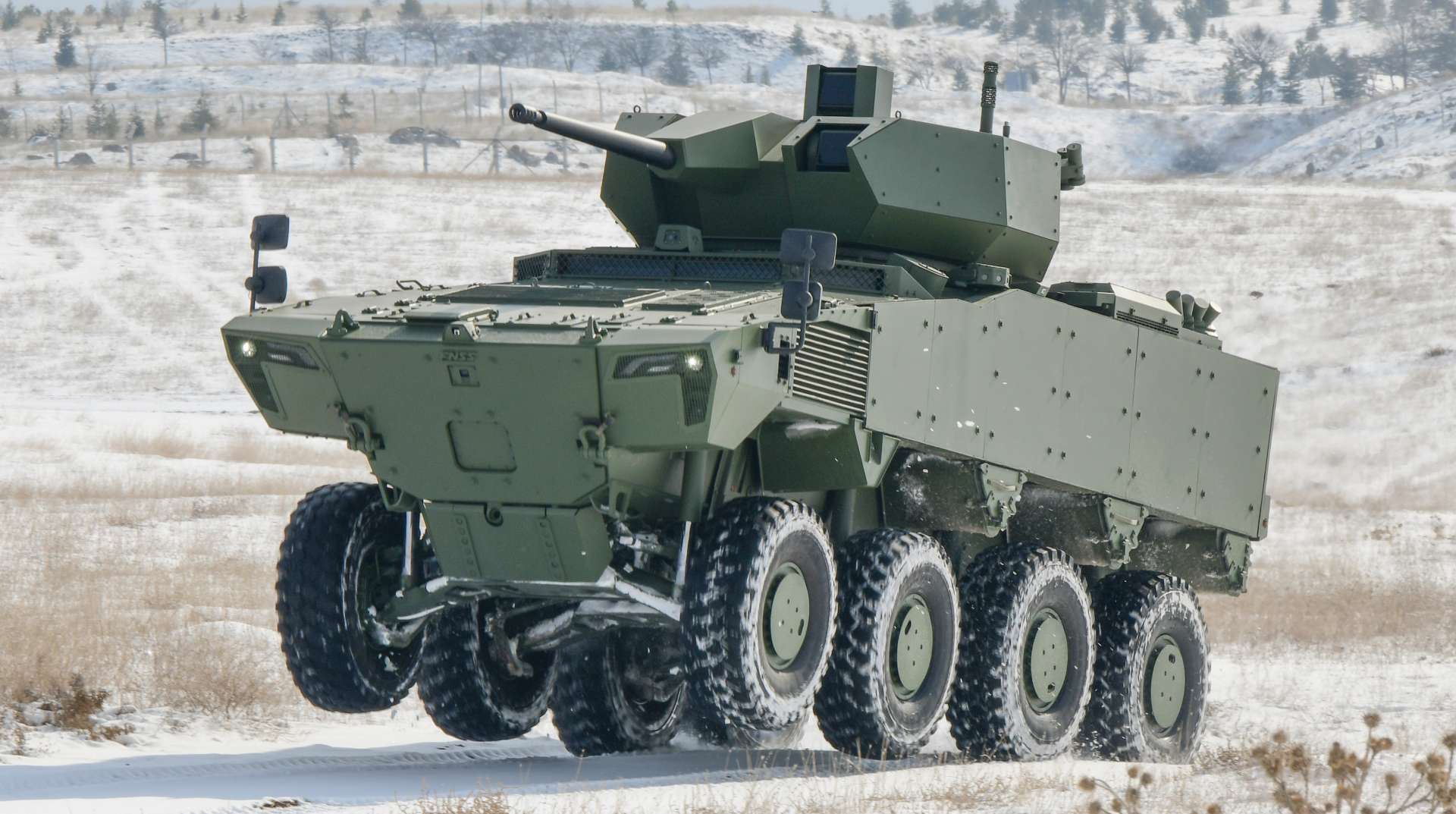
Equipped with a hydropneumatic suspension system that allows for height adjustments, the Pars Alpha 8x8 can cross trenches up to 2.4 meters wide, overcome obstacles of up to 0.8 meters, and wade through water at depths of 1.2 meters. (Picture source: FNSS)
FNSS has designed the vehicle to support various turret systems, including 35mm, 90mm, and 105mm guns, as well as air defense and anti-tank systems. This flexibility is supported by its spacious interior, which allows for multiple layout options, and its integrated situational awareness systems, which include 360-degree cameras and screens for both day and night vision.
Powered by a 711-horsepower diesel engine, the vehicle’s power-to-weight ratio exceeds 21 horsepower per ton, enabling the Pars Alpha 8x8 to achieve a maximum road speed of over 115 km/h and a range of over 800 kilometers. The fully automatic six-speed transmission and two-speed transfer box support both high-speed movement and low-speed operations, with a controlled speed of less than 5 km/h. The vehicle measures less than 7.8 meters in length, 3.1 meters in width, and 2.4 meters in height in cruising mode, reducible to 2.2 meters for transport purposes.
The Pars Alpha 8x8 accommodates 12 personnel, including the driver, commander, gunner, and vehicle crew. The commander and driver are positioned side by side, benefiting from a 180°+ real-time field of view. The vehicle's 360-degree situational awareness systems, which include day and night cameras, aim to minimize blind spots.
Additionally, the FNSS Pars Alpha 8x8 includes standard mission equipment such as a battlefield management system, a driver vision system, and VHF/UHF communication systems. The vehicle complies with MIL STD 1275 and MIL STD 461 standards for mission equipment, and an auxiliary power unit (APU) is available as an option. The modular design allows for various configurations based on user requirements, including roles such as command posts, engineering vehicles, or platforms for larger caliber weapons and rocket launchers.
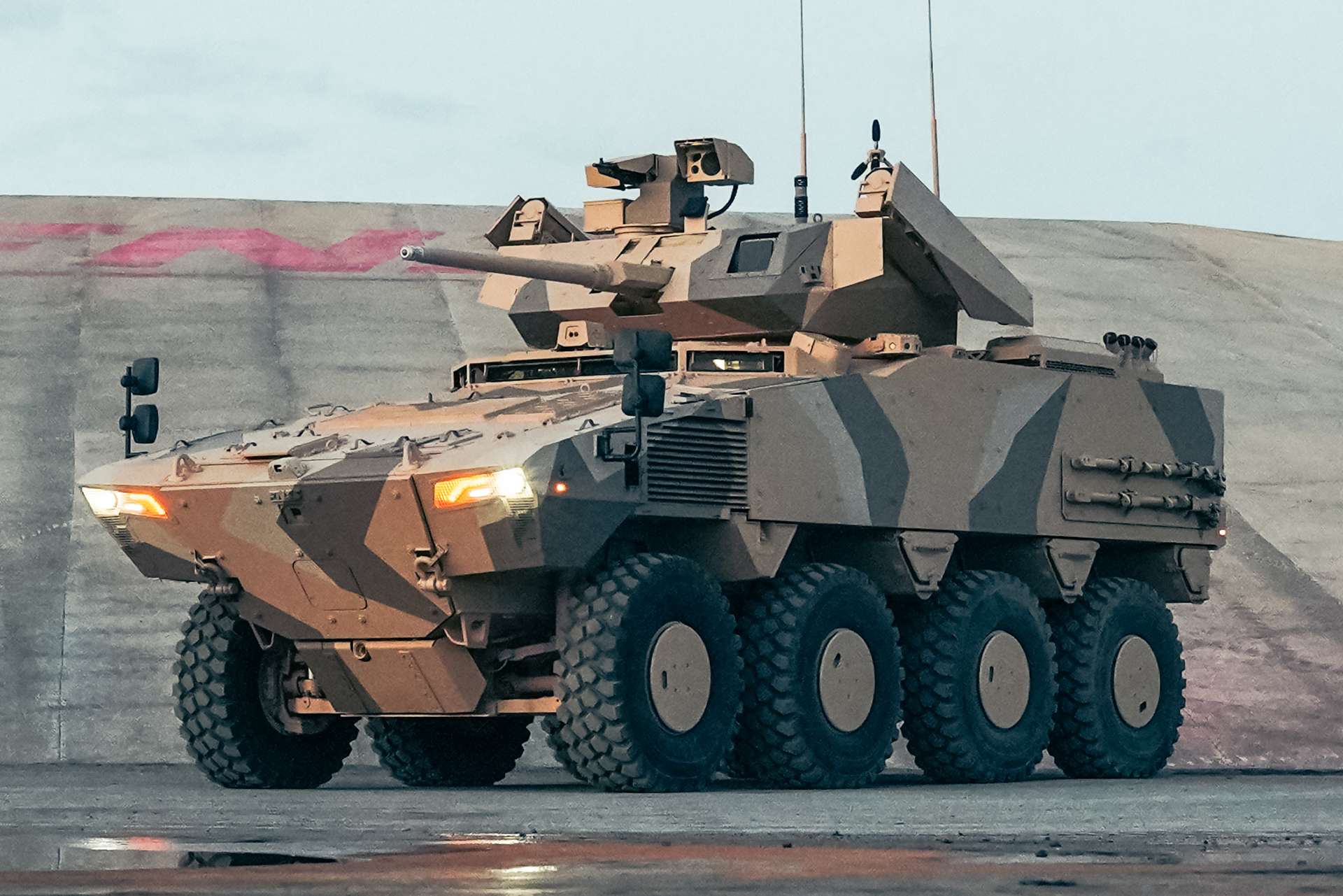
The fully automatic six-speed transmission and two-speed transfer box support both high-speed movement and low-speed operations, with a controlled speed of less than 5 km/h. (Picture source: FNSS)
Read more: FNSS' new Pars Alpha 8x8 could fire anti-tank missiles over 4km while on the move
- UAE MoD Unveils First Deployment of Locally Made Nimr Ajban Mk2 Armoured Vehicles
- L3Harris and Overland AI Unveil Diamondback UGV at AUSA With Testing Slated for 2025
- Focus | Russia’s war in Ukraine triggers Sweden’s biggest defense investment since Cold War
- AeroVironment Designs Next-Gen Modular P550 eVTOL Drone with AI Capabilities