- Army
- Air Defense Systems
- Anti-tank systems and vehicles
- Armored Vehicles
- Armoured personnel carriers
- Artillery Vehicles and Weapons
- Command Post
- Communication Vehicles and Systems
- Electronic Warfare
- Engineer | Maintenance Vehicles
- Infantry Fighting Vehicles
- Main Battle Tanks
- Missiles
- Tactical and Logistic Vehicles
- Radars
- Unmanned Systems
- Weapons
- Navy
- Air











K9 Thunder
K9 Thunder
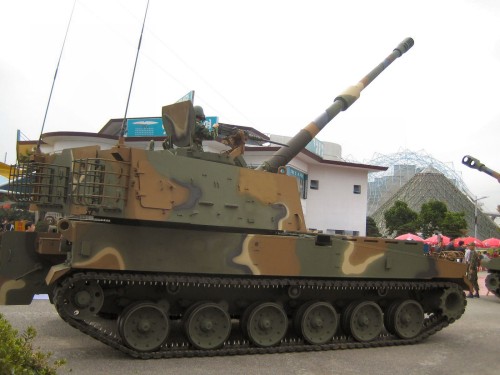
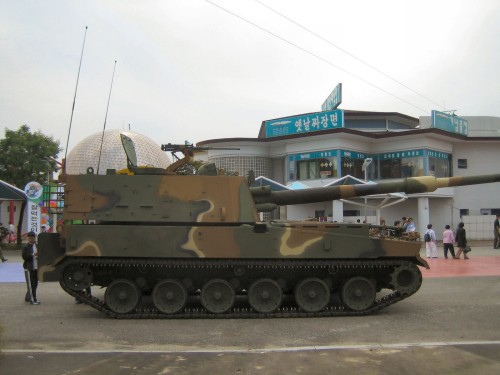
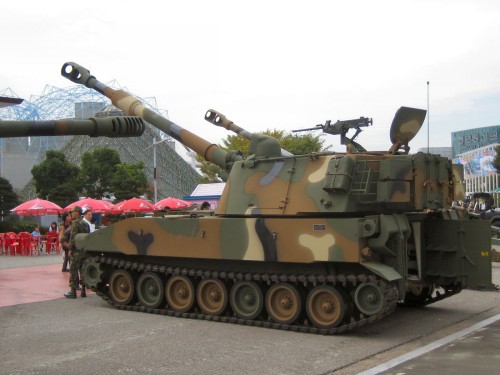
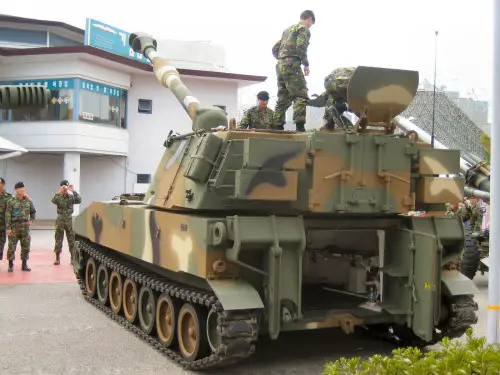
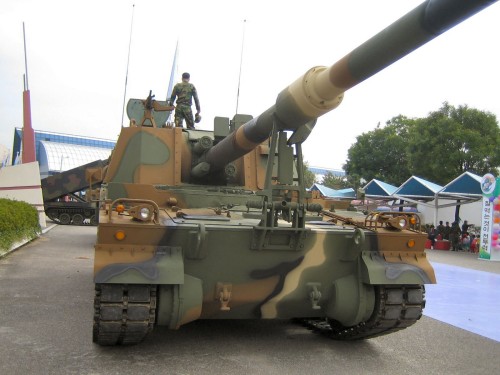
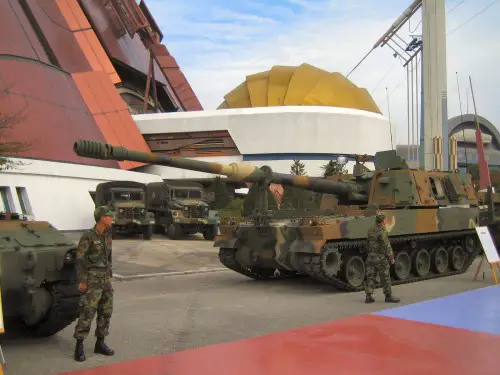
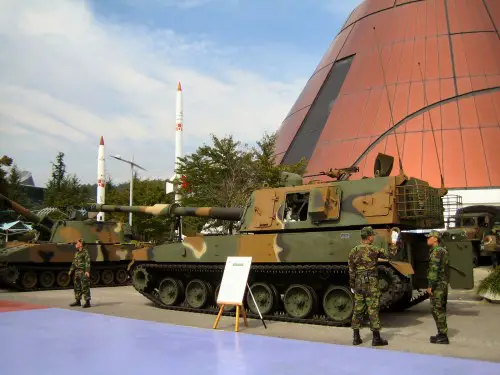
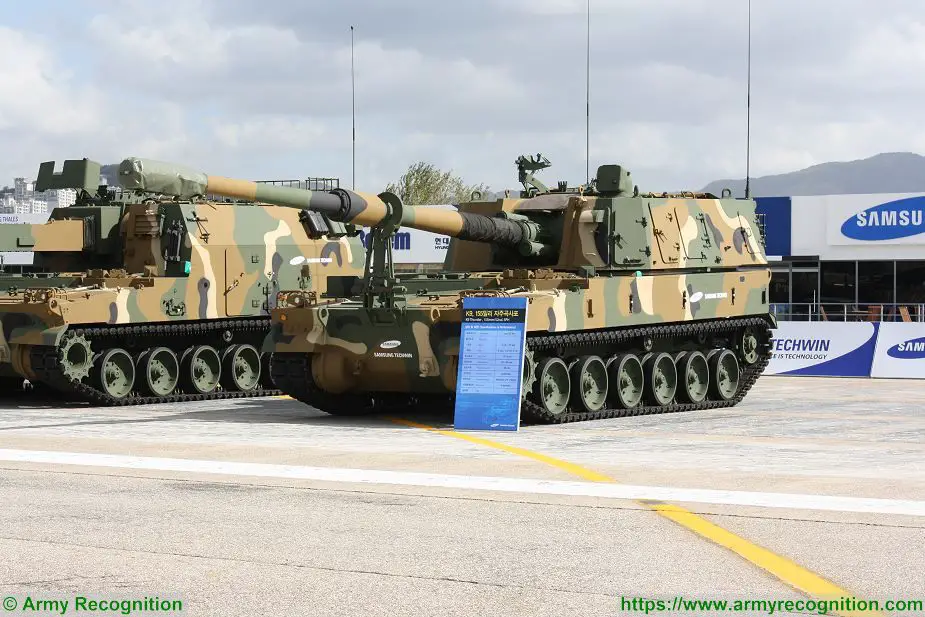
155mm tracked self-propelled armored howitzer - South Korea
Description
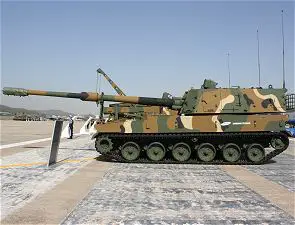
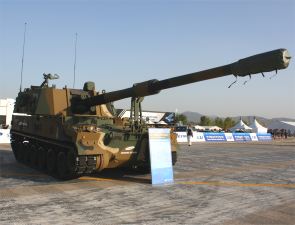
The K9 Thunder is a 155mm/52-caliber tracked self-propelled howitzer developed by South Korea’s Samsung Techwin, now operating under Hanwha Aerospace following corporate restructuring. Originally designed to meet the Republic of Korea Army’s requirements for a long-range, rapid-fire artillery platform capable of countering North Korean artillery threats, the system entered full-rate production in 1999 after nearly a decade of research and prototyping. The project was initiated in 1989, and the first prototype was tested in 1996. Samsung Aerospace Industries was awarded the official production contract in December 1998, making the K9 the backbone of South Korea’s mechanized artillery forces.
Since its introduction, the K9 platform has become one of the most widely exported tracked howitzers worldwide, with its modular architecture and high degree of adaptability enabling rapid adoption across both NATO and non-NATO countries. As of 2026, the K9 and its derivatives are in service or on order with nine nations, including South Korea, India, Poland, Finland, Estonia, Norway, Australia, Egypt, and Romania. Its proven performance in desert, arctic, and temperate conditions has established it as a reliable and scalable solution for modern artillery forces seeking long-range firepower, digital integration, and high battlefield survivability.
Poland has emerged as the largest foreign operator of the K9 platform, signing a multi-phase acquisition and co-production agreement with Hanwha Aerospace in 2022 and 2023. The deal, valued at over USD 3.5 billion, includes 672 K9A1 and future K9A2 units, along with localized production under the Polish state defense group PGZ. In India, the K9 Vajra-T variant, co-produced by Larsen & Toubro, has seen extensive deployment in both desert and high-altitude terrain, with more than 200 units delivered or on order as of late 2025. Australia is also integrating the K9 into its land forces through the AS9 Huntsman configuration, procured under LAND 8116. A purpose-built assembly facility in Geelong, Victoria, began construction in 2025 to support local manufacturing and sustainment.
Egypt signed a procurement contract in early 2022 for the K9A1EGY, a variant tailored for hot-weather operations and local assembly, with deliveries scheduled to begin in late 2024. Romania finalized a deal in October 2023 to acquire 54 K9A1s and accompanying K10 resupply vehicles, with deliveries expected to begin in 2026. The United Kingdom has shortlisted the K9A2 for its Mobile Fires Platform program, with Hanwha establishing an industrial footprint in the UK to support production if selected. A final contract award decision is expected in late 2026.
Northern European users have also expanded their K9 fleets. Estonia placed a follow-up order in January 2023 for 12 additional howitzers, bringing its total to 24. Finland continues to upgrade its fleet of 48 K9FIN units with enhanced digital fire-control systems and battlefield management integration. Norway completed deliveries of its VIDAR configuration by 2024, and mid-life upgrades are in early planning to align with K9A2 capabilities. Across all European operators, interoperability and joint logistics frameworks are being developed to streamline sustainment and training in line with NATO standards.
The K9A2, the latest standard currently in advanced development, introduces a fully automated loading system, an increased rate of fire exceeding nine rounds per minute, and enhanced networking capabilities compatible with multi-domain operations. This variant features a new digital fire-control system, composite armor enhancements, a more powerful auxiliary power unit, and hybrid-suspension improvements to enhance cross-country mobility. Its turret and chassis design have been optimized for future growth, including integration of unmanned and semi-autonomous technologies. The next evolution, the K9A3, is in conceptual development and is expected to support unmanned operation modes, robotic resupply, and full integration with next-generation C4ISR networks.
With over 1,800 systems contracted globally, the K9 Thunder stands at the forefront of contemporary artillery modernization. Its successful export strategy, centered on co-production, local assembly, and user-specific customization, has positioned it as the most prolific tracked self-propelled howitzer of the 21st century. The platform’s continuous evolution and proven battlefield performance ensure its relevance well into the coming decades.
On March 16, 2026, it was announced that Egypt had begun local co-production of the K9A1 Thunder 155 mm self-propelled howitzer through a defense industrial partnership with South Korea’s Hanwha Defense. The move strengthens Cairo’s domestic military manufacturing base while upgrading the Egyptian Army's long-range artillery capabilities with a proven NATO-standard system.
K9 Thunder Variants:
-K10 ARV: ammunition resupply vehicle for K9 Howitzer
Technical Data
| Armament |
|
The main armament of the K9 Thunder consists of a 155 mm/52 caliber ordnance with a maximum firing range of 40 km. A total of 48 projectiles and their associated charges are carried for ready use. Internally an automatic loading system takes projectiles from the storage position and places them onto the ammunition tray ready for ramming. When traveling the 155 m/52 caliber barrel is held in position with a travel lock installed on the forward part of the hull, this is operated by the driver by remote control. The charges are loaded manually. The K9 Thunder has a maximum rate of fire of 6 rounds per minute and is capable of multiple-round simultaneous-impact firing. It is able to fire three rounds in 15 seconds, each in different trajectories so that all of the shells arrive on target at the same time. The sustained rate of fire is 2 rounds per minute. It is compatible with standard NATO 155-mm ammunition. The maximum range of fire is 30 km with a standard HE projectile and 40 km with a rocket-assisted projectile. After receiving a fire command, the K9 Thunder is able to fire on a target within 30 seconds at emplacement and within 60 seconds from movement. Even though TOT (time on target) firing may be accomplished by several howitzers simultaneously, the K9 Thunder is able to efficiently accomplish the same task by simply changing its fire data. The K9 thunder alone can produce three times as much as the M109A2 155mm SPH in firing capability. One 12.7 mm M2 heavy machine gun is mounted on the right side roof turret and to the forward part of the commander's cupola used as self-protection armament or as an anti-aircraft machine gun.
|
| Design and protection |
|
The K9 Thunder has an all-welded steel hull and turret with a maximum thickness of 19 mm. It provides protection from the firing of small arms and artillery shell fragments. This self-propelled howitzer has a crew of five, consisting of a commander, driver, gunner, assistant gunner, and loader. The driver is at the front of the hull on the left with the engine to his right. The turret with the artillery gun system is mounted at the rear of the hull. The commander and gunner are seated on the right side of the turret. A single door is located on the left side of the turret and there is also a large door at the rear of the hull that opens to the right used by the crew to load ammunition.
|
| Mobility |
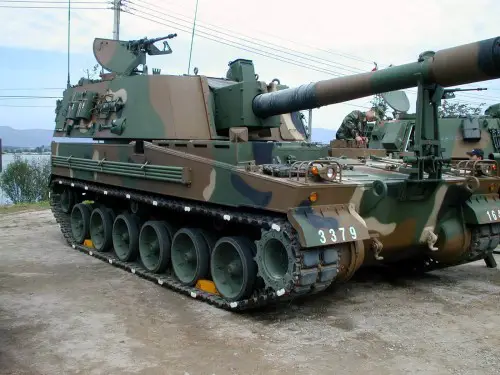
| The K9 Thunder artillery system is powered by a German MTU MT 881 Ka-500 diesel engine, developing 1,000 horsepower coupled to an Allison automatic transmission X1100-5A3 with 4 forward and 2 reverse gears. Transmission of the K9 Thunder is a further development of that installed on the M1 Abrams main battle tank. The K9 is fitted with a hydropneumatic suspension that consists on each side of six dual rubber road wheels, with the drive sprocket at the front, idler at the rear, and three track return rollers. The track is of the double-pin type with replaceable rubber pads. It can run at a maximum road speed of 67 km/h with a maximum cruising range of 360 km. |
| Accessories |
| Standard equipment of the K9 Thunder includes a CBRN protection system, heater, internal and external communications system, and a manual fire suppression system. The K9 is also equipped with a Honeywell Azimuth Position System, Automatic Fire-Control System, powered gun elevation/depression, and turret traverse system. |
Specifications
| Armament | Armor |
| One 155 mm gun, and one 12.7 mm heavy machine gun. | Protection against 14.5mm caliber armor-piercing shells and 152 mm artillery shell fragments. |
| Country users | Weight |
| Australia, Egypt, Estonia, India, Finland, Norway, Poland (K9 chassis) South Korea, Turkey (Firtina) | 46,300 kg |
| Designer Country | Speed |
| South Korea | 67 km/h |
| Accessories | Range |
| CBRN protection system, heater, internal and external communications system, manual fire suppression system, and automatic fire control system | 360 km |
| Crew | Dimensions |
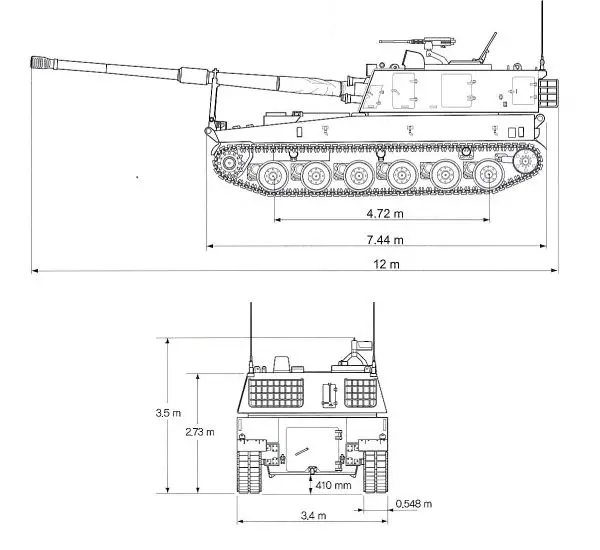
| 5 | Length: 7.44 m; Width: 3.4 m; Height: 2.73 m roof turret |
Details View
 |
|
 |
 |
 |
 |
Pictures - Video