

- Details
- Written by: Halna du Fretay
- Category: 2024
- Hits: 3967










On October 10, 2024, the Croatian Ministry of Defense announced the successful testing of three M2A2ODS Bradley infantry vehicles, marking a key step in modernizing Croatia’s armed forces with advanced American military technology. Croatia has acquired a total of 89 M2A2ODS units from U.S. surplus stock to strengthen its mechanized infantry capabilities. This acquisition strategy aims to replace the outdated BVP M-80A vehicles, which have served Croatia for decades but are now technologically obsolete.
The M2A2ODS provides reinforced crew protection, with a multi-layered steel and aluminum armor capable of withstanding small-arms fire, shell fragments, and certain anti-tank mines (Picture source: MoD Croatia)
The initial delivery of 22 vehicles took place last December. These units were immediately sent to the Đuro Đaković Specijalna Vozila d.d. factory for comprehensive refurbishment, including a thorough inspection of each vehicle’s technical condition and the application of protective coatings to meet modern operational standards. Recently, three fully refurbished units completed rigorous testing at the Kindrovo and Gashintsi test ranges near Đakovo, confirming their operational readiness.
The Bradley A2 ODS-SA is a robust combat vehicle designed to offer firepower, mobility, and enhanced protection in close-combat, urban, and open battlefield scenarios. Equipped with advanced digital technologies, it improves situational awareness, connectivity, and communication within armored combat brigades. Powered by a 600-horsepower engine, it can reach speeds of up to 61 km/h and has a range of 402 km. Its resilient design and modular structure ease maintenance demands, ensuring durability and effectiveness on the battlefield.
In terms of armament, the Bradley A2 ODS-SA features a 25mm Bushmaster cannon capable of firing explosive and armor-piercing rounds, a 7.62mm coaxial machine gun for close-range defense, and TOW anti-tank missiles to engage armored threats at long range. Its protection includes reinforced armor to withstand small-arms fire and shell fragments, and it can be fitted with additional armor tiles for added defense against shaped-charge munitions. These features make it well-suited to meet modern battlefield challenges while ensuring crew safety.

The Bradley A2 ODS-SA is a robust combat vehicle designed to offer firepower, mobility, and enhanced protection in close-combat, urban, and open battlefield scenarios (Picture source: MoD Croatia)
Croatia acquired these vehicles under the U.S. Excess Defense Articles (EDA) program. Of the 89 units, 62 will be deployed to frontline units, five will be allocated for training, and the remaining 22 will be reserved for spare parts, ensuring fleet sustainability. The agreement also includes an option to acquire up to 93 additional Bradleys. However, this may be challenging, as many Bradleys in good condition have either been upgraded to the M2A4 standard or sent to Ukraine as part of international aid, leaving the remaining units in need of more extensive refurbishment, potentially raising costs.
The modernization of Croatia’s mechanized units with the M2A2ODS Bradley represents a significant step forward in enhancing national defense capabilities. Compared to the BVP M-80A, the Bradley offers notable improvements in firepower, protection, and battlefield visibility, bringing Croatia’s forces in line with modern operational requirements. Additionally, the M2A2ODS provides reinforced crew protection, with a multi-layered steel and aluminum armor capable of withstanding small-arms fire, shell fragments, and certain anti-tank mines. Equipped with smoke grenade launchers, the Bradley can obscure its movements in combat, adding a layer of safety for its three crew members and the six infantry soldiers it can transport in the rear compartment.
As Croatia integrates the Bradley into its forces, it lays the foundation for a modernized, more capable military, prepared to address current security challenges both domestically and as a NATO member. In the long term, the addition of Bradley vehicles will enable Croatia to enhance its contributions to NATO operations and collective defense initiatives, strengthening the alliance as a whole.

Upgrading Croatia's mechanized units with the M2A2ODS Bradley enhances defense capabilities with superior firepower, protection, and battlefield visibility (Picture source: MoD Croatia)
Read more: Croatian Army Modernization Advances with Successful First Tests of M2A2ODS Bradleys

- Details
- Written by: Halna du Fretay
- Category: 2024
- Hits: 5336
At the annual Association of the United States Army (AUSA) 2024 exhibition in Washington, D.C., AM General presented the JLTV A2, a next-generation light tactical vehicle designed to meet the diverse needs of the armed forces while minimizing lifecycle costs. Developed to enhance tactical mobility and improve protection for military personnel, the JLTV A2 represents a blend of technical innovation and proven manufacturing processes. This model stands out due to significant upgrades aimed at enhancing performance, modularity, and adaptability to demanding combat environments.
A notable feature of the JLTV A2 is the integration of a 24-volt lithium-ion battery, which simplifies the electrical architecture and provides a platform for future growth and hybridization (Picture source: Army Recognition)
The JLTV A2 is built around a modular base integration kit, allowing for adaptable configuration and increased storage capacity for mission equipment. This flexibility facilitates vehicle customization, enhancing its ability to meet the varied operational demands of military missions. The vehicle is powered by a Duramax Turbo Diesel engine paired with an Allison 2500SP six-speed automatic transmission, optimized for off-road performance. The JLTV A2 also includes adjustable independent suspension, ensuring effective acceleration and maneuverability on rough terrains while allowing for a height adjustment to accommodate air and amphibious transport.
A notable feature of this model is the integration of a 24-volt lithium-ion battery, which simplifies the electrical architecture and provides a platform for future growth and hybridization. Additionally, internal and external noise reduction solutions enhance operational stealth, addressing the challenges of modern combat theaters where discretion is essential. The vehicle’s cabin is available in two- or four-seat configurations, with blast-protected seating and an automatic fire suppression system. Its compatibility with CH-47 and CH-53 helicopters, fixed-wing aircraft, and amphibious vehicles underscores its adaptability to rapid deployment.
The JLTV A2 is available in several specialized configurations. The Heavy Guns Carrier (HGC) model accommodates four crew members and a turret gunner, equipped with a protection kit. The Tow version (Close Combat Weapons Carrier), also equipped with a protection kit for the gunner, supports heavy anti-armor and anti-tank weapons. A utility variant enables the transport of two crew members with cargo or shelter capacity. Lastly, the trailer version, with a 5,100-pound payload capacity, supports heavy transport missions via a steel deck with removable aluminum side and rear panels.
With a design focused on cost-efficiency across production, operations, and maintenance, the JLTV A2 offers a balanced approach to protection, mobility, and operational cost. Built for modern battlefield networks, it is the first tactical vehicle specifically designed to meet the demands of connected warfare environments. This network-ready capability ensures reliable transport for soldiers and marines across extended and complex operations.
In June 2024, the U.S. Army began awarding contracts to AM General for the production of JLTVs, previously manufactured by Oshkosh Defense. The Indiana-based AM General recently received an $11.6 million contract to produce and deliver an undisclosed number of JLTVs, with production based in South Bend, Indiana, and an estimated completion date of February 2033.
This contract follows a competition held in February 2023, in which AM General secured an agreement to supply 20,000 JLTVs, outbidding Oshkosh Defense. Oshkosh, originally selected in 2015, saw the Army reopen bidding to achieve cost savings. Despite Oshkosh’s appeal, the U.S. Government Accountability Office confirmed the Army’s decision, affirming that discussions were conducted fairly and thoroughly.
Read more: AM General Presents JLTV A2 US Army’s New Light Tactical Vehicle at AUSA 2024

- Details
- Written by: Vandenbosch
- Category: 2024
- Hits: 3272
The annual AUSA (Association of the United States Army) exhibition is taking place in Washington, D.C., bringing together the top players in the global defense industry to showcase the latest technological advancements. Among the innovative equipment presented this year, Israel Aerospace Industries’ (IAI) TEASER missile is attracting particular attention. This seeker-less, automatically guided missile represents a new generation of individual assault weapons designed to meet the current needs of armed forces for precision, reliability, and cost-effectiveness.
The TEASER is an Automatic Command-to-Line-Of-Sight individual assault missile. (Picture source: Army Recognition)
The TEASER is an ACLOS (Automatic Command-to-Line-Of-Sight) individual assault missile, optimized for targeting ground forces, infrastructures, lightly armored vehicles, as well as low-flying aerial targets. Its most notable feature is the absence of an autonomous guidance device, enabling the missile to achieve high precision while keeping production and usage costs low. Without relying on GNSS, the TEASER can operate independently of any global positioning system, enhancing its reliability in hostile environments.
The TEASER missile stands out with its high payload-to-weight ratio, ensuring significant strike power in a compact form. It has a versatile warhead capable of neutralizing various target types, from enemy personnel to light structures. A version equipped with a proximity sensor is also available for aerial targets. With a maximum range of 2,500 meters and a speed of 200 meters per second, the TEASER can perform effectively in complex tactical contexts.
The missile's dimensions—70 cm in length and 8.4 cm in diameter—facilitate its integration into existing armament configurations and make it compatible with various optical devices. The targeting system, called Teaser-Sight, features internal day and night vision channels, allowing for quick adaptation to combat conditions. This sight can also rely on external video sources, a feature that provides TEASER with valuable configuration flexibility.
IAI designed the TEASER to be used in different launch scenarios, providing the adaptability needed for soldiers in the field. In portable launch mode, the Teaser-Sight is directly attached to the launch tube, allowing the operator to guide the missile to its target in line of sight. In mounted launch mode, the system can be operated remotely by the user, which reduces the risk of direct exposure to enemy fire.
The AUSA exhibition, a key event in the defense sector, provides an annual strategic platform for innovations intended for American and international armed forces. AUSA brings together experts, military decision-makers, and industry leaders to discuss contemporary security challenges and to discover technological advancements shaping the future battlefield. Israel Aerospace Industries' presence at the exhibition underscores the company's commitment to designing robust equipment tailored to modern warfare requirements.
IAI’s TEASER missile thus stands out as a high-performance, cost-effective precision strike system, meeting adaptability and rapid deployment needs. Its ability to operate without GNSS, combined with ease of integration with existing equipment, makes it an attractive solution for armed forces seeking reliable and modular systems.
Read more: Israel Aerospace Industries Teaser Missile Presented at AUSA Exhibition in United States

- Details
- Written by: Jérôme Brahy
- Category: 2024
- Hits: 8358
On October 14, 2024, Hensoldt announced that its South African-based GEW business unit has delivered over 130 electronic warfare (EW) systems to the Middle East since 2007. The recent establishment of Hensoldt Middle East in Saudi Arabia aligns with the company’s efforts to support Saudi Arabia's Vision 2030 and meet the region's defense modernization needs. In light of current conflict dynamics, Hensoldt’s systems are employed to assist regional forces with intelligence gathering, communication monitoring, and situational awareness, all critical for national security.
Follow Army Recognition on Google News at this link
Hensoldt’s land EW portfolio includes technologies to help military forces track hostile emitters, analyze signals, and interpret transmitted content. (Picture source: Hensoldt)
In modern military operations, timely information about adversary forces and the operational environment is essential. Hensoldt’s land-based electromagnetic warfare (EW) systems are designed to provide intelligence that enables forces to monitor and manage the electromagnetic spectrum. These systems offer a framework for understanding the spectrum and improving operational awareness.
Hensoldt’s land EW portfolio includes technologies to help military forces track hostile emitters, analyze signals, and interpret transmitted content. These systems contribute to situational awareness, mission planning, threat management, and mission control, supporting spectrum control operations. The portfolio spans from portable units to scalable network configurations, featuring electronic support (ES) and tactical electronic attack (EA) systems, along with jamming technologies aimed at protecting friendly forces. The systems use data analytics and data fusion to process and analyze large datasets, aiming to improve operations in complex environments.
The systems cover frequencies from HF to SHF and are built to function in crowded frequency environments. This wide frequency range enables Hensoldt’s systems to support operations where control over the spectrum is necessary. The systems also include capabilities for cyber and electromagnetic activities (CEMA) and can be adapted to various mission requirements. Automated signal processing is intended to assist decision-making, and the system's open architecture allows for future upgrades and adjustments.
The portfolio includes the COMINT Automation Engine (CAE), which is part of Hensoldt’s broader land electromagnetic warfare offerings. CAE is a software solution developed to automate many of the tasks associated with communications intelligence (COMINT) analysis. It integrates wideband core sensors, enabling fast data interfacing, and supports multiple parallel detection streams for both classic and agile (hopper) signals. CAE clusters radio networks for more streamlined intelligence reviews and integrates with electronic attack (EA) systems.
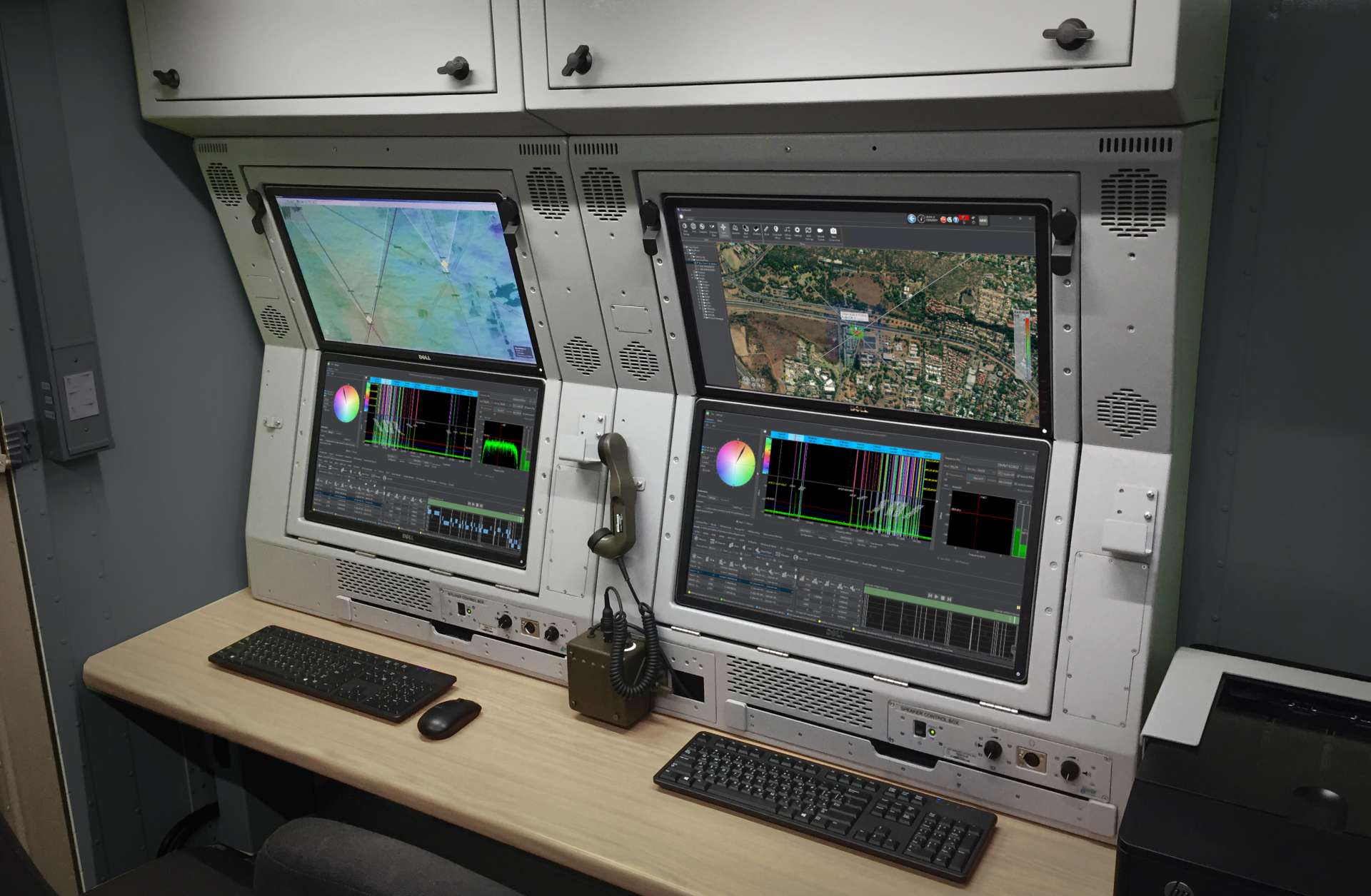
The COMINT Automation Engine (CAE) integrates wideband core sensors, enabling fast data interfacing, and supports multiple parallel detection streams for both classic and agile (hopper) signals. (Picture source: Hensoldt)
The CEA is designed to detect CEMA modes like GSM, LTE, and DVB. The engine incorporates artificial intelligence to assist with signal processing, minimizing operator input. It also processes modern targets like drones and agile frequency hoppers and is intended to provide real-time intelligence for operations on the digital battlefield. The system allows for integration of third-party and custom-developed decoders, facilitating adjustments based on operational needs.
Hensoldt’s EW solutions are designed to support missions related to signals intelligence (SIGINT), electronic support (ES), electronic attack (EA), and force protection. These systems are suitable for applications such as reconnaissance, radar support, and signal analysis, offering tools for monitoring and, where necessary, disrupting enemy communications, thereby contributing to situational awareness and asset protection in high-risk scenarios.
Hensoldt has operated for nearly three decades, with numerous systems deployed globally. Its EW solutions are updated regularly to meet evolving defense requirements. The company collaborates with customers to tailor systems to specific operational needs and offers support services, including maintenance, training, and upgrades. Ryno van Staden, Executive Manager of Sales and Marketing at Hensoldt South Africa’s GEW business unit, points out that customer collaboration is a key part of the company’s strategy, ensuring the development of systems that respond to current electronic threat environments.
Hensoldt South Africa provides a range of products and services in defense and security electronics. The company’s offerings span both defense and civil markets, including electronic warfare, optronics, spectrum monitoring, security solutions, radar, IFF, and datalinks. With approximately 800 employees across four locations in South Africa, it serves as Hensoldt Group’s largest industrial base outside of Germany and is a major defense and security electronics provider in South Africa.
Hensoldt, headquartered in Taufkirchen near Munich, is a European defense company that develops sensor solutions for defense and security applications, offering platform-independent and networked systems. The company focuses on technological developments in defense electronics and optronics, with an emphasis on data fusion, artificial intelligence, and cybersecurity. In 2023, Hensoldt reported a turnover of 1.85 billion euros and, following its acquisition of ESG GmbH, now employs around 8,000 people. Hensoldt is publicly traded on the Frankfurt Stock Exchange as part of the MDAX index.

- Details
- Written by: Halna du Fretay
- Category: 2024
- Hits: 4646
On October 14, 2024, the Dutch government announced plans to acquire NASAMS and NOMADS air defense systems from Kongsberg Defence & Aerospace under a contract valued at $1 billion. This acquisition falls under the CITADEL program, an integrated defense initiative designed to enhance the country’s air and missile defense capabilities.
The Netherlands currently operates six NASAMS units, having used the system since 2006, and these new acquisitions will allow for the modernization and expansion of the country's ground-based air defense capabilities (Picture source: Forsvaret)
The NASAMS (Norwegian Advanced Surface to Air Missile System) is a medium- to long-range air defense system developed by Kongsberg Defence & Aerospace in collaboration with Raytheon. Initially introduced in Norway in 2015, NASAMS has since been adopted by several NATO and EU countries. Known for its integration with AMRAAM missiles, NASAMS is also compatible with a range of additional weapons, including L-70 guns, RBS 70, and HAWK missiles, as well as directed energy and long-range systems like the Patriot. NASAMS can identify, engage, and neutralize various airborne threats, including aircraft, helicopters, cruise missiles, and drones, ensuring the protection of critical assets and urban centers. Its modular design includes a command center (FDC), an AN/MPQ64F1 Sentinel 3D radar, a passive electro-optical sensor, and multiple launchers equipped with AMRAAM missiles.
NASAMS has several upgraded variants, such as NASAMS 2 and NASAMS 3, which feature Link 16 communication capability and enhanced ground radar, along with an ergonomic control console and a Mk 2 launcher capable of firing AIM-9X Sidewinder and AMRAAM-ER missiles. The AMRAAM missiles, particularly the AIM-120C7 and AIM-120C, have high speed and maneuverability to counter evasive targets, with a range of up to 40 km and an altitude of 14 km. Mobility is ensured with the launchers mounted on transport platforms like the Scania 113H in Norway and IVECO in Spain, enabling rapid deployment and air transportability.
The Dutch Ministry of Defense submitted the acquisition recommendation to Parliament, marking a significant step in approving this purchase. According to Eirik Lie, President of Kongsberg Defence & Aerospace, the addition of NOMADS and NASAMS will substantially enhance the operational capabilities of the Netherlands while reinforcing NASAMS as a leading medium-range air defense solution. He also highlighted NOMADS as an essential complement to NASAMS, offering NATO allies a mobile, integrated air defense option.
The Netherlands currently operates six NASAMS units, having used the system since 2006, and these new acquisitions will allow for modernization and expansion of the country's ground-based air defense capabilities. The NASAMS system can employ a mix of munitions, including extended-range AMRAAMs for greater reach and AIM-9X Sidewinders for close-range engagements, providing adaptable protection against contemporary aerial threats.

Derived from NASAMS technology, NOMADS complements the medium-range system by providing mobile forces, such as battalions and brigades, with extended air defense coverage at the front lines (Picture source: Kongsberg)
In addition to NASAMS, the CITADEL program incorporates NOMADS, a maneuverable air defense system tailored for mobile operations and specifically designed to safeguard land forces in contested environments. NOMADS consists of two launchers, each with two missiles, a 3D radar, and a KONGSBERG PROTECTOR remote weapon station, fully integrated with NASAMS and other NATO systems, allowing for autonomous and networked operations with multiple vehicles.
The NOMADS (National Maneuver Air Defence System) is a short-range air defense system designed to protect mobile ground forces and their lines of advance in dynamic land warfare environments. Mounted on a high-mobility armored vehicle, NOMADS integrates command and control, sensors, and weaponry in a single modular platform. It includes a 3D AESA radar with a range of over 50 km, day/night and thermal cameras, and AIM-9X Block 2 Sidewinder missiles, capable of countering cruise missiles, helicopters, aircraft, and drones. The system also features a 0.50-caliber remote-controlled weapon station and an optional directional jammer for enhanced close defense.
NOMADS operates both autonomously and in networked configurations, and it is fully interoperable with NATO air defense systems through standard data links and protocols, including L16/JREAP-C and NATO IFF Mode 5. Derived from NASAMS technology, NOMADS complements the medium-range system by providing mobile forces, such as battalions and brigades, with extended air defense coverage at the front lines. The SHORAD module can be fitted to various vehicle types, making it easily transportable by air, sea, and land.
KONGSBERG announced that this project will be conducted in partnership with the Dutch industry, thereby strengthening industrial cooperation between the two nations. The initial system deliveries are scheduled for 2028, with the final contract expected to be signed by the end of 2024. KONGSBERG has stated that no further comments will be made until the contract is finalized.
Read more: Netherlands Strengthens Defense with NASAMS and NOMADS Acquisition from Kongsberg

- Details
- Written by: Jérôme Brahy
- Category: 2024
- Hits: 7895
As reported by NAMELESS_JSDF on October 14, 2024, the 2nd Artillery Brigade of the Japan Ground Self-Defense Force (JGSDF) recently received a new Type 19 155mm wheeled self-propelled howitzer, complementing the older FH-70 155mm towed howitzers previously used by the 2nd Artillery Battalion in Kusu, Ōita Prefecture. The Type 19 can fire up to 40 kilometers using base bleed shells at approximately six rounds per minute, with modern targeting and fire control systems enhancing accuracy and responsiveness.
Follow Army Recognition on Google News at this link
In 2023, 16 additional units were ordered for approximately $100 million, with an estimated request for 14 more units in fiscal year 2025, bringing the planned total to 58 Type 19s, costing approximately $317.6 million. (Picture source: Youtube/乗りものチャンネル)
The Japanese Ministry of Defense initiated the Type 19's development in 2013 to address the need for a modern, mobile artillery system and overcome the limitations of the FH-70, in service since 1978. Japan Steel Works (JSW) led the project, leveraging existing technologies to reduce costs. The Type 19 combines the Type 99 self-propelled 155mm howitzer's gun system with a wheeled chassis, with development costs amounting to around 9.9 billion yen (approximately $66.3 million).
Initial planning began in 2011, with development approved in the fiscal year 2013 defense budget. Japan Steel Works delivered a prototype to the Acquisition, Technology & Logistics Agency (ATLA) on May 31, 2018, which was publicly unveiled at the Fuji Firepower Exercise in August 2019 after evaluation testing.
In fiscal year 2019, seven units were procured for training purposes at a cost of 5.1 billion yen (approximately $34.2 million), including an initial fee of 1.7 billion yen (about $11.4 million). Another seven units were acquired in 2020 for 4.5 billion yen (approximately $30.2 million), with the same budget allocated for seven units each in 2021 and 2022. However, no purchases were made in fiscal year 2023.

The Japanese Ministry of Defense initiated the Type 19's development in 2013 to address the need for a modern, mobile artillery system and overcome the limitations of the FH-70, in service since 1978. (Picture source: Youtube/乗りものチャンネル)
Finally, in fiscal year 2024, 16 additional units were ordered for approximately 14.9 billion yen (around $100 million), with an estimated request for 14 more units in fiscal year 2025 at 14 billion yen (approximately $93.8 million). This brings the planned total to 58 units, costing approximately 47.4 billion yen (about $317.6 million), including the initial fee.
The Type 19 is based on the German HX 7 8x8 truck chassis from Rheinmetall MAN Military Vehicles (RMMV), produced under license by Japan Steel Works, and is powered by a MAN DF2066 LF34 10.5-liter turbocharged diesel engine delivering 440 horsepower. Paired with a ZF 12-speed automatic transmission, the vehicle can reach speeds up to 88 km/h with a range of approximately 800 km. A hydraulically lowered flat, trapezoidal spade at the rear lifts the rear wheels off the ground during firing to stabilize the platform, enabling "shoot and scoot" tactics without the need for extensive setup.

Armed with a 155mm/L52 gun, derived from the Type 99 tracked self-propelled howitzer, the Type 19 could fire Type 93 base bleed ammunition at a maximum range reaches approximately 40 km. (Picture source: Youtube/乗りものチャンネル)
Armed with a 155mm/L52 gun, derived from the Type 99 tracked self-propelled howitzer, the Type 19 features a multi-slotted muzzle brake for recoil reduction and omits the smoke evacuator due to the open compartment design. The semi-automatic loading system automates shell loading, while propellants are manually loaded, allowing the Type 19 to fire standard High Explosive Fragmentation (HE-FRAG) shells up to 30 km, with an extended range of around 38 km using rocket-assisted projectiles. With Type 93 base bleed ammunition, the maximum range reaches approximately 40 km, at a maximum firing rate of around six rounds per minute.
Carrying a five-person crew, the Type 19 measures about 11.21 meters in length, 2.5 meters in width, and 3.4 meters in height, with a weight under 25 tons. The armored cab, positioned at the front, provides protection against small arms fire and shell splinters for three crew members. Two additional crew members sit mid-chassis under a basic canvas cover, offering limited shelter but no additional armor.
Compared internationally, the Type 19 lacks a fully automatic loader but aligns with Japan's priorities by balancing mobility, firepower, and cost-effectiveness. Emphasizing "shoot and scoot" tactics, the Type 19 quickly transitions between firing and movement, minimizing counter-battery exposure. Additionally, the Type 19's targeting systems include an inertial navigation system (INS) integrated with the Firepower Combat Command and Control System (FCCS), allowing precise self-location and eliminating the need for traditional surveying equipment.

The Type 19 combines the Japanese Type 99 self-propelled 155mm howitzer's gun system with a German RMMV HX 7 8x8 chassis, with development costs amounting to around 9.9 billion yen, approximately $66.3 million. (Picture source: Japanese MoD)

- Details
- Written by: Tkuhn
- Category: 2024
- Hits: 2395
According to information published by Business Insider on October 12, 2024, Iran's recent missile strikes on Israel highlight a growing debate about the effectiveness of ballistic missiles in modern warfare. Despite their ability to deliver sudden, destructive blows, the real-world impact of these weapons appears to be less decisive than their reputation suggests.
Follow Army Recognition on Google News at this link
Crane clearing debris from Iranian missiles fired on Israel. (Picture source: Twitter account of Israel Defense Forces)
In two high-profile attacks, Iran launched hundreds of ballistic missiles at Israel, yet the results were underwhelming. In April, a barrage of 300 missiles and drones was largely intercepted by Israeli and allied defense systems, while a subsequent strike in October saw a higher percentage of missiles breaching defenses but causing minimal damage overall.
While these attacks made headlines with their dramatic visuals—explosions, fiery streaks across the sky—the aftermath tells a different story. Critical infrastructure remains functional, public morale appears undeterred, and the Israeli military continues its operations. This mirrors the experience of Ukraine, which has endured repeated Russian missile attacks over two years without a collapse in its fighting capacity. Such resilience raises questions about whether the threat posed by ballistic missiles is overstated.
Ballistic missiles have long been feared for their potential to strike without warning, following a high-arcing path before slamming into targets at high speed. This threat, dating back to World War II with Nazi Germany's V-2 rockets, has only grown as more countries—31 at present—develop their own missile capabilities. Yet, history shows that ballistic missiles, despite their lethality, rarely decide wars on their own. Whether in the 1980s Iran-Iraq conflict, the 2015 Houthi missile strikes on Saudi Arabia, or recent conflicts involving Israel and Ukraine, missile barrages have inflicted damage but failed to break the will of the targeted populations.
Modern ballistic missiles are more accurate than their historical counterparts, aided by advanced guidance systems like GPS. Still, even high-tech missiles often miss precise targets, and the damage inflicted is often limited compared to the massive bombing raids of previous wars. In World War II, for example, Allied forces dropped millions of tons of bombs on Germany without compelling surrender, showing that even overwhelming firepower from the air has its limits.
Iran’s ballistic missile arsenal, reportedly numbering around 3,000, may seem formidable on paper, but in practice, even a simultaneous launch of all these weapons would face significant interception and accuracy issues. Furthermore, the damage caused by those that do get through would likely be less than a single large-scale bombing raid from the past.
Ballistic missiles remain a potent symbol of military power, and their proliferation is a legitimate concern, especially if used to target infrastructure or as a means of political coercion. However, as Iran's attacks on Israel suggest, these weapons alone are unlikely to secure a decisive victory in war.
- Details
- Written by: Triffaux
- Category: 2024
- Hits: 4624
On October 13, 2024, according to Yonhap, North Korea ordered its artillery units, including eight brigades stationed near the South Korean border, to be on high alert and prepared to engage in response to alleged South Korean drone incursions over Pyongyang. North Korea’s General Staff directed these brigades, which reportedly include older KS-19 100mm anti-aircraft guns, to be fully armed and set in wartime configuration. Pyongyang accused South Korea of flying drones over its capital multiple times earlier in the month. In a statement, North Korea’s Foreign Ministry warned that any further incursions would be met with a military response, describing such actions as “acts of war.”
Follow Army Recognition on Google News at this link
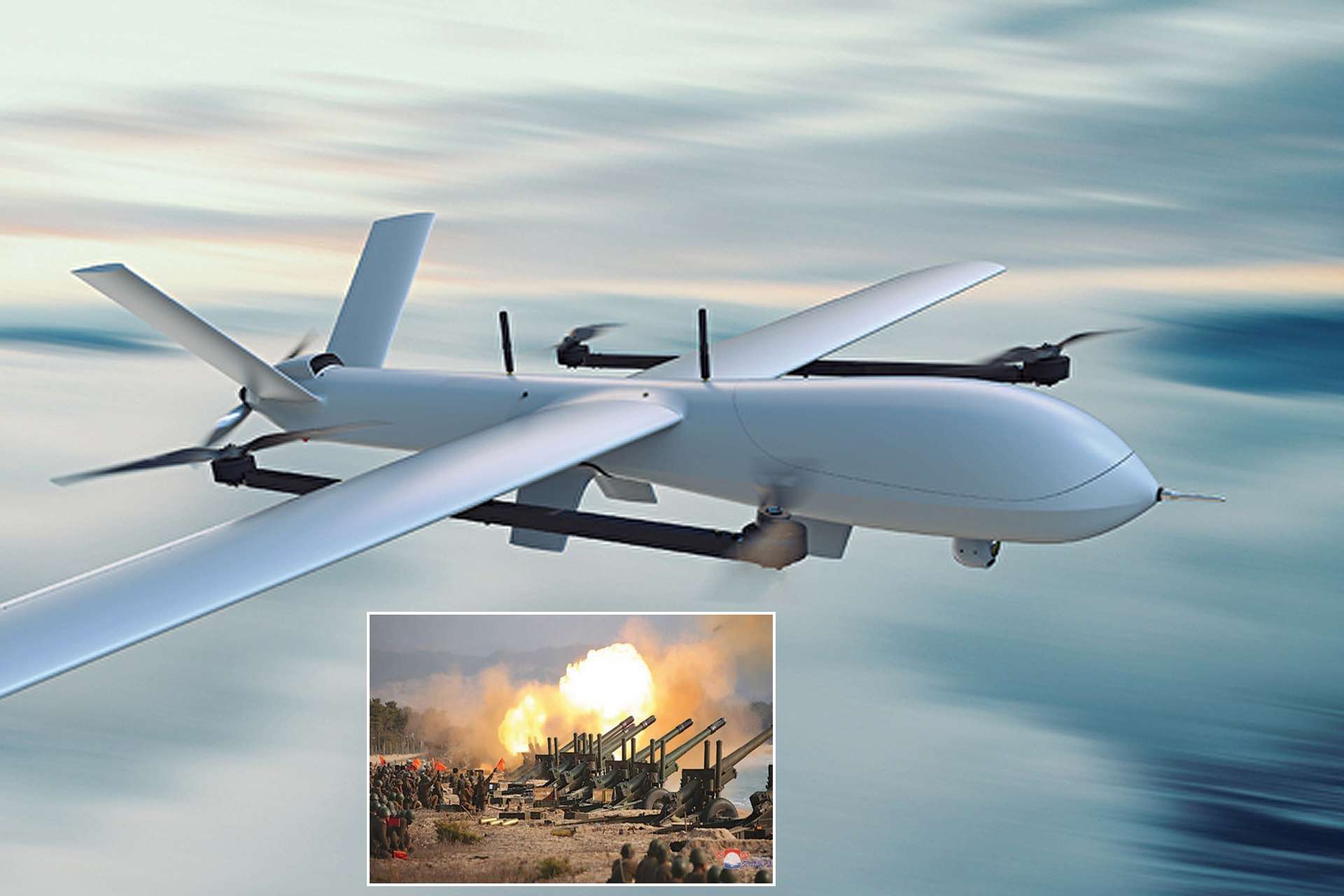
South Korea RQ-101 Songgolmae fixed-wing UAV from Korea Aerospace Industries (Picture source: Wikimedia)
Meanwhile, South Korea denied any airspace violations, condemning North Korea's recent use of propaganda balloons and waste-filled devices across the border, which South Korea views as provocations disrupting the security of its border regions. This exchange of accusations has intensified tensions along the Demilitarized Zone, with both countries expanding their military drone programs. While North Korea has made drone development a strategic priority, recently unveiling a suicide attack drone, South Korea is preparing to counter potential escalations with its own advancements in drone technology.
The South Korean military employs a variety of High-Altitude Long-Endurance (HALE) and Medium-Altitude Long-Endurance (MALE) drones for surveillance and reconnaissance, primarily to monitor North Korean military activities and potential security threats. These drones play a critical role in enhancing South Korea’s border surveillance, maritime monitoring, and intelligence capabilities. Among the HALE assets is the RQ-4 Global Hawk, capable of operating at high altitudes for extended periods, providing broad-area coverage with real-time intelligence over long distances. For medium-altitude operations, South Korea utilizes MALE drones such as the KUS-FT, developed by Korea Aerospace Industries.
The RQ-101 Songgolmae is a fixed-wing UAV designed by Korea Aerospace Industries (KAI) primarily for reconnaissance. With a wingspan of 6.4 meters and a maximum takeoff weight of 290 kg, it has a range of up to 200 km and an endurance of approximately 6 hours. This drone is equipped with forward-looking infrared (FLIR) cameras and GPS/INS navigation systems, which allow it to gather high-resolution images and real-time intelligence over long distances. Operating at altitudes of up to 4,500 meters, the Songgolmae is especially useful for monitoring the heavily militarized border areas, giving South Korea crucial surveillance capabilities without risking personnel.
South Korea, in collaboration with Boeing, is working on a new High-Altitude Long-Endurance (HALE) drone development project designed to enhance its surveillance capabilities, particularly for monitoring North Korea. This initiative stems from a Memorandum of Understanding signed between South Korea’s Defense Acquisition Program Administration (DAPA) and Boeing in April 2023, aiming to build a South Korean-manufactured HALE UAV that benefits from Boeing's design expertise and technological support. The joint project intends to position South Korea at the forefront of advanced UAV production, with a focus on developing a model suited for long-endurance reconnaissance missions.
South Korea's Air Force operates RQ-4 Global Hawk drones, a high-altitude, long-endurance platform developed by Northrop Grumman. The RQ-4 operates at altitudes up to 60,000 feet with a range of over 12,000 miles, equipped with advanced radar and infrared sensors for long-range surveillance. It can remain airborne for over 30 hours, covering extensive areas and providing high-resolution imaging, making it a valuable tool for observing North Korea's military movements.
South Korea also uses KUS-FT drones, developed domestically by Korea Aerospace Industries. The KUS-FT operates at medium altitudes, up to 30,000 feet, with an endurance of around 24 hours. Equipped with electro-optical and infrared sensors, it is designed for tactical reconnaissance and can conduct close monitoring along the Demilitarized Zone (DMZ), complementing the broader surveillance provided by HALE drones like the Global Hawk.
South Korea’s drones are tailored for intelligence-gathering missions that allow for extended coverage of North Korean activities, including potential missile launch sites, military movements, and cross-border provocations. By leveraging drones with high-definition imaging, infrared vision, and real-time data links, the South Korean military can maintain a continuous, low-profile surveillance presence. These capabilities reduce the need for manned flights, minimizing risk while maximizing reach and responsiveness.
Furthermore, United States operates RQ-4 Global Hawk drones in collaboration with South Korea to monitor North Korean activities across the Korean Peninsula. These high-altitude, long-endurance UAVs are stationed at Sacheon Air Base in South Gyeongsang Province, where they serve as a crucial part of South Korea's intelligence, surveillance, and reconnaissance (ISR) network. Delivered through a strategic partnership, four Global Hawks were supplied to South Korea's Air Force between 2019 and 2020, as part of a defense initiative to enhance South Korea’s monitoring capabilities against regional threats.
The Global Hawk drones, designed by Northrop Grumman, are equipped with high-resolution synthetic aperture radar and electro-optical/infrared sensors, allowing them to capture detailed images of large areas, including North Korean military installations and missile sites. This UAV fleet is capable of covering up to 100,000 square kilometers in a single flight, which is approximately the size of South Korea, enabling comprehensive border surveillance and intelligence sharing between U.S. and South Korean forces.
This collaboration not only enhances South Korea’s situational awareness along the demilitarized zone (DMZ) but also strengthens interoperability with U.S. forces, who are stationed in the region as part of a defense alliance. These joint efforts aim to maintain a high level of readiness against North Korean provocations, ensuring a rapid response to emerging threats in the region.
North Korea’s recent provocations include frequent missile tests and the development of drones, which serve both strategic deterrence and as direct responses to perceived threats from South Korea and the U.S. In 2023 alone, North Korea test-fired a variety of missiles, including intercontinental ballistic missiles (ICBMs) like the Hwasong-15 and Hwasong-17, capable of reaching the U.S. mainland. The Hwasong-17, one of its most advanced ICBMs, is estimated to have a range of up to 15,000 kilometers and can potentially carry multiple warheads or countermeasures designed to evade missile defenses. This long-range capability adds to North Korea’s growing arsenal of short- and medium-range ballistic missiles that can target South Korea and U.S. bases in Japan. Additionally, North Korea has enhanced its maneuverable, solid-fueled missiles, which are more difficult to detect and intercept, posing a significant challenge to South Korean and U.S. missile defenses.
Beyond missiles, North Korea has also advanced its drone program, often utilizing these unmanned aerial systems as tools of psychological and military provocation. The North has deployed drones capable of surveillance and, potentially, small payloads. This was evident in recent incidents where North Korean drones allegedly crossed into South Korean airspace, heightening tensions on the peninsula. Combined with North Korea’s efforts to send balloons with propaganda and waste materials into the South, these drones add a new layer to Pyongyang’s tactics, aiming to provoke and destabilize without direct engagement, a strategy that allows it to maintain pressure on its adversaries while avoiding immediate military escalation. These provocations underscore North Korea’s commitment to demonstrating its military capabilities and maintaining a high-stakes environment in the region.
As a reminder on July 27, 2023, North Korea unveiled two new drones, the "Morning Star-4" and "Morning Star-9," which closely resemble the U.S.-designed MQ-9 Reaper and RQ-4 Global Hawk. These drones, categorized as High-Altitude Long-Endurance (HALE) and Medium-Altitude Long-Endurance (MALE), are intended for intelligence, surveillance, reconnaissance, and ground-strike missions. Despite significant challenges posed by U.N. sanctions, North Korea appears to have made strides in replicating these advanced models, possibly influenced by prior incidents involving captured U.S. drones in Iran. However, questions remain about the drones’ actual capabilities and North Korea’s access to advanced SATCOM technology, sparking speculation of potential foreign assistance.
The capabilities of North Korean artillery brigades to shoot down South Korean surveillance drones are limited due to the anti-aircraft equipment available. North Korea primarily uses anti-aircraft guns like the ZU-23 23 mm and the KS-19 100 mm, which are designed to target low-flying aircraft rather than high-altitude drones. These systems lack the precision and tracking abilities needed to effectively engage modern MALE (Medium Altitude, Long Endurance) or HALE (High Altitude, Long Endurance) drones used by South Korea.
To intercept surveillance drones operating at higher altitudes, North Korea would require modern surface-to-air missiles (SAMs) with radar or infrared guidance, capable of tracking high-speed targets over long distances. Although North Korea possesses older SAMs, such as the Soviet-era SA-2 and SA-3, these systems are not sufficiently accurate to reliably target modern drones. Consequently, South Korean high-altitude drones remain less vulnerable to North Korea’s conventional artillery defenses.
Read more: North Korea Attempts to Down South Korean Modern Drone with Old KS-19 Anti-Aircraft Guns

- Details
- Written by: Tkuhn
- Category: 2024
- Hits: 4453
According to information published by Middle East Monitor on October 12, 2024, Turkish President Recep Tayyip Erdoğan and Serbian President Aleksandar Vučić announced a strategic collaboration between their countries in the defense industry during an official visit to Belgrade.
Follow Army Recognition on Google News at this link
The Bayraktar TB3 Unmanned Combat Aerial Vehicle. (Picture source: Navy Recognition)
This agreement includes joint efforts in military technology, particularly focusing on drones, a sector where Turkey has become a global leader. Erdoğan emphasized that Turkish drone technology, including the renowned Bayraktar TB2 systems, would be an integral part of this cooperation.
Turkish Defense Industry in Balkan countries
Several Balkan countries have purchased Bayraktar TB2 drones from Türkiye, reflecting the growing military ties between the region and Ankara. Kosovo, which has been working to strengthen its defense capabilities, received its first batch of Bayraktar TB2 drones in July 2023. This acquisition is viewed as a strategic move amid ongoing tensions with Serbia, and it has been reported that Kosovo bought five drones, although the exact number remains unconfirmed.
Albania also joined the ranks of Bayraktar TB2 buyers in 2022, purchasing three drones to support both military and civilian operations, including surveillance and firefighting efforts.
Bosnia and Herzegovina recently followed suit, placing an order for at least six Bayraktar TB2 drones in 2024. This move is designed to bolster its defense capabilities amid the complex security dynamics of the Balkans.
Turkey’s role is not without challenges. Its involvement in the defense sectors of both Serbia and Kosovo positions it at the center of regional tensions. The sale of advanced weapons to countries in close proximity, often with competing interests, requires a careful diplomatic balance. Turkey has used its military strength and its defense industry to foster partnerships, positioning itself as a reliable supplier of advanced military technology, but it must also be wary of exacerbating existing conflicts.
In the Balkans, Turkish arms sales serve not only as an economic driver but also as a tool for increasing Ankara’s regional influence. The Balkan states, many of which are NATO members or aspirants, see Turkish military technology as a valuable addition to their security frameworks.
Turkey’s defense industry policy in the Balkans is a calculated mix of economic strategy, geopolitical ambition, and military influence. As Turkey continues to expand its defense exports, its ability to manage the complex political landscape of the Balkans will be crucial to its long-term success in the region.
Read more: Turkiye and Serbia Sign Defense Cooperation Agreement Focused on Drone Technology

- Details
- Written by: Jérôme Brahy
- Category: 2024
- Hits: 5772
As reported by Mason on October 12, 2024, the Australian variant of the K9A1, the AS9 Huntsman, was reportedly observed in South Korea for the first time. It is likely that the 155mm self-propelled howitzer was transported by South Korea's Agency for Defense Development (ADD), which is responsible for developing the K9 Thunder and conducting various testing and evaluation services.
Follow Army Recognition on Google News at this link
The Australian variant of the K9 Thunder, later known as the AS9, is set to include NATO-standard fire control systems, anti-tank mine protection, and an enhanced suspension to accommodate its weight. (Picture source: Twitter/Mason)
One possibility is that the AS9 was taken to ADD's Changwon Proving Ground, where the agency performs developmental testing and evaluation for military equipment, quality assessment tests for mass-produced military products, performance tests for export items, and performance enhancement evaluations.
The prospect of Australia acquiring the South Korean K9 Thunder was first publicly discussed in June 2005, when discussions began between Australian and South Korean defense officials about potential trade opportunities, including the K9 Thunder and Australian naval gun ammunition. By August 2009, Samsung Techwin and Raytheon Australia became leading contenders for Australia’s Land 17 artillery replacement program, as other bidders did not provide sufficient detail.
Testing of the K9 platform commenced in April 2010, and the vehicle successfully fired the M982 Excalibur, meeting key requirements for the program. The proposed Australian variant, later known as the AS9, was set to include NATO-standard fire control systems, anti-tank mine protection, and an enhanced suspension to accommodate its weight.
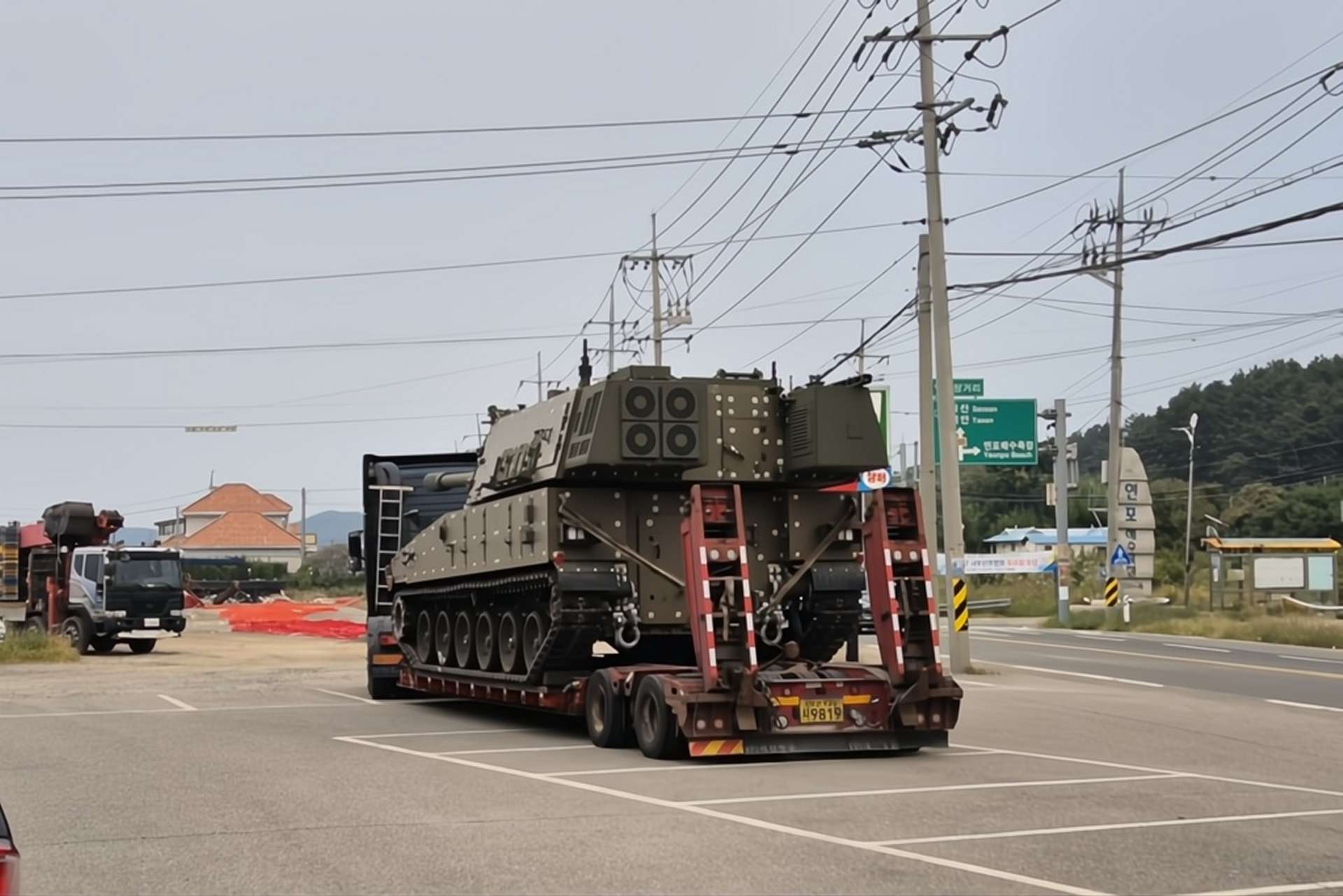
One possibility is that the AS9 was taken to ADD's Changwon Proving Ground, where the agency performs developmental testing and evaluation for military equipment, and performance tests for export items. (Picture source: Twitter/Mason)
In June 2010, the K9 was announced as the preferred option for the Land 17 program. However, funding for the project was redirected due to floods in Queensland in 2011, leading to the program’s cancellation in 2012. In 2019, then-Prime Minister Scott Morrison announced that Australia planned to acquire 30 K9 howitzers and ten K10 ammunition resupply vehicles, although no specific timeline was provided at that time.
In September 2020, Australia issued a tender for Hanwha Defense Australia to locally produce 30 K9 variants as part of the Land 8116 Phase 1 project. The Australian variant, based on the Norwegian K9 VIDAR, was to include enhancements first proposed in 2010, alongside up-to-date modifications. In December 2021, the Capability Acquisition and Sustainment Group (CASG) and Hanwha Defense Australia formalized a $788 million contract for the production of 30 AS9 howitzers and 15 AS10 armored ammunition resupply vehicles at a new facility in Geelong, Victoria.
Hanwha’s Geelong facility, the Hanwha Armoured Vehicle Centre of Excellence (H-ACE), began construction in April 2022. This 150,000-square-meter site includes a 1.5-kilometer test track and various R&D areas, with plans to create 300 jobs for local specialists. Through international partnerships, including a $67 million deal with Norway’s Kongsberg Gruppen for Integrated Combat Solutions (ICS) and a contract with Hanwha Systems worth 20.8 billion KRW, Hanwha Defense Australia has integrated various systems into the AS9.

The AS9 Huntsman, a 155mm/52-caliber self-propelled howitzer, has a maximum firing range of 40 kilometers with standard ammunition and can reach up to 60 kilometers with specialized rounds. (Picture source: Australian MoD)
Mass production of the AS9 and AS10 began at H-ACE in 2024, and the first deliveries to the Australian Army are expected by 2027. The AS9 includes an enhanced suspension system, additional armor for increased protection, and a fire control system from Kongsberg, which allows for integration with other Australian defense assets. These modifications align with the Australian Army’s specific requirements and distinguish the AS9 from the original K9 Thunder. Capable of firing three rounds in 15 seconds and sustaining a rate of six to eight rounds per minute, the AS9 is also equipped with a semi-automated loading system.
The AS9 Huntsman, a 155mm/52-caliber self-propelled howitzer, has a maximum firing range of 40 kilometers with standard ammunition and can reach up to 60 kilometers with specialized rounds. Its mobility allows it to quickly relocate after firing, minimizing exposure to potential counterattacks. Therefore, the Australian Army plans to integrate the AS9 into its artillery units, replacing the existing M777 howitzers starting with the 4th Regiment.
The AS9 will support operations with increased range and mobility, while the M777 will continue in roles requiring lightweight, air-mobile artillery. The AS9 can fire multiple rounds timed to arrive on target simultaneously, enhancing operational flexibility. These features, combined with armor improvements and digital control systems, support Australia’s defense modernization objectives.

The AS9 Huntsman includes an enhanced suspension system, additional armor for increased protection, and a fire control system from Kongsberg, which distinguish the AS9 from the original K9 Thunder. (Picture source: Australian MoD)
The AS9 and the accompanying AS10 resupply vehicle represent an effort to establish a local production line for armored vehicles, with all manufacturing and assembly carried out at H-ACE. The AS9’s modifications, such as enhanced air conditioning for hot climates and reinforced crew protection, are tailored to the Australian Army’s needs. Additionally, the AS10 resupply vehicle is designed with armor improvements and an automated loading system that lowers crew risk during combat operations.
Under the Land 8116 Phase 1 contract, Hanwha Defense Australia will produce a total of 30 AS9 howitzers and 15 AS10 resupply vehicles, with production and delivery anticipated to be completed by 2027. These vehicles, based on the K9 Thunder platform, are being customized to meet specific operational requirements for the Australian Army. Agreements with Kongsberg and other partners, including Safran, reinforce the AS9 program’s aim of integrating modern artillery systems into Australia’s defense framework.
The AS9 Huntsman self-propelled howitzer has a length, including the turret, of 12.4 meters, a width of 3.5 meters, and a height of 3.7 meters, with a total weight under 52 tonnes. It is capable of reaching speeds exceeding 60 kilometers per hour and is designed to carry a crew of five. The AS9's primary weapon is a 155mm 52-caliber main gun, supporting various ammunition types and configured for extended range. Additionally, it can be equipped with a range of pintle-mounted tertiary weapons, such as a 5.56mm Light Support Weapon (F89), a 7.62mm General Service Machine Gun (MAG58), a 12.7mm (0.50 Cal) Machine Gun (M2HB), and a 40mm MK47 Grenade Launcher. The vehicle also features a Remote Weapon System (RWS) compatible with the MAG58, allowing for additional defensive options across operational environments.
- Details
- Written by: Halna du Fretay
- Category: 2024
- Hits: 3472
Amid escalating tensions on the Korean Peninsula, the South Korean Air Force (RoKAF) recently conducted live-fire drills featuring the German-designed Taurus missile. This exercise, held on October 8 and 10 over the Yellow Sea, has drawn international attention, especially from Ukraine, which has long expressed interest in acquiring such capabilities to counter Russian forces. These tests underscore Seoul's efforts to strengthen its defense capabilities amid ongoing provocations from North Korea.
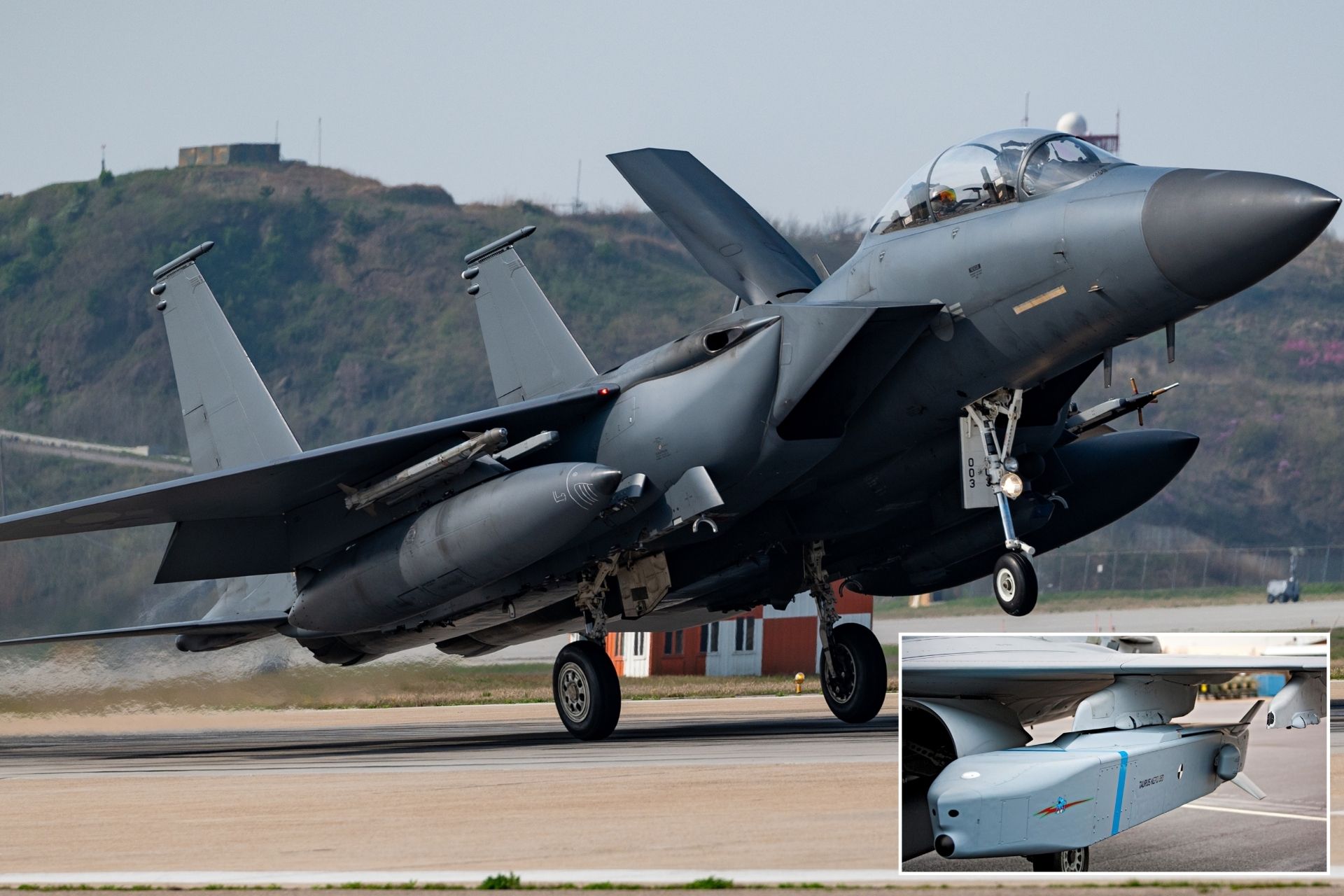
The Republic of Korea Air Force F-15K Slam Eagle, assigned to the 11th Fighter Wing, arrives for Korea Flying Training 2024 at Kunsan Air Base, Republic of Korea, April 12, 2024 (Picture source: US DoD)
During the exercise, a Taurus missile was launched from an F-15K fighter jet, traveling over 400 kilometers to hit its designated target. A video released by RoKAF documented the entire process, from integrating the missile onto the aircraft to its launch. Beyond these live tests, RoKAF also implemented scenarios to intercept potentially hostile cruise missiles, involving both F-15K and F-35A Lightning II jets, though the exact number of aircraft used was not disclosed.
The Taurus missiles demonstrated their ability to identify and track enemy cruise missiles moving at high speed and low altitude. The E-737 early warning and control aircraft played a crucial role, relaying real-time information to other aircraft and the central control center. This exercise, part of a broader training program to counter cruise missile threats, enhances South Korea’s defensive posture as tensions remain high.
These missile drills follow a series of provocations from North Korea, including the deployment of propaganda balloons toward South Korea and threats to cut off ground and rail communications. North Korea also announced plans to fortify its border defenses, accusing South Korea and the United States of destabilizing actions. This South Korean military response recalls similar missile tests conducted in 2017 in reaction to North Korea's nuclear tests.
The Taurus KEPD-350 missile, developed by Germany's MBDA in collaboration with Saab Bofors Dynamics, is designed for deep-strike missions. With a range exceeding 500 kilometers, it allows engagement of heavily fortified targets from a secure distance. Powered by the Williams P8300-15 turbofan engine, the missile combines precision with fuel efficiency. Its two-stage warhead, MEPHISTO, is engineered to penetrate bunkers and underground structures before detonation, targeting strategic facilities.
Equipped with advanced guidance systems, including GPS, inertial navigation, and terrain reference navigation (TRN), the Taurus KEPD-350 maintains high accuracy even in GPS-denied environments. This missile, weighing 1,400 kg and measuring 5.1 meters in length, can be deployed on various platforms, including the F-15K and Eurofighter Typhoon, enhancing South Korea’s strike capabilities.
Integrating the Taurus missile into South Korea’s F-15K Slam Eagle fleet aligns with its "kill chain" strategy, aimed at quickly neutralizing North Korean command centers and fortified positions housing nuclear or conventional missiles in the event of conflict. In 2023, South Korean defense firm LIG Nex1 and Taurus Systems signed an MoU to adapt the KEPD-350K missile for the FA-50 light attack aircraft, further expanding Seoul’s long-range strike options.
In parallel, South Korea conducted interception exercises involving KF-16 and F-35A fighter jets coordinated with E-737 "Peace Eye" surveillance aircraft. These early warning aircraft, capable of tracking thousands of targets simultaneously, play a central role in detecting and neutralizing low-altitude cruise missiles that are challenging to detect and intercept.
The F-35A’s advanced sensors and avionics are designed for effective operations in contested airspace, providing a higher probability of intercepting enemy missiles before they reach their targets. The KF-16, an upgraded version of the American F-16, is equipped with sophisticated radar and AIM-120 AMRAAM air-to-air missiles, allowing precise interception of aerial threats.
These exercises, part of a multi-layered defense strategy, highlight South Korea's readiness to respond swiftly to North Korean threats, which often involve low-altitude, fast-moving projectiles designed to evade detection. By showcasing advanced weaponry such as the Taurus missile, South Korea sends a clear message of deterrence to North Korea.
South Korea appears well-prepared to respond to any escalation, with a highly capable air force equipped for precision strikes and defensive operations. The Taurus missile, with its ability to target strategic facilities, offers South Korea a critical technological advantage amid rising threats from Pyongyang.
In summary, these missile tests and interception exercises underline South Korea’s commitment to reinforcing its defense and deterrence strategies against the persistent threats from North Korea.
Read more: South Korea Conducts Live Test of Taurus Missile Amid Rising Tensions with North Korea

- Details
- Written by: Jérôme Brahy
- Category: 2024
- Hits: 10059
On October 9, 2024, BAE Systems received a $184 million contract modification from the U.S. Army for an additional 48 Armored Multi-Purpose Vehicles (AMPV), building on the existing full-rate production agreement. The AMPV Family of Vehicles (FoV) is being introduced to replace the older M113 series in the U.S. Army's Armored Brigade Combat Teams (ABCTs), offering modernized capabilities in survivability, mobility, and interoperability. The contract modification will support the Army’s plan to expand its fleet of AMPVs, thereby modernizing and improving the operational flexibility of the ABCTs.
Follow Army Recognition on Google News at this link
The Armored Multi-Purpose Vehicles (AMPV) program was initiated with a $383 million EMD contract in 2014, producing 29 prototypes before entering low-rate production to deliver 289 vehicles by 2020. (Picture source: US DoD)
The AMPV lineup includes five specialized variants, each designed for specific roles: the M1283 General Purpose (GP), M1284 Medical Evacuation Vehicle (MEV), M1285 Medical Treatment Vehicle (MTV), M1286 Mission Command (MC), and M1287 Mortar Carrier. The M1283 GP variant is utilized for resupply, maintenance, and casualty evacuation operations. The M1284 MEV is equipped for medical evacuation, accommodating up to six ambulatory personnel or four patients on litters.
The M1285 MTV functions as a mobile medical treatment facility, supporting battlefield care with equipment typically found in civilian ambulances. The M1286 MC variant supports mission command functions, enhancing command, control, and communication within the ABCT. The M1287 Mortar Carrier provides indirect fire support using the M121 Mortar System and the M95 Mortar Fire Control System.
The AMPV program has been pursued to address the limitations of the M113, a platform that has been in service since the 1960s. Although versatile, the M113 has shown vulnerabilities in modern combat scenarios, particularly during the Iraq War where urban warfare tactics exposed its weaknesses. The Army subsequently adopted Mine-Resistant Ambush Protected (MRAP) vehicles for active service. However, the AMPV is intended to offer enhanced off-road mobility, similar to that of the M2 Bradley and M1 Abrams, making it more suitable for a variety of operational environments.

The AMPV program has been pursued to address the limitations of the M113, a platform that has been in service since the 1960s, but has shown vulnerabilities in modern combat scenarios, particularly during the Iraq War where urban warfare tactics exposed its weaknesses. (Picture source: US DoD)
This follow-on order represents the Army’s shift in acquisition priorities, following the cancellation of the Ground Combat Vehicle (GCV) program. Initially, the GCV was intended to replace M2 Bradley vehicles within the ABCT, but cost constraints led to a preference for the AMPV program, estimated to cost over $5 billion, compared to the $37 billion projected for the GCV program. In April 2013, the Congressional Budget Office highlighted the AMPV as a more feasible option, and the Army’s FY 2015 budget proposal reflected a reallocation of resources to focus on AMPV production.
BAE Systems, in response to the contract modification, has expanded its production capabilities, particularly at its York, Pennsylvania facility. Alongside facilities in South Carolina, Alabama, Arizona, and Michigan, this network is designed to meet current and projected demand for AMPVs. The expansion aligns with the Army’s objective to gradually increase production, reaching full-rate production after an initial low-rate production phase that began in 2018. Production plans include an incremental ramp-up, from 57 vehicles in Fiscal Year (FY) 2023 to 122 units annually by FY 2026 and FY 2027, before reducing in later years.
The AMPV program’s phased approach began with a $383 million Engineering, Manufacturing, and Development (EMD) contract awarded to BAE Systems in 2014. This phase produced 29 prototypes, followed by a low-rate production phase to supply 289 vehicles by 2020. General Dynamics initially contested the AMPV requirements, claiming the design favored the BAE Bradley chassis. However, the Army Materiel Command dismissed the protest, stating that BAE’s manufacturing of the M113 and Bradley provided certain logistical advantages that did not constitute preferential treatment.

The AMPV’s modular design aims to manage operational costs, which for the AMPV are estimated at $90 per mile, compared to the M113’s $58 per mile. (Picture source: US DoD)
Following this decision, General Dynamics did not pursue further action through the Government Accountability Office but continued to advocate a mixed fleet concept to Congress. This proposal suggested combining tracked Bradley and wheeled Stryker vehicles, which General Dynamics argued could enhance mission flexibility and reduce life-cycle costs.
The AMPV’s modular design allows for future upgrades in communications and electronic systems, supporting the Army’s strategy of leveraging commercial off-the-shelf components. This approach aims to manage operational costs, which for the AMPV are estimated at $90 per mile, compared to the M113’s $58 per mile. By allowing for incremental upgrades, the Army plans to incorporate new technologies over time, including satellite communications, further integrating the AMPV into the digital battlefield.
Looking forward, the AMPV program includes potential future variants designed for counter-unmanned aerial system (C-UAS) roles. One such variant may feature the Leonardo DRS Maneuver Short Range Air Defense (M-SHORAD) turret, equipped with a 30mm XM914 cannon, a 7.62mm M240 machine gun, and Stinger missile launchers. This development aligns with the Army’s intent to adapt the AMPV for a range of defense scenarios within the ABCT framework, while also considering international interest in the platform.

The AMPV shares common elements with the M2 Bradley Infantry Fighting Vehicle and M109A7 Paladin, simplifying maintenance and logistics for the US Army's Armored Brigade Combat Teams (ABCTs). (Picture source: US DoD)
The AMPV continues to replace the M113 in Army units, such as the 1st Armored Brigade Combat Team of the 3rd Infantry Division, which recently replaced over 130 M113s with AMPVs after completing necessary training. This replacement supports the Army’s Next Generation Combat Vehicle Modernization Priority, with AMPVs designed to withstand threats from mines, improvised explosive devices, and direct fire. Their design shares common elements with the M2 Bradley Infantry Fighting Vehicle and M109A7 Paladin, simplifying maintenance and logistics for ABCTs.
BAE Systems has also developed additional variants to fulfill specific mission requirements. Recently, a turreted mortar variant was introduced, equipped with the Patria NEMO 120mm remote-controlled mortar system. This variant provides responsive fire support within the ABCT. With the full-rate production now underway, BAE Systems will continue to supply AMPVs to the U.S. Army, fulfilling both current operational needs and potential future requirements as the Army transitions its fleet to more modernized combat vehicles.
Read more: US Army accelerates M113 replacement with new $184 Million AMPV order
- Breaking News: US Authorizes Deployment of THAAD Air Defense Missile in Israel to Counter Missile Threats from Iran
- Breaking News: Ukrainian F-16 Fighter Wins First Air-to-Air Fight Shoots Down Russian Su-34
- US Approves $1.2 Billion Sale of GMLRS Rockets and ATACMS Missiles to UAE
- France Has Already Delivered 67 CAESAR Howitzers to Ukraine Only Five Destroyed and Two Damaged