
- Details
- Written by: Vandenbosch
- Category: 2024
- Hits: 4702










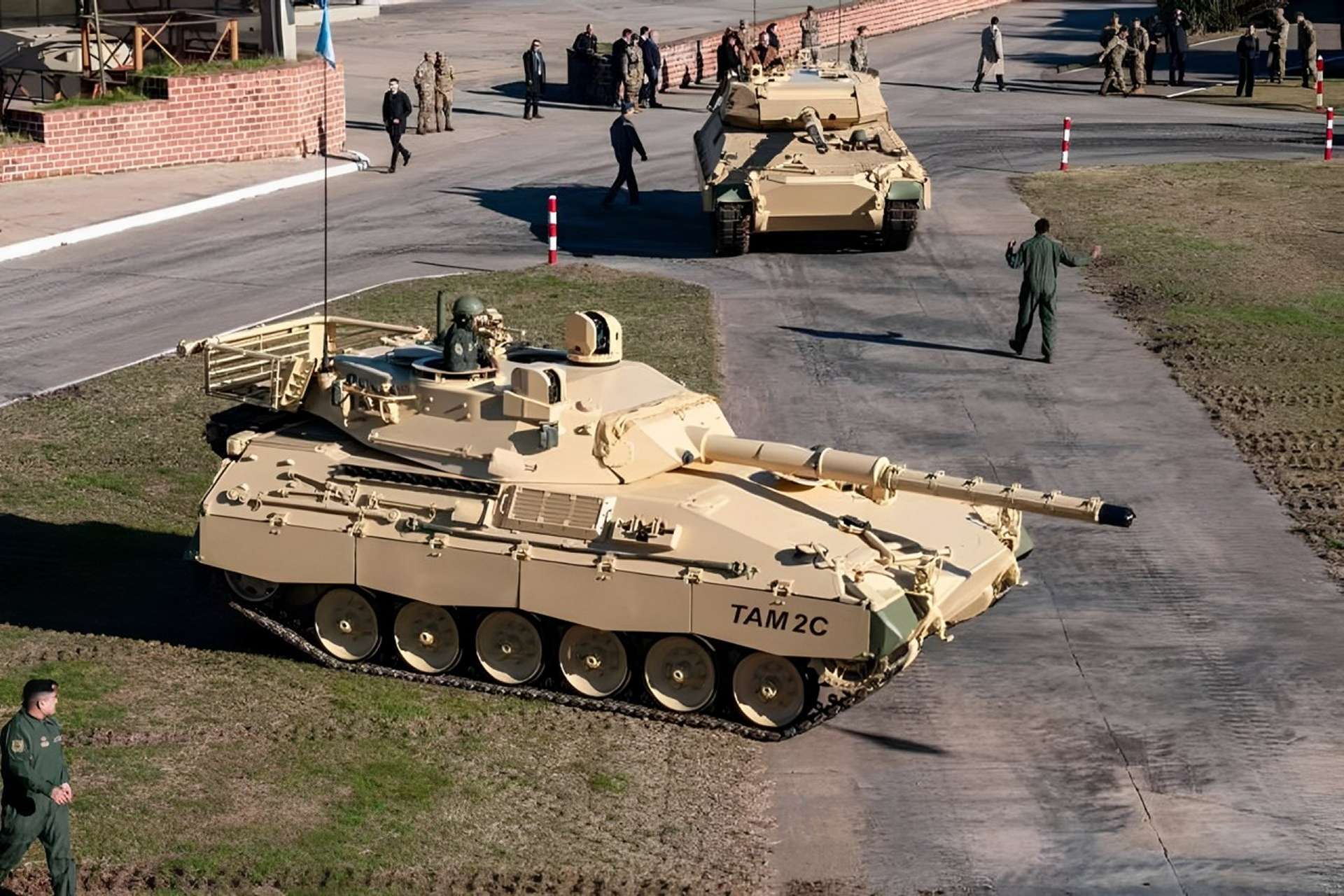
On 20 December 2024, the President of Argentine, Javier Milei, will visit the facilities of the Dirección de Arsenales in Boulogne to preside over the ceremony marking the delivery of the first 10 VC TAM 2C-A2 main battle tanks to the Argentine Army. However, the announced number of tanks raises questions, as not all units will be fully operational due to various delays and issues encountered in the modernization program.
The VC TAM 2C-A2 project is seen as a key element in the modernisation of the Argentine army's armoured capabilities. (Picture source: Social Media)
The VC TAM 2C-A2 project, considered a key element in modernizing the armored capabilities of the Argentine Army, is facing financial and logistical difficulties that are slowing its execution. One of the main challenges is the shortage of critical spare parts for the chassis of the selected tanks, which has hindered the completion of the planned units. This issue also extends to other essential supplies needed for the advancement of the program.
According to sources consulted, concerns have been expressed regarding the lack of released financial guarantees for various suppliers. Several sectors have pointed out that difficulties related to these guarantees are causing additional delays and significant financial costs.
This situation is also reflected in the shortage of spare parts and critical components, the delivery of which depends on contracts currently undergoing renegotiations with international suppliers, including key players such as the Israeli company Elbit Systems. Efforts are currently underway to amend the contract to include ammunition and spare parts, although the process is progressing slowly.
Argentine faces several potential threats in its region, both military and economic. Among the major concerns is the ongoing dispute with the United Kingdom over the sovereignty of the Falkland Islands, a conflict that has persisted since the 1982 war and could still lead to tensions. Additionally, instability in neighboring countries, particularly in Venezuela and Bolivia, could have repercussions for regional security. The growing activities of transnational criminal groups, including drug trafficking and terrorism, also pose a threat to domestic stability. Finally, the strengthening of military capabilities by other South American nations, coupled with defense agreements with extra-regional powers like the United States or China, raises concerns about the strategic balance in the region.
One of the most criticized aspects of the VC TAM 2C-A2 program is the frequency with which the systems are presented at ceremonial events. While these events aim to showcase progress and maintain visibility of the program, they disrupt modernization efforts due to the shortage of personnel assigned. As a result, this exacerbates the delays in the program and reduces the number of fully operational systems.
The financial difficulties related to the release of guarantees have had a significant impact on both suppliers and the program itself. As highlighted in a previous article by Zona Militar, these debts are creating a bottleneck in the development of military capabilities and raising concerns about the financial management of the Argentine Armed Forces.
Despite these challenges, the VC TAM 2C-A2 program remains a central component of the Argentine Army's modernization efforts. However, the lack of significant progress highlights the need for a reassessment to ensure the program’s continuity and adherence to reasonable timelines. Ceremonial events, such as the one scheduled for Friday, reinforce the narrative of progress in the public eye but also highlight the structural limitations of the program.
Read more: Argentine Prepares To Field First 10 VC TAM 2C-A2 Main Battle Tanks
Poland Boosts Its Intelligence Capabilities with Acquisition of 3 US MQ-9B SkyGuardian Aerial Drones
- Details
- Written by: Administrator
- Category: 2024
- Hits: 3714
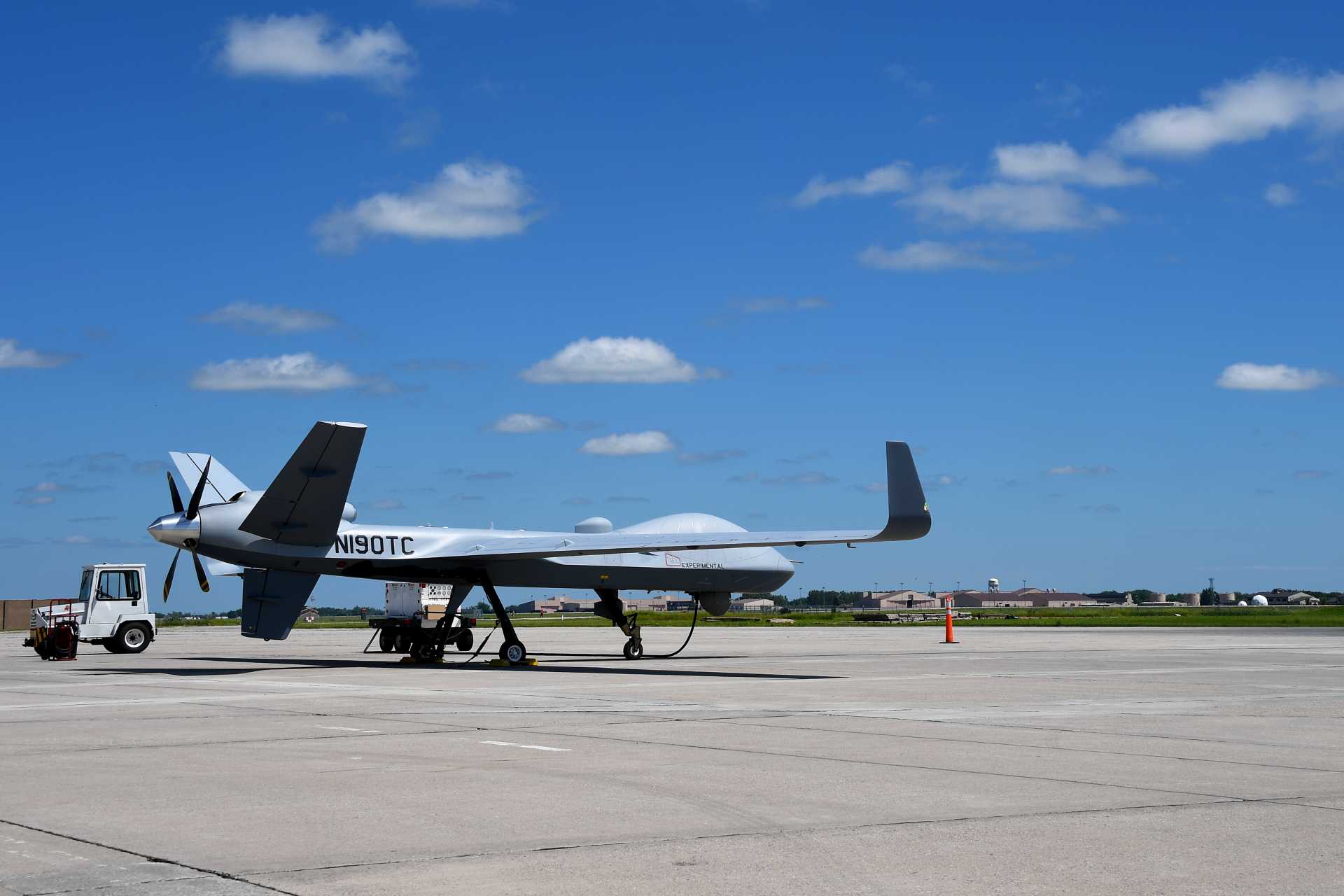
Poland is making significant strides in modernizing its defense capabilities with the purchase of three American MQ-9B SkyGuardian® Remotely Piloted Aircraft (RPA) systems from General Atomics Aeronautical Systems, Inc. (GA-ASI). Announced on December 16, 2024, this acquisition is set to bolster Poland’s intelligence, surveillance, and reconnaissance (ISR) capabilities, which are critical for addressing modern security challenges. Along with the drones, the deal includes two Certifiable Ground Control Stations (CGCS) and a three-year package of GA-ASI’s SkyGuardian Global Support Solutions, ensuring seamless operation and maintenance.
Follow Army Recognition on Google News at this link
An MQ-9B SkyGuardian prepares to taxi from Grand Forks Air Force Base, North Dakota, to Gloucestershire, England(Picture source: U.S. DoD)
GA-ASI is a leading American defense contractor headquartered in Poway, California, a General Atomics subsidiary specializing in designing and manufacturing advanced unmanned aircraft systems (UAS) and mission-critical payloads. Known for pioneering ISR and multi-domain capabilities, GA-ASI has developed a portfolio of cutting-edge systems, including the Predator®, Reaper®, and SkyGuardian® drones, used extensively by militaries worldwide. GA-ASI's strong presence in Poland reinforces its commitment to providing localized support and fostering strategic partnerships with the Polish Armed Forces and defense sector.
The MQ-9B SkyGuardian represents the latest in unmanned aerial systems technology, delivering unmatched endurance, cutting-edge ISR capabilities, and versatility for multi-domain operations. As the newest model in the MQ-9 series, it boasts an operational endurance of over 40 hours, enabling continuous surveillance and intelligence gathering. Its state-of-the-art features include the Detect and Avoid (DAA) system, which ensures safe operations in unsegregated airspace, and an advanced SATCOM-only Auto Takeoff and Landing (ATOL) capability. This functionality allows the aircraft to operate remotely with minimal infrastructure, a crucial advantage for Poland's defense needs.
In addition to its long-range and all-weather operational capabilities, the MQ-9B is equipped with a robust payload capacity of up to 2,155 kg (4,752 pounds). This payload can accommodate advanced ISR sensors, electro-optical/infrared (EO/IR) cameras, multi-mode maritime radar, and signals intelligence (SIGINT) equipment, ensuring that the platform can perform a wide range of missions. Designed for interoperability with NATO forces, the MQ-9B can seamlessly integrate into multinational coalitions, further enhancing Poland’s ability to contribute to joint operations.
This acquisition builds on Poland’s successful use of leased MQ-9A Reapers, which began operating in 2022 under an agreement with GA-ASI. The proven performance and reliability of the MQ-9A in ISR missions opened the door for the purchase of the more advanced MQ-9B, reflecting Poland’s commitment to strengthening its military capabilities and addressing evolving security threats. Deputy Prime Minister Władysław Kosiniak-Kamysz highlighted the importance of this acquisition, stating that the MQ-9B systems will significantly enhance the operational capabilities of the Polish Armed Forces in the ISR domain.
Poland joins a growing list of countries that have embraced the MQ-9B SkyGuardian. The United Kingdom’s Royal Air Force was the first to receive the aircraft in 2022, followed by contracts with Belgium, Canada, Taiwan, Japan, India, and the U.S. Air Force Special Operations Command. The platform has also proven its versatility in maritime and joint operations, supporting U.S. Navy exercises such as Northern Edge and Integrated Battle Problem. With its exceptional performance and adaptability, the MQ-9B is rapidly becoming a key asset in the arsenals of NATO and allied nations.
Poland’s acquisition of the MQ-9B SkyGuardian is a strategic investment in the country’s defense infrastructure. The advanced capabilities of the SkyGuardian will enable Poland to perform long-range reconnaissance, border security, maritime patrol, and counter-terrorism missions with unparalleled efficiency. By adopting this next-generation UAS, Poland is not only modernizing its armed forces but also reinforcing its position as a vital NATO member and a leader in European security. With GA-ASI’s ongoing support, the Polish Armed Forces are poised to meet the challenges of today’s complex security environment head-on.
- Details
- Written by: Administrator
- Category: 2024
- Hits: 5695
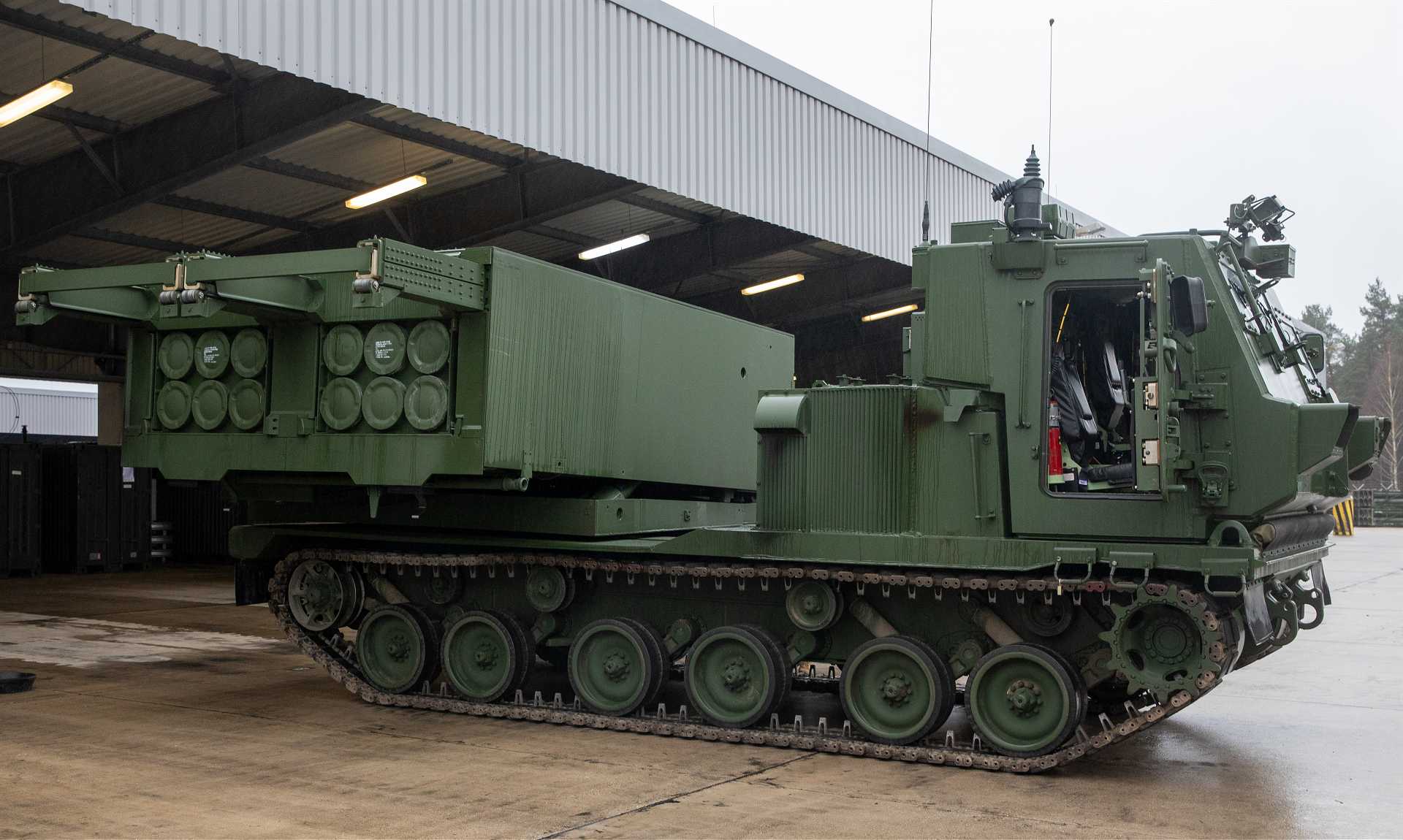
The U.S. Army’s 41st Field Artillery Brigade (41st FAB), stationed at U.S. Army Garrison Bavaria in Grafenwoehr, Germany, has significantly bolstered its firepower with the fielding of nine M270A2 Multiple Launch Rocket Systems (MLRS). As the latest iteration of the proven M270 platform, the M270A2 incorporates a range of cutting-edge upgrades that enhance its lethality, mobility, and survivability, ensuring it remains a cornerstone of U.S. and NATO combat capabilities in Europe.
Follow Army Recognition on Google News at this link
U.S. Soldiers from the 1-77 Field Artillery Regiment, 41st Field Artillery Brigade, perform preventive maintenance checks on their newly fielded M270A2 Multiple Launch Rocket Systems at the motor pool of U.S. Army Garrison Bavaria in Grafenwoehr, Germany, on December 16, 2024. (Picture source: U.S. DoD)
The M270 MLRS has a long and distinguished history. First introduced in the early 1980s, it was designed to provide highly mobile and lethal rocket artillery capable of saturating target areas with a mix of unguided and precision-guided munitions. The platform earned its reputation in conflicts like Operation Desert Storm, where it delivered devastating fire support. Over the decades, the M270 has undergone numerous enhancements to remain effective in the face of evolving threats. These improvements have extended its operational relevance, particularly through upgrades over the last decade, such as the M270A1's Improved Fire Control System (IFCS) and support for the Guided Multiple Launch Rocket System (GMLRS).
The M270A2 represents the most advanced configuration yet, bringing transformational upgrades to this legacy platform. Central to its modernization is the integration of the Common Fire Control System (CFCS), which aligns its operations with the High Mobility Artillery Rocket System (HIMARS). This standardization simplifies training, improves logistical efficiency, and enhances interoperability across platforms, enabling seamless coordination in joint and allied operations.
The M270A2 also introduces significant mobility and survivability enhancements. It features a new 600-horsepower engine and an upgraded transmission, providing improved mobility, reliability, and performance across challenging terrains and during prolonged missions. The armored cab has been redesigned to offer better protection for the crew against small arms fire, shrapnel, and mine blasts, ensuring survivability in contested environments.
The most critical upgrades to the M270A2 lie in its munitions compatibility and precision fire capabilities, particularly with its ability to deploy advanced munitions such as the Extended-Range Guided Multiple Launch Rocket System (ER-GMLRS). The ER-GMLRS is a next-generation precision-guided rocket designed to provide long-range, low-collateral-damage firepower. It measures 3.93 meters in length and 0.22 meters in width, with each launch pod capable of carrying six missiles. The M270A2 can carry two pods, doubling its firepower compared to the single-pod capacity of the HIMARS launcher.
The ER-GMLRS features a global positioning system-aided inertial guidance package and small maneuvering canards on the rocket's nose to enhance accuracy and precision. The rocket is further equipped with an enlarged motor and tail-driven control to improve its range and maneuverability, making it highly effective in hitting both specific targets and broader area objectives. It is compatible with both Unitary and Alternative Warhead (AW) configurations, offering flexibility to adapt to various mission requirements. During a test conducted at White Sands Missile Range in October 2022, the ER-GMLRS demonstrated its capabilities by successfully hitting a target approximately 59 kilometers away in a short-range flight test, meeting all predefined success criteria.
These advancements significantly enhance the M270A2’s operational reach and lethality, allowing it to strike targets up to 150 kilometers away with ER-GMLRS munitions. The system is also prepared to fire the Precision Strike Missile (PrSM), with an even greater range exceeding 500 kilometers, further amplifying its battlefield utility.
With these advancements, the M270A2 ensures that the 41st FAB—known as the "Rail Gunners" and the U.S. Army’s only rocket artillery brigade stationed in Europe—remains a powerful and responsive force. These systems enhance the brigade’s ability to deliver precise and long-range fire support, providing critical capabilities for deterring aggression and supporting NATO’s collective defense strategy in the European theater. By modernizing with the M270A2, the U.S. Army continues to demonstrate its commitment to maintaining technological superiority and readiness in the face of emerging threats.

- Details
- Written by: Vandenbosch
- Category: 2024
- Hits: 3784
BAE Systems Australia has successfully flown the STRIX, an all-new Vertical Take-Off and Landing (VTOL) uncrewed aerial system. This innovative vehicle, fully designed, built, and tested in Australia, represents a key milestone in the field of autonomous flight and will enhance autonomous mission capabilities.
The STRIX was specifically designed to perform a range of autonomous missions. (Picture source: BAE Systems)
The STRIX was specifically designed to perform a range of autonomous missions, from air-to-ground strikes to intelligence, surveillance, and reconnaissance (ISR), without the need for a runway. This removes the need to deploy human crews in dangerous or challenging environments while allowing skilled personnel to focus on other essential tasks.
The project adopted a spiral development model, enabling rapid iterations. A full-scale, fully electric prototype was developed to accelerate flight testing and minimize program risks. The initial flight trials took place at a remote site in late October, following a successful ground testing program earlier in the year. During these trials, the team demonstrated the capability of the Vehicle Management System (VMS) to control the STRIX autonomously during launch, maneuver, hover, and recovery. Notably, all tests were conducted autonomously, with a remote pilot overseeing safety but not requiring intervention.
“This program milestone highlights the ingenuity and capabilities of world-class Australian engineers and delivers our proof of concept at rapid pace,” said Andrew Gresham, Managing Director of BAE Systems Australia’s Defence Delivery business unit. “Major flight test objectives were achieved, including safe and autonomous control of an entirely new VTOL aircraft configuration, never flown before in the history of flight.”
The STRIX prototype features composite aerostructures and a unique "tilt-body" configuration, developed through a collaboration between BAE Systems Australia and the Perth-based SME, Innovaero. Since its unveiling at the Avalon Airshow in 2023, STRIX has moved from concept to autonomous VTOL flight in just two years, demonstrating BAE Systems Australia’s ability to rapidly deliver disruptive sovereign research and development.
The STRIX is an advanced uncrewed aerial system that combines Vertical Take-Off and Landing (VTOL) and fixed-wing capabilities, making it highly versatile for a range of missions. It is powered by a hybrid electric propulsion system, optimizing both performance and efficiency. The vehicle has a compact footprint, measuring 2.6 meters in height, 6 meters in width, and 5 meters in length, but can be stored within a 20-foot ISO container, making it easy to transport and deploy in diverse environments. With a maximum take-off weight of approximately 960 kg, STRIX can achieve cruise speeds of up to 140 knots, with a maximum speed exceeding 200 knots. Its range is impressive, varying depending on the payload: it can cover 1,500 km with a 50 kg payload, 800 km with a 160 kg payload, or 500 km with a 200 kg payload. The STRIX is designed to carry a wide array of payloads, including precision-guided munitions such as APKWS, Hellfire, Brimstone, and JAGM-MR, along with loitering munitions, laser-guided rockets, and a range of sensor systems like EO/IR, LTD, SAR, VIDAR, and electronic warfare equipment. These capabilities position STRIX as a versatile and powerful tool for autonomous military and reconnaissance operations.
STRIX draws on proven technologies from BAE Systems' previous autonomous systems, as well as ongoing work with the Australian Army’s M113 OCCV Program and the MQ-28 Ghost Bat for the Royal Australian Air Force. The program's focus now shifts from airframe testing to the development of the hybrid-electric propulsion system, which has been developed in parallel with the prototype.
Looking ahead, STRIX will be marketed to both international and local customers, and BAE Systems Australia will continue to refine the aircraft in collaboration with local industry and partners, depending on the specific needs of each stakeholder.
With its successful flight testing, BAE Systems marks the beginning of a new era for the STRIX, offering the potential to redefine mission capabilities for defense forces.
Read more: BAE Systems Australia Achieves First Flight of STRIX Unmanned Aerial Vehicle

- Details
- Written by: Jérôme Brahy
- Category: 2024
- Hits: 3803
On December 12, 2024, the New Zealand Ministry of Defence implemented a significant enhancement to its reconnaissance and surveillance capabilities by delivering uncrewed aircraft systems (UAS) and remote ground sensor (RGS) systems under the Network Enabled Army (NEA) Programme. Following the completion of testing, operator training has commenced, and the systems are scheduled to be operational in 2024. These systems are unarmed and will be operated in accordance with defence and civil aviation rules.
Follow Army Recognition on Google News at this link
These four UAS are intended to improve the New Zealand Defence Force’s ability to collect timely and accurate information in locations that are difficult to access, such as combat zones or areas affected by natural disasters. (Picture source: NZDF)
The Network Enabled Army (NEA) Programme aims to modernize the New Zealand Defence Force’s (NZDF) communications and intelligence functions, transitioning from paper-based and analogue systems to interoperable, digital-based technologies. The programme is being executed in four tranches, with Tranche Two focusing on expanding communications networks, introducing sensor systems, and enhancing intelligence gathering capabilities. These efforts are intended to support commanders at all levels by improving situational awareness and decision-making during operations.
Four systems have been delivered and introduced into service. Quantum-Systems Inc. supplied the Small UAS, specifically the Vector system, for use by 16 Field Regiment. These fixed-wing systems feature a three-meter wingspan, a flight range of up to 35 kilometers, and a flight duration of three hours. They are backpack portable, operational within three minutes, and equipped with vertical takeoff and landing capabilities. EPE New Zealand Limited provided the Micro UAS, represented by Skydio quadcopters, which can operate for up to 35 minutes over a range of 10 kilometers. These are also backpack portable and ready for deployment in less than 75 seconds. Nano UAS systems, supplied by Criterion Solutions PTY, include Black Hornet units. These pocket-sized systems have a single-rotor airframe, are operational within 20 seconds, and are carried in a pouch. Additionally, EPE delivered Bertin Exensor Flexnet RGS systems for the Royal New Zealand Infantry Regiment. These include seismic, acoustic, and infrared sensors to detect moving objects, providing additional situational awareness.
The equipment is intended to improve the NZDF's ability to collect timely and accurate information in locations that are difficult to access, such as combat zones or areas affected by natural disasters. According to the Ministry of Defence, these systems will be used by New Zealand Army units engaged in stability and security operations, disaster relief missions, and search-and-rescue deployments. The systems are designed to reduce risk to personnel by providing intelligence that informs planning and risk assessment.
Tranche Two of the NEA Programme is funded by $106.5 million in capital investment, approved in 2019, and sourced from the NZDF’s accumulated depreciation reserves. Operating costs are projected at $7.7 million annually. This tranche builds upon the infrastructure developed in Tranche One, which provided the initial communications network, digital radios, and command systems for priority units, including Special Operations Forces.
The NEA Programme began as the Intelligence, Surveillance, and Reconnaissance (ISR) Project in 1994, later evolving into the Land C4ISR framework in 2004. In 2010, it was integrated into the NEA Programme. Tranche One, completed in 2021, introduced the Sitaware Battle Management System, mobile tactical radios, and deployable communications infrastructure, establishing a foundation for further upgrades. Tranche Two extends these capabilities to additional Army units, including logistics and medical elements, while incorporating advanced sensor systems for reconnaissance and intelligence gathering.
The programme’s phased rollout allows the integration of new technologies and ensures progressive capability development. Tranche Two’s deliverables include expanded communications networks, reconnaissance sensors, intelligence processing tools, and additional equipment for deployed units. Testing and evaluation are ongoing, with contractors engaged to support system design, procurement, and implementation.
Future tranches are planned to extend the NEA Programme to light armoured vehicles, artillery units, and additional combat forces by 2026. The programme's design includes modular upgrades, enabling adaptability to emerging technologies while maintaining compatibility with existing systems. This approach allows the NZDF to manage resources effectively, align with evolving operational requirements, and maintain interoperability with coalition partners and other government agencies.
The NEA Programme also involves comprehensive support, including maintenance, training, and upgrades. Its objectives include providing commanders with detailed, real-time information, enhancing situational awareness, and improving operational decision-making. By progressively delivering capabilities across successive tranches, the NEA Programme aims to establish an integrated, networked force capable of addressing a wide range of operational scenarios.
Read more: New Zealand Army strengthens military intelligence with new UAV systems
- Details
- Written by: Jérôme Brahy
- Category: 2024
- Hits: 11106
As reported on Russian social media on December 12, 2024, the Russian company NPO Splav launched modernization programs for the 300mm guided rocket systems used by the BM-30 Smerch and Tornado-S multiple launch rocket systems (MLRS). These upgrades aim to improve the range and accuracy of these systems, potentially extending their operational ranges to 180–200 kilometers while refining their flight characteristics. New designs, including a supersonic ramjet-guided missile, may align the capabilities of the upgraded rockets more closely with those of the Iskander-M tactical ballistic missile.
Follow Army Recognition on Google News at this link
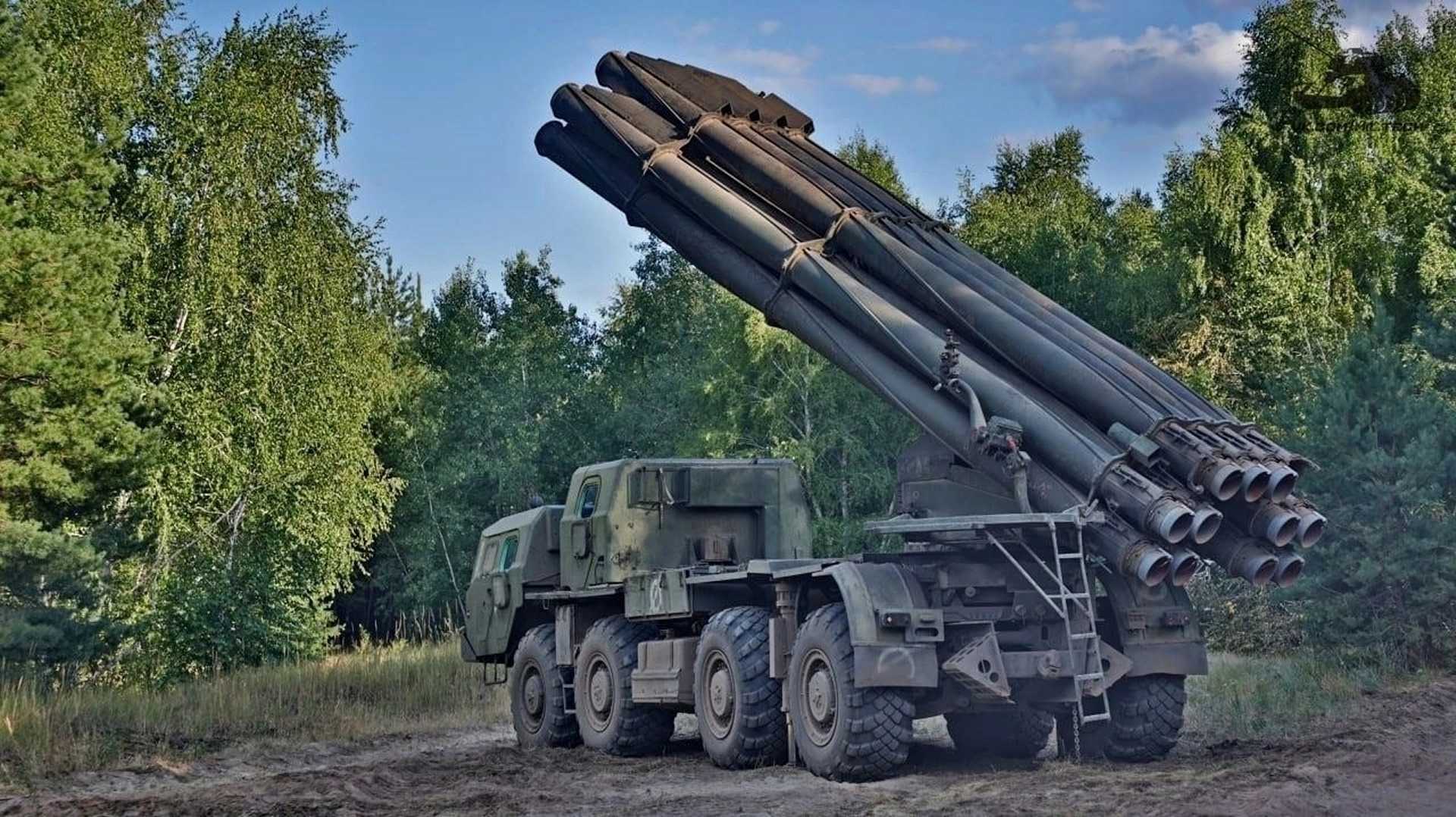
The BM-30 Smerch MLRS, originally introduced in the late 1980s, was developed to engage a wide range of targets, including personnel, armored vehicles, artillery, and infrastructure. (Picture source: Russian social media)
The Tula-based NPO Splav is implementing modernization programs to enhance the capabilities of its 300mm corrected and guided rocket projectiles, specifically the 9M55F/K and 9M544/549 families, used in the Smerch and Tornado-S multiple launch rocket systems (MLRS). This includes adjustments to the aeroballistic properties of the projectiles, such as reducing the cross-sections of aerodynamic rudder units and minimizing surface protrusions, aimed at improving range and flight characteristics. Updated solid-propellant rocket motors with higher-impulse fuel charges are being introduced, potentially extending the range of these systems to 180–200 kilometers, approaching the operational performance of the Iskander-M tactical ballistic missile.
In addition to these modifications, NPO Splav is developing a guided missile with an integral rocket-ramjet engine and retractable air intakes. This design is expected to maintain a velocity of approximately 1,000 m/s during the terminal flight phase and achieve ranges of up to 300–330 kilometers. If successful, it would significantly enhance the long-range precision strike capabilities of 300mm rocket artillery systems.
The BM-30 Smerch MLRS, originally introduced in the late 1980s, was developed to engage a wide range of targets, including personnel, armored vehicles, artillery, and infrastructure. Its projectiles feature inertial control systems for improved accuracy, as well as mixed solid propellants for extended range. The system includes 12 launch tubes, allowing it to deliver a full salvo within 38 seconds and cover an area of 672,000 square meters. Reloading takes approximately 20 minutes. Smerch supports various types of warheads, including high-explosive fragmentation, thermobaric, and cluster munitions equipped with self-aiming submunitions. The MLRS is mounted on MAZ-543M and MAZ-543A chassis, which are equipped with 525-horsepower engines and specialized fire control systems.
The Tornado-S system, a modernization of Smerch, integrates new guided missiles with ranges of up to 120 kilometers and features individual flight programming and strapdown inertial navigation systems. These enhancements improve targeting precision by a factor of 15–20 compared to the original Smerch system. Tornado-S is compatible with existing Smerch ammunition and incorporates an automated guidance and fire control system (AGFCS), which enables autonomous navigation, rapid target acquisition, and missile retargeting without crew exposure. The combat vehicle is based on a modified MAZ-543M chassis and is supported by the 9T255 transport and loading vehicle, the 9S936 command and staff vehicle, and other auxiliary components.
The operational history of the Smerch system includes conflicts in Chechnya, Syria, Ukraine, and Nagorno-Karabakh. It has also been exported to multiple countries, including India, Algeria, Belarus, and others. Its standard ammunition includes projectiles with ranges of up to 70 kilometers, while newer designs, such as the 9M542, extend the range to 120 kilometers. Tornado-S projectiles, such as the 9M544 and 9M549, further expand these capabilities. The Tornado-S system has been fielded by the Russian military since 2017 and is also offered for export.
Both Smerch and Tornado-S are designed for high-impact strikes against a variety of targets, including vehicles, artillery, command centers, and critical infrastructure. Their ability to integrate reconnaissance assets, such as UAVs, enhances real-time targeting and effectiveness. These systems provide automated control through their AGFCS, supporting precise and efficient deployment in diverse operational conditions. The modernization initiatives by Splav aim to extend the service life and operational capabilities of these systems, aligning with evolving requirements for range and accuracy.

- Details
- Written by: Tkuhn
- Category: 2024
- Hits: 7533
According to information published by Russian sources on December 15, 2024, Iran has begun deploying its 15th Khordad air defense missile systems near critical nuclear facilities, a move aimed at countering escalating threats from the United States and Israel. The latest reports confirm the presence of these systems around the Shahid Ahmadi Roshan nuclear site in Natanz, a key location in Iran’s uranium enrichment efforts situated in Isfahan Province.
Follow Army Recognition on Google News at this link
Iran fortifies its nuclear facilities with advanced 15th Khordad air defense systems, signaling preparedness against potential U.S. and Israeli strikes. (Picture source: Defa Press)
The Natanz facility, one of Iran’s key nuclear sites, has long been under international scrutiny due to allegations by the U.S. and Israel that it plays a central role in Iran’s uranium enrichment program. Both nations claim that Iran is pursuing nuclear weapons capabilities, a charge Tehran vehemently denies, asserting its nuclear program is solely for peaceful purposes. Despite these denials, Israel and the U.S. have reiterated their commitment to preventing Iran from obtaining nuclear weapons, with Israel in particular warning of preemptive military action if diplomatic efforts fail.
The 15th Khordad air defense system, introduced in 2019, represents a significant leap in Iran’s ability to defend its airspace. As a domestically designed and manufactured platform, it symbolizes Iran’s push for self-reliance in military technology, especially under the weight of international sanctions that limit its access to foreign arms.
This advanced system is capable of detecting and engaging a wide range of aerial threats, including fighter jets, drones, and stealth aircraft. It can identify targets at a distance of up to 150 kilometers, track them within a 120-kilometer radius, and engage at ranges of up to 75 kilometers. For stealth targets, the system offers detection capabilities at 85 kilometers and interception at 45 kilometers. The 15th Khordad is also capable of simultaneously tracking and intercepting six targets, making it a formidable tool against coordinated aerial attacks. One of its standout features is its rapid deployment time, requiring less than five minutes to become operational, allowing Iranian forces to quickly respond to potential threats.
The system is equipped with Sayyad-3 missiles, which are designed for medium- to long-range engagements. These missiles enhance the system’s capacity to neutralize advanced aerial threats, including those posed by modern fighter aircraft and high-altitude surveillance platforms. The system’s maximum operational altitude is 27 kilometers, enabling it to engage targets across a broad vertical range.
The placement of the 15th Khordad systems near the Natanz nuclear facility signals Iran’s intent to shield its most sensitive sites from potential airstrikes. This move comes amid heightened tensions with Israel, which has a history of targeting Iranian-linked assets in Syria and is widely believed to have carried out sabotage operations against Iranian nuclear sites in the past. Israeli Prime Minister Benjamin Netanyahu has repeatedly emphasized that his country will not allow Iran to achieve nuclear weapons capability, and Israeli military officials have reportedly developed operational plans for strikes on Iranian nuclear facilities.
U.S. rhetoric has also been strong, with Washington maintaining that all options remain on the table to prevent Iran from advancing its nuclear program. However, the Biden administration has so far prioritized diplomatic efforts to revive the 2015 nuclear deal, officially known as the Joint Comprehensive Plan of Action (JCPOA), which former President Donald Trump abandoned in 2018. Despite these efforts, the lack of progress in negotiations has fueled speculation that military action by either Israel or the U.S. remains a possibility.
The deployment of the 15th Khordad systems also reflects Iran’s broader strategy to counter increasing Israeli activity in the region. Over recent years, the Israeli Air Force has conducted numerous strikes in Syria, targeting Iranian-aligned forces and infrastructure. These operations, facilitated by the limited air defense capabilities in Syria, demonstrate Israel’s ability to project power across the region. Analysts suggest that these missions could serve as a precursor to strikes on Iran, as they test Israel’s operational readiness and tactics.
Iran’s deployment of the 15th Khordad air defense missile systems adds another layer of complexity to the already volatile Middle East. While Tehran views these measures as defensive, their strategic implications are likely to alarm its adversaries.
Read more: 15th Khordad Air Defense Systems: Iran’s Response to Growing US-Israel Strike Threats

- Details
- Written by: Halna du Fretay
- Category: 2024
- Hits: 4471
At the Vietnam Defence 2024, from December 19 to 22, 2024, Russia will unveil the Rubezh-ME coastal missile system for the first time. Developed by the Kaluga Instrument-Making Plant "Typhoon," this modern system is built on a compact, mobile, and integrated architecture designed to meet the operational needs of armed forces in diverse environments. Mounted on a KamAZ chassis, the Rubezh-ME is capable of protecting territorial waters and addressing both maritime and land-based threats.
The Rubezh-M coastal missile system, armed with Kh-35U Uran anti-ship missiles, is capable of striking surface targets, including ships weighing up to 5,000 tons (Picture source: Russian Media )
The Rubezh-ME integrates a command post, radar systems, and launchers onto a single platform. This streamlined configuration, referred to as a "boat on wheels," minimizes logistical complexity while enhancing mobility across various terrains, including public roads. The system's firing range extends up to 260 km for export versions and up to 500 km for models designed for the Russian Navy. Its target detection capabilities are supported by an SPU-A active radar, which can locate targets up to 250 km away, and an SPU-P passive radar with a detection range of up to 500 km. These features enable the system to adapt to a wide range of scenarios, from autonomous operations to coordinated use in formations of multiple vehicles.
The Kh-35UE missile, the Rubezh-ME's primary armament, is a subsonic model measuring 4.4 meters in length and carrying a 145 kg explosive warhead. It is capable of neutralizing surface ships up to 5,000 tons using guidance systems that combine inertial navigation, satellite positioning, and radar homing. The missile flies at low altitudes, ranging from 10 meters above the waves during cruise phases to 3-4 meters in terminal approach, complicating detection and interception efforts. Its versatility also allows it to engage strategic land-based targets such as bridges and military installations, making it suitable for various missions. The export version of the missile has a maximum range of 260 km, while the Russian Navy variant extends to 500 km. High levels of automation in the system enable missile launches to be prepared in under a minute, with operations managed by a single operator.

The Rubezh-M system is intended to complement the larger and more expensive Bal coastal missile system, which can accommodate up to eight missiles per launcher (Picture source: Rosoboronexport)
A key component of the system is its SKPUS mobile command post, mounted on a similar chassis but equipped with the Monolith-B radar. This radar enhances the system's range and target-tracking precision while facilitating coordination with other units. A Rubezh-ME battery can include up to eight launcher vehicles, supported by reloading vehicles with cranes, allowing for the launch of 32 missiles in a single salvo and reloading within 30 to 40 minutes. These features make the Rubezh-ME an effective tool for countering naval groups or defending strategic areas.
Compared to its predecessor, the Bal system, the Rubezh-ME offers a lighter design, reduced cost, and improved modularity. Unlike the Bal, which relies on separate platforms for radars, control, and launchers, the Rubezh-ME integrates all these components into a single platform. This integration simplifies logistics and increases operational flexibility. Additionally, the system is capable of operating in challenging conditions, including electronic warfare and environments with dense enemy air defenses.
The system’s effectiveness is supported by recent examples of the capabilities of Russian coastal missile systems. In 2023, the Bastion system, equipped with Onyx missiles, demonstrated its ability to strike land-based targets during operations in Ukraine. These examples highlight the growing versatility of modern coastal missile systems, capable of addressing a range of needs from maritime defense to strategic land-based strikes.

- Details
- Written by: Vandenbosch
- Category: 2024
- Hits: 5170
The Turkish Army has recently received a batch of GZPT-T1 armored personnel carriers (APCs) as part of a service life extension program for its existing fleet of M113 vehicles. This delivery follows a contract signed in May 2023, marking a significant milestone in the modernization of the Turkish Army's armored vehicle capabilities. These upgraded vehicles are expected to serve the Turkish Armed Forces for at least another two decades, enhancing their operational effectiveness and extending the life of the M113 platform.
The GZPT-T1 represents a deep modernization of the iconic American M113 Armored Personnel Carriers. (Picture source: Turkish MoD)
The GZPT-T1 represents a deep and comprehensive modernization of the iconic American M113 APC. The modernization process focuses on improving the vehicle's mobility, protection, and combat capabilities, ensuring it remains a vital asset for the Turkish Army in modern warfare. One of the major upgrades to the GZPT-T1 is the installation of the SARP remotely controlled combat station, developed by Aselsan, a leading Turkish defense company. This system enhances the vehicle's firepower and operational flexibility, allowing it to respond to various threats from a distance while ensuring the safety of the crew inside the armored vehicle.
The SARP combat station is a key element of the GZPT-T1 upgrade. The system offers impressive flexibility with its guidance capabilities, including -30° to +60° in elevation and 360° in azimuth, enabling the vehicle to react quickly to threats coming from any direction. The SARP station can be equipped with a range of different weapon systems, making it a versatile solution for various combat scenarios. The available weapon options include a 12.7 mm M2HB machine gun (with 400 rounds), a 7.62 mm FN MAG58 or M240 machine gun (with 1,000 rounds), a 5.56 mm FN Herstal Minimi light machine gun (with 1,000 rounds), and a 40 mm MK19 Mod3 automatic grenade launcher (with 80 grenades). These weapon systems significantly enhance the GZPT-T1's ability to engage both personnel and light vehicles, providing the Turkish Army with a powerful tool for force projection in various operational environments.
In addition to the SARP combat station, the GZPT-T1 vehicles are undergoing several other upgrades aimed at improving their operational effectiveness. These include next-generation electronics, such as a shot detection system and advanced navigation equipment, ensuring that the vehicle remains highly effective in both urban and rugged terrains. The integration of an air conditioning system ensures crew comfort, enabling extended operations in hot climates without compromising vehicle performance.
Mechanically, the GZPT-T1 benefits from a complete overhaul of its 305-horsepower engine and transmission, providing improved mobility and greater reliability. These upgrades ensure that the vehicle maintains its effectiveness across a wide range of terrains, a crucial element for the Turkish Army's operational needs.
A total of 52 units are scheduled for the GZPT-T1 upgrade, with deliveries expected between 2024 and 2025. The Turkish Army currently operates approximately 520 M113 vehicles, and this modernization effort aims to ensure that these vehicles remain a reliable and effective component of Turkey's military capabilities for the years to come.
This significant investment in the GZPT-T1 armored personnel carriers reflects Turkey's commitment to modernizing its military equipment while leveraging the proven reliability of the M113 platform. The enhanced features of the GZPT-T1, including its advanced combat station and mechanical improvements, provide the Turkish Army with increased combat capabilities, allowing it to face evolving threats on the modern battlefield. This program is part of a broader trend in Turkey's defense strategy, focused on indigenization and modernization of existing platforms to meet contemporary security challenges.
With these new improvements, the Turkish Army is poised to maintain its advantage in regional security and peacekeeping operations, ensuring that the GZPT-T1 armored personnel carriers will continue to play a key role in its operational readiness for the near future.

- Details
- Written by: Vandenbosch
- Category: 2024
- Hits: 8480
John Cockerill Defense has successfully tested its innovative C3105 turret, specifically designed to be integrated into the Leopard 1 tank chassis. Bear Midkiff, Managing Director of Midkiff Consultancy Services, recently announced this milestone through a social media post highlighting the success of the live demonstration.
The C3105 turret enhances the Leopard 1’s combat capabilities. (Picture source: Bear Midkiff LinkedIn account)
The demonstration featured both the C1030 turret, mounted on the Patria XP AMV, and the C3105 turret, which was specifically adapted for the Leopard 1 chassis. Midkiff expressed his satisfaction with the event's outcome, noting that the attending delegations were delighted with the performance and hands-on experience provided by the systems. "Steel on target is what matters at the end of the day," he commented, praising the work of the crews and personnel involved in the event's success.
The C3105 turret significantly enhances the Leopard 1’s combat capabilities, a platform whose firepower had been previously limited. While it is theoretically possible to integrate a 120mm cannon to increase the tank's power, such a modification would require extensive changes to the Leopard 1A5 BE chassis. The C3105 offers a more practical solution, enhancing lethality without compromising the tank's balance or performance. Its design allows for easy integration, offering an effective upgrade that boosts the platform’s combat capabilities.
Built with welded ballistic aluminum, the C3105 turret is equipped with a 105mm High-Pressure (HP) cannon and features an automatic ammunition loading system, improving its operational efficiency. The turret supports a two-person crew and offers several secondary weapon options, including a 7.62mm coaxial or pintle-mounted machine gun and an optional 40mm automatic grenade launcher (AGL). This versatility allows the C3105 to be adapted to meet various battlefield requirements, making it a highly adaptable solution.
The C3105 turret is already in production for an undisclosed Middle Eastern ally, with at least 100 units set to be integrated onto vehicles similar to U.S. Strykers. These deployments demonstrate the relevance of the C3105 in modern combat scenarios and its ability to provide advanced firepower on a variety of platforms. The turret’s proven design and successful live demonstrations highlight its potential as a reliable and effective option for military forces seeking to modernize their existing armored vehicle fleets.
John Cockerill Defense continues to innovate in the field of armored vehicle weapon systems, ensuring that platforms like the Leopard 1 remain relevant and highly capable in the face of modern warfare demands.
Read more: John Cockerill Defense Successfully Tests C3105 Turret Adapted for Leopard 1 Tank
- Details
- Written by: Vandenbosch
- Category: 2024
- Hits: 8078
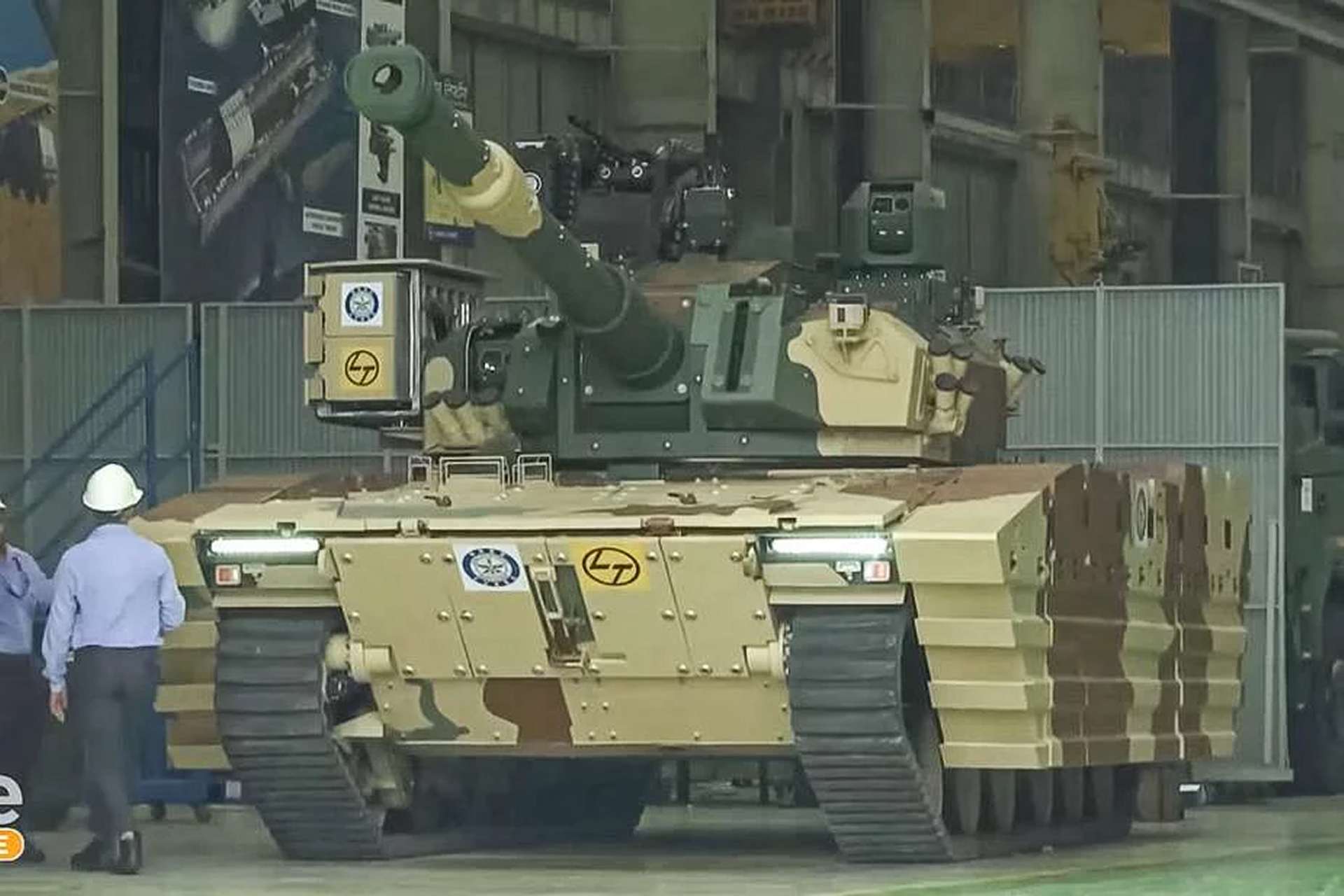
India’s Defence Research and Development Organisation (DRDO) and Larsen & Toubro (L&T) have recently showcased the latest trials of the Zorawar light tank, a new combat platform specifically designed for high-altitude operations. Footage released by the Indian Ministry of Defence shows the Zorawar engaging in live-fire exercises at elevations exceeding 4,200 meters, demonstrating both its firing accuracy and maneuverability under some of the most challenging environmental conditions.
The Zorawar light tank is a new combat platform specifically designed for high-altitude operations. (Picture source: Indian Social Media)
These trials took place in the Ladakh region, an area of strategic importance where India and China have longstanding territorial disputes. The Indian Army has identified a need for 354 of these 25-ton-class light tanks to enhance its combat capabilities in mountainous terrain. Entirely developed within India, the Zorawar represents a significant departure from the heavier armored platforms previously deployed by the nation’s ground forces, which have traditionally relied on main battle tanks originally intended for use on flat plains and deserts.
According to the Hindustan Times, the Zorawar prototype was completed at L&T’s facility in July, marking a critical developmental milestone achieved in just two years. The tank is expected to become fully operational by 2027, a move that will bolster India’s defense posture along the Line of Actual Control (LAC) and better equip the Indian Army to counter the Chinese People’s Liberation Army (PLA). The PLA has already introduced modern light tanks into the region—platforms that offer high power-to-weight ratios, agility, and strong performance at altitude.
Currently, the Indian Army has deployed dozens of Russian-designed T-72 and T-90 tanks to the Ladakh theater. While these tanks are combat-proven and formidable in many scenarios, their operational effectiveness is limited by the thin air, steep inclines, and rugged terrain of high-altitude areas. Designed originally for operations on level ground and in desert environments, the T-72s and T-90s do not possess the same adaptability when confronted with the harsh mountain conditions.
The introduction of the Zorawar is intended to close these capability gaps. By optimizing the platform for high altitude performance, agility, and quick reaction times, India aims to field a light tank that can excel where heavier platforms struggle. Beyond just firepower and armor, the Zorawar’s design priorities include improved engine performance in low-oxygen environments, advanced suspension systems to handle uneven terrain, and state-of-the-art target acquisition sensors to ensure accuracy despite difficult visibility and weather conditions.
This evolution in India’s armored forces could be instrumental in maintaining a credible defensive and, if necessary, offensive stance in one of the world’s most demanding operational theaters. As both India and China continue to reinforce their positions along disputed border areas, the introduction of a homegrown, high-altitude-capable tank like the Zorawar underscores India’s strategic emphasis on self-reliance, technological innovation, and readiness to operate effectively in extreme conditions.
Read more: India Conducts High-Altitude Trials of its New Zorawar Light Tank

- Details
- Written by: Jérôme Brahy
- Category: 2024
- Hits: 6853
On December 13, 2024, Roshel, a Canadian manufacturer of armored vehicles, opened its first production facility in the United States, located in Shelby Township, Michigan. This facility is intended to support increasing demand from U.S. customers and aligns with the company's goal to deliver products manufactured domestically. According to CEO Roman Shimonov, this expansion reflects Roshel’s effort to bring production closer to its clients while adapting to evolving industry requirements. The new plant consolidates manufacturing processes and includes a service center to maintain vehicles used by U.S. federal and government agencies.
Follow Army Recognition on Google News at this link
The Senator is designed for various roles, including law enforcement and military operations, and has been deployed in multiple conflict zones. (Picture source: Roshel)
The facility in Michigan mirrors Roshel’s Canadian operations, producing armored vehicles such as the Senator Mine-Resistant Ambush Protected (MRAP) vehicle. The Senator is designed for various roles, including law enforcement and military operations, and has been deployed in multiple conflict zones. The plant aims to enhance Roshel’s ability to deliver its vehicles efficiently while maintaining operational readiness for its customers.
Roshel collaborates with the Ford Motor Company, using the Ford F-550 chassis as the base for its Senator series. The F-550, part of Ford's Super Duty lineup, offers high payload and towing capacities. Roshel modifies these chassis to meet specific operational requirements, including ballistic protection and modular configurations. This partnership enables Roshel to provide vehicles suitable for military, security, and emergency response applications.
Since its introduction in 2018, the Senator has been produced in several configurations, including APCs, MRAPs, and emergency response vehicles. The MRAP version, launched in 2023, incorporates a V-shaped hull for blast protection, lightweight composite materials, and thermal and acoustic insulation. Certified to NATO STANAG 4569 Level 2 standards, it is designed to protect against anti-tank mines with up to 6 kg of explosives and provides 360° ballistic protection. It is powered by a 6.7L turbo diesel engine, delivering 330 horsepower and 750 Nm of torque, with a range of 800 kilometers and a payload capacity of up to 2,000 kg. The Senator accommodates up to ten occupants and supports various armament options, including remote-controlled weapon systems and anti-tank guided missiles.
Roshel’s production operates continuously at its Canadian facilities, achieving a monthly output of 140 vehicles. This capacity has enabled Roshel to supply Ukraine with over 1,400 Senator vehicles since the beginning of the Russian invasion. The Senator has been deployed extensively in Ukraine, where it has been used for troop transport and medical evacuation. Ukrainian forces have highlighted its ability to withstand attacks, including incidents involving First-Person View (FPV) drones.

Roshel’s production capacities, achieving a monthly output of 140 vehicles, has enabled Roshel to supply Ukraine with over 1,400 Senator vehicles since the beginning of the Russian invasion. (Picture source: Roshel)
Roshel has expanded its operations globally, proposing a factory in Germany to manufacture MRAPs for NATO and European customers. The company also plans to localize part of its production in Ukraine, where it currently operates repair and maintenance facilities. Roshel employs Ukrainian refugees in Canada, many of whom have expressed interest in contributing to local production efforts in their home country. The Ukrainian facilities are intended to enhance Roshel’s presence in Europe while reducing logistical costs and supporting the local economy.
In addition to the Senator, Roshel has developed new models such as the Captain, a light tactical armored vehicle based on the Toyota Land Cruiser 70 chassis, and a medical evacuation version of the Senator. The Captain is designed for rapid-response scenarios, offering STANAG 4569 Level 1 ballistic protection and Level 2 explosion resistance. These additions to Roshel’s product line aim to address specific operational requirements for both defense and humanitarian missions.
Roshel has supplied armored vehicles to multiple countries, including Costa Rica, South Korea, and Bosnia and Herzegovina. The company’s MRAPs are certified to NATO standards for ballistic and blast protection. In Germany, Roshel has proposed delivering 100 MRAPs to Ukraine while building a local production facility to support NATO operations. The vehicles are priced competitively compared to alternatives and have been used in combat conditions.
Founded in 2016 by Roman Shimonov, a former member of the Israeli Defense Forces, Roshel operates four manufacturing plants in Ontario, with plans for further expansion in the U.S. and Europe. The company has fulfilled several contracts ahead of schedule, including the delivery of 200 Senator vehicles to Ukraine as part of a $92 million CAD aid package from Canada. These developments reflect Roshel's growing role in the global armored vehicle market and its efforts to meet increasing demand across multiple regions.
- NATO Upgrades British Army MLRS A2 with Advanced Smoke Systems for Enhanced Battlefield Concealment
- Belarus Hosts Russian Nuclear Weapons and Prepares for Oreshnik Ballistic Missile Deployment
- Breaking News: Lithuanian Defense Minister to Visit Germany to Sign Leopard 2A8 Tanks Acquisition Agreement
- US says Russia plans Oreshnik ballistic missile test against Ukraine soon