

- Details
- Written by: Halna du Fretay
- Category: 2024
- Hits: 4103










On September 2, 2024, the Ukrainian Ministry of Defense approved the delivery of the new Ukrainian armored personnel carrier, named Khorunzhy, to the armed forces. This vehicle is the result of a deep modernization of the Soviet BTR-60, combining significant technical improvements with high-quality materials to meet the current needs of the battlefield.
Follow Army Recognition on Google News at this link
The Khorunzhy can be equipped with a combat module featuring either a 14.5 mm machine gun or a 30x113 mm cannon, offering flexibility depending on operational needs. (Picture source: Ukrainian MoD)
The Khorunzhy stands out for its body made of high-quality Finnish steel, a choice that enhances ballistic protection without increasing the vehicle's weight. This body is designed to withstand 7.62 mm steel core bullets around its entire perimeter, while the frontal armor can resist shots from a heavy machine gun at a distance of 10 meters. Additionally, the design of the hull’s bottom, coupled with specially designed anti-mine seats, protects the crew from the devastating effects of explosive devices equivalent to 6 kg of TNT.
In terms of performance, the Khorunzhy significantly surpasses its predecessor, the BTR-60. While the latter was equipped with two 90-horsepower gasoline engines, the new Ukrainian vehicle is powered by a 330-horsepower diesel engine mounted at the front of the hull. This more powerful engine allows the vehicle to reach speeds exceeding 80 km/h, while the increased fuel tank capacity provides a range of over 500 kilometers. The vehicle's hull is made of modern armored steel and offers a level of protection corresponding to STANAG 4569 standards for the upper and side parts of the body.
The vehicle's ergonomics have also been improved, with a body layout that facilitates maneuvering and troop disembarkation, now carried out from the rear of the vehicle, enhancing both safety and the speed of operations in the field.
In terms of equipment, the Khorunzhy is equipped with modern electronics, surveillance cameras for better visibility, an air conditioning system for crew comfort, and an autonomous generator that allows the vehicle to operate even when the engine is turned off.
Regarding armament, the vehicle can be equipped with a combat module featuring either a 14.5 mm machine gun or a 30x113 mm cannon, offering flexibility depending on operational needs.
The Khorunzhy is designed to be versatile, with the capability to be produced in six different variants: linear armored personnel carrier, troop transport, medical evacuation, repair vehicle, command vehicle, and self-propelled mortar. This design flexibility allows the Khorunzhy to meet various military needs, thereby strengthening the operational capacity of the Ukrainian armed forces.
This approval by the Ministry of Defense marks an important step in the modernization of Ukrainian military equipment, with the Khorunzhy positioning itself as a strategic asset on the battlefield.

The new Ukrainian vehicle is powered by a 330-horsepower diesel engine mounted at the front of the hull(Picture source: Ukrainian MoD)

- Details
- Written by: Vandenbosch
- Category: 2024
- Hits: 4458
The Lithuanian Armed Forces have received MP7 A2 submachine guns from the German firearms manufacturer Heckler & Koch, according to an announcement made by the Lithuanian Ministry of Defense on August 29, 2024. The decision to procure this compact weapon was initially made public in October 2023. The weapons were selected for their tactical and technical features, including their lightweight design, rapid-fire capability, and penetration power, as stated by the Lithuanian Ministry of Defense.
Follow Army Recognition on Google News at this link
The MP7 A2 is a 4.6 mm x 30 NATO Personal Defense Weapon (PDW) designed to deliver high performance in a compact and lightweight format. (Picture source: Lithuanian MoD)
The contract for the 4.6 x 30 mm Personal Defense Weapon (PDW) was valued at €1.56 million. Although the exact number of units acquired was not disclosed, it was confirmed that the contract would span a period of 72 months. The Ministry's announcement highlighted the weapon's lightweight system, which weighs just under 1,900 grams (according to the manufacturer), and its impressive penetration capabilities when equipped with armor-piercing ammunition.
A photo accompanying the announcement offers a glimpse of the additional equipment acquired alongside the MP7 A2. The weapon is outfitted with a signature suppressor and a Micro T2 red dot sight from the Swedish manufacturer Aimpoint. The Czech military police opted for a nearly identical setup in late 2021.
The Heckler & Koch MP7 has been a successful design for over two decades. This compact gas-operated weapon measures only 415 mm in length with the stock retracted, allowing it to effectively engage human targets equipped with light body armor at distances of up to 200 meters. Additionally, the weapon is capable of penetrating ballistic shields at close range, according to the Lithuanian Ministry of Defense.
The MP7 A2 is a 4.6 mm x 30 NATO Personal Defense Weapon (PDW) designed to deliver high performance in a compact and lightweight format. With a magazine capacity of 40 rounds, this weapon is capable of reaching a maximum effective range of 200 meters. Its penetration power is remarkable, capable of piercing NATO CRISAT protection (composed of a 1.6 mm titanium plate and 20 layers of Kevlar) at a distance of 200 meters when using steel-core ammunition.
The MP7 A2 operates on an indirect gas principle, contributing to its efficiency and reliability during sustained fire. It uses a rotating bolt head locking system, with cartridge ejection to the right. The weapon can fire in both single-shot and sustained fire modes, with an impressive rate of fire of 950 rounds per minute. Its muzzle velocity reaches 680 meters per second, generating a muzzle energy of 465 joules.
The MP7 A2's barrel features a polygonal profile with a right-hand twist, enhancing shooting accuracy. The weapon is equipped with an open square sight. Its length varies between 420 mm (with the stock retracted) and 640 mm (with the stock extended), with a width of 55 mm and a height of 170 mm. The barrel, 180 mm long, offers a sight radius of 230 mm. The stock is adjustable with a travel range of 220 mm, allowing the user to adapt to different shooting situations.
In terms of weight, the MP7 A2 is light, weighing only 2,000 grams without the magazine. The empty magazines, depending on their capacity (20, 30, or 40 rounds), add 100, 150, or 200 grams, respectively. This lightness combined with its compact dimensions makes the MP7 A2 an easily maneuverable weapon, suitable for close-quarters combat, while still maintaining significant accuracy and firepower at longer ranges.
The MP7 A2 can operate in both semi-automatic and fully automatic modes, with a theoretical firing rate of 950 rounds per minute. It uses STANAG 4820 standardized ammunition, which can be fed from 20, 30, or 40-round magazines.
Compared to the previous A1 version, the MP7 A2 is equipped with additional Mil-STD-1913 rails at the 3, 6, and 9 o'clock positions for mounting accessories. The foldable foregrip has been removed, and in the current configuration, it can be replaced with either a hand stop or an optional vertical grip, as specified in the latest procurement.

The Lithuanian Armed Forces have received MP7 A2 submachine guns from the German firearms manufacturer Heckler & Koch. (Picture source: HK)
Read more: Lithuania Receives MP7 A2 Submachine Guns from German Company Heckler & Koch

- Details
- Written by: Triffaux
- Category: 2024
- Hits: 5710
On August 31, 2024, General Romeo Brawner Jr., the head of the Armed Forces of the Philippines, announced that the Philippines is considering acquiring the Medium-Range Typhon Missile System, a significant move signaling a strategic pivot towards external defense. This announcement was made during the meeting of the Mutual Defense Board-Security Engagement Board (MDB-SEB) at the Philippine Military Academy. The Mid-Range Capability (MRC), or Typhon, is a US Army transporter erector launcher for Standard SM-6 and Tomahawk missiles.
Follow Army Recognition on Google News at this link
US Mid-Range Capability Program, MRC. (Picture source: Wikimedia)
The Typhon MRC missile system, capable of launching Tomahawk and SM-6 missiles, was last seen in the Ilocos Norte province of the Philippines. These missiles, suitable for land, air, and sea scenarios, significantly enhance the range of the country's defensive arsenal. The Typhon missiles have been operationally deployed by the U.S. Army's 1st Multi-Domain Task Force, arriving via a U.S. Air Force C-17 Globemaster at an undisclosed airfield in northern Luzon for the joint military exercises Salaknib 2024.
U.S. defense officials emphasized that from their position in Luzon, Typhon's missiles can cover not only the entire Luzon Strait but also reach the Chinese coast and various bases of the People's Liberation Army in the South China Sea. Although the system was not used in live-fire exercises, Philippine troops were trained on how to handle and maintain this missile system, which was also deployed during the Balikatan 24 exercises.
In addition to Typhon, the Philippine arsenal now includes BrahMos missiles, medium-range supersonic cruise missiles capable of hitting targets up to 400 kilometers away and traveling at a speed of Mach 2.8. These versatile missiles can be launched from submarines, ships, aircraft, or ground platforms, adding an extra layer of strategic defense.
The Medium-Range Capability (MRC) system, also known as the Typhon system, is a key component of the U.S. Army's modernization portfolio for long-range precision fires. The system is designed to bridge the gap between the Army's Precision Strike Missile (PrSM), which has a maximum range of 300 miles, and the developing long-range hypersonic weapon, capable of reaching up to 1,725 miles. Typhon uses SM-6 and Tomahawk missiles, adapted for ground launch, enhancing operational capabilities in multi-domain situations.
The Typhon's Mk 70 Mod 1 launcher system, a modified version of the Navy's vertical launch system Mk 41, allows for the integration and launching of missiles from a standard 40-foot ISO container, thus facilitating its rapid deployment and compatibility with various launching platforms. This sophisticated system enables effective target detection, tracking, engagement, launch, guidance, and interception, bolstering the Philippines' defense posture in a geopolitically tense region.
The Medium-Range Capability (MRC), or Typhon, plays a crucial role in the detection and tracking of targets within an integrated command and control network. Utilizing radars and other sensors, the MRC receives essential data to identify and track aerial threats such as enemy aircraft and missiles.
Once a target is detected and tracked, the MRC's command system selects the most appropriate missile for interception. The SM-6 missile is particularly favored for this role, due to its ability to engage high-velocity targets at long distances, a critical feature for air defense.
The missile launch is executed from the Mk 70 Mod 1 launch system, designed for a rapid response to identified threats. Its modular and mobile structure allows for easy and quick deployment in various environments, thus enhancing the interception system's effectiveness.
After launch, the SM-6 missile is guided towards its target using advanced navigation systems. It receives in-flight updates from the command system, allowing for trajectory adjustments to maximize the chances of effectively hitting the target.
Finally, interception is achieved through the SM-6 missile's terminal guidance system, which enables it to complete its course towards the target with high precision. The missile is equipped with a payload designed to neutralize the target, either through direct impact or proximity detonation, depending on the type of threat encountered.
Read more: US-made Typhon Missile Launcher System Could Place China Coast Within Philippine Reach
- Details
- Written by: Jérôme Brahy
- Category: 2024
- Hits: 17073
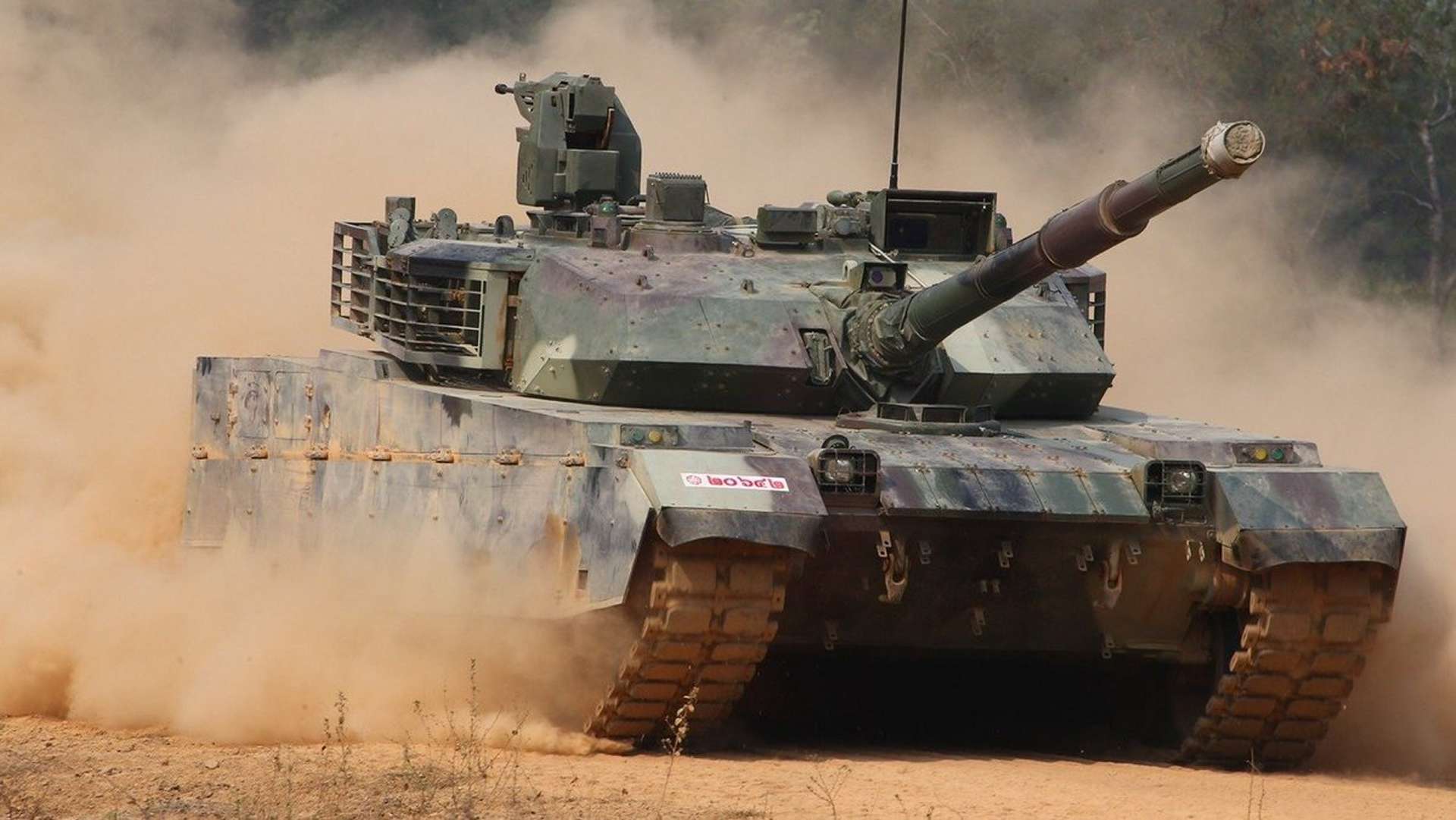
During its 2023 Annual General Meeting of Shareholders, Inner Mongolia First Machinery Group, also known as FIRMACO, reported that its VT-4 main battle tank underwent test assessments in Algeria. According to the company, the VT-4 tank completed a series of exercises, achieving a 100% hit rate in artillery tests and covering 500 kilometers in continuous driving and firing under various conditions. This performance was noted positively by the Algerian side, and the quality breakthrough team was recognized by the Ordnance Industry Group, which shared their experience across the organization.
Follow Army Recognition on Google News at this link
The VT-4 tank completed a series of exercises in Algeria, achieving a 100% hit rate in artillery tests and covering 500 kilometers in continuous driving and firing under various conditions. (Picture source: Chinese social media)
FIRMACO, established in 1954 in Baotou, Inner Mongolia, operates under the China North Industries Group Corporation (Norinco). The company specializes in the production of armored vehicles and is the primary manufacturer of main battle tanks in China for both domestic use and international export. Its product range includes several models, such as the Type 59, Type 88, Type 96, MBT-2000, and VT-4 tanks. FIRMACO, also known by names such as Factory 617 and the Baotou Tank Plant, has a longstanding role in supplying military equipment to the People's Liberation Army (PLA) and other clients.
The VT-4, also designated as the MBT-3000, is a main battle tank developed by Norinco for the export market, with units already in service in Nigeria, Pakistan, and Thailand. It has been in service since 2017 and has been used in various military conflicts, including operations against the Islamic State and Boko Haram. The tank weighs 52 tonnes and is operated by a crew of three: a commander, driver, and gunner. It features a ZPT-98A 125 mm smoothbore gun, capable of firing armor-piercing fin-stabilized discarding sabot (APFSDS), high-explosive anti-tank (HEAT), high-explosive (HE) rounds, and gun-launched anti-tank guided missiles. Its secondary armament includes a 12.7 mm heavy machine gun mounted on a remote weapon station and a 7.62 mm coaxial machine gun. The VT-4 is powered by a VT/E1 V12 diesel engine, which produces 1,200 horsepower, giving it a top speed of 70 km/h and an operational range of 500 kilometers.
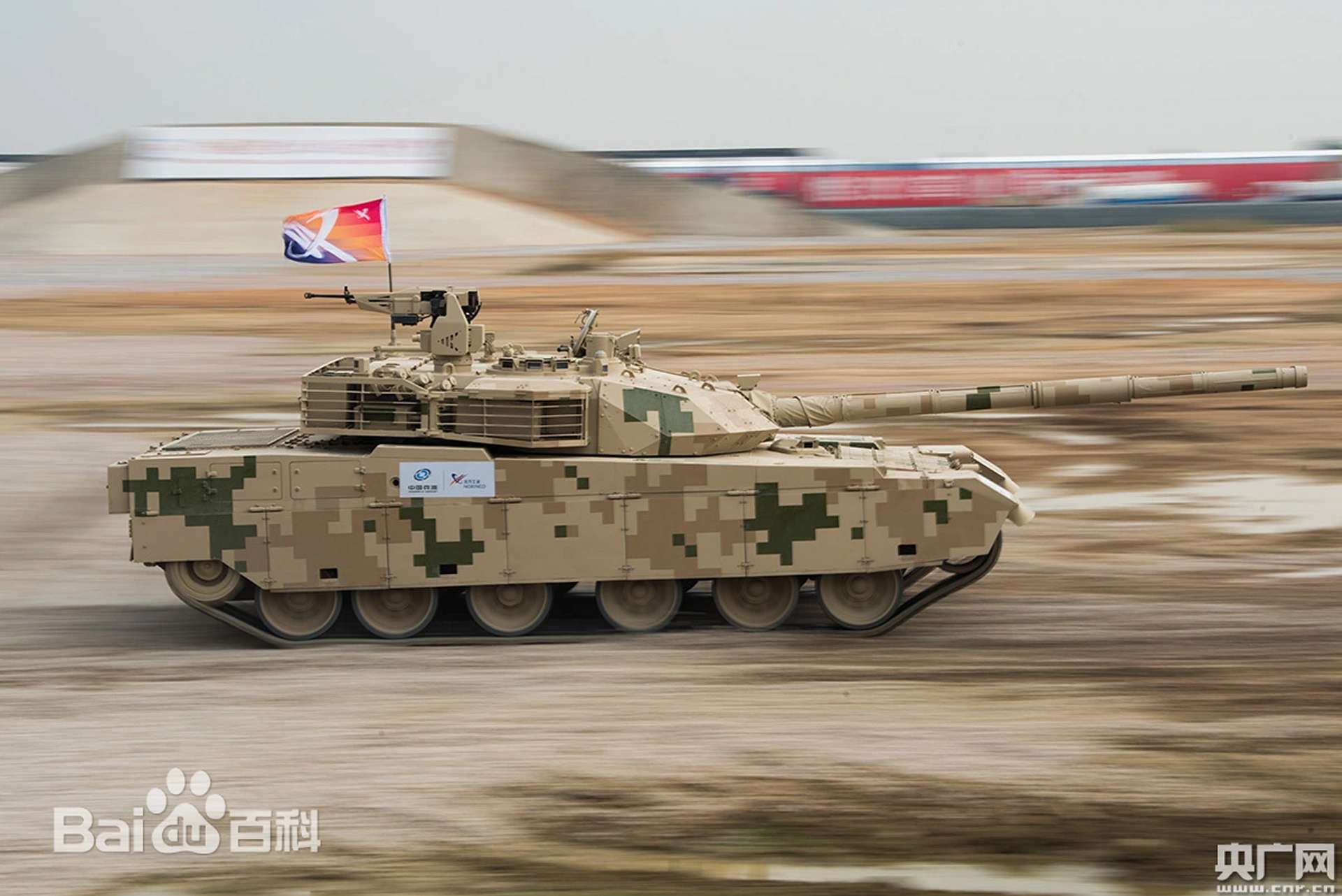
The VT-4 has been in service since 2017 and has been used in various military conflicts, including operations against the Islamic State and Boko Haram. (Picture source: Chinese social media)
The tank's design incorporates composite armor and FY-4 explosive reactive armor for protection. According to its chief designer, Feng Yibai, the frontal protection is comparable to 500 mm of homogeneous steel armor, and the reactive armor provides approximately 700 mm of protection. The VT-4 includes features from other Chinese main battle tanks, such as an automatic transmission system, a 125 mm cannon, a muzzle reference system, and a carousel-style autoloader. The VT-4A1 variant has additional systems, including a 'hardkill' active protection system, grenade launchers, a laser warning device, and radar panels for enhanced defensive capabilities.
Development of the VT-4 began in 2009 as part of a collaboration involving FIRMACO and other Chinese defense companies. The tank emerged from the MBT-3000 program, which aimed to provide a modernized replacement for the earlier Type-90II (MBT-2000) export tank. After being introduced at the 2012 Eurosatory defense exhibition, the VT-4 was showcased at subsequent events, such as the 2014 Norinco Armour Day and the 10th China International Aviation & Aerospace Exhibition.
Algeria's evaluation of the VT-4 is consistent with its strategy of incorporating various Chinese military assets into its defense arsenal. The country already utilizes a range of Chinese-made equipment, including Type 90B armored personnel carriers, WM-80 multiple rocket launchers, PLZ-45 self-propelled howitzers, HQ-7 short-range air defense systems, and FD-2000 long-range air defense missiles. Additionally, Algeria operates Chinese CH-4 and WJ-700 Falcon High-Altitude Long Endurance (HALE) drones. On August 16, 2024, Algeria announced the acquisition of YJ-12B anti-ship missiles from China for coastal defense.
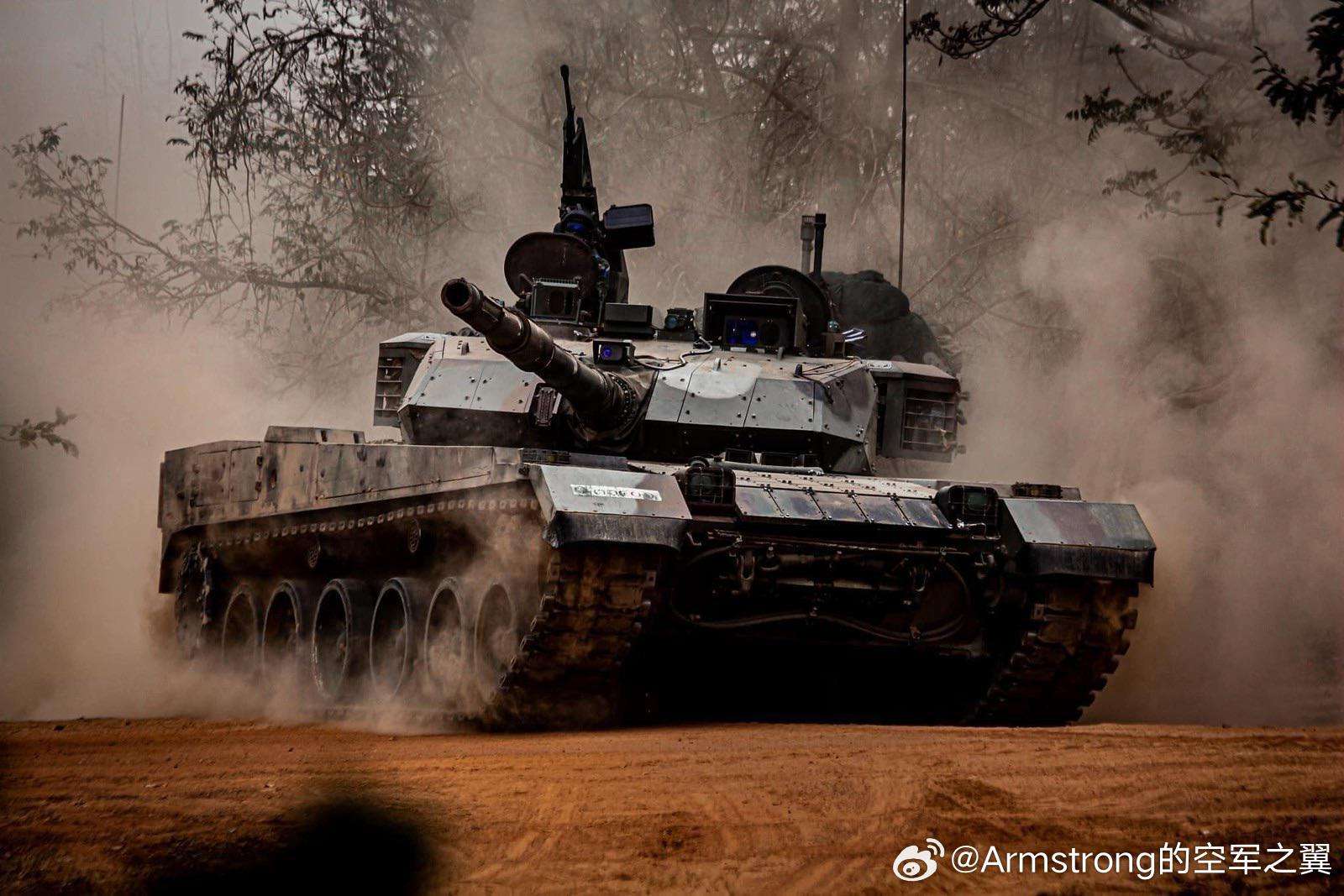
The VT-4 includes features from other Chinese main battle tanks, such as an automatic transmission system, a 125 mm cannon, a muzzle reference system, and a carousel-style autoloader. (Picture source: Chinese social media)
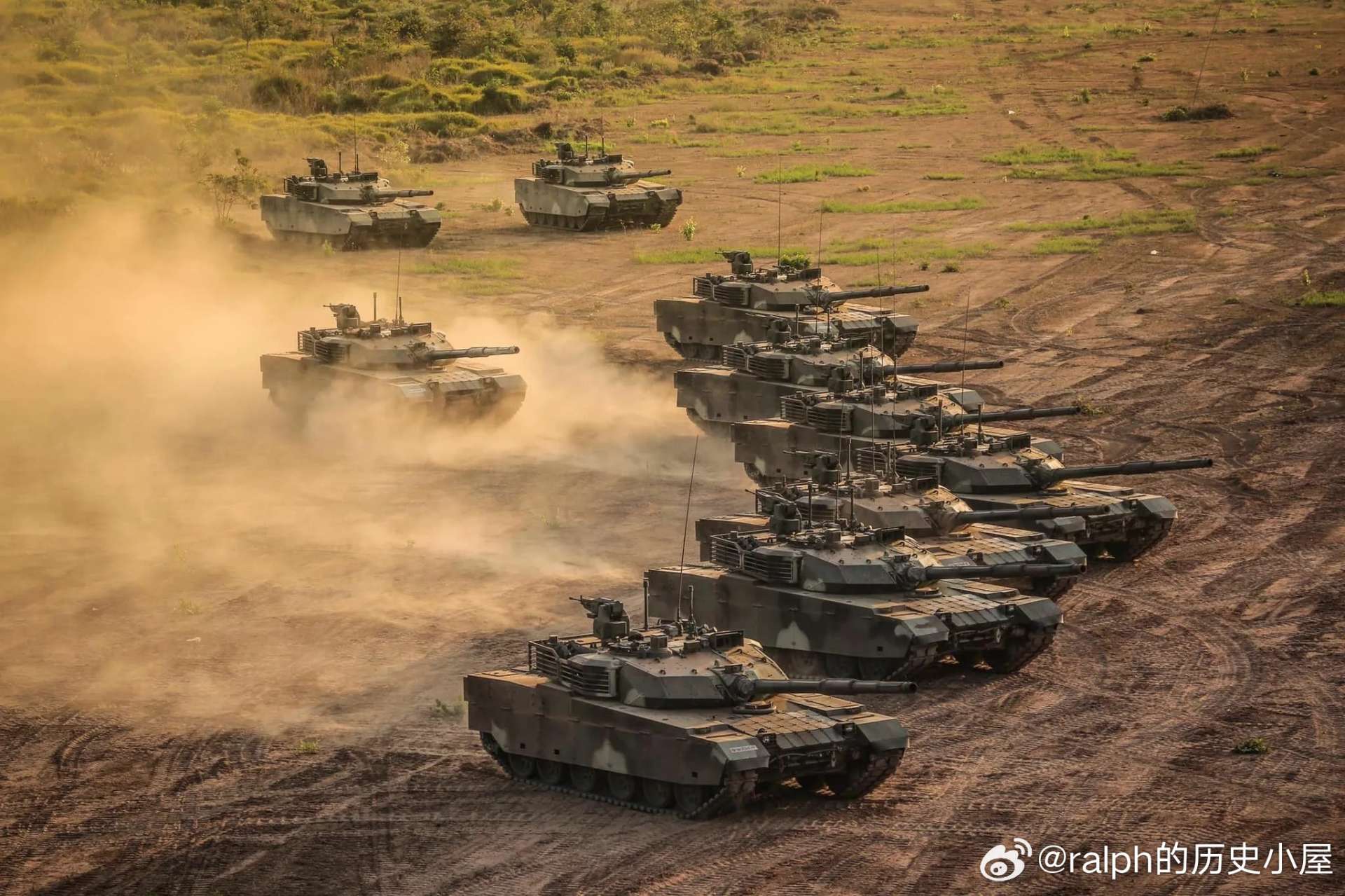
The VT-4, a main battle tank developed by Norinco for the export market, is currently in service in Nigeria, Pakistan, and Thailand. (Picture source: Chinese social media)
Read more: Exclusive: Algeria conducts successful trials of Chinese VT-4 Main Battle Tank
- Details
- Written by: Halna du Fretay
- Category: 2024
- Hits: 11090
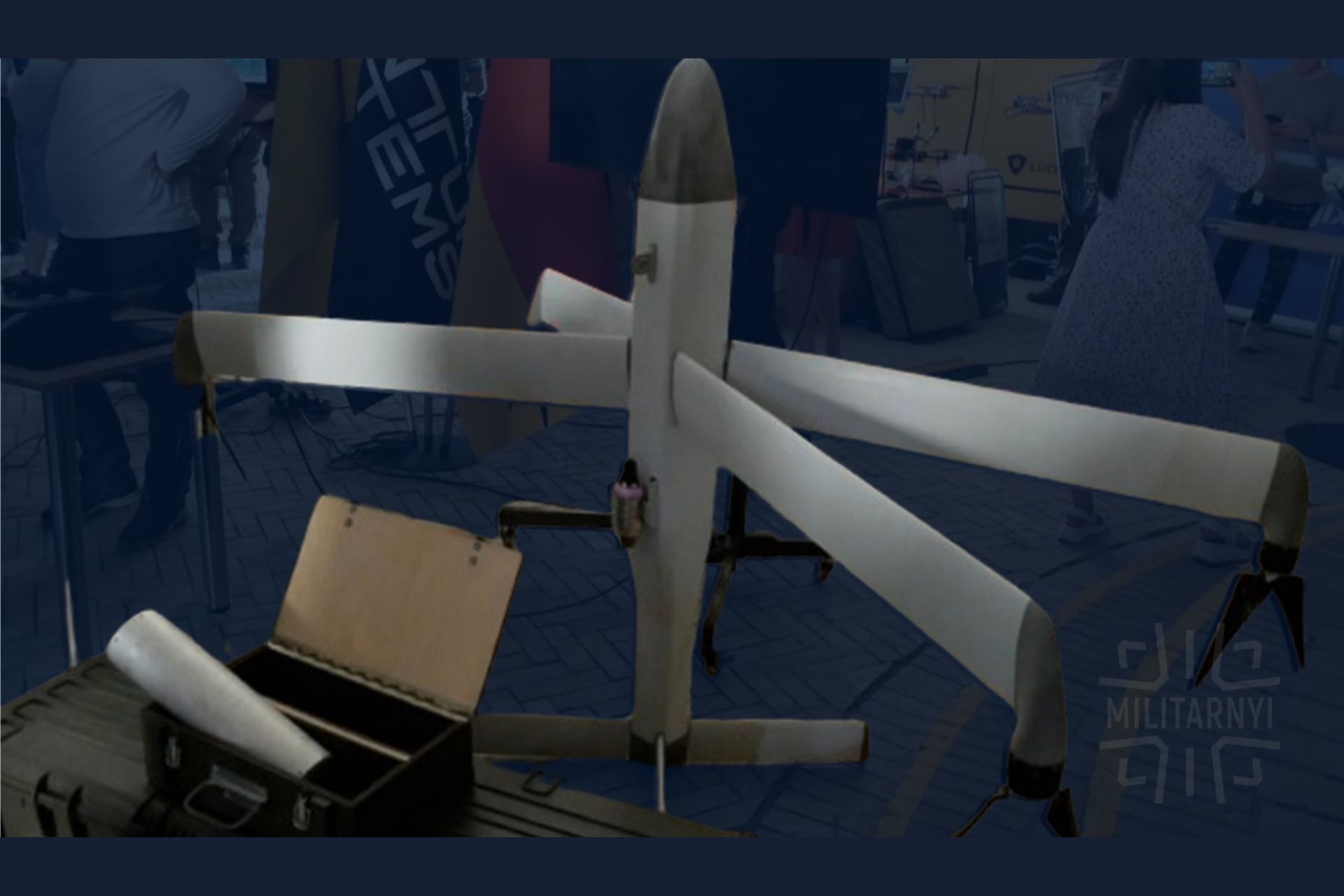
Ukraine's defense industry is currently developing a new kamikaze drone named SkyFall, designed to destroy armored vehicles and fortifications at ranges between 40 and 60 kilometers. This unmanned aerial vehicle (UAV) is being developed by StarkDefence, a Ukrainian company specializing in drone design, according to information reported by Militarnyi.
Follow Army Recognition on Google News at this link
The SkyFall drone is equipped with a 5-kilogram warhead, manufactured in Ukraine, which can be either explosive or HEAT-Frag (Picture source: Militarnyi)
The SkyFall project is presently in the development and testing phase. Engineers at StarkDefence are focused on assessing the performance of the guidance system under various conditions, as well as on aspects related to the combat unit and safety protocols. According to a StarkDefence representative, the SkyFall system includes a control station and three to five attack drones. A key innovative feature of this drone is its vertical takeoff and landing capability, which eliminates the need for special launching devices such as catapults.
The SkyFall drone is equipped with a 5-kilogram warhead, manufactured in Ukraine, which can be either explosive or HEAT-Frag (anti-tank). The drone's guidance system is capable of targeting moving or stationary objects, day or night. These kamikaze drones are most effective when coordinated with reconnaissance drones for target detection and signal relay.
A key feature of the SkyFall drone is its ability to abort a mission if the target has already been destroyed or has left the area. In such cases, the drone can return to its base, land vertically, and be ready for reuse after recharging its battery. This feature maximizes the drone's effectiveness while reducing unnecessary losses.
Since the onset of the war with Russia, Ukraine has significantly developed its defense industry, particularly in the drone sector. This rapid expansion has been driven by the need to innovate in the face of Russian air superiority and the uncertain timelines of promised arms deliveries from Western allies. As a result, Ukraine has increased its local drone production, growing from just seven specialized companies before 2022 to about 80 today. Companies like StarkDefence and Piranha-Tech play a crucial role in developing kamikaze drones, anti-drone systems, and even hybrid missiles capable of striking deep into Russian territory.
Ukraine is not merely producing drones for its own use; it is also developing innovative systems to maximize battlefield effectiveness. For instance, reconnaissance drones are used in coordination with kamikaze drones to optimize strike precision, while systems like the "Palianytsia," a hybrid missile-drone, demonstrate Ukraine's ability to create indigenous solutions to address challenges posed by restrictions on imported weapons.
Read more: Ukraine Develops SkyFall Kamikaze Drone for 60 km Strikes
- Details
- Written by: Vandenbosch
- Category: 2024
- Hits: 8853
The Russian National Guard has officially adopted the 2023 version of the 5.45 mm Kalashnikov AK-12 assault rifle, according to a government decree signed on August 28, 2024. This follows the adoption of this rifle by the Russian Ministry of the Interior a year earlier.
Follow Army Recognition on Google News at this link
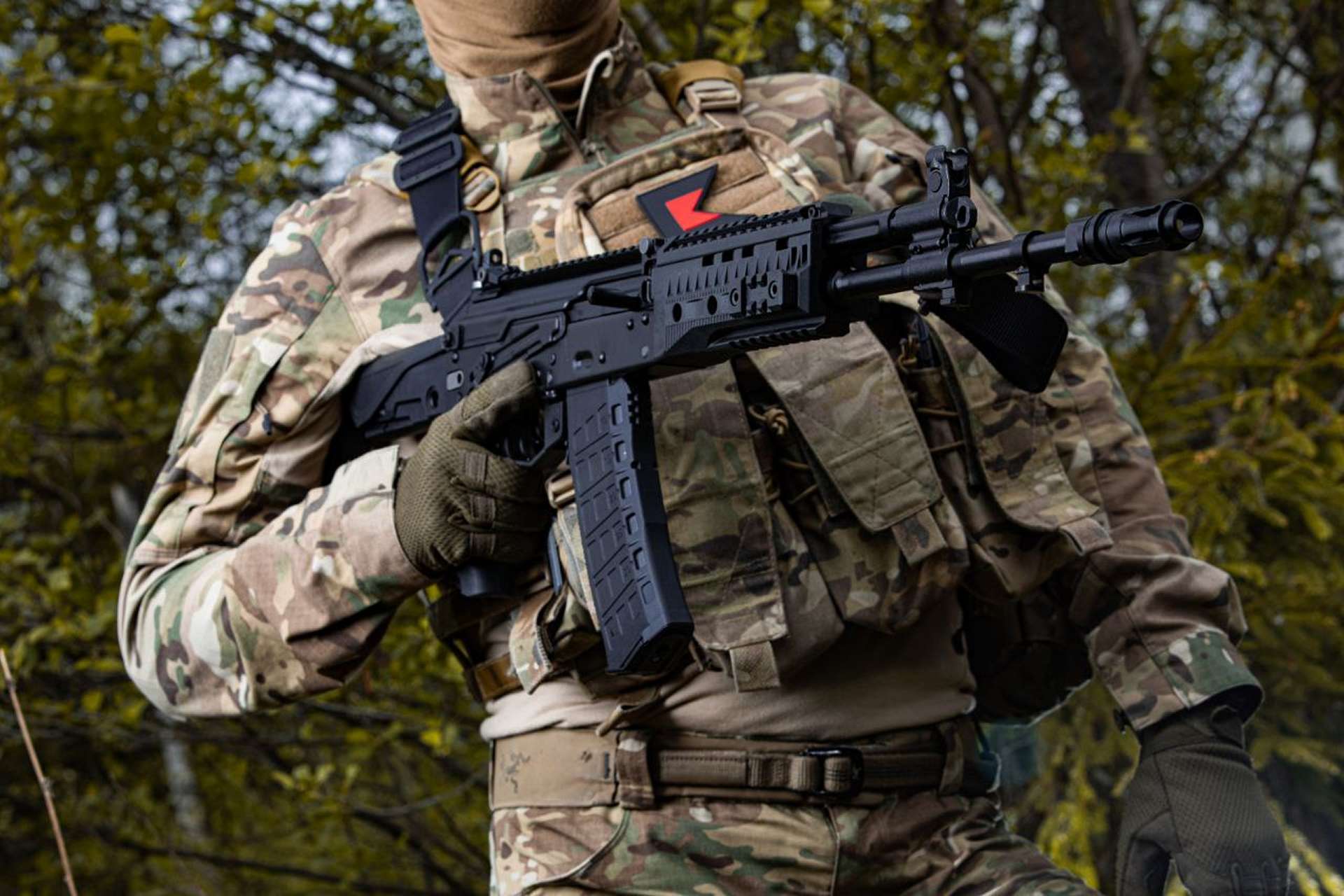
The AK-12 is a modern assault rifle developed in Russia. (Picture source: Kalashnikov)
The AK-12, representing the latest evolution of the AK series, incorporates several technological advancements that improve its performance while maintaining the renowned reliability and durability of its predecessors. With these improvements, the 2023 model is considered the pinnacle of the AK system.
The Russian National Guard, officially known as the "Federal Service of the National Guard Troops of the Russian Federation," is an internal security and paramilitary force created in 2016 by President Vladimir Putin. This force was established to strengthen state control over internal security and to centralize several paramilitary structures under a single authority.
The National Guard is directly subordinate to the President of Russia, which gives it a unique and powerful position within the Russian security apparatus. It was formed by integrating various existing units, including the troops of the Ministry of the Interior (MVD), special forces (Spetsnaz), and other paramilitary units. Its primary mission is to ensure public safety, combat terrorism, control borders, suppress riots and protests, and protect critical installations and high-ranking officials.
In addition to these functions, the National Guard is also involved in arms management and the oversight of private security companies. Its creation was seen by many as a measure to consolidate state power in the face of potential internal threats, particularly popular protests and dissident movements. The National Guard thus plays a key role in maintaining order in Russia, acting both as a police force and a military force under the direct control of the Kremlin.
The AK-12 is a modern assault rifle developed in Russia, designed to be versatile and compatible with several types of ammunition, including 5.45x39mm, 5.56x45mm NATO, 7.62x39mm, and 7.62x51mm NATO calibers. This flexibility allows the AK-12 to be used in various tactical situations, meeting the needs of different users and combat scenarios.
With a total length of 945 mm, which can be reduced to 725 mm when the stock is folded, the AK-12 is designed to be both compact and maneuverable, facilitating its use in confined environments or during mobile operations. Its weight of 3.3 kg makes it a relatively light weapon, contributing to ease of transport and reduced fatigue for the soldier in the field.
The AK-12 offers a variable rate of fire, ranging from 600 to 1,000 rounds per minute, allowing adaptability depending on the combat situation. It is fed by a 30-round magazine, standard for this type of weapon, ensuring a good balance between firepower and portability.
One of the notable features of the AK-12 is its fire selector, located on each side of the weapon, offering four positions: safety, single shot, three-shot burst, and automatic fire. This configuration allows for great flexibility in use, depending on tactical requirements.
In terms of range, the AK-12 is effective up to 625 meters, thanks to its 415 mm barrel, making it a precise weapon for medium-range engagements. Overall, the AK-12 stands out for its robustness, reliability, and ability to adapt to a variety of combat conditions, making it a weapon of choice for modern armed forces.
Alan Lushnikov, President of JSC Kalashnikov Concern, commented on this development by stating: "The adoption of the AK-12 by the National Guard demonstrates the high level of trust our customers place in our weapons. This serves as a powerful incentive for us to continually improve our products and ensure the safety of our servicemen."

The Russian National Guard has officially adopted the 2023 version of the 5.45 mm Kalashnikov AK-12 assault rifle. (Picture source: Kalashnikov)
Read more: Russian National Guard Adopts 2023 Version of AK-12 Assault Rifle

- Details
- Written by: Triffaux
- Category: 2024
- Hits: 6419
On September 2, 2024, the Spanish newspaper Infodefensa announced that the Spanish Army had launched a tender for the acquisition of spare parts for its BV-206 vehicles (Transport Oruga Montaña). These vehicles, which have been in service for over thirty years, are crucial for operations in mountainous environments.
Follow Army Recognition on Google News at this link
BV-206 Tracked All-Terrain Vehicle (Picture source: Wikimedia)
With a budget of 1.8 million euros, including taxes, the tender is divided into two lots. It aims to secure the maintenance of the BV-206 vehicles until December 2027, with a contract that could extend up to 2.3 million euros, including various potential modifications and extensions.
The BV-206, a tracked vehicle designed by the Swedish company Hägglunds Vehicle AB, now part of BAE Systems, has been used by the Army since the late 1980s. These vehicles, weighing up to 7,000 kilograms, can reach a maximum speed of 52 km/h and can cross one-meter-deep fords without preparation. Their versatility allows them to operate on all types of terrain, including snowy areas, making them indispensable for troop transport in mountainous regions.
Since 2022, Ukraine has received a notable quantity of Bandvagn 206 (BV 206) vehicles from various countries as part of military aid packages. Germany has been a significant contributor, committing to supply a total of 64 BV 206 vehicles to Ukraine. The first shipment included eight of these tracked all-terrain vehicles, with further deliveries planned, although the exact timeline for the complete delivery remains unspecified. In addition to Germany, other countries such as the Netherlands, Italy, and the UK have also provided BV 206 vehicles to Ukraine. The Ukrainian Armed Forces have started using these vehicles, including both the standard BV 206 and the armored BV 206S variant. These contributions were not always publicly announced at the time of delivery but have been confirmed through various reports and sightings in Ukraine.
The BV 206 is a tracked, articulated all-terrain vehicle originally developed by the Swedish company Hägglund & Söner, now part of BAE Systems. Its development started in 1974, and the first production units were delivered to the Swedish Defense Administration in 1980. Designed to handle the challenging conditions of northern Sweden, including snow and boglands, the BV 206 was intended for military use but has found applications in various countries. Over 11,000 units have been produced, and it has been used by the armies of more than 37 nations, including the United States, Canada, and several European countries. The vehicle’s low ground pressure allows it to traverse loose snow and soft terrain effectively, and its amphibious capabilities enable it to cross bodies of water, making it suitable for a wide range of environments.
The BV 206 features a front-mounted engine, with variants powered by different engines over its production history, including a Ford 2.8-liter V6 petrol engine and Mercedes-Benz diesel engines. Its articulated design provides enhanced maneuverability, and its dual-unit configuration can transport up to 17 passengers or a payload of up to 2,250 kilograms. The vehicle can achieve speeds of up to 54.7 km/h on land and 4.7 km/h in water. The BV 206 uses a hydrostatic, articulated steering system for a tight turning radius and is equipped with reinforced nylon tracks. It is suitable for various tasks, including the transportation of personnel and cargo, search and rescue operations, and deployment in extreme environments such as polar regions.
The Spanish Army currently has around 70 units of BV-206, divided into two versions. The BV-206S version, an armored combat vehicle, can carry a crew of ten fighters plus the driver. In contrast, the BV-206 can accommodate up to 17 people and is adaptable for various functions, such as transporting equipment, medical evacuation, and command posts. Both models are amphibious and can be transported by helicopter or parachuted.
These vehicles have been deployed in various international operations, including in Kosovo and Afghanistan, demonstrating their robustness and adaptability. As a reminder, the BV-206 is actively deployed in military operations in Ukraine, proving its ability to navigate difficult terrain and play a crucial role in rescue and medical evacuation missions. The Belgian company, John Cockerill Defense, is responsible for the modernization of these vehicles for the Ukrainian army, with particular attention to transforming the BV-206 into medical transport units. These upgrades include advanced medical kits and improved engines, ensuring that the vehicles are perfectly suited for the rapid and efficient transport of wounded personnel.
The deadline for submitting bids to the Army's Logistics Support Command (MALE) is set for September 4. The Spanish Army also recently concluded a full maintenance contract with the Spanish company JPG, with an initial budget of three million euros until the end of 2026, highlighting its continued commitment to maintaining these crucial vehicles in optimal working condition.

- Details
- Written by: Halna du Fretay
- Category: 2024
- Hits: 4555
The Netherlands has decided to strengthen its military support to Ukraine by sending 28 BvS 10 Viking amphibious armored vehicles to the Ukrainian armed forces. This initiative, announced by Dutch Defense Minister Ruben Brekelmans on the social media platform X, reflects the Netherlands' ongoing commitment to supporting Ukraine in its fight against Russian aggression.
Follow Army Recognition on Google News at this link
The Ukrainian military training on BvS 10 all-terrain vehicles in April 2023 (Picture source: Netherlands Army)
The BvS10 Viking is an all-terrain amphibious armored vehicle designed to operate in extremely varied conditions, ranging from jungles to deserts and Arctic environments. It was developed by the British company BAE Systems in collaboration with the Swedish company Land Systems Hagglunds, with certain specific versions, such as the French VHM version, produced in partnership with the French company Panhard. The BvS10 is an advanced development of the smaller Bv206S model, offering improved load capacity, between 3 and 5 tons, while maintaining exceptional mobility on difficult terrain.
The BvS10 Viking is equipped with armament mounted on the roof of the front vehicle, with the option to install a 12.7 mm Browning heavy machine gun or a 7.62 mm general-purpose machine gun. In terms of protection, the vehicle is fitted with steel armor plates, providing protection against 7.62 mm armor-piercing rounds and 152 mm artillery shell fragments at a distance of more than 10 meters. It is also capable of withstanding antipersonnel mines with a 0.5 kg charge. For additional protection, the British versions are equipped with a mine protection kit and armor cage.
The BvS10 Viking is powered by a 5.9-liter turbo diesel engine producing 250 horsepower, allowing the vehicle to reach a maximum speed of 65 km/h on the road and 5 km/h in the water. The vehicle is fully amphibious, capable of swimming with minimal preparation in less than two minutes. Its operational range is 500 km, providing significant autonomy in the field. The BvS10's chassis and suspension system are designed to offer stable and comfortable driving, comparable to modern infantry fighting vehicles.
The Dutch armed forces have acquired a total of 36 BvS10 Viking vehicles. These vehicles are used alongside the British and Austrian armed forces, which also operate this model in various configurations, such as troop transport, repair and recovery vehicles, ambulance, and command and control platforms.
The Dutch Minister also mentioned that the Dutch Marine Corps had trained Ukrainian soldiers to operate these vehicles, ensuring the rapid and effective deployment of the BvS 10 Viking in the field. This training is crucial, given the technical and tactical specifics of these amphibious armored vehicles.

In combat situations, the BvS10's advanced protection against direct fire and mines enhances crew survivability, while its armament provides effective covering fire for troops on the ground (Picture source: British MoD)
Given its capabilities, the BvS10 Viking represents a significant strategic asset for the Ukrainian armed forces. Its exceptional mobility on difficult terrain, including marshy areas, snowy terrain, and urban combat zones, allows for the effective deployment of troops and equipment in varied environments. Its amphibious capability is particularly useful in regions where bridges are destroyed or impassable, enabling Ukrainian forces to cross rivers and lakes without requiring heavy logistical support.
In combat situations, the BvS10's advanced protection against direct fire and mines enhances crew survivability, while its armament provides effective covering fire for troops on the ground. In Ukraine, this vehicle is likely to be used for rapid deployment operations, reinforcing front lines, securely transporting personnel and equipment, and supporting missions in challenging environments. Its introduction into the Ukrainian arsenal significantly strengthens the operational capabilities of the armed forces in the face of ongoing aggression.
In his message, Brekelmans emphasized the importance of this aid, stating that Ukraine desperately needs this support to confront the aggressor. This delivery is part of a series of similar actions undertaken by the Netherlands and other allied countries, aiming to enhance Ukraine's defense capabilities in the face of persistent threats.
This delivery adds to a previous initiative in December 2023, where the United Kingdom, as part of the Maritime Capabilities Coalition, announced the provision of 20 BvS 10 Viking vehicles to Ukraine. In total, the Ukrainian armed forces have now received 36 of these vehicles from the Netherlands, further strengthening their maneuverability in various environments.
Through this action, the Netherlands continues to reaffirm its unwavering support for Ukraine, contributing to maintaining pressure on Russia in this ongoing conflict.
Read more: Netherlands Delivers 28 BvS-10 Viking Armored Vehicles to Ukrainian Forces

- Details
- Written by: Jérôme Brahy
- Category: 2024
- Hits: 14315
On September 1, 2024, the Information Agency of the Islamic Republic of Iran (IRNA) announced the official unveiling of a modernized version of the American M60A1 tank, designated "Soleiman-402," alongside a new indigenous multi-layered anti-aircraft defense system. The event took place at the Shahid Zarharan Center of the Army Ground Force and was attended by Major General Abdul Rahim Mousavi, the Chief Commander of the Iranian Army.
Follow Army Recognition on Google News at this link
Iran currently maintains a fleet of approximately 150 M60A1 tanks, which were acquired during the Shah's era as part of a broader military modernization program that included various Western equipment, such as British Chieftain tanks. (Picture source: IRNA)
Brigadier General Heydari, Commander of the Army Ground Forces, confirmed that all M60 tanks within the Iranian Army's inventory would be upgraded to the Soleiman-402 standard. Iran currently maintains a fleet of approximately 150 M60A1 tanks, which were acquired during the Shah's era as part of a broader military modernization program that included various Western equipment, such as British Chieftain tanks. Following the 1979 revolution, modernization efforts were interrupted, leading to a focus on maintaining and upgrading older equipment, such as the M60, to support military readiness.
The modernization of the M60 tanks has been carried out by the Shahid Zarharan Center for Repair and Modernization of Ground Forces Equipment. The Soleiman-402 includes several upgrades intended to enhance its performance and survivability on the battlefield. These modifications feature new add-on armor, dynamic protection elements, and a modern communication system. The tank is fitted with Explosive Reactive Armor (ERA) on the turret front to provide additional protection against direct hits. Composite armor plates or large ERA bricks are also visible on the upper and lower hull, aimed at reinforcing the tank's frontal defenses.

The Soleiman-402 is also outfitted with an electro-optical countermeasure system, similar to the Russian-made Shtora jammers found on T-72S tanks. These jammers are utilized to interfere with the guidance systems of incoming missiles, adding a layer of defense to the tank. (Picture source: IRNA)
A new Remote Controlled Weapon Station (RCWS) has been installed on the tank's turret, equipped with a machine gun, a thermal sighting system, and a meteorological sensor. These components are designed to improve targeting accuracy under different environmental conditions. The Soleiman-402 is also outfitted with an electro-optical countermeasure system, similar to the Russian-made Shtora jammers found on T-72S tanks. These jammers are utilized to interfere with the guidance systems of incoming missiles, adding a layer of defense to the tank. The Soleiman-402, however, uses a larger version of these jamming devices, which may be less advanced compared to the more compact systems installed on Iran's Karrar tank.
Differences between the displayed prototypes suggest that various configurations are currently being evaluated. For instance, one prototype featured a distinct gun sleeve that was not present on another, which may indicate adjustments in armor design or armament. Additional features of the Soleiman-402 include laser radiation detection sensors, curtain searchlights, and an updated fire control system to enhance situational awareness.

A new Remote Controlled Weapon Station (RCWS) has been installed on the tank's turret, equipped with a machine gun, a thermal sighting system, and a meteorological sensor. (Picture source: IRNA)
Read more: Modernized M60 Main Battle Tanks Enter Into Service with Iranian Army
- Details
- Written by: Vandenbosch
- Category: 2024
- Hits: 6178
The United Aircraft Corporation (UAC) has delivered a new batch of frontline Su-34 bombers to the Russian Aerospace Forces, an announcement made on September 2, 2024. These aircraft, produced by the Novosibirsk Aviation Plant, are part of this year's production program and have successfully passed all required ground and flight tests.
Follow Army Recognition on Google News at this link
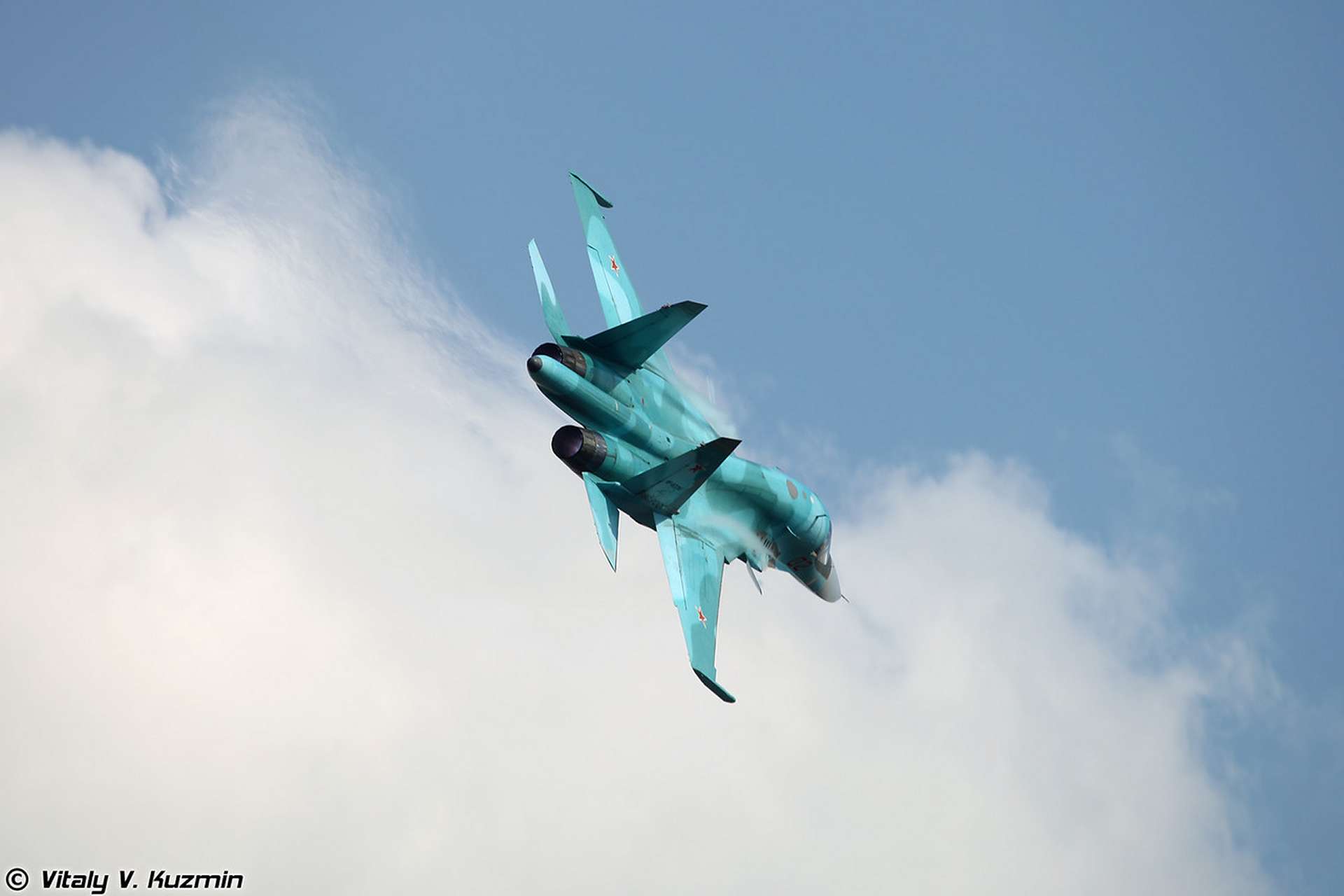
The Sukhoi Su-34 is a Russian tactical bomber. (Picture source: Vitaly Kuzmin)
The Su-34 bomber is designed to strike ground, sea, and air targets, including those protected by air defense systems, and can operate over long distances from its base. It is capable of performing missions under enemy fire, both day and night and in various weather conditions across different geographic theaters of operations. The bomber is equipped with guided and unguided weapons and can conduct aerial reconnaissance missions.
"The recently delivered Su-34s offer exceptional flight performance and are extremely effective in engaging enemy targets. These aircraft are in high demand within the armed forces, particularly for their ability to deploy high-precision munitions with a universal planning and correction module, proving their worth in air defense zones. Aware of the critical need for these bombers, the state corporation ensures timely and complete deliveries," said Vladimir Artyakov, First Deputy General Director of Rostec.
The Sukhoi Su-34 is a tactical bomber developed by the Russian aircraft manufacturer Sukhoi. Designed for anti-ship missions and precision bombing, this versatile aircraft made its first flight on April 13, 1990, and entered service in July 2013. It remains in active production, with over 100 units built to date.
With a crew of two, the Su-34 is powered by two Lyulka AL-35F turbofan engines, each capable of delivering 122.6 kN of thrust. These engines enable the aircraft to reach a maximum speed of 1,900 km/h and fly at an altitude of up to 17,000 meters. In terms of dimensions, the aircraft is 23.34 meters long, with a wingspan of 14.70 meters and a height of 6.36 meters. Its wing area covers 62.04 square meters. Weighing 20,000 kg when empty, the Su-34 can reach a maximum weight of 45,000 kilograms during missions.
The Su-34 is also well-armed, featuring an internal 30 mm GSh-301 cannon and capable of carrying a wide range of missiles and bombs. Externally, it can be equipped with missiles such as the Kh-29T, Kh-29L, Kh-25ML, S-25LD, Kh-59M, Kh-31A, R-27, R-73, and R-77, as well as bombs like the KAB-500Kr and KAB-500L, providing great flexibility depending on the mission. With a range of 2,000 km, this aircraft is designed to strike targets at long distances while being able to operate in hostile environments.
"UAC is committed to fulfilling the state defense order on time and in full," said Yuri Slyusar, CEO of UAC and Vice President of Soyuzmash of Russia. "We continuously improve our production processes to increase efficiency and output. This requires significant dedication from our team, and the Novosibirsk plant stands out as one of our best in terms of aircraft production."

Russia has delivered a new batch of frontline Su-34 bombers to the Russian Aerospace Forces. (Picture source: Vitaly Kuzmin)
Read more: Russia Delivers New Batch of Su-34 Bombers to Its Air Forces

- Details
- Written by: Administrator
- Category: 2024
- Hits: 3118
According to the British Ministry of Defence Intelligence update on 01 September 2024, Russian Ground Forces (RGF) have significantly accelerated their advance towards the strategically important eastern Ukrainian city of Pokrovsk over the past week. Within the last seven days, Russian forces have closed in to within ten kilometers of the city’s outskirts, a development that marks a critical juncture in the battle for control over the Donetsk oblast. Pokrovsk is a key logistics hub for Ukrainian forces in the region, and its potential fall could have profound implications for the broader conflict.
Follow Army Recognition on Google News at this link
Ukrainian Brigades light up Russian positions in Pokrovsk. (Picture source Ukraine Armed Forces)
The British MoD (Ministry of Defense) report notes that while the Russian advance has been rapid, it is expected to slow significantly as their forces begin to encounter the dense, built-up areas of Pokrovsk. Urban warfare typically favors defenders, allowing Ukrainian forces to utilize the city’s infrastructure for defensive purposes. However, the encroachment of Russian forces poses a severe threat to Ukraine’s ability to maintain crucial supply lines to several key strongholds, including Chasiv Yar and Vulhedar. Should Russian forces capture Pokrovsk, the resulting elongation and disruption of Ukrainian supply lines would complicate and slow down the resupply and reinforcement of Ukrainian positions.
Despite this aggressive push towards Pokrovsk, the operational tempo of military activities on other frontlines in eastern and southern Ukraine remains low, with no major territorial changes reported. The focus of military operations seems to be concentrated on the battle for Pokrovsk.
In the broader context of these developments, Ukrainian President Volodymyr Zelensky has reiterated calls for increased military aid from Western allies, emphasizing the urgent need for advanced weapons systems and ammunition to counter the intensified Russian offensive. On the ground, Ukrainian forces have been reported to be fortifying their positions within Pokrovsk, preparing for what is expected to be a prolonged and intense defense of the city.
The situation has also drawn significant international concern. The United Nations has warned of a potential humanitarian crisis should the fighting intensify in Pokrovsk, where a significant civilian population remains. Evacuation efforts have been hampered by ongoing shelling in the surrounding areas, complicating the safe departure of residents.
Meanwhile, NATO has reaffirmed its commitment to supporting Ukraine, with Secretary-General Jens Stoltenberg stating that the alliance will continue to provide military assistance and is prepared to impose further sanctions on Russia if necessary. The battle for Pokrovsk is being closely monitored by military analysts, who view its outcome as potentially decisive for control of the Donetsk region.
As the conflict enters this critical phase, the international community remains on high alert, with the potential for further escalation looming large. The coming days and weeks are expected to be pivotal in determining the future course of the war in eastern Ukraine.

- Details
- Written by: Administrator
- Category: 2024
- Hits: 4749
On August 30, 2024, the U.S. State Department approved a significant Foreign Military Sale to the Government of Croatia, potentially worth $390 million. The sale includes eight M142 High Mobility Artillery Rocket Systems (HIMARS) and an array of related equipment and services. The Defense Security Cooperation Agency formally notified Congress of the potential transaction, marking a notable enhancement in Croatia’s military capabilities.
Follow Army Recognition on Google News at this link
U.S. Marine Corps Cpl. Kevin Alvarez ground guides a High Mobility Artillery Rocket System during Orient Shield 24 at the Yausubetsu Maneuver Area, Hokkaido, Japan, July 22, 2024. (Picture source: U.S. DoD)
The proposed package encompasses not only the M142 HIMARS units but also twenty-four M30A2 Guided Multiple Launch Rocket System (GMLRS) Alternative Warhead Pods, twenty-four M31A2 GMLRS-Unitary High Explosive Pods, and a variety of support vehicles and communications equipment. This deal is seen as a strategic move to bolster Croatia’s defense infrastructure, reflecting the growing military collaboration between the U.S. and its European allies.
M142 HIMARS, or the High Mobility Artillery Rocket System, is a versatile, highly mobile, and advanced rocket launcher system developed by the United States. It is designed to provide rapid and precise long-range fire support for military forces. Mounted on a wheeled chassis, HIMARS can be quickly deployed and repositioned, allowing it to deliver powerful artillery strikes with a variety of munitions, including guided rockets with a range of up to 70 kilometers and ATACMS missiles capable of reaching targets at distances up to 300 kilometers. Its flexibility, precision, and extended range make it a critical asset in modern warfare, capable of engaging targets while maintaining a high degree of mobility and survivability on the battlefield.
The United States has a history of supplying military equipment to Croatia, underscoring a strong defense partnership between the two countries. In recent years, this support has included delivering advanced military hardware such as transport helicopters and armored vehicles. In 2018, the U.S. provided Croatia with two S-70 Black Hawk helicopters, followed by an additional two Black Hawks in 2021, all in the UH-60M version. This delivery was part of a broader military aid package valued at $53 million. In 2015, Croatia received six MaxxPro armored personnel carriers (APCs) from the U.S., focusing on recovery vehicle versions. In 2016, the U.S. supplied Croatia with 16 Bell-206/OH-58D(I) combat helicopters, part of a deal with significant financial aid. In 2016, Croatia received 100 AGM-114 Hellfire-2 anti-tank missiles for use with their OH-58D helicopters. This ongoing military support highlights the deepening strategic relationship between the U.S. and Croatia, aimed at enhancing Croatia’s defense capabilities in a region marked by historical tensions.
This military enhancement in Croatia comes amid escalating tensions with neighboring Serbia. Relations between the two countries have been increasingly strained over the past few years, primarily due to lingering historical grievances and disputes over minority rights and border issues. The sale of advanced military systems to Croatia is likely to exacerbate these tensions, as Serbia has frequently expressed concerns over the militarization of its neighbors.
Introducing HIMARS into Croatia’s arsenal significantly boosts its long-range strike capabilities, a development that could shift the regional balance of power. This could prompt Serbia to seek further military support from its allies, heightening the risk of an arms buildup in the already volatile region.
The U.S. decision to approve this sale will likely have far-reaching implications for the stability of the Balkans. While the move is intended to strengthen Croatia’s defense posture, it may inadvertently increase regional tensions. Serbia’s potential response to this development could involve increased military spending.
Moreover, the sale could strain Croatia’s diplomatic relations with Serbia, complicating ongoing efforts to resolve bilateral issues and achieve long-term peace in the region. The European Union, which has been actively engaged in mediating disputes in the Balkans, may find its role more challenging as the military dynamics between Croatia and Serbia evolve.
As Croatia prepares to integrate these advanced systems into its military, the broader geopolitical implications of the sale will undoubtedly be closely monitored by regional and global powers alike. The U.S. State Department’s approval marks a pivotal moment in the Balkans, where historical tensions and modern military capabilities are converging in a complex and potentially destabilizing manner.
- Sweden Chooses Saab's Giraffe 1X Radar Mounted on SISU GTP Armored Vehicle
- Ghana Enhances Military Strength with New Batch of Shield APC 79 SFIGHTER-2 Armored Vehicles
- US Approves Sale of PATRIOT M903 Launch Systems to Netherlands to Strengthen Air Defense
- US Army Secures $1.3 Billion Contract for Javelin Missiles Including 4,000 for Ukraine