
- Details
- Written by: Halna du Fretay
- Category: 2024
- Hits: 4113










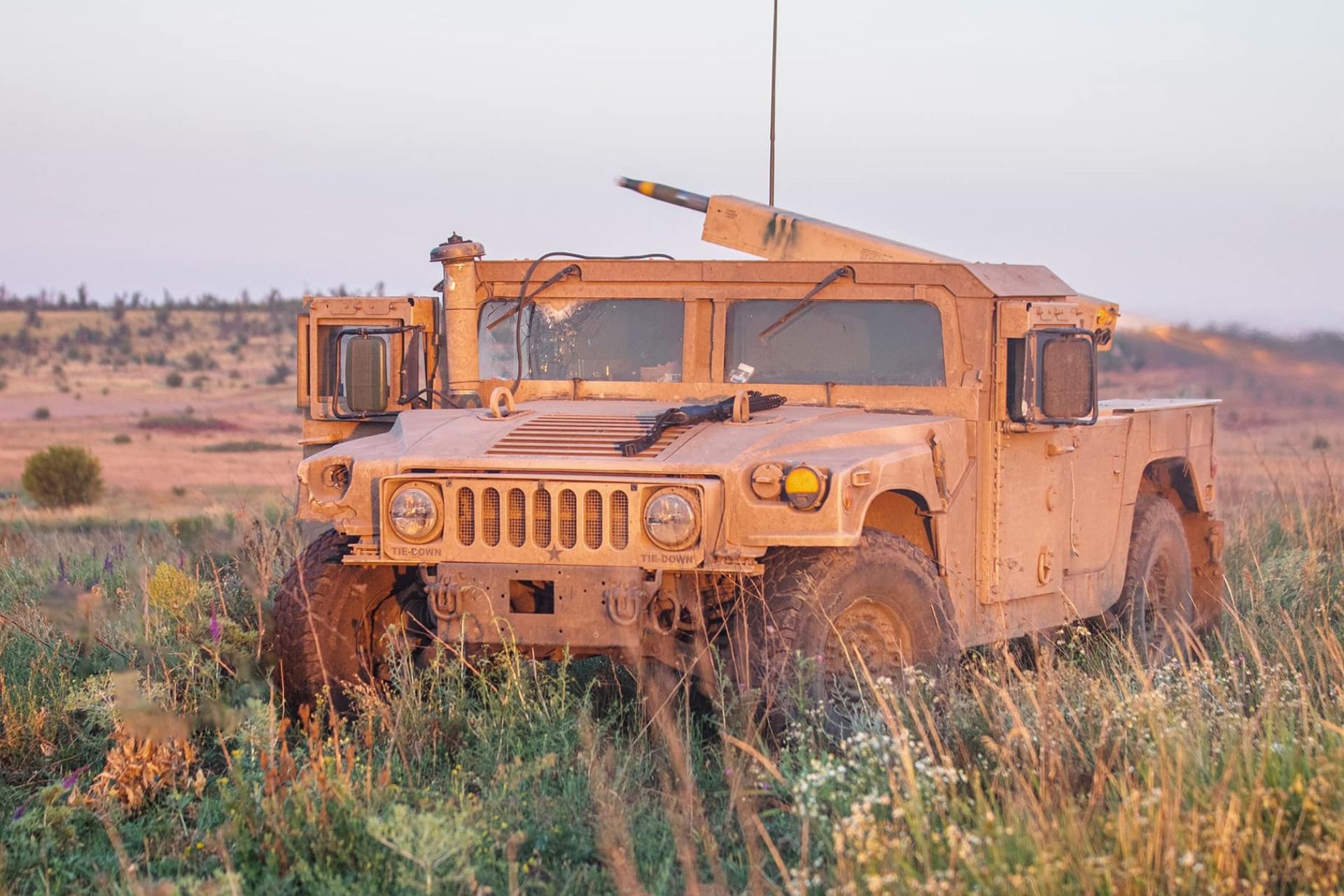
The 37th Separate Marine Brigade of Ukraine released images on Facebook on July 6, 2024, showcasing their armored Humvee equipped with advanced rocket systems in operational use on the battlefield. The U.S.-supplied M1152A1 Humvee, fitted with an Arnold Defense LAND-LGR4 four-shot launcher, was shown firing Advanced Precision Kill Weapon System II (APKWS II) rockets at ground targets, highlighting the combat effectiveness of this configuration.
Follow Army Recognition on Google News at this link
The photos reveal the use of the LAND-LGR4 launcher on the Humvee, primarily designed for 70mm laser-guided rockets but also capable of firing unguided rockets (Picture source: 37th Separate Marine Brigade of Ukraine)
The photos reveal the use of the LAND-LGR4 launcher on the Humvee, primarily designed for 70mm laser-guided rockets but also capable of firing unguided rockets. The APKWS II rockets consist of three main components: the warhead, the rocket motor, and a guidance section that integrates between the two. This modular design allows for the use of different types of warheads, making the system versatile in various combat scenarios. This setup enhances the tactical flexibility and firepower of the Ukrainian Marines, enabling precision-guided strikes against enemy positions.
In January 2021, the United States delivered 20 armored High Mobility Multipurpose Wheeled Vehicles (Humvee M1152A1) to the Ukrainian army and special forces. The M1152A1, developed by AM General, is a variant of the HMMWV designed to offer increased flexibility and protection on the battlefield. This vehicle is widely used by the U.S. armed forces and their allies.
The M1152A1 features an enhanced armor kit to provide protection against ballistic threats and explosive fragments, with modular armor that can be upgraded based on specific threats. It is powered by a 6.5-liter turbo diesel V8 engine, providing adequate power for off-road operations, coupled with a 4-speed automatic transmission and all-wheel drive, essential for difficult terrains. The independent suspension system on all four wheels ensures exceptional mobility over varied terrains. Designed to carry heavy loads, the M1152A1 can be configured to transport troops, equipment, or be equipped with various weapon systems, with a payload capacity of approximately 2,270 kg. Measuring about 4.57 meters in length, 2.16 meters in width, and 1.83 meters in height (variable depending on configurations), the vehicle weighs approximately 3,400 kg empty.
The LAND-LGR4 "Fletcher" rocket launcher system by Arnold Defense is designed to provide precision fire support with laser-guided rockets, a capability previously reserved for aerial platforms. First introduced in 2017 at the DSEi exhibition in London, this lightweight and reliable system can be mounted on land vehicles, ships, or used independently. The LAND-LGR4 is compatible with 70mm/2.75-inch rockets, such as the Thales FZ275, and has demonstrated remarkable accuracy during test firings. This system offers significant flexibility, enabling effective use in various combat conditions.
The LAND-LGR4 systems, developed by Arnold Defense, were delivered to Ukraine as part of ongoing U.S. efforts to bolster Ukrainian defense capabilities. In August 2022, L3Harris, a defense systems provider, announced plans to deliver the first VAMPIRE systems to Ukraine within the following nine months, which includes the LAND-LGR4 launchers mounted on Humvees. A total of 14 such systems were acquired by the U.S. government for delivery to Ukraine.
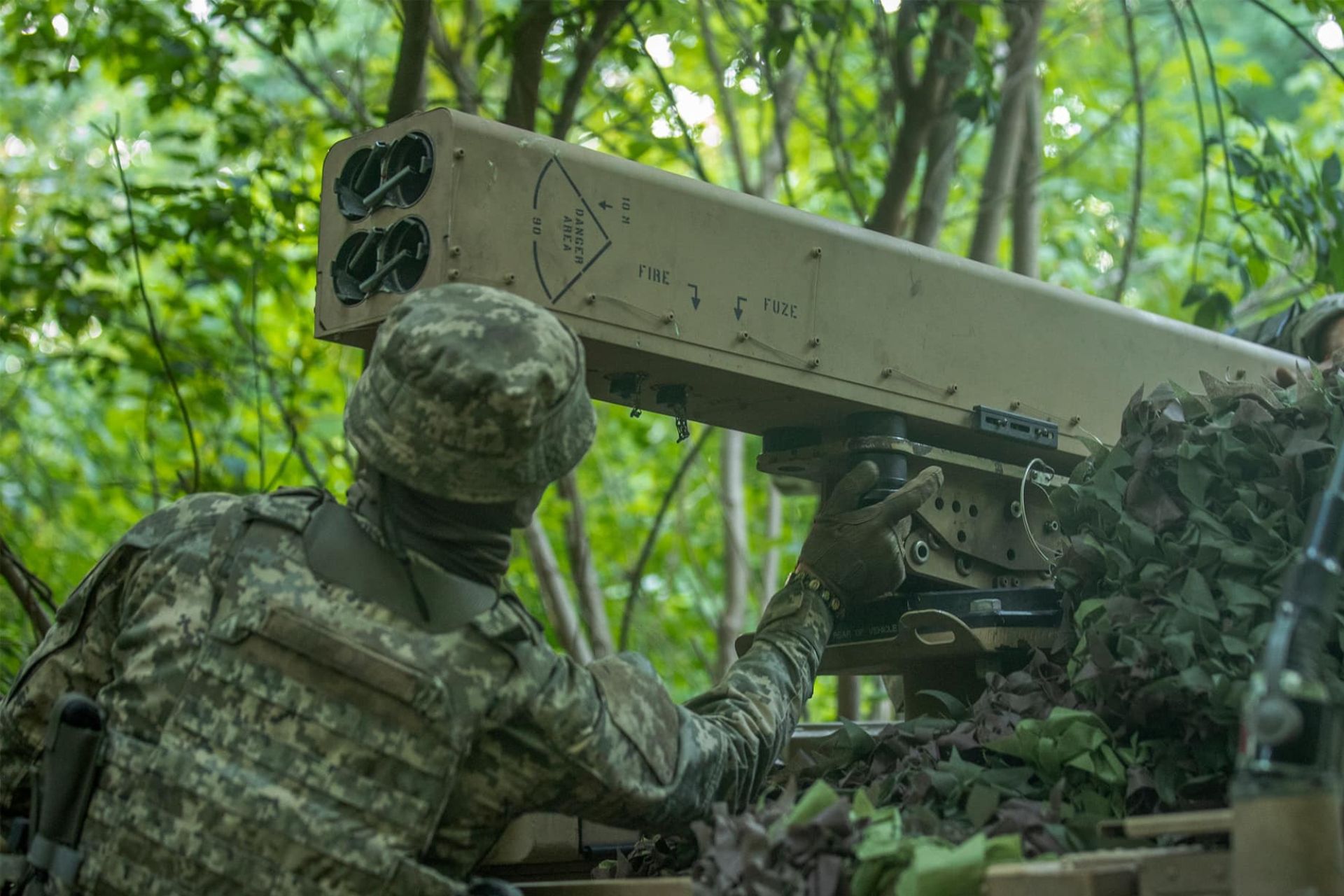
Originally designed as an air-to-ground weapon, the APKWS has a range of up to 5 kilometers when deployed from a helicopter, and up to 11 kilometers from a fixed-wing aircraft. (Picture source: 37th Separate Marine Brigade of Ukraine )
The use of APKWS II rockets provides a significant advantage, allowing for precise targeting in both offensive and defensive operations. These rockets can be deployed as anti-drone air defense weapons or as proto-artillery. The press service of the 37th Marine Brigade published rare photos of the VAMPIRE rocket systems mounted on HMMWVs in action. The VAMPIRE launcher, provided by the United States, enables the use of the Advanced Precision Kill Weapon System, a versatile laser-guided rocket system for both defensive and offensive roles.
The core of the APKWS system is the mass-produced Hydra 70 unguided rocket, with a 70mm caliber denoting its size. The APKWS name refers to an attachment kit that includes guidance systems and flight control surfaces, effectively transforming the rocket into a high-precision missile. Ukrainian forces have used these systems to counter Russian Shahed-136 drone attacks and conduct rapid shoot-and-scoot strikes on Russian positions. The recent photos mark the first official images of the VAMPIRE systems with APKWS rockets in combat missions.
Originally designed as an air-to-ground weapon, the APKWS has a range of up to 5 kilometers when deployed from a helicopter, and up to 11 kilometers from a fixed-wing aircraft. The effective range when fired from the ground is estimated to be about 3 to 4 kilometers. The images show the square-shaped LAND-LGR4 launch pod but not the WESCAM MX-10 RSTA stabilized sighting system, another crucial part of the VAMPIRE system.
According to some analysts, the modular nature of the VAMPIRE system allows it to be used in partial configurations. While the WESCAM sensors play a role in the precise guidance of the rocket with a laser beam, they are not essential when APKWS rockets are used in a simplified manner as unguided rockets. Conventional artillery measurement devices for calculating the impact point were observed, suggesting that Ukrainian forces might be using a different type of laser target designator. The main components of the VAMPIRE system, including fire control panels and displays, are housed in the cabin, indicating that the absence of WESCAM does not necessarily mean the abandonment of the laser guidance function.
Read more: Ukrainian Marines Unveil Rocket-Armed Humvees in Action

- Details
- Written by: Administrator
- Category: 2024
- Hits: 2634
During Eurosatory 2024 defense exhibition in Paris, France, John Cockerill Defense showcased its cutting-edge Agueris high-fidelity cabin-based training simulators for armored vehicles. This marks the first public display of these advanced simulators, which feature highly representative cabins mounted on motion platforms. They cater to a comprehensive range of training needs, from crew-level driving and gunnery technical training to platoon-level tactical training.
Follow Army Recognition on Google News at this link
The Agueris simulator offers the latest technology in training systems for military forces. (Picture source: Army Recognition Group)
A notable highlight of the exhibit is a live cabin-based simulator of a Cockerill C3105 turret, drawing significant attention at the John Cockerill Defense stand. These simulators represent the latest high-end addition to the Agueris family, which already includes virtual gunnery trainers, embedded simulators, and virtual maintenance trainers.
Agueris, a division of John Cockerill Defense, offers a comprehensive range of high-fidelity training simulators tailored for military applications. These simulators are meticulously designed to address various training needs, thereby enhancing the operational readiness and effectiveness of military personnel. Among their offerings are the cabin-based training simulators, which feature highly representative cabins mounted on motion platforms. These simulators create a realistic training environment, covering crew-level driving and gunnery technical training up to platoon-level tactical training, thus preparing military personnel for diverse operational challenges.
In addition to the cabin-based simulators, Agueris provides virtual gunnery trainers that offer immersive environments for soldiers to practice their gunnery skills. These trainers replicate real-life weapon systems, enabling trainees to enhance their accuracy and efficiency within a safe, controlled setting. Another innovative solution from Agueris is the embedded simulators, which are integrated into actual military vehicles. These simulators allow for on-the-go training, helping personnel to become adept with the vehicle’s controls and systems in real-world scenarios.
Furthermore, Agueris offers virtual maintenance trainers designed to impart maintenance procedures and skills. These trainers provide interactive, detailed training modules that assist technicians in learning how to maintain and repair various military equipment and systems. The new high-fidelity cabin-based simulators unveiled at Eurosatory 2024 exemplify the latest advancements in this technology, offering highly immersive and comprehensive training solutions tailored for modern military forces.
The unveiling comes on the heels of a significant merger between Agueris and John Cockerill Defense France on January 1, 2023. This merger underscores John Cockerill Defense France's ambition to become a recognized leader in supporting the French and Belgian Land Forces, reinforcing its commitment to the French Defence Industrial and Technological Base.
This strategic operation aims to solidify John Cockerill Defense's position in the realm of next-generation simulators, essential for training forces with new materials. The merger enhances synergies between the two entities within the John Cockerill Group, bolstering their capabilities in production, weapon systems commissioning, and the critical sector of training simulators.
By integrating the complementary activities of Agueris and John Cockerill Defense, the company is poised to offer an even more robust and structured approach to defense training solutions, ensuring strategic importance and advanced technological support for military forces.

- Details
- Written by: Triffaux
- Category: 2024
- Hits: 3698
On July 9, 2024, STM Savunma Teknolojileri Mühendislik ve Ticaret A.Ş., a well-known figure in the Türkiye defense industry, announced the first export of BOYGA, its autonomous multi-rotor combat drone. This development marks an important step for Türkiye's national defense industry. The contract for this export, destined for an undisclosed African country, is scheduled for completion in 2024.
Follow Army Recognition on Google News at this link
Turkish STM BOYGA Autonomous Multi-Rotor Combat Drone (Picture source: STM)
BOYGA, the autonomous multi-rotor combat drone developed by Turkish company STM Savunma Teknolojileri Mühendislik ve Ticaret A.Ş., has been exported for the first time, marking a major turning point for the national defense industry of Türkiye. This first international sale involves an unspecified African country, with deliveries expected to be completed in 2024.
Since being incorporated into the Türkiye armed forces in 2022, BOYGA has been actively used in various operations, particularly in counter-terrorism efforts and international exercises. It notably distinguished itself during the EFES-2024 exercise by hitting targets with remarkable precision.
Özgür Güleryüz, General Manager of STM, emphasized the importance of this advancement for both the company and the Türkiye military: "Each member of our mini UAV family has been developed to meet the specific challenges of modern combat fields, and all have now successfully expanded into international markets."
Designed to operate at altitudes up to 3,000 meters, BOYGA can deploy 81 mm mortar ammunition with extreme precision thanks to a sophisticated ballistic estimation algorithm. This capability makes it particularly effective in counter-terrorism and asymmetric warfare contexts. The system is so compact that it can be transported and operated by a single individual, enhancing its flexibility in the field.
The Ammunition Drop UAV is a highly advanced unmanned aerial vehicle designed to carry and deploy 81 mm and 60 mm mortar ammunition. This UAV is equipped with a sophisticated mechanism that safely releases the ammunition at a predetermined target or coordinate, guided by a precise algorithm for mortar ammunition target estimation. It operates on a "Man-in-the-loop" basis, allowing the operator to engage with the target by monitoring and selecting through a processed image displayed on the screen. The integration of the munition system is carried out in collaboration with MKE.
In terms of mechanical and flight characteristics, the UAV measures 800x800x500 mm with a diagonal length of 1150 mm. It has a communication range of 5 km and weighs 15 kg without payload, while its takeoff weight is 17 kg. The UAV boasts an endurance of 30 minutes when carrying one piece of ammunition. It can operate up to a maximum altitude of 3000 meters above mean sea level (MSL) and can reach a cruise speed of 54 km/h. The UAV is also designed to withstand winds up to 10 m/s.
The Ground Control Unit of the UAV includes a 10.1-inch touch screen tablet and a joystick, facilitating efficient operational control. The battery life of the unit is approximately 2 hours, supported by both internal and external antennas for robust communication. The imaging system features a 3-axis gimbal that provides Full HD 1080p resolution (1920*1080) imaging, enhanced by a 30x optical zoom lens, ensuring high-quality visuals crucial for precise targeting and operational efficiency.
The impact of these technologies has been highlighted in the current context of the Ukraine-Russia conflict, where the use of drones and similar systems has transformed modern military strategies. "Not only does BOYGA offer a technological advancement with its indigenous software, but it also increases tactical capacity on the battlefield with its specially designed ammunition and prediction algorithm," added Güleryüz.
With this successful first export, STM continues to strengthen its position as a leader in the development of innovative tactical defense systems, ready to meet the needs of the Türkiye army as well as those of its allies. Negotiations are underway for further exports, with STM having increased its production capacity to meet the growing global demand.

Turkish STM BOYGA Autonomous Multi-Rotor Combat Drone with Mortar Payload (Picture source: STM)

- Details
- Written by: Jérôme Brahy
- Category: 2024
- Hits: 5543
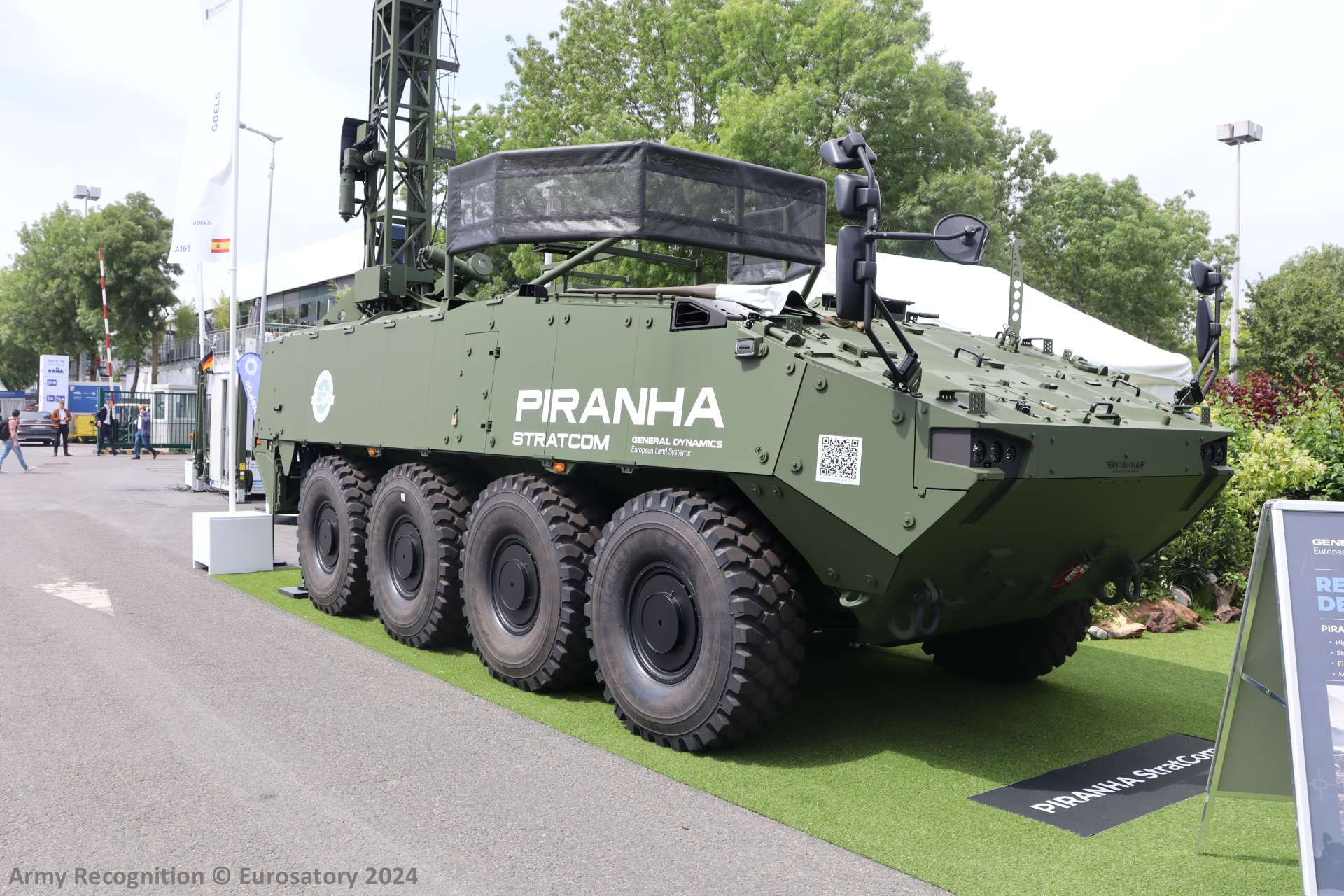
At the Eurosatory 2024 exhibition, General Dynamics European Land Systems (GDELS) showcased several new variants of the Piranha V 8x8 vehicle, including the Piranha Stratcom. Developed for the Swiss Army, the Piranha Stratcom is designed for deploying strategic and tactical communication systems and features a deployable mast system capable of supporting a 300 kg payload at a height of 15 meters.
Follow Army Recognition on Google News at this link
At the Eurosatory 2024 exhibition, General Dynamics European Land Systems (GDELS) showcased several new variants of the Piranha V 8x8 vehicle, including the Piranha Stratcom developed for the Swiss Army. (Picture source: Army Recognition)
The Piranha Stratcom shares a powertrain with other members of the Piranha V family, ensuring logistical commonality. It offers ballistic protection and resilience against mines and improvised explosive devices (IEDs), similar to other models in the family. According to the manufacturer, this vehicle is positioned as a modern variant for the C4I (Command, Control, Communications, Computers, and Intelligence) role.
C4I, which stands for Command, Control, Communications, Computers, and Intelligence, is a framework used primarily in the military and defense sectors. It integrates these five capabilities to facilitate operational planning and execution. A C4I system is designed to improve situational awareness, support decision-making processes, and streamline communication among various units. Recent developments for these systems incorporate technologies such as artificial intelligence, unmanned systems, and cyber capabilities to enhance interconnectedness and adaptability in battlefield environments. These systems are crucial for modern military operations, enabling real-time information sharing and coordination across different domains and platforms.
The Piranha Stratcom's high payload capacity and large interior provide working conditions that offer full protection for mission systems and long-range communication operators. The troop compartment can accommodate numerous racks associated with the communications system, with the mast including microwave repeaters for line-of-sight communications. This configuration makes it suitable for linking strategic communications systems with tactical units on the battlefield. The Piranha Stratcom also features a 15-meter mast system, which can be equipped with customer-specific technology, including various antennas for point-to-point radio operations.
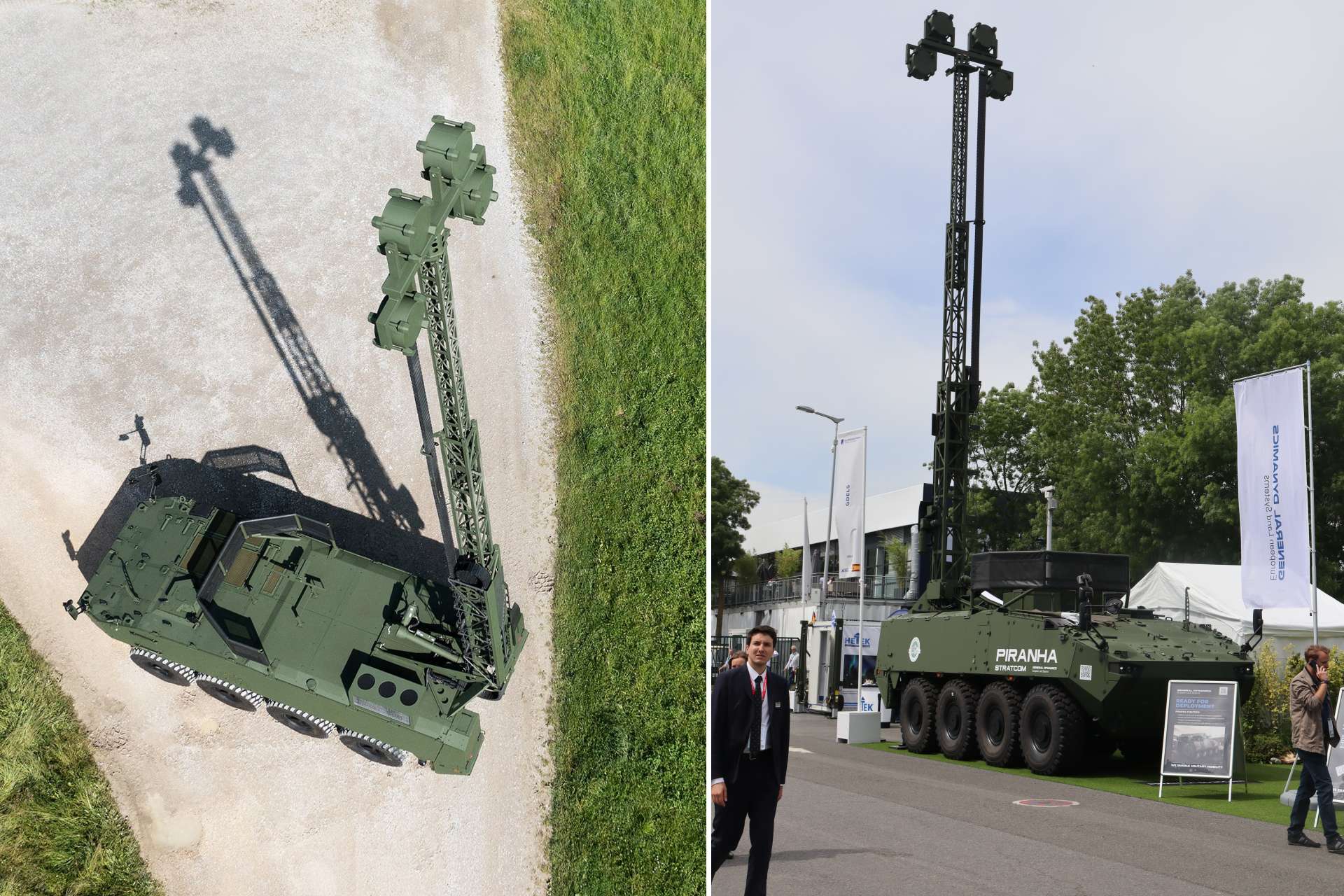
The Piranha Stratcom also features a 15-meter mast system, which can be equipped with customer-specific technology up to 300 kg, including various antennas for point-to-point radio operations. (Picture source: GDELS and Army Recognition)
Additional features include a pair of hydraulic legs at the rear to stabilize the vehicle when the mast is deployed, a protective structure for the antenna equipment on or in the roof, and several cooling units for the electronic equipment. The internal layout is adaptable to client requirements, as demonstrated by an augmented reality application showing different configurations of equipment, operator stations, and other key elements such as the powertrain and driving position.
The Piranha series of vehicles, initially developed by the Swiss company MOWAG (now part of General Dynamics European Land Systems), is a versatile family of wheeled armored vehicles. Since its inception in the early 1970s, the Piranha has undergone several iterations, including 4x4, 6x6, 8x8, and 10x10 variants, to meet a range of military requirements. The first model, the Piranha I, was designed as a light reconnaissance and attack vehicle, setting the foundation for future developments. Over the decades, the Piranha vehicles have been adopted by various armed forces worldwide, including the US Army with their Stryker vehicles, which are variants of the Piranha III.
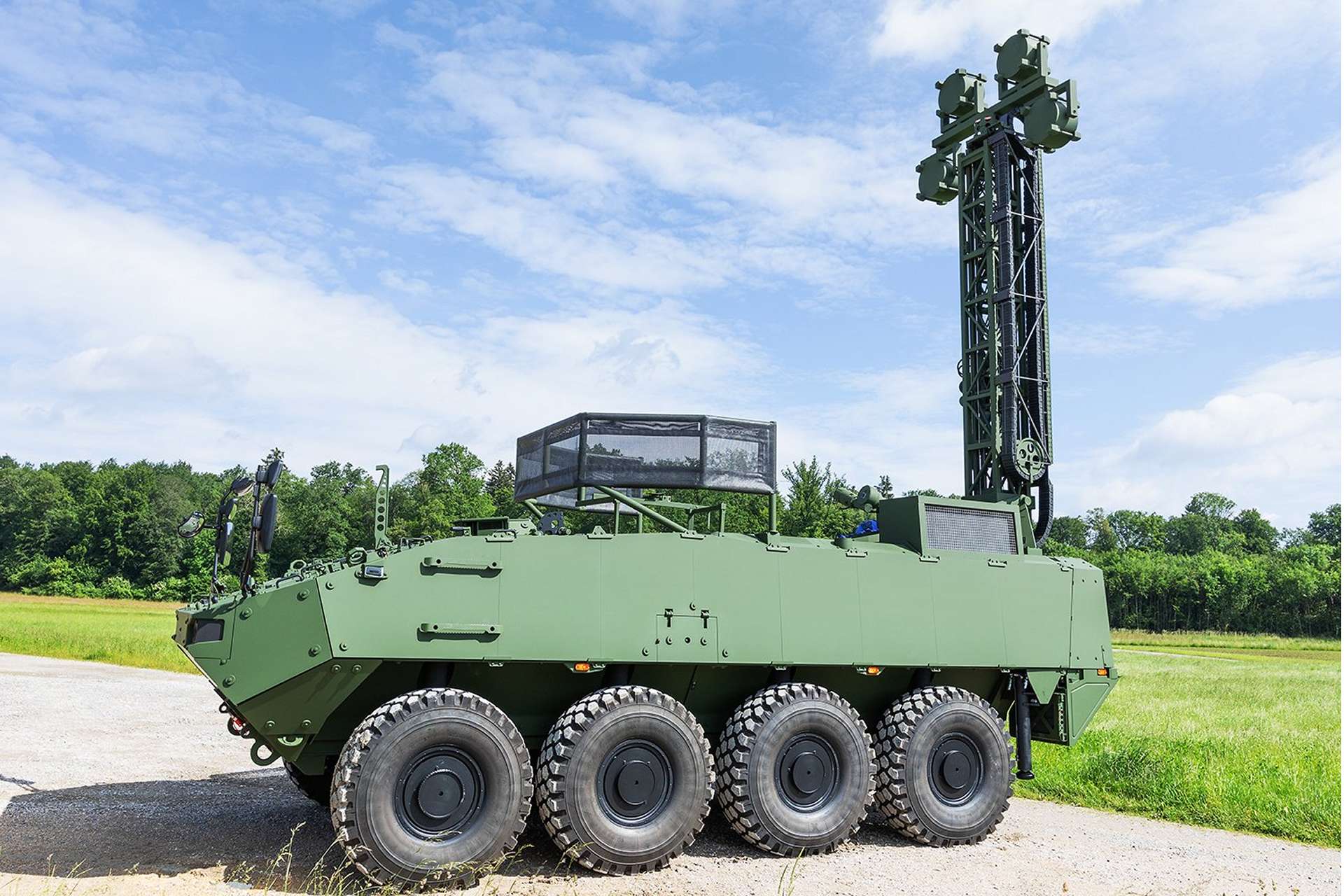
The troop compartment can accommodate numerous racks associated with the communications system, with the mast including microwave repeaters for line-of-sight communications. (Picture source: Army Recognition)
The latest in the series, the Piranha V, is an 8x8 wheeled armored vehicle featuring ballistic protection and can be fitted with modular armor and active protection systems to defend against mines, IEDs, and explosively formed penetrators (EFPs). Deployed in conflict zones like Iraq and Afghanistan, the vehicle accommodates up to 13 personnel and supports various weapon systems, including light weapon stations and heavy turrets like the LANCE 30mm Modular Turret System. It is powered by an MTU 6V199 TE20 diesel engine, providing a top speed of 100 km/h and a range of 550 km.
Countries such as Denmark, Romania, and Spain have adopted the Piranha V. Denmark ordered 309 vehicles in 2015, delivered in variants including engineer, infantry, and ambulance configurations. Romania's contract in 2018 included 227 units, while Spain ordered 348 vehicles in 2020, with plans to expand to 1,000 units. These vehicles are locally produced by TESS Defence, a consortium of Spanish defense companies.
In recent years, the Piranha V family has continued to evolve. For instance, the newly introduced Piranha Advanced Artillery Carrier (AAC) 10x10 variant features an unmanned 155mm artillery gun module (AGM), while the Piranha Sappeur represents the latest 8x8 armored engineering vehicle developed for the Swiss Army. This evolution and adaptation to new military requirements have resulted in the Piranha's widespread use, with over 12,000 units in service across more than 20 countries.
The Piranha V is powered by an MTU 6V199 TE20 diesel engine, providing a top speed of 100 km/h and a range of 550 km. (Picture source: Army Recognition)
Read more: GDELS develops a new Piranha Stratcom 8x8 vehicle with a 15-meter mast for the Swiss Army

- Details
- Written by: Vandenbosch
- Category: 2024
- Hits: 2920
On July 8, 2024, the German Ministry of Defense announced a new series of substantial military aid packages to Ukraine, thus reinforcing its ongoing support in the ongoing conflict with Russia. This military aid update includes recent deliveries and future commitments, underscoring Germany's commitment to supporting Ukraine's defensive capabilities.
Follow Army Recognition on Google News at this link
A MIM-104 Patriot surface-to-air missile system from Germany. (Picture source: German MoD)
Over the past three weeks, Germany has delivered a wide range of sophisticated military equipment. Among these deliveries is a MIM-104 Patriot surface-to-air missile system, already known for its effectiveness in air defense. Additionally, Germany has supplied 10 Sonobot 5 unmanned surface drones and 30 Vector surveillance UAVs, thereby enhancing Ukraine's reconnaissance and mine clearance capabilities.
In terms of counter-drone measures, 200 mobile drone jammers have been delivered, along with various specialized vehicles including a Bergepanzer 2 armored recovery vehicle and four WiSENT 1 MC mine-clearing tanks. Ukrainian forces have also benefited from ten special armored vehicles, likely Toyota Land Cruiser 300 GXR SUVs, and two additional pickup trucks for transportation.
Germany has also shipped crucial supplies for field operations, such as 93,000 smoke grenades and 10,000 detonators. To improve air surveillance, two TRML-4D air surveillance radars have been provided. In terms of weaponry, Ukraine has received a wide range of small arms and ammunition, including 150 CR 308 rifles, 10 HLR 338 precision rifles, 250 MG5 machine guns, and 800 MK 556 assault rifles.
The heavy equipment also includes specialized ammunition for Gepard anti-aircraft systems, with 9,000 35mm APDS-T rounds, as well as ammunition for Leopard 1A5 tanks. Germany has shipped 55,000 155mm shells, essential for artillery, and 58,000 rounds of 40mm ammunition for automatic grenade launchers. Communication and night vision equipment have not been forgotten, with 39 Satcube terminals and 150 night vision goggles provided to Ukrainian forces.
Furthermore, Germany has made new commitments to further strengthen the Ukrainian army. These commitments include the future delivery of four more WiSENT 1 MC mine-clearing tanks and three TRML-4D air surveillance radars, partially known already.
The Patriot surface-to-air missile systems play a crucial role in Ukraine for several reasons. These systems are among the most sophisticated in the world in terms of air defense, capable of detecting, tracking, and intercepting a wide range of aerial threats, including aircraft, ballistic missiles, and cruise missiles. In the context of the conflict in Ukraine, where Russian forces are intensively using missiles for air strikes, the Patriot system's ability to neutralize these threats provides essential protection to critical infrastructure, cities, and Ukrainian military forces.
This series of deliveries and commitments highlights Germany's sustained commitment to strengthening Ukraine's defensive capabilities by providing varied and high-tech equipment to support military operations and the overall security of the country.
Read more: Germany Massively Increases Its Military Support to Ukraine

- Details
- Written by: Administrator
- Category: 2024
- Hits: 4240
Belgian firearms manufacturer FN Herstal announced a significant upgrade to its deFNder® Medium remote weapon station, now capable of being armed with the Northrop Grumman M230LF 30x113mm cannon. This upgrade also includes a reversible conversion kit to enhance existing Remote Weapon Stations (RWS). The addition of the M230LF 30mm cannon equips the deFNder® Medium with the firepower comparable to a light Infantry Fighting Vehicle (IFV).
Follow Army Recognition on Google News at this link
The FN Herstal deFNder® Medium remote weapon station can now be armed with the Northrop Grumman M230LF 30x113mm cannon. (Picture source: FN Herstal)
The deFNder® Medium remote weapon station remains versatile, as it can also be armed with FN® machine guns, including FN Herstal’s high-rate-of-fire (1,100 rpm) .50 Cal (12.7x99mm NATO) FN® M3R, or a 40mm High Velocity Automatic Grenade Launcher (HV AGL). Its modular architecture allows it to be adapted for a wide range of applications, from static positions to manned or unmanned ground vehicles, and even naval vessels.
The Northrop Grumman M230LF is a 30mm chain gun that has been developed to provide enhanced versatility and effectiveness across various military platforms, including land, naval, and air applications. This weapon is an improved version of the original M230, which is widely recognized for its use on the AH-64 Apache attack helicopter.
The M230LF features a chain-driven automatic mechanism, which ensures reliable operation and minimizes the likelihood of jamming. It has a selectable rate of fire, typically ranging between 200 and 300 rounds per minute, allowing for flexible engagement depending on the tactical situation. The cannon is capable of firing a variety of 30mm ammunition, including high-explosive incendiary (HEI) rounds, which increases its adaptability to different combat scenarios.
With an effective range of approximately 1500 meters for ground targets, the M230LF provides significant standoff capability. Despite its power, the gun is relatively lightweight for its class, weighing around 160 pounds (72.6 kg) without ammunition. This makes it suitable for integration into a variety of platforms, from light armored vehicles and naval vessels to unmanned systems and aircraft.
The M230LF is utilized in several roles across different military branches. On land, it is often mounted on vehicles such as the Stryker and other armored personnel carriers, providing both offensive and defensive firepower. In naval applications, the M230LF can be mounted on patrol boats and other vessels, offering robust firepower for littoral and coastal operations. Additionally, it can be used on unmanned aerial vehicles (UAVs) and other aircraft, enhancing their capability to engage both ground and air targets effectively.
This new configuration positions FN Herstal uniquely in the market, being the sole partner to qualify its RWS with FN® machine guns, 40mm AGL, and the M230LF, all within a total combat-ready weight of less than 300 kg. This advancement offers unprecedented flexibility and firepower for modern defense needs.

- Details
- Written by: Jérôme Brahy
- Category: 2024
- Hits: 11027
At the Eurosatory 2024 exhibition, the German company Projekt System & Management (PSM) presented the Puma S1 Infantry Fighting Vehicle (IFV), featuring a new UAV detector capable of detecting, classifying, and locating up to nine drones. Key upgrades and future developments for the Puma S1, currently in service with the German Army, include a new anti-tank guided missile (ATGM) system and the integration of several reconnaissance drone systems, such as the Black Hornet Nano-UAV and the AR100-C Micro UAV.
Follow Army Recognition on Google News at this link
The Puma S1 features an unmanned turret equipped with an MK30-2/ABM 30mm automatic cannon, capable of targeting up to 3,000 meters with standard ammunition types such as APFSDS-T and KETF (airburst munitions). (Picture source: Army Recognition)
The showcased Puma S1 IFV was equipped with an RF-300 UAV detector from the US company Dedrone, integrated on the vehicle's turret next to the new MUSS Jammer Head, part of MUSS 2.0 from Hensoldt. This UAV sensor is designed to passively detect, classify, and locate commercial unmanned aerial vehicles (UAVs) and their remote-control signals. According to Dedrone, the sensor can automatically track and map UAV flight paths and pilot locations, providing information on drone activity hotspots. During a demonstration to the Bundeswehr, the Puma S1 in this configuration detected a swarm of nine UAVs before the turret neutralized the threat, as reported by Mathias Kraus, head of sales at PSM.
The Puma Infantry Fighting Vehicle was developed for the German Bundeswehr to replace the Marder 1A3 IFVs, which had been in service for over 40 years. The project began in the early 2000s and resulted from a collaboration between Rheinmetall and Krauss-Maffei Wegmann, forming the joint venture PSM. The first Puma was delivered to the Bundeswehr on June 24, 2015. To maintain its functionality in modern combat, the Puma has undergone several upgrades, particularly to the S1 standard.
On June 28, 2021, BAAINBw awarded PSM a €1.04 billion (US$1.23 billion) contract to upgrade 154 German Army Pumas to the S1 enhanced design status. The contract is scheduled for completion by 2029, and an option to upgrade another 143 Pumas is included. Combined with the 40 already upgraded, this would bring all but 13 driver training vehicles in the German Army's inventory to the S1 standard. This option was approved in December 2022. In March 2022, funding for a second batch of 229 Pumas of the latest standard was secured. This modernization effort aims to ensure that the Puma meets the operational requirements of frameworks such as NATO's Very High Readiness Joint Task Force (VJTF).
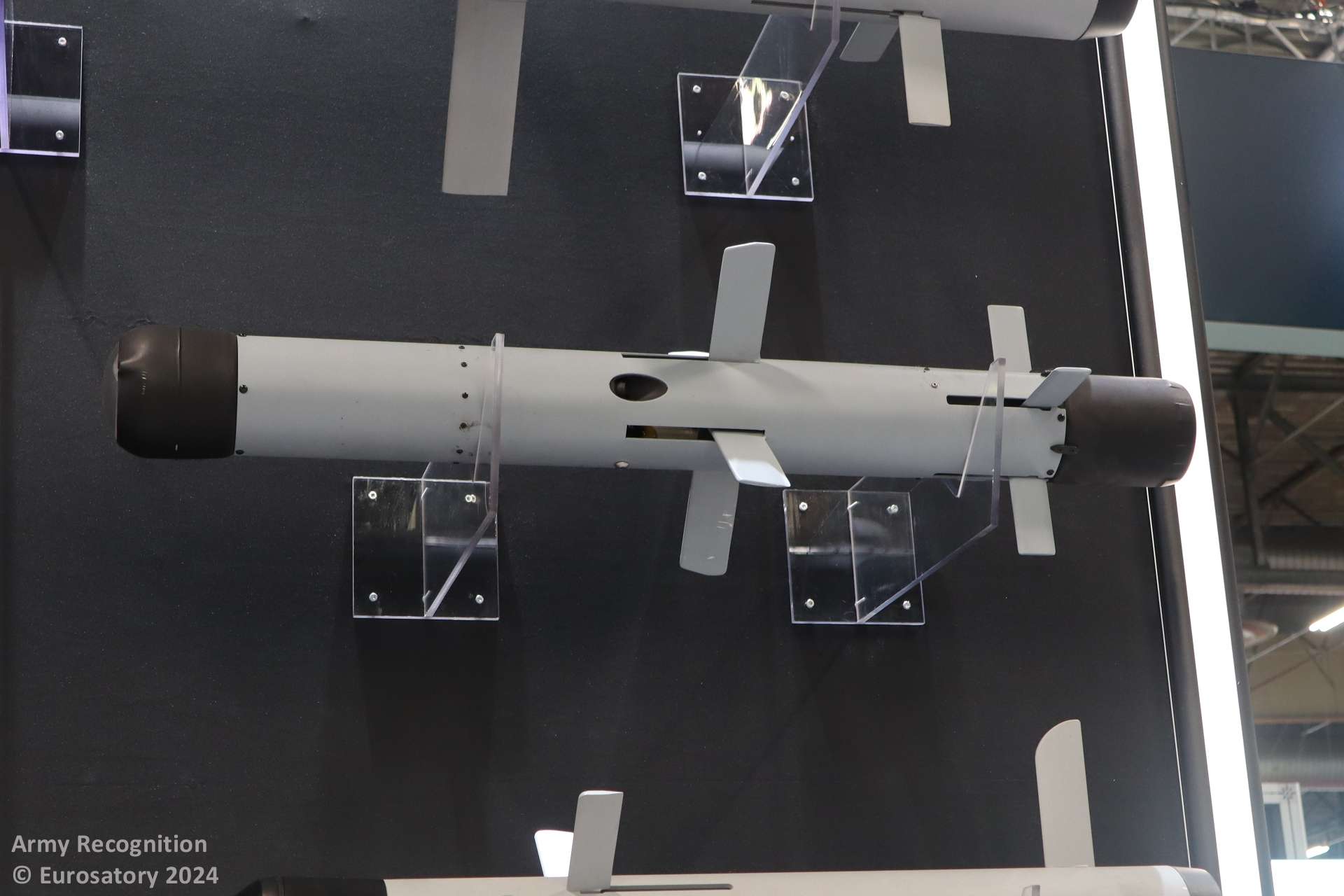
The integration of new missile capabilities, such as the Mehrrollenfähiges leichtes Lenkflugkörper-System (Multirole-capable Light Missile System: MELLS, the Bundeswehr's designation for the Spike-LR), enables the Puma to engage targets beyond the line of sight, with an increased range of up to 5.5 kilometers. (Picture source: Army Recognition)
The upgrade to the S1 standard includes several enhancements. The integration of new missile capabilities, such as the Mehrrollenfähiges leichtes Lenkflugkörper-System (Multirole-capable Light Missile System: MELLS, the Bundeswehr's designation for the Spike-LR), enables the Puma to engage targets beyond the line of sight, with an increased range of up to 5.5 kilometers. Sensor-based assistance systems are being developed to automate routine processes, distribute information automatically, and support target allocation and video tracking. These systems will use sensor fusion techniques to correlate data from various sources, including video, audio, MUSS, and tactical situations, providing cognitive assistance and decision support.
Future capabilities of the Puma S1 include a "Hunter-Killer-Killer" mode for close-range support, offering flexible, independent operation under armor protection with a combat range of up to 400 meters. This system includes a fully stabilized weapon with 360-degree optics for day and night vision, a laser rangefinder, and the ability to use both lethal and non-lethal ammunition. Non-lethal effects include options such as CS gas, flash-bang, and smoke, with the system prepared for mixed ammunition usage.
Other upgrades involve equipping the Puma with new digital radio equipment; connecting the vehicle with the Infanterist der Zukunft - Erweitertes System (Future Soldier - Expanded System, IdZ-ES); high-resolution day- and night-vision camera systems for the driver and the mounted infantry squad; and color-enabled optronics for the gunner and commander. The Puma S1 IFV is also being developed to support reconnaissance missions by serving as a platform for UAVs, allowing the transmission of video and data to the vehicle and the control of the UAVs from within the armored protection. Various drone systems, such as the Black Hornet Nano-UAV and the AR100-C Micro UAV, are currently being tested for integration.
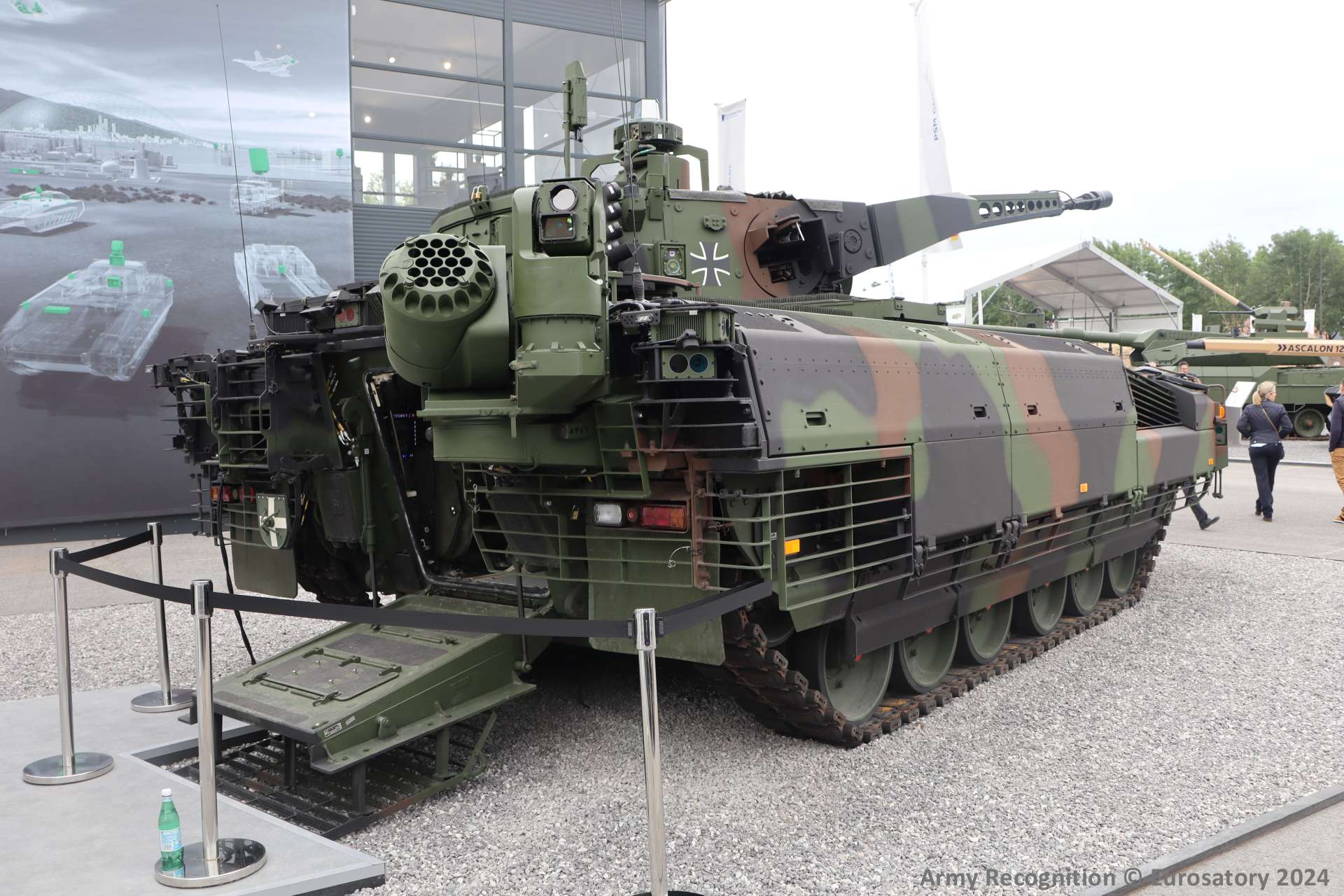
The Puma S1 offers protection against various threats, including bomblets, artillery fragments, shaped charges, kinetic energy projectiles, IEDs, mines, and NBC threats. (Picture source: Army Recognition)
The Puma S1 offers protection against various threats, including bomblets, artillery fragments, shaped charges, kinetic energy projectiles, IEDs, mines, and NBC threats. The Multifunctional Self Protection System (MUSS) will provide active softkill protection against guided missiles with 360-degree detection and countermeasures, including IR jammers and smoke grenade launchers. Additionally, the Puma S1 features an acoustic sniper detection system, with sensors integrated into the chassis and turret to provide data connection and support the sensor-to-shooter concept. Comparative testing of different systems is ongoing.
The Puma S1 features an unmanned turret equipped with an MK30-2/ABM 30mm automatic cannon, capable of targeting up to 3,000 meters with standard ammunition types such as APFSDS-T and KETF (airburst munitions). Additionally, this unmanned turret is also equipped with an MG4 5.56 mm machine gun, a turret-independent secondary weapon system effective against targets up to 1,000 meters. The integration of the Spike LR anti-tank guided missile system under the MELLS designation will further enhance its capability to engage main battle tanks, helicopters, and other threats up to a range of 4,000 meters.
The vehicle's mobility is supported by a 10-cylinder diesel/multifuel engine delivering 800 kW, enabling a maximum speed of 70 km/h forward and 30 km/h in reverse. The running gear, featuring a six-roadwheel decoupled system, reduces noise levels and vibrations, while its ground clearance of 450 mm ensures performance under various conditions.
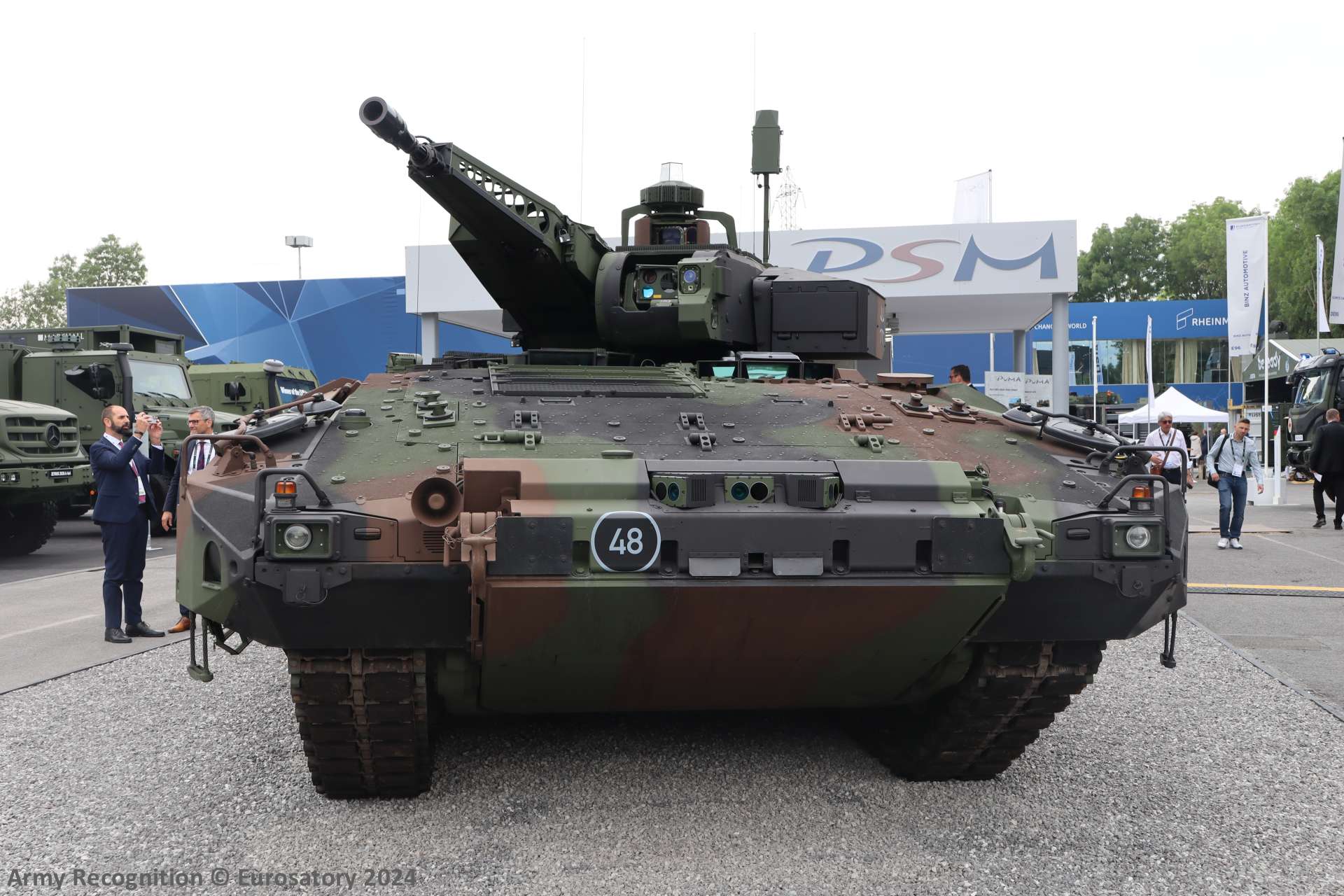
The showcased Puma S1 IFV was equipped with an RF-300 UAV detector from the US company Dedrone, integrated on the vehicle's turret next to the new MUSS Jammer Head, part of MUSS 2.0 from Hensoldt. (Picture source: Army Recognition)
Read more: German Army’s Puma S1 IFV upgraded with a new American UAV detector at Eurosatory 2024
- Details
- Written by: Halna du Fretay
- Category: 2024
- Hits: 4696
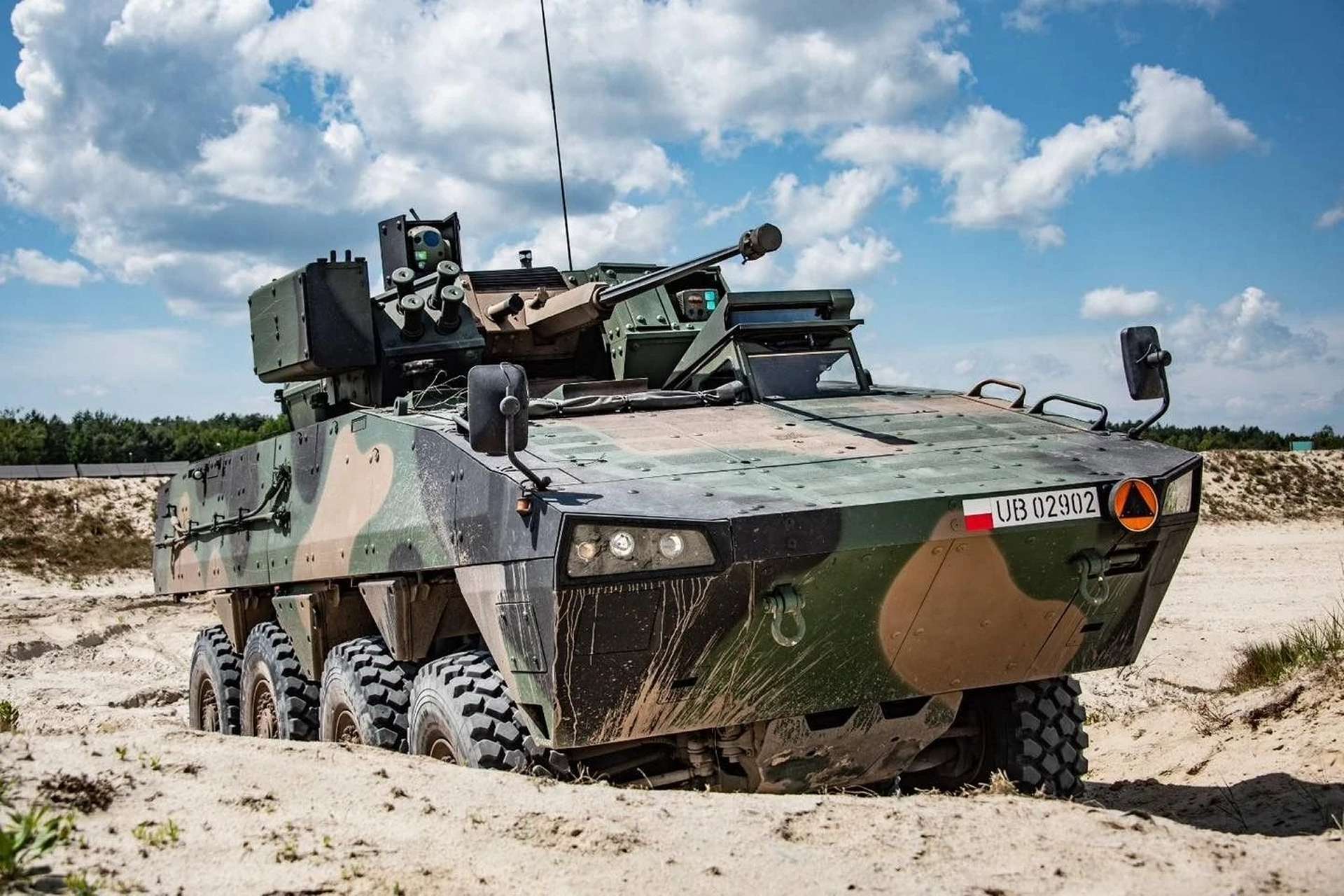
On July 8, a consortium led by Huta Stalowa Wola S.A., along with Polska Grupa Zbrojeniowa S.A., WB Electronics S.A., and Rosomak S.A., signed a contract with the Polish Armament Agency for the delivery of 58 Rosomak infantry fighting vehicles (IFVs) integrated with ZSSW-30 remote-controlled turret systems. This order follows an initial batch of 70 vehicles. The contract, valued at approximately 2.6 billion PLN (610 million euros), also includes the supply of spare parts, with deliveries scheduled between 2026 and 2027.
Follow Army Recognition on Google News at this link
Rosomak with ZSSW-30 turret system during FEX 24 exercise. (Picture source: Polish Army)
This agreement marks the second contract under a framework agreement that includes the provision of 341 turret systems. The first contract, signed on July 5, 2022, was worth 1.7 billion PLN and covered the production and delivery of 70 turret systems for the 8×8 Rosomak IFVs. Deliveries of the ZSSW-30 systems to the Polish Armed Forces are ongoing and will continue as scheduled until 2027.
The Rosomak 8x8, also known as the KTO Rosomak, is a Polish-made wheeled armored personnel carrier in production since 2004. Based on the Finnish Patria AMV and manufactured under license by Rosomak S.A., it entered service with the Polish Armed Forces in 2005. Over 800 units have been delivered, known for their versatility in various configurations, including troop transport, medical evacuation, and reconnaissance.
The contract signing ceremony was attended by notable officials, including Paweł Bejda, Secretary of State at the Ministry of National Defense; Marcin Kulasek, Secretary of State at the Ministry of State Assets; Krzysztof Trofiniak, President of Polska Grupa Zbrojeniowa S.A.; Wojciech Kędziera, President of Huta Stalowa Wola S.A.; Brigadier General Artur Kuptel, Head of the Armament Agency; Piotr Kisiel, President of Rosomak S.A.; and Piotr Wojciechowski, President of WB Electronics S.A.
The ZSSW-30 is Poland’s first domestically developed and produced unmanned turret system, featuring a 30mm cannon and SPIKE-LR anti-tank guided missiles. The system incorporates innovative solutions for fire control, gun stabilization, and targeting instruments, with development starting in 2013 and state qualification tests completed successfully in 2022.
The turret's main armament, the 30mm Bushmaster cannon, can switch quickly between ammunition types and use programmable rounds. The ZSSW-30 is equipped with an advanced fire control system, including a "hunter-killer" function, and is adaptable to various platforms, including the Rosomak IFV and the new amphibious infantry fighting vehicle BORSUK.
Read more: Poland Signs Second Contract for 58 Rosomak 8x8 IFVs with 30mm ZSSW Turrets

- Details
- Written by: Halna du Fretay
- Category: 2024
- Hits: 3376
During a visit to Warsaw, Poland, on July 8, Ukrainian President Volodymyr Zelensky announced the formation of a new volunteer unit, the Ukrainian Legion, on Polish territory. This announcement was made at a conference with Polish Prime Minister Donald Tusk as part of a new security agreement signed between Ukraine and Poland.
Follow Army Recognition on Google News at this link
The Ukrainian Legion will be trained in Poland and equipped by international partners (Picture source: Ukrainian MoD)
Zelensky arrived in Warsaw to hold discussions with Polish officials and formalize the defense pact. “In our security agreement, we have formalized the formation and training of the Ukrainian Legion, a new volunteer unit, on Polish territory,” Zelensky stated. Additionally, the security agreement with Poland includes non-military cooperation such as intelligence activities, cybersecurity, and countering Russian disinformation. Tusk highlighted the importance of this agreement, noting that similar mutual security commitments have been established between Kyiv and 19 other countries.
This initiative builds on the positive experiences of the Ukrainian-Polish-Lithuanian brigade and aims to offer Ukrainian citizens residing in Poland, Lithuania, and other EU countries the opportunity to voluntarily join the defense of Ukraine. The Ukrainian Legion will be trained in Poland and equipped by international partners.
The Ukrainian-Polish-Lithuanian brigade, officially known as the Lithuanian-Polish-Ukrainian Brigade (LITPOLUKRBRIG), is a multinational military unit formed in 2014. It consists of troops from the armed forces of Lithuania, Poland, and Ukraine. The brigade aims to strengthen military cooperation among the three countries and contribute to international peacekeeping and security missions. Stationed in Lublin, Poland, its headquarters coordinates training, joint military exercises, and operations under the auspices of the United Nations, NATO, and the European Union.
According to Zelensky, this new formation will allow every Ukrainian citizen to sign a contract with the Armed Forces of Ukraine to join the unit. “Our teams will work out all the details of the proposition,” he added. This initiative reflects a proactive approach to enhancing Ukraine’s defense capabilities amidst current security challenges.
Ukraine faces significant challenges in recruiting enough men for its war against Russia. The prolonged conflict has led to considerable fatigue among the population, reducing the willingness and capacity of citizens to enlist. Moreover, substantial human losses and the constant need to replace front-line troops further complicate recruitment efforts.
In this context, the creation of brigades composed of foreign volunteers appears to be a pertinent solution. These brigades not only compensate for the shortage of Ukrainian soldiers but also benefit from the diverse military experience of international volunteers. By attracting fighters from allied countries, Ukraine can strengthen its defense capabilities while sending a message of international solidarity against Russian aggression. This strategy of international mobilization is crucial to maintaining the war effort and reinforcing Ukrainian positions against an adversary superior in numbers and resources.
However, integrating non-Ukrainian Western fighters into international brigades for the war in Ukraine poses significant geopolitical risks. Although these commitments are voluntary and individual, Russia could perceive them as acts of co-belligerence, thereby reinforcing its narrative of being at war with the entire Western bloc and NATO. This perception could serve as a justification for Moscow to expand the theater of hostilities, considering possible attacks on European territories whose citizens participate in these brigades.
Such an escalation would pose a direct threat to the security of EU and NATO countries, risking the transformation of a regional conflict into a broader and more dangerous confrontation. This situation would also complicate diplomatic efforts to contain the conflict and prevent further destabilization of the region. In integrating foreign fighters, Ukraine and its allies must carefully weigh the strategic implications and risks of misperceptions by Russia, which could exploit this dynamic to justify intensifying its military actions.
Read more: Zelensky Announces Creation of New Ukrainian Volunteer Legion in Poland

- Details
- Written by: Triffaux
- Category: 2024
- Hits: 5140
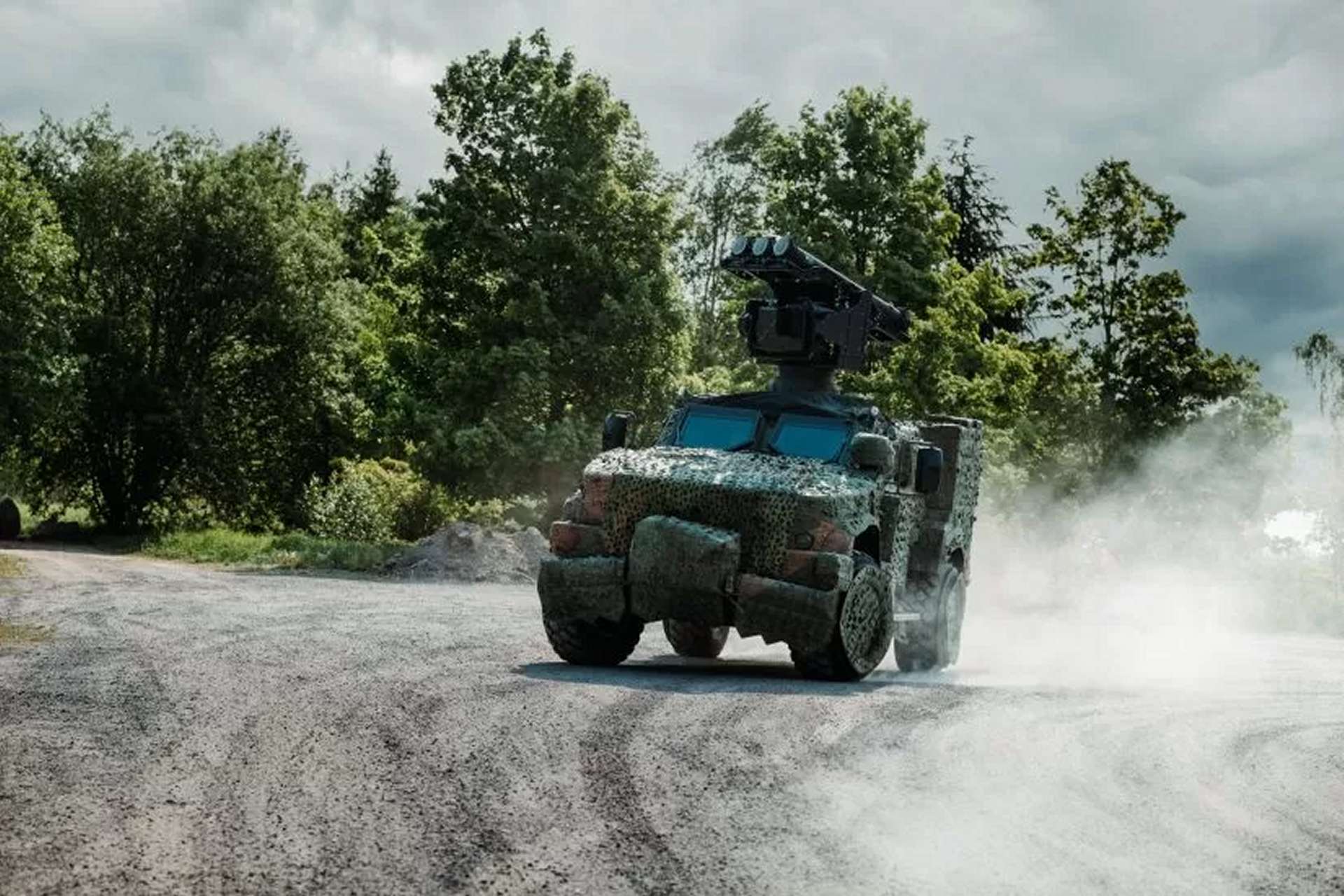
The Democratic Republic of the Congo (DRC) has significantly strengthened its military capabilities by acquiring Hizir 4X4 armored vehicles from the renowned Turkish manufacturer Katmerciler. This contract, signed in 2020 and estimated at $75 million for the acquisition of 185 Hizir MRAP vehicles, has finally been completed, marking a crucial step in the country’s efforts to combat rebel groups and enhance national security. An initial shipment of 40 armored vehicles was delivered by sea to Matadi at the beginning of April 2024.
Follow Army Recognition on Google News at this link
Türkish-Made Katmerciler Hizir 4X4 MRAP vehicle (Picture source: Katmerciler)
Since 2020, the DRC has been awaiting the delivery of these vehicles to bolster its army, which has been severely tested by the battles against the M23 rebels in the east of the country. Numerous obstacles that delayed the finalization of this contract have finally been overcome, allowing Kinshasa to receive these valuable pieces of equipment.
The Hizir, already in service with the Turkish army, is renowned for its robustness and versatility. This vehicle, capable of transporting nine people, benefits from a high level of ballistic and mine protection. With a gross weight of 16 tons and a V-hull for protection against landmines and improvised explosive devices, the Hizir is powered by a 400-horsepower Cummins diesel engine. It can reach a top speed of 110 km/h and has a range of 700 kilometers. The Hizir can be configured for various missions, including combat, command and control, CBRN defense, weapons transport, ambulance services, reconnaissance, and border security. It can also be equipped with an Aselsan SARP turret with machine guns or an automatic grenade launcher.
Africa has already adopted the Hizir, with countries like The Gambia, Kenya, and Uganda integrating this vehicle into their armed forces. The DRC now joins this list, thereby strengthening its military capabilities in a region marked by instability.
This acquisition comes amid a significant increase in the DRC's military spending. According to the Stockholm International Peace Research Institute (SIPRI), the DRC recorded the largest increase in military spending in the world in 2023, with a rise of 105%, even surpassing Ukraine. This increase, bringing expenditures to $794 million, reflects the government’s efforts to address multiple security threats, including heightened tensions with Rwanda and clashes with non-state armed groups.
In addition to vehicles from Katmerciler, the DRC has diversified its sources of military equipment. South Africa has become a key supplier, with Paramount Group delivering 25 Maatla armored personnel carriers (APCs) to the Congolese police and 20 Mbombe 4 APCs to the army. Additionally, the DRC has acquired six Mwari intelligence, surveillance, and reconnaissance (ISR) platforms from Paramount. Furthermore, in 2023, the DRC strengthened its arsenal with the acquisition of nine CH-4 unmanned aerial vehicles (UAVs) from the China Aerospace Science and Technology Corporation, as well as 30 MCAV-20 armored vehicles from the United Arab Emirates. Other recent acquisitions include various new small arms and light weapons from different suppliers, as well as seven second-hand OH-58 and UH-1H helicopters from the United States received in 2019.
This military build-up comes as the United Nations peacekeeping mission in the DRC is being replaced by the Southern African Development Community (SADC) Mission in Mozambique (SAMIDRC), which includes South African troops.
The Hizir armored vehicle from Katmerciler is particularly suited to the challenging terrain in the Kivu provinces. Designed for high performance in extreme environments, the Hizir excels in both rural and urban areas thanks to its robust engine, fully independent suspension with coil springs and shock absorbers, and its V-hull monocoque chassis. This configuration provides increased protection against landmines and improvised explosive devices (IEDs), which are common in the conflicts in Kivu. With a range of 700 km and a top speed of 110 km/h, it allows for rapid and efficient movement on often impassable roads and rough terrain. Moreover, its ability to be configured for various missions, such as reconnaissance and border security, makes it a versatile asset for the Congolese army in this unstable region.
- Details
- Written by: Vandenbosch
- Category: 2024
- Hits: 3553
The Lithuanian Ministry of Defence has announced the acquisition of a mobile short-range air defence system, the RBS70 NG (MSHORAD), from the Swedish company Saab Dynamics for €147 million. The Defence Materiel Agency has finalized agreements with Saab Dynamics, with delivery scheduled between 2025 and 2027.
Follow Army Recognition on Google News at this link
Lithuania has announced the acquisition of an RBS70 NG (MSHORAD). (Picture source: SAAB)
"The MSHORAD system is crucial for protecting certain installations, sites, and critical infrastructure. Its mobility significantly enhances the capabilities of the Lithuanian Armed Forces. Currently, we use the older RBS70 air defence system and Bolide missiles," Defence Minister Laurynas Kasčiūnas said in a press release.
The Mobile Short-Range Air Defence (MSHORAD) is a compact air defence solution developed by the Swedish company Saab, specializing in aerospace and defence. The finalized version of this system was unveiled in March 2022. The MSHORAD air defence system includes a Giraffe 1X multi-mission 3D radar and a mobile firing unit equipped with RBS 70 NG short-range missiles. These radar and missile systems are coordinated by Saab’s ground-based air defence command and control (GBAD C2) system.
Designed to identify and counter a wide range of aerial threats, the MSHORAD can handle threats from fighters, armed helicopters, missiles and rockets, as well as newer threats such as unmanned aerial vehicles (UAVs) and loitering munitions. With a detection range of 75 km and an interception range of 9 km, the system can quickly and effectively track and neutralize aerial threats.
The MSHORAD is particularly flexible due to its modular design, which allows for easy installation on various vehicle platforms, making the system highly mobile and adaptable to different roles. It is designed to move with ground combat units, offering persistent protection against aerial threats in a dynamic battle zone. After threat evaluation and weapon assignment by the GBAD C2 system, the missiles can be engaged in less than five seconds to eliminate multiple targets. Additionally, the MSHORAD can be rapidly deployed and can also operate from the tops of buildings, providing an additional operational advantage.
The Giraffe 1X radar is a compact, high-performance 3D multi-mission radar primarily used for short-range surveillance and surface-to-air defence. Equipped with gallium nitride circuits, it offers 360° coverage and situational awareness up to 75 km. It can detect hard-to-target drones, even those that are small, slow, and low-flying.
The RBS 70 NG missile system, based on the RBS 70 short-range surface-to-air missile system, uses laser-guided, unjammable missiles with automatic target tracking and multi-target capabilities. This system can operate day and night and can be rapidly reloaded in the field. It includes an automatic target tracker and integrated night sight.
Tests and demonstrations have confirmed the effectiveness of the MSHORAD system, including successful live firings in August 2022 in Sweden. Saab has also conducted integration and test firings in cooperation with the Czech defence company SVOS.
The MSHORAD was first showcased at the Defence and Security Equipment International (DSEI) exhibition in London in 2017 and has been displayed at other international arms industry fairs. In January 2024, Saab received a contract worth 300 million Swedish kronor from the Swedish Defence Materiel Administration to deploy the system in two configurations installed on the BvS10 armoured vehicle. Other orders for the RBS 70 NG system and the Giraffe 1X radar have been placed by European countries, confirming the interest and effectiveness of this defence system.
Additionally, Kasčiūnas previously mentioned that Lithuania is considering acquiring Piorun air defence systems from Poland and is also considering additional medium-range air defence systems. By September, the Ministry of Defence will decide between the NASAMS and Iris-T systems, which are not yet used by the Lithuanian Armed Forces.
Read more: Lithuania Acquires Swedish MSHORAD Air Defense System

- Details
- Written by: Administrator
- Category: 2024
- Hits: 9063
The renowned Czech firearms manufacturer, CZ, has announced the launch of the third generation of its widely popular CZ BREN rifles. The CZ Bren assault rifles are currently in service with the Czech Army and various other military and law enforcement units worldwide, including the French GIGN counter-terrorism unit, the Mexican Federal Police, the Portuguese Air Force, and the Hungarian Armed Forces.
Follow Army Recognition on Google News at this link
The CZ Bren 3 represents the third generation of assault rifles in the CZ Bren family. (Picture source: CZ)
The innovative multi-caliber modular design of the CZ BREN 3 sets it apart with its high precision, extreme durability, superior shooting comfort, and absolute reliability. All variants of the CZ BREN 3 comply with NATO AC/225 D/14 testing standards, ensuring dependable performance even in the most challenging conditions, such as extreme temperatures, saltwater, sand, mud, or dust.
"The CZ BREN 3 reflects feedback from soldiers, police officers, and special forces personnel worldwide who have used previous CZ BREN series rifles. Our top experts have innovatively incorporated this wealth of experience into the new generation of the CZ BREN 3, focusing on improving key features, including sophisticated ergonomics and resulting shooting comfort. We believe that our new flagship product in the automatic rifle segment will be a great success among military and security forces," stated Jan Zajíc, CEO and Chairman of the CZ Board of Directors.
The CZ BREN 3 is available in two primary calibers and multiple barrel lengths. In the 5.56 × 45 NATO caliber, these rifles come with barrel lengths of 7", 11", 14.5", and 16.5", while in the 300 AAC Blackout caliber, barrel lengths of 7" and 9" are available. All barrels are high-precision, cold-forged, and their durability is significantly enhanced by chrome plating. A three-position gas regulator optimizes performance when using a suppressor or in adverse conditions or weapon contamination.
The rifle features fully ambidextrous controls, including a 45° fire mode selector (with positions for locked, single shot, and burst fire), a magazine release, and a bolt catch (located on the left side of the receiver and inside the trigger guard). The non-reciprocating charging handle is also fully ambidextrous and foldable.
The base design of the CZ BREN 3 includes a four-position, foldable, telescopic polymer shoulder stock. A PDW-type stock is also available, extending into four positions. One of the key elements of the CZ BREN 3's modularity is its easily replaceable high-strength aluminum alloy handguard. The basic version features an M-LOK interface for mounting a wide range of accessories such as sights, lights, and laser markers. Users can also choose from STANAG 4694 or Suppressor-Ready handguards, the latter sized for mounting a suppressor. The sling attachment is highly versatile, with seven QD attachment points for quick-release loops on all variants of the weapon.
The CZ BREN 3 is designed to be the perfect modern service weapon for 21st-century individuals, ensuring precision, reliability, and top performance in any situation, wherever you are.
Read more: CZ Launches Third Generation of Its Popular CZ BREN Assault Rifles
- OTOKAR from Türkiye offers new UGV able to conduct combat missions like manned IFV
- Lithuania Hosts Dutch Patriot System as Deterrent Near Russian Kaliningrad
- Dutch Army Unveils First Modernized CV90 Infantry Fighting Vehicle
- Russian Officials Announce Deployment of S-350 Air Defense Systems in Donetsk