

- Details
- Written by: Halna du Fretay
- Category: 2024
- Hits: 3968










According to the Indian Defence Research Wing (IDRW), as of July 5, 2024, Armenia is actively exploring options to enhance its missile capabilities by considering the acquisition of theater quasi-ballistic missiles from India. This move has been largely prompted by Azerbaijan's recent deployment of the Israeli-made LORA system during the final days of the 2020 Nagorno-Karabakh conflict. The LORA system, with its 400 km range and noted use against the Lachin corridor, has heightened Armenia's concerns over regional security dynamics. Follow Army Recognition on Google News at this link
The Indian Prahaar, short-range ballistic missile (left), and the Pralay short-range ballistic missile (right). (Picture source: CSIS/Wikimedia)
During the Aero India 2023 event, a memorandum of understanding was signed between Bharat Electronics and Israel Aerospace Industries for potential production of the LORA system in India, though this agreement is still in its early stages. Concurrently, Armenia is looking into procuring India's indigenous tactical ballistic missiles to counter regional threats. The Defence Research and Development Organisation (DRDO) of India has developed two main models of interest to Armenia: the Prahaar, with a 200 km range, and the Pralay, capable of reaching up to 500 km.
The incorporation of such systems could significantly bolster Armenia's defensive posture, especially considering the country's existing deployment of India's Pinaka multi-barrel rocket launchers with a 90 km range. However, the sensitive nature of this potential transaction, combined with licensing agreements and alignment with national defense priorities, renders the outcome uncertain.
Beyond partnerships focused on armament acquisitions and technological exchanges, the military relations between India and Armenia also extend to training and joint exercises, thereby enhancing their defense collaboration. Both nations have expressed interest in exchanging expertise in military training and combat tactics, which could include officer training programs and workshops on specific defense-related topics. Additionally, they are looking to cooperate in the fields of cyberdefense and information security, acknowledging the increasing importance of digital security in modern defense.
As regional tensions continue, Armenia's quest to boost its military capabilities reflects a broader strategy to maintain a power balance in its vicinity, particularly with Azerbaijan. The tensions between Azerbaijan and Armenia primarily revolve around Nagorno-Karabakh, a region predominantly populated by Armenians but located within internationally recognized Azerbaijani borders.
Following a de facto autonomy achieved after a deadly conflict that began in the late 1980s and escalated after the Soviet Union's collapse, the region witnessed a resurgence of violence, especially during the 2020 war, where Azerbaijan reclaimed significant territory. Russia, traditionally a key player in the Caucasus, plays an ambiguous role: maintaining military and economic cooperation with both countries while attempting to position itself as a peace mediator. It deployed peacekeeping forces in the Nagorno-Karabakh region after the 2020 ceasefire, asserting its regional influence while aiming to stabilize the situation without overt partisanship. However, in light of the war in Ukraine, its influence appears to be waning.
Read more: Armenia Looks to India for Advanced Missile Systems Amid Rising Azerbaijani Threats

- Details
- Written by: Triffaux
- Category: 2024
- Hits: 3605
On July 7, 2024, following a meeting with President Zelenskyy and discussions with his counterpart, Defence Minister Rustem Umerov, Mr. Healey announced that the UK would provide a new package of support to the country, including nearly 100 precision Brimstone 2 missiles.
Follow Army Recognition on Google News at this link
MBDA Brimstone 2 anti-tank missiles (Picture source: Army Recognition)
The Brimstone missile is a UK-manufactured weapon that has played a crucial role in military operations since its introduction in 2005. Initially designed by GEC-Marconi in 1996 and produced by MBDA UK in Henlow, this missile is used by several air forces, including the Royal Air Force, the Royal Saudi Air Force, and the German Air Force. The Brimstone has been deployed in various conflicts such as Operation Telic, Operation Herrick, Operation Ellamy, Operation Shader, and more recently in the Russo-Ukrainian War.
The United Kingdom has delivered several types of Brimstone missiles to Ukraine, mainly the Brimstone 2 missiles. These missiles are equipped with advanced guidance technology, integrating semi-active laser sensors and millimeter wave radars. This combination allows the missiles to hit moving or stationary targets with high precision while minimizing collateral damage. The Brimstone 2 missiles can scan the battlefield and select their target from a pre-programmed list, excluding less important civilian vehicles and equipment.
The Brimstone 2 missiles provided by the United Kingdom to Ukraine have received very positive feedback from the Ukrainian armed forces. These missiles, which integrate advanced guidance technology combining semi-active laser sensors and millimeter wave radars, are capable of hitting moving or stationary targets with high precision while minimizing collateral damage.
In practice, the Brimstone 2 missiles have proven their effectiveness on the Ukrainian battlefield, notably by forcing Russian forces to abandon and retreat during river crossing attempts. The capability of these missiles to automatically select the most appropriate targets on the battlefield, excluding civilian vehicles and less important military equipment, has been particularly useful in limiting collateral damage and maximizing military impact.
This versatile missile is available in several variants, including single-mode, dual-mode sensor, Brimstone 2, and Brimstone 3, catering to specific battlefield needs. It is notable for its ability to be launched from the air to ground targets (air-surface) as well as from one surface to another (surface-surface), offering tactical flexibility.
The Brimstone weighs approximately 50 kg, is 1.8 meters long, and has a diameter of 180 mm. It is equipped with a 6.3 kg tandem-shaped charge warhead designed to penetrate heavy armor. It uses a solid-fuel rocket engine and can reach supersonic speeds of about 450 m/s (Mach 1.3).
Its operational range varies by version; Brimstone I can reach over 20 km when launched from a fixed-wing aircraft and 12 km from a helicopter, while Brimstone II extends this range to over 60 km for fixed-wing aircraft and over 40 km for helicopters. This extended capability allows for precise long-distance strikes.
The Defense Secretary reiterated the UK's unwavering support for Ukraine, urging all freedom-loving nations to step up their assistance. He emphasized that the current year is crucial for Ukraine's fight, calling on Western nations and their allies to increase their support to ensure Ukraine's resilience.
Read more: UK to send additional 100 Brimstone 2 anti-tank missiles to Ukraine

- Details
- Written by: Vandenbosch
- Category: 2024
- Hits: 5885
The HAWK (Homing All the Way Killer) air defense system, developed in the 1950s, proves its effectiveness despite its advanced age. This complex system, which has undergone several modernizations over the decades, remains a key player in protecting the skies, particularly in Ukraine. The Ukrainian Armed Forces released a video dated July 6, 2024, explaining that this system is even capable of shooting down certain enemy drones.
Follow Army Recognition on Google News at this link
The HAWK (Homing All the Way Killer) system is a surface-to-air missile designed to engage targets at low and medium altitudes. (Picture source: Ukrainian MoD)
Initially designed to intercept cruise missiles and aerial missiles, the HAWK system was not intended to combat modern drones. However, faced with current challenges, Ukrainian forces have had to quickly adapt to these new threats.
During training conducted by Spanish instructors, they expressed reservations about the HAWK's effectiveness against drones: "For drone combat, it is not too well-suited..." they said. Nevertheless, Ukrainian defenders showed unwavering determination. "We will manage, we will adapt! We have no other choice," they affirmed.
This determination paid off in the very first air combat. Ukrainian operators, using the HAWK, managed to shoot down six enemy Shahed-type drones, demonstrating that even an old system, with adequate training and unyielding resolve, can still play a crucial role in air defense.
The performance of the HAWK system in Ukraine is further proof of the robustness and reliability of proven technologies, even in the face of modern challenges. By continuing to evolve and adapt, the HAWK remains a valuable asset for the protection of Ukrainian skies.
The HAWK (Homing All the Way Killer) system is a surface-to-air missile designed to engage targets at low and medium altitudes. Using a dual-thrust solid fuel booster sustainer rocket motor, it was developed in the United States and adopted by numerous countries around the world, including France, Greece, Iran, Israel, Italy, Japan, Kuwait, the Netherlands, Egypt, Jordan, Morocco, Romania, Saudi Arabia, Singapore, Spain, South Korea, Sweden, Taiwan, Turkey, Ukraine, and the United Arab Emirates.
The HAWK missile exists in two main versions: the MIM-23A and the MIM-23B. The MIM-23A weighs 584 kg and is equipped with a 54 kg high-explosive fragmentation warhead, while the heavier MIM-23B weighs 627.3 kg with a 75 kg warhead. These missiles are guided by semi-active radar homing with proportional navigation, allowing for increased accuracy against moving targets.
The HAWK has an impressive range: the MIM-23A can reach targets between 2,000 and 32,000 meters, while the MIM-23B has an extended range of 1,500 to 40,000 meters. The missiles travel at a speed of Mach 2.7, making it difficult for aircraft and other targets to evade them. In terms of dimensions, the missile is 5.08 meters long, with a diameter of 0.37 meters and a wingspan of 1.19 meters.
Despite its many decades of service, the HAWK remains a formidable and effective air defense system, capable of adapting to the demands of modern warfare and effectively defending Ukrainian skies against various threats.

The HAWK air defense system, developed in the 1950s, proves its effectiveness in Ukraine despite its advanced age. ( Picture Source: Army Recognition)
Read more: HAWK Air Defense System Remains Effective in Ukraine Despite Its Old Age
- Details
- Written by: Halna du Fretay
- Category: 2024
- Hits: 3473
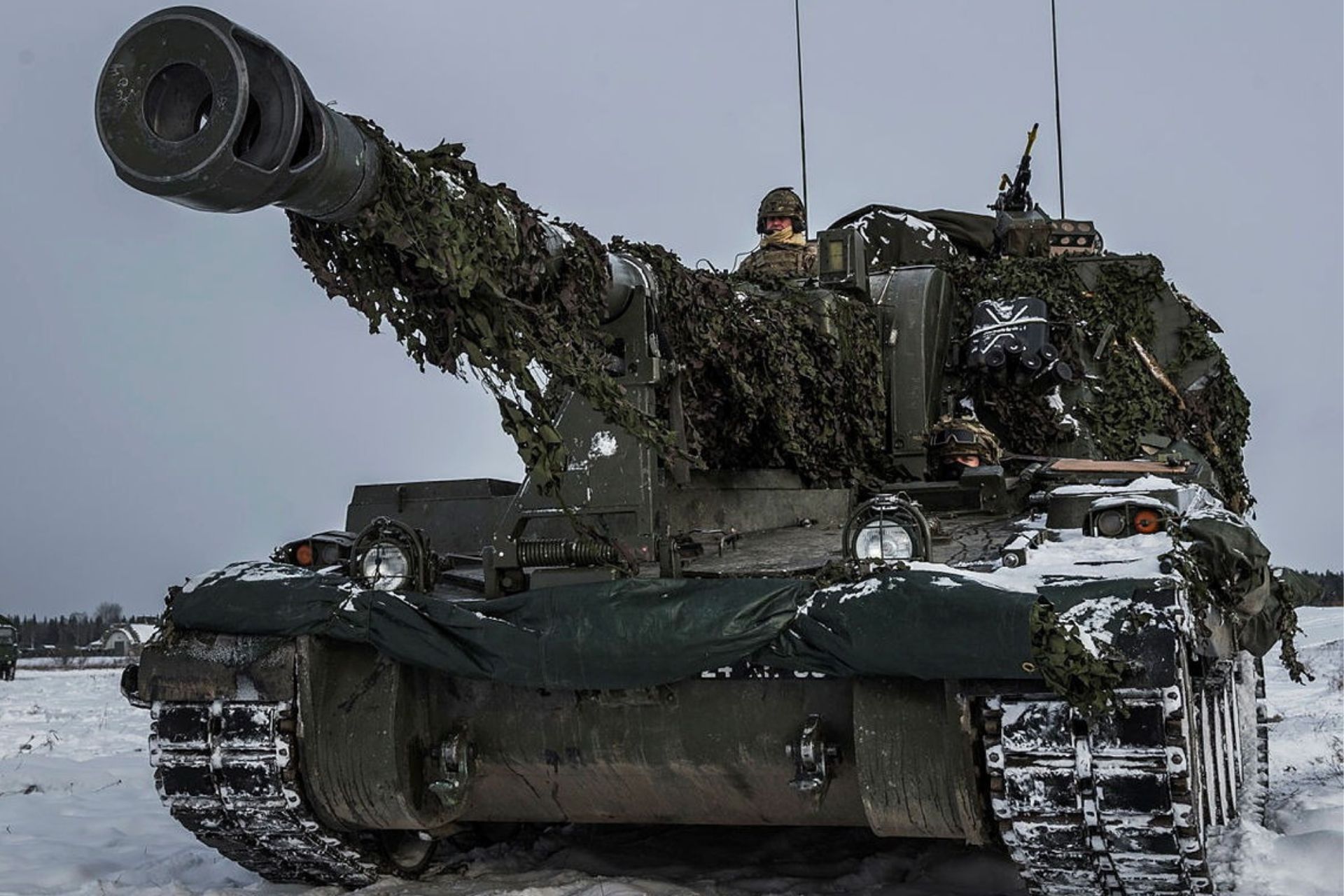
On July 7, 2024, the United Kingdom underscored its support for Ukraine by unveiling a substantial military aid package, as announced by the newly appointed Defense Secretary, John Healey. This package includes a variety of military equipment, such as precision Brimstone missiles and ten AS-90 artillery systems, accompanied by crucial logistical support tools. The inclusion of AS-90s, noted for their rapid firing capability and extensive range, is aimed at significantly increasing the defensive capabilities of Ukraine.
Follow Army Recognition on Google News at this link
AS90 Self-Propelled Artillery artillery gun, seen here in the winter snow of Estonia in 2018 (Picture source: UK MoD)
The AS-90 ("Artillery System for the 1990s") is a British self-propelled artillery gun that has been in service since the early 1990s. Developed to replace older models of field guns in the British Army, the AS-90 was designed by Vickers Shipbuilding and Engineering. It was first produced and entered service in 1993, fulfilling a requirement for a modern and capable tracked artillery system.
The AS-90 is armed with a 155mm, 39-caliber gun, capable of firing standard NATO ammunition up to 24.7 kilometers using regular charges and up to 30 kilometers using base bleed rounds. It can also achieve a range of approximately 60 to 80 kilometers with rocket-assisted projectiles. The system features an automatic loading mechanism allowing a burst fire rate of three rounds in less than 10 seconds, and a sustained fire rate of six rounds per minute, making it highly effective during intensive combat operations.
As of now, there are 89 AS-90 units in service with the British Army, after numbers were reduced from the original 179 due to strategic cutbacks and restructuring within the defense force. The AS-90 remains a core component of the British Army’s artillery capability, valued for its reliability, mobility, and firepower, which allow it to provide effective fire support in various operational scenarios.
The announcement came during Mr. Healey's visit to Odessa, where he met with Ukrainian President Volodymyr Zelenskyy and Defense Minister Rustem Umerov amidst the annual Ukrainian Navy Day celebrations—a pivotal moment underscoring British support.
Specifically, Ukraine will receive 250,000 rounds of 12.7 mm ammunition, 90 Brimstone missiles, 10 AS-90 artillery guns, 50 small military boats for river and coastal operations, 40 demining vehicles, and 61 bulldozers to assist in constructing defensive positions. Additional barrels and spare parts for previously supplied AS-90s are also included, enabling the firing of an additional 60,000 rounds of 155 mm shells.
Despite recent changes within the British government, John Healey emphasized the unwavering UK commitment to Ukraine. He highlighted the continuity of British support, affirming that the UK would stand with Ukraine as long as needed to counter Russian aggression and hold Russian President Vladimir Putin accountable for war crimes.
During his visit, Healey also stressed the importance of expediting the delivery of military aid promised in April, setting a 100-day deadline for fulfillment. The April package, described as the largest to date, included 400 vehicles, 1,600 air and anti-tank defense missiles, and 60 boats suited for maritime raids.
Moreover, the UK's commitment to bolstering Ukrainian naval forces has been enhanced through training and equipment that has weakened Russia’s Black Sea Fleet, thereby enabling the resumption of Ukraine's critical grain exports to pre-war levels. Ongoing international cooperation is also being fortified, with the UK leading coalitions focused on maritime capabilities and drones, the latter having already deployed thousands of drones to support Ukrainian operations.
Since the conflict in Ukraine began, the UK has been a principal provider of military support, delivering substantial shipments of arms and defensive equipment. This support has included modern battle tanks, long-range guided missiles, and extensive logistical backing, illustrating a coordinated strategy to strengthen Ukraine's capabilities against Russian aggression. The UK has also pioneered the training of over 42,000 Ukrainian troops, enhancing the skills and effectiveness of Ukraine's armed forces on the ground.
By consolidating and accelerating military aid to Ukraine, the UK reaffirms its critical role in supporting Ukraine's defense in an ongoing and complex conflict.
Read more: AS-90 Artillery Systems to Enhance Ukrainian Army as Part of UK Aid
- Details
- Written by: Administrator
- Category: 2024
- Hits: 3198
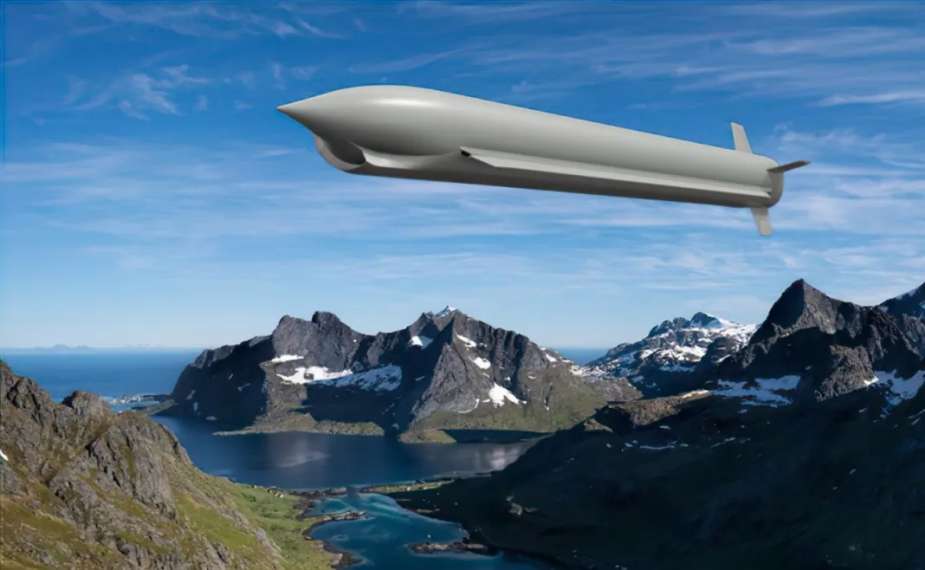
Kongsberg Defence & Aerospace has entered into a significant contract with the Norwegian Defence Materiel Agency (NDMA) to spearhead the initial development phase of the cutting-edge German-Norwegian Supersonic Strike Missile (3SM). This next-generation missile system is anticipated to be deployed on naval vessels by 2035.
Follow Army Recognition on Google News at this link
Artist rendering of future Supersonic Strike Missile. (Picture source: Kongsberg)
The contract, valued at up to 1.5 billion NOK (Around €132 million), underscores the strategic importance of advanced missile technology in maintaining and enhancing defense capabilities. Eirik Lie, President of Kongsberg Defence & Aerospace, emphasized the collaborative nature of the project, stating, “The 3SM missile project demonstrates how cross-border and industrial collaboration contributes to strengthening the defense capabilities of Norway, Germany, and allied countries. Close cooperation between industry, authorities, and research institutions forms the foundation for innovation and job creation, while we maintain our position as a world-leading missile manufacturer.”
KONGSBERG has been designated the lead industry partner in this ambitious project, which will also see substantial contributions from German and Norwegian industry partners, including Diehl Defence and MBDA Deutschland. Additionally, the Norwegian Defence Research Establishment (FFI) and Nammo will play critical roles in the development process.
Gro Jære, Director of the NDMA, highlighted the historical context and future potential of Norway’s missile development expertise: "Norway has a long history of developing advanced missile systems, and it is important that we maintain and further develop the existing expertise and position that Norway holds within missile technology. Establishing Kongsberg Defence & Aerospace as a new contract partner and industry leader is a crucial step in developing a powerful new weapon system for engaging maritime targets. KONGSBERG has extensive and significant experience in this field.”
The Supersonic Strike Missile (3SM) is envisioned as a powerful new anti-ship weapon that will bolster sovereignty and territorial integrity by enhancing the deterrence capabilities of the armed forces and improving their ability to engage long-range targets. Designed for deployment on both Norwegian and German naval vessels, the 3SM is also being developed with the potential for use by other NATO countries and close allies.
KONGSBERG’s track record in missile development is well-established, with the Naval Strike Missile (NSM) developed in the 2000s now in use by 13 countries, including Norway, Germany, and the US. The new 3SM system will complement the NSM, providing a robust and versatile arsenal for modern naval warfare when it becomes operational in the mid-2030s.
This development marks a significant milestone in defense technology, reinforcing the strategic partnership between Norway and Germany and paving the way for future advancements in missile capabilities.
Read more: KONGSBERG Signs Landmark Contract with Norway for Supersonic Strike Missile Development
- Details
- Written by: Administrator
- Category: 2024
- Hits: 8970
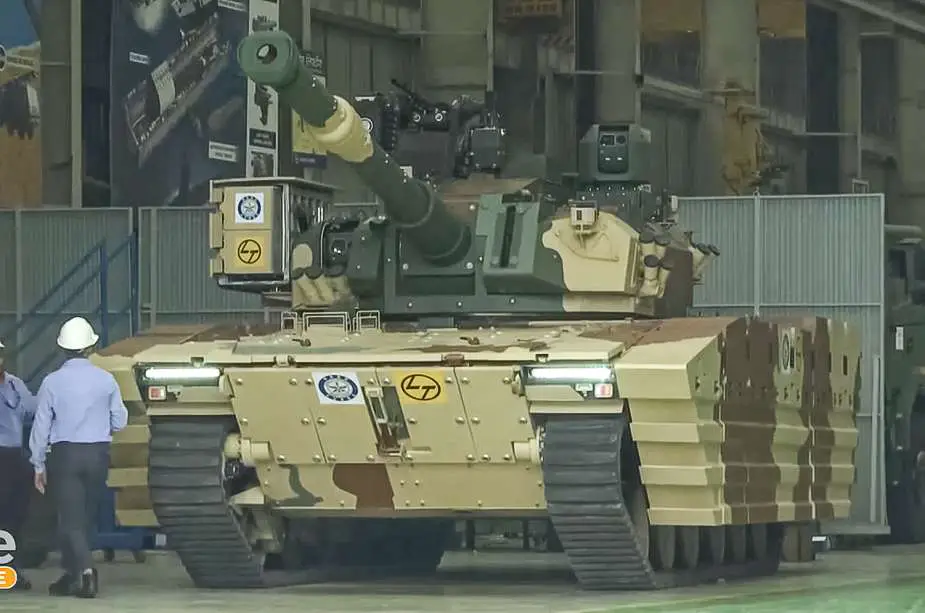
The prototype of India's indigenous light tank Zorawar was unveiled on July 6, 2024, and will soon undergo extensive trials, according to Indian Defence officials. This tank represents a significant step forward in India's defense capabilities, designed for enhanced mobility and efficiency in high-altitude regions such as Ladakh. The tank was jointly developed by the Indian Defence Research and Development Organisation (DRDO) and Indian companies Larsen & Toubro (L&T), with L&T serving as the lead integrator.
Follow Army Recognition on Google News at this link
The new Indian-made light tank Zorawar represents a significant step forward in India's defense capabilities, designed for enhanced mobility and efficiency in high-altitude regions such as Ladakh. (Picture source: X Account India)
The Zorawar tank was developed in response to the increasing armored threats along India's northern borders, particularly from China, which has deployed light tanks in the region. The project was approved by the Defence Acquisition Council in 2022 to strengthen the Indian Army's operational capabilities in challenging terrains
The Zorawar light tank features a layout with the driver compartment located at the front, the turret positioned in the middle, and the powerpack situated at the rear. This design ensures balanced weight distribution and enhances operational efficiency.
The tank is powered by a 1,000 hp advanced combat engine from Cummins, which provides an excellent power-to-weight ratio. This powerful engine allows for superior maneuverability, particularly in high-altitude and challenging terrains, making the Zorawar suitable for deployment in regions such as Ladakh.
The Zorawar uses a COCKERILL-3105 105mm turret that has been modified to meet the specific requirements of the Indian Army. These modifications include the relocation of sights, the integration of a local 12.7mm NSV remote-controlled weapon station (RCWS), and the addition of a twin anti-tank guided missile (ATGM) launcher on the side of the turret. This formidable weapon system is designed to effectively engage various targets, delivering significant firepower in combat situations.
The tank includes an advanced active protection system to enhance its survivability on the battlefield. This system can counter anti-tank guided missiles and other projectiles, thus increasing the tank's defensive capabilities.
The tank's amphibious design allows it to operate in water bodies, such as the Pangong Tso Lake, providing increased tactical versatility in diverse environments.
Additionally, the Zorawar features AI-enabled systems and can integrate with tactical drones. This integration provides improved situational awareness and the capability to deploy loitering munitions, giving the Zorawar a strategic edge in modern warfare.
An initial order for 59 tanks has been placed, with plans to procure a total of 355 tanks to form seven light tank regiments. This strategic deployment aims to enhance India's defensive and offensive capabilities in border regions, countering similar deployments by neighboring adversaries.
The project is part of a broader initiative to reduce India's reliance on foreign military imports and promote indigenous defense manufacturing under the 'Make in India' initiative. The tank is currently undergoing internal trials, with further user trials by the Indian Army expected to commence by mid-2024.
The unveiling of the Zorawar light tank marks a significant achievement for India's defense sector, highlighting successful collaboration between DRDO and L&T. As the tank enters the trial phase, it is set to undergo rigorous testing to ensure it meets the operational requirements of the Indian Army. This indigenous light tank not only represents a leap in India's defense technology but also reinforces the nation's commitment to self-reliance in military capabilities.
Read more: India Unveils Indigenous Light Tank Zorawar Amid Ongoing Clashes with China

- Details
- Written by: Halna du Fretay
- Category: 2024
- Hits: 5333
The integration of Artificial Intelligence (AI) into military operations is revolutionizing ground warfare by enhancing capabilities and operational efficiency in diverse and complex environments. As military confrontations evolve into multi-domain engagements incorporating cyber and space elements, the role of AI in warfare has become increasingly vital. Rapid and accurate identification of enemy ground military vehicles is a crucial aspect of these confrontations. In this context, the Mega-Army app uses AI to enhance this process by analyzing large amounts of data with precision and speed. This capability is invaluable on the battlefield and equally significant in intelligence, surveillance, and reconnaissance (ISR) where timely and accurate information is essential for effective military operations. Follow Army Recognition on Google News at this link
MEGA-Army is an application designed to recognize and identify military equipment in real time using AI-powered image recognition (Picture source: IDDEA)
Ground warfare, traditionally dominated by direct confrontations, is undergoing a significant transformation as AI technologies integrate into battlefield strategies. The historical concepts of warfare, where ground battles are congested with personnel and structures, are redefined by AI capabilities. The emerging dominance of firepower, heavily influenced by AI, highlights the importance of real-time battlefield surveillance and precision munitions. The U.S. Marine Corps emphasizes that effective countermeasures require signature management to avoid detection and targeting, facilitated by AI through advanced sensor fields, cloud computing, and interconnected sensors, creating real-time digital models of the battlefield.
MEGA-Army is an application designed to recognize and identify military equipment in real time using AI-powered image recognition. This tool supports a wide range of defense operations and is backed by an extensive, continuously updated database of over 1,200 different types of military equipment worldwide. The app uses image classification to recognize specific features of ground military vehicles, such as chassis shape, size, armament, and sensors. By training the AI with extensive datasets including images of different vehicle models, the system learns to identify them based on their visual characteristics. This method significantly improves the ability to process and analyze large volumes of data in real time, enabling military personnel to identify and understand vehicle characteristics and data directly on the battlefield.
In ISR applications, the Mega-Army app enhances data analysis from various sources, whether from soldiers on the ground, unmanned aerial or ground vehicles, or ground cameras. This advancement supports better situational awareness, aids decision-making, and improves response times. AI integration into command and control systems allows for efficient coordination of dispersed and multi-domain weapon systems, potentially increasing the pace and efficacy of military engagements.
A key advantage of using AI for the recognition of ground military vehicles is the capability to integrate multiple data sources. Technologies such as LIDAR and infrared (IR) imaging can be combined to enhance the algorithm's accuracy. This fusion of data sources allows for precise identification of ground military vehicles, even in low visibility conditions.
The future of AI-activated ground warfare envisions widespread deployment of AI across force structures. Effective integration of multiple AI systems is crucial to realize their potential, yet reliance on AI introduces vulnerabilities to cyberattacks, necessitating robust security measures. The technological core of AI-activated battlefields, including IoT fields, cloud computing, AI machine learning, and edge computing, may lead to innovative force structures with unique capabilities.
For those interested in exploring the capabilities of Mega-Army, the application can be downloaded on your smartphone via Google Play and the App Store.
Read more: Enhancing Military Vehicle Recognition with AI: The Role of the Mega-Army App

- Details
- Written by: Triffaux
- Category: 2024
- Hits: 4774
At the Eurosatory 2024, one of the world's largest defense and security events, Spanish company Urovesa showcased a major innovation with its new NBRQ PITON reconnaissance vehicle, specifically developed for the Spanish army. This model stands out for its advanced detection and analysis capabilities in environments contaminated by nuclear, biological, radiological, and chemical (NBC) agents.
Follow Army Recognition on Google News at this link
Urovesa 4X4 PITON High-Tech NBC Reconnaissance Vehicle (Picture source: Army Recognition)
The PITON is a specialized extension of the VAMTAC family, built on the ST5 platform. Initiated in October 2022 in response to a contract from the Spanish Ministry of Defense with an allocated budget of 67.6 million euros, Urovesa designed and developed an operational prototype in just 16 months, which is currently undergoing technical validation and operational evaluation across various army units before entering mass production.
The vehicle is equipped to operate with a four-person crew, including a commander, a driver, and two operators, without the need for individual protective equipment thanks to an internal overpressure system. It also features cutting-edge technologies such as flame photometry, ion mobility, and gas spectroscopy detectors that allow for rapid and accurate threat identification.
The PITON’s ability to operate in highly contaminated areas is enhanced by integrated equipment such as weather sensors, perimeter cameras, and an unmanned ground vehicle (UGV) that can be deployed for surveillance and sample collection. This is operated from a special compartment at the rear of the vehicle.
In addition to its impressive functionalities, the PITON also incorporates an Aunav positioning arm for sample collection, as well as an onboard 3D printer used to mark threatened areas after analysis. These innovations position the PITON as a key asset for the Defense NBC No. 1 "Valencia" and for the eight army brigades that include light reconnaissance sections, as well as for the commands of Ceuta and Melilla.
The unveiling of the PITON at Eurosatory not only highlights Urovesa's commitment to defense and security but also marks a significant step forward in the Spanish army's ability to manage NBC threat environments with increased efficiency and safety.

Urovesa 4X4 PITON High-Tech NBC Reconnaissance Vehicle (Picture source: Army Recognition)
Read more: Spanish Company Urovesa develops 4X4 PITON High-Tech NBC Reconnaissance Vehicle

- Details
- Written by: V.Saint
- Category: 2024
- Hits: 3734
It seems that Lebanese Hezbollah is meticulously preparing for a possible invasion by the Israeli army, which could occur as early as the second half of this month. The pro-Iranian group has released a short video showing a carefully camouflaged MLRS system on alert. In the video, you can observe the system being activated and its capability to fire and then disappear.
Follow Army Recognition on Google News at this link
Camoflaged MRLS underground infrastructure (Picture source: Hezbollah Video )
Judging by the images, the launcher is underground. Before the six-missile launcher rail was deployed, it was impossible to determine exactly where it was hidden from the landscape. On the makeshift hatch cover, there is a half-meter layer of soil.
Obviously, the Lebanese group has such a device hidden underground. It is therefore unlikely that Israeli aircraft will be able to launch a preemptive strike capable of disarming a potential enemy. The response would follow immediately. Strategically, hiding such a device underground is a significant advantage but presents a real drawback: mobility. Although current technology does not allow for the detection of underground structures without exorbitant research costs, it does enable precise localization of firing positions. Today, some aerial bombs are capable of penetrating several meters of concrete; here, the MLRS is buried only 50 cm deep, which is far from sufficient for a bunker buster. However, such a device allows for great discretion.
The IDF command had previously declared its readiness to launch an operation against Hezbollah in Lebanon, even without U.S. assistance. According to some reports, the Israeli offensive could begin as early as the second half of this month. Meanwhile, numerous troops are amassing along the UN-established Lebanese border known as the Blue Line.
At the same time, Israeli Prime Minister Netanyahu accuses Iran of what is happening in the Middle East, claiming it wants to consolidate its influence in the region by force, completely destroying Israel. This reciprocally increases Iran's support for Islamic militias such as Hezbollah and the Houthis. For its part, Iran states that in the event of an IDF aggression against Lebanon, the Islamic Republic, like other members of the "Axis of Resistance," will not stand aside and will support Hezbollah by all available means.

Camoflaged MRLS underground infrastructure (Picture source: Hezbollah Video )
Video

- Details
- Written by: V.Saint
- Category: 2024
- Hits: 3650
China and India are competing to provide air defense systems to Brazil. There is talk of a potential contract for the supply of air defense systems for the Brazilian armed forces.
Follow Army Recognition on Google News at this link
Latest variant, Akash Prime missile being fired from a mobile launcher (Picture source: DRDO)
India is trying to convince Brazil to purchase its Akash SAM (Iron Dome) air defense system. China, on the other hand, is presenting its own air defense system, the "Heavenly Dragon." The advantages and disadvantages of both air defense systems are currently being evaluated by specialists from the Brazilian armed forces.
Brazil has recently become concerned with strengthening its air defense system. In this regard, on June 21, the Brazilian army issued a request for the acquisition of an air defense system project capable of targeting medium and high-altitude aerial targets. It is noted that, so far, the Brazilian army is inclined towards the Indian proposal.
The Indian Akash SAM (Surface-to-Air Missile) is a medium-range air defense system developed by India's Defence Research and Development Organisation (DRDO). Equipped with a multifunctional Rajendra radar, it can detect and track up to 64 targets simultaneously. The missile, powered by a dual-pulse motor, reaches a speed of Mach 2.8 and has a range of about 30 km. It is equipped with a 60 kg fragmentation warhead and uses a semi-active radar guidance system to accurately hit its target.
However, the Chinese are also in the race with the Sky Dragon.
The Sky Dragon is a medium-range surface-to-air missile system developed by China, designed by the China Academy of Defence Technology. It uses a 3D IBIS150 search radar that can track up to 144 targets simultaneously and engage 12 targets at the same time. The Sky Dragon missile has an effective range of 50 km and a maximum engagement altitude of 20 km. Powered by a solid fuel engine, it reaches supersonic speeds. The system uses semi-active radar guidance in its terminal phase, ensuring high accuracy against targets such as aircraft and helicopters.
General Tomas Miguel Mine Ribeiro Paiva has proposed a government agreement with India for the acquisition of the Akash air defense system. Meanwhile, the Brazilian military chief will make an official visit to China to discuss potential cooperation between the two states in the field of defense.
Previously, a delegation of the Brazilian armed forces had already visited China, where they familiarized themselves with the operation of the Sky Dragon 50 or Tianlong-50 air defense system, as well as the SH15 self-propelled howitzer. Subsequently, the Brazilian delegation visited India. General Paiva discovered the capabilities of the Akash air defense system, Arjun tanks, and Dhruva Advanced Light Helicopters (ALH).
According to military sources, the Indian Akash air defense system (AWS) can simultaneously engage multiple targets in group mode. The system is installed on a mobile platform. With such a system, it is possible to shoot down helicopters, fighter jets, and unmanned aerial vehicles. The system is notable for its efficiency in detecting and engaging aerial targets. It is known that Armenia has already placed an order for the acquisition of an Indian air defense system. Besides Brazil, the Philippines and Vietnam are also interested in it.
Read more: India faces Chinese competition for Brasil's air defense modernization program

- Details
- Written by: V.Saint
- Category: 2024
- Hits: 3240
The Spanish armed forces are currently testing the Future Soldier system developed by Indra and GMV. This system aims to increase the efficiency of soldiers on the battlefield in modern wars.
Follow Army Recognition on Google News at this link
Spanish Soldier testeing Aiming assistant mounted on helmet (Picture source: Spanish Army )
The system has already successfully passed the initial tests at the training grounds of the Spanish Army Infantry Academy in Toledo. According to the Spanish army, the modular solution will equip the soldier with the most advanced communication and information technologies, allowing for better control over the battlefield situation. The implementation of the system will enable the digitization not only of the army's strategic command but also of small army units.
The implementation program for this system is funded by the Spanish Ministry of Defense through the General Directorate for Planning, Technology, and Innovation (SG PLATIN), and the testing process is controlled by the General Directorate of Armament and Material (DGAM).
Each soldier on the battlefield will receive special equipment attached to their helmet. With the help of this equipment, it will be possible to obtain information about the route of colleagues, tactical instructions on threats, and identified targets. Soldiers will have special cameras to collect images, an advanced radio capable of determining the location of soldiers using satellite communications, and transmitting instructions and data to them.
Additionally, military personnel will receive gear that improves shooting range and accuracy. Coordination of actions among soldiers in units will help prevent the risks of "friendly fire."
The platoon commander will receive a special tablet connected to the Battlefield Management System (BMS). Its use will help the officer coordinate the actions of his subordinates and correlate them with the actions of other units operating in the given area.
The modular nature of the system will allow for the addition of special means to distinguish friendly forces from enemy forces, infrared cameras, image intensifiers, and laser designators. Furthermore, soldiers may even receive microdrones the size of a human palm, which are used for reconnaissance and reduce personnel risks.

- Details
- Written by: Vandenbosch
- Category: 2024
- Hits: 7830
The Russian state corporation Rostec, through its subsidiary Rosoboronexport, has launched the production of 3VBM17 Mango ammunition, equipped with armor-piercing sub-caliber projectiles, in India. These munitions, designed to target armored vehicles with advanced protection, are part of the Make In India program. This announcement was made by Rostec on July 4, 2024.
Follow Army Recognition on Google News at this link
The 125mm Mango rounds are compatible with T-72 and T-90 tanks in the Indian Army. (Picture source: Rostec)
The 125mm Mango rounds are compatible with T-72 and T-90 tanks, which are essential for the Indian Ground Forces. These Russian tanks are indeed present in large numbers in the Indian arsenal.
"Rostec has extensive experience in forming industrial partnerships with allied nations. Our projects frequently involve technology transfer and sharing of expertise, enabling the importing country to develop its own production capabilities. This is a competitive edge for Rostec, a leading supplier of defense solutions. We have executed numerous such projects in collaboration with India, including the licensed production of T-90 tanks and Mango ammunition with armor-piercing projectiles. Plans include establishing gunpowder production in India to maximize the localization of Mango shells," stated Sergey Chemezov, CEO of Rostec State Corporation.
The Mango rounds incorporate the fin-stabilized armor-piercing sub-caliber projectile 3BM42, capable of penetrating modern tanks equipped with composite armor.
The 3VBM17 ammunition, also known as 3BM42 or "Mango," is an APFSDS (Armor-Piercing Fin-Stabilized Discarding Sabot) projectile that entered service in 1986. Designed to penetrate non-explosive reactive armor (NERA) like Chobham armor, this projectile features a double tungsten alloy core, sheathed in a low melting point alloy and covered with steel, aiming to enhance its penetration capabilities.
Of Soviet origin, the Mango projectile measures 532 mm with a length-to-diameter ratio of 17:1. The total weight of the round is 20.4 kg, with the projectile itself weighing 4.85 kg and 7.05 kg including the sabot. The Mango is notable for its impressive initial velocity of 1700 m/s, generating a muzzle energy of 7.1 MJ.
In terms of penetration performance, the Mango round can penetrate 230 mm of standard steel at 2000 meters at a 60° angle, and 520 mm at the same distance but at a 0° angle. Although this munition has been widely used, it is gradually being replaced by newer models such as the 3BM59/60.
"Another significant milestone in Russian-Indian cooperation, aligned with the Make In India and Self-Sufficient India initiatives, has been achieved. Rosoboronexport has set up essential production facilities for Mango tank rounds at the Indian defense holding company. This enables the Indian side to adopt the transferred technology and commence production," said Alexander Mikheev, CEO of Rosoboronexport. "Our work in India exemplifies a comprehensive industrial partnership, developing joint projects for all branches of the armed forces with an unparalleled level of cooperation between enterprises from both countries in the global market."
Read more: Russia Launches Production of 3VBM17 Mango Ammunition in India