
- Details
- Written by: Triffaux
- Category: 2024
- Hits: 6579










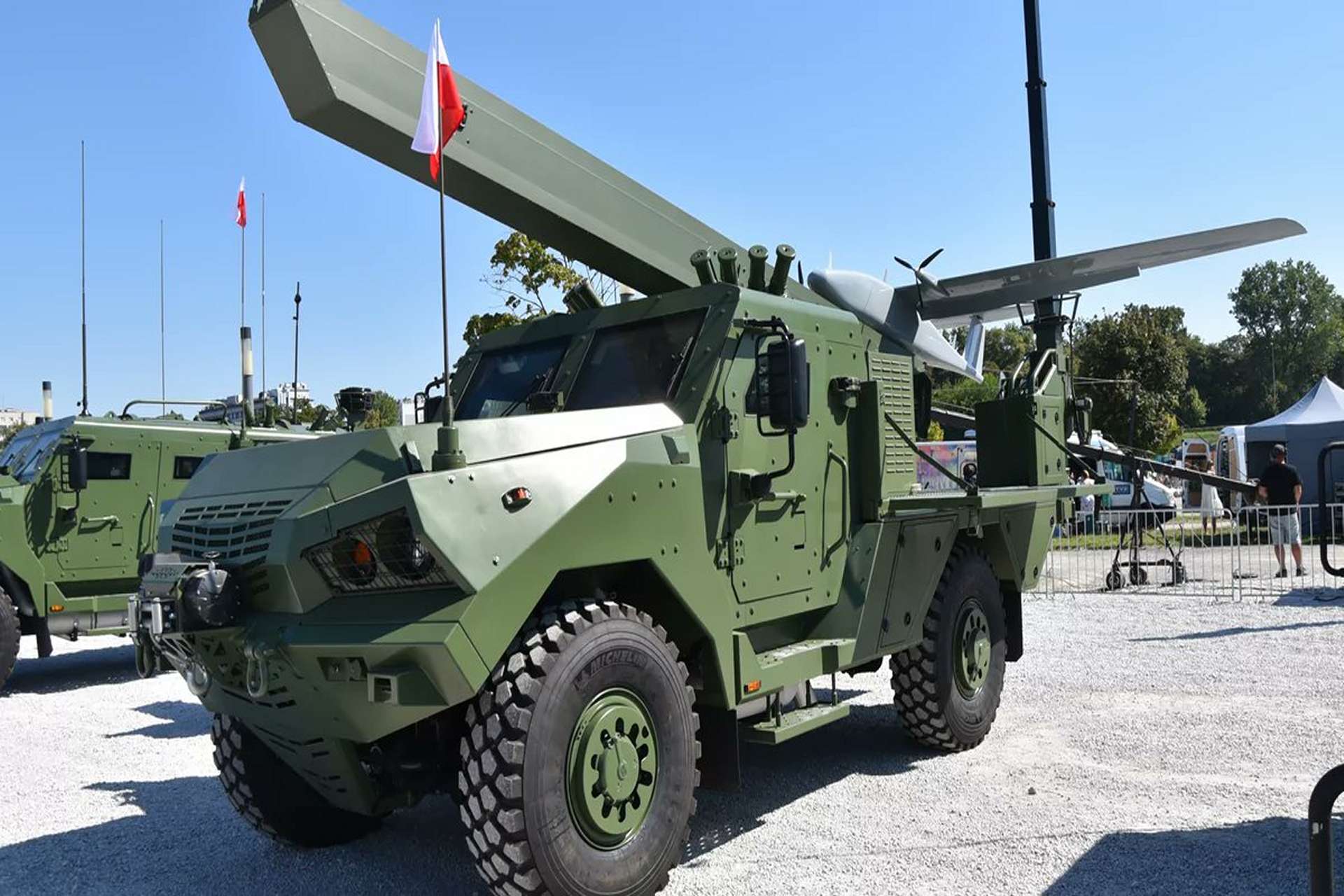
On June 27, 2024, the Polish WB Group released an image of the advanced GLADIUS system, which will soon be delivered to the Polish Army, enhancing its reconnaissance and strike capabilities with the acquisition. This aerial drone system, equipped with advanced sensors and effector systems, integrates national communications and a fire control system, as well as complex data analysis supported by artificial intelligence. It aims to significantly extend the capabilities of the Polish Missile and Artillery Forces (Wojska Rakietowe i Artyleria) to detect targets and engage in long-range strikes.
WB Group GLADIUS Reconnaissance Drone System mounted on Waran 4×4 chassis (Picture source: WB Group)
The GLADIUS system is designed to accurately strike important targets at distances of over 100 km from the launch point. This reconnaissance and attack complex allows for full operational autonomy. The reconnaissance drones included in the Gladius system observe the battlefield and detect targets, which are then classified and qualified to be destroyed by the attack drones.
Before the scheduled delivery in December, the GLADIUS system is undergoing a series of tests to verify the functionality of its components as well as the entire system. These tests include the evaluation of the unmanned search and strike systems BSP-U (Bezzałogowy System Powietrzny – Uderzeniowy) and their warheads.
During a briefing by the Chief of Missile and Artillery Forces, the GLADIUS system was presented to future users. The artillerymen were able to familiarize themselves with the system's elements, both during the presentation and through operations using command vehicles and launchers.
The battery module of the GLADIUS system is intended for the Missile and Artillery Forces of the Land Forces. It is used for aerial reconnaissance and strike missions, carried out by specialized unmanned aerial platforms. GLADIUS is an entirely Polish design, with all components connected by the integrated combat management system TOPAZ. The C2 solutions include the FONET digital communication platform for vehicles, computer terminals, active LAN and WAN network elements, tactical radios, and integration performed by WB GROUP.
The GLADIUS system includes two basic variants of unmanned aerial vehicles. The FT-5 family systems are intended for reconnaissance missions and are equipped with various sensors allowing the detection and tracking of objects in visible and radio-electronic emissions. BSP-U systems are used for strike missions with various types of warheads, including explosive and HEAT warheads. The BSP-UT training variant is a reusable platform that performs the same missions as the BSP-U, without the capability to destroy targets.
Additionally, the GLADIUS system includes a range of vehicles, including command vehicles and launchers, equipped with a universal launcher for all GLADIUS unmanned platforms, built on a Waran 4×4 chassis provided by HSW S.A. The system is also supported by other vehicles, including logistical and technical support trucks.
With the deployment of the GLADIUS system, the Polish Army equips itself with a powerful tool to enhance its defense capabilities and ensure precise surveillance and strikes on the battlefield.

- Details
- Written by: Halna du Fretay
- Category: 2024
- Hits: 3560
In ongoing discussions reported by CNN on June 27, 2024, the United States, Israel, and Ukraine are considering transferring Patriot air defense systems to strengthen Ukrainian defenses against frequent Russian airstrikes. These talks have not yet concluded in a final agreement, and the logistics of potentially refurbishing the systems in the US after their transfer from Israel are still under negotiation.
Follow Army Recognition on Google News at this link
Israel's Patriot systems, mainly older PAC-2 models, have been crucial in intercepting aerial threats, including drones and ballistic missiles (Picture source: Israeli Defense forces)
Originally integrated into the Israeli military in 1991, these systems are set to be phased out in favor of more advanced technologies like the Iron Dome and David’s Sling.
The potential transfer could significantly shift Israel's stance in the Ukraine conflict, balancing its diplomatic relations with Russia. Historically, Israel has maintained a cautious approach to the conflict, avoiding direct criticism of Russia. In 2022, Russia explicitly warned that arming Ukraine with Israeli weapons could severely damage bilateral relations.
Israel's Patriot systems, mainly older PAC-2 models, have been crucial in intercepting aerial threats, including drones and ballistic missiles. Part of Israel's comprehensive air defense network, these systems complement the short-range Iron Dome, medium-range David’s Sling, and long-range Arrow missile systems. Israel plans to retire these older Patriot models soon as part of its ongoing defense modernization.
Since the war's onset, Ukraine has received significant support from international allies to enhance its air defense capabilities. The US, Germany, and the Netherlands have all committed to sending Patriot systems to Ukraine, each contribution bolstering Ukraine's ability to counter aerial attacks. In December 2022, the US announced its intention to send a Patriot system to Ukraine as part of broader military aid aimed at significantly improving Ukrainian air defenses. Shortly thereafter, in January 2023, Germany confirmed it would send an additional Patriot system to Ukraine in close cooperation with the US to maximize the effectiveness of the support provided.
The Netherlands has also joined this international effort by pledging another Patriot system. This trilateral cooperation underscores robust coordinated support for Ukraine, illustrating the allies' commitment to defending Ukrainian sovereignty and enhancing its military capabilities against Russian aggression. The Biden administration has emphasized the urgent need to bolster Ukraine's air defenses, leveraging previous US and German Patriot deployments which have proven effective on the Ukrainian battlefield.
Israel's consideration of this transfer aligns with its participation in a US-led multinational group that has supported Ukraine with non-military aid. Despite Ukrainian President Volodymyr Zelensky's requests for more direct military support, such as Iron Dome interceptors, Israel had previously offered to assist in developing defense capabilities rather than supplying existing systems.
This development comes as the US government prioritizes critical defense capabilities for Ukraine, signaling a significant policy shift to support Ukraine's defense needs amid the ongoing war. The US Department of Defense has reaffirmed its commitment to supporting allies facing existential threats, ensuring the provision of necessary military aid.
Ongoing discussions and potential policy shifts highlight the dynamic nature of international defense collaborations and the strategic adjustments required to meet evolving global security challenges.
Read more: US and Israel Discuss Transferring Patriot Air Defense Systems to Ukraine

- Details
- Written by: Jérôme Brahy
- Category: 2024
- Hits: 5468
On June 27, 2024, the Iveco-Oto Melara Consortium signed a contract with the Italian Secretariat of Defence (Segredifesa) Land Armaments Directorate for the supply of 28 Centauro II 8x8 anti-tank vehicles, finalizing the Italian Army's requirement for a total of 150 units. The Centauro II, a modernized version of the Centauro I anti-tank vehicle, is armed with a 120/45 mm gun, with an option to interchange it with a 105/52 mm gun.
Follow Army Recognition on Google News at this link
This contract stems from a procurement notice issued by the Italian Ministry of Defense on April 5, 2023, which outlined the acquisition of 28 additional Centauro II vehicles and included ten years of integrated logistical support. (Picture source: Army Recognition)
This contract stems from a procurement notice issued by the Italian Ministry of Defense on April 5, 2023, which outlined the acquisition of 28 additional Centauro II vehicles and included ten years of integrated logistical support. This initiative builds on previous contracts for 96 and 10 vehicles, signed in 2020 and 2018 respectively, with the goal of completing the acquisition of 150 Centauro II units. The contract, valued at €605.49 million, will be financed through budget allocations from 2024 to 2032. It also includes upgrading earlier units to the configuration 3.0 standard, ensuring compliance with current military standards. The contract was awarded to the Iveco-Oto Melara Consortium (CIO), the sole qualified supplier, through a negotiated procedure due to the classified and technical nature of the project.
The procurement notice from April 2023 provided additional details, noting that the supplied vehicles are equipped with systems featuring eye-safe laser sources (class I) and include a specific clause addressing any laser safety obligations of the manufacturer. The Italian Army General Staff, in a mandate letter, reiterated the importance of proceeding with the procurement of Centauro II vehicles under a negotiated procedure without prior publication of the tender notice, aligning with the previous acquisitions of Centauro II.
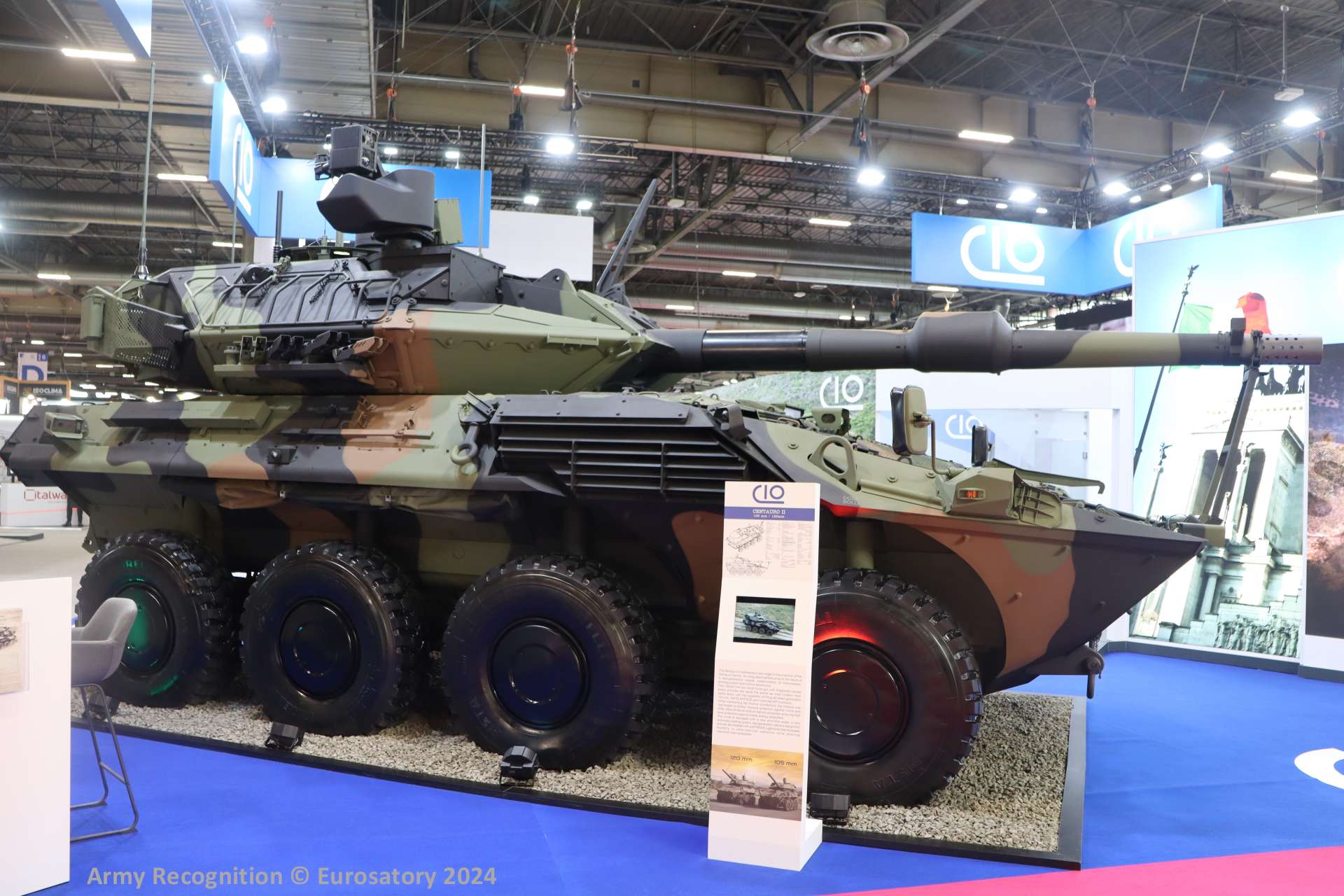
The main armament of the Centauro II is a 120/45 mm gun, with an option to interchange it with a 105/52 mm gun, supported by an advanced ammunition handling system. (Picture source: Army Recognition)
The Centauro II, a modernized version of the Centauro I anti-tank vehicle, was first presented at Eurosatory 2016 and is armed with an improved high-pressure gun. Featuring an 8x8 configuration, the vehicle incorporates modernized systems for transmission, braking, and control electronics, along with a digital tire pressure control system (CTIS) and modern suspension for effective navigation across various terrains.
The main armament of the Centauro II is a 120/45 mm gun, with an option to interchange it with a 105/52 mm gun, supported by an advanced ammunition handling system. The turret, which is operated by a three-man crew (commander, gunner, loader), includes new anti-mine seats and can be equipped with various machine guns and grenade launchers. The vehicle's optronic equipment features a panoramic commander's sight, gunner's sight, and backup systems for operations in degraded modes, all integrated into a network-centric warfare system.
In terms of protection, the Centauro II includes ballistic armor with a high-hardness monocoque steel hull and modular armor capable of defending against anti-tank mines and other threats. The hull and turret meet the AEP 55 standard for ballistic protection. Crew safety measures include improved ammunition storage partitioning and modern NBC (nuclear, biological, chemical) protection systems.
The Centauro II also features modern combat equipment, including a radio system, digital intercom, integrated Battle Management System (BMS), and anti-RC-IED capabilities. It is fitted with the latest optronics for situational awareness and equipped with new anti-mine seats, NBC protection, fire-fighting, and anti-explosion systems. The vehicle's air conditioning system allows operation in temperatures ranging from -30°C to +44°C.
The mobility of the Centauro II is enhanced by its Iveco Vector 8V Euro III Diesel engine developing 720 HP, coupled with an automatic gearbox with seven forward and one reverse gears. The vehicle's power-to-weight ratio provides high performance in terms of speed and acceleration. The hydro-pneumatic suspension and digital tire pressure control system (CTIS) allow it to operate on various terrains. The vehicle can reach a maximum road speed of 105 km/h and has a maximum cruising range of 800 km. It can negotiate gradients of 60%, side slopes of 30%, and ford depths of 1.5 m without preparation.
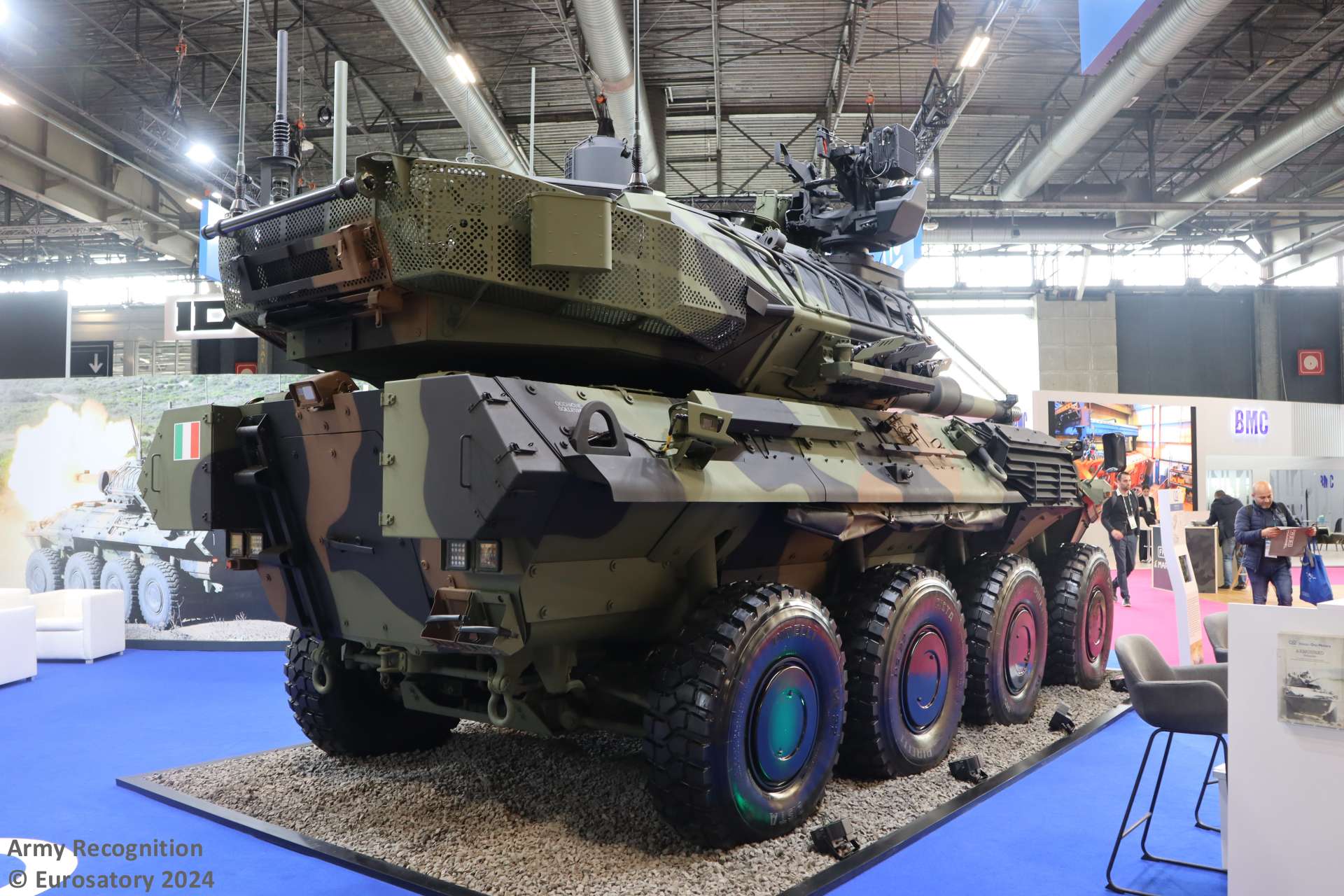
The vehicle can reach a maximum road speed of 105 km/h and has a maximum cruising range of 800 km. (Picture source: Army Recognition)
Read more: Italian Army reaches 150 Centauro II anti-tank vehicles with a new delivery of 28 units

- Details
- Written by: Halna du Fretay
- Category: 2024
- Hits: 4701
In southern Donetsk, the introduction of heavy industrial drones into Russian military operations signifies a significant shift in tactical approaches, as reported by The Russian MoD on Telegram. Russian troop groups have adopted the use of "Baba Yaga" type drones, noted for their robust capabilities in both combat and logistical roles. Follow Army Recognition on Google News at this link
Screenshot of the video showing the use of drones by Russian soldiers (Picture source: Russian MoD)
These drones have been outfitted by Russian military technicians with a new release system capable of carrying and deploying two 82mm mines, enhancing their impact while remaining undetectable by Ukrainian electronic warfare systems. This adaptation allows the drones to conduct precise strikes, minimizing the risk of detection and countermeasures.
Beyond their combat applications, these heavy drones are crucial for logistical support. Their substantial payload capacity enables the rapid and secure transport of critical supplies directly to front lines. Drone operators efficiently deliver ammunition, medical supplies, and food to combatants, ensuring sustained operational capability and support in challenging and often isolated terrains.
The drone "Baba Yaga," named after a mythical figure from Slavic folklore, was originally a Ukrainian drone used against Russia. This drone, capable of carrying loads up to 17 kilograms, has been pivotal in nighttime operations, allowing the Ukrainian army to maintain its positions along the eastern Dnipro River, particularly in the Kherson region.
According to Forbes, drone operators played a crucial role in the Krynky operation in November 2023, where Ukrainian forces established a bridgehead. This operation surprised both Russian troops and international observers with its success, thereby expanding Ukraine's summer offensive.
"Baba Yaga" stands out for its ability to evade Russian electronic jamming efforts, thanks to an advanced electronic system. This feature allows the drone to reach targets considered safe by enemy forces. However, its capabilities are limited at night without infrared cameras, increasing the cost per drone and explaining why these drones have drawn Russian interest.
Challenges remain for this drone, including reduced range due to its heavy armament. Moreover, although the drone is relatively noisy, making its presence known to Russian troops, this does not guarantee that it can be easily neutralized.
The dual-use capability of these heavy drones highlights a strategic evolution in the use of unmanned aerial vehicles (UAVs) in warfare, combining combat effectiveness and logistical efficiency to maintain continuity and support in active conflict zones.
Read more: Russian forces begin deployment of heavily armed Baba Yaga drones for munitions drops

- Details
- Written by: Administrator
- Category: 2024
- Hits: 20648
The U.S. Army will begin rigorous operational testing of the new M10 Booker fire support tracked combat vehicle over the next three months at Ft. Liberty, formerly Ft. Bragg. This significant phase in the vehicle's development marks a critical step toward integrating into the US Army's combat vehicle fleet.
Follow Army Recognition on Google News at this link
A live fire demonstration of the U.S. Army’s newest fire support tracked combat vehicle, the M10 Booker. (Picture source: U.S. DoD)
According to information published on the X account of defense analyst Ronkainen, the U.S. Army has already received a total of eight M10 Booker vehicles. This initial delivery comprises four production vehicles and four production retrofit vehicles, which have been modified from their original XM10 configurations.
The MPF was officially named "M10 Booker" in June 2023 to honor two American soldiers. Private Robert D. Booker, who was killed on April 9, 1943, during the Tunisian campaign of World War II, received the Medal of Honor posthumously. Staff Sergeant Stevon Booker, who died on April 5, 2003, during a "Thunder Run" in the 2003 invasion of Iraq, was posthumously awarded the Distinguished Service Cross.
The contract for the production of the M10 Booker was awarded to General Dynamics Land Systems (GDLS) in 2021, following a competitive bidding process. The contract, valued at approximately $1.5 billion, includes the delivery of an initial batch of 144 vehicles, with options for additional units in the future based on performance and operational needs. The signing of this contract marked a significant milestone in the U.S. Army's modernization efforts, aiming to replace aging platforms with more advanced and versatile combat vehicles.
The acquisition of the M10 Booker is part of the U.S. Army's broader strategy to enhance its mechanized fire support capabilities. The vehicle is equipped with a state-of-the-art 105mm cannon, capable of firing a variety of ammunition types, including high-explosive anti-tank (HEAT) and kinetic energy (KE) rounds, providing versatile engagement options against both armored and soft targets. To complement its primary weapon, the vehicle also features a coaxial 7.62mm machine gun and a roof-mounted remotely operated weapon station (ROWS) with a 12.7mm heavy machine gun for added defensive capabilities.
In terms of protection, the M10 Booker boasts advanced modular armor, which can be customized based on mission requirements. This includes composite and reactive armor packages designed to withstand a wide range of battlefield threats, from improvised explosive devices (IEDs) to direct hits from enemy fire. The goal of the M10 Booker is to provide U.S. ground forces with a highly mobile and survivable fire support platform capable of operating in diverse combat environments, thereby enhancing the overall effectiveness and resilience of Army operations.
The goal of the U.S. Army's acquisition of the M10 Booker is to provide ground forces with a highly mobile and survivable fire support platform capable of operating in diverse combat environments. This aims to enhance the overall effectiveness and resilience of Army operations by delivering precise and powerful support in various combat scenarios, thereby significantly improving the Army's mechanized fire support capabilities.

- Details
- Written by: Triffaux
- Category: 2024
- Hits: 4970
On April 4, 2024, High Mobility Multipurpose Wheeled Vehicles (HMMWV) from the US Marine Corps, equipped with the Multi-Mission Hemispheric Radar (MHR®) produced by DRS RADA Technologies, participated in a high-energy laser expeditionary exercise. These vehicles, assigned to the Naval Surface Warfare Center Dahlgren and Crane divisions, were part of the Weapons and Tactics Instructor (WTI) Course 2-24 at the tactical airfield near Wellton, Arizona. The WTI is an advanced-level course that provides tactical training to enhance and employ advanced aerial weapons and tactics.
Follow Army Recognition on Google News at this link
USMC Humvee Mounted with Multi-Mission Hemispheric Radar (MHR®) (Picture source: DRS RADA Technologies and Naval Surface Warfare Center Dahlgren and Crane divisions)
The Marine Air Defense Integrated System (MADIS) is a comprehensive air defense initiative by the US Marine Corps designed to improve the detection, tracking, and neutralization of aerial threats, particularly unmanned aircraft systems (UAS). The program leverages advanced radar technology such as the Multi-Mission Hemispheric Radar (MHR®) by DRS RADA, which offers 360-degree coverage and superior target tracking capabilities. These radars are integrated into various platforms, including the Joint Light Tactical Vehicle (JLTV) and the MRZR, creating MADIS and Light-MADIS variants. The MADIS program has transitioned from an urgent operational need to an official program, indicating its critical importance for Marine Corps operations (Breaking Defense, USNI News).
The MADIS program significantly enhances the Marines' ability to counter modern threats. By providing robust and mobile air defense systems, it allows the Marines to effectively detect and engage enemy UAS, fixed-wing aircraft, and other aerial threats in various operational environments. The integration of these advanced radar systems on tactical vehicles such as Humvees and JLTVs ensures that the Marines can maintain situational awareness and protection on the move. This capability is crucial for protecting Marine units during deployments, improving their operational effectiveness, and increasing their survivability in hostile environments.
The Naval Surface Warfare Center Dahlgren Division (NSWCDD) and Crane Division play essential roles in this program. NSWCDD is primarily responsible for software development and analyses required for system integration and interoperability, ensuring that MADIS components work harmoniously and effectively. Concurrently, the Crane Division manages the hardware aspects of the program, overseeing the acquisition, testing, and evaluation of hardware components. Together, these divisions provide crucial technical and logistical support, enabling MADIS to meet the requirements of the Marine Corps and enhance their mobile air defense capabilities in the field.
The Multi-Mission Hemispheric Radar (MHR®) is a high-tech ground radar system designed for multiple operational missions, including Counter-Unmanned Aircraft Systems (C-UAS), Very Short-Range Air Defense (VSHORAD), Counter-Rocket, Artillery, and Mortar (C-RAM), and hemispheric surveillance. This advanced pulse-Doppler, software-defined, S-band radar platform features an Active Electronically Scanned Array (AESA) antenna and Gallium Nitride (GaN) amplifiers, providing exceptional 4D processing capabilities for superior clutter handling and multipath mitigation.
The MHR radar supports a diverse range of operational missions, both on the move and stationary, for ground and maritime applications. For C-UAS and VSHORAD missions, it handles all types of aerial threats, including Class 1 micro-UAVs. In C-RAM and Sense & Warn missions, the radar detects and warns against indirect fires and low-trajectory threats, determining the Point of Origin (POO) and Point of Impact (POI). For hemispheric surveillance, it can simultaneously detect and track aerial and ground threats.
The Multi-Mission Hemispheric Radar (MHR®) stands out for its exceptional situational awareness, combat survivability, and ability to efficiently accomplish a wide range of operational missions. This exercise and continuous advancements in radar technology underscore the Marine Corps' commitment to maintaining a tactical advantage and ensuring the safety and effectiveness of its operations.

- Details
- Written by: Jérôme Brahy
- Category: 2024
- Hits: 7889
On June 27, 2024, the General Staff of the Polish Armed Forces announced the completion of the delivery of 116 M1A1 Abrams tanks, finalized a year and a half after the contract was signed by the Agencja Uzbrojenia (the Polish Armament Agency). The 1st Warsaw Armoured Brigade, celebrating its 30th anniversary on the same day, along with the 18th Mechanized Division located in Siedlce, eastern Poland, are the primary recipients of this final tranche, comprising 47 M1A1 Abrams tanks and 26 M1152A1B2 workshops mounted on HMMWV chassis.
Follow Army Recognition on Google News at this link
This latest delivery was part of a Foreign Military Sale (FMS) approved by the US State Department on December 6, 2022, which included a total of 116 M1A1 Abrams for an estimated value of $3.75 billion (Picture source: Agencja Uzbrojenia)
The delivery process began on January 4, 2023, when the Polish Agencja Uzbrojenia signed the contract with the United States. The first batch arrived on June 28, 2023, consisting of 14 M1A1 tanks and 3 M88A2 Hercules recovery vehicles. A subsequent shipment arrived on November 21, 2023, coinciding with the Polish Tank-Vehicle Service Day, and included 26 M1A1 Abrams tanks and 9 M88A2 Hercules recovery vehicles. The third transport, comprising 29 M1A1 tanks, arrived on January 6, 2024. These deliveries have now culminated in the final tranche, equipping the Polish Armed Forces with the battle-proven M1A1 Abrams main battle tank under the name M1A1FEP.
This acquisition was part of a Foreign Military Sale (FMS) approved by the US State Department on December 6, 2022, which followed the Russian invasion of Ukraine on February 24, 2022. The deal, valued at approximately $3.75 billion, included a variety of military vehicles and equipment. Along with the 116 M1A1 Abrams Main Battle Tanks, the sale included 12 M88A2 Hercules Combat Recovery Vehicles, 8 M1110 Joint Assault Bridges, 6 M577A3 Command Vehicles, 26 M1152A1 High Mobility Multi-purpose Wheeled Vehicles (HMMWV), and 26 M1279A1 Joint Light Tactical Vehicles (JLTV). Additionally, the package included 116 M2 .50 caliber machine guns and 232 M240 7.62mm machine guns.
The sale also provided various 120mm cartridges for training and combat purposes: 30,928 M865 Target Practice (TPCSDS-T), 20,823 M1002 Target Practice Multipurpose Tracer (TPMP-T), 60,000 M829A4 Armor Piercing (APFSDS-T), 2,000 M829A3 Armor Piercing (APFSDS-T), 50,000 M829A2 Armor Piercing (APFSDS-T), 10,000 M830A1 High Explosive Anti-Tank (HEAT) TP-T, 60,000 M908 High Explosive Obstacle Reduction-Tracer (HE-OR-T), and 70,000 M1147 High Explosive Advanced Multipurpose Round. Additional components of the FMS included forward repair systems, next-generation shop equipment maintenance shelters, gas turbines, communications equipment, GPS receivers, ammunition, spare and repair parts, special tools and test equipment, technical manuals, new equipment training, and support services for logistics and program implementation.
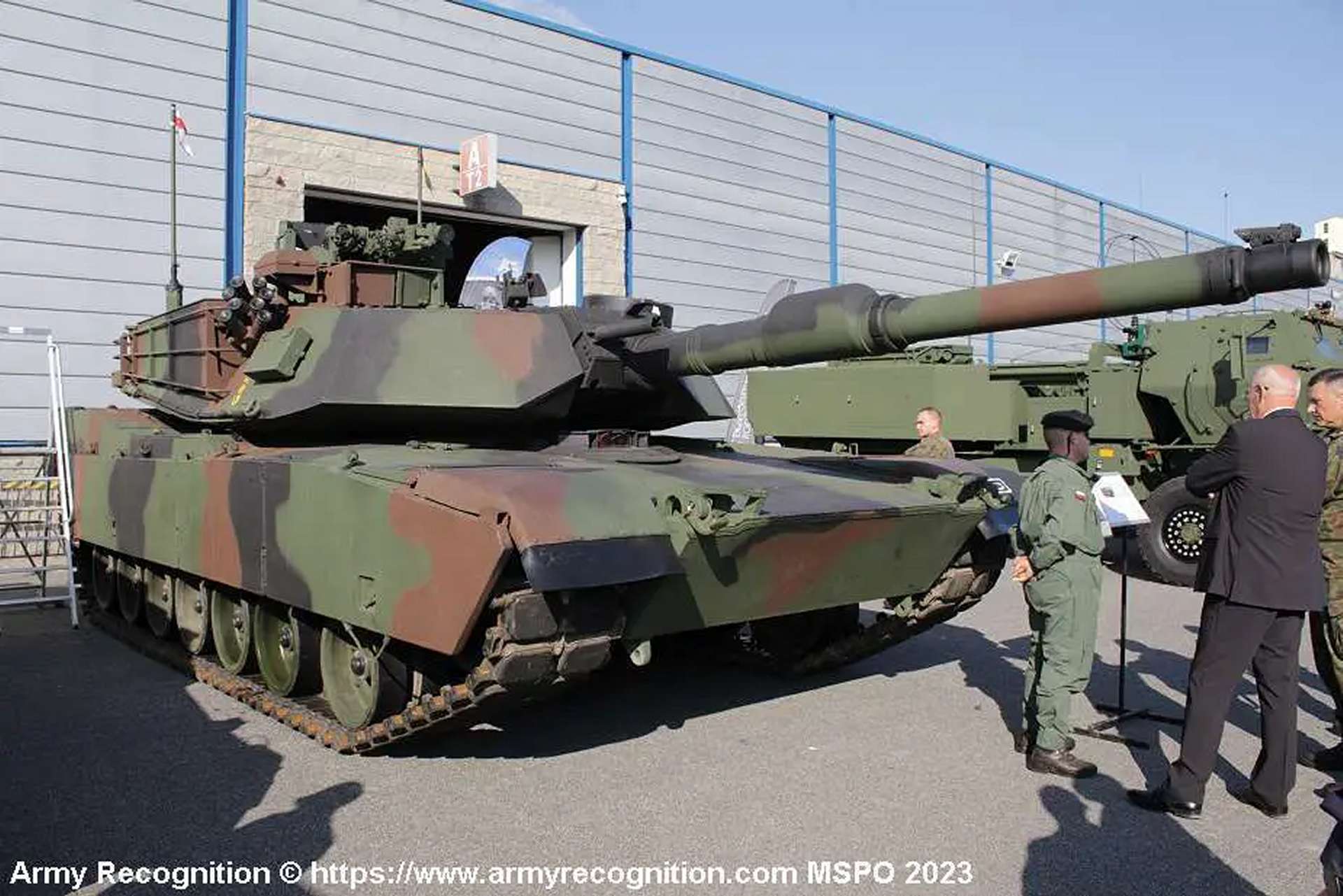
The first batch arrived on June 28, 2023, consisting of 14 M1A1 tanks and 3 M88A2 Hercules recovery vehicles. (Picture source: Army Recognition)
The General Staff of the Polish Armed Forces also confirmed that this was the last delivery of M1A1 Abrams tanks before transitioning to the M1A2 SEP v.3 main battle tanks. Poland has ordered 250 units of the M1A2 SEP v.3, with the first batch ready for transport. The contract for these tanks was signed on April 5, 2022, following the US State Department's approval of another Foreign Military Sale valued at approximately $6.0 billion. This package includes 250 M1A2 SEPv3 Abrams tanks, 250 AN/VLQ-12 CREW Duke counter-IED systems, 26 M88A2 Hercules Combat Recovery vehicles, and 17 M1110 Joint Assault Bridges. It also includes 276 M2 .50 caliber machine guns, 500 M240C 7.62mm machine guns, and 15 AGT1500 gas turbine engines.
Additionally, the FMS includes significant quantities of ammunition and training equipment: 9,168 120mm M865 Target Practice, Cone Stabilized, Discarding Sabot - Tracer (TPCSDS-T) cartridges, 4,592 120mm M1002 Target Practice Multipurpose Tracer (TPMP-T) projectiles, 13,920 120mm M830A1 High Explosive Anti-Tank (HEAT) TP-T cartridges, and 6,960 120mm XM1147 High Explosive Multipurpose Tracers. The sale also provides forward repair systems, trailer-mounted generators, Common Remote Operated Weapons Station Low Profile (CROWS-LP), communications equipment, GPS receivers, spare and repair parts, Special Tools and Test Equipment (STTE), technical manuals, maintenance trainers, gunnery training systems, tank driver’s trainers, and new equipment training. The package includes US Government and contractor services for technical, engineering, and logistics support, ensuring comprehensive program implementation and support.

Poland has ordered 250 units of the M1A2, in the SEP v.3 variant, with the first batch ready for transport, for an estimated value of $6 billion. (Picture source: Army Recognition)
In response to perceived threats from Russia and Belarus, Poland, along with Lithuania, Latvia, and Estonia, has proposed constructing a fortified defense line along their borders. These countries have sent a letter to the EU requesting financial support for the project, which is estimated to cost 2.5 billion euros. The initiative aims to protect against both military and hybrid threats, including disinformation, cyberattacks, and migrant movements. The proposal will be discussed at an upcoming EU summit in Brussels, with a focus on coordinated efforts with NATO. Poland has already started enhancing its border defenses, citing security concerns related to migration and the presence of Russian troops in Belarus.
Over the past five years, the Polish Armed Forces have significantly expanded and modernized. The number of active military personnel has grown from around 110,000 to approximately 150,000, including a 30,000-strong territorial defense force established in 2017. The defense budget has increased to over 3% of GDP, allowing for substantial investments in new equipment and technology, such as American M1A2 Abrams tanks, F-35 fighter jets, and Korean K2 Black Panther tanks and K9 howitzers. This expansion is driven by regional security concerns, particularly regarding tensions with Russia and the conflict in Ukraine. The Polish Navy and Air Force are also undergoing modernization, with acquisitions of new submarines, frigates, and air defense systems.

This final tranche comprised 47 M1A1 Abrams tanks and 26 M1152A1B2 workshops mounted on HMMWV chassis. (Picture source: General Staff of the Polish Armed Forces)
Read more: 47 US M1A1 Abrams tanks arrive in Poland in response to Russian actions in Ukraine

- Details
- Written by: Vandenbosch
- Category: 2024
- Hits: 7549
Recent images shared on social media by the Ukrainian government show Ukrainian forces using Russian equipment with American ammunition. This somewhat unusual combination is indeed possible, and we will explain why. This combination was highlighted by the using of a Ukrainian 2S7 Pion self-propelled gun with 203mm M106 ammunition of US origin.
Follow Army Recognition on Google News at this link
The Ukrainian 2S7 Pion Self-Propelled Howitzer with US M106 203mm ammunition. (Picture source: Ukrainian MoD)
First, what is a 2S7 Pion and the American M106 ammunition seen in the images? We will also explore why the Americans produce ammunition of the same caliber as the Russians.
The 2S7 Pion is a heavy self-propelled gun of 203mm, designed by Russia and used by several countries, including Ukraine. This imposing artillery system is equipped with a 2A44 203mm cannon, capable of firing long-range shells with great precision. The Pion is operated by a crew of seven and protects small arms fire and shell fragments. It is also equipped with an NBC (nuclear, biological, chemical) overpressure system, an auxiliary power unit, and night vision equipment. Weighing 46,500 kg, with a road speed of 50 km/h and an operational range of 650 km, its impressive dimensions (13.12 m long, 3.38 m wide, and 3.0 m high) make it a key piece of heavy artillery.
The American 203mm M106 ammunition is a high-explosive fragmentation (HE-Frag) shell designed for use against personnel and material, generating destructive blasts and fragments upon impact. This spin-stabilized projectile is constructed from a hollow steel forging with a boat-tailed base, a streamlined ogive, and a rotating metal band. A welded base cover provides additional protection against hot gases from the propelling charge during firing. Equipped with a three-eyebolt lifting plug for easy handling and closure of the fuze cavity, this ammunition can be loaded with either TNT or Composition B. Projectiles with a deep fuze cavity contain a supplementary charge to maximize destructive effect.
The United States began producing 203mm ammunition specifically for artillery systems like the M110 howitzer, a self-propelled gun used by the US Army since the 1960s. The M110, equipped with a 203mm cannon, was designed to provide heavy and mobile artillery support. It has been widely used in various conflicts for its ability to deliver precise and powerful long-range strikes. The production of 203mm ammunition like the M106 ensures these systems remain operational, whether for missions involving the destruction of fortifications, concentrations of enemy troops, or other strategic targets.
Although specific information on the annual production of 203mm ammunition is limited, it is clear that the production capacity for artillery munitions is closely monitored and adjusted based on military needs and international commitments. These US shells did not come out of nowhere; in 2023, the Pentagon announced the provision of 203mm M106 shells to Ukraine to support its operations.
Thus, the use of American ammunition in Russian equipment by Ukrainian forces is not surprising. Beyond compatibility, the integration of modern and high-precision munitions into existing artillery systems enhances Ukraine's ability to carry out effective and targeted strikes against Russian positions.
Typically, Russian and US equipment are not compatible in terms of caliber, and munitions are not interchangeable, making it rather surprising to see such an achievement on the battlefield, even though it remains clearly within the realm of possibility as we have explained.

Ukrainian soldiers reloading the Russian-origin 2S7 Pion with US 203mm M106 ammunition. (Picture source: Ukrainian MoD)
Read more: Ukrainian Forces Use 203mm US Ammunition with Russian 2S7 Self-Propelled Howitzer

- Details
- Written by: Administrator
- Category: 2024
- Hits: 4202
The Taiwanese Ministry of National Defense has unveiled the new D2 prototype, a state-of-the-art 8x8 armored vehicle designed to enhance Taiwan's anti-tank capabilities. This announcement was made via the Ministry's official X (formerly Twitter) account on June 27, 2024, marking a significant advancement in Taiwan's defense technology amidst rising regional tensions.
Follow Army Recognition on Google News at this link
The new D2 locally-made 105mm fire support 8x8 armored vehicle for the Taiwanese armed forces. (Picture source: Taiwanese MoD)
The D2 105mm fire support armored vehicle prototype, based on the indigenous Cloud Leopard 8x8 armored vehicle, boasts several cutting-edge features that make it a formidable asset on the battlefield. Equipped with a powerful 105mm cannon, the D2 is engineered for superior firepower and precision. Its hunter-killer capacity allows for effective engagement with enemy targets, ensuring swift and decisive action in combat scenarios.
One of the standout features of the D2 is its 360-degree surround view capability. This advanced system provides the vehicle's crew with comprehensive situational awareness, significantly enhancing operational efficiency and safety. The all-around visibility ensures that the D2 can effectively navigate and respond to threats from any direction, a critical advantage in modern warfare.
Additionally, the D2 prototype can achieve a top speed of over 100 km/h. This impressive mobility allows for rapid deployment and repositioning, enabling Taiwanese forces to respond swiftly to emerging threats. The combination of speed and firepower ensures that the D2 can both outmaneuver and outgun potential adversaries.
The development of the D2 comes at a crucial time for Taiwan, as it faces increasing military pressure from China. The introduction of this advanced armored vehicle is part of Taiwan's broader strategy to bolster its defense capabilities and deter aggression. The Ministry of National Defense has emphasized that the D2 will play a key role in enhancing Taiwan's defensive posture and maintaining regional stability.
The Cloud Leopard 8x8 armored vehicle platform, which serves as the standard chassis for the D2, has already proven to be a reliable and versatile vehicle in Taiwan's military arsenal. The integration of the new features in the D2 prototype demonstrates Taiwan's commitment to leveraging indigenous technology to meet its defense needs.
As tensions continue to simmer in the Taiwan Strait, the D2 prototype represents a significant step forward in Taiwan's efforts to modernize its military forces. With its advanced weaponry, enhanced situational awareness, and superior mobility, the D2 is poised to be a critical component of Taiwan's defensive strategy in the years to come.

- Details
- Written by: Halna du Fretay
- Category: 2024
- Hits: 2389
BAE Systems, a leading European defense industry player, has enhanced its cooperation with Tatra Defence Vehicle (TDV), a member of the Czechoslovak Group (CSG) Holding, by signing a significant contract for the production of the BvS10 all-terrain armored vehicles. Valued at up to €42 million (approximately 1 billion Czech Koruna), the contract encompasses a range of production processes including welding, painting, and installation of hull insulation.
Follow Army Recognition on Google News at this link
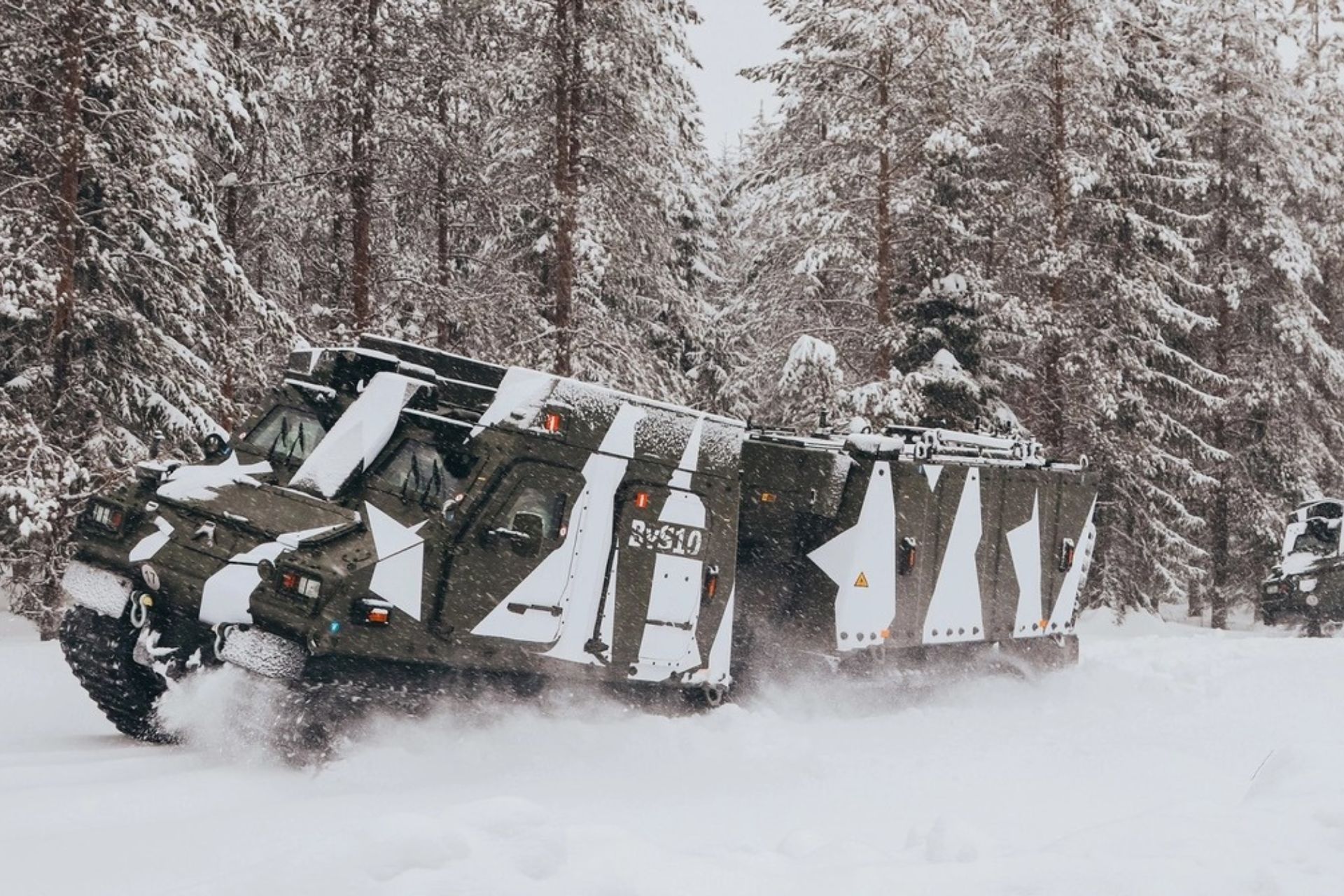
The BvS10 family of vehicles, developed by BAE Systems, offers a proven all-terrain solution capable of navigating landscapes that would hinder most other vehicles (Picture source: Bae Systems)
Under the recently concluded agreement, TDV will produce 250 new BvS10 vehicles, with an option to extend the order by an additional 274 units. These vehicles, integral to the three-nation Collaborative All-Terrain Vehicle (CATV-3N) program, are designed to operate in extreme climatic conditions and challenging terrains, targeting the needs of Sweden, Germany, and the United Kingdom. The program is set to commence prototype production this summer, with the start of mass production planned for late 2025.
Tommy Gustafsson-Rask, president of BAE Systems Hägglunds, highlighted the strategic benefits of this partnership, noting the integration of TDV’s advanced production technologies and strengthening the role of the Czech defense industry within BAE Systems’ global supply chain. Tomáš Mohapl, CEO of Tatra Defence Vehicle, echoed these sentiments, emphasizing the contract's significance in showcasing the consortium’s capabilities on an international stage and fostering the strategic relationship with BAE Systems Hägglunds.
The partnership between BAE Systems Hägglunds and the Czech defense industry builds on existing collaborations, such as the involvement of Czech companies in supplying CV90 MkIV vehicles for the Czech army. BAE Systems anticipates this will lead to new business opportunities in the European defense sector.
The BvS10 family of vehicles, developed by BAE Systems, offers a proven all-terrain solution capable of navigating landscapes that would hinder most other vehicles. This series includes both armored and unarmored variants, each providing remarkable operational flexibility by combining mobility, payload capacity, and protection for various missions. With nearly fifty years of unparalleled experience in Arctic mobility, building 12,000 all-terrain vehicles and logging millions of miles in Arctic conditions, BAE Systems has crafted the BvS10 family specifically to deliver comprehensive operational support in environments inaccessible to other vehicles.
Vehicles within the BvS10 family, including the armored BvS10 and the unarmored BvS10 Beowulf, are amphibious and support a variety of military and civilian missions. Designed in close cooperation with customers to meet their specific needs, BvS10 vehicles are equipped to integrate a broad range of armaments while maintaining the flexibility to adapt to future requirements. The armored variants include ambulances, weapon supports, armored personnel carriers, remote weapon stations, and more, all designed to offer protection from ballistic attacks and anti-tank mines. Additionally, these vehicles are air-transportable by aircraft such as the CH-47 and C-130. The BvS10 is currently in service in several countries, including Austria, France, the Netherlands, Sweden, and the United Kingdom.
The unarmored Beowulf variant adds additional mission flexibility to the BvS10 family. This amphibious vehicle leverages combat-proven technology underpinning the BvS10 fleets in service worldwide. Like its armored counterpart, the Beowulf is designed in close coordination with customers to ensure their mission requirements are met. It is also air transportable by CH-47 and C-130 aircraft. Ideal for non-military applications such as humanitarian aid, disaster relief, firefighting, and rescue operations, the Beowulf demonstrates inherent flexibility to adapt to a wide range of operational scenarios.
In addition to bolstering military capabilities, BAE Systems plays a crucial role in the economic landscape of Europe. The company is a significant employer and buyer, substantially contributing to the continent's economic and technological growth. Last year alone, BAE Systems spent €1.7 billion with more than 2,200 companies in its continental European supply chain, supporting an estimated further 11,000 indirect jobs. Altogether, the company supports nearly 94,000 jobs across the United Kingdom and continental Europe, underscoring its pivotal role in both defense and economic sectors.
- Details
- Written by: Vandenbosch
- Category: 2024
- Hits: 3632
KNDS, a leading Franco-German company in the defense sector, announced on June 21, 2024, its intention to become the principal European supplier of military robots. The company unveiled its new CENTURIO range, designed to meet the varied needs of modern armies.
Follow Army Recognition on Google News at this link
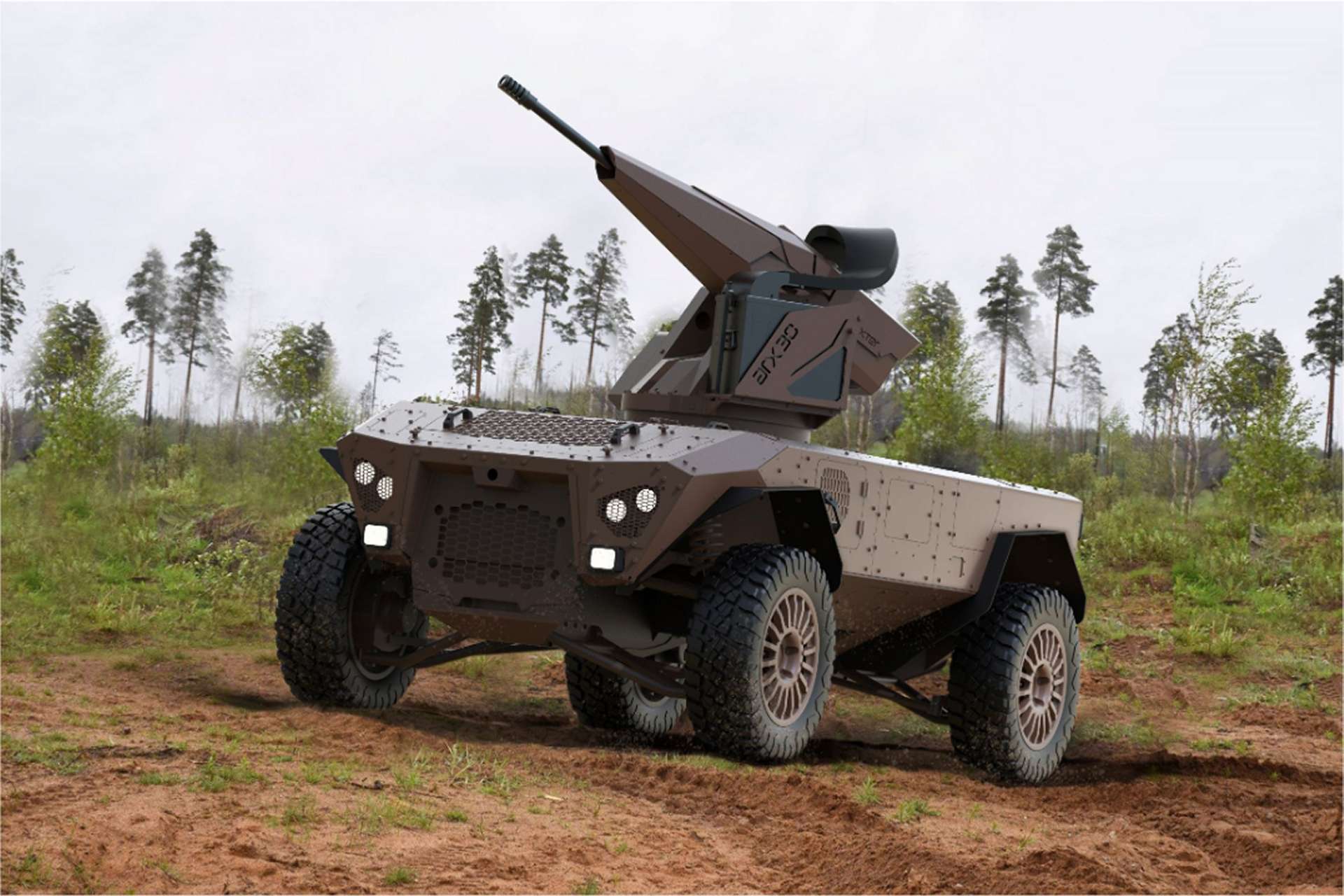
KNDS has demonstrated the remote operation capabilities of its vehicles with the CENTURIO. (Picture source: KNDS)
KNDS has demonstrated the remote operation capabilities of vehicles, highlighting its technological expertise in the field of military robots. In collaboration with MILREM Robotics, the company presented the CENTURIO combat robot range and modular Unmanned Ground Vehicle (UGV) solutions. These innovations are already proving their worth, with field-tested robots like the NERVA patrol robot currently safeguarding the Eurosatory 2024 exhibition.
The CENTURIO range, a testament to KNDS's commitment to enhancing operational credibility, includes various unmanned systems designed for initial combat engagements, aimed at reducing human casualties. This range is characterized by its modularity, capable of meeting a variety of operational needs.
Among KNDS's recent successes is the use of NERVA patrol robots at Eurosatory 2024, ensuring the security of the exhibition at night. KNDS also presented a mission solution for intermediate forces, integrating manned and unmanned systems, utilizing advanced data management and sensor-to-shooter technologies. Long-range communication tests have been successful, with secured radio links reaching 7 km in open fields and 80 m inside a ship with the French Navy. The LARINAE loitering ammunition program also benefits from secured radio links up to 80 km.
In the field of engineering robots, KNDS has demonstrated in various scenarios the effectiveness of remotely piloted bridge-laying systems and explosive ordnance reconnaissance missions conducted by the CENTURIO robot, piloted out of sight. Autonomous capabilities have been confirmed during mobility tests with the ULTRO robot, equipped with artificial intelligence capable of following roads, forest paths, landmarks, and soldiers and vehicles.
The CENTURIO range, designed to meet all military needs, includes several specialized versions: a combat robot version equipped with a 30 mm ARX 30, an explosive ordnance reconnaissance version, and a CBRN (Chemical, Biological, Radiological, and Nuclear) detection version. In addition to the CENTURIO robots, KNDS offers heavy-duty solutions such as the ULTRO carrier robot and the OPTIO tracked combat robot. The company is also progressing in its work on a remotely operated main battle tank chassis in preparation for the Main Ground Combat System (MGCS).
With these developments, KNDS aims to consolidate its position as the leading European supplier of military robots, continually improving the capabilities and operational efficiency of its entire product range. It remains to be seen how these advancements will be received by industry decision-makers.
Read more: KNDS Aims to Establish Itself as Leading European Supplier of Unmanned Ground Vehicles
- Details
- Written by: Triffaux
- Category: 2024
- Hits: 4868
In June 2024, Lockheed Martin secured two important contractual actions from the U.S. Army, totaling $2.8 billion, for the delivery of up to 311 M142 High Mobility Artillery Rocket System (HIMARS) launchers through the fiscal year 2028.
Follow Army Recognition on Google News at this link
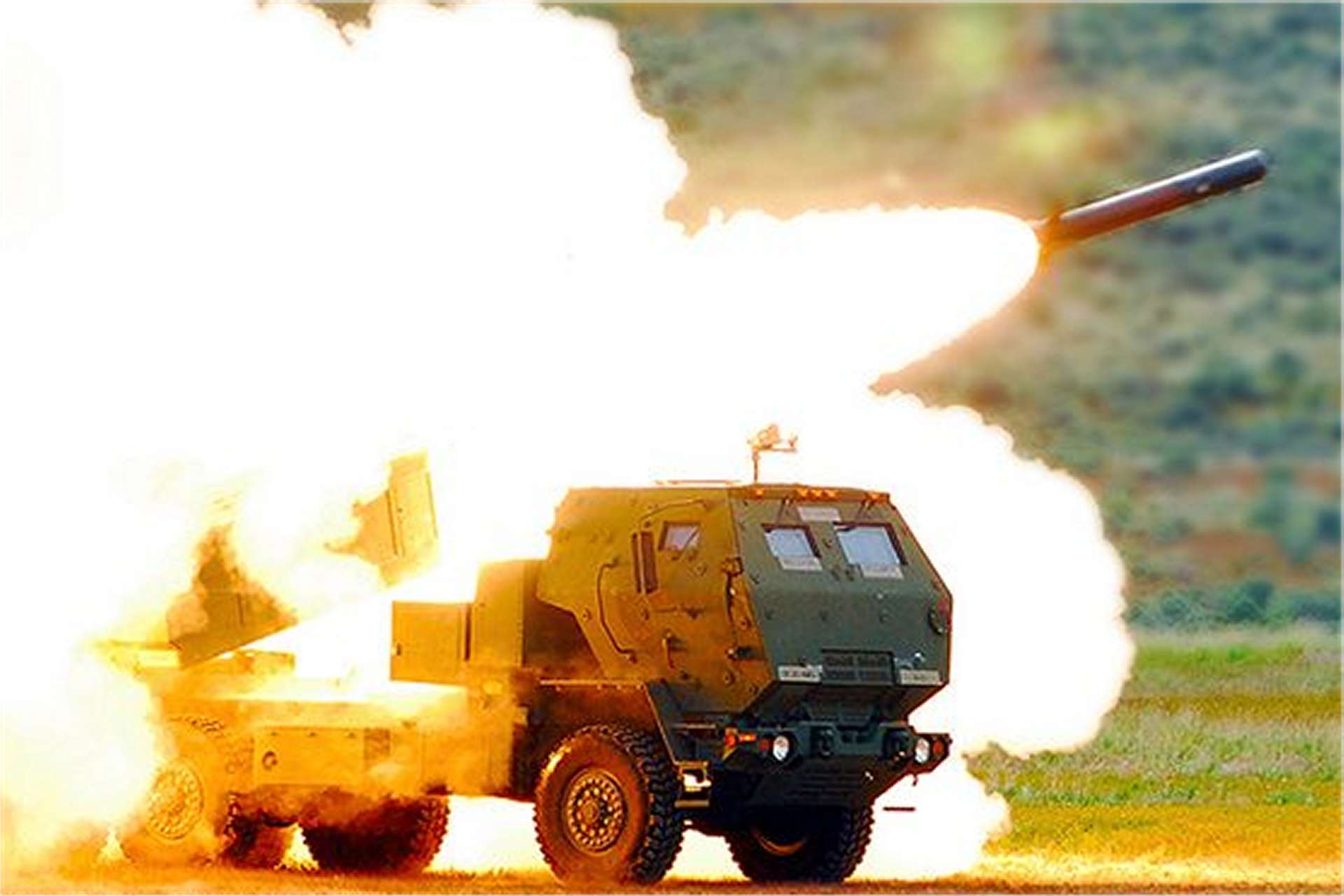
Lockheed Martin M142 High Mobility Rocket Missile Launcher (HIMARS) (Picture source: Lockheed Martin)
This order, executed via a contract modification procedure, provides for the delivery of 215 additional HIMARS launchers by 2028, according to the Army. Additionally, on May 8, the Army awarded Lockheed Martin a firm-fixed-price contract worth $861 million for the delivery of 96 HIMARS launchers. This contract represented the base year funding value authorized for fiscal year 2024.
On June 3, the Army awarded Lockheed a $1.9 billion contract modification for additional HIMARS systems, with a completion date set for May 31, 2028, according to a Pentagon notice.
With this contract modification, the approved contract ceiling by the government for fiscal year 2024 through fiscal year 2028 reaches $2.79 billion, enabling the procurement of a total of 311 HIMARS. This total includes the 96 systems from the May 8 contract and the remaining $1.93 billion, allowing for the procurement of up to 215 additional systems from fiscal year 2025 to fiscal year 2028.
"Current and planned contract awards support the requirements of U.S. and international customers," the Army stated in a release. The HIMARS are among the weapon systems that the United States is sending to Ukraine as part of security assistance programs to help the country in its conflict with Russia. A $225 million weapons package announced by the Department of Defense on June 7 included HIMARS munitions.
Lockheed Martin indicated that the quantities of HIMARS awarded under the recent contract will be based on future demand over the coming years. The supply "expands the U.S. Army's launcher fleet and will fulfill orders from global partners," the company stated.
To recall, the M142 High Mobility Artillery Rocket System (HIMARS) is a mobile artillery launcher developed by the United States, operational since 1998. It is based on a standard Army M1140 truck frame, enhancing its mobility. The system can launch multiple types of munitions, including the Guided Multiple Launch Rocket System (GMLRS) and the Army Tactical Missile System (ATACMS), with a range of up to 300 kilometers depending on the type of munition. The HIMARS carries either a six-pack of rockets or one missile, with the capability for quick reloading to maintain operational tempo in combat scenarios.
The HIMARS is notable for its rapid deployment capabilities, as it can be quickly moved and set up to launch and then relocate before it can be targeted by enemy fire. It is compatible with C-130 and larger aircraft for air transport, facilitating rapid redeployment across diverse operational environments. The system's precision targeting capabilities, facilitated by its fire control system and GPS guidance, aim to minimize collateral damage while effectively engaging targets.
The technology integrated into HIMARS includes an advanced fire control system and a communications suite that integrates with various military platforms for coordinated operations. Its GPS guidance system enhances accuracy, thereby minimizing unintended damage and increasing strike effectiveness. Additionally, its capability to interface with advanced surveillance and reconnaissance systems allows for real-time targeting adjustments, further enhancing operational effectiveness.
For Ukraine, the introduction of HIMARS systems has played a significant role in the conflict with Russia. These systems have provided Ukrainian forces with the ability to execute precise, long-range strikes on critical Russian positions and logistical networks, impacting the dynamics of military engagements. The precision and operational range of the American M142 HIMARS enable strategic targeting that conserves civilian areas and reduces risks to Ukrainian forces. The inclusion of these systems has also been a significant aspect of international military support for Ukraine.

Lockheed Martin M142 High Mobility Rocket Missile Launcher (HIMARS) (Picture source: Lockheed Martin)
Read more: US Army Awards Lockheed Martin Major HIMARS Production Contract
- Rheinmetall's new Ermine tactical vehicles promise a 1,000 km range for Dutch Army
- German Army to Receive 500 Modern FIM-92K Stinger Missiles MANPADS through NATO Support
- US Army's M-SHORAD System Renamed and Its Quantity Potentially Increased from 312 to 361
- Paramount Unveils Latest Version of Its Next-Generation Mbombe 6 Infantry Combat Vehicle