
- Details
- Written by: Administrator
- Category: Defence & Security Industry Technology
- Hits: 4981










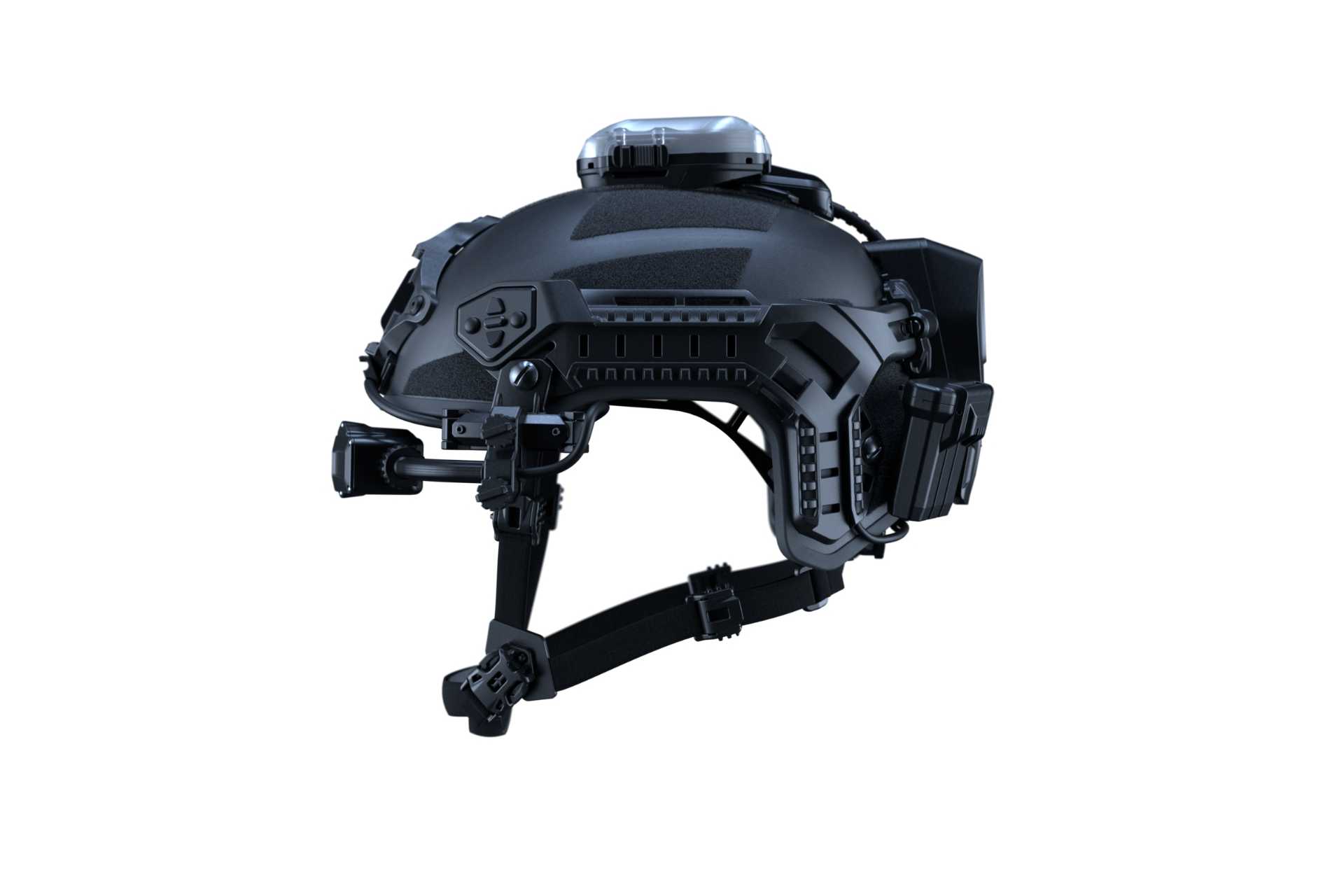
At SOF Week 2025, taking place in Tampa, Florida, United States, from May 5 to 7, 2025, the global defense and special operations community gathers to showcase the most advanced technologies shaping the future of modern warfare. At the heart of this year’s event, Galvion launches its groundbreaking CORTEX™ smart head system integration platform, setting a new standard for tactical headgear. Revealed at Booth #349, the CORTEX platform represents a bold leap forward in operational integration, merging cutting-edge hardware and intelligent software to equip Warfighters with real-time data access, enhanced situational awareness, and mission-adaptable capabilities—all through a seamlessly integrated headborne system.
Follow Army Recognition on Google News at this link
The new CORTEX™ platform by Galvion transforms combat helmets into intelligent, connected mission systems for Special Operations Forces. (Picture source: Galvion with editing of Army Recognition Group)
The newly unveiled CORTEX system is not just an upgrade—it’s a complete transformation of the combat helmet into a high-performance edge computing node. Designed to bring processing power, data connectivity, and energy management directly to the soldier’s head, CORTEX enables frontline operators to make faster, more informed decisions in the heat of battle. Built around a powerful compute module with an internal battery and a custom Android-based operating system, the platform integrates directly into Galvion’s flagship Caiman® helmet, turning it into a smart hub for modern battlefield needs.
Every element of the CORTEX platform has been engineered with modularity and human-centered design in mind. Its architecture includes an integrated accessory network for synchronized power and data management, and it supports multiple communications protocols—including USB, ISW, Bluetooth, and Wi-Fi—to ensure full system interoperability. The system also features a sensor and emitter pod with an open-source interface, allowing for seamless integration of third-party technologies such as sensors, smart optics, and other mission-critical devices.
Among its most distinctive features is a low-profile, auto-detecting VAS mount, enabling smooth integration with night vision devices and heads-up displays (HUDs), while supporting software-enabled augmented reality (AR) overlays. A tactile 4-key controller is built directly into the helmet for intuitive navigation and system interaction, enabling operators to control functions rapidly without breaking visual contact with the environment.
One of the most game-changing aspects of CORTEX is the integration of Galvion’s proprietary AlertCentr™ application, which provides direct, tactile access to ATAK (Android Team Awareness Kit) functionality. This feature allows Warfighters to view mission data and execute ATAK commands without needing to reach for or visually engage with their End User Device (EUD), significantly reducing cognitive load and improving responsiveness in dynamic situations.
The CORTEX system has been developed over several years in close collaboration with Tier 1 special operations units, incorporating real-world feedback and rigorous testing. Customized versions of the system—with tailored software and hardware—have already been delivered to select international customers for operational trials. Designed as a one-size-fits-all solution, CORTEX features adjustable components to accommodate a wide range of helmet sizes and is compatible not only with Galvion’s Caiman® and Hellbender™ platforms but also with selected non-Galvion head systems.
With the debut of CORTEX at SOF Week 2025, Galvion firmly positions itself at the forefront of soldier system integration, redefining the role of the combat helmet in the digital battlespace. No longer a passive piece of protection, the helmet becomes a central node of operational intelligence, capable of supporting enhanced decision-making, communications, and situational awareness—all without compromising mobility or comfort. As elite units across the world seek smarter, more adaptive gear, Galvion’s CORTEX offers a scalable and future-ready solution tailored to the realities of high-tempo, tech-driven combat operations.
- Details
- Written by: Administrator
- Category: Defence & Security Industry Technology
- Hits: 19950
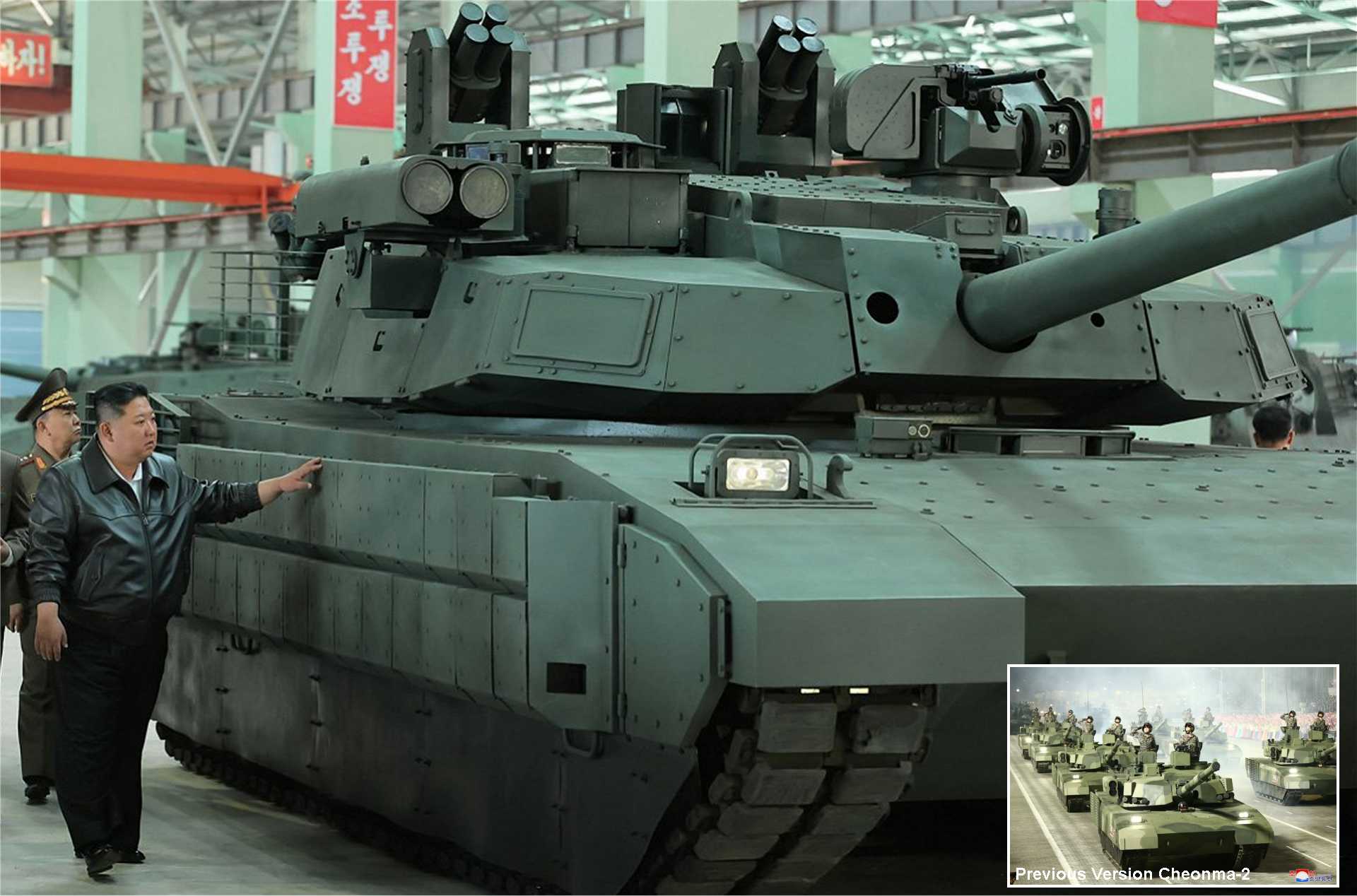
Following the recent release of images on North Korean social media platforms on May 3, 2025, new insights have emerged into the latest version of the Cheonma-2, also referred to as the M2020, North Korea's domestically developed main battle tank. These photos, taken during a visit by Supreme Leader Kim Jong Un to a defense production facility, reveal a significantly upgraded platform compared to the version first unveiled in the 2020 military parade celebrating the 75th anniversary of the Workers' Party of Korea.
Follow Army Recognition on Google News at this link
The new version of North Korea’s Cheonma-2 main battle tank, unveiled in May 2025, features advanced protection systems, improved turret design, and modernized optics. Inset: the original 2020 version, highlighting key upgrades in firepower and survivability. (Picture source: Social Network)
The new Cheonma-2 follows a conventional main battle tank layout, with the driver positioned centrally at the front of the hull, the turret mounted in the middle, and the powerpack housed in the rear. While the chassis retains the general configuration of the earlier model, the turret design shows a notable resemblance to South Korea’s K2 Black Panther. This may indicate either reverse-engineering or conceptual imitation, a pattern that has previously been seen in North Korean armored vehicle development.
One of the most critical advancements in this new iteration is the apparent integration of a modern Active Protection System (APS). Visual cues suggest the presence of radar modules and countermeasure launchers that resemble components of Israel's Iron Fist APS, produced by Elbit Systems. These systems are designed to detect incoming projectiles, such as anti-tank missiles and RPGs, and launch countermeasures to neutralize the threat before impact. Mounted on the turret roof are two groups of four counter-missile launchers, likely intended to deploy interceptors or decoy flares upon threat detection. These upgrades reflect a strategic emphasis on crew survivability and defense against modern top-attack and tandem-warhead threats.
Complementing these defenses is a newly installed remotely operated weapon station (ROWS) located on the left side of the turret, armed with a 12.7mm heavy machine gun. This system allows the crew to engage aerial and infantry threats without exposing themselves. The right side of the turret houses two launchers for anti-tank guided missiles (ATGMs), which provide additional long-range anti-armor capability, significantly boosting the tank’s offensive versatility.
Optical systems have also been upgraded, with new sensors seamlessly integrated into the turret armor. A central panoramic sight on the turret roof offers the commander a full 360-degree field of view, enhancing target acquisition, situational awareness, and battlefield management. Compared to its predecessor, the new Cheonma-2 features reinforced frontal armor, suggesting an effort to increase protection against kinetic and chemical energy projectiles. The sides of the hull are now fitted with advanced Explosive Reactive Armor (ERA) and additional armored skirts that protect the suspension system, increasing resistance to mines and improvised explosive devices (IEDs).
To bolster defense in close-quarters or urban environments, the tank retains the use of wire cage armor (slat armor) on the rear sections of the turret and hull. This is a relatively low-cost method to defeat RPGs and shaped-charge warheads, and its continued presence indicates North Korea’s concern over asymmetric anti-tank threats.
In terms of firepower, while the exact caliber has not been officially confirmed, the main gun appears to be a 125mm smoothbore cannon, in line with Russian and Chinese tank standards. This gun likely supports both conventional armor-piercing and high-explosive ammunition, and may be compatible with ATGM rounds fired through the barrel, a capability typical of Eastern bloc designs. The inclusion of modern fire control systems, though speculative, would be essential to achieving accuracy comparable to current generation MBTs.
When compared to other contemporary main battle tanks such as South Korea’s K2 Black Panther, Turkey’s Altay, Germany’s Leopard 2A8, France’s Leclerc XLR, or the American M1A2 SEP V3, the Cheonma-2 still lags in terms of digital networking, mobility, and possibly fire control sophistication. The K2, for example, features advanced composite armor, a highly automated fire control system, and a hydro-pneumatic suspension for superior cross-country mobility. The Leopard 2A8 integrates Trophy APS, fully digital battlefield integration, and state-of-the-art optics. The Leclerc XLR has been upgraded with enhanced digital command systems and a new remotely operated turret-mounted machine gun. At the same time, the M1A2 SEP V3 emphasizes survivability through improved armor and counter-IED measures, along with advanced thermal sights and new data-link capabilities.
In conclusion, the development of the latest Cheonma-2 main battle tank underscores North Korea’s determination to modernize its armored forces despite its economic constraints and international sanctions. This newest version reflects an ambitious attempt to incorporate features commonly found in advanced Western and Asian MBTs, such as active protection systems, improved modular armor, modern optics, and remote weapon stations. While the visual and conceptual similarities to tanks like the K2 Black Panther, Leopard 2A8, and M1A2 SEP V3 are apparent, the Cheonma-2 likely falls short in terms of system integration, electronic warfare capabilities, and real-world battlefield performance.
Nevertheless, the Cheonma-2 represents a significant leap forward for North Korean armor doctrine. By integrating components that mimic high-end APS technologies and upgrading survivability and firepower, North Korea is clearly attempting to narrow the qualitative gap with its technologically superior adversaries. The tank’s enhancements suggest a growing awareness of modern battlefield threats, particularly from precision-guided munitions and UAV-assisted targeting.
However, without the combat-proven reliability, logistical support structures, or advanced sensor fusion found in its Western counterparts, the Cheonma-2 remains more of a regional threat than a global contender. Still, its deployment will force South Korea and allied forces to account for a more capable North Korean armored threat, potentially shifting tactical calculations in any future confrontation on the Korean Peninsula.
- Details
- Written by: Administrator
- Category: Defence & Security Industry Technology
- Hits: 15722
According to information published by Defense Express on April 29, 2025, Ukraine introduced a new generation anti-tank mine, TM-2025. This new system is a domestically developed evolution of the Soviet-era TM-62, enhanced with modern engineering improvements such as a 3D-printed electromechanical fuse, updated casing, and additional mechanisms to resist deactivation attempts. The emergence of the TM-2025 underscores Ukraine's continued efforts to modernize its defense capabilities under the pressures of ongoing conflict.
Follow Army Recognition on Google News at this link
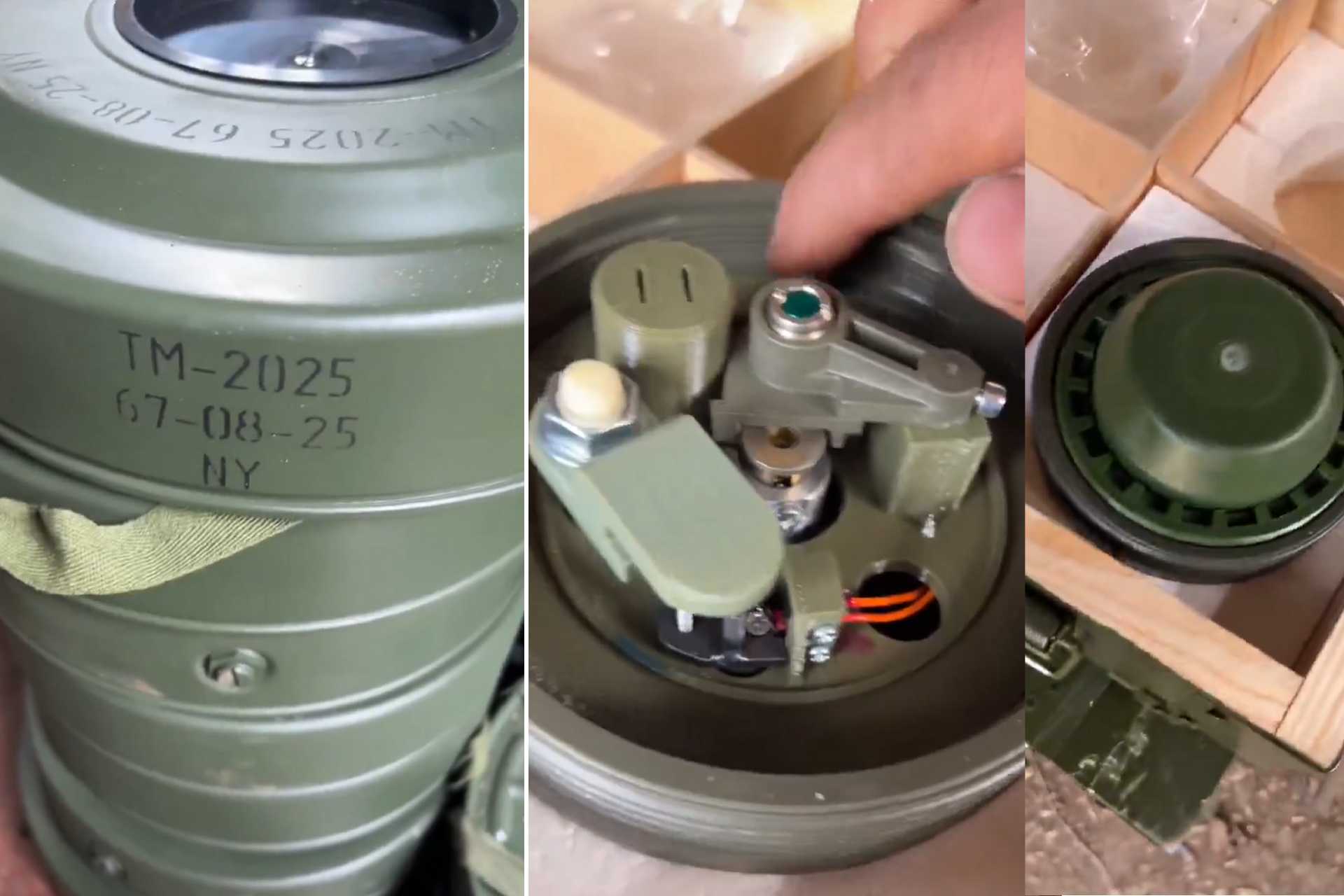
Close-up view of Ukraine’s new TM-2025 anti-tank mine, highlighting its updated metal casing, modular design for auxiliary fuses, and the advanced MPEM-1 electromechanical fuse featuring 3D-printed components. (Picture source: Telegram video footage)
The Russian TM-62, on which the TM-2025 is based, is one of the most widely deployed Soviet-designed anti-tank mines. Introduced in the early 1960s, the TM-62 is a large, circular mine typically equipped with a mechanical pressure fuse such as the MVCh-62 or MVP-62, and it is capable of penetrating heavy armored vehicles with its substantial explosive payload. Designed primarily for conventional warfare, the TM-62 has been used extensively in multiple conflicts across Europe, the Middle East, and Asia. Its simple design, robust effectiveness, and the ability to use a variety of fuses made it a versatile platform. Over time, many countries, including Ukraine, have stockpiled and modified these mines to meet modern warfare needs.
The TM-2025 has already been sighted in active service on the front lines, indicating its deployment in current military operations. At first glance, it closely resembles the TM-62 due to its metal casing, but several upgrades differentiate it from its predecessor. Among the most notable changes is the redesigned mine body, which features smoother contours and an internal compartment that allows for the installation of an auxiliary side detonator. This new configuration makes the mine significantly more resistant to disarmament, as the secondary fuse increases the complexity and danger of any neutralization attempt.
These design changes are not purely defensive. The modified structure of the TM-2025 also enables greater versatility, including easier conversion for use in drone-deployed attacks or for mounting on engineering vehicles. This modularity reflects a broader shift in Ukrainian defense production—aimed not only at improving performance but also at increasing tactical adaptability across different combat scenarios.
The relevance of the TM-2025 extends far beyond its role as a traditional anti-tank mine. In the context of Ukraine’s ongoing conflict, the capacity to repurpose mines as payloads for unmanned ground vehicles (UGVs) and aerial drones has become a strategic necessity. Ukrainian forces have increasingly relied on unmanned systems to deliver explosive payloads to enemy positions or vehicles while minimizing the exposure of personnel. Mines like the TM-62 have already been adapted by Ukrainian engineers for this purpose, and the TM-2025, with its improved modular design and fuse options, significantly enhances this capability. Its potential for integration into drone warfare platforms allows for precise, remotely operated attacks on enemy armor or fortifications, often behind the front lines or in hard-to-reach areas.
One of the most innovative aspects of the TM-2025 is its new Ukrainian-made fuse, the MPEM-1. Unlike the conventional MVCh-62 or MVP-62 mechanical fuses used in the TM-62, the MPEM-1 is electromechanical and incorporates components produced via 3D printing. While technical specifics of the MPEM-1 remain undisclosed, visual evidence suggests it offers more reliable performance and greater resistance to environmental stressors or tampering. The use of additive manufacturing in the production of critical mine components represents a notable advancement in Ukraine’s capacity to rapidly prototype and scale production of advanced battlefield equipment.
Serial numbers and naming conventions indicate that the TM-2025 entered production in 2025. Its deployment is a response not only to battlefield requirements but also to logistical and industrial realities. The TM-62 mine remains one of the most widely used explosive devices in Ukraine, not just in its original form but also as a base for improvised explosive devices, demolition charges, and even landing platforms for multicopter drones. The TM-2025’s updated structure and improved fuse system offer better performance in all these roles.
By upgrading a widely available legacy system with contemporary enhancements, Ukraine has managed to create a mine that is more effective, harder to neutralize, and capable of serving multiple purposes in a dynamic combat environment. The TM-2025 reflects how Ukraine’s defense sector is blending traditional designs with modern innovation to meet the immediate needs of war while preparing for future challenges.
Read more: Technology: Ukraine Develops TM-2025 Anti-Tank Mine with 3D-Printed Smart Fuse
- Details
- Written by: Administrator
- Category: Defence & Security Industry Technology
- Hits: 8614
On April 30, 2025, Andrei_bt, a well-known defense analyst on the X platform (formerly Twitter), reported that the Russian defense enterprise Fakel Machine-Building Design Bureau has developed a new anti-UAV missile tailored specifically to counter the growing threat of small unmanned aerial vehicles (UAVs). Fakel, known for its legacy in designing some of Russia’s most advanced air defense systems such as the Osa, Tor, and S-300, has shifted its focus to fill a critical capability gap on the modern battlefield: the interception of low-cost, low-speed, mini-class drones used for reconnaissance, artillery correction, and loitering munitions, including kamikaze drones.
Follow Army Recognition on Google News at this link
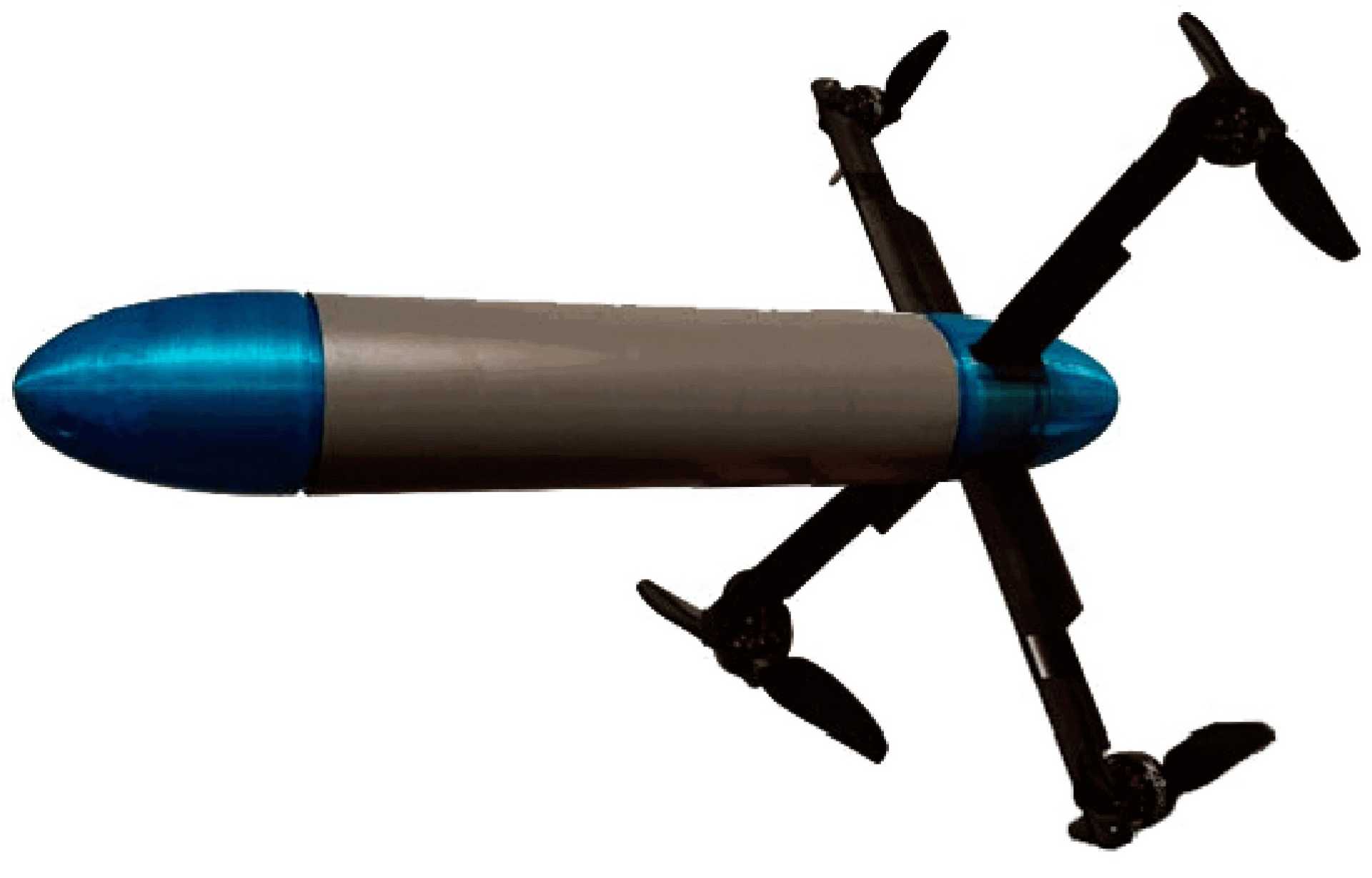
The new Russian anti-drone missile, developed by Fakel Machine-Building Design Bureau, features a lightweight X-shaped airframe and electric propellers, designed to intercept small, low-cost UAV threats on the modern battlefield. (Picture source: Andrei_bt X account)
While highly capable against conventional threats such as aircraft, helicopters, and precision-guided munitions, the Russian military's current air defense architecture faces significant limitations when addressing the proliferation of small, inexpensive UAVs. Although technologically advanced, systems like the Pantsir-S1, Tor-M2, and Buk-M3 are costly to operate and maintain. Their missiles, such as the 9M330, 9M338, and similar variants, were never optimized for short-range engagements against small, slow, or hovering aerial targets. These systems also operate with a high-speed missile profile, which introduces a minimum engagement range and reaction time that makes it difficult to effectively neutralize drones flying at low altitude and velocity in close proximity to ground forces.
Furthermore, the economic asymmetry between these high-cost interceptors and low-cost commercial or semi-commercial drones presents a strategic vulnerability. On the frontlines in Ukraine and other modern conflict zones, mass-produced or modified commercial drones costing a few hundred dollars can disrupt artillery accuracy, conduct real-time surveillance, and deliver explosive payloads. Using a missile that costs tens of thousands of dollars to shoot down a $500 drone is not only unsustainable but also depletes valuable air defense inventories that are needed for higher-tier threats.
Recognizing this imbalance, the development of Fakel’s anti-UAV missile responds directly to the need for a scalable, cost-efficient, and lightweight solution to neutralize mini-drones in a tactical environment. This new system deviates from traditional missile architecture by adopting a drone-like configuration. It features an X-shaped airframe with electric pusher propellers, folding wings for compact storage, and an inertial navigation system combined with an optoelectronic homing head. This allows for flexible launch profiles—both vertical and inclined—and precise mid-course corrections based on target movement.
The missile's lightweight construction—20 to 35 times lighter than current ultra-short-range missiles—makes it ideal for tactical deployment. With the ability to pack 3–5 transport and launch containers into a soldier’s standard loadout under 10 kg, it becomes a truly man-portable air defense tool. This empowers infantry units at the squad and platoon level with an organic counter-drone capability, reducing dependence on larger air defense assets.
Additionally, the production cost of this missile is estimated to be 20–25 times lower than that of existing interceptors in the Russian arsenal. This affordability facilitates mass production and allows for a distributed deployment model across frontline units, closing the gap between strategic air defense systems and localized drone threats.
The introduction of such a system suggests that Russia has recognized the evolving nature of aerial threats and is adapting its defense-industrial strategy accordingly. Rather than relying solely on high-tier systems, the integration of low-cost, flexible anti-drone solutions reflects a pragmatic shift toward layered and adaptive defense. As drone warfare becomes an enduring feature of modern combat, Fakel’s innovation represents a timely and necessary evolution in Russia’s air defense doctrine. It ensures that tactical units are equipped to address a wide spectrum of threats, from advanced guided weapons to the most rudimentary UAVs now shaping the realities of conflict.
- Details
- Written by: Administrator
- Category: Defence & Security Industry Technology
- Hits: 6733
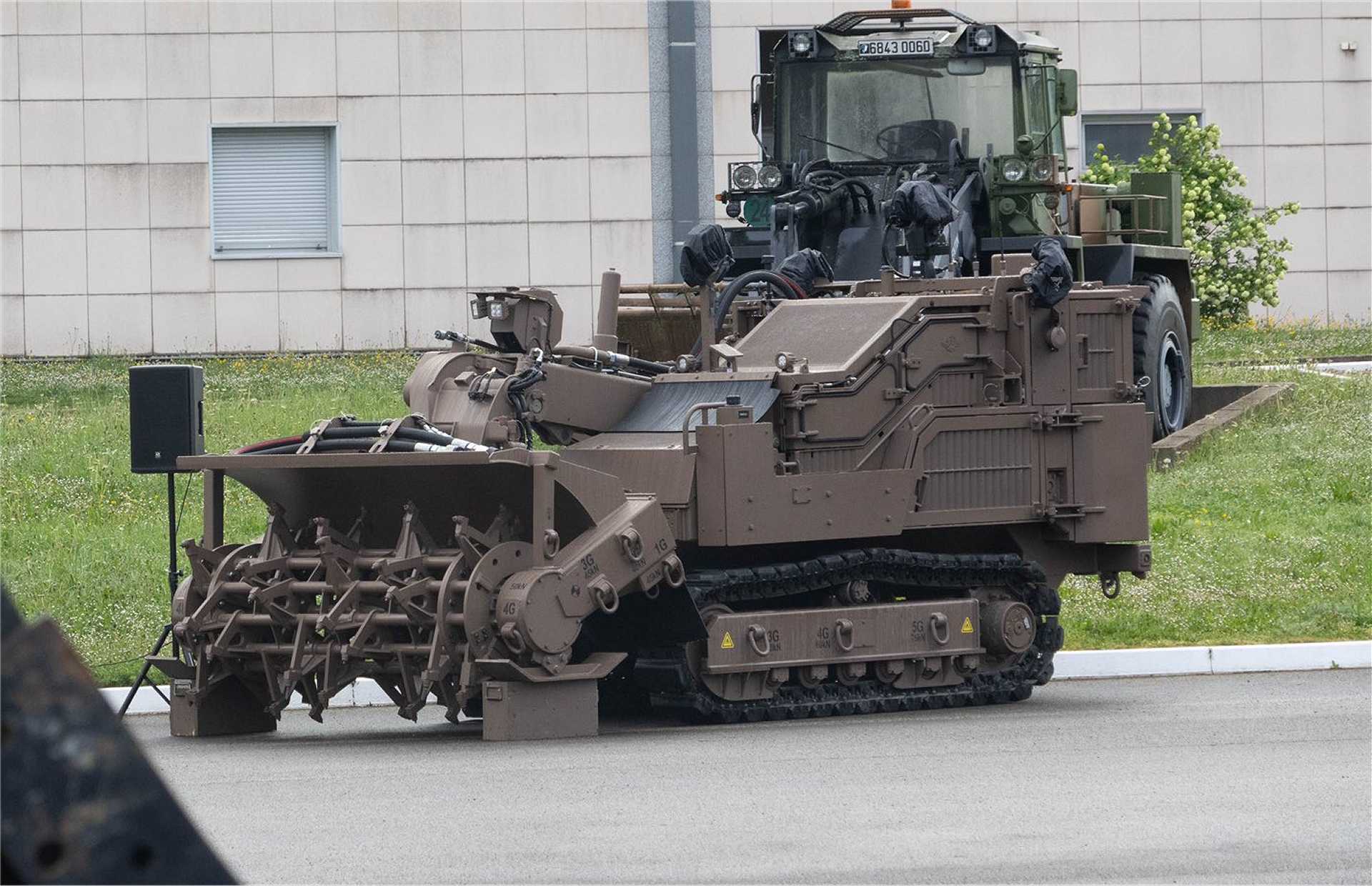
The French Army continues to modernize its engineering capabilities with the induction of new-generation combat engineering vehicles into the 19th Engineer Regiment of the French Army. These modern platforms, which include a specially configured version of the Griffon 6x6 armored vehicle tailored for engineer missions and the advanced SDZ (Zone Demining System) robotic demining tracked vehicle, are set to replace the aging EBG (Engin Blindé du Génie - Engineer Armored Vehicle) fleet base on the AMX-30 tank tracked chassis. This transition represents a major leap forward in both tactical mobility and counter-explosive capabilities within the French armed forces.
Follow Army Recognition on Google News at this link
The French army's 19th Engineer Regiment is now equipped with the SDZ robotic vehicle for high-efficiency mechanical mine clearance, enhancing force protection and operational mobility. (Picture source: French army 19th Engineer Regiment)
The engineer variant of the Griffon 6x6 multi-role armored vehicle enhances operational flexibility by integrating tools and systems specific to engineering and EOD operations. Maintaining the high mobility, protection, and networked command systems of the baseline Griffon, this variant supports a wide array of field engineering tasks, from fortification to mine clearance support. It is designed to enable combat engineers to accompany frontline troops in high-threat environments while benefiting from armored protection and digital integration under the SCORPION program.
At the forefront of this technological evolution is the SDZ (Zone Demining System), a next-generation robotic tracked vehicle that sets new benchmarks in autonomous mine clearance. Developed to perform high-speed mechanical demining across contaminated environments, the SDZ combines rugged engineering with advanced control systems to meet both military and humanitarian clearance needs.
Technically, the SDZ is engineered for both power and precision. It features a robust tracked chassis with steel and rubber-padded treads that offer strong mobility on diverse terrain. With a ground clearance of 479 mm and a maximum speed of 10 km/h, it can operate efficiently in challenging field conditions. The vehicle alone weighs 9,500 kg, while its full configuration with the demining tiller reaches 12,000 kg. Its dimensions—5.90 meters in length with the tiller and 2.85 meters in width—make it compact enough for operational deployment yet wide enough to effectively clear broad lanes through mined areas.
At its core, the SDZ is powered by a Deutz 250 horsepower diesel engine, which offers both high performance and fuel efficiency. With a fuel tank capacity of 325 liters, the vehicle is capable of extended field operations without frequent refueling, a crucial feature in sustained military or humanitarian missions.
Its mine-clearing capacity is particularly noteworthy. The SDZ can penetrate up to 30 centimeters in depth and clear a 2.1-meter wide path at a minimum rate of 500 square meters per hour. This high throughput makes it ideal for rapid route clearance ahead of advancing mechanized units or for opening up access in post-conflict zones. Its design complies with CWA 15044 standards, under which it was tested using live anti-personnel and anti-tank mines. The result: a 100% neutralization rate, either by detonation or destruction, validating its operational reliability.
For operational safety and versatility, the SDZ is entirely remotely controlled, either via visual line-of-sight or from within armored vehicles. It is equipped with GPS navigation and high-resolution cameras, providing operators with full situational awareness and the ability to execute complex maneuvers under cover. The vehicle’s onboard console offers a full spectrum of commands, ensuring precise control over all functions and tools, even in hostile environments.
One of the SDZ’s most distinctive attributes is its modularity. It is capable of deploying an array of interchangeable tools, including a flail, auger, backhoe, segregator bucket, standard bucket, and dozer blade. This flexibility allows the SDZ to not only clear mines but also relocate or destroy explosive ordnance, excavate defensive positions, and remove battlefield debris, making it a true multi-role asset for modern engineer regiments.
With the integration of both the Griffon engineer variant and the SDZ into its force structure, the 19th Engineer Regiment is now equipped to execute complex engineering tasks at a much higher tempo and with improved force protection. These systems enhance the Army’s ability to conduct breach operations, secure routes, and enable recovery and development in post-conflict scenarios—ranging from road and infrastructure repair to restoring agricultural use in once-contaminated areas.
This capability upgrade falls directly under the umbrella of the SCORPION modernization program, France’s overarching effort to digitize and network its land forces. It ensures the French Army maintains a strategic edge in explosive threat mitigation and battlefield support across multi-domain operations.

The new engineer variant of the Griffon 6x6 armored vehicle, now deployed with the 19th Engineer Regiment, tailored for combat support and EOD operations. (Picture source: French Army 31st Engineer Regiment)

- Details
- Written by: Administrator
- Category: Defence & Security Industry Technology
- Hits: 8753
On April 27, 2025, newly released imagery on Telegram revealed China’s latest advancement in amphibious warfare: a self-propelled anti-tank missile system integrated onto the tracked chassis of the ZTD-05 amphibious assault vehicle. Armed with the powerful HJ-10 Anti-Tank Guided Missile (ATGM) system, this vehicle marks a significant step in the modernization of the People's Liberation Army Navy Marine Corps (PLANMC), enhancing its ability to conduct precision strikes against armored targets during sea-to-shore operations.
Follow Army Recognition on Google News at this link
The latest ZTD-05-based anti-tank missile vehicle undergoing sea trials, equipped with dual blocks of HJ-10 anti-tank guided missiles. (Picture source: Telegram)
The ZTD-05 amphibious light tank, developed by the Chinese defense company Norinco, is a highly mobile and seaworthy vehicle designed for rapid deployment from amphibious assault ships. Its aluminum alloy hull, reinforced with composite armor, provides protection against small arms fire and shell fragments while maintaining a lightweight profile essential for amphibious missions. Powered by a high-performance diesel engine, the ZTD-05 reaches speeds of up to 65 km/h on land and between 28 to 30 km/h in water, using twin waterjets for exceptional maritime maneuverability.
In this new anti-tank configuration, an advanced missile launch module has replaced the traditional 105mm gun turret. The turret is fitted with two blocks of six containerized missile launchers, each housing a single HJ-10 missile. This setup gives the vehicle twelve ready-to-fire missiles, significantly boosting its ability to deliver sustained, long-range anti-armor firepower. The enclosed containerized design protects the missiles from environmental exposure and allows for quick rearming in combat conditions.
The HJ-10 missile, also known as the AFT-10 in its export variant, is one of China's most advanced long-range ATGMs. It is designed to defeat modern main battle tanks and fortified structures using a tandem high-explosive anti-tank (HEAT) warhead capable of penetrating over 1,200 mm of rolled homogeneous armor (RHA) after defeating explosive reactive armor (ERA). With a maximum effective range of approximately 10 kilometers, the HJ-10 provides a critical standoff capability, enabling engagement of enemy armor formations from safe distances.
Guided by a sophisticated system combining inertial navigation, imaging infrared (IIR) or television guidance, and a two-way fiber-optic data link, the HJ-10 offers multiple engagement modes. It can operate in fire-and-forget mode, allowing the missile to home in on its target autonomously. Alternatively, operators can use man-in-the-loop guidance to adjust the missile’s trajectory in real-time, even allowing post-launch retargeting. This flexibility is particularly valuable in complex battlefield environments, where threats may be concealed or repositioning rapidly. The system’s ability to strike targets from defilade positions also enhances its survivability and tactical surprise.
The introduction of this amphibious anti-tank platform significantly enhances the firepower and operational reach of China's naval infantry. It allows PLANMC units to engage enemy armor and fortifications from offshore or during inland advances without the need for direct exposure. This capability is particularly relevant in potential conflict zones such as the Taiwan Strait or South China Sea, where amphibious operations would require rapid, high-precision strikes against hardened targets.
Strategically, the new ZTD-05-based anti-tank missile system reflects the PLA’s broader shift toward modular, network-enabled, and precision-strike warfare. By integrating advanced ATGM capabilities into a fast, amphibious chassis, China is equipping its marine forces with the tools to dominate in complex, multidomain combat environments. As part of the ongoing modernization of the PLA, this vehicle not only strengthens China's anti-access/area denial (A2/AD) posture but also redefines the role of amphibious platforms in high-intensity warfare.

- Details
- Written by: Administrator
- Category: Defence & Security Industry Technology
- Hits: 10974
On April 29, 2025, during the rehearsal for the 80th anniversary of Victory in the Great Patriotic War, the Russian Army publicly revealed a newly upgraded version of its legacy infantry fighting vehicle (IFV), the BMP-1, now further developed into an enhanced variant of the BMP-1AM "Basurmanin" featuring a new armor protection package. This latest version introduces significant improvements over previous iterations, especially in survivability, with the integration of explosive reactive armor (ERA) plates, additional side armor, and cage armor around the turret—upgrades that notably increase protection against modern battlefield threats.
Follow Army Recognition on Google News at this link
The newly upgraded BMP-1AM "Basurmanin" IFV Infantry Fighting Vehicle fitted with reactive armor and cage turret protection during the Victory Day parade rehearsal, April 29, 2025. (Picture source: RIA Novosti)
This unveiling underscores Russia’s continued commitment to extending the service life of its Cold War-era platforms through modular and scalable modernization programs, offering a striking contrast between the original Soviet design of the 1960s and this latest variant adapted for high-threat, modern combat environments.
Originally introduced in 1966, the Russian BMP-1 was the world’s first mass-produced Infantry Fighting Vehicle (IFV) designed to transport troops into battle while providing fire support through a 73mm 2A28 Grom cannon and an anti-tank guided missile launcher. It brought a revolutionary combination of mobility, firepower, and infantry integration to mechanized warfare. However, experience in combat—from the Middle East to Afghanistan—quickly revealed its shortcomings: insufficient armor against heavy machine guns and RPGs, an underpowered and low-velocity gun, cramped interior space with dangerous design flaws (including fuel tanks in the troop compartment), and inadequate optics and night-fighting equipment.
The latest BMP-1AM “Basurmanin” not only retains previous upgrades in firepower and electronics but now debuts with a new armor configuration to address the vehicle’s long-standing protection deficiencies. Unlike the original BMP-1, the new version is equipped with explosive reactive armor modules on the front and sides of the hull. These ERA blocks provide critical protection against shaped charges, such as those from RPGs and anti-tank missiles. Additionally, the hull features supplementary steel side plates, and the turret is encased in wire cage (slat) armor, designed to detonate incoming warheads before impact—especially effective against high-explosive anti-tank (HEAT) munitions. These protective measures dramatically increase the survivability of the vehicle in urban combat and hybrid warfare scenarios.
In terms of firepower, the BMP-1AM marks a decisive shift from the outdated 73mm Grom system. It is equipped with the BPPU-1 turret, taken from the BTR-82A armored personnel carrier, which includes a 30mm 2A72 automatic cannon and a 7.62mm PKTM coaxial machine gun. This setup offers a much greater rate of fire, higher accuracy, and a significantly more versatile engagement capability, particularly against infantry, light armored vehicles, and low-flying aircraft. The turret is also paired with modern targeting systems, including the TKN-4GA day/night sight, which enhances target detection and engagement under all visibility conditions—a significant improvement over the BMP-1’s basic optical setup.
Mobility and operational functionality have also been enhanced. The original UTD-20 diesel engine has been replaced with a more powerful UTD-20S1 engine, increasing output from 300 to 360 horsepower, which compensates for the additional weight of the new armor and ensures the vehicle maintains acceptable performance in maneuver warfare. The BMP-1AM also benefits from the integration of the R-168-25U-2 digital radio system, which enables secure, resistant, and modern communication between units—critical in a battlefield dominated by electronic warfare threats.
This modernization effort reflects the Russian military’s pragmatic approach to force renewal: instead of retiring thousands of aging BMP-1s, it is repurposing them with proven components from other platforms in its inventory. This hybridization strategy not only reduces logistical complexity but also cuts procurement costs while providing meaningful improvements in battlefield effectiveness.
The modernization from the original BMP-1 to the latest BMP-1AM “Basurmanin” illustrates a broader trend in military modernization—the value of scalable upgrades. The upgraded BMP-1AM is not on par with next-generation IFVs like the Kurganets-25, but it fills a crucial capability gap for Russia in areas where cost-effective, mass-deployable armor is required. Its combination of improved armor, firepower, mobility, and communication systems enables it to remain viable in modern and hybrid warfare environments.
In summary, the contrast between the Soviet-era BMP-1 IFV and the latest BMP-1AM “Basurmanin” is dramatic. The transition from thin steel plating to reactive and slat armor, from a low-velocity gun to a modern automatic cannon, and from analog systems to digital battlefield connectivity, demonstrates how deep modernization can transform a legacy platform into a capable asset for 21st-century warfare. This newly upgraded variant serves as a testament to Russia’s intent to retain military relevance through cost-effective innovation, breathing new life into one of the most iconic IFVs of the Cold War.
- Details
- Written by: Administrator
- Category: Defence & Security Industry Technology
- Hits: 6840
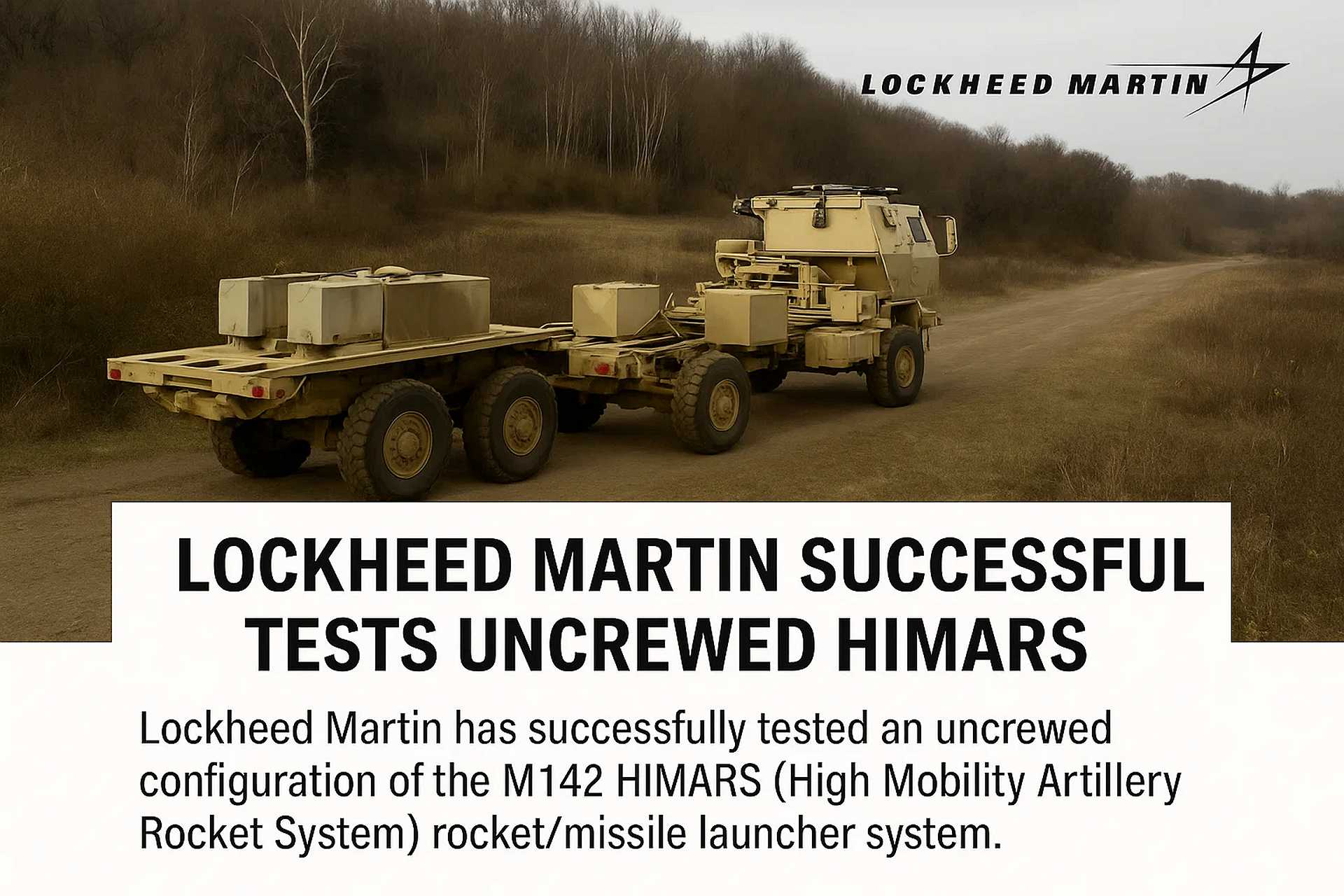
American Company Lockheed Martin revealed on April 28, 2025, through its official X account, that it has successfully tested an uncrewed configuration of the M142 HIMARS (High Mobility Artillery Rocket System) rocket/missile launcher system, employing passive sensor technologies to enable autonomous mission execution without active emissions. The demonstration validated the launcher’s ability to move, position, and engage targets without onboard personnel, marking a critical development in extending HIMARS capabilities for high-risk, high-intensity operational environments where rapid mobility, minimal electronic signature, and autonomous response are essential to mission success.
Follow Army Recognition on Google News at this link
Lockheed Martin demonstrates an autonomous M142 HIMARS launcher performing uncrewed navigation, targeting, and firing during the field test. (Picture source: Editing Army Recognition Group)
The test involved operating a M142 HIMARS (High Mobility Artillery Rocket System) rocket/missile launcher without an onboard crew, utilizing a novel suite of passive sensors. Unlike traditional active systems, which emit signals that adversaries can detect, these passive sensors allow the uncrewed HIMARS to perceive its environment without disclosing its location. This key feature enables stealthier operations, significantly increasing survivability on the modern battlefield. The system performed effectively during both daytime and nighttime conditions, demonstrating its all-weather, around-the-clock operational capability. The success of this test paves the way for a new generation of artillery platforms capable of remote, autonomous deployment while minimizing risk to human operators.
Lockheed Martin’s achievement is more than a technological feat—it represents a strategic shift toward greater autonomy in U.S. ground forces. The autonomous HIMARS could be deployed in high-threat environments where traditional crewed vehicles would face prohibitive risks. By integrating autonomous systems into the existing HIMARS fleet, the U.S. Army and Marine Corps would enhance force projection, reduce manpower exposure, and extend operational reach. It also aligns with broader Pentagon initiatives emphasizing manned-unmanned teaming and distributed lethality across multiple domains.
The M142 HIMARS is one of the U.S. Army’s most versatile and battle-proven artillery systems. Designed for rapid deployment and high mobility, HIMARS is a lightweight, wheeled launcher mounted on a 6x6 Family of Medium Tactical Vehicles (FMTV) chassis. It is operated by a small crew under normal conditions, typically three soldiers. Technically, the system can carry either a single pod of six Guided Multiple Launch Rocket System (GMLRS) rockets or one Army Tactical Missile System (ATACMS) missile. The GMLRS rockets offer precision strikes at ranges up to 70–80 kilometers, while the ATACMS missile can engage targets at distances up to 300 kilometers, depending on the variant. Future developments, like the Precision Strike Missile (PrSM), are expected to extend this range even further. Weighing around 16.2 tons, HIMARS can be transported by C-130 aircraft, enabling rapid deployment across global theaters. It is equipped with an advanced fire control system that allows quick target acquisition and fast shoot-and-scoot operations, critical for evading enemy counter-fire.
In operational terms, the main role of the M142 HIMARS is to provide highly mobile, precise, and responsive long-range fire support. Its missions include suppression and destruction of enemy artillery, air defenses, command posts, logistics hubs, and concentrations of enemy forces. HIMARS is crucial for conducting deep-strike missions against high-value targets well beyond the front lines, as well as offering immediate fire support to maneuvering ground forces. In recent conflicts, particularly in Ukraine, HIMARS proved decisive by enabling Ukrainian forces to hit Russian command centers and ammunition depots with pinpoint accuracy, disrupting logistics and command structures.
The development of unmanned ground combat systems is a rapidly growing priority for many armed forces worldwide. Autonomous and remotely operated vehicles are seen as critical to maintaining operational superiority in future conflicts, especially against near-peer adversaries equipped with sophisticated surveillance, electronic warfare, and precision-strike capabilities. In this context, unmanned systems provide tactical flexibility, resilience, and the ability to saturate battlefields with combat-effective assets without endangering valuable personnel. Whether through logistics support, surveillance, direct combat engagement, or artillery support, unmanned systems are increasingly regarded as force multipliers capable of shaping the outcomes of high-intensity conflicts.
For the HIMARS specifically, unmanned operation offers unique tactical and operational advantages. A fully autonomous HIMARS battery could be deployed into contested zones where GPS jamming, drone swarms, or long-range artillery would make traditional manned deployment too dangerous. It allows for greater dispersion of launch platforms, making them harder to target, while enabling rapid "shoot-and-scoot" tactics without the hesitation associated with crew safety. Autonomous HIMARS units can be pre-programmed or remotely commanded to move into position, fire precision strikes, and relocate before counter-battery fire can be effectively directed against them. This dramatically reduces enemy reaction time and enhances the survivability of U.S. and allied forces.
Moreover, unmanned HIMARS launchers could play a critical role in shaping future multi-domain operations (MDO). In a future battlefield where command and control systems must seamlessly connect air, land, sea, space, and cyber domains, autonomous artillery systems like the uncrewed HIMARS could operate as vital nodes within a dispersed, resilient, and rapidly adapting force structure. They could deliver massed fires in support of maneuver elements, contribute to anti-access/area denial (A2/AD) operations, or even support special forces and expeditionary units operating deep within enemy territory.
Lockheed Martin continues to position itself at the forefront of military innovation. The company emphasized that this uncrewed HIMARS system is a critical step toward fielding scalable, interoperable autonomous solutions that can be rapidly deployed across various operational theaters. Future developments are expected to focus on increasing the system’s decision-making capabilities, adaptive mission planning, and integration with network-centric warfare architectures, ensuring that autonomous HIMARS units can operate cohesively within larger joint force structures.
The success of this latest test with autonomous M142 HIMARS demonstrates that the future battlefield will likely be dominated by the interplay of manned and unmanned systems, where speed, stealth, and precision will define tactical advantage. With the advent of an autonomous variant, the M142 HIMARS' legacy as a revolutionary force-multiplier in modern artillery warfare appears set to continue well into the next generation of conflict.

- Details
- Written by: Administrator
- Category: Defence & Security Industry Technology
- Hits: 9620
Taiwan has unveiled a significantly upgraded version of the U.S.-origin M1167 anti-tank Humvee, reinforcing its land forces' mobility and firepower against armored threats. The upgraded vehicle, recently showcased at Feng Chia University, reflects Taiwan's commitment to modernizing its military capabilities amid growing regional tensions.
Follow Army Recognition on Google News at this link
Taiwanese Army's upgraded M1167 anti-tank Humvee, featuring reinforced armor protection, bulletproof glass, and a new-generation TOW missile launcher with advanced day-and-night targeting systems, enhancing mobility and anti-armor capabilities. (Picture source: Taiwanese Army)
The U.S. M1167 is a specialized variant of the HMMWV (High Mobility Multipurpose Wheeled Vehicle) series, originally designed by AM General for the U.S. Army. Specifically tailored for anti-armor roles, the M1167 is typically equipped with a TOW (Tube-launched, Optically tracked, Wire-guided) missile launcher system. The TOW is a highly effective anti-tank guided missile that many armies have widely adopted for its long-range precision and its ability to defeat modern armored vehicles, including tanks fitted with explosive reactive armor. In its standard form, the M1167 carries the TOW missile system mounted on the roof, allowing for rapid targeting and engagement of enemy armor from a distance while utilizing the Humvee’s mobility to reposition after firing.
Taiwan's upgraded M1167 has been outfitted with substantial armor enhancements to improve the vehicle's battlefield survivability. The modifications include the integration of external bulletproof steel plates, significantly enhancing resistance against small-arms fire and shrapnel. The windows have been reinforced with bulletproof glass, providing increased safety for both gunners and passengers. This level of protection allows the crew to maintain a high level of alertness and readiness even while moving, enhancing their ability to respond swiftly to enemy contact.
Another key defensive improvement is the vehicle's fully armored tire system, which can effectively resist small-caliber ammunition fire. This feature ensures that the vehicle retains its mobility even when operating under hostile conditions, a vital capability for executing tactical maneuvers and evasive actions during combat scenarios. Inside the vehicle, a gunner protection belt system has been installed, offering 360-degree rotational support for the gunner. Beyond its functional advantage in allowing the shooter to engage threats from any direction, this system also provides waist support and the ability for short rests during long missions, thereby reducing crew fatigue in extended operations.
In addition to these armor enhancements, the vehicle now features a newly developed towed anti-tank missile launcher system, replacing or upgrading the standard TOW configuration. This modern launcher is equipped with advanced day-and-night observation capabilities and utilizes a high-precision sensor chip. These features dramatically enhance the target acquisition process and engagement accuracy, allowing the crew to operate effectively in a wide range of environmental and lighting conditions. The improvements to the missile system significantly bolster Taiwan’s anti-armor warfare capabilities, enabling the National Army to counter increasingly advanced enemy armored threats effectively.
The modernization of the M1167 underscores Taiwan’s strategic focus on upgrading existing U.S.-supplied military platforms with indigenous technologies tailored to its specific defense needs. By enhancing both survivability and lethality, Taiwan ensures that its forces remain agile, responsive, and capable of meeting modern battlefield challenges. This upgrade is part of a broader, ongoing effort to improve the island’s defense self-sufficiency and operational readiness amid the increasing complexity of regional security dynamics.

- Details
- Written by: Administrator
- Category: Defence & Security Industry Technology
- Hits: 19283
The U.S. Army has successfully tested an autonomous ship-to-shore resupply system as part of its Project Convergence Capstone 5 (PC-C5), showcasing how unmanned systems can reshape future military logistics. Conducted in April 2025, the test involved an Unmanned Surface Vessel (USV) autonomously transporting and offloading a supply-loaded Unmanned Ground Vehicle (UGV) onshore, demonstrating a fully automated operation from sea to land.
Follow Army Recognition on Google News at this link
An unmanned surface vessel (USV) navigates Pearl Harbor, Hawaii, during a Project Convergence Capstone 5 (PC-C5) rehearsal in April 2025. As part of the experiment, the USV successfully executed an autonomous ship-to-shore resupply mission, including the automated offloading of a supply-laden unmanned ground vehicle (UGV). (Picture source: U.S. DoD)
This capability is central to the U.S. Army’s broader modernization efforts, aimed at adapting to the evolving requirements of high-intensity, multi-domain warfare. The USVs involved in the demonstration featured advanced autonomy kits with GPS-based navigation, real-time sensor integration, obstacle avoidance, and secure communications. These features allow the vessels to operate independently, making dynamic decisions based on environmental data and mission needs without human control. Once ashore, the USV autonomously offloaded a UGV, which was also equipped to navigate and deliver supplies on land without human intervention.
The combination of USV (Unmanned Surface Vessel) and UGV (Unmanned Ground Vehicle) technologies provides a modular and scalable logistics platform that could play a vital role in supporting distributed operations in future combat scenarios. These autonomous systems enable the rapid delivery of ammunition, medical supplies, food, and fuel directly to forward positions in contested or denied environments—reducing the risk to personnel and minimizing the reliance on traditional manned convoys or rotary-wing aircraft, which are more vulnerable to enemy fire and surveillance.
Colonel William “Will” C. Arnold, Chief of Transportation at the Combined Arms Support Command, highlighted the importance of the test, noting that the Army is learning how to command and control these systems in realistic, joint-operational environments. This experimentation supports the broader transformation of logistics doctrine and battlefield support, in alignment with the Army’s shift toward more agile, technology-driven combat operations.
Project Convergence Capstone 5, hosted by the U.S. Army, is a culmination of joint and multinational experimentation designed to integrate personnel, technologies, and platforms across domains. It brings together the U.S. Army, Navy, Air Force, Marine Corps, Space Force, and allied nations in a coordinated effort to validate and refine new concepts of warfare. The 2025 iteration of PC-C5 focuses on data-driven decision-making, enhanced maneuver capabilities, and integrated operations across air, land, sea, space, and cyber domains.
The autonomous resupply test conducted at Pearl Harbor underscores the growing importance of robotics and autonomy in logistics operations. As future conflict scenarios demand speed, resilience, and the ability to operate in dispersed environments, such systems offer a practical and effective solution for sustaining forces on the battlefield. Particularly in regions like the Indo-Pacific, where operations may be spread across vast island chains, autonomous ship-to-shore logistics could become essential for maintaining supply lines under hostile conditions.
The successful test validates key technologies and reflects a strategic shift in how the U.S. Army plans to sustain future combat forces. By leveraging automation and unmanned platforms, the Army is taking critical steps toward reducing the logistical footprint of its operations, increasing survivability, and ensuring that future warfighters have the support they need—anytime, anywhere.
Read more: Exclusive: U.S. Army Conducts First Fully Autonomous Ship-to-Shore Resupply Operation
- Details
- Written by: Administrator
- Category: Defence & Security Industry Technology
- Hits: 7923
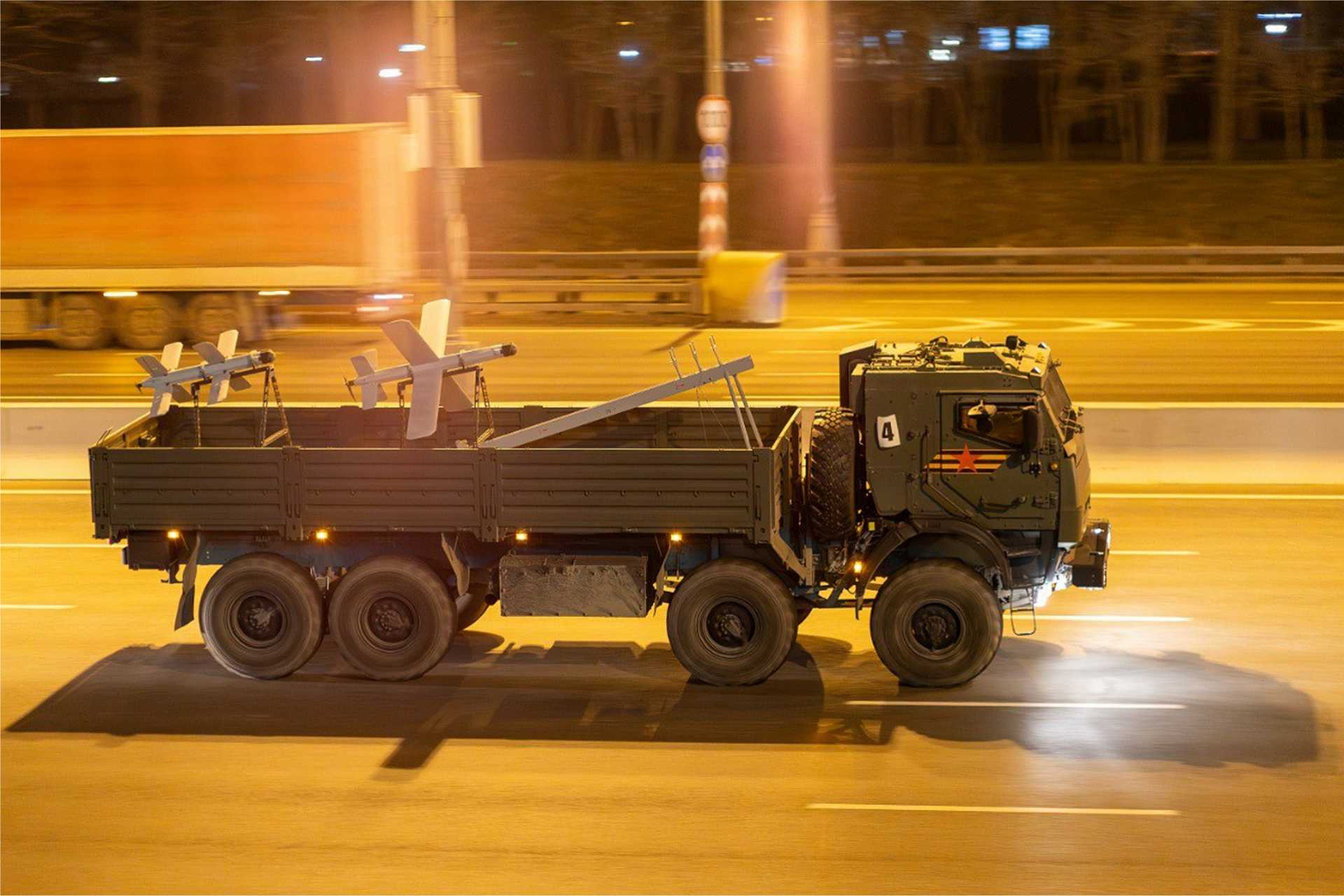
On April 20, 2025, a newly surfaced image from a night-time rehearsal for the upcoming 2025 Victory Day military parade in Moscow has revealed the presence of a previously unseen Russian army mobile launcher system for Lancet loitering munitions. Captured during preparations for the annual May 9, 2025, parade on Red Square, the picture showcases a KamAZ 8x8 military truck equipped with a custom launcher module—marking a significant evolution in the Russian Army’s approach to drone warfare.
Follow Army Recognition on Google News at this link
New Russian mobile launcher for Lancet loitering munitions mounted on a KamAZ 8x8 truck spotted during a night-time rehearsal for the 2025 Victory Day military parade on Red Square, Moscow. (Picture source: AGTF.ru)
According to the initial analysis conducted by the Army Recognition editorial team, the KamAZ heavy-duty chassis carries two Lancet loitering munitions positioned alongside a single rail launcher station integrated into the rear of the truck. This configuration clearly emphasizes rapid deployment and high mobility, providing Russian forces with a highly maneuverable platform capable of conducting launch-and-withdraw missions with minimal setup time.
The Lancet drone, developed by ZALA Aero (a subsidiary of the Kalashnikov Concern), has become one of the most prominent loitering munitions in the Russian inventory. Designed for precision strikes against enemy vehicles, artillery systems, and static defenses, the drone has seen extensive deployment in the ongoing war in Ukraine. Its relatively low cost, ease of deployment, and modular design make it a valuable tool in both conventional and asymmetric warfare. The Lancet is known for its endurance of up to 60 minutes, a strike range of approximately 40 kilometers, and a payload capable of disabling or destroying a range of military targets including artillery systems, radar units, and lightly armored vehicles. Equipped with electro-optical guidance systems and real-time video transmission, the drone enables operators to identify, track, and engage targets with a high degree of accuracy.
The role of the Lancet in the Ukraine conflict has been particularly noteworthy. Russian forces have employed the system to conduct precision strikes on high-value assets, such as Western-supplied howitzers including the M777 and Caesar systems, as well as Ukrainian radar installations and air defense systems. Its use in Ukraine demonstrated the strategic advantages of loitering munitions for disrupting enemy logistics and neutralizing static defenses without risking manned platforms. Numerous documented instances from the battlefield have shown Lancet drones successfully destroying targets with precision, often operating in tandem with reconnaissance UAVs like the Orlan-10 for real-time target acquisition and post-strike damage assessment. These tactics have allowed Russian forces to reduce their reliance on traditional artillery and airstrikes in certain scenarios, instead opting for stealthy, targeted drone attacks.
The unveiling of a mobile launcher variant based on the KamAZ 8x8 platform suggests a deliberate move by the Russian military to improve the survivability and flexibility of its drone launch systems. By placing the launch capability on a high-mobility platform, Russian forces can now deploy Lancet drones more rapidly and from concealed or constantly changing positions, reducing the risk of counterstrikes. This development directly reflects operational lessons drawn from Ukraine, where stationary drone launch sites were often vulnerable to enemy retaliation. The KamAZ 8x8 truck offers high off-road mobility and endurance, making it well-suited for deployment across a variety of terrains, from open fields to urban or mountainous environments.
The appearance of this new mobile Lancet loitering munition launcher system during a high-profile national event such as the Russian Victory Day military parade demonstrates technological progress and a statement of intent. It reinforces Russia’s commitment to integrating drone warfare into its broader military doctrine, particularly through the enhancement of tactical flexibility, speed, and adaptability on the modern battlefield. As the 2025 Victory Day parade approaches, additional advanced systems are expected to be unveiled, further showcasing the modernization efforts of the Russian Armed Forces.
- Details
- Written by: Administrator
- Category: Defence & Security Industry Technology
- Hits: 20889
The upcoming deployment of the U.S. Army’s Long-Range Hypersonic Weapon (LRHW), officially known as "Dark Eagle," represents a major turning point in the strategic landscape of modern warfare. Scheduled to enter service by the end of fiscal year 2025, the Dark Eagle system marks the United States' formal entry into the hypersonic missile race, a field already dominated by China and Russia. This move carries profound implications not only for the U.S. military’s capabilities but also for global strategic balance and deterrence.
Follow Army Recognition on Google News at this link
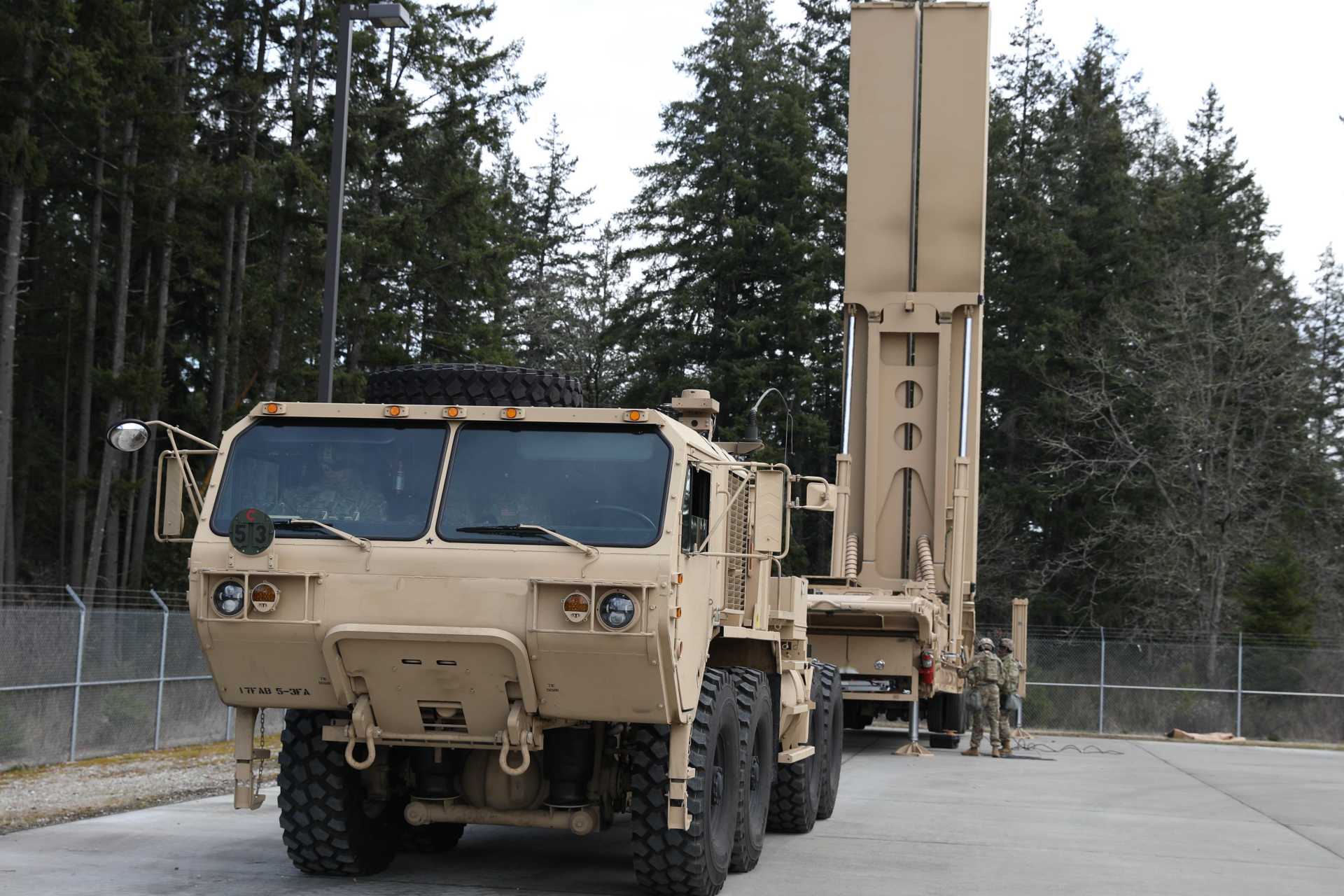
U.S. soldiers from Bravo Battery, 5th Battalion, 3rd Field Artillery Regiment, 17th Field Artillery Brigade, conduct ground maneuvers, ammunition transfers, and establish firing positions at Joint Base Lewis-McChord using the U.S. Army’s first prototype Long Range Hypersonic Weapon system. (Picture source: U.S. DoD)
The Long-Range Hypersonic Weapon (LRHW), nicknamed Dark Eagle, is the most advanced hypersonic weapon system developed by the U.S. Army. Designed as a land-based, truck-launched platform, it combines a two-stage solid-fueled booster system with the Common Hypersonic Glide Body (C-HGB), enabling the missile to travel at speeds exceeding Mach 5 and strike targets over 1,725 miles (2,775 km) away. What distinguishes hypersonic glide vehicles like the C-HGB is their ability to maneuver at high speeds during flight, making them exceptionally difficult to detect and intercept by existing air defense systems. This capability offers the U.S. a significant advantage in precision strike scenarios, especially in contested regions such as the Indo-Pacific or Eastern Europe.
The Dark Eagle system is being fielded with the 1st Multi-Domain Task Force of the U.S. Army, a unit tailored for operations across cyber, space, air, land, and sea domains. This strategic deployment aligns with the Pentagon's broader push to modernize its long-range fires capabilities and restore military parity with near-peer adversaries. The Army confirmed that the first full battery of Dark Eagle missiles will be operational in 2025, following the successful completion of an end-to-end flight test in December 2024 at Cape Canaveral. This test demonstrated the system’s technical readiness and cleared the path for field deployment.
On the global stage, the deployment of Dark Eagle is a calculated response to the rapidly growing hypersonic arsenals of China and Russia. Both nations have already fielded operational hypersonic weapons and integrated them into their strategic forces. China’s DF-17 missile system, first unveiled in 2019, features a hypersonic glide vehicle designed to penetrate advanced air defenses and threaten high-value targets such as aircraft carriers. It has a reported range of 1,500–2,000 kilometers and is now an integral part of the PLA (China) Rocket Force. Meanwhile, the PLA Navy has begun fielding the YJ-21, a ship-launched hypersonic anti-ship missile capable of striking at extended ranges.
Russia, similarly, has aggressively pushed forward with its hypersonic development. The Avangard hypersonic glide vehicle, which can be mounted on intercontinental ballistic missiles (ICBMs), is capable of reaching speeds of up to Mach 20 while performing evasive maneuvers. The Kinzhal, an air-launched ballistic missile, has seen use in real-world combat conditions, showcasing its operational maturity. These systems have significantly altered Russia’s strategic deterrence posture and added complexity to NATO’s defense planning.
By comparison, the United States has taken a more measured and technically cautious approach to hypersonic development. Years of delays and budgetary constraints slowed initial progress. However, with Dark Eagle nearing deployment and additional systems under development by the U.S. Navy and Air Force, the American hypersonic capability is beginning to take shape. Nevertheless, challenges remain. The Pentagon has acknowledged gaps in testing data, particularly concerning the survivability and combat effectiveness of hypersonic systems in real-world scenarios. There are also concerns about launch platform vulnerabilities and integration with joint command-and-control structures.
Despite these hurdles, the strategic significance of Dark Eagle cannot be overstated. Its deployment sends a strong signal to both allies and adversaries: the United States is now a credible actor in the hypersonic domain. In terms of deterrence, Dark Eagle provides the U.S. Army with a tool to strike time-sensitive, high-value targets deep inside denied areas, thereby neutralizing threats before they can be used. It also opens new possibilities for multi-domain operations, where land-based missile systems can support naval and air missions.
The U.S. Army's deployment of Dark Eagle in 2025 is more than a technological milestone—it's a strategic inflection point. It redefines the U.S. Army’s role in long-range precision fires and alters the calculus of power in an increasingly multipolar and contested world. As China and Russia continue to refine and expand their hypersonic arsenals, the arrival of Dark Eagle ensures that the U.S. is no longer a bystander in this critical race, but a formidable competitor with the capability to shape the battlefield of the future.
- Details
- Written by: Administrator
- Category: Defence & Security Industry Technology
- Hits: 10953
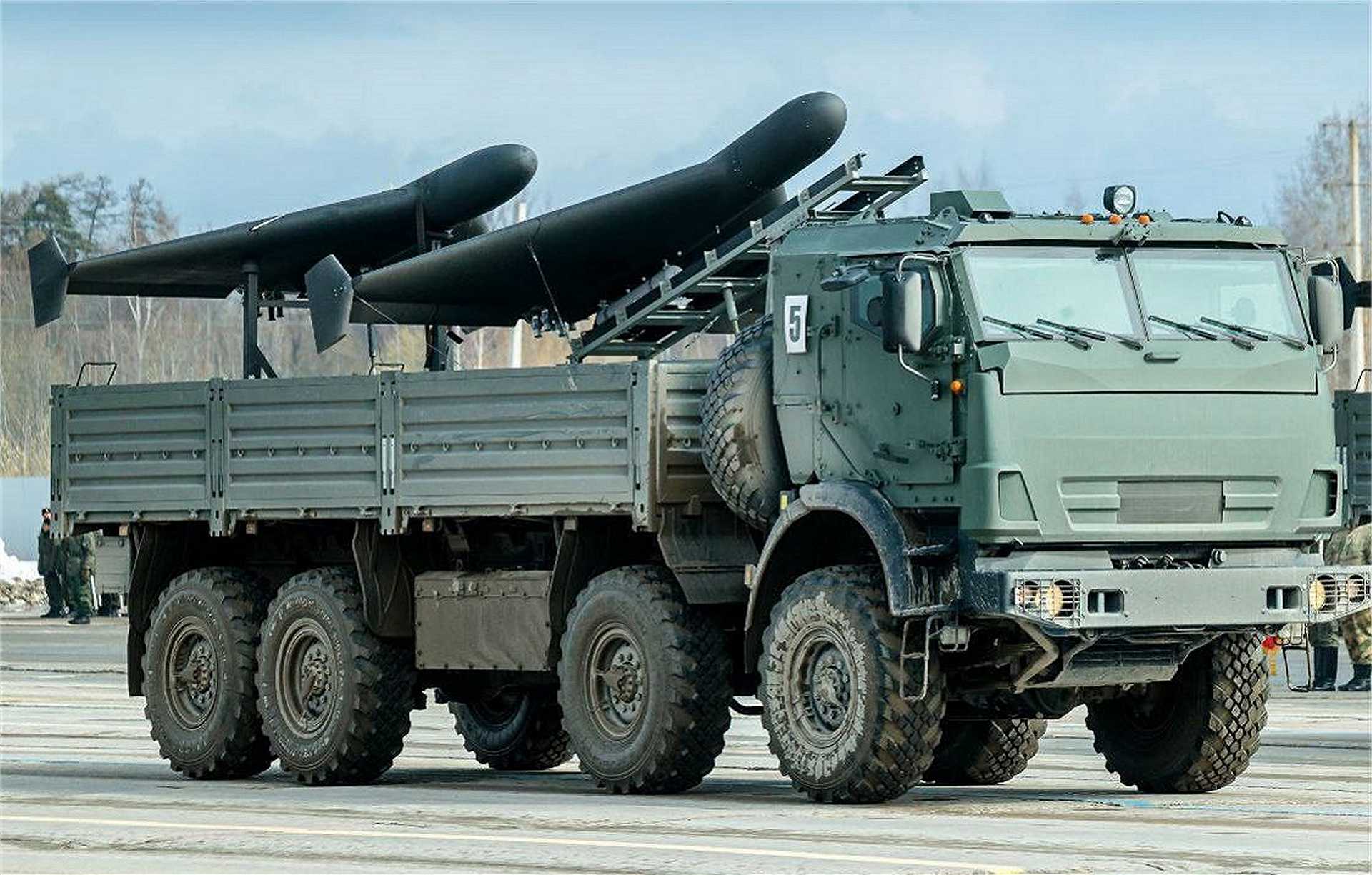
During a rehearsal for the 2025 Victory Day Parade in Alabino, Moscow Region, the Russian Army showcased a new mobile launcher system for its Geran-2 loitering munitions. This marks the first public appearance of such a system, underscoring Russia's growing emphasis on integrating unmanned aerial systems into frontline operations. This launcher's deployment signals technological adaptation and a strategic shift in modern warfare tactics driven by lessons learned from ongoing conflicts, particularly the war in Ukraine.
Follow Army Recognition on Google News at this link
The newly unveiled Russian mobile Geran-2 loitering munition launcher, mounted on a KamAZ-6350 8x8 truck, spotted during the Victory Day 2025 parade rehearsal in Alabino. This marks the first public appearance of the front-line drone strike platform designed for rapid deployment and increased battlefield mobility. (Picture source: Russian Social Network VK)
The Geran-2 loitering munition, believed to be a Russian-produced version of the Iranian Shahed-136, is a delta-wing drone that has gained prominence for its role in recent combat zones. Though initially manufactured in Iran, Russia has reportedly begun domestic production under the Geran-2 designation, potentially with modifications tailored to Russian operational requirements. This UAV is characterized by its relatively low cost, simplicity, and long-range capabilities. It measures approximately 3.5 meters in length with a wingspan of 2.5 meters and can carry a warhead weighing between 50 to 90 kilograms. Its maximum speed hovers around 180 km/h, with an operational range of up to 2,000 kilometers, enabling it to loiter over a designated area before targeting enemy assets. Recent versions have also been observed carrying thermobaric warheads, increasing their lethality against fortified positions and infrastructure.
The newly unveiled launcher is based on the robust KamAZ-6350 8x8 military truck, a platform well-regarded for its mobility and versatility. This vehicle has been modified to support loitering munition operations by integrating an armored cabin that protects the crew against small arms fire and shrapnel, making it suitable for deployment closer to the front lines. At the rear of the truck, a single rail launcher is installed for launching Geran-2 drones, with another munition mounted directly on the back of the system, ready for rapid redeployment.
The integration of Geran-2 drones with such mobile platforms presents several tactical advantages on the modern battlefield. The ability to swiftly reposition the launcher system complicates enemy targeting efforts and enhances survivability. Furthermore, proximity to the frontline reduces the time required for a drone to reach its target, increasing operational efficiency. This mobility, coupled with the drone's long range and precision strike capability, allows Russian forces to conduct dynamic and persistent surveillance-strike missions with relatively low logistical demands.
This development also reflects a broader trend in modern warfare—particularly highlighted by the Russian-Ukrainian conflict—where drones have emerged as indispensable tools for both strategic and tactical operations. The war has witnessed an exponential increase in the use of UAVs by both sides, ranging from reconnaissance and artillery correction to direct strike missions. Loitering munitions like the Geran-2 have played a significant role in targeting enemy air defenses, command posts, and logistical infrastructure, reshaping how militaries approach battlefield dominance. The widespread use of drones in Ukraine has demonstrated the need for mobile, flexible, and cost-effective systems capable of delivering rapid precision strikes without risking manned aircraft, further validating Russia's investment in platforms like the Geran-2 launcher.
As Russia continues to adapt and refine its use of unmanned systems, the unveiling of this mobile launcher marks a significant step in its evolution of drone warfare, blending mobility with precision lethality in response to the shifting demands of contemporary conflict.
- Details
- Written by: Administrator
- Category: Defence & Security Industry Technology
- Hits: 16723
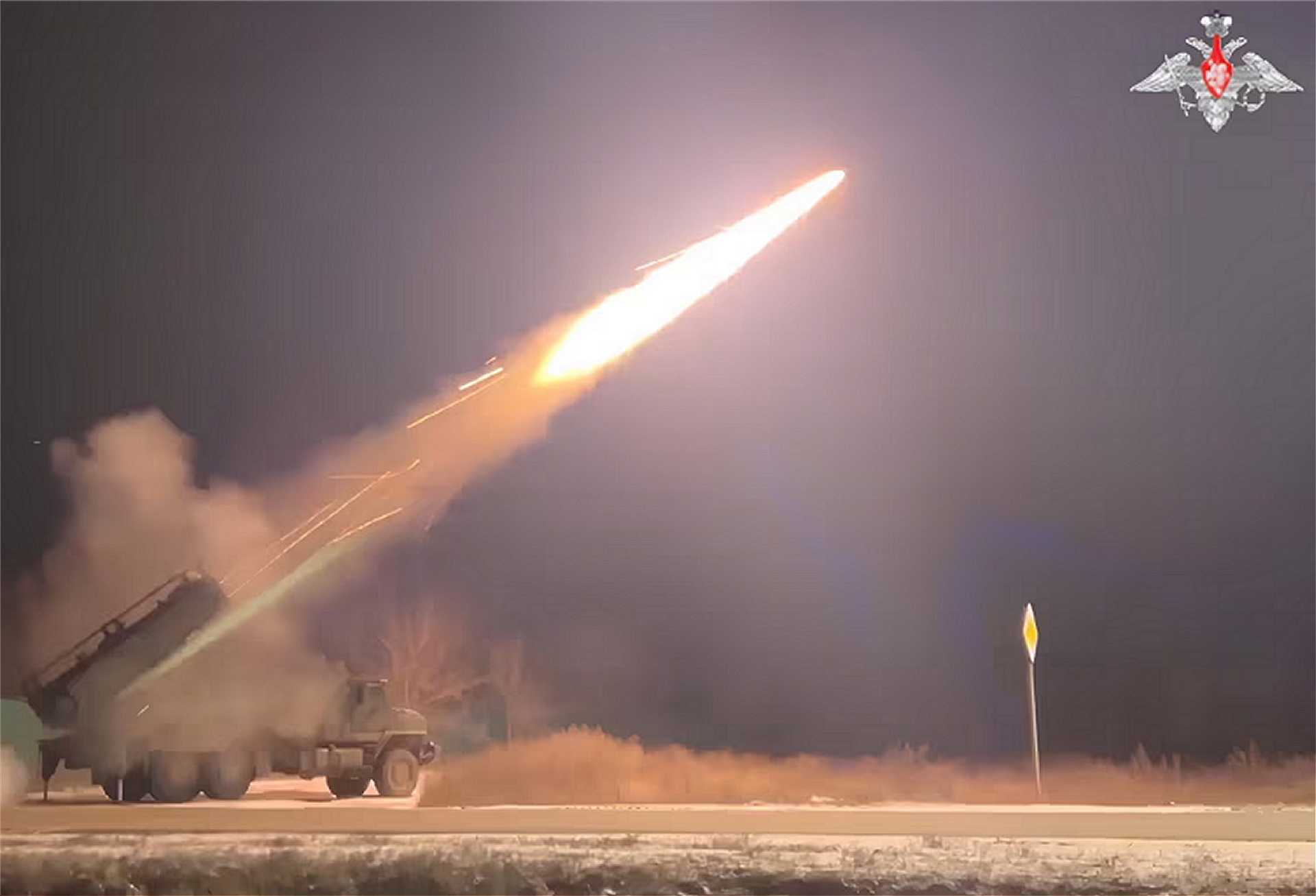
According to the latest information published by the Russian Ministry of Defense on April 17, 2025, Russia continues to enhance its artillery capabilities through the introduction of a new type of ammunition for its TOS-2 "Tosochka" heavy flamethrower system. The system is now being employed with deeply improved 220-mm TBS-3M thermobaric rockets, which have extended the system’s maximum firing range to 15 kilometers, up from the previous 12 kilometers. This marks a significant improvement in the system’s combat performance, offering increased operational depth and tactical safety for artillery crews without requiring modifications to the launcher itself.
Follow Army Recognition on Google News at this link
Russian TOS-2 Tosochka heavy flamethrower system fires a salvo of thermobaric rockets during combat operations in Ukraine. (Picture source: Russian MoD)
The extended range of the TBS-3M rockets has been achieved through technical refinements that include the use of a higher-impulse fuel charge and a slightly lighter thermobaric warhead. These enhancements allow the rocket to travel farther while retaining its destructive effectiveness. Thermobaric munitions function by dispersing a fuel-air aerosol before detonation, producing an intense explosion characterized by extreme heat and a powerful pressure wave. The upgraded TBS-3M rockets preserve the destructive characteristics of this weapon class, allowing for effective neutralization of enemy positions from safer standoff ranges.
Thermobaric weapons are known for their immense lethality in confined spaces such as bunkers, trenches, and urban environments. Upon detonation, the resulting blast consumes oxygen in the immediate area, creating a vacuum effect that can cause severe internal injuries even to those in protective cover. The heat can exceed 2,000 degrees Celsius, incinerating everything within the kill radius. Due to these effects, thermobaric munitions are often employed for area denial, bunker busting, and in combat scenarios where entrenched infantry must be neutralized swiftly and decisively.
The TOS-2 system itself remains a highly advanced platform, featuring a fully integrated automatic fire control system. It includes a thermal imaging sight, a ballistic computer, and a laser rangefinder, enabling precise target engagement within the optical horizon under a variety of environmental conditions. These onboard systems provide the crew with a modernized and responsive interface that improves battlefield effectiveness and decision-making speed.
For the first time, the Russian Ministry of Defense has released footage showcasing the interior of the TOS-2, revealing its digital command suite and ergonomically arranged operator stations. This internal modernization supports rapid response times and enhances operational efficiency during combat deployments.
One of the TOS-2’s most notable attributes is its ability to deliver devastating firepower over a broad area. Each vehicle is equipped with 18 launch tubes for 220-mm rockets, and a full salvo can saturate an area of approximately six hectares. The thermobaric warheads can neutralize all personnel and light fortifications within the blast zone, making it a formidable tool for suppression and psychological impact on the battlefield.
The TOS-2 is mounted on a Ural-63706-0120 6x6 wheeled chassis, offering improved mobility over tracked predecessors like the TOS-1A. This allows the system to maneuver more freely across various terrains and eliminates the need for external transport vehicles, thus enhancing its strategic and tactical deployment capabilities.
Notably, the TOS-2 saw its first confirmed combat use during the ongoing Russia–Ukraine conflict, where it was deployed in support of Russian ground offensives. Reports from the battlefield indicate that the system was used to target fortified Ukrainian positions and urban strongholds, demonstrating the platform’s ability to deliver rapid, large-scale destruction. This marked a significant milestone in the operational history of the TOS-2, transitioning it from a display piece at military parades and exercises to an active component of Russia’s modern artillery arsenal.
With the integration of the new TBS-3M thermobaric rockets, the TOS-2 "Tosochka" emerges as an even more lethal and versatile asset in the Russian military’s inventory. The increased range and preserved destructive power significantly bolster its role in contemporary warfare, particularly in scenarios requiring rapid, deep-strike capability, and overwhelming fire saturation against well-defended positions.

- Details
- Written by: Halna du Fretay
- Category: Defence & Security Industry Technology
- Hits: 7472
On March 25, 2025, the North Atlantic Treaty Organization took a new step in the modernization of its military capabilities by formalizing the acquisition of the Maven Smart System NATO (MSS NATO), an artificial intelligence-based warfare platform developed by the U.S. company Palantir Technologies Inc. The agreement, concluded between the NATO Communications and Information Agency (NCIA) and Palantir, introduces a strategic technological asset aimed at reinforcing Allied Command Operations (ACO) in an evolving global security environment.
MSS NATO stands out through its ability to automate intelligence fusion by cross-analyzing data from multiple sources, including sensors, satellites, ISR systems, and human reports (Picture source: NATO )
Resulting from close collaboration between NCIA, the Supreme Headquarters Allied Powers Europe (SHAPE), and Palantir, the MSS NATO system is designed to provide Alliance forces with a next-generation digital infrastructure adapted to the requirements of modern military operations. Introduced as a unified command and control solution, the system is built on the integration of advanced artificial intelligence technologies, including large language models (LLMs), generative AI, and machine learning. These capabilities significantly enhance intelligence fusion, situational awareness, operational planning, and the speed of decision-making processes.
According to Ludwig Decamps, General Manager of the NCIA, the acquisition demonstrates the Alliance's commitment to equipping its warfighters with technologies tailored to the realities of today’s battlefield. He emphasized that MSS NATO serves as a critical enabler for increasing the efficiency and responsiveness of Allied forces. The system is designed for secure and interoperable deployment, ensuring smooth integration into NATO’s existing operational structures and contributing to a more cohesive digital environment across the Alliance.
From an industrial perspective, Palantir highlights the strategic significance of this transatlantic collaboration. Shon Manasco, Senior Counselor at Palantir, stated that NATO’s adoption of MSS NATO reflects its intent to maintain technological superiority through the integration of disruptive solutions. He added that the system’s deployment at SHAPE signals a shared commitment to long-term strategic innovation within NATO’s institutional framework.
General Markus Laubenthal, Chief of Staff at SHAPE, affirmed this trajectory. He noted that ACO is positioning itself at the forefront of technological adoption with the objective of making NATO more agile, adaptable, and responsive to emerging threats. By enabling the operational use of complex data, MSS NATO supports this adaptive capability and provides a concrete advantage in the conduct of operations. He further emphasized that innovation has become inseparable from operational capability and that this platform directly addresses that operational imperative.
One of the most noteworthy aspects of the acquisition lies in the speed of the procurement process. In just six months, NATO defined its requirements, evaluated proposals, and finalized the agreement with Palantir. This accelerated timeline makes it one of the fastest procurements in NATO’s history and reflects an institutional push toward digital transformation, as well as a heightened awareness of the need to integrate disruptive technologies amid growing hybrid threats and intensifying competition for information dominance.
The system is expected to become operational within 30 days of the contract signing. Beyond its immediate deployment, MSS NATO will serve as a foundation for the integration of other emerging technologies. Its technical framework is designed to host additional capabilities such as advanced modeling, complex scenario simulation, and future AI models being developed across the Alliance. This modular architecture lays the groundwork for a continuous innovation ecosystem anchored in cooperation between North American and European technology bases.
MSS NATO stands out through its ability to automate intelligence fusion by cross-analyzing data from multiple sources, including sensors, satellites, ISR systems, and human reports. This automation produces a coherent and continuously updated tactical picture, strengthening commanders’ capacity to anticipate battlefield developments. Leveraging predictive algorithms, the system can identify adversarial behavior patterns, detect potential threats, and designate priority targets with improved precision. It also supports operational planning by offering analysis and simulation tools that allow rapid testing of various scenarios and adjustments based on evolving battlefield dynamics. Unlike more rigid systems, MSS NATO provides a flexible platform capable of integrating new AI modules, including generative models and LLMs, while maintaining high cybersecurity and resilience standards against digital threats. As an interoperable system, it promotes effective coordination across NATO’s military components, overcoming technological fragmentation among national systems. Moreover, its open architecture enables strategic scalability, making it a long-term infrastructure capable of incorporating future technologies in areas such as electronic warfare, cognitive warfare, and behavioral analysis.
In conclusion, NATO’s acquisition of the Maven Smart System from Palantir Technologies represents more than a technological upgrade. It marks a fundamental transformation in how the Alliance perceives, processes, and acts upon digital information in military contexts. By integrating artificial intelligence into its operational doctrine, NATO is advancing toward a model of decision superiority built on the secure and intelligent exploitation of data. MSS NATO stands as a central pillar of this strategy, reflecting a shared commitment by member states to remain at the forefront of technological evolution in an increasingly complex and unstable global security environment.
- Details
- Written by: Administrator
- Category: Defence & Security Industry Technology
- Hits: 9419
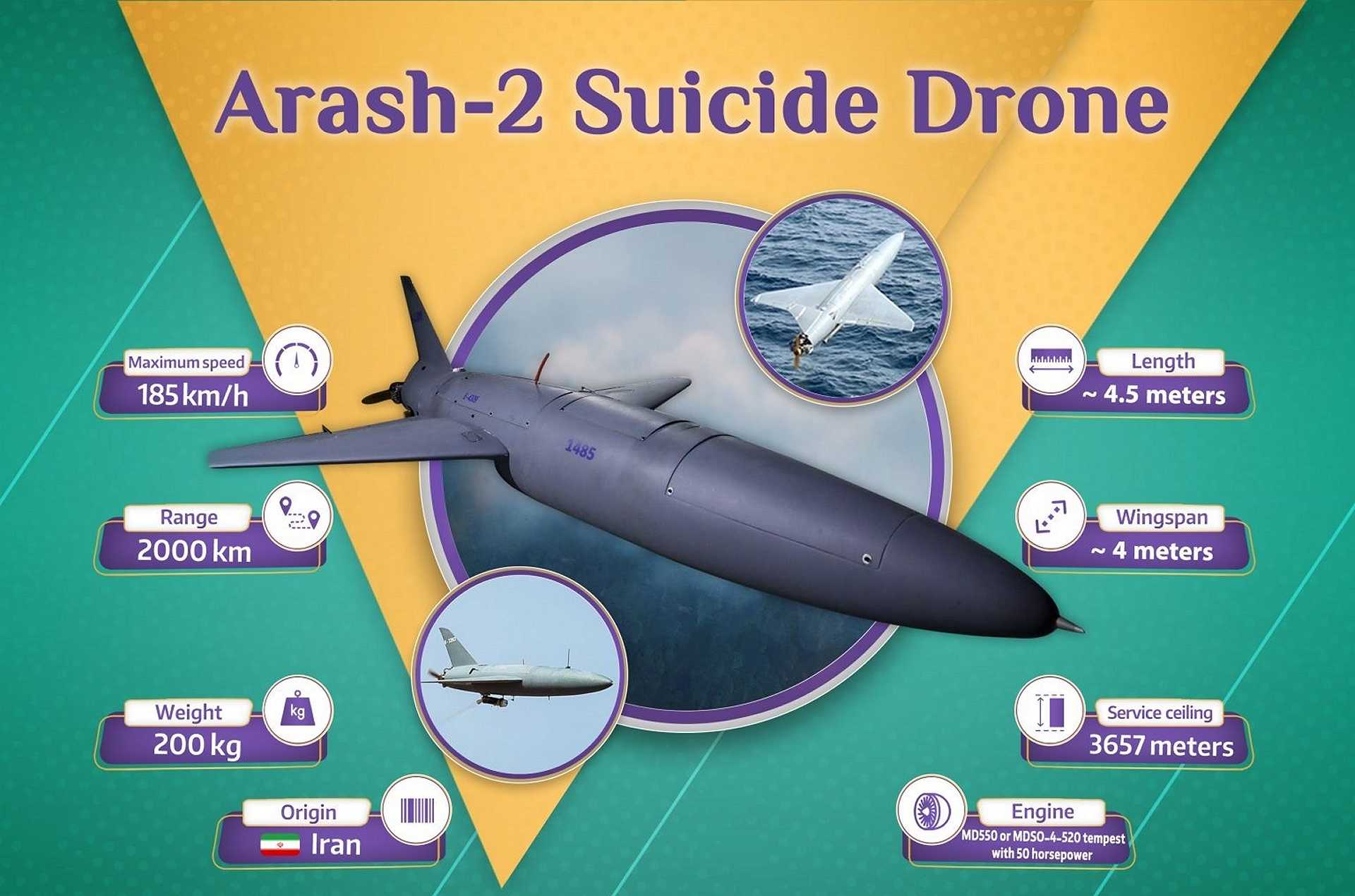
Iran has developed a new category of suicide drone with the introduction of the Arash-2, a long-range loitering munition capable of reaching targets up to 2,000 kilometers away. This drone marks a significant milestone in Iran's growing unmanned aerial capabilities, positioning the country among the global leaders in long-range UAV technology. Designed and mass-produced by Iran’s defense industry, the Arash-2 is regarded as one of the most advanced suicide drones in the world, offering high precision, radar evasion, and a powerful destructive capacity.
Follow Army Recognition on Google News at this link
The Iranian Arash-2 is a long-range suicide drone capable of striking targets up to 2,000 km, designed for high-precision attacks and radar evasion with significant destructive capability. (Picture source: Iran Media Agency)
Brigadier General Kioumars Heidari, commander of the Iranian Army Ground Forces, described the Arash-2 as a specialized weapon designed to perform precision strikes and suppress enemy air defense systems. Unlike earlier Iranian drones, the Arash-2 is engineered for both offensive kamikaze missions and electronic warfare roles. First introduced during military drills in 2020, the Arash-2 has been featured prominently in Iran’s armed forces exercises and strategic demonstrations, showcasing its long-range capabilities and operational readiness.
Technically, the Arash-2 is an upgraded version of the Arash-1 and shares visual similarities with the Kian-2 drone. However, the Arash-2 is equipped with a piston engine—specifically the MD550 or MDSO-4-520 Tempest, delivering 50 horsepower—which enables it to achieve speeds of up to 185 km/h. The drone has a length of 4.5 meters and a wingspan of 4 meters. It operates at altitudes up to 12,000 feet and is launched from truck-mounted box systems or with jet-assisted take-off (JATO) launchers, allowing flexible and rapid deployment in various terrains.
What sets the Arash-2 apart is its strategic targeting capability. General Heidari explicitly stated that the drone was developed with the goal of striking key Israeli cities, including Tel Aviv and Haifa, in the event of military confrontation. The drone is equipped with sophisticated guidance systems, capable of retrieving target information multiple times before executing its final strike. These features significantly enhance its precision and lethality, making it a central component in Iran's strategy of deterrence and asymmetric warfare.
The emergence of the Arash-2 has also raised serious concerns on the international stage. Western intelligence sources have reported that Iran may be expanding its drone cooperation with Russia, with speculation that Russian forces are being trained to operate the Arash-2 in Ukraine. If confirmed, this would extend Iran’s drone influence far beyond the Middle East and into global theaters of conflict, further destabilizing already tense geopolitical environments.
Moreover, the drone’s 2,000-kilometer range places a wide array of regional and foreign military installations within striking distance. U.S. military bases throughout the Gulf region, including in Qatar, Bahrain, and the UAE, as well as naval assets in the Persian Gulf and Arabian Sea, are all potential targets. The Arash-2's capacity for high-precision, radar-evading strikes introduces new threats to U.S. and allied forces, altering regional defense calculations and potentially complicating deterrence strategies.
Iran’s continued development of indigenous drone technologies like the Arash-2 reflects a broader ambition to achieve strategic autonomy in the face of long-standing sanctions and arms embargoes. By investing in advanced unmanned systems, Tehran seeks to level the playing field against technologically superior adversaries through cost-effective, asymmetrical tools of warfare.
The Arash-2 is not just another addition to Iran’s UAV arsenal—it is a transformative system that could redefine aerial strike doctrines in the region. Its emergence signals a shift in the strategic balance of power in West Asia and presents a growing challenge to the defensive posture of both regional adversaries and global military powers.
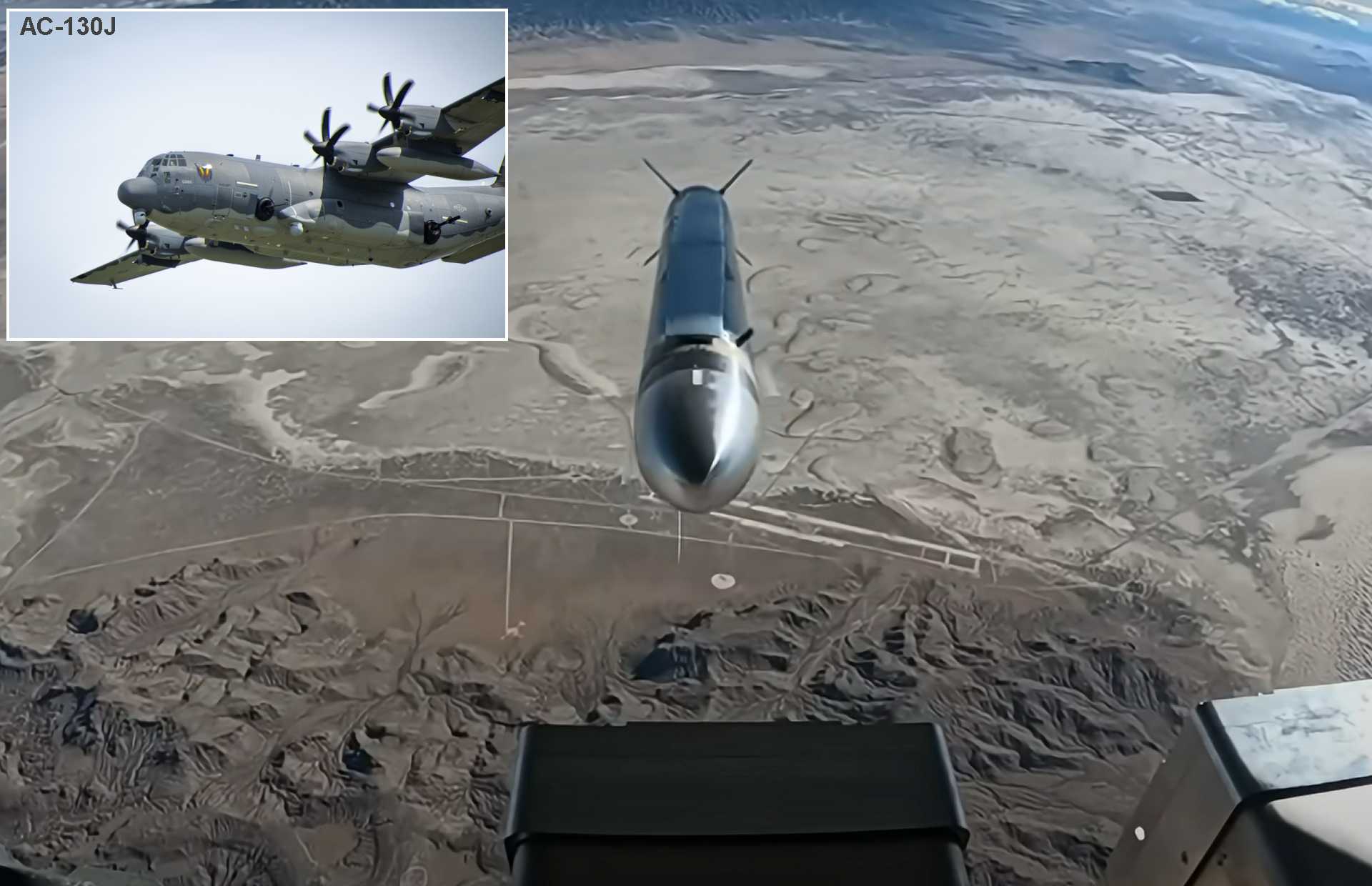
- Details
- Written by: Administrator
- Category: Defence & Security Industry Technology
- Hits: 3992
Leidos, an American defense and technology company based in Reston, Virginia, successfully completed a guided flight test of its Small Cruise Missile (SCM), known as Black Arrow, in November 2024. The test, carried out from an AC-130J Ghostrider gunship aircraft, validated multiple key operational parameters including aircraft compatibility, overall system performance, waypoint uplinks, guidance accuracy, and successful integration with the U.S. Naval Surface Warfare Center's Battle Management System (BMS).
Follow Army Recognition on Google News at this link
Leidos' Black Arrow Small Cruise Missile moments after release from an AC-130J Ghostrider during a successful flight test conducted in support of U.S. Special Forces strike capabilities. (Picture source: Leidos)
The Small Cruise Missile (SCM), also nicknamed Black Arrow, represents a new generation of compact, adaptable weaponry. Weighing in at around 90 kg (200 pounds), it is designed as a low-cost, mission-flexible delivery platform. Its modular construction allows for spiral upgrades, enabling it to handle a broad range of kinetic and non-kinetic missions. This flexibility is vital in today’s fast-evolving battlefield environments where adaptable and scalable strike capabilities are becoming essential. One of the Black Arrow’s standout features is its multi-platform deployment capability. It can be launched using a custom Ramp Launch Tube (RLT) from the cargo ramp of a C-130 aircraft, deployed in a palletized configuration, or released from conventional fixed-wing aircraft stores. This makes it especially useful for Special Operations Forces, where agility and adaptability are paramount.
Leidos, the developer of the Black Arrow, is one of the leading defense and IT contractors in the United States. With a workforce of approximately 48,000 employees globally, the company plays a vital role in supporting national security missions through advanced technological solutions in defense, civil, and health markets. Within the defense sector, Leidos is recognized for its work in systems engineering, software development, and integrated weapons platforms.
The AC-130J Ghostrider, from which the missile was launched, is the latest variant in the U.S. Air Force's family of gunship aircraft. This heavily armed aircraft is engineered for close air support, air interdiction, and armed reconnaissance missions. It incorporates the Precision Strike Package, which includes state-of-the-art mission management systems, electro-optical and infrared sensors, a communications suite, and both 30mm and 105mm cannons. It also features the ability to deploy precision-guided munitions, giving it unmatched versatility and firepower to support special operations missions, especially in contested or denied environments.
The test of the Black Arrow was conducted under a Collaborative Research and Development Agreement (CRADA) that includes Leidos, the United States Special Operations Command (USSOCOM), and the Air Force Special Operations Command (AFSOC). Speaking at the Special Air Warfare Symposium at Eglin Air Force Base in March 2025, Colonel Justin Bronder, USSOCOM Program Executive Officer for Fixed Wing, highlighted the significance of the SCM, stating that it is a key capability rapidly advancing AFSOC’s ability to close long-range kill chains—a critical function in modern high-threat theaters.
Model-based systems engineering practices underpin the development of Black Arrow and conforms to architecture standards advocated by the U.S. Air Force, including the Weapon Open System Architecture established by the Air Force Research Laboratory. This ensures not only cost-effectiveness and development speed but also compatibility and scalability across various operational platforms.
Leidos’ successful demonstration of the Black Arrow from an operational aircraft marks a crucial step toward rapidly fielding the missile system. With the rising importance of affordable mass and precision strike capabilities in modern warfare, Black Arrow stands out as a timely and strategically relevant solution designed to meet emerging threats with agility, precision, and operational flexibility.

- Details
- Written by: Administrator
- Category: Defence & Security Industry Technology
- Hits: 7209
Pearson Engineering, a UK-based specialist in combat engineering systems, has been awarded a significant contract by Hanwha Defence Australia (HDA) for the supply of 131 combat dozer blades. These blades are set to be integrated with the Redback Infantry Fighting Vehicle (IFV), a next-generation combat vehicle selected by the Australian Defence Force under the LAND 400 Phase 3 program. The contract follows extensive Risk Mitigation Activities (RMA) conducted in Australia, where the combat dozer blade demonstrated its operational effectiveness and durability in challenging environments, affirming its readiness for full-scale deployment.
Follow Army Recognition on Google News at this link
A Redback Infantry Fighting Vehicle equipped with Pearson Engineering’s combat dozer blade, designed to enhance obstacle-clearing and battlefield mobility capabilities under Australia’s LAND 400 Phase 3 program(Picture source: Pearson Engineering)
The LAND 400 Phase 3 program is one of Australia’s most ambitious armored vehicle modernization projects. It aims to replace the aging M113 Armoured Personnel Carriers with up to 450 advanced Infantry Fighting Vehicles to enhance the Army’s close combat capability. After an intensive evaluation process, the Redback IFV (Infantry Fighting Vehicle)—developed by South Korea's Hanwha Defense—was chosen as the preferred platform. The Redback combines high levels of protection, mobility, and firepower, including an advanced 30mm cannon, active protection systems, and integrated C4ISR capabilities. It is designed to operate effectively in high-threat environments while ensuring the survivability of its crew and dismounts.
The integration of the combat dozer blade to the front of the Redback IFV significantly expands the platform’s utility, allowing it to perform a broader range of battlefield engineering tasks. Dozer blades mounted on the front of IFVs serve critical operational purposes, such as clearing battlefield obstacles, creating vehicle fighting positions, removing debris, and performing limited earthmoving activities. This enhances the tactical mobility of mechanized formations, especially in urban or rugged terrain where movement may be impeded by natural or man-made obstructions. It also enables rapid route clearance and the preparation of defensive positions without requiring the deployment of dedicated engineer vehicles, thereby increasing battlefield efficiency and responsiveness.
The dozer blade will be connected to the Redback via Pearson Engineering’s Vehicle Interface Kit, a modular system that enables rapid attachment and detachment of various types of Front-End Equipment (FEE). This interface is a central component of Pearson’s design philosophy, allowing operators to tailor the IFV for specific missions. Should operational needs evolve, the dozer blade can be replaced with other engineering systems such as mine ploughs, counter-IED rollers, or surface clearance devices without any additional mechanical redesign. This modularity ensures that the Redback remains future-proof and mission-adaptable.
As part of its Australian Industrial Content (AIC) commitment, Pearson Engineering is taking concrete steps to localize the supply and integration of the dozer blade system. A network of Australian suppliers has been established to handle component fabrication, hydraulic systems, electrical harnesses, assembly, and testing. This initiative is aligned with Australia’s strategic goal to strengthen sovereign defense manufacturing capabilities and foster long-term industrial self-reliance. By building M-AIT (Manufacturing, Assembly, Integration, and Test) capabilities in-country, Pearson is contributing not only to the effectiveness of the Australian Army but also to the growth and resilience of the national defense industry.
Pearson Engineering’s combat dozer blades are fielded globally across a wide range of armored vehicle platforms. Each system is specifically engineered to match the host vehicle’s physical configuration and operational requirements, reflecting a deep understanding of the diverse environments and mission profiles faced by modern military forces. The company's involvement in the LAND 400 Phase 3 program builds upon its established partnership with the Australian Defence Force, which also includes support for the LAND 907 program focused on the M1A2 Abrams Main Battle Tank and associated combat engineering vehicles. Through this contract, Pearson Engineering reinforces its role as a key enabler of mission success for combat vehicles deployed in demanding operational scenarios.
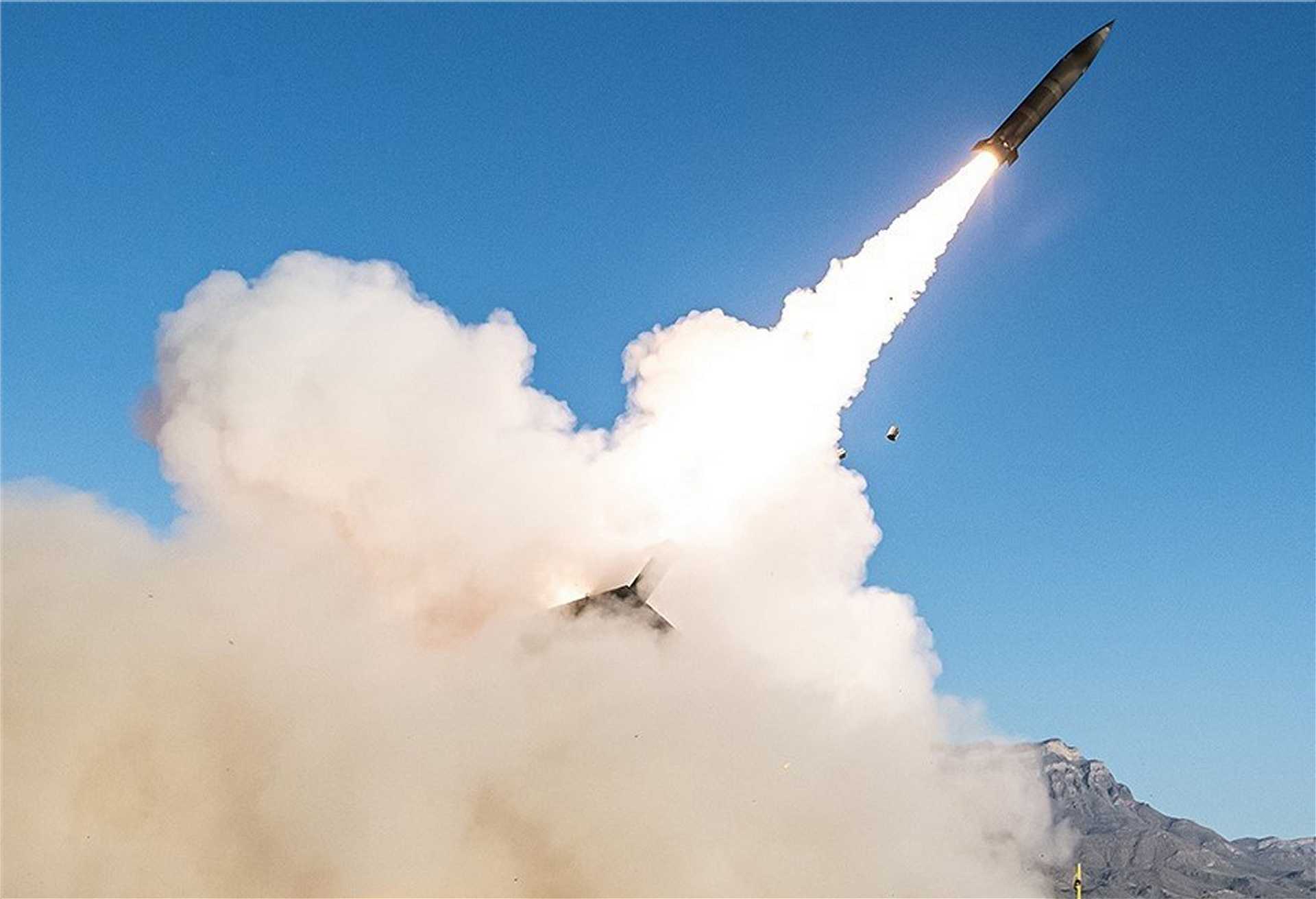
- Details
- Written by: Administrator
- Category: Defence & Security Industry Technology
- Hits: 7318
On April 14, 2025, American Company Lockheed Martin and the U.S. Army successfully conducted the first launch of the Precision Strike Missile (PrSM) from the upgraded M270A2 Multiple Launch Rocket System (MLRS) during a production qualification test at White Sands Missile Range in New Mexico. This short-range test not only validated the missile’s integration with the M270A2 launcher but also confirmed its accuracy, lethality, and reliability under operational stress conditions.
Follow Army Recognition on Google News at this link
The U.S. Army conducts the first launch of the Precision Strike Missile (PrSM) from a modernized M270A2 Multiple Launch Rocket System at White Sands Missile Range, demonstrating a precision strike capability at ranges exceeding 400 kilometers. (Photo: Lockheed Martin)
The PrSM (Precision Strike Missile ) is the U.S. Army’s next-generation surface-to-surface missile, developed to replace the aging MGM-140 Army Tactical Missile System (ATACMS). Compared to ATACMS, PrSM delivers significantly improved performance in almost every critical area. While ATACMS is limited to a range of approximately 300 kilometers and carries a single warhead per launch pod, PrSM features a modular, open-systems design and boasts an extended range exceeding 400 kilometers. Each pod can accommodate two PrSM missiles, doubling the firing capacity of each M270A2 or HIMARS launcher. This not only enhances overall firepower but also allows for more efficient and sustained operations during high-intensity conflict.
In terms of destructive capability, PrSM’s warhead delivers a more focused and high-impact kinetic strike, tailored for engaging high-value, time-sensitive targets such as enemy air defense systems, mobile command posts, radar arrays, and logistics hubs. The missile uses an advanced guidance system to maintain exceptional precision throughout its flight, even in GPS-contested or degraded environments. During the April 14 test, the missile successfully neutralized multiple target types, including a radar installation and a rotary-wing platform, showcasing its ability to engage diverse threats with surgical accuracy.
On the modern battlefield, the tactical advantages of PrSM are pronounced. As near-peer adversaries increasingly deploy integrated air defense systems and mobile high-value assets, the need for precision, speed, and survivability in long-range fires has become paramount. PrSM is designed specifically to penetrate advanced enemy defenses and destroy key enablers before they can threaten U.S. and allied forces. Its rapid deployability and compatibility with both wheeled (HIMARS) and tracked (M270A2) launch platforms allow commanders to tailor fire missions across various terrains and operational theaters.
The M270A2 MLRS (Multiple Launch Rocket System), which was the platform used in the latest test, represents the most advanced iteration of the legacy M270 MLRS. This upgraded variant includes a new 600-horsepower engine, an improved armored cab for crew protection, and a Common Fire Control System (CFCS) that is fully interoperable with HIMARS. These enhancements enable the M270A2 to operate more reliably in high-threat and austere environments, while extending the system’s service life through at least 2050. Additionally, the CFCS allows the M270A2 to seamlessly fire not only PrSM but also other future munitions such as the Extended-Range Guided MLRS (ER GMLRS), thereby enhancing the launcher’s versatility and future-proofing its combat relevance.
Lockheed Martin’s continued development and testing of PrSM is supported by a recent production contract valued at up to $4.94 billion, underscoring the U.S. Army’s commitment to rapidly fielding this capability. With successful flight demonstrations already conducted in February and March 2025, the PrSM program is progressing steadily toward full operational deployment.
As threats in the Indo-Pacific, Eastern Europe, and other regions evolve, the ability to conduct deep fires at extended ranges with high precision is central to U.S. and allied deterrence and defense strategies. The integration of PrSM with platforms like the M270A2 equips commanders with a transformative weapon system that ensures overmatch in multi-domain operations and enhances the survivability and effectiveness of ground forces in future conflicts.

- Details
- Written by: Administrator
- Category: Defence & Security Industry Technology
- Hits: 4406
The British Army is on the brink of a mine-clearing revolution with the introduction of a new robotic demining system named WEEVIL, designed to enhance the safety and speed of minefield breaching operations significantly. Developed collaboratively by the UK’s Defence Science and Technology Laboratory (Dstl) and the engineering powerhouse Pearson Engineering Ltd, WEEVIL is poised to replace traditional methods by remotely neutralising mine threats from a safe distance.
Follow Army Recognition on Google News at this link
WEEVIL robotic mine plough mounted on the front of a Warrior IFV during trials, showcasing next-generation demining technology for the British Army. (Picture source: UK MoD)
The WEEVIL robotic demining system combines remote-control capabilities, advanced vehicle-mounted cameras, and a full-width mine plough, allowing a single operator to control the system from miles away—drastically reducing the risk to frontline personnel. This innovative system has been tested successfully in a surrogate minefield environment in Newcastle and is currently undergoing further rigorous trials with the British Army to validate its performance in real-world conditions.
Current mine-clearing solutions such as the TROJAN Armoured Vehicle require a three-person crew to operate within close proximity to active minefields, placing soldiers in direct danger. WEEVIL addresses this vulnerability by leveraging remote operation and adapting existing platforms—such as the Warrior Infantry Fighting Vehicle—for unmanned breaching missions. “The introduction of WEEVIL marks a decisive shift in how we approach one of the most dangerous battlefield tasks,” stated Major Andrew Maggs, Dstl Military Advisor and one of the system’s key pioneers. “This is the perfect blend of tested engineering and cutting-edge innovation, enhancing the utility of existing platforms and safeguarding British lives.”
The necessity for advanced mine-clearing capabilities has become more pressing amid modern conflicts, notably in Ukraine, where anti-personnel and anti-tank mines are used extensively to slow enemy advances. WEEVIL promises to outpace traditional breaching methods both in speed and operational security, enabling British troops to maneuver more effectively toward strategic objectives. Minister for the Armed Forces, Luke Pollard, hailed the technology, noting, “It won’t be a moment too soon when we no longer have to send our people directly into harm’s way to clear minefields. This kit exemplifies British innovation—designed and built in Britain to protect British troops.”
Aligned with the UK Government’s Plan for Change, WEEVIL embodies the broader strategy to transform defence into a pillar of economic growth and technological leadership. As part of the Spring Statement, an additional £2.2 billion has been allocated to defence for FY 2025/26, supporting the drive toward spending 2.5% of GDP by 2027, with aspirations to reach 3% in the next Parliament. From 2025-26 onwards, the Ministry of Defence will also dedicate at least 10% of its equipment procurement budget to next-generation technologies—including AI-enabled systems, autonomous platforms, and dual-use innovations like WEEVIL.
As field trials continue, the British Army will refine WEEVIL for potential integration into a broader array of vehicle platforms, ensuring adaptability across different combat scenarios. With further development, WEEVIL could play a pivotal role in reshaping the UK’s counter-mine doctrine and bolstering operational readiness for high-threat environments. In an era where mobility and protection are paramount, WEEVIL stands as a testament to British engineering excellence and a transformative step toward a safer battlefield future.

- Details
- Written by: Administrator
- Category: Defence & Security Industry Technology
- Hits: 8046
In a video published by the Danish Ministry of Defence Acquisition and Logistics Organisation (DALO – Forsvarsministeriets Materiel- og Indkøbsstyrelse) on April 6, 2025, the Danish Army is seen conducting live-fire trials with what is set to become one of the most advanced Infantry Fighting Vehicles (IFVs) in the world—the CV9035 MkIIIC. The trials were carried out under extreme winter conditions at the BAE Systems Hägglunds testing grounds in northern Sweden, in cooperation with Sweden’s FMV (Försvarets materielverk), which is procuring the same vehicle configuration. This event marks a pivotal milestone in Denmark’s strategic plan to modernize its ground combat capabilities and establish its heavy brigade as a NATO-ready, high-readiness force equipped with cutting-edge technology.
Follow Army Recognition on Google News at this link
A Danish Army CV9035 MkIIIC conducts a live-fire exercise in northern Sweden, showcasing its 35mm Bushmaster III cannon and RBS 58 anti-tank missile system during cold-weather trials. (Picture source: Danish MoD)
At the heart of the live-fire demonstration was the CV9035 MkIIIC’s advanced weapon suite. The firing tests prominently featured the 35mm Bushmaster III automatic cannon, a powerful and versatile chain gun developed by Northrop Grumman. The cannon is designed for high-velocity engagements and supports programmable airburst munitions, giving it a lethal advantage over traditional autocannons. With a range exceeding 3,000 meters and a firing rate of up to 200 rounds per minute, the Bushmaster III is capable of neutralizing a wide variety of battlefield threats, including dismounted infantry, light armored vehicles, and aerial targets such as drones. Its integration into the CV9035 MkIIIC underscores Denmark’s commitment to equipping its forces with top-tier firepower.
In addition to the autocannon, the trials showcased the CV9035 MkIIIC’s capability to launch the RBS 58 missile—Sweden’s designation for the Spike LR2 anti-tank guided missile, developed by Rafael Advanced Defense Systems and produced under license by Saab. The RBS 58 provides the vehicle with extended standoff strike capability, with an operational range of up to 5.5 kilometers. It features a tandem-charge warhead capable of penetrating advanced explosive reactive armor (ERA), and supports both fire-and-forget and fire-and-update functions through a fiber-optic link. This allows the gunner to switch targets mid-flight or observe the missile’s path in real time, greatly increasing tactical flexibility and target acquisition accuracy in complex combat scenarios.
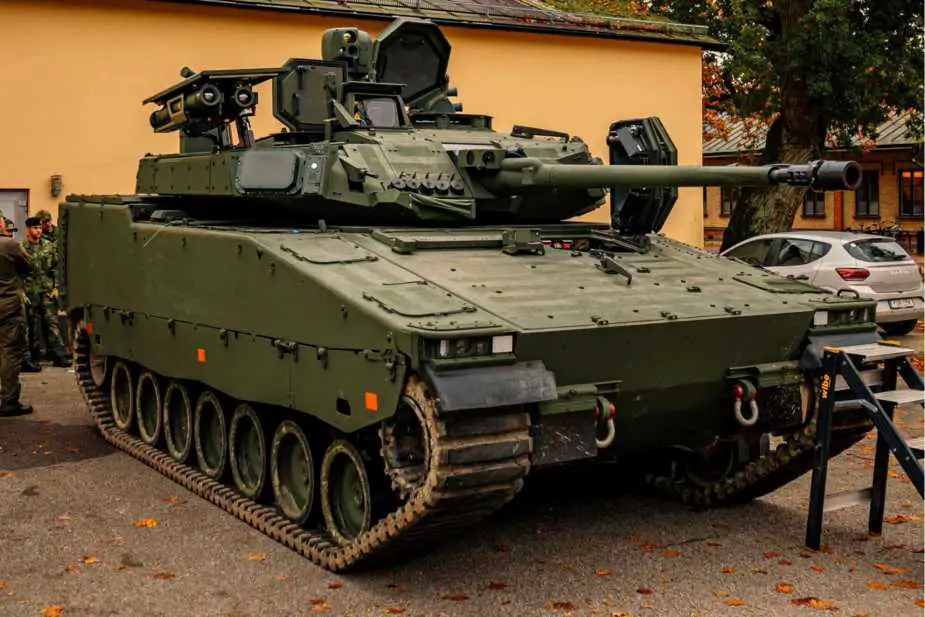
The new CV9035 MkIIIC Infantry Fighting Vehicle, featuring advanced armor, digital systems, and enhanced firepower, stands ready to become the backbone of Denmark’s future heavy brigade.
The CV9035 MkIIIC itself is the latest iteration of the widely used CV90 family, manufactured by BAE Systems Hägglunds in Örnsköldsvik, Sweden. More than 1,500 CV90s have been delivered across Europe, with combat experience informing each successive upgrade. The MkIIIC represents a leap forward in mobility, survivability, firepower, and digitization. In addition to its armament, the vehicle is equipped with the Iron Fist Active Protection System (APS), offering hard-kill defense against incoming anti-tank guided missiles and RPGs. Its modular armor packages, enhanced mine resistance, and blast protection systems ensure high survivability in both conventional and asymmetric warfare environments.
Digitally, the CV9035 MkIIIC is fully networked. A modern electronic architecture allows seamless battlefield integration with other assets, enabling real-time data sharing and enhanced situational awareness. It features 360-degree electro-optical sensor systems, augmented reality targeting, and artificial intelligence-enhanced threat detection—transforming it into a digital battlefield node rather than just a fighting platform. This significantly enhances the commander's ability to make informed decisions and respond rapidly to evolving threats.
Powering this high-tech system is a Scania DI16 V8 diesel engine, delivering 1,000 horsepower. This gives the vehicle a top speed of 70 km/h and an operational range of up to 900 kilometers. With advanced hydropneumatic suspension and rubber band tracks, the CV9035 MkIIIC combines speed, agility, and reduced acoustic and thermal signatures—ensuring high mobility and stealth across diverse terrains.
In January 2024, Denmark signed a €1.3 billion contract with BAE Systems Hägglunds for the acquisition of 115 CV9035 MkIIICs. This major procurement is part of a wider defense modernization initiative, which will see Denmark invest over €16 billion in strengthening its military capabilities by 2033. The new vehicles are set to become the core of Denmark’s future heavy brigade, meeting NATO’s strategic requirements and reinforcing the Danish Army’s ability to respond to regional and international threats.
Denmark’s alignment with Sweden in adopting the same vehicle configuration underscores a broader effort to deepen Nordic defense cooperation. Standardizing platforms among partner nations enhances interoperability, simplifies logistics, and strengthens joint operational capabilities across NATO’s northern flank. Additionally, the program includes strong industrial collaboration with Danish defense companies, ensuring domestic industry benefits from knowledge transfer, supply chain integration, and long-term maintenance responsibilities.
The CV9035 MkIIIC is more than a new armored vehicle—it is a transformative combat platform. With unmatched firepower, modern protection systems, and digital command capabilities, it represents a paradigm shift in Denmark’s approach to mechanized warfare. As Army Recognition continues to follow the vehicle’s testing and upcoming deliveries, this development is clearly setting a new benchmark for European IFVs and reinforcing Denmark’s role as a forward-leaning, capable military force within NATO.

- Details
- Written by: Administrator
- Category: Defence & Security Industry Technology
- Hits: 3620
According to information published by General Dynamics Land Systems on April 12, 2025, a striking image has emerged from the Big Sandy Range in Arizona, showcasing the Pandur SHORAD (Short-Range Air Defense) 6x6 armored vehicle in preparation for a live-fire demonstration at this month’s Bushmaster Users Conference. The photo captures the cutting-edge system as it readies to deliver a powerful demonstration of mobile air defense capabilities, signaling a significant advancement in short-range air defense technology designed for today’s evolving battlefield threats.
Follow Army Recognition on Google News at this link
The General Dynamics Pandur SHORAD equipped with Moog Inc.'s RIwP turret conducts live-fire testing at White Sand Range, Arizona. (Picture source: GDLS)
This demonstration of the new Pandur SHORAD (Short-Range Air Defense) 6x6 armored vehicle marks a critical milestone for General Dynamics Land Systems (GDLS), as the company pairs the highly mobile Pandur EVO 6x6 armored vehicle with Moog Inc.'s RIwP (Reconfigurable Integrated-weapons Platform) turret, showcasing a SHORAD solution purpose-built for decisive lethality and protected mobility.
Developed by Moog Inc., a leading American defense technology manufacturer, the RIwP turret represents one of the most modular and scalable remote weapon systems available on the market today. Designed for multi-domain operations, the RIwP supports over 125 different weapon and sensor combinations, ranging from kinetic effectors such as autocannons, machine guns, and missiles, to non-kinetic systems like directed-energy weapons and electronic warfare modules. In the SHORAD configuration, it integrates a 30mm XM914 automatic cannon, dual Stinger missile pods, and advanced EO/IR sensor suites, allowing simultaneous engagement of multiple air and ground threats. The turret offers 360-degree situational awareness, automatic target tracking, and slew-to-cue capability, greatly reducing operator workload and response time. Its open architecture design supports plug-and-play integration with new technologies, enabling future upgrades without full system replacement—a critical advantage for forces facing rapidly evolving threats.
At the heart of the system, the RIwP turret’s combat effectiveness is further enhanced by programmable airburst munitions, which are especially effective against drone swarms and concealed targets. Electro-optical and infrared sensors, paired with an advanced fire-control system, enable precision target acquisition and engagement in both day and night conditions. This live-fire trial at Big Sandy is set to validate the full operational envelope of the system under realistic battlefield scenarios.
What makes the Pandur SHORAD stand out is its ability to bring this powerful turret system into a highly mobile and survivable platform. The Pandur EVO’s proven 6x6 chassis provides excellent off-road performance, a top speed of 118 km/h, and high levels of protection—making it ideal for frontline units that need to move fast and strike first. The vehicle can carry a crew of three plus up to eight infantry soldiers, allowing for combined air defense and infantry operations from a single platform.
The timing of this live-fire demonstration is highly relevant. Recent conflicts in Ukraine, Israel, and the Middle East have underscored the strategic importance of mobile, decentralized air defense systems. In Ukraine, loitering munitions and drone swarms have overwhelmed traditional, stationary defenses. In Israel, layered air defense has proven vital in intercepting rocket and drone attacks from multiple directions. Meanwhile, non-state actors in Syria and Iraq have weaponized commercial drones, posing a persistent threat to deployed forces and critical infrastructure.
In response to these trends, platforms like the Pandur SHORAD are emerging as essential battlefield tools—offering rapid, maneuverable, and autonomous air defense options that can keep pace with mobile formations and asymmetric threats.
The Bushmaster Users Conference 2025 will provide an opportunity for military stakeholders to witness firsthand how this next-generation SHORAD platform performs under live combat conditions. General Dynamics’ participation signals its continued focus on integrating agility, firepower, and survivability into the future of air defense.

- Details
- Written by: Halna du Fretay
- Category: Defence & Security Industry Technology
- Hits: 4219
In a context marked by the reemergence of high-intensity conflicts and growing technological competition among major powers, the United States is accelerating the modernization of its land forces, particularly in the field of artillery. Among the innovations currently under development is the Scorpio-XR, a long-range precision-guided munition designed by BAE Systems. It aims to provide U.S. Army brigade and division artillery units with significantly enhanced indirect fire capability compared to existing systems.
Scorpio-XR directly addresses the requirements outlined by the U.S. Army as part of its "cannon-delivered precision effects" initiatives and broader artillery transformation efforts (Picture source: BAE Systems)
Derived from technologies developed under the Hypervelocity Projectile (HVP) program, the Scorpio-XR is a 155mm guided projectile capable of engaging fixed and moving targets at twice the range of conventional guided munitions currently in service. This performance potentially places its reach beyond 70 kilometers, enabling U.S. artillery units to strike deep into contested zones where enemy defenses are active while remaining at a safer standoff distance. The munition is characterized by in-flight maneuverability, a reduced time-of-flight, and the integration of gun-hardened subsystems capable of withstanding the extreme stresses of cannon launch while maintaining electronic and guidance functionality.
Scorpio-XR directly addresses the requirements outlined by the U.S. Army as part of its "cannon-delivered precision effects" initiatives and broader artillery transformation efforts. In the face of anti-access/area-denial (A2/AD) systems deployed by powers such as China and Russia—which are capable of threatening forward operating bases and lines of communication—U.S. ground forces require indirect fire solutions capable of operating beyond the reach of these defensive networks. By enhancing both the range and accuracy of its artillery, the Army aims to reestablish battlefield dominance without relying exclusively on air assets, which may be unavailable during the early stages of a high-intensity conflict.
The Scorpio-XR is also designed to be compatible with existing 155mm artillery systems, including the towed M777 and the self-propelled M109A7 Paladin. This approach facilitates the modernization of current platforms while avoiding the costs associated with new artillery systems. As part of an ongoing contract with the U.S. Army, BAE Systems has conducted more than 100 test firings to validate the munition’s performance under a range of operational scenarios.
Industrial competition in this strategic segment is intense. Among Scorpio-XR’s direct competitors is RTX’s (formerly Raytheon) Excalibur S, a GPS-guided precision munition that, in some versions, also features semi-active laser guidance. However, while Excalibur has proven effective, it does not achieve the extended range targeted by Scorpio-XR. Another key program is the Extended Range Cannon Artillery (ERCA), led by the U.S. Army in partnership with companies such as Northrop Grumman. ERCA focuses on increasing the range of the artillery systems themselves, including with enhanced-propulsion munitions like the XM1113, which can exceed 70 kilometers. Lockheed Martin is also developing actively guided munitions incorporating missile-based technologies, although these solutions tend to be more expensive and technically complex to integrate with legacy artillery platforms.
Scorpio-XR’s relevance lies in its ability to combine innovation, platform compatibility, and operational effectiveness. Positioned between short-range conventional munitions and higher-cost guided missile systems, it offers a potential standardized solution for U.S. artillery units in the near future. It also responds to increasing demands for precision strikes in contested or urban environments, where minimizing collateral damage is critical. Moreover, its development supports close coordination with ground maneuver forces, particularly within the framework of the Multi-Domain Operations (MDO) doctrine, which emphasizes the integration of land, air, cyber, and space-based effectors.
The Scorpio-XR is emerging as a critical capability in the U.S. Army’s artillery modernization process. Combining extended range, precision guidance, proven durability, and compatibility with in-service systems, it is poised to become a reference solution in response to growing ballistic and anti-access threats. Its eventual fielding is expected to enhance the tactical autonomy of U.S. combat brigades and their ability to deliver effective long-range firepower, while contributing to the Pentagon’s broader strategy of extended-range dominance.
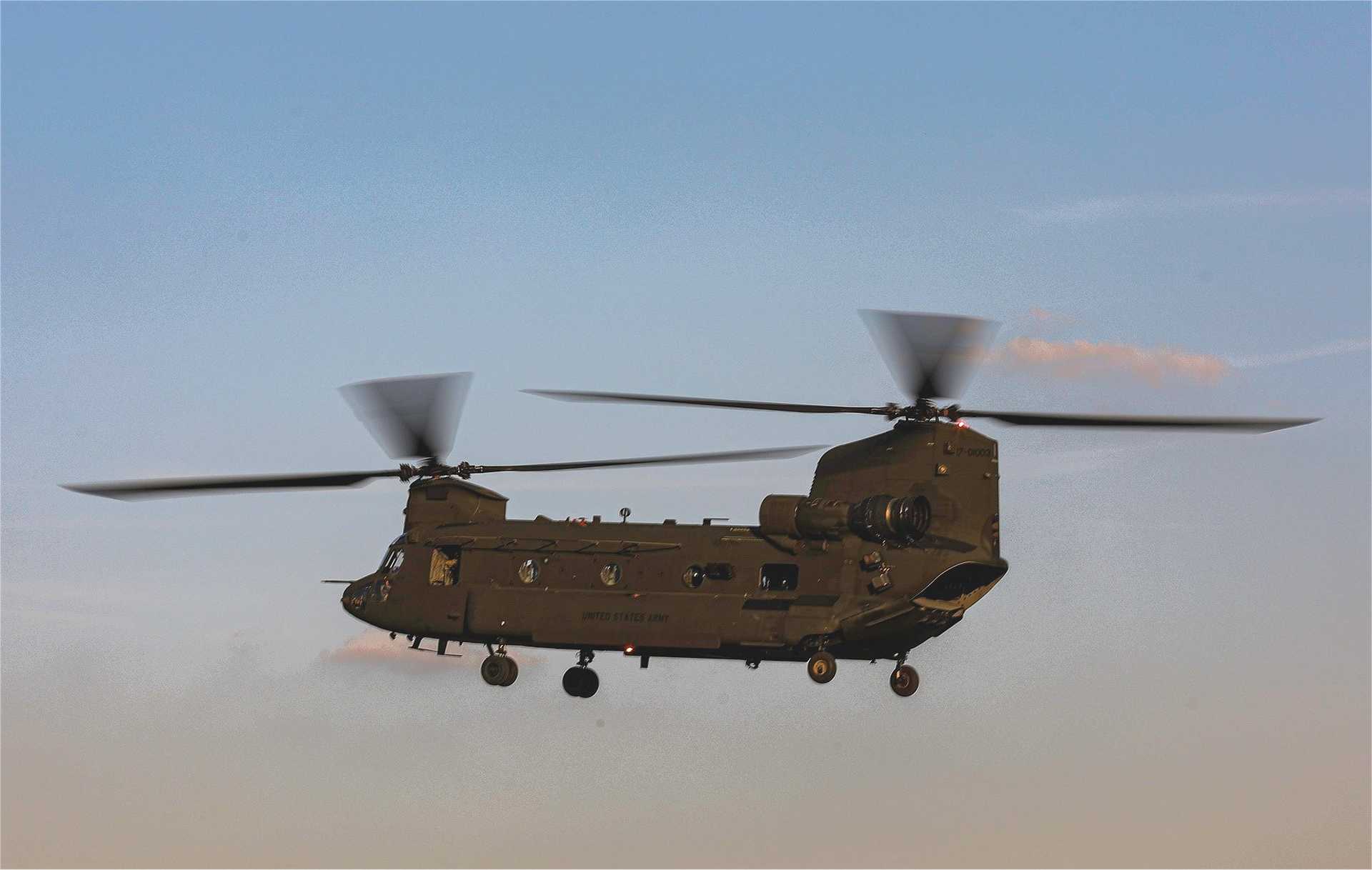
- Details
- Written by: Administrator
- Category: Defence & Security Industry Technology
- Hits: 9844
The iconic Boeing CH-47 Chinook has long been the backbone of the U.S. Army’s heavy-lift aviation fleet, and its evolution continues with the introduction of the CH-47F Block II—a formidable upgrade poised to redefine the future of rotary-wing heavy lift capabilities. As the U.S. Army gears up for multi-domain operations and demands for rapid deployment increase, the CH-47F Block II promises to deliver greater performance, survivability, and adaptability on the modern battlefield.
Follow Army Recognition on Google News at this link
U.S. Army 101st Combat Aviation Brigade Soldiers conduct operational assessment of the Block II CH-47F, currently in development with United States Army Program Executive Office Aviation at Redstone Arsenal, United States. (Picture source: U.S. Army)
Currently under development by the U.S. Army’s Program Executive Office Aviation at Redstone Arsenal, Alabama, the CH-47F Block II program is nearing a critical transition phase. Following multiple Soldier-led evaluations throughout 2024, including two Special User Evaluations (SUEs) conducted by the 101st Combat Aviation Brigade, the Block II variant is now closer than ever to full operational capability.
Aircrew members from the 6th General Support Aviation Battalion, 101st Airborne Division (Air Assault), have been instrumental in validating this next-generation Chinook. Their feedback has not only shaped design refinements but also confirmed the aircraft’s significant enhancements over its predecessor, the CH-47F Block I.
The CH-47F Block II introduces a series of engineering upgrades designed to improve the helicopter’s operational envelope. Among the most significant changes are increased payload capacity, improved range and endurance, enhanced digital cockpit systems, reduced maintenance requirements, and expanded mission adaptability.
Thanks to a new advanced rotor system, upgraded drivetrain, and a reinforced airframe, the Block II can lift more weight—critical for air assault and resupply missions. “With increased gross weight and torque, we can carry more Soldiers and equipment further,” said Chief Warrant Officer 2 Jordan Brooks, a maintenance test pilot with Golf Company, 6-101 GSAB.
The Block II integrates redesigned fuel tanks that boost fuel capacity by 568 liters (150 gallons), providing greater range and reducing the need for forward arming and refueling points. In terms of cockpit enhancements, instructor pilot CW2 David Lantz highlighted the value of “upgraded software and displays in the cockpit,” which streamline access to mission-critical data and improve operational effectiveness during complex missions.
Engineers have refined the rotor head design to ease maintenance, thereby increasing aircraft availability and decreasing lifecycle costs. Additionally, the Block II configuration includes four machine gun mounts, doubling the firepower potential and enhancing lethality during contested operations. “Doubling our shooting capability saves us time and fuel in training and will increase lethality overall,” Lantz noted.
Special User Evaluations also enabled aircrews to conduct Fast Rope Insertion/Extraction System (FRIES) and additional sling load iterations, allowing Soldiers to adapt tactics to match the improved lift envelope and to exploit the aircraft’s expanded capabilities fully.
Designed to align with the Army’s evolving doctrine for large-scale combat operations and multidomain battle readiness, the Block II Chinook empowers commanders with greater agility and logistical reach. The CH-47F Block II is not just an upgrade—it’s a battlefield enabler.
Citing information published on the U.S. Army website on March 24, 2025, Major Jake Bitonel, Assistant Program Manager for CH-47F Modernization, emphasized the strategic value of the aircraft: “The CH-47 Block II provides combatant commanders with a significant increase in operational reliability and capability, enhancing their effectiveness across the battlefield.” He further explained that the Cargo Helicopter Project Management Office’s (CHPMO) next major acquisition milestone for the CH-47F Block II is scheduled for 2025. “Based on the Army’s decision, CHPMO will use the next two years to complete all necessary requirements to ensure the platform meets the needs of Army Aviation prior to fielding the aircraft,” Bitonel added.
For elite formations like the 101st Airborne Division, which regularly executes complex, large-scale air assaults, the Block II arrives as a perfectly matched asset. Its increased lifting power, speed, and operational reach align seamlessly with their high-tempo, expeditionary warfare demands.
Once fielded, the CH-47F Block II will begin replacing older Block I models, phasing in a new era of U.S. Army heavy-lift aviation. The feedback-driven development cycle, supported by real-world evaluations from frontline units like the 101st, ensures the Block II is not only technically advanced but also combat-ready. “This helicopter, with its improvements in gross weight, endurance, and speed, aligns with us perfectly,” said Lantz.
As the U.S. Army prepares for future conflicts in increasingly complex environments, the CH-47F Block II stands as a testament to American aerospace innovation—one that promises to keep the Chinook at the forefront of tactical air mobility for decades to come.

- Details
- Written by: Administrator
- Category: Defence & Security Industry Technology
- Hits: 3003
Canadian Company Galvion, a global leader in integrated soldier systems and advanced head protection technologies, has officially declared its European Production Hub in Gdansk, Poland, fully operational as of April 1, 2025. This milestone marks a significant step forward in the company’s international expansion strategy and reinforces its commitment to delivering next-generation protective solutions to NATO and allied armed forces across Europe.
Follow Army Recognition on Google News at this link
Galvion’s new production facility in Gdansk, Poland, begins manufacturing advanced combat helmets, marking a major step in supporting NATO and European armed forces with regionally produced protective equipment. (Picture source: Galvion)
Initially announced in September 2023, the facility now stands as a vital node within Galvion’s global operations. Strategically located in Gdansk, Poland, following an extensive assessment process, the new hub strengthens the company’s regional support structure and allows it to serve European and NATO customers from a geographically optimized center of excellence. Full-scale production is now underway, with the first batch of Galvion’s flagship Caiman® ballistic helmets already assembled and prepared for shipment to a major defense customer in Northern Europe.
The Gdansk site goes beyond basic manufacturing. It houses a complete ecosystem of helmet finishing and assembly operations, along with critical lifecycle support functions, including system maintenance, refurbishment, upgrades, and specialized training. This comprehensive capability makes the facility a cornerstone for Galvion’s expanding presence in Europe and a key enabler of rapid response to evolving battlefield requirements. Moreover, Galvion anticipates that the Gdansk facility will evolve further through 2026 and beyond, progressively supporting the company’s full product and integrated solutions portfolio, including power and data management systems for dismounted soldiers.
This expansion is driven by Galvion’s continued success in securing major program awards from European nations. Among these, the company’s inclusion in a pivotal NATO Support and Procurement Agency (NSPA) framework contract has been instrumental. The selection of Galvion by NSPA serves as a strong endorsement of the company's reliability, technological leadership, and ability to deliver operationally relevant solutions to NATO forces. It also reflects NATO’s recognition of the strategic importance of fostering industrial capabilities within alliance territory, particularly those that directly enhance soldier survivability and mission effectiveness.
In light of these achievements, Galvion expects to have close to 2 million helmets in service across NATO and other European countries by the end of 2026. This surge in operational deployments underlines the growing demand for Galvion’s uniquely engineered head protection systems and highlights the company’s strategic role in enhancing NATO’s dismounted soldier capabilities.
What sets Galvion apart in the crowded defense market is the technological sophistication and modularity of its protective gear. The Caiman® helmet system, in particular, has earned widespread recognition for its lightweight, scalable design and its compatibility with a wide range of mission-critical accessories. Engineered to provide maximum protection without compromising mobility or comfort, the Caiman series integrates seamlessly with modern communications, night vision, and power systems. This adaptability is critical for today’s multi-domain operations, where speed, interoperability, and survivability are paramount.
Galvion’s innovation extends beyond ballistic protection. The company is a recognized pioneer in soldier power and data systems, offering integrated solutions that include smart battery packs, power distribution systems, and wearable computing platforms. These technologies are designed to optimize mission endurance and performance, providing soldiers with reliable and efficient tools to enhance situational awareness and decision-making on the battlefield.
According to Todd Stirtzinger, CEO of Galvion, the new facility marks a transformative development: “We are committed to responsible regional operations in order to serve our global customer base in the most efficient way possible. Having the ability to both produce and support helmet systems in Europe is a big step for us and for our NATO customers, as we continue to receive orders through the NSPA framework contract and beyond.”
He added, “Our investment project here has been built from the ground up, requiring support, coordination, and collaboration across Galvion, not to mention a network of local and national partners in Poland. It is really gratifying for our entire team to see the first Caiman helmets coming off the production line. Special thanks go to our Polish team for their relentless dedication as well as to everyone else who has helped make this such a success.”
A formal VIP inauguration ceremony is planned for June 2025, with senior military officials, industry leaders, and strategic partners expected to attend. The event will highlight the operational readiness of a facility poised to become a central component of Europe’s defense manufacturing infrastructure.
While the Gdansk facility addresses European and NATO demand, Galvion’s core operations in the United States and Canada will continue to focus on design, R&D, production, and global support. Together, these sites form an agile, transatlantic industrial network capable of responding to the dynamic needs of modern militaries worldwide.
Galvion’s investment in Poland not only boosts its operational agility but also aligns with NATO’s objective of building resilient, regionally integrated defense capabilities. In an era of rapid technological evolution and shifting security dynamics, Galvion remains at the forefront of delivering scalable, combat-proven solutions that enhance survivability and operational effectiveness on the modern battlefield.

Technology: U.S. Army Tests New VTOL YRQ-10A Recon Drone Offering Real-Time Battlefield Intelligence
- Details
- Written by: Administrator
- Category: Defence & Security Industry Technology
- Hits: 6409
On March 18, 2025, the United States Army’s Future Tactical Uncrewed Aircraft Systems (FTUAS) program entered a pivotal new phase as Textron Systems delivered two prototype sets of the MK 4.8 HQ Aerosonde (designated YRQ-10A) to Redstone Arsenal, Alabama, initiating a critical period of developmental testing. More than just a delivery, this event represents a decisive leap forward in the United States Army’s efforts to revolutionize how Brigade Combat Teams (BCTs) conduct aerial reconnaissance, surveillance, and target acquisition in complex operational environments.
Follow Army Recognition on Google News at this link
The MK 4.8 HQ Aerosonde, delivered by Textron Systems, undergoing developmental testing at Redstone Arsenal as part of the U.S. Army’s FTUAS program. This next-generation uncrewed aerial system offers VTOL capability, two-soldier portability, and advanced ISR performance tailored for Brigade Combat Teams in multi-domain operations. (Picture source: U.S. DoD)
Each prototype set consists of two air vehicles, two ground control stations, two ground data terminals, one On-the-Move (OTM) kit, and associated ground support equipment. The equipment was received by the United States Army’s Project Manager for Uncrewed Aircraft Systems (UAS) in collaboration with the Aviation and Missile Lifecycle Management Command. These systems will undergo rigorous testing throughout the year to inform a production decision and a Rapid Fielding contract award, which is anticipated in the fall of 2025.
The FTUAS program is more than just a technological upgrade; it is a cornerstone of the United States Army’s broader Future Vertical Lift (FVL) modernization strategy. Designed to replace the aging RQ-7B Shadow, the FTUAS aims to deliver a new generation of uncrewed aerial systems that are not only more capable but also more adaptable to the fluid and contested environments of modern warfare. Central to this effort is the goal of providing BCTs with an organic ISR capability that enhances situational awareness, supports rapid decision-making, and enables dominance across multi-domain operations.
A key differentiator of the FTUAS is its emphasis on operational agility and tactical flexibility. Unlike the RQ-7B, which requires a runway for launch and recovery, FTUAS systems like the MK 4.8 HQ Aerosonde utilize Hybrid Quadrotor technology to achieve vertical takeoff and landing (VTOL). This capability eliminates the need for runways and allows forces to deploy the system from confined or rugged terrain—be it an urban center, mountain ridge, or forest clearing—thus dramatically expanding operational reach.
Textron’s MK 4.8 HQ Aerosonde is a combat-proven platform, with over 600,000 flight hours supporting missions in some of the world’s harshest environments. The version tailored for FTUAS builds on this legacy with enhanced size, weight, and power (SWaP) characteristics that allow it to perform brigade-level reconnaissance missions. At the same time, it retains two-soldier portability, making it highly deployable via UH-60 Black Hawk helicopters or tactical ground vehicles—an essential quality for high-tempo and expeditionary operations.
Following its delivery, one prototype set was sent to the United States Army Test and Evaluation Command’s Redstone Test Center to undergo transportability testing. This phase will validate the system’s ability to be deployed and repositioned by organic United States Army transportation assets in real-world environments. The second set was delivered to the DEVCOM Aviation and Missile Center’s Joint Technology Center Systems Integration Laboratory to initiate network and cybersecurity testing. These tests are essential for achieving the system’s Authority to Operate (ATO), confirming its resilience against cyber threats and ensuring the secure dissemination of ISR data across United States Army networks.
The MK 4.8 HQ Aerosonde also exemplifies the United States Army’s commitment to modular and soldier-centric system design. Its Modular Open Systems Architecture (MOSA) allows for rapid integration of new payloads, sensors, and software upgrades, ensuring that the system remains technologically relevant as threats evolve. Maintenance can be performed at the field level by soldiers themselves, enhancing system readiness and reducing logistical burdens. Moreover, its On-the-Move control capability enables operators to command and receive data from the drone while on patrol—removing the need to halt operations for UAV mission control.
Managed by the Program Executive Office (PEO) for Aviation at Redstone Arsenal, the FTUAS initiative reflects the United States Army’s broader effort to modernize its aviation portfolio and retain a decisive edge over peer adversaries. The UAS Project Office within PEO Aviation continues to focus on equipping United States Army formations with advanced, scalable, and resilient uncrewed systems that align with the needs of 21st-century warfare.
As the FTUAS enters its developmental testing phase, the program not only signals the future of United States Army reconnaissance but also reinforces a strategic vision centered on speed, adaptability, and dominance in multi-domain operations. The MK 4.8 HQ Aerosonde is not just a new aircraft—it is the embodiment of a new tactical paradigm, one that will shape the United States Army’s ISR capabilities for years to come.
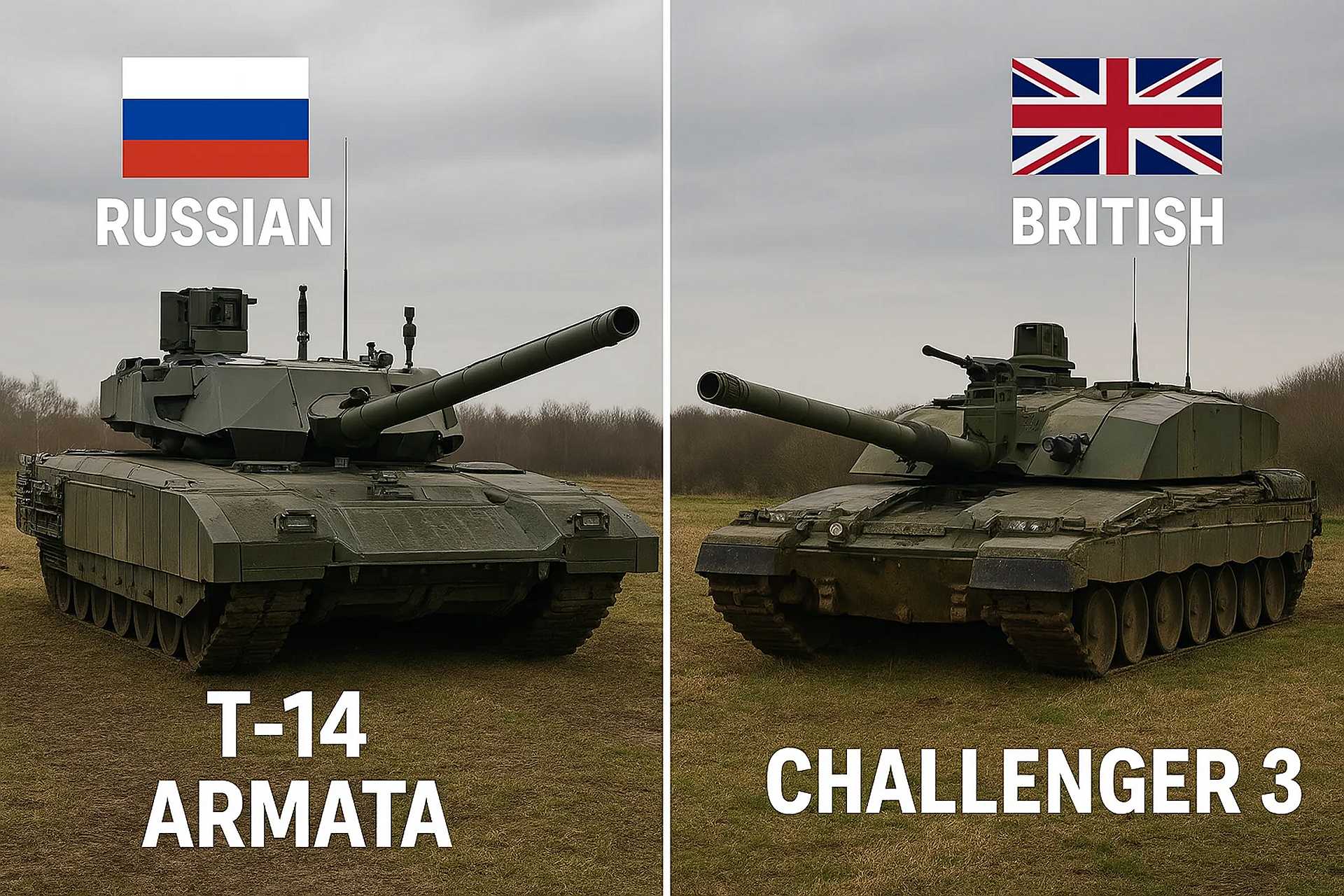
- Details
- Written by: Administrator
- Category: Defence & Security Industry Technology
- Hits: 8035
On April 1, 2025, the UK’s Minister of State for Defence Procurement and Industry, Maria Eagle, addressed a significant parliamentary inquiry regarding the British Army’s next-generation Challenger 3 Main Battle Tank (MBT). Specifically, questions were raised about the vehicle’s ability to remain competitive against advanced threats, particularly Russia’s T-14 Armata MBT, and whether further upgrades in firepower and protection are expected by 2030. Eagle’s detailed response has reinforced the UK Ministry of Defence’s confidence in the Challenger 3’s cutting-edge capabilities and future combat readiness.
Follow Army Recognition on Google News at this link
Side-by-side comparison of two next-generation main battle tanks: Russia’s T-14 Armata (left) with its unmanned turret and missile-capable 125mm gun, and the British Army’s Challenger 3 (right), featuring a new 120mm smoothbore gun, advanced digital turret, and state-of-the-art active protection systems—demonstrating the UK’s commitment to countering modern armored threats. (Picture source: Army Recognition Group)
Maria Eagle, British Minister of State for Defence Procurement and Industry, affirmed that the new Challenger 3 MBT (Main Battle Tank) for British army represents a transformational step forward from the Challenger 2 tank, delivering superior lethality, protection, mobility, and battlefield integration. This next-generation platform, currently under development by Rheinmetall BAE Systems Land (RBSL), is intended to serve as the backbone of British armored forces for decades to come.
Central to the Challenger 3’s modernization is its new digitalized turret, which will be equipped with the Rheinmetall L55A1 120mm smoothbore gun. This NATO-standard weapon replaces the aging rifled gun of the Challenger 2, finally aligning the British Army with its allies in ammunition interoperability. The new gun will fire the latest high-penetration kinetic energy rounds and advanced programmable multi-purpose ammunition, substantially increasing the vehicle’s combat versatility and destructive potential on the modern battlefield.
This upgrade in firepower is a direct response to the emergence of heavily armored adversaries such as Russia’s T-14 Armata MBT. The T-14, a product of Russia’s Armata Universal Combat Platform, has been widely publicized as a next-generation MBT. It features a fully unmanned turret and a 125mm 2A82-1M smoothbore gun capable of firing a variety of munitions, including guided missiles. While the T-14’s gun and missile-firing capability offer a broad threat envelope, the Challenger 3 counters with NATO’s most lethal kinetic rounds and far more refined integration into Western digital and operational networks—an essential factor in modern, multi-domain operations.
In addition to superior firepower, Maria Eagle emphasized the Challenger 3’s world-class protection systems. The vehicle will be armored with new, UK-developed modular composite armor packages designed to withstand the most advanced threats. Importantly, the Challenger 3 will also be fitted with an advanced Active Protection System (APS), capable of detecting, tracking, and neutralizing incoming anti-tank missiles and rocket-propelled grenades. These systems are designed not only to protect the platform but also to maintain its operational effectiveness in high-threat environments.
Russia’s T-14 Armata Main Battle Tank, equipped with a 125mm 2A82-1M smoothbore cannon capable of firing guided missiles, features an unmanned turret, Afghanit Active Protection System, and a crew-protecting armored capsule. Powered by a 1,500 hp diesel engine, it reaches speeds up to 90 km/h with a combat weight of approximately 55 tons and advanced digital battlefield management systems. (Picture source Figting-Vehicles website)
In comparison, the Russian-made T-14 Armata MBT (Main Battle Tank) is equipped with the Afghanit APS, which includes radar-guided countermeasures and an active hard-kill system. However, the British Army’s approach with Challenger 3 tank combines APS (Active Protection System) technology with proven armor engineering, creating a layered defense that ensures high survivability. While the T-14’s unmanned turret enhances crew protection by separating operators from the main gun, the Challenger 3 emphasizes crew situational awareness and mission adaptability through its advanced sights, thermal imaging, and integrated battlefield sensors.
Mobility, often a deciding factor in armored warfare, is another area of development for the Challenger 3. Although specific details about engine upgrades have yet to be fully disclosed, the tank will receive significant improvements in automotive performance, ensuring it can maneuver quickly and reliably across complex terrain. The T-14 Armata is reportedly powered by a 1,500 horsepower engine and can reach speeds of up to 90 km/h. While this may offer a speed advantage, the British Army prioritizes battlefield reliability and operational consistency, both of which are integral to the Challenger 3’s design philosophy.
Eagle concluded by noting that the UK Ministry of Defence will continue to monitor the evolving threat landscape and remain open to future upgrades of the Challenger 3 platform. “We are confident that Challenger 3 will continue to match potential threats throughout its lifecycle, but we will continually review the performance of its specification to ensure that it remains world-leading,” she said.
This assurance underscores the UK’s strategic commitment to maintaining a modern, lethal, and adaptable armored force. With production and fielding scheduled to progress over the next five years, the Challenger 3 is set to redefine British land warfare capabilities, offering a credible deterrent against near-peer adversaries like Russia and a powerful reassurance to NATO allies.
As armored warfare continues to evolve with rapid advancements in firepower, survivability, and digital integration, the new British Army Challenger 3 MBT stands poised to meet and surpass the operational demands of the 21st century battlefield. In direct contrast with the Russian T-14 Armata, Britain’s next-generation tank presents a compelling mix of firepower, protection, and systems integration—making it one of the most formidable MBTs entering service in the coming decade.
The British Challenger 3 Main Battle Tank, fitted with a NATO-standard 120mm L55A1 smoothbore gun, features a fully digitalized turret, world-class modular armor, and an advanced Active Protection System. Powered by a Perkins CV12-9A V12 diesel engine, it offers enhanced mobility and survivability, weighing around 66 tons and built to dominate modern battlefields through superior firepower, protection, and situational awareness. (Picture source British Army)

- Details
- Written by: Administrator
- Category: Defence & Security Industry Technology
- Hits: 4469
At SOFINS 2025, the Special Operations Forces Innovation Network Seminar (SOFINS) 2025 in Bordeaux, France, French Company Thales unveiled a new, combat-enhanced version of the Fardier light tactical vehicle, developed by the French company UNAC, now integrated with the Buthus 70mm rocket launcher system. This cutting-edge configuration marks a significant advancement in the capabilities of special operations forces, offering a compact, mobile, and air-transportable platform with precision strike capabilities. The unveiling reflects an innovative approach to meeting the evolving needs of special forces operating in highly dynamic and asymmetric combat environments.
Follow Army Recognition on Google News at this link
The French-made UNAC Fardier light tactical vehicle showcased at SOFINS 2025, fitted with the Thales Buthus 70mm rocket launcher system—offering enhanced firepower and precision strike capabilities tailored for special operations forces. (Picture source: BTR X Account)
UNAC, based in France, is renowned for its expertise in developing engineering and mobility equipment tailored for military and civil defense applications. The Fardier is one of UNAC’s most strategic contributions to tactical mobility—a lightweight 4x4 vehicle initially designed to support airborne and rapid deployment forces. With a weight of less than two tons, the Fardier is specifically built to be sling-loaded under helicopters or parachuted into combat zones, providing elite units with immediate mobility upon insertion. Its compact dimensions and high agility make it ideal for traversing rugged terrain, narrow paths, or urban environments where heavier vehicles would be limited.
In its new configuration, the Fardier is armed with the Buthus rocket launcher system, a 70mm remote weapon station developed through a European industrial partnership involving Thales Belgium, WB Electronics, and AREX. The Buthus is designed to deliver both guided and unguided rocket fire, with the core capability centered around the FZ275 Laser Guided Rocket (LGR). This precision munition offers high accuracy at ranges up to 8 kilometers, enabling operators to neutralize threats such as fortified positions, light armored vehicles, or high-value targets with minimal risk of collateral damage.
For special operations forces, the Fardier equipped with the Buthus system introduces a number of game-changing operational advantages. First and foremost is the platform’s deployability. Because the vehicle can be dropped directly into the field or airlifted to remote locations, it gives commanders the ability to quickly insert mobile fire support where traditional assets like artillery or close air support might be unavailable. In fast-moving operations, this capability provides critical tactical overmatch, allowing small units to punch above their weight with precision firepower.
Moreover, the combination of mobility and guided munitions aligns perfectly with the doctrinal requirements of special forces—stealth, speed, precision, and versatility. The Fardier can rapidly reposition to engage time-sensitive targets, support an assault team with suppressive or precision fire, or be used to counter emerging drone threats using programmable airburst rockets. In reconnaissance or sabotage missions, the vehicle’s low profile and silent approach capabilities allow it to maneuver undetected before delivering a decisive strike.
Another advantage lies in the vehicle's modular design, which allows for various mission-specific configurations. Operators can adapt the platform for direct-action raids, convoy escort, surveillance, or anti-material missions. The Buthus system’s low weight and recoil also ensure that fire can be delivered accurately without destabilizing the platform, preserving the vehicle’s ability to move quickly after an engagement—critical for shoot-and-scoot tactics often used by special forces in denied or hostile environments.
The presentation of the Fardier-Buthus combination at SOFINS 2025 underlines the increasing importance of lightweight precision firepower in today’s battlefield, especially as special forces face a wider array of threats from irregular militias, peer adversaries, and non-state actors operating in complex terrains. By integrating a compact, accurate rocket system onto a highly mobile chassis, Thales and UNAC are offering a new tactical solution for rapid deployment units that demand versatility, lethality, and operational independence.
This vehicle-weapon system hybrid is not just a proof of concept—it represents a new paradigm for how special operations forces can extend their reach, strike capability, and survivability in the field. In a modern battlefield defined by speed, precision, and dispersed operations, the Fardier with Buthus offers a decisive edge to the forces that need to move fast, hit hard, and disappear just as quickly.

LAAD 2025: Brazil’s Guarani 6x6 Armored Vehicle Becomes Mobile Air Defense with SAAB RBS 70 Missiles
- Details
- Written by: Administrator
- Category: Defence & Security Industry Technology
- Hits: 7019
At the LAAD 2025 defense exhibition held in Rio de Janeiro, Brazil, Italian defense manufacturer Iveco Defence Vehicles unveiled a new air defense variant of the Guarani 6x6 amphibious armored vehicle. While this newly presented configuration is tailored for short-range air defense roles equipped with SAAB RBS 70 air defense missiles, other variants of the Guarani are already in operational service with the Brazilian Army, fulfilling roles such as troop transport, command and control, reconnaissance, and mortar carrier. (Picture source Zona Militar X Account)
Follow Army Recognition on Google News at this link
The new air defense variant of the Guarani 6x6 armored vehicle equipped with a remote weapon station and SAAB RBS 70 missiles on display at LAAD 2025 in Rio de Janeiro, Brazil. (Picture source: Zona Militar X account)
The Guarani 6x6 armored vehicle, developed through a strategic partnership between Iveco Defence Vehicles and the Brazilian Army’s technology center (CTEx), is a cornerstone of Brazil’s land forces modernization. The project began in the early 2000s, with the first prototype revealed in 2009, followed by serial production starting in 2012. To date, over 600 units have been delivered to the Brazilian Army, replacing outdated EE-11 Urutu vehicles. Designed for high mobility and adaptability, the Guarani features a monocoque hull offering STANAG Level 2 ballistic protection, with the option for modular armor upgrades. It is powered by a 9-liter IVECO FPT turbocharged diesel engine delivering 383 horsepower, coupled with an automatic transmission and independent suspension system. The vehicle can operate in amphibious environments and traverse diverse terrain conditions, supporting a crew of three and up to eight fully equipped infantry soldiers.
The air defense variant unveiled at LAAD 2025 is fitted with a remotely operated weapon station equipped with three ready-to-launch SAAB RBS 70 surface-to-air missiles. This configuration significantly enhances the Guarani’s capabilities, enabling it to provide short-range air defense coverage against a wide spectrum of aerial threats, including drones, helicopters, low-flying aircraft, and cruise missiles.
The SAAB RBS 70 is a combat-proven, man-portable air defense system that uses laser beam-riding guidance, rendering it immune to common electronic countermeasures such as flares and jamming. The latest NG (New Generation) version integrates advanced optics, thermal imaging, and an automatic target tracker, ensuring day-and-night operational capability. Its Bolide missile variant boasts a maximum effective range of over 9 kilometers and altitude engagement up to 5,000 meters. With its high hit probability, rapid target engagement, and unmatched resilience in contested electromagnetic environments, the RBS 70 system enhances the vehicle’s lethality and survivability.
The development and deployment of mobile air defense systems like the Guarani RBS 70 variant underscore a growing necessity among modern armed forces to adapt to evolving battlefield threats. The increasing use of unmanned aerial vehicles (UAVs), loitering munitions, and precision-guided air attacks has created a pressing need for agile, decentralized air defense capabilities that can move and fight alongside frontline units. Fixed air defense assets, while effective, are vulnerable to saturation attacks and may lack the flexibility required in fast-paced operations. By integrating advanced SHORAD systems on mobile platforms, armed forces can provide continuous, on-the-move protection to mechanized formations, logistics convoys, and command elements.
The unveiling of this new Guarani variant at LAAD 2025 not only demonstrates Iveco’s commitment to innovation but also highlights Brazil’s proactive approach to strengthening its ground-based air defense capabilities. It reflects a broader shift in global military doctrine toward integrated, mobile, and networked defense systems tailored to meet the challenges of both conventional and asymmetric warfare.

- Details
- Written by: Administrator
- Category: Defence & Security Industry Technology
- Hits: 12026
On March 31, 2025, Israeli company RAFAEL Advanced Defense Systems Ltd., one of the country’s premier defense contractors, announced the successful completion of a live-fire test of its advanced TYPHOON 30 Remote Weapon Station (RWS). The test, conducted in February 2025, validated the system’s superior counter-drone capabilities, reinforcing its strategic role in Counter-Unmanned Aerial Systems (C-UAS) operations.
Follow Army Recognition on Google News at this link
RAFAEL’s TYPHOON 30 Remote Weapon Station mounted on a modular platform during a live-fire demonstration in Israel, February 2025. Equipped with a 30mm Bushmaster II cannon and advanced sensor suite, the system showcases its precision engagement capabilities against aerial threats, including drones. (Picture source: Rafael)
Conducted at an undisclosed location in Israel, the demonstration showcased the TYPHOON 30’s ability to detect, track, and neutralize hostile drones across various engagement ranges. The test emphasized the system’s precision and rapid engagement capabilities, confirming its readiness for the demands of contemporary drone warfare.
One of the key highlights of the test was the deployment of the TYPHOON 30 RWS on a 20-foot modular platform. This configuration reflects RAFAEL’s focus on operational flexibility, supporting fast and efficient integration across a variety of platforms including armored vehicles, naval vessels, and stationary defense points. This modular approach enables rapid deployment in both conventional and asymmetric warfare scenarios.
At the heart of the TYPHOON 30 RWS lies the Northrop Grumman Mk44 Bushmaster II 30mm automatic cannon, capable of firing NATO-standard 30×173mm ammunition. This includes high-explosive and programmable airburst munitions, ideal for engaging fast-moving and low-signature aerial targets. With a firing rate of up to 200 rounds per minute and an elevation range of up to 70 degrees, the system is optimized for engaging small and medium-class unmanned aerial systems (UAS). Its onboard magazine supports up to 200 ready rounds, ensuring sustained engagement during high-intensity operations.
The system is equipped with an advanced electro-optical suite that includes day/night cameras, thermal imaging, and automatic fire correction tools. These technologies ensure accurate threat engagement under all conditions. The integration of RADA’s MHR RPS-42 radar system and CONTROP’s iSea-25 electro-optical payload further enhances detection and tracking capabilities, delivering comprehensive 360-degree situational awareness and enabling real-time targeting and autonomous threat neutralization.
The growing importance of C-UAS systems has been sharply underscored by the recent conflicts in Ukraine and Gaza. In Ukraine, both Russian and Ukrainian forces have heavily relied on drones for surveillance, targeting, and offensive operations, revealing significant vulnerabilities on the battlefield. The extensive use of drones in these operations has emphasized the need for advanced counter-drone technologies to protect both static and mobile military assets. Similarly, in Gaza, the increasing reliance on drone tactics by non-state actors has demonstrated how low-cost UAS platforms can be used for intelligence gathering and precision attacks, raising the stakes for effective air defense.
As drone warfare continues to evolve and proliferate, RAFAEL’s TYPHOON 30 RWS offers an essential solution for modern military forces. Its modularity, firepower, and advanced sensor integration position it as a versatile and effective system for neutralizing aerial threats and defending strategic assets across multiple operational domains.
The successful completion of this test reaffirms RAFAEL’s commitment to delivering cutting-edge defense solutions that meet the rapidly changing demands of the modern battlefield. The TYPHOON 30 RWS is not only a response to emerging threats, but a proactive step in redefining the standards of remote weapon station performance in the age of drone warfare.
- US Marine Corps Leverages TRV150 Cargo Drone to Resupply Troops on the Battlefield Without Risk
- Exclusive: China Unveils Multi-Barreled Weapon That Outguns US Phalanx Close-In Weapon to Tackle Hypersonic Missiles
- US Army Identifies AMPV Combat Vehicle with NEMO Mortar Turret as Crucial Fire Support Vehicle
- Insight: MAST-F Missile to Replace Hellfire II in Service with French Armed Forces