

- Details
- Written by: V.Saint
- Category: 2024
- Hits: 4867










For Russian reconnaissance groups and special operations forces operating on the front line in the Northern Military District (Kharkiv region in Ukraine), a light military vehicle called "Vityaz" is being developed, equipped with the "Volnorez" electronic warfare system, stated Konstantin Bagdasarov, the CEO of the company that developed this vehicle.
Follow Army Recognition on Google News at this link
Volnorez electronic warfare system presented in 2023 (Picture source: Army recognition team)
When creating the Vityaz project, we primarily aimed to develop a light and maneuverable vehicle that would also have a powerful high-torque diesel engine and be protected by an effective modular electronic warfare system like Volnorez, for our reconnaissance and special forces operating in the Northern Military District. Today, the first prototype of the vehicle is nearly assembled," he said.
Bagdasarov mentioned that the developers used the chassis of the UAZ 469 car as the basis for the Vityaz, but installed a diesel engine instead of a gasoline engine with a power output of about 100 horsepower and a torque of approximately 250 Newton meters at 1,600 RPM. Additionally, the chassis is equipped with a stationary and mobile Volnorez electronic warfare system. The vehicle can be armed with anti-aircraft machine gun mounts paired with a KPVT heavy machine gun.
The developer cited the driving performance and ease of maintenance as the main advantages of the new vehicle. "A vehicle intended for fighters operating on the front line must be simple so it can be quickly repaired in the field. The gasoline vehicles used today have various complex electronic control systems, which, under constant use and in dirty conditions, pose a risk. In the case of the Vityaz, anyone with minor technical training will be able to quickly understand it and put it back in order," the agency's interlocutor explained. Speaking about the tasks that Vityaz can accomplish, Bagdasarov noted that they could also include covering units during their rotation on the front line.
According to him, in the near future, the vehicle will be tested on a proving ground, during which its declared technical characteristics and the operation of the installed electronic warfare system will be verified.
It is planned that the Vityaz, equipped with the Volnorez electronic warfare system, will be presented at the Argo exhibition as part of the Army-2024 military-technical forum.
The Volnorez electronic warfare system was first presented at the Army-2023 military-technical forum. It is a small-sized cone (length - 484 millimeters, weight - 13 kilograms), which is installed with magnetic Velcro on any military (tanks, armored personnel carriers, boats, etc.) and civilian equipment.
The main feature of this complex is its modularity - "Volnorez" contains the necessary frequencies to suppress enemy FPV drones in real-time on a specific section of the front. Breakwater operators install new "cones" on their vehicles, thereby modifying their electronic warfare system to meet current specific threats.
Read more: How Russian 'Vityaz' Vehicle revolutionize electronic warfare against FPV

- Details
- Written by: Halna du Fretay
- Category: 2024
- Hits: 4433
On August 11, 2024, Taiwan's Ministry of National Defense announced that the development of the D3 infantry fighting vehicle (IFV) prototype is progressing as planned. This project, supervised by the Armaments Bureau in collaboration with the National Chung-Shan Institute of Science and Technology (NCSIST), is part of Taiwan's ongoing efforts to strengthen its military capabilities.
Follow Army Recognition on Google News at this link
In June 2024, the Armaments Bureau unveiled the D2, an earlier IFV prototype based on the eight-wheeled Clouded Leopard armored vehicle. (Picture source: Taiwan MND)
The Armaments Bureau confirmed that the prototype has undergone initial operational evaluations, incorporating feedback from the Army to refine the vehicle's design and performance. The D3 IFV prototype is expected to be completed by the end of June next year, marking a significant milestone in Taiwan's defense modernization program.
Financial allocations for the project include NT$170 million (US$5.25 million) for the development of an improved turret, designed by NCSIST, and NT$120 million for the vehicle body, managed by the Armaments Bureau.
Earlier this year, in June, the Armaments Bureau unveiled the D2, an earlier IFV prototype based on the eight-wheeled Clouded Leopard armored vehicle. The D2 is equipped with a 105 mm assault gun and hunter-killer capabilities, drawing comparisons to the U.S.-made Abrams tank. Although the D2 passed 91 tests as part of its initial operational evaluation in August last year, it remains in the development phase. Military officials have indicated that further improvements are needed, particularly regarding the vehicle's height and the turret's internal configuration.
The D3 IFV's armament includes a gun capable of firing armor-piercing fin-stabilized discarding sabot rounds, which can penetrate steel plates up to 500 mm thick from a distance of 2,000 meters. The ammunition is interchangeable with that used by Taiwan's M60A3 and CM11 tanks, due to the shared gun barrel diameter. This interoperability is expected to streamline logistics and improve operational efficiency for Taiwan's armored units.
As Taiwan continues to develop and refine its military technology, the completion of the D3 IFV prototype will be closely monitored, with expectations that this vehicle will play a key role in enhancing the nation's defense capabilities.
Taiwan needs to develop its defense capabilities due to the growing threat posed by China, which views the island as a renegade province and does not rule out the use of force to regain control. Faced with this constant military pressure, Taiwan must strengthen its deterrence capabilities to protect its sovereignty, maintain regional stability, and ensure the safety of its citizens. The development of advanced military technologies, such as infantry fighting vehicles, is an integral part of this defense strategy.
Read more: Taiwan Advances in Developing New D3 Infantry Fighting Vehicle
- Details
- Written by: Jérôme Brahy
- Category: 2024
- Hits: 18087
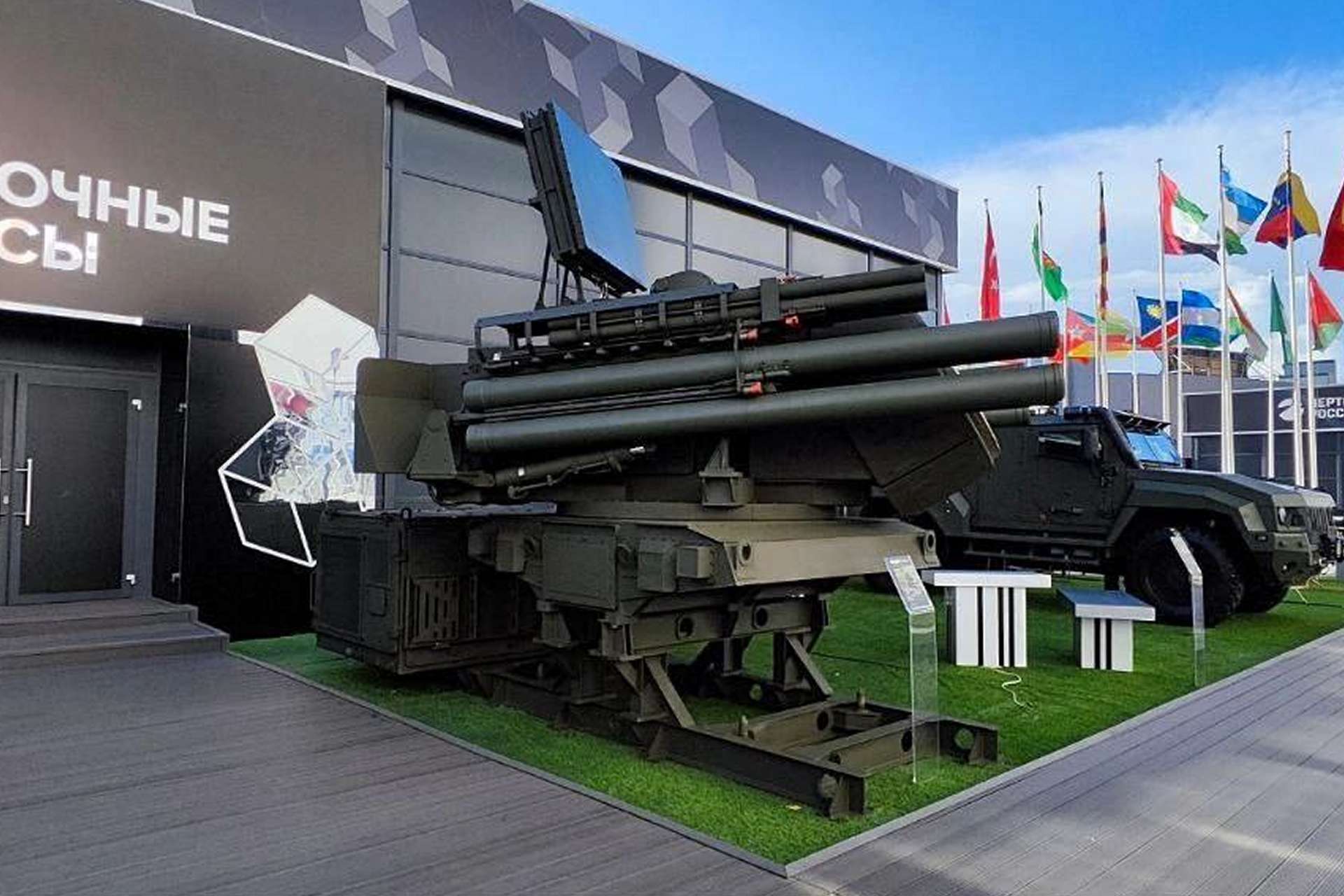
At the Army-2024 exhibition, Tula KBP, a subsidiary of Rostec, introduced a new version of the Pantsir air defense missile and gun system, named Pantsir-SMD-E. This iteration differs from previous models primarily due to the removal of 30mm automatic guns and the focus on anti-aircraft missiles of various calibers. The Pantsir-SMD-E is composed solely of a combat module, a design adjustment intended to address both large targets and smaller drones.
Follow Army Recognition on Google News at this link
The exclusion of the 2A38(M) 30 mm automatic cannons in favor of a missile-only system was influenced by experiences during the ongoing conflict in Ukraine, where the limitations of automatic cannons became apparent. (Picture source: Russian social media)
Vladimir Artyakov, deputy head of Rostec, explained that the Pantsir-SMD-E is designed with modularity in mind, allowing it to be deployed on various platforms, including stationary setups. This design choice aims to make the system adaptable to different operational environments. The exclusion of the 2A38(M) 30 mm automatic cannons in favor of a missile-only system was influenced by experiences during the ongoing conflict in Ukraine, where the limitations of automatic cannons became apparent.
One of the key features of the Pantsir-SMD-E is its modular design, which allows for deployment on a variety of platforms, including stationary positions. This adaptability makes the system suitable for a wide range of operational environments. The system's radar capabilities have been enhanced with the addition of a J- or Ka-band detection radar utilizing Active Phased Array Radar (AFAR) technology. This radar can detect small drones with ultra-low Effective Optical Pass (EOP) at ranges of 5-7 kilometers and larger targets, such as 122 mm rockets, up to 10 kilometers. Additionally, the radar system is capable of detecting targets with a radar cross-section (RCS) of 1.0 m² at a maximum range of 45 kilometers.
For target tracking and acquisition, the Pantsir-SMD-E includes a 10ES1 multispectral optical-electronic system to manage a fourth target channel, enhancing its capability to detect and intercept aerial threats. The system continues to use the 3-channel 1RS-2 "Helmet" radar for target acquisition and tracking, although there are plans to replace it with the 1RS-3 radar, which is based on reflective phased array technology.

A significant development in this version of the Pantsir system is the inclusion of up to 48 TKB-10-55 short-range interception mini-missiles, housed in five new quadruple TKB-1056 containers, to engage targets at ranges between 500 and 7,000 meters, and at altitudes ranging from 15 to 5,000 meters. (Picture source: Russian social media)
Therefore, the Pantsir-SMD-E can simultaneously track and engage up to 40 targets, providing a robust defense capability against multiple incoming threats. The standard armament configuration of the Pantsir-SMD-E includes five 57E6 surface-to-air missiles (SAMs) and 20 smaller 19Ya6 missiles, with the option to carry up to 12 transport and launch containers. A significant development in this version is the inclusion of TKB-10-55 short-range interception mini-missiles, which are housed in five new quadruple TKB-1056 containers.
These mini-missiles are specifically designed to target small drones and can engage targets at ranges between 500 and 7,000 meters, and at altitudes ranging from 15 to 5,000 meters. The system can carry up to 48 TKB-10-55 missiles, providing substantial firepower for drone defense. A diesel generator is mounted on the frame behind the launcher, providing the system with the capacity for independent operation.
Since the beginning of the conflict in Ukraine, Russia has expanded its air defense infrastructure, including the construction of fortified embankments and towers, and the relocation of various Pantsir systems to reinforce defenses in the Moscow region. This has occurred amid ongoing aerial attacks on Russian military air force bases by Ukrainian drones. The compactness of the Pantsir-SMD-E allows for possible installation on the roofs of state buildings, such as the Ministry of Defense in Moscow, and for it to replace existing Pantsir systems currently deployed on Pantsir towers.

- Details
- Written by: Vandenbosch
- Category: 2024
- Hits: 7234
On August 10, 2024, Kalashnikov unveiled the GP-46, a new 40x46 mm under-barrel grenade launcher designed to enhance armed forces' effectiveness. This versatile model can be mounted under a Kalashnikov assault rifle or used independently with a detachable stock, allowing for effective targeting of enemy troops on the ground, in trenches, or in unarmored vehicles.
Follow Army Recognition on Google News at this link
Kalashnikov recently introduced the GP-46, an innovative under-barrel grenade launcher. (Picture source: Kalashnikov)
Kalashnikov recently introduced the GP-46, an innovative under-barrel grenade launcher designed to increase the effectiveness of troops on the battlefield. The 40x46 mm grenade launcher is specifically engineered to neutralize enemy forces located on the ground, in trenches, ditches, or unarmored vehicles. The GP-46 offers great flexibility in use, as it can be mounted directly under the barrel of a Kalashnikov assault rifle or used as a standalone weapon with a detachable stock module.
One of the key features of the GP-46 is its ability to fire both direct and curved shots, providing versatility in various combat situations. When mounted on the assault rifle, the grenade launcher does not hinder the rifle's operation, allowing soldiers to maintain their full firing capabilities. The GP-46 is also simple and quick to reload, with the barrel rotating left or right for reloading.
The GP-46 stands out for its ability to engage targets at distances of up to 400 meters, whether point targets or broader areas. It can be used to fire "from the shoulder" or a covered position, making it highly adaptable to combat scenarios.
In terms of technical specifications, the GP-46 measures 380 mm in length with a 40 mm caliber and weighs only 1.6 kg, making it both compact and lightweight, which facilitates its handling on the battlefield. Its sighting system is designed to allow precise adjustments every 50 meters, up to a maximum range of 400 meters. Finally, the GP-46 offers a rate of fire of about 5 to 6 rounds per minute, making it formidable in terms of firepower.
This new grenade launcher fits into the tradition of the Russian armorer Kalashnikov, known for the reliability and effectiveness of its weapons. With its advanced technical features and flexible use, the GP-46 is expected to become a major asset for armed forces looking to maximize their strike capacity while maintaining high mobility on the field.

One of the key features of the GP-46 is its ability to fire both direct and curved shots. (Picture source: Kalashnikov)
Read more: Russia and Kalashnikov Innovate with New Under-Barrel Grenade Launcher 40x46 mm GP-46

- Details
- Written by: Administrator
- Category: 2024
- Hits: 10836
At Army-2024, defense exhibition that takes place in the Moscow Region, Russia launches its new MGT-LB, a new multi-purpose tracked armored vehicle designed to replace the aging MT-LB, which has been in service with the Russian Armed Forces since the 1970s. This new all-terrain vehicle marks a significant advancement in Russia's military technology, offering enhanced performance and versatility across a range of challenging environments offering high level of mobility and protection.
Follow Army Recognition on Google News at this link
The new MGT-LB multi-purpose tracked armored vehicle is displayed for the first time to the public at Army-2024, a defense exhibition that takes place in Moscow Region from 12 to 14 August 2024. (Picture source: Russian Social Network)
The MGT-LB is a light multi-purpose tractor-transporter, specifically engineered to meet the varied demands of modern military operations. It is capable of transporting personnel, ammunition, and military equipment, and can be configured to mount a variety of weapons and specialized equipment. Additionally, the vehicle is designed to tow artillery systems and trailers, making it an essential asset in both combat and logistical support roles.
One of the most impressive features of the MGT-LB is its ability to operate in extremely difficult climatic and geographical conditions. Whether navigating through virgin snow, tundra, wooded-swampy terrain, or mountainous-wooded areas, the MGT-LB is built to perform reliably. It is designed to function in temperatures ranging from -50°C to +40°C and can operate at altitudes up to 4,500 meters, with the capability to cross mountain passes as high as 4,650 meters.
The MGT-LB has a gross weight of 16,500 kg and a load capacity of 2,500 kg, allowing it to carry substantial payloads. It can also tow trailers with a gross weight of up to 7,000 kg. Despite its robust armor, the vehicle maintains a relatively lightweight design with a curb weight of 5,600 kg. The MGT-LB offers protection that meets the STANAG 4569 Level 3 standard, providing significant defense against small arms fire and shell splinters. For mine protection, it meets STANAG 4569 Level 1 standards. The vehicle can accommodate a crew of two along with eight infantrymen, housed within an internal volume of eight cubic meters.
The MGT-LB is powered by a 450 hp turbocharged diesel engine, enabling it to reach speeds of up to 70 km/h on roads and 10 km/h when operating in amphibious mode, demonstrating its versatility across different terrains. Its operational range is an impressive 800 km, ensuring it can support extended missions without the need for frequent refueling.
In terms of maneuverability, the MGT-LB is designed to overcome a wide range of obstacles, further enhancing its operational effectiveness. It can handle gradients of up to 35°, and when towing a trailer, it can manage a 25° gradient. The vehicle can traverse side slopes of up to 25° and climb vertical walls as high as 0.8 meters, showcasing its superior mobility in rugged terrains.
The introduction of the MGT-LB signifies Russia’s commitment to modernizing its military capabilities. This new vehicle is expected to provide the Russian Armed Forces with a versatile, reliable, and durable platform that will serve various roles in combat, logistics, and medical support units across all branches of the military. With its ability to operate in some of the most challenging environments on earth, the MGT-LB is set to become a cornerstone of Russia’s military operations, effectively replacing the venerable MT-LB and ensuring that Russian forces remain equipped with state-of-the-art technology for the future.
Read more: Russia Launches New MGT-LB Multi-Purpose Amphibious Armored Vehicle to Replace old MT-LB

- Details
- Written by: Administrator
- Category: 2024
- Hits: 5716
Multiple intelligence sources have reported that Russian personnel have traveled to Iran to train on the Fath 360 ballistic missile system. This information, disclosed by Reuters on August 9, 2024, indicates that Russia may be preparing to integrate the Iranian-made ballistic missiles into its military arsenal. On August 10, 2024, Iran's UN representative refuted the Reuters report from August 9, 2024, that claimed Iran is planning to supply hundreds of missiles to Russia for its war in Ukraine.
Follow Army Recognition on Google News at this link
The Fath 360 is an Iranian mobile surface-to-surface ballistic missile, known for its precision, supersonic speed, and a range of 120-150 km. (Picture source: TASNIM News Agency)
The Fath 360 is a mobile missile defense system capable of launching ballistic missiles with a maximum range of 120 kilometers (75 miles) and a 150-kilogram warhead. Designed for precision strikes, the Fath-360 is noted for its ability to hit closer-range targets with high accuracy. This makes it particularly useful for Russia, which already has an extensive array of long-range ballistic missiles.
A ballistic missile is a type of missile that is propelled during the initial phase of its flight by a rocket engine, and then follows a predetermined, curved trajectory largely under the influence of gravity as it travels towards its target. These missiles can be launched from various platforms, including land-based silos, mobile launchers, submarines, or aircraft. Ballistic missiles are capable of carrying conventional or nuclear warheads over short, medium, or long distances, ranging from a few hundred kilometers to intercontinental ranges of over 10,000 kilometers. Their high speed and ability to deliver powerful warheads make them a significant component of modern military arsenals and a central element in global strategic deterrence.
According to military experts, the acquisition of the Fath 360 ballistic missile system could allow Russia to diversify its missile deployment strategies. By employing the Iranian system for shorter-range targets, Russia could conserve its own ballistic missile stockpile for strikes on more distant objectives, potentially extending its operational reach in the ongoing conflict with Ukraine.
One intelligence source suggested that the training of Russian personnel on the Fath-360 system is a clear indicator that actual missile deliveries could be imminent. This move underscores the strategic importance of the missile system for Russia, particularly as it seeks to maintain its military momentum in Ukraine.
Since the war in Ukraine began in February 2022, the relationship between Iran and Russia has transformed into a robust strategic alliance with significant implications for regional and global geopolitics. This deepening partnership is driven by a convergence of shared interests, particularly in countering Western influence, navigating around international sanctions, and enhancing military capabilities.
One of the most visible aspects of this collaboration has been in the military domain. Shortly after the conflict erupted, reports indicated that Iran had begun supplying Russia with unmanned aerial vehicles (UAVs), specifically the Shahed-136 drones. These drones, known for their cost-effectiveness and operational flexibility, have been extensively utilized by Russian forces in Ukraine. They serve dual purposes: reconnaissance and as loitering munitions, which can hover over a battlefield before attacking targets. The Shahed-136s have enabled Russia to maintain pressure on Ukrainian forces while conserving more advanced and costly weaponry.
The recent revelations about Russia's interest in acquiring the Iranian Fath-360 missile system further highlight the evolving military ties between the two nations. The Fath-360, designed for precision strikes with a range of 120 kilometers, could significantly bolster Russia's tactical options in Ukraine. Russian personnel have already begun training in Iran to operate this system, suggesting that Moscow is preparing to integrate these missiles into its military operations. The acquisition of the Fath-360 would allow Russia to allocate its more advanced missiles for distant targets while using the Iranian missiles for closer engagements, thereby enhancing its operational flexibility and sustainability in the conflict.
Economic collaboration between Iran and Russia has also intensified as both countries face severe international sanctions—Russia for its invasion of Ukraine and Iran for its nuclear program and regional activities. These sanctions have compelled Tehran and Moscow to explore alternative trade mechanisms, particularly through the de-dollarization of their bilateral trade. In 2022, the two nations agreed to conduct trade in their respective national currencies, the ruble and the rial, as a strategy to circumvent the US dollar-dominated global financial system and reduce the impact of Western economic pressures.
This growing economic and military partnership reflects a broader strategic alignment between Iran and Russia, driven by a shared desire to challenge Western hegemony and assert their influence on the global stage. The collaboration not only strengthens their individual positions but also poses new challenges to the international community, particularly in the context of the ongoing war in Ukraine. As this alliance continues to evolve, its implications will likely resonate far beyond the immediate conflict, shaping the geopolitical landscape for years to come.
Read more: Iran to Supply Fath 360 Ballistic Missiles to Russia for Use in Ukraine Conflict

- Details
- Written by: Administrator
- Category: 2024
- Hits: 11320
Russia's defense industry unveils groundbreaking advancements in military technology with the development of the world’s first artillery Unmanned Ground Vehicle (UGV) based on the MTS-15 tracked robotic chassis. This UGV is armed with a D-30, 122mm towed howitzer. This new combat system signifies a major leap in the realm of autonomous warfare, merging the versatility of a tracked vehicle with the destructive power of traditional artillery.
Follow Army Recognition on Google News at this link
The new artillery robotic system is unveiled at the Army-2024 defense exhibition that will take place from 12 to 14 August 2024 in the Moscow region. (Picture source: French MoD)
The MTS-15 robotic tracked chassis is the main component of this innovative artillery UGV, engineered to operate efficiently in the most challenging environments with high mobility and precision. The system is equipped with a D-30 122mm howitzer, a formidable artillery piece with a long history of use across various global conflicts. By integrating this well-known howitzer into an autonomous platform, Russia has demonstrated its capability to modernize and adapt existing military technologies to meet contemporary needs.
The D-30 is a Soviet-designed 122mm towed howitzer that was introduced in the 1960s and has since become one of the most widely used artillery pieces in the world. Known for its durability, reliability, and versatility, the D-30 features a distinctive three-leg support system that provides a stable firing platform and allows for quick 360-degree rotation. It has a maximum firing range of approximately 15.4 kilometers and is capable of delivering a variety of ammunition types, making it effective in both direct and indirect fire roles. The D-30 has been employed by numerous countries in a wide range of conflicts, earning a reputation as a robust and effective artillery system.
One of the most striking features of this system is its remarkable firing range. The D-30 howitzer, mounted on the UGV, can engage enemy targets at a maximum distance of 15.3 kilometers. This extensive range provides the UGV with a significant strategic advantage, allowing it to strike from a safe distance. The system's rapid operational flexibility, capable of transitioning from a marching position to a firing position, and back, in just 30 seconds, further enhances its combat effectiveness.
The UGV's autonomous capabilities are a notable aspect of its design. Equipped with an automatic loading system, the vehicle can carry and fire ammunition without human intervention, significantly enhancing its operational efficiency and reducing the risk to personnel in combat zones. The MTS-15 chassis, designed for high mobility across various terrains, further enhances the UGV's operational capabilities. With a load capacity of 15 tons, the UGV can carry sufficient ammunition and supplies for extended missions, boasting a range of 120 kilometers and a maximum speed of 12 km/h, making it suitable for long-range missions in challenging environments.
The introduction of this artillery UGV represents a significant advancement in unmanned military systems, designed to operate under remote control conditions. It can engage enemy forces while minimizing the risk to Russian military personnel. With a remote control range of up to 500 meters, the UGV can be employed for both direct fire support and long-range bombardment, depending on the tactical situation.
This development has the potential to alter the dynamics of ground warfare, providing a new tool for both offensive and defensive operations. The system’s flexibility in deployment, whether for autonomous or remote-controlled missions, makes it an invaluable asset in various combat scenarios where traditional manned artillery might pose too great a risk
As global military technology continues to evolve, the deployment of unmanned systems like the MTS-15 artillery UGV is expected to grow. Russia's latest innovation underscores the ongoing trend towards automation and robotics in modern warfare, signaling a significant step forward in the future of armed conflict and for quick deployment in the Ukrainian battlefield.
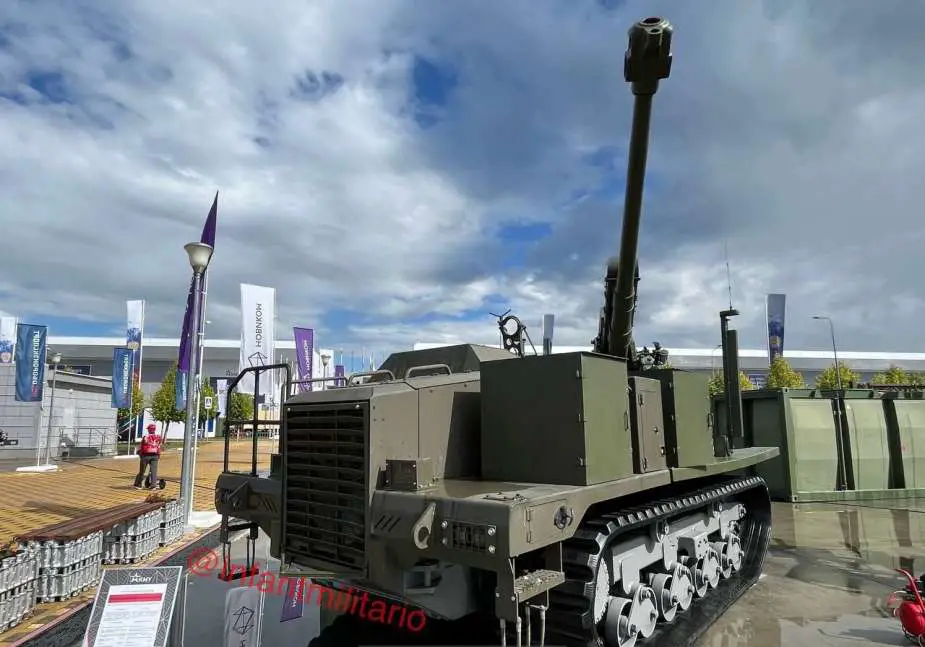
The new Russian-made robotic artillery system is based on the MTS-15 tracked UGV Unmanned Ground Vehicle fitted with a D-30 122mm towed gun mounted at the rear part of the robot. (Picture source Russian Social Network)

- Details
- Written by: Administrator
- Category: 2024
- Hits: 11370
On August 9, 2024, the United States State Department of Defense announced a potential Foreign Military Sale to the Government of Norway, involving the provision of M142 High Mobility Artillery Rocket Systems (HIMARS) and related equipment. The deal, which is valued at approximately $580 million, has been certified by the Defense Security Cooperation Agency (DSCA) and has now been presented to Congress for final approval.
Follow Army Recognition on Google News at this link
U.S. Marine Corps Cpl. Kevin Alvarez ground guides a High Mobility Artillery Rocket System during Orient Shield 24 at the Yausubetsu Maneuver Area, Hokkaido, Japan, July 22, 2024. (Picture source: U.S. DoD)
The proposed sale to Norway includes sixteen M142 HIMARS units, along with fifteen M30A2 Guided Multiple Launch Rocket System (GMLRS) Alternative Warhead pods and fifteen M31A2 GMLRS Unitary high-explosive pods. Additionally, Norway is set to acquire one hundred M57 Army Tactical Missile System (ATACMS) pods, which are crucial for extending the range and impact of its artillery capabilities. The package also encompasses Low-Cost Reduced Range Practice Rocket (LCRRPR) pods, interactive electronic technical manuals, and a comprehensive range of support services, including integration, spare parts, tool kits, test equipment, logistics, and training. Lockheed Martin, based in Grand Prairie, Texas, has been designated as the principal contractor for this extensive military program.
To implement the sale, U.S. Government and contractor representatives will be required to travel to Norway periodically, likely up to twice a year, to support program management reviews, equipment fielding, and training.
HIMARS has become a critical asset in modern warfare, particularly demonstrated by its successful deployment in the ongoing conflict in Ukraine. The system is renowned for its mobility and precision, capable of launching multiple rockets and missiles with pinpoint accuracy. Mounted on a 5-ton truck, HIMARS is highly maneuverable and can be quickly relocated, making it a formidable tool in both offensive and defensive operations. The system can launch Guided Multiple Launch Rocket System (GMLRS) rockets with a range of up to 70 km, and ATACMS missiles that can strike targets as far as 300 kilometers away, making it highly effective in targeting enemy infrastructure, command centers, and supply lines. Its versatility allows it to engage a wide range of targets, from heavily fortified positions to moving convoys.
In Ukraine, HIMARS has played a crucial role, where its precision strikes have significantly disrupted Russian logistics and command structures, becoming a cornerstone of Ukraine's defensive and offensive strategies.
For Norway, the acquisition of HIMARS represents a significant enhancement of its military capabilities, especially given its strategic location near the Arctic and close proximity to Russia. This purchase not only bolsters Norway's artillery capabilities but also strengthens its role as a key NATO ally. The deployment of HIMARS will enhance interoperability among NATO forces, allowing for more coordinated and effective joint operations in the region. As the proposed sale progresses through the necessary channels, it marks a critical step in the ongoing modernization of Norway's military, ensuring that it is well-equipped to face the evolving security challenges of the 21st century.
In recent developments, the U.S. Army has continued its investment in the High Mobility Artillery Rocket System (HIMARS), awarding several major contracts to Lockheed Martin. In June 2024, Lockheed Martin secured a significant $2.8 billion contract modification from the U.S. Army for the delivery of up to 311 additional HIMARS launchers. This contract underscores the growing demand for HIMARS, particularly given its critical role in modern conflicts, including the ongoing war in Ukraine. This contract is part of a broader effort to expand the U.S. military’s HIMARS inventory through fiscal year 2028.
In 2024, the United States has continued to expand its international sales of the High Mobility Artillery Rocket System (HIMARS), with several key contracts signed with allied nations. Notably, Poland signed a significant contract earlier this year to acquire an additional 500 HIMARS launchers, in a deal that underscores its efforts to bolster defense capabilities amidst the ongoing security concerns in Eastern Europe. Similarly, Australia also entered into a contract to purchase HIMARS units, reflecting the country’s strategic pivot towards strengthening its defense infrastructure in the Indo-Pacific region.
The M142 HIMARS is currently in use by several countries around the world, with the United States leading as its primary operator. Other active users include Romania, Singapore, Ukraine, the United Arab Emirates, Jordan, and Poland, all of which have integrated HIMARS into their military forces to enhance their long-range precision strike capabilities. Looking ahead, Australia, Estonia, Latvia, Lithuania, Morocco, and Taiwan have committed to becoming future users, with plans to incorporate HIMARS into their defense strategies. Additionally, Croatia and Bulgaria are potential future users, having expressed interest in acquiring the system to bolster their military capabilities in response to evolving regional security challenges. This widespread adoption and interest underscore the growing recognition of HIMARS as a critical asset in modern military operations.
Read more: US Approves $580 Million Sale of 16 HIMARS Rocket-Missile Launcher Systems to Norway

- Details
- Written by: Administrator
- Category: 2024
- Hits: 28536
Amid the ongoing conflict in Ukraine, Russia has captured global attention by unveiling the first-ever public image of its highly advanced S-500 Prometheus TEL (Transporter Erector Launcher) system at the Army-2024 defense exhibition near Moscow. This marks the first time the S-500 system has been presented to the public, offering an unprecedented glimpse into one of Russia's most sophisticated air defense technologies.
Follow Army Recognition on Google News at this link
The new Russian-made S-500 Prometheus TEL (Transporter Erector Launcher) truck is presented for the first time to the public at Army-2024, a defense exhibition that will take place in the Moscow region, Russia. (Picture source: Russian Social Network)
The image of the newly revealed Russian-made S-500 Prometheus TEL (Transporter Erector Launcher) air defense missile system, which quickly surfaced online, is a major highlight of the much-anticipated exhibition, showcasing Russia's latest military innovations despite the tense geopolitical climate. This public debut of the S-500 underscores Russia's intent to demonstrate its military strength and technological prowess on the global stage.
The S-500 TEL is a key element of the S-500 battery, which is designed to transport, erect, and launch highly capable surface-to-air missiles, marking a significant leap forward from its predecessor, the S-400. This public debut underscores the S-500’s enhanced capabilities to engage and neutralize a wide range of aerial threats, including ballistic and hypersonic missiles, at unprecedented ranges. The unveiling of the TEL not only showcases Russia's latest advancements in military technology but also signals a bold demonstration of its military prowess amid ongoing global tensions.
The S-500 Prometheus represents a major advancement in Russia's air and missile defense capabilities, developed by Almaz-Antey to supersede the existing S-400 Triumf. The system is designed to target threats at a maximum range of approximately 600 km (373 miles) for aerial targets, a substantial increase from the S-400’s 400 km (249 miles) range. It can intercept ballistic missile threats at distances up to 500 km (310 miles) and engage targets at altitudes of up to 200 km (124 miles), making it uniquely positioned to counter both atmospheric and near-space threats, such as low-Earth orbit satellites.
One of the most notable features of the S-500 is its ability to intercept hypersonic missiles traveling at speeds exceeding Mach 5, with a reaction time of just 3-4 seconds, enabling it to respond rapidly to high-speed, high-altitude threats. The system can simultaneously track and engage up to 10 ballistic targets moving at speeds of up to 7 km per second (approximately 15,660 miles per hour). It is equipped with advanced radar and command systems that allow it to prioritize and engage multiple targets in complex threat environments, and it is designed to work in conjunction with other Russian air defense systems, such as the S-400, S-300, and Pantsir-S1, creating a layered and integrated air defense network.
The S-500 features advanced radar systems, including the 91N6A(M) acquisition radar and the 96L6-TsP multi-functional radar, offering improved target detection and tracking capabilities, particularly against stealthy or low-visibility targets. It is also equipped with sophisticated sensors and radar systems capable of detecting and engaging stealth aircraft and other low-observable threats, which are traditionally challenging for conventional air defense systems to track and intercept.
Mounted on a highly mobile, wheeled chassis, the S-500 can be rapidly deployed and relocated to different operational theaters, ensuring flexible defense coverage. Its integration with Russia’s space-based early warning systems enhances its ability to detect and intercept long-range threats even before they enter the atmosphere.
The defense exhibition is anticipated to be a major event, not just for military professionals and defense contractors, but also for international observers closely monitoring Russia's military capabilities during the ongoing conflict in Ukraine. The timing of the exhibition and the unveiling of the S-500 sends a strong message about Russia's intent to maintain and showcase its military prowess, even as it faces significant international scrutiny and sanctions due to the war.
The introduction of the new S-500 Prometheus air defense missile system into Russia’s arsenal marks a crucial development in global defense dynamics, potentially altering the balance of power in regions where Russia has strategic interests. Experts believe that the exhibition could also serve as a platform for Russia to secure new defense contracts and strengthen military ties with other nations. The inclusion of the S-500 is expected to be a centerpiece for negotiations, as countries look to bolster their own defense systems in response to evolving global threats.

- Details
- Written by: Administrator
- Category: 2024
- Hits: 4319
The AUKUS (Autonomy Working Group) partnership between Australia, the United Kingdom, and the United States has achieved a significant milestone with the successful trial of AI-enabled unmanned aerial vehicles (UAVs) designed to locate, disable, and destroy ground targets. This groundbreaking exercise, which took place as part of the annual US-hosted multinational Project Convergence experimentation exercise, marks the first real-time military application of autonomy and artificial intelligence (AI) within the AUKUS framework.
Follow Army Recognition on Google News at this link
AUKUS nations conduct tests on AI-powered unmanned aerial vehicles that enable human operators to identify, neutralize, and eliminate ground targets. (Picture source: UK MoD)
The trial, led by experts from the British Defence Science and Technology Laboratory (Dstl) alongside AUKUS partners, showcased a seamless integration of AI and autonomous systems, demonstrating the potential for enhanced operational capabilities. The exercise featured multiple drones from each AUKUS nation operating cohesively within the same airspace, coordinated by an AUKUS AI team that continuously retrained and deployed AI models onto the platforms in real-time.
Commodore Rachel Singleton, Head of the British Defence Artificial Intelligence Centre (DAIC) and the UK's lead for the AUKUS AI and Autonomy Working Group, emphasized the importance of this collaboration: "Resilient and Autonomous Artificial Intelligence Technologies provide the opportunity to develop, test, and trial AI models on autonomous systems. The AUKUS partnership is key to ensuring that the systems designed by each nation are interoperable into the future."
The successful trial is part of the broader AUKUS Resilient and Autonomous Artificial Intelligence Technologies (RAAIT) series, highlighting the rapid development of AI and autonomy technologies within the partnership. Since the first UK trial in April 2023, significant advancements have been made, positioning AUKUS to incorporate these technologies onto national platforms, thereby offering a critical operational advantage in response to evolving global threats.
The exercise also underscored the importance of interoperability among the AUKUS nations, ensuring that military personnel from each country can be supported by capabilities developed collaboratively. The AI-enabled UAVs significantly reduced the time required to identify and engage enemy targets, thereby minimizing risk to human life.
As part of AUKUS's Pillar 2 initiative, which focuses on deepening cooperation on cutting-edge military technologies, these trials represent a crucial step forward in enhancing the military edge of the UK, Australia, and the US. The collaboration not only strengthens defense capabilities but also opens opportunities for sovereign industry partners across the three nations.
AUKUS, a landmark defense and security partnership, continues to play a pivotal role in safeguarding Euro-Atlantic and Indo-Pacific security, reinforcing the rules-based international order. With the successful deployment of AI and autonomous systems, AUKUS partners are well-positioned to defend against rapidly evolving threats, ensuring a secure future for their respective nations and allies.
Read more: AUKUS Nations Test AI-Enabled Drones for Precision Targeting and Ground Strike Operations
- Details
- Written by: Halna du Fretay
- Category: 2024
- Hits: 3600
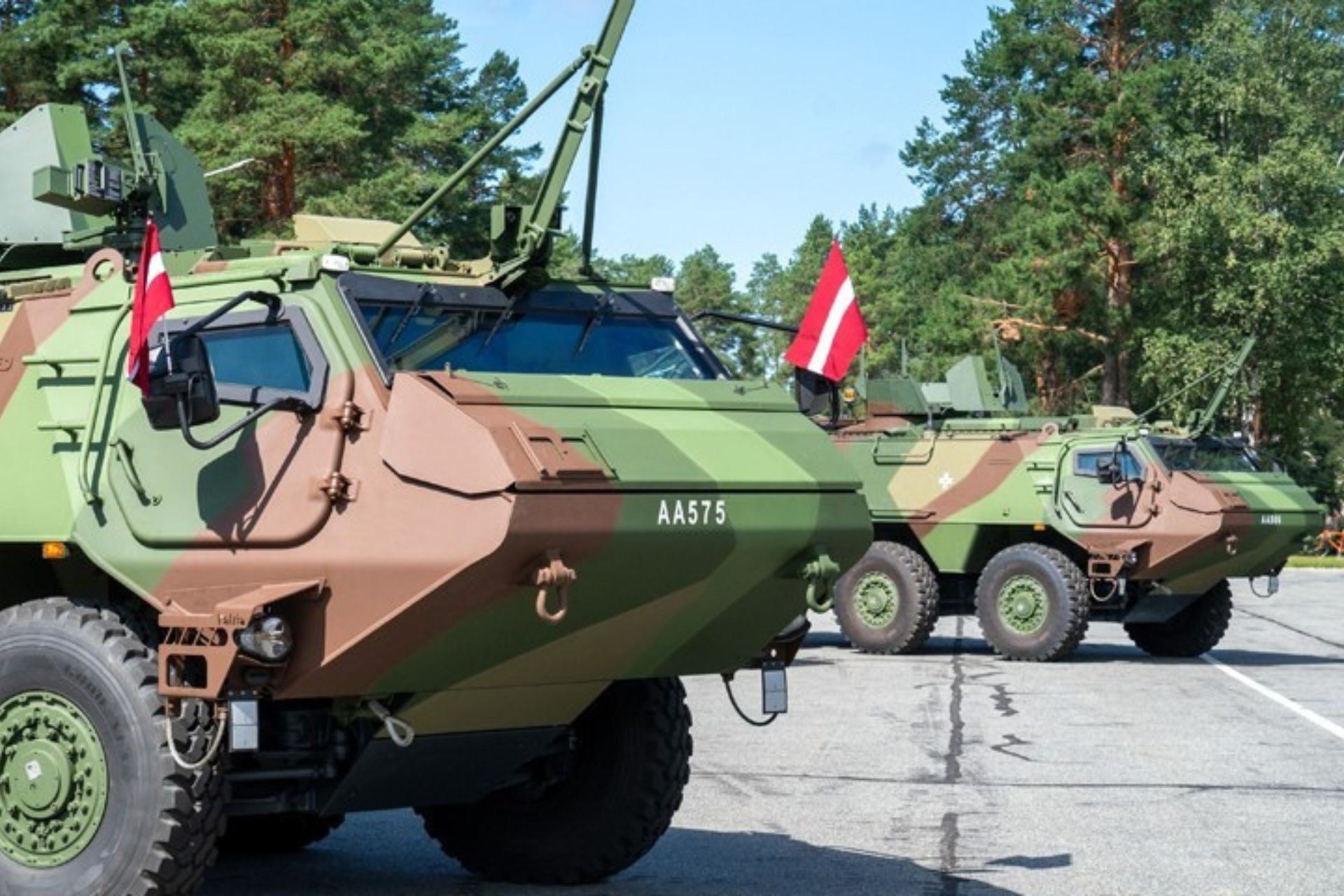
On August 8, 2024, Patria signed a Life Cycle Management (LCM) contract with Finland and Latvia, advancing the multinational Common Armoured Vehicle System (CAVS) program, which is based on the Patria 6x6 vehicle. This agreement aims to strengthen the CAVS commonality principle, ensuring long-term cooperation and cost efficiency throughout the system's lifecycle. The contract also allows other participating CAVS countries to join in the future. Follow Army Recognition on Google News at this link
On Monday, 5 August 2024, Defence Partnership Latvia, a joint venture majority-owned by Patria, delivered the first Latvian-made Patria 6x6 armored personnel carrier to the Latvian National Armed Forces during a ceremony at the “Ādaži” military base. (Picture source: Patria)
The Patria 6x6 is a versatile armored vehicle designed to provide optimal mobility and protection on various terrains. Production of the Patria 6x6 began in 2020, with initial orders placed by countries such as Finland, Latvia, and Sweden as part of the CAVS program. The vehicle is designed to meet modern military requirements, offering great modularity and increased transport capacity. The Patria 6x6 can carry up to 10 fully equipped soldiers and is equipped with various weapon and communication systems. The first deliveries are underway, with plans to produce around 30 armored vehicles per year, 25 of which will be delivered to the National Armed Forces (NBS) of Latvia this year.
The Patria 6x6 is an imposing vehicle with impressive technical specifications: it measures 7.5 meters in length, 2.5 meters in height, and 2.9 meters in width. The vehicle has a maximum payload of 8,500 kg and a maximum combat weight of 24,000 kg. It can reach a top speed of over 100 km/h, climb slopes of up to 60%, and cross obstacles up to 0.6 meters and trenches of 1.2 meters. The vehicle has a water fording capability of up to 1.5 meters, with an optional flotation feature allowing speeds of 6 to 8 km/h in water. It is powered by a 5-cylinder inline diesel engine producing 294 kW of power and 1870 Nm of torque, coupled with a 7+2 speed automatic transmission, and offers an operational range of over 700 km.
The Patria 6x6 also incorporates a modular protection system against bullets, mines, and improvised explosive devices (IEDs), which can be adapted to meet customer needs. The vehicle is ready for future protection technologies, and its maintenance-free LED lights reflect its modern design. The independent suspension with double wishbone coil springs and hydraulic shock absorbers, along with hydraulically assisted steering, ensure optimal maneuverability and comfort even on rough terrain.
The LCM contract between Patria, Finland, and Latvia establishes a collaborative framework for the provision of essential lifecycle management services to maintain the operational readiness of CAVS vehicles and related capabilities throughout their lifespan. This agreement is expected to strengthen national supply security among partner nations by aligning lifecycle management services and products across the involved countries.
The CAVS LCM contract is based on Patria's OPTIME service concept, a modular service model designed to meet specific customer needs. This model covers a broad range of services and solutions, all aimed at maximizing fleet availability. The inclusion of the LCM contract in the CAVS program adds to the existing framework agreements on research and development, manufacturing, and sustainment, thus providing a comprehensive contractual structure for managing the entire lifecycle of the vehicles.
Mats Warstedt, Senior Vice President for the Nordics at Patria, emphasized the significance of this LCM contract, noting that it marks the CAVS program's entry into the sustainment phase, ensuring long-term cooperation to keep the fleets fully operational. Additionally, this contract is the first to be based on Patria’s OPTIME service concept, representing an important milestone for this customer-tailored service model.
The Patria 6×6 vehicle was chosen as the common platform for the multinational CAVS program in 2020. Deliveries of these vehicles are currently underway to Latvia, Finland, and Sweden. To date, Patria has received orders for nearly 700 Patria 6×6 vehicles. The CAVS program remains open to European countries with similar equipment requirements, subject to the approval of the participating nations.

- Details
- Written by: Vandenbosch
- Category: 2024
- Hits: 2593
The British Royal Air Force has deployed F-35B Lightning aircraft to Iceland as part of a NATO air policing mission, marking the first time British F-35Bs have participated in such operations. These aircraft, from 617 Squadron, are tasked with defending NATO airspace in the Arctic region.
Follow Army Recognition on Google News at this link
The F-35B Lightning is a highly versatile multi-role combat aircraft. (Picture source: UK MoD)
NATO air policing is a permanent peacetime mission aimed at protecting the airspace of allied nations. This collective effort involves maintaining fighters and crews in a state of readiness to respond swiftly to potential airspace violations. This mission underscores the United Kingdom's unwavering commitment to NATO, reaffirmed by the Prime Minister at the recent Washington Summit, where he emphasized the importance of protecting the Alliance and addressing global threats.
Minister for the Armed Forces, Luke Pollard, stated: "The United Kingdom remains steadfast in its commitment to NATO. With the rise of global threats and increasing Russian aggression, it is crucial that we remain united with our allies. This air policing mission in Iceland illustrates the UK's ability to operate and deter adversaries across NATO airspace."
Following a successful mission in Romania, where six Typhoon jets and over 200 personnel were stationed to defend NATO's eastern border, the RAF is now focusing on Iceland. Four advanced F-35B aircraft from 617 Squadron have been deployed from RAF Marham to patrol Icelandic airspace. This is the first time British aircraft have conducted such operations in Iceland since 2019, when Typhoon jets carried out 59 training sorties and executed more than 180 practice intercepts.
The F-35B Lightning is a highly versatile multi-role combat aircraft, equipped with advanced sensors, mission systems, and stealth technology. Its low observability provides a significant tactical advantage, making it difficult for enemy radar systems to detect.
The F-35B is powered by a single Pratt & Whitney F135 turbofan engine, delivering 178 kN of thrust, enabling the aircraft to reach a maximum speed of 1,700 km/h, approximately Mach 1.6. Its compact design, with a wingspan of 10.40 meters and a length of 15.85 meters, along with a wing area of 42.7 square meters, makes it an agile and maneuverable aircraft capable of meeting the demands of complex missions. It can fly at a maximum altitude of 18,500 meters and has a combat radius of 869 km, making it suitable for medium-range operations.
The aircraft can carry up to 2,800 kg of armament in its internal bays, with the option to add an additional 6,800 kg on six external pylons. The internal armament includes a 25mm GAU-22 cannon, mounted in an external ventral pod on the F-35B, along with various precision-guided missiles and bombs.
In terms of avionics, the F-35B is equipped with the AN/APG-81 radar, an active electronically scanned array (AESA) radar that offers advanced detection capabilities, as well as the AN/AAQ-37 infrared sensor, which allows it to detect and track multiple threats at long range. With a G-load factor of up to +7 G, the F-35B is designed to withstand intense maneuvers while remaining reliable and performant.
Group Captain John Butcher, Commander of the Lightning Force, remarked: "This deployment marks the first time the Lightning Force has contributed to NATO air policing. It will undoubtedly demonstrate the flexibility of this platform and its capability to operate from both land and sea environments."
In addition to this deployment, RAF Typhoons and Voyagers continue to protect UK airspace through the Quick Reaction Alert Force, based at RAF Coningsby, Lossiemouth, and Brize Norton, ensuring continuous defense 24 hours a day, 365 days a year.
Read more: United Kingdom Deploys F-35B Aircraft to Iceland for NATO Mission
- Ukrainian Defense Industry Ukroboronprom enters into Global Top 50 as fastest-growing defense company
- Côte d'Ivoire Armed Forces Unveil New Chinese Armored Vehicles at Independence Day Parade
- Rheinmetall Secures New Contract to Provide Eight Additional Mobile Surgical Teams to Ukraine
- Almost 100 Krab Self-Propelled Howitzers for Polish Armed Forces