

- Details
- Written by: Administrator
- Category: 2024
- Hits: 11602










Russian tank manufacturer Uralvagonzavod announced on September 7, 2024, the delivery of a new batch of T-90M "Proryv" Main Battle Tanks to the Russian army, destined for rapid deployment in the ongoing conflict in Ukraine. The delivery comes as the Russian military intensifies its operations and seeks to strengthen its armored forces on the front lines.
Follow Army Recognition on Google News at this link
Russian-made T-90M main battle tank during field tests at Uralvangonzavof training ground. (Picture source: Uralvagonzavod)
The T-90M "Proryv" tanks, which Russian President Vladimir Putin has previously praised as "the best tanks in the world," are reportedly becoming more powerful with each new batch. Equipped with advanced features such as electronic warfare systems designed to counter drones and technologies aimed at reducing the vehicle's visibility, these tanks represent a significant technological leap for Russia’s armored forces. Despite their high-tech upgrades, the tanks are said to maintain the traditional ease of use, allowing soldiers to quickly learn and operate them even under the most challenging conditions.
The T-90M "Proryv" is an upgraded version of Russia’s T-90 series, boasting a range of advanced technical features that make it one of the most formidable tanks in the world. Its powerful 125mm 2A46M-4 smoothbore gun allows it to fire a variety of ammunition, including guided missiles, giving it superior firepower and versatility on the battlefield. Its advanced fire control system with thermal imaging also ensures accurate targeting in both day and night conditions.
One of the key features that sets the T-90M apart is its enhanced protection. It is equipped with Relikt explosive reactive armor (ERA) and additional passive armor layers, providing robust defense against anti-tank missiles and other modern threats. The tank is also fitted with a cutting-edge electronic warfare system that counters drones and reduces its radar visibility, making it harder to detect and target. These defensive capabilities make the T-90M highly survivable in modern combat environments.
Uralvagonzavod emphasized that its tanks are built with high maintainability in mind, a feature that has earned the factory’s workers the gratitude of Russian servicemen. As the production facility in Nizhny Tagil operates around the clock, the number of T-90M tanks reaching the front continues to increase, a testament to the company’s ability to meet the high demands of the ongoing conflict.
"The strategies developed at Uralvagonzavod allow for a prompt response to any increase in production plans, ensuring timely and high-quality fulfillment of the state defense order," a company spokesperson said. This rapid response to production challenges underscores the resilience and efficiency of the tank manufacturer, which has remained one of Russia’s key military suppliers.
Looking forward, Uralvagonzavod workers have been assigned new tasks aimed at further improving the T-90M Proryv, with additional innovations and enhanced combat capabilities planned for future iterations. These updates are expected to make the tanks even more formidable on the battlefield, bolstering Russia’s efforts in the Ukraine conflict.
The T-90M "Proryv" is part of a broader modernization effort by the Russian military, as it seeks to adapt to modern warfare’s evolving challenges, especially in the face of advanced drone technology and electronic warfare tactics employed by Ukraine.
The new deliveries come at a critical time, as both sides continue to rely on heavy armor in their military strategies, with tank warfare playing a pivotal role in the Russian - Ukrainian conflict.

- Details
- Written by: Administrator
- Category: 2024
- Hits: 5859
During the Ukraine Defense Contact Group meeting held at Ramstein Air Base in Germany on September 6, 2024, Spanish Defense Minister Margarita Robles reaffirmed Spain's strong commitment to supporting Ukraine, both militarily and through humanitarian aid. She announced a significant new package of military assistance that will be sent to Ukraine in the coming weeks. Among the key contributions is a HAWK air defense missile battery, complete with six missile launchers, intended to bolster Ukraine’s air defense capabilities in response to ongoing threats.
Follow Army Recognition on Google News at this link
Spanish Army Hawk air defense missile launcher unit at a military parade in Madrid. (Picture source: Wikimedia)
In her address, Spanish Minister Robles underscored the critical role of the Contact Group in coordinating international aid efforts for Ukraine. She emphasized that Spain’s unwavering support is not only for Ukraine’s sovereignty but also for the broader security of Europe. Robles specifically responded to Ukrainian President Volodymyr Zelensky’s request for enhanced air defense systems, confirming that Spain would immediately dispatch a full HAWK battery, including the six missile launchers already positioned in Poland for rapid deployment.
Robles also elaborated on Spain’s ongoing defense support initiatives, highlighting the preparations for additional donations and shipments of military equipment. She further noted that the Spanish defense industry is actively engaged in numerous projects aligned with the bilateral Security Agreement between Spain and Ukraine to reinforce Ukraine’s military capabilities.
Since the onset of Russia's invasion of Ukraine in 2022, Spain has played a vital role in supplying military aid to Ukraine. Some of the most notable deliveries include 10 Leopard 2A4 tanks, 60 M113 armored personnel carriers, 20 URO VAMTAC armored vehicles, and a range of vehicles and artillery systems. Spain has also provided extensive surface-to-air missile systems, including an Aspide 2000 battery and Hawk SAM systems, alongside radars and anti-tank weapons. In addition to military hardware, Spain has delivered field hospitals, medical supplies, and provided essential training to Ukrainian soldiers.
This latest package of aid from Spain is part of a broader international effort to assist Ukraine in defending itself against Russian aggression. Spain remains steadfast in Ukraine’s fight for freedom and territorial integrity.
The Spanish Army operates the MIM-23 HAWK air defense system, specifically the upgraded Phase III version, which provides medium-range air defense capabilities. In service since the 1960s, the HAWK system has undergone several upgrades to remain effective in modern combat scenarios. The Phase III upgrade significantly enhances the system’s radar, missile technology, and overall operational efficiency, ensuring it continues to play a crucial role in Spain's air defense network.
The HAWK Phase III system can engage targets at a range of up to 45 kilometers (28 miles) and intercept threats flying at altitudes of up to 18 kilometers (59,000 feet). This makes the system effective against various aerial threats, including low-flying aircraft, helicopters, unmanned aerial vehicles (UAVs), and some types of cruise missiles. Its combination of range and altitude coverage provides a strong defensive shield for military assets, infrastructure, and troop deployments.
One of the most notable advancements in the Phase III version is the introduction of sophisticated radar systems, including the AN/MPQ-61 and AN/MPQ-62 radars. These radars have enhanced the HAWK's ability to detect and track low-flying and fast-moving targets in complex environments. They allow the system to track multiple targets at once, making it resilient against simultaneous attacks or saturation strikes.
The missile technology in the Phase III version has also been significantly upgraded. The missiles are equipped with semi-active radar homing guidance systems, which allow for improved precision when engaging modern, highly maneuverable targets. The warhead is designed for high kill probability, with a fragmentation system that ensures effective destruction even in close engagements with fast-moving targets.
In addition to tracking and missile precision improvements, the HAWK Phase III has a faster reaction time. This means the system can quickly detect, track, and engage fast-moving threats like fighter jets and cruise missiles, significantly enhancing its defensive capabilities. Though the system is not as mobile as some newer air defense platforms, it is still highly deployable, with improvements allowing it to be transported and set up efficiently in various combat environments.
Despite being an older system, the HAWK Phase III remains essential to Spain's air defense strategy. Its ability to provide medium-range protection makes it valuable even as Spain continues to modernize its defense capabilities with newer systems. Spain’s decision to donate HAWK systems, including missile launchers and radars, to Ukraine demonstrates the ongoing relevance of the system. In Ukraine, these HAWK batteries are expected to provide critical defense against Russian aircraft and cruise missile strikes, playing a vital role in Ukraine’s ongoing efforts to defend against aerial attacks.
- Details
- Written by: Administrator
- Category: 2024
- Hits: 5990
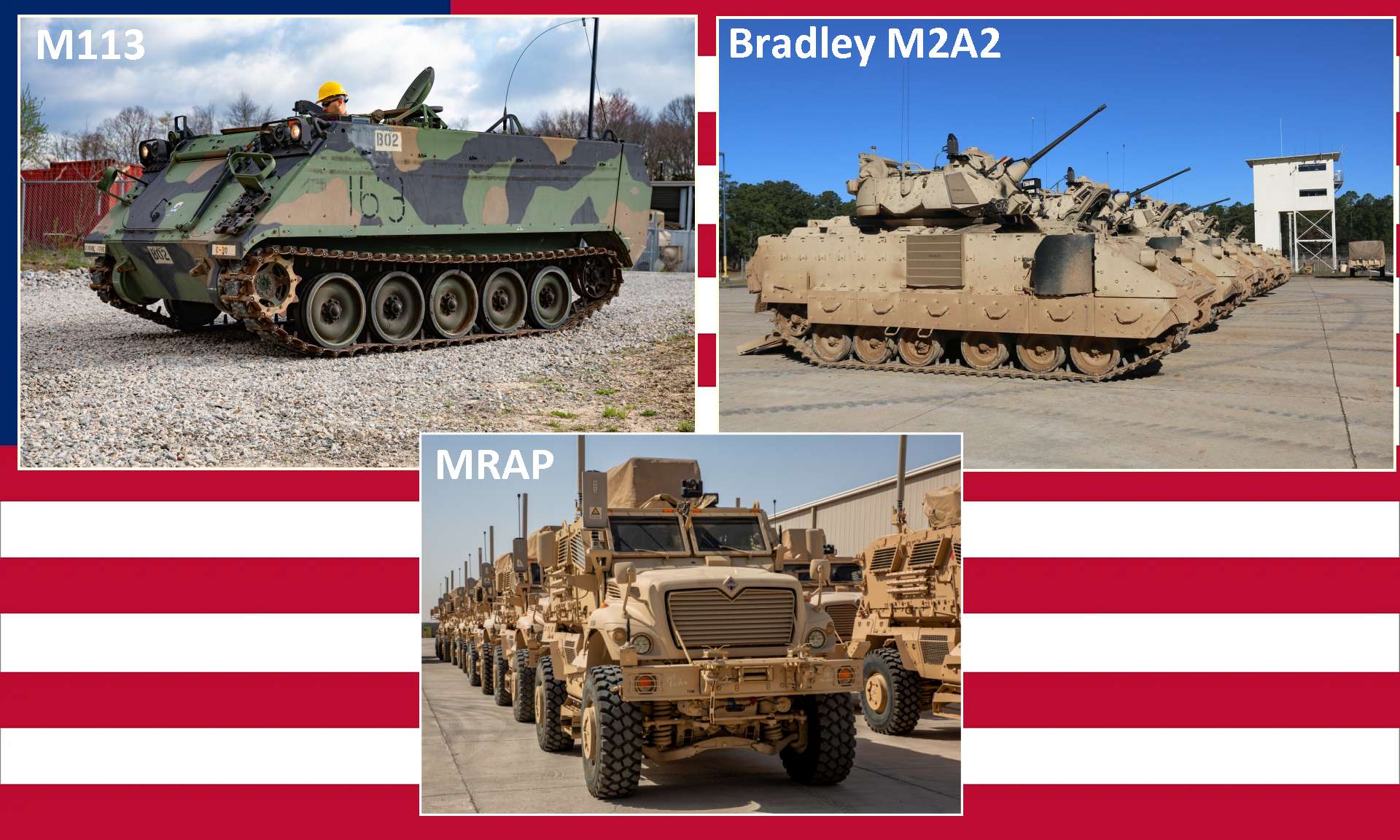
On September 6, 2024, the United States Department of Defense (DoD) announced a new security assistance package aimed at meeting Ukraine’s urgent security and defense needs. This new tranche of equipment features a range of advanced armored vehicles, including Bradley Infantry Fighting Vehicles (IFVs), M113 Armored Personnel Carriers, and Mine-Resistant Ambush-Protected (MRAP) vehicles.
Follow Army Recognition on Google News at this link
On September 6, 2024, the U.S. Department of Defense announced new military aid for Ukraine, including additional M113 APCs, Bradley IFVs, and MRAP Mine Resistant Ambush Protected Vehicles. (Picture source: U.S. DoD)
These combat vehicles are vital to Ukraine’s ability to defend itself against Russian invasion, which has persisted since the full-scale invasion in February 2022. The Bradley IFVs, known for their mobility and firepower, have been essential for Ukraine’s mechanized infantry. Since the beginning of the war, the U.S. has delivered more than 300 M2A2 ODS Bradleys, which have been used effectively in combat. The M113 APCs, more than 600 of which have been delivered since July 2022, offer valuable transportation and protection for Ukrainian infantry on the battlefield.
Since their introduction to Ukraine's arsenal, the Bradley M2A2 Infantry Fighting Vehicles (IFVs) have proven to be a critical asset in the fight against Russian forces. These vehicles, delivered as part of the extensive U.S. military aid, have played a significant role in Ukraine's successful counteroffensives, particularly in contested regions of the eastern and southern fronts.
The Bradley M2A2 has been highly effective in several key areas, including its superior mobility, firepower, and protection. Equipped with a 25mm M242 Bushmaster chain gun and anti-tank TOW missiles, the Bradley offers both offensive and defensive capabilities, allowing Ukrainian forces to engage Russian armored vehicles and infantry with precision. Its advanced targeting systems and thermal imaging technology have enabled Ukrainian troops to operate in a wide range of battlefield conditions, including night operations, giving them an edge over Russian forces.
The M2A2 Bradleys have been instrumental in several successful operations, notably in areas like Bakhmut and Zaporizhzhia, where Ukrainian forces have used them to breach heavily fortified Russian positions. Their ability to transport infantry safely while providing direct fire support has allowed Ukrainian soldiers to engage in combined arms tactics, coordinating infantry, armor, and artillery to overpower Russian defenses. Reports from the front lines indicate that the Bradleys have significantly reduced casualties among Ukrainian forces, as their robust armor protects against small arms fire, artillery fragments, and anti-tank weapons.
Additionally, the aid package includes various MRAPs, which have become critical for Ukrainian forces, particularly in protecting troops from improvised explosive devices (IEDs) and ambushes. Among the MRAPs sent to Ukraine are 440 International M1224 MaxxPro vehicles, delivered in mid-2022, 37 Cougar MRAPs supplied in early 2023, and Oshkosh M-ATVs first delivered in March 2023. Furthermore, the U.S. has pledged 289 additional MRAPs, with 108 of these vehicles pledged in January 2023 and another 181 in February. An additional 190 MRAPs have been earmarked for delivery to Ukraine’s Border Guard Service.
Since the start of the Russian invasion, the U.S. has consistently provided Ukraine with crucial defense equipment, helping to bolster its military capabilities significantly. The provision of armored vehicles such as the Bradleys and MRAPs has played a key role in enabling Ukraine to launch successful counteroffensives and reclaim territory. These efforts are part of broader U.S. and NATO support that includes artillery, air defense systems, ammunition, and other advanced weapons.
This new assistance package comes at a critical juncture as Ukraine continues to face heavy fighting in its eastern and southern regions. The Biden Administration’s commitment to providing military aid to Ukraine remains strong, reflecting a broader strategy to ensure Ukraine has the resources necessary to defend its sovereignty and maintain pressure on Russian forces. The continued support from the U.S. and its allies is essential as Ukraine works to solidify its defensive positions and sustain momentum in ongoing operations.
- Details
- Written by: Halna du Fretay
- Category: 2024
- Hits: 5433
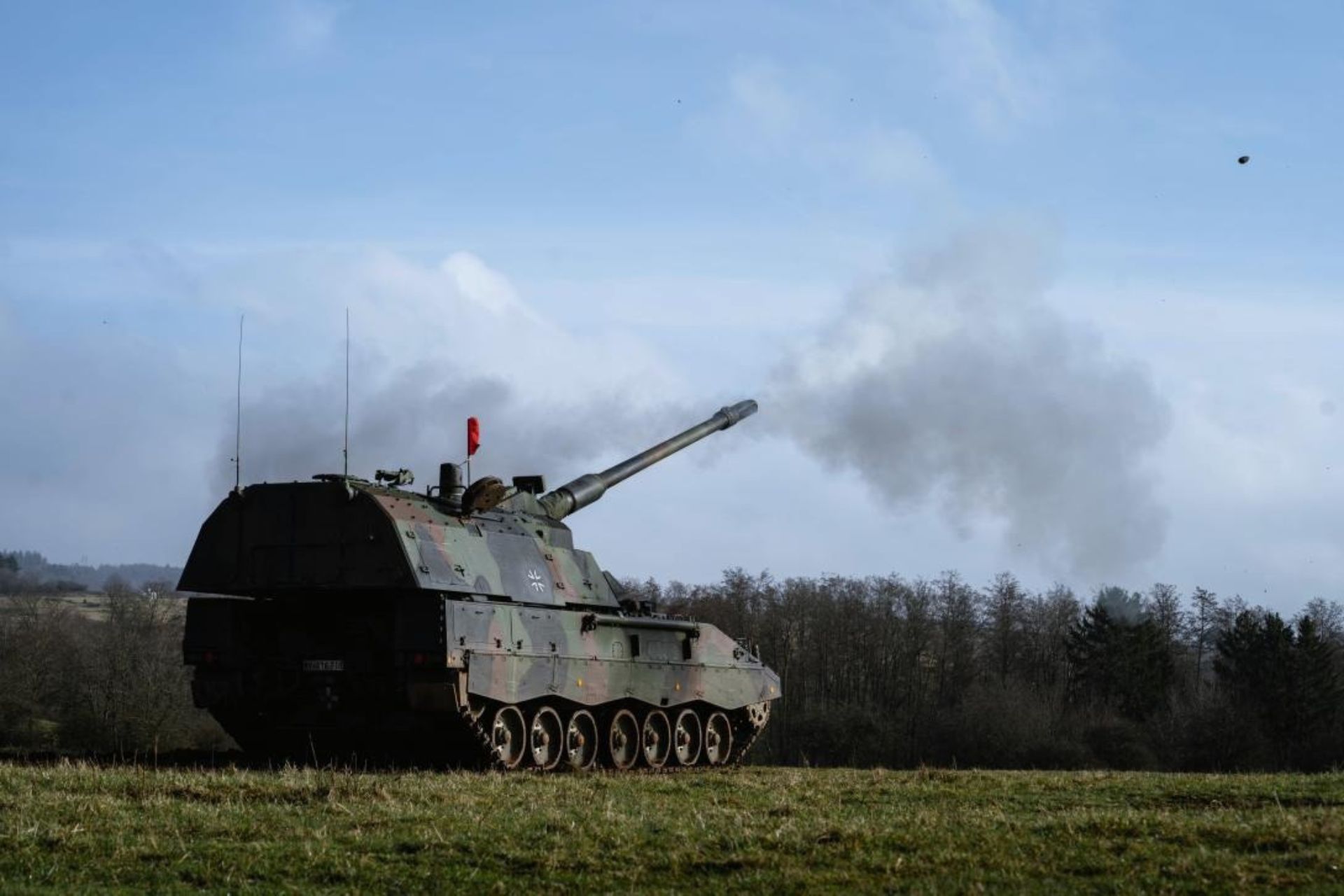
Germany has recently clarified its position regarding its support for Ukraine, confirming the delivery of an additional 12 PzH 2000 self-propelled howitzers, valued at €150 million, in addition to the 18 already provided since February 2024. This decision is part of ongoing military support to strengthen Ukraine's defense capabilities in the current conflict. The delivery schedule includes six howitzers in 2024, six more in 2025, and an additional 18 in 2026 and 2027, thereby bolstering Ukraine's artillery firepower.
Follow Army Recognition on Google News at this link
In a joint project with the Netherlands, Germany has also provided 14 additional PzH 2000s and spare parts to strengthen Ukraine's artillery capabilities (Picture source: EEAS)
The PzH 2000, a 155mm tracked self-propelled howitzer, is one of the most advanced artillery systems in the world and now plays a central role in Ukraine's artillery capabilities. This weapon, supplied by Germany, has significantly enhanced Ukraine's ability to strike Russian forces, including targets beyond the Russian border. The German government’s decision to authorize Ukraine to target military units on Russian territory is aimed at neutralizing Russian artillery positions that continuously threaten Ukrainian cities and military sites.
Ukrainian artillery units equipped with the PzH 2000 are using "shoot-and-scoot" tactics to maximize effectiveness while minimizing vulnerability to counterattacks. This approach involves quickly firing at enemy targets and then repositioning before the enemy can accurately retaliate. With real-time information provided by reconnaissance drones, Ukrainian units can coordinate their strikes while avoiding detection by Russian drones, ensuring the survival of both their equipment and personnel.
The PzH 2000 stands out for its high rate of fire and impressive range. It can fire three rounds in nine seconds and sustain a continuous fire rate of 10 rounds per minute for two minutes. Its range allows it to hit targets 30-40 kilometers away with conventional rounds, and up to 56 kilometers with extended-range projectiles. Its tracked chassis also provides increased mobility, enabling it to maneuver quickly across various terrains and support shoot-and-scoot tactics.
This rapid-fire strategy followed by repositioning not only improves artillery effectiveness but also reduces the risk of being targeted by enemy counter-battery fire. By relocating after each firing sequence, the units become more difficult to target, enhancing their operational longevity. When combined with real-time intelligence, Ukrainian forces can maintain constant pressure on the enemy while minimizing risks.
In a joint project with the Netherlands, Germany has also provided 14 additional PzH 2000s and spare parts to strengthen Ukraine's artillery capabilities. This international cooperation highlights the importance of partnerships in enhancing military assets and operational efficiency. The integration of the PzH 2000 into Ukraine’s arsenal represents a significant enhancement in firepower and tactical flexibility.
As the conflict in Ukraine continues, the use of this German-supplied artillery system reflects the evolving dynamics on the battlefield and the critical role of international military support in shaping the war's trajectory.
Read more: Germany Clarifies its Delivery Schedule for 12 New PzH 2000 Howitzers to Ukraine

- Details
- Written by: Vandenbosch
- Category: 2024
- Hits: 2658
The Camcopter S-100, developed by Schiebel, reached a major milestone by receiving the first-ever Design Verification Report (DVR) from the European Union Aviation Safety Agency (EASA) for a Rotary Wing Unmanned Air System (RWUAS) in Vienna on September 5, 2024. This achievement marks a pioneering step in the certification of rotary-wing drones in Europe.
Follow Army Recognition on Google News at this link
The Camcopter S-100 is a versatile Unmanned Air System (UAS) that has been operationally proven in both military and civilian applications. (Picture source: Schiebel)
The DVR, issued for specific drone operations, follows a thorough evaluation process. EASA observed 300 flight hours under strict supervision to assess the airworthiness, safety, and enhanced containment measures of the Camcopter S-100. In addition, the system demonstrated its compliance with laser safety protocols, cybersecurity measures, and resistance to High Intensity Radiated Fields (HIRF).
This EASA certification opens the door to further regulatory approvals, notably allowing the French Navy to issue a "Military Operational Authorization." It also simplifies the approval process for S-100 flight operations in all EASA member states.
The Camcopter S-100 is a versatile Unmanned Air System (UAS) that has been operationally proven in both military and civilian applications. As a Vertical Takeoff and Landing (VTOL) system, it requires no prepared area or additional equipment for launch and recovery. Designed for day and night operations in challenging weather conditions, it has a beyond-line-of-sight range of up to 200 kilometers (108 nautical miles) over land and sea.
Built with a carbon fiber and titanium fuselage, the Camcopter S-100 offers a variety of payload and endurance options. It can carry up to 34 kilograms (75 pounds) of payload for 10 hours, with an operational ceiling of 5,500 meters (18,000 feet). The aircraft is powered by AVGas or JP-5 heavy fuel and transmits high-definition imagery to the control station in real time. In addition to GPS waypoint navigation, the system can operate in GPS-denied environments, providing significant flexibility for various missions.
Founded in 1951 in Vienna, Schiebel is a leader in the development and production of high-tech military, commercial, and humanitarian products. With a strong emphasis on after-sales service, Schiebel has built a solid international reputation with facilities in Austria, France, the United States, the United Arab Emirates, and Australia.
Hans Georg Schiebel, Chairman of the Schiebel Group, stated: "Receiving the DVR is an important milestone for Schiebel and a significant step toward the full certification of the Camcopter S-100 UAS." The DVR process, launched by EASA in late 2021, aims to enhance the safety and regulation of drone operations in Europe, particularly in the rapidly growing sector of Unmanned Aerial Systems (UAS).
Read more: Schiebel Obtains Design Verification Report from European Union for its Camcopter S-100
- Details
- Written by: Halna du Fretay
- Category: 2024
- Hits: 4185
The Australian Army is reorganizing to accommodate a significant modernization of its armored capabilities, as heavy vehicles like the M1A2 SEPv3 Abrams tanks and AS21 Redback infantry fighting vehicles are concentrated in Townsville. This reorganization, part of the country’s key defense projects, follows last year’s Defence Strategic Review.
Follow Army Recognition on Google News at this link
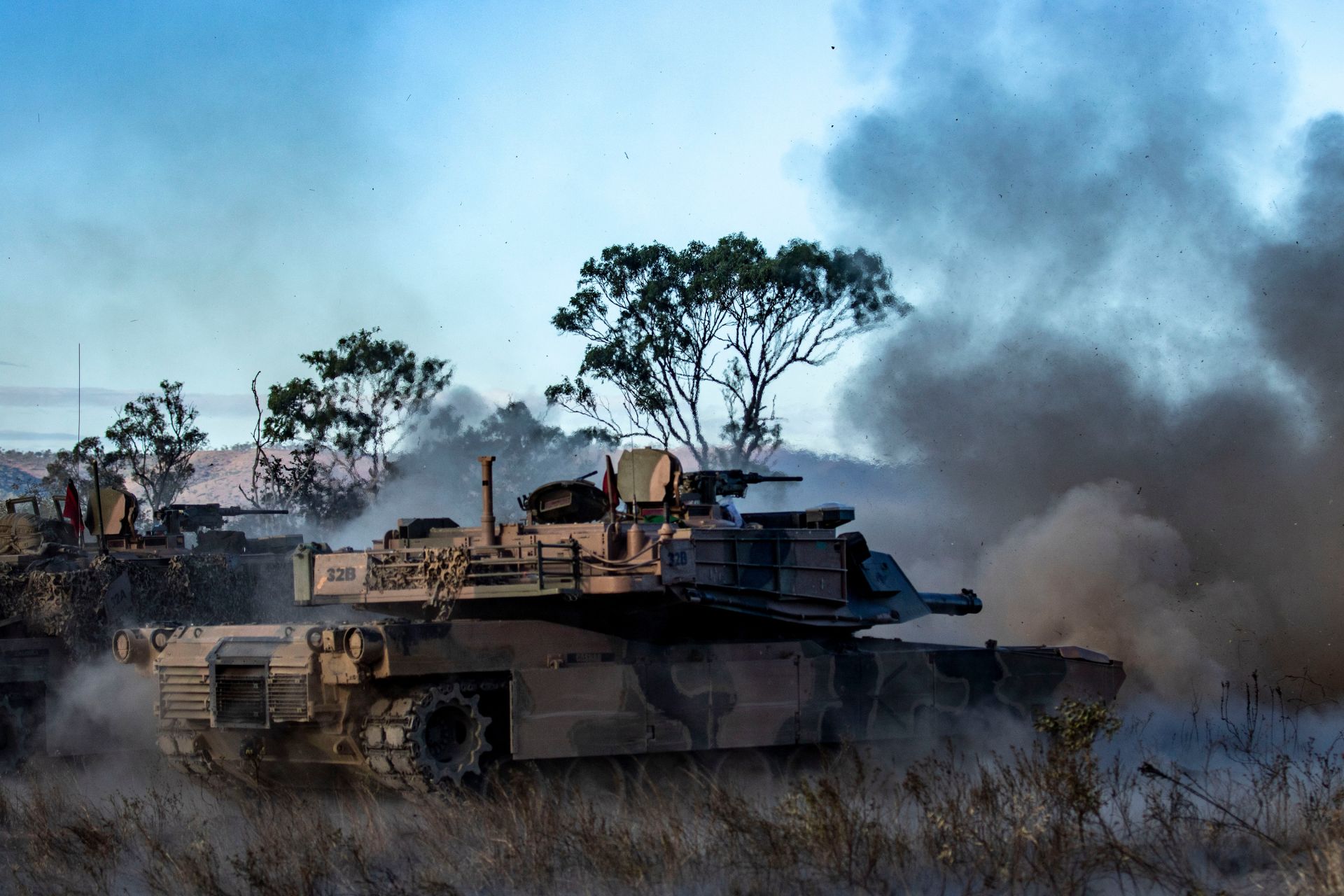
An Australian M1A1 Abrams tank from the 2nd Cavalry Regiment fires a round during a Live Fire Accuracy Screening Test at the Townsville Field Training Area in Queensland, Australia, August 4, 2023 (Picture source: US DoD)
The Australian Army’s 3rd Brigade, based in Townsville, will operate the bulk of these new heavy armored vehicles. Among them, the M1A2 SEPv3 Abrams, main battle tanks from the United States, are expected to arrive in Australia soon. Last June, 27 Abrams tanks were spotted on railcars headed to the Port of Hueneme, California. They are believed to have been shipped to Melbourne by cargo ship and then transported by truck to the Joint Logistics Unit in Bandiana.
Australia currently operates 59 M1A1 Abrams tanks, acquired in 2007 to replace its older Leopard 1 tanks. As part of its armored force modernization, Australia plans to purchase 75 M1A2 SEPv3 Abrams. These new tanks will bring significant improvements in protection, technology, and operational capabilities. The acquisition is part of a broader program aimed at enhancing the defense capabilities of the Australian Army.
The M1A2 SEPv3 Abrams is a modernized version of the renowned American main battle tank, featuring significant upgrades in protection, mobility, and firepower. It is equipped with a 120 mm M256 main gun, a 7.62 mm coaxial machine gun, and a 12.7 mm heavy machine gun on the turret. In terms of protection, the SEPv3 boasts enhanced composite armor with options for the Trophy active protection system, designed to intercept threats like rockets and missiles. On the electronics front, it includes advanced battlefield management systems, improved communication capabilities, better energy management, and embedded diagnostic systems for more efficient maintenance. These upgrades make the SEPv3 more resilient and suited to modern combat environments.
This delivery is part of a larger initiative to strengthen the Australian Army’s heavy armored capabilities. In parallel, Hanwha Defence Australia has recently opened a new factory that will also support the production and maintenance of armored vehicles for the Australian Army, particularly the AS21 Redback.
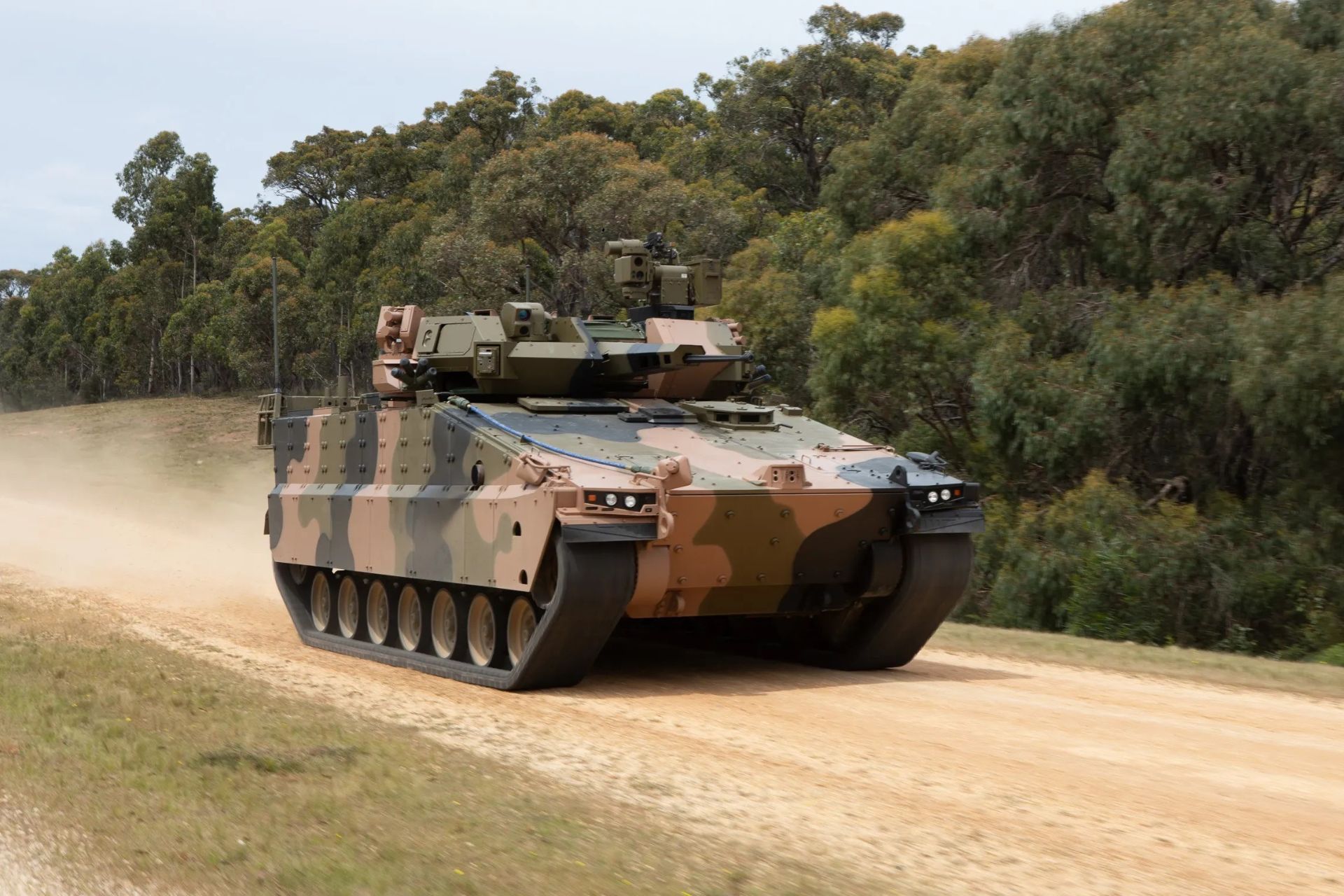
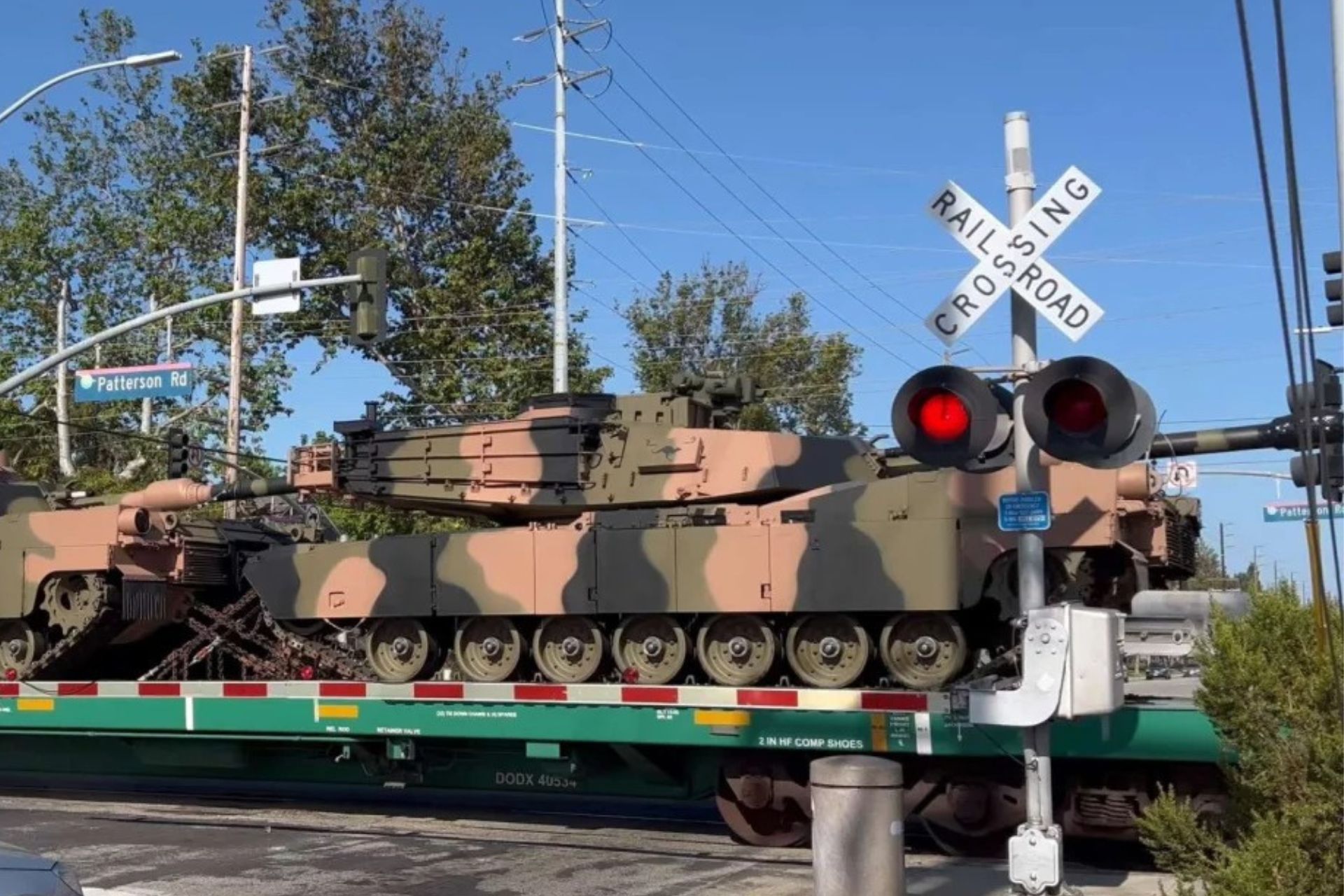
The Australian Army is reorganizing to support a major modernization of its armored capabilities, consolidating M1A2 SEPv3 Abrams tanks (right) and AS21 Redback infantry fighting vehicles (left) in Townsville (Picture source: Australian DoD)
Australia plans to acquire 129 AS21 Redback infantry fighting vehicles as part of Phase 3 of the LAND 400 program, a modernization project for the Australian Army. The AS21 Redback, developed by Hanwha Defense, is designed to provide top-tier protection and mobility for mechanized infantry units. Armed with a 30 mm Mk44S Bushmaster II cannon and Spike-LR2 anti-tank missiles, the Redback is built to engage enemy armored vehicles and support ground troops.
Its protection is ensured by modular armor, with the option to integrate active protection systems to counter threats like rockets and missiles. The AS21 also features advanced electronic systems, including a comprehensive suite of sensors and a digital combat management system to enhance battlefield coordination. It can carry up to eight infantry soldiers in addition to its crew, making it highly suitable for close support operations.
These AS21 Redback vehicles are intended to replace the M113AS4 armored personnel carriers, which have been in service for several decades. Although upgraded over the years, the M113AS4 is no longer suitable for modern battlefield demands. The Redback offers superior protection, increased mobility, and advanced combat systems, meeting the current and future needs of the Australian forces.
While there has been no indication of integrating the Trophy active protection system on these Abrams, the acquisition of these vehicles marks a significant step in the modernization of the Australian Army, enhancing its ability to address modern battlefield threats.
This initiative is part of a broader effort to consolidate the country’s heavy armored capabilities in Townsville, allowing the army to maximize the efficiency of its new equipment while centralizing its management and deployment.
Read more: Australian Army Gears Up for Arrival of Modern M1A2 SEPv3 Abrams and AS21 Redback IFVs

- Details
- Written by: V.Saint
- Category: 2024
- Hits: 2315
The Dutch Military Intelligence and Security Service (MIVD) has issued a stark warning regarding Russian cyber operations conducted by Unit 29155 of the Main Intelligence Directorate (GRU). These operations, executed by Russian military intelligence hackers, are aimed at gathering intelligence on Western support for Ukraine and disrupting critical infrastructure.
Follow Army Recognition on Google News at this link
Dutch Military Intelligence Warns of Russian Cyber Attacks Targeting Western Aid to Ukraine. (Picture source: Army Recognition / Generated with AI )
This revelation came in an official statement from the Dutch Ministry of Defense. According to the MIVD, Russian cyber activities are part of a broader strategy to undermine Western assistance to Ukraine amidst the ongoing conflict. These operations have primarily targeted Western governments, critical infrastructure, and industries linked to defense.
The MIVD has observed that the hackers are focusing particularly on obtaining sensitive information about military and logistical support from Western nations to Ukraine. Their objective is to sabotage or destroy these efforts through cyberattacks, creating vulnerabilities within both government networks and essential sectors.
In response to these developments, Dutch Defense Minister Ruben Brekelmans emphasized the importance of transparency in dealing with these threats. "Together with our partners, we have decided to reveal the methods of this notorious Russian cyber unit. This way, everyone can see how they operate," Brekelmans stated. "This allows everyone to defend themselves against these large-scale attacks and espionage activities, not only governments but also manufacturers and suppliers of military equipment for Ukraine."
The Dutch government has stressed the need for both public and private sectors involved in defense production to bolster their cyber defenses. By exposing the methods of Unit 29155, the Netherlands hopes to arm organizations against potential future attacks.
According to Rear Admiral Peter Reesink, head of the Dutch Military Intelligence and Security Service, the Netherlands has not yet been directly impacted by Russian cyberattacks targeting vital infrastructure. However, Reesink cautioned that this does not eliminate the threat. "It is a threat we must increasingly take into account," he concluded.
The cyber activities of Unit 29155 reflect a broader pattern of Russian cyber warfare, which has intensified since the escalation of the conflict in Ukraine. Western nations are urged to remain vigilant, not only to protect sensitive information but also to ensure the resilience of critical infrastructure essential for defense and military logistics.
This revelation highlights the need for a unified approach to cyber defense, particularly as Russian hackers continue to target those assisting Ukraine in its war effort. The Dutch warning serves as a reminder that cyber warfare is a critical front in modern conflicts, with wide-reaching implications for national security and international stability.
As the situation continues to develop, the Netherlands and its allies are expected to take further measures to counter these cyber threats, while industries involved in defense production are urged to strengthen their cybersecurity protocols to mitigate the risks posed by hostile state actors.

- Details
- Written by: Halna du Fretay
- Category: 2024
- Hits: 2921
General Dynamics European Land Systems (GDELS) has received an order for a fourth batch of M3 amphibious bridge and ferry systems for the Swedish Armed Forces. The contract was signed with the Swedish defense procurement agency Försvarets Materielverk (FMV) on September 5, 2024. This order marks a new phase in strengthening Sweden's aquatic obstacle-crossing capabilities.
Follow Army Recognition on Google News at this link
The M3 can be used as a bridge or a multi-bay ferry, offering great flexibility on the field (Picture source: GDELS)
The M3 is recognized as the most modern and fastest amphibious bridge and ferry system in the world, in terms of load capacity, assembly time, and maneuverability on land and water. It can carry loads of up to MLC 85T/132W, including main battle tanks such as the Leopard 2, M1A2 Abrams, and Challenger 2. This system provides smooth transitions between land and water and can be operated by a crew of only two soldiers.
Increased system automation also helps reduce operating costs. The M3 can be used as a bridge or a multi-bay ferry, offering great flexibility on the field. In terms of interoperability, it is compatible with other bridging solutions such as the SRB (Standard Ribbon Bridge) and IRB (Improved Ribbon Bridge), enabling joint operations with coalitions using different systems.
Sweden will be able to use the M3 amphibious systems with various heavy military vehicles currently in service with its armed forces. Among the equipment Sweden could use with the M3 is the Stridsvagn 122 main battle tank, a modified version of the German Leopard 2. Weighing around 62 tons, the Strv 122 is fully compatible with the M3's transport capabilities.
The CV90 infantry fighting vehicles, produced in Sweden and used in various versions, can also cross M3 bridges or ferries. Weighing between 25 and 35 tons depending on the version, these armored vehicles are well-suited for amphibious operations with the M3. Additionally, armored personnel carriers, such as the all-terrain BvS 10 vehicles, are capable of using the M3 systems to cross flooded areas or rivers.
Before acquiring the M3 systems, Sweden primarily used the IRB (Improved Ribbon Bridge) system to cross water bodies. The IRB is a floating bridge system capable of transporting heavy armored vehicles and other military equipment. However, the M3 offers additional advantages in terms of deployment speed, flexibility, and interoperability with other NATO systems, such as those used by the United States, the United Kingdom, and Germany.

Before acquiring the M3 systems, Sweden primarily used the IRB (Improved Ribbon Bridge) system to cross water bodies (Picture source: GDELS)
With this acquisition, Sweden significantly improves its crossing capabilities, as its M3 fleet will now be able to cover up to 400 meters of obstacles. In addition to the M3, the Swedish Armed Forces also operate the IRB pontoon system and coupling adapters, allowing for the combined use of both bridge types.
This combination enhances Sweden's ability to conduct multinational missions with partners such as the United States, the United Kingdom, Germany, the Netherlands, and Latvia, which use similar systems. This places Sweden at the forefront of interoperability within NATO, drawing on lessons learned from recent deployments, exercises, and studies.
The M3 amphibious system is the fastest available means within NATO for crossing aquatic obstacles. It can be used as either a floating bridge or a ferry to transport even the heaviest main battle tanks across wide water gaps. Designed for all-terrain use, the M3 can be operational in just a few minutes, a crucial factor in modern battles where speed is essential on increasingly transparent battlefields. The system has proven its effectiveness in a variety of climatic and topographical conditions, from tropical regions to arctic environments.
With this new order, Sweden continues to modernize its military capabilities in crossing operations and interoperability with its NATO allies, further
Read more: Sweden Strengthens Its Crossing Capabilities with New Amphibious M3 Systems from GDELS

- Details
- Written by: Jérôme Brahy
- Category: 2024
- Hits: 4697
On September 6, 2024, the United Kingdom announced a new £162 million air defense package for Ukraine, including the supply of 650 Lightweight Multirole Missiles (LMM). This announcement was made by Defence Secretary John Healey MP during the Ukraine Defence Contact Group (UDCG) meeting at the US Air Force Base in Ramstein, marking his first participation in this capacity. At the 24th meeting of the group, Healey reiterated the UK's commitment to Ukraine and called on international partners to continue providing the necessary equipment for Ukraine's defense efforts.
Follow Army Recognition on Google News at this link
In line with the new government’s aim to expedite the delivery of aid, the first batch of the LMM missiles is also expected to be shipped to Ukraine by the end of the year. (Picture source: Thales Defence)
This decision follows a bilateral meeting in London between Healey and Ukrainian Defence Minister Rustem Umerov, where the two discussed the UK's plans to increase support for Ukraine over the coming months. During the meeting, the Defence Secretary confirmed plans for the delivery of £300 million worth of artillery ammunition to support Ukraine's ongoing military operations by the end of this year. In line with the new government’s aim to expedite the delivery of aid, the first batch of the LMM missiles is also expected to be shipped to Ukraine by the end of the year.
The announced package is part of broader UK efforts to enhance defense production both within the UK and across Europe. The £162 million contract is expected to support future supply chain requirements, with the missiles being produced by Thales at their factory in Belfast. These systems are designed to be versatile and can be deployed from various platforms on land, sea, and air. The funding for this initiative is mainly sourced from the UK's annual £3 billion financial package for Ukraine, supplemented by contributions from Norway through the International Fund for Ukraine (IFU). This move is consistent with the Prime Minister and the Defence Secretary's pledge to provide continued support to Ukraine.
This decision follows the signing of a new Defence Export Support Treaty in July, during President Volodymyr Zelenskyy's visit to Downing Street. The agreement, signed by Healey and Umerov, is intended to strengthen both countries' defense industrial bases and enhance the production of military hardware and weapons. Under the treaty, Ukraine will have access to £3.5 billion in export finance to support its war effort.

The Martlet, or Lightweight Multirole Missile (LMM), was developed by Thales Air Defence under the UK's Future Anti-Surface Guided Weapon (Light) program to enhance its capabilities against small, fast-moving targets. (Picture source: Thales Defence)
Defence Secretary John Healey stated that this commitment aims to strengthen Ukraine's air defenses, emphasizing the new government's focus on accelerating support to Ukraine. He referenced recent Russian missile strikes on Ukrainian cities such as Poltava and Lviv, noting that the provision of these UK-manufactured missiles is intended to help Ukraine protect its people, infrastructure, and territory.
Before his meeting with international partners, Healey visited the Joint Intelligence Coordination Centre (JICC) at the Ramstein Air Base, where UK Armed Forces personnel are collaborating with allies to analyze intelligence. Since the start of Russia's military actions, the UK has provided Ukraine with hundreds of LMM missiles for air defense purposes, which have reportedly been used to counter a range of aerial threats, including drones.
The Martlet, or Lightweight Multirole Missile (LMM), was developed by Thales Air Defence under the UK's Future Anti-Surface Guided Weapon (Light) program to enhance its capabilities against small, fast-moving targets. Initially designed for use by the Royal Navy's AW159 Wildcat helicopters, the missile's development was funded by reallocating budgets from other programs in the early 2010s. The Martlet entered service in 2020 after several delays, and it was first deployed operationally with the UK Carrier Strike Group 21 in 2021. Since then, it has been employed in various scenarios, including training exercises and in combat situations by the Ukrainian Armed Forces in the ongoing conflict with Russia.

Several variants of the Martlet have been developed for different applications, but the standard Lightweight Multirole Missiles (LMM) is intended for air-to-surface, surface-to-air, and surface-to-surface roles. (Picture source: UK MoD)
The Martlet missile is characterized by its lightweight design, weighing 13 kg, and its multi-mode guidance system, which includes laser beam riding and semi-active laser guidance, with a terminal infrared homing capability. It can reach speeds of up to Mach 1.5 and has a range of 8 km. The missile has been tested from multiple platforms, such as helicopters, naval vessels, and unmanned aerial vehicles (UAVs), and has been used against a wide range of targets, including drones, small boats, and lightly armored vehicles. Over 100 test firings have been conducted, demonstrating its functionality in varied operational environments, including littoral zones and against fast-moving targets.
Several variants of the Martlet have been developed for different applications. The standard LMM is intended for air-to-surface, surface-to-air, and surface-to-surface roles. The FreeFall Lightweight Multirole Missile (FFLMM), also known as Fury, is a modified variant developed in collaboration with Textron for the U.S. market, designed as a glide bomb without a rocket motor. This variant uses a semi-active laser guidance system and is intended as a more cost-effective option for specific strike scenarios, such as use by UAVs or direct strikes against time-sensitive targets. The modular nature of the Martlet also allows for potential upgrades, such as different warheads and guidance systems, to suit a range of operational needs.
Read more: UK announces supply of 650 Martlet missiles to Ukraine in new defense package

- Details
- Written by: Vandenbosch
- Category: 2024
- Hits: 1919
Indonesia and Australia have reinforced their military cooperation by signing a new defense agreement on Thursday, August 29, 2024, marking progress in their bilateral defense relations.
Follow Army Recognition on Google News at this link
Australian soldiers, Illustration image. (Picture source: Australian MoD)
The agreement was signed by Indonesia’s president-elect and current Defense Minister, Prabowo Subianto, and Australian Defense Minister Richard Marles at the National Military Academy in Magelang, in Indonesia’s Central Java province. Both parties hailed the agreement as a significant step forward, although the full text has not yet been made public.
Richard Marles described the agreement as "an important piece of international architecture," specifying that it is a treaty-level accord, but not a formal military alliance. One of the key initiatives stemming from the agreement will be the organization of the largest-ever joint military exercise between the two countries, scheduled for November. This exercise will also be Australia's largest overseas military operation of the year.
Australia views its relationship with Indonesia as increasingly crucial amid growing tensions with China in the region. It is also common for new Australian prime ministers to make Jakarta one of their first official destinations abroad.
Prabowo Subianto reaffirmed his commitment, as president, to maintain Indonesia’s long-standing policy of non-alignment, stressing that the agreement aims to foster cooperation rather than military alliances. "We are neighbors with shared interests, and this agreement reflects our commitment to working together to address security threats and promote peace and stability in the Asia-Pacific region," Subianto said.
According to the Australian Defense Ministry, the agreement will promote enhanced practical cooperation and improved interoperability between the armed forces of the two nations. Priority areas will include maritime security, counterterrorism, humanitarian aid and disaster relief, logistics, education and training, as well as collaboration in the defense industry.
Marles described the accord as "the most important defense agreement ever signed between Indonesia and Australia," emphasizing its crucial role in the broader context of regional security. Indonesia’s Defense Ministry also welcomed the agreement, stating that it aims to strengthen joint efforts to maintain peace and stability in the Asia-Pacific region in the face of potential security threats.
Read more: Indonesia and Australia Strengthen Military Ties with New Defense Agreement
- Details
- Written by: Triffaux
- Category: 2024
- Hits: 4234
On September 4, 2024, Rolls-Royce and Flensburger Fahrzeugbau Gesellschaft (FFG) announced a project to modernize Leopard 1 battle tanks and vehicles derived from this platform, such as the Wisent 1 engineering vehicle. This ambitious project, unveiled during the RÜ.NET user forum in Coblenz, aims to re-engineer these military vehicles by replacing their original engine with a more efficient and cost-effective solution.
Follow Army Recognition on Google News at this link
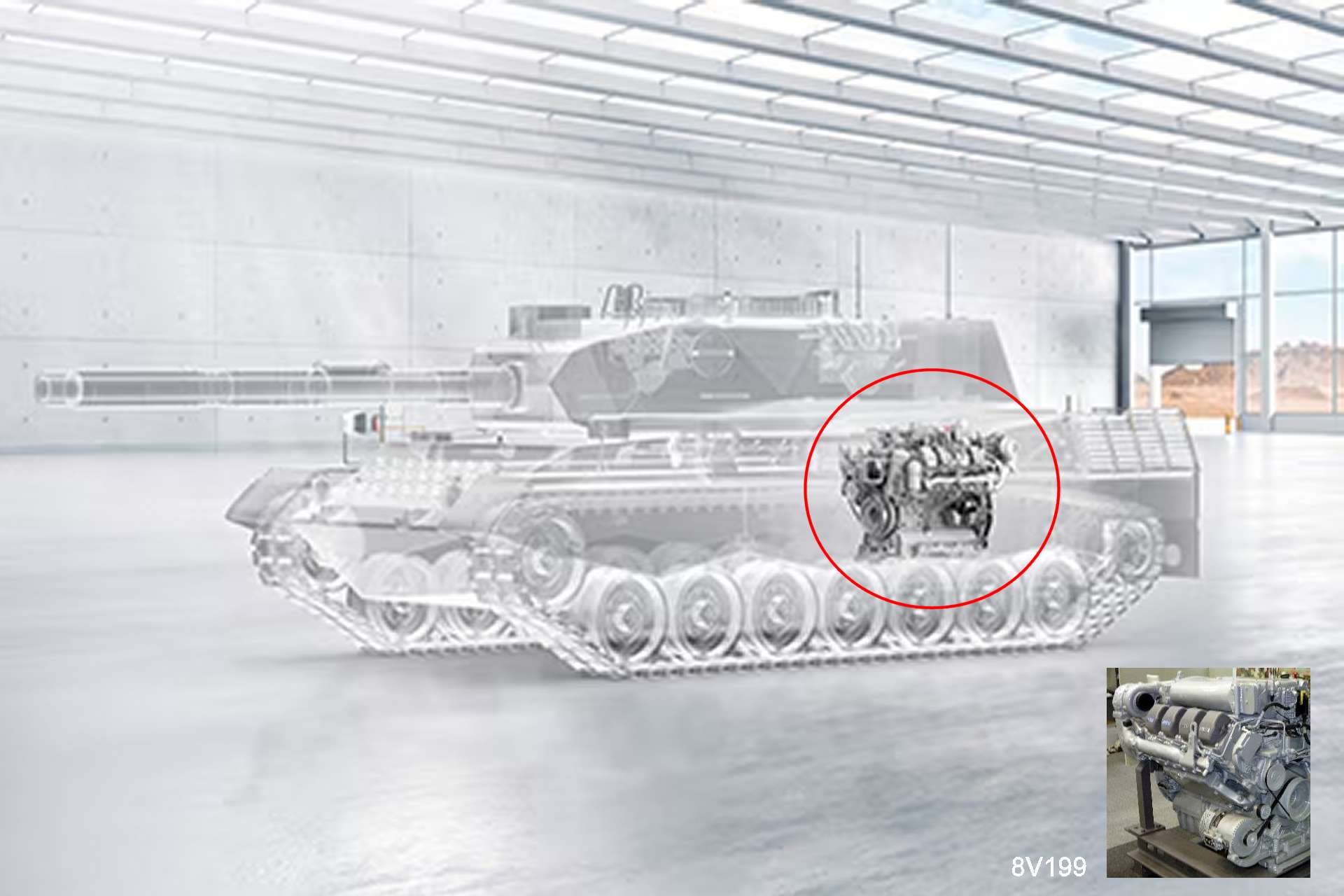
Rolls-Royce MTU 8V199 (Picture source: Rolls-Royce)
The Leopard 1 tank, in service since the 1960s, continues to be used by many armies worldwide. However, its current engine, the MTU MB838, is no longer produced, making an update necessary to extend the life of these vehicles. Rolls-Royce and FFG propose to replace this engine with the 8V199, a modern version manufactured by MTU, a subsidiary of Rolls-Royce Power Systems.
The new engine offers 800 kW of power, 190 kW more than its predecessor, while being lighter and more economical in terms of fuel consumption and maintenance. According to Knut Müller, Senior Vice President of the Global Government division of Rolls-Royce Power Systems, "Our Series 199 engines are renowned for their reliability and performance. The 800 kW version is the ideal solution to ensure the operational efficiency of vehicles based on the Leopard 1."
FFG, one of the leading European companies in the field of military vehicles, plays a key role in this modernization project. Based in Flensburg, FFG is known for its expertise in upgrading and manufacturing armored vehicles. The company has developed a range of vehicles based on the Leopard 1 chassis, including the Wisent 1, designed for engineering and logistical support missions. FFG will be responsible for developing and integrating the new powertrain, as well as the cooling system and necessary adaptations to ensure full compatibility with existing platforms. The company is also known for its ability to provide innovative solutions to the logistical and operational challenges of modern armed forces.
Armies, including the German Bundeswehr, continue to use special variants of the Leopard 1, such as the BPz2 armored recovery vehicle, the Biber bridge-laying vehicle, and the Gepard anti-aircraft vehicle. The Wisent 1, a support vehicle developed by FFG, is also among the latest to benefit from this update.
The use of the 8V199 engine offers several strategic advantages for armed forces. In addition to improved performance, it helps reduce logistical costs by simplifying spare parts management for vehicles equipped with Series 199 engines, such as Boxer armored vehicles. FFG, with its solid experience in Leopard 1 modernization, will also develop the new powertrain and ensure its integration into existing systems.
In collaboration with ZF, the company responsible for transmissions, FFG will ensure that the 4HP250 transmission is compatible with the new engine, thus guaranteeing long-term reliability. The project, presented as a "plug-and-play" solution, could allow many armies to continue using Leopard 1 vehicles effectively and sustainably without incurring significant expenses in acquiring new platforms.
This modernization appears to be a practical and cost-effective solution for military forces seeking to keep their vehicles up to date in the face of technological advancements and growing operational needs.
The 8V199 engine has already been installed in several military vehicles, further strengthening its reputation for reliability and performance. Among these vehicles are the Boxer, a heavily used armored personnel carrier in European armies, and the Piranha V, a modular armored vehicle designed to adapt to various missions. The 8V199 also powers the M10 Booker, a next-generation light tank used by the U.S. Army, providing the latter with increased power and mobility on the battlefield.

- Details
- Written by: Halna du Fretay
- Category: 2024
- Hits: 1640
The U.S. Department of Defense has announced its plan to provide missile-tracking capabilities for operational use by combat commanders by the end of 2025. Derek Tournear, director of the Space Development Agency (SDA), shared this information during a defense news conference held in Arlington, Virginia, on September 5, 2024.
Follow Army Recognition on Google News at this link
A Falcon 9 rocket carrying 21 Starlink satellites launches from Space Launch Complex 40 at Cape Canaveral Space Force Station, Fla., Aug 10, 2024. (Picture source: US DoD)
Tournear mentioned that the agency has already launched 27 demonstration satellites, keeping one on the ground as a testbed for software updates and debugging. These satellites are in low Earth orbit as part of a program aimed at improving missile-tracking capabilities using data transport and surveillance satellites. Currently, the agency is in tranche 0, which represents the early phases of deployment for capability demonstrations.
The satellites in question are part of the proliferated warfighter space architecture (PWSA), a system designed to meet national security needs. Tournear noted that tranche 0 has proven the feasibility of using the secure military communications system, Link 16, from space to the warfighter. Link 16 allows real-time tactical data exchange between military aircraft, ships, and ground forces from the U.S. and allied forces.
Tournear highlighted that this achievement, carried out in collaboration with Australian partners, a U.S. Navy aircraft carrier, and airframe, is a world first. Further tests are planned with Norway as part of the ongoing evaluation process.
Another issue the agency is addressing is whether missile-tracking missions can be conducted from low Earth orbit satellites, despite the space clutter at that altitude and the dim appearance of missiles in real-time flight. Tournear confirmed that this is feasible, with recent successes in identifying "targets of opportunity," including a SpaceX launch and classified missile launches.
A further achievement of tranche 0 is the demonstration of an optical network in low Earth orbit using laser communications. The night before the conference, two tracking satellites successfully acquired and maintained links for several hours, demonstrating the viability of the concept.
Tranche 1 is expected to be launched by the end of this year or shortly thereafter, while tranche 2 is currently in the design phase, with a planned launch in September 2026. Work on tranche 3 is ongoing, which will be necessary to replace some of the earlier satellites, as they have a design lifespan of approximately five years.
Tournear also emphasized the agility and results-oriented approach of the agency, while noting its cost-effectiveness and continued support from Congress.
Read more: Space Development Agency to Soon Deliver Capabilities to US Army
- Germany Places New Order for Advanced Communication Systems with Rheinmetall
- Optimized Mobility and Protection with Protolab's PMPV 6x6 at MSPO 2024
- WITU Showcases B0 at MSPO 2024, a Loitering Munition System for Precise Strikes
- Pirat ATGM Aims to Redefine Anti-Tank Warfare in Age of Autonomous Vehicles