
- Details
- Written by: Halna du Fretay
- Category: 2024
- Hits: 8891










On October 6, 2024, Egypt held a graduation ceremony for its latest class of military officers, featuring an impressive parade and dynamic presentations attended by senior Egyptian and Emirati officials, including Egyptian President Abdel Fattah al-Sisi and UAE Crown Prince Mohammed bin Zayed (MBZ). This solemn event, reminiscent of recent international military exhibitions, showcased a powerful display of Egypt’s military strength.
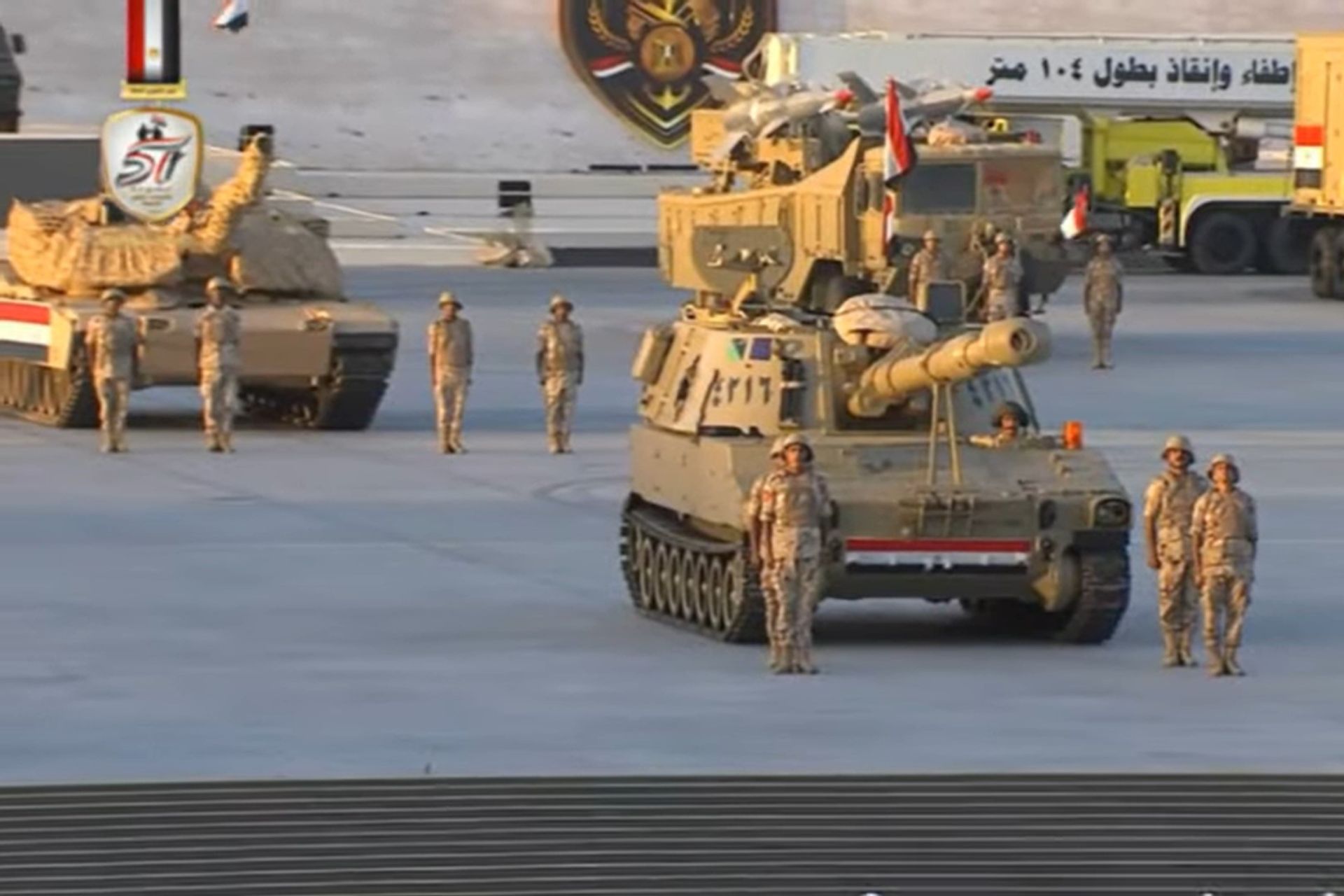
These artillery systems are deployed in border defense missions and during joint military exercises, such as the multinational Bright Star exercise (Picture source: CBC Egypt)
The parade began with the display of Egypt’s armored and defense systems, underscoring the country’s emphasis on its ground forces. Among the featured equipment were M109A2 and M109A5 self-propelled artillery units, in use since the 1980s to provide swift and mobile fire support.
The M109A2, equipped with a 155 mm caliber and a firing range of up to 18 km, offers frontline artillery support to the Egyptian army. Egypt operates over 200 units of the M109A5, extending firing capacity to around 24 km. These artillery systems are deployed in border defense missions and during joint military exercises, such as the multinational Bright Star exercise.
The M1A1 Abrams tanks also featured prominently, highlighting Egypt's ground strike capabilities. Egypt possesses the second-largest fleet of Abrams tanks worldwide, following the United States, and maintains the only manufacturing and maintenance facility for these vehicles outside of U.S. soil. Equipped with advanced protection systems and a 120 mm cannon, these tanks are critical for territorial defense missions. Acquired in the 1990s, they have become a central component of Egypt’s armored combat capabilities.
Alongside the tanks, M113A2 armored personnel carriers, introduced in the 1980s, provide enhanced mobility and soldier protection. These vehicles transport troops and equipment in high-risk zones, demonstrating Egypt's commitment to troop safety during operations.
Egyptian forces also displayed their air defense capabilities with the SA-2 Pechora-2M surface-to-air missile system, a short-range missile capable of countering low-altitude air attacks, thus ensuring effective aerial coverage over sensitive areas.
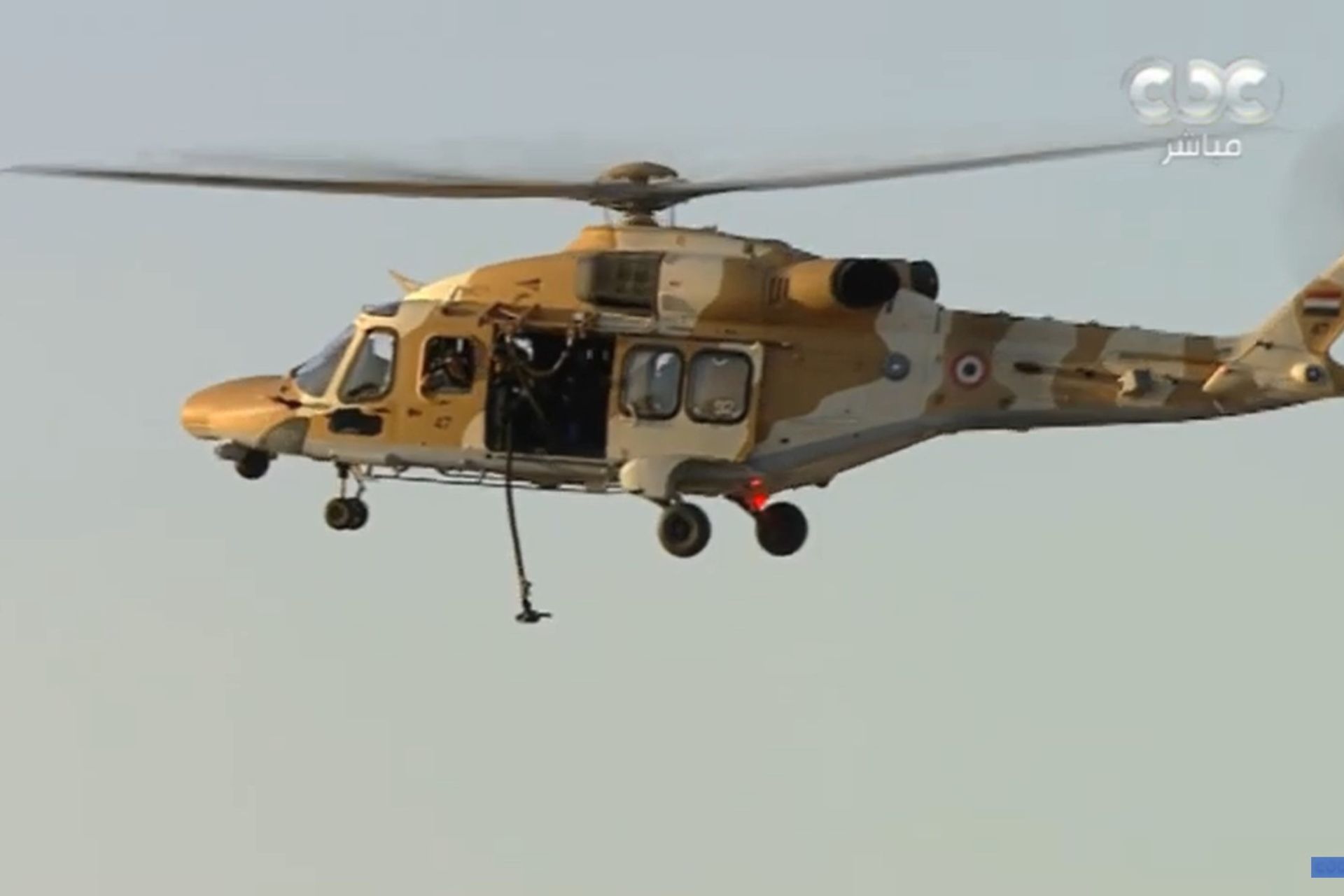
The demonstration was enhanced by the deployment of AgustaWestland AW139 helicopters for rapid casualty extraction. (Picture source: CBC Egypt)
The demonstration continued in the air with a display of AH-64 Apache and AugustaWestland AW139 helicopters, operated by Egypt’s Thunderbolt corps. First acquired in the 1990s, the Apache helicopters serve as formidable attack machines, equipped with AGM-114 Hellfire missiles and 30 mm caliber machine guns. They play a vital role in reconnaissance missions, convoy protection, and targeted strikes against enemy positions, particularly in northern Sinai. The more recently introduced AW139 helicopters primarily support rescue operations, medical evacuations, and tactical transport, adding essential flexibility to Egypt’s air forces.
Egyptian special forces also performed an impressive demonstration of their operational capabilities. In this exercise, sniper units, reconnaissance teams, and assault units coordinated a series of complex maneuvers. The demonstration was enhanced by the deployment of AgustaWestland AW139 helicopters for rapid casualty extraction.
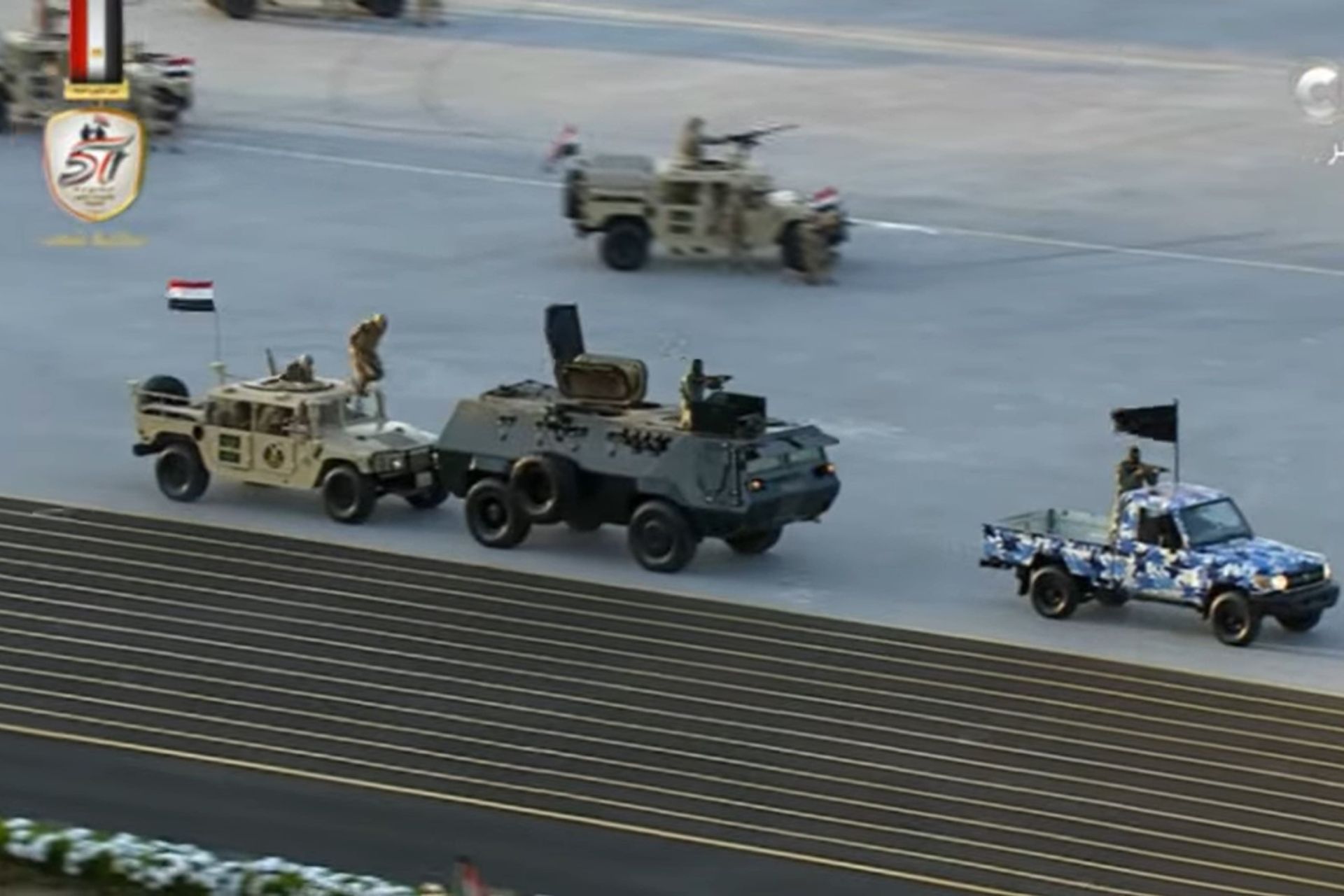
Egyptian special forces also performed an impressive demonstration of their operational capabilities. In this exercise, sniper units, reconnaissance teams, and assault units coordinated a series of complex maneuvers (Picture source: CBC Egypt)
Static elements were also on display, illustrating the diversity of Egypt’s military equipment. Mine-Resistant Ambush Protected (MRAP) vehicles, such as the RG-33L, M1220, and Caiman, known for their resistance to mines and ambushes, drew attention. These vehicles are crucial in peacekeeping operations and securing hostile areas. The RG-33L’s reinforced structure protects occupants from mine explosions and light arms fire, while the M1220 and Caiman offer increased mobility and protection for troops operating in high-risk zones.
A notable attraction was the naval drone, Dolphin SDV-X Swimmer, designed for underwater surveillance and intervention operations. This drone, used for reconnaissance and threat detection in shallow waters, is a valuable asset for naval operations, providing discreet and effective intelligence capabilities.
This graduation ceremony thus served not only as a celebration for new recruits but also as a showcase of Egypt’s military strength and modern equipment. By enhancing its capabilities across ground, air, and maritime domains, Egypt demonstrates its commitment to maintaining an armed force equipped to address regional threats, with an increasing technological mastery in fields as diverse as armored vehicles, combat helicopters, and advanced defense systems.
Read more: Egypt Showcases Armed Forces’ Capabilities in Military Ceremony with UAE Crown Prince
- Details
- Written by: Halna du Fretay
- Category: 2024
- Hits: 8046
A series of photos shared by @ronkainen7k15 on X on October 6, 2024, has sparked speculation regarding the imminent delivery of M1A2T tanks specifically destined for Taiwan. This particular model was spotted en route to an undisclosed location and is part of the first batch of 38 M1A2T Abrams tanks ordered by Taiwan, following several delays in the delivery process. The acquisition agreement, approved in July 2019 for a total of 108 tanks, represents an investment of approximately $2 billion aimed at bolstering Taiwan's defense capabilities.
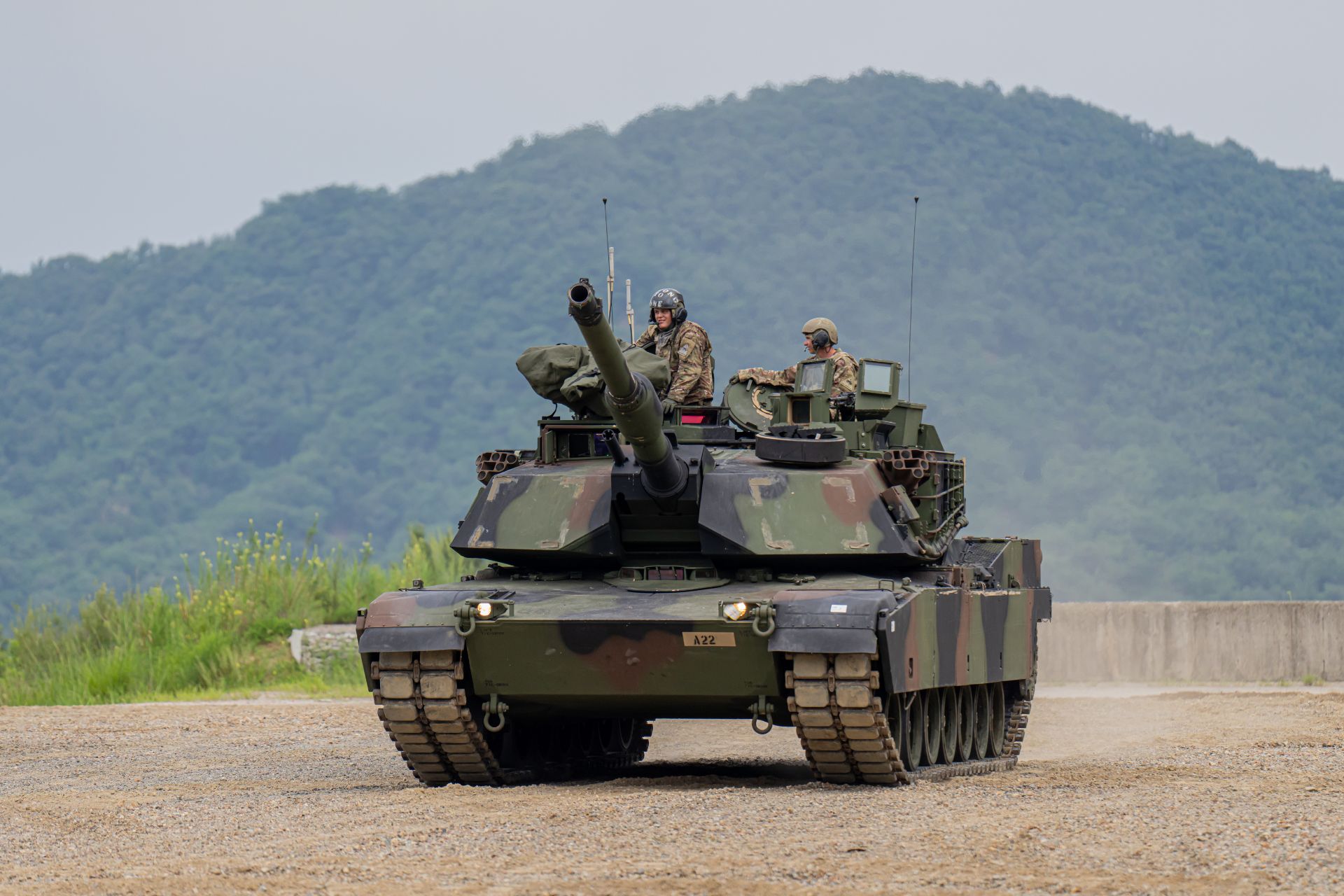
The M1A2T tanks, which are an adapted version of the iconic M1A2 SEP V2, are designed to meet Taiwanese military requirements (Picture source: US DoD)
The M1A2T tanks, which are an adapted version of the iconic M1A2 SEP V2, are designed to meet Taiwanese military requirements. They are distinguished by their tri-color camouflage and M1A1-type chassis, with the suffix "Ē" on their turret serial number indicating their configuration for Foreign Military Sales (FMS). Equipped with a 120mm smoothbore M256 cannon, these tanks can fire a wide range of munitions, thus offering enhanced combat capabilities compared to the older models currently in service.
The arrival of these tanks is particularly anticipated, as they will strengthen Taiwan's defenses against potential threats from the People's Liberation Army (PLA). The Taiwanese armed forces plan to deploy these tanks in strategic missions, particularly to protect the nation's political and economic centers. Crew training is scheduled to begin in February 2025, following the delivery of the first tanks in December 2024, with practical exercises aimed at ensuring the effective integration of the new M1A2T tanks into military operations.
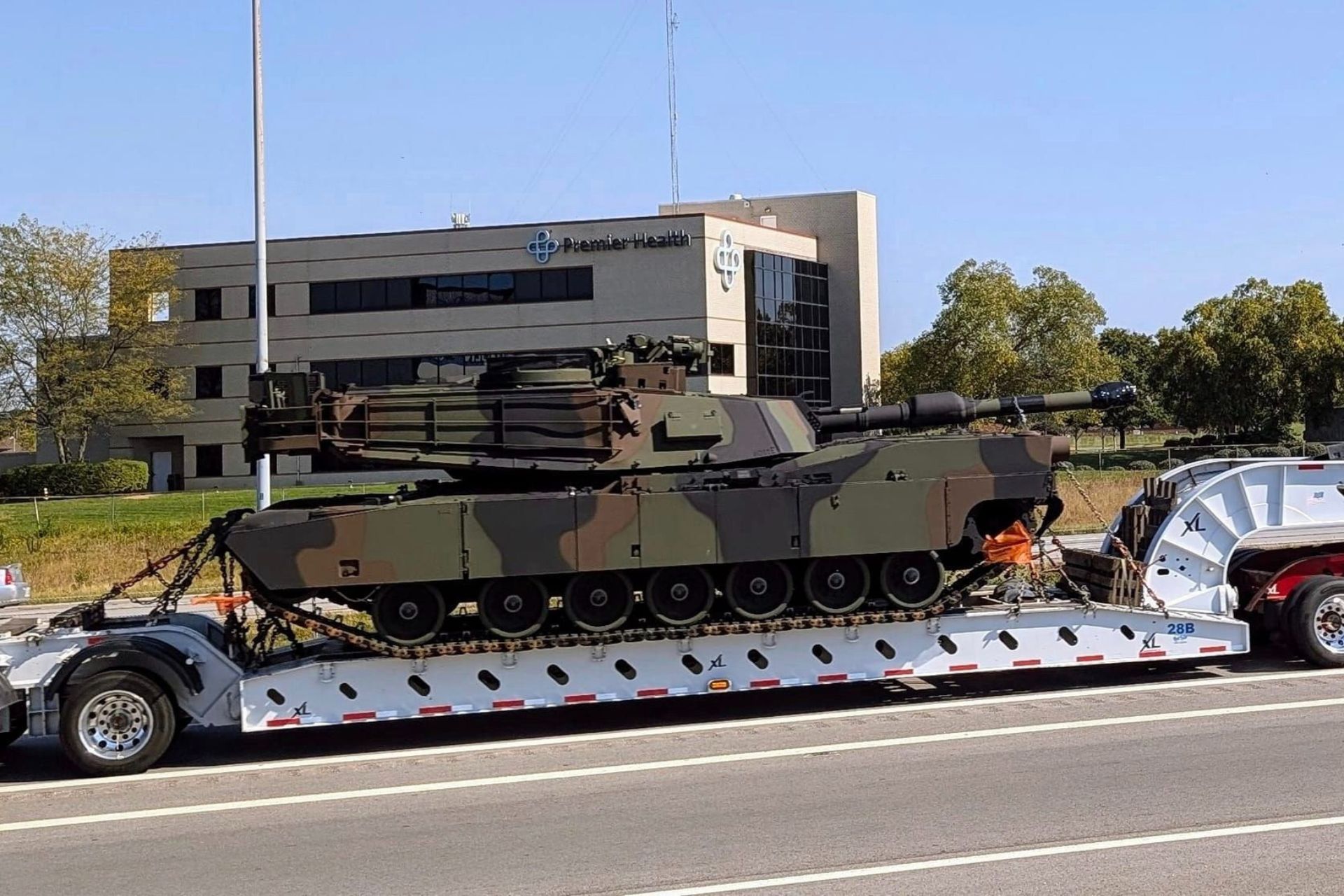
The arrival of these tanks is particularly anticipated, as they will strengthen Taiwan's defenses against potential threats from the People's Liberation Army (PLA) (Picture source: @Ronkainen7k15)
The recent sighting of the M1A2T on a U.S. highway is a strong indicator that delivery timelines are approaching, reflecting the ongoing commitment of the United States to support Taiwan in enhancing its defense capacity. The modernization of Taiwan's military arsenal marks a key step in preparing to address contemporary security challenges in the region.
Taiwan's military is preparing for the arrival of its long-awaited M1A2T Abrams tanks from the United States, a significant development to bolster its defense capabilities in the face of rising tensions in the region. The first batch of 38 tanks is expected to arrive this year, with additional units scheduled for delivery in the coming years. The tanks are anticipated to be commissioned into the 6th Army Command to strengthen Taiwan's ground forces, which currently operate around 1,000 tanks over 20 years old.
The M1A2T tanks are equipped with 120mm smoothbore guns capable of penetrating armor thickness of 850mm and can withstand shells fired from most enemy main battle tanks. The training for the tank crews will involve stop-and-shoot exercises as well as shoot-on-the-move drills, ensuring proficiency in engaging both stationary and moving targets at significant distances.
Read more: Appearance of an M1A2T in US Before Upcoming Delivery to Taiwan

- Details
- Written by: Jérôme Brahy
- Category: 2024
- Hits: 7154
On October 3, 2024, the Italian company Iveco Defence Vehicles (IDV) delivered the 200th 12kN medium tactical vehicle to the Dutch Army, marking a milestone in its ongoing partnership with the Dutch Ministry of Defence. Known within the Dutch Armed Forces as the "Manticore," the 12kN is designed to support a range of defense and homeland security missions. The initial delivery took place on November 30, 2023, during the NIDV Exhibition for Defence and Security (NEDS) in Rotterdam, with Vice Admiral Jan Willem Hartman, Commander of the Materiel and IT Command (COMMIT) and National Armaments Director, in attendance.
Follow Army Recognition on Google News at this link
The initial delivery took place on November 30, 2023, during the NIDV Exhibition for Defence and Security (NEDS) in Rotterdam, Netherlands. (Picture source: Army Recognition)
The Iveco MTV, designated as the Manticore by the Netherlands Armed Forces, is a Medium Tactical Vehicle (MTV) developed by Iveco Defence Vehicles. This vehicle is part of the Dutch Ministry of Defence's Joint Replacement Programme of Wheeled Vehicles, aimed at updating the military's fleet. The Manticore will replace the Royal Netherlands Army's Mercedes-Benz 290GDs, the Netherlands Marine Corps' Land Rovers, and the YPR-765s used by both the Royal Netherlands Air Force and the Royal Netherlands Marechaussee. Deliveries are scheduled from the second half of 2023 through 2026, with an estimated completion by 2027.
The Netherlands, as the first customer for the MTV, collaborated with the Defence Materiel Organisation (DMO) to ensure the vehicle met Dutch military requirements. The MTV, with a 12 kN payload capacity (approximately 1,200 kilograms), is modular and adaptable to various roles, including the integration of remote weapon stations, armor packages, jammers, and CBRN defense equipment. The MTV will replace several outdated vehicles, such as variants of the M577 command post vehicles, YPR-765 armored personnel carriers, and Mercedes-Benz G-Wagen ‘Wolf’ off-road vehicles.
On August 15, 2019, State Secretary of Defence Barbara Visser announced Iveco’s selection to supply 918 vehicles and 120 RCWS, with an optional order for an additional 357 vehicles and 10 RCWS. This contract allows for a potential total of 1,275 vehicles and 130 RCWS, with further orders possible within five years of the last delivery. In the September 2020 Defence Project Overview, the Ministry of Defence revised the order by removing 100 vehicles intended for the Netherlands Marine Corps, bringing the total number of Manticore vehicles to 1,185.
Vehicle variants include hard-top, soft-top, pick-up, and ambulance configurations, which will be allocated across various service branches: 948 to the Royal Netherlands Army, 108 to the Netherlands Marine Corps, 94 to the Royal Netherlands Air Force, 28 to the Royal Netherlands Marechaussee, and six ambulances for the Defence Support Command.
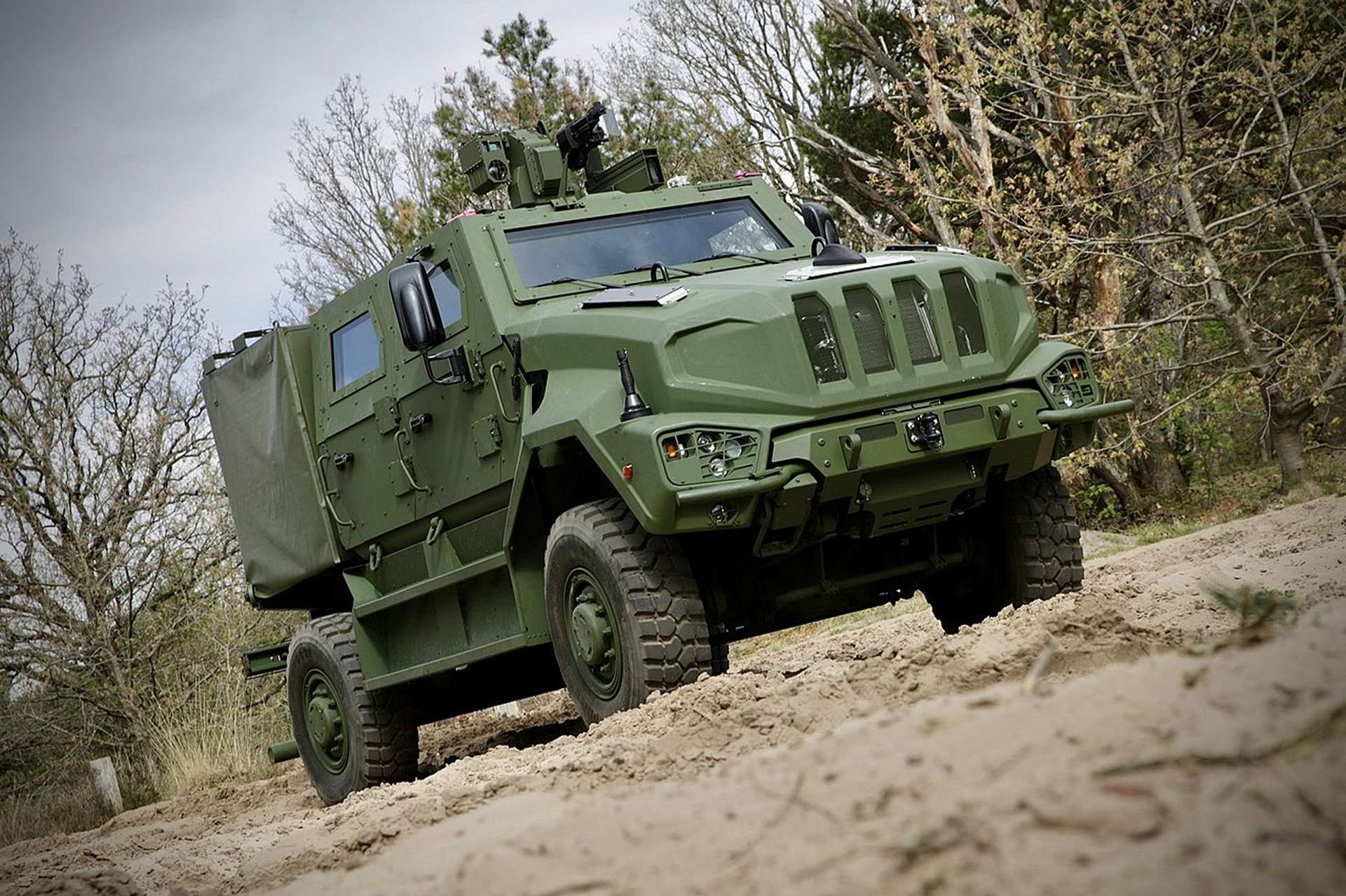
The Manticore will replace the Royal Netherlands Army's Mercedes-Benz 290GDs, the Netherlands Marine Corps' Land Rovers, and the YPR-765s used by both the Royal Netherlands Air Force and the Royal Netherlands Marechaussee. (Picture source: Netherlands MoD)
The MTV is powered by a 6-cylinder, 6.7-liter diesel engine, producing 207 kW (278 hp) and 1,000 Nm of torque. It features an automated transmission, permanent 4x4 drive, three lockable differentials, and high and low gear ratios. Built on a high-yield steel frame, the MTV can handle a payload of up to 2,000 kg. It is equipped with disc and caliper brakes with ABS and meets NATO interoperability standards, including STANAG 2021, 4062, 4074, 4101, 4381, and 4478. Additional features include run-flat tires, a central tire inflation system (CTIS), blackout (STANAG 4381), and infrared lighting capabilities, supporting its deployment in diverse operational settings.
Protection features across all MTV variants are based on ballistic steel, with optional armor kits to enhance protection against ballistic threats and blasts. The vehicle family includes short and long cab versions, such as the Hard-Top, Soft-Top, Pickup, Medevac, and Military Police variants. Depending on the version, the MTV can transport a crew of up to 2+6 personnel, with specific configurations for personnel and casualty transport. The Medevac model, for example, accommodates two crew members and can carry either two lying or four seated casualties, while the Military Police variant can carry two crew members and up to six passengers, with an optional assault ladder attachment.
Technical specifications of the MTV include a maximum speed of 90 km/h, a range exceeding 600 km, and a ground clearance of 350 mm. It has a fording depth of 750 mm without preparation, which can be extended to 1,500 mm with preparation, allowing it to operate across various terrains. The vehicle’s turning circle is less than 16 meters, with approach and departure angles of 45° and 35°, respectively. It can tow up to 3,500 kg and has a Gross Vehicle Weight (GVW) of at least 12,500 kg. The MTV is available with multiple armament options, including ring mounts, protected ring mounts, RCWS, soft mounts, C4I, assault ladder, and CBRN configurations, enabling it to support a range of mission profiles.
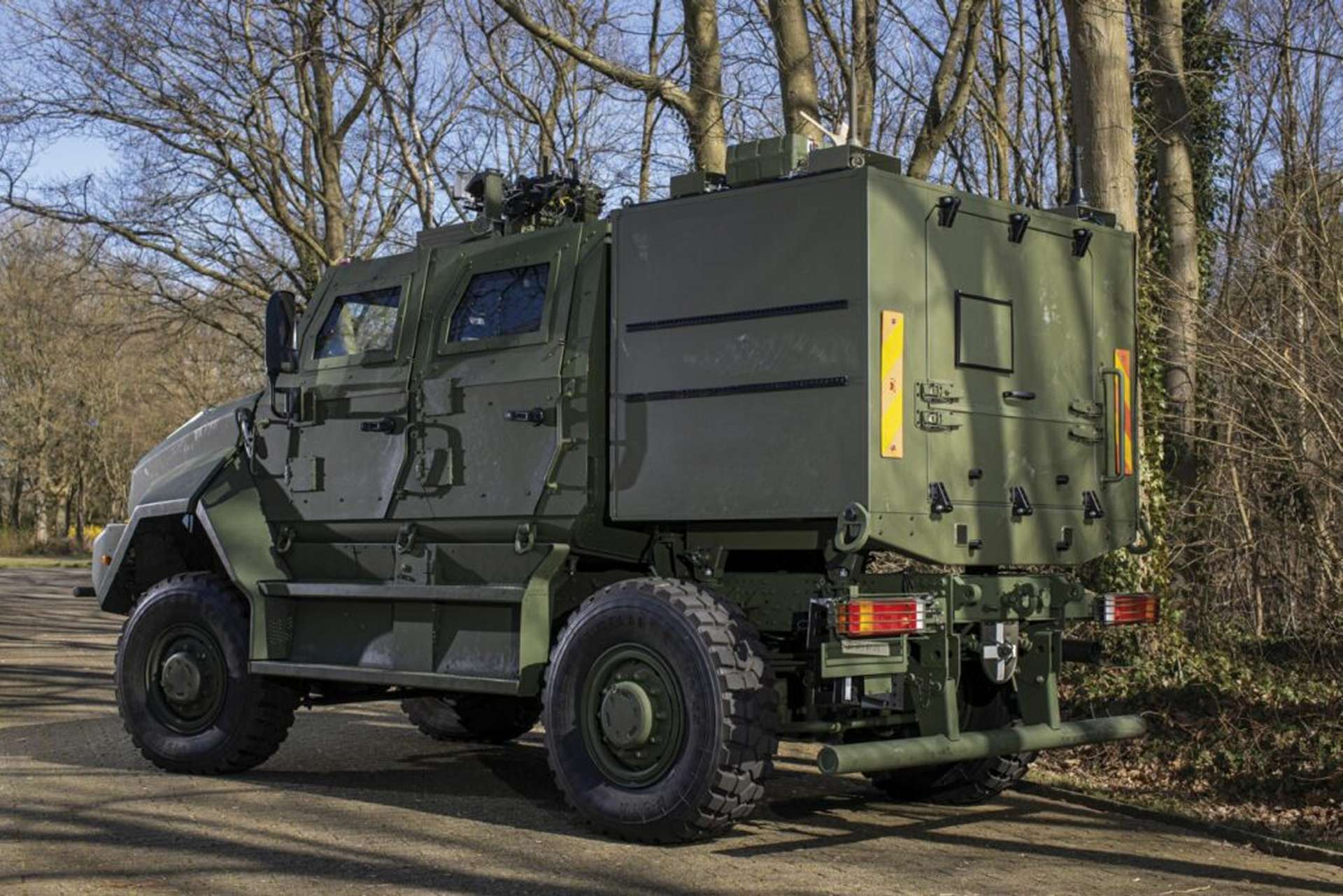
Built on a high-yield steel frame, the MTV can handle a payload of up to 2,000 kg. (Picture source: Iveco Defence Vehicles)
Read more: Dutch Army receives 200th Manticore medium tactical vehicle from Iveco Defence Vehicles

- Details
- Written by: Triffaux
- Category: 2024
- Hits: 11006
According to an article by the South Korean media outlet Chosun Biz, dated October 4, 2024, Armenian Defense Minister Suren Papikyan visited South Korea in September 2024 to explore the possibility of acquiring K2 Black Panther main battle tanks developed by Hyundai Rotem. This visit also allowed the Armenian minister to attend the 2024 High-Level Meeting on Responsible Military Use of Artificial Intelligence (REAIM), organized by South Korea’s Ministry of National Defense and Ministry of Foreign Affairs on September 9 and 10.
Follow Army Recognition on Google News at this link
South Korean K2 Black Panther Main Battle Tank (Picture source: South Korea MoD)
According to the Armenian Military Portal, Papikyan also used this visit to initiate discussions on the supply of South Korean weapons, with a particular interest in the K2 tank. Furthermore, the Armenian media outlet Caliban reports that Armenian Security Council Secretary Armen Grigoryan also traveled to South Korea on September 6 to hold several meetings focused on weapons procurement issues.
The K2 main battle tank, currently used by the South Korean Army, features a semi-active pneumatic suspension system, an advanced technology that is especially well-suited to mountainous terrains. In Armenia, where nearly 86% of the territory is mountainous, this capability could provide a significant strategic advantage by enhancing the mobility and precision of troops in combat. Additionally, the tank is equipped with a sensor that automatically adjusts the suspension based on the terrain, further improving accuracy and crew comfort.
Currently, according to Military Balance 2024, Armenia’s armored fleet comprises older models, including approximately 109 main battle tanks: 3 T-54s, 5 T-55s, around 100 T-72A/Bs, and 1 T-90A, all inherited from the Soviet era and modernized by Russia. However, it is important to note that these figures may be subject to caution due to losses sustained in the fighting since 2020 in Nagorno-Karabakh. Although these tanks remain in service, the acquisition of the K2 would enable Armenia to acquire state-of-the-art equipment to address persistent tensions with Azerbaijan, a neighboring country with which it has experienced repeated conflicts during the 2020s.
In Europe, the K2 tank is already being deployed in Poland, where Hyundai Rotem has become a strategic defense partner. In August 2022, Poland reportedly signed a contract for the delivery of 180 K2 tanks, of which 46 have already been delivered this year, and a new agreement to supply an additional 180 units is under discussion. Romania is also reportedly considering the acquisition of this tank as part of a military modernization program. In competition with the German Leopard 2A8, the K2 has a price advantage, estimated at 26.2 billion won, compared to approximately 60 billion won for the Leopard 2A8, according to available estimates.

South Korean K2 Black Panther Main Battle Tank (Picture source: South Korea MoD)
The K2 Black Panther tank was developed in South Korea to achieve self-sufficiency in defense production, replacing the aging M48 Patton tanks. Launched in 1995, this project aimed to create a tank suitable for fast, network-centric maneuver warfare. Hyundai Rotem spearheaded its development, and the tank officially entered service with the South Korean Army (ROKA) in 2014 after extensive testing and prototyping phases. To date, approximately 410 units have been produced across multiple production batches, securing the K2’s place in South Korea’s national defense framework.
The K2 is armed with a 120mm 55-caliber smoothbore gun, capable of firing various munitions, including APFSDS rounds and HEAT shells. Thanks to its autoloading system, it can achieve a firing rate of 10 rounds per minute, with a total capacity of 40 rounds. It is also equipped with a Korean-developed munition, the KSTAM (Korean Smart Top-Attack Munition), designed for top-attack strikes against targets within a range of 2 to 8 kilometers. Secondary armament includes a 12.7mm heavy machine gun and a 7.62mm coaxial machine gun, enhancing its capabilities against both armored and soft targets.
Powered by a water-cooled 12-cylinder diesel engine generating 1,500 horsepower, the K2 can reach a maximum speed of 70 km/h on roads and 50 km/h on rough terrain. It has an operational range of approximately 450 kilometers and can accelerate from 0 to 32 km/h in 7 to 9 seconds, depending on the engine model. Its advanced in-arm suspension unit (ISU) allows it to adjust its height and posture, improving its handling over various terrains and expanding its gun elevation range.
The K2’s passive protection includes composite armor made of MIL-12560H steel and silicon carbide ceramic plates, supplemented by modular Explosive Reactive Armor (ERA) and Non-Explosive Reactive Armor (NERA) packages. Additionally, the tank is equipped with an overpressure system to defend against chemical and biological threats, an automatic fire suppression system, and neutron shielding to protect the crew from radiation exposure.
For active defense, the K2 is equipped with radar and laser warning receivers that detect threats such as anti-tank guided missiles. Upon detection, it can release multispectral smoke grenades, which obscure its position from enemy targeting systems. Under the K2 Product Improvement Program (PIP), future upgrades are planned, including a hard-kill active protection system capable of intercepting incoming projectiles before impact.
Primarily operated by the South Korean Army, the K2 has also been acquired or adapted by countries such as Poland and Türkiye. Variants such as the K2GF, customized to Polish military specifications, and the Altay, developed for Türkiye with South Korean technological support, demonstrate this international expansion. Other proposed models, like the K2EX for global export, the K2ME for the Middle East, and the K2NO for Norway, offer specific modifications to meet regional conditions and operational requirements.

South Korean K2 Black Panther Main Battle Tank (Picture source: Army Recognition)
According to Military Balance 2024, Armenia has significantly increased its defense budget, allocating USD 1.28 billion for 2023, marking a 46% rise from the previous year. This budget is expected to reach approximately USD 1.4 billion in 2024. Historically dependent on Russia for its military equipment, Armenia is now diversifying its suppliers, partly due to Moscow’s inability to fulfill deliveries agreed upon in 2021, as Russia has redirected resources to meet domestic needs driven by the conflict in Ukraine.
To address this shortfall, Armenia has signed several major contracts with India, including the purchase of 90 ATAGS 155mm towed howitzers, an undisclosed number of Pinaka multiple-launch rocket systems, and Akash air defense systems. Armenia is also transitioning to Western defense standards, incorporating NATO-standard artillery, adopting Western military training methods, and embracing advanced command-and-control structures. As part of this shift, Defense Minister Suren Papikyan attended the Paris Air Show in June 2023, signaling Armenia’s growing interest in sourcing defense equipment from the West. France, in particular, has expressed openness to arms sales to Armenia.
Before the escalation of hostilities with Azerbaijan in 2023, Armenia had already begun distancing itself from Russia as its primary security guarantor. This shift became evident in 2022 when Moscow declined to intervene during a significant border clash between Armenia and Azerbaijan. In response, Yerevan invited an EU monitoring mission while rejecting a similar proposal from the Collective Security Treaty Organization (CSTO). The EU Mission in Armenia currently consists of 103 civilian personnel deployed until January 2025, with a possible extension. Furthermore, Armenia has effectively frozen its participation in CSTO activities, underscoring its move away from Russian-led security arrangements.

South Korean K2 Black Panther Main Battle Tank (Picture source: Army Recognition)
Read more: Armenia Eyes South Korea's K2 Main Battle Tank Adapted for Mountainous Terrain
- Details
- Written by: Vandenbosch
- Category: 2024
- Hits: 4249
Lithuania recently signed a contract for the purchase of NASAMS air defense systems, worth €234 million. Defense Minister Laurynas Kasčiūnas announced that this acquisition was made possible by an increase in the defense budget, enabling the planned purchase date of 2031 to be advanced.
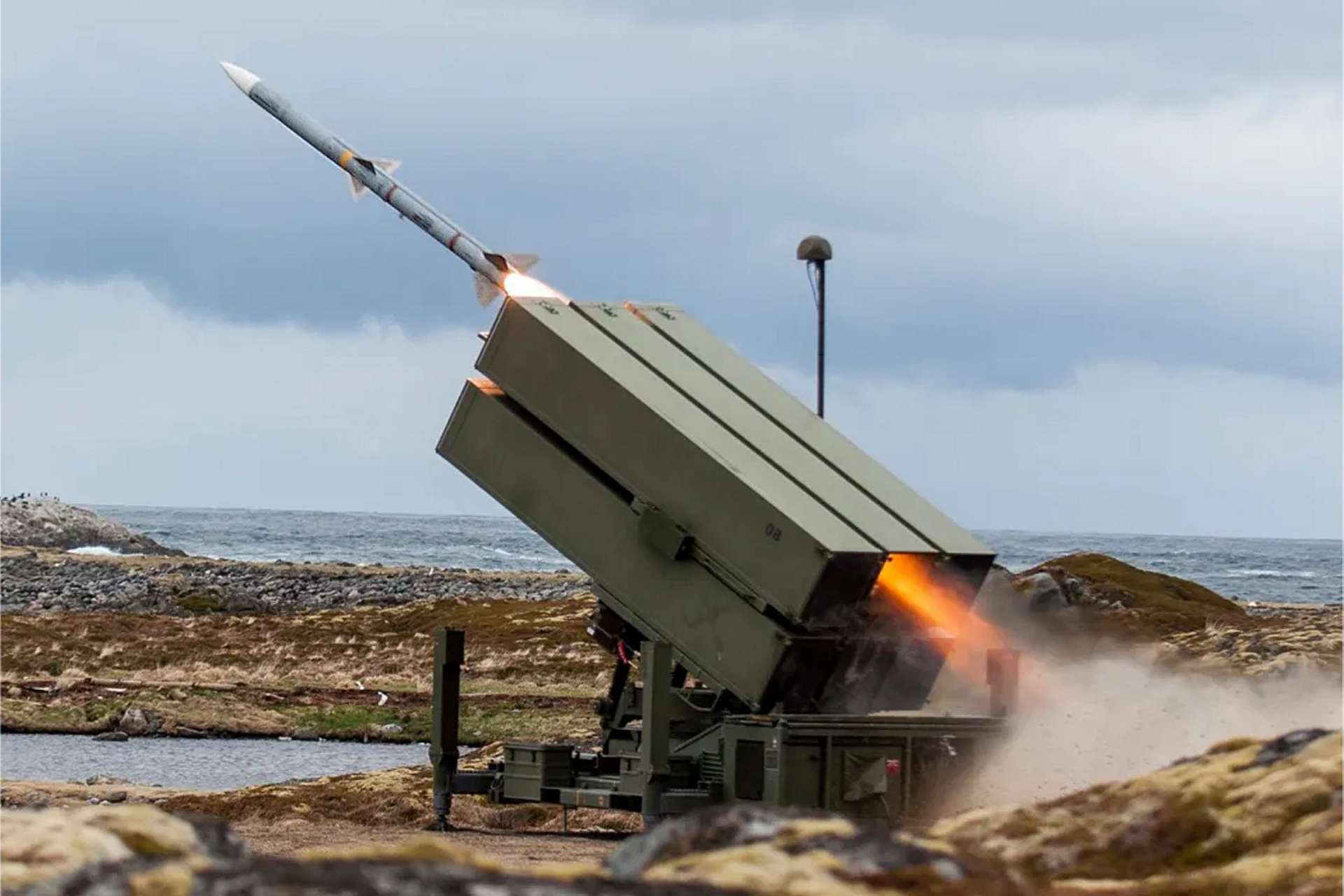
The NASAMS is an air defense missile system. (Picture source: Kongsberg)
The NASAMS, developed by Kongsberg Defence & Aerospace and Raytheon Technologies, provides medium-range coverage capable of targeting aircraft, helicopters, drones, and cruise missiles. These systems are particularly valued by NATO countries for their effectiveness and operational flexibility. The contract also includes upgrades to Lithuania’s NASAMS systems acquired in 2017, thereby enhancing the country’s defensive capabilities against modern aerial threats.
In addition, Lithuania has signed a second contract, estimated at around €130 million, with the Swedish company Saab to procure short-range RBS70 NG (MSHORAD) air defense systems. This combination of short- and medium-range systems will enable Lithuania to establish a layered air defense, securing its airspace and critical infrastructure.
The modernization of Lithuania's air defense aligns with a broader strategy aiming to raise the defense budget to 4% of GDP, a target recently discussed by the Lithuanian government. This decision reflects Lithuania's commitment to strengthening national security while contributing to NATO’s collective defense capabilities, especially in light of increasing regional tensions.
The NASAMS (Norwegian Advanced Surface-to-Air Missile System) is designed to intercept aerial threats over medium to long distances. It utilizes missiles with a solid-fuel engine, achieving a speed of Mach 2.7. The system’s AIM-120C missile is equipped with an 18.1 kg fragmentation warhead, effectively damaging or destroying targets such as aircraft, helicopters, drones, and cruise missiles. With an operational range of 180 km, NASAMS provides broad area coverage and enhances airspace monitoring for its operators.
Developed in Norway, NASAMS is employed by several countries, including the United States, Norway, Lithuania, Ukraine, and Spain. It operates in both active and passive engagement modes, providing flexibility to counter diverse threats. The missile’s compact design—with a length of 3.7 meters, a diameter of 0.18 meters, and a wingspan of 0.53 meters—optimizes integration into mobile or fixed ground-based launch platforms.
NASAMS is particularly valued for its accuracy and reliability, offering users a robust air defense capability suited to modern security contexts where rapid interception and target versatility are crucial.
The first NASAMS system deliveries are expected in early 2026, with completion in 2027, while the RBS70 NG systems are set to arrive between 2025 and 2027, reinforcing Lithuania’s air defense capabilities in the years to come.
Read more: Lithuania Strengthens Its Defense with Acquisition of New NASAMS Systems
- Details
- Written by: Halna du Fretay
- Category: 2024
- Hits: 10696
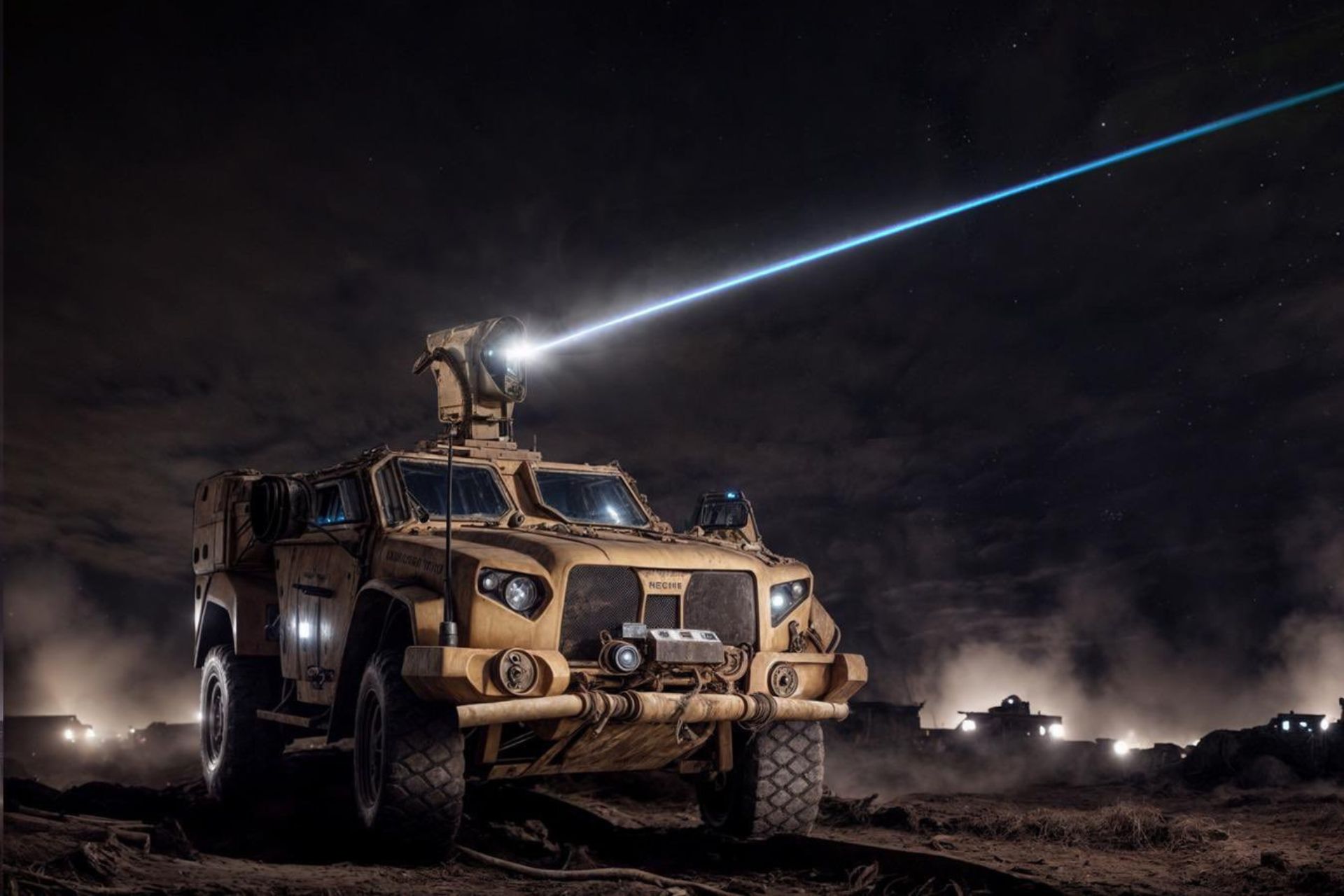
Israeli defense company Rafael Advanced Defense Systems has announced the deployment of the latest version of its high-energy laser weapon system, LITE BEAM, at the 2024 Association of the United States Army (AUSA) event in Washington, D.C. Designed for the rapid and precise neutralization of aerial threats, including drone swarms, LITE BEAM represents a significant step forward in precision defense. This 10 kW laser system is intended to enhance the protection of forces in mobile ground operations, combining efficiency with cost-effective usage.
Follow Army Recognition on Google News at this link
Suitable for light vehicles, LITE BEAM can be deployed across varied operational zones, allowing it to counter a broad range of threats, from drones and rockets to mortar shells (Picture source: Rafael Advanced Defense Systems)
LITE BEAM is part of Rafael’s strategy to expand the application of directed-energy weapons for countering a variety of air and ground threats. This mobile model is an adaptation of Rafael’s Iron Beam system, a 100 kW fixed laser capable of destroying targets at several kilometers' distance.
Suitable for light vehicles, LITE BEAM can be deployed across varied operational zones, allowing it to counter a broad range of threats, from drones and rockets to mortar shells. Additionally, the system can neutralize identified improvised explosive devices (IEDs) and other terrestrial threats, increasing its versatility on the battlefield.
The new version of LITE BEAM, showcased at AUSA 2024, features an upgraded power capacity of 10 kW, up from the previous 7.5 kW, bringing it in line with comparable systems such as the Jupiter from MBDA and Rheinmetall. With an effective range of several hundred meters to about 2,000 meters, LITE BEAM is distinguished by its ability to precisely track targets through an advanced tracking system, which can also be integrated into other counter-drone systems (C-UAV).
Its modularity allows for installation on various platforms, including armored vehicles, ships, and fixed ground platforms. In terms of power supply, LITE BEAM is flexible, as it can be powered by either diesel generators or batteries depending on operational needs.
High-energy laser technology is advancing rapidly, with other international players, including MBDA, Rheinmetall, Lockheed Martin, and Raytheon, also developing 10 kW solutions. Among these, Lockheed Martin's ATHENA system allows for combining multiple lasers to reach a power output of 30 kW, while Raytheon’s HELWS is designed for extreme mobility, mountable on a simple pickup truck.
Although still in early stages of development with many systems in research or testing, this technology offers promising potential for future defense applications. LITE BEAM’s capability to provide rapid, precise laser defense in a mobile format highlights Rafael's advancements in this field, positioning it as a potentially strategic tool for countering emerging threats.
Read more: New High-Energy Lite Beam Laser from Rafael to Neutralize Drone Swarms and IEDs

- Details
- Written by: Jérôme Brahy
- Category: 2024
- Hits: 6794
On October 4, 2024, the Turkish company Otokar announced that it had received an official invitation to start contract negotiations for Romania's tender regarding the acquisition of 1,059 Cobra II light 4x4 tactical armored vehicles. Under the proposed $940 million production plan, the first batch of 278 vehicles will be manufactured at Otokar’s facilities, with subsequent production transitioning to Romania.
Follow Army Recognition on Google News at this link
Initially developed to reduce reliance on foreign suppliers, the Cobra series has seen deployment in various international conflicts, including the Russo-Georgian War, the 2022 Russo-Ukrainian War, and Turkish Armed Forces operations. (Picture source: Army Recognition)
This tender was issued by CN Romtehnica SA, a company under the Romanian Ministry of National Defense. Otokar disclosed that the tender's value stands at 4,263,286,655.66 RON, which is equivalent to approximately 32 billion Turkish Lira, $939,837,706.28, or €856,555,680.45, based on current exchange rates. This amount, excluding VAT, represents about 118% of Otokar’s gross sales revenue as reported in its financial statements for the year ending December 31, 2023.
Otokar initially announced its participation in the tender on March 20, 2024, when the company submitted its bid for this procurement. Since then, the selection process has included a series of evaluations comprising technical assessments, field tests, and a commercial evaluation to ensure the equipment's compliance with Romania’s defense requirements. Following the completion of these assessments, Romtehnica extended an invitation to Otokar to proceed with contract negotiations. This step marks a key advancement in the tender process and confirms Otokar’s role as a contender for this contract.
Romania's tender outlines plans to acquire 1,059 4x4 Tactical Wheeled Light Armored Vehicles, along with integrated logistics support services. Under the proposed production plan, the first batch of 278 vehicles will be manufactured at Otokar’s facilities, with subsequent production transitioning to Romania. The specifics of this local manufacturing framework, aimed at strengthening Romania’s defense production capabilities, are yet to be finalized and will align with local defense and economic objectives.

At the Romanian BDSA 2024 exhibition, Otokar displayed a pickup-style configuration of the Cobra II, equipped with the Anubis 3.0 remotely operated weapon system (ROWS) developed by Romanian company Pro Optica. (Picture source: Army Recognition)
At the Black Sea Defense & Aerospace (BSDA) 2024 exhibition in Bucharest, held from May 22 to 24, Otokar confirmed that it had submitted the Cobra II 4x4 protected patrol vehicle for the Romanian Army’s consideration. As part of its proposal, Otokar presented a technology transfer agreement that would allow the Cobra II to be manufactured in Romania in partnership with Automecanica SA in Mediaș, Transylvania.
During the exhibition, Otokar displayed a pickup-style configuration of the Cobra II, equipped with the Anubis 3.0 remotely operated weapon system (ROWS) developed by Romanian company Pro Optica. In a press conference, Sedef Vehbi, head of Otokar’s military cluster, stated that the company plans to support research and development and manufacturing activities at its Romanian facility, which may serve as a European production hub. Otokar also indicated plans to establish offset contracts with local suppliers, including Pro Optica.
At that time, although Otokar did not release further details regarding the procurement program—such as the number of vehicles offered, total market value, or delivery timelines—the company’s proposal is understood to align with the Light Armoured Tactical Vehicle (Autovehicule Tactice Blindate de Tip Ușor: ATBTU) program. The Romanian Ministry of National Defence (MND) previously stated a requirement for 1,059 vehicles in a document published in December 2021. Otokar’s offer included considerations for local production capabilities and suggests support for Romania’s national defense industry.

The Cobra II features a monocoque steel V-hull designed to withstand small arms fire, IEDs, and mines. It can be equipped with 7.62mm and 12.7mm machine guns and supports automatic cannons up to 25mm. (Picture source: Army Recognition)
The Cobra II, designed and manufactured by Otokar, is a tactical armored vehicle building upon the original Cobra platform, first introduced in 1997. The Cobra II, which debuted in 2013, features advancements in mobility, payload, and protection compared to its predecessor. Initially developed to reduce reliance on foreign suppliers, the Cobra series has seen deployment in various international conflicts, including the Russo-Georgian War, the Boko Haram insurgency, and Turkish Armed Forces operations.
The Cobra II has a monocoque steel V-hull designed to withstand small arms fire, IEDs, and mines. Powered by a 6.7L turbocharged diesel engine that produces 360 hp, the vehicle can reach speeds up to 110 km/h with a range of 700 km. It can be armed with 7.62mm and 12.7mm machine guns and supports up to 25mm automatic cannons. The Cobra II has been documented as effective in various terrains, with capabilities suited for urban and rugged operational environments.
Available in several configurations, the Cobra II’s modular design allows for variants such as personnel carriers, field ambulances, command and control vehicles, anti-tank platforms, and Mine-Resistant Ambush Protected (MRAP) vehicles. Additional features include a CBRN filtration system, run-flat tires, and optional winterization kits, which enable it to operate in diverse climates. The vehicle's amphibious capabilities further expand its operational roles, covering internal security, border patrol, and peacekeeping missions.
Current operators of the Cobra II include Azerbaijan, Bangladesh, Romania, Tunisia, Ghana, Ivory Coast, and Senegal. The vehicle is used by the Turkish Armed Forces and has seen deployment in United Nations peacekeeping operations. Recently, Ukrainian forces employed a Cobra II for medical evacuation during the Kursk offensive, while Saudi Special Forces acquired Cobra II vehicles to reinforce security in Mecca.
Read more: Romania selects Turkish company Otokar to supply 1,059 Cobra II armored vehicles
- Details
- Written by: Halna du Fretay
- Category: 2024
- Hits: 4965
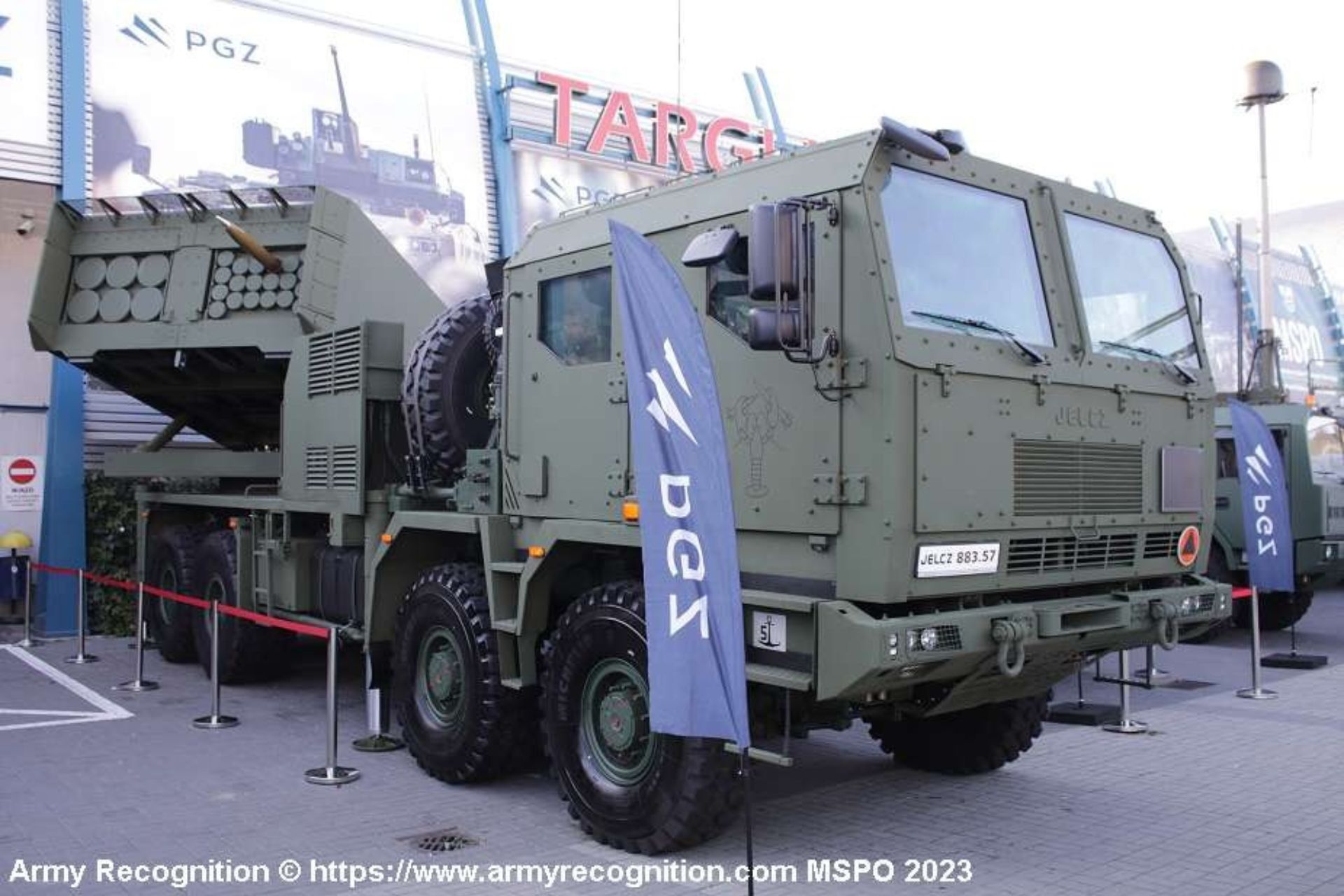
At the 2024 KADEX International Defense Exhibition, Poland's WB Group and South Korea's Hanwha Aerospace signed an agreement to establish a joint venture focused on producing CGR-080 missiles for Poland's HOMAR-K artillery systems. This initiative strengthens defense ties between Poland and South Korea, with the latter already deploying these missiles on its K239 Chunmoo launchers and having acquired Warmate 3 loitering munitions produced by WB Group. This new alliance builds on a series of collaborations aimed at integrating advanced technologies and bolstering Poland’s defense industry.
Follow Army Recognition on Google News at this link
This cooperation with Hanwha Aerospace includes the establishment of a new manufacturing facility in Poland, though the exact location has yet to be determined (Picture source: ArmyRecognition)
The agreement was signed on October 2 in the presence of Poland’s Deputy Minister of National Defense, Paweł Bejda, and Cho Hyun-ki, representing South Korea’s Defense Acquisition Program Administration (DAPA). This cooperation with Hanwha Aerospace includes the establishment of a new manufacturing facility in Poland, though the exact location has yet to be determined. Once operational, the facility will be capable of producing several thousand CGR-080 missiles annually—a crucial capacity to support the over 200 HOMAR-K launchers purchased by Poland.
The initial delivery of HOMAR-K launchers to the Polish Armed Forces began recently, marking a significant milestone in Poland’s artillery modernization. On August 12, 2024, the 1st Masurian Artillery Brigade of the 16th Mechanized Division received its first four HOMAR-K systems—K239 Chunmoo launchers mounted on Jelcz P882.57 TS T45 K-MLRS 8x8 chassis. Inspired by the American HIMARS system but produced locally in collaboration with international partners, the HOMAR-K is designed to provide long-range fire support. Its modular configuration allows it to be equipped with 12 guided 239mm rockets, each with an 80-kilometer range, or long-range ballistic missiles with a reach of 290 kilometers, making it a strategic asset in Poland’s defense framework.
These acquisitions are part of a broader modernization plan, aimed at replacing aging Soviet-era systems, such as the BM-21 Grad. An agreement signed in October 2022 between Poland's Armament Agency and Hanwha Aerospace outlines the acquisition of 288 K239 Chunmoo launchers, with initial units integrated in Poland. Furthermore, an additional agreement signed in April 2024 includes the delivery of 72 additional launchers by 2029, bringing the total to 290 units. This phased deployment of modern systems ensures that Poland is well-equipped to address current security challenges.
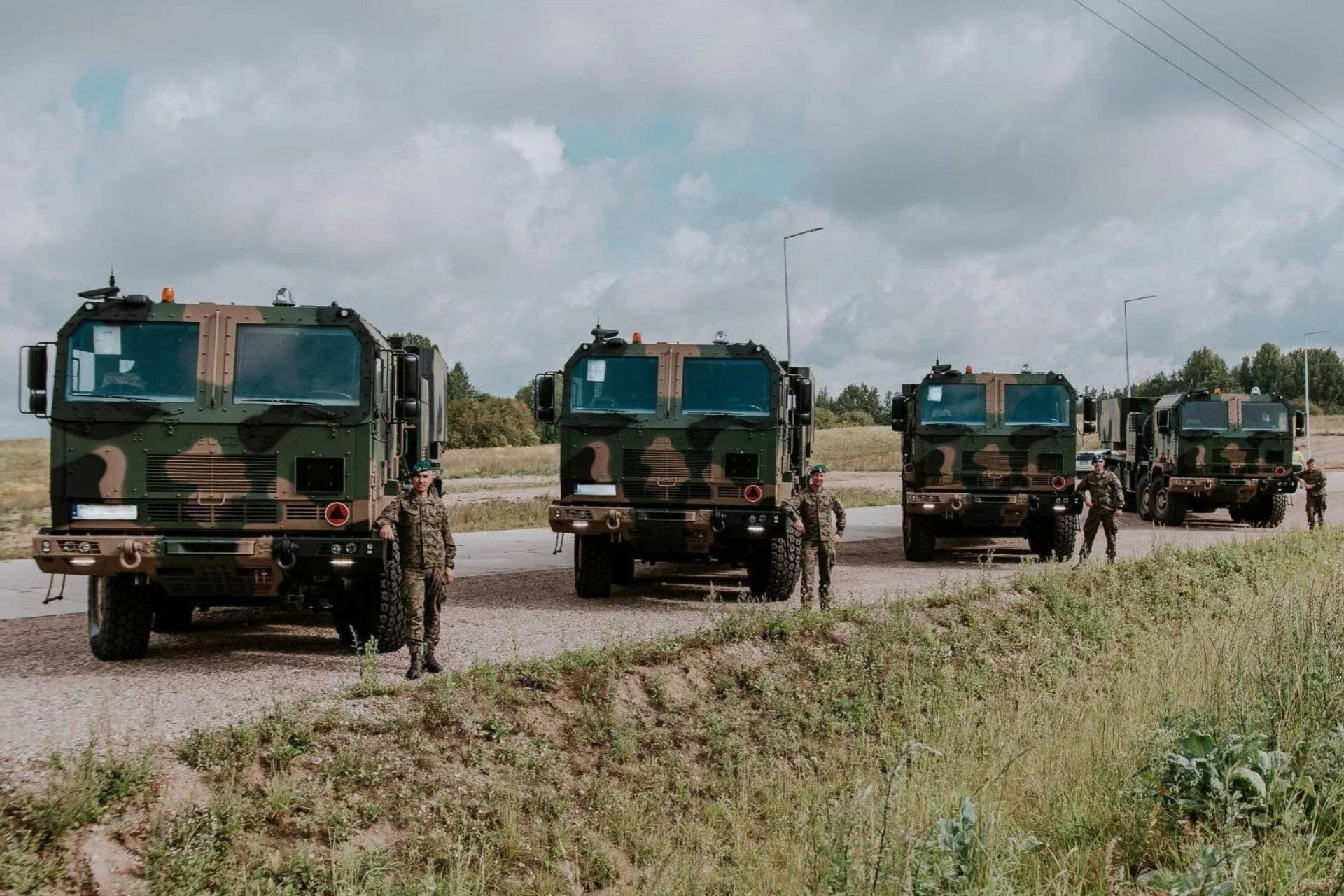
The Homar-K system, developed to enhance Poland's defense capabilities, is a domestic version of the HIMARS system, produced by the Polish defense industry in collaboration with international partners, including Lockheed Martin (Picture source: Polish Army)
Mounted on the robust Jelcz 8x8 truck, the HOMAR-K offers enhanced mobility, essential for implementing "shoot and scoot" tactics that enable Polish forces to fire and rapidly reposition, reducing vulnerability to counter-attacks. The system also integrates with the Topaz combat management platform and Fonet and Radmor digital communication systems, allowing coordinated operations with NATO command and control networks.
The partnership between WB Group and Hanwha Aerospace focuses on producing the 239mm version of the CGR-080 missile, optimized for the HOMAR-K and capable of reaching targets up to 80 kilometers away. The production facility, expected to be operational within two years pending further funding, represents a step forward in Poland’s goal of military self-sufficiency in arms production. By choosing to manufacture these munitions locally, Poland enhances its strategic resilience and ensures a steady supply of missiles for its artillery units, reinforcing its defensive posture.
This joint initiative by WB Group and Hanwha Aerospace underscores Poland’s commitment to strengthening its national defense while advancing its domestic defense industry. This joint venture, combined with the successive deliveries of HOMAR-K systems, marks a key step in Poland's artillery transformation, preparing the country to meet future security challenges in Eastern Europe.
- Details
- Written by: Triffaux
- Category: 2024
- Hits: 5144
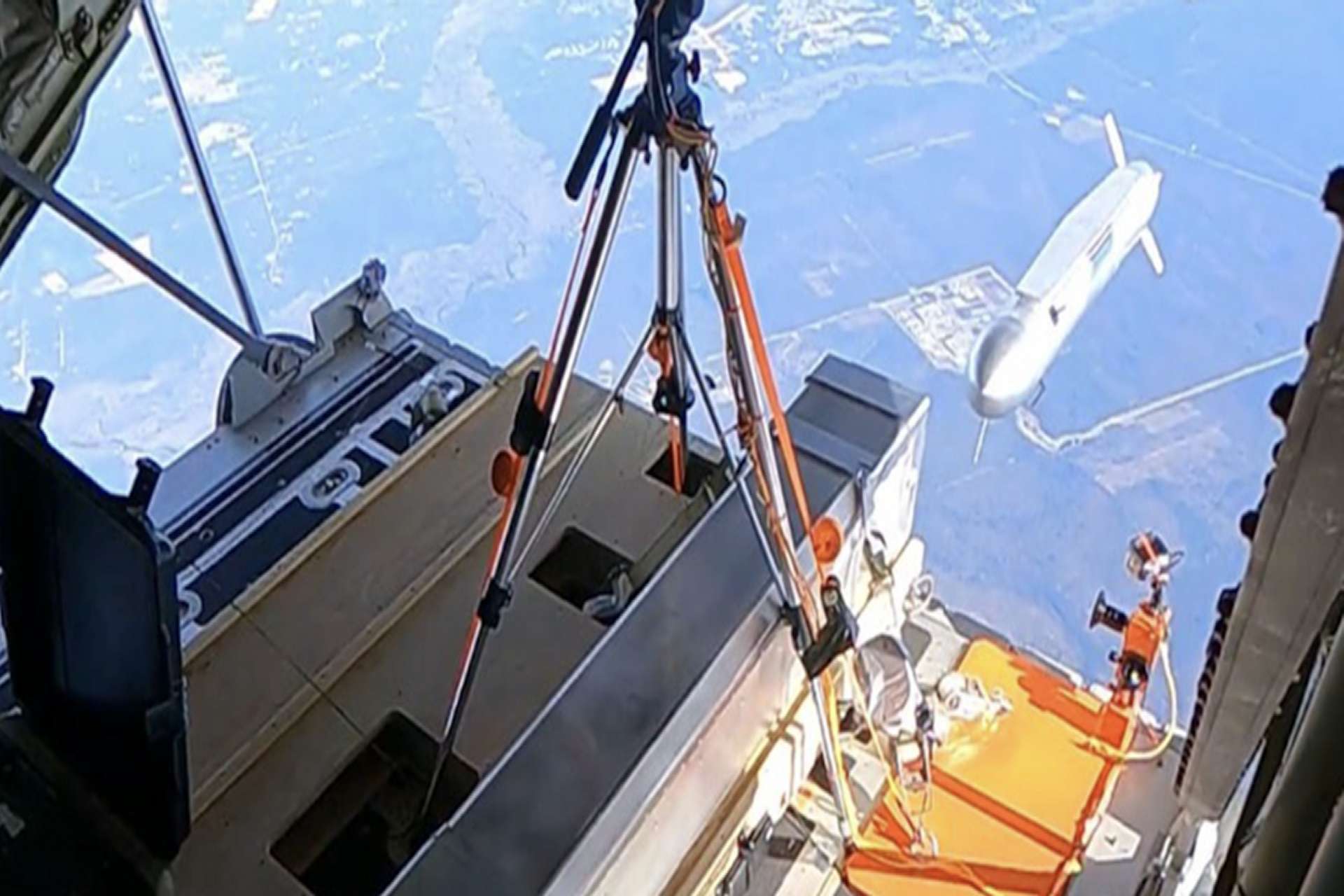
On October 3, 2024, Leidos, an American company specializing in defense and advanced technology, unveiled the "Black Arrow," a small cruise missile designed to meet the growing needs for flexibility and versatility on the battlefield. Designed for both kinetic and non-kinetic missions, this new system stands out for its low cost and adaptability, offering a wide range of military applications.
Leidos Black Arrow Low-Cost Small Cruise Missile (Picture source: Leidos)
Launched in 2021, this program builds on Leidos' experience with small munitions such as the GBU-69, used on AC-130 aircraft, as well as the X-61 Gremlins program developed in partnership with the Defense Advanced Projects Agency (DARPA). This project allowed Leidos to test an air vehicle capable of being launched from a C-130 and then recovered mid-flight, demonstrating its expertise in integrating innovative technologies on existing platforms.
In 2022, Leidos signed a Cooperative Research and Development Agreement (CRADA) with the Special Operations Command (SOCOM) and the U.S. Air Force Special Operations Command (AFSOC) to advance the development of the Small Cruise Missile (SCM). The SCM is designed to be an economical, modular platform suited to the missions of various branches of the armed forces, with an architecture that facilitates future updates and responds to both kinetic and non-kinetic objectives. According to Leidos, this flexibility allows for a variety of launch options, including ramps, pallets, or conventional systems, depending on tactical needs.
As part of its development, the Black Arrow recently completed a series of separation and captive-carry tests aboard an AC-130J Ghostrider, a support aircraft renowned for its firepower. These tests confirmed the weapon’s ability to safely detach from its launcher, as well as the reliability of its trajectory, flight software, navigation, and safety systems.
These favorable results pave the way for guided flight tests scheduled for this fall, which will be critical for validating the Black Arrow's flight behavior under real conditions and finalizing necessary technical adjustments before its deployment.
The competitive landscape also plays a role in the development of this missile, as other companies, such as Anduril Industries, are also working on low-cost, large-scale cruise missile solutions. This dynamic underscores the importance for Leidos to offer innovative, competitive solutions by integrating components from diverse sources to maintain its leading position in the defense industry.
The growing popularity of munitions launched from transport aircraft, such as the AGM-158 JASSM and the Rapid Dragon system, also highlights the strategic interest in this launch type, an approach that could transform the projection capabilities of the U.S. Air Force. Indeed, projection capabilities are radically transformed by the introduction of small cruise missiles like the Black Arrow. Traditionally, missile strikes relied on specialized fighter aircraft, limited in number and range. However, with systems like the Black Arrow, transport aircraft can now serve as launch platforms using ramps or pallets. This innovation allows transport aircraft, such as the C-130 and C-17, to be converted into offensive platforms, significantly increasing the number of military vehicles capable of carrying out precision strikes.
Adding this capability provides valuable tactical flexibility. Unlike fighter jets, often too visible in heavily monitored environments, transport aircraft can discreetly deploy missiles in high-tension areas. This gives military forces greater autonomy to strike remote targets quickly, even in the absence of forward bases. This flexibility is particularly strategic for close support missions or operations where surprise and speed are essential.
Finally, this approach creates uncertainty for the adversary, who must now consider the possibility that transport aircraft may also be equipped for missile strikes. This new dynamic complicates enemy defense strategies, as it forces opposing forces to rethink their targeting priorities, knowing that an apparently harmless transport aircraft can also carry formidable strike capabilities. Consequently, small cruise missiles like the Black Arrow not only redefine military logistics but also the strategic projection of forces in contested environments, while optimizing engagement costs and flexibility.
However, some analysts believe that, in the event of a major conflict, transport aircraft could be primarily mobilized for logistics missions, limiting their use for missile strikes.
Mark Miller, Leidos’ Vice President of Missile and Aviation Solutions, highlighted that the rapid development of the Black Arrow benefited from the company’s experience with previous projects, such as the GBU-69 and the DARPA X-61 Gremlins program. These projects illustrate Leidos’ commitment to innovative initiatives, with a particular focus on agility and operational performance.
With the Black Arrow, Leidos offers a small, versatile cruise missile designed to meet the modern requirements of the armed forces. By focusing on technological innovation and an open architecture, Leidos continues to enhance military capabilities by providing rapidly deployable solutions suited to various missions. If guided flight tests proceed as planned, the Black Arrow could become a strategic tool of choice, providing the military with enhanced operational flexibility and optimal efficiency in the coming years.

Rapid Dragon System (Picture source: AFLR)

- Details
- Written by: Jérôme Brahy
- Category: 2024
- Hits: 10947
As reported by Defense Romania on October 4, 2024, at the Korea Army International Defense Exhibition (KADEX 2024), Hyundai Rotem, the manufacturer, confirmed that the K2's testing in Romania yielded successful results, and discussions about a contract are ongoing. A potential agreement regarding the acquisition of K2 Black Panther tanks by Romania could be reached as early as 2025.
Follow Army Recognition on Google News at this link
As of recent counts, around 410 K2 tanks have been produced across multiple production lots, making it a significant element of South Korea's defense framework. (Picture source: ROKA)
Romania has already entered into an agreement with the United States for 54 M1A2 Abrams tanks under the "Main Battle Tank" program, using a government-to-government procedure. This acquisition, valued at roughly 1 billion euros, includes modernized M1A2 variants, 12 additional tank-based vehicles, and supporting equipment such as ammunition and training boosters. The process received approval from Romania’s Defense Commission in May 2023, and deliveries are expected to start in 2026.
On November 9, 2023, the U.S. State Department authorized a larger Foreign Military Sale package to Romania, estimated at $2.53 billion, encompassing 54 M1A2 SEP v3 tanks, 4 M88A2 recovery vehicles, 4 M1074 Joint Assault Bridges, and 4 M1150 Assault Breachers. Additional components include 54 M240C machine guns, mine rollers, transport systems, and training support equipment. The Romanian Ministry of National Defense has affirmed that the actual purchase value aligns with the approved parliamentary budget of approximately $1.07 billion, which will be confirmed upon Congress’s final approval.
The M1A2 SEP v3 Abrams features advanced armor with depleted uranium and optional active protection systems to counter multiple threat types. Its primary armament is a 120mm smoothbore gun capable of utilizing modern ammunition, while enhanced systems like the Improved Forward-Looking Infrared and Ammunition DataLink support operational versatility. Romania’s acquisition aims to strengthen its defense capabilities on NATO’s eastern flank, complementing existing systems such as Patriot and HIMARS missiles, Piranha V armored vehicles, and F-16 aircraft, as part of its broader strategic partnership with the United States.
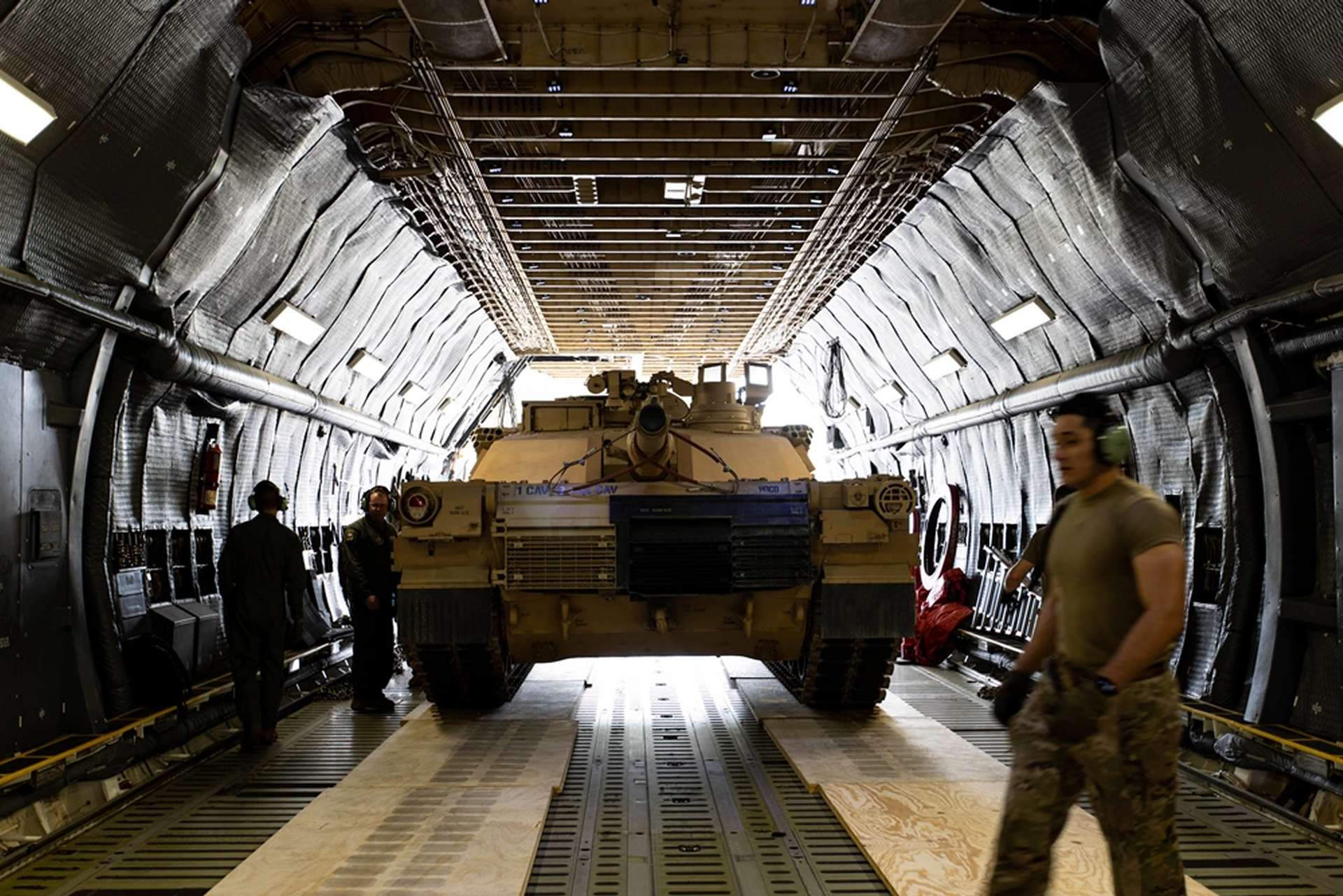
The M1A2 SEP v3's primary armament is a 120mm smoothbore gun capable of utilizing modern ammunition, while enhanced systems like the Improved Forward-Looking Infrared and Ammunition DataLink support operational versatility. (Picture source: US DoD)
Having already invested in Abrams tanks, Romania is considering a model similar to Poland’s, which involves integrating both K2 and Abrams tanks within its military fleet. Representatives from Hyundai Rotem, the manufacturer of the K2, have indicated that the acquisition plan is flexible; an initial purchase of a single battalion could lead to broader collaboration, with potential involvement from the Romanian defense industry in production and support processes.
Demonstration firings of the K2 were conducted in May at the Smârdan Combat Training Center, with Hyundai Rotem sharing videos to highlight the tank’s operational capabilities. Later showcased at the BSDA 2024 exhibition, the K2 has been tested in various climates, including extreme cold in Norway and high temperatures in Oman, to ensure its versatility in different operational environments. These demonstrations follow a 2023 defense cooperation conference where Romania outlined plans to procure approximately 300 new tanks to replace its aging T-55AM and TR-85 tanks.
Field and firing tests of the K2 Black Panther in Romania are scheduled for 2024, with military and government officials from Romania and South Korea expected to observe. These tests will provide Romania with additional information on the K2’s suitability for its defense requirements. The tests mark a significant phase in the acquisition process, which includes assessing how well the K2 adapts to Romania’s specific operational settings and environmental conditions.
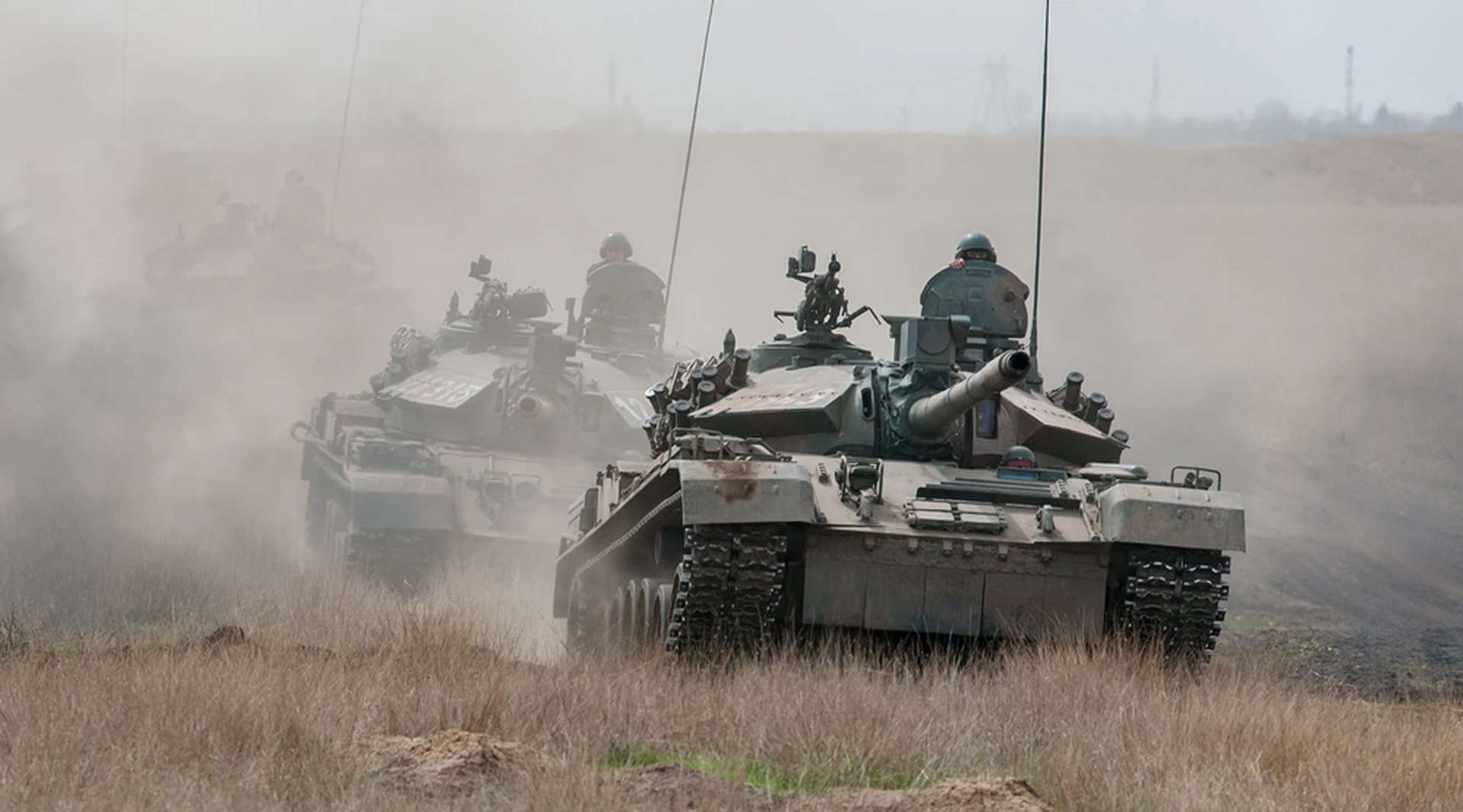
In a 2023 defense cooperation conference, Romania outlined plans to procure approximately 300 new tanks to replace its aging T-55AM and TR-85 tanks. (Picture source: US DoD)
The South Korean K2 Black Panther was developed in response to the country’s goal of establishing self-reliance in defense production and replacing its aging M48 Patton tanks. The project, initiated in 1995, aimed to create a tank compatible with network-centric, high-speed maneuver warfare. Hyundai Rotem spearheaded its development, and the tank officially entered service with the South Korean Army (ROKA) in 2014 after extensive testing and prototyping phases. As of recent counts, around 410 K2 tanks have been produced across multiple production lots, making it a significant element of South Korea's defense framework.
Equipped with a 120mm 55-caliber smoothbore gun, the K2 can fire various munitions, including APFSDS and HEAT rounds. The autoloading system allows it to achieve a firing rate of up to 10 rounds per minute, with a total capacity of 40 rounds. It also features a Korean-developed munition, the KSTAM (Korean Smart Top-Attack Munition), designed for top-attack engagement of targets within a range of 2 to 8 kilometers. Secondary armament includes a 12.7mm heavy machine gun and a 7.62mm coaxial machine gun, enhancing its ability to engage both armored and soft targets.
Powered by a 1,500-horsepower 12-cylinder water-cooled diesel engine, the K2 can reach a maximum speed of 70 km/h on paved roads and 50 km/h across rough terrain. The tank has an operational range of approximately 450 kilometers and can accelerate from 0 to 32 km/h in around 7 to 9 seconds, depending on the specific engine model. The K2 also utilizes an advanced in-arm suspension unit (ISU) system, which allows it to adjust its height and posture, thereby improving its handling over various terrains and expanding its gun elevation range.
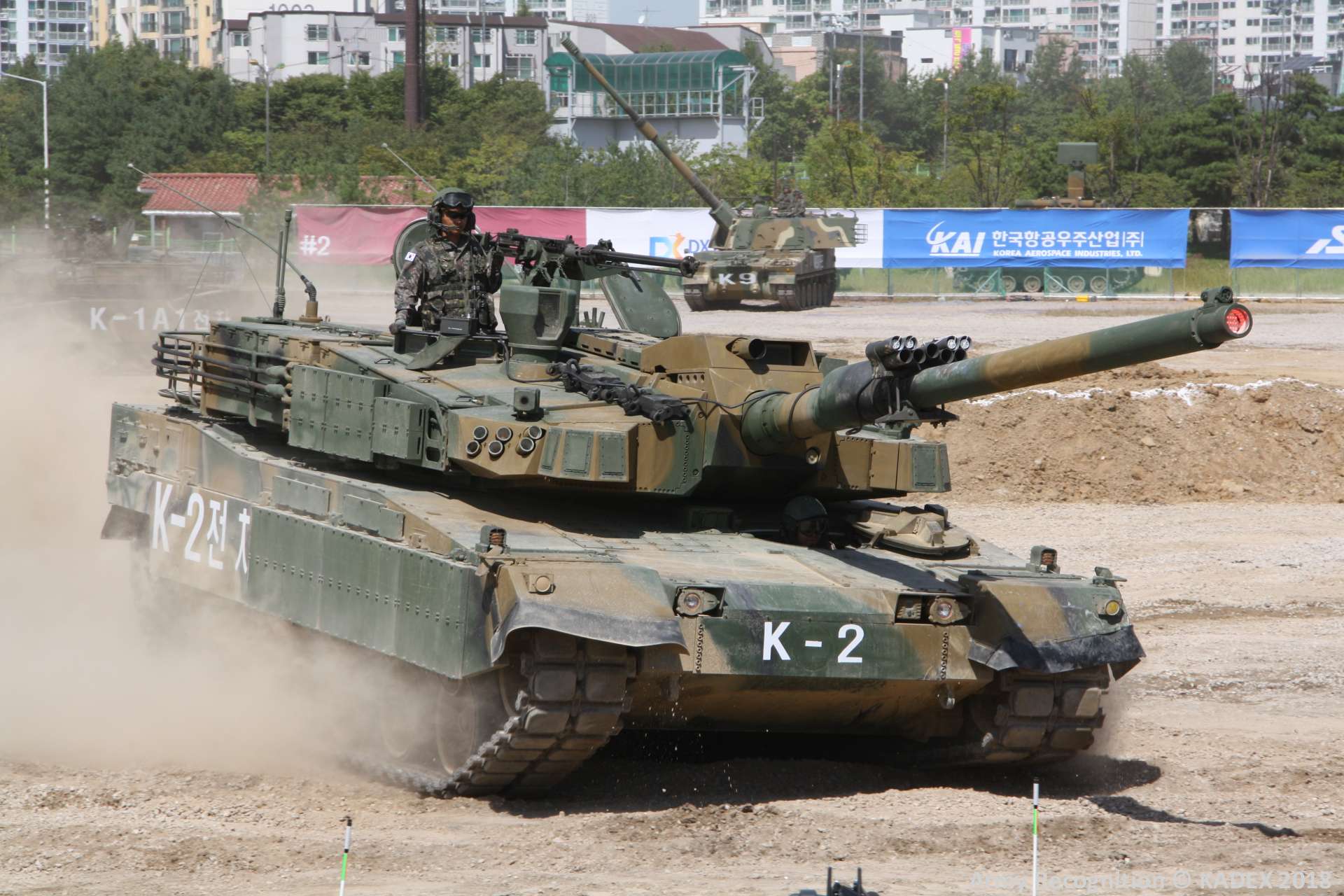
The K2 also utilizes an advanced in-arm suspension unit (ISU) system, which allows it to adjust its height and posture, thereby improving its handling over various terrains and expanding its gun elevation range. (Picture source: Army Recognition)
The tank’s passive protection includes a composite armor system combining MIL-12560H steel and silicon carbide ceramic plates, supplemented by modular Explosive Reactive Armor (ERA) and Non-Explosive Reactive Armor (NERA) packages. Additionally, the K2 incorporates an overpressure system to defend against chemical and biological threats, an automatic fire suppression system, and neutron shielding to protect the crew from radiation exposure.
For active defense, the K2 is equipped with radar and laser warning receivers that detect threats such as anti-tank guided missiles. Upon detection, it can release multispectral smoke grenades, which obscure its position from enemy targeting systems. Future enhancements planned under the K2 Product Improvement Program (PIP) include a hard-kill active protection system, designed to intercept incoming projectiles before they impact the tank.
The K2 Black Panther is operated primarily by the South Korean Army, with Poland and Türkiye acquiring or adapting it for their own needs. Variants include the K2GF, tailored to Polish military requirements, and the Altay, developed by Türkiye with design support from South Korean firms. Additional proposed variants such as the K2EX for global export, the K2ME for the Middle East, and the K2NO for Norway feature further modifications to suit regional conditions and specific operational requirements.

The autoloading system of the K2 allows it to achieve a firing rate of up to 10 rounds per minute, with a total capacity of 40 rounds. (Picture source: ROKA)
Read more: Romania may sign contract for K2 Black Panther tanks with South Korea by 2025
- Details
- Written by: Halna du Fretay
- Category: 2024
- Hits: 2908
From October 13 to 18, 2024, the 4th Chasseurs Regiment of the 27th Mountain Infantry Brigade (BIM) will conduct a unique armored mountain combat exercise, Edelweiss 24, featuring AMX-10RCs and Light Armored Vehicles (VBLs). Taking place in the southern French Alps, a complex and elevated landscape, this training addresses the current needs of the French Army to enhance operational capabilities in mountainous regions, underscoring the importance of tactical and technological expertise in areas where mountainous conflicts, such as in Lebanon and the Caucasus, are ongoing.
Follow Army Recognition on Google News at this link
During the CERCES exercise, AMX 10RC tanks from the 4th Chasseurs Regiment (4e RCh) in firing phase (Picture source: French MoD)
The AMX-10 RC is a French-made wheeled reconnaissance armored vehicle, developed in the late 1970s to replace the Panhard EBR, entering French service in 1979. More than 300 units were produced, with exports to countries like Morocco, Qatar, and most recently Ukraine. Known for versatility, the AMX-10 RC has a 105 mm cannon, 7.62 mm machine guns (coaxial and turret-mounted), and advanced systems such as a laser range finder and thermal imaging for night operations.
Despite its age, it remains effective for reconnaissance and light combat missions. Mounted on a 6x6 chassis, the AMX-10 RC provides high mobility speeds up to 85 km/h and amphibious capability at 7.2 km/h in water. Its lightweight aluminum armor offers protection against small arms fire and shell splinters, while its hydropneumatic suspension enables adaptability to diverse terrains. Equipped with CBRN protection, it is suitable for environments with nuclear, biological, or chemical threats. Although gradually replaced by the EBRC Jaguar, it remains valuable in modern combat, including in Ukraine, where France has delivered around ten units since 2023.
The VBL Mk2 is a versatile light armored vehicle designed by Panhard for reconnaissance and patrol missions. With a welded steel hull, it provides protection against 7.62 mm small arms fire and shell fragments, with optional add-on armor to improve resistance to IEDs and mines. It can be fitted with a 360° ring-mounted 7.62 mm machine gun or a remotely-operated turret with a 12.7 mm machine gun, enhancing its defensive capabilities.
Powered by a Steyr 125-hp engine with a ZF automatic gearbox, the VBL Mk2 reaches a road speed of 95 km/h and has an 800 km range. It is also equipped with a centralized tire inflation system, increasing its mobility on difficult terrain, and can become fully amphibious within two minutes, propelled in water by a rear-mounted propeller. Standard equipment includes CBRN protection, air conditioning, and an onboard diagnostic system, ensuring suitability for current military needs.
This large-scale exercise will bring together 450 soldiers, including the "cavaliers de la cime" of the 4th Chasseurs Regiment, specialized in high-altitude armored combat. Edelweiss 24 aims to enhance the unit’s interoperability and coordination across different arms, services, and allied forces, deploying their full range of equipment in the Alps. The exercise will also include reinforcements from other units within the 27th BIM and a British Light Dragoons detachment, strengthening collaboration among French and allied forces, which is essential for coordinated action in multinational contexts.
The equipment deployed will include over a hundred vehicles, such as AMX-10RCs, Light Armored Vehicles (VBLs), Polaris MV850 quads, and motorcycles, ensuring mobility and firepower on the steep slopes of Bonette, Cayolle, Allos, and within the Ubaye and Drac valleys. The presence of drones, capable of tracking movement and providing real-time data, reflects the integration of recent technological developments, as seen in conflicts like Ukraine. Fighter jets will also support ground maneuvers, simulating necessary air support in areas where aviation can play a strategic role.
This five-day exercise offers the 4th Chasseurs Regiment the opportunity to train in its area of expertise, meeting current defense requirements for France and NATO. Since the start of the Eagle mission in 2022, France, as a leading nation in strengthening NATO’s defensive posture in Romania, has highlighted the importance of high-intensity operations in mountainous regions. Regular exercises with Romanian forces in the Carpathians, a complex high-altitude terrain, strengthen both mountain combat capabilities and NATO interoperability. With Edelweiss 24, the French Army continues to prepare its forces for current defense and deterrence challenges in difficult environments.

- Details
- Written by: Triffaux
- Category: 2024
- Hits: 6799
On October 2, 2024, General Dynamics Land Systems (GDLS), a division of General Dynamics, delivered two TRX vehicle prototypes to the US Army as part of the competition for the Robotic Combat Vehicle (RCV) program. These deliveries were made on schedule and mark the beginning of platform mobility testing by the US Army, along with the evaluation of the vehicles during direct interactions with soldiers.
GDLS's TRX UGV Fitted With Brimstone missiles (Picture source: Army Recognition)
Selected in 2023 among four companies, GDLS developed an improved version of the TRX, a 10-ton robotic vehicle designed to be highly transportable and offering great flexibility in terms of modularity and interoperability. The TRX features a payload-to-chassis ratio of 1:1, allowing it to carry a wide variety of mission modules and payloads as needed.
The TRX vehicle has a modular architecture suited to both current and future needs of the Army. It is equipped with a hybrid-electric engine, contributing to the US Army’s strategy to reduce its carbon footprint while providing significant exportable power to support mission command operations.
According to Gordon Stein, vice president and general manager of US operations at GDLS, the TRX is a platform well-suited for human-machine integrated formations and for critical battlefield roles. It is designed to perform multiple missions such as reconnaissance, surveillance, direct and indirect fire, long-range loitering munitions deployment, short-range air defense, counter-drone operations, autonomous resupply, complex obstacle breaching, and electronic warfare.
The prototypes delivered will undergo intensive testing by the US Army to evaluate their performance in various operational conditions. These trials will help determine whether the TRX meets the Army's expectations as part of its strategy to modernize ground forces.
This development is part of the US Army’s efforts to integrate robotic technologies into its operations, with the goal of reducing risks to soldiers while increasing battlefield efficiency. The TRX, with its modular design and multi-mission capabilities, could play a key role in this technological transition.
The TRX utilizes the US Army's Robotic Technology Kernel (RTK) Warfighter Machine Interface (WMI) for both teleoperational and autonomous functions. It shares electronic architecture and control concepts with the MUTT (Multi-Utility Tactical Transport) framework, promoting commonality among unmanned ground vehicles. Additionally, the TRX can be equipped with a Reconfigurable Integrated-weapons Platform (RIwP) from the American company Moog to address a wide range of remote turret-related missions.
The TRX from General Dynamics Land Systems is designed to accommodate a variety of adaptable modules based on operational needs. Among the modules that can be integrated is the SHORAD (Short-Range Air Defense) system, which allows the TRX to provide short-range air defense against threats such as drones and helicopters. This system has already been successfully tested on the platform, demonstrating its ability to quickly detect, track, and neutralize aerial targets. Additionally, the TRX can be equipped with long-range loitering munitions platforms, used to carry out precise strikes on distant targets. Other modules include electronic warfare capabilities to disrupt enemy communications, direct and indirect fire modules, as well as equipment for autonomous resupply and complex obstacle breaching. The modularity of the TRX enables it to evolve according to mission requirements, making it an extremely versatile asset on the modern battlefield.
- Breaking News: Rare Russian S-70 Okhotnik Stealth Drone Reportedly Shot Down Over Donetsk in Ukraine
- Presentation of South Korean MAD-AM Drone by Poongsan at KADEX 2024
- Hyundai Rotem Hilights Next-Gen K877 Command Post Vehicle at KADEX 2024
- AeroVironment offers Vapor 55 MX helicopter UAS with 9-kilogram payload at KADEX 2024