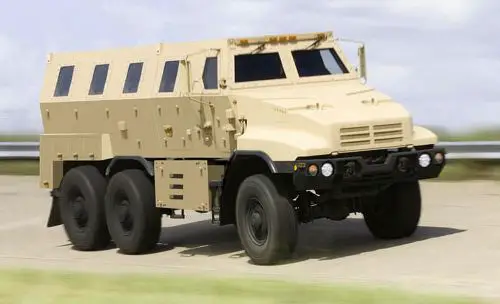
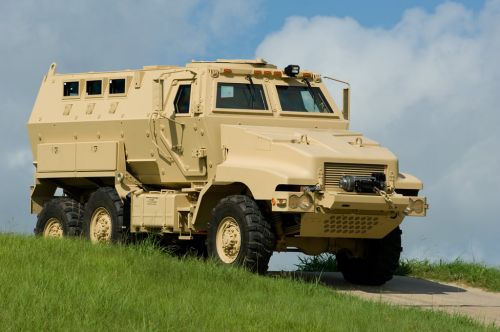
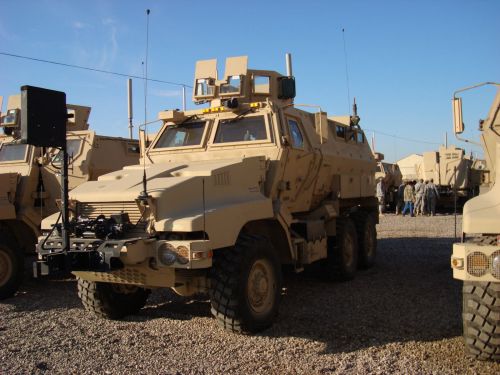
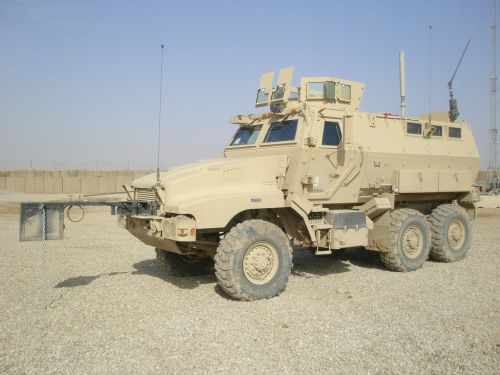
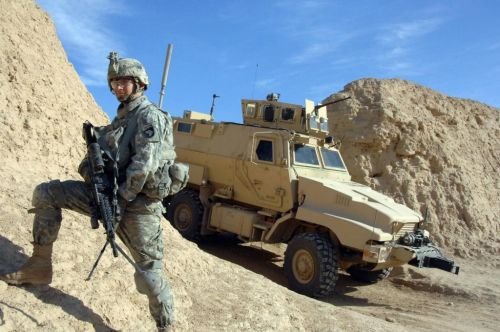
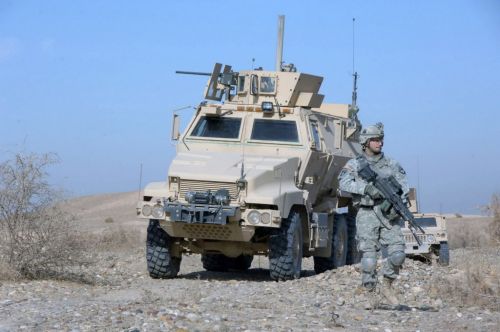
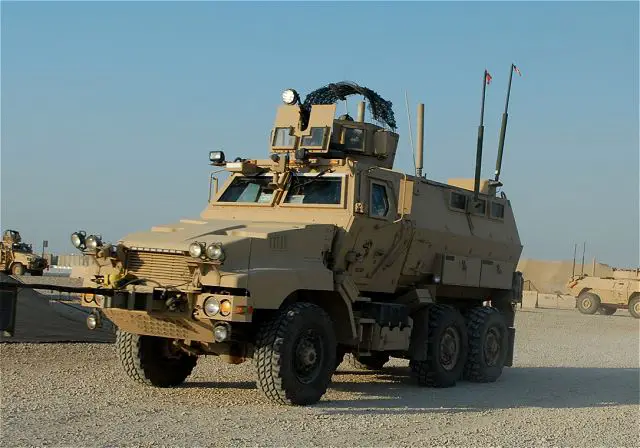
The Caiman 6x6 Mine Resistant Ambush Protected (MRAP) vehicle is a Category II armored personnel carrier developed and manufactured by BAE Systems Land and Armaments in the United States. Based on the M1084 long-wheelbase chassis from the Family of Medium Tactical Vehicles series, the Caiman was engineered to provide superior protection for personnel against mines, improvised explosive devices, and small arms fire. Deployed extensively during U.S. operations in Iraq and Afghanistan, the Caiman quickly became one of the most fielded mine-resistant platforms in the American military inventory.
Country users: United States, Iraq, Afghanistan, Nigeria, Egypt, Lebanon, Jordan







Technical Data
-
Armament
The Caiman 6x6 is armed with roof-mounted weapon systems that can be either manually operated or remotely controlled. The primary weapons typically include the M2HB 12.7 mm heavy machine gun, effective against personnel, light vehicles, and fortified positions. Another common configuration includes the Mk 19 Mod 3 40 mm automatic grenade launcher, offering high-explosive area suppression for urban and convoy protection scenarios. The vehicle can also be equipped with the M240B 7.62 mm machine gun as a secondary or alternate primary weapon.
Many Caiman units are fitted with the CROWS II remote weapon station, which allows the operator to aim and fire the weapon from inside the armored hull using stabilized optics, thermal imaging, laser rangefinding, and fire control software. This significantly enhances lethality while maintaining full crew protection. Smoke grenade launchers are commonly installed on both flanks of the vehicle to provide immediate visual concealment under fire.
-
Design and protection
The Caiman features a monocoque armored capsule mounted on a long-wheelbase FMTV 6x6 chassis. The most critical element of its survivability design is the full-length V-shaped hull, which deflects blast energy away from the crew compartment. The vehicle's structural elements include a forward engine bay, center crew section, rear troop area, and reinforced suspension points to handle combat loads and explosive impacts.
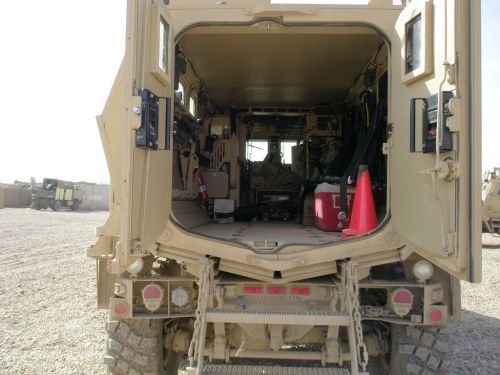
The crew consists of two personnel seated in the front cabin—a driver and a vehicle commander—each in blast-attenuating energy-absorbing seats. The rear troop compartment holds up to ten infantry soldiers, also seated in protected positions. The interior is lined with spall liners to reduce the risk of injury from secondary fragmentation in the event of armor penetration.
Armor protection is based on high-hardness steel, and can be upgraded with bolt-on ceramic composite applique armor kits. The base armor provides protection against 7.62 mm armor-piercing rounds and artillery shell fragments. With armor kits installed, the vehicle can achieve protection up to STANAG 4569 Level 3 or Level 4 depending on the version. Underbody protection is designed to withstand a mine blast equivalent to 7 kg of TNT detonated under the centerline or wheel. Crew survivability is further supported by automatic fire suppression systems installed in both the engine and crew compartments.
-
Mobility
The Caiman is powered by a Caterpillar C7 inline-six-cylinder diesel engine with a 7.2-liter displacement and a turbocharger. This engine delivers approximately 330 horsepower at 2,400 rpm, providing sufficient power for rapid movement over rough terrain and long road marches. The transmission is an Allison 3700SP seven-speed automatic gearbox, optimized for heavy military applications and capable of handling high torque loads.
The base variant is equipped with a leaf spring suspension system suitable for moderate off-road terrain. In contrast, the Caiman MTV variant incorporates the Hendrickson TAK-4i independent suspension system, which dramatically improves ride quality, stability, and terrain adaptability. This system provides increased wheel travel, better shock absorption, and smoother maneuvering over uneven ground.
The vehicle has a full-time 6x6 drivetrain and includes a central tire inflation system that allows in-motion adjustment of tire pressure based on terrain type. Run-flat tires are standard, allowing the vehicle to continue operating even after sustaining tire damage from enemy fire or debris.
In terms of performance, the Caiman has a maximum road speed of 105 km/h and an operational driving range of between 400 km and 500 km depending on configuration and terrain. It can climb slopes of up to 60 percent and traverse side slopes of up to 30 percent. The vehicle can cross trenches up to 0.9 m wide and surmount vertical obstacles up to 0.76 m high. Its water-fording capability is 1.0 m without preparation, providing flexibility for river crossings and flood-prone areas.
-
Combat Equipment
The Caiman is fully equipped with digital systems to support modern network-centric combat operations. It is typically fitted with a GPS navigation system and the Blue Force Tracker for real-time friendly force awareness. The vehicle also includes a Driver Vision Enhancer that uses thermal imaging to provide visibility in darkness, fog, or dust.
Communication equipment includes AN/VRC-series radios and the AN/VIC-3 intercom system, enabling secure communication within the crew and with external command elements. In its counter-IED configuration, the Caiman supports the integration of the CREW Duke V3 electronic warfare system, designed to jam enemy radio signals that could trigger explosive devices.
Internally, the Caiman features blackout-compatible interior lighting, an air conditioning system for environmental control, and multiple 12V and 24V power outlets for radios, mission laptops, and soldier equipment. The spacious rear cabin layout supports the integration of ruggedized computers and mission command gear, making the vehicle suitable for use as a mobile command post or lead convoy vehicle.


Photo Gallery