

- Details
- Written by: Vandenbosch
- Category: 2024
- Hits: 6045




Breaking news






The acquisition of the five PULS (Purpose Universal Launching System) multiple rocket launchers, intended to replace the five MARS II rocket artillery systems given to Ukraine, is facing another six-month delay. Additionally, there are still uncertainties regarding whether the PULS launchers can fire GMLRS rockets.
Follow Army Recognition on Google News at this link
The PULS is a multiple rocket launcher system developed by Elbit Systems. (Picture source: Wikimedia)
According to current plans from the Ministry of Defense (BMVg), the proposal for the procurement of the five PULS launchers is now scheduled for late 2024. This information comes from a June 5, 2024, response from the BMVg to a question by CDU Bundestag member Ingo Gädechens, a member of the Budget Committee, as seen by Hartpunkt. Previous responses from the BMVg indicated that the proposal was expected in the first quarter of 2024 (as of October 2023) and then before the summer break of 2024 (as of January 2024).
Moreover, it remains unresolved whether the new artillery systems will be authorized to fire US-made GMLRS rockets, similar to those used in the MARS II system. In January 2024, the BMVg mentioned that the integration of these rockets would require "approval from the US government for the use of military GPS frequencies and receivers, as well as the release of interface documents from the GMLRS manufacturer," which seemed possible at the time. The Ministry stated that during discussions between German and US defense directors, there was an indication of a willingness to grant this approval.
However, progress in this matter appears to be minimal. The June 5, 2024, response indicates that the US government has yet to make a final decision on the approval for the use of military GPS frequencies and receivers and the release of the necessary interface documents from the GMLRS manufacturer.
In October 2023, the German government officially confirmed that the five MARS II systems given to Ukraine would be replaced by five PULS rocket artillery systems from Elbit Systems, procured through the Netherlands. The Netherlands had already signed a procurement agreement with the Israeli government in April 2023, which included an option for additional systems for alliance partners.
The choice of PULS over other options was based on a comparison of available systems, including an updated version of MARS II and the HIMARS system. The decision was made with an eye toward accelerated procurement, with criteria including fulfillment of requirements, delivery timelines, cooperation in procurement, and interoperability with alliance partners.
As part of an intensified collaboration, Krauss-Maffei Wegmann and Elbit Systems presented the Euro-PULS in December 2022, a successor to the MARS/MLRS artillery system based on Elbit's PULS. The Euro-PULS could be equipped with a fire control system from MARS II and include a broader range of munitions. This could include German rockets like the AT-2 or a potential SMArt rocket if the Bundeswehr decides to procure such a system.
The PULS, also known as Lynx, is a multiple rocket launcher system developed by Israel Military Industries, now part of Elbit Systems. Designed to meet a variety of tactical and strategic needs, the PULS has been deployed in several conflicts, including the Second Nagorno-Karabakh War and the Israel-Hamas War.
The PULS is distinguished by its ability to fire different sizes of rockets, ranging from 122 mm to 370 mm, thus offering great flexibility in terms of range and firepower. This system is capable of launching rockets with calibers of 122 mm, 160 mm, 306 mm, 330 mm, and 370 mm, covering a wide range of military applications.
One of the most remarkable features of the PULS is its maximum firing range, which can reach up to 300 km, making it an extremely powerful tool for long-distance missions. Additionally, the sophisticated guidance system integrated into the PULS ensures remarkable accuracy, thus increasing its effectiveness on the battlefield.
The PULS, with its capabilities for launching tactical ballistic missiles, represents a significant advancement in multiple rocket launcher technology, offering the military operational flexibility and enhanced strike power to respond to modern threats.
At ILA 2024, the Euro-PULS rocket artillery system will be showcased with potential guided missile armament, including four Joint Fire Support Missiles from MBDA Germany.
Read more: Germany Announces Delay in Acquisition of PULS Rocket Artillery Systems

- Details
- Written by: Administrator
- Category: 2024
- Hits: 10033
Breaking news
According to information published by the Polish Defense magazine Defence24, on June 5, 2024, Poland delivered an S-200 surface-to-air missile to Ukraine, a NATO code-named SA-5 Gammon. Poland received S-200 systems from the Soviet Union during the Cold War to bolster its air defense capabilities as part of the Warsaw Pact.
Follow Army Recognition on Google News at this link
The S-200, also known as the SA-5 Gammon, is a long-range, high-altitude surface-to-air missile system developed by the Soviet Union during the Cold War, designed to intercept and destroy high-speed aerial targets such as bombers and reconnaissance aircraft.(Picture source: Social Network)
The S-200 air defense missile systems were part of the Polish Air Defense Forces and were stationed strategically to protect critical infrastructure and key cities from potential aerial threats. According to the military balance 2023, the Polish armed forces were always equipped with one battery of S-200 Vega.
Over the years, Poland undertook various modernization programs to keep the S-200 systems operational and improve their capabilities. This included upgrades to radar systems and missile guidance.
As of recent reports, the S-200 system has been retired from active service in Poland. The country now relies on modern air defense systems, such as the Patriot missile system, which offers enhanced capabilities and interoperability with NATO forces.
In recent developments, the Ukrainian armed forces have ingeniously adapted the Soviet-era S-200 missile system to bolster their capabilities in the ongoing conflict with Russia. Originally designed as a long-range surface-to-air missile system, the S-200 has been modified by Ukraine for a ground-attack role. This involves adjustments to its guidance systems, enabling the missiles to strike land-based targets effectively.
Ukraine's adaptation of the S-200 air defense missile system, a significant development in the ongoing conflict with Russia, has been a testament to their strategic and tactical ingenuity. By repurposing the S-200 system, Ukraine has effectively enhanced both defensive and Offensive operations, demonstrating their resourcefulness in leveraging existing military hardware. This innovative use of the S-200 not only highlights Ukraine's commitment to defending its territory but also showcases their ability to counter the advances of Russian forces through strategic adaptation.
The S-200 (NATO designation: SA-5 Gammon) is a Soviet-made, long-range, high-altitude surface-to-air missile system. It was specifically designed to counter high-speed and high-altitude threats, such as bombers and reconnaissance aircraft. The system's primary combat capabilities include engaging aerial targets at distances of up to 300 kilometers (186 miles) and altitudes ranging from 300 meters to 40,000 meters (984 feet to 131,234 feet). It utilizes a combination of semi-active radar homing and radio-command guidance, which allows for accurate tracking and interception of fast-moving aerial targets.
Key features of the S-200 air defense system include its large and powerful missiles, high-explosive fragmentation warheads weighing around 217 kilograms (478 pounds), and a two-stage solid-fuel rocket motor. The system is typically deployed in fixed sites, comprising multiple launchers and associated radar and command units. The S-200's engagement range and high-altitude capability make it suitable for targeting strategic assets such as high-altitude bombers, surveillance aircraft, and other high-value aerial targets,
Read more: Poland Delivers Soviet-Made S-200 Surface-to-Air Missiles to Ukraine

- Details
- Written by: Halna du Fretay
- Category: 2024
- Hits: 5214
Breaking news
Amid Syria's reintegration into the Arab League but ongoing deep crisis, recent revelations have introduced a new dimension to the conflict: the involvement of Ukrainian special forces against Russian troops, as reported in a video by Kyiv Post. Through the Defense Ministry's Intelligence Directorate (GUR), Ukraine is said to have launched targeted attacks in Syria, specifically against Russian forces.
Follow Army Recognition on Google News at this link
The 22nd joint Russian patrol of a section of the M-4 highway took place in the Idlib de-escalation zone in Syria in 2020 (Picture source: Russia MoD)
According to Kyiv Post, videos indicate that Ukrainian commandos, supported by Syrian rebels, have conducted operations against Russian positions on the Golan Heights, an area where Russia recently established several observation posts. This initiative aims to counter Russian support for the Bashar al-Assad regime while keeping Shiite militias at bay to maintain amicable relations with Israel. The attacks reportedly involve the use of improvised explosive devices against checkpoints and Russian patrols in an operation named "Khimik."
The GUR explains these actions as a response to Russia's involvement in Syria, where Moscow is said to be recruiting mercenaries to fight in Ukraine. This strategy reportedly includes training Syrian fighters near Aleppo, who are then given Russian passports before joining operations in Ukraine. In February, the GUR had already identified Syrian nationals involved in these activities.
These disclosures suggest an intensification of Ukraine's strategy to counter Russian influence beyond Eastern Europe. They also reflect the complexities of the Syrian war, involving a myriad of local and international actors, and highlight the increased risks of regional destabilization. The UN Special Envoy for Syria, Geir Pedersen, has recently warned against these "negative trends" exacerbating the already dire situation for the millions in need of humanitarian aid.
Since the outset of the Syrian civil war in 2011, Russia has been a steadfast supporter of President Bashar al-Assad's regime, playing a crucial role in shaping the conflict's trajectory. Moscow's intervention began more prominently in September 2015, when it launched an air campaign aimed at bolstering Assad's forces, which at the time were losing ground to various rebel factions. This military support has not only included air strikes against both rebel and extremist groups but also the deployment of ground forces and military advisors to aid Syrian government operations.
Beyond military assistance, Russia has used its diplomatic weight to shield Syria from international sanctions and criticism, particularly within the United Nations Security Council, where it has repeatedly used its veto power to block resolutions against the Syrian regime. In the post-conflict phase, Russia's involvement has shifted towards diplomatic efforts and reconstruction, positioning itself as a key player in Syria's long-term stabilization and the broader geopolitical reconfiguration of the region.
Beyond Syria, Ukraine has also conducted similar operations in Sudan, targeting the Rapid Support Forces backed by the former Wagner organization. These actions demonstrate Kyiv's active opposition to Russia's efforts to expand its influence in strategic regions worldwide.
Read more: Ukrainian Special Forces Target Russian Troops in Syria
- Details
- Written by: Halna du Fretay
- Category: 2024
- Hits: 3116
Breaking news
On June 5, 2024, Russian President Vladimir Putin announced the potential deployment of conventional missiles within range of the United States and its European allies if they allow Ukraine to strike deeper into Russian territory with long-range Western weapons. This statement was made during Putin's first face-to-face meeting with senior editors from major international news agencies since the onset of the Ukrainian conflict, where he emphasized that the West is mistaken to believe that Russia would refrain from using its nuclear arsenal.
Follow Army Recognition on Google News at this link
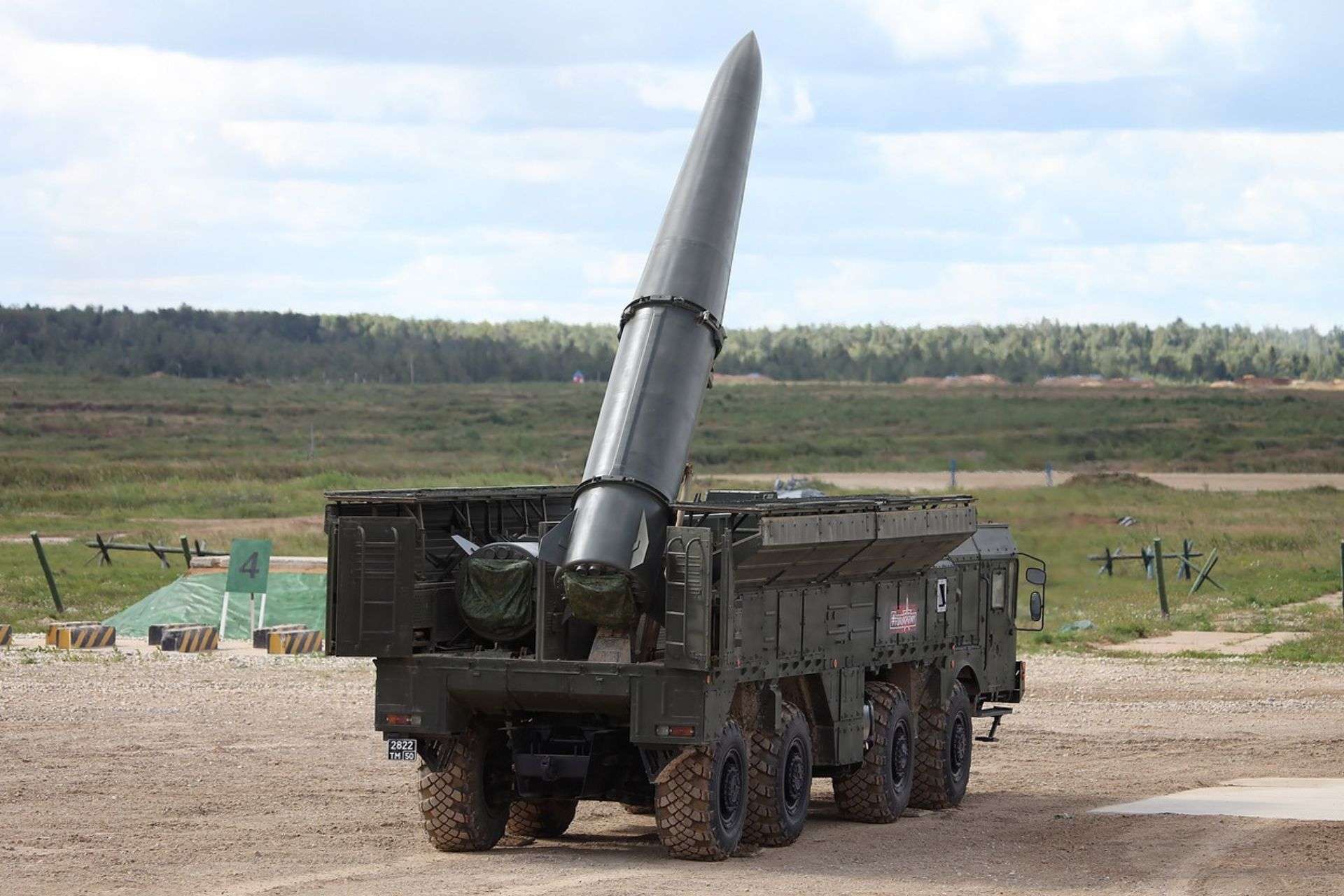
The P78-1 TEL of 9K720 Iskander-M SRBM at Military Technical Forum Army in 2018 (Picture source: Vitaly Kuzmin)
Putin also addressed NATO chief Jens Stoltenberg’s encouragement for Ukraine to use Western weapons to target Russian soil, stressing that allowing Kyiv to attack Russia with increasingly powerful weapons would seriously escalate tensions, potentially leading to war with the West. He specifically mentioned the American ATACMS and British and French missile systems, noting that Russia would counter by shooting down any such Western missiles. This follows recent permissions by the United States, France, and Germany for Ukraine to conduct targeted strikes within Russia.
Further, Putin reiterated that Russian nuclear doctrine allows for the use of nuclear weapons if national sovereignty and territorial integrity are threatened. He cautioned the West against underestimating this doctrine, which contemplates the use of all available means if necessary. This is not the first time the Russian President has issued such threats.
During a speech that lasted over three hours at the Gazprom Tower before the St. Petersburg International Economic Forum, Putin also discussed various issues including the conflict in Gaza and the upcoming U.S. elections. He criticized the United States for prioritizing its own interests over those of Ukraine and condemned the American judicial system for its handling of Republican nominee Donald Trump.
In the broader context of the Ukrainian conflict, Putin described the situation as an existential battle against a declining and decadent West, which he accuses of humiliating Russia post-1989 by encroaching on what he considers Moscow’s sphere of influence, including Ukraine.
Russia possesses a sophisticated missile arsenal that plays a critical role in its military strategy, especially evident in the current Ukrainian conflict. Among these weapons, the hypersonic Zircon missile stands out, capable of traveling 1,000 km at nine times the speed of sound. Initially designed for sea launch, a ground-based version has also been developed, making it a formidable threat due to its ability to evade most air defense systems.
The Kinzhal, or "dagger," is an air-launched ballistic missile that can reach speeds over 11,000 km/h and carry both conventional and nuclear warheads, adding to its strategic significance. Additionally, the Iskander-K, a short-range ballistic missile system, has been deployed against Ukrainian urban and military targets. It is known for its accuracy and the capability to be launched from mobile platforms, making it challenging to detect and neutralize before it reaches its target.
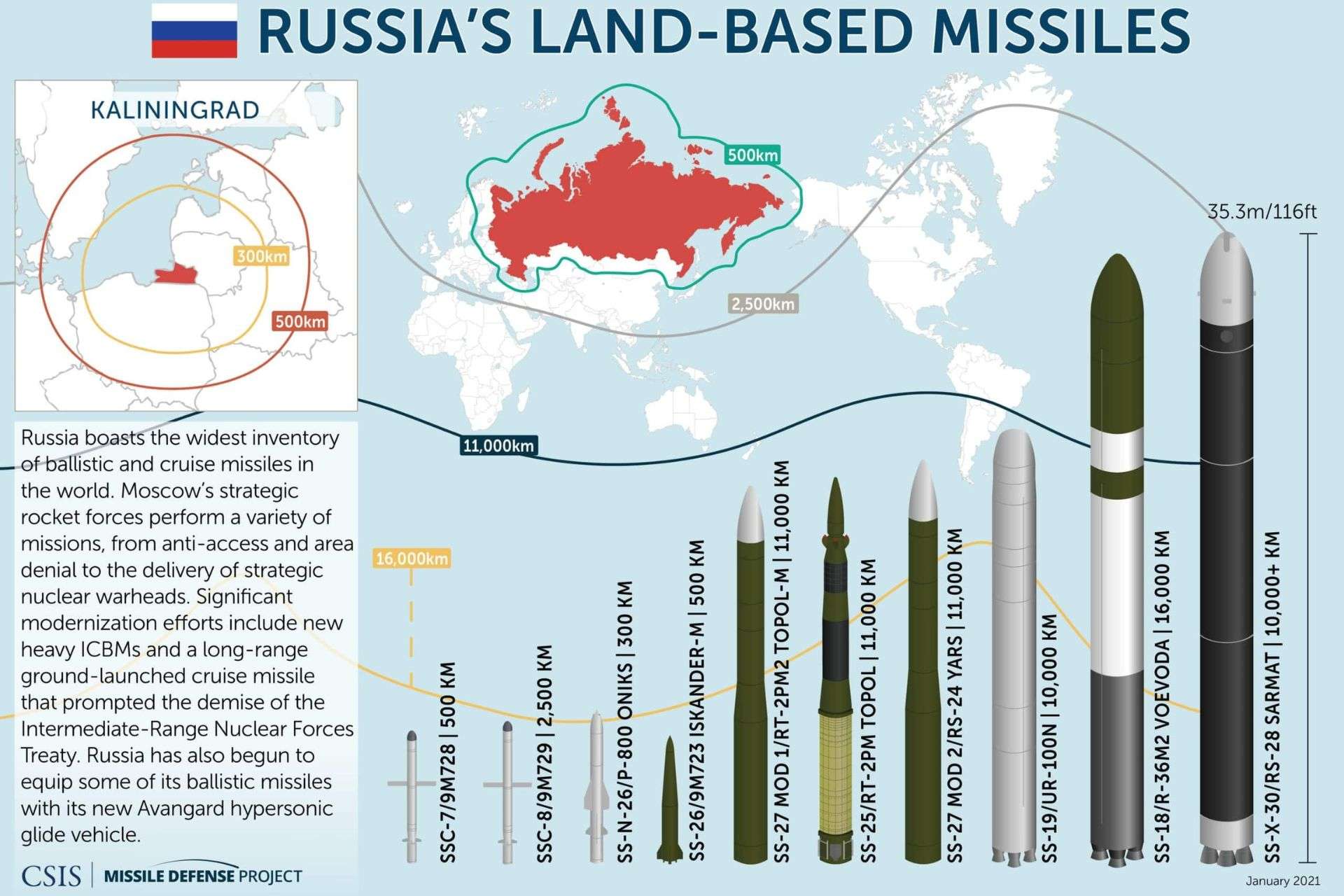
Some of Russia’s land-based missiles and their ranges, as of January 2021 (Picture source: CSIS)
Read more: Putin Threatens Missile Deployment in Response to Western Support for Ukraine
- Details
- Written by: Vandenbosch
- Category: 2024
- Hits: 10394
Breaking news
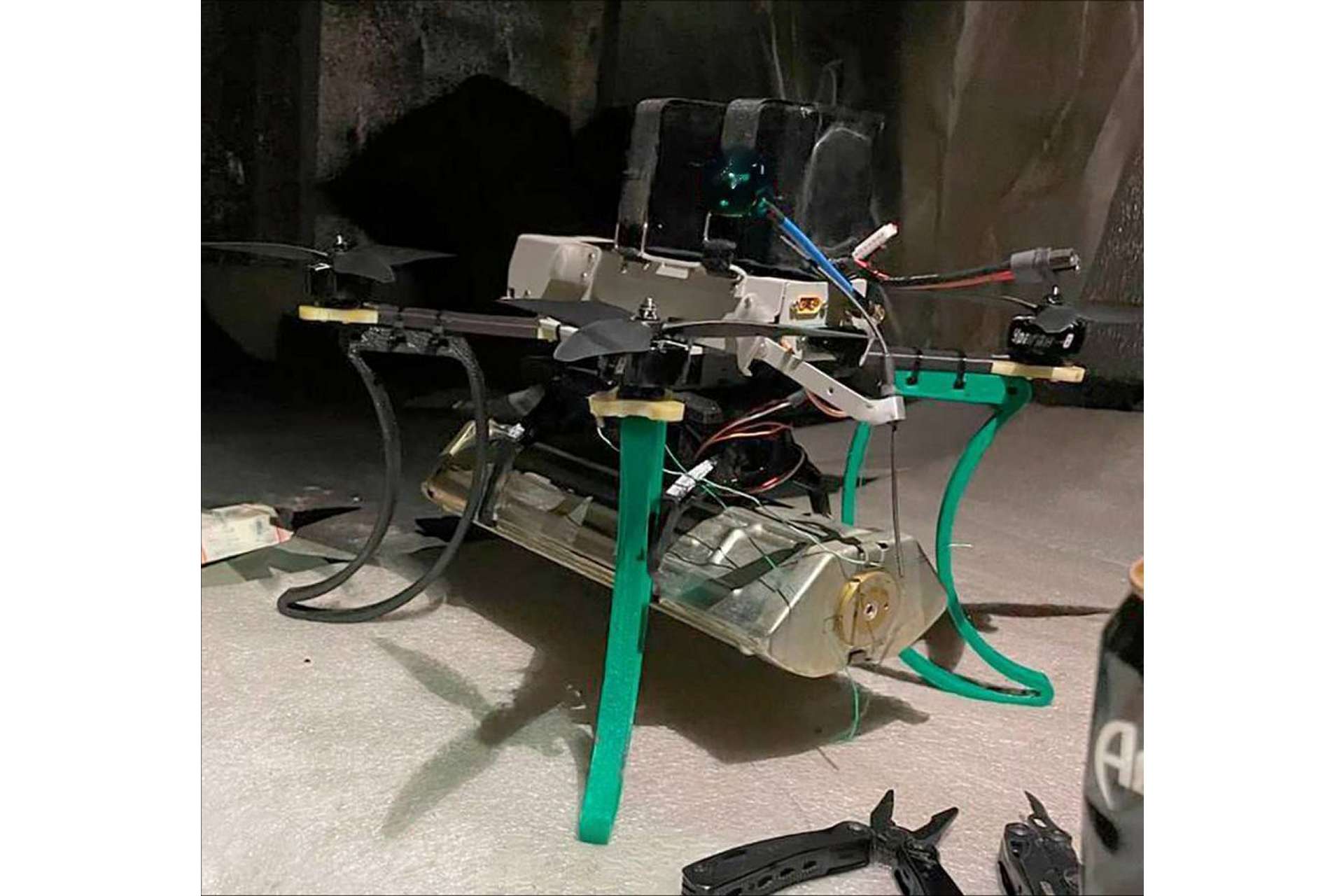
According to a tweet from Ukrainian Front dated June 5, 2024, the Ukrainian military successfully intercepted and captured a Russian FPV (First Person View) drone equipped with an unusual system. The captured drone was equipped with a 220 mm 9M27K3 projectile, originally designed for the BM-27 "Uragan" multiple rocket launcher system.
Follow Army Recognition on Google News at this link
A Russian FPV drone equipped with a 220 mm 9M27K3 projectile, originally designed for the BM-27 "Uragan" multiple rocket launcher system. (Picture source: Social Media)
The BM-27 "Uragan" is a Soviet-era multiple rocket launcher system designed to deliver massive firepower and rapid saturation on the battlefield. Entering service in the 1970s, the BM-27 is mounted on an all-terrain truck chassis, providing it with high mobility and the capability to quickly deploy in various terrain conditions. It is equipped with 16 launch tubes of 220 mm, capable of firing a variety of rockets, including explosive, incendiary, chemical projectiles, and those containing submunitions such as anti-personnel mines, which seem to be equipped on the drone captured by Ukrainian forces.
Each salvo of rockets can cover a wide area, making the BM-27 particularly effective in neutralizing troop concentrations, and enemy infrastructure, and creating minefields. Its maximum range is about 35 kilometers, and its ability to deliver rapid and devastating firepower makes it a formidable weapon in modern conflicts.
The 9H223 KPFM-1C cartridge, combined with the 220 mm 9M27K3 projectile, constitutes an advanced component of the Russian arsenal, designed to be used with the BM-27 "Uragan" multiple rocket launcher system. This combination of cartridge and projectile represents a sophisticated solution for dispersing anti-personnel mines on the battlefield.
The 220 mm 9M27K3 projectile is specifically designed for the BM-27 "Uragan," a multiple rocket launcher capable of firing a variety of munitions at a range of about 35 kilometers. This particular projectile is intended to contain and disperse anti-personnel submunitions, specifically the PFM-1 "Petal" mines. The 9M27K3 carries a payload of 26 of these mines, known for their distinctive shape that resembles a butterfly, hence their nickname.
PFM-1 "Petal" mines are designed to be difficult to detect and neutralize. They are lightweight, made of plastic, and deployed to scatter over a wide area, making the task of mine clearance extremely complex and dangerous. These mines are pressure-sensitive and can cause severe injuries to civilians.
The 9H223 KPFM-1C is the cartridge used to propel the 9M27K3 projectile. This cartridge ensures the stability and accuracy of the launch, guaranteeing that the projectile reaches its intended target before releasing the mines. The design of the cartridge and projectile results from years of technological development aimed at maximizing the efficiency of mine dispersion and minimizing the chances of failure in flight or upon impact.
While drones are now well-known, the combination of a projectile designed for an MLRS and an FPV drone was previously unknown. It is easy to understand what drove the Russian forces to mount such a system on a drone, as automation is a significant factor in the Russo-Ukrainian conflict. However, the role fulfilled by the drone is not quite the same as that of the BM-27. The BM-27 is designed to saturate an area, which is not the case here; the drone should be seen more as a precise tool, carrying out more targeted missions while conserving resources.
However, a swarm of drones equipped with such devices could fulfill the same role as the BM-27 and would undoubtedly be remarkably effective. But the model here seems very artisanal, and large-scale production does not seem to be on the agenda.

The BM-27 "Uragan" is a Soviet-era multiple rocket launcher system. ( Picture Source: Vitaly V.Kuzmin)
Read more: Ukraine Captures Russian FPV Drone Equipped with 220 mm BM-27 Projectile
- Details
- Written by: V.Saint
- Category: 2024
- Hits: 8935
Breaking news
On October 31, 2023, the contract between the OCCAR (Organisation Conjointe de Coopération en matière d'Armement) and Spanish Missile Systems (SMS) for the HYDEF project (Hypersonic Defence Interceptor Study) was signed in Bonn, Germany. Today, at the ILA 2024 trade show, the final system models are being presented.
Follow Army Recognition on Google News at this link
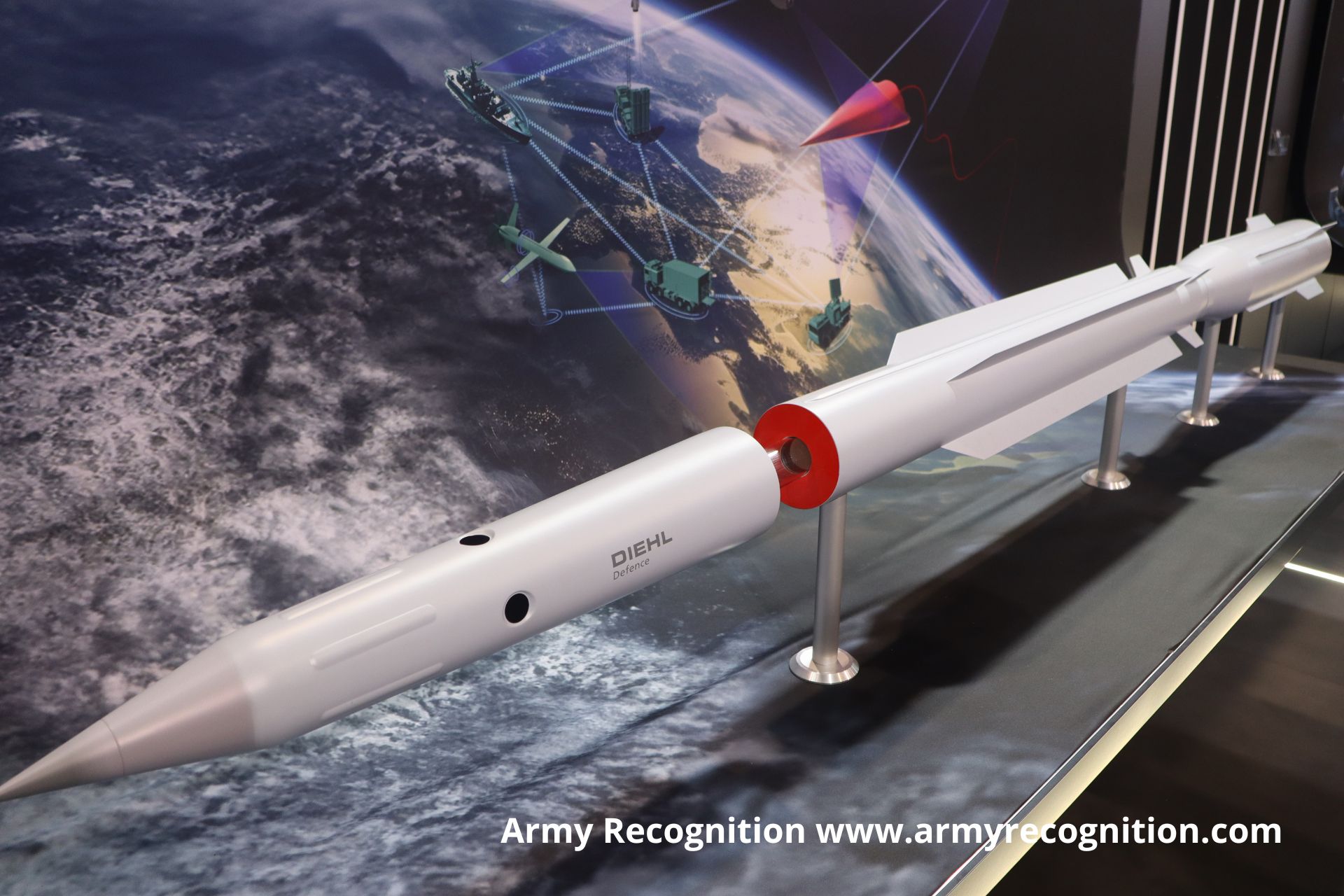
HYDEF interceptor missile models presented by Diehl Defence at ILA 2024 (Picture source: Army Recognitin)
As the first European defense program against hypersonic threats, the HYDEF project led by the consortium around SMS (including Escribano Mechanical & Engineering, GMV, and SENER AEROSPACIAL from Spain, and Diehl Defence from Germany) has positioned itself distinctly by signing the contract with OCCAR.
The Spanish company SMS is responsible for managing the HYDEF project. The German air defense systems company Diehl Defence, headquartered at Lake Constance, is in charge of the technical implementation from the development of the overall system to the interceptor itself. The entire system is capable of detecting and intercepting hypersonic cruise missiles (HCM) as well as highly agile hypersonic glide vehicles (PL) with speeds of nearly Mach 20 (6 km/s). This will be achieved through the networking of various sensors, partially space-based, and the interception system, which will be deployed based on existing NATO BMD command and control systems as much as possible.
The prototype is presented as a staged missile allowing maximum thrust and weight reduction as it ascends out of the atmosphere.
Diehl Defence develops and produces the medium-range ground-based air defense system IRIS-T SLM, which has been successfully deployed in Ukraine to ensure the protection of the Ukrainian population. Additionally, Diehl Defence is a reliable partner of the German Bundeswehr and international armed forces in the fields of missiles, ammunition, training systems, and protection.
The HYDEF project is based on a European initiative to defend against hypersonic weapons, which are now becoming more widely available. Currently, five European countries are participating in the project: Spain, Germany, Poland, Norway, and Belgium.
HYDEF is closely linked to the European TWISTER project "Timely Warning and Interception with Space-based TheatER surveillance" and is funded with 100 million euros.
Read more: Diehl defence presents first European Hypersonic glide vehicle interceptor at ILA 2024

- Details
- Written by: Administrator
- Category: 2024
- Hits: 18035
Breaking news
According to information published by the "Breaking Defense" website on June 4, 2024, South Korea is offering its K9 Thunder self-propelled howitzer to the U.S. Army to address the capability gap created by the cancellation of the Extended-Range Cannon Artillery (ERCA) program.
Follow Army Recognition on Google News at this link
The South Korean K9 Thunder is considered one of the most modern self-propelled howitzers in the world. (Picture source: Army Recognition Group)
The ERCA program, initiated by the U.S. Army in 2015, was designed to enhance the range and lethality of the Army's field artillery systems. The program aimed to develop advanced cannon systems capable of firing artillery shells at significantly greater distances with improved precision, providing more effective ground forces support. The primary platform for ERCA was based on the M109A7 Paladin Integrated Management (PIM) chassis, incorporating modernized fire control systems, advanced targeting optics, and digital communication systems.
Despite its ambitious goals, the U.S. Army canceled the ERCA program due to significant technical challenges during the prototyping phase. Re-launched initially in 2018 to extend the artillery range to 70 kilometers, the program faced severe wear and tear on the cannon after relatively few rounds, leading to its termination despite initial testing successes. As a result, the Army has shifted its focus to evaluating existing artillery systems to meet its long-range needs, allocating $55 million in its FY25 budget to identify and implement suitable extended-range cannon solutions.
The K9 Thunder, developed by South Korea's Hanwha Defense, was introduced in 1999 and is currently used by several countries worldwide, including South Korea, Turkey, Poland, India, Finland, Norway, and Estonia. This self-propelled howitzer boasts a 155mm/52-caliber gun, with a firing range of up to 40 kilometers using conventional rounds and up to 50 kilometers with rocket-assisted projectiles. It features advanced fire control systems, automatic ammunition handling, and enhanced mobility, making it a formidable asset in modern artillery operations.
In the wake of the ERCA program's cancellation, the U.S. Army announced its intention to focus on existing systems for long-range artillery capabilities. In a proactive move, Hanwha Defense is preparing to showcase the K9 Thunder for the U.S. military, potentially in Seoul or at the Yuma Proving Ground in Arizona. This demonstration is a clear indication of their readiness to step in and fill the gap left by the discontinued ERCA program.
- Details
- Written by: Administrator
- Category: 2024
- Hits: 96304
Breaking news
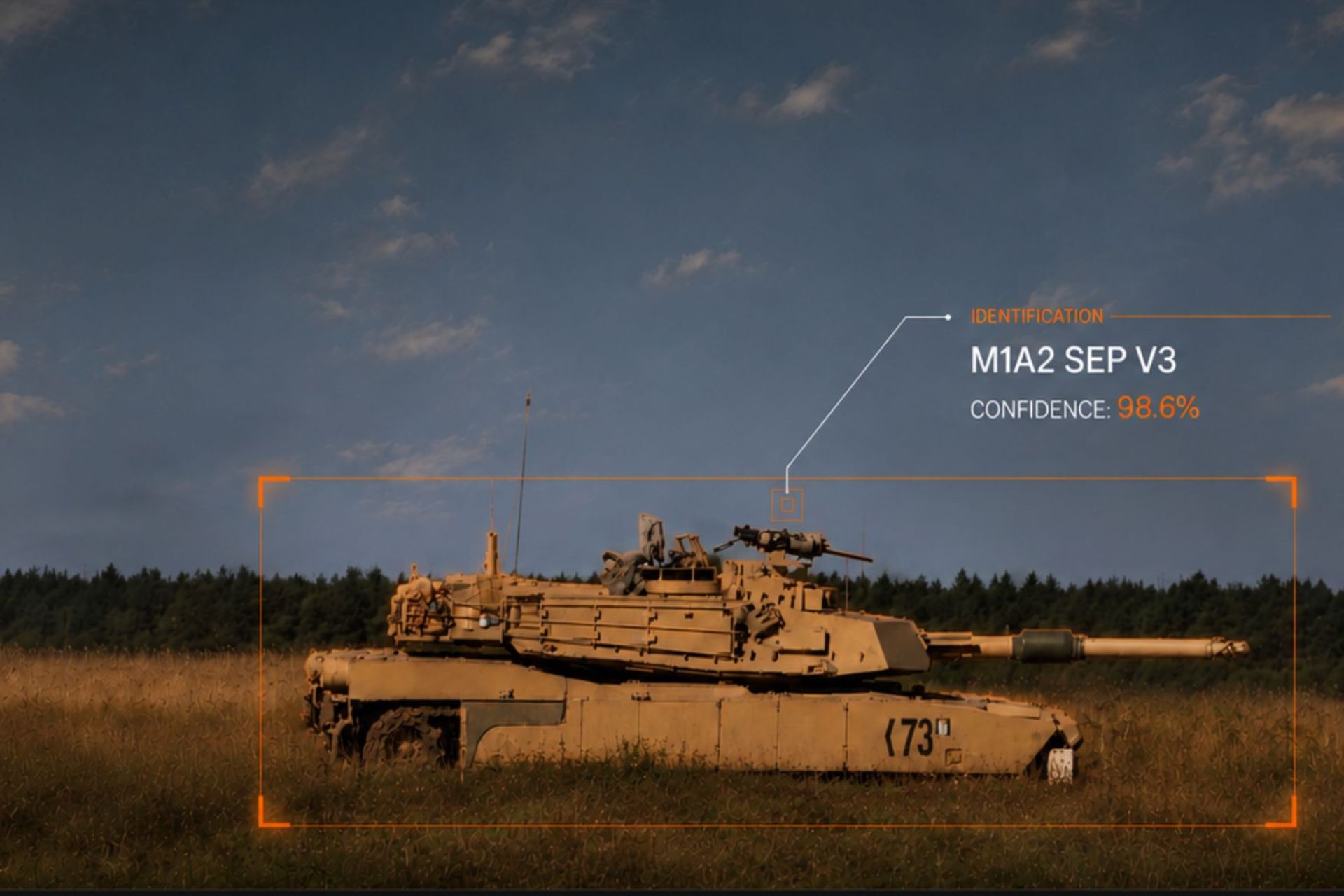
MEGA is an Artificial Intelligence (AI)-powered recognition solution designed to transform images and video streams into structured military intelligence. Built for both online and offline use, it enables armed forces, defense organizations, analysts, and system integrators to identify military equipment across land, naval, air defense, drone, weapons, and munitions environments with speed, precision, and operational relevance.
For demonstrations, technical integration discussions, or partnership opportunities, IDDEA can be contacted at
Discover MEGA-Army at Eurosatory 2026 IDDEA Booth Hall 4-E78
MEGA transforms still images and video streams into actionable military equipment intelligence for faster recognition and operational analysis. (Picture source: IDDEA)
What makes MEGA different is its ability to go beyond simple target detection. The system identifies the exact type of observed military equipment and connects that result to technical and combat capability data. A vehicle is not only seen. It is recognized, classified, contextualized, and linked to information that helps users understand its role, threat level, and operational impact. In modern battlefield conditions, where every second can influence a decision, MEGA brings recognition, analysis, and capability assessment into a single intelligence workflow.
At its core, MEGA is the baseline AI identification technology from which multiple specialized models can be developed. This architecture allows the same recognition logic to be adapted to different operational domains while preserving a common intelligence framework. MEGA Army is the land-warfare version, designed to identify tanks, armored vehicles, artillery systems, air-defense systems, radars, launchers, and other ground equipment. In this role, MEGA Army can identify a main battle tank by exact type and connect it to data on armor protection, armament, mobility, ammunition, variants, and battlefield employment.
The strength of MEGA Army relies on its Global Defense Database, which brings together more than 1,500 equipment types across more than 20 categories. This database provides the system with the depth required to distinguish visually similar vehicles and to support analysis beyond the initial recognition result. For a military analyst, a drone operator, a reconnaissance unit, or a command-post team, this means that a still image or video sequence can quickly become a structured intelligence product. The user does not simply receive a name. The user receives a technical and operational understanding of what has been observed.
MEGA is available through two complementary deployment models. The first is the Information Technology (IT) device version, designed for use on workstations, laptops, rugged tablets, intelligence terminals, and closed-network environments. In this configuration, the AI algorithms and defense database are preloaded directly onto the device. No cloud connection is required. No external server is needed. No internet access is necessary. This makes the IT device version particularly relevant for military headquarters, intelligence cells, border-security units, training centers, and operational command posts where data protection, autonomy, and rapid analysis are essential.
The IT device version can process still images and video streams collected from multiple sources, including reconnaissance missions, drone footage, surveillance cameras, battlefield reports, open-source material, or archived intelligence files. Once the input is loaded, MEGA performs automatic detection, exact model identification, and capability assessment. The result can support threat evaluation, tactical intelligence analysis, and decision-making preparation. In practical terms, MEGA gives analysts the ability to exploit visual data faster while keeping all information inside a secure or disconnected environment.
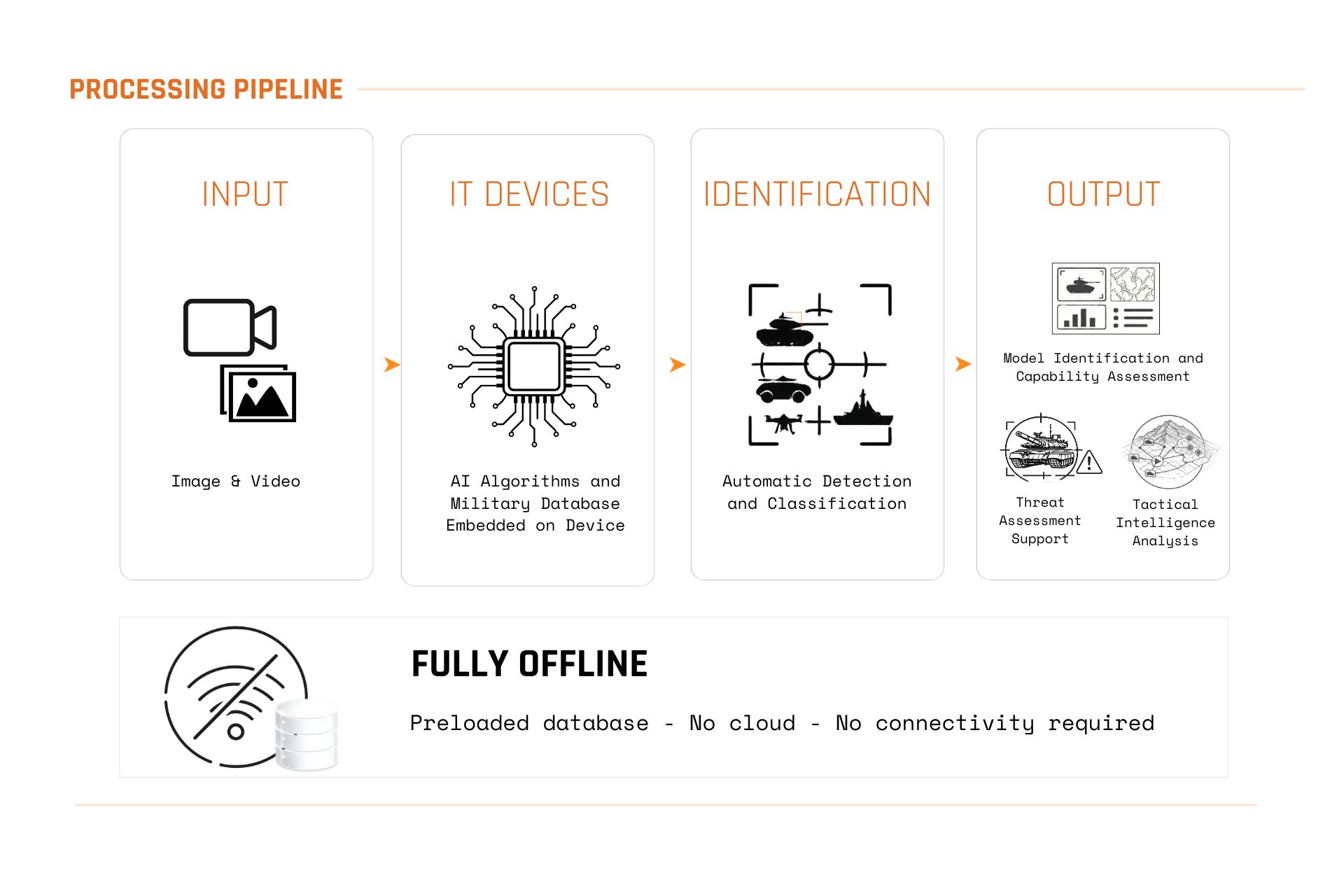
The MEGA IT device version enables secure offline identification of military equipment directly from workstations, laptops, rugged tablets, and closed-network terminals. (IDDEA)
The second deployment model is the embedded version, designed for direct integration into military systems through a dedicated onboard AI module. This module contains the AI algorithms, the recognition engine, and the operational database, allowing MEGA to work locally with cameras, sensors, electro-optical systems, thermal imagers, remote weapon stations, drone payloads, naval surveillance sensors, or air-defense observation systems. The recognition process takes place onboard, without the need to transmit sensitive imagery to an external network.
The embedded version brings MEGA closer to the tactical edge. Integrated into a combat vehicle, an air-defense system, a drone, a naval vessel, an airborne system, a fixed surveillance site, or a smart munition, it can support real-time identification directly from the sensor feed. The operational advantage is clear: crews and operators gain faster target recognition, improved threat understanding, enhanced battlefield awareness, and reduced cognitive workload. Instead of relying only on manual visual interpretation, the user receives machine-assisted identification linked to capability data at the moment of observation.
This embedded architecture can also support target prioritization and engagement support. For an air-defense crew, MEGA could help classify an aerial object and associate it with relevant capability data. For a combat vehicle crew, it could assist in recognizing an opposing armored vehicle and understanding its threat profile. For a drone operator, it could accelerate the exploitation of reconnaissance video. For a naval vessel, it could support the identification of ships, small craft, coastal systems, or weapon systems in complex maritime environments. In each case, the objective remains the same: shorten the chain between detection, identification, understanding, and decision.
MEGA’s modular logic also enables a wider family of specialized versions. MEGA Naval can be developed for warships, patrol vessels, landing craft, fast attack craft, naval radars, coastal-defense systems, and shipborne weapons. MEGA Air can focus on combat aircraft, helicopters, drones, transport aircraft, airborne early-warning aircraft, and air-defense-related targets. MEGA Munitions can support the recognition of missiles, rockets, artillery shells, guided bombs, loitering munitions, and unexploded ordnance. MEGA Arms can address small arms, crew-served weapons, anti-tank guided missiles, man-portable air-defense systems, and infantry weapons.

From image or video input to exact model identification, MEGA connects visual recognition with technical data and combat capability assessment. (Picture source: IDDEA)
Across these versions, MEGA remains a single intelligence foundation adapted to different missions. Its value lies in combining AI recognition, offline autonomy, structured military data, and operational usability. It is not a generic image-analysis tool. It is a defense-oriented recognition technology built to identify what matters in the field, explain what it is, and help users act on that information with greater confidence.
Future development will expand MEGA through broader equipment libraries, domain-specific recognition packages, customer-defined datasets, embedded integration with mission systems, and tailored versions for land, naval, air, weapons, and munitions applications. As military operations become more sensor-driven and data-intensive, the ability to identify equipment accurately, locally, and instantly will become an essential layer of tactical intelligence. MEGA is designed for that environment: offline when needed, embedded when required, scalable by design, and ready to support the next generation of battlefield recognition.
To discover the MEGA-Defense technology, visit https://www.mega-defence.com to explore our four domains: MEGA-Army, MEGA-Navy, MEGA-Aviation, and MEGA-Weapons.
For more detailed information about the MEGA-Army solution, visit https://www.militaryequipmentguide.com.
For information about IDDEA, the company developing the MEGA-Defense apps, visit https://www.iddea-be.com
For demonstrations, technical integration discussions, or partnership opportunities, IDDEA can be contacted at
Read more: MEGA Military Equipment Guide App - IDDEA Using AI Image Detection

- Details
- Written by: Vandenbosch
- Category: 2024
- Hits: 8236
Breaking news
On June 5, 2024, the U.S. Government awarded a $73.5 million contract to UVision Inc. and Mistral Inc. for the supply of Hero-120SF loitering munitions to the U.S. Special Operations Command. The contract, expected to be completed by May 2029, includes not only the munitions themselves but also spare parts, engineering change proposals, new equipment training, and the conversion from organic precision fires-mounted to medium-range precision strike systems.
Follow Army Recognition on Google News at this link
The Hero-120SF is a mid-range, anti-tank loitering munition system designed for heavy strikes against armored targets. (Picture source: UVision)
The Hero-120SF is a mid-range, anti-tank loitering munition system designed for heavy strikes against armored targets such as tanks and vehicles. With minimal collateral damage and equipped with a variety of multi-purpose warheads, the Hero-120SF offers a highly effective engagement solution. Its design is tailored for Special Forces operations, featuring enhancements in payload capacity, guidance systems, and deployment flexibility.
Major General (Ret.) Avi Mizrachi, Chairman of the Board of Directors of UVision USA, commented on the contract, stating, "This significant contract with the U.S. Special Operations Command, supported by our strong partnership with Mistral, underscores the commitment of UVision and Mistral to provide cutting-edge technology and operational expertise to protect U.S. national security."
Production will be carried out at UVision USA's facilities in Virginia and the newly opened SAIC plant. Mistral Inc., acting as the prime contractor and exclusive representative of UVision in the USA, will oversee the industrial and commercial aspects of the contract, ensuring that the Hero series meets the exacting standards of the U.S. military.
The work under this contract highlights the continuing evolution and enhancement of U.S. defense capabilities, particularly in the realm of unmanned aerial loitering munitions.
The Hero-120SF can fly for up to 60 minutes and cover a maximum distance of 60 kilometers. It is designed for heavy strikes, combining an anti-armor and anti-personnel enhanced blast warhead, making it particularly effective against armored targets and enemy troops.
Weighing 18 kilograms with its canister, the Hero-120SF is easily transportable by a single person, making it ideal for Special Forces operations. It can operate at typical altitudes between 1200 and 3000 feet above ground level and is electrically powered, ensuring quiet and discreet performance.
The system is equipped with three gimbal cameras (electro-optical/infrared) for advanced intelligence, surveillance, reconnaissance, tracking, and attack capabilities. For launch, the Hero-120SF can be deployed from a single canister, either tactically or platform-mounted, via pneumatic launch. It can also be launched from a multi-canister launcher containing between 4 and 12 munitions.
Another advantage of the Hero-120SF is its compatibility with other operating equipment within the family of loitering munitions, allowing for increased flexibility and efficiency on the battlefield. Additionally, it offers a "top attack" capability, enabling precise strikes on vulnerable targets located on the upper parts of vehicles and structures.
UVision USA specializes in combat-proven Unmanned Aerial Loitering Munition (ALM) Systems, providing precise and effective operational attack capabilities. Their innovative and cost-effective 'HERO' series of Aerial Loitering Munitions are based on advanced technology and extensive field experience, offering high-precision strike capabilities with unique aerodynamic platforms designed for extreme flight and attack profiles.

Mobile launch platform for the Hero-120SF. (Picture source: UVision)
Read more: US Awards Contract for Advanced Loitering Munitions to UVision and Mistral
- Details
- Written by: Halna du Fretay
- Category: 2024
- Hits: 4493
Breaking news
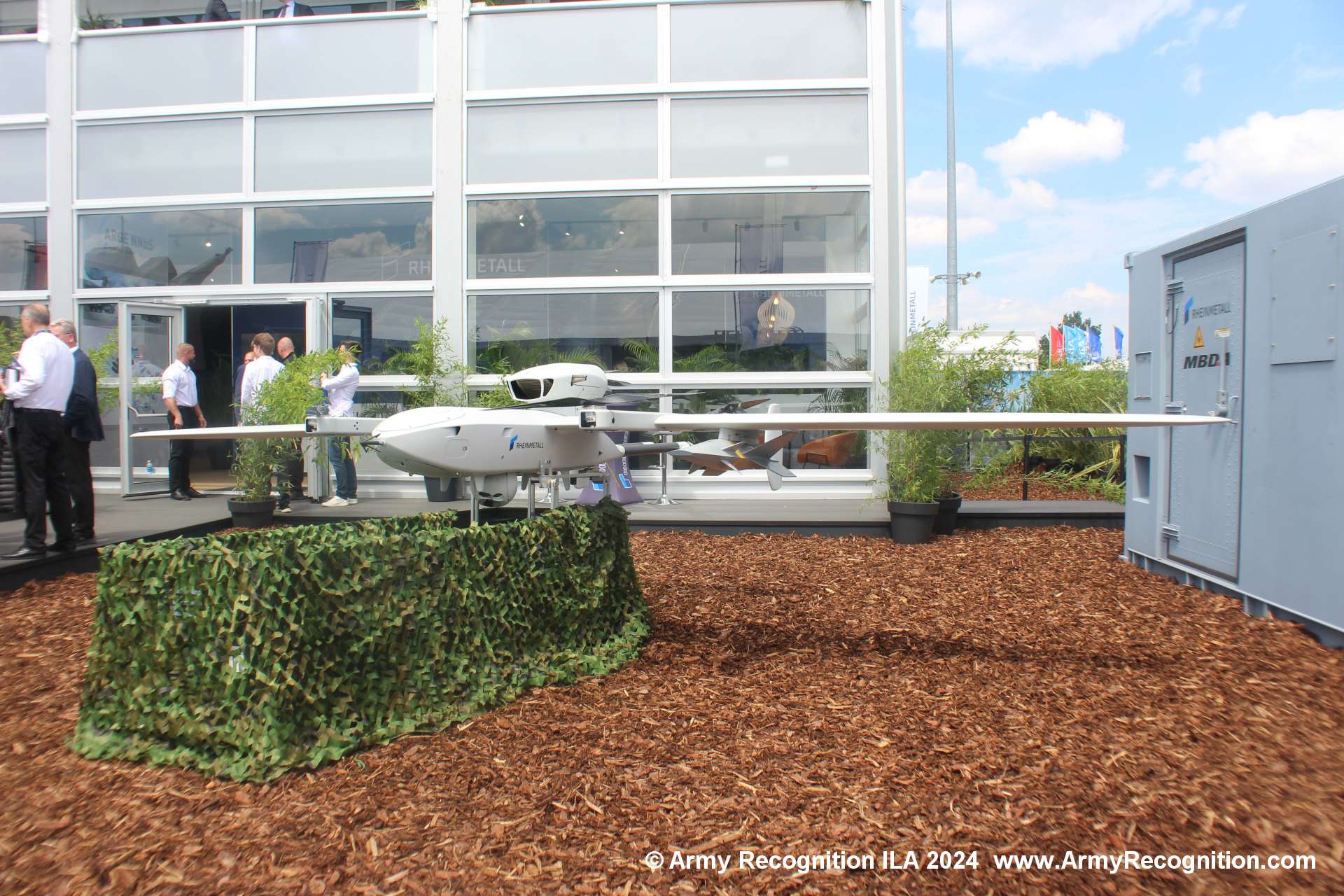
At the ILA Berlin 2024, Rheinmetall showcases the LUNA NG, an advanced aerial reconnaissance system developed to meet the demanding requirements of modern warfare. The LUNA NG (Luftgestützte Unbemannte Nahaufklärungsausstattung: Unmanned Airborne Vehicle for Close Reconnaissance – Next Generation) was developed in response to operational experiences, highlighting the crucial role of real-time reconnaissance in command and control during the conflict in Ukraine.
Follow Army Recognition on Google News at this link
The modular design of the LUNA NG allows for customized payload configurations, supporting a wide array of equipment including electro-optical and infrared sensors, and communication relays (Picture source: ArmyRecognition)
In 2023, Rheinmetall delivered one of these drones to Ukraine on behalf of the German government to support its defense campaign. Recognized as one of the latest systems for unmanned aerial reconnaissance, the LUNA NG is capable of efficiently classifying and detecting objects. Its aerodynamic and ultra-light design allows the drone to conduct extended missions up to twelve hours. Additionally, the LUNA NG features vertical take-off and landing (VTOL) capabilities and can be equipped with glide bombs, demonstrating its versatility in various military applications.
The drone's fuselage is constructed from carbon fiber reinforced plastic (CFRP), ensuring durability and lightness. It boasts a long flight time and a data link range of up to 150 kilometers, which can be extended to around 500 kilometers with optional satellite communication (SatCom) equipment. With a payload capacity of 30 kg and two payload compartments, the LUNA NG serves as a multi-sensor platform suited for a range of operations from reconnaissance to armed tactical missions.
Since its introduction, the LUNA NG has proven to be a versatile tool in both military and civilian applications. It is notable for its low acoustic, thermal, and radar signatures during flight, contributing to its inconspicuous profile. The system requires minimal training due to its extensive automation and user-friendly mission planning and data analysis software. The modular design of the LUNA NG allows for customized payload configurations, supporting a wide array of equipment including electro-optical and infrared sensors, and communication relays. This adaptability, coupled with its robust construction and reliable flight characteristics, ensures that the LUNA NG remains a valuable asset for contemporary aerial surveillance needs.
In September 2023, Rheinmetall received a significant order from the Bundeswehr for the delivery of the LUNA NG system, which will be introduced into the German forces under the designation HUSAR. The order includes twelve production systems and one pilot system, with the first series system scheduled for delivery in the second quarter of 2025.
Rheinmetall continues to play a pivotal role in the defense sector with the development of the LUNA NG. This system not only demonstrates the company's commitment to advancing military technology but also its capability to effectively meet the evolving demands of modern warfare. The proliferation of the LUNA NG, including its adoption by the Bundeswehr, signifies its growing importance and potential impact on future military operations.
Read more: From Ukraine to Berlin: Rheinmetall Displays LUNA NG Drone at ILA Berlin 2024
- Details
- Written by: Halna du Fretay
- Category: 2024
- Hits: 12227
Breaking news
At the 2024 International Aerospace Exhibition (ILA) in Berlin, a significant partnership was established between Rheinmetall Electronics and MBDA Deutschland to enhance short-range mobile defense systems against drones. The two companies signed a Letter of Intent (LOI) that facilitates the integration of MBDA's Small Anti Drone Missile (SADM) into Rheinmetall's Skyranger 30 and other military vehicles.
Follow Army Recognition on Google News at this link
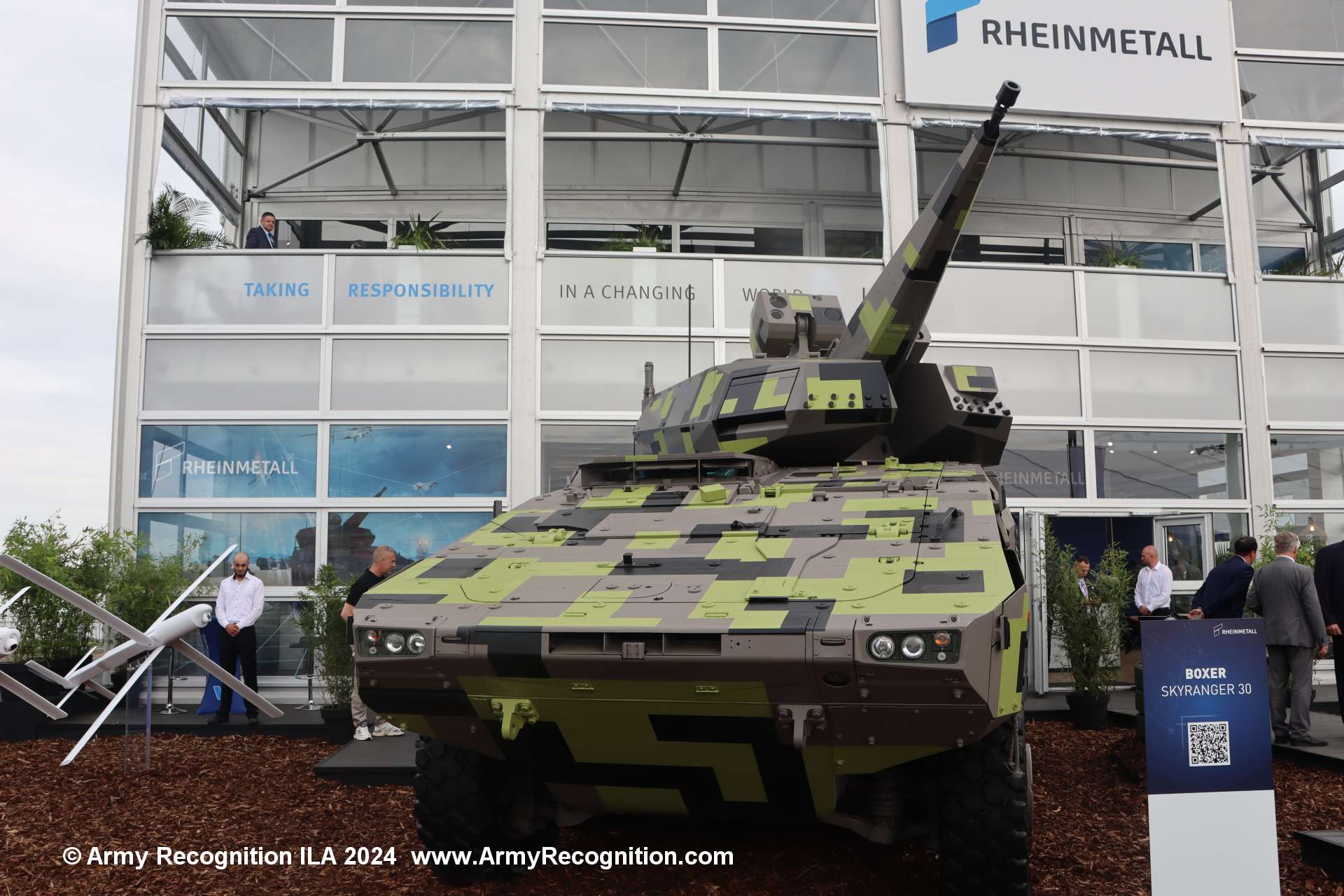
The Skyranger 30, developed by Rheinmetall Defence, is a sophisticated air defense system designed to provide highly mobile and effective protection against various aerial threats, including drones, helicopters, and low-flying aircraft (Picture source: ArmyRecognition)
This collaboration aims to address existing gaps in drone defense capabilities by leveraging the combined strengths of both companies' technologies. The SADM, utilizing Enforcer technology, is designed to precisely target and neutralize small to medium-sized drones at extended ranges. Conversely, the Skyranger 30 is equipped with a 30mm cannon that provides effective mobile defense against airborne threats at closer ranges, thanks to its blend of firepower, advanced sensor technology, and agility.
The Skyranger 30, developed by Rheinmetall Defence, is a sophisticated air defense system designed to provide highly mobile and effective protection against various aerial threats, including drones, helicopters, and low-flying aircraft. It features a 30mm automatic cannon with a high rate of fire, integrated with advanced sensor technology for efficient target detection and tracking. Introduced to address the growing demand for versatile air defense solutions, the Skyranger 30 can operate in diverse and challenging environments.
Although the exact dates of production and service entry are not detailed, its deployment in military contexts suggests it has been actively integrated into defense operations in recent years. The Skyranger 30 is ideal for both permanent and temporary air defense setups, thanks to its rapid deployment capability and high mobility. Its state-of-the-art fire control systems and network-enabled operations allow it to link with other defense systems, enhancing the overall effectiveness of military force protection against aerial threats.
The partnership aims to develop long-term cooperation for integrating the SADM into the Skyranger 30 and other platforms, including the design, production, and integration of a launcher system onto various turret systems within Rheinmetall's digital system architecture. Demonstrations of this integration were showcased at the MBDA stand at ILA, highlighting the missile mounted on the turret of the Skyranger 30 system.
Thomas Gottschild, Managing Director of MBDA Germany, emphasized the urgency of addressing drone threats in current conflicts, stating that the collaboration aims to provide an optimized solution for drone defense by leveraging their missile technology with Rheinmetall's advanced turret systems. Timo Haas, Chief Digital Officer at Rheinmetall, commented on the strategic addition of the SADM to their portfolio, noting that preparations are already underway for an industrial setup to expedite implementation following customer approvals.
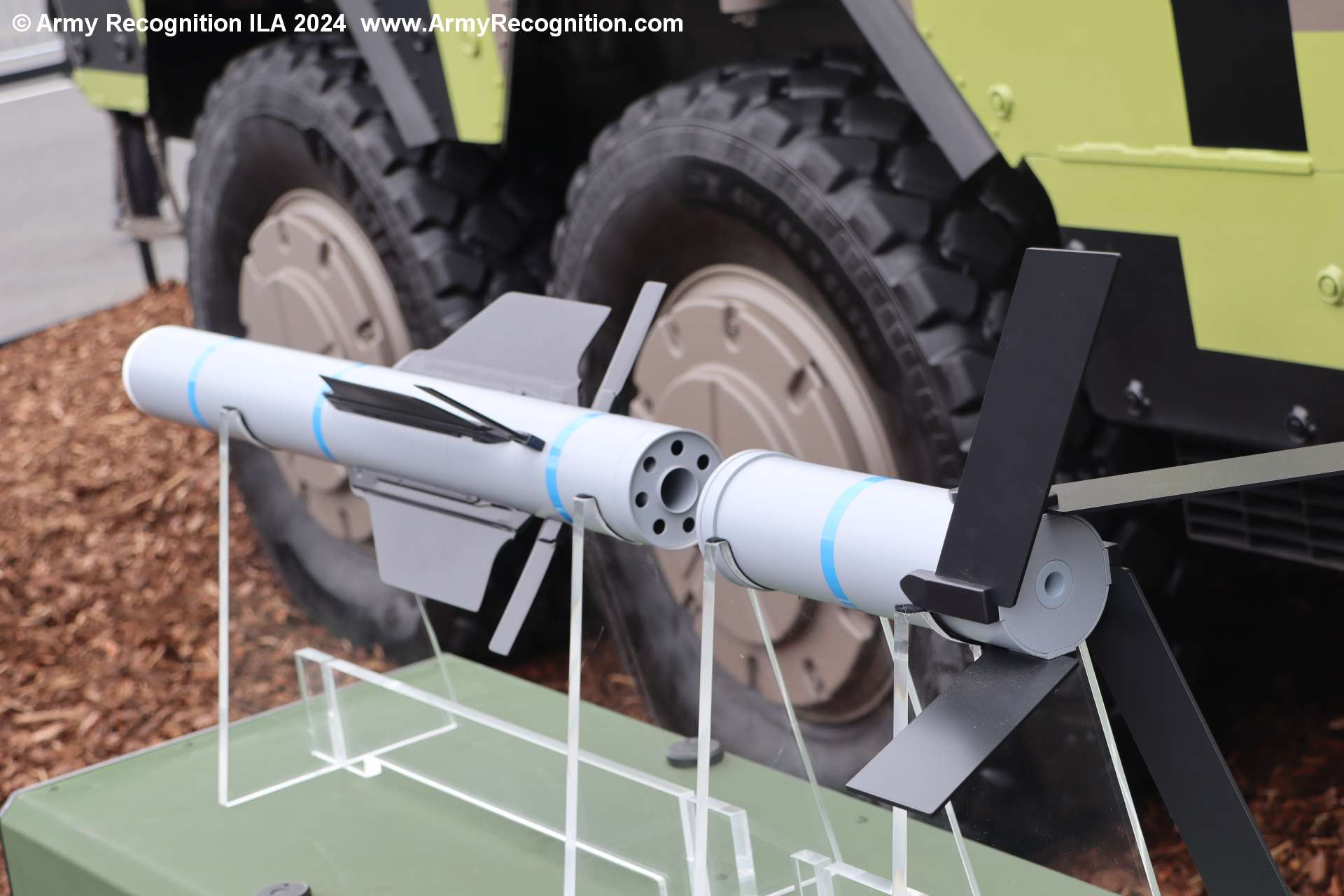
The SADM, utilizing Enforcer technology, is designed to precisely target and neutralize small to medium-sized drones at extended ranges (Picture source: ArmyRecognition)
Read more: Rheinmetall's Skyranger 30 to Integrate MBDA's Small Anti-Drone Missile at ILA 2024

- Details
- Written by: Halna du Fretay
- Category: 2024
- Hits: 3819
Breaking news
For the first time, Armenia will participate in EUROSATORY, the leading global trade show for land and air-land defense and security, which will take place from June 17 to 21, 2024, in Paris. Under the auspices of the France-Armenia Chamber of Commerce and Industry, chaired by Tigran Arakelian, the Armenian pavilion will gather several member companies from the Armenian military-industrial complex.
Follow Army Recognition on Google News at this link
Armenian companies seize a pivotal opportunity to showcase their technologies and connect with international partners at EUROSATORY 2024 (Picture source: Armenian MoD)
This event will provide a significant opportunity for these Armenian companies to showcase their technologies and solutions in Europe. They aim to establish contacts and potentially sign contracts with international partners during the expo, which will host over 1,800 exhibitors and 98,000 visitors and professionals from 90 countries.
Additionally, a Franco-Armenian conference is scheduled for Tuesday, June 18, in the GICAT pavilion (Group of French Land and Air-Land Defense and Security Industries). This conference will discuss Armenia's defense needs and the ongoing cooperation with France. It will feature the participation of Suren Papikian, the Minister of Defense of the Republic of Armenia, Mkhitar Hayrapetyan, the Minister of High Technological Industry, as well as representatives from GICAT, the France-Armenia CCI, and its members.
Armenia's presence at EUROSATORY 2024 marks a significant step for the country, reflecting its commitment to strengthening its defense capabilities and expanding its defense industry on the international stage, particularly in light of the conflict with Azerbaijan. This development also opens avenues for increased cooperation between Armenia and other nations and illustrates its partnership with France.
The military cooperation between Armenia and France involves strategic exchanges, joint training, and defense equipment agreements. This bilateral relationship aims to strengthen military capabilities and promote regional security. Through training programs and joint exercises, the two countries share expertise and technology to address contemporary security challenges. These initiatives contribute to the modernization of the Armenian armed forces while reinforcing France's position as a leader in European defense.
Specific aspects of this cooperation include the sale of French military equipment to Armenia, such as armored vehicles and advanced communication systems. An example of joint training is the "Caucasus Shield" operation, where French and Armenian forces train together in simulations of territorial defense and crisis response. These interactions go beyond material transactions and include the transfer of know-how and logistical support, underscoring the deep commitment of both nations to regional and international stability.
Read more: EUROSATORY 2024 To Welcome Armenia for the First Time