- Army
- Air Defense Systems
- Anti-tank systems and vehicles
- Armored Vehicles
- Armoured personnel carriers
- Artillery Vehicles and Weapons
- Command Post
- Communication Vehicles and Systems
- Electronic Warfare
- Engineer | Maintenance Vehicles
- Infantry Fighting Vehicles
- Main Battle Tanks
- Missiles
- Tactical and Logistic Vehicles
- Radars
- Unmanned Systems
- Weapons
- Navy
- Air











M109A7 SPH Paladin
M109A7 SPH Paladin
155mm tracked self-propelled howitzer - United States
Description
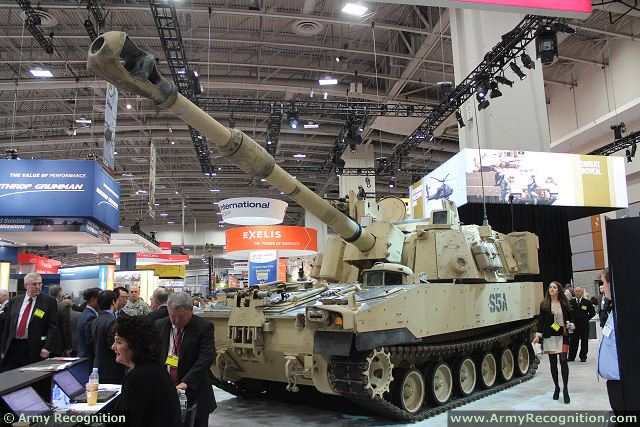
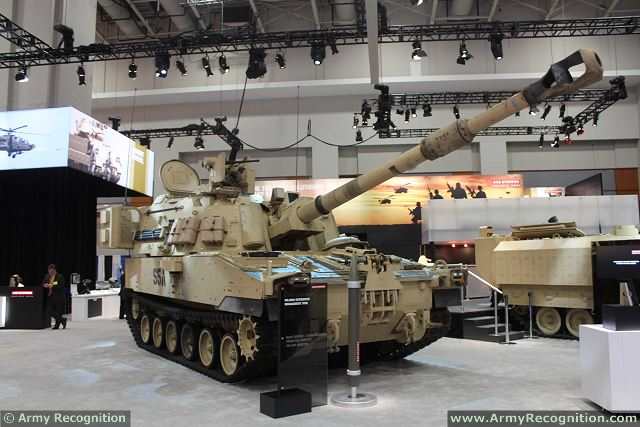
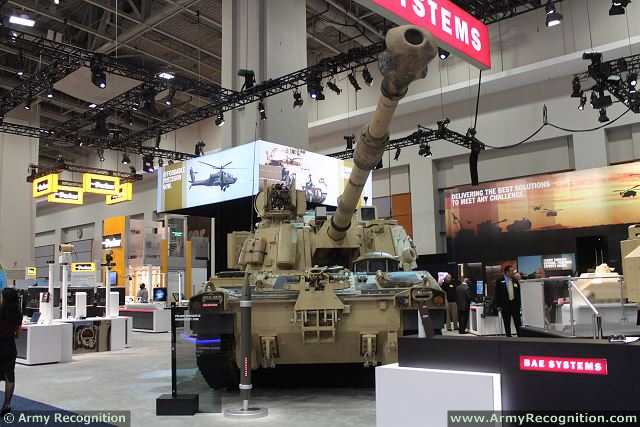
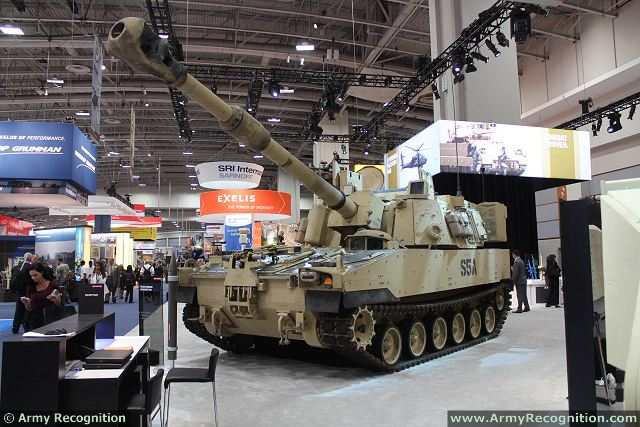
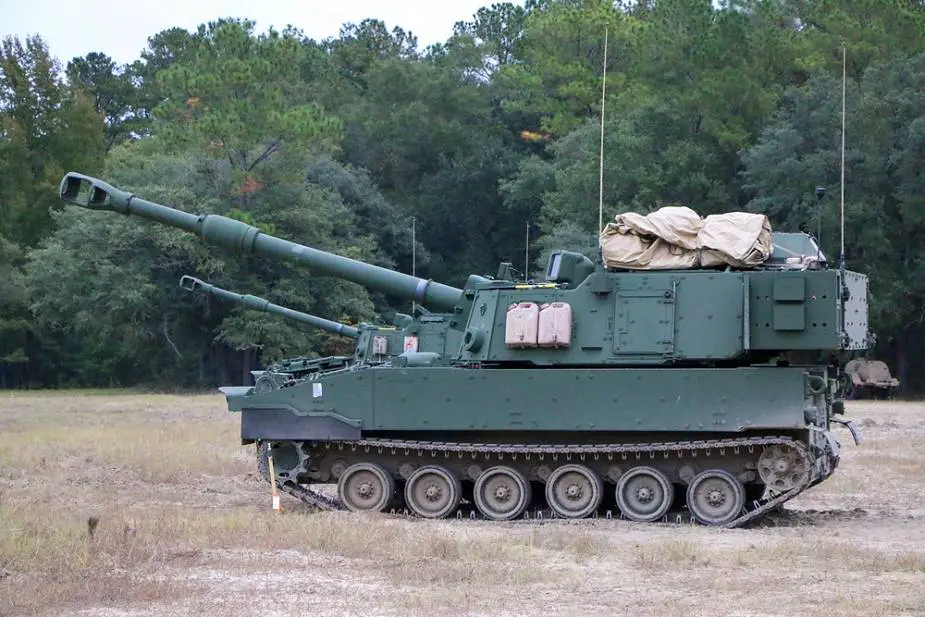
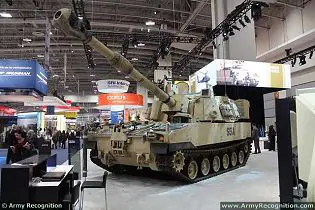
The M109A7 SPH Paladin 155mm Self-propelled howitzer is an upgraded version of the M109A6 Paladin. It benefits from an entirely new cab and cannon assembly. While the vehicle's cannon remains unchanged, the M109A7 sports a brand new chassis, engine, transmission, suspension, and steering system. These components are also found on the Army's Bradley Fighting Vehicles, thereby increasing commonality and reducing logistical footprint and costs. Improved survivability is also a main line of effort in the upgrade program.
The first prototype was unveiled in 2007. Prototypes of the M109A7 began testing at the U.S. Army Yuma Proving Ground (Arizona) in 2008, when the original concept demonstrator was introduced. Formal developmental testing began after that. In 2013, this artillery system was approved for production, and a contract was issued to BAE Systems to upgrade the first batch of M109A6 systems to the M109A7 standard. The US Army planned to obtain a fleet of 580 M109A7 howitzers and the same number of associated M992A3 armored ammunition support vehicles.
In April 2014, the U.S. Army received the first delivery of the first low-rate initial production M109A7. In November 2015, the U.S. Army awarded BAE Systems a contract option worth $245.3 million to complete the low-rate initial production (LRIP) of the M109A7s and M992A3 ammunition carriers. In December 2017, the U.S. Army awarded BAE Systems a contract that cleared the way for full-rate production of the M109A7s and M992A3s.
In March 2018, field artillery soldiers tested both new systems. U.S. soldiers from Battery B, 1st Battalion, 5th Field Artillery Brigade conducted several training events leading up to the Initial Operational Test (IOT) of the latest Paladin.
In December 2019, BAE Systems Land & Armaments was awarded a $249,152,760 modification to contract W56HZV-17-C-0001 for the Self-Propelled Howitzer and carrier, ammunition, tracked vehicles, and their associated support under the production contract to build and deliver M109A7s and M992A3s. In December 2019, the U.S. Army awarded BAE Systems a $249 million contract modification to complete an additional order of 60 M109A7 self-propelled howitzers.
In March 2020, the U.S. Army awarded BAE Systems a $339 million contract modification to produce 48 vehicle sets of the M109A7 Self-propelled Howitzer (SPH) and its companion, the M992A3 Carrier, Ammunition, Tracked (CAT) vehicle, which includes post-delivery support and spare parts. U.S. Soldiers from Battery A, 1st Battalion, 5th Field Artillery Brigade, at Fort Riley, Kansas, tested the weapon system's reliability under the most demanding firing conditions. Nearly 1,000 high-explosive projectiles were fired from a single M109A7 at Modular Artillery Charge System (MACS) 5, the highest allowable charge.
According to information published by the Liberty Times Next on July 5, 2025, Taiwan’s Ministry of National Defense has officially confirmed an extensive expansion of its artillery modernization program, approving the acquisition of 168 M109A7 155mm tracked self-propelled howitzers from the United States.
M109A7 variants:
- No variants at this time.
Technical Data
| Armament |
|
The M109A7 SPH 155mm self-propelled howitzer is armed with a 39-caliber 155mm M284 cannon, fitted with an M182A1 gun mount, and has a range of 24 km with unassisted rounds or 30 km with assisted rounds. Projectile loading can be performed using the full-stroke hydraulic system, or a semi-automatic loading system is optional. The M109A7 also incorporates select technologies from the Future Combat Systems 155mm NLOS-C (Non-Line-of-Sight Cannon), including modern electric gun drive systems to replace the current 1960s-era hydraulically-operated elevation and azimuth drives. Removing the hydraulic systems saves the crew significant maintenance, and they retain manual backups for gun laying as a precaution. The M109A7 can fire the Excalibur Precision 155 mm Projectiles. It is a 155 mm, Global Positioning System (GPS)-guided, extended-range artillery projectile in use as the Army’s next-generation cannon artillery precision munitions. It provides improved fire support to the maneuver force commander, increases lethality, and reduces collateral damage. The target, platform location, and GPS-specific data are entered into the projectile’s mission computer through an Enhanced Portable Inductive Artillery Fuse Setter. Excalibur uses a jam-resistant internal GPS receiver to update the inertial navigation system, providing precision in-flight guidance and dramatically improving accuracy to less than 2 meters of miss distance regardless of range. Excalibur has three fuse options (point-detonation, point-detonation-delay, and height-of-burst) and is employable in all weather conditions and terrain. Excalibur’s capability allows for first-round effects on targets while simultaneously minimizing the number of rounds required to engage targets and minimizing collateral damage. A 12.7mm M2 machine gun is mounted on the commander's hatch at the top of the turret and can be optionally remotely controlled.
|
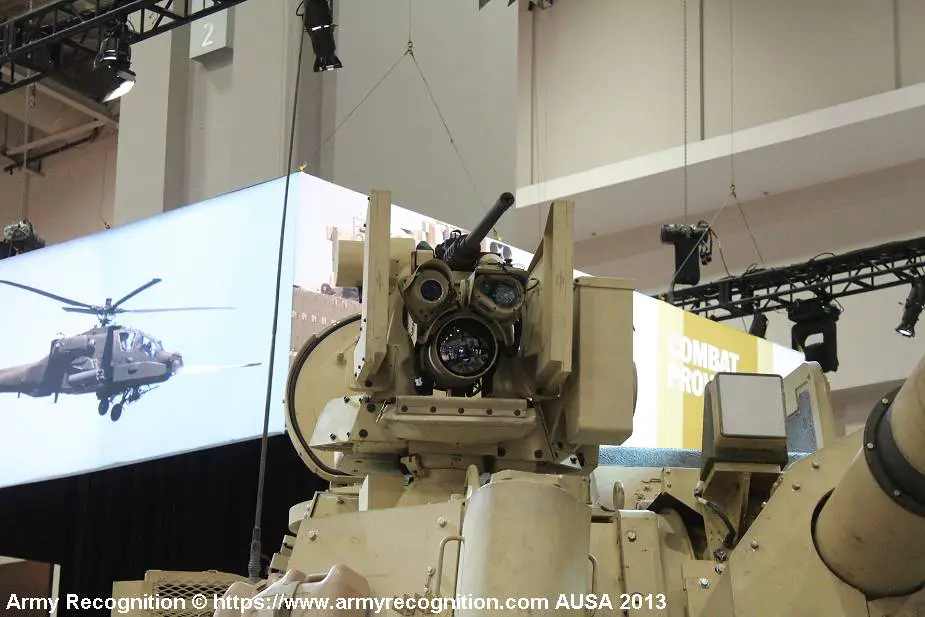 |
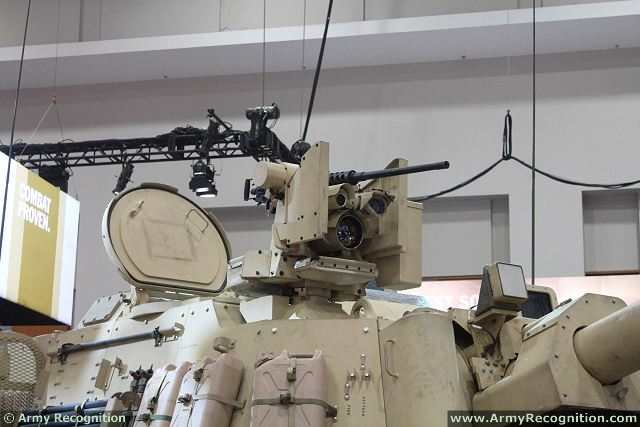
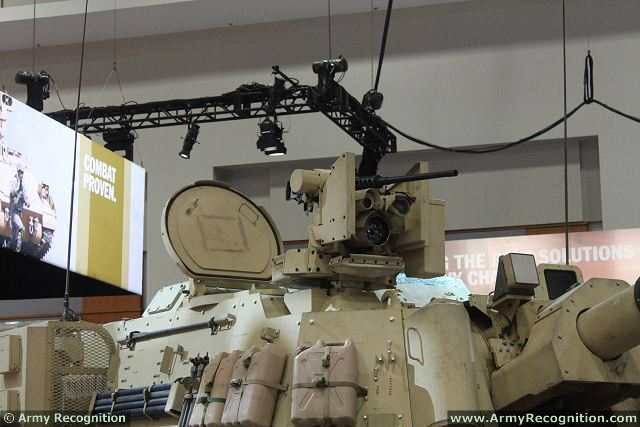
| The M109A7 can be fitted with a remotely operated weapon station armed with a 12.7mm heavy machine gun. |
| Design and protection |
|
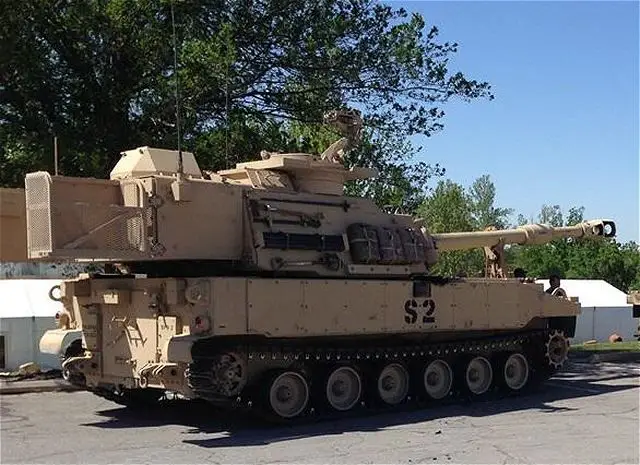
The layout of the M109A7 SPH 155mm self-propelled howitzer is similar to the M109 howitzer family, with the driver at the front of the hull on the left, the power pack to his right, and the turret at the rear. It has a crew of four, including a commander, driver, gunner, and loader. The M109A7 artillery system is equipped with shoot-and-scoot capability to protect the crew from counter-battery fire. It is also fitted with an automatic fire-extinguishing system (AFES), a gunner protection kit (GPK), and enhanced appliqué armor. The armor of this self-propelled howitzer provides protection against small arms fire and artillery shell splinters. The vehicle can be fitted with an add-on armor kit and an underbelly armor kit for enhanced protection. The turret is fitted with Kevlar anti-spall lining. The vehicle is equipped with NBC protection and automatic fire-extinguishing systems.
|
| Mobility |
| As the M109A6, the M109A7 SPH 155mm self-propelled howitzer is powered by the Bradley Fighting Vehicle-standard Cummins 600-hp engine. However, the shift to an electric turret required a major redesign of the vehicle’s power system, converting the 600 hp engine’s output into up to 70 kW of 600-volt/28-volt direct current for use by various onboard systems. The M109A7's torsion-bar suspension on each side consists of seven dual rubber-tired road wheels, with the drive sprocket at the front and the idler at the rear. There are no track return rollers. The power system’s modularity means that if any one of the motors fails, it can be replaced in the field in under 15 minutes using the same part type. In concrete terms, it means the howitzer crew can address the issue themselves and continue the mission, rather than withdraw for repairs. The new M109A7 SPH uses some technologies originally developed for the canceled XM2001 Crusader and XM1203 NLOS-C self-propelled howitzers. Previous M109 upgrades hadn’t altered the M109's 1950s configuration. The new chassis is being fabricated & assembled using components from the M2/M3 Bradley IFV (e.g., engine, transmission, final drives) to create greater commonality across America’s Heavy Brigade Combat Teams. BAE Systems expects overall weight growth of less than 5%, but the combined effects of the new chassis and more robust drive components enable Paladin PIM to operate at higher weights than its current GVW maximum of about 39 tons/35.4 tons. The vehicle has a fuel capacity of 545 L and a ground clearance of 0.4m. It can ford at a maximum depth of 1.0m and cross trenches of 1.8m depth. The vehicle's gradient and side slopes are 60% and 40%, respectively. |
| Accessories |
| Standard equipment of the M109A7 SPH 155mm self-propelled howitzer includes an NBC protection system, night vision, and an automatic fire extinguishing system. This howitzer is also equipped with a Blue Force Tracker capability to ensure situational awareness with other friendly forces. The new electric gun drives and rammer components, as well as a microclimate air conditioning system, will be powered by the common modular power system, utilizing a 600-volt onboard electrical system in the existing cab and cannon assembly. Each M109A7 self-propelled howitzer is escorted by an associated M992A3 ammunition support vehicle. The M992A3 carries ammunition under armor and reloads the howitzer. This vehicle transfers ammunition to the self-propelled howitzer via conveyor. Reloading does not require for crew members to step outside the vehicle. Usually, it takes place away from the firing position in order to avoid counter-battery fire. First M992A2 vehicles will be disassembled and reassembled to M992A3 standard. |
Specifications
| Armament | Armor |
| One 155mm M284 cannon with a MA182A1 gun mount and an automated loader, roof-mounted 12.7-mm heavy machine gun | All-welded aluminum chassis and Kevlar armor for the turret |
| Country users | Weight |
| Taiwan, United States | 35,380 kg |
| Designer Country | Speed |
| United States | 61 km/h maximum road speed |
| Accessories | Range |
| Automatic fire extinguishing system (AFES), gunner protection kit (GPK), enhanced applied armor, NBC protection system | 322 km |
| Crew | Dimensions |
| 4 | Length: 9.70 m; Width: 3.90 m; Height: 3.70 m |
Details View
 |
 |
 |
 |
Pictures - Video