

- Details
- Written by: Jérôme Brahy
- Category: 2024
- Hits: 7198










On July 25, 2024, the Nigerian company Proforce Defence unveiled the PF Hulk, its new multipurpose MRAP (Mine-Resistant Ambush Protected) vehicle. However, upon closer examination, the PF Hulk is likely a licensed production of the Russian AMN-590951, known as Spartak. This is not the first instance of Russian MRAP vehicles being produced under license by foreign companies, as demonstrated in India with the Typhoon-K.
Follow Army Recognition on Google News at this link
Upon closer examination, the PF Hulk appears to be a licensed production in Nigeria of a Russian MRAP, the AMN-590951, known as Spartak, as the PF Hulk and Spartak are strikingly similar. (Picture source: Proforce and Vitaly Kuzmin)
The Nigerian company Proforce Defence introduced its latest armored personnel carrier, the PF Hulk. According to its presentation, this multipurpose MRAP (Mine-Resistant Ambush Protected) vehicle is designed to transport personnel and military supplies while providing the necessary protection. It supports the installation of weapon systems and specialized equipment and can tow trailed systems. With a gross vehicle weight (GVW) of 15 tons and a protection level of 3a/3b according to STANAG 4569 standards, it can carry up to 10 personnel. The PF Hulk MRAP is equipped with a 360-horsepower engine, a 5-speed mechanical transmission, and has a fuel endurance of 1,000 kilometers.
According to the brochure of Proforce distributed during the 3rd African Air Force Forum held in Abuja last May, the gross weight of the armored vehicle is 14,500 kg, and it is equipped with a YaMZ-536 turbocharged diesel engine. The PF Hulk features a ground clearance of 400 mm, a length of 6,500 mm, a width of 2,550 mm, and a height of 2,800 mm.
Upon closer examination, the PF Hulk appears to be a licensed production in Nigeria of a Russian MRAP, the AMN-590951, known as Spartak. The PF Hulk and Spartak are strikingly similar, reflecting the current military and geopolitical relations between Nigeria and Russia, marked by a recent Military-Technical Cooperation Agreement, which includes the supply of military equipment, training, after-sales services, and technology transfer. This agreement, replacing a previous one from 2001, signifies an intent to deepen military collaboration. Nigerian Defense Minister Major General Bashir Salihi Magashi and Russian Federal Service for Military-Technical Cooperation Director Dmitry Shugaev officiated the signing.

With a gross vehicle weight (GVW) of 15 tons and a protection level of 3a/3b according to STANAG 4569 standards, the PF Hulk can carry up to 10 personnel. (Picture source: Proforce)
Nigeria’s military ties with Russia form part of a broader strategy to diversify its defense procurement sources, especially in light of restrictions and hesitations from Western countries due to human rights concerns. Nigeria uses some Russian fighter jets and helicopters alongside equipment from Western nations. Economically, Russia seeks to strengthen its ties with Nigeria. During recent forums and summits, Russian President Vladimir Putin emphasized potential increased trade and economic cooperation with African countries, including Nigeria. Discussions have covered various sectors such as food security, agriculture, and the resuscitation of the Aluminium Smelter Company of Nigeria (ALSCON) with the involvement of the Russian Aluminium Company UC RUSAL.
Geopolitically, the partnership between Nigeria and Russia is part of a larger Russian strategy to expand its influence in Africa amidst global geopolitical shifts, particularly with the growing rivalry between major powers like the United States and China. This relationship provides Nigeria with military and economic support while giving Russia a strategic foothold in Africa. The AMN-590951 Spartak, from which the PF Hulk appears derived, is a light armored vehicle developed by the Russian military and presented for the first time during the Army 2019 forum. Used by Russian special forces during the invasion of Ukraine, the Spartak is designed for the Russian National Guard and other internal troops. Developed based on Russian experiences in Syria, it emphasizes crew protection and vehicle modularity.

The AMN-590951 Spartak, from which the PF Hulk appears derived, is a light armored vehicle developed by the Russian military and presented for the first time during the Army 2019 forum. (Picture source: Said Aminov)
The Spartak features reinforced front and roof armor to withstand 12.7 mm fire, with additional protection to resist 14.5 mm rounds. It is constructed on an MRAP principle with a V-shaped hull to withstand blasts of 6 to 8 kg of TNT. The Spartak is typically armed with a 12.7 mm Kord machine gun mounted on a 360° protected turret but can also accommodate other weaponry such as PK/PKP machine guns or AGS-17/30/40 automatic grenade launchers. According to VPK, the Spartak can also be equipped with a remote-controlled turret like the Arbalet-DM.
The Spartak's development includes several variants, such as the AMN-59097, which features a larger chassis and additional axle for increased load capacity. This version can serve various roles, including logistics and infantry support, with configurations like an infantry fighting vehicle with a 57 mm semi-automatic cannon or a multiple rocket launcher system. The AMN-590951's compact size and mobility make it suitable for tasks such as patrolling, escorting convoys, and performing surveillance missions.

Nigeria and Russia recently signed a Military-Technical Cooperation Agreement, which includes the supply of military equipment, training, after-sales services, and technology transfer. (Picture source: Proforce)
This is not the first instance of a Russian MRAP being produced under license by a foreign company. As reported by Army Recognition on July 4, 2024, India's state-owned Armoured Vehicle Nigam Limited (AVNL) was set to license-produce the Russian K-53949 Typhoon-K, a 4x4 MRAP vehicle developed by Remdiesel, a subsidiary of KamAZ. This follows the completion of trials, and the project is now awaiting official orders. Official photographs have shown the Typhoon-K MRAP in India within a convoy, alongside other AVNL Mines Protected Vehicles (MPVs) in both 4x4 and 6x6 variants.
The K-53949 Typhoon-K is designed for the safe transportation of troops and military cargo in areas with a high risk of mines, featuring a V-shaped hull to deflect blast impacts. Powered by a 350-horsepower Cummins diesel engine coupled with a six-speed automatic transmission, the vehicle can achieve speeds up to 105 km/h and has a range of approximately 1,000 km. The Typhoon-K can be equipped with a remotely controlled weapon station capable of mounting various machine guns and grenade launchers. Its armor protects against 14.5mm armor-piercing rounds and can withstand explosions of up to 10 kg of TNT under the wheels and 8 kg under the floor. This trend of producing Russian military vehicles under license in other countries highlights the international appeal and reliability of Russian MRAP designs.
Read more: Nigerian Proforce's new PF Hulk likely based on Russia's Spartak MRAP vehicle
- Details
- Written by: Vandenbosch
- Category: 2024
- Hits: 4870
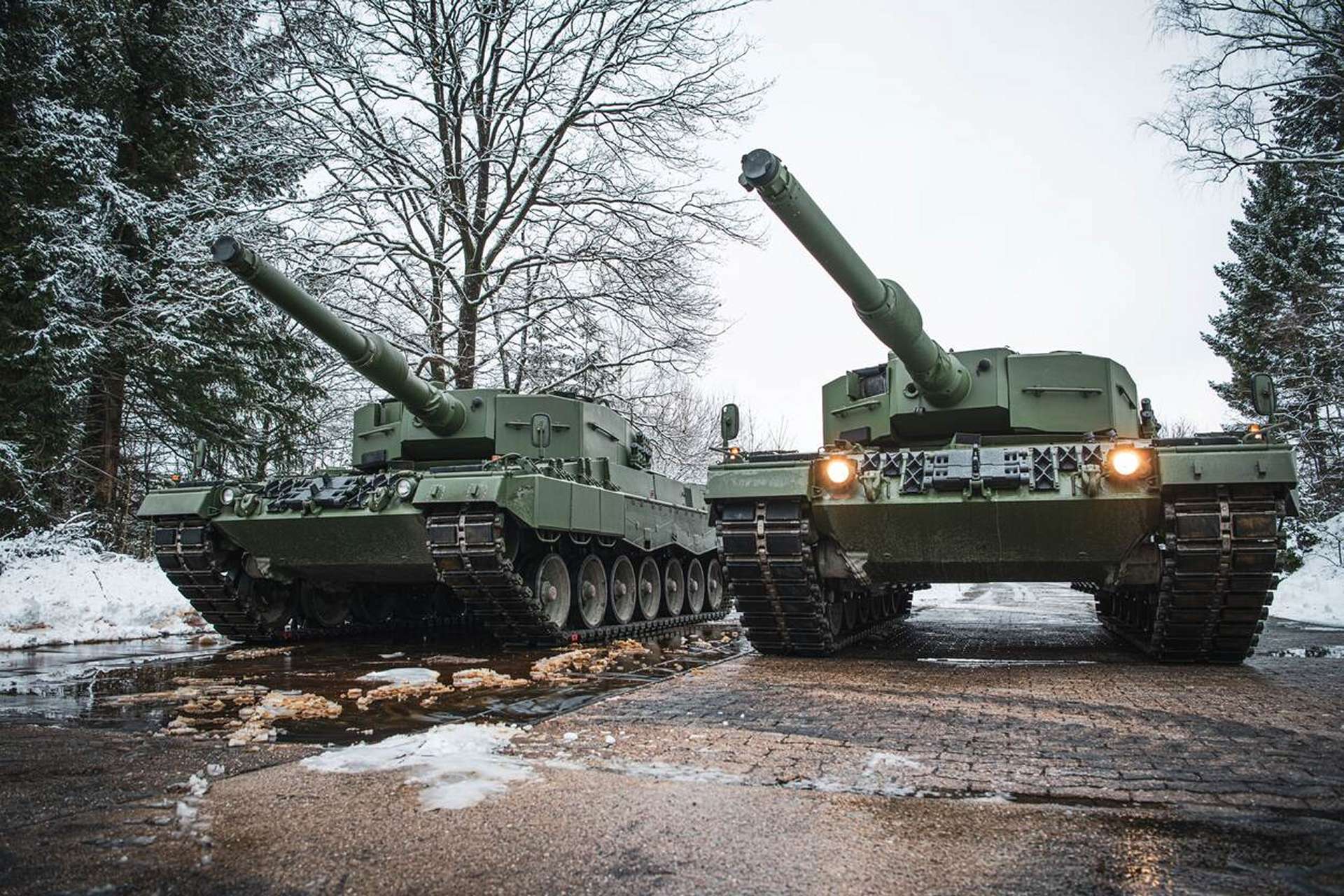
This summer, Ukraine will receive 14 Leopard 2A4 tanks, purchased by the Netherlands and Denmark. These battle tanks have been refurbished and tested over the past few months, according to Minister Ruben Brekelmans. The Dutch Ministry of Defense announced this news on July 25, 2024.
Follow Army Recognition on Google News at this link
The Dutch Leopard 2A4 Main Battle Tank. (Picture source: Dutch MoD)
Last year, the Netherlands and Denmark acquired 14 previously used Leopard 2A4 tanks, refurbished by the German company Rheinmetall. Ukraine will use these tanks to combat Russian aggression.
The final two Leopard 2 tanks underwent their verification tests yesterday and today as part of the delivery process. The first 12 tanks have already been prepared for shipment, and all 14 will be delivered simultaneously by the end of the summer.
Minister Brekelmans stated, “Ukraine urgently needs additional military support given the intense fighting on the battlefield. These tanks can play a crucial role in helping the Ukrainian army defend against Russian forces. The Netherlands, alongside allies and partners, will continue to support Ukraine as long as necessary. It is vital to protect Ukraine and keep Putin’s aggression at bay.”
The Leopard 2A4 is an advanced battle tank, armed with a 120mm L55 smoothbore gun, a coaxial 7.62mm machine gun, and an anti-aircraft 7.62mm machine gun mounted on the loader’s hatch. Designed in Germany, it features spaced multilayer armor, offering enhanced protection at the front of the turret, with spall liners inside the turret for additional protection.
Used by many countries, including Austria, Canada, Chile, the Czech Republic, Denmark, Finland, Germany, Greece, Indonesia, Norway, Poland, Portugal, Singapore, Switzerland, Sweden, Slovakia, Spain, Turkey, and Ukraine, the Leopard 2A4 weighs 62 tons in combat condition.
This tank can reach a maximum road speed of 72 km/h and has an operational range of 500 km. It is also equipped with accessories such as infrared night vision and an NBC (nuclear, biological, chemical) protection system. The Leopard 2A4 is operated by a crew of four and measures 7.70 m in length, 3.70 m in width, and 3.00 m in height.
The Leopard 2A4 tanks will significantly enhance Ukraine's battlefield capabilities, offering substantial firepower, crew protection, and speed. However, this is not the only aid the Netherlands has provided or will provide to Ukraine.
The Netherlands has supplied Ukraine with a wide range of military equipment and support since the conflict began. In terms of fighter jets, they pledged 42 F-16 Fighting Falcons in August 2023, with deliveries starting in 2024, and purchased €150 million worth of munitions for these jets, with an additional €300 million worth of munitions pledged in July 2024.
Regarding air defense systems, two Patriot launchers and missiles were delivered in April 2023, with additional missiles promised in October 2023. In November 2022, 12 AIM-120 AMRAAMs for NASAMS II systems were delivered. Concerning mobile anti-aircraft guns, 100 MR-2 mobile anti-aircraft guns will be delivered after their purchase and upgrade by the Czech Republic, and 20 Bofors 40L70s were delivered starting in March 2023.
Self-propelled artillery includes eight 155mm PzH 2000s delivered from June 2022 after training was completed in May 2022, as well as nine 155mm DITA guns announced in February 2024. For tanks, the Netherlands delivered 45 T-72 Avengers starting in December 2022, 33 Leopard 1A5s in cooperation with Germany and Denmark, and seven of the 14 Leopard 2A4s in cooperation with Denmark.
This extensive support is only a fraction of the aid provided by the Netherlands. The country remains one of the most proactive in assisting Ukraine in its conflict with Russia, and these 14 Leopard 2A4 tanks will undoubtedly bolster Ukraine's front lines.

Ukraine will receive 14 Leopard 2A4 tanks, purchased by the Netherlands and Denmark. (Picture source: Dutch MoD)
Read more: Netherlands and Denmark to Deliver 14 Leopard 2A4 Tanks to Ukraine

- Details
- Written by: Jérôme Brahy
- Category: 2024
- Hits: 4476
On July 24, 2024, the Uruguayan Army received a significant donation of 13 Osprea Mamba Mk7 Mine-Resistant Ambush Protected (MRAP) vehicles from the United States, valued at approximately $13 million. This donation is part of a defense cooperation package aimed at enhancing Uruguay's peacekeeping capabilities. The delivery ceremony took place at the Service of Material and Armament, attended by U.S. Ambassador to Uruguay Heide Fulton, Uruguay's Minister of National Defense Javier García, and the Commander-in-Chief of the Uruguayan Army.
Follow Army Recognition on Google News at this link
Since 2016, Osprea Logistics, a U.S.-based company, has been the exclusive manufacturer of the Mamba Mk7, delivering these MRAP vehicles mainly across Africa for peacekeeping and counter-terrorism operations. (Picture source: U.S. Embassy Uruguay)
Ambassador Fulton noted the historic nature of the day for U.S.-Uruguay defense relations and highlighted that the donation, funded by the Global Peace Operations Initiative (GPOI) through U.S. Southern Command (SOUTHCOM), would provide essential capabilities to Uruguayan peacekeeping personnel operating in conflict zones. The Mamba Mk7 vehicles are designed for environments threatened by mines and improvised explosive devices (IEDs), featuring a V-shaped hull to deflect blasts and meet stringent NATO standards for blast resistance. These vehicles are equipped with a Deutz BF6L914C Turbo engine and an Allison 2500SP automatic transmission, offering mobility and protection. They support various configurations, including troop transport, command roles, and medical evacuation.
The United States provides military assistance to Uruguay to enhance bilateral defense relations and support regional security. This assistance includes training programs, equipment donations, and humanitarian aid. Notably, the U.S. has delivered helicopter parts and equipment under the GPOI to bolster Uruguay's peacekeeping capabilities. Additionally, SOUTHCOM frequently engages with Uruguayan military leaders to discuss security cooperation.
In recent years, the U.S. has focused on enhancing Uruguay's military training through the International Military Education and Training (IMET) program, supporting over 200 Uruguayan military personnel to improve interoperability and professional development within Uruguay's armed forces. SOUTHCOM has also participated in humanitarian missions, donating mobile hospitals and medical equipment to support Uruguay's public health infrastructure, particularly during the COVID-19 pandemic.
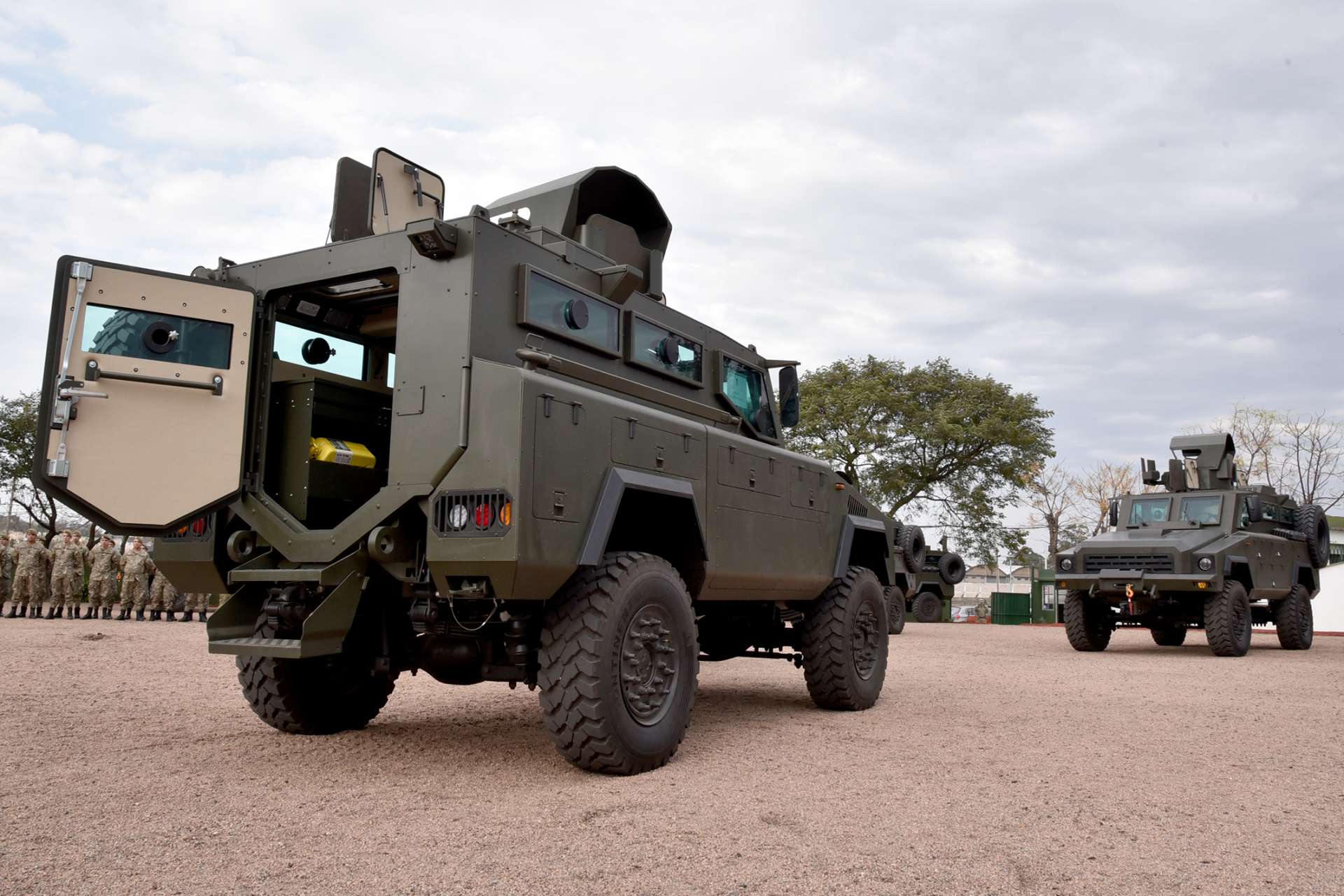
The Mamba Mk7 vehicles are designed for environments threatened by mines and improvised explosive devices (IEDs), featuring a V-shaped hull to deflect blasts and meet stringent NATO standards for blast resistance. (Picture source: U.S. Embassy Uruguay)
The U.S. has supplied Uruguay with various military equipment since the 1980s, including artillery systems such as M101 and M114A2 howitzers, M1 mortars, and anti-tank weapons like the M40A1 recoilless rifles and MILAN anti-tank missiles. These contributions aim to improve the operational readiness and interoperability of Uruguay's military forces. The U.S. has also supported the modernization of the Uruguayan Navy by donating three 87-foot Protector Class vessels as part of an $8.69 million grant to enhance Uruguay’s maritime patrol and security operations.
The Mamba Mk7, the latest iteration in the Mamba series of Mine-Resistant Ambush Protected (MRAP) vehicles, is designed by Osprea Logistics and provides ballistic and mine-blast protection suitable for high-threat environments. It features a Deutz BF6L914C Turbo engine, capable of 203 HP, paired with an Allison 2500SP automatic transmission, offering mobility across various terrains. The vehicle supports configurations for different operational needs, such as troop transport, command roles, and medical evacuation.
The Mamba series originated in South Africa during the late 1980s and was developed to replace the Buffel in military and security operations. The initial models were based on the Toyota Dyna chassis, evolving over time with enhancements in protection and performance. The Mamba has been used in peacekeeping and military roles in countries like Somalia, Kenya, and Uganda. Its design focuses on simplicity, reliability, and ease of maintenance.
Since 2016, Osprea Logistics, a U.S.-based company, has been the exclusive manufacturer of the Mamba Mk7, delivering these vehicles across Africa for peacekeeping and counter-terrorism operations. The Mk7's ability to withstand multiple IED attacks has reinforced its reputation for safety and reliability. The vehicle's adaptability and cost-effectiveness make it a choice for various international military and peacekeeping forces, providing NATO-level armored protection at a competitive price.
Read more: Uruguayan Army receives 13 Mamba Mk7 MRAP vehicles from the US
- Details
- Written by: Triffaux
- Category: 2024
- Hits: 4264
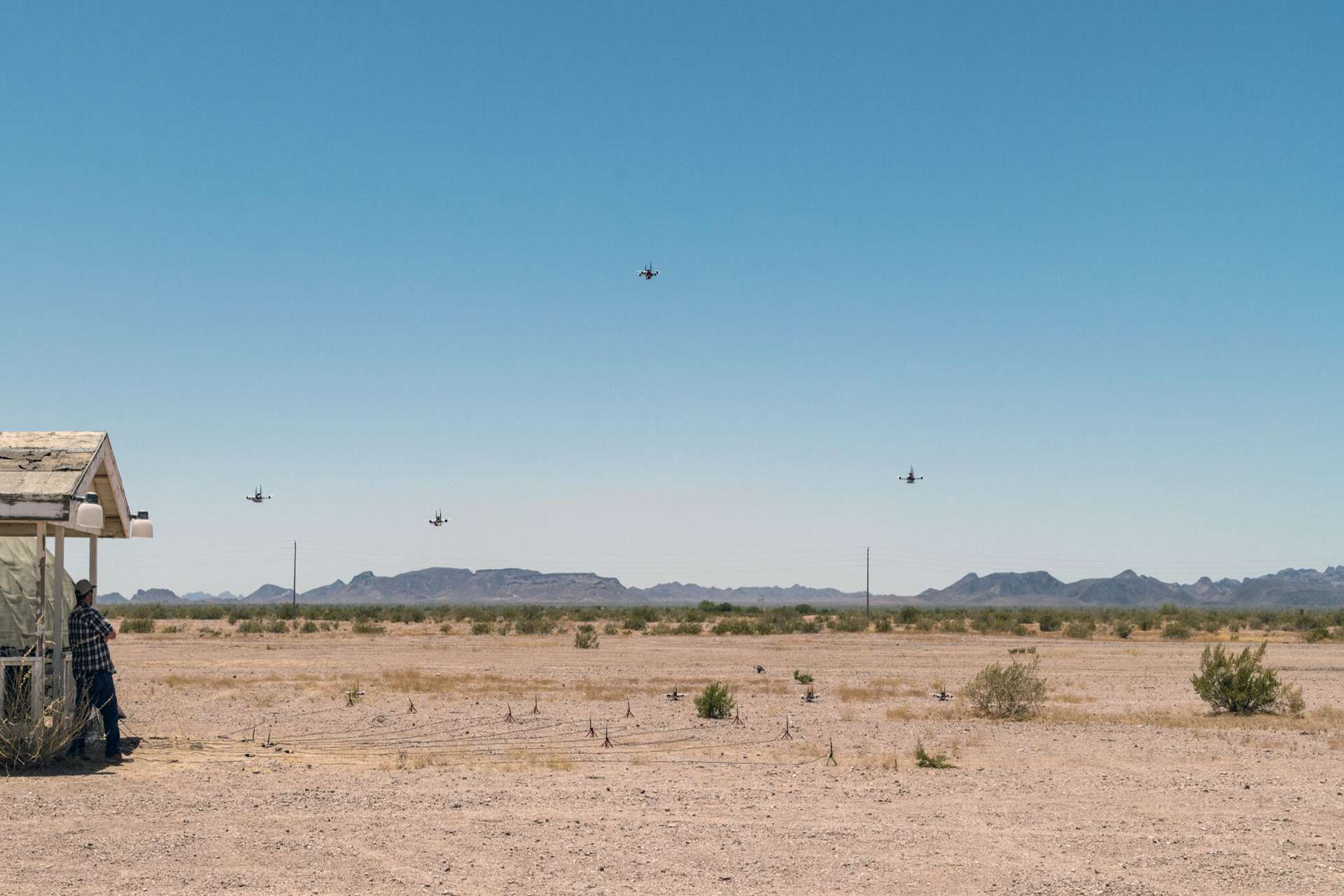
In a recent series of tests, prototype defense systems designed to counter the growing drone threat demonstrated significant advancements, according to officials from the Joint Counter-small Unmanned Aircraft Systems Office (JCO). The fifth demonstration, conducted at Yuma Proving Ground in Arizona from June 3 to June 28, 2024, showcased a variety of innovative solutions from eight different vendors.
Follow Army Recognition on Google News at this link
The Joint C-UAS Office focuses on demonstrating systems capable of detecting and defeating swarms of UAS (Picture source: US DoD)
These systems exhibited a "greater level of maturity" and provided "much better solutions" compared to previous iterations, officials stated. Despite the positive feedback, JCO representatives have withheld detailed performance evaluations of the counter-drone systems, citing ongoing data analysis. The first comprehensive reports will be shared with military services, combatant commanders worldwide, and participating vendors before being released to the public.
This year's demonstration featured a more diverse field of competitors, with eight vendors selected from an initial pool of about 60 proposals. The contenders included Clear Align, Trakka, ICR, ELTA, Teledyne FLIR, SAIC, ATSC, and Anduril. Notably, ELTA, a North American branch of the Israeli arms manufacturer, submitted two distinct systems—one vehicle-mounted and one portable.
These defense systems were primarily "layered" configurations, incorporating multiple sensors and effectors to detect and neutralize drone threats. The demonstration featured at least four types of sensors: radars, electro-optical and infrared cameras, and radio-frequency scanners. Similarly, four types of effectors were employed: guided rockets, drone-killing mini-drones, machine guns, and radio-frequency jammers. The latter represents a "soft kill" approach, disrupting a drone's GPS signal or command link rather than physically destroying it.
"No single capability, whether kinetic or non-kinetic, can effectively counter this type of attack profile alone," explained a JCO official, Parent. "A full system of systems approach, a layered approach, is essential."
Interestingly, none of the systems in this demonstration used "directed energy" weapons like lasers or high-powered microwaves, although an HPM weapon was tested in a concurrent event. The complexity of the scenario tested not only the physical capabilities of the defense systems but also their digital processing power. The ability to analyze sensor data, integrate multiple data streams, and assign targets to appropriate weapons was critical.
"This challenges everything, including command and control," Parent noted. "You don't want to engage the same target multiple times. With so many threats, you need to differentiate and prioritize the most dangerous ones."
The decision on whether to procure any of the demonstrated systems will rest with individual military services and combatant commands, based on performance data and operational requirements. The Department of Defense is not obligated to purchase any of the candidates.
The next JCO demonstration is anticipated to occur in early 2025, promising further advancements in counter-drone technology.
Read more: US Army Tests Advanced Systems to Counter UAS Swarms at Yuma Proving Ground

- Details
- Written by: Triffaux
- Category: 2024
- Hits: 7617
On July 24, 2024, the Indian Defence Research and Development Organisation (DRDO) successfully conducted a flight test of its sophisticated Phase-II Ballistic Missile Defence System, featuring the AD-2 endo-atmospheric missile. This flight marks a critical advancement in India's preparedness for network-centric warfare.
Follow Army Recognition on Google News at this link
India AD-2 endo-atmospheric missile (Picture source: Indian MoD)
The target missile, simulating an enemy ballistic missile, was launched at 16:20 from Launch Complex IV in Dhamra. Within minutes, the system's radars, strategically placed on land and sea, detected the threat, activating the Advanced Defence (AD) Interceptor system. The interceptor missile was subsequently launched from Launch Complex III at the Integrated Test Range (ITR) in Chandipur at 16:24.
This flight test, which achieved all set objectives, also demonstrated the prowess of India's indigenous defence technologies. The Phase-II AD endo-atmospheric missile, a two-stage, solid-propellant, ground-launched system, is designed to intercept and neutralize enemy ballistic missile threats in both endo and low exo-atmospheric regions.
Throughout the test, the missile's performance was meticulously monitored via a range of tracking instruments including Electro-Optical Systems, Radar, and Telemetry Stations, spread across various locations, including aboard ships.
An endo-atmospheric missile is designed to operate and intercept targets within the Earth's atmosphere. Unlike exo-atmospheric missiles, which function outside the atmosphere, endo-atmospheric missiles handle engagements within the dense atmospheric layers. These missiles are crucial for missile defense systems, as they are capable of intercepting and destroying incoming ballistic missiles or other airborne threats before they can reach their targets. Endo-atmospheric missiles, such as the AD-2 tested by the Indian Defence Research and Development Organisation (DRDO) on July 24, 2024, are characterized by their high-speed interception capabilities, advanced guidance systems, and robust aerodynamic design to withstand the pressures and temperatures of atmospheric flight. Powered by solid or liquid propellants, these missiles are engineered for rapid acceleration and precise maneuverability, making them essential for modern air and missile defense strategies.
This successful trial underscores the DRDO's capability to defend the nation against high-class ballistic missile threats, particularly those capable of reaching distances up to 5,000 km. The development of this missile system incorporates numerous state-of-the-art technologies crafted by various DRDO labs, highlighting the organization's growing proficiency in indigenous technology.
This flight test represents not only a significant technological leap but also strengthens India's position in modern warfare, ensuring a robust defence mechanism against potential threats.
The Indian Ballistic Missile Defence Programme was launched in 2000 in response to missile threats from Pakistan and China. This dual-layer defence system includes land and sea-based interceptor missiles designed to intercept incoming missiles up to 5,000 kilometers away. The system also integrates a network of early warning and tracking radars, as well as command and control posts, enhancing India's defence capabilities. The initial tests conducted in 2006 and 2007 with the PAD and AAD missiles marked India as the fourth country to successfully develop an anti-ballistic missile system.
Over the years, India has continued to develop this programme in response to increased tensions with Pakistan, especially after the Kargil conflict in 1999. The development was accelerated by the US vetoing India's bid to acquire the Israeli Arrow-2 interceptor in 2002, prompting India to pursue its own missile defence development programme. The programme is divided into phases, with Phase I allowing the interception of missiles up to 2,000 km, and Phase II (extended up to 5,000 km) planned to protect against longer-range missiles.
By 2020, the first phase of the programme was completed, and authorities were awaiting government approval to deploy the missile shield around the national capital, a process expected to take three to four years post-approval. Recent developments include tests of the AD-1 and AD-2 missiles, designed to intercept missiles at hypersonic speeds and at altitudes ranging from the endo-atmosphere to the lower exo-atmosphere. These missiles are crucial components of the defence system to counter future sophisticated threats.
On July 24, 2024, a successful test of the Phase-II Defence System was conducted, validating the entire network-centric weapon system, including interceptor missiles, mission control centers, and long-range detection and communication systems. This success demonstrates India's ongoing commitment to strengthening its national defence capabilities and its independence in strategic defence technology.
Read more: India Completes Successful Tests of Phase-II Ballistic Missile Defence System

- Details
- Written by: Jérôme Brahy
- Category: 2024
- Hits: 11784
As reported by Praise The Steph on July 24, 2024, President Peter Pellegrini visited the Ministry of Defense in Bratislava, highlighting the critical need for significant financial investments in the nation's defense capabilities. Accompanied by Defense Minister Robert Kaliňák and Chief of the General Staff Zmek, Pellegrini inspected the first Slovak BOV 8x8 Infantry Fighting Vehicle (IFV) based on the Finnish Patria AMV XP. Notably, this visit comes shortly after Slovakia received its first two F-16 Block 70 fighter jets from Lockheed Martin, enhancing its air defense capabilities.
Follow Army Recognition on Google News at this link
The BOV 8x8 fleet will include 60 combat versions, 10 medical variants, and 6 command versions. (Picture source: Twitter/Praise The Steph)
President Pellegrini emphasized the importance of Slovakia being able to protect itself, referencing Article 3 of the Treaty on the North Atlantic Alliance, which requires member states to be prepared to defend themselves until allied support arrives. He expressed support for ongoing modernization projects within the military, noting that while the costs of weapon systems are high, these investments are crucial for ensuring the country's defense capabilities. He also mentioned that a record number of new personnel would join the armed forces this year, stressing the military's role in both national security and assistance in natural disasters.
Defense Minister Kaliňák appreciated the President's interest in the defense department and reiterated the need for renewing the armed forces and modernizing military infrastructure. He mentioned that Slovakia's support for the new NATO Secretary General was conditional on initiating a rotation mechanism for airspace defense. The outcome of negotiations for a new air defense system is expected to be announced soon.
During the visit, various armored vehicles and tanks were showcased, including the first Slovak BOV IFV, also known as the Patria AMV XP 8x8, equipped with a Turra-30 turret armed with a local GTS-30/N autocannon in 30x173mm. The Turra-30, designed by the Slovak company EVPÚ, is a remote-controlled turret intended for integration with wheeled or tracked armored combat vehicles. It features extensive armament capabilities, including a 30 mm automatic cannon, a 7.62 mm machine gun, anti-tank guided missiles, and smoke grenade launchers.
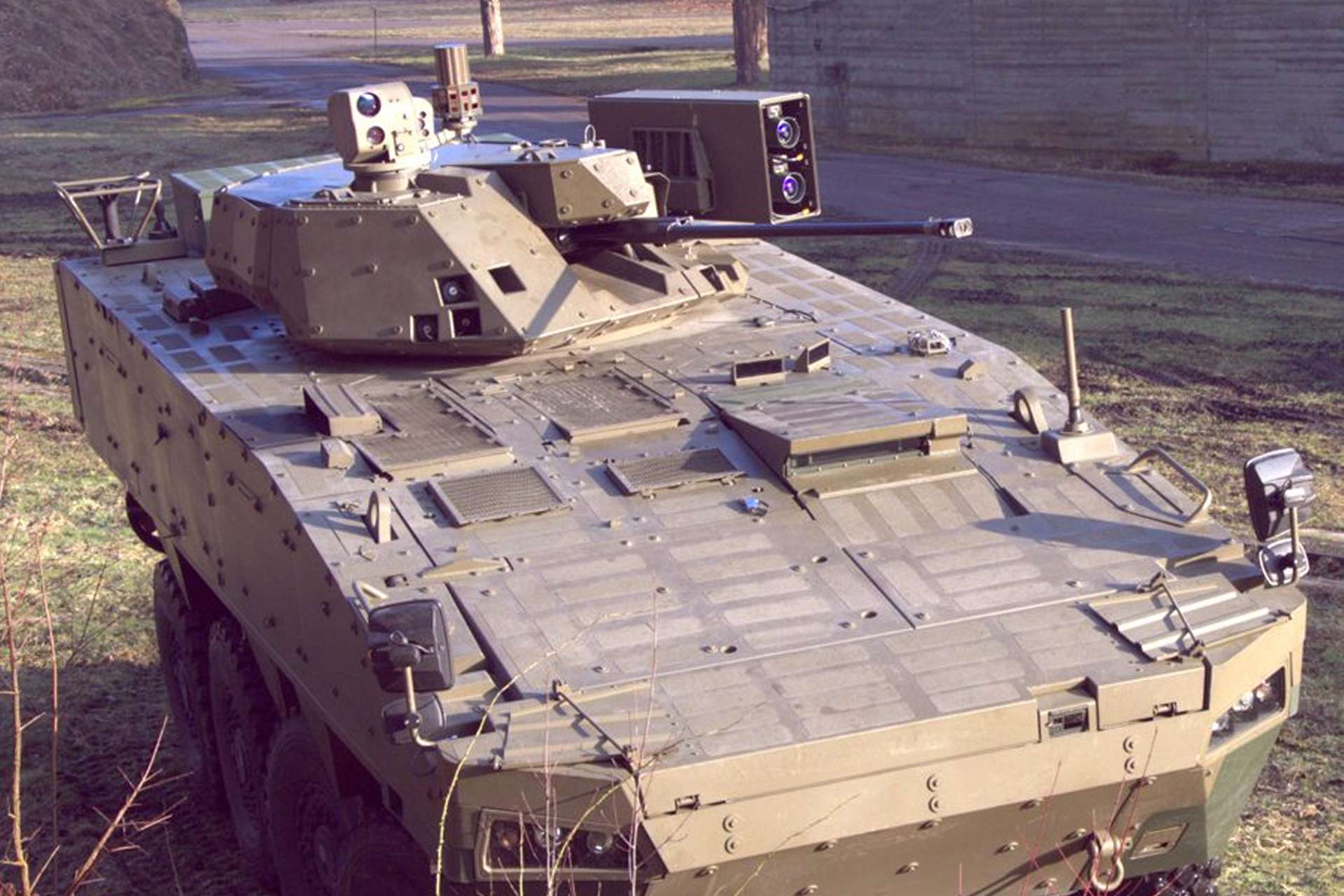
The Turra-30, designed by the Slovak company EVPÚ, is a remote-controlled turret intended for integration with various wheeled or tracked armored combat vehicles. (Picture source: EVPÚ)
The turret can also be equipped with an active protection system and has been designed to protect the vehicle crew by locating ammunition and operators outside the turret compartment. One of the recent advancements in the Turra-30 series is the Turra 30-SA variant, which incorporates an optical threat locator, radar, and a gunfire detection system, and is capable of firing programmable airburst munitions, enhancing its effectiveness against UAVs.
The GTS-30/N, a modern Slovak 30 mm automatic cannon developed by ZTS-Special, a subsidiary of the state-owned DMD Group, is used as the main armament of the BOV 8x8 IFV. Based on the Shipunov 2A42, the GTS-30/N uses NATO-standard 30x173mm ammunition, which includes Armor-Piercing Fin-Stabilized Discarding Sabot Tracer (APFSDS-T) rounds. This compatibility ensures it can engage a wide range of targets effectively, including light armored vehicles, unarmored targets, and low-flying subsonic aircraft.
The cannon is capable of engaging lightly armored targets up to 1,500 meters, unarmored targets up to 4,000 meters, and low-flying subsonic air targets up to 2,000 meters within a slant range of 2,500 meters, in single shots or bursts with both low and high rates of fire. The GTS-30/N features a new muzzle brake design that improves its firing accuracy by reducing lateral dispersion and allows the cannon to fire a variety of ammunition types. The cannon entered serial production in July 2023 as part of Slovakia's new armored personnel carriers program.
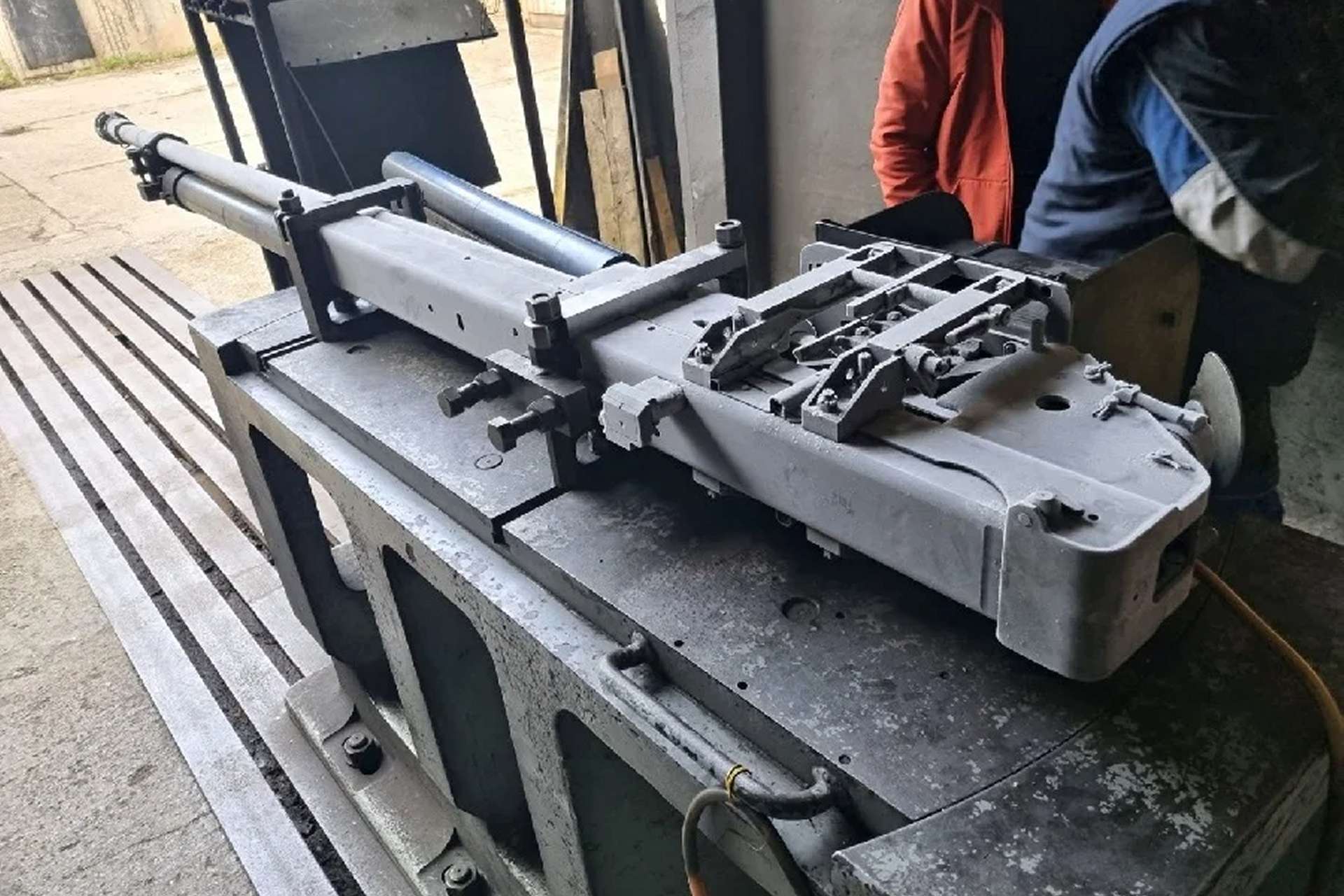
The GTS-30/N cannon is capable of engaging lightly armored targets up to 1,500 meters, unarmored targets up to 4,000 meters, and low-flying subsonic air targets up to 2,000 meters within a slant range of 2,500 meters. (Picture source: DMD Group)
An intergovernmental agreement signed in August 2022 outlines the procurement by Finland to Slovakia of 76 Patria AMV XP vehicles for €447 million, with deliveries scheduled through 2027. The fleet will include 60 combat versions, 10 medical variants, and 6 command versions. The Patria AMV XP is an upgraded version of the original Patria AMV, first introduced in 2013. These enhanced vehicles come equipped with advanced features, including a NATO-standard cannon, communication and information systems, command and control systems, IED jammers, improved swimming capabilities, 5th-generation electrical circuits, and digital instruments.
The updated model offers improved payload capacity, mobility, and protection capabilities while retaining the original layout. It accommodates a crew of two and can transport up to 10 infantry personnel. Additionally, it can be fitted with various turret types, including remotely operated weapon stations, and can be armed with a 120mm cannon, medium-caliber weapon systems, the Patria Nemo 120 mm mortar system, as well as anti-tank or anti-aircraft missile systems.
The Vydra 8x8 APC, a Slovak variant of the Finnish Patria AMV XP 8x8, is another important component of this program. Delivered in September 2023, the first Vydra, configured for medical evacuation, was completed by the Slovak company Konstrukta Defence. This state-owned company specializes in developing land and air defense systems, ammunition, command and control systems, and electronic systems. Their latest project focuses on modernizing Slovakia’s fleet of 155mm self-propelled howitzers.
Slovakia's defense modernization includes a strong emphasis on local industry involvement, targeting 40% local content, which has already been exceeded, benefiting over 40 Slovak defense companies. Initially, eight Patria AMV XPs will be manufactured in Finland, with the remaining units produced in Slovakia. This initiative aims to enhance local engineering capabilities and provide educational and employment opportunities within the defense sector.

The Patria AMV XP can be fitted with various turret types, including remotely operated weapon stations, and can be armed with a 120 mm cannon, medium-caliber weapon systems, mortar systems, as well as anti-tank or anti-aircraft missile systems. (Picture source: AH)
Read more: Slovakia receives first BOV 8x8 IFV based on Finland's Patria AMV XP

- Details
- Written by: Jérôme Brahy
- Category: 2024
- Hits: 3671
As reported by InfoDefensa on July 24, 2024, the Chilean Marine Corps deployed the NZLAV 8x8 armored vehicles for the first time in a recent military exercise. These vehicles, acquired from the New Zealand Defence Force, include a total of 22 units purchased in April 2022 for $19.8 million. The deployment occurred during a routine cold-weather training exercise in the Magallanes region, testing the NZLAV 8x8's capabilities in the region's challenging winter conditions.
Follow Army Recognition on Google News at this link
Chile acquired 22 NZLAV 8x8 vehicles from the New Zealand Defence Force in April 2022 for $19.8 million, with the first batch arriving in mid-September 2022. (Picture source: Chilean Army)
Chile acquired 22 NZLAV 8x8 vehicles from the New Zealand Defence Force in April 2022 for $19.8 million. The first batch of these vehicles, now part of the 41st Hurtado Combat Support Battalion, arrived in mid-September 2022, with the remaining vehicles delivered in July 2023. According to the Chilean Navy, the cold-weather exercise is an annual event held in July or August. Its purpose is to familiarize the Marines with the unique and harsh climatic and geographical conditions of the region, which are among the most difficult and comprehensive for naval operations.
Various naval units participated in this exercise, including the multi-purpose frigate FF-18 Almirante Riveros of the National Squadron, the LST-95 Chacabuco landing ship from the Amphibious and Naval Transport Command (Comanfitran), and helicopters such as the AS332L Super Puma from the Attack Helicopter Squadron HA-1 and the AS365 Dauphin from the General Purpose Helicopter Squadron HU-1 of the Naval Aviation.
Vehicles from the 41st Combat Support Battalion were transported from Valparaíso in early June aboard the multi-purpose ship LSDH-91 Sargento Aldea of Comanfitran, along with personnel from the 21st Marine Infantry Battalion Miller.
During the exercise, which included operations on the Navarino, Nueva, Picton, and Lennox islands, the Magellan Strait, the Boquerón sector, and Dawson Island, the NZLAV 8x8 and other vehicles, such as Kia KM 250 trucks and Humvee-based communication units, were deployed from the LSDH-91 Sargento Aldea to shore via the LCU Canave landing craft.
The task force, consisting of the FF-18 Almirante Riveros, the LSDH-91 Sargento Aldea, and the LST-95 Chacabuco, will complete their operations in the Southern Joint Operations Theater by August 5, 2024.

The NZLAV has a crew of three, including a commander, gunner, and driver, and can carry seven fully equipped soldiers. (Picture source: New Zealand Defence Force)
The NZLAV, or New Zealand Light Armoured Vehicle, is a mobile light armored vehicle originally used by the New Zealand Army for reconnaissance and advanced observation roles. Built in Canada by General Dynamics Land Systems based on the Mowag Piranha 8x8 design, the vehicle measures 6.98 meters in length, 2.83 meters in width, and 2.87 meters in height, and weighs between 19 and 21 tonnes depending on its configuration. It can be transported by land, sea, and air.
Based on the LAV III, a license-built version of the Mowag Piranha IIIH, the NZLAV has a crew of three, including a commander, gunner, and driver, and can carry seven fully equipped soldiers. Personnel can enter and exit the vehicle via a rear ramp or roof hatches. The NZLAV is powered by a 350 hp Caterpillar 3126 HEUI diesel engine and features a hydropneumatic suspension system and a central tire inflation system controlled from the driver's station to adapt to different terrain conditions.
Its main armament is a 25 mm Northrop Grumman M242 Bushmaster autocannon with 420 rounds, with an effective firing range of 2,400 meters. It also has two 7.62 x 51 mm FN Herstal Mag machine guns, one mounted coaxially with the cannon and another in the turret. Additionally, it is equipped with eight HE or smoke grenade launchers for self-defense. The armor provides protection against 7.62 mm ammunition and can be fitted with a ceramic armor kit to protect against 14.5 mm machine gun fire. The vehicle also has a reinforced undercarriage for improved mine protection and includes automatic fire suppression and NBC (nuclear, biological, chemical) protection systems.

The M242 can fire 25mm rounds with a muzzle velocity of 1,100 meters per second, offering an effective firing range of 3,000 meters and a maximum range of 6,800 meters. (Picture source: New Zealand Defence Force)

- Details
- Written by: Administrator
- Category: 2024
- Hits: 4736
According to information published on July 24, 2024, by the Polish defense magazine "Defence24," Poland is set to sign a series of offset agreements in the coming weeks for the procurement of 96 AH-64E Apache Guardian helicopters for the Polish Armed Forces. An executive agreement for their delivery will follow these deals.
Follow Army Recognition on Google News at this link
An U.S. Army AH-64E Apache helicopter provides notional security for the Connelly competition. (Picture source: U.S. DoD)
Deputy Head of the Polish Armament Agency, Col. Robert Frommholz, revealed the plan on Polsat News. Within about two weeks, Poland plans to finalize offset agreements for acquiring the Apache Guardian helicopters. These agreements will precede the execution contract for the helicopter delivery. The Polish Ministry of Defence and their American partners anticipate that these agreements will enable the establishment of maintenance capabilities for the Apache helicopters in Poland, as well as for the entire family of engines used in other new-generation platforms being introduced into the Polish Armed Forces.
The contract for the Apache Guardian helicopters will be the largest in the history of the Polish Armed Forces and one of the largest attack helicopter procurement deals ever signed globally. The Department of State’s notification to Congress outlined that the maximum package would include:
- 37 AN/APG-78 Longbow radars
- 96 AN/APR-48B MRFI 2 interferometers
- 1,844 AGM-114R2 Hellfire anti-tank missiles
- 460 AGM-179A JAGM anti-tank missiles
- 508 FIM-92K Stinger air-to-air missiles
- Several thousand light APKWS guided rockets
Poland has also been approved to acquire a comprehensive range of logistic and training support packages for the new helicopters, self-defense systems, and MUM-T (Manned-Unmanned Teaming) capabilities. The maximum value of the contract for the Boeing-manufactured helicopters is estimated at USD 12 billion, though the final amount is expected to be somewhat lower. Part of the contract may be financed through American loans under the Foreign Military Financing (FMF) program.
The introduction of 96 Apache Guardian helicopters will significantly enhance the capabilities of Poland's Army Aviation, though it will also pose major training and logistical challenges. The defined offset program aims to assist Poland in maintaining the readiness of the Apache fleet. Training for Polish pilots and ground crews on the Apache has already commenced and is expected to continue with support from the US Army for an extended period. Once the deal is finalized, Poland will become the largest user of these helicopters within NATO.
The AH-64E Apache Guardian is an advanced variant of the AH-64 Apache attack helicopter, developed by Boeing. It boasts enhanced performance with improved T700-GE-701D engines that provide greater speed, endurance, and agility compared to its predecessors. The AH-64E features advanced sensors and avionics, including the latest target acquisition and designation sights, pilot night vision sensors, and sophisticated radar systems like the Longbow fire control radar, which can track multiple targets simultaneously.
The helicopter's lethality is increased with its ability to carry a variety of armaments such as Hellfire missiles, Hydra 70 rocket pods, and a 30mm M230 chain gun. An improved weapons management system ensures greater precision and efficiency in combat. Additionally, the AH-64E is designed for modern network-centric warfare environments, with enhanced communications and data-sharing capabilities that allow it to connect seamlessly with other aircraft, ground forces, and command centers for coordinated operations.
One of the significant improvements in the AH-64E is the reduction in crew workload due to the avionics and sensor upgrades, which facilitate more efficient management of the helicopter’s systems, thereby allowing the pilot and co-pilot/gunner to focus more on their primary tasks during missions.
Read more: Poland to Sign Landmark Deal for 96 US AH-64E Apache Guardian Attack Helicopters

- Details
- Written by: Vandenbosch
- Category: 2024
- Hits: 3415
Spanish Defense Minister Margarita Robles held a videoconference on July 24, 2024, with Ukrainian Defense Minister Rustem Umerov. The discussion, conducted from the Torrejón de Ardoz Air Base, focused on ongoing military support and future aid to Ukraine.
Follow Army Recognition on Google News at this link
Hawk ground-to-air defense missile system.
(Picture source: Open Source)
During the meeting, Minister Umerov provided a detailed update on the current situation in Ukraine and outlined the most urgent needs of the Ukrainian Armed Forces. In response, Minister Robles detailed Spain's upcoming military equipment shipments, highlighting the significant progress made in training Ukrainian military personnel, with 5,000 soldiers already trained.
Minister Robles' announcement regarding the dispatch of critical military equipment was a key highlight of the conversation. She confirmed that by September, Ukraine would receive a fully operational Hawk anti-aircraft battery, thereby enhancing the air defense capabilities of the Ukrainian Armed Forces.
Minister Robles also emphasized Spain's humanitarian commitment, detailing efforts to support orphans and family members of Ukrainian military personnel. This support includes organizing transportation from Poland to Spain, allowing them to spend a few days in a safe and welcoming environment.
The Hawk is a low to medium-altitude surface-to-air missile designed to intercept aerial targets at various distances and heights. Used by many countries including France, Greece, Iran, Israel, Italy, Japan, Kuwait, the Netherlands, Egypt, Jordan, Morocco, Romania, Saudi Arabia, Singapore, Spain, South Korea, Sweden, Taiwan, Turkey, Ukraine, and the United Arab Emirates, this missile enjoys broad international adoption.
The Hawk is powered by a dual-thrust solid fuel booster sustainer rocket motor, giving it high speed and reaching Mach 2.7. The missile comes in two main variants: the MIM-23A, with a launch weight of 584 kg and a 54 kg high-explosive fragmentation warhead, and the MIM-23B, heavier at 627.3 kg with a 75 kg high-explosive fragmentation warhead.
The Hawk's guidance system relies on semi-active radar homing with proportional navigation, ensuring high accuracy in target interception. The missile's range also varies by model, from 2,000 to 32,000 meters for the MIM-23A and 1,500 to 40,000 meters for the MIM-23B.
In terms of dimensions, the missile measures 5.08 meters in length, with a diameter of 0.37 meters and a wingspan of 1.19 meters, allowing it to maintain optimal stability and maneuverability in flight. Originally designed by the United States, the Hawk remains an essential component of air defense systems in many countries, effectively protecting against a variety of aerial threats.
Rustem Umerov expressed sincere gratitude for Spain's unwavering and substantial support. He highlighted Spain's consistent provision of fully operational equipment, which plays an active role in Ukraine's defense against Russian aggression. This continuous support from Spain remains a cornerstone in bolstering Ukraine's defense capabilities during these challenging times.
Read more: Spain to Provide New Hawk Surface-to-Air Missile System to Ukraine

- Details
- Written by: Jérôme Brahy
- Category: 2024
- Hits: 9326
As reported by Kim Min-seok on July 23, 2024, Hanwha Aerospace announced the development of a new wheeled 8x8 self-propelled howitzer at the 2024 Defense Quality Comprehensive Academic Conference in Changwon, South Korea. This development represents the introduction of the second South Korean wheeled self-propelled howitzer, following the K105A1, and the first to be entirely developed within South Korea. Initially equipped with a 52-caliber barrel similar to the K9A2, it is planned for future upgrades to a 58-caliber barrel, which may allow precision strikes over a range of 70 kilometers using guided munitions.
Follow Army Recognition on Google News at this link
Hanwha Aerospace's new 8x8 wheeled self-propelled howitzer is designed to compete with existing models such as the RCH 155, French CAESAr MkI and MkII, Israeli ATMOS 2000, and Rheinmetall’s wheeled howitzer, which integrates a 155mm L52 gun with the HX3 10x10 platform. (Picture source: Kim Min-seok)
This model marks Hanwha Aerospace's re-entry into the European defense market after the K9A1/K9A2 was not selected for the latest British self-propelled artillery project. The new wheeled self-propelled howitzer, revealed on July 19, 2024, is designed to compete with existing models such as the RCH 155, French CAESAr MkI and MkII, Israeli ATMOS 2000, and Rheinmetall’s wheeled howitzer, which integrates a 155mm L52 gun with the HX3 10x10 platform.
The British Army's decision to purchase the RCH 155 self-propelled howitzers as part of its Mobile Fires Platform (MFP) program was confirmed during a meeting between UK Prime Minister Rishi Sunak and German Chancellor Olaf Scholz on April 23, 2024. This program aims to replace the aging AS90 Braveheart. The RCH 155 combines the modular Boxer 8×8 chassis with an Artillery Gun Module, featuring a 155mm L/52 gun capable of firing up to nine rounds per minute with a range of up to 54 kilometers using extended-range munitions.
The K9 Thunder, another 155mm self-propelled howitzer by Hanwha Aerospace, currently holds over 50% of the global market share for self-propelled howitzers as of early 2024. Its technical specifications, such as a high firing rate, long-range capabilities, and effective mobility across various terrains, have made it a choice for modernizing artillery systems in various national armies. Romania became the 10th member of the K9 User Club on July 9, 2024, joining other NATO nations such as Türkiye, Poland, Norway, Finland, and Estonia. Romania also became the third global operator of the K10, after Norway and Australia, enhancing its artillery efficiency with automated resupply capabilities.

The K9A2, the latest variant in the K9 family, has demonstrated its capabilities during field trials in the United Kingdom, as part of a program to replace the aging AS90 Braveheart 155mm self-propelled howitzers. (Picture source: Hanwha Defense)
Despite the success of the K9 Thunder, which has seen over 1,800 units produced, Hanwha Aerospace is now addressing the market demand for a more cost-effective and maintainable wheeled variant. The development of this new wheeled self-propelled howitzer follows Hanwha's loss in the British artillery project to the wheeled RCH 155. While the K9's tracked system offers terrain maneuverability and a quick shoot-and-scoot capability to evade enemy fire, tracked systems incur higher maintenance costs and require more personnel for upkeep, along with needing special transport trailers for long-distance movements. In contrast, wheeled systems can travel long distances on roads independently, reducing logistical burdens.
The K9A2, the latest variant in the K9 family, has demonstrated advancements during field trials in the United Kingdom. Equipped with a 155mm/52-caliber cannon, it provides sustained 360-degree firing solutions and can achieve a range of over 40 kilometers with high rates of fire, including Multiple Round Simultaneous Impact (MRSI). It can carry 48 rounds, enhancing its mission capacity. The K9A2 will include Composite Rubber Tracks for improved mobility and automation, allowing it to fire up to 10 rounds per minute with a crew of three members.
Research for the K9A2 is ongoing, with operational deployment expected after 2027. The K9A2 can automatically select the appropriate shell and charge based on target coordinates, utilizing standardized modular charges that can be stacked according to the required range. These new charges are less sensitive to shocks, reducing the risk of accidental explosions. The K9A2's firing rate of nine rounds per minute marks an improvement over the K9A1's six rounds per minute. Unlike the K9A1, which stored ammunition in the vehicle's chassis, the K9A2 stores it upright in the turret, creating additional space in the chassis for amenities such as air conditioning and an automatic fire suppression system.

Despite the success of the K9 Thunder, which has seen over 1,800 units produced, Hanwha Aerospace is now addressing the market demand for a more cost-effective and maintainable wheeled variant. (Picture source: Army Recognition)
The RCH 155's capability to fire while moving and its economic advantages in maintenance were significant factors in its selection, despite its heavier weight. Hanwha’s new wheeled model aims to incorporate these insights, offering similar capabilities with improved cost efficiency. The new wheeled self-propelled howitzer retains the advanced automatic loading system of the K9A2 and can be operated by a crew of two or three. Based on the KTSSM missile launcher chassis, it has demonstrated mobility in both domestic and Middle Eastern operations, indicating its adaptability to various environments.
Hanwha's new turret, designed for modular compatibility, can be mounted on various vehicles beyond the KTSSM, including the Tigon armored vehicle, enhancing its competitiveness in international markets. Currently, the development of this wheeled self-propelled howitzer is funded internally by Hanwha, but the company plans to seek external funding through an upcoming export weapon system development project. Success in this venture could significantly impact Hanwha Aerospace's position in the global defense market, potentially mirroring the impact of the AS21 Redback.

Hanwha's new turret, designed for modular compatibility, can be mounted on various vehicles beyond the KTSSM, including the Tigon armored vehicle, enhancing its competitiveness in international markets. (Picture source: Army Recognition)
Hanwha Aerospace's new 8x8 self-propelled howitzer presents several potential advantages compared to existing models of wheeled self-propelled howitzers. The planned upgrade to a 58-caliber barrel may allow it to achieve a range of over 70 kilometers with guided munitions, exceeding the maximum ranges of several competing models, such as the CAESAr Mark II, which reach about 55 kilometers with rocket-assisted projectiles.
This howitzer includes advanced automated loading systems similar to those used in the K9A2 variant, enabling operation by a smaller crew of two or three members, thereby reducing the complexity and personnel requirements, comparable to the Rheinmetall howitzer which also features high automation. The new howitzer's integration with the KTSSM missile launcher chassis demonstrates its adaptability to different operational environments, potentially offering logistical and tactical flexibility.
Moreover, Hanwha's new turret is designed for modular compatibility, like the AGM 155 found on the RCH 155, allowing it to be mounted on various vehicles beyond its primary chassis, which could benefit interoperability and ease of integration with different military systems. This modularity can be advantageous in international markets where countries have varying vehicle requirements, like the ATMOS 2000.
- Details
- Written by: Triffaux
- Category: 2024
- Hits: 11022
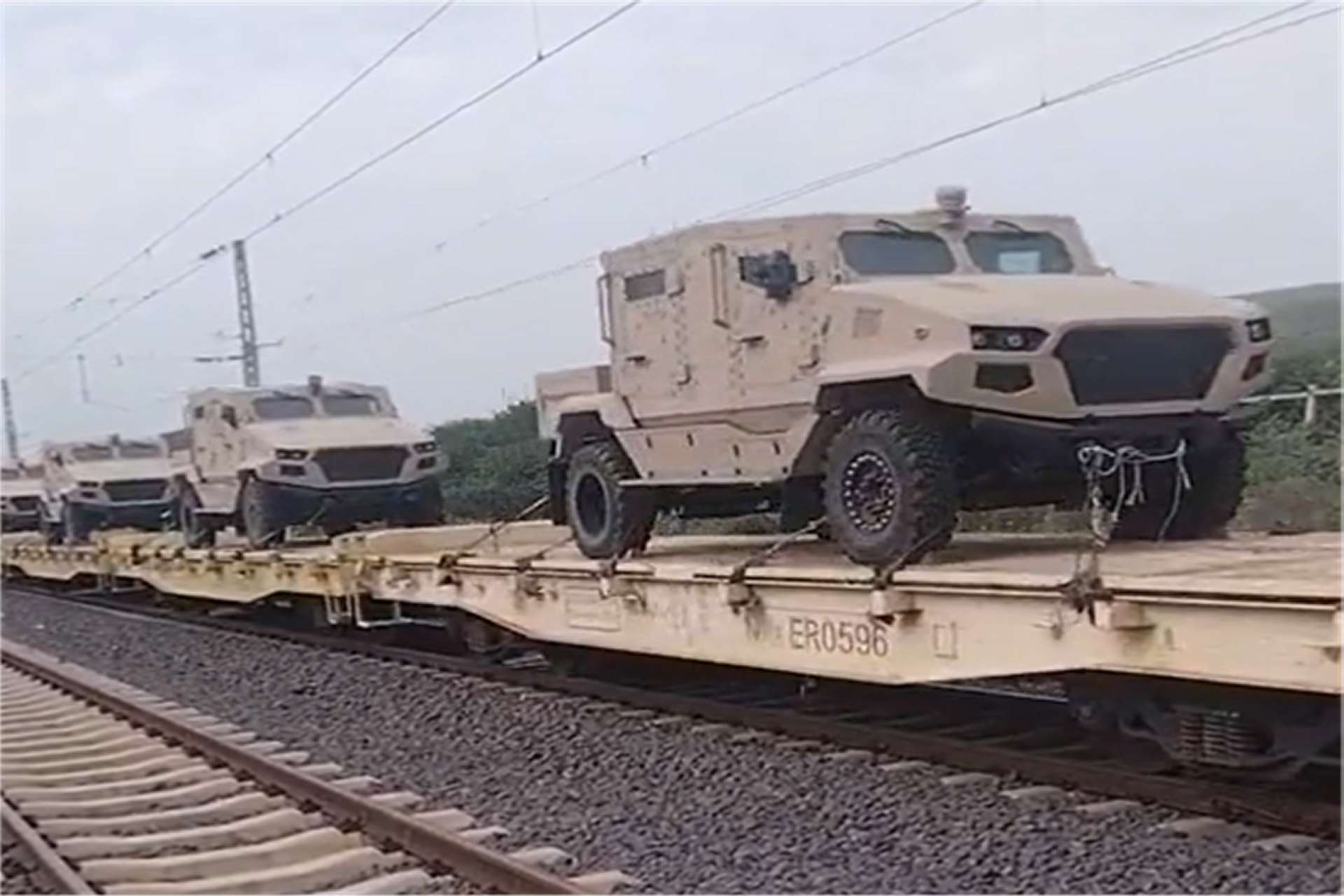
On July 25, 2024, Ethiopian National Defence Force (ENDF) recently enhanced its defense capabilities by taking delivery of hundreds of Calidus MCAV-20 armored vehicles provided by the United Arab Emirates. This acquisition marks an important step in the modernization of Ethiopia's military equipment.
Calidus MCAV-20 Mobile Combat Armored Vehicles
(Picture source: Ethiopian Social Media)
On July 20, several MCAV-20 vehicles were spotted in transit by rail heading towards the capital, Addis Ababa. This deployment underscores Ethiopia's commitment to improving the mobility and protection of its armed forces in the face of contemporary threats.
The MCAV-20 is one of the flagship vehicles of Calidus, a company renowned for its innovations in military vehicles. Alongside the lightweight 4×4 LRV-20 and the Al Wahash 8×8, the MCAV-20 stands out for its impressive specifications and versatility.
According to the Calidus website, the MCAV-20 is powered by a 6.7-liter Cummins diesel engine producing 300 horsepower, enabling the vehicle to reach a top speed of 110 km/h and a range of 800 kilometers. Weighing between 7 and 9 tons, the vehicle is equipped with an independent suspension system and robust armor capable of withstanding small arms fire and artillery shrapnel. Additionally, its underbody is designed to withstand explosions, thereby ensuring optimal crew protection.
The intelligent hull design of the MCAV-20 allows for the integration of various turrets and weapon stations, enhancing its adaptability to diverse missions. It can be equipped with a 30mm cannon, a 7.62mm machine gun, and a 40mm grenade launcher, making it suitable for a wide range of combat situations.
The MCAV-20 is not only favored by the Ethiopian army. It has also been adopted by the Sudanese Armed Forces, the Republican Guard of the Democratic Republic of Congo, as well as the military forces of Mozambique and Mauritania. This international adoption testifies to the vehicle's reliability and effectiveness in various operational environments.
The arrival of the Calidus MCAV-20 armored vehicles in Ethiopia represents a major advancement for the ENDF. With these new assets, the Ethiopian army is now better equipped to ensure the country's security and stability. This strategic acquisition also strengthens the military cooperation between Ethiopia and the United Arab Emirates, paving the way for future collaborations in defense and security.
Read more: Ethiopian Army receives Hundreds of Calidus MCAV-20 Mobile Combat Armored Vehicles

- Details
- Written by: Administrator
- Category: 2024
- Hits: 3546
The British Ministry of Defense has announced the successful firing of a high-powered laser energy weapon from a British Army Wolfhound wheeled combat armored vehicle. The innovative test, conducted at the Defence Science and Technology Laboratory (Dstl) range in Porton Down, marks a significant milestone in the UK Ministry of Defence’s Land Laser Directed Energy Weapon (LDEW) Demonstrator program.
Follow Army Recognition on Google News at this link
British Army Wolfhound armoured vehicle, seen here with a mounted portable Laser Directed Energy Weapon (LDEW). (Picture source: UK MoD)
The test involved a British Army Wolfhound armored vehicle equipped with a mounted portable Laser Directed Energy Weapon (LDEW). This cutting-edge technology was able to neutralise targets at distances exceeding 1 kilometer, showcasing its potential to revolutionize modern warfare.
This achievement signifies a major leap forward in the UK’s defense capabilities, providing increased operational advantage on the battlefield. The use of high-energy laser weapons offers several benefits, including precision targeting, reduced collateral damage, and the ability to engage a variety of threats, from drones to ground-based targets, with speed and accuracy.
The use of laser weapons on the modern battlefield represents a transformative shift in military technology, offering unparalleled precision and efficiency in targeting and engagement. Unlike conventional munitions, laser weapons can engage targets at the speed of light, significantly reducing reaction times and increasing the likelihood of neutralizing threats before they can pose a significant risk. This precision targeting capability minimizes collateral damage, making laser weapons particularly valuable in urban combat scenarios where distinguishing between combatants and civilians is crucial. Additionally, lasers provide a virtually limitless supply of ammunition as long as there is power, eliminating the logistical challenges associated with transporting and resupplying traditional munitions.
Moreover, laser weapons offer versatility in countering a broad range of threats, from unmanned aerial vehicles (UAVs) and rockets to ground-based targets and enemy electronics. This adaptability makes them an invaluable asset in modern asymmetric warfare, where adversaries may employ diverse and unconventional tactics. By integrating laser weapons into existing platforms, such as the British Army's Wolfhound armoured vehicle, military forces can enhance their defensive and offensive capabilities while maintaining mobility and flexibility. As laser technology continues to advance, its role on the battlefield is expected to expand, providing armed forces with a critical edge in both conventional and irregular warfare scenarios.
The British Army’s successful integration of a high-powered laser weapon on the Wolfhound armoured vehicle demonstrates the progress of the Land LDEW Demonstrator programme. This programme aims to explore the feasibility and effectiveness of directed energy weapons in combat scenarios, pushing the boundaries of current military technology.
The Wolfhound armored vehicle, already renowned for its robust design and versatility, has now become a platform for pioneering advancements in military technology. The addition of the LDEW not only enhances its offensive capabilities but also underscores the UK’s commitment to maintaining a technological edge in defense.
As the Land LDEW Demonstrator program progresses, further tests and evaluations are expected to refine the technology and explore its full potential. The successful deployment of laser weapons in operational scenarios could fundamentally change the dynamics of warfare, offering new strategies and tactics for the modern battlefield.
In conclusion, the British Army’s successful firing of a high-powered laser energy weapon from a Wolfhound armored vehicle represents a pivotal moment in defense technology. This achievement highlights the UK’s dedication to innovation and its commitment to providing its armed forces with the most advanced and effective tools to safeguard national security.
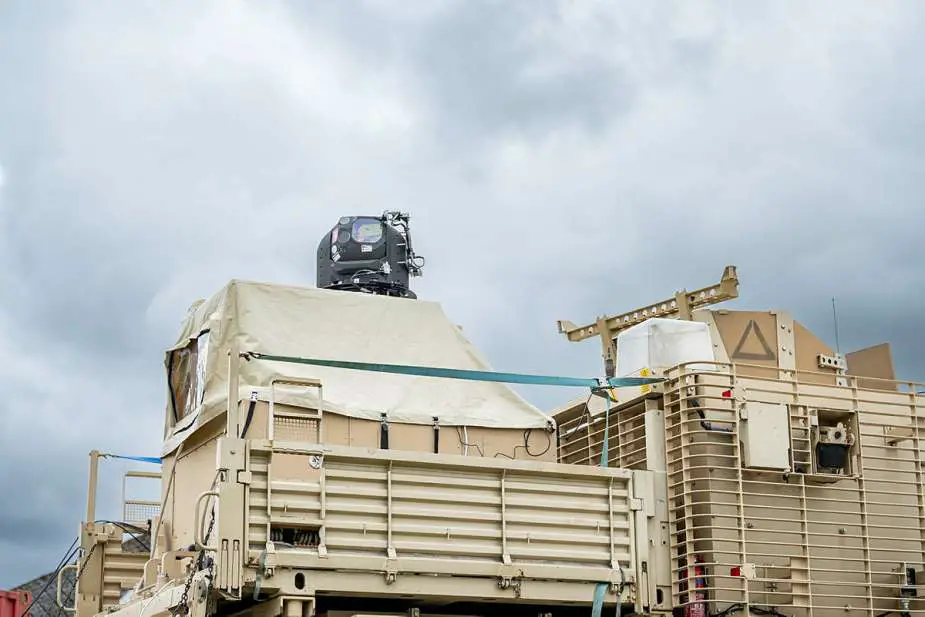
Close view of the Laser Directed Energy Weapon mounted at the rear of the British army Wolfhound armored vehicle. (Picture source UK MoD)
Read more: British Army Successfully Tests Laser Weapon Mounted on Wolfhound Armoured Vehicle