Army - Analysis Defense and Security Industry
-
Japan FY2026 Defense Budget Positions SHIELD Drones as Core Pillar of Southwestern Island Defense
 {loadposition bannertop}{loadposition sidebarpub}
Japan’s FY2026 defense budget formally elevates the SHIELD concept into a core operational pillar, marking its clearest embrace yet of massed unmanned warfare, according to the Ministry of Defense. The move signals a strategic judgment that future fighting in the southwestern islands will hinge on exhausting an adversary’s strike complex rather than preserving a small number of high-value platforms.
Japan has taken a decisive step toward reshaping its military doctrine, with the Ministry of Defense confirming on December 26, 2025, that the FY2026 defense budget formally positions the SHIELD concept as a core operational pillar. The shift reflects a growing consensus inside the ministry that deterrence and warfighting in the southwestern islands will depend less on the survivability of exquisite platforms and more on the ability to generate sustained pressure through large numbers of unmanned systems operating across air, sea, and land domains.
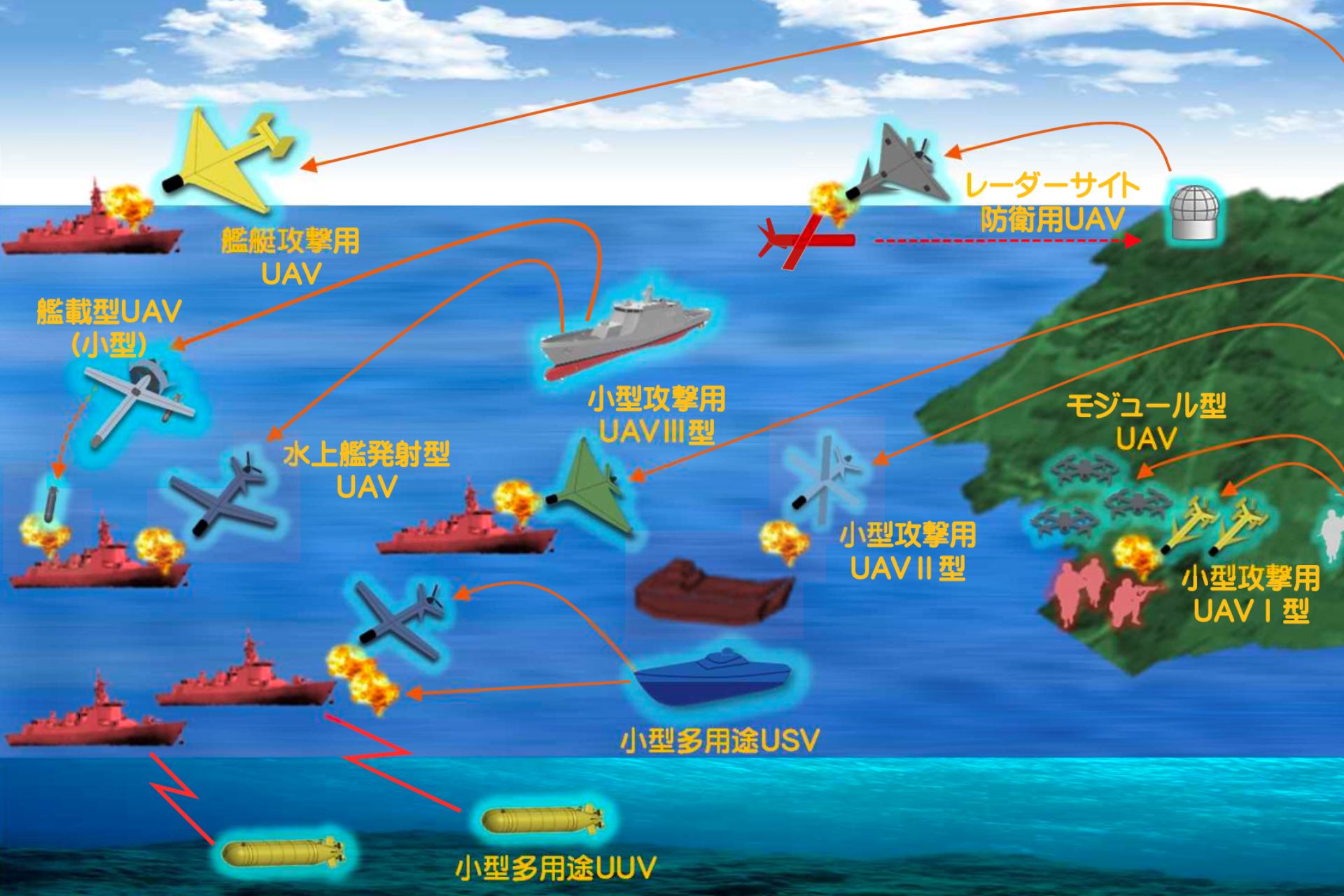
Follow Army Recognition on Google News at this linkRather than a discrete drone program, SHIELD, forms a joint combat architecture networked across unmanned air, surface, and underwater assets of the Japan Self-Defense Forces.(Picture source: Japanese MoD)
SHIELD, an acronym for Synchronized, Hybrid, Integrated, and Enhanced Littoral Defense, is not a standalone drone program but a fully integrated combat architecture designed to network unmanned aerial, surface, and underwater systems across all three branches of the Japan Self-Defense Forces. The FY2026 budget allocates approximately JPY 312.8 billion to unmanned asset defense capability, including JPY 128.7 billion specifically dedicated to standing up SHIELD by FY2027. Japanese defense planners describe the system as a multilayered coastal denial framework intended to overwhelm enemy sensors, dilute missile salvos, and impose a punishing cost-exchange ratio on any attacking force.
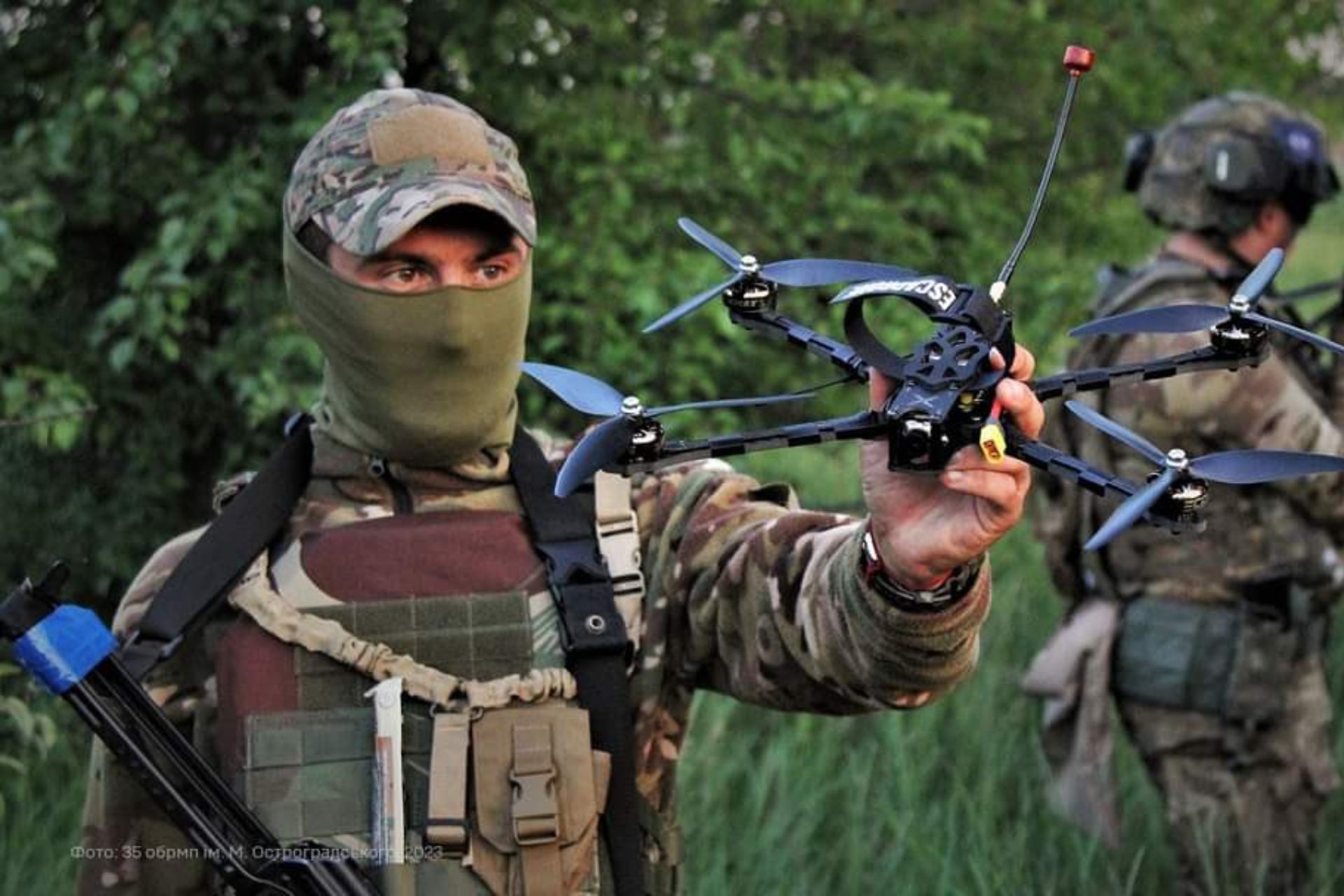
At the tactical level, the Ground Self-Defense Force will field an entirely new family of expendable attack drones designed for mass production and rapid replacement. Three primary categories are planned. The Type I small attack UAV is optimized for short-range strikes against vehicles, dismounted forces, and exposed equipment, closely resembling FPV-style loitering munitions adapted for military use. The Type II variant extends range and payload, enabling attacks against fortified positions, logistics nodes, and amphibious landing craft operating near the coastline. The Type III UAV represents the most disruptive element, with an advertised engagement range of up to approximately 100 kilometers against ground and surface targets, effectively functioning as a low-cost, long-range precision strike asset intended to complement traditional missiles.
These attack drones are supported by modular reconnaissance UAVs and quadcopters for real-time target acquisition, battle damage assessment, and fire correction. Japan is also introducing specialized interceptor UAVs tasked with defending radar sites and air defense nodes, reflecting an understanding that fixed sensors will be prime targets in the opening phase of any high-intensity conflict. Rather than relying solely on surface-to-air missiles, SHIELD uses cheap aerial interceptors to counter enemy drones and loitering munitions at close range.
Maritime elements form the second pillar of the system. The Maritime Self-Defense Force plans to deploy ship-launched UAVs for over-the-horizon reconnaissance and strike missions against surface targets, extending the sensor and engagement reach of destroyers and patrol vessels without exposing manned aircraft. In parallel, SHIELD includes the acquisition of small multipurpose unmanned surface vehicles capable of operating in coordinated swarms. These USVs are designed for surveillance, target designation, electronic decoy roles, and direct attacks against enemy vessels, forcing adversaries to choose between expending expensive anti-ship missiles or allowing unmanned attackers to close the distance.
Below the surface, small multipurpose unmanned underwater vehicles provide persistent intelligence collection in chokepoints and littoral approaches. These UUVs are optimized for reconnaissance, seabed mapping, and monitoring of amphibious movements, providing data that feeds into the broader SHIELD command network. Their contribution is critical in maintaining continuous situational awareness in contested waters where traditional manned submarines and patrol aircraft may be constrained.
What binds these disparate systems together is SHIELD’s centralized yet resilient command-and-control architecture. The Ministry of Defense emphasizes the ability to simultaneously control heterogeneous unmanned assets across domains, creating a distributed sensor-to-shooter network where low-cost platforms generate targeting data for higher-end weapons such as stand-off missiles, coastal artillery, and naval strike systems. This architecture allows Japan to conserve scarce high-value munitions while maintaining pressure across the battlespace.
Operationally, SHIELD reflects direct lessons drawn from Ukraine, where inexpensive drones have repeatedly forced adversaries into unfavorable cost exchanges and exposed the vulnerability of concentrated forces. Japanese planners increasingly view attrition not as a failure but as a deliberate tool. By forcing an opponent to expend advanced interceptors and long-range missiles against expendable drones, SHIELD aims to erode offensive momentum before decisive engagements occur.
Strategically, the system represents a profound cultural shift for Japan’s defense posture. Long defined by quality, restraint, and defensive interception, Tokyo is now explicitly planning for saturation, redundancy, and acceptance of losses in unmanned assets to preserve human life and combat power. The FY2026 budget makes clear that Japan no longer assumes future wars will be short or containable. Instead, it is building the capacity to fight under sustained missile pressure across the first island chain.
For regional adversaries, the implication is stark. Any attempt to coerce or seize territory in Japan’s southwestern approaches would encounter not only layered missile defenses and long-range strike capabilities, but also a dense, adaptive cloud of unmanned systems designed to disrupt sensors, exhaust magazines, and degrade decision-making from the opening hours of a conflict. SHIELD transforms Japan’s defense budget from a conventional rearmament plan into a declaration of how it intends to fight and endure in a high-intensity Indo-Pacific war.
-
Exclusive Analysis: U.S. Trump-Class Warship Introduces Next-Generation Stealth and Combat Systems
 {loadposition bannertop}{loadposition sidebarpub}
The U.S. Navy has announced plans to design a Trump-class guided missile battleship, beginning with USS Defiant (BBG-1), as part of a broader Golden Fleet expansion. The proposed ship emphasizes hypersonic strike capabilities, deep missile capacity, and fleet command survivability in high-end conflicts.
On December 22, 2025, the U.S. Department of War announced its intent to construct a new Trump-class guided missile battleship, starting with the future USS Defiant (BBG-1), as the centerpiece of a wider “Golden Fleet” buildup. The move revives the battleship label, but the hardware being proposed is closer to a missile-heavy large surface combatant built to fight inside a saturated anti-ship missile environment, while also acting as a fleet command node. The War Department’s Pentagon News account describes the ships as 30,000-to 40,000-ton combatants now in the design phase, with construction of the lead ship targeted for the early 2030s.
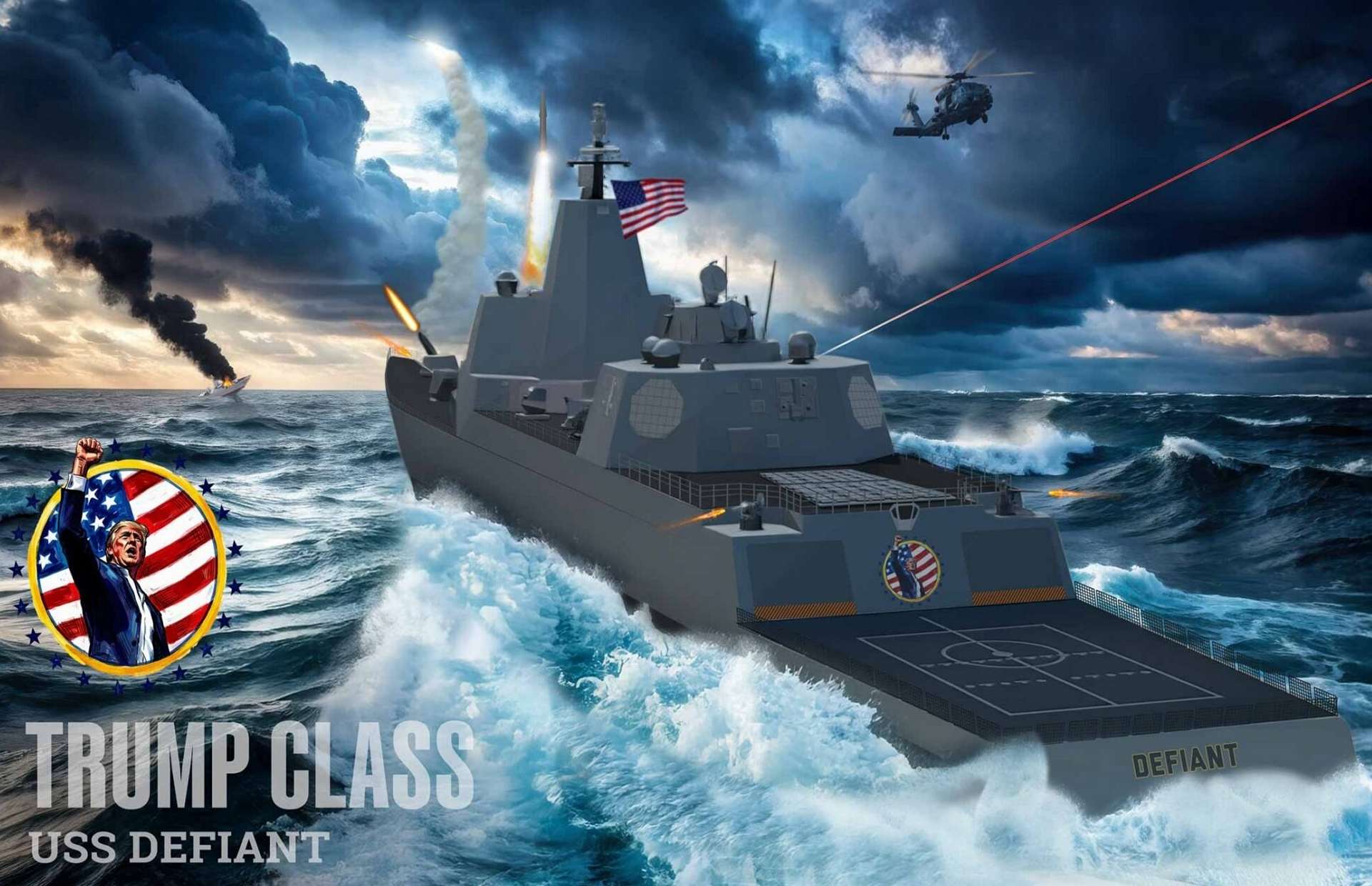
Follow Army Recognition on Google News at this linkTrump class battleship concept is a 35,000-ton missile-heavy flagship built for hypersonic strike, dense air defense, and layered self-protection with deep magazines and advanced sensors (Picture source: U.S. DoW).
For the U.S. Navy, the operational problem is keeping surface forces lethal after the first days of a peer fight, when carriers may need to operate at longer stand-off ranges and when destroyers can burn through their missile magazines quickly. The Golden Fleet portal frames the battleship as a platform that can strike an adversary at vastly longer range than the previous class and, crucially, can deploy with hypersonic and nuclear-capable missiles. Official reports describe the plan as beginning with two ships, with an eventual ambition for 20 to 25 hulls, positioning the class as a magazine and presence multiplier rather than a boutique capability.
The concept design places the Trump-class in the 30,000 to 40,000 ton displacement range, with USS Defiant shown as a roughly 35,000 ton combatant exceeding 840 feet in length and approaching 880 feet overall, with a beam between 105 and 115 feet and a draft estimated at 24 to 30 feet. Propulsion is described as a combined gas turbine and diesel configuration delivering more than 30 knots of top speed, while providing sufficient electrical margin to support energy intensive sensors and weapons. Crew size is projected between 650 and 850 personnel, reflecting both the ship’s scale and its role as a command flagship rather than a traditional escort.
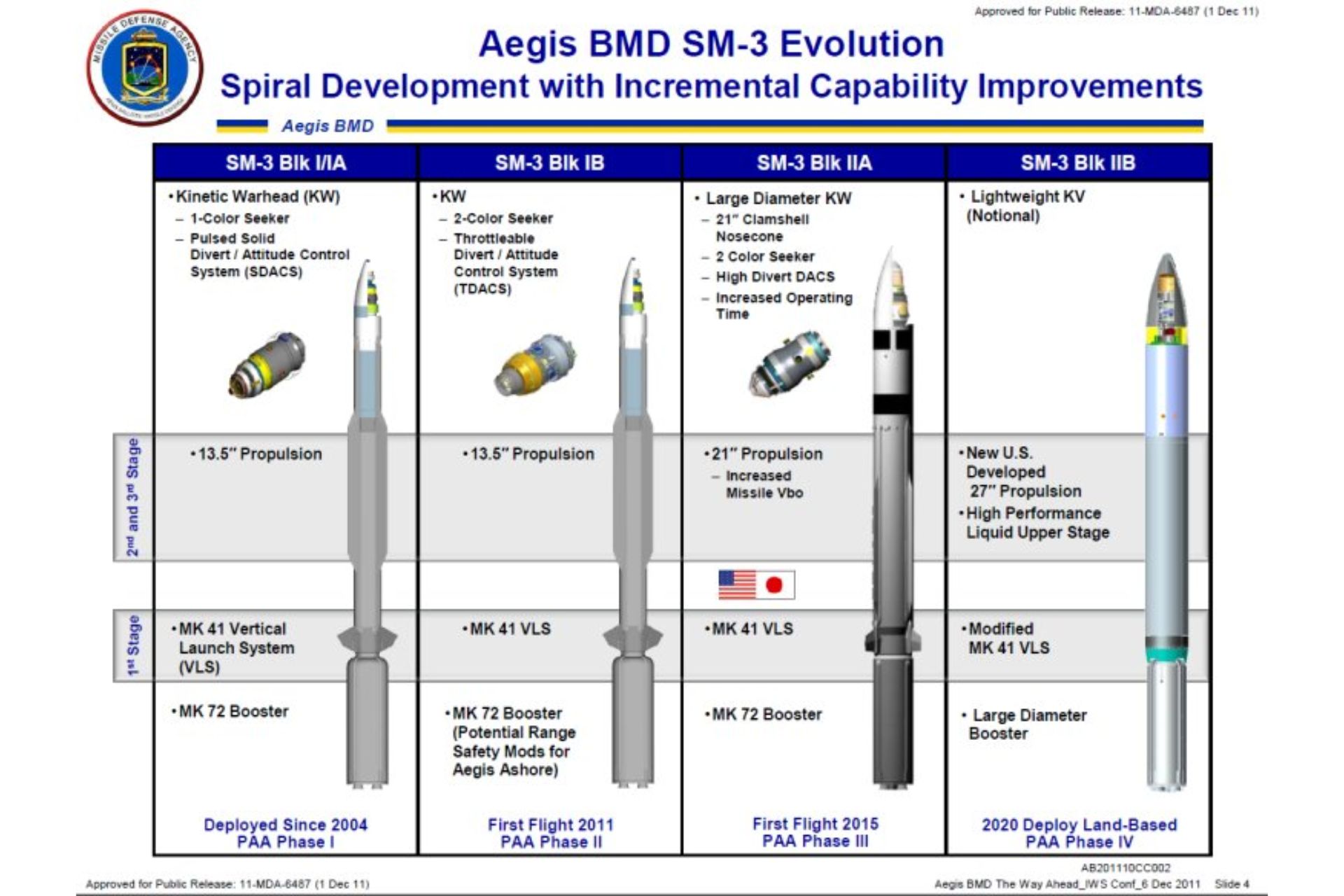
The announced main battery is missile-centered. Navy messaging ties the class to Conventional Prompt Strike hypersonic weapons and to the Surface Launch Cruise Missile Nuclear, commonly referred to as SLCM-N, indicating an intent to combine long-range conventional strike and a nuclear sea-launched cruise missile option on a surface combatant. The concept art and accompanying technical material circulating in coverage also describe a large Mk 41 Vertical Launching System fit on the order of 128 cells, plus a dedicated 12-cell battery for CPS. In practical terms, this would let a single ship carry a mixed load of Tomahawk land attack cruise missiles, SM-2 and SM-6for area air defense and surface strike, and potentially SM-3 for ballistic missile defense, alongside hypersonic rounds intended for time-sensitive or heavily defended targets. The Navy’s own press language emphasizes larger missile magazines and deep strike weapons as the central idea.
In addition to its missile armament, the Trump class design reintroduces advanced gun systems as part of a layered engagement strategy. The Golden Fleet concept promotes directed energy weapons for more favorable exchange ratios against incoming threats, and reporting on the technical package attributes to the ship a 32 megajoule railgun firing hypervelocity projectiles, plus two 5-inch guns paired with hypervelocity ammunition. If those elements mature, they would give Defiant a menu of lower-cost shots for close and medium range engagements, particularly against drones, fast attack craft, and potentially certain missile profiles. The same reporting describes an option of two 300-kilowatt or two 600-kilowatt class lasers, complementing kinetic close-in systems and providing sustained defensive fire limited mainly by power generation and thermal management. At the same time, both railguns and high-end shipboard lasers remain technically demanding, and outside observers have noted that the Navy previously reduced emphasis on railgun development after years of work, which is why early hulls would likely need a conservative path that does not hinge on any single revolutionary weapon to reach initial operational capability.
Defiant’s defensive concept is built around layered sensing, electronic warfare, and rapid engagement. The Navy press release explicitly assigns the ship an Integrated Air and Missile Defense role and describes it as capable of operating with a carrier strike group or commanding its own surface action group. The artwork associated with the announcement depicts an Aegis-type architecture, and the intent is clearly to make the battleship a high-value air defense node that can protect itself and others while also delivering long-range fires. For close in defense, the ship is shown equipped with two Mk 45 Rolling Airframe Missile launchers, multiple Mk 38 30 millimeter guns positioned fore and aft, and at least two 20 millimeter class close range systems to counter leakers that penetrate the outer defensive layers.
The Trump-class battleship also integrates two Counter Unmanned Systems modules, reinforcing its role in defending itself and nearby vessels against drone swarms in congested littoral or open ocean environments. The flight deck and hangar depicted for a large tiltrotor, such as the V-22, point to a ship that is designed to move people, parts, and sensors quickly, extend its scouting radius, and support maritime interdiction or special operations support missions without immediately leaning on the carrier air wing.
The tactical reason to build a ship in this size class is magazine depth married to survivability and command capacity. A larger hull can accept more redundancy in power distribution, more compartmentation, larger damage control margins, and greater space for cooling and electrical growth, all of which become decisive if directed energy and advanced sensors are to be fielded at scale. It also provides room for a robust command, control, communications, computers, and intelligence suite, which Navy messaging highlights by describing the battleship as a quarterback for wider fleet operations, including manned and unmanned platforms. In a distributed maritime operations construct, that combination matters because it allows the Navy to push decision-making and engagement authority forward while still retaining a heavily defended node that can coordinate a surface action group and keep firing after smaller escorts have expended their weapons.
On development and feasibility, official accounts state the Navy will lead design while partnering with the defense industrial base, and they add that the Trump class would replace the earlier DDG(X) destroyer plan, with intended DDG(X) capabilities folded into the new hull. That phrasing implies a program strategy built around adopting mature subsystems where possible, such as Mk 41 and established combat systems, while treating railguns and the highest power lasers as spiral upgrades. Broader reporting has emphasized the scale ambition and the administration’s message about expanding industrial output across the country, which, if pursued, would require long-term funding stability, workforce growth, and shipyard throughput improvements to avoid colliding with other major naval construction priorities.
Against Western competitors, the Trump class concept sits in a displacement and magazine category that NATO navies do not currently field. Britain’s Type 45 destroyers and the Franco-Italian Horizon class are optimized for air defense in the roughly 7,000 to 8,000 ton range, with far smaller missile capacities than the roughly 140 launch cells suggested for Defiant when Mk 41 and CPS cells are combined. Even Japan’s Maya class, among the most capable Aegis destroyers outside the U.S. Navy, carries 96 Mk 41 cells at around 10,000 tons full load. The closest Western analogue in ambition is the U.S. Navy’s own Zumwalt class, built around large electrical power margins and now being adapted for hypersonic weapons, but it remains far smaller in displacement than a 35,000-ton battleship concept.
If built as described, the new Trump-class battleship would shift U.S. Navy surface combat power by concentrating long-range strike and air defense into fewer, higher-capacity flagships that can carry the fight deeper and longer without immediate resupply. The neutral capability impact is straightforward: more missiles per hull, more growth margin for directed energy, and a platform designed to act as a forward command node, all aimed at sustaining sea control and power projection in the 2030s and beyond.
Read full technical review here: Trump-class battleship
Written by Evan Lerouvillois, Defense Analyst.
Evan studied International Relations, and quickly specialized in defense and security. He is particularly interested in the influence of the defense sector on global geopolitics, and analyzes how technological innovations in defense, arms export contracts, and military strategies influence the international geopolitical scene.
-
U.S. Army unveils lean Mobile Brigade Combat Team built for modern warfare
{loadposition bannertop}{loadposition sidebarpub}
The U.S. Army is moving toward a new Mobile Brigade Combat Team that cuts brigade manning to about 1,900 troops while packing in more sensors, drones, and precision weapons, according to a new Congressional Research Service note based on Army data. The design is meant to help light infantry survive and win in drone-saturated, electronically contested battles similar to Ukraine, trading sheer numbers for speed, dispersion and precision fires.
The U.S. Army is preparing to replace traditional Infantry Brigade Combat Teams with a lighter, more technically dense Mobile Brigade Combat Team built around mobility vehicles, organic drones and long-range precision strike, according to a December 9 Congressional Research Service note drawing on official Army force design data. The future MBCT trims brigade strength to roughly 1,900 soldiers, less than half the manpower of a current IBCT, while adding layers of small UAS, loitering munitions, electronic warfare, and mobile command nodes designed to maneuver and survive under constant observation and long-range fire.
Follow Army Recognition on Google News at this linkSoldiers from the 2nd Mobile Brigade Combat Team, 101st Airborne Division (Air Assault), start their Infantry Squad Vehicle after a UH-60 Black Hawk drop at the Joint Readiness Training Center, Fort Johnson. (Picture source: US DoD)
The reduction in organizational size is the first major shift. The MBCT will consist of approximately 1,900 soldiers, compared with 4,500 in a traditional Infantry Brigade Combat Team (IBCT). The Infantry Brigade Combat Team (IBCT) is the standard infantry brigade designed for sustained operations in low-intensity environments. The new format redistributes essential functions to prioritize mobility, autonomy and the ability to disperse, while retaining a core of fires, logistics, communications, medical support and information advantage. This reduction does not imply a loss of capability; instead, it reflects a technological densification intended to replace mass with speed and precision.
Enhanced tactical mobility relies on the Infantry Squad Vehicle (ISV), now fielded across every rifle squad. The Infantry Squad Vehicle (ISV) is a lightweight nine-seat platform able to transport a full squad and its equipment across complex terrain without dependence on established routes. Designed as an expendable platform, it enables rapid maneuver and improves survivability against drones, observers and indirect fires. The report reveals two additional variants in development: the ISV-Utility (ISV-U), which will integrate command modules, energy storage and distribution, electronic warfare, counter-UAS systems, precision-fires payloads and mortar options; and the ISV-Heavy (ISV-H), intended to serve as a brigade-level mobile command platform with a hybrid powertrain producing the electrical output needed for EW systems and tactical networks. This approach turns a light vehicle into a technical node supporting high-intensity operations.
The second pillar of the MBCT concept is the increased density of sensors and effectors across all echelons. Small UAS become organic from squad to battalion, supporting reconnaissance, target acquisition and maneuver. Loitering munitions provide the capability to strike beyond line of sight, enabling dispersed units to engage targets at several kilometers. The document confirms the gradual replacement of the TOW 2B missile by the Mobile Long-Range Precision Strike Missile system, developed to extend anti-armor reach for dispersed elements. This technical layer builds on weapons already present in the squads, including the Javelin missile, effective against armored platforms at extended ranges, and the Carl-Gustaf launcher, suited to fortified positions and tactical obstacles.
The creation of the Multi-Function Reconnaissance Company (MFRC) represents a major organizational innovation. It merges traditional reconnaissance with the Tactical UAS platoon, the EW platoon and an Effects platoon equipped with loitering munitions and anti-armor systems. Teams can be task-organized to support battalions during distributed operations. This integration of sensors, jamming and precision effects within a single company reflects a shift toward light units built around modular technical capabilities.
The report also details the Multi-Purpose Company (MPC), which will replace assault companies in Infantry Battalions. It centralizes mortars, reconnaissance and counter-UAS assets while controlling most of the battalion’s loitering munitions. This consolidation aims to reposition sensors, indirect fires and counter-drone systems quickly, increasing battalion responsiveness in battlefields dominated by aerial observation and precision strike.
The transformation timeline is tied to concrete capability milestones. Initial Operational Capability (IOC) in FY2025 includes MBCTs already equipped with full ISV fleets, organic small UAS and initial quantities of loitering munitions integrated into tactical command structures. FY2026 budget lines allocate more than 300 million dollars for the ISV and 75 million for loitering munitions, reinforcing three technical pillars: mobility platforms, aerial sensor density and organic strike capabilities. As ISV-U and ISV-H variants are fielded, the brigade will gain dedicated vehicles for mobile command, onboard energy generation, EW systems and C2 functions, strengthening tactical networks.
The internal configuration of the MBCT establishes a continuous chain of technical effects from squad to brigade. Sections combine ISV mobility with the engagement capabilities of the Javelin, which can reach armored targets beyond two kilometers, and the Carl-Gustaf, suited for destroying structures or light armor. Small UAS provide observation and fire adjustment. The MFRC adds integrated layers of sensors, jamming and loitering munitions, while the MPC coordinates mortars, reconnaissance and counter-UAS assets. The result is a light but technologically dense brigade able to disperse forces without losing tactical coherence, supported by mobile platforms generating the power required for sensors, data links and precision-strike systems.
-
INTEL: North Korea’s Hwasong-20 ICBM Missile Emerges as New Strategic Threat to Indo-Pacific and U.S.
 {loadposition bannertop}{loadposition sidebarpub}
North Korea’s new Hwasong 20 InterContinental Ballistic Missile (ICBM) is drawing heightened scrutiny from defense analysts, who say the system’s design points to a more survivable and flexible nuclear threat than anything Pyongyang has fielded before. Early assessments suggest the missile could introduce a step change in range, mobility, and potential payload options, raising concerns about how the United States and its regional allies will need to adapt their deterrence posture.
The Hwasong 20, first publicly displayed during an October 2025 military parade in Pyongyang, now sits at the center of U.S. and South Korean intelligence reviews of its operational potential. The oversized transporter launcher and the apparent multi-stage configuration have prompted analysts to revisit long-standing assumptions about North Korea’s ability to disperse, conceal, and rapidly ready its strategic systems. Although no flight-test data have been released, the platform’s architecture suggests that Pyongyang is pursuing an ICBM designed for extended range and reduced vulnerability. This combination could complicate missile defense planning and early warning timelines.
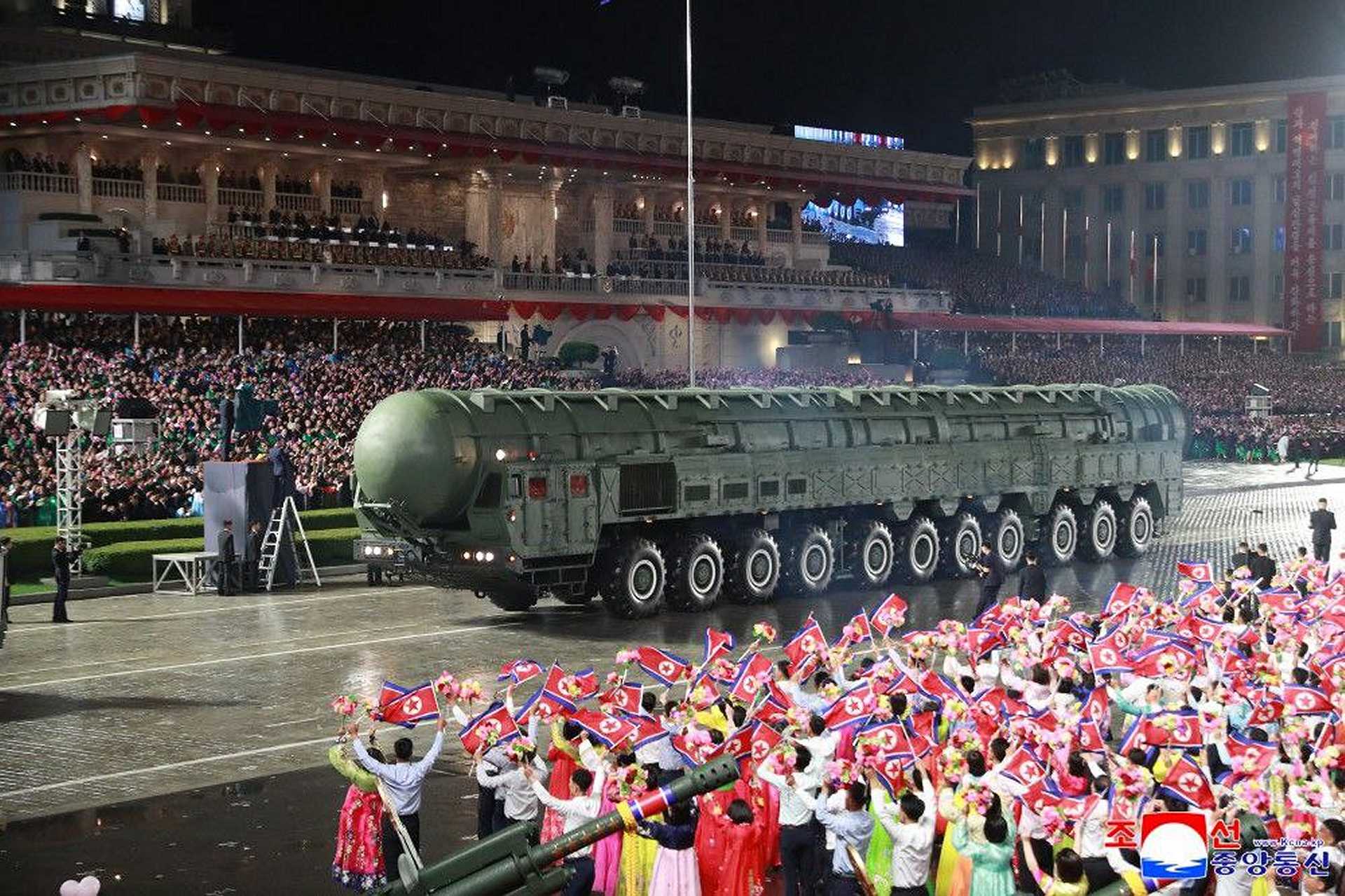
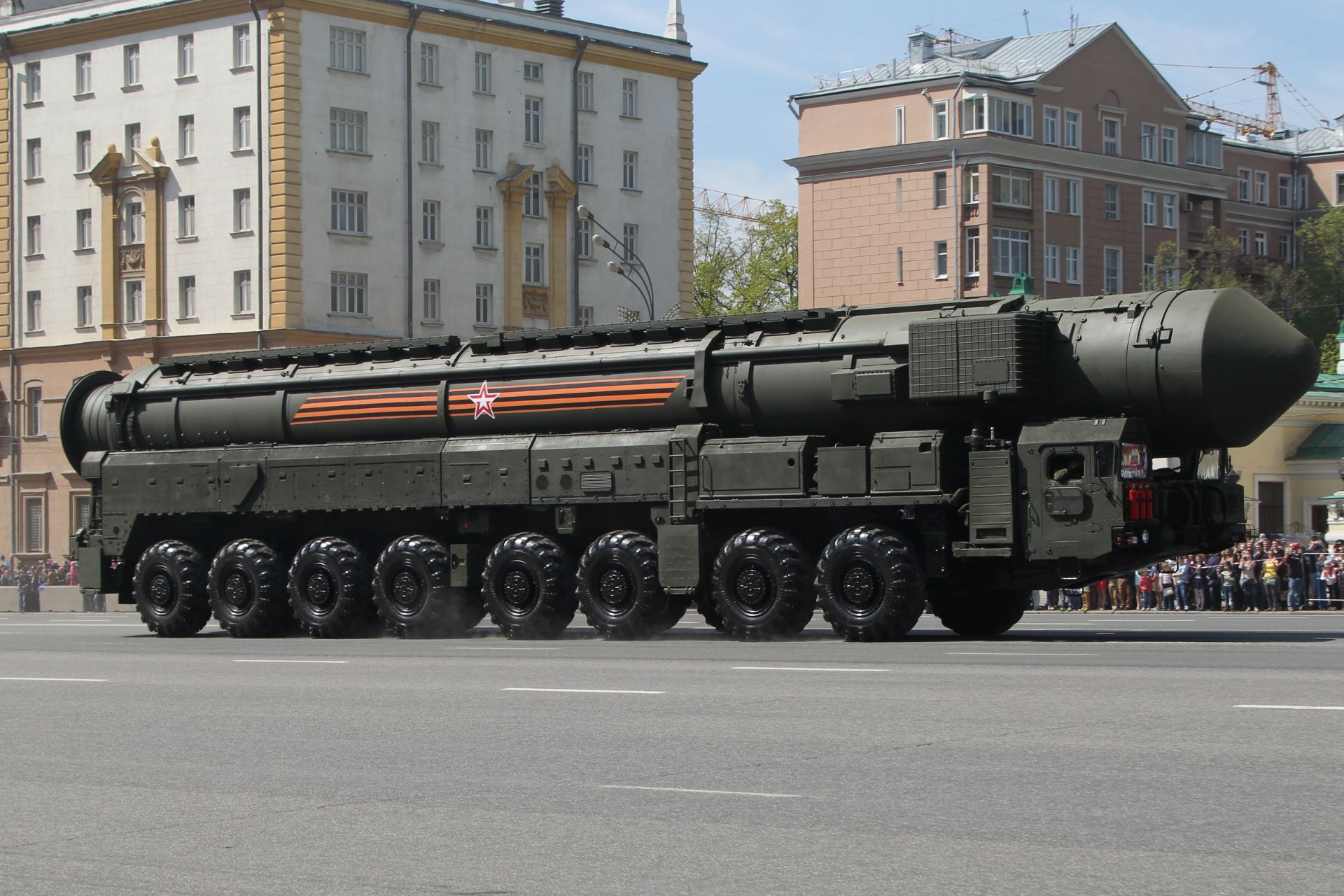
Follow Army Recognition on Google News at this linkThe Hwasong 20 intercontinental ballistic missile moves through central Pyongyang during North Korea’s October 2025 military parade, carried on an enlarged transporter launcher that analysts say underscores the regime’s push for greater range, mobility, and nuclear survivability. (Picture source: North Korea Press Agency)
A new-generation solid-fuel engine reportedly powers the missile, believed to deliver thrust in the range of 1,960 to 1,970 kilonewtons. This performance level surpasses that of the earlier Hwasong-18, North Korea’s first solid-fuel ICBM, by roughly 40 percent. Solid-fuel propulsion brings decisive advantages. Unlike liquid-fueled missiles, which require hours of pre-launch preparation, solid-fuel systems can be fired with minimal warning, significantly improving survivability and responsiveness.
Accompanying the missile is a newly developed 11-axle transporter-erector-launcher. The TEL (Transporter Erector Launcher) design is a key element of this weapons system, offering road mobility and a quick-launch capability that makes preemptive targeting by enemy forces substantially more difficult. Unlike previous TELs that relied on side-mounted elevation systems, the Hwasong-20 launcher employs a central vertical erection mechanism. This configuration more closely mirrors the architecture of Russian and Chinese TELs, indicating growing sophistication in North Korea’s missile deployment platforms.
The missile is housed in a sealed canister on the launcher, further improving its combat readiness and resistance to environmental degradation. This canisterized configuration supports long-term storage, faster field deployment, and reduced visibility during pre-launch operations. The canister also likely protects the missile’s sensitive components and simplifies transport logistics, enhancing its credibility as a deployable deterrent rather than a symbolic display asset.
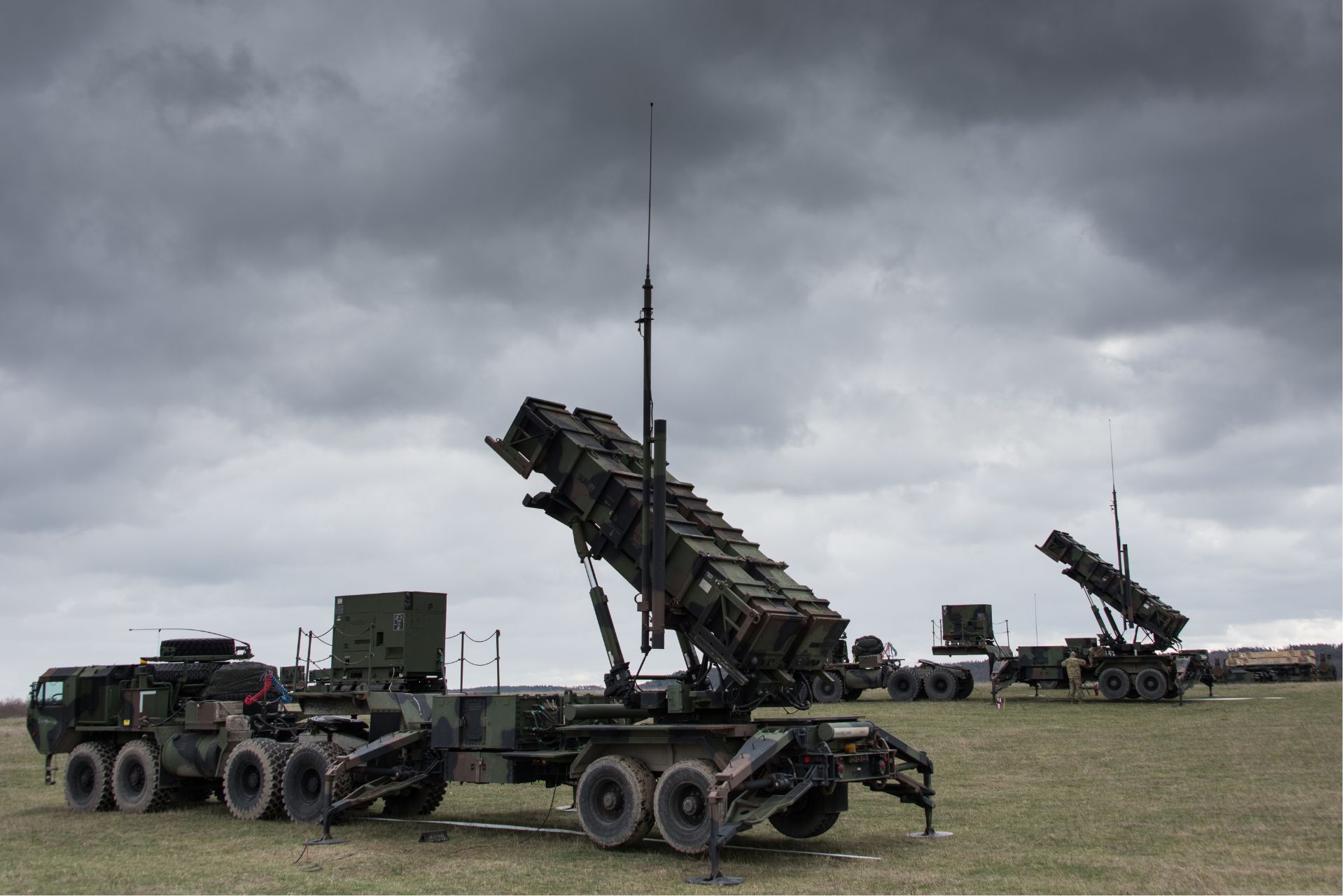
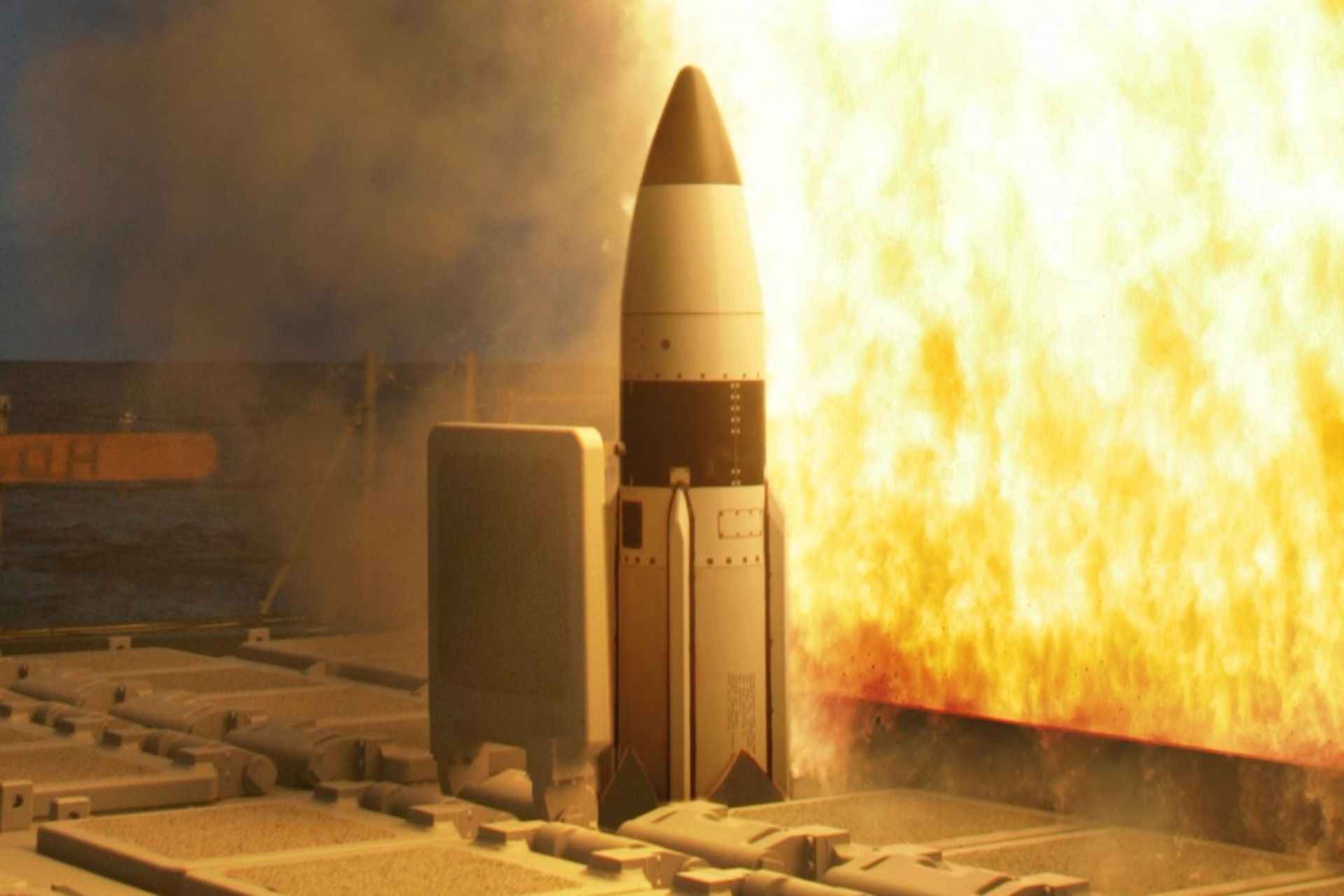
Strategic analysts have taken particular note of the missile’s widened payload shroud and enlarged airframe, which suggest the Hwasong-20 could be capable of carrying multiple independently targetable reentry vehicles, or MIRVs. If true, this would enable a single missile to deliver several warheads to distinct targets, dramatically increasing its threat potential. Such a capability would also place significant strain on regional missile defense systems, including THAAD, Aegis Ashore, and Patriot PAC-3 batteries, which are optimized for single-warhead trajectories and may be overwhelmed in a saturation scenario.
The projected range of the Hwasong-20 is estimated at over 15,000 km, placing the entire continental United States within reach. This reach is particularly concerning for Indo-Pacific security planners, as it reinforces North Korea’s strategy of threatening the U.S. homeland in order to erode confidence in Washington’s extended deterrence commitments. If South Korea or Japan begins to doubt that the United States would risk nuclear retaliation to defend them, the foundation of alliance-based deterrence in the region could begin to crack.
In the context of regional dynamics, the Hwasong-20 arrives amid heightened military competition. China’s military assertiveness in the South China Sea, Russia’s growing defense relationship with Pyongyang, and renewed trilateral cooperation between the United States, Japan, and South Korea have created a complex and volatile environment. The Hwasong-20’s introduction can be seen not just as a weapons milestone but as a strategic maneuver to exploit regional uncertainty and widen divisions among U.S. allies.
Satellite imagery and open-source intelligence have tracked increased activity at known North Korean test sites, including movement of TELs and construction work at static engine test stands. This activity coincides with Pyongyang’s public claims of successfully testing a high-performance carbon-fiber composite engine, purportedly the core propulsion system for the Hwasong-20. However, no live launch footage or telemetry data has been made public, leaving the missile’s actual performance in question.
Despite the lack of a verified flight test, defense officials across the United States and East Asia are treating the Hwasong-20 as a credible threat. The Pentagon has acknowledged intensified surveillance over North Korean missile facilities and reaffirmed its defense commitments to allies in the region. Meanwhile, South Korea and Japan have both accelerated their own missile defense upgrades and continue to deepen defense integration with U.S. forces.
Operationally, the Hwasong-20 presents several challenges. Its mobility makes it harder to track. Its solid-fuel nature means it can launch faster than traditional liquid-fueled missiles. And its suspected MIRV capability means it can potentially overwhelm current missile defenses with multiple warheads from a single launch. These factors combine to create a system that is not just more powerful but more unpredictable, reducing early warning time and increasing the complexity of response options.
Viewed through the lens of regional deterrence, the Hwasong-20 is a deliberate signal by Pyongyang. It is not merely a technological upgrade but a political message aimed at shaping the behavior of adversaries and allies alike. By introducing a missile that threatens both the regional and strategic reach of U.S. forces, North Korea is attempting to alter the risk calculus and strategic posture of the entire Indo-Pacific theater.
Until a successful flight test is confirmed, the full operational credibility of the Hwasong-20 remains uncertain. But its debut and the capabilities it claims cannot be ignored. It reflects North Korea’s continued prioritization of missile modernization, and its strategic doctrine is clearly evolving to include mobile, survivable, and multi-warhead nuclear platforms.
Written by Alain Servaes – Chief Editor, Army Recognition Group
Alain Servaes is a former infantry non-commissioned officer and the founder of Army Recognition. With over 20 years in defense journalism, he provides expert analysis on military equipment, NATO operations, and the global defense industry.
-
British Army tank regiment soldiers train with drones in Estonia to boost battlefield awareness
 {loadposition bannertop}{loadposition sidebarpub}
British soldiers from the Royal Tank Regiment have finished a small drone operators course in Estonia, training alongside NATO partners in Baltic winter conditions. The course signals a major shift as one of the UK’s oldest armored units adapts to modern reconnaissance needs using tactical sUAS platforms.
British soldiers from Dreadnaught Squadron of the British Army Royal Tank Regiment completed a small Unmanned Aircraft System operators course in Estonia, according to information posted by the Royal Armoured Corps on its official X account on November 30, 2025. The training, conducted alongside allied instructors and tested in winter conditions, reflects a growing push to equip armored crews with lightweight reconnaissance drones that can scout ahead of heavy vehicles and improve battlefield awareness.
Follow Army Recognition on Google News at this linkBritish soldiers from Dreadnaught Squadron, Royal Tank Regiment, operate a small tactical drone during sUAS training in Estonia, enhancing battlefield reconnaissance capabilities in coordination with NATO forces. (Picture source: Royal Armoured Corps X account)
The training was deliberately set against Estonia’s unpredictable late-autumn weather, with high winds, persistent rain, and limited daylight, testing the operational limits of small drone systems. British troops progressed from theoretical classroom modules to hands-on flying, executing live drone operations during both daylight and nighttime conditions. The goal was clear: to equip armored units with organic aerial reconnaissance capabilities to enable faster, more informed decision-making on the modern battlefield.
Historically, the British Army's Dreadnaught Squadron has relied on the Challenger 2 main battle tank for its combat effectiveness. While these heavily armored platforms remain critical to ground dominance, they have long lacked immediate situational awareness beyond line of sight. That gap is now being filled by drones. Small uncrewed systems allow tank crews to scout terrain, detect enemy positions, and map movement corridors before exposing their vehicles to potential ambush or long-range anti-tank threats.
Incorporating drone operations into armored doctrine represents a fundamental shift in how British forces prepare for conflict. As one senior officer involved in the training explained, “This isn't just a side skill. It’s a core enabler that lets tanks act with precision rather than brute force. It’s how we win before contact.” By launching a drone ahead of an armored column, commanders can identify kill zones, spot dismounted threats, or even mark enemy armor for indirect fires. This new layer of awareness transforms how the Royal Tank Regiment maneuvers in contested environments.
In addition to enhancing their own capabilities, Dreadnaught Squadron troops trained alongside partner forces from NATO's enhanced Forward Presence. This joint context ensured full interoperability and built on shared tactics that reflect the changing nature of war in Eastern Europe. With Russian aggression still looming across the region, integrated drone use is no longer experimental. It is a frontline necessity.
The training also has strategic implications. By embedding sUAS operators within tank formations, the British Army is signaling that its heavy forces will no longer operate in isolation or ignorance of their surroundings. Instead, these units are being configured to operate as part of a larger sensor-to-shooter network, where real-time intelligence drives maneuver and fires. Analysts from the Royal United Services Institute (RUSI) have noted that such capabilities will be essential in any future peer conflict, particularly in densely contested areas such as the Suwałki Gap or in urban environments where tanks are vulnerable to asymmetric threats.
Although the British Ministry of Defence has not yet formalized a regiment-wide doctrine for integrating drones into all armored units, sources suggest a broader rollout is likely. Troops from this training cycle are expected to return to the UK and serve as instructors, bringing sUAS integration into the wider force structure of the Royal Armoured Corps.
Crucially, this shift is not about replacing tanks. It is about enhancing their relevance in a digitized battlefield where information dominance often determines victory. As a junior NCO from Dreadnaught Squadron put it during the course, “We’re still tankers. We’re just tankers who can see further and strike smarter.”
For the British Army Royal Tank Regiment, the move toward drone-supported operations is not just a tactical upgrade. It is part of a generational evolution that fuses historical battlefield muscle with the intelligence and adaptability demanded by 21st-century conflict.
Written by Alain Servaes – Chief Editor, Army Recognition Group
Alain Servaes is a former infantry non-commissioned officer and the founder of Army Recognition. With over 20 years in defense journalism, he provides expert analysis on military equipment, NATO operations, and the global defense industry.
-
U.S. Prepares for Possible Military Action in Venezuela, Nigeria and Iraq After President’s Announcement
{loadposition bannertop}{loadposition sidebarpub}
U.S. President Donald Trump has ordered preparations and publicly floated military options in three theaters, Venezuela/Caribbean, Nigeria/West Africa and Iraq/ West Asia, while the U.S. has increased naval and air assets in the southern Caribbean. The moves concentrate on coercive, precision options near maritime approaches and standoff strike packages in each theater, with distance, partner access and legal constraints shaping feasible courses of action.
According to articles and statements since his reelection in 2024, U.S. President Donald Trump has pursued a double-edged foreign policy. On one side, he pledges to end America’s “forever wars” and restore global economic stability; on the other, he has reignited commercial rivalries by imposing new tariffs even on traditional allies. In recent weeks, Trump has gone further, openly mentioning potential U.S. military interventions across three continents. In South America, tensions with Venezuela have surged as the aircraft carrier USS Gerald R. Ford, recently redeployed from the Mediterranean, arrived in Caribbean waters. In Africa, the president has spoken of “taking action” in Nigeria, a country marked by religious conflict and immense oil wealth. And in Western Asia, he has warned Iraq’s leadership of possible “operations” if American interests are threatened. Behind the rhetoric lies a consistent pattern: each of these nations maintains strained relations with Washington while controlling key energy resources. Should economic or diplomatic levers fail, the administration appears ready to rely on nearby military assets tailored to each theatre, at sea, in the air, or on land.
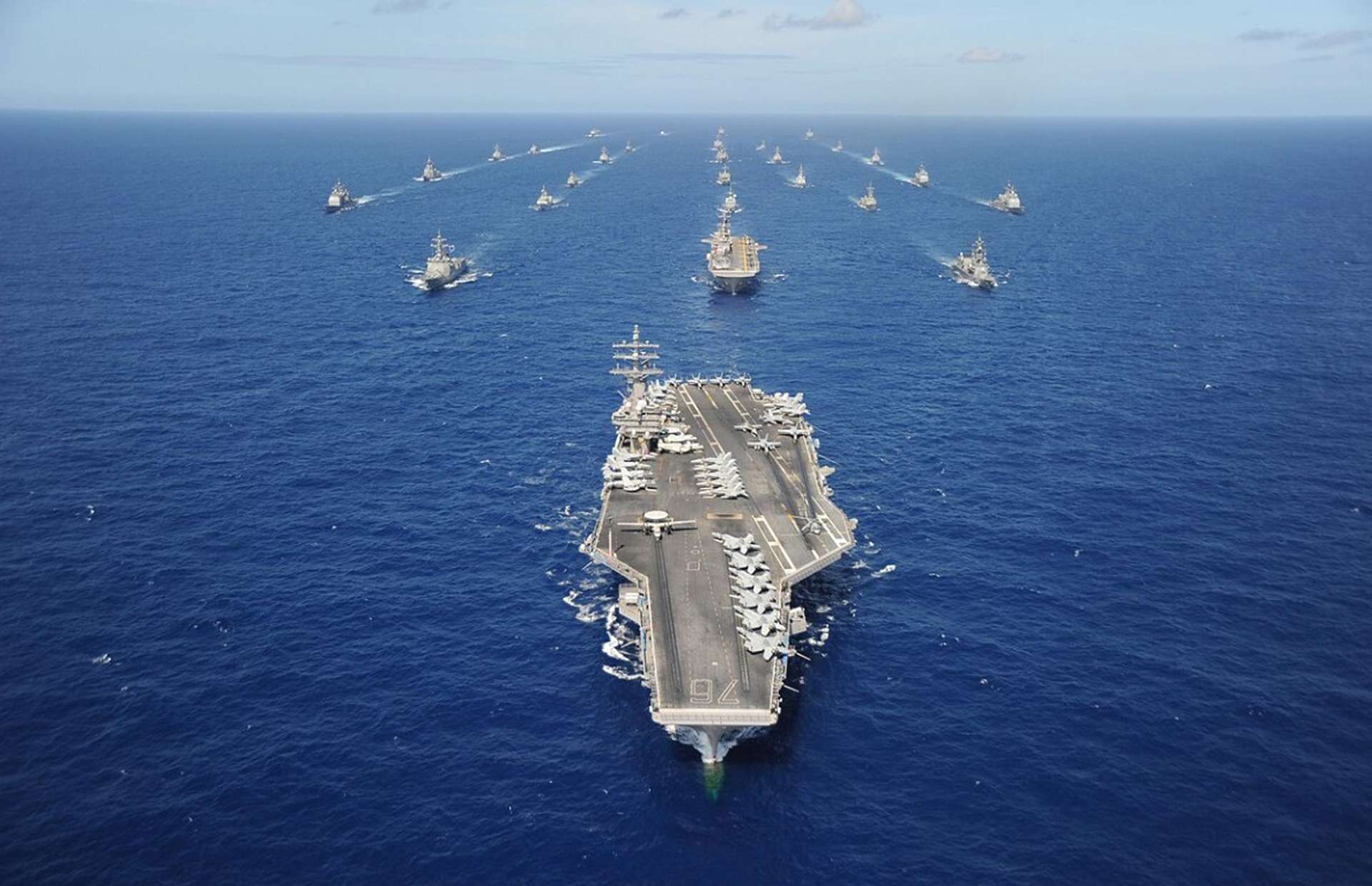
Follow Army Recognition on Google News at this linkA carrier strike group operating as part of the U.S. Fleet, soon to be deployed near Venezuela (Picture source: U.S. Navy).
The geography and posture are not symmetrical: in the southern Caribbean, U.S. naval and air assets surged in late summer and early autumn, giving Washington proximate tools for precision maritime interdiction, coastal strikes and limited special operations. Multiple reports have documented strikes on suspected drug craft near Venezuela in September and October, alongside the arrival of warships, a fast-attack submarine and F-35s forward in Puerto Rico. These deployments provide credible means to act quickly at sea and against select coastal targets without a ground invasion. The same is not true in West Africa, where the United States dismantled its Sahel basing network after the 2024 withdrawal from Niger, creating a logistics problem that would slow any Nigeria operation and drive the Pentagon toward air-centric or special operations options that rely on partner access.
Venezuela is the theater where the United States can most rapidly scale effects. The posture today includes surface combatants armed with Tomahawk land-attack missiles and SM-6 multi-mission rounds, maritime patrol P-8A aircraft for targeting and battle damage assessment, and forward fifth-generation fighters staged in Puerto Rico. Tomahawk’s in-flight retargeting and loiter capability make it suitable for dynamic targeting, while SM-6 adds over-the-horizon anti-air and limited strike options that expand a destroyer’s magazine utility. The P-8A brings the AN/APY-10 radar and multi-INT payloads suited to find go-fast boats, coastal assembly areas and emissions associated with Venezuelan radars along the littoral. The strategy Washington has sketched is coercive and iterative: strike at sea against smuggling craft and staging nodes, threaten infrastructure that supports illicit trafficking cycles, and pair maritime interdiction with limited land-attack options if coastal defenses actively challenge U.S. ships or aircraft. A carrier air wing, if tasked, would add persistent ISR and suppression of enemy air defenses.
Target sets in this scenario are maritime and coastal. They include semi-submersibles and fast boats outbound from Venezuelan waters, fuel and logistics clusters that support trafficking along the Paria and Orinoco deltas, and coastal surveillance radars that cue patrol craft. The Tomahawk Block V family gives surface action groups a standoff option with modernized navigation and communications, while a B-1B or B-52H launching JASSM-ER from the continental United States or Puerto Rico would offer complementary land-attack standoff if required. JASSM-ER’s reach exceeds 500 nautical miles, and the B-1 has demonstrated internal carriage of twenty-four JASSM-class weapons. Those combinations create a ladder of escalation from naval gunfire and helicopter-borne visit, board, search and seizure, up through precision cruise missile strikes on coastal command nodes if Venezuelan forces escalate first.
The Trump administration has identified targets in Venezuela that include military facilities used to smuggle drugs, according to U.S. officials, if Trump decides to move forward with airstrikes https://t.co/CBWbPqIf9Q
— The Wall Street Journal (@WSJ) October 31, 2025Venezuela’s integrated air defense is not negligible. Caracas is widely reported to operate S-300VM batteries and legacy Pechora-2M systems, with public imagery of transporter-erector-launchers at sites near Caracas and Maracay, and periodic analyses that track their dispersal patterns. Those point defenses, paired with mobile coastal radars and legacy fighters, complicate low-altitude routes and make a suppression package prudent before any land-attack sortie over the littoral. The U.S. Navy’s AARGM-ER, now advancing through operational testing, is being integrated on the F/A-18E/F and EA-18G and is designed to reach farther from maritime launch points than legacy HARM. That matters for an opening salvo that first degrades emitters, then authorizes follow-on strikes with Tomahawk or JASSM-ER. The emphasis would be maritime control and coastal denial effects, not regime change.
Venezuelan Buk-M2E surface-to-air missile system deployed west of Caracas, Venezuela. Image captured from local media footage showing the movement of launcher vehicles and radar units on October 25, 2025, indicating full combat readiness. (Picture source: Venezuela TV)
The logistics underpin the strategy: San Juan to Caracas is roughly 478 nautical miles, a fighter-sized hop that can be comfortably bracketed by KC-135 and KC-46 refueling or avoided by standoff weapons from ships. Cooperative Security Locations on Curaçao and Aruba, long used for counter-drug aviation, further reduce transit times for ISR aircraft. Put simply, the Caribbean theater offers enough basing depth and naval mobility to sustain a days-to-weeks coercive campaign without large land footprints. That proximity is precisely why the administration’s Caribbean moves occurred first.
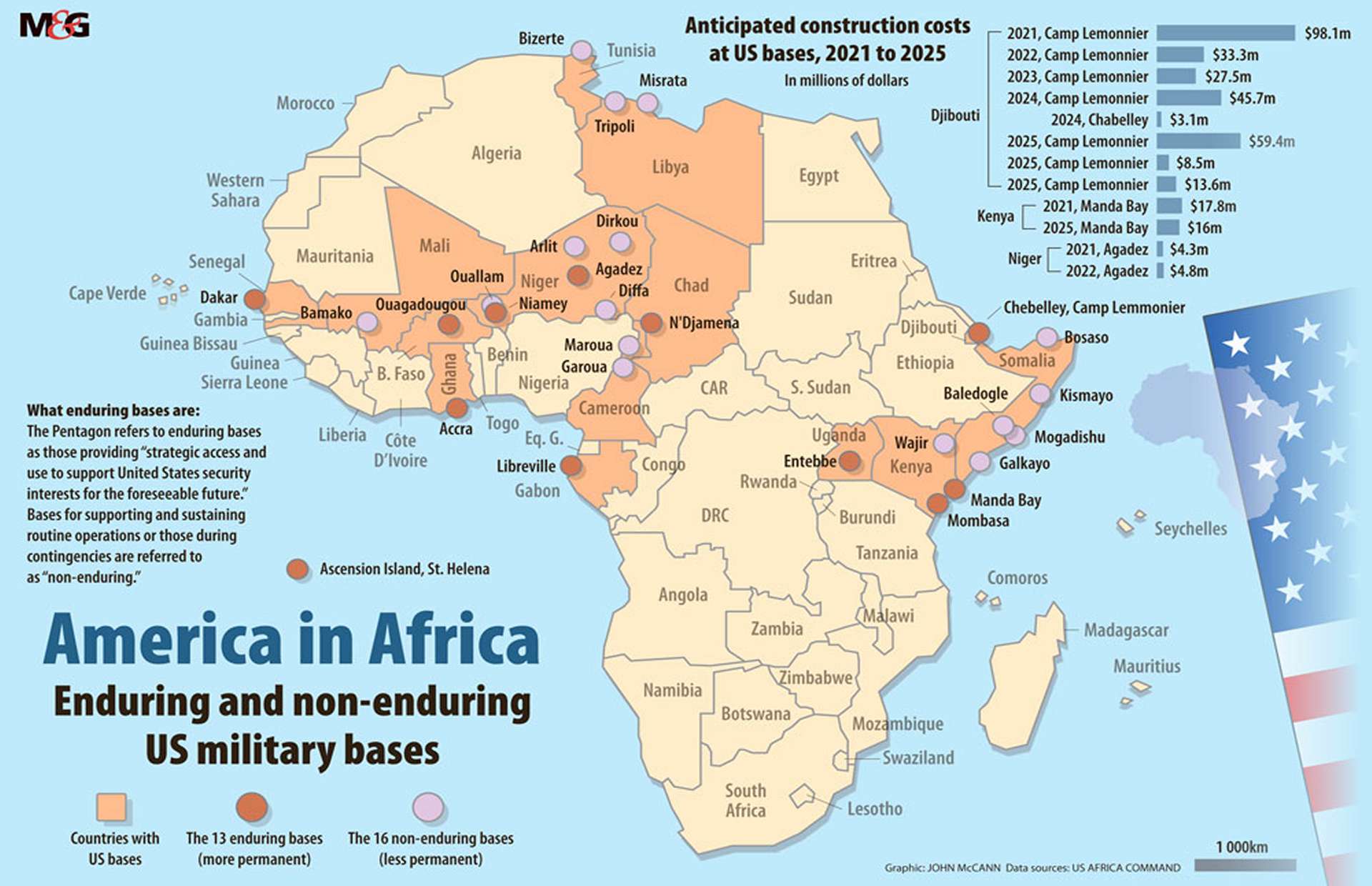
Nigeria is a very different math problem. The closest enduring U.S. base in Africa is on the opposite side of the continent, and the retirement of the Niger hub forced AFRICOM to rely on long legs, partner access or expeditionary staging. Djibouti to Abuja is approximately 2,068 nautical miles. MQ-9s can loiter for more than twenty-seven hours for ISR and precision attack, but establishing a persistent strike pattern over Nigeria would still require forward operating locations, diplomatic permissions, and tankers to support manned aircraft if called in. The most credible near-term tools are ISR and limited air-to-ground fires where Abuja consents, coupled with special operations advisory teams or hostage-recovery elements on a short leash. Anything resembling an amphibious or armored incursion is not plausible on short notice without host-nation basing in West Africa and weeks of staging. U.S. still hold bases near Nigeria, even if they cannot be considered as enduring bases, they still can host military assets to conduct preventive strikes or operations while waiting for other forces and armaments to be deployed.
U.S. Bases in Africa (Mail and Guardian - John McCann).
Because the U.S. President tied possible action in Nigeria to the protection of civilians, targeting logic would emphasize rapid ISR cueing of mass-atrocity incidents, interdiction of armed convoys threatening population centers, and strike support to Nigerian units if requested. MQ-9s with Hellfire, GBU-12 and GBU-38 give discriminate effects against mobile targets, while aerial refueling opens options for a small package of F-15E or F-35 aircraft to deliver JASSM-class standoff weapons from regional airspace if access is granted. Tanker math matters here. The KC-46 carries up to 212,000 pounds of fuel. KC-135 fleet upgrades improved offload capacity and reliability. Without regional clearances, however, tankers must orbit far from the target area, creating long drag chains that quickly erode sortie efficiency. The operational takeaway is that Nigeria's options remain bounded by permissions and distance, a point echoed by experts analyzing the planning guidance.
Nigeria’s adversaries present a fragmented and elusive target set. Boko Haram and Islamic State–West Africa Province (ISWAP) operate from dispersed rural sanctuaries across Borno, Yobe and Lake Chad, using light vehicles, small arms, and mobile camps rather than fixed infrastructure. The Nigerian Air Force fields a mix of older Chinese and Russian aircraft with limited radar coverage, leaving wide airspace gaps over the north. Urban density in cities like Lagos and Abuja further complicates air operations, creating a risk of collateral damage and restricting kinetic options to remote areas where target identification can be verified through persistent ISR.
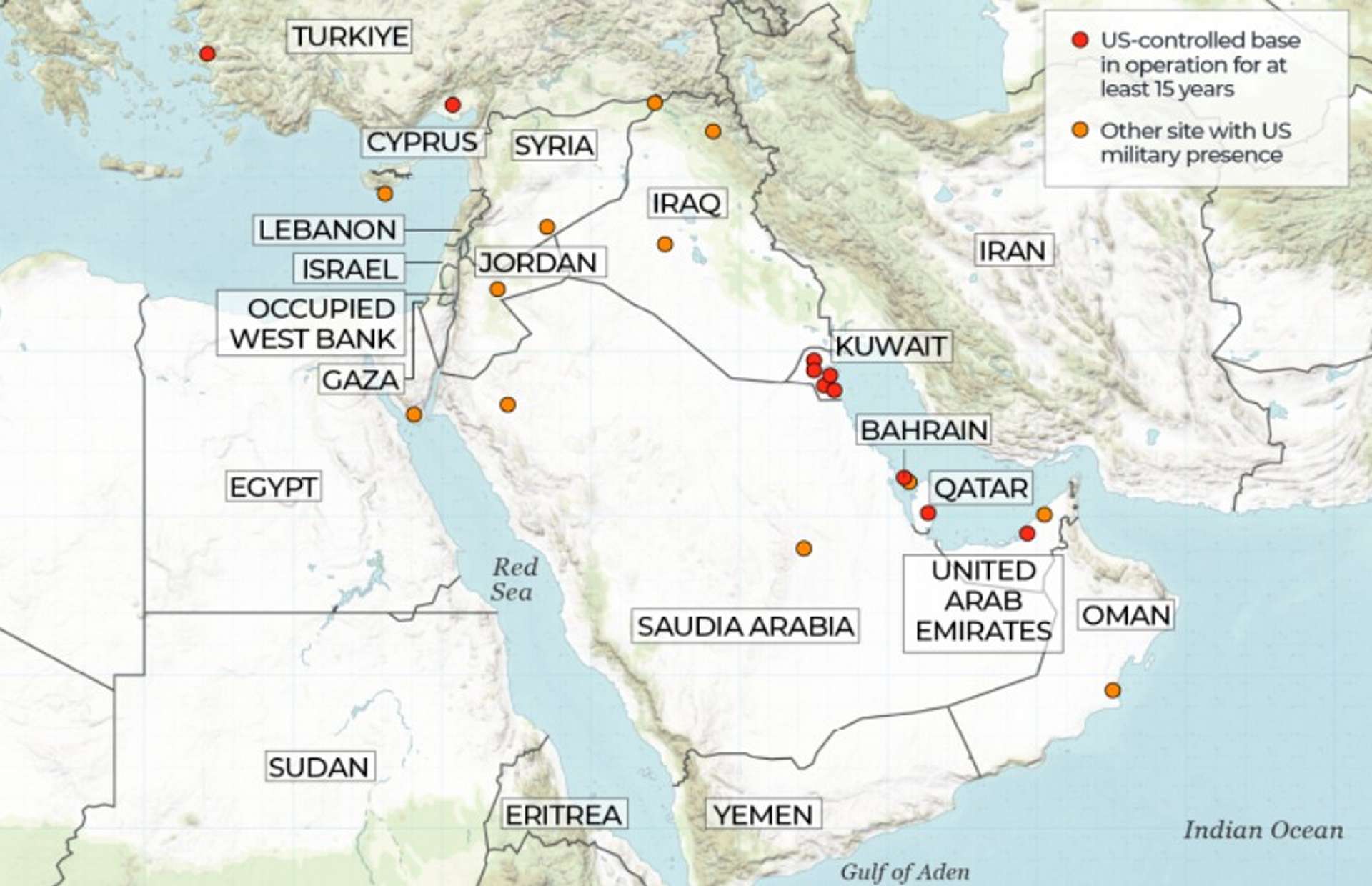
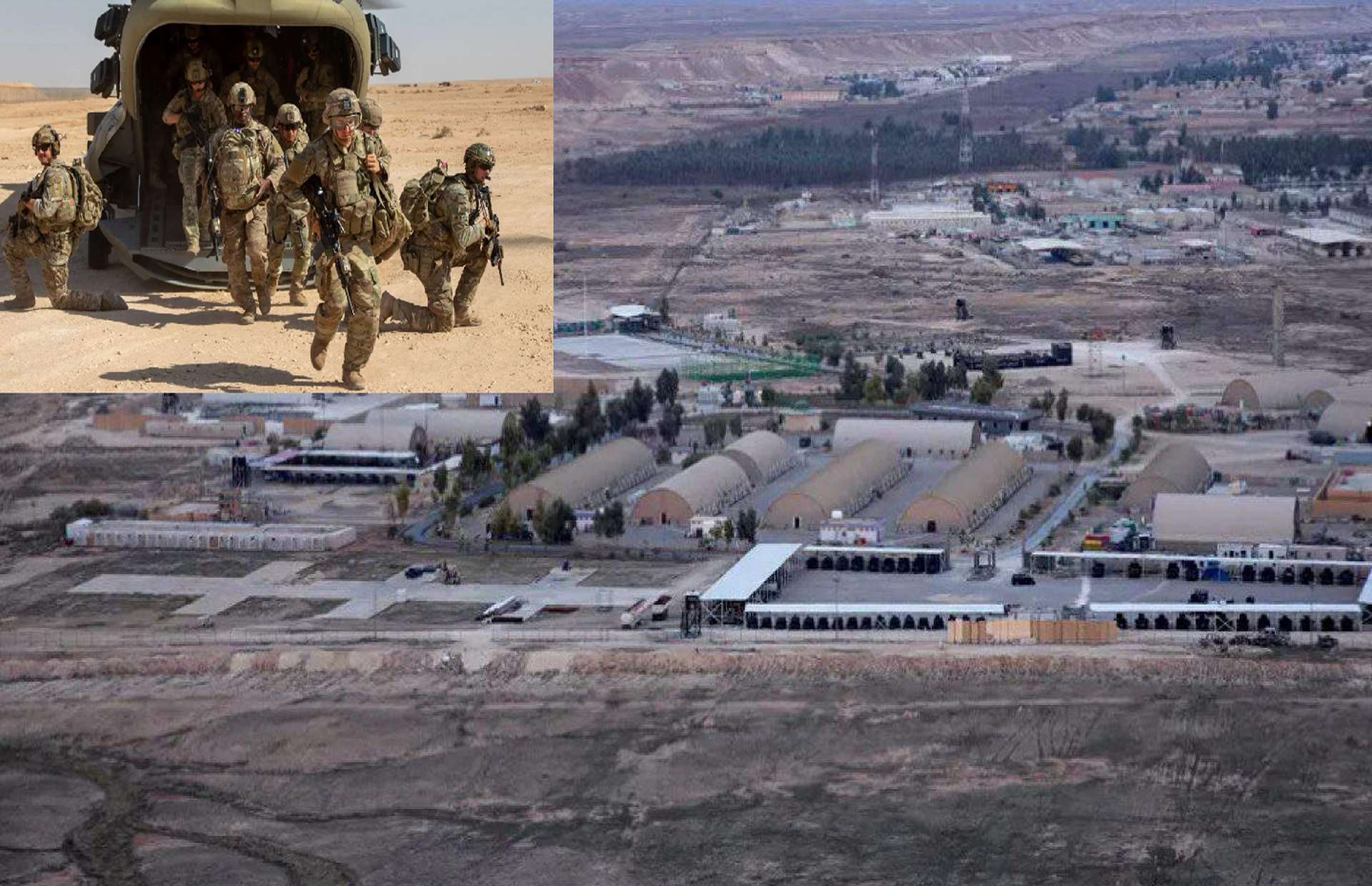
Iraq sits between these poles. The United States retains a lean but real footprint at bases such as Ain al-Asad and within the Kurdistan region, along with theater ISR and strike assets on call. The declared policy is a phased drawdown and consolidation by end-2026, which means any new kinetic activity would be framed as force protection and counter-ISIS or as select strikes on Iran-aligned militia infrastructure after attacks on U.S. personnel. CENTCOM’s public record over the last two years describes repeated militia drone and rocket attacks and U.S. retaliatory strikes on weapons depots and command nodes in Iraq and Syria. That pattern suggests a continued advisory mission with episodic precision strikes rather than ground maneuver, constrained by Baghdad’s sovereignty concerns and by the announced timeline to reduce forces.
U.S. Bases in Middle East, near Iraq (Picture source: Al Jazeera).
If hostilities escalated in Iraq, the opening U.S. targets would again be enablers: one-way attack drone stockpiles, rockets and launch sites, militia C2, and air defense systems that threaten U.S. aircraft. Standoff munitions like JASSM-ER allow strikes from outside Iraqi airspace if required by diplomacy, while armed MQ-9s provide overwatch for advisers and convoys. The political reality is that Baghdad’s tolerance has limits, and Washington’s current posture is designed to apply pressure with precision while avoiding actions that force the Iraqi government to curtail the partnership outright.
In Iraq, the principal threat environment is defined by Iran-aligned militias equipped with short-range rockets, improvised loitering munitions, and armed drones that target coalition installations and logistics convoys. These groups maintain small, concealed firing sites near populated zones, making counter-battery and counter-UAS operations complex and politically sensitive. Their decentralized structure allows rapid relocation and plausible deniability, forcing U.S. forces to rely on high-precision strikes and persistent surveillance rather than large-scale maneuvers. The Iraqi security forces’ uneven control across provinces further complicates target coordination and deconfliction.
The Ain al-Asad Airbase, the remaining U.S. base in Iraq (Picture source: U.S. DoW).
Across all three theaters, the escalation ladder should be explicit. At sea near Venezuela, it begins with surveillance and interdiction, moves to disabling fire and armed helo actions, then to coastal SEAD with AARGM-ER if Venezuelan emitters illuminate U.S. aircraft, followed by Tomahawk or JASSM-ER against fixed nodes only if lethal threats persist. In Nigeria, it begins with ISR and information support to Abuja, then time-sensitive strikes with MQ-9s on armed perpetrators of mass violence under Nigerian request, and only then, if partners grant access, limited manned airpower presence. In Iraq, the rung below major escalation is already routine: retaliatory precision strikes on militia infrastructure after a credible attack on U.S. forces, followed by diplomatic de-escalation. That clarity helps manage risk to aircrews and to civilians.
Risks are material and legal. Any land-attack options in Venezuela would raise sovereignty issues and risk miscalculation with air defenses around population centers. In Nigeria, civilian protection operations would demand positive identification, host-nation authorization and careful rules of engagement. In Iraq, any expansion of strikes inside federal territory without Baghdad’s buy-in could fracture the coalition and accelerate the drawdown timeline. Those constraints are one reason Pentagon officials have kept options short of invasion in public discourse.
Tomahawk Block V provides long-range, subsonic precision with in-flight retargeting and battle damage imagery. SM-6 adds flexible defense and limited strike from Aegis ships. JASSM-ER offers low observable penetration beyond 500 nautical miles, with proven employment and heavy bomber carriage that allows mass. P-8A’s APY-10 radar, EO/IR and acoustic suite strengthen maritime kill chains and post-strike assessment. MQ-9 endurance allows broad-area surveillance and discriminate engagement with Hellfire and laser-guided bombs. Tankers enable all of this, but they also telegraph operational feasibility. The distance from San Juan to Caracas is under 500 nautical miles, which simplifies tanker plans. Djibouti to Abuja is over 2,000 nautical miles, which does not. Erbil to Al Qaim is roughly 180 nautical miles, a short reach for persistent overwatch. These numbers define the difference among the three options on the table.
If Washington chooses to apply limited force, the most executable play is in the Caribbean, where naval and fifth-generation air assets already sit close enough to deliver controlled, reversible pressure. Nigeria remains a planning problem where intelligence and special operations can move quickly but sustained airpower cannot without permissions and staging. Iraq is accessible but politically bounded, suited to the current pattern of retaliatory precision and partner enablement.
Written by Evan Lerouvillois, Defense Analyst, Army Recognition Group.
Evan studied International Relations, and quickly specialized in defense and security. He is particularly interested in the influence of the defense sector on global geopolitics, and analyzes how technological innovations in defense, arms export contracts, and military strategies influence the international geopolitical scene.
-
Northrop Grumman’s F-35 Fighter output highlights industrial power behind US air dominance
{loadposition bannertop}{loadposition sidebarpub}
On July 2, 2025, Northrop Grumman announced from Palmdale, California, that it had reached a new milestone in military aircraft manufacturing with the ability to deliver a center fuselage for the F-35 Lightning II every thirty hours. This announcement, taken from an official company release, reflects the significant transformation of defense manufacturing methods, where production speed is now combined with strict standards of precision and reliability. For the United States and its international partners, this achievement provides additional assurance of the availability and modernization of the fifth-generation fleet.
Follow Army Recognition on Google News at this linkA U.S. Air Force F-35A Lightning II (Picture source: US DoD)
The F-35 Lightning II, developed by Lockheed Martin with contributions from Northrop Grumman, BAE Systems, and Pratt & Whitney, is a fifth-generation multirole stealth fighter designed for air superiority, ground attack, reconnaissance, and electronic warfare. It is produced in three versions: the F-35A, intended for air forces and equipped with conventional takeoff and landing (CTOL); the F-35B, which combines stealth with short takeoff/vertical landing (STOVL) capability, enabling operations from smaller ships or austere bases; and the F-35C, adapted for carrier operations with a larger wing and reinforced structure. Sharing a common technological foundation, the variants provide operators with a coherent and flexible tool suited to different operational environments.
Powered by a Pratt & Whitney F135 turbofan producing up to 43,000 pounds of thrust with afterburner, the F-35 reaches a maximum speed of Mach 1.6 (1,930 km/h) and a range of 2,220 km with internal fuel. Its maximum takeoff weight is 31,800 kg, allowing it to carry a wide range of armaments. The internal 20 mm cannon (GAU-22A or M61A2, depending on the version) is complemented by AIM-120 AMRAAM and AIM-9X Sidewinder air-to-air missiles, as well as ground-attack weapons such as the GBU-31 JDAM, the GBU-39 Small Diameter Bomb, and the AGM-88 HARM, designed to neutralize air defense systems. The internal weapons bay preserves stealth, while six external hardpoints allow a payload of more than 15,000 pounds when discretion is not required. The aircraft is equipped with advanced sensors, including the AN/APG-81 AESA radar, the Electro-Optical Targeting System (EOTS), the Distributed Aperture System (DAS), and the Helmet-Mounted Display System (HMDS), providing comprehensive battlefield coverage and extended situational awareness.
At the core of this architecture, the center fuselage plays a critical role. It houses the air intakes, part of the fuel tanks, the internal weapons bay, and the flight-operable doors and mechanisms. The accuracy of its assembly, particularly edge alignment and application of coatings, directly determines the aircraft’s stealth performance and reliability in missions. Northrop Grumman has already delivered more than 1,400 such fuselages, confirming its central role in the Lightning II program and its expertise in producing complex aerospace structures.
This production pace is made possible by the Integrated Assembly Line (IAL), inaugurated in 2011, which remains one of the most advanced facilities worldwide for fighter aircraft manufacturing. Designed to assemble all three versions of the F-35 on a single line, it incorporates advanced processes such as automated guided vehicles, robotic drilling, and on-site molding. These operations are reinforced by real-time production data analysis, improving quality control while optimizing the use of human resources. The IAL thus represents the convergence of automation, robotics, and precision engineering.
The scale of the facility illustrates the magnitude of the project. Covering an area equivalent to a football field, it includes more than 115 assembly stations and processes around ten million parts annually. With this capacity, completing one center fuselage every thirty hours has become feasible, symbolizing a shift in the standards of defense aerospace manufacturing.
Beyond fuselage production, Northrop Grumman is also responsible for several other F-35 subsystems, including radars, communications equipment, and logistics support. This vertical integration, bringing together design, production, and sustainment, aims to secure supply chains and ensure technical consistency across the program. It reflects an industrial strategy designed for long-term requirements and the continuous adaptation of client armed forces.
The consequences of this acceleration extend well beyond the Palmdale plant. In a context of technological competition and regional tensions, the ability to deliver fifth-generation aircraft rapidly is a decisive factor. For U.S. forces, it ensures increased fleet availability, while international partners rely on these production rates to meet delivery schedules and strengthen their air capabilities.
Since entering service in 2015, the F-35 has become the most widely distributed fighter program globally. In the United States, the Air Force, Navy, and Marine Corps each operate their respective variants. Among historical partners, the United Kingdom employs F-35Bs for both the Royal Air Force and Royal Navy, Italy has acquired both F-35As and F-35Bs, and the Netherlands, Norway, and Denmark are already fielding F-35As.
Additional customers have joined this initial group. Israel, the first to use the aircraft in combat, operates customized F-35As. Japan, already equipped with F-35As, began deploying its first F-35Bs in the south of the country in August 2025. Australia, South Korea, and Belgium have also received their first aircraft, while Finland, Poland, Switzerland, Canada, Romania, Greece, Germany, and the Czech Republic have signed firm contracts but are still awaiting deliveries.
This diversity of buyers, combined with production having already passed 1,200 aircraft delivered by mid-2025, highlights the pressure on the global supply chain and the need for Northrop Grumman and Lockheed Martin to further increase throughput. Forces already equipped are working to integrate the F-35 into their operational doctrines, while those still waiting for deliveries depend on the reliability of industrial schedules. In this context, the declared pace of one center fuselage every thirty hours is critical, as it underpins both the credibility of the program and the fulfillment of commitments to allied nations.
-
Report: V-MAX2 marks a new phase in France’s hypersonic weapons strategy
{loadposition bannertop}{loadposition sidebarpub}
On June 26, 2023, France reached a decisive milestone in the field of hypersonics with the successful launch of the V-MAX hypersonic glider from Biscarrosse. This first flight, the result of cooperation between the French defence procurement agency (DGA), ArianeGroup, and Onera, validated key technological choices and marked a European first. By succeeding in stabilising and manoeuvring a vehicle at speeds above Mach 5, France demonstrated its ability to develop capabilities in a sector where only the United States, Russia and China had been active until then. Yet this test was only a first step. France’s ambition is now to move further with VMAX2, followed by the SyLex programme and finally ASN4G, to fully integrate these technologies into a national defence strategy.
Follow Army Recognition on Google News at this linkConcept rendering of France’s VMAX2 hypersonic glider flying at extreme speed above the Earth’s atmosphere. (Picture source: Editing content from Army Recognition Group)
Hypersonic glider weapon systems are designed to strike targets by penetrating enemy air and missile defences. Propelled into the upper atmosphere by carrier systems, these gliders reach speeds from Mach 5 to Mach 20. Their trajectories, made unpredictable by extreme manoeuvrability, render them very difficult to intercept. This combination of speed and agility provides a rapid intervention capability at both medium and long ranges. To overcome air and missile defence networks, a hypersonic glider must maintain very high velocity throughout its flight while being able to perform complex manoeuvres in the terminal phase, precisely when it is most exposed to interceptors. This requires a high lift-to-drag ratio, heat-resistant materials and a control system able to respond to extreme conditions.
Aware of these challenges, the Ministry of the Armed Forces appointed ArianeGroup as prime contractor for the V-MAX programme. The company possesses unique expertise in Europe in ballistic launchers, space vehicles and atmospheric re-entry. The first phase of work focused on aerothermodynamic modelling, high-temperature materials and thermal protection, inertial navigation and guidance systems, as well as sensors and antennas. The demonstrator launched in 2023 was designed to test manoeuvrability during re-entry, under severe mechanical and thermal constraints. The flight confirmed structural integrity and the performance of on-board systems, marking a technological success recognised as a first for France and Europe.
The next stage is embodied by VMAX2. This programme, part of the incremental roadmap defined by the DGA, is intended to demonstrate France’s ability to design and control a hypersonic glider equipped with an advanced command system. The vehicle, whose shape and thermomechanical strength are based on several technological breakthroughs, comes very close to an operational system. It will be used to experiment with critical subsystems under representative conditions while anticipating advances in adversary interception technologies. The aim is to achieve a precise understanding of hypersonic flight dynamics to guide future military capabilities.
In continuity with this programme, the SyLex project, presented at the Paris Air Show in 2025, represents an ambition to reach a new threshold. This demonstrator is expected to achieve speeds of up to Mach 16, or around 20,000 km/h. To reach such a leap, France will need to build a sovereign test infrastructure able to reproduce and analyse these extreme conditions. Initial flight experiments are scheduled for 2027, with potential operational integration around 2030. SyLex reflects a clear determination: to provide France with autonomous hypersonic capability, avoiding dependence on foreign infrastructures or technologies.
In parallel, France is preparing the replacement of the ASMP-A airborne nuclear missile with the ASN4G programme. Scheduled for around 2035, this system will be powered by a ramjet engine, combining hypersonic velocity with a strategic payload, thereby ensuring the credibility of French deterrence in the face of advancing missile defence systems. Led by MBDA and Onera under the MIHYSYS contract awarded in 2024, this project is directly embedded in France’s nuclear deterrence doctrine and will be a central element of future strategic posture.
These developments are taking shape in the context of international competition. Russia already fields the Avangard and Kinzhal systems, while China is multiplying tests of the DF-ZF glider. The United States continues several programmes but struggles to convert prototypes into operational capabilities. In this environment, France, despite more limited resources, is seeking to maintain credible status by relying on technological innovation and a reinforced deterrence doctrine.
Ultimately, the evolution of France’s hypersonic sector, from VMAX to VMAX2, then SyLex and ASN4G, reflects a progressive but ambitious strategy. Each demonstrator provides vital knowledge, each test is a milestone towards capabilities that could reshape military balances. The coming years will reveal whether France can translate these technological advances into a lasting strategic advantage. One thing is certain: in the global race for hypersonic missiles, Paris has chosen not to remain on the sidelines but to assert its place among the powers shaping the warfare of tomorrow.
-
Analysis: How Greenland makes Denmark indispensable to NATO’s Arctic strategy
{loadposition bannertop}{loadposition sidebarpub}
The contract signed by Denmark’s Defence Acquisition and Logistics Organization (FMI) with the Swedish company T-KARTOR to deliver new flight charts for the ice-free areas of Greenland might appear minor at first glance. Yet this technical decision reflects a much deeper strategic reality. Greenland, an autonomous territory within the Kingdom of Denmark, is increasingly at the heart of global geopolitical rivalries. The island is becoming a focal point of the struggle for influence in the Arctic, where sovereignty enforcement, military posturing, and resource competition converge.
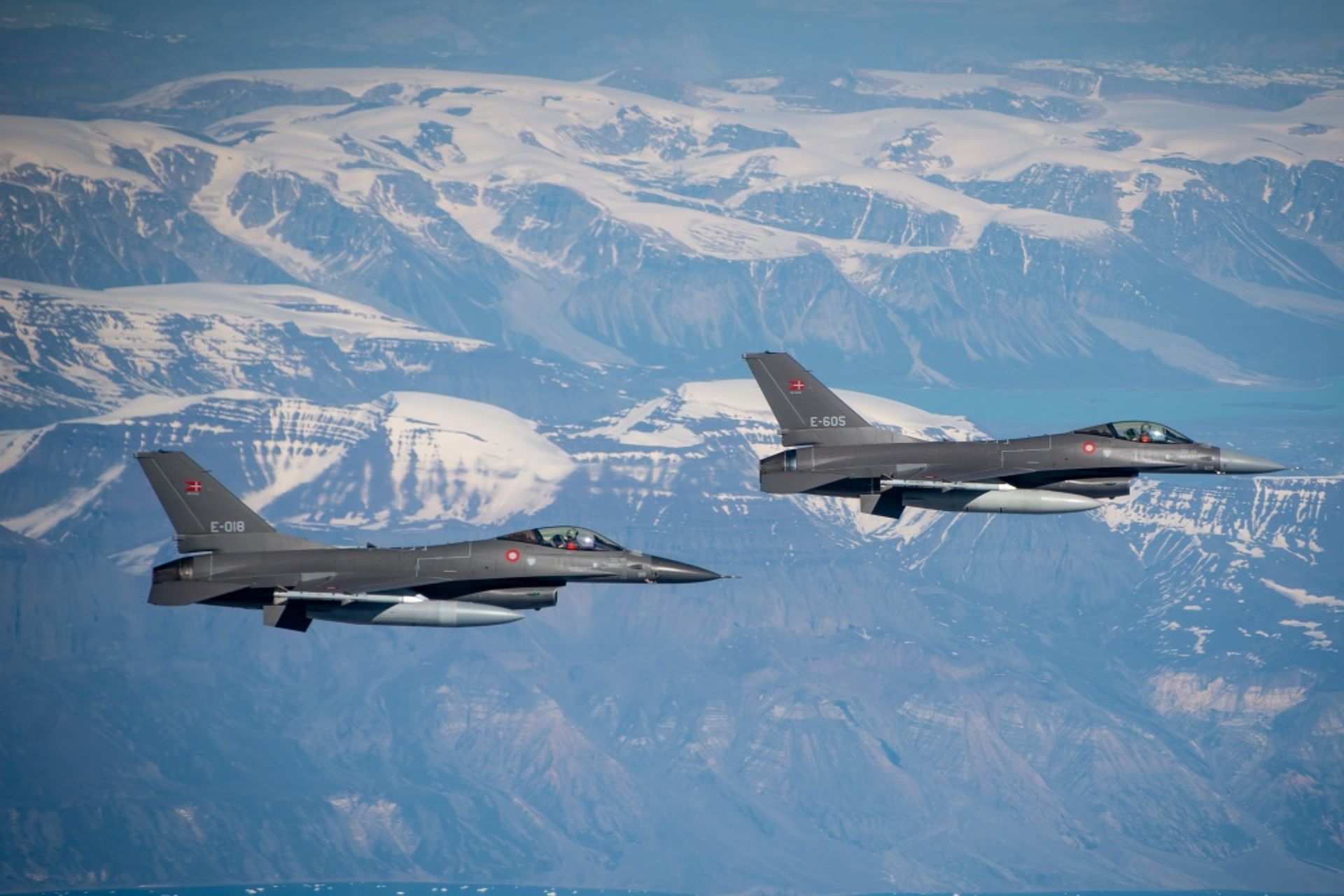
Follow Army Recognition on Google News at this linkThe new flight charts now cover all ice-free regions of Greenland.
(Picture source: Danish MoD)
For Copenhagen, securing accurate and updated aeronautical charts is not just about aviation safety. It is part of a broader effort to guarantee sovereignty over a vast and remote region that defines Denmark’s role as an Arctic power. With the Royal Danish Air Force relying on these maps to conduct patrols, surveillance, and search-and-rescue missions, the ability to fly at lower altitudes and operate more effectively strengthens the country’s presence in a territory that is central to NATO’s northern flank.
Greenland’s importance extends well beyond Danish defense. The island sits at the crossroads of global strategic interests. As Arctic sea ice continues to retreat, new maritime routes are gradually opening. These potential shipping corridors could shorten transit between Asia, Europe, and North America, bypassing traditional chokepoints like the Suez and Panama canals. Even though these routes remain hazardous and commercially uncertain, the prospect alone has drawn the attention of major powers, making Greenland a natural point of interest in future Arctic shipping governance.
The United States views Greenland as indispensable to its defense posture. Pituffik Space Base (formerly Thule Air Base) remains a critical hub for missile warning systems and space surveillance. During his presidency, Donald Trump famously floated the idea of buying Greenland, a move that was met with rejection in both Nuuk and Copenhagen but underscored Washington’s enduring perception of the island’s value. Meanwhile, Russia has stepped up its Arctic military presence, reinforcing bases along its northern coast and conducting naval operations. China has expressed interest as well, focusing on Greenland’s mineral wealth and potential role in future trade routes, even if its projects have often faced political resistance or economic setbacks.
The island’s mineral resources, especially rare earth elements, place it at the center of global competition for critical raw materials. These resources are vital for the green energy transition and modern defense technologies. Western states see Greenland as an opportunity to diversify supply chains and reduce dependence on China. At the same time, Greenland’s own government has placed strict limits on uranium mining and oil exploration, balancing environmental concerns with economic aspirations. For many Greenlanders, resource exploitation is not merely an economic question but a step toward greater autonomy, or even independence, from Denmark.
Since gaining self-rule in 2009, Greenland has expanded its authority over domestic affairs and has openly articulated its long-term ambition for independence. The government’s 2024-2033 Foreign, Defense, and Security Strategy makes clear its intent to engage internationally on its terms. Local leaders insist that decisions about the island’s resources and future will be made by Greenlanders themselves, rejecting external attempts to impose geopolitical agendas.
In this context, Denmark’s investment in flight charts acquires symbolic significance. It reflects a commitment to safeguard sovereignty in the Arctic, strengthen NATO’s northern defenses, and ensure that operations over Greenland remain safe and effective. At the same time, it underscores how even small technical steps are inseparable from the broader geopolitical currents shaping the Arctic.
As climate change accelerates and great power rivalry intensifies, Greenland’s role will only grow. What may seem like a routine defense procurement is, in fact, a reminder that the Arctic is no longer a peripheral theater but a central arena of global competition. For Denmark, ensuring control and operational capacity in Greenland is not only about today’s security needs but also about maintaining influence in a region where the balance of power is rapidly shifting.
-
Analysis: China’s Strategy to Undermine the US Undersea Surveillance Network
{loadposition bannertop}{loadposition sidebarpub}
According to an article published on August 13, 2025, by Defense News, citing an essay by Ryan Martinson for the Center for International Maritime Security, some officers of the People’s Liberation Army Navy (PLAN) recommend a strategy aimed directly at the United States undersea surveillance network, which is considered a major threat to China’s submarine fleet. Martinson, a professor at the China Maritime Studies Institute at the U.S. Naval War College, reports that Chinese experts view this system as vulnerable due to the vast maritime area to be monitored in the Western Pacific. According to these experts, disabling enough sensors could paralyze the entire system and significantly reduce its effectiveness.
Follow Army Recognition on Google News at this linkChina already possesses several means that could threaten this network. These include unmanned undersea vehicles (UUVs) such as the HSU-001, unveiled in 2019, capable of reconnaissance and sabotage missions. (Picture source: Chinese MoD)
To understand this concern, it is necessary to outline the structure of the U.S. undersea surveillance network, and the technical means China already possesses or seeks to develop, whether coercive or non-coercive but dual-use, that is, applicable for military purposes.
The U.S. system is built on an integrated architecture combining fixed sensors, mobile systems, and airborne platforms. At its core is the Integrated Undersea Surveillance System (IUSS), a successor to the Cold War-era SOSUS network, consisting of arrays of seabed acoustic sensors connected to shore by undersea cables. This fixed network continuously monitors strategic areas, particularly maritime choke points and likely submarine transit routes. Complementing it are towed-array systems such as the Surveillance Towed Array Sensor System (SURTASS), deployed on specialized ships such as the Victorious and Impeccable classes. These are capable of using passive or low-frequency active sonar to detect submarines over long distances, even in complex acoustic environments. U.S. destroyers, frigates, and attack submarines add capability with hull-mounted sonars and towed arrays, while airborne assets, the P-8A Poseidon and MH-60R Seahawk, deploy sonobuoys, dipping sonars, and torpedoes. The network is further supported by satellites, unmanned undersea vehicles, and oceanographic research ships, which gather environmental data critical to optimizing detection.
This American view contrasts sharply with China’s perception. Washington and its allies are concerned about the rapid expansion of China’s submarine fleet, expected to reach 65 units in 2025 and 80 by 2035, including nuclear-powered ballistic missile and attack submarines, as well as advanced conventional types such as the Yuan class. Beijing, for its part, believes the increasing sophistication of U.S. anti-submarine warfare (ASW) efforts threatens the stealth of its submarines, a key factor in their operational effectiveness. The article in Military Art describes U.S. cables and sensor networks as “fragile and easily severed” and identifies the command and control systems as the network’s “Achilles’ heel,” potentially vulnerable to kinetic or cyberattacks. The authors call for the development of acoustic, magnetic, optical, and electronic detection technologies, supported by artificial intelligence, as well as autonomous undersea vehicles capable of destroying these infrastructures.
Bryan Clark, a senior fellow at the Hudson Institute and former U.S. Navy submarine officer, considers this assessment credible. He notes that the IUSS and SURTASS vessels have been effective for decades but acknowledges that targeted attacks on specific network nodes are possible. However, he emphasizes the difficulty of locating small devices at sea or on the seabed and the operational cost of such a campaign, which would require substantial resources and restrict the use of Chinese submarine forces within the first island chain, when they might be more effective beyond it. Clark also outlines another potential approach, saturating the U.S. network by deploying a large number of submarines before a conflict, making it more difficult for U.S. forces to track and engage them all simultaneously.
China already possesses several means that could threaten this network. These include unmanned undersea vehicles (UUVs) such as the HSU-001, unveiled in 2019, capable of reconnaissance and sabotage missions, and the Sea Wing (Haiyi) oceanographic drone, used in the Indian Ocean and South China Sea to gather environmental data suitable for military exploitation. These platforms can be launched from military or civilian vessels, including China’s large fishing fleet, which could be tasked with support missions. Conventional naval forces, such as frigates, destroyers, and submarines, could also directly target SURTASS ships or other U.S. surveillance vessels. In addition, China’s cyber capabilities provide another means to disrupt command and control.
In parallel, Beijing is investing in advanced detection and localization systems such as the Qianlong series (Qianlong-1, Qianlong-2, Qianlong-3) and the Haishen-6000, designed for deep-sea exploration but adaptable for military purposes. Equipped with multiple sensors and coupled with artificial intelligence, they could locate hidden or buried installations and prepare them for neutralization.
On the offensive side, China is considering militarizing research submersibles such as the Jiaolong and Shenhai Yongshi, which can dive to great depths, to place charges, cut cables, or disable sensors. This could be combined with a saturation strategy involving the simultaneous deployment of a large number of submarines, forcing the United States to disperse its surveillance resources and creating opportunities to penetrate areas normally well covered by U.S. ASW.
If China were to conduct a systematic campaign against the U.S. network of undersea sensors, the consequences would be wide-ranging. The U.S. Navy’s ability to monitor and track Chinese submarines in the Western Pacific would be reduced, complicating the implementation of sea-denial and sea-control plans. This might lead Washington to invest heavily in redundant, more discreet, and resilient systems, including increased use of autonomous undersea vehicles to patrol sensitive areas. Strategically, the partial or temporary loss of undersea information dominance would increase operational uncertainty for U.S. and allied forces, potentially creating windows of opportunity for Chinese operations within the first and second island chains. Such a development would also heighten the role of regional allied ASW capabilities, particularly those of Japan and Australia, in a more decentralized surveillance architecture that would remain exposed to adversary countermeasures.
-
Analysis: The Wing Loong II Drone and China’s rise in the global armed UAV market
{loadposition bannertop}{loadposition sidebarpub}
From Africa to the Middle East and South Asia, China’s Wing Loong-2 (WL-2) unmanned aerial vehicle has become a consistent presence across multiple operational theatres. Developed by Chengdu Aircraft Corporation, a subsidiary of the Aviation Industry Corporation of China, it is operated both by the People’s Liberation Army (PLA) and a range of foreign customers. It has been widely deployed by Nigeria against Boko Haram, by Saudi Arabia against Houthi positions, by Pakistan in cross-border operations, and in Libya’s civil war, reflecting the growing export of Chinese armed drone technology. In its domestic configuration, designated GJ-2, it has been in PLA service since 2018, participating in live-fire exercises around Taiwan and patrols over the South China Sea.
Follow Army Recognition on Google News at this linkThe WL-2 is a medium-altitude long-endurance (MALE) unmanned aerial vehicle designed for both reconnaissance and strike operations.
(Picture source: Wikimedia Commons)
First unveiled at the Zhuhai Airshow in 2016 and making its maiden flight the following year, the WL-2 is a medium-altitude long-endurance (MALE) drone intended for reconnaissance and strike missions. Measuring 11 meters in length with a wingspan of 20.5 meters, its aerodynamic design is similar to the US MQ-9 Reaper. However, its performance is lower in several respects. With a maximum take-off weight of 4,200 kg, around 500 kg less than the Reaper, it carries only 480 kg of external payload compared to the Reaper’s 1,400 kg. Its top speed is 370 km/h, service ceiling 9,000 meters, and range 1,500 km, compared to 480 km/h, 15,000 meters, and 1,900 km for the Reaper. These differences are partly due to its WJ-9 turboprop engine, rated at 500 to 600 shaft horsepower, less powerful than the Reaper’s Honeywell TPE331-10, delivering up to 900 shaft horsepower.
In endurance, the WL-2 can operate for 20 hours with a full weapons load and up to 32 hours with a reduced load, compared to the Reaper’s 27 hours. It also features certain technological characteristics, such as the use of China’s BeiDou satellite navigation system, providing redundancy in the event of GPS signal denial in contested environments. A truck-mounted ground station can control several aircraft with a range of 200 to 300 km in beyond line-of-sight mode, and up to 3,000 km via satellite link, although this configuration is not always offered to foreign buyers.
In terms of sensors, the WL-2 is fitted with a stabilized electro-optical/infrared turret, a synthetic aperture radar, and a datalink capable of transmitting real-time imagery and intelligence to deployed units. It has six underwing hardpoints for a variety of guided munitions, including the YJ-9E anti-ship missile, LS-6 glide bomb, TL-2 and AG-300M air-to-ground missiles, and FT-series satellite-guided bombs. In maximum configuration, it can carry up to 12 munitions, or 18 TL-2 missiles of 16 kg each using triple-ejector racks. The BA-7 missile, modeled on the US AGM-114 Hellfire, is also part of its inventory.
Outside PLA service, the WL-2 has been exported to and operated by several countries, including Nigeria, Saudi Arabia, Pakistan, the United Arab Emirates, Morocco, and Libya, where it has been employed in various combat environments ranging from counter-insurgency operations to conventional strike missions. These export cases demonstrate its adaptability to different operational contexts and its appeal to a diverse set of armed forces.Beyond reconnaissance and strike roles, the WL-2 can be fitted with an electronic warfare module, identifiable by its disc-shaped antenna, for jamming and countermeasures missions. Its modular design also supports civilian applications such as meteorological observation and emergency communications, with the WL-2H version deployed in typhoon and earthquake zones to assess damage and restore communications. The system can take off and land autonomously, execute simplified maneuvers, and be operated by a single person using a point-and-click control interface.
Artificial intelligence algorithms allow the aircraft to monitor its systems, identify threats, and return autonomously if damaged, using trajectory optimization and glide control technologies. These features reduce the need for advanced operator training, making it viable for countries without a full UAV pilot training program.
Commercially, its main advantage lies in its cost. While an MQ-9 system for US forces starts at about USD 30 million and export contracts can reach into the billions, the WL-2 is estimated at USD 4–6 million per unit, including munitions, ground control stations, and after-sales support. Pakistan ordered 48 units in 2018 with an option for local co-production. China also offers more flexible payment terms and fewer political restrictions, making it accessible to buyers excluded from Western systems.
Although more advanced Chinese drones such as the stealth GJ-11 and CH-7 are emerging, the WL-2 and its PLA variant, the GJ-2, remain key assets and competitive internationally. While it does not match the highest Western performance standards, it provides an operational and financial balance suited to low- and medium-intensity conflicts, reinforcing China’s position in the armed drone sector.
Compared to similar-class systems, the WL-2 is a lower-cost alternative to the US MQ-9 Reaper, the Chinese CH-5, Türkiye’s Bayraktar Akıncı, and Israel’s Hermes 900. The Reaper leads in payload capacity and altitude but is costlier and subject to stricter export controls. The CH-5 emphasizes long endurance at low cost, while the Akıncı offers a heavy, multi-role platform with a wide range of domestically produced weapons. The Hermes 900, more compact, is oriented toward endurance ISR missions with a broad civilian and military user base.
In export markets, the WL-2 benefits from competitive pricing, compatible munitions, and permissive political conditions, with Beijing also less hesitant than Western suppliers to sell to non-democratic states or governments with mixed human rights or civilian protection records. Other systems occupy distinct niches: the MQ-9B serves NATO and Indo-Pacific allies seeking interoperability and maritime capability, the Akıncı appeals to non-NATO countries requiring heavy strike capability, the CH-5 targets budget-limited buyers, and the Hermes 900 is selected for dual-use and certifiable missions. This segmentation shows that, despite its limitations, the WL-2 retains a strong position in markets where cost-effectiveness and minimal political restrictions are priorities.
-
How the Compact Mako Hypersonic Missile Could Transform U.S. Air Power
{loadposition bannertop}{loadposition sidebarpub}
ChatGPT said:
Physical compatibility tests have confirmed that the Mako can be carried internally by the F-22 and F-35A/C, as well as externally on aircraft such as the F-15E, F-16C, F/A-18 Super Hornet, EA-18G Growler, and P-8A Poseidon (Picture source: Lockheed Martin)
Development of the Mako began in 2017 under the U.S. Air Force’s Stand In Attack Weapon (SiAW) program, with approximately $35 million in funding. The aim was to provide the Air Force with a weapon capable of quickly and precisely neutralizing strategic targets within anti-access/area denial (A2/AD) systems, particularly in response to Chinese threats in the Asia-Pacific region. Measuring between 3.6 and 4 meters in length depending on the variant, with a diameter of 33 centimeters and a weight of approximately 590 kilograms, the missile can carry interchangeable 60-kilogram warheads and integrate various guidance systems. Its open digital architecture allows for rapid upgrades and reduces reliance on proprietary processes, offering advantages for future updates and cost control.
Physical compatibility tests have confirmed that the Mako can be carried internally by the F-22 and F-35A/C, as well as externally on aircraft such as the F-15E, F-16C, F/A-18 Super Hornet, EA-18G Growler, and P-8A Poseidon. Virtual tests have validated internal carriage on the B-1B, B-52H, and B-21Raider bombers. Equipped with standard 30-inch lugs, it can be integrated with nearly the entire U.S. aerial arsenal and, with an additional booster, could also be launched from the vertical launch tubes of U.S. Navy ships, similar to the AGM-158C LRASM missile.
This level of compatibility enables new operational concepts. Lockheed Martin has, for example, considered a combined deployment in which fifth-generation stealth fighters act as forward scouts to detect and designate targets, passing the data to fourth-generation aircraft equipped with Sniper targeting pods and armed with Mako missiles to execute the strike. This division of roles would maximize available firepower while leveraging the specific strengths of each platform, especially in highly contested environments.
The Mako is powered by a solid-fuel rocket motor capable of reaching Mach 5 at high altitude while retaining maneuverability, significantly reducing the reaction time available to enemy defenses. Its modular design, combined with additive manufacturing for components such as the seeker fairing and control surfaces, helps shorten production timelines and improve industrial responsiveness. The use of advanced digital engineering makes it possible to simulate and validate variants directly in a virtual environment before manufacturing, optimizing development and facilitating series production.
The strategic context further underscores the relevance of this program. China is actively developing the YJ-21 hypersonic missile, already tested in both naval and air-launched versions. The Mako could enable the United States to close the gap in the hypersonic arms race and maintain strategic balance against such threats. In parallel, the May 2025 development of the Glide Phase Interceptor (GPI) by Northrop Grumman and Raytheon Technologies illustrates the complementary nature of offensive and defensive programs in this domain.
Internationally, Lockheed Martin has expressed interest in initial production in the United Kingdom before transferring industrial activity to the United States, as part of potential cooperation under the AUKUS agreement. The UK Ministry of Defence, aiming to achieve a sovereign hypersonic missile capability by 2030, is considering the Mako as a viable option. Collaboration with British and Australian industrial partners could facilitate technology sharing, cost distribution, and capacity building among the participating nations.
At present, the Mako has not yet received production funding from the U.S. Department of Defense. However, its inclusion by the U.S. Navy in the Other Transaction Authority (OTA) category would allow for accelerated funding should a favorable decision be made. If approved, the Mako could become a key element of the U.S. military inventory, combining speed, flexibility, and multi-platform compatibility, and could serve as an important asset in both aerial and naval operations in the coming decades.
-
How US Army Is Rebuilding Its Missile Defense Around Mass and Preemptive Action
{loadposition bannertop}{loadposition sidebarpub}
As ballistic and aerial threats proliferate and diversify, the US Army is preparing to release, by October 2025, a complete overhaul of its air and missile defense strategy, with a planning horizon extending to 2040. This new doctrinal framework, announced by Lieutenant General Sean A. Gainey during the Space and Missile Defense Symposium in Huntsville, comes at a time of growing saturation, increasing sophistication of offensive vectors, and major shifts in command and control architectures. Far from being a mere update, this strategy signals a clear break from the post-2018 legacy by reaffirming the centrality of mass in air defense and embedding preemptive action as a core operational principle.
Follow Army Recognition on Google News at this linkMIM-104 Patriot surface-to-air missile (SAM) systems for a readiness exercise in Germany (Picture source: US DoD)
Since the last version was published in 2018, the global strategic landscape has shifted dramatically. Drone campaigns in the Middle East, precision strikes in Ukraine, and saturation maneuvers by both state and non-state actors have exposed the limitations of sequential interception models. Adversaries are no longer attempting to breach a shield; they seek to overwhelm it. Within this context, General Gainey calls for a return to fundamentals, explicitly naming mass as a critical factor in tactical resilience. Warfare is once again a matter of volume, in munitions, sensors, and command nodes. As more coordinated salvos of theater-level weapons emerge, the ability to absorb the initial blow becomes as decisive as the ability to respond.
However, mass alone is no longer sufficient. The US Army now aims to go further by adopting a proactive posture centered on the neutralization of threats before they are launched. This approach, referred to as smart missile defeat, goes beyond linear defense logic and fits within a broader framework of informational and multi-domain attrition warfare. It entails integrating non-kinetic capabilities such as cyber disruption, electronic warfare, and AI-driven ISR strikes to delay, degrade, or disrupt adversary supply chains, launch platforms, and command systems.
In this light, artificial intelligence is no longer viewed as a tactical aid but as a core doctrinal enabler. The Army is investing in hybrid decision-making architectures, where machines help absorb operators’ cognitive workload and offer near-real-time distributed targeting decisions. According to General Gainey, this shift implies a redefinition of the human role, from operator to supervisor. This transition underpins the development of the Integrated Battle Command System (IBCS), designed to connect all available sensors and effectors, regardless of origin, within a modular command and distributed fires framework.
The broad deployment of IBCS, combined with the fielding of new sensors such as LTAMDS and short-range interceptors like M-SHORAD, is intended to produce a more agile, distributed, and lethal force. Alongside this, the US Army is also asserting a stronger role in homeland defense, working with NORAD and the Missile Defense Agency to support the development of the Golden Dome, a layered missile defense shield intended to address both theater-level and strategic threats. Though still in early stages, this effort reflects the growing ambition of the Space and Missile Defense Command to operate not just beyond the perimeter but within the national defense architecture itself.
The forthcoming 2040 strategy is thus a structural response to a dual challenge: absorbing saturation while regaining the initiative. It aligns with broader doctrinal shifts outlined in the 2018 National Defense Strategy, which calls for more adaptable, distributed forces capable of operating in contested, high-intensity environments. The return to mass is not a conservative fallback. It is a capacity expansion backed by command tools and technologies designed to strike before adversaries can act. In other words, the goal is not merely to survive the initial blow but to prevent it from occurring at all.
-
Report: Reimagining Mesh-Based Radar Detection Against Hypersonic and Saturation Threats
{loadposition bannertop}{loadposition sidebarpub}
In the face of increasingly complex, saturating, and hypersonic strikes carried out by adversarial powers, traditional air defense systems are reaching their physical and economic limits. In a forward-looking report publishedin July 2025 by the Center for Strategic and International Studies (CSIS), analysts Masao Dahlgren, Patrycja Bazylczyk, and Tom Karako propose a fundamental shift: replacing architectures built around a few powerful radars with a dense mesh of passive, proliferated sensors forming a "distributed sensory skin" capable of detecting, tracking, and identifying threats while surviving in highly contested environments.
Follow Army Recognition on Google News at this linkHensoldt's TRML-4D radar, though an active sensor, is used within the IRIS-T SLM network and could serve as a nodal element in a more discreet and distributed mesh architecture (Picture source: Hensoldt)
This approach, referred to as mesh sensing, breaks away from the traditional detection-identification-engagement triad by distributing each function across specialized nodes within a network. The proposed sensors include acoustic detectors (such as Zvook or Sky Fortress deployed in Ukraine), infrared sensors (MWIR, LWIR), electro-optical cameras (TV/CCD), passive RF listening devices (e.g., Silent Sentinel), miniature Doppler radars mounted on lightweight drones, as well as hyperspectral sensors and transient event detectors. With unit costs now often below $10,000, these systems can be widely deployed in fixed, semi-mobile, or airborne configurations, using micro-UAVs such as the Black Hornet, RQ-28A, or Anavia HT-100. They can be layered operationally, acoustic systems positioned forward, infrared and optical sensors placed in-depth, and data fusion nodes secured in covered terrain.
The operational value lies in the ability of these networks to detect increasingly stealthy threats, such as subsonic cruise missiles like the Kh-101 or modified Shahed-136 drones, even in environments affected by electronic countermeasures, spectral camouflage, or active jamming. In a scenario modeled by CSIS, a ground-based air defense system in eastern Poland saw its performance improve by 26% against a ballistic missile salvo when supported by a passive EO/IR network of 14 sensors. The benefit was not only quantitative: early warning was improved by 3 to 4 minutes, allowing sufficient time for repositioning a Patriot PAC-3 MSE battery or activating a SkyCeptor interceptor within the IBCS framework.
The network infrastructure proposed by CSIS is based on a high-redundancy mesh architecture coupled with local data processing via edge computing. Sensor data does not require full centralization but can be partially processed at the source using dimensionality reduction, neural network classification (such as YOLOv7 or ResNet), or contextual interpretation (embedded LLMs in micro-instances). This localized processing improves resilience against jamming, reduces latency, and minimizes dependence on SATCOM or LTE relays vulnerable to electronic warfare. In this context, systems like the KORNET Passive Surveillance Sensor (KORNET-PSS) from Thales, the Silent Watch by Leonardo, or SAAB’s SHORAD Enhanced EO Mesh could be integrated as specialized nodes within a federated architecture.
This distributed network is not intended to replace active radars like the AN/MPQ-65A (Patriot) or the GM200 MM/C used by Dutch forces, but rather to complement them. It could also be used to multiply false targets against enemy anti-radiation missiles by deploying active decoys or intermittent emitters. The system may also support dynamic camouflage strategies, with regular shifts between emission sources, similar to the approach implemented in the Israeli Scorpius-T system.
Growing interest in distributed sensor architectures can be observed among armed forces. In 2024, the Bundeswehr approved a test of the ABF-Passiv (Aufgeklärte Bedrohung Früherkennung) program, based on deployable tripod-mounted LWIR sensors. The Italian Army is currently testing EO/IR sensor networks developed by Elettronica, in conjunction with its Kronos Grand Mobile radars. The US Army, for its part, has included in the FY2026 budget a program titled Passive Integrated Ground Sensors (PIGS), aimed at equipping Armored Brigade Combat Teams (ABCTs) with EO/IR acoustic sensor meshes to detect small drone movements at squad level.
Ultimately, mesh sensing could be integrated into a cloud-based command and control system capable of fusing sensor tracks in real time, prioritizing them, and automatically cueing intercept platforms. This direction, referred to as autopoietic sensor fusion, would represent a doctrinal shift comparable to the introduction of C-RAM systems or hit-to-kill interceptors in the 1990s. It reflects a step toward the emergence of a territorial immune system based not on kinetic mass, but on informational omnipresence.
-
Analysis: How Ukraine’s Agile Warfare Model Shapes NATO Military Modernization
{loadposition bannertop}{loadposition sidebarpub}
At the inaugural LANDEURO event organizedby the Army Sustainment University on July 17, 2025, in Wiesbaden, Germany, a key session titled “Ukrainian Innovation at the Speed of Relevance” provided an in-depth perspective on the technological transformation underway within the Ukrainian armed forces. The discussion brought together defense industry experts, military representatives, and technology innovators to examine how Ukraine is accelerating the development of military solutions in direct response to battlefield demands. The objective was not simply to assess the current state of innovation but to demonstrate how the Ukrainian approach could redefine operational standards for NATO forces.
Follow Army Recognition on Google News at this linkAt the core of the discussions, participants emphasized the remarkable adaptability of Ukrainian industry and military units working closely together to meet frontline requirements (Picture source: Ukrainian MoD)
At the core of the discussions, participants emphasized the remarkable adaptability of Ukrainian industry and military units working closely together to meet frontline requirements. A significant focus was placed on the integration of artificial intelligence and autonomous systems in military operations. Speakers highlighted Ukraine’s ability to rapidly design and deploy FPV drones (First Person View), loitering munitions, and autonomous systems built from 3D-printed components, open-source mapping tools, and embedded AI modules. These systems are designed to identify, track, and engage targets even in environments heavily contested by electronic warfare.
Sebastian Kuhl, Director of Land Sales at Helsing, noted that faced with the high costs of complex sensors such as gimbals, Ukrainian engineers favor embedding AI algorithms directly onboard drones. This approach enables image stabilization and automatic target recognition without relying on costly and fragile mechanical devices. This "software-first" strategy supports better scalability of capabilities at lower costs, which is critical for a military operating under resource constraints.
Another topic addressed during the session was digital finance and disintermediation mechanisms used to support the war effort. Speakers explained how Ukraine has circumvented traditional financial and procurement systems through the use of cryptocurrency and crowdfunding. These methods help bypass administrative delays, allowing for the rapid funding and delivery of equipment directly to the frontlines. This alternative procurement strategy was presented as a model of financial agility under wartime conditions that may hold relevance for Western forces.
Yaroslav Azhnyuk, CEO of TheFourthLaw, stressed the advantages of software over hardware, explaining that the scalability of software solutions enables rapid deployment of updates and new capabilities in the field without requiring the replacement of physical platforms. Ukrainian-developed software modules are designed to be adaptable across various platforms, from FPV drones to autonomous ground vehicles. Azhnyuk described massively scalable autonomy as the most decisive defense technology of this decade while reaffirming that final engagement decisions remain under human control.
In the context of Ukraine's industrial efforts, drone production has undergone significant development. In 2024, nearly 2 million drones were manufactured domestically, including over 1.5 million FPV drones, many equipped with autonomy kits such as the ZIR module. This module enables low-cost drones to automatically recognize targets, such as armored vehicles or artillery, over distances exceeding 1 kilometer and to pursue moving targets at speeds of up to 60 km/h. This type of equipment reflects Ukraine's capability to combine affordable hardware with advanced software functionalities.
The session also shared insights on the Ukrainian military's innovative doctrine, which now favors modular systems and incremental approaches rather than complex, lengthy, and expensive developments. This doctrine translates into the progressive integration of autonomous features on existing platforms, such as last-phase autonomous navigation that enables drones to continue toward their targets even under communication jamming, as well as automated reconnaissance and fire correction functions.
The session concluded with a shared observation: Ukraine's approach presents a practical model of adaptability and pragmatism for NATO forces. Instead of pursuing perfect or technologically ambitious solutions that may prove unrealistic in wartime, Ukraine favors rapid experimentation, continuous field feedback, and iterative development. This innovation culture, driven by immediate operational needs, constitutes a unique operational laboratory for Western alliances that may soon face environments characterized by electronic warfare, drone swarms, and pervasive artificial intelligence.
Discussions at LANDEURO demonstrated that military innovation lies not solely in the sophistication of equipment but in the capacity to industrialize adaptable solutions rapidly, supported by innovative financial models and an agile ecosystem. Ukraine's case, shaped by the conditions of a war of attrition, may well define the path for modern armed forces facing future threats.
-
SIPRI 2025 Warns of Rising Proliferation of Nuclear Multiple-Warhead and Dual-Use Systems
{loadposition bannertop}{loadposition sidebarpub}
The Stockholm International Peace Research Institute (SIPRI) published its annual Yearbook on 16 June 2025, which confirms the end of an era: the gradual reduction of nuclear arsenals that began after the Cold War is now over. In contrast, all nuclear-armed states pursued in 2024 a strategy of modernization, expansion, or innovation in their nuclear capabilities. This return to nuclear competition coincides with the weakening of arms control frameworks, with no immediate prospects for replacement.
Follow Army Recognition on Google News at this linkIn Russia, despite delays and another RS-28 Sarmat failure in 2024, plans to reload silos and increase warheads per missile remain unchanged. (Picture source: WikiCommons)
The report records an estimated total of 12,241 nuclear warheads as of 1 January 2025, of which 9,614 are in military stockpiles and 3,912 are deployed on operational delivery systems. Around 2,100 warheads are maintained at high operational alert, mainly by the United States and Russia. SIPRI also notes that China may now keep some warheads mounted on missiles during peacetime.
Modernization covers all components of the nuclear triads. In the United States, programs to replace the Minuteman IIIICBMs, Columbia-class ballistic missile submarines, and air-launched cruise missiles are underway, despite budget-related delays. Washington is also developing new non-strategic nuclear warheads, raising concerns about the program’s long-term sustainability. In Russia, while strategic forces remain a priority, the RS-28 Sarmat intercontinental ballistic missile experienced another failure in 2024, and several other systems are delayed. Still, plans to reload silos and increase warhead counts per missile remain intact.
China is undergoing the fastest expansion. Its arsenal increased from 500 to around 600 warheads within a year, and it has completed or nearly completed construction of more than 300 new ICBM silos across desert and mountainous regions. At this pace, China could possess 1,500 warheads by 2035. The country is actively developing multiple independently targetable reentry vehicle (MIRV) capabilities and continues to enhance its dual-capable naval and airborne systems.
The United Kingdom did not expand its stockpile in 2024 but remains on a growth trajectory laid out in the 2023 Integrated Review Refresh. London is moving forward with the construction of four new SSBNs. France continues to develop its third-generation SSBN and a new air-launched cruise missile, while upgrading the payload of its M51 ballistic missile.
India has continued the development of MIRV-capable canisterized missiles, which can be transported with mated warheads and may remain on alert. Pakistan is expanding fissile material production and delivery systems, suggesting continued growth. North Korea now holds an estimated 50 assembled warheads and the fissile material for 40 more. It is advancing its doctrine of tactical deterrence and preparing to introduce theater nuclear weapons, according to South Korean sources.
Israel, while maintaining its policy of deliberate ambiguity, tested a propulsion system in 2024 that may be related to the Jericho missile series. Upgrades were also reported at the Dimona plutonium production site.
SIPRI highlights a concerning doctrinal shift. In November 2024, Russia revised its nuclear posture to broaden the scenarios in which it might use nuclear weapons. The United States replaced its forward-deployed B61 bombs in Europe with modernized versions. The report also notes that MIRV-capable systems, once limited to the five NPT-recognized nuclear weapon states, are now being developed or deployed by China, India, Pakistan, and North Korea.
Emerging technologies are introducing new uncertainties. Warhead miniaturization, developments in artificial intelligence, automated command and control, cyber defense, and space warfare are reshaping deterrence architectures. Several states are investing in long-range maneuverable missiles, antisatellite weapons, and hypersonic glide vehicles. These advancements may shorten decision-making timelines and increase the risk of miscalculation or accidental use.
The SIPRI Yearbook 2025 concludes that the global nuclear order is entering a phase of increased strategic instability. The anticipated expiration of the New START treaty in 2026, with no replacement in sight, could trigger an unregulated cycle of warhead deployments, including rapid silo reactivation and submarine reloads. For armed forces and defense industries, these developments imply renewed attention to second-strike capabilities, the resilience of command-and-control systems, and the flexibility permitted under evolving nuclear doctrines.
-
Missile Defense: US Highlights Key Role of SM3 Interceptors After First Combat Use in Middle East
{loadposition bannertop}{loadposition sidebarpub}
The U.S. Department of Defense has officially announced a major modification to a contract awarded to Raytheon, now a subsidiary of RTX Corporation, concerning the sustainment of Standard Missile-3 (SM-3) interceptors. This contract modification, valued at $2.134 billion, raises the total ceiling from $1.198 billion to $3.332 billion. The announcement comes in a strategically significant context, as the SM-3 was recently used for the first time in an operational combat scenario by the U.S. Navy during the interception of Iranian missiles targeting Israel.
The Standard Missile-3 is an exo-atmospheric interceptor designed to neutralize short- and medium-range ballistic missile threats through direct kinetic impact, without the use of an explosive warhead (Picture source: Raytheon)
The contract covers ongoing engineering and logistical support services for the various SM-3 variants, including the Block IA, Block IB, and Block IIA versions. It encompasses complex technical services such as configuration management, obsolescence mitigation, cybersecurity measures, service life evaluation, support for flight testing, industrial base assessments, and the provision of spare parts. It also includes specific activities related to the defense of Guam and support under the Foreign Military Sales (FMS) program. Work will be carried out at Raytheon facilities in Tucson, Arizona, and Huntsville, Alabama, under the supervision of the Missile Defense Agency (MDA), also based in Huntsville. The performance period remains unchanged and extends through October 29, 2029.
The Standard Missile-3 is an exo-atmospheric interceptor designed to neutralize short- and medium-range ballistic missile threats through direct kinetic impact, without the use of an explosive warhead. Developed by Raytheon on behalf of the MDA, the system employs a "hit-to-kill" approach, which relies on direct collision to destroy targets. It is deployed from both sea-based Aegis-equipped ships and land-based Aegis Ashore sites in Europe. The SM-3 plays a central role in the ballistic missile defense architecture of the United States and its allies, particularly within NATO's Phased Adaptive Approach (EPAA). With over 30 successful space intercepts and more than 400 missiles delivered to the U.S. and Japanese navies, the system has established a credible operational track record.
Among the operational variants, the SM-3 Block IB features a dual-color infrared seeker and a Throttleable Divert and Attitude Control System (TDACS), enhancing terminal guidance accuracy. The Block IIA variant, developed in cooperation with Japan, represents a significant evolution. It incorporates a wider 21-inch diameter, more powerful rocket motors, a larger kinetic warhead, and an improved seeker coupled with a High Divert DACS. These enhancements provide extended range and speed, allowing the missile to defend larger areas against advanced ballistic threats. This version forms the core of EPAA Phase III, with deployment already underway in Romania and planned for Poland. It has demonstrated its effectiveness in NATO multinational exercises and in a successful live interception of a ballistic missile target in 2017.
The SM-3 Block IA, the earliest version deployed since 2004, features a 13.5-inch propulsion system, a monochrome seeker, and a Solid Divert and Attitude Control System (SDACS). It serves as the technological foundation of the program. The Block IB, operational since 2011, introduced important improvements while maintaining compatibility with the original design. The Block IIA represents a capability leap, not only in terms of range but also in strategic flexibility, as it can be launched from both naval and land-based platforms, enabling a wider range of operational scenarios.
The recent combat use of the SM-3 in intercepting ballistic threats launched from Iran has further reinforced its strategic relevance among U.S. allies. This event demonstrated the interceptor's technical maturity and its ability to counter high-altitude missile attacks in a complex environment. It also highlights the missile’s growing role in protecting strategic sites, deployed naval forces, and allied territories across Europe, the Middle East, and the Asia-Pacific region.
By enabling Raytheon to continue and expand its technical support to U.S. and allied forces, this contract modification underscores the increasingly central position of the SM-3 in U.S. missile defense doctrine. In a global context marked by the proliferation of ballistic missile technologies and intensifying strategic rivalries, the SM-3 program remains a key tool for deterrence, international cooperation, and collective protection. This contract confirms Raytheon's pivotal role in sustaining Western exo-atmospheric interception capabilities.
EvolutionoftheStandardMissile-3 (SM-3)interceptorsundertheAegisBallisticMissileDefense (BMD)program (Picture source: MDA)
-
US Speeds Up Nuclear Triad Overhaul Amid Growing Global Nuclear Competition
{loadposition bannertop}{loadposition sidebarpub}
According to a report updated on May 1, 2025, by the Congressional Research Service (CRS), the United States is undertaking a vast effort to modernize its strategic nuclear forces, involving both the Department of Defense (DoD) and the National Nuclear Security Administration (NNSA). This program aims to ensure the credibility, flexibility, and resilience of the U.S. deterrent posture in a context shaped by the rise of nuclear-armed competitors, notably Russia and China. Estimated at $946 billion over ten years by the Congressional Budget Office, this investment includes the renewal of the three components of the nuclear triad, warhead modernization, and the upgrade of nuclear command and control systems. The DoD’s FY2025 budget request allocates $49.2 billion to support these efforts, highlighting the strategic priority given to long-term nuclear deterrence.
The Minuteman III will soon be replaced by the Sentinel ICBM (formerly GBSD), a new-generation missile integrating digital systems, advanced countermeasures, and a modular design, offering intercontinental range, improved precision, and increased resilience to a first strike (Picture source: US DoD)
The land-based leg of the triad is centered on Minuteman III intercontinental ballistic missiles (ICBMs), deployed from three U.S. Air Force bases in Wyoming, Montana, and North Dakota. Each missile, with a range exceeding 13,000 kilometers, is powered by three solid-fueled stages and guided by an inertial navigation system. Originally capable of carrying up to three thermonuclear warheads, the missiles now carry only a single W78 or W87 warhead in compliance with New START treaty limits. Of the 450 existing silos, 400 are operationally deployed, with the remaining 50 retained as reserve or dispersal infrastructure. The current fleet has undergone life extension programs to enhance reliability and accuracy. The Minuteman III will soon be replaced by the Sentinel ICBM (formerly GBSD), a new-generation missile integrating digital systems, advanced countermeasures, and a modular design, offering intercontinental range, improved precision, and increased resilience to a first strike. The program plans to acquire 659 missiles to support the deployment of 400 operational units and testing. The Sentinel will carry the new W87-1 warhead, currently under development by NNSA. This warhead will incorporate modernized safety features, enhanced accident resistance, and fully redesigned components.
The sea-based leg of the triad is composed of 14 Ohio-class nuclear-powered ballistic missile submarines (SSBNs), each capable of carrying up to 20 Trident II D-5 submarine-launched ballistic missiles (SLBMs). These three-stage missiles, guided by GPS and inertial navigation, have a range of over 12,000 kilometers and are designed to deliver multiple independently targetable reentry vehicles (MIRVs), including the W76-1 (100 kilotons), W76-2 (low-yield variant, 6–8 kilotons), and W88 (475 kilotons). Each submarine can carry up to 96 warheads, though the actual number varies depending on operational needs and treaty limits. Two submarines are generally in maintenance, while twelve are operationally deployed across the Atlantic and Pacific oceans, with homeports at Kings Bay, Georgia, and Bangor, Washington. The Ohio-class will be replaced by the Columbia-class, which features 16 launch tubes per boat (down from 24), low-maintenance propulsion, digital systems, and acoustic reduction technologies. These submarines are expected to remain in service until 2080. The D5LE and D5LE2 programs are extending the operational life and capabilities of the Trident missiles to match the deployment timeline of the Columbia-class. Simultaneously, NNSA is developing the W93 warhead, incorporating enhanced safety features and intended to be paired with the future Mark 7 reentry vehicle.
The air-based leg is currently composed of two types of bombers: 20 B-2 Spirit stealth bombers, based at Whiteman AFB in Missouri, and 74 B-52H Stratofortress aircraft stationed at Barksdale AFB in Louisiana and Minot AFB in North Dakota. The B-2is a subsonic flying wing designed for penetrating enemy defenses and delivering B61-7, B61-11, or B83 gravity nuclear bombs. The B-52, which lacks stealth capabilities, carries AGM-86B air-launched cruise missiles (ALCMs) equipped with W80-1 warheads (approximately 150 kilotons), capable of low-altitude flight over a distance exceeding 2,400 kilometers. Both platforms can also carry conventional weapons. The future of the air leg is embodied in the B-21 Raider, a new stealth bomber under development for both nuclear and conventional missions, designed to operate in contested environments. Initial units are undergoing testing and limited production, with a minimum of 100 aircraft planned. The B-21 will also be equipped with the new Long Range Standoff (LRSO) cruise missile, designed to evade modern air defenses with a range exceeding 2,500 kilometers, and armed with the upgraded W80-4 warhead.
Gravity bombs are also undergoing modernization. NNSA has consolidated several B61 variants into a single B61-12 version, GPS-guided, featuring modern safety systems, and compatible with platforms such as the F-35, B-2, and future B-21. The B83 bomb, with a yield of 1.2 megatons, was slated for retirement in the 2022 Nuclear Posture Review. However, in 2023, the Pentagon announced the development of the B61-13, a new high-yield gravity bomb intended for hardened or deeply buried targets, set to replace the B83 gradually.
The sea-based leg of the triad is composed of 14 Ohio-class nuclear-powered ballistic missile submarines (SSBNs), each capable of carrying up to 20 Trident II D-5 submarine-launched ballistic missiles (SLBMs) (Picture source: US DoD)
In parallel, the United States is investing heavily in the modernization of its NC3 (Nuclear Command, Control, and Communications) infrastructure, which comprises satellites, radar systems, cable networks, command centers, and secure communications platforms to ensure decision-making continuity and launch authority in all scenarios. The FY2025 budget includes $11 billion for the ongoing overhaul of this architecture, with an emphasis on improving resilience to cyber threats and space-based disruptions.
Nuclear force employment planning remains the responsibility of the U.S. President, in coordination with the Secretary of Defense, the Chairman of the Joint Chiefs of Staff, and U.S. Strategic Command (STRATCOM). In 2024, a new presidential directive expanded U.S. deterrence objectives to address the simultaneous threat posed by Russia, China, and North Korea. The directive outlines the potential need to adapt the size, posture, or composition of the force. In March 2025, STRATCOM Commander General Anthony Cotton publicly raised the possibility of increasing the number of B-21 bombers ordered, suggesting that the current modernization plan may be insufficient to meet the challenges of a two-peer nuclear environment. This perspective aligns with the 2023 findings of the Congressional Commission on the Strategic Posture of the United States, which concluded that the existing modernization program is "necessary but not sufficient."
In summary, the United States is implementing a comprehensive overhaul of its strategic nuclear architecture, combining the replacement of delivery platforms, warhead modernization, and the digital transformation of its command systems. This long-term effort aims to preserve a flexible, survivable, and credible deterrent posture in a global context increasingly defined by the nuclear competition between Washington, Moscow, and Beijing. By integrating technological investments, doctrinal adjustments, and sustained industrial efforts, U.S. nuclear modernization reaffirms its central role in the country’s national security strategy.
-
Pakistan Leverages Its Alliance With China to Counter India’s Air Power
{loadposition bannertop}{loadposition sidebarpub}
As military tensions between India and Pakistan have escalated in recent days, Islamabad continues to strengthen its defensive posture by relying on a range of air defense systems supplied by China. The confrontation, which began with an attack in India and was then fueled by artillery exchanges in Kashmir, armed drone overflights, and several mutual airspace violations, revives the specter of a conventional conflict between the two nuclear-armed powers. In this context, the modernization of Pakistan’s air defense has become a strategic priority. Pakistan now relies on a layered network composed of the HQ-9P, HQ-9BE, FD-2000, HQ-16FE, as well as older systems such as the LY-80 and FM-90, to build an aerial shield against Indian air superiority.
The HQ-9 air defense missile systems are attached to a surface-to-air missile brigade of the air force under the PLA Central Theater Command (Picture source: Chinese MoD)
The HQ-9P system today constitutes one of the pillars of Pakistan’s air defense. Introduced by the army in 2021, it is a derivative of the Russian S-300 system, developed by the Chinese company CPMIEC with Moscow's agreement. Equipped with an HT-233 3D phased-array radar, it can track up to 100 targets and simultaneously engage between 8 and 10. Its estimated range is 125 kilometers against aircraft and about 25 kilometers against cruise missiles. This system uses a Track-Via-Missile (TVM) guidance method, combining inertial navigation, mid-course corrections, and active radar homing in the terminal phase. Deployed around sensitive sites such as Rawalpindi and Karachi, the HQ-9P provides credible deterrence capabilities but remains limited in range compared to Russian standards.
Additionally, the Pakistan Air Force deploys the HQ-9BE, a more recent and enhanced variant, with a maximum range of up to 260 kilometers against combat aircraft and 25 kilometers against tactical ballistic missiles. Capable of intercepting targets at speeds up to Mach 14, the HQ-9BE represents a significant upgrade, featuring the JSG-400 target designation radar and the JPG-600 surveillance radar, supported by advanced electronic counter-countermeasures. Its limited anti-ballistic capability, however, places it behind India's S-400 system in overall effectiveness.
The FD-2000, an export version of the HQ-9A, is also operational within the Pakistan Air Force. Designed to engage multiple aerial targets and low-flying cruise missiles simultaneously, it relies on the HT-233 radar and has a range of 125 kilometers against aircraft. Compared to the American Patriot PAC-3, the FD-2000 offers broader coverage at a lower cost, although its proximity-fused warhead reduces its effectiveness against certain ballistic threats.
To reinforce its medium-range defense, Pakistan has integrated the HQ-16FE, an improved version of the HQ-16 (or LY-80), developed based on the Russian Buk missile system. This system offers a range of 160 kilometers and an interception altitude of 27 kilometers. It uses a 2D active electronically scanned array radar with a surveillance range of 250 kilometers, capable of tracking twelve targets and engaging eight simultaneously. With its combined semi-active and active radar homing guidance, the HQ-16FE effectively complements the HQ-9BE, ensuring seamless coverage between defense layers.
These various systems are integrated into Pakistan’s CLIAD (Comprehensive Layered Integrated Air Defence) architecture, developed by the army to coordinate surveillance, command, and control across multiple radar and missile layers (Picture source: @Defence_IDA X Channel )
Older but still in service within certain units, the LY-80 (or HQ-16A) provides coverage between 40 and 70 kilometers and can intercept targets flying at speeds of up to Mach 2.5. Paired with IBS-150 radars, it remains effective against subsonic threats. At shorter range, the FM-90, derived from the Chinese HQ-7 and inspired by the French Crotale system, continues to be used with a 15-kilometer engagement range. It employs command-to-line-of-sight radar guidance, sufficient against drones or helicopters but vulnerable to modern missiles like the Meteor or BrahMos.
These various systems are integrated into Pakistan’s CLIAD (Comprehensive Layered Integrated Air Defence) architecture, developed by the army to coordinate surveillance, command, and control across multiple radar and missile layers. Regular exercises, such as Al-Bayza, are held to test this integration. Additionally, efforts are underway to develop indigenous capabilities, notably through the LoMADS and FAAZ-SL programs, although these remain at an early stage.
In comparison, India fields a far more advanced air defense system, centered around the Russian S-400 Triumf, complemented by multiple national and Israeli-origin layers. Delivered starting in December 2021, the S-400 offers a detection range of 600 kilometers and an engagement range of up to 400 kilometers, employing four types of missiles: the 40N6 for very long-range targets, the 48N6E3 for medium-range aerial and missile threats, and the 9M96E/9M96E2 for highly maneuverable targets. Capable of tracking 100 targets and simultaneously engaging 36, the S-400 provides India with formidable in-depth air defense.
The S-400 units, now renamed "Sudarshan," have been deployed on both the Chinese and Pakistani fronts. In July 2024, a military exercise demonstrated their effectiveness, achieving an 80% success rate against simulated targets. This capability is reinforced by complementary systems such as Akash(30–70 km range), Barak-8 (70–100 km range), QRSAM (25–30 km range), SPYDER (15–35 km range), and SR-SAM, offering comprehensive national airspace coverage. Additionally, most Indian radars are based on AESA technology, providing significant advantages in detection, resilience against electronic countermeasures, and simultaneous multi-target tracking.
In comparison, India fields a far more advanced air defense system, centered around the Russian S-400 Triumf, complemented by multiple national and Israeli-origin layers (Picture source: Vitaly V.Kuzmin)
This layered architecture enables India to manage a two-front challenge against China and Pakistan while ensuring credible conventional deterrence. Furthermore, the “Make in India” program has allowed the local development of Akash and QRSAM missiles, reducing dependence on imports and securing logistical continuity during prolonged conflicts.
Despite Chinese support, Pakistan remains disadvantaged on several fronts: detection range, number of simultaneous engagements, radar coverage, and operational experience. While the HQ-9BE and HQ-16FE offer significant capabilities, their effectiveness against saturation attacks or stealth strikes remains uncertain. Moreover, although China and Turkey themselves operate the S-400 and could share sensitive insights into its weaknesses, this would not be sufficient to offset the broader technological gap.
As the Indo-Pakistani conflict enters an uncertain and potentially escalating phase, air defense is becoming a central component of bilateral deterrence. While Pakistan has made notable progress in surface-to-air defense through its partnership with Beijing, India retains a clear technological and doctrinal advantage. This gap could prove decisive in the event of a direct aerial confrontation over South Asia.
-
Can Russia Challenge NATO’s Dominance in the Baltic Sea Despite an Unfavorable Balance of Power
{loadposition bannertop}{loadposition sidebarpub}
While the Baltic Sea now appears as a strategic stronghold firmly held by NATO, Russian military capabilities in the region remain significant and could offer Moscow unexpected room for maneuver in the event of a crisis. In an article published by Challenges on April 25, 2025, Vincent Lamigeon relies on satellite images provided by Maxar and analyzed by Safran AI to present a detailed overview of Russian naval, aerial, and hybrid forces in the Baltic, with a particular focus on the Kaliningrad enclave.
The naval base at Baltiysk, home to the Baltic Fleet, hosts a diverse and significant naval force. (Picture source: @VincentLamigeon on X for Challenges /Maxar/Safran AI)
With Finland’s accession to NATO in 2023 and Sweden’s in 2024, the Baltic Sea has increasingly become a NATO-dominated maritime area. Access to this semi-enclosed sea passes through Denmark’s Øresund, Great Belt, and Little Belt straits, strategic chokepoints that Copenhagen and Stockholm could theoretically seal off in the event of conflict. Russia’s access to the Baltic is now limited to two vulnerable points: the military enclave of Kaliningrad and the city of Saint Petersburg. The Gulf of Finland, which leads to Saint Petersburg, could be blocked through mining operations or submarine interdiction conducted by Finland and Estonia. Despite this strategic isolation, Russia maintains considerable military capabilities in the region.
The naval base at Baltiysk, home to the Baltic Fleet, hosts a diverse and significant naval force. Satellite imagery analysis identifies around fifteen warships docked there. Among them is a Buyan-M class missile corvette, equipped with Kalibr cruise missiles with a range exceeding 1,500 kilometers, capable of striking deep strategic targets. A Kilo-class conventional attack submarine, specialized in coastal submarine warfare, is also present. The force includes two destroyers: a Sovremenny-class vessel for anti-ship warfare and a Udaloy-class vessel for anti-submarine warfare, each equipped with heavy missiles and advanced detection systems. Two multi-role Steregushchiy-class corvettes are moored alongside several Krivak-class frigates, intended to protect convoys and coastal installations. Additionally, three Dyugon-class landing ships, two Kashtan-class support vessels, and an Ivan Papanin-class icebreaking patrol vessel are based at the port.
The Baltiysk facilities are protected by reinforced defensive measures, including two camouflaged air defense systems, likely Pantsir-S1s, and a floating barrier designed to counter surface drones at the port entrance. These measures aim to prevent drone attacks, a threat demonstrated on April 7, 2024, when the missile corvette Serpukhov was severely damaged by a Ukrainian GUR operation.
Beyond the ships visible at the docks, other Russian naval units operate in the Baltic but are not visible on satellite images. These include Karakurt-class corvettes armed with Kalibr and Oniks missiles, as well as Ropucha-class landing ships. According to the Military Balance 2025 by the IISS, the Baltic Fleet comprises a total of 69 vessels. However, many of these are older, smaller patrol ships more suited to coastal operations than high-intensity conflict.
Russian aerial capabilities in the region remain active. In Kaliningrad, Chkalovsk Air Base hosts about twenty Su-27 multirole fighters, capable of performing air superiority and long-range interception missions. The base also occasionally hosts Il-78M tanker aircraft, which extend the operational range of Russian fighters and bombers. In 2022, Chkalovsk also temporarily hosted MiG-31K aircraft armed with hypersonic Kinjal missiles, capable of striking targets over 2,000 kilometers away. The Chernyakhovsk Air Base, less active, nonetheless hosts several S-300 and S-400 surface-to-air missile batteries, providing dense aerial coverage for the enclave.
A Kilo-class conventional attack submarine, specialized in coastal submarine warfare at Baltiysk (Picture source: Wikimedia Commons)
Beyond Kaliningrad, Russia relies on its northern installations on the Kola Peninsula to maintain strategic reach over the Baltic. Radar imagery of Olenya Air Base reveals a notable concentration of Tu-95 strategic bombers. These aircraft, capable of carrying nuclear or conventional cruise missiles, regularly conduct demonstration flights over the Baltic. Having been relocated from Engels Air Base following repeated Ukrainian attacks, their deployment reflects Moscow’s operational adaptation. Nearby, at Olenya Guba naval base, the intelligence-gathering ship Yantar is stationed, suspected of conducting underwater espionage operations targeting Western communication infrastructures.
In light of these capabilities, Baltic coastal states are concerned that Russia’s ongoing hybrid warfare efforts—GPS jamming, undersea infrastructure sabotage, and radar targeting of NATO aircraft—could escalate into open conflict. The overall balance of power remains unfavorable to Russia, which fields only one or two submarines in the Baltic compared to about ten NATO submarines, and a few dozen fighter aircraft against nearly 400 operated by NATO members. However, according to Danish military intelligence, if hostilities in Ukraine were to cease, Russia could refocus its military assets westward within just six months, posing a potential threat to a Baltic state or seeking to alter the regional balance by force.
Several possible scenarios are under consideration. One involves seizing the Suwalki Corridor, a strategic strip connecting Kaliningrad to Belarus and cutting off the Baltic states from the rest of NATO. Another scenario envisions Russia launching a naval operation to seize three strategic islands: Gotland (Sweden), Bornholm (Denmark), and the Åland archipelago (Finland). Control of these islands would enable the deployment of anti-ship and anti-air missile systems, establishing a denial zone that would impede NATO reinforcements.
Aware of these threats, regional states have taken action. Sweden re-militarized Gotland in 2017; Bornholm has hosted numerous NATO exercises, and in 2024, the US Navy deployed a Typhon missile system there, capable of striking Kaliningrad from 1,500 kilometers away. The Åland archipelago, however, remains demilitarized, representing a vulnerability in NATO’s defensive posture.
Despite its structural weaknesses, Russia retains a significant destabilization capacity in the Baltic Sea. Its naval, aerial, and hybrid means enable it to contemplate rapid and targeted actions that could catch NATO forces off guard should tensions in Eastern Europe suddenly escalate. Vigilance among coastal states and the strengthening of NATO’s presence in the region thus remain essential to prevent any strategic surprise.
-
Europe Strengthens Its Saturation Strikes: MLRS at the Core of Long Range Artillery Renewal
{loadposition bannertop}{loadposition sidebarpub}
Russia’s full-scale invasion of Ukraine in February 2022 has profoundly transformed artillery doctrines in Europe. The massive use of long-range firepower, combined with real-time ISR capabilities, has brought multiple launch rocket systems (MLRS) back to the forefront, after having been largely neglected by European armies. Whereas many countries had reduced or even eliminated this capability after the Cold War, the trend has now reversed. Today, several European NATO members are reequipping themselves with modern systems for saturation fire and precision strikes at medium range. Three major models dominate this renewed push for capability: the American M142 HIMARS, the South Korean K239 Chunmoo, and the Israeli PULS.
New wheeled MLRS face off against older tracked models as Europe modernizes its firepower (Picture source: US DoD/ Elbit Systems/ Polish MoD/ Uk MOD)
The war in Ukraine has elevated the M142 HIMARS (High Mobility Artillery Rocket System) to the status of a benchmark system. Capable of firing both GMLRS rockets (with a range of 70–80 km and a precision of 10 meters CEP) and ATACMS tactical ballistic missiles (with a range of up to 300 km), it has proven its effectiveness against logistical hubs, headquarters, and troop concentrations. Several European countries have followed suit in acquiring it.
Estonia signed a contract for six HIMARS equipped with ATACMS capabilities, valued at over 200 million USD, with deliveries expected from 2024. Lithuania followed with an order for eight HIMARS under a 495 million USD contract, with deliveries anticipated starting in 2025. Latvia formalized a contract for six systems worth 194.47 million USD, with delivery scheduled for 2027. All these acquisitions are made through Lockheed Martin, reinforcing the American group’s position within the European precision artillery market.
Mounted on a 6x6 truck chassis and operated by a small crew, the HIMARS can fire six guided rockets or a single ATACMS missile at a time. Its easy integration into NATO C2 networks, air transportability, and simplified maintenance make it a preferred system for expeditionary forces or smaller armies seeking medium-range precision strike capabilities.
Poland, having already ordered HIMARS in 2019, diversified its suppliers following the Russian invasion of Ukraine. It signed two large contracts for the South Korean K239 Chunmoo system, designated Homar-K in its Polish version.
The first contract, signed in November 2022, covers 218 launchers for 3.55 billion USD, with deliveries scheduled between 2023 and 2027. A second contract, signed in April 2024, adds 72 additional units for 1.6 billion USD, with deliveries expected between 2026 and 2029. This brings the total to 290 systems, making it the largest MLRS acquisition in Europe since the Cold War.
The Chunmoo system is mounted on an 8x8 truck and can fire a wide range of munitions, from 130 mm rockets to guided 239 mm missiles, with ranges between 36 km and nearly 290 km depending on the type of projectile used. It features a dual modular pod system that allows different munitions to be loaded based on mission requirements. Poland also plans to integrate nationally produced munitions, reflecting its aim for greater defense autonomy and industrial reinforcement.
Estonia signed a contract for six HIMARS equipped with ATACMS capabilities, valued at over 200 million USD, with deliveries expected from 2024(Picture source: Estonian MoD)
The PULS (Precise & Universal Launching System), developed by Elbit Systems, offers an alternative adapted to the growing European need for MLRS capabilities. It is characterized by its modular flexibility, capable of firing a variety of munitions from 122 mm to 370 mm, including the EXTRA rockets (with a 150 km range and 10 meters CEP) and Accular.
Denmark signed a contract in 2023 for eight PULS launchers as part of a broader deal valued at 252 million USD, which also included ATMOS howitzers. The Netherlands ordered 20 PULS systems for 305 million USD, with deliveries scheduled between 2024 and 2027. Spain, as part of its national SILAM program, signed in 2024 for 12 PULS launchers, with a total value of 754.41 million USD, in partnership with Rheinmetall, Expal, and Estribano. The SILAM program (Sistema Lanzacohetes de Alta Movilidad) aims not to develop a new system from scratch but rather to locally produce the PULS under license and adapt it to Spanish operational standards.
Similarly, in Germany, Elbit Systems has partnered with Krauss-Maffei Wegmann (KMW) to develop the EuroPULS project. Beyond simple local assembly, EuroPULS aims to incorporate European munitions, a software architecture compatible with NATO networks, and launchers adapted to European land forces’ standards. The system is currently undergoing technical demonstrations and could eventually become part of Europe’s broader strategic defense projects.
The PULS is based on a 6x6 or 8x8 truck chassis and can fire two different pods: for example, four EXTRA rockets of 150 km range or twenty Accular rockets of 35 km range. This multi-caliber capacity provides significant operational flexibility, from targeted strategic strikes to area saturation missions.
The Chunmoo system is mounted on an 8x8 truck and can fire a wide range of munitions, from 130 mm rockets to guided 239 mm missiles, with ranges between 36 km and nearly 290 km depending on the type of projectile used(Picture source: Polish MoD )
While many European countries are massively reinvesting in MLRS capabilities, a significant portion of their inventories remains characterized by Cold War-era systems. This notably includes M270 launchers still in service in Germany, France, and Italy, whose performance no longer meets current operational standards. Their modernized version, the LRU(Lance-Roquettes Unitaire), although digitized and equipped with GMLRS munitions, remains limited to a range of about 70 km and cannot fire extended-range GMLRS-ER rockets or ATACMS ballistic missiles. In France, only between 13 and 18 operational units remain, significantly limiting deep strike capabilities.
In response, several initiatives are underway. The most concrete is the EuroPULS project led by Elbit Systems. In parallel, a Franco-German project for developing a new long-range strike capability is being discussed, potentially linked to the MGCS (Main Ground Combat System) program. However, no prototype has yet been revealed, and current efforts appear more focused on developing long-range drones, surface-to-surface missiles, and guided munitions, such as the KATANA program.
Beyond simple local assembly, EuroPULS aims to incorporate European munitions, a software architecture compatible with NATO networks, and launchers adapted to European land forces’ standards (Picture source: Army Recognition)
These rapid and large-scale MLRS procurements reflect a major doctrinal shift. Once considered imprecise, costly, and indiscriminate, rockets have regained a critical role, especially for counter-battery missions, logistical attrition, and disruption of rear-echelon command structures. The integration of MLRS with real-time intelligence sources (drones, satellites, counter-battery radars) heralds a new era of precision long-range indirect fires.
The resurgence of MLRS in European arsenals is primarily driven by their tactical effectiveness and operational versatility. Modern systems combine mobility, range, precision (with CEPs of less than 10 meters for guided munitions), and high-volume salvo capabilities. They can deliver devastating strikes within seconds and relocate immediately to avoid enemy counter-fire, making them effective tools for precision and area denial operations up to 300 km away.
Recent conflicts have demonstrated that deep strike capabilities, persistent effects on the battlefield, and the psychological impact of massed fires are again becoming decisive factors in high-intensity warfare. Unlike traditional artillery, which primarily supports maneuver forces, MLRS platforms now enable the disorganization of enemy structures at operational depth.
The diversity of suppliers — the United States, South Korea, and Israel — reflects Europe’s intention to diversify its strategic dependencies. However, it also raises major challenges in terms of interoperability, maintenance, and technological sovereignty. The development of an autonomous European capability, encompassing both launcher production and munitions manufacturing, remains an unmet strategic necessity.
-
Lockheed Martin Harnesses F-35 Fighters and Missile Systems to Drive a Comprehensive Model of Multi-Domain Superiority
{loadposition bannertop}{loadposition sidebarpub}
On April 22, 2025, during the release of its first-quarter results, Lockheed Martin confirmed the strength of its economic model, driven by steady revenue growth in its Aeronautics and Missiles & Fire Control segments. Beyond its financial performance, this beginning of the year reflects a deliberate strategic shift: positioning the F-35 at the center of a connected combat architecture capable of coordinating a distributed network of sensors and effectors across all operational domains. By linking its stealth aircraft with long-range strike missiles (JASSM, LRASM) and layered air defense systems (PAC-3, THAAD), Lockheed Martin is shaping a coherent and modular system-of-system tailored to the demands of 21st-century networked warfare. This convergence is rooted in both industrial planning and doctrinal evolution, aligned with the ongoing transformation of U.S. joint operations.
Crucially, the F-35 acts as a frontline digital node, capable of collecting, analyzing, and sharing tactical information in real time via networks such as Link 16, MADL, and future ABMS/JADC2 architectures. (Picture source: US DoD)
With over one million flight hours logged, the F-35 is now fully operational in numerous allied air forces and continues to evolve at the core of an expanding ecosystem. Available in three variants—F-35A (conventional takeoff), F-35B (short takeoff/vertical landing), and F-35C (carrier-based)—the aircraft combines radar stealth, deep-strike capability, sensor fusion, and advanced connectivity. Its AN/APG-81 AESA radar enables detection of airborne targets at extended ranges.
The EOTS (Electro-Optical Targeting System) provides laser and infrared targeting, while the DAS (Distributed Aperture System) delivers 360° coverage for missile warning and situational awareness. All sensor data is integrated into a centralized data fusion and command system called ODIN (Operational Data Integrated Network), which replaces the earlier ALIS interface. Crucially, the F-35 acts as a frontline digital node, capable of collecting, analyzing, and sharing tactical information in real time via networks such as Link 16, MADL, and future ABMS/JADC2 architectures. This integration within joint tactical networks positions the F-35 as both a force multiplier and an operational coordinator.These information capabilities support long-range strike missions, a core element of the U.S. military’s stand-off doctrine. The F-35A is certified to carry the JASSM-ER (Joint Air-to-Surface Standoff Missile – Extended Range), a stealthy cruise missile capable of striking fixed or mobile targets at ranges exceeding 900 kilometers while maintaining a low-altitude flight profile. Equipped with a terminal infrared seeker, the JASSM-ER is optimized for use in contested environments with dense radar coverage and air defense systems.
The naval variant, LRASM (Long Range Anti-Ship Missile), is built on the same platform but incorporates onboard artificial intelligence to autonomously acquire maritime targets. These weapons significantly extend the F-35’s strike reach, enabling attacks on command nodes, surface-to-air missile batteries, or naval vessels while remaining outside enemy engagement zones. This integration of advanced sensors and long-range precision munitions has become central to U.S. strategies for offensive denial and conventional deterrence.However, this convergence is not limited to strike capabilities. Lockheed Martin also integrates its air and missile defense systems within the same operational framework. The THAAD (Terminal High Altitude Area Defense) system is a key component of U.S. ballistic missile defense.
Deployed in South Korea, the United Arab Emirates, and slated for future deployment in Eastern Europe, THAAD is designed to intercept medium- to intermediate-range ballistic threats at high altitudes (up to 150 km) and ranges up to 3,000 km. It relies on AN/TPY-2 radars capable of tracking targets with high precision at distances exceeding 1,000 kilometers. Its kinetic-energy interceptor employs a hit-to-kill mechanism, destroying incoming threats without explosive warheads, thus reducing the risk of fragmentation in populated areas.
THAAD is designed to intercept medium- to intermediate-range ballistic threats at high altitudes (up to 150 km) and ranges up to 3,000 km. (Picture source: US DoD)
Complementing this, the PAC-3 MSE (Patriot Advanced Capability - Missile Segment Enhancement) addresses lower-altitude threats, with intercept envelopes between 15 and 35 kilometers. This enhanced Patriot variant features a more powerful propulsion system and enlarged control surfaces, allowing it to intercept theater ballistic missiles, cruise missiles, and unmanned aerial systems with rapid reaction capability. It is fully integrated into the IBCS (Integrated Battle Command System), which links sensors, command centers, and effectors in an adaptive network. The F-35 contributes by detecting threats beyond ground-based radar coverage and transmitting targeting data to THAAD or PAC-3 batteries via secure tactical data links, enabling intercepts beyond line-of-sight.
This cross-platform cooperation is underpinned by a broader industrial transformation. Through its 1LMX program, Lockheed Martin aims to digitize the entire product lifecycle—from design using digital twins to in-service support—facilitating seamless integration across open, scalable, and quickly reconfigurable architectures. Meanwhile, the APEX initiative focuses on enhancing industrial agility to meet increased production rates driven by allied procurement needs and U.S. stockpile replenishment. The convergence of digital manufacturing, technological modularity, and tactical interoperability now serves as a foundational element for long-term operational relevance.
This approach has gained traction internationally. Poland, Germany, Japan, and Australia have pursued cross-domain acquisitions that include the F-35, HIMARS, PAC-3, and, in some cases, THAAD. These countries no longer seek isolated capabilities but rather pre-integrated solutions tested in real-world scenarios. For Lockheed Martin, this convergence also functions as a geopolitical lever—proposing a unified American model in contrast to more fragmented European offerings, static Russian systems, or emergent Chinese solutions. In an era where rapid responsiveness, flexible deployment, and multi-domain coordination are decisive, this model is positioned to become the new standard.
The convergence of the F-35 with long-range precision strike missiles and ground-based air defense systems like PAC-3 and THAAD is not merely a technological development, it reflects a deeper doctrinal shift. The emphasis is now placed on information dominance, connectivity, and synchronized effects rather than sheer firepower. By adopting this approach, Lockheed Martin is no longer just supplying weapon systems but delivering an integrated operational architecture—a modern vision of warfare that is distributed, dynamic, and designed to function in increasingly contested environments.
-
Europe Rearms Its Artillery: Howitzers as Core of the New Defense Strategy
{loadposition bannertop}{loadposition sidebarpub}
Since the outbreak of the large-scale war in Ukraine in February 2022, European NATO members have undergone a rapid and profound reassessment of their defense capabilities, with a particular focus on artillery. In contrast to decades of post-Cold War reductions, this new wave of procurement reflects a clear intent to restore firepower depth, enhance NATO interoperability, and bolster defense capabilities in the face of emerging high-intensity threats. A core component of this revitalization is the acquisition of self-propelled 155mm howitzers, with several systems emerging as the most sought-after: the CAESAR, K9 Thunder, Krab, Archer, PzH 2000, and ATMOS 2000. These platforms are now central to European defense strategies, each offering distinct advantages in mobility, firepower, and integration with NATO forces.
The experience of Ukraine has underscored the importance of mobility, rapid deployment, and logistical agility in an environment saturated with sensors and threatened by drones and counter-battery fire(Picture source: German MoD, French MoD, Polish MoD, Ukrainian MoD, Bae Systems, Elbit Systems)
The CAESAR 6x6, developed by KNDS France, continues to play a pivotal role in France’s modernization efforts, with 18 units scheduled for delivery between 2023 and 2024, valued at 89.58 million USD. Additionally, a larger order for 109 CAESAR MkII units has been placed, with deliveries set to occur between 2026 and 2031, at a cost of 380.91 million USD. The CAESAR MkII is a significant upgrade from the original model, offering enhanced crew protection, digital fire control systems, and improved operational resilience. It is capable of firing a range of munitions, including Excalibur guided shells, with a maximum range of 55 km using rocket-assisted projectiles. Its shoot-and-scoot capabilities make it a highly mobile artillery system, capable of firing and relocating in under a minute.
France’s export success is also notable. Belgium has ordered 28 units of the CAESAR MkII, with deliveries beginning in 2027, for an estimated cost of 203 million USD. Lithuania has procured 18 units of the CAESAR MkII, with deliveries scheduled by 2027. Estonia has placed an order for 12 units, with expected delivery between 2024 and 2025. The system’s widespread adoption across Europe highlights its reliability, precision, and ability to operate in modern battlefield environments.
The K9 Thunder by Hanwha Aerospace has become one of the most sought-after self-propelled howitzers in Europe. Poland, one of the largest buyers, has placed an order for 212 K9A1 units, valued at 2.4 billion USD, to be delivered between 2022 and 2026. Additionally, Poland has ordered another 152 units of the K9A1 and K9PL (Polish version) for 2.6 billion USD, to be delivered from 2025 to 2027. Romania has also joined the K9 bandwagon with an order of 54 units to be delivered from 2027 for a total value of over 1 billion USD.
The K9 Thunder, with its impressive fire rate of up to 6 rounds per minute and a maximum range of 40 km using rocket-assisted projectiles, is a highly versatile and effective artillery system. The platform’s mobility is supported by its German-made MTU 1000 hp engine, providing a top speed of 67 km/h and a cruising range of 360 km. The K9 features an automatic loading system and an advanced fire control system, allowing for quick and accurate strikes. Its widespread adoption in NATO countries, including Norway, Estonia, and Finland, reflects its operational success.
The CAESAR 6x6, developed by KNDS France, continues to play a pivotal role in France’s modernization efforts, with 18 units scheduled for delivery between 2023 and 2024, valued at 89.58 million USD (Picture source: KNDS)
The Krab, an indigenous Polish design, combines a South Korean K9 chassis with a British AS90 turret and a Polish fire control system. The system is capable of firing NATO-standard 155mm shells with a range of up to 40 km and is equipped with an automated loading system that enhances its rate of fire. The Polish Army has placed an order for 48 units, expected to be delivered between 2025 and 2027, valued at approximately 797 million USD.
The Krab’s design allows it to fire in less than a minute and relocate within 30 seconds, making it well-suited to the fast-paced, highly mobile battlefield. Its combination of proven international components and local production highlights Poland’s ongoing efforts to enhance its defense autonomy while contributing to NATO’s artillery capabilities. Poland has already delivered several Krab units to Ukraine, demonstrating its effective integration into modern combat operations.
The Archer 155mm howitzer, developed by BAE Systems Bofors in collaboration with Sweden’s FMV, is a fully automated, wheeled self-propelled system designed for rapid deployment and repositioning. Sweden has placed an order for 48 units of the Archer, with deliveries beginning in 2025, valued at approximately 500 million USD. The United Kingdom has also acquired 14 units, with deliveries between 2023 and 2024.
The Archer is known for its speed and efficiency. It can go from a standstill to firing its first round in under 30 seconds, and it is capable of firing up to 21 rounds in just 2.5 minutes. The system’s maximum firing range extends to 60 km with precision-guided munitions such as the Excalibur shell. The system is mounted on a Volvo 6x6 truck chassis, which provides excellent mobility across varied terrains. Its fully automated systems for ammunition handling and fire control reduce the crew size to just 3–4 operators, making it a highly efficient and cost-effective artillery platform.
The K9 Thunder, with its impressive fire rate of up to 6 rounds per minute and a maximum range of 40 km using rocket-assisted projectiles, is a highly versatile and effective artillery system(Picture source: Poland MoD)
The ATMOS 2000 by Elbit Systems is a wheeled 155mm self-propelled howitzer designed for rapid deployment and long-range strikes. It is mounted on a Tatra 6x6 chassis and capable of firing NATO-standard 155mm shells at ranges up to 40 km. The system features a semi-automatic loading system and advanced fire control capabilities, allowing it to fire 6 rounds in less than two minutes and reposition swiftly to avoid counter-battery fire.
The Danes have ordered 19 units of the ATMOS 2000, with deliveries set for 2023–2026, valued at 252 million USD. The ATMOS 2000 has proven its worth on the global stage, being deployed by various countries such as Azerbaijan, Thailand, and Uganda. Its lightweight design and high mobility make it ideal for countries seeking a balance between firepower and flexibility. The ATMOS is also known for its ability to integrate with existing NATO command and control systems, ensuring interoperability with allied forces.
The PzH 2000 (Panzerhaubitze 2000), developed by Krauss-Maffei Wegmann (KMW) in collaboration with Rheinmetall, remains one of Europe’s most advanced and widely deployed 155mm self-propelled howitzers. The system is designed for both long-range fires and high accuracy, featuring a Rheinmetall 155mm 52-caliber gun and a fully automated loading system. The PzH 2000 is capable of firing up to 10 rounds per minute, with a maximum range of 40 km using base-bleed shells.
Germany has confirmed its order of 22 PzH 2000 units for approximately 437.82 million USD, with deliveries scheduled for 2025–2026. Additionally, Germany has provided Ukraine with 24 PzH 2000s in response to the ongoing conflict with Russia. Italy and the Netherlands have also been key users, with Germany maintaining an order for 12 new units to replace those delivered to Ukraine. The PzH 2000's extensive combat testing and proven capabilities have made it a central pillar of Germany’s artillery strength.
The PzH 2000 features an advanced fire control system, including a ballistic computer, a muzzle velocity measuring system, and an inertial navigation system, making it a fully autonomous weapon system capable of “shoot-and-scoot” operations. The turret of the PzH 2000 can rotate a full 360° with an elevation range from +65° to -2.5°. The system is designed for high operational flexibility, making it suitable for various combat scenarios, from traditional conflict zones to peacekeeping operations.
The PzH 2000 is known for its high mobility, achieving a top speed of 60 km/h and a cruising range of 420 km. Its all-welded steel armor offers protection against small arms fire and artillery shell fragments, while the vehicle can be fitted with additional armor for increased survivability in high-intensity combat.
The Archer 155mm howitzer, developed by BAE Systems Bofors in collaboration with Sweden’s FMV, is a fully automated, wheeled self-propelled system designed for rapid deployment and repositioning (Picture source: British MoD)
The shift towards self-propelled howitzers in Europe marks a significant doctrinal shift in artillery strategy. The experience of Ukraine has underscored the importance of mobility, rapid deployment, and logistical agility in an environment saturated with sensors and threatened by drones and counter-battery fire. As such, wheeled platforms like the CAESAR, ATMOS, and Archer offer distinct advantages in terms of maneuverability, often surpassing their heavier tracked counterparts, except in highly mechanized doctrines like those of Germany and Poland.
These acquisitions also respond to the growing political pressure to meet NATO’s defense spending goals, particularly the 2% GDP threshold for defense spending. They fit into a broader European effort to modernize and strengthen defense capabilities in the face of a major conflict with Russia. In addition, these purchases support the European defense industry while opening the door to non-European suppliers, such as South Korea and Israel, who are making significant inroads into the European market.
Ultimately, Europe is engaged in a massive reconstitution of its artillery, both in terms of volume and quality. While the diversification of suppliers reflects a desire for strategic autonomy and industrial resilience, it also raises questions about interoperability within NATO. The challenge ahead will not only be to deliver these systems on time but also to integrate them effectively into national and multinational defense structures, with doctrines, munitions, and training tailored to a possible return of high-intensity warfare on the continent.
-
Why a Russian Military Base in Indonesia Could Shift the Indo-Pacific Balance Against the US and Australia
{loadposition bannertop}{loadposition sidebarpub}
As Australia navigates a crucial electoral campaign, an article published by Janes triggered a wave of concern in Canberra. The report alleged that Russia had formally requested permission from Indonesia to deploy long-range military aircraft at Manuhua Air Force Base, located on Biak Island in Indonesia’s Papua province. Just 1,400 kilometers from Darwin, this airbase could provide Russia with a strategic platform in the Western Pacific, drastically altering the military landscape of the Indo-Pacific region. Despite official denials from Indonesian authorities, the very possibility of such an agreement has raised serious concerns among regional powers, particularly Australia and the United States.
In 2017, two Russian Tu-95 strategic bombers landed at Manuhua during a South Pacific patrol, triggering a temporary alert at the Royal Australian Air Force base in Darwin (Picture source: Alexander Shukhov)
According to Janes, the proposal was reportedly made in February 2025 by Sergei Shoigu, then Secretary of the Russian Security Council, during a meeting with Indonesian Defense Minister Sjafrie Sjamsoeddin. Indonesian sources cited by Janes confirmed the request had been received, although its official status remains ambiguous. Australian Defense Minister Richard Marles later stated that his Indonesian counterpart assured him the reports were “simply not true.” Still, experts suggest the idea might have been discussed informally at lower levels of government, leaving room for plausible deniability. The Kremlin, for its part, declined to confirm or deny the report, citing the prevalence of "fake news."
Russia's interest in Biak is not new. In 2017, two Russian Tu-95 strategic bombers landed at Manuhua during a South Pacific patrol, triggering a temporary alert at the Royal Australian Air Force base in Darwin. Since then, Russia's Aerospace Forces (VKS) have made several requests to land Tu-95s and Il-76 airlifters at the same base. These aircraft, including the Tu-95MS and possibly the supersonic Tu-160 Blackjack, are capable of long-range missions and can carry Kh-101/Kh-102 cruise missiles with conventional or nuclear warheads, enabling Russia to project power across vast distances.
If Russia were to establish a permanent presence at Manuhua, it would mark a significant geopolitical shift in the Indo-Pacific. From this location, Russian bombers could conduct ISR (intelligence, surveillance, and reconnaissance) missions over Northern Australia, including Darwin and the nearby Tindal Air Base, currently being upgraded to host US B-52 bombers. It would also place US military assets in Guam and allied installations across the South Pacific within potential reach. This would allow Russia to collect sensitive data on regional force deployments, logistics hubs, and naval operations, particularly those involving the US Marine Rotational Force – Darwin.
Operationally, Russian strategic bombers based in Biak could monitor and threaten a wide arc of territory encompassing northern and eastern Australia, parts of Southeast Asia, the South China Sea, and key maritime chokepoints such as the Strait of Malacca. This would complicate defense planning for both Canberra and Washington, particularly in scenarios involving deterrence, crisis response, or open conflict in the Pacific.
The implications extend far beyond Australia. A Russian military footprint in Papua would significantly enhance Moscow’s ability to project power into an area of increasing strategic importance, where US, Chinese, and allied forces are already expanding their presence. It would also give Moscow a stronger position in maritime Asia, closer to global trade routes and vital sea lanes that pass through the region. From Biak, Russian forces could potentially support broader geopolitical aims, including coordination with Chinese military activities. Notably, Russia and China have stepped up joint bomber patrols over the Pacific in recent years, and a forward-operating location in Indonesia could reinforce that axis.
From this location, Russian bombers could conduct ISR (intelligence, surveillance, and reconnaissance) missions over Northern Australia, including Darwin and the nearby Tindal Air Base, currently being upgraded to host US B-52 bombers (Picture source: Google Earth)
Strategically, this development would place considerable strain on the US-Australia alliance and the broader regional security architecture. Washington has invested heavily in reinforcing its presence in the Indo-Pacific, including under the AUKUS partnership with Australia and the United Kingdom. This includes the construction of new naval and air facilities, frequent joint exercises, and forward deployment of key assets such as submarines and long-range bombers. A Russian base near Australia would not only pose an intelligence and missile threat but also serve as a political statement, signaling that Moscow can project power far beyond its immediate periphery, despite its ongoing military campaign in Ukraine.
For Indonesia, however, the calculus is far more complex. Officially, Jakarta adheres to a long-standing “free and active” foreign policy that opposes alignment with any major power bloc. The Indonesian constitution explicitly prohibits the establishment of foreign military bases on its territory. In 2020, Jakarta rejected a US proposal to use its airfields for P-8 Poseidon maritime surveillance aircraft, underscoring its resistance to any permanent foreign military footprint. Indonesian lawmakers, including retired Major General TB Hasanuddin, have reiterated this position in recent days, warning that any agreement with Moscow would violate national law and compromise the country’s neutrality.
That said, Indonesia’s relationship with Russia has evolved. Following the election of President Prabowo Subianto, bilateral defense cooperation has expanded. In November 2024, the two nations held their first bilateral naval drills off the coast of Java—a symbolic gesture of growing ties. Russia has also sought to export arms to Indonesia, including Su-35 fighter jets, although a 2018 deal was canceled under US sanctions pressure. More recently, Indonesia joined the expanded BRICS group, further signaling its openness to deepening ties with non-Western powers.
Even so, the idea of hosting Russian long-range bombers on Indonesian soil appears politically risky and strategically contentious. It would alienate regional partners such as Australia and Singapore, heighten tensions with the United States, and potentially expose Indonesia to retaliatory diplomatic or economic measures. Most importantly, it could undermine Indonesia’s reputation as a neutral actor in a region increasingly shaped by great power rivalry.
Even if Indonesia ultimately rejects the Russian request, as officials claim—Moscow is actively exploring new avenues to extend its reach into the Indo-Pacific. The episode highlights the fragile balance of power in the region and the competing strategic interests at play. For Australia and the United States, the possibility of a Russian air base in Indonesia serves as a stark reminder that the Indo-Pacific is no longer a peripheral theater, but rather a central arena in the unfolding contest for global influence.
-
Faced with Russian and Chinese Hypersonic Missiles US Accelerates Interceptor and Satellite Sensor Programs
{loadposition bannertop}{loadposition sidebarpub}
The latest report from the U.S. Congressional Research Service (CRS), published on April 10, 2025, outlines the growing strategic priority of the United States to counter the emerging hypersonic weapons threat posed by China and Russia. While American offensive hypersonic missile programs are progressing cautiously, detection and interception have become central elements of national defense planning, supported by new technological initiatives and international cooperation frameworks.
The Glide Phase Interceptor (GPI), led by the Missile Defense Agency (MDA), aims to intercept hypersonic weapons during their atmospheric glide phase—when they are traveling at extreme speed after separation from their booster (Picture source: Northrop Grumman )
Russian and Chinese hypersonic capabilities are now viewed by the U.S. Department of Defense as a strategic shift. Russia has officially deployed several systems, including the Avangard, a maneuvering glide vehicle launched atop an intercontinental ballistic missile, the Kinzhal air-launched ballistic missile, and the Tsirkon hypersonic cruise missile. These weapons, designed to evade current missile defense systems, are reportedly already in operational service. China, for its part, has conducted repeated tests of the DF-ZF glide vehicle and is actively developing scramjet-powered cruise missiles such as the Lingyun-1 prototype. Beijing is also significantly investing in the integration of these systems into its anti-access and area denial (A2/AD) strategies, especially in the Indo-Pacific region.
The core concern for the United States lies in the speed, maneuverability, and trajectory unpredictability of these weapons. Unlike conventional ballistic missiles, hypersonic systems follow non-ballistic paths and are able to strike mobile or hardened targets with little warning, limiting decision-making time and response options. Moreover, while U.S. systems are intended for conventional precision strikes, Russia and China maintain the option to equip their hypersonic systems with nuclear warheads, raising the risk of escalation and strategic ambiguity.
The CRS report underlines that due to their velocity and flight profile, hypersonic missiles challenge current early-warning and interception architectures. Ground-based radars cannot detect them until the final phase of flight, offering only a narrow time window for response. Existing space-based sensors in geostationary orbit are also inadequate, as hypersonic missiles exhibit lower infrared signatures than ballistic missiles.
In response, the U.S. Department of Defense has adopted a dual-track approach: developing a new interceptor designed for the glide phase of hypersonic flight and deploying a dedicated low-earth orbit sensor constellation for early tracking and targeting support.
The Glide Phase Interceptor (GPI), led by the Missile Defense Agency (MDA), aims to intercept hypersonic weapons during their atmospheric glide phase—when they are traveling at extreme speed after separation from their booster. Originally scheduled for deployment around 2035, GPI’s timeline has been expedited through the FY2024 National Defense Authorization Act, mandating an initial operational capability by late 2029. In May 2024, the United States formalized a cooperative development agreement with Japan. Under this arrangement, Japan is responsible for propulsion components, while the United States oversees the interceptor's overall architecture.
In parallel, the MDA is developing the Hypersonic and Ballistic Tracking Space Sensor (HBTSS) program. These low-orbit satellites are intended to detect hypersonic threats earlier, track their trajectories continuously, and provide real-time targeting data to systems such as GPI. This effort was reinforced by the presidential executive order titled The Iron Dome for America, issued on January 27, 2025, directing the Department of Defense to accelerate the deployment of HBTSS and outline a new national missile defense framework that addresses ballistic, hypersonic, and advanced cruise missile threats.
The MDA’s FY2025 budget request reflects these objectives, with $182.3 million allocated to hypersonic defense programs and $76 million specifically for HBTSS. However, the CRS notes ongoing uncertainty surrounding the technical feasibility of broad-area hypersonic interception. While existing point-defense systems such as THAAD may be adapted for hypersonic scenarios, scaling these for nationwide coverage would likely be cost-prohibitive.
Meanwhile, DARPA is pursuing the Glide Breaker initiative, aimed at developing key components for a lightweight and precise interceptor capable of neutralizing hypersonic threats at long range. The FY2025 budget allocates $38 million to this effort.
Together, these programs reflect a shift toward technological resilience and a more comprehensive deterrence posture. As of today, the United States does not field any operational system capable of intercepting hypersonic missiles in flight. The CRS emphasizes that both Russian and Chinese hypersonic weapons are considered significant threats to strategic stability, particularly as some may carry nuclear payloads. Consequently, missile defense is increasingly seen not only as a military challenge, but also as a political issue with potential implications for future arms control frameworks.
-
Deterrence in Decline: How US Is Rethinking Its Role in the Face of China's Expanding Military Reach
{loadposition bannertop}{loadposition sidebarpub}
On April 9, 2025, in Washington, during a hearing before the House Armed Services Committee, two senior U.S. Department of Defense officials voiced strong concerns regarding China’s strategic trajectory, accusing Beijing of undertaking an unprecedented military buildup. John Noh, performing the duties of Assistant Secretary of Defense for Indo-Pacific Security Affairs, stated that the People’s Republic of China is pursuing a deliberate strategy of regional and global dominance aimed at supplanting the United States as the leading military, political, and economic power.
A submarine assigned to a submarine flotilla of the Chinese PLA Navy’s Northern Theater Command sailed toward its designated area during a recent maritime training exercise. (Picture source: Chinese MoD)
This objective has been set at the highest political level, as Chinese President Xi Jinping has directed the People’s Liberation Army (PLA) to be prepared to invade Taiwan by 2027. This strategic deadline has triggered a wide-ranging acceleration of China’s defense programs. Across the naval, aerial, space, and cyber domains, China is scaling up both technologically and in terms of volume. The PLA Navy now fields over 370 warships, surpassing the U.S. Navy in sheer numbers. This fleet includes more than 40 Type 052D and Type 055 destroyers equipped with vertical launch systems capable of long-range missile strikes. In the air domain, the PLA has modernized its fourth- and fifth-generation fighter fleet, including the J-20 “Mighty Dragon,” which is now serially produced and features AESA radar and enhanced stealth capabilities. On the missile front, China possesses over 1,000 medium- to long-range ballistic missiles, including the DF-17 hypersonic system, designed to bypass conventional missile defense systems. Additionally, China is expanding its military space capabilities, with nearly 80 operational satellites dedicated to navigation, ISR surveillance, communications, and electronic warfare, alongside the development of anti-satellite (ASAT) systems.
In response to this buildup, John Noh emphasized the need for the United States to reestablish a credible deterrence posture in the Indo-Pacific region. This requires a combat-capable military presence, a more balanced distribution of strategic responsibilities with regional allies such as Japan, Australia, South Korea, and the Philippines, and increased investment in the U.S. defense industrial base—particularly in sectors considered critical for multi-domain operations. In January 2024, the Department of Defense published the National Defense Industrial Strategy, outlining key industrial priorities: accelerated production of precision-guided munitions, modernization of hypersonic missile production lines, expanded additive manufacturing capabilities for critical components, and secured supply chains for electronic parts.
Admiral Samuel Paparo, commander of the U.S. Indo-Pacific Command (INDOPACOM), presented a complementary but even more detailed view of the short-term threats. According to him, the Indo-Pacific now faces a series of concurrent challenges, the foremost among them the increasingly assertive behavior of China. In 2024, Chinese military activity around Taiwan surged by 300%, including naval encirclement simulations, large-scale crossings of the Taiwan Strait median line, and near-daily aerial incursions into Taiwan’s Air Defense Identification Zone (ADIZ). The PLA has deployed full carrier strike groups in these maneuvers, rehearsing amphibious assault scenarios and cruise missile strikes against critical infrastructure.
Admiral Paparo noted that these actions go beyond signaling and should be seen as tactical rehearsals for conflict. However, he added that this coercive strategy could have adverse effects for Beijing by strengthening military cooperation among regional democracies and accelerating Taiwan’s defense modernization. Backed by Washington, the government in Taipei has recently reinforced its air and maritime denial capabilities by acquiring Harpoon missiles, surveillance drones, and commissioning an indigenously developed conventionally powered submarine.
A vehicle-mounted howitzer from an army regiment under the Chinese PLA Xinjiang Military Command fired at mock targets during a live-fire drill on March 28, 2025, aimed at evaluating the troops’ training effectiveness. (Picture source: Chinese MoD)
At the regional level, Paparo highlighted the growing production gap between China and the United States in military capabilities. China is currently launching three warships per month, while the U.S. produces one approximately every three months. Shipyards in Shanghai and Dalian operate at an industrial pace that is challenging to match. In space, Beijing has doubled its number of operational military satellites over the past five years. The development of ASAT capabilities—such as the DN-3 missile—further enhances China’s ability to threaten U.S. orbital infrastructure in a potential conflict.
The admiral also addressed the threat posed by North Korea. Pyongyang is developing miniaturized nuclear warheads and, in 2024, tested a new solid-fuel intercontinental ballistic missile capable of striking the American Midwest. Intelligence sources indicate that Russia is providing increasing logistical and technological support to North Korea in exchange for weapons used in Ukraine. This strategic alignment between Beijing, Moscow, and Pyongyang creates a complex challenge for the United States and complicates deterrence in the region.
In this context, INDOPACOM conducted 120 joint military exercises in the past year, including 20 of significant scale. Among them, the RIMPAC exercise involved 26 nations, over 40 warships, and 25,000 personnel, testing multinational interoperability. Exercises such as Malabar, with Japan, India, and Australia, and the trilateral Freedom Edge drills focused on anti-submarine warfare and space-based coordination. The Philippines, for its part, expanded bilateral cooperation with the United States by granting access to nine military bases under the Enhanced Defense Cooperation Agreement (EDCA).
Despite the scale and complexity of these challenges, Admiral Paparo stated that U.S. joint forces remain ready, well-trained, and capable of responding. He concluded by reiterating that deterrence remains INDOPACOM’s core responsibility in a strategic environment that is increasingly unstable and polarized.
This congressional testimony reflects a significant strategic shift. The Indo-Pacific is now at the center of U.S. national security priorities—not only as a potential theater of confrontation with China but also as a space for realignment of alliances, defense innovation, and industrial transformation. Confronted with a methodical Chinese expansion, the United States is placing its response on three pillars: credible power, reinforced alliances, and restored industrial sovereignty.
-
US Destroyers Off the Coast of Mexico Supporting a New Domestic Security Strategy
{loadposition bannertop}{loadposition sidebarpub}
On March 22, 2025, the USS Spruance, an Arleigh Burke-class destroyer, departed Naval Base San Diego, heading toward the southern U.S. border. A week earlier, the USS Gravely had already been deployed to the Gulf of Mexico. These two movements mark an unprecedented concentration of naval assets for a border security mission. While the Trump administration emphasizes its commitment to fighting organized crime and reinforcing territorial security, the use of sophisticated warships for such operations raises numerous questions about their actual mission and suitability for this kind of operational environment.
The U.S. Navy Arleigh Burke-class guided-missile destroyer USS Gravely (Picture source: US DoD)
According to U.S. Northern Command (NORTHCOM), the Spruance and Gravely were deployed to “restore territorial integrity at the southern border” and to support operations targeting maritime terrorism, weapons proliferation, transnational crime, piracy, environmental destruction, and illegal maritime immigration. This deployment reflects a broader strategic shift toward the Western Hemisphere, and specifically toward the U.S.–Mexico border, as outlined in the priorities set by Secretary of Defense Pete Hegseth. The strategy includes reallocating funds from other Department of Defense programs to bolster efforts in this region. In the latest unclassified Annual Threat Assessment, Mexico-based transnational criminal organizations (TCOs) have been identified as the leading threat to U.S. national security.
Beyond the symbolic dimension, these destroyers offer concrete operational capabilities. Each ship is accompanied by a U.S. Coast Guard Law Enforcement Detachment (LEDET), units specializing in maritime interdiction and policing operations. These teams have significant experience in counter-narcotics and maritime trafficking missions. The Arleigh Burke Flight IIA class also features advanced electronic sensors capable of detecting small vessels and semi-submersibles often used in illegal trafficking. The destroyers can also serve as command-and-control hubs for coordinating naval, air, and ground assets, thereby acting as force multipliers.
This naval deployment is part of a broader buildup of military and intelligence assets along the border and in adjacent maritime and air domains. Upon taking office, President Trump signed an executive order declaring a state of emergency at the Southwest border and deployed an additional 1,600 troops, adding to the 2,500 National Guard members already stationed there. Additional reinforcements from units such as the 10th Mountain Division are expected to bring the total number of U.S. military personnel to approximately 4,740, mainly assigned to logistics, maintenance, and support roles for border patrol operations.
At the same time, advanced aerial surveillance capabilities have been deployed. U.S. Navy P-8 Poseidon and U.S. Air Force RC-135 Rivet Joint aircraft have conducted several missions over areas identified as cartel strongholds, including Culiacán, the epicenter of internal conflict within the Sinaloa cartel. In February 2025, media reports revealed that MQ-9 Reaper drones operated by the CIA were also conducting reconnaissance missions over Mexican territory, reportedly with the approval of the Mexican government, as confirmed by President Claudia Sheinbaum. Mexico’s Secretary of Defense, General Ricardo Trevilla, stated that these drone operations contributed to the capture of two cartel leaders. Taken together, these activities reflect an intensified U.S. military effort to obtain a detailed understanding of the security environment along the southern border.
At the same time, advanced aerial surveillance capabilities have been deployed. U.S. Navy P-8 Poseidon and U.S. Air Force RC-135 Rivet Joint aircraft have conducted several missions over areas identified as cartel strongholds, including Culiacán, the epicenter of internal conflict within the Sinaloa cartel (Picture source: US DoD)
The deployment of destroyers equipped with Tomahawk cruise missiles has sparked concerns over a potential escalation. Although Cuba has officially voiced objections, no other country—including Mexico—has condemned the presence of these vessels. However, statements by President Trump during the State of the Union address, in which he declared that “the cartels are waging war on America, and it’s time for America to wage war on the cartels,” have reignited fears of possible direct military actions against Mexican TCOs. From a strictly military standpoint, the use of precision-guided missiles against lightly defended or undefended criminal groups appears tactically unnecessary. Nevertheless, the intelligence-gathering capabilities provided by the destroyers and other deployed platforms offer a significant advantage in mapping criminal networks and enabling targeted operations by both U.S. and Mexican forces.
Despite the novelty of this mission, the overall impact on U.S. naval readiness remains limited. The deployments do not currently undermine the Navy’s ability to respond to other crises. However, in light of rising tensions in the Middle East—including U.S. airstrikes against the Houthis in Yemen and increased American naval presence with the deployment of the USS Carl Vinson carrier strike group—redeployment of the destroyers to another theater remains a possibility should the situation require it.
This operation marks a significant shift in the U.S. administration’s approach to homeland defense and its campaign against cartels. It could potentially pave the way for a new doctrine involving the use of naval and aerial assets in domestic or regional security missions. Beyond the southern border, the insights gained from this deployment could be applied in the U.S. Southern Command (SOUTHCOM) area of responsibility, where similar challenges exist, including drug trafficking, smuggling, and illegal fishing. The experience could also support enhanced cooperation with European navies, particularly as Europe becomes an increasingly targeted destination for cocaine trafficking. Collaborations with agencies such as the EU’s Maritime Analysis and Operations Centre or joint operations aimed at securing the Caribbean—like those recently conducted with the United Kingdom and the Netherlands—could emerge from this shift.
The deployment of destroyers to the southern U.S. border reflects a strategic reorientation toward the Western Hemisphere and a clear intent to integrate military capabilities more directly into efforts against organized crime. While the presence of these naval assets may be temporary, the operation opens new perspectives for the role of U.S. naval forces in continental security.
-
Analysis: Greenland Pituffik US Space Force Base Emerges as Key US Arctic Shield Against Russia and China
{loadposition bannertop}{loadposition sidebarpub}
Located on the remote northwest coast of Greenland, Pituffik Space Base—formerly known as Thule Air Base—is rapidly emerging as one of the United States’ most strategically vital military installations. Amid intensifying global competition for Arctic dominance, this base is now at the heart of America’s defense posture in the region, serving as a forward-operating sentinel against the rising threats posed by Russia and China.
Follow Army Recognition on Google News at this linkFront view of Pituffik Space Base in northwest Greenland, showcasing key U.S. Space Force facilities operating under extreme Arctic conditions. The base plays a vital role in missile warning, space surveillance, and strategic Arctic defense. (Picture source: U.S. DoD)
Following his inauguration as the 47th President of the United States in January 2025, Donald Trump has reignited his administration’s focus on Greenland—a vision first laid out during his initial term. Trump famously declared in 2019 that the United States should “have” Greenland, either through a financial deal or by force, citing the island's immense strategic value and rare-earth mineral reserves. Far from being rhetorical, this vision has now crystallized into policy, with senior officials actively reinforcing U.S. presence and strategic infrastructure on the island.
Greenland, a semi-autonomous territory of the Kingdom of Denmark, hosts one of the world’s most valuable military outposts—Pituffik Space Base—operated by the United States under the 1951 Greenland Defense Agreement. This agreement, formed within a NATO framework, allows U.S. forces to operate in Greenland while displaying the Danish and American flags side by side—an enduring symbol of transatlantic defense cooperation.
Positioned just 1,200 km (750 miles) north of the Arctic Circle and less than 1,600 km (1,000 miles) from the North Pole, Pituffik offers the U.S. unparalleled surveillance and missile warning capabilities. From this icy vantage point, the base provides early detection of potential ballistic missile launches over the polar region—a likely path for Russian intercontinental ballistic missiles (ICBMs) targeting North America. Moreover, Pituffik is a key node in the U.S. Space Force’s global network, supporting critical missions such as ballistic missile early warning, satellite command and control, space domain awareness, and polar orbit satellite tracking.
With the Arctic rapidly transforming due to climate change, new maritime routes are opening, prompting both Russia and China to intensify their presence in the region. Russia has reopened Cold War-era bases, deployed advanced missile systems, and conducted large-scale Arctic military exercises. China, branding itself a “near-Arctic state,” is investing in polar research stations, satellite infrastructure, and rare-earth mining ventures in Greenland—raising alarms in Washington.
Pituffik U.S. Space Base is now regarded as the first line of defense against these growing threats. It supports the North American Aerospace Defense Command (NORAD) and U.S. Northern Command (USNORTHCOM) in monitoring missile activity and securing America’s northern flank. Against Russia, Pituffik enhances the U.S. ability to detect and track long-range bombers and hypersonic missile tests launched from Russian Arctic bases. Against China, it counters Beijing's dual-use presence in the Arctic, particularly its interest in securing Greenland’s critical minerals and establishing satellite control infrastructure.
Reaffirming this strategic posture, U.S. Vice President J.D. Vance visited Pituffik Space Base in March 2025, emphasizing that the United States must protect Greenland not only from adversaries but also from neglect. He reiterated President Trump’s stance that America—not Beijing or Moscow—must lead the future of Arctic security, suggesting that the U.S. could better ensure Greenland’s development and defense than current Danish oversight.
Beyond its military value, Pituffik also underscores America’s interest in securing rare-earth minerals, which are essential for the defense and high-tech industries. With China weaponizing its dominance in rare-earth exports, access to Greenland’s untapped mineral wealth is seen as a strategic necessity. Trump’s renewed focus on Greenland highlights a broader strategy: securing supply chains, protecting access to critical resources, and ensuring long-term national security resilience in an era of global power competition.
As the Arctic becomes a new arena of geopolitical rivalry, Pituffik Space Base stands at the forefront of America’s efforts to project power, defend allies, and safeguard strategic interests in the High North. Whether under the radar of satellites or in the spotlight of geopolitics, Pituffik remains America’s Arctic shield—a place where the future of global security may well be decided.
-
US Faces New Asymmetric Threats A Challenge to Military Supremacy
{loadposition bannertop}{loadposition sidebarpub}
The latest Annual Threat Assessment (ATA) 2025, published by the U.S. intelligence community, highlights a strategic environment increasingly shaped by asymmetric threats. Cyberattacks, information warfare, space militarization, and technological advancements by adversaries are among the challenges that put U.S. military dominance into question. As China, Russia, Iran, and North Korea intensify efforts to counter American influence, Washington is compelled to adapt its strategies to address these evolving threats.
The AEHF (Advanced Extremely High Frequency) military communication satellite, designed to ensure secure and jam-resistant transmissions, plays a key role in the United States' strategic posture against emerging threats, including electronic warfare and adversary anti-satellite capabilities. (Picture source: US DoD)
Cyber attacks represent a significant security concern for the United States. China remains the primary cyber threat, engaging in sustained intrusion campaigns against critical U.S. infrastructure. Beijing has been linked to Volt Typhoon and Salt Typhoon cyberattacks, targeting telecommunications and energy networks to disrupt operations in case of conflict. Russia, meanwhile, employs cyber capabilities not only for espionage but also to conduct disruptive operations, as observed in Ukraine. The report also warns of Iran and North Korea refining their cyberattack capabilities, particularly in hacking financial institutions and U.S. government entities.
Information warfare has become a strategic tool for U.S. adversaries. China and Russia leverage artificial intelligence to spread misinformation, create biased content, and exacerbate societal divisions in Western nations. The report details disinformation campaigns led by Beijing in 2024, using AI-generated avatars and fake social media accounts to manipulate U.S. public opinion on domestic issues such as immigration and drug policies. Moscow continues to interfere in American elections and promote narratives critical of Washington through state-controlled media and covert social networks.
Space militarization presents another major challenge. China has advanced in the space competition by developing sophisticated surveillance and electronic warfare systems capable of disrupting U.S. military communications and satellite operations. Russia, on the other hand, is reportedly working on a nuclear anti-satellite weapon, which could target critical space infrastructure and cause significant disruptions. These developments raise concerns about U.S. strategic advantages in space, a domain essential for communications, navigation, and modern military operations.
In the technological domain, the rise of artificial intelligence and autonomous military capabilities poses an additional challenge. China is investing heavily in AI-driven defense systems, particularly for electronic warfare, reconnaissance, and disinformation campaigns. Russia and Iran have already incorporated these technologies into hybrid warfare strategies, integrating autonomous drones and advanced hacking tools into their military operations.
In response to these emerging threats, the Pentagon is adjusting its priorities. The United States is reinforcing cyber defenses by increasing investments in the National Security Agency (NSA) and Cyber Command while also developing offensive cyber capabilities to deter and respond to digital threats. Efforts are underway to enhance the security of critical infrastructure, including energy grids and telecommunications networks.
Regarding information warfare, Washington is adopting a more proactive stance, combining increased oversight of digital platforms with the dissemination of verified content. Strengthening cooperation with European and Asian allies is a key objective in countering Chinese and Russian influence operations.
In the space sector, the United States is accelerating the development of defensive capabilities, deploying more resilient satellites capable of withstanding anti-satellite attacks and integrating advanced electronic countermeasures. The U.S. Space Force, in coordination with private industry, is investing in technologies designed to detect and neutralize emerging space threats.
The U.S. military is also working to modernize conventional capabilities by integrating artificial intelligence and developing new doctrines suited for hybrid warfare. Adjustments to counter autonomous drones, hypersonic missiles, and cyberattacks have become a strategic priority.
The ATA 2025 report underscores a shift in U.S. national security strategy. The era of uncontested military superiority is being challenged by an environment where asymmetric threats play an increasingly central role. In the face of determined and technologically advancing adversaries, Washington must rapidly adapt to maintain its global influence and ensure its ability to respond effectively to 21st-century security challenges.
-
Arctic Surveillance at a Crossroads: Norway’s Shift Toward American HALE Drones
{loadposition bannertop}{loadposition sidebarpub}
As part of its 2025-2036 Long-Term Defense Plan, Norway is seeking to modernize its intelligence, surveillance, and reconnaissance (ISR) capabilities with high-altitude, long-endurance (HALE) drones. This decision comes in response to growing tensions in the Arctic, where Oslo must maintain heightened vigilance against military activity and competing strategic interests. To meet this need, American manufacturers Northrop Grumman and General Atomics Aeronautical Systems, Inc. (GA-ASI) have responded to a Request for Information (RFI) issued by the Norwegian government, each offering a system adapted to the challenges of the High North, as reported by Janes.
The final decision will depend on Oslo’s strategic priorities—whether to prioritize extensive ISR coverage with the Triton or opt for a more cost-effective and versatile solution with the SeaGuardian (Picture source: Northrop Grumman/General Atomics Aeronautical Systems)
The interest in deploying long-endurance drones has been reinforced by the security situation in the Barents Sea, where Norway shares both a maritime and land border with Russia. Historically, Andøya Air Base played a central role in Norway’s maritime surveillance, previously hosting P-3B/C Orion and HU-16B Albatross patrol aircraft. However, in 2016, as part of a military restructuring, the Norwegian Parliament decided to transfer maritime patrol operations to Evenes, where P-8A Poseidon aircraft are now stationed. The war in Ukraine and evolving threats in the Arctic have led to a reassessment of this decision, with a renewed focus on Andøya as a key surveillance hub, specifically for HALE drones.
While Norway could have considered a European solution, such as the Eurodrone, its ongoing development has led Oslo to prioritize American alternatives. Norwegian State Secretary for Defense Anne Marie Aanerud confirmed in November that discussions had been initiated with Washington to explore available options.
Among the proposals, Northrop Grumman has put forward the MQ-4C Triton, a HALE drone designed for long-range maritime surveillance, currently operated by the U.S. Navy and the Royal Australian Navy. Built to complement the P-8A Poseidon, the Triton can fly above 50,000 feet for 24 hours, providing ISR coverage four times greater than conventional drones. Its 360-degree multi-intelligence sensor suite, combined with a long-range multifunction radar, allows for precise detection and tracking of maritime threats. It is also equipped with communication relay capabilities, enhancing coordination with allied ISR platforms. However, its high cost—estimated at over $600 million per unit—remains a key factor in Oslo’s decision. Its selection may be influenced by Northrop Grumman’s cooperation with Norwegian firm Andøya Space, which could strengthen its role in Arctic surveillance strategies.
Competing against the Triton, General Atomics proposes the MQ-9B SeaGuardian, a maritime variant of the SkyGuardian with an endurance of 40 hours. This drone is distinguished by its anti-submarine warfare (ASW) capabilities, including sonobuoy deployment and tracking. Designed as a complementary asset to the P-8A Poseidon, it offers a versatile ISR solution, covering coastal surveillance, infrastructure protection, and submarine threat detection. Another advantage of the SeaGuardian is its ability to operate beyond the Arctic Circle, where geostationary satellite communications are limited. General Atomics has recently successfully tested the PLEO (Proliferated Low Earth Orbit) technology, a network of small low-earth orbit satellites ensuring stable connectivity in remote Arctic regions.
Both the MQ-9B SeaGuardian and the MQ-4C Triton offer distinct advantages. The SeaGuardian, with its lower cost, modularity, and ASW capabilities, appears to be a more adaptable choice for flexible and reactive ISR missions. It would be particularly well-suited for coastal and underwater surveillance, essential for securing Norwegian territorial waters.
The Triton, on the other hand, represents a high-end solution designed for long-range strategic surveillance and NATO integration. Its extensive range and advanced sensor suite make it highly effective for oceanic monitoring, particularly in the Barents Sea and the North Atlantic. However, its high cost may limit the number of units Norway can acquire.
The final decision will depend on Oslo’s strategic priorities—whether to prioritize extensive ISR coverage with the Triton or opt for a more cost-effective and versatile solution with the SeaGuardian. Norway’s choice of American systems is largely due to the lack of viable European alternatives. The Eurodrone, still in development, will not be available in the short term, creating a capability gap that only the U.S. industry can currently fill. This situation highlights a structural challenge for Europe, which struggles to offer competitive solutions against American manufacturers.
As the European Union seeks to strengthen its defense industrial base (BITD), Norway’s acquisition raises questions. While several EU member states advocate reducing reliance on U.S. defense equipment, Oslo—despite being involved in European strategic discussions—does not appear to have considered European or other international suppliers.
The absence of an operational European HALE drone thus represents a strategic challenge for Europe’s defense autonomy. If the Eurodrone is completed in the coming years, the question will remain whether European nations, including Norway, would redirect their orders toward a local solution or if the technological edge and NATO integration of American systems will continue to dominate the market.
-
US Debates its Virginia-Class Submarine Strategy as China Expands its Presence in Indo-Pacific
{loadposition bannertop}{loadposition sidebarpub}
On March 21, 2025, a Congressional Research Service report highlighted key concerns and challenges related to the Virginia-Class attack submarine program and the AUKUS (Pillar 1) project. The report underscores the difficulties faced by the U.S. Navy in submarine production and the strategic and industrial implications of selling several units to Australia. The slowdown in the construction rate of Virginia-Class submarines and the growing backlog raises critical questions about the United States’ ability to maintain its submarine fleet while fulfilling international commitments.
On August 22, 2024, sailors aboard the Virginia-class fast-attack submarine USS Hawaii (SSN 776) prepared to moor at HMAS Stirling in Western Australia (Picture source: US DoD)
Since 1998, the U.S. Navy has been building Virginia-Class submarines to gradually replace the aging Los Angeles-Class. However, despite an initial goal of producing two submarines per year, this target has never been met. Since 2022, the actual production rate has dropped to approximately 1.2 submarines per year, creating a backlog that concerns defense officials. The Navy is currently working to increase this rate to two submarines per year by 2028, with a long-term goal of reaching 2.33 units annually.
Virginia-Class submarines are designed for underwater warfare, surveillance, reconnaissance, and precision strikes using Tomahawk missiles. Equipped with nuclear propulsion, they have near-unlimited range and can operate discreetly in strategic areas. Since their introduction in 2004, several upgrades have been implemented, including the Virginia Payload Module (VPM), which increases missile-carrying capacity. This modification allows the latest submarines to carry up to 28 additional cruise missiles, enhancing their long-range strike capability.
The 2025 budget includes funding for only one submarine, whereas initial projections anticipated two. This decision is attributed to budget constraints and the need to stabilize the industry while addressing the backlog. However, some members of Congress advocate for funding a second submarine, arguing that it would provide greater industrial stability and send a clear message to rival powers, particularly China.
The AUKUS project marks a significant shift in strategic cooperation between the United States, the United Kingdom, and Australia. Announced in September 2021, it aims to provide Australia with nuclear-powered submarine capabilities. Under this agreement, four U.S. submarines and one British submarine will rotate through Australia starting in 2027. Between 2032 and 2038, the United States plans to sell between three and five Virginia-Class submarines to Australia while supporting the construction of SSN AUKUS-class submarines in Australia in collaboration with the United Kingdom.
This transfer of submarine capabilities seeks to strengthen Western military presence in response to China's growing naval power. However, the sale temporarily reduces the U.S. fleet by several units before replacements are delivered, a process that could extend until 2049. This reduction in operational submarines raises concerns about the United States’ ability to maintain its undersea dominance and fulfill deterrence objectives in the Indo-Pacific.
In this region, China’s maritime expansion remains a key concern for Washington and its allies. Beijing has significantly increased its submarine fleet and power projection capabilities, notably through the expansion of its nuclear-powered submarine fleet and the militarization of strategic islands in the South China Sea. This development is part of a broader strategy to challenge U.S. maritime supremacy and restrict Western military movements in the region. The Indo-Pacific has thus become a central theater of U.S.-China competition, where control over shipping lanes, resource-rich areas, and key strategic points plays a crucial role in maintaining the balance of power.
The U.S. naval industry faces a significant challenge in meeting the increasing demands of the Navy and AUKUS allies. Since 2018, Congress has allocated nearly $9.8 billion to strengthen the industrial base, improve infrastructure, expand subcontracting, and train a skilled workforce. Despite these efforts, approximately 70% of key suppliers in the submarine industry operate under monopolistic conditions, making the supply chain vulnerable and potentially affecting production timelines. Delivering submarines on schedule while maintaining quality and operational effectiveness remains a priority concern.
Congress must navigate several priorities: sustaining the national industrial base, ensuring U.S. undersea superiority amid China’s growing capabilities, and honoring commitments to Australia. The decision to fund one or two Virginia-Class submarines in 2025, along with broader industrial investments and AUKUS implementation, will have significant implications for power dynamics in the Pacific.
While the AUKUS project strengthens strategic alliances and bolsters U.S. influence in the region, it also raises questions about the Navy’s ability to maintain its submarine fleet at a necessary level. The decisions made in the coming years will have a lasting impact on U.S. strategy in response to China’s expansion and the overall geopolitical balance in the Indo-Pacific.
-
HYDIS Programme: Europe's Strategic Response to Emerging Hypersonic Threats
{loadposition bannertop}{loadposition sidebarpub}
On March 18, 2025, the Organisation for Joint Armament Cooperation (OCCAR) published its 2025 Business Plan. OCCAR's Business Plan 2025 highlights their ongoing efforts to strengthen European defense collaboration. As part of this initiative, they have introduced the Hypersonic Defence Interceptor System (HYDIS) to enhance protection against the growing threat of hypersonic cruise missiles and maneuvering ballistic missiles.
The HYDIS Programme is a strategic European initiative aimed at strengthening defense capabilities against hypersonic and advanced missile threats. (Picture source: OCCAR)
The HYDIS Programme aims to provide a European response to the growing complexity of missile and air threats, such as hypersonic glide vehicles, hypersonic cruise missiles, and maneuvering ballistic missiles. With the increasing sophistication of these threats, the HYDIS initiative is designed to enhance Europe's defense capabilities. The programme is part of the European Defence Fund (EDF) 2023 Programme, with OCCAR entrusted as the granting authority. Additionally, the HYDIS Programme contributes to the broader PESCO (Permanent Structured Cooperation) capability project, TWISTER (Timely Warning and Interception with Space-based TheatER surveillance), and involves key participating states—Germany, France, Italy, and the Netherlands—along with the European Union acting as an observer. This collaboration signifies a crucial step toward strengthening Europe's defense posture in the face of emerging, high-speed threats.
The concept study, set to span three years, will focus on designing a variety of interceptor concepts based on user needs, mission scenarios, and specific criteria. An essential aspect of this phase is the maturation of critical technologies, with the goal of reaching Technology Readiness Level (TRL) 3 by the study’s conclusion. This stage will also aim to develop an effective counter-hypersonic interceptor, selecting the most suitable interceptor concept, including potential variants, and its associated weapon system architecture. The study will also work toward refining the technologies required for the subsequent phases of the programme, which will eventually focus on developing a European hypersonic interceptor system capable of countering threats anticipated in the 2035+ timeframe.
Looking ahead, the activities in 2025 will be pivotal in finalizing the full characteristics of the initial threat version and consolidating the operational scenarios and user requirements. This will include beginning initial developments for the integration of naval and ground platforms. The coordination with the European Commission (EC) and the initial concepts review will provide the foundation for the next steps. By 2026, key milestones such as the Mission Definition Report, Final Concepts Report, and Preliminary Requirements Report will be delivered, setting the stage for future program phases. The ramp-up activities in 2024 laid the groundwork by harmonizing concepts of operations, defining the threats, and identifying the necessary weapon system requirements, ensuring compatibility across both NATO and European defense systems.
The HYDIS Programme is a strategic European initiative aimed at strengthening defense capabilities against hypersonic and advanced missile threats. With a well-defined roadmap for the next few years, it promises to deliver cutting-edge interceptor systems to meet future challenges. As these developments progress, HYDIS will undoubtedly play a critical role in shaping Europe’s defense infrastructure and readiness for the evolving security landscape. The combined efforts of participating nations and the support of the European Union will pave the way for a more secure and resilient defense posture in the years to come.
-
EU Strengthens Defense Autonomy by Prioritizing European-Made Equipment Over US Purchases
{loadposition bannertop}{loadposition sidebarpub}
The European Union has announced a major initiative to reduce its security dependence on the United States by prioritizing the procurement of European military equipment and accelerating defense investments. This strategy, known as “Readiness 2030,” is accompanied by the European Defence White Paper and the ReArm Europe plan, an ambitious program designed to mobilize substantial financial resources to enhance the continent’s military capabilities.
Complementing this initiative, the ReArm Europe plan – Readiness 2030 aims to equip Europe with new financial tools to expedite defense investments (Picture source: Bundeswehr)
This announcement comes at a critical time, as NATO intelligence estimates that Russia could be capable of launching a new offensive in Europe within three to five years. Meanwhile, the Trump administration has recently reaffirmed that U.S. security priorities are now focused on its own borders and the Indo-Pacific region, prompting European nations to take greater responsibility for their own defense and that of Ukraine.
Against this backdrop, the European Commission and the High Representative for Foreign Affairs have unveiled the European Defence White Paper – Readiness 2030, which sets out a strategic framework for addressing capability gaps and strengthening the European defense industrial base. It provides concrete measures to encourage EU member states to invest in defense, improve military procurement coordination, and ensure long-term readiness in the European defense industry. Key priorities include closing critical capability gaps, pooling demand, increasing joint acquisitions, strengthening integration with the Ukrainian defense industry, and simplifying regulations to develop a unified European defense market. The transformation of the military sector will also be accelerated through emerging technologies such as artificial intelligence and quantum computing.
Complementing this initiative, the ReArm Europe plan – Readiness 2030 aims to equip Europe with new financial tools to expedite defense investments. The program includes budgetary flexibility measures that allow EU member states to increase military spending while remaining within the bloc’s fiscal rules. A “national escape clause” under the Stability and Growth Pact will enable member states to raise their defense spending by up to 1.5% of GDP annually over a four-year period.
As part of this plan, a new financial instrument called “Security Action for Europe” (SAFE) will be established to raise up to €150 billion on capital markets. These funds will be available to EU member states as long-term loans under favorable conditions, backed by the EU budget. The objective is to accelerate joint procurements of military equipment from European defense industries, ensuring interoperability, investment predictability, and cost reduction. Ukraine, as well as certain countries from the European Free Trade Association (EFTA) and the European Economic Area (EEA), will also have the opportunity to participate in these joint procurement initiatives.
In parallel, the ReArm Europe plan will leverage the European Investment Bank Group (EIB) to expand its lending scope to defense and security projects. Additionally, the European Commission aims to accelerate the development of a European Savings and Investment Union to encourage private sector participation in funding strategic defense projects, complementing public investments.
European Commission President Ursula von der Leyen emphasized the need for a fundamental shift in defense policy. According to her, the era of the “peace dividend” is over, and Europe must proactively invest in its military capabilities to ensure its security. She highlighted that prioritizing European military procurement would strengthen the European defense industry, foster innovation, and create a structured, unified market for defense equipment.
This new approach is part of a broader effort to enhance Europe’s strategic autonomy. Currently, approximately two-thirds of defense contracts placed by EU member states are awarded to U.S. suppliers. Under the new financing and loan programs, EU states will be required to source at least 65% of their defense equipment from suppliers within the EU, Norway, or Ukraine. U.S., U.K., and Turkish defense companies will only have access to EU funds if their respective governments sign security agreements with the bloc.
While France strongly advocates for prioritizing European industry, some EU member states, including Poland and the Netherlands, continue to favor U.S. defense acquisitions. The EU is also encouraging member states to strengthen security partnerships with strategic allies such as the United Kingdom, Canada, Norway, Australia, Japan, South Korea, and India.
European Defense Commissioner Andrius Kubilius has stressed the urgency of collective action. He underscored that the 450 million citizens of the European Union should not have to rely solely on the 340 million Americans for their security. By consolidating military capabilities and fostering a stronger defense industry, the EU aims to secure its strategic independence while maintaining its support for Ukraine in the face of ongoing conflict with Russia.
-
Mysterious Missile Fired from a Bradley IFV: A New Anti-Tank Capability for US Army?
{loadposition bannertop}{loadposition sidebarpub}
The US Army on 12 March 2025 released an intriguing image showing a Bradley Infantry Fighting Vehicle firing an unidentified projectile from its BGM-71 TOW anti-tank missile launcher. Designated simply as "670," this previously unseen weapon system raises numerous questions about its nature and potential role within US military forces. The test was conducted as part of Project Convergence-Capstone 5 (PC-C5), a technology experimentation exercise organized by the US Army Futures Command at the National Training Center in Fort Irwin, California, in March 2025. This event is designed to test the integration and interoperability of new equipment in an operationally realistic environment, and the "670" may represent the Army’s efforts in modernization and multi-domain capabilities.
The image released by the US Army shows a cylindrical projectile with a rear-mounted rocket motor, deployable grid fins, a white rounded nose possibly housing a sensor or payload, and a modular body with sections that may carry submunitions or countermeasures (Picture source: US DoD)
The image released by the US Army depicts a projectile propelled by a small rocket motor located at the rear of its cylindrical body. Three deployable grid fins are visible at the tail section, and openings appear on the front portion of the fuselage. Its rounded, white-colored nose could contain a sensor, a specialized payload, or simply serve as an aerodynamic fairing. Three distinct sections are also visible along the body, suggesting a modular architecture possibly intended for carrying specialized payloads such as submunitions or countermeasures. This configuration differentiates it from standard TOW missiles while maintaining a size and shape compatible with the Bradley’s launcher.
According to defense analyst Colby Badhwar, the "670" could be a prototype of the Close Combat Missile System-Heavy (CCMS-H), a new-generation anti-tank missile intended to replace the aging TOW family. While documents from the Army’s Program Executive Office Missiles & Space (PEO M&S) have so far depicted legacy TOW missiles to illustrate this program, no official details have been provided regarding the envisioned design or characteristics of the future missile. The development of a new missile system for existing platforms like Bradley aligns with broader efforts to streamline and modernize ground combat capabilities.
Compared to the wire-guided TOW missile, which resembles in shape to ensure compatibility with existing launchers, the "670" exhibits notable differences. It does not appear to feature a wire-guided system, indicating the use of autonomous guidance technology, potentially relying on radar, infrared sensors, or a data link. A comparison can be made with the GBU-69/B Small Glide Munition (SGM), a compact guided bomb used by US forces that shares some aerodynamic features with the "670," including grid fins and a relatively small form factor. However, the absence of a main wing and the different design of the control surfaces suggest that the "670" is unlikely to be a simple ground-launched adaptation of the SGM.
The integration of this new projectile into an advanced experimentation exercise suggests several possible applications. The US Army has been exploring "launched effects" for several years, a broad category that includes loitering munitions and drones launched from various platforms to conduct reconnaissance, electronic warfare, or precision strikes. The fact that the "670" can be launched from Bradley opens possibilities for a broader tactical role, particularly for armored units seeking to extend their strike capabilities and engage moving or airborne threats at longer ranges. Such capability could transform infantry fighting vehicles into more versatile platforms capable of engaging targets beyond the traditional scope of armored combat.
Another possibility is that the "670" represents an effort to restore an air defense capability to the Bradley chassis, similar to the M6 Linebacker, an air defense variant of the vehicle that was equipped with Stinger missiles instead of TOWs. The M6 Linebacker was retired from service between 2005 and 2006 after 260 units were produced. However, recent conflicts, including the war in Ukraine, have highlighted the increasing importance of counter-drone systems, making such a capability more relevant for modern battlefields. BAE Systems, the manufacturer of the Bradley, has previously proposed air defense configurations for the vehicle, including versions armed with Stinger missiles or AGM-114L Longbow Hellfire missiles with radar guidance. The emergence of the "670" could indicate a new approach aimed at repurposing the Bradley’s TOW launchers for a broader mission set, including engaging aerial threats and unconventional targets.
The US Army has not yet provided official details on the exact purpose of the "670," leaving room for multiple interpretations. However, its inclusion in Project Convergence—an initiative focused on innovation and force connectivity—suggests that it is intended for multi-domain operations. Its development reflects the evolving approach of US military doctrine, which seeks to maximize the versatility of existing platforms by integrating emerging technologies. The goal is to enhance operational flexibility while minimizing costs associated with introducing entirely new systems.
As more information emerges about the "670," it will be important to assess whether this program represents a long-term transformation of the Army’s ground combat capabilities. If this missile is indeed designed to replace the TOW or complement the armament of armored vehicles, its impact could be significant, paving the way for a new generation of agile, modular, and adaptable weaponry suited to future conflicts.