Global Aerospace World Defense News
-
NATO RQ-4D Phoenix Drone’s First Operation in Norway Extends Allied Surveillance Reach Across the High North
 {loadposition bannertop}{loadposition sidebarpub}
NATO’s RQ-4D Phoenix has operated from Ørland, Norway, for the first time, the Alliance announced on May 21, 2026, extending one of its most valuable ISR assets into the High North. The move gives NATO greater surveillance flexibility near the North Atlantic, Norwegian Sea, Barents Sea, and Arctic approaches, where early warning and persistent intelligence are central to deterrence.
The deployment showed that the high-altitude, long-endurance aircraft can shift beyond its main base at Sigonella while staying linked to NATO command networks. It strengthens Allied Agile Combat Employment by proving that strategic ISR can be dispersed closer to contested northern routes, supporting air, maritime, and reinforcement operations across NATO’s northern flank.
Related Topic: U.S. RQ-180 Stealth Drone Seen in Greece Offers Rare Insight into Sensors and Mission Role.
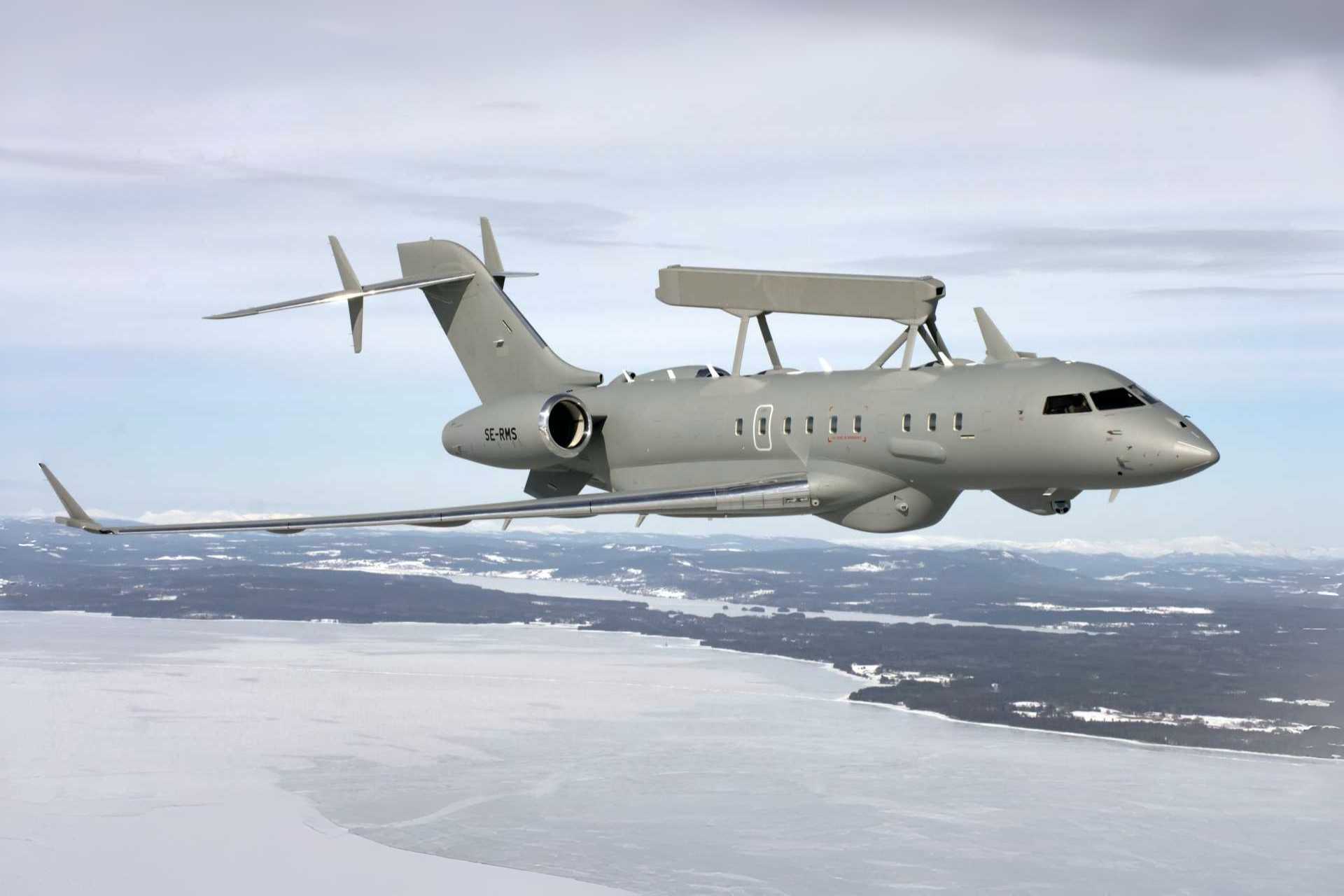
NATO’s first RQ-4D Phoenix operation from Norway demonstrates the Alliance’s ability to deploy strategic intelligence, surveillance and reconnaissance assets closer to the Arctic and North Atlantic, strengthening situational awareness and operational flexibility across the High North (Picture Source: NATO)
On May 21, 2026, the NATO Intelligence, Surveillance and Reconnaissance Force announced that a NATO RQ-4D Phoenix remotely piloted aircraft had operated from Ørland, Norway, marking the first time this system has operated from Norwegian territory and only the third time it has operated outside Italian Air Force Base Sigonella. Highlighted by NATO Allied Joint Force Command Norfolk, the deployment was conducted as part of Agile Combat Employment, NATO’s concept for operating from dispersed locations and adapting quickly to changing operational requirements, and places one of the Alliance’s key airborne ISR assets directly into the strategic geography of the High North.
The RQ-4D Phoenix is one of NATO’s core strategic intelligence, surveillance and reconnaissance platforms. Operated by the NATO Intelligence, Surveillance and Reconnaissance Force, it is designed for high-altitude, long-endurance missions and gives Allied commanders the ability to observe broad areas over extended periods. The system is equipped with multi-platform radar technology, synthetic aperture radar ground-surveillance sensors, and long-range data links, enabling the aircraft to collect and transmit intelligence across NATO’s command network. Unlike tactical drones used close to the battlefield, the Phoenix is built to support theatre-level awareness, track activity across wide zones, and feed decision-makers with persistent ISR data.
Operating the RQ-4D Phoenix from Norway adds a new operational dimension to the Alliance’s ISR posture. The aircraft is normally based at Sigonella in Sicily, a location well suited for surveillance across the Mediterranean, North Africa, the Black Sea approaches and NATO’s southern flank. Moving the aircraft to Ørland demonstrates that NATO can shift this capability toward the northern theatre when required. This gives the Alliance more flexibility in how it positions ISR assets, reduces predictability, and shows that NISRF can generate surveillance effects from locations beyond its main operating base.
The deployment is closely tied to Agile Combat Employment. ACE is designed to make Allied air operations less dependent on a small number of fixed bases by enabling aircraft, personnel, support teams and command nodes to function from dispersed locations. In operational terms, this increases survivability and gives commanders more options during a crisis. For a high-value ISR platform such as the RQ-4D Phoenix, the ability to operate from Norway shows that NATO can reposition strategic surveillance capabilities while keeping them connected to multinational intelligence networks. This reinforces the flexibility and readiness of the NATO Intelligence, Surveillance and Reconnaissance Force.
Norway gives the operation a clear geostrategic weight. Ørland sits within a northern operating environment that connects the North Atlantic, the Norwegian Sea, the Barents Sea and the Arctic approaches. These areas are linked to transatlantic reinforcement routes, undersea infrastructure, maritime surveillance, submarine activity and Russia’s military posture around the Kola Peninsula. From Norwegian territory, NATO can place persistent ISR closer to a corridor that would be central in any major northern contingency, especially one involving air and maritime movements between North America and Europe.
The announcement also fits directly into the role of NATO Allied Joint Force Command Norfolk. JFC Norfolk is central to the protection of the Atlantic connection between North America and Europe, including the sea lines of communication that would be needed to reinforce Europe in a crisis. By highlighting the RQ-4D activity in Norway, the command links airborne surveillance, Arctic awareness and the defence of the North Atlantic into a single operational narrative. The message is clear: NATO is not only exercising air mobility, but also building an ISR architecture able to support deterrence, reinforcement and command decisions across the northern flank.
The operation gains added relevance from the accession of Finland and Sweden to NATO, which has reshaped the military geography of Northern Europe. The Alliance can now view the High North, the Baltic region and the North Atlantic as a more connected operational space. RQ-4D Phoenix activities in Norway and Finland during Ramstein Flag 2026 support this new Nordic framework by connecting ISR, air operations, host-nation support and dispersed basing. For NATO, this creates a wider surveillance arc from the Arctic approaches to the Baltic Sea, giving commanders a broader intelligence picture during large-scale air operations.
Ramstein Flag 2026 provides the operational setting for this development. The exercise runs from June 8 to June 19, 2026, and includes a northern component hosted by Finland, Sweden, Norway and Denmark. Finland has confirmed that the exercise involves 18 NATO nations and more than 200 aircraft, with Allied forces training rapid response capabilities in Article 5 collective-defence scenarios. Integrating the RQ-4D Phoenix into this framework allows NATO to test how long-endurance ISR supports dispersed air operations, force protection, air tasking, maritime awareness and real-time coordination among Allied units operating across multiple northern bases.
The deeper strategic message is that NATO is strengthening its northern posture through information dominance, not only through combat aircraft, ground forces or naval deployments. In the High North, geography favors the side able to maintain persistent awareness across vast distances, harsh weather and limited infrastructure. The RQ-4D Phoenix gives NATO a tool to watch broad zones without relying solely on crewed aircraft or surface assets. Its use from Norway shows that NISRF can move beyond routine basing patterns and provide commanders with a clearer picture from locations closer to the areas under observation.
The first RQ-4D Phoenix operation from Norway marks a new step in NATO’s effort to make strategic ISR more flexible, resilient and aligned with the High North security environment. By combining a NATO-owned remotely piloted aircraft, Norwegian basing, ACE procedures and Ramstein Flag 2026 activities, the Alliance is showing that it can move critical surveillance capabilities closer to strategic areas while maintaining multinational command continuity. For NISRF, the deployment confirms flexibility and readiness; for NATO, it sends a broader signal that the northern flank is becoming a central theatre for persistent intelligence, deterrence and collective defence.
Written by Teoman S. Nicanci – Defense Analyst, Army Recognition Group
Teoman S. Nicanci holds degrees in Political Science, Comparative and International Politics, and International Relations and Diplomacy from leading Belgian universities, with research focused on Russian strategic behavior, defense technology, and modern warfare. He is a defense analyst at Army Recognition, specializing in the global defense industry, military armament, and emerging defense technologies.
-
French Ambassador confirms Rafale fighters will soon join Ukraine's F-16 and Gripen fleets
{loadposition bannertop}{loadposition sidebarpub}
French Ambassador to Sweden Thierry Carlier indicated on June 1, 2026, that Rafale fighters are expected to join Ukraine’s growing fleet of Western combat aircraft, adding a high-end strike capability alongside F-16s, Mirage 2000-5s, and Gripens. The move would accelerate Ukraine’s transition away from Soviet-era aviation and strengthen its ability to conduct long-range strikes, sustain air operations, and challenge Russian forces across a wider battlespace.
The Rafale brings a combination of heavy payload, extended range, advanced sensors, and modern weapons integration that can expand Ukraine’s reach far beyond the front line. While F-16s and Gripens are likely to provide the numerical backbone of future air operations, Rafales would give Ukraine a dedicated platform for deep strike, strategic interdiction, maritime attack, and operations in heavily defended airspace, reflecting a broader shift toward a more capable and networked air force.
Related topic:France to supply 100 Rafale fighter jets to Ukraine in new defense pact
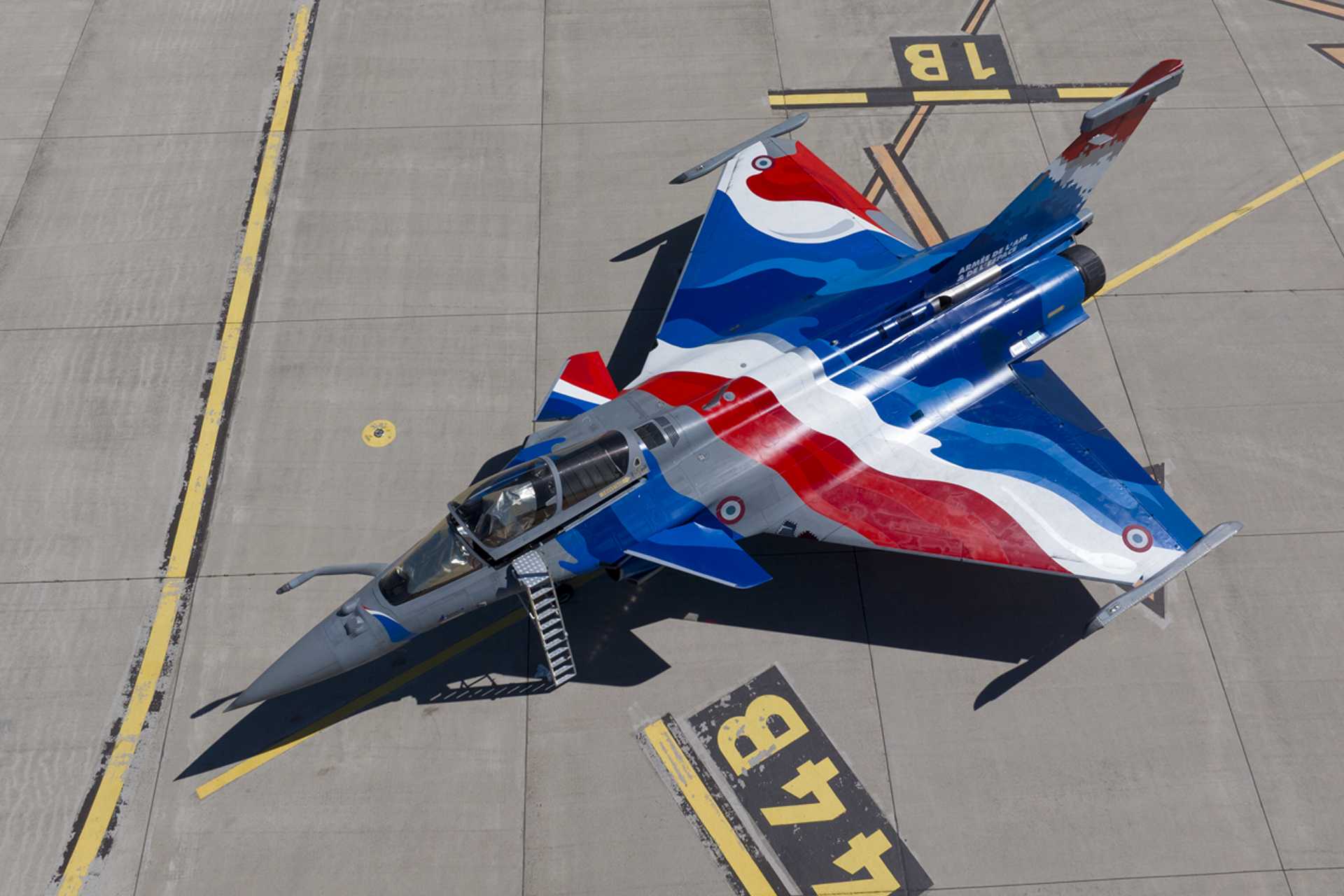
The Rafale, said to be delivered in F4 standard, will represent a major capability leap for the Ukrainian Air Force by introducing advanced sensor fusion, active AESA radar, improved SPECTRA electronic warfare systems, and increased payload flexibility for high-end, long-range deep strike missions. (Picture source: French MoD)
On June 1, 2026, French Ambassador to Sweden Thierry Carlier suggested that Rafale fighters will soon join Mirage 2000-5 and Gripen jets in Ukrainian service, as part of a modernization effort that has already transformed the Ukrainian Air Force. In February 2022, Ukraine's fighter force consisted almost entirely of MiG-29 and Su-27 jets designed around Soviet doctrine, Soviet weapons inventories, and Soviet sustainment systems. By mid-2026, the Ukrainian Air Force was already transitioning toward a Western inventory centered on F-16s, Mirage 2000-5s, and Gripens, while the November 17, 2025, declaration of intent signed by Presidents Emmanuel Macron and Volodymyr Zelensky established a framework covering the acquisition of up to 100 Rafales by 2035.
If current commitments and procurement ambitions materialize, Ukraine could enter the early 2030s operating a fighter inventory composed of F-16AM/BM MLU, Mirage 2000-5F, Gripen C/D, Gripen E/F, and Rafale F4 jets. Such a force would not merely replace Soviet aircraft; it would represent one of the largest concentrations of Western tactical aviation in Europe, potentially exceeding 200 fighters and creating a fleet larger than those operated by several European NATO members. The numerical foundation of that future Ukrainian Air Force remains the American F-16. Transfers from Denmark, the Netherlands, Norway, and Belgium could produce an inventory of between 75 and 98 operational units before considering additional donors.
Norway alone approved the transfer of 22 F-16s, intended both for combat operations and as sources of spare parts, while Denmark committed 19 units and the Netherlands committed 24. Belgium has discussed transferring up to 30 F-16s and has also considered a broader transfer of its remaining F-16 inventory before the end of the decade. France has committed six Mirage 2000-5F fighters, three of which had already arrived by early 2026, while discussions involving Greek and retired Qatari Mirage 2000s create a pathway toward a larger Mirage fleet potentially numbering between 15 and 40 aircraft, depending on political decisions and refurbishment requirements.
Sweden, for its part, has committed 16 Gripen C/D fighters while simultaneously discussing the sale of 20 Gripen E/Fs as an initial tranche within a broader objective that could eventually reach 100 to 150 Gripens. Alongside these programs stands the French-Ukrainian framework for approximately 100 Rafales. Collectively, these figures indicate that Ukraine is no longer seeking a one-for-one replacement of Soviet aircraft. It is pursuing a force structure built around mass, redundancy, and multiple sources of supply. The resulting inventory would contain three distinct technological generations. The Mirage 2000-5F and F-16AM/BM MLU represent two designs that emerged during the late Cold War.
The Gripen E and Rafale F4 belong to a later generation, emphasizing sensor fusion, digital architecture, and networked operations. The difference is reflected not only in avionics but also in aircraft size and payload. The French Mirage 2000-5F has a maximum takeoff weight of roughly 17 tonnes, the Swedish Gripen E reaches approximately 16.5 tonnes, the American F-16 MLU reaches roughly 19 tonnes, while the Rafale reaches 24.5 tonnes. Internal fuel capacity follows a similar pattern, as the Rafale carries more than 4.7 tonnes of internal fuel compared with approximately 3.4 tonnes for the Gripen E and roughly 3.1 tonnes for the F-16. External payload capacity reaches 9.5 tonnes for the Rafale, compared with roughly 7 tonnes for the Gripen E and 7.7 tonnes for the F-16.
These differences directly influence combat radius, time on station, weapon carriage, and mission flexibility. A fighter like the Rafale, carrying nearly 40 percent more fuel and more than 20 percent greater external payload, can execute missions that would otherwise require additional tanker support, multiple aircraft, or reduced weapon loads. This explains why the Rafale occupies a distinct position within the future Ukrainian Air Force structure. The fighter's fourteen hardpoints allow simultaneous carriage of air-to-air missiles, stand-off strike weapons, targeting pods, and external fuel tanks. In practical terms, a Rafale configured for deep strike can carry SCALP-EG cruise missiles, MICA or Meteor air-to-air missiles, external tanks, and targeting systems during a single sortie.
Neither the F-16 MLU nor the Gripen E can match the same combination of payload, fuel, and mission flexibility. Combat radius can exceed 1,000 km depending on loadout, creating options for strikes against command centers, logistics hubs, air bases, and maritime targets located far beyond the front line. While F-16s are likely to remain concentrated on defensive counter-air operations and routine strike missions, and Mirage 2000-5Fs increasingly focus on cruise missile interception, the Rafale would naturally gravitate toward long-range strike, strategic interdiction, maritime strike, and suppression missions requiring large fuel reserves and significant weapon loads. The more meaningful comparison is therefore Rafale F4 versus Gripen E rather than Rafale versus F-16.
Both fighters incorporate AESA radars, advanced electronic warfare systems, modern datalinks, and Meteor compatibility. The Gripen E combines the Raven ES-05 AESA radar with the Skyward-G infrared search-and-track system, while the Rafale F4 combines the RBE2-AA AESA radar, Front Sector Optronics, and the SPECTRA electronic warfare suite. While the Gripen E sacrifices payload and fuel capacity in exchange for lower maintenance requirements, reduced operating costs, and dispersed operations from highways and austere airfields, the Rafale accepts greater logistical requirements in exchange for larger weapon loads, longer endurance, and greater strike capacity.
Ukraine's geography and wartime operating environment suggest advantages for both approaches, as the Gripen can distribute combat power across numerous locations and complicate targeting, while the Rafale can deliver larger effects per sortie and sustain operations deeper into contested airspace. However, performance alone does not determine combat power. The key variable is sortie generation. Ukraine's air campaign requires sustained daily operations rather than isolated engagements. A fleet of 80 operational F-16s generating two sorties per day produces 160 combat sorties every 24 hours. A force of 24 Rafales generating the same sortie rate produces only 48 sorties.
Even if individual Rafale sorties carry larger weapon loads, numerical differences of that magnitude influence overall combat output. This reality explains why fleet size remains strategically significant. The Gripen was specifically designed for operations from dispersed bases and highways with small maintenance teams, and Swedish doctrine traditionally sought rearming and refueling cycles below 20 minutes. The Rafale requires larger maintenance detachments, more specialized infrastructure, and a broader logistics footprint. As fleet size grows beyond one hundred aircraft, sustainment economics, spare parts inventories, training pipelines, and aircraft availability rates become increasingly important determinants of combat effectiveness.
Weapons integration may ultimately prove more consequential than aircraft delivery itself. Ukraine already operates AIM-120-equipped F-16s, while Mirage 2000-5 fighters have entered service with MICA missiles, extending interception capability from short-range engagements to medium-range engagements against cruise missiles, drones, and aircraft. The Gripen C/Ds and E/Fs introduce the possibility of Meteor integration, while Rafale jets can employ Meteor, MICA EM, MICA IR, SCALP-EG, AASM Hammer, and Exocet. Among these weapons, the Meteor carries the greatest long-term significance because it introduces a common beyond-visual-range capability across multiple fighter types.
A future Ukrainian inventory simultaneously operating AMRAAM, MICA, and Meteor missiles would present Russian pilots and air defense planners with different seeker technologies, engagement envelopes, and tactical challenges. The SCALP-EG already exists within Ukrainian operations, meaning the Rafale could immediately contribute to a mission set already familiar to Ukrainian crews. In operational terms, the combination of weapons associated with the Rafale may generate greater effects by expanding the range of targets that can be engaged and increasing the distance at which those engagements occur.
A potential question facing Ukrainian force planners is therefore not whether the Rafale is capable (it is), but whether Ukraine requires 100 aircraft to obtain the desired operational effect. A fleet of 24 to 48 Rafales would provide a specialized high-end capability for deep strike, maritime strike, strategic interdiction, and operations in heavily defended airspace while allowing F-16s and Gripens to provide numerical mass. Expanding beyond that level would continue to increase capability but would also require major investments in pilot training, simulators, maintenance facilities, spare engines, weapons stockpiles, software support, and infrastructure, like the other fighter jets supplied to Ukraine.
France itself continues to expand Rafale production, but existing orders now exceed 220 units, and additional export contracts continue to enter the production queue. Ukraine's future combat aviation challenge is therefore increasingly one of force design rather than aircraft acquisition. The issue is not whether the Rafale can perform the mission, but determining the investment needed in munitions, training, sustainment, and overall fleet readiness.
Written by Jérôme Brahy
Jérôme Brahy is a defense analyst and documentalist at Army Recognition. He specializes in naval modernization, aviation, drones, armored vehicles, and artillery, with a focus on strategic developments in the United States, China, Ukraine, Russia, Türkiye, and Belgium. His analyses go beyond the facts, providing context, identifying key actors, and explaining why defense news matters on a global scale.
Explore More Defense News
• Land Defense News
• Naval Defense News
• Defense Aerospace News
-
Czech AH-1Z Viper Gunships Begin First NATO Deployment in Poland to Counter Emerging Low-Altitude Threats
{loadposition bannertop}{loadposition sidebarpub}
The Czech Armed Forces are deploying AH-1Z Viper attack helicopters to Poland for the first time in an operational mission, marking a significant expansion of Prague’s contribution to NATO’s eastern flank; the move was announced by the Czech military ahead of the June 2026 rotation and adds a dedicated armed response capability against emerging low-altitude threats. Replacing the previously deployed UH-1Y Venom helicopters, the Vipers strengthen allied airspace protection with greater reconnaissance, target acquisition, and engagement capacity in a region facing persistent drone and airspace security challenges.
Designed for armed overwatch and rapid reaction missions, the AH-1Z combines advanced sensors, precision weapons, and high mobility to identify and counter threats that can evade conventional air defense coverage. The deployment highlights the operational maturity of the Czech Republic’s H-1 helicopter modernization program while reinforcing NATO interoperability and collective defense along one of the Alliance’s most exposed frontiers.
Related Topic: Czech UH-1Y Venoms Begin Counter-Drone Operations in Poland to Strengthen NATO Airspace Security
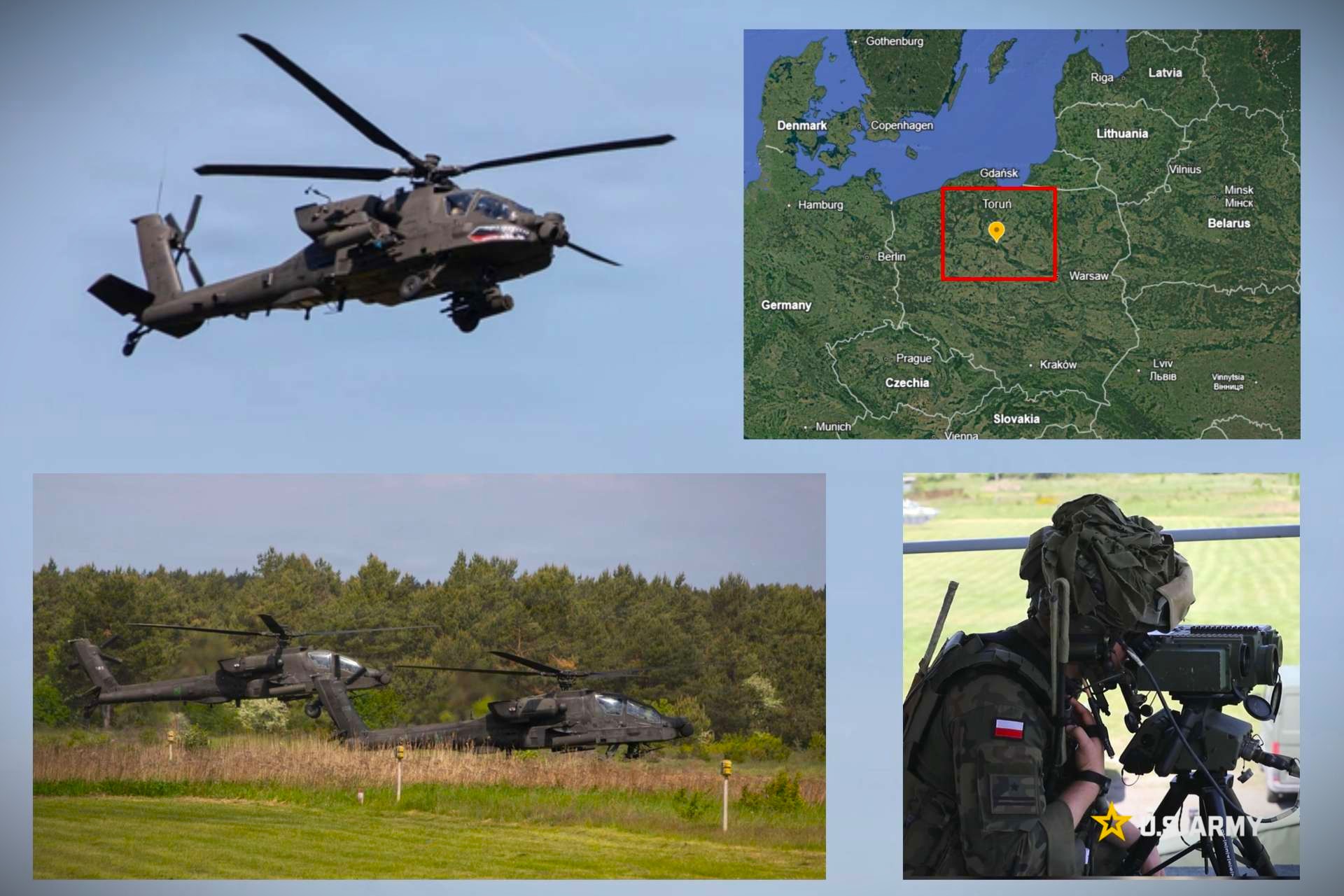
The Czech Republic has deployed AH-1Z Viper attack helicopters to Poland for the first time, enhancing NATO's eastern flank defenses with a dedicated capability to detect, track, and respond to low-flying aerial threats, including drones (Picture Source: Czech Armed Forces)
The Czech Armed Forces announced that its AH-1Z Viperattack helicopters are being deployed for the first time in a live foreign operation, with Czech helicopter pilots continuing their mission to protect the airspace on NATO’s eastern flank in Poland. From June 2026, a pair of Viper helicopters from the 22nd Air Base of Helicopter Aviation at Náměšť nad Oslavou will replace the UH-1Y Venom helicopters that have supported Poland during the previous three-month rotation. The move marks a new phase in the Czech contribution to allied airspace protection, as Prague shifts from a utility helicopter deployment to an attack helicopter capability designed for armed reconnaissance, rapid reaction, and engagement of low-flying targets.
The deployment was preceded by months of intensive preparation, culminating in the VORTEX certification exercise. During this process, the soldiers of the 22nd Air Base met NATO standards and confirmed their readiness to carry out all assigned tasks in Poland. The exercise included mission planning in an international environment, operation in field conditions, communication with higher command, and coordination with the host country and allied forces. This preparation shows that the Czech Heli Unit is not deploying as an isolated national detachment, but as an integrated component of NATO’s command-and-control architecture on the eastern flank.
The Czech Vipers will continue the work already carried out by Czech helicopter crews in Poland. The Czech Republic redeployed a helicopter unit at the request of the Polish Armed Forces in September 2025, shortly after Russian unmanned aerial systems penetrated Polish territory. Since that incident, Czech helicopter crews have introduced procedures for countering low-flying targets into their training curriculum, with emphasis on Counter Unmanned Aerial Systems missions. This operational adjustment reflects the changing air threat around NATO borders, where drones, loitering munitions, and other low-altitude platforms can challenge conventional surveillance and air defense networks.
The unit’s main task will be to operate against low-flying targets. In military terms, this mission places the AH-1Z Viper at the tactical interface between airspace surveillance, armed reconnaissance, and local air defense support. Attack helicopters cannot replace fighter aircraft or ground-based air defense systems, but they can provide mobile coverage, visual identification, and rapid engagement options in areas where terrain, altitude, radar coverage, or rules of engagement make interception more complex. In Poland, this gives NATO and Polish forces an additional tool against slow, low-altitude, or ambiguous aerial threats.
The AH-1Z Viper brings a different combat profile compared with the UH-1Y Venom. The Venom is a utility helicopter able to conduct transport, support, escort, and limited fire-support missions, while the Viper is a dedicated attack platform built for target acquisition, armed overwatch, and precision engagement. The aircraft is operated by a pilot and co-pilot gunner and is powered by two General Electric T700-GE-401C turboshaft engines. It uses a four-bladed composite rotor system, digital avionics, a helmet-mounted sight display, a Target Sight System, and an integrated weapons architecture. Depending on mission configuration, it can carry a 20 mm cannon, guided or unguided rockets, air-to-ground missiles, and air-to-air missiles such as AIM-9 Sidewinder.
For Poland and NATO, the arrival of the Viper adds a mobile rotary-wing layer to the defense of allied airspace. The helicopter’s sensor suite and weapons integration allow it to support identification and engagement tasks against aerial or ground-based threats at short notice. Its value in this mission is not only linked to firepower, but also to flexibility: the aircraft can deploy from forward locations, operate in coordination with ground controllers, and support Polish forces in areas where a fast reaction from fixed-wing aircraft may not always be the most adapted response.
The deployment also shows the operational maturation of the Czech H-1 modernization program. Prague selected the H-1 family to replace its ageing Soviet-designed Mi-24V/35 fleet and to align its helicopter force with Western standards. The Czech fleet combines UH-1Y Venom utility helicopters and AH-1Z Viper attack helicopters, both sharing a high degree of commonality in engines, rotors, avionics, electronics, and logistics. This common architecture gives the Czech Air Force a more interoperable and sustainable force package for NATO missions, while allowing pilots, maintainers, and planners to operate within a shared H-1 ecosystem.
The use of Czech Vipers in Poland also reinforces Czech-Polish defense cooperation. The deployment is conducted under an agreement between Prague and Warsaw and within the mandate of the Czech Ministry of Defence. It gives Poland additional support for airspace protection while giving Czech air and ground personnel operational experience in a frontline allied environment. For Central and Eastern European NATO members, this type of cooperation is increasingly relevant as they face drone incursions, electronic warfare activity, airspace pressure, and military signaling linked to Russia’s war against Ukraine.
The first deployment of Czech AH-1Z Viper helicopters to Polish skies is more than a routine rotation. It turns a new Czech attack helicopter capability into a visible NATO contribution, preserves Czech continuity in protecting Polish airspace, and adds a specialized platform for countering low-flying threats on the Alliance’s eastern flank. For Poland, it provides extra allied support in a sensitive operational environment. For the Czech Republic, it confirms that the H-1 modernization program is moving from training and introduction to active allied service. For NATO, it sends a clear message of cohesion, readiness, and shared defense along Europe’s most exposed frontier.
Written by Teoman S. Nicanci – Defense Analyst, Army Recognition Group
Teoman S. Nicanci holds degrees in Political Science, Comparative and International Politics, and International Relations and Diplomacy from leading Belgian universities, with research focused on Russian strategic behavior, defense technology, and modern warfare. He is a defense analyst at Army Recognition, specializing in the global defense industry, military armament, and emerging defense technologies.
-
US considers deploying NATO nuclear weapons closer to Russia for first time since Cold War
{loadposition bannertop}{loadposition sidebarpub}
The United States is considering expanding NATO’s nuclear-sharing network eastward, potentially allowing part of the Alliance’s nuclear deterrent infrastructure to move closer to Russia for the first time since the Cold War. The possibility, reported by the Financial Times on May 2, 2026, comes as Washington reviews its conventional force posture in Europe and seeks to preserve credible deterrence against a more assertive Russia following the war in Ukraine.
Poland has emerged as the most likely candidate because it combines political support, expanding military infrastructure, and a growing fleet of F-35A fighters that could eventually support NATO’s nuclear mission. An eastward shift would not increase the number of U.S. nuclear weapons in Europe, but it could improve operational flexibility, complicate Russian military planning, and further anchor NATO’s deterrence architecture along its eastern flank.
Related topic:French nuclear-armed Rafale fighters could operate from Belgium under new deterrence plan
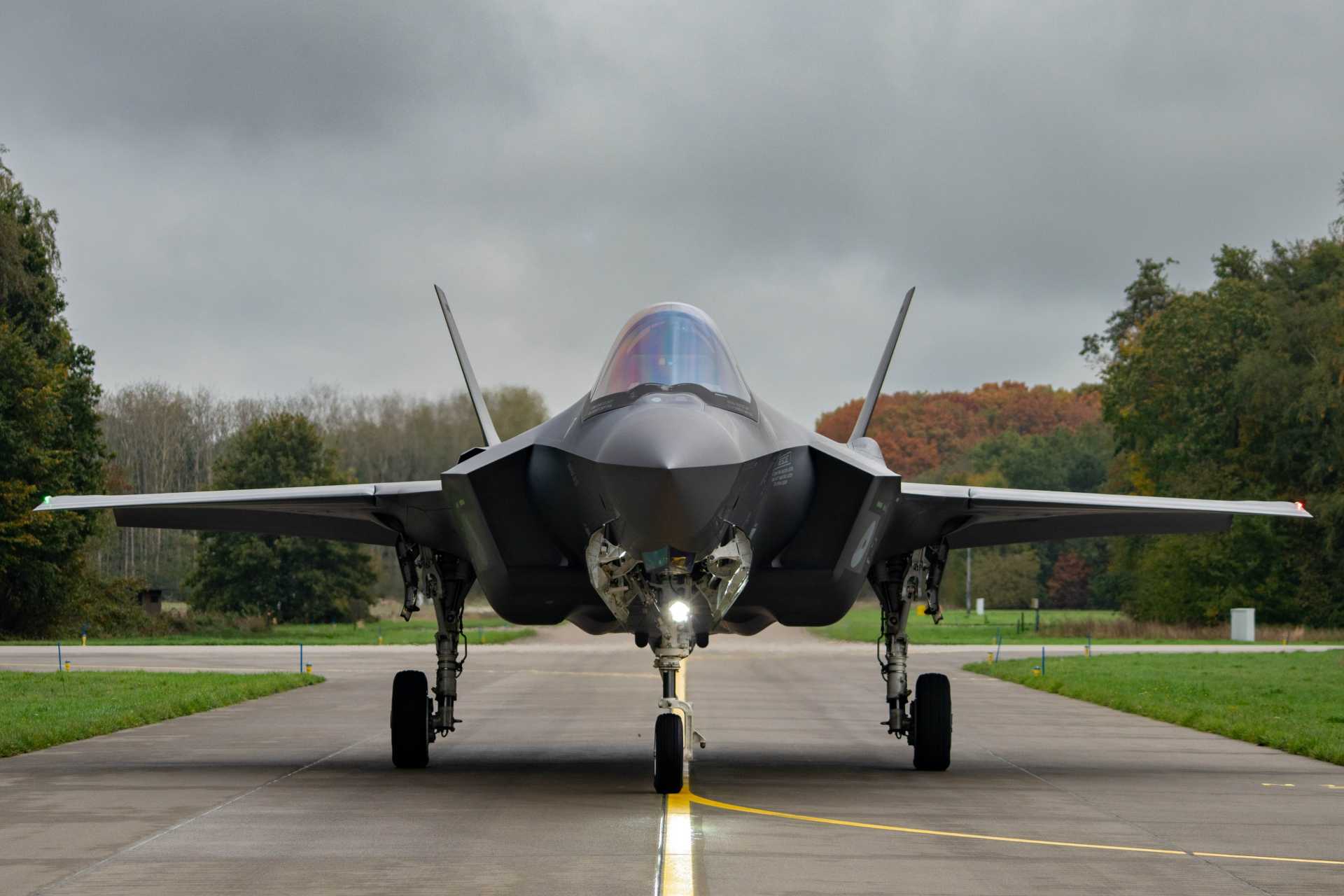
NATO's nuclear sharing program is tested annually during Steadfast Noon, a training exercise where allied air forces train to safely handle and deploy U.S. tactical nuclear weapons using mock devices. (Picture source: NATO)
On May 2, 2026, the Financial Times revealed that the United States was willing to consider expanding NATO's nuclear sharing arrangements beyond the current six host countries, opening the possibility that part of the Alliance's nuclear deterrence infrastructure could move closer to Russia's borders for the first time since the Cold War. The issue emerged as Washington reviews reductions in its conventional military presence in Europe, including the withdrawal of roughly 5,000 personnel from Germany, while seeking to preserve the credibility of NATO's deterrence posture.
The current nuclear sharing architecture remains concentrated at Kleine Brogel in Belgium, Büchel in Germany, Aviano and Ghedi in Italy, Volkel in the Netherlands, and Incirlik in Türkiye. These installations are believed to collectively store roughly 100 B61-series gravity bombs under U.S. custody. While the number of nuclear warheads under consideration does not appear to be changing, the geographic distribution of dual-capable aircraft, storage facilities, and supporting infrastructure is increasingly being examined as NATO adapts to a security environment fundamentally altered by Russia's February 2022 invasion of Ukraine.
Poland and the Baltic states (Estonia, Latvia, and Lithuania) have become the Alliance's principal eastern-frontline members since 2022, making them the most frequently mentioned countries regarding a future eastward extension of NATO's nuclear mission. Such a move would represent the largest expansion of NATO nuclear sharing infrastructure since the collapse of the Soviet Union. NATO's current nuclear sharing system was largely built during the Cold War and continues to rely on U.S.-owned B61 nuclear gravity bombs stored in Weapons Storage and Security System (WS3) vaults installed beneath hardened aircraft shelters.
These underground WS3 facilities permit nuclear warheads to remain physically separated from fighters while allowing rapid access if required. The United States maintains custody, security, maintenance responsibility, and release authority for all forward-deployed warheads, meaning that NATO allies do not own the weapons and cannot independently employ them. The military component of the arrangement depends on Dual-Capable Aircraft (DCA), which are fighter jets certified to carry both conventional weapons and nuclear bombs. Depending on the participating country, these currently include the F-35A Lightning II, F-16 MLU, and Panavia Tornado IDS.
The political and military coordination of the nuclear sharing is conducted through NATO's Nuclear Planning Group, established in 1966 and still functioning as the Alliance's principal body for consultation on nuclear policy, force posture, planning, and exercises. Readiness is routinely maintained through Exercise Steadfast Noon, NATO's annual nuclear exercise, which typically involves 60 to 70 aircraft, including dual-capable fighters, tankers, surveillance aircraft, and command-and-control assets, as well as roughly 2,000 personnel. The exercise rehearses procedures associated with nuclear deterrence missions without using live nuclear weapons and serves as the primary mechanism for maintaining operational proficiency among participating nations.
Poland has emerged as the leading candidate because it is the only eastern-flank country combining strategic location, substantial military infrastructure, political support for nuclear hosting, and a rapidly expanding inventory of advanced combat systems. Defence spending increased from approximately 2.4% of GDP in 2022 to more than 4% of GDP, the highest level among NATO members. Warsaw has also ordered 32 F-35A fighters, 250 M1A2 Abrams tanks, 96 AH-64E Apache helicopters, Patriot air defence batteries, and hundreds of HIMARS launchers from the United States.
Former President Andrzej Duda publicly called for the deployment of U.S. nuclear weapons on Polish territory, arguing that NATO's deterrence posture should reflect the eastward movement of the Alliance's security frontier after 2022. Poland also joined discussions with France concerning possible European nuclear deterrence cooperation mechanisms, reflecting growing interest among eastern allies in strengthening deterrence beyond conventional capabilities. The country also hosts the forward headquarters of U.S. Army V Corps, a formation responsible for coordinating U.S. Army activities on NATO's eastern flank, and serves as the principal logistical gateway for military assistance flowing into Ukraine.
No Baltic state currently possesses a comparable combination of infrastructure, force density, transportation networks, and U.S. military presence, which explains why Poland is generally viewed as the most plausible candidate if expansion eventually occurs. The infrastructure requirements associated with nuclear sharing are substantially more demanding than those required for conventional air operations. Participation requires certified storage facilities, hardened aircraft shelters equipped with WS3 vault systems, dedicated security formations, secure communications networks, specialized maintenance facilities, and extensive integration into U.S. nuclear command-and-control procedures.
Physical security standards exceed those applied to conventional ammunition depots and require multiple layers of protection, continuous surveillance, and dedicated response forces. Air bases participating in the mission must maintain trained security personnel, emergency response units, certified maintenance teams, and aircrews qualified for nuclear operations. Certification is not permanent and requires recurring inspections, readiness evaluations, and operational assessments. The construction or modernization of nuclear-certified facilities typically requires years rather than months because every component of the installation, from communications infrastructure to aircraft shelter design, must comply with stringent operational and security standards.
Even for countries already operating modern fighter jets, achieving full nuclear certification can require investments reaching several hundred million dollars per location before any operational capability is achieved. The aircraft dimension of the mission is undergoing its most significant transformation since the end of the Cold War. For decades, the nuclear role depended largely on F-16 variants and Panavia Tornado jets. Both fleets are approaching retirement, forcing NATO members to identify successors capable of carrying the B61-12 nuclear bomb. Germany selected the F-35A specifically to replace the Tornado IDS fighter assigned to the nuclear mission.
Belgium, the Netherlands, and Italy are also transitioning toward the F-35, while Poland, Norway, Denmark, and Finland are introducing the same aircraft into service. The B61-12 combines the existing B61 warhead with a guided tail-kit assembly, improving delivery accuracy compared with earlier B61 variants. Integration with the F-35A creates a significantly different operational capability than previous generations of dual-capable aircraft, as internal weapons carriage allows the F-35 to retain low-observable characteristics throughout the mission, reducing radar detection compared with externally carried weapons.
By the early 2030s, European NATO members could collectively operate more than 600 F-35s, creating the largest concentration of fifth-generation combat aviation anywhere outside the United States. Future nuclear sharing participants are therefore more likely to emerge from the expanding community of F-35 operators than from countries operating legacy F-16 fighter fleets. The military implications of positioning nuclear-certified F-35 units in Poland or the Baltic region extend beyond the mere relocation of infrastructure. Current host bases are located in Western and Central Europe, requiring longer flight paths toward potential operational areas near Russia's western borders.
Nuclear fighter jets operating from Poland would be substantially closer to Kaliningrad, Belarus, and Russia's Western Military District. Kaliningrad hosts important Russian military assets, including air defence systems, missile forces, and naval facilities, while Belarus has hosted Russian nuclear-related deployments since 2023. Shorter flight distances improve sortie generation rates, reduce tanker requirements, and increase operational flexibility. Additional operating locations also complicate Russian targeting calculations because a larger number of bases would need to be monitored and potentially neutralized during a crisis.
From NATO's perspective, this greater geographic dispersion may improve survivability by reducing dependence on a small number of established bases. From Russia's perspective, the appearance of nuclear-certified infrastructure closer to its borders would likely trigger force posture adjustments. Reinforcement of Iskander-M missile units in Kaliningrad, expansion of S-400 and S-500 air defence coverage, and additional deployments in Belarus would be among the most probable responses. Even without increasing the number of warheads in Europe, a nuclear sharing expansion would therefore alter operational planning on both sides.
Any expansion would remain constrained by the existing command-and-control structure governing NATO nuclear operations. Nuclear sharing does not transfer ownership of nuclear weapons, and no participating country receives independent authority over their employment. Release authority remains exclusively with the President of the United States. NATO's Nuclear Planning Group provides the consultation framework through which allies discuss policy, force posture, and planning, but operational control remains firmly integrated within U.S. command structures. Host nation pilots can only be assigned nuclear delivery missions following U.S. authorization, and secure communications systems connect national forces to NATO and American command networks.
These procedures are regularly rehearsed during Steadfast Noon exercises, which simulate nuclear mission planning, force integration, and command coordination without involving live weapons. The accession of additional host countries beyond the original six would therefore require more than infrastructure construction. National command systems, communications architecture, security organizations, and operational procedures would all need to be integrated into an existing framework developed over decades of NATO nuclear cooperation. The debate also reflects a broader transformation of NATO's military geography since February 2022.
During the Cold War and for much of the post-Cold War period, the Alliance's primary deterrence infrastructure was concentrated in Western Europe. The war in Ukraine accelerated the movement of military capabilities toward the eastern flank, and Poland has become NATO's principal logistics hub, reinforcement corridor, and force-generation center in Europe. Multinational battlegroups, Patriot air defence systems, long-range precision-fire capabilities, and expanding F-35 fleets are increasingly concentrated between the Baltic Sea and the Black Sea.
Nuclear infrastructure expansion would represent another stage in this shift, institutionalizing a greater share of NATO's deterrence architecture east of Germany. The central issue is not whether Europe stores 100 B61 nuclear bombs or a slightly different number. The decisive variable is the location of certified delivery aircraft, nuclear storage infrastructure, trained personnel, and operational air bases capable of sustaining the Alliance's nuclear mission. Decisions taken likely between 2026 and 2030 will shape NATO's nuclear force posture into the 2040s because the bases, aircraft fleets, and command structures involved are measured in decades rather than years.
Written by Jérôme Brahy
Jérôme Brahy is a defense analyst and documentalist at Army Recognition. He specializes in naval modernization, aviation, drones, armored vehicles, and artillery, with a focus on strategic developments in the United States, China, Ukraine, Russia, Türkiye, and Belgium. His analyses go beyond the facts, providing context, identifying key actors, and explaining why defense news matters on a global scale.
Explore More Defense News
• Land Defense News
• Naval Defense News
• Defense Aerospace News
-
U.S. Lays Groundwork for GBU-76/B Bunker Buster Program to Replace GBU-57 MOP with Alternate Navigation System
{loadposition bannertop}{loadposition sidebarpub}
The U.S. Air Force has taken a major step toward a new generation of bunker-buster weapons with the designation of the Next Generation Penetrator as GBU-76/B, a future successor to theGBU-57/B Massive Ordnance Penetrator. Detailed in a June 1, 2026, Sources Sought notice issued by the Air Force Life Cycle Management Center, the program signals Washington’s intent to preserve its ability to destroy hardened underground military targets even in heavily contested and GPS-denied environments.
A key feature highlighted in the notice is the integration of an alternate navigation system, aimed at maintaining strike accuracy when satellite navigation is jammed, spoofed, or unavailable. Combined with advanced fuzing and a 20,000- to 30,000-pound-class penetrator design, the GBU-76/B is being shaped as a future hard-target weapon optimized for survivability, precision, and long-range bomber operations against deeply buried command centers, missile facilities, and other strategic infrastructure.
Related Topic: U.S. B-2 Bombers Hit Underground IRGC Command Bunker in Tehran With 30,000-lb GBU-57 Bunker Buster Bombs.
The U.S. Air Force has designated its future GBU-76/B Next Generation Penetrator, signaling plans for a new generation of bunker-buster weapons optimized for hardened underground targets and GPS-contested battlefields (Picture Source: U.S. Air Force)
On June 1, 2026, a SAM.gov Sources Sought notice published by the U.S. Air Force confirmed that the Next Generation Penetrator has been designated GBU-76/B. Issued by the Air Force Life Cycle Management Center, Armament Directorate, Attack Division, at Eglin Air Force Base, the notice marks a key step toward a future replacement for the GBU-57/BMassive Ordnance Penetrator. The announcement is important because it points to a new generation of U.S. conventional bunker-buster capability designed for hardened underground targets, contested navigation environments, and future bomber operations.
The official notice, identified as EBDA_NGPIDIQ, is not a production contract or a formal request for proposals, but it gives a clear view of the Air Force’s intended direction. AFLCMC/EBD is conducting market research for a potential Multiple Award Indefinite Delivery Indefinite Quantity contract covering design, manufacture, production, support, and logistics for the Next Generation Penetrator GBU-76/B weapon system. The scope includes research and development, production, testing, delivery, sustainment, aircraft integration, mission-planning software, training assets, ground-support equipment, packaging, storage, transportation, and technical orders. This indicates that the Air Force is preparing the GBU-76/B not simply as a new bomb body, but as a complete weapon system supported by an industrial, software, logistics, and operational architecture.
The GBU-76/B is being developed as the future successor to the GBU-57/B Massive Ordnance Penetrator, a 30,000-pound-class precision-guided bunker-buster weapon designed to defeat hard and deeply buried targets. The MOP was created for facilities protected by soil, rock, reinforced concrete, and internal structural barriers, including underground command centers, missile infrastructure, and weapons of mass destruction-related sites. Its operational value comes from the combination of mass, a reinforced penetrator casing, precision guidance, and delayed detonation after impact. While the GBU-57/B remains the current U.S. benchmark for conventional hard-target defeat, the GBU-76/B notice shows that Washington is preparing a successor adapted to a more complex threat environment.
Recent operational reporting gives the program additional relevance. On April 8, 2026, Army Recognition reported that U.S. B-2 Spirit stealth bombers struck an underground Islamic Revolutionary Guard Corps command compound in Tehran with 30,000-pound GBU-57 Massive Ordnance Penetrator bombs during Operation Epic Fury, citing reporting from The Wall Street Journal. That reported strike highlighted the continued role of the B-2 and the GBU-57 in U.S. planning against hardened underground facilities. It also explains why the United States would continue upgrading the existing MOP while preparing the GBU-76/B as a future replacement. The current MOP remains the available operational capability, while the Next Generation Penetrator appears intended to introduce greater resilience, improved guidance options, updated fuzing, more mature sustainment, and possible compatibility with future strike aircraft.
The most significant technical element in the notice is the requirement for “Alternate Navigation System Design/Integration.” For a large penetrator, guidance accuracy is not a secondary feature but a decisive factor in whether the weapon can destroy its intended target. A bomb of this type may need to impact a precise aimpoint above a buried chamber, tunnel section, ventilation shaft, access portal, command node, or reinforced roof. Against surface targets, a limited miss distance may still allow a large explosive effect to damage the objective. Against a deeply buried facility, the same miss distance can cause the weapon to penetrate the wrong geological layer, strike a less relevant structural section, or fail to transfer destructive energy into the intended underground volume.
The inclusion of an Alternate Navigation System suggests that the Air Force is preparing the GBU-76/B for environments where satellite-based navigation could be degraded, jammed, spoofed, or denied. Modern adversaries increasingly protect strategic sites with layered air defenses, electronic warfare systems, decoys, camouflage, concealment, and counter-navigation tools. For a weapon intended to defeat hardened underground infrastructure, GPS disruption during the terminal phase could reduce accuracy at the exact moment when precision matters most. An alternate navigation architecture could therefore help preserve target impact accuracy when standard guidance inputs are unreliable, allowing the weapon to maintain the correct flight profile and reach the designated strike point even under electromagnetic attack.
This requirement also reflects the particular nature of underground targeting. Deeply buried facilities are not always defeated by striking the general area of a site. Planners may need to identify a specific point where the weapon can exploit the geometry of the target, the thickness of cover, the orientation of tunnels, the location of internal rooms, or the weakest structural path to a critical chamber. In such a mission, navigation is directly connected to penetration effectiveness. The GBU-76/B’s Alternate Navigation System could therefore become one of the most important differences between a traditional precision-guided penetrator and a future hard-target weapon designed for GPS-contested battlefields.
The notice does not disclose the technical form of the Alternate Navigation System, and it would be premature to identify a specific solution. However, the wording points to a requirement for guidance resilience rather than routine guidance-section modernization. In practical terms, this could involve combining multiple navigation references, improving inertial navigation performance, adding anti-jam or anti-spoofing functions, or integrating navigation logic that allows the munition to remain accurate even when external signals are degraded. For a 20,000- to 30,000-pound penetrator, such a system would have to work under demanding flight, release, and impact conditions while remaining compatible with mission-planning tools, aircraft interfaces, and the weapon’s operational flight-profile software.
Fuzing is another decisive part of the future weapon. The notice specifically refers to fuze development, fuze tuning, and fuze production, which are essential for a large penetrator because target destruction depends not only on reaching the target but on detonating at the correct depth and location after impact. A detonation too close to the surface can waste much of the explosive effect before the munition reaches the intended internal structure, while a detonation too late can reduce damage to the most important chamber or command area. The combination of alternate navigation and tuned fuzing is central to the future GBU-76/B concept: the weapon must not only arrive at the right point, but also survive penetration and detonate at the right moment.
The Sources Sought notice also asks vendors to demonstrate understanding of large penetrator warhead systems weighing approximately 20,000 to 30,000 pounds. This range overlaps with the existing GBU-57/B MOP class while leaving room for design evolution. A future system could remain close to the 30,000-pound class if maximum penetration remains the primary requirement, or it could move toward a lower-weight configuration if improvements in casing design, guidance accuracy, explosive fill, navigation resilience, and fuzing allow equivalent or greater effect with improved aircraft compatibility. This will be especially relevant as the U.S. Air Force continues to operate the B-2 Spirit while preparing the B-21 Raider for future long-range strike missions.
The industrial and sustainment dimensions are also central to the program. By including production hardware, tooling for manufacture, load-assemble-pack processes, ground-support equipment, training procedures, technical orders, packaging, handling, storage, transportation, and obsolescence prevention, the Air Force is addressing the full lifecycle of a highly specialized munition. Large penetrator weapons require unique manufacturing processes, strict quality control, specialized materials, safe handling procedures, aircraft-specific integration, and long-term support planning. The GBU-76/B is being framed as a future operational stockpile and sustainment capability, not only as a development project.
The GBU-76/B designation marks a transition point in U.S. conventional hard-target defeat. The GBU-57/B MOP remains the current reference weapon for striking deeply buried facilities, and the Air Force is expected to keep it relevant until a successor reaches maturity. But the Next Generation Penetrator shows where the next phase is heading: toward a weapon in the 20,000- to 30,000-pound class that combines mass and penetration with alternate navigation, refined fuzing, mission-planning software, aircraft integration, and long-term sustainment. As rival powers continue to bury command centers, missile sites, nuclear-related infrastructure, and critical military networks deeper underground, the GBU-76/B sends a clear message that the United States intends to preserve a conventional option against targets designed to survive standard precision weapons.
Written by Teoman S. Nicanci – Defense Analyst, Army Recognition Group
Teoman S. Nicanci holds degrees in Political Science, Comparative and International Politics, and International Relations and Diplomacy from leading Belgian universities, with research focused on Russian strategic behavior, defense technology, and modern warfare. He is a defense analyst at Army Recognition, specializing in the global defense industry, military armament, and emerging defense technologies.
-
Switzerland Extends F/A-18C/D Hornets Into 2030s to Secure Air Defence Continuity as First F-35A Enters Assembly
{loadposition bannertop}{loadposition sidebarpub}
Switzerland has completed the key work needed to keep its F/A-18C/D Hornet fighters operational into the early 2030s, ensuring uninterrupted air defence coverage as the country begins the transition to the F-35A, according to Swiss federal authorities on 1 June 2026. The move preserves air sovereignty and quick-reaction alert capability during a critical period in which the first Swiss F-35A has already entered main assembly in the United States, reducing the risk of any gap in national airspace protection.
The Hornet life-extension program upgrades mission systems, communications, training infrastructure, and structural components, allowing the fleet to remain combat-ready while Switzerland prepares personnel and support networks for fifth-generation operations. As 36 F-35As enter service between 2027 and 2030, the Swiss Air Force will gain enhanced situational awareness, sensor fusion, and digital combat capabilities, reflecting the broader shift toward data-driven air defence and future warfare.
Related Topic: U.S. and Dutch F-35 Stealth Fighters Conduct Joint High-Tempo Operations to Strengthen NATO Combat Readiness
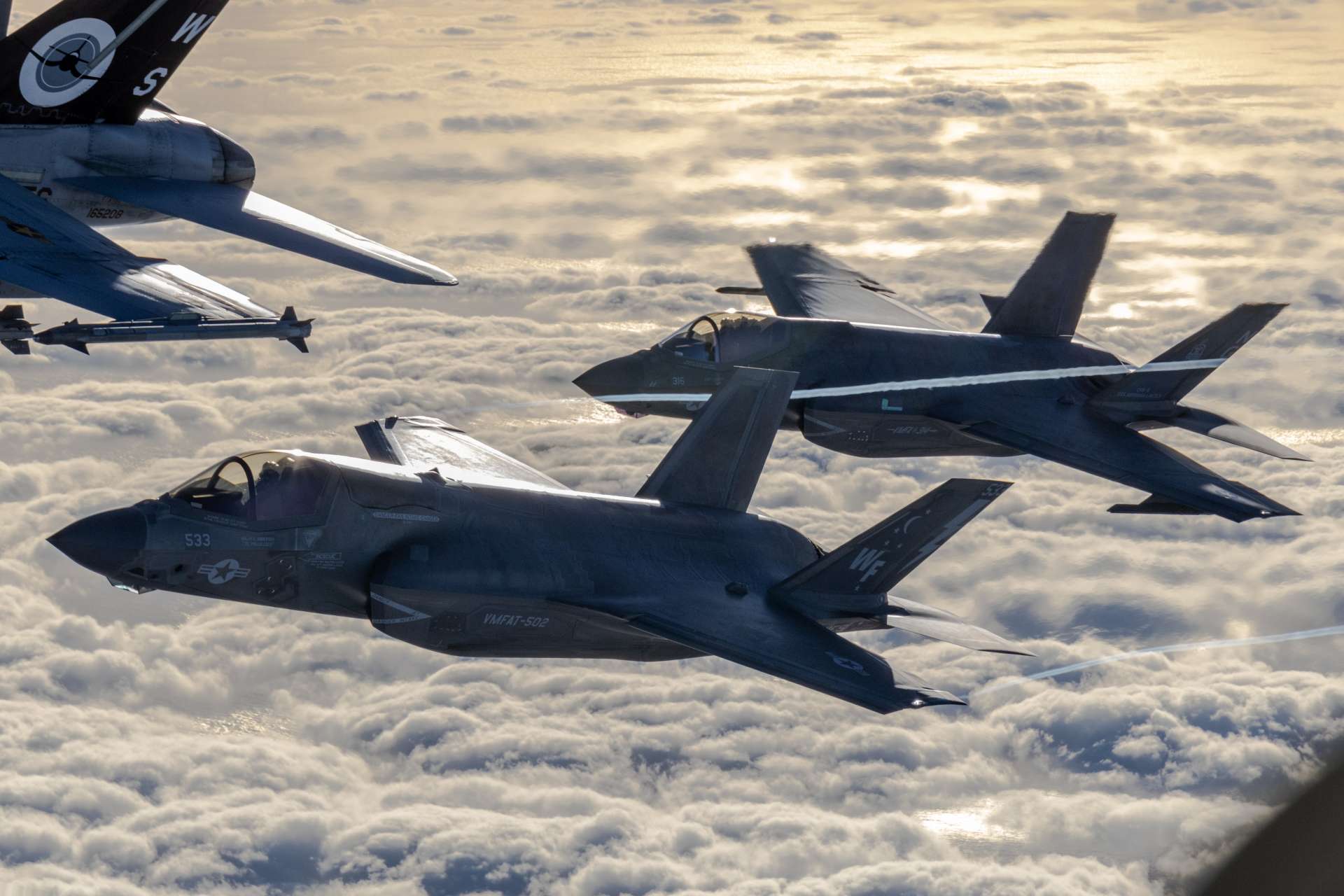
Switzerland has completed a major life-extension program for its F/A-18 Hornet fleet, ensuring continuous air defense readiness as the country's first F-35A fighter enters assembly and the Swiss Air Force begins its transition to fifth-generation combat aviation (Picture Source: U.S. Air Force / EuropeanAirShows-SimonSchibli / Edited By Army Recognition Group
On 1 June 2026, Swiss federal authorities announced the completion of the principal work required to extend the operational life of the Swiss Air Force’s F/A-18C/D Hornet fleet. The announcement came only days after confirmation on 28 May 2026 that main assembly of Switzerland’s first F-35A fighter aircraft had commenced in the United States. Together, these developments represent a significant milestone in the modernization of Swiss military aviation, balancing the sustained availability of a proven fourth-generation combat aircraft with the gradual introduction of a fifth-generation platform.
The parallel progression of both programs reflects a carefully managed transition strategy aimed at preserving Switzerland’s air defense capabilities throughout the modernization process. By extending the service life of its Hornet fleet while preparing for the arrival of the F-35A, Switzerland seeks to maintain uninterrupted air sovereignty missions, ensure the continuity of quick reaction alert operations, and avoid any capability gap during the replacement of its combat aircraft fleet. Beyond the acquisition of new platforms, this approach underscores a broader effort to guarantee operational readiness and national airspace protection during a pivotal period of force renewal.
The Swiss F/A-18C/D Hornet fleet has served as the backbone of national air defence since 1997, providing the Swiss Air Force with a supersonic, multirole combat aircraft able to conduct air policing, interception, air defence training and operational readiness missions in a demanding geographic environment. Its extension into the early 2030s reflects a practical and disciplined approach to fleet management. For Switzerland, where air policing is a sovereign mission conducted over a compact, mountainous and highly regulated national airspace, the availability of a credible fighter fleet during the transition remains central to daily defence readiness. The Hornet remains a critical operational bridge until the F-35Areaches sufficient availability within the Swiss Air Force.
The useful life extension was launched under the 2017 Armed Forces Dispatch with an approved amount of CHF 450 million. The programme included the introduction of modernised communication, navigation and identification systems, aircraft software modifications, mission planning system updates and flight simulator adaptations. These elements are essential in modern air operations, where the effectiveness of a fighter fleet depends not only on airframe performance, propulsion and weapons compatibility, but also on secure identification, cockpit software reliability, training fidelity and the ability to integrate with national command-and-control procedures. In this sense, Switzerland’s decision demonstrates a preference for controlled modernisation, operational continuity and responsible use of defence resources.
A central part of the work concerned the inspection and renovation of selected aircraft structural components. Completed at the end of April 2026, this subproject was required to preserve airworthiness across all 30 Swiss F/A-18C/D aircraft up to 6,000 flying hours per airframe. Such structural work is particularly important for fighter aircraft exposed to repeated manoeuvre loads, high-speed flight profiles, training cycles and the long-term fatigue effects associated with operational service. By extending the structural life of the Hornet fleet, Switzerland has secured the necessary margin to continue air defence missions while giving the Swiss Air Force time to prepare personnel, infrastructure, maintenance processes and training pipelines for the introduction of the F-35A.
The timing is significant because the first Swiss F-35A has now entered main assembly at Lockheed Martin’s facility in Marietta, Georgia. In the coming months, the aircraft will pass through further production and assembly stages before supporting the first Swiss training phase in the United States. The first eight Swiss F-35A aircraft are scheduled to be deployed from mid-2027 at Ebbing Air National Guard Base in Arkansas for pilot training, while the first aircraft are expected to arrive in Switzerland from mid-2028. The remaining Swiss F-35A aircraft will be delivered from the final assembly line in Cameri, Italy, providing a phased pathway from training and conversion to national basing and operational integration.Switzerland’s F-35A acquisition was contractually agreed in 2022 for 36 aircraft, with deliveries planned between 2027 and 2030. The aircraft will replace both the F/A-18 Hornet and F-5 Tiger fleets, allowing the Swiss Air Force to consolidate its future combat aviation around a single modern platform. This consolidation is relevant from an operational and logistical perspective, as it simplifies fleet planning, training, maintenance infrastructure and long-term sustainment. The transition from the Hornet and Tiger fleets to the F-35A also reflects the changing nature of air defence, where situational awareness, sensor fusion, data processing, electronic support measures and secure information exchange have become as important as traditional speed, altitude and manoeuvrability.
For the Swiss Air Force, the F-35A introduces a different operational architecture. Unlike legacy combat aircraft designed around separate onboard sensors and pilot-managed information flows, the F-35A is built as an integrated combat system, combining radar, electro-optical sensors, electronic support capabilities and secure data links into a fused tactical picture. In Swiss service, this could support faster threat evaluation, more efficient interception profiles and improved coordination with national air surveillance and command structures. Its low-observable design and digital mission systems also offer growth potential through future software increments, mission-data updates and interoperability with partner systems where authorised by Swiss policy and operational requirements. This wording is important for a neutral state, as Switzerland’s future fighter capability must remain fully compatible with sovereign decision-making and national rules of engagement.
The programme also includes an industrial and institutional dimension. Industrial cooperation linked to the F-35A acquisition involves Swiss companies in areas such as research, development, production and maintenance-related activities. One example is the cooperation involving Pilatus Aircraft on a pilot training system tailored to fifth-generation air forces. This approach connects procurement with domestic aerospace competence and ensures that the fighter replacement programme is not limited to aircraft delivery alone. At the same time, the remaining logistics deliveries associated with the F/A-18C/D life-extension programme, mainly replacement material and support services, are expected to be completed within the approved credit by the end of 2027. Switzerland is therefore managing two overlapping but complementary processes: keeping the Hornet fleet credible until the early 2030s while preparing the national ecosystem required for the F-35A.
Switzerland’s decision to extend the operational life of the F/A-18C/D Hornet while the first Swiss F-35A enters assembly reflects a coherent and pragmatic airpower transition. It preserves immediate air policing and air defence readiness, gives the Swiss Air Force time to absorb a fifth-generation aircraft with a broader digital, training and sustainment ecosystem, and supports continuity in combat aviation capacity throughout the transition. In diplomatic and operational terms, the message is clear: Switzerland is not merely replacing one fighter fleet with another, but managing a generational transformation of its air defence system. By keeping the Hornet fleet available into the early 2030s and preparing the arrival of 36 F-35A aircraft, Bern is securing a stable, sovereign and technically credible pathway for the future protection of Swiss airspace.
Written by Teoman S. Nicanci – Defense Analyst, Army Recognition Group
Teoman S. Nicanci holds degrees in Political Science, Comparative and International Politics, and International Relations and Diplomacy from leading Belgian universities, with research focused on Russian strategic behavior, defense technology, and modern warfare. He is a defense analyst at Army Recognition, specializing in the global defense industry, military armament, and emerging defense technologies.
-
Airbus Defence Rolls Out First Eurofighter HALCON I Fighter Jet for Spain to Replace Aging F/A-18 Fighters
 {loadposition bannertop}{loadposition sidebarpub}
Airbus Defence has rolled out Spain’s first Eurofighter HALCON I combat aircraft at its Getafe facility near Madrid, a milestone that moves the program toward flight testing and strengthens Spain’s future air defense posture. The aircraft’s transition to engine run and maiden flight, announced as part of the HALCON I program, marks a direct step toward replacing aging F/A-18 Hornet fighters and reinforcing NATO airpower on Europe’s southern flank.
The HALCON I aircraft will bring Spain a more capable Eurofighter configuration for air policing, interception, and high-readiness combat missions. Its arrival supports a wider European trend toward modernized fighter fleets built for deterrence, survivability, and rapid response in contested airspace.
Related Topic: Italy’s Leonardo Offers Eurofighter Typhoon Fighter Jet to PhilippinesThe first Eurofighter HALCON I combat aircraft for the Spanish Air and Space Force rolls out at Airbus Defence and Space’s Getafe facility near Madrid, ahead of its first engine run and maiden flight. The aircraft is part of Spain’s 20-unit HALCON I program, which will introduce E-Scan radar and enhanced combat capabilities to replace aging F/A-18 Hornets. (Picture source: Airbus Defence)
According to Airbus Defence’s announcement on X on June 1, 2026, the first aircraft belongs to a 20-unit HALCON I batch equipped with E-Scan radar, with deliveries expected to start this year. The milestone matters because these Eurofighters will reinforce Spain’s combat aviation posture at a time when European air forces are accelerating modernization against long-range missile, drone, and electronic warfare threats.
The HALCON I contract was formally signed on June 23, 2022, during the ILA Berlin Air Show, when the NATO Eurofighter and Tornado Management Agency, known as NETMA, contracted 20 latest-generation Eurofighter combat aircraft for Spain. Eurofighter GmbH, NETMA, and Eurojet Turbo GmbH signed the HALCON agreement, covering the aircraft, associated engines, and modernization package required to replace the F/A-18 fleet operated from the Canary Islands.
The contract was valued at about €2.043 billion, or roughly $2.1 billion at the time of signature, and included 16 single-seat and four twin-seat Eurofighters. The agreement gave Spain a defined replacement path for its oldest Boeing F/A-18A/B Hornets and confirmed the Eurofighter as the preferred European solution for the first phase of the Canary Islands fighter renewal.
The HALCON I program covers 20 Eurofighter combat aircraft, including 16 single-seat and four twin-seat versions, intended to replace Spanish F/A-18 aircraft operated from the Canary Islands. This is not only a fleet renewal measure but a capability shift, because the new aircraft brings active electronically scanned radar, updated avionics, improved connectivity, and compatibility with more advanced air-to-air and air-to-ground weapons.
For Spain, the Getafe rollout is strategically important because it confirms that the national final assembly line remains active and tied directly to frontline airpower. Eurofighters for Spain are assembled, tested, and delivered from Getafe, linking operational modernization with Spanish industrial workload, engineering skills, and long-term maintenance capacity.
The aircraft selection also reflected Spain’s industrial and strategic priorities. While the Lockheed Martin F-35A, Dassault Rafale, Saab Gripen E, and potentially additional Boeing F/A-18-related options were all relevant reference points in Europe’s fighter market, HALCON I was not a conventional open competition between equal bidders; Spain chose an additional Eurofighter order through the existing NETMA framework because it reduced transition risk, preserved Spanish industrial participation, and maintained continuity with an aircraft already operated by the Spanish Air and Space Force.
The F-35A offered stealth and advanced sensor fusion, but it would have introduced a new U.S.-controlled sustainment chain, new infrastructure requirements, and a different operational model. Rafale and Gripen E represented European alternatives, but neither matched the combination of Spain’s existing Eurofighter training base, national assembly work at Getafe, Indra’s radar role, and the political value of reinforcing European defense industrial autonomy.
This selection logic became even clearer after Spain later moved away from the U.S. F-35 option for future fighter requirements and signaled preference for European combat aviation solutions. Spanish reporting in 2025 stated that Madrid had suspended plans to buy F-35 aircraft and was examining European alternatives, including Eurofighter, Rafale, and the future FCAS combat air system, although that later debate concerns broader F/A-18 and Harrier replacement decisions beyond HALCON I.
The most decisive upgrade in HALCON I is the E-Scan radar, a sensor generation that gives the Eurofighter faster target detection, improved tracking, better resistance to jamming, and more flexible air-to-air and air-to-surface modes than older mechanically scanned radars. For pilots, that means earlier detection, more simultaneous tracking options, and greater freedom to manage beyond-visual-range engagements while reducing exposure to enemy sensors.
Spain and Germany are linked to the ECRS Mk1 radar path for Eurofighter, developed with Hensoldt and Indra participation. The ECRS Mk1 is a next-generation Eurofighter radar based on multi-channel AESA technology and a high-end processor, designed to improve the combat aircraft’s sensor performance for both air forces.
Operationally, this changes the role of the Spanish Eurofighter from a high-performance interceptor to a more networked combat aircraft capable of contributing to air policing, quick reaction alert, maritime approaches, strike escort, and NATO integrated air and missile defense. In the Canary Islands context, replacing older F/A-18s with Eurofighter HALCON I aircraft strengthens Spain’s ability to monitor the Atlantic approaches, respond faster to unknown aircraft, and support allied air operations from a geographically important southern flank.
The Eurofighter’s baseline performance remains central to this upgrade. The combat aircraft is powered by two Eurojet EJ200 engines, providing high thrust-to-weight performance, rapid climb, supersonic flight capability, and the agility required for close air combat and high-energy missile employment.
The HALCON I aircraft will also benefit from the broader Eurofighter weapons roadmap. Spain’s HALCON aircraft are associated with advanced avionics, E-Scan radar, enhanced weapon systems capable of operating Brimstone III and full Meteor capability, new sensors, and improved connectivity.
Meteor integration is especially relevant because it extends the Eurofighter’s reach beyond visual range combat, allowing Spanish pilots to hold hostile aircraft at risk at greater distances and with stronger endgame energy. Brimstone III, if fully integrated into the Spanish configuration, would add a precision strike option against armored vehicles, mobile targets, and time-sensitive battlefield threats, increasing the aircraft’s usefulness beyond classic air defense missions.
The rollout also confirms the continuity between HALCON I and HALCON II. Spain ordered 25 additional Eurofighters under HALCON II in December 2024, bringing the combined HALCON procurement to 45 aircraft, with Airbus describing the wider program as a major upgrade of Spain’s airpower and a replacement path for the F/A-18 fleet.
HALCON II includes 21 single-seat and four twin-seat Eurofighters, with first deliveries planned from 2030. Together with HALCON I, the order will allow Spain to expand and modernize its Eurofighter force while reducing dependence on aging legacy fighters that face increasing maintenance pressure and sensor limitations in contested airspace.
The industrial dimension is also significant for Europe’s combat aviation sector. Airbus has said the HALCON program supports more than 16,000 direct and indirect jobs in Spain, while reinforcing a European defense supply chain that includes Airbus, Eurofighter consortium partners, engine suppliers, radar developers, avionics companies, and national maintenance organizations.
For Spanish defense planners, the first HALCON I rollout reduces risk in a modernization schedule that must balance current operational demand with future combat air development. Spain is involved in the Future Combat Air System effort, but Eurofighter HALCON I provides a near-term and mid-term combat aircraft bridge with credible sensors, weapons, and NATO interoperability before next-generation systems enter service.
The aircraft’s arrival will also strengthen Spain’s contribution to NATO deterrence. Modern Eurofighters equipped with AESA radar and long-range air-to-air missiles can support Baltic air policing, southern European air defense, expeditionary deployments, and multinational exercises, where data sharing, sensor fusion, and rapid reaction remain essential.
The new aircraft also reinforces a broader trend already visible across Europe: countries are not waiting for future sixth-generation combat systems before upgrading current fleets. Spain’s HALCON I Eurofighter shows how a 4.5-generation combat aircraft can remain operationally decisive when paired with AESA radar, advanced missiles, digital connectivity, and a national industrial base capable of sustaining upgrades over decades.
Explore More Defense News
• Land Defense News
• Naval Defense News
• Defense Aerospace News
Written by Alain Servaes – Chief Editor, Army Recognition Group
Alain Servaes is a former infantry non-commissioned officer and the founder of Army Recognition. With over 20 years in defense journalism, he provides expert analysis on military equipment, NATO operations, and the global defense industry.
-
Ukraine Could Become Bell Textron’s Key H-1 Helicopter Hub in Europe and Rebuild Its Rotary-Wing Combat Power
{loadposition bannertop}{loadposition sidebarpub}
Ukraine could emerge as Bell Textron’s primary H-1 helicopter hub in Europe, a move that would help rebuild the country’s rotary-wing combat capability while reducing long-term dependence on external maintenance networks. Following Bell’s April 17, 2026 announcement establishing Bell Textron Ukraine and further details revealed in a June 1, 2026, Aeronaut interview with Bell Textron Ukraine director Philip Anthony Fikes, the initiative points to a NATO-compatible aviation ecosystem centered on the AH-1Z Viper and UH-1Y Venom.
Beyond the aircraft themselves, the project’s significance lies in creating a local sustainment base capable of supporting assembly, repair, upgrades, and combat-ready fleet availability under wartime conditions. A combined AH-1Z and UH-1Y force would give Ukraine a modern mix of precision strike, air mobility, casualty evacuation, and battlefield support capabilities while advancing deeper integration with Western military standards and defense industry networks.
Related Topic: Bell’s SPINE Upgrade Equips AH-1Z and UH-1Y for Future Weapons Integration and Enhanced Survivability
Bell Textron's expanding presence in Ukraine could establish a European H-1 helicopter hub that strengthens Ukrainian rotary-wing combat capabilities while deepening U.S. defense-industrial ties on NATO's eastern flank (Picture Source: U.S. Marines)
Bell Textron’s expanding presence in Ukraine is emerging as a potential turning point in the country’s transition from Soviet-era rotary-wing aviation toward a U.S.-backed H-1 ecosystem built around local assembly, maintenance, repair and long-term sustainment. After Bell’s April 17, 2026 announcement establishing Bell Textron Ukraine as a hub for helicopter assembly, maintenance and repair, the Aeronaut interview released on June 1 with Bell Textron Ukraine director Philip Anthony Fikes added a new industrial and strategic dimension to the discussion, suggesting that the AH-1Z Viper attack helicopter and UH-1Y Venom utility helicopter could become more than candidate platforms for Ukraine’s future fleet. If developed into a structured program, this initiative could position Ukraine as Bell’s key H-1 hub in Europe, giving Kyiv the ability to rebuild rotary wing combat power through a NATO-compatible aviation base while anchoring a stronger U.S. defense-industrial presence on Europe’s eastern flank.
The strategic weight of Bell Textron’s Ukrainian project lies in the hub concept, not only in the potential transfer of aircraft. For Ukraine, the decisive requirement is to move beyond platform acquisition and establish the technical infrastructure needed to keep a Western helicopter fleet operational under sustained combat pressure. A Bell-linked H-1 facility in Ukraine could provide the foundations for a complete rotary-wing support chain, including final assembly, line maintenance, depot-level repair, component overhaul, avionics diagnostics, software support, battle-damage recovery, spare-parts warehousing, technician certification and future capability upgrades. Such a structure would shorten repair cycles, reduce dependence on remote maintenance centers, and improve the ability of Ukrainian aviation units to generate sorties despite Russian missile strikes, drone surveillance, electronic warfare, short-range air defense systems and attrition on the front line. In practical terms, an H-1 hub would give Ukraine more than aircraft; it would create a military-industrial sustainment base able to convert U.S. helicopter technology into lasting combat availability.
The AH-1Z Viper would form the attack pillar of this future H-1 architecture and could become one of the most significant Western rotary-wing strike options available to Ukraine. Designed for armed reconnaissance, close air support, escort, anti-armor missions and precision engagement, the Viper would give Ukrainian forces a modern attack platform capable of operating within a networked kill chain linking unmanned aerial systems, artillery units, forward observers, ground maneuver formations and air defense command nodes. Its combat package can include the 20 mm M197 three-barrel cannon, guided and unguided 70 mm rockets, air-to-ground missiles, air-to-air missiles, an electro-optical and infrared targeting system, digital avionics, helmet-mounted cueing and integrated self-protection systems. For Ukraine, the introduction of the AH-1Z would mark a shift from legacy Soviet-era attack helicopter employment toward a more precise, connected and survivable NATO-style model of armed overwatch, rapid fire support and battlefield interdiction.
The operational case for the AH-1Z Viper is strengthened by recent examples showing that the Cobra attack helicopter lineage continues to retain tactical value in modern combat scenarios when properly integrated into a joint force structure. During EFES-2026, Turkish Navy AH-1W Super Cobra helicopters demonstrated close air support, armed overwatch, 20 mm cannon engagements, Roketsan's Cirit missile firing and flare countermeasure maneuvers in an amphibious operations environment. Although the AH-1W belongs to an earlier generation than the AH-1Z, the exercise underlined the continued relevance of U.S.-origin attack helicopters for precision fire support, escort protection, maneuver support and rapid engagement of battlefield targets. For Ukraine, the AH-1Z would represent a more capable evolution of that combat lineage, combining modern avionics, improved survivability, digital mission systems, greater commonality with the UH-1Y, and stronger compatibility with Western tactics, training standards and guided-weapons integration.
The UH-1Y Venom would provide the utility and air mobility pillar of the same H-1 family, giving Ukraine a complementary capability to the Viper rather than a secondary platform. Powered by two General Electric T700-GE-401C turboshaft engines and equipped with a four-blade composite rotor system, digital cockpit, modern communications suite and mission-adaptable cabin, the UH-1Y is designed for troop transport, casualty evacuation, logistics support, command-and-control, reconnaissance, special operations insertion and armed escort. In Ukraine’s current operational environment, where forces are dispersed, front lines remain fluid, and evacuation or resupply missions must often be conducted under drone surveillance and artillery threat, a Venom fleet could give commanders a flexible rotary-wing asset for mobility, sustainment, rapid reaction and tactical air support across contested areas.
The UH-1Y also carries growing relevance in the counter-drone and low-altitude air defense environment, an area that has become central to NATO’s eastern-flank security. Army Recognition Group reported in March 2026 that Czech UH-1Y Venom helicopters were deployed to Poland for NATO counter-drone defense operations near the Ukrainian conflict zone, marking the aircraft’s first operational foreign deployment in this mission profile. For Ukraine, which is exposed daily to Russian drones, loitering munitions, cruise missiles and low-altitude aerial threats, this example is particularly significant. The UH-1Y would not replace ground-based air defense, but it could contribute to a mobile protective layer by supporting surveillance, quick reaction missions, low-altitude patrols, critical infrastructure protection and coordination with radar, electro-optical sensors and command networks. In this configuration, the Venom would move beyond the traditional utility helicopter role and become an airborne node within Ukraine’s wider defensive architecture.
The strongest technical argument in favor of the H-1 family is the high level of commonality between the AH-1Z Viper and the UH-1Y Venom. Both aircraft share a substantial portion of their core architecture, including engines, rotor systems, drivetrain components, avionics, software, cockpit displays and maintenance procedures. For Ukraine, this commonality would be a decisive operational and logistical advantage, as it would reduce the complexity of fielding two complementary helicopter types for attack and utility missions. A combined Viper-Venom fleet supported by a local Bell Textron Ukraine hub would streamline pilot conversion, technician training, spare-parts management, mission planning, ground-support equipment and fleet sustainment. In practical terms, this could improve aircraft availability, shorten maintenance cycles, reduce life-cycle support costs and allow Ukraine to build a coherent Western rotary-wing force instead of relying on a fragmented helicopter fleet tied to multiple unrelated supply chains.
The creation of a Ukrainian H-1 hub would also support wider U.S. and allied strategic interests in Europe. For Washington, it would show that American defense industry can help Ukraine move from emergency wartime support to sustainable military modernization. It would reinforce U.S. influence in the European helicopter market, strengthen a frontline partner resisting Russian aggression, and anchor American aerospace technology on NATO’s eastern flank. For Ukraine, the project would support defense-industrial recovery, create skilled aviation jobs, train engineers and mechanics on U.S. standards, and help integrate the country more deeply into Western sustainment and certification practices. Over time, Ukraine could evolve from a recipient of military assistance into a regional support center for H-1 operations in Europe.
On the battlefield, the combined effect of the AH-1Z and UH-1Y could be substantial if the program is implemented with proper training, sustainment and weapons integration. The Viper would give Ukrainian forces a precision rotary-wing strike asset for anti-armor missions, fire support, escort and armed reconnaissance, while the Venom would provide the mobility, evacuation, logistics and command-support capacity needed to keep dispersed units operational. Together, they could form integrated helicopter teams in which UH-1Y aircraft move personnel, evacuate casualties or support special operations while AH-1Z aircraft provide overwatch, suppression and precision fires. This would not remove the risks posed by Russian air defense, MANPADS and drones, but it could give Ukraine a more survivable and responsive rotary-wing force built around terrain masking, standoff engagement, electronic protection, night operations and NATO-compatible mission planning.
If Bell Textron’s H-1 initiative advances from industrial engagement to implementation, Ukraine could become the company’s key European hub for H-1 helicopter assembly, maintenance and repair while rebuilding its rotary wing combat power on a U.S.-supported foundation. The AH-1Z Viper would strengthen Ukraine’s attack aviation with precision firepower, armed reconnaissance and escort capability, while the UH-1Y Venom would provide a flexible utility platform for troop movement, casualty evacuation, command support, logistics and counter-drone-related missions. The most important factor, however, would be the creation of a local sustainment ecosystem able to keep these aircraft operational under combat pressure. Such a project would serve both Ukrainian and U.S. strategic interests by reinforcing Ukraine’s defense autonomy, expanding American industrial presence in Europe, and positioning Ukraine as a future aviation hub on NATO’s eastern flank.
Written by Teoman S. Nicanci – Defense Analyst, Army Recognition Group
Teoman S. Nicanci holds degrees in Political Science, Comparative and International Politics, and International Relations and Diplomacy from leading Belgian universities, with research focused on Russian strategic behavior, defense technology, and modern warfare. He is a defense analyst at Army Recognition, specializing in the global defense industry, military armament, and emerging defense technologies.
-
U.S. Space Force Selects Northrop Grumman to Demonstrate Orbital Interceptors for Golden Dome Missile Defense
{loadposition bannertop}{loadposition sidebarpub}
Northrop Grumman has been selected by the U.S. Space Force to demonstrate space-based interceptor capabilities, the company announced on June 1, 2026, advancing a future orbital layer for the Golden Dome missile defense architecture. The move places Northrop Grumman at the forefront of one of the Pentagon’s most ambitious missile defense initiatives, aiming to give the United States the ability to engage ballistic and hypersonic threats from orbit before they can threaten the homeland.
The company says it remains on track to deliver an on-orbit capability by 2027 after completing ground tests this year, with Apex supporting the industrial effort. If proven, the system could add persistent space-based coverage to existing sensors, radars, command networks, and ground or sea-based interceptors, strengthening deterrence through a more distributed and resilient missile defense posture.
Related Topic: SpaceX's $4.16B Contract Paves the Way for New U.S. Military Satellite Network Tracking Airborne Threats Worldwide
Northrop Grumman has been selected by the U.S. Space Force to demonstrate space-based interceptor technology for the Golden Dome missile defense initiative, advancing plans to deploy orbital systems capable of detecting, tracking, and potentially defeating ballistic and hypersonic missile threats from space by 2027 (Picture Source: Northrop Grumman)
On June 1, 2026, Northrop Grumman announced that the US Space Force selected the company to demonstrate space-based interceptor capabilities, with Apex named as a key industrial collaborator for the effort. The announcement places Northrop Grumman at the center of a major US initiative to reinforce homeland missile defense through a future orbital layer able to detect, track, and defeat missile threats from space. Following successful ground tests completed this year, the company stated that it remains on track to deliver an on-orbit capability by 2027, marking a significant step toward making scalable space-based interceptors part of the future Golden Dome missile defense architecture.
A space-based interceptor, or SBI, is an orbital missile defense system designed to engage hostile missiles during flight from assets positioned in space. In practical terms, an SBI is not simply a satellite used for detection or surveillance, but an interceptor-carrying platform intended to contribute directly to the destruction of incoming threats. A scalable SBI architecture seeks to move beyond a small number of experimental spacecraft by creating a larger constellation of orbital interceptors able to provide persistent coverage, rapid engagement options, and resilience through distributed deployment. Such a system would operate in coordination with space-based sensors, ground radars, command-and-control networks, artificial intelligence-enabled processing, and existing terrestrial or sea-based interceptors.
The main operational objective is to strengthen U.S. homeland missile defense against a new generation of threats, including ballistic missiles, hypersonic glide vehicles, and complex missile raid scenarios. Current missile defense architectures remain largely dependent on ground-based interceptors, radar networks, naval systems, and terrestrial command structures. A space-based interceptor layer would add an orbital dimension by placing defensive assets above the atmosphere, potentially increasing the number of possible engagement windows and reducing dependence on geographically fixed launch sites. This would be especially important against threats designed to maneuver, fly at high speed, or compress the decision time available to US commanders.
Northrop Grumman’s role builds on decades of missile defense experience and a $1 billion company-led investment in missile defense technologies. The company said it is bringing together advanced interceptor know-how, manufacturing capacity, artificial intelligence, and commercial partnerships to demonstrate scalable SBI capabilities for the US government’s prize competition. Ryan Tintner, vice president and general manager of Northrop Grumman’s space superiority systems division, said the company is combining advanced missile defense technologies and commercial partnerships to demonstrate next-generation space-based interceptor capabilities in support of national Golden Dome priorities. He also stated that completed ground tests and cooperation with Apex position the team to accelerate and scale affordable production for homeland defense.
Apex’s participation gives the program a stronger constellation-scale profile. The future of space-based missile defense will depend not only on interceptor performance, but also on the ability to manufacture, launch, operate, and replenish large numbers of spacecraft. Apex was founded to support proliferated constellations such as Golden Dome, where satellites are expected to create a persistent defensive architecture rather than a limited experimental presence in orbit. Ian Cinnamon, chief executive officer and co-founder of Apex, said the partnership would enable operational, constellation-scale space-based missile defense and help respond rapidly to an urgent national requirement.
The exclusive dimension of this announcement lies in the convergence of three trends: Northrop Grumman’s established missile defense expertise, the US Space Force’s push for an orbital defensive layer, and Apex’s commercial-style spacecraft production model. Golden Dome will require more than individual technology demonstrators. It will need a distributed architecture capable of linking sensors, interceptors, communications, data processing, and battle management systems across multiple domains. In that context, the Northrop Grumman-Apex team points to a possible industrial model in which traditional defense primes and commercial satellite manufacturers combine resources to reduce timelines and support deployment at constellation scale.
The U.S. Space Force’s broader SBI effort is designed to demonstrate space-based missile defense and later field a network of interceptors to protect the homeland. A proliferated Low Earth Orbit constellation would allow defensive assets to be distributed across multiple orbital planes, increasing coverage and limiting the vulnerability associated with a small number of high-value systems. For Golden Dome, this approach could support a layered architecture in which space-based interceptors operate alongside existing missile defense systems, adding new engagement options during boost, midcourse, or glide phases of flight. The use of artificial intelligence would also be central to processing sensor data, identifying threat trajectories, and supporting rapid decisions in engagements where seconds can shape the outcome.
The planned on-orbit demonstration in 2027 will be a key milestone for assessing whether space-based interceptors can move from strategic concept to operational pathway. Successful ground tests completed in 2026 provide an initial technical basis, but orbital validation will be essential to prove how SBI-related systems perform in the space environment, how they integrate with command networks, and how future constellations could be scaled for national defense. For Northrop Grumman, the effort also reinforces its position in one of the most complex areas of missile defense, where interceptor technology, space operations, industrial capacity, and AI-enabled battle management must converge.
The Northrop Grumman and Apex partnership marks a significant step in the US effort to build a future space-based missile defense layer under Golden Dome. By combining missile defense expertise with high-rate spacecraft production, the program aims to show that SBIs can become more than isolated demonstrators and evolve into a deployable orbital network for homeland protection. If the 2027 on-orbit objective is achieved, the demonstration could help define how the United States produces, deploys, and sustains a new generation of space-based interceptors able to reinforce layered missile defense by the end of the decade.
Written by Teoman S. Nicanci – Defense Analyst, Army Recognition Group
Teoman S. Nicanci holds degrees in Political Science, Comparative and International Politics, and International Relations and Diplomacy from leading Belgian universities, with research focused on Russian strategic behavior, defense technology, and modern warfare. He is a defense analyst at Army Recognition, specializing in the global defense industry, military armament, and emerging defense technologies.
-
Airbus may manufacture military helicopters in Canada if selected for massive defense contracts
{loadposition bannertop}{loadposition sidebarpub}
Airbus is offering to manufacture military helicopters in Canada if selected for upcoming federal aviation programs, a proposal that Bloomberg reported on May 26, 2026, as Ottawa prepares major helicopter acquisitions for the Royal Canadian Air Force, Coast Guard, and RCMP. The move could strengthen Canada’s aerospace industrial base while positioning a future helicopter fleet to support Arctic operations, rapid deployment, and long-term defence modernization.
At the center of the competition is the nTACS program, which seeks far more than a replacement for the aging CH-146 Griffon by adding reconnaissance, battlefield networking, armed support, and special operations capabilities. Airbus is promoting platforms ranging from the H145M to the H225M Caracal, arguing that greater range, payload, and common avionics could help Canada build a more connected and survivable tactical aviation force for operations across the Arctic, North America, Europe, and the Indo-Pacific.
Related topic:Romania prepares negotiations for Airbus H225M helicopters under EU SAFE funding program
Airbus Helicopters is positioning itself for what could become Canada's largest rotorcraft acquisitions in decades, as the company already employs more than 5,000 people across the country and maintains significant operations in Quebec and Ontario. (Picture source: Airbus)
On May 26, 2026, Bloomberg reported that Airbus is exploring the possibility of manufacturing helicopters in Canada if the company is selected in a series of upcoming federal competitions, placing industrial participation at the center of its campaign as Ottawa expands defence spending and seeks greater domestic economic returns from major acquisitions. The proposal arrives at a moment when Canada is preparing for three separate helicopter procurements involving the Royal Canadian Air Force (RCAF), the Canadian Coast Guard (CCG), and the Royal Canadian Mounted Police (RCMP).
The European company already employs more than 5,000 people in Canada through operations in Quebec and Ontario and argues that helicopters assembled domestically could serve not only Canadian customers but also export markets across a global network spanning roughly 170 countries. The prospect reflects a broader shift in Canadian procurement policy, where industrial capacity, employment, sustainment infrastructure, and long-term economic benefits increasingly carry weight alongside operational performance when evaluating foreign suppliers.
The most significant of the three opportunities is the Next Tactical Aviation Capability Set, or nTACS, which is expected to become Canada's largest helicopter acquisition since the end of the Cold War. The project currently falls within a funding category exceeding C$5 billion, while broader government planning allocates up to C$18.4 billion for tactical aviation recapitalization over the coming decades. Definition approval and implementation approval are both scheduled for fiscal year 2029-2030, with initial helicopter deliveries beginning in fiscal year 2032-2033 and final deliveries extending to fiscal year 2035-2036.
Those dates indicate that the first replacement helicopter will not arrive until nearly 40 years after the earliest CH-146 Griffons entered service between 1995 and 1997. More importantly, nTACS is no longer structured as a straightforward fleet replacement program but as a wider effort to redesign Canada's tactical aviation force for operations extending into the middle of the century. That shift is visible in the capability requirements being pursued by the Royal Canadian Air Force. The CH-146 Griffon was acquired primarily as a utility helicopter, but nTACS seeks to fill capability gaps in four areas: aerial firepower, mobility, C4ISR, and support to special operations forces.
The future helicopter force is expected to provide reconnaissance, surveillance, targeting, battlefield networking, and armed effects that do not exist within the current Griffon fleet. The acquisition extends beyond helicopters and includes communications architecture, mission systems, training infrastructure, logistics support, and sustainment networks. Canada is also examining how crewed aircraft can operate alongside autonomous systems and AI-enabled effects, creating a force structure where helicopters function not only as transport assets but also as sensors, communications nodes, and contributors to networked operations across the Arctic, Europe, the Indo-Pacific, and North America.
The operational environment driving those requirements differs significantly from the conditions that shaped the Griffon acquisition during the 1990s. Arctic operations involve vast distances, limited infrastructure, severe weather, and a shortage of permanent operating locations. Future Canadian tactical aviation assets are therefore expected to move personnel and equipment over greater distances while remaining connected to wider command-and-control networks. The requirement also reflects growing interest in long-range reconnaissance, armed escort, and support to dispersed forces operating across large geographic areas.
Rather than focusing exclusively on troop transport, Canadian planners are examining how tactical aviation can contribute to deterrence, sovereignty operations, special operations support, domestic emergency response, and coalition deployments against adversaries equipped with advanced surveillance and air defence capabilities. Airbus has avoided committing itself to a single aircraft solution because its portfolio covers several categories that could fit different elements of the requirement. The company has highlighted the H145M light multirole helicopter, the H160M Guépard medium multirole helicopter, the H175M super-medium helicopter, and the H225M Caracal heavy multirole helicopter.
Airbus is also emphasizing commonality with the H135 training helicopter selected under Canada's Future Aircrew Training program. The company's Helionix avionics architecture is used across several helicopter families, creating a common cockpit environment that could reduce pilot conversion times and simplify training pipelines. This approach allows Airbus to argue not only for aircraft commonality but also for common maintenance procedures, support systems, and training structures across multiple segments of the future Canadian helicopter fleet. The H225M Caracal represents Airbus's largest military helicopter currently in production and illustrates the type of capability expansion that nTACS could bring.
The Caracal has a maximum takeoff weight of roughly 11 tonnes and can transport up to 28 troops depending on mission configuration. Two Safran Makila 2A1 turboshaft engines provide roughly 2,400 shp each, enabling significantly greater payload and range than the CH-146 Griffon. The helicopter's combat radius exceeds 600 km, and its ferry range surpasses 1,200 km, figures that directly address one of Canada's principal operational challenges: moving forces across northern regions where airfields, fuel points, and support facilities are widely dispersed. For comparison, many Arctic missions involve distances that quickly consume the operational margins of lighter utility helicopters, making range and endurance increasingly important factors in force design.
The helicopter's mission set extends beyond transport. The H225M can conduct tactical troop insertion, combat search and rescue, personnel recovery, medical evacuation, maritime operations, special operations support, and armed escort missions using the same airframe. Airbus has integrated aerial refuelling capability, ballistic protection, defensive aids suites, electro-optical sensors, manned-unmanned teaming with the Flexrotor drone, secure communications systems, and network-enabled mission management architecture. Current operators include France, Brazil, Singapore, Hungary, Indonesia, Thailand, Malaysia, Kuwait, Mexico, Iraq, and the Netherlands.
This operator base provides experience across maritime environments, cold-weather regions, deserts, tropical climates, and expeditionary deployments. Within the Canadian requirement, the H225M aligns most closely with long-range domestic operations, Arctic mobility, and support to special operations forces, although its size places it closer to a medium-heavy transport helicopter than to the utility helicopter category historically associated with the Griffon fleet. Regarding competitors, Bell's approach to nTACS is built around a fundamentally different assumption regarding future operations.
The U.S. company argues that Canada's geography demands substantially higher speed and range rather than simply greater payload. Its proposal centers on the MV-75 Cheyenne II, the production designation of the Future Long Range Assault Aircraft selected by the U.S. Army in December 2022 and derived from the V-280 Valor tiltrotor. Bell links the aircraft directly to Canada's Revolutionary Maneuver concept, which focuses on rapid movement across dispersed operating areas. The company argues that tiltrotor performance allows long-distance deployments without reliance on extensive infrastructure while preserving vertical takeoff and landing capability.
Bell is also promoting crewed-uncrewed teaming, enabling the aircraft to operate alongside autonomous systems that can extend surveillance coverage, increase situational awareness, and support missions over distances that challenge conventional helicopters. The Italian company Leonardo, for its part, is promoting a combination of AW149 tactical transport helicopters and AW249 attack-reconnaissance helicopters, combining two separate helicopters optimized for different mission sets. Boeing is positioning the AH-64E Apache as a dedicated attack helicopter capable of delivering anti-armour, reconnaissance, and precision strike capabilities while highlighting a Canadian supplier network involving roughly 500 companies.
Sikorsky also continues to promote the UH-60M Black Hawk while emphasizing autonomous flight developments under the MATRIX program. At the same time, Canadian planning continues for approximately 18 helicopters intended for the 427 Special Operations Aviation Squadron, a requirement focused on long-range infiltration, extraction, and operations in contested environments. The MH-60M Black Hawk has reportedly emerged as a prominent candidate for this specific batch due to its interoperability with the U.S. Special Operations Command.
Since that acquisition could occur years before the broader nTACS fleet enters service, it may establish operational precedents that influence future tactical aviation decisions. Ultimately, Canada's choice will determine whether the country adopts a single multirole fleet, a combination of specialized fleets, or a broader ecosystem integrating crewed aircraft, attack helicopters, reconnaissance assets, and autonomous systems under a unified tactical aviation framework.
Written by Jérôme Brahy
Jérôme Brahy is a defense analyst and documentalist at Army Recognition. He specializes in naval modernization, aviation, drones, armored vehicles, and artillery, with a focus on strategic developments in the United States, China, Ukraine, Russia, Türkiye, and Belgium. His analyses go beyond the facts, providing context, identifying key actors, and explaining why defense news matters on a global scale.
Explore More Defense News
• Land Defense News
• Naval Defense News
• Defense Aerospace News
-
Canada considers cancelling part of U.S. F-35 order to buy 60 Swedish Gripen fighters
{loadposition bannertop}{loadposition sidebarpub}
Canada is considering a major overhaul of its fighter modernization plan, according to a May 30, 2026, report by La Presse, indicating Ottawa may replace much of its planned 88 F-35 fleet with roughly 60 Saab Gripen fighters while retaining 30 F-35As. This potential shift to a Canada mixed fighter fleet aims to reduce reliance on US defense supply chains and political leverage while preserving core fifth-generation capabilities for NORAD and NATO operations.
The proposed Canada F-35 Gripen mixed fleet combines the stealth advantages of the Lockheed Martin F-35 with the lower operating costs, austere runway capabilities, and extensive technology transfer options of the Saab Gripen E. Beyond the immediate CF18 replacement, this strategy coordinates with the broader Canadian Defense Industrial Strategy to expand sovereign aerospace manufacturing and diversify long-term international defense partnerships.
Related topic:Saab GlobalEye defeats U.S. Boeing Wedgetail for C$5 billion Canada Air Force AWACS contract
Sources indicate that a mixed fleet of roughly 30 Lockheed Martin F-35As and 60 Saab Gripen Es had emerged as the preferred outcome of the government's review of Canada's fighter jet requirements. (Picture source: Czech Air Force)
On May 30, 2026, La Presse indicated that Canada appeared increasingly close to replacing its plan to acquire 88 F-35A fighters with a mixed fleet composed of roughly 30 U.S. F-35As and approximately 60 Swedish Saab Gripen. The shift would represent the most significant change to Canadian combat aviation planning since the F-35's selection in January 2023. The reassessment, originally expected to conclude within three months but still unfinished to date, emerged amid a broader deterioration in Canada-U.S. relations following the trade war with Donald Trump, including threats targeting key Canadian sectors such as aerospace. An official announcement is now expected after the U.S. midterm elections in November 2026, to avoid adding further strain to bilateral relations during a politically sensitive period.
At the same time, Ottawa continued its review of the strategic implications of long-term dependence on American defense supply chains, sustainment networks, and technology ecosystems. By reducing exposure to U.S. economic and political leverage while increasing domestic industrial participation, the mixed-fleet option allows the replacement of the CF-18 fleet while accelerating the diversification of Canada's defense partnerships. The most important hint to date occurred on May 27, 2026, when Prime Minister Mark Carney confirmed that Canada had entered negotiations with Saab for five to six GlobalEye airborne early warning and control aircraft valued at more than C$5 billion.
The competition eliminated Boeing's E-7 Wedgetail and L3Harris' Aeris proposal despite both offering established American-linked solutions. The procurement, expected to create over 3,000 local jobs, addresses a long-standing operational gap because Canada currently possesses no sovereign airborne early warning fleet and relies heavily on American airborne command-and-control assets for surveillance and battle management. The GlobalEye acquisition provides an independent capability built around Saab's Erieye ER radar and Bombardier's Global 6500 airframe.
More importantly, the procurement established a precedent showing that industrial participation, technology transfer and domestic aerospace production could outweigh the advantages traditionally associated with purchasing from larger American defense contractors. Once Ottawa selected Saab in the airborne surveillance segment, it became increasingly difficult to separate the fighter competition from broader industrial policy objectives. Prime Minister Mark Carney's Canadian Defense Industrial Strategy, unveiled in February 2026, provides the broader framework within which major defense procurement decisions, such as submarines, are now being evaluated.
The strategy calls for nearly C$500 billion in defense-related investment over the next decade and seeks to increase annual defense spending from approximately C$60 billion today to the equivalent of 5% of GDP by 2035. The centerpiece of the plan is a restructuring of Canada's defense-industrial base rather than a simple increase in military expenditures. For decades, roughly 75% of Canadian defense procurement spending has flowed to American suppliers, reflecting the deep integration of North American defense markets. The new strategy seeks to reverse that pattern by ensuring that Canadian companies secure approximately 70% of future defense contracts through domestic production, technology development, sustainment activities, and export-oriented manufacturing.
The objective is to expand sovereign industrial capacity across aerospace, naval construction, land systems, munitions, artificial intelligence, and advanced technologies while reducing exposure to external supply chain disruptions and foreign political leverage, two vulnerabilities that became particularly apparent during Donald Trump's second presidency. The approach currently favored within the federal cabinet is to divide the original fighter acquisition roughly in half rather than proceed with the full 88-aircraft F-35 fleet approved in 2023. Under this model, Canada would retain a core force of approximately 30 F-35As to preserve fifth-generation capabilities for NORAD and NATO operations, while acquiring about 60 Saab Gripen Es to replace the remainder of the CF-18 fleet and support broader industrial objectives.
The legal and financial constraints surrounding the program make such a compromise possible. Ottawa is legally committed only to the first 16 F-35As, and Canada has already invested billions of dollars in infrastructure, training, sustainment preparations, and program participation. Those aircraft are effectively locked into the force structure. The remaining 72 fighters, however, have not been covered by a signed production contract (a fact substantially different from the public perception) and therefore remain available for cancellation, reduction or substitution. Therefore, payments made during 2026 for long-lead components associated with 14 F-35s preserve production slots and procurement flexibility but do not constitute a binding commitment to complete the original 88-aircraft purchase.
Relations between Ottawa and Washington also deteriorated sharply after the imposition of 25% tariffs on Canadian products, threats of 50% tariffs on Canadian aircraft and Bombardier certification cancellation inside the U.S. Still, reducing the F-35 fleet in response presents a fundamentally different problem from cancelling the F-35 program entirely. A complete F-35 withdrawal by Canada would affect infrastructure investments, training plans, industrial participation agreements, and nearly three decades of involvement in the Joint Strike Fighter program. The F-35 program supports approximately 4,500 Canadian jobs across more than 30 companies and is projected by Lockheed Martin to generate about C$15.5 billion in industrial participation opportunities for Canadian industry through 2058.
By contrast, a mixed fleet preserves access to fifth-generation capabilities while allowing Ottawa to redirect part of its procurement budget toward a different industrial model. A mixed fleet, therefore, offers a compromise that reduces dependence on a single supplier without forcing the government to absorb the political and financial consequences associated with abandoning the program altogether. In contrast, Saab's economic proposition differs fundamentally from the industrial model associated with the F-35 program and has become one of the strongest arguments supporting a Gripen acquisition.
Under its "Built for Canada by Canadians" campaign, Saab has offered extensive technology transfer, domestic assembly, sovereign maintenance capabilities, local software development, engineering participation, and the creation of a Canadian research and development center supporting future upgrades and export activities. Rather than limiting Canadian firms to participation within a global supply chain, the proposal seeks to establish a complete aerospace ecosystem inside Canada, covering production, sustainment, training, and advanced development. Depending on production volumes and export opportunities, Saab projects between 6,000 and 12,600 Canadian jobs over the life of the program.
The regional implications are particularly significant for Quebec, where Montreal remains the center of Canada's aerospace industry. A Gripen production and support hub would generate work for Bombardier, CAE, Héroux-Devtek, and hundreds of specialized suppliers throughout the province. For Industry Minister Mélanie Joly, the Swedish proposal offers a mechanism to direct billions of dollars toward Quebec's aerospace sector while advancing broader objectives related to regional equity, industrial diversification, and long-term domestic manufacturing capacity.
Saab's Gripen E offers several characteristics that align with Canada's operational and budgetary requirements. The aircraft was designed for dispersed operations from austere locations and can operate from road bases as short as 800 meters, a concept developed during the Cold War to ensure survivability against attacks on fixed airfields. Turnaround times are typically cited at around 10 minutes for air-to-air missions with a small ground crew, compared with approximately 30 minutes for the F-35A under favorable conditions. Saab estimates operating costs at approximately US$7,000–10,000 per flight hour, substantially below estimates for the F-35A, which have generally ranged between US$30,000 and US$40,000 per flight hour despite recent reductions.
The Gripen E also offers greater flexibility in weapons integration, including the Meteor, IRIS-T, AIM-120 AMRAAM, Taurus KEPD 350, and various precision-guided munitions. Its electronic warfare suite, built around the Leonardo ES-05 Raven AESA radar, Skyward-G infrared search-and-track system, and integrated electronic attack capabilities, was also designed specifically to counter advanced Russian air defense networks operating in the Arctic region. Although the F-35 retains clear advantages in low observability, sensor fusion, and penetration of heavily defended airspace, the Gripen offers lower acquisition and sustainment costs, greater sovereign control over software and upgrades, reduced logistical requirements, and broader opportunities for domestic participation.
Saab strengthened its position further by linking the Gripen proposal to Ukraine. During CANSEC, company representatives outlined a concept under which Canadian facilities could manufacture Gripens not only for the Royal Canadian Air Force but also serve as the primary source of future Gripen deliveries to Ukraine, which could reach up to 100 to 150 units. The proposal emerged as Sweden disclosed a potential sale of up to 20 Gripen E/Fs for Ukraine alongside a separate transfer of 16 older Gripen C/Ds. Construction of a single Gripen typically requires roughly 36 months, making local production capacity an important factor if future export orders materialize.
The model resembles Saab's industrial arrangement in Brazil, where domestic production, technology transfer and local assembly became integral elements of the program. Export manufacturing fundamentally changes the economics of a fighter acquisition because production extends beyond national requirements. For Ottawa, such an arrangement would transform defense procurement from a finite purchase into a continuing aerospace manufacturing activity capable of generating employment, sustaining supply chains and supporting future exports over decades.
The proposal also intersects with broader European debates regarding the financing of Ukrainian military reconstruction. Several European governments have supported using proceeds generated from frozen Russian sovereign assets to fund Ukrainian defense procurement, while the European Union has expanded mechanisms for financing military assistance and industrial production. A Canadian Gripen assembly line could therefore position Ottawa to participate directly in future multinational procurement programs financed through European institutions rather than relying exclusively on Canadian defense budgets.
The concept also carries political implications inside Canada. The New Democratic Party (NDP) has repeatedly argued that Canada should pursue a more independent foreign and defense policy while maintaining support for Ukraine and NATO. A Canadian-operated Gripen production hub aligns with that approach by combining military assistance, industrial development and a visible international role that does not depend entirely on American defense programs. Whether such export orders ultimately materialize remains uncertain, but the proposal introduces a strategic dimension absent from the F-35 debate.
The question is no longer limited to which aircraft Canada should fly; it also mirrors the new U.S. policy in which fighter procurement can be leveraged to create a long-term national manufacturing advantage. Furthermore, Minister David McGuinty confirmed recently that Canada is looking beyond the F-35/Gripen debate by exploring entry as a partner into the Global Combat Air Programme (GCAP) alongside the UK, Japan, and Italy to co-develop a sixth-generation fighter jet.
Written by Jérôme Brahy
Jérôme Brahy is a defense analyst and documentalist at Army Recognition. He specializes in naval modernization, aviation, drones, armored vehicles, and artillery, with a focus on strategic developments in the United States, China, Ukraine, Russia, Türkiye, and Belgium. His analyses go beyond the facts, providing context, identifying key actors, and explaining why defense news matters on a global scale.
Explore More Defense News
• Land Defense News
• Naval Defense News
• Defense Aerospace News
-
U.S. Marines Prepare for Future Littoral Warfare by Integrating F-35B into Urban Combat Scenarios
{loadposition bannertop}{loadposition sidebarpub}
A U.S. Marine CorpsF-35B Lightning II assigned to Marine Fighter Attack Squadron VMFA-211 rehearsed a simulated expeditionary airstrike during Realistic Urban Training at Marine Corps Air Station Yuma, demonstrating how forward-deployed Marine forces are preparing to respond rapidly to crises in contested urban and coastal environments. The activity, reported by the U.S. Defense Visual Information Distribution Service on May 29, 2026, highlights the Marine Corps’ effort to integrate fifth-generation airpower with ground maneuver, logistics, and command functions to deliver combat power before larger joint forces can arrive.
Beyond its strike role, the F-35B provides intelligence gathering, targeting, and data-sharing capabilities that enhance battlefield awareness across the entire Marine Air-Ground Task Force. By integrating the aircraft into a complex urban scenario, the 13th Marine Expeditionary Unit is rehearsing the ability to detect threats, coordinate precision effects, and sustain operations in future conflicts where speed, survivability, and information dominance will be critical.
Related Topic: U.S. and Dutch F-35 Stealth Fighters Conduct Joint High-Tempo Operations to Strengthen NATO Combat Readiness
A U.S. Marine Corps F-35B Lightning II from VMFA-211 conducted a simulated expeditionary airstrike during urban warfare training at Marine Corps Air Station Yuma, demonstrating how the 13th Marine Expeditionary Unit is preparing to integrate fifth-generation airpower with ground and logistics forces for future crisis response operations (Picture Source: U.S. Marines)
Imagery released by the U.S. Defense Visual Information Distribution Service on May 29, 2026, captured a U.S. Marine Corps F-35B Lightning II from Marine Fighter Attack Squadron VMFA-211, assigned to the 13th Marine Expeditionary Unit, preparing to execute a simulated expeditionary airstrike during Realistic Urban Training at Marine Corps Air Station Yuma, Arizona. Beyond a standard aviation exercise, the event illustrates the U.S. Marine Corps’ evolving approach to integrating fifth-generation airpower with ground combat elements, logistics networks, and command-and-control structures in dense and operationally demanding urban environments.
As future contingencies are increasingly likely to unfold in coastal population centers, contested littoral regions, or near critical diplomatic and military installations, this training underscores the growing significance of the Marine Expeditionary Unit as a rapidly deployable, forward-positioned force capable of delivering an immediate and coordinated response during the critical early stages of a crisis, well before the arrival of larger joint or coalition formations.
The presence of an F-35B Lightning II from VMFA-211 within this Realistic Urban Training cycle is central to understanding the operational value of the exercise. The F-35B is not only a strike aircraft designed to deliver precision effects; it is also an airborne sensor, data-sharing platform, and command-support asset that can improve the situational awareness of a Marine Air-Ground Task Force. For the 13th MEU, this means that VMFA-211 can contribute to more than the kinetic phase of an operation. Its aircraft can help identify targets, support Marines operating on the ground, share information across the force, and provide the MEU commander with a wider picture of the battlefield in environments where time, distance, and communications are decisive factors.
The simulated expeditionary airstrike conducted at Marine Corps Air Station Yuma fits directly into the purpose of Realistic Urban Training. RUT is a critical pre-deployment exercise that enables the 13th MEU to integrate its command, air, ground, and logistics combat elements before deployment. This integration is essential because a MEU is not organized as a single-purpose combat unit, but as a self-contained Marine Air-Ground Task Force capable of operating from amphibious ships, temporary forward sites, or austere locations. By placing the F-35B inside a broader urban training scenario, the Marine Corps is rehearsing how airpower, infantry, command nodes, and sustainment assets can operate together under the pressure of a fast-moving crisis.
The urban dimension of the exercise gives the training additional strategic relevance. Modern military crises rarely unfold in isolated terrain. They often occur near ports, airfields, embassies, coastal infrastructure, transportation hubs, and dense civilian areas where military targets, civilian movement, information networks, and political constraints overlap. In such conditions, an airstrike cannot be treated as a separate aviation action. It requires coordination with ground forces, intelligence teams, commanders, logisticians, and legal authorities to reduce risk and maintain control of escalation. Training an F-35B-supported strike in this environment allows the 13th MEU to rehearse the full decision chain, from detection and targeting to command approval, air-ground coordination, and post-strike assessment.
The exercise also reflects the broader transformation of the U.S. Marine Corps toward more distributed, expeditionary, and naval-oriented operations. Concepts such as Expeditionary Advanced Base Operations and Stand-in Forces are shaping how Marines prepare to operate closer to contested areas, often in support of sea control, sea denial, and joint deterrence. In that context, the F-35B’s short takeoff and vertical landing capability is especially relevant because it allows Marine aviation to operate from amphibious assault ships, expeditionary airfields, and locations where conventional runways may be unavailable, damaged, or politically difficult to access. This gives a deployed MEU the ability to project airpower from the sea or from temporary land positions while avoiding excessive dependence on large fixed bases.
The strategic implication is that the U.S. Marines are preparing for a wide range of crisis-response and combat scenarios rather than for a single identified conflict. These scenarios may include the reinforcement or evacuation of diplomatic facilities, non-combatant evacuation operations, limited strikes against hostile forces, recovery of isolated personnel, protection of key infrastructure, or rapid intervention in coastal urban areas. At the higher end of the conflict spectrum, the same skills would be relevant in contested maritime regions where U.S. forces may face long-range missiles, drones, electronic warfare, and attempts to deny access to traditional bases. The training therefore suggests that the 13th MEU is being prepared to act quickly, operate with limited infrastructure, and integrate aviation and ground forces in the opening phase of a crisis.
While the exercise took place in Arizona and was not officially linked to a specific theater, the capabilities rehearsed are directly relevant to the types of missions U.S. Marine Expeditionary Units may face in the Indo-Pacific, the Middle East, and other regions where amphibious forces provide U.S. combatant commanders with immediate military options. The 13th MEU’s integration of VMFA-211 gives the force a fifth-generation aviation component able to support expeditionary operations in environments where speed, survivability, and information dominance are becoming as important as firepower itself. This is particularly important as potential adversaries invest in anti-access systems, unmanned platforms, electronic warfare, and long-range precision strike capabilities intended to complicate U.S. deployments.
The simulated expeditionary airstrike at Yuma shows that the U.S. Marine Corps is preparing its MEUs for a future in which crises may begin suddenly, unfold in urban or littoral environments, and demand immediate action from forces already positioned forward. By integrating VMFA-211’s F-35B into Realistic Urban Training, the 13th MEU is not only validating an aviation capability; it is rehearsing how a modern Marine Air-Ground Task Force can sense, decide, strike, and sustain itself under operational stress. The message is clear: future Marine crisis response will depend on the ability to connect fifth-generation aircraft, ground maneuver, logistics, and command decisions into a single expeditionary force able to act before an unstable situation becomes a wider conflict.
Explore More Defense News
• Land Defense News
• Naval Defense News
• Defense Aerospace NewsWritten by Teoman S. Nicanci – Defense Analyst, Army Recognition Group
Teoman S. Nicanci holds degrees in Political Science, Comparative and International Politics, and International Relations and Diplomacy from leading Belgian universities, with research focused on Russian strategic behavior, defense technology, and modern warfare. He is a defense analyst at Army Recognition, specializing in the global defense industry, military armament, and emerging defense technologies.
-
SpaceX's $4.16B Contract Paves the Way for New U.S. Military Satellite Network Tracking Airborne Threats Worldwide
{loadposition bannertop}{loadposition sidebarpub}
SpaceX will build a new U.S. Space Force satellite network to track airborne threats worldwide, a $4.16 billion award announced by Space Systems Command on May 29, 2026, that moves a critical surveillance mission from vulnerable aircraft into orbit. The Space-Based Airborne Moving Target Indicator program matters because it could give U.S. and allied forces a more survivable way to monitor contested airspace without relying on aircraft operating near advanced enemy defenses.
SB-AMTI is designed to detect and track moving airborne targets through a network of space sensors, secure communications, and ground processing able to support faster targeting decisions. Its military value lies in persistent global coverage, strengthened air and missile defense, and a more resilient sensing layer for future warfare against adversaries with long-range air defenses, electronic warfare, and anti-satellite capabilities.
Related Topic: U.S. F-22 Raptors Strengthen NORAD Air Defense Coverage Across Arctic-Pacific Approaches from AlaskaThe U.S. Space Force has awarded SpaceX a $4.16 billion contract to develop the Space-Based Airborne Moving Target Indicator (SB-AMTI) network, a satellite constellation designed to detect and track airborne threats worldwide from orbit, reducing reliance on vulnerable aircraft-based surveillance systems (Picture Source: Boeing)
Space Systems Command announced on May 29, 2026, that the U.S. Space Force had awarded SpaceX a $4.16 billion agreement for the Space-Based Airborne Moving Target Indicator program. The award marks a major step in the U.S. military’s effort to move part of airborne threat tracking from vulnerable aircraft-based platforms into orbit. By accelerating a space-based sensing layer able to detect, track, and support the targeting of airborne threats worldwide, SB-AMTI could reshape how the Joint Force monitors contested airspace. The announcement, released by Space Systems Command, also places the program at the center of a broader shift toward layered sensing, resilient communications, and faster acquisition for future air and missile defense operations.
The Space-Based Airborne Moving Target Indicator, or SB-AMTI, is designed to provide a persistent global capability to sense and track airborne targets from space. According to Space Systems Command, the program is being developed as a complex system-of-systems that will combine advanced space-based sensors, secure and rapid communication links, and resilient ground processing. This architecture is intended to address a growing operational challenge for U.S. and allied forces: the increasing difficulty of maintaining continuous airborne surveillance in regions protected by sophisticated anti-access and area-denial systems. As potential adversaries expand long-range air defense, electronic warfare, anti-satellite, and missile capabilities, the U.S. military is seeking a more distributed and survivable tracking architecture that does not rely exclusively on aircraft operating near contested zones.
The contract was awarded through a competitive Other Transaction Authority agreement by the acting U.S. Space Force Portfolio Acquisition Executive for Space-Based Sensing and Targeting. Space Systems Command stated that the office is using a layered hybrid acquisition model that combines the flexibility of an OTA agreement with the scalable and rapid-ordering structure of an Indefinite Delivery/Indefinite Quantity approach. This is significant because it shows that SB-AMTI is not being treated as a conventional single-vendor satellite procurement. Instead, the Space Force has created an SB-AMTI vendor pool intended to bring together mature commercial technologies from traditional and non-traditional defense companies, with SpaceX receiving the first major award under a broader competitive framework.
For the Joint Force, the strategic value of SB-AMTI lies in its ability to complement, rather than simply replace, airborne early warning and control aircraft. Platforms such as AWACS, the E-7 Wedgetail, carrier-based airborne early warning aircraft, and other airborne surveillance assets remain essential because they provide battle management, command-and-control, and tactical coordination functions. However, these aircraft must operate from bases, carriers, or airspace that may be threatened by long-range missiles, fighter aircraft, electronic warfare systems, and integrated air defense networks. By moving part of the detection and tracking mission into orbit, SB-AMTI could give commanders a broader and more persistent view of contested airspace before airborne platforms are committed closer to the threat.
This could have direct consequences for future air campaigns. In a high-end conflict, aircraft, cruise missiles, drones, and maneuvering airborne threats could appear across vast areas with limited warning. A satellite constellation capable of detecting and tracking airborne movement globally would help reduce operational blind spots, shorten the sensor-to-shooter timeline, improve cueing for air and missile defense systems, and support distributed forces operating across large theaters such as the Indo-Pacific, Europe, the Arctic, and the Middle East. The system could also allow traditional airborne early warning platforms to operate more selectively, using space-based tracks to focus their sensors and command functions rather than carrying the full burden of wide-area detection.
From a geostrategic perspective, SB-AMTI reflects the U.S. effort to preserve freedom of action in theaters where traditional air surveillance assets could be pushed farther from the battlespace by long-range air defenses, anti-ship missiles, electronic warfare, and counter-space capabilities. In the Indo-Pacific, such a system could help monitor air and missile activity across vast maritime distances, including around Guam, the first island chain, and potential crisis zones near Taiwan or the South China Sea. In Europe, it could strengthen NATO’s ability to track airborne threats near Russia’s western military districts and support integrated air and missile defense across the alliance’s eastern flank. The same logic applies to the Arctic and Middle East, where geography, distance, and dispersed basing complicate persistent surveillance. By placing part of the airborne target-tracking mission in orbit, the United States is seeking to reduce the vulnerability of its command-and-control architecture, improve early warning, and give combatant commanders a more continuous picture of fast-moving threats across multiple regions at the same time.
SpaceX’s selection gives the program an important industrial and operational dimension. Beyond its role as a launch provider, SpaceX has developed experience in high-rate satellite production, constellation deployment, and reusable launch operations. This could be relevant for SB-AMTI because the Space Force expects the initial award to field a constellation of satellites by 2028, providing the Joint Force with an early capability to eliminate operational blind spots. Meeting that timeline will require not only advanced sensors, but also rapid manufacturing, integration, launch capacity, ground infrastructure, and secure data distribution. SpaceX’s experience in deploying large satellite networks gives the company a practical advantage in supporting a program that depends on scale, speed, and orbital persistence.
The Space Force has also made clear that it does not intend to rely on one provider. Col. Ryan Frazier, acting Space Force portfolio acquisition executive for Space Based Sensing and Targeting, stated that the service is beginning development and integration efforts immediately to meet rapid deployment milestones and respond to emerging national security requirements. He also emphasized that the multi-vendor framework is designed to capitalize on established industry capacity while continuously evaluating and onboarding the best available technologies. Several companies are already included in the SB-AMTI vendor pool, including SpaceX, following earlier competitive OTA awards announced by Secretary of the Air Force Troy Meink during the Space Symposium in April 2026. Additional awards are expected in the coming year to expand capacity and capability for combatant commanders.
The program also connects to the Trump administration’s Golden Dome missile defense concept, which includes a sensing and tracking layer as part of a broader architecture against ballistic, hypersonic, cruise missile, and other aerial threats. Although SB-AMTI is officially described as an airborne moving target indicator program, its combination of space-based sensors, secure communications, and resilient ground processing could support the wider missile-defense ecosystem by helping maintain custody of fast-moving threats and reducing gaps in early warning. Reuters reported that the satellites would be expected to play a role in tracking missiles, while the official Space Force announcement focuses on airborne threats and global battlespace awareness. This makes SB-AMTI relevant not only to air surveillance, but also to the future architecture of U.S. layered defense.
Several technical details remain undisclosed, including the number of satellites to be fielded, the type of sensors to be used, the orbital architecture, the expected latency of the data links, and the level of integration with existing U.S. and allied air defense networks. These unanswered questions matter because the military value of SB-AMTI will depend not only on the satellites themselves, but on how quickly their data can be processed, secured, fused, and delivered to commanders and weapons systems. Space Systems Command is responsible for acquiring, developing, and delivering resilient capabilities for the U.S. Space Force, and SB-AMTI now stands as one of the clearest examples of how the service intends to accelerate space-based sensing for operational use.
The $4.16 billion SB-AMTI award to SpaceX is more than a satellite procurement. It signals a shift in U.S. military surveillance from platform-centered airborne tracking toward a layered architecture in which space, air, ground, and command networks operate as one system. If delivered on the projected 2028 timeline, the first SB-AMTI constellation could give the Joint Force an early global tracking capability, reinforce the sensing layer of Golden Dome, and reduce dependence on aircraft operating near contested airspace. The decisive question will be whether the United States can turn orbital detection into real-time operational advantage, connecting sensors, commanders, and weapons quickly enough to matter in future combat.
Written by Teoman S. Nicanci – Defense Analyst, Army Recognition Group
Teoman S. Nicanci holds degrees in Political Science, Comparative and International Politics, and International Relations and Diplomacy from leading Belgian universities, with research focused on Russian strategic behavior, defense technology, and modern warfare. He is a defense analyst at Army Recognition, specializing in the global defense industry, military armament, and emerging defense technologies.
-
Canada Moves to Acquire Saab GlobalEye Intelligence Aircraft for Arctic Defense
 {loadposition bannertop}{loadposition sidebarpub}
Canada has entered negotiations with Swedish defense company Saab to acquire the GlobalEye Airborne Early Warning and Control (AEW&C) aircraft as part of a broader effort to strengthen Arctic defense and reinforce North American air defense capabilities. Announced by Prime Minister Mark Carney on May 27, 2026, during the CANSEC defense exhibition in Ottawa, the move reflects growing concerns over Russia's Arctic military buildup, China's expanding Arctic strategy, and the need to modernize Canada's contribution to NORAD's continental defense mission.
The proposed acquisition would provide the Canadian Armed Forces with one of the most advanced airborne surveillance and command-and-control capabilities currently available. According to the Canadian government, GlobalEye would enhance Canada's ability to detect, track, and deter threats across the Arctic and surrounding approaches while delivering real-time intelligence to Canadian and allied forces. The aircraft can monitor air, sea, and land activity simultaneously and detect targets at distances of up to 650 km.
Related Topic: NATO eyes Swedish Saab GlobalEye to replace 14 E-3 AWACS planes in historic shift from the U.S.Saab GlobalEye is a next-generation Airborne Early Warning and Control (AEW&C) aircraft that combines long-range air, maritime, and ground surveillance with real-time command-and-control capabilities, enabling detection of threats at distances exceeding 650 km. (Picture source: Wikimedia)
The announcement comes at a time when the Arctic is emerging as one of the world's most strategically contested regions. Russia has spent more than a decade rebuilding Cold War-era military infrastructure across its northern territories, including airfields, radar stations, missile defense sites, and naval facilities capable of supporting strategic bomber operations and long-range missile deployments. The region has become increasingly important to Moscow's ability to project power into the North Atlantic and approach North America through northern air and maritime corridors.
At the same time, China has steadily increased its political, economic, and scientific presence in the Arctic, asserting its status as a "near-Arctic state." Beijing's investments in polar research, Arctic shipping routes, satellite infrastructure, and dual-use technologies have raised concerns among Western defense planners. While China's Arctic presence remains limited compared with Russia's, NATO and NORAD officials increasingly view Arctic developments through a broader strategic competition framework involving both powers.
Against this backdrop, Canada's interest in the GlobalEye represents far more than a routine aircraft procurement. It is part of a larger effort to improve situational awareness across vast northern territories, where limited infrastructure, extreme weather conditions, and immense distances create persistent challenges for persistent surveillance. The aircraft would provide mobile sensor coverage in areas where ground-based radar systems alone cannot guarantee continuous monitoring.
The Canadian government has entered into negotiations with Saab to buy its GlobalEye airborne early warning platform, to be built on a Bombardier 6500 executive jet at Saab’s plant in Toronto.
The GlobalEye is built on the Bombardier Global 6000/6500 long-range business jet and integrates multiple surveillance systems into a single AEW&C aircraft. At its core is Saab's Erieye Extended Range radar, an Active Electronically Scanned Array (AESA) system capable of detecting and tracking airborne threats over very large areas. Unlike conventional mechanically scanned radars, AESA technology offers greater resistance to jamming, faster target updates, improved reliability, and enhanced performance against low-observable and low-flying targets.
The aircraft's surveillance capabilities extend well beyond traditional airborne warning missions. In addition to air surveillance, GlobalEye incorporates maritime surveillance radar, electro-optical sensors, electronic support measures, and advanced command-and-control systems. This enables operators to simultaneously monitor aircraft, ships, cruise missiles, ground vehicles, and electronic emissions from a single aircraft. The result is a comprehensive multi-domain intelligence picture that can be distributed in real time to military commanders, fighter aircraft, naval forces, and allied headquarters.
The comparison with the aging Boeing E-3 Sentry AWACS highlights why GlobalEye has attracted growing international attention. While the E-3 remains a highly capable airborne warning aircraft, its design dates back to the Cold War and focuses primarily on airspace surveillance. GlobalEye was developed for modern multi-domain operations, combining airborne early warning, maritime monitoring, electronic intelligence, and ground surveillance within a more fuel-efficient and lower-maintenance airframe. This allows military forces to perform a broader range of missions with fewer assets while maintaining persistent coverage over large operational areas.
For Canada, these capabilities have direct implications for NORAD modernization. The United States and Canada have launched major initiatives to upgrade the binational command's ability to detect and respond to emerging threats, particularly advanced cruise missiles, hypersonic weapons, long-range unmanned aerial systems, and strategic bomber operations. Traditional radar networks provide essential coverage, but airborne surveillance assets add mobility, flexibility, and depth that fixed installations cannot match.
A GlobalEye fleet would significantly enhance NORAD's layered sensor architecture by extending surveillance beyond the reach of ground-based systems and providing earlier warning of potential threats approaching North American airspace. By operating hundreds of kilometers from anticipated threat axes, the aircraft could detect hostile activity sooner, allowing fighter aircraft, missile defense systems, and command centers more time to respond.
In this episode of Let's Talk About Tech we explore the critical role of Airborne Early Warning & Control (AEW&C) systems in modern defense.
The Arctic dimension of this capability is particularly important. Climate change is increasing access to northern shipping routes and opening previously inaccessible areas to commercial and military activity. As traffic across the Arctic Ocean and surrounding waterways increases, Canada faces growing demands to monitor aircraft, vessels, and other activities within its areas of responsibility. Persistent airborne surveillance offers a critical tool for maintaining sovereignty and ensuring rapid awareness of developing situations.
The aircraft could also play a key role in supporting Canadian military operations beyond homeland defense. GlobalEye's ability to share real-time intelligence with allied forces makes it valuable for NATO missions, maritime security operations, expeditionary deployments, and coalition air campaigns. Its interoperability with Western command-and-control networks would strengthen Canada's ability to contribute to multinational operations while improving coordination with key allies.
The selection of GlobalEye would also carry industrial significance. Because the aircraft is based on Bombardier's Canadian-designed Global business jet family, the program could create opportunities for domestic aerospace companies in maintenance, support, systems integration, and long-term sustainment. Such industrial participation could strengthen Canada's aerospace sector while supporting national defense objectives.
International demand for advanced airborne surveillance aircraft has increased significantly as militaries seek to improve battlefield awareness and shorten decision-making timelines. Existing GlobalEye operators include the United Arab Emirates, while Sweden has committed to the aircraft as part of its own defense modernization strategy. Several NATO members are also evaluating next-generation airborne surveillance solutions to address increasingly complex threat environments.
If negotiations result in a formal acquisition agreement, GlobalEye would become one of the most strategically important defense procurements undertaken by Canada in recent years. Beyond providing a new airborne surveillance capability, the aircraft would strengthen Canada's contribution to NORAD modernization, improve Arctic defense, support continental security, and enhance the ability of Canadian and allied forces to detect and respond to threats across one of the world's most challenging operational environments.
At a time when Russia continues to expand its military capabilities across the Arctic, and China pursues a long-term strategy to increase its influence in the polar region, Canada's move to acquire the GlobalEye reflects a broader recognition that early warning, persistent surveillance, and information superiority are becoming decisive factors in North American defense. The aircraft's combination of long-range detection, multi-domain intelligence collection, and real-time command-and-control capabilities would provide Canada with a powerful tool to protect its northern approaches and contribute to the security architecture defending the continent.
Explore More Defense News
• Land Defense News
• Naval Defense News
• Defense Aerospace News
Written by Alain Servaes – Chief Editor, Army Recognition Group
Alain Servaes is a former infantry non-commissioned officer and the founder of Army Recognition. With over 20 years in defense journalism, he provides expert analysis on military equipment, NATO operations, and the global defense industry.
-
Russia’s Su-57 Standoff Strike Operations Signal New Phase in Air-Launched Missile Warfare
{loadposition bannertop}{loadposition sidebarpub}
Russia’s Su-57 fighter is increasingly being used to launch Kh-59 and Kh-69 cruise missiles from protected positions far behind the front line, according to Ukrainian Air Force communications and air-monitoring reports released in May 2026. The reported pattern highlights how Russia is leveraging its most advanced combat aircraft to strike targets across Ukraine while reducing exposure to Ukrainian air defenses and preserving a scarce high-value asset.
Operating from launch corridors linked to Kursk, the Azov Sea region, and Crimea, the Su-57 appears to be functioning primarily as a standoff precision-strike platform rather than a deep-penetration stealth fighter. The use of internally compatible Kh-69 missiles and long-range launch tactics reflects a broader shift toward networked warfare, where survivability, precision engagement, and reconnaissance-strike integration can deliver combat effects without entering heavily defended airspace.
Related Topic: Russia’s New Two-Seat Su-57D Could Redefine Air Superiority Beyond Drone Command Through Networked Combat Control
Russian Su-57 fifth-generation fighter aircraft is increasingly associated in Ukrainian monitoring reports with standoff missile launches using Kh-59 and Kh-69 cruise missiles from Russian-controlled airspace (Picture Source: Rosoboronexport / LiveUaMAP / Edited by Army Recognition Group)
Ukrainian Air Force communications released on May 3, 2026, together with subsequent Ukrainian air-monitoring alerts documented in May 2026, point to a continued Russian use of Su-57 aircraft in standoff missile operations against Ukraine with Kh-59 and Kh-69 air-launched cruise missiles. The May 3 strike on Dnipro placed the Su-57 in a more visible operational role, with Ukrainian officials linking the attack to Su-34 and Su-57 aircraft launching Kh-59/69 missiles. Subsequent monitoring alerts suggested a wider Su-57 standoff pattern, with reported activity from Kursk, the Azov Sea area near Mariupol, and the Crimean and southern axes.
The reported activity, documented through alerts and tracking information published by eRadar (eRadarrua) and Ukrainian aviation-monitoring channels, has not been independently confirmed and remains unacknowledged by the Russian Ministry of Defense. As such, they should be interpreted as Ukrainian-reported and open-source monitoring indicators, pending any official Russian acknowledgment or independently verifiable operational data. The pattern, if confirmed, would underline a cautious but significant employment model in which Russia’s most advanced fighter aircraft is used not for deep penetration of Ukrainian airspace, but as a protected standoff launch platform operating from within Russian or Russian-controlled air corridors.
The reported activity suggests that Russia is employing the Su-57 less as a classic penetrating stealth aircraft over Ukrainian-controlled territory and more as a protected standoff launch platform operating from within Russian or Russian-controlled airspace. Ukrainian sources indicate that these fighters have launched missiles from positions estimated at 200 to 400 kilometers behind the front line, a range bracket that places the aircraft well beyond the practical engagement envelope of most Ukrainian ground-based air defense systems deployed to protect cities, infrastructure, and selected military sites. In this configuration, the Su-57 does not need to cross into the most contested airspace. Its survivability is generated by launch distance, altitude management, controlled flight corridors, low-observable design features, electronic protection, and the use of precision weapons rather than by direct penetration of Ukrainian air defense zones.
The geography of the reported operations points to a deliberate use of airspace depth along three main axes. From the Kursk region, Su-57 aircraft can use a northern launch corridor that potentially supports missile trajectories toward Sumy, Kharkiv, Poltava, Dnipro, and central Ukraine while remaining inside Russian territory. From the Azov Sea area near Mariupol, they can exploit southeastern approaches linked to Russian-controlled airspace and occupied territory, creating launch options toward Donetsk, Zaporizhzhia, Dnipro, and other rear-area targets. From the Crimean Peninsula, internationally recognized as part of Ukraine and under Russian control since 2014, the aircraft can support southern strike routes toward Kherson, Mykolaiv, Odesa, Zaporizhzhia, and central Ukraine. Together, these corridors form a north-south arc of potential launch positions that enables Russian tactical aviation to pressure multiple Ukrainian air-defense sectors without exposing the launch aircraft to direct interception.
This employment profile is consistent with a broader Russian approach to non-contact warfare and long-range precision engagement, in which tactical aviation contributes to a reconnaissance-strike loop rather than relying primarily on traditional close air support or deep manned penetration. In such a model, the Su-57 functions as a high-value node within a wider system combining sensors, standoff weapons, protected airspace, electronic warfare, command links, and target data. The May uptick documented in air-monitoring alerts suggests that Russia may have reassessed the threat level after earlier Ukrainian strikes on air bases and returned the aircraft to a higher operational tempo, while still maintaining the same standoff employment doctrine that has characterized Su-57 operations throughout the war. Even in mid-April, Ukrainian monitoring sources were already reporting Su-57-related activity, indicating that the May pattern was not an isolated episode but part of a broader operational rhythm.
The 200-to-400-kilometer launch geometry is central to understanding why the Su-57 remains difficult for Ukraine to threaten directly. Patriotor NASAMS batteries deployed to defend urban centers and critical infrastructure are generally positioned to intercept incoming threats, not to engage launch aircraft operating deep inside Russian or Russian-held airspace. Ukrainian fighter aircraft would face an even more demanding scenario, as any attempt to intercept a Su-57 far behind the front line would require penetration of airspace covered by Russian long-range surface-to-air missile systems, combat air patrols, early-warning radars, electronic warfare assets, and ground-controlled interception networks. The operational challenge is therefore not defined by the Su-57’s low-observable characteristics alone, but by the combined effects of distance, launch geometry, controlled airspace, and the layered protection surrounding the missile release area.
The Kh-59 and Kh-69 missiles support this doctrine by giving Russian tactical aircraft the ability to strike fixed or pre-planned targets without approaching the densest Ukrainian air defense zones. The Kh-59 family provides an established precision standoff option for land-attack and maritime-strike missions, depending on the variant, while the Kh-69 is more favorable for Su-57 employment because it is better adapted to the aircraft’s low-observable design philosophy. Russian sources generally attribute a range of approximately 400 km to the domestic Kh-69, while publicly available specifications associated with export presentations have cited a range of around 290 km.
The missile combines a compact configuration, internal-carriage compatibility, reduced radar-signature shaping, a low-altitude flight profile, and a combined navigation and terminal-guidance architecture. These characteristics make it more suitable for protected standoff missions in which the launch aircraft must preserve distance, signature management, and tactical survivability. In operational terms, the Kh-69 allows the Su-57 to function not only as a missile carrier, but as a controlled release platform within a wider Russian reconnaissance-strike system targeting command nodes, logistics facilities, air defense infrastructure, aircraft shelters, and other fixed objectives from beyond the immediate reach of Ukrainian air defenses.
The Su-57’s evolving strike role also appears to extend beyond the Kh-69. As previously reported by Army Recognition Group, Ukrainian intelligence disclosed the existence of the S-71K “Kover,” a new air-launched cruise missile reportedly developed for employment from the Su-57 and designed for stand-off strike operations against defended targets. According to the reported data, the missile has an estimated range of up to 300 km and could eventually be integrated with the S-70 Okhotnik unmanned combat aircraft, reflecting a broader Russian effort to expand the number of stand-off weapons available to advanced combat platforms. In operational terms, these developments suggest that the Su-57 is increasingly being employed not only as a stealth fighter, but also as a launch platform within a wider Russian reconnaissance-strike architecture targeting command nodes, logistics facilities, air-defense infrastructure, aircraft shelters, and other fixed objectives from beyond the immediate reach of Ukrainian air-defense systems.
For Ukraine, the operational challenge is not limited to identifying or intercepting a single aircraft type. The more immediate threat is the missile after launch, particularly when it follows low-altitude routes, benefits from short reaction times, and appears within a complex air picture that may also include drones, decoys, ballistic threats, and other cruise missiles. Ukrainian air defenders have repeatedly demonstrated their ability to intercept advanced Russian air-launched weapons, but the Su-57’s standoff employment places greater emphasis on defeating the full kill chain rather than only the launch platform. This means strengthening layered air defense, improving early warning, expanding passive detection of low-altitude cruise missile routes, disrupting Russian reconnaissance and target-acquisition networks, and targeting missile storage, basing, maintenance, and support infrastructure when feasible. The reported May 3 Dnipro attack illustrates this challenge: even when Ukrainian air defenses intercept most incoming missiles, debris, damaged weapons, and compressed warning times can still create risks for civilians and critical infrastructure in front-line or near-front regions.
The importance of the Su-57 for Russia extends well beyond its immediate tactical contribution. Unlike the Su-30SM, Su-34, and Su-35S, which form the numerical backbone of Russian tactical aviation, the Su-57 remains a limited, technically demanding, and politically sensitive asset at the center of Moscow’s fifth-generation combat aviation narrative. This helps explain why its wartime employment appears selective, risk-managed, and centered on standoff missile release rather than deep penetration sorties over Ukrainian-controlled territory. By using the aircraft as a protected launch platform, Russia can demonstrate operational use, validate its integration with modern precision weapons, and preserve a scarce aerospace asset while avoiding the strategic cost that would accompany a confirmed combat loss. In this sense, the Su-57’s role in Ukraine is not only about the number of missiles launched, but about how Russia is testing the aircraft’s place inside a future air combat architecture.
This interpretation connects directly with the recent Army Recognition Group analysis of Russia’s new two-seat Su-57D, which assessed that the aircraft could move beyond the role of a combat trainer or drone-control variant to become an airborne command-and-control node for networked combat. The current Su-57 standoff pattern in Ukraine may be read as the first operational layer of that concept: the single-seat aircraft acting today as a protected missile-launch and data-linked strike platform, while the future Su-57D could evolve into a combat-control aircraft able to manage sensors, shooters, unmanned systems, electronic warfare functions, and long-range weapons in real time. With a second crew member dedicated to mission management, the Su-57D would be better positioned to coordinate manned fighters, S-70 Okhotnik-type unmanned combat aircraft, potential unmanned Su-75-derived systems, Kh-69 cruise missiles, and long-range air-to-air weapons within a distributed reconnaissance-strike network. That would shift the Su-57 family from a traditional fighter-centered role toward a broader function as a command layer for Russian networked air operations.
The reported Su-57 operations from Kursk, the Azov Sea near Mariupol, and Crimea indicate that Russia is refining a cautious but operationally relevant use of its most advanced fighter aircraft. The aircraft is not being used primarily to challenge Ukrainian air defenses through direct penetration of defended airspace. Instead, it appears to function as a protected standoff shooter within a broader system of long-range fires, controlled airspace, missile routing, electronic protection, and reconnaissance-strike coordination. The limits of this pattern remain significant, including the small size of the Su-57 fleet, uncertain sortie generation, missile availability, dependence on target intelligence, and the absence of Russian official confirmation for several reported monitoring alerts. Even so, if the pattern continues, the Su-57’s wartime role may become most important not for what it reveals about stealth penetration, but for what it indicates about Russia’s evolving doctrine for standoff aviation, networked strike coordination, and the operational logic behind the future two-seat Su-57D.
Written by Teoman S. Nicanci – Defense Analyst, Army Recognition Group
Teoman S. Nicanci holds degrees in Political Science, Comparative and International Politics, and International Relations and Diplomacy from leading Belgian universities, with research focused on Russian strategic behavior, defense technology, and modern warfare. He is a defense analyst at Army Recognition, specializing in the global defense industry, military armament, and emerging defense technologies.
-
U.S. Air Force Eyes Arming Tankers with Active Defenses Against Missiles and Drones
{loadposition bannertop}{loadposition sidebarpub}
The U.S. Air Force is moving to strengthen the survivability of its aerial refueling fleet as evolving threats place tanker aircraft within reach of long-range missiles, loitering munitions, and advanced air-defense systems. As concerns grow over operations in contested environments, the issue has gained increasing attention because tankers are essential to sustaining U.S. airpower yet remain among its most exposed strategic assets.
Unlike modern fighters and bombers that benefit from stealth features, electronic warfare suites, and advanced self-protection systems, tanker aircraft continue to operate with limited defenses despite their critical role in enabling global strike and power projection missions. Improving their ability to survive in high-threat airspace is becoming a key requirement for future warfare, where the loss or displacement of refueling assets could significantly reduce the reach and effectiveness of U.S. combat operations.
Related News: U.S. Air Force Plans to Buy 15 KC-46A Pegasus Tanker Aircraft Under $3.52 Billion FY2027 BudgetA KC-46 Pegasus from the 418th Flight Test Squadron refuels an F-22 Raptor while an F-35A waits its turn over the Pacific Test Range on November 5, 2025. (Picture source: US DoD)
The issue has become particularly relevant as the United States prepares for potential high-intensity operations in the Indo-Pacific. The vast distances involved across the region require extensive reliance on aerial refueling. Long-range strike missions, combat air patrols, strategic bomber deployments, and military airlift operations all depend on tanker aircraft capable of operating in increasingly contested environments.
According to the Fiscal Year 2027 National Defense Authorization Act (NDAA) draft currently under review by the House Armed Services Committee (HASC), lawmakers are requesting that the USAF provide a detailed roadmap explaining how the Large Aircraft Survivability Systems (LASS) program will transition from development to initial operational capability before the end of 2031. Members of Congress argue that current timelines may not adequately reflect the pace at which threats to U.S. mobility aircraft are evolving.
These concerns stem from the central role aerial refueling plays in U.S. power projection. A single tanker often supports multiple fighters or bombers during a mission. The loss of one aircraft can therefore affect several sorties simultaneously, reduce operational reach, and disrupt broader air campaign planning. In a conflict involving an adversary equipped with advanced anti-access and area-denial capabilities, tanker availability becomes a strategic requirement.
Recent U.S. operations against Iran illustrated this dependence. During Operation Midnight Hammer, B-2 Spirit stealth bombers conducted a long-range strike mission supported by an extensive aerial refueling network involving KC-135Stratotankers and KC-46 Pegasus aircraft positioned along multiple flight corridors. More broadly, the movement of large numbers of U.S. tankers between the continental United States, Europe, and the Middle East became one of the most visible indicators of American operational preparations before the strikes. These deployments highlighted how tanker fleets have become high-priority targets for any adversary seeking to limit U.S. airpower projection.
The Large Aircraft Survivability Systems (LASS) program is intended to develop a modular architecture combining threat-warning sensors, threat-processing systems, electronic countermeasures, and defensive effectors. Unlike traditional self-protection systems that primarily provide warning of incoming threats, LASS seeks to establish a layered defensive framework capable of detecting, tracking, and countering multiple categories of threats, including drones, cruise missiles, and advanced guided weapons.
USAF budget documents allocate approximately $508 million to the program through 2031. An initial $68 million is requested for Fiscal Year 2027 to support research, development, testing, and evaluation activities. Funding is expected to increase in subsequent years to support the development of sensors and defensive effectors intended for operational deployment.
Although the USAF has not yet disclosed the final LASS architecture, several existing technologies appear to be potential candidates for integration. The Large Aircraft Infrared Countermeasures (LAIRCM) system is currently the most mature solution. It combines AN/AAR-54 missile warning sensors with a directional infrared jammer designed to disrupt the seekers of infrared-guided missiles. The capability is already deployed on several U.S. strategic aircraft operating in higher-risk environments.
Additional systems could also become part of the program, including radar warning receivers capable of detecting hostile fire-control radars, digital electronic warfare suites designed to jam tracking radars, and countermeasure dispensers deploying chaff and flares. New passive sensors could further enhance the ability to detect missile launches at longer distances while improving crew situational awareness. The open architecture of the KC-46 Pegasus would theoretically facilitate the gradual integration of these technologies.
The two primary fleets expected to receive these upgrades are the KC-46 Pegasus and the KC-135 Stratotanker. The KC-46 can carry approximately 212,000 pounds of fuel and transfer more than 1,200 gallons per minute through its refueling boom. Its modern digital architecture supports the integration of additional sensors, software applications, and self-protection systems. The aircraft also incorporates secure communications and data-sharing capabilities that contribute to situational awareness and coordination with other aircraft.
The KC-135 Stratotanker remains the backbone of the U.S. aerial refueling fleet despite entering service in the late 1950s. More than 390 aircraft continue to support U.S. operations worldwide. Each aircraft can carry approximately 200,000 pounds of fuel depending on configuration and supports fighters, bombers, intelligence aircraft, and airlift missions. The age of the fleet complicates the integration of next-generation protection systems, increasing interest in modular solutions that can be adapted across multiple aircraft types.
Over the longer term, the USAF may also examine active effectors capable not only of disrupting incoming missiles but also of contributing to protection against emerging aerial threats. Long-range armed drones and low-flying cruise missiles are now among the scenarios considered by U.S. planners. However, no specific solution has been officially selected, and the future direction of the program remains subject to further development.
Today, tankers are generally positioned hundreds of kilometers away from the most heavily defended areas to reduce exposure to air-defense threats. If future active protection systems prove effective against selected missile and drone threats, tankers could operate closer to operational areas. Such a change would reduce transit times for combat aircraft, increase time on station, and improve sortie generation during sustained air operations.
At the same time, the USAF is investing in improved connectivity across its mobility fleet. Service leaders increasingly view survivability as dependent not only on onboard countermeasures but also on the ability to receive real-time warnings and exchange tactical data. In an environment saturated with sensors and long-range threats, information management has become a critical element of aircraft protection.
Congressional interest in tanker survivability reflects a broader shift in military planning. Potential adversaries continue investing in anti-access and area-denial networks intended to target the support aircraft that enable Western air operations at long range. In this context, the survivability of tanker fleets may become as important as the performance of combat aircraft themselves. For the United States and its NATO and Indo-Pacific partners, the success of the LASS program will influence deterrence credibility, airpower projection, and the ability to sustain operations across increasingly contested theaters.
Written By Erwan Halna du Fretay - Defense Analyst, Army Recognition Group
Erwan Halna du Fretay holds a Master’s degree in International Relations and has experience studying conflicts and global arms transfers. His research interests lie in security and strategic studies, particularly the dynamics of the defense industry, the evolution of military technologies, and the strategic transformation of armed forces.
-
Iran Suspected of Using Chinese-Made MANPADS to Shoot Down U.S. F-15E Fighter
{loadposition bannertop}{loadposition sidebarpub}
The April loss of a U.S. Air Force F-15E Strike Eagle over southwestern Iran is drawing increasing scrutiny as U.S. investigators assess whether a Chinese-made man-portable air-defense system (MANPADS) may have been responsible, according to reports that emerged as the inquiry continues. If confirmed, the incident would highlight a potentially credible low-altitude air-defense threat to advanced Western combat aircraft while raising broader questions about the military capabilities available to Tehran.
The reported focus on a Chinese-origin MANPADS suggests concern that relatively portable and inexpensive air-defense systems could still threaten high-value tactical aircraft under certain conditions. Such a finding would carry implications beyond the incident itself, offering new insight into Iran’s air-defense posture and the extent of its defense-related ties with China amid ongoing tensions with the United States.
Related News: U.S. F-15E Loss Over Iran Highlights Operational Risks of Deep Strike Missions in Operation Epic FuryIllustration showing a U.S. Air Force F-15E Strike Eagle alongside a Chinese FN-16 man-portable air-defense missile system, as U.S. officials investigate whether a Chinese-made MANPADS may have been used by Iran in the aircraft's reported shootdown. (Picture source: US DoD/Army Recognition)
The F-15E Strike Eagle is one of the U.S. Air Force’s primary strike aircraft. Designed to conduct deep-strike missions while retaining air-to-air combat capabilities, it is powered by two Pratt & Whitney F100-PW-229 turbofan engines, allowing it to exceed Mach 2.5. Its APG-82(V)1 Active Electronically Scanned Array (AESA) radar provides long-range detection and tracking capabilities, while the aircraft can carry more than 10 tonnes of weapons. The loss of an aircraft of this class to enemy fire remains an uncommon event for U.S. forces.
According to a report published by NBC News on May 30, 2026, citing three sources familiar with the investigation as well as a U.S. official, American authorities are examining whether a Chinese-made shoulder-fired missile was responsible for the destruction of the F-15E. Neither the Pentagon nor the U.S. Air Force has publicly identified the weapon involved. The information currently available is largely based on anonymous sources and should therefore be treated as preliminary until the investigation is completed.
According to those sources, the missile may have belonged to the category of Man-Portable Air Defense Systems (MANPADS). Modern Chinese systems from the FN family use infrared guidance to engage aircraft operating at low and medium altitudes. Open-source data for the FN-6 and FN-16 indicate engagement ranges of approximately 5 to 6 kilometers and engagement altitudes exceeding 4,000 meters. On paper, these specifications would not normally threaten an F-15E flying at high altitude. However, during low-level penetration missions, transit through mountainous terrain, or close air support operations, the aircraft could enter the engagement envelope of such weapons. If the investigation ultimately confirms the use of a Chinese-made MANPADS, it would suggest that the aircraft was operating in a flight profile that exposed it to short-range air-defense threats.
NBC News also reported that U.S. intelligence agencies are examining indications that Iran may have gained access to a Chinese YLC-8B early-warning radar. No public evidence has been released confirming its operational deployment during the conflict. Developed by China Electronics Technology Group Corporation (CETC), the YLC-8B operates in the Ultra High Frequency (UHF) band and is described by Chinese industry sources as being capable of detecting low-observable aircraft at ranges exceeding 500 kilometers under certain conditions.
The precise circumstances surrounding the loss of the F-15Eremain unclear. President Donald Trump stated shortly after the incident that the aircraft had been brought down by a shoulder-fired missile but did not specify its origin. Both crew members successfully ejected. According to information released by the Pentagon, the pilot was recovered within hours, while the weapon systems officer remained concealed in the Zagros Mountains for nearly two days before being rescued.
The case emerges as Washington continues to closely monitor relations between Beijing and Tehran. U.S. officials have repeatedly accused certain Chinese companies of supplying dual-use technologies that could support Iranian military capabilities. China has rejected those accusations and maintains that it complies with its international obligations regarding arms export controls.
Should U.S. investigators ultimately determine that a Chinese-origin system contributed to the destruction of the F-15E, the political consequences could extend beyond the incident itself. Such a finding would likely reinforce concerns in Washington regarding Chinese support for Iran's defense sector and could lead to additional economic, industrial, or technology-related measures. It would also attract attention from military planners worldwide, as the successful engagement of a modern U.S. combat aircraft by a Chinese-made portable air-defense system would provide a notable operational data point regarding the effectiveness of such weapons in contemporary combat conditions.
Written By Erwan Halna du Fretay - Defense Analyst, Army Recognition Group
Erwan Halna du Fretay holds a Master’s degree in International Relations and has experience studying conflicts and global arms transfers. His research interests lie in security and strategic studies, particularly the dynamics of the defense industry, the evolution of military technologies, and the strategic transformation of armed forces.
-
Alaska Emerges as America’s Arctic Combat Shield as U.S. Forces Train for Sustained High North Operations
{loadposition bannertop}{loadposition sidebarpub}
The United States is strengthening its ability to sustain and maneuver combat aviation across the Arctic, as demonstrated during Exercise Kodiak Mace in Alaska where a U.S. Marine Corps KC-130J refueled a U.S. Army UH-60 Black Hawk in joint operations documented through imagery released by the U.S. Defense Visual Information Distribution Service on May 28, 2026. Beyond a routine training event, the activity highlights a growing U.S. capability to keep aircraft operating across vast, remote, and infrastructure-limited Arctic terrain where logistics can determine operational success.
The exercise showcased an emerging Arctic aviation network built around KC-130J fuel support and ski-equipped UH-60 Black Hawk and CH-47 Chinook helicopters capable of operating from snow-covered and unprepared landing zones. Together with AH-64E Apache attack helicopters and F-22air defense operations in Alaska, these capabilities support a broader U.S. effort to build a resilient Arctic-Pacific force focused on mobility, sustainment, deterrence, and high-end combat readiness in one of the world’s most demanding military environments.
Related Topic: U.S. F-22 Raptors Strengthen NORAD Air Defense Coverage Across Arctic-Pacific Approaches from Alaska
Exercise Kodiak Mace in Alaska highlighted the U.S. military’s growing ability to sustain combat aviation across the Arctic, with a Marine Corps KC-130J refueling an Army UH-60 Black Hawk as part of a broader effort to build a resilient, joint Arctic-Pacific force capable of operating in remote, infrastructure-limited environments (Picture Source: U.S. Army / Britannica / Edited By Army Recognition Group)
Based on images and announcements released by the U.S. Defense Visual Information Distribution Service, with imagery taken at Joint Base Elmendorf-Richardson in Anchorage, Alaska, on May 14, 2026, and posted on May 28, 2026, U.S. Marines and U.S. Army aviation units conducted aerial and ground refueling operations during exercise Kodiak Mace. The activity included a U.S. Marine Corps KC-130J Super Hercules assigned to Marine Aerial Refueler Transport Squadron 152, Marine Aircraft Group 12, 1st Marine Aircraft Wing, refueling a U.S. Army UH-60 Black Hawk from the 1-52nd General Support Aviation Battalion. At first sight, the sequence may appear to be a tactical refueling drill, but in the Alaskan theater it carries a far deeper operational meaning. It shows the United States shaping a joint Arctic-capable force able to move, refuel, fight, and sustain aviation assets across one of the most demanding military environments in the world.
Exercise Kodiak Mace is described by the U.S. military as a unit and joint-level training event aimed at enhancing combat readiness, increasing interoperability, and demonstrating the Marine Corps’ ability to operate effectively alongside interservice partners in diverse training environments. In military terms, the exercise tests the core functions that would define combat operations in the Arctic: forward fuel distribution, rotary-wing mobility, expeditionary aviation support, cold-weather ground handling, and joint coordination between Marine Corps and Army aviation formations. The KC-130J plays a central role in this architecture. In Alaska, it is not only a transport aircraft or aerial tanker; it becomes a mobile sustainment platform able to push fuel toward remote areas where fixed infrastructure may be limited, exposed, or absent. In a region shaped by distance, weather, terrain, and restricted access, fuel can become the decisive factor between tactical reach and operational paralysis.
The presence of a UH-60 Black Hawk equipped with fixed landing-gear skis adds a key layer to this development. A Black Hawk fitted with skis is configured for operations from snow, ice, frozen ground, and soft or unstable surfaces where standard landing gear could lose effectiveness. This adaptation expands the number of usable landing zones and reduces dependence on prepared airfields, cleared helicopter pads, or permanent forward bases. For U.S. commanders, that means greater freedom to insert troops, resupply dispersed units, evacuate casualties, support reconnaissance teams, or establish temporary forward arming and refueling points across difficult Arctic terrain. In a high-latitude conflict scenario, the ability to land, refuel, and relaunch from unprepared snowy terrain could decide the tempo of an air assault, deep reconnaissance mission, medical evacuation, or emergency reinforcement operation.
The reported presence of U.S. Army CH-47 Chinook helicopters also equipped with skis reinforces the same operational trend at a heavier level. While the UH-60 Black Hawk provides utility lift, troop movement, medical evacuation, and flexible tactical mobility, the CH-47 Chinook brings the heavy-lift capacity needed to move fuel, ammunition, artillery components, engineering equipment, vehicles, and larger combat or sustainment packages. If both Black Hawk and Chinook helicopters are being adapted for ski-supported operations, the U.S. Army is not simply modifying aircraft for winter conditions; it is building a complete rotary-wing mobility system for Arctic warfare. The Chinook can move heavy loads into remote landing zones, while the Black Hawk can distribute smaller units, support command nodes, conduct casualty evacuation, and maintain tactical flexibility. Backed by Marine KC-130J fuel delivery, these helicopters create the framework for a dispersed aviation network able to survive and operate across the Alaskan battlespace.
This development also connects directly with Army Recognition’s previous report on U.S. Army AH-64E Apache operations in Alaska. That report detailed Apache crews from the 11th Airborne Division conducting deep attack operations over the Yukon Training Area during JPMRC 26-02 in extreme subzero conditions, with aircraft visibly equipped with fixed landing-gear skis and Arctic survival pods. The same operational logic now appears across several aviation platforms. The AH-64E Apache brings armed reconnaissance, precision engagement, escort, and deep attack capability. The UH-60 Black Hawk brings maneuver, personnel transport, and tactical support. The CH-47 Chinook delivers heavy sustainment and operational lift. The KC-130J extends fuel reach and supports expeditionary aviation logistics. Seen as a whole, these assets show that the United States is preparing for joint air assault, long-range aviation maneuver, distributed sustainment, and deep operations in Arctic terrain where infrastructure cannot be guaranteed.
This Alaskan force posture also connects with Army Recognition’s reporton U.S. F-22 Raptors strengthening NORAD air defense coverage across the Arctic-Pacific approaches from Alaska. F-22 operations from Kodiak under Alaskan NORAD Region practice alert procedures show that Alaska is not only a training zone for Army and Marine aviation, but also a forward aerospace defense bastion for North America. This posture aligns with the logic of Agile Combat Employment, which seeks to disperse high-value aircraft, reduce vulnerability to enemy strikes, and complicate adversary targeting. From Alaska, U.S. airpower can monitor and respond across the Arctic approaches, the Gulf of Alaska, the Aleutian chain, the North Pacific, and the air corridors that could be used by long-range bombers, reconnaissance aircraft, cruise missile carriers, or stand-off strike platforms. The result is a layered defense posture in which F-22s secure the air domain, Apaches provide attack aviation, Black Hawks and Chinooks deliver maneuver and sustainment, and KC-130Js extend the operational endurance of the force.
These activities suggest that the United States is preparing for several possible scenarios in and around Alaska. The first is homeland defense against threats approaching through the Arctic and North Pacific, including aircraft, missiles, and probing operations near the Alaska Air Defense Identification Zone. The second is crisis response along the Aleutian and Arctic approaches, where remote islands, radar stations, missile defense nodes, airfields, ports, and maritime chokepoints may need rapid reinforcement. The third is high-latitude competition with Russia and, indirectly, China, as both powers increase their military and strategic interest in the Arctic-Pacific region. The fourth is support to Indo-Pacific and transpolar operations, since Alaska sits at the junction of North America, the Pacific theater, and the northern routes toward Europe and the High North. Each scenario demands the same core capabilities: cold-weather survivability, dispersed basing, aerial refueling, heavy lift, rapid reinforcement, and air defense under extreme environmental pressure.
Alaska is becoming a central pillar of U.S. military readiness because it combines homeland defense, Arctic access, Indo-Pacific reach, and real-world cold-weather training in a single theater. The environment imposes severe pressure on aircraft engines, batteries, hydraulics, sensors, communications, landing gear, maintenance teams, and personnel endurance. By training under these conditions, U.S. forces gain combat credibility that cannot be replicated through simulation alone. The appearance of ski-equipped UH-60 Black Hawk and CH-47 Chinook helicopters, the use of Marine KC-130J refueling support, the Apache deep-attack training in subzero conditions, and the F-22 alert posture from Alaska all point to a deliberate shift from Arctic presence to Arctic combat proficiency. This is a strong signal of U.S. readiness, showing that Washington is building a force able to exploit Alaska’s severity rather than be constrained by it.
The DVIDS imagery from exercise Kodiak Mace should be read as part of a broader U.S. military posture taking shape across Alaska. The KC-130J refueling a UH-60 Black Hawk, the appearance of ski-equipped Black Hawk and Chinook helicopters, the earlier AH-64E Apache Arctic deep-attack operations, and the F-22 NORAD practice alert posture all send the same strategic message: the United States is preparing Alaska as an integrated Arctic-Pacific combat shield. This posture strengthens deterrence, reassures allies, complicates adversary planning, and demonstrates that U.S. forces can operate not only from major bases, but also from snow-covered, remote, and contested terrain. In a region where geography, distance, and climate can defeat unprepared forces before the enemy fires a shot, the United States is showing that it intends to turn Alaska’s harshness into a military advantage.
Written by Teoman S. Nicanci – Defense Analyst, Army Recognition Group
Teoman S. Nicanci holds degrees in Political Science, Comparative and International Politics, and International Relations and Diplomacy from leading Belgian universities, with research focused on Russian strategic behavior, defense technology, and modern warfare. He is a defense analyst at Army Recognition, specializing in the global defense industry, military armament, and emerging defense technologies.
-
Iran recovers fragments of US JASSM-ER cruise missile sparking stealth intel fears
{loadposition bannertop}{loadposition sidebarpub}
According to reporting by defense journalist Babak Taghvaee on May 27, 2026, Iran recovered an AGM-158B JASSM-ER cruise missile wreckage near Arak, which could give Tehran a rare opportunity to study key features of one of America’s most important long-range strike weapons. The discovery matters because the missile formed the backbone of the U.S. air campaign against Iran between February and April 2026, highlighting how access to even fragmented components can support future missile, UAV, and air-defense development.
The recovered debris reportedly includes composite airframe sections, structural components, propulsion fragments, and possible avionics elements that could reveal insights into stealth construction, fuel-efficient propulsion, and survivability design. While reproducing the JASSM-ER remains unlikely, analysis of its materials, architecture, and engineering choices could help Iran refine indigenous long-range strike systems and better understand the characteristics of Western low-observable cruise missiles.
Related topic:US Air Force orders 4,300 JASSM missiles after 2026 Iran War drains critical stockpiles
Visible JASSM-ER debris seems to include composite outer skin panels, internal structural frames, wiring bundles, bulkhead sections, propulsion fragments and portions of the aft fuselage. (Picture source: X/Babak Taghvaee)
On May 27, 2026, Babak Taghvaee reported the discovery of an AGM-158B JASSM-ER wreckage near Arak in Iran's Markazi Province, a missile that became the backbone of the U.S. strike campaign against Iran between February and April 2026. The recovered debris seems to include composite outer skin sections, structural frames, bulkheads, wiring bundles, propulsion fragments, and portions of the aft fuselage. The significance of the discovery lies not only in the missile itself but also in the scale of its wartime use. During 39 days of operations, U.S. forces reportedly expended approximately 1,100 JASSM/JASSM-ER missiles, the largest combat use of the weapon since its introduction.
Prewar inventories stood at roughly 4,400 missiles, meaning that one campaign consumed about 25 percent of available stocks. The scale of expenditure subsequently led to an urgent procurement action for approximately 4,300 additional JASSM missiles. For Iran, the value of the wreckage may lie primarily in access to specific design features such as low-observable construction, propulsion efficiency, avionics integration, and long-range cruise missile survivability rather than in the possibility of reproducing the weapon itself. The Iran campaign also marked a turning point in the operational history of the JASSM (Joint Air-to-Surface Standoff Missile) family.
The AGM-158A JASSM entered service in 2009, and the AGM-158B JASSM-ER followed in April 2014, but until 2026, the missile had generally been employed in limited numbers against selected targets. During the conflict, the JASSM-ER transitioned into a routinely expended operational munition used throughout a sustained air campaign. Since 2021, the procurement has increasingly shifted away from the JASSM toward the JASSM-ER, reflecting the growing importance of stand-off strike capability. The missile is integrated on the B-1B Lancer, B-52H Stratofortress, B-2 Spirit, F-15E Strike Eagle, F-16 Fighting Falcon, F/A-18E/F Super Hornet, and F-35A.
A single B-1B can reportedly carry 24 missiles, while a B-52H equipped with the Internal Weapons Bay Upgrade can carry 20. These loadouts allow a two-aircraft B-1B formation to launch up to 48 precision-guided cruise missiles in a single wave, creating strike densities previously associated with large Tomahawk salvos. Although externally almost identical, the JASSM and the JASSM-ER differ in ways that fundamentally alter mission planning and force employment. Both cruise missiles are 4.27 m long, 550 mm in diameter, and armed with the same 450 kg WDU-42/B penetrating warhead. Both use INS/GPS navigation, Imaging Infrared terminal guidance, autonomous target recognition, and stealth shaping.
The AGM-158A is powered by a Teledyne J402 turbojet and has a range of roughly 370 km. The AGM-158B replaces that engine with a Williams F107-WR-105 turbofan and exceeds 925 km, with many estimates placing the practical range close to 1,000 km. Hardware commonality remains near 70 percent, and software commonality exceeds 95 percent, demonstrating that the increase in range was achieved without a major redesign of the external airframe. In operational terms, the missile evolved from a deep-strike weapon requiring aircraft to approach defended airspace into a theater-level strike asset capable of attacking targets hundreds of kilometers farther from the launch point.
The recovered airframe sections are likely to be examined less for their shape than for the manufacturing methods embedded within them. Composite skin panels can reveal fiber orientation, laminate thickness, resin composition, bonding techniques, and structural reinforcement methods. Panel joints, chine transitions, and edge treatments may expose specific approaches used to reduce radar reflections and manage electromagnetic signatures. Conductive layers, radar-attenuating fillers, and coating structures can potentially be identified through material analysis. Internal structural members may reveal how designers balanced fuel volume, structural strength, and weight reduction inside a missile only 4.27 m long.
Such information has direct relevance for future Iranian cruise missiles, including the Soumar, Hoveyzeh, and Paveh. The same construction techniques could also influence future UAV development, particularly in areas involving composite manufacturing, stealth shaping, and airframe design. The propulsion section may provide some of the most useful engineering information because the Williams F107-WR-105 turbofan is the principal reason the AGM-158B achieves nearly three times the range of the AGM-158A while retaining identical external dimensions and the same warhead weight. The F107 family also powers the BGM-109 Tomahawk and AGM-86 Air-Launched Cruise Missile (ALCM), placing it among the most widely used small turbofan families in Western cruise missile inventories.
Recovery of compressor stages, turbine components, fuel metering hardware, or lubrication systems could reveal how fuel efficiency was improved without increasing missile size. Thermal management solutions, airflow arrangements, and endurance optimization methods could also become apparent through examination of surviving components. However, the physical access to an engine does not provide access to the manufacturing processes behind it. Advanced turbine alloys, precision machining standards, and production tolerances remain among the most difficult barriers separating examination from reproduction.
If any avionics components survived in recoverable condition, they would likely represent the highest-value portion of the JASSM-ER wreckage. Intact inertial measurement units, GPS receivers, mission processors, flight control computers, and power distribution modules could reveal processor generations, miniaturization standards, redundancy philosophy, and environmental hardening measures. Wiring architecture can indicate how subsystems were integrated and which functions were prioritized for protection and redundancy. Circuit boards often reveal design choices related to component density, thermal management, and reliability. Even when software is destroyed, the physical architecture frequently survives.
At the same time, possession of hardware would not provide access to mission software, guidance algorithms, scene-matching databases, target recognition logic, or electronic protection functions. Recovery of avionics, therefore, offers insight into engineering priorities and system architecture rather than direct access to the missile's complete operational capability. The practical limits of exploitation are as important as the opportunities. A fragmented missile does not provide the manufacturing know-how required to reproduce advanced composite structures, compact turbofans, Imaging Infrared seekers, or precision guidance systems. Historical experience shows that recovered foreign systems generally contribute to incremental advances rather than one-for-one replication.
The more realistic outcome would be the incorporation of selected features into future domestic programs. Airframe shaping methods, panel alignment techniques, composite construction practices, wiring layouts, or propulsion design concepts could be adapted to indigenous missiles and UAVs without reproducing the AGM-158B itself. In parallel, examination of the wreckage could help identify construction characteristics, radar-signature drivers, and potential vulnerabilities useful for future air defense planning. In that sense, understanding how the missile is built may prove as relevant for Iran as understanding how it is employed.
The broader significance of the JASSM-ER recovery ultimately reflects the unprecedented scale of missile expenditure during the Epic Fury operation. Roughly 1,100 JASSM/JASSM-ER missiles were reportedly consumed in 39 days, exceeding the cumulative combat use of the weapon family in all previous conflicts combined. Before the war, production capacity was measured in hundreds of missiles annually rather than thousands, creating a substantial gap between wartime expenditure and peacetime replenishment.
With prewar inventories estimated at roughly 4,400 missiles and postwar holdings reportedly reduced to approximately 1,500 after accounting for operational requirements and available stocks, replenishment became an immediate priority. The decision to pursue procurement of approximately 4,300 additional AGM-158 JASSM missiles reflected both inventory depletion and a reassessment of future munition requirements. The campaign also demonstrated that long-range cruise missiles are no longer niche assets reserved for opening strikes but operational munitions employed at a scale previously associated with Tomahawk campaigns, with direct implications for industrial capacity, stockpile planning, and future force structure decisions.
Written by Jérôme Brahy
Jérôme Brahy is a defense analyst and documentalist at Army Recognition. He specializes in naval modernization, aviation, drones, armored vehicles, and artillery, with a focus on strategic developments in the United States, China, Ukraine, Russia, Türkiye, and Belgium. His analyses go beyond the facts, providing context, identifying key actors, and explaining why defense news matters on a global scale.
-
Australian MQ-28 Ghost Bat Drone Completes First Operational Flights in the U.S.
{loadposition bannertop}{loadposition sidebarpub}
Boeing’s MQ-28 Ghost Bat has completed its first operational flights outside Australia, conducting three test missions from Naval Base Ventura County at Point Mugu, California, a milestone the company announced on May 27, 2026. The deployment demonstrates that the autonomous collaborative combat aircraft can rapidly operate from allied bases, a capability that could expand force flexibility and resilience in future coalition air campaigns.
The flights validated key autonomous functions while proving the aircraft’s ability to sustain operations away from its home environment. As the United States accelerates development of its own collaborative combat aircraft programs, the Ghost Bat’s overseas deployment highlights the growing role of autonomous wingmen in extending combat reach, increasing survivability, and supporting next-generation airpower operations.
Related News: Australia’s MQ-28 Ghost Bat Loyal Wingman Drone to Enter Combat Service by 2028An MQ-28A Ghost Bat takes off during a test flight at Woomera, South Australia, on September 5, 2025 (Picture source: Australian MoD)
Developed by Boeing Defence Australia in partnership with the Royal Australian Air Force (RAAF), the MQ-28 had previously conducted all flight testing within Australia, primarily at the Woomera Range Complex. The deployment to the United States provides an opportunity to evaluate the aircraft's ability to operate within a different regulatory environment, integrate with U.S. military infrastructure, and support missions within an allied operational framework. For Boeing, the activity also demonstrates capabilities to potential export customers as the program progresses beyond its initial development phase.
According to MQ-28 Global Program Director Glen Ferguson, the activities at Point Mugu form part of a broader effort to advance the aircraft's maturity and demonstrate operations from allied locations. The flights were conducted under U.S. airspace regulations and range safety procedures, with support from relevant authorities and certified test-range assets. Point Mugu provides a controlled maritime environment suited to evaluating autonomous systems, data links, and operational integration with U.S. military assets.
U.S. interest in the MQ-28 can be viewed within the wider context of collaborative combat aircraft development. The U.S. Air Force is pursuing its own Collaborative Combat Aircraft (CCA) programs to operate alongside the F-35A Lightning II, F-22 Raptor, and future aircraft associated with the Next Generation Air Dominance (NGAD) program. In this environment, the Ghost Bat represents an example of a collaborative aircraft that has already accumulated extensive flight-testing experience and demonstrated integration with crewed platforms. Its design is intended to support functions such as forward sensing, communications relay, and distributed mission execution alongside existing combat aircraft.
The MQ-28 belongs to a new generation of collaborative aircraft designed to operate with both combat and support aviation assets. The aircraft measures 11.7 meters in length, has a wingspan of 7.3 meters, and weighs approximately 3,175 kilograms. Powered by a Williams International FJ44 turbofan engine, it can reach speeds of up to Mach 0.9 and operate at altitudes exceeding 40,000 feet (12,192 meters). Boeing states that the aircraft has a range of more than 2,000 nautical miles (approximately 3,700 kilometers), allowing it to cover large maritime and continental operating areas.
A key characteristic of the MQ-28 is its modular architecture. Its interchangeable nose section provides approximately 1.5 cubic meters of internal volume for mission equipment. Boeing has presented configurations designed for Intelligence, Surveillance, and Reconnaissance (ISR), Electronic Warfare (EW), Electronic Intelligence (ELINT), and airborne sensing missions. Some recent aircraft have also been equipped with an Infrared Search and Track (IRST) sensor capable of detecting and tracking airborne targets through their thermal signatures without emitting radar energy. This passive capability can be useful in environments where reducing electromagnetic emissions is operationally important.
The program has achieved several milestones during the past eighteen months. In March 2025, Boeing and the RAAF completed the program's 100th flight. In June 2025, an E-7A Wedgetail Airborne Early Warning and Control (AEW&C) aircraft successfully controlled two MQ-28s in flight together with a third virtual aircraft during a mission involving a simulated airborne target. In December 2025, the program conducted its first autonomous air-to-air engagement using an AIM-120 Advanced Medium-Range Air-to-Air Missile (AMRAAM) in cooperation with an E-7A Wedgetail and an F/A-18F Super Hornet. The AIM-120 provides beyond-visual-range engagement capability and demonstrates the aircraft's ability to operate within a networked combat architecture.
For U.S. forces, the concept offers several potential complementary applications. Alongside the F-35A, the MQ-28 could extend sensor coverage while reducing the exposure of crewed aircraft during the initial stages of an operation. Working with the E-7A Wedgetail, which the U.S. Air Force plans to introduce as part of its future airborne early warning capability, the aircraft could function as a forward sensor or communications relay. In a maritime context, the U.S. Navy could evaluate similar concepts to support carrier strike groups, conduct surveillance missions, or contribute to the protection of high-value assets. Aircraft such as the KC-46 Pegasus tanker, airborne command-and-control platforms, and other support aircraft could potentially benefit from additional layers of sensing, electronic warfare, or forward screening.
From a tactical perspective, the Ghost Bat is designed to extend the operational reach of crewed aircraft while reducing their exposure to hostile defenses. Through manned-unmanned teaming architectures, it can conduct missions involving sensing, target identification, electronic warfare, decoy operations, and weapons employment while remaining connected to fighters, command aircraft, or ground-based command networks through secure data links. Unlike traditional wingman concepts, the MQ-28 does not need to remain in proximity to the aircraft directing it. It can operate tens or even hundreds of kilometers ahead of the main formation, expanding sensor coverage and creating additional engagement options across the battlespace.
The activities at Point Mugu, therefore, represent more than a technical flight-test campaign. They reflect the growing defense cooperation between Australia and the United States in the field of autonomous combat systems while also highlighting broader allied interest in collaborative aircraft concepts. As military planners seek ways to increase combat mass, distribute risk, and preserve high-value crewed assets in increasingly contested environments, systems such as the MQ-28 are becoming part of ongoing discussions about the future composition of allied air forces. Its operations in U.S. airspace provide another opportunity to assess how collaborative aircraft could be integrated into future multinational air operations and distributed combat networks.
Written By Erwan Halna du Fretay - Defense Analyst, Army Recognition Group
Erwan Halna du Fretay holds a Master’s degree in International Relations and has experience studying conflicts and global arms transfers. His research interests lie in security and strategic studies, particularly the dynamics of the defense industry, the evolution of military technologies, and the strategic transformation of armed forces.
-
Russia’s New Two-Seat Su-57D Could Redefine Air Superiority Beyond Drone Command Through Networked Combat Control
{loadposition bannertop}{loadposition sidebarpub}
Russia’s new two-seat Su-57D fighter is emerging as more than a combat trainer, with TASS reporting on May 25, 2026, that the aircraft could function as an airborne command node able to direct drones, missiles, and manned aircraft during combat operations. The concept signals a shift in Russian airpower toward networked warfare, where the Su-57D could coordinate an entire tactical strike group in contested airspace while reducing dependence on vulnerable ground-based command links.
The aircraft’s second crew position is designed to manage sensor fusion, UAV coordination, target assignment, electronic warfare, and real-time battle management while the pilot concentrates on flying and air combat. Combined with systems such as the S-70 Okhotnik UCAV, potential unmanned Su-75 variants, Kh-69 cruise missiles, and long-range air-to-air weapons, the Su-57D could become the centerpiece of a Russian “kill web” built around distributed sensors, autonomous platforms, and long-range strike coordination.
Related Topic: Russia’s Su-57 Stealth Fighter Jet Reaches Key 5th-Gen Milestone with New Product 177 Engine Test
Russia’s new twin-seat Su-57D fighter is emerging as a potential airborne command aircraft capable of coordinating drones, missiles and networked combat operations across the battlespace (Picture Source: Rostec / Edited By Army Recognition Group)
TASS Russian News Agency reported on May 25, 2026, that the twin-seat fifth-generation Su-57D fighter jet could be used as an in-air command post for directing combat, giving a commanding officer a direct airborne view of the tactical situation. Sergey Bogdan, chief pilot of the Sukhoi Design Bureau, stated that the twin-seat version has much wider functionality and interaction capabilities with other aircraft, a statement that changes the interpretation of the program. The Su-57D is no longer only a two-seat derivative of the single-seat Su-57 or a possible combat trainer. It is now emerging as a potential aerial headquarters able to control more than drones, including unmanned combat aircraft, long-range missiles and manned aircraft within a single tactical air group. In this configuration, the second crew member could become an air network operator, responsible for managing data exchange, coordinating UAV operations, assigning targets and supporting real-time battle management during high-tempo air combat.
The aircraft completed its first test flight, confirming the existence of the two-seat Su-57D and opening a new phase in the evolution of Russia’s fifth-generation fighter program. The new version reveals major design changes compared to the single-seat aircraft, including an extended canopy and a raised rear cockpit for the second crew member. This redesign gives the fighter a distinct external silhouette while preserving most of the original Su-57 airframe architecture, including its blended fuselage layout, twin-engine configuration, internal weapons bay concept and low-observable shaping. The added crew position is not only intended to support flight operations; it also gives the aircraft a more specialized mission management role. The second crew member can help supervise combat operations involving unmanned aircraft, including future missions with loyal wingman drones and unmanned combat air vehicles. This configuration is expected to reduce pilot workload during complex missions in which sensor fusion, threat reaction, communications, navigation, electronic warfare management and weapons employment must be coordinated simultaneously.
The new development is that the Su-57D could control more than drones. Its rear cockpit may become a tactical battle management station, allowing a commanding officer to supervise several categories of airborne assets, including UCAVs, unmanned fighter-type platforms, cruise missiles and long-range air-to-air weapons. In aviation terminology, the aircraft could act as a forward airborne command-and-control node, combining tactical datalink management, offboard targeting, cooperative engagement, emission control and airspace deconfliction functions. The front-seat pilot would remain focused on flight path control, aircraft handling, air combat maneuvering, defensive counter-air reactions and weapons release, while the rear-seat operator would manage the wider combat network, assign targets, coordinate unmanned aircraft, monitor the tactical air picture and update the mission flow according to real-time changes in the battlespace.
Sergey Bogdan’s comments about radio interference are central to the operational concept. He explained that command from the ground can become difficult when personnel are thousands of kilometers away and radio interference forces crews to switch between communication channels. Placing an experienced commander inside the Su-57D would allow the air group to react faster to the surrounding environment, because the commander would be flying with the formation and could make decisions based on what the aircraft and connected platforms are detecting in real time. In a contested electromagnetic spectrum, this could reduce dependence on remote ground control, limit the effect of communication latency, and preserve tactical initiative when jamming, datalink disruption, frequency hopping or satellite communication degradation affects the air operation.
The imagery associated with the Su-57D gives this concept a broader operational meaning. On the outer side of the vertical stabilizer, a marking appears to show several objects around the Su-57D. Based on their visible forms, the upper object is most probably linked to an unmanned version of the Su-75 Checkmate. On the lower left side, another shape appears to correspond to the S-70 Okhotnik unmanned combat aerial vehicle. Below it, the silhouette may indicate the Kh-69 stealth air-to-surface cruise missile, while another lower object may correspond to an air-launched ballistic missile or Izdeliye 810, which is considered a further development of the R-37M long-range air-to-air missile. This visual grouping suggests a concept in which the Su-57D is placed at the center of a multi-platform air combat architecture, not only beside one loyal wingman, with the aircraft potentially acting as the airborne coordinator for unmanned fighters, UCAVs, standoff weapons and long-range intercept missiles.
The possible Su-75 Checkmate connection is important for future air superiority tactics. If an unmanned version of the Su-75 is developed as a loyal wingman or autonomous combat aircraft, the Su-57D could use it as a forward sensor, weapons carrier, decoy, electronic warfare asset or penetration platform. Such an aircraft could fly ahead of the manned Su-57D, expose enemy emitters, extend radar and infrared search coverage, or enter threat envelopes considered too risky for a crewed fighter. The rear-seat operator could supervise route changes, target handover, engagement zones and formation geometry through secure tactical datalinks. This would give Russia a way to generate more combat mass in contested airspace without placing additional pilots in the highest-risk sector of the battlespace.
The S-70 Okhotnik would create a heavier UCAV layer within the same air group. Paired with the Su-57D, it could support reconnaissance, strike, electronic attack, deception, target acquisition or suppression of enemy air defenses while the crewed fighter remains the airborne command aircraft. The Kh-69 would add a low-observable standoff strike option against command posts, radar stations, air defense batteries, aircraft shelters, logistics nodes and other high-value ground targets. Izdeliye 810 would add a long-range beyond-visual-range engagement capability against high-value airborne assets such as tankers, airborne early warning and control aircraft, intelligence platforms and command aircraft. Its official specifications have not been disclosed, but open-source claims associate it with a possible range of up to 450 kilometers and a speed of around Mach 6. In this architecture, the Su-57D would not simply launch weapons. It would operate as a manned combat director, coordinating sensors, shooters, unmanned platforms and long-range effectors across a wider kill web.
For NATO and the United States, the Su-57D concept points to a more complex Russian approach to air superiority, where the threat is no longer defined only by the performance of a single fifth-generation fighter but by the networked formation operating around it. Such a formation could include unmanned fighter-type platforms, heavy UCAVs, standoff strike weapons, long-range air-to-air missiles, passive sensors and resilient communications links. Future counter-air missions may need to identify which aircraft is acting as the airborne command node, which contacts are decoys, which platforms are unmanned sensors, and which assets are carrying long-range weapons. This would increase the importance of electronic attack, cyber effects, passive detection, datalink disruption, counter-UCAV tactics and long-range counter-air strikes designed to break the command network before it completes the targeting cycle.
China will also watch this development closely because it is already moving toward two-seat fifth-generation air combat concepts with the J-20S. The Su-57D indicates that major air powers are converging on a similar tactical model in which a crewed fighter no longer operates as an isolated platform, but directs a distributed formation of unmanned aircraft, weapons and sensors. Future air superiority will depend not only on radar aperture, missile kinematics, thrust-to-weight ratio or maneuverability, but also on software-defined mission systems, cockpit workload distribution, autonomous control, secure communications, electronic protection and rapid data circulation. If Russia can connect the Su-57D with unmanned Su-75-type aircraft, S-70 Okhotnik UCAVs, Kh-69 cruise missiles, Izdeliye 810 missiles and other airborne assets, it could move from platform-centered combat to network-centered combat.
The Su-57D now appears to represent a shift from a twin-seat fighter project toward a possible airborne tactical headquarters for Russia’s future air combat formations. Its second cockpit could allow one crew member to fly and fight the aircraft while the other manages the air network, coordinates UAVs, distributes targets and supervises missile employment across several platforms. The concept still depends on secure datalinks, resilient communications, mission software, cockpit interface design, drone availability, operator training and squadron-level integration. Yet the direction is clear: the Su-57D is being positioned as a command aircraft able to control more than drones, and that could alter how Russia, NATO, the United States and China plan future aerial tactics and air superiority strategy in a contested battlespace.
Written by Teoman S. Nicanci – Defense Analyst, Army Recognition Group
Teoman S. Nicanci holds degrees in Political Science, Comparative and International Politics, and International Relations and Diplomacy from leading Belgian universities, with research focused on Russian strategic behavior, defense technology, and modern warfare. He is a defense analyst at Army Recognition, specializing in the global defense industry, military armament, and emerging defense technologies.
-
Israel takes delivery of first Boeing KC-46 tanker to boost independent strike capability against Iran
{loadposition bannertop}{loadposition sidebarpub}
Israel has taken delivery of its first Boeing KC-46A Pegasus tanker, introducing a long-range aerial refueling platform that significantly expands the Israeli Air Force’s ability to conduct sustained deep-strike operations against Iran and across the wider Middle East. The aircraft arrived at Nevatim Airbase on May 27, 2026, less than a month after its first U.S. flight, and directly addresses operational limitations exposed during the February-March 2026 air campaign against Iran, where tanker capacity emerged as the main constraint on prolonged Israeli strike operations.
The KC-46 Gideon brings higher fuel offload capacity, longer endurance, and modern multi-role support capabilities that allow Israeli F-35I, F-15I, and F-16I fighters to operate farther from Israeli territory with reduced dependence on U.S. tanker support. By replacing the aging Boeing 707 Re’em fleet, the new tanker strengthens Israel’s ability to sustain simultaneous strike corridors, maintain airborne reserve formations, and support repeated attack cycles during extended regional conflicts involving Iran, Yemen, Lebanon, or Iraq.
Related topic:US tanker fleets to remain at Israel's Ben Gurion Airport until 2027 for potential strikes on Iran
The KC-46 Gideon provides the Israeli Air Force with the extended flight endurance, rapid fuel-transfer rates, and independent multi-role capacity necessary to sustain large-scale, long-range strike formations over the distances required to reach targets inside Iran. (Picture source: Israeli MoD)
On May 27, 2026, the Israeli Air Force received its first Boeing KC-46A Pegasus tanker, serial 301, at Nevatim Airbase, introducing into service a refueling aircraft intended to support sustained long-range strike operations across the Middle East. The aircraft entered Squadron 46 under the designation Gideon less than one month after its first U.S. flight on May 4, 2026. Israel approved the KC-46 acquisition in 2021 following a 2020 U.S. Foreign Military Sale authorization valued at $2.4 billion for up to eight aircraft. Boeing received a $930 million contract in 2022 covering the first four tankers, and current Israeli planning points toward six aircraft despite recurring references to an eight-aircraft fleet.
The KC-46 is derived from the Boeing 767-2C configuration, combining the 767-200ER fuselage with structural elements from the 767-300F and 767-400ER. The KC-46 Gideon will replace Israel’s Boeing 707 Re’em tanker fleet, which increasingly faced operational limitations tied to structural fatigue, maintenance burden, spare-part scarcity, lower fuel-transfer rates, and declining sortie generation capacity. The KC-46 delivery to Israel followed the February-March 2026 campaign against Iran, during which Israeli fighter jets reportedly conducted approximately 8,500 sorties targeting ballistic missile launchers, air defense systems, command facilities, weapons production infrastructure, and nuclear-related sites.
Most targets were located between 1,500 and 2,000 km from Israeli territory, requiring repeated aerial refueling because Israeli F-35I, F-15I, and F-16I fighters operating with combat payloads cannot sustain deep-penetration missions at those distances without tanker support. Israel relied heavily on Boeing 707 tankers supplemented by U.S. Air Force KC-135 aircraft, several operating from Ben Gurion Airport during the conflict. Operational experience demonstrated that the principal limiting factor for sustained Israeli air operations was not combat aircraft inventory, but airborne fuel transfer capacity and tanker endurance.
This lower tanker availability directly affected loiter time, reserve fuel margins, diversion planning, target sequencing flexibility, and the ability to sustain multiple strike corridors simultaneously. The KC-46 delivery now addresses these operational constraints through increased fuel offload, greater endurance, and reduced dependence on foreign tanker support during extended regional operations. The KC-46A carries between 200,000 and 212,000 pounds of transferable fuel, depending on configuration, exceeding Israel’s Boeing 707 tanker capacity by roughly 15% while significantly improving fuel offload efficiency per sortie.
The tanker aircraft can also remain airborne for approximately 16 hours and extend beyond 24 hours through tanker-to-tanker refueling operations. One KC-46 can refuel roughly twelve fighter aircraft, depending on mission distance and transfer quantity, reducing the number of tanker sorties required to sustain a strike package. The Pegasus supports both boom and probe-and-drogue refueling systems, enabling compatibility with Israeli F-35I Adir, F-15I Ra’am, F-16I Sufa, and transport aircraft fleets. In addition to aerial refueling, the KC-46 retains its strategic transport capability through the carriage of cargo pallets, more than 100 personnel, or aeromedical evacuation modules.
The Gideon also incorporates crew-rest bunks, galley facilities, lavatory systems, and environmental controls intended for long-duration regional missions. Israel’s Boeing 707 Re’em fleet remained operationally relevant despite its age, but sustaining aircraft originally manufactured during the 1960s imposed increasing logistical and maintenance constraints. Structural fatigue concerns, analog avionics architecture, rising maintenance cycles, and spare part shortages reduced their operational availability while increasing sustainment complexity during high operational tempo.
During long-range strike operations, the Boeing 707’s lower fuel-transfer rate required larger tanker formations to sustain combat aircraft packages, increasing tanker exposure while limiting the number of simultaneous strike corridors Israel could support. The older fleet also lacked modern survivability systems required for operations in contested electromagnetic or missile threat environments. Israeli tanker modernization also accelerated after repeated long-range operational requirements emerged during campaigns directed toward Syria, Yemen, and Iran.
Within the Israeli Air Force's tanker inventory, the KC-46 introduces digital flight systems, higher fuel efficiency, lower sustainment burden, and substantially greater mission persistence while simultaneously reducing the number of tanker aircraft required to sustain deep-strike formations. The tanker acquisition also aligns with a broader Israeli force modernization effort centered on expanding independent long-range strike capability through additional F-35I procurement and future acquisition of F-15IA aircraft. Israeli operational doctrine has progressively evolved from isolated preemptive raids toward sustained deep-strike campaigns requiring repeated attack cycles, prolonged airborne presence, dynamic target sequencing, and simultaneous operations across multiple theaters.
Under these conditions, tanker availability determines sortie tempo, airborne endurance, reserve fuel planning, and operational redundancy after diversion or repeated attack runs. The KC-46 Gideon will enable larger strike formations to operate farther east without immediate reliance on forward basing infrastructure or direct U.S. operational participation. The aircraft also introduces a different refueling architecture through its Remote Vision System, where boom operators use multispectral cameras and stereoscopic displays instead of direct visual observation from the rear fuselage.
Israeli planners consequently gain greater flexibility for simultaneous operations directed toward Iran, Yemen, Lebanon, and Iraq while maintaining airborne reserve formations during extended regional operations. Israeli KC-46 aircraft are expected to receive domestically integrated communications systems, command-and-control architecture, and networking interfaces compatible with Israeli operational infrastructure. The aircraft entered service at Nevatim Airbase alongside portions of Israel’s F-35I fleet, reducing deployment complexity and coordination timelines between tanker crews, strike squadrons, and operational planners.
Israel is expected to introduce the fleet progressively, with a second aircraft potentially arriving within months, followed by additional deliveries through the remainder of the decade. Israel is simultaneously receiving the aircraft while the broader KC-46 program continues addressing major deficiencies identified during development and early operational service. These included boom stiffness affecting refueling of lighter aircraft such as the A-10, recurring fuel system leaks, and distortion problems within the original Remote Vision System that created depth-perception errors under specific lighting conditions.
Boeing subsequently initiated the development of the upgraded RVS 2.0 architecture after the U.S. Air Force classified the original system as a Category I deficiency, while the broader Pegasus program accumulated billions of dollars in Boeing-funded cost overruns tied to redesigns, retrofits, certification delays, and production modifications. Despite these program difficulties, the KC-46 has entered operational service with the United States, Japan, and Israel because its operational advantages in fuel transfer capacity, endurance, and multi-role capability outweigh remaining technical limitations for current mission requirements.
Expansion of indigenous tanker capacity reduces Israel’s dependence on U.S. Air Force refueling support during high-intensity regional operations and increases Israel’s ability to sustain independent strike operations if future U.S. administrations decline direct operational participation. The aircraft can operate with a minimum crew of two pilots and one boom operator while incorporating infrared countermeasure systems and limited electronic warfare protection measures absent from Israel’s earlier tanker fleet.
Israel’s operational geography places unusual demands on tanker aviation because most strategic targets require extended overwater transit routes or prolonged overland penetration profiles exceeding the unrefueled combat radius of Israeli fighter aircraft. Positioning the KC-46 fleet at Nevatim Airbase alongside portions of the F-35I force also reduces preparation timelines for coordinated large-scale air operations involving multiple fighter squadrons and tanker packages. The KC-46, therefore, functions not only as a replacement for the Boeing 707 fleet, but as a central enabling component for sustained Israeli long-range airpower projection.
Written by Jérôme Brahy
Jérôme Brahy is a defense analyst and documentalist at Army Recognition. He specializes in naval modernization, aviation, drones, armored vehicles, and artillery, with a focus on strategic developments in the United States, China, Ukraine, Russia, Türkiye, and Belgium. His analyses go beyond the facts, providing context, identifying key actors, and explaining why defense news matters on a global scale.
-
U.S. F-22 Raptors Strengthen NORAD Air Defense Coverage Across Arctic-Pacific Approaches from Alaska
{loadposition bannertop}{loadposition sidebarpub}
U.S. Air ForceF-22 Raptors are giving NORAD a more flexible shield over the Arctic and Pacific approaches to North America by operating from dispersed locations across Alaska, according to imagery released by the Defense Visual Information Distribution Service on May 27, 2026, showing a practice alert response at Kodiak. The deployment underscores a shift toward faster, less predictable air defense operations as North America faces growing pressure from long-range aviation, cruise missile threats, and expanding military activity in the Arctic.
The exercise showed that fifth-generation combat aircraft can launch rapidly from austere locations while sustaining aerospace warning and interception missions across one of the world’s most challenging operational environments. By combining Agile Combat Employment concepts with the F-22’s stealth, supercruise, and long-range air dominance capabilities, NORAD is shaping a more distributed and survivable defensive posture intended to complicate adversary planning, reinforce deterrence, and preserve control of contested northern airspace.
Related Topic: U.S. F-22 Raptor Gains Jam-Resistant Navigation Capability With Northrop EGI-M for GPS-Contested Warfare
U.S. Air Force F-22 Raptors are strengthening NORAD’s Arctic-Pacific defense network by launching from dispersed Alaskan locations to improve rapid interception, survivability, and deterrence across North America’s northern approaches (Picture Source: U.S. Air Force)
The Defense Visual Information Distribution Service released on May 27, 2026, imagery dated May 13 showing a U.S. Air Force F-22 Raptor assigned to the 3rd Wing taking off during an Alaskan NORAD Region practice alert response at U.S. Coast Guard Air Station Kodiak, Alaska. Supported by NORAD and Alaskan NORAD Region communications, the operation offers a rare public view of how U.S. fifth-generation airpower is being prepared to operate from austere locations across Alaska. Beyond a training event, the Kodiak launch points to a wider transformation in North American air defense, where speed, dispersion, survivability, and Arctic-Pacific reach are becoming central to NORAD’s ability to detect, deter, and defeat potential threats to the United States and its allies.
The practice alert response conducted from U.S. Coast Guard Air Station Kodiak demonstrated the ability of airmen from the 3rd Air Expeditionary Wing to rapidly launch fifth-generation combat airpower in support of the Alaskan NORAD Region. According to the information released by NORAD, aircraft including F-22 Raptors operate from austere locations across Alaska to strengthen their capacity to launch and patrol the skies of North America in any conditions while carrying out aerospace warning and aerospace control missions. This distinction is essential to understanding the scope of the operation: aerospace warning focuses on detecting, tracking, identifying, and assessing potential threats, while aerospace control gives NORAD the authority and capability to respond, intercept, escort, or defeat aircraft that could challenge the sovereignty of North American airspace.
Kodiak gives this demonstration a broader geostrategic dimension. Located in the Gulf of Alaska, the air station sits close to the junction of the Arctic, the North Pacific, and the Aleutian approaches, making it a forward operating point from which NORAD can extend its defensive coverage across one of the most demanding areas under its responsibility. From this position, F-22 Raptors can shorten response times toward the northern and maritime approaches to North America, expand the air defense perimeter, and provide commanders with additional launch options beyond established main operating bases. By deploying F-22 Raptors from Kodiak, NORAD is positioning Alaska as a forward shield rather than a rear-area air defense zone.
The Alaskan Theater of Operations carries specific military weight because distance, climate, and geography directly influence operational planning. Aircraft operating in this region must be able to cover vast areas, sustain long-range patrol patterns, and integrate with early warning radars, command-and-control nodes, tanker support, and joint U.S.-Canadian defense structures. Alaska-based F-22s are intended to project air dominance rapidly over extended distances, defeat anti-access threats, and support the protection of U.S. and allied airspace. In this context, the Raptor is not only an interceptor; it is a high-end air superiority platform able to reach distant patrol sectors, build situational awareness through advanced sensors, and establish control over contested airspace before a threat can approach defended territory.
The technical value of the F-22 is central to the credibility of this posture. Its low-observable design, supercruise capability, high-altitude performance, sensor fusion, advanced radar, and air-to-air combat systems allow it to conduct rapid interception and air dominance missions across wide operational areas. In the northern approaches to North America, where airspace is vast and reaction time can be compressed by long-range aviation or stand-off missile platforms, these characteristics give NORAD an aircraft capable of combining speed, stealth, and tactical initiative. The F-22’s ability to patrol, intercept, and dominate at range makes it particularly suited to Alaska, where any defensive response may have to begin far from population centers, critical infrastructure, and strategic military installations.
The Kodiak operation also reflects the operational logic of Agile Combat Employment, a concept increasingly shaping U.S. airpower planning. Rather than relying only on large fixed air bases, combat aircraft are dispersed across a network of operating locations to increase survivability, complicate adversary targeting, and preserve sortie generation under degraded conditions. The use of a Coast Guard air station to support an F-22 alert response demonstrates that NORAD’s air defense posture can be distributed across non-traditional nodes, combining military aviation, federal infrastructure, maintenance teams, logistics personnel, and regional command systems. The message is operationally precise: fifth-generation airpower can be generated away from main operating bases and projected rapidly into the battlespace.
This dispersed posture also reinforces deterrence. Any potential adversary assessing North American air defense must account for the fact that NORAD combat airpower can be launched from multiple locations across Alaska, not only from predictable major installations. That uncertainty increases the operational cost of reconnaissance, probing activity, or long-range aviation missions near the approaches to U.S. and allied airspace. In a security environment shaped by strategic bomber patrols, cruise missile developments, polar routes, and growing military activity across the Arctic-Pacific region, Kodiak gives NORAD an additional launch point from which to demonstrate presence, readiness, and escalation control. The operation signals that North American air defense is becoming more mobile, more distributed, and more difficult to anticipate.
The May 2026 F-22 Raptor practice alert response from U.S. Coast Guard Air Station Kodiak shows how NORAD is adapting the defense of North America to a more contested strategic environment. By combining fifth-generation air dominance, austere basing, rapid launch procedures, Agile Combat Employment, and Arctic-Pacific command integration, the Alaskan NORAD Region is reinforcing its ability to detect, deter, and defeat potential threats to the United States and its allies. Alaska-based F-22s are not only preserving the sovereignty of North American airspace; they are shaping deterrence across the northern approaches by demonstrating that air dominance can be projected rapidly, over great distances, and from dispersed locations across one of the world’s most strategically sensitive theaters.
Written by Teoman S. Nicanci – Defense Analyst, Army Recognition Group
Teoman S. Nicanci holds degrees in Political Science, Comparative and International Politics, and International Relations and Diplomacy from leading Belgian universities, with research focused on Russian strategic behavior, defense technology, and modern warfare. He is a defense analyst at Army Recognition, specializing in the global defense industry, military armament, and emerging defense technologies.
-
U.S. Air Force F-35 Fighter Commands MQ-20 Avenger Drone in New Collaborative Combat Aircraft Test
{loadposition bannertop}{loadposition sidebarpub}
General Atomics Aeronautical Systems and the U.S. Air Force have moved crewed-uncrewed air combat teaming closer to operational use by linking an F-35 Lightning II with the MQ-20 Avenger unmanned combat aircraft. The demonstration shows how a fifth-generation fighter can direct an unmanned combat aircraft beyond visual range while keeping the pilot in control of tactical decisions.
The exercise highlights the MQ-20 Avenger’s role as a practical surrogate for future Collaborative Combat Aircraft, giving the Air Force a testbed for command, control, and mission coordination in contested airspace. This capability could expand fighter reach, increase survivability, and accelerate the shift toward mixed formations of crewed jets and autonomous combat aircraft.
Related News: General Atomics MQ-20 Avenger Drone Completes First Live Autonomous Air-to-Air Intercept TestThe F-35 Lightning II and MQ-20 Avenger illustrate the U.S. push toward crewed and uncrewed air combat teaming. (Picture source: US DoD)
The test brings together the F-35’s sensor-fusion and mission-command role with the MQ-20’s endurance, autonomy software, and ability to operate as a forward combat asset. In practical terms, the fighter acts as the command node, while the Avenger executes assigned actions, adjusts waypoints, performs maneuvers, and passes track data through a resilient beyond-line-of-sight network.
Announced in San Diego on May 27, 2026, the joint autonomy exercise involves GA-ASI, the F-35 Joint Program Office, the 309th Software Engineering Group, the 461st and 370th Flight Test Squadrons, Lockheed Martin, and Autonodyne. The company did not disclose when the demonstration took place, but the event places the F-35 inside a test campaign that had already used the F-22 Raptor as the initial crewed aircraft for CCA command and control work.
The MQ-20 is equipped with GA-ASI’s TacACE, or Tactical Autonomy Ecosystem, developed around the Autonomy Government Reference Architecture. That architecture is central to the test, because it allows mission skills, command logic, and autonomy functions to be integrated without trapping the aircraft inside a closed software design. For the U.S. Air Force, that means future CCA aircraft can accept new mission behaviors faster and with fewer integration barriers.
During the demonstration, the F-35 pilot sends autonomy commands from a tablet-based Bashi Pilot Vehicle Interface in the cockpit. Those instructions move through a tactical proliferated low Earth orbit data link before reaching the MQ-20 through beyond-line-of-sight communications, where TacACE turns them into aircraft behavior. Notably, the F-35 was on the ground when the pilot issued the commands, and it remains unclear whether the fighter later joined the Avenger in flight.
The Bashi interface, produced by Autonodyne, is a key part of the integration story. It has already been used in F-22 and MQ-20 testing and is described as a tablet-based, aircraft-agnostic control system built on open and government architectures. This matters because cockpit integration is often one of the slowest parts of introducing new combat functions, especially when the aim is to connect several crewed fighters to several classes of uncrewed aircraft.
Shield AI completed a second Hivemind flight demonstration on GA-ASI’s MQ-20 Avenger, using a live-virtual-constructive environment to coordinate a real unmanned aircraft with its digital twin in a mission-realistic autonomy scenario. (Video Source: Shield AI)
This latest event builds on a dense series of MQ-20 trials. On July 8, 2025, in a test announced by GA-ASI on July 17, the Avenger conducted a simulated beyond-line-of-sight air-to-air engagement using one live MQ-20 and three virtual CCA surrogates. The aircraft operated in an emission control environment, received real-time situational awareness through TacACE, and used distributed-edge command nodes powered by Optix.C2 and Omniview software to close a long-range kill chain.
That July test gives useful context to the F-35 event. GA-ASI fused space-based and tactical sensing with the command node, giving the unmanned aircraft a broader real-time threat picture for autonomous decision-making. The MQ-20 patrolled a Combat Air Patrol zone, relied on off-board sensors for passive collection, then moved with the virtual CCA surrogates to investigate targets of interest. Once threats were identified, an operator issued a beyond-line-of-sight engagement command, after which the autonomous systems maneuvered, simulated missile launches, assessed battle damage, and returned to CAP without further operator input.
A further January 2026 trial sharpened the air-to-air picture. GA-ASI announced that the MQ-20 had completed a live autonomous aerial intercept from San Diego against a crewed aggressor aircraft, using a government reference autonomy stack and an Infrared Search and Track sensor supplied by Anduril. The Avenger built a passive track, calculated intercept geometry, and executed a simulated weapons solution that GA-ASI assessed as lethal had live weapons been carried.
The MQ-20 is well suited to these experiments because it is a jet-powered Group 5 unmanned combat aircraft, not a small training drone. It is roughly 13 meters long, has a wingspan of about 20 meters, and uses a Pratt & Whitney PW545B turbofan, giving it cruise speeds near 740 km/h and operations above 15,000 meters. Its internal weapons bay, reduced-signature shaping, and payload capacity of well over a tonne allow it to carry sensors, mission equipment, or weapons while preserving a cleaner radar profile when required.
Endurance gives the Avenger another advantage. With more than 20 hours of persistence, it can remain forward as a sensor, decoy, relay, or weapons carrier while a crewed fighter enters and leaves the battlespace on a tighter timeline. That creates options for combat air patrol, air denial, suppression of enemy air defenses, and long-range surveillance from secure bases.
The F-35 pairing also follows an earlier F-22 event. GA-ASI revealed on November 17, 2025, that an F-22 pilot had directly commanded an MQ-20 during an October 21 flight over the Nevada Test and Training Range, using BANSHEE Advanced Tactical Datalinks, Pantera software-defined radios, Lockheed Martin’s GRACE module, and a cockpit Pilot Vehicle Interface tablet. The Raptor remains the U.S. Air Force’s initial CCA threshold aircraft, while the service is also examining future integration with F-35A, F-16, F-15E, and F-15EX fighters.
An MQ-20-type unmanned aircraft can move ahead of a crewed fighter to stimulate enemy sensors, widen passive detection, relay tracks, or force air defense crews to reveal their positions. Passive IRST tracking reduces dependence on active radar emissions, making detection by hostile electronic support systems harder. In offensive counter-air missions, this shortens the engagement cycle and complicates the adversary’s decision-making.
A single F-35 pilot may eventually direct several uncrewed aircraft without flying them manually, assigning search sectors, intercept tasks, decoy profiles, or strike support actions as the tactical picture changes. That reduces pilot workload while increasing distributed sensing and weapons capacity. It also gives commanders more freedom to send uncrewed aircraft into threat envelopes where risking a crewed fighter would be difficult to justify.
For the U.S. Air Force, these trials support the broader effort to field Collaborative Combat Aircraft under next-generation air dominance planning. GA-ASI has used the MQ-20 as a surrogate for more than five years while producing and testing the YFQ-42A for Increment 1 of the CCA program. In parallel, Anduril’s YFQ-44A gives the service a second dedicated CCA design path, while the XQ-67A Off-Board Sensing Station keeps the focus on distributed sensing and mission separation.
The United States is signaling that future air superiority will depend on distributed, software-defined teams of crewed fighters and uncrewed combat aircraft rather than on crewed fleets alone. For NATO allies and Indo-Pacific partners, this opens a path to interoperable CCA formations integrated into F-35 operations. For China, Russia, and other competitors, it confirms that the contest for airpower is shifting toward resilient networks, passive sensing, autonomous mission execution, and the ability to generate combat mass without placing every decision-maker inside the same threat envelope.
Written By Erwan Halna du Fretay - Defense Analyst, Army Recognition Group
Erwan Halna du Fretay holds a Master’s degree in International Relations and has experience studying conflicts and global arms transfers. His research interests lie in security and strategic studies, particularly the dynamics of the defense industry, the evolution of military technologies, and the strategic transformation of armed forces.
-
Saab GlobalEye defeats U.S. Boeing Wedgetail for C$5 billion Canada Air Force AWACS contract
{loadposition bannertop}{loadposition sidebarpub}
The Royal Canadian Air Force will modernize its airborne early warning capabilities following the selection of Saab’s GlobalEye platform for a contract valued at more than C$5 billion. Announced at CANSEC by Prime Minister Mark Carney, this strategic procurement initiates formal negotiations for six advanced surveillance aircraft. Saab secured preferred status over competing solutions, including the Boeing E-7 Wedgetail and the L3Harris Aeris X. The defense contract features a significant industrial workshare mandate utilizing Canadian-manufactured Bombardier Global 6500 business jet airframes. Production agreements guarantee that one-third of assembly operations will occur within Canada, sustaining thousands of domestic aerospace manufacturing jobs.
This multi-domain airborne early warning acquisition directly addresses critical gaps in continental defense infrastructure across northern NORAD operational sectors. Canada currently possesses no sovereign airborne command-and-control fleet, necessitating heavy reliance on fixed terrestrial radar networks and American surveillance assets. The integrated Saab Erieye ER radar provides comprehensive tracking performance against low-altitude cruise missiles, unmanned aerial vehicles, and reduced radar-cross-section threats. Operating at high altitude, the Bombardier-based system extends operational radar horizons over expansive Arctic maritime approaches. The platform combines advanced signals intelligence, Leonardo maritime radar, and artificial intelligence data processing to execute complex tactical reconnaissance sorties.
Related topic:NATO eyes Swedish Saab GlobalEye to replace 14 E-3 AWACS planes in historic shift from the U.S.
The Canadian procurement of the GlobalEye addresses three operational deficiencies: persistent Arctic radar coverage, sovereign airborne command-and-control capability, and long-range maritime surveillance across northern and Atlantic approaches. (Picture source: Saab)
On May 27, 2026, Prime Minister Mark Carney announced during the CANSEC exhibition in Ottawa that Canada had selected Saab’s GlobalEye as the preferred airborne early warning and control solution for the Royal Canadian Air Force and had entered formal negotiations with Saab following a competition involving Boeing’s E-7 Wedgetail and L3Harris’ Aeris X. The Canadian requirement covers six AEW&C aircraft under a program valued at more than C$5 billion and is intended to address three operational deficiencies simultaneously: persistent Arctic radar coverage, sovereign airborne command-and-control capability, and long-range maritime surveillance across northern and Atlantic approaches.
The decision also carried a significant industrial component because the GlobalEye is based on Bombardier’s Global 6500 business jet manufactured in Canada, allowing Ottawa to align military procurement with domestic aerospace production and supply-chain expansion. Saab committed to Canadian participation in assembly, mission integration, sustainment, software support, upgrades, and research activities, while Ottawa indicated that one-third of projected GlobalEye production during the next 15 years would occur inside Canada. Canadian officials also referenced a potential production volume of approximately 40 aircraft tied to future NATO and export orders if additional allied customers join the program.
The announcement coincided with a wider procurement reform package, including the creation of a Defence Investment Agency, revised industrial participation rules favoring 70% domestic workshare, and a 90-day target for procurement approvals as Canada expands defense expenditure toward NATO’s 5% GDP benchmark by 2035. Canada currently operates no dedicated AEW&C aircraft despite responsibility for nearly 9.98 million km² of territory and one of the largest aerospace warning regions within NORAD, forcing reliance on fixed radar networks and allied airborne surveillance assets for northern air defense coverage.
Existing North Warning System radars, particularly the AN/FPS-117 and AN/FPS-124 arrays deployed across northern Canada and Alaska, were designed during the Cold War primarily for the detection of high-altitude Soviet bomber formations and remain less effective against low-altitude cruise missiles, drones, and reduced radar-cross-section targets. Arctic geography further degrades radar coverage because Earth's curvature, mountainous terrain, sparse infrastructure, and distances between radar stations create low-altitude gaps across northern approaches. Since 2022, NORAD has observed increased Russian Tu-95MS and Tu-160 patrol activity near Arctic sectors alongside MiG-31K deployments capable of carrying Kinzhal air-launched ballistic missiles.
AEW&C aircraft operating at 35,000 ft extend radar horizons several hundred kilometers beyond terrestrial radar chains and provide persistent tracking over maritime and polar sectors where fixed infrastructure remains sparse. Canada also lacks sovereign airborne battle-management capability for NATO expeditionary operations and currently depends heavily on U.S. E-3 Sentry aircraft and NATO AWACS detachments for airborne command-and-control support during coalition missions. The GlobalEye acquisition, therefore, addresses both continental defense and expeditionary operational requirements simultaneously.
The GlobalEye combines Saab’s Erieye ER radar with the Bombardier Global 6000 and Global 6500 airframe, creating a smaller AEW&C aircraft optimized for endurance, lower operating cost, and distributed ISR operations rather than the large airborne command-post concept associated with E-3-class aircraft. Erieye ER uses an S-band AESA radar equipped with gallium nitride transmit/receive modules mounted dorsally above the fuselage, enabling electronic beam steering without mechanical rotation and reducing maintenance demands linked to rotating antenna assemblies.
Saab indicates detection ranges of 450 km against conventional airborne targets and up to 550 km at high altitude, while the GaN architecture improves power efficiency and target detection performance against low-observable threats. Electronic beam steering also provides higher revisit rates and continuous sector surveillance compared to mechanically rotating radar systems constrained by antenna rotation speed. The aircraft integrates Leonardo’s Seaspray 7500E maritime radar with synthetic aperture radar and ground moving target indication modes, allowing simultaneous tracking of maritime traffic, low-altitude aircraft, and land targets during a single sortie.
Additional systems include SIGINT capability, electro-optical and infrared sensors, Link 16 datalinks, satellite communications, and onboard command-and-control workstations supporting multi-domain ISR operations. Saab and Cohere are integrating artificial intelligence functions intended to accelerate target classification, anomaly detection, and sensor-data exploitation during operations involving drones, cruise missiles, electronic warfare, and dense civilian traffic patterns.
The Canadian competition placed the GlobalEye against Boeing’s E-7 Wedgetail, which uses the Northrop Grumman MESA radar mounted on a Boeing 737-700 airframe already fielded or ordered by Australia, South Korea, Turkey, and the United Kingdom. The E-7 provides larger onboard crew capacity and greater battle management space, but it also requires substantially larger maintenance infrastructure, higher fuel consumption, and higher sustainment costs than the Bombardier-based GlobalEye. Long-term economics of the E-7 changed significantly after the U.S. Air Force canceled procurement of 26 planned aircraft in June 2025 and shifted toward satellite-based surveillance architectures and distributed sensing concepts.
The U.S. withdrawal reduced projected production volume and introduced uncertainty regarding long-term sustainment costs because expected economies of scale tied to American procurement disappeared. NATO subsequently reopened consideration of alternatives for the Alliance Future Surveillance and Control program after originally selecting the E-7 in 2023. The GlobalEye’s smaller Global 6500 airframe reduces runway requirements, operating costs, crew size, and fuel consumption compared to the Boeing 737-derived E-7 while maintaining endurance between 11 and 13 hours and range exceeding 11,000 km.
Ottawa also obtained substantially larger industrial participation opportunities through Bombardier integration and Canadian assembly than would have been possible under a Boeing-centered structure dominated by U.S.-based production and sustainment networks. Saab structured the Canadian proposal around Bombardier production capacity in Quebec and Ontario, directly linking the AEW&C requirement to long-term domestic aerospace manufacturing activity. Ottawa indicated that one-third of projected GlobalEye production during the next 15 years would occur inside Canada and referenced the possibility of approximately 40 aircraft connected to Canadian production if NATO and export orders expand.
Saab proposed Canadian participation across assembly, mission-system integration, software support, sustainment, modernization, and research and development activities while also transferring portions of maintenance and upgrade authority to domestic industry. CAE entered the program as Saab’s training and simulation partner responsible for mission crew preparation and operational integration using Live-Virtual-Constructive training systems adapted for airborne surveillance and command-and-control operations. Saab’s industrial model closely resembles the structure previously proposed for the Gripen fighter in Canada, emphasizing sovereign sustainment and local industrial control rather than the F-35's centralized overseas maintenance hubs.
Ottawa’s revised Industrial and Technological Benefits framework now favors firms conducting at least 70% of work domestically and introduces new incentives for technology transfer and Canadian supply-chain expansion. Canadian officials linked the broader program to several thousand jobs across aerospace manufacturing, mission-system integration, engineering, software development, and skilled trades during production and sustainment phases. The GlobalEye’s operational profile aligns closely with Arctic ISR requirements because the Bombardier Global 6500 combines endurance exceeding 11 hours with a range above 11,000 km and cruise performance optimized for long-distance northern operations.
Airborne radar surveillance significantly improves detection timelines against low-altitude cruise missiles because the radar horizon expands with altitude, particularly across Arctic sectors where Earth curvature limits fixed radar performance. The aircraft can simultaneously conduct air, maritime, and ground surveillance during a single sortie, enabling persistent monitoring of Arctic sea lanes, Hudson Bay, North Atlantic approaches, and Pacific access routes without deploying separate aircraft categories. Canada increasingly treats Arctic monitoring as a permanent ISR mission linked to Russian bomber activity, submarine operations, long-range precision-strike threats, and expanding maritime traffic rather than intermittent sovereignty patrols.
Saab configured the GlobalEye to operate in cluttered electromagnetic environments involving jamming, low-observable targets, drones, and dense maritime traffic while maintaining high target-update frequency through electronically scanned radar coverage. The future Canadian fleet would likely integrate into NORAD modernization efforts, including Over-the-Horizon Radar systems, space-based surveillance assets, and sensor fusion architecture linked to Canada’s incoming F-35 fleet. The aircraft would also provide Canada with a sovereign airborne node for distributed command-and-control operations across northern sectors without exclusive reliance on U.S.-provided surveillance infrastructure.
The Canadian decision intersects directly with NATO’s effort to replace its fleet of 14 Boeing E-3 Sentry aircraft based at Geilenkirchen in Germany, where average airframe age is approaching 40 years and sustainment costs continue rising because of structural fatigue, aging avionics, and diminishing support infrastructure for the Boeing 707 airframe. NATO initially selected the E-7 Wedgetail in 2023 before reopening the competition after the U.S. cancellation decision undermined confidence in production continuity and long-term sustainment economics. The Alliance Future Surveillance and Control program now involves a projected acquisition of 10 to 12 aircraft with an estimated value exceeding €5 billion excluding infrastructure, training, and lifecycle sustainment costs.
Sweden already ordered three GlobalEye aircraft, France signed for two aircraft with options for additional units, and Denmark continues evaluating acquisition possibilities following Swedish parliamentary approval for potential exports. The GlobalEye also reduces crew requirements compared to legacy E-3 aircraft because automation and datalink integration shift portions of data processing and command functions outside the aircraft itself. The aircraft reflects a broader transition away from large airborne command posts optimized for Cold War theater battle management toward distributed ISR nodes connected through sensor fusion and datalink architecture.
A Canadian acquisition would strengthen momentum toward a NATO-wide transition from Boeing-centered AWACS structures toward Saab’s smaller and more distributed ISR model. The GlobalEye selection also reflects wider changes in Canada-U.S. defense-industrial relations following disputes involving tariffs, procurement policy, and debates surrounding Canada’s planned acquisition of 88 F-35 fighters. Ottawa increasingly seeks parallel defense relationships with Nordic and European states following Sweden and Finland’s accession into NATO.
In the same time, Saab continues marketing the Gripen E/F fighter to Canada as Ottawa evaluates the long-term structure of its combat aviation fleet. The Canadian government estimates that its revised defense industrial strategy will generate C$180 billion in procurement opportunities and C$290 billion in defense-related capital investment during the next decade as military modernization accelerates across aerospace, naval, and land sectors. The procurement reform package introduced at CANSEC includes centralized acquisition authority through the new Defence Investment Agency, accelerated procurement timelines, and industrial incentives tied to domestic production and technology transfer.
Canada also confirmed plans to move defense expenditure toward NATO’s revised 5% GDP benchmark by 2035 after reaching the alliance’s 2% threshold in 2025 for the first time since the end of the Cold War. Saab benefits from a market environment reshaped by uncertainty surrounding the E-7 program and growing European interest in reducing dependence on U.S.-controlled ISR architectures. If finalized, the GlobalEye acquisition would position Canada among the first NATO members fielding a fully multi-domain AEW&C fleet optimized simultaneously for Arctic ISR, maritime surveillance, distributed network-centric operations, and long-endurance northern air-defense missions rather than traditional airborne theater command roles associated with earlier AWACS generations.
Written by Jérôme Brahy
Jérôme Brahy is a defense analyst and documentalist at Army Recognition. He specializes in naval modernization, aviation, drones, armored vehicles, and artillery, with a focus on strategic developments in the United States, China, Ukraine, Russia, Türkiye, and Belgium. His analyses go beyond the facts, providing context, identifying key actors, and explaining why defense news matters on a global scale.
-
U.S. Army AH-64E Apache Attack Helicopters in Poland Demonstrate NATO’s Emerging Networked Strike Capability
{loadposition bannertop}{loadposition sidebarpub}
U.S. ArmyAH-64E Apache attack helicopters conducted live fire training with Polish and British forces near Toruń, Poland, demonstrating how NATO is turning attack aviation into a faster and more integrated strike capability on its eastern flank, according to footage released by DVIDS on May 28, 2026. The exercise showed that the Alliance is preparing for high-intensity warfare where rapid target sharing, multinational coordination, and precision engagement could determine battlefield superiority against armored formations and air defense networks.
The training highlighted the AH-64E Apache’s evolution from a traditional attack helicopter into a networked combat platform able to connect sensors, ground units, and precision fires across a wider kill chain. For Poland, which is acquiring 96 AH-64E helicopters, the exercise marked another step toward becoming a major NATO hub for allied attack aviation and future concepts such as unmanned teaming, distributed targeting, and survivable deep-strike operations in contested European battlespace.
Related Topic: U.S. Army Apache Evolves from Cold War Tank Killer to Networked Combat Node Enabled by Anduril Altius-700
U.S., Polish, and British AH-64E Apache crews conducted live fire drills near Toruń, Poland, highlighting NATO’s growing focus on integrated, networked strike operations along its eastern flank (Picture Source: U.S. Army)
On May 28, 2026, the Defense Visual Information Distribution Service (DVIDS) released footage showing U.S. Army AH-64E Apache attack helicopters conducting live fire tables with Polish and British Armed Forces near Toruń, Poland. The training, carried out by soldiers assigned to the 12th Combat Aviation Brigade, took place in a strategic area of NATO’s eastern flank at a time when the Alliance is reinforcing its ability to deter, detect, and engage threats in Europe. Beyond the destruction of targets on a firing range, the event highlighted a wider transformation in allied attack aviation, where precision, interoperability, and networked strike capabilities are becoming central to NATO’s deterrence posture.
The AH-64E Apache remains one of the most capable attack helicopters in service, combining heavy firepower, advanced sensors, digital connectivity, and battlefield survivability. Designed to conduct close combat attack, armed reconnaissance, security operations, and support to ground maneuver forces, the Apache can engage armored vehicles, fortified positions, air defense assets, troop concentrations, and mobile battlefield targets. Its typical weapons package includes a 30 mm M230 chain gun, AGM-114 Hellfire missiles, 70 mm rockets, and advanced target acquisition systems, allowing crews to operate by day or night and in complex terrain. However, the latest generation of the Apache is no longer defined only by its weapons. The AH-64E has become a sensor-rich combat platform able to exchange data, support joint fires, and connect air and ground forces inside a broader kill chain.
The exercise near Toruń should therefore be seen as more than a live fire qualification event. It reflects the practical construction of a NATO attack aviation ecosystem in which U.S., Polish, and British forces are learning to operate through common procedures, shared targeting logic, and synchronized fire-control processes. In a high-intensity conflict, this type of interoperability would be essential to reduce the time between detection and engagement, especially against mobile armored formations, artillery systems, air defense platforms, or command posts. By conducting live fire tables together, allied crews and ground elements are rehearsing not only how to shoot accurately, but also how to coordinate target acquisition, weapons employment, and command decisions across national forces.
For Poland, the presence of the AH-64E carries particular significance. Warsaw is preparing to become one of the most important Apache operators in the world, with 96 AH-64E helicopters ordered to replace older Soviet-designed attack helicopters and strengthen its ability to support armored and mechanized formations. This acquisition is part of a broader Polish military modernization effort driven by the security environment created by Russia’s war against Ukraine and the renewed importance of NATO’s eastern defense line. The Polish Apache Initiative is therefore not only about receiving new aircraft. It is about absorbing a full operational culture, including training, maintenance, command and control, tactical employment, and integration with allied formations.
The British participation adds another important dimension to the exercise. The United Kingdom also operates the AH-64E and brings its own operational experience in attack helicopter employment, making the Toruń training part of a wider European Apache community rather than a purely bilateral U.S.-Polish activity. This matters because the effectiveness of attack aviation depends not only on the aircraft itself, but also on crews, ground controllers, logisticians, intelligence cells, and commanders understanding how to connect the helicopter to the wider battlefield. With U.S., Polish, and British forces training together, NATO is developing a common language for attack aviation in Europe, one that could be applied during multinational operations under V Corps or other allied command structures.
This live fire event also carries a clear geostrategic message. Poland sits at the center of NATO’s eastern flank, close to Belarus, Ukraine, and the Russian exclave of Kaliningrad, making its territory a key area for deterrence, reinforcement, and rapid response planning. The ability to operate advanced attack helicopters with allied forces on Polish soil strengthens NATO’s forward defense posture and demonstrates that the Alliance is moving beyond symbolic deployments. It is building integrated strike capability in the places where it would be needed most in a crisis. In this sense, the Apache is not only a tactical aircraft; it is part of a broader European theater architecture linking reconnaissance, command and control, long-range fires, air defense suppression, and ground maneuver.
The war in Ukraine has also reshaped how attack helicopters are viewed in modern combat. Rotary-wing aircraft remain powerful assets, but they now face dense networks of mobile air defense systems, electronic warfare, drones, counter-battery sensors, and persistent battlefield surveillance. This environment makes traditional helicopter tactics riskier and increases the need for standoff engagement, unmanned teaming, improved targeting data, and faster coordination with ground-based fires. The AH-64E’s relevance in this context depends on its ability to operate not as an isolated platform, but as a connected combat node that can receive information, share targets, and support precision effects before exposing itself to the most dangerous parts of the battlefield.
This is where the recent evolution of the Apache becomes especially important. As previously reported by Army Recognition Group, the U.S. Army is moving the AH-64E beyond its Cold War identity as a tank-killing helicopter and toward a networked combat node, including experiments with launched effects such as the Anduril Altius-700. This transformation changes the operational geometry of attack aviation. Instead of relying only on the crewed helicopter to move forward, identify targets, and engage them directly, future Apache operations could use unmanned systems to scout ahead, relay communications, detect threats, disrupt enemy networks, or support strikes before the aircraft enters the most contested zone. For NATO forces in Europe, this evolution could be decisive, because survivability will increasingly depend on extending reach while reducing the exposure of crews.
The Toruń live fire tables point to a larger shift in NATO’s military posture. The Alliance is not simply adding more equipment to its eastern flank; it is creating a connected precision-strike network where attack helicopters, ground units, intelligence systems, unmanned platforms, and long-range fires can operate together. The phrase “right round at the right time, in the right place” captures the operational logic behind this transition. Precision is no longer only a matter of weapon accuracy. It is the result of command speed, targeting quality, digital connectivity, multinational coordination, and the ability to act before the enemy can move, disperse, or strike first.
The AH-64E Apache live fire training near Toruń sends a message beyond the range itself. It shows that NATO is turning attack aviation into a shared and networked combat capability, with Poland emerging as one of its future centers of gravity in Europe. For the Polish Armed Forces, the Apache represents a major step toward deeper integration with U.S. and allied strike systems. For the British Armed Forces, it reinforces a common operational framework with other Apache users. For the United States and V Corps, it demonstrates that forward-deployed command structures in Europe are not only coordinating rotations, but shaping the future of allied deterrence. In an era where speed, precision, and interoperability may decide the outcome of the first days of a crisis, the Apache is becoming more than an attack helicopter; it is becoming one of NATO’s key instruments for connected battlefield dominance.
Written by Teoman S. Nicanci – Defense Analyst, Army Recognition Group
Teoman S. Nicanci holds degrees in Political Science, Comparative and International Politics, and International Relations and Diplomacy from leading Belgian universities, with research focused on Russian strategic behavior, defense technology, and modern warfare. He is a defense analyst at Army Recognition, specializing in the global defense industry, military armament, and emerging defense technologies.
-
U.S. F-15EX Deployment in Japan in 2027 Shows How Airpower Competition with China Could Shift in Indo-Pacific
{loadposition bannertop}{loadposition sidebarpub}
The planned deployment of U.S. F-15EX Eagle II fighters to Kadena Air Base in Okinawa could significantly strengthen American and allied airpower across the Indo-Pacific, even as Air Force Secretary Troy Meink confirmed during a May 21, 2026 Senate hearing that the first aircraft may not arrive before 2027. The move matters far beyond a delayed fighter replacement because Kadena sits near Taiwan and the East China Sea, making it one of the most critical forward bases for any future crisis involving China and the first island chain.
The F-15EX brings a different form of combat power centered on missile capacity, range, electronic warfare, and networked operations rather than stealth alone, allowing it to operate alongside F-35s as a heavily armed weapons carrier in contested airspace. Combined with Japan’s own F-35 expansion and wider U.S. distributed basing efforts, the Eagle II would reinforce a layered allied airpower network designed to complicate Chinese military planning and sustain combat operations under missile threat across the Indo-Pacific.
Related Topic: U.S. Air Force F-16CM Viper Shows How Single Combat Sortie Can Support Multiple Missions Across the Middle East.
The planned deployment of F-15EX Eagle II fighters to Kadena Air Base highlights how the United States is reshaping allied airpower and deterrence strategy against China in the Indo-Pacific. (Picture Source: BOEING / Google Earth)
U.S. Air ForceSecretary Troy Meink’s May 21, 2026 testimony before the Senate Armed Services Committee has placed Kadena Air Base back at the center of the Indo-Pacific airpower debate, after he indicated that the first F-15EX Eagle II multirole fighters could reach Okinawa in 2027, almost one year later than initially planned. Behind this delayed timeline lies a larger strategic question: how will the arrival of 36 heavily armed F-15EXs affect U.S. combat power at one of America’s most important forward bases in Asia? Located near the East China Sea, Taiwan, and the Ryukyu island chain, Kadena is not just another overseas air base, but a critical node in any allied response to a regional crisis. The deployment of the Eagle II could reshape the U.S. Air Force’s posture in Japan while adding a new layer of deterrence against China across the first island chain.The planned arrival of the F-15EX at Kadena should not be viewed as a simple fleet replacement, but as the restoration of a permanent heavy-fighter capability at one of the most critical U.S. airpower hubs in the Indo-Pacific. Under the Pentagon’s modernization plan, 36 F-15EX Eagle II aircraft are expected to replace 48 F-15C/D Eagles at Kadena, reducing the number of assigned fighters while potentially increasing the base’s operational effect. The shift reflects a broader change in the way air dominance is being measured in the region: not only by the number of aircraft deployed, but by the volume of weapons they can carry, the quality of their sensors, their ability to operate inside a networked force, and the resilience of the bases that sustain them. Across the vast operating area linking Japan, the East China Sea, the Taiwan Strait, and the Philippine Sea, future air superiority will depend less on static fighter counts and more on the ability to generate missile mass, electronic warfare effects, real-time targeting data, and survivable combat operations under pressure.
The schedule outlined by Meink is operationally significant because it extends Kadena’s transition period at a time when U.S. and allied planners are seeking to strengthen deterrence across the first island chain. A first arrival in 2027, with the final aircraft expected around 2028 under the timeline described in his testimony, means Kadena will continue for several more years to depend on rotational deployments of fourth- and fifth-generation fighters rather than a fully established permanent F-15EX force. Such rotations can preserve visible presence, support regional exercises, and reassure Japan and other allies, but they do not provide the same level of continuity as an assigned fleet. Permanent basing allows deeper maintenance cycles, repeated training in local airspace, infrastructure adaptation, weapons storage planning, and more predictable sortie generation. In a theater where escalation around Taiwan or the East China Sea could unfold with compressed warning times, the difference between a temporary fighter presence and a locally integrated combat force becomes a central element of deterrence.
The F-15EX Eagle II is particularly suited to this environment because its operational value is built less around low observability than around payload, range, speed, electronic warfare capacity, and networked employment. Boeing lists the aircraft with a payload capacity of 29,500 pounds and the ability to carry up to 12 AMRAAM air-to-air missiles or an equivalent mix of large ordnance, giving it a role that differs from that of stealth fighters. In practical terms, the Eagle II can function as a high-capacity weapons carrier linked to targeting data from F-35s, airborne early warning aircraft, satellites, ground-based sensors, or other combat nodes. In a future Indo-Pacific air campaign, F-35s could use their sensors and survivability to detect, classify, and share threat data, while F-15EXs could add the missile volume needed to defend tankers, support defensive counter-air missions, engage hostile aircraft, or launch standoff weapons from less exposed positions. This pairing would allow the U.S. Air Force to combine stealth-enabled awareness with the firepower needed to sustain air operations across a wide and contested battlespace.
This division of labor is becoming one of the defining features of the future U.S. air posture in Japan. The Department of Defense has stated that Kadena will receive 36 F-15EXs, while Misawa Air Base will transition from 36 F-16s to 48 F-35A stealth fighters. During the transition, Kadena will also continue to host rotational fourth- and fifth-generation aircraft, ensuring that the base remains operationally active before the permanent Eagle II force is fully established. The result is not a simple redistribution of aircraft, but the emergence of a layered combat architecture across Japan: fifth-generation stealth capacity in the north at Misawa, heavy missile-carrying fighter capacity in the southwest at Kadena, and Marine Corps F-35B operations from Iwakuni adding short takeoff and vertical landing flexibility to the wider joint force. This posture gives the U.S. military a more distributed airpower network across the Japanese archipelago, complicating any adversary’s effort to concentrate pressure on a single base or axis of operation.
For China, this evolving posture creates a more complex targeting and planning problem. In a regional crisis, Beijing would likely seek to disrupt U.S. air bases, isolate Japan’s southwestern islands, pressure Taiwan, and restrict allied access to contested air and maritime zones. A fully fielded F-15EX force at Kadena would not neutralize those objectives, but it would raise the cost, tempo, and uncertainty of any attempt to achieve them. The aircraft’s combination of range, speed, large weapons capacity, modern radar, electronic warfare systems, and networked employment would give U.S. commanders additional options for defensive counter-air missions, tanker protection, escort operations, standoff strike, and support to joint maritime operations. Its presence would also carry a clear strategic message: Washington is not reducing the role of Okinawa in regional defense planning, but adapting Kadena for a threat environment shaped by long-range missiles, massed airpower, electronic warfare, and contested logistics.
At the same time, the F-15EX will not solve Kadena’s most difficult strategic problem: the base is powerful because of its location, but vulnerable for the same reason. Okinawa places U.S. aircraft close to the East China Sea, Taiwan, and the first island chain, yet it also lies within range of Chinese missile systems designed to threaten runways, fuel depots, command facilities, aircraft shelters, maintenance areas, and logistics hubs. The future value of the Eagle II will therefore depend on more than its own performance. It will depend on the U.S. Air Force’s ability to disperse aircraft, protect munitions and fuel stocks, harden infrastructure, repair damaged runways, and sustain sortie generation under missile pressure. In this sense, the F-15EX should be understood not as a stand-alone answer to China’s anti-access strategy, but as a high-capacity combat asset whose effectiveness will depend on the resilience of the entire basing and support network around it.
The deployment also intersects with Japan’s own defense transformation. Tokyo is expanding its F-35 fleet, reinforcing its southwestern islands, acquiring longer-range strike capabilities, and preparing to operate F-35B short takeoff and vertical landing aircraft from modified Izumo-class ships. This means Kadena’s future F-15EX force would not operate in isolation. It would become part of an allied airpower web stretching from northern Japan to Kyushu, Okinawa, and the Nansei island chain. Japan’s F-35As and F-35Bs would add stealth, sensor coverage, and maritime defense options, while U.S. F-15EXs would provide missile capacity and endurance at a forward location close to the most likely flashpoints.
The expected arrival of the F-15EX Eagle II at Kadena in 2027 is more than a delayed procurement milestone. It is a signal that the United States intends to preserve Okinawa as a central node of allied airpower at a time when China is expanding its ability to contest the skies, seas, and missile environment around the first island chain. If the full fleet of 36 aircraft is delivered by 2028, Kadena will regain a permanent fighter force built not only for air defense, but for networked, missile-heavy, multi-domain operations. The balance of airpower in the region will not shift because of one aircraft alone, but because the F-15EX can multiply the effect of F-35s, Japanese modernization, distributed basing, and allied command networks. In the Indo-Pacific, where distance, mass, and speed can decide the outcome of a crisis, the Eagle II could make any attempt to challenge allied air dominance far more costly.
Written by Teoman S. Nicanci – Defense Analyst, Army Recognition Group
Teoman S. Nicanci holds degrees in Political Science, Comparative and International Politics, and International Relations and Diplomacy from leading Belgian universities, with research focused on Russian strategic behavior, defense technology, and modern warfare. He is a defense analyst at Army Recognition, specializing in the global defense industry, military armament, and emerging defense technologies.
-
US forces launch new military strikes against Iranian drone sites near Strait of Hormuz
{loadposition bannertop}{loadposition sidebarpub}
U.S. forces launched another precision strike campaign against Iranian drone and missile infrastructure near the Strait of Hormuz after CENTCOM detected preparations for additional one-way attack drone launches from the Bandar Abbas sector, the BBC reported on May 28, 2026. The operation matters because it signals Washington’s intent to actively suppress Iran’s maritime coercion network before attacks can threaten Gulf shipping lanes, U.S. naval forces, or global energy flows passing through one of the world’s most critical chokepoints.
The strikes targeted Iranian UAV command-and-control nodes, missile positions, and IRGC naval assets tied to mine deployment operations, underscoring a broader American strategy focused on disabling the systems that enable sustained low-intensity pressure on commercial traffic rather than escalating toward strategic war with Iran. The confrontation around Hormuz is increasingly defined by drone warfare, maritime disruption, and economic pressure operations, with both Washington and Tehran attempting to impose costs while avoiding a wider regional conflict that could destabilize Gulf energy infrastructure and international shipping.
Related topic:US Navy redirects 100th cargo ship during naval blockade of Iran in Strait of Hormuz
The two strikes happened as discussions remain focused on Hormuz maritime access arrangements, sequencing of sanctions relief, duration of the proposed ceasefire extension, and the future disposition of Iran’s highly enriched uranium stockpile. (Picture source: US DoD)
On May 28, 2026, the BBCannounced that the U.S. Central Command conducted a second strike operation in three days against Iranian military infrastructure near Bandar Abbas and the Strait of Hormuz, targeting a drone ground control station east of Bandar Abbas after ISR assets identified preparations for the launch of a fifth one-way attack drone at approximately 0130 local time. CENTCOM confirmed the interception of four Iranian drones near maritime transit corridors, while additional strikes targeted missile positions and IRGC naval assets associated with mine deployment operations near Hormuz shipping approaches.
Bandar Abbas is the primary IRGC Navy headquarters for the eastern Persian Gulf sector, controlling fast-attack craft detachments, coastal surveillance networks, UAV coordination cells, and maritime interdiction. The fire exchanges occurred while Washington and Tehran continue negotiations over a proposed 60-day ceasefire extension, sanctions sequencing, navigation access through Hormuz, and Iran’s uranium stockpile estimated at 440 kg enriched to 60% purity. Iran responded to these attacks through missile and drone launches directed toward U.S. military facilities in the Gulf while intensifying maritime enforcement measures against commercial traffic.
Concurrently, Israel expanded strike activity against Hezbollah infrastructure across southern Lebanon following Hezbollah drone attacks against Israeli personnel and border positions. The May 28 strike sequence reflected continuity with the May 26 U.S. attacks against Iranian missile sites and naval mine deployment elements near Hormuz. American targeting remained focused on tactical systems associated with maritime disruption rather than strategic infrastructure, nuclear facilities, political leadership, or national command authorities.
The Bandar Abbas sector contains IRGC naval command facilities, logistics depots, coastal missile infrastructure, UAV support elements, and fast-boat operating areas supporting activity across the northern Hormuz corridor. Iranian air defence systems activated briefly following the explosions, indicating local alert status despite repeated precision strikes against nearby military infrastructure. U.S. operations continued relying on persistent ISR collection, maritime surveillance aircraft, stand-off precision munitions, and short authorization-to-engagement timelines to neutralize imminent threats against naval forces and commercial shipping.
Operational indicators suggest Washington remains focused on degrading Iran’s capacity to sustain low-intensity maritime coercion operations without triggering a new broader regional escalation involving Gulf energy infrastructure or strategic state targets. Iran simultaneously accelerated its efforts to institutionalize its operational control over Hormuz transit through the Persian Gulf Strait Authority, established on May 5, 2026, as the formal mechanism regulating maritime access procedures. Tehran now requires vessels entering Hormuz to submit routing data, cargo manifests, ownership information, and authorization requests under revised IRGC-supervised regulations implemented after the February escalation.
Iranian outlets reported that 23 commercial vessels, including crude oil tankers, LNG carriers, and container ships, transited Hormuz under IRGC naval supervision 24 hours after complying with authorization procedures. Separate Iranian accounts indicated that four vessels refusing coordination procedures were fired upon with warning shots and forced to reverse course after attempting unauthorized entry into the Persian Gulf. Simultaneously, commercial shipping operators increasingly deactivate AIS transponders while crossing Hormuz to reduce exposure to tracking, interdiction, or seizure risks.
For now, Tehran avoided formally declaring a complete closure of Hormuz because such a move would likely trigger multinational naval intervention, while selective restrictions still generate enough pressure on oil prices, LNG shipment schedules, tanker insurance premiums, and regional shipping throughput. Drone warfare increasingly became the principal operational mechanism used by both Iran and Hezbollah to sustain military pressure while minimizing exposure to conventional retaliatory strike packages. Iranian activity relies heavily on one-way attack drones, mobile launch detachments, decentralized control nodes, concealed support infrastructure, and short-duration launch windows to complicate U.S. targeting cycles.
The interception of four Iranian drones near Hormuz demonstrates continued Iranian ISR and strike activity against maritime traffic corridors, naval formations, and regional military infrastructure despite repeated interdiction operations. The U.S. strike against the Bandar Abbas ground control station indicates, for its part, that American planners prioritize the disruption of Iranian command-and-control architecture and UAV coordination networks rather than attritional campaigns targeting individual drones. Iranian operations around Hormuz reflect a broader approach, centered on low-cost systems capable of sustaining continuous operational friction against shipping traffic without exposing major naval formations to a direct confrontation with the U.S Navy.
Hezbollah, Iran's main ally in the region, simultaneously expanded drone operations against Israeli military positions in northern Israel and southern Lebanon after previous mass rocket salvos triggered broader retaliatory bombardment campaigns. American operational objectives throughout the two strike operations remain tied to maritime security, force protection, and preservation of uninterrupted commercial shipping access through Hormuz rather than previous regime-targeting objectives inside Iran. CENTCOM consistently frames the recent strikes as self-defense responses to imminent threats against U.S naval assets, regional military facilities, and international commercial traffic operating near the strait.
Washington deliberately avoids attacks against Iranian political leadership, strategic oil export infrastructure, national command facilities, or hardened military sites despite repeated Iranian retaliation through missile launches, drone operations, and maritime coercion measures. This restraint may reflect concern that uncontrolled escalation could expand into a new sustained regional warfare affecting Gulf LNG terminals, missile inventories, desalination plants, export infrastructure, airports, petrochemical facilities, and global hydrocarbon supply chains. The U.S Navy maintains continuous maritime presence operations near Hormuz following earlier Iranian attempts to deploy naval mines and establish coercive transit controls through IRGC patrol activity.
The current American force posture now combines sanctions enforcement (with at least 100 commercial ships redirected), naval interception capability, ISR persistence, regional air defence coordination, and limited precision strike authority within a broader containment framework designed to prevent Iran from institutionalizing military-administered control over Hormuz transit. Negotiations between Washington and Tehran nevertheless continue while military exchanges intensified, indicating that coercive pressure had become integrated into the diplomatic process itself.
Discussions remain focused on Hormuz maritime access arrangements, sequencing of sanctions relief, duration of the proposed ceasefire extension, and the future disposition of Iran’s highly enriched uranium stockpile. Iran entered negotiations possessing an estimated 440 kg of uranium enriched to 60% purity, materially shortening the technical timeline required for additional enrichment toward weapons-grade levels. President Donald Trump publicly rejected proposals allowing Russia or China to assume custody of Iranian enriched uranium while refusing immediate sanctions relief before implementation of verification mechanisms tied to Iranian nuclear activities.
Iranian negotiators, for their part, attempted to connect Hormuz transit arrangements with broader regional conditions involving Lebanon, Israeli operations against Hezbollah, and reductions in U.S military pressure throughout the Gulf theater. The White House rejected Iranian claims suggesting Washington had agreed to remove naval pressure measures, withdraw regional military assets, or recognize Iranian administrative authority over Hormuz traffic management systems. On the Lebanese front, Israel expanded military operations north of its declared buffer zone following Hezbollah drone attacks that killed and wounded Israeli military personnel near the border area and inside northern Israel.
IDF evacuation orders issued on May 27 covered roughly 14% of Lebanese territory south of the Zahrani River, representing the largest displacement directive implemented since the April ceasefire framework entered into force. Israeli operations target Hezbollah launch infrastructure, drone storage facilities, logistics corridors, transportation routes, and operational sectors near Tyre, Sidon, Nabatieh, Burj al-Shamali, Choukine, and areas north of the Litani River. Hezbollah also claimed close-range engagements with Israeli forces near Zawtar al-Sharqiyeh, roughly 30 km north of the border and outside the Israeli-declared security perimeter.
Lebanese health authorities reported more than 3,200 fatalities since the conflict expanded in March 2026, while Israeli military losses included at least 23 soldiers and several civilians killed by drones, rockets, or cross-border attacks. Israeli operational tempo increased after Hezbollah shifted toward kamikaze drone warfare, which imposed operational costs on Israeli forces while reducing the scale of retaliatory bombardment normally triggered by large rocket salvos.
By late May 2026, the confrontation surrounding the Strait of Hormuz had evolved into a sustained regional endurance contest centered on maritime control, economic leverage, proxy warfare, drone attrition, and escalation management rather than conventional warfare between major formations. Iran prioritized selective shipping restrictions, maritime disruption operations, proxy coordination, and economic pressure linked to global energy exposure while avoiding actions likely to trigger immediate multinational intervention against Iranian territory.
The United States focused on uninterrupted maritime access, protection of Gulf hydrocarbon flows, degradation of Iranian coercive maritime capabilities, and preservation of regional deterrence credibility through calibrated military pressure below the threshold of full-scale war. Israel simultaneously pursued independent operational objectives against Hezbollah infrastructure, irrespective of ongoing U.S-Iran negotiations concerning nuclear activities and Hormuz transit procedures.
Gulf states remain strategically vulnerable because desalination facilities, LNG export terminals, oil infrastructure, airports, and maritime logistics hubs across the region remain within operational range of Iranian missile and drone systems. For now, neither Washington nor Tehran has demonstrated preparations consistent with an imminent ground invasion or occupation campaign, but both sides maintain force postures capable of rapid escalation if negotiations collapse again or Hormuz transit conditions deteriorate further.
Written by Jérôme Brahy
Jérôme Brahy is a defense analyst and documentalist at Army Recognition. He specializes in naval modernization, aviation, drones, armored vehicles, and artillery, with a focus on strategic developments in the United States, China, Ukraine, Russia, Türkiye, and Belgium. His analyses go beyond the facts, providing context, identifying key actors, and explaining why defense news matters on a global scale.
-
U.S. Air Force Moves B-1B Bomber Closer to Carrying Large Hypersonic Missiles
{loadposition bannertop}{loadposition sidebarpub}
Boeing engineers in Oklahoma City have moved the U.S. Air Force’s B-1B Lancer closer to an external weapons carriage upgrade, a development reported in the latest program update that could expand the bomber’s conventional strike role beyond its internal bays. The Load Adaptable Modular pylon would allow the aircraft to carry larger and heavier weapons externally, giving U.S. commanders more options for long-range attacks against defended targets.
The new configuration is designed to support weapons such as future hypersonic missiles and long-range standoff munitions, turning the B-1B into a more flexible launch platform for high-end conflict. By adding external carriage capacity, the upgrade would strengthen U.S. force projection and help keep aging bombers relevant as air defenses become more capable.
Related News: U.S. Air Force Reveals New B-1B Lancer Hypersonic Strike Loadout With AGM-183 ARRW MissileA 419th Flight Test Squadron B-1B Lancer tests the Load Adaptable Modular pylon over California in 2024. (Picture source: U.S. DoD)
The B-1B remains one of the few U.S. bombers able to combine speed, range, and heavy payload in a single long-range strike aircraft. By restoring unused external carriage potential, the Air Force gains another way to keep the aircraft relevant while the B-21 Raider enters service gradually and the bomber force manages a demanding transition.
Boeing says on May 26, 2026, that its team has completed the preliminary design review for integrating the LAM pylon on the B-1B, with Air Force Materiel Command and industry partners involved in the process. Flight test activity has already involved a B-1B assigned to the 419th Flight Test Squadron at Edwards Air Force Base in California, placing the project on a path toward critical design review, aircraft modification, ground testing, and flight evaluation.
The technical basis of the project is not a clean-sheet structural redesign. The LAM pylon uses six existing external hardpoints that were originally intended for carriage of the AGM-86 Air-Launched Cruise Missile. Those attachment points lost their operational role after the B-1B was removed from the nuclear mission under strategic arms reduction arrangements, leaving the aircraft focused on conventional internal weapons carriage.
Reactivating those stations changes the geometry of what the bomber can carry. The B-1B already has three internal weapons bays, with carriage capacity for conventional loads such as up to 84 Mk 82 500 lb bombs or 24 Mk 84 2,000 lb bombs. The same aircraft design once supported nuclear and cruise missile carriage options, including AGM-86B air-launched cruise missiles and external stores stations beneath the fuselage, before treaty-driven changes reshaped its mission set.
The Lancer’s airframe explains why the LAM pylon is more than an isolated weapons rack. The aircraft uses a blended wing body configuration with variable-sweep wings, four turbofan engines, and triangular fin control surfaces. Its wings move from 15 degrees to 67.5 degrees, with forward sweep used for takeoff, landing, and efficient high-altitude cruise, while aft sweep supports high subsonic and supersonic flight. The crew of four includes a pilot, co-pilot, defensive systems operator, and offensive systems operator.
Available program information indicates that the LAM pylon can be configured for two weapons in the 2,000 lb class or one payload above 5,000 lb per station. That payload class is important for weapons such as the AGM-183 Air-Launched Rapid Response Weapon, the future Hypersonic Attack Cruise Missile, and extended-range members of the AGM-158 JASSM and AGM-158C LRASM family. It also gives planners a way to combine internal and external weapons loads rather than treating the bomber as a fixed-volume strike asset.
The aircraft’s sensors and defensive systems give that weapons capacity a broader combat context. The B-1B carries the APQ-164 multi-mode offensive radar with an electronically scanned phased array antenna for high-resolution terrain mapping, terrain following, terrain avoidance, weather detection, and navigation support. Its AN/ALQ-161 defensive avionics suite that provides jamming against early warning radars and missile or anti-aircraft fire control radars, supported by chaff and flare dispensers and rear-sector warning coverage.
The B-1B brings useful performance characteristics to this role. Powered by four General Electric F101-GE-102 augmented turbofan engines in the 30,000 lb thrust class, the bomber can reach about 1,340 km/h to 1,448 km/h depending on configuration and mission conditions. Its maximum takeoff weight is around 216,400 kg, with a maximum range of 11,998 km, and an in-flight refueling receptacle allows support from KC-10 and KC-135 tankers.
The LAM pylon does not remove the maintenance burden of an aging bomber, and it does not make the B-1B a stealth aircraft. Its value is more practical. It gives commanders another weapons truck for large conventional missiles at a time when inventories, launch capacity, and sortie generation may decide the first days of a high-end air campaign.
The pylon increases the number and type of weapons that a single B-1B can bring into a theater. A bomber equipped with external standoff weapons can launch from outside many surface-to-air missile engagement envelopes, add mass to opening salvos, and force an adversary to defend against multiple axes of attack. In maritime operations, the same carriage logic supports larger anti-ship missile loads, giving the Air Force a stronger role in sea denial alongside Navy aircraft, submarines, and surface combatants.
The operational effect is especially relevant in the Indo-Pacific, where distance, basing limits, tanker vulnerability, and air defense density shape every strike plan. A B-1B able to carry larger external weapons can operate from rear-area bases, launch across wide oceanic approaches, and complicate enemy targeting calculations.
Boeing developed much of the LAM concept through independent research and development, giving the Air Force a more mature starting point than a purely government-initiated design effort. This fits a broader Pentagon pattern: keep proven aircraft in combat use by adapting them to new weapons, digital mission planning, data links, and survivability requirements rather than waiting for every capability to arrive with a new aircraft type.
The LAM pylon points to a sharper phase in long-range strike competition. China and Russia continue to invest in layered air defenses, long-range missiles, and systems designed to threaten U.S. bases and allied infrastructure. By adapting the B-1B for larger conventional weapons and potential hypersonic carriage, Washington adds another launch option to its deterrence architecture, reassures allies, and forces rivals to account for a broader, more distributed U.S. strike force in any crisis involving contested airspace or maritime corridors.