










Lithuania Orders Saab AT4 Anti-Armour Weapons and Carl Gustaf Munitions.
Lithuania has ordered additional AT4 anti-armour weapons and Carl Gustaf munitions from Saab in a SEK 1.3 billion contract coordinated by Sweden’s defence procurement authority. The move reinforces Lithuania’s ground combat readiness as NATO’s eastern flank faces sustained pressure from Russia’s war against Ukraine.
On 23 December 2025, Saab announced that Lithuania has placed new orders worth SEK 1.3 billion for AT4 weapons and ammunition for the Carl-Gustaf system under a framework agreement coordinated by the Swedish Defence Materiel Administration (FMV). This latest contract comes as Vilnius continues to expand its defence budget to record levels in response to Russia’s war against Ukraine and growing pressure on NATO’s eastern flank. The decision follows Lithuania’s recent approval of a joint NATO procurement of 100 CV90 MkIV infantry fighting vehicles, reported by Army Recognition Group, signalling a comprehensive upgrade of the country’s land combat capabilities. Together, these programmes illustrate a deliberate effort to equip Lithuanian forces with layered, mobile and sustainable firepower designed to deter aggression in the Baltic region.

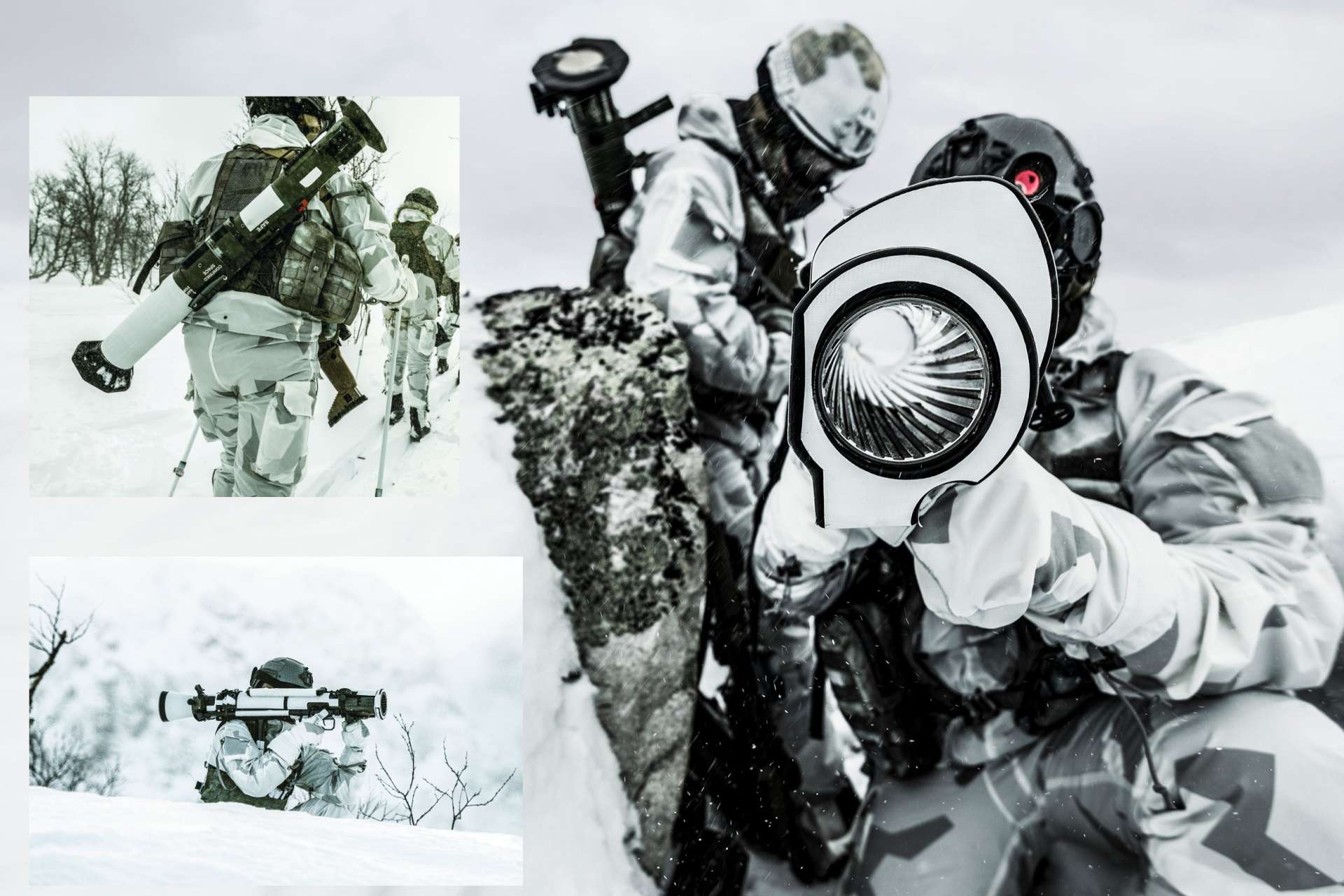
Lithuania has signed a SEK 1.3 billion agreement with Saab for AT4 anti-armour weapons and Carl Gustaf munitions, reinforcing its infantry firepower as part of a broader NATO-focused modernization drive on the alliance’s eastern flank (Picture Source: SAAB)
The new order combines Saab’s two flagship 84 mm ground combat systems: the disposable AT4 launcher and the reloadable Carl-Gustaf multi-role recoilless rifle. Saab describes the AT4 family as lightweight, man-portable and fully disposable, optimised for rapid use by individual soldiers with an effective engagement envelope typically between 200 and 1,000 metres, depending on the variant and target type. The Carl-Gustaf M4, meanwhile, is the latest evolution of a system in service since the late 1940s, redesigned as a modern, under-7 kg weapon less than one metre long, with a picatinny rail and compatibility with advanced day/night sights and fire-control systems. Both systems share a wide family of ammunition, including high explosive, high-explosive anti-tank, multi-purpose and smoke rounds, giving dismounted infantry the ability to engage armour, fortifications and personnel across a broad set of tactical scenarios.
The Lithuanian AT4 and Carl-Gustaf ammunition orders are placed under a pre-existing FMV framework that allows Lithuania, Latvia and Estonia to procure Carl-Gustaf M4 systems, their ammunition and AT4 weapons through Sweden. The value of Lithuania’s latest call-off amounts to SEK 1.3 billion, roughly EUR 115 million at current exchange rates, with deliveries scheduled between 2027 and 2029. This structure offers several advantages: it pools demand with neighbouring states, secures predictable production over multiple years and simplifies logistics by standardising calibres and ammunition families across Baltic forces. Saab’s head of the Dynamics business area, Görgen Johansson, has underlined that the company aims to provide Lithuanian troops with reliable, precise and easy-to-use support weapons to enable safer and more effective mission execution, a message that aligns with the broader trend of prioritising proven, off-the-shelf systems that can be sustained at scale.
The combination of AT4 and Carl-Gustaf ammunition strengthens Lithuania’s close combat layer at the same time as the CV90 MkIV order modernises its mechanised manoeuvre forces. Army Recognition has reported that Lithuania plans to acquire 100 CV90 MkIV infantry fighting vehicles via a joint procurement with five NATO partners, with deliveries from 2028 and an emphasis on domestic production of components and in-country maintenance. The CV90 MkIV introduces a more powerful powerpack in the 1,000 hp class, an upgraded transmission, active damping to improve cross-country speed and a modular turret architecture designed to accept different medium-calibre guns and mission systems while preserving growth margins for future sensors and protection suites.
Against this backdrop, AT4 launchers offer squad-level, single-use engagement options against armour and hardened targets, while Carl-Gustaf ammunition provides reloadable, multi-role fire support for urban operations, anti-structure missions and obstacle reduction. The result is a layered land force in which tracked IFVs deliver protected mobility and networked weapon stations, and dismounted teams carry versatile 84 mm systems that can rapidly exploit gaps, reinforce defensive positions or counter enemy armour at short notice.
These ground combat orders enhance Lithuania’s ability to fight dispersed, which is a key requirement for small states facing a numerically superior adversary and a high-threat environment for fixed infrastructure. The AT4’s disposable design and confined-space-capable variants allow infantry to fire from buildings or close to cover without exposing themselves to backblast, a critical factor in urban defence and counter-penetration operations. The Carl-Gustaf M4’s reduced weight and broad ammunition range mean it can shift rapidly between roles, from anti-armour and anti-structure engagements to smoke screening and illumination, without relying on heavy vehicles or complex logistics. When combined with CV90 MkIV formations featuring modern digital architectures capable of integrating national radios, battle management systems and electronic warfare interfaces, as highlighted in the Army Recognition report, Lithuanian units gain a denser web of sensors and effectors from squad to brigade level. This increases the difficulty for any adversary attempting to separate infantry from their supporting fires or to exploit gaps between mechanised and light units along NATO’s north-eastern axis.
The timing and scale of the order reflect Lithuania’s decision to anchor deterrence not only in headline systems but also in the munitions stockpiles and sustainment capacities required for prolonged operations. The government has already signalled that defence spending will rise to around 5.38% of GDP in 2026, with a defence allocation of about EUR 4.79 billion approved in the 2026 budget law, a record share among NATO allies. International institutions estimate that Lithuanian defence expenditure has already climbed well above the alliance’s 2% guideline and is projected to keep rising through the end of the decade as part of new NATO commitments. Within this context, a multi-year, framework-based ground combat contract that synchronises with a multinational CV90 programme helps ensure that new vehicles and infantry weapons arrive within a coherent force-development timeline, rather than as isolated acquisitions. It also reinforces emerging Northern European practice: treating manoeuvre forces, ammunition stocks and industrial resilience as interlinked elements of deterrence, to be addressed through pooled procurement, common configurations and shared support solutions across the region.
By committing to a substantial Saab package of AT4 weapons and Carl-Gustaf ammunition while pursuing a separate multinational buy of 100 CV90 MkIV infantry fighting vehicles, Lithuania is clearly signalling that its defence policy is now geared towards sustained, high-intensity land combat rather than symbolic force contributions. The SEK 1.3 billion ground combat order expands the firepower of Lithuanian infantry units, plugs directly into a Baltic-wide framework for 84 mm systems and aligns with an unprecedented surge in national defence spending aimed at securing NATO’s most exposed flank. For allies and potential adversaries alike, the message is unambiguous: Vilnius is matching rhetoric with concrete investments in weapons, munitions and industrial support designed to keep its forces supplied and combat-ready for the long term.
Written by Teoman S. Nicanci – Defense Analyst, Army Recognition Group
Teoman S. Nicanci holds degrees in Political Science, Comparative and International Politics, and International Relations and Diplomacy from leading Belgian universities, with research focused on Russian strategic behavior, defense technology, and modern warfare. He is a defense analyst at Army Recognition, specializing in the global defense industry, military armament, and emerging defense technologies.