










U.S. Approves $105 Million Patriot Support Package as Ukraine Faces New Missile Threats.
The U.S. State Department has approved a $105 million sustainment package that keeps Ukraine's Patriot air defense systems operational as Russian missile attacks intensify. The move signals a long-term U.S. commitment to maintaining Kyiv's missile shield even as domestic readiness concerns linger in Washington.
The U.S. Defense Security Cooperation Agency (DSCA) published on November 18, 2025, that the U.S. State Department approved a possible Foreign Military Sale to Ukraine for Patriot air defense system sustainment valued at 105 million dollars. Coming as Russia renews large-scale missile and drone strikes on Ukraine’s cities and power grid, the package is aimed squarely at keeping Kyiv’s existing Patriot shield on the line rather than adding new batteries.
Follow Army Recognition on Google News at this link

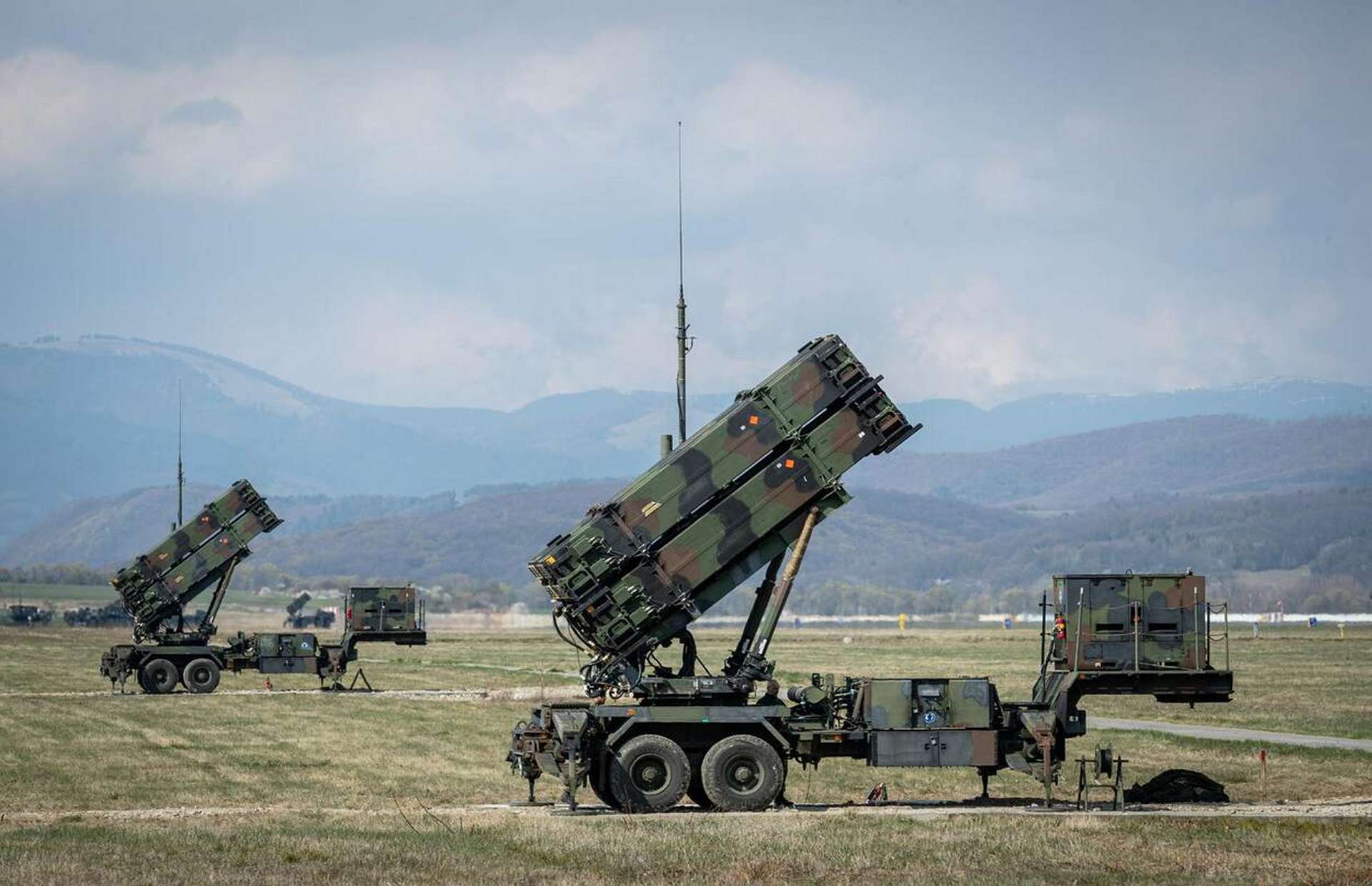
Patriot batteries give Ukraine high-altitude defense against Russian ballistic, cruise and hypersonic missiles using advanced radar and PAC-2/PAC-3 interceptors (Picture source: Dutch MoD).
Under the case, Ukraine seeks sustainment articles and services, including the upgrade of legacy M901 launchers to the modern M903 configuration, prescribed load and stockage lists for ground support equipment, spare parts, training, and broader logistics and program assistance. DSCA notes that implementation will involve about five additional U.S. government personnel and fifteen contractor representatives rotating through U.S. European Command for training and periodic meetings, with RTX and Lockheed Martin as prime contractors. Washington stresses that the sale will not degrade U.S. readiness, a signal to Congress that Patriot support to Ukraine can coexist with U.S. and allied requirements.
Patriot itself remains the only combat-proven system in Ukraine able to defeat Russian ballistic and quasi-ballistic missiles. The system is built around the AN/MPQ-65 series phased-array radar, an engagement control station, and truck-mounted launchers firing two main missile families: PAC-2 GEM-T and PAC-3, including the PAC-3 MSE. PAC-2 GEM-T uses a blast-fragmentation warhead and semi-active radar guidance to intercept aircraft and cruise missiles at ranges well beyond 100 kilometers, while PAC-3 employs a smaller, highly agile hit-to-kill interceptor optimized to destroy ballistic missiles in the terminal phase. PAC-3 MSE adds a dual-pulse motor and enlarged fins, extending its defended footprint against high-speed threats.
The M903 launcher upgrades funded in this package are tactically decisive. Unlike the older M901, which typically carries four large PAC-2 missiles, the modular M903 can be configured with up to sixteen PAC-3 or twelve PAC-3 MSE interceptors, or mixed loads combining PAC-2 and PAC-3 family rounds on a single launcher. This increases ready-to-fire missile density and gives Ukrainian air defenders the flexibility to tailor loadouts to threat patterns, pairing long-range PAC-2 GEM-T for cruise missile raids with dense stacks of PAC-3-class interceptors to counter complex Iskander and Kinzhal salvos.
U.S. and German announcements in late 2022 led to accelerated training of Ukrainian crews in Germany, with the first U.S.-made systems and a German battery arriving in April 2023. Subsequent deliveries from Germany, the United States, the Netherlands and other partners have quietly expanded the force to a patchwork of batteries and launchers of different configurations, with President Volodymyr Zelensky repeatedly pressing NATO for at least seven additional Patriot-class systems and more recently outlining a requirement for up to twenty-five.
Patriot sits at the top of a layered Ukrainian air-defense architecture that includes Soviet-era S-300 and Buk systems alongside NASAMS, IRIS-T and SAMP/T. Patriot batteries are typically positioned around Kyiv and a handful of strategic hubs, providing high-altitude coverage against ballistic missiles while other systems handle lower-flying cruise missiles and Shahed-type drones. Ukrainian air defenders used Patriot to down Russia’s Kh-47M2 Kinzhal hypersonic missile over Kyiv in May 2023, with Ukrainian Air Force officials later stating that more than twenty Kinzhals targeting the capital had been intercepted since Patriot entered combat duty.
That success has triggered a technological arms race: Western and Ukrainian officials now report that Russia has upgraded its Iskander-M and Kinzhal missiles with software-driven terminal maneuvers, slashing Ukraine’s ballistic interception rate from around 37% in August to roughly 6% in September 2025 and enabling more strikes on drone factories and energy infrastructure. Keeping Patriot competitive in this environment requires not just interceptors, but constant software updates, launcher upgrades like the M903, and a resilient supply of spares that allow Ukrainian crews to keep radars and launchers operating under near-continuous stress.
The new $105 million case follows an earlier DSCA notification in August 2025 for Patriot sustainment support worth up to $179.1 million, suggesting that the United States is shifting from emergency donations toward a multi-year sustainment architecture for Ukraine’s high-end air defenses. In parallel, European allies are increasingly using NATO mechanisms and national funds to purchase U.S.-made Patriot components for Ukraine, while Washington quietly backfills German stocks to unlock further German transfers. With U.S. budget fights and previous aid freezes raising doubts about future deliveries, locking in sustainment pathways is now as politically significant as providing new launchers or radars.
For the Ukrainian Armed Forces, sustainment is synonymous with survivability. Each Patriot battery kept in the fight preserves maneuver space for ground forces and protects power plants, command nodes and ammunition depots that Russia is targeting with increasingly sophisticated missiles. This latest contract will not by itself close Ukraine’s air-defense gap, but for a war of attrition fought in the skies over Kyiv and Kharkiv, it helps ensure that Patriot remains an efficient and evolving system.