







Breaking News




British Navy Relies on Spanish Yards for Key Warship Support Vessels Construction Until 2026.
The Financial Times reported on 17 September 2025 that a Royal Navy support ship will be largely built in Spain due to delays at the Harland & Wolff shipyard in Belfast. The £1.6 billion contract, awarded in 2022, covers three Fleet Solid Support (FSS) ships designed to provide logistical support to the British Navy. The Spanish state-owned shipbuilder confirmed that the first vessel will have its central section and a large part of its structure built at its Cádiz facilities rather than in the United Kingdom.
Follow Army Recognition on Google News at this link
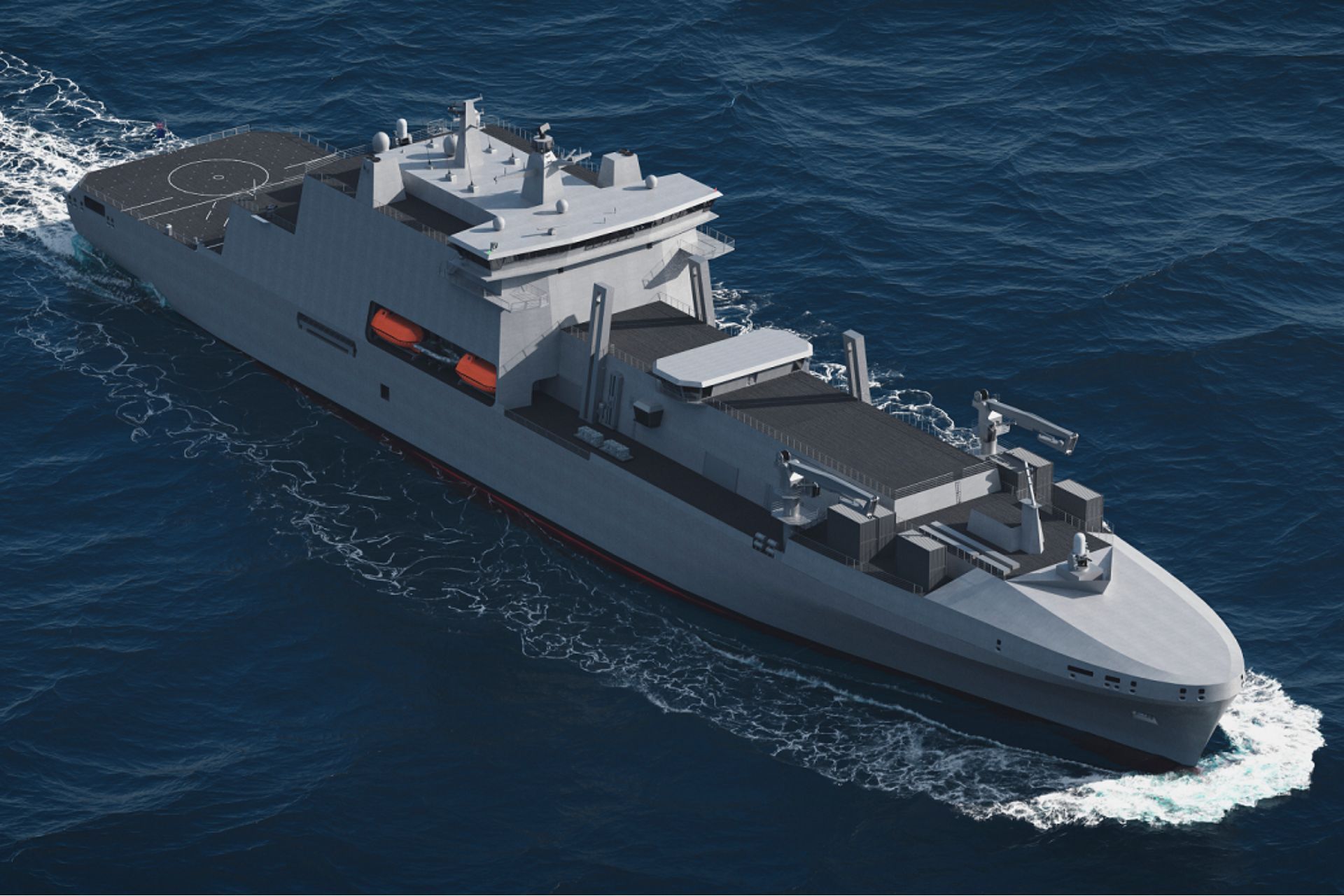
Fleet Solid Support Ships will be the Royal Fleet Auxiliary’s modern solid stores replenishment ships, an essential supporting element to the delivery of the Maritime Carrier Strike Group. (Picture source: UK MoD)
The FSS programme was conceived as a key component of the Royal Fleet Auxiliary. These ships are intended to deliver ammunition, food, spare parts, and other supplies to naval forces at sea, making them a vital element for carrier groups, in particular the Queen Elizabeth-class aircraft carriers. Each vessel will have a core RFA crew of 101 personnel and can accommodate up to 80 additional personnel responsible for operating helicopters, fast craft, or carrying out other tasks. Beyond replenishment, their role will also include supporting counter-piracy and counter-terrorism operations in cooperation with the United Kingdom’s allies.
From a technical perspective, the FSS represents a generational advance. With a displacement of approximately 40,000 tonnes, they will be among the largest auxiliary ships in the fleet. Their design features extensive storage capacity, multiple replenishment-at-sea stations, and an aviation platform that enables the use of helicopters, such as the Merlin and Wildcat, for vertical supply transfer. The FSS is also designed with future requirements in mind, featuring technologies that reduce energy consumption and lower carbon emissions. The systems can be adapted to operate with low-carbon or non-fossil fuels and other sustainable energy sources, with the stated goal of reaching carbon neutrality by the end of their thirty-year service life.
The original plan foresaw construction being shared between Harland & Wolff in Belfast, the Appledore yard in Devon, and Navantia’s facilities in Cádiz, with final assembly in Belfast. The first steel cutting is still scheduled to take place in Appledore in December 2025, but delays in Northern Ireland have forced the midship block to be transferred to Spain. Donato Martínez, head of Navantia UK, stated that the Belfast facilities will only be ready by mid-2026, while insisting that the overall share of work carried out in the UK will ultimately be greater than initially planned. He also underlined that Navantia is investing £115 million in upgrading British yards, including £90 million specifically for the FSS programme.
Operationally, the FSS will bridge the gap between high-intensity naval operations and the need for logistical endurance. Their ability to sustain carrier and amphibious groups at sea without relying on port facilities is critical to maintaining the UK’s freedom of action over long distances. Within the framework of expeditionary missions and NATO commitments, these ships will enhance Britain’s strategic autonomy by ensuring uninterrupted support to its forces in the Atlantic, Mediterranean, or Indo-Pacific. They will also play a discreet but central role in maintaining the credibility of UK deployments abroad.
For some analysts, if the first ship is built largely in Spain, it will be difficult to prevent the next two from following the same course, despite assurances from the Ministry of Defence. Trade unions fear both the loss of skilled jobs and a long-term weakening of British naval expertise.
In the meantime, the Royal Fleet Auxiliary continues to rely on RFA Fort Victoria, the current solid support ship, to maintain capability until the arrival of the first FSS. Construction of the first vessel is due to begin in 2025, and all three ships, after final equipment installation and military trials, are expected to enter service by 2032.
Written By Erwan Halna du Fretay - Defense Analyst, Army Recognition Group
Erwan Halna du Fretay is a graduate of a Master’s degree in International Relations and has experience in the study of conflicts and global arms transfers. His research interests lie in security and strategic studies, particularly the dynamics of the defense industry, the evolution of military technologies, and the strategic transformation of armed forces, with a strong focus on multilateral cooperation and geopolitics.